In his latest feature for Reason, Peter Suderman explains how the government almost killed the cocktail:
In the years before 1920, the drink, which had evolved from an earlier iceless form beginning in the mid-1800s, would have looked more or less like the one described above, with aromatic bitters and perhaps a single cherry. When prepared by a serious bartender at a serious bar, the drinks were consistent and precise, with proportions carefully tweaked and measured. Often, they were accompanied by a tiny silver spoon.
But during the next 14 years, the cocktail underwent a radical transformation.
The spoon disappeared. A splash of carbonated water was added to the top, or the bottom, or both. The fruit garnish took over the drink, with handfuls of candied cherries stuffed into the glass and giant slices of orange pounded into the sugar, creating a juicy, sweet, busy concoction more like a whiskey-soaked fruit salad than a classic cocktail. The carefully measured proportions became careless pours. Instead of a precision-crafted spirit feature, the drink had become a muddled mess—a sloppy and indifferent concoction designed to disguise whiskey rather than show it off.
And for the most part, that was the way it stayed for decades, with few American drinkers knowing what they had lost.
This is a cool tool. It is a powerful water pump you can use without electrical power; instead it uses the Bernoulli effect from the water pressure in a hose. This pump saved us a few weeks ago. It rained all day and then at about 5:15 the power went out. Our sump pump in the basement had been going every two or three minutes but there were still two or three inches of water covering the cellar floor when I got home from work. I was desperate to keep the level from getting up to the furnace. Our neighbor Jan had a generator to run their sump pump, so she could offer me her PUMPS-A-LOT which they’d used to use before they got the generator.
You connect the pump to a faucet with a garden hose. Inside the unit, there’s a nozzle pointed at the output hose. It sucks water from below, spitting out that water together with the propelling water via the output hose. In truth, I didn’t believe it would work. The makers claim you can pump 800 gallons per hour or 6 gallons for every one gallon of water you use. But if it didn’t work, I’d be filling my cellar with more water. So I tested it in a bucket of water first. It worked! Like magic. It emptied the cellar in a few minutes! Since it has no moving parts, takes up little space, it is an ideal emergency tool.
Have you been hacked? SpyCloud is a scary and useful website. Scary, because it showed me how many times my passwords have been hacked from website databases. Useful, because I quickly changed those passwords to protect myself. A personal account is free. Do this now. — MF
Quote that speaks to me Bill Joy, cofounder of Sun, says: “I decided to spend my time trying to create the things we need as opposed to preventing what threatens us.” — KK
Effortless editing
I tend to write like I think, run on and use a lot of commas. If I drop my text into the Hemingway Editor it will highlight unnecessary words, and tell me what to fix to make my writing more concise. — CD
Better laces
I have replaced all my regular shoelaces with these no-tie Aktivx elastic laces. Ultra thin bungee cords snap the shoe closed without have to tie or untie. Instant on and off. Easy to slip foot out, yet snug when needed. Not too dorky even for dress shoes; in fact, they look cool. — KK
Design your own shirt
I’ve ordered a few custom t-shirts from Uber Prints, and I am very happy with their customer service and product. They have recently widened their selection of styles, and for most there is no minimum order requirement. — CD
Laser printer toner
I gave up on color inkjet printers because they are slow and finicky. Years ago I bought a cheap Brother laser printer (here’s the latest model for $100) and am very happy with it. I get 3rd party toner cartridges in bulk, which are about $8 each when purchased as a 4-pack. — MF
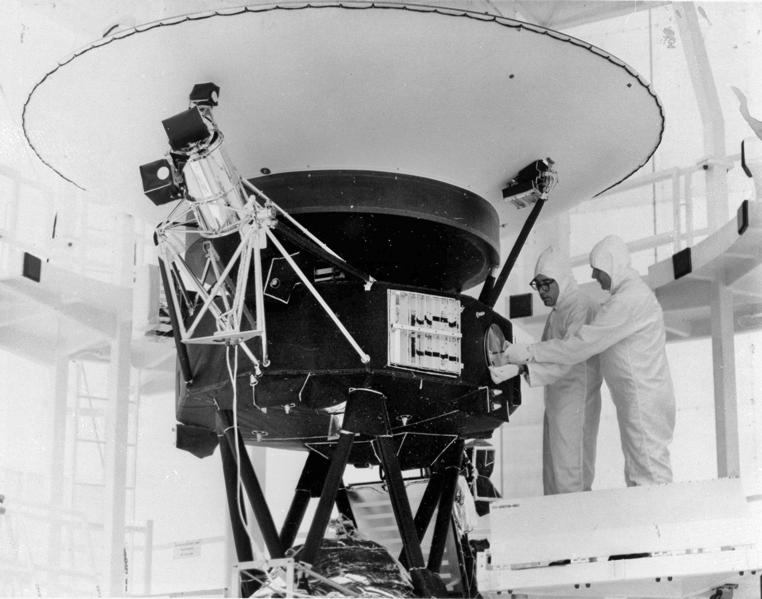
40 years ago, a small team at NASA was tasked with the challenge of knowledge transfer to the stars. What they did and how they did it show us a model that we can still learn from today.
In olden times, harvesting crops was a community chore, in which everyone had a specific task they specialized in, and the process was laid out by tradition. The corn harvest, as it existed before machinery is described in detail, as well as the customs that made it easier (hint-cider). And the superstitions.
The last sheaf of corn was always saved. This was believed to contain the corn spirit, which was gradually condensed as harvest progressed until it reached the final sheaf to be cut. Often the sheaf was scattered on the fields in spring, returning the spirit to the fields. In some areas it was hung up for the hungry birds to peck on New Year’s Day; in others it was made into a corn dolly. This tradition exists across Europe and it is believed by many in the pagan tradition that this is a relic of the millennia-old belief in the Dying-and-Rising God or God of the Green, who dies in Autumn to be reborn the following Spring.
In one of the largest data security breaches ever, 143 million Equifax records were stolen. What does this mean for you? And is Equifax's response sufficient?
Bitcoin and cryptocurrency is a mystery for most entrepreneurs. But when you spend some time understanding the concepts and industry, you'll realize just how much opportunity there is.
The progression that is the discovery and appreciation of photography is a journey unique to the voyager. Whether the path is walked through a textbook, an online forum, or alone, there is no two that are alike.
Being self-taught, I found myself obsessing with the technical side of photography to a degree that the artistic side was an afterthought. At first, it was just grasping the concept of 18% gray. Then it was learning the stop reach of my sensor. Then it was getting rid of depth of field only to bring it back in later years.
So, it’s a little ironic that I craved bokeh so much when young and now I cringe whenever someone uses that word in a conversation.
Back in 2003, I found myself with a lens line up that from 24mm to 200mm, all faster than f/1.8, so to say that I enjoyed DoF isolation was an understatement. However, there was a part of me that thought the 85mm f/1.2 just wasn’t shallow enough. I had tubed the thing beyond its nodal point reach to where the minimum focus point was behind the front element. However, a part of me still felt there was less depth to be achieved.
This quest impacted my grades as I would often sit in Italian classes trying to calculate the angle of light conversion for a lens instead of paying attention (2 years of Italian and all I know is how to say “my name is cheese”). Being a true photo geek at heart, I listed lenses by absolute aperture size in mm rather than stop (this is before I learned the factoring of minimum focusing distance, but that is a function or mid to rear elements).
Fortunate for me during this time, there was an industrial factory that did X-ray analysis that had gone under and surplussed it’s equipment. I called them up and offered to buy all their lenses for cheap, as I intended to mount them to a Canon 1D.
The lenses that came in the box ranged from 110mm to 50mm and had aperture values of f/1.1 to f/0.50. Unfortunately, they were made for industrial X-ray machines, so mounting them would not be easy. Some had nodal points that wouldn’t work with a mirror, and others had rear elements that wouldn’t support the lens. None of them had focus rings, and the fact that there were no chips meant that the truest form of manual exposure would be required as most cameras aren’t set for f/0.50.
I eventually mounted some of the lenses with cut body caps and others with plumbing tubing with a CD case. Minimum focus distance was very minimal, often only a couple inches, but DoF is a function of distance as it is a derivative of iris, so this was a plus. There wasn’t a practical use for the lenses, but there was learning to be had in their use.
I taught myself lights change and DoF relevance on it. Texture was important and the quality of the images that came from the lenses was often determined by the progression from focus to out-of-focus rather than the quality of the blur itself. At the end of the day, I never really showed the images all that much and sold off most of the lenses I had made.
Like so many other aspects of photography, I was merely looking to show myself that I could do it.
About the author: Blair Bunting is an advertising photographer based out of Los Angeles, California. You can see more of his work on his website, blog, Facebook, and Instagram. This article was also published here.
by A.A. Newton on Skillet, shared by Claire Lower to Lifehacker
My parents hail from Vermont and Maine, so I take maple syrup pretty seriously. So seriously, in fact, that I completely missed the USDA’s 2015 re-grading measure because I was still working through the four gallons of Grade B I’d bought in 2012. When I couldn’t find more to replenish my stash, I panicked and called…
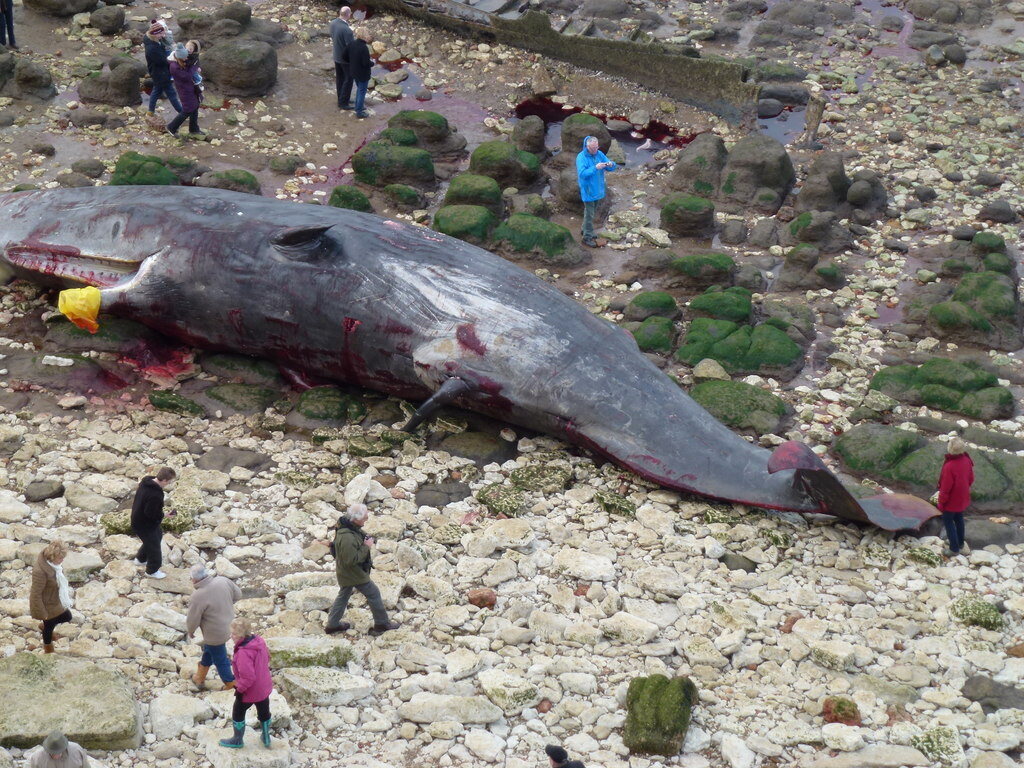
Sperm whales are the largest of the world’s toothed whales—smaller than giant, filter-feeding blue whales, but still the size of four big elephants—and they live out in the deep ocean, where they feed on squid, along with the occasional octopus, ray, or shark. In Iceland, or western Norway, or around the Azores, places where the continental shelf drops off close to the coast, these whales sometimes swim into view of human civilization. Still, they’re rarely spotted at all and almost never in the sandy, tidal North Sea, a cul-de-sac of the Atlantic Ocean between the United Kingdom and Norway.
On a January afternoon in 2016, though, Dirk-Henner Lankenau, a biologist at the University of Heidelberg, was beachcombing on the German island of Wangerooge when two dark forms appeared in the distance. When he reached the shapes, Lankenau found that they were whales, stranded overnight on the shore and already dead. Four days later, another two sperm whales were seen floating, dead, off the coast of a nearby island. That same day five more were found marooned on the Dutch island of Texel. Another two washed up soon after. The next week another dead whale showed up on a British beach, with more to follow. Within weeks, 30 sperm whales had perished on cold North Sea shores.
The whales were all males, on the younger side, and likely belonged to the same pod of bachelor sperm whales, up from southern waters to feast on squid in the Norwegian Sea. Sperm whales are normally good navigators that travel from polar to equatorial seas, but somehow this group had taken a deadly detour into the shallow, relatively squid-free North Sea.
These unfortunate whales were not the first of their kind to become trapped in the North Sea, unable to find their way back to the open ocean. For centuries now, people have documented stranded whales on these coasts. Many years are free of incidents, or see only a lone example of a lost whale. But there have also been dramatic mass beachings in 1577, 1723, 1762 (when more than two dozen dead whales were found), and 1994.
For all those centuries, the cause of these mass deaths has been a mystery. Whales that die in this way tend to be in good health, with no signs of illness or malnutrition, and their deaths have come in no clear pattern that might hint at what happened. The long history of the strandings mean that it’s hard to blame humans, exclusively at least, for causing them.
Perhaps, though, we should blame the Sun.
In a new paper, published this August in the International Journal of Astrobiology, physicist Klaus Heinrich Vanselow and his colleagues develop a theory, first advanced more than a decade ago, that whale strandings in the North Sea are caused by solar storms. Million miles away, the Sun spits out clouds of energy and particles so large they can distort Earth’s magnetic field. When they hit the planet, these magnetic fluctuations may make whales lose their way with serious, even fatal, consequences.
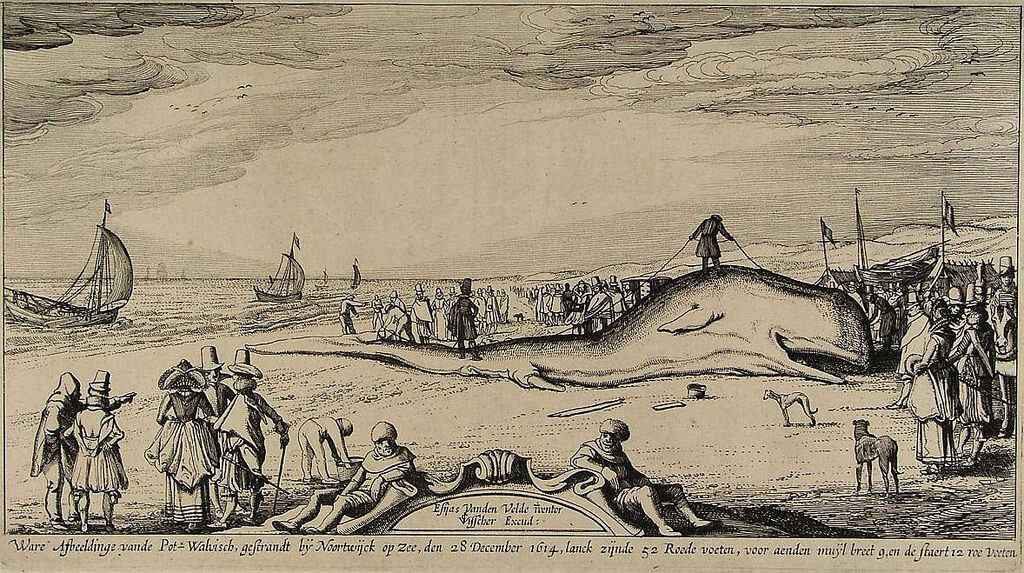
When an animal this large shows up dead on shore, it is an event. As far back as the 16th century, when sperm whales beached near important cities in the Netherlands, artists documented the demise with etchings and engravings. In the 18th century, one stranding was commemorated with a set of blue Delft plates. These images, often printed in pamphlets and distributed across Europe, show crowds gathered around the massive corpses but also depict the whales in fine detail. For many years, much of what Europeans knew about sperm whales was learned from these events.
The whales found stranded in the North Sea have always been males because of the differences in how male and female whales live. Sperm whales breed in equatorial oceans, and young whales remain in those waters with their mothers for at least a few years, and sometimes well into adulthood. After leaving their mothers, male whales form groups of their own, which travel far from the breeding waters. Sperm whales share our taste for squid, and the bachelor groups follow them north. The groups the bachelor whales form are not always tight-knit, but still they can lead each other into trouble.
The whales that get lost in the North Sea are on their way back south. Usually, they would skirt around Scotland and Ireland to get back to the Atlantic, but sometimes they turn south too sharply and too early—into the North Sea, which has sandbanks, estuaries, and tides more dramatic than they’re used to.
“The North Sea … is totally unsuitable for sperm whales,” wrote Chris Smeenk, of the Netherlands’ National Museum of Natural History, in a 1997 paper on the history of whale strandings. “Being animals of the deep ocean, sperm whales have no experience whatsoever in finding their way in this kind of shallow and treacherous waters.” Whales that find themselves in the North Sea have been seen to panic, thrash about, head in the exact wrong direction, and get so confused that they end up beaching even when escape is possible. Imagine a group of people who are hiking and lose their way, only to get separated, and then die alone in the wildness.
For many years scientists have been trying to figure out why these beachings happen. They have considered the role of pollution or human-generated noise, though neither explains the historical cases. One study in 2007 found a correlation between warmer periods and the frequency of North Sea strandings. There was a long gap in mass strandings between the 18th century and the 20th century, and it may be that they happen with more frequency now because the whale population is recovering from decades of intensive hunting.
An intriguing theory that has been around in some form since at least the 1980s, implicates the activity of the Sun. Whales keep their bearings through echolocation, but like many other animals that travel far and wide, they also use magnetic fields to navigate. Geomagnetic lines can act as trails of sorts, which guide animals over long distances. But those paths are not entirely reliable, since natural variation in the make-up of the Earth can cause anomalies and weak spots in the otherwise regular magnetic lines. And, on occasion, when a strong solar storm hits the planet, the magnetic field can go a little haywire.
Vanselow, of the University of Kiel, first became interested in sperm whale strandings in the late 1990s, and in his research, he came across a chart showing solar activity over the past few centuries. The curve, he noticed, looked a lot like the curve of sperm whale strandings over the same period. He started looking for connections between the phenomena, and found ... pigeons.
Pigeon racing is an old sport, but its modern incarnation took off in the 19th century. Trained homing pigeons all start from the same point and race each other home. For much of the way, they navigate by magnetic field, and in the 1970s a team of researchers showed that during solar storms, the birds were less likely to make it home and took longer to make the journey. “Pigeons for races are very expensive, so a loss of them is a bitter loss,” says Vanselow. Pigeon racers rely on forecasts of solar storms to decide whether to fly their pigeons, especially in more northern latitudes, where the effects of solar storms can be stronger.
Once he made this connection, Vanselow thought he could be on the right track. In 2005, he and a colleague published a paper that found a correlation between strandings and solar cycles. In a follow-up paper in 2009, he looked to a different measurement of solar activity, a global geomagnetic index. These papers showed that, in general, sperm whale strandings could be associated with solar cycles, though not everyone was ready to draw that connection. The authors of the 2007 paper that connected warmer temperatures and whale strandings found that solar behavior no impact on their findings.
In this new paper, however, Vanselow and his colleagues considered the cause of the strandings in January and February of 2016. They obtained data on geomagnetic conditions around the North Sea from the closest measuring station they could find, in Solund, Norway. Those readings show that, not long before January, when whales started stranding in the southern part of the North Sea, the magnetic field in its northern reaches had changed.
The North Sea is not the only place in the world where whales beach themselves, and mass stranding are more common elsewhere. In Cape Cod, where a spit of land hooks into the ocean to form a bay, where full moon tides can pull the water out a mile, there are multiple mass strandings every year. In New Zealand strandings happen with similar frequency, and single events can involve hundreds of whales. This doesn’t just happen to sperm whales, either. One of the largest known mass strandings involved 337 sei whales stuck on a beach in Chile in 2015, and last year 600 pilot whales were stranded in the shallows of New Zealand’s South Island.
The cause of these other strandings is just as mysterious as it is in the North Sea. They also have long histories, so while some recent stranding incidents have been linked to human interference, in general this is considered an natural phenomenon, unexplained.
“The ongoing question we always have is—why is this happening?” says Katie Moore, the program director for animal rescue at the International Fund for Animal Welfare (IFAW). In the two decades that she’s worked on marine mammal strandings, she’s heard anecdotal reports that stranded animals had followed prey into Cape Cod Bay, but necropsies show that these animals often have empty stomachs. She knows that, in her area, full moons mean trouble. Cape Cod resembles New Zealand in its shallow, silty waters, and some research indicates that whales may have difficulty echolocating in such waters.
But going back more than a decade now, she and her colleagues have, like Vanselow, been interested in the idea that solar storms might play a role. During a chance encounter with an old friend, Moore learned that the Bureau of Ocean Energy Management had been talking to colleagues at NASA about the connection, too, and needed to a partner organization with data on whale strandings. Moore’s group, IFAW, and the government agencies have decided to bring their data sets together.
The results of that work have yet to be published, but it’s unlikely to show that solar storms are the one and only explanation for whale strandings. Antti Pulkkinen, the NASA scientist working with Moore's group, thinks that, while a solar storm could contribute to whale strandings, "we need harder evidence to prove the connection. And that is what we aim to provide."
Their research seems to be painting a complicated picture. “When we weren’t seeing what we thought we might see,” says Moore, “we started bringing in some other oceanographic experts to bring in other layers. Is it the weather? What directly or indirectly is driving the animals into shore? That’s where I think the real answers will come in, in pushing past space weather and looking at bigger picture of oceanographic change.”
If every whale stranding has multiple causes, at least in some cases solar storms may be the dominant one. Vanselow’s new work suggests that the late December magnetic disruption was large enough to disorient the whales. It is circumstantial evidence, but more convincing than a general theory. Vanselow’s work “convinces me that it is plausible in this case,” says Graham Pierce, lead author of the 2007 paper. But he adds, “If it had been generally true there should have been a stronger relationship with sunspots and strandings in the historical series."
For the whales to be led astray by the geomagnetic changes he identified, Vanselow says, they “must be at the wrong place at the wrong time”—at an oceanic crossroads, where a wrong turn can lead to death, just at the time a solar storm hits. For these unfortunate sperm whales, a gaseous burp from a flaming orb some 92 million miles away may have been enough to seal their fate.
In front of this restaurant tucked on the border of Massachusetts and Connecticut there's a sign reading "Food and Books." And, of course, at any restaurant there's going to be food, but be prepared for the books. With each purchase, customers are invited to take home any book in the restaurant's impressive collection. They give away an estimated 1,000 to 2,000 books each week to hungry bookworms.
The walls of the Traveler Restaurant in Union are lined with books. On the shelves edging the tables are westerns, cookbooks, pulpy paperbacks, children's books, and romance novels. The vibe is decidedly comfortable diner meets community book sale. Owner Marty Doyle, an avid reader, started bringing books into his restaurant in the mid-1980s as a way to thin his oversized collection and find new homes for old books. Now, after finishing a meal, diners take time to wander the stacks looking for their perfect new read.
Over the years, Doyle also collected a number of autographed photos from many well-known authors including John Updike and Michael Crichton, and these are also on display at the Traveler. Under new ownership since 1993, the restaurant's books are now mostly donated by area libraries and community members, and the take-home amount has been upped to three books a person.
"We spend a lot of time on book runs going all over Massachusetts, Connecticut, and sometimes Rhode Island," said owner Karen Murdock in a Hartford Courant profile of the restaurant. And if there's a chance that after choosing some free reading material there's a need for a few more books, head downstairs to The Book Cellar, the restaurant's used book store.
Conventional approaches to wildlife management in Africa have failed, as witnessed by the dramatic declines in wildlife populations. But, the cost of establishing property rights and reducing the problems associated with the commons have been reduced with the introduction of new technologies.
In 1917, two women began separate journeys that continue to influence the larger cultural community. In New York, artist Georgia O’Keeffe was featured in her first solo exhibition, setting the stage for an art career that defined the American Modernism movement and still sets trends today. Almost 600 miles to the south in Winston-Salem, North Carolina, Katharine Reynolds moved her family into Reynolda, the progressive summer estate of her own making that continues as a cultural beacon. One hundred years later, their paths have crossed. Reynolda House Museum of American Art in Winston-Salem is hosting the exhibit Georgia O’Keeffe: Living Modern through November 19, 2017, its only showing in the South. Assembled by the Brooklyn Museum and Wanda M. Corn, the Robert and Ruth Halperin Professor Emerita…View Original Post
It’s easy to use Google Maps to see how far your office is from your favorite restaurant, or how long it’ll take to drive from Los Angeles to New York. Estimating the distance between two locations without relying on winding roads messing up your estimate, however, is a bit more complicated. Sure, you could try and…
Roughly the size of a city block and up to eight stories high, the Pink and White Terraces of New Zealand were one of the top tourist attractions in the British colony during the 19th century. Visitors came from around the world to admire the dramatic, colorful, cascading formations—formed by the mineral-rich waters of a geothermal spring—on the shores of Lake Rotomahana, at the foot of Mount Tarawera on the country's North Island. Willy Bennett saw the terraces as a child and described them for a New Zealand radio program in 1954: "The White Terraces were not actually white, but their silica coating, tinged here and there with the palest of pinks, gave you the overall impression of old ivory tinted a faint yellow. Likewise, the Pink Terraces, which ranged from a rich salmon pink to a soft rose, were themselves, in places, almost as pale as the White."
It wasn't just the color of the terraces that attracted admirers to Lake Rotomahana's shores. "The color and sparkle of moving water constantly spilling over them gave the terraces a liveliness and almost a personality of their own. Truly, they were a thing of beauty and a joy forever for the few who saw them," recalled Bennett. He was just 12 years old when Mount Tarawera erupted in June 1886.
"I was no sooner out of my bed than I was on the floor, the earthquakes were so severe that one couldn't stand unless one held onto something," he added. "As soon as we got outside, we could see the trees and buildings swaying to and fro, and it was rumbling like long-distant cannons going off." The Tarawera eruption lasted about five hours, buried the region in ash, and dramatically reshaped the landscape. A 10.5-mile fissure cracked open along the mountain's lava domes. The original Lake Rotomahana at the base of the mountain was "blown sky-high." The Pink and White Terraces were thought lost forever.
The fate of the terraces—blown to bits or buried or something else—is a mystery, well and truly lost. The only survey of the terraces before the eruption, completed in 1859, wasn't rediscovered until 2010, when a research librarian found it in a diary in a family archive in Switzerland. Even with that, the precise locations of the terraces is unknown, which has meant that no one could determine whether they survived the eruption. Finally, 131 years after the Tarawera eruption, there's new hope the terraces can be rediscovered, and perhaps even resurrected, thanks to that 1859 diary.
The diary belonged to Christian Gottlieb Ferdinand von Hochstetter, a German geologist who traveled with the Austrian Novara voyage that set out to circumnavigate the globe. When the expedition reached New Zealand, Hochstetter led a surveying expedition on a nine-month tour of the British colony. "At the time of Hochstetter's survey in 1859, very little of the inland areas of the North Island of New Zealand had been surveyed," research librarian Sascha Nolden told Atlas Obscura in an email. "Surveys tended to be limited to populated areas earmarked for subdivision and the establishment of settlements. By the time Mount Tarawera erupted in 1886, New Zealand had been completely mapped, but there were vast areas that were not surveyed in any detail." The eruption completely altered the landscape, changing the size and shape of Lake Rotomahana and burying geothermal features. Hochstetter's diary, with the survey of the affected region, wound up far from New Zealand in Hochstetter's family's library in Switzerland, where Nolden rediscovered it.
Over 100 years later, New Zealand's GNS Science agency (roughly equivalent to the U.S. Geological Survey) conducted a bathymetric survey of Lake Rotomahana. The surveys, conducted between 2011 and 2014, turned up evidence the agency said suggests the terraces are now located under the lake. "That's what led me, in fact, to [propose a plan] in 2014 to operationalize their findings and lower the lake 40 meters and recover the terraces from where they stated they had found them," says Rex Bunn, an independent researcher who developed an acute interest in the fate of the terraces. GNS Science suggested Bunn halt the project when it discovered there was a magma chamber under the lake, which could be affected by the movement of so much water.
Bunn was disappointed and shelved the plans, but as he was writing up the failed project he got in touch with Nolden, the librarian. When Nolden sent him the pages with the survey from Hochstetter's diary, says Bunn, "it was one of the most exciting moments of my life. I knew that it was a survey and that it had compass bearings that we could use to finally establish the locations of the terraces." He spent the next six weeks deciphering the diary's handwritten German notes with Nolden. The team eventually matched the diary's survey points with the modern landscape, detailed in a paper for the Royal Society of New Zealand's journal, published in June. It turns out that draining Lake Rotomahana is entirely unnecessary—according to Hochstetter's survey, the terraces may be located on land, under 3o to 50 feet of volcanic ash.
The next step will be confirming the terraces survived there before attempting an expensive excavation. To do that, says Bunn, he'll lead a team on an expedition to locate the terraces using ground-penetrating radar (GPR) in the near future. "If the GPR does show encouraging imagery, I would think it's almost inconceivable that the next step would not be taken," says Bunn. If they can confirm the locations of the terraces, Bunn plans to collect core samples from each to be analyzed by a chemist. It can then be compared to a known sample collected before the eruption, which Bunn says suggests the famous colors were the result of antimony and arsenic sulfides in the spring's water. A match will likely mean the team will move on to excavating the terraces under archaeological supervision.
Even if Bunn's team finds, identifies, and excavates the terraces, there's no guarantee that they will look anything like the ones lost in 1886. "Geothermal springs of course vary over time, like volcanoes, due to crustal shifts and so on, and it's almost certain that the hydrothermal springs that powered the Pink and White Terraces are no longer functioning, given time and also the 1886 Mount Tarawera eruption that transformed the landscape," says Bunn. "Whether the terraces are intact to a greater or lesser extent on those locations can only be answered by excavation, ultimately."
He can only speculate about the future of the terraces. Restoring them, he says, is "a wish list at this stage. It might even prove to be a pipe dream. It may or may not be possible and it's well down the track." Before that can happen, all his planned work must go through the local Maori tribe that owns the land. But Bunn is optimistic that Hochstetter's survey is accurate, and that history will be made. "I think we're probably closer to finding the Pink and White Terraces than any other research group in the last 131 years."
With wildfires raging all across California, people are scrambling to protect what they can, put out fires where they can’t, and flee when they must. In order to protect some historic cabins in the Nelder Grove Historic Area, this means wrapping them in foil. Nelder Grove is an area of Sierra National Forest that covers around 1,540 acres, and is home to a pair of historic cabin, which were moved there in the 1980s but date back much further. The rustic dwellings were originally built in the late 1800s, and are now the second and third oldest in the entire forest.
As the fires continue to threaten areas across the state, the U.S. Forest Service branch in the Sierra National Forest posted photos of their preventive efforts to preserve the cabins: wrapping them in heat-shielding material. From the base up to the roof, the pictures show the progression of the cabin’s encasement. By the final photo, with the roof completely covered in the protective sheeting, the cabin looks like a giant, decoratively shaped bundle of leftovers.
The reflective material should protect the cabins from some of the heat of the fire, depending on how close it comes. These cabins have stood for over a century, so let’s hope that wrapping them like shiny gifts will preserve them for another one.
Holy crap. I mean …holy crap! [IRMA] Saint Martin dans le mur de l'oeil subit les effets de l'ouragan IRMA #iram #ouragan #SaintMartin (Source : Rinsy Xieng) pic.twitter.com/e2j7e9KtOu — RCI Guadeloupe (@RCI_GP) September 6, 2017
Electronic data transmissions throughout the office, otherwise known as your internet connectivity, could be changing drastically with Li-Fi. But, what is Li-Fi?
We used just-introduced fishing tackle and gear to battle voracious redfish at the mouth of the Mississippi River.
Anglers tackle big and hungry redfish in southeast Louisiana with new gear from tackle manufacturers such as Z-Man, LiveTarget, HUK, Mustad and plenty more.

 In his latest feature for Reason, Peter Suderman explains how the government almost killed the cocktail: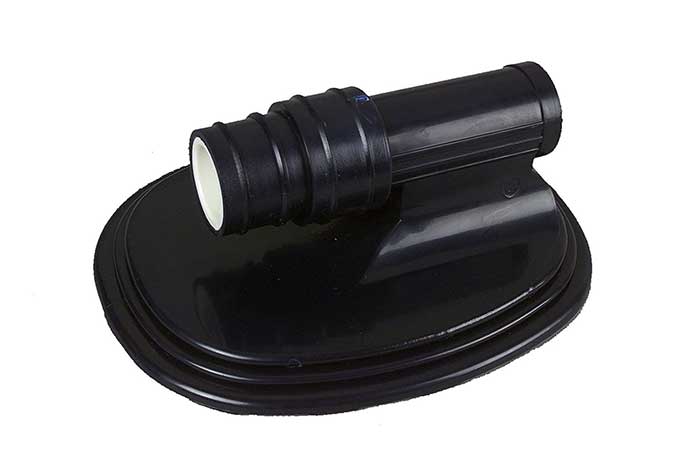











 In 1917, two women began separate journeys that continue to influence the larger cultural community. In New York, artist Georgia O’Keeffe was featured in her first solo exhibition, setting the stage for an art career that defined the American Modernism movement and still sets trends today. Almost 600 miles to the south in Winston-Salem, North Carolina, Katharine Reynolds moved her family into Reynolda, the progressive summer estate of her own making that continues as a cultural beacon. One hundred years later, their paths have crossed. Reynolda House Museum of American Art in Winston-Salem is hosting the exhibit Georgia O’Keeffe: Living Modern through November 19, 2017, its only showing in the South. Assembled by the Brooklyn Museum and Wanda M. Corn, the Robert and Ruth Halperin Professor Emerita…View Original Post



 A shoplifting call gone way wrong.


