
Visit Uncrate for the full post.



Here's James Hill's recipe for playing Jimi Hendrix's 1968 classic, "Voodoo Child (Slight Return)" on the uke. Yes, the uke:
1 Mya-Moe baritone ukulele (Low G - G - B - E)
1 guitar amp (Fender Blues Junior or equivalent)
1 bass amp (15 inch)
1 line splitter (Radial ABY box)
1 Diamond J-Drive pedal (made in Halifax, NS!)
4 busted strings
2 broken fingernails
Season to taste and serve hot!
Enjoy...
Follow Open Culture on Facebook and Twitter and share intelligent media with your friends. Or better yet, sign up for our daily email and get a daily dose of Open Culture in your inbox.
If you'd like to support Open Culture and our mission, please consider making a donation to our site. It's hard to rely 100% on ads, and your contributions will help us provide the best free cultural and educational materials.
Related Content:
George Harrison Explains Why Everyone Should Play the Ukulele
Jake Shimabukuro plays “Bohemian Rhapsody” on the Uke
Jimi Hendrix’s “Voodoo Child” Shredded on the Ukulele is a post from: Open Culture. Follow us on Facebook, Twitter, and Google Plus, or get our Daily Email. And don't miss our big collections of Free Online Courses, Free Online Movies, Free eBooks, Free Audio Books, Free Foreign Language Lessons, and MOOCs.

In the former Soviet republic of Georgia, celebrants don't just raise their glasses for a toast. Instead, they might lift a goat's or ram's horn brimming with wine. Called a khantsi, this ornate vessel is a traditional feature of the formal dinner feast known as a supra. Adorned with silver cuffing and a chain, the horn's presentation encourages users to display it on their wall, or—in an earlier era—hang it from their sword belts.
Georgia has a long history of winemaking, dating back to 6,000 B.C. Vintners still make the culture's signature cloudy wine in ancient earthen pots called qvevri. Khantsi are meant to hold this highly revered local specialty on festive occasions, where celebrants pour healthy doses into their khantsi to perform toasts.
After toasting with a khantsi, you must drink the vessel's entire contents before setting it down or risk a spill. (Since the horn can't stand on its own, it must be laid on its side.) As such, many drinkers opt for a smaller horn and, thus, a smaller serving size. And while you likely won't find a khantsi full of beer (often considered inappropriate), you might encounter a horn full of brandy—another specialty made using local grapes.
Just remember: You can't set it down until it's empty, so going big might mean going home shortly thereafter.
The Logitech Create iPad Pro keyboard has changed the way I use my iPad. Mainly, I’m using my iPad much more often, now that I can enter text with a keyboard. If I’m on a short trip, I’ll often take it with me instead of my bulkier MacBook Pro. It works well with Google Docs, which is how I do most of my work.
It has a backlit keyboard, which is essential. The keyboard is smaller than a standard keyboard, but it’s not so cramped that I resent it when I have to do a lot of writing. I appreciate that it is powered directly from the iPad Pro via the Apple smart connector, because I don’t need to remember to charge it. It also doesn’t need Bluetooth pairing — just insert the iPad into the case and start using it.
The top row of keys have controls for common things like one-tap to home, screen brightness adjustment, search, language switch, keyboard backlighting adjustment, media controls, volume controls, iPad on/off sleep/wake.
The case itself is textured so it won’t slip easily when I carry it, and when closed the entire iPad is protected.
It’s surprisingly thin and light, too. I wish I’d started using it sooner!



If learning to play guitar has been on your bucket list, here’s the excuse you need. For either $90 or $100 (the $100 bundle includes a few extra accessories), you’ll get an acoustic Gibson guitar plus six months of Fender Play, the company’s digital lesson subscription program. Fender Play goes for $50 on its own, so…
While bomb cyclones and nor’easters along the east coast have made for a long, cold winter, they’ve also ensured that the spring buds at Maryland’s Ladew Topiary Gardens will burst into bloom just in time for the garden’s tenth annual Garden Festival on Saturday, May 5, this year helmed by renowned tastemaker Bunny Williams and her husband, John Rosselli, as honorary co-chairs.
Harvey Ladew, an avid hunter, bought the land adjacent to the Elkridge-Harford Hunt Club in Monkton, just thirty miles north of Baltimore, in the late 1920s. He renovated the house, shot skeet from the terrace, and transformed twenty-two of the 250 acres into a whimsical personal garden, which he tended until his death in 1976.

photo: Helen Norman
The iris garden at Ladew.
“Ladew loved surprises, which are around every corner in the house and gardens,” says Emily Emerick, Ladew’s executive director. For example, the house’s library contains a secret door that opens onto the grounds. Outside among the nearly two dozen garden rooms, giant hemlock and yew topiaries depict seahorses, unicorns, even Winston Churchill’s top hat. Perhaps the most-beloved of Ladew’s creations is the hunt-scene topiary that portrays two riders on horseback in pursuit of a fox with five hounds hot on its trail.

photo: Helen Norman
Topiaries depict a hunt scene at Ladew Gardens.
Williams’s involvement is fitting—the annual Trade Secrets garden and plant sale she started eighteen years ago at her Connecticut home inspired the Ladew team. Ladew’s Garden Festival now features roughly fifty vendors of all kinds touting native plants from the Chesapeake watershed, sculpted topiaries, rare orchids, and garden accessories. “We have enough specialty growers that if you’re looking for that one special hellebore you can’t find anywhere, you’re probably going to find it here,” Emerick says.
Williams, who first visited Ladew Gardens some thirty years ago, was happy to lend her advice for the creation of the event, as well as act as a co-chair for its tenth anniversary. “I love Ladew,” Williams says. “I love that Harvey Ladew made it all himself. It’s a fantastic design and he had such a sense of humor creating it. It’s a garden with a lot of different elements and it’s inspired me for my own gardens.”

photo: Helen Norman
Swan hedges.
In that regard, Ladew is in good company. “I can’t name all the gardens that inspire me: Hidcote, Rousham—all of the great English gardens really,” Williams says. “Every great garden you see you find something you can use in your own. Anyone interested in gardens should travel and be out in them.”
Luckily, to experience Ladew, you won’t have to wait long or travel far. The Garden Festival will be held in Monkton, Maryland, on Saturday, May 5, rain or shine. “Rain, as you know,” Emerick says, “does not keep plant people away.”

photo: Courtesy of Ladew Gardens
Ladew’s Garden Festival in 2017.
The post The South’s Most Spectacular Topiary Garden appeared first on Garden & Gun.

My first trip to a music festival began in catastrophe. It was Bonnaroo 2009, and since our group of first-timers couldn’t wait to get there, we left straight from work, arriving after dark and waiting out a thunderstorm before we were able to set up our campsite. I use the word “campsite” loosely—sure, I’d hurriedly packed a few supplies and an ample cooler, but after slipping around in the mud and pitching the tent in total darkness that night, we were in for an uncomfortable three days. Cold, wet, and seriously questioning my judgement, I decided right then that I would never show up to another festival unprepared.
In the almost-decade since that first trip, I’ve learned that a few key items can go a long way in making outdoor concerts more comfortable (even when camping is out of the equation, as it is for newer fests like Shaky Knees and Luck Reunion). As we enter another festival season, pack these eight must-haves to keep the weekend stress-free and your focus on the music.
Patagonia Stretch Rainshadow Jacket
This durable rainwear folds into its own pocket and clips to a bag or belt loops, making it easy to pack and ensuring that even out-of-nowhere downpours don’t dampen the mood. $199; patagonia.com (Available in men’s and women’s styles.)

Pendleton Roll-Up Blanket
Waterproof, stain-resistant, and stylish, this picnic blanket lets you sprawl out without worrying about damp grass or mustard dripping off that corndog. $138; amazon.com

EasyAac Portable Charging Bank
Slightly larger than cheaper counterparts, this on-the-go battery can charge four devices at once, with enough juice to fully charge a dead iPhone up to six times before plugging in again. (Bonus: the built-in flashlight makes this model a great choice for camping fests, too.) $36; amazon.com

que Collapsible Water Bottle
Spending all day on your feet, in the sun, in a crowd, in the South is a recipe for dehydration—even before you factor in any alcohol. So the most important thing to remember at any music festival is to drink a lot of water. This reusable bottle collapses into a smaller, more compact version of itself, saving valuable space in a travel bag between refills. $25, amazon.com

Canvas Somerset Backpack
This simple drawstring bag is large enough for the essentials, but small enough not to get in the way when weaving to the front of the crowd. $78; madewell.com


Travel Sunscreen
Many festivals have cracked down on what size and type of sunscreen can make it through gate security, so skip the aerosols or oversized bottles and play it safe by pocketing plenty of these tiny doses of SPF. $20 for 24 0.4-oz. packets; amazon.com
Kinven Mosquito Repellant Bracelet
Don this subtle bracelet to forget about bugs—and itchy bites—for the whole weekend. These wearables maintain their mosquito-repellant scent for up to fifteen days. $9; amazon.com

EO French Lavender Hand Sanitizer Spray
Hand sanitizer is a non-negotiable for any event with outdoor toilets. The refreshing aroma of this one—made with organic ethanol and lavender essential oils—makes it a must-have well beyond festival season. $24 for six 2-oz spray bottles; amazon.com

The post Eight Music Festival Must-Haves appeared first on Garden & Gun.
There’s a reason the Southern writer Rick Bragg’s book about his mother’s cooking is on the New York Times bestseller list. We Southerners treasure the memories of our mothers and grandmothers showing us how to make biscuits by feel—or shooing us out of the kitchen so they could work in peace. Splattered recipe cards annotated with handwritten notes are every bit as precious to us as the family silver. We asked six bakers, chefs, and caterers from across the South to share the recipes that were passed down from their mothers’ and grandmothers’ hands to theirs—and now to yours.

photo: Courtesy of Jennifer Hill Booker
Jennifer Hill Booker and her mother.
Jennifer Hill Booker
Lilburn, Georgia
“I grew up watching both my grandmother and mom make biscuits,” says Jennifer Hill Booker, who is a chef and the Culinary Explorer for the Georgia Department of Tourism and Travel. “But the strawberry preserves are all my mom, and she taught me how to make them. When my sisters and I visit her, we fight over who gets to take home a jar.”

photo: COURTESY OF KATIE BUTTON
Katie Button at 14 with her mother, Elizabeth, at Lake Chelan in Washington state.
Katie Button
Asheville, North Carolina
“My teachers in elementary school were always jealous of my lunch box because of things like this Italian salad my mom used to make,” says chef Katie Button, who was born in South Carolina and now runs Nightbell and Cúrate in Asheville, North Carolina. “It is super simple and super flavorful. My own daughter loves olives and those kinds of flavors, and I look forward to making it for her and making her teachers jealous.”

Nate Whiting and his grandmother picking berries in 1982.
Nate Whiting
Charleston, South Carolina
Nate Whiting’s grandmother always made loaves of her spiced zucchini bread when the summer squash boom hit gardens—and it paired perfectly with Whiting’s childhood love of sweet cream butter. “I remember myself as a little kid always stealing and eating gobs of butter—bad habit or young gourmand?” laughs the chef at Juliet in Charleston. “My grandmother was always trying to find things for me to eat with the butter. Her zucchini bread—and of course, lots of butter—was one of my favorites.”

“Mama Betty” with Vera and her siblings on Easter, 1960.
Vera Stewart
Augusta, Georgia
The caterer Vera Stewart grew up in Macon, Georgia, where her mother’s classic egg salad was a staple. “We ate it between two slices of bread for an everyday lunch, scooped it with crackers for a snack, or made tea sandwiches out of it for an afternoon gathering,” Stewart says, adding that she and her mother both swear by a secret ingredient: Durkee Famous Sauce.

photo: Courtesy of David Guas
David (left) with his mother Linda and his sister, Tracy.
David Guas
Arlington, Virginia
The New Orleans-born pastry chef and owner of Bayou Bakery in Arlington, Virginia, and Lil’ B in Washington, D.C., long tried to re-create his mother’s “sacred” poppy seed vinaigrette. For years, she made the dressing for special occasions, birthdays, and holiday meals, but challenged him to try to guess the ingredients and steps. “Now I know why she kept it a secret,” he says. “She wanted it to be appreciated.” She recently took pity and typed out the recipe so he can make it whenever he likes.

photo: Courtesy of Alex Harrell
Harrell and his grandparents.
Alex Harrell
New Orleans, Louisiana
As a child, Alex Harrell would visit his grandmother in Chipley, Florida, and he could count on her custard pie to be waiting in the fridge. “It was one of her staples and such an easy pie to whip up—just milk, sugar, eggs, and vanilla, plus a little bit of nutmeg if company was coming over,” he says. He now serves the custardy treat at his restaurant, Angeline in New Orleans, and like his grandma did on special occasions, he tops it simply—with berries, peaches, or nutmeg.
The post Mom Cooks Best appeared first on Garden & Gun.

In 1850, a small group of Trappist monks settled on the wild plateau of Scourmont near Chimay in southeastern Belgium. They founded a priory and, after much back-breaking labor, managed to transform the barren soil into fertile farmland. A farm, a brewery, and a cheese plant sprang up around L'abbaye Notre-Dame de Scourmont, from which the monks still produce their authentic Trappist beers and cheeses under the Chimay label.
In 1986, the monks launched a new kind of Chimay cheese. Rather than washing this semi-soft cheese in salted water during the ripening process, they washed it in their beer. Though this à la bière method imparted a pungent aroma, its flavor was mild and nutty, with a slight hint of hops and malt.
The monks make their Première cheese by washing it in their Première beer, a dark, fruity ale. Both are also simply known as Chimay "red" beer and cheese, due to their distinctive labels. Made using fresh, creamy cow's milk from the region and ripened for three weeks, the resulting cheese tastes of apricots and peaches, with some bitterness and the unmistakable taste and aroma of malt and yeast. The monks make their Grande Classique (blue-label) cheese in a similar way, but instead wash it in the abbey’s Grande Réserve, a dark, spiced ale with a powerful aroma of raisins and molasses. The result is a cheese with a flavor that is at turns salty, boozy, and yeasty.
The best way to try these cheeses is, of course, alongside a good Chimay beer, ideally the very same beer that the cheese itself was washed in. And while sampling these Trappist products, you can rest assured that the monks were responsible for quality control during the entire production process, and that most of the income from their beers and cheeses goes toward various social aid projects.

Every year since 2010, photographer Clint Davis has put together a creative promotional mailer to send out to current and prospective clients. This year he got playful and created a custom LEGO kit promo mailer.
“Considering many of the people I do business with are extremely busy and surrounded by some of the most creative and innovative people in the world, this is my trojan horse,’ Davis writes.
After some brainstorming, Davis had the idea of doing a LEGO mailer. And since he’s a commercial and editorial automotive photographer, the LEGO kit would have a car theme.
Davis was happy to find that he could purchase LEGO Creator Red Racer kits for $3 each (they’re more expensive now), so he bought a huge pile of them.

Davis then built upon the kit by adding personal touches with the same LEGO style. He created a LEGO-style Fold Factory 5×7-inch fold-out print that goes from showing a desert scene with his name to showing an overhead car photo.

Davis cut open each LEGO box, carefully inserted a set of 3 prints, and then resealed the boxes to make them appear untouched.
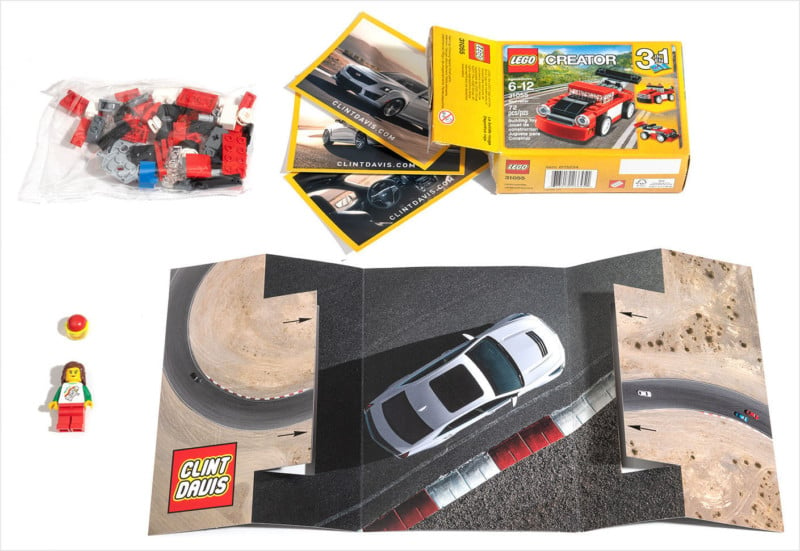
Alongside each modified LEGO kit is a custom foam insert with a personalized LEGO figure. Davis actually bought a wide range of LEGO figures and then reassembled them into custom figurines targeting each recipient.
“I try to match the person’s personality to the LEGO figure,” Davis says.


Finally, Davis neatly packed everything into small cardboard boxes (custom stamped with the words “Pull Here” on the top and “Take a LEGO Break” on the inside), inserted a handwritten note into each one, and voila! The LEGO promo mailers were done.



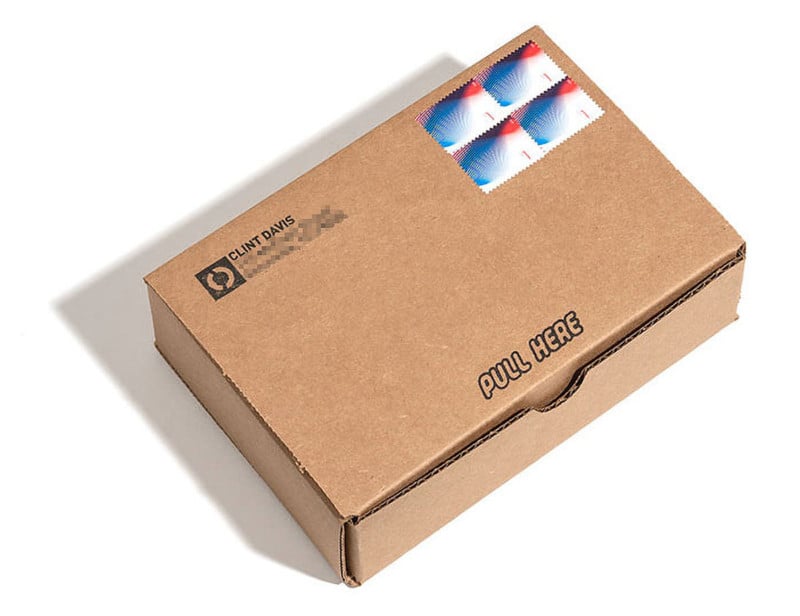
“I try to incorporate a keepsake within each year’s promo, and I think the 3-in-1 LEGO car and unique LEGO figure are perfect,” Davis says.
In all, he estimates that he spent about $1,200 creating and sending out the roughly 70 LEGO mailers.
 Although "assault weapons" fire no faster than any other semi-automatic, politicians routinely conflate them with machine guns, which have not been legally produced for civilians in the United States since 1986. Prohibitionists like Sen. Diane Feinstein (D–Calif.) argue that "assault weapons" are good for nothing but mass shootings and gang warfare, despite the fact that only a tiny percentage of these guns are ever used to commit crimes. They say these firearms are "weapons of choice" for mass shooters, who are in fact much more likely to use handguns, and claim they are uniquely deadly, even though the category is defined based on features that make little or no difference in the hands of a murderer.
Josh Sugarmann, founder and executive director of the Violence Policy Center, laid out this strategy of misdirection and obfuscation in a 1988 report on "Assault Weapons and Accessories in America." Sugarmann observed that "the weapons' menacing looks, coupled with the public's confusion over fully automatic machine guns versus semi-automatic assault weapons—anything that looks like a machine gun is assumed to be a machine gun—can only increase the chance of public support for restrictions on these weapons."
Sugarmann added that because "few people can envision a practical use for these guns," the public should be more inclined to support a ban on "assault weapons" than a ban on handguns, which are by far the most common kind of firearm used to commit crimes but also the most popular choice for self-defense. As Jacob Sullum shows in the latest edition of Reason, this strategy has been pretty effective.
 Australia's government plans to fight the country's tobacco black market by banning cash payments of more than $10,000 in Australian dollars—the equivalent of about $7,500 in the United States.
What this actually does is create a new black market for money exchanges while screwing over any law-abiding citizens who want to engage in large cash transactions for any number of perfectly normal reasons.
This is all about revenue, of course. Australia has the highest cigarettes taxes in the world. As in New York City—which has the highest cigarette prices in the United States, mostly due to taxes—the results are a massive black market and organized crime. More importantly, as far as the Australian government is concerned, it's not getting its money. Officials hope the ban on big cash payments will bring in an additional $3 billion a year.
This estimate assumes the smugglers and other black marketeers won't simply change the way they do their cash transactions, or turn to cybercurrencies, or, you know, just not comply with this law either. Obviously this new regulation will not prompt a lot of lawbreakers to suddenly toss aside a lucrative lifestyle. It will probably just be another criminal charge and a somewhat tougher sentence for those who get caught.
But an ineptly crafted hammer like this is going to have some significant side effects on people who are completely law-abiding. The law doesn't care if your cash transaction is to purchase something perfectly legal or not. And as Matt Novak notes at Gizmodo, more than a third of all commercial transactions in Australia are in cash.
At the Australian news site news.com.au, the owner of a Sydney-based security company that collects and moves cash worries that this new law will decimate his business:
"It's going to screw me—95 per cent of my business is cash collections," [Paul] Thomas said. "On a monthly basis, we could process and move up to $4-5 million—either picking up cash, processing and EFT-ing it to customers' accounts, or recarrying it from customers to their bank branch."
The 40-year-old said he had around 50 to 60 customers, nearly half of which were car yards. "All of my customers are legit operators, high-end car yards, money transfer depot stations," he said.
Mr. Thomas says the $10,000 limit will cause some businesses to stop accepting cash altogether, eliminating the need for armoured vans and security guards, with courier companies able to transport paperwork to banks.
Comically, the authors of Australia's new cash transaction limit respond by pointing to countries in Europe that have done the same. Among the examples are countries like Italy and Greece.
Greece and Italy have the largest shadow economies in the European Union. About a fifth of all economic activity in Greece takes place off the books. America can't even compare: Only about five percent of our estimated economy activity is not declared for taxes.
Greece and Italy are not models for fighting black markets. Greece and Italy are failing miserably. Australia should examine the countries that are trying to crack down on cash use, and recognize that this often backfires miserably.
India tried to go after its black market by rendering some of its legal tender null and void, requiring citizens to swap out their cash holdings for new money—and answer probing government questions about where the money came from. While the stated intent was to go after wealthy tax dodgers, the reality ended up hurting the poor much more. Hundreds of millions of poor Indian citizens don't have bank accounts and had their lives upturned trying to swap their suddenly worthless currency into something they could spend.
As Reason's Shikha Dalmia noted, India's prime minister was ignoring the roots of the black market problem: The country's tax rate is too high, and corrupt bureaucrats rule via bribes.
Australia's black market for tobacco is easily and obviously tied to its massive tax rate. Cigarettes cost $30 a pack there! Yet the government claims that once it cracks down and gets all those missing billions in revenue, it'll be able to lower taxes. They just need to spend an additional $318 million first to create a brand new task force to go after the black market.
That won't work. The government needs to deal with the root cause of its black market: itself. The state has forced prices of tobacco so high that people are resorting to illicit means to get their hands on the stuff. Violating the privacy of all Australian citizens—demanding that they engage in financial transactions the way you want them to—will not do anything to fix this problem.
Australia is far from the only government fighting black markets in dumb ways. When California legalized recreational marijuana, it did so with a massive tax scheme. As a result, the state's black market in marijuana isn't actually going away. Rather than realizing that his tax and licensing schemes are too onerous, Gov. Jerry Brown just proposed spending $14 million to create new task forces to fight this new variation on the marijuana black market.
Bonus link: William J. Luther explains why it's a bad idea (and a violation of citizen privacy) for governments to try to eliminate cash transactions.
The gym is made to help you get in shape, but that membership can be quite costly at times. Some of us are even notorious for practically “donating” our money to the gym without ever making use of that membership. So forget about it and start getting fit for free.
We have already talked about how to workout without going to the gym, but let’s take it a step further. By using the right apps and websites, you can exercise regularly without spending a dime.
Doing planks is the new trend among the no-equipment exercise crowd. It’s also actually one of the easiest workouts to start for anyone who is out of shape and wants to get fit again.
Planks exercise your core strength by making you hold a position similar to doing push-ups. Start with a small number (30 seconds) and gradually move up to longer durations of planks (3-5 minutes).
On Android, Plank Timer is a fantastic app to start doing planks, and then add its variations. Go with the simple plank first, as the app counts down the seconds of a full minute. Feel free to pause at any point, or finish too. The 5-minute plank exercise offers variations like leg lifts, which you will move up to.
On iPhones, Plank is a more detailed app that explains all the different types of planks and even includes short video demonstrations. The app breaks down your plank workouts into weeks so that you know how to slowly upgrade your planking abilities.
Download: Plank Timer for Android | iOS (Free)

Who says you need to pay a hefty gym membership to get fit? There are bound to be public places near you that freely offer the basic tools for calisthenics or bodyweight fitness exercises.
Outdoor Gyms is a map of such free gyms in open spaces, added and verified by the community of users. Give it access to your location or move the map to the desired spot. Every green pin is an outdoor gym, and hovering over the pin will reveal notes about it, like the equipment available at that spot.
Outdoor Gyms is one of those cool internet products that is made purely out of people wanting to help each other be the best version of themselves.

NamaSketch is a free web app that teaches yoga to someone who hasn’t tried it before. It’s a novel teaching mechanism too, as the site shows you ten different poses in easy-to-understand doodles.
Follow along by looking at the cute doodles and listening to the audio instructions. The yoga poses include downward dog, cat, bridge, cobra, and even the warrior pose. Don’t worry, none of these are too complex or overwhelming, so any beginner can start with them.
NamaSketch is an excellent way to learn the basics of yoga. After you’ve used the app a few times and want to continue with this exercise, try the more advanced yoga apps to help you workout anywhere.
Perfect Thumb’s Workout app hands you a full-body workout with 12 exercises for free. But it can actually give you its entire huge workout collection for free if you want to, thanks to its built-in “Rubies” coin system. Given how good the app is, that’s a steal.
Perfect Workout lets you earn free rubies for different activities, like watching a video ad, sharing the app sharing exercises, inviting friends to do workouts, completing a workout daily, and opening the app daily. These rubies can then be used to buy different types of workouts. Or well, you could spend actual money to unlock the workouts individually or all at once. It’s still cheaper than a gym membership.
The app itself is fantastic. Perfect Workout shows cartoon animations of each exercise so you can follow along, and there are audio instructions and prompts too. You can also set a reminder so you don’t miss your exercise, and the app automatically tracks statistics of all your calorie-burning activities.
Download: Perfect Workout for Android | iOS | Windows (Free)
This is an oldie but a goodie. Back in 2011, The Guardian put together a special issue on how to get fit for free, part of which was a video. Well, the video is still available for anyone on YouTube.
The video is less than five minutes long, but it shows you different exercise opportunities in your life that you never considered before. It’s a mix of bodyweight exercises, stretches, aerobic activities, and tips to use in your daily routine. Check it out, this might be the best five minutes you spent to get fitter.
One of the benefits of a gym membership is that local trainers will happily recommend a workout for you. Since you don’t have a trainer to rely on, turn to these free exercise and workout generators. They will ensure your fitness routine never gets boring, and challenges you to achieve more.
Image Credit: Syda_Productions/Depositphotos
Opening up YouTube can be a risky business. While YouTube can help you learn, it’s also a site where clicking on one video can send you down a rabbit hole filled with screaming goats, mad music videos, and one extremely grumpy cat.
If you find yourself getting easily distracted on YouTube then this article is for you. The list below will save you from losing several hours of your life watching time-wasting videos.
The following tools can remove recommended and trending videos, comments, and disable autoplay, among other things, all without keeping you from getting everything you need out of YouTube.
A lot of these tools also make it possible to watch YouTube videos without opening YouTube itself. As a result, they can also be used if you don’t want these video searches to affect your YouTube recommendations.
It doesn’t get more distraction-free than Minimalist YouTube. The site is little more than a search bar, and the results page is just as bare. You’ll see videos that relate to your search, and when you click on a video, it will take up much of the entire page.
You get all the controls that you would when watching a video on YouTube: Play, Pause, Closed Captions, and a Chromecast button.

You won’t see any recommended videos in the sidebar and the site won’t autoplay related videos once what you’re watching is over.
That said, Minimalist YouTube does fall short in one way: when playing a video you’ll still see a grid of recommended videos at the end of the video your watching, and you still have access to the More Videos link within the video player.
Who is this for? Minimalist YouTube is absolutely no frills and no features. It’s all about searching and watching. If that’s all you need then this is the site for you.
If you’re a Chrome user, the extension DF YouTube does a much better job of getting rid of distractions on YouTube.
After installing the extension, you can choose which distracting YouTube features to turn off.

With DF YouTube, Chrome users can disable autoplay, hide the trending tab, recommended videos, subscriptions, related videos at the end of the video, comments, and more.

It also includes a button to quickly activate and deactivate the extension.
Who is this for? This is a no-nonsense option for someone who wants a semi-permanent way to get on YouTube, watch a tutorial or a video for work, and get right back off again.
This extension is also extremely handy for someone who doesn’t want to get caught up in one of those time-wasting arguments that somehow always break out in the YouTube comments section of just about any YouTube video.
If you’re looking for a distraction-free way to share YouTube videos, Riv.yt makes this easy.
With Riv.yt, you can either search for a video directly on the site or just paste the URL of the video you want to share. That said, some URLs simply aren’t recognized by the site so it can be a little hit and miss.
When you are able to successfully find a video through Riv.yt, click the Use this video button.

Then, you can choose from five different designs. And, finally, Riv.yt will offer up a link that will take people to the distraction-free version of the video.

When someone clicks the link, they’ll still be able to read more about the video: who created it and the info in the YouTube description box, by clicking the i button.
Who is this for? If you’re conscious of not sending other people down the YouTube rabbit hole, or just want a distraction free video player on social media, this is a must-add to your arsenal of online tools.
If you’re not a Chrome user and still want to strip YouTube of comments and other distractions, you can do that with ViewPure.
With ViewPure, all you need is the YouTube URL or search term. When you search for videos on ViewPure, you can also enable a strict or moderate safe search mode.

The videos that you can play on ViewPure get rid of everything but the video itself, including recommended videos and comments. And of course, no videos will autoplay at the end of the video.

With ViewPure, you can also share the link that you’ve generated of the video, so it also becomes a viable alternative if you can’t get Riv.yt to generate a cleaned-up version of your video.
ViewPure also offers a bookmarklet that you can use to “purify” a YouTube video. The bookmarklet can be found on the ViewPure FAQs page.
Who is this for? ViewPure really bills itself as a safe search option, so it’s ideal for anyone who wants to be sure that search results are suitable for a younger audience. That said, the ViewPure site is littered with ads, meaning that they probably don’t have complete control over all the images that appear on the site.
Magic Actions is another browser extension, but one that is available for several browsers: Chrome, Opera, and Firefox.
Magic Actions is a pretty robust YouTube extension going beyond most of the features offered by other extensions and sites on this list.
After installing the extension, open up the options to set it up. You can access the options page either by clicking the Settings button directly under any video or by clicking the Extension button and tapping Options.

For a distraction-free version of YouTube, these are the settings you’re going to want to make sure are checked:
With all of the features above enabled, individual YouTube videos are going to look pretty bare:

Who is this for? This is a great option for other browser users who want a semi-permanent way to clean up their YouTube viewing experience. But for Chrome users choosing between Magic Actions and DF YouTube, the latter offers a much more straightforward user interface.
Just like ViewPure, Watchkin makes it easy for YouTube users to get rid of distractions no matter what kind of browser they prefer to use. You won’t get any recommendations, related videos, comments, or anything else.

All you get is the video itself.

Who is this for? Again, like Viewpure, if you want an easy, no fuss approach to a distraction-free version of YouTube, no matter your browser, this is a good choice.
If you’re planning on using either of these sites in a mobile browser, Watchkin is a better choice. However, if safe search matters to you, Viewpure is better.
There are a lot of ways to get more out of YouTube. Whether you’re looking for child-friendly educational channels, STEM educational videos, videos on how to draw, or videos on how to play the drums, you name it, YouTube has it.

Congratulations! You just got hired to travel for your photography/video services! The question now becomes: how do you get your batteries on the airplane? Does TSA have anything to say about it?
Since the Galaxy smartphone explosions, people have been paranoid about lithium-ion batteries exploding on board (you actually have a higher chance of getting struck by lightning than having your battery explode mid-air).
In this 10-minute video, we’re going to clear up the confusion so you can travel with peace of mind.

Standard AA and AAA batteries have no restrictions on them. Fly with as many as you want! Try to keep them in their original packaging so TSA won’t give you a problem. If you have them in a bag, TSA is afraid the batteries will short-out and cause an explosion.
In each lithium-ion battery, there are two compartments that are separated by a thin piece of plastic. Now, if the two sides meet, that is what causes an explosion. But, like we’ve said previously, this is very unlikely to happen.
Batteries that are In Components
Most of your electronic devices have lithium-ion batteries in them. This includes your smartphones, laptops, tablets, cameras, and strobe heads.
All of these meet TSA requirements and can be carried on because all of these batteries are under 100 watt-hours (Wh).
Because of this, most all of your batteries for your cameras and equipment will be able to be checked in, carried on, any way you want.
Spare Batteries
Spare batteries follow the same rule where they have to be under 100 watt-hours, but they cannot bet checked in. They have to be in your carry on.
TSA wants you to carry them because they are afraid of the batteries touching, shorting out and causing an explosion.
If you have a ton of batteries, carry it in its own case. I use an SKB case as a carry-on.
Since the limitation is 100 watt-hours, the Indi Pro 98 rechargeable batteries work great. I use mine to power my A7RII because it has such a terrible internal battery.
There is no weight restriction on them so you can carry as many of them as you want. They just have to be less than 100 watt-hours.

Big Batteries
The question now becomes what do you do with batteries that are bigger than 100 watt-hours? Well, you can actually bring two batteries on the plane with you that are larger than 100 watt-hours but smaller than 160 watt-hours.
These 160 watt-hour batteries must be carried on. You may not check them in.
Batteries like the Indi Pro 98 are awesome to take on the plane because they meet all of TSA’s requirements. Indi Pro has documentation that says the 98 is approved, which wouldn’t be a bad idea to bring with you if you have a lot of 98s with you.
All batteries have contact points. TSA doesn’t like it when batteries are next to each other and the contact points are touching in fear of them shorting out and exploding.
If you are traveling with a lot of spare batteries, cover the contact points with electrical tape.
You can also put the battery in the original box. Boxes that products usually come in have specs on the sides that announce what the product is.
The other alternative is to put the batteries in plastic zip-lock bags. But you have to put each battery in its own bag.
If you’re carrying a lot of batteries with you, TSA is more likely to stop you and check your batteries. So use these methods to save yourself the headache of figuring it out later.
To calculate the Watt-hours of your battery, use this formula: mAh*V/1000 = Wh
Full disclosure: Indi Pro was a sponsor of the video above.
About the author: Jay P. Morgan is a commercial photographer with over two decades of experience in the industry. He teaches photography through his company, The Slanted Lens, which runs a popular YouTube channel. This article was also published here.
Image credits: AA and AAA photo by BatteryBoy and licensed under CC BY-SA 3.0

Wired magazine has entered the video explainer game with a novel series that takes concepts from kindergarten to graduate school and beyond in under twenty minutes. Their “5 Levels of Difficulty” videos have it all: hip 21st century ideas like blockchain, cute kids saying smart things, a celebration of expertise and the communication skills today’s experts need to present their work to a diverse, international public of all ages and education levels. This is no gimmick—it’s entertaining and accessible, while still informative for even the best informed.
Take the video above, in which 23-year-old composer and musician Jacob Collier explains the concept of musical harmony. His students include a child, a teen, a college student, a professional, and… Herbie Hancock. “I’m positive,” he says, “that everyone can leave this video with some understanding, at some level.” At level 1, we understand harmony as an expression of mood or feeling, produced by adding “more notes” to a melody. A simple but effective definition.
Level 2 introduces basic theory—using chords, or triads, to explain how harmony can produce different emotions, modulating from major to minor, and creating “narratives” within a song. In Level 3, harmony becomes a language, and the vocabulary of the circle of fifths comes in. Collier’s college student companion also plays guitar, and the two jam through a few chord voicings to give his example song, “Amazing Grace,” a smooth and jazzy feel. At Level 4, a professional pianist learns a few things about overtones and undertones, compositional arranging, and "negative harmony."
Then, at 8:30, we get to the main attraction, and, as tends to happen in these videos at the final stage, student and teacher roles reverse. Collier essentially interviews Hancock on harmony, both perched behind keyboards and speaking the language of music fluently. Non-professionals won’t have had nearly enough preparation in 8 minutes to grasp what’s going on. It’s high level stuff, but even if you’re mystified by the theory, stick around for the stories—and learn what Miles Davis meant when he told Hancock, “don’t play the butter notes,” advice on playing harmony that changed everything for him.
Related Content:
John Coltrane Draws a Picture Illustrating the Mathematics of Music
Josh Jones is a writer and musician based in Durham, NC. Follow him at @jdmagness
The Concept of Musical Harmony Explained in Five Levels of Difficulty, Starting with a Child & Ending with Herbie Hancock is a post from: Open Culture. Follow us on Facebook, Twitter, and Google Plus, or get our Daily Email. And don't miss our big collections of Free Online Courses, Free Online Movies, Free eBooks, Free Audio Books, Free Foreign Language Lessons, and MOOCs.

Through the magic of black and white video, this rare gig of Bon Scott-led AC/DC has been unearthed. The sound is poor, the lighting sometimes non-existent, but who cares? Just look at the faces of the 16-year-old girls in the front row as one of the hardest rocking bands plays (checks notes) the St. Albans High School gymnasium in 1976! It’s absolute madness. Who knew at that time that AC/DC were going to hit big, like stadium big, like essential hard rock band of all time big? To some it was probably a fun night out and isn’t it funny that the lead singer likes to rock a set of bagpipes?
In fact, the song they play in the video “It’s a Long Way to the Top (If You Wanna Rock ‘n’ Roll)” is the first (perhaps) track to pit bagpipes against guitars.
In this key bit of investigation by Dangerous Minds, writer Cherrybomb wonders whether Bon Scott--a transplant from Scotland to Australia when he was six--actually could play the pipes at all. I mean, yes, one might *assume* that being Scottish means you’re half-way there, but in fact, according to a piper called Kevin Conlon, Scott only got an interest in the instrument during the recording of 1975’s T.N.T. :
I got a call from Bon, and he didn’t know who I was and I didn’t know who he was. He wanted to buy a set of bagpipes and have a few lessons. I told him they would cost over $1000 and it would take 12 months or more of lessons to learn how to play a tune. He said that was fine and came down for a few lessons, but as we were only going to be miming, he just had to look like he was playing.
Cherrybomb concludes that maybe, just maybe, Scott is playing the pipes during this number, instead of miming to a pre-recorded track over the P.A. But later the pipes got smashed up, and the number got dumped from the act. And reportedly the rest of the band was furious over their limited funds being spent on an instrument Scott couldn’t really play. The whole story has a tinge of Spinal Tap excess to it, but hey, you wouldn’t want it any other way, right?
via Dangerous Minds
Related Content:
AC/DC Plays a Short Gig at CBGB in 1977: Hear Metal Being Played on Punk’s Hallowed Grounds
Hear a Supercut of the Last Second of Every AC/DC Song
Dementia Patients Find Some Eternal Youth in the Sounds of AC/DC
Ted Mills is a freelance writer on the arts who currently hosts the artist interview-based FunkZone Podcast and is the producer of KCRW's Curious Coast. You can also follow him on Twitter at @tedmills, read his other arts writing at tedmills.com and/or watch his films here.
Watch AC/DC Rock a Gymnasium Full of High School Kids in 1976 is a post from: Open Culture. Follow us on Facebook, Twitter, and Google Plus, or get our Daily Email. And don't miss our big collections of Free Online Courses, Free Online Movies, Free eBooks, Free Audio Books, Free Foreign Language Lessons, and MOOCs.
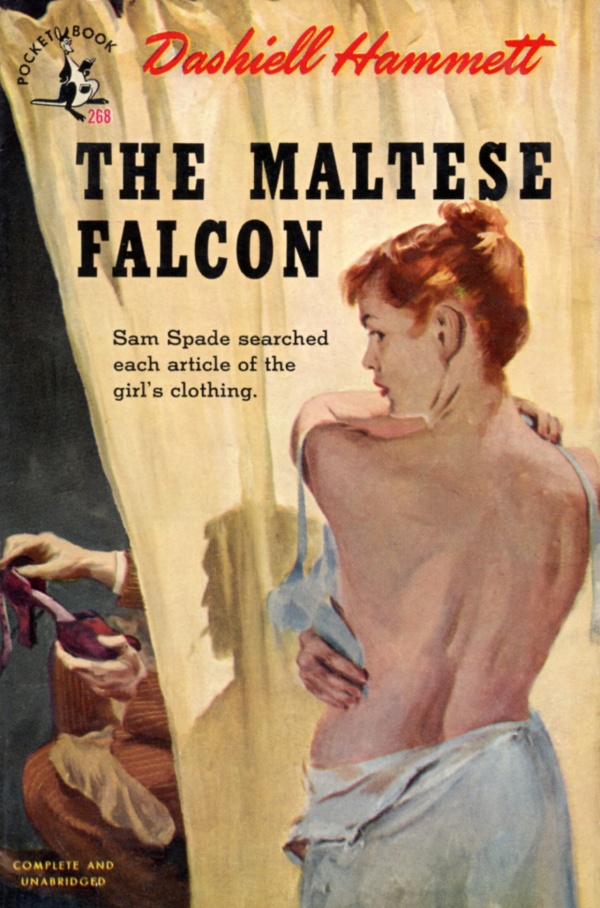
Yesterday we wrote of the low opinions the eminent J.R.R. Tolkien and his friend C.S. Lewis held for the “vulgar” creations of Walt Disney. As a counterpoint to their disdain for popular entertainment, we might turn—as writer Steven Graydanus does in Disney's defense—to their contemporary, the Catholic apologist and prolific essayist, journalist, poet, and writer of detective novels and short stories, G.K. Chesterton.
But we aren't talking Disney here, but hard-boiled pulp fiction, a genre I think Chesterton would have liked. Chesterton’s work “was entirely popular in nature,” notes Graydanus. He was “a great defender of popular and even ‘vulgar’ culture." Take his essay “A Defense of Penny Dreadfuls,” which begins:
One of the strangest examples of the degree to which ordinary life is undervalued is the example of popular literature, the vast mass of which we contentedly describe as vulgar. The boy's novelette may be ignorant in a literary sense, which is only like saying that modern novel is ignorant in the chemical sense, or the economic sense, or the astronomical sense; but it is not vulgar intrinsically--it is the actual centre of a million flaming imaginations.
Sentiments like these inspired admirers of Chesterton like Marshall McLuhan and Jorge Luis Borges to take seriously the mass entertainments of their respective cultures.
We might apply a Chestertonian appreciation to the book covers here, illustrating detective fiction by such notables as Dashiell Hammett, Arthur Conan Doyle, Agatha Christie, and Raymond Chandler.

Despite the cultural cachet these names bear, they are also writers whose work thrived in the “pulps,” a term denoting, Rebecca Romney writes at Crime Reads, “a wide category that bounds across genres.” Famed detective writers were as likely to be printed in “pulp fiction” magazines and cheap paperback editions as were acclaimed authors like Jules Verne, H.G. Wells, and Edgar Allan Poe. In addition to a number of genre conventions, the “common traits” of pulp fiction “are cheapness, portability, and popularity.”
Detective fiction, whether “literary” or wildly sensational, has always been a popular entertainment, close kin to the “Penny Dreadful,” those cheaply-produced 19th century British novels of adventure and sensation. “Twentieth-century detective novels are intimately tied to the history of the pulps,” writes Romney, which “rely on the erotic for their appeal.” Pulp publications sensationalize in images what may be far more chaste in the text. These “ridiculously sexified” book covers do not bother with coy symbolism or minimalist allusion. They take aim directly at the libido, or, to take Chesterton’s phrase, “the actual centre of a million flaming imaginations.”

The cover of The Maltese Falcon at the top goes out of its way to illustrate “the only sexually scandalous scene of the book, as if it were the single most crucial moment of the entire story.” The cover is pure objectification, and on such grounds we might reasonably object. To do so is to critique an entire mid-twentieth century aesthetic of “exploitation,” a campy style that gleefully titillated audiences who gleefully desired titillation.
The covers date from the mid-thirties to early fifties. All of the typical visual pulp themes are here, which are also typical of detective fiction and noir: the femme fatale (called “a luscious mantrap” on the cover of Raymond Chandler’s The Big Sleep below), in various seductive states of undress; the unsubtle hints of violence and sadomasochism. Such themes in the novels can be overt, implicit, or fully submerged. The focus of these covers turns the tropes into cheap come-ons. In this, perhaps, they do their authors an injustice, but their naked intention is solely to make the sale. What readers do with the books afterward is their own affair.

"These absurd covers,” Romney writes, “speak to the detective novel’s unavoidably shared heritage with other sensational pulp genres, much like the ever-present creepy uncle at Thanksgiving.” As much as quality detective fiction, sci-fi, fantasy, and horror might receive critical praise as high art, they will always be inextricably related to the “vulgar” pleasures of the pulps. To speak of such entertainments as the domain of the lowbrow, the magnanimous Chesterton might say, is only to "mean humanity minus ourselves." Still, I wonder what Chesterton would have said had his collected Father Brown stories appeared in a pulp version with a nonsensically sexy cover?
Visit Crime Reads to see these covers compared with those of more subtle, and arguably more tasteful, editions.
More pulp covers of classic literature can be found at LitHub.
Related Content:
Raymond Chandler’s Ten Commandments for Writing a Detective Novel
Josh Jones is a writer and musician based in Durham, NC. Follow him at @jdmagness
Pulp Covers for Classic Detective Novels by Dashiell Hammett, Arthur Conan Doyle, Agatha Christie & Raymond Chandler is a post from: Open Culture. Follow us on Facebook, Twitter, and Google Plus, or get our Daily Email. And don't miss our big collections of Free Online Courses, Free Online Movies, Free eBooks, Free Audio Books, Free Foreign Language Lessons, and MOOCs.

Photo by Susan Sterner, via Wikimedia Commons
American journalism breaks down into two basic varieties: that which came before Tom Wolfe, and that which came after. The 1960s counterculture, the space program, the modern art scene, the influence of Bauhaus architecture: whatever the subject, readers could trust Wolfe--who died this past Monday after a more than sixty-year career in letters--to convey it with great vividness of imagery and inventiveness of prose. He first developed his style of "New Journalism" in 1962, almost inadvertently: while struggling to shape his research on California custom car-culture into an article for Esquire, he wrote a letter to his editor describing what he had seen. The editor, so the legend goes, simply removed the letter's salutation and printed it — leaving its voluminous detail and casual, conversational style untouched — as reportage.
That piece became the lead essay in 1965's The Kandy-Kolored Tangerine-Flake Streamline Baby, a collection now considered one of the defining books of the 1960s in America (a list that also includes Wolfe's own The Electric Kool-Aid Acid Test). After its publication, Wolfe made this appearance on the radio (part one, part two) across from Studs Terkel — a fellow journalist with an equal work ethic but a very different sensibility indeed — to talk about the California car customizer's highly specialized enterprise as well as his own.
"It's something that's a real form of expression," Wolfe says to Terkel. This is something we've overlooked in this country about the automobile and the motorcycle: that these things are forms of expression. We thought we were being very sophisticated a few years ago when we discovered that the automobile was a status symbol." Looking back, the realm of the Kandy-Kolored Tangerine-Flake Streamline Baby-builders was Wolfe's ideal starting point, vividly crystallizing as it did phenomena that would go on to number among his major themes: style, status, subculture, self-indulgence.
Just as one can't imagine William Makepeace Thackeray outside mid-19th-century England or Émile Zola outside late 19th-century France — two cited inspirations in Wolfe's later efforts to write not just novel journalism but journalistic novels — could Tom Wolfe have become Tom Wolfe anywhere other than postwar America? Looking back, that vast country plunged suddenly into a brand new kind of modernity, brimming as it was with wealth and wonder, vulgarity and violence, seemed to have been waiting for just the right chronicler, one sufficiently (in the highest sense) unorthodox and (in an even higher sense) undiscriminating, to come along. That chronicler came and now has gone, but the writing he leaves behind will let generation after generation experience the overwhelmingly vital decades in America he both observed and had a hand in creating.
Related Content:
The Beginnings of New Journalism: Capote’s In Cold Blood
Read 11 Free Articles by Hunter S. Thompson That Span His Gonzo Journalist Career (1965-2005)
Read 12 Masterful Essays by Joan Didion for Free Online, Spanning Her Career From 1965 to 2013
Studs Terkel Interviews Bob Dylan, Shel Silverstein, Maya Angelou & More in New Audio Trove
Based in Seoul, Colin Marshall writes and broadcasts on cities and culture. His projects include the book The Stateless City: a Walk through 21st-Century Los Angeles and the video series The City in Cinema. Follow him on Twitter at @colinmarshall or on Facebook.
Hear Tom Wolfe (RIP) Tell Studs Terkel All About Custom-Car Culture, the Subject of His Seminal Piece of New Journalism (1965) is a post from: Open Culture. Follow us on Facebook, Twitter, and Google Plus, or get our Daily Email. And don't miss our big collections of Free Online Courses, Free Online Movies, Free eBooks, Free Audio Books, Free Foreign Language Lessons, and MOOCs.

When to raise cain and when to refrain when fishing surface lures.

Tips from experts on how to safely navigate teacherous ocean inlets and when to stay home.
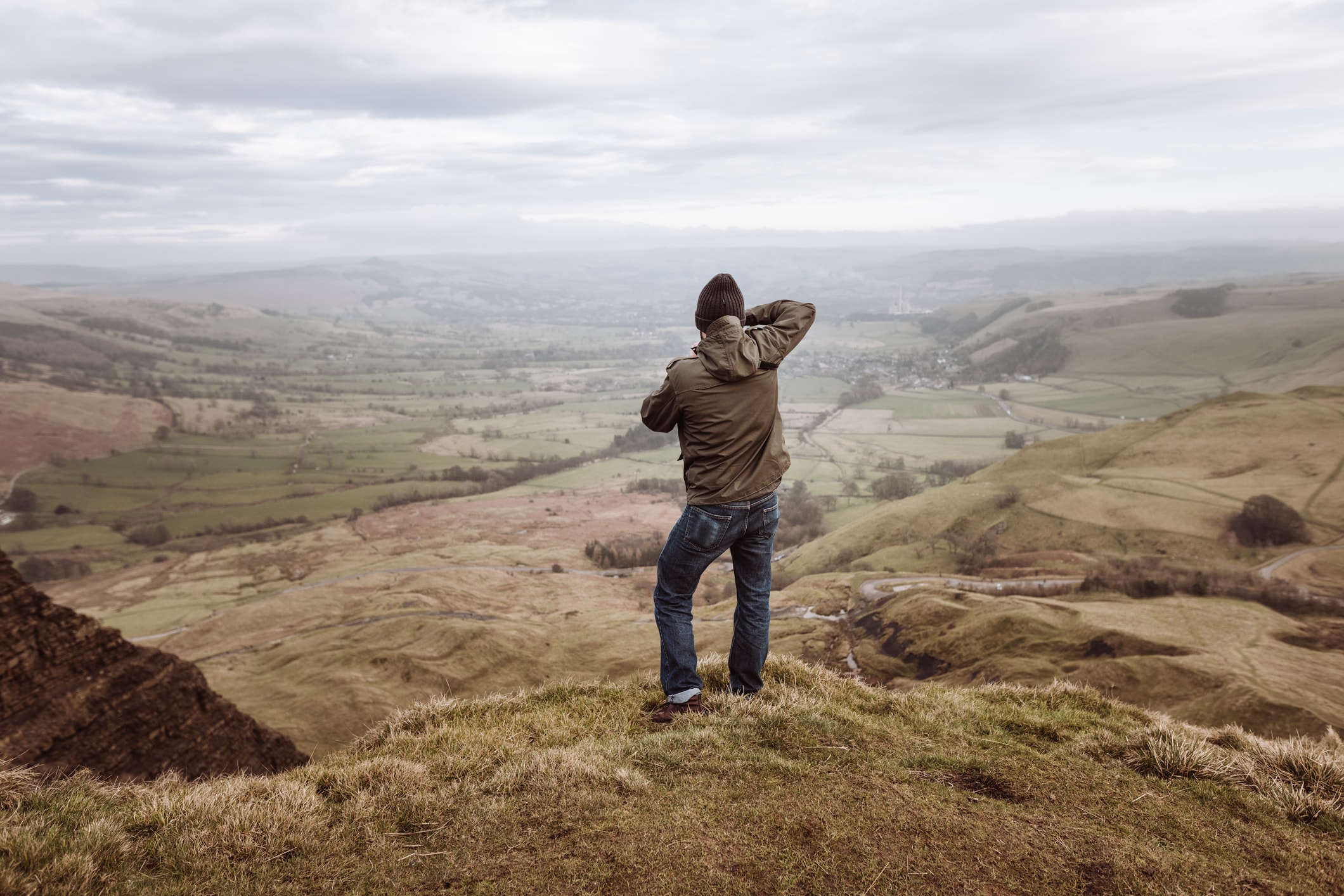
If you want to take better photos of landscapes, one of the most important things you can do is learn how to use your camera.
But beyond that, having a deep understanding of crucial landscape photography settings is a must.
In the video above, Nigel Danson outlines a few essential camera settings that every landscape photographer should know.
By practicing these settings, you can get the most out of your camera and learn how to take landscape photos that are truly eye-catching.
For a quick overview of each setting, keep reading below!

For the uninitiated, ISO controls the sensitivity of your camera's sensor to light.
It's measured on a scale like 50-25600, where the lower the number, the less sensitive to light the camera will be.
Not all cameras have the same ISO range, though. Higher-end cameras have much wider ISO ranges while entry-level cameras might offer something like 100-6400.
More than that, the ISO you use will influence how "clean" the shot is.
That is, the higher the ISO, the more likely the image is to have digital noise, or grain.

So, not only is it important for you to understand how to manipulate ISO to get a good exposure, but it's also important to understand how far you can push the ISO while still getting a good, clean shot.
Just how far you can push the ISO will depend on your camera.
Full frame cameras tend to have much higher ISO ranges and usually produce cleaner shots at higher ISOs than something like an entry-level crop sensor camera.
That being said, it's important to test your camera - no matter what kind it is - to determine the point at which ISO begins to be a problem.
The less noise your images have, the more eye-catching they will be.
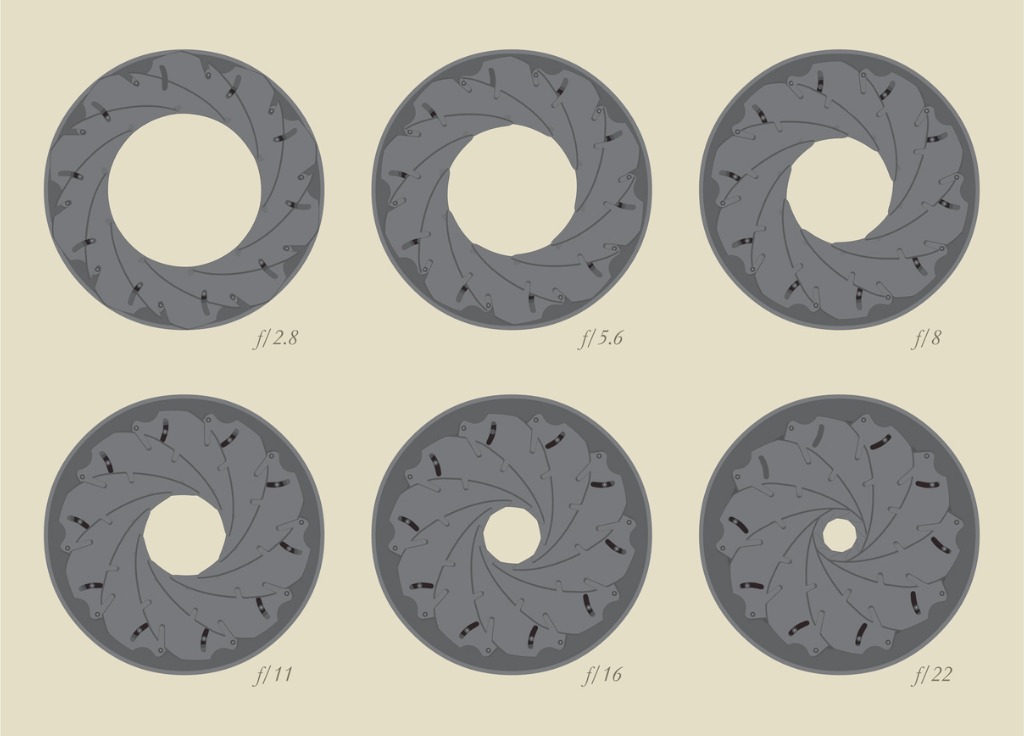
Another crucial landscape photography camera setting that you must learn is what aperture that you can safely use.
As a reminder, the aperture controls the amount of light that enters the lens.
Aperture is measured in f-stops, where the aperture number represents the size of the aperture.
What gets a little confusing is that the larger the f-number, the smaller the aperture. So f/2.8 is a very large aperture while f/22 is a very small aperture, as shown above.

Aside from understanding the somewhat confusing aperture scale, you also need to understand the best aperture at which to take landscape photos.
And by "best aperture," that means the aperture at which the lens is the sharpest, or its sweet spot.
The sweet spot is different for every lens, but by and large, most lenses operate at their best in the f/8-f/11 range.
By shooting in the lens's sweet spot, you maximize sharpness and get the most detailed image possible.

There are various methods that landscape photographers use to perfect the focus of their shots.
One is to focus at a point one-third of the way up from the bottom of the frame.
This tends to work well because of the way that depth of field works.
Depth of field is the area of an image that's in sharp focus, and one-third of it occurs in front of the focal point with the remaining two-thirds behind the focal point.
Thus, if you focus at the one-third point in the frame, you should have everything in the shot nice and sharp.

You can also focus stack your images in post-processing.
That is, you can set up your camera on a tripod and take several shots, each with a different plane of focus.
Then, in post-processing, you simply combine the images together, the result of which is a single composite photo that is sharp from front to back.
Nigel also outlines a handy way to determine the depth of field in the video. He explains it beginning at the 8:20 mark.
Be sure to watch the complete video above for examples of each of these tips - and for more details about other landscape photography camera settings that you need to know.








Web-based technologies have been advancing at a rapid pace. Many of the latest disruptive technologies in different industries exist because the internet made them possible.
These five industries are on a course toward full disruption. They will affect the way you live. You can thank the seismic change in internet and mobile technologies.

For decades, cable companies enjoyed a monopoly over television entertainment.
Once DSL data transmission speeds made it possible for people to purchase high-speed internet and start streaming video entertainment via another “pipe” into the home, cable companies realized they needed a new game.
Cable companies bundled TV and internet packages. This successfully kept most cable TV customers happy. Who wants to sign up for a new company when you can get both TV and high speed internet through a single provider?
However, with high speed cable internet came the influx of online services that let you stream high-quality entertainment. The quality of services like Netflix, Hulu, and now YouTube TV became so good, in fact, that more people started dropping the “cable” part of their cable and internet package. When you can watch TV on your computer, what’s the point of cable TV?
Unfortunately, it’s taking a long time for the technology to catch up with demand. Joel recently described the many limitations of streaming services that keep many customers tied to their cable TV:
As streaming services overcome these technical limitations, cable companies then turned to the government to put a stop to the creeping competition.
As Ben explained in his overview of net neutrality, cable companies went after the laws that prevented them from slowing down traffic from competitor entertainment services like Netflix or Hulu.
Under heavy pressure from the cable television industry, the FCC eventually repealed net neutrality laws at the end of 2017. Despite congressional efforts to overturn this repeal, the net neutrality rules officially came off the books on April 23rd, 2018.
At this point, things are looking bad for the future of online entertainment streaming services. It’s only a matter of time before cable TV monopolies make a move to recapture control over the streaming entertainment domain again. Is this the end of the story?
The only reason cable companies are winning this battle is the backbone technology.
The ability to stream shows and movies depends upon the large bandwidth provided by cable internet. Up until recently, there was no other technology available that could challenge that. Communication companies continue building a fiber network infrastructure that could offer consumers an alternative. But the growth of that infrastructure is slow, and availability remains limited.
However, there is a glimmer of light. In 2019, the mobile communication industry is set to release the next generation of internet data: 5G.

The next time you’re out in public, take a look at how people are already using their mobile devices. Now that most mobile carriers offer unlimited data packages priced on par with most cable internet packages, making the transition to a full mobile internet solution will be seamless.
The only thing holding most people back from using the 4G internet at home is bandwidth. But when 5G (and later) mobile internet technologies overcome that limitation, services like YouTube TV and other live TV streaming solutions will fill that market. The need for a cable internet package will disappear entirely.
Wireless high speed internet will open up a world of possibilities in entertainment delivery. We could see a world with the following technologies:
Once people can switch over to a wireless internet capable of transmitting the same quality and amount of data as cable internet, cable television will become an archaic concept. This rise in the competition will mean the freedom and flexibility of choice for you.

The traditional method of buying a car is to drive around to local dealerships and search for a car that strikes your fancy. In the process of doing this, you’re usually accosted by a car salesperson whose job is to draw you inside the dealership where they can make a deal.
The internet brought more knowledge to the consumer. Before heading to the dealership, car buyers would browse sites like Kelly Blue Book and Edmunds. This allowed consumers to walk into a car dealership fully aware of what a “good price” for a particular car looked like.
Unfortunately, you still had to go into the dealership and negotiate with a salesperson, as she tried to convince you why all of the bells and whistles on this particular car justify a higher price.
However, more services are cropping up that are bringing Amazon-style consumerism into the auto sales industry.
These services bring the convenience of click-and-deliver Amazon-style shopping to the car buying experience. Even with a delivery fee, paying a premium for the luxury of avoiding a car salesperson would be worth it.
Unfortunately, as these services become more popular, it could lead to the end of physical car dealerships and remove the need for on-site sales staff. This means you’ll be able to shop for a car in your pajamas, and never have to haggle over a car purchase again.

It’s clear at this point that services like Uber and Lyft are disrupting the taxi service industry.
Even people who might have been nervous to use a taxi service, or confused about how to call or find one, are the same people who feel completely confident opening up an app on their phone and summoning an Uber ride.
Some of the things that make these services so much better than a traditional taxi service include:
Once public confidence with these services became mainstream, adoptions rates grew rapidly. In 2017, Forbes reported that Uber had over 40 million active monthly riders, and an app install rate of at least 150,000 new installs a day.
The collapse of the taxi industry has already started. Just a year earlier in 2016, Business Insider reported on San Francisco’s Yellow Cab filing for bankruptcy. It also reported in 2017 that taxi rides in New York City over the previous twelve months dropped 11 percent.
This is most likely only the beginning. The technology that forms the platform for services like Uber and Lyft are allowing other startups to compete:
When you boil this technology down to its basics, these are simply services that make use of the mobile internet for ride-sharing purposes. Because of this, ride-sharing apps are likely to multiply as time goes on.
This may lead to a full collapse of the taxi industry, but what it means to you is that in many communities it may no longer be necessary to even own a car. This will not only bring many people newfound freedom, but it could also contribute to a better environment.

Cryptocurrency is a digital currency built upon the foundational technology known as a “blockchain”. The concept of a blockchain was first developed by someone going by the pseudonym Satoshi Nakamoto in 2008.
The technology can transmit a digital unit of currency via a peer-to-peer system. Multiple nodes of a network (miners) validate every single transaction in the system, with every transaction stored in a public ledger.
The validation introduces a level of security for both the sender and the recipient that surpasses most existing transaction security protocols. But the most compelling, disruptive elements of the technology is that it removed the need for a “middleman”—such as a bank—serving as the manager of those transactions.
Individuals own “wallets”, which serve as the endpoints of transactions. The unit of currency used in each transaction is a Bitcoin (or another cryptocurrency), which holds its own value based on the market demand for it.
If the use of blockchain is adopted by the mainstream as a secure method of sending and receiving money, how will that blockchain disrupt the banking industry?
It’s that last point that many observers disagree on. Many say the major issue with cryptocurrency is that it’s susceptible to hacking. Also, since many users store their cryptocurrency “wallets” in exchanges like Coinbase, the danger of theft from a hack is just as high. The theft of Bitcoin from Mt. Gox is a perfect example.
At the beginning of its history, many people were saying that Bitcoin could mark the end of the banking industry. The reality is that cryptocurrencies may only change how people look at currency, and how currency is valued.
Bitcoin and other cryptocurrencies aren’t really the disruptive technology. The disruptive technology is the blockchain. Both large banks and small startup companies have recognized the significant value of blockchain security. In 2017, Financial Times reported on the biggest areas banks are looking to capitalize on blockchain technology:
Outside of the banking industry, small companies are building new products on top of blockchain technology. This has birthed a whole new area of startups known as an Initial Coin Offering (ICO), analogous to the Initial Public Offering (IPO) in the stock market.
Companies are developing use cases for their own proprietary “coins” for uses like gambling and real-estate transactions, and using the blockchain to provide customers with more secure methods to use their services.
Yes, this may lead to new forms of currency that hold value all on their own, but the bigger news is that entirely new products and services will be launched in coming years that will allow self-enclosed economies to grow and flourish.
Imagine a virtual world where a “virtual coin” holds as much or more value than gold, and those coins can be exchanged between users of that virtual world in a transaction that’s just as secure as one that took place between two bank accounts.
This is an exciting new area of technology, and it’s only in its infancy.
If you’ve been in a grocery store lately, there are two technologies showing up that provide some clues into the future of retail shopping,
The first is the row of self-serve kiosks without a clerk available to scan items for you. It’s clear that grocery stores understand that long lines at the checkout are the number one complaint from customers.
It’s this fact, combined with the demand for more at-home-delivery options like Amazon, that many new companies are now offering grocery-delivery service.
My wife and I first noticed one of those green Shipt shirts while we were waiting in a long checkout line at Meier. The alien space ship logo caught my eye, so I Googled the brand.
When I learned that it’s a grocery-shopping service, I started wondering why we were wasting our time walking through the grocery store for an hour or two every week. We could just have someone else do it for us.
So far there are a few companies that offer this service in more populated areas throughout the US:
In our instant-gratification, consumer-based society, these services are becoming wildly popular. This popularity is also fed by the availability of mobile apps that make ordering groceries just as simple as ordering pizza delivery.
In a strong economy, when families have more income available for groceries, paying a small fee to avoid spending hours in the grocery store is a very tempting proposition.
This trend will likely lead to fewer customers in the grocery stores, and fewer cashier jobs for local communities. But on the upside, there will be lots of grocery delivery jobs!
It’s never easy to predict how things will go in the future. But current technology trends in the areas of industry described above point to some very big changes in the coming years.
These changes will result in more flexibility and convenience for customers. Unfortunately, it also means a dramatic shift of available jobs for workers, and the strong need for retraining and career adjustment.
Predicting the future is hard, but the disruptive technologies in these five areas of our lives are almost mainstream. They will only evolve in the years to come.
It’s the Southern belle of the fruit pies! This deep-dish peach blackberry pie is a winner no matter what audience you have.

Makes 1 (9-inch) deep-dish pie
Ingredients
2 Basic Pie Dough (recipe below)
4 cups sliced fresh peeled peaches
1 pound fresh blackberries
1 tablespoon fresh lemon juice
½ cup plus 1 tablespoon sugar, divided
¼ cup cornstarch
¼ teaspoon kosher salt
¼ teaspoon ground cinnamon
1/8 teaspoon ground nutmeg
2 tablespoons unsalted butter, cubed
1 large egg yolk
2 teaspoons water
Bake until golden brown and bubbly, about 55 minutes, loosely covering with foil during last 10 minutes of baking to prevent excess browning, if necessary. Let cool completely on a wire rack, about 6 hours.
Makes 1 (9-inch) piecrust
This no-fuss dough is our go-to for a buttery, flaky piecrust.
1¼ cups all-purpose flour
1 teaspoon kosher salt
1 teaspoon sugar
½ cup cold unsalted butter, cubed 4 to 5 tablespoons ice water
1 teaspoon distilled white vinegar

The post Deep Dish Peach Blackberry Pie appeared first on The Southern Weekend.


