Tags: Rob Lowe
751 points, 43 comments.
830 points, 90 comments.
One of G&G’s most popular articles, The Care and Keeping of Bacon Grease, always stirs a conversation on social media. Here are readers’ top tips, opinions, and advice on storing and using bacon grease.
A few general thoughts on bacon grease:
Bacon grease rules! I have the cholesterol to prove it. —Mark Dillon
Don’t call it grease … that has a negative connotation. It’s Southern olive oil.—Donald Tomlin
That’s the only oil that touches my cornbread skillet.—Duwayne Wireman
I actually sort through the bacon to find a real fatty package so when I cook it I’ll get lots of bacon grease.—Woody Davis
Benton’s bacon  fat is the best!— Jodi Pannone Savage
… and surely no Southerner would exaggerate their reverence for the stuff.
It’s a holy oil. It’s the nectar of the Southern gods.—Tina Dubinsky-Bell
Bacon grease is my essential oil.—Frankie Allen Ferguson
Almost divorced my husband once because he threw out bacon grease.—Danielle Morris
What do readers cook with bacon grease? (Short answer: everything.)
Cornbread, collards, black-eyed peas, meatloaf, roux for gravy, and most of all fresh baby butter beans.—Jane Hall Harmon
You just can’t season green beans without it.—Sharon Kurfman
My grandma made biscuits every morning. She would stick her hand in the grease and wipe some on the top of every biscuit just before she put them in the oven.—Russ Cherry
You never tasted fried chicken till you taste it fried in bacon fat.—Jim McDonough
My dad used to make popcorn with bacon grease. Best. Popcorn. Ever.—Billy Joe Davis
Made Chex Mix with it this year and it was AMAZING!—Donna Tanner
Good cornbread requires two things: a good cast iron skillet and bacon grease.—Lee Kennamer
When I get a quart saved up I make a big pot of chocolate brown roux in the oven for gravies and gumbos. Keeps forever like that, too.—Marc Wayne Jenkins
Tip: Buy generic bacon when it’s on sale, then render it for the precious fat and use the bacon bits left in Caesar salad, omelettes, pancakes, pasta, or waffles.—Lyle Beaugard
Kicks smoothies up a notch.—Warren H. Strange
But it’s not just for cooking.
I save it to make suet cakes for the birds. Mix it with crunchy peanut butter, oatmeal, cornmeal, flour, cracked bird seed, and mealworms. They love it. Especially the woodpeckers and flickers.—Virginia M. Brummitt
It will make your dog’s coat nice and shiny.—Marilyn J.
Good on a squeaky hinge.—Jack Carter
We used to slather it on our horses’ hooves to keep them pliable … the barn cats would LOVE it.—Lori Moss Daniels
Many folks say they store bacon grease in the refrigerator or freezer …
Run mine through a coffee filter into a mason jar when it’s still hot, let it cool, then store it in the fridge. Best method I’ve found.—Anderson Watt
Mason jar in the fridge. I don’t bother to filter it, just dump it in hot, bacon crumblings and all.—Ryan Brown
I keep mine in a coffee cup in the fridge like my father and his father before him.—Charlie Mullen
I’ve always kept mine in a ceramic bowl in the fridge. No problems! But when my daughter brought home her Yankee boyfriend at Christmas, she hid the bowl so he wouldn’t be grossed out.—Marilyn White
I freeze it in zip bags. When I need some, I break a piece off to use it.—Sra Lozano
… while others say its place is anywhere but the fridge.
My grandmother had a tin canister on the stove and each day’s bacon grease went into it. NEVER in the fridge and a blob went into every veggie she decided to embalm.—Colleen Campbell
I still have my grease saver given to me in a bridal shower in 1950. I seldom cook enough bacon now to use it, but there it sets on the ledge between my stove and refrigerator.—Maxine Canoy Upchurch Province
Coffee can under the sink! Like my parents and grandparents before me.—Ashley DePriest Werling
My mom used a Crisco shortening can for bacon grease storage, and kept it in the drawer under the oven. It was such a critical cooking ingredient, I was almost an adult when I finally understood Mom was not saying “baking” grease.—Carol Meriwether
I’ve a special little speckle ware pot with a lid for just bacon drippings. Never cook vegetables without a little. Life’s too short not to.—Russell Hughes
My paternal grandmother who grew up in Georgia kept a small coffee pot-like container on her stove top. It held bacon grease, and whenever she wanted to add it to whatever she was cooking, which was almost always, she’d turn on the burner over which the pot sat, melt down the bacon grease, and then pour generous amounts into the pot or baking pan. She lived to 96 years of age.—Genie Glade Revelle
Well, my parents and grandparents, from Tennessee, kept theirs in a small aluminum container on the stove. Never refrigerated, always available. Nobody got sick … but we did get fat.—Pat Bodiford Hubel
Others wonder why any self-respecting Southerner would store it in the first place.
Seems to me if you gotta store it, you ain’t using enough.—Tom Berger
I use it too fast to bother with “keeping” it.—Holly Polich
Save? We never have enough. We have BLTs for supper because Mom needs the bacon grease to cook squash the next day. She buys and fries bacon solely to obtain the grease.—Riki Childress
What do you mean “keeping bacon grease?” Shouldn’t any Southern kitchen worth its biscuits have a constant flow of bacon grease — sort of like bourbon on Derby day?—David
I’ll keep it safe in my belly.—Rick Tappan
More Uses for Bacon Grease from Garden & Gun:
> How top chefs use bacon grease
> Try these bacon-fat biscuits
The post The Southerner’s Guide to Bacon Grease appeared first on Garden & Gun.


Starting in 2021, Americans, as well as others from a ton of other visa-free countries, will have to do a little more work before they’ll be able to visit a number of European countries. Now, getting into places like Germany, France, and Spain just requires your U.S. passport, but in a little under two years you’ll…
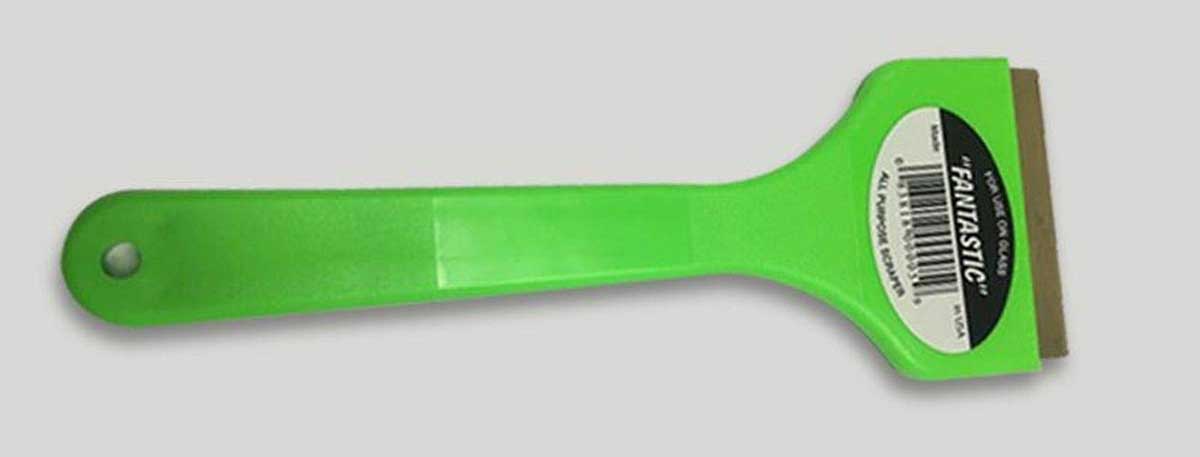
I bought the one I have now in 1982 at a gas station in Wisconsin. It’s such a superior scraper that I’ve been careful to make sure it transferred from disposed-of vehicle to replacement vehicle four times since then. The thin, stiff, but mildly conforming brass blade slides easily between ice and glass and does so without scratching because brass is softer than glass. Oh, yeah, it still costs $2. Important: don’t use it to hack at the ice because you may deform the brass blade, after which it won’t slide between ice and glass well at all.
— Jeff Morrow
Brass blade is the real deal. I’ve given these to friends and family because they are so much better than the crappy plastic ones. Brass is soft enough to not damage the glass. The blade is thin and not really sharp to the touch, but is great on ice. The plastic scrapers get dull pretty quickly and then just skip over really tough ice.
— Scott Christensen
Had one of these for years and it was the best I have ever used. You just have to be careful about hitting the rubber gasket with it – it will cut. That is the reason the blade is not as wide as the blade holder.
— Jim Sheafer
[This is a Cool Tools Favorite from 2010]
Fantastic Ice Scraper ($6)
Available from Amazon
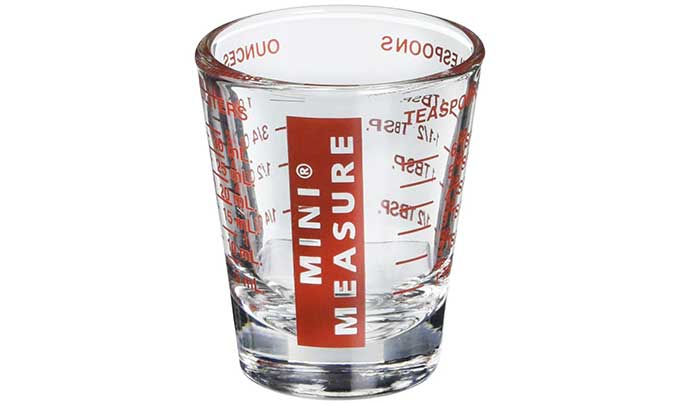
I’ve always had at least one of these Mini Measure Shot Glasses ($6) on hand over the last four years. For small amounts of liquid ingredients in recipes, like vanilla extract and soy sauce, it’s much easier than trying to fill a measuring spoon to the rim. For mixed drinks, it’s more precise than a jigger, albeit a bit slower. If nothing else, it makes a perfectly serviceable (and somewhat geeky) shot glass.
The measurement markings are in fluid ounces, milliliters, teaspoons, and tablespoons. A few different companies make them, and while they’re available online for $3-$5 a pop, I’ve seen them cheaper in brick-and-mortar stores like Bed Bath & Beyond and Target.
-- Jason McCay
[This is a Cool Tools Favorite from 2010]
Mini Measure Shot Glass ($6)
Available from Amazon
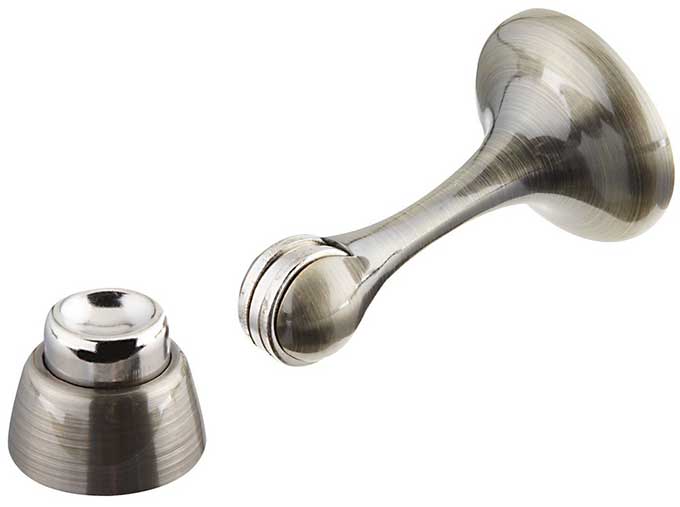
I frequently have windows open in the house and have for years put up with doors slamming closed when the wind catches them. I have finally found a solution in the form of these magnetic door catches ($11).
They work excellently and I have installed them on most doors throughout the house. I have used them for several years and always show them off to the house guests. I can now leave windows open without a door slamming shut. One minor drawback is that they are a little loud when the magnet makes contact with the catch. Finally, care should be taken when installing to make sure the two parts align well otherwise the magnetic hold will be weaker.
-- Don Allen
[This is a Cool Tools Favorite from 2010]
Magnetic Doorstop with Catch ($11)
Available from Amazon
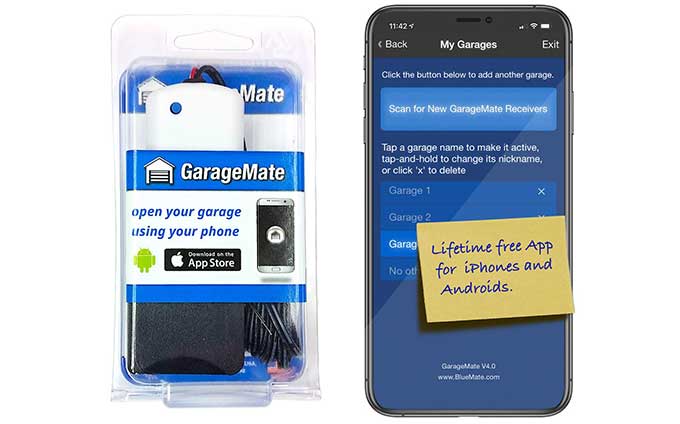
GarageMate ($50) is compatible with all the major garage door openers. It comes with a simple Android or iPhone app. Suppose you’re going biking and you want to open the garage door and you don’t want to take your keys with you. You can just open up this app on your phone, press one button, and the garage door opens up. It’s just like magic. All you have to worry about is taking your phone, and it’s much more convenient.
-- Matt Cutts
[This was reviewed in our podcast interview with Matt Cutts.]
GarageMate ($50)
Available from Amazon
Sign up here to get Recomendo a week early in your inbox.
Productivity trance
I discovered a number of years ago that playing one track of music in an endless loop helped me write the difficult first draft. Some writers and coders use white noise, but another group (I am one) prefer a single musical track in a loop. The kind of music varies by person (I use one specific Russian choir hymn); after a dozen loops the music disappears and what I get is a feeling of comfort, which helps me focus for hours while it repeats. Try it with your song. — KK
Search for example sentences
If I’m not confident with how I’ve used an expression, I will google the turn of phrase inside of quotation marks, and if I get Google Books results with similar examples then I know I’ve used it correctly. Lately, I’ve been using Ludwig for the same kind of phrase searches. I like that it gives me back example sentences from different sources like encyclopedias, news and science publications. — CD
Photoshop tutorials
My favorite way to learn new Photoshop techniques is by watching the Phlearn YouTube channel. I’ve learned how to remove objects, remove backgrounds, touch up skin, remove glare from eyeglasses, and my favorite: how to use the clone stamp tool. — MF
Graphic inspiration
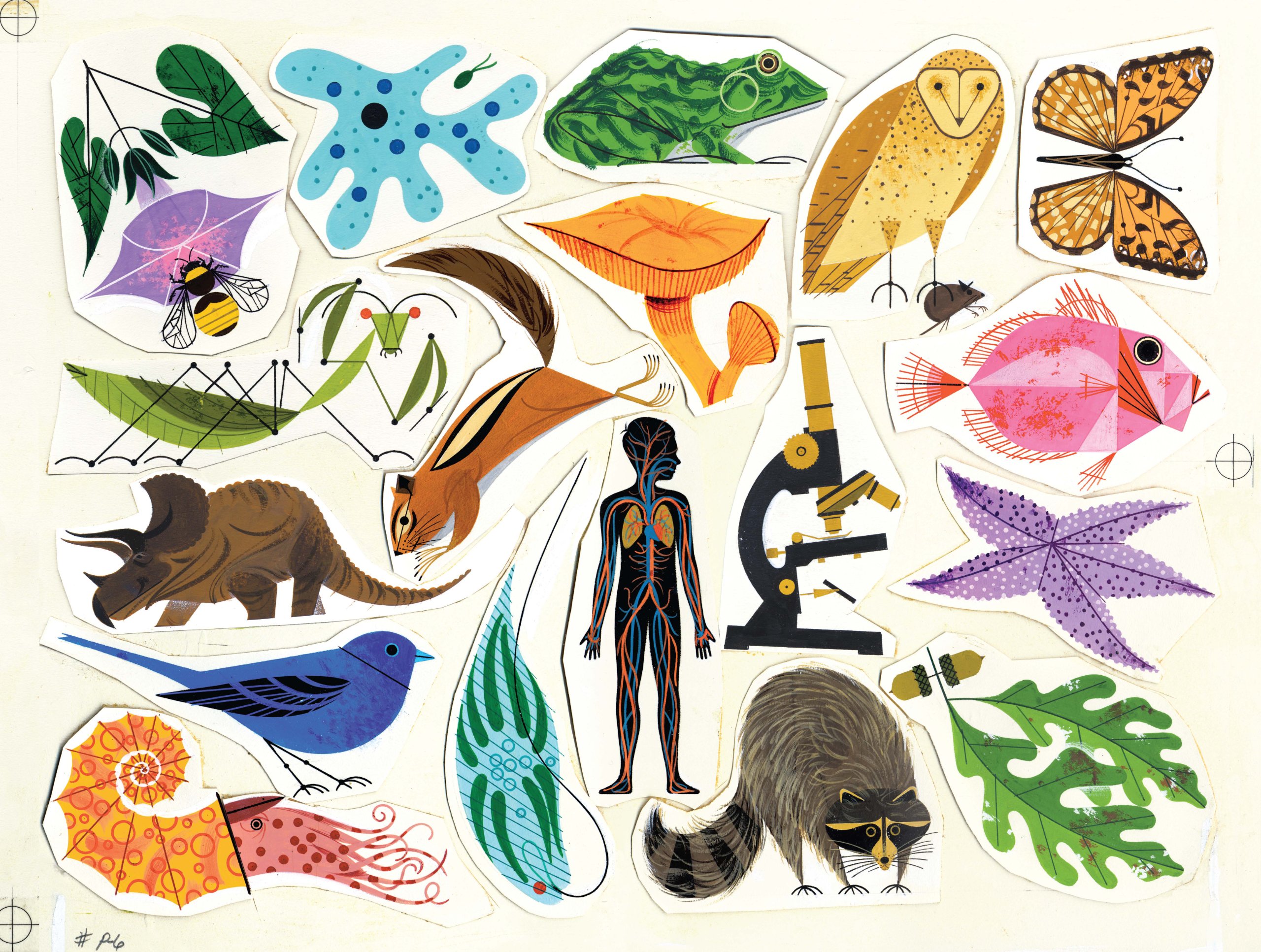
I collect visual reference books to provoke me when I make things. I recently discovered the work of the prolific illustrator Charley Harper, who in part created the graphic look of the 1950s and 60s. His illustrations are witting, spiffy, and timeless. Many hundreds of his designs have been gathered into a nifty book called Charley Harper: An Illustrated Life (pictured above). It’s not nostalgia: I get at least 10 new ideas each time I open it. — KK
Good cordless driver
I finally upgraded my one-speed cordless driver with a variable speed drill driver ($35). Made by Tacklife it has adjustable torque, and speed is controlled by how much you pull the trigger. A built-in light turns on when you use it. I wish I would have bought this a long time ago. — MF
Alternative to an exercise ball seat
I bought this 13-inch balance disc ($14) to help reduce lower back pain. I use it for about 4 hours a day when I’m sitting at my desk. It keeps me from slumping forward and helps perfect my posture. — CD
-- Kevin Kelly, Mark Frauenfelder, Claudia Dawson
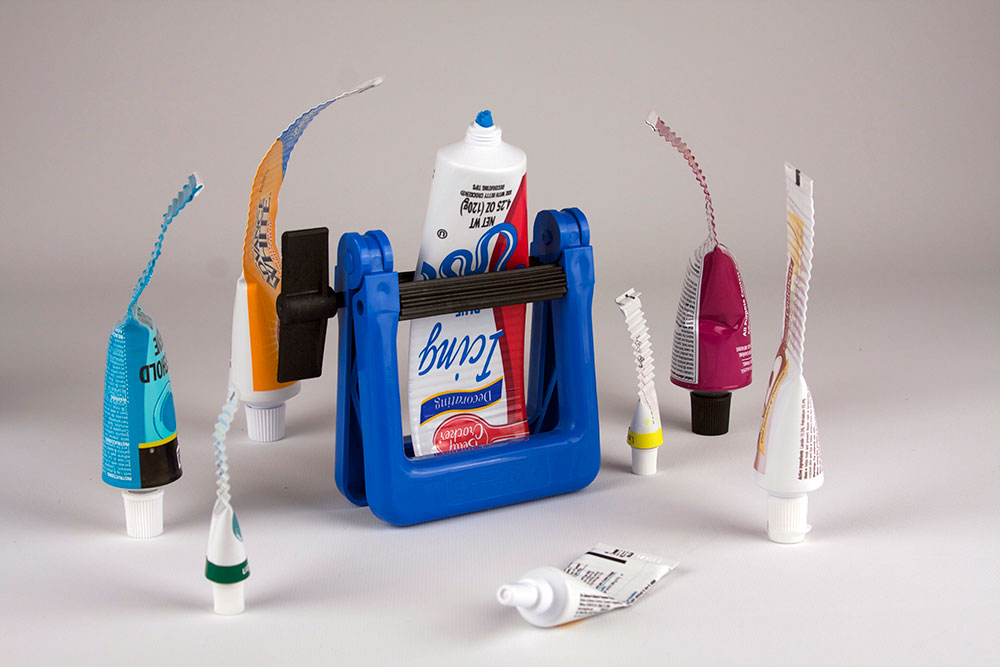
My new favorite tool is the Tube Wringer ($28), from Gill Mechanical.
From their website: “The Tube-Wringer efficiently squeezes the contents from tubes of caulk, glue, medical compounds, adhesives, and toothpaste. Nearly indestructible, the Tube-Wringer will last a lifetime under normal use and pay for itself in short order.”
In addition to sqeezing every little bit out of just about any tube, the squeezed part is left with a zig-zag texture so future usage doesn’t undo the squeezing. Tubes are left efficiently squeezed, and cool looking. My only problem is that I wish I had more partially-used tubes available because it’s so satisfying to squeeze every last bit out of them.
-- Sally Rosenthal
[This is a Cool Tools Favorite from 2003]
Heavy Duty Tube Wringer ($28)
Available from Amazon
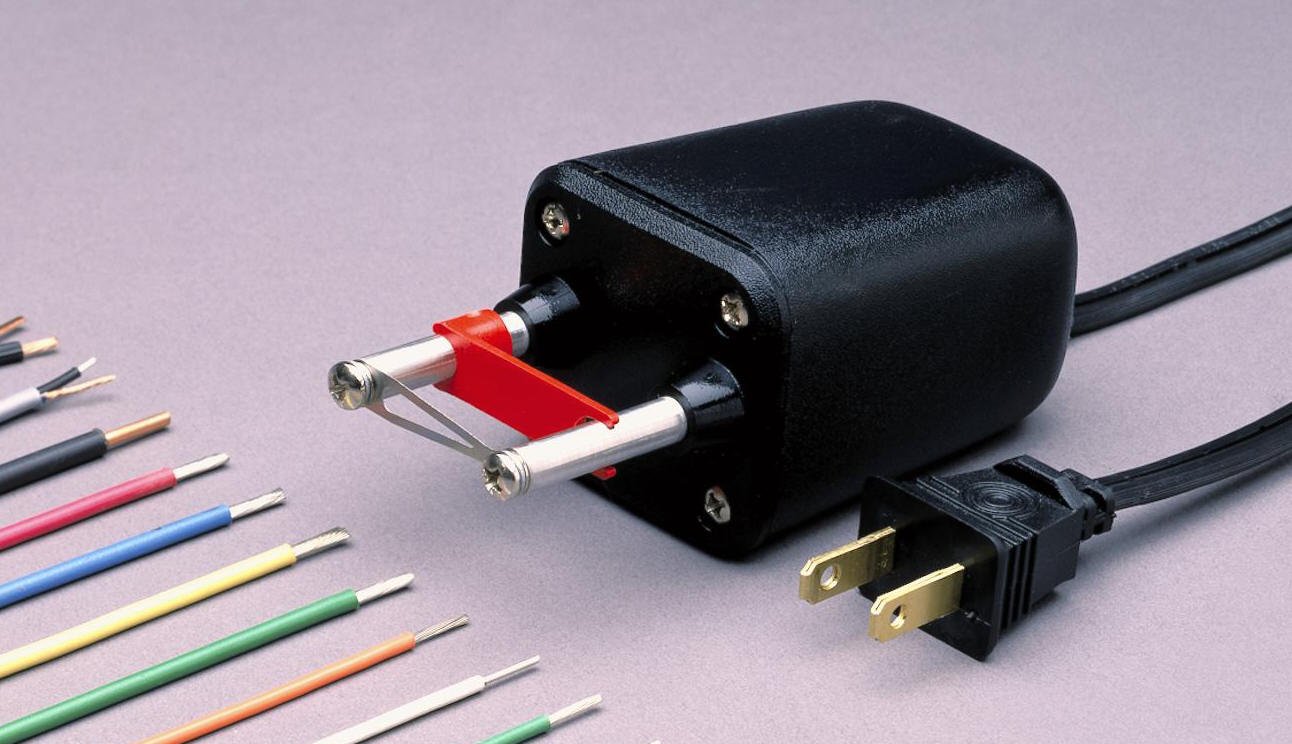
Here is a great tool that few outside of professional wire workers seem to know about. The thermal wire stripper is easy to use and has enough benefits that I have kept one in my wiring bag for the last 20 years.
What is a thermal wire stripper? It is a hand-held wire stripper with an electrically heated inverse “V” blade. To use, position the wire and push the button. The thin blade tip heats up and melts the insulation in about a second at which point the wire is pulled out leaving the insulation behind. And the best part? No damage to the metal conductor. I am good with lineman’s scissors and diagonal cutters but I still leave a nick once in a while when using these tools. Not so with the thermal stripper!
I have had good luck with both solid and stranded wire mostly 20-24 gauge using Patco’s PTS-20 model ($134). This is the battery model (the only battery powered thermal wire stripper that I have ever seen). The plug-in version works just as well but I got tired of dragging a cord around. The battery is a D-cell sized Ni-MH and will last me 2-3 hours when I am installing low-voltage wiring. They indicate “1,500 strips per charge”. Maybe I hold the button down longer than necessary or something but I don’t think that I am getting that kind of life out of a charge. I am not sure of the recharge time as I usually plug it in and leave it for a few hours or overnight. Regardless of the run-time specifics, I find it a great aid when working with wires.
Other models handle 14-gauge and coax; I have not tried them but I imagine that they work just as well. The price seemed steep to me, but the benefits are enough that I recommend one for anyone doing more than occasional wiring.
-- Darrow Cole
PATCO Thermal Wire Stripper PTS-10 Series ($134)
Available from Amazon

Our guest this week is George Dyson. George divides his time between building boats and writing books, and some fo the books he has written include Project Orion: The True Story of the Atomic Spaceship, Darwin among the Machines: The Evolution of Global Intelligence, Turing’s Cathedral: The Origins of the Digital Universe.
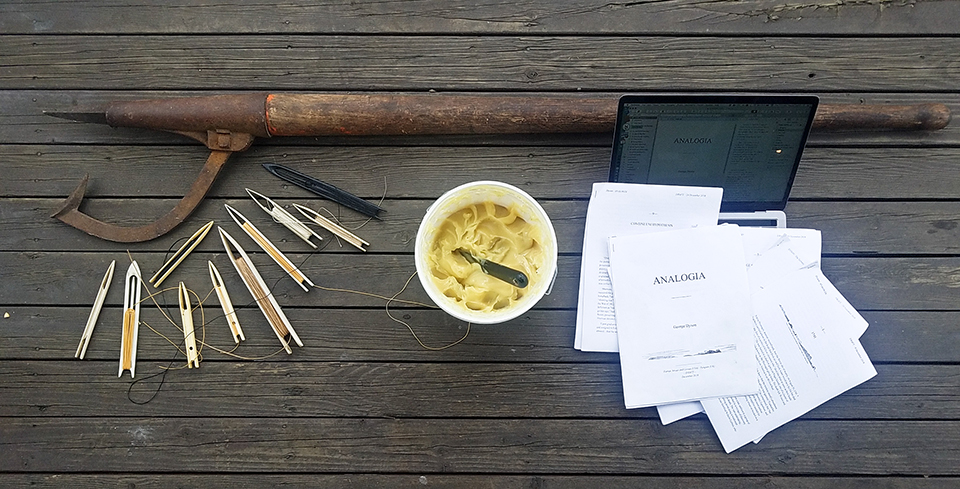
Subscribe to the Cool Tools Show on iTunes | RSS | Transcript | Download MP3 | See all the Cool Tools Show posts on a single page
Show notes:
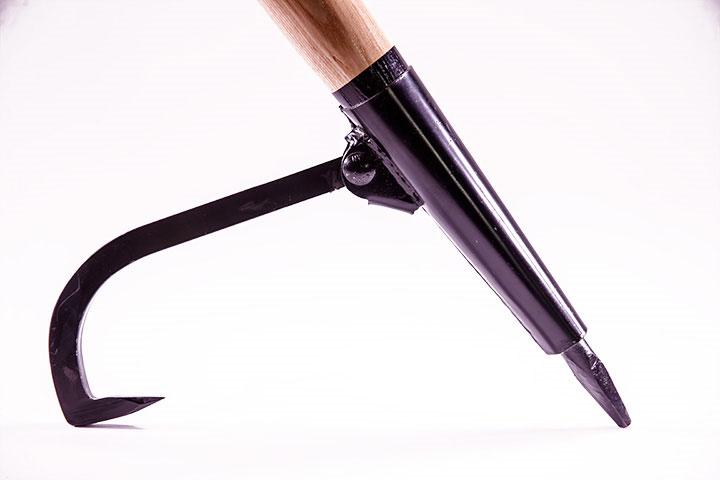
Peavey ($74)
“[This is] a tool that has literally not changed at all for 150 years, and it is still made by the company that it’s named after, the Peavey Company in Maine. If you do any work in the woods, with logs, chainsaws, things like that, it allows you to basically put a big leaver on the end of a log and roll the log around. It’s just a beautiful work of art tool and sort of a miracle that it’s still made and survives. You spear the log, and then that hook catches and suddenly you have a really secure five- or six-foot lever arm on the log. I cut a lot of firewood on the beach, and before you cut a log you want to roll it over and clean the sand off. It’s the only tool that’ll allow you to do that without sort of killing yourself. … It’s a classic, absolutely essential and unequaled tool for any serious woodsperson.”
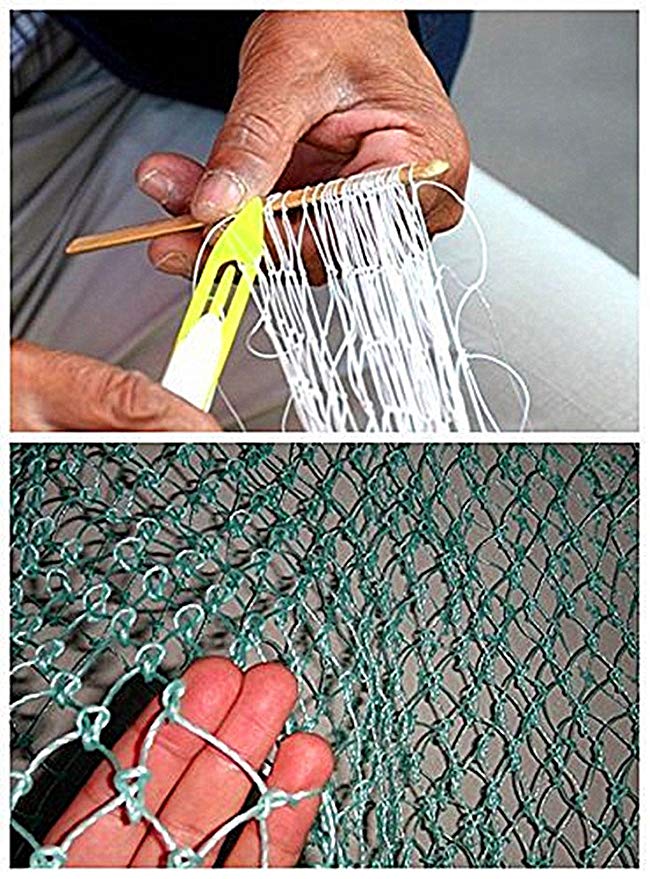
Netting Needles ($9) and How to Carve a Net Needle and Weave a Survival Gill Net video,
“[This] the net needle, which isn’t really a needle. Some people would call it a similar to a weaver’s shuttle, but it’s a little, very cleverly-made design. In fact, you can find them more or less unchanged in archeological sites that are 5000 or 6000 years old. It’s a small sort of cigar that you wind up with net-mending twine or string or anything like that, and then you have a pretty good length of string or twine on this thing that it gives you something to hold on to, and you can immediately mend nets, or of course I use them lashing kayaks together. So it’s the kind of thing that I wouldn’t go anywhere without one in my toolkit somewhere. They’re made in all sorts of sizes. There’s flat ones, and there’s three-dimensional ones, which are better. They’re still made in Norway, and there’s a company in the United States, the Loomis Company, that makes the Norwegian pattern. … It just becomes almost automatic or second nature that as you’re weaving this thing in and out and let come off every now and then you have this handle you can pull on, so it’s a kind of tool that becomes part of your mind.”
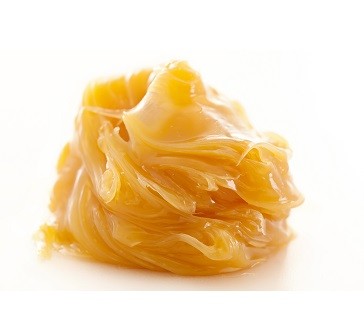
Lanolin in bulk ($50/gallon)
“Lanolin, or wool grease, which is actually a wax, is a by-product of cleaning raw wool, but it’s the best part — it’s how sheep in wind-swept northern Scotland stay waterproof and warm. It is used in all kinds of products, from lip balm to anti-corrosion coatings, but you can buy it pure and unadulterated for about $50/gallon which is a lifetime supply for you and many friends. It is absolutely unexcelled for chapped skin and lips, and is favored by all serious mariners for lubricating through-hull sea-cocks and corrosion protection of metal parts and fasteners that may be exposed to years of saltwater before having to be taken apart. … it’s the greatest corrosion protection known to the maritime world. Even modern, the most modern, sailboats will still use lanolin. I gave a whole lot to everybody for Christmas. I bought little cosmetic jars, and if you heat it up … It’s very interesting. It’s actually a wax, not a grease, so if you heat it up a certain temperature then it becomes liquid. You can fill the containers, and everybody loves it. It’s like 100-proof lip balm with nothing else diluting it.”

Scrivener
“I make my living writing books, and so my tool for writing books is a software package called Scrivener that actually Neal Stephenson gave me sort of a beta version of when it first came out. It changed my life overnight. I had been struggling writing. I wrote my first book with no computer at all, I guess with a typewriter, and the second in Word on floppies, and the third one with Word and a hard drive. And then I got Scrivener, and in 24 hours I was using the program and it became transparent, and I never used Word unless I had to again. It’s just a miraculous piece of software written by one person. So I looked at my last book, Turing’s Cathedral, and if you open up the Scrivener package it is 3730 separate files of things that I collected and worked into the book, yet when you look at it from the outside, from the writer’s side, you just are sort of looking at a typewriter, and you can pull out the ideas it. …. You can just throw out all this stuff and then shuffle it. It’s miraculous for a piece of software for organizing.”
We have hired professional editors to help create our weekly podcasts and video reviews. So far, Cool Tools listeners have pledged $400 a month. Please consider supporting us on Patreon. We have great rewards for people who contribute! If you would like to make a one-time donation, you can do so using this link: https://paypal.me/cooltools.– MF

When humans look for a partner with whom they want to have a relationship, we usually list the qualities to which we are attracted and what we want to see in our partner. There are some qualities that may be negotiable while there are things that you probably wouldn't compromise. But for certain species of Heliconian butterflies, they have quite strict criteria for finding their mate.
Complex and diverse, Heliconian’s wings patterns have drawn the attention of artists and scientists alike. And yet, each distinct species maintains its own unique pattern through generations. Scientists always wondered exactly how the species manage to preserve and maintain these patterns—and don’t cross-breed with each other.
One obvious reason is that Heliconian males are very picky when it comes to choosing their mates. A male will only woo a female butterfly that looks like him—meaning that she has the same color patterns as him. That’s why the red-spotted species react to Jiggins’s red cloth. Scientists knew that this specific reproductive trait drove the butterflies’ speciation, but the exact genetic basis governing their mate selection was unclear until recently.
(Image credit: University of Cambridge)
Portable pork is the best kind of pork, which is why you need to know how to make this pulled pork walking taco.


The origins of the blue jean are rooted in workwear, and even with the premium fabrics and more modern fits we’re rocking today, denim can handle most anything you can throw at it. That being said, we get a lot of questions about how to prolong the life of jeans here at Huckberry. Luckily, one of our very own knows the ins and outs of getting the most out of quality denim—Huckberry Customer Experience Manager and resident denim expert Michael Ichioka is here to spill his knowledge and personal methods that will keep your favorite pair going strong for years to come.
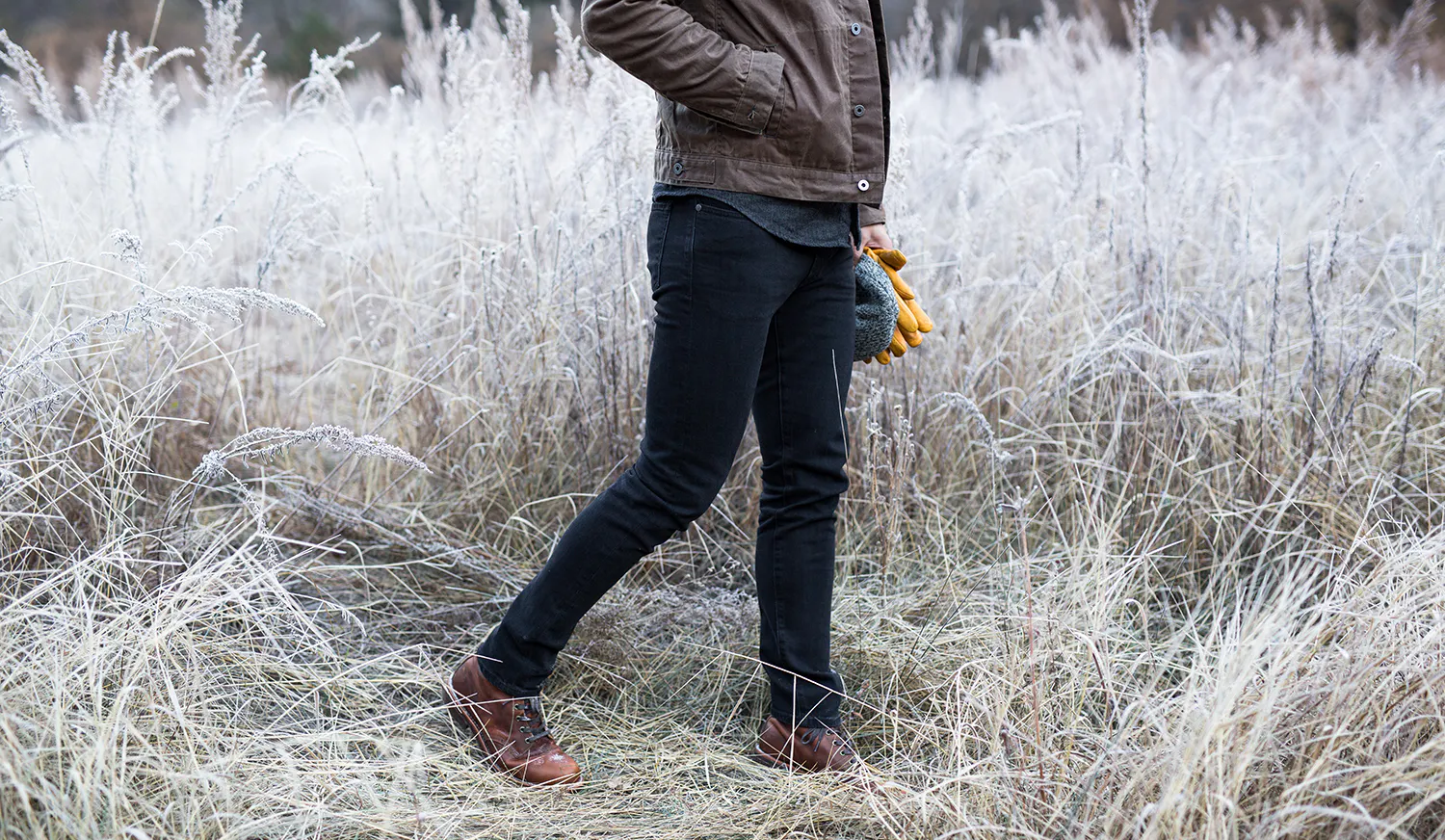
Wash your jeans. One of the biggest (and grossest) pieces of misinformation is that you shouldn’t wash your jeans for six months to a year—I always cringe internally when I hear this suggestion, however well-intentioned it might be. That said, you definitely don’t need to wash your jeans after every wear the same way you would with a t-shirt.
Personally, I tend to be pretty messy, so I usually base my washes around whenever I spill a little beer on ‘em or experience the collateral damage of scarfing down a burrito in five minutes flat. But if you’re on the neater side, washing your jeans every month or two (depending on how often you’re wearing them and what you’re doing in them) is a good general guideline.
There are two methods I suggest for washing your jeans. The first is hand washing, which is good if you’re obsessive about the process (or if you don’t have direct access to a washing machine). The second, machine washing, is a bit more straightforward. We’ll walk you through both.
Hand Wash
Fill the bath or five-gallon utility bucket with cold water deep enough to fully cover your jeans. You may need to push the jeans down a few times to remove any air pockets and keep them from floating on the surface. Add a capful of the natural soap of your choice (we’re big fans of Juniper Ridge or Dr. Bronner’s), and let your jeans soak for an hour or so, flipping them over and agitating by hand every 15 to 20 minutes. Drain the water, then give your jeans a rinse in clean, cold water to remove any soap residue. (Note: If you use your bathtub for this, it’ll definitely be left with some indigo stains, which is a great opportunity to clean it afterward and score some points with whomever you live with.)
Machine Wash
When machine washing, I suggest using a detergent with no optical whiteners (most scent-free or natural detergents are good for this). Set the machine to cold, gentle wash, and if possible, disable the spin cycle—forcing the jeans against the outside of the drum can lead to creases or other unusual wear patterns that some folks aren’t fans of.
Dry
Regardless of how you wash your jeans, I recommend hanging them to dry if possible. I lay my jeans flat on an old towel and then roll it up (burrito style) to absorb excess water first, then I let them hang dry outdoors or in a space with good airflow. If you do need to put them in a dryer, it’s best to use a low-heat setting and remove them as soon as they are dry.
Store
If you’re wearing the same pair of jeans every day, try hanging them up from a ladder rack overnight. This will allow the fabric to breathe between wears (vs. folding them and sticking them in a drawer) and will also prevent any creases from forming.
And keep in mind, for any raw (not pre-washed) pair of jeans, the indigo dye will transfer to any surface it comes into contact with, at least until after the first few washes. Be aware of this when wearing white sneakers, suede boots, or lighter-colored tees.

With any cotton garment, rips, tears, and holes are a matter of when rather than if—it’s a natural feature of the fabric. Jeans are no exception: The most common culprit is the dreaded crotch blowout. Due to the construction of jeans and friction from day-to-day use, the crotch or inner thigh is usually the first place to wear through. But there are a few things you can do to delay that eventuality.
One major factor is the fit: If you’re trying to prolong the life of your jeans, I’d recommend trying to find a pair that fits slightly looser in the top block. If you can’t fit your hand into the front pockets or take the stairs two at a time, there’s a good chance the thigh is a bit too constricting. Similarly, if you find yourself constantly having to pull the belt loops to hike the jeans up while you’re trying them on, you may want to find a pair with a higher rise.
Another big factor is the activity level of the wearer. Bicycling is the biggest contributor here—if you’re riding your bike in jeans every day, you’re pretty much guaranteed to blow out the crotch in less than a year.
The good news: Due to the sturdy fabric and straightforward construction, jeans are one of the easiest articles of clothing to repair. Below, I’ve got three options for getting your jeans fixed up when the time comes.
DIY Repair
If you have access to a sewing machine, our friends at Heddels put together a great step-by-step DIY repair guide. My first-ever pair of nicer jeans was from Naked & Famous, and I was able to patch up a half dozen rips and tears and keep them in the rotation for several years with this guide.
DIY by Hand Repair
For a more leisurely approach, you can also try sashiko (literally, “little stabs”), a traditional Japanese mending method. Brooklyn-based brand Apprvl sells a repair kit that will give you everything you need to get started. While sashiko repairs can be time-consuming, there’s something satisfying about mending by hand (it’s also a great activity to do while catching up on your podcasts), and it adds a truly unique detail to your jeans.
Professional Repair
Finally, if you have a pair that you want to get back to as close to new as humanly possible without losing the broken-in, beaten-up quality that you love, send them off to the denim repair wizard at Indigo Proof. Fair warning: As a one-person shop, the wait times are long and the prices aren’t cheap, but their work is absolutely amazing.

Michael is head of Huckberry’s customer experience team, a denim enthusiast, and vegan junk food connoisseur.
>>Next: The Art of Shoe Maintenance
The post Should You Enter a Photo Contest? Pros and Cons appeared first on Digital Photography School. It was authored by Simon Bond.

This article was updated in June 2024 with contributions from Simon Bond, Dale Wilson, Charlie Moss, and Peter West Carey.
Photo contests seem to be everywhere these days, and they often come with promises of glory and popularity, not to mention plenty of eye-catching prizes. But are they worth your time? As a beginner, a hobbyist, or even a professional photographer, should you put in the time and effort needed to enter photography competitions?
In this article, we discuss the reasons photo contests can be valuable for you, your photography, and your photography career. We also explore the dark side of competitions, and we share a handful of reasons why some (or all!) photo contests aren’t worth entering.
By the time you’re done reading, you’ll know whether photography competitions are right for you!

As someone who has entered a fair few competitions, I can confidently say that they do indeed come with real benefits. Here are several of the biggest:
There are times as a photographer that you’ll drift a little bit. Whether that means you photograph less or when you do photograph there’s not too much cohesion to it depends on you as a photographer.
Even those with clear ideas about their photography benefit from a clear direction to head in, and a photo contest is one great way to achieve this. Many photo contests have themes, and it’s this theme you consider as you look to compose the best photo.
In the same way that a themed contest can give you direction, it can also push you out of your comfort zone.
Of course, if the contest is too far out of your comfort zone, you might decide not to enter, and that’s okay. However, with enough time before the final entry date, and with a theme that isn’t too intimidating, contests provide the perfect opportunity to hone your skill in another area of photography.
Contests also allow you to adapt the way you take photos to fit the theme of the contest. Do you enjoy landscape photography? A contest theme set to crystal ball photography could be the perfect chance to learn this new photographic technique while applying what you already know about landscape work.

Do you always photograph at the correct aperture? Do you ever let the ISO go too high? Is the shutter speed ever too slow?
When you’re photographing for yourself, it’s easy to take a quick photo and forget to think about the technical details. But when you’re photographing for a contest, you’ll definitely get the technical settings correct – simply because you’ll be focused on making the best possible image!
(When it comes to contests, the smallest advantages can all stack up, and you’ll need every advantage you can get to win a contest!)
There are several ways you can gain exposure through a photo contest. Those contests that run for a couple of months may well have a weekly top ten. Photos from these top picks may not end up winning the prize, but if you make it into the weekly featured set, it’ll put eyeballs on your entry.
In addition to this, photo contests typically have a winner as well as a raft of commended photos. Once again, should your photo be commended, you can expect a decent level of exposure!

The bigger the contest, the bigger the prize! Of course, it is incredibly difficult to win the grand prize of any contest, and that’s certainly the case with photography. Those who win often gain a photographic opportunity that is a once-in-a-lifetime chance.
The National Geographic contests, for instance, often have prizes that involve traveling to exotic locations, as well as the chance to learn from established photographers.
There are plenty of places you can see other photographers’ work. More or less, any form of social media allows for this. But photo contests are the place where people submit their very best images.
Seeing how other people have interpreted a contest theme can also lead to inspiration in your own work. Of course, plagiarism isn’t a good idea, but looking at style, technique, and execution might lead to a change in the way you take photos yourself. Adapting other people’s ideas and incorporating them into your work is a great way to improve!

All that exposure and a potential prize is not the only benefit you get from a photo contest. Having a winning entry – be that the overall winner or a commended image – gives your photography validation.
Plus, if you’re trying to grow a photography business, it can validate that, too! The ability to call yourself a prize-winning photographer can go a long way.
(Does the size of the contest matter? Honestly, entering a smaller contest where you have a better chance of winning!)
If you’re lucky, you might get direct feedback from the person judging the contest. Those contests that allow comments may also lead to fellow contestants commenting on your work.
Getting feedback on what you do is a great way to grow as a photographer, and contests are one platform where you may be able to receive some of this vital information.

While there are many good reasons to enter a photo contest, there are some serious drawbacks:
We don’t always win competitions. Of course, it would be impossible for everyone to win every competition that they entered, but not placing in shortlists time and time again can be tough on our mental health.

You must make sure you’re entering competitions for good reasons and not those that end up lowering your mood when you face rejection. Finding these reasons can be difficult even for seasoned photographers.
The majority of photo contests are free or have a nominal entry fee. Some contests charge large entry fees, though. It’s up to you, but sometimes these contests are best avoided. There is no justification for a large entry fee. A good contest has many contestants, so they should only need to charge a nominal entry per person to cover their costs.
It’s always worth reading the terms and conditions of a photography contest carefully. That’s because some contests claim rights to your photo when you enter it in the contest – even if your photo is not one of the winning entries.
Contests like this are essentially looking to use your work for their commercial advertising. Instead of paying for a stock image, they’ll instead run a photo contest to get their advertising material that way.

For me, this is a big issue. Is the winner picked by a single judge or a jury? Or is it an open popularity contest voted on by likes and shares?
I prefer juried and judged contests, especially when I can research those doing the picking. I pick these contests because the judges are typically photographers or someone with advanced art education and experience. I feel the playing field is more level with these contests.
On the other hand, pictures of kittens, sunsets, rainbows, and oversaturated mountains do very well with the voting internet as a whole. I shy away from popularity contests because a) I’m not ultra-popular and b) they can be rigged and often bury great work in favor of pretty work. The main reason a website will run a photo contest is to make themselves more popular and visited and that’s why these types of contests exist.
Photo contests can certainly be great for you, and they can definitely be worth entering. I feel that they help me develop my practice as a photographer, allow me to experiment freely, and allow me to be judged amongst my peers. Those three things are very important to me.
Competitions can also be a great chance to meet new photographers and discover new work. Going to your local camera club, or even the exhibition from a larger competition can be both productive and exciting!
But you must take steps to understand why you want to enter competitions with your photography and if you’re entering for good reasons. When stepping into the competitive photography arena, you first of all need to take steps to protect your mental health and ensure you’re not putting yourself, your finances, or your images at risk.
Now over to you:
How do you feel about photo contests? Have you entered any before? Do you plan to enter in the future? Share your thoughts in the comments below!
The post Should You Enter a Photo Contest? Pros and Cons appeared first on Digital Photography School. It was authored by Simon Bond.
Sharpening a chef's knife manually doesn't have to be a daunting task. We asked a guy who sharpens 100 knives a day to show us the way.
Between the rods, reels, fishing line, bait, and boat upkeep, fishing can be a pretty expensive hobby. If you’re a fan of fishing, you may want to be able to make your own lure in order to not have to spend money on expensive store-bought fishing gear. Fortunately, whether you opt to make a lure out of wood or out of common household items, making a lure by hand is a task that almost anybody can learn how to do!


Cite error: <ref> tags exist, but no <references/> tag was found
Most of us have our fair share of digital debris. After all, with drives measured in one-million-million byte increments it’s tempting to never delete anything. The downside is you may never be able to find anything either. [Johnny Noble] must have gotten pretty fed up with clutter when he decided to formalize and publish his own numeric system for organizing everything he comes in contact with. It’s called Johnny Decimal and it’s actually pretty simple!

This is of course a play on words for the Dewey Decimal system. Dewey is one of a variety of information organization systems used by libraries to sort the books on their shelves. It’s based on moving books into sets of fixed, predefined categories which are uniform across all users of the Dewey. To locate a volume the user composes categories of increasing specificity to build a number which specifies the approximate space a particular book should live in. Each individual volume has a slightly more verbose assigned number which includes the author’s name to reduce confusion in cases where there are multiple works. Wikipedia has an instructive example which you can see here.

Johnny Decimal works similarly but [Johnny] has a specific method he’s devised for the user to create their own categories with somewhat less specificity than Dewey. This makes it less onerous for the user to adapt to their needs, and if it’s easier to use it’s more likely to be used. I won’t spoil the process here, go read his site for instructions.
Ok so why bother? [Johnny] hints at it, but part of the point is to force the user to think about organization in the first place. With no system and an endless torrent of incoming files it’s easy to end up with the giant “~/Downloads” of doom and never improve from there. But with a clearly defined system (which is easy to execute!) the bar to improve things gets much lower. Certainly the thought of a well-organized file system gives us the shivers!
If you’re interested in implementing it in your own systems, the Johnny Decimal site has many pages devoted to explaining how to put together areas and categories, how to handle running out of buckets, the process for developing your own system, and more. If you try it and have luck, send us a note! We’d love to hear about anything you discover. If you’ll excuse us, we’re off to go fix up our parts bins with a marker and some sticky notes.
In the late 1970s, a plucky teenager named Dolly Freed wrote a book called Possum Living. The book’s unforgettable subtitle: How to Live Well Without a Job and With (Almost) No Money. Freed and her writing became instant hits when the book was published in 1978. Readers were fascinated by this no-nonsense teenager who lived on—and off of—half an acre of land near Philadelphia, raising and eating rabbits, distilling liquor, and swearing off most material possessions.
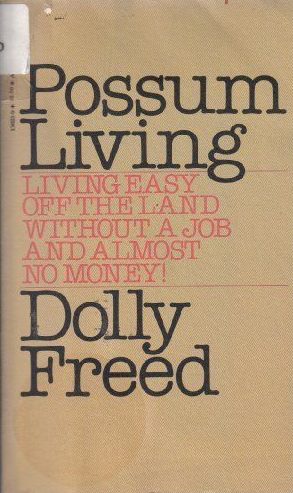
The 1978 original.
Memorable sections include this advice for turtle hunting: “Some people reportedly play turtle roulette. They feel around in holes in banks … I don’t know anything about this technique. If you want to learn it, go to any rural town and ask for Lefty.” The original Possum Living also included a controversial chapter on how to take legal and financial matters into your own hands to maintain your freedom (perhaps from tax collectors or assessors), including vigilante justice tips. Most of the book, however, was a charming, rambling look at how one eighteen-year-old had already decided to drop out of the rat race to live as a “possum,” sometimes taking odd jobs, saving money, growing tomatoes and drinking moonshine. As Freed describes it in the book, “to drift along from day to day… We live this way for a very simple reason: It’s easier to learn to do without some of the things that money can buy than to earn the money to buy them.”
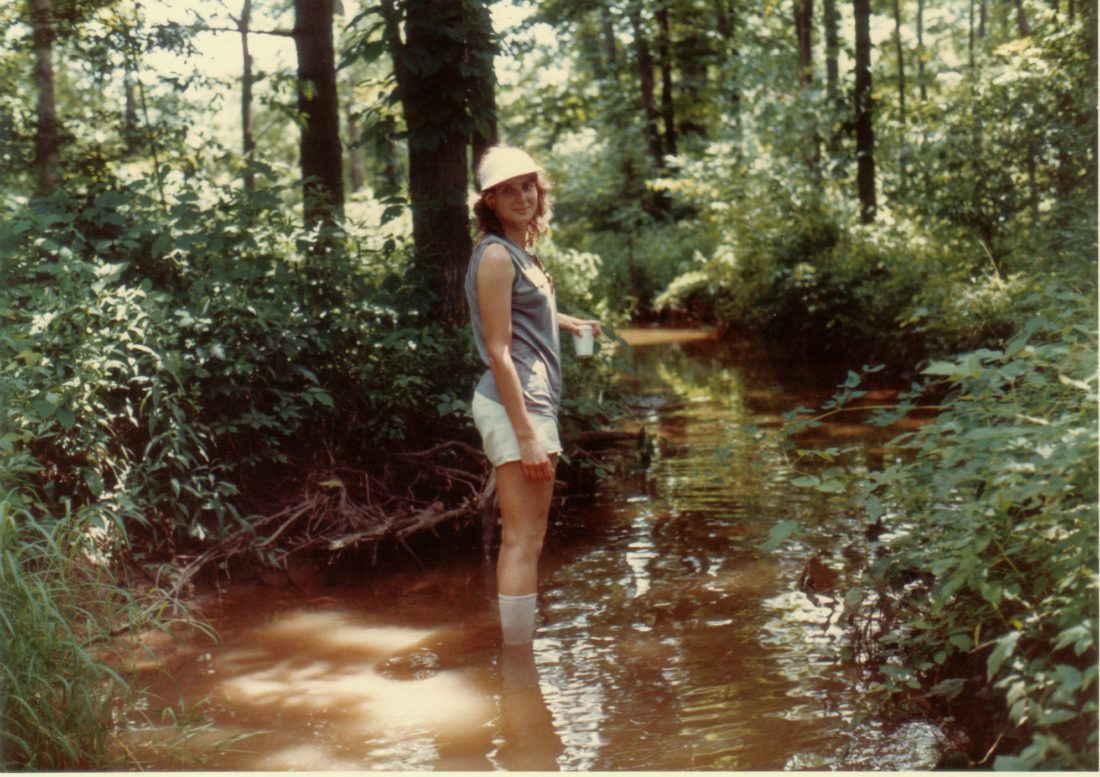
photo: Courtesy of Dolly Freed
Dolly Freed as a young woman.
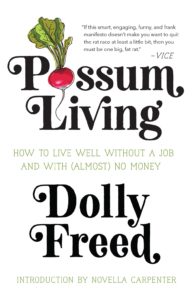
The newly updated release.
Forty years later, Tin House books re-released the title this month. In the new version, Freed provides an afterword. “I wrote Possum Living when I was a cocky eighteen-year-old. The amazing thing is how it’s still right on target,” she writes. “Prices and technology have changed, but the principals are the same.”
We caught up with Freed, who after the book’s first publication, went to school to become a NASA engineer. She moved to Texas, raised two children with her husband, and now tends a big garden and lives, as she calls, it, as a “half-possum.”
Possum Living struck a chord with people. What was the attention like in the seventies and eighties?
I had to get a phone so I could do interviews. When I went to New York to do a TV interview on the Bill Boggs show, they told me to wear something nice, something I wore daily. I put on my nice yellow gardening dress and my yellow gardening hat. I didn’t have a suitcase so I took a burlap bag. They asked about my food, so I packed a sample “possum” feast of flatbread and rabbit. When I came out of Grand Central Station, I watched how people got a taxi. I stuck my arm out, a taxi stopped, and I jumped in the front seat with my big burlap sack and my yellow gardening hat, and the driver said, You have never done this before.
On the show, Bill Boggs started giving me a hard time about buying my clothes at thrift shops, but then we had a great interview. After a while, the publicity was grueling and I just went back to possum living. Years later, we were trying to find some of the clips, and Bill said he remembered me because I was the only person who ever brought moonshine.
You were just a kid when you wrote the book. What was your writing and publishing process like?
I had dropped out of school in the seventh grade, so my mom gave me her typewriter so I would go get my GED. I went through my mom’s typing book and taught myself to type. Well, the typewriter was broken and it wouldn’t return, so I had to tie a huge rubber band to it and staple the other end to the wall so when I clicked the return button it would fly back.
We had a lot of free time to talk, to sit around the table, and write. I typed it all up. I went down to the library and got a book that listed publishers. I sent sample writing and cover letters to ten or twelve publishers. Some said no thank you, some didn’t answer, and one said this looks interesting and you should consider getting an agent. I went back to the library and had the librarian request a book of agents. I found one who did how-tos, and she picked it up and sold my manuscript to Universe Books.
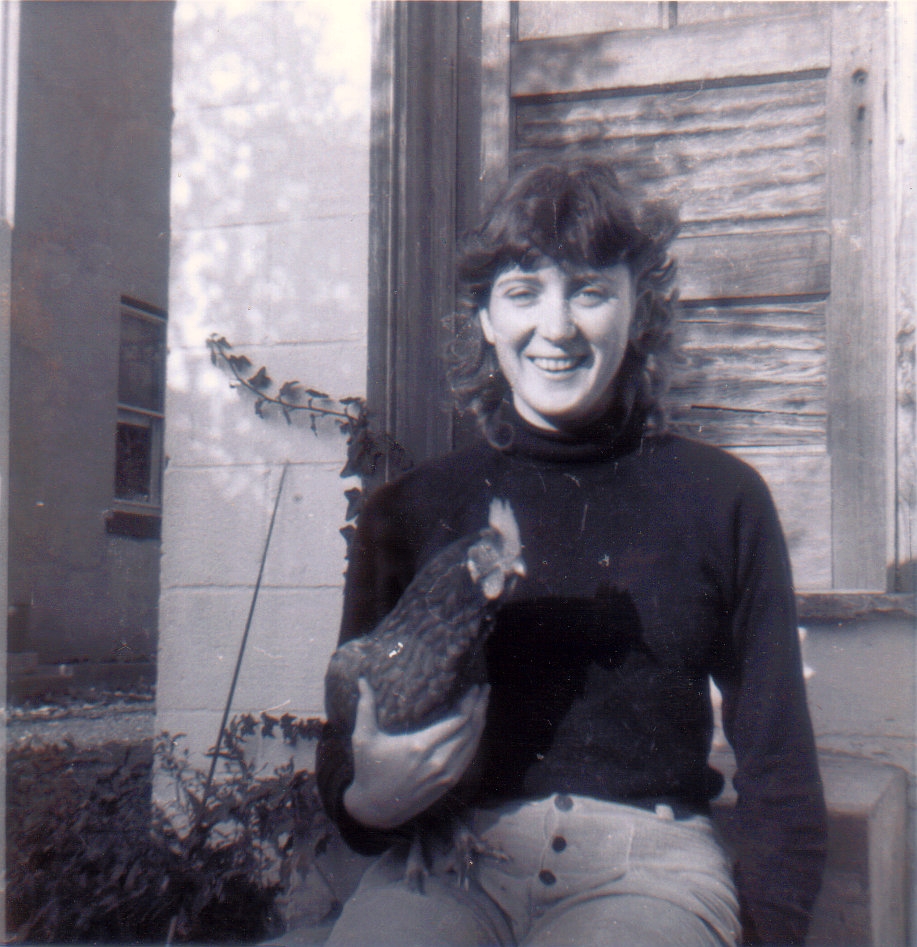
Courtesy of Dolly Freed
You live in Texas now. How did you get there?
I decided I was ready to take on a bigger challenge and go back to school. I worked a year to save up money and started college when I was twenty. It was the equivalent of community college. I did my last year at Drexel University because they had a co-op program to learn about engineering. Then I went to Langley [NASA Research Center]. I met my husband there. I decided I wanted to be a NASA engineer, and I accepted a job at Johnson Space Center here in Houston.
I eventually realized that being inside was not for me. Always being on a computer was not for me. I had been volunteering at Armand Bayou Nature Preserve and it was a lifesaver. I could go canoeing for miles and not see anything manmade. I started helping with the trails and outdoor classes, and I finally realized I needed to make that my career.
It was hard to give up all I had put into being an engineer, but it was so obviously the right change for me. I consulted for environmental education programs around Houston and some of my outdoor programs are still running, twenty-five years later. Southern nature saved me, in a way.
Do you still live like a possum?
It’s not like you are or you aren’t a possum. It’s a sliding scale. You can be full possum and not have a car or a phone and really keep life to the basics. Or you can do half-possum, which is what I’m doing now. I have pets and I’m not going to eat them. [Laughs]. I have a car. I have a big garden. I cook all the time. Just knowing that I have the skills to live and be frugal has made so many potential life emergencies easier—my decision to change careers, my husband’s decision to retire early, my mom getting sick and moving in with us. We know that if everything goes to hell, we can live.
Looking back, what are some of your reflections on the first edition of Possum Living?
When you’re eighteen, it’s easy to think that what you’re doing is the right thing for everybody. But of course it’s not. Not everyone is going to want to be raising rabbits to eat and living without a car. But now that I’m older, I think there’s a lot that’s good about part-possuming. I’m going to be sixty next year. It’s interesting to me to look back all this time later, and think a lot of this is really valid today.
I’m going to get philosophical here, but I think about this a lot. When people talk about poverty, there are different kinds. There is a poverty of status in our country where you have all the food and water you need but you think other people are doing better all around you. You can also have a poverty of control. You feel you can’t choose how you spend your day, when to get up. We don’t talk about those kinds of poverty a lot. Possum living is about taking control of what you want in life.
Is there anything you need to set the record straight on?
There were some pieces about law enforcement that I wanted taken out of the updated edition, but the publisher thought it was a valid insight into some kinds of rural thinking and independence. I don’t go around terrorizing people any more. And in retrospect, that’s not a good way to go through life. Knowing how not to be intimidated is important, though. Sometimes I see someone out drinking beer in the nature center, and I have no problem saying, You’re going to pick those up and leave here now. I’ve come to see over time that it’s much more effective to work with the community than try to threaten someone to do something.
I also don’t make moonshine anymore.
Do you still go turtle hunting?
I’m going to stay neutral on the turtle issue. Turtles are good eating, but the problem with some animals is that they have been overhunted or overfished, and often not for local consumption. Usually when people are hunting for themselves, they tend to take good care of the resource and the environment. I think you can feel good about eating invasive species and not harming the environment. Down here, there are competitions for catching and cooking carp and lion fish. Look how much land is preserved by duck hunters and fishermen. They want to keep enjoying it.
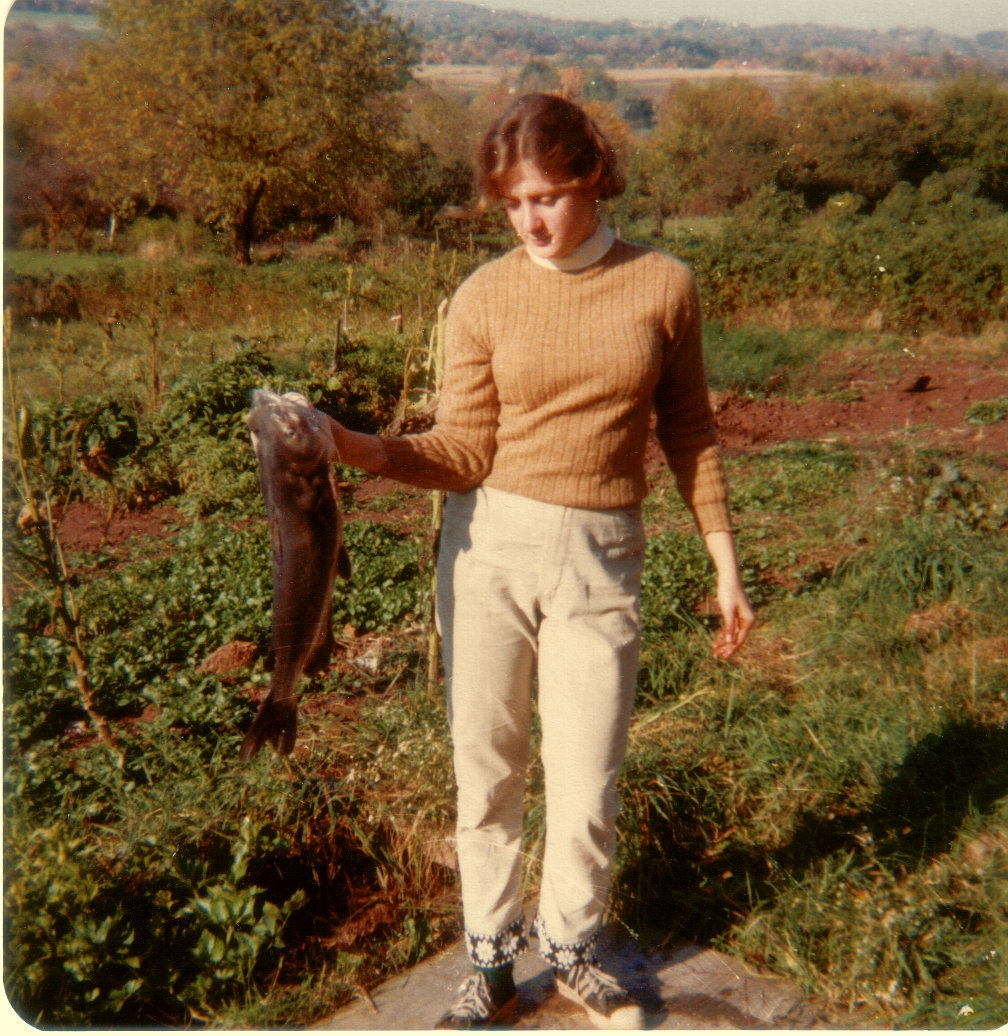
photo: Courtesy of Dolly Freed
Freed shows off a fresh catch.
Is your garden still a big part of your life?
I still get excited every time a tomato seed sprouts. Even if it was just a basil pot on the balcony when I was in college, I have always been growing plants. Knowing you can garden matters. Having a little spot to tend gives you confidence when the economy and politics are out of your control. You’re taking a seed and some dirt and making something from nothing. That’s empowering.
In the afterword, you write about how you’re helping a younger generation learn to grow their food.
If you don’t know how to garden and you want to start gardening, ask someone. Help them if they’re older. Help them if they’re younger and new to it. Now I get to be the wise old garden lady. My biggest pieces of advice are: Start small and get a water meter from the hardware store. It will show you how to water things properly. And I always remind people, what’s the worst thing that’s going to happen if something dies? If it’s not perfectly weeded, it’s ok, we’re not depending on gardens for our lives anymore. This is just for flavor and fun.
The most satisfying thing about gardening is the food tastes great. Right now, I’ve got lettuce and greens and snap peas coming up. I’m not rich. I’m never going to have the best wine. But I have eaten the best peas that anyone has ever eaten in the history of the world.
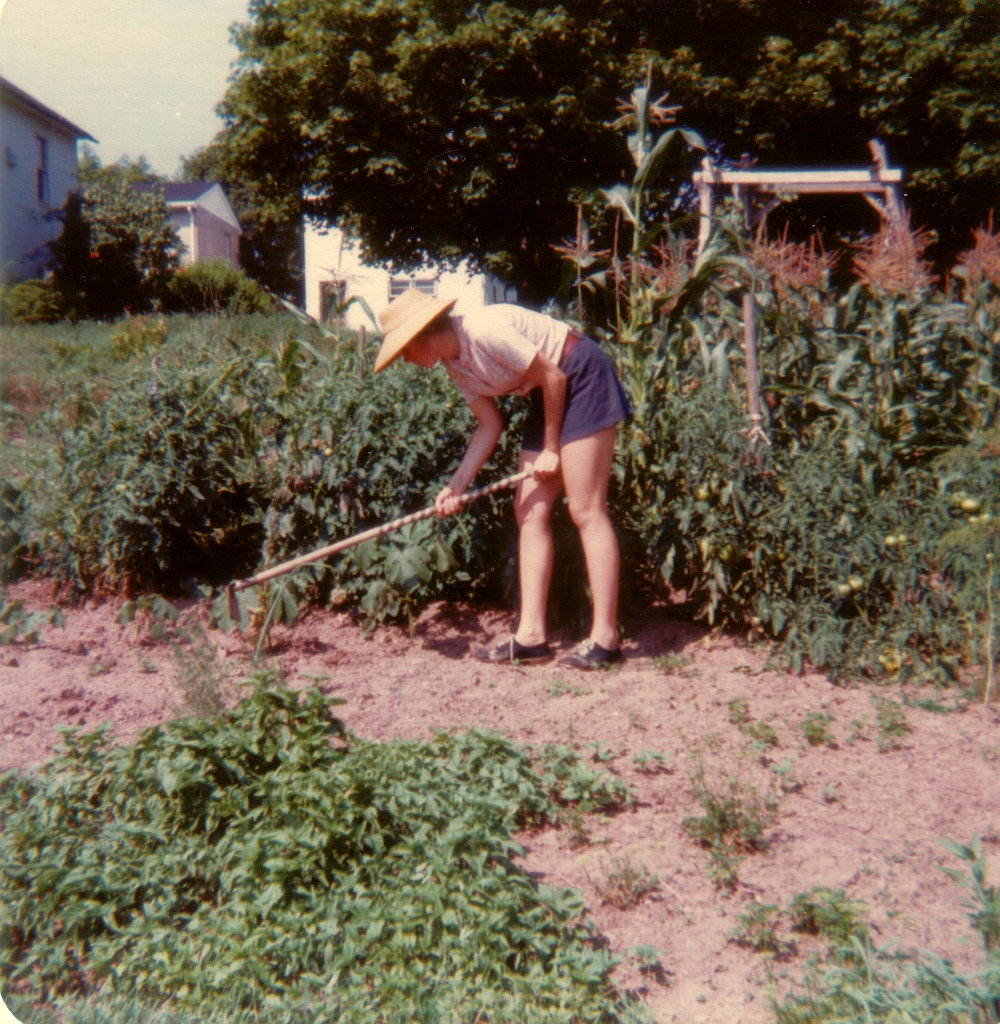
photo: Courtesy of Dolly Freed
A teenaged Freed tends to her garden.
Our readers are going to enjoy hearing this update from you.
Tell them, and this is just an aside, but I really like being a Southerner. I have no desire to ever go through a Pennsylvania winter again. Yeah, we have hot summers down here, but I don’t have to shovel the heat.
I also love the waterways here. I love how people will be fishing off a little scrap of land against the lake or bayou, and a little dinky spot is home to herons and pelicans. People understand when fish are coming or going. When I first moved here, I missed hills, but I’ve come to realize that in Texas, we have the sky. I can see the storms coming in and the low clouds and the sun dogs. I think I am a full-blown Southerner now.
The post The Enduring Charm of <i>Possum Living</i> appeared first on Garden & Gun.