Shared posts

29 Oct 18:19

What data on 40m rides tell us about how people tip Uber drivers

by Zachary Crockett

Evelyn Hockstein/For The Washington Post via Getty Images

To tip, or not to tip — that is the question.

In a new NBER working paper, researchers analyzed more than 40m Uber trips during a 4-week span in 2017 and looked at how much riders tipped, and how these tips varied based on a multitude of factors.

Turns out, most of us could benefit from a bit more generosity. Among the findings:

By one estimate, the average Uber driver in the US earns around $9.21 an hour after expenses like gas, service fees, and car maintenance. Many drivers say they rely on tips — first introduced to the Uber app in 2017 — to make a sustainable living.

On UberPeople.net, a popular forum for rideshare drivers, one of the hottest topics is how to get riders to tip more often. Some suggest simple passenger-pleasers like phone chargers and mini water bottles; others are a tad more extreme. 

“Don’t unlock your doors unless they tip,” one poster advises a young gun. “It’s called the ‘No tip, no go’ strategy.”

The post What data on 40m rides tell us about how people tip Uber drivers appeared first on The Hustle.

29 Oct 17:55

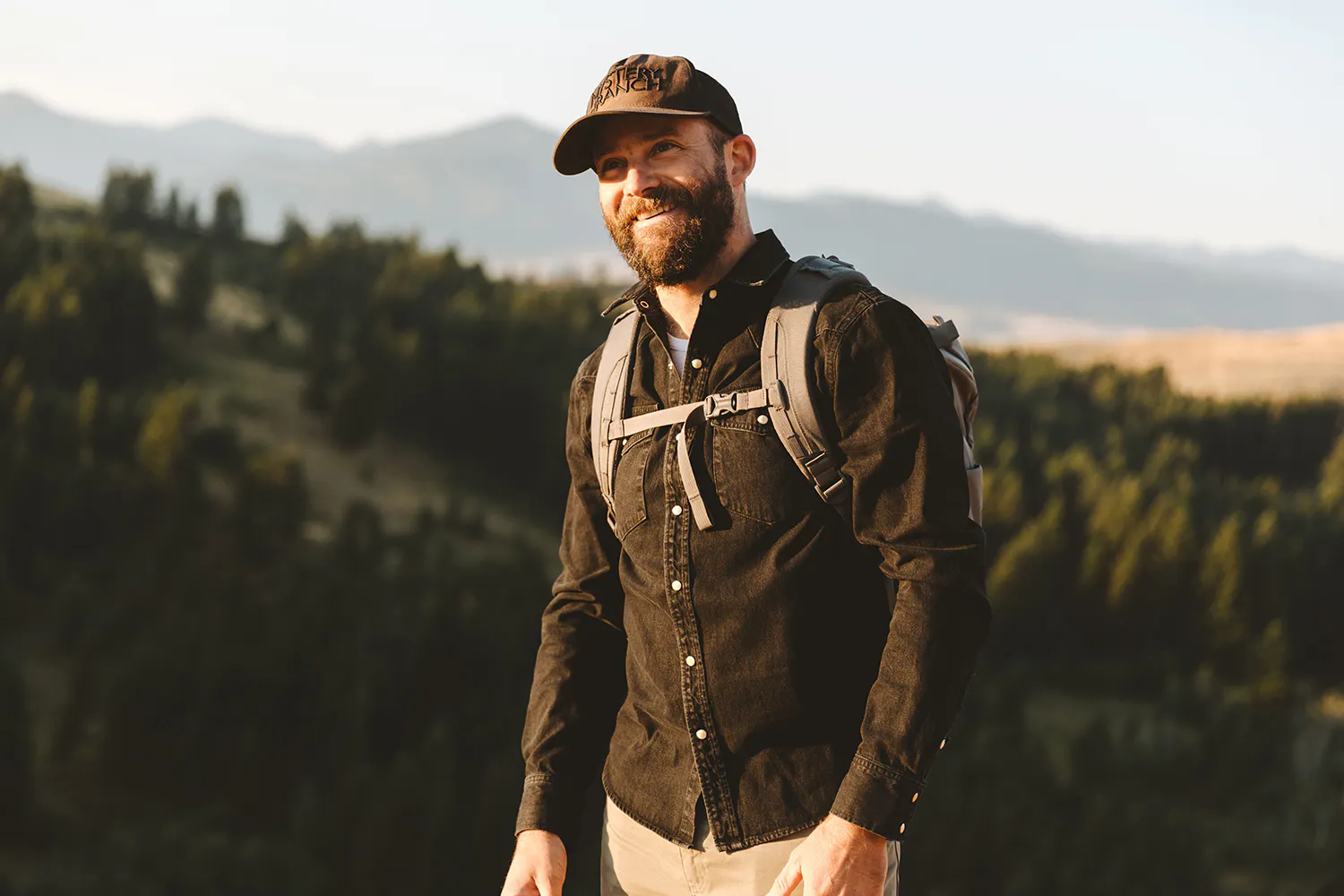
Life in Big Sky Country With Mystery Ranch’s Ben Nobel

by Miranda Smith
Featured ben noble.jpeg?ixlib=rails 2.1

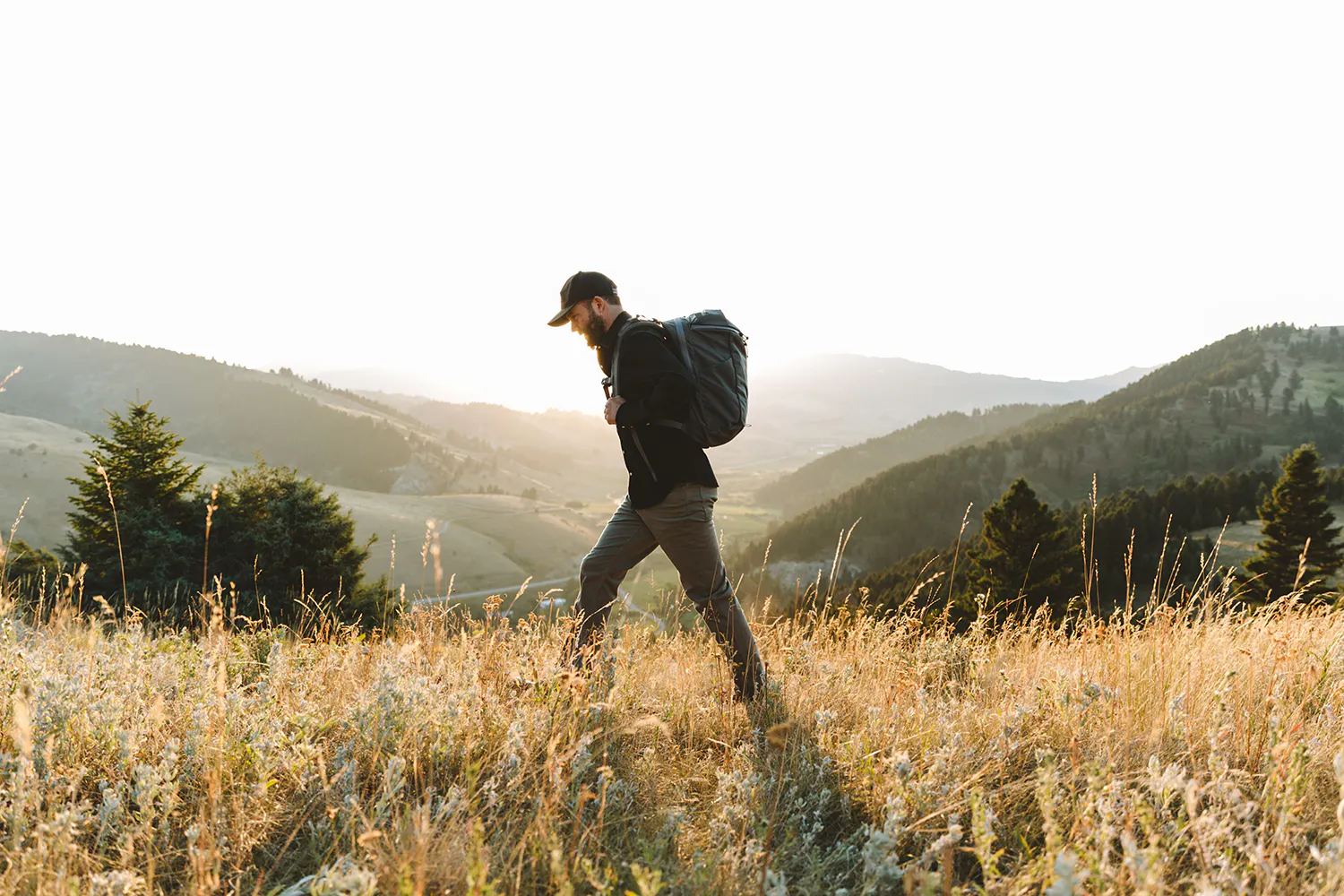
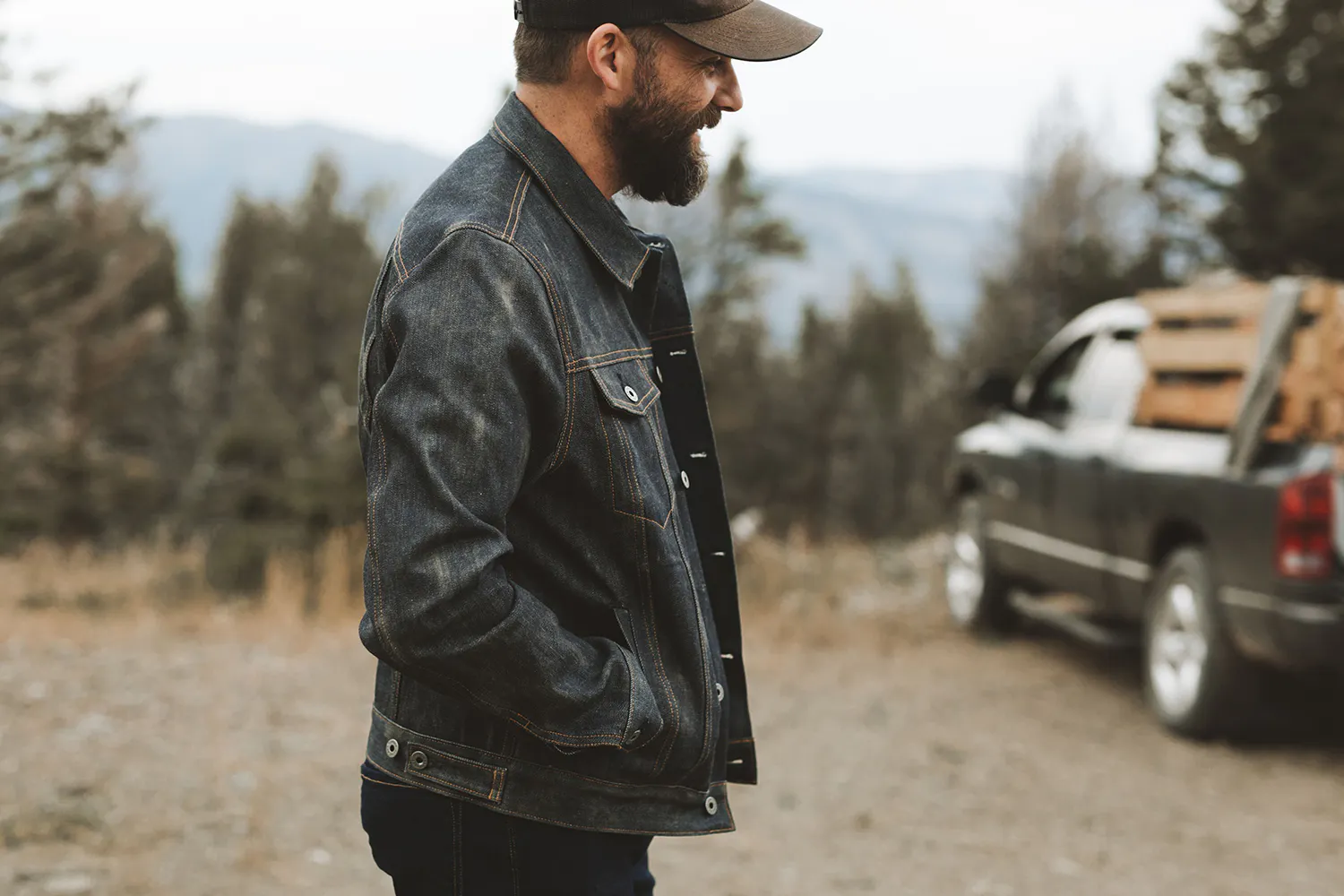
We recently took a trip to Montana to explore Bozeman, ride motorcycles, and hike in the Rockies (oh—and test the Flint and Tinder Flannel-lined Waxed Trucker Jacket). While we were there, we enlisted our buddy, Mystery Ranch’s Ben Nobel, to show us around Big Sky Country. Here, we catch up with him on his work, his ski addiction, and what it’s like to take your daughter camping for the first time. 


Ben Nobel skiing


What’s it like living in Montana?

I like that the good stuff around here takes effort to get to, because I think the reward is just better all around when you do have to go through some shit in order to get the goods.


It’s not very developed, so access kind of sucks, but I like that. Good backcountry skiing is hard to get to. You need a snowmobile, and that’s a barrier to entry that most people aren’t willing to invest in. And the weather can be pretty harsh. It can be frickin’ cold and really windy. If you’re out in the mountains doing something, hunting for example, or fishing, you’ve got to be prepared to deal with that. It can be pretty gnarly sometimes, and I like that. I like the fact that it’s not just a giveaway. I like that the good stuff around here takes effort to get to, because I think the reward is just better all around when you do have to go through some shit in order to get the goods. 
 

What’s a memorable experience from your time at Mystery Ranch?

It’s such a close group of people out here. [Mystery Ranch Founder] Dana gives us so much freedom for creativity and freedom of thought. I remember at one point—I think I had been here four years—it was wintertime and it had snowed two feet, but I still came into work at 8:30. Dana came into my office and looked me dead in the eye and said, “What the fuck are you doing here?”

That was the point I really realized that I’m willing to put the time in for this guy. He gets it. He’s a clairvoyant type of a guy when it comes to product development, he’s really smart, and he’s come up with some really cool products over the years. But he also had done a really good job of developing a really loyal community of people who work here.

Ben Nobel

And in your free time, you’re on the board of directors for the Gallatin National Forest Avalanche Center. What made you want to join that team?

Understanding avalanches and knowing how to navigate the alpine environment is critical to your survival and your goal to live to ski another day.


I’ve been skiing in the backcountry for about 20 years and unfortunately have lost quite a few friends to avalanches. Early on in my skiing career, I realized that education and understanding the snowpack is crucial. It’s a pretty dangerous sport. Nine times out of 10, the victim of an avalanche is the trigger, so it isn’t some fluke thing. Understanding avalanches and knowing how to navigate the alpine environment is critical to your survival and your goal to live to ski another day. 

So 10 years ago—about as long as I’ve been at Mystery Ranch—I started volunteering for the Avalanche Center. It’s become a very important part of my life—to share the knowledge that I have with the rest of the community, whether it’s people who are really experienced and they just want to continue their education or newcomers who’ve never been in the backcountry and just want to make sure that they know what they’re doing and be able to make good decisions. 


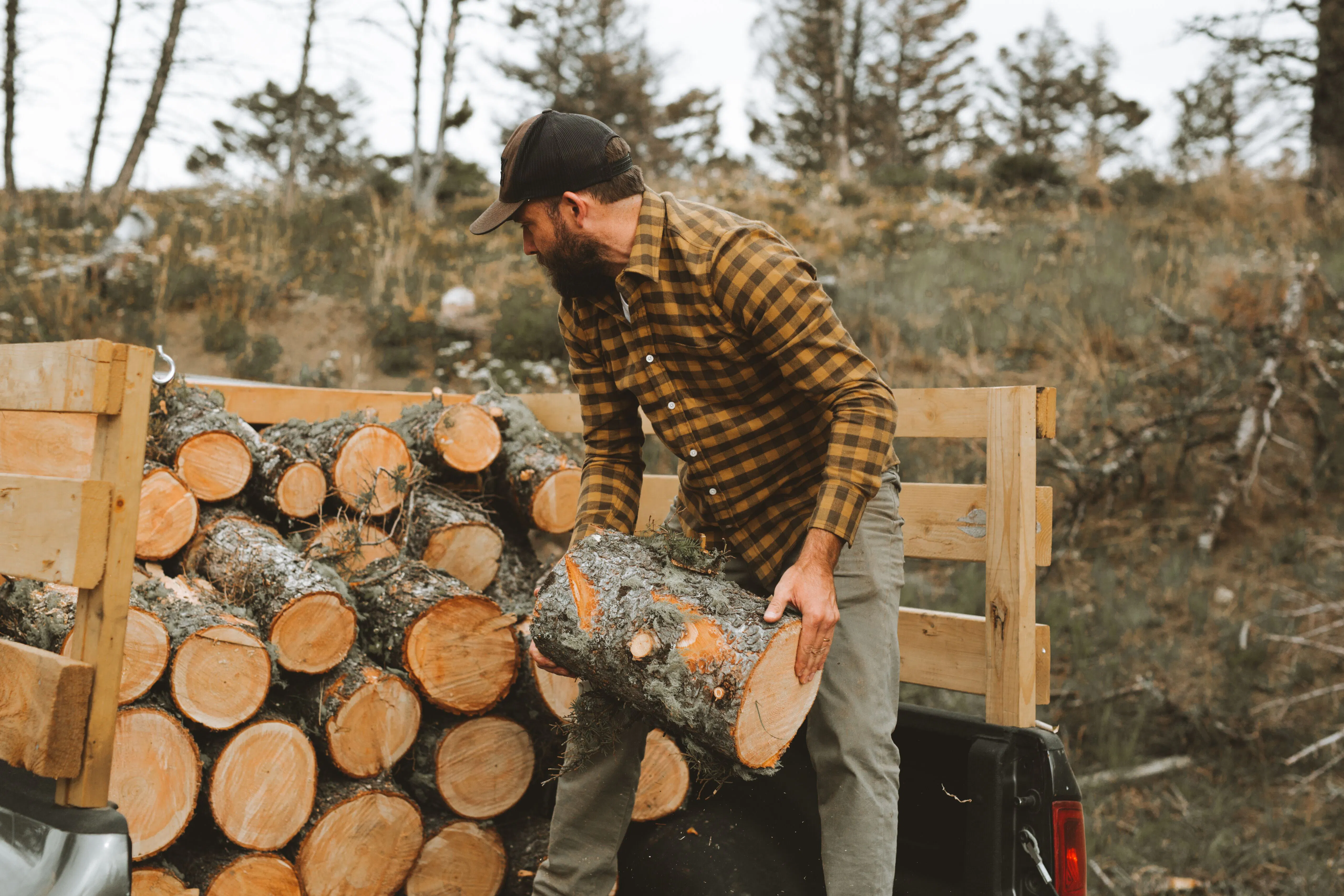
Ben Nobel chopping wood


I’m sure your work at both Mystery Ranch and the Avalanche Center keeps you busy. What do you do to disconnect?

Firewood warms you three times: once when you cut it down, once when you split it and once when you burn it. That was always a good piece of advice I got from my grandfather.


Boy, that’s changed a lot over the years. I really do love cutting firewood. There’s something really basic and simple about it, and I like to do manual labor and run in the mountains to wind down.

And, I’ve got a kid now. That’s definitely changed my whole life. I used to play in the mountains 250 or 300 days a year. Now I love playing with my kid and watching her grow up. I bought a camper, which I never thought I would do. But I did, and I took my daughter out camping this summer. I remember lying in bed one night thinking about how I can recall being 25, wondering what it was going to be like to introduce my kid to the outdoors. And then all of a sudden it dawned on me that I was doing it. It was a pretty heavy moment, and it’s just a really powerful experience to show her all the things that I’ve done. Hopefully, that can continue, and she likes it. 
 

What’s the best part of being a dad?

I’m kind of a sensitive dude when it comes down to a lot of this stuff. I cry a lot. Like, I dropped her off at preschool and bawled the other day. All these little things that I’ve anticipated in life—teaching my kid how to ski, bringing my kid out in the mountains, watching her interact with animals. Now that it’s happening, it’s so emotional.

I think her attitude and her energy is so like mine, which is weird. A lot of people tell me we look alike. She’s a mini-me, and I’m just so proud of who she is. I can’t wait to be able to speak with her. Because she can’t really talk right now, and I want to see the world from her perspective. 

Ben Nobel

What’s the one thing that you hope to pass down to your daughter the most?

I will make a commitment to Frances, my daughter, to do everything I can to help protect this sensitive Earth that we live on.


Stewardship of the land. I think that it is our duty as parents of the next generation to instill a dedication to protecting the planet. I am scared that my generation hasn’t done enough, and I’m afraid that we’re going to be passing on more problems. I will make a commitment to Frances, my daughter, to do everything I can to help protect this sensitive Earth that we live on. I want to make sure that she sees both her mother and me working hard to do that. 

I also want to focus on work ethic. I want to make sure that she realizes that nothing comes for free, and good things take hard work. One of those, I think the responsibility that we have is to make sure that we focus that hard work on protecting this planet. 


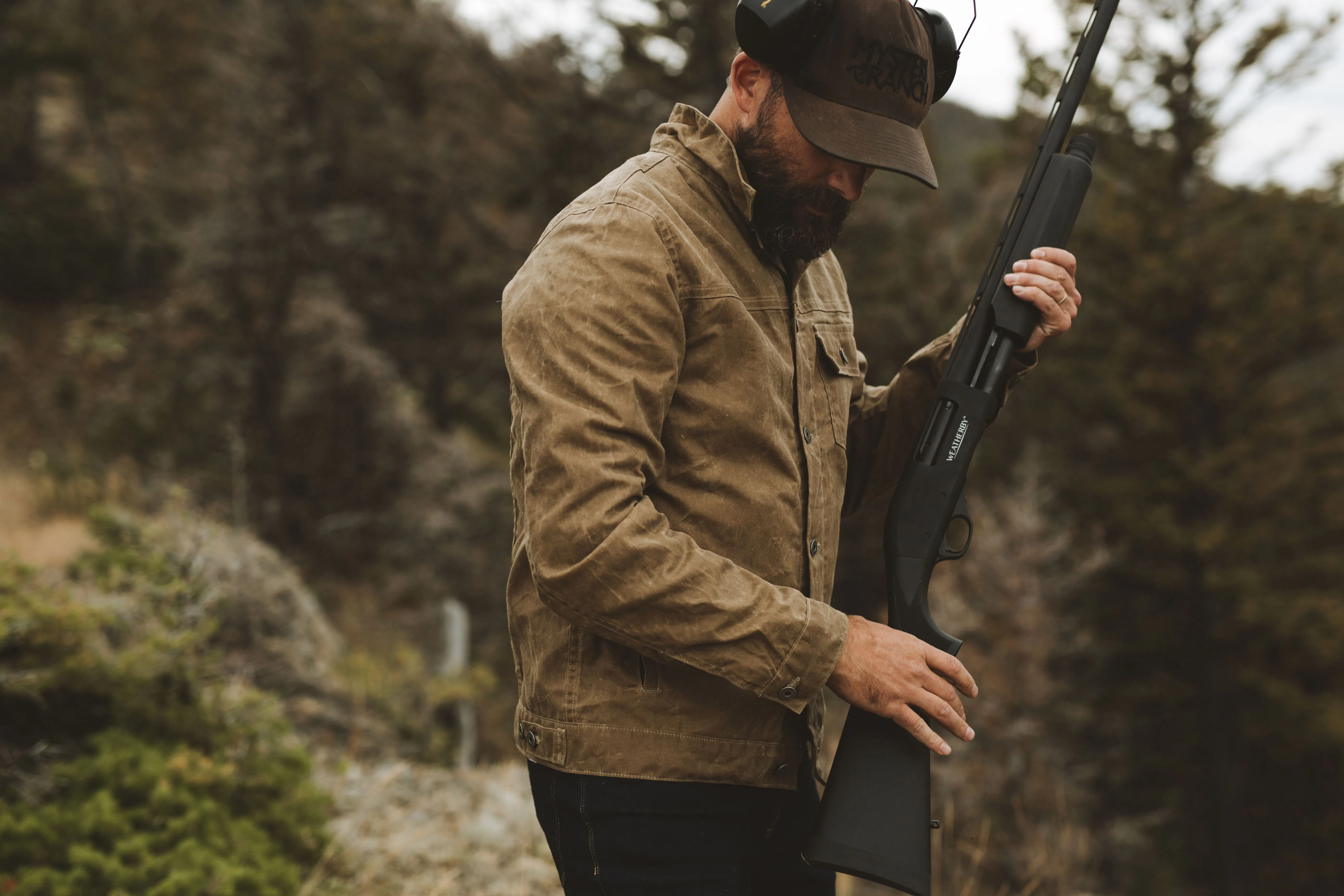
Ben Nobel hunting


So I know that you’re also an avid hunter. What do you love most about hunting?

Everyone should read Undaunted Courage in their lifetime. It’s a book by Stephen Ambrose about the Lewis and Clark expedition, which I think is a huge part of American history that is under-showcased.


It’s such a different way to be in the mountains. I didn’t grow up hunting. I had spent most of my 20s climbing and skiing, so the whole goal was to move as fast as you can to get to the top and then get out as quickly as you can. Hunting is totally different. Hunting is way slower, and you’re way more in tune with the atmosphere. The temperatures, the wind, the elevation—it all plays a pretty important role. It’s really kind of one of the only sports that you have to pay such close attention to. It’s given me a whole new outlook on what it’s like to be in the mountains. 

Let alone the fact that it’s just such an extraordinary experience to harvest your own food. It is so emotional, and it’s so raw to be there at that moment. It’s challenging and really hard, it’s a ton of work. Sometimes you’re in grizzly bear country, it can be pretty dangerous. Yet when the time comes and you feed your family with meat that you harvested, it’s a pretty historic moment. 

I think it fuels a lot of my commitment to the conservation of public land. And to the health of our habitat and health of the population of wild animals. It definitely is a pretty eye-opening way to experience the mountains and very humbling.


Ben Nobel skiing


We’ve also talked a lot about how you're a big skier, what about skiing is so addictive to you?

The indescribable feeling of sliding down a steep slope in powder is kind of... There are no words for it, and maybe that’s why it’s so exciting—because I think we’re all trying to figure it out. 


Yeah. That’s like the biggest, hardest question for me to answer because I don’t know why.

I started skiing as a kid, and it’s just so damn simple. All it is is just sliding down a hill. I’ve evolved a lot into coming up with some really big objectives and skiing big peaks and traveling all over the world to try to find new places. I’ve been pretty lucky to have gone to the places that I’ve been and stood on top of the mountains that I’ve been on. 

The accomplishment of summiting a big peak is a huge draw for sure, I think that’s part of the reason that a lot of people climb and ski in general is the feeling of accomplishment, especially if you’re human-powered. But then there’s the flip side about the indescribable feeling of sliding down a steep slope in powder is kind of... There are no words for it, and maybe that’s why it’s so exciting—because I think we’re all trying to figure it out. 

But it’s also brought me to where I am today. I wouldn’t have my career or my friends or even my wife without skiing. I think my whole life has been dedicated around this really simple thing, and I’m good with that. In this day and age, it’s a messy world, it’s complicated, work is hard. It’s nice to have something that gives you so much joy and so much happiness. 

So kind of between hunting and skiing and just your overall lifestyle, it seems like you’re always outdoors. What would you say is the biggest lesson that the outdoors have taught you? 

Well maybe I’ll put this one off the record, but maybe not. The biggest lesson I learned is don’t fuck up and die. I hate to say that so bluntly, but the mountains are a humbling place. They’re big, they’re powerful, and I think that in this day and age we can easily kind of get ahead of ourselves thinking we’re invincible in whatever little bubble we’re in. The mountains can deliver us a big piece of humble pie. Which I think we all should chew on as often as we can because I think the more that we realize that we’re just a part of something much larger, this ecosystem that we live in, I think the better off we’re all going to be.


Ben Nobel


>>Next: How to Navigate With Only a Map


28 Oct 18:36

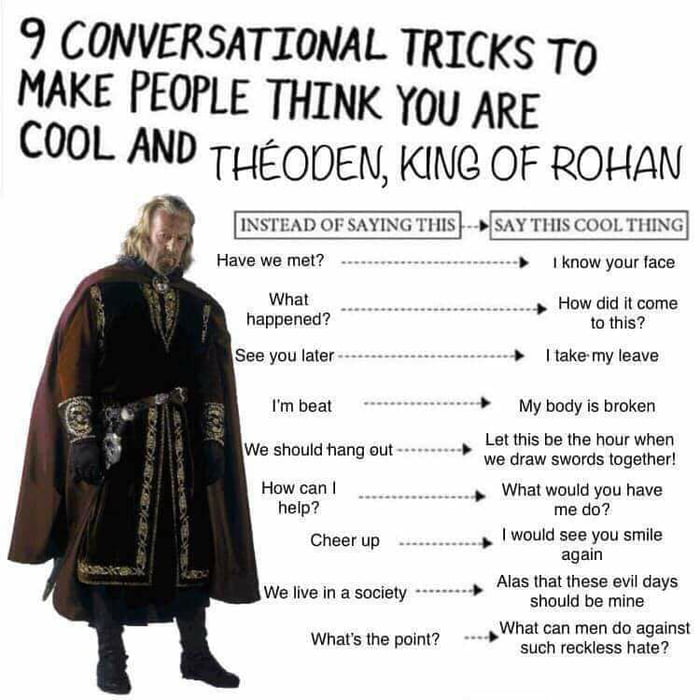
So it beggings


Tags: LOTR

496 points, 15 comments.

25 Oct 12:11

6 Fun Ways to Learn a New Language by Immersion

by Shubham Agarwal
learn-language-immersionn

Learning a new language is a long and challenging process. Even if you stick to the course for months, there’s no guarantee that you’ll be fluent.

Language immersion is a more proven and natural alternative. Instead of relying on memorizing translations, these techniques teach you by integrating lessons in your routine activities. For instance, when you’re reading the news. This enables you to better understand how you can put the language’s fundamentals to use in real-life conversations.

Here are the best language immersion apps and services you can try.

1. Language Learning With Netflix (Chrome)

Netflix is home to a vast catalog of shows and movies from different countries. A browser extension called Language Learning With Netflix takes advantage of that to teach you new languages while you’re watching foreign content.

The app does so by actively translating a show or movie’s subtitles to the language you are trying to learn. You can read both versions and hover over words you don’t know to reveal their meaning as well as usage. There’s also a handy sidebar which lists all the dialogues. You can click any entry to view its translation, jump to the scene where it appears, and bookmark it.

Language Learning With Netflix supports nearly every major language and has a host of other features you’ll find handy. It can automatically pause the playback after each line so that you have enough time to process it. It adds a handful of keyboard shortcuts for controlling the playback. On its website, you can easily find content depending on the language you’d like to learn.

Download: Language Learning With Netflix (Free, premium upgrade available)

Language Learning With Netflix is just one of the tools for learning a new language on Netflix. If you find its features lacking, there are a handful of more ways to watch Netflix and still learn a new language.

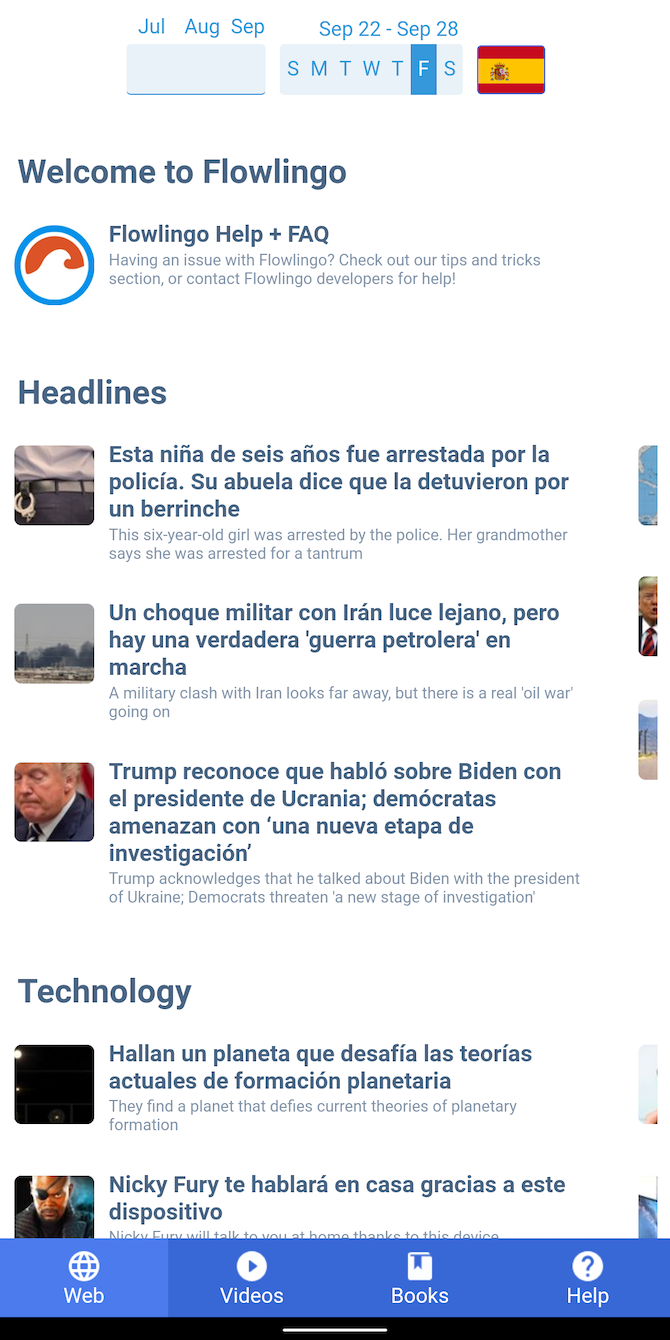
2. Flowlingo (Android, iOS)

Flowlingo lets you study languages by reading the news as well as books, watching online videos, and listening to music.

On Flowlingo, you can browse a range of content in the language you’re trying to learn. The app automatically surfaces the country’s local publications, clips, and music. When you tap one, Flowlingo loads a special web page where you can highlight words to quickly translate and log them.

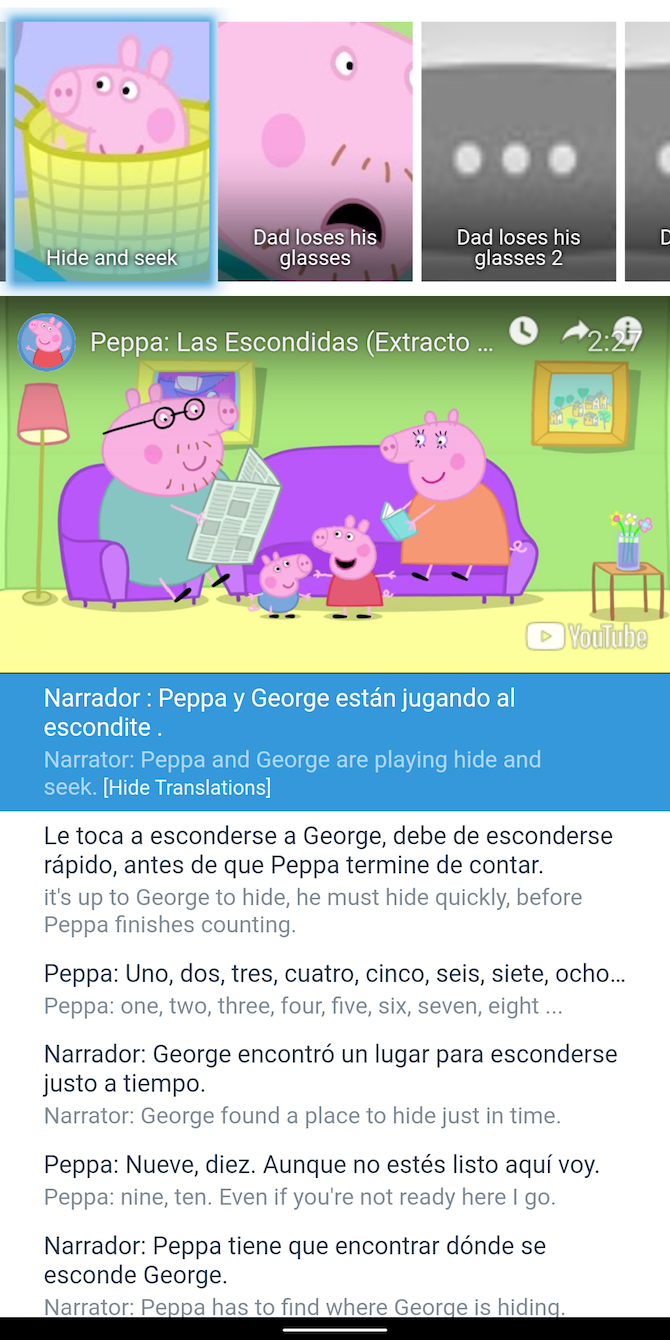
For videos and songs, it comes with a multi-window interface. The media plays in the top section, and you can read lyrics both in your native and foreign languages in the bottom one. Lastly, Flowlingo offers a book section and you can upload your own files too.

In addition, Flowlingo turns your starred translations into flashcards. You can participate in tests, and review your vocabulary through them.

You can read online articles for free on Flowlingo. But for the other features, you will have to pay a monthly subscription.

Download: Flowlingo for Android | iOS (Free, subscription available)

3. TenWords (Chrome)

TenWords brings some of Flowlingo’s best features to your computer. The browser extension allows you to sharpen your language skills while catching up on the news.

Like Flowlingo, TenWords interprets foreign articles to your native language. You can hover over words for their translations and tell TenWords whether you already knew it or not. The service uses this data to build flashcards so that you can practice later.

Plus, TenWords’ little widget has a text field. Before unlocking the translation, you can try to guess and enter it yourself based on the sentence’s context and your existing knowledge. TenWords has a few more nifty tools such as daily goals and vocabulary stats.

TenWords supports about 10 languages including Italian, Spanish, Russian, Lithuanian, and French.

Download: TenWords (Free)

4. Beelinguapp (Android, iOS)

Beelinguapp is another language immersion app for Android and iOS. However, it’s especially for those who want to learn a new tongue through audio. It houses a wider selection of audiobooks and music in a variety of languages.

While listening, Beelinguapp displays the audio’s text and its translation into the language you’re familiar with.

On top of that, the app offers precise controls to focus on a specific sentence or word. You can bookmark it, repeat the pronunciation, adjust the speaker’s pace, and manually scroll through the book or lyrics.

Beelinguapp also has a News tab. But unlike Flowlingo which lets you pick a story from any publication you like, Beelinguapp curates a limited set of articles.

Download: Beelinguapp for Android | iOS (Free, subscription available)

5. Woodpecker Learning (Android, iOS)

Similarly, Woodpecker specializes in language immersion through videos. You can watch local programs and videos and understand the dialogues via on-screen subtitles.

Woodpecker clearly lists the lines as they disappear and you have the option to tap any of them to translate them. You can also have subtitles in more than one languages run simultaneously.

In addition, Woodpecker features a web browser integrated with a translator. It allows you to learn a foreign word’s meaning simply by tapping it. The app gives you a few more tools like a bookmarking tool and practice tests.

Download: Woodpecker for Android | iOS (Free, premium subscription available)

6. Try a Dual-Language Storybook

Bilingual Book

If you’re overwhelmed with these apps and services, try a good-ol’ dual-language storybook. As the name suggests, dual-language storybooks come with a set of stories written in multiple languages. You can read one in your home language first and then attempt to translate the other.

Most of them don’t have a side-by-side comparison and require you to thoroughly read as well as take notes. While this may sound cumbersome, it can be more productive depending on how you tend to study.

You can find dual-language storybooks on popular marketplaces like Amazon in both paperback and digital formats. Search for “bilingual books” or “dual language books”.

Boost Your Memory to Learn New Languages

Mastering a new language takes months of dedication. There’s a lot to take in when you’re trying to learn a new language. Most importantly, you need a strong memory to be able to converse in a foreign language initially. So take advantage of a couple of ways to boost your memory.

Read the full article: 6 Fun Ways to Learn a New Language by Immersion

25 Oct 12:00

The 13 Funniest Online Name Generators

by Joe Keeley

We don’t get to choose our birth names and most of the time they are pretty standard. That’s why you should use a funny name generator to create a new nickname or persona.

We’ve rounded up some of the best random and silly name generators available online so that you can have a new moniker within minutes. See what hilarious name you get given!

1. Harry Potter Name Generator

Harry Potter name generator

If you’ve ever dreamed of being a witch or wizard, there’s no better magical universe to be a part of than Harry Potter. But how can you pick up a wand and don a cloak without having a magical name? The Harry Potter name generator solves that—just input your real name and gender. I’m Jimmy Kettleburn, ready to put on the Sorting Hat.

If you are a Harry Potter fan, take a gander at our recommended Harry Potter apps.

2. North Pole Name Generator

North Pole name generator

Courtesy of the folks behind Elf on the Shelf comes this North Pole name generator. With this, you can find out what your name would be if you were one of Santa’s little helpers. It doesn’t matter if you’ve been naughty or nice. Select a character, input your real name, then click to submit and pull the lever.

3. Adele Dazeem Name Generator

Adele Dazeem name generator

We all remember when John Travolta got on stage at the Oscars and introduced singer Idina Menzel. Except, that’s not what he said. Instead, he welcomed the “wickedly talented Adele Dazeem.”

We’re not sure how he arrived at that name either. Nevertheless, the Adele Dazeem name generator lets your name get butchered in the same way.

4. Mob Name Generator

Mob name generator

The National Museum of Organized Crime & Law Enforcement has created this great mob name generator. If you’ve ever watched a mob film and been drawn in by the idea of smooth-talking criminals in fancy suits, now you can have a name to go alongside.

Choose things like your region, crime, and role, and your mob name will pop out.

5. Wu-Tang Clan Name Generator

WuTang Clan name generator

The Wu-Tang Clan is an American hip hop group from Staten Island, New York City. Their unique slang made its way into many of their songs, giving nicknames to everything and anything.

The members all have their own nicknames, like Inspectah Deck and Raekwon. Even the Rapper Childish Gambino found his name through a generator like this. Now you too can become an honorary member of the Wu-Tang Clan with this name generator.

6. James Bond Villain Name Generator

James Bond villain name generator

His name is Bond. James Bond. And his mission is to stop you once you’ve generated yourself a villain name. You can choose between a Fleming name and a modern name.

Ian Fleming authored the James Bond books, and he often gave his male villains Soviet names and his female characters some questionable names. Have fun and try out both versions to see which you prefer.

7. Dungeons & Dragons Name Generator

Dungeons and Dragons name generator

Dungeons & Dragons has always been popular, but it had a mainstream resurgence in part thanks to everyone’s love for Stranger Things. If you’ve been tempted to dive into the fantasy role-playing game, you first need to come up with a name for your character.

This Dungeons & Dragons name generator will help you out, asking you about your character’s race, class, and profession, before giving you a powerful new name.

8. Pirate Name Generator

Pirate name generator

You have your peg leg. You have your parrot. But you also need a pirate name. You can’t set sail on the sea without one. Your pirate name will help inform what type of person you’re going to be.

Pirate Palgrave the Swollen? Decrepit Wenchy Cutler? High-Pitched Benjamin? Just enter your real name, select your gender, and you’ll be ready to raise the Jolly Roger in no time.

9. Dinosaur Name Generator

Dinosaur name generator

Dinosaurs may be long gone from Earth, but people are rightly still fascinated with them. Of course, learning about them is one thing, but actually being a dinosaur is something else altogether. You can get one step closer to that fantasy with this dinosaur name generator.

Kids especially will love all the silly names that are generated from your name, favorite color, and birth month.

10. Music Star Name Generator

Music name generator

Put down the hairbrush in front of the mirror. It’s your moment to become a worldwide music sensation with this music star name generator. Don’t worry if you can’t sing—autotune will take care of that.

You can choose between a pop, rock, rap, or country name. All you need to do is enter your name, select your gender, and you’re ready to grab the microphone.

11. Vampire Name Generator

Vampire name generator

This name generator is a bit different from the others on this list because you don’t need to input any information. Instead, it will randomly generate as many vampire names as you want. If none takes your fancy, click the Generate button to get some more.

The names are perfect for adopting a new identify for Halloween. Just avoid any garlic.

12. Cat Name Generator

Cat name generator

If you have a new kitten that needs naming, or simply think your existing cat needs rebranding, you can use this cat name generator made by the folks behind the Exploding Kittens game.

As such, you can expect some very silly names. Input things like your cat’s age, color, and favorite thing to find out what it should be called.

13. Hipster Business Name Generator

Hipster business name generator

Put two random words together and you have an excellent name for your new hipster business. This generator goes one step further and even creates a logo for the business at the same time. You can also click either the name or the logo to change its style.

Go ahead and try it out—it’ll work great for your hipster bakery, pub, or barbers.

Let The Naming Fun Continue

Hopefully, you’ve found the perfect funny name through one of our recommended silly name generators. You could go by a new name every day of the week.

If you want to have more comedic names in your life, check out our list of funny Wi-Fi names to amuse your neighbors.

Read the full article: The 13 Funniest Online Name Generators

25 Oct 11:54

MIT Labs' Silent Speech Technology Is Ready To Make Some Noise

by Mark Johnson, CommunityVoice
MIT Labs is working on a new technology that could permanently alter the way we do business.
24 Oct 18:25

From Commodity Crop To Community Crop

by Maggie Rosenberg and Trevor Hagstrom

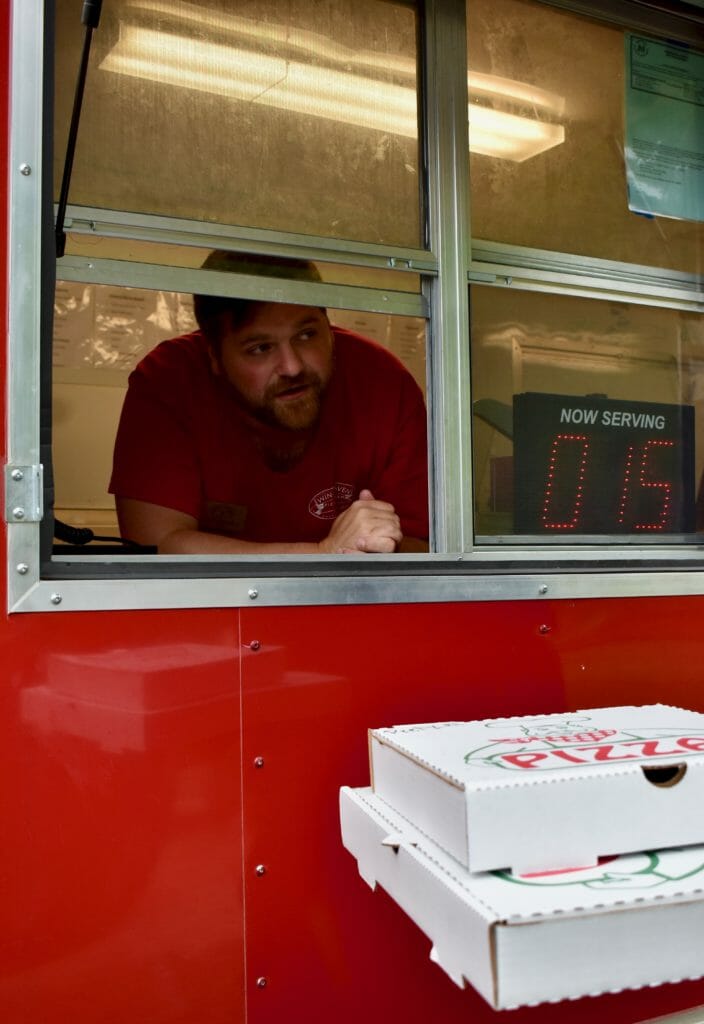
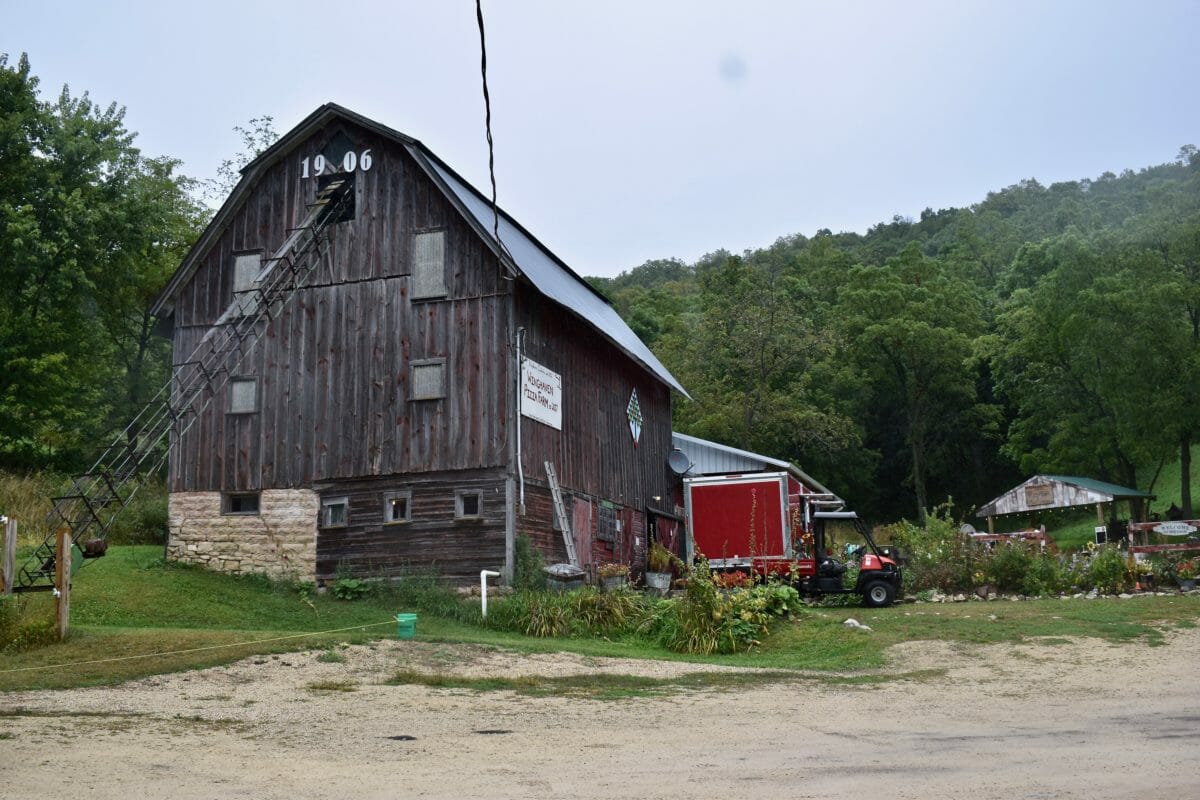
The phenomenon of the Midwestern pizza farm evolved partly out of ritual and partly out of necessity. Farmers are proud to use their wealth of land to host friends and family for farm-fresh dinners. Back since the hoedown, a dance party tradition turned American folk musical form, the Midwestern farm has been a place for community revelry in one form or another. Today, there are more than a dozen pizza farms across Minnesota and Wisconsin. Since 2017, Winghaven Pizza Farm in Galesville, Wisc. has been serving drinks, hosting a stage with live music and baking pizzas in stone ovens as quickly as they can toss them.

Rob Grover’s family has been stewarding this land for five generations. His farm, like most around Galesville, is planted with corn. When Grover’s father retired, the family needed to add a new revenue stream and started to lease some unused fields. They had to think of other new ways to make the farm profitable. Now, every Friday through Sunday, the Winghaven Pizza Farm throws a farm-aid pizza party that anyone can attend. Friends and cousins work in the trailer kitchen taking orders and firing stone-oven pies, or behind the makeshift bar serving local beer and wine. Grover got the inspiration to start the pizza farm while eating at a cookout on another farm with his friend, and his pizza recipe developer Greg Roskos. They realized that with Grover’s farm and Roskos’s passion for food they could build a new kind of farm on the old Grover family orchards. Today, Winghaven sells around one hundred pizzas per night. 

Rob Grover serves pizza on his farm most nights. Photo by Maggie Rosenberg.

The name for the pizza farm comes from a previous generation’s venture growing apples—Winghaven Orchards. They were inspired by migratory birds that sought a haven in these orchards a century and a half ago. Grover’s great-great-grandparents came from New England to settle in this land. In the generations since, the produce of choice has gone from apples to a commodity crop, corn, to a community crop, pizza.

Grover‘s version of farm life is different from that of previous generations, but his goal is the same. “The land has always taken care and carried our family through good times and bad,” he says. “So we feel a deep obligation to persevere the land for generations of our family yet to come.”

We arrived on a slow day, because the weather was a bit nasty, yet still, there were several families huddled up under a tent ready to eat. The storm eventually cleared, and they took in the best digestive aid known to man: a walk through open pastures in the fresh country air.  

Using local ingredients is important for Winghaven. Next year, Grover hopes to begin growing some of his own ingredients for the pizza, but for now, he doesn’t mind reaching out to neighbors for what he needs.

Grover and Roskos spent countless hours on pizza trials to perfect a crust with the right texture and just the right blend of five local cheeses to top the pie. The results are a thin crust with crisp edges and a thick layer of rich cheese (this is Wisconsin). It’s cut up into slices rather than the typical Midwestern grid pattern. It’s a satisfying and hearty pizza, best enjoyed with one of the local beers on offer. If you happen to be traversing the Northern Mississippi River on a weekend, don’t miss the total experience of a Midwestern pizza farm.


Winghaven Pizza Farm. Photo by Maggie Rosenberg.


The post From Commodity Crop To Community Crop appeared first on Modern Farmer.

24 Oct 18:24

Survivors: Rescued From Cockfighting

by Carol Sahley

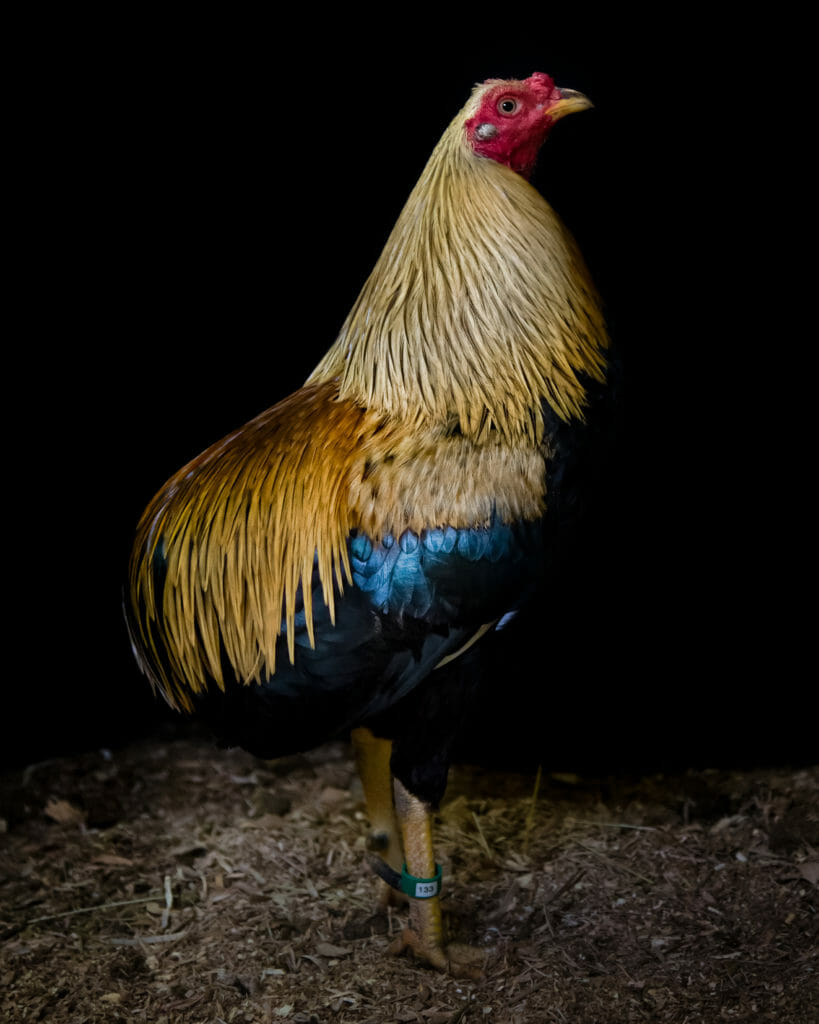
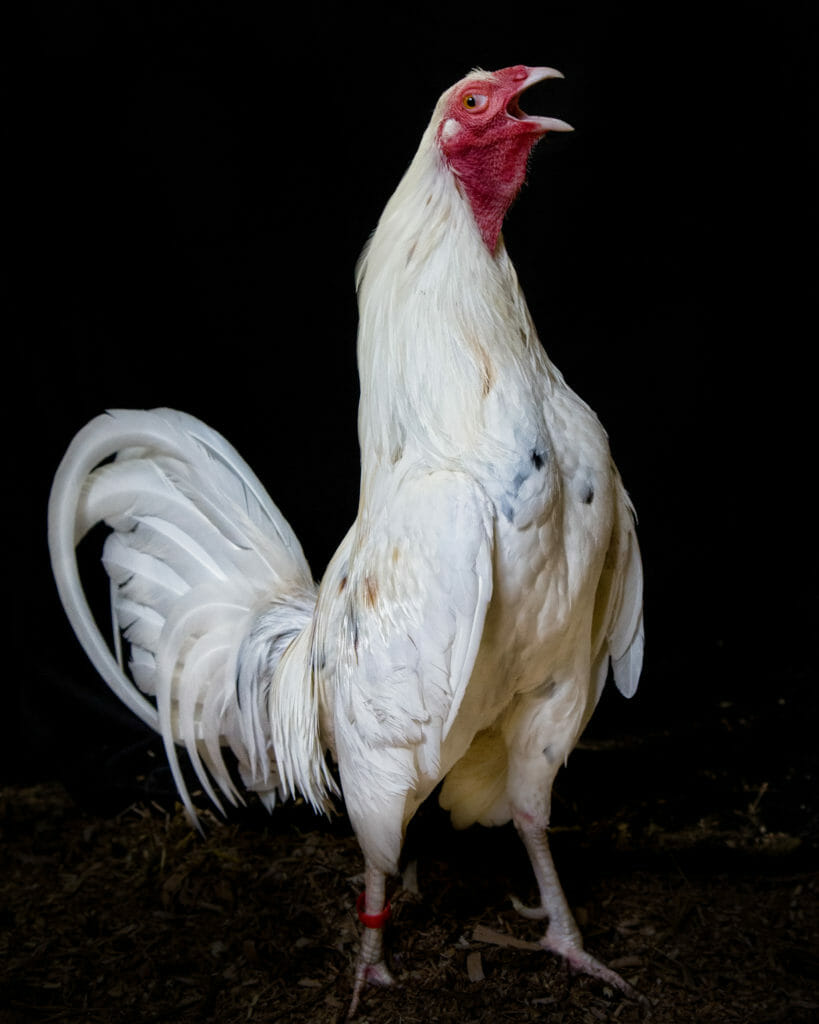
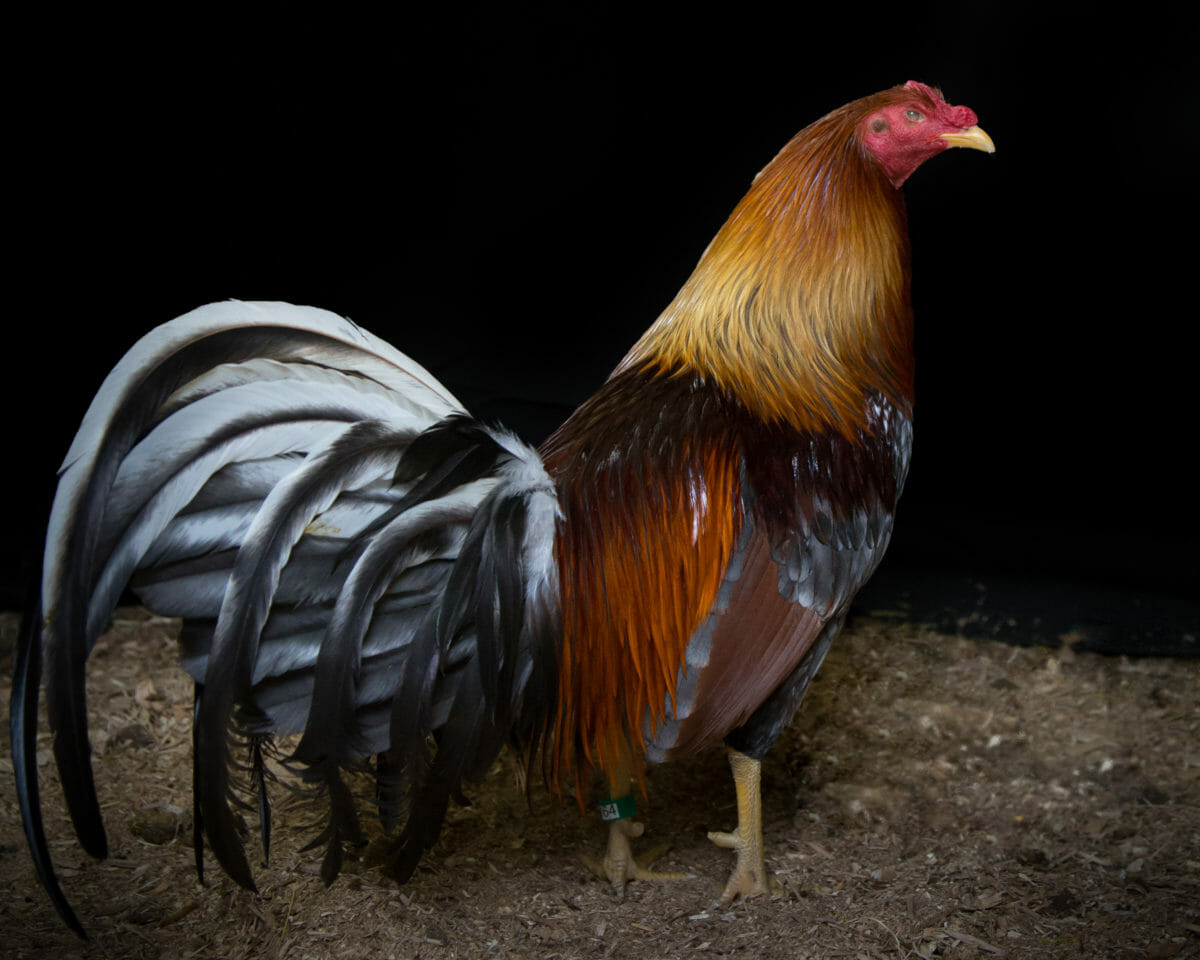
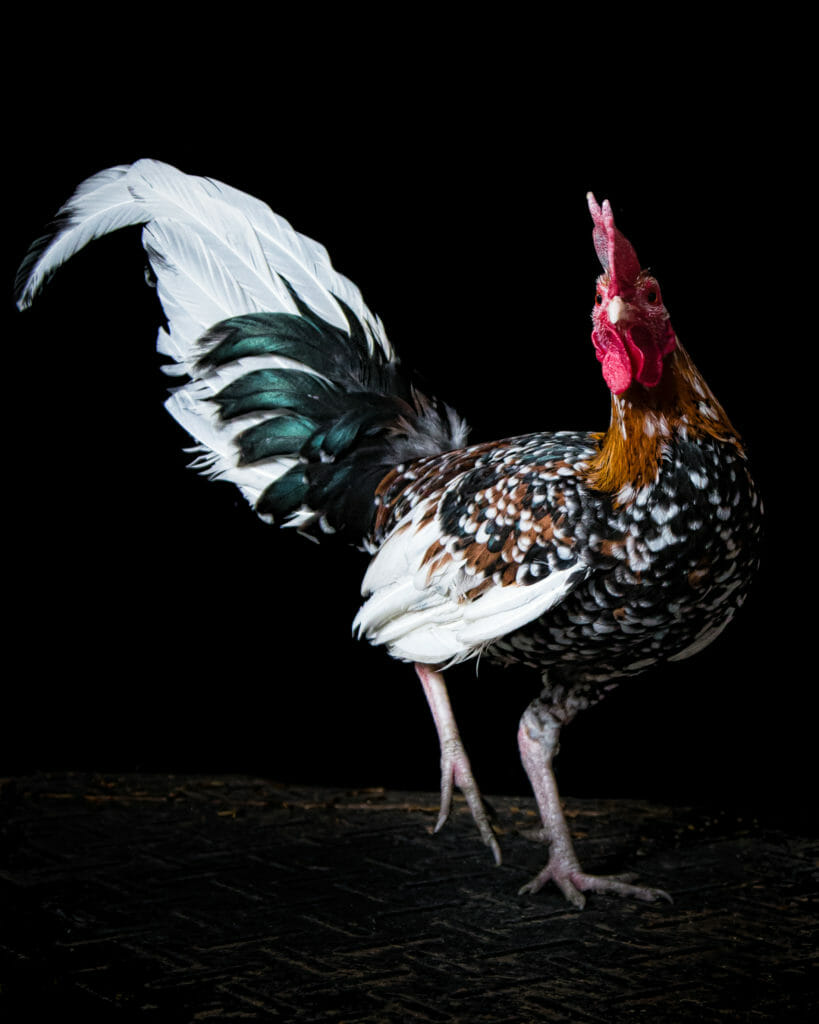
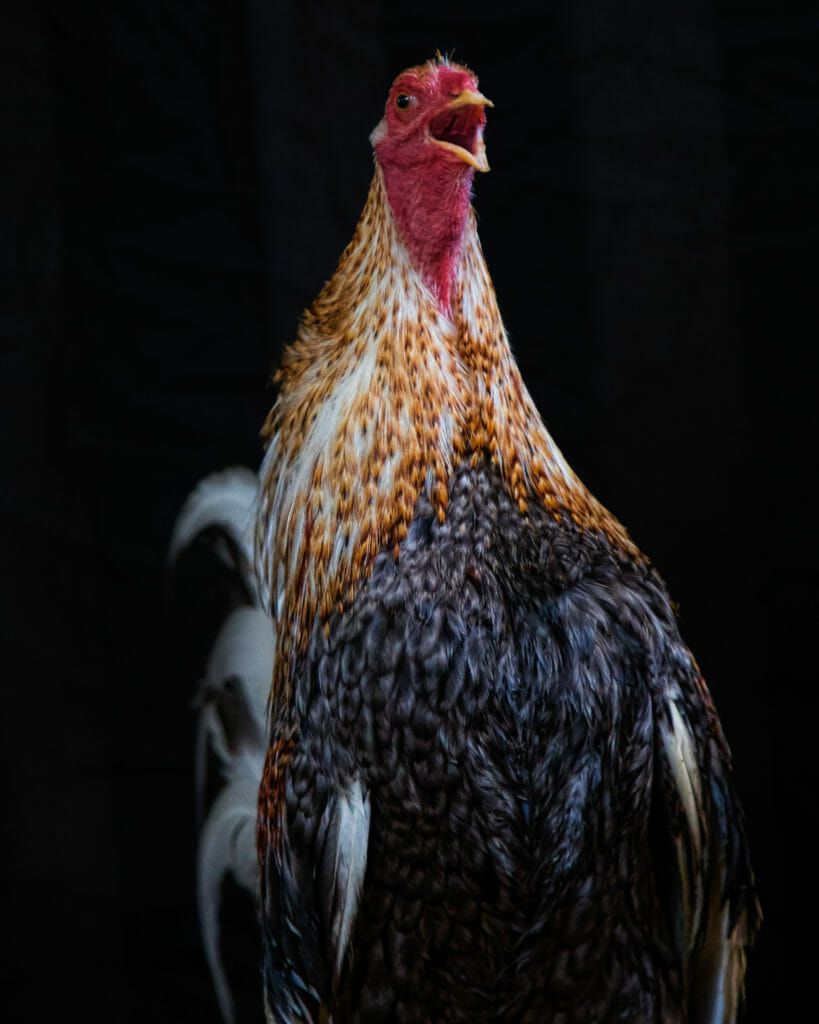
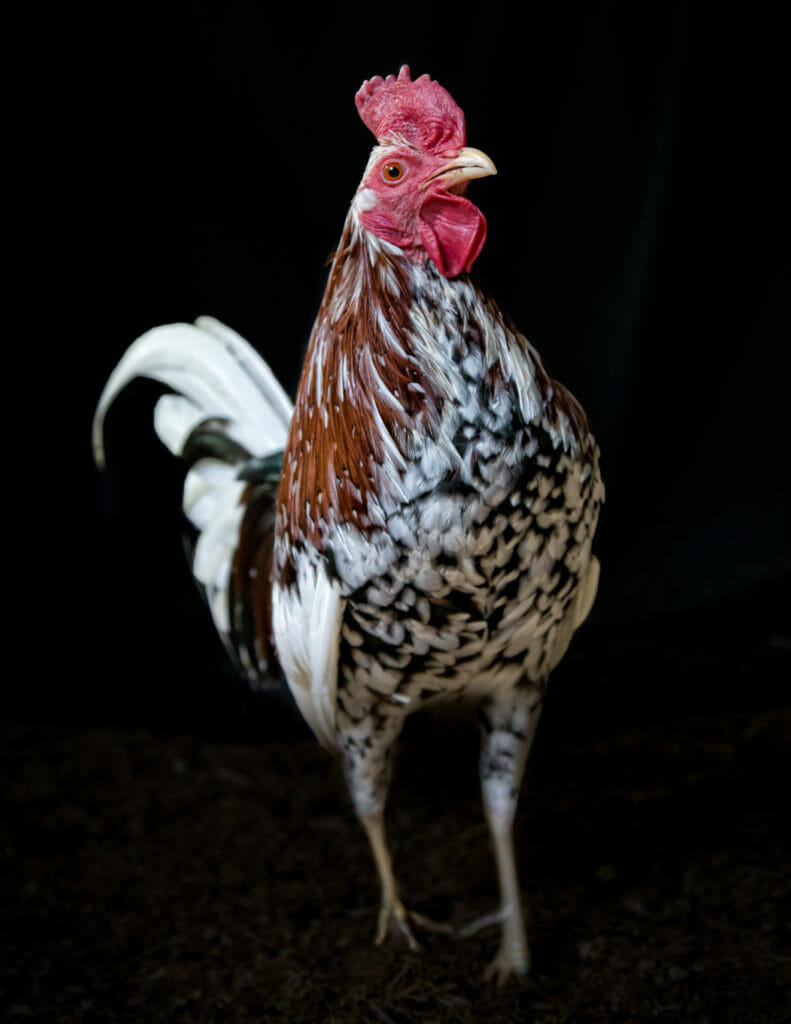
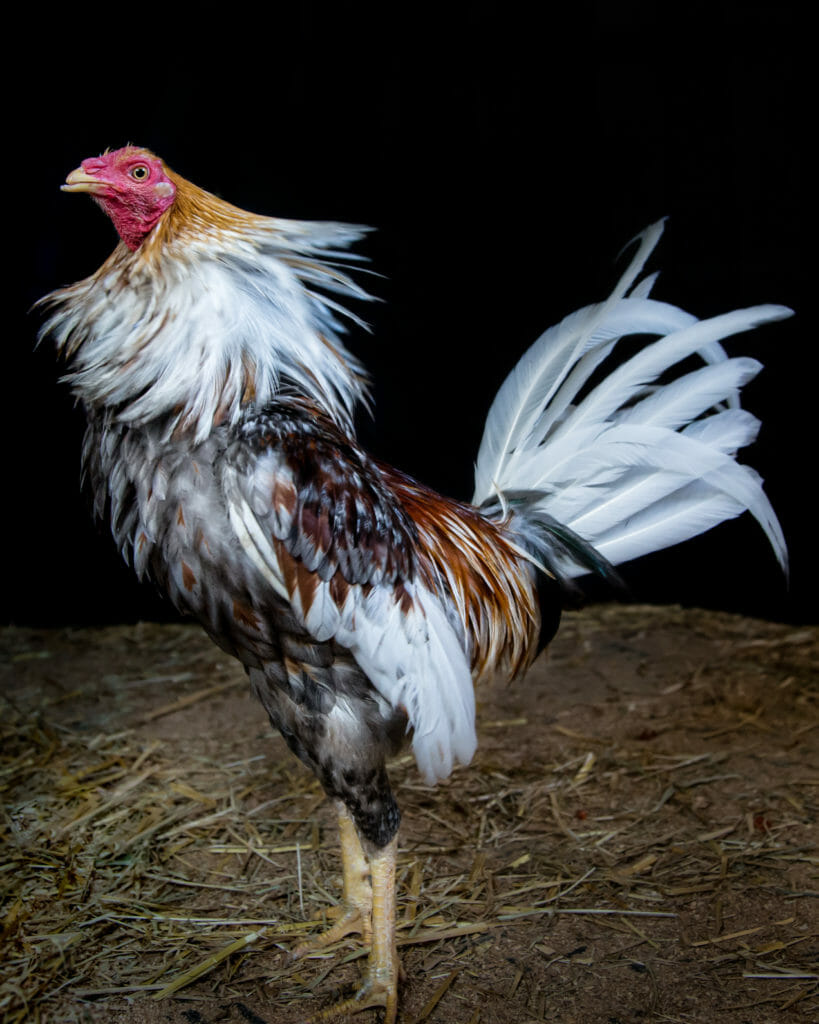
Cockfighting is a blood sport that continues underground in parts of the US despite being illegal in every state. The roosters pictured here were rescued in law enforcement raids on properties that were hosting illegal cockfighting rings. They have found a safe haven at the Happy Trails Farm Animal Sanctuary in Ravenna, Ohio. The sanctuary has taken in 159 roosters since 2015, but it has been forced to put a hold on intake due to space constraints.

Many of these roosters remain in search of permanent homes several years later, as finding people to adopt them can be challenging. Indeed, it can be risky to introduce them into a group that has an established rooster, but in the right home, they can be good companions and guardians of their flock. One volunteer caretaker, Vicky Mastroianni,  points to the misconceptions that make it hard to find adopters. “They are always overlooked because people think they’re mean,” she says. “When it’s people that did this to them.”

Photographer Carol Sahley began this photo project after reading about these roosters in the news. This photo series demonstrates the striking beauty and resilience of these animals despite their torment at the hands of man.

MURPHY: Murphy is one of the few lucky roosters that have been adopted. The sanctuary found a new home for Murphy in 2019, three years after he was rescued.

HARRELSON: Roosters used in cockfighting are often “dubbed” — a painful mutilation in which their combs and wattles are removed to make them less of a target during fights.

BENNING: While they await adoption, the roosters are housed individually to prevent fighting. While they were being photographed, the roosters began “tidbitting” — a mating ritual in which the rooster calls out to his hens and offers to share food. This display heartbreakingly demonstrates their need and desire for companionship.

CRUISE: Cruise has also been adopted. His beak and wattles are intact, which may be why he was adopted comparatively quickly.

TEDDY: Teddy calls out as he awaits a permanent home.

MADISON: Roosters play a number of important roles in a flock, including keeping an eye out for predators and providing protection to the hens.

PIVEN: Piven displays a stunning array of colors. Eating his favorite treat of blueberries is difficult for him as he has been “debeaked,” which means that part of his upper beak has been cut off.

To learn more about these roosters, contact info@happytrailsfarm.org

The post Survivors: Rescued From Cockfighting appeared first on Modern Farmer.

24 Oct 18:23

Lagavulin Offerman Edition Scotch Whisky

Parks & Recreation's Ron Swanson once called Lagavulin the "nectar of the gods." And it turns out that Nick Offerman, who played Swanson on the NBC series, is in full...

Visit Uncrate for the full post.
24 Oct 18:22

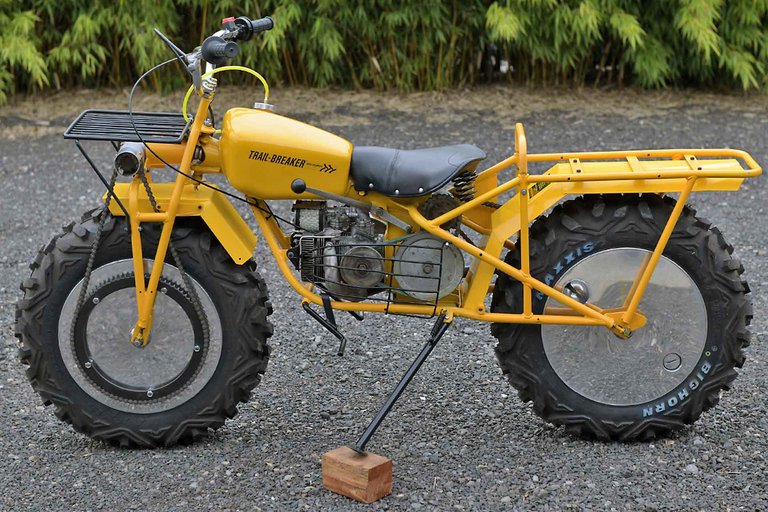
1970 Rokon Trail-Breaker Motorcycle

When it comes to unusual vehicles, Bring A Trailer never disappoints. A perfect example is this 1970 Rokon Trail Breaker, a dirtbike oddity from the '70s with massive tires, two-wheel-drive,...

Visit Uncrate for the full post.
24 Oct 18:22

Haus.me Prefab Houses

Smart, beautiful, and self-sufficient. Haus.me is a match made in house heaven. The off-grid dwelling comes ready to go from the jump with water tanks, solar panels, and an autonomous...

Visit Uncrate for the full post.
24 Oct 18:17

Fujifilm X-Pro3 Camera

The Fujifilm X-Pro3 doesn't just look traditional: it makes the act of shooting more traditional, as well. It does so primarily by hinging its touchscreen and hiding it during normal...

Visit Uncrate for the full post.
24 Oct 18:16

1983 Toyota FJ45 Land Cruiser Truck

The Toyota Land Cruiser, like the American Jeep it was originally based on, proved such a successful design that remained basically unchanged for over thirty years. This 1983 Toyota FJ45...

Visit Uncrate for the full post.
24 Oct 18:15

Could the Land Rover Defender Get an Engine to Compete with the Mercedes G-Class?

A report from England suggests the Defender could move up an echelon in power and price with a new engine.

24 Oct 18:13

ILFORD Unveils Ortho 35mm and 120 Film, 5th-Gen MULTIGRADE RC Paper

by Michael Zhang

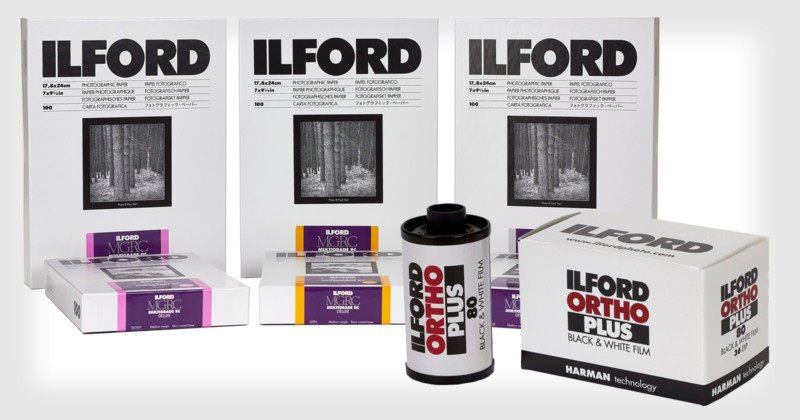
Harman Technology today announced a number of new products, including ILFORD Ortho Plus film in 35mm and 120 formats, the 5th generation of its popular MULTIGRADE RC paper, and more.

Ortho Plus Films

Previously only available in sheet format, Ortho Plus is an orthochromatic (vs panchromatic) black and white film that’s rated at ISO 80 in natural light and ISO 40 under Tungsten lighting.

“Our Ortho film was designed as a technical, high-resolution copy film for negatives […],” says ILFORD marketing director Giles Branthwaite. “We know photographers want choice and love to try new films and so we have now coated our Ortho emulsion onto an acetate base for 35mm cassettes and 120 rolls.

“We believe ORTHO PLUS offers superb photographic potential thanks to its fine grain and sharpness and some of the results we have seen are stunning.”

ILFORD says that the blue and green sensitivity of the emulsion allows photographers to handle Ortho Plus film in deep red safelight conditions, and the lack of red sensitivity also renders reds and oranges in scenes darker than panchromatic films.

You can see a number of sample photos shot on the new film over at Emulsive.

MULTIGRADE RC Paper

ILFORD MULTIGRADE variable contrast paper was first announced back in 1940. Now, eight decades later (and 25 years after the 4th generation), ILFORD is releasing the 5th generation of the best-selling paper.

“Improving [the paper] was not going to be easy but we wanted to bring the manufacturing in line with the latest emulsion making technology used in our other RC and fibre papers and so we have redesigned the emulsion from the ground up,” says Branthwaite. “This project has been in development for 8 years and we are extremely pleased and excited with the final product.”

ILFORD says the new paper has a slightly warmer base tint, deeper blacks, improved mid-grade spacing (for easier printing), and more consistent contrast throughout the tonal range.

ILFORD & Paterson Film Processing Starter Kit

ILFORD has teamed up with the darkroom product specialist manufacturer Paterson to create a new starter kit that contains everything an aspiring film photographer needs to process their first two rolls of film.

“ILFORD Simplicity chemicals are pre-measured for simple, convenient use and while they can easily be used in most tanks their volumes work perfectly with the Paterson 2-reel Universal Film Development Tank as they hold 600ml of diluted chemicals,” says Branthwaite. “Working closely with Paterson we have now created a kit that offers film photographers a convenient and affordable way to start processing their own films.”

Inside the kit is a 35mm film cassette opener, developer, stop bath, fixer, wetting agent, a universal film tank, reels, 600ml graduates, a thermometer, a stirrer, and film clips.

HARMAN Reusable Camera and Kentmere Film

Harman Technology is also launching a new HARMAN reusable plastic 35mm film camera. The kit contains two Kentmere Pan 400 36 exposure films. The camera comes with a built-in flash, a battery, and a strap.

“Demand for our Single Use Cameras (which are made from recycled parts) continues to increase year on year,” says Branthwaite. “While we don’t see this slowing anytime soon, we understand there is a desire to reduce single use plastic products, and as such we feel it is important for people to have an alternative.

“Additionally, the demand for 2nd hand film cameras is pushing prices up and so we wanted to give people an entry point to try film for the first time without having to make a significant outlay.”

Pricing and Availability

ILFORD ORTHO PLUS in 35mm and 120 will be available starting in early November 2019, as will the ILFORD & Paterson FILM PROCESSING STARTER KIT. Pricing, as well as availability of the MULTIGRADE RC paper and HARMAN reusable camera, will vary based on region, so check with your local distributor.

24 Oct 18:10

Coco-Cola, Absolut And L’Oreal Join Carlsberg In Paper Bottle Community

by Elizabeth Rushe, Contributor
The paper bottle community is a way for companies to demonstrate their interest in sustainable packaging development
24 Oct 18:02

How Flagstaff, Arizona, switched to LEDs without giving astronomers a headache

by Scott K. Johnson
A couple of different types of dark-sky-friendly LED streetlights.

Enlarge / A couple of different types of dark-sky-friendly LED streetlights. (credit: Scott K. Johnson)

“I feel like we’re protecting the last tree, in a way.” That’s what Flagstaff, Arizona, city council member Austin Aslan said at a recent meeting. The subject of that earnest statement might surprise you: it was streetlights. To be more specific, he was talking about a careful effort to prevent streetlights from washing out the stars in the night sky.

Flagstaff became the first city to earn a designation from the International Dark Sky Association in 2001. That came as a result of its long history of hosting astronomy research at local Lowell Observatory, as well as facilities operated by the US Navy. The city has an official ordinance governing the use of outdoor lighting—public and private.

Lighting issues

A few years ago, though, a problem arose. The type of dark-sky-friendly streetlight that the city had been using was going extinct, largely as a casualty of low demand. In fact, as of this summer, there are none left to buy. Meanwhile, the age of the LED streetlight has arrived with a catch: limited night-sky-friendly LED options.

Read 20 remaining paragraphs | Comments

24 Oct 17:56

Can Blockchain Jumpstart Detroit?

by Michael del Castillo, Forbes Staff
As Detroit looks to evolve past old-school auto industry blockchain promises to modernize the way the city, known as Motor City, does business in more way than one.
23 Oct 16:58

Slumping camera sales are a sad snapshot of an industry out-selfied by smartphones

by Conor Grant

New data from the camera industry shows that camera sales have fallen from 122m units in 2010 to just 20m units last year. 

And that bleak picture is on track to get even uglier this year: There were only 7m cameras sold in the first 6 months of 2019.  

So, are cameras dead?

No, they’re just not standalone cameras anymore — they’re smartphone cameras. Interestingly, people are actually taking more pictures than ever before… but they’re increasingly taking them on iPhones.

Big camera companies are no longer competing against each other for market share — they’re competing against well-funded hardware giants like Apple, Samsung, Huawei, and Google.

And it’s not looking pretty. All of the 4 largest camera companies — Sony, Nikon, Canon, and Fuji — are posting continuing declines. 

But smartphones aren’t the only reason that traditional camera sales numbers have fallen out of focus…

Camera companies zoomed in on the wrong part of the picture

Rather than focusing on adapting cameras to changing customer preferences, they doubled down on features that no one asked for — extra megapixels over easy-to-use filters, fancy lenses over share buttons. 

And, as investor Om Malik points out, focusing on the wrong features not only repelled would-be customers who wanted modern cameras, it also drove up the prices of cameras from 2011 to 2019 — alienating even die-hard camera geeks.

Now, ironically, some of the only standalone cameras that are gaining in popularity are retro, nostalgia-inducing cameras like Leicas — which have hardly any of the bells and whistles that Sony and Nikon bet so big on.

The post Slumping camera sales are a sad snapshot of an industry out-selfied by smartphones appeared first on The Hustle.

23 Oct 16:57

In Europe, grocery stores are hosting ‘happy hours’ to fight food waste

by Conor Grant

Food waste is a rotten problem: About ⅓ of the food that’s meant for human mouths ends up in the global trash heap. That means 1.3B tons of food go to waste each year (that’s $680B worth), yet, still, 1 in 10 people across the world are undernourished.

But, as The New York Times reports, businesses across the globe are testing out new systems to improve the efficiency of food distribution — and they just might be weird enough to work.

Happy hour isn’t just for bars anymore

In Finland, a grocery chain called S-market is testing out what it calls “happy hours.” Every night at 9 pm, the chain reduces the prices of products that are about to spoil to 60% off at all of its 900 stores.

Other grocers across Europe have taken similar steps to reduce food waste: REMA 1000, the largest grocery chain in Denmark, has eliminated in-store bulk discounts to stop people from buying more than they need.

Now it’s America’s turn

In the US of A — where Costco’s bulk discounts inspire a civic religion whose disciples wear their Kirkland Signature badges of honor with fervent pride — cutting down on food-related excess has proven even more difficult.

A nonprofit investigation last year gave 9 out of 10 American supermarkets a grade of C or lower on food waste management.

US grocery chains have been less proactive than their European peers when it comes to managing food waste. But, on the other side of the grocery aisle, a number of startups have launched to tackle food waste from other angles… 

And venture capitalists are eager to fund these waste warriors

In just the first 10 months of last year, VCs invested $125m in food waste-fighting startups. Here are some with fresh funding:

  • Apeel Sciences has raised $110m to develop plant-based artificial peels that extend the shelf lives of vegetables
  • Imperfect Produce has raised $47.1m to deliver “ugly” produce directly from farmers to consumers
  • Full Harvest has raised $11.5m to build a business-to-business market for surplus produce
  • Spoiler Alert has raised $2.7m to create software that helps businesses manage unsold food inventory

The post In Europe, grocery stores are hosting ‘happy hours’ to fight food waste appeared first on The Hustle.

23 Oct 16:56

Are you a victim of a data breach? Don’t expect a big payout 

by Mia Sullivan

A hacker exposed the personal information of about 24m Zappos customers back in 2012. Seven years later, Zappos has finally reached a settlement and it’s, urm, pretty messed up.

As payment for Zappos not properly protecting your data, you actually won’t get a payment. Instead, you’ll get 10% off one order at Zappos — only valid until the end of the year (or within 60 days of receiving this meager voucher, whichever is later). 

Wait, what?! This sounds more like opportunistic holiday marketing than “we’re sorry.”

Zappos isn’t the first to piss people off with a half-baked data breach payout

After exposing sensitive information, including Social Security numbers, for almost half the US population, Equifax announced in July that it would pay each victim a scanty $125, or cover the cost of credit monitoring for up to 10 years.

Then Equifax and the FTC walked this back, admitting they didn’t set enough money aside, and basically said, urm, you can maybe get this money but only if you set up credit monitoring before October 15, 2019 — and even then there’s probably not enough cash to go around.

Yahoo’s $358 payout seems elusive, too 

Yahoo recently announced a $117m settlement for data breaches back in 2013 and 2014 that affected 3B accounts — the largest (in terms of users) in US history.

If you had a Yahoo account between 2012 and 2016, you’re theoretically eligible for up to $358, but your slice depends on how many other people submit claims. It’s easy to see the math doesn’t work out.

The post Are you a victim of a data breach? Don’t expect a big payout  appeared first on The Hustle.

23 Oct 16:54

Fender’s New App Just Made Learning Songs Much Easier

23 Oct 16:43

The Best Western Boots for Men

23 Oct 16:40

Top 10 Creepy Facts About Facebook

by JFrater

A daily stampede of 1.2 billion users makes Facebook the world’s biggest social media platform. This massive landscape comes with the usual creepy users. If they had a super-bizarre king, it would be Facebook itself. Recent investigations found that the company has information on people not using the platform and that violence is used to […]

The post Top 10 Creepy Facts About Facebook appeared first on Listverse.

23 Oct 16:38

Why Bars Have Foot Rails

by John Farrier

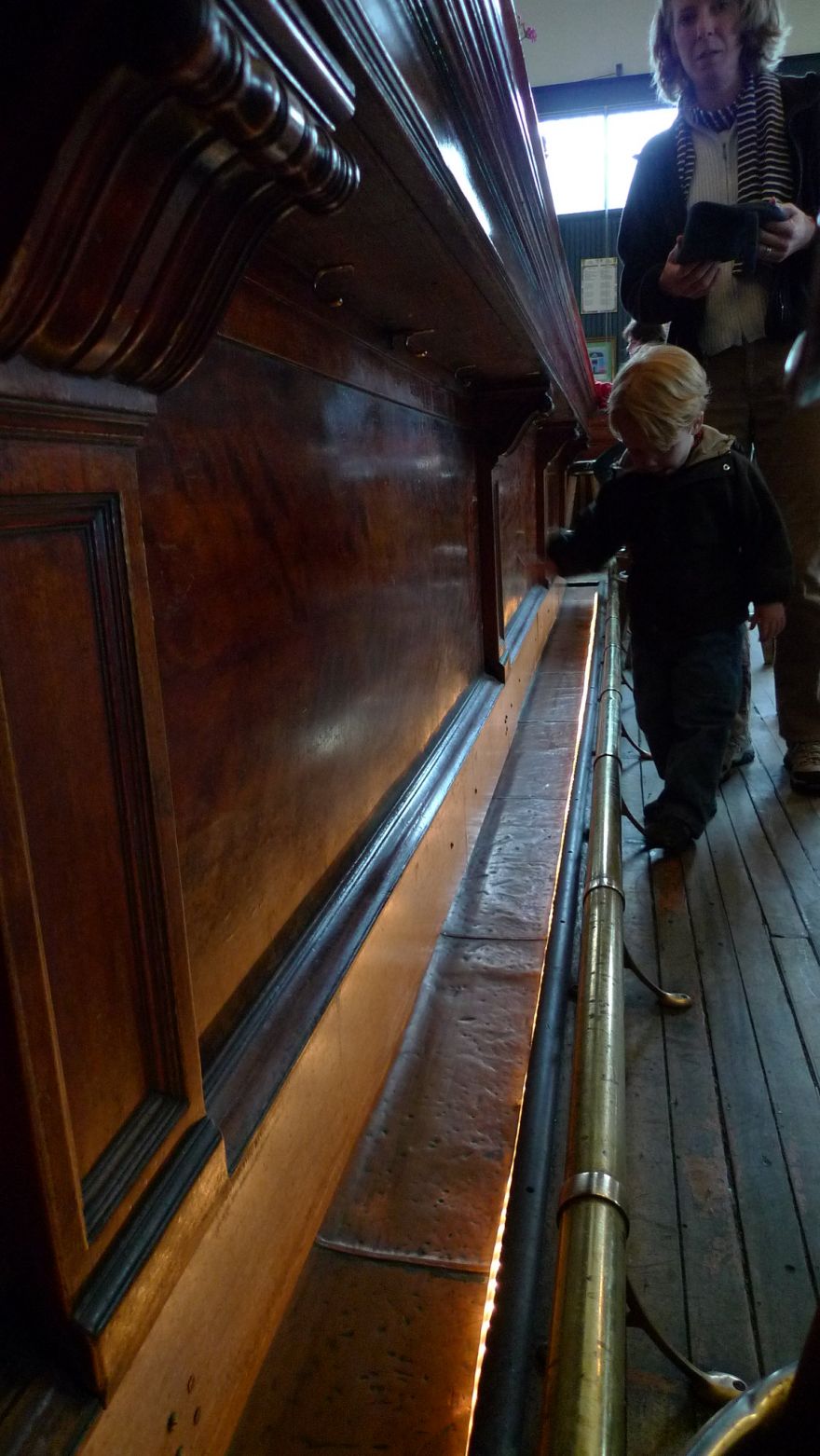
If you visit an old-fashioned pub, you may see a metal or wooden rail along at ankle height around the bar. These rails emerged by the late Nineteenth Century. Why did they become popular? Wayne Curtis of the magazine Inbibe explains that they were footrests that encouraged drinkers to relax while standing, and therefore buy more drinks:

Foot rails are both altruistic and mercenary. They’re altruistic because they’re installed for the comfort of the drinker. They’re mercenary because the more comfortable drinkers are, the more they’ll spend. A modest investment in a foot rail can evidently lead to a pleasing return.
Turns out, humans aren’t really designed to stand for long periods with feet flat on the floor. This contributes to stress on the spine, and you can feel it in your lower back. A foot rail allows us to redistribute the load on our feet—first one foot, then the other—and alter the tilt of our spines. “Bartenders were probably the first ergonomics experts on the planet,” write the authors of Deskbound, a 2016 book about the hazards of the sedentary life. “A standing-height drinking table that you can lean on, with a place to rest your foot? Genius.”

But brief lunchtime visits to bars faded away as a common practice, and so did this piece of furniture designed to facilitate standing:

Foot rails faded in importance for a simple reason: The workingman’s saloon, where one knocked back a shot or two and then quickly returned to work, were replaced by bars where people lingered. “Belly up to the bar” was not a facile metaphor, but a reasonably exact description of what one did. Then barkeeps found that if they added stools, people would linger and order more. (See: “mercenary.”) Today, the foot rail persists in a feral fashion, sometimes inconveniently. The legs of bar stools bump into them; the feet of customers can get entangled when dethroning, especially if tipsy.

This is an interesting hypothesis. But I'd like to suggest another. While composing this blog post, I selected the above photo, which describes the brass sheet in front of the foot rail as a "spit trough". Googling around led me to learn that some bars used to have troughs where customers could spit or pee without leaving their chosen spot. Sam Sessa wrote in 2010 for the Baltimore Sunthat:

If the pub was packed full of people and you were lucky enough to have a spot at the bar, you weren't going to want to risk losing it by walking to the bathroom. But when nature calls, sooner or later, you have to pick up the phone.
What to do?
To solve the problem, bars began installing impromptu urinals underneath the bars. They were stainless steal troughs with a faucet at one end and a drain at the other. That way, the beer could go in one end and out the other at the same time.

-via VA Viper | Photo: Thirteen of Clubs

23 Oct 16:32

The Starter Kitchen: All The Cooking Utensils You Need

by Abigail Abesamis, Contributor
Go back to basics with this list of kitchen essentials when you’re starting from scratch.
23 Oct 16:30

These Affordable Rugs Were Made for Parents and Pet Owners

Burrow released a collection of affordable rugs to fit in a variety of lifestyles.

23 Oct 16:27

A New-Age Texas Troubadour

by Dacey Orr

Charley Crockett’s life sounds a bit like the script to a Western or maybe a Highwaymen song: He was born in a trailer park in the Rio Grande Valley community of San Benito, Texas, lived the later years of his childhood with his single mother in Dallas, and after tumultuous high school years, spent the next decade developing his music the hard way—busking on the streets of New Orleans, Memphis, and New York City while sleeping in abandoned warehouses and parks. But in 2014, he left that life behind and returned to Texas to officially launch his music career. 

Musically, the thirty-five-year-old intermingles country, folk, soul, jazz, and honkytonk blues, recalling past greats such as Ernest Tubb and Lefty Frizell, but with his own modern edge. Since returning to Texas, Crockett has played with the likes of Leon Bridges and Turnpike Troubadours, and this past June, he made his debut at the Grand Ole Opry. But he almost didn’t make it to the Opry stage. In January, doctors warned him that complications from a rare heart disorder would lead to heart failure within a year if left untreated. A week before undergoing a life-saving surgery, he recorded his new album, The Valley, which comes out this Friday and is comprised of fifteen original and deeply autobiographical songs.

Now fully recovered, Crockett just completed a European tour and is headed back to the states for a string of shows this fall, beginning in Athens, Georgia, September 28. We caught up with him to talk about his Texas upbringing, developing his unique sound, and why he refuses to slow down.


You recorded The Valley the week before undergoing surgery, and it’s incredibly personal. Why was it important for you to tell these stories?

As I’m getting older, I want to leave more behind. I was trying to make an album that would really tell my story more than anything else. When you’re going through all that kind of stuff, you think about honesty: What’s honest and true for me versus the desire to be successful or be appreciated by whatever the music industry is. When you’re facing your mortality, it tends to make you go back and find your essence. 


So many of your songs deal with the idea of moving around. 

I became an itinerant musician and started hoboing around in my late teens, so I’ve learned a lot from being on the road and being in uncomfortable situations. Relying on the kindness of strangers to let me do my thing, play on the street, find places to sleep at night. But the funny thing about doing the street thing and then going into fulltime touring is they’re actually very similar lifestyles.


Even though you’ve spent so much time traveling around, your home state of Texas seems to have had a major impact musically.

Good Lord, Texas. In the cities, you have this convergence of these different cultures: urban city blues, Tejano music, the Cajun and Creole that bleeds in from the southeast. I think anywhere I’ve gone in the world, Texas carries a lot of weight. When I was younger in hard times, I really tried to run away from Texas, which I think a lot of young people do. But as I got older, I came to an acceptance of how much this place had made me who I am. One day I turned a corner from running away to embracing and being proud to represent the heritage of Texas. I’m related to Davy Crockett—being born with the last name, it puts a lot of responsibility on me as a Texan. 

photo: Lyza Renee

Charley Crockett at the Kessler Theater in Dallas.

Your sound is so different from most everything coming out these days. How did you develop it? 

My mama got me a Hohner guitar out of a pawn shop in Irving, Texas, when I was seventeen, and I just started messing around on it. I’ll never forget the first stage I ever got on was at a place in Dallas called the Balcony Club. It was this little five-by-five stage, and I was playing all these weird little songs I’d been trying to write. This guy who had let me on stage and was backing me up asked, “What are you calling this music?” I said, “I have no idea what it is,” and he said, “Well, I’ll tell you what it is. You’re playing the blues!” 

Later, I was playing on the street in New York City one day. Somebody showed me this book of T-Bone Walker chords, and I realized I had accidentally found them naturally myself. T-Bone Walker was from rural Texas and went up and made his mark in Dallas, and then he changed the world with blues music. I’m not saying I’m anywhere near as good as that, but it was this acceptance of realizing the place I was from had made me who I was. I realized there was this Dallas blues sound I had naturally been finding, and it seemed like the farther from home I got the more I was finding that sound.


Do you have a favorite song on The Valley

Probably “5 More Miles.” I originally wrote it on a banjo, and when I hear it, I can hear my struggle and can hear this person inside me overcoming it. That’s how I feel about life. We play this game in society that more often than not is made to lose. I can spend my whole life crying about it being house rules, or I can just play my damn hand and keep moving. Because if you stop moving, you get left behind. I get a lot of people always asking me, post-surgery, why I’m still working so hard. But if I slow down now, then I’ve got to answer to myself. 

The post A New-Age Texas Troubadour appeared first on Garden & Gun.

23 Oct 16:26

Meet a Coastal Carolina Seafood Champion

by Dacey Orr

Ricky Moore couldn’t wait to get away from the small area of North Carolina where he grew up. Raised near New Bern, around the rivers and sounds of Eastern North Carolina, his father was in the military, so he had already seen places like Germany. And he couldn’t wait to see more of the world for himself. 

“I got that traveling bug,” Moore says. “When I graduated high school, I was ready to go. I didn’t want to sit in a classroom.” He enlisted in the army and discovered cooking the military way, from feeding troops in combat field units to feeding officers in the generals’ mess. 

After that, he kept going. He did stages—kitchen internships—for such chefs as Charlie Trotter, Art Smith, and Rick Bayless. He cooked French, Italian, Lebanese , and modern Southern, always keeping his notebook, always trying to figure out what made one restaurant different from another. 

“The goal was to be a skilled craftsperson. At the end of the day, cooking is cooking. It’s the behavior you try to investigate—why is a Michelin restaurant a Michelin restaurant? It’s the behavior.” 

Eventually, Moore and his wife, Norma, wanted to come home to North Carolina to raise their kids, daughter Hunter, 15, and son Greyson, 10. Moore was working at a small market in Carrboro when Norma gave him an idea: She was craving a good fish sandwich. 

Moore spotted a tiny building, basically a hot dog stand. It was all of 205 square feet, a walk-up window and outside tables. But it reminded him of something: He had once visited Singapore, where vendors in the night markets fascinated him. He calls it his “aha” moment: A single cook, minimal equipment, just making one thing but doing it really well. 

Moore had grown up fishing and crabbing, and he knew what his one thing would be: Local fish and seafood. 

“I wanted to do my own thing. I didn’t want investors, I didn’t want to do a food truck. I wanted to do something small, just a small little place that folk can connect with and see a person in there working hard.” 

Moore now has two locations of Saltbox Seafood Joint in Durham, the original walk-up and a small sit-down restaurant. And now he has his first book, Saltbox Seafood Joint Cookbook, focusing on fish and shellfish and the things that go with them, including stews, chowders, and plenty of grits. 


People are notoriously afraid to cook fish. What’s the key to getting over our fear?

Purchase what you know, get the fish you grew up eating. First, make sure it’s fresh, make sure it’s local. Second, don’t overthink it. Fish is delicate. Baking fish is a simple method. It doesn’t take rocket science to flavor it with a little bouquet of herbs around it. Olive oil, salt, pepper. Put it in a hot oven and sear it. And that’s it. Put a little salad around it. Done. Master that technique. The more you do it, over and over again, the more confident you get.


Your first location of Saltbox was smaller than a food truck. What did you learn from working in such a small space?

I treated it as a station in the kitchen. I’m working the fish station, that’s it. Every day, I set up my station. I customized every move, everything in arm’s reach. I did trial and error, I cut out steps that I needed to get that food out. I was very planned out, through the whole week. The beauty is, I had fresh fish coming in daily. The joy and motivation was coming in every day and starting by butchering my fish.


In your restaurants, you have what you call the “Trust Me Menu,” to get people to try something they haven’t had. What kind of things would I find on it?

Triggerfish. Sugar toads. Triple tail. Lionfish. Mullet. Bluefish. In this market, folk who know seafood only know shrimp, oysters, and flounder. That’s the cultural conditioning. Even though there’s plenty of native species, that’s what everybody sold. For me, all those fish (I named) are common. But people were like, ‘what’s mullet?’ I’d cook the shrimp and oysters so you know I know how to season stuff. And then I’d take it up to the next level: ‘You know I cook these, you should try this. Maybe you might just like it. Trust me.’


You write that the Calabash style of fried seafood along the coast is about using corn flour instead of cornmeal for frying fish. What’s the difference?

Corn flour is finer. You fry something in cornmeal, there’s a bit more texture. If I’m cooking fresh seafood, the lighter the dredge, the better. It doesn’t take too long (to cook), you’re not trying to eat through something so thick, you’re not tasting the fish. That is the nuance—corn flour. 


MORE: GET THE RECIPE FOR MOORE’S
ALL-PURPOSE SEAFOOD DREDGE


When you go to the beach, what do you always pack along for the kitchen? 

I’m always going to bring some sort of mirepoix preparation, some kind of aromatics. Some olive oil. Some sort of herb, particularly thyme. I’m going to bring some sort of seasoning paste—olive oil, garlic, parsley, chiles, anchovies, mixed together. Then I’ve got a base and I can do a quick fish stew or steam clams. Give me a base of seasoning and I can riff on anything. You don’t want to carry food, you want to carry bases of flavor. You can get your fish, your protein, anywhere. But bring your arsenal of flavors. And keep it really simple and pure. 


You write about how you grew up crabbing and fishing all around New Bern, even on the river behind Tryon Palace. Do you still get out and fish these days? 

I’ll be honest—I just can’t find time. I need to take my son, Greyson. I want to, I long for it. Growing up, it was like normal, like playing marbles. It wasn’t like a big chore. We’d throw sticks up in a pecan tree, fill a bag with nuts, sell them and that’s how we got chicken necks, which were cheap. Tie them with a little string and toss them in the water. It was fun—little kids coming home with a big bucket of crabs. 

The post Meet a Coastal Carolina Seafood Champion appeared first on Garden & Gun.

23 Oct 16:23

Portraits of a Lost Delta Gem

by Dacey Orr

In the early 1960s, Willie Seaberry and his then-wife Eula Mae opened Po’ Monkey’s juke joint at the end of a gravel road past fields of corn, cotton, and soybeans in Merigold, Mississippi. Every Thursday night for decades, neighbors, friends, college students, and tourists traveling the Mississippi Blues Trail congregated beneath its low-slung ceiling bedecked with stuffed monkeys and colorful Christmas lights to dance, socialize, and drink 40-ounce beers. After Seaberry’s death in 2016, however, Po’ Monkey’s went silent, and its contents were put up for auction last year. But thanks to the work of Will Jacks, a photographer from nearby Cleveland, the memory of the legendary juke joint lives on. 

Jacks’s new book, Po’ Monkey’s: Portrait of a Juke Joint  began as an assignment for Delta Magazine in 2007. “I spent nine months working on it, but when I finished, I felt like I barely even scratched the surface,” Jacks says. “I didn’t fully understand what I had just documented.” So, he spent the next decade learning, shooting and befriending Po’ Monkey’s regulars. 
from Po’ Monkey’s: Portrait of a Juke Joint by Will Jacks published by University Press of Mississippi, Copyright © 2019 by Will Jacks. All Rights Reserved.

“The place had a lot of visual drama, and you’d be overwhelmed by that the first time you came,” Jacks says. “Then after a second or third time, it became more about the interaction of people.” That’s why Jacks chose black and white for his photographs, to minimize the colorful atmosphere and emphasize the human connections formed in the ramshackle building. He captured the excitement inside, but often erected a white backdrop outside the front door to snap shots of patrons who came from down the road and—as Po’ Monkey’s gained notoriety on the Blues Trail and Seaberry became something of a local celebrity—from as far away as Indiana and Italy. 

from Po’ Monkey’s: Portrait of a Juke Joint by Will Jacks published by University Press of Mississippi, Copyright © 2019 by Will Jacks. All Rights Reserved.

“It was the glue of locals that made this place special,” Jacks says. “They were as welcoming as Willie was. It’s special that visitors from around the world could interact with people who live down the street.” That’s the sentiment he wants generations to remember as the building sits empty and the fate of Seaberry’s estate remains in question—the contents were sold as a collection, but no plan has yet been made about what to do with them. “We can’t try to hang on to Willie and what he built because it will become diluted,” Jacks says, “but I hope this book brings attention to the magic he created.”  

The post Portraits of a Lost Delta Gem appeared first on Garden & Gun.