KWBaker
Shared posts
Valverde Speaks On Pique, Rakitic And Puig Plus FC Barcelona Versus Leganes Clash

Ten Lessons From Mr. Rogers On How To Make Yourself Heard
Should You Refinance While Interest Rates Are Low? 3 Scenarios Where It Makes Sense
In Search Of Bigfoot: A Televised Expedition May Prove The Elusive Beast Is Real

Why Has Western Digital’s Hard Drive Revenue Dropped 35% Over The Past 5 Years, Despite 50% Growth In Exabytes Shipped?
You Can Stay in This Hotel for $1 a Night, But Your Whole Stay Will Be Livestreamed on YouTube

The owner says, "young people nowadays don't care much about the privacy."
He's counting on that to make money. The owner of the One Dollar Hotel in Fukuoka, Japan thinks that his scheme will lose money in the beginning, but turn a profit once he can monetize the videos on his YouTube channel. So far, four people have taken him up on the offer in the past month. CNN reports:
Guests are permitted to turn the lights off, and the bathroom area is out of camera range.
"This is a very old ryokan and I was looking into a new business model," says Inoue, who started running the hotel last year. "Our hotel is on the cheaper side, so we need some added value, something special that everyone will talk about."
-via Dave Barry | Photo: One Dollar Hotel
The First Presidential Debates Featured Wax Dummies and Phonograph Records
This week's Atlanta cattle call was either the fifth or seventh Democratic presidential debate of the year, depending how you count. There have also been countless "forums" in which the candidates appear sequentially rather than all at once. And the Republicans have held three debates of their own, sort of. (The presumptive nominee didn't show up.) By now the barrage is so familiar that it's easy to forget that it's a relatively recent development: Televised debates did not become a regularly recurring part of America's presidential campaigns until 1976.
There were precursors, of course. There was the famous quartet of Kennedy-Nixon debates in 1960, the first time the major parties' nominees faced off on TV. The first presidential debate to be broadcast on the radio took place in 1948, when Thomas Dewey and Harold Stassen went head to head before Oregon's Republican primary. And if you're willing to stretch the definition of "debate," there were the Bryan-Taft face-offs of 1908, in which neither candidate was actually present but their voices were. Think of it as debate by DJ.
 As early as 1896, record companies had sold reenactments of presidential candidates' speeches, with actors playing the candidates. In 1900 the Democratic nominee, William Jennings Bryan, made some recordings himself, but they didn't get distributed. (Subject for another time: why political figures perceived as critics of modernity are often quicker to embrace new mass media.) Finally, in 1908, with Bryan again representing the Democrats and with William Howard Taft running as the Republican, both candidates recorded and released a series of short speeches on several issues, from railroad regulation to imperialism. You could buy these to hear in your home, but various venues also simulated "debates" between the candidates, with records rather than live speakers.
Patrick Feaster describes some of these events in his liner notes to Debate '08, a 2008 CD collecting most of Taft and Bryan's recordings for the Edison company. One debate was held at an opera house in Des Moines, Iowa, with approximately 1,500 people in attendance. ("The overall goal of this event seems to have been to promote phonographs rather than political platforms," Feaster notes. Well, it wasn't the first time politics and commerce coincided.) An arcade in New York City took a more interactive approach. "Its entrance was flanked by wax figures representing the two candidates at flag-draped podiums, including an unconvincingly slim version of Taft," Feaster writes. "Each candidate stood accompanied by signs that urged passersby to come in to hear his own positions and his responses to his opponent's views. Those who accepted the invitation found eight machines with Taft speeches laid out beside nine with Bryan speeches, each available for individual listening through ear-tubes upon deposit of a coin."
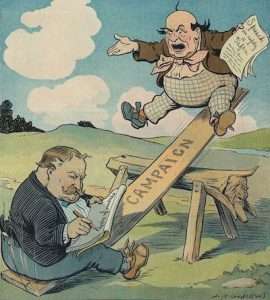 And what did those wax candidates have to say? By this time the Progressive Era was well underway, and the Democrats had embraced far more economic intervention than their party had been willing to endorse the last time it held the presidency, under Grover Cleveland. Indeed, the first time Bryan had won the nomination, back in 1896, several of the old Cleveland Democrats had bolted to form a short-lived third party. But change is a gradual thing, and Bryan frequently framed his arguments in language the old liberals could appreciate. In a speech called "Swollen Fortunes"—1908's counterpart to today's attacks on billionaires—he made his case against concentrated wealth in essentially libertarian terms. After distinguishing "swollen" fortunes from fortunes that are "honestly acquired," he declared: "Swollen fortunes are in almost every case traceable to privileges granted by the government or to favoritism shown to a few at the expense of the rest of the population. The cure for swollen fortunes, therefore, is the restoration of the government to its old foundations and in the application to all branches of the government of the doctrine of equal rights to all and special privileges to none."
And what kind of special privilege did he want to eliminate? In "The Tariff Question," Bryan took on the evils of protective trade barriers:
In another record ("The Trust Question"), Bryan sounded a bit like a modern critic of regulatory capture: He was all for breaking up monopolies but unenthusiastic about schemes to regulate them, declaring that "we have tried regulation, and the result is that the monopolies regulate the government instead of being regulated by the government."
And Taft? In "Roosevelt Policies" he presented himself as heir to the outgoing incumbent, the progressive stalwart Theodore Roosevelt. (Taft was Roosevelt's secretary of war.) In sharp contrast to Bryan, who put out a record condemning imperialism, Taft produced one praising American rule in the Philippines. Bryan brought out a record denouncing "government by injunction"; a Taft release retorted that Bryan would undermine "the authority of the courts." And while Bryan was arguing that free trade would undermine those swollen fortunes, Taft condemned a Democratic proposal "to take off the tariff on all articles coming into competition with those produced by the so-called trusts," claiming that this "would not only destroy the trusts but all of their smaller competitors":
If you forced me to choose, I'd have to pick Bryan. But there are some areas where I'd give the advantage to Taft. Notably, he took the time to record a speech demanding "justice for all men without regard to race or color" and calling for the full enforcement of the Reconstruction amendments. He didn't get into any specifics of what that would mean, and once he became president he didn't do much to fulfill those promises; but in our virtual debate he sounds better than Bryan, who didn't discuss the issue at all. Toothless is better than closed-lipped. (On the broader subject of racial prejudice: Both Bryan's anti-imperial speech and Taft's colonialist counterpart included comments that today come off as racist. But if I were a Filipino in 1908, I'd likely root for the candidate who wants to grant me independence sooner rather than later, not the one eager to uplift me at the point of a gun.)
Taft won on Election Day, but in another sense both men came out ahead. According to Feaster, the Edison company paid each candidate $500 for making these records—more than $14,000 in today's money. Taft got a bonus: a new record player.
(For past editions of the Friday A/V Club, go here.)
The First Presidential Debates Featured Wax Dummies and Phonograph Records
This week's Atlanta cattle call was either the fifth or seventh Democratic presidential debate of the year, depending how you count. There have also been countless "forums" in which the candidates appear sequentially rather than all at once. And the Republicans have held three debates of their own, sort of. (The presumptive nominee didn't show up.) By now the barrage is so familiar that it's easy to forget that it's a relatively recent development: Televised debates did not become a regularly recurring part of America's presidential campaigns until 1976.
There were precursors, of course. There was the famous quartet of Kennedy-Nixon debates in 1960, the first time the major parties' nominees faced off on TV. The first presidential debate to be broadcast on the radio took place in 1948, when Thomas Dewey and Harold Stassen went head to head before Oregon's Republican primary. And if you're willing to stretch the definition of "debate," there were the Bryan-Taft face-offs of 1908, in which neither candidate was actually present but their voices were. Think of it as debate by DJ.
As early as 1896, record companies had sold reenactments of presidential candidates' speeches, with actors playing the candidates. In 1900 the Democratic nominee, William Jennings Bryan, made some recordings himself, but they didn't get distributed. (Subject for another time: why political figures perceived as critics of modernity are often quicker to embrace new mass media.) Finally, in 1908, with Bryan again representing the Democrats and with William Howard Taft running as the Republican, both candidates recorded and released a series of short speeches on several issues, from railroad regulation to imperialism. You could buy these to hear in your home, but various venues also simulated "debates" between the candidates, with records rather than live speakers.
Patrick Feaster describes some of these events in his liner notes to Debate '08, a 2008 CD collecting most of Taft and Bryan's recordings for the Edison company. One debate was held at an opera house in Des Moines, Iowa, with approximately 1,500 people in attendance. ("The overall goal of this event seems to have been to promote phonographs rather than political platforms," Feaster notes. Well, it wasn't the first time politics and commerce coincided.) An arcade in New York City took a more interactive approach. "Its entrance was flanked by wax figures representing the two candidates at flag-draped podiums, including an unconvincingly slim version of Taft," Feaster writes. "Each candidate stood accompanied by signs that urged passersby to come in to hear his own positions and his responses to his opponent's views. Those who accepted the invitation found eight machines with Taft speeches laid out beside nine with Bryan speeches, each available for individual listening through ear-tubes upon deposit of a coin."
And what did those wax candidates have to say? By this time the Progressive Era was well underway, and the Democrats had embraced far more economic intervention than their party had been willing to endorse the last time it held the presidency, under Grover Cleveland. Indeed, the first time Bryan had won the nomination, back in 1896, several of the old Cleveland Democrats had bolted to form a short-lived third party. But change is a gradual thing, and Bryan frequently framed his arguments in language the old liberals could appreciate. In a speech called "Swollen Fortunes"—1908's counterpart to today's attacks on billionaires—he made his case against concentrated wealth in essentially libertarian terms. After distinguishing "swollen" fortunes from fortunes that are "honestly acquired," he declared: "Swollen fortunes are in almost every case traceable to privileges granted by the government or to favoritism shown to a few at the expense of the rest of the population. The cure for swollen fortunes, therefore, is the restoration of the government to its old foundations and in the application to all branches of the government of the doctrine of equal rights to all and special privileges to none."
And what kind of special privilege did he want to eliminate? In "The Tariff Question," Bryan took on the evils of protective trade barriers:
In another record ("The Trust Question"), Bryan sounded a bit like a modern critic of regulatory capture: He was all for breaking up monopolies but unenthusiastic about schemes to regulate them, declaring that "we have tried regulation, and the result is that the monopolies regulate the government instead of being regulated by the government."
And Taft? In "Roosevelt Policies" he presented himself as heir to the outgoing incumbent, the progressive stalwart Theodore Roosevelt. (Taft was Roosevelt's secretary of war.) In sharp contrast to Bryan, who put out a record condemning imperialism, Taft produced one praising American rule in the Philippines. Bryan brought out a record denouncing "government by injunction"; a Taft release retorted that Bryan would undermine "the authority of the courts." And while Bryan was arguing that free trade would undermine those swollen fortunes, Taft condemned a Democratic proposal "to take off the tariff on all articles coming into competition with those produced by the so-called trusts," claiming that this "would not only destroy the trusts but all of their smaller competitors":
If you forced me to choose, I'd have to pick Bryan. But there are some areas where I'd give the advantage to Taft. Notably, he took the time to record a speech demanding "justice for all men without regard to race or color" and calling for the full enforcement of the Reconstruction amendments. He didn't get into any specifics of what that would mean, and once he became president he didn't do much to fulfill those promises; but in our virtual debate he sounds better than Bryan, who didn't discuss the issue at all. Toothless is better than closed-lipped. (On the broader subject of racial prejudice: Both Bryan's anti-imperial speech and Taft's colonialist counterpart included comments that today come off as racist. But if I were a Filipino in 1908, I'd likely root for the candidate who wants to grant me independence sooner rather than later, not the one eager to uplift me at the point of a gun.)
Taft won on Election Day, but in another sense both men came out ahead. According to Feaster, the Edison company paid each candidate $500 for making these records—more than $14,000 in today's money. Taft got a bonus: a new record player.
(For past editions of the Friday A/V Club, go here.)
Black Friday: Why you make better shopping decisions on your laptop than your phone - CNET
This Exquisite Restored Mercedes G-Wagen Is Cheap Next to a Bronco or Defender
Anyone up for an artfully rebuilt Mercedes with a five-speed manual?

Daisy Celebrates 80 Years of the Red Ryder with Special Commemorative Edition
This most-famous BB Gun celebrates its 80th anniversary in 2020 with a special edition featuring elegant engraving on the forearm and a commemorative medallion in the stock.
The post Daisy Celebrates 80 Years of the Red Ryder with Special Commemorative Edition appeared first on GunsAmerica Digest.
Paper That You Bake
Today in Tedium: In the next week or so, ovens around the country are going to be filled with all sorts of baked goods ahead of Thanksgiving. Pies. Cookies. Biscuits. And lots of stuff in between that I will probably eat, even if I have no role in baking it myself. In recent years, a key tool that will enable such rapid-fire baking with startling efficiency has gained widespread popularity among cooks. It’s called by a variety of terms—“baking sheets,” “parchment paper,” “backpapier,” and others. The question, as originally posed by fellow writer, word obsessive, and fan of nerdy things Gretchen McCulloch, is this: Where did this object, and the terminology behind it, come from? This sounded like a mystery that I could add a little clarity to. So I did. Today’s Tedium ponders parchment paper, pardner. — Ernie @ Tedium

Corporations and governments track our activities online—and not for our benefit. IVPN was built as a secure tool of resistance against pervasive monitoring. The service is run by a transparent team of security experts and privacy activists, and always puts principles before profit.
“Apicius, the most gluttonous gorger of all spendthrifts, established the view that the flamingo’s tongue has a specially fine flavour.”
— A quote about Marcus Gavius Apicius, a gourmet who lived in the first century A.D. and is widely associated with an early cookbook, the Apicius. That cookbook has one of the earliest references to parchment paper I can find, in a recipe for “Creamed Kid Flavored with Laurel,” a reference to a skewered meat dish made from a young goat, or kid. (That said, this version of events is from a 1936 translation of the De Re Coquinaria of Apicius, so it’s possible that it was modernized in some way.)

Admit to totally being hungry when writing this cutline. Now I want a pizza, and it’s not even pizza time. (Nadya Spetnitskaya/Unsplash)
Parchment paper and parchment are not the same thing, just an FYI
The thing about searching for information about the basis or history of a term or idea is that you’re effectively starting from a position where it’s already everywhere, and you have all the benefits of the object’s existence, but often, none of its history.
When an object is a branded product, like, say, Windex, you can generally find a starting point tied to a corporate history. But in the case of parchment paper or baking paper or whatever it’s called, you’re dealing with literally centuries of history, along with decades of more recent innovations that helped turn it into an object that makes life a little easier. In that way, the comparison point is probably nail clippers, an object where its industrial history leaves enough questions that much of its story is lost to time.
In the case of parchment paper, it helps to break it down to its main basic parts in the modern day: Cellulose, the basic chemical compound that composes plant life, and from which paper is made; and silicone, a kind of polymer made from a mixture of a silicon-oxygen compound, carbon, and hydrogen. More on the silicone in a second—the cellulose makes a good starting point, as it exposes a fallacy in using “parchment” to describe parchment paper right off the bat.
Parchment, in its base form, isn’t in reference to wood-generated cellulose, which is a key element of most types of paper along with some bioplastic products like cellophane and rayon fiber. Instead, as the U.S. National Archives note, it’s generally associated with animal skin that has been scraped and prepared for writing; another, similar term for this material is vellum, which is generally made from calf skin. This use goes back thousands of years, and because the modern alternatives didn’t exist yet, was probably the stuff that Apicius used to bake his creamed kid.
It took us until the 19th century to find a non-animal replacement for parchment, which came to be known as parchment paper. In 1847, when French scientists Jean-André Poumarède and Louis Figuier came up with a chemical treatment process for plant-based paper that kept many of the qualities of parchment.
A key element of parchment paper is its treatment. As explained in the 1874 book A Manual of the Chemistry of the Carbon Compounds, the use of sulfuric acid played a key role in giving parchment paper its distinctive qualities.
“If unsized paper be dipped for a few seconds in a cold mixture of two volumes of concentrated sulfuric acid and one volume of water, and then washed with water and ammonia, the so-called parchment paper is obtained,” the book states.
It didn’t take long for observers to see the potential in the kitchen. In an 1859 edition of The Pharmaceutical Journal, researcher A.W. Hoffman wrote of the potential for the substance in a variety of settings, including in chemistry. But he was quick to note that it would find a home in kitchens the world over—especially given the relative grossness of the alternative. “In closing the orifices of vessels for preserves, et cetera, few housewives will hesitate to substitute an elegant material like vegetable parchment paper for the animal membrane, so frequently offensive, which is now generally in use,” Hoffman wrote.
The material, often called “backpapier” in Germany, also found a home in food preservation and distribution, as it proved an effective tool to prevent the spoiling of foods. In a 1889 edition of the Kansas Farmer, parchment paper is called out for its ability to store butter for storage and delivery.
It is a well recognized fact that where any part of the surface of butter is exposed to the air such exposure tends to diminish the aroma, which is so highly prized in a first-class article. The one aim in packing, therefore, should be to get a package as near air-tight as possible before shipping. This cannot be accomplished with muslin. The best material so far devised for that purpose is, we unhesitatingly say, parchment paper. When butter is compactly wrapped in such paper, you not only manage to retain a good deal of the original flavor—of course, not as deli-cate as when first made, but still enough to enhance its value—but you also add to its keeping qualities—a great desideratum during the summer season—and make it look attractive and inviting to the buyers.
These days, parchment paper outside of a food context refers to a writing material—thick paper made from wood, cotton, or flax—while vellum refers to translucent paper stock.
(Fun story: When I was just out of college and focused on getting a full-time newspaper design job, I actually mailed my portfolios in vellum paper envelopes, because it was partly transparent and it created an interesting effect. Cool, huh?)

I didn’t really have a place for this ad for asbestos baking paper sheets, which date to the early part of the 20th century and function differently than the baking sheets we think of today (rather than being put under a food to bake without sticking to the pan, it’s put on top of a food to help prevent burning), but when I saw this image, I couldn’t not not NOT include it in this article. Per MagazineArt.org, the ad comes from a 1903 issue of Modern Priscilla.

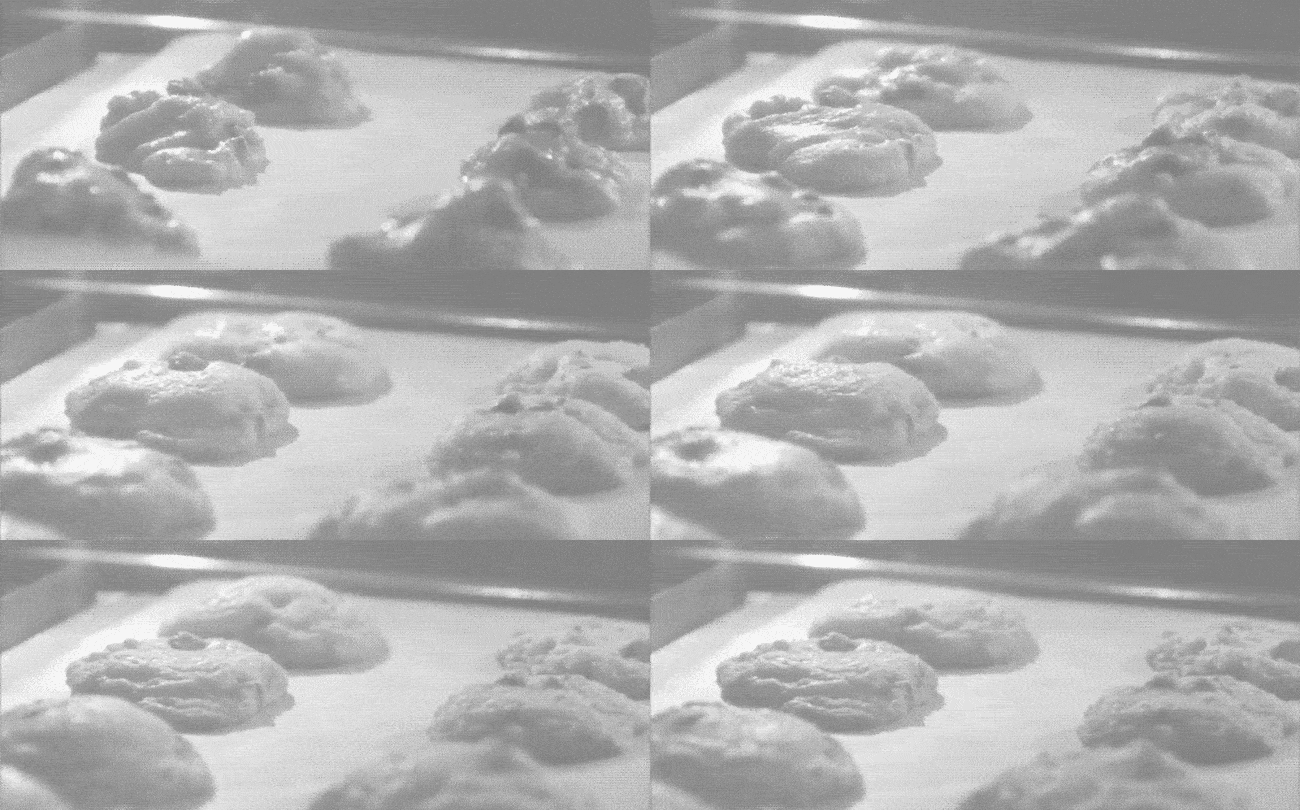
Just add brownies. (Mattie Hagedorn/Flickr)
How silicone became a key part of baking paper
The invention of plant-based parchment paper is interesting! But half the question raised by Gretchen is less about how parchment paper came to be, but why it became so prominent in the past couple of decades specifically in terms of baking sheets.
In a Twitter poll, more than a third (36 percent) of her followers that responded said they remembered parchment paper only as far back as the 2000s, meaning that either most of her followers are Billie Eilish’s age, or it only gained prominence recently. I’d like to speculate that some of that might be a side effect of cooking culture picking up around that time thanks to the Food Network, food blogs, and folks like Martha Stewart singing its praises. You were more likely to see someone using parchment paper on TV in 2003 than you might have been in the 1970s, fact of matter.
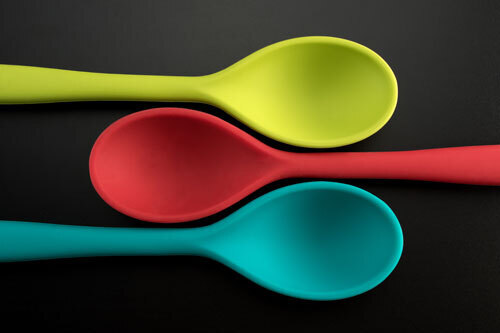
Parchment paper is part of silicone’s broader takeover of the kitchen. (hue12 photography/Unsplash)
Another trend that really picked up steam in the 2000s was silicone rubber cookware. Generally molded, such cookware benefits greatly from being both flexible and resistant to heat—a great combination for the kitchen.
And while the discovery of the polymer dates to at least the beginning of the 20th century, one company can be credited for popularizing the substance. In 1945, the chemical company Dow Corning—jointly owned at the time by Dow Chemical and Corning Incorporated—was founded specifically to help discover uses for silicone products in the consumer market. An Associated Press story from the era highlights exactly how bullish the company was about silicone. Sample quote:
Michigan hunters have been using a silicone gun grease and another silicone to keep their boots soft and waterproof. There is also a silicone ski grease to slip faster over the snow. Had Hitler possessed one of these silicone greases in his first winter in Russia, his big guns would not have become useless at 40 below zero when their greases hardened and disintegrated.
The quote highlights silicone’s key advantages in extreme heat and cold. Silicone materials, depending on the combination, have a very high melting point of above 400 degrees, which means that it’s perfect for kitchen environments and can be used for baking and putting in environments such as boiling water.
Or on parchment paper, evidence of which I’m finding as far back as the 1950s.
The first newspaper article I can find that specifically recommends using parchment paper lined with silicone dates back to a 1957 fruitcake recipe, where the paper is recommended as a way to all “for easy removal of cakes from pans.”
As for evidence of an invention or patent, I’m having trouble finding the exact patent for silicone-coated parchment paper, but a related patent filing, a 1955 application (granted in 1958) for “Method of applying a protective wrapping to a pipe,” specifically cites the use of silicone in parchment paper in the 1950s:
It has been found that parchment paper treated with a liquid silicone has excellent characteristics as a separating medium. The silicone treated parchment paper which is preferred is one made from vegetable fibers and this then is coated with silicone in liquid form and permitted to dry. It is sold on the market as silicone treated parchment paper and has no affinity for or is adhesive to the bituminous material or wax and clean separation will always occur. Regardless of the period of time of contact of this parchment paper and the coating, no undesirable characteristics are imparted to the coating and the latter always remains in a state of purity. This is not true of parchment paper which has been treated with other substances and attempted to be used with high melting bituminous material or microcrystalline wax.
(One interesting discovery I found which is completely unrelated to anything on this topic: Silicone came up in a lawsuit in the early 1960s, Johnson & Johnson v. The Kendall Company, which was literally a patent lawsuit over the coating of the protective paper used on adhesive bandages. Kendall, see, was the corporate parent of Curad, the main competitor of the Band-Aid. In case you were wondering how in the weeds we can get on this topic.)
Of course, this wouldn’t work if silicone was a carcinogen like asbestos. And as you might be aware, there was a scandal involving silicone breast implants in the ’90s that has actually resurfaced in the news recently. There’s not a lot of evidence to suggest silicone creates similar risks in cookware, according to Scientific American, but it’s also worth noting that more testing could probably be done.
That said, it’s not like nothing has been done. In 1979, the Food and Drug Administration designated silicates as GRAS (generally recommended as safe) substances, including silicon dioxides, which are what silicone turns into when it reaches its melting point. But still, there’s definitely room for more testing.
Nonetheless, it’s worth keeping in mind that a big part of the reason why modern-day parchment paper is seen as something of a miracle material is the addition of silicone—and just like any substance rooted in a chemical, there’s always give and take to consider.
NO
The answer to the question, “Can I replace wax paper with parchment paper in the kitchen?” In fact, doing so might be a great shortcut to starting a fire. See, silicone material is designed in such a way that resists heat, which makes it perfect for baking; wax paper, also known as “greaseless paper,” is not. (As the Reynolds website notes, though, there are some cases, though, where wax paper makes sense in the oven—say, at the bottom of a cake pan, below some batter, where it’s not directly exposed to the oven’s heat—but you wouldn’t just want to randomly swap it in because you’re out of parchment paper.) So despite the fact that these materials seem like kitchen doppelgängers, DO NOT CROSS THE STREAMS.
Like many inventions, parchment paper of the kind used in baking is a combination of inventions.
Someone had to come up with an alternative to using animals for creating parchment and vellum. Someone else had to come up with the silicone coating that turned this paper into something more powerful and effective than parchment paper on its own. And someone had to figure out that asbestos was a bad idea for cooking.
But the power of being able to cook something, and put it on a surface, and put it in the oven, and let it do its thing, and have it not stick to either the pan or the paper it’s connected to is very powerful. As Lifehacker helpfully put it, it’s one of the most useful things in your kitchen.
I was thinking about this recently when I found myself cleaning a baking sheet that had the remnants of a meal on it that was pretty tasty but was basically impossible to get off the sheet. It was maddening, even when using my tough biodegradable soap of choice, and it made me frustrated with cooking, an art I’ve only recently gained any sort of affinity in myself. Should have used parchment paper. Lesson learned!
Someone out there was probably feeling just as frustrated the day that they sprayed a little silicone coating onto a sheet of paper and realized, hey, this could actually work. I don’t know exactly who that is, but whoever you are, the culinary world wants to thank you.
--
Thanks again to Gretchen McCulloch for the idea! She has a relatively new book out, Because Internet: Understanding the New Rules of Language, as well as a newsletter—both of which you should definitely check out.
Find this one an interesting read? Share it with a pal! And give a look to our sponsor IVPN:
Sponsored by iVPN
Protect yourself from digital surveillance. Sign up now for comprehensive privacy protection from IVPN.
Editor’s note: This post has been clarified to note that there are some use cases for wax paper in the oven, though not as a direct replacement for parchment paper.

Wi-Fi 6: Better, faster routers are here -- here's what you need to know - CNET
It’s a big week for pivots. But what does that even mean? Let’s unpack the ‘pivot’
Ebury Reads/YouTube
Earlier this week, TechCrunch reported that Maslo, a startup that started out as a personal mindfulness app, would be pivoting to become an executive coaching app –– and, separately, SocialRank’s team pivoted from audience analytics to a mobile-first professional networking app.
News of startups pivoting from one business niche to another –– and often remarkably different –– business niche is common.
It’s easy to poke fun: What do you mean you pivoted your gay social network to a flash sales site, and after raising $336m now you’re pivoting to e-commerce? (Yes, that actually happened.)
But pivots are more complicated –– and more common –– than they may initially appear.
So, why are pivots so common?
Are startup founders just serial opportunists hell-bent on making a buck? In some cases, maybe.
But more often than not, pivots don’t come about merely due to internal opportunism, but also due to external pressure from investors –– many of whom encourage pivots to facilitate growth.
Pivots are possible only when entrepreneurs behind a slumping business have enough money to pivot –– and that money often comes from someone else.
Sometimes, pivots end in complete failure. But other times companies pivot past their original ideas –– and consumers often don’t even realize it.
A surprising number of well-known businesses resulted from pivots
Here are some other noteworthy companies that pivoted their way to productivity:
- Wrigley started out as a soap company that gave away free baking powder and then pivoted to a baking powder company that gave away free gum and then pivoted again to focus on the sweet stuff.
- Avon’s founder started out as a bookseller who attracted buyers with perfume samples before pivoting to launch a cosmetics company (and, arguably, a multi-level marketing operation).
- Suzuki began as company that built looms for silk weaving before pivoting to motorcycles and other machines.
- YouTube started out as a dating app before its founders realized they’d find more success as a general video platform.
- Twitter began as a podcasting platform before it pivoted to its current, status-posting form.
Shopify started out as a snowboard store called Snowdevil before shifting its focus to e-commerce.
The post It’s a big week for pivots. But what does that even mean? Let’s unpack the ‘pivot’ appeared first on The Hustle.
How to Free Up Your DRM Protected Music
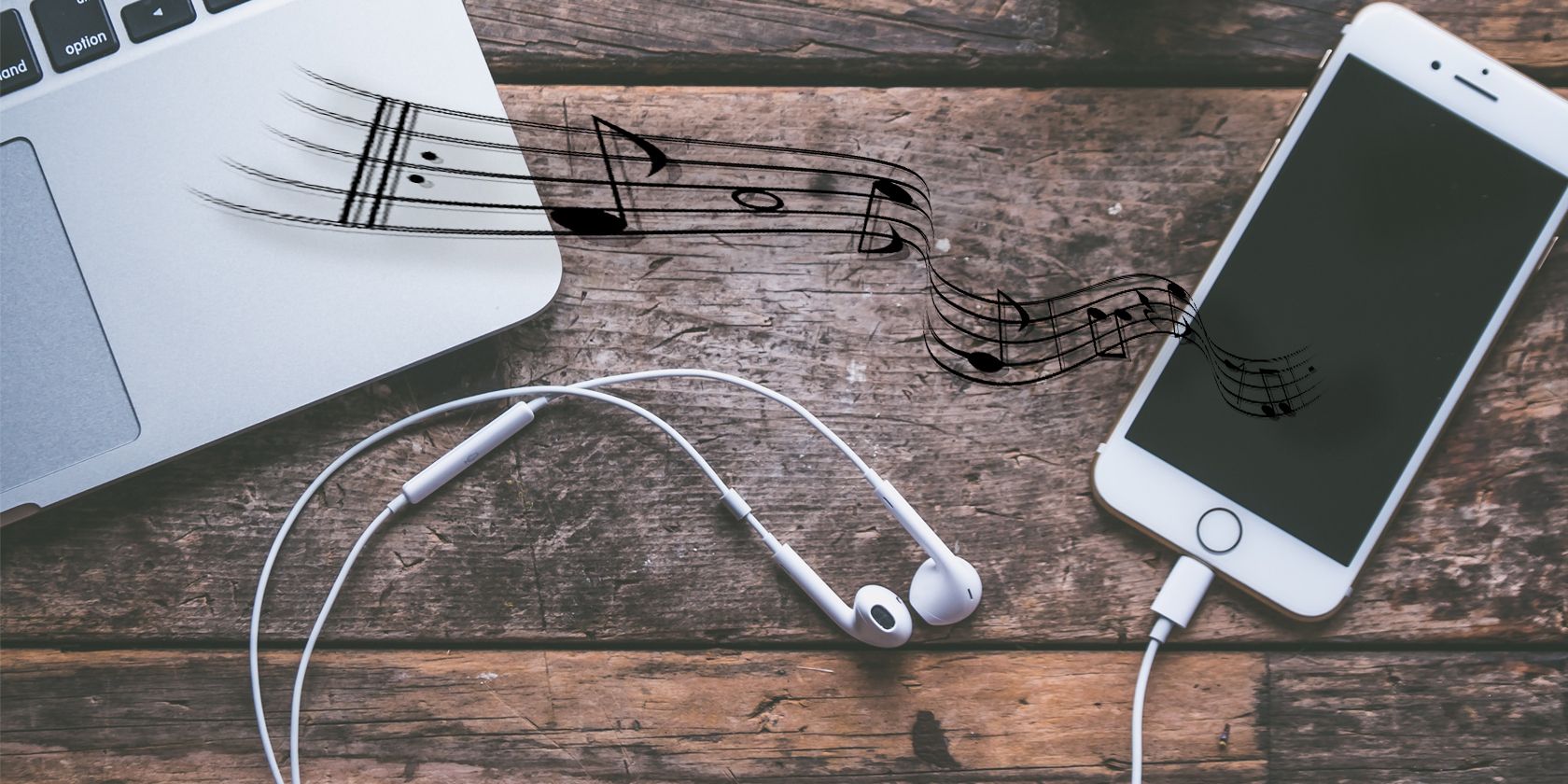
Digital Rights Management—better known as DRM—is a scourge for anyone who’s bought music online. By preventing the buyer from copying or sharing music, DRM limits what the owner can do with the track they’ve purchased.
Thankfully, there are a few tools that can remove the DRM from the music you’ve downloaded. This frees it from the virtual shackles and lets you use it in any way you please. Here are several different ways to remove DRM from your music files.
1. AppleMacSoft DRM Converter for Mac
In the old days, any music you bought from iTunes used to have DRM attached to it. The DRM was so restrictive that you could only play the music on Apple devices.
Thankfully, that’s no longer the case. Today, all songs listed in the iTunes Store are categorized as “iTunes Plus.” That means they’re in the AAC format and don’t have any DRM attached. But what about all of those old songs you downloaded in years gone by?
In theory, Apple will let you redownload a non-DRM version. However, if you’ve long since lost access to the original account, that’s a non-starter. You need a DRM removal app.
One solution is to use AppleMacSoft DRM Converter for Mac. It integrates directly with iTunes and can remove DRM in bulk. You can save your new audio file as an MP3, M4A, M4R, AAC, AC3, AIFF, AU, FLAC, or MKA file, and can even use the tool to remove DRM from your Apple audiobooks.
Download: AppleMacSoft DRM Converter for Mac ($40, free trial available)
2. MuvAudio
Many of the tools that can remove DRM from music take advantage of the “analog hole.” For those who don’t know, the analog hole is the term given to the phenomenon whereby any digital audio or video file can be recaptured in a fairly straightforward way once it becomes perceptible to humans.
But this approach has a downside. By using your system’s soundcard, you can experience a significant loss in quality. MuvAudio is different. It uses a digital conversion process, thus allowing you to retain the audio quality of the original file.
MuvAudio can convert DRM protected file formats that are only readable on certain devices into files that are device-agnostic. The app can read the major formats, as well as some more niche ones like SPX, MPC, APE, OFR, OFS, TTA, and MPE. The seven supported output formats are MP3, M4A, WMA, OGG, FLAC, WV, and WAV.
Some of the app’s other features include the ability to split long audio tracks into shorter files, a way to edit a DRM-protected file’s metadata data before you create the DRM-free version, and a search tool for missing album artwork.
The trial version of the app lets you remove the DRM from 60 songs. If you have more tracks to fix up, you’ll have to pay for the full version.
Download: MuvAudio ($19, free trial available)
3. Audacity
If you’d prefer to save some money and take the “analog hole” approach to removing DRM from your music files, you only need a simple audio recording app. Both Windows and macOS come with such an app as a native part of the respective operating systems.
However, we’d recommend going one step further and downloading a more powerful tool such as Audacity.
Use Audacity to Remove DRM on Windows
To use Audacity to remove DRM on Windows, follow these steps:
- Open Audacity.
- In the dropdown menu in the upper left-hand corner, select Windows WASAPI.
- Hit the Record button.
- Start playing the DRM-protected track.
- Click Stop when the track finishes.
- Trim the file to remove the silence from the beginning and end of the recording.
- Go to File > Export.
- Select Export as MP3.
- Give the file a name and press Export.
Use Audacity to Remove DRM on MacOS
If you’re using a macOS device, the situation is slightly more complex. Macs do not have a native way to record a computer’s audio output. As such, you’ll need to download and install another third-party app—Soundflower—before you begin.
When you’re ready, use the following step-by-step guide:
- Go to Apple > System Preferences > Sound.
- Click on the Output tab at the top of the Window.
- Select Soundflower (2ch) from the list of options.
- Open Audacity and go to the Preferences menu.
- Head to Devices > Recording.
- Select Soundflower (2ch) in the Device dropdown menu.
- Hit the Record button.
- Start playing the DRM-protected track.
- Click Stop when the track finishes.
- Trim the file to remove the silence from the beginning and end of the recording.
- Go to File > Export.
- Select Export as MP3.
- Give the file a name and press Export.
The downside of using Audacity to remove music DRM is two-fold. Firstly, you need to play each DRM-protected track in full. If you have thousands of DRM-protected songs that you’re trying to work through, that might not be practical.
Secondly, you’re making an entirely new file. As such, you’ll lose any metadata from the original file. Again, if you’re working with hundreds of songs, that’s a significant extra workload that you’ll have to take on.
Download: Audacity (Free)
Download: Soundflower (Free)
To learn more about using the app, check out our article detailing how to remove ambient noise using Audacity.
4. Burn a CD
You can also burn DRM-protected music files onto a CD. So, a simple way to bypass DRM is to create a CD of the tracks you want to free up, then immediately rip the CD back into your computer’s music player.
The only requirement is that you use a music player on Windows or Mac that has CD burning capabilities. Most of the best music managers on both platforms have this functionality.
Naturally, your computer also needs to have a CD drive. If it doesn’t, check out the Rioddas External CD Drive on Amazon.
And remember, if you use this technique, you don’t even need to burn a physical CD. You could download an app like TuneClone to create virtual CDs—AKA ISO files—then rip them back onto your machine.
Download: TuneClone ($35, free trial available)
Remove DRM From More Media
Music isn’t the only type of media that’s afflicted by DRM protection. Some audiobooks, movies, TV series, and ebooks are locked behind Digital Rights Management.
But don’t worry. Just like audio files, you can remove the DRM from those types of media too. If you’d like to learn more, check out our article explaining how to remove the DRM on every ebook you own.
Read the full article: How to Free Up Your DRM Protected Music
How I got sucked into the cryptocurrency craze and walked away with $13 million
On a gray morning in May 2016, I left my office in downtown San Francisco and walked down Montgomery Street, to Wells Fargo.
I swiveled open the two gigantic doors, walked up to the counter, and explained to the teller that I needed to send a money wire to Gemini Trust Company, LLC., a cryptocurrency exchange based in New York City.
“Certainly,” she said. “How much will you be sending today, Mr. Conway?”
“One hundred thousand dollars.”
My voice sped up as I said it: $100k. This represented my family’s entire life savings. It was money my wife and I planned to use to pay for our 3 kids’ college tuition, our eventual retirement, and emergency expenses. I was a middle-aged guy with a family who had never been on the cutting edge of anything. But I was about to bet everything I had on an unproven virtual currency called Ethereum.
This could only end two ways: I’d lose everything I owned, or make a fortune.
Restless in corporate America
Up to that point, my professional life was one of quiet desperation.
I was a 45-year-old middle manager at a major multi-media company in San Francisco. Though I earned a respectable $150k per year, I hated the fake company culture, the bureaucracy, and the endless chains of command.
Like so many others, I was looking for some kind of escape. And soon, I found one.
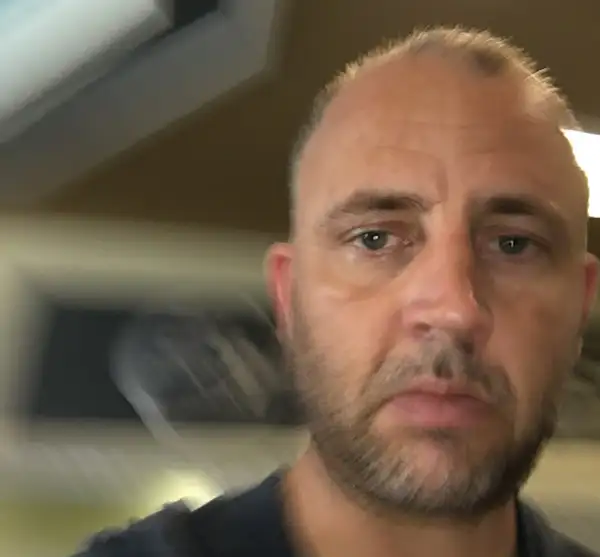
Dan wallowing in the misery of corporate America (courtesy of Dan Conway)
One early morning in mid-2015, before anyone else was in the office, I was browsing online and stumbled upon an article about Bitcoin.
I’d heard about Bitcoin years earlier when I was preoccupied with climbing the corporate ladder. Back then, it seemed ludicrous to spend money — real currency that I could hold in my hands — on some digital token that existed on a public ledger in the cloud. To be frank, I thought it was complete bullshit.
But that morning, I had a sudden change of heart.
Bitcoin, the article read, was going through an especially rough patch. Its price, which was in a constant state of volatility, had fallen from a high of $1.2k in 2013 to $300. My mind raced: What if it goes up again? What if I put everything I had into this? I could get rich and never work another day in corporate America…
A part of me recognized these thoughts as destructive mania. My addictive personality had landed me in trouble before — first with alcohol, then with harder drugs. My 12-step sponsor wasn’t going to pat me on the back and say, “Go buy that Bitcoin, Dan! Sounds like a fantastic plan!”
At the same time, my wife Eileen and I were raising 3 children and had a big mortgage on our home in the Bay Area. The Great Recession had snatched away most of Eileen’s PR consulting clients. We were privileged, of course, but money was tighter than usual.
Sitting in my empty office, I began to go down the crypto rabbit hole. And the more I learned, the more I was pulled in.
Ethereum or bust
Through early research, I gravitated from Bitcoin to Ethereum (ETH), a then-newly launched coin that debuted in July 2015.
Blockchain, the technology underlying Ethereum and other cryptocurrencies, promised to one day decentralize corporations. As TechCrunch wrote, it would offer the “stability of an organization but without the hierarchy.” It seemed almost too good to be true, but a lot of smart, future-forward people were getting behind it.
As a disenfranchised suit-and-tie, I was enraptured by the possibility of a decentralized future. As a greedy speculative investor, it gave me a rush.

Juggling crypto research and family time (courtesy of Dan Conway)
In short order, I developed an Ethereum obsession.
I listened to Ethereum podcasts while walking the dog. I read about Ethereum during every spare minute I had at work. I rejiggered my Twitter feed to follow mostly Ethereum-related accounts. I absorbed hours of Ethereum commentary on YouTube.
My biggest source of conviction was Ethereum’s developers. In the ‘90s, I’d worked in PR at Macromedia. The company’s product, Flash, had dominated the web graphics market after catching the attention of the most forward-thinking web designers. In the same sense, the smartest developers were now flocking to Ethereum.
Occasionally, my Ethereum fever broke and I wondered if I’d gone off the deep end.
Was my growing desire to invest in Ethereum a desperate attempt by a desperate man to find some kind of midlife salvation? Was this whole thing some kind of elaborate ruse to scam people like me out of their nest eggs?
Most of my friends in tech — folks working at places like Google, Apple, and Uber — were dismissive of blockchain. Few of them had heard of Ethereum. When I told a buddy of mine that I was considering investing in cryptocurrency, he broke out in laughter, as if I’d admitted I was hedging my future on Smurfberries or Scooby Snacks.
But my mind was made: I was going to put everything I had into this.
All in
Less than a year later, I found myself standing at a Wells Fargo desk, transferring our life savings to Gemini in exchange for 6,993 ETH, at an average price of $14.
Eileen had been rightfully resistant to the idea. Eventually, though, she agreed to a deal: I could make the transfer, but I had to promise my children that I’d take them on a number of expensive trips.
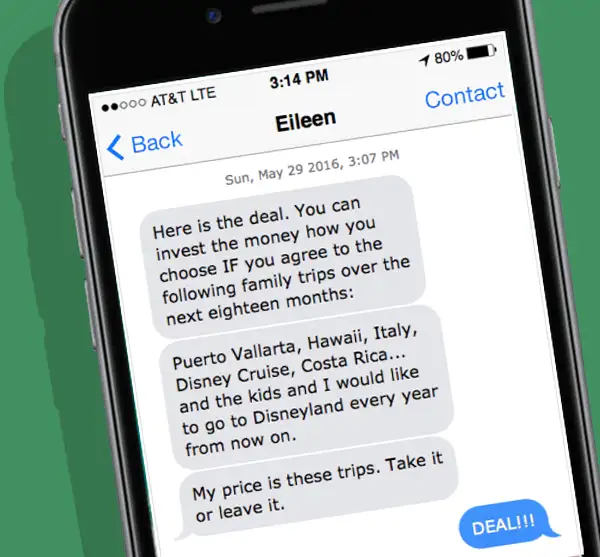
Texts exchanged between Dan and his wife, Eileen (courtesy of Dan Conway; illustration by The Hustle)
After watching me go through years of addiction issues, depression, and corporate misery, Eileen was happy to see me excited about something — even if it was some virtual coin. Never for a moment did she think we’d get rich off of it. But she didn’t want to break the spell I was under.
Unfortunately, it wasn’t long before I experienced the Earth-shaking volatility of the crypto market.
In June 2016, a high-visibility project was hacked and Ethereum tanked: By December, our original $100k investment was worth less than $40k.
Though I was $60k in the hole, my confidence in Ethereum was stronger than ever… and it was now at a bargain-basement-level price. So, I decided to double down.
We didn’t have the cash. The only pool of funds available was the line of credit on our home. Racking up a big debt on our home equity line would very likely set us up for an unhappy ending.
But I felt in my bones that this was my shot and I might not get another one.
In December of 2016, I visited Wells Fargo 3 times, transferring an increasing amount of money from our home equity line to Gemini. After each transfer, I went home and bought ETH slowly so I didn’t cause a run-up. (The order books were thin with limited liquidity in those days; a rush of sales could cause the other traders and their bots to snatch up all the available coins.)
That winter, I borrowed $200k on my home and used it to buy more ETH. I now owned 26,750 ETH total, at an average buy-in of $11.21/coin.
And I was $300k in the hole.
On the rise
In February 2017, during our first negotiated ‘trip of a lifetime’ in Mexico, Ethereum came back to life.
It was the middle of the night, and I was in the back of a cab battling a nasty bout of food poisoning. I was puking my guts out, foaming at the mouth, and delirious — but I didn’t care because our ETH was up $50K. We were in the black for the first time.
Then, something miraculous happened: It kept going up… and up… and up. Between February and March of 2017, ETH shot from $15 to $50 per coin. By April, it was at $70; by May, $230.
In a span of 4 months, my $300k investment ballooned to $6m.
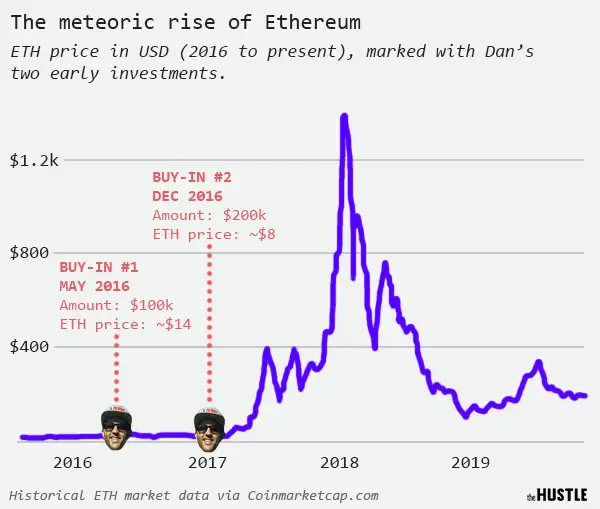
Every investor’s dream (The Hustle; historical ETH data via Coinmarketcap.com)
I’d seen a story at some point about someone who had spontaneous orgasms at random times throughout the day. That’s the best way I can describe the feeling. When I checked my phone, I’d be up another 6 figures since the last time I looked. I couldn’t resist stopping whatever I was doing to pump my fist and shout, “YEESSSS!”
But other times, ETH would dip, and the value of my stack would plummet by more than $1m in less than an hour. The “orgasms” were replaced by brutal withdrawals. The volatility was a narcotic, shooting up my brain with boosts of dopamine and serotonin.
The coins consumed me and changed my entire persona.
When ETH stopped going up or had a mild dip, I’d get snappy with the kids. I donned a hoodie and stared into the void for hours, my mind enslaved to the promise of Ethereum and its price variations. I was fired from my job of 6 years.
In the midst of a particularly volatile week, I found myself in the emergency room, struggling to breathe. The doctor diagnosed me with a panic event. “Is anything making you anxious?” he asked.
There was also the constant, looming fear that my crypto account could be hacked at any moment. In 2017 alone, hundreds of millions of dollars in crypto were stolen from accounts — and there wasn’t any regulatory body to protect victims.
From June to October of 2017, ETH floated between $200 to $400 per coin — an increase of 2,000% since the beginning of the year. That summer, many of the early HODLers (the folks who were holding for the long-term) began to cash out.
My coins were now worth millions, but I continued to hold the majority of them. This decision would soon pay off in a bigger way than I ever could’ve imagined.
The sell
In the course of 2 weeks in December 2017, ETH nearly doubled in price from $430 to $830. On January 3, 2018, it hit $900; 3 days later, it passed $1k.
It was an unprecedented burst — so monumental in scope that it temporarily froze the exchanges. It was like a 9.0 earthquake with an infinite number of aftershocks.
In the midst of this madness, I received an email from my financial advisor, who I’d hired months earlier to oversee my growing funds.
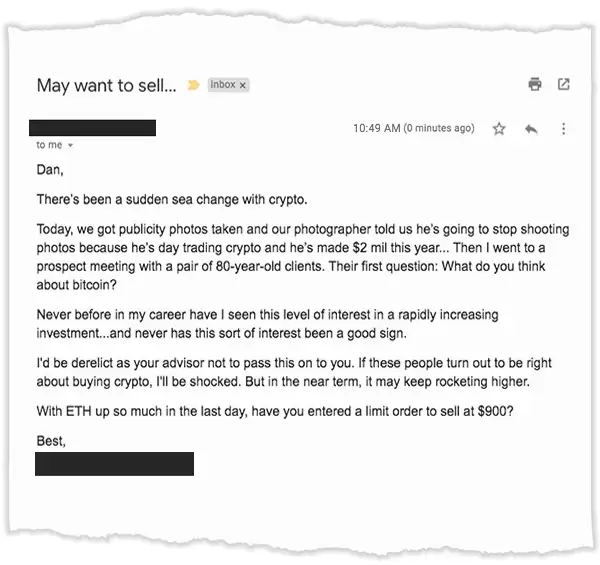
An email Dan received from his financial advisor in December 2017 (Courtesy of Dan Conway)
The alarm bells were sounding.
Sitting on my couch in sweaty workout clothes, I turned to my favorite subreddit, r/EthTrader. The message board was full-on mayhem, with 1.4k comments that morning alone. Grandparents, and taxi drivers, and anyone else who’d gotten a hot tip was buying in without even knowing what crypto was. Even for hardcore HODLers like me, it was too much, too fast.
I frantically logged into my Gemini account and weighed my options.
If I didn’t sell and ETH tanked, I’d lose it all. I’d have to tell Eileen and the kids that dad had dropped the golden goose egg, that I’d squandered my lottery ticket.
Watching the greedy masses pile into ETH reminded me of the famous battle scene from Braveheart: While the hordes rush forward in full sprint, lances atilt, the defenders sit still, unflinching and calm, waiting for the signal to attack.
I watched the price climb to $915. Then, over the course of two hours, I sold 11k ETH, the majority of my remaining stack, for $10m.
I sent Eileen a text: We are done.
Life after crypto
Shortly after we cashed out, the cryptocurrency market took a nosedive.
Ethereum dropped from a high of $1,396 in January to $385 in April. By December of 2018, it was back below $100.
Eileen and I paid off our $950k mortgage. We booked a trip to Africa we’d always dreamed of. Hell, we even bought a second home in Ireland.
Nearly 2 years later, it’s still surreal looking at our bank account and seeing high 7-figures, post-tax. It all happened so quickly that it feels like a dream.
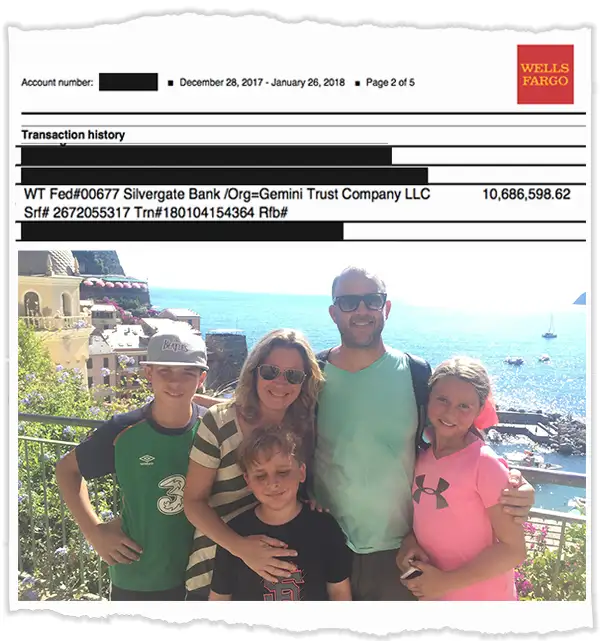
Top: Dan’s bank statement from December 2017 to January 2018, showing a Gemini transfer of $10.7m; Bottom: The family in Italy — one of the agreed-upon destinations (Courtesy of Dan Conway)
I still believe crypto will open up new possibilities for organizing the world in the decades ahead, and I’m confident it will pop again as a result. But I don’t recommend that anyone try to replicate what I did.
Luck played a significant role in my success.
I banked everything I had on a relatively unproven technology and got out at the right time. For every story like mine, there are hundreds of others about people who lost it all. I know that could’ve easily been me.
At the same time, I’m no blackjack player. My investment wasn’t purely a blind gamble that came up aces. I was, and am, a true believer in crypto — and I had the right mix of courageousness and craziness to take a big risk.
I’ve since turned my efforts toward making the concept of crypto-based decentralization more accessible to the general public. My recent book, which chronicles my wild journey, encourages people to think about their own risk parameters.
Today, I’ve settled back into a normal life. I make dinner, do odd-jobs around the house, and live a very pleasant life by almost any measure. I still drive a minivan every day. Crypto no longer consumes me.
But every now and then, after the kids are asleep, I lie awake thinking back on the rush of the market. And I miss it like hell.
Interested in learning more about Dan’s story? He recently chronicled his entire journey in a full-length book, Confessions of a Crypto Millionaire.
The post How I got sucked into the cryptocurrency craze and walked away with $13 million appeared first on The Hustle.
The North Coast 500: Motorcycles and Scotch Whiskey

I

don’t have the kind of job you’re supposed to be itching to get away from. I own and operate two whiskey-focused restaurants in New York City: the Flatiron Room and Fine & Rare. A fair chunk of my work involves talking whiskey, entertaining guests from around the world, and of course taking the occasional taste of the stuff I’m selling. I love it, but I also love being outdoors, discovering new things, and getting away from the grind of the city. My work takes me to Scotland on a regular basis to visit distilleries and talk with exporters, and I’ve found the time to take a few motorcycle trips around the country with my brothers, David and Kenny. It was time for another visit to Scotland, but after a conversation with a friend and a new idea, I knew this one would be different.
“Have you ever heard of the North Coast 500?” my friend Steph asked over a drink at the Flatiron Room. She’s a brand education manager for a few different Scotch whiskeys, including Old Pulteney and Balblair, and she also knows I’m into motorcycles and love a good adventure. I had to confess to her that I hadn’t. “Tommy, you really must do this.” I trust Steph with whiskey, so I decided to check it out. A quick Google search, and I was in.

The North Coast 500 is a 500-mile loop around the northern tip of Scotland
The North Coast 500 is a 500-mile loop around the northern tip of Scotland, starting and ending in Inverness. Known as “Scotland’s Route 66,” it’s been named one of the top coastal road trips in the world. Small, twisty, single-lane roads weave through tiny villages, deep valleys shadowed by dramatic mountain ranges, and alongside beautiful coastal waters. It’s not an easy trip, especially by motorcycle, which makes it a bit of a holy grail for enthusiasts.
After doing my research and recruiting my brothers, David and Kenny, for the trip, the three of us caught the red-eye out of JFK and arrived at Inverness about 11:30 the next morning—bleary-eyed but ready to roll. For our ride, we’d chosen the BMW R1200GS. Equipped with panniers to store our gear and keep it dry, it was the perfect bike for our journey, considering how wet it is on the Scottish coast. While we were loaded down with gear, the best gadget we brought for the trip was Bluetooth headphones, so we could talk while we rode—and believe me, they got plenty of use. Motorcycle rides can be solitary experiences even when you’re riding in a group, so the headphones were a must-have.
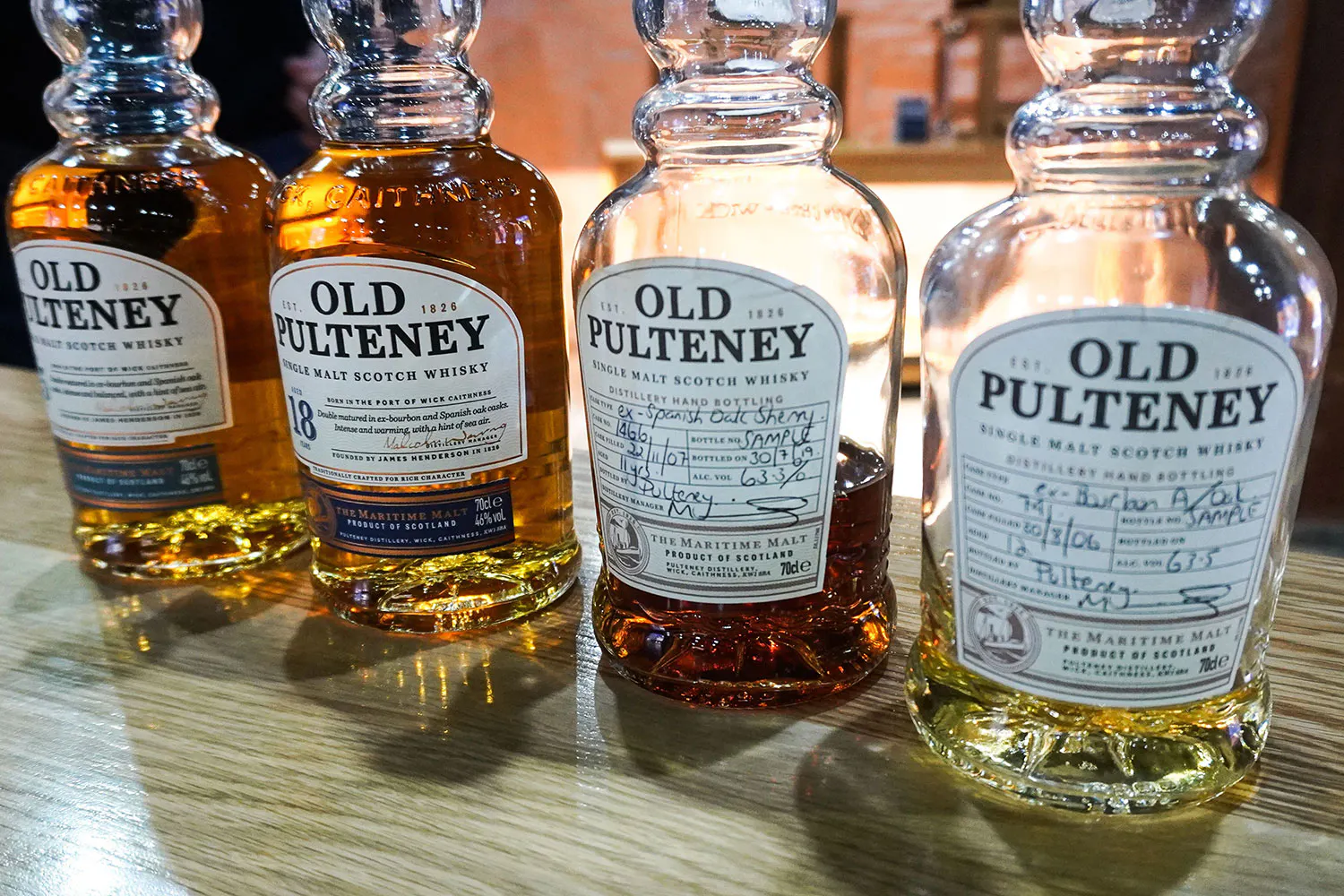
The best part of distillery tours is normally the tasting, but because the ride was such a challenging one, we restricted ourselves to nosing the whiskeys, which was surprisingly enjoyable.
Along the way, we made a couple obligatory distillery stops. Old Pulteney and Balblair have both been around for about 200 years (legally, that is—illicit distilling likely took place before then) and neither of them is what you’d call a modern distillery, which is a good thing. In fact, Old Pulteney is one of the last distilleries in Scotland to use a worm tub, which is the 19th-century equipment for condensing alcohol vapor. The best part of distillery tours is normally the tasting, but because the ride was such a challenging one, we restricted ourselves to nosing the whiskeys, which was surprisingly enjoyable. Forcing yourself to focus on the aromatics really heightens that particular sense. After the tour we’d snag a bottle for evening festivities and be on our way.
The one constant of the trip was the elements. We were almost guaranteed driving rain and howling wind every day. We were pretty well prepared for it, but there were times when the rain would come creeping in my helmet and gloves, and at that point there was only so much that hand warmers could do to alleviate the chill. Near the Isle of Skye, the weather could change every thirty seconds. It would be clear and calm, but as soon as I’d pull over and get my gloves off to take a picture, the wind would just start whipping up again and the rain would come.

we opted for bikes because they keep you in touch with the outside world.
At one point, my brother Kenny suggested, “Why don’t we do it in a car, so we can relax?” An idea worth mulling over, but we opted for bikes because they keep you in touch with the outside world. The few times we were in a car on the trip we felt detached from what we were looking for—the wind on your face, the salty air, and seaside smells.
My favorite part of the route was Applecross Path. It’s a treacherous road not really meant to be ridden on a motorcycle, which of course makes it the best thing to do on a motorcycle. Massive gusts of wind that nearly pushed my bike over when we drove (and did push it over when we parked). Winding roads with crazy views of surreal landscapes, wind so fierce it was hard to breathe, and driving at an angle to counterbalance the bike made this the best and most challenging ride I’ve done.

If you can turn around 360° and the beauty isn’t tarnished, that’s worth noting.
At Duncansby Head was a cliff overlooking these gorgeous tiny islands, with a small path so steep you needed to use a rope to get down. We saw the Smoo Caves, which are a combination of seawater and freshwater caves. We saw waterfalls where the water actually went up because of the intense Scottish winds. While the beauty is endless, what really impressed me about the North Coast was its remoteness. Most places you can look at a photo and say, “Oh my God, that's so beautiful and pristine,” but if you pan the camera just a little to the left you’ll see hordes of tourists taking photos of the same thing, or a Burger King, or chain stores. That wasn’t the case here—if you can turn around 360° and the beauty isn’t tarnished, that’s worth noting. At one point in the trip, our friend Miles, who is also in the whiskey business, hosted us for a night. The house is so remote that I couldn’t figure out where they shopped or even how they got food, considering it had been miles since we’d seen a store. It turns out there’s a fishmonger who comes around in a van once a week, and if you’re in the know, he’ll stop at your house, open up the van to show you what he has.

My brothers are my favorite people to ride with and there is a great dynamic amongst us. We seem different in almost every way, but when we get together like this I realize how similar we are. Without even saying anything, we’ll all pull over and start taking pictures of the same things. I’d take photos of them taking pictures of the same things I was taking a picture of. We’ll rib each other a lot, but we know we’ve got each other’s back in the end. If I drop my bike, they won’t let me hear the end of it for the rest of the day, but I know that once the initial laughs are over they’ll be the first ones to help me pick it up. That is family.
I take these trips as a chance to get essential inspiration for my life and work back home.
Aside from the value of getting to spend time with my brothers, I take these trips as a chance to get essential inspiration for my life and work back home. Even as remote as we were, there were still things I could take away and use. I’d text my chefs and my bar managers about little things I noticed at the little pubs we’d stop at. My philosophy is: The more input, the better the output. The more you absorb, the better. In New York, everybody in the hospitality business is doing their version of the same thing, but I find my best ideas always come from different cultures. It’s not always seeing one thing and being directly inspired by it, but it’s a matter of connecting the dots. One thing will trigger an idea that leads to something else, unlocking all sorts of possibilities.

What Are The Biggest Opportunities In Real Estate Right Now?

Dallas Transit Agency Pays $345,000 to Settle Lawsuit by Photographer Arrested for Taking Pictures
Dallas Area Rapid Transit (DART) will pay freelance photographer Avi Adelman $345,000 to settle the lawsuit he filed after he was illegally arrested in 2016 for taking pictures at a train station. The settlement follows a federal appeals court's September 20 ruling rejecting a qualified immunity claim by Stephanie Branch, the DART police officer who arrested Adelman for trespassing and then repeatedly lied about the incident.
Adelman had been photographing paramedics as they treated a man who had overdosed on a synthetic marijuana substitute. He spent a day in jail, but the charge against him was dropped a week later. An internal investigation found that Branch had arrested Adelman without probable cause and in violation of DART's photography policy. The report also said Branch had made 23 "false or inaccurate statements" about the circumstances of Adelman's arrest, including her claim that he was standing too close to the paramedics, who supposedly wanted him to step back. She was suspended for three days as a result of the investigation but is still employed by DART.
A federal judge ruled that Branch was entitled to qualified immunity against Adelman's claim that she had violated his First Amendment rights, because case law in the 5th Circuit had not clearly established the right to take photographs of first responders in public places at the time of his arrest. But the court allowed Adelman to proceed with a claim that his unlawful arrest violated the Fourth Amendment's ban on unreasonable seizures. Branch asked the U.S. Court of Appeals for the 5th Circuit to reverse that decision.
The appeals court ruled that Branch was not entitled to qualified immunity against Adelman's Fourth Amendment claim. "No reasonable officer under these circumstances would conclude that she had authority to eject a person complying with DART policies from public property—and then arrest that person for criminal trespass when he failed to depart," the court said.
A DART policy established in June 2014 allowed people to take pictures at its stations as long as they do not "interfere with transportation or public safety activity." The 5th Circuit pointedly rejected Branch's excuse that she was not familiar with that policy, which was adopted while she was on sick leave. "Branch's mistake was not reasonable," the court said in a footnote. "She didn't misinterpret an unclear policy or law; she simply failed to learn about DART's updated policy. And 'an officer can gain no Fourth Amendment advantage through a sloppy study of the laws [s]he is duty-bound to enforce.'"
A DART audio recording of the incident that led to Adelman's arrest showed that everyone else at the scene recognized that Branch was out of line. "He was just taking pictures, right?" one paramedic said. "Why is she going crazy?" Elmar Lee Cannon, one of Branch's fellow DART officers, replied: "I don't know. That's going to be on her. He can take all the pictures he wants. That's why I'm not getting involved in that." Another paramedic concurred, saying, "I don't know where that idea [that Ademan had committed a crime] came from…because there is freedom of the press."
Adelman, a longtime defender of the right to record public events, created an educational program on the subject for police officers. In settling the lawsuit, DART rejected his request that it post its photography policy on its website. "Many transit agencies around the country post their photography in public policies on their websites," Adelman notes in a press release, including systems in Philadelphia, New York City, Los Angeles, St. Louis, New Orleans, Houston, and San Francisco. He says he will donate $2,500 from his settlement to the National Press Photographers Association for legal advocacy and another $2,500 to the Freedom of Information Foundation of Texas.
"I was arrested—and spent a day in jail—on a bogus 'throw-down' charge of criminal trespass for one reason only: to stop me from taking photographs of paramedics treating a patient in public view on public property, which is a lawful activity," Adelman says. "The subjective personal opinions of [law enforcement] personnel should never be allowed to interfere with lawful and protected First Amendment activities. I will work with, and support, First Amendment advocacy groups to make sure arrests like this never happen again, and to defend the photographer vigorously when it does happen."
I called DART's media relations department to ask about the source of the funds for its $345,000 settlement payment. I will update this post if and when I get a response, but I suspect the money will come either from DART's budget or from a liability insurance policy. Either way, Branch herself is not on the hook, which illustrates a point made by UCLA law professor Joanna Schwartz. Schwartz investigated the practices of 81 law enforcement agencies and found that "police officers are virtually always indemnified" in civil rights cases. During the period she studied, "governments paid approximately 99.98% of the dollars that plaintiffs recovered in lawsuits alleging civil rights violations by law enforcement."
That practice weakens the deterrent effect of lawsuits like this one, even if they overcome the obstacles created by the misbegotten qualified immunity doctrine. At the same time, the routine indemnification of police officers who violate people's constitutional rights refutes a claim often made by the doctrine's defenders, who worry that the threat of personal liability will have a chilling effect on legitimate policing.
Update: A DART spokesman says the agency is still "making sure we have all the signatures" on the settlement agreement and can't comment on the source of the funds until that happens.
4 Facts About Veterans Day That You Might Not Know
Happy Veterans Day! Cheaper Than Dirt would like to take this moment to honor all military veterans who have served…Read More >
The post 4 Facts About Veterans Day That You Might Not Know appeared first on The Shooter's Log.
17 Tools That Pro Chefs Can’t Cook Without
There are no gear testers more rigorous than the commercial chef. Here are the kitchen tools four pro chefs can’t get enough of.

Why David Sedaris Hates America’s Favorite Word, “Awesome”

David Sedaris has made his name as a humorist, noting the absurdities of everything from life with his parents and siblings to the perpetual cycle of world travel and book-signing into which fame has launched him. But as his longtime readers know, he's really a student of language: not only has his own voice on the page been shaped by close observation of English, he's studied and continues to study a host of foreign languages as well. Longtime readers will remember how much material he got out of the French classes that gave his book Me Talk Pretty One Day its title, and he has more recently written of his struggles to get a handle on such diverse tongues as German, Japanese, and Slovene. (I myself wrote an essay about Sedaris' language-learning in the Los Angeles Review of Books.)
Though he's never explicitly cited it as part of his writing process, these studies have clearly honed Sedaris' ear for language in general, especially when it comes to its local tics and eccentricities. "In France the most often used word is 'connerie,' which means 'bullshit,'" he says in the audiobook clip at the top of the post from his latest collection Calypso, "and in America it’s hands-down 'awesome,' which has replaced 'incredible,' 'good,' and even 'just OK.' Pretty much everything that isn’t terrible is awesome in America now." What once denoted a sight or experience filled with the emotion of "dread, veneration, and wonder that is inspired by authority or by the sacred or sublime" has become, in Sedaris' view, a synonym for "fine."

"It just got out of hand to me," Sedaris explains to USA Today. "Everything’s awesome all the time. I was in Boulder, Colorado" — a city he has elsewhere described as "the 'awesome' capital" — "and someone said, 'I’ll have a double espresso, awesome,' and the other person said, 'Awesome.'"
(In another interview, he mentions that he often fines people "a dollar a time at events for using the A-word. I warn them first, because it’s only fair, but I can make pretty good money that way.") This may sound like a futile objection to inevitable linguistic change, but only to those who haven't noticed the underlying debasement of meaning. If "awesome" can now describe a coffee, what word, if any, indicates genuine awe?
A similar fate has befallen other English words and expressions. "Great" preceded "awesome" into the semantic haze, and "to beg the question" has become a standard example of a phrase to whose original meaning only a pedant would cling. People now often use it synonymously with "raising the question," but if we accept that as its meaning, we're left with no way to refer to question-begging itself, a rhetorical practice still as rampant as ever. To criticize the modern loosening of these usages is to keep sharp and complete one's array of tools for expression and communication; we condemn the overuse of a word not out of pure hatred but out of understanding the necessity of its true meaning. Even David Sedaris grants "awesome" its proper time and place: "I went to the Great Wall of China once, and I have to say, that was awesome. But that's the only thing I can think of. Not a latte."
Related Content:
20 Free Essays & Stories by David Sedaris: A Sampling of His Inimitable Humor
Bertrand Russell Lists His 20 Favorite Words in 1958 (and What Are Some of Yours?)
Based in Seoul, Colin Marshall writes and broadcasts on cities, language, and culture. His projects include the book The Stateless City: a Walk through 21st-Century Los Angeles and the video series The City in Cinema. Follow him on Twitter at @colinmarshall, on Facebook, or on Instagram.
Why David Sedaris Hates America’s Favorite Word, “Awesome” is a post from: Open Culture. Follow us on Facebook, Twitter, and Google Plus, or get our Daily Email. And don't miss our big collections of Free Online Courses, Free Online Movies, Free eBooks, Free Audio Books, Free Foreign Language Lessons, and MOOCs.
5 Apps and Sites to Find Reddit’s Best Posts and Favorite Recommendations

Reddit has so many people talking about so many things across so many subreddits. How can you get the best recommendations easily? Well, there are a few sites and apps that collect the best of Reddit.
You can always sort any subreddit by top posts for the day, week, month, year, or all-time. But that’s not what we’re talking about here. These apps have a different outlook. Some collect posts based on how much time you’ll take to read them, others track recommendations across different subreddits.
But the idea, in the end, is the same: to get you the best content and recommendations.
1. Walnut TV (Web, Android): Best Videos on Reddit
People share a lot of YouTube videos on Reddit. Walnut.TV collects all of them in one place to give you the top videos currently being talked about and upvoted on Reddit. It’s a useful and eye-pleasing interface.
On the left, you’ll see a playlist of all the videos coming up. Click any to watch it, or let the endless stream of videos keep auto-playing. You can also skip forward or go back with the left and right arrow keys.
At the top, you’ll see tabs that curate videos from different subreddits, based on topics. At the moment, categories include curious, science, documentaries, music, activities, food, and crafts. You can also search for your favorite subreddit to automatically create a playlist of all YouTube videos shared in it.
There is also an Android app, but it’s mainly the web version where Walnut.TV shines.
Download: Walnut.TV for Android (Free)
2. Shortly (Android, iOS): Curated Short Stories for 5 Minutes of Reading
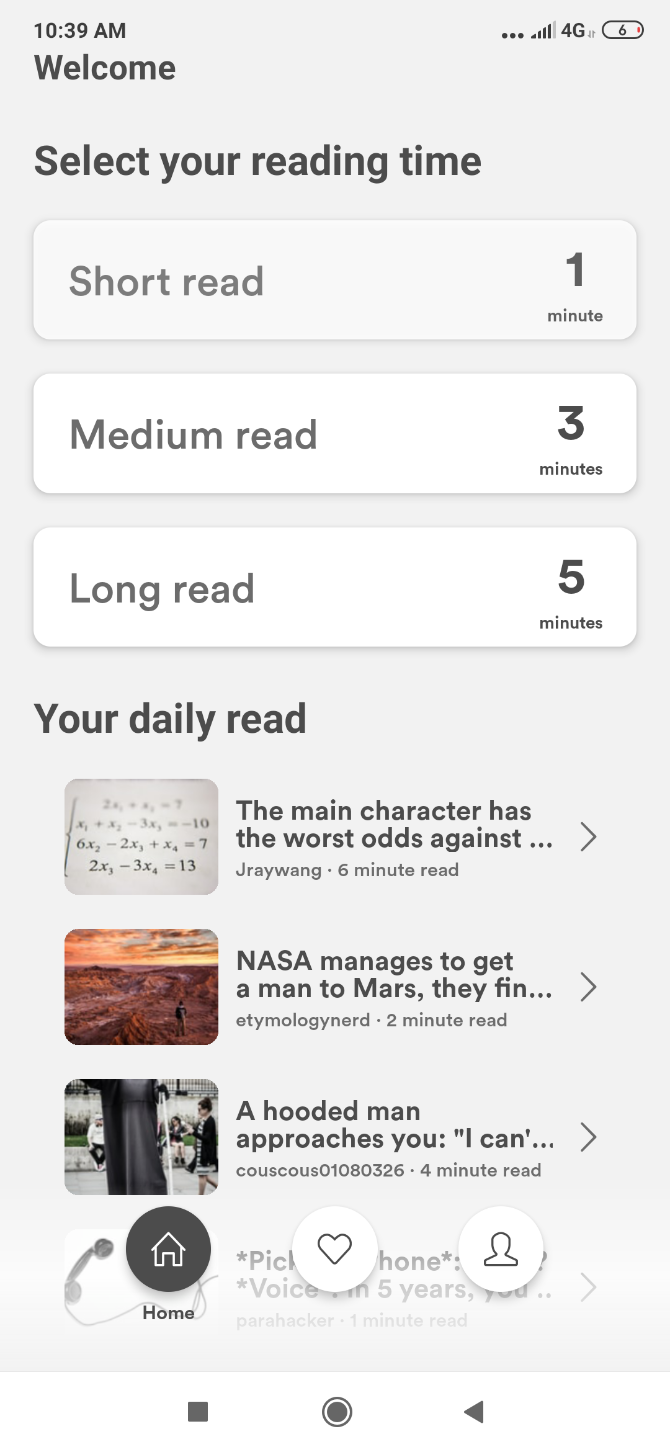
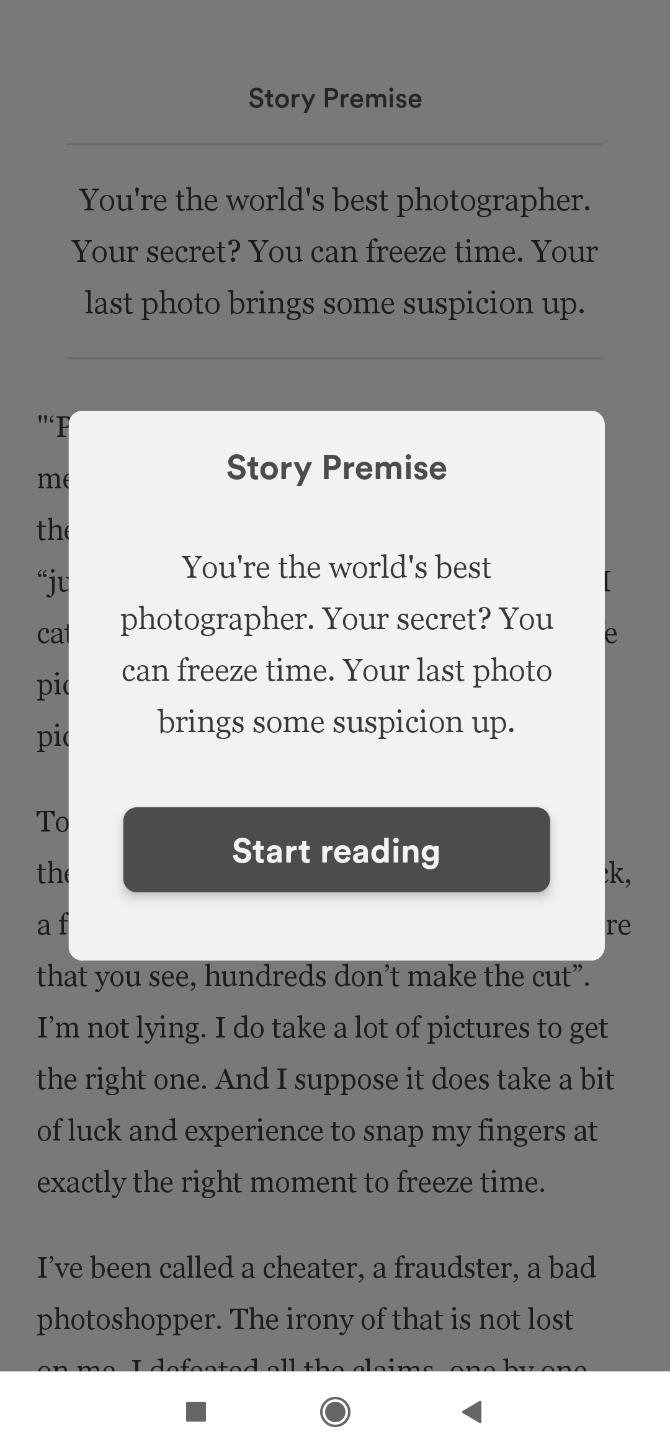
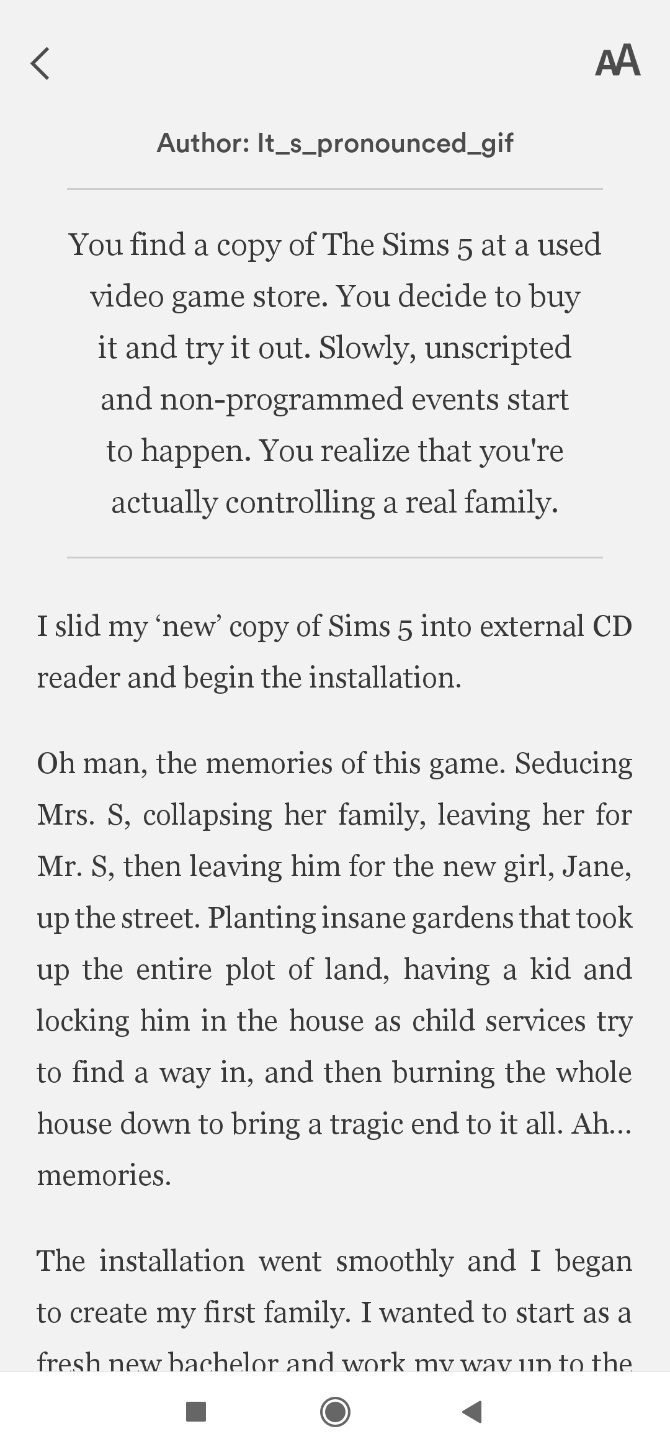
The subreddit r/writingprompts gives anyone with a flair for writing a chance to exercise their creative muscles. One user will set a premise, and other community members then write whatever short story they come up with, based on that premise. Shortly gives you the cream of the crop in a fantastic interface.
When you start the app, Shortly will give you a quick test to determine your reading speed. Then, you have to choose a story based on how much time you have to read. Options include one-minute, three-minute, and five-minute stories. And just like that, you’ll get a well-formatted short story in a neat font and a pleasing grey background.
If you want to develop a fiction-reading habit, Shortly is an excellent way to begin. Not every story is amazing, but these are the most upvoted short stories on the subreddit, which has been active for several years. So you’re bound to get many winners.
Download: Shortly for Android | iOS (Free)
3. Top Trend Books and Top Talked Books (Web): Book Recommendations From Reddit
There are two book recommendation engines that try to find what Redditors are reading. Both do a good job and there’s no real reason to select one over the other, so try them both out.
Top Trend Books calls itself a data-driven recommendation engine, which collects all comments and posts about a book. It then assigns “trend points” based on upvotes, number of references, and the date. Based on that, you can look through categories like tech, comic, free ebooks, fantasy, and more, and sort the recommendations based on time. You can also search for authors or topics.
Top Talked Books isn’t restricted to Reddit alone, and also includes data from Hacker News and Stack Overflow. You can restrict yourself to Reddit-based sources, but why would you want to do that? Check New, Best of the Best, and even articles. The Explore tab lets you sort by categories and tags.
If you like these, you should also check out these essential “best book” lists to see how many of them you have read.
4. Things On Reddit (Web): Reddit’s Favorite Product Recommendations
On every subreddit, there are experts who will share their favorite products. Some products are shared often by multiple contributors, and gain a reputation for being a favorite and a must-buy. Things On Reddit collects all such favorites in one website.
The Featured Things highlights a few products, while you can jump to any of the popular topics or subreddits to find items from that community. Once you’re viewing items in a topic or subreddit, you can further sort them by mentions, karma, or date. There’s also a short blurb from the best-voted post, often describing why it’s recommended.
Each item on Things On Reddit includes an affiliate link to Amazon or some other store, which helps pay for the website.
5. Unreadit (Email): Get Newsletter Digests of Favorite Subreddits or Topics
Unreadit gives you the best of Reddit without needing you to visit the website or the app. It’s a series of newsletters that curate content from multiple subreddits to create a digest, and send it straight to your inbox.
Here’s an example. If you’re interested in technology, subscribe to the Tech newsletter. Sent every Monday, a human editor handpicks the best posts of the week from r/Tech, r/TechNews, r/Gadgets, r/HackerNews, and r/Apple. And just like that, you’re caught up with what people are discussing and sharing on Reddit. Currently, there are such newsletters for self-improvement, tech, geek, entrepreneur, design, frontend, and indie makers.
Unreadit also offers automated newsletters, which aren’t handpicked by a human editor. These are a bit of a hit-or-miss affair, but they might be worth it nonetheless. It’s a much wider range of topics, such as writing, travel, fiction, blockchain, cinema, gaming, etc.
Awesome Reddit Apps and Extensions
All these apps and sites make it easy to find good recommendations from Reddit without diving into the forums. In fact, you can entirely skip ever visiting Reddit if you use these well.
But then you’re missing out on so much. Reddit is full of great content and helpful communities. If you’ve found it overwhelming or disliked the experience, you might not be using it right. Have you tried these awesome Reddit apps and extensions for a better experience?
Read the full article: 5 Apps and Sites to Find Reddit’s Best Posts and Favorite Recommendations
The Slack Cheat Sheet: Shortcuts, Commands, and Syntax to Know

Slack tops the current crop of digital workspace tools. It’s powerful enough to handle both huge teams and complex projects well.
If you use Slack at work, you’ll probably agree that its layout and feature set are quite complex. Fortunately, both these elements are well planned and easy to use. But with so much going on in the interface, it’s quite natural to miss out on several features unless you go looking for them specifically.
To remedy that, we decided to compile the best Slack tips into a cheat sheet for you. It contains keyboard shortcuts, search tricks, formatting syntax, and special commands that can speed up your Slack workflow. And the best part is that you can use them all without taking your hands off the keyboard!
FREE DOWNLOAD: This cheat sheet is available as a downloadable PDF from our distribution partner, TradePub. You will have to complete a short form to access it for the first time only. Download The Slack Cheat Sheet.
The Slack Cheat Sheet : Shortcuts, Commands, and Syntax to Know
| Shortcut | Action |
|---|---|
|
Keyboard Shortcuts On a Mac keyboard, press Option instead of Alt and Cmd instead of Ctrl for shortcuts. |
|
| Ctrl + k OR
Ctrl + g OR ¹Ctrl + t |
Open Quick Switcher |
| Ctrl + Shift + k | Browse DMs |
| ¹Ctrl + Shift + t | Open Threads view |
| ²Ctrl + Shift + a | Open All Unreads view |
| Ctrl + Shift + l | Browse channel list |
| ³Alt + Down Arrow | Jump to next channel or DM |
| ³Alt + Up Arrow | Jump to previous channel or DM |
| ³Alt + Shift + Down Arrow | Jump to next unread channel or DM |
| ³Alt + Shift + Up Arrow | Jump to previous unread channel or DM |
| Cmd + [ OR
Cmd + Left Arrow |
Move back in history |
| Cmd + ] OR Cmd + Right Arrow |
Move forward in history |
| Ctrl + Shift + m | Open Activity pane |
| Ctrl + Shift + s | Open Starred Items pane |
| Ctrl + Shift + w | Open Workspace Directory |
| Ctrl + Shift + i | Open Channel Details pane |
| Ctrl + / (Slash) | Open Keyboard Shortcuts pane |
| Ctrl + . (Period) | Toggle right-hand pane |
| ¹Ctrl + , (Comma) | Open Preferences |
| Ctrl + Shift + [ | Switch to previous workspace |
| Ctrl + Shift + ] | Switch to next workspace |
| ⁴Ctrl + [Number] | Switch to specific workspace |
| Ctrl + Alt | Show numbers assigned to workspaces in sidebar |
| Ctrl + f | Search the current channel or DM |
| Esc | Mark all messages in current channel or DM as read |
| Shift + Esc | Mark all messages as read |
| ⁵Alt + click message | Mark message as oldest unread message |
| Ctrl + Shift + Y | Set or edit your Slack status |
| Ctrl + u | Upload file to current channel or DM |
| Ctrl + Shift + Enter | Create snippet in current channel or DM |
| ⁶Up Arrow | Edit your last message in current channel or DM |
| Shift + Up Arrow | Select text to beginning of current line in message draft |
| Shift + Down Arrow | Select text to end of current line in message draft |
| Shift + Enter | Insert new line in message draft |
| Ctrl + b | Bold selected text |
| Ctrl + i | Italicize selected text |
| Ctrl + Shift + x | Strike through selected text |
| Ctrl + Shift + > | Indent selected text |
| Ctrl + Shift + c | Format selected text as inline code |
| Ctrl + Shift + 7 | Format selected text as numbered list |
| Ctrl + Shift + 8 | Format selected text as bulleted list |
| @[Character] | Show autocomplete options for display names |
| #[Character] | Show autocomplete options for channel names |
| :[Character] | Show autocomplete options for emoji |
| m | Toggle mute during call |
| v | Toggle video during call |
| + (Plus) OR a |
Show invite list during call |
| e + (1-9) | View and select emoji during call |
| @[username] | Notify specific person |
| @here | Notify active members of channel |
| @channel | Notify all members of channel, whether they’re active or not |
| @everyone | Notify all members of channel #general |
| Message Formatting Syntax | |
| *text* | Bold text |
| _text_ | Italicize text |
| ~text~ | Strike through text |
| >text | Indent single block of text |
| >>>text
text |
Indent multiple blocks of text |
| `text` | Format single line of inline code |
| ```text text``` |
Format multiple lines of inline code |
| 1.
2. |
Format as numbered list |
| text OR • text |
Format as bulleted list |
|
Search Modifiers Add modifiers before or after search keyword(s). |
|
| in:[channel] | Search specific channel |
| in:[@username] | Search specific DM |
| from:username | Search messages/files shared by specific user |
| from:me | Search messages/files sent by you |
| ⁷on:[date] | Search using specific date |
| ⁸before:[date] OR ⁸after:[date] OR ⁸during:[date] |
Search using specific date or time frame |
| has:[:emoji:] | Search for items with specific emoji |
| has:pin | Search for pinned items |
| has:star | Search for starred items |
| has:link | Search for items with links |
|
Slash Commands Type in the message field and hit Enter. |
|
| /status | Set or clear your custom status |
| /away | Toggle your “away” status |
| ⁹/dnd for [Time] OR ⁹/dnd until [Time] |
Schedule Do Not Disturb session |
| /dnd off | Turn off Do Not Disturb |
| /expand | Expand all inline images and videos in current channel |
| /collapse | Collapse all inline images and videos in current channel |
| /feed subscribe [feed address] | Subscribe to RSS feed in current channel |
| /feed list | List RSS feeds (and their ID numbers) for current channel |
| /feed remove [ID number] | Unsubscribe current channel from RSS feed |
| /feed help | Get help with /feed commands |
| /join [#channel] | Join channel |
| /leave [#channel] OR
/close [#channel] OR /part [#channel] |
Leave channel |
| /leave | Leave current channel |
| /open [#channel] | Open specific channel |
| /topic [text] | Set topic for current channel |
| /invite [@username] [#channel] | Invite member to channel |
| /remove [@username] OR /kick [@username] |
Remove member from current channel |
| /mute [#channel] | Mute/unmute specific channel |
| /mute | Mute/unmute current channel OR ¹Unfollow current thread |
| /star | Star current channel or DM |
| /rename [new-name] | Rename current channel |
| /archive | Archive current channel |
| /who | List members (up to 100) in current channel |
| /msg [#channel] [message] | Send message to any channel |
| /msg [@username] [message] OR /dm [@username] [message] |
Send DM |
| /me [text] | Display italicized text |
| /remind @me or [@username] or [#channel] to [What] [When] | Set a reminder |
| /remind list | View list of upcoming, past, or incomplete reminders |
| /remind help | Get help with /remind commands |
| /search [keyword(s)] | Search messages and files |
| /shortcuts | Open Keyboard Shortcuts pane |
| /apps [app] | Search for app in Slack directory |
| /feedback [text] | Send feedback or help request to Slack |
| /shrug [message] | Add ¯\_(ツ)_/¯ to end of message |
| ¹⁰/giphy [keyword(s)] | Share a random GIF |
|
¹Works only in desktop app. ²Works only if you have enabled All Unreads view under Preferences > Sidebar. ³Includes starred channels and DMs. ⁴Press Ctrl + Alt or hover over workspace logo in sidebar to see number assigned to workspace. ⁵Use Ctrl + Alt + click on Linux. ⁶Ensure cursor is in empty message field. ⁷Use MM/DD/YY(YY) or MM-DD-YY(YY) format for date. ⁸Replace [date] with specific date or with keyword like today, yesterday, [day], [month], or [year] ⁹Use time descriptors like “for 20 mins”, “until 4pm”, until tonight”, etc. ¹⁰Requires integration with Giphy app. |
|
Take Control of Your Slack Workspace
Slack not only saves you from the clutches of email at work, but also makes your online office feel more like an offline one, complete with water-cooler chats. Once you master Slack and learn how to navigate it faster, your days at the office will be a lot more fun!
Image Credit: Web Hosting on Unsplash
Read the full article: The Slack Cheat Sheet: Shortcuts, Commands, and Syntax to Know
Just The Fax, Ma’am
Today in Tedium: Journalism is about telling good, important stories in ways that help expose sunlight, raise awareness, or keep people informed about their communities. But it’s also about distribution, something that the industry has struggled to perfect at times, whether by giving online networks their best stuff for free or sticking to sports when all signs point to that being a bad idea. This has led newspaper publishers in interesting directions, one of which I’m going to point out here. Today’s Tedium looks at the fits and starts of the newspaper industry attempting to publish the news by fax—because that was once considered a thing people wanted! — Ernie @ Tedium
Today’s Tedium is sponsored by Cactus—sign up for their free service and learn more below.
1921
The year that the International News Service, with the help of the U.S. Navy, first conducted a test involving the use of the radio system for sending data to telegraph printers. The service, owned by William Randolph Hearst, tested the idea out at four sites—Washington, Buffalo, Detroit, and New York. “The results were successful and proved beyond doubt that the telegraph printers that were then available could be operated by radio,” a 1924 issue of Popular Radio noted. This is considered one of the earliest examples of news distributed by facsimile.
A 1934 magazine cover that discussed the promise of newspapers delivered by radio.
The idea of delivering newspapers over the radio was once a big thing, but it failed to take off
The April 1934 issue of the magazine Radio Craft, lovingly reproduced by the excellent American Radio History archive, painted a fascinating image of news distribution in the future: “Radio Set Prints Newspaper,” the headline stated.
It was one of a selection of fascinating covers for this magazine—a prior issue featured a device called “the phonosone,” which allowed those who were nearly deaf to hear the radio through their foreheads.
So this magazine was clearly pie-in-the-sky with predictions about how radio technology would change the world. And the magazine’s editor-in-chief, Hugo Gernsback, laid out a case for why a device that could print a full newspaper was destined to exist. In his article, Gernsback pointed to a brand-new technology that relied on radio waves:
While none of these sets have, as yet, been built, I have outlined in these pages the technical details of bringing it about; and, though the system which I show here may not be the only practical one, I have selected it because a similar method is now in use by the Radio Corporation of America in their picture-transmitting devices which are in operation twenty-four hours a day throughout the week.
The device Gernsback is suggesting sounds like television, which had been just invented at that time but was not yet viable, and would prove infinitely more useful to the public. But in reality, he was talking about a radio receiver that could print out pictures on the fly. It was, effectively, a fax machine, albeit one that could only receive messages.
Sponsored by Cactus
Improve your focus in one minute. We wanted the benefits of meditation—less anxiety, more calm focus, improved presence—but we each struggled with the actual practice of meditation. We figured there was a different way to practice mindfulness. After working with a positive psychology expert, we built Cactus. Learn how to boost your mood with Cactus.
The idea might sound pie-in-the-sky given what we know about the 1930s, but it really wasn’t. The parts were already there, even back then. During the 1920s and 1930s, the newspaper industry had perfected the distribution of photos through the telegraph service, allowing for images to be used in newspapers throughout the country—though the machines that produced them were bulky and not cheap.
These services were improving over time, and eventually were put into use in wide-scale tests that were approved by the Federal Communications Commission, according to Smithsonian magazine. There was even technological competition—beyond RCA, which used a rotating drum system to build a facsimile, the inventor W.G.H. Finch created a system which used specialized paper to print dots onto a sheet of paper, line by line, as they came over the airwaves. In 1939, Finch’s system sold in demonstration form for $150 ($2,771 counting inflation), which was a lot of money for an unproven technology.
The secret to making this work? The fact that people didn’t use radio in the middle of the night, allowing radio stations to take advantage of the dead time to allow a service to print a newspaper onto a roll of newsprint—a strategy that has traditionally helped telecom tools as varied as online services and satellites with dissemination.
A young boy tests out the radiofax system.
By the late 1930s, the technology had seen widespread tests, with radio stations around the country offering tests of the technology—and some pushback from those who worked in the newspaper industry, and felt that, if radio faxes had taken off, it would have led to the loss of 150,000 jobs.
So why didn’t we get our newspapers through the radio in the end? As The Radio Historian notes, a mixture of technical issues, format wars (RCA vs. Finch was the HD-DVD vs. Blu-Ray of its day), and consumer disinterest created problems with uptake.
“Despite all the promotion and hype, radio facsimile was a technology that the public never asked for and didn’t really care about,” writer John Schneider explained. “Facsimile printers were an expensive luxury for people at the tail end of the depression while newspapers were cheap and delivered to your doorstep every day. Neither could stations and publishers interest many advertisers in supporting the new medium, they preferred the familiarity and security of the traditional newspaper.”
And it probably didn’t help that, in the 1930s and 1940s, there were a lot of competing technologies that were much more efficient uses of the radio waves, including the budding FM signal and television, both of which picked up in a big way after World War II. In fact, World War II likely did more to damage the uptake of radio facsimiles than anything else.
Naturally, the public realized that having a tube that could distribute pictures into their homes was significantly more useful than something that could print newspapers—and the news would simply adapt to the format, rather than the other way around.
But there was still a place for facsimiles, even if the radio wasn’t involved.
1964
The year that the modern day fax machine, produced by Xerox, first came into being. The technology the company produced, which it called “Long Distance Xerography,” relied on multiple different kinds of technology to distribute printed information to different sources, including microwave, coaxial cable, or phone lines. (Eventually, phone lines became the medium of choice for most businesses.)
The TimesFax website, circa 1996. (Internet Archive)
The most obscure news offering The New York Times makes might be a daily news service originally designed for fax machines
Buried on page 21 of the D section in a November 1989 edition of The New York Times was the kind of announcement that seemed destined to be missed by all but the nerdiest of news fans.
The headline said it all: “Times to Begin A Fax Synopsis.”
The idea, basically, was to make the information that the newspaper published available digitally to those in parts of the world that could use immediate access to those in East Asia who needed immediate access to important news from the best-known U.S. paper of record.
The fax machine, in its modern form, had been around for two and a half decades, and it was only just starting to crack into the mainstream enough that the average business might want one.
And unique services, some published by newspapers, were starting to build around it. In the late 1980s, for example, the Hartford Courant created one of the earliest modern fax-driven services, called “FaxPaper,” a daily news service for business people that launched with an only-for-business-people price of $2,500 per year ($5,177 today). This high-cost extra, which needed just two staff members to operate, only lasted for three years and saw its price fall significantly by the end—with just 2,000 subscribers, the Courant was charging $600 per year.
According to the book Faxed: The Rise and Fall of the Fax Machine, local newspapers lightly staffed these experiments, failing to put in the same level of TLC as they did the main edition. “Condensed versions of regular newspapers, lacking in graphics and depth, proved to be a recipe for failure since the lack of advertisers matched the lack of subscribers,” author Jonathan Coopersmith wrote.
The wild part about TimesFax, though, is that it very much became the exception to the rule. The Times, when it released the product, was especially adept at targeting, and the result is that, more than 30 years later, it‘s still actively produced, albeit under a different name. And rather than being a total castaway of a product, TimesDigest is reportedly read by 190,000 people each day. Yeah, I was shocked, too—and I read the NYT daily.
The secret to its continued production comes down to two things: Smart targeting, and a willingness to adapt. By specifically targeting Americans working in Asia at first, the NYT gained a lot of early momentum that it might not have had otherwise, and it eventually uncovered other places that would want a digest like this.
The New York Times, in laser printer form. (via TimesDigest)
These days, the modern TimesDigest fits a full day’s news into 10 standard portrait-sized sheets of paper. While there may be art on some pages, most of the coverage is just text, with the idea of hitting highly niche audiences of people who don’t have a lot of time (business leaders, people at hotels), people who work in areas where pulling out a newspaper would be a challenge (people in the military), and unique cases where The New York Times simply wouldn’t travel well, even digitally (on cruises, in space). It has evolved far from its roots as a fax-focused newspaper analogue, and even in the ’90s, you could get copies of TimesFax in PDF format from its website.
And the NYT’s effort has even earned praise from high-profile media voices, like Politico’s Jack Shafer, who, while working at Slate in 2007, wrote this hilarious description of his first encounter with the cut-down digest of The Gray Lady:
I originally encountered the 8-and-1/2 by 11 publication last year in the whirlpool room of a Michigan health club. At first sight, I mistook the photocopied, stapled, and soggy thing drooping on the towel rack for a New York Times novelty wash cloth, and my instinct was to either trashcan it or use it to lather up a bar of soap. But as a devoted reader of everything from cereal boxes to the Yellow Pages, I gave TimesDigest a chance, and I’m glad I did.
In a lot of ways, a product like TimesDigest serves the same role as the free daily newspaper did, with a focus on trimming content, but with one big difference: It actually costs money—around $360 billed annually.
That cost is less than getting daily home delivery would cost, but then, you have to supply the paper, which is where the equation gets interesting. At 10 sheets a day, seven days a week, for 52 weeks a year, you’re going to be using 3,640 sheets of paper per year—which will set you back about $26 for 4,000 sheets of the cheap Amazon-branded stuff.
And then there’s the issue of printing out all those issues. The Guardian notes that, if you’re printing more than 2,000 pages per year, a laser printer is the most cost-effective option, and a single cartridge will get you a yield of about 3,500 sheets. Now, depending on your printer, you will spend anywhere between $60 and $120 on a black toner cartridge if you buy from a brand name, and a whole lot less if you go with a no-name.
(One could only imagine what the math must have looked like for radiofax.)
Long story short, the cost rises above that of a home subscription pretty fast if you’re buying for just one person. But where the real value comes into play is that you can print that one PDF out for as many people as you want in your office or yacht or spaceship, meaning that if you’re trying to reach a group of people, it’s a great deal.
Much like its leaky paywall and affinity for annoying columnists, TimesDigest works for The Times because it’s The Times.
$2.2T
The amount Steve Kirsch, a Silicon Valley executive who is best known for inventing the optical mouse, sued the company Fax.com for in 2002. The reason? He was so annoyed by the amount of wasted created by junk faxes, which cost around 10 cents each according to his estimates, that he wanted to kill Fax.com dead. “This has been going on for years,” Kirsch told the Associated Press at the time. “But lately it’s become more of a science, and both spam e-mails and spam faxes have begun to be more of a problem.” His efforts succeeded, and Fax.com shut down in 2004 after losing a federal lawsuit.
(via Wikimedia Commons)
So why wasn’t the fax machine able to become a news distribution medium of choice?
It’s strange to think about in retrospect, but if things had shaken out another way, you might be getting messages like this one in fax form, rather than email.
In many ways, faxes offered a lot of benefits, including the ability to use desktop publishing software to produce content, the crispness of paper, and an electronic distribution model.
Plus, from a publishing standpoint, they had the potential to be thoughtful in the kind of content they distributed, allowing for extremely niche things to hit your fax queue. The dream of the 1930s, that people would be able to get highly specialized publications with narrow audiences but high targeting.
Fishing news, in fax form. (via Newspapers.com)
And there were signs it could have gone that way. In Missoula, Montana, the local paper started up a publication called Fish Fax, a newsletter of sorts intended to assist an audience that was really into fly fishing with customized coverage. After its first season in 1991, the Missoulian’s one-page outdoor publication had 142 subscribers—each paying $19.95 for three months of weekly content.
“We just started sending out mailers last week and have 50 subscribers already,” distributor Roberta Leno noted in a 1992 profile. “This year, we even have a subscriber in Kenya in East Africa.”
Fish Fax lasted long enough that it might arguably be called the second-most-popular fax-based publication of all time, after TimesFax. Had faxes become a bigger thing, you could imagine good-faith publications like these having been more successful.
But faxes, by their very nature as a public medium, quickly created problems with information overload for businesses, while being overtaken too quickly by commercial influence. Simply put, junk faxes became a big problem almost immediately after they went mainstream.
“Fax machines are doing what regular mail used to: creating an overwhelming paper trail of important documents, junk mail, and unsolicited advertisements,” a 1996 Philadelphia Inquirer article stated.
In many ways, fax machines had all of the problems that electronic mail does today—but unlike email, a junk fax is wasteful, destructive, and costly. You can ignore junk email easily enough, but junk faxes cost you money every time they’re sent, and that was a major gear-grinder for companies that were focused on the bottom line.
By the time it had gained enough of a foothold that people were willing to build businesses around it, at the point it might have started transferring from offices to homes, it was already being disrupted.
The last time I had to use a fax machine—really, the only time that comes to mind—was when I had to send a job acceptance letter somewhere.
It wasn’t that long ago. We were just on the cusp of electronic contract signing, one of the final frontiers of the digital age, becoming common enough that you didn’t have to deliver a signed contract through a phone line.
It was an annoying process. I hope I never have to do it again.
Faxes still persist in some parts of the business world because of documents like contracts or sensitive medical data, which maintain a special status that gives faxes an added weight for that class of business-world user.
In many ways, it’s obvious what happened: Much like in the 1930s and 1940s with radio facsimiles, a competing technology improved much faster, more cheaply, and with more upside than the fax machine did.
There’s still a lot of waste floating around on the internet, but at least it’s set up in bits and bytes. Those take up a lot less space.
--
Find this one an interesting read? Share it with a pal! And thanks to our sponsor Cactus, who you can learn a little more about below:
Sponsored by Cactus
Cactus provides a daily minute of mindfulness to help you focus on the positive themes in your busy life. And it’s free. Learn more.

The Year’s Best Shooting Gear

Priced just under two grand, this rifle is ready to compete in the PRS Production Class—or be the most accurate hunting rifle you own. It runs on Glen Seekin's slick Havak action mated to a KRG Bravo Chassis stock. The 24-inch barrel comes threaded for a brake or suppressor. It also has an adjustable Timney trigger. You can get it in 6 Creed, 6.5 Creed, .308 Win., or 6.5 PRC. The one I shot, in 6 CM, averaged .608-inch five-shot groups with factory ammo. —John B. Snow

The small fan in this unit buzzes like a mosquito next to your ear, but in this case it's a welcome sound. By forcing air down the barrel, it cools your rifle quickly after you shoot. The Riflekuhl is great for intense range sessions in hot weather and for use between stages in competition. It also serves as a chamber flag. Bring extra CR123 batteries along, because it goes through them pretty quickly. —J.B.S.

I shot a ton of flash targets back in the days of Gun Nuts TV, and I never got tired of watching the cloud of orange "smoke" puff when I hit them. Sure, you can make your own by filling regular targets with orange chalk and gluing paper over the top, but why? It's tedious and messy, and you can buy a box of 90 totally biodegradable flash targets from Champion instead. Your time is worth more, and it's way more fun to break flash targets than to make them, anyway. —Phil Bourjaily

This heavyweight scope (and at 39.7 ounces, I do mean heavy) is one impressive long-range optic. Built on a thick 36mm tube, it has 35 mils of elevation. The locking, sealed windage and elevation turrets give precise tactile feedback and are marked with large numbers that are easy to see in low light. The 5X–27X magnification range is plenty for even the most distant targets. The MPCT2 reticle, which has a Christmas-tree layout with .2-mil reference marks, is clean, simple, and effective. As you'd expect at this price, the glass is also excellent. —J.B.S.

The name says it all. This smaller version of the wildly popular original Game Changer is not only more portable, but also constructed with a tacky material that grips both the rifle stock and whatever you’re putting the bag on for better stability and recoil management. It comes filled with sand and is pretty heavy, but you can get it with the innovative Git Lite fill (see below) for an extra $25. —J.B.S.

Upland shotguns are light, and target shotguns are heavy, so Benelli made major changes to the 828U field gun to create this Sport version. Replacing the alloy receiver with one made of steel added more than a pound to the middle of the gun. The Sport also has a bulkier, target-style stock that comes with a balancer system that lets you add or subtract weight, as well as an effective recoil reducer in the butt plate. The 828U Sport has 30-inch barrels, extended chokes, and a carbon-fiber rib. And unlike any other o/u on the market, the gun comes with stock shims to let you fine-tune the fit. —P.B.

The evolution of reticle design is one of the most fascinating elements in long-range shooting, and the new Mil-XT ranks among the most refined and well-balanced out there. The .2-mil tick marks on the horizontal stadia are laid out in an easy-to-interpret pattern. The bold numbering alongside the grid makes for quick, certain holdovers. The single dots in the grid are also very useful for making fast adjustments on follow-up shots. —J.B.S.

The Allsport is made to be the one gun a young competitor needs for every target discipline (trap, skeet, and sporting clays), thanks to an adjustable comb and a quick-detach rib system that lets you trade a 50/50 point of impact for the higher 65/35 pattern you need for trap. It comes with a choice of 30- or 32-inch barrels and extended chokes. The length of pull is a short 14 inches, and the pistol grip has a tight radius to accommodate smaller hands. My only quibble with the Allsport is that they don't make one in my size. —P.B.

This improved version of Javelin's quick-detach bipod system has a throw-lever to dial in the proper amount of tension to control rifle cant. The legs also now lock in place when spread out, for additional stability. The bipod attaches to the rifle via a powerful magnet, yet comes free with a sharp tug. With an array of available adapters, it'll work on any rifle. Some will attach to a swivel stud or Picatinny rail (both shown), or you can get a cup inletted into your stock for a more low-profile connection. —J.B.S.

Shooting is more fun when it doesn't hurt. These 12-gauge shells deliver less bang—to your shoulder—for the buck. Loaded in clear hulls with a bright-blue wad that's easy to see in flight to help diagnose misses, the shells come in a 1135 fps, 1-ounce version; a 1200 fps, 7⁄8-ounce load; and a 1375 fps 3⁄4-ouncer. Rio was founded in Spain in 1896, but its U.S. ammo is from a plant in Texas. —P.B.

I know many older pistoleros who have given up shooting handguns with iron sights because their aging eyes can no longer see the front blade clearly. Before you hang up your six-gun, give these glasses a try. They are bifocals that put the magnifier on the upper part of the lenses so that when you drive the pistol forward and tip your head down, that front sight pops sharply, just like it did back in your glory days. —J.B.S.

The Kestrel 5700 is the gold standard in handheld ballistics calculators. Now it’s paired with Hornady’s powerful 4DOF software, which includes Doppler radar-generated profiles of many bullets. These profiles are more accurate than those based on B.C., which makes it easier for you to tune your data and get more hits at long distances. —J.B.S.

The latest version of Sunrise Tactical's wrist coach has an improved cinching system that keeps it securely in place so that your ballistics data is always in plain view when you need it. The main display window accommodates a 3-by-5 index card and can be written on with grease pencils or erasable markers. The top window folds over to reveal another panel where you can store additional dope cards or other information. You can order it with a third interior panel as well for an extra $4. —J.B.S.

CCI's original Quiet-22 has been a favorite plinking load of mine for years, and the segmented hollow point is a squirrel killer inside 20 yards, but I'd never expect it to work in an autoloader. So, I was skeptical about this new load, which throws a 45-grain round-nose bullet at 835 fps. But my Beretta 87 pistol—which is a little ammo-picky—cycled it like a champ. Through a suppressor, it's as quiet as a moth fart. —Will Brantley

At least once a day, I step away from my desk to pick up a .22 rifle or revolver and harass the spinning steel plate in my backyard. Such a regimen calls for plenty of practice ammo. I've always appreciated things packaged in buckets—lard, hydraulic fluid, fried chicken—so I really like the handiness of the 1,375-count Bring Your Own Bucket from Federal. It's full of 36-grain copper-plated Long Rifle hollow points, but bulk packages of .17 HMR and .22 WMR are also available. If you don't need a whole bucket, there are 250-count Bring Your Own Bottles too. —W.B.

CZ updated its popular 455 rimfire rifle action this year with an American-style push-to-fire safety, a fast 60-degree bolt throw, and stronger bottom metal, among other tweaks. Every gun I've tested in the new 457 series has shot lights-out, but the ProVarmint is the most fun. The 16.5-inch varmint barrel is threaded to match CZ's new Rimfire Integral suppressor, which fits so seamlessly that the combo looks like a straight 21-inch barrel. It's practically unnoticeable—just like your gun's report. —Michael R. Shea

What sets the Smart Drive 90 apart from other basic gunsmithing toolkits is that the driver has an LED light in the handle that illuminates your workspace so you can see what you're doing. This clever innovation makes scoping rifles, tightening guard screws, and installing accessories a lot easier. Plus, the driver has another standout feature: a smaller secondary handle that attaches to the main one. Called a "torque assist," it sticks out at a 90-degree angle and gives the user additional leverage if needed. —J.B.S.

The XTL is a 500-lumen light that mounts to the rail of a pistol with a single screw and has a 1080p HD camera with microphone that automatically starts recording when the handgun is pulled from the holster. The resulting footage is great for analyzing your technique and a fun way to see how you ran a stage at your last match. The XTL Cam is waterproof and runs on a rechargeable lithium battery. —J.B.S.

This rifle, designed by Frank Galli, a former Marine scout/sniper and current long-range shooting instructor, is built on a Remington 700 action and a Saber MRCS-AR folding chassis. Available in either .308 Win. or 6.5 Creedmoor, it comes with a sub-MOA accuracy guarantee and has all the adjustability and modularity you'd expect from a modern long-range rifle. —J.B.S.

If you spend a lot of time at the gun range, it makes sense to invest in high-quality ear protection. These new noise-canceling muffs from Safariland are comfortable, relatively lightweight (13.2 ounces), and built from a durable polymer that can handle bad weather and hard use. I've worn mine for many hours at a stretch without any issue. I'd suggest getting the coyote-brown muffs instead of black because they won't get as hot in direct sunlight. They run on either two AAAs or a single CR123 battery. —J.B.S.

The 10mm craze continues with S&W’s new 610 revolver. But why choose a heavy six-shooter over a lightweight autoloader? Well, because revolvers are cooler, for one thing. But also, with this re-released classic, hunters can expect minimal recoil and fine accuracy. And with its moon clips, the gun will shoot .40 S&W too, which means more options for both defensive and economical practice ammo. —W.B.

These little beads might not look like much, but trust me, they are impressive. I used them to replace the heavier fill in my full-size, waxed-cotton Game Changer bag (which comes with me on every hunt and shooting competition), and it dropped the support's weight from more than 6 pounds to less than 2.5. Better yet, it did so with very little reduction in stability or recoil management, which is the real magic of these miraculous pellets. —J.B.S.

Like socks that vanish in the dryer, errant shots on the trap field disappear into limbo, or at least they did until the S1 came along. Hit or miss, Garmin’s high-tech shot tracker combines a camera and radar to tell you exactly where you placed the center of your pattern almost immediately after each shot. It syncs to your phone too, allowing you to store records of every round so you can see what shots you need to work on and which guns, chokes, and loads perform best for you. And it’s idiot-proof. I say this as an idiot with firsthand experience with the S1. —P.B.
Remembering the Golden Gate Bridge’s “Half Way to Hell” Club
The board of the Golden Gate Bridge, Highway and Transportation District unanimously voted in favor of the installation of steel-cable nets 20 feet beneath the east and west edges of the bridge that are "intended to deter people from leaping to their deaths or catch them if they do."
The net, suspended from posts, will have a slightly upward slope, and will collapse a bit if someone lands in it, making it difficult for the jumper to climb out. The bridge district will deploy a retrieval device to pluck jumpers from the net.
This decision opened up the discussion about the first time a net was installed beneath the Golden Gate.
When building the Golden Gate Bridge, the lead structural engineer insisted on the installation of a safety net even though its $130,000 cost was deemed exorbitant. Over the four years of its construction, the net saved 19 men, who named themselves the “Halfway to Hell Club.”
Image Credit: Web Urbanist
5 Of The Most Promising Off-Road Concepts From SEMA 2019

A night with Baker Boys in Austin - Gonzales Inquirer
How to Make Your Housesitting Application Stand Out
I moved to a small apartment in Fiji two years ago with my partner. We picked somewhere that was conveniently located, had a low chance of being broken into, and a spot we could leave unattended for a few weeks at a time. As a travel writer, I’m out of the country regularly as is my partner, who works for an organization that sends him all throughout the South Pacific. One morning, a white...


