“Poulanka is the center of Finland,” says Tommi Rajala, a Poulanka pessimist. “Here,” he continues, as he gestures his hand toward a rock with inscriptions. He looks back to the camera and says, “Poulanka is also the center of the world — the center of pessimism in the world.
Poulanka is a city in Finland which has become famous for its branding of pessimism.
It all began, according to long-time pessimist Riitta Nykänen, when they got jealous that all other places had their own respective events, but in Poulanka they had none.
“One man said, ‘nothing works out in Poulanka. Not even pessimism. What’s the use?’ So then we said, let’s do that. A pessimism event,” narrates Nykänen.
The pessimism association is still going strong after ten years ever since its foundation.
But what was the goal of the association? Find out over at BBC Reel.
Kodak released its Q3 revenue report yesterday, and while the company is reporting a year-over-year loss of $5 million on total revenues of $315 million, there’s a very interesting bright spot in the finances: revenues for Kodak’s film business grew by 21 percent year-over-year for Q1 through Q3.
The news was first spotted by the folks at Emulsive, who rightly point out that this does not mean Kodak is selling a massive amount of 35mm and 120 film to stills photographers. The film business that Kodak is referring to in its report includes motion picture film in addition to the photographic products sold by Kodak Alaris. But it’s good financial news and good news is rare in the imaging business these days.
Q3 earnings reports have been dropping left and right over the past two weeks, and “dropping” has been appropriate in more ways than one. Canon, Nikon, and Sony have all reported losses, some dramatic, as the market continues to shrink and smartphone photography continues to wreak havoc.
And yet, it seems the resurgence of film products continues unabated, moving at an even quicker clip that most people could have hoped for. Kodak is reporting strong film business growth, Ilford just announced several new products, and Lomography recently introduced the first new color film stock in half a decade. We’ll take it…
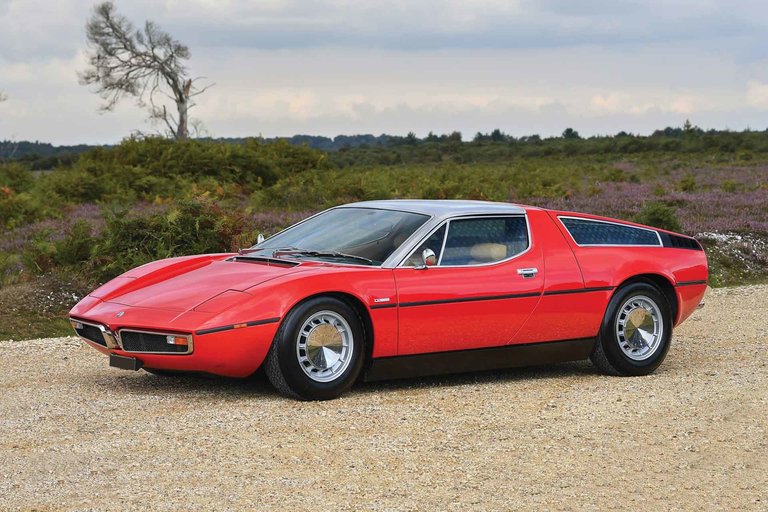
Performance with a touch of civility — that was the Maserati Bora, the company's first mid-engine supercar. The Bora began when French manufacturer Citroën took a controlling interest in Maserati...
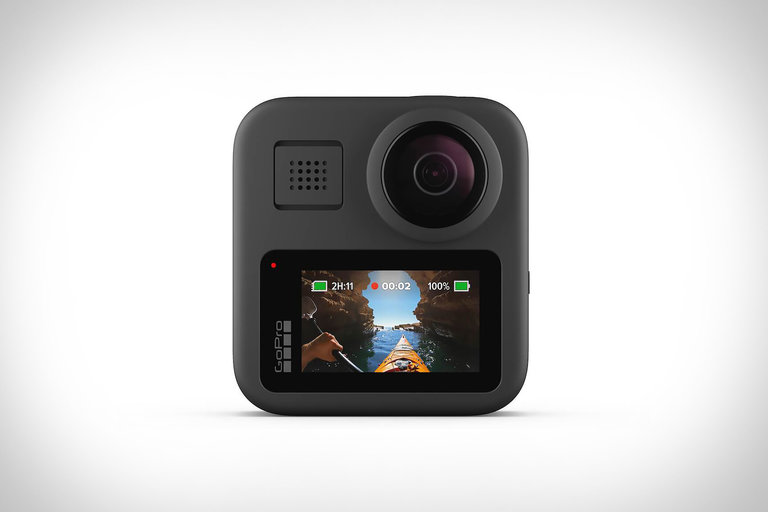
GoPro's second attempt at a 360-degree camera, the Hero Max promises to be far more versatile — and easier to use — than its predecessor. It's billed as three cameras...
The summer before senior year of high school is often viewed as the last opportunity for childish shenanigans and outrageous adventures before the “real world” begins. Andrew Dowdell and Brian Lutton, two seventeen-year-old seniors at the Out-of-Door Academy in Sarasota, Florida, decided to use their last taste of freedom for a cross-country drive. A typical road trip, though, would’ve been too easy. The boys wanted to flex their automotive savvy—they had been tinkering with cars since they each got their learner’s license, and their school’s robust engineering program helped hone that hobby into a skill. So this past May, they sprang for a 1985 Mercedes they found on Craigslist and made plans to drive it all the way to New York by running it solely on used cooking grease.
photo: Courtesy of the Out-of-Door Academy
Brian Lutton, left, and Andrew Dowdell with the car pre-makeover.
The clouded yellow headlights, drab tan exterior, and complete lack of brakes screamed certified clunker, but Lutton and Dowdell got to work, installing a conversion kit that turned old cooking oil into usable fuel, and, “actually just making the car trustworthy and drivable, so it didn’t feel like it was going to kill us,” Dowdell says of the process, which took two months. Lutton handled the splicing and retrofitting while Dowdell manned the rewiring. The boys also gave the exterior a facelift with Rust-Oleum apple-red spray paint and christened the car “John” after a family friend who used to work as a master technician for Mercedes and was a lifeline for the teens when things went awry—they even created an Instagram handle for the car, @johns_veggie_venture.
On July 4, the duo put “John” to the test—and it failed spectacularly. “July 4 ended in a little bit of an environmental disaster on I-75,” Lutton says. Only forty-two miles north of Sarasota, the car’s power steering pump hit an oil cooler line and sprayed oil everywhere. “I had a running bet with my dad that the car would not make it out of Florida, so I was kind of hesitant to make the phone call and tell him,” Lutton says. They had to call a tow truck to haul the car back to Sarasota, and Lutton’s dad got to keep his $150 ante.
Twenty-four hours later, the pair had patched up the car, and they left again on July 6. This time, the car rumbled sure and steady along the highway, and the boys shifted their attention to the next issue at hand: fuel. Dowdell and Lutton had to call around to twenty restaurants in Florida before they found one willing to share their used cooking oil. Grease from Poppo’s Taqueria in Sarasota fueled the first leg of the trip, and it wasn’t long before they learned the weight of their restaurant decisions.
For the first six hundred miles—about how long their tanks of grease would last—the smell of tacos, quesadillas, and pinto beans wafted through the air vents. “The oil we used made the car smell like whatever was cooked in that oil,” Lutton says. Rhode Island reeked of mozzarella sticks and marinara sauce from an Italian restaurant. The Ohio stretch stank of deep-fried fish from a seafood joint in Middle Bass Island. But it was scattered, smothered, chunked, and diced hash browns from Waffle House that became the adventure’s signature scent.
photo: Courtesy of Andrew Dowdell and Brian Lutton
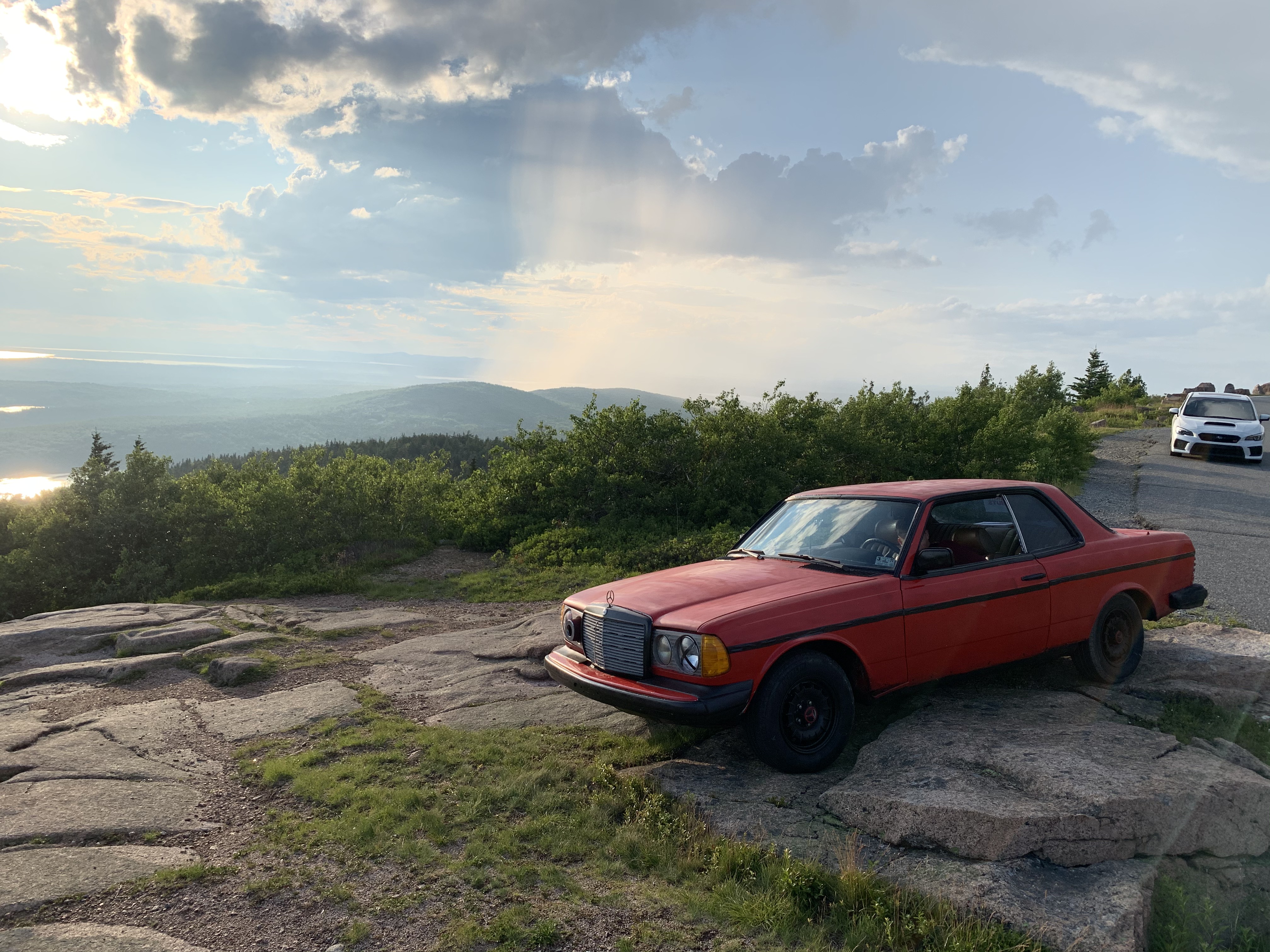
The Mercedes sits atop Cadillac Mountain on Mount Desert Island, Maine.
“Waffle Houses were some of the friendliest people we could find, and they would always offer their oil to us,” Dowdell says. The boys became Waffle House regulars, stopping at between ten and fifteen of them along the way. Fueled by the Southern breakfast staple, the car surpassed even Dowdell and Lutton’s expectations when it made it all the way to the Canadian border. By then, the teens had grown so attached to the car, they decided to make one last pit stop at Kettering University, an experiential learning STEM university in Michigan, before heading home.
Despite its mostly impressive performance, the car wasn’t without its quirks. “There was always something either going wrong or about to go wrong,” Lutton says. Before they even made it out of Florida, the driver’s side windshield wiper got stuck in the vertical position just as a heavy thunderstorm swept in. Every few minutes, Lutton would reach his arm out the window and shake it free. At one point, they snapped an axle in half. “I was absolutely convinced on the way up that the car was just going to burst into flames at some point,” Dowdell says, “which it did.”
Sitting in rush hour traffic in Worcester, Massachusetts, the car’s familiar scent of hash browns and waffles was suddenly overpowered by a different fragrance: fire. Smoke billowed out of the air vents, foot pedals, and the steering column. Unfazed, Lutton maneuvered the flaming Mercedes off the highway with no power steering, brakes, or a functioning engine. Lutton dumped fifty Aquafina water bottles, which they intended to drink, on the fire while Dowdell worked to turn the terminal off. Standing beside their soggy, smoking car, Dowdell and Lutton vowed that they would do whatever it took to get the car to Kettering University.
A tow truck dropped them off at the closest Advance Auto Parts, and the boys got to work rebuilding the car’s wiring harness. Miraculously, just a day after the car was sizzling on the side of I-290 West, it was up and running again. On July 30, Dowdell and Lutton made good on their promise and pulled into the parking lot of Kettering. “We were excited to be able to show them and say, ‘Yeah this car was on fire yesterday but here we are,’” Dowdell says.
The two never expected to get emotionally attached to the clunker, but all of the mishaps and hilarity that ensued along the way forged an unexpected bond between the boys and the car. And so for now, the vintage Mercedes will carry them through senior year, too—on any given afternoon, you’ll find it sitting in the school’s parking lot, waiting for the bell to ring so the boys can pile inside and embark on their next adventure.
Harley-Davidson is radically changing its lineup the likes of which haven't been seen in decades — or maybe even in the company's 116-year history. The Pan America is the first...
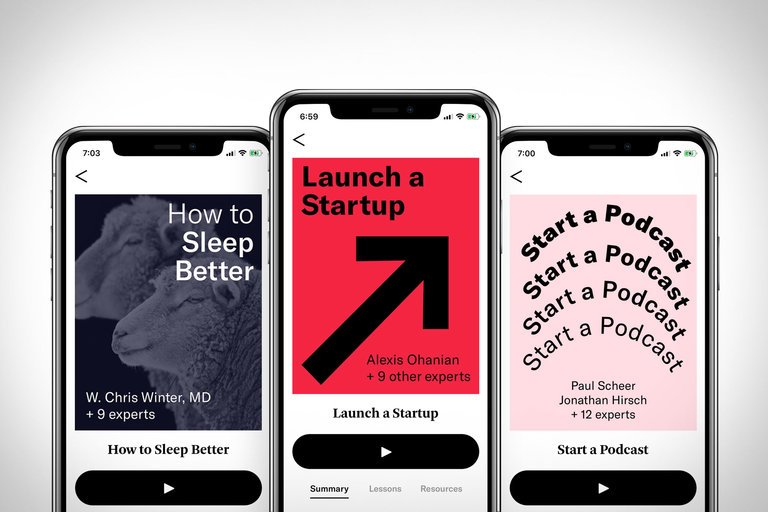
Most of us don't slow down enough to learn new skills. And with this audio learning platform, you don't have to. Knowable creates immersive, screen-free learning experiences that you can...
In 1983, the last of the SJ-series Jeep Cherokees rolled off the assembly line to be replaced by the legendary XJ-series Cherokee the following year. Based on the four-door Wagoneer,...
Book Freak is a weekly newsletter with cognitive tools you can use to improve the quality of your life.
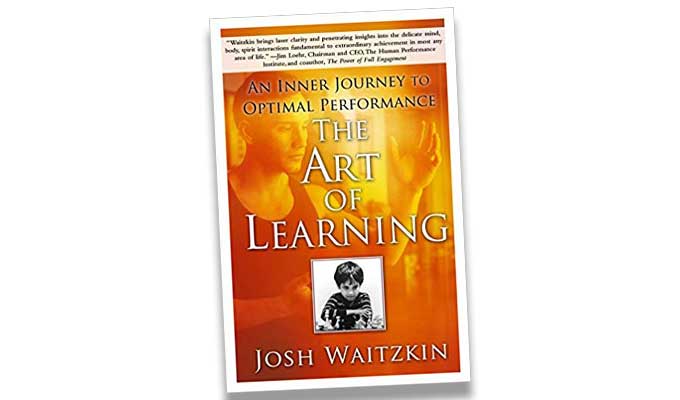
Josh Waitzkin won a National Chess Championship at the age of nine, and years later became the World Champion of Tai Chi Chuan. In this issue of Book Freak we present advice from Waitzkin’s book, The Art of Learning: A Journey in the Pursuit of Excellence.
Basic skills are more important than secret methods
“It is rarely a mysterious technique that drives us to the top, but rather a profound mastery of what may well be a basic skill set.”
Accept discomfort
“When uncomfortable, my instinct is not to avoid the discomfort but to become at peace with it.”
You improve only when you try your hardest
“The fact of the matter is that there will be nothing learned from any challenge in which we don’t try our hardest. Growth comes at the point of resistance. We learn by pushing ourselves and finding what really lies at the outer reaches of our abilities.”
There are plenty of ways to watch free documentaries online. So, whether you want to watch documentaries about people, science, history, religion, art, or culture, you’ll always be able to find something on one of the following sites.
US network PBS has produced a stream of high-quality documentaries that you can watch online for free.
The documentary content is divided into four main categories. The categories are Arts and Music, Food, History, and Science and Nature. You can also watch some non-documentary videos in categories like Drama, Home and How To, and Public Affairs.
All of the videos are free to watch as long as you live in the United States. If you’re outside the US, you’ll need to use a VPN to be able to tune in. We recommend either CyberGhost or ExpressVPN.
SnagFilms is a must-have app for anyone who’s serious about cutting the cord. It offers more than 2,000 free documentaries, TV episodes, and original comedy shorts.
If you’re accustomed to the typical genre categories on streaming services, SnagFilms will come as a bit of a shock. Its free documentaries are in categories such as Athletes and Their Triumphs, Veterans and the Military, Before They Were Stars, Refugee and Immigrant Stories, Celebrate Pride, and Climate Change and the Environment.
However, we think the site’s decision to structure its categories in such a way is smart. It makes it much easier to find niche documentaries that you might have otherwise overlooked.
DocumentaryStorm offers a curated list of free documentary movies from other places on the web. All of the videos on the site are feature-length films, so there are no shorts or mini-documentaries.
The usual selection of categories are available, including Art, Biography, Conspiracy, Crime, Environment, History, Money, Politics, Religion, and Science. There are 25 categories in total.
DocumentaryStorm also makes it easy to find documentaries that are worth watching. If you click on the Explore tab, you can see the Top 100 documentaries on the site, a list of the new arrivals, and impressively, a “Surprise Me” feature.
When you hit Surprise Me, DocumentaryStorm will start playing a random documentary from its catalog. It’s a great way to broaden your horizons and learn about topics you wouldn’t typically investigate.
Films for Action has more than 2,000 free documentaries for you to dig into. If you’re interested, the site also has per-view-films and movie trailers available.
The site makes it easy to find stuff to watch. By using the Explore tab, you can filter by topic (40 sections are available), by country of interest, and even by language. In addition to English content, you will also find documentaries in Spanish, German, and Danish.
Film for Action is also one of the few free documentary sites that do not rely on ads. Instead, the company solicits you for donations. The endless requests are a tad tiresome, but it’s still better than having your video interrupted by unskippable interludes.
DocumentaryHeaven takes a similar approach to DocumentaryStorm. It sources free documentary videos from around the web and displays them all on a single website for you to watch.
To find the best documentaries on the site, you can use the Top 100 tab at the top of the page. Alternatively, you can scroll through the various categories by hitting the Browse Documentaries tab. Some of the most popular categories are Health (271 documentaries), History (326), and Science (320).
However, there are also plenty of niche topics that are worth exploring. Some examples include Spirituality (17), Futurism (15), and Evolution (23).
Popcornflix is another site to watch free documentaries. There are around 100 available at any given time, though the list of titles is in a constant state of flux.
The biggest drawback of watching documentaries on Popcornflix is the difficulty of navigating the site.
Because Popcornflix also offers a massive library of free TV shows and movies, all of the documentaries are bundled into a single category. As such, it’s difficult to isolate the sub-genres that you’re interested in—you need to dig through the entire list to find the title you’re looking for.
Like SnagFilms, Spread the Word makes our list of best documentary sites thanks to its unique categories. They are all hyper-specific, meaning you can easily narrow down a list of videos that you’re interested in watching.
Some of the unique categories on offer include Consciousness, Civil Rights, Corporatism, Global Elite, Hidden History, Human Rights, and Media.
You don’t need an account to watch free documentaries on Spread the Word, but if you do sign up, you will be able to make customized playlists and share them with other people.
YouTube deserves a mention. As you’d expect, you can find thousands of free documentaries on the platform. They are produced by everyone from big-name studios to smaller independent documentary makers.
To make sure you see the best documentaries on YouTube, you should subscribe to YouTube’s official Documentary Films topic. Sure, it’s only going to scratch the surface of what’s available on the site, but it will give you a neverending stream of videos to enjoy.
10. Use Free Trials on Netflix and Hulu
We’ve written about some of the best free documentary sites on our list. However, many of the most popular on-demand streaming apps—like Netflix and Hulu—also offer vast libraries of documentaries.
And remember, most paid sites also offer free trials. So, if you want to watch new documentaries (like 2019’s Leaving Neverland) for free, why not sign up? As long as you cancel before your trial expires, it won’t cost you a dime.
When you get time off from work or school, it feels like a blessing. However, what if you don’t want to waste that time browsing social media sites or binge-watching Netflix?
Thankfully, there are plenty of creative things you can do when you get bored. And if you find these creative activities relaxing, you’ll be spending your downtime being productive.
Here are some creative things to do when you’re bored.
Lemonade stands, yard sales, bake sales—do whatever makes you happy. You don’t need to be an entrepreneur to get started with these ideas. And you can start out with few resources.
Have you got a day of boredom to kill? Set up a stand in the neighborhood and sell watermelon slices on a summer’s day. Or if you have an ice shaver machine at home, you can sell snow cones.
The small cash you make can be used for a good cause. Depending on the time you have, you can get creative with promotions and design fun and engaging posters for your project.
Go ahead and use social media to promote it. It can be a good way to connect with people on your friends list.
Learning might sound dull and dreary but you don’t have to limit yourself to learning how to create spreadsheets or how to start programming. There are a number of skills that can be both fun and educative.
For example, play with design software such as Photoshop or Gravit. They are very easy to use (but difficult to master), and if you have some quirky or funny quotes in mind, you can design T-shirts.
You could even post your T-shirt designs on Merch by Amazon to make some money.
Or if you have the gift of the gab, you can start a podcast. You don’t need to be too technical to begin an audio podcast. Just think about a topic you want to talk about and prepare the content. You can host the podcast at places like Podbean and Libsyn.
3. Set Up a Shop on Etsy or Fiverr
If you visit Etsy or Fiverr, you’ll find people selling all kinds of goods and services. While Etsy is for goods, Fiverr is mainly for services.
You can make clay pots or paper flowers in your free time and list them on Etsy. Or if you want to sell services, you can try anything from recording a puppet message to dressing up as a king and singing a rap song for someone’s birthday.
There are very few limits on what you can sell online. And those aren’t the only two selling platforms either. You can paint when you’re bored and sell it on Art Fire or Spoonflower.
4. Tidy Up Like Marie Kondo
Tidying up and decluttering is a good way to kill time. But if you’ve heard about Marie Kondo and her popular phrase “does it spark joy,” you already know the kind of tidying up we are talking about.
The KonMari method by Marie Kondo is a creative way to declutter your space and organize things. In this method, instead of focusing on what to get rid of, the focus is on what to keep. This change in mindset can help you declutter in a non-regretful way.
If you are going to throw away a thing because it’s practically useless but it does give you joy or happiness when you hold it, it’s best to keep it.
It’s worth spending time sorting your playlists; deleting old songs, and adding some new ones.
Different types of music can help with different moods. For example, when you’re working out, you might want energizing music that will help you exercise better.
If you’re feeling stressed due to all the work pressure, slow tempo music will work best as it soothes your mind. When you’re sad, create a playlist with fast tempo songs that can uplift your spirits.
6. Give Your Resume a Makeover
If you have a boring resume that lists your experiences and qualifications in the same old traditional format, now is the time you give it a creative makeover.
Why limit yourself to a text resume when you can create a video resume instead? Record a neat video and upload it to your YouTube channel.
You can also create an entire website about your portfolio and give prospective employers a link to it. Create a resume using Canva and add that to your website. It is a great way to display your experiences and qualifications in a visually appealing way. Here’s how to create a resume using Canva to help you get started.
You can even create a booklet resume. Get someone on Envato to do the job for you if you lack the design skills.
A capsule wardrobe is a wardrobe where you set aside specific clothes for a season.You mix and match these clothes with each other. These are the clothes you already have and love to wear. A capsule wardrobe typically works for about three months and then it needs to be updated for the next season.
It will let you get dressed quickly, always be in your favorite clothes, and have a neat closet.
When you create a capsule wardrobe, make sure you select a base color. Let’s say you selected black. Now you’ll have some black clothes in your wardrobe that will go with everything else.
Find More Ideas on Creative Websites
As we’ve explored in this article, there are a number of creative things you do when you’re bored. And if you ever run out of creative ideas, you can always visit sites such as Pinterest, Tumblr, and Dribble to find new inspiration.
While you would need to be at home to do most of these activities, there are also plenty of things to do online when you’re bored at work. They may not be particularly creative or productive, but they are fun.
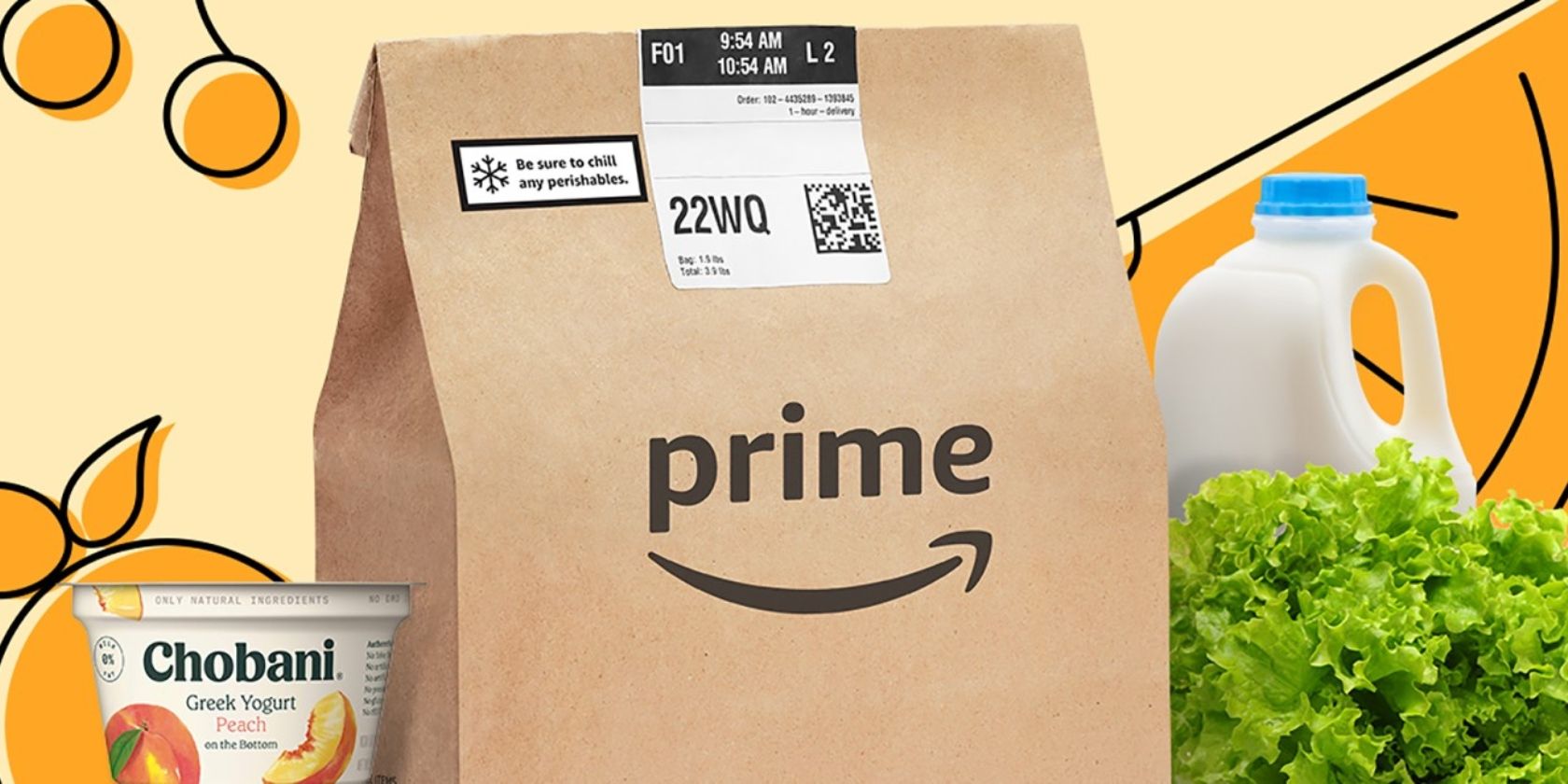
Amazon Fresh is now free for Amazon Prime members. Amazon Fresh formerly cost $14.99/month on top of the price of a Prime membership, but it’s now included as an Amazon Prime benefit. Which means Prime members can get groceries delivered for free.
What Is Amazon Fresh?
Amazon Fresh is Amazon’s delivery service for groceries. Customers place an order for groceries, including fresh produce, frozen goods, and household essentials. And it’s delivered straight to their door within a couple of hours.
Amazon Fresh has been expanding of late, and it’s now available in more than 2,000 cities and towns across the US. However, the $14.99/month fee to use Amazon Fresh will have put some people off using the service. Which is why Amazon is now removing that barrier.
How to Buy Your Groceries From Amazon
Amazon announced that Amazon Fresh is now free in a post on Day One. Turning Amazon Fresh into a Prime benefit means Prime members in more than 2,000 US cities can now get their groceries delivered for free from Amazon Fresh or Whole Foods Market.
Amazon’s VP of Grocery Delivery, Stephanie Landry, said, “Prime members love the convenience of free grocery delivery on Amazon, which is why we’ve made Amazon Fresh a free benefit of Prime, saving customers $14.99 per month.”
If you’re a Prime member already using Amazon Fresh, you can continue using it for free. However, due to how popular Amazon thinks Fresh will now become, other Prime members will have to request an invitation to begin receiving Amazon Fresh deliveries.
When Amazon has the capacity to add you as an Amazon Fresh customer, you’ll be notified. You can then start doing your grocery shopping on Amazon, and have it delivered to your door for free within the space of a couple of hours. As long as you pay for Prime.
Other Amazon Prime Benefits Worth Using
Amazon Fresh is just the latest in a long line of benefits for Amazon Prime subscribers. There’s free shipping, obviously, but there are lots of other awesome Amazon Prime benefits you’ve probably overlooked. And we can now add Amazon Fresh to that list.
The 5 Elements of Great Leadership I originally found this article on the military leadership blog, From The Green Notebook, and it’s called “The Map on the Wall”.
Digital health startup Solv is launching an app that enables consumers to book same day doctors appointments and figure out how their health insurance works.
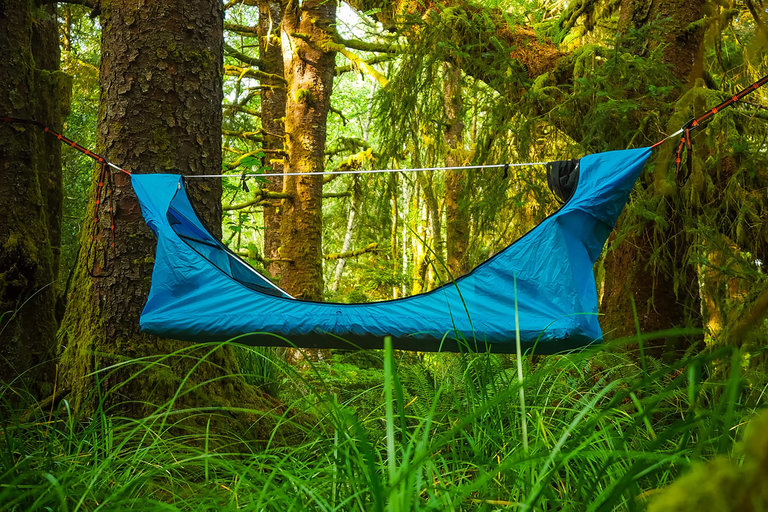
Weighing less than six pounds, the Haven Hammock Tent is an ideal way to get some sleep in the wilderness. Using a patent-pending design and an inflatable air mattress, it...
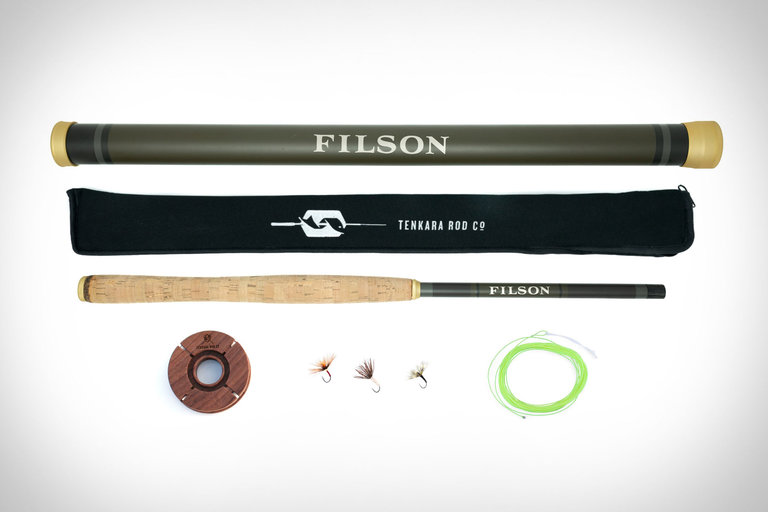
In addition to being well known American heritage brands, both Tenkara and Filson know and thing or two about minimalism. This brand new fishing rod proves that, combining a hand-crafted...
This is it — the final, production-ready version of Aston Martin's DBS GT Zagato along with the continuation DB4 GT Zagato, possibly the most perfect pairing in the automotive world....
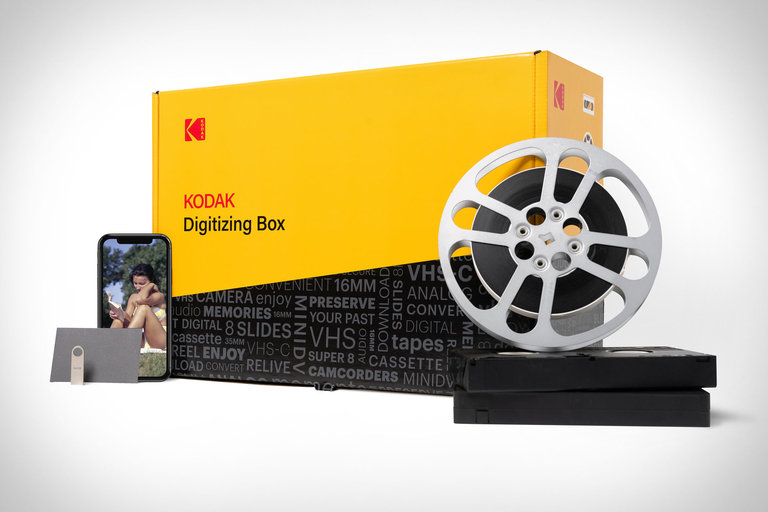
Since 1888 Kodak has continued to invent and revolutionize photography and motion pictures. That historic tradition continues with the KODAK Digitizing Box. Following in the footsteps of millions who trusted...
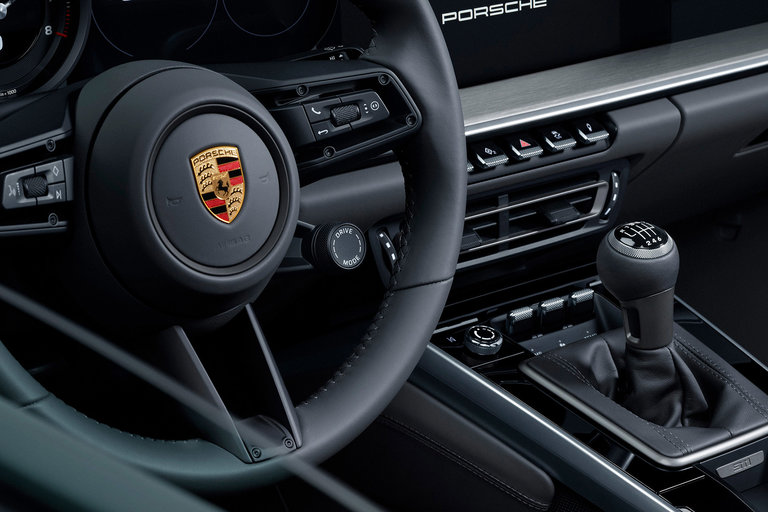
Initially launched with nothing but PDK transmissions available, the 992 now has what purists wanted all along: a manual transmission. The option for a seven-speed manual will be available on...
On a rainy day in 1962, Robert Kearns had one of those meandering thoughts that separate great inventors from mere mortals: What if a windshield wiper paused between each wipe, like a blinking eye?
He constructed prototypes in his basement, filed a patent, and began to dream up a plan: He’d set up a pretty little factory in Detroit, become a major supplier of windshield wipers, and go down in history as one of the automobile industry’s great innovators.
Then, Ford stole his idea.
For nearly 30 years, Kearns waged an impossible legal battle against one of America’s most powerful companies. In the end, he won millions of dollars — but it cost him his sanity, his marriage, and the remaining years of his life.
Kearns’ story is remembered as one of history’s great David vs. Goliath lawsuits. But it’s also a reminder of the shortcomings of the US patent system for independent inventors.
An inventor is born
Born in 1927, Kearns spent his youth in Detroit, Michigan, ground zero for the flourishing American automobile industry.
As a kid, he toured Ford Motor Company’s River Rouge Complex (then the largest integrated factory in the world) and marveled at the auto giant’s innovations. “The automotive — that’s all there was,” he later told the New Yorker’s John Seabrook. “If you were an inventor, and you really wanted to reach people, you invented for the automotive.”
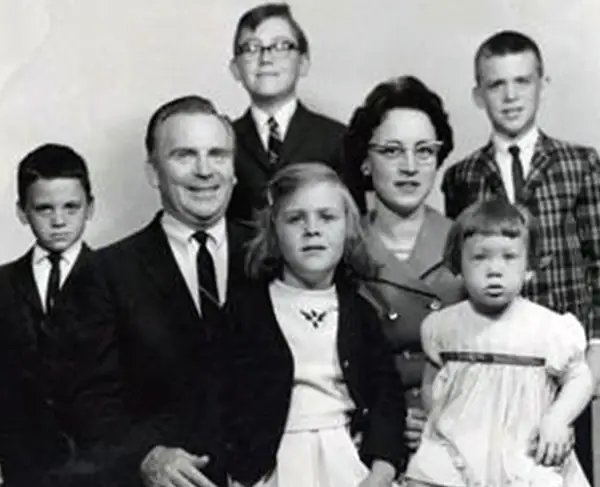
Robert Kearns (second from left) with his family (via Facebook’s public figure page)
Determined to make his mark in this industry, Kearns earned a master’s degree in mechanical engineering and began working toward his Ph.D. He toyed around with various non-automotive inventions — a grease-dispensing hair comb, a voice amplifier, a weather balloon, a navigation system — but nothing stuck.
Then, in 1962, the 35-year-old had a stroke of genius.
A windshield wiper that mimics the human eye
A decade earlier, on his wedding night, Kearns had popped open a bottle of champagne in his face and permanently blinded his left eye. His impaired vision caused many hardships, one of which was operating windshield wipers in the rain.
In the early 1960s, wipers only had two settings (one for light rain and one for heavy rain) and were controlled by a vacuum-powered system that ran continuously and didn’t allow for any variance in frequency.
For Kearns, this didn’t suffice — and driving in the rain one day, he figured that a windshield wiper ought to function as a human eye, allowing the driver to control the pauses between, and speed of, the swipes.
At the time, the auto industry made the bulk of its profits by selling add-ons and upgrades; something like a technologically-advanced windshield wiper meant big bucks.
Kearns, years later, holding a prototype of his device (via The Washington Post/Getty Images)
Kearns holed himself up in a corner of his basement with a pile of off-the-shelf electronics — transistors, capacitors, and variable resistors — and built his first intermittent wiper prototype.
He housed the device in a red box marked “DO NOT OPEN” and installed it in his Ford Galaxie. And in early 1963, he drove to the Ford factory to make his sales pitch.
A fateful meeting with Ford
Through a mutual connection, Kearns was able to set up a 45-minute meeting with Ford’s engineering team. His plan was simple: He’d blow them away with his intermittent wiper, sign a deal to license his technology, open a wiper factory of his own, and become the automobile industry’s go-to supplier.
On the big day, Kearns was greeted by 10 engineers in the parking lot, who peppered him with questions about his invention. They expressed interest but told him the wipers had to run for 3m cycles to meet their standards.
So, Kearns bought an aquarium, filled it with a mixture of oil and sawdust, installed a pair of his wipers inside, and let them run for 6 months straight. Upon passing the test, Kearns filed the first patent for his intermittent wipers and returned to Ford.
The inventor made a series of presentations to Ford’s engineers and executives — and this time they offered him a contract. But it came with one condition: Ford claimed that, because wipers were a “safety item,” all of Kearns’ engineering had to be disclosed before the contract was signed.
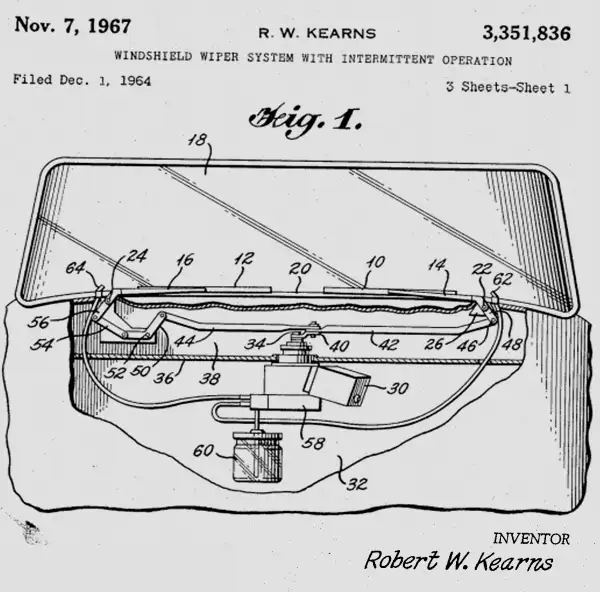
An image from Kearns’ patent, filed in 1964 and approved in 1967 (via Google Patents)
Sensing that he was close to fulfilling his dream, Kearns showed Ford exactly how his device worked and was welcomed aboard the team.
But the celebration didn’t last long: 5 months later, he was dismissed. Ford, he was told, had come up with its own intermittent wiper totally on its own and no longer needed his services.
When corporations steal
In 1969, Ford debuted a fancy, first-of-its-kind intermittent windshield wiper on its line of Mercury cars.
The wipers, which cost Ford $10 to make and sold for $37, were a hot commodity and were soon adopted by others in the auto industry: By the mid-1970s, Chrysler, General Motors, Saab, Honda, Volvo, Rolls-Royce, Mercedes and dozens of other big-name brands had a version of intermittent wipers on their cars.
All mimicked the exact configuration of Kearns’ device.
Kearns was so aghast when he found out about the infringement that he had a mental breakdown and had to spend two weeks in a psychiatric ward. His hair, once red, turned snow white.
An early Ford intermittent wiper component (via eBay)
Once recuperated, he hired a lawyer and wrote to Ford to inform the company of the infringement. The company’s response: They had not stolen Kearns’ idea and his patent was invalid on the grounds that it wasn’t “sufficiently inventive.”
In 1978, Kearns filed a patent infringement suit against Ford, seeking $350m — $50 for every intermittent-wiper-equipped car Ford sold.
Ford then pulled the big corporation card: It stalled, hoping Kearns would “lose heart or run out of money.”
Big companies like Ford have found that it’s cheaper to steal a patented product and face any legal repercussions later than is it to license it. Most small-time inventors simply can’t afford to spend millions of dollars dragging a case through district courts.
“Multinational companies know that screwing over suppliers is easy money,” says Mike Collins, an author who has studied manufacturing for 30 years. “You see it time and time again.”
But as Ford would soon find out, Kearns wasn’t going to give up.
The sexagenarian inventor hired (and fired) 5 different legal firms, and eventually decided to defend himself. He slept on the floor of his office, surrounded by boxes of evidence. He recruited his children to pore over documents. And he became so unilaterally obsessed with the case that his wife filed for divorce.
As Kearns waged this slow, agonizing war, his case became less about financial compensation and more about calling out big corporations for stealing intellectual property from inventors. At one point, he turned down a $30m settlement offer that would’ve cleared Ford from any wrongdoing.
“This case isn’t about money,” he told the Detroit Free Press. “If I walk out of there with nothing more than a check then I’m nothing more than an employee of Ford.”
In January of 1990 — 12 years after the filing — the case finally went to trial. And when it did, Kearns vanished. “I had to go,” he later told People. “If I had stayed, it would have legitimized what was happening.” He was deep in the Maryland woods, cooking knockwurst over a portable stove when a verdict was finally reached.
Despite selling 20.6m cars (worth $575m in profit) equipped with intermittent wipers, Ford was to pay Kearns a settlement of $10.2m.
Kearns was not pleased.
“My intent was to have a small shop in Detroit, have nice shrubbery around the plant, hire people — that’s been my dream all my life,” he said. “When they offer you a settlement, they’re really sending you to a park bench.”
The aftermath
Though Robert Kearns was a newly-minted millionaire, he continued to live an ascetic life, sleeping on the floor of an unfurnished apartment stocked with documents, notes, and witness statements.
The following year, he was back in court filing a similar patent infringement suit against Chrysler.
Headlines harped on Kearns’ victory (via assorted newspapers, 1980s-1990)
Once again, he represented himself — a lone inventor up against the giant auto industry — and this time, he was awarded $18.7m. Kearns called the sum a “booby prize” (a prize typically given to a last-place finisher as a joke) and left the money uncollected for years in protest.
He filed suit against 18 other automakers, but they were dismissed for various reasons. (In one instance his son, Dennis, was found to have wrongly obtained documents by sparking a romantic affair with a paralegal at the firm representing Porsche).
Eventually, Kearns bought himself an estate in Maryland and “entered an uneasy retirement.” But even in his waning years, he still couldn’t let the patent cases go.
By the time he died in 2005, the intermittent windshield wiper was an industry standard, built into millions of automobiles around the world.
Today, he is regarded by many inventors as a personal hero for waging a war against the corporate world’s “steal now, pay later” ethos — even though he fell short of his ultimate dream.
“Kearns gained some vindication in the form of $30m in settlements from Ford and Chrysler,” read his Washington Postobituary. “But he never got what he had sought from the beginning:” control over his own invention.
Note:For more on Kearns, check out John Seabrook’s excellent 1993 New Yorker article on the inventor’s saga, and the 2005 feature film, Flash of Genius. .
Today’s frozen food section is a vast and adventurous tundra.
In the course of a grocery run, one might encounter frozen gourmet turkey sausage, frozen Italian meatballs, frozen farm-raised shrimp, an array of frozen fruits and vegetables, or even — if luck strikes — frozen pepperoni pizza egg rolls, courtesy of America’s resident culinary psychopath, Guy Fieri.
Every major supermarket devotes at least an entire aisle to freezer space, and with good reason: The frozen food sector is a $220B+ global industry. In 2018, frozen foods saw a 2.6% sales growth (nearly twice that of fresh food), a trend industry analysts largely attribute to recent advancements in freezing technologies.
The 20th-century innovation that launched the global frozen-goods industry is considered to be one of the great advancements of modern civilization.
But the industry’s chief pioneer is hardly a household name.
He was a man who spent years freezing fish in -40°F weather, saw an opportunity to improve a sub-par process, and then built an entire infrastructure to bring his ideas to market.
The kid who sold frogs
Born in Brooklyn, New York, in 1886, Clarence Birdseye began life in the midst of America’s technological revolution.
Seismic shifts were underway that would dramatically alter the landscape of the country — railroads, steel production, the spread of the telephone and electricity. Birdseye was drawn to nature, but also the industrious spirit of the times.
Birdseye, in older age, reviews notes in his study (Getty Images)
As chronicled by biographer Mark Kurlansky, Birdseye spent his youth finding ways to profit off of the natural world around him.
Once, he noticed an abundance of muskrats in a nearby field, wrote letters to a local zoo director to assess demand, and ended up trapping and selling them for $1 a piece. He later replicated this model with frogs, netting $115 in profit (~$3k in 2019 dollars). At the age of 11, he launched his own taxidermy school and placed ads for prospective students in a magazine.
Birdseye later enrolled at Amherst College in Massachusetts. But when his family fell on hard times, he dropped out, joined the US Biological Survey, and ventured to the American Southwest, where he quickly found a side hustle selling coyote pelts to New Yorkers at a 60% profit margin.
Soon, he’d embark on a new adventure — one that would alter the course of his life and, eventually, the course of American cuisine.
Where the fish freeze mid-air
In the spring of 1912, Birdseye moved to Labrador, a remote, inhospitably cold region in Newfoundland (now Eastern Canada).
It was not considered to be a place of great economic promise. But Birdseye sniffed out a market for fox exports. In short order, he was dog sledding across the vast frozen tundra capturing wild silver foxes, first for breeding and later for furs. Two years after arriving, he’d reeled in $6k in profit ($154k today).
Photos taken by Birdseye during his time in Labrador (Birdseye family archive)
In between selling pelts, Birdseye developed a fascination with food preservation — particularly the methods of the Inuitice fishermen.
He noticed that as soon as a fish was pulled out from under the ice, it would immediately freeze, “mid-flip,” in the -40°F air. The fish would then be packed in snow outdoors — and to Birdseye’s delight, it tasted perfectly fresh when thawed days, or even weeks, later.
Back in New York, freezing food was a less palatable affair.
At the time, the pervading preservation technique was to freeze food very slowly over a period of days at temperatures just below the freezing point. When this food thawed, it was grainy, leaky, and prone to rot. Only the lowest-grade food was frozen to begin with, and products were priced lower than canned goods.
Not surprisingly, these issues earned frozen food an extremely poor reputation in the US — so bad, writes Kurlansky, that it was even banned in New York State prisons.
But perched in the icy climes of Labrador, devouring pristinely fresh “quick-frozen” fish, Birdseye saw an opportunity to shake up the market.
A better way
In 1917, Birdseye returned to the US, where he eventually settled into a more domesticated role with the US Fisheries Association.
A chief focus among executives was to figure out a better way to get fish — a temperamental good that lost value in transport — to the marketplace in a more desirable condition. There was a need to integrate better freezing methods.
“If the quality can be improved,” the association’s president opined at a 1921 convention, “the ancient prejudice will wear away and in time we will eat fish as other nations do.”
Birdseye kept scrupulous journals in Labrador, which he later used to formulate his freezing methods (Amherst College Archives & Special Collections)
Birdseye came to realize that the grainy texture of US frozen fish was a direct result of the way the meat was frozen: Slow freezing (the US standard) formed large crystals that eroded tissue cells, causing a grainy texture. By contrast, fish that was frozen instantly (as in Labrador) formed much smaller, less damaging crystals that maintained freshness.
But despite his studies and efforts, Birdseye still couldn’t replicate the deliciously fresh frozen fish he’d had up North.
So, in 1922, he left his job, rented out some space in an ice cream factory, and went all-in to find a solution.
Birdseye Seafoods
A convincing salesman, Birdseye raised $20k ($300k today) and launched Birdseye Seafoods with the promise of revolutionizing the logistics of frozen food.
He ran a series of experiments attempting to replicate the arctic climate of Labrador, testing different salts, boxes, and conditions. In one instance, he even tried to freeze a fish with ice and an electric fan.
Though the company showed promise, it ran out of money in 1924, and Birdseye relocated to Gloucester, Massachusetts, a port city with a thriving fishing industry. Here, he raised more funds — this time, a whopping $375k ($5.6m today) — and launched General Seafood Corporation.
Not long afterward, he had a major breakthrough.
Visuals from Birdseye’s patent for a “Method of preserving piscatorial products,” filed in 1924 (Google Patents)
By placing food inside two-inch-thick, insulated cartons and pressing them between hollowed-out metal plates cooled to -25°F, he found that he could “fast-freeze” the contents and better preserve freshness. Soon, the metal plates were swapped for chilled belts, enabling rapid production of high-quality frozen food for the first time.
Dubbed multi-plate freezing, Birdseye’s invention was ahead of its time — and this caused a host of new challenges.
Though Birdseye had “solved” the frozen food problem, America lacked the infrastructure to distribute it: Trains didn’t yet have freezer cars to preserve food on long journeys across the country. Warehouses weren’t quite cold enough to store it. Retailers had no viable way to stock it.
By 1927, Birdseye had thousands of pounds of frozen food and nowhere to go. He realized he had to help solve these problems on his own.
When the storefront freezer was invented in 1928, Birdseye paid for the $1.5k machines to be installed at markets all over the East Coast. He pressured DuPont to make a waterproof cellophane with his products. And, he set out to realign the poor perception of frozen food with marketing that spoke of the “just-from-the-ocean flavor” of his fish products.
Within two years, General Seafood Corporation expanded to 27 products — fish, berries, frozen peas — and caught the attention of much larger entities.
The exit
In 1929, Marjorie Merriweather Post, the then-president of what is now Post Consumer Brands (the maker of cereals like Grape Nuts and Honey Bunches of Oats), partnered with Goldman Sachs and bought out Birdseye’s company for $23.5m ($350m today).
General Seafood Corporation was rebranded as General Foods, and Birdseye was kept on as its director of research with an annual salary of $50k ($750k today). At the onset of the Great Depression, he built himself a lavish 17-room mansion overlooking the Atlantic Ocean.
Top left: Birdseye toys around with dehydration methods; Top Right: Birdseye leads employees through his factory; Bottom: Birds Eye Frosted Foods products move along an assembly line (Getty Images)
But the inventor wasn’t complacent with his wealth.
He maintained an active role in promoting his goods (kept as a separate “Birds Eye Frosted Foods” line), running in-store demonstrations and fighting to convince Americans that frozen food was worthy of their hard-earned dollars.
Post-WWII, the migration of women to the American workplace spiked a demand for convenient, easy-to-prepare foods. The rise of supermarkets in the 1930s and 40s led to better frozen food supply chains and wider in-store availability.
Public perception gradually changed, and a new era of frozen food customers emerged.
Between 1930 and 1945, US frozen food sales saw a 10x increase. By 1950, frozen food was a $1B-per-year industry — and Birds Eye Frosted Foods was a household name.
Curiosity killed the market gap
By the time Birdseye died of heart failure at age 69, he had 168 frozen food-related patents to his name.
A few years before his death, a reporter at The American Magazine asked him to identify the secret to his success.
“When I visit a strange city, I go through the local industrial plants to see how they make things,” he said. “I don’t care what the product is; I am just as much interested in the manufacture of chewing gum as of steel.”
There were many times in Birdseye’s life where he could’ve prospered simply by capitalizing on existing opportunities.
But he chose to take a different path — and today, his spirit lingers in every frozen food aisle in America.
Note: Much of the information in this article came from Mark Kurlansky’s excellent biography, Birdseye: The Adventures of a Curious Man. If you’d like to learn more about Birdseye’s life, we highly recommend giving it a read.
Sign up here to get Recomendo a week early in your inbox.
Organize your notebooks
I’m a notebook hoarder/collecter and regularly use 2-3 different notebooks a day for work, journaling, lists, brain dumps, etc. Sometimes I need to flag pages to revisit and instead of post-it notes, I’ve been using these Redi-Tag Divider Sticky Notes ($5). These are so useful for indexing your notebooks and annotating pages. I’m still spread out all over the place, but this helps me keep track of what’s important. — CD
Measuring noise with your phone Decibel X is an app for the iPhone ($3.99 per month, also available on Android) that is a noise meter. It pretty accurately measures noise on a decibel scale. I use it to monitor the noise levels in restaurants and workplaces in an effort to increase quiet. When I am recording podcasts I use it to ensure there’s little background noise. It’s also entertaining and instructive to measure sound levels outside in nature and urban areas. — KK
The only thing you need to know about public speaking
“The only thing that truly matters in public speaking is not confidence, stage presence, or smooth talking. It’s having something worth saying.” This is from Chris Anderson’s book, TED Talks: The Official TED Guide to Public Speaking. — MF
Werewolf, intense social game
When we meet for family reunions, or gather with friends, our favorite group game is Werewolf. Classrooms and corporate retreats also play Werewolf. It’s a deduction/deception game, extremely social, that is as much fun to watch as to play, so it can involve everyone. The games are exhilarating, surprising, and addictive. The only gear you need are some cards. While you can get by with an ordinary deck of cards, a set of dedicated Werewolf cards makes it much easier. After you’ve played a number of basic games, it’s easy and fun to play with variations, which are supported by this deck of Apostrophe Werewolf cards ($11). — KK
Battery powered security light
The Lumenology Portable LED Motion Sensor Light ($30) is powered by three AA batteries. It has a light detector and motion detector, so it shines only when it detects motion at night (saving the battery charge). It comes with two different mounts: one is magnetic and the other is a flexible tripod that can work as a regular tripod or be wrapped around a pole or a branch. I used the magnetic mount on my front gate and it shines a bright, wide spot of light for 30 seconds when anyone comes to the gate. — MF
More eyeballing measurement tips
Recomendo reader Wendy shared a follow-up tip to last week’s Recomendo, she says “Another tip I read once about eyeballing measurements is to take pinches of salt and place them in your other hand till you think you have a teaspoon, then measure it against a real teaspoon. Do the pinches over and over till you get a consistent amount per teaspoon. I figured mine out so that I get ¼ teaspoon per pinch. Super handy for salting stuff, but also works with herbs. But in the case of herbs, remember how much a teaspoon looked like in your palm.” — CD
If you’re enjoying Recomendo, check out Book Freak, which shares short pieces of advice from books once a week and What’s in my bag?— each week one interesting person shares four favorite things in their bag.
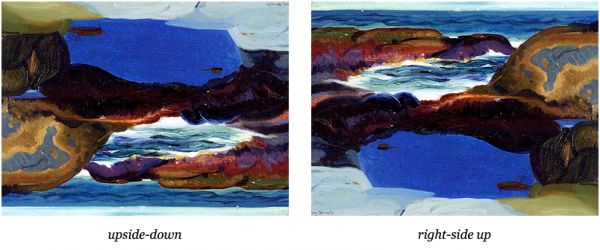
It's been a joke ever since the advent of modern art- if this painting were hung upside down, would anyone know the difference? Alex Boese looked up cases in which that actually happened. Yes, museums and galleries have been known to hang pictures upside down, or even sideways. While most could be classified as modern art, they are not all abstracts. The image at the top is a case in which critics assumed the painting was abstract, but it was only upside-down.
At a 1915 art exhibition in Grand Rapids, Michigan, "The Blue Pool," by George Bellows, was hung in a conspicuous location. Several artists gave talks at the event in which they referenced it, describing it as "modern in treatment." It was only after three weeks that the exhibitors realized they had hung the painting upside-down. When righted, the seemingly abstract swatches of color transformed into a more familiar scene of a pool of water surrounded by rocks.
Reading how others approached a challenge can go a long way toward making sure you're prepared for the challenges ahead. Here are some books on investing and business worth studying.
Georgia’s Deer Management Assistance Program (DMAP) is a new program dedicated to assisting hunt clubs and landowners manage deer on private lands. DMAPs are not a new concept in the Southeast. In fact, more southern states have them than not. This program gained traction in Georgia during the development of the Deer Management Plan 2015-2024, […]