KWBaker
Shared posts
3 Great Ways That You Can Get Rich As Gold Prices Explode

7 Mysterious Geological Formations That Still Baffle Scientists

The world is full of wonders, and that includes some that even scientific research hasn't figured out yet. But curious scientists are working on them. Some are fairly inaccessible and difficult to study, some have been studied but have more than one plausible explanation, and some are just baffling. The picture here seems to show what's at the end of the rainbow, a bubblegum pink lake named Lake Hillier.
This small, saltwater lake on an island off Western Australia is only one-third of a mile long, but its bubblegum-pink color makes it especially striking. The lake was documented in 1802 by British explorer Matthew Flinders, who took a sample of its waters but failed to understand how it got its startling hue. Tourists can visit only by helicopter, though it is safe to swim in the waters.
Scientists today suspect the color is due to the presence of a pink alga, Dunaliella salina, and/or a pink bacterium, Salinibacter ruber. But unlike other pink lakes around the world, such as Lake Retba in Senegal, Lake Hillier’s color doesn’t fluctuate with temperature or sunlight—so the investigation goes on.
That explanation leaves us with another question, though- hasn't anyone taken samples from the lake? Are the helicopter pilots charging too much? Lake Hillier is only one of many geologic mysteries around the globe that scientists haven't yet solved. Read about six more of them at Mental Floss.
(Image credit: Kurioziteti123)
“Traditional” double-action pistols are neither traditional, nor double-action…
…nor useful, or even smart. They are at best an unfortunate design that can be worked around. More likely — not even in the worst case — they are clunky, undesirable, unnecessary, stupid designs that are downright dangerous. And yet, like polyester bell-bottoms, they are making a comeback, for no reason that I can discern other than people are tired of writing about useful, workable, practical handguns.
They are not traditional – actual DA handguns had been around for nearly a century prior. They aren’t even DA – they are DA/SA. The only reason that they are called “traditional DA” is because the manufacturers needed to call them something other than “obsolete” once the striker-fired polymer-framed pistols started kicking their butts. “Traditional DA” is a stupid term – “DA/SA” is the original and accurate term – and you look stupid if you use the stupid term.
Yeah, I know the SEALs used them for a while – the SIG P2XX stuff. My understanding is that their selection had nothing to do with the DA/SA operation and all to do with reliability. Which brings me to the fact that while the DA/SA transition is, in Jeff Cooper’s words, “a brilliant solution to a non-existent problem”, it can certainly be mastered to the point where it doesn’t matter. No question. Got it. But that last time I discussed pistol training with an ex-SEAL, he casually mentioned that they’d fire thousands of rounds before lunch on training days. Ernie Langdon has made a career out of shooting DA/DA pistols. Both he and SEALs shoot way more than I do, than you do, and that probably either of us could afford to even if we had the time and wanted to. I mean, I gotta a dog to feed and tofu to buy.
In the hands of someone that, literally, doesn’t train exclusively with them to the tune of, oh, say 10,000 rounds a year (mo’ less), DA/SA pistols are, by design, meant to screw up your shooting and cause you NDs. Every instructor that I know reports the same sequence when students use DA/SA pistols (Ernie Langdon and SEALs aside): Up! Miss-Hit-Hit-Hit. Decock/holster! Up! Miss-Hit-Hit-Hit. And so on. That first long hard first shot goes into the dirt (or 5-zone), while the remaining easy SA shots go where they’re aimed. To the surprise of absolutely no one.
Now, that’s on the range on a nice sunny day with no one trying to kill you. What’s going to happen to Johnny Citizen or Mary Q. Public when they have to use that DA/DA pistol for real? Here’s what: they will miss the first shot, just like they do on the range. But they will also likely ND the subsequent SA shots. You know: stress. And adrenaline. Plus they never trained under stress before (1% of the 1% of serious gun owners have). So at best they fail to defend themselves; at worst they shoot someone innocent.
And all this risk…for what? To own a pistol that’s more difficult to shoot well than a striker-fired one? “Let’s make training much harder, let’s make it less likely that we’ll be able to defend ourself, and at the same time dramatically increase our chances of shooting some innocent person.” There’s a winning strategy! I’d say it’s Darwin at work except for the shooting innocent people bit.
The DA/SA design was introduced because manufacturers were trying to get around the real disadvantages of the SA 1911…which truly is an experts-only gun. But instead of designing pistols with a reasonable DA trigger (which I concede may have been difficult with a hammer-fired pistol) they came out with the DA/SA abortion. Striker-fired pistols were already in production, to good reviews, in Europe. Instead of doing the smart thing and putting design resources on that track, they cheaped out, and a generation or two of shooters (and cops) suffered as a result. Glock changed all that for the better, and then the manufacturers had to get off their butts and compete.
But because writers and internet training “gurus” need something fresh to peddle every new year, we now have a resurgence of interest in this putrid design. “Hey, take my new course on the ‘fighting traditional DA pistol’ “. Just make sure to wear your polyester bell-bottoms.
In light of the above, it may be surprising that a few years ago I actually considered buying one of the then-new CZ polymer-framed 9mm pistols because I loved the feel in the hand. They were only available in DA/SA then, and I seriously contemplated putting in the hours and rounds necessary to get competent with it (under stress). But I wisely decided against it because I realized that despite the fair amount of training that I was willing to do with it I still didn’t believe I’d get to a level of comfort with the risk it represented.
Instead I bought another DA/SA pistol that has an even better feel in the hand: the S&W 3913.
But I had it converted to DAO.
Review: The World Atlas of Wine (8th Edition)
How to Make Fried Rice the Right Way
No, fried rice is not a modern invention. Here's the 1,500-year-old recipe.

You’ve Never Seen an Ultralight Backpack Like This One
The newest backpack from Swedish outdoor gear maker Klättermusen is loaded with features but lacking in color.

The Courtroom That Literally Relitigated History
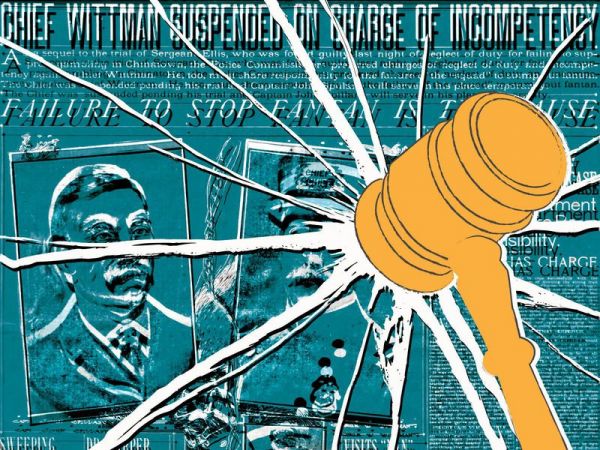
The Court of Historical Review and Appeals was an unofficial court in San Francisco that tried cold cases, often very cold cases that were thought to have been settled decades ago. It was a publicity stunt concocted by San Francisco publicist Bernard Averbuch in 1975. The first case it heard was that of police chief chief George W. Wittman, who was relieved of duty after being charged with accepting bribes to allow gambling to flourish in Chinatown -in 1905.
Averbuch had heard of Wittman when city archivist Gladys Hansen discovered police personnel records dating back to 1853. He saw injustice in Wittman’s firing, noted briefly in the ledger in red ink, and enlisted the help of his friend Harry Low, a Superior Court judge, to stage a rehearing. Local TV cameras turned out for the much belated trial. With the benefit of hindsight, Wittman’s “defense team,” a collection of civil servants, including Hansen, told a twisted tale of turn-of-the-century yellow journalism, mayoral corruption, racism and greed that had been hidden from the public at the time. Wittman, they argued, had been a pawn in a scheme to paint Chinatown as an unseemly and dangerous place, part of a bigger effort to move the Chinese immigrants off of their valuable land. With a bang of his gavel, Judge Low rewrote history, ruling that Wittman’s firing was unjust.
The "re-trial" was so popular that the Court of Historical Review and Appeals continued, examining many other historical cases for possible injustice over the next 25 years. The findings were not binding, but drew a lot of national press. Read about some of the other cases heard by the court at Smithsonian.
(Image credit: Shaylyn Esposito)
Is Intermittent Fasting Effective?

Intermittent fasting is a type of diet in which a person limits either his eating times to 6-8 hours per day, or the number of moderate-sized meals that he will eat in a week. The big question is, is it effective?
Mark Manson, a neuroscientist from Johns Hopkins Medicine, says that “it could be a part of a healthy lifestyle”. He has studied the effects of intermittent fasting for 25 years, and he adopted it in his life 20 years ago.
An array of animal and some human studies have shown that alternating between times of fasting and eating supports cellular health, probably by triggering an age-old adaptation to periods of food scarcity called metabolic switching. Such a switch occurs when cells use up their stores of rapidly accessible, sugar-based fuel, and begin converting fat into energy in a slower metabolic process.
Mattson says studies have shown that this switch improves blood sugar regulation, increases resistance to stress and suppresses inflammation. Because most Americans eat three meals plus snacks each day, they do not experience the switch, or the suggested benefits.
More about this study over at EurekAlert.
(Image Credit: congerdesign/ Pixabay)
Earth and Sun
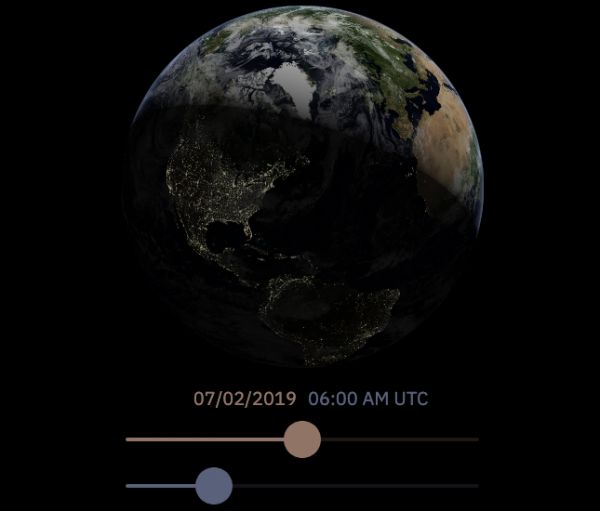
Earth and Sun is a neat interactive tutorial on what makes a day for people on Earth. In specific, it explains the Earth's rotation, revolution, speed, axial tilt, solstices and equinoxes, and more that you haven't thought all that much about.
The duration between two solar noons is known as a solar day which lasts the familiar 24 hours. However, that’s not completely accurate. If you look closely at the simulation of the sidereal and solar day you’ll notice that we didn’t account for two important factors – eccentricity of the orbit and the axial tilt of the Earth. In fact, 24 hours is the duration of a mean solar day. The actual duration of each individual day varies, but before we witness that variation we have to discuss the most important consequence of the axial tilt.
In the visual shown here, you can drag the Earth around on any axis, but you can't change where the sun is, so depending on what time you do it, you'll see where daylight and dark falls. That's just one of the many ways you can visualize what's happening on Earth at the site. -via Metafilter
Pundits Weigh In On Top Real Estate Trends Of Past Decade

Redefining Cognac: Why You Must Try Camus’ Intensely Aromatic

10 Ways AI Is Going To Improve Fintech In 2020

This Year in Farming and Food
From trade wars to floods and droughts, 2019 has not been easy for many farmers. Here are some of the biggest agriculture stories of the year:
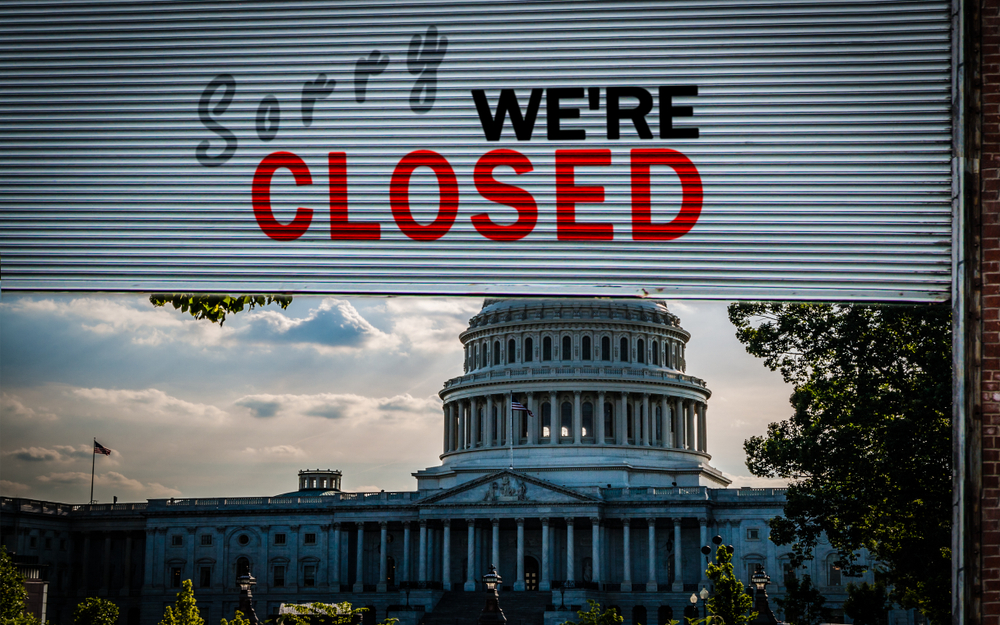
Photo by Ivan Marc on Shutterstock.
Government Shutdown
The 2018 government shutdown bled into the first 25 days of 2019, affecting all sorts of agricultural programs at the USDA. The agency halted examining new grants and loans and delayed its crop reports. The FDA stopped most domestic food inspections during the shutdown. The government reopened after 35 days—the longest shutdown in American history. Let’s just say it was an interesting start to the year.
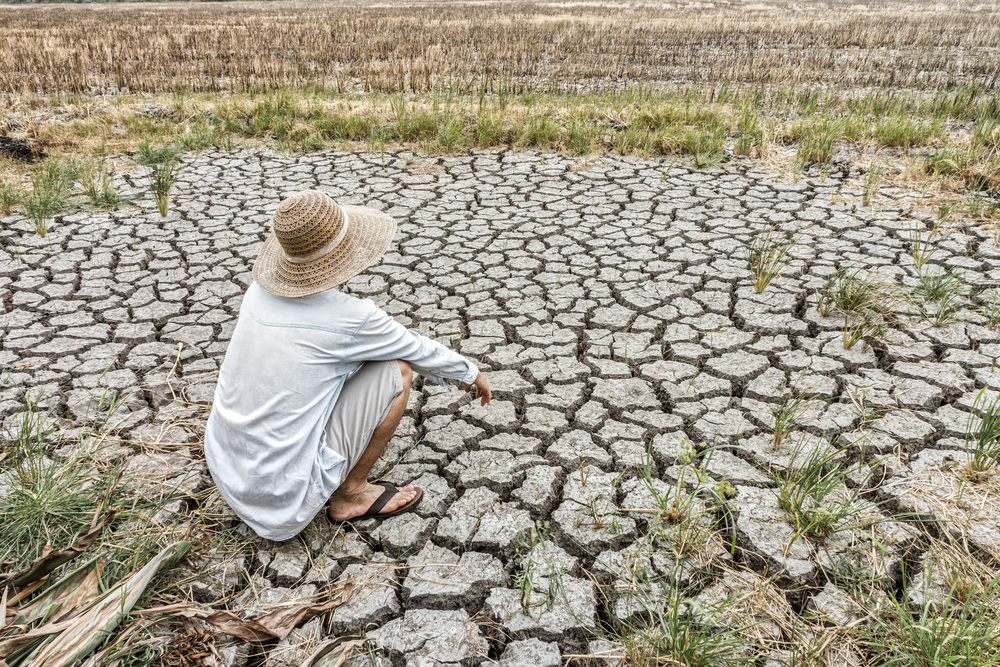
Photo by JoeyPhoto on Shutterstock.
Crazy Weather
The weather became that much more erratic in many parts of the country this year. In March, floods devastated the Midwest, damaging farmland, destroying grain and killing livestock. This fall, farmers in parts of the southeast were praying for rain, as they experienced an extreme “flash drought.” This meant that states from Virginia through to northern Florida endured temperatures between nine and 12 degrees above normal, reaching record highs.
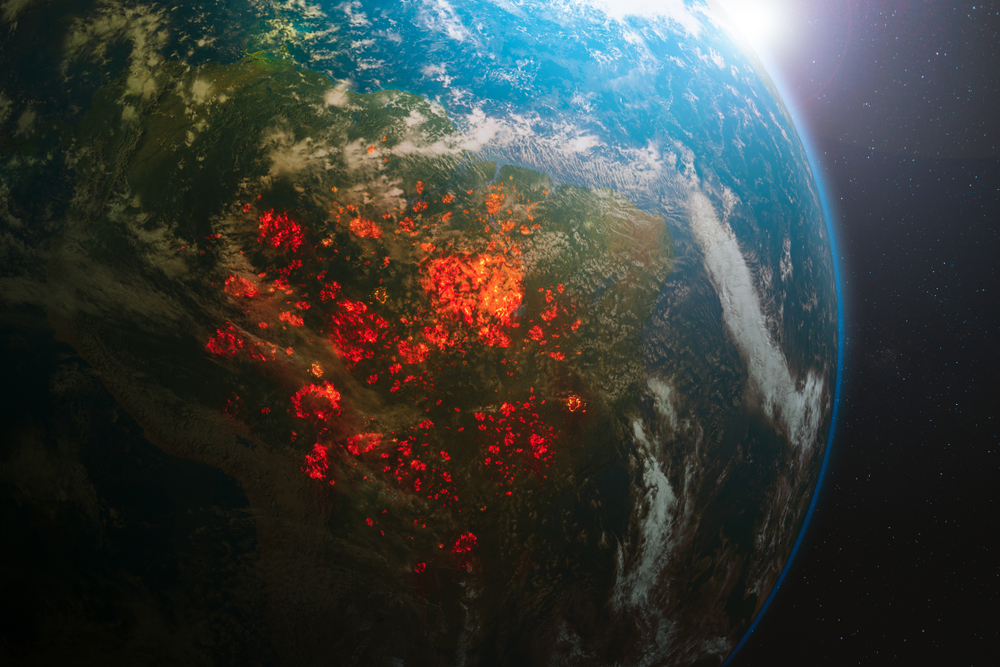
Photo by OSORIOartist.
Fires in the Amazon
More than 87,000 fires burned in the Amazon this summer, blackening the skies in Brazilian cities. This was the highest number of fires that ripped through the jungle known as the “Earth’s lungs” since 2010. Most of the fires were intentionally set to clear trees for agriculture. There’s some evidence that shows locals felt emboldened to set more illegal fires this year without fear of penalty because of Brazilian President Jair Bolsonaro’s pledge to roll back environmental regulations to develop more of the Amazon.
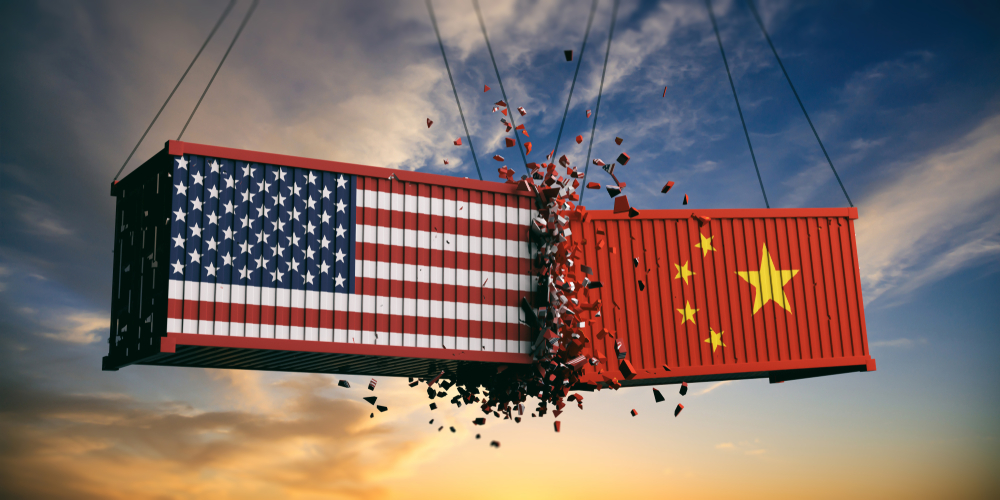
Photo by rawf8 on Shutterstock.
Trade Wars
President Donald Trump’s trade wars really took off in 2019. After Trump slapped 25-percent tariffs on a number of Chinese goods in 2018, China responded with its own tariffs on a number of American products, including soybeans and pork. In August, the Chinese stopped buying American agricultural products entirely. There has been a thaw since, as China started buying American soybeans again in September and both sides agreed to delay additional tariffs on some agricultural products. And in November, the Chinese government lifted its years-long ban on American poultry products, facing pressure from its own domestic meat prices due to an outbreak of African swine flu.

Photo by mitifoto on Shutterstock.
Census, Bailouts and Bankruptcies
The agriculture census, which comes out every five years, showed that the total number of farms was down 3.2 percent from the last census, as was the total amount of farmland. The census also showed that the average size of farmland increased, meaning the smaller number of farms that survived are larger. Farmer income also saw its largest drop in three years in the first quarter of 2019.
To help farmers through the hard times of the trade war, the Trump administration announced a $16-billion aid package for farmers in May. But analyses have shown that subsidies doled out to farmers have disproportionately helped wealthy farmers.
And despite the bailouts, farm bankruptcies were way up in 2019. For the year leading up to September, farmers were filing for bankruptcies at a rate 24 percent higher than the year before. America’s largest dairy producer, Dean Foods, filed for bankruptcy in November. Ever low milk prices have also forced many dairy farmers out of business this year.
But it wasn’t all doom and gloom in 2019. We learned that honeybees “surf” to get out of water, and that sweet potatoes alert their buddies to pest attacks. We’ll call it a wash.
The post This Year in Farming and Food appeared first on Modern Farmer.
Vets alarmed by dog heart problems linked to grain-free food...
The World's Recycling System Is Falling Apart. What's Going On?
The argument for recycling is mutating before our eyes, from the broken “limits to growth” argument to the new climate change arguments.
The Best Whiskey of 2019 Is a $36 Bottle You’ve Never Heard of
George Dickel Bottled in Bond is Whisky Advocate's best bottle of the year.

Why Bose’s Game-Changing Headphones Are the Best Audio Product of the Year
Active noise cancellation (ANC) changed how you listen. This year’s best headphones will change how you're heard.

This Lens Cap Has a Temperature and Humidity Meter to Prevent Fungus

Here’s one of the strangest looking rear lens caps we ever did see. The Japanese camera accessory company UN has created a cap that has a temperature and humidity meter built in to help you take perfect care of your glass.
Storing your camera lenses in a hot and humid environment allows fungus to grow on the glass elements and damage your equipment. If you want to make sure your lenses are constantly cool and dry, this rear cap was made for you.

Called the UNX-8595, the 1.2oz (34.5g) cap is designed for Micro Four Thirds lenses and features a thermo-hygrometer that doesn’t require a battery to function. While compact, it’s about twice the thickness of a standard M4/3 rear cap.

DC.Watch got its hands on a unit and published a hands-on review (here’s the Google-translated article) with a selection of photos of the cap.
If you’re interested in buying one yourself, it costs ¥1,980 (~$18) and is available directly through the UN online store.
Image credits: Header photo by DC.Watch
How to Shoot the Milky Way: A Crash Course in Less Than 5 Minutes
Photographers Ian Norman and Diana Southern of Lonely Speck made this helpful video that will teach you the things you need to know to shoot the Milky Way in less than 5 minutes.
The topics blazed through in the tutorial include gear, planning, camera settings, and focusing.
While the video won’t instantly make you an expert in astrophotography, it’ll help point you in the right direction for shooting photos like these:
You can find more helpful content by Lonely Speck on the blog and YouTube channel.
The FAA Plans To Track Nearly All In-Flight Drones In Real Time
Supersonic Guitars
Tracklist: 1. Hindustan 2. Lover's Guitar 3. Limehouse Blues 4. Marie 5. Pagan Love Song 6. Tiger Guitars 7. Guitars In Space 8. Granada 9. Pennies From Heaven 10. El Cumbanchero 11. High Tide Boogie 12....
This item belongs to: audio/album_recordings.
This item has files of the following types: 24bit Flac, Abbyy GZ, Archive BitTorrent, Columbia Peaks, DjVuTXT, Djvu XML, Generic Raw Book Zip, Item Image, Item Tile, JSON, MP3 Sample, Metadata, PNG, Scandata, Scandata JSON, Segment Data, Single Page Processed JP2 ZIP, Spectrogram, Text PDF, Unknown, VBR MP3
Top 10 Movie Sets Abandoned After Filming Wrapped Up
The art of film holds a very special place in many of our hearts. Transporting us to unique and creative worlds that capture our attention and our imaginations. No film would be complete without a great set to further immerse its viewers in the setting that it’s trying to sell us. Most films are brought […]
The post Top 10 Movie Sets Abandoned After Filming Wrapped Up appeared first on Listverse.
The Decade’s Best Journal Articles

Ever since we started Huckberry back in 2011, we found it imperative to not only equip you for adventures near and far but to inspire you to get after it yourself. The journal is one of our favorite places to share where we’ve been, where we want to go, and what we bring with us when we hit the road. Whether it is sharing our favorite boots to get you or detailing a 72-hour trip in Iceland down to the hour, we want to offer up real experiences at Huckberry, not just a product to buy.
We decided to round out the decade by looking back on some of our most well-loved Huckberry Journal posts from each year that we’ve been around. As we look back, we hope that you’ll enjoy going back with us to see just how far we’ve come—from a few posts in 2011 to a massive 2019, our biggest and best year yet.
Where to Ski This Winter
2011
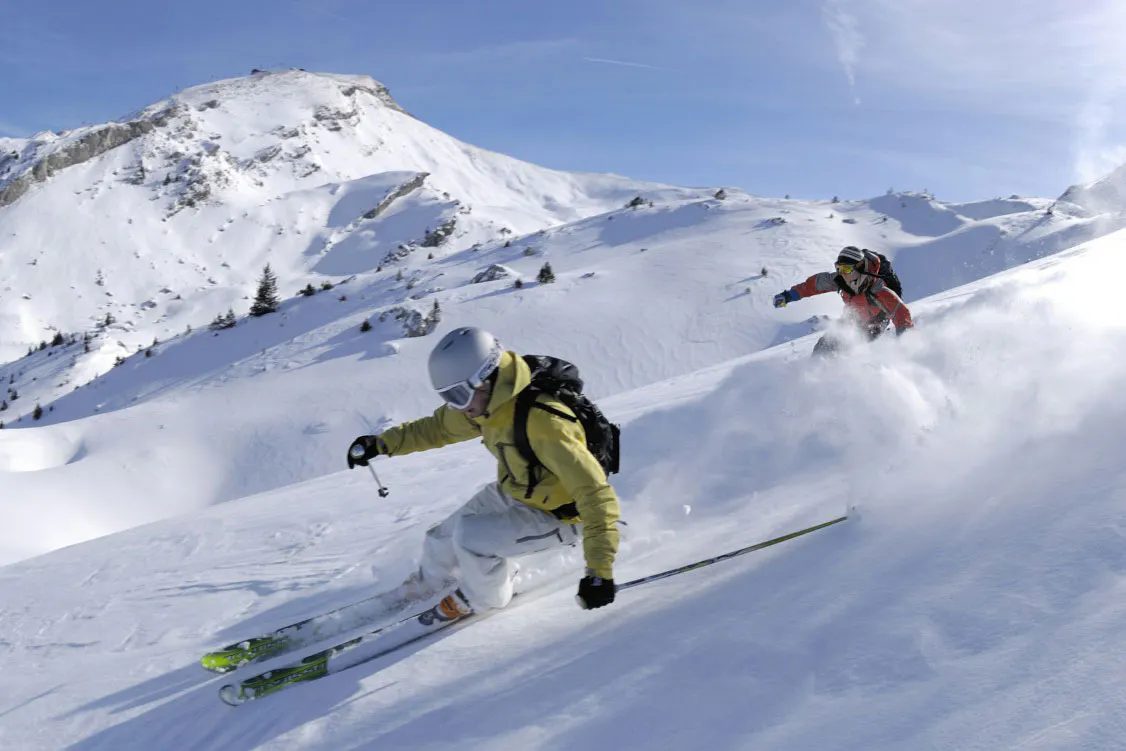
The idea of Huckberry was conceived on a ski lift, so why not kick off our inaugural year with a list of our favorite spots across the country. From our backyard resorts in Tahoe to the ritz of the Rockies and the humble East Coast mountains, our friend Heather Hansman has you covered, whether you rip the backcountry, haunt the park, or keep your knees in on some good old fashioned moguls.
Man Kills Grizzly With Hands and Teeth
2012
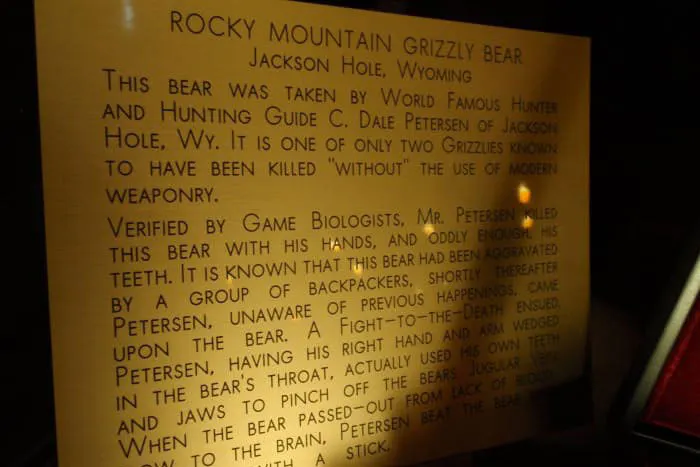
We love a good survival story at Huckberry and there really may be nothing more badass than meeting a grizzly bear and living to tell the tale. In the case of world-famous hunter and hunting guide C. Dale Petersen of Jackson Hole, Wyoming, he ended up winning the fight of his life with only his hands and teeth after coming across a riled-up grizzly.
Robert Landsburg’s Brave Final Shots
2013
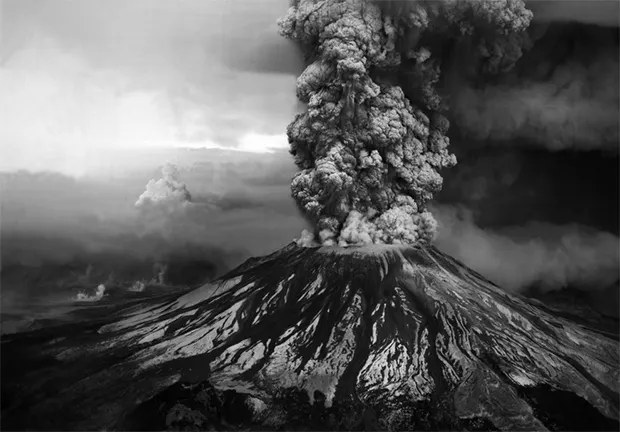
Photography is an art and we know that no perfect shot is easy to come by. Painstaking hours are spent hiking, waiting, freezing, or starving just to get that one frame that will live on forever. Normally, though, the photo doesn’t threaten the photographer’s life. Robert Landsburg caught the 1980 eruption of Mt. St. Helens in his final moments and used his own body to protect the film at the ultimate cost. Here we take a moment to honor these photos and the sacrifice Landsburg made to get them.

How to Skivvy Roll
2014
Minimalist, one-bag packing is one of our mantras at Huckberry and nothing makes this easier than the skivvy roll. Perfected by Marines, we take a page from their handbook to keep our adventure gear neat and tidy, whether we’re rucking on the beach or backpacking across Europe. This time, leave the rubber bands at home and keep your skivvies high and tight in your pack, keeping valuable space open for your other gear.
The Huckberry Guide to Swimming Holes
2015
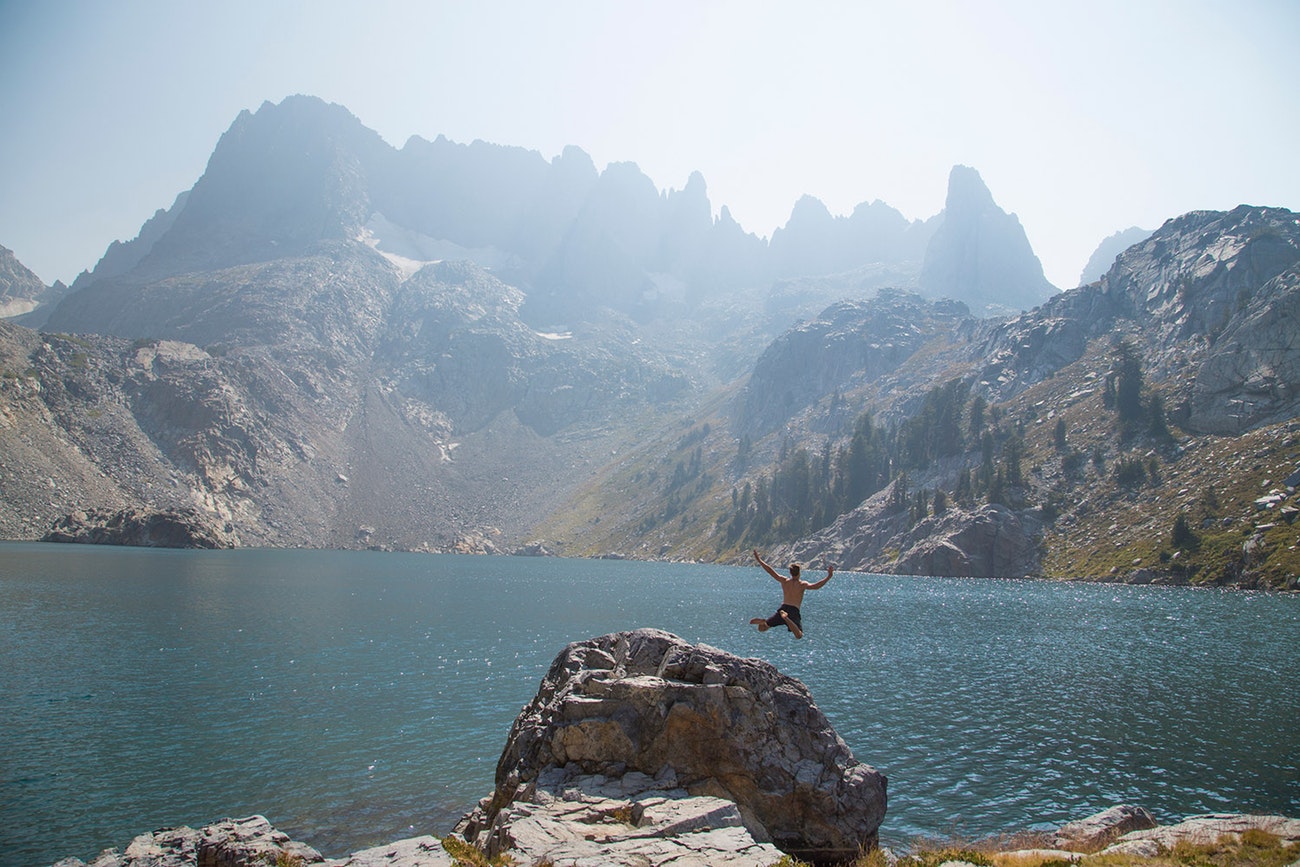
We checked in with some of our best buds at Yeti, Hipcamp, Western Rise, and more to round up the best swimming holes in the entire United States. From a spring-fed, downtown hangout in Austin to the spiritual, hidden wonders of the Grand Canyon, you’ll never be left wanting if getting wet is in your summer vacation agenda. Just writing this now has us forgetting about the slopes and dreaming of long summer nights.
Bootstrapped, Profitable, and Proud
2016
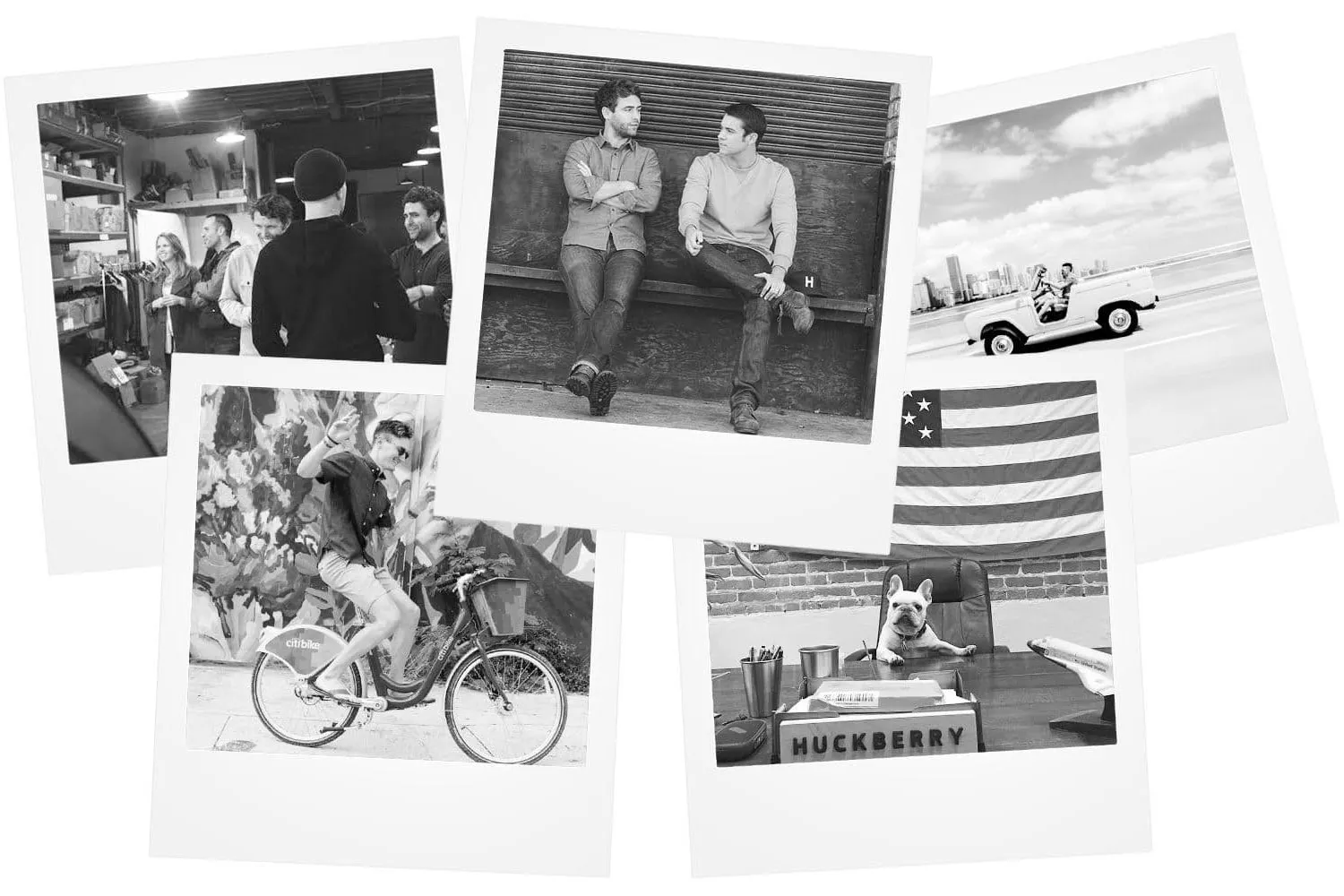
Bootstrapped, Profitable, and Proud. What more do we need to say? We are damn proud of what we’ve built here at Huckberry and are stoked that you’ve joined us on this adventure. Check-in with Rich and Andy, Huckberry co-founders, as they reminisce on the evolution of a dream between two ski buddies shipping gear out of their apartments to being a force in e-Commerce.

8 Things That Happened When I Tried Intermittent Fasting
2017
Our buddy Cory Ohlendorf, Editor-In-Chief at Valet, heard about intermittent fasting from superhero actors and fitness gurus and was left wondering if it could work for a normal guy like him. Check out his list of eight things that he realized when going in on intermittent fasting. Let’s just say that looking like Henry Cavill or Hugh Jackman really isn’t that easy.

Bourbon Coffee Old Fashioned Recipe
2018
We love coffee and we definitely love ourselves a good old-fashioned, so why not put the two together? Our most beloved article from 2018 wass a recipe for a bourbon coffee old-fashioned that could make even Don Draper blush. Whip up this concoction, mixing the elixir of life with one of life’s greatest libations for a combo you won’t quickly leave behind. Maybe just don’t do what Don does and stir one up at 10 in the morning.

The Best Brewery in Every State
2019
This year we asked you, the Huckberry community, to recommend the best brewery each state has to offer—and, boy, did you deliver. From an OG micro-brewery gone huge in Texas to family-run Bissell Brothers Brewing in Maine, we compiled a list worthy of any beer lover’s bucket list. Road trip anyone?
If any other articles from the Huckberry Journal stuck out to you this decade, let us know in the comments below.
>>Next: How to Survive the Snowpocalypse
The Decade In Higher Ed: Ten Trends

14 Noteworthy Camping Trailers and Camper Vans We Saw in 2019
A roundup of the best affordable, luxurious and overlanding-ready camping vehicles we saw over the past year.

An Incomplete Map of Uberland
Uberland: How Algorithms Are Rewriting the Rules of Work, by Alex Rosenblat, University of California Press, 271 pages, $26.95
Mariana, a Dominican mother of four in New York, says being an Uber driver is the best job she's ever had. "I love it," she enthuses to Alex Rosenblat, an ethnographer at the Data & Society Research Institute. "You can have your own schedule. You met many different people."
On the other hand, the ride-sharing company has been careless with its customers' personal data and made misleading income promises—claiming, for instance, that New York drivers were earning a median $90,000 a year—a practice that got the company slammed with a $20 million fine from the Federal Trade Commission.
The rhetoric in Uberland: How Algorithms Are Rewriting the Rules of Work, Rosenblat's interview-rich but analysis-thin book, is designed to make readers think concerns about privacy and corporate governance are more important than the increased work opportunities that Uber brings to the lives of people like Mariana. Rosenblat got direct insights from over 500 Uber drivers, through both formal interviews and informal conversations. She also logged lots of time on online message boards where hundreds of thousands of those drivers gather to communicate and kvetch. Needless to say, not everyone earns as much, or loves the experience as much, as Mariana does.
That immersion gave Rosenblat plenty of evidence that different people and different constituencies rate Uber differently. But while drivers have their legitimate complaints, we meet many who see the flexibility and the lack of supervision as far superior to the factory or call-center work they'd previously done; who value Uber's cashless nature for leaving them less open to armed robbery than a previous gig; who find other options for their level of education just nowhere near as satisfactory; or who deeply appreciate that they end up with money to spend by the end of every shift. We meet a single mom whose kids have chronic health problems requiring attention at unpredictable times as well as recent immigrants from war-torn lands speaking of how Uber has added value to their lives they could find nowhere else.
Rosenblat honestly presents such positive details, yet her book's dominant attitude toward the company is suspicious, carping, negative. The style and content of her discontent reveal a peevish but common disdain for innovations when they are based on privately chosen market transactions rather than the disinterested pursuit of social betterment.
Drivers rightfully find many of Uber's practices annoying and in some cases potentially criminal. Among them: suspiciously large numbers of "computer glitches" preventing full pass-throughs of money they earned, tips that get lost between customer and driver, and the system's inherent need for workers to drive lots of uncompensated dead miles and wait for lingering customers, to build up the brand's overall reputation for reliability. In conflicts between drivers and passengers, drivers frequently find the company difficult to communicate with—and prone to siding with paying customers over just one of an apparently endless pool of willing drivers. (The book also points out that Uber essentially sloughs off middle management tasks on its customers, whose ratings discipline drivers.)
Rosenblat spends an inordinate amount of time worrying over whether Uber drivers are "entrepreneurs," as the company sometimes claims. She makes a convincing case that they are not. Uber drivers don't set their own prices, can be punished for being selective about the jobs they take, and are not provided with sufficient information to make such decisions ably anyway. That said, the complaint that drivers aren't real entrepreneurs because they can't refuse to take passengers to certain neighborhoods rings hollow from Rosenblat—destination discrimination isn't usually something progressives favor.
Indeed, Uber bugs Rosenblat for reasons beyond an objective, reasonable bill of indictment. Mostly, in language she repeats many times, she is peeved that Uber is "playing" us as a society with promises and rhetoric that she thinks don't hold up. She complains that the company sells a young-hip-white-millennial image, which she associates with the HBO series Girls, that doesn't reflect the actual drivers she meets. That might be something to make jokey-snide tweets about, but it seems curiously ancillary to any real driver, rider, or public concern such that she should devote so much space to it in a serious book.
Rosenblat also finds it worth noting, in regard to Uber's alleged techno-hip aura, that "drivers…don't game search-engine-optimization results to boost their presence on the internet…they aren't 'happiness engineers' or 'code ninjas.'" No, they provide low-cost rides to strangers. And that's far more important to passengers than is Rosenblat's cultural-studies style of critique.
At one point she complains that "the company's marketing emphasizes the trendy idea of driving for a tech -company, which somehow is more desirable than if the same job were branded more bluntly as a taxi job for immigrants." If in fact Uber is mostly "a taxi job for immigrants"—and many of the drivers she meets are indeed foreigners without a lot of other opportunities—why isn't that alone enough of a reason to like Uber?
When it comes to larger social threats, the only even half-concrete example that Rosenblat presents is in her subtitle: She believes Uber is "rewriting the rules of work," most damagingly by undermining the legal status of "employee."
Uber treats drivers as independent contractors. The drivers are thus compensated entirely by a portion—constantly fluctuating—of their total fares. They are responsible for their own expenses and taxes, including Social Security (which, Rosenblat finds, makes many of them unaware of their true net earnings). They get no paid sick leave or vacation days, no employer-provided health insurance. On the other side of the ledger, they have complete flexibility as to when they work, and they have access to millions of potential customers without having to make any effort beyond activating an app.
In April, the U.S. Labor Department declared that most people who drive for ride-sharing services are independent contractors under federal law. But in September California codified via state law that Uber and similar companies must treat drivers legally as employees, with all the cost and bureaucracy that implies. According to a 2018 study from the National Employment Law Project, that change could add 30 percent to the company's operating expenses in that state, where it claims to have 200,000 active drivers. Uber, for its part and against the clear intent of the law, is claiming both that even under the new standards their drivers should not be classified as employees, and that it intends to sponsor a ballot initiative down the line to upend the new law, which doesn't go into effect until January 2020.
In any case, Uberland presents no evidence Uber's algorithms are upending everything about work and society. The company isn't even upending everything about its own contractors. For most drivers, the service seems to function as a stopgap option to make quick money. Rosenblat's data show that more than half of Uber drivers are active for fewer than 15 hours a week and that 86 percent either have or are actively seeking more traditional full-time work. One in six drivers are new in any given month, and 68 percent of drivers last no more than half a year. Driving for Uber doesn't seem to be too many people's idea of a great career, but it remains a great option for some people sometimes.
Rosenblat frames this very openness as a problem: It creates tensions, she says, between "labor rights" (the right of those who have a job to keep others out in order to increase their income) and "civil rights" (the right to have access to the work). She thus ends up criticizing Uber for what, under other circumstances, might be seen as corporate social responsibility. When the company builds stakeholder coalitions with "women who code," or Mothers Against Drunk Driving, or the NAACP, Rosenblat accuses it of trying to leverage those groups' political power to the business's benefit. All that, she writes, is just "emotional ransom" and "part of its hustle." Even providing reliable service to customers comes under suspicion, as it has tended to make those customers unpaid grassroots activists in Uber's political fights.
There are legitimate reasons to criticize Uber, and Rosenblat covers them. But if you base your analysis on the idea that a company can be criticized for anything that helps it profit or survive, you will miss most of the positive things that business does for the world. On Rosenblat's own evidence, it would be difficult to argue that drivers, passengers, or the culture at large would be better off without Uber.
LSU Football Utilized Joe Burrow On The Field And Big Data In The Weight Room In Its Return To College Football’s Biggest Stage

A visit from the ghost of dumb phones past
Wouldn’t it be interesting to travel back in time to the distant, pre-smartphone days of 2010 and see how we survived using separate devices for listening to music, navigating, and taking pictures?
Sure, it would… but it would also be terribly inconvenient.
So the WSJ’s Joanna Stern took the plunge and used nothing but 2010-era technology so you don’t have to. Here are a few things she learned:
Today’s phones are convenient as h*ll
In 2010, it was still common to carry around digital cameras to take pictures, Garmins to navigate via GPS, and mp3 players to listen to music.
But in the past decade, smartphones consolidated those and other devices into a single device — and are hoping consumers will start paying closer to $2k than $200 for cell phones.
Smartphones killed old industries
As feature-rich smartphones became ubiquitous, they pushed a number of industries to the brink of extinction.
- An example: Cameras. There were 100.4m sold in 2007, the year iPhones launched — and just 24.2m in 2016.
In other cases, the smartphone didn’t completely kill off companies, but it forced them to shift their entire business models.
- An example: Garmin, which pivoted away from in-car GPS hardware to wearable GPS watches.
Smartphones also birthed new businesses
At the start of 2010, it wasn’t even possible to post a selfie on Instagram.
Instagram launched 3 years after the iPhone, and its growth wouldn’t have been possible if it weren’t for the booming popularity of smartphones that made it easy to take and share photos.
But social media wasn’t the only industry turned upside down — smartphones also changed the way people watch TV, listen to music, and get around.
Here are some other things that Americans couldn’t do at the beginning of 2010 that are now part of our everyday lives, in part, to smartphones:
- Order an Uber (“UberCab” launched in SF in June 2010)
- Listen to a Spotify playlist (Spotify launched in America in 2011)
- Stream a Netflix original (Netflix’s first original, “House of Cards,” didn’t debut until 2013)
- Watch a TikTok video (TikTok didn’t launch until 2017)
So, even if you’re pissed off that the 2010s are ending and you still don’t own a flying car, just remember… we’ve come a long way.
The post A visit from the ghost of dumb phones past appeared first on The Hustle.
Don’t miss the young moon and Venus
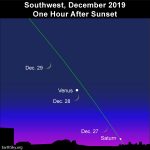
As the year wanes, the young moon returns to the west after sunset.
From virtually every place worldwide on December 27, the moon will be better than one day (24 hours) old as the sun sets. If your sky is clear, you can catch the whisker-thin waxing crescent (and possibly, with much more difficulty, the planet Saturn) at dusk. You’ll surely see dazzling Venus, above them, blazing in Friday evening’s western twilight sky. This young moon will be fresh from its ring of fire eclipse a day earlier.
The Western Hemisphere will have the easiest view of the young moon after sunset on December 27. From the Eastern Hemisphere on December 27, the moon will be more challenging, but lots of fun. More about viewing from the Eastern Hemisphere below.
On the following evenings – December 28 and 29 – the moon will be much easier for all. It’ll be closest to Venus Saturday evening, December 28. A wondrous sky scene for the whole world! #OneEarth #OneSky
The bright couple – two brightest lights in our sky after the sun – will be beautiful again on Sunday evening, December 29.
By the way, although we show the planet Saturn on our sky chart above, it’ll take a deliberate effort (and possibly binoculars) to spot this world in the glare of evening twilight.
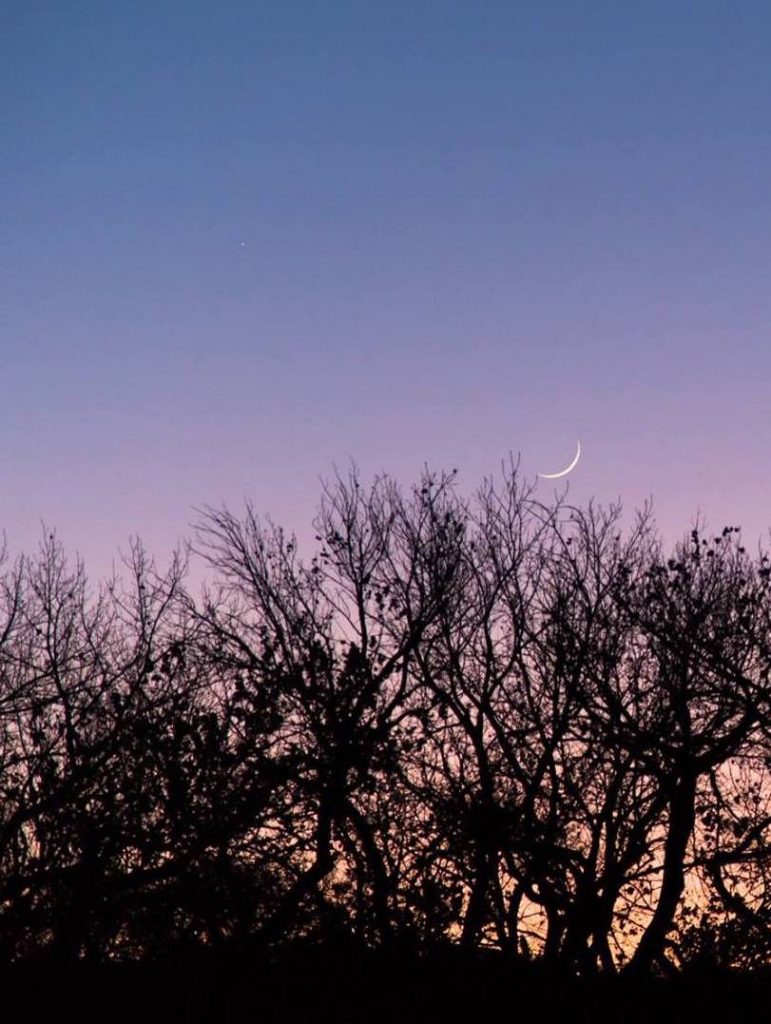
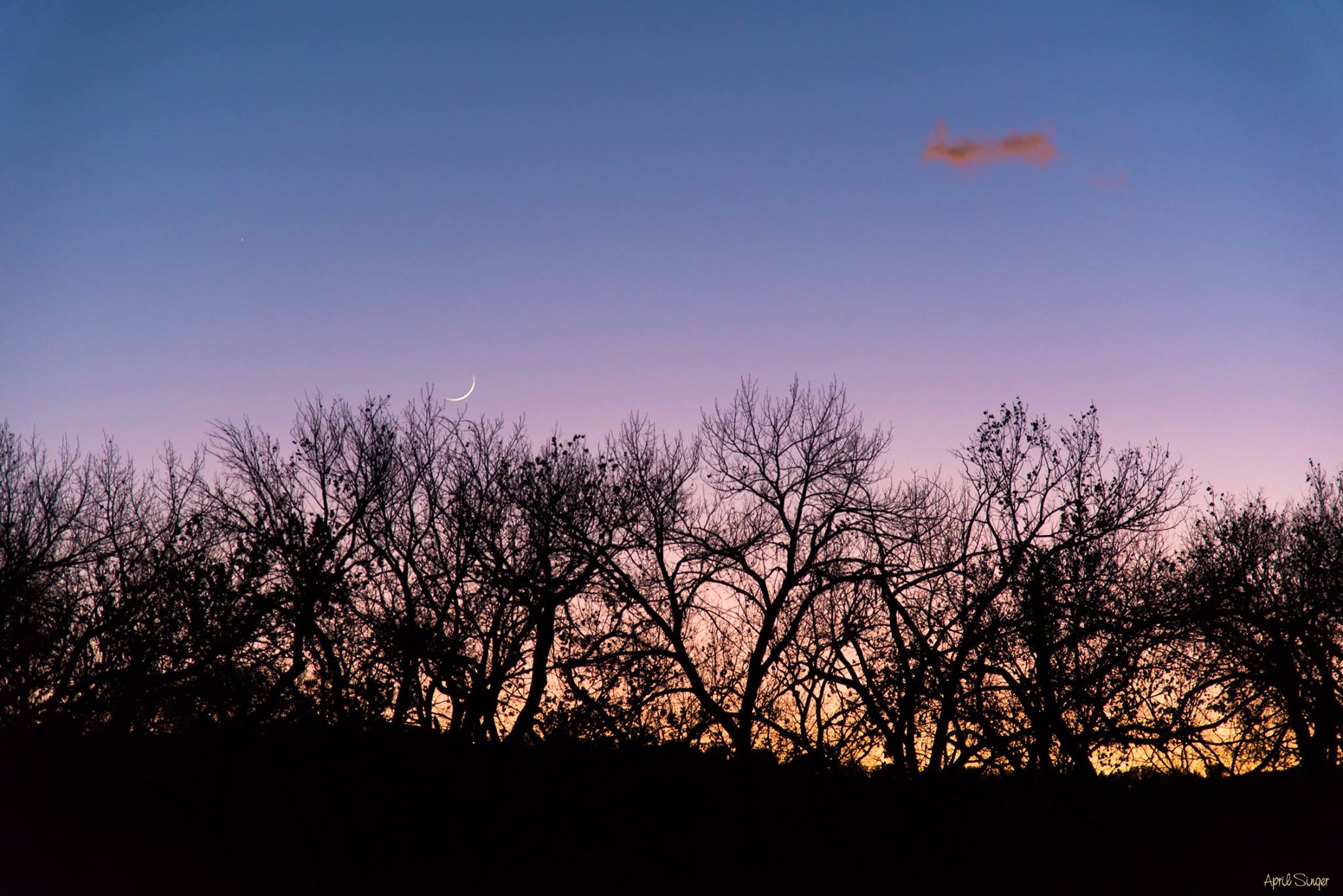
View larger. | Last year, April Singer caught the young moon after sunset on December 8, 2018, with Saturn to its upper left. This year, you’ll see Venus instead of Saturn to the upper left of the moon (from northerly latitudes). Northern New Mexico, U.S. Photo by April Singer Photography. Way to go, April!
Young moon from Eastern Hemisphere on December 27. We’re not counting out the world’s Eastern Hemisphere on December 27. If you live in that part of the world, you might also catch a young(er) and slender(er) crescent after sunset that evening. From virtually every place worldwide, the moon will be better than one day (24 hours) old as the sun sets on December 27. It’s usually quite difficult to see a moon that’s less than one day (24 hours) old. It’s easier – though still a challenge – to spot a thin moon that’s just over a day old.
That challenge will occur for the world’s Eastern Hemisphere on December 27, where the moon will be younger than for us in the West. Look sooner after sunset. Have a totally unobstructed horizon. Bring binoculars!
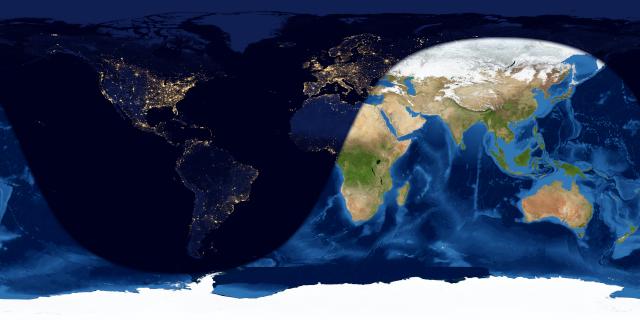
Day and night sides of Earth one day (24 hours) after new moon (December 27, 2019 at 05:13 UTC). The shadow line at the far right and far left depicts sunset. As the line of sunset moves westward (right to left) across the globe, the moon continually edges farther away from the glare of sunset. The moon will be about 1 1/2 days old at sunset in western Europe and Africa, and about 1 3/4 days old as the sun sets in the Americas. Image via EarthView.
No matter where you live worldwide, you’ll have a better chance of spotting the moon on December 28, because a wider crescent will stay out longer after sundown than on December 27. Additionally, the moon will be closer to Venus on December 28, offering a more stunning view of the evening couple.
To maximize your chances of spotting the beautiful evening crescent (and/or Saturn), find an unobstructed horizon in the direction of sunset. A lofty position – atop a mountain or balcony – would help out as well, enabling you to peek a little farther over the horizon. Binoculars come in handy, too, for teasing out the pale, skinny crescent (or Saturn) from the glare of evening twilight.
Want to know when the moon sets in your sky? The Sunrise and Sunset Calendar gives you the moonset time – but remember to check the Moonrise and moonset box.
Want to know the moon’s position relative to the bright planets and the constellations of the zodiac? Your wish is granted, courtesy of Heavens-Above.com!
When the moon shows itself as a slender waxing crescent in Earth’s sky, then our planet beams a nearly-full waning gibbous Earth in the moon’s sky. The almost-full Earth, like a mirror, reflects sunlight and lights up the moon’s dark side. The moon, in turn, reflects sunlight back to Earth. Hence, that soft luminescence giving definition to the nighttime side of the moon is earthshine – twice-reflected sunlight. Look for the soft glow of earthshine, with either the unaided eye or binoculars, on the dark side of the moon over the next several days.
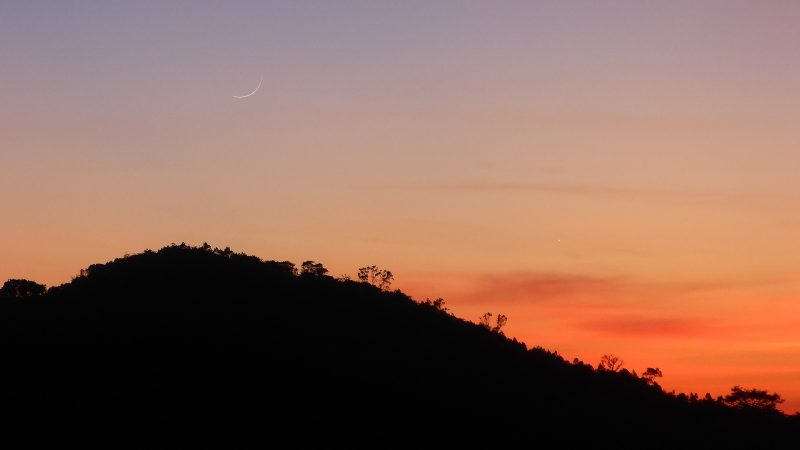
View larger at EarthSky Community Photos. Peter Lowenstein of Mutare, Zimbabwe, caught the old waning crescent moon (and the planet Mercury to the moon’s lower right) in the east before sunrise December 25, 2019. To catch the upcoming young moon, look westward after sunset on December 27, 2019. Good luck! Thank you, Peter!
Bottom line: Think photo opportunity this weekend (December 27-29, 2019) as the brightest and 2nd-brightest sky objects – the moon and Venus – beautify the evening twilight shortly after sunset.