KWBaker
Shared posts
2021 Triumph Trident Unveiled (Bike Reports) (News)
Ood Home Office

Visit Uncrate for the full post.
Ducati Multistrada V4 Motorcycle

Visit Uncrate for the full post.
From Field to Freezer: Tips for Processing Big Game
Here’s the basic cheat sheet: Gut it, skin it, keep it clean and keep it cool. You successfully shot a deer, elk or other big game animal. Now the work begins. You want to properly process the animal so you get many healthy, enjoyable meals from it. But you should know more if you want…
The post From Field to Freezer: Tips for Processing Big Game appeared first on Sporting Classics Daily.
You Are Not Entitled to Libertarian Votes

As the results of the 2020 presidential election remain unknown, partisans on both sides have begun casting about desperately for folks to blame. Latino voters for Trump have been getting a special amount of guff from Democrats. And both liberals and conservatives agree that third-party voters are a problem, which each side somehow convinced that those who cast their ballots for Libertarian candidate Jo Jorgensen are traitors who owed votes to either former Vice President Joe Biden or President Donald Trump.
As of yesterday morning, Jorgensen was pulling nearly 1.6 million votes, with her vote total beating the spread between Biden and Trump in several vital states.
In Georgia, Jorgensen has received nearly 60,400 votes, or 1.2 percent of the state's total. Currently, Trump is beating Biden in Georgia by fewer than 19,000 votes.
In Nevada—where Biden is currently beating Trump by less than one percent—Jorgensen has drawn about 1.4 percent of the vote.
In Wisconsin, Jorgensen has received more than 38,400 votes, or 1.2 percent. That's also more than the margin of votes by which Trump is losing Wisconsin to Biden.
And Jorgensen hovers around 1 percent in Michigan, where Biden is beating Trump by just about one percent.
Earning about 1.14 percent of the total U.S. vote, Jorgensen's total "marks a steep drop-off from Gary Johnson's 3.28 percent in 2016," notes Reason's Matt Welch. But she still earned the second-highest number of presidential votes in Libertarian history, beating "every other third-party and independent candidate in all 50 states and the District of Columbia" and "quintupling Green Party nominee Howie Hawkins' current total of 0.23 percent."
"Jorgensen has already easily bested Bob Barr's 523,713 votes in 2008 and Ron Paul's 431,750 in 1988," points out the Washington Examiner.
Alas, the fact that there are Libertarian voters who can't be persuaded to support either Democrats or Republicans seems wholly lost on a lot of people, who insist on imagining them solely as swing voters for one or the other of the ruling parties.
Just so we are clear Jo Jorgensen received 60,022 votes in Georgia. Biden is currently behind 31,306. How's that vote for your "conscience" feeling now ????
— ????????Beckie Resists ????????☠️ (@beckieavery4) November 5, 2020
Republicans have been especially indignant about Jorgensen voters, as if it goes without saying that these people would have otherwise chosen Donald Trump.
"Libertarian voters could have swung the Electoral College by at least 22 votes by supporting Trump in battleground states Wisconsin, Michigan and Nevada," complained GOP strategist Ryan Cassin on Fox News yesterday. "By throwing away their votes, they've likely become spoilers for the Trump reelection effort."
If it holds, @LPNational candidate got 38,000 votes in Wisconsin and margin between @JoeBiden and @realDonaldTrump is less than 21,000 votes. #Elections2020 pic.twitter.com/JGmfmvpngT
— Scott Walker (@ScottWalker) November 4, 2020
It's a complaint that Libertarians are sadly used to—and, as always, it's a hollow one. The Trump administration and its allies have spent years growing the government, turning against free speech and free trade, and in some cases mocking the idea that libertarian-minded constituents are a part of their coalition. Yet come election time, they act baffled that Libertarians wouldn't want to lend this administration their support.
"If they're going to cry about the libertarian vote playing spoiler when they lose, then they either have an incentive to attract it with better candidates & policies, or they need to keep our names out of their mouths," suggests the libertarian journalist Hannah Cox. "They don't get to have it both ways."
Analyst Dennis Santiago told Fox News that "there very much is a note of irony" that Libertarian voters could help Biden and his "agenda of opposition to gun control, taxes, and socialized health care." Like many in the GOP, he seems to be harboring the delusion that Trump's terrible big government agenda should somehow be preferable to libertarians than Biden's terrible big government agenda. Libertarians are showing, once again, that we can and will reject both.
Here's how Libertarians have been reacting to the blame:
Republicans: "We can't let Biden win!"
Democrats: "We can't let Trump win"
Libertarians: "Makes zero difference to us. These men both are both unprincipled, morally compromised, big government loving authoritarians. If Biden wins, if Trump wins, end result will be the same."
— Libertarian Party of Texas (@LPTexas) November 5, 2020
"Want Libertarians to vote for you? Try nominating someone who doesn't add trillions to the national debt, will actually end our foreign wars and bring the troops home, and believes the rights of all people are to be protected," tweeted the Libertarian Party on Wednesday evening. "Until then—as always—your tears are delicious."
STOP BLAMING LIBERTARIANS FOR TRUMP LOSING WISCONSIN AND MICHIGAN. IT'S HIS OWN DAMN FAULT.
— Jenni Thee Libertarian (@Jenni4Liberty) November 5, 2020
if you're a conservative shaming libertarians for not voting Trump, please know the founding fathers would be disappointed in you. the two party system will be the eventual fall of our country and maybe the libertarians realize something y'all don't yet
— ???????????????????????? ???????????????????????? (@yeahrightgirlhg) November 4, 2020
Or how about this: start defending freedom and liberty. Therefore you wouldn't have to worry about the libertarians voting for the Libertarian candidates. https://t.co/V5Qle6CrAJ
— ???? (@abielha1) November 4, 2020
Wow
It's almost as if libertarians are tired of bailing out the GOP and getting shit on in return
Go play with your new natcon friends that convinced you that you didn't need us anymore https://t.co/BpHOiljx11
— Jen Monroe ???????? ???? ???? (@jenniferm_q) November 5, 2020
Stop telling us all to VOTE and then being pissed at the result… idk what to tell you.
If we had just not voted, the result would have been the same so chill. Either way, your candidate didn't "earn" enough votes. https://t.co/LxWCq7fGN8
— Lady Libertarian ???????? (@OmniTempore_) November 5, 2020
QUICK HITS
• Biden needs only a few more electoral votes for the presidential race to be called in his favor.
• It looks like the Senate will stay controlled by Republicans, which has the benefit of hindering a potential President Biden's ability to get things done.
• The Trump campaign is trying desperately to still turn this in their favor, saying yesterday "that it would launch a legal blitz to try to halt vote-counting in Pennsylvania and Michigan, would seek a recount in Wisconsin," and would challenge "the handling of ballots in Georgia," The Washington Post reports.
• A lack of final results to protest hasn't stopped protesters in such spots as Portland and New York City:
Portland and NY? Two places where the results are foregone conclusions?!? https://t.co/vk1DhC1Rwb
— Mike Masnick (@mmasnick) November 5, 2020
• A Chris Hayes thread reminds Democrats that no one owes them or anyone else votes; start here:
One thing that stands out to me is how ubiquitous the notion that Democrats *should* be winning by big margins, and *should* have a durable ruling coalition, is across different ideological factions in the broad center to left coalition.
— Chris Hayes (@chrislhayes) November 4, 2020
How to Create Heirloom Portraits
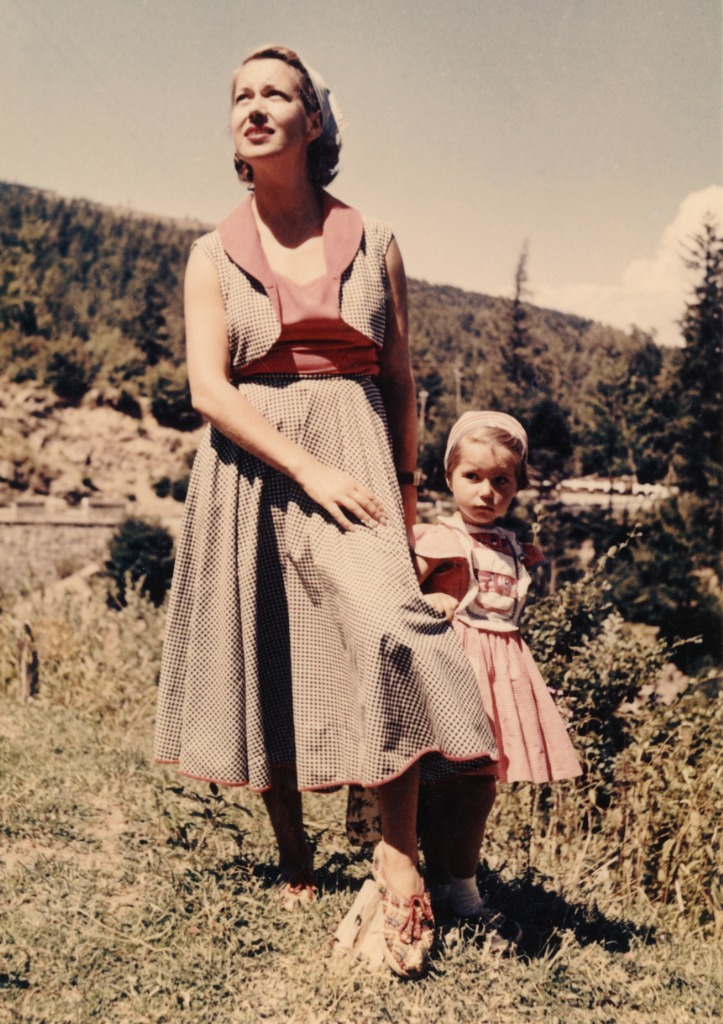
photo by Lisa-Blue via iStock
When I was growing up, my grandparents had their home absolutely filled to the brim with family photos. Some of them had obviously been taken in the very early 1900s or late 1800s, while most of them were pictures of new and growing grandchildren taken much more recently.
I think this is where my obsession with photography started, but as I looked up at the shelves filled with dozens of photographs, I noticed that some of them were clearly much more important than others.
I couldn’t exactly name the difference between the photos at the time, but looking back on it I think that the novelty of heirloom portraits, or the portraits signifying an important event in someone’s life, came across in those photos. The photos of my cousins were cute, but the photo of my grandparents’ wedding, or the photo of my great aunt’s missionary trip to Africa in 1903, seemed so much more important.
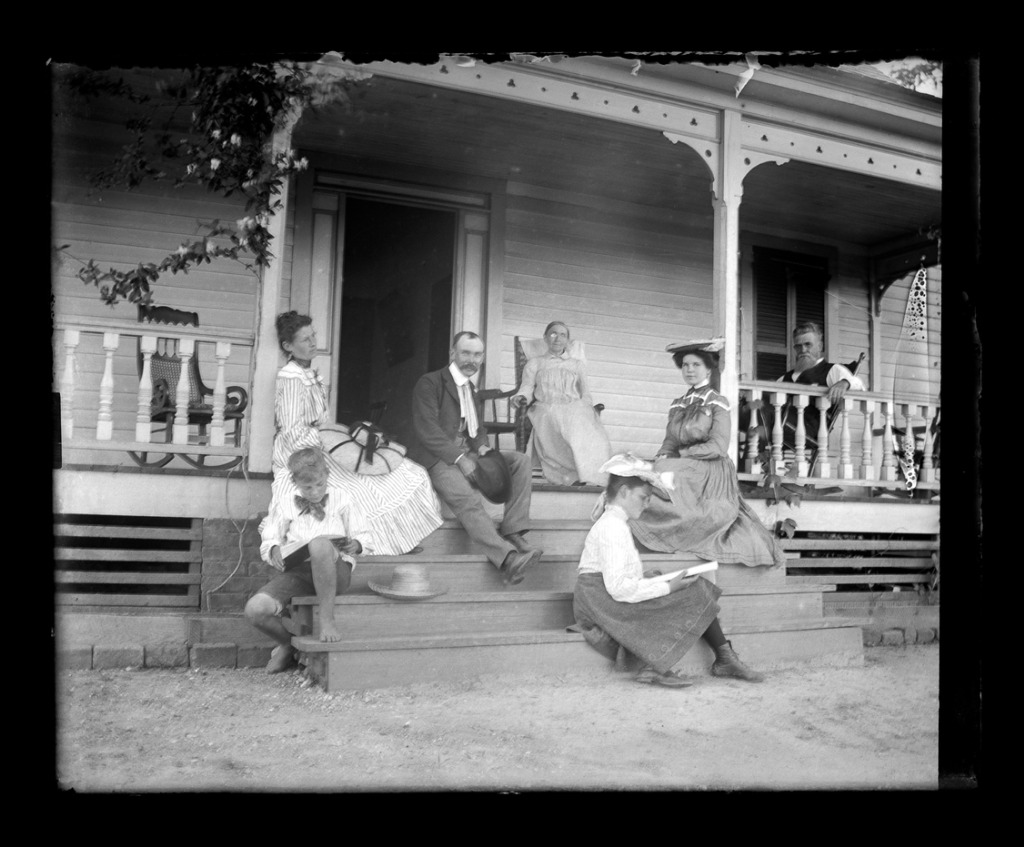
photo by bauhaus1000 via iStock
Heirloom portraits are photographs you (or your clients) will hand down to future generations. When done correctly, they should tell a very specific story about the people in the photograph and the era the photograph was taken in. When done incorrectly, they likely won’t make it down through the generations at all.
I’ve never liked to specifically shoot heirloom portraits because I think heirloom portraits come across much more authentically if you simply choose a portrait from another major life event, like a graduation or a wedding.
If you’re interested in heirloom photography, this article has some portrait photography tips about choosing the correct photo and learning how to display it.
Pick the Right Photo

photo by triloks via iStock
Like I said in the introduction to this article, choosing your heirloom portraits is as easy as picking the most significant people in your life and the most significant events in your life.
If you look at a photo and it immediately overwhelms you with joy or pride, then it will probably make an excellent heirloom portrait.
Heirloom portraits can also help spur your memory, and likely will as you get older. Pick the photo from your wedding day that helps you remember exactly how you felt when you first married the love of your life. Or, pick the photo of your kids messing around at your child’s graduation that makes you so thankful you decided to have more than one.
Another way to look at this is to tell you exactly how not to choose heirloom portraits. For instance, don’t just pick a photo because it has everyone you love in it. Also don’t just pick a photo because it was taken on a specific day.
Of the thousands of images I’ve taken, only a handful are good enough to be considered heirloom portraits. They’re special for a reason.
Learn More:
Print It
Heirloom portraits aren’t worth anything if you can’t admire them.
I think this is something that makes heirloom portraits even more special now, since printing portraits seems like such an ancient art.
I obviously recommend you print more of your photos altogether, but heirloom portraits deserve something a little more special, which is why you should print them on metal.
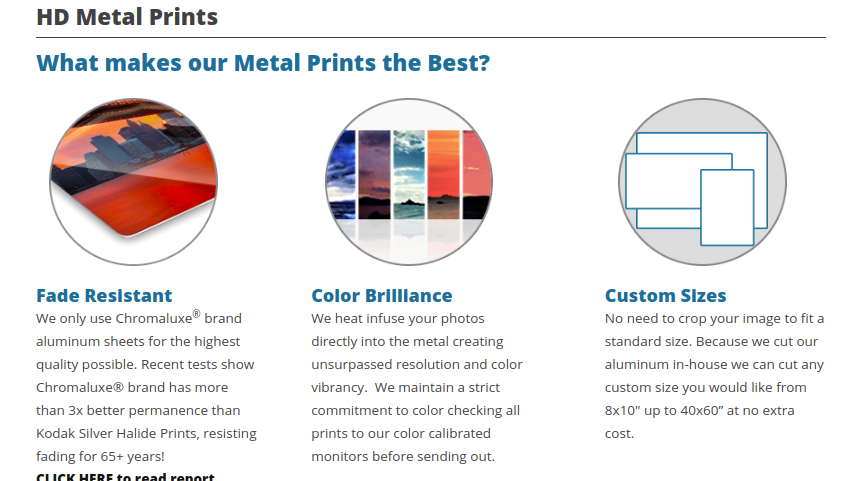
ArtBeat Studios is one of my favorite metal printing companies because all of their materials are archival quality, which means your heirloom portraits will literally last for generations.
Each metal print from ArtBeat Studios comes with Chromaluxe aluminum, which resists fading for over 65 years.
Plus, they sell metal prints for relatively inexpensive prices. An 8 x 10 metal print will only run you $30. If you need a customized size, that isn’t a problem with ArtBeat Studios since each piece of metal is hand cut in house.

Since you’ll want your heirloom portraits to be as unique as your family, you can also choose from a wide range of customizable options, like different mounting, hangers, and finishes on your print.
I’ll admit that the first time I purchased a metal print it was a little overwhelming. So, if you’ve clicked around on the ArtBeat Studios website and aren’t finding what you’re looking for, or still don’t know exactly what it is that you are looking for, their customer service reps are awesome and knowledgeable. That’s just part of the reason why they were named the best metal print company of 2020!
Or, Display It More Creatively
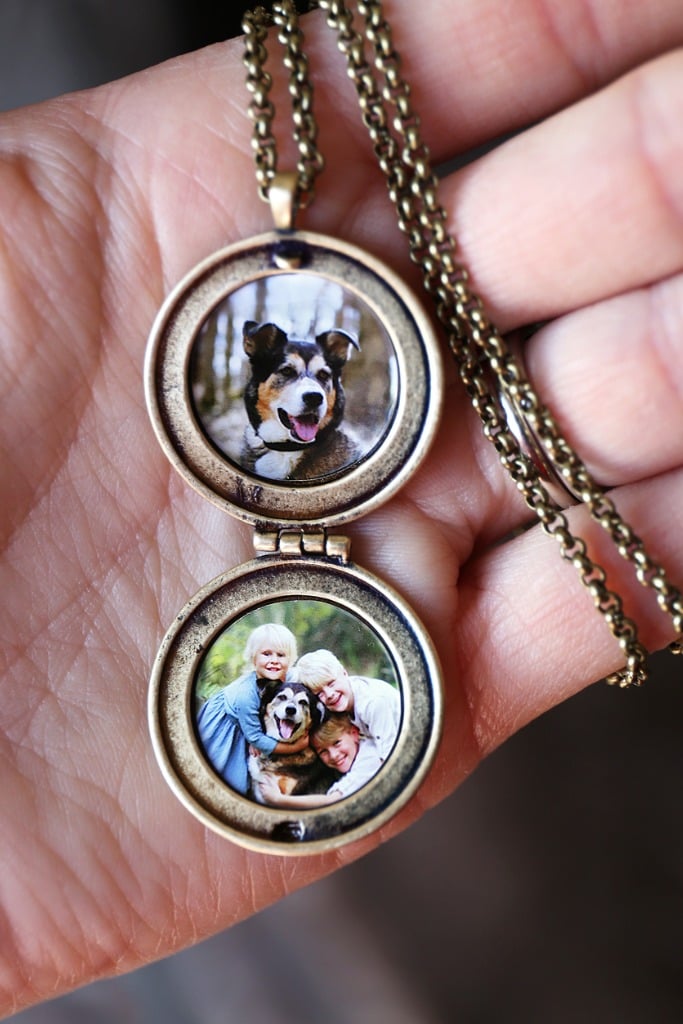
photo by ChristinLola via iStock
Another incredible option for displaying your heirloom portraits is choosing something that fits your family.
My sister has a locket of a portrait of our mother from her childhood. I have a photo album from my grandparents’ first few years of marriage together.
You could also display your heirloom portraits in different displays like a handmade box or a beautiful frame.
Whichever display method you choose, you’ll want to ensure that it is made of really high quality materials, like the metal prints I talked about earlier, because it is the most disheartening thing in the world when an heirloom that’s been in your family for decades breaks.
Learn More:
We Recommend
These Are the Cars Buyers Love Most
According to a J.D. Power study, buyers get emotional and excited about sloping SUV rooflines.

Simple Venison Oven Stew
Versatile to a degree that is unmatched by any other type of wild game, venison offers a doorway to fine, incredibly varied fare. Each year millions of hunters enjoy the timeless thrill of getting their deer, and the result is plenty of meat for the family table. Yet it should be remembered that venison is…
The post Simple Venison Oven Stew appeared first on Sporting Classics Daily.
Flavors of The Season: BBQ Quail with Fall Perloo and Okra Chips
Simple for anyone who loves quail to make at home, this dish is composed of local, Southern and seasonal selections available in the Lowcountry. A South Carolina Lowcountry fall is upon us and that has us thinking about the flavors of the season. Brays Island onsite Executive Chef, Ron Andrews, is always cooking up something…
The post Flavors of The Season: BBQ Quail with Fall Perloo and Okra Chips appeared first on Sporting Classics Daily.
True Romance: The Ugartachea 20-Gauge
I quickly surmised that the pawn shop didn’t know what it had – a Spanish double of good repute. Further, they were asking only $295. My grandfather had an old double barrel that I never shouldered. It hung beyond my reach above my grandmother’s china cabinet, looking more like ill-conceived decoration than a means of…
The post True Romance: The Ugartachea 20-Gauge appeared first on Sporting Classics Daily.
Parker Bros.
Our quest: the old workhorse of the Parker stable, the gun that, more than any other, validated the company catchphrase, “The Old Reliable.” For it was that of a young man, and I am old, and I have seen first-hand the burnishment of many golden years upon a dream that was gilded even at its…
The post Parker Bros. appeared first on Sporting Classics Daily.
Jeep brings the affordable off-road Willys trim to the 2021 Gladiator - Roadshow
23 of the Best Fitness Gifts You Can Give in 2026
2021 Triumph Trident makes three cylinders affordable and approachable - Roadshow
How to Take Photos Like the Great Joel Meyerowitz
Photographer and YouTuber Frederik Trovatten has just released episode three of his popular “How to take photos like…” series. He started with Vivian Maier, moved on to Robert Frank, and this week he’s breaking down the style and philosophy of the great Joel Meyerowitz.
When it comes to the work of Joel Meyerowitz, it’s really hard to “put him in a box.” The 82-year-old living legend has had an expansive career that’s hard to sum up in one “instantly recognizable” style. This fact, a virtue for Meyerowitz, made it difficult for Trovatten to narrow down the one or two aspects of Joel’s photographic style that he wanted to focus on in this video.
In the end, he settles on “35mm color street photography” and “street portraits,” making the first time he’s focused on color in this series.

As with the previous videos, Trovatten discusses these aspects of Meyerowitz’ style, shows some examples of his most iconic images, and then goes out to try and emulate the style in his own street photography. For the “35mm color street photography” portion he uses his Fujifilm X100F; for the “street portraits” portion of the program, he uses a classic Rolleiflex 2.8f.
Time and again throughout the video Trovatten returns to the same thought: Meyerowitz’ “relentless work ethic” and his mastery of the “fundamentals in street photography.” These things, combined with Meyerowitz’ ability to see every one of his subjects as a unique expression of their fundamental humanity, leads to the kinds of images that he has been able to capture.
Street portraits that seem almost too perfectly timed, or portraits too unassuming and candid, to be taken without some sort of magic helping to guide his lens… just visit his website to see a plethora of mind-blowing examples. The kind of street photography that makes you want to take street photos; the kind of portraiture that makes you want to take portraits.
Meeting these people and listening to them tell me a little bit about themselves… and if possible, I want to see if I can see your secret, whatever your hidden mystery is. If they can deliver something of their humanity—their compassion for themselves and others—they became more and more real.
[…]
If I’m walking down the street in Provencetown, people are just coming past me, and suddenly one person for some reason, has a kind of vibration that touches whatever my core vibration is, and I sense the possible harmony.” – Joel Meyerowitz on The Candid Frame Podcast
Check out the full video for more clips, examples, and Trovatten’s thoughts on what makes Joel’s work so iconic, or head over to his YouTube channel for more content like this. And if you really want to learn how to take photos like Joel Meyerowitz, keep in mind that the photographer himself has put together a Masters of Photography course.
(via ISO 1200)
For a Perfect Fried Egg, Do as the Spanish Do
Chances are you fry eggs every now and again. Here’s how to cook them better, taking inspiration from Spain.

'Free to Choose': 10 of the Best Moments Ever
While "Free to Choose" made Milton Friedman one of the most prominent public intellectuals of his day and raised the profiles of many other accomplished economists, including Thomas Sowell, many have pointed out that it was Bob Chitester’s vision that was the true genesis of the program.
The Best Headphones And Earphones For Flights, Road Trips And Work-From-Home

Time Travel To Your Hometown 200 Years Ago With This Map
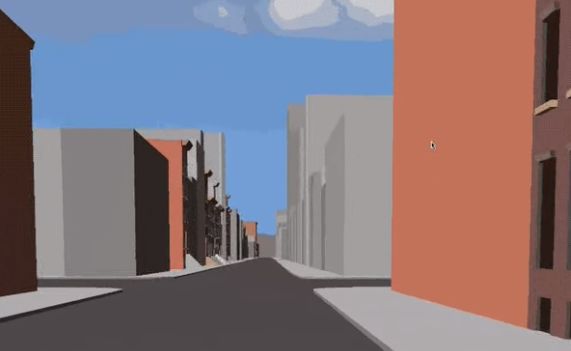
Raimond Kiveris, a software engineer at Google Research created an open-source map that displays the changes to city streetscapes over a period of time. The map displays historically-accurate changes in any U.S. city dating back to 1800. The map can also show the cities in both a bird’s eye view and a pedestrian-level view, as FastCompany details:
The map, called “rǝ,” is a project Kiveris has led through his research into artificial intelligence and machine learning at Google. Though still in a very early form, the map is functional enough to offer a glimpse of what someone would have seen on a city street decades in the past.
The map was created using historical fire insurance maps, a rich source of information for the built environment that includes precise information about building ages, sizes, heights, roof shapes, and even materials. The map creates simplified 3D models of these buildings, and the time slider allows a user to see, for example, Washington, D.C.’s Dupont Circle nearly devoid of buildings in the 1870s and almost fully developed in the 1920s.
Kiveris wants the map to do more than model buildings over time. He and his team created it as an open-source project so that people such as librarians and map enthusiasts can contribute their own historical sources to add detail. It can even integrate photographs of buildings, using deep learning to analyze images and augment the blocky 3D models with architectural details.
Image via FastCompany
Meet The Man Who Walked 300 Miles Over 20 Days
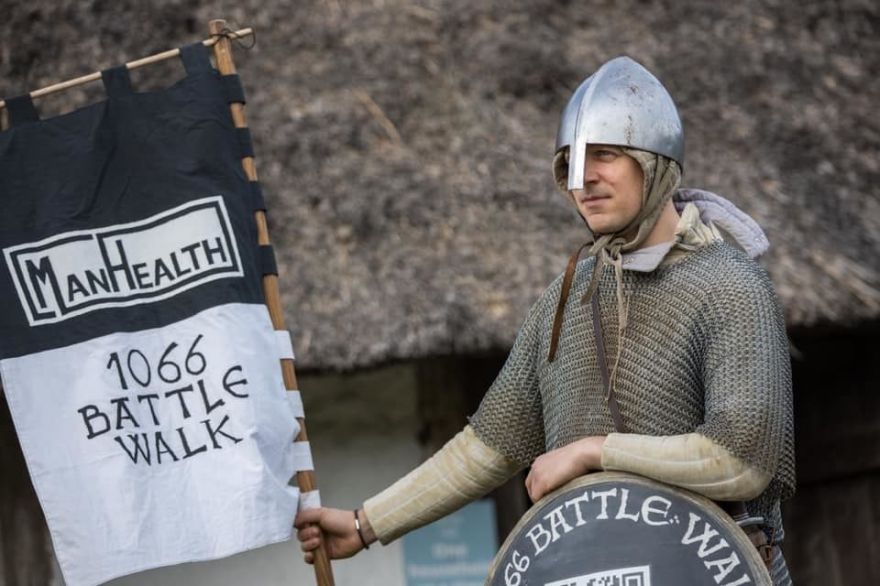
Walking 300 miles in over 20 days is not an easy thing to do. To walk the same number of miles while wearing 63 pounds of armor is much harder, but it is still achievable. Meet Lewis Kirkbride, a 38-year-old charity worker from Durham, northeast England, who did just that as he walked from York to Hastings.
Over 20 days, Kirkbride walked some 300 miles to raise awareness of the English population’s widespread, if largely undiscussed, struggles with mental health—struggles he likens to battles fought by the knights of yore. One particular knight, as it happens.
Kirkbride modeled his route after the one taken in 1066 by King Harold Godwinson (or Harold II), the last Anglo-Saxon king of England.
But why King Harold?
The answer is at Atlas Obscura.
(Image Credit: Lewis Kirkbride/ 1066 Battle Walk/ Atlas Obscura)
The Porsche 911 Targa Shows How Underrated the Targa Top Is
Between coupe and convertible lies what could be the perfect sports car roof.

Canon PowerShot Zoom Monocular Camera

Visit Uncrate for the full post.
These Six Luxury Lodgings Offer Exceptional Outdoor Settings Nearby

Ilford is Creating a Set of Super Helpful ‘Darkroom Guides’ on YouTube
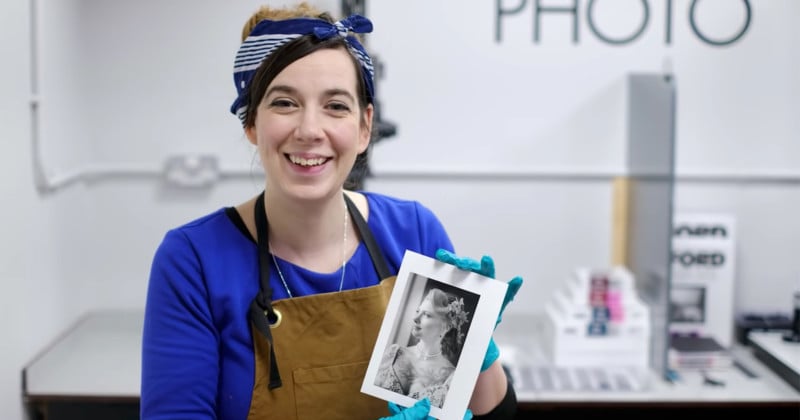
Over the past seven months, Ilford has been publishing a set of helpful “Darkroom Guides” to the How To playlist on the company YouTube channel. The series was created to help film photographers take their “next steps in your black and white darkroom printing journey.” If that describes you, then this is one you’ll want to bookmark.
There’s a lot of information out there about film photography—including some exceptional websites like EMULSIVE that are exclusively dedicated to film lovers—but if you’re looking for “how to” advice, one great place to start is right at the source. Ilford’s channel is filled with great behind the scenes videos, how to videos, and some fascinating photo stories besides.
This particular series features Rachel Brewster-Wright—the owner of Little Vintage Photography—who uses each episode to walk you though one key darkroom technique. The series begins with an introduction to Dodge and Burn and moves on to more advanced techniques as the episodes roll on. By episode four, you’re learning how to use multigrade filters to take your printing to the next level.
There are currently four episodes live, which you can see for yourself below:
Episode 1: Dodge & Burn
Episode 2: Selenium Toner
Episode 3: Photographic Papers
Episode 4: Multigrade Filters
We hope to see more videos with Brewster in the coming months. In the meantime, if you enjoyed this then definitely check out Ilford’s full “How To” playlist for lots more tips and tutorials on shooting, developing, and printing your film photography.
The ‘Cult of Covid’ – Based on Lies and Blind Faith
Top 10 UFOs Caught On Video In Recent Years
As we all know – whether we believe in them or not – there are hundreds of UFO sightings on record over the years. However, these sightings continue to happen all around the world today. And while most of us only hear of some of the better-known and fully investigated sightings from many years ago, […]
The post Top 10 UFOs Caught On Video In Recent Years appeared first on Listverse.
FTP Fadeout
Today in Tedium: Here’s a small piece of news you may have missed while you were trying to rebuild your entire life to fit inside your tiny apartment at the beginning of the COVID crisis: Because of the way that the virus shook up just about everything, Google skipped the release of Chrome version 82. Who cares, you think? Well, users of FTP, or the File Transfer Protocol. During the pandemic, Google delayed its plan to kill FTP, and now that things have settled to some degree, Google recently announced that it is going back for the kill with Chrome version 86, which deprecates the support once again, and will kill it for good in Chrome 88. (Mozilla announced similar plans for Firefox, citing security reasons and the age of the underlying code.) It is one of the oldest protocols the mainstream internet supports—it turns 50 next year—but those mainstream applications are about to leave it behind. Today’s Tedium talks about history of FTP, the networking protocol that has held on longer than pretty much any other. — Ernie @ Tedium

It’s like Netflix for Mac apps: If you’re the kind of person who likes trying out new programs to see what sticks, try SetApp, a Netflix-style “app store” for Mac programs. It’s cheap—just $9.99 a month—and it’ll be a huge boon to your productivity. Check it out!
1971
The year that Abhay Bhushan, a masters student at MIT who was born in India, first developed the File Transfer Protocol. Coming two years after telnet, FTP was one of the first examples of a working application suite built for what was then known as ARPANET, predating email, Usenet, and even the TCP/IP stack. Like telnet, FTP still has a few uses, but has lost prominence on the modern internet largely because of security concerns, with encrypted alternatives taking its place—in the case of FTP, SFTP, a file transfer protocol that operates over the Secure Shell protocol (SSH), the protocol that has largely replaced telnet.
FTP is so old it predates email—and at the beginning, actually played the role of an email client
Of the many application-level programs built for the early ARPANET, it perhaps isn’t surprising that FTP is the one that stood above them all to find a path to the modern day.
The reason for that comes down to its basic functionality. It’s essentially a utility that facilitates data transfer between hosts, but the secret to its success is that it flattened the ground to a degree between these hosts. As Bhushan describes in his requests for comment paper, the biggest challenge of using telnet at the time was that every host was a little different.
“Differences in terminal characteristics are handled by host system programs, in accordance with standard protocols,” he explained, citing both telnet and the remote job entry protocol of the era. “You, however, have to know the different conventions of remote systems, in order to use them.”
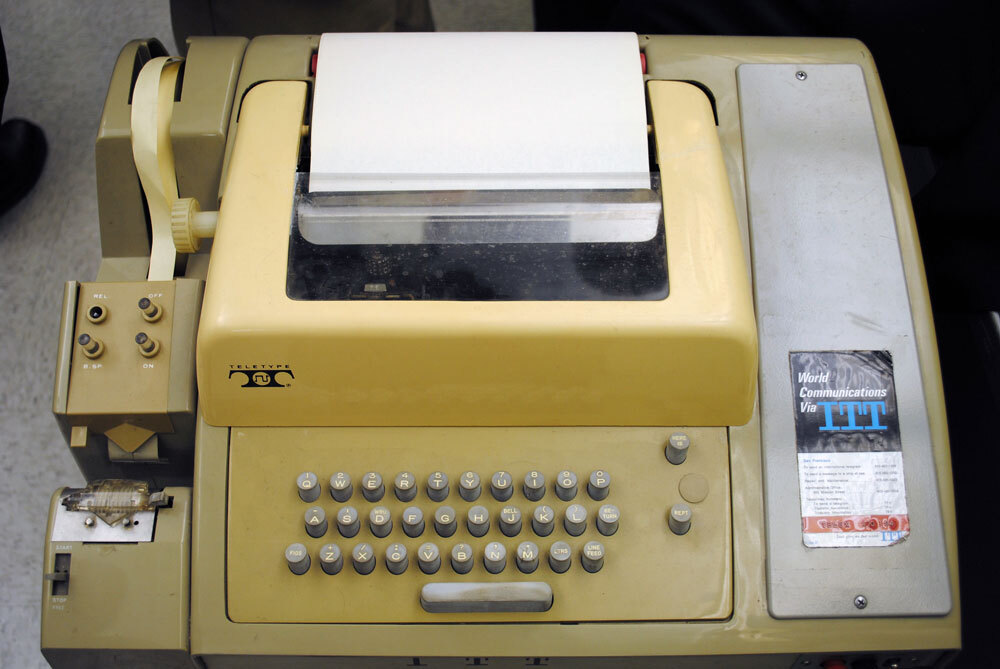
A teletype terminal from the ARPANET era. (fastlizard4/Flickr)
The FTP protocol he came up with tried to get around the challenges of directly plugging into the server by using an approach he called “indirect usage,” which allowed for the transfer or execution of programs remotely. Bhushan’s “first cut” at a protocol, still in use in a descendant form decades later, used the directory structure to suss out the differences between individual systems.
In a passage from the RFC, Bhushan wrote:
I tried to present a user-level protocol that will permit users and using programs to make indirect use of remote host computers. The protocol facilitates not only file system operations but also program execution in remote hosts. This is achieved by defining requests which are handled by cooperating processes. The transaction sequence orientation provides greater assurance and would facilitate error control. The notion of data types is introduced to facilitate the interpretation, reconfiguration and storage of simple and limited forms of data at individual host sites. The protocol is readily extendible.
In an interview with the podcast Mapping the Journey, Bhushan noted that he came to develop the protocol because of a perceived need for applications for the budding ARPANET system, including the need for email and FTP. These early applications became the fundamental building blocks of the modern internet and have been greatly improved on in the decades since.
Due to the limited capabilities of computing at the time, Bhushan noted that early on, email-style functionality was actually a part of FTP, allowing for messages and files to be distributed through the protocol in a more lightweight format—and for four years, FTP was technically email of sorts.
“So we said, ‘Why don’t you put two commands into FTP called mail and mail file?’ So mail is like normal text messages, mail file is mailing attachments, what you have today,” he said in the interview.
Of course, Bhushan was not the only person to put his fingerprints on this fundamental early protocol, eventually moving outside of academia with a role at Xerox. The protocol he created continued to grow without him, receiving a series of updates in RFCs throughout the 1970s and 1980s, including an implementation that allowed it to support the TCP/IP specification around 1980.
While there have been some modest updates since to keep with the times and add support for newer technologies, the version of the protocol we use today came about in 1985, when Jon Postel and Joyce K. Reynolds developed RFC 959, an update of the prior protocols that is the basis for current FTP software. (Postel and Reynolds, among others, also worked on the domain-name system around this time.) While described in the document as “intended to correct some minor documentation errors, to improve the explanation of some protocol features, and to add some new optional commands,” it nonetheless is the version that stuck.
Given its age, FTP has many inherent weaknesses, many of which manifest themselves to this day. For example, transferring a file folder with a lot of tiny files is intensely inefficient with FTP, which does much better with large files as it limits the number of individual connections that are needed.
In many ways, because FTP was so early in the history of the internet, it came to define the shape of the many protocols that came after. A good way to think about it is to compare it to something that frequently improves by leaps and bounds over a few decades—say, basketball sneakers. Certainly, Converse All-Stars are good shoes and work well in the right setting even today, but for heavy-duty basketball players, something from Nike, potentially with the Air Jordan brand attached, is far more likely to find success.
The File Transfer Protocol is the Converse All-Star of the internet. It was file transfer before file transfer was cool, and it still carries some of that vibe.
“Nobody was making any money off the internet. If anything, it was a huge sink. We were fighting the good fight. We knew there was potential. But anybody who tells you they knew what would happen, they’re lying. Because I was there.”
— Alan Emtage, the creator of Archie, considered the internet’s first search engine, discussing with the Internet Hall of Fame why his invention, which allowed users to search anonymous FTP servers for files, didn’t end up making him rich. Long story short, the internet was noncommercial at the time, and Emtage, a graduate student and technical support staffer at Montreal‘s McGill University, was leveraging the school’s network to run Archie—without their permission. “But it was a great way of doing it,” he told the site. “As the old saying goes, it’s much easier to ask for forgiveness than to ask for permission.” (Of note: Like Bhushan, Emtage is an immigrant; he was born and raised in Barbados and came to Canada as an honors student.)
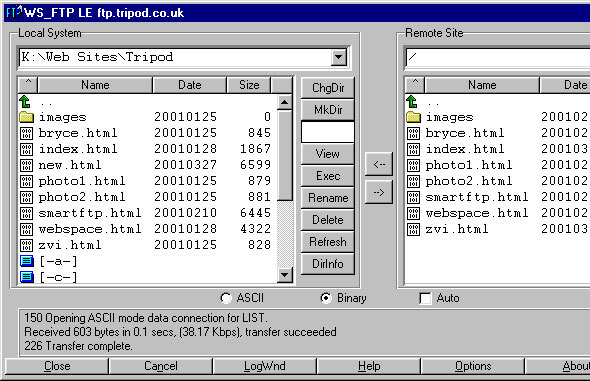
A screenshot of WS_FTP, a FTP client for Windows that was particularly popular during the ’90s.
Why FTP may be the last link to a certain kind of past that’s still online
As I wrote a few years ago, if you grab an old book about the internet and try to pull up some of the old links, the best chances you have of actually getting a hold of the software featured is through a large corporate FTP site, as these kinds of sites tend not to go offline very often.
Major technology companies, such as Hewlett-Packard, Mozilla, Intel, and Logitech, used these sites for decades to distribute documentation and drivers to end users. And for the most part, these sites are still online, and have content that has just sat there for years.
In many cases, the ways that these sites are most useful are when you need access to something really old, like a driver or documentation. (When I was trying to get my Connectix QuickCam working, I know it came in handy.)
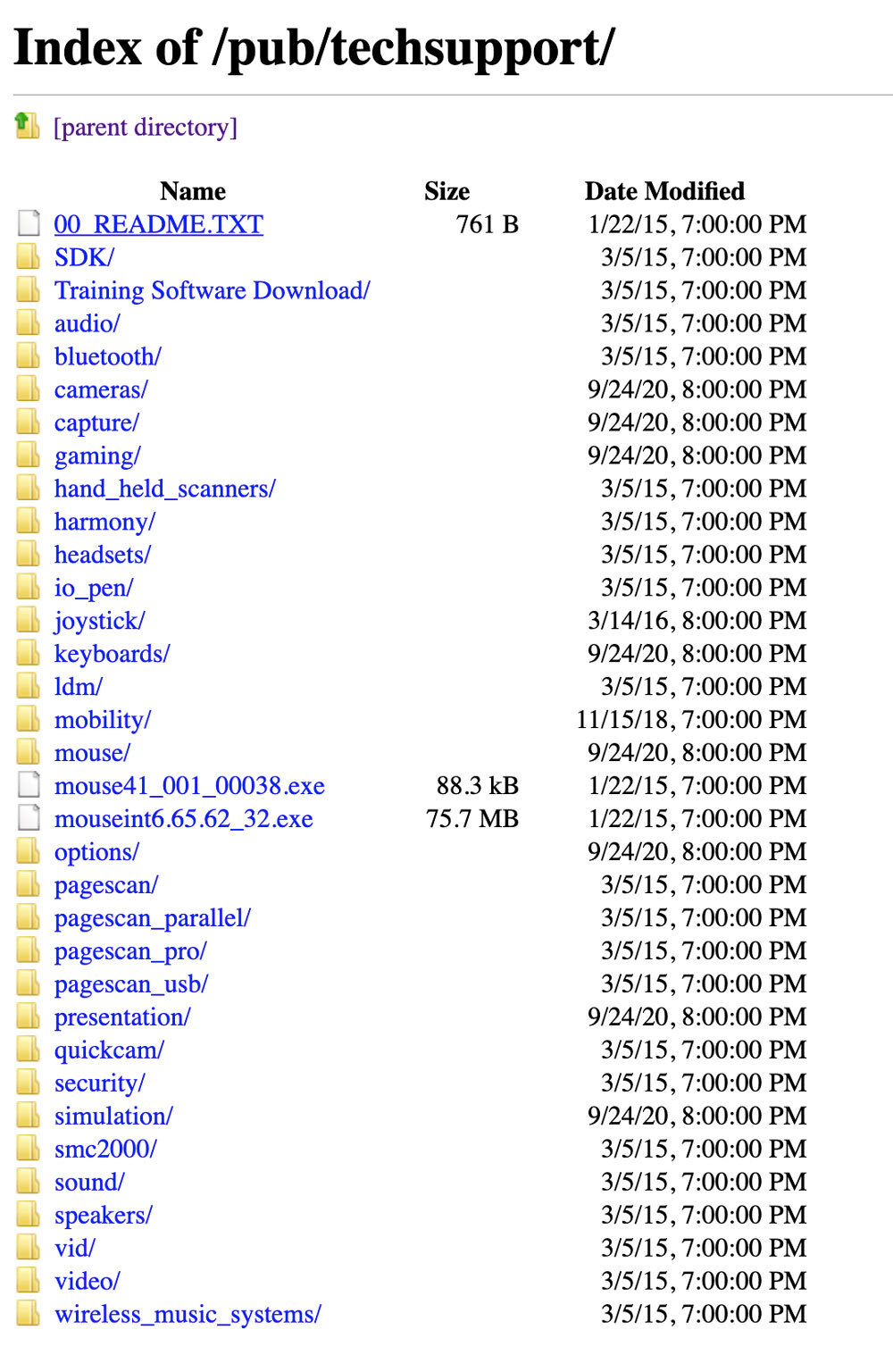
An example of what FTP looks like in a web browser in the modern day, using ftp.logitech.com as an example.
In some ways, this setting can be less nerve-racking than trying to navigate a website, because the interface is consistent and works properly. (Many web interfaces can be pretty nightmarish to dig through when all you want is a driver.) But that cuts both ways—the simplicity also means that FTP often doesn’t handle modern standards quite so well, and can be far more pokey than modern file-transfer methods.
As I wrote in a piece on this topic for Vice last year, these FTP sites (while being archived in different places) are growing increasingly hard to reach, as companies move away from this model or make the decision to take the old sites offline.
As I explained in the piece, which features an interview from Jason Scott of the Internet Archive, the archive is taking steps to protect these vintage public FTP sites, which at this point could go down at any time.
Scott noted at the time that the long-term existence of these FTP sites was really more of an exception than the rule.
“It was just this weird experience that FTP sites, especially, could have an inertia of 15 to 20 years now, where they could be running all this time, untouched,” he said.
With one of the primary use cases of FTP sites hitting the history books once and for all, it may only be a matter of time before they’re gone for good. I recommend, before that happens, diving into one sometime and just seeing the weird stuff that’s there. We don’t live in a world where you can just look at entire file folders of public companies like this anymore, and it’s a fascinating experience even at this late juncture.
“A technology that was ahead of its usage curve, FTP is now attracting a critical mass of business users who are finding transfer by email grossly inefficient or impractical when dealing with large documents.”
— A passage from a 1997 story in Network World that makes the case that FTP, despite its creakiness, it was still a good choice for many telecommuters and corporate internet users. While written by a ringer—Roger Greene was the president of Ipswitch, a major FTP program developer of the era—his points were nonetheless fitting for the time. It was a great way to transmit large files across networks and store them on a server somewhere. The problem is that FTP, while it improved over time, would be eventually outclassed by far more sophisticated replacements, both protocols (BitTorrent, SFTP, rsync, git, even modern variants of HTTP) and cloud computing solutions such as Dropbox or Amazon Web Services.
Back in the day, I once ran an FTP server. It was mostly to share music during my college days, when people who went to college were obsessed with sharing music. We had extremely fast connections, and as a result, it was the perfect speed to run an FTP server.
It was a great way to share a certain musical taste with the world, but the university system eventually got wise to the file-sharing and started capping bandwidth, so that was that … or so I thought. See, I worked in the dorms during the summer, and it turned out that after people left school, the cap was no longer a problem, and I was able to restart the FTP server once again for a couple of months.
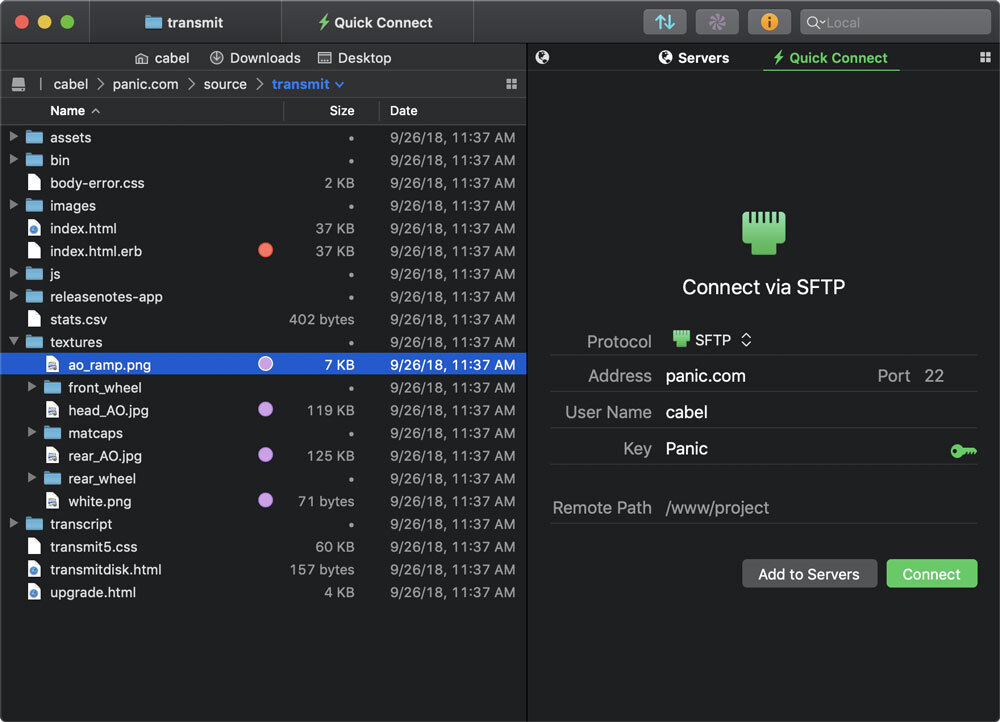
Panic’s Transmit, a modern example of an FTP client. Many modern clients support a wide variety of protocols beyond the tried-and-true of FTP.
Eventually, I moved out and the FTP server went down for good—and more efficient replacements emerged anyway, like BitTorrent, and more legal ones, like Spotify and Tidal. (Do I have regrets about running this server now? Sure. But at the time, I felt like I was sticking it to the man somehow. Which, let’s be honest, I wasn’t.)
Just as file-sharing has largely evolved away from those heady times more than 15 years ago, so too have we evolved from the FTP servers of yore. We have largely learned more effective, more secure techniques for remote file management in the years since. In 2004, it was widely considered best practice to manage a web server using FTP. Today, with tools like Git making efficient version control possible, it’s seen as risky and inefficient.
Now, even as major browsers get rid of FTP support in the coming months, it’s not like we’re totally going to be adrift of options. Specialized software will, of course, remain available. But more importantly, we’ve replaced the vintage FTP protocol for the right reasons.
Unlike in cases like IRC (where the protocol lost popular momentum to commercial tools) and Gopher (where a sudden shift to a commercial model stopped its growth dead in its tracks), FTP is getting retired from web browsers because its age underlines its lack of security infrastructure.
Some of its more prominent use cases, like publicly accessible anonymous FTP servers, have essentially fallen out of vogue. But its primary use case has ultimately been replaced with more secure, more modern versions of the same thing, such as SFTP.
And I’m sure some person in some suitably technical job somewhere is going to claim that FTP will never die because there will always be a specialized use case for it somewhere. Sure, whatever. But for the vast majority of people, when Chrome disconnects FTP from the browser, they likely won’t find a reason to reconnect.
If FTP’s departure from the web browser speeds up its final demise, so be it. But for 50 years, in one shape or another, it has served us well.
--
Find this one an interesting read? Share it with a pal!
Editor’s note: I added a line after publication because some people don’t understand what “mainstream internet” means.

Three Things to Consider Before Buying a Portable Electric Winch

An electric winch performs a simple operation: it moves objects that are too heavy for you to move by yourself. Because it’s powered by electricity, using one requires little exertion other than attaching one winch hook to what you want to move, and the other hook to a stationary object. But portable electric winches differ in how they are powered, and what they’re best suited to move. Here are some notes on choosing the best electric winch for your purposes.

Not all portable winches are capable of lifting heavy objects straight off of the ground, so if you want to use one as an engine hoist or to move heavy objects without dragging them, make sure the one you choose is capable of doing that. Look for a winch with a variable speed control so you can finesse objects into place.

If you’re dragging felled trees or straightening fence posts far away from a power source, you typically needed a manually operated come-along or chain pull to get the job done. But the advent of portable, battery-operated tools brought about the development of cordless portable winches that are operated by a power drill. You simply insert the integrated bit on the winch into your drill’s chuck, tighten, and you’re ready to go. While such winches may not have the capacity of plug-in winches, they are surprisingly powerful—and, of course, you can use it around the house and garage, too.

Pulling a boat onto a trailer is the obvious use here, but if you load and unload heavy cargo from a flatbed truck or move snowmobiles on and off of a trailer, a stationary winch is a smart choice. A mounting plate allows you to bolt the winch where it’s most convenient. Look for a winch with a long, corded remote control so you can easily monitor the progress of what you’re pulling.
How to Tag Your Dream Elk

For a fee, Travis Reed and Miles Fedinec of Western Sky Outfitters will treat you to a week of misery in Colorado’s San Juan Mountains. There are no showers and only restless tent sleep. You’ll burn so many calories each day that you’ll eat about anything when you get back to camp, which may be why the highest praise I’ve ever heard about the food there is that it’ll make a turd.
Their hunting camp is not for everyone. But in September, it sits in some of the finest elk country anywhere. It’s all public land but not pressured much, because you really need horses and mules to pack the 10 miles in. Still, it would be bad form to hunt the place, kill an elk, and then share GPS coordinates to it online.
Hard Luck
I’ve had a rough go at elk. Several years ago, I drew a cow tag in my home state of Kentucky and spent a couple of weeks floundering around trying to fill it. I never came close. I didn’t get one in Idaho, where we rode a train of farting mules into the mountains each morning before daybreak, glassed empty hillsides all day, and then rode back down in the dark. In New Mexico, there were elk everywhere, but that didn’t seem to make a difference. On the last morning, before we left camp, I got to take a picture of all my friends smiling with their trophy elk racks. I was the perfect cameraman since I was the only person in camp who hadn’t shot a bull.
In all of my trips, the closest I’d ever come to killing an elk was in a drainage near this Colorado camp a few years ago. I was hunting on an over-the-counter archery tag, and Fedinec was guiding me. I drew my bow on two different bulls that he called up during the week, but I didn’t get a shot at either of them. It haunts me. Since then, whenever I imagine a bugling elk, I see it standing among the white aspens in this very spot. I don’t want to just kill my first elk. I want to kill my first elk right here, in September.
Gar-Holed
After a two-year wait, I’m back within walking distance of that drainage, this time with a muzzleloader tag. The forecast promises a crisp opening morning. I have just one more hurdle to clear: The drainage is Fedinec’s favorite spot, and he has two other hunters to guide. I’m on a drop-camp hunt, which means I’m hunting alone in the morning and only where he tells me to go.
He picks his teeth with a pocketknife while I look at him as if awaiting word from a prophet. “Brantley, you redneck son of a b-tch,” he finally says, “if you wander around in the dark long enough, do you think you can find that drainage where you scared all those bulls off a few years ago?”
It’s all I can do not to leap from the table and start hiking up there right now, but I collect myself. “Oh, if you want to send me to that gar hole again, I guess that’d be O.K.”
Read Next: How to Build the Best Muzzleloader Rig for Western Big-Game Hunting
Living the Dream
I’m in among them as soon as shooting light breaks. After a couple of hours, I’ve had close calls on two bulls. When a third bugles from deep within the drainage, I check the wind and scramble over the break of the ridge. I can see the open slope on the opposite side, and I’m pretty sure that’s where the bull is. It’s not the best place to set up, but it’s the best I’m going to get. Backing up 50 yards, I take a seat next to an aspen, prop the open-sighted CVA Accura on my knee, and make a might-as-well-try mew on an open-reed call.
The last thing I expect is for the bull to launch himself into a bugling frenzy, growling as he charges down the opposite hillside and up the ridge right to me. But that’s just what he does. He even lopes to a broadside stop 30 yards away.
The smoke lingers a minute over the drainage, and I go sit next to the elk, just to look at him awhile. It’s only after I’ve gutted the bull and shouldered my pack that I look around and realize I’m standing in the very place where, for years, I’d been envisioning this very moment. I pull out my GPS and drop a waypoint so we can bring the horses to him, and I send an inReach message to Fedinec and my wife, Michelle: Bull down!
Close Call
Even with the horses, it’ll be an all-day job getting my elk out. On a peak above the drainage, Fedinec and I dismount and lead the horses into the vertical hell below, where it’s too dangerous to sit in a saddle. On some of the peaks here, there’s enough cell service to check in. Fedinec declares that he has one bar and stares at his phone. Then he looks at me and says, “I might have to kill your wife.”
Michelle has shared a screenshot of my earlier inReach message on Facebook with a post that says, Somewhere on a mountain, among those trees, the hubby is quartering and packing out an elk. It’s innocent enough, except that the whole purpose of an inReach message is to show a map of exactly where the sender is—which in this case is in the middle of public elk nirvana.
I have a satellite phone in my pack, and I’ve told Michelle that I’d only be using it for emergencies. When I dial her up at work, she answers in a panic until I grill her about the Facebook post. Fedinec is leaning over his saddle horn, eavesdropping intently.
“What I ought to do is slap the s--t out of you both,” she says. “Look at the post again, and give me a little credit. I cropped out the coordinates before I posted it. And by the way, congrats on your first elk. Took you long enough.”
It’s nearly dark before we’re back at camp, my elk quarters hung up in game bags and covered in pine boughs. Slabs of backstrap steak are sizzling in butter, and there’s enough to share with everyone, with some lukewarm whiskey on the side. “That’ll make a better turd than usual,” Fedinec says when I hand him a plate. “So, you like my elk spot?”
“Miles, I’ve traveled the country for elk, and that might be the best gar hole I’ve hunted,” I say. “I’m glad the entire world doesn’t know where it is.”