Visit Uncrate for the full post.


If you have experience coming up with clever brand names, the major media conglomerates of the world need you.
CBS All Access is rebranding as… *drumroll*… Paramount+.
Its reason for switching to the Paramount moniker makes sense: Paramount is more recognizable than CBS overseas.
But that “+” sign isn’t exactly the most creative branding. In fact, it’s pure mimicry: Disney+, Apple TV+, ESPN+, BET+… (OK, we admit it — we’ve thought about a Hustle+…)
HBO Max just barely gets a pass here, but we’ll continue to side-eye them.
Streaming represents the future of these businesses, so one would think that their names would be a bit spicier.
We’re looking forward to the chaos agent that enters the streaming wars with a minus sign in its name.
“Correlation does not equal causation” isn’t always a fun thing to say at parties, but it is always a good phrase to keep in mind when approaching survey data. Does the study really show that? Might it show the opposite? Does it confirm pre-existing biases or fail to acknowledge valid counterevidence? A little bit of critical thinking can turn away a lot of trouble.
I'll admit, a new study, "The Role of Education in Taming Authoritarian Attitudes," confirms many of my own biases, suggesting that higher education, especially the liberal arts, reduces authoritarian attitudes around the world. The claim comes from Georgetown University’s Center on Education and the Workforce, which analyzed and aggregated data from World Values Surveys conducted between 1994 and 2016. The study takes it for granted that rising authoritarianism is not a social good, or at least that it poses a distinct threat to democratic republics, and it aims to show how “higher education can protect democracy.”

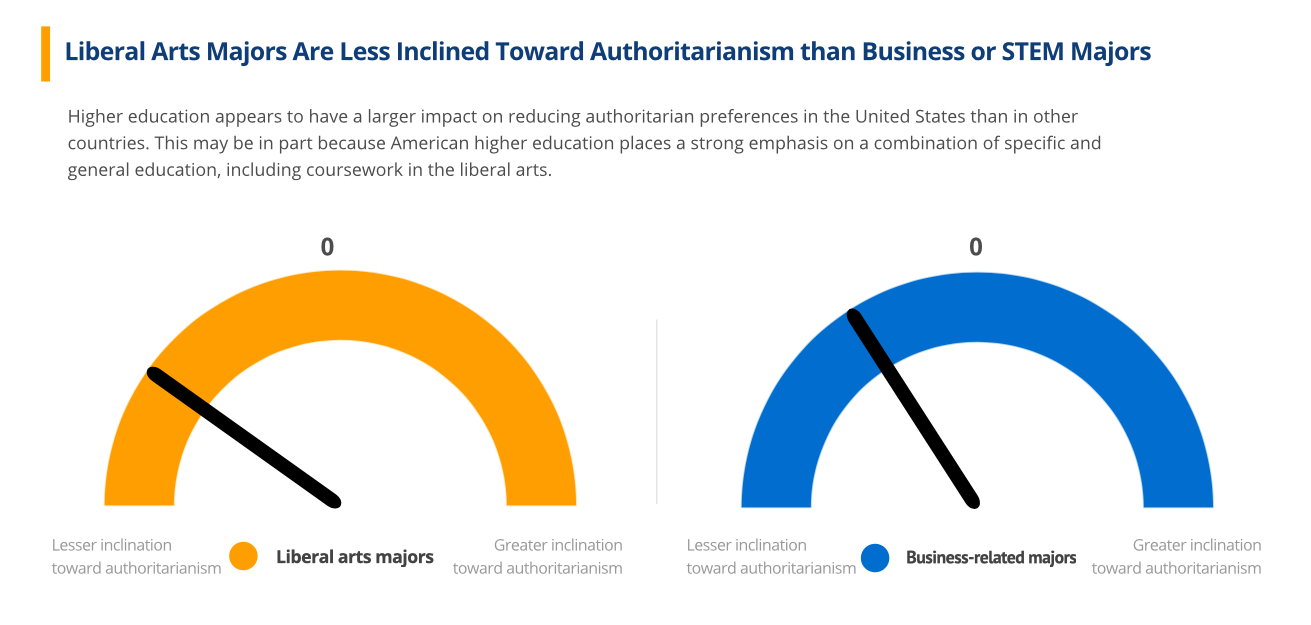
Authoritarianism—defined as enforcing “group conformity and strict allegiance to authority at the expense of personal freedoms”—seems vastly more prevalent among those with only a high school education. “Among college graduates,” Elizabeth Redden writes at Inside Higher Ed, “holders of liberal art degrees are less inclined to express authoritarian attitudes and preferences compared to individuals who hold degrees in business or science, technology, engineering and mathematics fields.”
The “valuable bulwark” of the liberal arts seems more effective in the U.S. than in Europe, perhaps because “American higher education places a strong emphasis on a combination of specific and general education,” the full report speculates. “Such general education includes exposure to the liberal arts.” The U.S. ranks at a moderate level of authoritarianism compared to 51 other countries, on par with Chile and Uruguay, with Germany ranking the least authoritarian and India the most—a 6 on a scale of 0-6.
Higher education also correlates with higher economic status, suggesting to the study authors that economic security reduces authoritarianism, which is expressed in attitudes about parenting and in a “fundamental orientation” toward control over autonomy.

The full report does go into greater depth, but perhaps it raises more questions than it answers, leaving the intellectually curious to work through a dense bibliography of popular and academic sources. There is a significant amount of data and evidence to suggest that studying the liberal arts does help people to imagine other perspectives and to appreciate, rather than fear, different cultures, religions, etc. Liberal arts education encourages critical thinking, reading, and writing, and can equip students with tools they need to distinguish reportage from pure propaganda.
But we might ask whether these findings consistently obtain under actually existing authoritarianism, which “tends to arise under conditions of threat to social norms or personal security.” In the 2016 U.S. election, for example, the candidate espousing openly authoritarian attitudes and preferences, now the current U.S. president, was elected by a majority of voters who were well-educated and economically secure, subsequent research discovered, rather than stereotypically “working class” voters with low levels of education. How do such findings fit with the data Georgetown interprets in their report? Is it possible that those with higher education and social status learn better to hide controlling, intolerant attitudes in mixed company?
Learn more at this report summary page here and read and download the full report as a PDF here.
Related Content:
Why We Need to Teach Kids Philosophy & Safeguard Society from Authoritarian Control
Critical Thinking: A Free Course
Josh Jones is a writer and musician based in Durham, NC. Follow him at @jdmagness
The Liberal Arts Can Make People Less Susceptible to Authoritarianism, a New Study Finds is a post from: Open Culture. Follow us on Facebook, Twitter, and Google Plus, or get our Daily Email. And don't miss our big collections of Free Online Courses, Free Online Movies, Free eBooks, Free Audio Books, Free Foreign Language Lessons, and MOOCs.
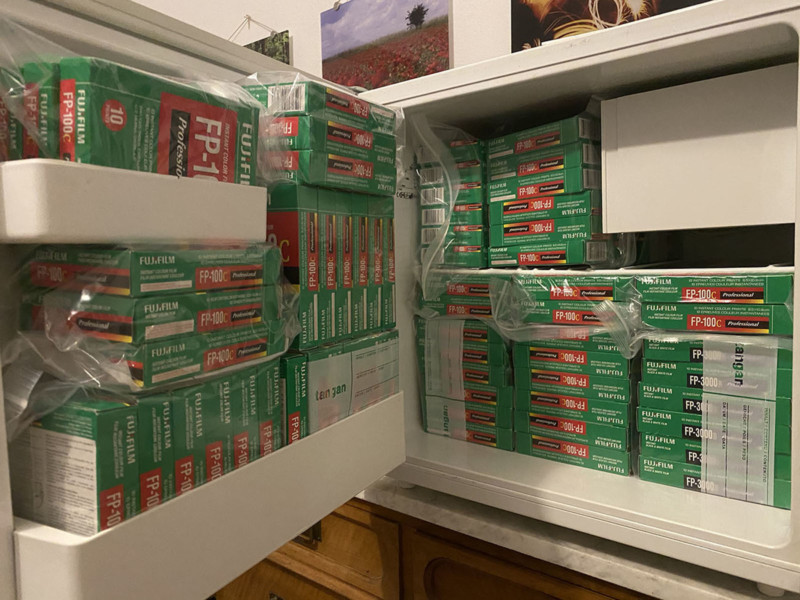
My fridge was recently full of instant film. I mean that literally, it was not possible for me to put any more packets of the film into the fridge without risking damaging them.
I had acquired all of the film one day when my printer sent me an email asking if I wanted to purchase 93 packs of Fujifilm FP-100C for 2,790 Swiss Francs (~$3,000) in Switzerland. That’s ~$32.50 per box, about three times what this film used to retail for and about one-third of what it currently sells for1. So I thought about the offer for five minutes, then said yes.
I figured I could sell half of the packs and recoup my costs, after various expenses, then I would have around 45 boxes that I could shoot a photo project with. So I picked the film up and thanked my printer. He even included the above fridge, three Polaroid cameras, and a bunch of accessories for free. So whichever way I spin this, even if a few packs went missing in the post, I would still be close to doubling my investment at the least if I decided to sell all the film. Not bad.
The film had been discontinued, at least announced to be, in early 2016. The film was still available on a wholesale level up until sometime in 2018 so people had started stockpiling it and the prices inevitably went up. The problem with photographic film is that it will start to go off in a few years as the chemicals break down, so it needs to be cold stored. This is especially the case with instant film as there are chemicals not just to record the image but also the entire development process is included in each frame.
There’s a market for this stuff as there is a range of old cameras and backs for other cameras that can only function with it. The film comes in dedicated plastic packs that the cameras/backs are designed to work with. You load a pack, fiddle about a bit, and you are ready to shoot. Like other instant films, you take the shot, pull out the frame, give it a minute or two, then “peel apart” the frame to reveal the image.
The film can still be bought “new” on auction sites, some analog specific photography stores, and private sellers; but all of the film is now expired as the last batch was marked to do so in early 2019, so there’s a risk involved in any purchase of this film if you want it “fresh”. To purchase a single box of the film from one of the last batches you should expect to pay around ~$108. Ten times what it originally retailed for.
Given there are ten frames in each box, and due to the fickle nature of the cameras that shoot this type of film you can often lose one or even two frames due to mechanical or exposure issues, you’re paying in the region of $13 per photo.
This is not a case of having to learn how to load and use the film — sometimes you just have bad luck. The paper mechanism used to pull out the shot frame and prepare the next sometimes tears. Just last week I was using some and the first frame leader from the box tore, I had to open the camera to retrieve the next leader and lost another three frames in the process. Somehow the third frame managed to hide among the rest and turned up again between the 6th and the 7th frame, something I’ve not experienced before.
This is not fun, it’s quite ridiculous, and if I’m being honest I don’t see the point of this stuff and find it all very annoying. I say that as someone who is steeped in the film process. Sure I understand the aesthetic and the tangible nature of the process, but that’s not for me. I mean, if you really want to shoot it that’s fine, but at this price point, I would now prefer to emulate it, at least when the reason to do so is to have some sort of contextual point for the aesthetic. Each to their own of course.
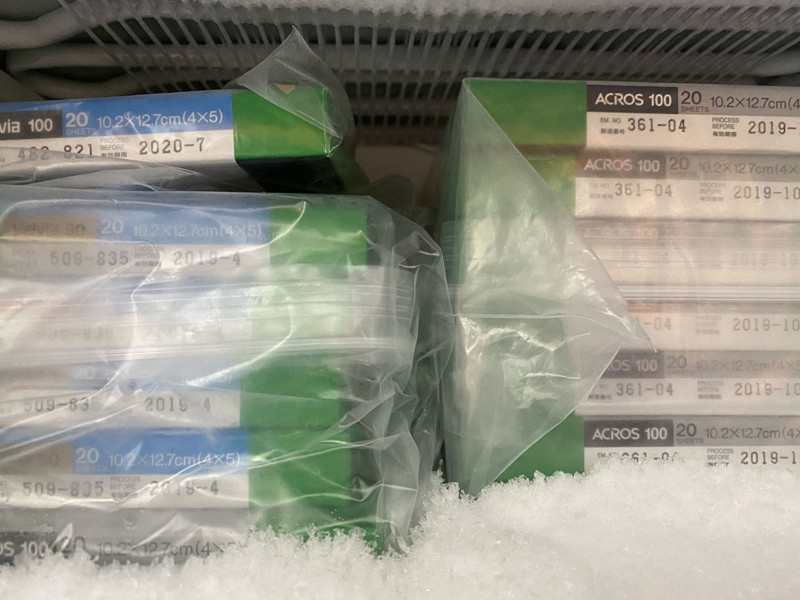
Anyway, Fuji has got form with this. I’ve been using some of their film stocks for close to two decades so have seen product lines come and go, and my other fridge/freezer (above) contains some of those products that I do continue to use. Of course you can still purchase some of the discontinued film if you really want to. A few of those I use or used to are detailed below, and this is in no way an exhaustive list:
Neopan 1600
A mid- to high-speed black and white film that had a grain structure that I haven’t seen in other films. I used this quite a bit when shooting skate photos but it was never available in formats larger than 35mm so I stopped when I moved exclusively to medium format. You see this now and then for sale, but it won’t be good to shoot as it’s at least a decade expired and mid-high speed film doesn’t last more than a few years after expiry unless it’s frozen; and of course, you can’t guarantee the storage history.
I have seen this selling for $32 to $54 for a single roll of 35mm, or ~$270 for ten packs. That’s five to ten times its original retail price.
Fuji Fortia
A once/twice off color slide film that was released around 2005. It was like Fuji’s Velvia 50 (detailed below) but with even more saturated reds. There were rumors that it was a batch of Velvia that didn’t pass quality control, so Fuji sold it as a special edition for the cherry blossom season in Japan. It was available for a couple of years so probably just a single run, which does backup the “it was a messed up Velvia batch” rumor.
You see rolls of this for sale now and then, with the price approaching ten times what it originally retailed for. This was available in medium format so I did shoot it and you can see what I mean about the saturation from the image below, which I actually had to desaturate a little in post as it was just too much.

Acros 100
Another Fuji specialty. A medium to slow speed black and white film that offered four selling points: extremely fine grain for its box speed (100 ISO), very contrasty in normal development, very sharp, and very good reciprocity failure rates. You can shoot exposures up to several minutes long with little adjustment required, which may well be unique amongst all film stocks.
This was discontinued a couple of years ago but then came back as Acros II. However, it is no longer Fuji manufacturing it and I believe it is a co-operation with Ilford. This is probably a good thing, but the 4×5 version of the film is not being made. Luckily, I stocked up on this a few months before its original discontinuation was announced so I have enough to last me for a few years at least. I am using this film for a specific project, which is why I bought a few boxes; my current count is 12 remaining, that’s 240 frames.
I rarely see this for sale in its 4×5 version, and those I do see tend to not be from the final batches, which had expiry dates of 2019-10. This was selling for about $76 a box when it was available and I suspect those final batch boxes would go for at least twice that now.
Velvia 50
The classic landscape (and Formula 1?) photographer’s slide film. Very popular up until around, I dunno, 2005? It’s still going, but I suspect will be discontinued soon. It’s no longer available outside Japan in large format sizes, and Fuji has cut down on the number of options for it in smaller sizes. Also of note is that when I was stockpiling it the boxes had very short expiry dates, less than a year, suggesting that sales have slumped. Since then the price in Japan has gone up 50% so it’s no longer a compelling option.
I still shoot this, but it’s very fickle. It needs graduated neutral density filters in many cases (which I don’t have) and suffers from terrible reciprocity failure and very easy over/under exposure even if you know what you’re doing. You often have to bracket your exposures +/- a stop, which is not cheap when shooting large format film. When you get it right you understand why it was number one in its niche, again another shot that I had to pull back the saturation:

Discontinued film stocks are selling for twice to ten times their original retail price, so should you invest in film? Nah, not at all. Unless you discover a batch of Fuji FP-100C that’s been cold stored, is from 2018 or 2019, and selling at less than $43 a box, in which case go for it and double your investment. Clearly, there is a market for discontinued photographic film emulsions, but they’re a niche within a niche and we’re now down to the products that don’t offer a unique selling point.
The discontinuation of the above stocks doesn’t mean much, really – you can just switch to another stock and adjust as necessary. Yeah, it’s frustrating at first, but that’s the nature of film. The issue with Fuji FP-100C being discontinued is that it also renders an entire range (and more) of cameras unusable. There are no other options, or at least limited options, to continue using the cameras2.
That’s what’s kind of sad about this entire thing, although I guess that is the end state of all technology designed around using refills to function. Printers, things with fixed internal batteries, liquid fuel vehicles, SodaStreams? There’s more of these than you think. We will still have 35mm film for a long time I suspect, and 120 and 4×5 and 8×10 and so on; but some of the more niche products are approaching obsolescence and thus unavailability. We can retrofit some of the technology that requires these refills, but eventually the expense isn’t worth it.
My reasons for shooting film are because it gives me access to alternative formats and some technical controls that I can’t get elsewhere, at least not at an affordable price point3. Movements, a square or panoramic frame, an alternative way to interact with my subjects. An interesting observation about instant film is the reaction to it, compared to shooting a digital image that is effectively the same. The tangible nature of the process really is a hook.
To refer to a blog post I often quote from: “Film is still available and I shoot it. Eventually it will be much more difficult to get and I probably won’t shoot it anymore.”
With the aforementioned situation, with the difficulty of servicing/repairing my film cameras, I recently feel much closer to the latter part of that statement.
I’m down to my last 35 boxes of Fuji FP-100C, having sold 50 or so boxes and shot some of the film. I’m not a fan of it, as I’ve already explained, so I might sell it all and put the funds towards buying a digital back for my Hasselblad.
1. At the time of writing, and during that time it went up from ~$65 a box to about $97.50 a box.
2. One Instant is doing work here, but they admit that it’s a very expensive, labor-intensive process. In other words, it won’t last long.
3. Digital medium format and technical camera setups are still prohibitively expensive for a non-professional.
About the author: Lee Johnson is a photographer and software developer based in Switzerland. The opinions expressed in this article are solely those of the author. Johnson has been a contributing photographer to several print and online magazines in the past and is now working on a few long term photographic projects. You can find more of his work on GitHub, Twitter, Facebook, and Instagram. This article was also published here.
|
|
| The Big Idea | ||||
 |
||||
The CIA has a plan to poach Big Tech employees |
||||
|
The CIA has toppled governments and negotiated hostage crises. But when it comes to attracting tech-minded college grads, it just can’t beat Silicon Valley. The government agency doesn’t have the funds to compete with Facebook’s mammoth starting salaries. So instead, it’s trying to recruit candidates with patents. Under a new initiative, CIA Labs, any employee who patents an invention for the agency gets a cut of the proceeds. There’s a limit to the generositySay you invent an 8G network during your shift. The agency will let you take home 15% of the income it generates — up until you hit a $150k cap. But that’s still ~2x the average CIA salary, according to the MIT Technology Review. The CIA isn’t a stranger to the tech bizThe agency has its own venture capital firm, In-Q-Tel, that commands $120m+ a year in cash. In-Q-Tel claims to be independent, but it doesn’t toss a penny anywhere without asking the CIA first. It has recently invested in quantum computing startups and data-mining companies. CIA Labs is an attempt to bring more innovation in-house. Is defecting to the feds ethical?You might invent some stuff with morally gray uses. The agency’s patent history ranges from lithium ion batteries to controversial warfare tools, like drones. But given the surveillance power of some tech companies, inventing for Big Tech isn’t always so idyllic, either — and the CIA is hoping that some workers won’t blink. |
||||
|
| State of Gen Z | ||||
 |
||||
Everything you ever wanted to know about Gen Z |
||||
|
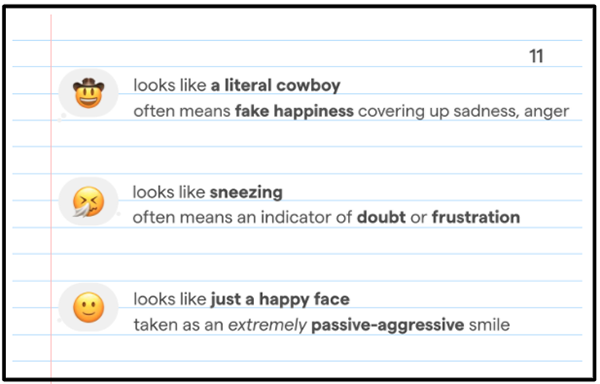
Tiffany Zhong is the founder and CEO of ZebraIQ, a platform that allows creators to make exclusive fan communities. She has 2 other noteworthy titles: “The Gen Z Whisperer” and “The Mary Meeker of Gen Z.” Why? For years, she has been surveying the demographic born between 1995 and 2010, and providing valuable insights on a group with $143B in spending power. Zhong just released a 116-slide presentation — the 2020 State of Gen Z Report (download here). She gave The Hustle an early look, and here are our fave findings: A video-first generation
They created their own emoji languageSeemingly harmless emojis have different meanings to the Gen Z crowd. |
||||
 |
||||
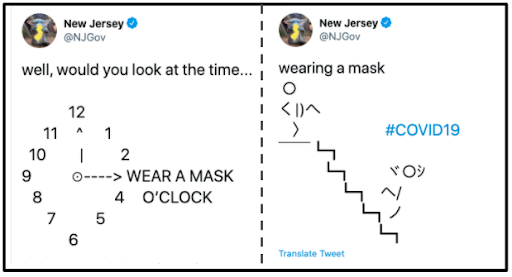
Gen Z’s ‘3rd places’ are in the digital realmStarbucks has long popularized the notion of a “3rd place” — a spot for people to gather outside of home (“1st place”) and work (“2nd place”). For Gen Z, the new “3rd place” gathering spots are online gaming (Fortnite, Twitch) and social chat apps (Discord, Houseparty). How to communicate with Gen ZThink mobile-first with an understanding of trending emojis and memes. Impressively, the Twitter account for the State of New Jersey (@NJGov) has mastered this (look at these PSAs for mask wearing!): |
||||
 |
||||
Up-and-coming companies catering to Gen ZHere are a few startups (much more in the report): |
||||
|

If you love, own, trade, or otherwise geek out over all things crypto, this one’s for you.
For a limited time, our friends over at eToro are offering you $500 big ones when you open a new account.
If you haven’t heard of it yet, eToro is the what’s-what of social trading and investing. Chat with other crypto traders, get plugged into the crypto world with a custom social feed, and even copy the moves of other big-name traders on the fly.
1. Sign up here and verify your account
2. Deposit a minimum of $5k
3. Invest a minimum of $5k into any crypto that tickles your fancy
For those of you counting at home, that cash gift is an immediate 10% return on your money. What are you waiting for?
FINE-ISH PRINT: eToro USA LLC; Investments are subject to market risk, including the possible loss of principal.
| Lawn-mowing Legends | ||||
 |
||||
Totally normal jobs are huge on TikTok |
||||
|
Want to go viral on TikTok? You have to dance well, look conventionally attractive, or… be a landscaper. People with unremarkable jobs — power-washers, hat-makers, beekeepers, and loggers — have amassed hundreds of thousands of followers just by streaming their day-to-day work. Since when did TikTok become all about normies?YouTube certainly has its niches (marble racing, anyone?), but its algorithm usually shies away from serving videos of people, say, cutting grass. But on TikTok, an unsexy job can carry the same cachet as a dance:
The TikTok algorithm is mostly a black boxWe don’t know why the app seems so friendly to landscapers, et al. But R&A Tree Service offers up a hypothesis. As the company told The Verge, the tree in the video has to be big. If it’s tiny, or even average-sized, TikTok seems to yawn it off. |
||||
|
| Apropos of Nothing | ||||
 |
||||
Copyrighting clown makeup involves a lot of eggs |
||||
|
As one recent tweet taught us, clowns have a unique way to make sure their makeup doesn’t match a competitor’s. Since 1946, they’ve laid claim to their designs by painting them on eggs. To make a clown, you’ve got to paint a few eggsWhen you sign up to be a member of the major clown trade group, Clowns International, your first step is to document your makeup. When you send in the design, it goes to Debbie Smith, the official artist at Clowns International. Smith — who is herself a clown on the side — might spend up to 3 days painting a single egg. In exchange, she’s paid just ~$20 a pop. This clown IP isn’t government-sanctionedThe egg system is only recognized among clowns, not federal copyright law. Once painted, the eggs travel to a special vault called the Clown Egg Registry, tucked away in a museum in London. There are currently ~240 eggs locked there. Seem a bit low? That might be because the system isn’t foolproof: Hundreds of previous clown eggs were accidentally lost or destroyed sometime in the 1960s. |
||||
|
AI assistant chef + America’s first fast-food hamburger chain = One revolutionized industry. Miso Robotics value is skyrocketing thanks to a partnership with White Castle. See for yourself (and invest) right here.*
Is your computer slower than old school dial-up internet? Then you might need a new antivirus solution. Give your IT team this link to a free trial of Crowdstrike, the next-gen cloud security platform.*
Here are 10 awesome internet hacks to make your life better.
Having trouble focusing at home? Try these new focus capsules from beam, which blend nano CBD with lion’s mane, CoQ10, and ginseng to help you get more done (use code HUSTLE to get 20% off for the next 24 hours).*
You know what Oracle cannot do with TikTok? 20x their business. But that’s exactly what one of our OG Trendsters did with the platform. Join us tomorrow to learn how Craig, the founder of Nerdy Nuts, used the viral platform to grow it from $8k/month in April to over $500k by July! Start your $1 trial to get access.
*This is a sponsored post.
Hey there, funny guy or gal. We’re looking for an ace writer to craft content for our awesome advertisers. Hit us up.
Got the power of persuasion? Put it to good use for this telehealth appointment booking service.
Cybersecurity firm seeks superstar to design and implement creative marketing strategies.
Hark! Quark needs a smooth operator to manage company relationships with big-enterprise customers.
B2C. B2B. B2B2C. Could you B any more excited about managing multiple marketing strategies for this health app?
|
| How did you like today’s email? | ||
 hate it |
 meh |
 love it |
| PODCAST | JOBS | ADVERTISE | CONTACT US |
 |
 |
 |
 |


For many elk hunters, September means spiking out in the high country with some pack horses and a wall tent. For all the backcountry’s glory, it suffers from a problem: It’s a hell of a tough place to fill a tag. Idaho bowhunter Kasidy Manhart arrows an elk just about every season, though, and he says there’s an easier way to hunt OTC units than packing 10 miles deep into the woods. It’s no secret. It’s just overlooked.
Earn Your Way In
Manhart and his buddies hunt a milk run of public spots that border private crop fields. In most cases, the public stuff is difficult to access without crossing private ground—even though it’s visible from the road. Manhart works in the off-season to gain access simply to cross the private land. “It’s not easy,” he says. “These days, everyone can track down a rancher. But people are still reluctant to knock on doors, and the idea of a trespass fee is just catching on. At one place, we helped round up cattle in exchange for access. It was hard work but worth it.”
Watch From Above
Elk are gluttons for irrigated crop fields. “They eat like cows,” Manhart says. “We look for elk that hit ag fields all night and work back up into the mountains during the day.”
Manhart says the food sources might be consistent, but elk travel patterns are anything but. “We want to be on top of the mountain before first light, glassing fields as soon as we can see.” When the elk leave the field, Manhart looks for a bull. “We go after the first legal bull that’s heading toward a good spot for us to intercept him.”
Mornings are the most productive time, Manhart says, since evening elk are going toward the fields instead of away from them. Elk rarely reach the fields before dark, and they can be hard to locate. The exception is during the rut, when a vocal bull might make the last hour of shooting light interesting.
Read Next: 31 D.I.Y. Tips for the Ultimate Elk Hunt
Float Like a Butterfly
Manhart packs light and moves fast, partly because he’s never far from his truck. “I’ve got buddies who only bring their bow, a water bottle, binoculars, and a rangefinder,” he says.
Calling takes a back seat to woodsmanship, but the former can help. “Mostly, I don’t call until I’m close to the bull,” he says. “Once I’m in tight and have a good setup, I’ll make a couple of cow calls to finish the deal.”


When real life and dystopian cinema become one and the same. You can compare side-by-side images of Bladerunner 2049 concept art and the San Francisco skyline here.
Would you like to support the mission of Open Culture? Please consider making a donation to our site. It's hard to rely 100% on ads, and your contributions will help us continue providing the best free cultural and educational materials to learners everywhere.
Also consider following Open Culture on Facebook and Twitter and sharing intelligent media with your friends. Or sign up for our daily email and get a daily dose of Open Culture in your inbox.
Related Content:
Three Blade Runner Prequels: Watch Them Online
The Blade Runner Promotional Film
How Ridley Scott’s Blade Runner Illuminates the Central Problem of Modernity
Drone Footage of San Francisco Set to the Music of Bladerunner 2049 is a post from: Open Culture. Follow us on Facebook, Twitter, and Google Plus, or get our Daily Email. And don't miss our big collections of Free Online Courses, Free Online Movies, Free eBooks, Free Audio Books, Free Foreign Language Lessons, and MOOCs.

The image above may at first look like a plate from a Jules Verne novel, or perhaps a still from one of Georges Méliès' more fantastical moving pictures. It does indeed come from fin de siècle France, a time and place in which Verne, Méliès, and many other imaginative creators lived and worked, but it is in fact a genuine underwater photograph — or rather, a genuine underwater portrait, and the first example of such a thing in photographic history. Taken in the 1890s (most likely 1899) by biologist and photography pioneer Louis Boutan, it depicts Boutan's Romanian colleague Emil Racovitza holding up a sign that reads "Photographie Sous Marine," or "Underwater Photography."

Such an outlandish concept could hardly have crossed many minds back then, and fewer still would have dreamt up practical ways to realize it. To start with the most basic of challenges, there is, as David Byrne sung, water at the bottom of the ocean — but not a whole lot of light, especially compared to the burdensome requirements of late 19th-century cameras. This necessitated the development of what Petapixel's Laurence Bartone calls a "crazy underwater flash photography rig," one powerful enough that it "could easily double as a bomb. The creation involved an alcohol lamp on an oxygen-filled barrel. A rubber bulb would then blow a puff of magnesium powder over the flame, creating a flash."
Photography enthusiasts will understand the magnitude of Boutan's achievement (made with the help of his brother Auguste and a laboratory technician named Joseph David). Some have gone so far as to recreate it, an effort you can see in the Barcelona Underwater Festival video just above. Not only are there fish and other sea creatures swimming everywhere, a feature of the environment not visible in Boutan's original shot, but the re-enactors face the pressure of curious passersby, young and old, who walk through a nearby transparent underwater tunnel, not a consideration for Boutan and his collaborators. That groundbreaking success in underwater portraiture came 54 years after a Philadelphia chemist named Robert Cornelius first turned his camera on himself. Has photographic history recorded how long it took humanity after Boutan's famous picture to snap the first underwater selfie?
via Diane Doniol-Valcroze on Twitter
Related Content:
Underwater Volcanic Eruption Witnessed for the First Time
Reef View: Google Gives Us Stunning Underwater Shots of Great Coral Reefs
Sunken Films: Watch a Cinematic Meditation on Films Found on the Ocean’s Floor
See the First “Selfie” In History Taken by Robert Cornelius, a Philadelphia Chemist, in 1839
The History of Photography in Five Animated Minutes: From Camera Obscura to Camera Phone
Based in Seoul, Colin Marshall writes and broadcasts on cities, language, and culture. His projects include the book The Stateless City: a Walk through 21st-Century Los Angeles and the video series The City in Cinema. Follow him on Twitter at @colinmarshall, on Facebook, or on Instagram.
Behold the First Underwater Portrait in the History of Photography (Circa 1899) is a post from: Open Culture. Follow us on Facebook, Twitter, and Google Plus, or get our Daily Email. And don't miss our big collections of Free Online Courses, Free Online Movies, Free eBooks, Free Audio Books, Free Foreign Language Lessons, and MOOCs.
| Buried in a remote mine in Norway, the Arctic World Archive wants to safeguard our digital footprint for future generations. Will it work? | ||||||||
| This edition of The Hustle was brought to you by Mint Mobile… a phone plan that saves you $$. | ||||||||
 |
||||||||
|
||||||||
| The Hustle is proud to deliver original longform journalism to your inbox every Sunday. This work would not be possible without the support of our sponsor, Mint Mobile. Please support them so we can continue to bring you the most interesting stories you’ll find anywhere. | ||||||||
The company that wants to preserve our data for 500+ yearsBuried in a remote mine in Norway, the Arctic World Archive wants to safeguard our digital footprint for future generations. Will it work? |
||||||||
|
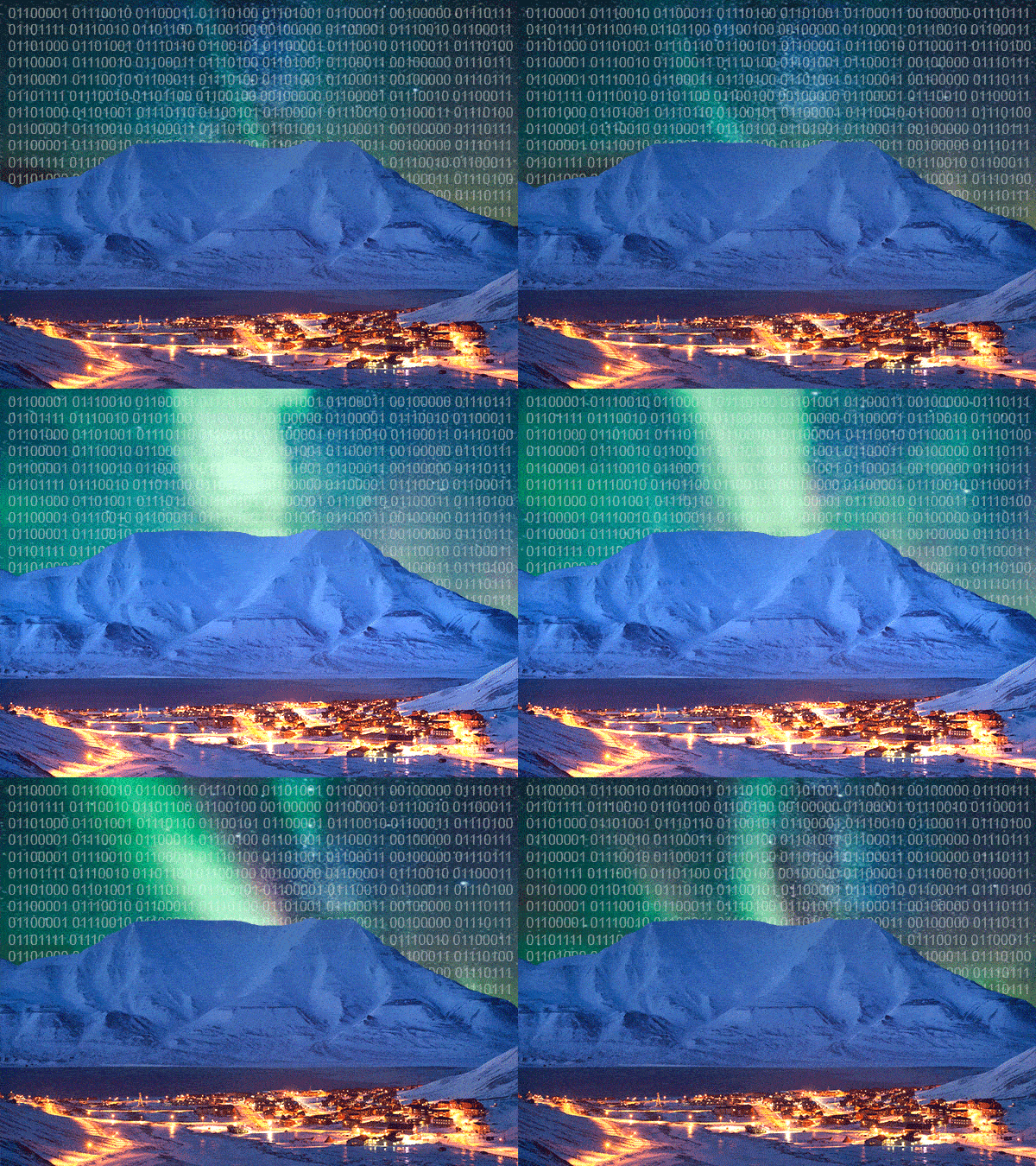
Deep in the Norweigan arctic, on the ice-encrusted island of Spitsbergen, life stands still. The surrounding lands of the Svalbard archipelago are sparse and desolate. It is a place where there is a 1:10 polar bear to human ratio, where the sun doesn’t rise for 4 months per year, and the northern lights dance across the sky. But on the side of a mountain in Spitsbergen, there’s an abandoned coal mine. And inside — some 250 meters below the Earth’s surface — you’ll find a steel vault that contains an archive of film encoded with hundreds of thousands of open-source projects from around the world. Run by a for-profit company called Piql, the Arctic World Archive is aiming to preserve the world’s digital materials — music, literature, and lines of code — for 500+ years. Recently, Github, an open-source coding platform, donated it’s entire trove of code to the archive — some 21 terabytes of data posted by millions of users since 2008. Most press accounts have dubbed the Arctic World Archive a “doomsday vault.” The archive prefers the term “vault of hope.” Either way, it’s an effort to incubate our data from human and environmental catastrophes in the long-term. And it may just be our best shot at telegraphing our present-day story to future generations. The company behind the Arctic World ArchivePreserving data through climate change, potential nuclear warfare, and whatever else the next 500+ years has in store for us might sound like a daunting task. But this kind of long-term thinking is the lifeblood of Piql, a 20-person tech company based in Drammen, Norway. |
||||||||
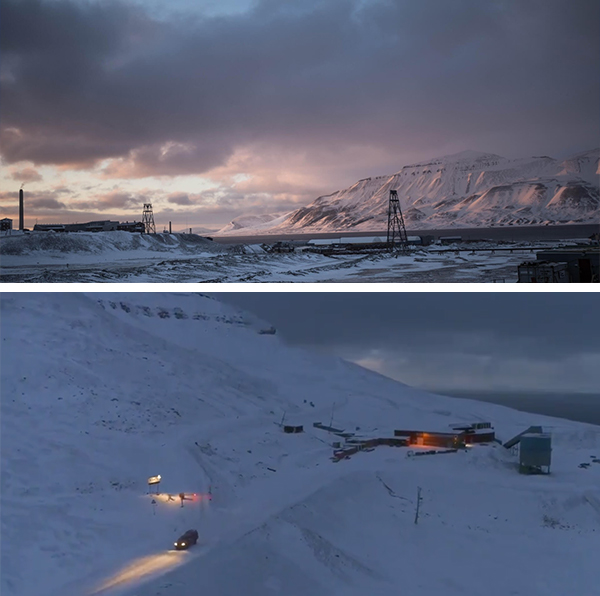
Scenes from Spitsbergen (Arctic World Archive, GitHub) |
||||||||
|
Building an apocalypse-proof archive was not always Piql’s plan. Founded in 2002 by a former engineer named Rune Bjerkestrand, the company — originally “Cinevation” — began with the mission of preserving film. Bjerkestrand knew that Hollywood had a long history of losing its masterpieces due to inadequate preservation efforts and wanted to test a new approach: instead of leaving films on black-and-white archival film, he thought to turn each film into a chunk of scannable code. He invented a way to boil down each film into a magnifiable binary code — a series of 1s and 0s — that, together, look a bit like QR codes. Then, he stored a patchwork of those codes in a film cartridge called a piqlBox. Piql started making deals with film companies in the US, Norway, and Sweden. As The Hollywood Reporter explained in 2008, the beauty of Piql was its speed: other devices took 15-18 hours to encode a 20-minute clip; Piql could do the job in ~30 minutes. But Bjerkestrand soon began to see other use cases for his technology. Piql, he realized, could sequence almost any digital product into scannable 1s and 0s. And after the sequencing was done, it could be preserved in the box — conceivably, for hundreds of years. While other storage devices required constant updating, Piql’s method was all hardware-based: if the box survived, so would its QR code. |
||||||||
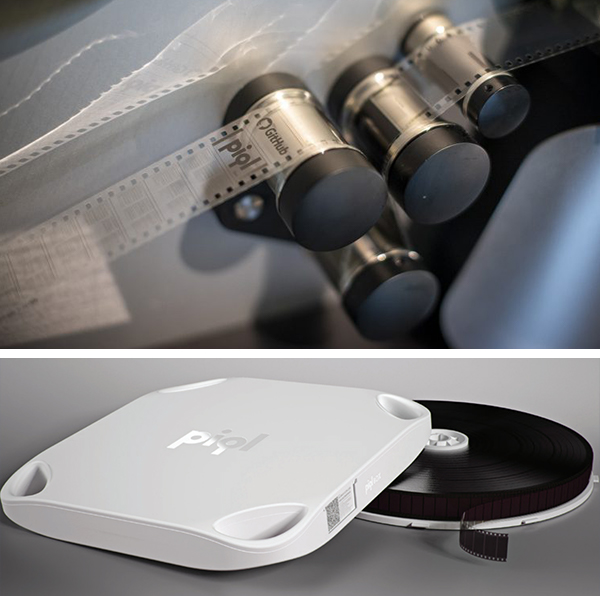
Top: Piql’s silver halide film, encoded with binary; bottom: a piqlBox (Piql) |
||||||||
|
Piql’s long-term thinking became more ambitious in January 2008, when conservationists and agricultural researchers launched the Global Seed Vault — a Svalbard-based facility designed to protect crop diversity in case of global catastrophe. Bjerkestrand thought, ‘Why not do something similar for our digital data?’ With the help of a Norwegian mining firm, Piql built out the Arctic World Archive in a decommissioned coal mine, right down the road from the Global Seed Vault. In 2017, it opened for business. Who is the archive actually for?Piql is a for-profit company and allows anyone to store something in the Arctic World Archive — for a fee. Its chief selling point is the long-term survival of material. For starters, Svalbard, where the archive is based, has been called “one of the most geopolitically secure places in the world.” It’s not only rugged and remote but has been a demilitarized and independent region since 1925, incubating it from warfare. The boxes the film is stored in are virtually indestructible. The company tested them against electromagnetic pulses, extreme nuclear radiation, and -196°C (-321°F) — and they’ve persevered. One Norwegian industrial research institute estimated that a piqlBox could last 500+ years without degrading. And the film itself, which is coated in silver halide crystals and iron oxide, has a purported lifespan of 500 to 2k years. “On a film, it just looks gray. But if you put it under a microscope, you can see all the data points,” Piql’s managing director, Katrine Loen Thomsen, tells The Hustle. “We call it self-contained. It’s not reliant on any technology that may or may not be around in the future.” |
||||||||
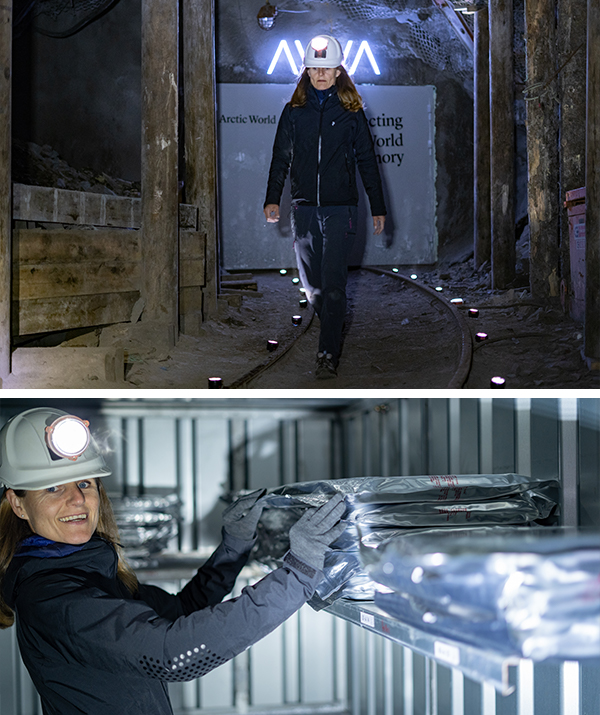
Top; Piql’s managing director, Katrine Loen Thomsen, at the Arctic World Archive; Bottom: Thomsen handling some piqlFilm reels (Piql) |
||||||||
|
Most of Piql’s clients are museums, governments, or large companies. Among its stores:
Earlier this year, the archive got its largest addition to date when the software development company, GitHub, donated its entire trove of code — some 21 terabytes of data, including modeling systems, apps, and website designs. It required 186 rolls of film. But the company is also working on an affordable small-data model that will encourage individuals to store data there. Individuals will pay a one-time sum based on a period of time (50 years vs. 500 years). |
||||||||
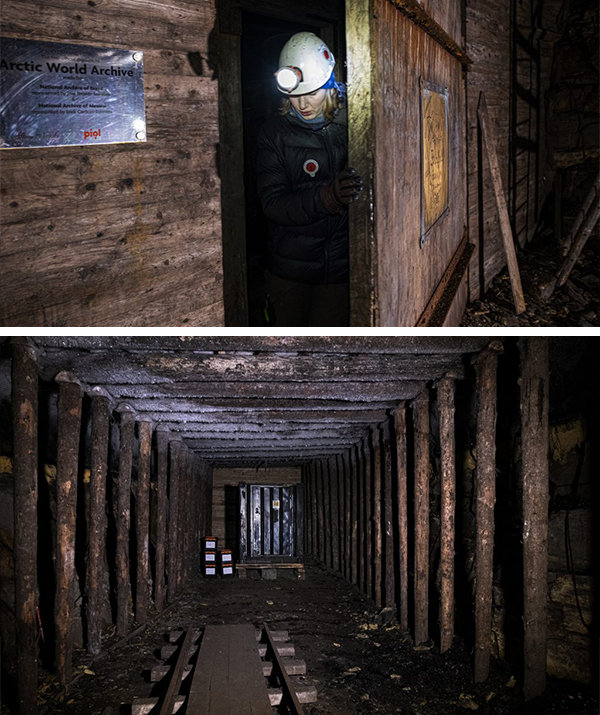
The archives lay deep inside a decommissioned coal mine in the arctic circle (Inside Over) |
||||||||
|
The Arctic World Archive might be the most fully-formed project of our moment, but it is far from the only long-term storage project to enter the public consciousness:
This all might sound promising, but there are reasons to be skeptical. Can long-term storage really last?As a society, we don’t have a very good track record with lofty, long-term storage projects. Take, for instance, time capsules. Entrepreneurs have been selling the promise of historical preservation to the public since the early 19th century. In 1876, a magazine publisher named Anna Diehm charged individuals to have a photo included in her 100-year capsule, alongside signatures from members of Congress and other artifacts. But when President Gerald Ford opened Diehm’s capsule in 1976, his disappointment was palpable. As the historian Nicholas Yablon later recounted, one of the president’s aides said, “Mrs. Diehm did not seem to have a very good concept of what would be important and interesting a hundred years later.” After the opening, Diehm’s photos went straight into an archive. When Yablon visited in 2010, he realized that he was the first person to request them since. |
||||||||
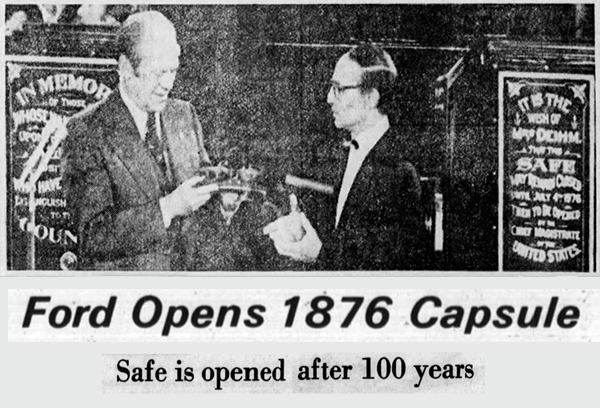
As President Ford found out, the contents of most time capsules are underwhelming (AP; 1976) |
||||||||
|
Many archivists attest that we’re living in a time when preservation is crucially important. File formats are changing so rapidly that material from just a few decades ago has already slipped out of reach. Some caution that we might be living through a “digital dark age:” we’re putting more data than ever into the world, but it’s entirely possible that less of it than ever will actually survive to the end of the century. As Google’s data manager, Rick West, said in 2018: “We may [one day] know less about the early 21st century than we do about the early 20th century.” The Arctic World Archive is offering up a solution. And it isn’t the only one. There is a whole micro-industry of preservation-focused companies, with names like Arkivum, StorCentric, and PreserveOn. Many of these startups advise corporations on how to preserve information for long periods of time in those companies’ own vaults. Piql is one of the few that is actually offering up its own space. But how realistic are these visions? And even if we succeed in storing data for 500+ years, will future generations be able to decipher its significance? “Just making data available in its original form may not make it useful to users,” says Ruth Duerr, a data management expert at the Ronin Institute. “Just having an image of a shoe worn by George Washington isn’t going to do much good, especially if you don’t know it was worn by George Washington.” |
||||||||
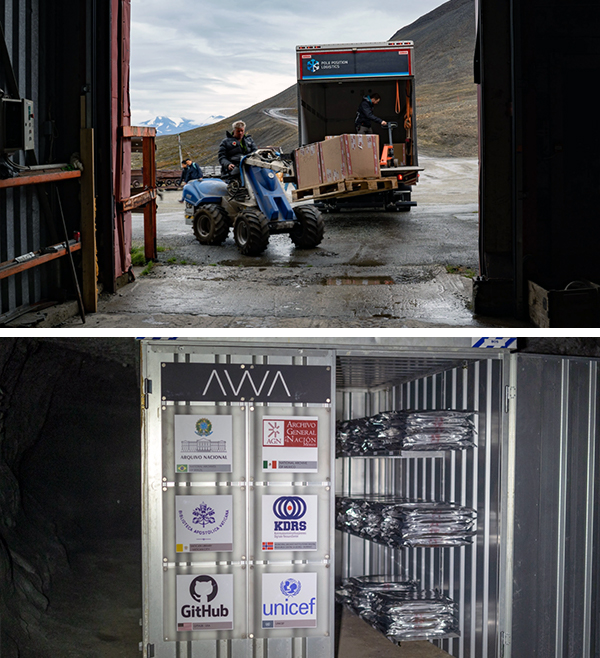
GitHub transferred a 21-terabyte repository of its code to the Arctic World Archive earlier this year (GitHub) |
||||||||
|
Piql does have a system in place to explain to future generations how to read the QR codes. On each piqlBox is a set of instructions, readable with a magnifying glass. For good measure, it’s written in English, Arabic, Spanish, Chinese, and Hindi. But there is only so much context the Arctic World Archive can provide. Lacking granular context, will future generations be able to work out that they’re looking at the code for a food delivery app, and not a self-driving car? The COVID factorThomsen (Piql’s managing director) says that the Arctic World Archive only allows new deposits about 2x per year. Otherwise, she tries to leave the space alone. The next deposit, scheduled for October, is the archive’s first true COVID-era project. Over the last few months, Brazil’s Museum of the Person has been working on a video series called “My Pandemic Diary” — a collection of everyday people recording their personal stories of the pandemic. In a month, these stories will be locked away in Svalbard. And in 500 years, if all goes according to plan, future generations will know of our collective misery. |
||||||||
| Share & discuss this story | ||||||||
|
||||||||
| SPONSORED | ||||||||
How to cut your phone bill by 60%The average American pays $80 for their unlimited phone bill. $80! That’s enough to buy 840 Costco mini Belgian cream puffs (our preferred way of measuring costs). Luckily, we’ve developed some solutions to help bring your price down:
If those don’t float your cell-boat, it’s time for Mint Mobile.Score their first-ever unlimited data plan for just $30/month right here. Mint Mobile is powered by the nation’s largest 5G network and was the first company to sell premium wireless service online-only, eliminating retail locations and ridiculous markups. Keep your phone number and existing contacts, plus all plans come with unlimited nationwide talk and text, reliably fast browsing speeds, and mobile hotspot included. |
||||||||
| Switch to Mint → | ||||||||
| How do you like today’s story? | ||||||||
|
||||||||
Today’s email was brought to you by Zachary Crockett (editor), Michael Waters (story), and Bobby Durben (ad).
|
||||||||
| 251 KEARNY ST. STE 300, SAN FRANCISCO, CA 94108, UNITED STATES • 415.506.7210 | ||||||||
| Never want to hear from us again? Break our hearts and unsubscribe. | ||||||||
| |
||||||||
|
|
| The Big Idea | ||||
 |
||||
Hip-hop, bitcoin and stimulus checks: How Square’s Cash App became a $40B business |
||||
|
Since hitting a pandemic low in March, the fintech firm Square has seen its share price nearly quadruple. The catalyst behind this explosive growth: Cash App, the company’s digital wallet which facilitates payments and money transfers. A research firm told the Wall Street Journal the app is now worth up to $40B — almost two-thirds of Square’s current $65B market value. The valuation is supported by 30m+ monthly active users, many of whom joined to receive stimulus checks. Bitcoin and hip-hop helped fuel early growthDan Runcie, who covers the business of hip-hop for Trapital, writes that 200+ hip-hop artists have named-dropped Cash App in their tracks over the years. These artists often also run cash giveaways on Twitter, asking fans to tag their $cashtag accounts. Recently, Cardi B and Megan Thee Stallion gave 2k random Tweeters $500 apiece — a total of $1m — via the app. But there’s another key to the app’s success: its uptake boomed when it allowed Bitcoin trading during the peak of crypto mania in 2017. When the pandemic hit, many thought Square was in troubleFor a time, the firm’s business was heavily reliant on brick and mortar retailers, which use its ubiquitous card-swipe payment dongle. While retailer payment volume reportedly decreased by 15% YoY in Q2 of 2020, Square benefited from an influx of money (including stimulus checks) into the Cash App. Excluding Bitcoin sales, the app’s revenue hit $325m in the quarter, up more than 2x YoY per WSJ. Square charges a hefty (some say usurous) 1.5% fee to transfer Cash App funds to a bank account — but many users are eating the cost. What’s next? (Other than sweet cash giveaways)The one-time nature of the government stimulus leaves many skeptical of Cash App’s current growth rate. And relative to the broader stock market, Square is already expensive on a price-to-earnings ratio. The long term bull case for Square is outlined by Ark Invest, which notes that the market currently assigns a much lower value to publicly-traded digital wallet accounts (<$200/user) than it does to traditional retail bank accounts (>$3k/user). This gap could narrow as Cash App adds more users and expands its banking services. And if it does, expect Square shareholders to get their Cardi B on. |
||||
|
| Arf Arf | ||||
 |
||||
Scammers are selling lonely quarantiners imaginary dogs |
||||
|
During quarantine, breeders have seen an unprecedented demand for canine companions. But some sellers aren’t who they seem to be. In the biggest pet peccadillo since 101 Dalmatians, fraudsters are taking victims for a walk by selling them… imaginary dogs. From mid-February through July, the Better Business Bureau has received 2k+ pet scam reports in the US and Canada — 3x last year’s figure. Some scammers are super savvyThey build slick websites with dozens of pooch pics and fake testimonials from “satisfied clients.” Often, photos of the ultra-stylish Pugdashian posse and Norman the Pomsky are hijacked from their owners’ Instagram accounts and used to lure in victims. When these individuals out to purchase a pup, they’re told to pay online and the dog will be delivered in a few weeks. And that’s the last they hear from the Shih Tzu charlatans. Some have lost thousands of dollars buying dogs that don’t exist. And recouping losses is usually a no-go, since many scammers are located overseas. The American Kennel Club’s got your backHow do you sidestep a swindler? Here are some tips:
|
||||
|

The commercial landscaping market has two huge problems:
In a market this big, fixing just a single one of these issues would disrupt the entire industry.
So what do you call it when one startup manages to solve both?
A massive frickin’ opportunity — and one that you have 10 days left to invest in.
Graze is the brainchild of John Vlay, a CEO with 35+ years of experience — and a huge exit — in the landscaping industry. He realized a product like Graze could help commercial landscapers explode their businesses through drastic reduction in fuel and labor costs.
How? Because Graze is 100% electrically powered (with support from top-mounted solar panels).
Plus, thanks to machine learning paired with smart features like a localization GPS, an optical suite, and proximity detection, Graze can map and mow job sites with maximum efficiency.
Want to get in on a company primed to disrupt a $100B market? Join Graze on SeedInvest.
| Common Scents | ||||
 |
||||
How do you design a body-wash scent? |
||||
|
During the 3 years that Lisa Wilson trained with a master perfumer, she tested scents while sitting in bumper-to-bumper traffic. That meant holding blotter strips to her nose and sniffing. “I think people thought I was doing cocaine,” she said. Wilson runs her own fragrance consulting biz, called Scent and Strategy, where she creates scents for shampoos, body wash, and more. Er, how do you make a scent?With each new job, Wilson samples similar fragrances on the market. Every scent has 3 parts. Take Chanel No. 5 Parfum:
Wilson mixes and matches based on what worked for other brands. Maybe a base really caught her, while a top note fell flat. Then she takes her ideas to a fragrance house to produce them. She’ll sometimes go through as many as 250 scents before she lands on the right one. What’s next for scents?Out: Gourmand odors — like heavy vanilla or coffee — that blew up 10 years ago. In: Wellness-inspired aromas. That means a lot of woodsy whiffs. |
||||
|
| My Type | ||||
 |
||||
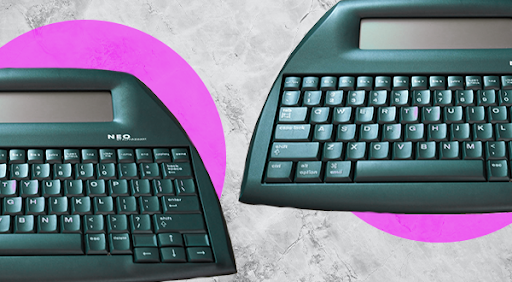
The best productivity software is a keyboard from 1993 |
||||
|
Since the start of quarantine, companies have done everything imaginable to make you more productive. They’re teaching you how to cut down on your tabs. They’re using AI to fix your digital calendars. And some of their trusty partners, like the project manager Asana, are filing to go public. But to really get your work done these days, it turns out all you need is a glossed-up typewriter from 1993. A growing number of writers are raving about a discontinued word processor called the AlphaSmart. Some claim the device has revolutionized their writing process. Here’s the beauty of itThe AlphaSmart is just a keyboard. It doesn’t connect to the internet, which means:
Writing a proposal? A blog post? A long email? Pulling out the AlphaSmart forces you to focus. One author, Alexis Henderson, told OneZero that she penned much of her first novel using the device. Anti-distraction software is getting distractingIt’s a perfect sign of the times that, even during an explosion of new tech tools, anyone would turn to the early ‘90s for help. But as we enter month 6 of quarantine, productivity tech is getting exhausting. Next time we draft a presentation, we want to do it on a janky word processor, dammit. |
||||
|
No one wants to pay $66k for an MBA. But $1k + access to real founders? That’s value. See why leaders from Netflix, Waze, and Shazam are joining ThePowerMBA.*
Live in Boston? Or anywhere else? Join founders, investors, and pros from every vertical virtually at Startup Boston Week from 9/21-9/25 for free. Register here.
If you’re into investing, you’re not going to want to miss this. Invest now in Flippy the AI assistant chef that has joined forces with White Castle to change the future of the quick service restaurant industry.*
*This is a sponsored post.

In 1981, George Benson released a sweet, sweet tune to the name of “Never Give Up On A Good Thing”. Besides the silky smooth brass melody, we couldn’t agree more with Benson.
Back in April, we had Julian Shapiro come in for a Trends Hacker Hour. Over 800 people signed up. Needless to say, it was a hit. So, we’re keeping a good thing going by bringing him back for 20 more growth marketing tactics.
This time, he’ll be going over…
If you’re not familiar with Julian, he’s the founder of Demand Curve, where he’s worked with 100+ Y Combinator startups. And if you sign up for a $1 Trends trial today, you’ll get to attend his next session live, get access to his last one, and much more.
Head of Product, Toggl: (Apologies to Tina Turner.) What’s KPI got to do, got to do with it?
Product Marketing Manager, Breezy: Lead this team into the great outdoors outbound marketing.
Customer Educator, Brook Farm: Oh, hey animal lovers. This is your opportunity to talk about pet preventative health while scheduling appointments and converting leads.
Technical Account Manager, Mission: As the official “voice of the customer”, you’d support customer experience. Great power and great responsibility and all that.
SaaS Marketing Tactician, NextPaw: Another one for the animals. Here you’d be helping independent pet stores compete with Big Pet.
|
| How did you like today’s email? | ||
| hate it |
meh |
love it |
| PODCAST | JOBS | ADVERTISE | CONTACT US |
| |
|
|
|

This week, we're wishing our beloved National Parks a happy 104th. And appropriately, we're dreaming of shelters within reach of our favorites. Though there's no substitute for getting out there with boots on the ground, some shelters successfully distill the magic of our parks into the fabric of their design.
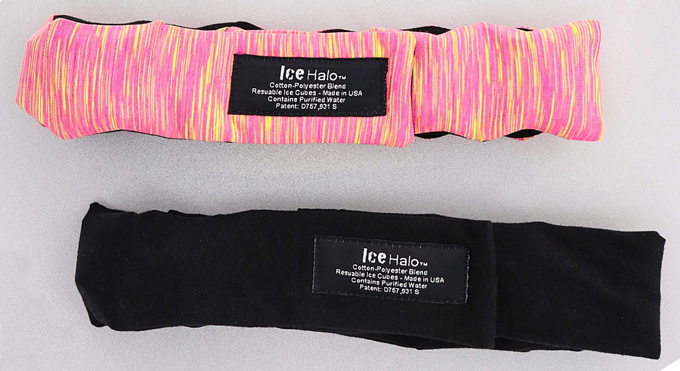
I bought this Headache Hat Ice Halo — essentially an ice pack in the form of a headband — a year ago and it has been pretty life-changing for managing severe and prolonged migraines. I find the design of this headband helpful because it can deliver site-specific ice treatment for migraines. The headband is essentially a strip of ice cubes encased in a cloth cover with which you can shift around to target your worst pain.
For me, this more effective than the peppermint rollers which would try for a similar effect (at times the smell of these products is too much for me).
I like this version which is a headband versus a hat because it is space-efficient (there are full hat versions which would take up more freezer space). So long as I remember to leave it in the freezer, it is always available and can be reused over and over. I find the headband freezes quickly because the linked cubes are fairly small. Though I haven’t worn it in public, I think you could.
-- Rell DeShaw
Headache Hat Ice Halo
Available from Amazon
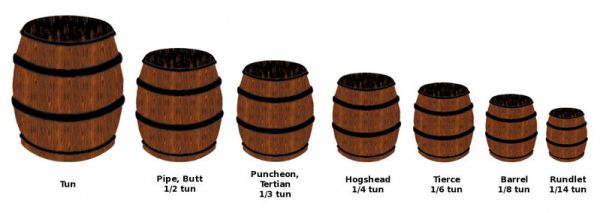
Any time you hear the word "buttload" as an amount, you know it mean a lot. But it turns out that it really does mean a specific amount, and that amount is... a lot.
After immediately falling down a Google hole about it, I discovered that this is, indeed, true! A butt, also known as a pipe, is a unit of measure for English Brewery Cask Units and English Wine Cask Units. It's the second-largest barrel size, equal to half a tun, which was typically 252 Imperial Gallons (although that exact quantity has changed throughout history; current standards place an English Tun at 259 US gallons or 216 Imperial Gallons).
You have to admit that 129 gallons is a substantial amount of beer or wine. That's enough for the kind of party the police would want to speak to you about. Read more about beer and wine measurements with plenty of links to follow at Boing Boing.
(Image credit: Grolltech)

Before there was Amazon, there was ACME, the company where you could order anything and everything, from hot air balloons to unicycles to anvils to toothpicks to vitamins to bombs. Those diverse products would be delivered at the speed of light, even if you lived out in the middle of the desert. Where else could you select a Strait-Jacket Ejecting Bazooka and receive it within a moment or two? Check out the Complete Illustrated Catalog of ACME Products and marvel at what they once offered.
For the first time ever, information and pictures of all ACME products, specialty divisions, and services (from 1935 to 1964) are gathered here, in one convenient catalog. For more information about any ACME product, simply click on the thumbnail picture. Thanks to Warner Bros. studios and their fine animation department for advertising ACME products in their cartoons!!
However, it may be argued that the line of products may have been much larger than this archive suggests. All that are listed here are the products we have actually seen in Looney Tunes stories. Who know what else they had? -via Metafilter



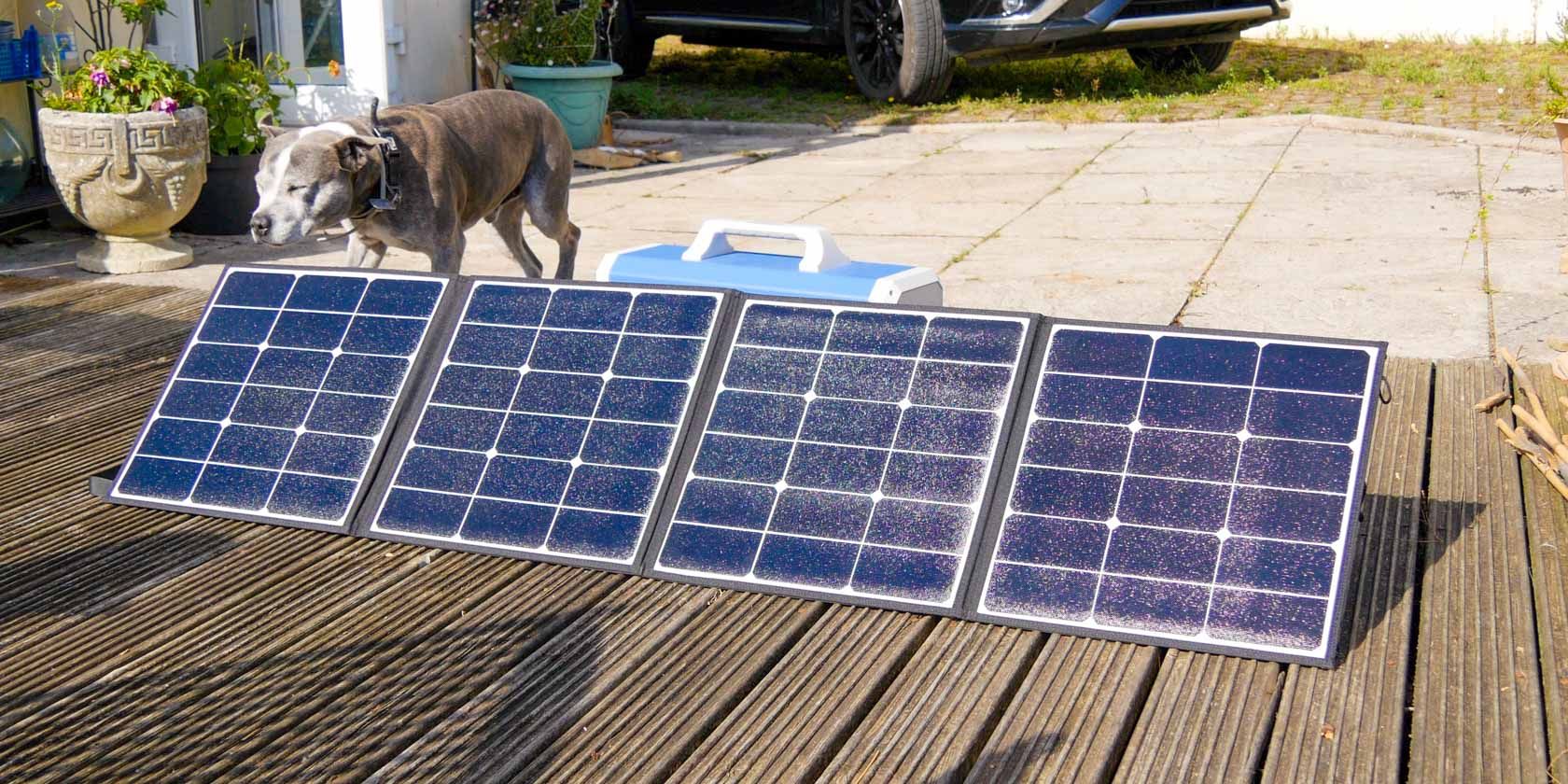
Most portable solar panels are tiny and really only designed to trickle charge a smartphone. If you have a large portable battery pack then finding a suitably powerful and genuinely portable solar panel can be tricky.
The Maxoak SP120 is both affordable, portable, and with 120W output, powerful enough to charge even the largest of battery storage. It takes less than a minute to deploy or pack away and weighs a mere 6.2 pounds (2.8kg). You don’t get much more portable than that.
Retailing at $400 or £300, if you’re quick you can grab one at 30% off during IndieGogo crowdfunding. Those in Germany or the UK can get one even quicker from Amazon (under the PowerOak brand), and use our exclusive £30/€30 coupon–just enter the code makeuseofA at the checkout.
The Maxoak SP120 unclips and folds out to reveal four panels. A convenient carry handle is located on one end, with three loops on the other end for hanging the panels. on the rear of each section is a stiff leg, secured with velcro, allowing you to angle the SP120 up to 45-degrees.
Each panel is made of monocrystalline solar cells. These are more efficient than cheaper polycrystalline cells, allowing for greater power from the same size panels. Each panel is coated in ETFE, and Maxoak claims they can be bent to around 20-30 degrees before snapping. This isn’t to say you should make a habit of bending these panels, but rather that you needn’t worry should you accidentally apply a little pressure to them.
The SP120 is IP65 rated, meaning it should withstand some rain, but don’t get it soaked.
The hardwired 3m cable which terminates in MC4 plugs is stored in a zipped side pocket. These are standard solar panel connectors, so you can easily daisy chain a couple of panels together (or even supplement a static panel if you wanted). However, the adaptor cables to feed this into a battery are not included. In the case of Maxoak, the adaptor cable is supplied with the battery, but if you’re pairing this with a battery from another manufacturer, you may need to source your own cable. I found the pocket on the side was large enough to also store the cables that came with the EB240 (MC4 to DC9mm).
One of the great things about being so easy to carry and move around is that you can easily reposition the SP120 to take advantage of the sun any time of day. You can lay the panels flat for the high midday sun, then angle them or hang them vertically for morning or evening. This allows you to get the most efficient charge possible—more so than you would with bulky static panels. Our rooftop panels only start to generate after lunchtime!
Of course, you shouldn’t expect it to output 120 watts all the time, but I was able to get a good 8 hours of solid charging on a good day.
Assuming eight hours of good sun per day, let’s say you average 100W; that’s 800Wh total. The Maxoak EB240—which is admittedly an enormous store of energy—holds a maximum of 2400Wh. So that would take about 3 days to charge. For a smaller battery like the Maxoak AC50 (500Wh), you could easily charge it and more, in less than a day.
Maxoak AC50 Maxoak AC50 Buy Now On Amazon $399.99With standard MC4 panel connectors, it’s easy to daisy chain these panels together and charge twice as fast.
Solar technology can be a little confusing at times. Solar panels output a variable voltage depending on the intensity of the sun, which isn’t much use by itself. You need some sort of regulator to fix the voltage at a certain level. Smaller panels that are designed to trickle charge smartphones include a built-in regulator that drops the voltage to 5V (USB).
The SP120 doesn’t include a regulator, so it must be paired with something else before you can utilize the power. Because the amount of power it produces is more than you’ll usually use, the best thing to do is to put that power into a battery.
A battery backup like the EB230, EB150, AC200, or AC50 incorporates a voltage regulator, battery, and AC/DC converter. It takes the solar output, stores it, and converts that power to whatever voltage you need later. That might be 110V AC, 45W DC for your laptop, or 5V USB for your smartphone.
As a portable solar panel, it really doesn’t get more convenient than this. 120W is a good amount of power and paired with a convenient travel battery like the AC50, you have an unlimited source of power for your adventures and off-grid needs.
But consider if you really need to carry a solar panel around, because you’re paying a premium for the privilege. A similarly specced or even higher efficiency static panel can be purchased for $150 or less. That means you’re paying about three times as much per watt as the price of being ultra-portable. If you’re considering the SP120 to carry between your home and cabin in the woods, for instance, you might be better off buying two higher-powered rooftop panels instead.
Grab yourself a bargain on the IndieGogo now. But be quick, there are only a few days left on the campaign to get 30% off.
Thanks to Maxoak, we have not one, but THREE portable solar panels to give away, to winners in the US, Germany, and the UK. Enter below for your chance to win!
Read the full article: Portable, Powerful Solar Panel: Maxoak SP120 Review