Shared posts

01 Jan 23:45

Home Comforts: The Art & Science of Keeping House

This appears to be a book of tips for housekeeping, but it is as much about housekeeping as Moby Dick is about fishing. It’s about doing mindless chores mindfully. If you cook, clean, and dress, why not do it with full knowledge of what the most scientific method is? There is something attractively nerdy about Mendelson’s obsession with getting to a deep technical understanding of whatever needs to be done. So much good-spirited lore swims in this book, that you can pick it up anywhere and find yourself reading hours later about the absolute best way to iron. Ordinary chores are given a new life. I haven’t seen such behavior-changing information in ages. I’m thinking I’ll give each of my kids a copy when they depart for their own places.

-- KK

Home Comforts: The Art & Science of Keeping House
Cheryl Mendelson
2005, 896 pages

Available from Amazon

This is a Cool Tools Favorite from 2004

Sample Excerpts:

The terms “ironing” and “pressing” are often used interchangeably, but they are in fact different things. In ironing, you slide the iron back and forth over the cloth; in pressing, you simply press the iron in one spot and then lift it. Pressing is used on tailored and lined suits, especially on men’s, on wool, on silk and some rayon, on net, and on pile fabrics. Pressing is used to avoid crushing the cloth, giving it a shine, or stretching or scorching or otherwise harming it with the heat of the iron. This is done partly by not sliding the iron and partly (and usually) by using a “pressing cloth.” This is simply a cloth that you lay over the fabric, pressing through it rather than touching the iron directly to the garment.

*

Washing the Dishes. Begin with perfectly clean, hot, sudsy water. Wash the dishes that are least soiled first and progress to those that are most soiled, as this entails the fewest changes of water. As noted above, you usually begin with glass and silver or flatware, which need very hot water so that they dry quickly without streaks or spots.

*

clothes.jpg

25 Dec 00:24

Etching with a 9v Battery

by claudia

Etching with a 9v Battery

Etching is easier than you think.

Etching is easier than you think.

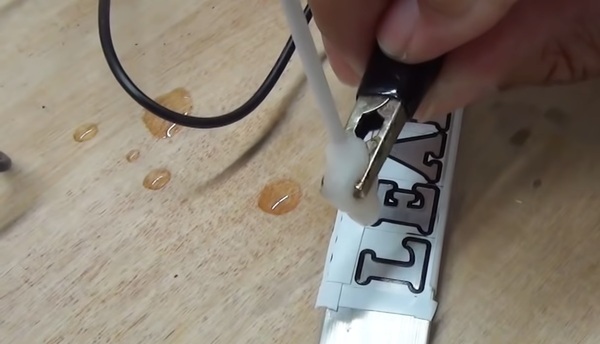
Leah of See Jane Drill demonstrates how easy it is to etch a metal surface using little more than a 9v battery, wires, vinegar, salt, and Q-tips.

Finding the Center of a Dowel/Rod with Sandpaper?

Using only a drill and sandpaper to find a centerpoint? Genius!

Using only a drill and sandpaper to find a centerpoint? Genius!

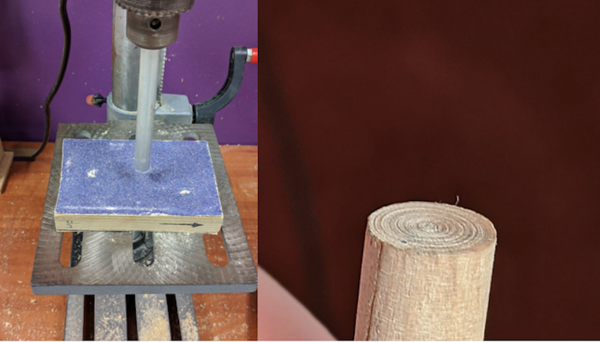
Emory Kimbrough writes: “Here’s a method for finding the center of a dowel or any solid rod that will fit into a drill or drill-press chuck. Besides the drill or drill press, it uses only sandpaper. A lot of center-finding methods that use pencil-and-straightedge geometry or store-bought center-finding gizmos become hard to use and inaccurate on small-diameter rods, but this method excels with the skinny little workpieces. Just place the rod into the drill chuck and spin the end of the rod against the sandpaper. The sandpaper will scratch a bulls-eye pattern of concentric circles in the rod’s end, revealing the center (see pic on right). Center-punch the bulls-eye and you’re ready to drill into the cylinder’s axis. This works for both wooden and metal rods. If the concentric rings aren’t as distinct as you’d like, try a different grit of sandpaper.“ In the left photo above, some ½” aluminum round stock is being spun in a drill press against some coarse sandpaper glued to a wooden block. In the right photo, you can see the bulls-eye pattern on a wooden dowel.

Carrying Electronics in a Hanging Jewelry Bag

Hmmm... should I go with the ribbon cable choker or the Raspberry Pi earrings?

Hmmm… should I go with the ribbon cable choker or the Raspberry Pi earrings?

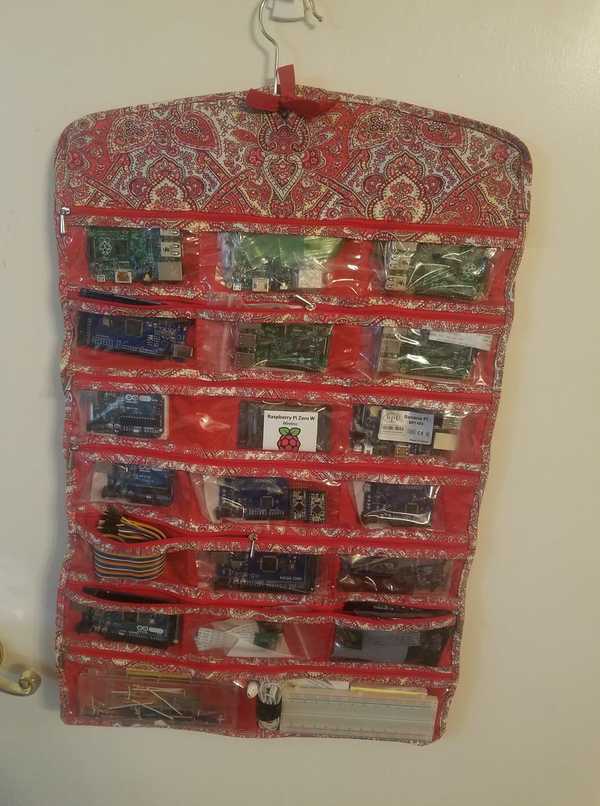
My friend Jade Garrett offers this really clever idea for traveling with and organizing microcontrollers and electronics. She uses a hanging jewelry organizer. She says she’s pulled this out at a hackathon to hilarious reactions.

Finding the High Point of a Horizontal Pipe, Dowel, or Other Round Object

The high point of a pipe.

The high point of a pipe.

Another great tip from the brilliant Emory Kimbrough:

Here’s a fast and easy way of finding the high point of a horizontal pipe, dowel, or other round object, using common tools.

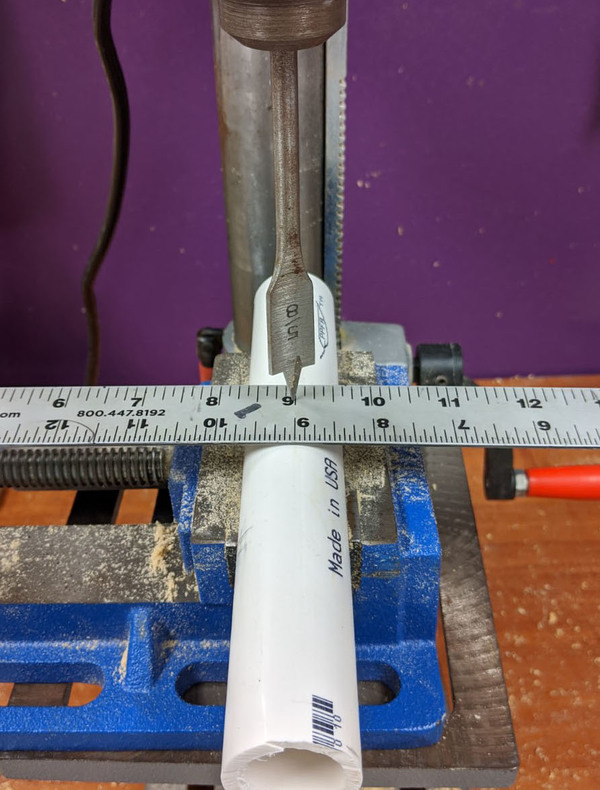
First, clamp the cylinder horizontally into a drill press vise (or any other secure holder, such as a V-block, that you can slide around on your drill press table). Slide the clamped cylinder directly under the press’s chuck, using your best eyeball guess.

Next, place something sharp and pointy into the drill press chuck – the point in the center of a Forstner bit is ideal, but other bits will work, as will a sharp nail with the head cut off.

Now, place a metal ruler cross-ways on top of the cylinder, roughly balanced (see photo). Lower the drill press handle until your pointy object lightly presses the ruler against the top of the cylinder. Most likely, your eyeball guess was slightly off of perfect alignment, so the trapped ruler will lean left or right, since it’s being pressed into the cylinder slightly off of the peak. Just slide the clamped cylinder as needed to make the ruler level.

When the pointy thing holds the ruler level, the drill press chuck is now straight above the highest point on the cylinder. Clamp the vise to the table without moving it, and everything is now aligned to drill right through the center.

This method also works with spheres. Just check that the ruler doesn’t tilt right-or-left or front-or-back. You can also use a metal sheet to better see the tilt on both axes.

You can even do this by hand, without a drill press. Press the ruler gently against the cylinder or sphere with the tip of a pen or pencil, moving the point until the ruler levels. Now, carefully slide the ruler out of the way without moving the hand that’s holding the pencil or pen, and make a mark. No, it’s not as accurate as using the drill press, but it’s still better than guessing by eye.

If you need to draw a line along the crest of a cylinder instead of a single mark, just make two marks, as widely separated as possible, using this method, and draw a line connecting the two marks.

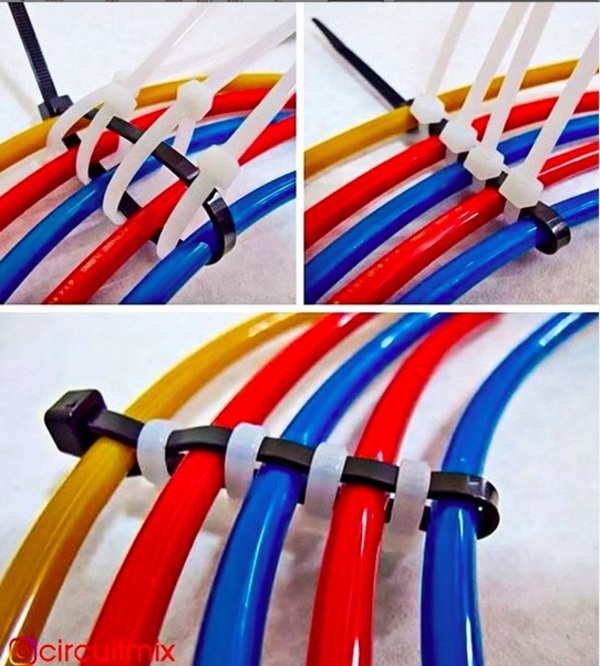
Cable Wrapping with Zip Ties

Via @circuitmix on Instagram

Via @circuitmix on Instagram

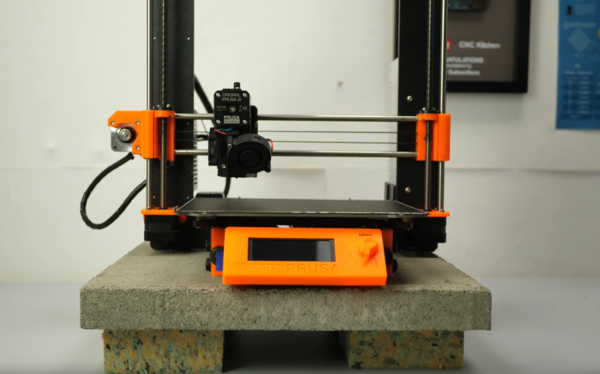
3D Printer Noise Reduction for Two Dollars

Silence that rattle trap for two bones.

Silence that rattle trap for two bones.

Stefan of CNC Kitchen explains why he uses concrete “pavers” (which you can get at a home store for about US$2) under his printers. Basically, it’s for noise reduction. But being a CNC Kitchen video, he goes into great detail about what actually causes the sounds that can make your printer annoying to be around and ways of mitigating the racket. He also looks at other noise reduction measures, like 3D-printed spring feet, foam pads on your printer’s base, and a foam pad below a paver base.

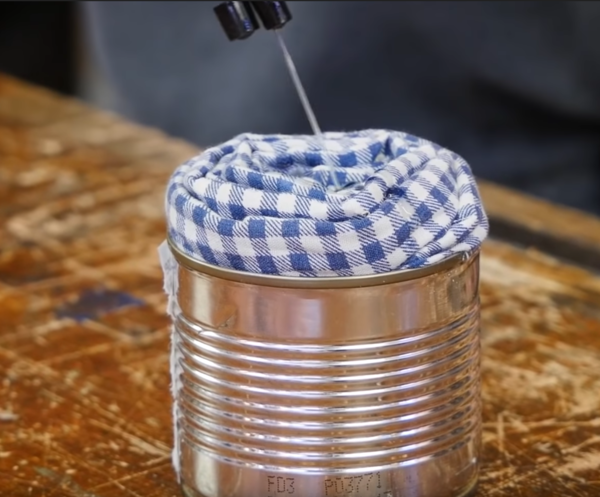
Making a Rag-in-a-Can Oiler
raginacan
By way of woodworker Paul Sellers comes this handy tip for creating a can oiler for lubricating flat surfaces like machine tables, saw blades, etc. Basically, you just stuff rags tightly into a small can (or plastic spray can lid) and then soak the rag with your favorite shop lubricant.

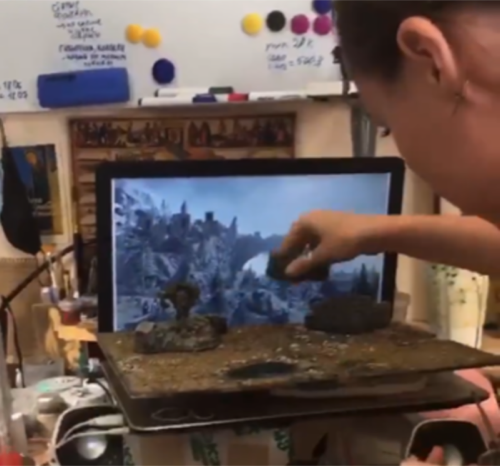
Using a Laptop as a Backdrop
lapDrop_1
I’ve written about folks using their laptop screen as a light table for tracing. Here’s another great off-book use (from the Tiny Furniture IGram page) – using your screen as a photo backdrop for small items.
lapDrop_2

Making Your Own Coiled Cabling
retrocoils
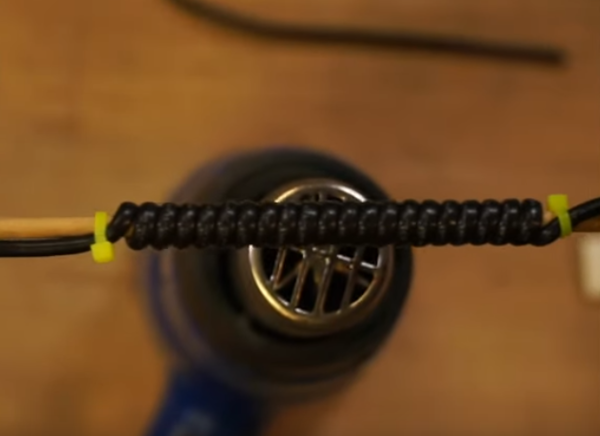
In this video by our ol’ pal, John Park, he demonstrates how you can use the thermo-forming properties of most plastic-based equipment cabling (e.g. USB cables) to create coiled cables. Basically all you need is a heat gun, a dowel, and some zip-ties.

Using the Pomodoro Technique to Fight Distraction
In his first issue of Mark Frauenfelder’s newsletter, The Magnet, he talks about the Pomodoro productivity technique. This is a method for trying to focus on the work at hand in our extraordinarily distracted modern world. The basic idea is to set a timer for a set interval of time (say, 25 minutes), come up for air for a set interval (say 10 minutes), set the timer again, rinse, repeat. When under the timer, you do nothing but the work at hand. No checking your phone, email, FaceFart, etc. I had no idea it had a name, but I’ve used the timer technique for years. Sometimes, it’s the only way I can get anything productive done. I set my timer for 56 minute sessions (don’t ask).If you have similar distraction issues, consider giving this method a try.Sketchplanations has a good, short guide to the Pomodoro Technique.

[Gareth’s Tips, Tools, and Shop Tales is published by Cool Tools Lab. To receive the newsletter a week early, sign up here.]

25 Dec 00:21

8 Questions to Ask When Shopping for a Camera

8 Questions to Ask When Shopping for a Camera

photo by EXTREME-PHOTOGRAPHER via iStock

Given the fact that the holidays are coming up, more and more of us are going to be making some big purchases, whether they are for ourselves or for loved ones. I don’t think I haven’t purchased either a camera or a lens for the last 5 years in December. 

The holidays sales are just too good to give up. But, if you don’t know what you’re looking for, then making these sorts of decisions can be super overwhelming, especially if you’re trying to buy an expensive camera that you hope will last you for years to come.

While a camera buyer’s guide or a camera comparison can be helpful for you as you make this decision, neither one of those things are very helpful if you legitimately have no idea where to start. Maybe you haven’t bought a camera since college and even then it was a film camera, or maybe you’re trying to buy a camera for your significant other who has started getting more into photography. Whatever your scenario, it is important that you know questions to ask when shopping for a camera.

While you should have questions to ask when shopping for a camera in your mind once you get to the store and need help from the salesperson, you should also be asking yourself these questions. 

So, these are my top 8 questions to ask when shopping for a camera. 

Why Am I Buying a Camera?

questions to ask when shopping for a camera 1

photo by martin-dm via iStock

Some questions to ask when shopping for a camera are more important than others; this is the most important of all.  

For a lot of people, their smartphone has a better camera than they could ever need. So, what do you need out of a camera that the camera on your smartphone isn’t able to do for you? Are you hoping to get higher resolution images so that you can create prints to decorate your home with? Are you starting a photography business? Do you simply miss the feeling of working with an old-fashioned camera?

Once you’ve figured out why you need a camera, rather than the camera you likely already own in your phone, the rest of the questions to ask when shopping for a camera on this list will be a lot easier to answer. 

Will I Edit My Photos?

camera buyers guide 2

photo by gorodenkoff via iStock

This question will help guide you to what to look for in a camera. Are you looking for a camera that you can use right out of the box? Or are you looking for a camera that will produce photos with enough resolution to let you post-process them without issue?

Most cameras on the market today have large enough sensors (and RAW imaging capabilities) to allow you to edit your images in a program like Photoshop or Lightroom without any problems. But if you are a brand-new photographer who wants to buy a cheap, older camera to let you learn the basics before moving onto something bigger and better, you’ll first need to examine whether it has the resolution and RAW imaging capabilities to let you easily edit your images.

Learn More:

What Types of Photos Will I Primarily Be Shooting?

camera comparison 3

photo by chee gin tan via iStock

When my mother-in-law retired, she started traveling the world. She spent three months traveling through Europe, two months traveling through South America, and actually ended her trip in New Zealand. She wasn’t a wealthy woman, by any means, rather she was just very determined to see things she never got the chance to. 

Before she set out on this life changing experience, she wanted to buy a camera that would allow her to share images with her friends and family back home and that would allow her to always remember the year. 

As someone who had very little experience with modern cameras, she sort of automatically assumed that a large DSLR would be the perfect thing for her trip because they were the most expensive camera she could buy, which obviously meant they were the best.

questions to ask when buying a camera 4

photo by dmbaker via iStock

I very quickly talked her out of that decision for a few reasons. The first was that I didn’t want her to spend over $1,000 on a camera she couldn’t work. I knew her technological know-how was lacking and figured she would do much better with a point and shoot camera that wouldn’t require any education beforehand. The second was that she is a really tiny woman. I don’t imagine she weighs over 100 lbs and is barely 5 feet tall. I knew that a heavy DSLR would do nothing for her on this trip but weigh her down.

You need to understand what types of photos you will be shooting and where you will be shooting them, in addition to understanding the type of camera that you are willing and able to operate.

Am I Comfortable Shooting With a Large Camera?

camera questions and answers 5

photo by EXTREME-PHOTOGRAPHER via iStock

As I said in the intro to this article, a lot of the questions to ask when shopping for a camera build off of each other. This is one of them.

If you, like my mother-in-law, are a tiny person with really small hands, then you likely don’t want to spend a ton of money on a camera you can’t operate. 

Now, you should also be asking if you’re comfortable shooting with a small camera if you’re a person with really large hands, like me. I can’t use point and shoot cameras because the buttons are too small and spaced too closely together. I’ll end up hitting something I didn’t mean to and get frustrated!

Get more details on different types of cameras you might consider (and other tips for buying a camera) in my video above.

How Much Do I Want to Spend?

what to look for in a camera 6

 photo by filadendron via iStock

All of these questions to ask when shopping for a camera don’t mean very much if the answer to the above question is something like $100.  

Now, I’m obviously not trying to dissuade you from picking up a camera for $100, but in that price range, you only get so many options. This is why it is especially important for you to set a budget before you step foot in a camera store. 

Of course, if you haven’t ever shopped for a camera before, or if you haven’t shopped for a camera in the last two decades, you’ll want to look up average camera prices and then base your budget on those. 

Where Will My Photos End Up?

what to look for in a camera 7

 photo by grinvalds via iStock

I think this is one of the most overlooked questions to ask when shopping for a camera. But, if you’re purchasing a camera to take photos for your social media channels, then that sort of camera is going to be very different from a camera that you’re purchasing to take photos to hang on your walls.  

You need to be honest with yourself when answering this question. If you doubt you’ll ever do much with your photos except put them on your laptop to share with friends, then that could save you a lot of money when you go to pick up your camera. If, on the other hand, you are dead set on blowing up your images to create large prints for people, then you’ll need to splurge for a camera that takes high-resolution shots. 

Of course, if you’re purchasing a camera to sell your images, you’ll want to make sure to buy a high-resolution camera regardless. 

Do I Already Like a Specific Camera Manufacturer?

what to look for in a camera 8

 photo by ArisSu via iStock

This is another one of those questions to ask when shopping for a camera that people forget about. Cameras, in many ways, are like your favorite brand of jeans or your favorite brand of smartphone. If you have ever used one and loved it before, then there’s no reason for you to switch brands. 

My family has been a Fujifilm family for decades. I’ve always liked the look of their cameras because they remind me of the cameras I grew up using. While I have cameras from a ton of manufacturers (because this is my whole life now), when it comes down to it, I’ll always have a special place in my heart for Fujifilm. 

This tip is especially true for photographers who have only been shooting for a few years. If you’ve been using a Canon camera for the past three years, it is going to be easier for you to purchase another Canon, not just because you’re already familiar with that brand, but also because you likely already have lenses and other gear that will work with a newer camera.

Do I Need to Shoot Video?

Out of all of these questions to ask when buying a camera, do I need to shoot video is one that gets left behind. 

When people think of questions to ask when shopping for a camera, they typically only have still photography in mind and for videographers, or people who are wanting to simply remember vacations or special moments via film, this just won’t do.

Most modern cameras have 4K video capabilities, which simply makes your video look cleaner and more vibrant. Most older cameras can only shoot in full HD. As someone who doesn’t usually work with video, a camera that can shoot Full HD is typically all I need. But, if you are buying a camera to start a business or you want to start a YouTube channel, then you definitely need 4K options. 

Learn More:


We Recommend


25 Dec 00:21

How to Grow Your YouTube Channel in 2021

How to Grow Your YouTube Channel in 2021

Social media promotion is a great way to increase your business visibility, YouTube is one of the best social media sites for promoting photography businesses. Learn how to grow your YouTube channel with these simple YouTube tips for 2021.

Using a YouTube channel isn’t a one and done effort, you have to keep adding content to grow your YouTube channel by getting repeat viewers and new subscribers. Here are five methods how to get your youtube channel noticed and how to get more youtube subscribers:

  • Brand your channel
  • Add branded thumbnails
  • Call to action subscribe
  • Craft a great welcome trailer
  • Use a teleprompter

Brand Your Channel

grow your youtube channel 1

 photo by martin-dm via iStock

What does it mean to brand your YouTube channel? The same thoughts for creating your business brand applies as tips for YouTubers. Your business already has a niche (or maybe two), and turning that niche into branding makes your business presence more memorable. Being more memorable leads to more business opportunities which leads to more business success. 

Carry that existing branding onto your YouTube channel by creating high-quality videos that highlight to your viewers what your business is all about and show a consistency of content. Most of the best methods to grow your YouTube channel will center around branding and quality content.

Add Branded Thumbnails

youtube tips 2

 photo by ArtistGNDphotography via iStock

Adding branded thumbnails to your videos can cement your brand in the minds of viewers. Every time a video shows on your YouTube channel, if viewers see your brand as a thumbnail, it will stick in their mind and make them more likely to remember you.

In order to imbed thumbnails into your videos, you will need to have quality images that say something about your brand, niche, or business. Make them interesting, something that grabs a viewer’s attention.This is a fantastic way how to get your YouTube channel noticed.

Learn More:

Call to Action: Subscribe

tips for youtubers 3

 photo by fizkes via iStock

Now that you have your viewer’s attention with branding and thumbnails, give them something to do as a call to action. A call to action means you guide a potential client to doing something that benefits your business. 

On a business website, a call to action could be a click to buy or book a session. On your YouTube channel, a call to action that asks for a subscription is one of the best ways of how to get more YouTube subscribers. Having more subscribers means more people will see your videos and thus more likely to fulfill another call to action later.

To grow your YouTube channel, you want to hang on to those who are already seeing your videos, which is accomplished by having them complete a call to action of subscribing to your channel.

Create a Great Welcome Trailer

how to get more youtube subscribers 4

 photo by RgStudio via iStock

Before you can get people to subscribe to your YouTube channel, you must grab their attention through the search engine and by having a superb welcome trailer. The welcome trailer is that short introductory video that is the first thing many searchers will see about you or your business on YouTube. 

A welcome trailer should be very high quality, clearly state something about you and your brand, and it only needs to be about a minute long or even shorter. The main goal is to get them to see you and then stay and look at your other videos.

Use a Teleprompter

how to get your youtube channel noticed 5

One of the most effective techniques for making excellent YouTube videos is to increase the professionalism of your YouTube videos by maintaining eye contact with the viewer. Think about eye contact. If you were speaking to a client in person, you would naturally have eye contact. A teleprompter allows you to have eye contact on camera with viewers you can’t see, the end result being a very professional appearance.

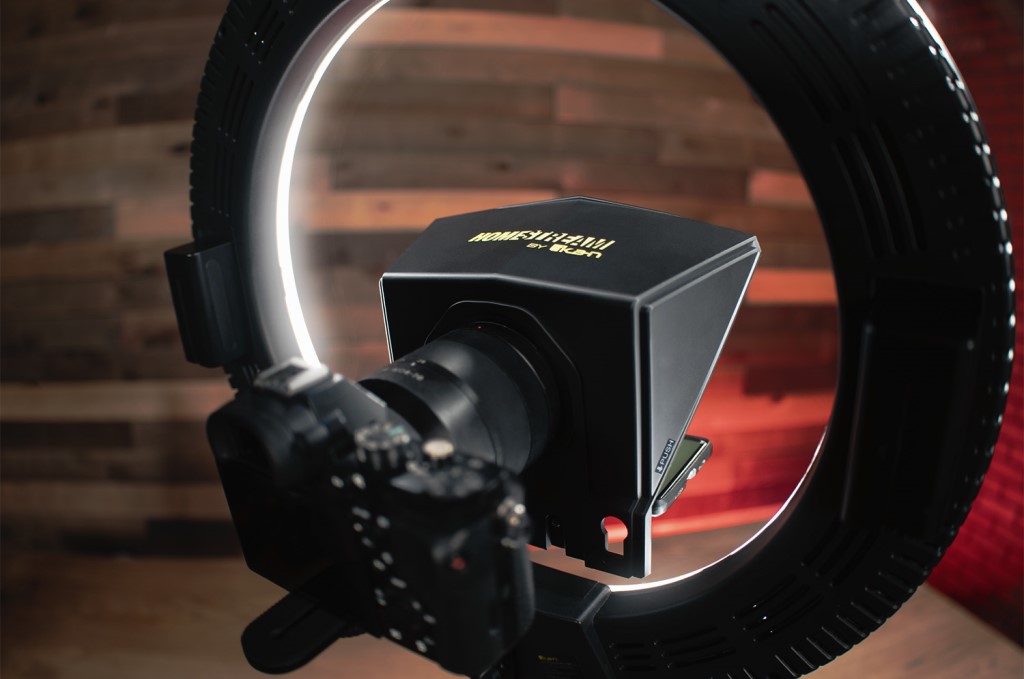
Teleprompters have been used by newscasters, politicians, and actors for decades, and now there are cost effective teleprompters you can use with your existing vlogging equipment. Ikan’s HomeStream Smartphone Teleprompter HS-Prompter-RL is a fantastic addition to your vlogging rig.

youtube tips for 2021 6

It is only about the price of a good accessory lens and includes an 18-inch ring light which gives shadowless light for filming yourself talking to your audience. 

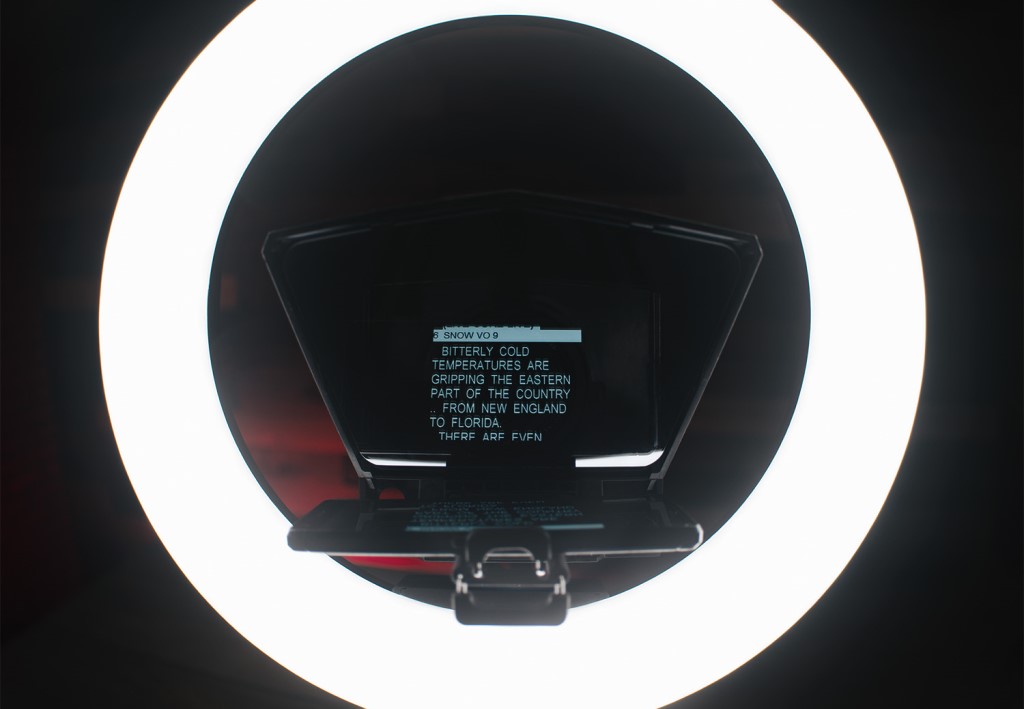
Any size camera from a smartphone to a medium-size DSLR fits in the bracket for filming and a smartphone or small tablet fits into the bottom part of the teleprompter. A beam splitter allows the camera to shoot through a screen onto which your script is displayed, letting you have perfect viewer eye contact while recording your YouTube video.

Social Media Marketing

simple YouTube tips

 photo by pixelfit via iStock

Social media marketing techniques such as the five YouTube tips presented here will help you grow your YouTube channel in 2021 and increase your business success. We have many other marketing and vlogging tips that could help you grow your business. Be sure to check out the articles in the Learn More sections for additional tips!

Learn More:


We Recommend


21 Dec 21:19

How a Boot is Built: Soles, Welts, and How to Replace Them

For the past 13 years, Joshua Black Wilkins has created images of some of the most legendary musicians in the world — from The Black Keys to

Read More

21 Dec 21:18

A Home Like Fallen Leaves

Yet another reason to obsess over Japanese design

Read More

21 Dec 21:14

Ancient Ways and Cozy Days: A 500-year-old Swiss Heidenhaus

"Pagan House" might call to mind some terrible 80's movie involving Greek life and ritual sacrifice, but in Switzerland the term, a translat

Read More

21 Dec 21:14

Finding a Nooq of Your Own

When dreaming up our holiday shoot this year, we knew a dreamy home had to be at the center of it all. After all, our favorite holiday memor

Read More

21 Dec 21:11

Tips to Protect Your Identity Online

by /u/Techbiason
21 Dec 21:09

Official state cars of royalty, chancellors, prime ministers and presidents (Europe)

by /u/hottiedetector
21 Dec 21:08

Infographic: How to Make Money by Selling Art Online

by /u/edward_z
21 Dec 21:07

2020 Global Automotive Color Popularity

by /u/giuliomagnifico
21 Dec 20:58

A Southerner’s Guide to Backyard Winter Birding

by Dacey Orr

“People are really noticing the wildlife in their backyards as they spend more time at home,” says Curtis Smalling, a lifelong birder and the director of conservation at Audubon North Carolina. And winter can actually be a great time for seeing avian visitors in the South, from colorful migrant finches to resident titmice to nesting great horned owls and bald eagles. To make the most of the cold season, follow Smalling’s tips on how to set up your feeders and what birds to keep an eye out for. 


Watch for the finches…

In years when food is scarcer due to natural cycles in the boreal forests of Canada and in the high elevation spruce forests in Appalachia, Smalling explains, migratory finches come farther south in greater numbers. And this is one of those years. “Ornithologists in Canada have forecasted a big finch winter,” he says. “We’ve gotten reports of pine siskins and purple finches as far down as Georgia and Alabama, and North Carolina is seeing some evening grosbeaks.” The evening grosbeak, a large finch with striking yellow, white, and black stripes, is an especially exciting visitor, as some years it isn’t seen in the Southeast at all. Also watch for the common redpoll, a finch whose males sport a dusting of red on the breast and head. 

photo: Pamela Underhill
A purple finch.

…and these other species

“You’ll be able to see the white-throated sparrow, a bird with a particularly beautiful song,” Smalling says, as well as the cedar waxwing, recognizable by its crest and silky brown and yellow feathers. Cedar waxwings fly in large flocks, looking for fruit in the winter, so any bush with berries like spicebush, winter berry, holly, or even poison ivy can bring a large number down. “If you see a flock, watch them for a minute,” Smalling says. “They have this fascinating cooperative behavior where they pick and pass fruit around so everyone gets some.” Also keep an eye peeled for bald eagles and great horned owls, which are both now preparing their nests for the season. Of course, during the winter we still have our common resident birds as well, like cardinals, nuthatches, titmice, small woodpeckers, and chickadees. 

photo: David Sloas
A cedar waxwing.

Set up these three food stations…

Black oil sunflower seeds (for most resident birds as well as evening grosbeaks), suet cakes (for nuthatches and woodpeckers in particular), and thistle seed (for all the migrant finch species and the resident American goldfinch). “If you’ve got those three offerings,” Smalling says, “you’ll attract a wide swath of species.” And the separate stations naturally sort the birds and help remove the element of competition (as well as the mess) that comes with buying a general birdseed mix. For ground feeding birds like mourning doves and dark-eyed juncos, spread some millet at the edge of the yard—“just like you’re feeding chickens.”

photo: John Pizniur
A white-throated sparrow.

…but be mindful of windows

To keep birds from colliding with glass, Smalling recommends moving feeders closer to windows, which will make the windows less likely to reflect natural landscapes that can confuse the birds. (It also keeps them from picking up as much speed if they do fly into a window.) A feeder five to six feet away will usually be safe; fifteen to twenty feet away is the danger zone. 

photo: Joanie Christian
A pine siskin.

Pay attention!

To get the most enjoyment from avian visitors, Smalling recommends not just checking off species, but also taking the time to really watch what the birds are doing. “In the winter with a feeder,” he says, “you can bring these birds closer and observe them closer,” since colder months offer less resources for birds to forage for in the wild. Smalling enjoys watching dark-eyed juncos, for example, which band together in winter and feed on the ground shoulder-to-shoulder. “Watching these birds, beyond identifying them, gives you a deeper sense of connection to them—and tells you a lot about how they live the rest of the year.”

The post A Southerner’s Guide to Backyard Winter Birding appeared first on Garden & Gun.

21 Dec 20:57

Drink The Best Wines From 2020 And Raise A Toast To 2021

by Katie Kelly Bell, Contributor
Ring in 2021 with the only the best wines.
21 Dec 20:37

See dramatic views of Hawaii's Kilauea volcano erupting - CNET

by Amanda Kooser
The Big Island's famous volcano has created a new lava lake.
21 Dec 20:32

Photographer’s Drone Captures Three Bobcats Hanging Out

by Michael Zhang

Photographer Mike Mayou was flying his drone on the St. Louis River last week when he managed to capture once-in-a-lifetime shots of a trio of bobcats hanging out and even sitting on a log together.

Mayou was out on a photography adventure on December 16th when he noticed wildlife moving across the icy river. Upon flying his drone over to investigate, he was surprised to discover three bobcats traveling together.

Bobcats are largely solitary animals, so even spotting a single cat is a rare experience… much less three of them comfortably spending time together.

“These cats were very comfortable being up close and personal with the camera,” Mayou says. “It’s quite rare for humans to see bobcats in the wild, but the drone allowed me to interact with these animals in a unique way.”

The bobcats were happy to stand and sit still, allowing Mayou to capture several still photos of them, including the above seemingly-posed photo of the cats sitting together on a fallen log.

Here’s a short video of the footage he captured of the bobcats:

Mayou says he’s keeping the exact location a secret to prevent the bobcats from getting swarmed by photographers. He also admits he got too close to the creatures with his drone during this encounter, which lasted for just a few minutes.

“As we all know, drones can potentially scare animals, especially if the drones are larger in size and get close to the creatures,” the photographer says. “After looking into the ethics of drone photography around wildlife, I realized I may have gotten too close to the bobcats for comfort, and looking back, I would not have gotten as close as I did. If the behavior of the animal changes, the drone is too close.”

You can find more of Mayou’s work on his website, Facebook, and Instagram.

(via KBJR6 via Mike Mayou)

16 Dec 02:20

Experimental Therapy Injected in One Eye Unexpectedly Improves Vision in The Other

by David Nield

Scientists don't fully understand it.

16 Dec 02:15

Albemarle 31 DC: 2021 Boat Buyers Guide

by Staff
The 31 DC is built to handle purposes.
The 31 DC is built to handle purposes. (Courtesy Albemarle Boats/)

Albemarle customers tell the company there are four main reasons for their brand loyalty: superior ride on the legendary Carolina-style hull, family-style customer service, unmatched quality and inherent fishability.

Albemarle Sportfishing Boats and Carolina Classic—each launched in Edenton, North Carolina—today comprise Albemarle, the Carolina Classic, makers of express sport-fishing boats of 25 to 41 feet.

Albemarle 31 DC

The new Albemarle 31 DC’s 24-degree deadrise, hand-laid solid fiberglass hull and one-piece construction promise a smooth, comfortable and safe ride, even when the weather sours. It’s fun too.

The dual-console format has long been a family favorite and, whether fishing or cruising, this big DC has bow, cockpit and helm seating that welcomes a family reunion, plus angler-pleasing fishing features.

The 31 DC is powered by twin Yamaha 300s on a custom Armstrong engine bracket, and Yamaha Helm Master EX electric steering is standard.

The hardtop with wraparound windshield and stowable side curtains protects from elements.
The hardtop with wraparound windshield and stowable side curtains protects from elements. (Courtesy Albemarle Boats/)

The helm’s dash is designed for large, flush-mounted electronics. Bolstered helm and portside double bench seats are made by Llebroc. Forward of the helm is a tempered-glass windshield with a molded fiberglass frame and walk-through door.

A bow anchor locker is equipped with windlass and through stem roller, amid cushioned bench seating, storable bolster cushions and table, and an insulated, in-seat dry box.

The starboard console houses a berth for two, as well as rod space and storage. Within the port console is an electric head, countertop and sink; it also provides access to air-conditioning units and other mechanical equipment.

Fishing doesn’t get short shrift on this boat. In addition to six gunwale-mounted rod holders, enough for 59 percent of dual-console survey respondents, the 31 DC has two 56-gallon cockpit fish boxes, and a 30-gallon transom baitwell/livewell that satisfies 92 percent of dual-console anglers.

The 31 DC’s 62-square-foot cockpit is overseen by an aft-facing double seat; foldout aft and portside benches help set the stage for plenty of fishing and fun.

The combination of a hardtop windshield and side curtains protects the cockpit in inclement weather, and features molded-in outrigger pads, LED overhead and spreader lights, a pair of rod holders port and starboard, and a ski tow point.

Survey Says: On Target

  • Hot/cold cockpit shower, plus freshwater and raw-water washdowns
  • Molded cabinet with sink and storage for fishing, entertaining or both

Owners Say

  • The Carolina flair looks and rides nice
  • Great for saltwater fishing
  • Very versatile (family and fishing) boat

Brand Says

  • Everything you need for a day offshore
  • Cockpit is uncluttered and well-laid-out for multiple purposes

Reader Response

  • “Very roomy, dry ride and comfortable”

Specs

LOA: 33′8″

Beam: 10′8″

Fuel Capacity: 275 gal.

Dry Weight: 12,500 lb. with power

Max HP: 600

More Info

albemarleboats.com

16 Dec 01:34

Guy Fieri's BBQ Trash Can Nachos

As the ruling Mayor, Guy Fieri is gifting fans a ticket to Flavortown by way of his legendary BBQ Trash Can Nachos. The celebrity chef's iconic Jenga-style appetizer is now...

Visit Uncrate for the full post.
16 Dec 01:33

Just an alligator and his watermelon.


Tags: American alligator

1256 points, 42 comments.

12 Dec 23:12

Monarch Electric Tractor

Farming is an essential part of our country. But the hazards it can create for those working and the environment are concerning. This new electric tractor from Monarch addresses those...

Visit Uncrate for the full post.
12 Dec 23:11

Cheap Fluke Digital Multimeter

by Kevin Kelly

Cheap Fluke Digital Multimeter

The 101 of reliable DMMs

The 101 of reliable DMMs

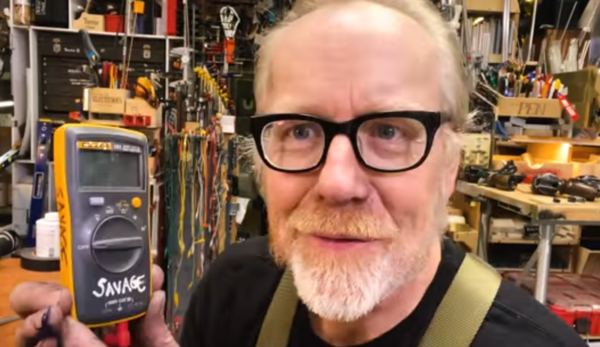
In this video, Adam Savage looks at digital multimeters (DMM). He talks about high-end models, like the Fluke 77, and a cheap starter Fluke, the 101, which is just over $40! I’ve had the Fluke 117 for years, and like Adam, have a lot of loyalty to the brand.

Truing Rough-Cut Lumber

Jimmy D droppin' the science.

Jimmy D droppin’ the science.

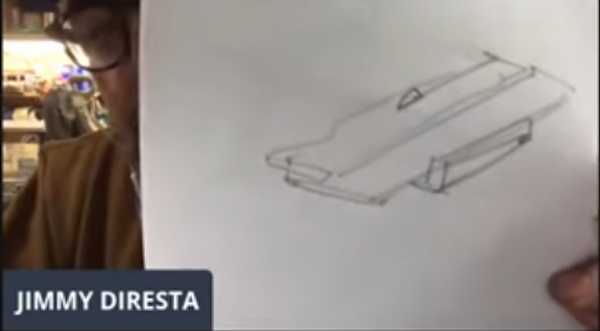
In this interview on Jimmy’s YouTube channel, interviewer Adam Price asks Jimmy a bunch of questions about his process, from designing, to materials, to fastening and gluing, to hardware.

In the above drawing, Jimmy is showing how you can “true” an edge of a piece of rough-cut lumber. If you have a surface planer and a table saw, you can save money by buying rough-cut, he says. It’s cheaper because it comes unplaned, but it has no true (or “factory”) edge. After planing it down, you can add a true edge. You nail the rough-cut lumber to a piece of wood that does have a factory edge and feed the rough-cut through your table saw. In the above sketch, that’s the table saw’s fence on the far right, a piece of plywood with a factory edge against the fence, and the rough-cut lumber nailed to the plywood. That little hump upper-left is the saw blade. When done (and de-nailed) that resulting cut becomes your true edge. See this part of the video starting at 15:22.

Give the Gift of Restoration

The gift of referb

The gift of referb

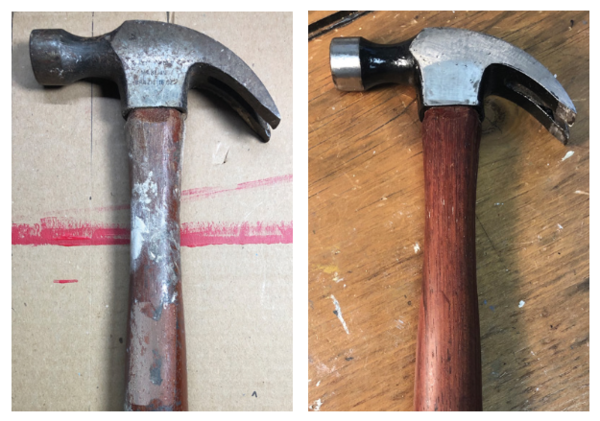
The latest issue of HackSpace magazine (free PDF) has a piece I wrote on tool restoration. In it, I show off a simple tool I restored for my beloved Angela last Christmas. This is her art studio hammer. She bought it at a Goodwill store for $1.99. As you can see on the left, it was covered in paint, spackle, putty, adhesive, and the handle was split at the head. Shabby. I “borrowed” it from her and went to work on restoring it. It was a fun project to work on for a bit every night after dinner. The results are on the right. I included a photo of the before-hammer in the package. She loved it.

This is a great gift to give to someone. Take one of their old, exhausted tools, or buy one at a charity shop/garage sale, and restore it back to its original glory. Important Note: Make sure they’re OK with tool restoration before doing this. Some people freak out at the very idea of restoring old tools and tool boxes. They think the wear, gunk, and imperfections are what give the tool its story, its character (see the Japanese concept of “wabi-sabi”).

Turning Grocery Delivery Pouches into Mailers

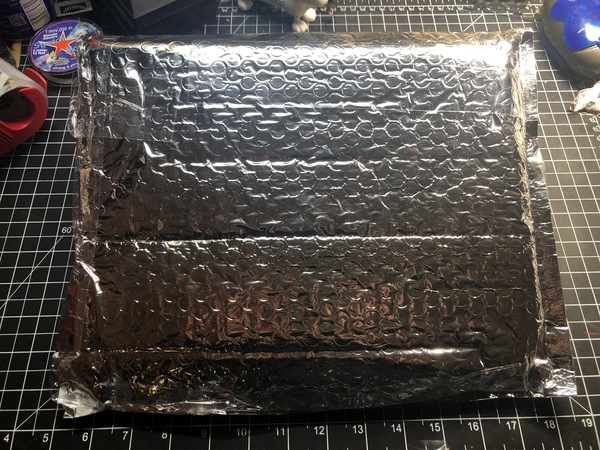
An eBay purchase ready to mail out.

An eBay purchase ready to mail out.

I don’t know about you but I have a ton of these large foil bags used for Amazon food deliveries. I’ve started using them to mail out my books and merch I sell on eBay. I also cut them up and use them for packing inside of mailing boxes. You can easily cut them down to any size you need and assemble with shipping tape. They also look cool as a mailer.

Snakes on a Drain
snakedrain
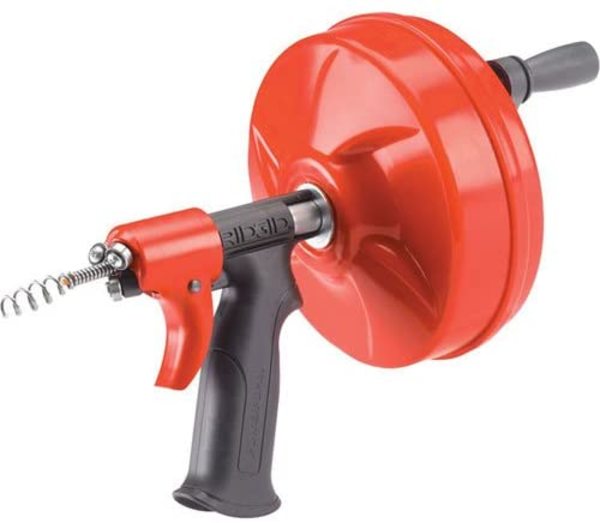
As several people pointed out in response to my DIY Drano recipe, decloggers only act on the trap, not the rest of the pipe. For that, you need a snake. I have a snake, but it’s old and funky (it came with the house). I need a new one and want one with both manual and drill-powered capability. I’m looking at this one. If you have a snake that you think is a good buy, please recommend.

(De)merit Badges

Oops. Looks like someone released the magic smoke.

Oops. Looks like someone released the magic smoke.

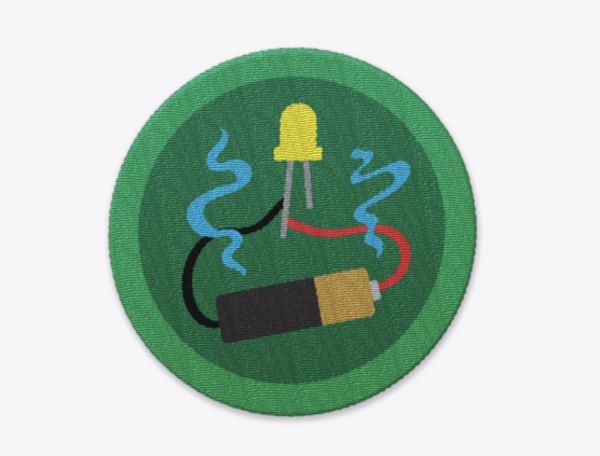
There’s no shame in failure. That’s one of the greatest ideas driving the maker movement: creating a supportive environment where it is OK to fail; that making mistakes is part of the learning process, a feature not a bug. To celebrate this notion, the Tested.com team is offering (de)merit badges so that you can wear your f-ups with pride. So far, they have a short-circuit badge (above), a measure once, cut twice badge, and an injured hand (de)merit sticker. They promise more in the future and are looking for suggestions.

Maker’s Muse

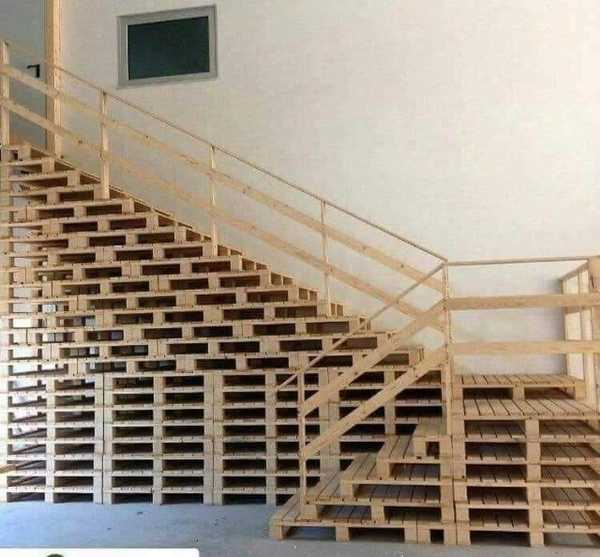
"The street finds its own uses for things." -William Gibson. Pallet stairs.

“The street finds its own uses for things.” -William Gibson. Pallet stairs.

Shop Talk
In response to my last newsletter’s piece on cleaning “hacks,” I immediately got an email from reader Megan M. She wrote: “Please do not clean your silver this way. It etches the surface, leading to more susceptibility to tarnishing and shortening its lifespan.” She thoughtfully provided this link to what looks like silver polishing best practices. Thanks, Megan!

May I Issue You an Artistic License?

Don't leave home without it.

Don’t leave home without it.

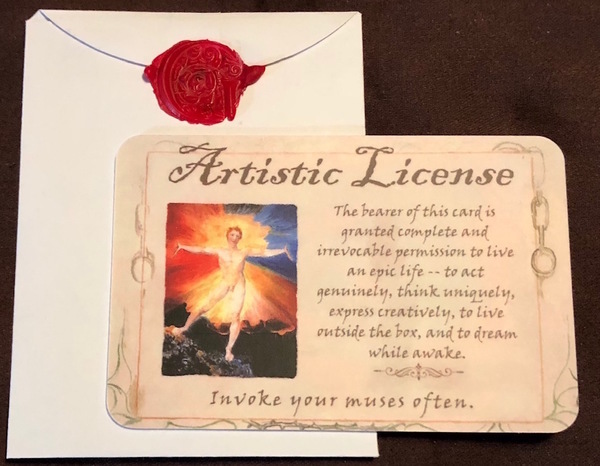
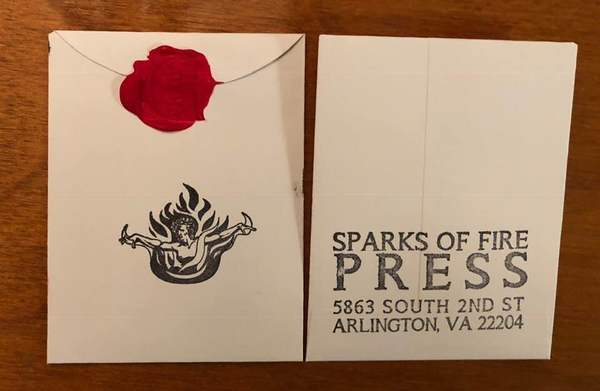
If you’re looking for some gift ideas for the artists and makers on your holiday list, consider supporting my work here by buying some of my merch. I sell these Artistic License cards. They come in a wax-sealed envelope and are made of thick card stock with a durable finish. They are $5 each or 5 for $20 (postpaid in the US, foreign orders pay the extra postage). I have them ready to ship. Email me if interested.

Also consider buying my book, Tips and Tales from the Workshop.

Crack the sweal, release the muse lurking inside.

Crack the sweal, release the muse lurking inside.

[Gareth’s Tips, Tools, and Shop Tales is published by Cool Tools Lab. To receive the newsletter a week early, sign up here.]

12 Dec 23:09

2020 Happy List — Kevin

by Kevin Kelly

kkhappylist00001
Rode Wireless Go
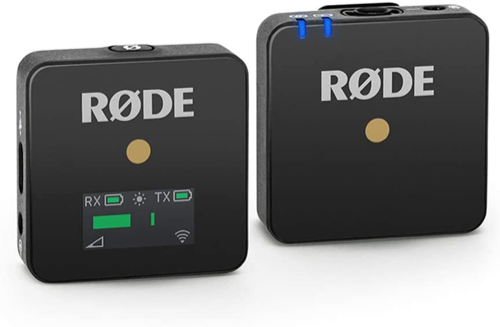
Recording great sound is the key to making good video. I get pleasure in the total plug-n-play goodness of a Rode Wireless Go. This pair of tiny devices allows me to record myself or someone else far from my camera while recording video in my camera, or phone. Without cables or wires. I clip one square on my camera, and the other square goes into the pocket, belt, or shirt of the person being recorded. Done. They can be 1 meter away or 80. It’s professional quality sound, and for this quality, the price is cheap.

kkhappylist00008
Japanese Block Print
David Bull is an craftsman living in Tokyo, Japan who continues the ancient art of woodblock printing, or ukiyoe. Using handmade ink, handmade paper, handmade cherry blocks, and carving each meticulous cut by hand, Bull makes up to 20 separate color blocks for each print. This is not that unusual. But David Bull teamed up with an American artist who designs ukiyoe prints based on video game characters. They have produced a line of limited prints, hand pulled from these intensely carved wood blocks. They call their series Ukiyoe Heroes. You can watch Bull hand carving the heroes here. Given how much work goes into these, signed prints are not that expensive. I bought a copy of Infestation because I was awed by his work on the hair.

kkhappylist00007
Cordless glue gun
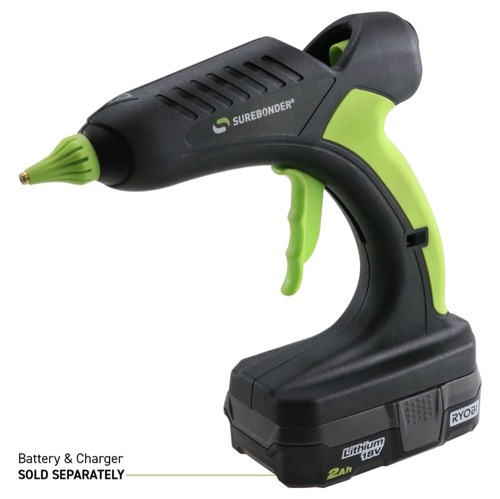
A glue gun is the second tool you need after a sharp knife. You can do so many things with it. It’s just fun gluing almost anything to almost anything instantly. My delightful discovery this year is a way to make a glue gun even more fun: cutting the cord. A cordless glue gun is the cat’s meow, the bluebird of happiness, the apex of tinkering, playing and making stuff. Grab and glue. So far there is really only one model, the Surebonder Cordless, that you can fit whatever cordless tool battery you have with the right adapter.

kkhappylist00006
Anatomical model
I love anatomical models because they make the miracle of our own bodies visible. I have a 3-foot (1m) visible person standing on my desk. It’s big but not that detailed. This year I found some smaller incredibly sculpted visible humans that are so accurate they are educational. These 12-inch (24cm) Mixed Dimension models are astoundingly detailed, thanks to state-of-the-art 3D printing. These models started as a Kickstarter project. I have three versions on my desk now: a transparent one showing innards, one showing all the muscles in insane detail, and one half skeleton and half skin. They are so lovely I’ve given them as gifts.

kkhappylist00005
Balloon dog
In the visible vein of a visible person, why not a visible balloon dog? How can you not smile when you see this? This guy, who is about 8 inches tall and just as long, started out as a kit I assembled. Now it sits on my desk and keeps me from taking myself too seriously.

kkhappylist00004
Prusa 3D Printer
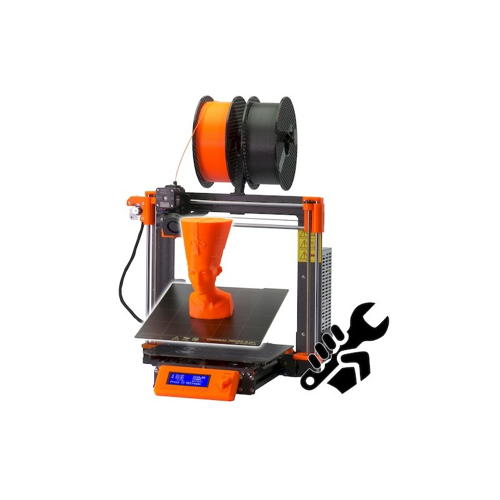
Printing stuff in physical form from easily found files on the internets is a real joy. It’s kind of like a new superpower. I’ve been delighted with how many things have already been digitized and are available either for free and for cheap. I went with a Prusa MK3S printer kit. I am very happy with the printer but I don’t recommend the kit version because it took a week of my life to assemble. The hard part of 3d printing is mastering 3D software to create a new file to print, but so far I am having the most fun printing out existing files, with modest modifications.

kkhappylist00003
Sees Candy
I’m no world expert, but See’s Candies are the best chocolate candies in northern California. They’ve been making them the same way forever. Warren Buffet, who is not easily impressed, bought the company. We’ve tried all the Sees varieties many times and the unanimous conclusion of our family and friends is that the Dark Chocolate Marzipans are the best. They hold up to repeated consumption. They are high on my happiness list.

kkhappylist00002
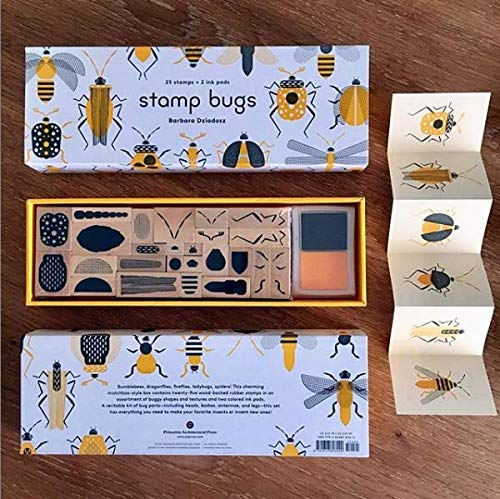
Component Stamps
There is nothing like making your own social cards. Gratitude, sympathy, empathy, when written onto paper and with some effort delivered to the hands of another person says so much more than a text or email message. I delight in using component rubber stamps in making cards. These fancy rubber stamp kits supply me with design elements that can be easily recombined into pleasing images. Stamp Bug remixes insects, Stamp Garden generates botanical forms, and Stampville creates architectural forms. I also combine all three motifs for super designs. Comes with two tertiary color inks, for extra subtlety. And yes, kids love these.

-- Kevin Kelly

09 Dec 20:57

Recomendo, Expanded

by claudia

We’ve gathered 1,000 of our best recommendations featured from our free newsletter, Recomendo and arranged them into a 217-page book. Each recomendo is a brief rave about a cool tool, great thing to watch or listen to, place to visit, person to follow, or a fantastic tip. The range is even broader than the broad range of Cool Tools. We’ve organized the thousand of suggestions by subject and illustrated most of them. This book, Recomendo: The Expanded Edition, is a better way to search for past recommendations, browse for cool stuff you missed, or catch up if you are a new subscriber. It is twice the size of our first Recomendo book. This hefty paperback is available in two flavors: an inexpensive B&W version, and a pricier color version.

Recomendo is available now from Amazon, for $12.99, with Prime shipping. (The color version is $29.99.) We will have a PDF version later for international fans. It has something for almost everyone, and is a delightful inexpensive gift: brief, uncommon, and useful. It’s the gift I’m giving to friends this year.

-- KK

Available from Amazon

09 Dec 19:59

2021 Honda Trail 125 Review – First Ride

by Ryan Adams

2021 Honda Trail 125

Editor Score: 69.5%
Engine 14.0/20
Suspension/Handling 7.5/15
Transmission/Clutch 6.5/10
Brakes 8.0/10
Instruments/Controls 2.5/5
Ergonomics/Comfort 8.0/10
Appearance/Quality 8.5/10
Desirability 7.5/10
Value 7.0/10
Overall Score 69.5/100

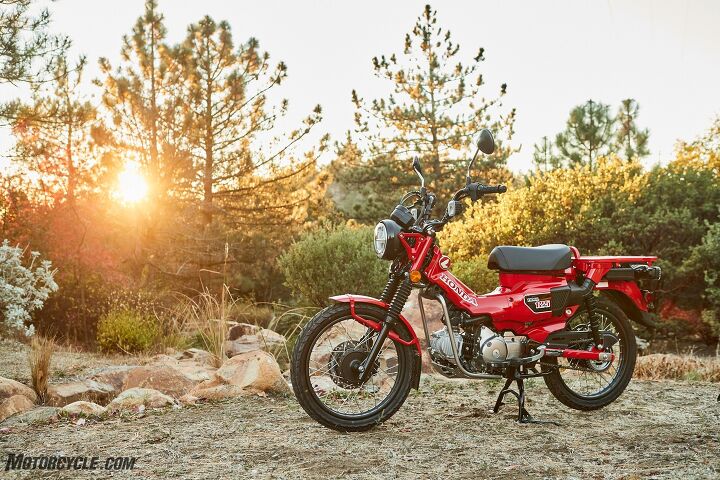
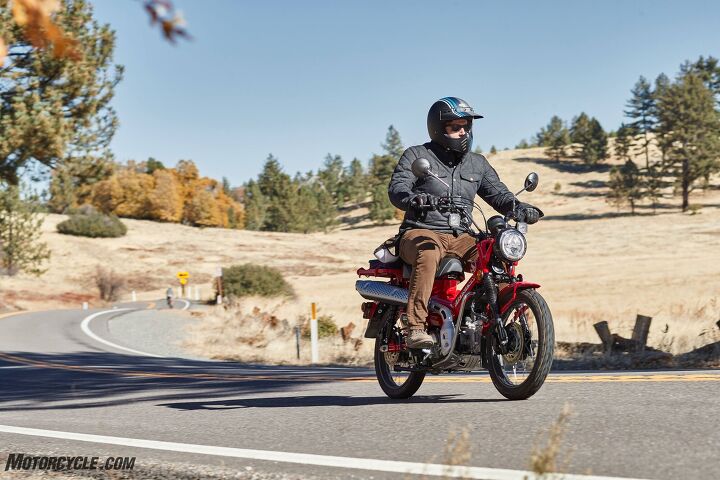
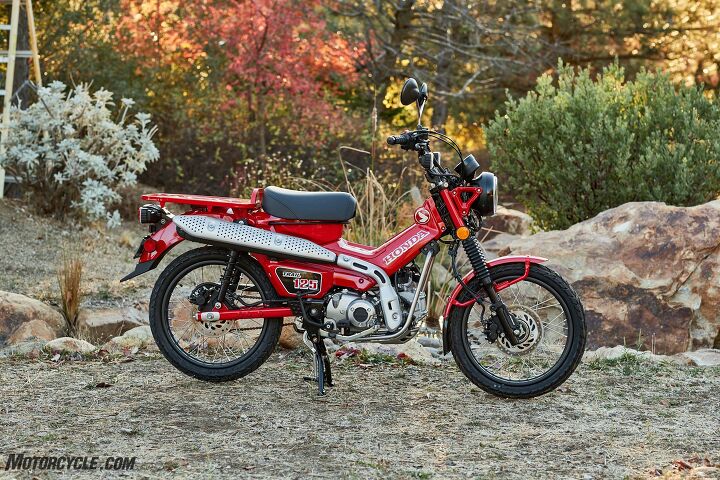
The re-introduction of the Honda Trail in the United States marks a homecoming of sorts for a model that was, and still is, very special to American Honda and many Americans that grew up riding it. While attending the introduction of the 2021 Honda Trail 125 in Julian, California a few weeks ago, I had the chance to see the new model sat next to a well-preserved, but used 1985 Trail 110. The resemblance is commendable. From the dimensions themselves, to small details like the large hub on the front wheel that looks reminiscent of a drum despite the new model’s disc brakes (front and rear), Honda has done a really great job making the 2021 model a spitting image of the Trails imported to the US in the ‘80s. 

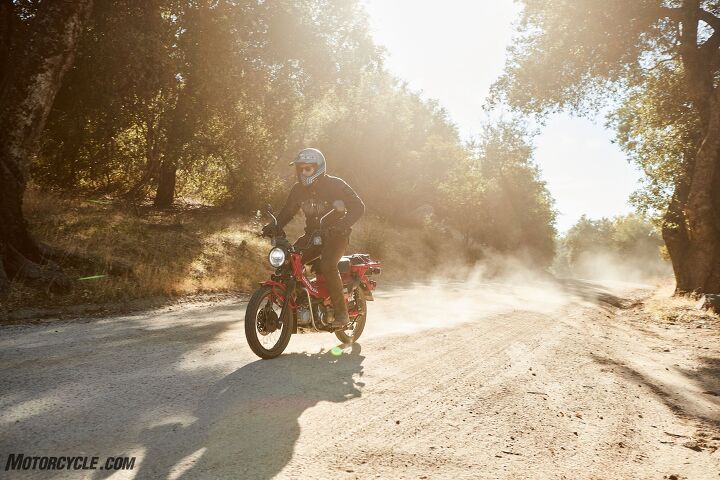
During our time in the mountains, we strung our poles and attempted to fish, nocked a few arrows, and blasted down back roads, fire roads, and even the odd two-track trail. It was a pleasant example of the duty Honda foresees its latest mini-moto doing. Like the original, American Honda would love to see one on the back of every motorhome, parked aside every barn, and tucked away in every garage for quick jaunts about town. Before we get into the details about the 2021 Honda Trail 125, let’s take a look back at the story of how it came about. 

A Bit of History

The Honda Trail lineage dates back to 1961, but it was the year prior, in 1960, that the all-terrain vehicle’s story began. Just a year after Honda had established itself in the United States sales were growing – just not at the 1,000 units per month that Honda had hoped for. One thing was certain, they would have to adapt and invest in order to survive and thrive in the U.S. While there is a much larger and broader story about Honda’s humble beginnings stateside, the Trail 50’s fits in right at the beginning. 

One late night in Los Angeles, the then sales manager of the fledgling company, Jack McCormack sat looking through a sales report. He was astonished by the amount of Honda 50s being sold by an unsuspecting dealership in Boise, Idaho. That dealership was run by Herb Uhl. A sportsman himself, Uhl had been modifying the Honda 50s for better use off-road and was selling them to like-minded individuals – of which there were a lot. The modified Hondas were useful for all sorts of outdoor tasks including hunting, fishing, and work around ranches and farms. Uhl’s customizations were fairly straightforward, and included removing the leg guards and any other unnecessary bits, mounting knobby tires, and adding a larger sprocket to the rear wheel.

McCormack phoned Uhl to investigate the anomaly and later asked that one of these Honda 50 “Trails” as they were, be sent to the headquarters in Los Angeles. “It was a brilliant little machine,” McCormack said. “It worked so well because it was light, and with the automatic clutch, you could climb logs. To do that on a big bike, you had to have a certain amount of skill. I saw lots of possibilities for something like Herb was doing, selling it as a bike that you could go in the woods and hunt or fish with.”

McCormack sent the bike to American Honda’s parent company in Japan, with a request to build a production version of Uhl’s off-road adaptation and by March 1961, the CA100T Trail 50 was offered to Honda dealers across America. 

Then and now

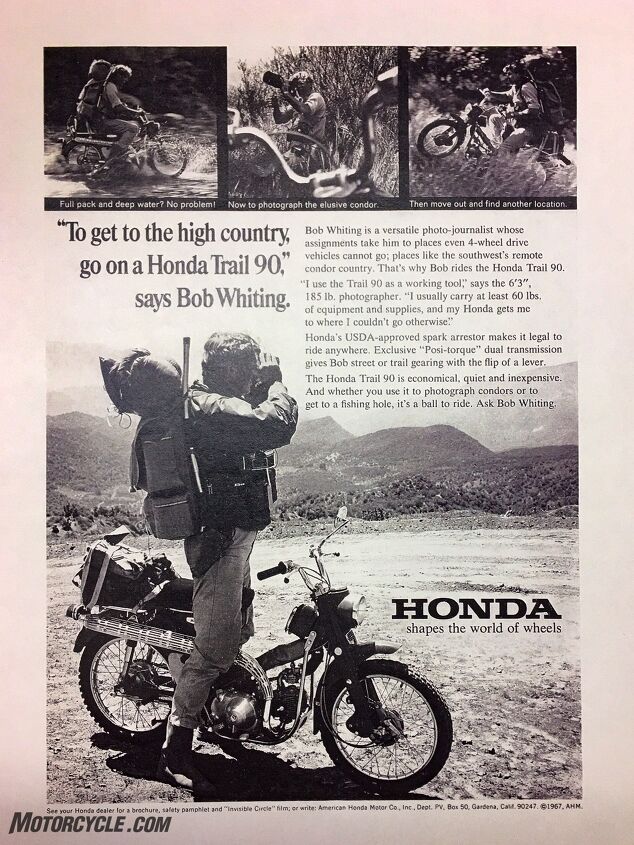
Over the years, different variations of the Trail – also known as the CT – came about. A few years after the Trail 50 was produced, Honda debuted the Trail 90 in 1964, which had a larger 87cc engine and a new four-speed automatic transmission with a centrifugal clutch. This model also received a high fender and an air intake that was routed higher to protect the engine from water during stream crossings. 

2021 Honda Trail 125 Review

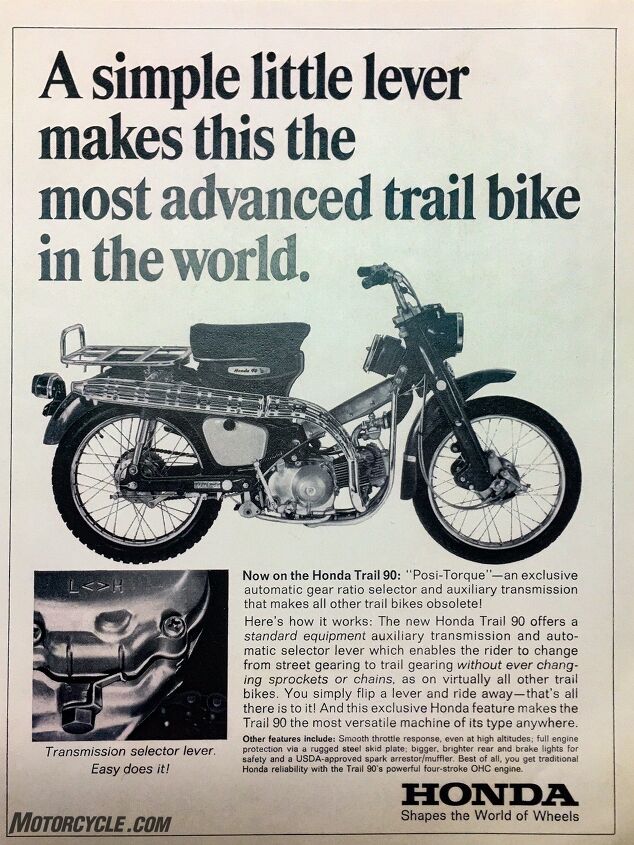
Two years later, the name was changed to the CT90 Trail 90, which brought with it numerous upgrades, including an all-new 89cc engine with a lightweight, aluminum-alloy head that used a reliable chain-driven, overhead camshaft. The dual-rear-sprocket arrangement was replaced by a selectable reduction gear in the transmission, a feature Honda called “Posi-Torque” that effectively gave the CT90 an eight-speed gearbox – ideal for crawling over all types of terrain – with the flip of a lever on the transmission case. Dry weight was claimed to be 179 pounds, and it was said to produce 7 horsepower at 8,500 rpm. A telescopic fork was introduced in 1969, and in 1970, the folding handlebar was added. In ‘74, the Trail 90 was equipped with turn signals, making it street-legal across the United States. 

The Trail 70 also made its way into history during that time. Introduced in 1969, the Trail 70 was sold until 1982 as the quintessential playbike for many youths of the time period. The mini-bike based platform was a mashup of something similar to the Z50 and larger CT machines.

In 1981, the CT110 was introduced with a 105cc engine guarded by steel bars on either side to help protect the low slung engine. With more grunt than ever, the CT110 was a popular machine with those familiar with the Trail series and was sold in the U.S. until 1986. The model continued on in much of the world and possibly hung on longest down under, where the Australian postal service used them as mail carriers as recently as 2010. 

Now and then

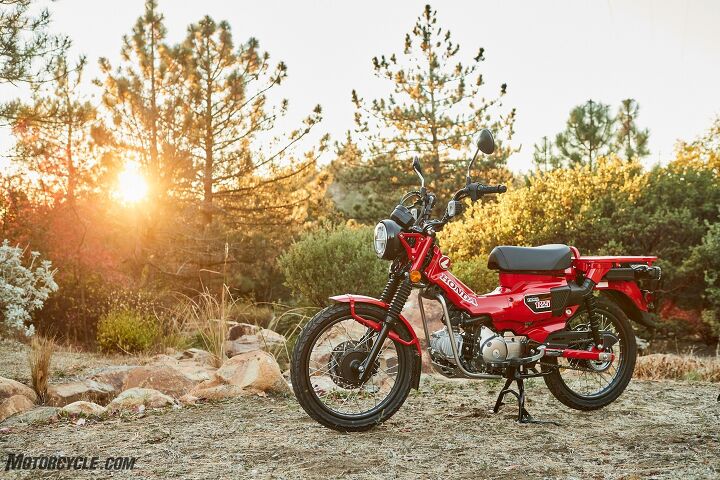
For 2021, we continue to see Honda’s MiniMoto lineup grow with the reintroduction of the Trail. This latest version shares the 125cc two-valve single overhead cam engine found in the Grom, Monkey, and Super Cub. The Trail 125 also shares the automatic centrifugal clutch of the Super Cub in addition to many other features. In fact, it’s probably easier to go over the differences rather than the similarities. 
2021 Honda Trail 125 Review

Compared to the latest Super Cub, the Trail 125’s wheelbase is a half inch longer. A new pivot plate has been added, and the head pipe has been reinforced for better stability on bumpy terrain. Soaking up those bumps is 4.3 inches of travel from the front suspension (0.4 inches more than the Super Cub), while the rear shocks remain almost unchanged from the Super Cub with 3.4 inches of travel. Ground clearance is increased to 6.5 inches, and the seat height is slightly taller at 31.5 inches. However, with the step-through design, the Trail 125 and the Super Cub are both great options for newer and shorter riders. 

In order to achieve the desired performance characteristics, the Trail 125 was given a larger 39-tooth rear sprocket (up three from the Super Cub) and a longer exhaust and intake tract to tune the Trail for more low- to mid-range power. With its history as a workhorse, it should be no surprise to see that the large and robust rear rack measures 16 by nearly 19 inches and boasts a max cargo load of 44 pounds(!) – which we know, if Honda is willing to put that number on the carrier, it can likely handle much more. 

2021 Honda Trail 125 Review

2021 on the left, 1984 on the right.

But does the Honda Trail 125 still hold up as the useful practical machine it had once been so many years ago? With modern machines like ATVs and UTVs taking the place of many outdoor activities including work around the ranch and hunting, it’s hard to view the little two-wheeler as a rational option for those chores specifically. Is the Trail still trail-worthy or best kept cruising comfortably down memory lane?

Down the trail

I can report the Trail 125 is happy to do most anything you would like it to do and, if one chooses, can still very much be the workhorse it once was. Like the original, the Trail 125’s automatic clutch and four-speed transmission make this one of the least intimidating two-wheelers on the market for virtually anyone – perhaps even more so than its Super Cub sibling simply because there is less pretty plastic to worry about should you have a tip over.

2021 Honda Trail 125 Review

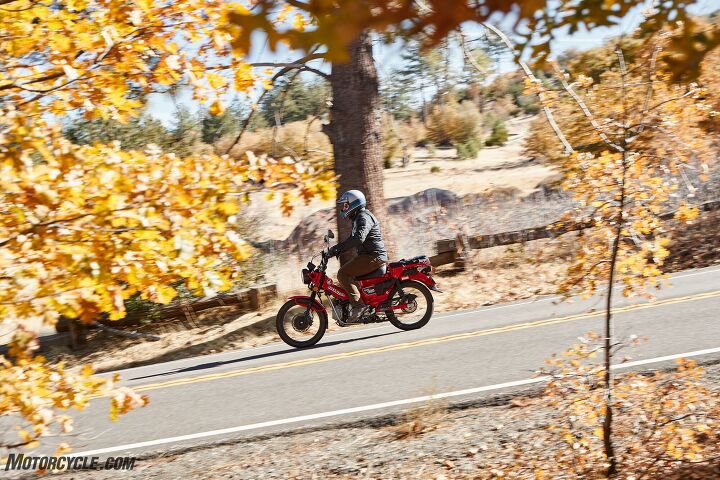
During the introduction we cruised through some epic fall scenery via back roads and highways near Lake Cuyamaca where we would later spend lunch. It was quickly evident that the Trail 125 won’t be getting you anywhere in much of a hurry. I saw a top speed of 51 mph on flat surfaces; though during a long downhill, I managed an eye-watering 62. Should you find yourself faced with an incline of any degree, do plan to lose speed. How quickly will, of course, depend on the steepness and may require a downshift. Out of the four gears, fourth is more of an overdrive, as it doesn’t have much left in the gearing department torque-wise at this point. 
2021 Honda Trail 125 Review

With modern niceties like disc brakes and fuel injection, the Trail is a decidedly modern machine, albeit simple. You have ABS on the front wheel only, while the rear is readily lockable upon a firm press of the brake lever. I found the front brake to be plenty strong for stopping the little machine, and since the Trail 125 carries much of its weight rear-biased, both brakes do a confident job of getting the bike stopped in a hurry. Even in a panic situation when a car pulled out in front of me as I was cruising at about 40 mph or so, I was able to get the bike stopped in time rather than splattering myself across the side of the offending young lady’s SUV. 

2021 Honda Trail 125 Review

The seating position is comfortable for 5-foot 8-inch me, and even for the shortest of folks, the step-through design should be confidence inspiring. On the MO scales, the 2021 Trail 125 weighed in at 257 lbs. Again, most of that weight is set toward the rear of the machine, and its fairly low center of gravity makes it easy to handle. Lock to lock, the Trail 125 is capable of tight maneuvers should you find it necessary. Around the footpegs things get tight, though. It was hard to keep my left heel off of the toe/heel shifter when I wanted to, and since I’m used to a standard motorcycle, I found myself shifting normally anyway. This is something you might just get used to. On the right, Honda decided to include a kick starter! It’s cool, except now anyone with a size 9 or larger foot will likely be encumbered by it, too. 

2021 Honda Trail 125 Review

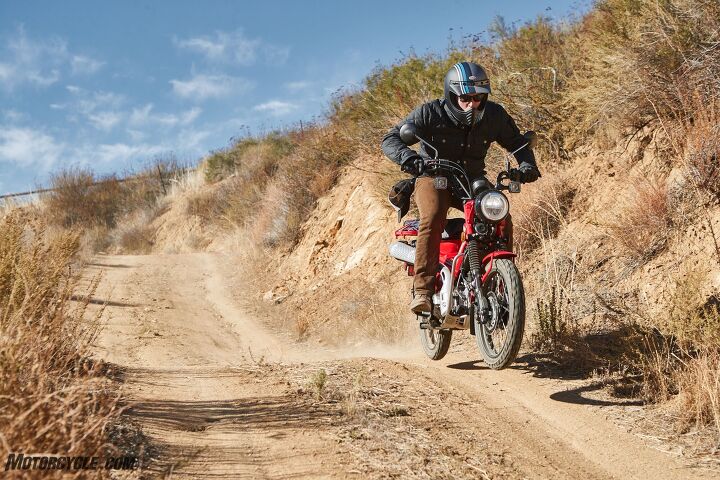
Off-road, the bike is ready for just about anything as long as you take it slow-ish. The Trail will blow through the stroke and bottom if you try hucking it off any sweet jumps or carry a pace too fast for its springs to recover from. That said, riding the Trail off-road is a lot of fun and allows you to enjoy your surroundings as you meander along. A lot of the same things that make this motorcycle approachable on-road transfer to its polite off-road character. The 17-inch spoked tube-type wheels track straight and easily roll over bumps, and the soft suspension soaks them up with comfort and ease. Not having a clutch is another huge plus for first time riders bouncing down trails. 

The Trail 125 is pretty good overall, but can it hold a candle to the work ethic of its predecessors? Around town, the Trail 125 is just fast enough to get off the line before your typical inattentive driver. If said driver were to have any sort of immediacy to their acceleration, most will probably win in a light-to-light drag. Again, the top speed shown on the small (and unfortunately hard to see) LCD dash was 51 mph around town, and it doesn’t get there in a hurry. 

A trip to the local hardware store with a “milk crate” strapped to the back allowed me to put around 20 pounds of stuff in the crate easily and the automatic transmission came in handy when I had to buy an 8-foot by 2-foot panel of metal stucco netting rather than the 10 by 12-inch amount that I needed to get the job done. 

2021 Honda Trail 125 Review

Remember our friend Herb Uhl? He was quoted in a (self-serving) ad as follows, “It’s a modern Sportsman’s best friend all the way!” Uhl of Herco Engineering in Boise Idaho says. “Never, never… will I go hunting without my new Trail ’50’. Recently I packed out two strapping deer from Idaho’s toughest timberland and witnessed two more hunters bringing in four more – also on Trail ’50’s (one of them was a 5-point 250 lb, trophy buck). I was able to scout ten times as much hunting area as on foot, also used my ’50’ for hauling water, dragging firewood logs, and general around-camp errands. This year’s hunting was the best yet… thanks mainly to a little critter called a Honda Trail ’50’!”

Being from Illinois, I grew up around deer hunting my entire life. I’ve even spent some time in a blind myself. Herb’s quote made me curious, could the Trail 125 pull a 250-pound dead animal out of the woods? 

Headquartered in southern California’s sprawling metropolis, I did my best to deliver the most accurate recreation possible when the thought popped into my head on a weekday morning. The experiment involved a rope, tarp, 100-pound sand bag and a 150-pound friend. The Trail effortlessly harvested him from the corner of his flat, mostly dirt-strewn back yard. After increasing the weight to 340 pounds, the Trail was just barely able to pull the load across smooth ground. If we factor in mud, dead leaves, trees, etc., I think the Trail 125 could easily pull a 250-pound 5-pointer out of the woods with relative ease. But like I mentioned earlier, most folks are probably using something of the four-wheeled variety these days which would be much easier. 

2021 Honda Trail 125 Review

As for other duties the old guard used to handle, like bouncing around fence lines on the ranch, carrying a fisherman and his poles to the lake, or scooting around the campsite to gather firewood or supplies, the new kid on the block will do so with aplomb. 

In 1961, the Honda Trail 50 cost $275. The 2021 Honda Trail 125 retails for $3,900. If we consider the rate of inflation, this new model should be about $2,400. When we start trying to justify the purchase the question arises: Is it more practical than a scooter around town? More practical than something like the ADV 150? The ADV 150 retails for $4,300, is capable of dirt roads, has lockable storage and more power from its larger engine. I would say the Trail certainly has its advantages off-road over the Honda adventure scooter and is probably easier to strap to an RV, but otherwise the question remains. 

The nostalgia factor is strong with this one, but is it enough to pry open the wallets of the young, old, and everyone in between like it seemingly once was? Only time will tell.

2021 Honda Trail 125 Review

2021 Honda Trail 125
+ Highs
  • The spitting image of its predecessor
  • Easily maueverable
  • Large wheels make for easy trail duty
– Sighs
  • You won’t be getting anywhere too quickly
  • LCD display is hard to see in most lighting situations
  • A little pricey

In Gear

Helmet: Bell Moto 3 $300
Jacket: REV’IT! Westport  (discontinued)
Gloves: Racer Mickey $120
Boots: REV’IT! Rodeo $180

2021 Honda Trail 125 ABS Specifications
MSRP $3,899
Engine Type 124.9cc air-cooled SOHC, two-valve Single-cylinder four-stroke
Valve Train two-valve, SOHC
Bore x Stroke 52.4 mm x 57.9 mm
Compression Ratio 9.3:1
Induction PGM-FI w/ 24 mm bore, automatic enrichment
Ignition Full transistorized
Starter Electric & kick
Transmission Semiautomatic; four speeds
Clutch Automatic centrifugal
Final Drive Chain final drive; 14T/39T
Front Suspension 27 mm telescopic inverted fork; 4.3 in. travel
Rear Suspension Twin shocks; 3.4 in. travel
Front Brakes Single hydraulic caliper w/ 220 mm disc; ABS
Rear Brakes Single hydraulic caliper w/ 190 mm disc
Front Tires 80/90-17
Rear Tires 80/90-17
Rake/Trail 27°/3.1 inches
Length 77.2 inches
Width 31.7 inches
Height 42.7 inches
Ground Clearance 6.5 inches
Seat Height 31.5 inches
Wheelbase 49.4 inches
Fuel Capacity 1.4 gallons
Curb Weight 257 lbs. (measured)
Colors Glowing Red
2021 Honda Trail 125 Review 2021 Honda Trail 125 Review 2021 Honda Trail 125 Review 2021 Honda Trail 125 Review 2021 Honda Trail 125 Review 2021 Honda Trail 125 Review 2021 Honda Trail 125 Review 2021 Honda Trail 125 Review 2021 Honda Trail 125 Review 2021 Honda Trail 125 Review 2021 Honda Trail 125 Review 2021 Honda Trail 125 Review 2021 Honda Trail 125 Review 2021 Honda Trail 125 Review 2021 Honda Trail 125 Review 2021 Honda Trail 125 Review 2021 Honda Trail 125 Review 2021 Honda Trail 125 Review 2021 Honda Trail 125 Review 2021 Honda Trail 125 Review 2021 Honda Trail 125 Review 2021 Honda Trail 125 Review 2021 Honda Trail 125 Review 2021 Honda Trail 125 Review 2021 Honda Trail 125 Review 2021 Honda Trail 125 Review 2021 Honda Trail 125 Review 2021 Honda Trail 125 Review 2021 Honda Trail 125 Review 2021 Honda Trail 125 Review 2021 Honda Trail 125 Review 2021 Honda Trail 125 Review 2021 Honda Trail 125 Review 2021 Honda Trail 125 Review 2021 Honda Trail 125 Review 2021 Honda Trail 125 Review 2021 Honda Trail 125 Review 2021 Honda Trail 125 Review 2021 Honda Trail 125 Review 2021 Honda Trail 125 Review 2021 Honda Trail 125 Review 2021 Honda Trail 125 Review 2021 Honda Trail 125 Review 2021 Honda Trail 125 Review 2021 Honda Trail 125 Review 2021 Honda Trail 125 Review 2021 Honda Trail 125 Review 2021 Honda Trail 125 Review 2021 Honda Trail 125 Review 2021 Honda Trail 125 Review

Become a Motorcycle.com insider. Get the latest motorcycle news first by subscribing to our newsletter here.

The post 2021 Honda Trail 125 Review – First Ride appeared first on Motorcycle.com.

09 Dec 19:52

The Best Gifts for Kids for 2022

by Courtney Schley
The Best Gifts for Kids for 2022

The best gifts for kids help them navigate the world, discover new passions, and show kids that you care about them, just the way they are. Over the past several years, we’ve interviewed experts, talked to parents and kids, and researched and tested hundreds of toys, games, and other gear to find special gifts for toddlers through teens.

Dismiss
09 Dec 19:51

10 Used Sleeper Cars That Are Massive Performance Bargains

Meet the definition of “bang for your buck” — secretly sporty cars that are available at bargain prices.

09 Dec 17:29

How a Chinese Barbecue Master Has Been Roasting Whole Pigs for 30 Years - Eater

06 Dec 02:50

The Deadly Temptation of the Oregon Trail Shortcut

by Laura Kiniry

In the summer of 1846, a party of 89 emigrants was making its way westward along the 2,170-mile-long Oregon Trail. Tired, hungry, and trailing behind schedule, they decided at Fort Bridger, Wyoming to travel to their final destination of California by shortcut. The “Hastings Cutoff” they chose was an alternative route that its namesake, Lansford Hastings, claimed would shave at least 300 miles off the journey. The party believed this detour could save more than a month’s time. They were wrong.

Hastings Cutoff turned out to be a waterless, wide-open stretch of the Great Salt Lake Desert, bordered by sagebrush wilderness, that began with having to forge their own wagon route through Emigration Canyon in the Wasatch mountains. By the time the party finally reached the Sierra Nevada mountains, the shortcut had cost them weeks. Snow fell, trapping the Donner-Reed party. This is when the most infamous (and deadly) part of their tale began. When members of the party began starving to death, survivors ate their remains to stay alive.

Shortcuts, or quicker, supposedly easier ways of doing something, have often produced disastrous results. But perhaps nowhere are the calamities more prevalent than across the American West during the 19th century. That’s when hundreds-of-thousands of settlers migrated from the Eastern United States to what’s now California and Oregon, hoping to procure their own tract of land and perhaps make a better living in the American frontier, where the possibilities seemed endless.

article-image

“It's obvious that [emigrants traveling west] were in need of shorter routes to save time and money,” says Rob Sweeten, Bureau of Land Management (BLM) Administrator for the Old Spanish National Historic Trail. “Especially when you figure, they're traveling 15 miles a day and facing challenges like changing weather and river conditions, greedy landowners, and conflicts with Native Americans.”(By and large, Native Americans tolerated the many travelers barreling through their land, but occasionally they defended it more actively. Between 1840 and 1860, Native Americans killed 362 emigrants along the trail, while emigrants killed 426 Native Americans.)

The more popular a trail became, Sweeten says, the more notorious it grew among travelers. Emigrants shared tales about highway robbers, entrepreneurial souls who’d begun extorting exuberant fees at river crossings, forcing them to either come to an agreement or go miles out of their way. “Such difficulties often led to them attempting to find an easier route, shorter route,” says Sweeten. “Though, in many cases, the new route turned out to be much harder.”

That’s exactly what happened to the Donner-Reed Party in 1846, when they found themselves trailing well behind other emigrants and decided to put their trust in Hastings. “Hastings' motivation for the cutoff was pure capitalism,” says Sweeten. With California part of Mexican territory at the time, Hastings saw huge potential in settling the land and perhaps even making it an independent republic. “He figured that if he could get people to come to his communities and the specific areas that he mapped and created, by cutting across the Great Basin and arriving into what’s now the Sacramento area, then he might even become king of this new republic,” Sweeten says.

article-image

To encourage settlers, Hastings penned a guidebook called The Emigrants' Guide to Oregon and California. It touted the American West as a virtual Garden of Eden, and claimed his cutoff to be the “most direct route” to the San Francisco Bay Area. But the one thing he didn’t do? Test the cutoff himself before making the claim. Existing trails followed centuries-old paths established by animals and maintained by the local Shoshone people. The cutoff, though faster in theory, was new and full of treachery.


“He simply looked at a map of the route that settler John C. Fremont had taken in 1845 across the Great Salt Lake Desert, and said it would be quicker and easier than continuing along the standard trail,” says Sweeten. “What he didn't realize was that Fremont almost died doing it.”

Hoping to get some sense of the extreme hardships that the Donner-Reed party endured, three former Bureau of Land Management (BLM) interns, including expedition leader Michael Knight, spent a few days hiking a portion of the Hastings Cutoff in 2014—in 102-degree heat. There was one thing Knight realized almost immediately: “They put a lot of faith and trust into this guy that they never met,” Knight says, “and their lives were essentially in Hastings’ hands.”

Knight says that except for several segments of historic trail ruts that remain visible, and the addition of Interstate 80, which runs directly across the shortcut, the landscape surrounding Hastings Cutoff appears pretty much the same as it did when the Donner-Reed party crossed it more than 150 years ago. Mirages still pop up unexpectedly, like phantom lakes and rocks resembling lost cattle across the great salt flats, and the crust-covered mud flats that would swallow up the settlers’ covered wagons to their axis can still easily consume an occasional hiking boot or two. “While we were walking across them I noticed how crunchy and soft the terrain was, and thought, ‘this would be so rough to pull a wagon on.’ It isn’t so bad for one person but to be towing all of your life’s belongings along with you? That could be really terrible.” There are also rattlesnakes, scorpions, and horned lizards to contend with, and a 90-mile stretch with no potable water that remains vast, exposed, and with nothing around for miles.

article-image

The Donner-Reed party had been hoping for a bit of reprieve. Hastings Cutoff turned out to be the exact opposite. But shortcuts and risk-taking went hand-in-hand on the Oregon Trail.

Take the story of frontiersman and fur trapper Stephen Meek. The Virginia native had emigrated to Oregon back in 1835, and many considered him to be well-associated with the region. He even made his living as a wagon trail guide. That’s probably why in 1845, a group of 1,200 migrant settlers making their way across Oregon’s high desert hired the then-unemployed Meek. Their goal? To find a safer alternative to a section of the Oregon Trail known as the Blue Mountains, where the murder of two Frenchmen had recently occurred. Meek led them southwest instead, through Oregon’s Malheur Mountains, an area of salty alkaline lakes, rocky hillsides, and dusty inhospitable terrain that also happened to be virgin territory for covered wagons. That’s because despite his good credentials, Meek was entirely unfamiliar with the territory. Nearly two-dozen of the settlers died from hunger, dehydration, and illness along what’s now known as Meek Cutoff, with another 25 exhausted emigrants succumbing to the hardships of their journey shortly after. (Anyone wanting a cinematic depiction of Meek and his route can turn to Meek’s Cutoff, a 2010 film starring Michelle Williams and directed by Kelly Reichardt.)

Then there’s Lassen Cutoff. Combined with the Applegate Trail from Nevada to Oregon, it provided immigrants an alternative to having to cross the Sierras, and risk the same fate as the Donner-Reed party, beginning in 1848. Rather than a traditional shortcut, however, the whole thing ended up being a really long detour in getting to California’s Gold Country, says Ken Johnston, a volunteer host for the California Trail advocacy group, Trails West. “It’s nicknamed the ‘Death Route,’” Johnston says, “because the Applegate/Lassen combination actually goes about 200 miles out of the way to avoid the dangers of the Sierras’ Donner Pass [a 7,056-foot-high mountain pass commemorating the ill-fated events that occurred there], which were by that time well known.” Instead it takes travelers across the Black Rock Desert (these days the setting for the annual Burning Man festival). “The playa is a barren stretch,” says Johnson, “and oxen and cattle died here by the hundreds.”

article-image

Ironically, it was this “Death Route” that probably saved the settlers’ lives, says Johnston, “because if they found themselves stuck on Donner Pass in the snow,” he says, “they likely would have died along with the livestock.” Instead, without oxen and cattle to do the pulling and carrying, many emigrants abandoned their wagons and left everything from clothing to furniture, and even liquor, behind.

That’s the thing about shortcuts: they can actually turn out to be quite beneficial, in the long run.

“Historically shortcuts are people pushing the envelope to try and develop quicker, more efficient ways to get somewhere,” Sweeten says. “Sometimes they are great successes, sometimes epic fails, but often they lay the groundworks for the paths we're walking today.” They’re trailblazers by the very definition of the word.

In fact, the blazing of Meek’s Cutoff actually encouraged the forging of more wagon trails, and ultimately led to the settlement of eastern and central Oregon. As for the Donner-Reed Party, it was their forging of Hastings Cutoff’s Emigration Canyon portion that blazed a trail for Mormon leader Brigham Young. “[Through the work they had done], Young was able to get from present-day Omaha in April 1847 and into the Salt Lake Valley on July 24, 1847 [now Pioneer Day in Utah],” Sweeten says, “giving him and his followers enough time to plant crops and survive.”

06 Dec 02:03

In this pandemic, the trillion-dollar coin is back

by Mark Frauenfelder
LOOPHOLES

In this pandemic, the trillion-dollar coin is back

A $100 platinum bullion coin issued by the United States Mint

The federal government spent $6.6 trillion in 2020, according to the Congressional Budget Office. But it only brought in $3.3 trillion. It had to borrow the other $3.3 trillion. To date, the government is $20.3 trillion in the hole, and if you take a look at this graph that projects the federal deficit as a percentage of the US gross domestic project, the debt will increase. That’s why congress has periodic pretend fights over raising the debt ceiling. (Of course, these fights are really about senators and representatives making sure their overlords get public funds diverted to them.) Eventually, everyone comes to an agreement, the government “re-opens,” and the overlords kick back a tiny percentage of their bounty into the reelection campaigns of the representatives who enriched them.

One way to prevent the catastrophe of hitting the debt ceiling (i.e., the US government defaulting on its loans) would be to mint a $1 trillion coin. And it would be legal to do so, thanks to a 23-year-old loophole in the law. The US Mint is allowed to mint coins in denominations of up to $100. If you aren’t a coin collector or precious metals investor, you probably haven’t seen $100 US coins, but they exist. The Mint makes $100 coins that contain an ounce of pure gold, and they sell for about $2,600. But a law passed in 1997 allowing platinum coins to be minted in any denomination. Nothing is stopping the Mint from minting a few trillion-dollar platinum coins (each of which contains a single ounce of platinum worth about $800) and depositing them in the US Treasury, instantly negating the federal deficit.

In 2011, House Republicans threatened to force the US to default on its obligations. A commenter on the Pragmatic Capitalism website proposed a $1 trillion platinum coin that would “sidestep the debt ceiling this afternoon.”

What would the downsides be to issuing a $1 trillion coin? Inflation? When economist Paul Krugman wrote about the coin in 2013, he didn't seem to think so: “It would be economically harmless — and would both avoid catastrophic economic developments and help head off government by blackmail.”

While President Obama didn’t order the Mint to make the magical debt-vanquishing coin, the idea arises from time to time, most recently this year when Rep. Rashida Tlaib of Michigan introduced the Automatic BOOST to Communities Act (ABC Act), which would “immediately provide a US Debit Card pre-loaded with $2,000 to every person in America. Each card would be recharged with $1,000 monthly until one year after the end of the Coronavirus crisis.” To fund the program, the Act calls for the minting of “two $1 trillion platinum coins, under the legal authority provided by 31 U.S.C. § 5112(k).” A website called Mint The Coin has news and resources about the ABC Act.


This is the free version of The Magnet, supported by paying subscribers. Here’s this week’s subscriber-only issue, which looks at sea glass and intermittent reinforcement, staying informed without overload, Domino's Pizza Jargon, and more.


Thanks for reading! The Magnet is written by Mark Frauenfelder and edited by Carla Sinclair.