Shared posts

13 Feb 14:52

A Day on the Water – Bertram 50 Express

by Brandon Ferris

A Day on the Water

All aboard the The Bertram 50 Express

Our Editor-in-Chief Steve Davis got out on the new Bertram 50 Express and found a boat that can cruise the coast or be setup for fishing. “The boat is the perfect size for an owner/operator, couple, or small family with a master cabin and ensuite head forward and a guest cabin with bunk beds and a day head to port,” he says.

The galley is efficient with room to move opposite a U-shaped lounge and dinette. What’s nice is the yacht offers a civilized ride whether cruising the coast or heading offshore. Fishermen will love the optional tower and the large aft cockpit with mezzanine seating. Either way, the standard 1,150-hp Caterpillar C18 engines will get you where you need to go with a comfortable cruise speed of 36 mph and the joystick control makes docking a breeze.

Stay tuned for a full detailed boat review on the Bertram 50 coming soon! For more information check out their website bertram.com/50-express

The post A Day on the Water – Bertram 50 Express appeared first on Southern Boating.

11 Feb 00:28

The Serendipitous Survival of Soccer’s Least-Known Birthplace

by Isaac Schultz

On March 11, 2017, Graeme Brown brought a GoPro on a journey through time. It was a short walk, about a third of a mile, but encapsulated nearly 150 years of history. Starting from Hampden Park, the current home of Queen’s Park Football Club and the Scottish national soccer team, Brown headed to Cathkin Park, which once was the second Hampden Park, and finished the walk at Hampden Bowling Club—under which, it seems, lies the first Hampden Park, where soccer as we know it today was born.

Hampden Bowling Club is an inconspicuous one-story building that presides over a green in south-central Glasgow, next to a rail line. It’s one of 10 lawn bowling clubs in a square-mile tranche of the city, but it’s the only one with a peculiar claim to fame—and it’s where passionate history buffs and Scottish soccer fans are cheering excavations scheduled for summer 2021. The archaeological efforts slated for the club’s lush green are a collaboration between Archaeology Scotland and the Hampden Collection, an historical, ‘football’-focused effort to commemorate the Hampden Parks and their shared history. “The whole point of this project is to change the way people think about football…It is so much more than just a game,” Brown says. “In fact, 95 percent of football is not about 90 minutes, but everything that goes around it.”

When Brown, who's worn many titles in his time at Hampden Bowling Club, first joined the then-floundering club in 2011, it was losing older members without replacing them with new blood, and looked fated to close. Brown did what he could to rally the community around the club, and it worked—but it wasn’t until 2016 that he learned just what he had saved. That’s when one of the club’s old guard told Brown that the bowling club’s humble home was once the pavilion of Queen’s Park Football Club, one of the oldest association soccer teams in the world and pioneers of the “pass-and-run” style of soccer that came to define the sport, moving it beyond the rough-and-tumble rugby-like style of play that preceded it. Brown realized that if the club truly sat on Queen’s Park’s old ground, an important piece of soccer history was going uncelebrated.


Scottish soccer is big today, but when the Glaswegian bowling club was founded in 1905, it was king—even if the rules were still in flux. In the 19th century, soccer was an amorphous game, governed by different associations with rules that varied by match. Up until 1863, goal widths varied by venue; height specifications on goals weren’t codified until 1882, according to FourFourTwo, a soccer magazine named for a common squad formation. By the turn of the century, Glasgow was home to the three biggest football grounds on the planet: Ibrox, Celtic Park, and Hampden Park, the latter of which was the 3rd iteration of Queen’s Park FC’s stadium, and which was the shared home stadium of the Scottish national team.

article-image

When Brown was told of the purported historic site the bowling club now occupied, he went looking for answers. The truth was muddied by Queen’s Park FC’s many movements over the years: To make way for a rail line, the team moved across the road from first Hampden, building second Hampden in what is now Cathkin Park. They took the pavilion building with them when they left, though when Queen’s Park moved to the current Hampden Park, the pavilion was brought back to its original site, for the bowling club to use. After a year of searching for a map proving the location of first Hampden, Brown got word from the National Records of Scotland archives that staff had sent a map to the bowling club’s letter box. It arrived on March 11, 2017, the day of Brown’s walk of the Hampden Parks, and the 135th anniversary of Scotland’s victory over England on the ground.

The map confirmed what had become an old wives’ tale at the club—that they sat on the location of first Hampden, the first soccer stadium built for international competition; where one of the first crossbars was added to soccer goals; where the Scottish national team trounced England more than once, and famously in 1882 by a margin of 5 to 1; where the first professional Black soccer player, Andrew Watson, perfected his legendary game; where soccer’s season ticket debuted.

The bedrock of soccer history was forgotten underneath the bowling green.

In time, Scotland dropped out of the pecking order of international soccer, and the superlative bedrock of soccer history was forgotten underneath the bowling green. Archaeology Scotland had previously searched for the ground, but had been looking in Cathkin Park, across the road, the site of the second Hampden Park. (“You're looking in the wrong place, guys,” Brown remembers telling them. “You need to come over here.”)

Recently, a virtual town hall was held by Hampden Bowling Club and Archaeology Scotland to discuss the scope and purpose of the upcoming excavations. The meeting also featured segments from some of Scotland’s soccer-loving poets, whose works immortalize characters like Johnny Moscardini, the only Scot to play for the Italian national team, and the left hand of David Marshall, whose decisive rejection of a Serbian penalty kick in summer 2020 saw Scotland through to the Euro 2020 finals (to be played in summer 2021, due to the coronavirus pandemic). It’s the first time the team has made it to the Euros in a quarter-century, and the competition’s new timeline is serendipitous: The excavations are slated for the same time.

article-image

Archaeologists will dig several excavation trenches on the perimeter of the bowling green and around the clubhouse, in the hopes of finding the detritus of long-ago soccer matches—buttons from clothing, coins from entering the stands or purchasing concessions—as well as the possible rubble foundations of earlier structures. The bowling green will not be physically disturbed, but researchers will use ground-penetrating radar to see if any of the original pitch remains.

In previous surveys, researchers have been able to look for signals specific to the chalk outline that would have marked the borders of play. “This would have accumulated over the years and stands out in contrast to the background noise of the rest of the playing surface,” writes Paul Murtagh, a senior project officer with Archaeology Scotland, via email. “It will depend on how much of the original playing surface survives below the ground—we won't know until we start.” Researchers sometimes find evidence of structures and schmoozing, too. At Cathkin, where there has been little development, Murtagh says, they found buried remains of demolished buildings, as well as glass and china around a former pavilion where players and staff socialized.

“To find the center spot of the first purposefully built football stadium in the world…that’d be worth a monument or two, I think,” Murtagh said at the recent town hall.

Brown says the work is bigger than the sport, or what the sport means to Scots or Glaswegians. It’s about how the spit of land buried in central Glasgow gave rise to a phenomenon played, watched, and appreciated the world ‘round—and ensuring its preservation. “What it comes down to is, ‘How on Earth could Scotland lose its most important football ground? How could it do it?’” Brown says. “And most importantly, [how can we] never let that happen again?”

11 Feb 00:19

McDonald's brings back cult favorite Hi-C Orange Lavaburst. Orange you glad? - CNET

by Gael Fashingbauer Cooper
The drink had a place on the menu starting in 1955, before McDonald's removed it in 2017.
11 Feb 00:00

15 Coffee Table Books That Every Guy Should Own

Our picks feature beautiful imagery, dig into arcane but fascinating subjects, and are guaranteed to impress your guests.

Read More

10 Feb 23:46

A Hard Look at the Future of Grouse Hunting

by Bruce E. Mathews
Some of the best grouse and woodcock covers are found in 5- to 15-year-old clearcuts growing back with aspen.
Some of the best grouse and woodcock covers are found in 5- to 15-year-old clearcuts growing back with aspen. (Bruce Mathews/)

Teddy died two days before grouse camp.

Ned e-mailed the news, and that my 2-year-old Brittany would now be our “A-team” for our hunting visit. His English Pointer, Karen, at 9 months wasn’t coming along as fast as he’d like, and Charley, his 3-month-old Gordon Setter was still chewing up his rubber ducky. Cute as the dickens but not ready for the big grouse woods. You felt the loss and heartache between every line. Teddy lived to hunt for Ned and took his last slow breaths as Ned held him close, telling him what a good boy he had been.

Ned hoped Teddy would make it through this season, but it wasn’t to be. We arrived two days later, with the only certainty for grouse camp being broken hearts and unproven bird dogs.

“The last bird season I didn’t have a good dog was in 1977,” Ned lamented as he greeted us.

Ned Caveney in one of his beloved Michigan grouse covers.
Ned Caveney in one of his beloved Michigan grouse covers. (Bruce Mathews/)

Teddy was only 11, but he’d been ailing for some time. He died with a lifetime total of 460 points on grouse and 773 on woodcock. Ned said later as we hunted a certain cover that “Teddy’s last grouse point was in those thornapples. Joe was hunting with us, with his flintlock shotgun. He missed.”

When you hunt with Ned, you see his grouse woods through the eyes of a professional forester, an insightful and talented land manager, a keen-eyed hunter and a man carrying on a full-bore love affair with dogs, birds, and the grouse woods of the North Country. Retiring from the Michigan DNR in 1998 as the regional forest manager for the northern lower peninsula, Ned’s 31-plus-year DNR career and an additional 21 years of private consulting give him an intimate knowledge of the northern Michigan landscape, not to mention a record of every clear-cut and potential bird cover in the area. We’ve been hunting together almost every fall since just before he retired.

Ned keeps meticulous records—since 1970 reporting annually to the Michigan DNR the results of his woodcock and grouse hunts. His records include hours hunted, the numbers of ruffed grouse and woodcock flushed, pointed and bagged, and by which dog.

“How many hours do you think a dog hunts in its lifetime?” Ned asks rhetorically. “Teddy hunted 836 hours, and he pointed 1,233 grouse and woodcock. The only dog I hunted more was Bit, when we hunted in the ’70s and ’80s. She hunted 948 hours.”

In Ned’s woods there’s a small knoll overlooking a young stand of aspen, where all of Ned’s bird dogs rest not far from where a grouse drums.
In Ned’s woods there’s a small knoll overlooking a young stand of aspen, where all of Ned’s bird dogs rest not far from where a grouse drums. (Bruce Mathews/)

Ned grew up in Bethesda, Maryland, just outside D.C. in the ’50s, where there were still wild places nearby. He says “I can’t remember not hunting. We used home-made slingshots until my Dad got me a genuine Wham-O slingshot. Mom said no BB guns, but we still got in trouble. My second-grade buddy and I discovered a target-rich situation at my neighbor’s bird feeder. We knew our cover was blown when we heard her scream. The police took our slingshots and made my dad come get them. I didn’t get a spanking—and I got my slingshot back.”

Growing up, most of his hunting was with a bow and arrows, some of which he made himself. Ned still has a mounted weasel, an arrow-shot trophy from his youth.

Read Next: How to Hunt Ruffed Grouse

Ned’s grouse hunting began as a forestry student at Michigan State University, with a borrowed double-barreled, hammer-locked 12 gauge that “wasn’t too reliable.” He started with the Michigan DNR and soon moved to Traverse City where he acquired a beagle named Ranger that Ned taught to hunt woodcock. “He was just a flusher,” Ned shares, apologetically.

Ned’s serious bird hunting started with his move to manage the Pigeon River country in 1974, where his duties included participating in national studies on grouse and woodcock. In 1977 he got “Bit,” a Brittany who became his first real bird dog. Ned’s reputation eventually led to hosting President Jimmy Carter for a hunt in 1986, with Bit and Ruark (an English Pointer).

A page from Ned’s wildlife cooperator logbook.
A page from Ned’s wildlife cooperator logbook. (Bruce Mathews/)

Days of Grouse Hunting Past—And Future

Ned’s grouse woods are full of places he’s claimed and known by the memories of what happened there, and with whom it happened. This northern Michigan landscape is well-mapped and story-marked in Ned’s memory.

As we hunt together, he wants me to remember these stories. He constantly asks if I remember hunting this cover. Or, who we hunted it with. Maybe he asks because it helps him remember. Maybe it’s just because it’s worth remembering. “You think maybe these things are just gonna last forever, but they don’t,” he says.

Neither do we.

As you push through these woods hoping the dog will point a bird, you wonder, are we running out of time? Out of dogs? Places to hunt? People to hunt with? Maybe even a body that can still take you hunting? How many more seasons do you get?

What you have is today. And it’s a beauty—a crisp blue-skied glowing October day.

We take a break. Ned says, “You know, I don’t get out of breath much, but my legs get tired. Never used to. Pisses me off…”

Ned Caveney’s grouse woods are full of places he’s claimed and known by the memories of what happened there, and with whom it happened. This northern Michigan landscape is well-mapped and story-marked in Ned’s memory.
Ned Caveney’s grouse woods are full of places he’s claimed and known by the memories of what happened there, and with whom it happened. This northern Michigan landscape is well-mapped and story-marked in Ned’s memory. (Bruce Mathews/)

Ned’s records document a decline in the birds we’re hunting, a decline supported by the Michigan DNR’s data from other cooperators like Ned. Last year’s flush rate for Ned was 1.57 birds per hour. And so far on this year’s hunt we’re under 1 flush per hour.

“In the ’90s we were getting over 4 per hour, and were still over three in 2011. But it’s been declining almost every year,” says Ned.

I ask him what he sees as changed.

“In the whole state of Michigan forest re-growth started in the 1920s, so by now most of the cover has gotten too old,” says Ned. “There are too many deer eating the understory. We’ve protected hawks and other predators that target grouse and woodcock, and we’ve all seen how successful coyotes have been in the past 20 years. Unless we do way more clear-cutting to help regenerate young aspen and create better grouse and woodcock habitat this decline will continue.”

Foster brings a woodcock to hand.
Foster brings a woodcock to hand. (Bruce Mathews/)

“Some people want to pick one thing as “it,” Ned explains further. “For example, an Ohio hunter I ran into a couple days ago thinks it’s West Nile virus. Swore it could not possibly be habitat. There are so many variables (West Nile virus is but one) all interacting and all; in near constant change. Some are pluses and some minuses. Management aims to help with the pluses and reduce minuses where possible.”

He reflects further. ‘Balance of nature’ is a myth. All those variables are never in balance, always in flux. Maybe they’re seeking that mythical balance. I understand some of the variables very well, others not so well but I am positive after more than half a century of study and observation that good habitat is the key. It takes constant management. We are probably losing the battle unless at least 2% of the habitat is treated/renewed every year.”

Read Next: How to Make Every Hunting Season Your Dog’s Best Yet

What about the future?

“I’m real concerned, not only about the birds but about bird hunting,” says Ned. “It takes effort to be successful, to train dogs and find covers, and effort’s not something that’s real popular in this instant gratification world. It’s not easy to hunt these birds. It might not even be all that much fun, especially if your fun is mostly watching through a screen instead of being part of it in the real world.

Teddy is buried alongside the rest of Ned’s bird dogs, atop a small hill in Ned’s woods.
Teddy is buried alongside the rest of Ned’s bird dogs, atop a small hill in Ned’s woods. (Bruce Mathews/)

“They say the number of grouse hunters is down, but I’ve been seeing more up here (northern Michigan). I’m always bumping into hunters. There’s fewer birds, less habitat and more hunters coming up here.”

I ask Ned what advice he’d give to a budding grouse hunter.

“Well, it’s like I told Gilbert (Ned’s son-in-law),” Ned says. “Gilbert shot his first woodcock over Teddy last week, which turned out to be the last bird Teddy ever pointed. What’s so special about bird hunting is the triangle of the birds, the dog and you. When all three come together it’s just so satisfying. And all it takes is one bird. It’s not about the numbers. One bird well-pointed is a trophy.

“You know, bird hunting keeps you rooted in the ancient rhythms. It creates deep relationships with your dogs. And with the land that sustains us. You stay in touch with the cycles and seasons of the grouse, and the migrations of the woodcock, and things that are deeply part of us all as human animals. Cycles and seasons….”

And places. The stories that bring meaning to our lives and create the need and desire to take care of the places where the stories happen. Like Ned’s grouse woods.

We work with the pups one morning. Ned’s got a couple quail left over in his recall pen, training birds remaining from the summer. We set them out in launchers to give Karen and Charley a live bird workout. Charlie loves it and takes right after the quail. Karen gets a whiff of the planted quail and beelines back to the truck. “Hmm,” Ned says. “I think she’s blinking. Bid-skittish. Not a good sign.”

Later we take Charlie for a romp in the grouse woods. He’s got some promise.

In Ned’s woods there’s a small knoll overlooking a young stand of aspen. On the knoll are the graves of his bird dogs. Eight stones and their wooden markers bear the names and dates of his dogs—Bit, Ruark, Aldo, Kayleigh, Dawn, Foster, Dan, and now Teddy.

We plant Teddy’s wooden marker, at the stone under which Teddy lies. The woods are quiet, reflecting the late afternoon sunlight filtered through the oranges and golds of the maple and aspen leaves still remaining on the trees.

“There was a grouse drummed here 13 times the day we buried Aldo.” We both squint back the tears. “Lots of memories here….” Ned trails off.

When you lose a good dog, it’s not only about losing a piece of your heart. It’s not only the missing of a vibrant part of your life that in some ways has defined you. It’s the once-again realization that you just don’t get it back. It’s the mirror with the graying hair and the extra wrinkles or pounds and the wonderment about when the hell that all happened. It’s the expanse in the rearview much longer than the view ahead. It’s the face-to-face with mortality and the big question about how much is left.

And what you do, and get to do, with what’s left.

The ingredients of Ned Caveney’s ceremonial day’s end—a good scotch, a pewter mug with all his dogs engraved along with their lifetime totals, and hopefully a few tailfeathers.
The ingredients of Ned Caveney’s ceremonial day’s end—a good scotch, a pewter mug with all his dogs engraved along with their lifetime totals, and hopefully a few tailfeathers. (Bruce Mathews/)

One thing we get to do is celebrate. Even in the losses we find the joy of remembrances, and we tell the stories again, and we raise a glass to them all for what they have and continue to mean to us.

It’s not just about what is lost.

We have puppies to train. We have young dogs to enjoy as they point their first birds, and bring us back their first retrieves. We have new covers to explore, and in truth every year each cover is new. We have grandsons and granddaughters with whom we hope someday to share all this. We eat beechnut cookies made from nuts gathered from the crops of the grouse that first found and ate them. We have meals of grouse and woodcock to prepare and for which to give thanks. We have fine scotch to sip over frozen balls of maple sap. We have hope.

We have the ceremonial at the end of each hunting day, after all the birds are cleaned, the guns put away, the sun setting and the air chilling, sharing a wee dram of Famous Grouse on the pickup’s tailgate. We touch our cups together and toast “the resource, the birds, and the places they live; those who use and care for it well, and to the Creator who made it all.”

And so, we celebrate.

10 Feb 23:35

On the Hunt for Old-Florida Tarpon

by Dacey Orr

“See that ripple in the water there, coming at us?”

David Mangum is practically whispering in my ear while pointing over my shoulder into the bay, employing his innovative and unusual guiding technique. “That’s a fish, and it will be right here”—he now points to a spot in the water maybe ten feet away from the bow of the boat—“in a couple of seconds. Wait for it…wait…and go!”

I cast and then strip my fly once and immediately feel the unforgettable pull of a tarpon, a fish that the baseball great Ted Williams once described as “dynamic, eager, tackle-busting…sensational, spectacular.” It’s worthy of all superlatives. The tarpon on the end of my line shakes its head and leaps. It makes an impossibly large hole in the water when it reenters. And then it breaks me off. The whole mind-clearing encounter has lasted all of five seconds. I immediately want to do it all again.

It’s a spring day on the Florida Panhandle. My brother Justin and I have snuck away from a family beach week for a day with Mangum, who has become perhaps the area’s top tarpon guide and an innovator in the space. We’re in Apalachee Bay, near the town of Carrabelle, along a stretch of beach known as the Forgotten Coast for its lack of high-rises and general hubbub. For a long time, that moniker also applied to the area’s tarpon fishery, a relative unknown when compared with places like the Keys and Boca Grande, the entrenched icons of that world. And while the Panhandle tarpon scene is no longer a secret—there can be some busy days on the water—it remains less popular than its counterparts to the south.

The tarpon in the Panhandle bays tend to bite well, thanks to the water’s slight tint (a result of the myriad freshwater rivers that drain into them). But there are fewer of them in this area than there are in the Keys, and they can be hard to find. Which is a good reason to book a guide like Mangum.

photo: Andy Anderson
Florida Panhandle guide David Mangum focuses on tarpon from spring through summer.

Mangum, a wiry forty-eight, is a native Panhandler. He grew up in Destin, where he began fly fishing at age twelve. After a few years in college and seasonal stints as a fishing guide in Alaska, Mangum started guiding on the Panhandle in 1999. A decade later, he took over Shallow Water Expeditions, a guide service based out of Old Florida Outfitters at the Watercolor resort in Santa Rosa Beach. He and his ten full-time guides concentrate on the roughly two hundred miles between Florida’s Big Bend region and Destin, which includes the Forgotten Coast and the popular beach resorts off of 30A. They all share information on the fishing and the conditions and, save for storm blowouts, they fish year-round for redfish, cobia, trout, jacks, false albacore, and pretty much any fish that will eat a fly or a lure.

Tarpon, though, are the glamour fish, and the species Mangum concentrates on almost exclusively from spring through late summer. He’s been fishing for, and studying the habits of, tarpon in the Panhandle for three decades. “Tarpon are why I became a guide,” he says. “They are everything you’d ever want in a fly-rod fish.”

Because of the work he’s put in on the flats, and the innovations that have sprung from that work, Mangum has become a favored guide of the heads of industry stalwarts, like Orvis and Simms, and of some of his fellow tarpon guides, like Steve Huff. Mangum spent years studying and mapping out the bays—which don’t have as many obvious reefs and points as the Keys—and now has go-to spots, with names like Yellow Brick Road and Dreamland, that aren’t necessarily apparent to the untrained eye. He protects these locations. “Most people leave me alone when I’m on them,” he says. And just in case they don’t get the message, Mangum’s skull-shaped anchor buoy puts the point across. 

Mangum has created various new flies. His latest, the Dragon Tail, has an almost alarmingly lifelike tail and is now available commercially through Orvis. But his most interesting—and effective—innovation is in his boat. On the bow of his eighteen-foot skiff is what appears to be an extra-tall casting platform. In reality, the platform—which he had custom-made—is for him. You, the angler, stand on the bow as he stands above and behind you, giving instructions and sometimes taking hold of your fly rod to point out a fish. 

Mangum dreamed up the idea five years ago, and it’s since spread among some of his guiding brethren. “For a while, I was standing in the bow right next to my clients, which worked pretty well,” he says. “But then I thought, Why not add some elevation? Now I can see the fish and relay the information really quickly and calmly. It gives us an extra five seconds to set up.” All of which means more chances for a mind-clearing encounter with a mind-blowing fish.  


The post On the Hunt for Old-Florida Tarpon appeared first on Garden & Gun.

10 Feb 23:34

📦 Andy Jassy to replace Jeff Bezos

by The Hustle
{date(‘MMMM dd, yyyy’,time(“now”))}
The Hustle
TOGETHER WITH
Caliber

$GME fell 60% (to $90) on the same day Jeff Bezos announced that he will step down as Amazon’s CEO. Coincidence? Methinks… probably.

The Big Idea
Jeff Bezos

The only way to cool off $AMZN’s stock price (Source: YouTube)

Jeff Bezos will step down as Amazon’s CEO

Yesterday, Amazon announced Q4 2020 earnings of ~$126B — the e-comm giant’s first $100B+ quarter.

But the company’s spicy financials were overshadowed by a bigger piece of news: Jeff Bezos is resigning as Amazon’s CEO.

As reported by the Wall Street Journal, Bezos has been more of an executive chairman in recent years, trying not to “schedule meetings before 10 a.m. and to make all of his tough decisions before 5 p.m.”

Bezos founded Amazon in 1994…

… and since its IPO in May 1997, he’s seen the company’s value explode from ~$300m to ~$1.7T.

The pandemic has been a massive tailwind for Amazon’s business, with ecomm deliveries surging and remote work juicing its cloud business. In Q4 alone, the company hired 175k employees, expanding its workforce to ~1.3m.

This business success has invited regulatory scrutiny, with Amazon facing antitrust probes from in the US and Europe.

Andy Jassey is taking over the top spot

A Harvard Business School grad who’s been at Amazon since 1997, Jassy was one of 2 key execs (along with Jeff Wilke) who Bezos tasked with overseeing the company’s day-to-day responsibilities in 2016.

As the current CEO of Amazon Web Services, Jasse has been a critical driver of the company’s growth in recent years.

How critical? Investor Jon Sakoda believes Amazon’s cloud business would be worth $2T-$4T as a standalone stock, based on public company cloud multiples.

What’s next for Bezos?

Like many of us, Jeff enjoys the occasional side hustle.

The only difference is that his side hustle — selling $1B of $AMZN stock per year to fund his space company, Blue Origin — happens to pit him against the world’s second richest person, who also wants to “colonize the cosmos.”

Bezos can focus full-time on this hobby in Q3 2021, when he’ll transition to the executive chairman role on Amazon’s board.

“Keep inventing, and don’t despair when at first the idea looks crazy,” Bezos wrote in an email to employees. “Remember to wander. Let curiosity be your compass. It remains Day 1.”

Share on Facebook Share on Twitter Send as email to a friend View on our website
Snippets
  • The South African Revenue Service (SARS) hasn’t migrated its e-filing forms from Flash — which Adobe no longer supports — to HTML. Solution: Pay Russian coders to make a custom Flash browser. (We wrote about the end of Flash here.)
  • An anonymous startup has raised $3m… to give it all away. What’s the catch? Per TechCrunch, it’s a customer acquisition play for a TBA fintech product. Investors include Twitter co-founder Biz Stone and Allbirds CEO Joey Zwillinger.
  • Drink it up: Uber is acquiring alcohol-delivery startup Drizly for ~$1.1B and will integrate the app into Uber Eats. This is a change for Uber’s recent M&A strategy of… selling stuff (to focus on delivery and ride-sharing).
  • An OS for the music industry: Music manager and tech founder Daouda Leonard released “Publishing Simulator,” a tool for artists to find out how much publishing income they can earn from streaming. (Check out our Q&A with him here.)
  • Tesla is recalling ~135k Model S and Model X vehicles after regulators found problems with the touch-screen display.
  • 2021 bingo card: “After Myanmar coup, Facebook removes national military TV network’s page,” per the Wall Street Journal.
  • Not peanuts. Kraft Heinz is in talks to sell Planters — the legendary nut brand with the monocled Mr. Peanut — for ~$3B to Hormel.
  • Google Cloud Business lost $5.6B last year… but is growing fast (50% YoY) and notched a full year revenue of $13B.
Massive Funding
data lakehouse

Databricks raises $1B (at a $28B valuation!) to build ‘data lakehouses’

In what’s beginning to feel like a daily ritual, another tech company — this time, Databricks — announced $1B in Series G funding at a $28B valuation.

The company’s investor roster sounds like the VC equivalent of the 1992 US men’s basketball Dream Team: T. Rowe Price, Tiger Global, BlackRock, a16z, Franklin Templeton, Coatue, Fidelity, Amazon, Alphabet, Salesforce, and Microsoft, among others.

Databricks builds ‘data lakehouses’

These are a new form of cloud storage systems that companies can use to store structured and unstructured data while layering business intelligence (BI) and machine learning (ML) tools on top.

Built by gangster Berkeley academics, Databricks closed 2020 with $425m in ARR — up 75% YoY — and has 5k+ customers.

The new funding — which values Databricks at a casual ~65x multiple — will be spent on expanding Databricks’ global footprint, hiring talent, and R&D.

But Databricks has some competition

You might remember this other data lake company, Snowflake, which had the largest software IPO ever in September. Snowflake’s revenue grew 119% YoY in Q3 2020.

The Databricks-Snowflake rivalry could get awkward as some investors (ahem, Salesforce) have stakes in both companies.

Still, Databricks already exceeded Snowflake’s pre-IPO valuation. And with cloud behemoths AWS, Google, and Microsoft all backing, Databricks has a strategic edge as it plans to go public later this year.

Unfortunately, we’ll probably forget about it tomorrow when some other company raises $3B at a $500B valuation.

Share on Facebook Share on Twitter Send as email to a friend View on our website
SPONSORED

How to invest in real estate without being a landlord

Distressed real estate markets provide tons of opportunity for savvy investors.

That’s where Caliber comes in.

Started by three young entrepreneurs during the Great Recession in 2008, Caliber was built on the belief that everyone deserves a better alternative to the stock market — and they’ve created just that with their impressive real estate portfolio. 

At the end of 2020, Caliber raised $30M to invest in distressed real estate as the market prepared to bounce back…

And now, you can invest in Caliber through their Mini-IPO 

Caliber is a pretty unique opportunity — just check out their numbers:

Check out Caliber here and see what you’re missing (the last day to invest is 2/26).

Invest in Caliber →
Journalism’s VC
Laurene Powell Jobs

Laurene Powell Jobs is trying to save journalism through funding

Laurene Powell Jobs — Steve Jobs’ widow — claims she named her charitable organization the Emerson Collective after Ralph Waldo Emerson, in honor of his essay “Self-Reliance.”

It just so happens Emerson Street was also the location of her first date with Steve. Coincidence? We think not.

Anyway, Emerson is equipped with $1.8B+ in assets and has recently been working to instill self-reliance in American journalism.

“Journalism is a cornerstone of our democracy…

… and we see that it’s dying,” Emerson’s director of media told the Columbia Journalism Review. “We want to try and help save it.”

Today, Emerson looks like a charitable VC firm. While its ~$250m investments in journalism include $37m to nonprofits, it also includes $110m for a 70% stake in The Atlantic.

Aside from The Atlantic — whose paywall brought in ~400k subscribers in 2020 — Emerson is also invested in for-profit media firms Axios, The Athletic, Anonymous Content, and Pushkin Industries.

Emerson is run like a business

The organization’s structure as an LLC — though mainly for privacy purposes — is symbolic of the fact that Powell Jobs expects investments will turn a profit.

In May, The Atlantic laid off 68 employees as revenue sunk. Then in August, Emerson cut ties with Pop Up Magazine, whose pre-COVID projections had it losing $3m in 2020.

Still, this could likely only be the beginning of Emerson’s foray into media. Last year, Powell Jobs told the New York Times her fortune “ends with me.”

**Pulls out calculator**… There’s a solid $22B+ to go.

Share on Facebook Share on Twitter Send as email to a friend View on our website
family-run firms

Why does Germany have so many family-run firms?

We don’t cover a ton of German companies here, but The Economist dropped some interesting stats on Deutschland industry: 90%+ of German firms are family companies.

This includes all types of firms from carmakers (BMW, VW) to engineering (Bosch) to medicine (Merck) to retail (Aldi, Lidl).

What’s with the family affair?

The Economist offers up 2 potential reasons:

  • Inheritance tax: Compared to America or France, Germany’s inheritance tax is much lower and can actually be waived if the heirs keep the lights on for 7 years and keep staff onboard.
  • Perception of entrepreneurs: In America, the self-made man is praised, while Germans have a soft spot for old money.

Succession planning is a big deal in Germany…

… which has a history of sibling breakups. Perhaps most famously, the Dassler brothers split in 1948 to create 2 of Europe’s most well-known shoe firms: Adidas and Puma.

A more recent story is completely bonkers. Karl-Erivan Haub — the 5th-generation CEO of Tengelmann, a billion-dollar retail empire — went missing nearly 3 years ago.

After he was presumed dead, the family company has been dealing with inheritance disarray… it’s so bad that Christian Haub (a brother) no longer wants Haub declared dead.

There really is no drama like family drama.

SPONSORED

42% of your employee’s knowledge is unique

But here’s the tricky thing about unique knowledge: when that employee leaves, they take all of that with them.

Gulp.

If the thought of losing almost half of your company’s expertise just gave you chills, this free ebook from Kintone can help:

Download “The Company That Never Lost An Employee.”

Inside is a breakdown of the effects of knowledge loss and how to combat it before employees leave:

  • Learn the true monetary cost of employee turnover
  • Discover why treating conversations like data will set you up for long-term success
  • See how your current tech tools are limiting your knowledge-retention capabilities
Download for free here →

TRENDS

One industry mushrooming to $86B…

Our team came across an interesting stat:

The global fungi (mushroom) industry is forecast to double in the next five years to a staggering $86B.

This growth will be powered by:

  1. An increase in culinary demand, including utilization of mushrooms in new and interesting ways (coffee alternatives and alcohol-free spirits being two examples).
  2. Rising adoption by the pharmaceutical industry, especially as states (like Oregon) begin to legalize the regulated use of psilocybin ’shrooms as a treatment for anxiety, addiction, and depression.

Our team spent the week picking out the most interesting trends they were seeing around the mushroom market, and compiled them for you to pick through in a new Signals piece.

When you read through, you’ll learn:

  • How companies like Adidas and Lululemon are using mushroom-based textiles to develop the next generation of sustainable fashion
  • How the $117B agritourism industry is taking advantage of the new “Mushroom Hunting” craze
  • Opportunities within this growing market that you can get started on immediately
  • And much more.

If you’re not already a member of Trends, sign up today for a $1 trial to get access to the full report.

Sign Up →

Job posting of the day
Amazon's first job listing

Source: CNBC

In August of 1994, Jeff Bezos posted the first Amazon job listing on Usenet. The job requirements were … ummm, interesting:

  • “[Be able to build complex systems] in about 1/3rd the time that most competent people think possible”
  • “Expect intense co-workers”

If that wasn’t intense enough for you, one of the pre-Amazon names was Relentless.com. The URL still redirects to Amazon.

SHARE THE HUSTLE
Hustle Cons Greatest Hits ebook

Over the years, we’ve learned… secrets.

The business secrets, tips, and tricks that have helped founders go from zero to millions — and even billions — of dollars.

Want to see ‘em? Just refer {3-referral_count} more friends to The Hustle and we’ll send you our curated set of interviews with founders from brands like Zola, AWAY, Vungle, Bonobos, and more.

Here’s a message you can use to share with your friends:

Hey! Do you read The Hustle? It’s the best daily business newsletter out there — only takes 5 minutes to read and you’ll sound like the smartest person in the room. Sign up here, it’s free: {referral_url}

P.S. You can always check your referral count here.

Share The Hustle →
SHARE THE HUSTLE
Stickers

Laptop lookin’ sparse? Water bottle lookin’… clear?

You’re only {5-referral_count} referrals away from your first Hustle swag, Sam’s Stickers. Slap a few of these bad boys on the ol’ laptop and let everyone in the coffee shop know that you know. You know?

Here’s a message you can use to share with your friends:

Hey! Do you read The Hustle? It’s the best daily business newsletter out there — only takes 5 minutes to read and you’ll sound like the smartest person in the room. Sign up here, it’s free: {referral_url}

P.S. You can always check your referral count here.

Share The Hustle →
SHARE THE HUSTLE
Pint Glass

Look at you, smarty pants. You’ve already shared The Hustle with {referral_count} friends and enemies.

But hey, just because you’re a business nerd doesn’t mean you can’t enjoy a cool bevvy. Get {10-referral_count} more referrals and we’ll send you a pint glass etched with The Hustle logo.

Anyway, here’s a message you can use to share with your friends:

Hey! Do you read The Hustle? It’s the best daily business newsletter out there — only takes 5 minutes to read and you’ll sound like the smartest person in the room. Sign up here, it’s free: {referral_url}

P.S. You can always check your referral count here.

Share The Hustle →
SHARE THE HUSTLE
Ambassador Rewards

You’re only {15-referral_count} referrals away from earning our signature dad hat meant for ladies, gents, and dads alike to show folks they’re in the club.

Here’s a message you can use to share with your friends:

Hey! Do you read The Hustle? It’s the best daily business newsletter out there — only takes 5 minutes to read and you’ll sound like the smartest person in the room. Sign up here, it’s free: {referral_url}

P.S. You can always check your referral count here.

Share The Hustle →
SHARE THE HUSTLE
Always be Hustlin' tee

You’re close to the most coveted item in Hustle-land: The Always Be Hustlin Tee.

The fabric? Luxurious. The cut? Relaxed, yet refined. The message? Indisputable.

Share this link with {25 – referral_count} more of your friends to get the goods:

{referral_url}

P.S. You can always check your referral count here.

Share The Hustle →
SHARE THE HUSTLE
Hustle Hoodie

Damn, you’re on a roll. You’ve got the pint glass. You’ve got the hat. It’s time to complete your collection, don’t you think?

Get {50 – referral_count} more referrals and we’ll send you our favorite piece of Hustle swag: The Startup Sweatshirt. Slipping into this piece of fleece might just transport you to Silicon Valley (or maybe somewhere better, your pick).

Share this link to get the goods:

{referral_url}

P.S. You can always check your referral count here.

Share The Hustle →
SHARE THE HUSTLE
Trends Screenshot

Hey, we see you. You’re out there spreading the gospel of The Hustle like it’s nobody’s business. Seems like you might be ready for a little more…

Get {100 – referral_count} more referrals and we’ll slide you a free subscription to Trends.

And no, this ain’t an ad. We just think you’re the kinda person who would thrive in our top-tier community (it’s usually $299) full of founders, investors, and builders (AKA ambitious, no B.S. business folks like you — and enjoy our premium research and content.

Share this link with {100 – referral_count} more of your friends to get the goods:

{referral_url}

P.S. You can always check your referral count here.

Share The Hustle →
SHARE THE HUSTLE
Plane

If you love us so much why don’t you just marry us?

Get {1000 – referral_count} more referrals and we’ll fly you to The Hustle HQ in beautiful, downtown eastern Austin, Texas. Round-trip flight, 2 nights in a hotel downtown, and some wining and dining with The Hustle fam.

Heck, you practically work here anyway. Copy & paste this link to share:

{referral_url}

P.S. You can always check your referral count here.

Share The Hustle →
How did you like today’s email?

10 Feb 23:27

The world is facing a big dam problem

by Ethan Brooks

For 100+ years, hydroelectric dams have generated power on demand. But with energy needs rising, we’re running out of places to put them.

Enter RheEnergise, a London-based startup…

… that’s turning hills into batteries

Their “High Density Hydro” systems are similar to typical hydroelectric plants — using surplus power to pump liquid uphill to a holding area, then releasing it to create power when needed — but offer several key advantages:

  • They’re smaller, cheaper, and quicker to build with just 1/5th the construction time of a typical hydro-plant.
  • They can be built underground, freeing up land for solar farms or wind farms, or environmental restoration projects.
  • Their systems are closed loop, so they don’t even require an existing waterway.

The secret is their proprietary HD R-19 fluid, which is 2.5x as dense as water, allowing them to generate the same power with a much smaller system.

The Earth needs ~100x its current energy storage capacity by 2040

But room for hydroelectric dams is running out.

“Most potential sites have been used up,” RheEnergise claims, “and most people consider pumped hydro a dead end.” But they’ve found ~10k sites in the UK alone for their HD Hydro systems — 80k across Europe, and 160k+ in Africa.

RheEnergise has received ~£550k in grants from the UK government

It has also raised ~£660k in crowdfunding and hopes to be operational by 2023.

Given the environmental drawbacks of large hydropower, that’s the best dam news we’ve heard all week.

The high-density dam (on the right) takes up much less real estate (Source: RheEnergise)

10 Feb 22:21

How the Food We Eat Affects Our Brain: Learn About the “MIND Diet”

by Josh Jones

We humans did a number on ourselves, as they say, when we invented agriculture, global trade routes, refrigeration, pasteurization, and so forth. Yes, we made it so that millions of people around the world could have abundant food. We’ve also created food that’s full of empty calories and lacking in essential nutrients. Fortunately, in places where healthy alternatives are plentiful, attitudes toward food have changed, and nutrition has become a paramount concern.

“As a society, we are comfortable with the idea that we feed our bodies,” says neuroscientist Lisa Mosconi. We research foods that cause inflammation and increase cancer risk, etc. But we are “much less aware,” says Mosconi—author of Brain Food: The Surprising Science of Eating for Cognitive Power—“that we’re feeding our brains too. Parts of the foods we eat will end up being the very fabric of our brains…. Put simply: Everything in the brain that isn’t made by the brain itself is ‘imported’ from the food we eat.”

We learn much more about the constituents of brain matter in the animated TED-Ed lesson above by Mia Nacamulli. Amino acids, fats, proteins, traces of micronutrients, and glucose—”the brain is, of course, more than the sum of its nutritional parts, but each component does have a distinct impact on functioning, development, mood, and energy.” Post-meal blahs or insomnia can be closely correlated with diet.

What should we be eating for brain health? Luckily, current research falls well in line with what nutritionists and doctors have been suggesting we eat for overall health. Anne Linge, registered dietitian and certified diabetes care and education specialist at the Nutrition Clinic at the University of Washington Medical Center-Roosevelt, recommends what researchers have dubbed the MIND diet, a combination of the Mediterranean diet and the DASH diet.

“The Mediterranean diet focuses on lots of vegetables, fruits, nuts and heart-healthy oils,” Linge says. “When we talk about the DASH diet, the purpose is to stop high blood pressure, so we’re looking at more servings of fruits and vegetables, more fiber and less saturated fat.” The combination of the two, reports Angela Cabotaje at the University of Washington Medicine blog Right as Rain, results in a diet high in folate, carotenoids, vitamin E, flavonoids and antioxidants. “All of these things seem to have potential benefits to the cognitive function,” says Linge, who breaks MIND foods down into the 10 categories below:

Leafy greens (6x per week)
Vegetables (1x per day)
Nuts (5x per week)
Berries (2x per week)
Beans (3x per week)
Whole grains (3x per day)
Fish (1x per week)
Poultry (2x per week)
Olive oil (regular use)
Red wine (1x per day)

As you’ll note, red meat, dairy, sweets, and fried foods aren’t included: researchers recommend we consume these much less often. Harvard’s Healthbeat blog further breaks down some of these categories and includes tea and coffee, a welcome addition for people who prefer caffeinated beverages to alcohol.

“You might think of the MIND diet as a list of best practices,” says Linge. “You don’t have to follow every guideline, but wow, if how you eat can prevent or delay cognitive decline, what a fabulous thing.” It is, indeed. For a scholarly overview of the effects of nutrition on the brain, read the 2015 study on the MIND diet here and another, 2010 study on the critical importance of “brain foods” here.

Related Content: 

How to Live to Be 100 and Beyond: 9 Diet & Lifestyle Tips

Nutritional Psychiatry: Why Diet May Play an Essential Role in Treating Mental Health Conditions, Including Depression, Anxiety & Beyond

This Is Your Brain on Exercise: Why Physical Exercise (Not Mental Games) Might Be the Best Way to Keep Your Mind Sharp

Josh Jones is a writer and musician based in Durham, NC. Follow him at @jdmagness

How the Food We Eat Affects Our Brain: Learn About the “MIND Diet” is a post from: Open Culture. Follow us on Facebook, Twitter, and Google Plus, or get our Daily Email. And don't miss our big collections of Free Online Courses, Free Online Movies, Free eBooksFree Audio Books, Free Foreign Language Lessons, and MOOCs.

09 Feb 02:52

Cell service doesn't get much cheaper than this: $30 for an entire year - CNET

by Dave Johnson
Bring your own unlocked phone and get 200 minutes, 1,000 texts and 200 megabytes of data per month.
09 Feb 02:42

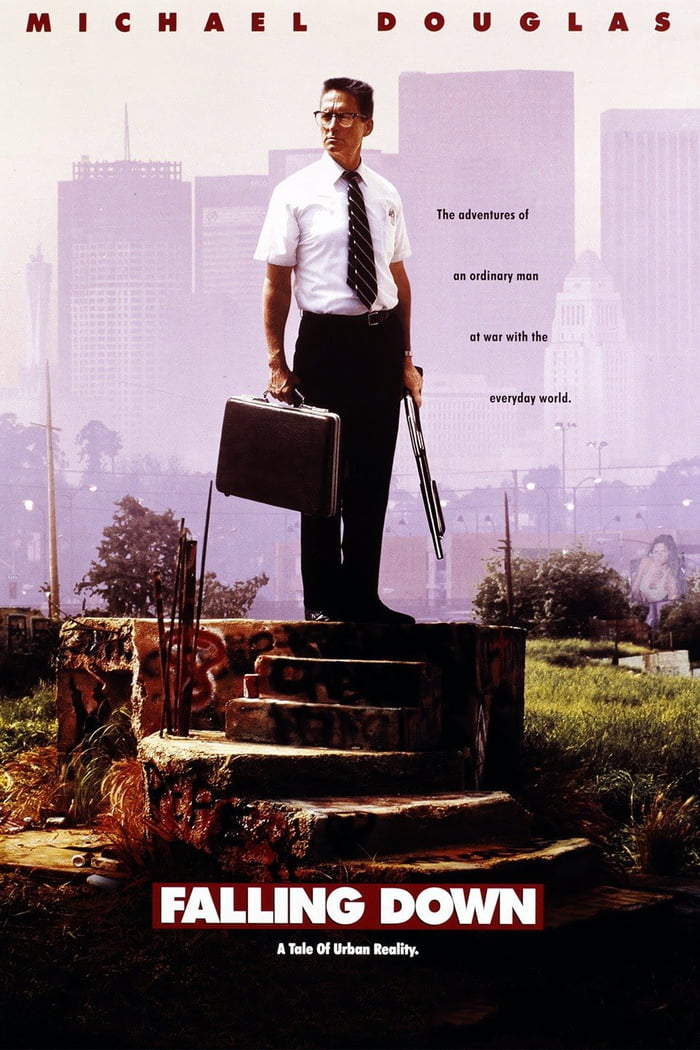
As time goes on, i understand this guy more and more. If you have not seen this movie, do yourself a favour and have a watch


Tags: Michael Douglas, Falling Down

957 points, 71 comments.

09 Feb 02:26

2021 Jaguar F-Type Heritage 60 Edition Coupe

60 years ago, Jaguar introduced the most beautiful shape to ride on four wheels — the E-Type. As capable as it was good looking, the E-Type set the standard for...

Visit Uncrate for the full post.
09 Feb 02:23

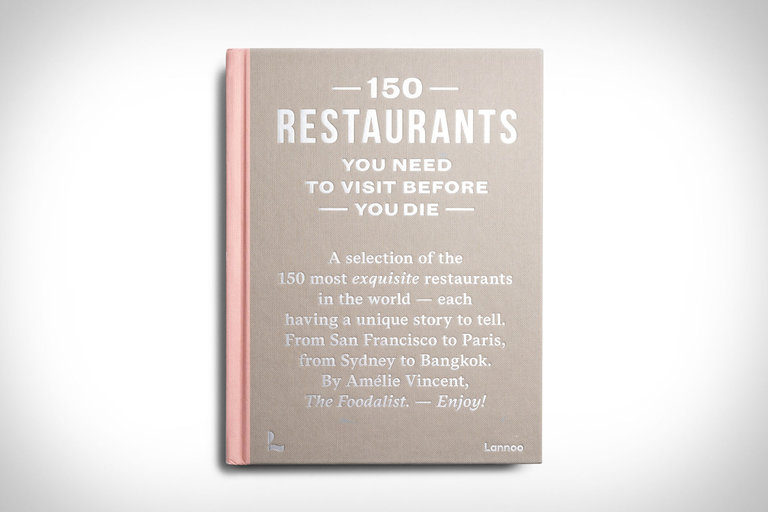
150 Restaurants You Need to Visit Before You Die

Whether you're already working through a bucket list of the world's best restaurants or are just looking for a place to start, this book is a great companion. 150 Restaurants...

Visit Uncrate for the full post.
09 Feb 02:22

Aero Semi-Private Jets

Private flights are convenient but expensive. Commercial flights are filled with potential frustrations (and health risks). Aero splits the difference. Their service is semi-private, limiting the number of passengers and...

Visit Uncrate for the full post.
09 Feb 02:22

Apartment 0.07

Living like James Bond has been a dream for many but can now be a reality for one lucky person. The Four Seasons has just released a triplex that delivers...

Visit Uncrate for the full post.
09 Feb 02:21

2022 Cadillac CT4-V & CT5-V Blackwing Sedans

When Cadillac phased out the ATS and CTS in 2019, it also said goodbye to the BMW M- and Mercedes-AMG-fighting performance variants of those models. For 2022, they're introducing their...

Visit Uncrate for the full post.
09 Feb 02:20

Lego White Noise Playlist

Every single Lego element makes a distinct noise. By experimenting with over 10,000 combinations, the designers at Lego have created music with them. Dubbed Lego White Noise, the playlist is...

Visit Uncrate for the full post.
09 Feb 02:15

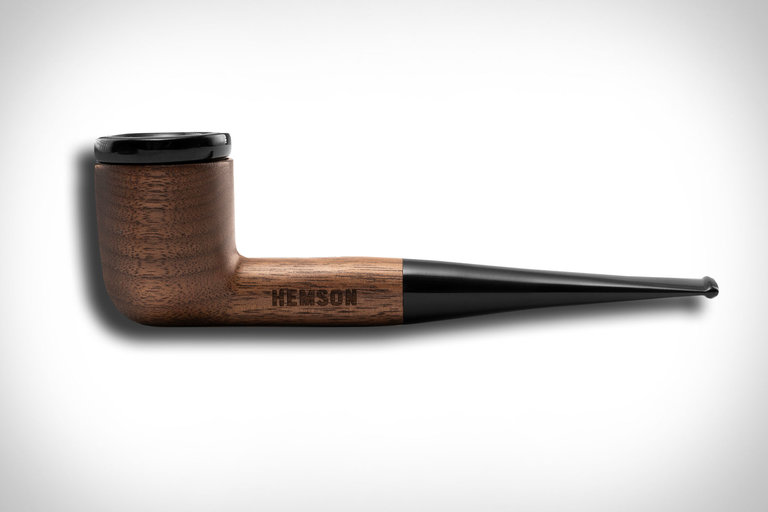
Hemson Classic Pipe

Inspired by the pipes of yesteryear, this pipe was made with nostalgia and comfort in mind. It's hand-carved from solid American walnut to a classic Canadian profile and adds some...

Visit Uncrate for the full post.
09 Feb 01:47

1967 Ferrari 275 GTB/4

The easiest way to describe the Ferrari 275 GTB/4 is this — the greatest grand tourer to ever leave Maranello. As solid an investment as any financial instrument, the 275...

Visit Uncrate for the full post.
09 Feb 01:35

Double Shot

Tracklist: 1. Dancing In The Street 2. Ring Of Fire 3. Yesterday's Gone 4. Danke Schoen 5. The Blue Dove 6. Red Rubber Ball 7. When You're Smiling 8. Enamorado 9. Agua Caliente 10. Wheels 11. But Not Today 12....

This item belongs to: audio/album_recordings.

This item has files of the following types: 24bit Flac, Archive BitTorrent, Columbia Peaks, DjVuTXT, Djvu XML, Generic Raw Book Zip, Item Image, Item Tile, JSON, MP3 Sample, Metadata, OCR Page Index, OCR Search Text, PNG, Page Numbers JSON, Scandata, Scandata JSON, Segment Data, Single Page Processed JP2 ZIP, Spectrogram, Text PDF, Unknown, VBR MP3, chOCR, hOCR

09 Feb 01:33

Volcon Runt Kid's Motorcycle

It's never too early to learn to ride, and the boom in electric propulsion makes getting into motorcycling even easier. Volcon's latest bike is the Runt, the smaller sibling to...

Visit Uncrate for the full post.
09 Feb 01:27

Watch a Billion Years of Shifting Tectonic Plates in 40 Mesmerising Seconds

by David Nield

This is incredible.

08 Feb 01:25

The Golden Hour Series: Gregg Boydston

Gregg Boydston, firefighter and photographer, shows us where to find the good stuff

Read More

08 Feb 01:24

Advice From Boxing Coach Julian Chua: Never Turn it Off

A Golden Glove winner offers life lessons from the sweet science

Read More

08 Feb 01:22

4 Simple Steps to (Finally) Start Meditating in the Morning

Like brushing your teeth, if you do it every morning, it'll make you a whole lot easier to be around

Read More

08 Feb 01:14

"The Best Whiskey-Maker the World Never Knew"

Nearest Green, the first known African-American master distiller, taught Jack Daniel how to make whiskey

Read More

08 Feb 01:10

Attracting fireflies for homeowners by UF IFAS

by /u/MasterGardenerUF
08 Feb 00:33

Rapper Pitbull: US Heading Down Same Road My Home Of Cuba Did, I’ve Seen This Movie Before…

by Rob
Via The Blaze: Before Pitbull was a world-renowned Grammy Award-winning rapper with a net worth of $100 million, he was best known as Armando Christian Pérez. The first-generation Cuban American whose family escaped the iron-fisted rule of Fidel Castro gives a stark warning about communism rising in the United States. Keep reading…
08 Feb 00:25

Top 10 Cults With Massive Followings

by Rachel Jones

Although cult experts and everyday people still differ in what makes a religious group a cult, most definitions of cult—or “new religious movements,” as sociologists call them—are either too narrow or too general. This is why cult leaders have an easy time recruiting unsuspecting members into their religion-masked followings.  Despite the controversies surrounding cults, they […]

The post Top 10 Cults With Massive Followings appeared first on Listverse.

08 Feb 00:22

The Science Behind Electronic Hearing Protection

The technology built into today’s electronic hearing protection ensures firing-line safety and comfort, yet somehow manages to squeeze casual conversation and range commands through at audible and even enhanced levels.