Shared posts
10 Nov 01:25
@MrJonesHistory give yourself some credit you made me want to be a history teacher best history teacher i had
by Chief_GreyWolf (Ryan Cerrato)
IbktimIgnore the tweet:
Grades are due tomorrow morning, so, of course, I'm procrastinating/grading old papers. I just came across this bit from a sophomore who only recently began to show some interest in my class. We were talking about American Exceptionalism and it's roots in the idea of Manifest Destiny. As a homework assignement I asked them to reflect on whether or not America was, in fact, exceptional. I also offered this prompt:
Is it the...
...decadent, materialistic, sex-obsessed country suggested by Islamic fundamentalists?
to which prompt I got plenty of drivel, but this student gave the following response, which I thought was interesting - both in terms of it's exceptionalist orientation, but also with some pretty profound insight for a 15 year old:
We are not, however, sex-obsessed. We simply have reached a social level much higher than other cultures, and have become more accepting of women, sexual orientation, race, and other things of the like. Places around the world, like in the middle east still or even powerhouses like Russia still oppress many different people, and may view our social standards and change as something bad.
@MrJonesHistory give yourself some credit you made me want to be a history teacher best history teacher i had
Apminton likes this
15 Mar 23:29
RT @MrJonesHistory: @HargreavesBC MT @russeltarr: Reminder: Mr. Men avatar changes are a protest against #gove and attitude to teachers! ht…
by HargreavesBC (Andy Hargreaves)
IbktimIgnore Tweet: Story about a 7th Day Adventist Pastor experimenting with Atheism. His blog (linked in article) also worth checking out.
http://religion.blogs.cnn.com/2014/01/08/pastor-learns-the-price-of-atheism/
RT @MrJonesHistory: @HargreavesBC MT @russeltarr: Reminder: Mr. Men avatar changes are a protest against #gove and attitude to teachers! ht…
24 May 14:46
Add Yet ANOTHER Friends and Family Member on the MVRCS doll!
by noreply@blogger.com (UnOfficial MVRCS)
It isn't enough for Neil to employ just his family members but apparently he is now not only put board member Francis Brown's son on the payroll (or allowing him fib on his resume and providing a false recommendation) and yet another of Chris Finn's nieces benefit from his position by either being given the MV advantage of a 'job' (she worked there for 4 years while working 3 other jobs during college? Really?) or being or just being able to fluff up her resume with a bit of non-truths. In either case it appears that these two aren't alone in benefiting from their 'konnection' to Sir Kinnon as now the son of his Royal Arse's best friend (Ron Hogan who, let us not forget, was so kind as to call in a favor to get his sister's kids into the school a number of years ago) now has a position with MV (or should we say, Kinnon's Employment Empire). Even more interesting is that he listed his position as a 'Facilities Assistant' -does that mean he is Greg Kinnon's 'assistant? We should mention that last we heard (and for many years now), Greg is a full-time nurse also a full time facilities manager at MV. Could this possibly be the reason that yet ANOTHER facilities assistant is needed? Anyone even seeing Greg or Cruella Kathy Kinnon on the grounds of late? Probably not as both are very fortunate to be able to come and go as they please as long as Sir Little Man is in charge. One has to wonder what impact a changing of the board would have on all of the members of the friends and family club, not to mention Jing and Geng (you know the two who SHOULD be driving the curriculum alignment to the common core yet are just assigning busy work the trained monkeys) who Dr. McCleary felt had outlived their usefulness and questioned their positions. One has to wonder what city or state agency would be willing and able to pick up probably 1/2 of the MV employees should Kinnon do right by the students (and not himself and followers) by abiding by the conditions imposed by the DESE. He has already taken steps to secure his next campaign run as Chris Finn's brother (who heads up Malden Housing Authority) has hired the 'Arse's wife over at 660 Salem Street - she's there campaigning for votes on a daily basis (that poor ward will NEVER rid themselves of him and his enormous ego). Oh one can only imagine how drastically our states unemployment rates will drop after MV spends all of the students educational funds on the lawsuit against the DESE and loses, all of those on the gravy train will be jumping onto Massachusetts unemployment benefits train! Fear not folks, he'll still be a Malden councilor and will be able to create those nice, overpaid, cushy jobs that you have all become so accustomed to. Thank goodness - what would we ever do without him and his ability to squeeze money out of taxpayers to employ his following!
Could these ALSO be benefactors of Mystic Kinnon Charter School??? This just keeps getting better! Just imagine, soon the alumni will not only be running the school as board members but ALL of the teachers and staff members will all be ALUMNI (it'll be similar to the King's home rule law that he wants for Malden (only Malden residents hired for any and all positions).


Could these ALSO be benefactors of Mystic Kinnon Charter School??? This just keeps getting better! Just imagine, soon the alumni will not only be running the school as board members but ALL of the teachers and staff members will all be ALUMNI (it'll be similar to the King's home rule law that he wants for Malden (only Malden residents hired for any and all positions).
- Could this 'Project' listed under Ian Kinnon's resume be MV's own prior home of the Malden Fire Department on Laurel street????? What a great way to funnel money into yet ANOTHER family members pocket!
- Masonry Project on outside of brick building
- August 2012 to August 2012
- Team Members: Ian Kinnon
- i) Brought in 3 masonry contractors, chose low cost contractor, and oversaw the work done by the masons.
- Has Trice's son already been inducted into the clan? Is the lower school art teacher Trice's son????
23 May 16:33
Yes, Kinnon is dragging the good 'ol MV name through the mud yet again. Apparently the rules of the state are meant for others - not his royal arse himself! The DESE is about to see the REAL Sir Kinnon in action - as too many of the parents and children of MV have for far too long (that of course is assuming that they haven't already). As we all know, Sir Arse-Kinnon doesn't like not getting his way and so off he trots on his own ego to fight for his ego (because we all know that is what this is ALL truly about). Thankfully he has drawn enough negative attention to his shenanigans to bring him and his ways to the attention of those that actually have power over HIM (and his kingdom and servants).
In case you've missed out on the excitement that we refer to, MV appealed to the Board of Education regarding the denial of MV's request for an enrollment increase and the board declined to take any action (i.e. no lift on the number of students currently permitted to attend MV). While many parents feel that the DESE (and BoE) are denying children the 'excellent education' of MV, just remember - IT IS NEIL KINNON AND THE MV BOARD WHO ARE REFUSING TO ADHERE TO THE LAWS AND REGULATIONS OR COMPLY WITH THE CONDITIONS IMPOSED UPON THEM! We all have to follow the laws and rules of our state, country, society, and for some - school - should MV not be required to do the same? One very wise individual posted on the Malden Patch's Facebook page that he'd like not to pay taxes but yet he must as that is what our government expects of us (and can't imagine too many people who would like to ignore THAT requirement). Unfortunately, when dealing with children and their education, like it or not the laws and rules become even more important and we should all be held accountable. This unfortunately has NOT been the case at good 'ol Kinnon Kingdom (aka - MV).
If Sir Arse would get off his throne and get his ego out of his royal arse, the DESE would be more than willing to consider lifting the cap. BUT, in true Kinnon fashion he would rather spend MORE of our taxpayers money (that is intended for EDUCATION) on defending his ego than paying, say teachers the pay they deserve (no, we're not talking about another raise for Gately - the overpaid 'PR' lacky, or Kathy Kinnon - the wicked witch of special education and all things NOT IEP, or even Greg Kinnon - I'm a nurse by night and 'Manage' the athletic facility on my free time, or Anthony C - the HR ding-dong who was somehow responsible for the $92,000.00 they spent on 'recruiting expenses' several years ago - - -no, none of THOSE people need any more of our taxpayers money). Let us not kid ourselves, he is going to fight this battle (just as he did when he fought and lost the battle with Malden Firefighters about signs) and MV is going to foot the bill (translation - the per student expenditure will increase next year by the cost of the legal fees divided by the number of students plus a little something for his next ego boost). It is amazing that the families of MV can't see beyond the denial to look at the conditions actually being imposed upon the school. None of them are extreme or unrealistic nor are they only being imposed upon MV (no Neil, this is not a mini IRS like scandal - not that we would be opposed to the IRS doing a thorough, deep, intense review of the schools finances, this just is a government agency doing as they are supposed to do ---- HOLD SCHOOLS ACCOUNTABLE!). If anyone is denying the poor souls of students their chance to excel (of course, only those students who would excel within ANY school cause anyone else is nudged towards the door), it is Little Napolean himself. Why not accept the conditions being imposed upon the school? The deal breaker of course for him is his refusal to give up his control of the school (i.e. term limits on board members). He wants to wear the success of the students on his back as their champion or hero (and since MV nudges some people to the door, lets not forget that we are talking about kids of his F and F club and/or those who would have excelled and done just as well in public schools, who do not have any special learning needs, whose parents are willing to bend over and NOT question their child's education or how the school is managed, the teachers, or ANYTHING Sir Arse demands). Of course then he also couldn't be so quick to put down those 'other' students and their schools, you know the ones that can't tell parents who question their methods or limitations 'that's how we do it here and you have other options available to you' - yes direct quote).
Of course his newest is that the alumni are going to take over the board and manage the school (cause, unlike other charter schools and public schools, that is what the board DOES at MV). So, to get this straight, he refuses to entrust the school into the hands of educated, hard working parents (who are truly responsible for their childs success - NOT Sir EGO MANIC) yet is going to entrust it to the alumni? Are these the same alumni that don't have jobs that are saying they worked at MV when they didn't? Family members of Finn and Brown? One can be sure that Mini-Me Kinnon (his own son) would also be second in line to the thrown. Oh, just who parents want making educational decisions regarding their children....Brilliant Neil, just brilliant!!
To read up on the latest Kinnon outrage -
(Newest to oldest)
http://www.boston.com/yourtown/news/malden/2013/05/state_refuses_to_budge_on_deci.html
http://www.boston.com/news/local/massachusetts/2013/05/21/state-backs-decision-block-expansion-mystic-valley-charter/Pt7B3XUf9FR62WoSCn7CRI/story.html
http://www.boston.com/news/local/massachusetts/2013/05/20/mystic-valley-charter-school-objects-denial-expansion/NAvS3CUBArvQsMxsdnQyTJ/story.html
Older stories on the same subject matter:
http://www.boston.com/news/local/massachusetts/2013/03/10/mystic-valley-charter-school-ordered-make-changes-malden-charter-school-denied-expansion-request/93weCavGjHtRbYZ1soeBhN/story.html?comments=all#aComments
http://www.boston.com/news/local/massachusetts/2013/04/24/complaints-about-mystic-valley-piled-with-state-malden-school-was-target-complaints/PazXmoJrQmJBVTh99hPndI/story.html
http://www.boston.com/news/local/massachusetts/2013/03/10/mystic-valley-charter-school-ordered-make-changes-malden-charter-school-denied-expansion-request/93weCavGjHtRbYZ1soeBhN/story.html

All at the Expense of the Children!
by noreply@blogger.com (UnOfficial MVRCS)
Yes, Kinnon is dragging the good 'ol MV name through the mud yet again. Apparently the rules of the state are meant for others - not his royal arse himself! The DESE is about to see the REAL Sir Kinnon in action - as too many of the parents and children of MV have for far too long (that of course is assuming that they haven't already). As we all know, Sir Arse-Kinnon doesn't like not getting his way and so off he trots on his own ego to fight for his ego (because we all know that is what this is ALL truly about). Thankfully he has drawn enough negative attention to his shenanigans to bring him and his ways to the attention of those that actually have power over HIM (and his kingdom and servants).
In case you've missed out on the excitement that we refer to, MV appealed to the Board of Education regarding the denial of MV's request for an enrollment increase and the board declined to take any action (i.e. no lift on the number of students currently permitted to attend MV). While many parents feel that the DESE (and BoE) are denying children the 'excellent education' of MV, just remember - IT IS NEIL KINNON AND THE MV BOARD WHO ARE REFUSING TO ADHERE TO THE LAWS AND REGULATIONS OR COMPLY WITH THE CONDITIONS IMPOSED UPON THEM! We all have to follow the laws and rules of our state, country, society, and for some - school - should MV not be required to do the same? One very wise individual posted on the Malden Patch's Facebook page that he'd like not to pay taxes but yet he must as that is what our government expects of us (and can't imagine too many people who would like to ignore THAT requirement). Unfortunately, when dealing with children and their education, like it or not the laws and rules become even more important and we should all be held accountable. This unfortunately has NOT been the case at good 'ol Kinnon Kingdom (aka - MV).
If Sir Arse would get off his throne and get his ego out of his royal arse, the DESE would be more than willing to consider lifting the cap. BUT, in true Kinnon fashion he would rather spend MORE of our taxpayers money (that is intended for EDUCATION) on defending his ego than paying, say teachers the pay they deserve (no, we're not talking about another raise for Gately - the overpaid 'PR' lacky, or Kathy Kinnon - the wicked witch of special education and all things NOT IEP, or even Greg Kinnon - I'm a nurse by night and 'Manage' the athletic facility on my free time, or Anthony C - the HR ding-dong who was somehow responsible for the $92,000.00 they spent on 'recruiting expenses' several years ago - - -no, none of THOSE people need any more of our taxpayers money). Let us not kid ourselves, he is going to fight this battle (just as he did when he fought and lost the battle with Malden Firefighters about signs) and MV is going to foot the bill (translation - the per student expenditure will increase next year by the cost of the legal fees divided by the number of students plus a little something for his next ego boost). It is amazing that the families of MV can't see beyond the denial to look at the conditions actually being imposed upon the school. None of them are extreme or unrealistic nor are they only being imposed upon MV (no Neil, this is not a mini IRS like scandal - not that we would be opposed to the IRS doing a thorough, deep, intense review of the schools finances, this just is a government agency doing as they are supposed to do ---- HOLD SCHOOLS ACCOUNTABLE!). If anyone is denying the poor souls of students their chance to excel (of course, only those students who would excel within ANY school cause anyone else is nudged towards the door), it is Little Napolean himself. Why not accept the conditions being imposed upon the school? The deal breaker of course for him is his refusal to give up his control of the school (i.e. term limits on board members). He wants to wear the success of the students on his back as their champion or hero (and since MV nudges some people to the door, lets not forget that we are talking about kids of his F and F club and/or those who would have excelled and done just as well in public schools, who do not have any special learning needs, whose parents are willing to bend over and NOT question their child's education or how the school is managed, the teachers, or ANYTHING Sir Arse demands). Of course then he also couldn't be so quick to put down those 'other' students and their schools, you know the ones that can't tell parents who question their methods or limitations 'that's how we do it here and you have other options available to you' - yes direct quote).
Of course his newest is that the alumni are going to take over the board and manage the school (cause, unlike other charter schools and public schools, that is what the board DOES at MV). So, to get this straight, he refuses to entrust the school into the hands of educated, hard working parents (who are truly responsible for their childs success - NOT Sir EGO MANIC) yet is going to entrust it to the alumni? Are these the same alumni that don't have jobs that are saying they worked at MV when they didn't? Family members of Finn and Brown? One can be sure that Mini-Me Kinnon (his own son) would also be second in line to the thrown. Oh, just who parents want making educational decisions regarding their children....Brilliant Neil, just brilliant!!
To read up on the latest Kinnon outrage -
(Newest to oldest)
http://www.boston.com/yourtown/news/malden/2013/05/state_refuses_to_budge_on_deci.html
http://www.boston.com/news/local/massachusetts/2013/05/21/state-backs-decision-block-expansion-mystic-valley-charter/Pt7B3XUf9FR62WoSCn7CRI/story.html
http://www.boston.com/news/local/massachusetts/2013/05/20/mystic-valley-charter-school-objects-denial-expansion/NAvS3CUBArvQsMxsdnQyTJ/story.html
Older stories on the same subject matter:
http://www.boston.com/news/local/massachusetts/2013/03/10/mystic-valley-charter-school-ordered-make-changes-malden-charter-school-denied-expansion-request/93weCavGjHtRbYZ1soeBhN/story.html?comments=all#aComments
http://www.boston.com/news/local/massachusetts/2013/04/24/complaints-about-mystic-valley-piled-with-state-malden-school-was-target-complaints/PazXmoJrQmJBVTh99hPndI/story.html
http://www.boston.com/news/local/massachusetts/2013/03/10/mystic-valley-charter-school-ordered-make-changes-malden-charter-school-denied-expansion-request/93weCavGjHtRbYZ1soeBhN/story.html
20 May 15:03
Lover caught in the act escapes through the window
by biotv
Seen in Sao Paulo, Brazil: An adulterer lover chooses the 2nd floor window (instead of the front door, for some reason) to make his escape from a mad husband who caught his wife cheating on him with, while the married couple argue on a balcony.
via
via
20 May 14:43
Meanwhile, in Baton Rouge
by biotv
IbktimJust watch.
Video filmed on 5.18.2013, by a commuter on Sherwood Boulevard, in Baton Rouge, Louisiana. Self-explanatory.
via
via

17 May 16:13
Cool ways to open a beer compilation
by biotv
There are so many ways to open a beer without a bottle opener. Here are just a few of them:
Clip Nation
Clip Nation
17 May 16:10

Because if Berilium would react with Erbium, you'd get beer. Or something.
Available here
Also: Stein version
Periodic beer glass
by biotv
Because if Berilium would react with Erbium, you'd get beer. Or something.
Available here
Also: Stein version
17 May 16:10

Daniel Day-Lewis as Abraham Lincoln, in Lincoln (2012)
Redditor Banana_rhino created a collection of pictures of actors in biopic films side-by side with the people they were playing.

Anthony Hopkins as Alfred Hitchcock, in Hitchcock (2012)

Kristen Stewart as Joan Jett, in The Runaways (2010)
View the rest
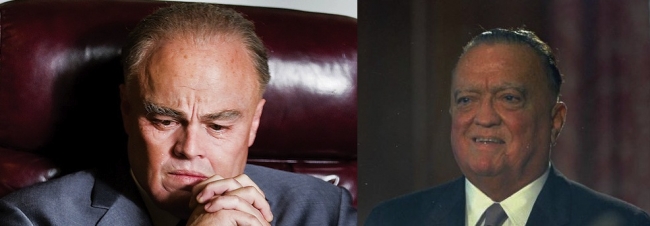
Leonardo DiCaprio as J. Edgar Hoover, in J. Edgar (2010)

Ashton Kutcher as Steve Jobs, in Jobs (2013)

Aaron Taylor-Johnson as John Lennon, in Nowhere Boy (2010)

Lindsay Lohan as Elizabeth Taylor, in Nowhere Boy (2009)

Joaquin Phoenix as Johnny Cash, in Walk the Line (2005)

Reese Witherspoon as June Carter, in Walk the Line (2005)

Scarlett Johansson as Janet Leigh, in Hitchcock (2012)

Penn Badgley as Jeff Buckley, in Greetings from Tim Buckley (2012)

Amanda Seyfried as Linda Lovelace, in Lovelace (2013)

Hellen Mirren as Queen Elisabeth II, in The Queen (2006)
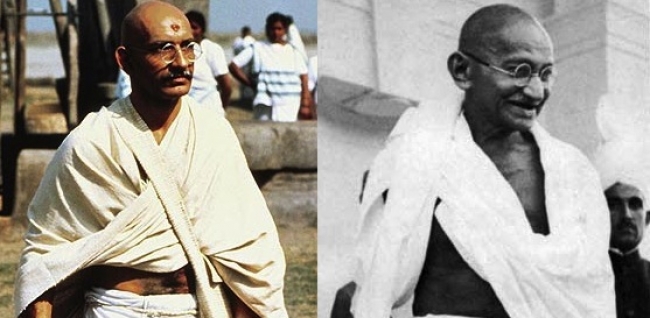
Ben Kingsley as Mahatma Gandhi, in Gandhi (1982)
Biopic Actors & Their Real-Life Counterparts
64 more in Biopic Actors & Their Real-Life Counterparts - part 2
Biopic actors and their real-life counterparts
by biotv

Daniel Day-Lewis as Abraham Lincoln, in Lincoln (2012)
Redditor Banana_rhino created a collection of pictures of actors in biopic films side-by side with the people they were playing.

Anthony Hopkins as Alfred Hitchcock, in Hitchcock (2012)

Kristen Stewart as Joan Jett, in The Runaways (2010)
View the rest

Leonardo DiCaprio as J. Edgar Hoover, in J. Edgar (2010)

Ashton Kutcher as Steve Jobs, in Jobs (2013)

Aaron Taylor-Johnson as John Lennon, in Nowhere Boy (2010)

Lindsay Lohan as Elizabeth Taylor, in Nowhere Boy (2009)

Joaquin Phoenix as Johnny Cash, in Walk the Line (2005)

Reese Witherspoon as June Carter, in Walk the Line (2005)

Scarlett Johansson as Janet Leigh, in Hitchcock (2012)

Penn Badgley as Jeff Buckley, in Greetings from Tim Buckley (2012)

Amanda Seyfried as Linda Lovelace, in Lovelace (2013)

Hellen Mirren as Queen Elisabeth II, in The Queen (2006)

Ben Kingsley as Mahatma Gandhi, in Gandhi (1982)
Biopic Actors & Their Real-Life Counterparts
64 more in Biopic Actors & Their Real-Life Counterparts - part 2
17 May 16:06
Comedian hires airplane pilot to write funny things in the sky
by biotv
L.A.-based comedian Kurt Braunohler took to Kickstarter to crowd-fund his project that was aimed at writing "stupid things with clouds in the sky." As a result, on March 23th this year, the following message appeared across the skies of Los Angeles.

via

via
17 May 13:12


So You Want My Job: Novelist (+ Book Giveaway)
by Brett & Kate McKay
IbktimThis was a fun read.

Once again we return to our So You Want My Job series, in which we interview men who are employed in desirable jobs and ask them about the reality of their work and for advice on how men can live their dream.
A lot of men dream of being a writer. Many have even written up a manuscript, and truly believe they’ve crafted a great novel. But then what? How do you go from typing away in a room somewhere and eagerly clutching a finished manuscript in your hands, to actually getting it published? And even if it does get published, how do you get actual people to read it? Today novelist Dennis Mahoney offers his advice on making this much desired leap. Fresh from the process, Mahoney’s first published novel, Fellow Mortals was released this year by Farrar, Strauss & Giroux and garnered a New York Times book review. This is a thoroughly interesting and enjoyable interview, even if you don’t ever aim to write the Great American novel.
1. Tell us a little about yourself (Where are you from? How old are you? Describe your job and how long you’ve been at it, etc.).
I was born in Troy, NY and stayed in the area through college. My wife and I moved around the East Coast after graduation, chasing jobs we never really liked, until we bought a house back in Troy after our son was born. I’m thirty-eight now and have been writing for two decades. My creative inclinations were strong early on, but they initially emerged through drawing and imaginative play. The Empire Strikes Back came out when I was six and changed my life. I remember wanting to be George Lucas and make something that amazing. I’d make “movies” by taking sequential photos of my action figures, or by drawing a cartoon, slideshow-style, on a big roll of paper I could pull through a fake TV made of a box with two slits cut in the side. So the storytelling impulse was there, even if I wasn’t yet writing. Books weren’t a major part of my life until my teens.
2. Why did you want to become a novelist? When did you know it was what you wanted to do?
I was on a self-improvement kick in junior year of high school—trying to find direction, hoping for a girlfriend—and since I wasn’t naturally athletic, reading and writing felt cool and almost countercultural. I’d been lazy, “not fulfilling my potential,” and had been demoted to a lower-level English class. Since I’d already read a lot of the material in the advanced class the previous year, I started reading other books instead. Getting through Stephen King’s The Stand felt like a real accomplishment. Reading Hemingway and Shakespeare by choice, and finding similarly bookish friends, gave me a huge boost of confidence. I felt I had cred staying up all night to finish a book. A lot of that was pretense, but the books themselves began to change my outlook, as books often do, and soon I was writing poetry and convincing myself it was marvelous stuff. I began to build my identity around being a writer.
3. Do you think writing is something that should come naturally through self-education and practice, or that it’s worthwhile to major in something writing-related in college and/or graduate school?
Self-education and practice are essential. A major can help but isn’t as necessary. I’m not putting down writing programs; I’m saying no writing program will help if most of your effort isn’t self-generated in the first place. I learned the most from books I wanted to read, rather than books that were assigned to me in class, but being an English major exposed me to works I wouldn’t have looked for, like-minded students, and wonderful professors. It was a lifestyle. I was a proud book nerd. And any successful career has to be a lifestyle, doesn’t it? A Major League baseball player thinks like a player off the field, staying focused, eating well. The game’s his life. I don’t consciously walk around thinking about writing all day, but it’s always with me. There have been times I’ve gone to the gym because getting in shape gives me energy, and I want more energy to write. So crazy as that sounds, I work out to be a better writer. I read to be a better writer. But getting back to writing programs: writing can be taught like any craft, but you need the natural inclination. If you’re faking the desire because you think being a novelist would be interesting, you’ll never truly care enough to be one. What began as pretense in my own life became real as I felt in love with writing.
4. So a man’s written a novel. Now what? How do you go about finding somebody to publish it? Do you send out the manuscript yourself, and where do you send it? Do you need to get an agent to shop it around? Basically, how does the process of getting a book deal work?
The traditional way to get a book deal is well-established and generally nightmarish. I went through the entire process with two previous novels before my third, Fellow Mortals, found a home. (Note: In retrospect, I can see why those first two novels were repeatedly rejected, and I’m glad there were agents who didn’t let me put them into the world. Gatekeepers are often a good thing.) Here goes: With non-fiction, you pitch an idea with a sample chapter and a detailed outline. With fiction, you need the finished book. So let’s say you’ve completed a novel, revised it repeatedly, shown it to honest readers and gotten feedback, revised again, and made it as perfect as you can. The major publishers almost never look at a book that isn’t presented by a reputable literary agent. You can find good agents a number of ways. Two of my favorites are checking the acknowledgments page of similar books—most authors thank their agents—and Agentquery.com. The latter allows you search for agents by specific criteria. You can find an agent who represents similar authors, so you don’t submit your horror novel to someone who reps romance novels, for example. The results of the search provide contact info, agency site links, and submission guidelines. Once you have some appropriate agents in mind, send a query. That’s a short letter introducing yourself, describing your book in a few compelling paragraphs (think jacket copy), and asking if they’d be interested in reading a sample. If all goes well, an agent will request pages. If she likes the sample pages, she’ll ask for the whole thing. If she loves the whole thing, she might offer to represent you. A good agent will have relationships with editors at publishing houses, and will submit to those she feels are the likeliest fit. There’s still no guarantee you’ll get a deal at this point, but if an editor loves the book, too, an offer will be made to buy and publish the book. You’ll get an advance on royalties, based on how much money the publisher expects to earn. Advances are usually low, but if you’ve gotten as far as a deal, count your blessings. You’ve made it farther than most, and if your book is a hit, you’ll get additional royalties once you’ve earned back your advance.
5. What are publishers looking for in offering book deals? Do you have any tips for landing one?
Every publisher is different, and every editor is a combination of professional and, more importantly, subjective interest. I firmly believe that most agents and editors adore books. Very few editors are rolling in money. They’re in it because they love it. That doesn’t mean they don’t want their books to sell like crazy, but a lot of editors will fight for a book they believe in even if they think the potential readership is small. My publisher, Farrar, Straus and Giroux, has a reputation for supporting authors based on merit more than obvious marketability. They take more chances, but are therefore increasingly selective. My editor actually passed on my novel twice. I got the deal because I did a good rewrite, she saw the book’s potential, and the two of us hit it off. My tip for getting a deal is simple: love writing, and don’t quit. Just keep writing better novels until one of those book-loving agents or editors is thrilled to find your manuscript sitting in their pile. You can’t control people’s reactions to your work, except by doing better work. A lot of writers spend too much time worrying about book deals when they ought to be writing a book.
6. What do you think about self-publishing? Is it a viable option these days? What are the pros and cons of self-publishing versus going the established publisher route?
I’m not terribly well-informed on this subject, but here’s my take. Self-publishing used to be a joke. Now, thanks to many excellent writers who went that route, it’s more respectable. But I think it’s even harder than taking the traditional route. Yes, anyone can self-publish, and earn higher royalties per copy, and skip the torturous query-rejection situation. But then your book is out there and you have to find ways to get noticed amid the millions of books on the market. You can hire a publicist, but there goes a lot of your extra money, and the self-publishing success stories are much, much rarer than some people believe. And even though the self-publishing stigma has diminished, it still exists to some degree. If you tell someone you self-published a novel, all they really know is that you wrote a book. If you tell someone a major house is publishing your novel, they know you wrote a book and it was good enough to rise out of the slush pile. It all depends on what you want. Will you be satisfied self-publishing? Are you willing to make it work with tons of self-promotion? Go for it. Will you be disappointed with anything less than a traditional deal? Work until you get one.
7. Tens of thousands of novels are published every year. How do you get your novel to rise above the fray and get noticed? Do you have any promotional tips? How did you score a review in the New York Times Book Review? How do they pick which books to review — is it just chance that they came across yours?
My publisher really goes to bat for the titles they publish. Sales reps travel store to store, trying to convince booksellers to carry upcoming books (this is true of all major publishers). I have an experienced publicist at FSG who contacts every major and minor paper, magazine, or web site that might be interested in covering the book. She sends them copies and follows up. That was how I got the Times review. (It didn’t hurt that FSG is a respected house; as a side note to the previous answer, the Times still won’t consider self-published books for review.) Word-of-mouth, which no one can control, remains one of the top—if not the top—ways of getting noticed. If readers like a book, they recommended it to friends and family. If word-of-mouth grows, the books takes off, and no single review or article can compare. I’ve also blogged and tweeted, but those approaches work best when you’re winning an audience with original material instead of just self-promoting. Facebook is useless; it’s mostly friends and family who, one hopes, will buy your book anyway. I wrote guest essays for a number of popular sites to get my name out. But again and again, the best promotion is having a good book, so the bulk of the novelist’s work is writing the actual novel.
8. Did you work another job while writing your novel? Are you writing full-time now? What percentage of novelists would you guess do it full-time?
I didn’t feel an inclination toward teaching, so I didn’t know what to do with my BA in English. I worked a bunch of temp jobs and eventually landed a job in NYC doing television research for The Hallmark Channel. I crunched Nielsen ratings. It was the least writerly job imaginable. In time I became a copywriter for an academic publishing house, but I became a stay-at-home father when our son was born, and now that I’ve gotten one novel published, I’m taking a whack at writing fiction full-time. This would not be possible without my extraordinarily supportive, breadwinning wife. I try to keep myself useful by handling the finances and attempting DIY projects.
9 The publishing landscape is rapidly changing. Scott Turow thinks the American author is suffering a “slow death.” But aren’t there new opportunities for authors emerging as well? What do you personally think are the challenges and opportunities for modern novelists?
I can’t believe any author can still write about the death of fiction, publishing, etc., with a straight face. It was a cliché to lament the death of literature decades ago. Not that people like Turow don’t have valid concerns, and ones worth expressing, but it so often sounds like Mayan prophecies and Y2K, and here we all are, still writing and reading. I honestly wonder: Was there ever a golden age when writers made loads of money and everybody read a book a week? eBooks are great, and I say that as a paper devotee. Self-publishing is great, and I say that as traditionally published author who’s trying to get noticed in an increasingly cluttered market. Opportunities always exist. Look right here: I managed to successfully pitch this feature before any other novelist, even though your site is super popular and you’ve already had job features on everything from butchers to luthiers. If my pitch here hadn’t worked out, I’d have tried elsewhere. The challenge of being a novelist is primarily writing a good novel, and getting better, and finding a way to love it. The secondary challenge is getting your finished work into the hands of overwhelmed readers, the best solution being to write a book people want to read and recommend. As for opportunities, look at the wonderful buffet of options: social media, web sites, big and little traditional publishers, self-publishing. Pick the routes that light you up. Ultimately, however, I try not dwell on the state of the industry or the popularity of fiction. It doesn’t help me write any better. I can’t control it any more than a meteor hitting Earth, so why let it distract me?
10. What is the best part of your job?
The writing itself. It wasn’t always that way. Early on, I wanted to be published so intensely that I couldn’t wait to finish a manuscript, polish it up, and fire it off. The first time I submitted a novel to dozens of agents and failed to get it published, I was crushed and considered giving up. Depression has always been a danger for me, and rejection seriously fueled it. But I’ve discovered that I’m more likely to get depressed when I’m not writing. If I skip a few days, which is rare at this stage, I start to feel antsy and glum. Writing is good for me. It keeps me balanced, gives me purpose. I had a major breakthrough when I realized it could also be fun. I’d spent years falling for that tortured artist nonsense. This is a job I do five to seven days a week, every week, ideally for the rest of my life. I’d be an idiot if I thought of it as torture and didn’t find something better to do with my time. So now I write to satisfy myself, and I’m totally in control of that. No worries about promotion or the death of the modern fiction—it’s just me and my imaginary world.
11. What is the worst part of your job?
There remains a lingering fear that I’m not a good writer and don’t know what I’m doing. Part of writing is having an inner critic, looking for mistakes and potential improvements, but the critic shows up at irritating times, and sometimes lies, and often fails to notice the most glaring shortcomings. It’s hard to find a balance between freewheeling emotion and careful thought. But the nice thing about writing is that it’s done in private, and I have all the chances I need to make a manuscript work.
12. What is the work/family/life balance like for you?
Pretty balanced, but it’s always at risk of falling apart. I get preoccupied or stressed sometimes and have to dial back on my workload. I’m very, very lucky to have six hours a day when our son is in school. I do most of my writing then, at home with our dog Bones, and try to tidy the house and exercise a few times a week. In the afternoons I’m with our son, and then we’re all together once my wife gets home from work. I’m kind of a hermit. I’m OK with staying put most of the time. Our family schedule is busy but rarely insane, and my wife and I try to rein things in whenever our lives start to feel scattered.
13. What is the biggest misconception people have about your job?
That it’s magic and not just making things up over several thousands of hours. Writers sometimes have an aura that you don’t see in other professions, maybe because the work is so private, and because so many writers, myself included, struggle to explain how exactly we go from a little idea to a 300-page book. But I feel the same about anyone who’s good at anything. I just saw a news report about a local high-school student who’s getting great a pole vaulting. That’s incomprehensible to me. He takes a long bendy stick and uses it to propel himself, nearly upside-down, into the air without breaking his neck. Give that guy the magic aura.
14. Any other advice, tips, commentary or anecdotes you’d like to share?
I was writing a long time, and putting in major effort for ten years, before I wrote something good enough to publish. I doubted myself constantly, and lost hope, and re-approached it, and found hope, and finally found a defiant sort of happiness in knowing I would keep on writing, even if I died an old man without a book deal. Now that I’ve had some success, I can say the struggle was entirely worth it, and that the daily work is more satisfying than ever. There’s a good anecdote about a young Edward Norton being told that he had no talent and ought to quit acting. This was said by a woman he respected. He walked away crushed but then decided she was wrong. If you act like that whenever someone, or something, insists you pack it in, you’re probably a writer who’s going to make it eventually. And I recently told an aspiring writer about a realization I had: when older writers are past their peak, and very young writers aren’t yet good enough, the writers in the middle have the best shot at breaking through. So if you’re getting down because you haven’t gotten published after many years of effort, remember there’s a large window of opportunity. It’s not like certain sports where you’re washed up at thirty. You might be Charles Frazier (Cold Mountain) at 47 or Norman McLean (A River Runs Through It) at 74. And really, try to leave publishing worries for after you’ve finished a novel. Then write another novel right away. Right away.
Fellow Mortals Giveaway

We’ve got two signed copies of Dennis’ novel, Fellow Mortals, to give away to two readers.
Fellow Mortals is described as a novel which “charts the fall of a man who has spent his life working to be decent and shows us a community trying desperately to hold itself together.” I read it myself, and while it’s different than my usual fare, I found it quite enjoyable. It’s an intimate portrayal of how relationships are mended (or not) in the aftermath of a tragedy. (It does contain some sexual content, if that’s not your bag).
To enter to win a copy of Fellow Mortals, just leave a comment sharing your thoughts on novel writing, the publishing industry, vocation in general, or even a SYWMJ idea you’d like to see that we haven’t covered yet.
All comments are moderated, so please be patient, and do not enter twice.
Two comments will be randomly drawn as the winners. Giveaway ends Thursday, May 23, at 5pm CT. Post will be updated with the winner within 72 hours after the giveaway ends.
Related posts:
- A Manvotional Book: Would You Be Interested?
- 30 Days to a Better Man Day 27: Start a Book
- Important Updates About the Art of Manliness Book
- Embracing “No”
- So You Want My Job: Songwriter
    
|
Spursfan123, Mdoherty83 and -1 others like this
16 May 20:15
HargreavesBC: Better tchrs or more support for poor children? Finland's @pasi_sahlberg gives a both/and, not either/or response. http://t.co/aQmohLM77Q
IbktimTweet is interesting, but not the point. I want to read this article, but haven't yet, but it looks interesting as well. If you read it before I do, make a comment.
http://www.theatlantic.com/national/archive/2013/05/why-people-keep-misunderstanding-the-connection-between-race-and-iq/275876/
HargreavesBC: Better tchrs or more support for poor children? Finland's @pasi_sahlberg gives a both/and, not either/or response. http://t.co/aQmohLM77Q
11 May 23:52
Hathos Alert
by Andrew Sullivan
IbktimFor Szilvasy really. This is his kind of music, I think.

11 May 19:15
Neil Doing As Neil Wants - Regardless....
by noreply@blogger.com (UnOfficial MVRCS)
IbktimOh, good ole MV.
And, interestingly enough, another example of how King Tut operates and runs 'his' school - he does as he pleases regardless of whether he is allowed to or not because only HIS opinion counts! Oh Neil, is it not enough to rule your own kingdom, but then you try to limit funds to MPS AND challenge the decisions of their school committee??? As usual, your way or to hell with the rules...

Controversial middle school survey approved
Gillian Swart05/08/2013 5:43 AM
The Malden schools are moving forward with a controversial survey for middle school students — and they’re letting one city councilor know his input on the topic was not appreciated.
The School Committee voted unanimously on May 6 to proceed with the bi-annual Youth Risk Behavior Study, which asks questions about health indicators like sleeping, eating, substance abuse and sexual behavior.
The survey was originally slated for April, but was postponed after parents complained of getting only two days notice.
Speaking on May 6, School Superintendent David DeRuosi said parents were notified of the survey the previous week via letters and robocalls. The School Committee agreed that all middle school students in grades 6 to 8 would take the survey on May 8 unless their parents opted out.
Committee members also agreed to draft a “letter of disappointment” to the Malden City Council for what was termed interference in school business by City Councilor Neil Kinnon, who reportedly posted the survey online and through social media.
“It should never have gone out publicly like that,” said DeRuosi.
Speaking at the School Committee’s April 16 meeting, Kinnon said the issue “rises to the level of the City Council.” Committee members disagreed with that position, and Kinnon’s alleged dissemination of the survey.
“I am very, very disappointed that that happened,” said committee member Leonard Iovino. “It’s a long-standing tradition that members of the Malden School Committee stay out of City Council business and City Council members stay out of School Committee business.”
School Committee Vice Chairman Adam Weldai added the council invited parents to a recent meeting to vent about the survey, saying he’s “extremely disappointed in the actions of the City Council.”
The survey is conducted in partnership with the Cambridge Health Alliance and Malden Health Department, with the stated goal of improving the health of Malden residents.
DeRuosi said posting the survey online would be a violation of study protocol. Malden pays the Cambridge Health Alliance $10,000 per year for its services, DeRuosi said.
The survey was originally set for April 9, and parents were notified via robocall the evening of April 7 At its April 16 meeting, the council allowed parent Michael Foresteire to speak out against the survey, and the district held a public forum to discuss the issues before the May 6 committee meeting.
DeRuosi said he will present the survey results to local Parent Teacher Organizations in an effort to work with parents and clarify some of the survey questions.
07 May 00:04


Apples To Apples, Dust To Dust
by Andrew Sullivan

Rowan Jacobsen raises concern about lost apple varieties:
In the mid-1800s, there were thousands of unique varieties of apples in the United States, some of the most astounding diversity ever developed in a food crop. Then industrial agriculture crushed that world. The apple industry settled on a handful of varieties to promote worldwide, and the rest were forgotten. They became commercially extinct—but not quite biologically extinct.
Alex Tabarrok pushes back:
The innovative Paul Heald and co-author Sussanah Chapman (pdf) show that the diversity of the commercial apple has increased over time not decreased (pdf).
It is true, that in 1905 W.H. Ragan published a catalog of apples with some 7000 varieties. Varieties of apples come and go, however, like rose varieties or fashions and Ragan’s catalog listed any apple that had ever been grown during the entire 19th century. (Moreover, most varieties are neither especially good nor especially unique). At the time Ragan wrote, Heald and Chapman estimate that the commercially available stock was not 7000 but around 420 varieties. What about today?
The Fruit, Berry and Nut Inventory for 2000 lists 1469 different varieties of apples, a massive gain in terms of what growers can easily find for sale. The Plant Genetic Resources Unit of the USDA, in Geneva, New York, maintains orchards containing an additional 980 apple varieties that are not currently being offered in commercial catalogs. Scions from these trees are typically available to anyone who wishes to propagate their variety. The USDA numbers bring the total varieties of apples available to 2450.
In fact, there are more than 500 varieties of apples from the 19th century commercially available today–thus there are more 19th century apples available today than probably at any time in the 19th century!
(Photo by Jeff Kubina)

01 May 16:59
HargreavesBC: US rich-poor gap widens in ed. Its early childhood, not the school. NYT op ed says get serious about where we invest. http://t.co/jx8c7RSv08
IbktimIgnore Post. This is what you should check out. Posted on Facebook by a girl I went to HS with that I thought was relatively intelligent. She definately graduated with a higher class rank than me, which pisses me right the fuck off.
http://www.breitbart.com/Big-Peace/2013/04/28/Pentagon-Consults-Extremist-Who-Calls-Christians-Monsters-and-Enemies-of-the-Constitution-to-Develop-Religious-Tolerance-Policy
HargreavesBC: US rich-poor gap widens in ed. Its early childhood, not the school. NYT op ed says get serious about where we invest. http://t.co/jx8c7RSv08
30 Apr 07:50


Is Monotheism Murderous?
by Andrew Sullivan
IbktimThis is an interesting argument. I think the last comment is missing the forest for the trees.
Richard Wolin profiles the Egyptologist Jan Assmann, describing one of his more controversial ideas this way:
Assmann argues that biblical monotheism, as codified by the Pentateuch, disrupted the political and cultural stability of the ancient world by introducing the concept of “religious exclusivity”: that is, by claiming, as no belief system had previously, that its God was the one true God, and that, correspondingly, all other gods were false. By introducing the idea of the “one true God,” Assmann suggests that monotheism upended one of the basic precepts of ancient polytheism: the principle of “divine translatability.” This notion meant that, in ancient Mesopotamia, the various competing deities and idols possessed a fundamental equivalence. This equivalence provided the basis for a constructive modus vivendi among the major empires and polities that predominated in the ancient world.
Assmann readily admits that the ancient Middle East was hardly an unending expanse of peaceable kingdoms. However, he suggests that before monotheism’s emergence, the rivalries and conflicts at issue were predominantly political rather than religious in nature. For this reason, they could be more readily contained. Monotheism raised the stakes of these skirmishes to fever pitch. According to Assmann, with monotheism’s advent, it became next to impossible to separate narrowly political disagreements from religious disputes about “ultimate ends” (Max Weber) or “comprehensive doctrines” (John Rawls). According to the new logic of “religious exclusivity,” political opponents to be conquered were turned into theological “foes” to be decimated.
In addition to coming perilously close to rehashing anti-Semitic tropes, Wolin argues that Assmann’s theories only tell part of the story:
A major failing of Assmann’s approach is that it systematically neglects ancient Judaism’s robust moral inclinations toward tolerance and neighborly love. Numerous prescriptions in the Old Testament, known as the Noachide Laws, stress the importance of providing hospitality and succor to strangers. As we read in Leviticus (19:33-34): “When a stranger resides with you in your land, you shall not do him wrong. The stranger who resides with you shall be to you as the native among you, and you shall love him as your self, for you were aliens in the land of Egypt.” Thus, contra Assmann, lurid tales of plunder, bloodlust, and divine retribution fail to tell the whole story.
28 Apr 19:40


“Good” Schools Seminar: Gleanings from a Class
by larrycuban
For at least a decade I have taught a seminar for graduate students at Stanford called “‘Good’ Schools: Policy, Research, and Practice.” The masters and doctoral students who take the course are committed, for the most part, to school improvement and reducing social injustices. They have scored high on the Graduate Record Exam and bring a strong record of prior academic achievement to the seminar. Many have spent time in both charter and regular schools teaching either through Teach for America or after completing university-based teacher education programs. Even though they have attended and taught in schools under a regime of state curriculum standards, state tests, and the regulatory accountability of No Child Left Behind, they come to the seminar with varied visions of “good” schools imprinted in their minds.
In the seminar’s syllabus, I explain why I put “good” in quote marks.
“Good,” I tell my students, is obviously not a technical term but a common one that is in daily use by educators, researchers, policymakers, parents, and taxpayers. A “good” school also can be described as “great,” “excellent,” “productive,” “first-rate,” “effective,” or other similar terms. For the past quarter-century the dominant view of a “good” or “great” school has been one where students do well on state tests and send increasing numbers of their graduates to college. That view, while pervasive, is contested by other definitions of “goodness” represented in different designs for “good” schools (e.g., KIPP schools, New Trier high school in Winnetka (Illinois), and the Open Classroom School in Salt Lake City (Utah).
The second reason I offer for putting the word in quote marks is to make clear that it is a value judgment based upon individual and group conceptions of “goodness” in schools (e.g., federal and state definitions anchored in values of what makes a “good” school such as Adequate Yearly Progress or AYP). Conceptions of “good” whether it be a “good life” or a “good friend” are loaded with values. So, too, is what we believe should the purposes of tax-supported schooling in a democracy, what knowledge and skills should be learned, how learning and teaching should occur, and what should constitute success.
To make this point, in their first assignment I ask them to write an op-ed piece describing their version of a “good” school for a general audience. Their op-eds traverse a range of schools they call “good.”
After analyzing their op-eds in the seminar, I then offer students a wide variety of school models that designers, participants, and experts judge to be “good.” They are: Core Knowledge, School Development Project or Comer schools, Thomas Jefferson High School of Science and Technology, KIPP schools, Rocketship Schools, and Child Development Project schools.
Then in one session summarizing these “good” schools, I ask them to figure out why they are considered “good”–their purposes, strategies to achieve those purposes, measures of success, and responses from students, teachers, and parents. Then, I ask the students to judge which ones they consider “good.”
Most often, students judge each of the model schools they have read about and we have discussed in great detail, “good.” Afterwards, I ask them to write down answers to two additional questions that cause much consternation among them. The questions are: Would you teach at the school you have said was “good?” Would you send your children to the school you have judged “good?”
During the lesson, I tally all of their responses publicly to the above questions on whether the school is “good,” would they work at the school they designate as “good,” and, finally, would they send their children to that “good” school. Conflicts within individual students and across the class become evident. Again and again, students see that while nearly all of them designated, for example, KIPP or Rocketship as “good” schools, most of them would neither work nor send their children there. Most students wanted to work at Comer and Child Development Schools. Most wanted to send their children to Core Knowledge and Child Development Schools.
The data from their choices revealed much individual and group nail-biting: the school is “good” but many would not choose to work at the school or send their children there. Often, discussions erupted at obvious inconsistencies expressed by students. The group slowly came to realize that while a school may be considered “good” by designers, participants, and experts, that does not mean that an individual teacher or parent would choose to work at that “good” school or send their children there. Not only is the concept of a “good” school value-driven, they discovered, but many versions of “good” schools exist and there is no one “good” school for all or even most children and youth. Period. End of lesson.
26 Apr 21:43
High School Students Line Up For School Oil Portrait Day
IbktimIgnore the post, again WHERE THE FUCK IS SHARE TO OLD READER.
So, with summer rolling around, I happened to come across this article, which will make the ice cream truck song never the same for you again.
http://thesocietypages.org/socimages/2013/04/24/that-racist-ice-cream-truck-song/
BLUE SPRINGS, MO—Holding onto their order forms and making last-minute adjustments to their outfits and hair, students at Blue Springs Senior High lined up by homeroom in the school gymnasium Monday to pose for their annual school oil portraits, sou...
22 Apr 16:10


Quote For The Day
by Andrew Sullivan
IbktimWarning: it gets (sort of) graphic.
“Yeah, man, I mean, tragedies can happen anywhere in the world,” – how Dzokhar Tsarnaev reacted when discussing the marathon bombings with a classmate after the attack.
22 Apr 15:55
@pasi_sahlberg Like your title! Will read Foreword by @HargreavesBC with interest, post-holiday. Best wishes for remainder of your tour. :-)
by denisstewart (denisstewart)
IbktimAgain, not sharing for the post itself (OR needs to get on the "share to reader" function")
I'm currently writing a paper on Liberalism and School Choice, essentially attempting to reconcile an expanded choice system to liberal political thought (which isn't as difficult as one might think, it's just much different). Anyhow, I came across this interesting study by the Century Foundation that I thought you all might be interested in.
http://tcf.org/assets/downloads/Diverse_Charter_Schools.pdf
@pasi_sahlberg Like your title! Will read Foreword by @HargreavesBC with interest, post-holiday. Best wishes for remainder of your tour. :-)
22 Apr 15:45
HargreavesBC: Pasi Sahlberg speaking at BC Lynch School of Education next Monday evening @BCLSOE @dennisshirley @pasi_sahlberg
IbktimThe post below is about tonight. Pasi Sahlberg literally wrote the book on Finland (he works for the FIN Dept of Ed, I think) which won the worlds most prestigious award for new thinking in education last year. The foreword was written by one of my professors, Andy Hargreaves, whose Twitter you should follow: @hargreavesBC.
But, more importantly! You should check out this link: https://www.smashwords.com/books/view/300713
Just tell me what you think about that.
HargreavesBC: Pasi Sahlberg speaking at BC Lynch School of Education next Monday evening @BCLSOE @dennisshirley @pasi_sahlberg
18 Apr 21:56


Matter Over Mind
by Andrew Sullivan
Priscella Long is disturbed by neuropsychologist Benjamin Libet’s experiment on human decision-making:
The decision was to move a hand. Each person was instructed to move his or her hand whenever the desire arose, to report the precise time this wish or intention to move the hand appeared, and then to go ahead and move the hand. Subjects sat in front of a clocklike face with a light going around like a minute hand, only faster, so that milliseconds could be reported.
The results had ominous suggestions for our idea of free will:
The [subjects'] decision to move the hand occurred in the following order. First neurons fired in the premotor cortex (neurons responsible for planning and executing hand motions). These neurons communicated to the motor cortex, which fired, sending instructions to the motor neurons in the spinal cord that make the muscles contract. At this point—and not before—the subject “decided” to move his or her hand. The “decision” to move the hand occurred before but extremely close to the time the hand moved, a long 350-400 milliseconds after the brain began the process of signaling the hand to move.
What are we to make of this? Is it me or my brain that decides things? [Author Christof] Koch writes, “At least in the laboratory, the brain decides well before the mind does; the conscious experience of willing a simple act—the sensation of agency or authorship—is secondary to the actual cause.”
Jimmy.bramante, Ibktim likes this
17 Apr 15:18


Keeping Data On Doctors
by Andrew Sullivan
IbktimSomething about this seems big brother-y even though I think it's a good idea. Maybe it was the commercial that put me off, very Skylab.
Ford Vox wants doctors to embrace technologies, like those in the above video, that encourage hand-washing:
I attend meetings every week, some of which recur on the same day and at the same time. Yet without the beep from my phone’s calendar, I would often be late or absent. Similarly, doctors know what they are looking for in the tests they order for patients, but it still helps when lab reports “red-flag” abnormal results. I’m not insulted when the lab publishes the normal range of creatinine alongside my patient’s value, even though I have many years of experience assessing these numbers. I’m not demeaned when the pharmacist calls to ask about a potential drug interaction in a prescription I have written.
A nudge to remember to wash hands should be equally unobjectionable.
11 Apr 03:42
 With the baby shark costume your little human will look down right vicious at any costume party he attends. This comfortably fitting costume is equipped with fins and some adorably ferocious teeth that will combine for one very charming looking land shark.
Buy It
$18.28
via Amazon.com
With the baby shark costume your little human will look down right vicious at any costume party he attends. This comfortably fitting costume is equipped with fins and some adorably ferocious teeth that will combine for one very charming looking land shark.
Buy It
$18.28
via Amazon.com
Baby Shark Costume
by Diego
With the baby shark costume your little human will look down right vicious at any costume party he attends. This comfortably fitting costume is equipped with fins and some adorably ferocious teeth that will combine for one very charming looking land shark.
Buy It
$18.28
via Amazon.com
10 Apr 15:05


Day in the Life of a Principal (Part 1)
by larrycuban
IbktimMaybe this is why GB seems overwhelmed all the time . . .
Jessica Johnson is Principal of Dodgeland Elementary School in Wisconsin. This day-in-the-life appeared on her blog April 26, 2009.
I am guilty of having thought as a teacher and even as an assistant principal, “What is the principal doing all day? Why hasn’t he/she done x, y or z yet?” Well, now that I’m the principal, I take back all of the thoughts I had back then, because you can just never understand what the principal does all day until you live it!
There are so many things that could happen in a day that couldn’t even be shared with staff, because: A) I don’t want to set the tone of the school by complaining B) Some information has to be filtered by me or it would just give teachers more to stress over C) There’s a lot of confidential information contained within a principal’s day. So, I want to write a list of all the crazy things that could happen on any given day.
Monday morning arrive to work at 6:30 am. Turn on the computer and start looking at my list of things to accomplish today (includes 7:35/3:05 Individualized Education Program (IEP) meetings, teacher observation, teacher meeting, parent conference, call McDonald’s for additional donations of ice cream coupons for student of the month awards, write monthly principal newsletter, finalize summer school course packets, sort through the junk mail still piled up from last week-because I didn’t get to it over the weekend, complete purchase requisitions, file pink copies of all purchases for budgeting, get into classrooms).
7:00 receive call from sub-caller, write down list of teachers out today—we ran out of subs so I have to figure out coverage for one of the first grade teachers. Write a note for the secretary regarding this, tell her I’ll be to the class at 8:00, but for her to keep looking for coverage.
7:05 Try to start on paperwork, but a teacher comes in to tell about a phone call she received from a parent after school on Friday regarding a bus incident—record the information to investigate.
7:10 Try to start on paperwork, but get a call from a teacher that our online student information system (for attendance and grades) is down again. Put in a call to tech director to get it fixed…send out an email to all staff that the problem should be fixed soon *hopefully*.
7:20 Parents are here for the IEP meeting…show them to the conference room to wait….no chance of getting paperwork done now. Go to get IEP information for the meeting and see the voicemail light flashing again…check it and hear that a teacher got stuck in traffic and won’t make it in time…go tell the secretary and then run back to the IEP meeting.
7:35-8:00 IEP meeting…this one went well. Now I have to run to cover that class.
8:00-8:30 Teaching a lower grade level, no lesson plans (note to self-remind teachers to get emergency sub plans/folders ready) making it up as I go.
8:30 Call from the office that one of our Emotional/Behavioral Disability (EBD) students needs to be removed from the room—an aide is coming to cover the class instead.
8:35-9:15 Remove EBD student—severe physical aggression, I’m sure I’ll have some bruises from this one—not to mention the mess the conference room is in now (we don’t have a time-out room). I’ve had my glasses broken before, so glad that didn’t happen this time. He/she finally is calm/compliant and I escort the child back to class…
Fortunately another substitute was able to come in and cover that other class now. Thank goodness, I can get to my list…
Check my voicemail—1 teacher call with a question about the new report card, 1 teacher call requesting me to come speak with her about a student, 1 parent call angry about a bus incident, another angry parent upset with a teacher.
9:20 put the sign on my door that says “I’m out in classrooms to see what students are learning” and get to each of the teachers that left me voice messages. Make a move to classrooms for walk throughs—first one has guided reading groups and centers with 1st grade kids reading amazingly well! Start to enter the 2nd classroom of the day when I’m called for on the school loud speaker (I don’t carry my walkie-talkie when I’m going into classrooms and my secretaries know only to call for me in an emergency). Hurry back to the office to find that one of our special needs children ran off from the aide (he/she has never done this before!) I make a special all-call to the staff to let them know we’re looking for ______ and then several of us split up to search….10 minutes later we find her/him in an unattended office in the dark pretending to type on a computer. Whew!
10:00-10:30 Morning Recess-I don’t end up making it out there for all 30 minutes, because I get stopped by 3 different teachers on my way out. (Question about grades deadline, information shared about a student and another technology question)
10:30-11:15 Back out to classrooms. Get into 4 of them (with a note to myself on needing to meet with a teacher for classroom management concerns)
11:15-11:45 Meet with the 4 students that had bus conduct reports. 1 has had enough to be suspended from the bus…make the phone call home and get yelled at by the parent that they can’t pick them up. I’ll spare the rest of the details. Meet with 2 other students that have “earned” after school detention for continuously disruptive classroom behavior.
11:45 Head for the fridge to grab my sandwich for lunch, but get called to a classroom for another EBD student. Fortunately, this child is calmed down much easier than the one this morning.
12:00-1:00 Lunch room duty—grab a slim fast to drink on the way. No, I’m not dieting, but I keep them in the fridge for days like today when there is no time to eat. I sometimes refer to my hour-long lunch duty as migraine hour (because it’s always loud), but I secretly enjoy this hour. Our kids sit at round tables and actually get the chance to talk with their peers. I’ve seen schools where the kids have to eat silently, but I think that’s just mean. I enjoy the chance to walk around to each table and chat with the kids. If I’m not walking around (using proximity) they do try to get away with things (however, they know that if I catch them throw any food they then have lunch room clean up duty!)
1:00 Talk to a couple teachers about student behaviors in the lunch room as they pick up classes (friend issues)
1:05 Get back to the office and secretary tells me that a parent has tried calling several times and is very angry. Go back to my office and check my voice messages—there are 6 of them (not all from the one parent)! I have a classroom observation at 1:30, so I write them all down and just call back the angry one–this parent calls daily, so I’m used to it…I’d like to tell this parent to get a job so he/she has something to do each day, but I refrain from expressing that opinion! The parent again tells me they’re going to call the school board to complain…I’m not worried, because I know that what we’re doing on the school end is the right thing and I’ve already talked to a couple school board members about this parent. Note to any potential administrators reading this—be prepared for threats such as, “I’ve got a lawyer on retainer,” “I’m going to call your superintendent,” “I’m going to report this to the school board” and “I’m going to report you to the state department of education.” If you’re doing your job right, you have nothing to worry about. I now just give them the phone number and am usually able to add, “I’ve already spoken with the superintendent regarding this issue.” I don’t like surprises or hiding things from my superintendent or the school board, so I keep those lines of communication open.
1:30-2:15 Classroom Observation: I love doing formal classroom observations, because you get to see so much more than just in walk-throughs (of the teacher,
instruction and the students). I do think I’m getting carpal tunnel, because I’m so insistent on scripting everything—gives me good information when I’m writing up the evaluation and when I meet with the teacher.
2:15 bathroom break—I seriously think this was my first one today—I’m dying!
2:20 Check with my secretary-2 more phone calls passed through to my phone—nothing major though, so I’ll check them later. Try to tidy up my desk before parent meeting at 2:30. Since I am on the run so much and hardly in my office, I have several piles on my desk. I don’t have a great system yet for organizing yet, but I know where everything is. I once had a principal that said “If you’re desk is a mess, it’s because you’re doing your job well—you’re out in classrooms and not sitting at your desk.” I’ve worked for a principal that was adamant about keeping the desk clean, but I still agree with the previous one!
2:30 Meeting with parent: she wants to request a specific teacher for next year. This is something on my list that I haven’t gotten to yet—working on the class list procedures and a letter to parents explaining why we can’t honor specific teacher requests. I explain it to her and tell her about the letter that will be coming home in a month and ask her to think about her child’s learning styles/needs and not just the teacher that the older sibling had. This isn’t how the previous principal did things, so she’s a little annoyed, but agreed to it. (Note to self—get moving on writing that letter and meeting with staff about class lists)
2:50 Pop into grade level meeting (teachers have grade-level collaboration time
2:40-3:30 on 2 week rotation. Aides cover the class 2:40-3:00 to give them someadditional time). I’d like to sit in on these meetings for the full time to help facilitate discussions on student learning, but it hasn’t happened all year.
3:00 Walk the halls quickly as students are being dismissed. I have a particular student that I walk to the bus each day and remind him/her about how to be safe on the bus.
3:05 IEP meeting…this one goes on forever. Parents are not on the same page as everyone at school. Gets quite heated and I have to do quite a bit of mediation. At 5:00 I finally say that we will have to come back at a later date to finish (No, IEP meetings do not normally last this long!!)
5:05 Back to my office…finish checking voice messages and start calling a few back (had to prioritize which ones can wait until tomorrow). Now to my list from this morning—hadn’t touched any of them! Write my principal newsletter because it was due last Friday. Check my mailbox and add it to the stack of mail from last week (never knew how much mail the principal gets—good grief!) Pull out time sheets, absence sheets, and purchase requisitions because those are time sensitive, but leave the rest. It’s 5:45 now and my husband has called three times asking when I’ll be home. I grab some files to shove in my bag, along with my flash drive so I can type up the teacher evaluation at home).
6:00 Finally home—didn’t have a bad day, but still feel like I got run over by a semi. I’d love to just lay on the couch and crash, but have to make supper, clean, play with my son. After he’s in bed I type up that teacher eval (most of it) until I’m too exhausted and go to bed at 11:45.
I must say that the kids are the easiest part of this position. I can’t even get into detail on some of the difficult conversations with parents and teachers each day that get my stomach churning (and I mean that literally…but now I am on meds for the ulcer, so I’m doing better with that!)
******************************************************************************
Johnson spends a great deal of her time managing tasks that are both on-going and unexpected. She is in and out of classrooms also and in short bursts of time sees parents, children, and teachers again and again over the course of one day. How typical is her day-in-the-life of a principal compared to one in a middle school or high school? Compared to principals in large suburbs and big cities? I take up the answer to those questions in Part 2.
For previous posts that I have written on principals, see here, here, and here.