Shared posts

30 Sep 23:20

What I Learned in Gym Class

by noreply@blogger.com (Amy Shuffelton)
The New York Times reports that "Gym Class Isn't Just Fun and Games Anymore."  Gym class has been encroached upon by test prep for some years now, with hours and positions cut to accommodate increased time for math and literacy instruction, but this is different.  Gym teachers are, by choice or under pressure, or, most plausibly, by pressured choice, now including math and literacy instruction in gym classes.  Children, for instance, might be required to review vocabulary words while engaging in a gym activity, or practice math skills.

Why is this a problem? Why not multitask in gym class?  After all, I watch the news sometimes while running at the gym, and I think through research while swimming -- and where's the difference?  Because the true purpose of gym class is affective.  It's all about learning to deal with other people throwing balls at your head -- in fun! -- and to tolerate the humility of being unable to climb a rope.  Or, from a different perspective, to revel in your ability to spike that volleyball higher than the smarty-pants who has no trouble in math, and to run faster and farther too.  What I really learned from gym class: that there were kids who could do things that I simply couldn't.  Also, to be a good sport about this, or at least not to cry when it was time for the annual volleyball unit.

This could be said about the elementary and secondary school curriculum as a whole, I think: that when schools narrow the realms in which students can shine, they stunt children's nascent appreciation of the diversity of human talents.  Shining and limitations alike need to be broadly distributed -- because it's important for every child to find some things she's good at, and equally important for children to appreciate others' differing abilities.

And, last but not least, it's important for children to learn to persist in activities that they themselves are not very good at but that are, for good reason, worth doing.  When I was in middle school, I decided to join the cross-country team.  It was an odd choice, as I'm not especially fast.  I suspect I did so out of the realization that if I did not take action, I was destined to spend my whole life as the person who couldn't do a single sit-up, while around me stronger, more adept athletes played games that looked like fun, if only you had sufficient abilities to play.  For six years I was not only the worst runner on the team but one of the worst runners in the entire county, but I kept at it and made a lot of friends I wouldn't have had otherwise.  If I had been able to show off my vocabulary and my math skills in gym class, I'm not sure I would have bothered.

Of course, I knew I was no star athlete based on recess and pick-up games around the neighborhood, but it means something different when the New York States Board of Regents is counting the number of sit-ups you can (or in my case cannot) do.  I am not advocating humiliation as a general teaching tool; the point, rather, is that when schools provide a variety of domains in which children are encouraged to succeed, children come to recognize that people's talents are diverse and that respect, therefore, is to be distributed as broadly as difference.

Gym class, in sum, has never been all fun and games.  For some people it wasn't fun.  For others, it was too important to count as a game.  I'm all in favor of making it more fun, and even for including health information, but keep the test prep out it.  (Incidentally, one teacher in the article remarks that she includes health information because "during a 30-minute class, it would be difficult for the children to keep moving constantly."  Seriously?  During a 30-minute class, it would seem difficult to prevent children from moving constantly.)  Glad though I am never to have to play it again, long live volleyball.
30 Sep 23:11

Making the Grade: Self-Worth, Status, and Mini-Vans

by noreply@blogger.com (Sally Sayles-Hannon)
What comes to mind when you think of grades or GPA? As someone who only finished the GPA stage of her education journey a couple of years ago, I find myself immensely relieved that I no longer have to spend numerous hours worrying about whether or not I make the grade. I would also be remiss if I did not, at least on some level, acknowledge that I do miss the bursts of motivation, all-nighter writing sessions and so on, that accompanied my desire to make the grade. My ambition, though, for wanting to make the grade may be different than my friends, neighbors, or fellow colleagues. The question follows then, what do grades symbolize? Why do certain students find their entire self-worth/intelligence defined by the letters or numerical averages on a piece of paper? Who cares more about grades/test scores? Is merit distributed equitably for all students with high GPAs?

USA Today's Mary Beth Marklein draws attention to the fact that many U.S. universities and colleges are no longer looking at GPAs for admission. Parents, however, find the GPA to be an important marker of their child's intelligence. GPA/honor-student status is also a designator of elevated social class--bumper stickers for parents' mini-vans/sedans and flair for moms' purses or rear-view mirrors.

Prior to learning the statuses associated with high GPA, I would argue particularly those of class and whiteness, would grades have any meaning to students? The importance of GPA is learned and, for this reason, we should always be cautious of how a constructed concept may influence people/students of different social, economic, and historical locations.  

Is merit distributed equitably for all students with high GPAs? Differences in a school's geographical location (i.e., inner-city, rural, or suburb), social location (i.e., public or private), and historical location (i.e., the school's federal report card or accreditation). Schools' variations influence students' merit when they get to the college's admissions board, but what about prior to that? When students from lower-socioeconomic positions achieve higher GPAs, are they granted the same level of merit as students from higher-socioeconomic positions? Even if they are, I would argue that a student from a lower-socioeconomic position might correlate self-worth/intelligence more strongly with GPA than a student from the opposite end of the socioeconomic spectrum. Why? Because in addition to the countless images of college success stories in the media, their parents most probably equated academic achievement with elevated social and economic status--that is, a way to make money, to help the family, to do better than "we" did. At least that was how it was for me--a first-generation college student.

What are universities and colleges doing to address how merit is distributed during admissions? According to USA today, one method used is recalculating students' GPAs according to the challenging nature of the courses students have taken. Well, I'd be curious to know how each schools' geographical, social, historical location and possibly the number of mini-vans influence that scale.
30 Sep 23:00

"I'm not villainous or morally deformed; therefore, I cannot be a racist."

by noreply@blogger.com (Sally Sayles-Hannon)

Jemal Countess/WireImage.com

"I am trying to imagine a white president forced to show his papers at a national news conference, and coming up blank. I am trying to a imagine a prominent white Harvard professor arrested for breaking into his own home, and coming up with nothing. I am trying to see Sean Penn or Nicolas Cage being frisked at an upscale deli, and I find myself laughing in the dark. It is worth considering the messaging here. It says to black kids: “Don’t leave home. They don’t want you around.” It is messaging propagated by moral people."


Ta-Nehisi Coates, in his opinion-editorial "The Good, Racist People," examines the present-day reality and pervasiveness of racism in U.S. democratic society. Many of our socially and economically privileged, primarily white students often perceive racism as something that is only performed by evil-doers and, as such, they could not be racist. To be associated with an ideology that modern America, according to Coates, has labeled as that of "trolls, gorgons and orcs" often conflates to our privileged students' complete denial of association. To be implicated in a system, which according to U.S. law, ended with slavery and has only progressively got better with the proceeding desegregation of schools and election of President Barack Obama is "insane."

Reading Coates' editorial may be uncomfortable for many of us, especially those of us who are socially, economically, and historically privileged. The reality of what Coates discusses is not something we want to believe and/or fully except as true. I think, though, this is what makes Coates' article an excellent addition for any classroom that wants to incorporate social justice issues that are occurring within U.S. society. It offers an opportunity for us as teachers to start a conversation with our students about racism in the U.S.--historically, presently, and systematically. The piece also opens the door for group conversations, journal reflections, or both, for privileged, white students about how seemingly "good" intentions potentially prevent one from analyzing their own internal biases. And finally, utilizing publicly-relevant, current news offers an opportunity for us as teachers to engage our students with the everyday and, in turn, open up doors for them to develop their own new and creative ways for working against socially-unjust and systemically-rooted everyday practices.
 
30 Sep 22:59

Are YOU ready for Public Education 2.0?

by noreply@blogger.com (Christopher Martin)
Kevin Lynch, vice-chair of Canada's BMO financial group, recently contributed an editorial to the Globe and Mail arguing that public education should be ready for "Education 2.0". On the one hand, he should be commended for offering a justification of the value of public education in a context where many are eager to privatize. However, it is worth questioning the extent to which the value of public education can be so easily detached from its content. For example, among his suggestions for public education 2.0 include:

1. Curricula tied to labor market forecasts
2. Outcome based and "managed for quantifiable results"
3. Focused on innovation in industry and in "the knowledge economy"

I don't want to outrightly dismiss all of Lynch's predictions, and we certainly need allies for public education who come from a variety of backgrounds. However, in thinking through what "public education 2.0" would look like, it's worth asking if the conception of education on offer really has public value. Perhaps if by 'public' education, he means education for "global finance capital"?

I am sure that for some, Lynch is a bit of an easy target. His proposed reforms are common within industry and we can marshal all sorts of arguments showing that his (implied?) views on the value of public education are fairly anemic. But it does raise an interesting (or at least, strategic) problem: if in our political economy the kind of people that can offer real clout in terms of protecting public education just are those people who also have "corporatist" views on how public education should be operationalized and managed, and further, their support of public education is conditional on reforms that fall within such views, it puts those that seriously want to protect a robust conception public education from outright privatization in a difficult position. This is increasingly so as austerity measures in liberal democratic states become normalized.
26 Sep 20:37

Language Anchors: how connotation can trap us

by admin


I have never appreciated Wittgenstein and his focus on precise language as much as I do right now. He once said, “The limits of my language means the limits of my world.” I am seeing just how profound that statement actually is as I try to describe this new school to people. It is not that it is overly complex or that I am not a decent communicator or that people are stupid. It is that so much of our language is so heavily-laden with connotation it is not as flexible as it needs to be. Or, I guess I mean our minds are not as flexible as they need to be when hearing certain words.

“School” is one of those words. I actually thought of not calling this new school as school at all, precisely because of the current connotation of that word in our society. Interestingly, “school” has a wonderful history, the earlier uses of which better describes the Pacific School of Innovation and Inquiry better than more recent uses.

The Greek word skhole, the direct ancestor of school, originally meant “leisure” and then grew to mean “a place of leisure” and connoted a place where leisure time was spent in discussion. It was not until the 1300’s that school was the name for an actual building, and the verb to school did not appear until the mid 1500’s. Education has its roots in the Latin educo that originally meant “to lead forth” or “to erect” and later “to train.” When the Romans adopted the word school and combined it with their view of education, resting squarely on a military tradition, school grew to mean also “a holding back” and “a keeping clear.”

The evolution of the relationships and connotations of these words and several others, even more than the evolution of their actual meaning,  is part of the reason why I have such a difficult time describing this new..uh… school.

When I say that PSII is a new high school, guess what comes to mind? Lockers, sports teams, desks, classrooms, and a set curriculum, of course. So when I tell people that I NEED to meet with them for an interview before enrolling any learners in this school, I mean it. They need to know that many of their assumptions about this school will likely be challenged, and I do not want anyone signing up for something they do not really want.

I haven’t figure it out yet, but I think the school could best be described as a “home base” for helping learners organize and reflect on their learning – both formal and informal. I recognize that brains to do not only turn on when they walk through the doors of a school and turn off when they leave. Learning happens everywhere all the time. I also recognize that, while there are some wonderful ways of structuring activities that help people keep track of their own learning, and even ways to suggest areas that they might like to explore, this school will not make the mistake of presupposing that learning needs to be (or even can be) standardized.

So why did we call it a school at all? Because almost every other word that could be used might be just as confusing. Calling something an institute or centre conjures up images of research facilities or highly-specialized places – something which we are definitely not trying to create. We also thought about people’s ability to accept the unusual, and decided that if something didn’t seem familiar enough – even if just in name – they might not want to attend. Can one graduate from something that isn’t called “school?” Will post secondary and industry take someone seriously if they come out of a centre or an institute?

Within the notion of the school exist other language connotation traps. What is a “classroom teacher,” for example? This term is used often, yet no one actually teaches classrooms, nor is teaching and learning necessarily restricted to classrooms or even classes. Why can we not just say “teacher?” Does the “classroom” part offer extra necessary information, or does it offer comfort to those who find it in stereotypical ideas? “Teacher” is fairly easy to imagine, but “classroom teacher” likely frames an instantaneous image, however stereotypical, allowing for great efficiency of language, as all stereotypes do.

And what if you asked someone to name the top ten words that come to mind when describing elements associated with a school? Would you not expect to hear bell, classroom, locker, desk, book, teacher, office, bus, hallway, homework, etc. ? Yes, I would too. So how can we assume that when someone shows interest in our new “school” they do not have these elements in mind, when in fact almost none of these elements are present in our school?

We are only beginning this journey toward trying to make a dent in the status quo of education in BC an already we are challenged by the henchmen of the status quo: words. And, as they say, a picture is worth a thousand of them, so once we are up and running in September (assuming we get out interim certificate from the Ministry in late May) we will start pumping out pictures. Pictures for ourselves to see, as well as pictures for others.

Change in education in BC cannot start with change in practice. There are a great many teachers who are practicing in excellent ways but in an almost underground fashion and against a backdrop of politics and a system that was never intended to support their new ways. People can only swim upstream for so long before they are exhausted. Change will come when the direction of the stream is changed. When people can see a system with an underlying structure that supports what they actually know is a good idea, along with a very clear picture (that’s us) of what “it” looks like, it is my hope that change comes above ground and spreads beyond the isolated pockets that currently exist around our province.

08 Apr 14:04

History Is Written by the Winners

by dianerav
Ibktim

Wow. I'm actually sort of torn by this. I get it, and I'm appalled by it at the same time.

As the adage goes, history is written by the winners.

Today, in the United States, it is written by and for the 1%. Or is it the .0001 percent?

How important is it for all fifth-graders in the state of Tennessee to know these names?

A reader writes:

“Bill Gates & Sam Walton just wrote themselves write into our children’s history lessons!

Part of the Common Core Curriculum for 5th graders in TN:

“5.87 Identify and explain the significant achievements of entrepreneurs and innovators including but not limited to:
Ray Kroc
Lee Iacocca
Sam Walton
Bill Gates
Jeff Bezos
Michael Dell
Steve Jobs
Mark Zuckerberg”

http://www.tn.gov/education/ci/doc/Fifth_grade_D1.pdf”


08 Apr 13:14

New fad: Dogs wearing pantyhose

by noreply@blogger.com (biotv)

It originated in China, on social network site Weibo, where a user posted the above photo earlier this month, which generated a lot of discussions and naturally triggered a series of other funny photos of dogs posing for the camera while wearing stockings.


More - after the jump


KYM
07 Apr 18:30

Preschool as Panacea?

by larrycuban
Ibktim

I wonder whether this will become the next battleground in education reform.

In the political gridlock that has marked cutting federal budgets, gun control, and immigration legislation, one issue brings together both CEOs and educational progressives, political conservatives and liberals: investing in tax-supported preschool for three and four year-olds. President Obama’s recent State of the Union speech called for increasing children’s access to prekindergarten and assembled legislators applauded across the aisle separating political parties.

Study after study shows that the sooner a child begins learning, the better he or she does down the road.  But today, fewer than 3 in 10 four year-olds are enrolled in a high-quality preschool program.  Most middle-class parents can’t afford a few hundred bucks a week for a private preschool.  And for poor kids who need help the most, this lack of access to preschool education can shadow them for the rest of their lives.  So tonight, I propose working with states to make high-quality preschool available to every single child in America.  (Applause.)

Reasons for expanding access to prekindergarten run from the Alabama leader who said: “We’re trying to invest in a work force that can compete in 20 years with other states and other nations”–which President Obama would nod in agreement with–to experts on brain development who say: “Children are born ready to learn. They cultivate 85 percent of their intellect, personality and skills by age five” (brain_dev_and_early_learning, p. 1).

Yet supporters of greater access for all children have their work cut out for them. Over the past decade, many states (e.g., Illinois, Georgia, Florida, Oklahoma) have increased access for families through Universal PreKindergarten (UPK) modeled after Head Start and similar full-service efforts. Even with the spread of these state-funded programs and extensive media attention, variation in access for toddlers across the U.S. ranges from over 70 percent to none (see graphic). As a result, the U.S. ranks 28th out of 38 nations offering parents entry to preschool. Mexico, France, Spain, and Netherlands have 95 percent of their children in preschool while the U.S. registers far below that, a fact that often goes unnoted by media compared to the attention that international test score rankings receive.

Even amid federal and state budget retrenchment, the political coalition of business and civic leaders, political conservatives and liberals has continued its lobbying and marginal gains in enrollment have occurred. But getting “high-quality” preschools, that is another matter. Different versions  of “good” programs serving three- and four-year-olds are contested.

Should preschool be boot camp for kindergarten or a place where very young children, as Alison Gopnik put it, “be allowed to explore, inquire, play, and discover?”

None of this ideological see-sawing about the content of preschools is new, of course. Over the past two centuries,  child-rearing experts have advised Moms to be strict and permissive, be parent-centered and child-centered. Since the invention of nurseries and preschools decades ago, a similar back-and-forth movement between preparing toddlers for the cognitive demands of schools or developing the whole child (and, yes, mixes of both) have had their champions again and again.

For the past three decades, national fears of being outstripped in global economic competition have spilled over public schools with a reform agenda that places primary attention upon  standards, testing, accountability, and charter schools. That agenda has trickled down into both public and private preschools.

*Many private and public preschools require cognitive skills tests.

*Preschool charter schools have been established.

*There are accountability standards for preschools.

But not for all preschools. Progressive ones looking to develop the “whole child”–a phrase that prompts snickers if not ridicule in many elite reformer circles–flourish below the radar. Such schools are, in this climate, mostly private (see here). Some, however, are public. Many parents are caught in the tangled dilemma: “If we give them barbies/GameCubes/television/Play Stations they want and we can afford, will they become too slack, glazed, and lazy to get into Harvard?”

Can research settle what are the best ways for preschoolers to learn? Hardly. Evidence seldom convinces ideologues either about the size of government, the best diet, or how  preschool should educate.  The National Association for Education of Young Children (NAEYC), for example, lays out the research, benchmarks for development for young children ( see KeyMessages). NAEYC anchors the progressive side of the preschool ideological see-saw. In the present political and economic climate, however, they are lightweights compared to well leveraged state and federal policymakers worried about the nation’s weak performance on international achievement tests and civic and corporate leaders who press for cognitively-driven preschools where direct instruction in knowledge and skills give young children a running start in the race through the grades and into college.

The earnest move to enact Universal Prekindergarten endorsed by both civic and corporate leaders, business groups, and educational associations as national investments in economic growth and supported by longitudinal studies (e.g., Perry Preschool, ABCedarian (see Campbell.et.al, etc.) has become politically acceptable and,  as state funding has become available, has spread.

But the content and direction of preschools will again be influenced by the ideological fervor of those wanting boot camp instruction to prepare for school and those wanting more curiosity and play rather than a brain on a stick. Thus, conflicts over what constitutes “high quality” preschools will continue even as access for toddlers expands. No panacea here.


04 Apr 18:32

How to Use Twitter

by Ken Halla
Ibktim

Szilvasy?


This is a great video on why and, more importantly, how to use Twitter.  If you want to see different items to follow for social studies teachers, put "Twitter" in my search engine and you will get some great posts.
02 Apr 19:35

Texas Leads the Nation in Testing, But Not in Education

by dianerav

A great post here by Carolyn Heinrich of the University of Texas.

She explains that Texas spends more than any other state in the nation on testing, but is seeing no returns on its heavy investment.

The cost is not just in dollars, but in the amount of time that students spend preparing for tests and taking tests, not to mention the distortion of the purpose and content of education.

This is a great analysis of how a well-meaning state can make disastrous decisions that hurt the quality of education.


02 Apr 19:26

Julian Vasquez Heilig Adds Graphics to the NEPC Story

by dianerav

Read here to see the illustrated version of the Wolf attack on me and NEPC.

What do we need to protect us from future Wolf attacks? Garlic? A mirror?

Maybe just common sense and concern for the commonweal.

But what do I know. I am but a humble blogger with a doctorate in history, not a statistician.


01 Apr 14:41

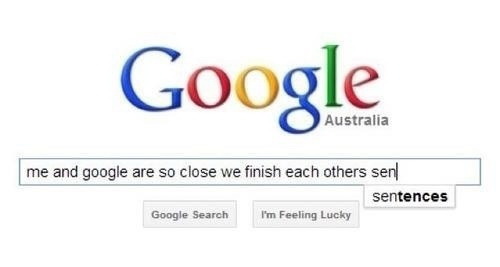
Google April Fools' Day 2013

by Alex Chitu
Just when you thought that Google will start to focus and close even more products, April Fools' Day comes and Google announces a long list of new initiatives.

YouTube will pick the best video uploaded to the site: "We've been thrilled with all of the diverse, creative entries we've seen so far, and we can't wait to begin the process of selecting the best video. We'll be announcing the winner in 10 years."


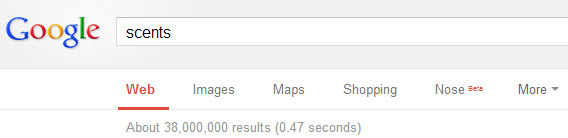
Google Nose goes beyond keywords and helps you identify a smell.


"Google Nose leverages new and existing technologies to offer the sharpest olfactory experience available:

* Street Sense vehicles have inhaled and indexed millions of atmospheric miles.
* Android Ambient Odor Detection collects smells via the world's most sensible mobile operating system.
* SMELLCD™ 1.8+ high-resolution compatible for precise and controlled odors."


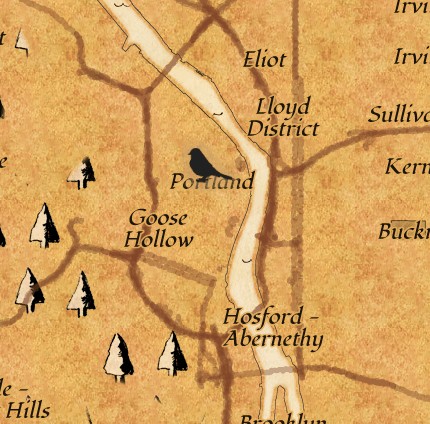
Google Maps has a new feature: treasure mode. "Archeological analysis has confirmed that our Google Maps Street View team has indeed found one of history’s long lost relics: a treasure map belonging to the infamous pirate, William 'Captain' Kidd. The map was found on a recent expedition in the Indian Ocean, as part of a deep-water dive to expand our underwater Street View collection. Captain Kidd was rumored to have buried his treasure around the world, and tales of a long-lost treasure map have lingered for generations," informs Google.


Visit Google Maps (disable MapsGL if the experiment is enabled) and find the treasure.


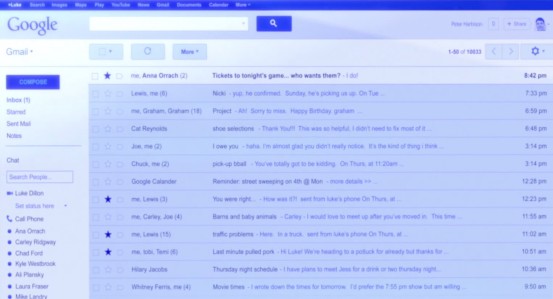
Waiting for Windows Blue? Here comes Gmail Blue: "the next big step for Gmail" is making everying blue. The new interface is inspired by nature. It's intimate, intuitive, realistic and organic.


Google Apps adds a new feature: Levity Algorithm. "Created in partnership with legendary improv comedians from Chicago's Second City Communications, the Levity Algorithm is carefully tuned to help you spice up even the most boring of work days. Send happier emails, hold more engaging meetings, write more mind-blowing presentations - and above all, turn those frowns upside down."


Google Japan found another creative way to enter text: using the Patapata device. It only has one button, but it's fun to use. "Not only ensure operability, seeking the comfort of the best press uncompromising, adopted the mechanical isolation of the single button type keyboard. Proven flap has been used for many years on the show song of yesteryear airport, and train station. Not only comfortable operation, carry in hand with sound refreshing wind brisk." (Google machine translation)


Google Australia has a great solution for renovating your house: Google SCHMICK. "Now you can give your house a lick of fresh paint for free on Street View with Google SCHMICK (Simple Complete House Makeover Internet Conversion Kit). Forgot to mow the nature strip? Deck it out with some fresh buffalo grass. Front steps falling down? Swap them out for doric columns and a pergola. Graffiti on the front fence? Cover it with so many palm trees people will think they're on the Vegas strip." Too bad that it's only on Street View.


Google also found an innovative way to make ATMs mobile. "The mobile ATM device easily attaches to most smartphones and dispenses money instantly and effortlessly– forever ending your search for the nearest bank or ATM. Just type in your personal pin code on your cell phone and access all your cash from the palm of your hand. Google Wallet Mobile ATM technology allows you to enter the amount of money you want to withdraw directly in your phone or use voice-activated dispenser."


Google Analytics lets you export data to old-fashioned floppy disks, CDs, sticky notes and even papyrus (or papyri). You can also send reports using fax machines, telegraphs, carrier pigeons and telegram messengers.


"Google Fiber to the Pole provides ubiquitous gigabit connectivity to fiberhoods across Kansas City. This latest innovation in Google Fiber technology enables users to access Google Fiber's ultra fast gigabit speeds even when they are out and about."

28 Mar 16:29

Where Are the Progressives?

by dianerav
Ibktim

We can hope . . .

Jeff Bryant decries the phony bipartisan consensus surrounding education “reform.”

He wonders where are the progressives.

He compares the bipartisan consensus around education reform to the bipartisan consensus that prevailed before the war in Iraq, when dissenters were marginalized and ignored.

But he sees hope in the growing rebellion against high-stakes testing.

More and more parents and students understand that what is happening does not work, will not improve education, and will inflict grievous wounds to public education.

How long can our policymakers continue to demonize teachers and expect that “better” or “great” teachers will magically appear to take the places of those who left in disgust?

I share his view that the current reign of toxic policies will not last forever. Not a one of them has any evidence behind them, and not a one of them works to improve the quality of education.

Failure cannot survive indefinitely. The American people will indeed awaken to the great hoax called education “reform” and reclaim their schools.


25 Mar 21:30

Objecting To The Evidence For Equality

by Andrew Sullivan
Ibktim

This kid is remarkably well spoken for anyone, let alone a 19 year-old.

Andrew Ferguson unpacks the brief (pdf) filed by Harvey Mansfield and Leon Kass, which dismisses the idea that proponents of marriage equality can back their arguments with data:

It is the aim of Kass and Mansfield to wave the Supreme Court away from “scientific findings” that are produced by culture warriors, as the findings in the field of “gay studies” nearly always are. “The social and behavioral sciences,” they write, “have a long history of being shaped and driven by politics and ideology.” They note pointedly that two generations ago, the “scientific consensus,” as represented by the American Psychiatric Association, was that homosexuality was a “mental disorder.” The consensus was publicly reversed in 1973, and science, to paraphrase Mae West, had nothing to do with it: Both positions, before and after, were determined by political and cultural considerations.

Now, of course, the American Psychological Association, which waited until 1975 to “depathologize” homosexuality, tries to lend its shaky intellectual credibility to the cause of gay marriage in general and gay parenting in particular. In 2005, it issued a bull declaring the “no difference” finding a matter of settled science. Kass and Mansfield point to a recent paper by Loren Marks of LSU, who had the temerity (and professional death wish) to go back and actually read the 59 studies the APA cited in its decree. They were shot through with conceptual and methodological flaws: small, nonrandom “convenience” samples, a recurring lack of control groups, shifting and poorly defined outcomes, and a steady pattern of comparing apples to oranges—for example, placing the children of intact, well-to-do lesbian households up against children reared by single heterosexual parents.

The argument that the currently available social science data are not dispositive at this point seems to me inarguable. How could they be dispositive when marriage equality has only existed in one state for nine years? In reporting on the studies in my anthology, I insisted and still insist we do not have sufficient long-term data to judge the social impact of this reform.

But we do have lots of data on child-rearing and same-sex relationships, and those arguing for detrimental effects have been able to find nothing. That Mansfield and Kass cite the widely debunked Regnerus study does not change this fact. No respectable, academic studies of any kind have proven any harm to children or adults from integrating gay people into their own families. I think the co-authors are correct that the judicial decision should not rely on inconclusive social science as the basis for a ruling. But the weight of the gathering evidence is clearly on the side of it doing no harm whatever. Just ask the families of Massachusetts, with divorce rates declining as gay marriages increase in number. And just meet the kids of gay parents. They will tell you more about this than any study, however flawed.

I wonder: have Harvey and Leon ever met some children of gay couples? Or talked with them?


25 Mar 20:52

Stuck In A Qwerty World

by Andrew Sullivan
Ibktim

I wonder in which other aspects of life, have we not considered better possibilities than what already exists.

Tom Chatfield is frustrated by the “qwerty phenomenon,” wherein, having found a keyboard “design that largely fitted our early needs, we gave up on alternatives”:

The 27 bones, over 60 muscles and tendons, and three nerves of the human hand are sensitive to minute variations in pressure, velocity, position, temperature and texture. They are effortlessly able to execute three-dimensional manoeuvres while sensing and responding to all of these. Yet, in computing terms, all this incredible bandwidth is usually funnelled into tapping on keys able to recognise only two information states – on and off. Even the most advanced touchscreen is barely able to register five fingers’ worth of contact points on its textureless, depthless surface.

He caught a glimpse of the future when he encountered a new musical instrument, the Seaboard (seen above):

For someone who has played the piano for twenty-five years, the Seaboard was an exquisitely bizarre encounter. A sleek black piano keyboard with a ribbed and rubberized surface, it looked like a silicon mould for making music-themed desserts – and felt, when I was graciously allowed to sit down and play, like massaging a giant bag of jelly sweets. Digging my fingers into the (startlingly robust) keys mixed familiarity with sudden ineptness. Onto the concept of a piano had been grafted several entirely new layers of physical interaction.

What was truly remarkable was the degree of control on offer. According to London-based manufacturers ROLI, the “soft three­dimensional surface that enables unprecedented real­time, intuitive control of the fundamental characteristics of sound: pitch, volume, and timbre”.


25 Mar 20:45

Reality Check

by Andrew Sullivan
Ibktim

No analysis from Sully about this? I'm a little surprised and I'd like to hear his take.

Obama Economy

Obama’s approval numbers have eroded:

Public approval of his handling of the economy has slipped, according to polls, and surveys now show that a roughly equal number of Americans favor Mr. Obama as favor Congressional Republicans on economic matters.

In December 2012 and January 2013, polls found that roughly half of Americans had more faith in Mr. Obama’s economic stewardship, while just over a third of respondents said they had more faith in the economic stewardship of Congressional Republicans. Since December, however, Mr. Obama’s standing has declined by roughly 10 percentage points, while Republicans in Congress have gained 4 or 5 percentage points.

(Chart: Obama’s approval rating on the economy from TPM)


25 Mar 20:11

Man Has Trouble Growing Full Beard Of Bees

BURLINGTON, VT—Complaining of patchiness and uneven color, area man Matthew Cruickshank, 34, told reporters Monday that he has always had trouble growing a full beard of bees.
25 Mar 17:05

Heart on a Canvas: Lessons From the Paintings of George W. Bush

by Chloe Pantazi
Ibktim

Weird

xlarge570.jpg Gawker

Gawker recently published another six paintings by George W. Bush. Among the politician-turned-painter's images are new subjects; after a slew of dogs, we were delighted to find cats, shells, a crucifix, and, erm, more dogs. Reactions to the new artwork have been fairly mixed. Some felt that Bush's paintings were "sort of sweet." "Guys. Stop making me feel sorry for George W. Bush," urged another commenter. A less sympathetic viewer denounced the "dull drab emptiness" of the paintings, while others pondered the resemblance of one of the cats to its painter. Someone else considered the suggestive connotations of Bush's shells. Overwhelmed by all the symbolism, we took the 43rd President to art therapy -- well, not really, but we did speak to the art therapist Rachel Brandoff in an effort to clarify his paintings. Here's what she had to say.

flavorpillheader.PNG

The Former Speakeasies of New York
Internal Body Parts Sculpted From Books
18th Century Lithographs of Eccentric Characters


The first thing Brandoff noticed about Bush's paintings was that they're pretty beginner. "Looking at the paintings through a critical lens, they have a very amateur quality," she said. For all the simplicity of the artworks, Brandoff observed that Bush's portraits of dogs in particular possess "a representative quality -- as if the artist is portraying a dog he knows or has encountered." According to Brandoff, there's a real "personal and emotional investment on behalf of the artist in the subject matter." Indeed, the form and content really relate to each other in Bush's work. "The way he uses lines, shapes, and color speaks to his putting a lot of value on the object or subject of the painting, whether the cat, dog, or shells," Brandoff observed. Might this explain why someone admitted feeling sorry for Bush? His art wears its heart on its canvas, so to speak.

As Brandoff pointed out, "Oftentimes in art you see a figure floating in a background," but Bush's pictures of dogs are unfussy and deliberate, as though, she said, depicted from "memory." They're "less defined" depictions in that they take up a central position on the canvas; this is obvious art. While the dogs are all right, it's Bush's portrait of a cat that appears to have made the biggest impression on Brandoff. "It almost seems like the artist is trying to put the cat in some kind of context and yet the background is sort of vague. Who is the cat? Where did it come from?" Brandoff asked, suggesting that really "the piece is about the cat, not what's surrounding it."

So -- just like on the Internet -- it's all about the cat. But what does the cat mean? I gingerly suggested to Brandoff that maybe the cat was a bit like Bush -- that he's trying to put himself into a different context, too. Perhaps Brandoff was kindly humoring me when she said that was an interesting idea. Yet what's really interesting, she said, is "that these paintings are coming from a former president," which she said, "gives us a very different lens [with which] to think about him ... I think the key takeaway from these paintings is that every person has many sides to them," Brandoff added. "We need to remember that ... nobody's one-dimensional."


This post also appears on Flavorpill, an Atlantic partner site.


25 Mar 16:02

The 87-Year-Old Virgin

by Jessica Gentile
Ibktim

I couldn't decide whether or not to share this, but decided that I found it sufficiently interesting. If you can get over the initial ick factor of the article (which is really the entire point of the article) there are a number of really good bits in here.

elderly lvoers 57.jpg.jpg luciawhittaker/flickr

"Have you ever looked up the word 'intercourse' in the dictionary?" Cliff said, gruffly.

He was an 87-year-old resident of Bayberry Care Center. I was a high school recreation volunteer.

"Well," he said, "I never had it."

As a 17-year-old, this candid confession was not uncommon -- among my angsty adolescent peers. We were a small clan of gawky, gabby girls who spoke in whispery speculation about what never was. There were only three or four of us by senior year, and we were relegated to the periphery of the social hierarchy and by natural extension, the cafeteria. But coming from an octogenarian, it was downright taboo.

I realized, though, that Cliff's reality wasn't so far off from mine. Outside of the high school halls and college campuses, senior centers are coming to be known as hotbeds of sexual activity. I would typically encounter just as many displays of lust during a four-hour shift at Bayberry as during a day of school.

"But Roger thinks I'm gorgeous," she'd exclaim. "Roger is also 39 and unemployed and lives at home with his mom who is younger than you," I'd reply.

Rates of sexually transmitted diseases nearly doubled among adults over fifty during the decade between 2000 and 2010, according to CDC data. In an age of Viagra and internet dating, when there are dating sites geared specifically to senior citizens (e.g. Silver Singles), such statistics don't really come as a surprise. (They even provided fodder for an episode of Parks and Recreation.)

Among adults over 50, 85 percent of men and 61 percent of women said that sex was important to their quality of life, according to a 2010 AARP survey. Caught up in our ageist culture, it took a very busy year at Bayberry before I became fully aware of that. Perhaps I was privy to an undue proportion of these ascending statistics -- or at least, talk of the yearning that underpinned them.

Sometimes the displays of affection were sweet. Mary recounted, with pride, many a girlhood night down at the lake with her multitude of beaus. And then proceeded to serenade the day room in a rousing rendition of "Let Me Call You Sweetheart." Sometimes they were lascivious. I saw nurses being ceaselessly cat-called by supposedly innocuous old men, with winking grins and howls of "get over here, sweetheart." 

Sometimes it was sad, like for poor Sofia with her dementia-addled brain. With barely any provocation she would wail, "Puttana, puttana!" -- Italian slang for "whore" -- at unsuspecting bystanders. 

But no matter its form, the specter of the "it," the thing that Cliff and I never had, was so often looming.

Meanwhile it took until 2011 for Medicare to cover STI screening tests.

Age clearly has little impediment on sexual desire, and yet discussion of sex and the elderly often remains a cultural taboo. The subject is rarely broached in both conversational and medical contexts, even by seniors themselves. According an Age UK survey (a British charity dedicated to aiding senior citizens), out of a sample group of over 2,000 people over 65, 69 percent have never sought medical advice from professionals regarding their sexual health. And despite the growing STI rate among this demographic, almost half (46 percent) feel they don't need to, rising to 54 percent among just the women.

What's to account for the continued blind eyes turned to sexual health in the elderly? Of course generational and cultural differences come into play, but perhaps society's youth-centric and often dismissive attitudes factor in as well. An editor of Esquire recently noted with pride that they feature "older" women on the cover, citing 40-year-old Cameron Diaz as an example of their diversity. Meanwhile it took until 2011 for Medicare to cover STI screening tests.

When prolific romance novelist Jessica Blair was recently revealed to be an 89-year-old man, it shocked a lot of people -- but not me. We often reduce the elderly to caricatured clichés. Grandmas, in their cable cardigans and grey perms are adorable. Golfing grandpas drive their toy-like carts down the fairways. Little old ladies are just as diminutive as we say they are -- little and old. The cutesy facade we often fail to see beyond marks our inability to recognize the desire underneath. A lifetime of it, at that.

The few times we do publicly acknowledge the sexual proclivities of the over sixty crowd, take for example, the entire seven season run of the Golden Girls, it's in the context of a joke. It takes a chuckle to get to the truth, though that doesn't make it any less revelatory.

Could it be that when we blatantly ignore and disregard an entire demographic as active sexual agents, they find themselves exempt from the larger conversation, be it medical, cultural or familial? I recognize this as overarching speculation, but my grandmother certainly did.

She was a maternal presence, not a sexual one.

Upon my grandfather's death, my grandma Irene was left without a man for the first time since the age of thirteen. Now a widow after nearly five decades of marriage, she spun into a single panic. Our family urged her to fill her empty days, take up a new hobby, volunteer at the library, join a bingo club - anything to get her mind off the new-found void. In our eyes her romantic life was over. It was uncomfortable to think of her as anything more than an inextricable part of a whole, a package deal of family, of my family -- her and my grandfather in their matching cruise-wear, spending leisurely days as card game partners for life, hand-in-hand at the buffet line during their early bird Sunday dinners. She was a maternal presence, not a sexual one. We disregarded her desire, hence she disregarded our advice. But our relentless heeding only led her to the Internet.

Irene may have been 78, but she was as media-savvy as any member of the Millennial generation. She had seen it on a TV news program or read about it in a magazine -- everybody's doing it, she said. The "it" in this case was online dating. Soon she had a profile, or rather, multiple profiles. On sites with hopeful clichés for names like "Plenty Of Fish" or the aforementioned "Silver Singles." She was uploading stylish photos and clicking off preferences (non-smoker, male, loves travel and movies) with giddy aplomb. And within the hour, messages started rolling in.

When she flew up from Florida to visit my family for Thanksgiving, her first impulse after hugging us hello, was to rush to our computer to check her overflowing inbox. With an eyeroll and a sigh, we gradually accepted her foray into online dating. It was a distraction she welcomed. Who were we to fault her for it? But it might have been too late for her to accept our acceptance. 

We tried to ward her away against scammers and cheaters. A vulnerable widow was prime prey for gold diggers and the rest of their sleazy ilk. One compliment was all it took to bowl her over. "But Roger thinks I'm gorgeous," she'd exclaim. "Roger is also 39 and unemployed and lives at home with his mom who is younger than you," I'd reply. Even when our advice was in her best interest, it was usually abandoned.

When she finally did meet someone, it was in a rare moment of self-forced socialization at the local senior center, and not the result of any online correspondence. It was Luigi Del Mar's lush silver locks that she was immediately attracted to. She always valued a full head of hair. Adorned with gold chains and a gruff guido accent, he wouldn't have looked out of place on an octogenarian version of The Jersey Shore. Lou exuded cocky machismo. He was a World War II veteran and a retired postal worker, as well as a recent widower following half a decade of marriage. Irene had met her match.

One of the first times I met Lou, he talked at length about his army days. He was stationed all over Asia and spent ample time in India. "It was there that I was introduced to the Kama Sutra," he said. My mind raced back to that conversation with Cliff nearly a decade ago. We were discussing the dictionary all over again.

"Oh really," I said. "Tell me more."


25 Mar 15:47

Will Sasso's lemon-puking compilation

by biotv
Ibktim

I found this strangely hilarious.

Photographer AJ Davidson created this compilation of Will Sasso's nothing-short-of-weird sudden lemon-vomiting videos he made on his Vine iOS app.


Alex Davidson | via
25 Mar 15:41

History

by biotv
25 Mar 15:39

Human Mammal, Human Hunter [Video]

by admin

A video depicting what is perhaps the oldest form of hunting on earth–persistence hunting. A tribesman pursues an animal for 8 hours, keeping after it until it keels over from exhaustion.

Hat tip to Cody D. for this link.

25 Mar 15:30

Hew and cleave

by admin

By the way, Hugh Beaumont played Beaver Cleaver’s father. Just sayin’.

Dear Word Detective: The words “hew” and “cleave” both have the same odd combination of meanings: “to cut,” or “to stick to.” Are they related? — Ken Lerner.

Um, yes and no. Next question. Oh, all right. No, they’re not really related in the sense of “having an etymological relationship” or “having some family connection that Cleave takes advantage of by borrowing Hew’s lawn trimmer.” The only attribute shared by “hew” and “cleave” is membership in the weird little club of English words known as “autoantonyms,” words with two opposite meanings (“auto” self, “anti” against, and “onyma,” Greek for “name”). Autoantonyms are also known as “contronyms,” “contranyms,” “antagonyms” and, sometimes, in a refreshing break from all those “nyms,” as “Janus words.” Janus was the Roman god of doorways and beginnings (thus “January,” the first month in the Roman calendar), and was depicted as having two faces (as doors can be used from two sides).

“Contranyms,” which is the simplest name for the breed, actually come in two flavors. Some are simply one word which has, over time and in a linguistic process called “polysemy” (Greek for “many signs”), developed two opposite meanings. The other kind of contranyms are homographs, two separate words that happen to share the same spelling, and are also antonyms, words that have opposite meanings. The result in both types of contranyms is a word which seems to have two meanings, but in the case of homographs, that’s because it actually is two separate words. “Hew” and “cleve” are actually good examples of the two kinds of contranyms. (However, the fact that the two opposite meanings of “hew” are essentially synonymous with the two opposite meanings of “cleave” is deeply spooky and ought to give us all the creeps.)

“Hew” is the first kind of contranym, the “gradual change in meaning” kind. We inherited “hew” from Old English (where it was “heawan”), and its basic meaning was “to cut or strike with a cutting tool or weapon; to chop, hack, etc.” Trees and the like have often been “hewed” with axes (or “hewn,” if a poet is doing the job), but the verb has also often been used in descriptions of battles in a depressingly non-metaphorical sense (“The front lines, hewing at each other with their long swords,” Sir Walter Scott, 1828).

But from day one, “hew” also had a more constructive meaning, that of “to shape, smooth, trim or form with an axe or a hammer and chisel, etc.” This sense is most often found today in the adjective “rough-hewn,” meaning something which has been shaped by chopping, etc., but lacks precise shaping and polish (“A long oaken table formed of planks rough-hewn from the forest … stood ready prepared for the evening meal,” Scott, Ivanhoe, 1819). But even such “hewing” required following a design for the finished product, and “to hew the line,” which first appeared in print in 1891, meant to cut closely along the line of a pattern. In a metaphorical sense, “hew the line” meant, and still does, “to stick to a plan and to obey instructions,” and “to hew” to something (e.g., your family, your principles) means to remain steadfast in your allegiance. So a verb which originally meant “to split apart” came to be its own antonym meaning “to conform, obey, adhere to.”

“Cleave” also means both “to split” and “to adhere,” but in this case the explanation is simpler, because the two opposite senses of “cleave” are actually two separate words and always have been. Both “cleaves” come from Old English and derive their base meanings from proto-Germanic roots. One “cleave” in Old English was “cleofan,” meaning “to split or separate,” especially by a blow from a sharp instrument. The past participle of this “cleve” is “cleft” (or “cloven”), meaning “split,” as in a “cleft palate” or the “cloven hooves” of a goat.

The other “cleave” was “clifian” in Old English, meaning “to stick, to adhere” (the same Germanic root gave us “clay”), and in literal use it’s essentially a synonym of “stick” (“Water in small quantity cleaveth to any thing that is solid,” Francis Bacon, 1626).  In modern English, this “cleave” is usually used in a figurative sense to mean “to remain faithful or devoted to” a person, cause, etc. (“We exhort you … to cleave for ever to those principles,” Edmund Burke, 1777). The two “cleaves” were originally clearly two separate words, but they had such a wide variety of forms that, beginning in the 14th century, they were commonly confused, which led to a common spelling, which only made things much murkier.

So in “cleave” and “hew” we have two (or three) words that are, in a sense, both double antonyms and double synonyms, and only by close attention to context can a reader or listener be certain of the meaning meant. That’s a prescription for bewilderment, and that potential for confusion is probably the reason that neither “hew” nor “cleave” is very popular outside of historical fiction today.

24 Mar 23:40

Thrilling Duke-Albany Game Ends With Last-Second Buzzer

PHILADELPHIA—The first-round NCAA tournament game between 2nd-seeded Duke and 15th-seeded Albany ended in sensational fashion Friday after a buzzer sounded at the very last possible moment.
24 Mar 23:40

[Video] Physicists Confirm They Have Found And Killed The 'God Particle'

CERN researchers confirm that they have finally identified the elusive Higgs Boson particle and destroyed it forever.
24 Mar 23:40

[video] Bengal Tigers’ Habitat Down To Studio Apartment In Jaipur, India

Ibktim

They're high profile, yes, but as many gun rights advocates point out, correctly, they're not actually the problem. I would rather have seen them pull the assault weapons ban to get tighter controls on licensing and closing the gun show loophole.

President Obama and Rachel Goldstein really hit it off during a group trip to Israel, a man with strong brand loyalty is willing to kill for Mazda, and Macaulay Culkin is hoping some 'Funny or Die' writer comes up with a video idea for him.
24 Mar 23:13

Oh, the Avocados You're Missing!

by Leah Reich
Ibktim

Nature's bacon, I've said so before.

8358448097_d064f22b88_zmain.jpg LeafLanguages/Flickr

The other night my friend Lisa announced to all gathered at dinner that if anyone had any questions about avocados they should ask me. They turned to me, curious, so I confessed an obsessive love for them. This prompted a face from the friend directly across the steaming bowl of fish in the center of the table. His mother was someone who wrote a lot about food in a "food worship" sort of way, intellectualizing rather than just enjoying it. He looked pained.

"Oh no," I responded, blushing. "I don't like avocados like that."

In this age of urban foraging and celebrity chefs and websites loaded with food porn, few foods are more thoroughly fetishized than the avocado. Well, you might say bacon. But as I've been known to counter, "Avocado is nature's bacon." 

It is everywhere. There are entire sites devoted to avocado recipes. Unlike so many foods, they don't seem to be killing us, either -- they have good fiber, good unsaturated fat, and good antioxidants. Yet in these days where we increasingly know and care about food -- where it was grown, and by whom -- avocados remain a funny thing. Few of us have stopped to think that 95 percent of the avocados sold and obsessed over in the U.S. are Hass avocados. That's one variety. One. Out of more than 900. There are so many avocados of so many shapes and sizes, textures, and even flavors. Hass is a pretty good one, to be sure, but maybe there's something else out there we might also enjoy. Differently? As much? Oh god: even more.

***

I'm one of those ridiculous people who's always saying "This is the best!" and "This is the worst!" and "Oh my god it was so good it changed my life" -- but when I tried my first Pinkerton avocado, it wasn't hyperbolic to say that it changed my life. Five years later I'm still going back for the same avocados grown by the same farmer.

Consumption of avocados has grown more than 200 percent in the past decade, and outgrowing and outpacing that of other fruits.

Unlike most avocados I'd had up to that point, the Pinkerton was long and slender, with a neck. When I cut it open, after letting it sit until the fruit yielded just enough under the skin, the pit was smaller than any I'd ever seen. It had an avocado flavor, of course, but a more distinct avocado flavor. Like someone had turned up the dial, made it more pronounced in all the most pleasant ways.

***

Will Brokaw's family has been growing avocados since the late 1960s. Before the family started the farm in Soledad in '67 and the Santa Paula farm in '77, his parents had a successful nursery in California's Ventura County. Now they grow more than just avocados -- there are gorgeous citrus fruits, cherimoyas, and guavas too -- but there's a reason the Brokaw family website is called Will's Avocados.

The Brokaws grow avocados on both farms but they only grow Gwen avocados in Soledad. On the Santa Paula farm they grow multiple kinds of avocados, including Pinkerton, Hass, Reed, and Gillogly, all of which are descendants of the Guatemalan varieties, along with Mexican varieties like the Fuerte, and even the Zutano and the Bacon.

Will, who has access to plenty of avocados, regularly eats Hass -- during Hass season. The Hass, he told me, is the boilerplate avocado. It's a perfectly good tasting avocado, full of oil. So why, I asked him, are the Hass you get at the supermarket sometimes so gross and terrible? Is it because they're grown improperly?

Two reasons, he said. The first is storage. Often, the avocados at the supermarket or even in restaurants are already old by the time they get to the shelves or the plate. They've been stored off the tree and refrigerated for a long time. There's no such thing as a tree-ripened avocado -- avocados are picked hard and ripen once they're picked. Will said a certain amount of refrigeration is fine, so even the Brokaw avocados are refrigerated briefly before they get to market. But briefly is key, because the damage is cumulative.

5836398807_c3807d8be5_zinset.jpgScot Nelson/Flickr

The second reason is the growing season. In California at least, avocados have different seasons. Hass ripen in the spring and summer and Gwen ripen in the fall and even into winter. This is why, Will said, the Brokaws can get good avocados almost the entire year, with a break of maybe six weeks. This includes avocados during the time when Hass are normally not harvested in California, which is September through January. If the Brokaws depended on Hass as their main crop, they'd have avocados February through August only.

Avocados are grown in places other than California, of course. They're grown in Florida, Mexico, Chile, the Dominican Republic, and New Zealand, and each place has different growing seasons that will overlap and allow for Hass to be available year-round. Hass are good avocados, especially when they're stored properly and eaten fresh. But an avocado isn't a beautiful thing just because it's an avocado. A slice of watery green on the plate, a dull flavorless scoop from a fruit you bought only days before: Just because it's called "avocado" doesn't mean your brain should switch to "This is delicious!" automatically.

According to the Hass Avocado Board, consumption of avocados has grown more than 200 percent in the past decade, and outgrowing and outpacing that of other fruits. A total of 484 million avocados were consumed in 2000. In 2012? Almost 1.5 billion. That's a lot of avocados, and that's a lot of Hass avocados.

I asked Will Brokaw about his favorite variety. After all, he's got access to so many. "I usually eat Hass during the spring and Gwen during the fall. But Gwen is my favorite. The Gwen really is." 

He also likes the Reed, which, while delicious, is a very big avocado. Since he is just one guy who cooks for himself, a baby avocado like the Gwen makes more sense. He picks from his own stock, grabbing a ripe avocado right out of storage to put on toast. For a second I got lost in a reverie about the idea of having an entire stock of my own baby avocados and seriously considered becoming an avocado farmer.

The Reed looks like a big green softball is possibly the most misunderstood of all avocados. I didn't understand them myself for a few years, until I finally let one get ripe enough and discovered how delicious they be. Will agreed. When it comes to the Reed, "You really need to break people's stereotype. It's very important they don't cut into them too soon. There's always an expectation just by the looks of them they're going to be a lousy avocado. There's a threshold to overcome. When you overcome the threshold, it's very potent. It makes it even taste better."

Speaking of expectations and taste, I relayed my own disappointment regarding the Bacon avocado. "It's my absolute least favorite," I told him. I said I've had a hard time finding a Zutano that I can get into. The Bacon and Zutanos are different from Hass, Gwens, and the other Guatemalan varieties in that they have a lower fat content, which means they won't be as rich and creamy.

We had another avocado bonding moment when I was gratified to learn that the Bacon and Zutano avocados are mostly grown on the Brokaw farms in order to pollinate the other varieties. Although Will takes them to markets, where they do sell. I've heard people say the lower fat content is a reason for eating them more often, given their flavor and texture profile. I'd rather eat a smaller, richer Gwen or Hass, or even a chunk of a Pinkerton or a Reed. To me, Will's method of "a single serving avocado" makes more sense.

***

In California we are spoiled with our abundance of produce. But even here I watch people at the market, surrounded by variety, as they reach over the Gwens for a Hass, or say to someone "A Bacon avocado? What?" It's even interesting to think of how many more varieties there are available in the world, and to wonder which might be commercially viable and just as, if not more, delicious.

You can order avocados from Will Brokaw when they are in season, as well as from other growers here in California, if you are so inclined. Or seek out a Hass avocado from your local market, remembering where they come from and when they might be in season there. The whole point is to eat and enjoy a good avocado by letting it get perfectly ripe, spreading it on some nice toast, and sprinkling it with a little salt, perhaps a touch of good salsa. At least, that's the way an avocado farmer does it. 


24 Mar 22:55

No End to Magical Thinking When It Comes to High-Tech Schooling

by larrycuban

Few high-tech entrepreneurs, pundits, or booster of online learning, much less, policymakers, would ever say aloud publicly that robots and hand-held devices will eventually replace teachers. Yet many fantasize that such an outcome will occur. High-profile awards to entrepreneurs, the occasional cartoon, and  advocates who dream of online instruction anywhere, anytime transforming education feed the fantasy.

cartoon-9

Consider Sugata Mitra, Professor of Educational Technology at Newcastle University (United Kingdom). He recently received the TED award of $1 million for creating learning environments where illiterate Indian children had access to computers in actual holes-in-walls on streets of New Delhi slums. Some of the children told him: “You’ve given us a machine that works only in English, so we had to teach ourselves English.” Believing that children’s sense of wonder and intrepid curiosity would spur them to use computers and learn English, science, and whatever else they were curious about on their own, Mitra said to his audiences and funders: “My wish is to help design the future of learning by supporting children all over the world to tap into their innate sense of wonder and work together. Help me build the School in the Cloud, a learning lab in India, where children can embark on intellectual adventures by engaging and connecting with information and mentoring online.”

The million dollar award is not an accident when so many vendors, enthusiasts, and dreamers are willing to spend large sums of money to advance the spread of Mitra’s initiative and similar ones through both the developing and developed world.

More magical thinking–another noble dream–occurred nearly a decade ago with the  One-Laptop-Per-Child initiative (OLPC). Nicholas Negroponte, MIT professor and former director of the MIT Media Lab, designed the project to put inexpensive, solar-powered laptops (running now around $200) in the hands of children and youth in least developed countries in Africa, Asia, and South America.    images

No shortage of critics, however.

i-6c7a585f87d73de69a303a2d7666d8a7-OLPC joyoftech

Thus far, the largest distribution of laptops, nearly a million, have gone to rural and poor children in Peru over the past few years. A recent evaluation of the effort concluded:

*The program dramatically increased access to computers
*No evidence that the program increased learning in Math or Language.
*Some benefits on cognitive skills

Results for other developing countries such as Nepal, Sri Lanka, and Uruguay have similar mixed results. At best, it is too early to say what the benefits have been; after all, laptops are slowly becoming obsolete since smart phones and cheaper devices have nearly replaced them in many parts of the world; at worst, OLPC approaches what Mike Trucano, ICT specialist for the World Bank, listed as one of the 9 worst ed tech practices in the developing world: Dump hardware in schools, hope for magic to happen.

I certainly saw that with instructional television in the 1960s, desktop computers and labs in the 1980s, 1:1 laptop programs since the mid-1990s and I now see a similar pattern with iPads, other tablets, and smart phones. Magical thinking about transforming teaching and learning–dumping teachers and traditional schools disappearing–is close to make-believe even when children have these powerful devices in their hands.

Vendor-driven hype and wishful policy thinking over robots, increasingly sophisticated artificial  intelligence software, and expanded virtual teaching feed private and public fantasies about replacing teachers and schools. Taking a step back and thinking about what parents, voters, and taxpayers want from schools–the social, economic, political, and individual goals–makes magical thinking more of a curse in the inevitable public disappointment and cynicism that ensue after money is spent, paltry results emerge, and machines  become obsolete.

I end with the obvious point that magical thinking and the accompanying curse afflicts not only educators but also the rest of us, as these homeowners found out:

130318_cartoon_070_a17241_p465


24 Mar 17:47

Golf fail compilation

by biotv
24 Mar 17:43

We're so close...

by biotv