Shared posts
03 Jun 11:12
06/03/2025
by Jennie Breeden

Do something you love and you will work every day of your life.
Farnaby likes this
12 Nov 13:32

She Tried Being Nice While Demanding A Refund, But When That Failed She Got The Police Involved And The Thief Got A Felony
by Ashley Ashbee

It’s really important to listen to our gut because it’s often right.
In this case, a woman felt sure that a gas station employee was using the credit card she lost at the store, but when she called to inform the “manager,” she was told to take a hike.
So, what choice did she have but to call the police?
Check out what happened next.
Steal my money and then become hostile when I ask for a refund? Have fun with that felony on your record.
I stopped at a gas station to get some food and I apparently lost my debit card (or it was stolen).
It was a card I never used and looked identical to my main one, so I didn’t notice it missing until later when I get a call from my bank and I see my account overdrafted.
Being fresh out of college making $12/hr, the $400 was a huge deal.
So she took action.
I worked at a credit card processor at the time, so I had a very unusual familiarity with how credit card transactions worked (this was a debit card, but ran as credit).
I could have done a chargeback, of course, but I knew that merchants were fined $15 for each chargeback (on top of the return) and got a ding on their “record” with Visa/MC/AMEX.
If they had too many chargebacks they would have their processing revoked and incur heavy fines.
Merchants are usually mom and pop shops and are usually innocent in the matter, so I decide to give them a call.
Also, the charges all came from the same gas station that I lost it at, so I suspected it was an employee who found/stole my card and was stupid enough to use it at work.
I wanted to let the manager/owners know so they could keep an eye out for unscrupulous employees and get a refund.
Employee theft is unfortunately common and is not brought to light until a customer brings it up.
I explain that I had lost my card at that location and someone had later used my card there.
I said I didn’t want to accuse anyone, but I think one of her employees had the card and she may want to investigate.
But she didn’t get anywhere…
I also said I’d like a return for all the purchases to save them the hassle of a chargeback.
When I usually work with managers in this situation, they’re very willing to help and take employee theft very seriously.
Instead, she was hostile and insulting.
She told me I probably deserved it for losing my card in the first place and not noticing and I deserved this “lesson.”
She interrupted me and told me to basically get lost and none of her employees would steal.
Getting a bad feeling, I ask for the number of the owner.
She says there is no owner… What?
By now I’m shaking in anger, so I tell her I’m calling the police and hang up.
She tries to call back, and I don’t answer.
By now I’m angry crying. I have a feeling I know who did it, but now I need to prove it.
I call my bank and ask if they have the record of the exact times the card was used.
They gave me the times down to the minute.
Until she started playing hardball.
I then call the police, told her my story and ask if she’s able to go look at the surveillance tapes.
She says the store is 5 minutes away and she will stop by and she’ll give me call if she finds anything.
I eagerly await her call, but was not expecting much.
A couple days later she called me and said she went by the store and reviewed the footage.
At the exact times I told her, the cameras caught the hostile manager making the purchases signing receipts for the exact same amounts with a card that looked exactly like mine.
Even better, they were going to charge her with felony Identity theft since making purchases on someone’s card without permission is identity theft on top of monetary theft (at least in my state).
They asked if I wanted any restitution, but my bank had refunded me the stolen money, so I declined.
I felt a sense of pride for actually sticking up for myself and not just taking the money from my bank and letting the thief go.
Because she was so rude and unhelpful she got a felony instead of an easy resolution.
Here is what folks are saying.
If the cops are entitled to get evidence, they will get it.
How would she tell her? Visit her in jail?
Fortunately most criminals are incredibly stupid.
There really needs to be a record of every time this happens.
Who hurt you?
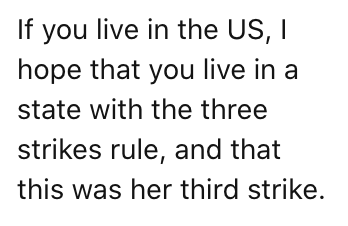
She probably should have at least acted concerned.
But I guess some thieves aren’t very bright.
If you liked that post, check out this story about a customer who insists that their credit card works, and finds out that isn’t the case.
03 Nov 15:56
14 Big Landlords Used Software To Collude on Rent Prices, DC Lawsuit Says
by msmash
DC's attorney general has sued 14 of the city's largest landlord firms, claiming they entered into agreements with a property management software firm to keep rent prices high in a city with a housing affordability crisis. From a report: The complaint, filed earlier today by Attorney General Brian Schwalb, focuses on the multifamily landlords' use of software from Texas-based firm RealPage, which suggests rental prices based on a pricing algorithm. Key to those models, according to the suit, is the data fed in from the landlords and the pressure RealPage puts on them to stick to the code-derived rental rates. "RealPage and the defendant landlords illegally colluded to artificially raise rents by participating in a centralized, anticompetitive scheme, causing District residents to pay millions of dollars above fair market prices," Schwalb said in a release tied to the complaint.
The collaboration "amounts to a District-wide housing cartel," Schwalb said, noting that "well over" 30 percent of buildings with five or more units use RealPage's software, along with 60 percent of 50-unit-plus buildings. Across a wider Washington-Arlington-Alexandria area, more than 90 percent of units in large buildings are subject to RealPage pricing, according to Schwalb's office. RealPage's rent management service, YieldStar, has come under increasing scrutiny in recent years. RealPage and the property management firms utilizing their software were the subject of a class-action suit filed in the Southern District of California in October 2022, alleging the "cartel" artificially inflated prices. The Department of Justice's Antitrust Division opened an investigation in November 2022 into RealPage's role in potential landlord collusion.


Read more of this story at Slashdot.
Scott Weigand likes this
23 Aug 13:37


505
by keii4ii
Danbi must be wondering what happened to one of his shoes.
———
Check out my @ Carrd for my socials!
23 Aug 13:37
Trudeau Denounces Meta's News Block As Fires Force Evacuations
by BeauHD
An anonymous reader quotes a report from CBC.ca: Prime Minister Justin Trudeau blasted social media giant Meta on Monday over its decision to block local news as wildfires continue to force thousands of Canadians from their homes. "Right now in an emergency situation, where up-to-date local information is more important than ever, Facebook is putting corporate profits ahead of people's safety, ahead of quality local journalism. This is not the time for that," he said during a stop at the Island Montessori Academy in Cornwall, P.E.I. on Monday morning. "It is so inconceivable that a company like Facebook is choosing to put corporate profits ahead of ensuring that local news organizations can get up-to-date information to Canadians and reach them where Canadians spend a lot of their time -- online, on social media, on Facebook."
Meta, the parent company of Facebook and Instagram, has blocked Canadians from viewing news from Canadian outlets in response to the Liberal government passing its Online News Act, Bill C-18, in June. Google has threatened similar action. The law forces large social media platforms to negotiate compensation for Canadian news publishers when their content is shared. As a result, content from news providers in the North -- including CBC, the local newspaper The Yellowknifer and digital broadcaster Cabin Radio -- is being blocked and people can't access or share information from news sources on Facebook and Instagram, two of the most popular social media sites. In a statement sent to CBC News last week, the company said it's sticking to its position. It also said government sites and other sources that disseminate information aren't subject to the ban. "This is Facebook's choice," said Trudeau. "We're simply saying that in a democracy, quality local journalism matters. And it matters now more than ever before, when people are worried about their homes, worried about communities, worried about the worst summer for extreme weather events we've had in a long, long time."
Meanwhile, Meta spokesperson David Troya-Alvarez said: "People in Canada are able to use Facebook and Instagram to connect to their communities and access reputable information, including content from official government agencies, emergency services and non-governmental organizations." Meta says it has activated a "Safety Check" feature that allows users to mark on their profile they're safe from the wildfires.
Read more of this story at Slashdot.

07 Jan 03:34

New comic!
Today's News:
Girls With Slingshots - GWS Chaser #1784
by tech@thehiveworks.com
New comic!
Today's News:
I don't know rainbow-hair-chick irl, but she's based on an actual GWS reader who still uses this cartoon drawing of her as her avatar, which tickles me every time I see it!
I remember a few of the readers who lent me their cute faces for the background peeps, too. Y'all are the best. :)
15 Dec 13:36
Presentations Point To Greater Huawei Role In China Surveillance Than Acknowledged
by BeauHD
An anonymous reader quotes a report from The Hill: PowerPoint presentations from Chinese telecommunications giant Huawei Technologies indicate that the company has a larger role in China's surveillance efforts than was previously known, according to The Washington Post. The Post reviewed over 100 Huawei PowerPoint presentations, many of them labeled "confidential," in which the company detailed how the government could use its technologies to identify voices, track people for political purposes and monitor the movements of inmates within prisons, among other surveillance tactics.
While the Post could not confirm who the presentations were shown to, the newspaper said that PowerPoints detailing surveillance tactics specific to government agencies -- such as slides appearing to refer to China's controversial prison reeducation and labor programs -- may have been intended for government audiences. While China's Communist Party depends on tools such as facial recognition to find dissenters, it has warned tech companies like Huawei against misusing the technology in the private sector, the Post said. "Huawei has no knowledge of the projects mentioned in the Washington Post report," the company said in a statement to the Washington Post. "Like all other major service providers, Huawei provides cloud platform services that comply with common industry standards."
Read more of this story at Slashdot.
19 Jun 21:27
Volkswagen Seeks Open-Source Approach To Refine Car Operating System
by msmash
Volkswagen wants to use an open-source approach to refine elements of a software-based car operating system being developed by the carmaker, Christian Senger, its board member responsible for digital services and software, said. From a report: With the advent of autonomous driving, carmakers have been forced to link up radar, camera and ultrasonic sensors and connect them to braking and steering components, something which requires thousands of lines of software code. "There is a race to create automotive operating systems. We are seeing that many non-automotive players are building up competence in this area," Senger told Reuters. By 2025, VW wants to increase its own share of software development on its cars to 60%, from 10% at present, and to design the electronics and vehicle architecture as well.
Volkswagen board member Thomas Ulbrich said in March that U.S. electric car manufacturer Tesla has a 10-year start on rivals when it comes to building electric cars and software. "In future there will likely be fewer automotive operating systems than carmakers," Senger explained. Volkswagen will define the core operating system but may seek an open source approach to enhance elements of it. "The operating system is not something that we will control on our own. We will define its core and then quickly include open-source components, to create standards. This will create opportunities for partnerships," Senger said.

Read more of this story at Slashdot.
11 Nov 15:43
Schiff Says Whistleblower Testimony Would Be “Redundant and Unnecessary”
by Daniel Politi
The chairman of the House Intelligence Committee also appeared to rebuff the GOP's call to have Hunter Biden testify.

Ynotlayabout likes this
03 Jul 00:01
An Ode to Japan, Which Lost Because It Tried to Win
by Nick Greene
When Japan attempted its final, fateful corner kick during Monday’s World Cup Round of 16 match against Belgium, it had five players in its opponent’s box and a sixth lurking just outside it. Despite letting a 2–0 lead slip away, Japan wasn’t trying to run out the clock and play for penalties. It was going for the win in the 94th minute. The decision backfired spectacularly.
Belgium goalkeeper Thibaut Courtois caught Japan on its heels, and it took only nine seconds from the moment when the ball left his hands to when it hit the back of Eiji Kawashima’s net.
The Belgian counterattack was both remarkable and completely avoidable. Had Japan trapped the ball by the corner flag and milked the clock, I’d be writing about what happened in extra time and possibly penalty kicks right now.
Japan is not known for its swashbuckling spirit on the pitch, and it got to the knockout round partly due to its cautious approach. It was the first team ever to progress thanks to FIFA fair play points, as Japan had accumulated fewer yellow cards than Senegal during the group stage. Against Belgium, however, Japan’s attacking players looked anything but scared, and they outshone their celebrated counterparts in the early stages of the the second half.
Both of Japan’s goals came in a shocking four-minute span, and each was positively splendid. The first came in the 48th minute, when Takashi Inui, the country’s standout star this tournament, found Genki Haraguchi streaking down the right flank. Haraguchi’s little stutter-step was perfectly off-rhythm, and the syncopation opened a path for him to shoot.
Inui topped his inch-perfect assist with a blistering shot in the 52nd minute. The goal was set up by Shinji Kagawa’s impromptu juggling show outside Belgium’s box, and it marked the precise moment when the match revealed itself to be an ayahuasca hallucination.
Belgium responded with two quick goals of its own, but Japan did not relent. It played with stylish abandon for most of the second half, and a dipping, 35-yard Keisuke Honda free kick forced a save from Courtois in stoppage time. Japan threw all but two of its outfield players forward for the resulting corner kick, but this valiant attempt to win in the most exciting way possible resulted in a thrilling loss.
Playing to have no regrets sometimes ends in regretful fashion. We should all thank Japan for learning this lesson the hard way.

30 Apr 01:48
A Heartwarming Video About Two Internet Friends Meeting Each Other For The First Time
They've been talking to each other on video chat every day for four years, but they have never met in person until this occasion.
18 Aug 20:19
 The end of Gawker is also the end of an era in the web's short history. The post Peter Thiel Just Got His Wish: Gawker Is Shutting Down appeared first on WIRED.
Peter Thiel Just Got His Wish: Gawker Is Shutting Down
by Davey Alba
Ynotlayabout likes this
26 Jul 15:38


Learn How to Sharpen Knives and Communities with Yohhei of Sato Sharpening Tonight at Curiosity Club
Knife sharpening is an art, a craft, and a way to communicate. And from our work and time spent with Yohhei Sato, he really lives and breathes this stuff. He's a passionate craftsmen and he'll join us tonight for Curiosity Club to talk about the art of knife sharpening.
Sato grew up on his family's rice farm in the countryside of northern Japan and learned sharpening skills from his uncle who is a tuna butcher and his grandfather who also taught outdoor skills. Now, Sato rides his bike all around Portland teaching skills and involving the community in the craft.
Join us for his talk tonight where he'll speak about the importance of a strong work ethic and involving communities in craft. He'll surely sharpen some knives, too.
See you at 6 PM PST at Hand-Eye Supply (427 NW Broadway, Portland, OR 97209) or head to the Curiosity Club homepage for a live stream.
09 Jun 13:05

How to Release the Limiting Stories That Keep You Stuck and Unhappy
by Aarathi Selvan

“It’s not what you look at that matters; it’s what you see.” ~Henry David Thoreau
We don’t see with our physical eyes, we see with our minds. I learned this lesson the hard way when I turned fifty-five. Suddenly, new wrinkles, deeper crow’s feet, dry eyes, and dryer skin seem to enjoy welcoming me each morning when I looked in my mirror.
I began to notice other people my age and I would automatically compare my appearance to theirs. Was she younger looking than me? Did she still appear under fifty (even when I knew she wasn’t)?
As you might guess, the negative train of doubt, comparison, and judgment did not fill me with joy. Instead, a looming sense of dread began to permeate through my life, dragging me into the abyss of aging despair. Hope became a lost memory, and the inevitability of growing older my reality.
My age stories became a lens through which I saw my life.
My mirror was my worst enemy. The more anti-aging skin care products I bought, the less I liked myself. It soon became a self-fulling prophecy—I thought I looked old, so I started acting older.
It wasn’t until after I meditated that I realized the trap I had fallen into—telling myself limiting stories when I had the same ability to tell myself something positive and empowering. I learned to shine my awareness on the negative beliefs and use a simple process to reframe them.
Story Alchemy™ to the Rescue
The word “alchemy” has earned a bad reputation over the centuries. Magic and witchcraft are associated with it, as well as charlatans and sorcerers. But alchemy is really about transformation.
Instead of changing lead into gold, Story Alchemy guides you through a simple four-step process to transform your limiting stories from negative to empowering.
The four steps are:
1. Realize.
You have to first realize that you created your story. No one else—just you. When you accept this fact, it returns your power to change your story.
2. Responsibility.
Once you acknowledge that you created your story, you understand that you have the responsibility to change it. If your story keeps you playing small, then it’s time to decide to tell a different version.
3. Reframe.
This is the fun part! Reframing requires looking at the situation or person and seeing another side that you did not acknowledge before now. Every situation can be reframed into a positive version. If nothing else, that fact that you survived to tell the story is cause enough to celebrate.
4. Release.
The last step requires forgiveness of yourself for creating the limiting story. Being kind and compassionate to yourself releases you to tell your new story. The old one has served its purpose, now it is time to let it go and replace it with the new, empowering version.
How did I use Story Alchemy to see past the physical evidence of growing older? I realized that I had accepted society’s definition of age, and I set about creating a new definition.
Now when you ask me how old I am, I will always respond (with a twinkle in my eye) that “I am as old as I think I am. Today, I think I am in the mid-forties.”
The person usually laughs and nods her head, acknowledging my joie-de-vivre if not my humor.
My declaration of age in terms of how I feel makes me happy, because tomorrow, I can decide again how old I feel. My self-image and value is not tied to a number that I can’t control, which is quite a liberating concept.
As I began telling my new story about my age, I noticed something peculiar. Whenever I passed by a mirror, I deliberately stopped and took a moment to look deep into my own eyes. A spark of divine light was always waiting for me to acknowledge it.
Knowing that I am the embodiment of such loving energy always puts a spring in my step and a smile on my lips. I know that I am not just my body or my age, but part of something so much bigger than myself.
Of course, age is only one topic that is ripe for limiting stories. There are so many more—money, relationships, career…the list could easily expand beyond the word count for this article. The point is to start becoming aware of your limiting stories and make a conscious decision to pivot and tell a more empowering version.
For example, if you are struggling in a relationship or have a history of “failed” relationships, why not take some time to discover the thread that runs through your past? It is helpful to pretend that you are an “explorer” and you want to discover the buried treasure in your past. Some questions you might ask yourself are:
- Why do you believe that relationship ended?
- What did the other person claim was the reason?
- What limiting story do you carry with you about that relationship?
As you dig deeper into the rich soil of your past, you will discover some artifacts of insight. Make a chart and write down what you discover about each relationship. A pattern may begin to emerge that will lead you to a common story you told yourself that led you to act in a way that impacted the health of the relationship.
Remember, the stories you tell yourself filter your reality. If you believe that you are incapable of forming new relationships because you are too sensitive, then you will be. If you are convinced that you are too old to learn a new career, you will remain stuck. If you always feel constricted around the topic of money, then its energy will never flow the way it is supposed to.
After you alchemize your limiting stories, you will see the light instead of the dark. Your sensitivity in relationships actually makes you a better listener and friend. Your work experience is valuable, especially when you are confronted with conflict because you have a deeper understanding of people and their motivations. Money is seen as just an exchange of value, instead of a definition of your value.
When you begin using your new, empowering story, observe the changes that naturally result in your relationships. Because you have changed your internal dialogue, your external actions will also shift.
You may also discover small bits of your authenticity that you had forgotten. You may find that you laugh more often and you give yourself permission to be playful or silly. As you peel away the layers of limiting stories, your vision will clear and you will see yourself and your world from a new perspective.
The end result is that your mind and eyes will begin to see the same things. No longer in conflict, you will notice random moments of happiness and joy bursting into your awareness. Be forewarned: spontaneous dancing may also occur!

About Kathryn Eriksen
Kathryn Eriksen is known as the “Story Alchemist,” because she teaches you how to turn your limiting stories from lead to gold. A successful attorney for 23 years, Kathryn’s latest book is Heart Dancing: A Story Alchemy Adventure (Amazon). Besides her family, dogs and writing, she adores pasta, Paris and people. You can learn more by visiting www.KathrynEriksen.com.
Get in the conversation! Click here to leave a comment on the site.
The post How to Release the Limiting Stories That Keep You Stuck and Unhappy appeared first on Tiny Buddha.
29 Mar 22:51
Why ISIS Is Winning The Social Media War
The cockroach-like resilience of the Islamic State’s social media cheerleaders has bewildered American law enforcement.
Ynotlayabout likes this
20 Jan 14:03
Desktop NeoUser interface concept by Lennart Ziburski proposes...
Ynotlayaboutwhat are the accessibility implications?
Desktop Neo
User interface concept by Lennart Ziburski proposes modern method of using our computers - gone are windows, files and folders, in are hashtags, gaze selection and gesture inputs:
The desktop computer hasn’t changed much in the last 30 years. It’s still built on windows, folders and mouse input. But we have changed. We now use smartphones and tablets most of the time, since they are much easier to use.
The traditional desktop computer is struggling to adapt the simple interfaces of mobile devices while also keeping its focus on productivity. With people switching to mobile devices for mundane tasks, we have the opportunity to rethink the desktop computer with a focus on getting professional work done.Neo is a conceptual desktop operating system interface that is built for todays people, needs and technologies. Visualized below are ideas that were designed to inspire and provoke discussions about the future of productive computing. I have no intention of taking this beyond the concept stage. However, I am putting my work out there hoping that people built upon it.
Ynotlayabout likes this
07 Sep 15:55

Instant Email Illustration
by Martin David
heya,
second animated illustration for a series of three.
Ynotlayabout likes this