Shared posts

13 Oct 17:29

The Jungle Book is a Book about Jungle

by Ovid

Somebody said do jungle book so here we go

right so there’s a couple wolves
mom!wolf and dad!wolf
they’re hanging out with their cubs
then this hyena shows up like “hehe what’s up guys”
(hyenas are the jimmy fallon of jungle creatures)
“did you hear
my boss Shere Khan got tired of hunting in his territory
your territory is his territory now”
and wolf dad is like “what the perfect fuck
that dickhole president can’t come here
all he ever does is kill the humans’ cattle
if you do that for too long the humans burn down the forest
he’s gonna get our forest burned the fuck down
because he is too lame to hunt actual animals
instead of bullshit lobotomized livestock
fuck this man I got a family”
and the hyena is like “yo don’t shoot the messenger bro”
and the wolf is like “I can’t I don’t have thumbs
humans are the ones who shoot things and make fires”
and the hyena is like “haha speaking of humans
check out this baby stumbling up the hill right here
look at this dumb human baby
all dumb and covered in blood like a dumb blood baby”
and dadwolf is like “WHAT THE FUCK IS THIS DOING HERE?
ARE YOU SHITTING ME?
DID SHERE KHAN JUST MURDER A WHOLE HUMAN FAMILY
AND NOW THE BABY IS HERE
SNUGGLING ADORABLY WITH MY CUBS BECAUSE HE IS TOO IDIOT TO SCARED?
HASHTAG JUNGLEPROBLEMS, CHRIST.”
and then Shere Khan is like “I’ll show you jungle problems
because see you’re right
I did just murder a bunch of humans
but I’m kind of ocd about my murders
and I don’t like that a baby got away
I want to eat that baby
give me that baby.”
and momwolf is like “FUCK YOU SHITBEAST
YOU TAKE ONE STEP CLOSER TO THIS DUMB BLOOD BABY
AND I WILL TURN YOU INTO A GOD DAMN PAPER SNOWFLAKE
YOU KNOW ME, HAIRBALL
I’M BASICALLY JUST A BUCKET OF ANGRY KNIVES HELD TOGETHER BY A LITTLE PISSED-OFF FUR
GO.”
Then she names the human baby “Mowgli”
which means “Frog”
because I guess she’s not clear on which animals are which.

but before Mowgli can join the pack, he as to be accepted
so mom and dad wolf take him to the pack council
(the wolves are a neat semi-anarchist collective)
and they let the other wolves sniff his butthole
but then Shere Khan shows up like “GIVE THAT BABY TO ME
I WANT TO EAT A BABY”
and the wolves don’t want to fight over a dumb baby
so they’re like sure
but mom wolf is like COME ON
and king wolf is like “You know the rules
we can’t accept this baby unless at least two people vouch for him
OTHER THAN YOU”
which is not likely to happen
except suddenly a BEAR shows up
this sleepy bear named Baloo
who I guess works for the wolves as a freelance schoolteacher?
professor bear?
I don’t know
they let him hang out, is what’s important
and this bear is like “Ok whatever I think you should accept him
it’ll be funny.”
but one more person still needs to speak up
and that’s when Bageera the Panther shows up
and is like “Ok guys I killed a big tasty deer just now
and I will tell you where it is if you let this boy be a wolf
otherwise I will fuck you all up
you know I’ll do it
I’m crazy
who knows why I do what the fuck I do
I’m a god damn monster.”
and the wolves are like “wow
we have got to stop telling the whole jungle where our meetings are happening.”

But they accept Mowgli in exchange for the deer
and then the classic thing happens
Mowgli gets raised by wolves
automatically making him a badass
because a wolf with thumbs is a wolf without limits
but the whole time he’s growing up
Shere Khan is being all shady
convincing the young wolves to hate Mowgli
because he’s hairless and sexy or whatever
basically tearing a page out of Melkor’s book
so that when the leader of the pack finally gets too old
(when you fail to bring down a deer in the hunt, the other wolves kill you)
Mowgli knows he’s in trouble.

Actually Mowgli doesn’t know shit
Mowgli has grown from a dumb baby
into a dumb young adult
and he doesn’t give a shit about anything.
It’s actually Bageera who knocks some sense into him
he’s like “Dude
you’re supposed to be a wolf
but your closest friends are a bear and a panther
you are not winning the PR war here
so instead you need to win the actual war war.
Check it out:
go to the village
steal a clay pot full of fire
[which they call the red flower
because I guess they can talk and form governments
but they can't understand fucking fire]
and then when Shere Khan tries to fuck with you
set his shit on fire

so Mowgli does this thing
he steals the fire pot
he brings it to the wolf meeting
and when Shere Khan shows up
all like “Hey guys I know it’s been like 14 years
but I still really want to eat this baby
and now that leadership has changed maybe we can do this?”
Mowgli is like “That’s a valid argument
but here’s a bunch of fire.”
and he sets Shere Khan and all of his shitty wolf friends on fire
and they all run away
and miraculously manage to not set the actual forest on fire
and Mowgli gets to stay alive
but then he’s like “Shit
I don’t have any friends now
because I just set fire to all my friends
I guess I better go and try to be human”
and Baloo and Bageera are both like “yeah probably”
so he goes back to the village
and probably has a horrible time
because he missed the critical period for language acquisition
but at least he got to be raised by wolves.

The moral of the story
is that fire is the best counterargument.

The end.

RedditStumbleUponShare

29 Sep 10:15

The promissory note

by Fred Clark

Pope Francis broke one of the cardinal rules of American politics during his visit to the White House last week. The pope quoted from Martin Luther King Jr.’s “I Have a Dream” speech.

-- Martin Luther King Jr.,  I guess, based on the way that speech usually gets quoted.

— Martin Luther King Jr., I guess, based on the way that speech usually gets quoted.

That much is fine, of course. Quoting select lines from that speech is almost mandatory in American politics. But Francis quoted the wrong part of that speech — the forbidden part. Here’s what the pope said: “To use a telling phrase of the Reverend Martin Luther King, we can say that we have defaulted on a promissory note, and now is the time to honor it.”

That’s not allowed.

The rules of American politics state that we’re only supposed to quote from the famous bits at the end of King’s historic speech. The bits about becoming a nation where children “will not be judged by the color of their skin but by the content of their character” and the lovely aspirational stuff about how “one day right there in Alabama, little black boys and black girls will be able to join hands with little white boys and white girls as sisters and brothers.” 

King’s discussion of “the promissory note” isn’t part of that. That comes earlier in the speech, and the rules of American politics clearly state that we must never, ever quote or endorse or even remember that bit.

This was a flagrant foul by Pope Francis — the work of a rude guest in the hallowed halls of American politics. When you’re a guest, you’re expected to follow the rules and customs and mores of your hosts. That means you can cite Martin Luther King Jr. and “I Have a Dream,” but only if you stick to the approved and acceptable and agreed-upon mountaintop kumbaya stuff from the end.

Reminding us all of the unpaid promissory note is just crass and uncouth. Who does Francis think he is? Ta-Nehisi Coates?

I mean, just look at what it is that the pope was commending as a “telling phrase”:

In a sense we have come to our nation’s capital to cash a check. When the architects of our republic wrote the magnificent words of the Constitution and the Declaration of Independence, they were signing a promissory note to which every American was to fall heir. This note was a promise that all men, yes, black men as well as white men, would be guaranteed the unalienable rights of life, liberty, and the pursuit of happiness.

It is obvious today that America has defaulted on this promissory note insofar as her citizens of color are concerned. Instead of honoring this sacred obligation, America has given the Negro people a bad check, a check which has come back marked “insufficient funds.” But we refuse to believe that the bank of justice is bankrupt. We refuse to believe that there are insufficient funds in the great vaults of opportunity of this nation. So we have come to cash this check — a check that will give us upon demand the riches of freedom and the security of justice. We have also come to this hallowed spot to remind America of the fierce urgency of now. This is no time to engage in the luxury of cooling off or to take the tranquilizing drug of gradualism. Now is the time to make real the promises of democracy.

I hope that Pope Francis was simply confused. He’s not an American, after all, so he’s probably not familiar with our culture and our customs. And he doesn’t speak English all that well, so it’s possible he simply misunderstood when it was explained to him that our custom of praising Dr. King and citing this famous speech isn’t supposed to include that part of it. Perhaps he simply didn’t realize that these dangerous words from the beginning of that speech are not supposed to be mentioned or recited in public.

Fortunately, I don’t think Francis’ faux pas will result in any lasting damage. Most media accounts of his visit merely reported that the pope praised Martin Luther King Jr. and referenced his “I Have a Dream” speech, so most people will assume he followed the rules and simply said something dreamy and harmless and polite — you know, just like a good American politician would.

29 Sep 10:11

Writing and Publishing a Book with Free Software

by PG

.
Link to the rest at nhaines.com

29 Sep 10:05

#1162; In which a Provocation is posted

by David Malki

Twitter Dot Com: Where You Can Really Stick It To Tall People

29 Sep 09:24

#1159; In which a Frame is askew

by David Malki

BCD makes for a more pleasing abbreviation, anyway.

28 Sep 15:18

The Symbol Can be an S with THREE Lines Through It, Something Really Next Level

by Dave

By now you’ve probably heard of Martin Shkreli, a hedge fund parasite who decided to take some time off from contributing nothing to the human race to instead actively interfere with it. He bought the rights to a drug used by AIDS patients and infants and overnight increased its price from $13.50 to $750 per pill.

His smugly proud face has been all over social media with people denouncing him despite this being exactly the sort of Capitalism we regularly admire and reward. Dude got paid, what’s your problem? He certainly doesn’t have any problem with it; he’s just making money like you’re supposed to. This isn’t some kind of bastardization of the free market, it is the free market. It’s how it works. You don’t like it, make your own cure for toxoplasmosis, or just buy an existing one, like he did, since “creating” something is for losers.

Here’s what I think we should do. Let’s set up a sort of alternative economy for these guys. We’ll let them battle it out between each other over who has the most Superbucks, Ultradollars, and Paraquatloos while leaving the economy that the rest of us have to actually live with alone. They can figure out how many of their moneys will buy a flying yacht or whatever it is these people spend their vast-yet-insufficient fortunes on and let us go on buying food, houses, and medicine as though they aren’t meaningless items only good for making very wealthy people even more wealthy.

Let’s face it: if you have millions or billions of normal dollars and still aren’t happy, then clearly you need to switch to the better, harder, more luxe economy. An economy built just for ultra-achievers like you. You got a lot of dollars? Big deal, I have dollars, and I’m drinking Stop and Shop brand green tea out of a mug with a 1993 calendar printed on it. But you know what I don’t have? Hypercoins. Not a single one. You financial alchemists aren’t grabbing up 2007 Honda Civics, so why the hell are you also settling for the same kind of money that serfs like me have access to?

Quit paddling around in the kiddy pool, Shkreli. Nobody cares if you bat .750 in little league. Get rid of those too-common dollars and set your sights on Jumbocash. That’s where the real power and prestige is.

28 Sep 15:05

#1160; In which the Current quickens

by David Malki

Back in the good ol' days they probably wished it was the better older days.

28 Sep 15:04

#1161; A Truly Incredible Time

by David Malki

''Can I move here with my husband?'' ''Uhh, well, hmm, wow, geez would you look at the time''

28 Sep 13:24

“And the greatest good is little enough”: Relics

by noreply@blogger.com (Josh Marsfelder)
I'll bet you all already know how I feel about “Relics”. There's really no point in going on. You can all fill in the blanks yourselves. You've all heard this story before.

Do I remember it? Yeah, of course I do. It's one of those episodes that comes right out screaming “I am iconic!” and practically *demands* to be remembered. The viewing I most vividly recall was not one at my parents' house, which is the way most of my memories of Star Trek are, but at my grandparents'. I guess we had just driven in for a visit one night or something, they happened to be watching Star Trek: The Next Generation and this was the episode on that night. I can't remember if this was the first time I'd seen it, but it was definitely the one I remember most clearly, because everyone in that house made a *really big huge deal* about how Scotty was in this one and that this was the episode where the two Generations came together. Which was weird considering “Unification” had already come out the year prior, as did Star Trek VI: The Undiscovered Country. Maybe my family hadn't seen those episodes and movie, but considering it was the media event of the year, I find that hard to believe. I mean even *I* had seen them, and I was years and years behind everyone else in everything.

I remember someone excitedly telling me how in this one shot the “new” Enterprise was flying alongside the “old” Enterprise. By this, they of course meant the part where the crew rescues the Jenolan. Which looks nothing whatsoever like the Original Series Enterprise in any way, shape or form. I hadn't even seen the Original Series yet (except, again, for maybe “The Trouble with Tribbles” and “By Any Other Name” like a year or two prior) and even I knew that was utter bollocks. When I pointed out the ship in question didn't seem to look a whole lot like Constitution-class as I understood it, I was told that was because it was upside-down, at which point I proceeded to drop the subject. Who knows, maybe it was and I just couldn't tell because of how far away I was from the giant CRT TV in the hutch. I didn't care enough to press the issue.

My relatives on this side of the family, my mother's, had a bit of an inelegant relationship with my Star Trek fandom. While they were utterly supportive, incredibly generous and terribly well-meaning, they never quite seemed to grasp that I wasn't a “Star Trek Fan” as much as I was a Star Trek: The Next Generation fan, inasmuch as that was the show that was on the air and that I watched every Wednesday or Friday or whatever: I watched TV casually at nights like ordinary people used to do back then, and while this was my favourite of the shows I watched at this age (at least of the big primetime dramas: Miami Vice has hung like a neon haze over my life and perspective forever, although I wouldn't fully realise my love for it until later), it was, ultimately, still just another show.

They also seemed to have a hard time understanding that Star Trek and Star Trek: The Next Generation were not, in fact, interchangeable. Not that I can blame them, of course, considering this is a sentiment shared by an overwhelming majority of Star Trek fandom itself. That is, when their actions are not heavily implying that you can only be a Star Trek fan if you came to the franchise through the Original Series or that the Original Series had to be your favourite. Nevertheless, this led to awkward moments like my aunt taking my Playmates Star Trek: The Next Generation tricorder toy and flipping it open to “show” me how they did it on the show. Which I knew was wrong and that they never did. It was much later on when I figured out she'd done that because she must've thought it was a communicator. From the Original Series.

(My cousins, whom I talk about here not infrequently, are not from this branch of the family. They're from my father's side, were far closer in age, temperament and personality to myself, and shared my particular flavour of enthusiasm.)

So you have to understand that I had no emotional investment in Scotty's presence here. I mean I knew who he was, more or less, and thought it was neat to have an intergenerational crossover like that, but this was not a big defining television event for me. In fact, I was a bit surprised (though in hindsight I absolutely shouldn't have been) to discover later that “Relics” is considered an untouchable classic and a masterpiece by Star Trek fandom at large. I mean I thought it was fine enough: It was fun to see Geordi teaming up with the engineer from the old show to do some cool stuff, but none of that emotional connection and attachment was there in any way. Seeing the Star Trek: The Next Generation crew team up with the Star Trek: Deep Space Nine one a year and a half later was *way* more moving and powerful to me, but I'm getting ahead of myself if I start bringing that up now.

In fact, the part of “Relics” I dug the most was the Dyson Sphere. In a science fiction encyclopedia published in 2000, media scholar Peter Nicholls coined the phrase “Big Dumb Object” to refer to a preposterously gigantic and mysterious artefact, likely of extraterrestrial design, that's designed to give a story a sense of wonder and fantasy simply by being there. I happen to love the hell out of Big Dumb Objects, though we don't get to see them a lot in Star Trek: The Next Generation. I wish we did though, as Star Trek can too often get itself bogged down in adolescent grimdark and middlebrow realpolitiking and could use the occasional jolt of cosmic wonder injected into it. The Dyson Sphere in this episode more than suffices: The art department really went above and beyond the call on this one, and there are a lot of really memorable and achingly beautiful passes that show off the scale and detail of the thing. And naturally, modelmaker Greg Jein says how the surface of the Dyson Sphere was made out of...a Japanese garage kit. There's an appalling lack of Dirty Pair models out there, but it could well be something from the Gundam or Macross series. I keep saying, anime and Star Trek: The Next Generation just *go* together.

Then I saw the episode again when I was older, on TNN/Spike TV or G4 or WGN or BBC America or the Sci-Fi Channel or whenever it happened to be airing at the moment (seriously, for seven years you couldn't find Star Trek: The Next Generation *anywhere* except in video stores or in the homes of particularly wealthy and unsettling collectors, or at least *I* couldn't. Then all of a sudden you couldn't get away from it! What was up with that?). Probably TNN/Spike TV at that point. I don't think I reacted to it the way I was supposed to. Obviously I objected incredibly strongly to how Geordi was characterized-I hadn't yet formulated my theory about who he is and what he does on the show, but he was still my favourite character and his behaviour towards Scotty just felt *wrong* on a very basic and fundamental level.

I felt Geordi should be way more empathetic, that he would totally understand why Scotty felt the way he did even if it rankled him a bit. People should be allowed dignity at any age: Sure, it may not be his time anymore, but that doesn't mean Scotty should be treated like a useless dead weight either. There were a lot of discussions in the writer's room about being careful this wasn't going to destroy Geordi as a character and make him wholly unsympathetic: I'm not entirely convinced by the arguments that it doesn't, especially given the inescapable gravity of bringing someone like Scotty on. I mean, I didn't take it out on the character, in fact, the opposite: I felt he was pushed aside and written out of character to give James Doohan the spotlight (and Doohan is predictably excellent). But then again, I'm not an Original Series fan. And I'll bet there were a whole bunch of Original Series fans relating to Scotty's feelings of being isolated and out of time. I can relate to the sentiment if not the specific set of experiences.

And that's what really bothers me about “Relics”. Everyone talks about this episode in hushed, reverential tones, especially when it comes to Doohan and the recreation of the Original Series bridge. Indeed, the only reason this episode has the reputation it does is precisely because Scotty is in it: If it was Morgan Bateson of the USS Bozeman, nobody would have given a shit. This episode exists purely to cater to Original Series' fans nostalgia, and no matter how well-written it is that's never going to not be a part of what it is. Writer Ron Moore (because there's no way it could have been anyone other than Ron Moore-I kind of empathize with Brannon Braga, who says "I didn't even know who Scotty was") talks about “bringing a piece of his childhood to life” and director Alexander Singer talks about tearing up directing certain scenes. And I know we're still technically in the 25th Anniversary because the Playmates toys just came out and Star Trek: Deep Space Nine is on the way, but...For some reason this feels like a step too far to me. Maybe it's just Geordi, or the fact the script absolutely, cloyingly fawns over Scotty in a way it never did Spock, but I cannot accept “Relics” the way I can “Unification”.

(Speaking of Playmates, what the hell was up with giving Scotty the Goddard? That just goes and renders my shuttlecraft toy obsolete! I cant have my plastic Star Trek friends going on adventures in it if Scotty took it away! Clearly, I would have to retcon “Relics” away if I ever wanted to play with my shuttlecraft again.)

Then there's the creative team, who excitedly go on about how you couldn't do this story earlier in the show's run because of Gene Roddenberry's dictum Star Trek and Star Trek: The Next Generation had to be kept entirely separate, that Star Trek: The Next Generation could not reference its predecessor because it had to stand on its own. And that it was OK now because the show had now proven that it could do that. But that's bullshit because it's ignoring the actual, real “generation gap” that exists in fandom: That doesn't give you carte blanche to go fanwank, especially when it's taken five goddamn years for Star Trek: The Next Generation to prove to Star Trek fans it's not a pale imitation of the Original Series. And it's *still* failed-The inescapable shadow the Original Series casts over Star Trek: The Next Generation manifests in Singer himself, who openly admits he only took the job because he always wanted to direct the Original Series and never got the chance. Star Trek: The Next Generation is nothing but methadone for Original Series fans.

I don't know. Maybe I'm the only person who watched this show who felt this way. I'd say they're my feelings and experiences and that automatically means they're valid and that I should have a voice to express them, but just holding a minority opinion doesn't automatically make one right. Maybe the truth of the matter is that my rhetorical exaggerations are in fact true, that no matter how much Star Trek I've watched and how much merchandise I have and how much I've thought about this franchise over the years, the truth of the matter is that I'm just not a Star Trek fan. I certainly don't feel welcome among its ranks or that I deserve a seat at the table.

I could sit here and come up with increasingly more strangled redemptive readings of Star Trek to force it to be the show I thought it was and wanted it to be. I could write my own version of Star Trek to ensure that. But what would be the point? We're now almost as far from “Relics” as “Relics” was from the Original Series. Nobody cares about 25 year old TV anymore except the saddest of the sad. Maybe I was wrong to read this series this way. Maybe I should gather what remains of my dignity and leave quietly while I still have the chance. The faint ramblings of a lone, aging out-of-touch crazy person aren't meaningful to anyone.

At least Scotty had nostalgia for something he actually lived through. I'm a generation of one: That which I thought spoke for me in truth never did. No past to look back fondly upon and no future to look forward to. Nothing but irrelevance against the cosmic night.


"Presently, however, we saw a star blaze up and destroy its planets. The Empires had murdered something nobler than themselves. There was a second murder, and a third. Then, under the influence of the sub-galaxy, the imperial madness faded, and empire crumbled. And soon our fatigued attention was held by the irresistible coming of Utopia throughout the galaxy. This was visible to us chiefly as a steady increase of artificial planets. Star after star blossomed with orbit after crowded orbit of these vital jewels, these blooms pregnant with the spirit. Constellation after constellation, the whole galaxy became visibly alive with myriads of worlds. Each world, peopled with its unique, multitudinous race of sensitive individual intelligences united in true community, was itself a living thing, possessed of a common spirit. And each system of many populous orbits was itself a communal being. And the whole galaxy, knit in a single telepathic mesh, was a single intelligent and ardent being, the common spirit, the 'I,' of all its countless, diverse, and ephemeral individuals. This whole vast community looked now beyond itself toward its fellow galaxies. Resolved to pursue the adventure of life and of spirit in the cosmical, the widest of all spheres, it was in constant telepathic communication with its fellows; and at the same time, conceiving all kinds of strange practical ambitions, it began to avail itself of the energies of its stars upon a scale hitherto unimagined. Not only was every solar system now surrounded by a gauze of light traps, which focused the escaping solar energy for intelligent use, so that the whole galaxy was dimmed, but many stars that were not suited to be suns were disintegrated..."
 -Olaf Stapledon, Star Maker

28 Sep 13:15

All Your Faves Are Evil

by Alexandra Molotkow


Art Garfunkel is an 8,000-year-old vampire with a surprisingly boring childhood

Keith Richards ate cockroaches to freak out his kids

Pete Seeger axe-murdered a family in Utah before he was famous

The Kinks’ iconic boots were made out of human skin

Billy Joel filled all his maracas with fingernails

Elvis Costello keeps a giant ball of hair stolen from each of his conquests

Paul McCartney dosed school kids with heroin “for a larf”

Phil Collins collects the jerky of endangered animals

Bruce Springsteen named his dog Hey just to fuck with its head

Prince relaxes in a pit of snakes

Elton John is secretly an Ogre

27 Sep 09:53

[law, tech, US] 5th Amendment and Encryption: New precedent

Back on April 12, 2014, I explained that as of that point, precedent was defendents didn't have 5th amendment grounds to refuse to divulge the passwords to encrypted devices because the contents could incriminate them, but did, oddly enough, have a different 5th amendment grounds to refuse to divulge passwords, but only in one specific situation:
Feldman didn't enjoy the 5th Amendment privilege not have to produce the password because the encrypted drive's contents would incriminate him. Feldman didn't have to produce the password because doing so would prove the encrypted drive was his.
[...]

Again, if it's already been established that the encrypted volume is yours and you have the password, the fact that unlocking it would decrypt information that would implicate you in a crime is not considered to make you eligible for 5th amendment privilege. Fifth amendment privilege only kicks in when they can't prove it's your device or that you ever had control of it -- where producing the password proves that you had access to it all along, and that fact had not been already established.

That just changed; there's now another circumstance in which you can't be compelled to divulge a password. (h/t conuly)

Forcing suspects to reveal phone passwords is unconstitutional, court says:
by David Kravets - Sep 24, 2015 7:00 pm UTC

The Fifth Amendment right against compelled self-incrimination would be breached if two insider trading suspects were forced to turn over the passcodes of their locked mobile phones to the Securities and Exchange Commission, a federal judge ruled Wednesday.

"We find, as the SEC is not seeking business records but Defendants' personal thought processes, Defendants may properly invoke their Fifth Amendment right," US District Judge Mark Kearney of Pennsylvania wrote.
Note! The "personal thought processes" to which Kearney refers? The passwords themselves.

Because they exist no place except in the defendents' minds.

The judge finds that the passwords themselves cannot be considered business records because the business that owned the phones and issued them to the defendants (employees of the business) told the defendants to pick their own passwords and not tell anyone else, for security sake, what they are, nor write them down anywhere. The business itself had no record of those passwords, so those passwords are not business records.

The judge is balking at forcing the defendants to divulge something out of their thoughts that might aid in the prosecution of them for a crime.

Here's a PDF or the decision; you can read it for yourself.

So, it's still the case that Americans do not have a 5th amendment right not to divulge passwords to encrypted resources on the grounds that the encrypted resources might prove incriminating, there's now precedent that the 5th amendment privilege extends to passwords themselves.

If I am understanding this rightly, if there is any way to get the password except by asking the defendant, then the password can be considered a record, and is as discoverable as any written records. If the password only exists in the mind of the defendant, then it isn't.

Upshot: burn the little yellow stickies on your monitor.
26 Sep 10:00

My current reckons on Tim Farron and the Lib Dems

by James Graham

This week marks the 20th anniversary of my joining the Liberal Democrats, an anniversary somewhat marred by the fact that I ceased to be a member between March 2012 and July this year. I rejoined following Tim Farron’s election as party leader, but I haven’t exactly bounced back into things. I’m still not over my political depression; my head says I should get back involved, but my heart still isn’t in it.

Farron has had a pretty low profile over the summer, but that’s fairly understandable given a) the need for a bit of post-election recuperation and b) the Corbyn phenomenon. And much has been written speculating about whether Corbyn represents a problem or an opportunity for Farron, who was widely perceived as wanting to shift the Lib Dems over to the left.

I didn’t go to Lib Dem conference this year, or watch it from afar especially closely. It seemed like a fairly typical post-election conference, focused mainly on housekeeping (adopting one member one vote, rejecting the “leader’s veto” on policy) as opposed to policy. The only substantial policy announcement I picked up on was Norman Lamb’s proposal for local authorities to have the power to raise taxes for local healthcare, which sounds potentially interesting but I’d need to see more detail.

I did however decide to watch Tim Farron’s speech. It was as accomplished as I expected it to be. I’ve seen people describe it as the best Lib Dem leader’s speech ever, or at least in “50 conferences” and I don’t think that’s far off the mark. Whatever other challenges the Lib Dems face, I think they have the best rhetorician of all the other UK party leaders right now.

If only that were enough. In terms of substance, I think the speech was fine. Excellent in places but lacking in theme and fairly dire in others. It showed potential, but it also highlighted some dangers. For what it’s worth, here are my “reckons” about the state of the Lib Dems right now:

Corbyn is the great unknown

I simply don’t know how the Corbyn phenomenon is going to play out. Like most people, I didn’t see it coming, although I understand all too well what has motivated it. A significant part of me really wants Corbyn to succeed. I technically had a vote in the Labour elections having registered as a union supporter (I felt entitled to vote given that I voted Labour in the General Election), but I didn’t cast it as I subsequently joined the Lib Dems and didn’t feel it was appropriate to vote in another party’s elections. If I had done so, to the consternation of my Labour family members, I’d have had to vote Corbyn 1, Kendall 2, Cooper 3. He was without question the most able to lead given the choice, but the choice was so limited – a fact that the anti-Corbynites within Labour seem incapable of accepting, let alone understanding the implications of. I agree with much of what he’s had to say, especially on economics.

I don’t think he’s going to succeed, and strongly doubt he will fight the next general election as leader however. Part of this, depressingly, is because the media and political class just won’t allow it. Some of that, however, he can simply shrug off. I suspect that the attacks on his republicanism, atheism and, gah, alleged lack of patriotism, will ultimately bounce off him and have the positive effect of opening up the amount of political space available to republicanism. But while I think the media’s capacity to destroy him is often overstated, the attacks from within his own party will be harder to deflect. I just don’t see him surviving in an environment where loyalty is so thin on the ground. Some of that is his own fault, but much of it is rooted in pure spite from his enemies within the party.

But the other major factor is the hard left which elevated him in the first place. I can’t see a large body of people who pride themselves on their unyielding inability to compromise as capable of finding any accommodation for people within Labour whose views are not identical, let alone moderate their own platform in the interest of finding common cause with floating voters. And that’s the ones actually in Labour; in my own social network I know of far more vocal Corbyn supporters who are actually Green Party members – and have no intention of even voting Labour let alone joining – than I know of ones who have actually decided to back him up from inside of the party.

In the long term, I have high hopes that a new generation of “soft left” Labour activists and politicians will emerge from this current situation who will be capable of steering their party back to principled electability. Over the next couple of years (at least) however, we are likely to see the hard left and Blairite hard right tear themselves to pieces.

What this represents to Farron is a headache, and a much more complex one than the simplistic media analysis that Corbynite Labour will cost the Lib Dems in left-leaning voters. Labour faces years of instability and until it has settled, settling on a Lib Dem approach to Labour – regardless of what is should be – will be futile. In short, Farron currently faces his own Kissinger Question: if he wants to talk to Labour, who does he call?

Farron should own the coalition – up to a point

The leftwing media has made a lot out of the fact that Farron failed to disown the coalition in his speech, with some even claiming it amounted to a u-turn. This is of course nonsense on stilts. In his ownership of the coalition years, Farron’s position on Wednesday was precisely the same position he adopted before the election and during the leadership contest.

He didn’t list all the things the Lib Dems in coalition did wrong, partly because it would have been dull, partly because – as a rebel in several key votes – it was redundant (not for nothing did a “senior” Lib Dem describe him as a “sanctimonious, god-bothering, treacherous little shit”), and partly because it would have resolved nothing except invite pious members of the commentariat to write endless screeds about the Lib Dems’ failure in government.

Ed Miliband has rightly been criticised for failing to stick up for Labour’s record in government and Farron has almost certainly learned from this. But there is actually an even stronger imperative for the Lib Dems to stick up for themselves here. In short, the Tories’ are doing much of the Lib Dems’ job on detoxification for them. Every time the Conservative government does something heartless and cruel – which let’s face it happens almost daily – the Lib Dem response is that they spent five years stopping precisely this sort of thing.

I say all this despite the fact that personally I found many of the Lib Dems’ actions in coalition to be unacceptable and driven by Clegg’s own ideological zeal rather than the need for compromise. That problem has mainly been nipped in the bud by the fact that however much Farron might personally like Clegg, he is a very different person. He does however need to engage at some point about some of the strategic failures of the Lib Dems in coalition, and make it clear that any future period as a junior partner in government won’t lead to the same mistakes being made. Clegg’s insistence on strict collective responsibility in areas beyond the scope of the coalition agreement, and the ceding of key decision making to the so-called quartet were particularly problematic. Farron should of course be open to coalitions in the future, but should rule out a return to the Rose Garden.

Equidistance should end – but when?

My and many others’ support for the coalition with the Conservatives was very much predicated on one thing: that it was a one-off. It was unique because we found ourselves in a position whereby coalition with Labour was both arithmetically and politically impossible at a time of heightened economic uncertainty. It was assumed that Labour wouldn’t go on to collapse so completely that the Tories would go on to not only gain seats at the next election but form a majority (back in May I thought that Labour’s inability to challenge the Tories meant that with the benefit of hindsight the coalition had been a mistake; now, with Labour facing even more instability for the foreseeable future, I’m not so sure).

A case can be made that going into an election promising to prop up a defeated and deflated Labour government in 2010 would have been a major mistake; somehow however this has mutated into a position of permanent equidistance. Nick Barlow has explained in detail why this would be a mistake and that from a purely pragmatic perspective, an anti-Tory strategy is far more likely to deliver electoral success. I have to admit that the sooner the Lib Dems end up back in this position, the happier I will be.

The question however, is timing, and the reason for that is again Jeremy Corbyn. We do not yet know whether Corbyn is to be an acrimonious flash in the pan or has real staying power. If Farron had announced the end of equidistance on Wednesday, it would have been grossly premature and signalled such a massive change in direction that it would quite possibly backfire. Corbyn needs to be able to demonstrate he has the capacity to lead a major political party, or be replaced by someone who can, before the Lib Dems can seriously consider ending equidistance; and Farron needs to pick his moment well. It was after all three years between the Chard speech and the Lib Dems’ formal adoption of the position.

Being pro-Europe is not enough

The weakest sections in Farron’s speech were the ones where he attacked Corbyn directly. That’s not because I don’t think he should criticise the leader of the Labour party but because they were ineffectual. These criticisms centred around his Euro-scepticism and his economic policy.

On Europe, Farron defined the Lib Dems as the “No ifs, no buts” pro-European party, and there’s nothing wrong with being pro-European in principle. In practice however, regardless of the upcoming UK referendum on whether to remain in it, the EU is currently tearing itself apart. While Corbyn might be coming from an anti-EU position, his proposal that Labour should not accept the debate around EU reform on the Tories’ terms is not a bad one, and reform is coming regardless of what David Cameron wants – whether it is due to countries such as Greece straining at the policies being imposed at is, or the hundreds of thousands of people currently marching through the Schengen agreement and the EU’s complacent position on immigration and supposedly sharing the burden of humanitarian aid. The EU is currently not a thing to be especially proud of; a bit of ambivalence about the EU right now is not only looking awfully sensible and patriotic, but the pro-European position to take.

It was a missed opportunity for Tim Farron not to reflect on that in preference to a couple of jibes at Corbyn’s expense. And in this respect, he is very much Continuity Clegg, who never looked more like a fully signed up member of the establishment when he took on Nigel Farage in 2014 defending the status quo instead of articulating what a liberal vision of the EU looks like.

The urgent need for an economic policy

On a similar note, Farron’s main charge against Corbyn was that he indulges in “fantasy economics”. In doing so, he legitimises the current economic status quo. David Boyle has more to say on this and I’ll try to repeat him here.

The initial hug-them-close strategy of the Lib Dems in coalition had devolved by the halfway mark into a more businesslike arrangement, but at its heart, Clegg and Alexander insisted, was an acceptance of Osbornomics. The idea was that the Lib Dems would share the credit for the economic recovery.

The problem was of course, that it was nonsense. Faced with a choice between the authors of the economic policy and its cheerleaders, voters quite reasonably opted for the real deal. All Clegg achieved by insisting that there was no alternative was to argue his colleagues out of their seats.

Describing Corbyn’s position as fantasy is a luxury a party lacking an economic policy of its own cannot afford to do. If, hope against hope, the party goes onto adopt an economic policy of its own, any similarity to Labour’s position risks being portrayed as at best a u-turn, at worst, the very fantasy that Farron himself had been condemning up until that point.

By all means, I’d love to hear a Lib Dem critique of Corbynomics, but so far all we’ve heard is insults. The truth is that the Lib Dems have survived for decades without a meaningful economic policy of its own, other than a bit of fiscal jiggery-pokery. For Farron, it needs to be the number one priority if he truly believes in the social justice he has staked his leadership on.

26 Sep 09:55

The vacuity of centrism

by Nick

I’ve seen a few people sharing this article from the Independent, so I was somewhat surprised to see how terrible it was when I read it. Not completely surprised, as anyone who self-describes as ‘centrist’ is effectively admitting that they let other people make their decisions for them, but if you’re going to write an article in favour of something then I would expect you to have at least a modicum of passion for it.

Centrism is intellectually and emotionally hard, apparently, and the implication is that we should feel respect for the brave centrists who’ve decided they don’t actually believe in anything except a vague idea that things might perhaps be better. Yes, it really is that vague, making even the most bland forms of liberal Anglicanism seem like fire-and-brimstone preaching by comparison.

There’s some vague talk about means and ends there, but there’s no explanation of what ends a centrist might be hoping for, and any potential beliefs are kept vaguely nebulous. It’s like the old Blairite mantra that New Labour is about ‘what works’, with no conception of what it might be working for, and as the old saying goes ‘if you don’t stand for something, you’ll fall for anything.’

The problem with this version of centrism is that it stands for nothing and actually criticises others for daring to believe in something, choosing instead to cling to ‘the world as it is’. Now, that might make sense if everyone’s a centrist and wanting to make things into your version of vaguely better, but in the world as it actually is, that’s not the case. In this world, people – especially those in power – have visions of where they want to take society, and the amiable centrist, working happily on making a few little things vaguely better is merely working to deliver someone else’s ideology.

Centrism like this is occupying the same space as idealised technocracy, that belief that somehow all the ‘experts’ should ‘get together and sort it all out.’ The problem it completely fails to grasp is that in most cases what constitutes ‘better’ is subjective, not objective, and allowing someone else to define that for you is merely supporting the status quo and enabling the already powerful to keep doing what they’re doing. ‘Centrism’ like this is intellectually and emotionally hard because it has no content to itself, no theory or ideology to refer to in making decisions. Instead, it’s nothing but a series of ad hoc justifications for individual decisions attempting to pretend to be intellectually coherent, slapping a label on something that doesn’t exist in an attempt to pretend it does.

If you’re generally happy with the status quo and don’t want to rock the boat too much or think about things too much, just say so. Just don’t stick a label on it and pretend you’re being some brave hero for doing so.

25 Sep 20:30

The Problems With Generic Medications Go Deeper Than One Company

by Scott Alexander

I.

Like many people, I recently read about Turing Pharmaceuticals’ purchase of anti-toxoplasma drug Daraprim and subsequent price increase of 5000%. Vox and Marginal Revolution have already done some good work addressing this particular case, but have only touched upon the broader issue: that everything about generic medications is approximately this terrible.

As far as I’m concerned, the interesting aspect of this case isn’t just that the CEO of Turing is an asshole who is lining his own pockets with zillions of dollars by gouging AIDS patients. I assume most pharmaceutical company CEOs are assholes who would line their own pockets with zillions of dollars by gouging AIDS patients if the opportunity presented itself. The interesting aspect of this case is that the CEO of Turing got the opportunity. How?

In the United States, pharmaceutical companies that discover a new drug are granted a 20-year term of exclusivity to reward them for the public service of drug research. During this time, they can and do price-gouge as much as they want. After twenty years, the drug becomes public domain and anybody who wants can compete to produce it, usually leading to a precipitous fall in costs. But Daraprim is fifty years old; its patent is long-since expired. So Sarah Kliff from Vox asks the obvious question: why doesn’t someone just produce a competitor?:

Daraprim isn’t a frequently used drug. The New York Times estimates that between 8,000 and 12,000 prescriptions get filled annually. You could only fill about a quarter of a baseball stadium with the number of people who take the drug in a given year.

So think about a generic drug manufacturer looking at the Daraprim situation. There are fixed costs associated with building a new plant (or possible lost revenue on other drugs, if they switch production at an existing plant), getting samples of the drug, and figuring out how to make the generic product…with Daraprim, there simply isn’t a big enough patient population for a competitor to sell a “good amount” to. And this is, more generally, a problem with the markets for drugs that only a small number of patients use. They often aren’t big enough to support two competitors.

Moreover, there’s risk associated with starting a drug price war. Let’s say I decide to launch Sarah’s Generic Drug Company, and I’m pretty sure I can break even by slightly undercutting Turing and charging $700. What happens if Turing responds by dropping its price down to $500, or even back to $13.50? It will keep all its patients — and my nascent drug company is likely going bankrupt.

This is definitely part of the story. On the other hand, what about Longecity group buys? Someone on a drugs forum hears about a cool experimental chemical that sounds fun to try. They get a couple dozen friends in on it and pay a lab in China a few hundred dollars to synthesize a big batch. Then the Chinese ship it over, they distribute it to their friends, and they all get a decent supply of a totally novel drug for a few dollars a pill – compared to the $750 per pill that Turing is charging for Daraprim. I am not a chemist, but the Daraprim molecule does not look very intimidating. I bet if a group from Longecity got a couple of toxoplasma patients together for a group buy, they could all get treatments for maybe a few hundred dollars each instead of the $63,000 Turing is now charging. In fact, I encourage somebody to do exactly that as an act of civil disobedience/political activism and win themselves some free publicity.

So how come Longecity can do this, but real generic pharmaceutical manufacturers can’t? I’m not totally sure, but my best guess is that it involves bioequivalence studies (different from purity studies). Generic drugs don’t need the excruciatingly drawn-out safety and efficacy studies required of new brand-name medications, but they do need to pass a bioequivalency study proving that their drug is absorbed the same way as the original. According to Wikipedia, the most common type of bioequivalence study is to “measure the time it takes the generic drug to reach the bloodstream in 24 to 36 healthy volunteers; this gives them the rate of absorption, or bioavailability, of the generic drug, which they can then compare to that of the innovator drug”.

This might not seem so bad, but it must be harder than it sounds. This site, whose style is overly bombastic but whose information seems mostly correct, says that:

The cost and time involved in the ANDA [generic application] process varies depending on the drug, its safety, how long it has been on the market, etc. To have an ANDA approved, it typically requires an investment of about $2 million, and it takes a total of two to three years to get the drug to market…in addition to these costs, a company should budget 15% for legal fees, because wherever there is a big manufacturer with a sizable market share involved, they will sue, just to try to eliminate more competition from the market.

This adds an important extra dimension to Vox’s theory that it’s just too hard to start making a generic medication. If all you want to do is synthesize an active ingredient in powder form, and you’re not too concerned about staying on the right side of the law, it costs pennies and takes however long you need to FedEx something from China. If you also want FDA approval, it costs $2 million and takes two years.

Remember, Daraprim is used by about 10,000 people per year, and before the recent Turing price markup, it cost $13.50 per pill x eighty pills per treatment. 10,000 * 80 * $13.50 = about $10 million per year, of which maybe $5 million was profit. That means you have to capture a big chunk of the Daraprim market before it’s worth trying to get yourself approved to make Daraprim; the FDA is essentially telling pharma companies to “go big or go home”. Nobody wanted to go big, so they all went home.

In the absence of this barrier, it would be easy for small boutique companies with a couple of chemical engineers on hand to spend a few weeks manufacturing a few thousand doses of the drug whenever it was necessary to meet demand. This is how the supplement and nootropic industries work right now, and nootropics are dirt cheap, even though a lot of “nootropics” are the same chemicals as regular expensive medications except with a “not intended for human consumption” label slapped on the bottle that everyone knows to ignore.

I think this might be what’s going on with generic modafinil. Last week I prescribed some modafinil to one of my patients and got a call back from their insurance company saying it was denied because it cost too much.

I told the insurance company that was silly because modafinil only cost about $60 a month.

The insurance company said no, it cost way more than that.

This surprised me, because half the rationalist community uses modafinil, and even some of the doctors I work with use modafinil on long night shifts, and they all get it for $60 a month from places like ModafinilCat.

But according to Nootriment, a month’s supply of modafinil at real bricks-and-mortar pharmacies costs anywhere from $469.23 (Costco) to $850.84 (RiteAid). I’m not totally sure what’s going on, but my guess is that ModafinilCat (illegally) buys it from people who haven’t gone through the FDA’s bioequivalence testing, and RiteAid buys it from people who have. As far as I can tell, both are made by Indian pharmaceutical companies unrelated to the original American company who discovered the drug, but RiteAid’s Indian pharmaceutical company has put more work into staying on the right side of the US government.

If any of my patients are reading this and are upset because I prescribed them a drug which they couldn’t afford, I unreservedly apologize. I was laboring under the misapprehension that the pharmaceutical market made sense.

II.

No tour of terrible generic medications policies would be complete without a stop for Kesselheim and Solomon’s analyis of the Unapproved Drugs Initiative of 2006.

The FDA wanted to encourage people to study drugs that were already in the public domain and get them up to FDA standards. This is potentially a very noble plan. I’ve written before on how it’s basically impossible to get melatonin to interface with the health care system because it got into the public domain without the relevant FDA standards being met. Likewise, there’s no interest in using minocycline to treat schizophrenia because it’s a public-domain drug and nobody profits off of doing the FDA compliance work. So the FDA was definitely responding to a real problem.

Their solution, though, was to say that if anybody did a good enough study on a public domain drug, they could grab it out of the public domain and have it be their exclusive drug for the next while. This was a terrible terrible terrible idea.

Colchicine is a very popular and very effective gout treatment extracted from the Colchicum plant. It’s been used for so long that its first recorded mention in medical literature is on an ancient Egyptian papyrus. The medievals called it “hermodactyl”; Arabic physician Avicenna recommended it; notable gout sufferer Ben Franklin brought the first Colchicum specimens to North America.

But the ancient Egyptians, being a primitive and barbaric people, had no FDA. And although many different groups had done studies proving colchicine effective, none of them had done so on the official FDA forms. In 2007 a company called URL Pharmaceuticals did an official FDA safety study, showed that yup, it was safe all right, and for this service were granted exclusive right to produce colchicine. After suing all other colchicine producers out of business and establishing a monopoly, they raised the price of colchicine by 5000%, costing gout patients thousands of dollars a year.

According to FiercePharma, something similar happened with hydroxyprogesterone caproate, although the FDA later changed its mind. I can’t find any other examples, but the legal framework is still there if someone else wants to try.

III.

Other times generic manufacturing proceeds smoothly. A drug is popular and many different pharmaceutical companies pass the bioequivalency tests, get in on the action, and compete with one another. Nobody snatches it out of the public domain at the last second and receives a new monopoly on it. The companies are able to sell it to the pharmacies for a reasonable cost.

Now you get to have a completely different set of things go wrong.

Michigan Drug Prices is my state’s official drug price register. You can type in any Michigan ZIP code and any drug and find out how much it costs at all your local pharmacies. It’s pretty neat.

Celexa has been generic for more than a decade, it’s got a reputation for being inexpensive, and I prescribe it a lot. Let’s see how much my patients have to pay.

The closest RiteAid to my office charges $4 for a 30-day supply of Celexa 20 mg. The local CVS sells the same amount for $19.79. The local Walgreens sells it for $24.99. And the local KMart will sell it to my patients for the low, low cost of $88.15. That’s an…interesting…range of prices.

If I try to buy it off GoodRx.com, a site that offers pharmacy price comparisons, I can get it for $3.60 from a mail-order pharmacy. But I can also get it for $6.64 from K-Mart, special offer for GoodRx customers only. $10.00 from Walgreens. $11.99 from CVS. All the same stores that were trying to gouge me before. As soon as you take the basic step of saying “by the way, I’m also comparing costs with other pharmacies” their prices drop 90%.

I am far from the only person to notice this. PBS did a segment on one of the reporter’s mothers looking for a breast cancer drug. She originally paid $400 a month for it, which is steep but perhaps worth the cost as a high-tech treatment for a potentially fatal illness. Then she went to Costco and found the same medication cost $10.

Why does this sort of thing happen? I’m not sure. I expect it has something to do with insurance co-pays; if an insurance looks at some kind of average cost of Celexa and decides that the Celexa co-pay will be $5, then it doesn’t much matter to the customer whether they buy it from a pharmacy charging $10 or $10,000. But why doesn’t the insurance company do one the thing everyone in health care agrees insurance companies do best: send whiny faxes complaining that they’re not going to pay you? I don’t know.

But for now you might want to try using something like GoodRx.com if you’re buying expensive medications. And stay away from cats, because there’s never been a worse time to get toxoplasma.

25 Sep 20:09

From the E-Mailbag…

by evanier

James Bigwood writes to say this about the actor Alan Napier, who played Alfred the Butler on the Batman TV series…

Just a note about Steve Haynie's letter about Yvonne Craig that you quoted in your blog. Alan and Yvonne did not live in the same condo complex. Alan lived in a house (not a condo) in the Pacific Palisades which he bought in the forties. Yvonne lived in the Palisades as well, but about a mile's drive away. Far from seeing each other weekly, Alan and Yvonne did not re-connect between the time Batman was cancelled in 1968 and the cast reunions in the spring of 1988, twenty years later. She did attend his funeral later that year.

Glad to clear that up…and I should note that Mr. Napier had a pretty impressive acting career before he ever landed the part on Batman. It is quite apropos that his autobiography, which is finally being published next January, is entitled Not Just Batman's Butler. Here — lemme show you the cover along with another photo of Napier…

alannapier01

As I understand it, Napier wrote this book back in the seventies, well before he passed in 1988. He was unable to secure a publisher back then and it languished, unavailable to the public, read by only a few of those close to him. One of the zillion and one things the Internet and other has made possible is more niche publishing. You no longer have to write a book which the big retailers want to display in their front window in order to get published.

Jim Bigwood has prepped the material for publication and the book will at long last see print. There seem to be hundreds of books out now chronicling the lives of supporting actors and players who would not have warranted a book years ago, and that's a very good thing. Here's an Amazon link if you wish to pre-order the Napier book. Since it's published by McFarland, I don't think the price will come down but if it does, Amazon will give you the lower price.

The post From the E-Mailbag… appeared first on News From ME.

25 Sep 11:18

8.6 The Caretaker

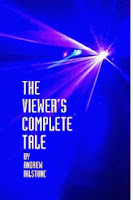
by Andrew Rilstone
Whatsoever thy hand findeth to do, do it with all thy might. 
                  Ecclesiastes


Back in 2010, I compared The Lodger with a certain brand of yeasty salty spreadable toast accompaniment. It will, I said, divide Who fans, even as a shepherd divideth the sheep from the goats. On the left will be the people who are in tune with with what the Matt Smith era is about; on the right will be the ones who are simply not.

The Caretaker is a similar pitch to The Lodger. I suspect it will divide fans for similar reasons.

The Lodger took the Doctor out of his TARDIS comfort zone and dumped him in an ordinary environment – as James Cordon’s flat mate. There was an alien, but we could all see that it was a Perfunctory Alien. The actual alien was Matt Smith. If you liked watching Matt Smith being alien — if you think everything that Doctor Matt did lit up the room, even when it wasn't a particularly interesting room — then the Lodger was the Bestest Ever Story about the Bestest Ever Doctor. If you found Matty Smith irritating, or if you were basically still sore that Jon Pertwee quit, then this was the episode that turned you off Doctor Who for good. Everyone knows which side I’m on. 

So: this week the Doctor announces that he is going into deep cover and pretending to be a normal human for a while. (Two weeks ago he was trying to imagine what a critter that could hide perfectly would be like, and spooking himself out over it.) He gets a job as a Caretaker in Wonderful Clara’s school. He pretends to be human, which he is very bad at, and therefore oddly fits in as the Grumpy Caretaker. The Grumpy Caretaker is one of the stock clichés of school stories, along with the sexy English teacher (played here by Wonderful Clara) and the sadistic P.E teacher. Back in Remembrance of the Daleks, Doctor Sylvester pretended to go for a caretaking job at this very school and was told he was overqualified for it. There is a Harold Pinter play called the Caretaker. Harold Pinter almost certainly never played a Yeti. There is a Perfunctory Robot, but like the Lodger, this is mainly a character piece. 

But it isn’t a character piece about us getting to know the Doctor. It isn’t a character piece about what would happen if the Doctor came to your school. (Imagine Doctor Matt as Caretaker! Rewiring the slide projector so that it showed 3D pictures; making champagne spew out of the soft drinks machine without quite intending to...) It’s a character piece about Wonderful Clara and Pink Danny. Clara has been keeping Danny a secret from the Doctor for no very good reason. This is a kind of obligatory episode which tells us how the Doctor finds out about Danny and how Danny finds out about the Doctor. Maybe you see it as a bit of a filler that we need to move the sub-plot forward. Or you may think this kind of rom-com scenario is what the series is really interested in, and it’s stuff like “the Doctor and Clara meet Robin Hood” and “the Doctor and Clara rob a bank for good and adequate reasons” that are the fillers. 

For better or worse, I think that the latter is probably the case. Deep Breath, Listen and Caretaker feel as if they are part of one TV series, telling one story, filmed and acted in a mostly similar style. Robot of Sherwood and Time Heist feel completely different – both to this, and to each other. Yes, I know that Horror of Fang Rock isn’t exactly the same as Talons of Weng Chiang and Talons of Weng Chiang isn’t exactly the same as the Invisible Enemy but my point stands.

There are some good gags and some less good gags. 

I thought it was quite funny that Doctor Peter takes it for granted that Clara is dating the Other English Teacher who looks exactly like Doctor Matt, and is perfectly okay with it. (I shouldn’t think that there is a single English teacher in England who talks or dresses like that and studying the Tempest is about knowing the key points which are likely to come up in an exam, not what Mr Chips feels about the “fascinating enigma of it’s fundamental non-finishedness.”) I quite like the long-suffering headteacher, the disastrous parents evening and the problem child’s awful parents. I actually even quite liked the problem child, although I don’t buy the Doctor giving her a ride in the TARDIS and sincerely hope that’s the last we see of her.

And in fact the mutual revelations about Danny, the Doctor and Clara are pretty well handled. I felt embarrassed for Clara and sad for Danny when it came out that she’d been deceiving him and pleased for both of them that he took it fairly well, and cross with the Doctor for being pointlessly jealous. Particularly him arbitrarily deciding that Danny must be a PE Teacher. Does anybody want to make the case that that was Ever-So-Slightly Racist? Does anyone else want to explain that PE teachers haven’t been like that for years? But the programme has gone off in a pretty weird direction when “I was cross with the Doctor” is a point in its favour. 

I could have done without Danny doing a Matrix-style slow-motion leap over the Perfunctory Robot to save Clara. Not because I don’t think he should have saved Clara. As yet undiscovered tribes in New Guinea could see from the set-up that it was going to finish with Danny saving the day. But we probably don’t need to equate “soldier” quite so clearly with “action figure.” 

So. Which side are you on?

There are going to be people who are going to say that Doctor Who has no right to be doing stories about the relationship between the Companion and the Doctor and the Companion’s Boyfriend because Doctor Who is about monsters and saving the world and relationship-stories are not allowed. On this view, the whole idea of Companions is deeply suspect. When Old Who was still New people openly complained that Rose had no right to exist because the title of the show was Doctor Who as opposed to The Amazing Adventures of Chav Woman. (They really, really did.) A friend of mine recently said that he had attempted to re-frame season 5 - 8 as The Adventures of Amy and Her Time Travelling Friend to see if that made him like it any better. 

This seems to be the same kind of thinking (though not, obviously, to anything like the same degree) as that of J.C Wright and his canine buddies, who see the intrusion of a lady or a black person — any lady or any black person — into any story as evidence that no one is allowed to be white or male any more. It is obviously true that Rose and Clara have more agency than companions did in the olden days. I myself have complained that there is a tendency for New Who to over-sell companions, starting with Rose’s transformation into Dark Phoenix and ending with Clara accidentally creating the entire franchise. But it’s not a zero-sum game. Presenting the companions as people doesn’t mean that the Doctor is now less of a person. 

If you are on this side of the divide, then presumably you hate the whole idea of the Caretaker and are not reading this. 

On the other hand, there are always going to be people who say that Doctor Who always was about the relationship between the Doctor and his lady friends, that fans had sexual hangups that prevented them from seeing this, that memory plays tricks and that the Caretaker is not really that different from tons of stuff in the Old Series. If you are on that side of the divide, then presumably you think that the Caretaker is what Doctor Who was always like and are not quite sure why I am making all this fuss about it. 

I guess my position is this.

It doesn’t matter what Doctor Who “ought” to be. It is unfair to continually compare a new programme with an old programme; and definitely unfair to compare a real programme with an imaginary programme you’ve made up in your head. The true definition of Doctor Who is whatever happened in Doctor Who last week, and always has been.

On the other hand; you have to play to your strengths. A cop show probably should mostly be about a cop solving crimes. The cop is allowed to be cleverer and more observant than any one real policeman could ever be, and “forensics” are probably allowed to produce plot devices that no real forensics team could possibly produce; but if a fairy pops up and tells Frost whodunnit; or if Morse discovers the murder was committed by a ghost, well, that’s cheating. It’s also cheating to sell us a fairy story and then have a cop turn up and fob us off with a perfectly rational explanation on the last page. Unless the whole point is a big twist about what genre we are in mumble mumble Sixth Sense mumble mumble. But you have to do that sort of thing awfully well for the audience not to feel cheated. 

So it is probably not a good idea to sell us a series about explosions and robots — to show us trailers involving explosions and robots — and then reveal that really, it’s not an exploding robot story, it's a kissing story. 

On the other hand, and this being science fiction I am quite entitled to have three hands, by now, everyone knows that Doctor Who is, or partly is, or sometimes is, a romantic comedy about the Doctor, Clara and Danny (or the Doctor, Amy and Rory; or the Doctor, Rose and Mickey, and no, until I started typing this sentence I hadn’t realised that human boyfriends all have names ending in a Y.) 

I don’t really buy the premise. I never have done. I don’t accept that someone would be exploring the universe with the Doctor and at the same time worrying about whether or not she made a date with a colleague who she only met a couple of weeks ago. I don’t think that the kinds of people who worry about keeping appointments become explorers and adventurers. 

There are people who, offered the chance to spend two years living among the aforementioned previously undiscovered tribes in New Guinea would reply “No, I don’t want to do that, I would miss my kids’ birthday party.” And there are ones who would say “Yes: I will sacrifice everything, even family and friendship, for the sake of Adventure. I would walk naked into a live volcano if it meant I could learn something that no other man knew.”  Me, I don’t specially care if I die without seeing the Taj Mahal. I’d like to go to New York some day. But as Sam Gamgee spotted; the people who stay at home don’t get stories written about them. 

But I am happy to accept the premise. The big question is: is Steven Moffat? Is this definitely the story he wants to tell? Are Clara and Danny real grown up people who are in love? Is their relationship going to proceed to a plausible ending, happy or tragic, and are we going to properly deal with the consequences of that ending? If this answer is "yes" then this was an installment of a very good unfolding story. The problem kicks in if next week, they stop being grown up characters and become action figures again.


STILL AVAILABLE 


25 Sep 11:18

Equidistance is good at winning votes, but not seats

by Nick

winninghereI handed in my Masters dissertation a couple of weeks ago, and rather than reproduce the whole thing here, I thought a summarised version of the key arguments would be of more interest than the whole thing. (That some of it would be an absolute bugger to format for WordPress is entirely by-the-by) Should you be interested in reading the whole 10,000 word original (“The role and strategy of the Liberal Democrats in the British party system: Strategic coordination and the structure of competition”) let me know.

The main aim of the dissertation was to look at Liberal Democrat positioning and strategy since the party was formed in the light of different theories. In the first part, I looked at spatial (Downsian) models of party positioning (which I discussed in more detail here), specifically in terms of papers by Adams & Merrill, and Nagel & Wlezien. They find some interesting patterns in British politics, most notably that when the two major parties diverge from the centre, the vote share of the centre party tends to grow (and when they converge, the centre party gets squeezed).

However, what’s interesting about this relationship is that it only applies to vote shares, not seats, and as even a cursory look at Liberal Democrat and Alliance electoral history will show you, there’s not a strong relationship between number of seats won and number of votes in the party’s results. Indeed, some of the best results in terms of votes (1983, 1987, 2010) have seen disappointing returns of seats. Why was the party suddenly so successful from 1997 at turning votes into seats, when it hadn’t been before?

To explain that, I looked at theories of strategic coordination by voters (also known as tactical voting), particularly in the light of the theories proposed by Gary Cox in his book Making Votes Count. Cox looks at voters as two different types: expressive voters, who are voting to make a point; and instrumental voters, who are seeking to achieve a certain goal. It’s very hard to get expressive voters to shift from their preferred party to another, but instrumental voters might if they think another party will have a chance of achieving that goal.

This is something that’s a key part of Liberal Democrat campaigning, of course: persuading people to shift from supporting their first choice party to the Liberal Democrats because the bar chart shows that only the Liberal Democrats can defeat Party X here. However, the assumption in that message is both that the voter wants to see Party X defeated (they’re an instrumental voter seeking that end), and that they see sufficient difference between the Liberal Democrats and Party X to prefer the Liberal Democrats over them. It’s that second point which to me is the key to explaining why the party managed to do so well in 1997 and after. It wasn’t just that the party got better at targeting seats, but that the way the party had positioned itself made it more attractive to tactical anti-Tory voters.

Consider that when someone is casting a vote, especially a tactical one, they’re not just thinking about their constituency but the national situation. So, when asking a Labour voter to tactically switch to the Liberal Democrats to defeat a Tory in their constituency, they’re not just considering whether they prefer the Liberal Democrat candidate to the Conservative one, but the effect that will have on the national picture. A voter may want to beat the Conservatives, but in order to tactically switch, they have to see a difference between the Liberal Democrats and the Conservatives not just locally but in terms of the end result. If the party’s being officially equidistant and not saying who it’d support, it weakens the argument for tactical switching as it doesn’t help prevent the end the voter wants to avoid.

To see this in action, look at what Paddy Ashdown did from 1992. Starting with the Chard speech soon after the election, he positioned the party as explicitly anti-Tory and the party’s general behaviour up to and including 1997 general election tended to reinforce that. (One key signal in this, I think, was both parties standing down in favour of Martin Bell in Tatton) You can see the change in British Election Study data – at the 1992 election, 44% of voters thought the Liberal Democrats were closer to the Tories, 38% to Labour, but by 1997 that had shifted to 56% saying closer to Labour, and just 10% to the Tories.

That’s important, because at the 1997 election, the party had a huge number of seats it could win from the Conservatives if enough Labour voters would switch. So, even though the party saw its share of the vote drop as Labour moved to the centre, the increased level of strategic coordination by voters meant that the Liberal Democrats won a lot more seats than ever before. Voters who were seeking to remove the Conservatives felt able to vote for whichever was the best anti-Tory option in their constituency because Ashdown’s actions had made it clear what we would do afterwards. Similar things happened in 2001, when even more voters thought the party was closer to Labour than in 1997, as the results of 1997 had made the best anti-Tory option in a constituency clear.

2005’s a bit more complex to explain but one interesting fact from then is that voters still saw the Liberal Democrats as closer to Labour than the Conservatives at the same level they did in 1997. That, I believe, is what led to the gains from Labour that year – people who would normally vote Labour switching as a protest, but generally these voters were demographically close to existing Liberal Democrat voters (this article by John Curtice explains it in depth, if you can access it). In other countries, this is the sort of voter shift that would be called intra-block movement, where voters still want the same block of parties in power but shift their support between the parties within that block – Denmark and Sweden have good examples of this sort of system.

By 2010, the party had returned to equidistance and this affected voters decisions, hence why the share of the vote went up, but the number of seats went down. The overall share of the vote went up because there was more space in the centre, but because Labour voters couldn’t be sure that the party wouldn’t support a Tory government, there was an unwinding of the tactical votes that had previously won seats for the party. (While the party’s national share was going up, it was going down in many held seats) This was only accentuated after 2010, when the ‘we voted for you to keep the Tories out, but then you joined the coalition’ argument undid the tactical vote. It’s interesting to look at the different patterns of where the Liberal Democrat vote went in seats lost in 2015 – in seats gained by the Tories it tended to scatter, while in seats won by Labour there was a much more pronounced direct swing from Liberal Democrat to Labour.

I could go on at a lot more length (I haven’t even mentioned Mair’s structure of competition yet, which was an important part of the dissertation) but the key point to remember is that in the British system, votes and seats aren’t the same thing. As the Alliance showed, and the result in 2010 echoed, it’s easy to pile up 20-30% of the vote in a lot of seats, but that sort of share of the vote isn’t going to win you many of them. Unless the party can get above a tipping point level of about 30% of the vote to win seats by itself, victories are going to require tactical voting and tactical voting requires giving people the motivation to switch their vote. Equidistance doesn’t help in providing that motivation, and any wins rely on motivating purely local factors. The national factor – and the significant level of gains – came when the party had picked a side, and gave voters much more motivation to tactically switch because they could be sure of what effects it would have outside of the constituency battle.

In short, equidistance when the two big parties are moving away from the centre might be a good way of increasing the party’s vote in 2020, but it’s not going to bring a lot of seats with it.

25 Sep 11:12

Mickey Bricks, Prime Minister

by Nick

One of them won't con an honest man.

One of them won’t con an honest man.

They call it the long con. You find your mark, someone with lots of money and a desire for something they can’t get and a willingness to bend the rules to get it. Then you tell him you know exactly how he can get what he wants. It’ll take time and cost money, but he’s got plenty of both of those, and you’ve got plenty of reasons why it’s going to take a little bit longer and need just a little bit more cash.

He might get doubts after a while of you milking him, and you can cut and run then if you like, or you can double down. Throw him a convincer, something that makes him think you can really do what you say. Sure, it might cost you, but think of it as an investment in keeping the mark happy, and a happy mark is a generous mark so the return on that investment is almost as good as the one you promise your marks.

No con can go on forever. There’ll come a day of reckoning when your mark is going to expect to get what you’ve been promising him, and that’s when all your skills need to come out to play. You need to persuade him that everything’s gone wrong, forces outside your control have intervened and you can’t get him what he wants. The heat’s on you, you tell him, so you’ve got to flee but you promise he’ll hear from you again when it’s settled down. Before you go, remind him how many rules you and he have broken to get this far, just to stop him going to the police if he susses out that he’s been conned. But don’t worry, most of them don’t ever work it out, and you’re free to do what you want with their money now.

That’s all taken from Hustle, but it’s also what David Cameron and the Conservative Party did to Michael Ashcroft. They found their mark, reeled him in, promised him the power and influence he craved, chucked in a couple of convincers (‘Do you want to be Party Treasurer? It’s such an important role.’) but then when push came to shove and the election had been won, it was ‘sorry, I’d love to put you in the Cabinet, but Clegg’s blocked it’.

The only problem is that the Prime Minister can’t close up the shop, throw away all the phones and disappear to a nice hot beach until it’s safe to show your face again. And when you and other teams of grifters have pulled the same con on multiple occasions to the extent that actually giving the mark his prize is almost accepted practice, there’s no way you can stop him telling everyone what you did.

Con men are lucky creatures, though. Sure, you’ll face pig jokes wherever you go for the rest of your life, but maybe that’s better than being remembered as the con man who actually managed to sell democracy to the highest bidder.

23 Sep 14:24

Tarzan of the Apes

by Lawrence Burton

Edgar Rice Burroughs Tarzan of the Apes (1912)
I was considerably less than knocked out by 1932's Pirates of Venus when I read it a few years back, but was informed by a reliable authority that Burroughs was at his best much earlier on, presumably before he'd settled into a routine of hacking out one of these things every couple of weeks featuring increasingly implausible juxtapositions of his formative characters and scenarios, Tarzan at the Earth's core of Mars and so on; and true enough, Tarzan of the Apes is more or less readable, and written to a standard sufficient to suggest that its author was making an effort. In fact it starts off so well that I was anticipating something along the lines of a lost classic, or at least something greater than one might expect from its pulp and therefore supposedly inauspicious roots. Tarzan comes so close to achieving escape velocity too, carefully building upon the foundation of our jungle dude trying to work out just who the hell he is, and doing it so well that you're inclined to forgive the occasional howler - notably Tarzan having learned to read fluent English by comparing the words to the pictures in books found in the cabin built by his shipwrecked parents just before they snuffed it.

As we all know, the infant Tarzan is adopted by apes, but not any kind of ape recognised by modern biology. Rather, these creatures seem to be the bloody apes of nineteenth century mythology, as featured in novels, poetry, satirical newspaper cartoons, and even silent cinema as representative of the unknown and fearful - the bestial growling carnivore of near Satanic demeanour signifying the antithesis of civilisation, everything we understand of the world, and all that is holy. Tarzan's version of the bloody ape seems almost to be primal humanity, some forest-dwelling ancestor in keeping - I suppose - with the state of anthropology as of the early 1900s; and it is in some sense at least a relief to have this imaginary hominid as the embodiment of darkest, most fearful Africa rather than the human tribes we begin to encounter about half way through.

I've always had my doubts about Tarzan given its apparent basis in the peculiar notion of the King of the Jungle being some white bloke. So there are already people who've been living there for centuries, but add one white man and just watch him go! It's an idea about which the best can be said is that it's of its time which is always a lousy defence, the most craven application of which is often found dripping from - by way of example - H.P. Lovecraft, the man who brought you On the Creation of Niggers. I love Aitch Pee's writing, but let's face it, there were a hundred of his contemporaries who were just as much of their time without ever having written a poem called On the Creation of Niggers, or an entire body of work serving as extended metaphor for a fear of immigration. Burroughs isn't quite so strongly of his time as was Lovecraft, but after a few hundred pages I found it increasingly difficult to ignore the undercurrent and associated subtext of how much this novel just doesn't happen to like reggae, not being racialist or nuffink.

The African tribe Tarzan encounters turn out to be cannibals of the kind which routinely pop missionaries into the cooking pot, then stand around licking their lips, rolling their eyes, and rubbing their tummies. Yet cannibalism, not less so amongst African tribes, has historically proven to be a myth, usually an accusation made of that lot who live on the other side of the hill, just as we are now all apparently squinting at refugees in Calais and asking why they have mobile phones. Cannibalism has been a major taboo throughout human society at all levels from hunter-gatherer upwards, those few exceptions to the rule usually occurring specifically because it is a taboo; but I appreciate that I'm reading Tarzan of the Apes here rather than W. Arens' excellent The Man-Eating Myth: Anthropology and Anthrophagy. I still have to wonder though, even without the implied cannibalism, did Burroughs really need to lay it on quite so thick? At one point we find Tarzan sneaking into the village to pinch arrows handily dipped in poison by the natives, whilst our narrative voice reflects upon what a bunch of thickies they are, these jungle bunnies, somehow missing the point of their being at least smart enough to invent something considered worth nicking by a man who has conspicuously failed to invent it for himself. Then we come to the white visitors, numerous aristocratic types who eventually recognise our boy as the son of Greystoke, and amongst their number is Jane and her black maid, essentially a big, fat clown who can't pronounce a word the same way twice and spends the rest of the time rolling her eyes and trembling with fear each time a rhinopotamus approaches the camp. She can't get the names right, silly black woman. Ha ha.

Conversely, as we approach the end of the book, Burroughs seems to take a change of tack, delivering a few surprisingly humanitarian messages in apparent contradiction to some of that which has gone before. Tarzan speaks out against big game hunting, at least big game hunting as an uneven playing field in which the quarry stands no chance, and then we have this exchange:

'Do fingerprints show racial characteristics?' he asked. 'Could you determine, for example, solely from fingerprints whether the subject was Negro or Caucasian?'

'I think not,' replied the officer.

Not quite Mahatma Gandhi, I know, but it's better than nothing, and at least supports the more dubious assumptions of the narrative as borne of laziness rather than design; and I suspect the only aspect to which Burroughs gave actual serious thought was the supposed superiority of the aristocracy, and there being such a thing as the good stock from which Tarzan is descended. Additionally, the occasional incidents of our man hunting and eating lions suggests either lack of thought or research, or a pendant to bloody ape mythology which itself stems from the same; so I suppose one might argue that the more annoying aspects of this novel came about just because Edgar couldn't be arsed, although there's enough here with which he could be arsed to make it sort of worth reading, even with the eye-rolling which may occasionally result.
23 Sep 14:00

Birthday

I guess I need to apologize to my parents, friends, and the staff at Chuck E. Cheese's for all the times I called the cops on them.
23 Sep 14:00

Farron’s speech was pretty well received but what a mountain his party has to climb

by Mike Smithson

Reaction from leading commentators on final morning of LD conference

I think that's as good as speech as I've ever heard from a Lib Dem leader. Passionate, personal and grown up where it needed to be.

— Tim Shipman (@ShippersUnbound) September 23, 2015

Be honest, sensible Labour twitter people: how many of you are now daydreaming of Tim Farron as Labour leader?

— James Kirkup (@jameskirkup) September 23, 2015

Liberal Democrat leader Tim Farron calls on the Government to opt in to the EU plan to relocate 120,000 migrants and refugees across Europe

— Sky News Newsdesk (@SkyNewsBreak) September 23, 2015

COMMENT Around 42 minutes. Competently delivered but not much change or challenge.

— Adam Boulton (@adamboultonSKY) September 23, 2015

But that was a speech of a new leader with survival of his party in mind. Housing, refugees and Europe the issues to give purpose

— Faisal Islam (@faisalislam) September 23, 2015

23 Sep 10:41

Don’t You Mean “Person With Ableist Derailing”?

by feministaspie

Earlier today, I came across this great comic strip by Christine Deneweth about her experiences with schizophrenia and neurotypical privilege (link includes a transcript and image descriptions), in which she discusses the media’s damaging portrayal of schizophrenia, the pressure to “act neurotypical”, and the risk of workplace discrimination and even unfair incarceration faced by schizophrenic people. It’s really worth a read. Go on. I’ll wait.

After I read the comic strip, and because apparently I never ever learn my lesson, I read the comments on Everyday Feminism’s Facebook post promoting the piece – only to discover that most of the comments didn’t engage with the actual content at all, and instead criticised Deneweth’s use of the identity-first term “schizophrenic” (as opposed to person-first language e.g. “person with schizophrenia”). In other words, mostly neurotypical people telling the artist she’s somehow managing to stigmatise herself rather than thinking about the actual stigmatisation and ableism she’s described as coming from neurotypical people. Because obviously neurotypical people themselves are never the problem amirite?(/sarcasm) To be fair to Everyday Feminism, they responded to the worst offenders with this article by Caley and Creigh Farinas about the problems with policing disabled people’s identities (also really worth a read), but the fact that articles like this have to exist just goes to show that this same thing happens to disabled people talking about their experiences all – the – time.

Personally, I am autistic and I (like many others, although of course not everyone) prefer to use identity-first language to describe this fact. This is because I don’t think “autistic” is a bad thing; it’s not a negative quality, it’s a neutral quality. I feel that shoehorning in “person-with” where an adjective better suits the sentence sends the message that you can’t see “autistic” as a person without trying to separate the autism from the person, which isn’t possible; autism is a part of who I am, and I wouldn’t be the same person at all without it. Using identity-first language doesn’t mean I’m defining myself exclusively though autism – to give just one example, my gender doesn’t define me either but you don’t often come across the term “person with femaleness”! In my opinion, if neurotypical people are so keen on “putting the person first” then they need to demonstrate that in their actions, not just their words.

But my opinion doesn’t matter one iota here. The only person whose opinion matters is the person describing their own disability, and nobody has the right to police how someone identifies. It doesn’t matter if you’re some sort of professional expert on the relevant condition. It doesn’t matter if you know someone with the relevant condition (something that neurotypical people, apparently unable to imagine any of us having our own perspective, often equate to being that someone to claim authority). I don’t even think it matters that much if you share the relevant condition, although of course you remain free to use different language to describe yourself. You do not have the right to police how someone else describes themselves, especially regarding marginalised groups you don’t belong to.

The main reason this infuriates me so much has nothing to do with any of my concerns about person-first language itself. Instead, it’s because abled people seem to use this same-old-same-old argument to prevent meaningful conversation about disability and ableism, and to conveniently avoid engaging with the problems being highlighted (and, in turn, their possible roles in those problems).

Neurodivergent people are saying, over and over again, “we are being discriminated against, we are being portrayed unfairly and harmfully, we are not given adequate support and accommodations, we are mocked and bullied, we are excluded from the workplace and social spaces and other aspects of public life, we are sometimes incarcerated or abused or even killed just because our brains are wired differently to yours”.

But the only thing neurotypical people ever seem to take from that is “you’re the one oppressing yourself with your sentence structure”.

Telling someone how they should and shouldn’t describe their disability – especially at the expense of what they’re actually saying – is ableist. Or maybe it’s an action with ableism. Either way, it really needs to stop.


Tagged: ableism, disability
23 Sep 10:40

The Magician's Apprentice: Podcast and Jack's Thoughts

by Jack Graham

Phil here atop Jack's post to announce the release of the first episode of our brand new Eruditorum Press Doctor Who Series 9 Podcast. Basically, each week I'm sitting down with someone on the Eruditorum Press team or with a cool guest and talking about the latest episode of Doctor Who. And to start, well, who else would it be but Jack? (I mean, you've only had three hours of us talking so far this week. Clearly you need another two. Just be glad I'm holding the Vengeance on Varos commentary back for a week or two.)


Jack also ended up marathoning the bulk of Series 8 in preparation for the podcast, so we open by making him play the "rank the episodes" game and getting his views on Capaldi's first season, then talk about the new episode. 


Meanwhile, Jack also has a blogpost on some of his thoughts, which runs below the line. 

----

1. I’m So Damn Reasonable, it’s Untrue


I’ll be honest: there’s a big part of me that resents Steven Moffat when he rummages around in the history of Doctor Who and changes stuff, or adds stuff. It seems to be something he likes doing. In his worst and most excessive moments, he seems determined to overwrite his own ideas and personality on top of every last bit of the classic series, a bit like the Cat from Red Dwarf wandering around any new environment spraying his scent everywhere out of an aerosol and declaring “That’s mine… this is mine…” I particularly dislike it when he insists upon intruding upon aspects of the backstory of the classic series which were always left unspoken, mysterious, unknown.


Now, there are several things to be said about this.


Firstly, he’s the guy currently in charge. He’s the head writer and showrunner. It’s his job and his prerogative to do this.


Secondly, the fact that it bothers me is evidence of the itching presence of the fan reptile brain in me, sending me error messages about things that aren’t really worthwhile concerns. It’s not as if the very fact of going back to add or change stuff has any real effect (at least not in itself) on whether what I’m watching constitutes good drama. Nor does it have any inherent effect upon the politics of the show, its representations or ideology, or any of that other more interesting stuff that I like to think and write and talk about.


Thirdly, Doctor Who writers have always done this. Somebody decided to overwrite the Time Lords upon the blank space that had once been the Doctor’s origins. The Time Lords having been established, somebody decided to reformat them so that they became corrupt, senile old dodderers rather than godlike trans-temporal moral judges. And so on.


Finally, it’s really quite unreasonable of me to object, since I’d probably do the same thing given the chance.


Look, when the kid at the start of ‘The Magician’s Apprentice’ turned out to be Davros, it annoyed me. I thought to myself “Oh, he’s going to go in and muck around with Davros’ backstory. Tsch! Typical”.


Now, there’s potentially a legitimate reason to be annoyed about this, I think. I suspect it is probably going to turn out to be, yet again, an example of the modern show turning away from the political to the personal. Yes, I know they’re not really all that separate; I’m making a distinction in order to illustrate the difference between a focus upon depoliticised characterisation on the one hand, and a focus upon political themes on the other. I’m not saying that there’s no potential interest in investigating Davros’ family life, interpersonal relationships, neuroses, etc. I think that, for all its problems, this is done quite interestingly in Lance Parkin’s Big Finish audio ‘Davros’… though Big Finish rather ruins this by going on at greater length than is warranted in their subsequent patchy miniseries I, Davros. Steven Moffat has a tendency to strip away political context and theme, to mothball satire or polemic or whathaveyou, to focus instead upon stuff I find comparatively uninteresting, like the relationship issues of the protagonists. Dating disasters, embarrassing moments, people getting neurotic about being lied to, etc. Frankly, I couldn’t give a shit. Seriously, that sort of stuff is not what Doctor Who is for. It’s a waste of Doctor Who’s capabilities. You can do that stuff in other shows, and people do, at great length. They don’t need to clog up Doctor Who with it. Doctor Who can and should be up to other stuff, frying bigger fish. Once again, I’m not saying that I don’t like characterisation or characters with interiority, I just think it needs to be de-emphasized and not allowed to crowd out more interesting things.


But the above is an old gripe of mine; a case I’ve made many times elsewhere. I’m quite prepared to acknowledge that it comes down to taste; that it is subjective… though obviously (like everyone) I’m pretty sure my subjective taste is objectively better.


Back to the specific issue of ‘The Magician’s Apprentice’, there’s also something unreasonable about my annoyance to do with the young Davros who turns up. Unreasonable and even hypocritical. Because, truth be told, I have my own quite elaborate ideas about who Davros is, where he comes from, what he thinks and feels, what his early life was like, and how he got to where we meet him in ‘Genesis of the Daleks’. (I may write about this elsewhere.)  So yeah, when it looks like Steven Moffat is going to write the young Davros, to fill in the blanks, to plug the gaps, to give us the backstory… it looks to me like he’s about to take over a space that was once free; enclose common land, so to speak. He’s going to the shadows and filling them with light, and not only that… he’s filling this newly spotlit corner with his own decor. He’s remaking Davros in his own image. He’s taking my Davros away from me.  Boo hoo.


But, of course, it’s hypocritical of me to complain because, as much as I might pay lip-service to the idea that areas of mystery and blankness should be left mysterious and blank, I myself would be sorely tempted to fill them up if, by some bizarre series of events, I were made Doctor Who’s head writer and showrunner tomorrow. Steven Moffat is, essentially, not doing anything I wouldn’t probably do. And I suspect he’s doing it for reasons similar to my own. He’s a fan too, after all. He has that itchy fan reptile brain thing, like me. And he has his own neuroses, as do we all, that get serviced by the same empathic relation to cherished texts which motivates me, and probably you.


And again, as noted, Doctor Who is built on this kind of thing. It’s a palimpsest. All expansions of a pre-existing corpus or canon does this. How can you write a new story featuring Davros, or the Doctor, or whoever, without doing just this filling-in and rewriting to some degree?  To consider a text or corpus or canon worth revisiting is inherently to consider it worth expanding and changing. The very desire to fill which is kindled by the empty spaces is part of why we want to revisit. And thus the dissatisfaction of seeing the spaces filled in ways which contradict our own imagination is implied by the very act of seeing the spaces in the first place!


This is all the more true of texts in capitalist society which are privately owned and controlled, enclosed, run by people whose job it is to wield that kind of authority over them.


2. Ends, Means, and Killing Kids


This story looks set to be yet another renegotiation of a moral issue which appears to obsess Moffat. He kept bringing it back again and again throughout Series 8. It’s the morality-of-war theme. The soldiers and killing theme. The ‘do you become as bad as the monsters by fighting them?’ theme.  The ‘can you build moral ends on ugly means?’ theme. This is a moral issue which obsesses, and has always obsessed, liberals. Understandable, since liberalism is built upon the idea that Western civilisation is tremendously good news despite being built upon capitalism, imperialism and colonialism... i.e. systems of exploitation, aggression, slavery and genocide.


As I will probably explain at length in other posts, these questions about the morality of war strike me as fundamentally uninteresting, since they are basically pretty easy to solve. I hate to sound simplistic, or perhaps like a ruthless ideological zealot, but it really does matter


a) why you do something, and


c) the context in which you did it.


I mean, Davros asks the Doctor to say that "Compassion is wrong" because the Doctor let him live and thus allowed evil to thrive.  This is such a feeble challenge, it's almost pitiful.  Never mind the evident internal contradiction, where Davros takes his own evil as part of the Doctor's hypocrisy.  It's a childish instance of generalizing from the specific.  Sometimes compassion has negative consequences, or can be abused by evil people, ergo all compassion is wrong everywhere under all circumstances.  Ridiculous, and an utterly shambolic strawman upon which to built an antagonism, still less a moral interrogation of a character.  Like the Beast in 'The Satan Pit', Davros fails because he should have better arguments.  In the end, they both - along with a lot of these types of villains - fall down because they were set up to do so.  Missy - like Davros, brilliantly played but disappointingly written - brings up the complicity argument (the he-who-fights-monsters-becomes-a-monster) argument again in the Series 8 finale, leading the Doctor to look suitably stricken, whereas really all he needed to do was say "I sometimes have to do terrible things because I get backed into a corner by people like you who kick off the battles and do - or try to do - worse things... and this makes me as bad as you?  Grow up, and check out 'false equivalence' in Basic Ethical Philosophy, page 1," and the flimsy bubble is punctured.  (To be fair, a lot of writers are guilty of failing to have the Doctor say this.)  Meanwhile, we're supposed to think something edgy is being done to the character of the Doctor.  Like, last season Moffat relentlessly thrashed the dead horse of this complicity argument in almost every episode... and not only does this result in villains who fail to offer any genuine challenge, it also excuses genuinely shitty stuff the Doctor  did out of sight round the back and out of the spotlight of the faux-edginess.


But we’ll leave that for now. It’s not like it’s really all that complex an issue, despite the amount of screen time devoted to it which nevertheless fails to arrive at any clarity.


In ‘Magician’s Apprentice’, Moffat is couching the question in a different, and somewhat loaded, form. He’s taking his cues directly from the classic series story that contains the source code for this new episode. He’s arrived at his central thematic preoccupation by doing that thing I was talking about above: going back into the classic series and rearranging its guts. He’s directly picking up those two strands of wire that Tom Baker agonised over (we even see that clip), in that scene which itself reiterates the Grand Inquisitor chapter from Brothers Karamazov. Can you build a just world on the sacrifice of a child? (Justice from sacrifice is, of course, a very loaded question for Christian civilisation.)  Of course, when reiterated by ‘Genesis of the Daleks’, the question is being asked post-Hitler. The child that the fourth Doctor hypothetically talks about killing is clearly meant to be Hitler. And this in a story with a Hitlerian villain. And now, in ‘The Magician’s Apprentice’, Moffat has gone back to Davros as a child. He has literally put the Doctor into the hypothetical situation he posited back in ‘Genesis of the Daleks’.


The Doctor at the end of ‘Magician’s Apprentice’ seems to have made the same decision he made in ‘Genesis’ and ‘Resurrection of the Daleks’… but which, in both cases, circumstances rather conveniently conspired to prevent him from putting into effect. He’s decided to take Sarah Jane's advice and fucking do it, to kill ‘em.


I suspect there will be some sleight-of-hand which, classic series-style, either prevents him from actually shooting little Davros, or makes it unnecessary. The hypothetical obviation of the grandfather paradox, made narrative. It’ll be interesting to see how Moffat wriggles the Doctor out of this one. Because the same conservative impulse which is baked into historicals (you can’t change history) is also baked into the SF bits of Doctor Who’s mythos which are so integral that they can’t be removed (i.e. Daleks).


Of course, like all time travel ethical quandries, it’s basically uninteresting because it’s basically meaningless. Because time travel isn’t real, can’t be real, and never will be real. So in what way do ethical dilemmas based on time travel have any actual content? They’re ethical dilemmas set in a universe that works fundamentally differently to ours. I can’t get angsty about that, to be honest. It’s like one of those hypotheticals that Sam Harris put into The End of Faith. Okay Sam, if we took the plots of 24 as things that could happen in the real world, sure we might be able to morally justify torture. Fine.


Besides, if you’re the Doctor, and you can go back to visit young Hitler/Davros, you have options besides just blowing the little fucker/s away. You can remove them to another planet or epoch in your TARDIS and make them safe, the way you singularly failed to even consider in the case of Margaret Slitheen. Or you can influence them, the way you took it upon yourself to influence Kazran in ‘A Christmas Carol’. Moffat has actually done stuff like that in the past - most notably with his decision to find another way for the Doctor to resolve the Time War besides genocide - so maybe he’ll do the decent thing in the next episode, side-step the increasingly tired moral dilemma, and get on with finding the Doctor something more interesting to do. If it were up to me, the episode would proceed directly into polemical/political/satirical/dystopian mode, examining Kaled society, and the way little Davros is shaped by it… but I’m sure Moffat will have other fish to fry than that. And now I come think of it, wouldn’t that irritate me? (See above.)


3. Black Kaleds


Oh dear. Apparently some people at Gallifrey Base have been objecting to ‘Magician’s Apprentice’ showing us KOC (Kaleds of Colour).


Look, I get it. At least, I see the outlines of a valid objection. Kaled society is supposed to be racist, totalitarian, fascist. They’re basically Nazis. And there weren’t many black Nazis. Kind-of a contradiction in terms. The Kaleds should all be white because the Nazis were, etc.


But no. No no.


a) The Kaleds in ‘Genesis of the Daleks’ weren’t all white because the show was deliberately making some kind of aesthetic point about the pale-skinned nature of Nazism. They were all white because everybody on TV back then was fucking white.


b) The Kaleds are aliens. They’re not from our planet, let alone our society, or our culture. Yes they are a representation of aspects of European culture and history in metaphorical form… but still, they’re not literally meant to be us. The concept of biological race, as applied to humans, is unreal. Racism is real, race isn’t. Race is a social construct. It is literally socially constructed. It can assimilate human ethnic variations into its cultural logic, but that’s part of the process of social construction. This is a historically contingent process. It’s a product of modernity, relatively recent. It’s a product of imperialism, most particularly slavery. There is no reason to think an alien culture, with an entirely different history full of different contingencies, would develop race or racism at all. If they did, there’s no reason to assume that their concept of race would be based on skin colour, as is ours.


c) For fucks’ sake… why do you care? I mean, if that’s what bothers you, you need to seriously re-examine your priorities, and probably your attitudes too. There is simply no theory under which the continuity or canon of a TV sci-fi show trumps real-world representation of people of colour, or real-world opportunities for black actors. Get a fucking grip.


4. Gotta Hand it To You…


...I loved the handmines.


I love that they are a pun several times over; verbal, visual, conceptual. They are surely born of the fact that ‘landmine’ sounds like ‘handmine’. They develop something from ‘Genesis of the Daleks’ (the mine fields) while transfiguring it from the brutally ‘realist’ to the surreal. They crash Terry Gilliam's Monty Python animations...


 ...into Pan’s Labyrinth...


...via the gothic image of the zombie hand erupting out of the grave. They suggest the battlefield as mass grave. They also suggest the cyclopic Dalek mutants, or Dalek-casing eyestalks. It’s like the Daleks are growing in nascent form out of the ground of Skaro, a new crop irrigated and fertilised by blood.


They are one of the greatest images in Doctor Who. Whoever came up with them gets full marks. If it was you, Steven… you knocked that one out of the park.

23 Sep 10:26

Vegetarianism for Meat-Eaters

by Scott Alexander

[Content warning: discussion of animal suffering. If you don’t care about animal suffering, this post is probably not for you. There is no reason to read it anyway and loudly complain in the comments.]

Brian Kateman on QZ.com writes that We Need More Meat-Eating Animal Rights Activists. Finally, the mainstream media gives me ex cathedra permisson to say things that are kind of hypocritical!

I believe animals probably have moral value. I also eat meat. There is obvious tension between these positions; animals suffer and (obviously) die during meat production. I can only say in my defense that I tried being a vegetarian for several years and it was horrible and I ended up subsisting almost entirely on bread and Quorn and I don’t want to go back there.

But over the past few years I’ve read about two ideas that have changed the way I look at meat-eating and significantly reduced my moral footprint with minimal inconvenience. These are not original to me and I don’t take credit for them, but I hope that the people involved won’t mind me taking this advantage to publicize them more widely.

1. Eat Beef, Not Chicken

This argument is so simple I feel dumb for not thinking of it myself; instead, I take it from Julia Galef and Brian Tomasik. Suppose I get about a third of my daily calorie requirement from meat; that adds up to 250,000 calories of meat a year. Further suppose that it’s split evenly between 125,000 calories of beef and 125,000 calories of chicken.

The average cow is very big and makes 405,000 calories of beef; the average chicken is very small and makes 3000 calories worth of chicken. So each year, I kill about 0.3 cows and about 42 chickens, for a total of 42.3 animals killed. [1] [2]

Suppose that I stop eating chicken and switch entirely to beef. Now I am killing about 0.6 cows and 0 chickens, for a total of 0.6 animals killed. By this step alone, I have decreased the number of animals I am killing from 42.3/year to 0.6/year, a 98% improvement.

The difference becomes even bigger once you compare levels of suffering. Chickens are probably the most miserable farm animals; they are mutilated, packed into tiny cages to the point of immobility, left to fester in their own waste, and bred so intensively for size that their bodies cannot support them and they likely experience severe musculoskeletal pain. Although cows’ lives are also pretty terrible too, Brian Tomasik estimates that chickens’ suffering is about twice as bad. Taking this into account, switching from 50-50 to all-beef reduces your contribution to animal suffering as much as 99%. [3] [4] [5]

I find that I’m indifferent between beef and chicken as far as taste, so this is a no-brainer for me. The few times I’m making a recipe that really, truly, can only be done with something sort of chicken-like, Beyond Meat vegetarian fake chicken strips are an almost-tolerable substitute.

2. Use Ethics Offsets By Donating to Animal Charities

I talked about this before in Ethics Offsets, but I think the original argument comes from Katja Grace.

Animal-related charities are very effective. Animal Charity Evaluators, a sort of animal version of GiveWell, lists really really impressive impacts for small donations:

Animal Equality: 11 animal lives saved per dollar
Mercy For Animals: 9 animal lives saved per dollar
Humane League: 3 animal lives saved per dollar

These numbers are high, but not impossibly so. For example, the Humane League spent about $50,000 convincing school districts to switch to cage-free eggs and have “Meatless Mondays” at their cafeterias; this resulted in about 3.2 million fewer meat-containing lunches, meaning several hundreds of thousands of chickens saved.

Okay. If you followed the advice in Part 1 and switched to beef, you’re currently killing 0.6 animals per year. If you donate six cents per year to animal-related charities, you’re animal-neutral. Donating $0.06 sounds…a lot easier than being vegetarian for a year? [6]

Or donate $60, and save more animals than an entire village full of vegetarians. At this point it’s starting to look like maybe personal vegetarianism is more of a symbolic/non-consequentialist decision in comparison, and a meat-eater with a little pocket change to spare can bask in near-unlimited moral superiority even to their most scrupulously vegan friends. Is this too good to be true?

One reason it might be too good to be true is that Animal Charity Evaluators is overly optimistic. But it would be really hard for their optimism to change this strategy substantially. Suppose that they were off by an order of magnitude, and you only save one animal per dollar. You can still offset an entire year’s beef-eating for $0.60. Even if they’re off by three orders of magnitude and it takes $60 to offset a year of eating beef, most people would probably still rather pay sixty bucks than become vegetarian.

A more serious complaint is that this strategy is hypocritical or self-defeating. After all, it looks like most of the gain from these charities comes from convincing other people to be vegetarians. From a Kantian point of view, “try to get other people to become vegetarian without being one yourself” isn’t universalizable; if everyone did it, there would be nobody to actually be the vegetarians! Is it ethical for non-vegetarians to try to spread vegetarianism among other people? Here are four arguments that it is:

First, consequentialism. From a consequentialist point of view, “is it okay to cause a good thing to happen even if…” always gets answered yes. Do you save the animals? Yes? Then what’s the problem? The true consequentialist doesn’t even understand the question.

Second, these charities don’t necessarily demand people become full vegetarians. They may recommend that people cut down on the amount of meat they eat, or switch from chicken to beef as in Part 1, or support laws enforcing more humane living conditions for farm animals. Some evidence supports asking meat-eaters to cut down on meat as the most effective form of animal outreach. A non-vegetarian who has taken some of these steps themselves can support these without worrying about hypocrisy.

Third, your situation is not necessarily the same as other people’s situations. One reason I’m not a vegetarian is that I really really hate vegetables. Other people might love vegetables and just need a little push to have more of them. I can endorse that people become vegetarian if it is easy for them without necessarily endorsing vegetarianism for myself.

Fourth, and I think most important, the economics check out. Instead of universalizing the principle “become vegetarian”, suppose we tried to universalize the principle “find some way to be animal-neutral,” that is, live your life in such a way that on net you are not killing animals. And suppose everyone knew there were two strategies for doing this: either become vegetarian yourself, or offset your lifestyle by donating to advocacy organizations that convert other people to do so.

And suppose that, upon hearing that it only takes a $60 donation to offset their lifestyles, 90% of people choose the donation rather than the personal conversion. This makes the cost of outreach go up. That is, when I donate my $60, the advocacy organization uses it to convert Alice, who decides to donate $60 herself, which the advocacy organization uses to convert Bob, who decides to donate $60 himself, which the organization uses to convert Carol…and so on to the tenth person, who finally decides to become vegetarian themselves. If this happened, our premise that it takes the charity $60 to convert one new vegetarian would be false. In fact it takes them 10 donations of $60, or $600.

As long as people know that they have the option of offsetting via donation, the possibility that people would rather donate than become vegetarian themselves is priced into the cost of the offset. That means that if the cost of an offset is currently $60, it’s because we’re hitting people for whom $60 is genuinely their reserve price; they prefer becoming vegetarian to paying a $60 offset (probably for moral/symbolic reasons). These people are low-hanging fruit; once they’re exhausted, the offset price will rise, and people for whom vegetarianism is only a mild inconvenience will find themselves preferring to become vegetarian themselves rather than paying. Once even the middle-hanging fruit is exhausted, the price of the offset will be prohibitive and only the people for whom vegetarianism is an extraordinary inconvenience will continue to take that route. Once there are no more potential vegetarians left to convert, the offset cost will become the cost of saving animals via political action, improved technology (eg cultured meat), or changes to farming conditions.

This dynamic becomes even more interesting if you add the (unjustifiable but interesting) assumption that anyone not becoming vegetarian themselves is required to offset their choice by converting two other people to vegetarianism. Then you get a sort of virtuous Ponzi scheme which ends with a lot of vegetarians (albeit not necessarily in a reasonable amount of time).

I try to donate some money to an effective animal charity each year, above and beyond what I’ve pledged to donate for other reasons, in order to compensate for the remaining meat I refuse to cut out of my diet.

Footnotes

1. I use the term “kill” because it’s a simple way of looking at things, but most of the moral cost of eating meat is causing the animals to spend years living in terrible suffering on factory farms. The actual killing is probably a mercy in comparison. When I say that something “prevents forty animals from being killed”, the longer and more accurate version might be “prevents forty animals from coming into existence, suffering intensely, and then being killed”. This does raise some more philosophical questions like whether it’s better to live a life of terrible suffering than to never be born at all, but I’m really comfortable answering that one with “no”.

2. This same argument comes out against eating other small animals like fish. Although in theory wild-caught fish ought to live okay lives and potentially be more ethically acceptable than farm-raised animals, given limited wild-catching ability each wild-caught fish eaten may deplete a fixed number of them and push other people to eat farm-raised fish instead.

3. Eggs raise some of the same issues as chickens, and Julia Galef suggests eggs are one of the worst things you can eat. I think her assessment is pessimistic; eggs are terrible on a calorie-for-calorie basis, but if we’re talking about which animal products to urge people to give up, this is counterbalanced by nobody except Gaston getting too many calories from eggs. Someone who eats one egg with breakfast every day kills about one chicken a year; somebody who has a chicken dinner every other night kills about forty chickens a year. Although egg chickens probably lead worse lives than meat chickens, the difference isn’t overwhelming. Avoiding incidental egg consumption like the eggs in baked goods is hard and probably not the highest-value pro-animal intervention given the low number of eggs involved.

4. This analysis neglects consideration of whether cows, being bigger-brained and more “evolutionarily advanced” than chickens or fish, might have greater moral value. I don’t know how to deal with that question, except that it would surprise me if they had more than forty times the moral value.

5. The existence of supposed humane animal products (“Free range eggs!” “Pasture-fed cows!”) complicates this a little bit. The unanimous opinion of people who know about this sort of thing is that free range eggs are kind of a scam; regulations only specify that these chickens must have “access” to the outdoors, but farmers exploit the letter of the law to cram thousands of chickens into industrial barns with a single tiny door to a couple-square-foot cement yard that the overwhelming majority of the chickens never even see. “Cage-free” chickens or eggs seem probably better than the alternative but still pretty horrible. “Pasture-fed beef” usually does involve a pasture in some way and is not a total scam but is probably not as nice as you would think. I try to buy pasture-raised free-range cows, and I think that the slightly higher standards of humane beef over humane chicken make another good argument in favor of beef consumption, but I try not to fool myself into thinking that this decision alone goes especially far.

6. If you also eat chicken, the offset cost rises to $4.

23 Sep 09:25

Nobody Likes An Asshole (Except Maybe Other Assholes)

by John Scalzi

Adam-Troy Castro has a post up called “Writers: The Long-Term Benefits of Not Being An Ass,” which I encourage you to read, with the awareness that the advice has works equally as well when you substitute any other profession for “Writer” (or indeed, you can also substitute “human” and it works just as well).

Also, let me just second nearly all of what Adam-Troy is saying there. Folks, the fact is that people’s tolerance for working with complete assholes is pretty low. In the field of writing, in my experience, being an asshole is generally neither here nor there in terms of how an audience sees you (they’re focused on your output, not your personality), but it has a lot to do with how much slack those who have to work with you will cut you. And when no one wants to work with you, it makes it harder for your audience to find you.

And yes, if you sell millions of books, then you probably get to be as big of an asshole as you want to be and people still have to put up with you. But not many people sell that much. The list probably doesn’t include you (sorry. It doesn’t include me, either). It’s been interesting recently to watch writers who sell relatively little who have nevertheless decided being a complete asshole to other people in the industry was a winning move. They are either extraordinarily confident they will never be dropped by their current publisher (which is not a smart thing to assume when you sell relatively little), or they hope self-publishing will save them (also not smart).

(Or they’re simply convinced that it’s not them who’s an asshole, it’s everyone else. In the latter case, well, you can believe that, but if everyone else outside your tightly-sealed little group disagrees with you, then you still have a problem.)

Or, and this has been suggested to me before, there’s the theory that being a complete asshole is a marketing strategy to build an audience. My thought on this is, well, okay, but the sort of person who gets off on watching you be an asshole is probably an asshole themselves. And while I suppose that an asshole’s money spends just as well as anyone else’s, I’d still be uncomfortable actively cultivating that particular market. Again, generally your audience doesn’t care about your personality, but if you make being an asshole a selling point, to the particular market of assholes, then that’s the market you’ll be stuck with, you know? Then you’ll always have to be an asshole. And, you know. I can be an asshole just like anyone else. But I try to limit the total time I am one. It’s tiring. I can’t imagine having to do it all the time.

So, yes. Listen to Adam-Troy. Try to be a decent person, to the people you work with and even the people you don’t; Remember how you treat people on the way up is how they treat you on the way down; Maybe you can be an asshole if you sell millions, but you probably don’t and even if you do, you should still try not to be one. People remember. And people talk. And people choose who they want to do business with, and who they want to help.


23 Sep 09:24

Day 5376: An Idiot With a (Telly) Box

by Millennium Dome
Wednesday: 


In a change to our schedule, we managed to arrive at Lib Dem Conference twenty minutes early this morning! Almost abandoned, we found the BBC stall in the exhibition manned by… Sir Ming Campbell. That’s the Lib Dem dedication to the BBC.

Here's the speech I didn't get to deliver to the emergency motion “Protecting the BBC”:

Conference, we are like the Time Lords in Doctor Who: almost extinct but still saving the world 

I'd protect the Beeb for Doctor Who alone, but let me give you three other reasons to support them:

1 soft power
2 economic growth
3 ensure quality from commercial rivals

1 the Prime Minister wants us to be a World leader with a place on the international stage. We already have a world leader that opens more doors than any amount of posturing. 

We debated Trident this week, a really expensive weapon we wouldn't ever use, but our best defence isn't the bomb. It's the Beeb. 

Study after study shows the BBC is our most respected diplomatic window to the world. China and India pay attention to us because of the BBC

We're never going to defeat terrorism by dropping bombs of firing drone missiles. We're going to beat terrorism by showing them we have a better way, a better life.

2 Britain’s creative sector is a vital part of growing a strong diverse economy. And as the motion says, the BBC is a crucial part of that. These are great jobs and we're good at it. 

And the BBC encourages the arts and film and music all to flourish, and gives us a core of existing talents and a place to develop new – in production and design as well as acting and writing. 

The chancellor, in what passes for his wisdom, wants to develop the sector. But what is the point of giving tax incentives to Star Wars and slashing the BBC’s budget by a sixth? It makes no sense. It's as crazy as cancelling the green economy in favour of digging up the Home Counties for a carbon fuel that will only run out. The BBC is good for the economy.

3 we pay for the BBC for the same reason we vaccinate other people's kids. Even if we don't benefit personally, we are all better off if the population is healthy. 

The BBC is a vaccine of quality for the commercial television channels. They can't go downmarket to the lowest common denominator so long as the have to compete on quality with the BBC.

If you want a free market to work, you have to have free and equal access to information. Commercial news means insider trading to someone.

If you want social justice, you need to have fearless reporting not beholden to interests, not avoiding stories about banks because they pay for your advertising.

That's why we need the BBC. 

Do delete the last sentence (which would unnecessarily restrict rises in the license fee to inflation in a period after the Tories may have frozen or reduced it).

Support the Beeb. Support the motion.

22 Sep 19:02

German booksellers seek action on Amazon audio books

by PG

From Reuters:

The association of German book sellers accused Amazon and its subsidiary Audible on Monday of building a monopoly in the audio book business as it lodged complaints with the German competition authority and the European Commission.

The association said in a statement that Amazon and Audible were abusing their dominant market position to force publishers to accept “unreasonable conditions” for the marketing of audio books.

It said more than 90 percent of all downloads of audio books in Germany were made via the Audible or Amazon sites, or via the iTunes store, which is exclusively supplied by Audible.

“The business model of Amazon and Audible is aimed at destroying the excellent book trade structure in Germany. These companies are avowedly on the way to establish a monopoly,” said association head Alexander Skipis.

. . . .

In June, the European Commission opened an investigation into Amazon’s e-book business, examining whether clauses in its contracts prevent publishers from offering more favourable deals to competitors.

Ebooks are a fast-growing industry and Amazon, which popularised the product, is Europe’s biggest player.

Link to the rest at Reuters

22 Sep 15:13

Duran Duran, Neil Gaiman, and Beginnings

by John Scalzi

I’m both a friend and fan of Neil Gaiman, and a former music critic. So for years I’ve known about, but had never seen, Neil’s very first published book, the 1984 quickie biography of Duran Duran, arguably the biggest band to emerge from the first era of MTV (“You know! Back when they actually played music!” the 80s kids grouse, shaking their canes in unison). It’s a difficult find because a) it was a quickie bio of a pop band, not exactly meant to survive through the ages, b) apparently the company that published it went under shortly after it was published, so there were never that many copies to begin with. The fact that Neil’s become NEIL GAIMAN also adds to the rarity as collectors snap them up. Decent copies of the book fetch hundreds of dollars; at this moment on eBay there’s a copy whose description all but implies the tattered book is smudged with a then-14-year-old girl’s kisses which is being offered for $130. And while I like Neil, I’m not sure I’m willing to part with that much in order to see the thing.

Fortunately, there’s now a “Neil Gaiman Rarities” eBook Humble Bundle (which, at the time of this writing, is on its last day — pick it up here if you see this within 24 hours of this post’s publication), and Neil stuck in the bio as part of the bundle. As soon as I saw that it was in there, I slapped down my money (more than the $15 required to unlock the tier that included the bio, I’ll note) and made a beeline to download the pdf version.

How is it?

Oh, my friends. It is glorious.

It is glorious primarily because it is a triple-treat bit of nostalgia. One, it’s a nostalgia piece for the 80s, and of a certain stripe of 80s British music journalism, a tone and feel I personally most associate with Smash Hits, the magazine me and all my we-want-to-be-too-cool friends in high school would read to find out what Morrissey and Pete Burns were up to (apparently they were friends! Pete would come round for tea! or so I recall). Two, obviously, it’s a nostalgia piece for Duran Duran, who when the book came out were at their most Duran-iest, which is to say, with the original line-up, before Andy and Roger left, with those first three studio albums and all those Russell Mulcahy videos.

Three, it’s a nostalgia piece for Neil, although I suspect as much or more so for him as the rest of us, because here Neil is 24 years old and a journalist and almost no one has the slightest idea who he is. He hasn’t become NEIL GAIMAN and won’t start being that guy for a few more years yet, when Sandman kicks in. Nevertheless this is a reminder that everyone who is someone comes from somewhere and starts with something; this is where Neil begins as an author of books. For anyone who is a published author, a book like this is going to be evocative of their own first book, however many years back in the timestream that is.

Yes, yes, you say. Fine, nostalgia, whatever. Is the book itself any good? It’s Neil Gaiman writing but can we see the NEIL GAIMAN he became in it?

Maybe a little? I think maybe there’s some expectation management that needs to be put in place. To wit: it’s a quickie bio of a pop band. The thing is 132 pages long, and most of that is pictures. It ain’t exactly Mystery Train, nor would it be fair to suggest it was supposed to be. I don’t know the specifics of its compilation, but I would be a bit surprised if Neil had more than a couple of months to cobble the thing together with bits and anecdotes from newspaper and magazine articles. There’s nothing in the text to suggest that Neil spent any time with the band itself, back when the thing was put together (he does go to a concert, however, where he’s frustrated by the inarticulateness of the band’s fans, which leads, somewhat amusingly, to him being upbraided for his snobbishness by a fan on a train, after the concert).

The nature of bio — short, full of facty tidbits rather than personal connection, probably written fast — mitigates against actual, shall we say, art. Neil gets in a clever line here and there, and his penchant for sardonicism via phrasing and pacing is in embryonic form in the text. If you know Neil Gaiman’s mature writing, you can see some of what he does in that, here. If you were reading it cold, I don’t know, maybe you’d see it? It’s hard to say.

As noted above, the tone of the text owes as much to a certain style of journalism as it does to Neil’s native writing gifts and discipline. I doubt that anyone who read this in 1984 slammed it down on completion and said “My God, this is the voice of a man who will become one of the most beloved fantasy authors of our time!” On the other hand, I doubt that if you got into a time machine and told that same 1984 reader that Neil did go on to become one of the most beloved fantasy authors of our time, they would look at you in horror and wonder what sort of dystopian hellscape allowed such a thing to occur. I suspect they would go “Really? Huh,” and then ask you why, if you indeed had the privilege of a time machine, you would waste it on such a trivial errand.

Which is to say: The bio’s not bad. It’s competent — possibly more competent than its editing, which occasionally allows for paragraphs to appear more than once. It’s light and it’s a quick, mildly informative read. Neil jams in the Duran Duran trivia (you can tell it’s the eighties because we learn all the band members’ astrological signs) and even attempts a bit of criticism with the albums and the videos, although none of the criticism is really that critical; there are a couple places where Neil is all “well, that one was a bit dodgy, wasn’t it?” but that’s about it. This is not an actual complaint on my part, because again: quick bio of a pop band, aimed at its fans. If Neil had gone off on a rant about how none of the lyrics of Seven and the Ragged Tiger actually mean a single goddamn thing Jesus what the hell is going on in Simon Le Bon’s head besides cocaine and Cristal I suspect his editors would have pulled him aside to let him know to trim it up otherwise he’d be murdered by a roving pack of Duran Duran fans. And thus would the history of comic books and fantasy literature have been irrevocably changed.

(Although, seriously: Seven and the Ragged Tiger. Nothing there makes even the slightest lick of sense. “The Union of the Snake” is just friggin word salad, man. We can say it now, here in 2015.)

But, you know. I didn’t read it expecting it to be brilliant stuff, and I don’t find it glorious because of its prose. I find it glorious (aside from the nostalgia value) because it’s 2015 and I know who that 24-year-old writer is going to become one day, even if he doesn’t. I know that 31 years down the line, the kid writing about these other vastly more famous kids — Neil is the same age as the Duran Duran members — is going to be in his way just as famous as any of them, individually or possibly even together, and he has absolutely no idea. It’s probably not even on his radar, because how would it be? All he knows is that someone said (more or less): “Hey kid, write a book on Duran Duran,” and he said “Yeah, okay, I can do that,” and inside he was probably thinking this is it. I’m on my way. Because when you get your first book, that’s what you think: Here we go.

I wish I could get back in that time machine to 1984 and tell 24-year-old Neil about this. “Neil!” I would say. “In 2015 you will have 16 times as many Twitter followers as Simon Le Bon!” And he would say “Those words all make sense individually but not as a sentence,” as politely as possible and then he would back away quickly from the very odd American blathering nonsensical terms like “blog” and “Internet,” who is telling him something about people named “Amanda” and “Anthony” (two people named Anthony, actually) and suggesting that black really is going to be a good look for him, just wait and see. Poor 24-year-old Neil, accosted by creepy balding Americans from the future. Perhaps best to let him be.

I also find it glorious because 24-year-old me was not at all unlike 24-year-old Neil: A journalist, writing about famous people and not really knowing how vastly different his future was going to be from his then-present. In fact, one of the famous people the 24-year-old me wrote about and interviewed was a guy named Neil Gaiman; I wrote a whole newspaper story about the hip new medium of graphic novels just so I could have an excuse to call him up and talk to him (I didn’t know how to pronounce his last name so when his daughter picked up the phone and I asked to speak to him, I could hear her say “Hey dad, someone wants to talk to Neil GUY-man!”). My own first published book wasn’t a quickie bio, but a book on online finance, now also out of print and utterly unrelated to the sort of work I would become known for (it’s also competent and a quick, informative read).

I don’t want to press the comparison too heavily, mind you; Neil’s, uh, a little bit further along than I am (and Simon Le Bon has twice the Twitter followers I do). But I am saying when I read the Duran Duran bio, I smiled, because I remember being someplace very similar to where that kid was, back then.

As I said, the Duran Duran book is an exercise in nostalgia. But a nostalgia that does not suggest that the past was a better time than now; just a different time, gone but not entirely forgotten. Here in the present, within days of each other, Duran Duran, 35 years into a career, put out a new album, and Neil has put out a new edition of his own (in collaboration with Amanda, his beloved wife). Times have changed, and times are good. The bio chronicles the start of a band and of a writer, and both are still going strong. I like that I’ve seen the beginning, and the latest, from each. The world has not heard the last of either.

(Reminder: If you’re seeing this within 24 hours of its publication, you still have time to pick up the Duran Duran bio, and other rarities from Neil, through the Humble Bundle. Totally worth it, plus you help the Comic Book Legal Defense Fund and literacy charity The Moth. Go get the bundle while you still can!)


22 Sep 11:32

[psych, Patreon] The Success of Shopping

In light of my reflections this weekend on the cognitive load of grocery shopping, something else occurred to me.

This thought was triggered by something I read elsewhere, a witticism about the folly of consumerism and materialism. I have to say, most criticism of other people's patterns of consumption under the rubric of castigating "mindless consumerism" usually rubs me the wrong way. It presumes upon a shared understanding that acquisition of material goods is bad, because either there's something "better" that people should be focusing their attention on (which usually turns out to be saving their immortal souls) or that Those People are spending beyond their means instead of being Good Decent Happy Poors Content With Their Poverty.

It occurred to me there is another reason People Avidly Buy Stuff.

Apologists for capitalism claim that under capitalism effort is rewarded and thus incentivized. That may be true, but not for everyone as our society is constituted; not even, maybe, for most people.

Here, I'll allow Dilbert to explain:

Dilbert walks down the hall thinking, "I just lost the subtle mental connection between my performance and my salary." Dilbert continues thinking, "I get paid the same no matter what I do. I can stand here and flick my fingers and still get paid." As he flicks his fingers, Dilbert says to Alice and Wally, "Do you realize what this means??!" Wally says, "Hey! You"re getting paid for that!"

Dilbert, Alice and Wally stand in Ted"s cubicle flicking their fingers. Dilbert says, "Look, Ted! We get paid the same as you but all we"re doing is standing around and flicking our fingers." Dilbert continues, "Come join us and flick your fingers in joyous celebration that our performance is not linked to our pay." The Boss sits at his desk listening to the flicking and thinks, "I don"t know what success sounds like, but I"ll bet this isn"t it."

Most people's compensation doesn't vary with their effort or effectiveness. For the vast majority of employed people, how much you get paid is, a most, a function of how many hours a week you work (if on a wage); if you're on a salary, it doesn't fluctuate at all, except the occasional bonus.

(As an aside: the assumption that people's incomes are stable from week to week is actually classist. I don't just mean that it's incorrect. I mean that it's both incorrect, but the assumption it's true jams up the people – most often but not exclusively blue collar workers – for whom it's not true when they try to deal with bureaucracies. For instance, here in MA, we had until Obamacare a single unified application form for all state-subsidized insurances (of which we had a plethora of programs) called the MBR-1. Because these programs are "means tested", they require documenting your income, which is what the MBR-1 is mostly for. The MBR-1 literally had no way to report erratic non-wage, non-salary income.[*] If you were on commission, doing fee-for-service, doing piecework, selling, or even just worked a lot of overtime, there wasn't any obvious way to report your income on the form. The form was no doubt developed by nice white-collar, middle-class people for whom "job" means a wage or a salary.)

Now I'll be the first to note: there's been no point in history in which effort or effectiveness has been reliably rewarded, as any farmer who has lost a crop to drought or pestilence can bitterly attest. That same farmer can also point out that you don't need capitalism to find yourself having to have planted in spring to eat in winter: foresight and patience have long been required for survival.

I'm just saying capitalism doesn't look much better at that, despite the claims of its apologists. We've moved most people out of the fields and into the factories, and then out of the factories and into the stores and offices, and they're still in the same fundamental incentive system: work to the satisfaction of a hopefully-not-too capricious authority figure – God, the gods, nature, or the boss – and hopefully get enough to live on in return. The connection between effort and compensation is pretty damn tenuous in most people's minds.

At most, people working under such conditions have to concern themselves with pleasing their bosses, lest they be fired. Theoretically, they should concern themselves with the collective enterprise: if the business that employs them is not successful at whatever it does, the business will contract and they risk being laid off, or the business will fail and they all will be let go. You'd think that would be motivating, but it doesn't often work out that way. It's hard when you work for a large, impersonal organization where the strategic decisions are made far from you and involving considerations beyond your ken to see how your commission of your job duties has anything to do with the success or failure of the whole: you're just expected to hunker down and do what you're told, and not worry your pretty little head about the big picture. But even when the organization is small and personal – and here I'm thinking of the last clinic staff meeting I attended, where I had to use small words and get very explicit about the connections between specific desirable behaviors and the clinic getting paid and we employees getting paid – that's not usually how people relate to their employment and employers, not even when they really, really should.

Pursuing bonuses, if available, and avoiding termination are really the only effort-related contingencies in employment for a very large swath of society.

As the Dilbert cartoon alludes to, a huge percentage of workers (most?) are in a kind of incentiveless bubble.

Here's the thing: Behaviorism – the branch of psychology – tells us that organisms get weird when they can't tell what connection there is between their behavior and their survival:
A pigeon is brought to a stable state of hunger by reducing it to 75 percent of its weight when well fed. It is put into an experimental cage for a few minutes each day. A food hopper attached to the cage may be swung into place so that the pigeon can eat from it. A solenoid and a timing relay hold the hopper in place for five sec. at each reinforcement.

If a clock is now arranged to present the food hopper at regular intervals with no reference whatsoever to the bird's behavior, operant conditioning usually takes place. In six out of eight cases the resulting responses were so clearly defined that two observers could agree perfectly in counting instances. One bird was conditioned to turn counter-clockwise about the cage, making two or three turns between reinforcements. Another repeatedly thrust its head into one of the upper corners of the cage. A third developed a 'tossing' response, as if placing its head beneath an invisible bar and lifting it repeatedly. Two birds developed a pendulum motion of the head and body [...]

[...]

The experiment might be said to demonstrate a sort of superstition. The bird behaves as if there were a causal relation between its behavior and the presentation of food, although such a relation is lacking.
(Underline my emphasis.) From B. F. Skinner's immortal "Superstition in the Pigeon", 1948, Journal of Experimental Psychology, 38, 168-172.

Put another way, when the food comes anyways, regardless of what the pigeon does, the pigeon gets attached to the idea that something the pigeon is doing is satisfying the pigeon's hunger, and it gets way into doing that.

In our society, we have a lot of people in the very situation that made the pigeons superstitious.

Well, okay, not quite. There's one big difference between the situation of a salary-earner and the pigeon. The pigeon is paid in food, the salary-earning human is paid in an abstraction called "money": for the human to turn that abstraction into the means of their survival, such as food, the human has to...

...go to the store.

I would like to propose that for most of us, the part of the brain that does operant conditioning really isn't down with high-falutin' abstractions like "bank accounts". It wants to do know "did the thing we just do result in our getting dinner?" We could say it's constantly asking the question, "What did that behavior taste like? Is this behavior a tasty one?"

The behavior that actually rewards us in the way the conditioning part of the brain comprehends, is shopping. Shopping is a super tasty behavior.

Not just food shopping, either. Everything that makes the pleasure center of the brain light up and squirt that dopamine is something that acquiring it will be conditioning.

Most of us don't look at our bank accounts and feel pleasure. A more typical set of responses is either, if one has enough money, feeling neutral, unconcerned, and if one doesn't have enough money, feeling anxious. Mostly, our emotional reactions to our stores of money are negative or neutral; we only have big positive reactions to money when it's big unexpected influxes of it, e.g. winning a gamble, which is why gambling is more addictive than working, even though working typically pays better.

But that's not how we feel about stuff. We enjoy our stuff. We love food. We take pleasure in comfortable beds, attractive clothing, dazzling screens, moving stories and songs, convenient and powerful tools, etc, etc, etc. All these things are rewarding – in the technical, Behaviorism, sense. They condition us when we get them: the behaviors of seeking them out and acquiring them are deeply rewarding stimuli, by which I mean deeply conditioning. Shopping – the seeking out and acquiring the goods that give us pleasure – is a deeply tasty behavior.

And what behaviors these are! All the things I wrote about in that post about grocery shopping and cognitive load: grocery shopping often is – and many other kinds of shopping can be – massively effortful. It's challenging, demanding, engaging – it's constant if you do the opportunistic sort I wrote about – and even fun, and it pays off in a directly sensorily apprehensible way towards one's survival.

This squares with my subjective experience, at least. I've noticed, bemused, for quite some time that I get more a sense of "I had a successful and effective day in which I got a lot done!" after a day in which I spent a lot of money than after a day in which I earned a lot of money. I don't even think of myself as someone who likes shopping – I deeply feel with the anonymous comment on that post, "Nothing underscores the futility of existence quite so much as erasing an item from the whiteboard, knowing that in 2 to 3 weeks' time I will write the exact same item there again." (I DID IT, WHY DOESN'T IT STAY DONE?) – and I still get this strong sense that I have done good and hard work to good effect after a shopping trip that is successful, much stronger than anything I do to earn money, even though I do things I love for a living such as writing Patreon funded posts and treating patients.

I swear: I still mostly feel like seeing patients and writing here is something I do for fun even though this is what "brings home the bacon", while actual, non-figurative bacon home-bringing is what feels like "bringing home the bacon".

My neocortex entirely grasps the concepts of "bank account" and "money", and when it looks in my former and sees an insufficiency of the latter it sends a heart-lurching jolt to my limbic system not unlike the staff accountant running onto the bridge of the craft and ordering shields up and power to the photon torpedoes. This can get all the parts of my head onboard with some remunerative economic enterprise like posting here, but once the threat has passed, the neocortex gets the Cherenkov glow of virtue and satisfaction, while everybody else on the starship is left to take what relief they may from standing down. Reward comes from shore leave.

So I think maybe we should not be so surprised at how passionately we humans consume, by which we mean buy. It's not merely that Stuff is Good and Enjoyable. It's that getting stuff feels like the work of survival – because we have been engineered by evolution to feel it such, and we are programmed in our deepest selves to crave doing the work that makes us survive – more than our actual work of survival does.


* At least not obviously so: I got over this hump by just ignoring the inappropriate fields available and scrawing, longhand, a message explaining my income in words, right across the form. This is a thing being a therapist has taught me, particularly dealing with insurance companies: if it's not a form on a web page with enforced validation? Just write it across the form and force the other side to deal with the data integrity problem, if they need to. You know, I would have thought becoming a therapist would have made me less transgressive.


Patreon Banner


This post brought to you by the 53 readers who funded my writing it – thank you all so much! You can see who they are at my Patreon page. If you're not one of them, and would be willing to chip in so I can write more things like this, please do so there.

Please leave comments on the Comment Catcher comment, instead of the main body of the post – unless you are commenting to get a copy of the post sent to you in email through the notification system, then go ahead and comment on it directly. Thanks!
22 Sep 07:26

HEAR’SAY – “Pure And Simple”

by Tom

#893, 24th March 2001

hearsaypure “I’m here to be a pop star. I’m sick of being skint.” – Noel Sullivan of Hear’Say, outside his first audition.

Watching the first episode of Popstars – chunks of it are on YouTube – is like looking at footage of early motor cars. You’re watching a newly invented machine that will transform and scar the landscape it moves in, that will become an ordinary part of millions of lives, and that will make some of its engineers appallingly rich. But you’re not looking at a car as you know it now – you’re looking at a funny little device, all prongs and angles, trundling along on its four large wheels, picking up tentative speed. Walking ahead of the vehicle is a rangy, sandy-haired man, waving a flag with a rather pained expression on his face. His name is Nasty Nigel.

Nigel Lythgoe, Popstars’ main judge, is Bill Haley to Simon Cowell’s Elvis – the format is right but he’s a little too avuncular, a touch too awkward to land the moves. When he aims a barb at an early hopeful – “I’m sure the song was in there somewhere” – he leans back from it, lets it trail away. Not that he doesn’t mean it, but you sense he feels above it, aloof from the whole circus. Is this really going to work?

It is. Seven million people watch the first episode, which is framed in the worthiest possible terms: this is a documentary, an inside look at the pop music process via the experiment of forming a band. All the greasepaint and spotlights of later reality pop shows are absent: no public votes, no baying audiences, almost no live performance, and very little humiliation. We see a contestant sobbing, being walked out the door by a worried parent, saying “I fucked it up” – but we aren’t shown the fuck-up, we’re invited only to sympathise.

Popstars is part of that very early generation of reality TV which took itself more seriously as a docusoap than as a competition. The first series of Big Brother – a relative smash for Channel 4, and massive talking point, the previous summer – stressed the “psychological experiment” angle: what would ordinary people do in these weird, artificial circumstances? Popstars clothed itself in similar Reithian purpose – it would educate the viewers of Britain in what went into turning ordinary people into pop stars, and what talent in pop meant. So the series was structured with two peaks – a series of auditions and trials, building to an unveiling of the five chosen to become Hear’Say; and then episodes focusing on the process of pop – rehearsing, recording, marketing and ultimately, in the finale, charting.

And with that structure the future of reality TV pop was decided. Over the first seven weeks, building to the big result, Popstars gained an extra five million viewers. Over the six after that, it lost them all, and more. Nobody really cared about the pop. People wanted the stars.

It’s hard to blame them – one thing Popstars confirmed, if anyone doubted it, was that the work of being a pop star in 2001 was something of a grind. Long days in the studio, press junkets, PR training, meet-and-greets – and yes, singing and performing too, the thing the wannabes had signed up for. Popstars took its documentarian pose too seriously – it looked for young, dedicated, hard workers who wanted this unusual job, and were prepared to treat it like a job. Four of the five it selected have become fixtures, or at least regular presences, on stage or screen. As an interview process, you have to say it was successful.

But together, this team of model professionals lacked spark. Whatever tension or chemistry there might have been on screen was smoothed over by the material they were handed. “Pure And Simple” played things very safe. The arc of the series bent towards the single’s release and first-week chart position – which, lost viewers or no, was guaranteed thanks to the way Popstars had caught public imagination. But this outcome wasn’t certain when “Pure And Simple” was written. So the song’s job was to appeal as widely as possible to the broad base of viewers the show hoped to attract. It had to sound like a number one.

And it does. It sounds like several. There’s a lot of All Saints’ “Never Ever” – “Pure And Simple” isn’t trying to be any kind of pastiche of older pop, but it knows it wants sales from people who last picked up singles in the 70s or 80s, too. There’s a touch of Westlife in the key change (of course there’s a key change) and in the simple reassurance of the sentiment. But the other hit this reminds me of is Oasis’ “All Around The World” – a simple idea for a big communal singalong, which ends up over-inflating itself.

These are all big hits with disparate audiences – mixing up their style isn’t a bad strategy. And “Pure And Simple” gets right the two things it has to, to fill its role in the TV show. Emotionally, it’s an uncomplicated end-credits celebration, finishing Popstars on a high. And it hands a bit to each one of the five winners – the panoply of different voices is the best thing about it, bringing back memories of the initial, selection-box appeal of the five Spice Girls. But despite those positives, “Pure And Simple” sags. It never transcends its in-show purpose, never moves beyond being a happy ending to a story which had mostly played out on TV, not in the charts. At the time, nobody realised how typical this would be.

What “Pure And Simple” suggested was that the documentary format was Popstars’ biggest failing, and not just in terms of boring five million viewers away from it. A show about the creation of a pop group creates, well, just another pop group – that was always the point. And just another pop group records, inevitably, just another pop song.

It’s the great problem of reality TV music. Pop is an imperfect market, but one thing it has never, ever failed at is pushing up new groups and new stars. We are astonishingly unlikely to run of pop groups, so there is no real demand for Popstars or its imitators to supply. And of course it knows this – the show’s happy ending was exactly that: an ending, even if sheer momentum kept them famous for a while. There’s no space Hear’Say were filling, and – more of a failure, perhaps – no way for the project to be responsive to and make genuine use of the five talents it brought together. Pop in general, even at its most cynical end, had solved this problem long ago, found room for novelty and tailoring songs to stars. If watching early reality pop shows is like seeing the motor car invented, it’s like seeing it invented in a world where everyone already has jetpacks.

The public applauded Hear’Say’s success, but, as with Big Brother, that wasn’t actually what it was hungry to see. What strikes me watching that early footage, with the hopeful and hapless taking on a mulch of recent hits (the high note on S Club 7’s “Reach” a particular killing ground), is how plain it all is. The show plays fair, and trusts that simply seeing people’s everyday, likeable, ambitious selves on TV will be enough. The country of Popstars is a country which wants to look at itself and its ordinary daydreamers, and which treats them with respect. Sing along with the common people…

It didn’t last. Popstars is the shaking of the ground before the reality pop juggernaut truly arrives. The reality TV boom seems in its turn a clear herald of the social media era, an unlocking of the door between our lives and everyone else’s eyes; a proof of how happy people would be to show themselves, if you gave them the chance. The novelty of seeing other people would wear off, even if the thrill of judging them remained.

Popstars was a peak of something as well as the start of something new – that end-of-century tendency I wrote about in the “Millennium” entry, for British culture to enjoy its commonplace things, its tolerance and width, its mild shared blandnesses. The fashions of Popstars seem tacky, the verdicts soft, the songs tedious and the pace slow. But what shocks me about the show, seen in the watchful, vengeful, judgemental Britain of 2015, is its kindness.