Andrew Hickey
Shared posts
Arrival
All European referendum campaign promises were worthless

Vote Leave Watch has helpfully put together a collection of the most extravagant promises made by the Leave campaign during this year's Euro referendum.
Here are some examples:
"Asylum and Immigration Control Bill...The Bill would end the discrimination against non-EU citizens and create a genuine points-based immigration system in which the possession of suitable skills is a key element." Vote Leave press release, 15 June 2016
"If we Vote Leave we will be able to stop handing over so much money to the EU and we would be able to spend our money on priorities here in the UK like abolishing prescription charges." Gisela Stuart, Vote Leave press release, 5 April 2016
"The EU has spent £264 million on just four bridges in Greece, Romania, Bulgaria and Poland, more than the £250 million that is forecast to be spent on the UK’s Pothole Action Fund in the next five years. After we Vote Leave, we can spend our money on our priorities like fixing our roads. Taxpayers’ money should be spent on filling in potholes in Britain, rather than being squandered on foreign bridges to nowhere." Vote Leave Campaign Email, 2 February 2016It's easy to laugh, though hard to laugh enough,
Because all promises in the referendum campaign were worthless. What do I do when prescription charges are abolished? Complain to Gisela Stuart?
There's no point. She is only a backbench opposition MP and, judging by the opinion polls, after the next election she won't be even that.
Equally, if Remain had won and you didn't like the way things turned out, there would have been little point complaining to Will Straw CBE or Ryan Coetzee.
You could have tried David Cameron or George Osborne, but there was no guarantee that they, or even their party, would still be in government by the time you had doubts.
Where referendums have worked it has been when the full implications of changing the status quo had already been spelt out, as in the Scottish and Welsh referendums.
Even then, referendums do not work well. The one on the Alternative Vote, for instance, turned into a vote on whether or not people liked Nick Clegg. (They didn't.)
Which is why I am a great supporter of representative democracy - what George Watson called "the English ideology".
other decorators claim their designs tells a story. ours recounts a legendâ¢
| archive - contact - sexy exciting merchandise - search - about | |||
 |
|||
| ← previous | November 25th, 2016 | next | |
|
November 25th, 2016: GUESS WHAT; I LEGIT THINK THIS IS A GOOD IDEA – Ryan | |||
With five days to go a Corbyn boost for the Lib Dems in Richmond Park – he’s to visit the constituency on Sunday

At last a positive step from LAB to help the LDs in the Richmond Park by-election. Corbyn is visiting the constituency on Sunday
— Mike Smithson (@MSmithsonPB) November 25, 2016
Thanks to @standardnews for publishing a reminder of Zac's lack of participation in HOC debates @libdemlife pic.twitter.com/m1qLHi6YSM
— chris key (@ChrisTwick) November 25, 2016
Billionaire's son Zac Goldsmth whinging again about facing opposition in the by-election caused by HIS resignationhttps://t.co/eMFBpvVPJ3 pic.twitter.com/yFuULjBYoC
— Mike Smithson (@MSmithsonPB) November 25, 2016
Hacking and the 2016 Presidential Election
Was the 2016 presidential election hacked? It's hard to tell. There were no obvious hacks on Election Day, but new reports have raised the question of whether voting machines were tampered with in three states that Donald Trump won this month: Wisconsin, Michigan and Pennsylvania.
The researchers behind these reports include voting rights lawyer John Bonifaz and J. Alex Halderman, the director of the University of Michigan Center for Computer Security and Society, both respected in the community. They have been talking with Hillary Clinton's campaign, but their analysis is not yet public.
According to a report in New York magazine, the share of votes received by Clinton was significantly lower in precincts that used a particular type of voting machine: The magazine story suggested that Clinton had received 7 percent fewer votes in Wisconsin counties that used electronic machines, which could be hacked, than in counties that used paper ballots. That is exactly the sort of result we would expect to see if there had been some sort of voting machine hack. There are many different types of voting machines, and attacks against one type would not work against the others. So a voting anomaly correlated to machine type could be a red flag, although Trump did better across the entire Midwest than pre-election polls expected, and there are also some correlations between voting machine type and the demographics of the various precincts. Even Halderman wrote early Wednesday morning that "the most likely explanation is that the polls were systematically wrong, rather than that the election was hacked."
What the allegations, and the ripples they're causing on social media, really show is how fundamentally untrustworthy our hodgepodge election system is.
Accountability is a major problem for US elections. The candidates are the ones required to petition for recounts, and we throw the matter into the courts when we can't figure it out. This all happens after an election, and because the battle lines have already been drawn, the process is intensely political. Unlike many other countries, we don't have an independent body empowered to investigate these matters. There is no government agency empowered to verify these researchers' claims, even if it would be merely to reassure voters that the election count was accurate.
Instead, we have a patchwork of voting systems: different rules, different machines, different standards. I've seen arguments that there is security in this setup an attacker can't broadly attack the entire country but the downsides of this system are much more critical. National standards would significantly improve our voting process.
Further investigation of the claims raised by the researchers would help settle this particular question. Unfortunately, time is of the essence underscoring another problem with how we conduct elections. For anything to happen, Clinton has to call for a recount and investigation. She has until Friday to do it in Wisconsin, until Monday in Pennsylvania and until next Wednesday in Michigan. I don't expect the research team to have any better data before then. Without changes to the system, we're telling future hackers that they can be successful as long as they're able to hide their attacks for a few weeks until after the recount deadlines pass.
Computer forensics investigations are not easy, and they're not quick. They require access to the machines. They involve analysis of Internet traffic. If we suspect a foreign country like Russia, the National Security Agency will analyze what they've intercepted from that country. This could easily take weeks, perhaps even months. And in the end, we might not even get a definitive answer. And even if we do end up with evidence that the voting machines were hacked, we don't have rules about what to do next.
Although winning those three states would flip the election, I predict Clinton will do nothing (her campaign, after all, has reportedly been aware of the researchers' work for nearly a week). Not because she does not believe the researchers - although she might not - but because she doesn't want to throw the post-election process into turmoil by starting a highly politicized process whose eventual outcome will have little to do with computer forensics and a lot to do with which party has more power in the three states.
But we only have two years until the next national elections, and it's time to start fixing things if we don't want to be wondering the same things about hackers in 2018. The risks are real: Electronic voting machines that don't use a paper ballot are vulnerable to hacking.
Clinton supporters are seizing on this story as their last lifeline of hope. I sympathize with them. When I wrote about vote-hacking the day after the election, I said: "Elections serve two purposes. First, and most obvious, they are how we choose a winner. But second, and equally important, they convince the loser - and all the supporters - that he or she lost." If the election system fails to do the second, we risk undermining the legitimacy of our democratic process. Clinton's supporters deserve to know whether this apparent statistical anomaly is the result of a hack against our election system or a spurious correlation. They deserve an election that is demonstrably fair and accurate. Our patchwork, ad hoc system means they may never feel confident in the outcome. And that will further erode the trust we have in our election systems.
This essay previously appeared in the Washington Post.
Edited to Add: Green Party candidate Jill Stein is calling for a recount in the three states. I have no idea if a recount includes forensic analysis to ensure that the machines were not hacked, but I doubt it. It would be funny if it wasn't all so horrible.
Also, here's an article from 538.com arguing that demographics explains all the discrepancies.

The Blair Impede Brexit Project: Ladbrokes makes it odds-on that UK will still be “fully paid-up” member of the EU on Jan 1 2020
@MSmithsonPB pic.twitter.com/DBtOt3sQHk
— Radfoot Strongdoctor (@rstrongdoctor) November 21, 2016
THE UK is now odds-on to still be a full member of the EU on the 1st of January 2020, according to Ladbrokes.
Tony Blair’s claim that Brexit can be stopped has moved the market, making it now just 10/11 Britain remain as full members, with 3/1 offered on another vote taking place before the same date.
As a result Blair is also now at the centre of a long-odds gamble to return to Number 10, as his price of becoming the next PM tumbles to 50/1 from 200/1.
In a New Statesman interview published yesterday Labour’s most successful leader spoke of the possibility that voters would decide to reverse their decision to leave the EU, but be observed that suggesting led to being condemned “condemned as treason”.
Blair said: “It can be stopped, if the British people decide that having seen what it means, the pain-gain analysis doesn’t stack up…When I say, ‘Well, let’s just keep our options open’, it’s condemned as treason. Why wouldn’t you keep your options open?”
Mike Smithson
[pols, curr ev] Actions: Fund a Recount! Call and Petition for an Audit!
1)
Holy crap, guys, Hillary Clinton doesn't need to demand a recount.
Jill Stein can demand a recount. Remember her? The other, other, other candidate? Who also has standing to take issue with the results?
She is.
The Stein/Baraka Green Party Campaign is demanding a recount in MI, PA, & WI! BUT they need help. The filing fees – yes, there are filing fees in each state for a candidate file an official request for a recount, and the fees for those three states total about $2.2 million – have already been raised by donations flooding in, but they're not home free yet. They say:
The costs associated with recounts are a function of state law. Attorney's fees are likely to be another $2-3 million, then there are the costs of the statewide recount observers in all three states. The total cost is likely to be $6-7 million.Donate here. That page also has more information, and I found it fascinating. Also more on this effort at this WSJ blog post, which was also informative. (h/t
 londo)
Yes, I'm astonished as the next person that the Greens are coming into play and making themselves useful. I have never had a good thing to say before about Jill Stein, but my hat is off to her and her team. I can't believe I just gave the Greens money.
2)
There's a movement calling for an audit, which is different than a recount. Summary: audits sample a random subset of ballots, recount recounts all the ballots.
Call the US Department of Justice:
• The Attorney General, Loretta E. Lynch: 202-353-1555
• Civil Rights Voting Section: 202-307-2767 or 1-800-253-3931 (option 5).
Explain you're concerned that various irregularities suggest the voting process may have been tampered with, and that you would like to see audits conducted to verify the results.
They also have a web form; calling works better if you can.
If you live in one of the states under scrutiny you might want to also call your state Attorney General: FL, MI, NC, PA, WI.
Note that the states have a Dec 13 deadline to finalize their results, so this is something to do sooner rather than later.
Additionally there's also a petition for an audit that you might want to sign, too. (h/t
conuly)
[pols, curr ev] One Cause for Hope
Hitler and his minions moved very, very carefully, and made changes very, very gradually. They knew that what they wanted to do was unacceptable – at first – to the German people. So they moved by slow degrees, sliding the Overton window open like burglars not wanting to wake the inhabitants. They were very strategic, making sure to take out groups of opponents one at a time so they wouldn't band together, making sure not to shock the whole populace and rouse it to anger.
Trump did exactly not that. Trump is coming to power in the face of the fury and terror of about half the American population.
Now, I'm not sure that's enough to make a difference. I'm not sure anybody knows. But it might be the edge we need.
Doctor Who 52: 01 – Ten Reasons to Watch Robot (SE)
It’s Doctor Who’s fifty-third anniversary today. To celebrate, here are ten reasons to watch an important first for the series – not the very first story, but the first starring Tom Baker! …And the first I ever saw.
Introducing Doctor Who – Robot…
A trail of mysterious break-ins and deaths. Only the footprints of a giant robot left behind. What could it be‽ Well, obviously, yes, but that’s not the only secret weapon, and there are fascists to fight too. Can the Doctor, Sarah Jane Smith, Harry and the Brigadier stop them? And how much fun will we have watching?
If all this seems eerily familiar, about this time last year I had the brilliant idea of choosing an exciting variety of Doctor Who stories in an idiosyncratic order to run through the year, one every week, inspired by the fifty-second anniversary. For all sorts of reasons, this year has been a terrible one, both for me and for my worldview, and that all fell down. This, then, is a repeat – I’m sorry, I’ll read that again – the Special Edition.
I’m not promising to get through the whole list this time, or even get to the second one, but for today at least I want to celebrate by sharing my love for the single most important piece of television in my life. Robot launched the 1975* season of Doctor Who, the series’ Twelfth, and is available on DVD and through BBC Store. Read on, or just press Play…
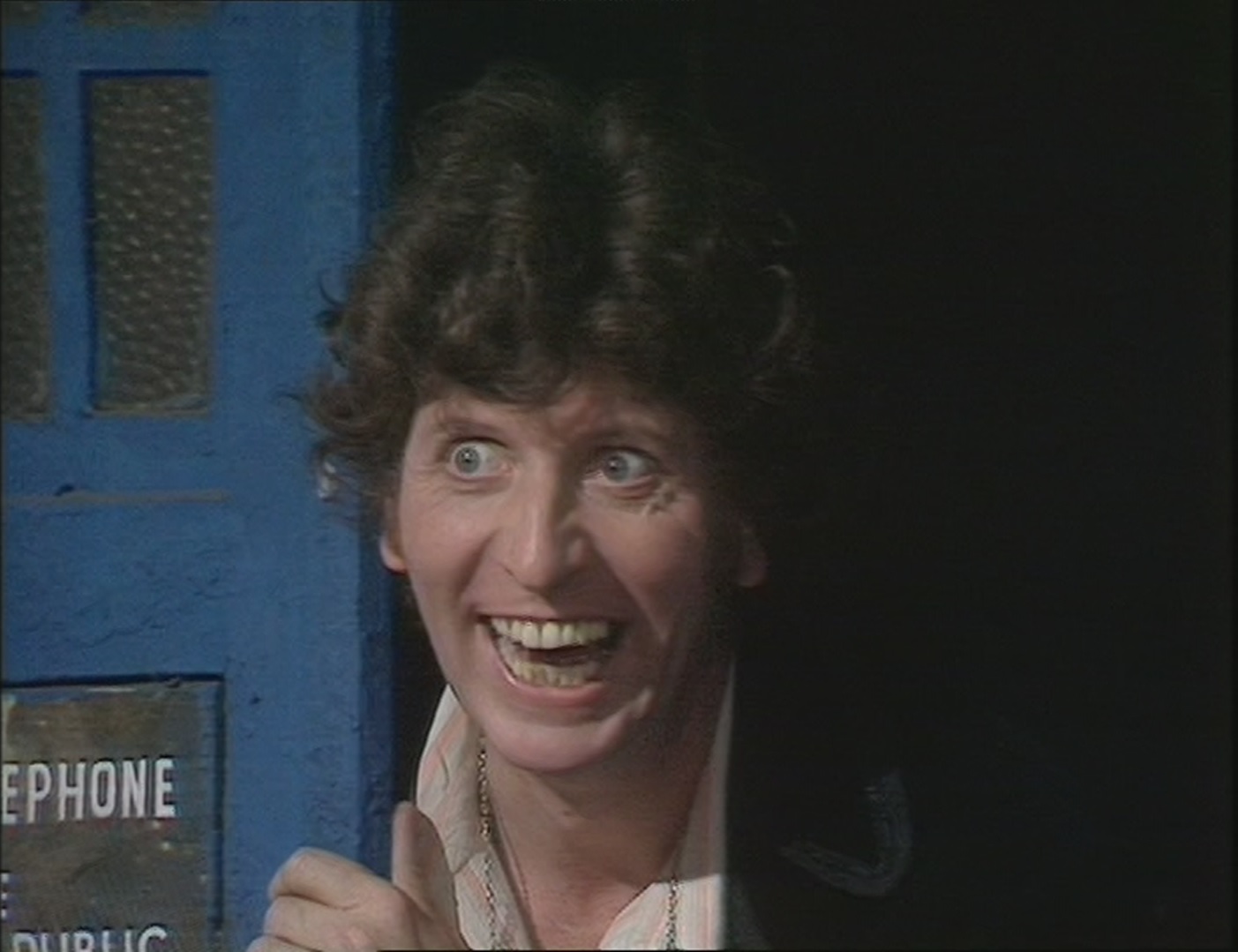
Ten Reasons To Watch Robot (warning: spoilers lower down the list)
1 – Tom Baker is the Doctor.
“You may be a doctor, but I am the Doctor. The definite article, you might say.”Tom grabs the role with astonishing energy, bewildering his friends and simply sweeping his foes before him, not just physically but with a firecracker intelligence, both mind and body in constant motion. No-one has any idea how to deal with him – except Sarah Jane – but he gets away with it all with simply blazing charisma. And he’s already wearing that scarf and that grin. Nothing will ever be the same again.
2 – The Time Tunnel.
The most iconic of all Doctors gets the most iconic of all title sequences, perfected by Bernard Lodge into the TARDIS rushing through a fabulous swirl that’s been the inspiration for most of the post-2005 titles. It’s paired with, for me, still the best version of the Doctor Who Theme, a ’70s remix of Delia Derbyshire’s original, now with looping echoes into the episode and cliffhanger scream out of it.

3 – The final scene brings our heroes together and invites us all on more adventures.
“There’s no point in being grown up if you can’t be childish sometimes.”The coda is gorgeous, the Doctor and Sarah Jane (Elisabeth Sladen) making up with each other after the climax, Harry (Ian Marter) endearingly trying to make sense of it all, and finally Brigadier Lethbridge-Stewart (Nicholas Courtney) accepting the inevitable. It’s hard to think of two of the Doctor’s friends more iconic than journalist Sarah Jane Smith, who came back so many years later and starred in her own show, or the Brigadier, who the Doctor had worked with advising UNIT throughout his time exiled to Earth (and whose daughter Kate is a mainstay of the series today) but who the now liberated Doctor will leave behind. And it’s hard to think of a team that makes me smile so delightedly as the Doctor, Sarah Jane and Harry. Here those three come together as a proper TARDIS crew, with new recruit (though not militarily; a Surgeon-Lieutenant from UNIT and the Navy) Harry Sullivan taken for a ride, the fourth Doctor offering his first jelly baby, and Sarah Jane standing up to the Doctor when he’s gone too far but then, the grown-up of the three, making a deliberate choice to be child-like and fly off into time and space to have what you know are going to be the scariest, and most fun, and most marvellous adventures anyone could ever imagine. I’ve previously written about it as one of my favourite ever scenes in more detail. It’s adorable.
4 – The trouble with computers…
“The trouble with computers, of course, is that they’re very sophisticated idiots. They do exactly what you tell them at amazing speed, even if you order them to kill you. So if you do happen to change your mind, it’s very difficult to stop them obeying the original order! But… not impossible.”Before my failing health stopped me working, I spent some years as an IT tutor. Hardly a day went by without my at some stage reassuring a student with a version of that line. Usually alluding more to saving before you close than impending Armageddon, though.
5 – Fantastic thematic consistency.
No, no, wake up at the back! Season Twelve of Doctor Who introduced not just Tom Baker, the time tunnel and Harry Sullivan, but awesome new Script Editor (a similar role to today’s “showrunner”) Robert Holmes and Producer Philip Hinchcliffe. So some people write this story off as the last produced by Barry Letts, and authored by just-going Script Editor Terrance Dicks. But Holmes clearly had a hand in it too, as Robot introduces the fascinating themes that will dominate the season: scientific survival and rebirth by fascistic elites; shattered worlds (before, during and after); alien / machine logic and intelligence against human instinct, free will and compassion… Which isn’t necessarily found among the humans-by-birth. And spot-your-own 1930s horror film motifs.
6 – The Robot.
The Robot itself looks fantastic (at least until Part Four). Probably still my favourite robot design in all of Doctor Who, a towering, powerful but still stylish creation accompanied by a low, grating ‘machine’ sound that makes you think the robot’s like a fork-lift truck. But its character is compelling, too – not just Michael Kilgarriff’s acting, but a creature that is often more human than its masters (the novelisation emphasises its tenderness in unexpected moments). I took that to heart at a very young age; it may even have started me off on empathising with the ‘other’, and is probably at the root of my always flinching at the Doctor being beastly in other stories to patently sentient AIs, especially when they’re having existential crises.

7 – Sarah Jane Smith is magnificent.
With a new Doctor, a new companion and so much else to compete with, this is still one of her strongest stories. She’s the intrepid reporter who tracks down the mystery; she’s brave and saves the world facing down the villain when even the Brigadier can’t; then her empathy and compassion even for the unforgivable shines through. And Elisabeth Sladen’s wonderful performance ties all of her character together. She’s a big influence on companions after 2005 in being the Doctor’s heart – but also in doing what has to be done, not ruthlessly, but showing determination when no-one else will.
8 – It warns about utopianism.
There’s a brilliant way round the Three Laws of Robotics. Brilliant, but fatal. Reminiscent of all so-called utopian societies, in which the individual is disposable for the greater good (even if that comes to mean most individuals in the world). Terrance Dicks wrote this ten years before Isaac Asimov introduced his ‘Zeroth Law’, and that’s not the end of the cleverness in his writing: watch carefully, and you’ll find that the Robot, Russian doll-like, is only the first of three nested ‘ultimate weapons’… Yes, this is ‘Doctor Who – Age of Ultron’.
9 – Like Doctor Who from the very first, it is utterly against fascism.
“The thought of Miss Winters in handcuffs gave Sarah considerable pleasure.”Fascist leader Hilda Winters (Patricia Maynard) is a great villain, calculating in private, demagogue in public, but this infamous sentence from Terrance Dicks’ novelisation underlines how easy it is to be authoritarian just so long as it’s what you’re sure is for everyone’s good… The Brigadier’s retort there to Sarah Jane’s wish to bang up all the baddies because we know they’re baddies is that Britain’s not a military dictatorship. Which on balance, the story suggests, is a good thing. Five weeks into Doctor Who’s first run in 1963, fascism became the series’ biggest evil. Starting with Robot, the 1975 stories make the same point again and again.
10 – It inspires Liberalism.
“I would wear what you thought was good for me. I see. And think what you thought was good for me, too?”It’s difficult to work out how much I was instinctively a Liberal and liked Doctor Who because it was the ‘odd one out’ show, and how much I liked Doctor Who and so took its lessons to heart. But though I think of certain other stories as more obvious influences on my politics, there are definite seeds here. Free will versus dictatorship; empathy with the different; Sarah’s first reaction to power being that it might be misused, her second to ask questions, her third compassion; green energy being a really good thing but enforcing it by authoritarianism and viewing people as disposable is a really bad thing. A green Liberal in the making, aged three, thanks to that most Doctor Who of simple homilies, that “the end never justifies the means.” Aged three? Well, yes. The moral here wasn’t the only influence this story had on me…
“It’d be for your own good.”

What Else Should I Tell You About Robot?
“Alexander the Great?”This isn’t just where Tom started. It’s where I started.
It changed my life and I love it with all my heart. Because it led to me loving Richard with all my heart.
Of course I can have two hearts.
Many more stories than you’d expect are someone’s favourite, but every story is someone’s first. This was designed to be a new start (and so was the next one), and when three-year-old me starting watching half-way through Robot, I was hooked.
Thinking critically – though it’s always enormous fun – this is a good story, but it’s not the very best. Its liberal heart is in the right place (opposing the far-right place) but its grasp of international politics is a bit shaky. And though as Robot comes into the final episode it builds several climaxes on top of each other, it’s also where a few things fall down a bit, not least the special effects. Gigantically. Even Sarah Jane has her ups and downs there.
So where many fans, if you asked them where to start on Doctor Who, would pick an action-packed, fun, familiar-but-different story set in more or less our modern world, one that gives a central role to the woman companion while introducing a new Doctor and a hugely successful era, and has the single-word title “Ro—”… It’s probably true that it wouldn’t be this one unless the fan is me (I love that other one too, by the way, but more on that story later).
But none of that matters to me. Because it was my first. And nearly forty-two years later, I’m still watching Doctor Who because of it. What better recommendation could there be?
*Technically this started in the last week of 1974. And actually 1975 was so wonderfully packed with Doctor Who that another season came along in the Autumn. But as Robot was launching a new season for the New Year and the first Saturday after Christmas was when they did that – and as I didn’t start watching until the second week of January – I always say it started Doctor Who for 1975. Because it belongs there. And, anyway, it’s from 1980.
And, if you need one, my score:
Usually this would be a simple mark out of ten, the crudest possible metric of how good I think a story is. Some weeks there will be exceptions.
8/10 says my head…
But 10/10 is not enough for Robot in my heart.

If You Like Robot, Why Not Try…
Everything! I did. But perhaps saying ‘now watch all two-hundred-and-sixty-odd stories before next week’ would be overdoing things.
Then try the whole of Tom Baker as the Doctor? I did. But it did take me the next six years, on many Saturdays, as they went out on BBC1.
So if you liked Robot, why not try The Ark In Space? Because it was Tom’s second story as the Doctor, and because The Ark In Space takes the new but already perfect team of the Doctor, Sarah Jane and Harry away from the comfort of Earth and throws them into stark outer space horror. It’s a brilliant story, it has another of Tom’s best performances and one of his most iconic speeches, it’s a bold statement of where new producer Philip Hinchcliffe and lead writer Robert Holmes were to take the series, and it became a huge influence – probably on the film Alien, certainly on Doctor Who’s return to TV forty years later, with both Russell T Davies and Steven Moffat claiming it as favourites.
But most of all, try The Ark In Space because one of the things I most love about Doctor Who is that, whatever you think of the story you’ve just watched, the next one will probably be completely different.

Next Time…
If I get to the next time: Always start at the beginning. I have. But Doctor Who has more beginnings than the Doctor has lives…
Clinton is being urged to challenge the results in three key states

Interesting report overnight suggesting that there might have been irregularities in three key states which could turn the election.
It is very hard to draw conclusions from this but where votes are cast electronically and there is no paper trail of a ballot paper then the potential for issues and possible hacking will exist. This is one reason why I prefer the British method of ballot papers.
The pressure is on all parties to ensure a smooth transition and it would be hard politically for Hillary at this stage to mount such a challenge.
Questions about the legitimacy of the outcome could, however, dog the Trump administration in the four years ahead.
Mike Smithson
Tales of Something or Other #10

Back in '83, I wrote the pilot and bible for the animated Saturday morning series, Dungeons & Dragons, then wrote one more episode. After that, I declined further involvement. I had other commitments at the time and other offers so I didn't stay with the show. It was a modest success and the mere fact that I'd help sell it got me more offers and inquiries for my services. I also got a few calls of congratulations and/or praise from other writers I knew.
Never take those seriously. I mean it. They may well be sincere in what they say but they may just be buttering you up because…well, why not? Getting on your good side might benefit them in some way down the line. More immediately, at least a few who called were hoping I could help them get an assignment on the series, which I couldn't. I was able to recommend a few writers early in the process before I'd stepped away from the show but not after.
One writer I'll call Zachary called and could not have been gushier: "You did a great job, Mark…really solid work there…just terrific…" Knowing this guy, I felt for a moment like he was Sgt. Bilko and I was Colonel Hall being set up for the big con but he didn't push me to do anything in particular for him so I was cordial and I thanked him and that was that.
Before I get to this next part, you should know this: I had no opinion of Zachary as a writer. Didn't know if he was good, didn't know if he was bad, didn't particularly care. To this day, I don't think I've seen or read anything he's written. I almost never see myself as being in competition with other writers and even when I do, it doesn't matter what I think of them. What matters is what the people doing the hiring think of each of us.
Okay. So a year or two after Dungeons & Dragons went on the air, my agent got a call from some producers who were doing a live-action kids' show for syndication. The pilot had been sold — or so they said — and they were soon to go into production on 25 more episodes for which a story editor was needed. "They want to meet with you," Bernie the Agent said, "but I need to warn you. This sounds like it could be the lowest-paying job you'll ever be offered." Having been offered some gigs that starving homeless folks would have passed on, that sounded pretty dismal.
I asked him, "Is it WGA?" If a show is covered by the Writers Guild of America, there are certain minimums that must be paid. And now that I think of it, that was a dumb question because Bernie and his agency would never have anything to do with a non-Guild live-action show, nor would I, nor should you.
"It's WGA," Bernie said. "But they're doing this show on a micro-budget and they seem to have found some sort of loophole in the WGA contract that allows them to pay you in beads and trinkets. Do you want to go in and meet them or not? It's your call."
Back then, I went in for every interview, even for jobs I knew I wouldn't want. Even when meetings didn't result in employment, I always found them interesting and educational. I learned a lot from some of those meetings and, of course, there's always the slim chance I'll make a good impression and the slimmer chance that those producers will someday be producing something with real money. So I told him, yeah, I'd go in and meet with them.
At the appointed time, I drove to a tiny movie lot in the Silverlake area of Los Angeles — a lot that I didn't even know existed and today does not. It was not easy to find and I was about ten minutes late…which turned out to not be a problem because everyone else they'd been seeing all day was twenty minutes late. The meeting was in a teensy bungalow — the kind of building in which the Seven Dwarfs would have gotten claustrophobia. Just seeing it made me think I wouldn't be working on this show.
The bungalow had been cheaply-partitioned into two rooms. One was the receptionist's space and a little waiting area. The rest was the office wherein I could hear the producers interviewing someone else. "Just have a seat," the receptionist said…and I didn't intend to peek at it but there was a list on her desk of writers who were coming in today. You couldn't miss it and the name just above mine was Zachary's, plus I also recognized his voice.
I took a seat and I couldn't not hear every word that was being uttered in the next office. Clearly, I could hear him say…
"You know, a lot of shows just collapse in the development stage. The guy who writes the pilot…all he cares about is selling the thing and getting his sales bonus. He doesn't give a damn about what Episode 2 and Episode 3 or Episode 12 are going to be like because he's just going to grab his money and run. He doesn't set things up to make for a good series because that's not his problem…"
An interesting point of view on Zachary's part. That has never been my experience or observation but it's certainly possible that a pilot might be able to sell the series but push it in the wrong direction. That, however, was not what was really on my mind at the moment. What was on my mind was, "I shouldn't be hearing this." I shouldn't be eavesdropping, even unintentionally on his meeting, just as I wouldn't want someone listening in on mine.
I got up and told the receptionist that I was going to wait outside. She said that would be fine but before I made it out the door, I heard —
"I'll give you an example. There's this show on Saturday morning called Dungeons & Dragons. It was a good idea for a show but the development on it was horrendous. I don't know who wrote it…it may have been the producer's nephew or someone because it definitely wasn't a professional job. It set the direction of the show all wrong and…"
That was all I heard but it was enough.
I came to a number of immediate conclusions. One was that Zachary knew darn well I was the next interview. That list of writers on the receptionist's desk was unmissable. Another was that he did not realize he could be heard in the waiting area. Yet another was that Zachary was a weasel of the first, second and third order.
Also, I decided I wasn't going to say anything about it or even let him know that I'd heard him. I waited until he departed the bungalow, went back in and then the receptionist escorted me about 2.5 feet into the inner office. I no longer recall the names of the husband/wife producing team I met with so let's call them Buddy and Sally.
I also don't remember the name of their show so let's call it The Fun Show. You never saw The Fun Show. That day I went in for the meeting, Buddy and Sally were certain it was a "go" project with many more episodes to be written and filmed and I sure didn't know it never make it onto television. I do not believe anything beyond the pilot was ever produced.
Exactly what happened, I can't say for certain but after I tell you a little more, we'll all have a pretty good guess. And by the way, I'm calling it The Fun Show because Sally was incapable of formulating a sentence about it without using the word "fun," as in "We want this show to be fun" or "The story editor we hire must know how to inject a lot of fun into things" or "Do you think you can give us the proper quotient of fun?"
At one point, she asked me, "What is your definition of fun?" I started to say "Not sitting here, answering these questions" but instead, I said something utterly meaningless like, "Fun is the antithesis of any condition or situation in which people, alone or in a group, are not having fun."
Sally turned to Buddy and said, "See? He gets it!"
They then showed me a 10-minute hunk of their pilot — "the best moments," they said. I managed to stop myself from saying something that began with "If these are the best moments…" but trust me. What I saw was incoherent, amateurish, badly-staged and about as much fun as a root canal with a Craftsman 19HP 42 in. Turn Tight® Automatic Riding Mower.
When it was mercifully over, Buddy pulled the cassette out of the Betamax® and asked me, "What do you think you can do with this?" I was going to name some good TV shows you could record by reusing the tape but I thought, "What's the point? I need to just get the hell outta here." I gave him some sort of answer, thanked them for having me in and got the hell outta there. As I headed for my car, I thought, "Boy, that show would not be the antithesis of any condition or situation in which people, alone or in a group, are not having fun."
The next day, Bernie phoned. "They called but not to offer you the job. They want to know what kind of salary you'd want so if it's too high, they won't have to spend the time deciding if they want you."
I said, "Price me out of it."
He said, "I can probably do that by quoting them the starting hourly rate at McDonald's" — and off my agent went to try and not get me a job. He called back ten minutes later and told me that just to see what would happen, he quoted them basic WGA scale — in other words, the absolute minimum they could pay me.
"I think you're the first one they asked about this," he said. "They apparently have no idea about the WGA contract that they're working under. The man gasped and I heard him repeat the number to the woman and she was aghast. I think they really were thinking they could get a professional story editor for McDonald's pay." Scale wasn't that much money.
An hour later, the phone rang again. It was Zachary, calling to ask me a computer question of no import. After we got through the bogus reason for his call, he said, "Hey, while I've got you here, I heard you were up for the story editor job on that Fun Show thing that's looking for a story editor."
I told him I'd been in to see them (as if he didn't already know that) and that I'd decided the show was not for me. He said, "Well, you know what's best for you. Say, just out of curiosity, if you did want to do that show, what kind of a salary would you ask for?"
I thought a second and said, "I'd start at triple Writers Guild scale and maybe be prepared to come down to double or a little more. They're looking for someone real good and if you quote them anything less, they're going to figure you're on the bottom of the business. Have you talked to them? Because you'd be real good for it."
"Thanks, Mark," he said. "I knew I could count on you. I always tell people you're truly one of the best guys in this industry."
The post Tales of Something or Other #10 appeared first on News From ME.
My Latest Tweet
- We can avoid Mike Pence getting booed at Broadway plays. Someone tell him that a couple of them were created by or star gay people.
The post My Latest Tweet appeared first on News From ME.
[pols, curr ev] Action: Petition the Electoral College
Bizarrely, this is, in fact, the use case the Electoral College was built for: over-riding the results of the election if there is something really, really wrong with the winning candidate. Okay, admittedly, the original "really, really wrong" property was being opposed to slavery. But, nevertheless, its function was intended to be that of a circuit breaker on the democratic process. And here we are.
I don't have much hope that it will work. And please understand, if it does work – or if for any reason the Electoral College choses Clinton over Trump – that is going to give this country a big shove towards civil war.
I've signed it.
Given the choice between 1861 and 1933, I pick 1861. Better that we drench the US in blood up to our knees than that we unleash a Third World War, only this time the Nazis have nukes.
Smartphone Secretly Sends Private Data to China
This is pretty amazing:
International customers and users of disposable or prepaid phones are the people most affected by the software. But the scope is unclear. The Chinese company that wrote the software, Shanghai Adups Technology Company, says its code runs on more than 700 million phones, cars and other smart devices. One American phone manufacturer, BLU Products, said that 120,000 of its phones had been affected and that it had updated the software to eliminate the feature.
Kryptowire, the security firm that discovered the vulnerability, said the Adups software transmitted the full contents of text messages, contact lists, call logs, location information and other data to a Chinese server.
On one hand, the phone secretly sends private user data to China. On the other hand, it only costs $50.
[pols, US] Action: Call for House Oversight Committee Investigation
I attempted to call the committee directly (202 225-5074) but the mailbox is full.
So I went to the listing of committee members, found the one from MA, and called his local office to express my enthusiasm for this idea. Since I am not his constituent (wrong district), not sure the call wasn't circular filed, but I did explain I was calling his office in his capacity as a member of the House Oversight Committee.
I'm apprised that – contrary to what I thought – letters don't "count" to legislators as much as phone calls do. Yes, apparently phone calls are more powerful, and phone calls to the local, not DC, office of a legislator are the most powerful of all.
Using Wi-Fi to Detect Hand Motions and Steal Passwords
This is impressive research: "When CSI Meets Public WiFi: Inferring Your Mobile Phone Password via WiFi Signals":
Abstract: In this study, we present WindTalker, a novel and practical keystroke inference framework that allows an attacker to infer the sensitive keystrokes on a mobile device through WiFi-based side-channel information. WindTalker is motivated from the observation that keystrokes on mobile devices will lead to different hand coverage and the finger motions, which will introduce a unique interference to the multi-path signals and can be reflected by the channel state information (CSI). The adversary can exploit the strong correlation between the CSI fluctuation and the keystrokes to infer the user's number input. WindTalker presents a novel approach to collect the target's CSI data by deploying a public WiFi hotspot. Compared with the previous keystroke inference approach, WindTalker neither deploys external devices close to the target device nor compromises the target device. Instead, it utilizes the public WiFi to collect user's CSI data, which is easy-to-deploy and difficult-to-detect. In addition, it jointly analyzes the traffic and the CSI to launch the keystroke inference only for the sensitive period where password entering occurs. WindTalker can be launched without the requirement of visually seeing the smart phone user's input process, backside motion, or installing any malware on the tablet. We implemented Windtalker on several mobile phones and performed a detailed case study to evaluate the practicality of the password inference towards Alipay, the largest mobile payment platform in the world. The evaluation results show that the attacker can recover the key with a high successful rate.
That "high successful rate" is 81.7%.
News article.
Trifles, Light As Air


After I returned to school in 2007 it became clear that this was a milieu in which I could survive and even prosper. Within a set of rigid parameters academia is fairly easy to navigate. You’re left to your own devices most of the time but are expected to perform your knowledge periodically in order to continue on the same path. I fit perfectly because temperamentally I much prefer to be left to my own devices. The problem comes with the expectations of performance.




The LD demand for a 2nd EURef could have similar potency as being totally opposed to the 2003 invasion of Iraq
YouGov: LDs could edge in front of LAB if it was only party with such a promise
We all remember how in late 2002 and 2003 that the IDS-led Tories gave their backing to Blair’s invasion of Iraq. The Charles Kennedy-led LDs were the only national party to oppose and this stance stance helped them to their best ever performance at GE2005.
We’ve now got a similar situation with BREXIT. May’s Tories have totally dished the idea and Labour’s position, like all things these Corbyn/McDonnell days, is ambivalent. The LDs are saying that there should be a second referendum when the actual terms are agreed.
This, it might be recalled, was the Boris Johnson position in February when he finally came out and chose to back LEAVE.
In some new polling published overnight YouGov has tested the proposition in the form set out in the chart above and the results should provide encouragement to Farron’s party.
Amongst 2016 REMAIN voters the split was
CON 24
LAB 23
LD 42
UKIP 1
This is all hypothetical, of course, and there are a host of objections you can make to such findings.
In the big battle for Richmond Park, a week on Thursday, the LDs are going very strong on BREXIT in an area where this idea should go down well. Whether it will be enough to shift the incumbent MP with a big majority I do not know.
Mike Smithson
The Alzheimer Photo
A professor recently brought my attention to this photo of Alois Alzheimer and his colleagues in Munich (source):

Alzheimer is the very-German-looking guy with the silly mustache third from the right on the top. Far right is Friedrich Lewy, discoverer of Lewy bodies and Lewy body dementia. Bottom, second from the left, looking kind of like Petyr Baelish, is Ugo Cerletti, inventor of electroconvulsive therapy.
Other members of Alzheimer’s team didn’t make it to the group photo. These include Alzheimer’s mentor, Emil Kraepelin, who discovered bipolar disorder, schizophrenia, etc, etc, etc (there’s a reason modern psychiatry calls itself “neo-Kraepelinian”). They include two of Alzheimer’s assistants, Hans Creutzfeldt and Alfons Jakob, who discovered Creutzfeldt-Jakob disease, the human version of mad cow. They include Alzheimer’s collaborator Franz Nissl, who discovered Nissl bodies and the Nissl stain at the same lab.
If you come across a neurological disease that sounds like a guy’s name, there’s a not insignificant chance that guy is either in this picture or else just barely missed it.
This made me think of a lot of the discussion around when fields of science prosper versus when they go stagnant. The last few decades haven’t really been great for neuropsychiatry. But one group of people in one lab came up with entire textbooks worth of advances. Why? Do we need to resurrect Alois Alzheimer and put him in charge of NIMH?
Part of it was that good histological staining had just been invented and Alzheimer’s lab was on the bleeding edge, so they were just sitting around picking off the low-hanging fruit that could be discovered by staining stuff. But Kraepelin’s and Cervetti’s discoveries didn’t have much to do with staining.
Part of it was that Alzheimer was in the right place at the right time. If he’d really wanted an impressive photo, he could have gotten together with his chief competitors, a group centered around Carl Westphal (cf. Westphal’s sign, Edinger-Westphal nucleus) which included his students Arnold Pick (cf. Pick’s dementia) and Karl Wernicke (cf. Wernicke’s area, Wernicke-Korsakoff syndrome). Heck, if he wanted to go further, the number of people within a day’s train journey staggers the imagination. Rudolph Virchow, Eugen Bleuler, Robert Koch, Sigmund Freud. Fin de siecle Central Europe was just a really good place for neurology and psychiatry.
Part of it was that the whole thing was arranged by Kraepelin, who besides being a scientific genius, was apparently an organizational genius as well. According to Wikipedia, “Kraepelin has been described as a ‘scientific manager’ and political operator, who developed a large-scale, clinically oriented, epidemiological research programme.” See also Psychiatric Governance And The German Institute Of Psychiatry In Munich. Kraepelin grabbed all these people, threw them at the most interesting problems, and made sure they always had all the funding they wanted – although the final form of all of this as the Institute for Psychiatric Research didn’t coalesce until after Alzheimer’s death.
And part of it is the natural tendency for some institution to gain a reputation for being the best, and then attract the best people. I’m sure you could find some pretty impressive conjunctions of people if you looked at photos of Harvard departments.
My theory of apparent scientific stagnation has always been that it’s easier to pick low-hanging fruit in one paradigm than to get entirely new ones – in other words, the problem is at least as much in the territory itself as in our engagement with it. I was interested to learn that one of the big hurdles to faster aircraft is a nonlinearity in fuel costs, which grow exponentially for physics reasons right when you start getting faster than modern planes. I think something similar might be going on here. Through painstaking trial-and-error, psychiatric hit upon a really fruitful paradigm of combining clinical observation, histopathology, and and random wacky ideas, right about when Alois Alzheimer opened his lab. Anybody who happened to be in the vicinity when the new paradigm was invented ended up getting a disease named after him. Eventually all the stuff that was easy to discover this way got discovered, and right now there just aren’t any equally fruitful paradigms coming to our attention.
This story has a sad ending. Alzheimer (ironically) died young. He was succeeded by his student Walther Spielmeyer (cf. Spielmeyer-Vogt-Sjögren-Batten Disease), and then Kurt Schneider (cf. Schneider’s first-rank symptoms). Schneider invented the modern concept of psychopathy, but unfortunately he was probably working from personal experience – this was in the middle of the rise of the Nazis. He was fired for political reasons and got replaced with Alzheimer’s fellow Kraepelin protege, Ernst Rudin, who re-centered the whole thing around the role of psychiatry in sterilizing the feeble-minded. The chain that started with Kraepelin and Alzheimer ended in Rudin’s own student, Josef Mengele.
After the war, Rudin was fined 500 deutschmarks, apparently the going penalty for leading a Nazi eugenics program at the time, and Kraepelin/Alzheimer’s institute was re-founded as the Max Planck Institute of Psychiatry. As far as I know they’re still around, but I haven’t heard of them discovering any interesting new diseases lately.
The Price We Pay for an Ad-Powered Internet
From The New York Times:
We don’t usually think of Timothy Leary as a consumer advocate, but in his zealous promotion of LSD, the iconoclastic 1960s psychologist was searching for what today we would call an ad blocker — though his tiny tabs relied more on messing with our sensory receptors than dropping code on our mobile phones.
In his new book “The Attention Merchants: The Epic Scramble to Get Inside Our Heads,” Tim Wu reminds us that Leary pushed acid in the pursuit of “a complete attentional revolution” in which his followers would reject the growing external stimuli of commercial media in favor of an inward, spiritual journey.
It’s more than a bit ironic, then, that Leary felt compelled to resort to a classic marketing trick, the jingle, to press his case. His “Turn on, tune in, drop out” was so catchy that, though failing to smash the attention economy, it was ultimately complicit in contributing to it, showing up in a campaign for Squirt, a grapefruit-flavored soda: “Turn on to flavor, tune in to sparkle, and drop out of the cola rut.”
This gets at the heart of the compelling thesis of “The Attention Merchants,” namely that the age of mass media and mass marketing is characterized by an arms race between those who seek to capture the valuable commodity of our attention and capitalize on it for gain and those who resist this harvesting of time either through drugs; regulation; or most effectively, collective boredom, distraction and indifference. Wu’s argument is that each boom in commercial media in some way went too far and provoked an either minor or major revolt, pushing the advertising industry to adopt more sophisticated or extreme methods to monetize our time.
. . . .
There is little sign of this trend slowing, only accelerating. Facebook and Google represent the largest and most successful advertising-funded businesses in history. They are busy developing technologies that track not only our attention but also every aspect of our online behavior and, in Facebook’s case, synthesizing it with what is known as our “social graph.” That graph is the circle of colleagues, acquaintances, families and friends we connect with online and determines as a result what type of advertising and even what type of news or other content we see. We are largely unaware of how the hidden tracking technologies operate and are complicit in how much we surrender.
From his historical perspective, Wu can see that often a moment such as this one, in which our eyeballs are so thoroughly monopolized, is followed by resistance. But his concern is that we have not individually or collectively paid enough attention to the commercialization of every part of our lives: “Our society has been woefully negligent about what in other contexts we would call the rules of zoning, the regulation of commercial activity where we live, figuratively and literally. It is a question that goes to the heart of how we value what used to be called our private lives.”
Link to the rest at The New York Times
PG will note that we pay a similar price for an ad-powered New York Times and an ad-powered NBC.
Click to Tweet/Email/Share This Post
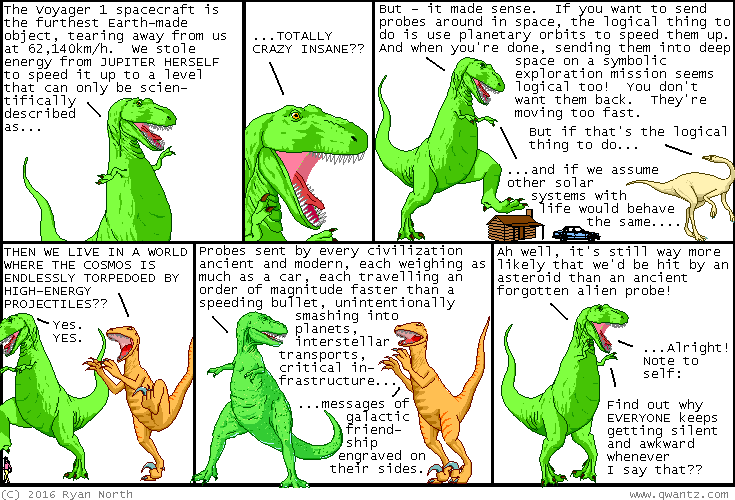
what if... it wasn't a meteor that killed the dinosaurs, but an alien probe, or better yet: voyager 1 after going back in time?? What if aliens encased voyager 1 in rock to better protect it from the buffeting time stream, but they protected it too well? WHAT IF, YOU GUYS??
| archive - contact - sexy exciting merchandise - search - about | |||
 |
|||
| ← previous | November 16th, 2016 | next | |
|
November 16th, 2016: I am back in Canada! It's okay, but distinctly lacking in lochs. I guess it's true what they say: "Canada is distinctly lacking in lochs". UPDATE: TURNS OUT THERE'S AT LEAST ONE, I TAKE IT BACK, CANADA RULES FOREVER – Ryan | |||
Mainstream media attacks on trans healthcare (Again)
There was hand-wringing piece in the Independent yesterday about an Essex pharmacy that provided a journalist with HRT. It’s so bad and on so many levels that I felt it worthy of mentioning here specifically. However, this is hardly an isolated incident – the media have a very long history of trying to scupper trans healthcare, including David Batty’s persecution of doctors practicing trans medicine and past efforts by the BBC, similar to this one, to shut down entirely legal sources of medicine.
Turning back to the Indy piece, sources such as the pharmacy they mention are often a lifeline for people who can’t get medication in any other way. Even having had to wait, sometiems years, to get help many people subsequently find their GPs refuse to prescribe drugs because it goes against their religion, even when recommended by a specialist. Or they live somewhere where they can’t access specialist care without long journeys – there is no Gender Identity Clinic anywhere in Wales, for example. (Fortunately, there are moves afoot to remedy that particular problem)
This isn’t due to a lack of evidence of the effectiveness of health care – research has shown that blocking health care for those seeing transition is extremely dangerous, with the suicide attempt rate for those unable to access services at around 50%.
The Indy also plays up the risks of HRT, which if you believe the tone of the article must be incredibly dangerous, and state that it shouldn’t be “used unmonitored”. However, amongst the long-term-transitioned trans women I know of who have been able to find a stable supply via cooperative and responsible GPs, none are being monitored – because the real world risk for most people is not high enough to make it worth the GP’s time. Progynova is even an over-the-counter medicine in some countries, such as Spain.
In case you’re wondering, the side effects list of an over-the-counter drug in the UK such as Ibuprofen includes difficulty breathing, vomiting blood, stroke, liver failure, heart failure and heart attacks. If there’s a lesson here, it’s “don’t read the side effects list on the leaflets”.
Finally, the headline cites “Fears of ‘DIY transitioning’“. DIY transitioning is exactly what people have been doing for decades because the press and medical establishments have a long history of making it as hard as possible to access treatment.
To be clear, having to defend grey market medication is a far from ideal situation to be in. But it is disingenuous to harp on about the “dangers” of these sources, while ignoring the effects of cutting off that supply. And trawling forums for “exclusives” like this is terribly dangerous and will just force desperate people further and further underground, where they’ll end up being taken advantage of or finding sources of supply that are really dangerous. I imagine many people will be wary of asking for help on that particular Reddit forum after it was cited by the paper.
The post Mainstream media attacks on trans healthcare (Again) appeared first on Complicity.
Business Musings: Running A (Writing) Business In Uncertain Times

Last week, I explained the economic term, “Black Swan Event,” and said that Donald Trump’s election here in the United States is not one. A number of you wrote to me privately and argued that it was, talking about the severity of the change he will bring, not just to the U.S., but to the world.
I’m not denying the change. At all. We are facing a future that’s very, very different from the one we thought we were going to have. (Almost everyone in “the know,” including the Trump people, thought he was going to lose on that Tuesday night.)
However, that difference, profound as it is going to be, was not unpredictable.
How do I know this? Dean and I modeled Donald Trump’s win as part of our future planning, starting last June. We gave the win low odds, but we calculated it into the various models we were working out for our businesses.
I’m going to discuss the difference, the modeling, and the ways of thinking from a business perspective and do my best to leave politics out of this. Just because I’m discussing this election dispassionately does not mean I am dispassionate. I have very strong opinions about this country, its direction and importance in the world, and how we should be as a nation. Please see my fiction for that.
But I’m fully aware that this blog is not written for partisans. It’s written for writers from all over the world, most of whom barely give a rat’s flying patootie about American politics. For that reason, my discussion of politics here only comes in the context of current events and the things writer-business people should consider. So no political comments, please.
First, let me address the difference between an emotional shock to the system and a Black Swan event.
Here’s the definition, this time, from the Financial Times Lexicon (last time I used Investopedia.com):
An event or occurrence that deviates beyond what is normally expected of a situation and that would be extremely difficult to predict. This term was popularized by Nassim Nicholas Taleb’s book “The Black Swan: The Impact of the Highly Improbable.” Mr Taleb is a finance professor and former Wall Street trader.
Note that there are two parts to the definition of a Black Swan event. The U.S. election fits the first part. Donald Trump’s win did deviate from what was normally expected of the situation according to the polls, the pundits, and the experts.
Except…if you used a historical perspective to understand what was normally expected of the situation—an American election after one party holds office for two terms—then the event was not unexpected. It was expected. According to a 2013 article in the non-partisan Constitution Daily, the Democrats (Hillary Clinton’s party) had a .333 chance of keeping the White House in this cycle. This article was written two years before any candidates announced for office.
But let’s say that those of you who wrote to me were right, and this election was a deviation from the norm.
The election still—clearly—does not meet the second half of the definition, which is that the event would be “extremely difficult to predict.” It wasn’t difficult to predict. The polls were uncertain. They were misinterpreted often. The information on the ground was incomplete. But it was clear, right from the Democrats’ win in 2012 that the White House could change hands in 2016.
Even the recent odds were solid that Trump could win. Just before Election Day, he had a greater than 1 in 3 chance of winning. Or as Nate Silver of fivethirtyeight.com said on October 30, almost two weeks before the election, the Chicago Cubs had a smaller chance of winning the World Series than Trump did of winning the election. Anyone who reads my blog knows that the Cubs won and I was happy about it. You can bet, though, that Silver’s words rang in my head that night—and in the nights to follow.
Or as Dean, who was a professional poker player, often said, he’d won hands when the odds were 1 in 3 against him. One in three is likely, not a Black Swan event. It’s something that can easily be predicted—and was.
What was unpredictable was that two of the most unpopular candidates in the history of American polling were chosen by their parties. That meant that no matter what happened, a large chunk of the populace was going to hate whoever became president.
Nearly seventy of eligible American voters did not vote for Trump. 25.9% voted for Clinton, and 42% did not vote at all. America historically has the one of the lowest voter turnouts in the developed world and this year was no exception.
What that also means is this: Had Trump lost and Clinton won, that seventy percent number would have been reversed. Roughly seventy percent of the electorate would not have voted for Clinton. (Trump received 25.7% of the vote.) That would have caused problems as well.
Americans were shocked by Trump’s win. It was an emotional shock to the system, which many people in the U.S. population are still struggling to understand. Those people (probably not the full 70%, but maybe 50%) did not believe that a man like Trump could win the White House.
You Brits went through this exact same emotional shock, with the same uncertain and unreliable polling, in June of 2016. No one—no one—in the know could believe that voters would choose to leave the European Union, given the difficulties, the worldwide ramifications, the severe economic repercussions.
And then, voters surprised everyone by choosing Brexit. The plan to leave the E.U. is now underway, although it is moving slowly, and there are still uncertainties about what will happen next.
Last week, as I was researching the upcoming European elections which had similar candidates to Trump on the ballot, I saw several articles which claimed that the establishment candidate would win, despite their serious unpopularity and growing discontent in those countries. I recognized those articles. I read many similar ones here in early 2016.
In the U.S., those articles were wrong. In the U.K., those same types of articles on Brexit were wrong. I’m not saying they’re wrong for your particular country, non-Americans. I’m just saying that two major Democracies just administered a major shock to their established norms. Don’t be surprised if yours does too.
The theme of the 21st century thus far has been disruption. Technology has disrupted established industries in ways that were inconceivable in 1990. That’s why this blog exists. To understand the disruption in publishing.
I had not expected the disruption in established political institutions. That it’s happening will probably make sense in hindsight to all of those historians from 2090 who will make their entire careers studying this period of time. But I doubt I’ll live long enough to see that. 
Anyway…
We’re here to discuss business. Your business. Your writing business. Although much of what I discuss will apply to most businesses.
In June, we entered times of serious and major uncertainty in the economic side of the world. Yes, June was Brexit. June was also when it became clear here in the United States that the U.S. election would be between Hillary Clinton and Donald Trump.
In June, Dean and I began serious planning for the coming uncertainty.
I know that sounds weird. How do you plan for uncertainty? The way that Writing Observer mentioned in the comments to last week’s blog:
For predictable uncertain times – you make contingency plans. … They might not be plans that you especially LIKE the idea of executing – but you pull out the one for that contingency, adjust for the details you didn’t plan for – and continue with life.
I mentioned that I had put off writing last week’s post, Third Quarter Blues, although I wanted to write it in October. I needed one final piece. I needed to see how the financial markets would respond to a Trump win. The pundits (yeah, them) believed we were looking at a steep and serious market decline immediately after a Trump victory, and considering how the markets reacted to Brexit, that decline was within the realm of the possible.
Instead, the entire world is taking a wait-and-see attitude—economically. Which means that we’re not going to go in a severe financial decline in the next few months. But you should be modeling a financial decline for 2017/2018, along with all of the other possible models.
What do I mean by modeling?
It sounds complicated, but it’s not. It’s that old if-then game we played as children. If this happens, then what will you do?
You go through all the scenarios:
If the UK votes to stay in the European Union, then what will you do?
If the UK votes to leave the European Union, then what will you do?
If the UK’s vote is tied somehow, then what will you do?
If the UK decides to leave and somehow changes its mind, then what will you do?
If you hit a place where you say, That’ll never happen, which is what a lot of Democrats (and non-voters) in the US said all year, then you hit a scenario that scares the pants off you and it’s one you really, really have to look at.
Economically speaking only, the contingency I feared the most in the days coming up to the election was a Bush v. Gore style tie in the Electoral College. That would have extended the waiting period I discussed in last week’s blog until December at the earliest, and any result—Clinton, Trump—would have been even more impactful than it would be had the decision been clear.
The decision turned out to be clear, which meant that model for that economic future got discarded.
You must plan for all the contingencies you can foresee.
Dean and I have made contingency plans for almost everything we can think of, not just for political events, but physical ones too. If a tsunami hits the Oregon Coast, where our physical business is located, what then? If a depression devastates the country and the world, what then?
But let’s move out of the realm of the devastating back to the realm of uncertain economic times.
Dean and I came up with several contingency plans for the last half of 2016 and the first part of 2017. Some of those plans included a Clinton win, some of them included a Clinton loss. All of them took Brexit into account, as best we could given what information we had.
It became clear in June that after the November election—no matter who won—there would be civil unrest in this country. It seemed obvious that if Clinton was elected, then gridlock would remain the rule of the day in U.S. government.
Modeling a Trump economic future is tougher. We don’t know what he’ll do, but we know what his party wants to do. But we also know that Trump does not get along with his party.
In other words, the world became more uncertain with a Trump victory than it would have with a Clinton victory. The man is predictably unpredictable. (Sigh.)
How long will the uncertainty last? At least two years, maybe four. Maybe more than that. We have moved into truly uncertain waters—compounded by the upcoming European elections.
So…
How do businesses handle uncertainty? In general, businesses make sure they have enough capital to weather economic stagnation and bumps. The businesses also need three kinds of plans—a plan for growth, a plan for stagnation, and a plan for loss. Predicting what will happen for your business is not as simple as looking at what’s happening at other businesses.
In any changing economic climate, some businesses will succeed and others will struggle. Sometimes those changes are predictable. For example, in late 2008 and early 2009 as the economy went into decline, I knew that small business would grow. How did I know that? I’m not a guru or anything; I’d been through this before, in the early 1980s.
When people lose their jobs and can’t find work, some of those people see that as an opportunity to leave the job market altogether and give that project they’d always been thinking of a try. Because I knew that small business and freelancing would grow in 2009 and 2010, I wrote The Freelancer’s Survival Guide.
Because the other thing that I knew was that most first-time small business owners fail. I wanted to prevent as much failure as possible.
To do modeling for the next year of your business, you need to be as clear-eyed as possible. You should research trends for your business for similar economic times, if you can.
Then you figure out as best you can what your future will be.
Here’s how you do it.
First, you figure out what the possible futures could be. By July, ours were pretty simple. Clinton victory—then what? Trump victory—then what? Markets react well—then what? Markets react poorly—then what? Civil unrest—then what? Governmental gridlock—then what? Governmental ease—then what? Possible impeachment (either candidate)—then what? And so on.
Second, figure out the impact those scenarios will have on your business. Dean and I were modeling for different businesses. Our retail businesses have a local component that our publishing and writing businesses do not have. Therefore, our models for the retail business were different than our models for publishing and writing.
Some scenarios will have no impact at all on what you’re doing. Others might have a huge impact. Be as clear-eyed and honest with yourself as possible as you set out these scenarios.
Third, plan for struggle and for success. Some businesses do better in certain types of downturns. Inexpensive entertainment—like books—do very well in economic recession. Publishing also does well—if the publishing company has low overhead. Traditional publishing companies had trouble in the last recession in part because they were bloated. They also had trouble because the technological disruption was hitting at the same time.
But the entire self-publishing movement started in the last recession. Indie writers have grown into a force since their humble beginnings of 2009—as most people struggled to make ends meet.
Fourth, make sure your plans are concrete. No vague well, we’ll look at it once the future arrives kind of plan or a maybe we’ll make cuts if the economy tanks kind of plan. Figure out what you will do from moment one.
Dean and I had meetings with the people running our companies long before November 8. We showed up for the scheduled November 9 meeting with notepads in hand, because we all knew that the future had arrived. Then we discussed the next few months, and looked at the next year as well.
Fifth, be prepared to make modifications. Even though your plans are concrete, reality does shift things. Sometimes you will have to tweak the plan you made in June to handle the realities on the ground in November.
Sixth, review your plans every week or every month throughout the period of uncertainty. Again, events on the ground are going to shift, sometimes in unexpected ways. Just this week, I’ve received all kinds of interest on projects that I thought were dead six months ago. Some of that interest is coming about because of the election. I had not planned for the revival of interest on these projects, and will have to tweak the plans Dean and I made in the coming weeks.
Seventh, be sure to include your personal time and finances in those plans. Uncertain times mean that friends, family, and others might need you on a personal level more than ever. You might find yourself providing care where you didn’t expect to, or donating more of your income to charities that have stepped up to fill some kind of gap. You might think it necessary to join the political fray in one way or another. Those things take time and resources. Plan accordingly.
Eighth, remember that the world will go on. It always does. It might not be a world you like. It might be a world you loathe. It might be a truly ugly place. Or it might be the place you dreamed about. Whatever it will be, it will be something.
For those of you in the United States, realize that 42% of eligible voters did not care enough to vote. If you asked most of them how they feel today, some will probably regret that decision. Most of them, though, are probably feeling relief that the election ads have ended, and they’re probably annoyed at everyone who still wants to talk about politics. That 42% wants to get on with the business of everyday living.
So, I would wager, does a goodly percentage of the 58% who did vote. They’re looking ahead to the holiday season. They’re back watching football instead of the political shows. They’re talking about winter weather, not who they plan to vote for (or against).
Ninth, uncertain times—whether they’re good or bad for your business—can be extremely difficult emotionally. Hang in there. Realize that this too shall pass. Someday.
I have one final, extremely important point.
Uncertain times are not limited to world events. In fact, uncertain times are generally not worldwide events at all. They can be nationwide. They can be regional. They can be local. And they can be familial.
The United States is a large nation with a large global impact. Smaller nations have elections too, and their impact might not have an impact on any major country outside of their region. But the impact within the region might be large.
New Zealand just suffered a major earthquake. Italy has recently suffered through several major earthquakes. Those national disasters will have an impact on those countries and will probably have an impact in the region as well.
Right now, inside the United States, there are wildfires raging in American Southeast, which is not a common thing at this time of year. Not unexpected, though, given the drought. These fires will have an impact on the region and on people inside the area, but probably not a large impact on writers who live in the Pacific Northwest—unless we have family in those areas.
Familial disasters and uncertainty will have a larger impact on your business than almost any of the other disasters and uncertainties I’ve named. Dean and I have contingency plans for our deaths. If we die together, we have one plan in place. If we die separately, another exists. If we die and the other person is incapacitated, yet another plan exists.
We own businesses that employ people. We had to make these plans. It’s irresponsible not to.
It’s the old hope for the best, but plan for the worst view of life and living.
None of us can clearly see the future. We look at it through a haze, and we always operate on guesswork. But we can should plan enough so that we can make swift and informed decisions when those futures arrive.
Yes, there are black swan events. Those are harder to plan for. Often, you can modify a plan you made for uncertainty to handle the black swan event.
Mostly, though, there are foreseeable consequences for each human action. Do your best to dispassionately make the decisions you need to make for your business (and your own personal set of ethics).
If you do that, you’ll thank yourself when the time comes.
If you don’t, you might end up making the right decision waaaay too late.
I know, because some of what I’m writing about right now comes out of the school of hard knocks. Dean and I did not do this contingency planning when we owned Pulphouse Publishing. We ended up doing too little too late in two areas—first, when we had a great success that we hadn’t planned for, and then, second, when an outside event crashed into the business we were growing much too fast. We had spectacular success, followed by huge failure.
We probably could have survived that outside event had we known how to plan for uncertain times. We definitely could have survived the great success and the rapid growth it brought had we known that was going to be a problem.
Live and learn.
Or, my motto: Live, learn, and share the knowledge.
I hope you can avoid my mistakes from the past.
The next few years will be an uncertain time. Plan for that. Please.
I plan to continue the blog during this uncertain time. I’m also trying to move into the current world of technological advancement. That’s why you now see a Patreon link. I’ll write about that in an upcoming blog.
But here’s the long and short of it. If you want to support the blog on an on-going basis, (even for $1 per month), you can do that on Patreon.
If this particular post inspired you or hit a nerve, though, use the PayPal button below to leave a tip on the way out. PayPal changed the way it notified me of a donation, so in some instances, I can’t email you a thank you unless you include your email address in the message.
If you can’t afford to financially support the blog, no problem. You’re still welcome here. Please do me one favor. If the blog speaks to you, share it. There are share buttons below as well.
Thank you!
Click paypal.me/kristinekathrynrusch to go to PayPal.
“Business Musings: Running A (Writing) Business In Uncertain Times,” copyright © 2016 by Kristine Kathryn Rusch. Image at the top of the blog copyright © 2016 by © Can Stock Photo / iqoncept.


Daws Day

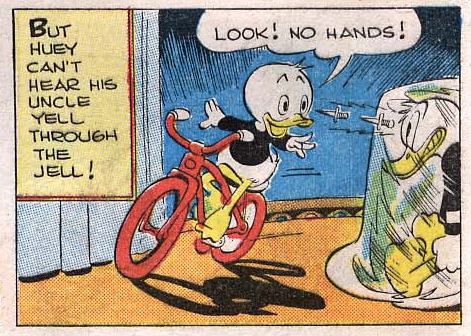
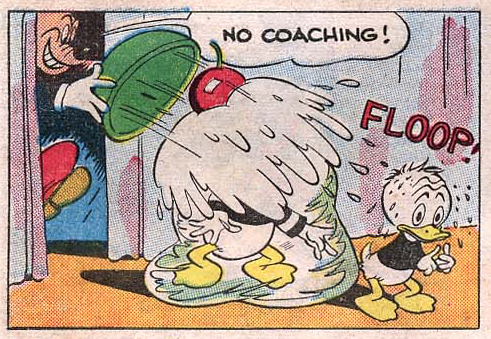
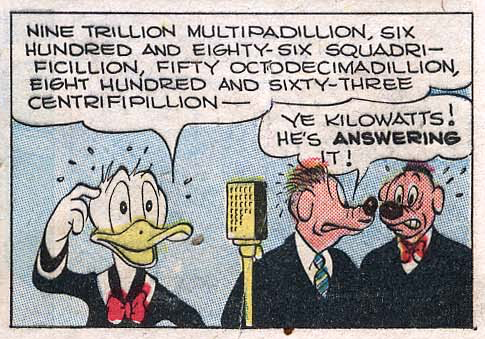
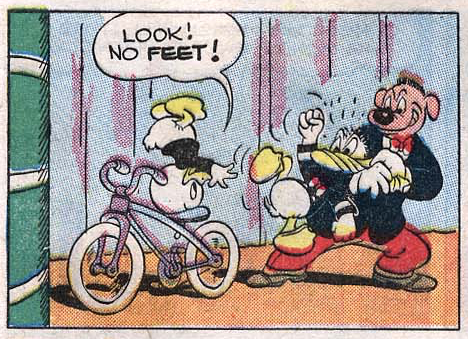
I mentioned Daws Butler here the other day. We lost this wonderful man in 1988 and I still miss him. I miss hearing him on new cartoon shows and commercials but even more than that, I miss talking with him, being around him, hearing That Voice come out of an actual human being and hanging on every word he uttered.
That Voice — or maybe I should say Those Voices because he had so many — meant a lot to me when I was a kid. I heard him on darn near every TV show I loved and there was something so comforting about a Butler voice. Many of those cartoons had what we might politely call minimalist animation, "minimalist" being a much nicer adjective than "cheap." There sometimes wasn't a whole lot of personality in the characters visually but Daws more than made up for it with the voices he created for Huckleberry Hound, Yogi Bear, Hokey Wolf, Quick Draw McGraw, Augie Doggie and so many others. It was like audible comfort food.
I have been privileged — and don't think I don't appreciate it — to know and work with a number of extraordinary creative talents in TV and also in comic books. Many of them were people whose work I loved when I was a kid watching TV and reading comic books. Then amazingly, I got to meet them and found that for the most part, I loved those people. Daws was one of the nicest, most generous men I have ever met.
And honest. That voice of his could do just about anything but lie. Every single thing Daws ever told me checked out. He was wrong once in a while but he was honestly wrong.
Another great, talented man I got to know was Daws' former partner, Stan Freberg. Stan was a very honest man too but he had a tendency to embellish stories a bit, plus his memory wasn't quite perfect. He would tell me a tale about the old days, back when he was doing voices for cartoons or co-starring with Daws on the Time for Beany puppet show. The story would be so hilarious and wonderful that I would wonder how much of it was true.
So the next time I saw Daws, I'd ask him…and it would usually turn out it was like 97% or 98% — a most acceptable percentage. One little detail here or there was off. Later, I'd ask Stan about some anecdote Daws had told me and Stan would say, "If Daws said it happened, it happened." Once, he said, "If Daws told me my last name was really Schwartz, I'd probably figure I'd been wrong all these years."
That was one thing about Daws. Another was the high standard to which he held himself. And yet another was how it felt like his talent was contagious. It wasn't, of course, but you felt smarter and more gifted around him. He was totally non-competitive and able to bring out the good in everyone.
There are people who in subtle ways let you know that just because you share a room with them, that doesn't mean you share any part of their greatness. Daws treated you like you did, even though we both knew you didn't. That was a magical trait he shared with another man I was blessed to know — another man who was at the absolute top of the field in which he worked. I'm talking about Jack Kirby.
Daws was a teacher — a very good teacher whose classes output some of the best new voice actors of their generation. I have zero ability in that arena but Daws was nice enough to invite me to some of his classes and — to use a term I always thought was silly — you could get a great "contact high" from being surrounded by so much talent. It helped me as a writer.
And another of the many wonderful things Daws gave me was a great friend. His name was Earl Kress and he was a writer and actor who was one of Daws' students.
I just typed that and instantly realized it was inadequate because Earl was more than a student to Daws. There was a bit of a father/son relationship there and a vast amount of mutual affection. Daws thought I should know Earl and that Earl should know me and he was, naturally, right. We were the best o' buddies until Earl passed away back in 2011.
Daws gave us all so much. I miss Earl too but if Daws was still around, he'd be 100 years old today so I'm especially missing him this morning. And not so much for your benefit as for mine, I felt like telling you.
The post Daws Day appeared first on News From ME.
http://www.andrewrilstone.com/2016/11/first-we-warned-you-about-daily-mail.html
Then, we warned you about the Daily Express, but you didn’t listen, because the Daily Express is barely even a newspaper nowadays.
Then we warned you about the Sun, but you didn’t listen, because it’s quite snobbish to moan about a working class paper.
We warned you about the myth of political correctness, but you didn’t listen because ha-ha it’s the sort of thing that people like us have a bee in our bonnet about.
We warned you about Katie Hopkins, but you didn’t listen, because the Apprentice is only a silly reality TV show and she obviously doesn’t believe a word of it.
We warned you about Melanie Phillips, but you didn’t listen, because she was obviously mental.
We warned you that that Anders Breivik used the “writings” of Melanie Phillips to justify murder, but you didn’t listen, because it’s not a journalists fault if a criminal borrows their words.
We warned you about Gamergate, and you didn’t listen because it was only some little boys throwing their toys out of the pram over computer games.
We warned you about the Sad Puppies, and you didn’t listen, because if this stuff bothers us so much we should damn well stay off twitter.
Then a fascist became president of the USA, and you all said "Why didn't anyone warn us?"
The Reclusive Mr. Ditko
I get asked a lot about Steve Ditko, the great comic book artist who is perhaps best-known for being least-known. Ditko was a brilliant illustrator and innovator in his day and though his two greatest works — Spider-Man and Dr. Strange — have since been handled by legions of talented folks, I don't think anyone has come all that close to what he did on those characters. He left them in 1966 and the best thing I can say about his work since then is that occasionally, it reminds you how good he used to be.
He has famously refused interviews and photos and has repeatedly asked the world to leave him alone. This, of course, makes some people all the more eager to not leave him alone. In the last quarter-century, I have received perhaps two dozens calls or e-mails from journalists — in the comic art field and outside it — who were confident that their persistence and tact would result in them getting the grail. Each was going to be the one to land the first-ever real Steve Ditko Interview in which he would open up to them, lay bare his soul and tell all.

This has not happened and I suspect that if it did, people would wind up knowing less about Ditko and his career than they do now. But there is much to say about this man and there's a new article up by Abraham Riesman that says a lot of it.
Not that I like every word of it. Let me start by disagreeing strongly with Riesman's history of Spider-Man…
Historians generally agree that the idea for Spidey originated with Lee, who has variously claimed that he was inspired by seeing a spider on a wall or remembering a pulp hero called the Spider. He also thought it would be interesting to have this new character be a teenager, an age group previously reserved for sidekick roles. Kirby drew five pages of a Spider-Man story that historians believe depicted a kid who used a magic ring to become a spider-themed hero, though the whereabouts of those sketches are unknown. Lee decided Kirby’s hero looked too beefy and conventional, and opted to give the project over to Ditko.
I don't know any non-partisan historians (i.e., those who have no financial reason to say so) who believe strongly that the concept of Spider-Man began with Stan Lee. Many would tell you it started with Jack Kirby telling Stan about an earlier Spiderman (no hyphen) character he'd worked on with Joe Simon, which he certainly did. My view is that it's arguable which of those two men first said something like "Hey, let's do a character called Spiderman" but it's a fact what they then started to do was a retread of that earlier premise offered up by Kirby.
I also think making the character a teenager was a later idea and I never believed the story that Kirby was replaced on the project by Ditko because Jack's depictions were too heroic. I'm finishing a long book about Jack in which I explain in grand detail what I think happened and why. Basically though, my theory is that it was because the Spiderman that Stan and Jack were developing was coming out too much like another character owned by someone who was quite litigious.
All that said, Riesman's portrait of Ditko today seems to me as accurate as it could be about someone who refuses to sit for such a portrait. Is it everything some yearn to know about this man? No but it's probably all you're ever going to get and it may be more than you're entitled to know. (Full Disclosure: I was interviewed for the piece.)
I admit to mixed feelings about Steve Ditko. I met him a few times long ago and corresponded with him for a time. He was nice to me up until the point when I disagreed with him on anything. As I get older, I more and more find the worldview of Ayn Rand repulsive, though maybe not as repulsive as the way it's interpreted by some of her followers. I have one good Rand-loving friend who repeatedly reminds me not to confuse what she actually believed with those interpretations, especially Ditko's.
So that colors my view of his recent work, as does the sheer preachiness of it at all. And the fact that before I gave up on it, I often didn't know what the hell he was talking about.
Still, he did some of the best work in comics that anyone's ever done in comics and I feel he has been undercredited and surely at times undercompensated. Some time ago, I decided that the best way to thank him for that is to accede to his wishes to leave him alone. He wants to let his work speak for itself? Fine. And if I don't understand what he's saying sometimes? Or don't like it? Well, those are fine too in a way.
If that's all we ever get out of him, I'm satisfied. He already gave us more than enough.
The post The Reclusive Mr. Ditko appeared first on News From ME.
Straight talking. Honest politics. Terrible negotiation skills.
 Let’s assume that you’re looking to buy a car. You go to a car dealer who has a variety of cars available, some of which have the features you want, some of which don’t, some of which are in your price range, some of which aren’t. So, you’re negotiating with the dealer, trying to get the best package at the best price and then you blurt out ‘of course, I have to buy a car today, and you’re the only dealer open’. Now, do you think the dealer is going to offer you a better deal before or after you tell them that piece of information?
That scenario comes to mind when reading about John McDonnell’s pledge that “Labour will not seek to block or delay” Article 50 in Parliament. Labour are effectively walking into this process having told the Government that they don’t need to prepare any concessions to the Opposition in order to get Article 50 invoked, and have also let the Government know that they don’t even need to listen to their own rebels because there’s no way that Labour will be giving them any support in votes.
Leaving aside the issues of whether Labour should be for or against Brexit, this is just a bad tactical move from the party that’s supposed to be forming the official Opposition. They’re facing a Givernment party that’s got quite noticeable splits, but are throwing away the chance to make those splits mean anything. Proper Opposition (like Labour managed under Blair in the 90s) would capitalise on this to make the Government fight for every vote, esoecially on the most important issue facing the nation. This pre-capitulation just lets the Government off the hook. In the same way that Clegg weakened the Lib Dem negotiating position in the Coalition by refusing to countenance ending it or IDS made Blair’s Parliamentary life easy by backing him over Iraq, this is an Opposition willingly throwing away its chance of influence and power.
Oddly, just as those on the left who backed leaving the EU are realising that they were sold a lemon, McDonnell and Corbyn seem to be leaping onto the rapidly emptying Lexit bandwagon, talking of a ‘People’s Brexit’ and how staying in the EU supports ‘big business’. It might be the position they’ve had all along, but it feels like the worst possible time to be announcing it.

