08 Jun 01:03
Publication date: August 2017
Source:Solar Energy Materials and Solar Cells, Volume 167
Author(s): Fei Wu, Linna Zhu
In this work, lead chloride (PbCl2) and lead acetate trihydrate (Pb(Ac)2·3H2O) mixed precursors are introduced to prepare perovskite films. PbCl2 has been reported to enhance crystallinity but long annealing time is required. Pb(Ac)2·3H2O is used because it is cheap and easy to get, and lead acetate offers fast crystallization process, meanwhile the trihydrate might improve the film stability. With an optimal blending ratio of the two precursors (1:1mol ratio), compact and full-coverage perovskite film with large grain sizes (>1µm) are obtained, and the speed of perovskite film formation is greatly accelerated. Moreover, the film prepared in a 1:1mol ratio of the two precursors exhibits good moisture liability for several days under around 70% RH environment. As a result, the PbCl2: Pb(Ac)2·3H2O (1:1) results in the highest efficiency of 14.77%. The findings in this work provide a facile way to improve the perovskite film quality and stability.
Graphical abstract

08 Jun 01:01
Publication date: August 2017
Source:Solar Energy Materials and Solar Cells, Volume 168
Author(s): Frederik Nehm, Timo Pfeiffelmann, Felix Dollinger, Lars Müller-Meskamp, Karl Leo
Recently, organic solar cells have demonstrated high power conversion efficiencies, but extrinsic device stability remains to be a challenge. Often, delamination of the cathode upon water ingress leads to a massive active area loss and to a strong decrease in efficiency. We present highly efficient organic solar cells with an oligothiophene-based donor and two different cathodes. Devices are aged at four different climates under continuous illumination. Al and MoO3/Cr/Al cathodes are compared. Additional interlayers are introduced for enhanced cathode adhesion. Aging in different climates reveals a strong dependency of the degradation speed on absolute humidity for standard Al cathodes. However, using additional interlayers, degradation seems to be almost decoupled from the applied climate and device degradation is slowed immensely. Parallel WVTR measurements of the AlO x barrier allow for the assessment of absolute water quantities until devices are degraded to half of their initial efficiency: 24 g m 2 are found for standard Al cathodes, while devices with additional interlayers reach 58 g m 2 . This difference is related to a completely different aging behavior, which trades strong short-circuit current density losses for moderate fill-factor losses.
20 Apr 00:29
J. Mater. Chem. A, 2017, 5,12120-12130
DOI: 10.1039/C7TA01557G, Paper
Pengqing Bi, Fei Zheng, Xiaoyu Yang, Mengsi Niu, Lin Feng, Wei Qin, Xiaotao Hao
An investigation of phase distribution demonstrated that PCDTBT was embedded in PTB7-Th and ITIC, and hence introduced dual FRET effects in the resulting ternary system.
The content of this RSS Feed (c) The Royal Society of Chemistry
18 Apr 23:31
by Min Chen, Yatao Zou, Linzhong Wu, Qi Pan, Di Yang, Huicheng Hu, Yeshu Tan, Qixuan Zhong, Yong Xu, Haiyu Liu, Baoquan Sun, Qiao Zhang
Recently, all-inorganic cesium lead halide (CsPbX3, X = Cl, Br, I) perovskite nanocrystals have drawn much attention because of their outstanding photophysical properties and potential applications. In this work, a simple and efficient solvothermal approach to prepare CsPbX3 nanocrystals with tunable and bright photoluminescent (PL) properties, controllable composition, and morphology is presented. CsPbX3 nanocubes are successfully prepared with bright emission high PL quantum yield up to 80% covering the full visible range and narrow emission line widths (from 12 to 36 nm). More importantly, ultrathin CsPbX3 (X = Cl/Br, Br, and Br/I) nanowires (with diameter as small as ≈2.6 nm) can be prepared in a very high morphological yield (almost 100%). A strong quantum confinement effect is observed in the ultrathin nanowires, in which both the absorption and emission peaks shift to shorter wavelength range compared to their bulk bandgap. The reaction parameters, such as temperature and precursors, are varied to investigate the growth process. A white light-emitting device prototype device with wide color gamut covering up to 120% of the National Television System Committee standard has been demonstrated by using CsPbBr3 nanocrystals as the green light source. The method in this study provides a simple and efficient way to prepare high-quality CsPbX3 nanocrystals.

A solvothermal method is developed to prepare high-quality all-inorganic cesium lead halide (CsPbX3) nanocrystals. Monodisperse CsPbX3 nanocubes and ultrathin CsPbX3 nanowires are prepared. By using the prepared CsPbBr3 nanocrystals as the green light source, a white light-emitting prototype device with wide color gamut covering up to 120% of the National Television System Committee standard is fabricated.
18 Apr 23:29
by Dong Hoe Kim, Jaehong Park, Zhen Li, Mengjin Yang, Ji-Sang Park, Ik Jae Park, Jin Young Kim, Joseph J. Berry, Garry Rumbles, Kai Zhu
Organic–inorganic perovskites with intriguing optical and electrical properties have attracted significant research interests due to their excellent performance in optoelectronic devices. Recent efforts on preparing uniform and large-grain polycrystalline perovskite films have led to enhanced carrier lifetime up to several microseconds. However, the mobility and trap densities of polycrystalline perovskite films are still significantly behind their single-crystal counterparts. Here, a facile topotactic-oriented attachment (TOA) process to grow highly oriented perovskite films, featuring strong uniaxial-crystallographic texture, micrometer-grain morphology, high crystallinity, low trap density (≈4 × 1014 cm−3), and unprecedented 9 GHz charge-carrier mobility (71 cm2 V−1 s−1), is demonstrated. TOA-perovskite-based n-i-p planar solar cells show minimal discrepancies between stabilized efficiency (19.0%) and reverse-scan efficiency (19.7%). The TOA process is also applicable for growing other state-of-the-art perovskite alloys, including triple-cation and mixed-halide perovskites.

A facile topotactic-oriented attachment process can produce uniaxially oriented perovskite thin films with micrometer-grain morphology, high crystallinity, low trap density (≈4 × 1014 cm−3), and fast 9 GHz charge-carrier mobility (71 cm2 V−1 s−1). The n-i-p planar perovskite solar cell exhibits a power conversion efficiency of 19.7% (with stabilized efficiency output of 19.0%).
18 Apr 23:28
by Zonghao Liu, Junnan Hu, Haoyang Jiao, Liang Li, Guanhaojie Zheng, Yihua Chen, Yuan Huang, Qing Zhang, Chao Shen, Qi Chen, Huanping Zhou
Minimization of defects in absorber materials is essential for hybrid perovskite solar cells, especially when constructing thick polycrystalline layers in a planar configuration. Here, a simple methylamine solution-based additive is reported to improve film quality with nearly an order of magnitude reduction in intrinsic defect concentration. In the resultant film, an increase in carrier lifetime as a result of a decrease in shallow electronic disorder is observed. This superior crystalline film quality is further evidenced via a doubled spin relaxation time as compared with other reports. Bearing sufficient carrier diffusion length, a thick absorber layer (≈650 nm) is implemented in planar devices to achieve a champion power conversion efficiency of 20.02% with a stabilized output efficiency of 19.01% under one sun illumination. This work demonstrates a simple approach to improve hybrid perovskite film quality by substantial reduction of intrinsic defects for wide applications in optoelectronics.

A simple methylamine solution-based additive to improve film quality with nearly an order of magnitude reduction in the concentration of intrinsic defects is reported, and the relevant perovskite solar cells achieve a champion power conversion efficiency of 20.02% with a stabilized output efficiency of 19.01% under 1 sun illumination.
18 Apr 23:26
J. Mater. Chem. C, 2017, 5,4742-4751
DOI: 10.1039/C7TC00812K, Paper
Susana Arrechea, Ana Aljarilla, Pilar de la Cruz, Manish Kumar Singh, Ganesh D. Sharma, Fernando Langa
Using cyclopentadithiophene as bridge in A-D-A porphyrin-based small molecules, and PC71BM as acceptor in BHJ solar cells PCE of 7.93%, is achieved after SVA.
The content of this RSS Feed (c) The Royal Society of Chemistry
18 Apr 23:25
J. Mater. Chem. A, 2017, 5,12168-12182
DOI: 10.1039/C6TA10739G, Paper
Minh-Trung Dang, Trevor M. Grant, Han Yan, Dwight S. Seferos, Benoit H. Lessard, Timothy P. Bender
This study explores the use of bis(tri-n-alkylsilyl oxide) silicon phthalocyanine as either ternary electroactive additives and replacements for PC61BM in P3HT based BHJ OPVs.
The content of this RSS Feed (c) The Royal Society of Chemistry
18 Apr 23:24
J. Mater. Chem. A, 2017, 5,10269-10279
DOI: 10.1039/C7TA02557B, Paper
Hyeongjin Hwang, Dong Hun Sin, Chandramouli Kulshreshtha, Byungho Moon, Jiwon Son, Jaewon Lee, Heung Gyu Kim, Jisoo Shin, Taiha Joo, Kilwon Cho
Synergistic effects of a thiophene-based [small pi]-bridging backbone extension on the photovoltaic properties of the conjugated copolymers were systematically studied.
The content of this RSS Feed (c) The Royal Society of Chemistry
18 Apr 23:24
J. Mater. Chem. A, 2017, 5,8903-8908
DOI: 10.1039/C7TA02510F, Communication
Jianyu Yuan, Michael J. Ford, Wanli Ma, Guillermo C. Bazan
In comparison with many reported high-efficiency polymer solar cells, only 0.5% (v/v) additive is necessary to optimize a polymer/fullerene (PSFSiF/PC71BM) system, and the power conversion efficiency (PCE) was boosted from 2.4% to 8.0%.
The content of this RSS Feed (c) The Royal Society of Chemistry
18 Apr 23:24
J. Mater. Chem. A, 2017, 5,10355-10364
DOI: 10.1039/C7TA01604B, Paper
Wei Huang, Catalin Harnagea, Daniele Benetti, Mohamed Chaker, Federico Rosei, Riad Nechache
The p-i-n heterojunction devices based on intrinsic absorber multiferroic Bi2FeCrO6 sandwiched between p-type NiO and n-type Nb-doped SrTiO3 were demonstrated.
The content of this RSS Feed (c) The Royal Society of Chemistry
16 Apr 23:14
by Sri Ganesh R. Bade, Xin Shan, Phong Tran Hoang, Junqiang Li, Thomas Geske, Le Cai, Qibing Pei, Chuan Wang, Zhibin Yu
Intrinsically stretchable light-emitting diodes (LEDs) are demonstrated using organometal-halide-perovskite/polymer composite emitters. The polymer matrix serves as a microscale elastic connector for the rigid and brittle perovskite and induces stretchability to the composite emissive layers. The stretchable LEDs consist of poly(ethylene oxide)-modified poly(3,4-ethylenedioxythiophene) polystyrene sulfonate as a transparent and stretchable anode, a perovskite/polymer composite emissive layer, and eutectic indium–gallium as the cathode. The devices exhibit a turn-on voltage of 2.4 V, and a maximum luminance intensity of 15 960 cd m−2 at 8.5 V. Such performance far exceeds all reported intrinsically stretchable LEDs based on electroluminescent polymers. The stretchable perovskite LEDs are mechanically robust and can be reversibly stretched up to 40% strain for 100 cycles without failure.

Intrinsically stretchable light-emitting diodes (LEDs) are demonstrated using organometal-halide-perovskite/polymer composite emitters. The polymer matrix serves as a microscale elastic connector for the rigid and brittle perovskite and induces stretchability to the composite emissive layers. Such an approach results in bright and stretchable perovskite LEDs that can be reversibly stretched up to 40% uniaxial strain for 100 cycles.
16 Apr 23:14
by Kakaraparthi Kranthiraja, Kumarasamy Gunasekar, Hyunji Kim, An-Na Cho, Nam-Gyu Park, Seonha Kim, Bumjoon J. Kim, Ryosuke Nishikubo, Akinori Saeki, Myungkwan Song, Sung-Ho Jin
Perovskite solar cells (PSCs) and organic solar cells (OSCs) are promising renewable light-harvesting technologies with high performance, but the utilization of hazardous dopants and high boiling additives is harmful to all forms of life and the environment. Herein, new multirole π-conjugated polymers (P1–P3) are developed via a rational design approach through theoretical hindsight, further successfully subjecting them into dopant-free PSCs as hole-transporting materials and additive-free OSCs as photoactive donors, respectively. Especially, P3-based PSCs and OSCs not only show high power conversion efficiencies of 17.28% and 8.26%, but also display an excellent ambient stability up to 30 d (for PSCs only), owing to their inherent superior optoelectronic properties in their pristine form. Overall, the rational approach promises to support the development of environmentally and economically sustainable PSCs and OSCs.

New multirole π-conjugated polymers are developed via a rational design approach through theoretical hindsight, further successfully subjecting them into dopant-free perovskite solar cells as hole-transporting materials with high power conversion efficiency (PCE) of 17.28%, and additive-free organic solar cells as photoactive donors with high PCE of 8.26%.
16 Apr 23:14
by Jun Xi, Zhaoxin Wu, Bo Jiao, Hua Dong, Chenxin Ran, Chengcheng Piao, Ting Lei, Tze-Bin Song, Weijun Ke, Takamichi Yokoyama, Xun Hou, Mercouri G. Kanatzidis
Tin (Sn)-based perovskites are increasingly attractive because they offer lead-free alternatives in perovskite solar cells. However, depositing high-quality Sn-based perovskite films is still a challenge, particularly for low-temperature planar heterojunction (PHJ) devices. Here, a “multichannel interdiffusion” protocol is demonstrated by annealing stacked layers of aqueous solution deposited formamidinium iodide (FAI)/polymer layer followed with an evaporated SnI2 layer to create uniform FASnI3 films. In this protocol, tiny FAI crystals, significantly inhibited by the introduced polymer, can offer multiple interdiffusion pathways for complete reaction with SnI2. What is more, water, rather than traditional aprotic organic solvents, is used to dissolve the precursors. The best-performing FASnI3 PHJ solar cell assembled by this protocol exhibits a power conversion efficiency (PCE) of 3.98%. In addition, a flexible FASnI3-based flexible solar cell assembled on a polyethylene naphthalate–indium tin oxide flexible substrate with a PCE of 3.12% is demonstrated. This novel interdiffusion process can help to further boost the performance of lead-free Sn-based perovskites.

Flexible lead-free perovskite solar cells are achieved using FASnI3 via a novel water-based multichannel interdiffusion protocol for the first time. Nanosized formamidinium iodide crystals inhibited by the introduced polymer of the aqueous salt/polymer solutions provide multiple channels to completely react with evaporated SnI2. The highest power conversion efficiency of 3.98% and 3.12% is realized for rigid and flexible substrate, respectively.
16 Apr 23:10
Energy Environ. Sci., 2017, 10,1234-1242
DOI: 10.1039/C7EE00358G, Paper
Zhen Li, Chuanxiao Xiao, Ye Yang, Steven P. Harvey, Dong Hoe Kim, Jeffrey A. Christians, Mengjin Yang, Philip Schulz, Sanjini U. Nanayakkara, Chun-Sheng Jiang, Joseph M. Luther, Joseph J. Berry, Matthew C. Beard, Mowafak M. Al-Jassim, Kai Zhu
Extrinsic ions (e.g., Li+) migrate across perovskite solar cells and modify the TiO2 layer, affecting device performance and hysteresis.
The content of this RSS Feed (c) The Royal Society of Chemistry

16 Apr 23:06
J. Mater. Chem. C, 2017, 5,4716-4723
DOI: 10.1039/C6TC05076J, Paper
Alexander Kovalenko, Cigdem Yumusak, Patricie Heinrichova, Stanislav Stritesky, Ladislav Fekete, Martin Vala, Martin Weiter, Niyazi Serdar Sariciftci, Jozef Krajcovic
Ethyladamantyl solubilization side groups were found to induce [small pi]-[small pi] interactions between the conjugated cores in soluble diketopyrrolopyrrole derivatives.
The content of this RSS Feed (c) The Royal Society of Chemistry
16 Apr 23:06
J. Mater. Chem. C, 2017, 5,4736-4741
DOI: 10.1039/C7TC00693D, Paper
Chih-Chia Cheng, Chih-Wei Chu, Jyun-Jie Huang, Zhi-Sheng Liao
Complementary nucleobase-functionalized conjugated polymers self-assemble to form supramolecular polymer networks that exhibit excellent thermal and hole-injection properties for the fabrication of high-performance multilayer OLED devices.
The content of this RSS Feed (c) The Royal Society of Chemistry
16 Apr 23:06
J. Mater. Chem. A, 2017, 5,9097-9106
DOI: 10.1039/C6TA11181E, Paper
Jiang Liu, Gang Wang, Zhen Song, Xulin He, Kun Luo, Qinyan Ye, Cheng Liao, Jun Mei
FA-based perovskite devices with reduced Pb contents were prepared.
The content of this RSS Feed (c) The Royal Society of Chemistry
16 Apr 23:04
J. Mater. Chem. A, 2017, 5,9042-9049
DOI: 10.1039/C7TA01091E, Paper
Linghai Zhang, Patrick H.-L. Sit
Excess electrons from photo-excitation, impurities and defects play a significant role in the degradation of CH3NH3PbI3 (MAPbI3) perovskite in air.
The content of this RSS Feed (c) The Royal Society of Chemistry
16 Apr 23:04
J. Mater. Chem. A, 2017, 5,7796-7800
DOI: 10.1039/C7TA02203D, Communication
Alexander Z. Chen, Benjamin J. Foley, Jennifer H. Ma, Matthew R. Alpert, J. Scott Niezgoda, Joshua J. Choi
Preferential crystallographic orientation can propagate through metal halide perovskite thin films.
The content of this RSS Feed (c) The Royal Society of Chemistry
16 Apr 23:03
J. Mater. Chem. A, 2017, 5,9081-9089
DOI: 10.1039/C7TA00638A, Paper
Yu-Jie Lin, Jyun-Wei Chen, Po-Tsung Hsiao, Yung-Liang Tung, Cheng-Chung Chang, Chih-Ming Chen
Co-adsorption of N719 dye and an H-NIM fluorophore results in an in situ FRET effect and improves the photovoltaic performance of DSSCs.
The content of this RSS Feed (c) The Royal Society of Chemistry
16 Apr 23:02
J. Mater. Chem. A, 2017, 5,9649-9654
DOI: 10.1039/C7TA01554B, Paper
Zhongqiang Zhang, Wenqing Liu, Tahir Rehman, Huan-Xin Ju, Jiangquan Mai, Xinhui Lu, Minmin Shi, Junfa Zhu, Chang-Zhi Li, Hongzheng Chen
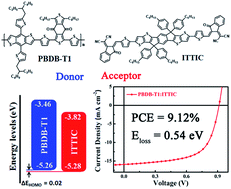
A non-fullerene acceptor ITTIC is developed for polymer solar cells with a donor polymer PBDB-T1. A high PCE of 9.12% was obtained with an energy loss of 0.54 eV at a diminished donor/acceptor energy offset.
The content of this RSS Feed (c) The Royal Society of Chemistry
16 Apr 23:02
J. Mater. Chem. A, 2017, Advance Article
DOI: 10.1039/C7TA01782K, Paper
LePing Yu, Munkhbayar Batmunkh, Tom Grace, Mahnaz Dadkhah, Cameron Shearer, Joseph Shapter
An organic conductive polymer is used to improve charge transport and efficiency in carbon nanotube-silicon solar cells.
To cite this article before page numbers are assigned, use the DOI form of citation above.
The content of this RSS Feed (c) The Royal Society of Chemistry
16 Apr 23:01
J. Mater. Chem. A, 2017, 5,9402-9411
DOI: 10.1039/C7TA02317K, Paper
Feilong Cai, Liyan Yang, Yu Yan, Jinghui Zhang, Fei Qin, Dan Liu, Yi-Bing Cheng, Yinhua Zhou, Tao Wang
High performance n-i-p type planar heterojunction PSCs with eliminated hysteresis and stabilized power output over 20% via compositional and surface modifications to a low-temperature-processed TiO2 electron-transport layer (ETL) is reported.
The content of this RSS Feed (c) The Royal Society of Chemistry
16 Apr 23:00
J. Mater. Chem. A, 2017, 5,9396-9401
DOI: 10.1039/C7TA02582C, Paper
Bo Wang, Wenqing Liu, Huanbin Li, Jiangquan Mai, Shiyong Liu, Xinhui Lu, Hanying Li, Minmin Shi, Chang-Zhi Li, Hongzheng Chen
A non-fullerene acceptor, Fused-TriPDI with a rigid and planar structure shows a best power conversion efficiency of 6.19% with PTB7-Th, which is around three times higher than that with twisted TriPDI.
The content of this RSS Feed (c) The Royal Society of Chemistry
16 Apr 23:00
J. Mater. Chem. A, 2017, 5,9391-9395
DOI: 10.1039/C7TA01668A, Paper
Chiara Ferrara, Maddalena Patrini, Ambra Pisanu, Paolo Quadrelli, Chiara Milanese, Cristina Tealdi, Lorenzo Malavasi
Wide modulation of the band gap induced by organic cation replacement in the FA1-xMAxSnBr3 (0 [less-than-or-equal] x [less-than-or-equal] 1) solid solution.
The content of this RSS Feed (c) The Royal Society of Chemistry
16 Apr 23:00
J. Mater. Chem. A, 2017, 5,9316-9321
DOI: 10.1039/C7TA01487B, Paper
Guangchao Han, Yuan Guo, Ruihong Duan, Xingxing Shen, Yuanping Yi
For the first time, side-chain anchoring atoms are found to play an important role in tuning the donor/fullerene interfacial arrangements and charge-transfer processes for organic solar cells.
The content of this RSS Feed (c) The Royal Society of Chemistry
13 Apr 01:09
by Jianqi Zhang, Yifan Zhao, Jin Fang, Liu Yuan, Benzheng Xia, Guodong Wang, Zaiyu Wang, Yajie Zhang, Wei Ma, Wei Yan, Wenming Su, Zhixiang Wei
Large-scale fabrication of organic solar cells requires an active layer with high thickness tolerability and the use of environment-friendly solvents. Thick films with high-performance can be achieved via a ternary strategy studied herein. The ternary system consists of one polymer donor, one small molecule donor, and one fullerene acceptor. The small molecule enhances the crystallinity and face-on orientation of the active layer, leading to improved thickness tolerability compared with that of a polymer-fullerene binary system. An active layer with 270 nm thickness exhibits an average power conversion efficiency (PCE) of 10.78%, while the PCE is less than 8% with such thick film for binary system. Furthermore, large-area devices are successfully fabricated using polyethylene terephthalate (PET)/Silver gride or indium tin oxide (ITO)-based transparent flexible substrates. The product shows a high PCE of 8.28% with an area of 1.25 cm2 for a single cell and 5.18% for a 20 cm2 module. This study demonstrates that ternary organic solar cells exhibit great potential for large-scale fabrication and future applications.

To achieve commercialization of organic solar cells, high thickness tolerability must be obtained and chlorinated solvents must be replaced. This study demonstrates an active layer with 270 nm thickness exhibits a power conversion efficiency of 10.78% using o-xylene as processing solvent. Large-area devices are successfully fabricated using polyethylene terephthalate-based transparent flexible substrate.
13 Apr 01:09
by Santanu Pradhan, Alexandros Stavrinadis, Shuchi Gupta, Yu Bi, Francesco Di Stasio, Gerasimos Konstantatos
The power conversion efficiency of colloidal PbS-quantum-dot (QD)-based solar cells is significantly hampered by lower-than-expected open circuit voltage (VOC). The VOC deficit is considerably higher in QD-based solar cells compared to other types of existing solar cells due to in-gap trap-induced bulk recombination of photogenerated carriers. Here, this study reports a ligand exchange procedure based on a mixture of zinc iodide and 3-mercaptopropyonic acid to reduce the VOC deficit without compromising the high current density. This layer-by-layer solid state ligand exchange treatment enhances the photovoltaic performance from 6.62 to 9.92% with a significant improvement in VOC from 0.58 to 0.66 V. This study further employs optoelectronic characterization, X-ray photoelectron spectroscopy, and photoluminescence spectroscopy to understand the origin of VOC improvement. The mixed-ligand treatment reduces the sub-bandgap traps and significantly reduces bulk recombination in the devices.

A mixed-ligand treatment for the fabrication of lead sulphide colloidal quantum dot solar cells is demonstrated. The mixed-ligand treatment facilitates the advantages of both organic (3-mercaptopropionic acid) and inorganic (zinc iodide) ligands to improve charge transport and trap passivation leading to a power conversion efficiency of 9.92% at a VOC of 0.66 V.
13 Apr 01:06
by Yen-Chen Shih, Yu-Bing Lan, Chia-Shuo Li, Hsiao-Chi Hsieh, Leeyih Wang, Chih-I Wu, King-Fu Lin
Interfacial engineering of perovskite solar cells (PSCs) is attracting intensive attention owing to the charge transfer efficiency at an interface, which greatly influences the photovoltaic performance. This study demonstrates the modification of a TiO2 electron-transporting layer with various amino acids, which affects charge transfer efficiency at the TiO2/CH3NH3PbI3 interface in PSC, among which the l-alanine-modified cell exhibits the best power conversion efficiency with 30% enhancement. This study also shows that the (110) plane of perovskite crystallites tends to align in the direction perpendicular to the amino-acid-modified TiO2 as observed in grazing-incidence wide-angle X-ray scattering of thin CH3NH3PbI3 perovskite film. Electrochemical impedance spectroscopy reveals less charge transfer resistance at the TiO2/CH3NH3PbI3 interface after being modified with amino acids, which is also supported by the lower intensity of steady-state photoluminescence (PL) and the reduced PL lifetime of perovskite. In addition, based on the PL measurement with excitation from different side of the sample, amino-acid-modified samples show less surface trapping effect compared to the sample without modification, which may also facilitate charge transfer efficiency at the interface. The results suggest that appropriate orientation of perovskite crystallites at the interface and trap-passivation are the niche for better photovoltaic performance.

The (110) plane of CH3NH3PbI3 crystallites adjacent to the amino-acid-modified TiO2 surface tends to align in the direciton perpendicular to the TiO2 surface. Such crystalline orientation significantly enhances charge transfer efficiency at the TiO2/CH3NH3PbI3 interface and greatly improves the photovotaic performance of perovskite solar cells.