16 Apr 23:17
by Tao Ye, Shaoyang Ma, Xi Jiang, Lei Wei, Chellappan Vijila, Seeram Ramakrishna
Tri-cation and dual-anion mixed perovskites have been widely utilized in perovskite solar cell (PSC) applications due to their novel properties such as high absorption, high stability, and low cost. To commercialize the PSCs, further improving the device performance without detrimentally changing the device configuration is important at present. Herein, Au@SiO2 nanoparticles (NPs) are introduced to modify the interface between mesoporous TiO2 (mp-TiO2) and mixed perovskite with increased main photovoltaic parameters of the device, resulting in a ≈29% enhancement of power conversion efficiency (PCE) from 15.8% to 20.3%. The origins of the enhancement have been studied by exploring the optical absorption, optical power distribution, and charge carrier behaviors within the system. The small perturbation transient photovoltage measurement exhibits prolonged charge carrier lifetimes after the Au@SiO2 NPs incorporation, and time of flight photoconductivity measurement shows that charge carrier mobilities of this system are also enhanced. These characteristics make metallic nanostructures a promising functional material in facile tuning of the charge carriers transport and further boosting the PCE of the PSCs.

Au@SiO2 core−shell nanoparticles are incorporated into perovskite solar cells based on tri-cation (cesium, methylammonium, and formamidinium) and dual-anion (Br and I) mixed perovskite. Significant enhancements are observed in nearly all photovoltaic parameters after Au@SiO2 nanoparticles incorporation. The enhanced device performance can be ascribed to the light absorption enhancement, more efficient carrier injection/transport, and the enhanced charge carriers mobilities.
16 Apr 23:11
Energy Environ. Sci., 2017, 10,1207-1212
DOI: 10.1039/C7EE00421D, Paper
Juan-Pablo Correa-Baena, Wolfgang Tress, Konrad Domanski, Elham Halvani Anaraki, Silver-Hamill Turren-Cruz, Bart Roose, Pablo P. Boix, Michael Gratzel, Michael Saliba, Antonio Abate, Anders Hagfeldt
Dopants in the hole transport layer limit the open-circuit voltage of perovskite solar cells.
The content of this RSS Feed (c) The Royal Society of Chemistry

16 Apr 23:10
J. Mater. Chem. C, 2017, 5,4190-4197
DOI: 10.1039/C7TC00597K, Paper
Wenzhan Xu, Xiang Yao, Tianyu Meng, Kai Wang, Fei Huang, Xiong Gong, Yong Cao
The performance of perovskite solar cells is enhanced through pyridine-modified PC61BM as an electron extraction layer.
The content of this RSS Feed (c) The Royal Society of Chemistry
16 Apr 23:09
J. Mater. Chem. C, 2017, 5,4845-4851
DOI: 10.1039/C7TC00816C, Paper
Meng Guo, Yanmei Yang, Yanhua Leng, Li Wang, Huomin Dong, Hong Liu, Weifeng Li
The binding pattern, electronic properties and work function of MoS2 nanostructures stacked on a graphene substrate have been studied through density functional theory calculations.
The content of this RSS Feed (c) The Royal Society of Chemistry
16 Apr 23:08
J. Mater. Chem. C, 2017, 5,4471-4479
DOI: 10.1039/C7TC00720E, Paper
Xuexue Pan, Wentao Xiong, Tao Liu, Xiaobo Sun, Lijun Huo, Donghui Wei, Mingming Yu, Minfang Han, Yanming Sun
Extending the [small pi]-conjugation length of the polymeric backbone is an effective way to enhance the photovoltaic performance of polymer solar cells (PSCs).
The content of this RSS Feed (c) The Royal Society of Chemistry
16 Apr 23:08
J. Mater. Chem. C, 2017, 5,4526-4536
DOI: 10.1039/C7TC01140G, Paper
Mantas Simenas, Sergejus Balciunas, Monika Trzebiatowska, Maciej Ptak, Miroslaw Maczka, Georg Volkel, Andreas Poppl, Juras Banys
We present an EPR and electric characterization study of structural phase transitions in a novel methylhydrazinium formate framework.
The content of this RSS Feed (c) The Royal Society of Chemistry
07 Apr 04:12
J. Mater. Chem. A, 2017, 5,9204-9209
DOI: 10.1039/C7TA02075A, Paper
Qunping Fan, Wenyan Su, Xia Guo, Yan Wang, Juan Chen, Chennan Ye, Maojie Zhang, Yongfang Li
Non-fullerene polymer solar cells based on a wide-bandgap polymer, PSBZ, exhibited a PCE of up to 10.5% with a high Jsc of 19.0 mA cm-2.
The content of this RSS Feed (c) The Royal Society of Chemistry
05 Apr 14:09
Energy Environ. Sci., 2017, 10,1243-1251
DOI: 10.1039/C7EE00619E, Paper
Baobing Fan, Lei Ying, Zhenfeng Wang, Baitian He, Xiao-Fang Jiang, Fei Huang, Yong Cao
By processing PTzBI:N2200 blends with green solvent 2-methyltetrahydrofuran, all-PSCs with a power conversion efficiency over 9% can be achieved.
The content of this RSS Feed (c) The Royal Society of Chemistry

05 Apr 14:09
Energy Environ. Sci., 2017, 10,1784-1791
DOI: 10.1039/C7EE00601B, Paper
Chen Sun, Zhihong Wu, Zhanhao Hu, Jingyang Xiao, Wenchao Zhao, Ho-Wa Li, Qing-Ya Li, Sai-Wing Tsang, Yun-Xiang Xu, Kai Zhang, Hin-Lap Yip, Jianhui Hou, Fei Huang, Yong Cao
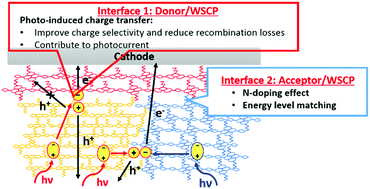
The contact between the n-type interlayer and the donor provides an extra interface for charge dissociation.
The content of this RSS Feed (c) The Royal Society of Chemistry

05 Apr 14:07
by Benjamin T. Diroll, Georgian Nedelcu, Maksym V. Kovalenko, Richard D. Schaller
Recent synthetic developments have generated intense interest in the use of cesium lead halide perovskite nanocrystals for light-emitting applications. This work presents the photoluminescence (PL) of cesium lead halide perovskite nanocrystals with tunable halide composition recorded as function of temperature from 80 to 550 K. CsPbBr3 nanocrystals show the highest resilience to temperature while chloride-containing samples show relatively poorer preservation of photoluminescence at elevated temperatures. Thermal cycling experiments show that PL loss of CsPbBr3 is largely reversible at temperatures below 450 K, but shows irreversible degradation at higher temperatures. Time-resolved measurements of CsPbX3 samples show an increase in the PL lifetime with temperature elevation, consistent with exciton fission to form free carriers, followed by a decrease in the apparent PL lifetime due to trapping. PL persistence measurements and time-resolved spectroscopies implicate thermally assisted trapping, most likely to halogen vacancy traps, as the mechanism of reversible PL loss.

High-temperature photoluminescence properties of CsPbX3 nanocrystals are important to the viability of this family of emitters in lighting and display applications. The persistence of photoluminescence at temperatures above 400 K depends strongly on the halide composition, and photoluminescence loss occurs through thermally assisted trapping to halogen vacancies.
05 Apr 13:59
by Huifeng Yao, Long Ye, Junxian Hou, Bomee Jang, Guangchao Han, Yong Cui, Gregory M. Su, Cheng Wang, Bowei Gao, Runnan Yu, Hao Zhang, Yuanping Yi, Han Young Woo, Harald Ade, Jianhui Hou
A new acceptor–donor–acceptor-structured nonfullerene acceptor ITCC (3,9-bis(4-(1,1-dicyanomethylene)-3-methylene-2-oxo-cyclopenta[b]thiophen)-5,5,11,11-tetrakis(4-hexylphenyl)-dithieno[2,3-d′:2,3-d′]-s-indaceno[1,2-b:5,6-b′]-dithiophene) is designed and synthesized via simple end-group modification. ITCC shows improved electron-transport properties and a high-lying lowest unoccupied molecular orbital level. A power conversion efficiency of 11.4% with an impressive V
OC of over 1 V is recorded in photovoltaic devices, suggesting that ITCC has great potential for applications in tandem organic solar cells.

A new acceptor–donor–acceptor-structured nonfullerene acceptor, ITCC, is designed and synthesized via simple end-group modification. ITCC shows improved electron-transport properties and a high-lying lowest unoccupied molecular orbital level. A power conversion efficiency of 11.4% with an impressive V
OC of over 1 V is recorded in photovoltaic devices, suggesting great potential for applications in tandem organic solar cells.
05 Apr 13:58
by Yunhao Cai, Lijun Huo, Yanming Sun
The past decade has witnessed significant advances in the field of organic solar cells (OSCs). Ongoing improvements in the power conversion efficiency of OSCs have been achieved, which were mainly attributed to the design and synthesis of novel conjugated polymers with different architectures and functional moieties. Among various conjugated polymers, the development of wide-bandgap (WBG) polymers has received less attention than that of low-bandgap and medium-bandgap polymers. Here, we briefly summarize recent advances in WBG polymers and their applications in organic photovoltaic (PV) devices, such as tandem, ternary, and non-fullerene solar cells. Addtionally, we also dissuss the application of high open-circuit voltage tandem solar cells in PV-driven electrochemical water dissociation. We mainly focus on the molecular design strategies, the structure-property correlations, and the photovoltaic performance of these WBG polymers. Finally, we extract empirical regularities and provide invigorating perspectives on the future development of WBG photovoltaic materials.

The development of wide-bandgap (WBG) polymers is of significant importance in boosting the power conversion efficiency of organic solar cells. Recent advances in WBG polymers and their applications in different types of organic photovoltaic devices are reviewed. In addition, empirical regularities and invigorating perspectives are provided to help guide future designs of WBG photovoltaic materials.
05 Apr 13:57
by Jie Chen, Chung-Li Dong, Daming Zhao, Yu-Cheng Huang, Xixi Wang, Leith Samad, Lianna Dang, Melinda Shearer, Shaohua Shen, Liejin Guo
Semiconducting photocatalytic solar–hydrogen conversion (SHC) from water is a great challenge for renewable fuel production. Organic semiconductors hold great promise for SHC in an economical and environmentally benign manner. However, organic semiconductors available for SHC are scarce and less efficient than most inorganic ones, largely due to their intrinsic Frenkel excitons with high binding energy. In this study the authors report polymer heterojunction (PHJ) photocatalysts consisting of polyfluorene family polymers and graphitic carbon nitride (g-C3N4) for efficient SHC. A molecular design strategy is executed to further promote the exciton dissociation or light harvesting ability of these PHJs via alternative approaches. It is revealed that copolymerizing electron-donating carbazole unit into the poly(9,9-dioctylfluorene) backbone promotes exciton dissociation within the poly(N-decanyl-2,7-carbazole-alt-9,9-dioctylfluorene) (PCzF)/g-C3N4 PHJ, achieving an enhanced apparent quantum yield (AQY) of 27% at 440 nm over PCzF/g-C3N4. Alternatively, copolymerizing electron-accepting benzothiadiazole unit extended the visible light response of the obtained poly(9,9-dioctylfluorene-alt-benzothiadiazole)/g-C3N4 PHJ, leading to an AQY of 13% at 500 nm. The present study highlights that constructing PHJs and adapting a rational molecular design of PHJs are effective strategies to exploit more of the potential of organic semiconductors for efficient solar energy conversion.

Polymer heterojunctions (PHJs) constructed via intermolecular π–π interactions between polyfluorene family polymers and graphitic carbon nitride are successfully developed for stable and efficient photocatalytic solar–hydrogen conversion. A molecular design strategy is executed to further promote the exciton dissociation or light-harvesting ability of these PHJs toward higher photocatalytic activities.
05 Apr 13:56
by Hong Zhang, Jiaqi Cheng, Dan Li, Francis Lin, Jian Mao, Chunjun Liang, Alex K.-Y. Jen, Michael Grätzel, Wallace C. H. Choy

In article number 1604695, Wallace C.H. Choy and co-workers propose a novel room-temperature scheme of pyridine-promoted formation of perovskite films featuring large grain-sizes, and high crystallinity, while being free of residues. This new approach enables the fabrication of all room-temperature, solution-processed perovskite solar cells (PVSCs) with a record efficiency of 17.10% and 14.19%, with no hysteresis on rigid and flexible substrate respectively.
05 Apr 13:55
by Hrisheekesh Thachoth Chandran, Tsz-Wai Ng, Yishu Foo, Ho-Wa Li, Jian Qing, Xiao-Ke Liu, Chiu-Yee Chan, Fu-Lung Wong, Juan Antonio Zapien, Sai-Wing Tsang, Ming-Fai Lo, Chun-Sing Lee
High performance organic photovoltaic devices typically rely on type-II P/N junctions for assisting exciton dissociation. Heremans and co-workers recently reported a high efficiency device with a third organic layer which is spatially separated from the active P/N junction; but still contributes to the carrier generation by passing its energy to the P/N junction via a long-range exciton energy transfer mechanism. In this study the authors show that there is an additional mechanism contributing to the high efficiency. Some bipolar materials (e.g., subnaphthalocyanine chloride (SubNc) and subphthalocyanine chloride (SubPc)) are observed to generate free carriers much more effectively than typical organic semiconductors upon photoexcitation. Single-layer devices with SubNc or SubPc sandwiched between two electrodes can give power conversion efficiencies 30 times higher than those of reported single-layer devices. In addition, internal quantum efficiencies (IQEs) of bilayer devices with opposite stacking sequences (i.e., SubNc/SubPc vs SubPc/SubNc) are found to be the sum of IQEs of single layer devices. These results confirm that SubNc and SubPc can directly generate free carriers upon photoexcitation without assistance from a P/N junction. These allow them to be stacked onto each other with reversible sequence or simply stacking onto another P/N junction and contribute to the photocarrier generation.

Subnaphthalocyanine chloride (SubNc) and subphthalocyanine chloride (SubPc) are identified as novel bipolar organic semiconductors with unusually high freecarrier generation upon photoexcitation. Functioning of devices with opposite stacking order (SubNc/SubPc vs SubPc/SubNc) confirms their operation does not rely on charge dissociation at the interfaces. These enable a new class of organic photovoltaic devices with non-p–n-junction-based architectures.
05 Apr 13:53
by Liu Qian, Yilin Sun, Mingmao Wu, Dan Xie, Liming Ding, Gaoquan Shi
Phototransistors with a structure of a nitrogen-doped graphene quantum dots (NGQDs)–perovskite composite layer and a mildly reduced graphene oxide (mrGO) layer are fabricated through a solution-processing method. This hybrid phototransistor exhibits broad detection range (from 365 to 940 nm), high photoresponsivity (1.92 × 10⁴ A W−1), and rapid response to light on–off (≈10 ms). NGQDs offer an effective and fast path for electron transfer from the perovskite to the mrGO, resulting in the improvement of photocurrent and photoswitching characteristics. The high photoresponsivity can also be ascribed to a photogating effect in the device. In addition, the phototransistor shows good stability with poly(methyl methacrylate) encapsulation, and can maintain 85% of its initial performance for 20 d in ambient air.

A solution-processed phototransistor based on the composite of a perovskite modified by nitrogen-doped graphene quantum dots (NGQDs) and mildly reduced graphene oxide shows a high photoresponsivity of up to 1.92 × 10⁴ A W−1, a broad photodetection range of UV–vis–NIR, and good stability in air.
05 Apr 13:52
J. Mater. Chem. A, 2017, Advance Article
DOI: 10.1039/C7TA01441D, Paper
Yuan Huang, Liang Li, Zonghao Liu, Haoyang Jiao, Yuqing He, Xiaoge Wang, Rui Zhu, Dong Wang, Junliang Sun, Qi Chen, Huanping Zhou
We provided a systematical investigation to correlate the crystal structure, composition, mobility, and ion migration behavior to the ratio of MA+/FA+ in FA(1-x)MAxPbI3 single crystal.
To cite this article before page numbers are assigned, use the DOI form of citation above.
The content of this RSS Feed (c) The Royal Society of Chemistry
04 Apr 11:18
J. Mater. Chem. A, 2017, 5,7811-7815
DOI: 10.1039/C7TA01718A, Communication
Kasparas Rakstys, Sanghyun Paek, Peng Gao, Paul Gratia, Tomasz Marszalek, Giulia Grancini, Kyung Taek Cho, Kristijonas Genevicius, Vygintas Jankauskas, Wojciech Pisula, Mohammad Khaja Nazeeruddin
Dopant-free HTM KR321 showed highly ordered characteristic face-on organization leading to increased vertical charge transport and PCE over 19% in PSC with improved stability.
The content of this RSS Feed (c) The Royal Society of Chemistry
04 Apr 11:17
J. Mater. Chem. A, 2017, 5,7749-7752
DOI: 10.1039/C7TA01768E, Communication
Wei Wei, Baoyun Hu, Fangming Jin, Zhenzi Jing, Yuexiang Li, Andres Alberto Garcia Blanco, Dario J. Stacchiola, Yun Hang Hu
The conversion of greenhouse gas CO2 into novel materials is the most promising approach to solve greenhouse gas issues.
The content of this RSS Feed (c) The Royal Society of Chemistry
04 Apr 11:16
J. Mater. Chem. A, 2017, 5,11401-11409
DOI: 10.1039/C7TA00404D, Highlight
E. L. Unger, L. Kegelmann, K. Suchan, D. Sorell, L. Korte, S. Albrecht
Solar cells based on metal-halide perovskite semiconductors inspire high hopes for efficient low-cost solar energy conversion technology. We here reflect on recent progress and potential limitations of the band gap tunability of these compound semiconductors.
The content of this RSS Feed (c) The Royal Society of Chemistry
04 Apr 09:39
J. Mater. Chem. A, 2017, 5,7845-7853
DOI: 10.1039/C7TA01688C, Paper
Alex M. Ganose, Christopher N. Savory, David O. Scanlon
In this report, we study a range of 2-D perovskite-like compounds (CH3NH3)2MPs2X2 (M = Sn, Pb; Ps = OCN, SCN, SeCN and X = Cl, Br I), finding suitable band gaps, band alignments and defect behaviour for photovoltaic top cells in tandem devices.
The content of this RSS Feed (c) The Royal Society of Chemistry
04 Apr 09:39
J. Mater. Chem. A, 2017, 5,12803-12810
DOI: 10.1039/C7TA01703K, Paper
Ehsan Eftekhari, Pierre Broisson, Nikhil Aravindakshan, Zhiqing Wu, Ivan S. Cole, Xiaomin Li, Dongyuan Zhao, Qin Li
Slow photon circulation in a sandwich-structured TiO2 inverse opal results in tremendously improved photon absorption.
The content of this RSS Feed (c) The Royal Society of Chemistry
04 Apr 09:38
J. Mater. Chem. A, 2017, Advance Article
DOI: 10.1039/C7TA00953D, Paper
Xiao Hai, Wei Zhou, Kun Chang, Hong Pang, Huimin Liu, Li Shi, Fumihiko Ichihara, Jinhua Ye
This work reports the crystallinity engineering of MoS2 monolayers for efficient solar hydrogen production.
To cite this article before page numbers are assigned, use the DOI form of citation above.
The content of this RSS Feed (c) The Royal Society of Chemistry
04 Apr 09:12
by Shizhong Yue, Shudi Lu, Kuankuan Ren, Kong Liu, Muhammad Azam, Dawei Cao, Zhijie Wang, Yong Lei, Shengchun Qu, Zhanguo Wang
Though various efforts on modification of electrodes are still undertaken to improve the efficiency of perovskite solar cells, attributing to the large scope of these methods, it is of significance to unveil the working principle systematically. Herein, inverted perovskite solar cells based on indium tin oxide (ITO)/poly(3,4-ethylenedioxythiophene) polystyrene sulfonate (PEDOT:PSS)/CH3NH3PbI3/phenyl-C61-butyric acid methyl ester (PC61 BM)/buffer metal/Al are constructed. Through the choice of different buffer metals to tune work function of the cathode, the contact nature of the active layer with the cathode could be manipulated well. In comparison with the device using Au/Al as the electrode that shows an unfavorable band bending for conducting the excited electrons to the cathode, the one with Ca/Al presents a dramatically improved efficiency over 17.1%, ascribed to the favorable band bending at the interface of the cathode with the active layer. Details for tuning the band bending and the corresponding charge transfer mechanism are given in a systematic manner. Thus, a general guideline for constructing perovskite photovoltaic devices efficiently is provided.

A systematic investigation on the impact of the work function of the cathode on the performance of inverted structure perovskite solar cells is provided. Lowering the work function of the cathode largely improves performance, including promoting the separation and conduction of charge carriers and even increasing the generation rate of excitons.
29 Mar 00:48
J. Mater. Chem. C, 2017, 5,4098-4110
DOI: 10.1039/C7TC00714K, Review Article
Josep Albero, Hermenegildo Garcia
Hybrid metal halide perovskites have emerged as promising photoluminescence materials in efficient light emitting devices and lasing applications. The review focus on the perovskite composition design as a tool to modulate the luminescence properties.
The content of this RSS Feed (c) The Royal Society of Chemistry
29 Mar 00:48
J. Mater. Chem. C, 2017, 5,4048-4052
DOI: 10.1039/C7TC00446J, Paper
Hiroyuki Hasegawa, Keisuke Kobayashi, Yukihiro Takahashi, Jun Harada, Tamotsu Inabe
Band gap reduction down to 0.8 eV is observed in tin iodide-based hybrid perovskites as a result of bismuth doping. The band gap reduction originated because of lowering of the conduction band energies. In spite of the foreign metal doping, the number of carriers is not affected.
The content of this RSS Feed (c) The Royal Society of Chemistry
29 Mar 00:43
J. Mater. Chem. A, 2017, 5,7896-7904
DOI: 10.1039/C6TA10946B, Paper
L. dos Santos-Gomez, J. M. Porras-Vazquez, E. R. Losilla, D. Marrero-Lopez
A PrBaCo2O5+[small delta] layered perovskite cathode prepared by an easy and economic spray-pyrolysis deposition method exhibits high performance and stability for low-temperature SOFCs.
The content of this RSS Feed (c) The Royal Society of Chemistry
29 Mar 00:41
J. Mater. Chem. A, 2017, 5,7862-7868
DOI: 10.1039/C7TA00990A, Paper
Yin-Chang Li, Song-Ru Jia, Zhi-Yan Liu, Xue-Qin Liu, Yang Wang, Ya Cao, Xiao-Qin Hu, Cheng-Long Peng, Zhen Li
PEDOT films with network-like structures aggregated by plenty of nanoparticles demonstrated good photovoltaic properties.
The content of this RSS Feed (c) The Royal Society of Chemistry
29 Mar 00:38
J. Mater. Chem. A, 2017, 5,7533-7544
DOI: 10.1039/C7TA01980G, Paper
Mahfoudh Raissi, Harikrishna Erothu, Emmanuel Ibarboure, Habiba Bejbouji, Henri Cramail, Eric Cloutet, Laurence Vignau, Roger C. Hiorns
Main-chain fullerene block copolymers increase efficiency and stability when used as additives in inverted organic bulk heterojunction solar cells.
The content of this RSS Feed (c) The Royal Society of Chemistry
29 Mar 00:38
J. Mater. Chem. A, 2017, 5,11483-11500
DOI: 10.1039/C7TA00434F, Review Article
Tomas Leijtens, Kevin Bush, Rongrong Cheacharoen, Rachel Beal, Andrea Bowring, Michael D. McGehee
Rational design approaches bring perovskite solar cells closer to meeting industrial stability criteria.
The content of this RSS Feed (c) The Royal Society of Chemistry