Now these are some cast portraits we can really get behind. On-set photographer Wilson Webb recently got the chance to photograph the entire cast of Best Picture nominee Little Women, but instead of shooting glitzy studio portraits, he decided to stay historically accurate and capture wet plate collodion portraits instead.
If you’ve seen any on-set photography over the past decade, you’ve seen Webb’s work. His portfolio includes work from Little Women, Marriage Story, Baby Driver, The Secret Life of Walter Mitty, A Serious Man, Men in Black 3, and many many more. In other words, he’s a seasoned veteran in this industry, so when he was approached to take the cast portraits for Little Women, he knew exactly what he wanted to do.
“As soon as I talked to Greta and she offered me the job I just knew that this was a perfect way to use photography in the period of the film,” Webb told CBC radio program As It Happens in a recent interview.
To capture the actual portraits, Webb got his hands on a 130-year-old Dallmeyer lens that he strapped to a modern large format camera, and set up 25,000 Watt-seconds worth of flash to ensure he had enough light. That’s… a lot of light. So much that Webb says his subjects “can feel a wave of heat and they can also smell the ozone that’s created when the picture’s taken.”
But despite all of this light—which allowed him to capture a much faster “shutter speed” than traditional wet plates—he still had the cast pose in a traditional fashion: facing the camera, stoic expression, sitting still for 30 seconds at a time to capture each individual frame.
Scroll down for a Behind the Scenes peek at Webb in the studio with the Little Women cast, who he says really enjoyed the process:
Interestingly, Wilson says the final portraits he captured would have been “laughed at” in the 1860s. All of the imperfections that we’ve come to treasure would have been seen as evidence of sloppy technique.
“If I was trying to pass as a photographer in the 1860s, I would probably be laughed out of the studio,” he tells the CBC. “All of the things that make them interesting now — the textures and weird shading and bending that you can kind of see in the portraits — are interesting to us now because we’re so desensitized […] But back in the day, those are attributes that would have been seen as a mistake and would not have been presentable whatsoever.”
Scroll down to see all of the final wet plate portraits, shared courtesy of Mr. Webb and Columbia Pictures:
Jo March (Saoirse Ronan)Jo March (Saoirse Ronan)Meg March (Emma Watson)Meg March (Emma Watson) and John Brooke (James Norton)Amy March (Florence Pugh)Beth March (Eliza Scanlen)Beth March (Eliza Scanlen)Laurie (Timothée Chalamet)Mr. Laurence (Chris Cooper)Mr. Laurence (Chris Cooper)Marmee March (Laura Dern)Father March (Bob Odenkirk)John Brooke (James Norton)Friedrich Bhaer (Louis Garrel)
A huge thank you to Mr. Webb for letting us share these images with our readers. To learn more about how these photos were shot, check out the full As It Happens interview at this link. And if you want to see more of Webb’s impressive on-set photography, visit his website or give him a follow on Instagram.
Image credits All collodion portraits by Wilson Webb/Columbia Pictures, behind the scenes images by Kimberly Scarsella, all images used with permission.
Tom Perez, chair of the Democratic National Committee, speaks in Manchester, New Hampshire, on February 7, 2020. | Joe Raedle/Getty Images
Tom Perez and Harry Reid want the Democratic nomination process to reflect party diversity.
It appears Iowa’s days as the first-in-the-nation caucus may be numbered — particularly now that several high-profile Democrats, including Democratic National Committee Chair Tom Perez and former Senate Majority Leader Harry Reid, have publicly criticized the current process for choosing a presidential nominee.
“I think the time is right for that conversation,” he said. “I want to make sure that we reflect the grand diversity of our party in everything we do.”
The early voting calendar has drawn criticism from Democrats who point out that though black voters make up the heart of the party’s voter base, Iowa and New Hampshire are both overwhelmingly white.
Perez reiterated that point Wednesday morning. “The candidate who is going to win this race ... is the candidate who does the best job bringing together this entire diverse coalition of the Democratic Party,” he said. “African American voters are the backbone of the Democratic Party.”
DNC Chairman Tom Perez says he wants to discuss caucus reform and reexamine the order of the primary cycle: “I think the time is ripe for that conversation. ... I want to make sure that we reflect the grand diversity of our party in everything we do” https://t.co/esqH2W0gWqpic.twitter.com/et69VokERd
Which candidate can best rally Democrats of all backgrounds remains an open question. Vermont Sen. Bernie Sanders won the New Hampshire primary Tuesday and the popular vote in the Iowa caucuses, while former South Bend, Indiana, Mayor Pete Buttigieg received the most state delegates in Iowa last week. But neither state provided a test of candidates’ backing among voters of color, something the upcoming Nevada caucuses and South Carolina primary will do.
By putting Iowa and New Hampshire first, the Democratic and Republican parties are effectively saying that disproportionate power and influence should go to a small group of overwhelmingly white people in rural areas and small cities. That influence shouldn’t go to a state or region with a large Hispanic population. It shouldn’t go to a state or region with a large black population. It shouldn’t go to a state with large cities and a strong interest in urban issues. It should go to these people instead.
That does a profound disservice to the millions of Americans living in diverse, densely populated areas. Or, to put it more bluntly, it gives white people outsize power in determining nominees and disenfranchises black, Hispanic, Asian Americans, and Native Americans relatively speaking.
The size of the bias is truly staggering. Economists Brian Knight and Nathan Schiffestimated in 2011 that an Iowa or New Hampshire voter carried the same influence in determining her party’s ultimate nominee as five voters from Super Tuesday states put together.
While there have been calls for reforming the calendar before, several issues in this year’s cycle — particularly a delay in reporting the results of Iowa’s caucuses — have given added life to calls for reform. In the past, appeals to change the order of Democratic contests have come to naught, but things may be different this time, particularly given that Perez is not the only party leader calling for reform.
Reporting issues in Iowa have added pressure for reform
The Iowa Democratic Party struggled to report complete results for much of the past week after the state caucused last Monday. Precinct chairs reported having difficulties with an appthey were supposed to use to report results and struggled to call in the caucus totals as well. Also, confusion over new rules may have led some errors to be introduced into the results. This led to delays in reporting vote totals, which weren’t officially finalized until Sunday.
Just over 1 in 4 voters think the current system results in the best candidate being chosen for the nomination, and only 7 percent said New Hampshire and Iowa should continue to go first.
Perez has made it clear he believes the system should be reevaluated, and he has been joined in this by another powerful Democrat: Former Senate Majority Leader Harry Reid.
“Iowa has forfeited its chance to be number one. I don’t think that’ll happen anymore,” Reid told Vice News Tuesday.
In Iowa’s place, Reid suggested that his home state, Nevada, should have the first choice, pointing to the state’s Latinx population and racial diversity.
“Since the debacle in Iowa, [pundits] have been talking about Nevada should be the first state. Why? Because we’re a state that’s heavily diverse,” he said. “It’s really a state that represents what the country is all about. So I think that Iowa really was an embarrassment to everybody.”
Only time will tell if pressure to change the electoral calendar will endure as the 2020 Democratic primary churns toward Super Tuesday. Perez has previously said the DNC will address the issue once the primary is over. But if critics of the system, like Perez and Reid, get their way, there may well be a new calendar in place for the party’s presidential nomination race in 2024 or 2028.
In Kansas, the Shawnee Mission Board of Education adopted a three-year unilateral contract for teachers that their union fought against. On Monday, middle school teacher Amanda Coffman tendered her resignation from the school district with this powerful and emotional statement to the board.
Someone should hire Coffman as a highly-paid speech writer, pronto.
Password Of The Day describes itself as a sort-of "Internet Treasure Hunt." Sign up for their list with your phone number, and they'll send you one text message every day with a random username and password. The login credentials themselves are (supposedly) real; they just won't tell you where that particular combination will work. The discovery part is up to you. But if you're lucky, you might land access to a free account on Spotify, or Steam, or Pornhub, or Headspace, or any other sites. Even if it is technically someone else's account. As they explain in an FAQ on the site:
Every day we are releasing one valid username+password combo to a mystery account. It could be Disney+, Creative Cloud, a bank account with $1000 in it - every day is different. So we give you the login info, but it’s up to you to discover what the account is; it’s like having a key, but not knowing what door it opens. Scour the internet, try your login on all the services you can think of. If you successfully log in, the account is yours!
It's not clear where they're getting this data from, or who's paying for it. But if you want to take the gamble — hey, go for it.
MSCHF, the company behind the list, is a pseudo-internet-performance-art-collective founded by ex-Buzzfeed employees that specializes in viral pranks. Sometimes these function as promotional material for other companies; sometimes they just exist, and maybe go viral, or don't. From Business Insider:
Their products are meant to poke fun at everything and anything, because MSCHF takes pride in pushing the boundaries.
There's no apparent thread connecting MSCHF's slew of projects: The team has built a browser add-on that disguises your Netflix watching as a conference call, designed a squeaking rubber chicken bong for smoking weed, and created a YouTube channel solely consisting of videos of a man eating everything from a tub of mayonnaise to a photo of Pete Davidson. But for Whaley, the lack of continuity is the point: As long as the team can figure out the resources to create and launch a product, "nothing is safe."
A group that wishes to remain anonymous posted an official-looking “Notice of Proposed Street Use Action” sign at the north end of the 2nd Ave bike lane near Denny Way, informing the public that “the City of Seattle has decided to remove this portion of the Second Avenue protected bike lane to make room for more cars.” It continues:
This will allow more people to drive to events at the new Seattle Center Arena at the cost of safety for pedestrians and people on bicycles.
If you have comments about this change please contact the following parties:
And, unfortunately, the sign is true. As reported previously, current transportation plans that are part of the arena remake would close this section of the bike lane, routing people biking onto the sidewalk just south of Denny Way.
The sign is amazing because it makes a couple important points at the same time. For one, of course, it alerts people that the city wants to remove a section of one of our city’s best protected bike lanes. But it also highlights the double standard regarding how much public notice and public debate is needed to add a bike lane versus how little public debate there has been about removing one.
I mean, just compare this to the years of organizing required to get bike lanes added to the Eastlake RapidRide J project. Even after years of packing meetings to get the bike lanes included in the plans, people still have to turn out to show support for the bike lanes in various open houses and town halls. Meanwhile, essentially nobody was aware of the city’s plans to remove this stretch of bike lane until Ryan Packer at The Urbanist reported about it in late October.
On top of this, Mayor Jenny Durkan and now-Councilmember Alex Pedersen have cited a supposed lack of public process as a reason to delete the planned, designed and contracted bike lanes on 35th Ave NE. And while there definitely was a public process for 35th, the decision to delete this section of the 2nd Ave bike lane was never a significant part of the arena’s public process. So it deserves to be revisited.
The justification for deleting the bike lane is that the planned parking garages will be able to empty their cars faster if they have two lanes on 2nd Ave rather than the current one lane at Denny Way. But why should people biking and walking be put at risk at worst and inconvenienced at best just so some new parking garages can empty faster for the hour or so after major events? That’s not a good trade for the city and it doesn’t help us meet any of our transportation, Vision Zero or climate goals. People who park in the garages can just wait their turn to leave. That’s really not asking much. Who drives to a major event and expects to be able to get out of the parking garage quickly?
It could even improve the post-event traffic crunch on nearby streets by metering cars more gradually rather than overloading the street network all at once.
So yeah, do what the sign says, though I would add Alex.Pedersen@seattle.gov to your list since he is the Transportation Committee Chair.
When Texas Governor Greg Abbott told the Trump administration that his state wouldn’t be taking in any more refugees, he made a striking claim: Texas is full.
“Texas carried more than its share in assisting the refugee resettlement process and appreciates that other states are available to help with these efforts,” reads the governor’s January 10 letter to U.S. Secretary of State Mike Pompeo.
Texas was the only state to take the White House up on its offer to let state and local leaders decide whether to resettle refugees. The deal was short-lived: Last month, a federal court blocked the executive order at issue, mooting the letter in Texas. Yet the lead-up to Abbott’s move involved a prolonged battle. A diverse coalition of interests, including agribusiness, immigration, and faith groups, lobbied the governor, unsuccessfully, to reconsider before he made his decision. (CityLab reached out to the governor’s office for comment and will update with any response.)
Local leaders, too, called on Abbott to drop his opposition to allowing refugees to rebuild their lives in Texas. Mayors in Texas on both sides of the political aisle argued that refugees have a positive impact on their communities, and they insisted that the state can take on far more.
“Refugees have an overwhelmingly positive impact,” Austin Mayor Steve Adler tells CityLab. “We’re not talking about a great number of people. In 2017, just about 3,000 people for the entire state. Austin had about 10 percent of that, about 324 refugees. Austin represents about 7 percent of the [state refugee] population. It’s clearly not a burden.”
Abbott is correct that Texas has resettled more refugees than any other state in recent years. Given its vast size and booming cities—San Antonio, Fort Worth, and Austin were among the nation’s fastest-growing cities over the last decade—that’s to be expected. Adjust for the state’s population, though, and a different pattern emerges: Compared with other states, Texas falls in the middle of the pack when it comes to refugee resettlement, with 8 refugees per 100,000 residents in 2019. It lags far behind the states that led the nation in finding homes for refugees (per capita), namely Washington (with 19 refugees per 100,000 residents), Idaho (25), and Kentucky (29). And all of these states relocated far fewer refugees in 2019 than they did in prior years.
(Marie Patino/CityLab)
Texas might be better positioned to give refugees a fresh start than these other states. Amarillo, Texas, for example, punches above its weight in terms of accepting refugees, thanks to its low cost of living and strong labor market. A pair of local meatpacking plants offer good-paying jobs with a high turnover rate, and Amarillo meets this labor need by embracing refugees. As KERA reports, the Texas Cattle Feeders Association lobbied Abbott to continue accepting refugees, since the cattle industry relies on packing plants in cities like Amarillo. These cities in turn depend on refugees for workers in an era of record lows for unemployment.
Texas could accept more refugees, leaders argue, but the number of refugees arriving in Texas has fallen sharply. The White House has substantially lowered the ceiling for the number of refugees who can come to the U.S. since President Donald Trump came into office. Over Abbott’s term—he was elected in 2014—the stream of refugees relocating to Texas has slowed to a trickle.
(Marie Patino/CityLab)
Between 2016 and 2019, the number of refugees arriving in Texas has declined by 75 percent—from a high water mark of 8,392 refugees to 2,227, a near-decade low. Other states have recorded similar plunges. The White House has effectively curbed the number of refugees coming to America by fiat.
Refugee resettlement is a complicated profession, according to Russell Smith, CEO of Refugee Services of Texas, the state’s largest resettlement agency. The federal government makes a determination each year about the total number of refugees who will be admitted. Then, nine resettlement organizations—some faith-based groups, others not—work with local partners in each state and the District of Columbia to determine where refugees should initially resettle. Local partners and cities make decisions based on all kinds of factors, including staff capacity, languages spoken, markets for jobs and housing, and where refugees have moved in the past.
Moves by the White House to severely limit refugees arriving in America has jammed up this resettlement machinery, Smith says: “In Austin, at the moment, we’re the only [local refugee relocation service] working. In the current administration, a lot of agencies have had to close their doors. A different Austin agency working with Catholic Charities had to shut their doors a year and a half ago.”
In comments about the order, Abbott suggested that the money used to support refugees should go toward homelessness instead. But, as advocates for both refugees and the homeless have pointed out, that’s not the way it works: Federal funds for refugee relocation can’t just be diverted to homelessness, and groups who work with refugees can’t just turn around and start doing housing policy instead. In fact, Texas cities will lose millions in federal dollars that help to stand up refugee communities—which is one reason these communities are so successful, local leaders say.
The governor has also conflated refugees with migrants seeking asylum at the southern Texas border with Mexico. But that’s a separate issue: Federal funds dedicated to refugees can’t be used to help asylum seekers, either. Refugees are extensively screened by the federal government in their home countries. Most who arrive in Texas hail from nations in Africa and the Middle East.
(Marie Patino/CityLab)
That demographic is bound to change: The White House just expanded its travel ban on nations with Muslim populations to encompass Nigeria, Myanmar, Eritrea, Kyrgyzstan, Sudan, and Tanzania. The Trump administration’s order will affect migration patterns to Texas, but also families living in Texas now. More than 2,000 refugees from Eritrea have resettled in Texas, almost half of them in Houston, over the last decade. And over the same period, more than 22,000 refugees from Myanmar have arrived in Amarillo, Dallas, and other Texas cities.
“The problem here is that people are mixing up immigration and refugees,” says Fort Worth Mayor Betsy Price, who, like Abbott, is a Republican. “Our refugees are fully vetted by the government and approved to come. They have to have a job or school lined up. Fort Worth has taken better than 2,000 [refugees]. All of them have brought great assets to our community.”
Price says that she supports Abbott and thinks other states should help with relocation. She also says that Fort Worth could take in more refugees. Price submitted her own letter to the State Department in December outlining her support for bringing refugees to Fort Worth, as did leaders of dozens of companies, churches, charities, and other communities.
“I don’t want to risk fixing anything that is not broken,” Price’s letter reads. “I have heard from supportive local employers and faith leaders who share my concern that refugees may no longer be permitted in Fort Worth and North Texas, potentially harming our economy and increasing the risk that refugees might not be placed with their Texas family members.”
Abbott, however, does not appear to be swayed by arguments like these. In other recent comments, he’s even suggested Texas is not interested in taking in newcomers from other states, either. In January, he dialed into a segment on Fox Business to discuss a “tax exodus” taking shape. Calling in from the World Economic Forum in Davos, the governor suggested that residents leaving higher-tax states like California should think twice before coming to Texas—an extension of the rhetoric he has used to describe refugees.
“They need to remember exactly why they’re fleeing California, why they’re fleeing Illinois, why they’re fleeing New Jersey and New York and these other states,” Abbott said. “Do not bring with you the thing that’s causing you to flee those states. Come to the land of freedom. Texas is the last bastion of opportunity. Don’t blow it when you come here.”
Abbott added, “Keep Texas red”—a riff on the famous adage about change in the state capital. That could be a hint to why the governor appears so anxious to stop growth at a time when Texas’s economy is still firing on all cylinders. As its cities swell, the state’s overall political complexion is turning blue.
But other Texas leaders are clear on this point: In no way is Texas full.
“It’s also really important, the benefit [refugees] bring to a community in terms of living our ideals and our faiths and our values,” Austin’s Adler says. “To make sure that in the greatest of traditions we offer shelter to those who are fleeing persecution and violence. It goes to how we see ourselves.”
When Pete Buttigieg accepted a position at the management consultancy McKinsey & Company, he already had sterling credentials: high-school valedictorian, a bachelor’s degree from Harvard, a Rhodes Scholarship. He could have taken any number of jobs and, moreover, had no obvious interest in business. Nevertheless, he joined the firm.
This move was predictable, not eccentric: The top graduates of elite colleges typically pass through McKinsey or a similar firm before settling into their adult career. But the conventional nature of the career path makes it more, not less, worthy of examination. How did this come to pass? And what consequences has the rise of management consulting had for the organization of American business and the lives of American workers?
The answers to these questions put management consultants at the epicenter of economic inequality and the destruction of the American middle class. The answers also explain why the Democratic Party’s left wing is so suspicious of the nice and obviously impressive young man who wishes to be president.
Management consultants advise managers on how to run companies; McKinsey alone serves management at 90 of the world’s 100 largest corporations. Managers do not produce goods or deliver services. Instead, they plan what goods and services a company will provide, and they coordinate the production workers who make the output. Because complex goods and services require much planning and coordination, management (even though it is only indirectly productive) adds a great deal of value. And managers as a class capture much of this value as pay. This makes the question of who gets to be a manager extremely consequential.
In the middle of the last century, management saturated American corporations. Every worker, from the CEO down to production personnel, served partly as a manager, participating in planning and coordination along an unbroken continuum in which each job closely resembled its nearest neighbor. Elaborately layered middle managers—or “organization men”—coordinated production among long-term employees. In turn, companies taught workers the skills they needed to rise up the ranks. At IBM, for example, a 40-year worker might spend more than four years, or 10 percent, of his work life in fully paid, IBM-provided training.
Mid-century labor unions (which represented a third of the private-sector workforce), organized the lower rungs of a company’s hierarchy into an additional control center—as part of what the United States Supreme Court, writing in 1960, called “industrial self-government”—and in this way also contributed to the management function. Even production workers became, on account of lifetime employment and workplace training, functionally the lowest-level managers. They were charged with planning and coordinating the development of their own skills to serve the long-run interests of their employers.
The mid-century corporation’s workplace training and many-layered hierarchy built a pipeline through which the top jobs might be filled. The saying “from the mail room to the corner office” captured something real, and even the most menial jobs opened pathways to promotion. In 1939, for example, all save two of the grocery chain Safeway’s division managers had started their careers behind the checkout counter. At McDonalds, Ed Rensi worked his way up from flipping burgers in the 1960s to become CEO. More broadly, a 1952 report by Fortune magazine found that two-thirds of senior executives had more than 20 years’ service at their current companies.
Middle managers, able to plan and coordinate production independently of elite-executive control, shared not just the responsibilities but also the income and status gained from running their companies. Top executives enjoyed commensurately less control and captured lower incomes. This democratic approach to management compressed the distribution of income and status. In fact, a mid-century study of General Motors published in the Harvard Business Review—completed, in a portent of what was to come, by McKinsey’s Arch Patton—found that from 1939 to 1950, hourly workers’ wages rose roughly three times faster than elite executives’ pay. The management function’s wide diffusion throughout the workforce substantially built the mid-century middle class.
At the time of Patton’s study, McKinsey and other management consultants still played a relatively minor role in how American companies were run. The earliest consultants were engineers who advised factory owners on measuring and improving efficiency at the complex factories required for industrial production. The then-leading firm, Booz Allen, did not achieve annual revenues of $2 million until after the Second World War. McKinsey, which didn’t hire its first Harvard M.B.A. until 1953, retained a diffident and traditional ethos—requiring its consultants to wear fedoras until President John F. Kennedy stopped wearing his.
Things changed in the 1960s, with McKinsey leading the way. In 1965 and 1966, the firm placed help-wanted ads in TheNew York Times and Time magazine, with the goal of generating applications that it could then reject, to establish its own eliteness. McKinsey’s competitors followed suit, as when the Boston Consulting Group’s Bruce Henderson took out ads in the Harvard Business School student newspaper seeking to hire “not just the run-of-that-mill but, instead, scholars—Rhodes Scholars, Marshall Scholars, Baker Scholars (the top 5 percent of the class).”
A new ideal of shareholder primacy, powerfully championed by Milton Friedman in a 1970 New York Times Magazine article entitled “The Social Responsibility of Business is to Increase its Profits,” gave the newly ambitious management consultants a guiding purpose. According to this ideal, in language eventually adopted by the Business Roundtable, “the paramount duty of management and of boards of directors is to the corporation’s stockholders.” During the 1970s, and accelerating into the ’80s and ’90s, the upgraded management consultants pursued this duty by expressly and relentlessly taking aim at the middle managers who had dominated mid-century firms, and whose wages weighed down the bottom line.
As the business journalist Walter Kiechel put it in his book Lords of Strategy, consultants openly sought to “foment a stratification within companies and society” by concentrating the management function in elite executives, aided (of course) by advisers from consultants’ own ranks. Management-consulting firms deployed a panoply of branded processes against middle management. Another account of the industry, The Witch Doctors, explains that the Computer Sciences Corporation’s consulting arm, working with the Sloan School of Management at MIT, developed corporate “reengineering” to “break an organization down into its components parts,” eliminate the redundant ones, namely middle managers, and then put the remaining parts “together again to create a new machine.” GTE, Apple, and Pacific Bell would all cite reengineering as responsible for their downsizing. McKinsey framed its path to downsizing, which the firm called “overhead value analysis,” as an answer to the mid-century corporation’s excessive reliance on middle management. As McKinsey’s John Neuman admitted in an essay introducing the method, the “process, though swift, is not painless. Since overhead expenses are typically 70% to 85% people-related and most savings come from work-force reductions, cutting overhead does demand some wrenching decisions.”
Management consultants thus implemented and rationalized a transformation in the American corporation. Companies that had long affirmed express “no layoff” policies now took aim at what the corporate raider Carl Icahn, writing in the The New York Times in the late 1980s, called “corporate bureaucracies” run by “incompetent” and “inbred” middle managers. They downsized in response not to particular business problems but rather to a new managerial ethos and methods; they downsized when profitable as well as when struggling, and during booms as well as busts. The downsizing peaked during the extraordinary economic boom of the 1990s. The culls, moreover, were dramatic. AT&T, for example, once aimed to cut the ratio of managers to nonmanagers in one of its units from 1:5 to 1:30. Overall, middle managers were downsized at nearly twice the rate of nonmanagerial workers. Downsizing was indeed wrenching. When IBM abandoned lifetime employment in the 1990s, local officials asked gun-shop owners around its headquarters to close their stores while employees absorbed the shock.
Production workers did not escape the whirlwind, as companies—again with help from consultants— stripped them of their residual management functions and the benefits that these sustained. Corporations broke their unions, and jobs that once carried bright futures became gloomy. United Parcel Service, long famous for emphasizing full-time workers and promoting from within, shifted to part-time work in 1993. Its union—the Teamsters—struck in 1997, under the slogan “Part-time America won’t work,” but lost the strike. UPS has since hired more than half a million part-time workers, with just 13,000 advancing within the company.
Bureau of Labor Statistics
Overall, the share of private-sector workers belonging to a union fell from about one-third in 1960 to less than one-sixteenth in 2016. In some cases, downsized employees have been hired back as subcontractors, with no long-term claim on the companies and no role in running them. When IBM laid off masses of workers in the 1990s, for example, it hired back one in five as consultants. Other corporations were built from scratch on a subcontracting model. The clothing brand United Colors of Benetton has only 1,500 employees but uses 25,000 workers through subcontractors.
The shift from permanent to precarious jobs continues apace. Buttigieg’s work at McKinsey included an engagement for Blue Cross Blue Shield of Michigan, during a period when it considered cutting up to 1,000 jobs (or 10 percent of its workforce). And the gig economy is just a high-tech generalization of the sub-contractor model. Uber is a more extreme Benetton; it deprives drivers of any role in planning and coordination, and it has literally no corporate hierarchy through which drivers can rise up to join management. As ever, consultants are at the forefront of change, aiming to disrupt the management function. A new breed of management-consulting firms now deploys algorithmic processing to automate not the line workers’ or sales associates’ jobs, but the manager’s job.
In effect, management consulting is a tool that allows corporations to replace lifetime employees with short-term, part-time, and even subcontracted workers, hired under ever more tightly controlled arrangements, who sell particular skills and even specified outputs, and who manage nothing at all.
The management function has not been rendered unnecessary, of course, or disappeared. Instead, the managerial control stripped from middle managers and production workers has been concentrated in a narrow cadre of executives who monopolize planning and coordination. Mid-century, democratic management empowered ordinary workers and disempowered elite executives, so that a bad CEO could do little to harm a company and a good one little to help it. Today, top executives boast immense powers of command—and, as a result, capture virtually all of management’s economic returns. Whereas at mid-century a typical large-company CEO made 20 times a production worker’s income, today’s CEOs make nearly 300 times as much. In a recent year, the five highest-paid employees of the S&P 1500 (7,500 elite executives overall), obtained income equal to about 10 percent of the total profits of the entire S&P 1500.
Management consultants insist that meritocracy required the restructuring that they encouraged—that, as Kiechel put it dryly, “we are not all in this together; some pigs are smarter than other pigs and deserve more money.” Consultants seek, in this way, to legitimate both the job cuts and the explosion of elite pay. Properly understood, the corporate reorganizations were, then, not merely technocratic but ideological. Rather than simply improving management, to make American corporations lean and fit, they fostered hierarchy, making management, in David Gordon’s memorable phrase, “fat and mean.”
Running a company on a concentrated model requires a cadre of managers who possess the capacity and taste to work with the intensity demanded of top executives today. At the same time, corporate reorganizations have deprived companies of an internal supply of managerial workers. When restructurings eradicated workplace training and purged the middle rungs of the corporate ladder, they also forced companies to look beyond their walls for managerial talent—to elite colleges, business schools, and (of course) to management-consulting firms. That is to say: The administrative techniques that management consultants invented created a huge demand for precisely the services that the consultants supply.
This is where the recent history of American management intersects with Pete Buttigieg’s life story.
Whereas a century ago, fewer than one in five of America’s business leaders had completed college, top executives today typically have elite degrees—M.B.A.s as well as bachelor’s degrees—and deep ties to management consulting. Many executives have consulting backgrounds themselves. McKinsey alone counts 70 Fortune 500 CEOs among its alumni, including the current CEOs or COOs at Google, Facebook, and Morgan Stanley. Indeed, a greater share of McKinsey employees become CEOs than any other company’s in the world. Management consultants who stay with their firms also do very well. The three most elite management consultancies—McKinsey, Bain & Company, and the Boston Consulting Group—regularly boast double-digit revenue growth and today generate nearly $20 billion in revenues and employ nearly 50,000 people.
These facts give management consulting a powerful charisma for students and recent graduates of elite colleges and universities. Today, management consulting sits beside finance as the most popular first job for graduates of Harvard, Princeton, and Yale. (Stanford graduates choose among consulting, finance, and tech.) Harvard Business School, which sent zero graduates to McKinsey prior to 1953, now regularly sends nearly a quarter of its graduating class into consulting, while Wharton graduates are 10 times more likely to work in consulting than in manufacturing.
The incomes that management consultants secure renders these numbers unsurprising. McKinsey pays B.A.s nearly $100,000 and newly minted M.B.A.s nearly $200,000, and although the firm does not release information about profits, industry insiders believe that partners might command incomes in the millions. McKinsey’s charisma, however, is not just economic. The firm continues to perform its own eliteness, with the application process involving famously rigorous analytic interviews—which test formal problem-solving skills but no substantive knowledge (certainly not of any concrete industry or business)—so that getting hired has in itself become a mark of accomplishment at top colleges. McKinsey also continues aggressively to recruit the most elite graduates, treating Rhodes or Marshall Scholarships as equivalent to M.B.A.s for the purpose of rank and pay, and boasting, “We are the largest employers of Rhodes scholars and Marshall scholars on the planet, outside of the United States government.”
Meanwhile, the firm expressly emphasizes its internal meritocracy. McKinsey’s mission statement promises to “create an unrivaled environment for exceptional people” and the firm boasts of its “university-like capabilities,” which give its consultants proprietary analytic powers that no other business advisers can match. A recent survey of business-school graduates found that it demands longer hours than any employer of M.B.A.s other than Goldman Sachs and Barclays. And it embraces an “up or out” promotion regime, under which people who stop advancing through the firm are asked to leave.
Consulting, like law school, is an all-purpose status giver—“low in risk and high in reward,” according to the Harvard Crimson. McKinsey also hopes that its meritocratic excellence will legitimate its activities in the eyes of the broader world. Management consulting, Kiechel observed, acquired its power and authority not from “silver-haired industry experience but rather from the brilliance of its ideas and the obvious candlepower of the people explaining them, even if those people were twenty-eight years old.”
Pete Buttigieg fit the McKinsey profile perfectly. “I went to work at McKinsey because I wanted to understand how the world worked,” he has said, adding that “they were willing to take a chance on me even though I didn’t have an M.B.A.” He believes that the lessons the firm teaches apply widely, not just across industries but to government as well: In an interview with The Atlantic, he said that McKinsey was “a place where I could learn as much as I could by working on interesting problems and challenges in the private sector, the public sector, in the nonprofit sector.” Perhaps he was right. He became—without any prior governmental experience—the youngest mayor in South Bend’s history; and now he aspires to become—without ever having held national or even statewide office—the youngest president in American history.
Yet Buttigieg’s association with McKinsey also exacerbates the left’s skepticism of his candidacy. The firm’s clients—which include ICE, opioid manufacturers, and authoritarianregimes—generated the first doubtful headlines, as people wanted to know whether Buttigieg would disclose his McKinsey client list. Buttigieg answered, “I never worked on a project inconsistent with my values, and if asked to do so, I would have left the firm rather than participate.” He probably wouldn’t have had to leave, because McKinsey allows its employees to refuse to work for particular clients that they regard as unconscionable. It is therefore no surprise that when Buttigieg eventually did disclose his clients, the companies were indeed benign.
A deeper objection to Buttigieg’s association with McKinsey concerns not whom the firm represents but the central role the consulting revolution has played in fueling the enormous economic inequalities that now threaten to turn the United States into a caste society.
Meritocrats like Buttigieg changed not just corporate strategies but also corporate values. Particular industries, and still more individual companies, may be committed to distinctive, concrete goals and ideals. GM may aspire to build good cars; IBM, to make typewriters, computers, and other business machines; and AT&T, to improve communications. Executives who rose up through these companies, on the mid-century model, were embedded in their firms and embraced these values, so that they might even have come to view profits as a salutary side effect of running their businesses well. When management consulting untethered executives from particular industries or firms and tied them instead to management in general, it also led them to embrace the one thing common to all corporations: making money for shareholders. Executives raised on the new, untethered model of management aim exclusively and directly at profit: their education, their career arc, and their professional role conspire to isolate them from other workers and train them single-mindedly on the bottom line.
Buttigieg carries this worldview into his politics. Wendell Potter, at The Intercept, observes that “a lot” of Buttigieg’s campaign language about health care, including “specific words” is “straight out of the health-insurance industry’s playbook.” The influence of management consulting, moreover, goes far beyond language to the very rationale for Buttigieg’s candidacy. What he offers America is intellect and elite credentials—a combination that McKinsey has taught him and others like him to believe should more than compensate for an obvious deficit of directly relevant experience.
This is a dangerous belief. Technocratic management, no matter how brilliant, cannot unwind the structural inequalities that are dismantling the American middle class. To think that it can is to be insensible of the real harms that technocratic elites, at McKinsey and other management-consulting firms, have done to America. Such obliviousness may not be malevolent; but it is clueless.
And emphasizing private virtue or personal ethics—including the ethics that would have led Buttigieg to reject distasteful clients—only protects structural inequalities, by creating scapegoats to absorb moral scruples and redirect outrage away from systemic injustice. American democracy, the left believes, cannot be rejuvenated by persuading elites to deploy their excessive power somehow more benevolently. Instead, it requires breaking the stranglehold that elites have on our economics and politics, and reempowering everyone else.
American studio LMN Architects has renovated and expanded a 1930s, art deco-style museum in Seattle, making sure to preserve "the architectural legacy of the historic building". Read more
What kind of problem is traffic? Is it a mathematical or programming problem, a physics problem, an engineering problem, an economics problem, or a cultural, behavioral, or political one?
The correct answer is "Yes."
But that doesn't stop an endless parade of hucksters from informing us that the day we're going to innovate our way out of the misery of traffic congestion is just around the bend. Witness this absurd headline in Fast Company that caught my eye last week:
No, the article isn't any better than the headline either. It starts out promisingly (boldface emphasis mine):
“[Engineers] do not have competencies in the field of system-related increases in traffic performance,” says Alexander Krylatov, a mathematics professor at St. Petersburg University. “If engineers manage to achieve local improvements, after a while the flows rearrange and the same traffic jams appear in other places.” Burn!
That quote is dead accurate, and evidence to support it can be found any time a city adds lanes to a major urban freeway. In fact, more often than not, the same traffic jams eventually emerge in the same places too, as on Houston's Katy Freeway, where the average afternoon commute time from downtown increased by 55% after the freeway was widened to an astonishing 23 lanes.
Where it all falls apart is Krylatov's proposed solutions, which are fourfold:
Put all drivers on the same navigation system, with detour instructions coming from one central hub.
Remove on-street parking to add lanes to congested segments of busy roads.
Create special lanes reserved for electric cars.
Use digital modeling to painstakingly re-create "twins" of entire street networks to run simulated optimization experiments.
We could devote a whole article to each of those four things, and how absurd the notion is that any of them will do much to rescue drivers from traffic purgatory. But suffice it to say that Krylatov's problem here can be expressed in two words: domain dependence.
Domain dependence, according to this good read by Safal Niveshak, is the inability to "recognize the forces at play outside of the system in which we’ve learned about them." It's summed up in folk wisdom with the aphorism, "When you have a hammer, every problem looks like a nail."
What forces are at play outside of the network of nodes, links, and traffic flows which a mathematician like Krylatov sees? Or, equally, outside of the lanes and accesses and choke points which a traffic engineer sees?
Simply: human behavior. Each of us makes choices in where we're willing to live, how we get to our jobs, where we shop, send our kids to school, attend religious services and so forth. We make these choices within certain constraints: how much money can I afford to spend on transportation? And how much of my time am I willing to spend traveling each day?
There’s a better way to deal with traffic—and “deal with” does not mean “solve.” It is to make our places resilient to congestion, so that if and when it happens, it doesn’t destroy our quality of life.
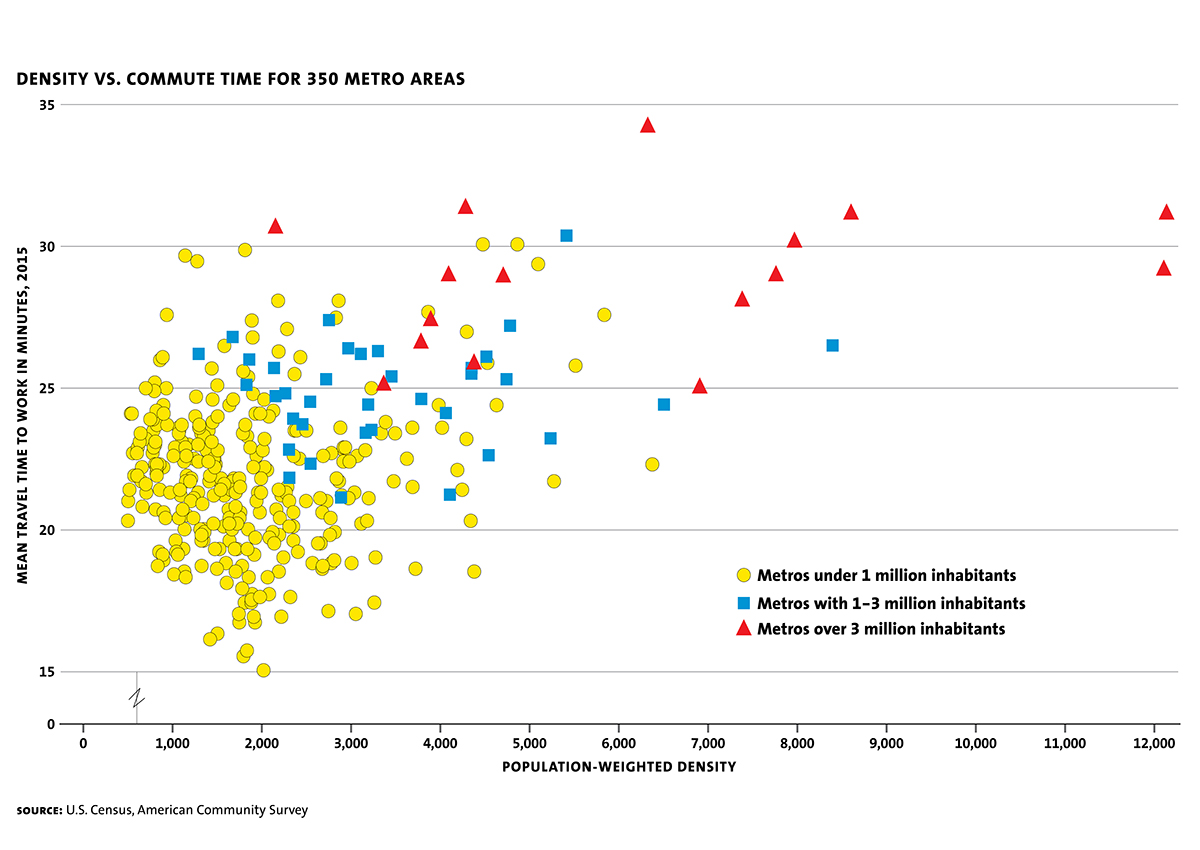
It turns out that throughout human history, the answer to the latter question averages somewhere around an hour—the observation behind Marchetti's Constant, which suggests that cities grow to the point where average commute timeshover around 20-30 minutes one way, no matter what the prevailing transportation technology of the era is. In ancient Athens, you likely lived within a 30 minute walk of your daily destinations. In modern Atlanta, you likely live within a 30 minute freeway commute. Nearly all U.S. cities have a commute time that roughly obeys Marchetti’s Constant, belying the popular notion that traffic is getting worse and worse.
When you optimize the network for car travel, a bunch of things happen. Some happen quickly: drivers switch to using different routes or traveling at different times of day (this is the part the mathematicians are supremely confident they can predict and manage), or maybe people even switch between driving and other options like public transit. Some happen slowly: land values change, and development becomes viable or economically attractive in places where it wasn’t. Settlement patterns change: people live differently. And then we alter the roads in response to those changes, too, and in response to political pressure to “Do something about traffic!” that arises from those changes.
No system-optimization approach is going to grapple adequately with that complexity. As long as we build a growing city around roads for cars, it’s a pretty sure bet that people in their cars are going to find ways to fill up those roads. We can’t build or network-engineer our way out of congestion, but we can bankrupt ourselves trying. (And destroy our neighborhoods and our communities’ wealth for a generation or more.)
There’s a better way to deal with traffic—and “deal with” does not mean “solve.” It is to make our places resilient to congestion, so that if and when it happens, it doesn’t destroy our quality of life. This means 15-minute neighborhoods: more destinations within walking distance of home. It means a range of ways to get around so nobody is forced into just one option, and a well-connected street network so there are many paths from A to B.
Just don’t let a mathematician or engineer tell you they’ve got the magic solution that will free you, the beleaguered commuter, from having to make choices and weigh trade-offs. They don’t. They never will.
Coord invites cities and other curb managers to apply for its Digital Curb Challenge to undertake a free curb management pilot program in 2020. Applications close on Feb. 14. Click here for information.
Americans who have a private place to park their car at home almost never pick public transportation over driving.
Only 0.7 percent of drivers who get a free parking spot when they sign a lease or buy a home end up using transit, a new study from Land Use Policy shows. That’s pretty bleak, especially considering that a whopping 90 percent of U.S. households have their own designated spot — and even 87 percent of renters have a private place to store their SUV or sedan.
Bundled parking is usually presented as a complimentary perk by the property manager or real estate agent — though of course, the price of building and maintaining that spot is factored into the check you write every month to the landlord or the mortgage company. And in the case of surface parking lots, those “free” spots in the apartment complex parking lot also gobble up valuable land that could be used to build more apartments, upping the supply of affordable rentals in the area and lowering the price on all units region-wide. That’s an enormous lost opportunity that’s exacerbating affordable housing crises in our most rental-strapped cities nationwide.
But taking away everyone’s “free” residential parking to make driving less convenient is no silver bullet because the same study shows that only 1.6 percent of people whodon’t have their very own spot are only occasional public transportation users.
The reason why even residents without bundled parking are still likely to be drivers is simple: a resident-only spot is far from the only place a driver can find a free or super-cheap parking space close to home. People who have to hunt for a space end up paying an average of just $20 a month at parking meters — because so much parking on public streets is given away for free. And when these drivers leave home, parking only gets easier: a staggering 99 percent of all car trips made in the US still end with a driver pulling into a spot for which they don’t pay, parking expert Donald Shoup estimates.
But, of course, even this free parking isn’t actually free; we’re all paying for it via our state and local road funds, which are increasingly going insolvent being propped up by terrifyinglevels of unpayablepublicdebt.
So if denying a resident a private spot isn’t the huge deterrent to car ownership our cities need, what would get people to go car-free? Only a massive change in a political-industrial culture that incentivizes driving in every aspect of the built environment.
The handful of American cities that have already gotten serious about reducing cars on the road didn’t just make it hard to park at the end of the day: they made biking, walking, and transit into safe, convenient and attractive transportation options where private car ownership just doesn’t make sense.
“Bundled parking might make it easier to own a car, but it won’t necessarily make it easier to drive one — especially if the building is part of a transit-oriented development where public transit is more convenient,” said Deborah Hanamura of the green building consulting firm Paladino and Company, which works largely in transit-rich communities. As such, Hanamura says it’s easy to argue to developers in those cities that bundled parking isn’t the essential resident amenity you might assume.
“Given the investment that goes into building a parking structure, does it make sense to build a parking structure for a millennial tenant to store a car that they don’t drive, when that investment could go toward more rentable units?”
Orienting our housing towards transit isn’t the only piece of the puzzle, either — it’s also crucial to situate homes within fully connected neighborhoods, and bring the businesses and public spaces that residents rely on day-to-day within walking distance. Residents of the 10 percent of Americans households that don’t have guaranteed parking at home are twice as likely to be able to reach a grocery store by walking or biking than their counterparts with their very own carports, the Land Use Journal study says.
But until more cities get serious about comprehensively remaking themselves around sustainable transportation, bundled parking and its autocentric brethren may be here to stay. That’s not just bad news for the environment, which is forced to absorb an additional 119,480 grams of vehicle-related carbon dioxide per month from each household that enjoys a dedicated spot. It’s also bad news for most of our wallets. “Households with bundled parking spend more than twice as much per month on gasoline as households without ($237 to $105),” study authors Michael Manville and Miriam Pinski note.
Those are huge public and private costs just for the privilege of keeping your wheels within easy reach — and when you take into everything that autocentricity costs us, they’re certainly not worth it.
There may not have been a better illustration of the degree to which transportation planning for the new Seattle Center arena is weighted toward accommodating personal cars than the fact that the Mercer Upgarden—the only P-Patch garden in the neighborhood, located on top of Seattle Center’s Mercer garage- was to be kicked out to add in a few more parking spaces that arena users would need.
Queen Anne & Magnolia News was the first to report last October that the Upgarden was to be removed from the rooftop level of the City-owned parking structure by the time the new arena’s doors opened to the public. It’s been in place since 2011 and has provided space for 86 garden plots above the din and fumes of Mercer Street below.
The Mercer garage occupies two entire blocks north of the Seattle Center, with a catwalk over Mercer Street. (Google Maps)
But at the end of 2019, newly elected Councilmember Andrew Lewis announced at his ceremonial swearing-in, held on the roof of the garage, that the City had reached a deal with Oak View Group, the developer of the new arena, that would keep the Upgarden in place. With the announcement, Mayor Jenny Durkan stated that under the arrangement that the garden would stay in place “until light rail is designed and planned for Seattle Center.” This harks back to the agreement the City had already made with Oak View Group regarding the entire Mercer garage, an aspect of the deal to see Key Arena renovated that mostly went unnoticed at the time of its signing in 2018.
The lease agreement that the City of Seattle has entered into with Oak View Group specifically stipulates that the “landlord covenants and agrees that it shall not voluntarily demolish or demolish and rebuild the Mercer Street parking garage at any time prior to the earlier of” the following three scenarios.
The date of January 1, 2035
“the date that extension of light rail to a station within an approximately 1/2 mile walkshed of the Arena has been completed and is operational to the public”, or
If the parties involved all agree to a new agreement.
In other words, if the Mercer garage goes offline before light rail opens (if that’s anytime before the first day of 2035), then the City would be in violation of its lease agreement. That same agreement also states that if any replacement for the Mercer garage contains less than 800 parking spaces, then the terms of the lease should also be renegotiated.
Following swearing in, District 7 Seattle City Councilmember Andrew Lewis announced the UpGarden P-Patch will be spared eviction to make room for 100 parking spaces. pic.twitter.com/H644j9S91D
The prioritization of maximizing space in the Mercer Street Garage is not surprising given the comments heard during the Environmental Impact Statement process from the most influential commenters.
During that process, comments submitted on behalf of the Seattle Center as a City department expressed the importance of maintaining parking access for the existing cultural amenities at Seattle Center. “Given the demographics of Seattle Opera, Pacific Northwest Ballet and Seattle Repertory Theatre attendees, this parking access is essential to their fiscal health, just as the school bus access at the south end of the campus is to Seattle Children’s Theatre,” they wrote.
The Mercer Corridor Stakeholder Group, which was made up of nearby community councils and groups as well as large corporations like Amazon and Pemco, actually recommended that the City consider implementing a program to discount City-owned garages like the Mercer garage to compensate for a loss of on-street parking spaces due to the prioritization of transit and bicycle traffic.
The emphasis on parking availability seems to point toward the Mercer garage sticking around for the long haul. But the three-acre parcel that the garage sits on is prime real estate that the City could put to better use. And it’s also approaching the age where maintenance costs could really escalate.
A few blocks away is an example of how valuable the parcel would be: the Mercer Megablock properties (which did include a small noncontiguous parcel on Dexter Ave N) sold for a staggering $143 million. I am not suggesting that the City should sell the Mercer garage property, but rather that a priceless City asset is being wildly underutilized.
The 2008 Seattle Center Century 21 Master Plan recommended that the Mercer Street Garage be demolished and replaced with an “underground parking structure of approximately 1,300 spaces in the bowl of the current Memorial Stadium.” Spending City funds to construct more than 1,000 parking spaces on land that’s currently controlled by Seattle Public Schools should not be considered an option, but the master plan’s recommendation that the Mercer garage be put to best use is not one we should let sit in a drawer for another decade. Unfortunately, the City is now locked into providing a certain amount of City-owned parking even as Oak View Group builds a new parking structure directly underneath their new arena.
Seattle Center’s Campus Master Plan envisions a mixed use future for the Mercer Street Garage. (City of Seattle)
All of Seattle Center’s long-range planning has seen the northeast quadrant of the campus as an opportunity, with a 2016 report calling it the “biggest opportunity for transformative change at Seattle Center.” The former Mercer Arena (not to be confused with Key Arena) at Mercer Street and 4th Ave N has already been replaced with the Seattle Opera Center, with little public conversation about how it would integrate with the rest of campus. Now that it is in place, it has brought only intermittent activation to that corner of Seattle Center.
Even though the garage is separated by infamously unpleasant Mercer Street, it is an opportunity to enhance Seattle’s central open space amenity that is Seattle Center–if we let it.
The North Segment of the E Lake Sammamish Trail was completed in 2015.
The County is preparing to construct the final section of the trail.
Last week, King County took action to reclaim public land in one of the wealthiest areas in the state: Sammamish. The County fought and won a very difficult legal battle to determine that, yes, the public does own the entire rail corridor along the east side of Lake Sammamish. And as it prepared to construct the final section of the East Lake Sammamish Trail, the County is trying to get lakeside homeowners to clear any structures or personal property from County land.
This is a persistent problem across Seattle and King County, especially near very valuable shorelines and parks. Sometimes, adjacent homeowners try to reserve public land for their own private use, and it’s often hard for the public to know when their land is being illegally seized. There may even be times when homeowners thought that public land belonged to them, and are dismayed to learn the truth.
But it’s hard for me to imagine fighting to keep public land for myself. Then, after losing a long and difficult court battle, to go to the Seattle Times and try to pretend that letters from the County telling me to move my stuff off public land within 9 months were “heavy handed.” The county is giving them until the end of September, which is frankly far too generous. This land is not just theirs, it belongs to all of us. How selfish can they be?
When people who have nowhere else to live set up a tent on public land, Seattle policy gives them 72 hours of warning time to remove their belongings before bringing in crews to throw everything they own in the garbage. Often, the city doesn’t even give that much time. These sweeps are ineffective and cruel. But isn’t it strange that people with million-dollar homes to live in get 9 months to move their decorative landscaping or whatever, but people who have no homes get 72 hours (at best) to move their whole lives? The disparity in how people are treated in our county based solely on how much money they have is galling.
My willingness to have sympathy for Sammamish property owners who have to move their things off public land ended when a group of them tried to blow up “rails to trails” nationally by challenging it at the U.S. Supreme Court. The Court decided not to hear their appeal, luckily. But wow. Rail-trails have done so many wonderful things for so many communities big and small across our nation. To attempt to undercut the entire concept just so you can keep your damn cabana on King County land, that’s downright evil.
The County also proactively filed legal action against eight parties regarding shoreline access that should belong to the public but currently has private docks and other structures on it. This is some of the most valuable land in the county.
I’m very glad King County is taking this action on behalf of all of us. Some of these homeowners need to be put in their place. They own homes worth millions in many cases, and they still feel like they deserve to have private use of the public’s land, too. Nope.
When the East Lake Sammamish Trail is finally complete it’s going to be great. It’s not just about connecting Redmond to Issaquah, it’s also about providing everyone access to a very beautiful part of our county. Most of construction on the final section is scheduled for 2021, so we shouldn’t have to wait too much longer to experience it. I mean, people have been wanting to build this trail for a half century, and the county acquired the rail right-of-way in 1998, so this is a really long time coming.
More details on the legal actions from King County:
As it prepares for construction in 2021 on the last undeveloped portion of the East Lake Sammamish Trail, King County is notifying trailside property owners this week to remove personal property from the construction zone of the publicly-owned trail corridor by the end of September 2020.
The early notice provides property owners alongside this 3.6-mile portion of the trail with ample time to make arrangements for removing structures, landscaping, and other encroachments.
Also this week, by taking legal action against eight property owners within the trail corridor, including six lake dock owners, the county is asking the federal court to affirm the public’s ownership rights to the shoreland portions of the railroad easement that the county purchased in 1998.
“We are taking steps now to make sure we can open up the long-awaited final segment of this regional public trail as soon as possible,” said Christie True, Director of the King County Department of Natural Resources and Parks. “We have utmost confidence in the public’s ownership of this property, but rather than await more legal challenges that serve only to delay the project, we are proactively seeking final affirmation in federal court.”
Some trailside property owners along this portion of the interim East Lake Sammamish Trail have enjoyed exclusive use of publicly-owned property for years, and in some cases decades, by building unpermitted landscaping, fencing, parking areas and stairs – even private sport courts and boat docks. These private unpermitted uses are illegal.
In 2016, a federal judge ruled that King County possesses all property rights in the trail corridor to build, operate, and maintain a trail. This ruling was affirmed by the Ninth Circuit Court of Appeals in 2018. In 2017, as part of the trail permitting process, property owners with encroachments into the public trail corridor were informed that they were on public property without permission.
The public’s ownership of the corridor has withstood multiple legal challenges over the years, however the ownership question came up again when a homeowner challenged King County’s ownership of shorelands through a state land use appeal. The county is seeking reaffirmation of public shorelands ownership so these questions do not stall trail construction.
As for encroachments in the construction zone, any structures remaining after the September deadline will be removed by King County or a contractor at owner expense. King County Parks will work with the approximately 150 adjacent property owners to ensure their private property is removed from public land.
King County purchased the former Burlington Northern Santa Fe railroad corridor in 1998 for the purpose of building a regional trail to connect the growing cities of Issaquah, Sammamish, and Redmond. The county completed an interim soft surface trail in 2006 and has been working on building a paved trail with additional amenities since then.
The final segment of interim East Lake Sammamish Trail to be developed from an interim soft-surface trail to a paved master planned trail stretches from Southeast 33rd Street to Inglewood Hill Road.
This portion of the trail will be closed for construction beginning spring 2021 until completion, which is expected in 2023 – closing the last remaining gap in the 44-mile-long “Locks to Lakes Corridor” of paved regional trails. When completed, residents will be able to travel from Ballard to the Cascade foothills all in one continuous, non-road, paved path.
As Donald Trump’s impeachment trial unfolds, there’s going to be a lot of retreading old ground. Today, we’ve seen Mitch McConnell and Chuck Schumer make their opening statements, and Adam Schiff and Trump’s counsel begin their arguments. So far, it’s pretty much all stuff we’ve heard before. (Not that that makes it any less important!)
But off the Senate floor, some new tidbits about impeachment have been coming out. To be fair, most of these aren’t really new; they’re Senate rules that have been around decades, if not centuries. But there are a lot of intricacies of the workings of Capitol Hill that most of us don’t know about, and many of them, when heard for the first time, make absolutely no sense.
Like this bizarre rule:
Sen. Rick Scott tells me the rules only allow senators to drink water and milk on the Senate floor during the impeachment trial
That rule isn’t unique to this trial, or even to impeachment in general. Former Senator Claire McCaskill was on MSNBC today as a political analyst and she also talked about the beverage options on the Senate floor.
As it turns out, there are no caffeinated drinks allowed in the Senate. (I wonder if that had anything to do with McConnell’s inability to get the votes needed to have impeachment sessions lasting into the early hours the morning.)
When Senators sit down, a page asks if they want a glass of water, which can be still or sparkling, according to McCaskill. The only other option they can request is milk.
I wish I still had The Awl. I need 1800 words on Milk On The Senate Floor, stat.
To be honest, being a Senator during an impeachment trial sounds terrible. McCaskill said on MSNBC that usually, you can go into the back room and get coffee and snacks, sometimes pizza. But during impeachment, there’s none of that. They can’t get up. They can’t even talk, under penalty of imprisonment. Definitely no pizza.
Still, at least milk is a step up from the rules in the House, where they’re not even allowed to have that much.
Milk in the Senate? Yes. Milk in the House? No. DISCUSS.
There are other things not allowed in the Senate besides coffee and talking. The Washingtonian published a roundup a few years ago. Here are a few things banned from the Senate: flowers, hats (but only on men), “pants without blazers,” meaning if a Senator is wearing pants, they must also be wearing a blazer. A blazer, then, isn’t necessarily required if that Senator is wearing a skirt or dress. No word on whether a blazer is required when the Senator is just going bottomless.
Also barred from the Senate floor are children over one year old. The ban used to be on babies and children in general, but Tammy Duckworth fought to change that after being the first sitting senator to give birth.
And here’s one last tidbit McCaskill shared today, when talking about the new restrictions placed on reporters during the impeachment trial:
Glad to hear @clairecmc admit to @NicolleDWallace the thing Capitol Hill reporters all know they do: fake cell phone calls to avoid reporters
City & State NY is hosting a full day New York in Transit summit on Jan. 30 at the Museum of Jewish Heritage. This summit will bring together experts to assess the current state of New York’s transportation systems, break down recent legislative actions, and look towards the future of all things coming and going in New York. Join Keynote Speaker Polly Trottenberg, commissioner of the NYC Department of Transportation, along with agency leaders, elected officials, and advocates. Use the code STREETSBLOG for a 25-percent discount when you RSVP here!
MTA officials said on Monday that bus lane cameras are speeding up snail-like service along congested corridors, but in the same announcement, the agency ended up emphasizing a strategy that works best, yet is so rarely instituted: getting cars out of the way of buses entirely.
In a new analysis issued on Martin Luther King Jr. Day, the MTA said that its enforcement cameras on just three Select Bus Service routes — the M15 and M14 in Manhattan and the B44 between Williamsburg and Sheepshead Bay in Brooklyn — have issued 9,110 tickets or warnings to drivers blocking bus lanes between Oct. 7 and Dec. 31.
Bus travel speeds are up on all three camera-enforced lines — but they are up dramatically along only one route: the car-free 14th Street busway, which didn’t even get camera enforcement until late November.
The data:
The busy M15 route along the East Side of Manhattan, where 6,910 tickets and warnings have been issued since Oct. 7, December bus speeds were 1.5 percent better than they were during the same month of 2018. Real tickets began being issued on Dec. 6.
The busy B44 route, where 2.090 tickets and warnings have been issued since Oct. 30, bus speeds in December were 2.8 percent faster than the same month of 2018. Real tickets began being issued on Dec. 29.
But, wow, bus speeds along the car-free portion of the 14th Street busway are up 55 percent — even though cameras have only issued 110 warnings since Nov. 21. Actual tickets will start being issued on Tuesday, Jan. 21.
And ridership along the M14 is up 19 percent on weekdays and up to 25 percent during the morning rush hour, the agency said, without providing an update on ridership along the other two camera-enforced routes.
Given all of the statistics released on Monday, it’s clear that cameras don’t do nearly as much to increase bus speeds or improve ridership as getting rid of cars. The MTA has praised the city’s pilot busway program on 14th Street, but the MTA has yet to demand specific car-free bus priority routes going forward, leaving it to the city to plot out its next moves. Mayor de Blasio has said more car-free busways will be revealed during this calendar year.
The topic came up on Friday when MTA bus officials briefed reporters on the preliminary draft of the agency’s Queens bus network redesign, which has been hailed by many experts, but criticized for local cutbacks in service in some neighborhoods, including Jackson Heights.
NYC Transit Senior Vice President Craig Cipriano told reporters that the 14th Street busway represented the “vision” for the agency.
“We have $85 million in next capital plan for cameras,” he said. “So that once we have the cameras, it’s not a manual process to enforce that, and our buses will be moving along. If you look at 14th Street today, the busway, that would be our vision for the bus system across the five boroughs.”
Streetsblog asked Cipriano what he meant by “vision” because it was unclear if he was also seeking more car-free busways.
“Our vision … would be to have well-enforced bus priority, camera-enforced bus lanes, all door boarding … and transit signal priority,” he said.
Streetsblog still didn’t hear the magic words, so we persisted: “What about more routes without cars?”
Cipriano’s answer was telling: “One thing about getting rid of cars … we know we need to peacefully co-exist with other transportation modes, whether it’s pedestrians, cyclists or cars,” he said. “But we need our due: we need well-enforced bus priority.”
The agency has highlighted 21 “bus priority corridors” that will favor buses over cars, though apparently not banish automobiles entirely. Until that day, cameras will play their limited role in speeding buses. By the end of 2021, the MTA said cameras would be deployed on 1,000 buses across the five boroughs.
But there remains something odd about the MTA’s belief that cameras are the key to speeding up buses. In November, the agency put out a statement timed to the beginning of camera-issued warnings on 14th Street — where bus speeds had already improved 38 percent, largely by the elimination of cars along the corridor. The agency seemed reluctant to mention the car ban as the most important factor.
“Our bus-mounted cameras will heighten enforcement of new NYC DOT’s Transit Priority lanes that have completely transformed 14th Street from being one of the most congested corridors just a few months ago,” Cipriano said at the time. “The added layer of enforcement reinforces the importance of bus lanes to improving our service: when bus lanes are clear, everyone moves faster.”
And one thing is clear: bus lanes are clearest when there are no cars to block them.
Drivers have never really paid the true costs of the roads they use — and our communities have always spent public dollars to subsidize our collective car dependence. But even the most informed bike/ped advocates might be surprised by just how little car owners pay into their local road maintenance fund when they pull up to the pump.
Hint: they spend more on their cellphone bills.
Turns out, drivers pony up an average of just $274.69 in gas tax per year, according to the infrastructure design firm HNTB. That’s a fraction of what it actually costs to maintain America’s autocentric road network, despite the fact that gas taxes remain a major funding source for road and bridge maintenance.
Or to put an even finer point on it: the average American pays 4.3 times more in cell phone bills every year than for gas taxes.
Of course, HNTB is in the business of building infrastructure, so the company’s recommendations in this infographic are pretty predictable: raise the gas tax, and keep an eye on those pesky new trends like vehicle efficiency improvements, electric vehicle adoption and caring about climate change that will cut the average American’s gas bill even further.
But take a closer look at how America does road funding, and it becomes clear that ending unsustainable public subsidies to private vehicle owners would take a lot more than just adding a few pennies to what it costs to fill up the tank.
Take this map from the Tax Foundation, which breaks down how much of each state’s road funding comes directly from drivers in the form of not just gas taxes, but also tolls and other user fees. Fewer than half even crack the 50-percent threshold. (Shout out to Hawaii, which clocks in at 76.3 percent driver-originated funding; still, even those drivers can’t accurately say they pay for every last penny of the roads they use.)
So who is paying for roads, if not drivers themselves? The answer, of course, is all of us.
The average American household spends an average of $1,100 to subsidize car culture, whether its inhabitants buy a drop of gasoline or pass a single dollar to a toll booth collector, according to the Frontier Group. That includes $597 of each household’s general tax revenue that ends up getting dedicated to road construction and repair, even if your household is full of cyclists and pedestrians who are hardly causing any road damage at all.
Between $199 and $675 of your sales tax goes also towards tax subsidies for driving, depending on the state and city you’re living in. Those subsidies include sales tax exemption for gasoline purchases — yes, most states still don’t charge you for those at the pump — and federal income tax exclusion for commuter parking benefits.
And that’s before you even get to the most dramatic costs of autocentricity: the loss of human life — both in immediate crashes or due to the long-term effects of climate change.
“It’s really important that we find more ways to get people who drive to pay for the impacts of their actions, and not just to fix the damage their vehicles cause to our roads,” said Tony Dutzik of the Frontier Group. “They also need to pay for the damage they cause to the environment and the damage they cause to other road users, especially in the case of crashes.”
And Dutzik’s not being figurative here: he’s talking dollars. The Frontier Group estimates that every household pays about $216 per year in “expenditures made necessary by vehicle crashes, not counting additional, uncompensated damages to victims and property.” (Think the police cruiser that shows up to collect statements, and the street crew that shows up to clean up the bloody aftermath.) An additional $93 to $360 per household goes to subsidize medical care for pollution-related illnesses.
If HNTB is right, those costs will only go up as our road network continues to grow and grow, and American vehicles get more fuel efficient. Hikes in the gas tax won’t cover those costs — but reducing car dependence might just save our communities and the families in them from financial bleed out.
Everyone knows Facebook is doing the opposite of helping ensure the integrity of the 2020 election, so it makes sense it would pay Teen Vogue to run a fake article titled “How Facebook Is Helping Ensure the Integrity of the 2020 Election.”
When the article ran on Wednesday, Sheryl Sandberg, Facebook’s machiavellian chief operating officer posted on her Facebook page, "Great Teen Vogue piece about five incredible women protecting elections on Facebook. Since 2016, we've worked to stop the spread of misinformation, fight foreign interference and voter suppression, improve transparency, and encourage people to vote." Lol.
Shortly after the byline-free "article" ran, a notice appeared at the top, which said, “Editor’s note: This is sponsored editorial content.” A little while later, the piece disappeared entirely.
The curious piece, and its sudden disappearance, became a topic of online conversation, prompting Teen Vogue to issue a statement that read, “We made a series of errors labeling this piece, and we apologize for any confusion this may have caused. We don’t take our audience’s trust for granted, and ultimately decided that the piece should be taken down entirely to avoid further confusion."
Facebook pitched the idea for the article last year, when the social media network and the online magazine were in talks about the Teen Vogue Summit, a three-day event that took place in Los Angeles in November, with speakers including the YouTube star Liza Koshy and the film director Greta Gerwig. Facebook was a sponsor of the gathering.
“We had a paid partnership with Teen Vogue related to their women’s summit, which included sponsored content,” Facebook said in a statement. “Our team understood this story was purely editorial, but there was a misunderstanding.”
I am so sorry to the @TeenVogue team for whatever irresponsible sales or marketing staff pushed this article into their feed, therefore discrediting all the GOOD work they’ve been doing to educate their audience about the REAL threats posed by @Facebook in our election. https://t.co/8IHMTxIfrD
The next time Facebook wants to propagandize it should stick to doing what it's good at and just hire Cambridge Analytica to run a thought-control campaign on its behalf.
The Transportation Research Board’s 99th Annual Meeting will be held in Washington, D.C. from Jan. 12-16, 2020. Click here for more information.
The capital of Norway achieved its Vision Zero goal last year with no pedestrian and cyclist fatalities — a feat achieved even as traffic deaths climbed in the opposite direction in American cities.
With a population comparable to Portland, Ore., Oslo recorded only one traffic fatality: a driver who smashed his car into a fence, the Norwegian newspaper Aftenposten reported.
Norwegian officials saluted the results, but vowed to continue keeping all road users as safe as possible into the new year.
“This is no cushion. Every serious accident is one too many,” Ingrid Dahl Hovland, the country’s top road administrator, told Aftenposten. “The fight against traffic death and serious injuries in traffic continues with unabated strength.”
This makes me happy:
Road deaths in Oslo (pop. 673.000) in 2019:
Pedestrians: 0 Cyclists: 0 Children: 0
The graph shows the reduction of road deaths since 1975.
Oslo’s status as a pedestrian and cycling safe have didn’t occur overnight. The road to Vision Zero was paved with a mix of regulations that lowered speed, barring cars from certain areas, expanding its bike network, and added traffic calming measures around schools.
The most significant move Oslo officials made was devising a plan in 2015 to restrict cars from its square-mile city center and hike fees for entering and parking around the city’s core. Tolls rose in 2017 as the city removed 700 parking spaces and replaced them with 37 miles of bike lanes and pocket parks. The city center ban went into effect in early 2019 despite misgivings, but it was regarded as a model for other metropolises six months later. Cities around the U.S. have been slow to follow up on such success, though New York and San Francisco recently added a car-free thoroughfare to its transit mix.
Oslo leaders also sought to tame aggressive drivers in other neighborhoods. They drastically lowered speed limits inside and outside downtown areas, expanded its bike network, and established “Hjertesoners” or “heart zones” where vehicles are not permitted to pick up or drop off children around each primary school. New York City is especially bad at that, as Streetsblog NYC reported.
“The more you separate the different road groups, the less the risk of serious traffic accidents and then we see that the speed limit has been lower on several roads,” said Christoffer Solstad Steen, a spokesman for a Norwegian traffic organization Trygg Trafikk. (If you are Pete Buttigieg and you want to read the Aftenposten story in its original Norwegian, click here.)
It’s not just Oslo that has managed to curb fatal crashes. The entire Scandinavian nation experienced only 110 traffic deaths last year out of a population of 5.3 million, a fourfold decline since 1985, when 482 people lost their lives on the road.
Norwegian officials attributed the success to an intense focus on road safety among different governments regardless of their political affiliation.
“It has been a goal to secure safe travel for everyone,” Royal Norwegian Embassy counselor Susanne Juell Gudbrandsen told Streetsblog. “Oslo is the largest city with the heaviest traffic in the country, so it is particularly good to see that numbers for deaths have gone down there lately.”
The country’s roads have safer even though there are more vehicles on them. Norwegians owned 2.75 million passenger cars in 2018 and 148,000 new cars were sold in the country in that year, a nearly 50 percent increase since 2009 when 99,000 cars were sold.
But Oslo is moving toward a car-free future. The city hopes to double the number of trips people take by bike to 16 percent by 2025 and reduce its greenhouse gas emissions by 95 percent from 1990 levels by 2030.
It’s a safe bet that road fatalities in Oslo will continue to remain low.
Earlier this year the city published a feasibility study to put a lid above I-5 to reconnect Downtown and First Hill, two neighborhoods divided by the freeway. It would add both housing and a park all above the freeway trench, but it should also incorporate high-speed rail. In fact, the lid support columns may be able to do double duty as supports for the elevated guideway for high-speed rail linking Seattle to Portland and Vancouver, British Columbia and points in between.
The lid would be held up by pillars in the center of the freeway. We could extend those pillars in height to hold up high-speed rail tracks, allowing the Seattle station to be built above the freeway. As the Madison Street intersection takes up a full block currently, it would provide enough space for a high-speed rail station, and would be close to Downtown and First Hill. Regional transit connections at King Street Station would only be a few blocks away. A handful of parking garages already exist in the area. The new Midtown Link station and buses on Madison and 4th Avenue would provide connections in all other directions including the Eastside.
Lid I-5’s lid diagram looks good with an elevated high-speed rail line down the middle. (Credit; Lid I-5 with edits by author)
Pine Street could be an alternative and would put the station directly next to the Convention Center and Capitol Hill. The freeway would be at the lowest level, the next level would be dedicated to parks, retail, surface streets and high-speed rail station access. The high-speed rail line would tower high enough to span existing bridges, the existing Freeway Park and even the existing Convention Center.
Under this lid station scheme, Seattle’s high-speed rail station would abut the Midtown light rail station–envisioned as the Green Line connecting Ballard to Tacoma. (Sound Transit)
The I-5 lid could support highrises on each side of the trench and parks and some midrise development right above the freeway. Concrete beams would span the freeway and be held up by pillars on both sides and in the center of the freeway as has already been done in other neighborhoods nearby (Mercer Island, Mount Baker, and Medina). The pillars in the center (or both center and one side) could get extended in height to hold up the rail tracks and even the station. The beams holding up the tracks might also house lights to provide lighting for the parks underneath at night.
As the map above illustrates, the preliminary data suggests that the lid’s edges would be most appropriate for highrise development, while much of the remainder of the lid could carry either mid-rise or low-rise development. (Credit: WSP)
High-speed rail works best with station locations that serve the most people, such as high-traffic areas of downtowns, airports, and employment centers. Utilizing the I-5 corridor and collaborating with the Lid I-5 project would allow passengers convenient access to Downtown, the Washington State Convention Center, and Seattle’s densest neighborhood: First Hill–also home to two major hospitals.
Governor Jay Inslee has made clear he supports high-speed rail, and Washington State Department of Transportation (WSDOT) Secretary Roger Millar has argued it’s the most viable way to meet long-term transportation demand in the I-5 corridor. Adding another I-5 lane in each direction throughout Washington would cost $110 billion, according to WSDOT estimates, and still not be enough to alleviate congestion. High-speed rail would be much cheaper than freeway expansion and a much more effective and climate-friendly means of transport.
The San Francisco-based 9th U.S. Circuit Court of Appeals said Boise would be violating the constitutional ban on cruel and unusual punishments by enforcing criminal penalties under its anti-camping ordinance when its three homeless shelters are full.
“The state may not criminalize conduct that is an unavoidable consequence of being homeless -- namely sitting, lying, or sleeping on the streets,” the 9th Circuit said.
State abuse of the homeless is one of the nastier trends in 21st century governance—the end is usually accomplished by more subtle means (pictured) than criminalization.
Neal Stephenson's influential Snow Crash is finally poised to reach screens, although you'll have to be picky about where you watch it. HBO Max has ordered work on a TV series adaptation of the sci-fi novel that will be written and co-run by the Sco...
On Tuesday, KOMO TV reporter Steve McCarron tweeted about Bellevue police stopping pedestrians who tried to enter the crosswalk on the blinking red hand phase. This is a phase when pedestrians are still allowed and expected to be in the crosswalk, but just not enter it. While Bellevue is the second city in the state of Washington to declare a Vision Zero goal of eliminating traffic deaths by 2030, it has had a recent uptick of serious injuries and deaths on the road. Focusing enforcement on the most vulnerable and least responsible group appeared as borderline victim-blaming. It wasn’t until King County Councilmember Claudia Balducci (District 6-Bellevue) stepped in (thanks!) that we learned this was only educational outreach.
Still, the incident highlighted a key urban issue in Downtown Bellevue—traffic lights are timed such that they give pedestrians the least priority among any road user and either encourage crossing during the blinking red phase or discourage walking altogether.
I timed the light cycles during the evening rush hour (5:30pm – 6:00pm) at three intersections. The findings are more shocking than I expected. Bellevue uses adaptive signals (well loved in Seattle, too), so the timing varies slightly from cycle to cycle and the numbers below are slightly rounded.
A chart of traffic light timing at NE 4th St and Bellevue Way NE in Bellevue shows a 2 minute 29 second wait for pedestrians that miss the signal. (Image by author)
Traffic light timing at NE 4th St and 108th Ave NE in Bellevue. It’s more than a two-minute wait if you miss a pedestrian signal. (Image by author)
Key problems
There are several key problems with Bellevue’s traffic light timing.
Firstly, there are only five seconds for pedestrians to enter intersectionwhile vehicles get 30 to 50 seconds! Lights universally provide only five to seven seconds of a white walk signal followed by a 16-second countdown timer. The countdown timer is essentially a yellow for pedestrians–they should not be entering the intersection during this phase, only clearing it according to current state law. Even the full pedestrian crossing cycle (21 seconds) is much shorter than what vehicles get (30 to 50 seconds). The high chance of missing the crossing stresses people out or slows them down when they do miss it. This only serves to discourage them from walking.
Secondly, there is up to 2.5 minutes between two pedestrian crossing cycleswhile for cars it is 1.5 minutes to just under 2 minutes. This is another major problem. If a person misses the five-second window to enter the intersection, they have to wait 2 minutes to 2.5 minutes for the next five-second window. It takes about two minutes to walk from intersection to intersection, so if one were to miss every light, this can double trip time. Imagine a 10-minute walk becoming a 20-minute walk due to traffic lights. Bellevue has invented a way to create the effect of congestion for pedestrians! What does this do? It discourages walking!
Why this matters
Bellevue’s downtown has extremely high density with 53,000 workers and 14,000 residents in approximately one square mile. About half of the parcels of land contain one- and two-story buildings or surface lots and are redevelopable. Zoned building height peaks at 600 feet (approximately 40 commercial or 60 residential floors). The density is expected to double from what it is today. It’s physically impossible for all of these people to get around town by car, regardless of signal optimization.
But there are several other reasons why pedestrian wait times at lights are important to address:
Discouraging walking is directly restricting people’s freedom as that is the most efficient way to get around town.
More walking is better for business. In most cities around the world and the United States, the highest grossing retail stores per floor area are in the zones with highest pedestrian traffic. This is especially true in dense business districts like Downtown Bellevue. It is in business owners’ best interest to encourage more walking.
Walking is better for the environment. Did we forget about climate change? The more trips are shifted away from driving and onto alternative, less carbon intensive modes, the higher chance we have for survival as a species.
Walking is better for human health and safer. The health benefits of walking are widely lauded, but if we are serious about Vision Zero we must also acknowledge that reducing vehicle miles traveled reduces serious or fatal injuries by reducing the number of crashes.
Recommendations
So how do we work ourselves out of this hostile environment for pedestrians? Here are some suggestions:
Cut cycle times in half or to a quarter. Waiting 2.5 minutes for the next pedestrian crossing cycle is borderline torture of pedestrians. Bellevue can’t be serious about Vision Zero or climate change if it continues to do this. (Since pedestrian crossing times cannot be shortened below what they are today, this will increase the proportion of time in a cycle allocated towards pedestrian crossing and decrease dedicated turn signal time.)
Use an all-way walk phase that stops all motorized traffic and allows pedestrians to cross in any direction. Again, with half to a quarter of current wait times between a pedestrian red and green–so half to one minute maximum. This should be implemented at least along every intersection along the Grand Connection corridor.
Bellevue already has a vibrant pedestrian life despite these major hindrances to walkability. Fixing them can only improve the livability and business potential of the city. I leave you with this cheerful pedestrian scene right at the end of Snowflake Lane. There is so much more joy and happiness that can fill the streets of Bellevue if only we would allow it.
Full disclosure: I have not yet seen Clint Eastwood’s Richard Jewell. I have, however, seen more than enough other films and TV shows that insist on having female reporter characters sleep with their sources. From Gilmore Girls to Iron Man to Trainwreck to House of Cards, the trope is so ubiquitous,it’s rare to find a fictional female journalist for whom sex isn’t treated as a legitimate part of their job. So it’s disappointing when filmmakers insist on foisting this trope on real-life journalists, too.
The Atlanta Journal-Constitution is asking Warner Bros. to release a statement and add a “prominent disclaimer” to Richard Jewell making it clear that “some events were imagined for dramatic purposes.” They’re specifically upset with the portrayal of the late journalist Kathy Scruggs, as played by Olivia Wilde. In the film, it’s implied that the character has sex with an FBI agent (Jon Hamm) to get a story. The paper, as well as Scruggs’ family and friends, maintain that never happened.
Richard Jewell is the story of the 1996 bombing at the Atlanta Olympics. The FBI blamed Jewell, a local security guard, for the bombing, and though they were ultimately wrong, the press reported on their suspicions. Jewell was the lead suspect for a few months and vilified in the public eye until the actual bomber was caught. (The actual person responsible, by the way, was Eric Rudolph, who was motivated by anti-abortion and anti-LGBTQ hatred, though I don’t expect Clint Eastwood to address that.)
The depiction of Scruggs has been getting criticism since the film premiered at AFI Fest. Olivia Wilde (whose parents are both journalists) has been defending her character and doing a pretty terrible job of it. She’s called it a “basic misunderstanding of feminism” to insist women be “sexless” and “one-dimensional,” which is not at all what anyone is suggesting for her character.
We have more options than just “sexlessness” and being unable to imagine a female journalist doing her job without trading sex for tips. In what world are those the only two possibilities for professional women? And why are writers and directors so incapable of thinking a woman could develop relationships with sources and get major stories without sex being involved?
This trope is garbage. If the journalist isn’t seducing her source to get a story out of him, she’s abandoning her whole original story so she can have sex or develop a relationship with the man she’s supposed to be investigating/reporting. Both scenarios are terrible because they’re rooted in a belief that sex and/or romance are either an intrinsic part of a woman’s professional life or more important than it.
This dumb, dumb, dumb cliche that I hate (reporter, esp if female, flirts heavily with and/or sleeps with source) is still way too common in TV and film. It’s annoyed the shit out of me for decades. https://t.co/Prm4cSziBT
Hollywood’s portrayal of female reporters as flirting for scoops (or romantic interests for those they cover) is lazy, tired, insulting, inaccurate—& contributes to the outrageously frequent harassment my female colleagues face. https://t.co/LIJCps02eq
Scruggs died in 2001 but Wilde has said that she “spoke to her colleagues, her friends, I spoke to the authors of the recent book about the event, (‘The Suspect’), I spoke to (screenwriter) Billy Ray, I spoke to (Vanity Fair reporter) Marie Brenner, I spoke to everybody I could to get a sense of who this woman was.” Scruggs’ brother and multiple colleagues and longtime friends, as well as Kevin G. Riley, editor of the Journal-Constitution, say that’s not true, though.
“The film literally makes things up and adds to misunderstandings about how serious news organizations work,” said Riley. “It’s ironic that the film commits the same sins that it accuses the media of committing.”
Dramatic license is one thing–no one expects this sort of movie to be a documentary. But tropes like this are lazy and damaging to the ways in which we view women in an already male-dominated industry. It’s also totally respectful to one very real woman in particular.
President Donald Trump attends the 97th Annual National Christmas Tree Lighting Ceremony. | Paul Morigi/Getty Images
A long, confusing beauty mystery.
This week, The Washington Post published a story about the experience of undocumented workers employed by the Trump Organization, both before and during his run for the presidency. It’s full of anecdotes of hypocrisy and raises important questions about immigration and underpaid labor.
But buried many paragraphs into the narrative is a section detailing Trump’s unusually specific habits and requests, like requiring exactly 2.5 boxes of Tic Tacs in his bedroom at all times. Then came this sentence: “The same rule applied to the Bronx Colors-brand face makeup from Switzerland that Trump slathered on — two full containers, one half full — even if it meant the housekeepers had to regularly bring new shirts from the pro shop because of the rust-colored stains on the collars.”
The story moves right along into the president’s penchant for Irish Spring soap, never pausing to consider the remarkable fact that we finally have concrete information about Trump’s face. This is information reporters have been trying to find for years.
Bronx Colors
Bronx Colors features The Washington Post story revealing Trump’s affection on their front page.
It’s a fact that Trump’s face appears as an unnatural shade of orange. But it’s not at all clear how it got that way. One theory is that he uses a tanning bed, which Omarosa Manigault claimed in her book; the White House denied it. This idea is supported by the fact that the skin around his eyes looks lighter than the rest of his face, possibly because of the protective goggles one wears in a tanning bed. One official told The New York Times it was “good genes.”
Last September, Trump complained about energy-efficient light bulbs (which his administration has tried to block) making him look orange to House Republicans at a policy retreat. Jason Kelly, a makeup artist who touched up Trump’s makeup during the Republican convention in 2016, thinks it is makeup on top of tanning. He told the paper, “When I see him, I see a line of oxidized bronzer around his hairline. The application is like a kindergartner did it.”
The current Post story doesn’t specify the exact product Trump allegedly used, but Bronx Colors, a Swiss brand, claimed it’s the Boosting Hydrating Concealer in orange. It even offered shoppers a special deal, splashing the Post’s story on its landing page: Buy anything on the site and get one of the orange tubes for free. It retails for €6.50, or about $7.22. The site has crashed multiple times since the story was published.
While these are all heady revelations, there are still lots of questions. Is Bronx Colors just trolling us? Is it really just as simple as Trump smearing orange makeup all over his face? How did he even find this particular brand, which isn’t currently sold in the US? Since there’s nothing I love more than political beauty investigative reporting — like the mystery of Scott Pruitt’s fancy hotel lotion and how exactly Stephen Miller’s spray-on hair works — I attempted to find answers.
What is Bronx Colors?
Bronx Colors is an inexpensive Swiss makeup brand that was founded in 2015 by Werner Kaufmann. A Refinery 29 story about the brand from December 2016 called Kaufmann a “beauty vet with 30 years of skin-care experience under his belt.” His jobs prior to Bronx Colors aren’t listed on his LinkedIn page.
Isabelle von Känel, the COO of Bronx Colors, cannot confirm that Donald Trump uses the brand’s orange concealer. “We are not sending him a product knowing that we are sending products to him, because there are different ways he can get it,” she says. Von Känel confirmed that she spoke to David Fahrenthold, one of the reporters who broke the story, who asked her the same question. He tweeted after the story broke that when he asked the housekeepers what makeup shade it was, one replied “una naranja espantosa,” which roughly translates to “a scary orange.” Von Känel says, “They mentioned how [the housekeepers] described it and it can only be that one,” she says, meaning the orange concealer.
The brand is currently only sold directly in a handful of European countries and the UK, but has wider distribution in about 40 countries. I couldn’t get my hands on it myself, because it does not ship to the US. There are only a few products from the brand available on Amazon.
Bronx Colors
Bronx Colors concealer in Orange BHCo6.
However, it was briefly sold here and got coverage on a few lifestyle sites, like Bustle and Allure. Ulta, the specialty beauty retailer, carried it online for several months, from late 2016 until sometime in 2017. Von Känel confirms that Ulta stocked the brand online as part of a trial run. It was also a sponsor for Lifetime’s American Beauty Star, a Project Runway-like show for hair and makeup that first ran in September 2017. The show, which was thrown together too quickly to sign on big makeup companies as sponsors, worked with a lot of lesser known brands, according to a Beauty Independent story at the time.
Bronx Colors never really caught on. Perhaps that was for the best. One YouTube review, with over 300,000 views, was a brutal takedown. In the words of one commenter: “I feel like it looks like poop.” Von Känel confirms the brand didn’t really market the product enough and that it “wasn’t ready” for the US market. She says they have been in talks with distributors and retailers, including Walmart, to bring the product here.
Indeed, the Bronx-inspired promo copy echoes a slightly stilted and off-kilter view of the US that Euro brands sometimes have, describing the “northernmost district of New York City” where “the origins of hip-hop, breakdance and graffiti are pervasive and emphasize the urban lifestyle.”
The products are pretty standard if you’ve spent any time around makeup. It has all the usual items, like eye shadow palettes, foundation, eye liners, and yes, that orange concealer. The “o” in Bronx is rendered as the female symbol. This gives me pause, because knowing everything we know about Trump, would he use a product so blatantly marketed for women? Bronx Colors has three products specifically geared toward men, gendered via the male symbol; this concealer is not one of them.
Orange makeup isn’t meant to be worn alone
First, a quick detour. Orange makeup is a specialty item, but it’s not rare. It’s meant to be a color corrector. In fact, von Känel says the orange one is their bestselling concealer. Orange is opposite blue on the color wheel, which means it can theoretically neutralize blue tones in the skin, most commonly found under the eyes. Orange color correctors can also be helpful for evening out darker skin tones, according to Alexis Androulakis, a makeup artist and the founder of Fempower Beauty.
“It’s never an on-its-own product. It’s a neutralizer and certainly most effective on the overall complexion for darker skin tones,” says Androulakis. Whether it’s used under the eyes to cover dark circles, or used on areas of hyperpigmented skin on those with olive skin or darker, it is meant to be buffed out so it’s not visible and so that a more natural skin-toned concealer or foundation can be placed on top.
Von Känel wouldn’t comment on any political implications or whether this attention could be negative, but she did say, “If he really uses it … then I would say, ‘Okay, Mr. President, I think you are using it a little bit wrong.”
Bronx Colors
Bronx Colors also sells Boosting Hydrating Concealer in colors like purple and green, which is good for hiding rosacea.
The point is, you shouldn’t see any orange at all, because it’s not a skin undertone that humans have, according to Androulakis. “Orange just has all these negative connotations. It’s not very flattering. It’s really the thing we try to avoid in any type of shade matching exercise, period.”
When asked if she had any further opinions on Trump’s application process, assuming that orange concealer is the culprit, the makeup artist says, “He has a nickname for a reason. I’m just surprised in all these years he hasn’t consulted with an image consultant who can lead him down a different path.”
Donald Trump reportedly has rosacea, a condition that can cause a ruddiness in the skin. This is best color corrected with green-tinted products; Bronx Colors has one in its lineup.
How did Donald Trump learn about products like this?
There is evidence from as early as 2012 that Trump was using orange-y makeup. One of the same workers featured in this week’s Post story, Sandra Diaz, was interviewed in a 2018 New York Times article: “That same year, she said, Mr. Trump had an outburst over some orange stains on the collar of his white golf shirt, which Ms. Diaz described as stubborn remnants of his makeup, which she had difficulty removing.”
Since the year in question was 2012, there’s no way that makeup could have been Bronx Colors, since it wasn’t around yet. But that doesn’t mean he didn’t find the brand at a later time.
Nicole Bryl has been Melania Trump’s makeup artist since well before she became First Lady. Bryl has done makeup for celebs like Kathie Lee Gifford and Maria Menounos. She also kept a blog.
In a 2016 post she wrote, “Life these days can be exhilarating when words such as Trump. Makeup & Skincare are mentioned, especially during this 2016 campaign period...I have been asked this so many times through the years and I can honestly report that I know nothing about Mr. T’s hair and DO NOT and NEVER HAVE DONE HIS MAKEUP!” (Sic)
Dan Kitwood/Getty Images
President Trump attends the NATO summit.
As a professional makeup artist, it’s not surprising she’d want to distance herself from his much-ridiculed aesthetic, but she has talked to him about products, as she chronicled in a 2013 post: “At dinner Mr. Trump was engaging in conversation. He asked me what my favorite makeup products were and why? Which brands did I think were cutting edge? He then ...thanked me for my work which I thought was extremely generous of him to express out loud.” Again, this is pre-Bronx Colors, and Bryl had a predilection for super high-end brands. She herself sells a $450 skin care product.
She has also recommended color correcting. In a 2014 post about getting a “polished” makeup look, she wrote, “With a foundation brush, conservatively apply MAC’s ‘Prep + Prime CC color correcting’ all over face and neck which evens out skin tone, while also brightening the skin.”
A link to the product is broken, because it’s a range that MAC has discontinued. But it included orange correcting products, both lighter and darker ones. In 2014, a makeup blogger interviewed a MAC artist about the products, including the apricot-hued powders and cream, meant to be put all over the face. He said they were sheer and that the darker orange was meant to be used on deeper skin tones as a preparation step.
Again, there is no direct evidence that Bryl told Trump to put orange color corrector all over his face. And the sticking point for me in all this is: why Bronx Colors? It’s not exactly a household name.
I searched another avenue. Trump also had makeup applied for TV — with a much heavier hand — when he hosted The Apprentice. So I tried to track down some makeup artists from that era. According to the show’s IMDb page, Kathy Santiago was there from 2009 through 2017. A quick search confirms her specialty is men’s grooming. She would have had contact with him at a time when Bronx Colors was available in the US. Alas, she did not respond to requests for an interview.
We know a little more about Trump’s grooming habits, but not enough, in my opinion. I’m hoping Fahrenthold has more details to reveal. I reached out to him, too, just in case some important makeup tidbit got cut from the story. I’ll update if so. Feel free to email me at cheryl.wischhover@gmail.com if you have any tips or intel.
Orange you glad you made it through this?
Sign up for The Goods newsletter. Twice a week, we’ll send you the best Goods stories exploring what we buy, why we buy it, and why it matters.
King County released final 2019 election results data on Monday and precinct maps show people in multifamily areas and single-family zones have very different politics. Progressive candidates cleaned up in Seattle’s Urban Villages and renter-heavy areas. Conservative votes mostly tracked Lake Washington and Puget Sound, representing million-dollar view homes. Between the camps, visions for the future of Seattle are not the same.
And unfortunately for single-family preservationists, they’re not making more land nor more detached single-family homes, as much as Seattle Times columnist Brier Dudley can pine for them–at least not at the rate we’re adding apartments and condominiums. This presents a problem for the Milquetoast Moderates (or “Pragmatic Progressives” if you prefer) going forward. Apartments keep going up, meaning more voters who generally lean progressive and are not attached to the project of freezing single-family neighborhoods in amber–the pet project of the Seattle Times Editorial Board, which had the exact opposite endorsements for Seattle City Council as we did.
Alex Pedersen is their lone voice on the Seattle City Council. And he won by less than 1,400 votes, with at least that many apartments likely to open in District 4 within a year–take a look around the U District, Roosevelt, or Wallingford if you doubt that. The math isn’t favorable to the moderates and conservatives.
In more ways than one, zoning is destiny. And even though our zoning still reserves the majority of Seattle for single-family homes only, the inclusionary multifamily zoning we do have is enough to tip the scales–even in a off-year election where turnout trails Presidential years and Midterms, especially in apartment-heavy areas. Turnout maps reveal that wealthy single-family areas had the highest turnout. However, given how decisively they went for progressives, tenants still carried the day even with lower turnout. A side by side of a zoning map and win margins show that urban villages and progressive strongholds were one and the same.
Moving City Elections to Even Years to Boost Turnout
And speaking of off-year elections, Sen. Joe Nguyen (D-West Seattle) announced legislation to address the problem–likely switching city council races to even years–which he says will be introduced this coming session. The move is intended to encourage high turnout elections. Hopefully, that bill will find support in the Democratic-controlled state legislature.
The turnout maps tell a story too. View home precincts reliably turn out, apartment precincts not as much. Odd year elections privilege conservative voters. Imagine if we held elections in high turnout even years? Shaun Scott probably wins. pic.twitter.com/N6EEx5nyNq
Add in historic redlining maps–commissioned by the federal government and enforced by banks and real estate agents–and you will see that time is a flat circle. The wealthy areas marked green and blue for “desirable” still largely vote against sharing the neighborhoods they live in with more people, particularly of different socioeconomic backgrounds. We are still living that legacy. The formerly redlined areas marked in red and yellow for “hazardous” and “declining” were the base of support of progressive candidates. Progressive candidates and voters tend to support opening up more of Seattle to apartments and missing middle housing.
This redlining map from 1936 concentrated communities of color in red and yellow areas while denying them access to loans for homes and business. This was before what is now D5 was annexed into Seattle. (Map by Knoll Company)
Councilmember Kshama Sawant’s results–in which she dramatically came from behind propelled by formerly redlined neighborhoods such as Capitol Hill, First Hill, the Central District, Judkins Park, and the International District–highlighted the lingering pull of redlining maps most starkly. The richest areas of Seattle benefited from federal policy that funneled federally-insured loans to them while denying them to people of color. That White privilege and generational wealth is still at play today.
Sawant did best in formerly redlined areas. (Viz by Jason Weill)
This 1936 map shows much of D3 was redlined outside of lakefront areas and the north. (Knoll Map Company)
Socialism Gaining Traction
The other thing we learned is that socialism is far less scary and fringe as it used to be. Mayor Jenny Durkan attempted to brand Tammy Morales as a socialist in a fundraising email, but the shameless redbaiting backfired. Morales ended up snagging more than 60% of the vote, trouncing Mark Solomon, who was backed by Durkan and the Seattle Metropolitan Chamber of Commerce.
Though a member of the Democratic Socialist of America, Morales identifies as a Democrat rather than a socialist. That appears to allow her to straddle both camps and dominate. Scott, meanwhile, fully embraced the socialist label, but he came up just short. His close loss upended a lot of conventional wisdom that Sawant was an aberration and nobody else stood a chance of winning as a socialist. That (and Sawant winning again) could mean that the socialist floodgates are open now, particularly in high-turnout even-year elections.
Without further ado, here are the precinct maps by district.
D1 – Herbold (blue) Takes 56%
In D1, Lisa Herbold took the urban villages and middle class areas, while Phil Tavel took wealthy areas with Puget Sound views. 55.7% to 43.9% was the final tally. (Viz by Jason Weill)
D2 – Morales (orange) Takes 60%
It was decisive win for Tammy Morales in D2. Mark Solomon did have a beachhead of support along Lake Washington. (Viz by Jason Weill)
D3 – Sawant (orange) Boomerangs to 52%
Kshama Sawant decisively carried the historically redlined portion of district, where minority communities were formerly confined and denied loans. These area also the densest precincts. Egan Orion did well in mansion land. (Viz by Jason Weill)
D4 – Pedersen (blue) Clings to 52%
It was a tale of two D4s. Nearly every urban village–from Fremont to Roosevelt and the dense areas inbetween–went to Shaun Scott. Alas, D4 has scant density (and no urban villages) northeast of the U District. (Viz by Jason Weill)
D5 – Juarez (orange) Blows Past 60%
Lots of orange for Debora Juarez. Ann Davison Sattler managed to take some Lake Washington and Puget Sound real estate. (Viz by Jason Weill)
D6 – Strauss (blue) Takes the Inland Route to 56%
Dan Strauss won just about every precinct from Greenwood to Ballard/Fremont while Heidi Wills (orange) did best near the sound and Green Lake. (Viz by Jason Weill)
D7 – Lewis Rides High on the Lowlands with 53%
Uptown, Belltown and the Denny Regrade carried D7 for Andrew Lewis. Surprising little of D7 is designated an urban village and that almost tipped the race to Jim Pugel. (Viz by Jason Weill)
Thousands of chickens are seen in a chicken coop, in Kondrajec Panski, Poland on October 1, 2019 | Photo by WOJTEK RADWANSKI/AFP via Getty Images
What the advice to replace beef with chicken in your diet is missing.
“If you’re worried about climate change, drop beef from your diet and replace it with chicken.” That’s the advice we’ve been hearing from some environmentalists and scientists for years — but it’s only half right. Sure, dropping beef is good for the climate. But if you really want to do what’s best for the Earth, it’s time to drop the chicken, too.
The recommendation to swap beef for chicken is certainly understandable: Beef is responsible for more greenhouse gas emissions than any other animal product.
And we’ve listened: While beef consumption has steadily declined in the United States since the 1960s, chicken consumption has skyrocketed — from 28 pounds per person in 1960 to nearly 94 pounds per person in 2018. Chicken is now, by far, America’s favorite meat, and the same goes for many other countries. From 2000 to 2011, per capita global chicken consumption increased by 31 percent, while beef consumption rose by only 13 percent. In China alone, per capita chicken consumption increased by 20 percentfrom 2011 to 2018.
This switch and the relentless favorable comparisons of chicken over beef have had an unfortunate side effect: they’ve ended up obscuring the poultry industry’s many serious problems. Without question, when it comes to meat, the beef industry is still the largest contributor to climate change. But the chicken industry is pretty bad, too. Its impact on the climate only looks benign when compared with beef’s. Greenhouse gas emissions per serving of poultry are 11 timeshigher than those for one serving of beans, so swapping beef with chicken is akin to swapping a Hummer with a Ford F-150, not a Prius.
And while climate change is a grave environmental threat, it’s far from the only one. Air and water pollution, degradation of arable land, habitat destruction, species loss, and massive ocean dead zones are all collateral damage of meat production. The poultry industry plays a big part in that despoliation. As the poultry industry has exploded in recent decades, so has its impact on ecosystems around the world.
Sure, switching from beef to chicken is by comparison better for the climate. But is eating all this chicken good for the planet? Not at all.
America’s favorite meat (and why it’s a problem)
Our high chicken consumption can be chalked up to a simple shipping mistake. In 1923, a hobby egg farmer in Delaware named Celia Steele ordered 50 chickens — but received 500. Instead of returning them, she raised the birds for meat and turned a profit.
Three years later, Steele constructed a barn to house 10,000 birds at a time. In the following decades, the poultry sector became increasingly industrialized, and today, nearly all chickens raised for meat — 9 billion in the United States each year — are crammed into dark warehouses longer than football fields.
These chicken farms profoundly harm local communities. Drive through any rural area in my home state of Georgia, the country’s top chicken-producing state, and you’ll see row after row of long, windowless sheds, each containing tens of thousands of chickens being raised for meat. Nearby, you might see (and smell) enormous mounds of what the industry calls poultry “litter,” a term that downplays its menace: It is a mix of chicken poop, spilled feed, feathers, and bedding material. These feces-dominated mountains dot the landscape in many rural parts of America, and they’re a growing problem for nearby residents — and all who live downstream.
That’s because rather than undergoing a treatment process as human waste does, poultry excrement is typically spread on nearby cropland as fertilizer. The amount of waste is so tremendous, however, that much of it is not absorbed; it runs off fields and into streams and rivers. The resulting oversaturation of nutrients like nitrogen and phosphorous can cause algal blooms that deplete oxygen in the water, killing or dispelling aquatic animals for miles. Some algal blooms are toxic and endanger humans and our companion animals. Put simply, the poultry industry is given license to use America’s public waters as its own unregulated, open sewer system.
This flood of chicken poop is a nasty problem, but the process of growing chickens’ feed may be even more harmful. According to the World Wildlife Fund, the poultry industry uses most of the world’s feed crops, with the pork industry coming in second. Overall, feed production occupies an astounding third of the world’s cropland. This land could more efficiently be used to produce food for humans to eat directly.
This inefficiency also has consequences for global water supplies. Per calorie, the water footprint of chicken is nearly six times larger than that of grains like wheat and oats. To be sure, beef does require much more water than chicken — about 3.5 times more — but both require more water than most plant-based foods.
Bad for humans, bad for chickens
Then there’s the human cost.People also suffer at the hands of Big Chicken. Workers on poultry slaughter and processing lines, many of whom are women, immigrants, and people of color, are among the most exploited in the United States, with higher rates of injuries than in most industries, since they perform repetitive motions for hours on end with minimal downtime.
According to an Oxfam report, some workers wear diapers because they can’t take bathroom breaks. To make matters worse, most employees fear speaking out against abusive conditions because they are undocumented immigrants and could be deported. In fact, an ICE raid at a Koch Foods chicken processing plant in Mississippi this summer took place just a year after 100 workers there won a $3.75 million lawsuit against the company for racial discrimination, national origin discrimination, and sexual harassment.
Human health is also at risk. Compared with the beef industry, the chicken industry uses double the antibiotic feed additives. Scientists warn of the dangers of using antibiotics in animal feed, which has been linked to antibiotic resistance and the troubling explosion of antibiotic-resistant infections.
And then there are the chickens themselves. For every steak we swap with a plate of wings, we cause many more animals to suffer. The industry must slaughter about 200 chickens to get the same amount of meat they’d get from a single cow. Chickens are just as capable of experiencing pain as dogs and cats, yet we cram them into warehouses and breed them to grow so fast that often their bones break and organs fail. They live miserable lives and die horrific deaths. And in most cases, they suffer far more than beef cattle, who have more legal protections, suffer fewer health problems, and are generally less intensively confined.
People mean well when they encourage switching from beef to chicken. But we are not really choosing the lesser of two evils. While perhaps not as bad for the climate, chicken is, by many measures, more harmful to the planet, our health, and animals. So the next time someone recommends that we swap beef with chicken, do them one better: Swap beef and chicken with more plants.
Sign up for the Future Perfect newsletter. Twice a week, you’ll get a roundup of ideas and solutions for tackling our biggest challenges: improving public health, decreasing human and animal suffering, easing catastrophic risks, and — to put it simply — getting better at doing good.
An incident this week — in which cops issued a ticket to a cyclist who lay non-responsive on the ground after being doored by a motorist — sadly epitomizes the kind of hostile and indifferent treatment that cyclists have come to expect from the NYPD.
The incident — covered by Gothamist — happened on Monday on W. 21st Street in Chelsea. In a video of the crash, an officer asks a witness cyclist, “Was he getting off right here? Because there’s a bike lane here, so technically you’re supposed to ride in the bike lane.” Another officer asks the injured cyclist, who does not appear to move, “Sir, were you in the bike lane?”
This behavior on the part of the NYPD should anger all New Yorkers, given the insensitivity and indifference that went into the decision by the officers to issue a summons to a doored cyclist for a crash he had no part in causing.
What kind of training did these police officers have that they deemed it appropriate to question and ticket a crash victim lying prostrate and unresponsive? Would they do the same to an unresponsive motorist?
Liam Jeffries
We need some answers, but we’re not getting them from the NYPD or its boss, Mayor de Blasio. Indeed, this week Streetsblog asked de Blasio about the NYPD’s lack of training and knowledge of traffic law, but he instead impugned Streetsblog’s reputation, saying, “I’m not going to assume that those facts are accurate because I haven’t seen any evidence of that.” He said he couldn’t accept Streetsblog’s facts or premise because its reporters have “only one worldview.” Really?
But what makes the Chelsea episode even sadder and more maddening is that such behavior doesn’t even surprise cyclists anymore.
From the bogus tickets issued for non-existent infractions, to the persistent NYPD parking in bike lanes, to the widespread refusal to charge motorists involved in crashes, to the relentless blaming of cyclists almost immediately after crashes in which they are injured or killed — even when evidence exists that plainly and unequivocally absolves the cyclist of any wrongdoing — cyclists long ago learned that they can’t assume that the police are allies.
Occasionally, the NYPD does some action to help cyclists. For example, officers of Manhattan’s 19th Precinct earlier this year put up barricades in order to protect the “protected” Second Avenue bike lane on the Upper East Side when motorists began encroaching on it. But the majority of stories cyclists tell about the NYPD aren’t positive ones.
The NYPD surely will respond to the incident on 21st Street, if it hasn’t already, and I imagine that it will either be a half-hearted apology or an attempt to say that the cyclist, who was clearly not in the wrong, was somehow to blame and that we’re wrong for believing he wasn’t. But that won’t change the fact that police officers decided to plant a summons on a barely conscious cyclist after he was doored and while he was lying on the pavement unresponsive.
This is not keeping New York cyclists safe from danger; this is harassment, plain and simple, and as long as the NYPD continues to do it, it shouldn’t be at all surprised that cyclists do not trust its officers.
Liam Jeffries (@ljeff1000) is a safe-streets activist and freelance writer in Manhattan. Streetsblog reached out to City Hall for comment on Tuesday, but none was provided. We will update this story if one is.
Mike Dukakis feels the same way about government neglect of public transit as he does about the pile of turkey carcasses his neighbors leave him every Thanksgiving — he’s had more than enough of it.
The former Massachusetts governor and onetime Democratic presidential nominee said the recipe for a well-functioning transportation system is more rail investment and fewer freeways.
“The answer is clear in my judgment: Don’t spend any more money on highways,” Dukakis told the Boston Globe last week. “I’ve been fighting highways since the 1960s. This city would have been paved over if we let these guys do what they wanted to do. And by the time I left office, we had the best public transportation system in the country.”
He also implored neighbors to stop dropping the bone-and-flesh remnants of their Thanksgiving meals at his doorstep after the holiday — an act that became a local tradition after Dukakis was quoted in the Globe in 2015 lecturing his neighbors to make turkey soup with the excess parts instead of tossing them in the trash.
“They should use the carcass,” Dukakis said at the time, which he now regrets. “And if they don’t want to, tell them to come to 85 Perry Street in Brookline. We’ll make full use of it, believe me.”
If only his home state would listen to him on matters beyond poultry. Massachusetts Gov. Charlie Baker has argued the state’s $18-billion transportation plan adequately addresses the state’s needs even though advocates say the Massachusetts Bay Transportation Authority alone needs $50 billion for a serious infrastructure upgrade. Baker wants to allocate $10.1 billion for state highway construction and financing new bridges, $490 million to help towns fund road improvement projects, and only $5.7 billion for the MBTA to buy new buses, extend the Green Line, and enhance commuter rail lines.
The governor has shrugged off a Boston Globe Spotlight report on the region’s unbearable traffic problems, which found Boston-area employers incentivize driving and that implementing congestion pricing on the Mass Pike could help ease vehicle flow on rush hour. He also dismissed calls to ride mass transit more often.
“I talk to people all the time who ride the public transit system. I’m not a virtue signaler,” he told WGBH. “My job is to try to make the thing better, and given what we inherited on that thing, I’ll put our record up against any of our predecessors.”
His record hasn’t been great, but neither has his predecessors who have contributed to decades of underfunding and benign neglect.
With Boston’s severe congestion reaching a crisis point, Dukakis is urging Baker to connect the North and South stations through an underground rail link — his top infrastructure campaign — and install leaders who are capable of running a complex public organization to transform the MBTA.
“We’ve got to turn the T into a top-notch transit system and, sorry, we’ve had administration after administration not paying attention to this,” Dukakis said. “Charlie Baker is an intelligent guy. Doesn’t he understand the single most important ingredient in the quality of public services is the people you pick to run them?”
Other policies like raising tolls on highways approaching downtown Boston or charging more for commercial parking spaces could be politically unpopular, Dukakis acknowledged, which is why the state must give drivers a reason to keep their cars garaged and take trains and buses more often.
“Some people gotta drive and one of the ways you get them to support investment in public transportation is to prove to them that if you do the investment in public transportation their auto commute will be better,” he said.
The state’s leaders aren’t the only ones disappointing the former liberal lion. He thinks New England’s governors should be more focused on expanding regional rail to improve the region’s economy and give people more alternatives to travel. And the Trump administration’s lack of focus toward working with Congress on a trillion-dollar infrastructure spending bill has Dukakis ruefully admiring high-speed rail systems in Europe and Japan where transit investment is more valued.
Dukakis doesn’t need to be exerting himself by inserting himself in this debate at all. He’s 86 years old and may never see the system upgrades he’s been demanding for years. He doesn’t receive the same gravitas from the national press corps or the public the way former presidential candidates such as Bob Dole, John McCain, John Kerry, Al Gore, Mitt Romney, or Hillary Clinton did and do.
Yet Dukakis speaks regularly about the need for investment in the rail system and sits through hours-long public meetings to make his points.
“It’s inconceivable to me that we are going to deal with this congestion problem of ours without getting cracking in a hurry on a first-rate regional rail system,” Dukakis said at a MassDOT meeting a year ago.
Now that the traffic in Boston and in many other cities around the country is reaching a breaking point, perhaps it’s time we listened.
America’s addiction to sports utility vehicles is killing the planet.
That’s one finding in the latest United Nations Environment Program report released on Wednesday, which detailed some of the causes and cures for a world that will heat up 7 degrees Fahrenheit by the end of the century if countries can’t stop mainlining fossil fuels.
The quickest way to get help? Stop making pollutant-spewing SUVs!
“Downsizing the average size of vehicles is [an] important opportunity,” the report said. “In recent years, there has been a trend towards larger, heavier vehicles, such as sports-utility vehicles and pick-up trucks, which require more materials and higher operational energy use. Reversing that trend would reduce emissions substantially.”
That could be an extraordinarily challenging task. Sales of SUVs and light trucks have risen sharply over the past decade, so now SUVs represent 69 percent of the automobile market share in the U.S., up from 49 percent in 2008.
Toxic emissions from passenger cars alone accounted for 14 percent of global greenhouse gas emissions in 2015, with the United States responsible for one quarter of that figure, the UN report said. Slimming the share of SUVs and light trucks in the country to 32 percent by 2050 would cut emissions from cars by 10 percent.
Other changes in driver behavior could have lasting beneficial effects on the environment. If a quarter of motorists shift to car sharing, like using Zipcar, it would slash emissions by 10 percent. And if the same number of motorists just took taxis instead, emissions would be lowered by 20 percent. Taxi companies like Uber and Lyft have long argued that their companies can reducing household vehicle ownership and vehicle size, allowing families to use cars only when absolutely necessary and not for every little errand.
“Car sharing, ride sharing and other measures to reduce individual automobility in favor of shared and collective transport can substantially reduce material use,” the report said. “Encouraging collective rather than individual vehicle ownership could therefore help reduce vehicle mass and with this both material-related and operational emissions.” (Lest we forget: SUVs are also a major cause of America’s 50-percent rise in pedestrian deaths since 2009, federal data show.)
The report had other findings that lean in on the transportation sector:
Car registration fees linked to carbon dioxide emissions in some European nations has shifted demand to smaller vehicles and reduced emissions ratings of new vehicles on average.
State and federal governments should invest more in public transportation systems, hike gas taxes, and raise fuel economy standards in new vehicles.
Other government policies such as congestion pricing and establishing carpool lanes to discourage solo trips can help because they make transit more attractive than driving.
“Policies that discourage low-occupancy shared vehicles or penalize the increased congestion resulting from ride hailing, such as priority lanes for cars with three or more occupants or congestion pricing, can improve their environmental impact and material efficiency,” the report said.
Or Americans can keep buying and driving their SUVs while the world around them is engulfed in biblical-like plagues.
“There has never been a more important time to listen to the science,” UN Secretary-General António Guterres said in a statement. “Failure to heed these warnings and take drastic action to reverse emissions means we will continue to witness deadly and catastrophic heatwaves, storms and pollution.”








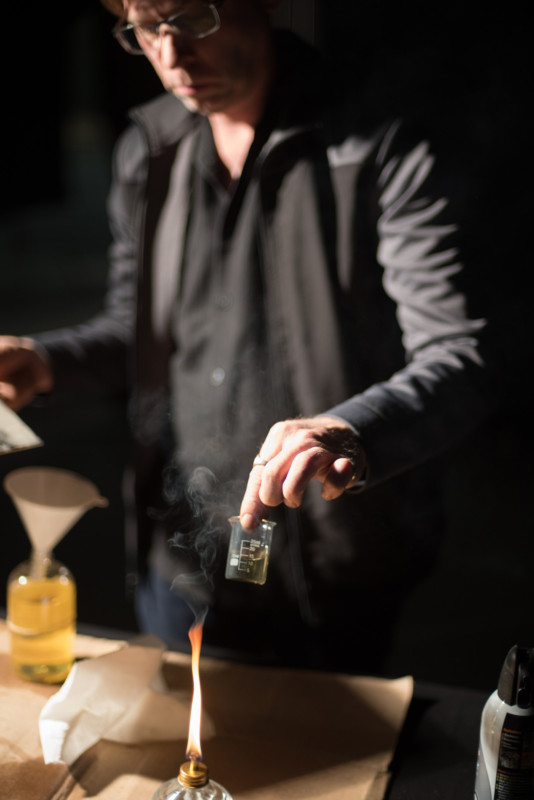


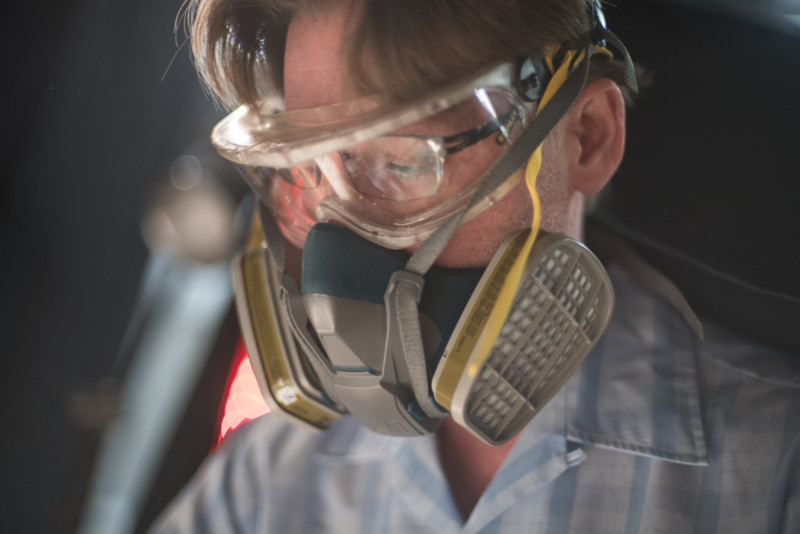
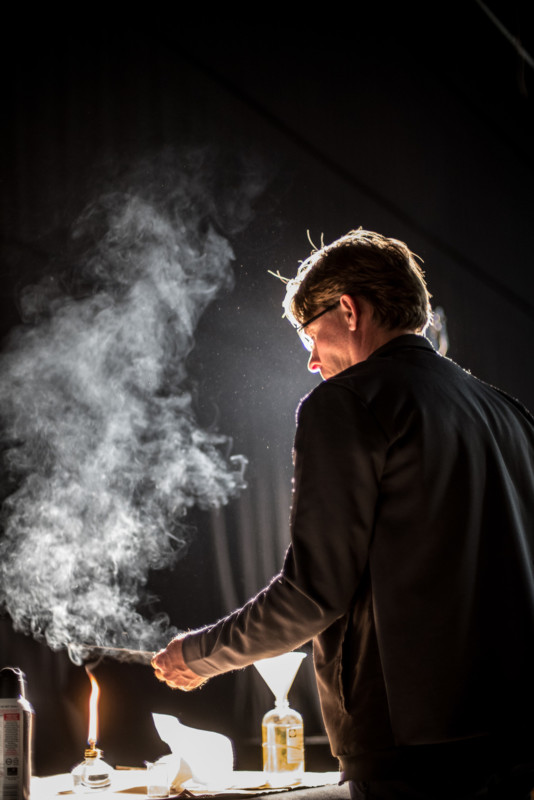
















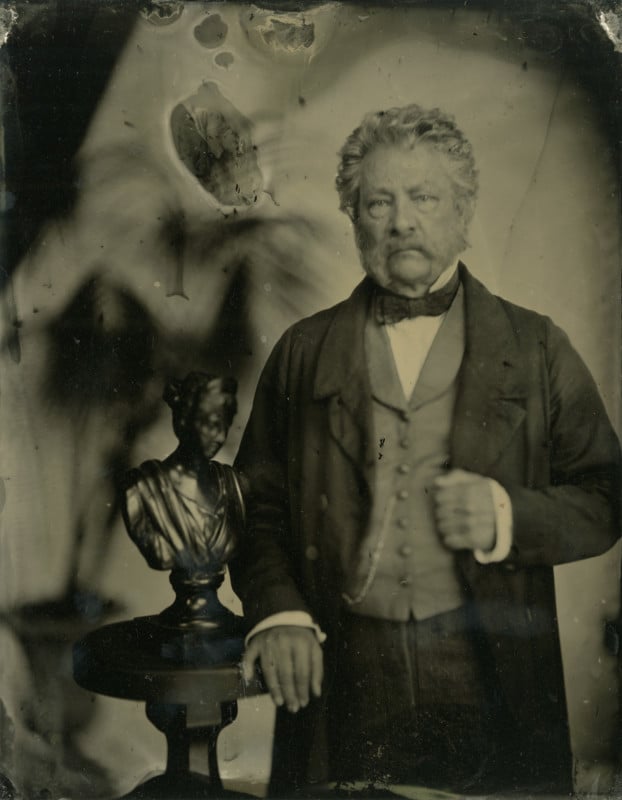
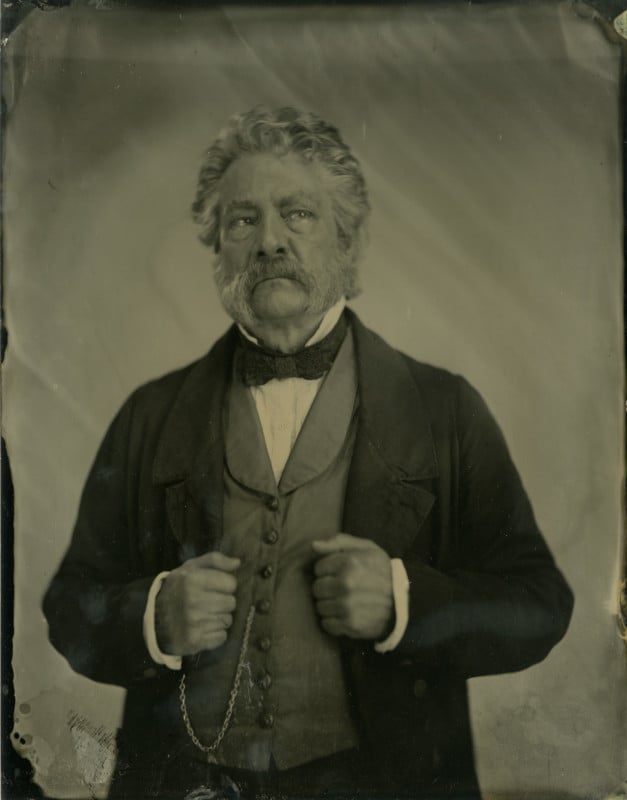
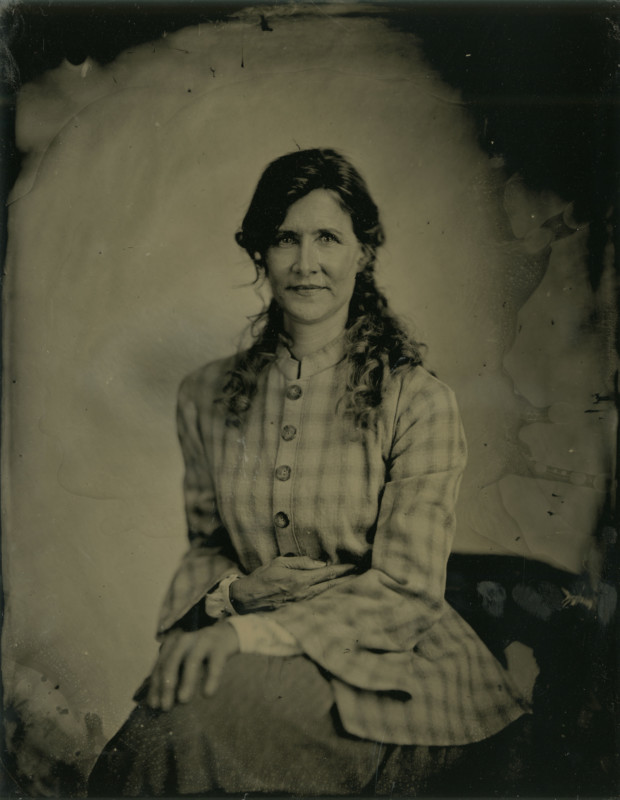
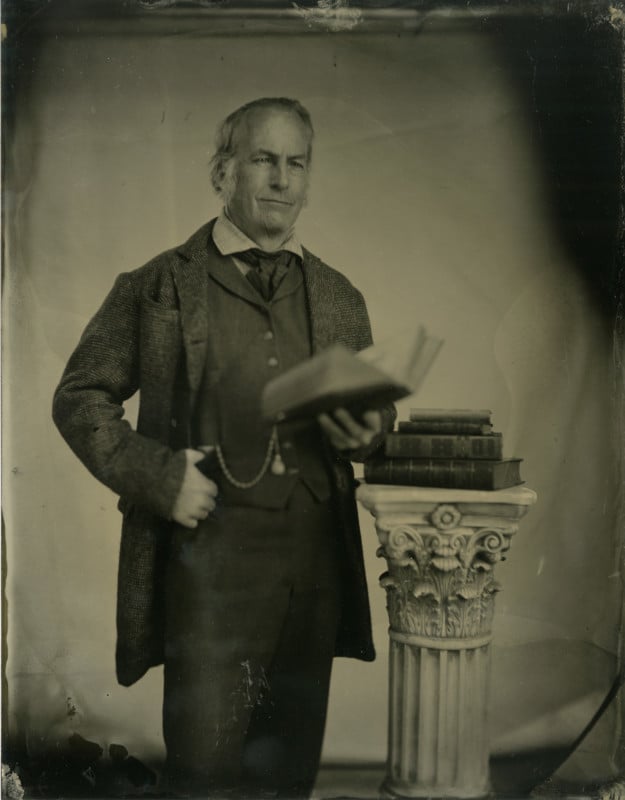
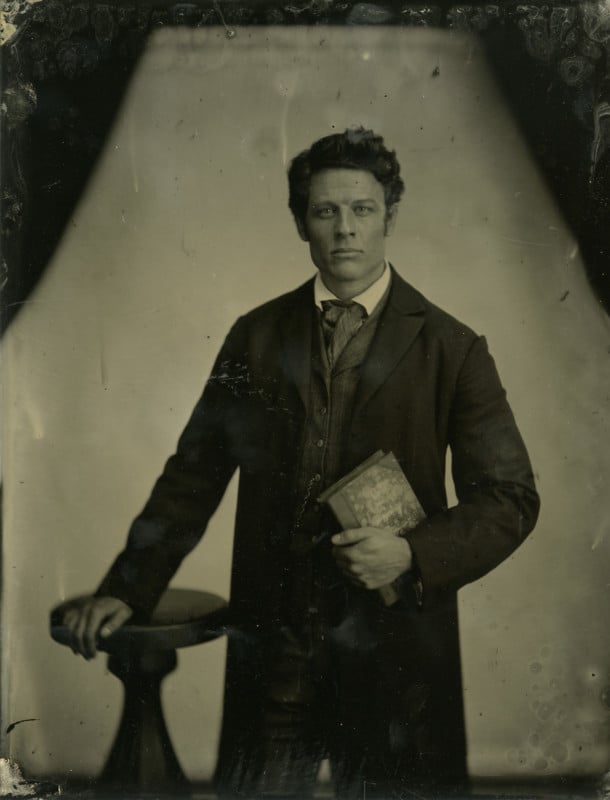

 Tom Perez, chair of the Democratic National Committee, speaks in Manchester, New Hampshire, on February 7, 2020. | Joe Raedle/Getty Images


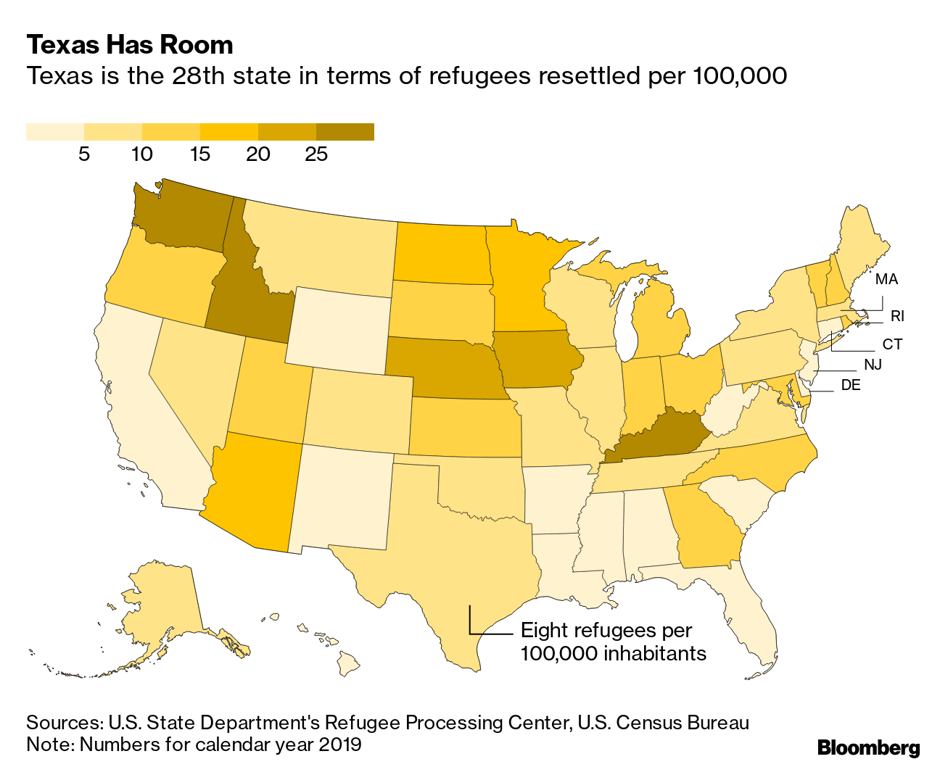
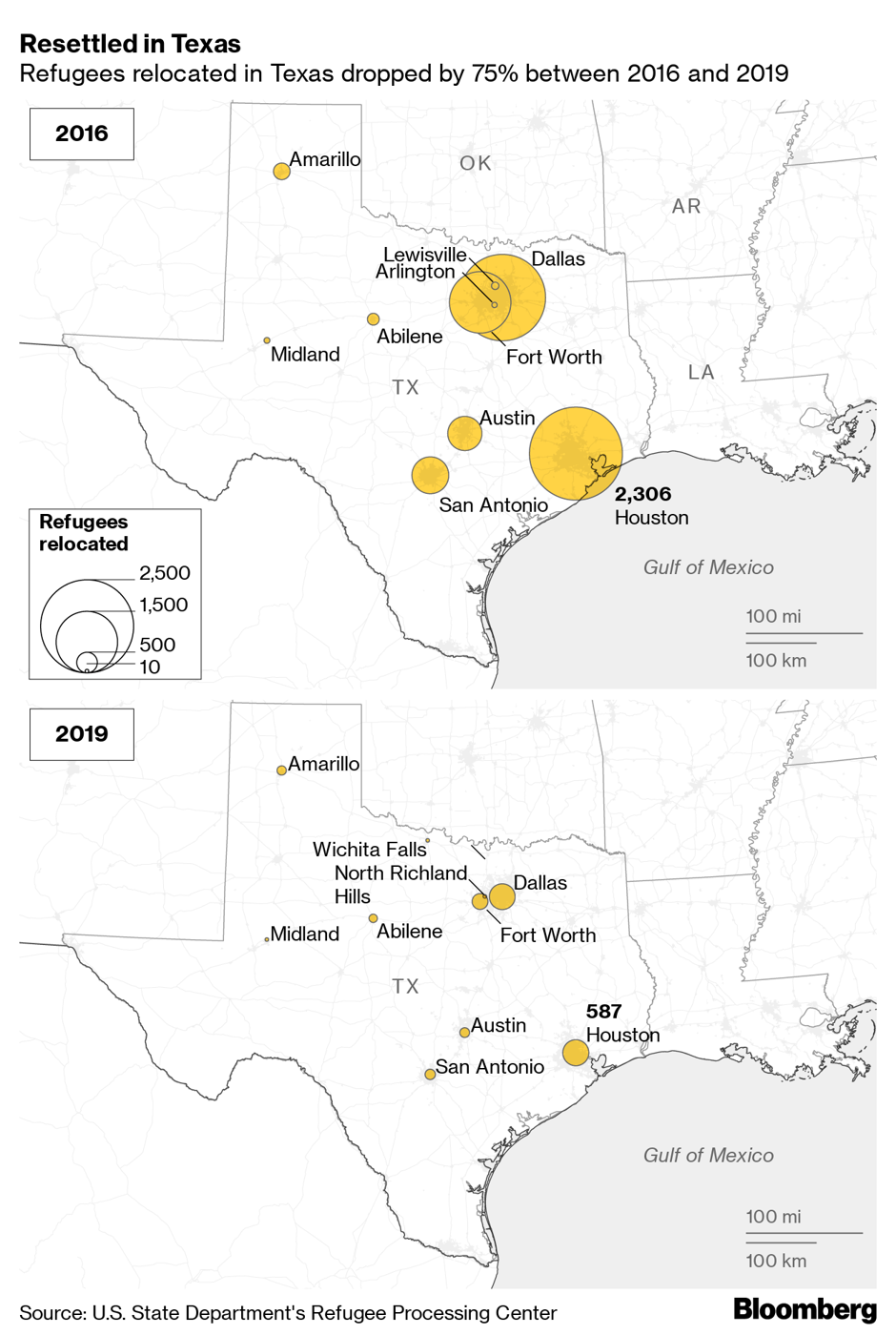
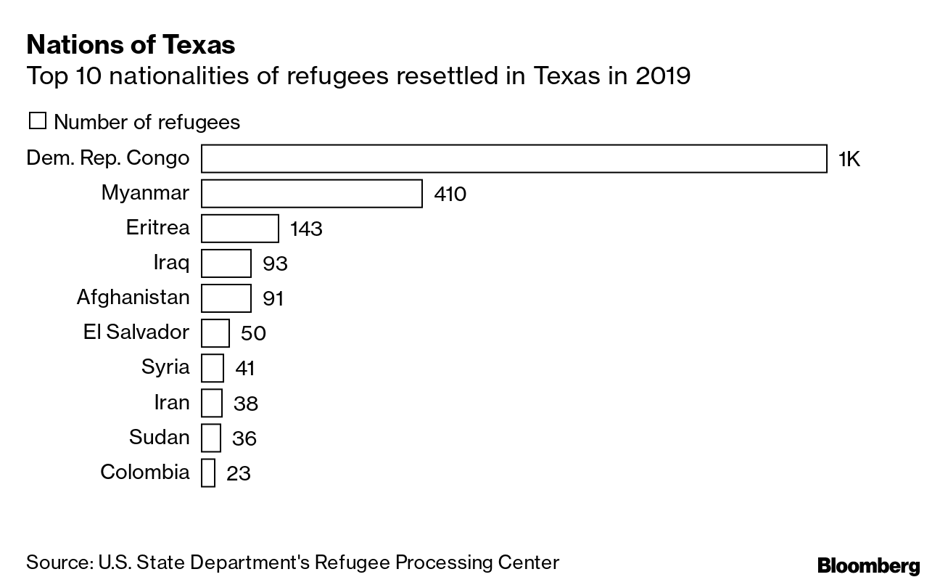
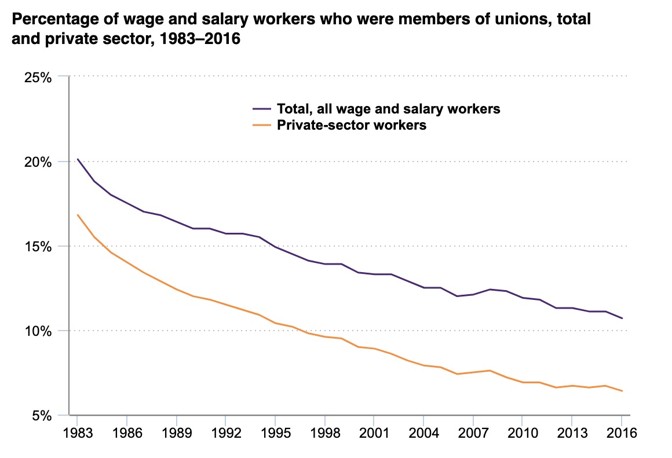
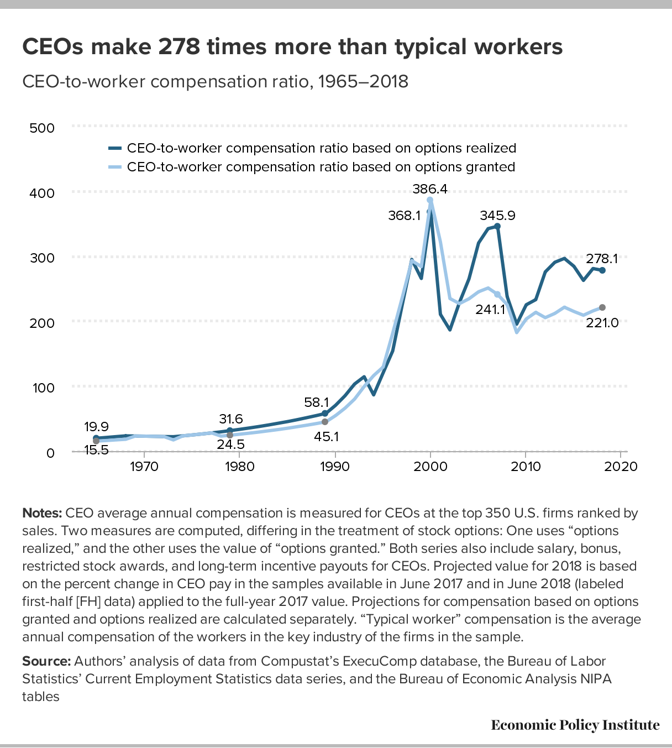



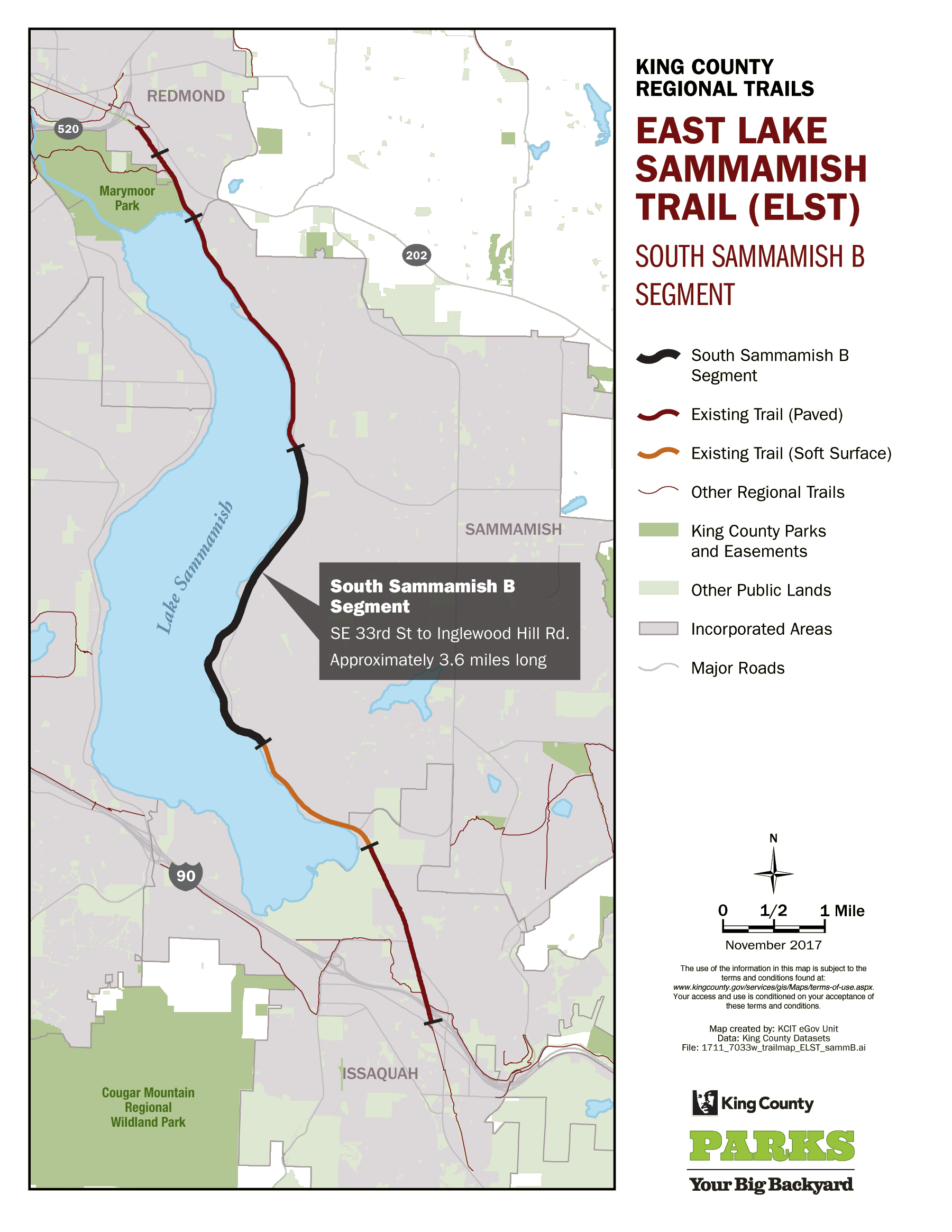


 Neal Stephenson's influential Snow Crash is finally poised to reach screens, although you'll have to be picky about where you watch it. HBO Max has ordered work on a TV series adaptation of the sci-fi novel that will be written and co-run by the Sco...


 President Donald Trump attends the 97th Annual National Christmas Tree Lighting Ceremony. | Paul Morigi/Getty Images
/cdn.vox-cdn.com/uploads/chorus_asset/file/19435974/Screen_Shot_2019_12_05_at_4.21.02_PM.png) Bronx Colors
Bronx Colors
/cdn.vox-cdn.com/uploads/chorus_asset/file/19435978/Screen_Shot_2019_12_06_at_7.56.43_AM.png) Bronx Colors
Bronx Colors
/cdn.vox-cdn.com/uploads/chorus_asset/file/19435982/Screen_Shot_2019_12_06_at_7.56.34_AM.png) Bronx Colors
Bronx Colors
/cdn.vox-cdn.com/uploads/chorus_asset/file/19436033/GettyImages_1191856109.jpg) Dan Kitwood/Getty Images
Dan Kitwood/Getty Images


 Thousands of chickens are seen in a chicken coop, in Kondrajec Panski, Poland on October 1, 2019 | Photo by WOJTEK RADWANSKI/AFP via Getty Images

 An
An