The Democratic Party used to embrace homosexuals. Now, its Florida leaders are inviting enemies of the gay community to speak at their functions, and only one week following one of the worst episodes of violence against gays in American history. That was the case earlier this month, when anti-gay imam Maulana Shafayat Mohamed was allowed to speak at the Leadership Blue Gala, the annual banquet of the Florida Democratic Party.
On June 19th, the Florida Democratic Party held its annual Leadership Blue Gala event. US Senator from New Jersey, Cory Booker, was the keynote speaker. Also listed as speakers were House Democratic Leader-Designate Janet Cruz, Senate Democratic Leader-Designate Oscar Braynon, DNC Chair and Congresswoman Debbie Wasserman Schultz, US Senator Bill Nelson, and Florida Democratic Chair Allison Tant. However, one of the other speakers, Maulana Shafayat Mohamed, who partook in opening prayers, should have been the main concern.
Shafayat Mohamed is the imam of the Darul Uloom mosque, located in Pembroke Pines, Florida. The mosque has been a haven for terror-related individuals, many of whom have been imprisoned – or, in one case, killed in an overseas anti-insurgent raid – due to their jihadist activities.
“Dirty Bomber” Jose Padilla was a student of Shafayat Mohamed’s at Darul Uloom. Now-deceased al-Qaeda Global Operations Chief, Adnan el-Shukrijumah, was a prayer leader at Darul Uloom. And Darul Uloom Arabic teacher Imran Mandhai, along with mosque goers Hakki Aksoy and Shueyb Mossa Jokhan, hatched a plot at the mosque to blow up different South Florida structures, including area power stations, Jewish businesses, and a National Guard armory.
Shafayat Mohamed has his own sordid history. In February 2005, an article written by him was published on the Darul Uloom website, entitled ‘Tsunami: Wrath of God.’ In it, he claims that gay sex caused the 2004 Indonesian tsunami and that most Jews and Christians, whom he refers to as “People of the Book,” are “perverted transgressors.”
It is statements such as these that have gotten Shafayat Mohamed thrown off of a number of Broward County boards. Yet, the imam is unrepentant.
In a speech he gave at Darul Uloom in August 2015, titled ‘Quraan Torah Bible Forbid Man Marrying Man,’ he claimed that he “got sacked from many [county] boards, because there were a lot of gay people who said, ‘We don’t want him on that board.’” He said he had a choice, to “sit in Paradise or… sit on the board and go to Hell.”
In the speech, he also lamented the existence of Muslim homosexuals. He decried, “Listen. Don’t deny it. They already got Muslim gay communities.” He as well spoke of his support for polygamy, an act that is illegal in the United States. He exclaimed, “Here the President [Obama] says a man can marry a man, but you can’t say a man can have four wives…!”
Given his documented anti-gay stance, why would the Florida Democratic Party have anything to do with this individual, let alone just one week following an Orlando, Florida shooting attack targeting homosexuals, which left scores of people dead?
On June 12th, Omar Mateen, a 29-year-old Muslim male who had pledged his allegiance to ISIS, entered the Pulse, an Orlando LGBT nightclub, and shot and murdered 49 people, while injuring 53 more. Omar’s father, Seddique Mir Mateen, who himself is a devout supporter of the Taliban, said that the incident had been triggered when Omar, during a trip to Downtown Miami, became angered after witnessing two men kissing in front of his [Omar’s] wife and son.
During his speech at the Democrat gala, Shafayat Mohamed, along with asking for blessings that Hillary Clinton would be the next President of the United States, fleetingly offered prayers for the victims of the Orlando attack. Yet, it is rhetoric such as his that caused the attack in the first place. And his rhetoric continues to this day, as his inflammatory article about gays causing the tsunami is still up on his mosque’s website, over eleven years after it was originally posted.
Shafayat Mohamed should have been shunned by the Florida Democratic Party; but instead he was embraced, as he was a couple years ago, when he was a warm-up act for keynote speaker former US President Bill Clinton at the 2014 Florida Democratic Party Leadership Blue Gala. From this year’s event, there are photos of the imam cozying up to Florida State Senator Eleanor Sobel.
It is pathetic that the Democratic Party would welcome such an individual as Shafayat Mohamed to participate at its event, especially given the timing.
In its zeal to win over Muslim voters, the Democratic Party has shamefully pandered to a heavily extremist segment of the Muslim community. The invitation of anti-gay imam Maulana Shafayat Mohamed to speak at its gala event, merely one week following the horrific Orlando attack, is clear evidence of this.
By embracing Shafayat Mohamed, the Democratic Party is not only shunning the gay community – a traditionally loyal constituency for Democrats – but it is as well aiding and abetting a radical Islamist who is spreading the type of bigoted rhetoric that spurs violence against others.
Beila Rabinowitz, Director of Militant Islam Monitor, contributed to this report.
In a perfect world, an elevator would always be waiting for me, and it would always take me to my desired floor without stopping along the way. But economics is about scarce resources. What about the problem of scarce elevators?
"The vertical transportation problem can be summarised as the requirement to move a specific number of passengers from their origin floors to their respective destination floors with the minimum time for passenger waiting and travelling, using the minimum number of lifts, core space, and cost, as well as using the smallest amount of energy."
This problem of allocating elevators is complex in detail: not just the basics like number and size of elevators, the total number of passengers, and the height of the building, but also questions of the usual timing of peak loads of passengers. Moreover, the problem is complex because passengers prefer short wait and travel times, which are costs of time imposed on them, while building owners prefer a smaller cost for elevators, which they pay. It turns out that many people would rather have a shorter waiting time for an elevator, even if it might mean a longer travel time once inside the elevator. But although the problem of allocating elevators may not have a single best answer, some answers are better than others.
Of course, in the early days of elevators, they often had an actual human operator. When automated elevators arrived and up until about a half-century ago, Dunietz explains in Popular Mechanics that many of them operated rather like a bus route: that is, they went up and down between floors on a preset timetable. Of course, this meant that passengers just had to wait for the elevator to cycle around to their floor, and the elevator ran even when it was empty.
In the mid-1960s, the "elevator algorithm" was developed. Dunietz describes it with two rules:
As long as there's someone inside or ahead of the elevator who wants to go in the current direction, keep heading in that direction.
Once the elevator has exhausted the requests in its current direction, switch directions if there's a request in the other direction. Otherwise, stop and wait for a call.
Not only is this algorithm still pretty common for elevators, but it is also used to govern the motion of disk drives when facing read and write request--and the algorithm has its own Wikipedia entry.
However, if you think about how the elevator algorithm works in tall buildings, you realize that it will spend a lot of time in the middle floors, and the waits at the top and the bottom can be extreme. Moreover, if a building has a bunch of elevators all responding to the same signals, all the elevators tend to bunch up near the middle floors, even leapfrogging each other and trying to answer the same signals. So the algorithm was tweaked so that only one elevator would respond to any given signal. Buildings were sometimes divided, so that some elevators only ran to certain groups of floors. Also, when an elevator was not in use, it would automatically return to the lobby (or some other high-departure floor).
By the 1970s, it becomes possible to encode the rules for allocating elevators into software, which can be tweaked and adjusted. For example, it becomes possible to use "estimated time of arrival" calculations (for example, here) which figures out which car can respond to a call first. Such algorithms can also take energy use or length-of-journal or other factors into account.
Another big step forward in the last decade or so is "destination dispatch," where when you call the elevator, you also tell it which floor you will be going to. The elevator system can then group together people heading for similar floors. An article by Melanie D.G. Kaplan on ZDNet.com back in 2012 talks about how this kind of system created huge gains for the Marriott Marquis in Times Square in New York City. Before this system, people could wait 20-30 minutes for an elevator to show up. After the system was installed, there can still be some minutes of waiting at peak times, but as one measure, the number of written complaints about elevator delays went from five per week (!) to zero.
The latest thing, as one might expect, is "machine learning"--that is, define for the elevator system what "success" looks like, and then let the elevator system experiment and learn about how to allocate elevators not just at a given moment in time, but to remember how elevator traffic evolves from day to day and adjust for that as well. The definition of "success" may vary across buildings: for example, "success" in a system of hospital elevators might mean that urgent health situations get an immediate elevator response, even if waiting time for others is increased. The machine learning approach leads to academic papers like: "The implementation of reinforcement learning algorithms on the elevator control system," and ongoing research published in various places like the proceedings of the annual conferences of the International Society of Elevator Engineers, or publications like the IEEE Transactions on Automation Science and Engineering.
From an economic point of view, it will be intriguing to see how the machine learning rules evolve. In particular, it will be interesting to see if the the machine learning rules that address the various tradeoffs of wait time, travel time, handling peak loads, and energy cost can be formulated in terms of the marginal costs and benefits framework that economist prefer--and whether the rules for elevator traffic find a use in organizing other kinds of traffic, from cars to online data.
There’s a new website called “Launch My Career Colorado” that went live on June 10 and is a first-in-the-nation, interactive web tool that allows students and parents to determine the estimated “Return on Investment (ROI)” from various post-secondary college degrees and certificates. ROI here is defined here not as a percent return, but rather as the estimated additional income during the next 20 years earned by a college graduate over and above the earnings of a high school graduate. The website is endorsed by the state of Colorado (Gov. John Hickenlooper helped introduce the website) and was partly funded by the US Chamber of Commerce. It will eventually be expanded to 12 other states “to help students and their families, policymakers, and post-secondary institutions make more informed decisions about the training and skills that provide the greatest value to students and their communities.” According to a US Chamber of Commerce spokeswoman:
At a time when student debt is mounting and employers are struggling to find the right people with the right skills, it is imperative that students make informed decisions about the best way to prepare for in-demand jobs. This tool will allow consumers to easily identify careers, majors, and institutions of interest and compare the value of each program.
Funding for the multi-state initiative was also received from the Colorado Association of Commerce and Industry, College Measures, USA Funds and Gallup. Various news outlets have reported on the innovative interactive website including the Denver Post, Denver Business Journal, and Inside Higher Ed.
The table above (click to enlarge) displays a sample of various 2-year and 4-year college degrees from colleges in Colorado, along with the average number of years to complete the degree, the ROI (from highest to lowest), the starting post-graduate salary, and the total student cost to earn the degree. A few comments:
1. As might be expected, there is probably no other 4-year college degree with a greater financial payoff than petroleum engineering, which is amazingly expected to generate more than $2 million of earnings over the next 20 years in excess of what a high school graduate would earn. Making it well worth the hefty tuition charges of more than $100,000 (highest among the degrees listed)…
2. It’s also not surprising that degrees in computer science and other engineering fields (electrical and mechanical) have pretty high ROIs, in excess of $700,000. And of course it’s also no shock that degrees in fields like African-American studies, women’s studies, communication, history and psychology have pretty low starting salaries (less than $24,000 for women’s studies and psychology) and pretty low ROIs ($131-$185,000 over 20 years), especially considering that students at the state’s flagship public university (UC-Boulder) pay nearly $100,000 for tuition, fees, textbooks, and room and board over 4.5 to 5 years to earn those degrees.
3. What is most surprising perhaps is the financial attractiveness (in terms of starting salaries and ROIs) and relatively low cost (both in terms of money and time to complete the degree) of many 2-year, community college degrees in Colorado (highlighted in bold above). For example:
a. Two-year degrees at the Community College of Denver in both nursing and dental hygiene have ROIs (above $600,000) and starting salaries (above $55,000) that far exceed the ROIs and starting salaries of many 4-year college degrees, including even accounting, business, economics and chemistry. And the cost to students of less than $16,000 get those 2-year degrees is significantly more affordable than any 4-year college degree at UC-Boulder that cost students (and their parents) nearly $100,000. Further, students can complete a 2-year degree in two years and start working at well-paying jobs several years ahead of their counterparts in programs for bachelor’s degrees that sometimes require 5 years or more (African-American studies, political science, chemistry and accounting).
b. Two-year degrees from community colleges in fields like computer science and emergency medical technology have starting salaries ($45,056 and $43,662) that are nearly twice as high as starting salaries for 4-year degrees in fields like psychology ($23,963), women’s studies ($23,461), and history ($23,963). And the ROI for EMTs of nearly $400,000 is more than two times greater than the ROIs for 4-year degrees in many fields including women’s studies, communications, history and psychology. Even a 2-year degree in automotive mechanics has a higher ROI ($319,224) than many 4-year degrees in liberal arts fields like political science, biology and sociology.
If colleges are going to boast about how much a degree is worth to graduates, then they shouldn’t be irritated when someone takes them at their word and examines the actual data. And then publishes the findings for all to see. That’s what Launch My Career Colorado has done, and the result is a valuable contribution to transparency in higher education.
Especially when student loan debt is at an all-time high of $1.3 trillion that burdened the average graduating student in the Class of 2016 with $37,172 in student loan debt (and monthly payments of nearly $400 per month for ten years), the transparency in higher education from the Colorado web tool couldn’t come at a better time. Kudos to Colorado for taking the lead on this much-needed effort for transparency, and let’s hope that similar interactive websites spread to other states as soon as possible. Let’s also hope that information about the ROI on college degrees causes some serious re-thinking about: a) the over-selling and over-emphasis of pushing too many high school graduates into 4-year college degree programs, b) the under-selling of 2-year degrees to high school graduates even many graduates with those degrees have higher starting salaries and higher ROIs than many 4-year degrees at a significantly lower monetary and time cost with much lower (or no) student debt, and c) the value of many 4-year degrees in fields that have limited demand and very low salaries that often come at a very high cost (both monetary and time) and with the crushing financial burden of unaffordable student loan debt.
As most of you know, my company operates parks on public lands, so I work with government agencies a lot. Years ago, from this experience, I coined a term called "arrogant ignorance." It comes from numerous times when government employees will be completely ignorant of some process, perhaps even their agency's own rules and procedures, but will fight to the death any suggestion that I might be able to enlighten them or that they are doing something wrong.
For a while, people had me believing that I had just rediscovered the Dunning–Kruger effect. But I am now convinced that this is not the same as my "arrogant ignorance". And the difference between the two highlights a key point about failure of government I have made for years, which is that government does a bad job not because the people are bad, but because it hires good (or at least average) people who have terrible incentives and information.
First, here is Dunning-Kruger per Wikipedia:
The Dunning–Kruger effect is a cognitive bias in which relatively unskilled persons suffer illusory superiority, mistakenly assessing their ability to be much higher than it really is. Dunning and Kruger attributed this bias to a metacognitive inability of the unskilled to recognize their own ineptitude and evaluate their own ability accurately.
Like most people, I see Dunning-Kruger all the time. But I see it equally frequently in private and public settings. I don't think it is necessarily unique to the public sphere, and may be over-represented there only to the extent that it is much harder to eliminate under-performers from public rather than private jobs, so they may tend to concentrated more in public positions.
But my concept of arrogant ignorance is not really a cognitive effect, I think, but rather a symptom of incentives. The problem with most government jobs is that they have no service or output metrics so that they are instead judged mainly on conformance to procedure. And even that is not quite correct, because most agencies I work with do not even have formal standards or quality review processes for their employees, at least below the executive level.
I want to take an aside here on incentives. It is almost NEVER the case that an organization has no incentives or performance metrics. Yes, it is frequently the case that they may not have clear written formal metrics and evaluations and incentives. But every organization has informal, unwritten incentives. Sometimes, even when there are written evaluation procedures, these informal incentives dominate.
Within government agencies, I think these informal incentives are what matter. Here are a few of them:
Don't ever get caught having not completed some important form or process step or having done some beauracratic function incorrectly
Don't ever get caught not knowing something you are supposed to know in your job
Don't ever say yes to something (a project, a permit, a program, whatever) that later generates controversy, especially if this controversy gets the attention of your boss's boss.
Don't ever admit a mistake or weakness of any sort to someone outside the organization
Don't ever do or support anything that would cause the agency's or department's budget to be cut or headcount to be reduced.
You ever wonder why government agencies say no to everything and make it impossible to do new things? Its not necessarily ideology, it's their incentives. They get little or no credit for approving something that works out well, but the walls come crashing down on them if they approve something that generates controversy.
So consider the situation of the young twenty-something woman across the desk from me at, say, the US Forest Service. She is probably reasonably bright, but has had absolutely no relevant training from the agency, because a bureaucracy will always prefer to allocate funds so that it has 50 untrained people rather than 40 well-trained people (maintaining headcount size will generally be prioritized over how well the organization performs on its mission). So here is a young person with no training, who is probably completely out of her element because she studied forestry or environment science and desperately wanted to count wolves but now finds herself dumped into a job dealing with contracts for recreation and having to work with -- for God sakes -- for-profit companies like mine.
One program she has to manage is a moderately technical process for my paying my concession fees in-kind with maintenance services. She has no idea how to do this. So she takes her best guess from materials she has, but that guess is wrong. But she then sticks to that answer and proceeds to defend it like its the Alamo. I know the process backwards and forwards, have run national training sessions on it, have literally hundreds of contract-years of experience on it, but she refuses to acknowledge any suggestion I make that she may be wrong. I coined the term years ago "arrogant ignorance" for this behavior, and I see it all the time.
But on deeper reflection, while it appears to be arrogance, what else could she do given her incentives? She can't admit she doesn't know or wasn't trained (see #2 and #4 above). She can't acknowledge that I might be able to help her (#4). Having given an answer, she can't change it (#1).
You may think I am exaggerating -- how could people react so strongly to seemingly petty incentives. But they do. In my example above, this is probably her first job. The government is the only employer she has known. The confidence you might have to ignore these incentives to do the right thing likely come from jobs and experience that this woman has not had.
I will give you a real example. One government contract manager asked us to spend $10,000 to do something, promising that the agency would reimburse me. I told her that I had never heard of this type of spending being reimbursable, but she said we would be reimbursed. So we did it. Later, her boss's boss heard about the reimbursement and said it was not correct under the rules. Eventually, our contract manager was challenged on it. You know what she said? She said our company spent the money without permission and that we were never promised reimbursement. She sacrificed her honor out of the fear of #1 and #3 - the incentives were that powerful for her. She knowingly lied and -- by the way - cost me personally $10,000 and a reprimand in our contract file. When I called her afterwards and asked her, "what the hell?" -- she apologized to me in tears and said she just would be in too much trouble once her boss's boss was involved to admit she had authorized the expense.
So, I try to learn from this. One thing, for example, I always do is ask myself when someone who works for me screws up, "Is this really my fault, for not training them well." A surprising number of times, the answer is a reluctant, "yes".
The Obama administration faced a firestorm of criticism over its decision to release a transcript of terrorist Omar Mateen’s 911 call pledging allegiance to ISIS … with all references to ISIS removed.
As Fox News’ Catherine Herridge reported, “A former Senior FBI officer said the redaction of the Orlando transcript was unprecedented in his more than two decades at the Bureau, and the speed with which the decision was reversed, strongly suggested it was politically motivated, and not driven by the investigation.”
Of course the decision was political. The only reason to redact anything from the 911 transcript would be to protect classified information or other evidence necessary to the investigation. Removing references to ISIS or Islamic radicalism serves no such purpose.
President Obama delivers a statement next to Vice President Joe Biden after meeting with survivors and family members of the attack in Orlando, Florida, June 16, 2016. REUTERS/Carlos Barria.
And it’s not the first time this administration has done it. Recall that in April, the White House edited a recording of French President François Hollande to remove his reference to “Islamist terrorism” in a meeting with President Obama – until conservative critics pointed out the omission and the White House immediately took down the video and then reposted it with the omitted words restored.
First they censored the president of France. Now, they have censored an Islamic terrorist referring to himself as an Islamist terrorist. It’s positively Orwellian.
But the bigger question is: Why won’t they release the actual recording of Mateen’s 911 call? Law enforcement agencies release recordings of 911 calls all the time. But in this case the Justice Department has failed to do so. Why?
It’s hard to escape the conclusion that it’s because the administration doesn’t want us to hear Omar Mateen pledging allegiance to ISIS in his own voice while speaking in Arabic. They don’t want Americans to hear him say the words “I pledge allegiance to Abu Bakr al-Baghdadi, may Allah protect him.” They don’t want us to hear him say in Arabic “Praise be to Allah, and … peace be upon the prophet of Allah… I’m in Orlando and I did the shootings.”
First they censored the president of France. Now, they have censored an Islamic terrorist referring to himself as an Islamist terrorist. It’s positively Orwellian.
Indeed, in the written transcript that change from the word “Allah” to “God” was to de-emphasize Islam. But in the recording, we would hear him say “Allah.”
The simple fact is this administration and its supporters don’t want this to be about Islamic radicalism. They want it to be about guns. They want it to be about American homophobia. That is why the New York Times responded to the attack with an editorial blaming Republicans for fostering “discrimination against gay and transgender people nationwide under the guise of religious freedom.” With all respect, Mateen was not radicalized by reading National Review and watching Fox News. He was radicalized by reading ISIS propaganda and listening to the sermons of Anwar al-Awlaki and Abu Bakr al-Baghdadi.
The administration and its supporters know that if Americans listen to what Omar Mateen said, in his own voice, it will be clear to all what the attack was about.
Even now, administration officials seem confused on this point. Attorney Genereal Loretta Lynch said on CBS News Face the Nation this weekend that they key goal of her investigation is to determine “why Mateen targeted the LGBT community.”
Good grief. It’s obvious why he targeted the LGBT community. Because he was an Islamic radical. Because he was “a soldier of the Islamic State.” Because ISIS believes that gays should be executed.
This was not the first ISIS attack on gays; it was just the first one in the United States. Last month, in Aleppo, they took a young boy, blindfolded and handcuffed, and threw him off a building for being a homosexual. They proudly posted the pictures on the internet. They did the same thing in April in Tal Afar … and in January in Rawa … and in November in Fallujah … in October in Aljazeera and Nineva province … and in September in Fourat province on the Syria-Iraq border. CBS News reports that “ISIS fighters … torture suspected homosexuals to reveal their friends’ names.” Let us hear him say it.
Yet an Islamic radical, who pledges his support to ISIS, kills 49 LGBT people here in America, and this administration and their supporters still can’t seem to accept that the problem is Islamic radicalism.
The Human Rights Campaign, the nation’s leading LGBT lobby, is busy berating Republicans for opposing gun control. Where is the Human Right Campaign statement berating President Obama for his failed strategy to defeat ISIS, which allowed the terrorist cancer to spread to Paris, Brussels, San Bernadino and now Orlando?
Omar Mateen was an Islamic State terrorist. When asked by the 911 operator what his name was, he replied, “My name is ‘I pledge of allegiance to Abu Bakr al-Baghdadi of the Islamic State.’”
Let us hear him say it. It’s time to stop the charade. Release the 911 tapes.
How many people work for the "political organizations industry," which the US Bureau of Labor Statistics defines as "political parties, political action committees (PACs), political campaign organizations, and political organizations and clubs that are engaged in promoting the interests of national, state, or local political parties or candidates"? Here's the BLS figure:
Clinton’s “rider” of her requirements for a $225,000 Las Vegas speaking engagement was full of Hollywood star-level demands including:
• a round trip on a private jet (“Gulfstream 450 or larger”)
• first class, round-trip airfare for one of her aides
• business class, round-trip airfare for two advance aides
• a “presidential” hotel suite for Mrs. Clinton at the five star Bellagio, plus “up to three adjoining or contiguous rooms for her travel aides and up to two additional single rooms for the advance staff”.
In what perhaps was a defensive move, the DNC appears to have been looking into Clinton’s notorious 2014 speaking engagement at the University of Nevada at Las Vegas in 2014, which prompted an uproar because of her $225,000 fee. The DNC retained copies of demands for perquisites her staff made to the University. These demands have been made public before, but their resurfacing Tuesday indicates that the DNC may have persistent concerns about their propriety.
UNLV was also responsible for all of then-former-Secretary Clinton’s meals and ground transportation, as well as lodging and transportation for her staff, and to pay for a stenographer who could transcribe Clinton’s words as she said them at the event.
Guccifer 2.0, taking credit for the hack, blogged that his revelation was “a big folder of docs devoted to Hillary Clinton that I found on the DNC server.”
In addition to the dossier on UNLV, the document stash contains the candidate’s detailed policy development materials on everything from ISIS and Libya to Hillary’s involvement the Clinton Foundation, tracking in detail the positions of her fellow Democratic candidates, as well as opposing, Republican ones – and what they all said about Hillary Clinton in the media. The documents also outline crisis communications strategies and give detailed instructions on how to respond to specific attacks.
Team Clinton was, oddly, very focused on Jeb Bush and Rand Paul – and not very focused on Donald Trump.
Most importantly, though, the stash seems to indicate that Clinton’s team has been busy researching Hillary Clinton, collecting lists of Clinton foundation donors and contractors and records of Clinton’s hundreds of private flights (and affiliated reimbursements).
It is, of course, unclear as to whether the documents are authentic, and questions remain as to Guccifer’s idenity. Security services working with the DNC traced the initial hack on the DNC’s servers, which happened in early June, to Russian hacker collectives known as “Cozy Bear” and “Fancy Bear.”
The New York Times has a deep dive into the rolling catastrophe that is America’s occupational licensing regime. Some bits:
Over the years, states across the country have added licensing requirements for a bewildering variety of jobs, requiring months or years of expensive education, along with assessing costly fees.
Today, nearly 30 percent of the American work force needs a license to work, up from about 10 percent in the 1970s, according to Morris Kleiner, a professor of public affairs at the University of Minnesota, who has studied the issue. […]
Licensing boards are generally dominated by members of the regulated profession. And in Arizona, more than two dozen of the boards are allowed to keep 90 percent of their fees, turning over a mere 10 percent of the revenue to the state.
“They use that money to hire contract lobbyists and P.R. people,” Mr. Scarpinato said. “This is really a dark corner of state government.”
When people on the right say “job-killing regulations,” they usually are referring to health or environmental or social welfare rules that may or may not be wise but which actually have—or are intended to have—some kind of positive benefit for society at large. But a good chunk of America’s occupational licensing system—exemplified by the Times story about the animal masseuse ordered by Arizona’s veterinary board to stop practicing unless she paid a quarter million dollars for four years of veterinary school—falls into a different category entirely. These are cartels, plain and simple, that use state power to minimize competition and maximize rents, without any plausible justification besides self-interest. The result is an array of needless obstacles to gainful employment—especially for less-skilled workers and military families.
Excessive licensing—an impediment to work for millions of Americans—is the type of issue that a savvy center-right party would seize on. But after nearly six years of unprecedented state control of statehouses and governors’ mansions, red state licensing rules are no less oppressive than those of blue states. Perhaps these legislatures should spend less time waging gratuitous bathroom battles and more time ensuring that their governments don’t arbitrarily punish and fine hard-working citizens for trying to participate productively in the economy.
On May 12, 2016, The London Times published an open letter, in which close to 200 economists warned the British public against voting for a withdrawal from the European Union. Unfortunately, economists can be wrong – often about the most consequential of matters. The voters might keep that in mind as they heads to the polls on June 23.
When the Great Recession started in 2008, Queen Elizabeth II is supposed to have asked why nobody saw the financial meltdown coming. Appropriately enough, the British Monarch asked that question at the London School of Economics, which was founded by some of the luminaries of the Fabian Society, including George Bernard Shaw, and Sidney and Beatrice Webb.
The former was a Nobel Prize-winning playwright, whose genius could not disguise his deep-seeded misanthropy. As he once observed, “Under Socialism, you would not be allowed to be poor. You would be forcibly fed, clothed, lodged, taught, and employed whether you liked it or not. If it were discovered that you had not character and industry enough to be worth all this trouble, you might possibly be executed in a kindly manner.”
The latter were a couple of economists who visited the Soviet Union in 1932 and returned home to write a socialist panegyric entitled, “Soviet Communism: A new civilization?” The 1000-page tome, which was first published in 1935, was reprinted in 1941 and 1944, omitting, prematurely it turned out, the question mark. Impartial observers would have noticed Soviet poverty or suspected that what they were being fed was, at best, a sanitized slice of daily life in the USSR.
Not so with the Webbs. They swallowed the Soviet propaganda hook, line and sinker.
The Webbs belonged to a long line of socialist apologists. The late Paul A. Samuelson, a Nobel Prize-winning economist from the Massachusetts Institute of Technology, and William D. Nordhaus, a professor at Yale University, are another inglorious duo.
For decades the two have published the standard university introduction to economics called, well, “Economics.” First published in 1948, the book went through 19 editions, with the last coming out in 2010. The book sold over 300,000 copies of each edition between 1961 and 1976, making the two authors very rich.
In the 13th edition, which was published in 1989, the authors urged their readers not to “dwell on the shortcomings [of a socialist economy].” “Every economy,” they maintained, “has its contradictions and difficulties… What counts is results, and there can be no doubt that the Soviet planning system has been a powerful engine for economic growth.”
That same year, communism collapsed.
Nowhere in the 14th edition, which came out in 1992, did Samuelson and Nordhaus admit that over the decades they have grossly misled hundreds of thousands of college students in the West about the single most important economic fact of the twentieth century – that a completely socialized economy must be a catastrophic failure.
Instead, they dismissed the socialist experiment by noting that “the technological backwardness of Soviet planning is symbolized by the fact that the planning apparatus, which is supposed to allocate thousands of commodities… performs many calculations on abacuses,” and lowered their estimate of the Soviet gross national product per capita from 49 percent that of the United States, to “between one-sixth and one-third of that of the United States.”
That economists are frequently wrong about fundamental questions was wonderfully reaffirmed seven years later. In 1999, The Economist surveyed 164 British economists, two-thirds of whom said that they were in favor of Britain joining the single currency.
In 2016, fifty leading economists, who were brought together by the pro-EU Centre for European Reform, concluded that “there is a broad consensus that the euro had been a disappointment: the currency union’s economic performance has been very poor, and rather than bringing EU member-states together and fostering a closer sense of unity and common identity, the euro has divided countries and eroded confidence in the EU.”
Surprisingly, some politicians, who had little economic training but believed in human freedom and ingenuity, were much better at understanding and solving difficult economic problems.
The U.S. President Ronald Reagan, for example, believed (much to the amusement of the American sophisticates) that communist countries were backward and could never attain prosperity. Remarkably, he never wavered in basing his foreign policy on that premise. His intransigence was all the more impressive considering that he did not set foot in the USSR until the last year of his presidency.
In a similar vein, the British Prime Minister Margaret Thatcher understood that socialism was a dead-end, famously quipping that “The problem with socialism is that eventually you run out of other people’s money [to spend].” Lady Thatcher was a ferocious opponent of the single currency and of the centralization of decision-making in Brussels. As the British voters decide on Britain’s membership in the EU, they should remember her.
In order to get optimal regulation in the financial world, says Alan Blinder, the former Vice Chair of the Federal Reserve, one should seek to over-regulate.
Alan S. Blinder
The Government Accountability Office (GAO), a U.S. Government agency that provides investigative services to Congress, was tasked last October with a new mission: to investigate whether the Federal Reserve and other regulators are too soft on the banks they are meant to police. Lawrance Evans, the GAO’s director of Financial Markets, recently told Reuters that the agency will conduct “an assessment across all financial regulators, and the Federal Reserve will be one institution.”1)Jonathan Spicer. 2016 “Exclusive: U.S. watchdog to probe Fed’s lax oversight of Wall Street.”
Regulators, academics, bankers, and experts will be called to offer advice and share their experiences. But perhaps the best first step for the investigative team of the GAO is to turn to history – to 1982, when George Stigler received the Nobel Prize for his theory of regulation. In his seminal piece, inspired by earlier scholars like Mancur Olson, Gordon Tullock, James Buchanan, and many more, he explained the dynamics that lead most regulators to be acquired by the industry they are tasked with regulating.
When a small group that has a concentrated interest competes with a dispersed large group, it is the former and not the latter that usually wins. One cannot think of a better example than the U.S. banking system in 2016: four banks control 45.5 percent of the market, $6.5 trillion in consolidated assets2)Federal Reserve Statistical Release: Insured U.S.-Chartered Commercial Banks That Have Consolidated Assets of $300 Million or More, Ranked by Consolidated Assets (As of December 31, 2015).. Banks spend hundreds of millions of dollars every year3)OpenSecrets.org on lobbying and campaign contributions, and have close ties with academia and experts4)Admati, Anat. 2016. Forthcoming..
The ideas of Stigler and Olson can be interpreted in two directions. The first, taken usually by the “public choice” school of academics, is that the less regulation we have, the less opportunities for captured regulation and rent-seeking. The second direction is a more nuanced one: regulation tends to be captured, therefore we need simple5)Zingales, Luigi. 2012. “A Capitalism for the People: Recapturing the Lost Genius of American Prosperity.” Basic Books., aggressive regulation that cannot be easily captured6)Carpenter, Daniel and David A. Moss (Editors). 2013. “Preventing Regulatory Capture: Special Interest Influence and How to Limit it.” Cambridge University Press, or to create conditions for effective competition.
While in many industries reducing regulation and simplifying it is theoretically an attainable task, in the financial system it’s a much taller order; financial systems are prone to booms and busts, can have dramatic spillovers to the rest of the economy and, in failures, can take a dramatic toll on taxpayer money.
Professor Alan Blinder, former Vice Chairman of the Federal Reserve (June 1994 to January 1996), has been studying the financial system for close to 30 years. In 2014 he published a paper that did not get enough attention, but that students of regulation theory may find surprising: In order to get optimal regulation in the financial world, one should seek to over-regulate.7)Blinder, Alan S. 2014. “Financial Entropy and the Optimality of Over-Regulation.” Griswold Center for Economic Policy Studies, Working Paper No. 242
The idea of cyclical regulatory equilibrium in financial markets is not new, as Blinder immediately admits. In a 2009 paper, Joshua Aizenman wrote that “prudential” under-regulation may expose economies to future financial crises, which means that over-regulation may be the correct course8)Aizenman, Joshua. 2009. “Financial Crisis and the Paradox of Under- and Over-Regulation.” NBER Working Paper No. 15018. And, of course, Blinder also borrows from the “Minsky cycle”: Hyman Minsky’s idea that periods of financial stability encourage further and further risk-taking, even with borrowed money, until a phase–a “Minsky moment”–where asset values collapse.
“Financial regulations and their effectiveness tend to get weakened over time by (a) industry workarounds, (b) regulatory changes, and (c) legislative changes. The main exceptions come during and after financial crises or scandals, when public revulsion against financial excesses enables, perhaps even forces, a tightening of regulation,” Blinder writes.
Therefore, in Blinder’s view, over-regulation, when it can be achieved, is actually optimal. Or, in his words: “a simple, but not mathematically accurate, way of thinking about the optimality of over-regulation is that it gets the degree of regulation ‘right on average’ over time.”
Blinder uses the (S, s) inventory model to describe regulation over time, where the vertical lines represent the sharp tightening of regulation following crises, and the downward sloping lines represent the slow erosion of regulation between crises. He writes that, because regulation softens over time, the chart on the right, (b), is correct.
This constant movement of regulation towards the interests of the financial industry leads Blinder to prescribe over-regulation in those rare instances where there is political will and ability to regulate.
Guy Rolnik: You’ve been around in the financial sector for many years, and specifically in regulation, and then you come up with a simple idea: we have to over-regulate as an objective.
Alan Blinder: Yes. The key point there is that you over-regulate when you get the chance because you know, or you should know, that the severity of the regulation is going to dwindle thereafter. That’s what I call the financial entropy theorem.
GR: Looking at history, what are the events when you do have the chance to regulate?
AB: I think to a first approximation, and it’s a very good approximation, you only get a chance when there’s some kind of a crisis. So, for example, we had in 2008-9 a very serious financial crisis, followed by Dodd-Frank in 2010.
We had in the early ’90s the savings and loan calamity, followed by very substantial regulation. The tradition is that you try to either solve or mitigate the problems that have just smacked you in the face.
One further point: If you go to Congress and nothing terrible has happened and say ‘there are dangers lurking here, and maybe we should do something about it in a regulatory way,’ you’re not likely to succeed.
GR: This flies in the face of the idea that this may lead to unintended consequences.
AB: No, every regulation has unintended consequences. That’s not an issue. But I would say it’s only at those rare instances that you get to regulate, certainly in the financial context.
I’m not so worried about regulation going overboard for two reasons. One, which we already talked about, is that there is financial entropy that will reduce the bite of the regulation over time.
The second, however, is that even in real time the industry has lots of lobbyists to protect it from the most excessive and egregious over-reaches.
GR: And you are not worried about the possible unintended consequences of such regulation?
AB: Not too much. The only one thing I think I want to add to your sentence is the adjective, “financial.”
For example, I can imagine that, in health regulation, one could make mistakes that actually make people sicker or even kill people. Let’s put it this way, I drew these generalizations only for financial regulations. I wouldn’t just blithely apply them to all regulations.
GR: But some of the ideas that you present would also be very relevant to most.
AB: I think that’s right. You have to just consider those others on a case-by-case basis.
I also want to add that regulatory entropy is probably an even more important observation where the regulations are detailed and complex, as opposed to when they’re big, broad, and general–and get a lot of public attention.
If we imagine, for example, and I’m getting fanciful here, a cap and trade system as a remedy for global warming. If we ever got serious about it, I think that it would be in the headlines. It would include a tax or something like that.
A lot of people would know about it, and it would be much less in the shadows. Whereas in financial regulation, if you stop the average American in the street now, or even in the summer of 2010 when it was being legislated, and said “name one thing that’s in Dodd-Frank,” I don’t think one in a thousand could give you an answer.
GR: Yes. I bet that many economists don’t know what’s really in those 2,300 pages.
AB: Well, almost no one except the lawyers and lobbyists know what’s in the whole 2,300 pages. But as a broad generalization, the populace probably knows nothing that’s in it.
To some extent I think that’s important.
GR: You’re saying that one of the ways to deal with regulatory capture is to understand the mechanics and the equilibrium and that this is why many times we have to over-regulate.
AB: Yes, exactly that. When I elucidated the reasons for the financial entropy theorem, for the withering away of the effect of regulations, the first thing on my list was the actions of the regulators themselves easing the burdens by detailed rulings and slight modifications of the regulations or enforcement.
GR: Let’s go back 20 years. What would you have said then if I presented you with this idea that over-regulation is a way to solve captured regulation in the banking sector?
AB: I don’t think I would have said anything like this when I was Vice Chair of the Fed. It takes years of watching these processes unfold, I think, to appreciate that. Furthermore, remember those were the Greenspan years. I wouldn’t have had the perspicacity to voice something like that at the Fed then. Besides, if I did, it would have been laughed out of court.
GR: So maybe what is needed here is three things. First of all, in order to understand this dynamic that you describe here, you have to have a very long perspective, because you have to see those cycles going on a few times. You also have to be an insider in a very important regulatory body, and you have to be an economist.
AB: Probably. I’m not sure you have to be an insider in an important regulated body. You could be an external student of financial regulation who watches things closely without serving in the government. I think that’s certainly possible.
GR: Is there a specific point in time where you started developing this idea? Was it during the last financial crisis? Before the crisis? After the crisis?
AB: I think it was mostly after the financial crisis, because to tell you an important truth, one of the things that really put this framework into my mind was Minsky. Minsky was not mostly about financial regulation, but his ideas were a little about financial regulation. What it was mostly about was cycles of forgetting and remembering financial excesses.
A key ingredient in the financial entropy theorem is the notion that, while the good times are rolling, everybody forgets about the bad times, and the danger is that we may lapse back from the good times to the bad times. That’s a major reason why the regulatory burden lightens.
That’s really a Minskyan idea. Like most economists, Minsky never appeared in my training, nor, I must confess, did he appear in my teaching. It was only after the crisis that I started thinking about Minsky, as many people did.
GR: The problem with the financial sector is not only its riskiness but its sheer size. Maybe half of the industry is what you call rent-seeking–activities that don’t serve the allocation of resources and social causes.
AB: Yes, I think that’s right—or potentially right, anyway. If you think about modern financial innovation, fancy financial products like derivatives, and I’m talking especially about over-the-counter customized derivatives, one of the things they’re about is making competition extremely difficult because buyers can’t do comparative shopping for the best price. So complex instruments raise the returns of the financial companies that create them.
I think everybody knows that, especially the people that create them. That does not look like a productive activity to me.
GR: How often do we see situations in financial markets where competition doesn’t weed out low-quality players?
AB: I’ll give you an example that everybody knows about, which is health insurance plans. One of the reasons for the malfunctioning of the health insurance system is that the differences are so many and so complicated that it was very hard for consumers to put them side by side and say, “This is a better deal. This is a worse deal.”
GR: How will competition work in financial markets?
AB: It works very well for the kind of textbook model that we teach in elementary economics, which is a market for a homogeneous product sold by many small competitors; information is symmetric rather than asymmetric (so the buyer knows what the seller knows); and a variety of other things. Under those circumstances, competition works beautifully.
GR: But the problem is that these circumstances are very rare in the real marketplace.
AB: Yes, I think maybe the best way to put this is not the way I put it in the paper: It doesn’t work so well with complicated goods and services. It works very well with simple goods and services.
GR: Yes, and by the way, how often do we teach that to our students?
AB: Hardly ever.
GR: Let’s say you do a BA, MA, and PhD in economics. How much do you get in each step?
AB: I think that if you do your BA you get a little bit. One particular instance of this is asymmetric information that I mentioned before, where the seller knows more than the buyer. A little of that creeps into undergraduate curricula, there’s a lot of it in graduate curricula, a lot.
That’s pretty well understood. But I don’t know that we have much about the complexity issue, especially where it’s contrived complexity.
GR: Is it possible that the financial industry is promoting this complexity in order to capture regulation?
AB: Yes.
GR: Going back to your paper, most of the time we are not in the situation where we can regulate because time has passed from the crisis.
AB: Yes.
GR: So we’re not very hopeful about the ability of regulators to act at this point after reading your paper.
AB: I think that’s right. The balance of lobbying power is extremely skewed between the industry and the consumers.
GR: Is it only the balance of lobbying power, or is it also the case of such a huge industry with so much resources and influence?
AB: That’s what I mean. I also want to say lobbying power. It also flows into what you were saying before about Stiglerian capture.
GR: About intellectual capture of the regulators?
AB: Yes. I think it’s basically cognitive capture.
GR: More than the revolving doors between the regulating agencies and the regulated industries?
AB: I think so, although the revolving door is relevant also. I don’t think it’s either outright or tacit bribery, not very often.
You do hear cases of dishonesty and things like that, but I really think in the US that’s a trivial part of the problem compared to, say, cognitive capture.
GR: We’re not talking about illegal stuff, but about cases where regulators know that, when they cross over to their formerly regulated corporations, their salaries will be 10, 20, or 50 times higher. Doesn’t this also create some kind of a social capture?
AB: Yes, a little. It’s hard to make that analysis quantitative, like how important it is. I’m sure there’s some of that. Let me come back and add one more thing. If you are a big banker, and you want to hire a former regulator into your company, what you’re really after is not how soft he or she was as a regulator. In fact, there’s a sense in which a tougher one might be better for the company, because what you’re really after is someone who can guide you through the ins and out of regulation. So what is it that an incumbent regulator really has to do? You see what I’m getting at?
GR: Yes.
AB: It’s not like you want to hire the guy who, while he was in the regulatory agency, was salivating about going to work for an investment bank and doing everything he could do to ingratiate himself, because that’s not going to help you as, say, the CEO of the business. You want to bring knowledge in so that you can cope with the system better.
GR: Yes, maybe it’s more complex than that, because you want people that are very smart. You may want regulators that gave you a hard time.
But, on the other hand, I’m not sure that it creates an incentive for the regulator to do a better regulatory job, such as something that will address rent-seeking, for instance.
AB: Yes, it’s hard to take that kind of a long perspective for anybody.
GR: When you talk about capture, you say that they are the masters of the universe because, after all, they earn so much. Maybe this has to do with cognitive capture–the belief that if someone is making 10 times, 20 times, or 100 times more money than the regulators, that person must be very smart and we should all listen to them.
AB: I think that’s commonly believed. You know the old line from Fiddler on the Roof: “When you’re rich they think you really know.” There’s wisdom in that. People do act that way.
GR: We did not talk about the long term. When you want to solve this problem that you describe here, what can we do to diminish the huge political and social power of huge industries over regulation?
AB: I think it’s very difficult. First of all, what seems obvious is to diminish the influence of lobbyists. That seems obvious, but then when you read the U.S. Constitution, not to mention the zillions of court rulings based on it, you realize how difficult it is.
Lobbying is a protected constitutional right. Bribery is illegal, but lobbying is completely legal and constitutionally protected. It’s very, very, very, very difficult to do limit it.
Similarly, the next line of defense is the Congress. The simple prescription is to elect better congressmen and women. Easier said than done. The third, I think, which is doable, is that a president puts skilled, smart, and tough-minded regulators into the offices of the heads of the regulatory agencies.
That doesn’t mean regulators who are out to decimate the industry, but regulators that understand that their role is to protect the people that need protection, and that’s probably not the financial giants.
GR: That hasn’t happened for a while.
AB: It does and it doesn’t. But if I look at it in that light I would say that the message is over-regulate when you’ve got the opportunity, and don’t be shy.
GR: When you say over-regulate, do you also mean go for measures like breaking the banks in order to make sure that they don’t have such political power? Going back to the original antitrust, it was invented way before economic analyses as a political tool to make sure that nobody accumulates too much power.
AB: Yes, I think there’s something to that. It’s not the usual argument that is made, although it is one of the arguments that is made. A problem with that, which you’ve heard, for example, and I’ve heard Barney Frank bring this up a number of times in the context of Bernie Sanders’ claims, is how big is too big?
I mean, it’s easy to say they should be smaller. How much smaller? Let me be concrete. Example, JPMorgan Chase is now about a two-and-a-quarter trillion-dollar company by assets. Would there be less power there if it was one and an eighth trillion dollar company? That’s not obvious to me.
GR: Probably not.
AB: In fact, it could go the other way around, with two such companies. Now, if you’d say, OK, now we don’t want any bank bigger than two billion, so that none of them is going to have political power. But then we will not have an industry capable of serving the needs of commerce.
When you start talking about breaking up the banks just because of size, numbers matter a lot. It’s not obvious to where you look for guidance about what’s the right number.
GR: So what is your solution?
AB: First of all, I don’t have a solution. Second, it’s the obvious things I said before: better regulators, better politicians. The only thing that I would add to that is sunshine, more exposés by journalists, for example.
GR: I can tell you all about the ability of the media to operate, like going after banks, when you have only four banks in the country and most of the media is controlled directly or indirectly by people who need favors from banks.
AB: Yeah, but there’s a couple of slippages between cup and lip there by the time you get down to the level of the reporter. What you just said is a potential problem, but I think the bigger problem is the kind of technical expertise you need to get inside some of these issues.
GR: The experts usually prefer to work for the banks and not for the media.
AB: Not for the media. That’s right, and it’s pretty tough for the reporter who next month is going be writing a story on the military, or on an obituary of Prince or something, to dig into the details of Dodd-Frank, or some pending legislation.
GR: Did you get any pushback on this paper?
AB: You know, I would say I got very little attention, period. This is part of what happens when you publish things, first of all, in obscure conference volumes in general, and then, within the economics profession, when you publish things that don’t have any math.
So probably very few of my professional economics colleagues have read this piece or even know about it.
Jonathan Spicer. 2016 “Exclusive: U.S. watchdog to probe Fed’s lax oversight of Wall Street.”
2.
↑
Federal Reserve Statistical Release: Insured U.S.-Chartered Commercial Banks That Have Consolidated Assets of $300 Million or More, Ranked by Consolidated Assets (As of December 31, 2015).
Zingales, Luigi. 2012. “A Capitalism for the People: Recapturing the Lost Genius of American Prosperity.” Basic Books.
6.
↑
Carpenter, Daniel and David A. Moss (Editors). 2013. “Preventing Regulatory Capture: Special Interest Influence and How to Limit it.” Cambridge University Press
7.
↑
Blinder, Alan S. 2014. “Financial Entropy and the Optimality of Over-Regulation.” Griswold Center for Economic Policy Studies, Working Paper No. 242
8.
↑
Aizenman, Joshua. 2009. “Financial Crisis and the Paradox of Under- and Over-Regulation.” NBER Working Paper No. 15018
Ridd was punished by James Cook University for “not displaying responsibility in respecting the reputations of other colleagues.” The university even warned that if he does this again, he’ll be tried for serious misconduct.
The latest perversion in research ethics comes to us from James Cook University in Australia. The Australian has the scoop, but it is behind paywall. Michael Bastasch of the Daily Caller has an article on this University Censures Science Prof For Fact-Checking Global Warming Claim. Excerpts:
An Australian university recently censured marine scientist Paul Ridd for “failing to act in a collegial way and in the academic spirit of the institution,” because he questioned popular claims among environmentalists about coral reefs and global warming.
What was Ridd’s crime? He found out two of the world’s leading organizations studying coral reefs were using misleading photographs to make the case that global warming was causing a mass reef die-off. Ridd wasn’t rewarded for checking the facts and blowing the whistle on misleading science. Instead, James Cook University censured Ridd and threatened to fire him for questioning global warming orthodoxy.
Ridd’s not alone in criticizing some institutions and environmental groups for over-hyping the impacts global warming will have on coral reefs.
In fact, the Great Barrier Reef Marine Park Authority’s own chairman had to come out and dispel notions the reef was almost completely gone.
“We’ve seen headlines stating that 93 percent of the reef is practically dead,” Reichelt said. “We’ve also seen reports that 35 percent, or even 50 percent, of the entire reef is now gone.”
“However, based on our combined results so far, the overall mortality rate is 22 percent — and about 85 percent of that die-off has occurred in the far north between the tip of Cape York and just north of Lizard Island, 250 kilometers north of Cairns,” he said. “Seventy-five per cent of the reef will come out in a few months time as recovered.”
The group’s former chairman Ian McPhail even accused environmentalists of “exaggerating the impact of coral bleaching for political and financial gain.”
Despite the campaign to tamp down on reef alarmism, Ridd was punished by James Cook University for “not displaying responsibility in respecting the reputations of other colleagues.” The university even warned that if he does this again, he’ll be tried for serious misconduct.
JC reflections
I just love this statement: “not displaying responsibility in respecting the reputations of other colleagues.” Folks, we have a new definition of serious academic misconduct. Watch out, Michael Mann.
If this seems like a joke, it isn’t. I was ostracized from the ‘community’ for criticizing my colleagues overconfidence and failure to adequately account for uncertainty (see the infamous article Climate Heretic Judith Curry Turns on Her Colleagues). I thought that, in the midst of all the important issues at play in the climate debate, ‘turning on my colleagues’ was the least of them.
In my previous post Scientists and Motivated Reasoning, I identified a major ethical conflict for scientists between the microethics of your conscience in adhering to the norms of science, versus the macroethics of your perceived duty to the public, which may be colored by your politics and values.
Also included in the discussion of microethics versus macro ethics is responsibility to your colleagues. In my previous post, I wrote:
I am particularly concerned about microethical conflicts involving colleagues and scientific institutions that apparently justify self-serving irresponsible professional behavior, both by individuals and institutions. This seems much worse to me than politically motivated reasoning by members of the public. Personally, I have felt the need to break loose of the shackles of loyalty to colleagues and institutions if it comes at the expense of integrity in science and professional conduct.
Why even bother with loyalty/responsibility to colleagues – beyond giving them credit for their research? Do I really have any responsibility to any and all scientists just because they are members of the same professional society? I would say no, but upon further reflection I can see a tiny point here – it isn’t just a joke.
The importance of ‘collegiality’ among elite academic researchers seems to be perceived as more important than I have credited. In Michael Polanyi’s Republic of Science, the self-coordination of scientists is of paramount importance.
Going back to my previous discussion on microethics versus macroethics, I wrote:
As a researcher, what kinds of responsibilities do you have to
your conscience (micro)
your colleagues (micro)
institutions (micro/macro)
the public (macro)
the environment (macro)
My previous post illustrated numerous ethical conflicts that can arise for researchers. But when it comes to conflicts between your conscience and your colleagues, or the public and your colleagues, any perceived responsibility to your colleagues has to take a back seat.
But it seems that in academic science, responsibility to your colleagues and their opinions, their declarations of consensus, their reputations, is apparently regarded by many researchers as the paramount consideration, viz. the circling of the wagons that occurred in Climategate.
This concern about ‘responsibility’ to your colleagues seems only to extend to colleagues who happen to agree with you.
In Science on the Verge, and in postnormal science more generally, the importance of extended peer review is emphasized, which is very much needed to break down the clubby, exclusionary academic collegiality that is used as a club to marginalize dissenting voices.
The sickness of the clubby academic collegiality is absurdly highlighted by this latest episode from James Cook University.
CHARLESTON, W. VA. (June 10, 2016) – A West Virginia law setting the foundation to nullify in practice some Food and Drug Administration (FDA) rules that deny access to experimental treatments by terminally ill patients is now in effect.
A bipartisan coalition of four representatives introduced Senate Bill 416 (SB416) back in January. The legislation gives terminally ill patients access to medicines not yet given final approval for use by the FDA.
The House passed an amended version of SB416 100-0. The Senate originally approved the measure by a vote of 33-0 and then unanimously concurred with House amendments. Gov. Earl Ray Tomblin signed the bill on March 23, and it went into effect last month.
The Federal Food, Drug, and Cosmetic Act prohibits general access to experimental drugs. However, under the expanded access provision of the Federal Food, Drug, and Cosmetic Act, 21 U.S.C. 360bbb, patients with serious or immediately life-threatening diseases may access experimental drugs after receiving express FDA approval.
The West Virginia Right to Try law bypasses the FDA expanded access program and allow patients to obtain experimental drugs from manufacturers without first obtaining FDA approval. This procedure directly conflicts with the federal expanded access program and sets the stage to nullify it in practice.
“Americans shouldn’t have to ask the government for permission to try to save their own lives,” said Darcy Olsen, president of the Goldwater Institute. “They should be able to work with their doctors directly to decide what potentially life-saving treatments they are willing to try. This is exactly what Right To Try does.”
The law also provides protection to health care providers, with a prohibition against revoking a license or issuing sanctions based on recommendation or issuance of such investigational treatments. SB416 reads, in part:
“Notwithstanding any other law, a licensing board may not revoke, fail to renew, suspend or take any action against a health care provider’s license…based solely on the health care provider’s recommendations to an eligible patient regarding access to or treatment with an investigational drug, biological product or device, as long as the recommendations are consistent with medical standards of care. Action against a health care provider’s medicare certification based solely on the health care provider’s recommendation that a patient have access to an investigational drug, biological product or device is prohibited.”
In addition, lawsuits against physicians who comply under the terms specified in SB416 are prohibited:
“This article does not create a private cause of action against a manufacturer of an investigational drug, biological product or device, against a health care provider as defined in section two, article seven-b, chapter fifty-five of this Code, or against any other person or entity involved in the care of an eligible patient using the investigational drug, biological product or device, for any harm done to the eligible patient resulting from the investigational drug, biological product or device, so long as the manufacturer, health care provider, or other person or entity is complying in good faith with the terms of this article.”
Although this type of bill only addresses one small aspect of FDA regulation, it provides a clear model that demonstrates how to nullify federal statutes that violate the Constitution. The strategy narrows the influence of nullification to limited aspects of the law itself, which has proven to be very effective.
West Virginia joins more than two-dozen other states that have approved Right to Try legislation. The momentum has built very quickly behind this idea, with most of these states passing these laws within the past year alone. This rapid progress shows that Americans from across the political spectrum intuitively understand that these FDA regulations are harmful and must be mitigated through state-level action.
In 1999, NASA showed no net global warming from 1876 to 1976. This wrecked their hockey stick plans, so NASA erased all of the inconvenient pre-1880 data and cooled 1880 temperatures by about 0.2C.
This abuse of science is atrocious, but it gets worse. The NASA data had already been highly corrupted in 1999. In 1974, the National Center For Atmospheric Research (NCAR) showed 0.4C cooling from 1940 to 1970, and no net warming from 1870 to 1970.
But the fraud gets much worse. Briffa’s trees showed the 1970’s as one of the coldest periods in the last 600 years. So Michael Mann completely erased them when he created the hockey stick.
This is just what climate scientists expect. However, it is not what NCDC’s temperature database actually shows. NCDC gets their US temperatures from the USHCN temperature records, which show no warming for 90 years as seen in the blue line below. The red line shows the average adjusted temperature, and the green line shows the five year mean of the NCDC graph above, which is slightly different due to gridding.
The adjustments being made to the data are massive, as seen in the graph below. All reported warming since 1920 is due to adjustments.
If NCDC doesn’t have data for a particular station, they simply make it up. Almost half of their data is now fake, which allows them to generate any shaped graph they want. So they generate a fake temperature record which is exactly what the scientists expect.
Climate scientists in turn feed this garbage data in to their climate models and produce garbage in/garbage out science.
It's seven hours before DBGB Kitchen and Bar officially opens, but there are already people seated in the restaurant's dining area.
They all have their laptops out, and a pair are holding a meeting at a bar table. It's because, during the day, the restaurant doubles as a shared workspace.
That's thanks to Spacious, a startup co-founded by Preston Pesek and Chris Smothers to make use of empty restaurants by offering them up to freelancers and others without an office as an alternative to crowded coffee shops.
One customer on Thursday morning was Diana Montano, tour operations and project coordinator for Museum Hack, which provides interactive museum tours. She has meetings with her team members in the restaurant two to three times a week.
Sometimes they chat over near the bar. Sometimes they huddle in the private dining room and make phone calls in the sofa booths.
"I like the fact that it's not a typical office space– just white desks and walls," Montano told Business Insider. "I like the flexibility of using the restaurant space and feeling part of the city."
More than 2,000 restaurants in Manhattan and Brooklyn are closed before 6 p.m. everyday, according to Pesek, who previously worked at real estate management firm Fortress Investment Group. Smothers was a developer for a roster of startups.
"This is much better to conduct business meetings in a social way," Pesek said. "When a place like DBGB is closed until 5 or 6 pm, it basically means an excess capacity that the city at large has. Meanwhile, in every coffee shop that you pass by, people are piling on top of each other with laptops."
Spacious's founders think hospitality and consistency are important. To that end, they manage the playlist and music volume, set up their own wifi network, provide unlimited coffee (it'll be supplied by either Toby's Estate, Irving Farm Coffee Roasters or Intelligentsia Coffee) and hire part-time hosts to take care of the members. Smothers, who is also a developer, built a platform that collects revenue and allows for an easy check-in.
Unlike the majority of coworking spaces, Spacious is not subleasing a space from the landlord. The startup charges $95 per month for unlimited access to all locations ($29 for a day pass), and gives a profit share to partnering restaurants every month. About 50 people have signed up for memberships thus far.
Spacious's more ambitious goal is to improve food culture by allowing restaurants to focus on what they do best. "If we can help relieve ground-level retail pressure, then restaurants can afford to take more risks with food, or the head chef can experiment more with new concepts," Pesek said.
It's pretty tempting to work in a restaurant when the kitchen staff are already prepping, and Pesek said they want to offer small eats and an exclusive lunch menu for members going forward. The open bar is also an option.
The startup had recently closed a round of fundraising from three venture capital firms, including Lerer Hippeau Ventures, The Box Group and SV Angel.
"We have the ability to scale quickly...once we get an agreement with a partner, we can open in two weeks," said Pesek, citing the ready supply of wifi, cables and coffee beans.
Spacious will add L'Apicio as its second location by end of June. There may be more options in Lower Manhattan and Williamsburg this summer.
Most folks know that labor costs in Europe are high, both because of high minimum wages, high required benefits, and various government regulations that raise the cost of labor (e.g. making it impossible to fire anyone).
My observation so far is that private businesses understand this perfectly. Given higher labor costs than in the US, most service businesses have fewer employees. In restaurants in the US a waiter might cover 4-6 tables -- in most European restaurants I have been in the waiter covers the whole restaurant. In fact, two of the places we have eaten are 12 table restaurants run entirely by a couple, with one being the totality of the waitstaff and the other being the totality of the kitchen staff. In this case, the married owners of a small business might be hiring nobody.
But for reasons I don't know but I can guess, public agencies -- which presumably have higher labor costs than in the US -- are simply profligate with labor. The example I will cite is trash pickup, both in Amsterdam and Bruges. In these two lovely cities, every business and residence throws their trash on the curb in bags and boxes and even loose in piles. Here is a portion of the 9 streets district in Amsterdam, an important upscale shopping area that lives and dies by attracting tourists. Look how ugly the streets are:
In Phoenix we all put our trash into standard cans which are a heck of a lot more attractive than basically just throwing garbage on the street. These cans are then emptied by a truck with just one employee, a driver that has an arm that reaches out and grabs each can and dumps it in the truck.
In Amterdam, trash is picked up far slower and requires three people, a driver and two guys running around like crazy picking up trash and throwing it in the back. The compactor on this truck was terrible and slow and so the truck compactor could not keep up with the workers, who had to bend down and pick up the same trash two or three times to get it to stay in the truck.
Yes, they can, or should I say “Fukien yes they can”?
Bi He Liu rested his head against the sun-baked window of the Happy Travel bus and tried to enjoy the rare sensations of motion and light. Six days out of seven, Mr. Liu works a 3 p.m.-to-3 a.m. shift as a cook in a suburban Philadelphia restaurant. He rarely sees the sun — or much else beyond the kitchen stove and the two-room apartment he shares with six other men.
”The boss and the pots and pans and the other workers,” said Mr. Liu, a stick-thin former farmer from Fujian Province on China’s southeastern coast. ”That’s it.”
. . .
Then a stop at the Bank of China branch to wire home most of his $1,900 monthly salary to pay down his smuggling debt. Finally, he said, he wanted an hour of ”relaxation” with one of the prostitutes waiting for the Monday crowds.
I can’t even really believe that a rising tide will lift all boats anymore. Not only has GDP uncoupled from median wages over the past forty years, but there seems to be a Red Queen’s Race where every time the GDP goes up the cost of living goes up the same amount. US real GDP has dectupled since 1900, yet a lot of people have no savings and are one paycheck away from the street. In theory, a 1900s poor person who suddenly got 10x his normal salary should be able to save 90% of it, build up a fund for rainy days, and end up in a much better position. In practice, even if the minimum wage in 2100 is $200 2016 dollar an hour, I expect the average 2100 poor person will be one paycheck away from the street. I can’t explain this, I just accept it at this point. And I think that aside from our superior technology, I would rather be a poor farmer in 1900 than a poor kid in the projects today.
In 1900, poor people were packed tightly into tenements in the Lower East Side of Manhattan. Immigrants from Fujian province (aka Fukien) are still willing to live that way, and can save the vast majority of their incomes. They are even willing to work the 72-hour workweek that was common in 1900.
And yet Scott’s also right. The average poor person who is born in America doesn’t save anything. Indeed lots of middle class, and even upper middle class Americans don’t save anything. And I believe he’s right that someone in the year 2100 earning a legal minimum wage, even if $200/hour in 2016 dollars, will still be considered poor.
In one sense, Scott is making a point I’ve frequently made, that inflation is a meaningless concept. He’s basically defining the cost of living as “the cost of living the way we live now.” That’s not at all what economists mean by the term, but I’ve argued that this is how most people understand the term. Thus if the price of a RCA color TV set was $300 in 1966, and the price of a 50 inch Samsung HDTV is $600 today, then most people would say that the “cost of furnishing your house with a state of the art TV has doubled”, whereas economists would say the price of TVs has fallen by 80% or 90%.
Why will the poor always be with us?
1. Because we think of poverty in relative terms.
2. We are very good at noticing subtle differences in status. Make the differences smaller in objective terms, and they’ll still seem just as big in subjective terms. If everyone in my department had a salary within $1000 of each other, then differences of just $50 or $100 would drive people insane.
3. Government quality regulations are set based on average living conditions. Hence societies tend to criminalize poverty. It’s illegal to provide goods and services at Bangladesh levels of quality to Americans. Even SRO apartments have been regulated away; we prefer our poor to be homeless and without medical care, rather than living in substandard housing or getting treated by someone who is not a certified MD.
4. In any society, some people are less competent than others. By no means are all poor people incompetent, but people who are incompetent often end up poor. (I don’t mean ‘incompetetent’ as a pejorative, rather as someone who struggles with the demands of the modern world.) The cynical conservative says that if you completely equalized wealth tomorrow, a year from now there’d be lots of billionaires and lots of homeless people. And unfortunately that’s true.
5. Items 3 and 4 interact in a particularly nasty way. I have a PhD in economics, and yet often feel incompetent when trying to deal with the complexities of government regulations (or private utilities). The regulatory state makes things especially difficult for the poor. Some poor people are in and out of jail for being unable to pay various government fines for violating various regulations.
What can we learn from the story of Mr. Liu? Why could he save a large fraction of his income? Because he wasn’t poor in the American sense of the term. He was a culturally middle class person who happened to have a low wage job.
Should the rest of America’s poor behave like him?
I’m going to dodge that question. (At age sixty I’m too old to fall into that trap.) If you insist, I’ll just say people should do whatever they want—it’s their life. As for public policies; that’s simple—maximize aggregate utility. In my view you do that with low wage subsidies and progressive consumption taxes. Not a guaranteed basic income. But I have an open mind on this issue.
PS. I knew that Taiwan had a few small islands, but didn’t know that they were also called Fujian province.
PPS. I understand that Mr. Liu was not technically poor, especially in 2001 terms. But he had the sort of low wage job ($6/hour) that people associate with the poor. He simply worked more hours than most Americans, and spent less. And it wouldn’t be hard to find lots of examples of Chinese immigrants who save money, despite being technically below the US poverty line.
Or about a billion people in China, for that matter.
PPPS. I have a loosely related post over at Econlog.
Late last week, the inspector general of the State Department completed a year-long investigation into the use by Hillary Clinton of a private email server for all of her official government email as secretary of state. The investigation was launched when information technology officials at the State Department under Secretary of State John Kerry learned that Clinton paid an aide to migrate her public and secret State Department email streams away from their secured government venues and onto her own, non-secure server, which was stored in her home.
The migration of the secret email stream most likely constituted the crime of espionage — the failure to secure and preserve the secrecy of confidential, secret or top-secret materials.
The inspector general interviewed Clinton's three immediate predecessors — Madeleine Albright, Colin Powell and Condoleezza Rice — and their former aides about their email practices. He learned that none of them used emails as extensively as Clinton, none used a private server and, though Powell and Rice occasionally replied to government emails using private accounts, none used a private account when dealing with state secrets.
Clinton and her former aides declined to cooperate with the inspector general, notwithstanding her oft-stated claim that she "can't wait" to meet with officials and clear the air about her emails.
The inspector general's report is damning to Clinton. It refutes every defense she has offered to the allegation that she mishandled state secrets. It revealed an email that hadn't been publicly made known showing Clinton's state of mind. And it paints a picture of a self-isolated secretary of state stubbornly refusing to comply with federal law for venal reasons; she simply did not want to be held accountable for her official behavior.
The report rejects Clinton's argument that her use of a private server "was allowed." The report makes clear that it was not allowed, nor did she seek permission to use it. She did not inform the FBI, which had tutored her on the lawful handling of state secrets, and she did not inform her own State Department IT folks.
The report also makes clear that had she sought permission to use her own server as the instrument through which all of her email traffic passed, such a request would have been flatly denied.
In addition, the report rejects her argument — already debunked by the director of the FBI — that the FBI is merely conducting a security review of the State Department's email storage and usage policies rather than a criminal investigation of her. The FBI does not conduct security reviews. The inspector general does. This report is the result of that review, and Clinton flunked it, as it reveals that she refused to comply with the same State Department storage and transparency regulations she was enforcing against others.
Here is what is new publicly: When her private server was down and her BlackBerry immobilized for days at a time, she refused to use a government-issued BlackBerry because of her fear of the Freedom of Information Act. She preferred to go dark, or back to the 19th-century technology of having documents read aloud to her.
This report continues the cascade of legal misery that has befallen her in the past eight months. The State Department she once headed has rejected all of her arguments. Two federal judges have ordered her aides to testify about a conspiracy in her office to evade federal laws. She now awaits an interrogation by impatient FBI agents, which will take place soon after the New Jersey and California primaries next week. Her legal status can only be described as grave or worse than grave.
We know that Clinton's own camp finally recognizes just how dangerous this email controversy has become for her. Over the Memorial Day weekend, John Podesta, the chairman of Clinton's campaign, sent an email to her most important donors. In it, he recognizes the need to arm the donors with talking points to address Clinton's rapidly deteriorating support with Democratic primary voters.
The Podesta email suggests attempting to minimize Clinton's use of her private server by comparing it to Powell's occasional use of his personal email account. This is a risky and faulty comparison. None of Powell's emails from his private account — only two or three dozen — contained matters that were confidential, secret or top-secret.
Clinton diverted all of her email traffic to her private server — some 66,000 emails, about 2,200 of which contained state secrets. Moreover, Powell never used his own server, nor is he presently seeking to become the chief federal law enforcement officer in the land.
The inspector general who wrote the report was nominated by President Barack Obama and confirmed by the Senate in 2013, after Clinton left office. He did a commendable job — one so thorough and enlightening that it has highlighted the important role that inspectors general play in government today.
Today every department in the executive branch has, by law, an inspector general in place who has the authority to investigate the department — keeping officials' feet to the fire by exposing failure to comply with federal law.
If you are curious as to why the inspector general of the State Department during Clinton's years as secretary did not discover all of Clinton's lawbreaking while she was doing it, the answer will alarm but probably not surprise you.
There was no inspector general at the State Department during Clinton's tenure as secretary — a state of affairs unique in modern history; and she knew that. How much more knowledge of her manipulations will the Justice Department tolerate before enforcing the law?
COPYRIGHT 2016 ANDREW P. NAPOLITANO | DISTRIBUTED BY CREATORS.COM
Since President Barack Obama took office in 2009, the Social Security program’s long-term funding shortfall has risen from $5.3 trillion to $10.7 trillion – not what you’d call progress. I had once hoped that, in the waning days of his administration, the President would make one last effort to forge a compromise on Social Security. What the President has done instead is endorse expanding Social Security benefits, a policy that would make the Social Security funding problem harder to solve.
Expanding Social Security was once a fringe idea in the Democratic Party, a view held by a small number of activists who had no interest in compromise or conciliation. But when fringe actors take over a political party, a fringe view can become the party line.
And that’s exactly what happened. Vermont Senator Bernie Sanders embraced Social Security expansion as a major theme of his campaign, where it served both to whet the appetites of his supporters for more government spending and to assure them of his ideological purity. There would be no grand bargains with Republicans in a Sanders administration.
Hillary Clinton will defeat Bernie Sanders for the Democratic Presidential nomination. But she could not defeat the enthusiasm of his supporters. Clinton began the campaign with a nuanced position on Social Security that ruled out certain policies – such as raising the retirement age or reducing Cost of Living Adjustments – but remained silent on whether Social Security benefits might be reduced for high earners. That silence was surely a tactical consideration to retain her negotiating flexibility after (what her campaign surely considered to be) her inevitable victory.
But as Sanders continued to win primaries and, perhaps more importantly, the hearts of the Democrats’ most active and enthusiastic supporters, Clinton’s campaign must have felt its nuanced position on Social Security couldn’t stand. And so Clinton flipped, in effect pledging not to cut benefits for anyone and to expand benefits for many retirees. Clinton now vows “I won’t cut Social Security. As always, I’ll defend it, & I’ll expand it.” Despite the “as always,” Clinton had never before been so direct in pledging no benefit cuts.
And yesterday, President Obama followed suit: In a speech Wednesday in Elkhart Indiana, Obama said, “It’s time we finally made Social Security more generous and increased its benefits so that today’s retirees and future generations get the dignified retirement that they’ve earned.” He continued, “And we can start paying for it by asking the wealthiest Americans to contribute a little bit more. They can afford it. I can afford it.”
Finally? The President had never before proposed benefit increases and his only foray into Social Security reform during his administration had been a proposal to reduce Cost of Living Adjustments for retirees by pegging COLAs to the so-called “chained CPI.”
Targeted benefit increases are easily achievable. Republicans have long proposed enhanced benefits for widows and for low earners. I’ve myself argued that Social Security should provide a true guarantee against poverty in old age, a policy that would raise benefits for the bottom third of retirees and reduce the elderly poverty rate from about 10% to approximately zero.
But the sorts of benefit increases talked about by Bernie Sanders aren’t going to happen, for the simple reason that it’s so costly just to maintain the benefits that already have been promised. Bear in mind that Sanders’ Social Security plan would eliminate the taxable maximum wage, currently $117,000 – in effect, raising the marginal tax rate on affected workers by 12 percentage points. And he’d also impose a 6% tax on investment income, which would boost the U.S. capital gains tax rate to among the highest in the developed world. That’s only going to happen in the mind of Bernie Sanders. Hillary Clinton and President Obama know that it’s a pipe dream, yet they endorse it nevertheless.
What is unfortunate isn’t simply that the Obama administration has left Social Security – the federal government’s largest program and the biggest source of income for most retirees – worse off than it found it. It is that, even right at the end, the President put partisan politics before the public interest.
The TFR for rural areas stands at 2.5, but that for urban India is down at 1.8 — marginally below the readings for Britain and the US. An important implication of this is that India’s overall TFR will almost certainly fall below replacement as it rapidly urbanises over the next 20 years.
There continue to be wide variations in the fertility rates across the country. Readings for the southern states have been low for some time, but are now dropping sharply in many northern states.
Tamil Nadu has a TFR of 1.7 but so do Punjab, Himachal Pradesh and Delhi. Uttar Pradesh and Bihar continue to have the country’s highest TFR at 3.1 and 3.5 respectively, but these are also falling steadily.
Demise of the Bhadralok Interestingly, West Bengal has the lowest fertility in the country with a TFR reading of 1.6. The level for rural Bengal is 1.8 but is a shockingly low 1.2 for the cities. This is one of the lowest levels in the world and is at par with Singapore and South Korea.
Do read the whole thing. The net Indian TFR is about 2.3, which given gender imbalance and infant and child mortality is already about replacement rate.
When the Great Recession hit the world economy, fears of protectionism led to close monitoring of non-tariff barriers to trade. The increase in US import protection appeared rather modest for all those trade policy measures that do not need to be notified to the WTO. However, stricter enforcement of given product standards does not require any notification. This column argues that the US has increasingly relied on this less transparent and trade-reducing policy instrument during the recent economic crisis.
Brian Davison had to go to court to pry loose state data about student performance in the public schools. Now teachers are going to court to keep him from sharing it.
Davison, a Loudoun County, Virginia resident, sought data on student growth percentiles (SGPs), a measure of how well students progress from year to year. The Department of Education didn't want to release it, and the Virginia Education Association didn't want it to. But last January Richmond Circuit Court Judge Melvin Hughes rejected the argument that releasing the data would necessarily compromise student privacy. He ordered the data released, with identifying information redacted.
Teachers don't like that one bit, because data about student progress can be used to measure teacher performance. And if there is one thing the public education system does not like, it's competition—either with private schools (through school choice), or with alternative public schools (through charter schools) or among teachers themselves (through merit pay). The education establishment is dedicated to the proposition that all mentors are created equal, and any suggestion that some might be better than others is anathema.
That's why the Los Angeles Times provoked widespread fury by publishing the ratings for 11,500 teachers in the Los Angeles district. On its interactive website you can look up teachers by name. You also can look at the performance of specific schools. The head of the L.A. teachers' union was "outraged." The president of the National Education Association said "it is unconscionable to evaluate teachers in the public square." The quality of the evaluations themselves became a subject of debate. Some people even blamed the newspaper when a teacher committed suicide.
But John Butcher, a Richmond resident who writes extensively about the public schools on his blog, CrankysBlog, told the Washington Post that, using Virginia's data, "he found a teacher whose students on average ranked in the bottom 1 percent in student growth percentiles. 'Any kid who is stuck with one of those teachers is going to have a problem,' he said. 'Why would you want to hide that information from parents?'"
The answer, at least for public consumption, is that parents are too dumb to be trusted with it. "I feel that the parent might... get the wrong impression of a teacher if they don't completely understand the data," said Loudoun School Board member Debbie Rose.
There probably are other reasons. In one post on his blog, Butcher points out that despite poor student scores, according to the Richmond school system's own reports, "only 0.72 percent of the items in Richmond teachers' evaluations showed some aspect of failure to meet or exceed expectations in 2011."
Butcher says this is "absurd in the abstract; in light of the available data it is baldly mendacious." The SGP data he was able to obtain show that while "Richmond has some outstanding math teachers," they are outweighed by under-performers. The picture in reading is more bleak: 109 out of 205 reading teachers are below the state mean, he finds; 52 are more than one standard deviation below the mean, and 16 are more than two standard deviations below the mean. (A standard deviation is the average distance from the average; if the average is 50 and the standard deviation is 2, a score of 46 is two standard deviations below the mean.)
All of that is a complicated way to say that many Richmond teachers may be doing a much worse job than they are getting credit for. Granted, the SGP is an imperfect metric, and the state's Department of Education has replaced it with a new one based on "value tables." Still, it's possible to adjust for flaws in a given metric. You can make it weigh less for teachers with less experience, or take a three-year-average to adjust for one year when a class has several slow learners. But at least using a data-based measurement has some connection to empirical evidence— unlike, say, a subjective classroom observation.
So it's not surprising that the VEA and several local teachers' guilds went to court a few days ago seeking injunctions against the Virginia Department of Education, Davison, and Butcher. The guilds want the court to stop VDOE from releasing any more of the data Davison and Butcher have requested. And they want the courts to stop Davison and Butcher from publishing any of the data VDOE has already handed over. Releasing such information, the guilds say, could "be used to irreparably harm (teachers) in the profession."
Not releasing it, however, could irreparably harm students, along with parents and taxpayers who would be kept in the dark about which teachers are doing a great job—and which ones aren't.
We know from basic economics that capital and labor are substitutes in the production process, and the more expensive labor is, the more incentive there is for firms to substitute capital for workers. It should be no surprise then that restaurants across the country are suddenly more interested than ever before in investing in labor-saving technologies, self-ordering kiosks, automation, and robotics as they prepare to counteract the inevitable spike in labor costs from the $15 an hour minimum wage hysteria that is sweeping the country.
For example, Investor’s Business Daily reported recently that fast-food chain “Wendy’s said self-service ordering kiosks will be made available across its 6,000-plus restaurants in the second half of the year as minimum wage hikes and a tight labor market push up wages.”
Former McDonald’s CEO Ed Rensi had this to say on FOX Business News a few days ago about what he called the “$15 an hour minimum wage nonsense“:
I was at the National Restaurant Show yesterday and if you look at the robotic devices that are coming into the restaurant industry — it’s cheaper to buy a $35,000 robotic arm than it is to hire an employee who’s inefficient making $15 an hour bagging French fries — it’s nonsense and it’s very destructive and it’s inflationary and it’s going to cause a job loss across this country like you’re not going to believe.
For some McDonald’s locations, a $15 minimum wage wipes out their entire profit. Recouping those costs isn’t as simple as raising prices. If it were easy to add big price increases to a meal, it would have already been done without a wage hike to trigger it. In the real world, our industry customers are notoriously sensitive to price increases. Instead, franchisees can absorb the cost with a change that customers don’t mind: The substitution of a self-service computer kiosk for a a full-service employee.
But what about industries like hospitality? It’s pretty difficult for a hotel to automate services like housekeeping, so how can they control labor costs when they are forced by government fiat to pay workers a $15 an hour minimum wage? Actually, the minimum wage in the city of Los Angeles for hotel workers is even higher — it’s currently $15.37 an hour for hotels with 300 or more rooms and will apply to hotels with 150 or more rooms on July 1. So it shouldn’t be surprising that some hotels are starting to come up with creative ways to control their labor costs, like Marriott’s offer to credit guests with bonus points of 250 to 500 towards its Marriott Rewards Program for each day they agree to pass on housekeeping.
Interestingly, Marriott is promoting its “Pass on Housekeeping” option as a way to help “conserve natural resources” and “save on millions of gallons of water” (see receipt in the photo above advertising the program via Steve Rider’s article below). But it’s also certainly an innovative way for Marriott to save on labor costs, especially in an era of $15.37 an hour labor costs in LA, and pending increases to $15 an hour in San Francisco, Seattle and New York state in 2018, and statewide in California by 2022. And $15 an hour minimum wage laws are being considered around the country in cites and states like Minneapolis, Cleveland, San Diego and New Jersey, to name just a few.
As a corporate consultant, I travel on business quite frequently. This week while checking in at a Marriott that I’ve stayed at several times, I was asked “Would you like to take advantage of our opt-out housekeeping program?” The desk clerk explained to me that now Marriott is offering the option for guests to opt out of housekeeping and to then receive 500 Marriott points per day. Giving points is a more effective incentive than giving a lower hotel rate. Most business travelers bill their hotel costs to their employer, or to the customer. But by giving points rather than a discount, it benefits the person making the hotel reservations — the guest — rather than the bill payer.
It’s an innovative attempt to control housekeeping costs and now with California leading the way with massive increases in the minimum wage, it seems likely that Marriott’s real motivation for this program is a low profile but highly effective way to combat spikes in labor costs.
Hotel cleaning staff is one of the more vulnerable fields to minimum wage laws, giving employers few options beyond raising prices or reducing services. Most housekeeping work cannot be automated or outsourced. Additionally, skill-sets among cleaning staff is not going to vary in large degrees. A fast food restaurant may be able to consolidate some of its headcount with highly skilled employees who can manage the register, speak three languages and still flip burgers, but it’s difficult to imagine a housekeeper being twice as valuable as their co-workers.
What should really surprise no one is that liberals’ aggressive minimum wage laws will hurt the very people it’s intended to help. Ironically and most certainly not by liberals’ design, it’s actually going to benefit white-collar business travelers like myself. Seeing this, one can understand Marriott’s decision to promote this as a “Save Water!” program instead of a potentially less popular title of, “Help us reduce our low-income workforce and earn free travel!”
Regardless of the intent of Marriott’s plan, the program will most certainly allow Marriott to control its labor costs more effectively. As more housekeeping staff gets laid off, or their hours slashed, the media will paint Marriott as a greedy corporation laying off its loyal workforce.
I suspect that this innovation will be adopted by other hotel chains. Indeed, Marriott itself might have adopted the idea from a competitor. Good ideas have a tendency to be widely adopted. And that’s not good news for unskilled hotel staff — or for low-skilled employees in every industry.
Bottom Line: Most industries that employ low-skilled and limited-experience minimum wage workers operate on razor-thin, single-digit profit margins, e.g. restaurants (7.5%), hotels (8%), discount retailers (2.6%), grocery stores (1.4%) and department stores (1.7%) for the most recent quarter. There just simply isn’t any magic pile of money or profits lying around that would allow businesses in those industries to absorb an annual increase in labor costs of $15,500 per full-time worker from an increase in the minimum wage from $7.25 to $15 an hour. In the end, it’s a matter of simple “business math” — and a $15 an hour minimum wage is some very, very bad math for business survival and job creation. Those businesses that are able to survive will only be able to do so by replacing workers with labor-saving technologies discussed above including self-ordering kiosks, automation and robotics, along with innovative labor-saving strategies like Marriott’s reward program for opting out of housekeeping. As former McDonald’s CEO Ed Rensi predicts, you should expect “job losses across this country like you’re not going to believe” as a result of the $15 an hour minimum wage.
Update: As LoneSnark points out in a comment below, the actual increase in annual labor costs per minimum wage worker would be more like $16,686 (and not $15,500) once we account for the employers’ 7.65% share of payroll taxes ($15,500 + 7.65% = $16,686).
From the NYT: Chicago’s Murder Problem By FORD FESSENDEN and HAEYOUN PARK MAY 27, 2016 There was a time when it looked as if Chicago would follow New York and Los Angeles into a kind of sustained peace. Then progress stalled in 2004, and the city has been through some harrowing years leading up to...
California’s unique Unruh Act provides automatic bounty entitlements (often $4,000, plus attorney’s fees) to successful discrimination complainants without having to show any actual injury from their treatment. For many years this has led to a distinctive cottage industry of ADA filing mills that mass-generate accessibility complaints against California businesses to settle for cash, often based on minor instances of noncompliance in facilities open to the public. Correcting the bad incentives created by the Unruh Act appears to be politically out of bounds, but now, at least, following a multi-year push from the business community, Gov. Jerry Brown has signed SB 269, which lays out two escape paths from liability for smaller businesses: by hiring a Certified Access Specialist (CASp) they can get 120 days to fix any violations, and by providing a 15-day grace period before legal penalty for small business to fix the most minor violations, typically involving signage and surface display. [KXTV, NorCal Record, L.A. Daily News] “The number one complaint [in 2015]? Non-compliant loading zones. Number two? Problems with parking lot signage.” [Capital Public Radio]
Meanwhile, in Fresno, some disabled plaintiffs are now suing the lawyers who solicited their involvement in mass ADA filings, saying they broke promises, behaved deceptively, and kept nearly all the proceeds for themselves. [KFSN]:
One of the places the Moores sued is a donut shop in Reedley and one of the problems was with the signage.
The shop had a disabled parking only sign up, but it didn’t have the half that states “Minimum Fine $250” and without that part, this is a violation.
What the Moores may not have known is Doughnuts To Go is managed by Lee Ky, who suffers from cerebral palsy.
“Here I am all my life in a wheelchair and I get around in the community just fine,” Ky explained.
Ky says she never had any accessibility problems at her own store, but she made some updates after she was sued for violations and settled with the Moore Law Firm to make the lawsuit go away.
So when an Action News reporter showed her the video of Ronald Moore, the man who sued her, lifting his wheelchair into his SUV, then walking up to the driver’s seat, she was pretty upset.
“I wish I could be him sometimes,” Ky said. “I wish I could just get up and then walking and all the sudden becoming in the wheelchair. It looks bad.”
路透社发表了系列调查报道的第三篇(前两篇发表在三月份),称中国考试行业利用美国教育系统的漏洞帮助中国留学生作弊进入大学,并帮助学生代写论文完成作业甚至代考,而留学生使用这些服务仅需为一门课支付大约1000美元。爱荷华大学怀疑至少有30名学生雇人代考,消息来源称被调查的人数可能是这个数字的2到3倍。绝大多数嫌疑人都是中国人,这并不是说其他国家的人不会作弊,而是对中国学生来说他们有更多的动机作弊。大学5月8日致函一名被指雇人代考的中国学生,“我们不能确信未来你是否还会作弊,你过去的行动对你未来的行为提出了疑问。”他有可能会被驱逐出境。爱荷华中国学生使用的一个代考公司是UI International Student Services,一位雇雇佣该公司代考的学生称,她这么做是为了不想让家人失望,她的母亲在大学教书,家里对她非常严格,期望非常高,但她的成绩不好。
While everyone was debating Trump’s judicial-nominations list yesterday, the judge in Brownsville, Texas, who still maintains control of certain technical aspects of the immigration-executive-action case now before the Supreme Court issued an extraordinary order sanctioning the Justice Department for various misrepresentations and other ethical breaches. It turns out that the government had begun implementing DAPA and extended DACA – the program providing temporary eligibility for residence and other benefits to large classes of illegal aliens – before the February 2015 date when those programs were intended to become active.
Judge Andrew Hanen had worked to produce a 123-page opinion enjoining the executive action on the eve of that “go” date, and it turns out that the Justice Department violated its duty of candor by not revealing the extent of its malfeasance – and continuing with the program in certain ways for a few weeks after the order went into effect. That is, regardless whether the government purposely defied the judge or this was a case of the left hand not knowing what the far-left hand was doing, administration lawyers had a duty to disclose everything that was going on, and to make best efforts to stop the Department of Homeland Security from putting its new programs into effect.
But they didn’t do that, so Judge Hanen issued a truly remarkable sanctions order that not only details DOJ’s “bad faith” but incorporates movie dialogue to illustrate points about the the government’s not being above the law and the importance of truth-telling. As Josh Blackman says in an excellent summary:
This egregious conduct violates the most basic tenets of judicial ethics, which demand an ongoing duty of candor to the courts. What is the government’s defense? The Justice Department rationalized that its lawyers “lost focus on the fact” or that somehow “the fact receded in memory or awareness.” In one of the more light-hearted parts of the otherwise sober opinion, Judge Hanen quoted from the classic movie Miracle on 34th Street. When young Tommy Mara was asked to testify about Kris Kringle’s secret identity, he was asked, “Tommy, you know the difference between telling the truth and telling a lie, don’t you?” The boy answered, “Gosh, everybody knows you shouldn’t tell a lie, especially in court.” The Justice Department lawyers deserved coal in their stockings.
These accusations aren’t even the most audacious aspect of the court’s 28-page order. In a decision that will be studied in legal-ethics classes for decades to come, Judge Hanen placed many of the lawyers at the Justice Department’s headquarters in Washington, D.C. — known as “Main Justice” — under his personal supervision. This relief is reminiscent of federal courts that placed recalcitrant school districts under supervision to ensure compliance with desegregation orders. Or more recently, this relief is akin to judges who placed deficient police departments under federal oversight to ensure they reduce police brutality or other offenses. What is remarkable here is that Main Justice will now be required to report to Judge Hanen’s authority for the next five years to improve its ethics.
Indeed, Hanen’s remedy consists of five component: (1) all the lawyers at DOJ headquarters who litigate in the 26 states that challenged DAPA (most of them) have to go back to school for an annual ethics course taught by an outside expert; (2) DOJ has to certify annually for five years that these lawyers are indeed going to school; (3) the attorney general must report within 60 days “a comprehensive plan to prevent this unethical conduct from ever occurring again,” and “what steps she is taking to ensure that . . . the Justice Department trial lawyers tell the truth — the entire truth.”; (4) the attorney general is also required to report in 60 days “what steps she is taking to ensure that the Office of Professional Responsibility … appropriately disciplines those whose actions fall below the standards that the American people rightfully expect from their Department of Justice.”; and (5) the government must “file a list of each of the individuals in each of the Plaintiff States given benefits” under the enjoined programs, including their names, addresses, and other personally identifying information. These records would remain sealed, but the states would be able to access them on a “showing by a state of actual or imminent damage that could be minimized or prevented by release of the information to one of the Plaintiff States.” (Josh is dubious about the purpose and propriety of this last item, but it would seem to me that it would facilitate, should the plaintiff states ultimately prevail in their legal challenge, the state revocation of driver’s licenses and other benefits from those who wouldn’t have gotten them had not the government acted so egregiously.)
I can’t overstate how unusual such a sanctions order is. Judge Hanen even said that in a normal case, he’d simply strike the guilty party’s pleadings – meaning the government’s entire defense, handing a summary win to the challengers – but he couldn’t do that here because such a move would imperil the Supreme Court’s jurisdiction over a case of national import. He also said that he’d disbar the attorneys responsible if he had that power, but instead simply revoked the out-of-state lawyers’ ability to practice in his court pro hac vice (for this case).
Amazing. I’m sure that much if not all of this will be affirmed on appeal.
Health plans are seeking double digit rate increases for their 2017 Obamacare plans, marking the third consecutive year that prices will rise in the exchanges.
This week, health plans in New York proposed a 17.3% average rate hike. It’s in line with similar requests made in other states. Michigan reports an average proposed rate increase of 25%, Oregon 20%, Virginia 18% and Maine 17%.
People rally on the sidewalk as legal arguments over the Patient Protection and Affordable Care Act take place at the Supreme Court in Washington. REUTERS/Jonathan Ernst
There are many structural flaws plaguing the way that the Affordable Care Act tilts the rules in favor of costlier and less efficient markets. There are plenty of gratuitous steps taken by regulators, who interpreted the prescriptive law in ways that made it even costlier.
But perhaps no regulatory tradeoff was more damaging than the political tension between boosting enrollment and making the market for ACA health plans more self-sustaining and price-competitive. At every turn, regulators favored enrollment gains over sound management. That has come at a big cost in how the plans are now priced.
The policy mistakes have compounded Obamacare’s woes. Fixing them will require more than regulatory tweaking. It will compel the Obama team to adopt a new political ethic when it comes to the tension between access, affordability and the obligations they’re willing to place on consumers. The Obama team can tilt the rules to let people flow in and out of the Obamacare exchanges at will. But this gaming will drive up costs for everyone.
Regulators created a litany of special exemptions to try and coax more people to enroll in Obamacare. There were so many “Special Enrollment Periods” that for practical purposes, most people could enroll at any time. It’s now clear that many people waited until they got sick before purchasing coverage. Worse still, it set the wrong expectations–that consumers could migrate in and out of Obamacare at their discretion, and health insurance wasn’t something that they needed to hold onto. These loopholes undermined the inducements needed to coax people to buy and maintain coverage. The result is an insurance pool that’s costlier than was projected. Premiums are rising as one consequence.
Obamacare was always predicated on getting enough younger and healthier people to overpay for the coverage in order to cross-subsidize the incongruously low rates set for older (and on average costlier) beneficiaries. But by setting rules that distorted the pool of people entering the exchanges still further, the Obama team busted these economic concessions.
In one analysis, which evaluated data from the 2014 insurance enrollment season, claim costs for individuals that enrolled in Special Enrollment Periods were 10% higher than those that enrolled during the standard open enrollment period, and per-member per-month (PMPM) claim costs for SEP enrollees were 24% higher on average during the first three months of enrollment than for open enrollment period (OEP) enrollees.
In the same analysis, in 2015, the difference in PMPM claim costs increased to 41% for the first three months of enrollment. Moreover, SEP enrollees were found to be 40% more likely, on average, to lapse coverage than those that enroll during the OEP.
The scope of the SEPs in the current exchanges (more than 30 unique occurrences) far exceeds what’s available under employer-sponsored health plans and Medicare and presumably what are required to address special circumstances. Other policies to enable or at least overlook deliberate gaming exacerbated the impact of the overly loose SEPs.
For example, consumers are able to select a year of Obamacare coverage, and stop paying premiums after 10 months. They can get the last two months free since insurers must continue coverage for two months after consumers withhold premiums. The rub is that people who embrace this tactic are eligible to select a new Obamacare plan the following year, without penalty. So they can keep buying a year of coverage and pay for only ten months.
Consumers face legitimate hardships, and federal programs like Obamacare need to err on the side of offering people relief from rules that can put individuals at peril. But the Obamacare concessions weren’t born just of benevolence. They were a deliberate policy to coax higher early enrollments, even if many people ended up lapsing coverage anyway.
CMS has taken steps in recent months to tighten rules around when consumers must enroll in coverage and close exemptions that let many people enroll “off-cycle.” As I stated recently in testimony I delivered before Congress on the topic, clear enrollment periods, with reasonable penalties for those who pursue coverage outside these windows (coupled to effective verification for those who request a special enrollment period) are an essential part of a well-functioning risk pool. Carefully defined enrollment windows can also form a key element of rules that use incentives to encourage people to enter the insurance market and stay continuously insured, rather than relying on penalties to enable these same outcomes.
With clear enrollment periods, policymakers can use a requirement for continuous coverage as a way to ensure that people who get in–and stay in–the insurance market, can’t be dropped from coverage, or face re-rating that would see their premiums rise when they get sick. This is a key element of market-based proposals to replace the ACA’s regulatory framework. Of course, any such policy needs to be coupled to subsidies that help people afford premiums when they confront periods of legitimate hardship.
Right now, the lack of tightly defined enrollment periods and verification requirements for those who enter the market off-cycle largely forecloses the ability to use a requirement for continuous coverage as a way to create incentives for people to maintain coverage.
It also undermines the Obamacare exchanges.
Those in charge of implementing the ACA traded the short-term political gain of slightly higher enrollment trends for the long-term stability of the program and its risk pools. The big premium spikes for 2017 are an economic reckoning of this shortsightedness.


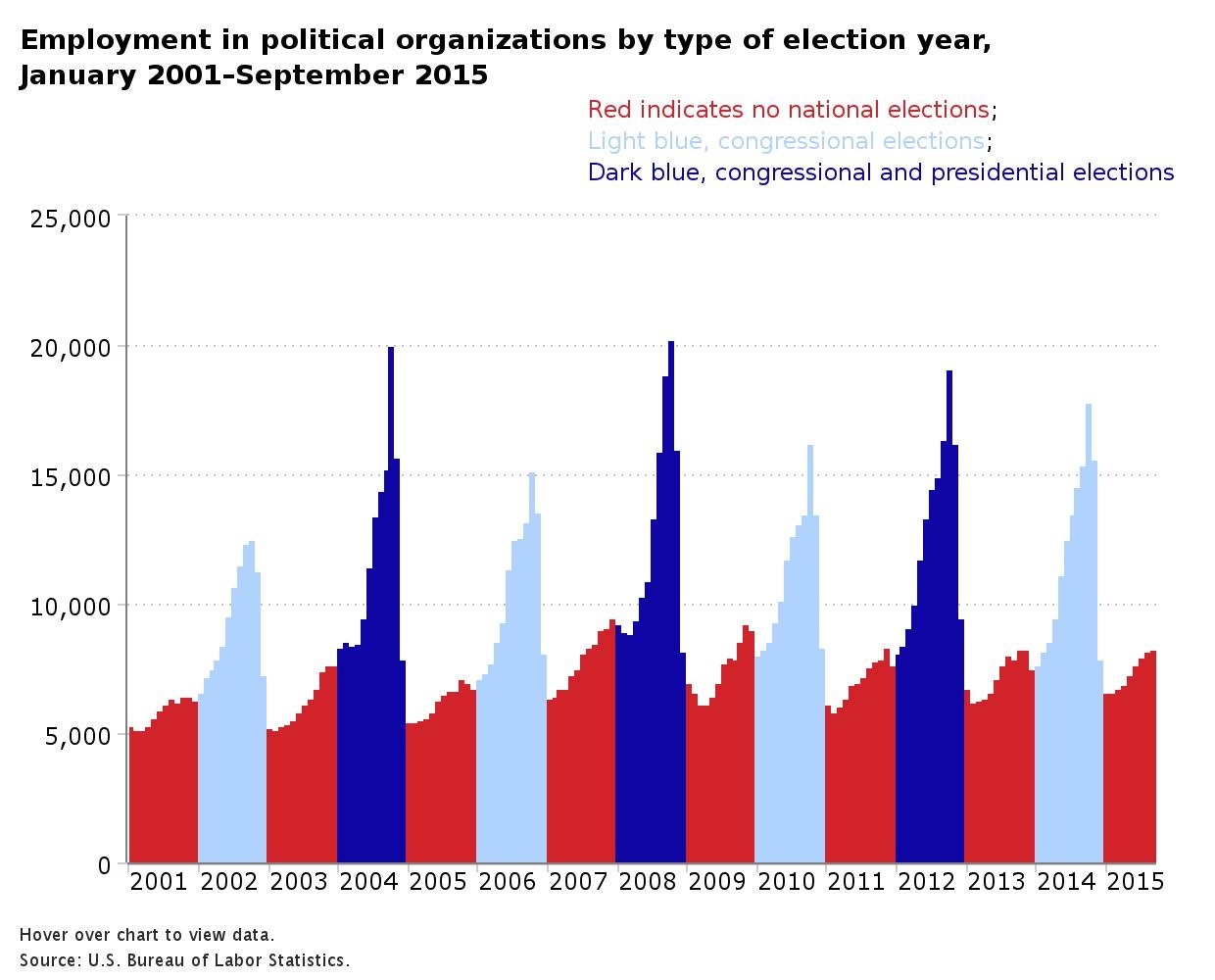

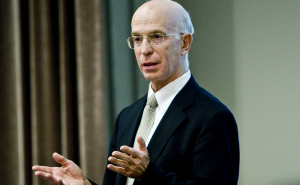
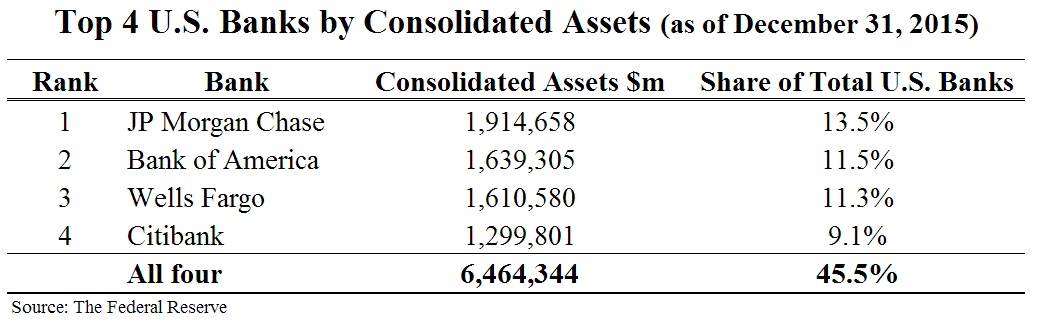
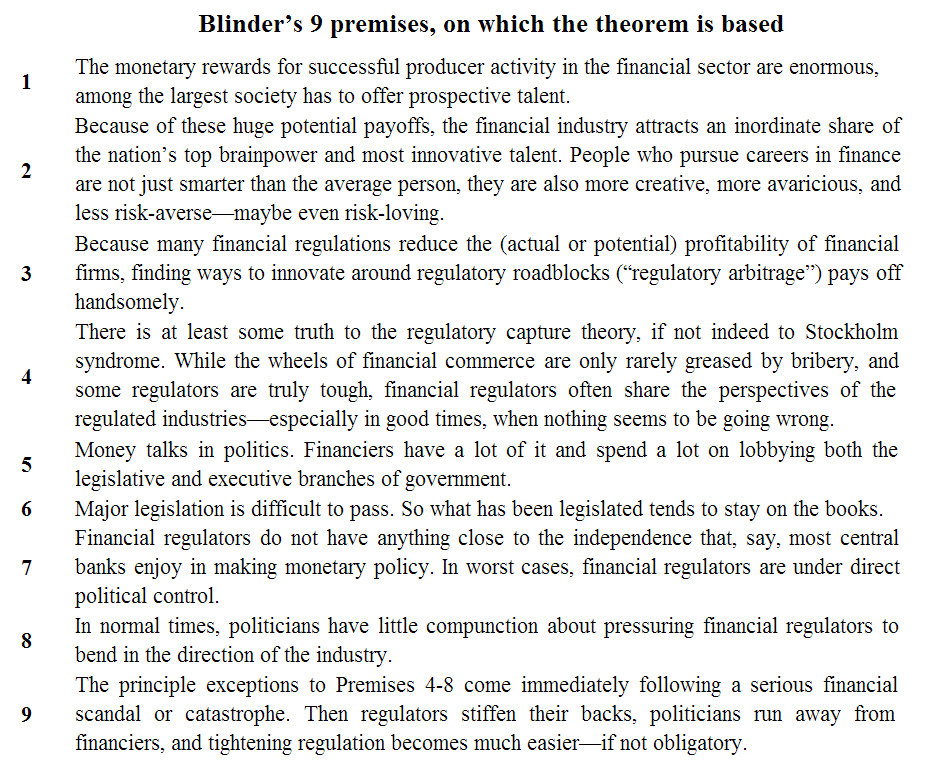
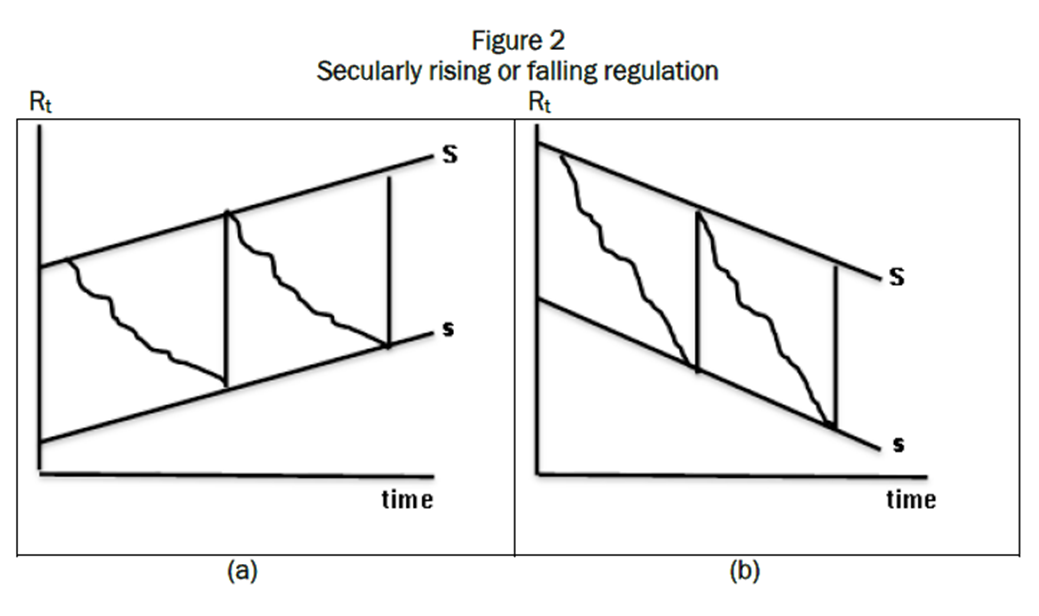
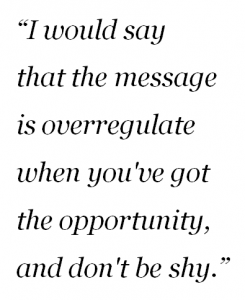 GR: Let’s go back 20 years. What would you have said then if I presented you with this idea that over-regulation is a way to solve captured regulation in the banking sector?


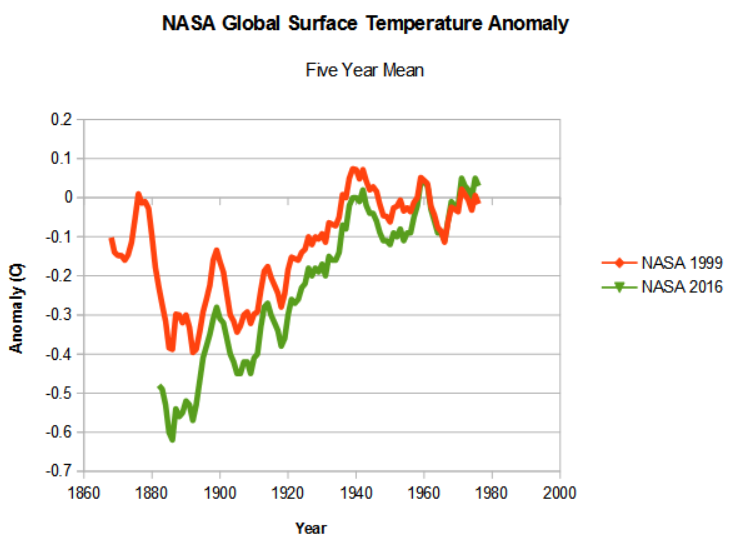
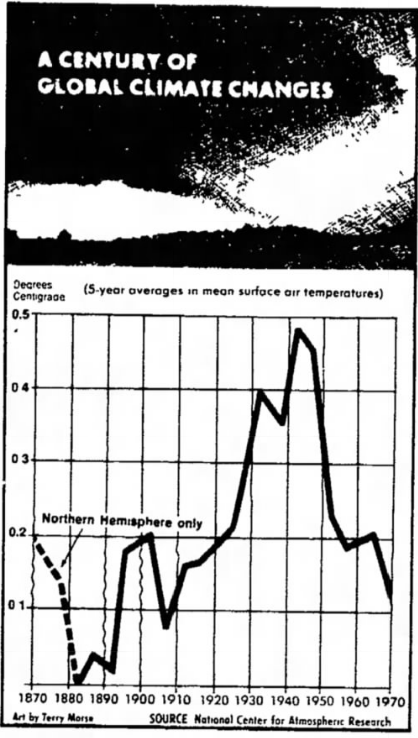
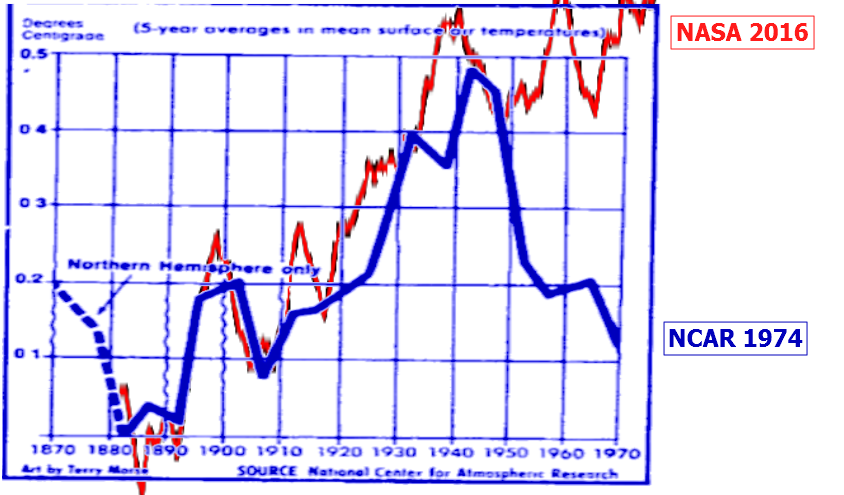
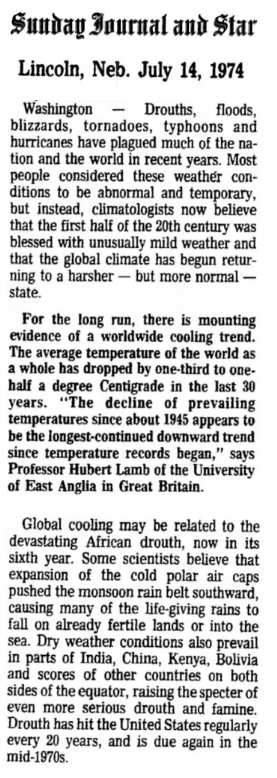

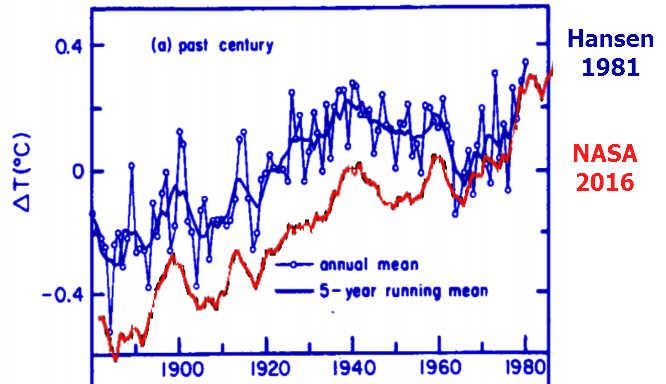
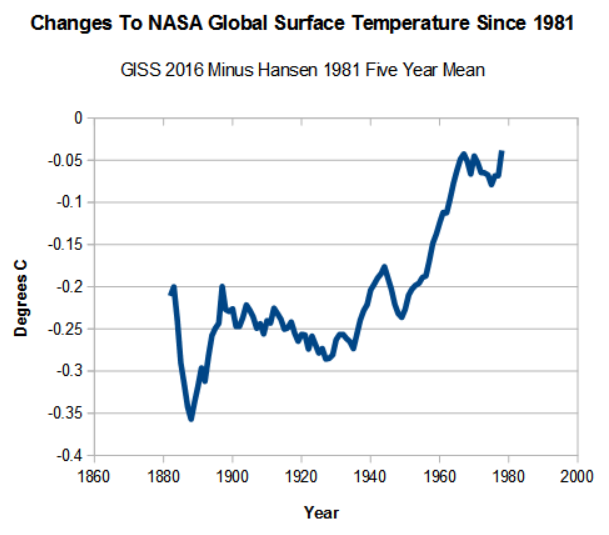
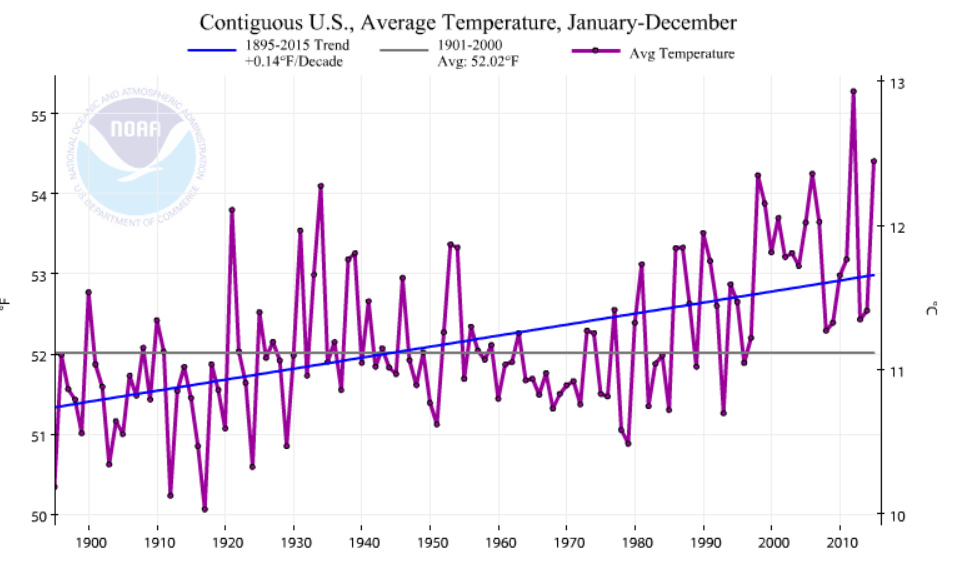
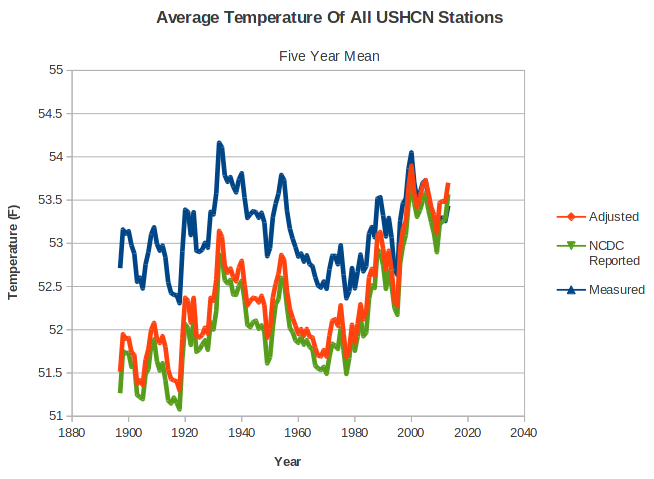
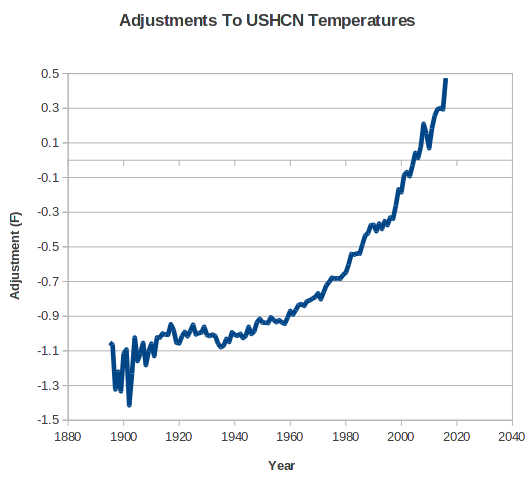
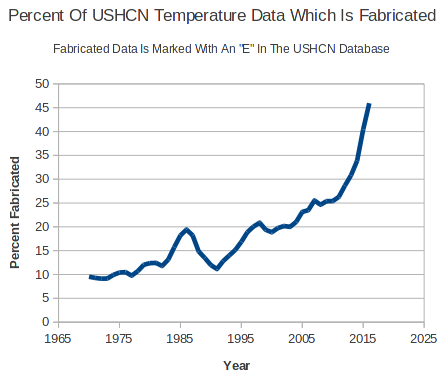



 The startup had recently closed a round of fundraising from three venture capital firms, including Lerer Hippeau Ventures, The Box Group and SV Angel.



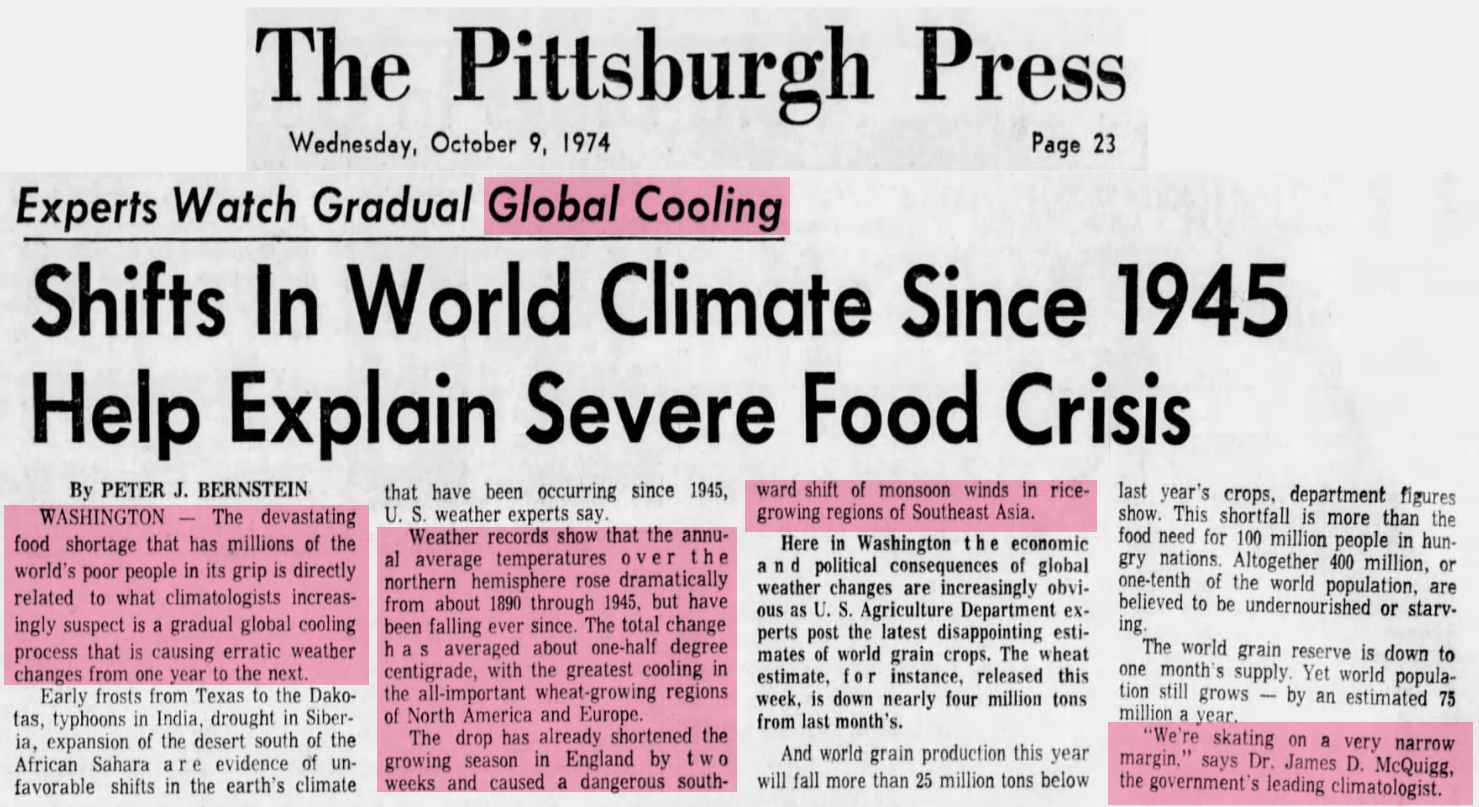
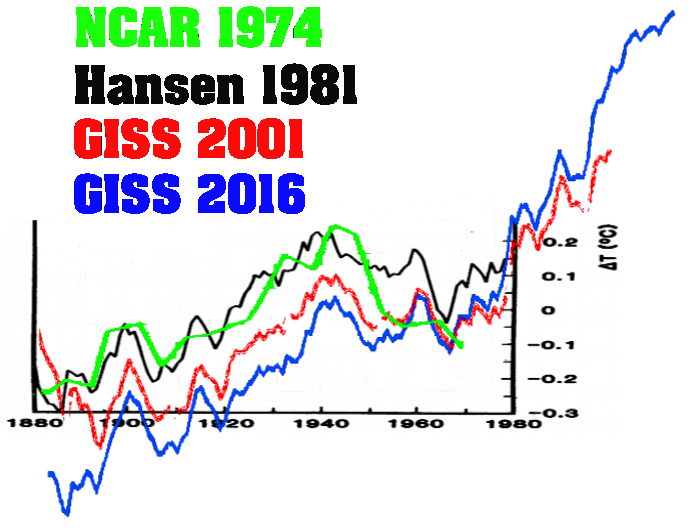
 Late last week, the inspector general of the State Department completed a year-long investigation into the use by Hillary Clinton of a private email server for all of her official government email as secretary of state. The investigation was launched when information technology officials at the State Department under Secretary of State John Kerry learned that Clinton paid an aide to migrate her public and secret State Department email streams away from their secured government venues and onto her own, non-secure server, which was stored in her home.