Biochemistry
DOI: 10.1021/acs.biochem.8b00114
More than one-third of graduate students report being depressed
More than one-third of graduate students report being depressed, Published online: 26 March 2018; doi:10.1038/d41586-018-03803-3
Rates of anxiety and depression among PhD and master’s students exceed those in general public.


Peptide macrocycles are widely utilized in the development of high affinity ligands including stapled α-helices. The linear rigidity of a 1,3-diynyl linkage provides an optimal distance (7 Å) between β- carbons of the i, i+4 amino acid side chains, suggesting its utility in stabilizing α-helical structures. Here we report the development of an on-resin strategy for an intramolecular Glaser reaction between two alkyne-terminated side chains using copper chloride, an essential bpy-diol ligand, and diisopropylethylamine, at room temperature. The efficiency of this ligation is illustrated by the synthesis of (i, i+4), (i, i+5), (i, i+6), and (i, i+7)-stapled BCL-9 α-helical peptides using the unnatural amino acid propargyl serine. Overall, this procedurally-simple method relies on inexpensive and widely available reagents to generate low molecular weight 23-, 26-, 29-, and 32-membered peptide macrocycles.
Near-infrared photoimmunotherapy (NIR-PIT) is a highly selective tumor treatment that uses an antibody–photoabsorber conjugate (APC). However, the effect of NIR-PIT can be enhanced when combined with other therapies. NIR photocaging groups, based on the heptamethine cyanine scaffold, have been developed to release bioactive molecules near targets after exposure to light. Here, we investigated the combination of NIR-PIT using panitumumab–IR700 (pan-IR700) and the NIR-releasing compound, CyEt–panitumumab–duocarmycin (CyEt-Pan-Duo). Both pan-IR700 and CyEt-Pan-Duo showed specific binding to the EGFR-expressing MDAMB468 cell line in vitro. In in vivo studies, additional injection of CyEt-Pan-Duo immediately after NIR light exposure resulted in high tumor accumulation and high tumor–background ratio. To evaluate the effects of combination therapy in vivo, tumor-bearing mice were separated into 4 groups: (i) control, (ii NIR-PIT, (iii) NIR-release, (iv) combination of NIR-PIT and NIR-release. Tumor growth was significantly inhibited in all treatment groups compared with the control group (P < 0.05), and significantly prolonged survival was achieved (P < 0.05 vs. control). The greatest therapeutic effect was shown with NIR-PIT and NIR-release combination therapy. In conclusion, combination therapy of NIR-PIT and NIR-release enhanced the therapeutic effects compared with either NIR-PIT or NIR-release therapy alone. Mol Cancer Ther; 17(3); 661–70. ©2017 AACR.


Targeted drug delivery represents an emerging technological strategy, and enables nanoparticle systems are responsible for tumor therapy. This work describes a magnetic mesoporous silica nanoparticle (MMSN) cloaked with red blood cell membrane (RBC), which integrates with long circulation, photosensitizer delivery, and magnetic targeting feature for cancer therapy. In vivo experiments demonstrate that RBC@MMSNs can avoid the immune clearance, and achieve magnetic field (MF) induced high-accumulation in tumor. When light irradiation is applied, singlet oxygen rapidly generates from hypocrellin B (HB) loaded RBC@MMSN, and leads to the necrosis of tumor tissue. Such a RBC cloaked magnetic nanocarrier effectively integrates immunological adjuvant, photosensitizer delivery, MF-assisted targeting photodynamic therapy, which provides an innovative strategy for cancer therapy.


Chimeric proteins composed of a biologically active peptide and a fragment crystallizable (Fc) domain of immunoglobulin G (IgG) are known as peptibodies. They present an extended half-life due to neonatal Fc receptor (FcRn) salvage pathway, a decreased renal clearance rate owing to its increased size (≈70 kDa) and, depending on the peptide used in the design of the peptibody, an active-targeting moiety. Also, the peptides therapeutic activity is boosted by the number of peptides in the fusion protein (at least two peptides) and to some peptides’ alterations. Peptibodies are mainly obtained through recombinant DNA technology. However, to improve peptide properties, “unnatural” changes have been introduced to the original peptides’ sequence, for instance, the incorporation of D- or non-natural amino acid residues or even cyclization thus, limiting the application of genetic engineering in the production of peptibodies, since these peptides must be obtained via chemical synthesis. This constrains prompted the development of new methods for conjugation of peptides to Fc domains. Another challenge, subject of intense research, relates to the large-scale production of such peptibodies using these new techniques, which can be minimized by their proved value. To date, two peptibodies, romiplostim and dulaglutide, have been approved and stay as the standard of care in their areas of action. Furthermore, a considerable number of peptibodies are currently in preclinical and clinical development.

Purpose: Poorly differentiated thyroid cancer and anaplastic thyroid cancer (ATC) are rare yet lethal malignancies with limited treatment options. Many malignant tumors, including papillary thyroid cancer (PTC) and ATC, are associated with increased expression of ICAM-1, providing a rationale for utilizing ICAM-1–targeting agents for the treatment of aggressive cancer. We developed a third-generation chimeric antigen receptor (CAR) targeting ICAM-1 to leverage adoptive T-cell therapy as a new treatment modality.
Experimental Design: ICAM-1 CAR T cells were applied to multiple malignant and nonmalignant target cells to investigate specific target cell death and "off-tumor" toxicity in vitro. In vivo therapeutic efficacy of ICAM-1 CAR T cells was examined in ATC mouse models established from a cell line and patient-derived tumors that rapidly develop systemic metastases.
Results: ICAM-1 CAR T cells demonstrated robust and specific killing of PTC and ATC cell lines in vitro. Interestingly, although certain ATC cell lines showed heterogeneous levels of ICAM-1 expression, addition of cytotoxic CAR T cells induced increased ICAM-1 expression such that all cell lines became targetable. In mice with systemic ATC, a single administration of ICAM-1 CAR T cells mediated profound tumor killing that resulted in long-term remission and significantly improved survival. Patient-derived ATC cells overexpressed ICAM-1 and were largely eliminated by autologous ICAM-1 CAR T cells in vitro and in animal models.
Conclusions: Our findings are the first demonstration of CAR T therapy against both a metastatic, thyroid cancer cell line and advanced ATC patient-derived tumors that exhibit dramatic therapeutic efficacy and survival benefit in animal studies. Clin Cancer Res; 23(24); 7569–83. ©2017 AACR.


AP Photo/Elaine Thompson
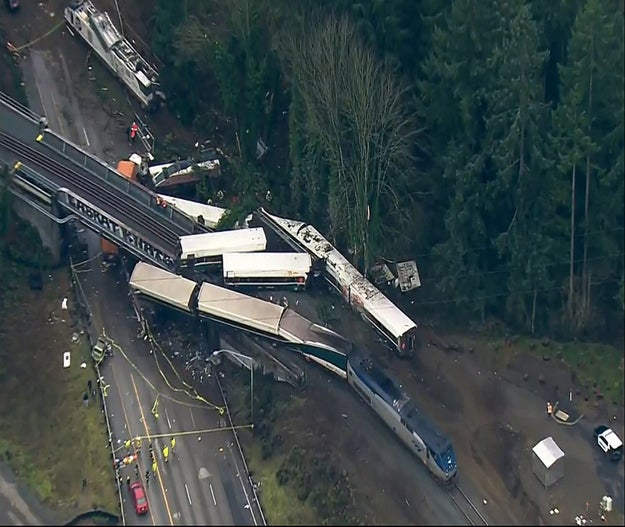
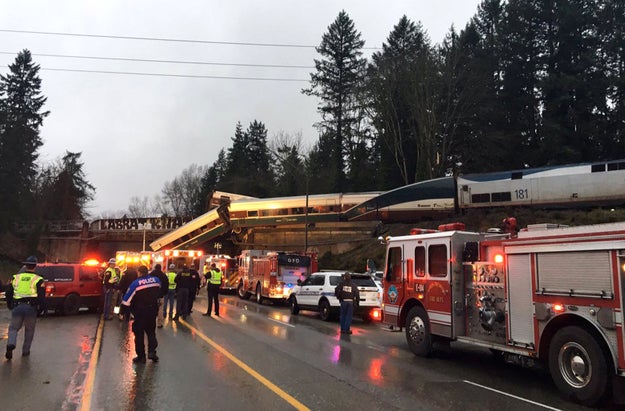
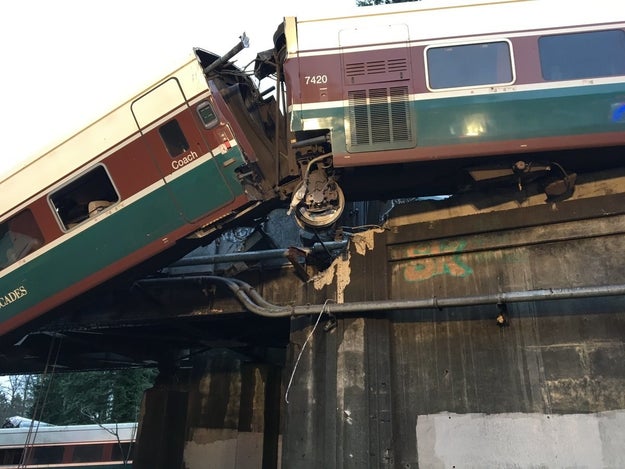
At least three people were killed and dozens of others were injured Monday morning when an Amtrak train on its inaugural run derailed over an interstate near Tacoma, Washington.
Officials said 72 people were taken to hospitals, including train passengers and crew as well as drivers who were struck as the cars plunged onto the busy lanes of Interstate 5 around 7:30 a.m.
A US official early in the day told the Associated Press that the death toll was at least six and expected to rise. By Monday night, however, local firefighters and state troopers only confirmed that three people had been killed at the scene.
"We've had a lot of reports of more fatalities earlier in the day, but I do want to let you know there are three confirmed," Washington State Trooper Chase Van Cleave said Monday night.
KOMO-TV via AP
An Amtrak statement said 80 passengers and five crew members were on board the train at the time of the derailment. Service south of Seattle was suspended until further notice, and highway detours were also in effect as authorities worked to stabilize the dangling wreckage.
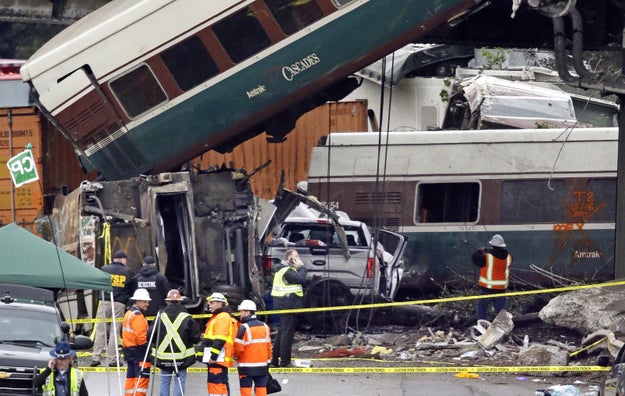
"We don't know if there's anybody still on board," Washington State Patrol Trooper Brooke Bova told reporters Monday afternoon. "We still need to stabilize those cars so we can do a secondary search."
The Washington State Patrol said five vehicles and two semi trucks were struck when 13 of the 12-car, two-engine train derailed. Multiple drivers were injured.
By Monday night, search of the trains was complete, though wreckage remained at the scene. Southbound lanes of I-5 were expected to be closed through Tuesday morning.
Elaine Thompson / AP
Around 100 people were taken from the scene to hospitals across the region, with several in critical condition, officials said. About a dozen were seriously injured.
Three people at St. Peter's Hospital in Olympia needed surgery, said spokesman Chris Thomas. Madigan Army Medical Center in Tacoma said it was caring for 20 people, nine of whom are still in serious but stable condition. MultiCare Health System, which manages multiple hospitals in the area, said that 22 patients are currently in their care, three of them with serious injuries.
It was the inaugural trip for the new, faster Amtrak Cascades train route from Seattle to Portland. The new route featured a bypass along I-5 and track upgrades that allowed it to run at speeds up to 79 mph.
Earlier this month, local officials said they had safety concerns about the speeds of the new train route, though it's unclear what the cause of Monday's derailment. In 2013, the city of Lakewood sued to stop construction, fearing the number of track crossings could lead to a collision involving cars or pedestrians. The suit was dismissed in 2014.
Amtrak President Richard Anderson told CNN positive train control, a system designed to automatically stop a speeding train, was not activated at the time of derailment.
The company did not say Monday what it believes led to the crash, citing the ongoing investigation.
"At this time, we will not speculate about the cause, and we encourage others not to speculate as well," an Amtrak statement said.
Washington Gov. Jay Inslee declared a state of emergency in Pierce and Thurston counties as a result of the derailment.
Chris Karnes, chairman of the Pierce Transit advisory board, was one of the passengers on board the train. The 32-year-old had been excited to experience the inaugural run of the new route, he told the News Tribune. The train, he said, seemed to be running somewhere close to 79 mph because it was moving faster than highway traffic.
“At a certain point, the train wobbled for a second, and the next thing we knew we were being sort of catapulted into the seats in front of us,” he told the News Tribune. “There were crashing and crunching noises, the lights went out. There was glass shattering, everyone’s personal belongings flew to the front of the car and people were screaming.”
Daniel Konzelman, who was driving on I-5 at the time of the crash, told the Seattle Times he was among the first people to respond to the crash. Some passengers had managed to break a window to escape, he said. He and a responding officer then broke into another car to help others, many of whom had cuts, broken bones, and were suffering from shock, he told the Times. Some were pinned, he said.
"There’s not a lot you can do with somebody pinned beneath the train. I talked to them and tried to to calm them down and comfort them,” he told the Times. “I just told him, 'Man, you’re looking so good … you’re doing great, just relax. You might be here for a little while. Make yourself comfortable.' … I rubbed his back and held his hand. I asked him what his kids’ names were and what his wife’s name was.”
In his first response to the incident, President Trump bemoaned the state of the country's roads and railways and called for a quick approval of the "soon to be submitted infrastructure plan" — even though Monday's wreck involved a new train line.
He later added that his "thoughts and prayers" were with those involved in the accident.
The National Transportation Safety Board (NTSB) said they had a launched a "go team" of experts to start investigating the accident. At a press conference, an NTSB official could not provide any details about the derailment, but said an investigator was en route to the scene of the accident.
Officials from the Federal Railroad Authority were also heading to the scene.
Washington State Patrol via AP
Pierce County Sheriff
Clarification: This story has been updated with officials confirming three people were killed in the train derailment. A US official earlier told the Associated Press that six people had died.