Shared posts

27 Nov 18:20

Development of Spiroligomer-Peptoid Hybrids.

by Northrup JD, Mancini G, Purcell CR, Schafmeister CE

Development of Spiroligomer-Peptoid Hybrids.

J Org Chem. 2017 Nov 21;:

Authors: Northrup JD, Mancini G, Purcell CR, Schafmeister CE

Abstract
Creating functional macromolecules that possess the diversity and functionality of proteins poses an enormous challenge, as this requires large, preorganized macromolecules to facilitate interactions. Peptoids have been shown to interact with proteins, and combinatorial libraries of peptoids have been useful in discovering new ligands for protein binding. We have created spiroligomer-peptoid hybrids that have a spirocyclic core that preorganizes functional groups in three-dimensional space. By utilizing spiroligomers, we can reduce the number of rotatable bonds between functional groups, while increasing the stereochemical diversity of the molecules. We have synthesized 15 new spiroligomer monomer amines that contain two stereocenters and three functional groups (67-84% yields from a common hydantoin starting material), and we have synthesized an amine-bearing spiroligomer trimer with six stereocenters and five functional groups. These 16 amines were used to synthesize five first-generation spiroligomer-peptoids hybrids.

PMID: 29161507 [PubMed - as supplied by publisher]

13 Nov 14:47

Transport of drugs from blood vessels to tumour tissue

by Mark W. Dewhirst

Transport of drugs from blood vessels to tumour tissue

Transport of drugs from blood vessels to tumour tissue, Published online: 10 November 2017; doi:10.1038/nrc.2017.93

This Review by Dewhirst and Secomb describes the current understanding of drug transport to tumour cells and the progress that has been made in developing methods to enhance drug delivery.
13 Nov 14:47

Tumour suppressors: Digging deeper into p53's functions

by Sarah Seton-Rogers

Tumour suppressors: Digging deeper into p53's functions

Tumour suppressors: Digging deeper into p53's functions, Published online: 10 November 2017; doi:10.1038/nrc.2017.108

Mello et al. analysed the effects of various p53 transactivation domain mutants in pancreatic ductal adenocarcinoma and uncovered a crucial tumour-suppressive pathway in which p53 mediates inhibition of the transcriptional co-activator YAP.
08 Nov 20:58

Child Receives Transgenic Skin Over Most of His Body

A combination gene-and-cell therapy has given a boy with a grievous skin disease a new lease on life, and has resolved a dermatology debate to boot.
27 Oct 14:21

Internal Targeting and External Control: Phototriggered Targeting in Nanomedicine

by Lars Ratjen, Lily Arrue

Abstract

The photochemical control of structure and reactivity bears great potential for chemistry, biology, and life sciences. A key feature of photochemistry is the spatiotemporal control over secondary events. Well-established applications of photochemistry in medicine are photodynamic therapy (PDT) and photopharmacology (PP). However, although both are highly localizable through the application of light, they lack cell- and tissue-specificity. The combination of nanomaterial-based drug delivery and targeting has the potential to overcome limitations for many established therapy concepts. Even more privileged seems the merger of nanomedicine and cell-specific targeting (internal targeting) controlled by light (external control), as it can potentially be applied to many different areas of medicine and pharmaceutical research, including the aforementioned PDT and PP. In this review a survey of the interface of photochemistry, medicine and targeted drug delivery is given, especially focusing on phototriggered targeting in nanomedicine.

Thumbnail image of graphical abstract

Illuminating activation: The combination of drug delivery, targeting, and photochemistry is extremely powerful because it allows spatiotemporal control of targeting activity and drug liberation into specific cells. The development of new photochemical tools, as well as the use of novel cell-specific receptors, ligands, and properties will surely foster the true potential of phototriggered targeting.

27 Oct 14:19

Trends in GPCR drug discovery: new agents, targets and indications

by Alexander S. Hauser

Trends in GPCR drug discovery: new agents, targets and indications

Nature Reviews Drug Discovery, Published online: 27 October 2017; doi:10.1038/nrd.2017.178

G protein-coupled receptors (GPCRs) are the most intensively studied class of drug targets. This article presents a pioneering analysis of all GPCR-targeted drugs and agents that are currently in clinical trials, and discusses the trends across molecule types, drug targets and therapeutic indications.

27 Oct 14:18

Targeted therapies: Understanding tumour drug addiction

by Conor A. Bradley

Targeted therapies: Understanding tumour drug addiction

Targeted therapies: Understanding tumour drug addiction, Published online: 25 October 2017; doi:10.1038/nrc.2017.98

NatureArticleSnippet(type=short-summary, markup=

Kong et al. report a mechanism that underlies tumour 'drug addiction' in melanoma cell lines and mouse models involving an ERK2-dependent phenotype switch, which might have clinical implications for the use of alternating treatment strategies with targeted therapies.

, isJats=true)
23 Oct 15:15

Cancer treatment: Bacterial snack attack deactivates a drug

by Christian Jobin

Cancer treatment: Bacterial snack attack deactivates a drug

Nature 550, 7676 (2017). doi:10.1038/550337a

Authors: Christian Jobin

Tumour cells can develop intrinsic adaptations that make them less susceptible to chemotherapy. It emerges that extrinsic bacterial action can also enable tumour cells to escape the effects of drug treatment.

19 Oct 17:09

A Facile Cyclization Method Improves Peptide Serum Stability and Confers Intrinsic Fluorescence

by Chayanon Ngambenjawong, Heather Gustafson, Meilyn Sylvestre, Suzie Pun

Abstract

Peptides are a growing class of macromolecules used in pharmaceutics. The path toward the clinical use of candidate peptides involves sequence optimization and cyclization for stability and affinity. For internalized peptides, tagging is also often required for intracellular trafficking studies, although fluorophore conjugation has an impact on peptide binding, permeability, and localization. Herein, a strategy based on cysteine arylation with tetrafluoroterephthalonitrile (4F-2CN), which simultaneously cyclizes peptides and imparts fluorescence, is reported. The 4F-2CN cyclization of an M2 macrophage-targeting peptide yields, in a single step, a peptide with improved serum stability, intrinsic fluorescence, and increased binding affinity. In a murine breast cancer model, it is demonstrated that the intrinsic fluorescence from the cyclized peptide is sufficient for monitoring biodistribution by whole-organ fluorescence imaging and cell internalization by flow cytometry.

Thumbnail image of graphical abstract

Missing link: Tetrafluoroterephthalonitrile (4F-2CN) was used to cyclize a model peptide, M2 macrophage-binding peptide, and in one step impart intrinsic fluorescence, improved serum stability, and enhanced target binding affinity. The intrinsic fluorescence is sufficient for monitoring biodistribution by whole-organ fluorescence imaging and cell internalization by flow cytometry.

16 Oct 20:30

This Guy Says He’s The First Person To Attempt Editing His DNA With CRISPR

by Stephanie M. Lee

Allyson Laquian / BuzzFeed News

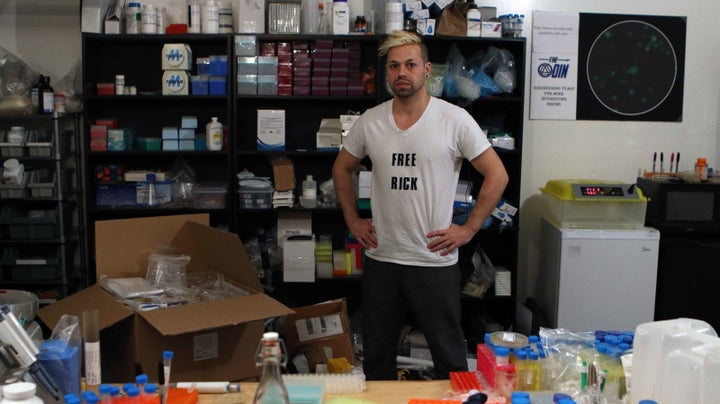
Josiah Zayner, CEO of the biohacking-promoting startup The Odin, held up a syringe. “This will modify my muscle genes to give me bigger muscles,” he told a packed room at a biotech conference in San Francisco in early October.

In front of dozens of onlookers, he leaned against a table and jabbed the long needle into his left forearm. Then he took it out, wincing a little, and added, over applause and chuckles of disbelief, “I’ll let you know how it works out.”

Zayner has made headlines for pushing the boundaries of do-it-yourself genetic experimentation, whether by trying to clean up his gut by inoculating himself with a friend’s poop or brewing glow-in-the-dark beer. This time, the biohacker claims he’s the first person trying to modify his own genome with the groundbreaking gene-editing technology known as CRISPR. And he’s providing the world with the means to do it, too, by posting a “DIY Human CRISPR Guide” online and selling $20 DNA that promotes muscle growth.

But editing your DNA isn’t as simple as following step-by-step advice. Scientists say that injecting yourself with a gene for muscle growth, as Zayner’s done, won’t in fact pump up your arms. Zayner himself admits that his experiments over the last year haven’t visibly changed his body. There are safety risks, too, experts say: People could infect themselves, or induce an inflammatory reaction.

But to Zayner, whether or not the experiment actually works is besides the point. What he’s trying to demonstrate, Zayner told BuzzFeed News, is that cutting-edge biology tools like CRISPR should be available for people to do as they wish, and not be controlled by academics and pharmaceutical companies.

“I want to live in a world where people get drunk and instead of giving themselves tattoos, they’re like, ‘I’m drunk, I’m going to CRISPR myself.’”

“I want to live in a world where people get drunk and instead of giving themselves tattoos, they’re like, ‘I’m drunk, I’m going to CRISPR myself,’” said Zayner, who has a few tattoos of his own, in an interview with BuzzFeed News. “It sounds crazy, but I think that would be a pretty interesting world to live in for sure.”

Under the Food and Drug Administration’s rules, his experimenting appears to be legal — or at least, not illegal. But it’s less clear to what extent, if any, Zayner is responsible for any harm to people who copy him. It’s a gray area that the FDA doesn’t regulate, and may become more pressing as amateur scientists disseminate their experiments, methods, and equipment online.

“Even if you are not liable by legal terms, how responsible are you?” said Eleonore Pauwels, a researcher who specializes in genomics and artificial intelligence at the Woodrow Wilson Center, a think tank. “How do you define that in today’s bioengineering and democratized technology setting?”

Zayner’s experiment comes at a time when gene therapies — treatments that alter a patient’s genes to treat or prevent disease — are starting to make their way into mainstream health care. In August, the FDA approved a first-of-its-kind leukemia treatment that involves taking the cancer patient’s own immune cells, genetically engineering them, and putting them back in the patient’s body to strengthen their response against cancer. Another therapy that could be approved early next year would, with just one injection, replace a faulty gene and cure a rare, inherited eye disease.

View Video ›

Josiah Zayner livestreamed his DNA injection at a recent biotech conference.

Facebook: video.php

Some individuals aren’t waiting for Big Pharma. In 2015, Liz Parrish, CEO of a biotech startup called BioViva, told the MIT Technology Review that in Latin America, she had received a highly experimental anti-aging gene therapy. Earlier this year, Brian Hanley, CEO of Butterfly Sciences, also told the Review that he had received DNA interjections meant to stall aging.

While there are lots of different gene-editing techniques in use, according to Pauwels, Zayner may be the first self-practitioner to use CRISPR, the swift and precise technology that has transformed biology in the last few years.

Zayner, who has a PhD in biochemistry from the University of Chicago, told BuzzFeed News that he started self-experimenting with CRISPR in his garage last summer. In one case, he injected the gene for green fluorescence, also known as the gene that makes jellyfish light up. He didn’t start glowing, but he sent a chunk of his skin to a biotech company for analysis, and it confirmed that the gene had taken hold in his cells.

“There are aspects of what he’s doing that people need to be really, really careful about.”

The Odin, Zayner’s startup, just started selling a molecule that disables a gene that inhibits muscle growth, so the end result — or at least the intended one — is bigger muscles. This kind of material is already available through other companies that sell DNA supplies. (Within the last two weeks, Zayner says, he’s sold about 10.)

But Dana Carroll, a biochemist and CRISPR expert at the University of Utah, said the experiment is unlikely to work as Zayner suggests, pointing out that the gene is most influential when muscles are being developed early in life.

“When your muscles are already developed and you’re sitting there with mature muscles, there’s not a lot you can do to make them bigger and stronger other than exercise,” he told BuzzFeed News. “So he’d be better off exercising than injecting himself.”

Carroll isn’t too worried that people who follow Zayner’s instructions and use his materials will seriously hurt themselves. “I don’t think a great deal of harm can be done,” he said. “To do real, effective genome-editing, it’s going to require a more sophisticated laboratory and more sophisticated materials than the ones he’s providing.”

But he noted that people injecting themselves in non-sterile environments at home might open themselves up to infection. Repeated injections might cause the body to have an inflammatory reaction. And it could be dangerous if they tried to alter a gene for something other than muscle growth.

“There are aspects of what he’s doing that people need to be really, really careful about,” Carroll said.
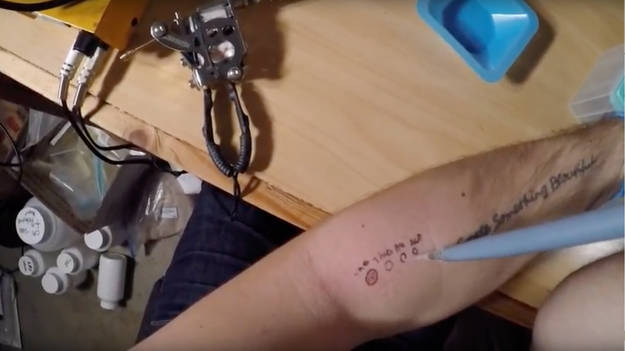
Josiah Zayner injects himself with DNA in his garage last year.

Via youtube.com

Asked for comment on Zayner’s project, an FDA spokesperson said that in general, if a scientist wants to test an unapproved drug in humans, they must notify the FDA beforehand.

Pauwels says that a scientist is required to get approval to conduct research on humans — but not when the research subject is themselves, as in Zayner’s case. “That is a blind spot in regulation,” she said.

Zayner is known for testing the FDA’s limits in the past. Last December, BuzzFeed News reported that, in response to the agency’s scrutiny, The Odin toned down its marketing of a DNA kit that it originally said was a tool for making glow-in-the-dark alcohol.

This time, Zayner has carefully tried to steer clear of the agency’s ire. The DNA for muscle growth is sold with a disclaimer: “It is not injectable and not meant for human use.” Still, chances are that curious customers are likely to follow Zayner’s example and inject it into themselves to see what will happen.

Zayner also says his “DIY Human CRISPR Guide” is free speech. He isn’t trying to cure a disease, nor telling others how to cure themselves.

Pauwels said that Zayner is toeing the line. “As soon as you don’t make any health claims and don’t assess risks and benefits, you are in that gray zone where you are using your First Amendment rights, you’re just communicating,” she said. “That could be an issue that comes under the FDA at some point. We might see more and more phenomena of that kind.”

Zayner says he hasn’t gotten sick from the experiments, and he isn’t worried about it. Is do-it-yourself CRISPR really more harmful, he asks, than smoking, sunbathing, and taking chemotherapy, all of which are legal and socially acceptable activities that damage your genes?

“We should be able to do whatever we want,” he said. “There are a lot of things we do that occur during the normal day that do a lot more damage, probably, than things like CRISPR.”

LINK: DNA Biohackers Are Giving The FDA A Headache With Glow-In-The-Dark Booze

LINK: FDA Slams Fertility Doctor For Marketing '3-Parent-Baby' Technology

LINK: Scientists Are Shocked About How Easy It Is To Tweak Genes In Human Embryos

LINK: Everyone Might Be A Loser In The Gene Editing Patent Fight


16 Oct 20:16

Ex-Chemours employee charged with stealing cyanide secrets

by Marc S. Reisch
Grand jury charges former employee with planning to sell trade secrets to Chinese investors
16 Oct 14:16

On Science and Hip Hop: Q&A with the Wu-Tang Clans GZA

The artist discusses music as a means to get kids excited about science, and the inspiration he took from astrophysics and polar bears.
11 Oct 14:21

A Vision for Vaccines: Combating the Opioid Epidemic

by Candy S. Hwang and Kim D. Janda

TOC Graphic

Biochemistry
DOI: 10.1021/acs.biochem.7b00948
11 Oct 13:43

Structural Basis for G Protein-Coupled Receptor Activation

by Aashish Manglik and Andrew C. Kruse

TOC Graphic

Biochemistry
DOI: 10.1021/acs.biochem.7b00747
11 Oct 13:36

Opinion: Genome Editing of Human Embryos Broadens Ethics Discussions

Scientists are using a powerful gene editing technique to understand how human embryos develop.
04 Oct 18:30

CRISPR System Targets RNA in Mammalian Cells

Researchers engineer bacterial CRISPR-Cas13 to knock down RNA in mammalian cells.
28 Sep 14:03

Cell death: A better way to die

by Anna Dart

Nature Reviews Cancer 17, 575 (2017). doi:10.1038/nrc.2017.90

Author: Anna Dart

Inducing apoptosis has long been considered an important effector mechanism of many anti-cancer therapies. Yet, several studies have suggested that engaging apoptosis can have tumour-promoting effects. During apoptosis, mitochondrial outer membrane permeabilization can lead to caspase activation. However, caspase activity can have undesirable outcomes, such

28 Sep 14:03

Tumour acidosis: from the passenger to the driver's seat

by Cyril Corbet

Nature Reviews Cancer 17, 577 (2017). doi:10.1038/nrc.2017.77

Authors: Cyril Corbet & Olivier Feron

The high metabolic demand of cancer cells leads to an accumulation of H+ ions in the tumour microenvironment. The disorganized tumour vasculature prevents an efficient wash-out of H+ ions released into the extracellular medium but also favours the development of tumour

27 Sep 19:51

Postdocs: Big lab, small lab?

by Chris Woolston

Postdocs: Big lab, small lab?

Nature (2017). doi:10.1038/nj7673-553a

Author: Chris Woolston

Choosing a lab of the right size is crucial for early-career development.

22 Sep 14:47

Formyl peptide derived lipopeptides disclose differences between the receptors in mouse and men and call the pepducin concept in question.

by Winther M, Holdfeldt A, Sundqvist M, Rajabkhani Z, Gabl M, Bylund J, Dahlgren C, Forsman H
Related Articles

Formyl peptide derived lipopeptides disclose differences between the receptors in mouse and men and call the pepducin concept in question.

PLoS One. 2017;12(9):e0185132

Authors: Winther M, Holdfeldt A, Sundqvist M, Rajabkhani Z, Gabl M, Bylund J, Dahlgren C, Forsman H

Abstract
A pepducin is a lipopeptide containing a peptide sequence that is identical to one of the intracellular domains of the G-protein coupled receptor (GPCR) assumed to be the target. Neutrophils express two closely related formyl peptide receptors belonging to the family of GPCRs; FPR1 and FPR2 in human and their respective orthologue Fpr1 and Fpr2 in mouse. By applying the pepducin concept, we have earlier identified FPR2 activating pepducins generated from the third intracellular loop of FPR2. The third intracellular loop of FPR2 differs in two amino acids from that of FPR1, seven from Fpr2 and three from Fpr1. Despite this, we found that pepducins generated from FPR1, FPR2, Fpr1 and Fpr2 all targeted FPR2 in human neutrophils and Fpr2 in mouse, but with different modulating outcomes. Whereas the FPR1/Fpr1 derived pepducins inhibited the FPR2 function in human neutrophils, they activated Fpr2 in mouse. The FPR2 derived pepducin activated FPR2/Fpr2, whereas the pepducin generated from Fpr2 inhibited both FPR2 and Fpr2. In summary, our data demonstrate that pepducins generated from the third intracellular loop of human FPR1/2 and mouse Fpr1/2, all targeted FPR2 in human and Fpr2 in mouse. With respect to the modulating outcomes, pepducin inhibitors identified for FPR2 are in fact activators for Fpr2 in mouse neutrophils. Our data thus questions the validity of pepducin concept regarding their receptor selectivity but supports the notion that FPR2/Fpr2 may recognize a lipopeptide molecular pattern, and highlight the differences in ligand recognition profile between FPR2 and its mouse orthologue Fpr2.

PMID: 28934373 [PubMed - in process]

21 Sep 19:21

Synthetic receptors imitate GPCRs

by Stu Borman
Vesicle signaling system could deliver drugs on command
19 Sep 14:55

Doubts raised over validity of CRISPR-edited human embryo study

by Emma Hiolski
In bioRxiv paper, embryologists and geneticists question whether gene repair could have occurred as reported
14 Sep 20:37

Tailored Approaches in Drug Development and Diagnostics: From Molecular Design to Biological Model Systems

by Cecilia Sahlgren, Annika Meinander, Hongbo Zhang, Fang Cheng, Maren Preis, Chunlin Xu, Tiina A. Salminen, Diana Toivola, Daniel Abankwa, Ari Rosling, Didem Şen Karaman, Outi M. H. Salo-Ahen, Ronald Österbacka, John E. Eriksson, Stefan Willför, Ion Petre, Jouko Peltonen, Reko Leino, Mark Johnson, Jessica Rosenholm, Niklas Sandler

Abstract

Approaches to increase the efficiency in developing drugs and diagnostics tools, including new drug delivery and diagnostic technologies, are needed for improved diagnosis and treatment of major diseases and health problems such as cancer, inflammatory diseases, chronic wounds, and antibiotic resistance. Development within several areas of research ranging from computational sciences, material sciences, bioengineering to biomedical sciences and bioimaging is needed to realize innovative drug development and diagnostic (DDD) approaches. Here, an overview of recent progresses within key areas that can provide customizable solutions to improve processes and the approaches taken within DDD is provided. Due to the broadness of the area, unfortunately all relevant aspects such as pharmacokinetics of bioactive molecules and delivery systems cannot be covered. Tailored approaches within (i) bioinformatics and computer-aided drug design, (ii) nanotechnology, (iii) novel materials and technologies for drug delivery and diagnostic systems, and (iv) disease models to predict safety and efficacy of medicines under development are focused on. Current developments and challenges ahead are discussed. The broad scope reflects the multidisciplinary nature of the field of DDD and aims to highlight the convergence of biological, pharmaceutical, and medical disciplines needed to meet the societal challenges of the 21st century.

Thumbnail image of graphical abstract

Recent advances and concepts in novel materials and technologies for drug delivery and diagnostics, illustrating how the convergence of biological, pharmaceutical, and medical disciplines is needed to meet the medical challenges of the 21st century, are covered in this review.

12 Sep 13:28

Stabilizing a Tubulysin Antibody–Drug Conjugate To Enable Activity Against Multidrug-Resistant Tumors

by Leanna R. Staben, Shang-Fan Yu, Jinhua Chen, Gang Yan, Zijin Xu, Geoffrey Del Rosario, Jeffrey T. Lau, Luna Liu, Jun Guo, Bing Zheng, Josefa dela Cruz-Chuh, Byoung-Chul Lee, Rachana Ohri, Wenwen Cai, Hongxiang Zhou, Katherine R. Kozak, Keyang Xu, Gail D. Lewis Phillips, Jiawei Lu, John Wai, Andrew G. Polson and Thomas H. Pillow

TOC Graphic

ACS Medicinal Chemistry Letters
DOI: 10.1021/acsmedchemlett.7b00243
05 Sep 17:20

Cyclic peptide blocks first step in cancer-related signaling pathway

by Celia Henry Arnaud
Inhibitor suppresses hedgehog signaling pathway in living cells
05 Sep 17:18

Opportunities for therapeutic antibodies directed at G-protein-coupled receptors.

by Hutchings CJ, Koglin M, Olson WC, Marshall FH
Related Articles

Opportunities for therapeutic antibodies directed at G-protein-coupled receptors.

Nat Rev Drug Discov. 2017 Sep 01;16(9):661

Authors: Hutchings CJ, Koglin M, Olson WC, Marshall FH

PMID: 28860586 [PubMed - in process]

05 Sep 13:39

Though Much Is Taken, Much Abides: Finding New Antibiotics Using Old Ones.

by Rosen PC, Seyedsayamdost MR
Related Articles

Though Much Is Taken, Much Abides: Finding New Antibiotics Using Old Ones.

Biochemistry. 2017 09 19;56(37):4925-4926

Authors: Rosen PC, Seyedsayamdost MR

PMID: 28862834 [PubMed - indexed for MEDLINE]

31 Aug 14:19

Molecular motors drill holes in cells

by Bethany Halford
Machines that spin through cell membranes could deliver drugs and kill cancer cells
16 Aug 15:39

Fluorous Phase-Directed Peptide Assembly Affords Nano-Peptisomes Capable of Ultrasound-Triggered Cellular Delivery

by Scott H. Medina, Megan S. Michie, Stephen E. Miller, Martin J. Schnermann, Joel P. Schneider

Abstract

Here, we report the design, synthesis and efficacy of a new class of ultrasound (US)-sensitive self-assembled peptide-based nanoparticle. Peptisomes are prepared via templated assembly of a de novo designed peptide at the interface of fluorinated nanodroplets. Utilizing peptide assembly allows for facile particle synthesis, direct incorporation of bioactive sequences displayed from the particle corona, and the ability to easily encapsulate biologics during particle preparation using a mild solvent exchange procedure. Further, nano-peptisome size can be precisely controlled by simply modulating the starting peptide and fluorinated solvent concentrations during synthesis. Biomolecular cargo encapsulated within the particle core can be directly delivered to the cytoplasm of cells upon US-mediated rupture of the carrier. Thus, nano-peptisomes represent a novel class of US-activated carriers that can shuttle cell-impermeable biomacromolecules into cells with spatial and temporal precision.

Thumbnail image of graphical abstract

Burst your bubble: The templated assembly of a de novo designed peptide at the interface of fluorous nanodroplets affords ultrasound-sensitive nano-peptisomes. Acoustic rupture of the carrier at the surface of cells leads to direct intracellular delivery of encapsulated membrane-impermeable biomolecular cargo with spatial and temporal precision.

10 Aug 13:13

Cell Wall Remodeling of Staphylococcus aureus in Live Caenorhabditis elegans

by Sean E. Pidgeon and Marcos M. Pires

TOC Graphic

Bioconjugate Chemistry
DOI: 10.1021/acs.bioconjchem.7b00363