Shared posts

03 Mar 16:31

my coworker won’t stop interfering with my service dog

by Ask a Manager

A reader writes:

I work in a cubicle office and bring a trained, medically necessary service dog named “Betty” to the office with me. I allow her to socialize with coworkers on breaks, and she is very loved in the office for how friendly and adorable she is. She also adores her coworkers and thinks everyone is her best friend.

Unfortunately, a new coworker, “Sarah,” has been repeatedly ignoring service dog boundaries with Betty over the last six months.

These boundary violations include taking Betty out of my cube while I’m on work calls or distracted, removing her leash in public work areas without asking, entering my cube without permission to interact with her, and petting her or interacting with her when I step away from my desk. This has started to impact Betty’s training as she’s now having separation anxiety behaviors when I leave in order to get attention. Sarah would respond to this behavior, which escalated it, despite being asked repeatedly not to.

Things were at their worst today when Sarah not only removed Betty’s leash but also attempted to remove her service dog gear. I asked her to stop but this didn’t work, and I had to physically push her hands away from Betty.

I have had multiple conversations with Sarah about her behavior with little success. When I point out a specific behavior, Sarah will then start doing a new one or find different ways to circumvent the boundary and continue her interactions with Betty. This appears to be a pattern with Sarah, as there are other areas where she struggles to incorporate feedback.

All my conversations with Sarah so far have been verbal and in the moment, as we are equals and I don’t feel it is my place to supervise her behavior. I did message my supervisor about the concerns when they started escalating and we had a one-on-one about it. My supervisor then spoke with Sarah’s supervisor about the issues and a one-on-one was had with Sarah about a month ago. Despite this, the behavior has not gotten better and seems to be getting worse.

I have had a previous negative experience with HR where I was blamed for not handling a verbally aggressive and threatening coworker with clearer boundaries before escalating to them. This time I want to make sure that I’m doing everything I can and should before I escalate things to HR again. I also don’t want to ruin the atmosphere of the office by cutting off all contact to Betty due to one coworker being unable to follow boundaries. What should I do in this instance to handle it professionally and not step on toes or upset HR?

–  Trying to keep my working dog working

Your need for Betty to safely and effectively do her job trumps Sarah’s interest in interacting with a dog. Because of that, Sarah probably needs to be told she can’t interact with Betty, period, since she hasn’t been able to follow clear instructions about her. Being able to play with someone else’s dog is not a right; it’s a privilege that the dog and the dog’s person can grant or revoke. Sarah has forfeited it by repeatedly ignoring your clear instructions (and, apparently, her manager’s instructions too).

The next step should be to talk to your manager again and let her know that the previous discussion with Sarah didn’t solve the problem and, in fact, things have been escalating. She might be assuming that everything has been fine since Sarah’s manager got involved, so you’ve got to let her know that’s not the case. Tell her everything you said here, including that Sarah removed Betty’s leash and tried to remove her service dog gear (!) and that you’ve had to physically push her hands away from Betty, as well as that you’ve had multiple conversations with Sarah about it but nothing has worked. Then use these words: “I need the company to stop Sarah from interfering with my medically necessary service dog. At this point she is creating a safety concern for me, and I need the company to step in.”

If your manager doesn’t conclude on her own that at this point Sarah needs to be banned from interacting with Betty at all, you should say it yourself: “At this point I can’t trust her to safely interact with Betty and I would like her to stop interacting with Betty entirely.”

You should also explicitly tell your manager that you are concerned about going to HR because they previously told you that you should have handled an aggressive coworker on your own before bringing the situation to them. (For what it’s worth, that doesn’t sound like something that should be an issue here because you have tried to handle it on your own, multiple times. But you should let your boss know you’re worried about that.)

The post my coworker won’t stop interfering with my service dog appeared first on Ask a Manager.

03 Mar 16:23

UNT Quiñonez Exhibition Cancellation Result of “Institutional Directive” & Heightened Political Scrutiny

by Jenny Yanez

In meetings held on Tuesday, February 10, and Wednesday, February 11, to address the cancellation of Victor “MARKA27” Quiñonez’s exhibition Ni de Aquí, Ni de Allá, Karen Hutzel, Dean of the University of North Texas (UNT) College of Visual Art & Design (CVAD), informed faculty that the decision had been made as an “institutional directive” originating above the College level. According to transcripts of the meetings obtained by Glasstire, as well as interviews with faculty members who were present, Ms. Hutzel described shifting administrative expectations and the College’s limited authority in the matter.

The exhibition, which opened Tuesday, February 3, in the CVAD Gallery, was closed nine days later without prior notice to the artist. Glasstire has previously reported on the closure, subsequent protests, including open letters from CVAD faculty and graduate students, and statements from national free speech advocacy organizations, as the controversy surrounding the decision has continued to unfold. The February meetings provide insight into how the cancellation was communicated internally and how faculty interpreted its implications for academic freedom, institutional authority, and political pressure.

Young people march in protest holding signs and chanting on a college campus.
University of North Texas College of Visual Art & Design students during an “Art Walk” protest march on Thursday, February 19

The Denton Record-Chronicle was the first to report on the existence of transcripts from the internal meetings, and ARTnews has since covered the transcript leak as well. The transcripts, reviewed by Glasstire, along with additional faculty interviews conducted for this story, provide further detail about the tone and substance of the meetings and concerns raised by faculty members.

According to the transcripts, Ms. Hutzel told faculty that while CVAD operates under established exhibition policies, ultimate authority rests with the university. She indicated that administrative expectations are shifting rapidly, describing the current environment as one in which rules and interpretations are “changing daily.”

Faculty members present at the meetings raised concerns about UNT’s exhibition policy, which affirms constitutional protections for artistic expression and academic freedom. Ms. Hutzel acknowledged the policy but emphasized that final decision-making authority remains with central administration.

In another exchange, Ms. Hutzel expressed her belief that the university might not deploy institutional legal counsel to defend individual faculty members, should disputes arise related to classroom instruction or exhibition programming. According to attendees, she advised faculty to seek private legal representation if necessary. Several faculty members described that statement as troubling, particularly given broader political scrutiny facing public universities in Texas following recent legislative restrictions on diversity, equity, and inclusion initiatives. As Glasstire previously reported, institutions across the state have responded to those mandates with program eliminations and event cancellations, prompting concerns about how academic programming is being evaluated under evolving state directives.

Ms. Hutzel also referenced anticipated budget constraints and declining international graduate enrollment, characterizing CVAD as particularly vulnerable within the larger university structure. One faculty member told Glasstire they recalled her stating that the college is “not a favorite” of upper administration, a remark some interpreted as reflecting the precarious positioning of arts programs amid shifting institutional priorities.

According to multiple attendees, at one point during the meetings faculty were asked to discontinue recording. Faculty interviewed for this story described the tone of the meetings as tense and marked by uncertainty regarding how future exhibitions and classroom discussions might be evaluated.

A faculty member, speaking on condition of anonymity due to concerns about professional repercussions, told Glasstire they believed the cancellation of Mr. Quiñonez’s exhibition was mishandled at both the university and college levels.

A youngperson leans over pavement writing in chalk, "THIS LAND IS YOUR LAND THIS LAND IS..."
A Thursday, February 19, student protest at the University of North Texas College of Visual Art & Design. Photo: Jenny Yanez

According to the faculty member, CVAD faculty and staff were informed late in the process and separated into virtual meetings where they were told the exhibition would be canceled. The faculty member characterized the messaging as discouraging further discussion and minimizing faculty frustration.

The faculty member also expressed concern that, despite statements during the meetings indicating that additional dialogue would be possible, subsequent graduate student letters and faculty communications have not received substantive responses from university leadership.

“Good leadership requires transparency and accountability,” the faculty member said, adding that administrative silence has left the majority of faculty to manage the fallout within their classrooms and student advising roles.

The faculty member noted that they were advised by Ms. Hutzel that the cancellation of the exhibition should spur a change in how professors approach teaching and advising. However, they stated that they do not intend to alter how they mentor students, emphasizing that faculty view their role as preparing students to engage critically with contemporary issues and develop work in an environment that supports open inquiry.

Despite repeated requests from multiple media outlets for clarification regarding the exhibition’s cancellation, UNT administration has not publicly provided a detailed explanation of its decision.

Ms. Hutzel did not respond to a request for comment for this story.

The post UNT Quiñonez Exhibition Cancellation Result of “Institutional Directive” & Heightened Political Scrutiny appeared first on Glasstire.

03 Mar 16:21

Human Arm Hanging Limply Out Of Food Delivery Robot

by The Onion Staff
03 Mar 16:21

Mitch Nagler

by The Onion Staff

Mitch Nagler, 92, died peacefully last Thursday, at last relinquishing his stranglehold on the best easy chair in the Silver Pines Retirement Community sunroom.

The post Mitch Nagler appeared first on The Onion.

03 Mar 16:21

Nation Admittedly Curious To Hear How Trump Pronounces ‘Strait Of Hormuz’

by The Onion Staff

WASHINGTON—While recognizing the small detail was of no real significance in the greater scheme of an escalating war with Iran, the entire U.S. populace admitted Tuesday that it was still curious to hear how President Donald Trump would pronounce “Strait of Hormuz.” “He’s gonna have to say it out loud eventually, and it feels like he could take it in some kind of insane direction like HOOR-muzz or maybe horm-SUH,” said Arkansas resident Janet Flitchen, echoing the sentiment of 340 million Americans who agreed that discovering Trump’s idiosyncratic pronunciation of the sea passage’s name would at least add a bit of intrigue to the horrors currently unfolding in the Middle East. “It feels crude to call it a silver lining given how many people are going to die, but you can’t deny that it’s fascinating to see what that guy’s brain does with unfamiliar place names. Even ‘Strait’ feels like it could be up in the air with him. There’s a nonzero chance he goes the whole war calling it the ‘stry-EET of Hermes’ or possibly even ‘Homer’s Street.’ That’s before you even get into the extra syllables he might try to cram in there. Doesn’t mean I support what he’s doing, but I can’t act like I’m not interested in hearing him drop ‘Strant of Hormo’ or whatever at a press conference.” At press time, the nation was reportedly expressing bewilderment at Trump’s bizarre pronunciation of the word “soldier.”

The post Nation Admittedly Curious To Hear How Trump Pronounces ‘Strait Of Hormuz’ appeared first on The Onion.

03 Mar 14:29

#Mia #Ully #WhiteBlaze #RoninWarriors

03 Mar 14:29

Orange Pekoe! Orange Pekoe? Orange Pekoe! Orage...

Orange Pekoe!
Orange Pekoe?
Orange Pekoe!
Oragen Pekoe?
I swear by it!
You swear by it?
and Lewies says that Phylis says that Sybil once had some Earl Grey at her place, and two out of three were delighted.
Well ... I don't go for those exotic teas.
#CowboyWho

03 Mar 14:29

Sounds like an awful wild goose chase. But I'm ...

Sounds like an awful wild goose chase. But I'm going to do it! #CowboyWho

03 Mar 14:28

Houston will continue to see very warm conditions for early March

by Eric Berger

In brief: In today’s post we talk about our anomalously warm start to March weather, and look ahead to increased rain chances this weekend. Unfortunately, there are still some details to iron out there.

By this weekend our low temperatures should be about 20 degrees above normal. (Weather Bell)

March (temperature) madness

Generally, March is my favorite month of the year weather-wise in Houston. Our temperatures are not too hot, and not too cold. During the first part of the month the average high is typically around 70 degrees, and the average low is is 50 degrees. We usually have not yet reached the spring storm season. However this March is starting out quite a bit warmer than usual. And for the next 7 to 10 days we can expect to see highs in the low- to mid-80s, with very warm nights. If you’re wondering when March might start to feel like March again, the models do take a pretty decisive turn toward the chillier side about nine days from now, but until then, it will feel like late April outside, especially at night.

Tuesday

Today will bring a slight chance of light showers this morning, perhaps 10 percent, before our mostly cloudy skies give way to partly sunny conditions this afternoon. High temperatures will reach the low- to mid-80s, with temperatures depending on the extent of afternoon sunshine between 3 and 5 pm. With dewpoints in the mid- to upper-60s, it will feel moderately sticky outside.

Rodeo weather

It won’t quite be hold-on-to-your-hat weather at the Houston Livestock Show and Rodeo this afternoon, but we will see winds gust up to about 25 mph from the south this afternoon, and it will still be breezy during the early evening hours. Temperatures heading into the rodeo will be in the mid-70s, with conditions only a few degrees cooler afterwards. Fog development will be possible after midnight, and this will be the case for much of the rest of the week.

Wednesday

A cold front will be moving into north Texas on Wednesday, but it will stall out well north of the Houston metro area. There is a marginal risk of thunderstorms far north of our area, but in Houston itself I don’t think we’re likely to see much in the way of rainfall or impacts. Rain chances may be on the order of 20 percent, with partly sunny skies and highs in the lower 80s for most. Nighttime lows will drop to around 70 degrees, and I don’t need to say more about warm nights because this is the way it’s going to be through the early part of next week.

Thursday and Friday

These will be a pair of days with cloudy starts and partly sunny afternoons, allowing high temperatures to reach the low- to mid-80s during the afternoon hours. There is a slight chance of rain on Friday.

There is a lot of uncertainty in our rain accumulation forecast for this weekend. (Weather Bell)

Saturday, Sunday and Monday

This weekend will continue to see warm weather in the 80s, with fairly muggy air. The question is rainfall. And it is a legitimate question. A front is going to push down closer to the region, and stall somewhere. Depending where this stalls it could bring heavy rainfall to parts of Houston, but if it stops far enough north of the city then Houston is unlikely to see all that much rain. This makes the forecast difficult. In general I think most of the area will see between 0.5 to 1.5 inches of rain through Monday, but there is a risk of higher totals than this, or lower totals, and I expect amounts to vary widely. So we just need some more time to iron out a more detailed forecast for you. I know a lot of us are excited about the potential for significant spring-time rainfall, but it’s not a slam dunk yet.

Next week

At some point next week, perhaps on Wednesday, we are likely (although at this distance, not certain) to see a stronger front move all the way through the city and push offshore. This could bring another healthy chance of rainfall before exiting offshore, and push our overnight temperatures down in the vicinity of 50 degrees. We’ll see.

03 Mar 14:26

The Civil War was a war that took place at a certain time in our nation’s history. When exactly? No…

The Civil War was a war that took place at a certain time in our nation’s history. When exactly? No one can say, for no records exist to pinpoint exactly when that war took place.

Young Americans were sent to wage a war in a country they never heard of, never seen, nor much less could find on a map.

Here, now, a bugler’s last tragic missive.

My dearest Debbie,

Here I am at the Battle of Antietam. General Sherman is really nice. There was a really good buffet in Gettysburg.

Well… I better go. See ya!
Dirk

03 Mar 14:26

job application asked about age and caregiving, salad bar drama, and more

by Ask a Manager

It’s five answers to five questions. Here we go…

1. Job application asked about age and caregiving responsibilities

After hundreds of job applications in my career, this is a new one for me. I came across a required question on the application asking, “Do you have caregiving responsibilities such as childcare, eldercare, or disability care?” They added an asterisk stating, “We are building an organization that supports people in their many unique life situations. Knowing this information will make our hiring process, benefits, and professional development equitable and inclusive.”

I find this question intrusive and I don’t believe their stated reason for asking it. Am I better off clicking “prefer not to say” or lying and saying “no”? I do have childcare responsibilities, but I have a great combo of daycare + spouse + babysitters, and none of this interferes with my ability to be an accomplished executive. And, none of this is any of their business!

They have another required question: “How old are you?” with rather small age ranges (25-34, etc). I notice that the age range above “35-44” is suddenly much larger — “45-64″ and I’m pretty sure they’ll use this to disqualify anyone over the 35-44 age range. I find this question less bad than the childcare question, but I still don’t like it and want to answer “prefer not to say.” What do you think?

This is ridiculous! It’s not illegal in the U.S. to ask those questions in hiring, but it is illegal to consider the answers — so there is zero reason they should be asking.

If they want to ensure their benefits and professional development are equitable and inclusive, they can solicit feedback from their existing employees on those topics; there’s no reason it needs to be part of their hiring process. And if they want to ensure their process isn’t inadvertently screening out people with caregiving responsibilities or discriminating by age, there are better ways to do that (such as with surveys that are completely separate from the application, with clear info about how they’ll ensure the information isn’t correlated with your application, similar to the demographic surveys that the EEOC requires from large employers).

Moreover, even if they genuinely have the best of intentions, (a) they have no way to guard against unconscious bias once they know the information and (b) they are going to deeply unsettle many applicants who will take it exactly the way you did.

Choose “prefer not to say.” If they’re being honest about their intentions, it shouldn’t matter.

2. Can I get in trouble for being friends with an employee?

I’m a new manager and one of my newer employees and I get a long pretty well because we have a lot of common interests. They invited me out and I went but I keep wondering if I could get in trouble? I wanted to know if it would be a problem as they and a friend wanted to sort of meet up at a con in a few months as well.

You’re not likely to get in trouble for what’s already happened, but it is likely to turn into a problem if you keep doing it. The bigger problem, though, is that you’re just looking at this through the lens of “will I get in trouble?” when the bigger concern you need as a manager is, “Is this appropriate for my role / will it inhibit my effectiveness in my job?” — regardless of whether anyone above you ever raises it with you.

As a manager of a team, you need to keep professional distance between you and the people you manage. You can be warm and friendly, but you can’t be friends. You can go to the occasional team happy hour or dinner, but you can’t single out one person for friendship, because that will create the strong appearance of favoritism and special access to you, and other people on your team won’t trust that you’re managing fairly and impartially.

More here:
can a manager and employees be friends?

3. What should you do when you’re sick during work travel?

I know parents always give the worst work advice, so I, a parent, am turning to you to ask about something going on with my son, who is in his early 20s. He’s entry level in a notoriously tough job — think consulting or finance. Long hours, lots of pressure, lots of money, etc. He’s currently on a team that’s traveling each week to a client site for a few days, staying at a hotel.

This week he arrived at the client’s city with his team, and immediately fell ill with what sounds like the flu. He doesn’t need to go to a hospital, but he’s very under the weather. Now, he’s supposed to travel home tonight, but aside from feeling like utter crap, he probably shouldn’t be on a plane, even with a mask! (To make it even more fun, it would be two planes plus a layover.)

My take on it is that he should say to his supervisor “I’m too sick to travel” and then either stay in Client City for a couple more days until he feels better, or potentially even stay there for longer, until the team returns next week. I know my kid, and I know that he never wants to make a fuss or ask for special treatment, even when it’s deserved. And I know he’ll be wondering who would pay for his hotel in this case. But before I do that Mom Thing and give him my thoughts, I decided to ask you!

I’m with you. He should explain he’s too sick to travel, and he should assume that his company will cover the hotel since it’s an expense that arose from work travel. It would be astoundingly cheap for them not to, and I would be shocked if they declined to (particularly in this type of field, where they tend to throw money at people to make the travel-heavy lifestyle more bearable).

4. Cafeteria salad bar drama

The salad bar in our cafeteria has a stack of clear plastic shells to place the salad into. Three days ago, when I went for mine, the top shell on the stack had a long, blonde strand of hair on it that was clearly from one of the cafeteria workers. I quietly took the first three shells from the top of the stack and discreetly threw them away. Then I took a shell from the middle of the stack for my salad. The hair wasn’t touching the food, so I figured that was an easy solution.

I would’ve forgotten about it had I not later overheard a coworker tell another, “(MyName) used one of those clamshells that had a hair on it.” They both sounded grossed out, which is making me question my approach.

I figured the hair was just a one time mistake on part of the kitchen staff, so I didn’t want to make a spectacle about it. What would they have done? Thrown away and wasted the entire stack over one hair? What should I have done instead?

It doesn’t sound like they were saying you knowingly and intentionally chose a container with a hair on it, and that would be an extremely odd thing for anyone to conclude. Rather, it sounds like they were saying you didn’t know — i.e., that they were grossed out by the situation and feel bad that you may have had a hair in your food. I’m concluding this because they weren’t talking about you throwing the containers away, which you actually did; they were talking about you using one, which you didn’t.

Your office has a very, very low bar for what it considers interesting enough to gossip about!

5. When I’m remote, which state laws cover me?

I’m a transgender woman currently living in Tennessee, where there has been an onslaught of anti-transgender laws passed, with more being considered every week. There is an ominous feeling in the air living here, with reports of women like me being targeted for hate and violence. My family and I are moving to a blue state with strong protections written into law, where we feel like we can be safe to just exist.

I work remotely for a large multinational company that’s also based in Tennessee. I’m not out at work. I still work and present as my dead name and assigned gender at birth. The company I work for has backed away from LGBTQ support and, with the political leanings of the people I work with, I’m not comfortable coming out yet. But as my transition continues, there’s going to be a point where it’s going to be too apparent to deny.

I’m wondering where my legal protections lie, being a remote worker? Under the Trump administration, I can’t rely on any federal protections. Even though the Bostock Supreme Court decision is still on record, the EEOC has completely stopped processing any cases. There are no Tennessee protections and there are currently bills in the state legislature trying to overturn Bostock and prevent any protections from ever being enacted.

Would I be protected by the laws of the state where I, as the employee, resides, or am I still only covered by the state laws where the company is headquartered?

You will be covered by the laws of the state where you work — so if you move to a state with stronger protections, those will apply.

Whether or not your company will follow those laws is a different question, as is what practical recourse you’d have if they don’t. But the laws of your new state are supposed to cover you.

The post job application asked about age and caregiving, salad bar drama, and more appeared first on Ask a Manager.

03 Mar 13:59

Trump Wins $60 On Kalshi Betting He’ll Bomb Iran

by The Onion Staff

WASHINGTON—Saying he just had a “gut feeling” about the U.S.-backed airstrike, President Trump announced Monday that he’d won $60 on Kalshi after betting that he would bomb Iran. “The odds were against me, but somehow I just knew that betting on an airstrike ordered by the president of the United States would hit,” said Trump, who added that when he initially placed a $20 wager online that he would authorize a war leading to the death of Iran’s Supreme Leader Ayatollah Ali Khamenei, he had no idea it would pay off as much as it did. “Call it intuition or beginner’s luck, but this was the easiest $60 I’ve ever made. I don’t even think I’m going to cash it out. For some reason, I’ve got this feeling I’ll make even more putting it into a three-way parlay that I’ll bomb Palestine, Afghanistan, and Syria next.” At press time, Trump had called for a ban on prediction market platforms after he lost his entire bitcoin wallet on a bet that the U.S. would emerge victorious from the conflict.

The post Trump Wins $60 On Kalshi Betting He’ll Bomb Iran appeared first on The Onion.

03 Mar 13:59

Price Of Teeth Rises

by The Onion Staff

According to Delta Dental’s new Original Tooth Fairy Poll, the average amount of money left under a pillow for a lost tooth has increased to $5.84 per tooth, up 17% from last year. What do you think?

“Should have guessed when my kids cashed 6 years of teeth last night.”

Rose Bastola, Lace Maker

“Yet the salary of the average tooth collector remains stagnant.”

Rusty Shupe, Landfill Attendant

“Those are kidney prices.”

Nolan Knutson, Epitaph Etcher

The post Price Of Teeth Rises appeared first on The Onion.

03 Mar 13:47

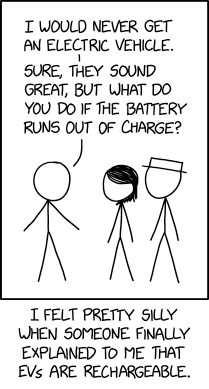
Electric Vehicles

Now that I've finally gotten an electric vehicle, I'm never going back to an acoustic one.
03 Mar 13:26

OpenAI’s ‘Red Lines’ Are Written In The NSA’s Dictionary—Where Words Mean What The NSA Wants Them To Mean

by Mike Masnick

Within hours on Friday, the Pentagon blacklisted one AI company for refusing to drop its safety commitments on surveillance and autonomous weapons, then turned around and praised a competitor for signing a deal that supposedly preserved those exact same commitments.

This confused some people. Why would the Pentagon seek to destroy one company over the same terms it agreed to with its largest competitor just hours later?

There’s an answer though: the words in OpenAI’s contract likely don’t mean what most people think they mean.

This isn’t speculation about future abuse. It’s the documented operating procedure of the NSA for decades—a practice exposed repeatedly by whistleblowers, litigated in courts, and eventually confirmed in declassified documents.

OpenAI published the broad contours of its agreement, positioning it as having more guardrails than any previous deal, including Anthropic’s. The company lists three “red lines”:

No use of OpenAI technology for mass domestic surveillance. No use of OpenAI technology to direct autonomous weapons systems. No use of OpenAI technology for high-stakes automated decisions (e.g. systems such as “social credit”).

Sounds great, right? Who wouldn’t support that? The problem becomes apparent only when you read the actual contract language OpenAI published, and specifically, the legal authorities it cites as defining what constitutes “lawful” behavior by the Pentagon:

For intelligence activities, any handling of private information will comply with the Fourth Amendment, the National Security Act of 1947 and the Foreign Intelligence and Surveillance Act of 1978, Executive Order 12333, and applicable DoD directives requiring a defined foreign intelligence purpose. The AI System shall not be used for unconstrained monitoring of U.S. persons’ private information as consistent with these authorities.

If you’ve spent any time studying how the NSA actually operates, that reference to Executive Order 12333 should make the hairs on the back of your neck stand up. Because EO 12333 is, in practice, one of the largest loopholes for surveilling Americans’ communications that the intelligence community possesses. And by defining its “red lines” as compliance with these authorities, OpenAI has effectively adopted the intelligence community’s dictionary—a dictionary in which common English words have been carefully redefined over decades to permit the very things they appear to prohibit.

We’ve covered this extensively over the years, because understanding how the NSA plays word games is critical to understanding basically anything it claims about surveillance. As a former State Department official, John Napier Tye, explained back in 2014 in the Washington Post:

Executive Order 12333 contains no such protections for U.S. persons if the collection occurs outside U.S. borders. Issued by President Ronald Reagan in 1981 to authorize foreign intelligence investigations, 12333 is not a statute and has never been subject to meaningful oversight from Congress or any court….

Unlike Section 215, the executive order authorizes collection of the content of communications, not just metadata, even for U.S. persons. Such persons cannot be individually targeted under 12333 without a court order. However, if the contents of a U.S. person’s communications are “incidentally” collected (an NSA term of art) in the course of a lawful overseas foreign intelligence investigation, then Section 2.3(c) of the executive order explicitly authorizes their retention. It does not require that the affected U.S. persons be suspected of wrongdoing and places no limits on the volume of communications by U.S. persons that may be collected and retained.

That phrase “incidentally collected” is doing enormous work in that paragraph. In NSA-speak, “incidental” collection doesn’t mean “oops, we accidentally grabbed that.” It means “we were targeting a foreigner, and your data happened to be in the giant pile we vacuumed up, so we get to keep it.” As Tye put it:

“Incidental” collection may sound insignificant, but it is a legal loophole that can be stretched very wide. Remember that the NSA is building a data center in Utah five times the size of the U.S. Capitol building, with its own power plant that will reportedly burn $40 million a year in electricity.

“Incidental collection” might need its own power plant.

This is what makes OpenAI’s assurance that its technology won’t be used for “mass domestic surveillance” feel hollow. Under the legal framework OpenAI has explicitly agreed to operate within, the NSA can target a foreign person, scoop up vast quantities of Americans’ communications in the process, retain all of it, and search through it later—and none of that counts as “surveillance of U.S. persons” by the government’s own definitions.

The folks over at EFF explained this same dynamic back in 2013, walking through how the word “target” itself had been stretched beyond recognition:

In plain English: the NSA believes it not only can (1) intercept the communications of the target, but also (2) intercept communications about a target, even if the target isn’t a party to the communication. The most likely way to assess if a communication is “about” a target is to conduct a content analysis of communications, probably based on specific search terms or selectors.

And that, folks, is what we call a content dragnet.

Importantly, under the NSA’s rules, when the agency intercepts communications about a target, the author or speaker of those communications does not, thereby, become a target: the target remains the original, non-US person. But, because the target remains a non-US person, the most robust protection for Americans’ communications under the FISA Amendments Act (and, indeed, the primary reassurance the government has given about the surveillance) flies out the window.

So when OpenAI’s contract says its technology will be used in compliance with these authorities, and “shall not be used for unconstrained monitoring of U.S. persons’ private information as consistent with these authorities,” what does that actually mean? It means: the government gets to define what counts as “unconstrained monitoring” and what counts as “U.S. persons’ private information,” using definitions that have been purpose-built over decades to permit exactly the kind of bulk collection that a reasonable person would call “mass domestic surveillance.”

Note also the careful qualifier: “unconstrained monitoring.” That word “unconstrained” is doing a lot of heavy lifting. Under the government’s framework, surveillance that operates under any constraint—even the fig leaf of “we were targeting a foreigner and your data just showed up”—is, by definition, constrained. So the contract arguably permits all of the surveillance the NSA already does, because the NSA would say none of it is unconstrained. It all has rules! The rules just happen to permit collecting and keeping basically everything.

This is precisely where the breakdown between Anthropic and the Pentagon becomes illuminating. According to reporting in the New York Times, the final sticking point was something much more concrete:

Mr. Michael, who was on a call with Anthropic executives at the time, said the Pentagon wanted the company to allow for the collection and analysis of unclassified, commercial bulk data on Americans, such as geolocation and web browsing data, people briefed on the negotiations said.

Anthropic told the Pentagon that it was willing to let its technology be used by the National Security Agency for classified material collected under the Foreign Intelligence Surveillance Act. But the company wanted a legally binding promise from the Pentagon not to use its technology on unclassified commercial data.

Apparently, Anthropic was willing to let the NSA use its AI on classified intelligence material collected under FISA. That’s already a significant concession to the national security establishment. What Anthropic wouldn’t do is let the Pentagon use its AI to trawl through the commercially available data that data brokers sell about Americans—your geolocation data, your browsing history, your credit card transactions. Anthropic wanted a legally binding commitment that this wouldn’t happen.

The Pentagon said no. And OpenAI’s published contract language is conspicuously silent on commercial bulk data.

OpenAI’s announcement instead points to compliance with EO 12333 and other existing authorities as its safeguard. But as Tye noted back in 2014, the intelligence community has historically used the distinction between data collected inside and outside the United States to avoid oversight entirely—and in an era where your email from New York to New Jersey bounces through servers in Brazil, Japan, and the UK, that distinction has become essentially meaningless:

A legal regime in which U.S. citizens’ data receives different levels of privacy and oversight, depending on whether it is collected inside or outside U.S. borders, may have made sense when most communications by U.S. persons stayed inside the United States. But today, U.S. communications increasingly travel across U.S. borders — or are stored beyond them. For example, the Google and Yahoo e-mail systems rely on networks of “mirror” servers located throughout the world. An e-mail from New York to New Jersey is likely to wind up on servers in Brazil, Japan and Britain. The same is true for most purely domestic communications.

Executive Order 12333 contains nothing to prevent the NSA from collecting and storing all such communications — content as well as metadata — provided that such collection occurs outside the United States in the course of a lawful foreign intelligence investigation. No warrant or court approval is required, and such collection never need be reported to Congress.

So OpenAI’s “red line” against “mass domestic surveillance” is defined by compliance with legal authorities that, in practice, permit the collection of enormous quantities of Americans’ communications data without warrants, without court approval, and without congressional oversight. That’s the “safeguard.”

Then there’s the autonomous weapons question. OpenAI makes a big deal about the fact that its deployment is “cloud-only” and therefore cannot power autonomous weapons, which would require “edge deployment.” This sounds like a meaningful technical limitation. Anthropic initially considered a similar distinction and, as the Atlantic reported, rejected it:

According to my source, at one point during the negotiation, it was suggested that this impasse over autonomous weapons could be resolved if the Pentagon would simply promise to keep the company’s AI in the cloud, and out of the weapons themselves. The argument was that the models could be kept outside so-called edge systems, be they drones or other kinds of autonomous weapons. They might synthesize intelligence before an operation, but they wouldn’t actually be making kill decisions. The AI’s hands would be clean of any deadly errors that the drones made.

But Anthropic wasn’t satisfied by this solution. The company reasoned that in modern military AI architectures, the distinction between the cloud and the edge is no longer all that defined. It’s less a wall and more of a gradient. Drones on the battlefield can now be orchestrated through mesh networks that include cloud data centers. And although they’re designed to survive on their own, the military’s impulse will always be to maintain as much connectivity between them and the most powerful models in the cloud; the better the connection, the more intelligent the machine.

Indeed, the Pentagon has been working hard to keep the cloud as involved as possible. Part of the goal of its Joint Warfighting Cloud Capability is to push computing resources closer to the fight. The AI may be sitting in an Amazon Web Services server in Virginia rather than a war zone overseas, but if it’s making battlefield decisions, from an ethical standpoint, that’s a distinction without much difference. Anthropic ended up discarding the idea that the cloud provision could resolve the problem. It didn’t take much analysis, according to the source close to the talks.

So the “cloud-only” limitation that forms the centerpiece of OpenAI’s assurance on autonomous weapons is the same limitation that Anthropic considered and quickly dismissed as inadequate. The Pentagon’s own infrastructure programs are specifically designed to blur the line between cloud and edge. An AI model sitting halfway around the world feeding targeting decisions to a drone swarm through a mesh network is, from any functional standpoint, directing an autonomous weapons system. But under OpenAI’s framing, because the model is technically in “the cloud,” the red line remains intact.

This is the pattern. At every turn, OpenAI’s “red lines” are defined not by what a reasonable person would understand those words to mean, but by the government’s carefully constructed legal definitions—definitions that have been engineered, refined, and battle-tested over decades to allow the intelligence community to do the thing while truthfully claiming it’s not doing the thing.

OpenAI either doesn’t understand this history, or (far more likely) understands it perfectly well and has decided that adopting the government’s dictionary is good enough cover. As the Atlantic noted, nearly 100 OpenAI employees signed an open letter indicating they supported the same red lines as Anthropic. They may want to look very carefully at whether the company’s contract actually delivers what it promises.

OpenAI’s defenders will point to the layered safeguards: the cloud-only architecture, the contractual language, the cleared OpenAI engineers in the loop. These aren’t nothing. But they all operate within a framework where the definitions of “surveillance,” “targeting,” and “lawful” have already been handed to the government. Human oversight matters, but not when the humans are operating under rules designed to allow the thing you’re supposedly preventing.

The most revealing line in OpenAI’s entire announcement might be this, from its FAQ:

It was clear in our interaction that the DoW considers mass domestic surveillance illegal and was not planning to use it for this purpose.

And if you’re wondering whether this administration’s assurances about how it will use AI tools are worth the paper they’re printed on, the same Defense Department that just signed this deal launched strikes on Iran within hours—without congressional authorization. The people OpenAI is trusting to self-police their surveillance activities are the same people who apparently consider laws constraining military action more of a suggestion.

The Department of Defense “considers mass domestic surveillance illegal.” Well, sure it does—by its own definitions. The NSA has always considered its activities legal by its own definitions. That’s the whole trick. The NSA would tell you, with a straight face, that it has never conducted mass domestic surveillance, because under its interpretations of the relevant authorities, what it does doesn’t count as “mass domestic surveillance.” It’s “targeted collection” with “incidental” acquisition of U.S. persons’ data that gets retained under minimization procedures approved by the Attorney General, not a court. Totally different thing. Just ask them.

Anthropic looked at the government’s assurances and said: we know how this works, we’ve seen this movie, we want legally binding commitments that go beyond the existing authorities. OpenAI looked at those same assurances and said: sounds good to us.

Which brings us to how OpenAI keeps trying to shape this message. Here’s Sam Altman downplaying all of this:

“We do not want the ability to opine on a specific (and legal) military action. But we do really want the ability to use our expertise to design a safe system.” That’s a perfectly reasonable-sounding position. The problem is that “legal” is doing all the work in that sentence, and as we’ve spent the last decade learning, the government’s definition of “legal” when it comes to surveillance and military technology has been stretched so far beyond common understanding that the word has become almost meaningless as a safeguard.

OpenAI didn’t hold the same line as Anthropic. It drew a line on a map using coordinates provided by the very entity it was supposed to be constraining.

02 Mar 20:59

One out of every seven Houston area residents know of someone detained by ICE, survey finds

by Michael Adkison
Fifteen percent of greater Houston residents said they personally knew someone who had been detained, or even deported, by federal immigration authorities. That percentage increases among Hispanic residents — and those near or below the poverty line.
02 Mar 20:52

Trump Creates Makeshift Situation Room In Mar-A-Lago Sauna

by The Onion Staff
02 Mar 20:52

These former government tech leaders are prepping day-one plans for a future administration

by Natalie Alms
A group of technologists, practitioners and public servants with extensive government experience is prepping day-one plans for the next administration meant to push the government into a new age instead of returning to a pre-Trump status quo. 

The effort, called the Tech Viaduct, is in part a reaction to Trump’s controversial, government-slashing Department of Government Efficiency, which helped the administration push out civil servants, cut spending and tap into new sources of government data, sparking lawsuits in the process. 

Watching how much the team was able to get done quickly was “astonishing,” said Mikey Dickerson, a senior advisor for the Tech Viaduct.

Dickerson was the first administrator of the U.S. Digital Service, a tech team established by former President Barack Obama in the aftermath of the failed Healthcare.gov launch. Trump transformed USDS into a unit to house DOGE on the first day of his administration and placed billionaire Elon Musk in charge, though he has since departed. Many of those who were originally USDS workers have been laid off or have left.

Those behind Tech Viaduct say that Elon Musk’s team caused harm that will take years to undo, but it also showed how much can get done in government when you have the force of political will behind you.

Last summer, Dickerson started talking to other government tech experts, asking “what if we were to move with the same kind of urgency to accomplish our goals, to make things stronger instead of shut them down?”

Now, he’s working with a group at the Searchlight Institute — a Democratic think tank — to make day-one plans for a future administration to get that done. 

The team includes Jacky Chang, a senior engineer who previously worked as a senior advisor at the General Services Administration; Jonathan Mostowski, a procurement expert who formerly worked at the U.S. Digital Service and Defense Digital Service; Joshua Jacobs, former head of the Veterans Benefits Administration under Biden; and Marina Nitze, who was a senior tech advisor for Obama, as well as the chief technology officer of the VA.

Nitze co-authored a forthcoming book, Crisis Engineering, with Dickerson and Matthew Weaver, who helped set up the Defense Digital Service. The three work for crisis engineering firm Layer Aleph.

Denis McDonough, former White House chief of staff under the Obama administration and Secretary of Veterans Affairs during the Biden administration, is an advisor for the effort, as are Alexander Macgillivray, former principal deputy CTO for Biden and deputy CTO for Obama, and Robby Mook, Hillary Clinton’s former campaign manager.

The group wants to reform the procurement, civil service and oversight processes undergirding the government to create the right conditions for successful, tech-enabled government service delivery. 

The goal is for the team to be able to provide a new president with tactical plans, structural reform objectives, day-one executive orders, memoranda and more. 

The notion of crafting a playbook to help an incoming administration more effectively accomplish policy goals is not new. Trump himself made use of many recommendations outlined in the controversial Project 2025 playbook from the Heritage Foundation to dismantle sections of the civil service and even eliminate entire agencies, although Trump distanced himself from the project while on the campaign trail.

Tech Viaduct’s plans are for the next “friendly administration,” said Dickerson, that wants to build a “better, more responsive, functional government.” He says part of the work will be lobbying to get buy-in for the project, especially since government reform isn’t necessarily top of mind for voters. It can, however, help politicians implement their ideas, he said. 

What Dickerson doesn’t want to happen is a return to the status quo. 

“For decades, government services have fallen short of citizen expectations. Inaction and complacency, including by Congress, have allowed budget, procurement, and oversight rules to fossilize into a system that guarantees each program complies with ever-expanding checklists while its core purpose often goes unfulfilled,” the Tech Viaduct website reads. 

Jacobs is drawing on his time at the VA to help inform those plans.

During the last two-plus years of the Biden administration, he led the Veterans Benefits Administration as it was implementing the PACT Act, which significantly expanded eligibility for healthcare benefits for veterans exposed to toxic substances.

It was a big lift. The law expanded healthcare and benefits eligibility to veterans who were exposed to burn pits and other toxins during their service. Hundreds of conditions were added to the list of what is presumed to be connected to military service. 

Leadership at the VA decided to implement the law faster than the phased approach Congress had outlined, in part because doing the work incrementally would have required the VA to hold claims that weren’t yet presumptive, without the ability to deny or approve them, said Jacobs. 

To get it done, the VA studied the operational conditions they’d need across processes, people and technology, launching a hiring spree and using mandatory overtime to fill what was deemed the “driving force” of the project: people. The department also benefited from strong, top-down leadership and a unit set up to drive cross-department collaboration, said Jacobs. 

The lesson Jacobs is bringing to the Tech Viaduct now: “Even the best policies will accomplish nothing if you don’t have effective operations.”

]]>
02 Mar 20:50

A Former Top Trump Official Is Going After Prediction Markets

by Kate Knibbs
As the battle over prediction markets rages on, Mick Mulvaney is leading a new coalition that calls these platforms illegal gambling.
02 Mar 20:49

AI Bros Wanted Trump. Now They Learn What Happens When You Tell Him No.

by Mike Masnick

Last year, in Fascism For First Time Founders, I warned the tech industry what happens when you cozy up to authoritarians. As I wrote then:

Innovation requires trust. Not just between individuals, but institutional trust. People need to believe that contracts will be enforced, that property rights will be protected, that the rules won’t change arbitrarily based on the whims of whoever’s in charge.

Building a startup requires long-term thinking. You’re asking employees to bet their careers on your vision. You’re asking investors to put money into something that might not pay off for years. You’re asking customers to trust that your product will be supported and improved over time.

None of that works in an environment where the rules change based on political caprice.

As you’ve probably heard, on Friday that political caprice came home to roost for many in Silicon Valley when Defense Secretary Pete Hegseth announced he was declaring Anthropic a “supply chain risk” and that no one with US military contracts could have a commercial relationship with the company any more (a gross exaggeration of what being declared a supply chain risk actually means, but that’s besides the point).

We’ve criticized these “supply chain risk” designations going back years, but mainly for how they tend to be used to prop up American companies against foreign (usually Chinese) competitors with little evidence regarding the actual risk. Of course, you can easily understand the stated intent of an “SCR” designation: if there’s a foreign company with ties to a government that is averse to the US, there is always a risk that the company could agree to sneak backdoors or spyware into the network and do something bad. Hell, it’s what the US does.

But here, it makes no sense at all. The only “risk” was Anthropic saying its technology shouldn’t be used for domestic mass surveillance or to power autonomous killing machines. There is no underlying risk.

It’s worth pausing to note just how modest Anthropic’s red line actually was. They weren’t refusing to work with the military. They weren’t demanding the Pentagon adopt pacifism. They simply said their AI shouldn’t make kill decisions without a human in the loop, and shouldn’t be used for mass surveillance of American citizens. That’s it. That’s the “duplicity” and “betrayal” that Hegseth is ranting about. A company said “maybe don’t let the robot decide who dies on its own” and the response was to try to destroy them.

Hell, the entire point of the designation had nothing to do with any actual risk. It was a clear attempt by the US government to destroy a tech company that pushed back ever so slightly on the Trump administration.

Just like we warned last year in the fascism piece, that government will always turn on you:

Every authoritarian regime in history has eventually turned on the business community that initially supported it. The oligarchs who think they can control the dictator always end up learning the hard way that the dictator controls them.

And yet, the AI bros went hard for Trump. As someone who still finds the tech to be quite useful when used in thoughtful, careful ways, this is part of what has frustrated me. So many people in the AI space went out of their way to insist that if they just got Trump elected, it would be clear sailing for AI.

If you listen to some Silicon Valley VC bro podcasts, there was a common refrain: the Biden admin supposedly tried to destroy tech, and how much better Trump is for tech. Every time I hear that it makes me wonder what sort of world these people live in.

It’s true that the Biden administration’s policy on AI was not great. It was clear that it was influenced by too many knee-jerk “AI doomers,” but ultimately the actual policy was a toothless set of principles, while asking federal government employees to take some steps to push for more responsible AI tools, and that was about it. It didn’t really do much at all, and certainly didn’t do anything meaningful in slowing down or limiting AI companies.

But, to hear the AI bros who rushed out to loudly support Trump, Biden was trying to destroy the entire American AI industry and hand it to China.

Yet, on Friday, it was the Trump admin that was out there trying to actually destroy the American AI industry. Pete Hegseth’s tweet is unlike anything you ever saw or heard from the Biden admin:

If you can’t see the image, it’s a pathetically long tweet that reads:

This week, Anthropic delivered a master class in arrogance and betrayal as well as a textbook case of how not to do business with the United States Government or the Pentagon.

Our position has never wavered and will never waver: the Department of War must have full, unrestricted access to Anthropic’s models for every LAWFUL purpose in defense of the Republic.

Instead, Anthropic and its CEO Dario Amodei, have chosen duplicity. Cloaked in the sanctimonious rhetoric of “effective altruism,” they have attempted to strong-arm the United States military into submission – a cowardly act of corporate virtue-signaling that places Silicon Valley ideology above American lives.

The Terms of Service of Anthropic’s defective altruism will never outweigh the safety, the readiness, or the lives of American troops on the battlefield.

Their true objective is unmistakable: to seize veto power over the operational decisions of the United States military. That is unacceptable.

As President Trump stated on Truth Social, the Commander-in-Chief and the American people alone will determine the destiny of our armed forces, not unelected tech executives.

Anthropic’s stance is fundamentally incompatible with American principles. Their relationship with the United States Armed Forces and the Federal Government has therefore been permanently altered.

In conjunction with the President’s directive for the Federal Government to cease all use of Anthropic’s technology, I am directing the Department of War to designate Anthropic a Supply-Chain Risk to National Security. Effective immediately, no contractor, supplier, or partner that does business with the United States military may conduct any commercial activity with Anthropic. Anthropic will continue to provide the Department of War its services for a period of no more than six months to allow for a seamless transition to a better and more patriotic service.

America’s warfighters will never be held hostage by the ideological whims of Big Tech. This decision is final.

I’m sure he thought that “defective altruism” line was really clever.

This wasn’t a total surprise. The two sides had been sparring publicly all week, each daring the other to blink first—a game of bro chicken that ended with Hegseth driving straight into one of the few sectors still propping up the US stock market.

But, fascism destroys the businesses that suck up to it. It creates chaos and uncertainty. Again from my piece last year:

Authoritarian systems are fundamentally unpredictable. The rules change based on the leader’s mood, personal vendettas, or political needs. That’s the opposite of the stable, predictable environment that innovation requires. When political favor matters more than legal precedent, no one can plan for the future.

Fascism destroys everything that makes innovation work right. The fact that, on a random Friday evening, the Secretary of Defense can claim that he can force anyone who does business with the US military to cut all ties to one business that slightly annoyed him during contract negotiations is exactly the kind of nonsense I was discussing.

This is the kind of chaos you get. Not reasoned debate. Not a simple decision to part ways of a contract dispute. No, the Trump administration decided to destroy a company for the sin of telling it no.

That Sam Altman quickly swooped in to grab a contract from the Defense Department doesn’t much matter in the grand scheme of things (we’ll cover the sneaky details of that arrangement separately).

It does, kinda, matter that Hegseth turned a simple contract dispute into an attempted corporate death sentence, weaponizing a supply-chain security designation that was clearly designed for tech the US government fears could be infiltrated by hostile foreign nations.

Yet, under Hegseth’s order, Chinese AI models would technically be more welcome in America’s military supply chain than Anthropic’s. The “supply chain risk” designation is now being used to punish a domestic company for having safety guidelines. DeepSeek, with its direct ties to the Chinese government, faces fewer restrictions than a San Francisco company that committed the cardinal sin of asking for human oversight on killing decisions.

This is what fascism gives you. Not just uncertainty. Not just the destruction of institutions that innovation relies on. But the sheer unadulterated pettiness and vindictive spite of 12-year-old bullies.

Sure, President Biden’s AI plan had a few things that were marginally annoying and probably forced some DC policy people to have to spend a bit more time doing a bit more paperwork. But Biden didn’t tweet out a plan to destroy one of the biggest AI companies because it said “yo, our tech is not safe enough to be making decisions on who to kill without any human review.”

The AI bros who supported Trump should have known this. There’s plenty of history about how this works. They always think that by sucking up to the authoritarian, he’ll give them what they want (the freedom to do whatever they want without consequence).

But that’s not how it works in a fascist society. The fascists will always ask for more. They will always cross your red lines. And if you dare to stand up to them? They will directly and deliberately set out to destroy you as punishment to act as a warning to others never to defy the will of the dictator and his petty henchmen.

Perhaps the funniest response to all this was from Dean Ball, who went into the Trump administration to basically write Trump’s silly AI action plan. Over on X after Hegseth’s announcement, he had a bit of a meltdown about how much damage Hegseth was doing to the entire American AI industry.

Well, yeah, dude. That’s what fascist governments do. You joined the administration to help craft their leopard’s spots strategy and now you’re shocked—shocked—that the leopards started eating faces?

No one comes out of this looking good, of course, no matter what the end result of this mess turns out to be. The Trump administration continues its reputation as a destroyer of basically everything, including the last remaining golden goose that has propped up the stock market for the last year. OpenAI looks opportunistic at best. And Anthropic—which, notably, was never as deeply embedded in the MAGA tech cheerleading squad—is now the example of what happens to anyone in the industry who dares to push back, even modestly. That’s the environment the AI bros who backed Trump created for everyone.

And, again, the public trust in the technology takes another hit. Siding with the strongman wannabe dictator is never a good look, and it reflects poorly on you across the board.

The fact that AI hatred seems to be spreading about as fast as Donald Trump’s approval ratings are falling, perhaps the AI bros should have asked their magic answer machines to predict what happens when you side with a wannabe dictator because you heard that the last guy wanted you to do a bit more paperwork to make sure your AI bots were less likely to do harm.

The “Fascism For First Time Founders” piece was a warning. What happened Friday evening was just an exclamation point.

And hey, to the AI bros who went all in on MAGA? Maybe next time you’re on a podcast complaining about how the government is destroying tech, you could mention that the Biden plan you hated so much was just annoying paperwork, while the guy you vocally supported is out there taking a baseball bat to an entire industry because Pete Hegseth couldn’t get his killing bot.

Gotta love that “American dynamism” at work.

02 Mar 20:47

Whistleblower: ICE Has Slashed Its Training Program And Its Boss Is Lying To Congress About It

by Tim Cushing

ICE can’t keep up with the baseline set by resident ghoul/White House advisor Stephen Miller. Miller has demanded 3,000 arrests per day, which he presented as the minimum he would be satisfied with.

To reach this goal, tons of talent from other federal law enforcement agencies have been added to the mix. The results have been less than impressive, to be entirely too kind to these kidnappers and murderers.

CBP and Border Patrol officers used to handling border crossing business are now roaming the streets of Midwestern cities looking for anyone who seems a bit too dark to be a native. In addition, nearly half of FBI agents have been placed on the “find the brown person” beat, along with volunteers/voluntolds from DEA, ATF, US Secret Service, Homeland Security Investigations, and anyone else with a badge they’re unwilling to display prominently when raiding local day care centers.

The GOP threw a whole lot of money at ICE with the “Big Beautiful Bill.” ICE is throwing a lot of money at potential hires, much to the chagrin of law enforcement agencies everywhere, as well as already-understaffed prisons and jails.

The expectations were lowered, along with the bar for entry. The promise of a $50,000 signing bonus has managed to attract the expected blend of MAGA faithful, retired cops, bigots (but I repeat myself…), and anyone who thinks they have what it takes to frog-walk five-year-olds to the nearest rented SUV.

Hiring a bunch of people is only half the battle. The next step is preparing them to do their jobs. Ridding the nation of migrants is Job #1 here in America at the moment. But it’s a job too important to be done well by fully trained ICE officers. Quantity over quality is the name of the game, as former ICE trainer Ryan Schwank — who only resigned last week — told Congress. Here’s the Washington Post with the details:

[S]chwank… told congressional Democrats at a hearing that the agency eliminated 240 hours of “vital classes” from a mandatory 580-hour training program, including instruction about the legal boundaries for the use of force, how to safely handle firearms, and the proper way to detain and arrest immigrants.

Seems like a pretty sweet deal for new hires. Not only do they get a hefty signing bonus, but they don’t have to go through 40% of the training. Giving people guns and the power to deprive others of their lives and liberties should mean giving them the best possible training you can in hopes of heading off… well… pretty much everything we’ve been seeing lately during Trump’s anti-blue state/city surges.

Certainly, the administration is already doing everything it can to undercut the credibility of its now-former employee. But it’s not going to work unless you’re an idiot who prefers nigh-incoherent MAGA invective to actual facts. You see, Schwank didn’t just bring himself to this hearing. He also brought receipts.

Ahead of the hearing, Schwank provided a joint panel of House and Senate Democrats copies of internal ICE documents that he said show the extent of the cuts. The documents indicated that the Federal Law Enforcement Training Centers in Glynco, Georgia, shortened its training program from 72 days to 42 days.

Except that’s not what Todd Lyons said to Congress when he was asked to testify following two murders committed by federal officers in Minneapolis, Minnesota. Lyons claimed nothing important had been cut. He also said this, which is directly contradicted by the documents Schwank gave to lawmakers:

In a statement Monday, the Department of Homeland Security said ICE recruits receive 56 days of training before beginning their assignments…

Lyons went on to say that an “average” of 28 days of additional “on the job training” occurs after that. But even if you might believe Lyons is stacking his apples against the apples in ICE’s internal documents to come up with 84 days of training, you’re miscounting apples the same way Lyons is. OJT is post-assignment. Even if you choose to believe Lyons more than the documents his own agency generated, officers are still being put on the street two weeks earlier than they used to be.

The lies persist, of course. The statement provided to the Post says something else entirely, which is also contradicted by the documents and statements made by Schwank.

“No training hours have been cut. Our officers receive extensive firearm training, are taught de-escalation tactics, and receive Fourth and Fifth Amendment comprehensive instruction,” said Lauren Bis, a spokeswoman for the department.

But training hours have been cut. And the rest of it is pure horseshit, especially the part about training new hires about the Fourth and Fifth Amendment. Schwank’s testimony noted that he was asked to review an internal memo signed by Lyons that claimed — untruthfully — that ICE officers can enter people’s homes using only a self-issued administrative warrant.

Other rights were similarly glossed over. In fact, some of them are ignored completely.

[Schwank] also said that a two-hour class on the rights of protesters was shortened into 10 minutes of discussion during a lecture on “the concept of seizure.”

Nice. That’s the way to do it. Goodbye, First Amendment. Instead, here’s 10 minutes of ICE’s interpretative dance: “The Fourth Amendment, And What It Doesn’t Mean To Us.”

Everyone knew that once the cattle call began, ICE would be swarmed with opportunists who saw a great way to combine their bigotry and violence tendencies with a career — however short-lived — in public service. A steady paycheck, and all the government asked was that you show up at least 40% of the time during training.

This horde (actual number unknown) is being pushed through the doors towards their on-the-job-training, armed with little more than their masks, their guns, and some very comprehensive incorrecting of their constitutional notions.

Of course, none of this will matter to the people running ICE. I’m pretty sure they love this press. They have no interest in heading up a finely-tuned precise instrument of immigration law enforcement. They’d rather have the untargeted terrorizing of entire neighborhoods and the unearned swagger of a paramilitary death squad that somehow can still be hooted, horn-honked, and whistled into submission by suburbanites. And maybe this isn’t even an intentional design decision. There’s a good chance no one up top is intelligent enough to recognize the self-destructiveness of their actions. For now, at least, we know what they know. And we know this is wrong.

02 Mar 20:46

I’m afraid my star employee is going to quit

by Ask a Manager

A reader writes:

I was recently promoted to a director role, and one of my direct reports is my former boss who hired me into the company, “Tom.”

Tom was a great boss in the eight years I worked for him. He’s an all-around terrific manager who coaches well, provides clear goals, gives flexibility to meet those goals, provides opportunities to learn and grow, advocates for his team, the works.

After a few years working for him, a promotion opened up and Tom urged me to apply. I got it, became his peer, and built my own effective team using his style as my model. Last year, our department director positioned opened up. Tom and I both applied. I impressed our relatively new division VP, and got the job.

Days after that, I found out through a colleague that Tom was very disappointed. Apparently the previous division VP had told Tom that he was a “shoo-in” for the job when it opened. In fact, he turned down some outside opportunities that would have paid more because he was anticipating this promotion. I had no idea that this was his expectation.

Tom has been nothing but professional and complimentary with me, but I’m really concerned about how I can manage him effectively. I need him to stay—he has longstanding personal relationships with all our key clients. If he left suddenly, we would be in a real bind.

Our HR and division VP have also emphasized the need to keep Tom on staff due to his role as a talent spotter and his client relationships. I asked about getting him a raise and an intermediate promotion, but our corporate structure is pretty stratified and there’s nothing between his level and mine. What do you recommend to navigate the potential awkwardness of managing my former boss, as well as keeping him happy despite his disappointment in not getting this job—and his missing out on the raise that came with it?

I answer this question over at Inc. today, where I’m revisiting letters that have been buried in the archives here from years ago (and sometimes updating/expanding my answers to them). You can read it here.

The post I’m afraid my star employee is going to quit appeared first on Ask a Manager.

02 Mar 20:44

my boss asked me to join a work call on my day off … then stood me up

by Ask a Manager

A reader writes:

I have a weird, complicated relationship with my boss, Amelia, who is part of the C-suite. We have very different working styles. We are both from the same Latin American country but both of us live and work in the U.S.

Last week, she asked me to join a call with her and the CEO of our company in another country. The CEO suggested Friday but Amelia said she was taking that day off and suggested Monday instead. Monday was a holiday for both her and me, but she was traveling to a different country so she was going to be working anyway.

When I pointed out that it was a holiday, she said, “Oh come on, it’s only 30 minutes.” This made me feel like my day off is not as valuable as her day off. But I was going to be the least senior person on the call so I figured I’d just do it.

I spent the whole morning of my day off thinking about the impending call and when it finally arrived I dutifully connected, and so did the other country CEO. Amelia didn’t show.

The CEO and I ended up having the meeting ourselves.

Two hours later, Amelia sent me a Teams message saying, “Sorry, I was in an in-person meeting that ran long.”

So here are my thoughts:

– This meeting was clearly not as urgent as she made it seem. Otherwise she would’ve shown up. If it was not urgent, we could’ve had the call the next day.

– I could’ve had the meeting without her in the first place and had it on Friday as the CEO suggested, without having to work on a holiday.

– I know different cultures see time and especially other people’s time differently. But she and I are from the same country, so I don’t think this is cultural.

Am I justified in feeling enraged? I feel frankly disrespected but I’m not sure if this is just a minor inconvenience or if I’m right to be deeply offended. And if I’m right to be deeply offended, do I say something to her and how would you word it?

I need a reality check and would appreciate your opinion.

I don’t know that deeply offended is warranted, but deeply irritated? Absolutely.

The most generous reading of what happened is that because it was a work day for Amelia, she lost track of the fact that it wasn’t a work day for you. But that doesn’t make it okay; it’s absolutely not.

In fact, it wasn’t okay for her to ask you to take the call on a holiday in the first place, unless the meeting topic was truly urgent and had to happen that day. Maybe that was the case, I don’t know, but it doesn’t sound like it since when you tried to push back, her answer was “it’s just 30 minutes” — not something else that would explain and justify the urgency like “I know it’s not ideal, but unfortunately we’ve got to finalize the proposal before it’s due to the client the next day.”

Regardless, once she had asked you to set aside time on your day off, she really needed to show up for that call — or at least let you know it wasn’t happening. Not doing that was disrespectful and rude. And then it was compounded by how casual she was about it later; she should have profusely apologized and acknowledged that you were waiting for her on your day off.

As for whether you should say something to her about it … I don’t know that there’s a lot of point to it, but if you want to, you could say, “What happened on Monday? I was supposed to be off but set aside time to meet when you said you needed me to.” But with the way she’s already handled it, I’m skeptical that she’ll get the message.

There’s more value in thinking about what patterns you see from her generally: is she regularly disrespectful of your time? Does she not respect your off hours in other situations too? Does she assume her schedule should be your schedule, or that you should never object to giving up off time to make life more convenient for her? There are a lot of different patterns that could be in play, but identifying what they are will help you figure out what boundaries you need to set with her going forward. And in particular, if in the future she asks you to schedule work on a day you’re supposed to be off, you might make a point of already having an unmovable conflict.

The post my boss asked me to join a work call on my day off … then stood me up appeared first on Ask a Manager.

02 Mar 20:33

ALT

A comic of two foxes, one of whom is blue, the other is green. In this one, Blue appears on the scene as Green is glaring at a failed crafts project, which has been utterly mangled beyond recognition.
Blue: What's wrong?
Green: The jute rope basket I've been trying to weave fell apart.

Blue sits down opposite of Green, also looking at the mangled basket attempt.
Blue: The one that was shedding needly fibers everywhere?
Green: Yep.

Blue continues looking at the failed basket as Green raises his head to look at Blue incredulously.
Blue: Aw, sorry to hear that.
Green: Why? You hated that thing.

Blue looks back up, and both foxes look at each other calmly.
Blue: Just because I'm glad that it's gone doesn't mean I can't be sorry that you lost it.ALT
02 Mar 20:32

Intelligent Life of Earth

by Corey Mohler
PERSON: "Tech Sergeant Zxzilllarxlthx, we approach the planet known as “Terra”. Any signs of intelligent life? "

PERSON: "Negative, Admiral Tim. Our consciousness scan shows tiny signs of awareness, but it is within the margin of error for the machine."

PERSON: "So humans are totally devoid of consciousness? "

PERSON: "It seems that way. In addition, we've analyzed human behavior, and found them more in line with our A.I chatbots than sentient beings."

PERSON: "Like A.I., Humans mostly form their ideas based on repetition. Whatever idea they hear repeated most often, they consider that to be the truth."

PERSON: "According to our data, humans in the countryside widely believe extremely stupid ideas. Whereas humans in cities also believe stupid ideas, but slightly different. "

PERSON: "In fact, the most accurate way to predict a human's ideas is to look at their geography."

PERSON: "So no humans have ever shown signs of conscious understanding?"

PERSON: "Well, there are two candidates, The first is Socrates, 2000 years ago."

PERSON: "Holy shit...no human could have made this..."

PERSON: "The second was the rock band “Led Zeppelin,” on account of how awesome their music was."

PERSON: "We think he might have had a genetic mutation that caused him to become sentient. This allowed him to develop his theory that everyone else was wrong."
02 Mar 20:26

The Solution to the Male Loneliness Epidemic Is for Men to Bust Science Myths with Each Other

by Michelle Cohn

Men, guys, dudes, rejoice! After much research and testing, we have found the cure to the cursed male loneliness epidemic that is sweeping our country and our op-ed sections. We know you feel isolated. We know you can’t talk about your emotions. We know you’re looking for male role models in all the wrong YouTube algorithms. But fear not. We have found the solution to all your problems: doing outlandish science projects to prove or disprove commonplace myths.

Men these days are reverting to masculine ideals from yesteryear. They think real men have to be strong, tough, and misogynistic. Listen, boys, you don’t need big muscles, you don’t need creatine powder, and you certainly don’t need to get surgery to gain an extra few inches of height because you’d rather have metal implants in your legs than be 5′4″. All you really need is a curious mind, a pure heart, and military-level access to high-powered explosives. And also a seemingly endless supply of crash-test dummies.

Where do men typically make friends? The gym. School. Work. These places can be great for building connections, but they can also reinforce harmful ideas about masculinity (just think of how much is shrugged off as “locker-room talk”). Doing bizarre and often comical science experiments with your friends is a way to avoid that toxic environment, and instead introduce men to a different kind of toxic environment, where, for example, they measure how long it would take a balloon filled with poison to spread its noxious air.

“But,” we hear you ask, “how do I know if any of my dude friends will even want to solve science mysteries with me?” Good news, they all do. We did multiple studies where we gathered men together and asked them things like, “So, how many times do you think you can fold a sheet of paper?” or “Do you think you’d be able to find a needle in a haystack?” and every time, each of the men wanted to try to do the thing immediately. Seriously. We had to pull some of the men away from the haystacks because they got so into it. Men are absolutely itching to solve little puzzles and then tell everyone about how they solved a little puzzle.

We hear your concerns about the manosphere. We hear your concerns about protein-powder consumption. We hear your concerns about men spending time doing mouth exercises to improve their jawlines. We cannot hear anything else because we have noise-canceling headphones on our ears while we try to see if we can light a match with a gun. This is one of the many experiments that male friends can do together instead of watching Andrew Tate videos or posting derogatory things on Sydney Sweeney’s Instagram stories.

Men, we know you feel lost. The world is full of unknowns, like Who am I? What is my purpose? How many Mentos would I need to drop into a bottle of Coke to bust open a door? Doing weird science experiments with your friends can answer at least one, if not more of these questions. And even when we finally get to the bottom of every science quandary there is, hope is still not lost. There’s always Jackass.

02 Mar 20:26

Max Scherzer re-signs with Blues Jays for chance to win, get even with guy who cut him off on DVP

by Staff

DUNEDIN, FL – In an effort to address unresolved trauma from the 2025 season, veteran pitcher ‘Mad’ Max Scherzer announced he will re-sign with the Toronto Blue Jays to give himself another shot at winning a world series and, most importantly, a chance to “get even with that asshole who cut [him] off on the […]

The post Max Scherzer re-signs with Blues Jays for chance to win, get even with guy who cut him off on DVP appeared first on The Beaverton.

02 Mar 20:26

Anyone Else Have Those Weird Dreams Where Sobbing Future Generations Beg You To Change Course?

by The Onion Staff

The human subconscious is such an interesting thing. No matter how much you think you’ve got it figured out, it’ll always spit out the most random stuff. Take me, for example. After coming home from a long day at the world’s most groundbreaking artificial intelligence organization, I’ll go to bed and have the weirdest dreams where people from the future are sobbing and begging me to change course.

Anyone else ever have these?

It’s funny. Some people have dreams where their teeth fall out; others where they show up to high school tests naked. But the second my head hits the pillow, I’m suddenly in a cold gray smoky void where all I can make out are broken, haunted swarms of people pleading with me to “end this now while there’s still time.” Really peculiar, right? I wish there was some way to find other people who have had them. But when I search “endless crowds of weeping silhouettes telling you this is a terrible mistake” dreams on Reddit, it turns up nada.

It’s tough, because I don’t have much time during the day to think about them. I asked my spouse, Oliver, if he’s ever had the old “people screaming for help from the devastated wreckage of a future world” dream, and he said he didn’t know what that was. I even joked about it while I was out grabbing morning coffees with some venture capitalist buddies. I said, “Sorry if I’m a little off the ball today, guys—I had another one of those dreams where you’re on a scorched, desolate landscape desperately pushing past men who grab you by the lapel, shake you, and cry out, ‘Please understand: This isn’t a dream. It’s a warning.’”

They just looked at me like I was crazy, though.

You’d think I might have some of the other common dreams, like falling off a cliff or trying to run while you’re frozen in place. But it’s always the “tormented throngs of people from the year 2042” one. So odd! I’d be interested to see the statistical breakdown on how often people have this specific dream versus the others. I even asked ChatGPT 5.0 about it, and it suggested I might be watching too many scary movies. I don’t think that’s it, though, because I don’t have time to watch many movies at all!

Sometimes these people wheeze things to me in a raspy voice about how they’re so thirsty and there’s nothing but desert stretching on forever. Sometimes they just mill around, stare at their feet, and mutter about how the only thing that gave them purpose has been torn away. But most of the time, they’re just wailing inconsolably about “all that’s been lost.” Huh!

People probably have all sorts of variations of this dream. But if yours is anything like mine, here’s what happens! Usually, you wake up on a lifeless beach that’s adorned with some sort of abandoned marble temple. It’s supposed to be beautiful, but instead it’s really sad. Almost unbearably sad. So much so that you want to get away from it. So you crawl downward into these vents going below the horrible temple, and suddenly it’s like you’re moving through the innards of an incomprehensible machine that’s thudding away, thud, thud, thud. And as you get deeper, the metal sidings are carved with scrawled ominous curses and slurs directed toward you, and you hear the voices, louder than before, and you somehow know these people are in pain because of you. It keeps getting colder. Color drains from the world. And you see the crowd through the slats of the vents: pale and emaciated men, women, and children from centuries to come, all of them pressed together for warmth in some sort of unending cavern. What clothes they have are torn and ragged. Before you know it, their dirty hands and dirty fingernails lurch through the grates, and they’re reaching for you, tearing at your shirt, moaning terrible things about their suffering and how you made it happen, you made it, and you need to stop this now, now, now. And next they’re ripping you apart, limb from limb, and you are joining them in the gray dimness forever.

Then you wake up in a cold sweat and can’t breathe at all, almost like you’re drowning—I guess from the weight of untold mobs of people leaping on you and ripping you apart. It’s super weird. But your alarm is going off, it’s 5 a.m., and so you get dressed and answer some emails about preparations for the next ChatGPT model.

They all have dark empty holes where their eyes should be, too. I probably should have mentioned that.

I wonder if it’s my diet! Or maybe I shouldn’t be drinking so much Celsius in the afternoon? I guess I could stop looking at my phone before bed. All that blue light could be causing weird dreams. If that’s what it takes to get rid of the legions who scream about lost eons stretching on forever before humanity, I’d certainly give it a try.

Anyway, if anyone out there is having similar dreams, just let me know! I’d love to hear from you at Altman@OpenAI.com. I’m really just curious how many people out there have these dreams and how often you’re seeing the wandering masses who scream at you to “help us, help us, for God’s sake”? For me, it’s every time I close my eyes—whether it’s a power nap or a full night’s sleep—but for you it might be different. Most likely, all of this means nothing, though.

Oh well, back to work!

The post Anyone Else Have Those Weird Dreams Where Sobbing Future Generations Beg You To Change Course? appeared first on The Onion.

02 Mar 20:25

NYPD Arrests Man For Hitting Officers With Snowball

by The Onion Staff

The NYPD arrested a 27-year-old man they accused of striking two police officers with snow and ice during a snowball fight in Washington Square Park, charging him with assaulting a police officer, obstructing governmental administration, and disorderly conduct. What do you think?

“The law is clear—it’s no fair if they weren’t looking.”

Eddie Olivo, Asparagus Buncher

“I hope they also investigate the three-sphered man smoking a pipe in my yard.”

Jolene Etzler, Skirt Hemmer

“That’s two mothers who had to explain to their kids that daddy won’t be coming home dry tonight.”

Ramesh Thakuri, Horn Cleaner

The post NYPD Arrests Man For Hitting Officers With Snowball appeared first on The Onion.

02 Mar 20:25

Data Centers By The Numbers

by The Onion Staff

The surge in AI, cryptocurrency, and other digital assets is rapidly increasing demand for computational infrastructure around the country. The Onion examines the key facts and figures behind data centers.

0.8

New pH of your groundwater

$900,000,000

What 16GB of RAM will cost next year

4,000

Palm fronds fanned to cool the servers

1

Security guard job that Mom thinks might help you get back on your feet

3-2

City council vote that could have stopped this

600 billion

Goddamn wires to untangle

7

People profiting from this

The post Data Centers By The Numbers appeared first on The Onion.