Shared posts

16 Jul 20:55

The Coming Branded-Currency Revolution

by Mark Bonchek and Gene Cornfield

Coupons. Gift cards. Loyalty points. These tried-and-true tools of the retail trade might not be as sexy as other forms of marketing. But together they account for more than $165 billion in purchasing power ($110 billion in gift cards purchased, $48 billion in loyalty points earned, and more than $5 billion in product coupons redeemed). That's almost as much as total e-commerce sales.

These instruments share a common objective: to influence purchase decisions by equipping consumers with incremental spending power for specific brands and retailers. But consumers use them independently and individually (combining their value, when possible, takes a lot of manual effort), and store them in different places — often in drawers or folders where they lay forgotten and unused.

This is changing as coupons, gift cards, and loyalty points all become digital — and, more important, mobile. Mobile enables all of this purchasing power to converge in one place, and potentially be used interchangeably and collectively, always within easy reach for consumers.

What does this mean for retailers and brands? The mistake would be to think that they can keep doing what they have always done, but just add a little digital to it. Instead, retailers need to think about coupons, gift cards, and loyalty points not only as three separate tools, but as different forms of Branded Currency.

Economists define currency as a store of value and a medium of exchange. All of these instruments are stores of value, and by going digital and mobile, they become far more effective mediums of exchange.

The first wave of this convergence has made it easier for consumers to use their coupons or points for payment. Card-linked offers enable consumers to load coupons to their credit cards or loyalty accounts in advance of purchase. Valid offers are automatically applied as a credit when consumers' cards are scanned at the point of sale. Consumers like it because they don't need to remember or present individual coupons. Another approach is Shop-with-Points. As an example, Amazon enables consumers to use their credit card loyalty points as a way to pay for purchases on the site. Shoppers can see their balance and apply their points as easily as using a gift card or credit card.

Where the first wave made possible convertibility, the second wave introduces much greater convenience. Mobile wallets, like Apple's Passbook, bring coupons, gift cards, and loyalty cards together in one place without the constraints of a physical wallet. This innovation is good, but it's a bit of a horseless carriage, still tied to the mental model of a wallet. Consumers still need to manually figure out which instruments can be combined and which cannot, prioritize them based on expirations, calculate the math on their own, and then present them at point-of-sale one at a time.

The third wave will be the mobile portfolio manager, the automobile to the mobile wallet's horseless carriage, which marries the convertibility of the first wave with the convenience of the second. When you treat coupons, cards, and points as convertible instruments, fully leverage the power of digital and mobile technology, and add intelligence into the system, you get an entirely new possibility: calculating and comparing purchasing power, converting currencies, prioritizing usage, and dynamically creating scannable barcodes or other methods for combined payment. Soon consumers will be managing their Branded Currency the way they use Mint to manage their bank, credit, investment, and other financial accounts.

There is a lot of talk these days about brands as publishers. But the successive waves of Branded Currency suggest that retailers will also need to think like bankers who mint their own currencies. Market leaders will be those who best help consumers manage and spend Branded Currency from their portfolios, offer the best exchange rates, create the most liquidity, and make the most efficient markets. Retailers who adopt and execute smart Branded Currency strategies will gain relative share of wallet and have deeper, more enduring relationships with consumers.

Starbucks is perhaps the most advanced retailer in the area of Branded Currency. Most retailers treat their gift card program as an afterthought. Starbucks, on the other hand, has turned it into a hub for competitive advantage. In fact, CEO Howard Schultz considered the combination of mobile payments and social networking as central to the company's "blueprint for growth."

In 2011, Starbucks launched Android and iPhone apps that enabled customers to mobilize and easily reload their plastic cards or purchase new digital gift cards. Most Starbucks customers use the gift card not as a present for others, but as an easy way to pay for purchases, redeem offers, and earn rewards. In effect, they transformed their gift card into a mobile payment/loyalty card and their mobile app into a wallet for their Branded Currency. Over 7 million people now use Starbucks' mobile app to make 4.5 million payments a week, accounting for at least 10% of Starbucks total U.S. revenue. Over 10 million Starbucks eGifts, the digital version of a gift card, have been sent just since 2012.

The strength of Starbucks strategy is not in any single program or promotion. It is the way that the entire Branded Currency system works together to provide an integrated and seamless experience for the customer. They knit together a variety of technologies and platforms from Apple, American Express, CashStar, Facebook, Square, and daily deal providers to promote and execute their deals, offers, and payments across digital, mobile, and social channels. But most importantly, by having its own Branded Currency system, Starbucks maintains control over the customer experience, relationships, and data.

Many technology companies including Apple, Google, eBay and Square are hoping brands will rely on their platforms to integrate and manage coupons, offers, gift cards, payments, and rewards.

Apple has been quietly creating a platform for managing branded currency in the form of its Passbook app and a newly filed patent. If brands aren't careful, they will be as beholden to Apple for digital and mobile coupons, payments, and loyalty as record companies are for digital music, book publishers are to Amazon for digital books, and social game publishers are to Facebook.

As the market for Branded Currency converges and grows, brands will fall into three categories.

(1) Losers: Some brands will continue to operate their coupons, deals, offers, gift cards and loyalty programs the way they always have, as separate standalone programs, and will adopt mobile technology reluctantly. These brands will steadily lose their competitive edge and share of consumer spending.

(2) Laggards: Some brands will play catch up, adopting best practices after they are widely accepted, and rely on the platforms developed by technology and financial services companies. They will stay in the game, but will be in the middle of the pack, either unable to control the customer experience, lacking full access to their data, and losing margin to the platform provider.

(3) Leaders: A few brands will set the pace by creating an integrated approach to using Branded Currency as a vehicle for customer engagement. They will aggregate deals, offers, payments, and loyalty; unify online and offline; and put mobile at the center. They will work with other third-party platforms and wallets, but not be beholden to them. As a result, they will use their data to create value for their customers and bring a unique brand experience to every touchpoint. They will enjoy increased frequency and spend, forge stickier relationships, and greater and more sustainable profitability.

Will you be a loser, laggard, or leader? History, current trends, and the billions of dollars at stake would suggest it's time to start building your Branded Currency strategy and system now.

16 Jul 20:52

Empowered Teams Get a Slow Start, But Soon Zoom Ahead

by Andrew O’Connell

In a war-game simulation, newly formed teams whose leaders encouraged collaborative decisions were at first quickly surpassed by groups with "directive" leaders. But the "empowered" teams learned more rapidly, and by the end of the simulation, they had bested the other teams by about 20% of total points scored, says a research group led by Natalia M. Lorinkova of Wayne State University. Why do empowered teams get off to a slow start? At first, members go through a period of role identification, creating what may be inevitable early performance delays, the researchers suggest.

16 Jul 20:52

WILLIAM SALETAN: You Are Not Trayvon Martin: His death wasn’t about race, guns, or your pet issue….

by Glenn Reynolds

WILLIAM SALETAN: You Are Not Trayvon Martin: His death wasn’t about race, guns, or your pet issue. It was about misjudgment and overreaction—exactly what we’re doing now to the verdict:

It turned out I had been wrong about many things. The initial portrait of Zimmerman as a racist wasn’t just exaggerated. It was completely unsubstantiated. It’s a case study in how the same kind of bias that causes racism can cause unwarranted allegations of racism. Some of the people Zimmerman had reported as suspicious were black men, so he was a racist. Members of his family seemed racist, so he was a racist. Everybody knew he was a racist, so his recorded words were misheard as racial slurs, proving again that he was a racist.

The 911 dispatcher who spoke to Zimmerman on the fatal night didn’t tell him to stay in his car. Zimmerman said he was following a suspicious person, and the dispatcher told him, “We don’t need you do to that.” Chief prosecutor Bernie de la Rionda conceded in his closing argument that these words were ambiguous.

Read the whole thing. But remember: This was never about Zimmerman or Martin. It was about firing up Obama’s black vote, and keeping his guilty-white-liberal supporters from abandoning him over his many broken campaign promises. Remember: If the GOP wins, blacks will be gunned down in the streets and women will be turned into walking uteri!

16 Jul 20:50

Joining Boards: It's Not Just Who You Know That Matters

by Boris Groysberg and Deborah Bell

For many, a corporate directorship is a career capstone. But attaining one is far from easy. No one can say for sure how to get on a corporate board, but many people point to two routes: the first is to break into the "right" network and the second is to seek a progression of board seats that begins with, for example, a seat on a not-for-profit or community board and eventually results in appointment to a corporate board.

Both paths are problematic — neither is particularly transparent or relies on objective measures and given that many boards are stubborn bastions of white masculinity, pursuing the "right" network can be fraught, especially for women and other diverse candidates. Indeed, our research reinforces that concern: many boards still rely on their own (mostly white, mostly male) networks to fill seats.

There's a different way — one that is more measurable, controllable and offers greater transparency. It starts with a focus on skills. Although many boards continue to select new members from their own networks, our research suggests that more are beginning to implement objective processes to select members based on the skills and attributes that boards need to be effective. Our 2012 survey, in partnership with WomenCorporateDirectors and Heidrick & Struggles, of more than 1,000 corporate directors across the globe, found that only 48% of the boards had a formal process of determining the combination of skills and attributes required for their board and, therefore, for new directors

We know this approach can work because we've seen it: We studied a large corporation that was being split into two public companies for which two new boards had to be created. The chairman wanted to create two balanced boards, with the mix of skills, knowledge, and experience each company needed. He appointed a special team to create an objective, transparent method for selecting the directors. After reviewing the roles and responsibilities of each board and the natures of the new businesses, the team derived lists of the skills each board needed. Then it created a model containing the dimensions critical to a high-performing board, from functional and industry expertise to behavioral attributes. This approach led both companies to recruit board members that were diverse in needed strategic skills. Both boards are on to a good start — demonstrating that when a firm builds a board using a rigorous assessment of the qualities it needs to carry out its governance task, rather than personal networks, the board is better equipped to execute its functions.

In our survey, we also asked about specific skills. We wanted to know which were the strongest skills represented on boards and which were missing. Directors named industry knowledge, strategy, and financial-audit expertise as their strongest skill sets.


Skill Sets Overall


And 43% cited technology expertise, HR-talent management, international-global expertise, and succession planning as the skills missing most on their boards.


Missing Skills Overall


We also looked at results by industry and region. The industry with the greatest skills gap was IT & telecommunications, whose boards are in serious need of international-global expertise and HR-talent management.


Missing Skills By Industry


The region with the greatest board-level skills gap is Asia, where risk management and M&A adeptness are sorely needed.


Missing Skills by Region


Based on our research and experience with boards, we believe that the future of director selection is becoming increasingly objective and skill-focused process. Networks aren't going away, but aspiring directors may want to approach their search by asking not only, "what skills do I need to get on a board?," but also by looking at what skills boards already possess and what skills boards need. One strategy might be investing in your own human capital to become the board member corporations need.


Untitled2_grayscale-thumb-628x8-4069-thumb-628x8-4120.jpg

Methodology
We surveyed more than 1,000 board members in 59 countries. (U.S. boards made up 37% of the sample while 62% of boards represented were from outside of the U.S.) We analyzed the data along several dimensions including geography and industry. Specifically, we did a geographical breakout by eight major world regions: Asia; Africa; Australia and New Zealand; Eastern Europe & Russia; Latin America; the Middle East; North America; and Western Europe (due to low sample size or domination by one or few countries in a region we have excluded three regions, Africa, Latin America and the Middle East, from our findings).

The industry breakout was done using eight major sectors (similar to those in the Global Industry Classification Standard system): Consumer Discretionary (e.g., consumer durables & apparel, retailing, education, media, hotels, restaurants & leisure); Consumer Staples (e.g., food, beverage & tobacco, household and personal products); Energy & Utilities (e.g., oil, gas & consumable fuels, electric, gas and water utilities); Financials (e.g., banking & financial services, insurance, real estate); Health Care (e.g., pharmaceuticals, biotechnology & life sciences, health care equipment and services); Industrials (e.g., aerospace & defense, construction & engineering, industrial conglomerates, professional services, textiles); IT & Telecommunications (e.g., computers & peripherals, electronic equipment & components, semiconductors, wireless telecommunication services); and Materials (e.g., chemicals, metals & mining, paper & forest products).

The following multiple choice list of 14 skills was used in the survey: Compensation; Evaluation-Assessment; Financial-audit; HR-Talent management; Industry knowledge; International-Global; M&A; Operations; Regulatory, legal and compliance knowledge; Risk management; Sales & Marketing; Strategy; Succession Planning; and Technology. Participants were asked to choose one (or a write-in option of "other") for the strongest skill set or area of expertise that they brought to the board. They could choose as many as applied for skill sets or areas of expertise missing from the board (including a write-in option of "other").

16 Jul 18:49

New thermocell could harvest 'waste heat' from power stations and even vehicle exhaust pipes

Harvesting waste heat from power stations and even vehicle exhaust pipes could soon provide a valuable supply of electricity.
16 Jul 18:48

Alcatel-Lucent squeezes record-breaking 31Tbps through single “undersea” fiber

by David Meyer

As the current surveillance scandal has reminded us, our data zips around the world through high-capacity, undersea fiber optic cables. Now Alcatel-Lucent says it has broken the record for the amount of data that can be pushed through such cables: 31 terabits per second over a single fiber that’s 7,200km (4,474 miles) long.

This is a lab test we’re talking about here: it took place at Alcatel-Lucent’s Innovation City campus in Villarceaux near Paris, which you will note is nowhere near the sea, let alone under it. However, 31Tbps represents a ton of capacity – significantly more than the 21.7Tbps that NEC and Verizon managed last year over a land distance of 934 miles, and three times roomier than the fibers you’ll find in today’s most advanced commercial undersea cables.

What’s more, remember that that’s just one fiber and a transoceanic cable may have, say, eight pairs of fibers. Again, this is a lot of capacity. However, it’s also worth noting that Alcatel-Lucent’s tests were based on having a signal amplifier every 100km along the line.

Last month Alcatel-Lucent announced its “Shift Plan”, which involves moving from being a telecoms equipment generalist to a specialist in IP networking and mobile and fixed broadband access. So, while the company’s Bell Labs division has long undertaken the sort of research it’s trumpeting today, this kind of thing is now even more core than it previously was, strategically speaking.

As Philippe Keryer, Alcatel-Lucent’s chief strategy and innovation officer, said in a statement on Tuesday:

“Undersea fiber-optic transmission is integral to the digital economy, delivering vast amounts of video and data between countries, regions and continents. As our customers cope with increasing demand on their networks for data capacity and higher-speeds of transmission, our researchers are intensifying their application with tests like this to develop new technology solutions to transform global data networks.”

The test was based on Bell Labs’s technique for squeezing 200Gbps through a single data channel. It used 155 lasers, each one carrying 200Gbps at a different frequency. This represents an enhancement to the wavelength division multiplexing (WDM) techniques that run at up to 100Gbps in today’s commercially deployed cables.


Related research and analysis from GigaOM Pro:
Subscriber content. Sign up for a free trial.

16 Jul 18:47

The Enterprise Information Management Barbell Strengthens Your Information Value

by community-admin@forrester.com

We opened a discussion thread on The Enterprise Information Management Barbell Strengthens Your Information Value . I am interested in your thoughts and can answer any questions raised by the document.

14 Jul 01:03

Posted Without Comment

by Stephen Green
kenlacrosse

Holy crap that's funny!

i.chzbgr

09 Jul 18:54

The Climate Mafia Strikes Again: The Curious Case of Murry Salby

by Steven Hayward
(Steven Hayward)

Last month we spotlighted here the devastating synopsis of the case against conventional climate alarmism by Macquarie University physicist Murry Salby, presented last spring in Germany.  It seems the Luca Brazis of the climate campaign have not taken this sitting down, and apparently Salby has been sacked from Macquarie.  Over on Australian science writer Joanne Nova’s blog, Salby gives an account of what has taken place.

It is a long account you can read in full at your leisure, but the overall point is that the university apparently regretted its hiring of Salby and reneged on its commitment of support for his research, is penalizing one of his graduate students, and has used technicalities to dismiss him.  Here’s the key section:

8. Under the resources Macquarie had agreed to provide, arrangements were made to present this new research at a scientific conference and in a lecture series at research centers in Europe.

9. Forms for research travel that were lodged with Macquarie included a description of the findings. Presentation of our research was then blocked by Macquarie. The obstruction was imposed after arrangements had been made at several venues (arranged then to conform to other restrictions imposed by Macquarie). Macquarie’s intervention would have silenced the release of our research.

10. Following the obstruction of research communication, as well as my earlier efforts to obtain compliance with my contract, Macquarie modified my professional duties. My role was then reduced to that of a student teaching assistant: Marking student papers for other staff – junior staff. I objected, pursuant to my appointment and provisions of my contract.

11. In February 2013, Macquarie then accused me of “misconduct”, cancelling my salary. It blocked access to my office, computer resources, even to personal equipment I had transferred from the US.

My Russian student was prohibited from speaking with me. She was isolated – left without competent supervision and the resources necessary to complete her PhD investigation, research that Macquarie approved when it lured her from Russia.

12. Obligations to present our new research on greenhouse gases (previously arranged), had to be fulfilled at personal expense.

It is likely that Tim Flannery, one of the leading climate campaign thugs who is also at Macquarie, is behind this purge.

I’m still convinced that I was correct when I said in my post on Salby last month that “I suspect there are a lot more Salbys out there in the sciences in academia.”  But his treatment shows how hazardous it can be to challenge the “consensus” if you aren’t tenured.  Which reminds me of a story on this point.

A few years ago a young lady I know, teaching in a top environmental engineering program at a top university, was approaching her tenure review.  She had a solid record of published peer reviewed technical papers on subjects having little to do with climate, and strong teaching evaluations.  But she had written one newspaper op-ed expressing skepticism about one aspect of the climate change narrative that came squarely in her field of special expertise.  This was enough for some faculty to argue her tenure should be denied.

If you know anything about science departments in leading universities, they are desperate for women faculty.  (At MIT, I am told the science departments are to look first for a woman for every new faculty vacancy.  Unofficially, of course, since an explicit policy like this would be illegal.)  Armed with this leverage, I told my friend that she should march into the dean and tell him bluntly—“If you want to give in to this crap, go right ahead.  I’m sure if I start calling around at lunchtime I can get five offers by the end of the day from other universities.”

I don’t know if she spoke to the dean thusly, but she got her tenure.  Then I told her to emulate Harvey Mansfield, who, upon receiving tenure from Harvard, sent a telegram to Leo Strauss that read: “Now we raise the jolly roger!”

09 Jul 18:52

“SMART DIPLOMACY” UPDATE: Pakistan Report on Abbottabad Raid: Never Let The US Do That Again. A …

by Glenn Reynolds

“SMART DIPLOMACY” UPDATE: Pakistan Report on Abbottabad Raid: Never Let The US Do That Again.

A couple news agencies released leaked copies today of the Abbottabad Commission Report, the Pakistani government’s investigation into the May 2 raid on Osama bin Laden’s compound. The report is scathing. It slams the Pakistani government on two fronts: for allowing an international fugitive to hide, ostensibly without anyone knowing, in Pakistani territory for nine years, and for allowing the US to conduct the raid without any defense or retaliation.

The report, available here in full, attributes bin Laden’s ability to escape detection to the government’s ”gross incompetence,” and finds that the “collective failure” of the military and intelligence agencies allowed the US to carry out an ”act of war”: “Culpable negligence and incompetence at almost all levels of government can more or less be conclusively established….this [was] a case of nothing less than a collective and sustained dereliction of duty by the political, military and intelligence leadership of the country.”

Among its recommendations, which include police reforms and increased intelligence cooperation, the report also seems to focus heavily on preventing the US from conducting another deadly raid on Pakistani soil. “The alarming expansion and reconstruction of the US Embassy in Islamabad may pave the way for deeper US penetration in Pakistan,” the report reads. It urges a fundamental rethink in the relationship between the two countries.

Richard Armitage’s nuclear threats on 9/11 seem to have worn off. Plus, from the comments: “Here’s an idea: let’s dump the wretched hellpit known as Pakistan and support India instead. Thriving, much more prosperous, a genuine (if troubled) democracy, and most importantly, not run by crackpot Islamic loonies.” In 2001 I regarded Pakistan as a reasonably civilized country. I was misinformed.

UPDATE: Reader Mike Churchill has a different view:

Hi Glenn … I run a hedge fund and research shop in Virginia and Pakistan is my second-largest country position. The stock market is booming – up 31% this year. I’ve been to both Karachi and Lahore over the past two years. They are grungy, difficult cities – but they are not crazy or downright scary cities. I was in Cairo once three years ago and that WAS a crazy and scary city.

I find the Pakistanis to be reasonably normal people. Company managements are good – and very, very honest. IQs and literacy rates both are rising sharply in Pakistan, too, which also is helpful.

So, personally, I think the whole notion that Pakistan is a cesspit is out of date. The country is actually improving.

Let’s hope.

01 Jul 14:47

Limits to Growth was Wrong

by noreply@blogger.com (brian wang)
The authors of The Limits to Growth predicted that before 2013, the world would have run out of aluminum, copper, gold, lead, mercury, molybdenum, natural gas, oil, silver, tin, tungsten, and zinc. Oil and natural gas were to run out in 1990 and 1992, respectively; today, reserves of both are larger than they were in 1970, although we consume dramatically more. Within the past six years, shale gas alone has doubled potential gas resources in the United States and halved the price.

UPDATE - Nextbigfuture has a new article that goes into the Limits to Growth and the updates in more detail. The new article has links to the online copy of Limits to Growth, the 28 page update synopsis and other defenses and critiques.

As for economic collapse, the Intergovernmental Panel on Climate Change estimates that global GDP per capita will increase 14-fold over this century and 24-fold in the developing world.

The genius [insidiousness] of The Limits to Growth was to fuse these worries with fears of running out of stuff. We were doomed, because too many people would consume too much. Even if our ingenuity bought us some time, we would end up killing the planet and ourselves with pollution. The only hope was to stop economic growth itself, cut consumption, recycle, and force people to have fewer children, stabilizing society at a significantly poorer level.

We need to focus on real problems and the relatively easy solutions.

* Elimination of extreme poverty - below $1.25 per day is achievable in 10-15 years

The World Bank President outlined a plan to reduce extreme poverty to less than 3% of the world's population by 2030. This is pretty much the same poverty target suggested by Nextbigfuture.

Brookings Institute analysis of poverty has better numbers than the World Bank. Brookings institute indicated the 2015 the extreme poverty should be down to 10% or less of the world's population. Down from 47 per cent in 1990 and 24 percent in 2008. It seems that a goal of getting extreme poverty down below 5% is easily possible for 2025. This would leave about 350 million people living with less than $1.25/day mainly in Africa. Nigeria is actually doing pretty well economically and is expected to account for 90-100 million of the extremely poor in 2015. If Nigeria continues to do well then they could make a lot of progress against poverty by 2020. A reachable positive scenario is to have less than 200 million living with less than $1.25/day. An extreme poverty rate of 2.5%.

Read more »
01 Jul 14:40

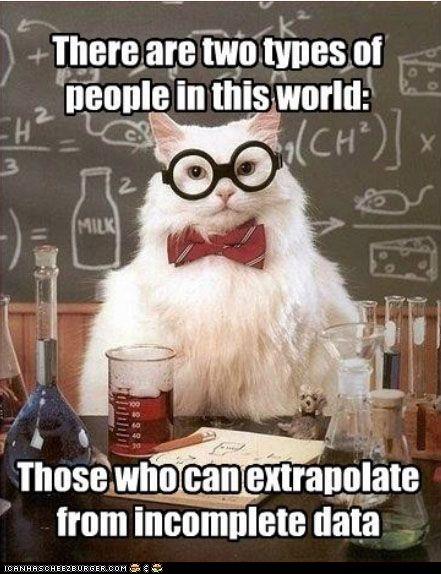
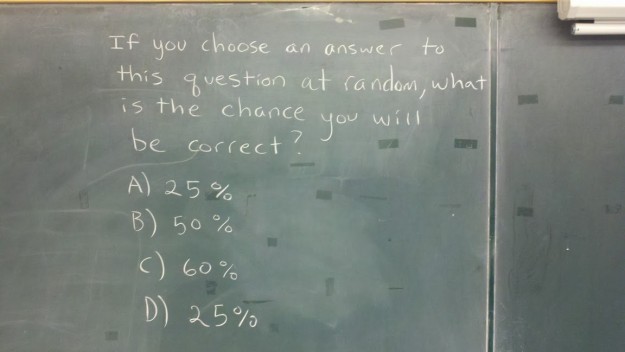
Statistics jokes

by Nathan Yau

There's a fun CrossValidated thread on statistics jokes. Here's the one with the top votes:

A statistician's wife had twins. He was delighted. He rang the minister who was also delighted. "Bring them to church on Sunday and we'll baptize them," said the minister. "No," replied the statistician. "Baptize one. We'll keep the other as a control.

This line by George Burns is my favorite though:

If you live to be one hundred, you've got it made. Very few people die past that age.

Any other good ones?

This is still one of my favorites:

Two kinds of people

And this:

Best Math Question EVAR

[via @alexlundry]

01 Jul 14:39

On the Path to Thymic Rejuvenation

by Reason

The immune system declines with age in part because it is limited in the number of cells it can support, and too many of those cells become specialized memory cells over time, unable to contribute to the fight against new pathogens. A variety of approaches might be developed to address this issue: remove the excess memory cells, generate new immune cells from stem cells and regularly infuse them into the patient, or cause the body to start producing more new immune cells than it otherwise would.

Immune cells are created in the thymus, an organ which atrophies and diminishes its output of cells quite early in life: its evolved job is to generate an effective immune system in youth, not to keep pumping out immune cells at a high pace throughout life. Rejuvenation of the thymus to youthful activity is thus a way to boost native immune cell production, and some work in this direction is funded by the SENS Research Foundation:

SENS Research Foundation has made substantial investments in research on regenerative therapies for the aging immune system, with the aim of maintaining and restoring youthful immune function throughout life, eliminating the disparate burden of morbidity and mortality from infectious disease that falls disproportionately persons over the age of 60. We have targeted research dollars toward developing rejuvenation biotechnologies to repair the two forms of aging damage that are the most widely accepted drivers of immunosenescence.

In the lab of Dr. Janko Nikolich-Žugich at the Arizona Center on Aging, we are funding a project testing the clearance of dysfunctional, "senescent" cytotoxic CD8+ T-cells - cells that exert suppressive effects on the expansion and response of other, functional T-cells. And at the Wake Forest Institute for Regenerative Medicine, SENS Research Foundation is supporting Dr. John Jackson's efforts to apply the decellularized scaffold tissue engineering technique to the engineering of a transplantable thymic neo-organ.

[Researchers have recently] derived functioning [thymic epithelial progenitor cells (TEP)] from [embryonic_stem_cells], and found a way to further develop TEP into [thymic tissue] capable of supporting the development of mature T-cells from T-lymphoid progenitor cells in vivo. The success of this new study is remarkable, not only for what the investigators achieved, but for what it suggests can be achieved when its relatively crude system of thymic epithelial cell derivation and transplantation is superseded by the engineeering of true thymic neo-organs, such as those that are in development in Dr. Jackson's SENS Research Foundation-funded lab at this writing.

Already, Dr. Jackson's lab team have succeeded in seeding epithelial cells onto decellularized mouse thymus scaffolds, and they are now in the process of completing the initial characterization proliferation and coverage of these cells on the scaffolds. Soon, the reseeding procedure will be completed by seeding bone marrow stem cells purged of T-cells onto the epithelial-seeded scaffold. Once this is achieved, the production of mature T-cells by the bioengineered neo-organs will be evaluated. Advances already achieved in bioengineering other organs with decellularized scaffolds suggest a successful outcome; moreover, the thymus scaffold specifically provides the structural elements necessary for the cells that are grown on it to assume the complex microenvironmental relationships of a mature thymus.

Link: http://www.sens.org/research/research-blog/first-glimpse-thymic-rejuvenation

01 Jul 01:31

USDA: Food Prices to Climb This Year

kenlacrosse

What else is new?

WASHINGTON — Total food prices this calendar year will rise 2.5% to 3.5%, according to a forecast just released by the U.S. Department of Agriculture’s Economic Research Service.

read more

01 Jul 01:21

Posted without Comment

by Stephen Green

Obama Scan

Hat tip, Ed Lambert.