Enlarge / Artist's conception of NetEase using a legal contract to try to stop a wave of negative reviews of its closed alpha. (credit: NetEase)
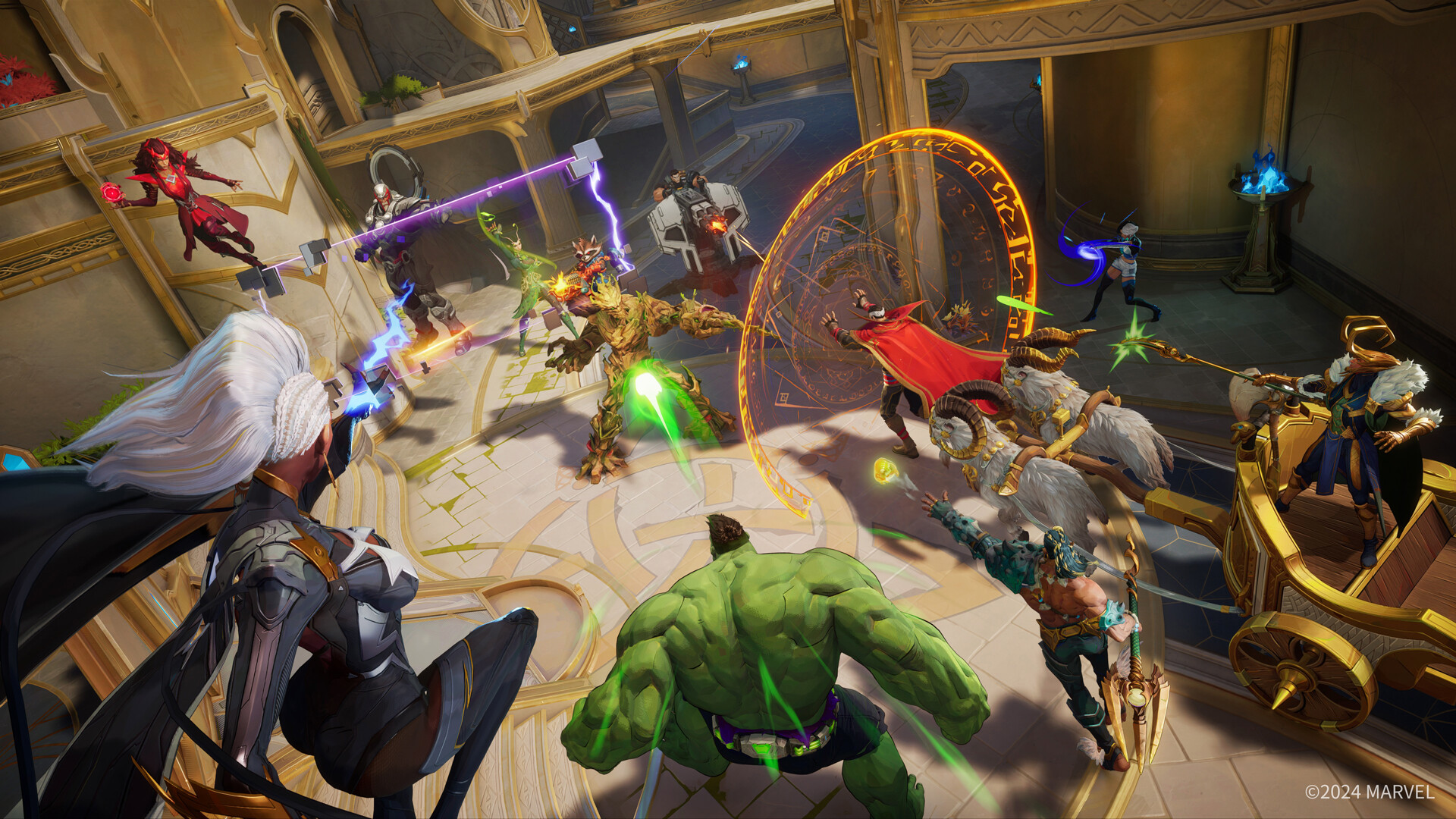
The developers of team-based shooter Marvel Rivals have apologized for a contract clause that made creators promise not to provide "subjective negative reviews of the game" in exchange for early access to a closed alpha test.
The controversial early access contract gained widespread attention over the weekend when streamer Brandon Larned shared a portion on social media. In the "non-disparagement" clause shared by Larned, creators who are provided with an early download code are asked not to "make any public statements or engage in discussions that are detrimental to the reputation of the game." In addition to the "subjective negative review" example above, the clause also specifically prohibits "making disparaging or satirical comments about any game-related material" and "engaging in malicious comparisons with competitors or belittling the gameplay or differences of Marvel Rivals."
In a Discord post noticed by PCGamesN over the weekend, Chinese developer NetEase apologized for what it called "inappropriate and misleading terms" in the contract. "Our stand is absolutely open for both suggestions and criticisms to improve our games, and... our mission is to make Marvel Rivals better [and] satisfy players by those constructive suggestions."
The federal courts, in other words, are increasingly anti-democratic and increasingly eager to consolidate power within themselves, but not nearly as anti-democratic as they will become if Trump gets to appoint more judges.
Below is a list of nine cases that represent the very worst work the federal judiciary has produced since Trump left office. These are not simply cases that are wrong or harmful to many Americans, they are cases that are fundamentally at odds with the idea that the United States is a constitutional democracy, with a government that is simultaneously bound by written legal texts and fundamentally accountable to the American people and not to an unelected oligarchy.
Although many of these cases are likely to end in defeat for the far-right litigants behind them, the list represents how much American law has changed since Trump started to remake the judiciary and how much more it could change if he gets another chance to appoint judges and justices. Fringe ideas that today enjoy only minority support within the courts could soon garner five votes on the Supreme Court — and that includes ideas that are at odds with the notion of government of, by, and for the people.
These nine cases, in other words, are as much a warning about America’s potential future as they are a window into the present state of the law.
1) Whole Woman’s Health v. Jackson: The abortion bounty hunter case
Decided months before the Court overruled Roe v. Wade, the case involved SB 8, a Texas law that relied on a very unusual mechanism to ban nearly all abortions in that state. Under SB 8, any person other than an employee of the state of Texas could bring a private lawsuit against an abortion provider. There was no limit on the number of lawsuits that could be filed, and the first plaintiff to prevail in a suit claiming that the provider performed “an abortion after the sixth week of pregnancy” would collect a bounty of at least $10,000 from the defendant.
There was also no limit to this bounty, so a court could potentially order every abortion provider in the state to pay millions of dollars, and that’s on top of the legal fees the provider would have to pay defending against dozens or even hundreds of lawsuits.
Jackson ruled that Texas abortion providers could not file a federal lawsuit seeking to block this law before it was brought to bear against them. Instead, they had to violate the law, wait to be sued — again, potentially by hundreds of different plaintiffs — and then pay a small army of lawyers to defend against all of those suits. Thus, even if an abortion provider successfully convinced a court to declare SB 8 unconstitutional, the provider still risked bankruptcy in the process.
If taken seriously, Jackson’s reasoning would allow any state to neutralize any constitutional right. Imagine a state law permitting SB 8-style bounty hunters to sue anyone who criticizes the governor, or one allowing suits against any Black family that sends their child to a white-majority public school.
2) Arkansas State Conference NAACP v. Arkansas Public Policy Panel: An existential threat to the nation’s most important voting rights law
The Voting Rights Act of 1965 is arguably the most successful civil rights law in US history; it broke Jim Crow barriers to Black voting rights in the South. It’s also fared very poorly in front of this Supreme Court, which has neutralized at least one key provision of the law and narrowed other provisions in ways that cannot be squared with the law’s text.
The Arkansas opinion, authored by Trump Judge David Stras, would strip private parties of their ability to file suits enforcing the law — a law which has been understood for pretty much its entire existence to allow such suits to move forward. In this way, Stras’s Arkansas decision closely resembles the Court’s decision in Jackson: It seeks to neutralize an important civil right by preventing the courts from enforcing that right.
The reasoning underlying Stras’s decision is quite complicated, though if you care to read an explainer on how he reached his conclusion and why that conclusion is wrong, I wrote that explainer here.
Under Stras’s approach, only the Justice Department may file suits seeking to enforce the Voting Rights Act — the primary law prohibiting race discrimination in US elections. But the DOJ lacks the resources to police every voting rights violation in the country. And even if it had unlimited resources, it’s unlikely to do much at all to enforce the law during Republican administrations. During the Trump administration, the DOJ’s voting section brought only one lawsuit alleging discrimination under the Voting Rights Act, and that was a minor suit involving a South Dakota school board.
It is likely that Stras’s attempt to neutralize this law will prove too much, even for the current Supreme Court. Only two justices, Clarence Thomas and Neil Gorsuch, have previously shown any sympathy for Stras’s reasoning. Still, Stras’s opinion could easily become law in all 50 states if Trump appoints more justices to the Supreme Court.
3) Trump v. United States: The Aileen Cannon special master debacle
Aileen Cannon has become a household name among the set that closely follows the many civil and criminal legal proceedings against Donald Trump. For everyone else, Cannon is a Trump appointee presiding over his criminal trial for deliberately retaining classified documents after his presidency ended. She has consistently handed down rulings that suggest she also seems to think she’s a member of the former president’s defense team.
The earliest sign that Cannon wasn’t up to the task of fairly presiding over one of the most significant criminal prosecutions in American history came shortly after the FBI executed a search warrant that uncovered more than 100 classified documents at Trump’s home in Florida.
Like any other criminal defendant, Trump enjoys certain constitutional protections. His home cannot be searched unless the FBI had probable cause to believe that such a search would uncover evidence of a crime. And it must obtain a warrant issued by a neutral magistrate before the search may occur. No one seriously contests, however, that the FBI complied with these requirements.
Nevertheless, Cannon concluded that Trump is entitled to additional protections not afforded to any other criminal suspect, in part because of Trump’s “former position as President of the United States.” She then ordered the criminal investigation into Trump’s possession of the classified documents to be put on ice until an official known as a “special master” reviewed the documents.
An appeals court panel that included two Trump appointees plus Chief Judge William Pryor, a prominent figure in the conservative Federalist Society, eventually smacked down Cannon’s move — labeling her special master decisions “a radical reordering of our caselaw limiting the federal courts’ involvement in criminal investigations.” But, despite her incompetence and likely bias, Cannon continues to preside over Trump’s criminal trial, one that may never happen because of that very incompetence and bias.
4) Alliance for Hippocratic Medicine v. FDA: The mifepristone case
Another Trump-appointed judge you might have heard of is Matthew Kacsmaryk, a former lawyer for Christian right causes with a long history of hostility toward abortion, birth control, homosexuality, and even most forms of heterosexual sexuality.
Because of a quirk in how Kacsmaryk’s Texas federal court assigns cases to judges, any case filed in Amarillo, Texas, automatically lands in Kacsmaryk’s courtroom. As a result, right-wing litigants routinely make a pilgrimage to Amarillo to obtain legally indefensible court orders implementing policies favored by the rightward fringes of the Republican Party. (A governing body within the judiciary has tried to end this practice of “judge-shopping,” but Kacsmaryk’s court has thus far refused to comply with those efforts.)
One reason why even this anti-abortion Supreme Court may be unwilling to tolerate Kacsmaryk’s move is that, if his decision is upheld, it endangers Americans’ access to countless other medications. If judges can second-guess the Food and Drug Administration’s decision to approve a drug, especially based on the spurious objections raised by Kacsmaryk, thousands more drugs could be pulled from the market.
Kacsmaryk, in other words, is very much an outlier even in a judiciary dominated by conservative Republicans. Should Trump prevail in November, however, he could fill the bench with people just like this Texas judge.
5) Doe v. Mckesson: The anti-free speech wing of the federal judiciary lashes out at the right to protest
The Fifth Circuit is a recurring villain in any saga about the post-Trump judiciary. Dominated by Trump appointees and other MAGA allies, this court, which oversees all federal cases arising in Texas, Mississippi, and Louisiana, is a major reason why judges like Kacsmaryk thrive in these three states. Far-right trial judges in the Fifth Circuit receive very little adult supervision unless their decisions are reviewed by the justices, and more moderate trial judges in the Fifth Circuit often have their decisions torn apart by partisan goons.
One area where the Fifth Circuit has been particularly aggressive is the First Amendment. Before Trump, there was a bipartisan consensus that speech of all kinds is protected by the Constitution, regardless of who it offends; the Supreme Court handed down a couple of 8-1 decisions in the early 2010s driving this point home.
On the high Court, the pro-free speech majority has shrunk to 6-3. But in the more reactionary Fifth Circuit, its judges often apply vastly different rules to liberal and conservative speakers. Among other things, the Fifth Circuit ruled that Republican lawmakers in Texas may seize control of content moderation at the major social media sites, while also ruling that the Biden administration is forbidden from even asking social media outlets to remove content that promotes terrorism or that spreads false health information.
The worst example of the Fifth Circuit’s partisan approach to free speech is Doe v. Mckesson, a decision that effectively eliminates the constitutional right to organize a mass protest.
In Mckesson, the Fifth Circuit ruled that a police officer who was injured when a protest attendee threw a rock could sue the organizer of that protest. This decision contradicts a Supreme Court case that is directly on point, NAACP v. Claiborne Hardware (1982), which held that protest leaders cannot be held liable for the actions of individual protest participants, absent unusual circumstances such as if the leader “authorized, directed, or ratified specific [illegal] activity would justify holding him responsible for the consequences of that activity.”
Mckesson is such a severe blow to the right to protest because no one in their right mind will organize a mass event of any kind if they know they can be held legally responsible for illegal acts committed by any attendee. And there truly is no way to justify the Fifth Circuit’s Mckesson decision under Claiborne Hardware.
Yet, while the Supreme Court has not affirmed the Fifth Circuit’s Mckesson decision, it also recently turned away a request to review (and reverse) the lower court’s error in this case. So, while a majority of the justices have not yet embraced the Fifth Circuit’s anti-free speech stance, they’ve been surprisingly tolerant of it. And the Court’s pro-free speech majority is only two Trump appointees away from breaking.
6) Community Financial Services Association v. Consumer Financial Protection Bureau: The Fifth Circuit flirts with a second Great Depression
Briefly, the Fifth Circuit’s decision in Community Financial Services Association v. CFPB imagines that the Consumer Financial Protection Bureau is constitutionally problematic because of its “perpetual funding mechanism” — meaning that the agency has a permanent stream of federal funding and does not shut down if Congress fails to appropriate new money in any given year.
The idea that Congress cannot fund a government institution in perpetuity is completely made up. Nearly two-thirds of all federal spending is perpetual, including spending on programs such as Social Security, Medicare, and Medicaid.
Perhaps recognizing that the nation would revolt if the courts tried to abolish Social Security, after announcing this novel new limit on federal spending, the Fifth Circuit immediately tried to cabin it. The unique problem with the CFPB, Trump Judge Cory Wilson wrote, isn’t just that it receives perpetual funding. It is that this funding first passes through another agency, the Federal Reserve, before landing in the CFPB’s bank account.
This claim that an agency’s funding somehow becomes more constitutionally suspect if it passes through a different entity is also completely made up.
Even this more limited application of the Fifth Circuit’s make-believe Constitution would lead to disaster. As a brief filed by the banking industry explains, the CFPB doesn’t just regulate that industry, it also provides the industry with instructions on how it can comply with federal lending laws without risking legal sanction — establishing “safe harbor” practices that allow banks to avoid liability so long as they comply with them.
If the CFPB were to suddenly cease to exist, in other words, banks will have no idea what rules they need to comply with in order to issue loans. Moreover, because home building, home sales, and similar industries that depend on the mortgage market make up about 17 percent of the US economy, a decision eliminating the CFPB could cause nearly a fifth of the nation’s economy to dry up overnight.
The good news is that most — though not all — of the justices appear likely to put an end to this madness. But that doesn’t change the fact that some of the most powerful judges in the country thought it was their job to light a simply enormous segment of the US economy on fire.
7) Biden v. Nebraska: The student loans case
Another judicially created legal rule, and one that has already been embraced by the Supreme Court, is the “major questions” doctrine, which limits which policy decisions can be made by federal agencies. As the Republican justices who invented this doctrine describe it, the Court requires “Congress to speak clearly if it wishes to assign to an agency decisions of vast ‘economic and political significance.’”
Like the Fifth Circuit’s idea that “perpetual” funding laws are constitutionally suspect, this major questions doctrine appears nowhere in the Constitution or in any statute. It is a very recent invention, which has largely been used by Republican appointees on the Supreme Court to invalidate policies created by Democratic administrations — and especially by the Biden administration.
The worst example of the Court’s major questions decisions is Biden v. Nebraska (2023), the decision striking down the Biden administration’s student loan forgiveness program.
Reasonable minds can disagree on whether canceling student loans was the best use of the federal government’s resources, but there should have been no doubt of the program’s legality under a federal law known as the Heroes Act. That law gives the Secretary of Education sweeping authority to “waive or modify any statutory or regulatory provision applicable to the student financial assistance programs ... as the Secretary deems necessary in connection with a war or other military operation or national emergency,” including an emergency like the Covid-19 pandemic.
Indeed, the Heroes Act does far more than give the secretary this power. It explicitly removes procedural hurdles that federal agencies ordinarily must clear before they can change government policy. It states that the secretary may dole out student loan relief en masse. The law even permits the secretary to exercise their authority “notwithstanding any other provision of law, unless enacted with specific reference to” the Heroes Act.
Thus, even if Congress had passed a law that expressly forbids that secretary from creating a program like the Biden administration’s student loan program, the program would still be legally valid unless that law also contained a provision stating that it overrides the Heroes Act.
So, even if you treat the major questions doctrine as legitimate — that is, even if you accept that Congress must “speak clearly” in order to authorize a significant student loan forgiveness program — the Biden administration’s program should still have survived judicial review. How could Congress have possibly spoken more clearly than it did in the Heroes Act?
More broadly, the Nebraska decision exposes a Supreme Court that is willing to simply ignore the text of the law altogether in order to achieve policy goals it views as sufficiently important.
8) United States v. Texas: Who controls law enforcement?
In 2021, Secretary of Homeland Security Alejandro Mayorkas issued an innocuous memo instructing Immigration and Customs Enforcement (ICE) officers to prioritize enforcing immigration law against undocumented immigrants who “pose a threat to national security, public safety, and border security and thus threaten America’s well-being.” Mayorkas’s memo closely resembled similar memorandum setting enforcement priorities in 2005, 2010, 2011, 2014, and 2017.
Nevertheless, because Texas federal courts often allow litigants to choose which judge will hear their case, the Republican attorneys general of Texas and Louisiana selected Drew Tipton, a Trump judge with a history of anti-immigrant rulings, to strike this memo down.
Tipton’s decision, which effectively seized control of the Biden administration’s authority to set the priorities of a law enforcement agency, was legally indefensible for a whole host of reasons, and the Supreme Court eventually reversed Tipton in an 8–1 decision.
As a practical matter, Tipton’s suggestion that the government cannot set enforcement priorities was unworkable. As the Justice Department explained in a 2014 memo, “there are approximately 11.3 million undocumented aliens in the country,” but Congress has only appropriated enough resources to “remove fewer than 400,000 such aliens each year.” So someone had to decide how ICE focuses its limited resources, and Congress decided that this decision should be made by Mayorkas and not Tipton.
More broadly, Tipton’s decision removed an important limit on the government’s power to make arrests or otherwise exercise force. Though the power to adjudicate whether a particular individual violated the law often rests with judges, the power to make arrests, bring enforcement actions, or seek an official penalty normally rests with the Executive.
That means that all three branches typically must agree that a particular individual should be arrested and tried before such an arrest can take place. Congress must pass a law making a particular action illegal. The Executive must decide to enforce that law against a particular individual. A judge or some other adjudicative body ordinarily must determine that the individual broke the law.
By placing himself in charge of a law enforcement agency, however, Tipton eliminated one of these safeguards, effectively allowing the judiciary to act both as law enforcer and adjudicator. It’s not hard to imagine how certain judges — perhaps Tipton himself or someone like Kacsmaryk — could abuse this power.
9) New York State Rifle v. Bruen: The Court’s completely unworkable Second Amendment decision
Many of the Court’s Republican appointees claim to be “originalists,” meaning they believe that the Constitution must be interpreted as it was originally understood when it was drafted or ratified. But if these justices actually intended to discredit originalism as a method of judging, they would have written a decision much like New York State Rifle & Pistol Association v. Bruen (2022).
Bruen held that, for virtually any gun law to survive a Second Amendment challenge, “the government must demonstrate that the regulation is consistent with this Nation’s historical tradition of firearm regulation.” This means that lawyers defending gun laws must show that “analogous regulations” also existed and were accepted when the Constitution was framed, particularly if the law addresses “a general societal problem that has persisted since the 18th century.” If they cannot, the challenged gun law must be struck down.
This approach makes no sense for a whole host of reasons. Even if you agree with the originalist view that the Constitution must mean the same thing today as it did in the 1790s, the fact that a particular gun law did not exist more than 200 years ago does not mean that the generation that framed the Constitution would think it unconstitutional.
Among other things, early America did not have police forces until the early-to-mid 1800s, so the government lacked the state capacity to enforce the kind of gun laws that exist today. Early America also did not have large cities like the ones that exist today — New York City had only 33,131 residents in the 1790 census — so we simply have no idea how the framers would have dealt with the problem of guns in a modern urban setting.
Judges have struggled so much to apply Bruen that many of them complain about how unworkable the decision is in their published opinions. By announcing “an inconsistent and amorphous standard,” wrote Judge Holly Brady, a Trump appointee to a federal court in Indiana, “the Supreme Court has created mountains of work for district courts that must now deal with Bruen-related arguments in nearly every criminal case in which a firearm is found.” And Brady’s hardly the only judge with such complaints.
Bruen has also led to ridiculous and immoral results, such as a Fifth Circuit decision holding that people subject to domestic violence restraining orders — meaning that a court determined that they are a violent threat to others — have a right to own a gun.
In any event, the Supreme Court appears likely to reverse that Fifth Circuit decision. It should go further and confess that it made an egregious error when it handed down Bruen and that the decision must be overruled.
These cases are a mix of legally indefensible outcomes that have already been imposed on the entire nation and potentially disastrous lower-court decisions that will most likely be reversed by the current Supreme Court. Trump transformed the federal judiciary, but he has not yet turned it into a playground where MAGA bullies can take whatever they want.
The rule of law cannot survive long, however, in a nation whose leaders do not embrace it. In a hypothetical second Trump term, judges like Kacsmaryk or his enablers on the Fifth Circuit are likely to thrive, and could eventually dominate the Supreme Court.
The police killing of a Black Air Force service member in his own home is drawing renewed scrutiny to the deadly violence that US law enforcement routinely and disproportionately uses against Black Americans.
On May 3, an officer responded to a call about a domestic disturbance and knocked on the door of US airman Roger Fortson’s apartment in Fort Walton Beach, Florida. Body camera footage shows Fortson, 23, opening the door and holding a handgun pointed downward. Within seconds of the door opening, and without asking him to drop his weapon, the officer fired multiple shots at Fortson’s chest. Fortson later died of the gunshot injuries at a nearby hospital.
The body camera footage has raised new questions about the officer’s use of fatal force and his reason for visiting Fortson’s apartment in the first place. In an initial statement about the incident, the Okaloosa County Sheriff’s Department claimed that the shooting was in self-defense, but it’s since fired Eddie Duran, the deputy involved in the shooting, and described the use of force as “not objectively reasonable.” The Florida Department of Law Enforcement is also conducting an ongoing criminal investigation into the shooting, and Fortson’s family has urged criminal charges as well.
Fortson’s shooting is another harrowing episode in the long history of police violence against Black Americans. In 2020, mass protests erupted across the US following the police murder of George Floyd in Minneapolis, Minnesota, after an officer knelt on his neck for over nine minutes. Those followed extensive demonstrations in 2014 after Michael Brown, an unarmed teenager, was shot and killed by police in Ferguson, Missouri. The police shooting of Fortson also echoes other cases when law enforcement has killed Black Americans in their homes, including the shooting of Breonna Taylor in Louisville, Kentucky.
Police violence has continued unabated in recent years as well, with 2023 seeing the most police killings in more than a decade. That year, Black people comprised 13 percent of the US population but accounted for 27 percent of those killed by police, according to Mapping Police Violence, a nonprofit tracking this information.
This intractable trend has criminal justice advocates concerned that the problem won’t improve without substantial policy changes that lawmakers have yet to invest in.
What we know about the shooting
The shooting occurred after an unidentified woman in Fortson’s apartment complex called the police to report a domestic disturbance. In the body camera footage provided by the Okaloosa Sheriff’s Department, a police officer (now known to be Duran) can be seen approaching the complex and talking to a woman on the premises about a couple reportedly fighting in one of the apartments.
The woman leads the officer to the area of the complex where she says she heard the fighting and gives him Fortson’s unit number, 1401. The officer approaches Fortson’s door and knocks on it without identifying himself. After not receiving a response, the officer knocks two more times and says twice, “Sheriff’s office, open the door.”
Fortson then opens the door, holding a gun that is pointed at the ground. Almost immediately, the officer shoots Fortson multiple times and he falls down. At that point, the officer says, “Drop the gun,” and Fortson replies, “It’s over there. I don’t have it.” The officer calls for emergency medical services, and Fortson is taken to a nearby hospital, where he died from his injuries.
According to Ben Crump, a civil rights attorney representing Fortson’s family, Fortson’s girlfriend was on FaceTime with him during the entire encounter. Per Crump, she said he was by himself in the apartment. Crump added that Fortson heard the initial knock from the officer and retrieved his gun because he couldn’t see who the person was at the door. And Fortson’s family has said that the gun was legally owned.
In a CNN interview, Crump notes that the woman at the apartment complex may have made a mistake and directed officers to the incorrect unit. Fortson’s girlfriend has also released part of their FaceTime video, via Crump, which includes audio of the aftermath of the shooting and police checking the apartment for more people.
A follow-up report indicated that police did not find anyone else in the unit.
The body camera footage has also spurred concerns from advocates and his family about why the officer shot Fortson so quickly and before asking him to drop his weapon.
The Georgia NAACP is demanding justice, and we sincerely hope it prevails for him and his family. There's no justification for this tragedy, and US Airman #RogerFortson should still be among us today. #NAACPpic.twitter.com/rb40Rg56Ob
“It is very troubling that the deputy gave no verbal commands and shot multiple times within a split second of the door being opened, killing Roger,” Fortson’s family said via a statement from Crump. “As the officer didn’t tell Roger to drop the weapon before shooting, was the officer trained to give verbal warnings? Did the officer try to initiate life-saving measures? Was the officer trained to deal with law-abiding citizens who are registered gun owners?”
Fortson’s family has emphasized how dedicated he was to his work in the Air Force, how committed he was to his siblings, and how he hoped to one day buy his mother a home. “He was fighting for everybody,” his mother, Chantemekki Fortson, said.
Black Americans are killed disproportionately by police. This has included shootings in people’s own homes.
Fortson’s shooting adds to the fatal violence that Black Americans have experienced at the hands of police.
Fortson also joins the tragic list of Black Americans killed by police in their own homes. These incidents include the fatal shooting of Botham Jean in 2018 by a police officer who entered the wrong apartment thinking it was her own and the police killing of Atatiana Jefferson in 2019, when officers thought she was an intruder in her own house.
These killings point to enduring institutional problems with policing that experts say will take much deeper systemic reforms to resolve than the policies that have been put forth since the 2020 mass protests.
In the wake of those demonstrations, certain cities have cut police budgets, and some states have approved reforms to better standardize reporting of law enforcement use of force. Police are still empowered, however, to use lethal force in many cases that do not require it, says Daniela Gilbert, a director of redefining public safety at the Vera Institute of Justice. And legal accountability and transparency regarding police misconduct are still lacking.
“It’s bad and it’s sad, but it’s not shocking that we’re still being killed at a higher rate,” Karundi Williams, CEO of re:power, a group dedicated to training Black political leaders, told NBC News in 2022. “When we have moments of racial injustice that is thrust in the national spotlight, there is an uptick of outrage, and people take to the streets.”
“But then the media tends to move on to other things, and that consciousness decreases,” she continued. “But we never really got underneath the problem.”
Update, June 4, 11: 25 am ET: This story was originally published on May 10 and has been updated to include information about the firing of the officer involved in the shooting.
"Google's business is growing at its fastest rate in two years," reports CNBC, "and a blowout earnings report in April sparked the biggest rally in Alphabet shares since 2015, pushing the company's market cap past $2 trillion.
"But at an all-hands meeting last week with CEO Sundar Pichai and CFO Ruth Porat, employees were more focused on why that performance isn't translating into higher pay, and how long the company's cost-cutting measures are going to be in place."
"We've noticed a significant decline in morale, increased distrust and a disconnect between leadership and the workforce," a comment posted on an internal forum ahead of the meeting read. "How does leadership plan to address these concerns and regain the trust, morale and cohesion that have been foundational to our company's success?"
Google is using artificial intelligence to summarize employee comments and questions for the forum.
Alphabet's top leadership has been on the defensive for the past few years, as vocal staffers have railed about post-pandemic return-to-office mandates, the company's cloud contracts with the military, fewer perks and an extended stretch of layoffs — totaling more than 12,000 last year — along with other cost cuts that began when the economy turned in 2022. Employees have also complained about a lack of trust and demands that they work on tighter deadlines with fewer resources and diminished opportunities for internal advancement.
The internal strife continues despite Alphabet's better-than-expected first-quarter earnings report, in which the company also announced its first dividend as well as a $70 billion buyback. "Despite the company's stellar performance and record earnings, many Googlers have not received meaningful compensation increases" a top-rated employee question read. "When will employee compensation fairly reflect the company's success and is there a conscious decision to keep wages lower due to a cooling employment market?"
A US district judge William Alsup has dismissed Elon Musk's X Corp's lawsuit against Bright Data, a data-scraping company accused of improperly accessing X (formerly Twitter) systems and violating both X terms and state laws when scraping and selling data.
X sued Bright Data to stop the company from scraping and selling X data to academic institutes and businesses, including Fortune 500 companies.
According to Alsup, X failed to state a claim while arguing that companies like Bright Data should have to pay X to access public data posted by X users.
Assuming you’re not Rep. James Comer—who’s so into Trump, the producers of “The Human Centipede” franchise have a viable case for trademark infringement—it’s clear that the kinds of things Republicans are falsely accusing President Joe Biden of doing are the very things that Trump does all the time … and openly. And, indeed, he’s so openly corrupt, he’s barely trying to hide it anymore.
As Donald Trump sat with some of the country’s top oil executives at his Mar-a-Lago Club last month, one executive complained about how they continued to face burdensome environmental regulations despite spending $400 million to lobby the Biden administration in the last year.
Trump’s response stunned several of the executives in the room overlooking the ocean: You all are wealthy enough, he said, that you should raise $1 billion to return me to the White House. At the dinner, he vowed to immediately reverse dozens of President Biden’s environmental rules and policies and stop new ones from being enacted, according to people with knowledge of the meeting, who spoke on the condition of anonymity to describe a private conversation.
And in case you were wondering if Trump was simply making vague overtures toward industry leaders who follow the same train of thought he does—i.e., it would be ideal to stay out of prison until, say, 2040, when people start committing grisly crimes for the air conditioning—his offer went even further.
The Washington Post reported that according to those Mar-a-Lago attendees, Trump said the it would be a “deal” for those Big Oil executives because of all the taxes and regulations they’d be spared under another Trump presidency.
Uh-huh. In case you were wondering, this isn’t the way the government is supposed to work. It often does, unfortunately, but rarely are the nihilistic cockwombles quite this cocky.
Of course, while a Trump promise is usually worth less than the sallow flap of neck skin his prison tattoo will eventually be printed on, you can rest assured he’d keep this one. For one thing, he wants that money spigot to stay open. For another, he hates anything that might save the planet and/or muss his golden tresses. And, well, he’s not exactly a policy maven so much as a clean slate that anyone with a couple billion dollars can write on like a yard sale Etch A Sketch.
And that’s exactly what the fossil fuel industry is doing. They’re not waiting around for Trump to complete his comprehensive energy plan—which will be available approximately two weeks after his interns are done scrubbing out the puzzling Hitler references. They’re anticipating a future Trump presidency now.
The U.S. oil industry is drawing up ready-to-sign executive orders for Donald Trump aimed at pushing natural gas exports, cutting drilling costs and increasing offshore oil leases in case he wins a second term, according to energy executives with direct knowledge of the work.
The effort stems from the industry’s skepticism that the Trump campaign will be able to focus on energy issues as Election Day draws closer—and worries that the former president is too distracted to prepare a quick reversal of the Biden administration’s green policies. Oil executives also worry that a second Trump administration won’t attract staff skillful enough to roll back President Joe Biden’s regulations or craft new ones favoring the industry, these people added.
And you should remember this excerpt in four years when you’re squatting in an ice bucket in northern Alaska, celebrating Earth Day by watching oil refineries explode:
The Biden policies they would seek to unravel include a new fee on leaks of the potent greenhouse gas methane from oil and gas equipment on federal land. The industry also wants to change an Environmental Protection Agency risk management rule focused on preventing refinery accidents, [Stephen] Brown [ director of energy consulting firm RBJ Strategies and a former refining industry lobbyist] said.
All this is particularly sad considering the clear benefits of Biden’s green infrastructure initiatives, which Trump would no doubt seek to roll back out of ignorance, spite, love of money, and a presumed hatred of narwhals. In fact, a little more than a week ago, the Biden administration “released rules designed to speed up permits for clean energy while requiring federal agencies to more heavily weigh damaging effects on the climate and on low-income communities before approving projects like highways and oil wells,” according to The New York Times.
Does anyone think a second Trump administration would prioritize desperately needed clean-energy projects? Trump would strip everything out of Biden’s infrastructure laws he doesn’t like and claim sole credit for the rest. It’s what Republicans do, after all.
All that would hurt ordinary Americans to the benefit of plutocrats, but then, Trump is nothing if not a phony populist. As CNBC reports, Trump is currently fielding calls from wealthy donors who are keenly invested in who Trump should—and, perhaps more importantly, should not—choose as his running mate.
“I would imagine some of Trump’s trade agenda is pretty concerning for many donors,” said Marc Short, Mike Pence’s chief of staff, “and they would hope for someone there to offer a different perspective to a 10% tariff across the board.”
Other Trump donors don’t particularly care for Ohio Sen. J.D. Vance because of his support for higher tariffs and what CNBC called “aggressive business regulation.”
Well, as the old saw goes, you got to dance with them what brung you, and it’s clear Trump is dancing for dollars—when he’s not fixing to jitterbug his way out of jail.
Daily Kos’ Postcards to Swing States campaign is back, and I just signed up to help.Please join me! Let’s do this, patriots! Democracy won’t defend itself.
An anonymous reader shares a report: Disney Plus, Hulu, and Max are teaming up for a new bundle this summer, Netflix is focused on the WWE and celebrity boxing, Disney Plus is getting ESPN, and Bloomberg reported earlier this week that Max could get a price hike. A familiar refrain emerged around all this news: streaming is becoming cable TV all over again and getting crummier in the process.
And it's true! When streaming first emerged, it was a beautiful alternative to piracy, which was very convenient and very illegal, and cable, which was festooned with ads and weighed down by channels you were paying for and didn't want. Streaming gave you a world of content on demand for a fraction of the cost of cable. But that experience was never sustainable. Content costs money to make, and companies are apparently obligated to "increase revenue" and "make profit." This means Netflix spending billions of dollars a year on content isn't necessarily sustainable unless it's adding new users and monetizing them through some combination of ads and increasing subscription fees for stuff that used to be free, like sharing an account or streaming in 4K.
Heat pumps are the most energy-efficient way of controlling indoor temperature. By moving heat between locations, they avoid the inefficiencies of generating heat in the first place. But that doesn't mean they can't be made more efficient.
Most current heat pumps rely on materials that exhibit large changes in temperature in response to changing pressures, but the energy required to pressurize them gets lost when they're cycled back to a low-pressure state, absorbing heat from their surroundings. That has gotten people interested in electrocaloric devices, where changes in temperature are driven by storing charges in a material. Since it essentially acts as a big capacitor, much of the electrical energy involved can be pulled back out as the system cycles.
But capacitors aren't especially mobile, so electrocaloric systems tended to use fluids to move heat into and out of the capacitor as it cycles. Now, however, researchers have developed an electrocaloric system that moves itself between hot and cold environments, radically simplifying the system and eliminating some of the energy required for it to operate. They even demonstrate it effectively cooling a computer chip.
ArchieBunker quotes a report from Bloomberg: Texas electricity prices soared almost 100-fold as a high number of power-plant outages raised concerns of a potential evening shortfall. Spot prices at the North Hub, which includes Dallas, jumped to more than $3,000 a megawatt-hour just before 7 p.m. local time, versus about $32 at the same time Tuesday, according to data from the Electric Reliability Council of Texas. This morning, Ercot, as the state's main grid operator is known, issued a "watch" for a potential capacity reserve shortage from about 7-9 p.m., meaning the buffer of spare supplies could fall to low enough levels to call on back-up generation, cancel or delay outages or curb usage.
The conditions are the tightest of the year so far and raises the risk of prices rising to the $5,000 cap -- which they last did on April 16, when Ercot also warned of a potential shortfall. Unusually hot weather in the region has boosted demand for cooling and lowered the efficiency of many power plants. Wind output has also fallen from a day earlier and there are more outages. "Ercot has not called for conservation this evening," it said by email. "The grid is operating under normal conditions at this time."
Please do JOIN THE INNER HIVE and get each week's Tom the Dancing Bug comic at least a day before publication! Plus other exclusive content like process pics, extra comics, contests, insider info, puzzles, puns, embarrassing admissions of error, dog photos, and juicy gossip! Please do join the team that makes it possible for Tom the Dancing Bug to exist in this world. E-Z and FUN!
Get signed Tom the Dancing Bug books with the new SIGNED BOOK COMBO deal! Info here. And/or get the new On the Trail of Tom the Dancing Bug book signed WITH a hand-drawn illustration! Info here.
I finally made my last student loan payment. 21 years post-graduation :P
Few issues have vexed the Biden administration like student loan forgiveness. Given that more than 40 million Americans owe money on their student loans, for a total of $1.6 trillion, few issues have such a large impact on so many.
Democrats and progressives have long prioritized this matter, and President Joe Biden promised to fight for significant debt relief before taking office. Even though his ambitious proposal to use his executive authority to forgive $400 billion in student loan debt was ultimately blocked by the Supreme Court, this White House has nontheless made significant progress with targeted relief, and has taken another shot at an across-the-board relief proposal. Nevertheless, many middle- and lower-income borrowers in particular continue to suffer under the burden of student debt, ensuring that this issue will remain front of mind for voters come November.
First, let’s talk about the actual people who have borrowed this money. Members of every generation of Americans are carrying significant student loan debt, as this graphic indicates.
Female borrowers on average owe about $2,000 more than male borrowers—this gap exists right from the moment people earn their degrees, and only gets worse thanks to the gender-based inequities in pay women face. The racial gap is even starker, with the average Black college graduate carrying approximately $25,000 more debt than their white college grad counterparts. Overall, Black borrowers have to make higher average monthly loan payments.
Furthermore, more Black and Latino borrowers are having trouble making those payments, especially as 25 million borrowers owe more than they originally borrowed, including many who have made years of payments, due to the interest that accrues. Forgiving student loan debt will help Americans of every background—including the many who are still stuck making payments after they reach retirement—while also helping to close the racial wealth gap.
As for the Biden-Harris record on student loan debt, the story starts with Capitol Hill, where progressives proposed legislation in the 117th Congress that did not pass. Democrats had narrow majorities in the House and Senate, but that doesn’t mean those were progressive majorities. The question then became: What action could the White House take to forgive student loans through executive authority?
After a long period of internal debate on that question, on Aug. 24, 2022, the White House announced its wide-reaching plan. Per the Associated Press: This plan aimed to erase “$10,000 in student loan debt for those making less than $125,000 or households with less than $250,000 in income. Pell Grant recipients, who typically demonstrate more financial need, would have had an additional $10,000 in debt forgiven.”
That would have been a lot of money for a lot of people. Please note that I said “would have.” It didn’t go into effect because 10 months later, the six conservative justices on the Supreme Court voted to strike the Biden plan down as unconstitutional. So, while it’s technically true that Biden failed to deliver on his promise to provide across-the-board relief to middle- and lower-income borrowers, it’s more accurate to say that conservatives in the legislative and judicial branches prevented him from doing so.
Despite this setback, the Biden-Harris administration has, through a number of targeted cancellations of loans, forgiven a total of $153 billion in student debt, providing relief for 4.3 million Americans to the tune of approximately $35,581 per borrower. Not exactly chump change. The president explained the importance of these steps on Feb. 21.
“It’s good for the economy as a whole,” Biden said. “By freeing millions of Americans from the crushing debt of student loan programs, it means they can finally get on with their lives.”
In his in-depth look at student loan debt (which I highly recommend), John Oliver gives the White House its due for what it has accomplished:
More loan forgiveness will roll out throughout this year. This relief has come through a number of targeted measures. Approximately 40% came through changes to the Public Service Loan Forgiveness program—which was so dysfunctional that, at its worst, it denied forgiveness to almost 99% of applicants, prompting the American Federation of Teachers to sue, who else, Trump’s Education Secretary Betsy DeVos. Biden’s changes led to help for almost 800,000 borrowers, who had an average of about $71,500 forgiven per person.
The rest of the relief is aimed at lower-income borrowers, those who attended “shady colleges that scammed hundreds of thousands of students,” and folks who are on permanent disability. Plus, the administration has just released new executive action that, it hopes, will pass Supreme Court muster this time because it relies on different legislation for its authority than the plan the court kicked to the curb last year. This new proposal, as per the administration, would:
Cancel runaway interest for millions of borrowers.
Cancel student debt for borrowers who entered repayment over 20 years ago.
Cancel student debt for borrowers who enrolled in low-financial-value programs.
Cancel student debt for borrowers experiencing hardship paying back their loans.
If allowed to go into effect, the plan would bring the total number of people whose debt was reduced or canceled by this White House to 30 million. This is a record Democrats can run on, especially if they contrast what Biden has done on student loan forgiveness to what DeVos did under Trump, which basically amounted to seeing just how few applications for relief she could grant, regerdless of whether the applicant actually qualified based on existing law.
Nevertheless, Biden, Harris, and the rest of Team Blue are going to have to make the case to voters who, in some cases at least, haven’t seen the kind of help they expected, and perhaps aren’t aware of the full extent of the debt relief that has been enacted. There appears to be no storyline the supposedly liberal mainstream media loves more than one in which people who are “supposed” to support Biden—such as young progressive voters or voters of color—are considering turning away from him, even if the number who do so turns out to be quite small in the end.
Along those lines, The New York Times interviewed activist and Debt Collective press secretary Braxton Brewington, who acknowledged the positive but remained critical and demanded more. The measures Biden has taken to cancel some debt were, in his words, “a reminder that despite the Supreme Court ruling, there are powers at the Biden administration’s disposal and they use them—but sparingly.” He added that “At this point, we’re getting closer to saying that they’ve made a dent in the portfolio, but at this scale, and at this rate, we’re still going to have a student debt crisis.”
In another Times interview a few weeks later, Brewington noted that, on this issue, the current administration had been “better than any other.” However, he’s still not convinced the Biden-Harris campaign will find much traction on student debt relief. “I get they want to talk about the work they’ve done on student debt, and I think they’re trying to have some nuance, but to a degree, it’s just not going to land with so many people. Especially when you’re saying ‘promises kept.’ I mean, good gracious.”
Another activist, Ashley Pizzuti—who is working with the White House on student debt—described in an interview with The New York Times the hurdles the president will face with some voters.
“There’s a lot of really upset people rightfully because they were told they were going to get this forgiveness and it was taken back,” she said. “And a lot of people blame Biden for that.”
Speaking of blame, ABC News interviewed 30-year-old Liam Gude, who called Biden’s proposals “an insult” and would not commit to voting for the president, even though he’s “much better than Trump.” Somewhat more sympathetic to Biden was Ashley Robinson, age 33, who owes $50,000 in student loans. She thought she’d get aid from his 2022 plan, and expressed disappointment over how it played out.
“In terms of a massive, broken promise? Yeah, I think that definitely negatively impacts how I feel toward him,” Robinson said. Despite these feelings, she said, "I'm not enthusiastic about voting, but voting is something that's important to me. So I continue to participate."
Going further, Robinson acknowledged the obstacles Biden faced in enacting more sweeping debt relief, adding that she knows it wasn’t “going to be a cakewalk for anyone.” She concluded that the administration is “just simply not as progressive as I've needed it to be. I genuinely believe that this is Biden's best, but I don't believe that Biden's best is sufficient."
But ABC did find a glimmer of hope. They spoke to Michael Stewart, who was equally well-informed about the issue and how things unfolded in Congress and the Supreme Court. In 2020, he supported Bernie Sanders in the Democratic primaries, but then backed Biden in the general election, about whom he now says, “I definitely was more excited for him four years ago but that’s because of the alternative.”
But Stewart doesn’t blame the president, saying, “I really fault him 0%. He did all he could.”
Similarly positive was the national director of the NAACP Youth and College Division, Wisdom Cole, who told the NYT that students loans were “absolutely still an issue” and shared the NAACP is hoping to recruit 300,000 volunteers to get out the vote in the Black community.
“Taking out the loans in the first place, is hardship—point blank period—and we have to get young people excited for this election,” Cole said. “And so when we see bold and progressive policies like that, we are able to ensure the turnout that we need to win.”
Student loan debt relief, despite the admirable progress this administration has made (more than any other administration, in fact), continues to be a hardship for many of our fellow Americans. Once the COVID-related pause on interest accruing came to an end last September, borrowers had to start making payments again, something they hadn’t had to do since before Biden won the 2020 election. It’s important to note, however, that the White House mandated a 12-month “on-ramp” during which “financially vulnerable borrowers who miss monthly payments during this period are not considered delinquent, reported to credit bureaus, placed in default, or referred to debt collection agencies.” Despite the administration’s best efforts, this is an issue that could potentially alienate a key segment of voters Team Blue wants to target.
Democrats must acknowledge these folks’ suffering—many of whom, as the data cited above makes clear, bear no resemblance to the right-wing stereotype of bratty, rich young people with fancy degrees supposedly looking for a handout. But members of Team Blue must also emphasize the real progress this White House has made for millions, while reminding voters that the president fought to do much more only to find his efforts blocked by conservatives in Congress and on the court. Had we elected a couple more supporters of debt relief to the Senate in 2020, we’d have gotten legislation through Congress—removing the matter from the Supreme Court’s purview—and we’d have a lot more debt relief now.
Is it a tricky balancing act to convince those voters who are angry because they believe Biden didn’t keep his promises on student loan forgiveness to back him in 2024? No question. But, as people who know the facts, we have to get out there and try.
And beyond the politics, we all need to keep pushing for changes to how our country funds higher education. People shouldn’t have to go broke—and stay broke—just to get a college diploma.
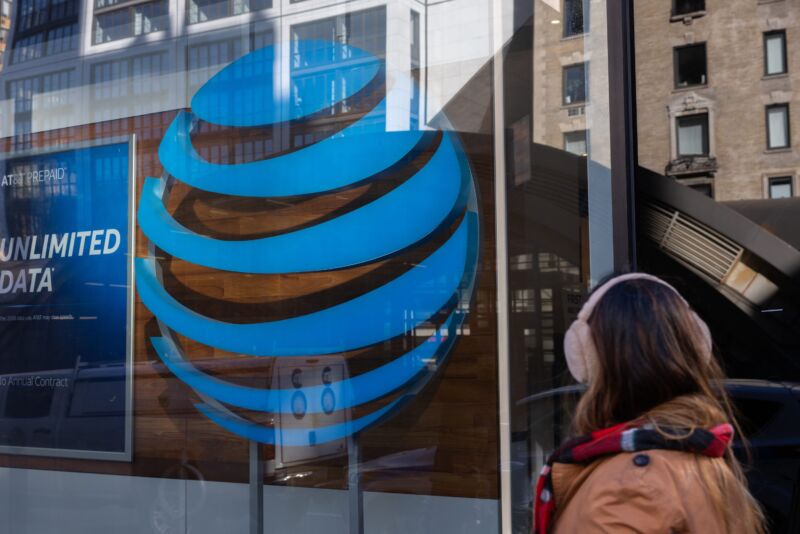
AT&T is now charging mobile customers an extra $7 per month for faster wireless data speeds. AT&T says the Turbo add-on, available starting today, is "built to support high-performance mobile applications, like gaming, social video broadcasting and live video conferencing, with optimized data while customers are on the go."
While Turbo "boosts all the high-speed and hotspot data on a user's connection," AT&T said the difference will be more noticeable for certain kinds of applications. For example, gaming applications using Turbo will experience "less freezing or stuttering and lower latency," AT&T said.
The $7 charge is for each line. Adding Turbo to multiple lines on the same account requires paying the extra fee for each line. AT&T said that Turbo lets users "optimize their plan's high-speed (premium) and hotspot data allotments" and provides better data performance "even during busy times on the network."
Was someone asking "what else can we do to encourage piracy?" Because seems tailor-made for it
Amazon Prime Video subscribers will see new types of advertisements this broadcast year. Amazon announced today that it's adding new ad formats to its video streaming service, hoping to encourage people to interact with the ads and shop on Amazon. From a report: In January, Prime Video streams included commercials unless subscribers paid $3 extra per month. That has meant that watching stuff on Prime Video ad-free costs $12 per month or, if you're also a Prime subscriber, $18 per month. Amazon has heightened focus on streaming ads this year. Those who opted for Prime Video with commercials will soon see shoppable carousel ads, interactive pause ads, and interactive brand trivia ads, as Amazon calls them.
Amazon said that advertisers could buy these new displays to be shown "across the vast majority of content on Prime Video, wherever it's streamed." All the new ad formats allow a viewer to place advertised products in their Amazon cart. With carousel ads, subscribers will be pushed to shop "a sliding lineup of" products during ad breaks during shows and movies, Amazon said, adding: "The ad automatically pauses so that customers can browse, and automatically resumes play when ad interaction has stopped."
Sure, Georgia Republican Marjorie Taylor Greene said she would not pursue her pointless attempt to oust House Speaker Mike Johnson this week. But that was Tuesday. On Wednesday, she decided to go for it after all.
According to Politico reporter Olivia Beavers—and every other congressional reporter furiously tweeting in disbelief that Greene is actually doing this thing—the congresswoman took to the floor shortly after 5 PM ET to announce that heck yeah, she wants a full-blown GOP civil war.
Her announcement was met with booing, though it’s unclear whether the boos were louder from the left or right side of the aisle because just about everyone else in the House is very much against the idea.
Democratic leaders already said last week that they would rescue the beleaguered speaker. And even the most bloodthirsty nihilists in the GOP caucus don’t really have the stomach for another round of “House GOP in disarray” after booting poor Kevin McCarthy from the job last fall.
“Most of the chamber is not taking her effort to oust [J]ohnson seriously,” tweeted Punchbowl’s Jake Sherman Wednesday evening.
But seriously or not, Greene decided to go for it. And almost immediately failed, as the House quickly moved to vote to table the motion.
“[The] resolution to depose Speaker Johnson is going down in flames,” NBC’s Sahil Kapur tweeted as members were still casting their votes.
And like that—poof!—it was over. With only 11 Republicans voting to let Greene’s attempt move forward, Johnson was saved. At least for now.
Fox News’ Greg Gutfeld held a mock interview Tuesday with fellow host Dana Perino playing the part of South Dakota Gov. Kristi Noem after the governor canceled an appearance on his late-night show. Noem’s calamitous book launchmight have been at fault, though she reportedly told Gutfeld she canceled due to “weather.”
“I don’t believe it,” Gutfeld said of Noem’s weather excuse. He then made a series of dog puns, referencing Noem’s terrible tale of killing her 14-month-old puppy named Cricket because it was “untrainable” and “less than worthless” as a hunting dog.
“I just think it's a little late to keep her on a short leash,” he said. “I'd hope she'd reconsider, but I'm not going to sit up and beg.”
He proceeded to interview Perino as “Noem,” asking her whether or not she has even read her book.
“Thank you for reading my book,” said Perino as Noem.
Gutfeld is one of the people that passes for a comedian in the right-wing-o-sphere. While he isn’t funny, it is funny that Noem’s book is such an unmitigated disaster that even Fox News, Gutfeld, and Perino felt comfortable throwing her under the bus.
GREG GUTFELD: So this weekend I did something I rarely do. I read a guest book for a segment we had planned. It's called “No Going Back” by Kristi Noem. Who knew the title was referring to this show? Because today she canceled on us. Yeah. The one time I actually read the book. And the author—sorry, I mean, the person whose name is on the book—cancels. Blames the weather.
I don't believe it. I just think it's a little late to keep her on a short leash. I'd hope she'd reconsider, but I'm not going to sit up and beg. At any rate, every dog has its day. It's just not May 7th, 2024 and I'm not going to let them waste my time. So we're moving forward with the interview. Standing in for Kristi Noem is somebody she wishes she had listened to before she ever wrote this stupid book: Dana Perino.
So Dana, aka Governor Noem, did you write the book yourself?
DANA PERINO: You know, that's a great question for someone who wrote the book. And I don't think I will dignify your question with a response when there are so many other important issues in the world, like animal cruelty.
GUTFELD: You know, I noticed that you seem not to know what was in the book, yet you voiced the audio for the book. Did you ever read the book?
PERINO: Thank you for reading my book. I said some words that were written about me, and they were in a certain order—they call them sentences, and so I read those aloud. I don't know if that means I read the book.
GUTFELD: Okay. You know what, would you blame—you've had a lot of controversies here—the ghostwriter, the editor, the publisher. Was it their fault?
PERINO: Well, a little-known fact: Another one of my dogs, his name was “Ghostwriter.” And I killed him this morning.
GUTFELD: Does it bother you—does it bother you that these stories about the dog and North Korea overshadowed the rest of this book?
PERINO: You know, what really bothers me is that apparently, I'm being overshadowed by the governor of the lesser Dakota, Doug Burgum. And apparently I'm off the list for VP.
GUTFELD: Because he only kills rattlesnakes.
PERINO: Yes and I really think that the lamestream media should focus on that because the rattlesnake is not, you know, something that we should be killing because they actually kill the rats. And so I know a lot more about ecology than the governor of North Dakota.
GUTFELD: Do you regret including the dog story? Because it's been reported you were told not to include it.
PERINO: You know, what I regret is that, I regret that I was in Germany in the 80s doing movies. I regret that. I didn’t include that in the book, and now I regret not including that in the book. I also regret not canceling on you on Saturday, so I didn't waste your time reading a book that I was not going to come on and do the interview about.
GUTFELD: Amen! Nicely done. That's how you do it, Kristi.
Navigator collects, analyzes, and distributes real data on progressive messaging. The Hub Project's Bryan Bennett and Gabriela Parra talk with Kerry about what they are seeing in their research this election cycle, and which messaging can help progressive candidates win elections in 2024—and beyond.
How is this not the headline everywhere? I guarantee it would be if Biden lost 20% in an uncontested primary.
The results on Indiana’s Republican primary on Tuesday evening showed Donald Trump winning with 78% of the vote and taking all of the state’s 58 delegates. That result may sound good, but Trump is running essentially unopposed. The last serious candidate other than Trump, former South Carolina Gov. Nikki Haley, officially dropped out of the race over two months ago.
Despite dropping out well before early voting in Indiana began, Haley still managed to collect over 21% of the vote. That’s not a testimony to the stubbornness of Haley fans, it’s a signal that there are a significant number of Republicans who won’t vote for Trump even when the only alternative is a candidate who is already gone.
Despite recent national polls in which Trump appears to be performing well, results like those in Indiana this week indicate that there is a significant lack of support for Trump within the Republican Party. Though it’s easy and sometimes facile to make the comparison, if President Joe Biden was losing 20% of Democrats to a protest vote in state after state, it would be the leading story in the national news.
Why isn’t the media asking about the anti-Trump protest vote?
In the same primary, President Joe Biden took 100% of the Democratic vote. It’s easy to say that’s because Biden faced no competition, but neither did Trump.
Results in Indiana are similar to results in other recent primaries. Only this time Trump can’t blame the issue on either early voters or mail-in ballots.
He also can’t blame the results on the primary being in a liberal state. Indiana is also not Washington, D.C., where Haley notched a victory just two days before dropping out. This is a deep red state where Trump won by 16% in 2020.
But the protest vote persists.
National polls may look at a few hundred voters and run them through models in an effort to determine how that limited sample represents hundreds of millions of voters. But the state primaries are by far the largest polls being taken at the moment. About 590,000 Republicans voted in the primary on Tuesday, and 127,000 of them placed their vote for Not Donald Trump.
No one voting for Haley on Tuesday believes that she is still in the race, or is somehow going to make a comeback. These votes are pure protest votes, meant to demonstrate a lack of support for Trump.
How these votes will translate into a general election isn’t clear. Voters in both parties have sometimes flirted with protest votes or third parties in the primary season, only to come drifting home when it came down to pulling the final lever. Some of these anyone-but-Trump Republicans may continue their protest into the general election by casting a vote for Robert Kennedy Jr., who is drawing more votes from Trump than Biden in some polls and has added right-wing Republicans to his conspiracy-centric campaign.
Biden has targeted some of these anti-Trump voters with special messaging from the campaign. The ad created for this push features Trump attacking both Haley and Haley voters, telling them they are not welcome in his movement. The ad ends with the pitch “Save America. Join us.”
In recent news, Republicans like former Attorney General Bill Barr have maintained that Trump belongs nowhere near the Oval Office … and then said they would vote for him. But there have also been a steady stream of Republicans at all levels who say they will not vote for Trump under any circumstance. That includes some of those who know him best.
There are a significant number of those who are voting against Trump in the primary, who also say they will not vote for him in the general election. In AP VoteCast surveys of Republicans, one-fifth of Iowa voters, one-quarter of South Carolina voters, and one-third of New Hampshire voters said they would refuse to vote for Trump in the fall.
That’s not a minor issue. That’s a huge cavity right in the middle of what should be Trump’s base. With numbers like that, Trump isn’t going to win swing states.
Indicted ”fake elector” and Arizona state Sen. Anthony Kern has been barred from using the Senate video studio at the state Capitol after he used the government facility to appear on Nazi apologist Stew Peters’ internet talk show.
“The Senate president does not approve of how the senator chose to use legislative broadcast resources last week,” Kim Quintero, a spokesperson for Republican Senate President Warren Petersen, told 12News. Kern’s “privileges to use those resources for future interviews have been revoked,” she added.
The interview, which took place on May 1, featured the extremist Freedom Caucus member opining on Arizona Democratic House members' decision to host a Drag Story Hour in the basement of the state Capitol the day before. That event, which was attended by Democratic representatives, their staff, and supporters of Planned Parenthood, earned the homophobic scorn of the state’s Republican majority and a suspension of privileges by House Speaker Ben Toma.
In March, Peters used his show to praise Nazi book-burning as “justified,” describing the practice as “great” and “awesome.” He later argued that the “propaganda that surrounds” World War II made it impossible for him to judge whether or not Adolf Hitler was “evil,” but that in the case of book burnings, he thought the real question to ask is, "Wasn’t he a hero?”
During Kern’s interview with Peters, the latter falsely claimed that the Drag Story Hour featured children (it did not) and called the drag king who read at the event a “mentally ill satanic pedophile,” according to the Arizona Mirror. Kern evidently forgot to push back on these false claims.
“God is raising up Donald Trump and Anthony Kern and Stew Peters and people like us to shout,” he declared.
Kern is one of 18 people recently indicted for their part in a fake elector scheme that aimed to illegally install Donald Trump in office after he lost the 2020 election to President Joe Biden. Kern’s other claim to fame is being a gun fetishist asshole who believes anyone should be allowed to carry concealed weapons on college campuses.
The GOP senator seems to believe that being around people with guns is somehow safer than being around people who read books.
The order from U.S. District Judge Aileen Cannon had been expected in light of still-unresolved issues in the case and because Trump is currently on trial in a separate case in Manhattan charging him in connection with hush money payments during the 2016 presidential election. The New York case involves several of the same lawyers representing him in the federal case in Florida.
Cannon said in a five-page order Tuesday that it would be “imprudent” to finalize a new trial date now, casting further doubt on federal prosecutors' ability to bring Trump to trial before the November presidential election.
Trump faces dozens of felony counts accusing him of illegally hoarding at his Mar-a-Lago estate in Palm Beach, Florida classified documents that he took with him after he left the White House in 2021, and then obstructing the FBI's efforts to get them back. He has pleaded not guilty and denied wrongdoing.
Trump faces four criminal cases as he seeks to reclaim the White House, but outside of the New York prosecution, it's not clear that any of the other three will reach trial before the election.
The Supreme Court is weighing Trump’s arguments that he is immune from federal prosecution in a separate case from special counsel Jack Smith charging him with plotting to overturn the 2020 presidential election. Prosecutors in Fulton County, Georgia have also brought a separate case related to election subversion, though it's not clear when that might reach trial.
Well that's a horrifying headline. And the result is a metric ton of civilian casualties.
AI is supposed to help militaries make precise strikes. Is that the case in Gaza?
Israel’s war with Hamas, in response to the attacks of October 7, 2023, has led to more fatalities than in any previous Israeli war, with at least 34,000 Palestinians killed as of May 7, 2024. In Israel’s 2014 war in Gaza, just over 1,400 were killed. One factor in that difference is the use of artificial intelligence.
Israel’s incorporation of AI in warfare has been public for years through both defensive and offensive weapons. But in this war, AI is being deployed differently: It’s generating bombing targets. The promise of AI in a military context is to enhance strike precision and accuracy, but over the past few months Israeli outlets +972 magazine and Local Call have revealed that the multiple AI systems that help the IDF select targets in Gaza have contributed to the highest number of Palestinian civilian deaths and injuries ever.
In our video, we interview multiple experts to understand how two specific systems, Gospel and Lavender, operate, and we explore the broader implications of current and future AI use in warfare.
Enlarge / An American Airlines Boeing 787-8 Dreamliner preparing to take off at Barcelona-El Prat Airport in Spain on May 1, 2024. (credit: Getty Images | NurPhoto )
The Federal Aviation Administration is investigating whether Boeing failed to complete required inspections on 787 Dreamliner planes and whether Boeing employees falsified aircraft records, the agency said this week. The investigation was launched after an employee reported the problem to Boeing management, and Boeing informed the FAA.
"The FAA has opened an investigation into Boeing after the company voluntarily informed us in April that it may not have completed required inspections to confirm adequate bonding and grounding where the wings join the fuselage on certain 787 Dreamliner airplanes," the FAA said in a statement provided to Ars today.
The FAA said it "is investigating whether Boeing completed the inspections and whether company employees may have falsified aircraft records. At the same time, Boeing is reinspecting all 787 airplanes still within the production system and must also create a plan to address the in-service fleet." The agency added that it "will take any necessary action—as always—to ensure the safety of the flying public."
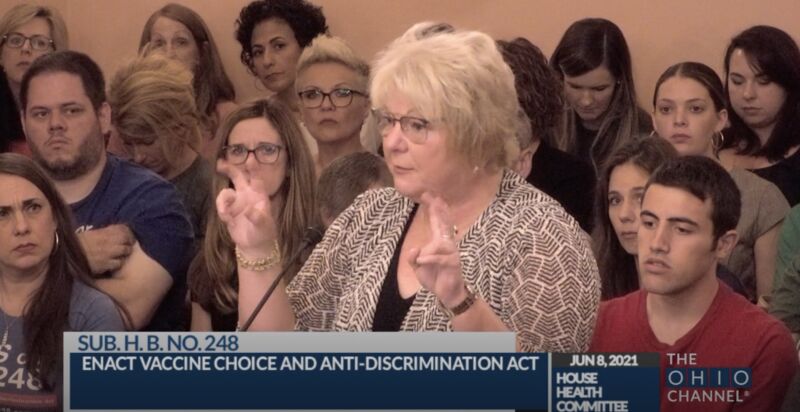
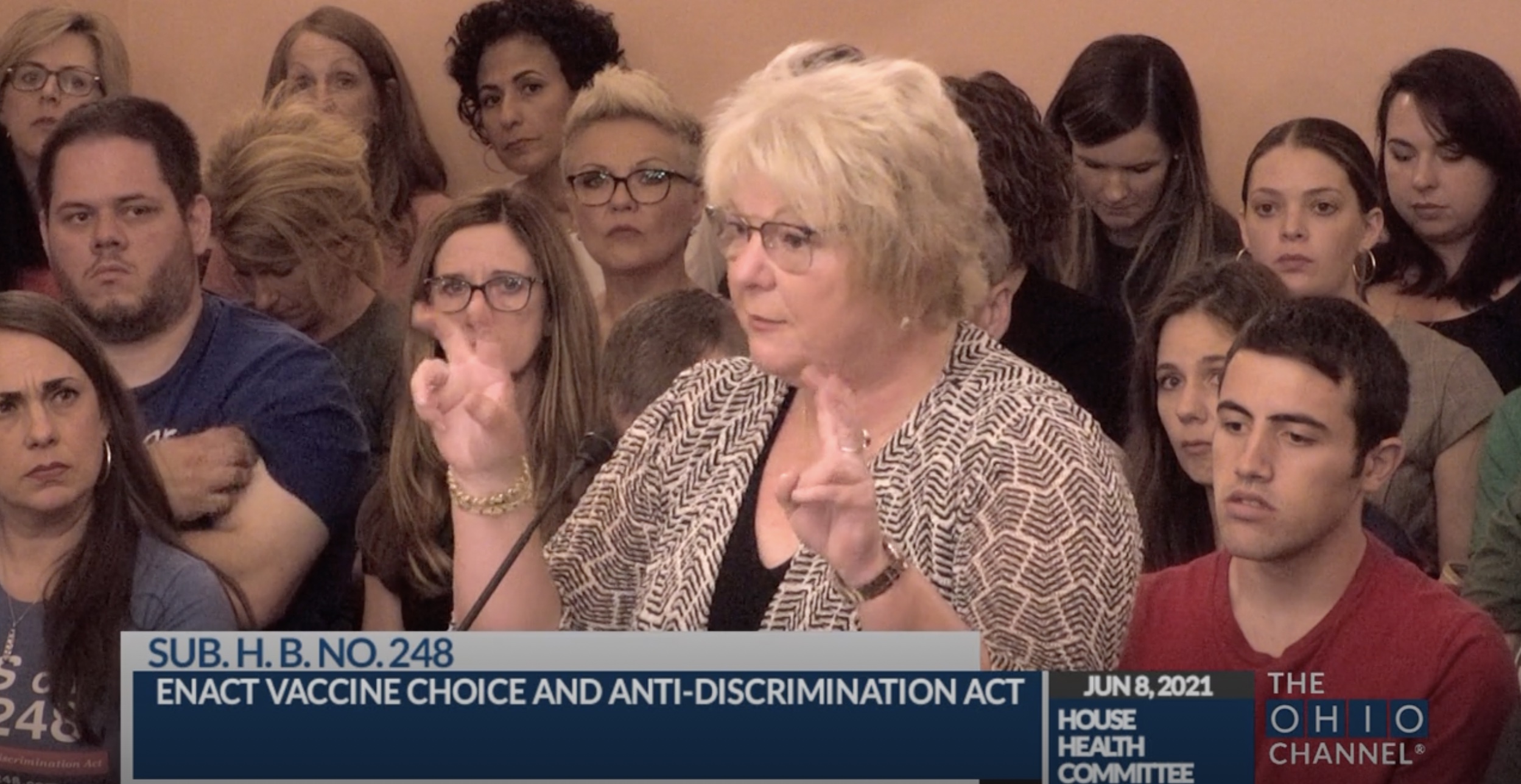
Enlarge / Cleveland doctor Sherri Tenpenny gives false testimony on June 8, 2021, saying COVID-19 vaccines magnetize people. (credit: The Ohio Channel)
An anti-vaccine doctor best known for losing her medical license after falsely claiming that COVID-19 vaccines cause people to become magnetic and "interface" with 5G towers, has had her medical license restored, according to local media reports.
Sherri Tenpenny, an osteopathic doctor in the Cleveland area, beamed into the national spotlight in June 2021 while giving repelling testimony before state lawmakers about COVID-19 vaccine recipients. "I'm sure you've seen the pictures all over the Internet of people who have had these shots and now they're magnetized," Tenpenny said in her viral testimony. "You can put a key on their forehead—it sticks. You can put spoons and forks all over and they can stick because now we think there is a metal piece to that."
Her testimony was in support of a bill that would largely ban vaccine mandates in Ohio. The bill never made it out of committee. But the state's medical board opened an investigation the next month. The board intended to ask Tenpenny a variety of questions, including about her statements "regarding COVID-19 vaccines causing people to become magnetized or creating an interface with 5G towers… and regarding some major metropolitan areas liquefying dead bodies and pouring them into the water supply," according to a board report.
Redfall can die in a fire, but hi-fi rush was fucking art
Enlarge / Artist's conception of Microsoft telling Hi-Fi Rush maker Tango Gameworks they no longer exist as a studio. (credit: Tango Gameworks)
Microsoft is shutting down four studios within its Bethesda Softworks subsidiary, according to a staff email obtained by IGN. The closures include Redfall developer Arkane Austin and Hi-Fi Rush studio Tango Gameworks. While some team members will be reassigned to other parts of the company, head of Xbox Game Studios Matt Booty said in a letter to staffers "that some of our colleagues will be leaving us."
Tango Gameworks confirmed in a short social media message that "Hi-Fi Rush, along with Tango's previous titles [like The Evil Within], will remain available and playable everywhere they are today." But the closure of Arkane Austin means that "development will not continue on Redfall," the company wrote in its own social media update. "Arkane Lyon will continue their focus on immersive experiences where they are hard at work on their upcoming project [Marvel's Blade]."
In his note to staff, Booty said that [Redfall] “will remain online for players to enjoy and we will provide make-good offers to players who purchased the Hero DLC.”
Apple says the M4 includes "up to" four high-performance CPU cores, six high-efficiency cores, and a 10-core GPU. Apple's high-level performance estimates say that the M4 has 50 percent faster CPU performance and four times as much graphics performance. Like the GPU in the M3, the M4 also supports hardware-accelerated ray-tracing to enable more advanced lighting effects in games and other apps. Due partly to its "second-generation" 3 nm manufacturing process, Apple says the M4 can match the performance of the M2 while using just half the power.
As with so much else in the tech industry right now, the M4 also has an AI focus; Apple says it's beefing up the 16-core Neural Engine (Apple’s equivalent of the Neural Processing Unit that companies like Qualcomm, Intel, AMD, and Microsoft have been pushing lately). Apple says the M4 runs up to 38 trillion operations per second (TOPS), considerably ahead of Intel's Meteor Lake platform, though a bit short of the 45 TOPS that Qualcomm is promising with the Snapdragon X Elite and Plus series. The M3's Neural Engine is only capable of 18 TOPS, so that's a major step up for Apple's hardware.
Amazing. GOP voters really are the stupidest fucking people on earth.
South Dakota Gov. Kristi Noem’s new defense of her terrifying memoir—the one in which she shot her own puppy and threatened to killJoe Biden’s German shepherd—seems to be that it was the ghostwriter what did it.
It’s not just these stories of malevolence toward man’s best friend that have gotten Noem in trouble. It turns out she also claims to have made North Korea’s dictator come to heel like a trained dog. Needless to say, Noem never met Kim Jong Un—there’s a reason why they call it the hermit kingdom. So how did this passage make it into her biography?
“It was brought to our attention that the upcoming book ‘No Going Back’ has two small errors. This has been communicated to the ghostwriter and editor,” said a Noem spokesperson somehow named Ian Fury earlier this week.
Now, Noem’s book doesn’t credit a ghostwriter on the cover, which rates her even lower in the honesty department than … Donald Trump, who at least acknowledged his amanuensis on the front of the “Art of the Deal.”
Still, fine, we’ll take her at her word that she didn’t really write her own tome. But is she also claiming she didn’t read it either? How else could her tall tales—which also include an apparently made-up story about canceling a meeting with French President Emanuel Macron, tres désolée—have been “brought to our attention” only now, for the first time?
In fairness, it would be pretty easy to believe that she hadn’t actually read her book, wouldn’t you say? There’s just, as Daily Kos’ Markos Moulitsas pointed out, one teeny, eensy, very small, micro-problem:
You can even hear Noem say it herself, complete with a little twangy Western theme music, right at the very start:
Hachette Audio presents, “No Going Back: The Truth on What's Wrong with Politics and How We Move America Forward,” written and read by me, Kristi Noem.
So what do we think the excuse is here? It’s actually an AI-generated simulacrum of Noem? She was strung out on ayahuasca and wasn’t really “there” when she recorded her audiobook? She didn’t understand that memoirs are meant to be factual? Well, don’t try asking her publisher.
“At the request of Governor Noem, we are removing a passage regarding Kim Jong Un from her book No Going Back, upon reprint of the print edition and as soon as technically possible on the audio and ebook editions,” said Center Street in a statement. “Further questions about the passage should be referred to the author.”
Shell sold millions of carbon credits tied to CO2 removal that never took place [non-paywalled link] to Canada's largest oil sands companies, raising new doubts about a technology seen as crucial to mitigating greenhouse gas emissions. FT: As part of a subsidy scheme to boost the industry, the Alberta provincial government allowed Shell to register and sell carbon credits equivalent to twice the volume of emissions avoided by its Quest carbon capture facility between 2015 and 2021, the province's registry shows. The subsidy was reduced and then ended in 2022.
As a result of the scheme, Shell was able to register 5.7mn credits that had no equivalent CO2 reductions, selling these to top oil sands producers and some of its own subsidiaries. Credits are typically equivalent to one tonne of CO2. Some of the largest buyers of the credits were Chevron, Canadian Natural Resources, ConocoPhillips, Imperial Oil and Suncor Energy. Keith Stewart, a senior energy strategist with Greenpeace Canada, criticised these "phantom credits." Stewart added: "Selling emissions credits for reductions that never happened ... literally makes climate change worse."
Shell said carbon capture played "an important role in helping to decarbonise industry and sectors where emissions cannot be avoided" and that realising its potential "requires creating market incentives now." Alberta's environment ministry said the crediting support scheme had not resulted in "additional emissions" by industrial polluters.
Deck chairs on the titanic, all to line Elon's pockets. This shouldn't be a surprise
Enlarge (credit: Karol Serewis/SOPA Images/LightRocket via Getty Images)
On Sunday night, even more Tesla workers learned they were no longer employed by the company as it engaged in yet another round of layoffs. Multiple former employees posted on LinkedIn and other sites to relay the news that they were no longer with the company.
"Well, tonight I have learned that my nearly 8 year journey leading and designing Service products at Tesla has come to an end," wrote one former employee.
"For the past Month, most Tesla Employees have had the ritual of keeping a close eye on one's personal email on Sundays and to check it before heading into work on Monday, as layoffs have been increasing. I was spared last October when we had layoffs and also for the last 3 weeks of layoffs. However, I too received the dreaded 'Tesla Employment Update' email today," wrote another.
PlayStation has reversed course on the Helldivers 2 PSN account requirement, walking back the unpopular policy after a weekend long backlash that included tens of thousands of negative reviews, some of which spread to Sony's other Steam games. From a report: "Helldivers fans -- we've heard your feedback on the Helldivers 2 account linking update. The May 6 update, which would have required Steam and PlayStation Network account linking for new players and for current players beginning May 30, will not be moving forward," PlayStation wrote on its official account.
"We're still learning what is best for PC players and your feedback has been invaluable. Thanks again for your continued support of Helldivers 2 and we'll keep you updated on future plans." PlayStation's decision means that Helldivers 2 players on Steam won't have to link a PSN account in order to play. The unpopular policy, which would have seen new players confronted with a mandatory login beginning this week, resulted in Helldivers 2 being delisted in around 177 countries.