Enlarge / A US child infected with measles during a 2024 outbreak. The child’s cheek shows the characteristic rash associated with this viral infection. (credit: CDC)
With one of the highest vaccine exemption rates in the country, Oregon is experiencing its largest measles outbreak in decades. This year's count is now higher than anything seen since 2000, when the Centers for Disease Control and Prevention declared the highly contagious virus eliminated from the US.
Last month, when the outbreak tally was still in the 20s, health officials noted that it was nearing a state record set in 2019. There were 28 cases that year, which were linked to a large outbreak across the border in Washington state. But, with that record now surpassed, the state is in pre-elimination territory.
Handy reminder: he was a featured speaker at the GOP convention. This isn't a "fringe" thing. It's the core of the GOP.
Conservative media personality Tucker Carlson has been cavorting with Nazis for a while now, so when he released his interview with a Nazi apologist on Monday, no one was surprised.
Well, no one except the rest of the conservative media ecosystem. And you’ll be happy to know that they are shocked and outraged!
On Monday, Carlson posted an interview with Darryl Cooper, saying that he “may be the best and most honest popular historian in the United States. His latest project is the most forbidden of all: trying to understand World War Two.”
And here’s how Cooper, posting under a handle that shares a name with his podcast, understands WWII:
During Carlson’s interview, Cooper called former U.K. Prime Minister Winston Churchill the “chief villain” of World War II and claimed that Hitler “didn’t want to fight.” He also claimed the Holocaust was merely a logistical mishap, that Germany was overwhelmed by the millions of “people who are surrendering or people they’re rounding up” and that these people just passively “ended up dead” in concentration camps. And then, after ignoring the reason why people were being “rounded up,” he says their mass execution was a mercy killing!
“Rather than wait for them all to slowly starve this winter, wouldn’t it be more humane to finish them off quickly now?” Cooper pondered.
But anyone who has paid the slightest attention to Carlson understands his interview with Cooper to be business as usual. As Media Matters for America noted way back in 2017, Carlson has long been “beloved by neo-Nazis and misogynists”:
Carlson has built a strong following among the worst racists, misogynists, and anti-Semites on the Internet.
Those deplorables love Carlson’s cutting interview style, which seeks not to extract information from guests but rather to embarrass them. Many of Carlson’s victims have included the young women, Jews, and “social justice warriors” who constitute the main perceived enemies of the “alt-right.” They believe that Carlson is helping to mainstream their racist, misogynist worldview.
But the conservative commentariat has erupted in outrage as if this weren’t who Carlson was all along.
“Didn't expect Tucker Carlson to become an outlet for Nazi apologetics, but here we are,” tweeted conservative radio host Erick Erickson.
“I am trying to believe my ears, because on Tucker Carlson's respected podcast I just heard these immortal words: ‘I read about Churchill, and he strikes me as a psychopath,’” tweeted Owen Strachan, senior director at the evangelical Dobson Culture Center. “Who *on earth* is Darryl Cooper, and how did he get this platform?”
Anyone who thinks Carlson’s podcast merited respect before this wasn’t paying attention, because here’s what Carlson says about Churchill during the interview:
Tucker Carlson: "If Churchill is a hero, how come there are British girls begging for drugs on the streets of London?” Churchill left office nearly 70 years ago. pic.twitter.com/fkCNMGL7le
Sohrab Ahmari, founder of the conservative outlet Compact, was apoplectic. “I can't get over this. The claims made. The fact that Tucker saw fit to lend this guy an uncritical platform. The fact that Elon recommended the interview,” Ahmari tweeted. “This sector of the right is sinister. I'll stop saying ‘they've lost their minds.’ No, it's worse than that.”
“Tucker's guest: The Holocaust was an unfortunate logistical problem. The Nazis ran out of space for prisoners. Nobody wanted to kill all the Jews. Except maybe Churchill, that dastardly terrorist,” tweeted Seth Dillon, owner of the conservative “humor” site Babylon Bee. “Tucker: Finally, an honest historian willing to tell us the truth.”
Jonah Goldberg, formerly of the National Review and currently at The Dispatch, said Carlson has changed.
“I’ve known Tucker for 30+ years,” he tweeted. “For most of that time, if I told him he’d become this guy one day, he’d have laughed, cursed me out, or punched me. This is just sad. It’s pathetic whether he’s doing it sincerely or as a grift.”
Carlson has been this guy since at least the last decade.
It sucks that Carlson and Musk are platforming and amplifying such rank anti-semitism. But if it finally exiles Carlson to the fringes of the far right, far away from polite (bipartisan) company, that’s something. And it’s always helpful for Musk to remind advertisers why they should stay far away from his platform.
It’s a new day, which means it’s time to watch yet another video of Donald Trump’s running mate JD Vance attacking Americans who don’t have children! The latest gem to surface courtesy of Media Matters is a Newsmax interview from 2021, when Vance was running for the Ohio Senate seat he currently holds.
"I was looking at the leaders of the Democrats and realized how many of the next gen leaders of the Democrats—it's Kamala Harris, it's AOC. It's a lot of folks like that,” Vance told former Trump campaign adviser-turned-Newsmax-host Steve Cortes and co-host Jenn Pellegrino. “They're not planning to have kids. They don't have kids.”
“And I realize that we're being ruled by a childless elite, and it's not just they don't have kids. Of course, a lot of people don't have kids for different reasons,” Vance continued. “It's that they're proud of the fact they don't have kids. They think it's bad if you have kids, they think it's bad for the environment. They're proud of their abortions. They shout their abortions from the rooftops.”
Even Pellegrino seemed a bit shocked at Vance’s extremist position, gently pushing back by reminding him that a lot of American adults don’t have children and they’re people, too.
"Well, look, I've got people in my own family who haven't had kids for various reasons. Of course, I've got dear friends who haven't had kids,” Vance hedged. “But I think it's one thing to say that some people are going to choose not to have children, and another thing to say that we're living in a country where having children is now looked down upon.”
Intel's slumping share price could cost it a spot in the Dow Jones Industrial Average. Reuters reports: Analysts and investors said Intel was likely to be removed from the Dow, pointing to a near 60% decline in the company's shares this year that has made it the worst performer on the index and left it with the lowest stock price on the price-weighted Dow. The chipmaker's shares slid about 7% on Tuesday amid a broader market selloff, with the Philadelphia SE Semiconductor index (.SOX) down nearly 6%, following reports of lower chip sales globally in July.
A removal from the index will hurt Intel's already bruised reputation. The company has missed out on the artificial intelligence boom after passing on an OpenAI investment and losses are mounting at the contract manufacturing unit that the chipmaker has been building out in hopes of challenging TSMC. To fund a turnaround, Intel suspended dividend and announced layoffs affecting 15% of its workforce during its earnings report last month. But some analysts and a former board member believe the moves might be too little, too late for the chipmaker.
schwit1 shares a report: If you are reading this and live in America, or used to live in America, or maybe just went to America one time many years ago, then you are almost certainly performing unpaid labor for the U.S. government and have been for years. How? By storing some of the billions of pennies the U.S. Mint makes every year that virtually no one uses.
Why are we still making tons (many thousands of tons) of pennies if no one uses them? That's a sensible question with a psychotic answer: We have to keep making all these pennies -- over $45 million worth last year -- because no one uses them. In fact, it could be very bad if we did.
When you insert a quarter into a soda machine, that quarter eventually finds its way back to a bank, from which it can be redistributed to a store's cash register and handed out as change -- maybe even to you, who can put it into a soda machine again and start the whole process over. That's beautiful. (Please be mindful of your soft drink consumption.)
But few of us ever spend pennies. We mostly just store them. The 1-cent coins are wherever you've left them: a glass jar, a winter purse, a RAV4 cup holder, a five-gallon water cooler dispenser, the couch. Many of them are simply on the ground. But take it from me, a former cashier: Cashiers don't have time to scrounge on the sidewalk every time they need to make change. That is where the Mint comes in. Every year it makes a few billion more pennies to replace the ones everyone is thoughtlessly, indefinitely storing and scatters them like kudzu seeds across the nation.
You -- a scientist of some kind, possibly -- might think an obvious solution now presents itself: Why not encourage people to use the pennies they have lying around instead of manufacturing new ones every year? We can't! Or, anyway, we'd better not. According to a Mint report, if even a modest share of our neglected pennies suddenly returned to circulation, the result would be a "logistically unmanageable" dilemma for Earth's wealthiest nation. As in, the penny tsunami could overwhelm government vaults.
That's not great, but at the end of the day we're talking only about pennies. How much could a penny cost to make? A penny? If only we lived in such a paradise. Unfortunately, one penny costs more than three pennies (3.07 cents at last count) to make and distribute! When I learned this, I lost my mind.
1.9 million solar panels began operating this year in California — at a Mortenson facility with 120,000 installed batteries that give it a storage capacity of 3,280 megawatts. An article in El Pais notes that this helped California pass 10,000 megawatts of photovoltaic storage in April — enough to meet 20% of demand — for the first time ever. (In 2019, the state had just 770 megawatts of storage capacity.)
Mark Rothleder, the vice president of the independent grid operator, California ISO (CAISO), said earlier this year that they will add another 1,134 megawatts in the first eight months of 2024. This is growth on top of the leap made last year. "In 2023 alone, the ISO successfully onboarded 5,660 megawatts of new power to the grid," Rothleder said at a conference in San Diego...
Renewable production was enough to supply the grid on 40 out of 48 days this spring, compared to seven days in the whole of last year. Lithium batteries appear to be undercutting the use of fossil fuels. Gas accounts for 40% of California's grid. However, its use in April registered its lowest proportion in seven years. "The data clearly shows that batteries are displacing natural gas when solar generation is ramping up and down each day in CAISO," notes an analysis by Grid Status, a firm specializing in energy issues. Natural gas was king on the grid in April 2021, 2022 and 2023. CAISO was sending between 9,000 and 10,000 megawatts produced from gas to the grid once solar ran out. Last April, however, it amounted to only 5,000 megawatts... [California's goal: run on 100% renewable energy by 2045.]
Arizona and Georgia have followed California's lead. But it is Texas, the other major U.S. giant in this industry, that is snapping at its heels. At the end of April, batteries supplied 4% of the grid's electricity, enough to power several million homes. Batteries are beginning to look like an alternative to a system heavily dependent on gas and coal.
Signs of Donald Trump’s cognitive decline are accelerating. Speaking at a Mom’s for Liberty event Friday, he completely lost the plot.
Speaking at the annual gathering of right-wing crusaders, Trump claimed he tried to convince his daughter Ivanka Trump, who has not been involved in his current campaign and did not even speak at this year’s Republican National Convention, to be the U.S. ambassador to the United Nations.
“I said, you would be a great ambassador to the United Nations, United Nations secretary—there’d be nobody to compete with her,” he said. “She may be my daughter but nobody could have competed with her, with her rat-rat-rat you know she’s got.”
Who could possibly compete with Ivanka, except quite literally anyone in the American diplomatic corps who has both the academic and practical experience in international diplomacy? Maybe he shouldn’t be put in charge of these decisions if having “rat-rat-rat” is his primary standard for the job.
“She said, daddy, I don’t want to do that, I just want to help people get jobs,” Trump continued. “She would go around—not a glamorous job—but would go around to see Wal-Mart, to see Exxon, to see all these big companies to hire people and she had hired, like, millions of people during the course of her stay.”
It’ll certainly be news to Wall-Mart, Exxon, and “all these big companies” that Ivanka showed up and did the hiring for them.
Millions of hires! Which is actually kinda weird, given that Wal-Mart’s entire U.S. workforce is 1.6 million, and Exxon’s is 61,500. Did she hire all their employees?
Let’s not forget that the American economy lost 2.7 million jobs during Trump’s tenure, so did Ivanka’s valiant yet somehow unglamorous work randomly hiring other company’s workforce offset those numbers?
Obviously, this is all utter gibberish. Trump has stumbled far more, over the past few weeks, than President Joe Biden ever did, to wildly different media standards. Biden was never this bad:
Trump: Some people don't eat bacon anymore. This was caused by their horrible energy. Wind. They want wind all over the place. When it doesn't blow, we have a problem. pic.twitter.com/z9FnkHnYOU
And as much as Republicans obsessed over Hunter Biden, the president never went around claiming his kids did such ridiculous things as hiring “millions of people.” Will the media press him on this? Of course not. It’s a wonder they’re even paying attention to Trump’s obscene and illegal campaign stunt at Arlington National Cemetery.
But it does mean that a time when Trump desperately needs to reverse Vice President Kamala Harris’ momentum, he’s instead trapped by his inability to either stay on message, or at least present a sane, coherent one.
Denise Prudhomme, a 60-year-old Wells Fargo employee, was found dead at her desk four days after clocking in. Apparently, nobody noticed her body because of the secluded location of her cubicle and the fact that many employees were working remotely. VICE reports: Prudhomme last scanned into her office job in Tempe, Arizona, at 7 AM on Friday, and her body was reportedly discovered at 4:55 PM on Tuesday, August 20. Her coworkers did pick up that something weird was going on. They detected a weird smell but assumed it was some kind of plumbing issue.
Prudhomme's cubicle was on the third floor of the building, tucked away from any main thoroughfares that employees would use to travel between departments. On top of that, most employees at the Tempe Wells Fargo location worked remotely, significantly cutting down the chance of someone finding her body.
Tempe police and the Maricopa County Medical Examiner didn't detect any signs of foul play, but the woman's official cause of death remains to be seen. Wells Fargo has said that they're going to look into their internal procedures to make sure employees receive some kind of check-in to make sure they're not, you know, dead.
Here’s a great clip to share with friends and family if you want to talk about Donald Trump’s tax plans.
In a short video posted Friday, actor Joseph Gordon-Levitt—a two-time Emmy winner who has been working since childhood and is in the top 1% of earners—explains why he doesn't want the $70,000 tax break Trump wants to give wealthy people like him.
“So Donald Trump wants to give me $70,000 in tax cuts, per year, Gordon-Levitt says. “And by the way, he doesn’t want to give that to everybody, but I just read that’s the average tax break for the top 1%, if Donald Trump is elected president.”
The “3rd Rock from the Sun” star goes on to point out that regular, middle-class people are not going to benefit from this because “nearly half of it is gonna go to just the top 5% of people.”
“It doesn’t feel right to me,” he continues.
You don’t have to take Gordon-Levitt’s word for it. The Penn Wharton Budget Model, a group within the University of Pennsylvania's Wharton School, analyzed both Vice President Kamala Harris’ and Trump’s tax proposals last week.
"It's true that Trump looks like he's a winner for everybody, but he'll provide much bigger giveaways to the top 1% and top 0.1%, whereas Harris will be negative for these people," Kent Smetters, faculty director of the Wharton program, told CBS News Friday. According to their analysis, people making $81,415 annually would get $1,740 in breaks, while people earning $19,595 would get just $320 in Trump’s plan.
“Do you want to talk about who’s going to really help most Americans? It’s Kamala,” Gordon-Levitt says in his video. And he’s right, according to Wharton. That bottom quintile of earners would see $2,355 in tax relief, and those in the middle, $2,165. The top 0.1% who would get a $376,910 gift from Trump, but would have to pay an additional $167,255 in Harris’ plan.
As the “Inception” actor says, “Trump’s going to help the same people he always tries to help—the wealthy, himself.”
Mark Robinson, the Republican candidate for governor of North Carolina, has placed military and veterans’ issues at the heart of his political messaging.
“I commit myself every day to stand up for these folks,” Robinson said in a video posted in December 2022. “We said when we were running that we were fighting to make North Carolina the gold standard for veterans’ care. And that’s not just a saying that we take lightly.”
One of Robinson’s few statutory roles in his current post as lieutenant governor is to sit on North Carolina’s Military Affairs Commission, a state body that advises on exactly the sorts of veterans’ issues that Robinson talks so much about. And yet records from the MAC show that Robinson has not attended a single meeting of the group in his four years as lieutenant governor.
The MAC doesn’t have a great deal of concrete power. It serves as an advisory group to the legislature and governor on issues related to military bases, the National Guard, the Reserves, and veterans. Robinson’s role on the commission is as a nonvoting member.
In response to my questions, Robinson’s office played down the commission and argued that Robinson makes a bigger difference by speaking with military and veterans groups around the state.“The Lt. Governor’s seat on the Military Affairs Commission is a non-voting, ex-officio role. So, he found ways to make a substantive impact on Veterans,” a spokesperson for the lieutenant governor told me via email. He cited Robinson’s support for a bill that exempts military pensions from state income tax and said, “The Lt. Governor has also visited numerous military installations and held roundtable discussions with military and veterans’ organizations across the state.” Robinson’s campaign referred questions about the MAC to the office of the lieutenant governor. One of his supporters, Dallas Woodhouse, the former executive director of the North Carolina Republican Party, defended him to me by email, writing, “I have no doubt that Mark Robinson would strongly represent veterans and active duty military in North Carolina.”
But Chris Cooper, a political scientist at Western Carolina University, told me that in a job where the main responsibility is to attend meetings, attendance is meaningful. “You show how much you care with time,” he said. “That’s true if you’re a parent, and that’s true if you’re a politician—where you put your time is your priority. And if he’s not putting his time attending these meetings, I think that is a sign that it wasn’t a priority and isn’t a priority.”
Robinson’s attendance for many bodies, including the state board of education, has been infrequent. The MAC meets quarterly, and minutes record Robinson as absent on every occasion since he took office in early 2021. That August, he lamented to an interviewer that Democrats and Republicans couldn’t even work on things where they agree.
“You’re talking about veterans’ issues. We’re not opposed to the things that we need to do for our veterans. We could sit down and work on those things together,” he said. “But as with everything, that issue of politics often drives people apart and causes them not to be able to come to the table.”
The very same day, when the MAC met, including representatives from both parties as well as nonpartisan members, Robinson was not at the table.
“I’m here because our veterans are being pushed aside for illegals,” he said at a church event in May 2023. “I am here because our economy is in shambles. I am here because our nation is literally falling apart, and I need to be standing in the gap to pull her back from the precipice.” Two days later, he skipped another MAC meeting at which a program to encourage hiring veterans, ways to improve mental-health care for service members and veterans, and tax breaks for disabled veterans were all discussed. (Robinson’s predecessor, Republican Dan Forest, attended some, though not all, of the MAC meetings during his time in office.)
Robinson has gained a great deal of national attention for his many belligerent and offensive views. “Some folks need killing!” he said in a June speech. He has denied the Holocaust, said that the comic-book hero Black Pantherwas “only created to pull the shekels out of your Schvartze pockets,” and called Michelle Obama a man. He’s also supported a full ban on abortion, although he’s more recently walked that back in an ad that discusses the abortion his wife once had.
But he also regularly says extremely politically normal things about supporting the military. For example, in his first run for office, in 2020, he said, “We’ve got to honor [veterans], not just with our mouths, not just with handshakes.”
That’s smart politics in a state that bills itself as “the nation’s most military-friendly state.” Home to the U.S. Marine Corps’ Camp Lejeune and the Army’s Fort Liberty (formerly Fort Bragg), North Carolina ranks near the top in number of active-duty service members residing there, and is home to hundreds of thousands of veterans.
“It’s a bedrock part of North Carolina, like Dean Smith, Michael Jordan, and barbecue,” Cooper said. “It is just sort of understood. Every politician—left, right, center—needs to make not just a nod towards being military-friendly but needs to project that in everything that they do.”
Robinson has made those nods, but he hasn’t done much else. Overall, his website is scant on policy specifics, but “Expanding Veterans Care” is one of the few priorities he actually names, saying he would help veterans in retirement and make North Carolina “the gold standard of veterans care.” As lieutenant governor, he has had little power to do these things, though he did oppose a Medicaid expansion, backed by Democratic Governor Roy Cooper, that has made thousands of veterans eligible for new benefits.
Military service has long been a source of controversy in American elections, and after a short respite as the Vietnam War generation mostly left the political stage, battles over service are back. Democratic vice-presidential nominee Tim Walz has pointed to his years of service in the National Guard as evidence that he will be an advocate for veterans and understands the military. But Republicans have raised questions about possible exaggerations in his past descriptions of his service and rank. Those attacks have been led by Senator J. D. Vance, the Republican vice-presidential nominee, who served as a Marine in Iraq. One of Donald Trump’s top campaign aides, Chris LaCivita, helped lead disproved mudslinging against John Kerry in the 2004 presidential campaign. Democrats have been happy to attack Trump too; at the Democratic National Convention, Maryland Governor Wes Moore joked that he served in Afghanistan because, unlike Trump, he did not have bone spurs.
Trump, though he did not serve, has portrayed himself as a champion for veterans, but people around him have described a series of derogatory comments he’s made about service members. The Atlantic’seditor in chief, Jeffrey Goldberg, reported in 2020 that Trump had described soldiers who died as “suckers” and “losers.” The former Trump advisers Mark Milley and John Kelly, both retired generals, have recalled other moments where Trump denigrated veterans, including saying, “No one wants to see that, the wounded.” Earlier this week, Trump’s entourage managed to somehow get into an altercation with staff at Arlington National Cemetery, apparently after the former president tried to use the burial site for a campaign photo op.
Robinson has not often spoken in detail about his own service in the Army Reserve. In his memoir, he describes the important role that JROTC played for him in high school. “I wanted to be a soldier,” he writes. “People would look at me as I walked in uniform, knowing that I was serving my country. I felt a sense of accomplishment. I felt I was doing something.” Rather than join the regular Army, Robinson decided to join the Reserves after basic training, which he described as providing a way to go to college first. Yet Robinson quickly dropped out of college. “Some have asked why I did not make a career of the Army,” he writes. “What I didn’t like about the Army, or rather what made me unsuited for the Army, was pretty simple. In the Army, I couldn’t do what I wanted to do!”
Discipline and sticking to commitments have evidently remained struggles for Robinson, as his attendance record demonstrates. Four years ago when he ran for lieutenant governor, Robinson warned against hollow promises from candidates.
“Folks, we got to start doing better by our veterans. When I say better, I mean way better,” he said at an event hosted by the conservative group Americans for Prosperity. “This whole time, kicking the can down the road saying, ‘Oh, and you know, we’ll get the veterans next time, in the next election’ … Folks, if it was up to me, these guys would have to go in the room and sit until they got straightened out, wouldn’t be able to come out until they did. It’s way past the time for us to stop paying lip service to people who went off and gave—you know, risked their lives for us.”
He’s now had the chance to sit in that room, but he still hasn’t shown up.
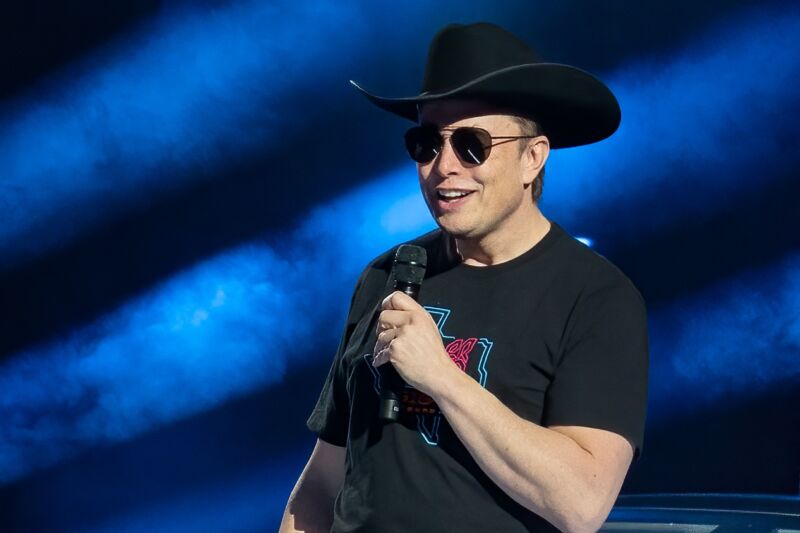
Enlarge / Tesla CEO Elon Musk speaks at Tesla's "Cyber Rodeo" on April 7, 2022, in Austin, Texas. (credit: Getty Images | AFP/Suzanne Cordeiro)
A federal judge in Texas yesterday ruled that Elon Musk's X Corp. can continue its lawsuit against Media Matters for America. US District Judge Reed O'Connor of the Northern District of Texas, who recently refused to recuse himself from the case despite having purchased Tesla stock, denied Media Matters' motion to dismiss.
X Corp. sued Media Matters after the nonprofit watchdog group published research on ads being placed next to pro-Nazi content on X, formerly Twitter. X's lawsuit also names reporter Eric Hananoki and Media Matters President Angelo Carusone as defendants.
Because of O'Connor's ruling, X can move ahead with its claims of tortious interference with contract, business disparagement, and tortious interference with prospective economic advantage. A jury trial is scheduled to begin on April 7, 2025.
AnandTech, a pioneering technology news website, is shutting down after 27 years on August 30, 2024. Founded in 1997 by Anand Lal Shimpi, the site earned a reputation for its in-depth hardware reviews and technical analysis.
In a final post on the site, AnandTech Editor-in-Chief Ryan Smith cited changing market dynamics for written tech journalism as the primary reason for closure. The site's 21,500 articles will remain accessible indefinitely, hosted by publisher Future PLC. AnandTech's forums will continue operating under Future's management.
Yup and the media is too busy playing stenographer for Trump to actually pursue the issue
This article was featured in the One Story to Read Today newsletter. Sign up for it here.
The section of Arlington National Cemetery that Donald Trump visited on Monday is both the liveliest and the most achingly sad part of the grand military graveyard, set aside for veterans of the wars in Iraq and Afghanistan. In Section 60, young widows can be seen using clippers and scissors to groom the grass around their husbands’ tombstones as lots of children run about.
Karen Meredith knows the saddest acre in America only too well. The California resident’s son, First Lieutenant Kenneth Ballard, was the fourth generation of her family to serve as an Army officer. He was killed in Najaf, Iraq, in 2004, and laid to rest in Section 60. She puts flowers on his gravesite every Memorial Day. “It’s not a number, not a headstone,” she told me. “He was my only child.”
The sections of Arlington holding Civil War and World War I dead have a lonely and austere beauty. Not Section 60, where the atmosphere is sanctified but not somber—too many kids, Meredith recalled from her visits to her son’s burial site. “We laugh, we pop champagne. I have met men who served under him, and they speak of him with such respect. And to think that this man”—she was referring to Trump—“came here and put his thumb up—”
She fell silent for a moment on the telephone, taking a gulp of air. “I’m trying not to cry.”
For Trump, defiling what is sacred in our civic culture borders on a pastime. Peacefully transferring power to the next president, treating political adversaries with at least rudimentary grace, honoring those soldiers wounded and disfigured in service of our country—Trump long ago walked roughshod over all these norms. Before he tried to overturn a national election, he mocked his opponents in the crudest terms and demeaned dead soldiers as “suckers.”
But the former president outdid himself this week, when he attended a wreath-laying ceremony honoring 13 American soldiers killed in a suicide bombing in Kabul during the final havoc-marked hours of the American withdrawal. Trump laid three wreaths and put hand over heart; that is a time-honored privilege of presidents. Trump, as is his wont, went further. He walked to a burial site in Section 60 and posed with the family of a fallen soldier, grinning broadly and giving a thumbs-up for his campaign photographer and videographer.
Few spaces in the United States join the sacred and the secular to more moving effect than Arlington National Cemetery, 624 acres set on a bluff overlooking the Potomac River and our nation’s capital. More than 400,000 veterans and their dependents have been laid to rest here, among them nearly 400 Medal of Honor recipients. Rows of matching white tombstones stretch to the end of sight.
A cemetery employee politely attempted to stop the campaign staff from filming in Section 60. Taking campaign photos and videos at gravesites is expressly forbidden under federal law. The Trump entourage, according to a subsequent statement by the U.S. Army, which oversees the cemetery, “abruptly pushed” her aside.
Trump’s campaign soon posted a video on TikTok, overlaid with Trump’s narration: “We didn’t lose one person in 18 months. And then they”—the Biden administration—“took over, that disaster of leaving Afghanistan.”
Trump was unsurprisingly not telling the truth; 11 soldiers were killed in Afghanistan in his last year in office, and his administration had itself negotiated the withdrawal. But such fabrications are incidental sins compared with what came next. A top Trump adviser, Chris LaCivita, and campaign spokesperson Steven Cheung talked to reporters and savaged the employee who had tried to stop the entourage. Cheung referred to her as “an unnamed individual, clearly suffering a mental-health episode.” LaCivita declared her a “despicable individual” who ought to be fired.
There was, of course, another way to handle this mistake. Governor Spencer Cox of Utah had accompanied Trump to the cemetery, and his campaign emailed out photos of the governor and the former president there. When challenged, Cox did what is foreign to Trump: He apologized. “You are correct,” Cox replied to a person criticizing the event on X, adding, “It did not go through the proper channels and should not have been sent. My campaign will be sending out an apology.”
This was not a judgment call, or a minor violation of obscure bureaucratic boilerplate. In the regulations governing visitors and behavior at Arlington National Cemetery, many paragraphs lay out what behavior is acceptable and what is not. These read not as suggestions but as commandments. Memorial services are intended to honor the fallen, the regulations note, with a rough eloquence: “Partisan activities are inappropriate in Arlington National Cemetery, due to its role as a shrine to all the honored dead of the Armed Forces of the United States and out of respect for the men and women buried there and for their families.”
As the clamor of revulsion swelled this week, LaCivita did not back off. On Wednesday, the Trump adviser posted a photo of Trump at Arlington Cemetery on X and added these words: “The Photo that shook the world and reminded America who the real Commander in Chief is …August 26th 2024 ..Mark the day @KamalaHarris and weak @JoeBiden.”
The Army, which is historically loath to enter politics, issued a rare statement yesterday rebuking the Trump campaign, noting that ceremony participants “had been made aware” of relevant federal laws “prohibiting political activities” and that the employee “acted with professionalism.” The Army said it “considers this matter closed” because the cemetery employee had declined to press charges.
Meanwhile, an unrepentant Trump team kept stoking the controversy. Yesterday, LaCivita posted another photo of Trump at Arlington and added this: “Reposting this hoping to trigger the hacks at @SecArmy”—the Army secretary’s office.
It had the quality of middle-school graffiti, suggesting that Trump viewed the controversy as yet another chance to mock his critics before moving on to the next outrage. For grieving families with loved ones buried in Section 60, moving on is not so easy.
How old, I asked Meredith, was your son at the time of his death? “He was 26,” she replied. “He did not have time to live. I didn’t get to dance at his wedding. I didn’t get to play with grandkids.”
This week, all she could do was call out a crude and self-regarding 78-year-old man for failing, in that most sacred of American places, to comport himself with even the roughest facsimile of dignity.
Minnesota Gov. Tim Walz of Minnesota and Ohio Sen. JD Vance spoke at the International Association of Fire Fighters convention in Boston this week to make the case for their votes in November, and the vice presidential nominees received vastly different responses.
Democratic VP nominee Walz made his entrance on Wednesday as John Mellencamp’s “Small Town” played, then shook hands with and hugged the men on the dais.
“Well, good morning.” Walz said. “I know you got a lot of important business to get through this week, but I do want to say how grateful I am, and what a privilege it is to stand in front of this group.”
“We got some, sounds like we got some fans and some haters,” replied the venture capitalist tech bro who likes to pretend he’s a hillbilly. “That's okay. Let's listen to what I have to say here, and I'll make my pitch.”
None. Skip the whole thing and enjoy the avoided brain damage
Everyone’s favorite jolly primordial being finally made it to the screen. | Amazon Studios
Good news for even the most discerning fans of Middle-earth: The second season of Amazon Studio’s The Rings of Power, which premiered August 29, includes a whole lot more characters and landscapes from J.R.R. Tolkien’s books, many of which never made it into Peter Jackson’s film adaptations. Whether it’s anywhere near as captivating, however, is a different story.
The series, which premiered in 2022, centers on Middle-earth’s Second Age, which occurred thousands of years before the events of The Hobbit and The Lord of the Rings, and is based not on a single Tolkien work but on their many appendices. The first season saw a young version of the elf Galadriel (played by Morfydd Clark in the series, and in Jackson’s films by Cate Blanchett) begin her quest to avenge the death of her brother by defeating the evil Sauron, until she eventually realizes that the man she thought was a friend was (spoiler!) actually Sauron in disguise. But by this point, he’s already seeded the idea to the famed elven smith Celebrimbor to create one of the titular Rings of Power — objects that Sauron bestows upon powerful rulers in order to secretly control them — and by the finale, he’s made three.
Reviews for the first season were mixed but leaned positive; critics praised the intricate, immersive sets and dazzling CGI of the landscapes (both of which contributed to its $1 billion cost, making it the most expensive show ever made). But others panned its use of modern “mystery box” storytelling — a construction in TV shows like Lost, Westworld, and Stranger Things, in which hints are dropped throughout a season until the finale’s big reveal. A Forbes writer said that approach made “a mockery of Tolkien’s work,” while Screenrant pointed out that Middle-earth’s Second Age “is filled with rich stories on its own without having to make artificial mysteries to drive viewer interest.”
The problem with creating a TV show based on one of the best-selling books of all time and three of the greatest films ever made is that people tend to be a bit precious about the material. Audiences “review-bombed” the series when it first aired — some were upset at the non-canonical timeline, some angry at the gender and racial diversity in the casting, and others balked at the idea of hiring two inexperienced and unknown showrunners, Patrick McKay and J.D. Payne, to helm the project.
Though its first episode became Amazon’s most-watched series premiere ever, only 37 percent of viewers finished the series, which execs blamed on all the “setting up” required in the first season. For season two, they say the plot will “hit the ground running”: “When you’re setting out the banquet table, necessarily, there’s going to be a little more lore and rules,” McKay told the Times. “Now, we are feasting.”
If you’re tuning in to the new episodes but can’t quite remember where we left off two years ago, or are concerned you might not be quite brushed up enough on Middle-earth to get it, here’s a handy guide (no Elvish needed).
Wait, what is this show about again?
Remember the monologue Galadriel delivers at the very beginning of the Fellowship film about the forging of the rings? This is essentially what happens in The Rings of Power:
Three were given to the Elves, immortal, wisest and fairest of all beings. Seven to the Dwarf lords, great miners and craftsmen of the mountain halls. And nine, nine rings were gifted to the race of Men, who, above all else, desire power. But they were, all of them, deceived, for another ring was made. In the land of Mordor, in the fires of Mount Doom, the Dark Lord Sauron forged in secret a Master Ring, to control all others. And into this ring he poured his cruelty, his malice and his will to dominate all life. One Ring to rule them all.
Eventually, Sauron’s plan is discovered, and an alliance of men and elves form a resistance. In the final battle, Isildur (the ancestor of human ranger Aragorn), cuts the One Ring from the hand of Sauron, bringing peace to Middle-earth — thousands of years before Frodo ends up with the ring and embarks on his quest to destroy it.
This is the story that will unfold throughout all five planned seasons of The Rings of Power. The first season barely scratches its surface, however, and instead spends most of its eight episodes introducing new characters and building up to the reveal that Halbrand (Charlie Vickers), Galadriel’s new human friend, is the evil Sauron, and ends just after the forging of the first three rings for the elves.
We also meet the dwarves, who act as comic relief when they’re not busy in the depths of Khazad-dûm, the impressive underground dwarf city, mining for the newly discovered substance mithril (which fans might remember is the material Frodo’s chainmail shirt is made of). It’s an immensely powerful ore that the elf Elrond (Robert Aramayo, played by Hugo Weaving in the film trilogy) wants to use to help save the elves, who are suffering as a result of having spent too much time away from their homeland — and it’s the same material used to craft the rings.
Because Middle-earth just wouldn’t be the same without halflings, there’s also a loveable pair of harfoots, early ancestors of hobbits, who live nomadically in caravans. Two harfoot girls, Nori and Poppy, come across an old man who appears in the crater of a fiery asteroid-like event and can’t remember who he is or speak their language. Despite fearing him at first, they eventually learn that the man, dubbed the Stranger, is a wizard. Specifically, he’s one of the Istari, a powerful five-wizard order that includes Saruman, Radagast, the Blue Wizards, and Gandalf. (Is the Stranger in fact Gandalf? More on that later.)
What are the humans doing in all of this? Well, there’s a lengthy and mostly inconsequential subplot about the less fortunate humans of the Southlands, who discover some orc tunnels and a hilt of a sword that the leader of the orc army, Adar, is searching for. By the end of the season, their land is covered in the fire and ash of Mount Doom’s eruption, officially turning the Southlands into Mordor, i.e., what becomes Sauron’s evil realm.
The fancier humans are in Númenor, the island kingdom that is, by the time of the events of The Lord of the Rings, swallowed by the sea. But right now, it’s a gorgeous, gleaming urban paradise, ruled by queen regent Míriel and her adviser Pharazôn, who clearly wants the throne for himself. Another important guy here is Isildur, or at least we know he will be. He’s the son of captain Elendil, and goes to fight the orcs in the Southlands with his father and is presumed dead when the volcano erupts (though, obviously, he survives).
Our final image is of Sauron, fully mask-off, standing on the edge of Mordor, ready to take back what’s his.
I thought Sauron was a giant fiery eyeball?
He is in Jackson’s The Lord of the Rings trilogy. But before all that, Sauron was a primordial spirit, or Maiar, capable of shape-shifting. Known by many names throughout his thousand-year life (?), Sauron was a servant of the Dark Lord Morgoth before becoming the Dark Lord himself. In the Second Age, when The Rings of Power takes place, he appears to the elves in various angelic “fair forms,” sometimes as Annatar, handsome “Lord of Gifts,” in order to deceive them.
There’s also a cool scene at the beginning of season two where Sauron, after being killed in his human form as a different blonde man (not to be confused with the hunky Halbrand, who is an invention of Amazon, not Tolkien, and is confusingly also played by the same actor as Sauron-as-Annatar), regenerates in a pool of black blood and becomes an undulating evil mass of goop.
It also kind of doesn’t even matter how Sauron is represented on screen: The fiery eyeball thing, for instance, isn’t even entirely accurate to the books, which only vaguely describe what Sauron looks like. Dig any deeper into this, however, and you’re fully in some serious Tolkienian weeds (here’s a discussion of this topic, if you’re interested).
So is the Stranger Gandalf?
Theories that the Stranger is indeed Gandalf appeared as soon as he came flying down to earth in season one. The evidence for this is mostly that a) he’s a benevolent old wizard with a fondness for halflings and b) he echoes a line spoken by Gandalf thousands of years later: “When in doubt, always follow your nose.”
In a roundtable with the showrunners, McKay sort-of-but-didn’t answer the million-dollar question: “Despite what some folks might think, we’re really not about a game, we’re really not about a puzzle. But we also don’t wanna take for granted where characters will end up … I’m trying to say it but not say it.” Helpful!
Back to Tom Bombadil! What’s he doing there?
Tom Bombadil, who appears in the pages of The Fellowship of the Ring as an entity as old as time itself (“Tom was here before the river and the trees”), is a jolly old bearded man who speaks in nonsensical rhyme and verse. He famously does very little — the Hobbits mainly just hang out at his house for a while before heading on their way — which is likely why he wasn’t included in the films. And from what it sounds like, he won’t be doing a ton in The Rings of Power, either.
McKay explained to Vanity Fair that his role is to “nudge the Stranger along his journey.” Whether his appearance is little more than fan service remains to be seen.
There are deserts in The Lord of the Rings?
Yes, but they haven’t been depicted on screen until now. At the beginning of season two, Poppy, Nori, and the Stranger are traveling through Rhûn, a desert in the far east of Middle-earth (here is a helpful map). We also get to see Forodwaith, a snow-covered tundra in the far north.
How much of The Rings of Power is Tolkien canon?
The broad strokes of the plot — namely, the forging of the rings — are all canon, just with a much more condensed and tweaked timeline. But a lot of the rest of it isn’t.
Besides the many invented characters, the telling of the story is a marked difference from the books and Jackson’s films, which follow a single, straightforward plot that obscures almost nothing from the viewer. Characters in The Lord of the Rings are usually presented clearly as either good or evil, with the notable exception of someone like Boromir, who tries to take the ring from Frodo, but only for a worthy cause (using the One Ring to lead the human kingdom of Gondor to victory over Sauron).
The Rings of Power takes a far more modern perspective by filling Middle-earth with legions of Boromirs, characters with complex morals, trauma backstories, and not-always-clear motives. We don’t always know what sort of quest they’re on, or whether they’re even on a quest at all. While this might sound in theory like it makes for more compelling TV, it doesn’t necessarily capture the magic of the source material.
Okay, but is season two worth watching?
Depends on who you ask. As a LOTR fan, I’ll continue to watch solely because it’s a thrill to see events only alluded to in the books and films come alive on screen, and I found the first three episodes to be an improvement from season one. Now that the table is set, per McKay, the plot isn’t as focused on setting up mysteries that only somewhat pay off after sitting through eight hour-long-plus episodes where little of substance occurs. Which is good!
But the second season still suffers from some of the same problems, namely by prioritizing beautiful visuals over pacing and character development. Variety’s Alison Herman called it “a boring slog” and “lifeless,” writing that she could hardly think of anything memorable about its characters or scenes. Like Herman, I also found myself disoriented by much of the plot, despite being relatively familiar with the lore. If it can’t hook someone like me, it’s difficult to imagine LOTR newbies getting on board.
That’s what happens when an overall pretty straightforward story gets dragged out over 50 hours and five long seasons: You get filler, you get “mysteries” that aren’t all that mysterious, and you get storylines that commit the cardinal sins of failing to capture viewers’ attentions and failing to pay off. I can’t see how McKay and Payne are going to solve this problem within the next three seasons — all of this could have been done in one! — but at the very least, it’ll make for a lot of really cool-looking television that people get to complain about on the internet.
Appalling, yet like everything else the GOP does, only a problem if Democrats were to do it.
A cynical photo op for Donald Trump’s campaign is spiraling into a disaster. As more details of his campaign’s disgraceful behavior on Monday at Arlington National Cemetery become available, some veterans are “furious” and demanding an apology. But instead of offering one, Trump’s team is making things worse. On Wednesday, in violation of federal law, his campaign posted a TikTok video promoting his visit.
It’s “exactly what military officials tried to prevent,” The Washington Post reported. “The use of the footage marked a flagrant violation of the law against partisan actions at military cemeteries, defense officials said.”
And much more about what happened at Arlington has come to light:
Members of Trump’s team had a verbal and physical altercation with a member of the cemetery staff who has now been identified as a woman.
The woman was reportedly pushed aside by a large male member of Trump’s campaign staff when she tried to prevent the campaign from taking cameras into Arlington’s specially protected Section 60 area, where recently deceased veterans are buried.
In advance of the visit, Trump’s team was told personal aides could come but not campaign staff. They came anyway.
Trump’s team was expressly told that “photographers, content creators or any other persons” attending for a political campaign were not allowed, according to a statement from the cemetery. His team brought them anyway.
Trump and his team disrespected America’s most hallowed military cemetery, ignoring its rules, shoving and insulting a woman on staff, and turning it into a backdrop for a campaign video in open violation of federal law.
And if you can believe it, it gets worse.
According to The New York Times, the woman who was assaulted by members of Trump’s campaign has reportedly declined to press charges. And the reason she declined is as distressing as everything else about this story.
Military officials said that the cemetery worker feared that pursuing the matter with the authorities at Joint Base Myer-Henderson Hall in Virginia, which has jurisdiction over the cemetery, could subject her to retaliation from Trump supporters. [Trump campaign spokesman Steven] Cheung said in a statement on Wednesday that “that is ridiculous and sounds like someone who has Trump Derangement Syndrome.”
On Wednesday, Trump’s running mate, Ohio Sen. JD Vance, attempted to defend the altercation, dismissively saying that “apparently somebody at Arlington Cemetery, some staff member, had a little disagreement with somebody” and “the media has turned this into a national news story.”
Repeating statements from Trump’s campaign, Vance claimed that there is “verifiable evidence” that the Trump campaign was allowed to have a photographer present, though the best evidence he provided was that Trump was invited by family members of some of those who died at Abbey Gate during the evacuation of forces from Afghanistan. (Vance initially referred to it as “Abbey Road”—i.e., the famous recording studio—before correcting himself.)
No matter how many times Trump’s team makes this claim, permission from a handful of families does not allow them to violate cemetery rules. It certainly doesn’t allow them to violate federal law.
One clear reason that camera use is restricted in military cemeteries—and why footage is not to be used in campaign ads—is that it doesn’t affect the sanctity of just one or two graves. It affects the families of many other fallen veterans who are buried in the area.
And on Wednesday, the family of Green Beret Master Sgt. Andrew Marckesano expressed concern at how his grave marker ended up being a part of Trump’s campaign stop. Marckesano earned Silver and Bronze Stars for his service, and he happens to be buried beside one of the veterans whose families invited Trump to visit. Marckesano’s family gave no such invitation, but now this solemn reminder of their loss is being splashed across Trump’s campaign videos and photographs.
“[A]ccording to our conversation with Arlington National Cemetery,” Marckesano’s sister wrote, “the Trump campaign staffers did not adhere to the rules that were set in place for this visit to Staff Sergeant [Darin] Hoover’s gravesite in Section 60, which lays directly next to my brother’s grave.”
“We hope that those visiting this sacred site understand that these were real people who sacrificed for our freedom and that they are honored and respected accordingly,” she added.
No one is upset that Trump went to Arlington. He’s welcome to do so. And no one is bothered by him going with family members to visit graves in Section 60.
What’s upsetting—and illegal—is using Arlington, or any other military cemetery, for a campaign event. And that’s exactly what Trump’s team did.
There is no doubt that his campaign staff planned this event for campaign purposes. They released an email on Monday touting Trump’s visit to Arlington and claiming that Vice President Kamala Harris disparaged the military by not attending. The TikTok video released on Wednesday features narration by Trump criticizing the U.S. withdrawal from Afghanistan. “We didn’t lose one person in 18 months,” Trump says in the video. “And then they took over, and that disaster, the leaving of Afghanistan.”
Retired Maj. Gen. Paul Eaton, whose father is buried in Section 60, called Trump’s actions at the cemetery “nauseating.”
"They see no issue bringing partisan politics there, even if it means getting into physical altercations with cemetery staff," Eaton told USA Today. "I truly cannot think of something more repugnant than starting a political fracas on land where Gold Star families mourn. Someone who would do that should never be Commander in Chief.”
Trump and his staff also see no issue in assaulting and demeaning a woman who was attempting to enforce federal law and protect the dignity of a site that serves as the final resting place for over 400,000 men and women who served this country.
The pretense that what Trump did was somehow supporting veterans is a twisted, upside-down version of the truth. Trump’s actions show that he has no respect for the hundreds of thousands of veterans buried at Arlington, or for their families, or for the workers who care for this sacred space.
“You guys in the media, you're acting like Donald Trump filmed a TV commercial at a gravesite,” Vance said at a Pennsylvania campaign stop on Wednesday.
Google says it has evidence that Russian government hackers are using exploits that are "identical or strikingly similar" to those previously made by spyware makers Intellexa and NSO Group. From a report: In a blog post on Thursday, Google said it is not sure how the Russian government acquired the exploits, but said this is an example of how exploits developed by spyware makers can end up in the hands of "dangerous threat actors." In this case, Google says the threat actors are APT29, a group of hackers widely attributed to Russia's Foreign Intelligence Service, or the SVR. APT29 is a highly capable group of hackers, known for its long-running and persistent campaigns aimed at conducting espionage and data theft against a range of targets, including tech giants Microsoft and SolarWinds, as well as foreign governments.
Google said it found the hidden exploit code embedded on Mongolian government websites between November 2023 and July 2024. During this time, anyone who visited these sites using an iPhone or Android device could have had their phone hacked and data stolen, including passwords, in what is known as a "watering hole" attack. The exploits took advantage of vulnerabilities in the iPhone's Safari browser and Google Chrome on Android that had already been fixed at the time of the suspected Russian campaign. Still, those exploits nevertheless could be effective in compromising unpatched devices.
If only the Trump campaign felt any capacity for shame, or Vets gave a shit. But guns and grievance above all.
Members of Donald Trump’s campaign engaged in an altercation at Arlington National Cemetery on Monday that, in any normal year, would be a wall-to-wall scandal. It was part of a political stunt staged to help Trump blunt Vice President Kamala Harris’ surging momentum, but not only did this disgraceful farce go wrong in a way that’s still unfolding, but also the very idea of it is sickening.
To create a photo op showing that Trump supports the military, his staff broke the rules of the military cemetery, verbally and physically quarreled with a cemetery official, and filmed in an area where photography is not permitted. They also seem to have violated federal law.
Compounding the incident, Trump’s campaign has refused to apologize. Instead, spokesperson Steven Cheung called the cemetery official “an unnamed individual, clearly suffering from a mental health episode,” and top advisor Chris LaCivita tried to reverse the blame, calling for the official to be fired.
With retired Lt. Gen. H. R. McMaster’s recently published book reminding Americans of how Trump regularly demeaned service members, Trump’s team clearly hoped to engineer an event through which Trump could be seen as pro-military. They also wanted to make a slap at Harris.
With Fox News cameras rolling, Trump laid wreaths at Arlington for the third anniversary of the Abbey Gate explosion at the airport in Kabul, Afghanistan, where 13 American service members were lost, as Americans and Afghans evacuated the country. Shortly thereafter, Trump’s team issued an email saying that Harris had “failed our soldiers and their families” by not being at Arlington to commemorate this tragedy.
Trump marked this anniversary only because he wanted to wield it against Harris. That’s revolting, but it was just the start.
On Monday, after leaving the wreath area, Trump’s team headed for Section 60 of the cemetery, where fallen veterans of recent conflicts are interred. However, Arlington doesn’t allow filming of political events on cemetery grounds, and they don’t allow commercial photography in Section 60 where families may still be grieving recent losses.
Defense Department officials made that policy clear in a statement on Tuesday, clarifying that this isn’t some arcane rule at Arlington but rather a matter of federal law. Here’s The Washington Post:
“Federal law prohibits political campaign or election-related activities within Army National Military Cemeteries, to include photographers, content creators or any other persons attending for purposes, or in direct support of a partisan political candidate’s campaign,” the cemetery’s statement said. “Arlington National Cemetery reinforced and widely shared this law and its prohibitions with all participants.”
But Trump was determined to get a disturbing photograph of himself giving a thumbs-up beside the grave of a dead Marine.
Thumbs up at the grave today. Nice photo op. Nobody fakes sincerity quite like Trump. Have fun, everybody. MAGA! pic.twitter.com/3Mv5f5h6hi
Cheung, Trump’s spokesperson, has denied there was a physical altercation with a cemetery official and has said the campaign would release video to prove it. As of Wednesday morning, no such video has been released. That was before Cheung called the official someone “clearly suffering from a mental health episode,” and before LaCivita said that the cemetery official was “a disgrace and does not deserve to represent the hallowed grounds of Arlington National Cemetery.”
Late on Tuesday, Trump’s team shared a statement from relatives of two of the Marines whose graves Trump visited, but that statement in no way represents permission to film in Section 60 or conduct political events on cemetery grounds.
Trump’s actions, as well as those of his team, were a disgrace. They treated a sacred place as a stage for a political stunt. They violated the rules about political events at Arlington and filming in Section 60. And their reaction to being caught was despicable.
At the very least, this incident demands an extensive apology. An apology from Trump, and an apology from his campaign staff for how they allegedly treated a cemetery official trying to maintain federal law—and for how they’ve spoken about that official since. But Trump doesn’t do apologies, only insults.
A brand new JD Vance recording dropped Tuesday, and spoiler alert: The guy is still really weird! Previous releases from Donald Trump’s running mate include: the one where he demeaned people without children and said the Democratic Party is run by a bunch of “"childless cat ladies"; the one where he said there should be a “federal response” to stop women from traveling freely throughout the United States in search of health care; and the one where he said pregnancies that result from rape are “inconvenient.”
The Ohio senator’s latest track, resurfaced by Heartland Signal, is from a speech Vance gave during a Center for Christian Virtue forum in 2021. In the audio, Vance attacks American Federation of Teachers President Randi Weingarten for not having children.
“You know, so many of the leaders of the left—and I hate to be so personal about this, but they’re people without kids, trying to brainwash the minds of our children,” he said. “That really disorients me and it really disturbs me.”
Shocker: Vance got personal anyway.
“Randi Weingarten, who's the head of the most powerful teachers union in the country, she doesn’t have a single child,” Vance complained. “If she wants to brainwash and destroy the minds of children, she should have some of her own and leave ours the hell alone.”
It’s an amazing sentiment from a man who believes men and the government must control women’s bodies and their access to health care. I can’t wait to hear Vance tell us that he was making a “joke” that we just don’t get.
Not a joke: the “pro-natalist” agenda that’s so popular with tech bros like Elon Musk, who insist that everyone must have as many children as possible. Vance is just the newest creepy messenger.
The Verge's Ash Parrish reports: Last week, as a part of the updates to Dungeons & Dragons Fifth Edition -- collectively known as the 2024 revision -- the publisher announced that it would update D&D Beyond, the tabletop RPG's official digital toolkit that players use to reference content and create characters using a host of official and third-party sources. The update would add the new 2024 rulebooks to the toolkit, mark outdated content with a "legacy" badge, and change players' character sheets to reflect all the new rules and features.
That last part is critical to understanding why some D&D players (including my own dungeon master) spent the last 72 hours in a state of panic. Though some of the 2024 revisions are essentially cosmetic in nature -- for example, "races" will be updated to "species" -- other updates like the ones to weapons, spells, and magic items fundamentally alter the game. Wizards of the Coast would have essentially overwritten every user's character sheet with the new information whether they wanted it or not. "All entries for mundane and magical items, weapons, armor, and spells will also be updated to their 2024 version," Wizards said in its initial announcement. The publisher did say that players would have the option to continue to use the 2014 version of spells and magic items. But doing so requires using the game's homebrew rules. which aren't known for being user-friendly.
Thankfully, Wizards of the Coast isn't in the car business, and after a weekend of backlash on social media, the company will no longer force the new changes on players. "We misjudged the impact of this change, and we agree that you should be free to choose your own way to play," Wizard's said in its latest announcement. Current character sheets will only be updated with new terminology while the older versions of spells, magic items, and weapons will be preserved. Also, players who have access to both the 2014 and 2024 digital versions will have the option to use both when creating new characters.
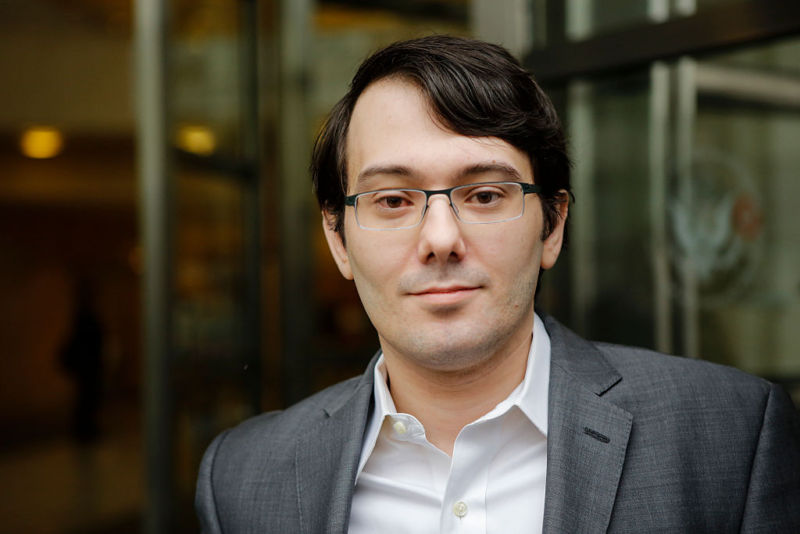
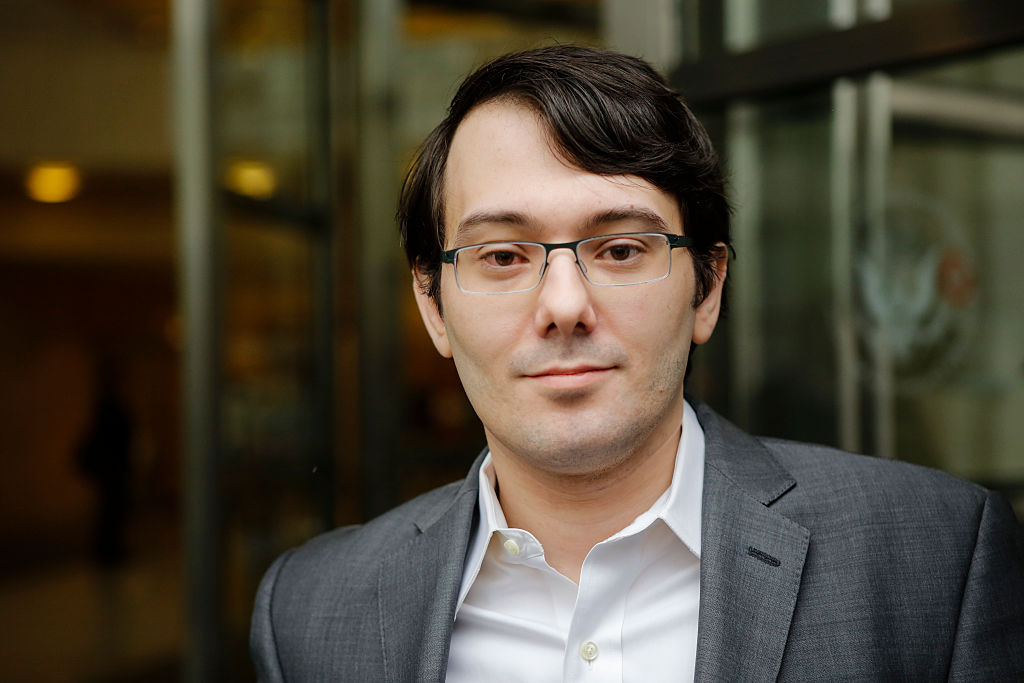
The members of PleasrDAO are, well, pretty displeased with Martin Shkreli.
The "digital autonomous organization" spent $4.75 million to buy the fabled Wu-Tang Clan album Once Upon a Time in Shaolin, which had only been produced as a single copy. The album had once belonged to Shkreli, who purchased it directly from Wu-Tang Clan for $2 million in 2015. But after Shkreli became the "pharma bro" poster boy for price gouging in the drug sector, he ended up in severe legal trouble and served a seven-year prison sentence for securities fraud.
He also had to pay a $7.4 million penalty in that case, and the government seized and then sold Once Upon a Time in Shaolin to help pay the bill.
Enlarge / Teams with NASA’s Exploration Ground Systems Program and primary contractor Bechtel National, Inc. continue construction on the base of the platform for the new mobile launcher at Kennedy Space Center in Florida on Wednesday, April 24, 2024. (credit: NASA/Isaac Watson)
NASA's problems with the mobile launch tower that will support a larger version of its Space Launch System rocket are getting worse rather than better.
According to a new report from NASA's inspector general, the estimated cost of the tower, which is a little bit taller than the length of a US football field with its end zones, is now $2.7 billion. Such a cost is nearly twice the funding it took to build the largest structure in the world, the Burj Khalifa, which is seven times taller.
This is a remarkable explosion in costs as, only five years ago, NASA awarded a contract to the Bechtel engineering firm to build and deliver a second mobile launcher (ML-2) for $383 million, with a due date of March 2023. That deadline came and went with Bechtel barely beginning to cut metal.
Very few individuals who attempt to use Donald Trump for their own interests end up walking away with their dignity intact. That’s something that Sean O’Brien, the head of the International Brotherhood of Teamsters, should have considered before he lent the union’s credibility to the Republican National Convention back in July.
“President Trump had the backbone to open the doors to this Republican convention, and that’s unprecedented. No other nominee in the race would have invited the Teamsters into this arena,” O’Brien said in his speech.
Myopia is part of the pattern: Trump somehow convinces his targets that they are special for having attracted his attention; then, in the end, they discover that he got what he wanted in exchange for nothing. This week, less than a month after the convention, Trump was chatting with the union-busting right-wing billionaire Elon Musk, and the two bonded over the joy of firing striking workers.
“You walk in, you say, ‘You want to quit?’ They go on strike, I won’t mention the name of the company, but they go on strike and you say, ‘That’s okay, you’re all gone. You’re all gone. So, every one of you is gone,’” Trump said to Musk, who laughed in response. Musk, who is an avid Trump supporter, was hosting the former president on his social-media platform, X (formerly known as Twitter). The next day, the United Auto Workers, which has endorsed the Democratic ticket, filed a federal complaint against the two men for trying to “threaten and intimidate workers who stand up for themselves by engaging in protected concerted activity, such as strikes.” Additionally, making matters more complicated, the Black caucus of O’Brien’s own union, the Teamsters, announced its endorsement of Vice President Kamala Harris that same day.
This all put O’Brien in a deeply awkward position, given that he had lent his personal credibility to a man who was now publicly endorsing strike-breaking and union-busting. He sent a statement to Politico saying that “firing workers for organizing, striking, and exercising their rights as Americans is economic terrorism.” There’s an old cliché about not negotiating with terrorists, but presumably you also don’t want to be a featured speaker at their big political convention.
Trump’s hostility to unions is neither new nor surprising. As president, he appointed judges and justices who were hostile to organized labor, made anti-labor appointments to the National Labor Relations Board, and altered regulations to make it easier for employers to stiff low-wage workers on pay and overtime. By contrast, the Biden administration has been one of the most pro-labor in history; just ask the Teamsters, whose pensions the administration rescued from insolvency.
There are a few policy areas, such as trade, where some unions align more closely with Trump’s positions than with Harris’s. But none of theprominentself-styled Republican “populists” whom O’Brien named in his RNC speech actually supports proposed legislation that would provide greater protections to those seeking to form or join a union. Instead, Republicans have persistently tried to blame the economic struggles of the white working class on a diversifying workforce. Republican Senator Josh Hawley of Missouri, for example, wrote in a July op-ed that “the C-suite long ago sold out the United States, shuttering factories in the homeland and gutting American jobs, while using the profits to push diversity, equity, and inclusion and the religion of the trans flag.”
To O’Brien’s credit, his speech at the RNC did not sound like this. O’Brien was right when he told the audience that, “against gigantic multinational corporations, an individual worker has zero power. It’s only when Americans band together in democratic unions that we win real improvements on wages, benefits, and working conditions.” But that’s precisely why his appearance at the convention was ill-conceived: The Republican Party is not interested in helping American workers form or join unions. It is interested in winning votes by whipping up hostility against workers who do not fit a narrow, racialized conception of the American working class. O’Brien made that narrative more credible with his presence.
So why did O’Brien speak at the convention in the first place? At the time, Biden had not yet stepped down as the Democratic nominee in favor of Harris. With Trump looking like a lock for the presidency, perhaps O’Brien felt as though he was earning the goodwill of the party most likely to be in power in January. In an ideal world for organized labor, both parties would seek the support of America’s unions and not just the support of business—the Democrats typically seek the support of both, with mixed results for organized labor. O’Brien implied as much to CNN in mid-July, saying, “The partisanship is not working. We need bipartisan support; we need bipartisan cooperation.”
So you can imagine how O’Brien might think that, by speaking at the RNC, he was acting in his members’ interests. Instead, all he did was lend labor’s credibility to a party whose economic and social agenda is to divide workers and hobble their political influence rather than support them. O’Brien has also offered to be one of the many union leaders speaking at the Democratic National Convention this week as well, but has reportedly not gotten a response. I think rejecting this offer would be a mistake; the Democratic Party should try to avoid alienating a prominent union leader notwithstanding his appearance at the rival party’s convention.
The American labor movement itself has not always been a model of tolerance—both historically and recently; the Teamsters settled a racial-discrimination lawsuit against O’Brien in January (the union denied wrongdoing). Nor is the white identity politics of Trumpists’ faux-laborist rhetoric entirely new. Throughout American history, financial elites have tempted white workers with the possibility of succeeding on the condition that they narrow the labor tent to exclude particular disfavored minorities. To the extent that the story of American labor is often more tragedy than triumph, it is because this Faustian bargain has been repeatedly struck without the lesson being learned that the end result is not a stronger labor movement but a weaker and more divided one.
The Founders preserved slavery, and thus a racial caste system that divided white laborers from Black, giving the former the status of persons and the latter the status of chattel. Racial division has remained the most effective tool for elites seeking to keep pay low, benefits minimal, and working conditions deplorable. Whenever financial elites successfully tempt white workers into allying with those who share their prejudices instead of their economic interests, those same white workers find themselves weakened and exploited. But when workers ally with one another across racial, ethnic, religious, and cultural lines, they can reshape society.
Two examples from the past illustrate this. During the 19th century, members of labor and agricultural organizations such as the Farmers’ Alliance and the Knights of Labor realized that they had more in common with Black laborers than the southern financial elites who ran the Democratic Party to which many of them had traditionally belonged. The Populist Party that emerged from the labor ferment of the late 19th century sought reforms that would have benefited workers across racial and cultural lines, but was ultimately defeated by the same combination of race-baiting demagoguery and political terrorism that ended Reconstruction. Like the Republicans before them, the Populist leadership by and large surrendered to bigotry rather than fighting it, believing their ambitions would be better served by indulging prejudices rather than toiling against them.
The labor reforms they sought would have to wait until the mid-20th century, when labor groups such as the Congress of Industrial Organizations managed to bring workers together across social lines to advance both the social-democratic agenda of the New Deal and the racial equality sought by the civil-rights movement.
Both episodes were more complicated than these brief summaries can capture, but the moral of both stories remains: When labor movements fail to be tolerant, they fail. And when they appeal to the broadest possible coalition, they can achieve things no other force in politics has proved capable of achieving. The right-wing backlash to the New Deal and the Great Society shattered the coalition that brought them into being, but it has never been able to fully repeal its successes.
At least, not yet. Some conservatives are hoping that ongoing right-wing control of the Supreme Court and a second and perhaps indefinite Trump administration will allow them to do so. They remain committed to the long-standing Republican agenda of tax cuts for the wealthy and lax regulation for corporations. That economic agenda is simply not possible in a world with a strong labor movement. So when Hawley blames the struggles of working-class white Americans on “diversity, equity, and inclusion and the religion of the trans flag,” it is little more than an update of the rhetoric of 19th-century Democratic Party demagogues who fought Populist reforms by attacking them as a trojan horse for “Negro domination.”
Workers may not share the religious beliefs, ethnic backgrounds, gender, or sexual orientations of their colleagues, but they do share their economic interests. The corporate executives who want to manipulate their prejudices in order to pay them less money for more work under worse conditions do not. As long as their employees are raging against someone for having blue hair or specifying their pronouns, because they profess a different faith or speak a different first language, they are easier to exploit. Colleagues don’t need to love one another. They don’t even need to like one another. But they do need to understand that allying with those who share your prejudices is no substitute for solidarity with those whose fate and fortunes are intertwined with your own.
The intolerance that is the ideological and moral cornerstone of the Trump campaign is bad for the labor movement. American history illustrates as much. So does the record of the Trump administration itself, which was as anti-labor as they come. In both cases, these are histories that one would hope a union leader like O’Brien would be familiar with.
A Ukrainian fighter practices using the kind of weapon that Trump Judge John Broomes wants to legalize in the United States. | Ukrinform/NurPhoto via Getty Images<br>
On Wednesday, a Trump judge in Kansas ruled that the Second Amendment invalidates criminal charges against a defendant charged with illegally possessing a machine gun. The case is United States v. Morgan.
Judge John Broomes’s decision in Morgan is obviously wrong, even under the Supreme Court’s most aggressively pro-gun opinion, which Broomes relied on heavily.
Read in isolation, Bruen’s vague “historical tradition” test might be read to support Broomes’s decision. But Bruen left in place a previous legal rule, first announced in District of Columbia v. Heller (2008), which permits the government to ban “dangerous and unusual weapons.” Heller also includes a line stating that it would be “startling” to conclude that one of the Court’s early Second Amendment decisions invalidates the federal ban on machine guns.
To get around Heller’s conclusion that the government may regulate dangerous and unusual weapons like fully automatic firearms, Broomes primarily argues that there were no laws similar to the modern-day ban on machine guns either in 18th century England or during the period around America’s founding.
Of course, there’s a really obvious reason why no actual machine gun ban existed in the 1700s: The machine gun wasn’t invented until 1884.
Broomes also argues that centuries-old English and early American laws merely prohibited people from carrying guns “to terrify the King’s subjects” or “in such a manner as will naturally cause a terror to the people.” And so, the Trump judge suggests, it is unconstitutional to charge someone with carrying an illegal weapon unless the defendant also “takes the same weapon out on the public streets and displays it in an aggressive manner.”
Taken seriously, this reasoning would also prohibit the government from banning possession of a tank, a fighter jet, or even a nuclear warhead, so long as the civilian who obtains a nuclear warhead does not brandish it in public.
In any event, Broomes’s decision will appeal to the United States Court of Appeals for the Tenth Circuit, a left-leaning court where Democratic appointees outnumber Republicans by 7-5 among the court’s active judges. So the appeals court will almost certainly reverse Broomes and reinstate the rule that dangerous and unusual weapons can be banned.
Broomes’s United States v. Morgan decision is a monument to why Bruen must be overruled
The “historical tradition” test announced in Bruen has no real substance, cannot be applied consistently by lower court judges, and has led to absurd and immoral results. Just last June, for example, the Supreme Court had to intervene after an appeals court, in a perfectly honest application of the Bruen decision, ruled that people subject to domestic violence restraining orders have a constitutional right to own a gun.
But, while the Court’s decision in that case, United States v. Rahimi, reversed one of the federal judiciary’s most astonishing post-Bruen decisions, it left Bruen’s confounding historical test in place. Under Rahimi, “a court must ascertain whether the new law is ‘relevantly similar’ to laws that our tradition is understood to permit” — whatever the hell that means.
In a separate concurring opinion in Rahimi, Justice Ketanji Brown Jackson quoted a dozen lower court opinions complaining that judges can’t figure out how Bruen is supposed to work. As one of those opinions stated, “courts, operating in good faith, are struggling at every stage of the Bruen inquiry. Those struggles encompass numerous, often dispositive, difficult questions.”
This chaos is likely to continue until Bruen is overruled. The history and tradition test announced in the case provides lower court judges with no meaningful guidance on which gun laws are constitutional. And Bruen allows judges who are determined to reach pro-gun conclusions no matter what the consequences to strike down virtually any gun law — which may explain Broomes’s decision in the Morgan case.
The decision, however, could have been much worse for voting rights: Republicans asked the justices to strip thousands of already-registered voters of their ability to vote for president. Three justices voted to do just that, but six members of the Court rejected the request.
Nevertheless, five members of the Court — every member of the Court’s Republican majority except for Justice Amy Coney Barrett — voted to make it marginally more difficult to register to vote in Arizona.
So this is a victory for the GOP, but probably not a particularly significant one. If the three most MAGA-pilled justices, Justices Clarence Thomas, Samuel Alito, and Neil Gorsuch, had prevailed, a meaningful chunk of Arizona’s voters could have been locked out of voting in the 2024 presidential election. But that didn’t happen.
The Court’s decision to hand Republicans even a small victory here is almost certainly wrong, under a 2006 Supreme Court decision warning judges not to change a state’s election procedures too close to an election. But the impact of Thursday’s GOP victory is likely to be fairly modest.
In 2004, Arizona enacted a law requiring voters to provide documentary proof of citizenship (such as a passport or a birth certificate) when registering to vote. This law, however, conflicts with a federal law, known as the National Voter Registration Act (NVRA), which permits voters in every state to register using a standardized federal form. The federal form requires Arizona voters to swear, under penalty of perjury, that they are citizens, but it does not require the same documentary proof that Arizona’s state law requires.
In Arizona v. Inter Tribal Council of Arizona (2013), the Supreme Court ruled that Arizona must comply with the NVRA and allow voters who submit the federal form to register — but there was a twist. Inter Tribal also suggested that Congress’s power over voter registration is limited to “federal elections,” so Arizona responded to Inter Tribal by creating two tiers of voters.
Voters who submit the state’s form (including the document proving citizenship) are registered to vote in all elections in Arizona. But voters who submit the federal form are deemed “federal-only” voters and may only vote in congressional and presidential elections — and not for state and local offices.
An expert witness who testified in the RNC case estimated that “approximately one-third of a [percent] of non-Hispanic White voters [in Arizona] are Federal-Only Voters, while a little more than two-thirds of a percent of minority voters are Federal-Only Voters.” So the universe of voters who registered using the federal form isn’t that large, but it is disproportionately non-white, which likely explains the GOP’s interest in this case — among other things, Republicans wanted to prevent these federal-only voters from casting a vote for president.
In 2020, President Joe Biden lost white Arizona voters, but very narrowly won the state due to his strong performance among Latinos. Biden’s margin of victory was only about three-tenths of a percent, so even a small shift in who was allowed to vote in Arizona might have changed the result.
So what was actually at stake in the RNC v. Mi Familia Vota case?
Republicans asked the Court to impose three restrictions contained in a 2022 Arizona state law, which has never taken effect, and which was blocked by a federal court in 2023.
That law sought to ban Arizona’s federal-only voters from voting for president, and it also would have barred them from voting by mail. Although Thomas, Alito, and Gorsuch voted to allow these two restrictions to go into effect, a majority of the justices did not.
Additionally, the 2022 law sought to override a 2018 court order that allowed voters who submit the state form without a document proving citizenship to still register as a federal-only voter. Five justices voted to let this provision of the 2022 law take effect. So new voters who submit the state form without the required documentation will not be registered at all.
Voters who submit the federal form, however, will still be registered as federal-only voters.
This decision to allow even a small part of the 2022 law to take effect is almost certainly wrong. The 2022 law was blocked by a 2023 federal court decision, and the Supreme Court ruled in Purcell v. Gonzalez (2006) that “federal courts ordinarily should not alter state election rules in the period close to an election.”
Thursday’s order alters Arizona’s state election rules just over two months before a presidential election. Before the Supreme Court ruled, the lower court’s order blocking all three provisions of the 2022 law was in effect. Now the rules have changed, if only slightly.
In the past, the Court’s Republican majority has wielded Purcell very aggressively when lower court judges handed down voting rights decisions making changes that benefited Democrats. Justice Brett Kavanaugh has even suggested that the Purcell window opens up more than nine months before a general election. So the GOP’s request to change Arizona’s voting rules less than three months before an election should have been rejected if the justices were being consistent.
Still, unless the 2024 election is historically close, the likelihood that Thursday’s decision will change the result of the upcoming election is small. Again, a majority of the justices voted to reject the GOP’s most aggressive attack on the franchise — the provision of the 2022 law barring federal-only voters from voting for president.
Former President Donald Trump shakes hands with Justice Brett Kavanaugh, in 2019. | Mandel Ngan/AFP
The Republican Party wants the Supreme Court to weigh in on a nauseatingly complicated voting rights case, which could potentially disenfranchise thousands of presidential voters in the swing state of Arizona. The case is known as Republican National Committee v. Mi Familia Vota.
The case involves an astoundingly convoluted system Arizona uses to register certain voters — one that emerged from 20 years of conflicting state and federal laws, plus seemingly endless litigation over those laws. Among other things, Republicans claim that several thousand Arizona voters should be allowed to vote only in congressional elections, and that they are barred from voting in state and local elections or voting for the president.
In 2004, Arizona enacted a law which requires new voters to provide documentary proof of citizenship (such as a passport or a birth certificate) when registering to vote in the state. This state law, however, conflicts with a federal law known as the National Voter Registration Act (NVRA), which requires states to register voters who submit a standardized federal registration form.
That form requires Arizona voters to swear, under penalty of perjury, that they are in fact citizens. But it does not require them to submit other proof of citizenship.
The Supreme Court confronted this conflict in Arizona v. Inter Tribal Council of Arizona (2013), and largely resolved it in favor of the NVRA. Inter Tribal held that the state must allow voters to register using the federal form, but it also suggested that Congress’s power to require states to register voters is limited to “federal elections.”
Thus, in response to Inter Tribal, Arizona refused to fully register voters who submitted the federal form without providing proof of citizenship. Since Inter Tribal, these voters have been allowed to vote in federal elections (for Congress and the president), but not in state and local races in Arizona. According to an expert who testified in the RNC case, “approximately one-third of a [percent] of non-Hispanic White voters [in Arizona] are Federal-Only Voters, while a little more than two-thirds of a percent of minority voters are Federal-Only Voters.”
This racial disparity likely explains why the Republican Party is now asking the Supreme Court to further restrict this small percentage of Arizona voters. 2020 exit polls showed Republican Donald Trump winning white voters in Arizona, but losing the state as a whole due to President Joe Biden’s strong performance with Latinos. Biden’s margin of victory in Arizona in 2020 was about three-tenths of a percent, and even a tiny shift in the state’s population of eligible voters could tip the balance.
The RNC case, which is now before the Supreme Court, concerns a 2022 Arizona law which would impose three new restrictions on these federal-only Arizona voters. It bars them from voting by mail, and from voting for president altogether — thus limiting them to voting only in congressional elections. Additionally, the 2022 law requires the state to reject any new voter registration submitted using the state’s own form if that registration doesn’t include proof of citizenship — even though the state is still required to register that individual as a federal-only voter if the registrant submits the federal form.
The 2022 law, however, has never taken effect. This is true in part because several key statewide offices are controlled by Democrats, but also because the courts have taken a skeptical view of the law. In total, seven judges have heard the RNC case at some point in its journey through the federal judiciary, and none of them voted in favor of the provisions preventing federal-only voters from voting by mail or for president.
Meanwhile, these lower-court judges split on the restrictions governing new registrants, although this is probably the least consequential of the 2022 law’s three restrictions. The last panel of judges to weigh in on that provision voted 2-1 to block it, at least for now.
And so now it is up to the Supreme Court to decide whether to make this needlessly complicated morass even more complicated, potentially preventing thousands of Americans from voting for president in a key swing state.
So, how strong are the Republican Party’s arguments?
Let’s get one disclaimer out of the way: We are talking about the same Supreme Court that recently held, despite no language in the Constitution that supports this position, that former President Donald Trump has broad immunity from prosecution for crimes he committed while he was in office. The Court’s Republican supermajority does not always follow the law, especially when the law cuts against the Republican Party’s preferred outcome. So, in a case where the GOP is asking these justices to make it easier for Republicans to win a presidential election, there is always some risk that the Court’s Republican majority will play ball.
That said, they’ll really have to stretch if they want to hand the GOP a victory in this case.
The trial court that heard the RNC case concluded that the two most severe restrictions in the 2022 law — the prohibitions against voting by mail and voting for president — violate the NVRA, the same law at issue in Inter Tribal. To justify its attempt to lock these voters out of the presidential election, the GOP points to a provision of the Constitution that gives Congress broad power to shape the “Times, Places, and Manner” for choosing members of Congress, but that doesn’t give Congress the same power over presidential elections.
The Court has long held, however, that “the power of Congress to protect the election of President and Vice President from corruption” is “clear,” and that “the choice of means to that end presents a question primarily addressed to the judgment of Congress.” So it is well-established that Congress can regulate presidential elections. This explains why every judge who considered the GOP’s argument, several of whom were appointed by Trump, voted to reject it.
There’s also another reason why the Supreme Court should not reinstate these two provisions. In Purcell v. Gonzales (2006), the Court warned that “federal courts ordinarily should not alter state election rules in the period close to an election.” While the Court has never stated precisely when the “period close to an election” begins, its Republican majority has read Purcell quite aggressively in the past. Justice Brett Kavanaugh has even suggested that the Purcell window opens up more than nine months before a general election.
It’s now mid-to-late August. The 2024 election is just over two months away. And yet the GOP is asking the Supreme Court to alter Arizona’s election rules to impose new voting restrictions that have not previously taken effect and were enjoined by a federal trial court in 2023. Purcell should prevent the Court from giving the GOP what it wants in this case — at least until after the election happens.
The RNC’s arguments in favor of the restrictions on new voter registrations are a little stronger. In 2018, Arizona settled a lawsuit. As part of that settlement, it agreed to register federal-only voters who submit the state’s own registration form rather than the federal form. The GOP now argues that the state legislature’s decision to enact a new law in 2022 overrides the 2018 lawsuit settlement.
This is a plausible argument, but the RNC’s request to reinstate this voter registration restriction during the 2024 election probably also runs afoul of Purcell. Again, Purcell held that courts should not alter a state’s election rules too close to an election, and Republicans are asking the Supreme Court to alter Arizona’s election rules in the final stretch before voters start casting ballots for president.
In any event, the RNC case will likely offer a window into whether this Court’s Republican majority will behave as honest brokers during the 2024 race. In past election cycles, Republican justices wielded Purcell very aggressively to block lower-court decisions expanding voting rights — often in cases where Democrats supported the lower court’s approach.
It’s only fair that the Court read Purcell just as aggressively now that Republicans would benefit from a looser application of that decision.
Gender rights activists demonstrate outside the US Supreme Court on June 30, 2023, in Washington, DC. | Olivier Douliery/AFP
The Supreme Court handed down a brief and very odd opinion on Friday that seemed to abandon its landmark civil rights decision in Bostock v. Clayton County (2020), a four-year-old case that compelled the Biden administration to write rules forbidding discrimination against gay and trans students.
The Biden administration’s rules seemed to be crafted with Bostock compliance in mind — indeed, had a key provision of those rules been written any other way, they would have been illegal under Bostock. And yet the Court ruled against this provision regardless.
Bostock v. Clayton County, briefly explained
Bostock held that a federal anti-discrimination law that bans “sex” discrimination in the workplace forbids employers from discriminating on the basis of sexual orientation or gender identity. The opinion is written in expansive terms, indicating that any law that prohibits “sex” discrimination also bars discrimination against LGBTQ people.
As Justice Neil Gorsuch wrote for the majority in Bostock, “it is impossible to discriminate against a person for being homosexual or transgender without discriminating against that individual based on sex.” The Court reasoned that, if a male employee is allowed to date women, to dress in traditionally masculine clothing, or to otherwise present as a man, then a female employee must be allowed to do these same things. Otherwise, the employer is treating men differently than women, and that’s illegal sex discrimination.
With Bostock in mind, the Biden administration recently released new regulations interpreting a law known as “Title IX,” which prohibits any school or other educational institution that receives federal funds from discriminating “on the basis of sex.” Most public schools, colleges, and universities receive at least some federal grant money or assistance, so Title IX broadly protects against sex discrimination in education.
Because Bostock ruled that it is “impossible” to discriminate against a gay or transgender person without discriminating based on sex, the Biden administration’s new rules define discrimination “on the basis of sex” to include “discrimination on the basis of sex stereotypes, sex characteristics, pregnancy or related conditions, sexual orientation, and gender identity.”
Before Friday, moreover, the Court’s decision in Bostock appeared safe from its Republican supermajority. Bostock, after all, was handed down in 2020, after former President Donald Trump had already appointed two of the three justices he would eventually place on the Court. And the majority opinion was authored by Gorsuch and joined by Chief Justice John Roberts, both Republicans.
So, even after Justice Ruth Bader Ginsburg’s death gave Republicans a 6-3 supermajority on the Court, it appeared that there were still five justices remaining who agreed with Bostock’s reasoning. The decision in Louisiana, however, creates serious doubt about whether this Court will still protect LGBTQ people from discrimination.
So what did the Department of Education v. Louisiana decision actually say?
The Court split 5-4 in its Louisiana decision, although along fairly narrow lines. Indeed, one of the most inexplicable things about this case is that all three of the Court’s Democrats appeared to agree with the conclusion that Bostock does not protect LGBTQ students from discrimination.
The Biden administration regulations at issue in Louisiana did far more than just apply Bostock to educational settings. It included two other provisions benefitting LGBTQ students, including one that requires schools to allow trans students to use the bathroom that aligns with their gender identity, and another prohibiting schools from engaging in certain forms of “unwelcome sex-based conduct.”
The red-state plaintiffs in Louisiana challenged these two provisions, plus the provision defining “sex” discrimination the same way it was defined in Bostock.
Notably, the regulations also include a bevy of new rules that the red-state plaintiffs did not challenge, but lower courts blocked anyway. These include new rules governing the rights of pregnant students and school employees, rules permitting parents to act on behalf of students who face discrimination, and new definitions of terms that often arise in Title IX disputes — such as “disciplinary sanctions” or “postsecondary education.”
In defending the Department of Education, the Justice Department did not ask the Court to reinstate the bathrooms provision or the “unwelcome sex-based conduct” provision — although it will likely do so later after this litigation has progressed further in the lower courts. It did ask the Court to reinstate the provision implementing Bostock, as well as the other various provisions that were blocked by lower courts.
And yet, five justices (all six of the Court’s Republicans except for Gorsuch), decided to give the Justice Department nothing. The lower court decisions blocking the entire set of regulations will remain in effect, at least for now.
Four justices (all three of the Court’s Democrats plus Gorsuch) dissented, but their dissent is quite narrow. They argued that the lower courts erred by “blocking the Government from enforcing scores of regulations that [the plaintiffs] never challenged and that bear no apparent relationship to [plaintiffs’] alleged injuries.”
On this point, the dissenters are correct. The Supreme Court previously held in Gill v. Whitford (2018) that, when a court finds a legal violation, the “remedy must of course be limited to the inadequacy that produced the injury in fact that the plaintiff has established.”
But the dissenters agree with the majority that the lower court orders blocking the definition of “sex” discrimination — again, a definition that is lifted from the Court’s decision in Bostock — should also remain in effect. Neither the majority nor the dissent explain why they appear to be abandoning Bostock. Indeed, Bostock is not cited anywhere in either the majority opinion or the dissent.
It’s possible that the three Democrats voted the way that they did for reasons that have nothing to do with whether they agree with Bostock. Louisiana arrived at the Court on its “shadow docket,” a mix of emergency motions and other matters that receive expedited treatment by the Supreme Court.
So one explanation for the Democratic justices’ votes in Louisiana is that they are trying to stick to a principled position on the shadow docket — refusing to grant relief to the Biden administration for the same reason they said the Court should have denied relief to the Trump administration four years ago.
But, if the Democratic justices were asserting a principled stance against the shadow docket, why did they vote to reinstate the unchallenged provisions of the new Title IX rules?
Another possibility is that the Democratic justices moderated their position in an attempt to secure five votes. Perhaps the three Democrats thought they could persuade two of their Republican colleagues to reinstate the unchallenged Title IX rules if they did not push to also reinstate the definition of sex discrimination?
But, if the Democratic justices’ walked away from Bostock as part of a horse-trading negotiation, they also walked away without a horse. In the end, only Gorsuch joined them in voting to reinstate the unchallenged regulations.
In any event, no member of the Court’s Republican majority stood behind Bostock, and none of them explained why they refused to do so either. All of the justices owe Americans an explanation for why they refused to block lower court orders that are clearly and unambiguously at odds with a binding Supreme Court precedent.
So the Louisiana decision is an enigma. The justices aren’t telling us why they refused to follow Bostock. But, regardless of their reasons, the Court’s decision not to follow this landmark civil rights decision is an ominous sign for all victims of anti-LGBTQ discrimination.