Shared posts

03 Jun 20:12

Unmarked, unidentified armed militia now patrolling Washington, D.C.

by Kerry Eleveld
James.galbraith

Absolutely fucking not. You don't get unmarked militias in this country.

On the heels of law enforcement gassing peaceful protesters at the White House Monday, a rogue force of armed unmarked militia has been patrolling Washington, D.C. for days. 

The militia members, likely numbering in the hundreds if not thousands, have been photographed guarding the steps of the Lincoln Memorial and on Wednesday were seen forming a perimeter outside the White House, as if it were under siege. Apparently, Donald Trump's bunker "inspection" didn't bring him the requisite level of safety he desired. 

Members of the unmarked force usually won't identify themselves at all, but on one occasion claimed they were working on behalf of the "Department of Justice." It seems only fitting that the nation's top law enforcement official, Attorney General William Barr, would deploy an unidentified armed force to do his bidding, though it remains unclear exactly who these forces are answering to. What we do know is that Defense officials have told the AP that active-duty troops brought to the district in response to protests are returning to their home bases.

But the anonymity is what makes their presence so distressing in a moment where the nation is still trying to determine exactly which forces from what agency participated in perpetrating the attack on peaceful civilians outside the White House Monday night. If the militia carried out any similar actions, we wouldn't even know on whose authority they were acting.

Not to mention the fact that the only things truly under siege in Washington are U.S. citizens and the First Amendment. Trump is merely being held hostage by his own brain.

Remarkable photo via @MarthaRaddatz, where protestors are being blocked from the steps of the Lincoln Memorial pic.twitter.com/d7givADFQH

— Vera Bergengruen (@VeraMBergen) June 2, 2020

Back outside the White House. Today the perimeter has been pushed back another half block. Federal law enforcement of some kind, but they won�t identify themselves, and all insignias and name plates have been removed. pic.twitter.com/q5dmdMgkLV

— Garrett Haake (@GarrettHaake) June 3, 2020

Hundreds, if not thousands, of armed soldiers and paramilitaries are establishing an ever widening perimeter around the White House. None of this is necessary. Their presence is meant to create the impression that the White House is under siege from domestic terrorists.

— Edward Luce (@EdwardGLuce) June 3, 2020

Asked who they�re with, these guys say only that they�re with �The Department of Justice.� pic.twitter.com/ciVDtP8ndk

— Dan Friedman (@dfriedman33) June 2, 2020

03 Jun 19:30

The 3 former cops who aided Derek Chauvin will also be charged with murder

by Ian Millhiser
James.galbraith

It's about fucking time. And yes, criminal conspiracy and syndicate could get these fuckers.

Minnesota Attorney General Keith Ellison (D) has taken over the prosecutions of the four officers. | Chip Somodevilla/Getty Images

Charges against Chauvin will be escalated to second-degree murder.

Minnesota Attorney General Keith Ellison (D) intends to charge three former police officers, Tou Thao, J. Alexander Kueng, and Thomas Lane, with aiding and abetting the murder of George Floyd, according to the Minneapolis Star Tribune. Ellison will also elevate charges against former officer Derek Chauvin from third-degree murder to second-degree.

On Twitter, Sen. Amy Klobuchar (D-MN) confirmed the new charges.

Shortly after Chauvin was arrested on the lesser charge of third-degree murder, Floyd’s family expressed disappointment, stating through their attorney that “we expected a first-degree murder charge” and that “we want to see the other officers [involved in Floyd’s death] arrested.” All four officers were fired from the police force shortly after Floyd’s death.

The primary difference between second- and third-degree murder charges is that second-degree murder ordinarily requires prosecutors to prove that a criminal defendant intended to kill their victim — although someone can also be convicted of second-degree murder if they kill someone “while committing or attempting to commit a felony offense other than criminal sexual conduct in the first or second degree with force or violence or a drive-by shooting.”

Third-degree murder, by contrast, applies to someone who “causes the death of another by perpetrating an act eminently dangerous to others and evincing a depraved mind, without regard for human life.” Prosecutors do not have to prove that the defendant intended to kill the victim in order to obtain a third-degree murder conviction.

Video shows Chauvin, who is currently under arrest on murder and manslaughter charges, pinning Floyd’s neck to the ground with his knee, as two of the other officers help restrain Floyd and a third looks on. According to the Hennepin County prosecutor’s office’s original document laying out its charges against Chauvin, the former officer “had his knee on Mr. Floyd’s neck for 8 minutes and 46 seconds in total,” including two minutes and 53 seconds when Floyd was nonresponsive.

After Chauvin’s arrest, however, Gov. Tim Walz (D) decided to transfer the prosecution from the county prosecutor’s office to the state attorney general’s office. He did so at the urging of Floyd’s family, local activists, and some members of the Minneapolis City Council. In response to the new charges, Floyd’s family said they are “deeply gratified” by Ellison’s actions, in a tweet from their attorney Benjamin Crump.

The new charges elevate the potential consequences for Chauvin and his alleged accomplices. While third-degree murder carries a maximum sentence of 25 years, the second-degree charge carries a maximum penalty of 40 years of imprisonment.

The other three officers, meanwhile, are potentially in just as much jeopardy as Chauvin. Under Minnesota law, “a person is criminally liable for a crime committed by another if the person intentionally aids, advises, hires, counsels, or conspires with or otherwise procures the other to commit the crime.”


Support Vox’s explanatory journalism

Every day at Vox, we aim to answer your most important questions and provide you, and our audience around the world, with information that has the power to save lives. Our mission has never been more vital than it is in this moment: to empower you through understanding. Vox’s work is reaching more people than ever, but our distinctive brand of explanatory journalism takes resources — particularly during a pandemic and an economic downturn. Your financial contribution will not constitute a donation, but it will enable our staff to continue to offer free articles, videos, and podcasts at the quality and volume that this moment requires. Please consider making a contribution to Vox today.

03 Jun 18:53

Philadelphia police will 'investigate' officers allowing armed white vigilantes to roam Fishtown

by Hunter
James.galbraith

Fucking idiots.

After another seemingly brazen abuse of policing power for white supremacist ends, the Philadelphia Police Department is reportedly launching an Internal Affairs investigation into scenes yesterday in which armed white vigilante groups were allowed to roam through the Fishtown neighborhood, injuring at least two people, and gathered near the department's 26th District headquarters even as Black Americans were being attacked by city police with tear gas and other violence.

The Philadelphia Tribune reports officers were seen on video "supporting the [armed white] vigilantes, giving them high-fives and taking photos with them."

Why a white vigilante group was greeted with enthusiasm by local police officers is no mystery, though an "internal" investigation of the incident is almost assured to claim that the cause could not be found. The cause is open white supremacy by officers inside the department, including membership in neo-Nazi groups:

The cop�s name is Ian Hans Lichterman, Philly PD, badge number 3315. Lichterman is a member of the neo-nazi group Blood and Honour. Philly PD has known about his nazi tattoo since 2016, but they had to reinstate him after firing him. So yeah lots of nazi cops our there kids. https://t.co/vorHMrUrjC

— Mrs. Ash (@Kauairockchick) June 3, 2020

That officer, by the way, was rehired after a previous "Internal Affairs" investigation cleared him, finding that prominent display of Nazi-supporting tattoos was determined to not violate Philadelphia Police Department policy.

03 Jun 18:10

Florida Man Donald Trump registered to vote in Florida using an out-of-state address

by Hunter
James.galbraith

Utterly unqualified

What a dumbass. The Washington Post is now reporting that Trump “originally” tried to register to vote in Florida using—wait for it—an out-of-state address.

He registered to vote in the state while claiming his legal residence was 1600 Pennsylvania Ave, the address of the White House. The idiot tried to register to vote in Florida while claiming he legally didn’t live there.

It apparently took a month to get it straightened out so he could tell the right lie, that now he “legally” lives at his coronavirus-infested Florida for-profit golf and corruption club. No word on why Bill Barr or state officials didn’t arrest him immediately for voter fraud, though.

03 Jun 17:36

Bot test proves Jack ain’t lying—Twitter treats Trump differently

by Jonathan M. Gitlin
James.galbraith

No shit. Trump always gets preferential treatment. It really should stop

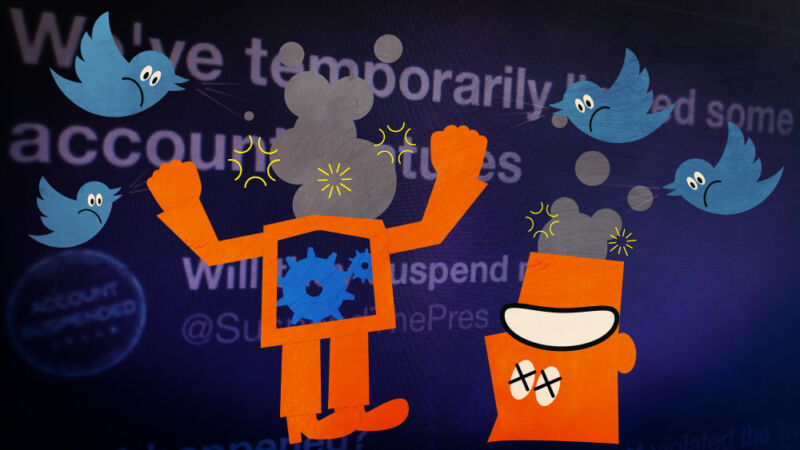
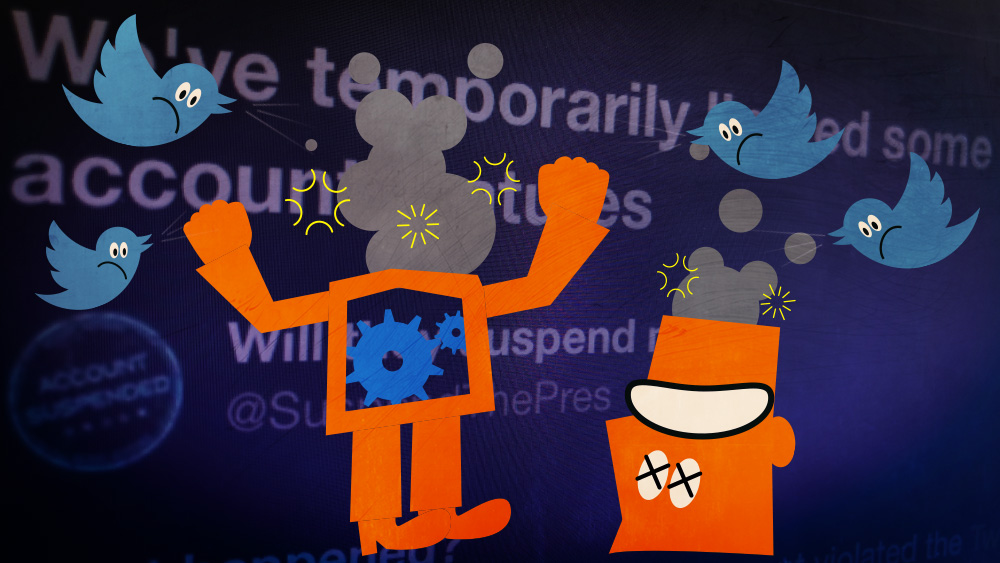
Cartoon figures are attacked by blue Twitter birds.

Enlarge (credit: Aurich Lawson)

In the past, Twitter has said that incitements to violence from world leaders like President Donald Trump should be treated differently from those made by the rest of us. This week, that policy was shown to clear effect when the social media network banned the @SuspendThePres account and ordered it to delete a tweet. Its crime? Tweeting the exact same words used by Trump a day earlier.

The experiment began on May 29 when a Twitter account was repurposed as a bot with a single mission: to copy Trump's tweets verbatim and see how long it would take to get banned.

The next thing the account tweeted was a copy of Trump's infamous "when the looting starts, the shooting starts" missive. When the president issued that tweet, it was, in fact, sufficient for Twitter's moderation to kick in. Trump's tweet is still viewable behind a "click to view" barrier. But three days after repeating that same call to shoot at protestors, @SuspendThePres got a Twitter timeout, along with an order to take down the offending message:

Read 2 remaining paragraphs | Comments

03 Jun 17:35

From former presidents to religious leaders, everyone is turning on Trump

by Paul Waldman
James.galbraith

Only with the most oblique of references. This is hardly a torrent of direct criticism

Those who held their tongues until now are no longer staying silent.
03 Jun 17:31

Secretary of defense pins all blame for photo op debacle on White House, law enforcement

by Kerry Eleveld
James.galbraith

These idiots all have to go

Secretary of Defense Mark Esper spent a Wednesday morning press conference in clean-up mode following a flood of criticism for his role in Donald Trump's photo op debacle Monday at a historic Washington, D.C. church. 

Esper kicked off by admitting he had lied during a press interview Tuesday in which he had initiated a cover-up. During that appearance, Esper told NBC News that he "didn't know" where he was going as he followed Trump across a patch of Lafayette Square Park—which had just been forcibly cleared of peaceful protesters—to St. John's Church. But during Wednesday's press conference, Esper contradicted his own account.  

"I did know that we were going to the church; I was not aware that a photo op was happening," Esper told reporters during Act II of his clean-up. So Esper effectively pinned blame for the entire photo op debacle fully on the White House. 

Esper also laid blame for the targeting of civilians in the park entirely at the feet of law enforcement, not the military, saying the clearing of the park was "not a military action." 

"I was not aware of law enforcement's plans for the park," Esper claimed. But he declined to criticize the use of force, saying that he assumed "they took whatever actions" they felt were "necessary." Esper added that the National Guard was simply there "in support of law enforcement." 

Esper has come under blistering criticism from former military brass for becoming a prop in Trump's authoritarian Bible-thumping photo op just after police fired tear gas and rubber bullets at peaceful protesters to clear a path for Trump. Former undersecretary of defense for policy James Miller even resigned Tuesday, writing to Esper: "You may not have been able to stop President Trump from directing this appalling use of force, but you could have chosen to oppose it. Instead, you visibly supported it."

Beyond blaming others for his role in what could become one of the defining moments of Trump's presidency, Esper said he does not support invoking the Insurrection Act that would allow Trump to deploy the military on U.S. soil, calling it a "last resort."

Esper also defended his assertion on a phone call Monday that governors needed to "dominate the battlespace," saying the word was simply part of the military "lexicon," and adding, "it's not a phrase focused on people." Nonetheless, some former military officers objected to Esper's use of that term specifically. "The ‘battle space’ of America???" Gen. Tony Thomas, former head of the U.S. Special Operations Command, wrote on Twitter in response to the quote. "Not what America needs to hear … ever."

Asked about the use of a military helicopter to intimidate protesters later Monday night, Esper said it was being investigated. But pressed on the point, he added: "When you're landing that low in the city, it looks unsafe to me."

Esper ended the press conference with a plea for troops to stay "apolitical," a message he began transmitting in writing Tuesday night. He claimed his "aim" was to keep the department out of politics, as if he hadn't spent all of Monday stoking Trump's militaristic fantasies about "dominating." 

"I ask that you remember at all times our commitment as a department and as public servants to stay apolitical in these turbulent days," Esper said.

Heckuva job, Esper.

03 Jun 17:30

Consumers don’t care about corporate solidarity. They want donations.

by Terry Nguyen
James.galbraith

Yes indeed. Put your money where your mouth is.

A screenshot of Peloton’s website. Peloton has received consumer praise for being one of the first fitness companies to pledge a donation to anti-racism organizations. | The Peloton website

“Open your purse” is the snarky social media mantra that people are throwing back at brands.

The San Francisco 49ers want you to know that Black Lives Matter. How? By posting a single black square on Twitter with the hashtag #BlackOutTuesday. This expression of so-called solidarity comes nearly four years after the team’s former quarterback Colin Kaepernick took a knee during the national anthem to protest police brutality and racial inequality, an act that led to his ostracization by the NFL. Years later, despite being the face of Nike’s Emmy-winning campaign, Kaepernick still can’t find a job.

Across many social media platforms, the black square has become a virtue signal of solidarity by brands, corporations, and influencers. To many activists and even consumers, the square is seen as a cop-out and counterproductive to spreading resources related to the nationwide protests. For institutions like the Guggenheim Museum, which did not invite the first black guest curator in its decades of history to a panel about her work, a post appears meaningless if there is no commitment to change.

All over social media, consumers are repeating the mantra “open your purse” to these corporate platitudes and vague statements of solidarity. The phrase, which originated from a viral TikTok by creator Adam Martinez, has become a snarky response to those with influential and large followings to “put their money where their mouth is.”

The intent of these messages is clear: Donate money to organizations that aim to fix these systemic issues, instead of just speaking about them. But for companies that have a bad track record — not just regarding explicit racism, but treating employees poorly or even exploiting them — these statements ring especially hollow.

Thousands of people around the US and the world have gathered to protest police violence and the unjust deaths of black Americans like George Floyd, Breonna Taylor, Ahmaud Arbery, and many others. In the past week, many notable corporations, sports teams, brands, and influencers have felt compelled to also speak out. Since Floyd’s death on May 25, social media has been ablaze with striking images of crowded protests, alongside shareable resource posts about protesters’ bail funds, anti-racism nonprofits, and black-owned businesses. During this time, many interpret a brand or an individual’s silence as equal to being complicit, a sentiment that even Netflix acknowledged in its Twitter post.

Customers, especially millennials and Gen Z, are holding brands to a higher social standard than before. People overwhelmingly prefer to buy from companies that share their beliefs and values, especially now, in the midst of a pandemic-induced recession when spending is limited. Brands appear eager to demonstrate care for their customers and employees, and given the massive wave of social unrest, it’s natural for them to want to appear as compassionate allies. Yet, people are sensitive to tone-deaf or empty statements, and there’s no shortage of blunt criticisms online.

From mom-and-pop stores and small online retailers to name-brand, billion-dollar corporations, many are condemning racism and violence (sometimes explicitly, sometimes not) and recognizing “the power of [their] platform” in fighting racial injustice. Tech companies like Facebook, Intel, Apple, and Alphabet have also pledged to donate millions of dollars to nonprofits or to match contributions made by their employees. Smaller start-ups like Peloton and Glossier have received praise not just for their donation pledges, but for setting the standard for up-and-coming companies.

Many users also pointed out how the start-ups’ statements were specific and actionable. Peloton, for example, was not tip-toeing around racism and openly announced their support for the Black Lives Matter movement.

However, several major corporations — even those that have pledged donations — have spent hundreds of thousands of dollars lobbying members of Congress that have received an “F” rating by the NAACP, the largest civil rights organization in the US, reported the newsletter Popular Information. (Every year since 1914, the NAACP releases a legislative report card of civil rights votes; those who receive an “F” vote on key issues with the NAACP 59 percent or less.) Popular Information reported that the investment bank Citigroup, for example, has spent $180,000 through its corporate PAC to 53 members of the House of Representatives who have an “F” rating. Its chief financial officer said he will be making donations to social justice organizations and urged employees to do the same, but did not clarify how much.

While donations to anti-racism organizations are still the exception to the rule, these wide-ranging examples of corporate activism (if one can call publishing a public relations-approved statement activism) would’ve been unthinkable even five years ago. Brands used to stay publicly silent, out of fear of upsetting or alienating their customer base. But following the election of President Donald Trump and the increased polarization of the country, even the most apolitical household companies have had to be explicit about how they view issues like gun control, immigration, and women’s rights.

Up until 2017, Nike considered its collaboration with Kaepernick to be a risky business move, given how controversial Kaepernick’s kneeling protests were received by the NFL and its fans. While the company faced a fair share of backlash and threat of boycotts on social media, Nike ultimately made a record number of sales off of Kaepernick-related merchandise. All of these reasons contribute to activist-minded consumers’ skepticism towards public corporate statements, which can be boiled down to a PR facade.

“One has to ask where these corporations and brands were when Travyon Martin was killed, when Eric Garner and Sandra Bland and many many others were killed,” said April Reign, an inclusion advocate and creator of #OscarsSoWhite campaign. “I’m heartened that for whatever reason, they’re now stepping up with public statements, but unless corporations are putting their money where their mouth is, specifically donating to anti-racism causes, bail relief funds, matching the donations of their employees or doubling matching, then for me, it goes in one ear and out the other.”

Many have called out the discrepancy between a company’s policies and treatment of workers compared to the public statements delivered during a time of crisis. For example, customers found it hypocritical how Amazon has a reported history of underpaying and overworking warehouse employees in grueling conditions, especially during the coronavirus. (Eighty-five percent of Amazon’s warehouse workers are black, and the company has only one black senior-level employee.) Amazon CEO Jeff Bezos did not disclose whether he would be making any donations.

In an op-ed for the Independent, Micha Frazer-Carroll argued that corporate solidarity is meaningless when companies have had a poor track record on race. She cited Amazon’s facial recognition software Ring, selling of racist products, and documented mistreatment of warehouse workers as anti-black, writing, “From workers’ rights abuses and shady deals to selling overtly racist products on its site, as I see it, it appears definitive: Amazon does not care about black lives.”

Similar critiques have been directed toward companies like Spotify and Netflix, despite how their posts initially appeared to receive a positive response. Many independent artists pointed out that Spotify pays its creators very little compared to other streaming platforms, and some argued that its participation in Blackout Tuesday — a day where Spotify adds an 8 minute and 46-second moment of silence to certain playlists — doesn’t necessarily help or amplify black creators. The same criticism has been lobbed at Netflix: Is the platform truly making a commitment to supporting and funding work by black creatives, or was this just another example of performative activism?

“It has to start from within,” Reign told me. “You cannot say that you are standing with black and brown people when you receive hundreds of complaints from those employees about your working conditions. What do your internals look like?” She added that consumers sometimes underestimate their buying power, especially now in the midst of an economic crisis. Buyers will have less money to spend in the months ahead, and it’s incumbent upon customers to be thoughtful about who they give their money to and ultimately make their voice heard if a brand appears to deviate from its supposed values.

In the beauty community, Glossier has been hailed for its $500,000 contribution to black-owned businesses, in addition to another $500,000 to organizations like Black Lives Matter and the NAACP Legal Defense. Many beauty brands have since followed suit, stating they’ll donate a percentage of their profits or a specific sum of money to certain social justice organizations.

While Sephora says it has donated more than $1 million to organizations like the NAACP, customers are criticizing the makeup brand for encouraging people to trade in their points, which are accumulated by purchasing items from Sephora, for a donation of much lesser value. “This just feels like such an empty attempt by them,” reads one Reddit comment. “Honestly, it seems like they’re trying to pad their own pockets instead of actually supporting BLM.” Others also pointed out how the donation would benefit Sephora’s tax break.

Over the weekend, pressure from beauty customers has escalated, as many started tagging various makeup companies in a chain of posts, asking them to match the donations made by other brands. This tactic of urging others to match contributions has helped generate millions of dollars for the Minnesota Freedom Fund in just a matter of days.

This outpouring of donation dollars is a progressive step for companies, but Reign added that customers should always demand “accountability and transparency from the businesses we purchase from with our hard-earned dollars.” People have been keen to call out not just businesses, but influencers and their wealthy peers with the “open your purse” catchphrase. Louis Vuitton and Off-White designer Virgil Abloh was swiftly condemned on Twitter and Instagram, primarily by black users, for posting his $50 donation to the Minnesota Freedom Fund, while criticizing destruction in the protests.

There seems to be reckoning on social media, where it has become harder to ignore political topics or performatively share a hashtag to signify support. Consumers, many of whom have donated hundreds of dollars to these causes, are asking for more, and they’ve made it clear that corporate praise will be harder to come by — especially if organizations are not transparent in their commitments and hesitant to open their purses.


Support Vox’s explanatory journalism

Every day at Vox, we aim to answer your most important questions and provide you, and our audience around the world, with information that has the power to save lives. Our mission has never been more vital than it is in this moment: to empower you through understanding. Vox’s work is reaching more people than ever, but our distinctive brand of explanatory journalism takes resources — particularly during a pandemic and an economic downturn. Your financial contribution will not constitute a donation, but it will enable our staff to continue to offer free articles, videos, and podcasts at the quality and volume that this moment requires. Please consider making a contribution to Vox today.

03 Jun 17:27

Will he go?

by Sean Illing
James.galbraith

Well that's terrifying, and yet shockingly plausible. All the more reason that Trump needs to be defeated beyond any question.

President Trump walks with Attorney General William Barr, Secretary of Defense Mark T. Esper, Chairman of the Joint Chiefs of Staff Mark A. Milley, and others from the White House to visit St. John’s Church on June 1. | Brendan Smialowski/AFP via Getty Images

A law professor fears a meltdown this November.

Imagine that it’s November 3, 2020, and Joe Biden has just been declared the winner of the presidential election by all the major networks except for Fox News. It was a close, bitter race, but Biden appears to have won with just over 280 electoral votes.

Because Election Day took place in the middle of a second wave of coronavirus infections, turnout was historically low and a huge number of votes were cast via absentee ballot. While Biden is the presumptive winner, the electoral process was bumpy, with thousands of mail-in votes in closely fought states still waiting to be counted. Trump, naturally, refuses to concede and spends election night tweeting about how “fraudulent” the vote was.

We knew this would be coming; he’s been previewing this kind of response for a while now.

One day goes by, then a few more, and a month later Trump is still contesting the outcome, calling it “rigged” or a “Deep State plot” or whatever. Republicans, for the most part, are falling in line behind Trump. From that point forward, we’re officially in a constitutional crisis.

This is the starting point of a new book by Amherst College law professor Lawrence Douglas called Will He Go? Trump and the Looming Election Meltdown in 2020. According to Douglas, a scenario like the one above is entirely possible, maybe even probable. And if nothing else, we’ve learned in the Trump era that we have to take the tail risks seriously. Douglas’s book is an attempt to think through how we might deal with the constitutional chaos of an undecided — and perhaps undecidable — presidential election.

I spoke to Douglas by phone about why he thinks our constitutional system isn’t prepared for what might happen in November and why he’s not worried about a stolen election so much as an election without an accepted result. “If things go a certain way,” he told me, “there’s a Chernobyl-like defect built into our system of presidential elections that really could lead to a meltdown.”

A lightly edited transcript of our conversation follows.

Sean Illing

What worries you most about the November election?

Lawrence Douglas

To say that we’re facing a perfect storm is clichéd, but it does strike me that there are a lot of things coming together that could spell for a chaotic election.

Foremost among them is the fact that we have a president of the United States who has pretty consistently and aggressively telegraphed his intention not to concede in the face of an electoral defeat, especially if that electoral defeat is of a very narrow margin. And it looks like it probably will be a narrow margin. In all likelihood, the 2020 election is going to turn on the results in probably the three swing states that determined the results in 2016: Michigan, Pennsylvania, and Wisconsin.

The other concern is that if we do fall into an electoral crisis and we start seeing the kinds of challenges to the results that we saw back in year 2000, during Bush v. Gore, then we could really see a meltdown because our contemporary political climate is so polarized. That’s what led me to start asking, what types of federal laws do we have in place? What kind of constitutional procedures do we have in place to right the ship?

And what I found is that they just don’t exist.

Sean Illing

What does that mean, exactly? Are we racing toward a constitutional crisis?

Lawrence Douglas

In a word, yes.

What makes our situation particularly dangerous is it’s not simply the statements that come out of Trump. We’re pretty used to Trump making statements that leave us all gobsmacked at this point. What worries me is that if there are going to be any guardrails protecting us from his attacks on the electoral process, it would have to come from the Republican Party. And we’ve seen that Republican lawmakers simply are not prepared to hold this guy to account.

We saw that in the impeachment proceeding, where it was really astonishing that you have Mitt Romney as the only Republican voting in the Senate to remove the president. And it was only, what, eight years ago that Mitt Romney was the standard-bearer of the party in the national election.

It’s a pretty disturbing erosion of democratic norms.

Sean Illing

If you’re right that the Republican Party isn’t going to stand up for the rule of law, where does that leave us legally and politically?

Lawrence Douglas

If you have a president who is really pushing the argument that fraud cost him the election, he really does have the opportunity to push things to Congress. And what I mean by that is that Congress is the body that ultimately tallies Electoral College votes.

It’s not inconceivable that you have states that submit competing electoral certificates. And I won’t go into the nitty-gritty about how that happens, but it can happen. And if that happens and you have a split Congress between the Senate Republicans and the House Democrats, there is basically no way to resolve the dispute.

Sean Illing

Let’s say that happens and we enter January 2021 without a political consensus on who won the election. What then?

Lawrence Douglas

I’m not trying to be an alarmist here, but it’s possible to imagine, come January 20, that we don’t have a president. By the terms of the 20th Amendment, Trump ceases to be president at noon on January 20 and [Mike] Pence likewise ceases to be vice president.

At this point, by the terms of the presidential succession act of 1947, the speaker of the House, Nancy Pelosi, could become acting president, but only if she resigns her House seat. But what if Trump continues to insist that he has been reelected and is the rightful president? Imagine if, come January 20, Trump stages his own inauguration ceremony with Clarence Thomas issuing the oath of office.

Then we might have Nancy Pelosi and Trump both claiming to be the commander in chief. This is a world of hurt.

Sean Illing

What about the Supreme Court?

Lawrence Douglas

I think a lot of people assume the Supreme Court would step in and end things before they got too chaotic. This is more or less what happened in 2000.

But it’s very misleading to think that it was the Supreme Court that settled the 2000 election. It really wasn’t the Supreme Court in the decision Bush v. Gore that ended things — it was Al Gore. Al Gore, for the good of the country, decided to accept the Supreme Court’s ruling. I’d say it’s impossible to imagine Trump doing anything like that.

Besides, if it did intervene, I’m not sure that Congress would abide by a court ruling. Because so many experts [here and here] say the Court really doesn’t have jurisdiction to resolve an electoral dispute once it hits Congress.

Sean Illing

Let’s imagine that the election happens and Biden wins convincingly enough that the vast majority of the country, even most Republicans, accept the outcome. In that case, Trump — and a small wing of hardliners — may refuse to concede, but both parties basically accept the results.

What happens then? Would federal marshals have to go in and drag Trump out of the White House?

Lawrence Douglas

Here’s the thing: That’s not the scenario I’m worried about. If Trump loses decisively, I think his opportunities for creating mayhem will be dramatically curtailed.

What worries me is that I don’t see him losing in that fashion. I could certainly imagine him losing decisively in the popular vote, as he did in 2016, but I can’t imagine him losing that decisively in the Electoral College. And everything will turn on what happens in these swing states.

This is going to be an election that is conducted under very unusual circumstances. There are going to be potentially chaotic scenes at polling stations, and god forbid there’s a fresh outbreak of Covid-19 in the fall. Then you’re also going to have millions of people voting by mail-in.

Sean Illing

Why is that a problem?

Lawrence Douglas

Well, these mail-in ballots are not going to get counted by November 3. That gives someone like Trump space to create incredible chaos.

Imagine a swing state like Michigan. Imagine the November 3 popular vote appears to go to Trump by a small margin. So he declares that he’s won Michigan. And Michigan defines the margin of victory in the Electoral College, so he declares that he’s been reelected.

Well, as these write-in ballots and these mail-in ballots are counted in the next days, there’s this phenomenon that we’ve seen in the last several elections called the “blue shift.” It tends to be the case that mail-in ballots break Democratic. It’s typically the case that mail-in ballots come from urban areas, which are predominantly Democratic in their voting patterns.

And so in this case, it’s entirely possible that Trump is trailing once all the votes are counted. But then he says, “Those votes are bogus. They shouldn’t be counted.” And if you look at the political profile of Michigan, again, you find this kind of perfect storm brewing, because the Republicans control the statehouse in Lansing. So let’s say they all support Trump, and they all say, “Yeah, we’re going to go with the Election Day results. We’re going to give our electoral votes all to Trump.”

Then we’ve got total chaos.

Sean Illing

But the governor of Michigan is a Democrat, and my understanding is that it’s the governor, along with the secretary of state and the board of electors, who sends the electoral certificate to Congress.

Is that right?

Lawrence Douglas

That’s correct. It’s the governor who is responsible under federal law to send the electoral certificate of the state to Congress. But that is not to say that the state legislature is barred from sending its own certificate to Congress. You might say, “Well, then, isn’t the governor’s certificate the proper certificate?” and the answer is that it’s up to Congress to make that determination. And if one House accepts the governor’s certificate and the other accepts the legislature’s certificate, then we’re in a stalemate.

“I’m not trying to be an alarmist here, but it’s possible to imagine, come January 20, that we don’t have a president”

Sean Illing

So your main worry is not that the election will be stolen so much as we’ll be left without a result?

Lawrence Douglas

Exactly.

Sean Illing

The situation you’re describing is almost unthinkable: We have an election and there’s simply no binding result.

Lawrence Douglas

Again, I’m not trying to be an alarmist.

Sean Illing

This is pretty damn alarming, Lawrence.

Lawrence Douglas

Look, one of the main points of my book was to say, “Hello, people. If things go a certain way, there’s a Chernobyl-like defect built into our system of presidential elections that really could lead to a meltdown.”

Sean Illing

Are there any precedents for this?

Lawrence Douglas

We came very close to having something like this happen back in 1876. There was this Hayes-Tilden election, in which three separate states submitted competing electoral certificates to Congress. Congress was likewise divided between House Democrats and Senate Republicans, and they couldn’t figure anything out. It was a total stalemate. They eventually jerry-rigged a solution, but that solution only worked because Samuel Tilden, the Democratic candidate, agreed to concede.

Again, I don’t see Trump doing that.

Sean Illing

This is an astonishing hole in our Constitution. It’s another example of our reliance on norms, not laws or institutions, to keep things humming along.

Lawrence Douglas

It’s such a great point. When I was researching the book, I was asking myself, well, what does the Constitution and the federal law do in order to secure the peaceful transition of power? And one of the things that I realized is they don’t secure the peaceful succession of power. They presuppose it. They assume that it’s going to happen. So if it doesn’t happen, well, no one knows ...

Sean Illing

Now, on to another worry: Could the election be postponed?

Lawrence Douglas

No, I don’t think so. The president can’t do that, because Election Day is set by federal law. You could have Congress change the election, but that would require bicameral support and bipartisan support, and that seems highly unlikely.

Sean Illing

It feels almost pointless to ask this question, but I’ll do it anyway: Are you confident that our constitutional system can handle what’s potentially coming in November?

Lawrence Douglas

No. I have incredible respect and admiration for our constitutional system, but I’ll go back to one of the points you made, which is that the system really assumes that political actors have absorbed the norms that make the system work. But if you have a president who ignores those norms; if you have a party that ignores those norms, that continues to facilitate the rejection of those norms; and if you have a fractured media universe that rewards the president for rejecting those norms, then we’re in a very dangerous situation.

The only real way to avoid this is to make sure we don’t enter into this scenario, and the best way to do that is to ensure that he loses decisively in November. That’s the best guarantee. That’s the best way that we can secure the future of a healthy constitutional democracy.


Support Vox’s explanatory journalism

Every day at Vox, we aim to answer your most important questions and provide you, and our audience around the world, with information that has the power to save lives. Our mission has never been more vital than it is in this moment: to empower you through understanding. Vox’s work is reaching more people than ever, but our distinctive brand of explanatory journalism takes resources — particularly during a pandemic and an economic downturn. Your financial contribution will not constitute a donation, but it will enable our staff to continue to offer free articles, videos, and podcasts at the quality and volume that this moment requires. Please consider making a contribution to Vox today.

03 Jun 17:25

Bunker Bitch is still freaking out, called Fox News to say he was only 'inspecting' the bunker

by Jen Hayden

Donald Trump’s narcissism and insecurities have taken center stage this week, even during nationwide protests addressing systemic racism and specifically the deaths of George Floyd, Breonna Taylor, and many, many others whose lives were needlessly taken. For Trump it remains all about Trump. How will this affect his reelection? His legacy? Never asking what he can do to heal this nation. 

On Monday we learned Donald Trump moved to a bunker inside the White House on Friday as a large crowd gathered to protest outside the White House. Other presidents might have arranged to meet with protest leaders, listened to their pained grievances, consoled their weary souls, worked with them to find a path forward. Instead, Donald Trump cowered in a bunker. One can only imagine being trapped in that bunker with him while he did his best to appear tough. He was clearly so insecure about it that he began tweeting the next morning to talk about the fire power and vicious dogs ready to protect him at a moment’s notice. 

And then the story leaked that he’d been in the bunker and the mockery began, earning him the nickname “Bunker Bitch.” He took it out on protesters the day after the story leaked, unleashing violent federal police on peaceful protesters so he could prove what a tough guy he was, walking to a vandalized church. It was more akin to Joffrey Baratheon’s Game of Thrones-style leadership than that of a president of the United States. 

But, Donald Trump just cannot let something go, especially when he is perceived as being weak. So he took another trip outside the White House on Tuesday. Pool photographers captured the mood of people along the route and folks expressed themselves loud and clear as one person after another gave the commander-in-chief a one-finger salute. “Bunker Bitch” signs were seen in the crowd.

That should do it, right? This story dies down now, right? No. Bunker Bitch can’t let it go. He called his media partners at Fox News on Wednesday morning to offer a new excuse for why he went to the bunker: He was merely inspecting it! Seriously.

"I go down, I've gone down two or three times -- all for inspection -- and you go there, some day you may need it. ... It was during the day, it was not a problem. ... Nobody ever came close to giving us a problem," Trump says.

� Felicia Sonmez (@feliciasonmez) June 3, 2020

How embarrassing is that? First the gaslighting and second, the fact the Secret Service has to treat him like a child. Perhaps they offered him a lollipop or a sticker as a reward for going down to “inspect” the bunker. There is still a deadly pandemic and there is still massive civil unrest in every single city in this country, but Donald Trump has time for “inspection?” I mean, come on. This Bunker Bitch just cannot let it go. 

If there is one thing Donald Trump hates more than the truth, it’s weakness. He despises it in others and can’t see it in himself. It’s why he refused for so long to wear a mask. He’s always been full of bravado and bluster, no doubt masking the deepest insecurities.

There are countless examples of his cowardice, which he later repackages as courage. He’s the guy who got five deferments from military duty during the Vietnam War but later claimed he would personally rush a mass shooter, saying: "I really believe I’d run in there even if I didn’t have a weapon.”

via GIPHY

He is a walking definition of toxic masculinity. When mixed with his extreme narcissism, his relentless lying, and the power of the federal government, it’s a deadly combination. 

So while he stays focused on himself, we need to stay focused on the moment and changing the structures that perpetuate white supremacy. CLICK HERE to support organizations that are fighting every day for racial justice.

03 Jun 17:18

As Trump privately rages over protests, he’s revealing some awful truths

by Greg Sargent
James.galbraith

No shit

Trump's insane displays demand a much more forceful response.
03 Jun 17:17

Minneapolis Police Union president says he's been involved in 3 shootings and none 'bothered' him

by Walter Einenkel
James.galbraith

These police unions are a lot of the problem. They are the militarized wing of the GOP

According to a new report from Intercept reporters Ryan Grim and Aida Chávez, more than half of the officers on the Minneapolis Police Union’s board have been involved in a least one armed confrontation. This comes along with a quote from union president Lt. Bob Kroll, who says that while police shootings have come with a “big influx of PTSD” cases among officers, he himself doesn’t feel a thing.

Telling reporters that he has “been involved in three shootings myself, and not a one of them has bothered me. Maybe I’m different,” Kroll just offered up a sociopathic statement for the ages that seems to mesh with his condoning of clearly unjust, violent practices by the men and women he represents.

This news comes a day after The Guardian reported that Kroll, in a letter to the union’s members, called George Floyd a “violent criminal” and described protesters as “terrorists.” It’s this pathological, pigheaded, and callous response by Kroll that led Minnesota’s AFL-CIO to call for his resignation on Tuesday.

Minnesota AFL-CIO Calls for Minneapolis Police Union President Bob Kroll�s Immediate Resignation https://t.co/uj98Dp7xPK #BlackLivesMatter #GeorgeFloyd #1u #mnleg pic.twitter.com/wSN28dgY7h

— Minnesota AFL-CIO (@MNAFLCIO) June 2, 2020

Grim and Chávez point out that Kroll did an interview at the end of April discussing local officials’ attempts to get police officers to forgo raises due to fiscal issues being confronted during the COVID-19 pandemic. And while no one would find fault in a union president fighting for first responders’ and civil servants’ wages, here’s Kroll’s attitude on what the problem was: “The first thing we said was OK, let’s see the budget, let’s see the city budget. And guys they’re pissing away, millions and millions of dollars to projects. Like, you know, they’re giving $15,000 a year to the transgender coordinator of the city.”

For one, $15,000 isn’t the money Kroll’s police officers aren’t getting. But, as Kroll explained, city officials told Kroll that they would save over $400,000 by pushing off law enforcement raises. According to Kroll, this was bogus as the city paid out that kind of money in wrongful death lawsuits—where police officers’ actions were decided to have caused the wrongful death of citizens. Kroll believed that these costs were the city’s fault, not the police officers who keep acting in such a way as to warrant wrongful death lawsuits.

Even with the right-wing reaction and sideshow of looting and “riots,” George Floyd’s killing will result in, at the very least, a wrongful death lawsuit that the city of Minneapolis will likely pay out millions for. Cities around the country pay out millions on top of millions in wrongful death and police brutality lawsuits, every single year.

It’s Kroll’s attitude and these harsh financial facts that have led many activists to promote the defunding of the Minneapolis Police Department. The belief is that the only way to get change, from the top down, in these organizations is to hurt them financially and use the money toward proven violence prevention programs and social safety programs that lead to less crime.

Kroll’s attitude is not surprising. He’s a big supporter of Donald Trump, a similar suspected sociopath with a similarly fascistic, authoritarian, and racist concept of justice. In November, Kroll appeared on stage with Trump at one of his pre-COVID pandemic rallies. Kroll and Trump patted each other on the back and Kroll received a lot of well-deserved flak for being such a tool. As Mayor Jacob Frey told the Star Tribune at the time, “If he was sincere about wanting to bring trust and support about a public safety … in Minneapolis, he should spend more time getting to know residents and less time getting publicity from Donald Trump.”

Guys like Kroll don’t want to figure out anything about the public. They don’t feel empathy for people and families brutalized by their bad training and their bigotries. “Maybe I’m different,” Kroll says … and yes, maybe he is different from a lot of decent people. Unfortunately, he isn’t that much different from a lot of public officials.

03 Jun 17:16

Zoom Won't Encrypt Free Calls Because it Wants To Comply With Law Enforcement

by msmash
James.galbraith

And no more using Zoom

If you're a free Zoom user, and waiting for the company to roll out end-to-end encryption for better protection of your calls, you're out of luck. From a report: Free calls won't be encrypted, and law enforcement will be able to access your information in case of 'misuse' of the platform. Zoom CEO Eric Yuan today said that the video conferencing app's upcoming end-to-end encryption feature will be available to only paid users.

Read more of this story at Slashdot.

03 Jun 17:14

Evidence mounts of far-right extremists' violent chicanery at police protests around the nation

by David Neiwert
James.galbraith

No shit, and the white instigators know they will get off

Donald Trump may not want to believe it, but the evidence is beginning to mount around the nation that white supremacists and assorted far-right “Boogaloo Bois” are working overtime to leverage protests around the United States against police brutality in the wake of the George Floyd killing—not to merely join the protests, but to both inflict violence and property damage, as well as to threaten other communities with it, all in order heighten political tensions around the protests.

The tactics vary: Some are showing up disguised as anarchists or sympathizers, while some are arriving fully armed, in camo and body armor, with the Hawaiian shirts signifying the far-right “Boogaloo” civil-war movement. Others are simply spreading false information on the Internet by posing as “Antifa” and telling smaller suburban and exurban communities that hordes of ravening anarchists are about to descend on their communities and break all their windows—sending those communities into fits of paranoid overreaction.

Trump has been insistent that the violence in the streets has primarily been the work of “Antifa,” while denying the presence of far-right extremists: “I don’t see any indication that there were any white supremest groups mixing in. This is an ANTIFA Organization,” he tweeted on Monday.

In fact, there is abundant evidence that, as The New York Times’ Neil McFarquar observed, the mix at the protests has involved a broad range of actors. And so far, according to The Nation, the FBI has found no indication of organized antifascist involvement in the protest violence.

“We’re going to see a diversity of fringe malefactors,” Brian Levin, director of the Center for the Study of Hate and Extremism at California State University, San Bernardino, told the Times. “We know for a fact there have been far-right agitators both online and at these rallies, as well as far-left.”

Not only are white supremacists involved in the violence and property damage at the protests, but it’s clear that they are working multiple strategies to leverage the chaos into what they hope will be a democracy-destroying race and civil war. The tactics so far include:

  • Dressing up in clothing typically worn by antifascist demonstrators, mainly the all-black clothing and masks worn by so-called “black bloc” activists. This has been observed both in Portland and in Seattle, where well-known far-right “Proud Boy” street brawlers have been spotted and reported on social media.
  • Turning up at protest demonstrations fully armed with body armor, often wearing the Hawaiian shirts that signify participation in the “Boogaloo” civil-war movement, and claiming to be sympathetic to the anti-police protesters (many “Boogaloo” enthusiasts are indeed violently disposed towards law-enforcement officers). This has occurred in a variety of places, including in North Minneapolis, in Salisbury, N.C., in Bentonville, Arkansas, as well as in Seattle and Los Angeles. The most notorious case occurred in Denver, Colo., where a “Boogaloo Boi” was arrested by police at a protest with a large arsenal in the trunk of his car.
  • Pretending to be antifascists or anarchists on the Internet, primarily with the purpose of duping the public into believing that antifascists were on the verge of attacking communities. One fake flier, spread around Olympia, Wash., offered people $200 to act as “paid protesters,” all of it ostensibly paid for by George Soros and the Open Society Foundation. The most glaring hoax was a Twitter account calling itself “ANTIFA US” began posting wildly incendiary exhortations: “Tonight’s the night, Comrades. Tonight we say 'F--- The City' and we move into the residential areas... the white hoods.... and we take what's ours …” The account was taken down after Twitter ascertained it was associated with activists involved in the white-nationalist Identity Evropa organization. Despite being a fairly obvious hoax, it nonetheless duped Donald Trump Jr. into repeating the post on Instagram with a message supporting his father’s attempts to blame antifascists for the violence.

The latter tactic has also been part of a broader spread of disinformation about supposed planned antifascist attacks on smaller communities, often near urban areas that have seen protests and clashes with police—despite zero evidence that antifascists have even considered doing so. Police have responded to these fake threats by sending out substantial police forces in cities such as Sacramento and Sioux Falls, S.D.

In Idaho, rumors spread by the militia group Real Three Percenters of Idaho on Facebook claimed that antifascists were being bused into Boise and neighboring counties to ransack local businesses. “Their plan is to destroy private property in the city and continue to residential areas,” the post said. “We are calling on all business owners to contact us if you are concerned for your business and your private property immediately. We are here to protect you, your private business, and have teams on the ground standing by.”

No such plans existed, however. In nearby Payette County, the rumors nonetheless grew so out of hand that the sheriff had to issue an announcement refuting them: “The Payette County Sheriff’s Office has not had contact with and has not verified that Antifa is in Payette County… The information in this social media post is not accurate.”

The most disturbing scene, however, may have occurred in Snohomish, Wash., a suburb about 30 miles outside Seattle, where similar rumors grew so thick that a large contingent of heavily armed “Patriot” militiamen showed up on the streets of the town, ready and eager to defend local businesses from marauding antifascists. As the scene grew rowdier, Confederate flags began to show up. Proud Boys also made their presence known, flashing white-power “OK” hand signals and wearing body armor.

It’s also possible that at least one instance of serious property damage was caused by a far-right activist: The man arrested this week for torching Nashville’s historic courthouse during Saturday’s anti-police protest, 25-year-old Wesley Somers, sports a number of tattoos, including one that observers believed might represent the “III Percent” militia movement—though it might represent other entities ranging from the neo-Nazi gang The Base to Monster energy drinks, which uses a similar logo and has no connection to extremism.

In Cleveland, officials say they have evidence white supremacists were involved in protest violence there Saturday, and will be investigating it closely

According to Cleveland Jewish News, a woman who lives in the warehouse told authorities she was looking out for undercover police “when she noticed a group of white men dressed identically in black with backpacks, gloves and masks who appeared to be well organized.” The men, she said, appeared to be communicating about property damage at the scene, which “was really outside of where most of where most people were,” she said.

“They were all planning things,” she said. “It just seemed to us that there were provocateurs there.”

In Minneapolis, meanwhile, three young white men wearing masks were filmed savagely beating two nonwhite protesters who had followed them while they committed property crimes, and then asked them where they were from. The men, one of them with a machete, rushed their interlocutors, beat them with fists and a pole, and left them huddled on the sidewalk.

The preponderance of evidence so far suggests that, as in Minneapolis last week, right-wing extremists are playing a powerful if not decisive role in the violence at the protests, particularly the kind taking place apart from police confrontations: interpersonal confrontations, as well as property damage. Moreover, there may be worse to come: On at least one Telegram channel, neo-Nazis could be found urging their comrades to attend protests and then shoot into the crowds.

Trump’s attempts to blame antifascists—who, in reality, are not a massive, dark conspiracy to destroy America, but rather a smallish, intense, but generally nonviolent movement that at the same time does not eschew it, and lacks the capability to commit the kind of organized attacks on communities that it’s depicted as planning—is part of the right’s long tradition of justifying violence against “the left” by painting it as inherently violent itself.

That narrative was trotted out for prime time on Fox News Tuesday night on Tucker Carlson’s program, when he claimed that in the riots’ aftermath, law enforcement will wither, and “violent young men with guns will be in charge. They will make the rules, including the rules in your neighborhood. They will do what they want. You will do what they say. No one will stop them.”

Ironically, that happens to be exactly the scenario that far-right “Boogaloo Bois” have in mind for their post-civil-war political landscape. Projection isn’t just for theaters.

As Cassie Miller at the Southern Poverty Law Center recently noted: “The ‘violent left’ narrative is dangerous not only because it heightens already raised suspicions, but also because it can be used to delegitimize genuine political activism and justify right-wing acts of violence and even terrorism.”

03 Jun 17:07

The Pentagon’s hand-me-downs helped militarize police. Here’s how

by WIRED
James.galbraith

This shit must stop.

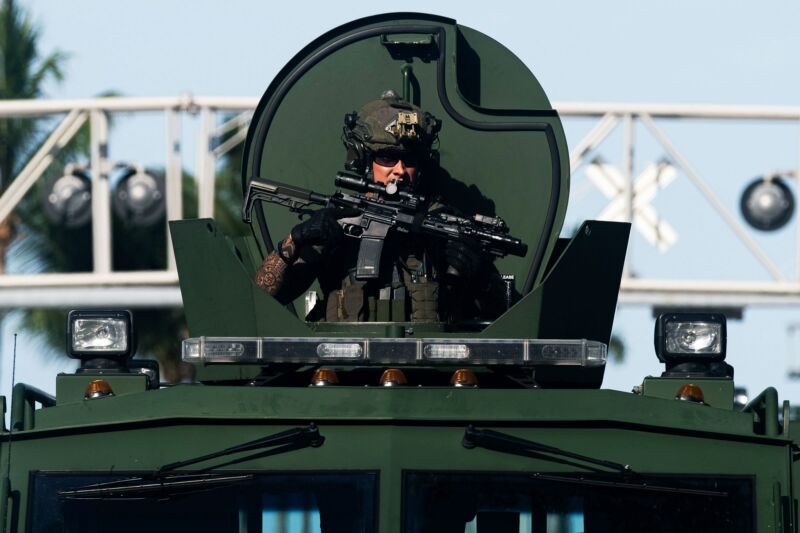
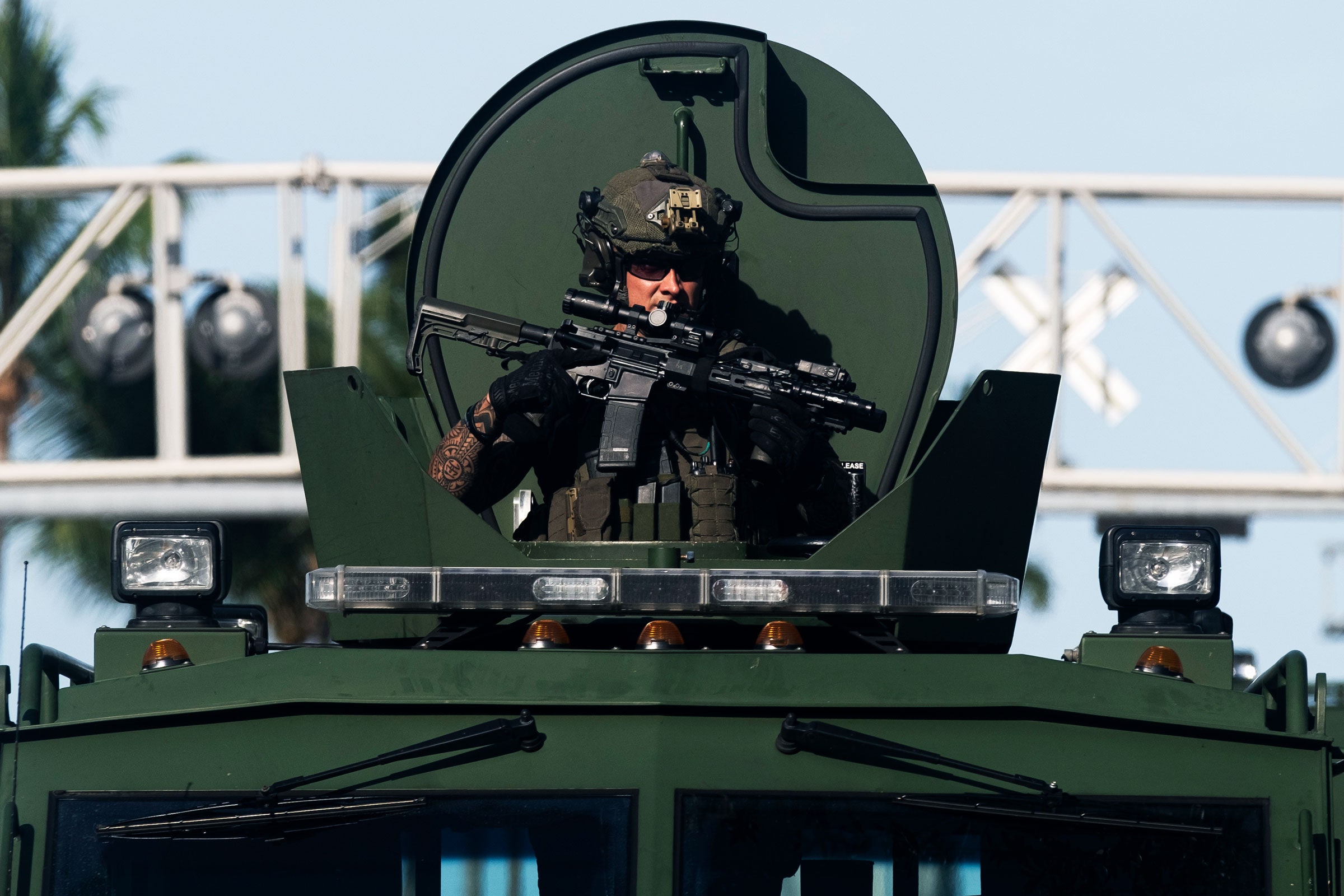
A Miami Police officer watches protesters from an armored vehicle on May 31, 2020.

Enlarge / A Miami Police officer watches protesters from an armored vehicle on May 31, 2020. (credit: Richard Arduengo | Getty Images)

The images of this past week are both inescapable and indelible: protesters flooding the streets of cities across the United States, met by police forces equipped with full body armor and tactical vehicles that vaguely resemble tanks. The local law enforcement responding to even nonviolent protests has often looked more like the US Armed Forces—and that was before President Donald Trump deployed an actual military police battalion against peaceably assembled US citizens in the nation's capitol Monday. That’s no accident.

It’s easy enough to buy tactical gear in the US, and the Homeland Security Grant Program has funneled billions of dollars to law enforcement agencies to acquire military-grade equipment. But for decades, a primary driver for why it can be so hard to tell a National Guard troop from a local cop has been the Department of Defense itself, through a program that has parceled out everything from bayonets to grenade launchers to precincts across the country.

Created as part of 1997’s National Defense Authorization Act, the 1033 program allows the Department of Defense to get rid of excess equipment by passing it off to local authorities, who only have to pay for the cost of shipping. (A precursor, the slightly more restrictive 1208 program, began in 1990.) According to the Law Enforcement Support Office (LESO), which oversees the process, over $7.4 billion of property has been transferred since the program’s inception; more than 8,000 law enforcement agencies have enrolled. Much of that inventory is perfectly ordinary: office equipment, clothing, tools, radios, and so on. But the haul also includes some of the so-called controlled equipment—rifles, armored vehicles, and so on—that have helped create such a spectacle of disproportion.

Read 14 remaining paragraphs | Comments

03 Jun 17:07

FBI found no evidence that antifa was involved in violence, and of course Trump ignored them

by Mark Sumner
James.galbraith

Excuse me? Time for this to become the headline

When Donald Trump’s time in the White House is reduced to a small exhibit in the back corner of Ripley’s Believe or Not Museum, a single phrase will serve to define Trump’s every act: “I don't take responsibility at all.” Trump may have said that in response to a question about his handling of the COVID-19 crisis, but it’s an all-purpose description of his policy on every point. For every action … there must be a scapegoat. When it comes to how Trump justifies filling American streets with active-duty military and turning the nation into a brutal police state, that scapegoat is antifa.

On Sunday, after days of demonstrations in response to the murder of George Floyd and decades of racial violence by police, Trump declared he had the answer in saying that “The United States of America will be designating ANTIFA as a Terrorist Organization.” The immediately obvious problem with that is that Trump has no authority to do that. Not only doesn’t he get to name terrorist organizations, the law only allows foreign organizations to be so designated. But it turns out there’s a third big reason Trump’s statement was outrageous. Just before Trump issued that tweet about designating antifa as a terrorist organization, the FBI told him there was  “no intelligence” to indicate that antifa was involved, or even present, at incidents of violence.

As The Nation reports, the FBI’s Washington office prepared the briefing for Trump earlier on that same day. Using agents on the ground, online resources, informants, and every other tool the FBI could leverage, their finding was that antifa was not behind incidents of violence and looting. The situation report ran through a list of such incidents, including those such as throwing bricks or destruction of property, which had featured predominantly on the news. None of the results found any evidence of antifa involvement.

And that wasn’t the end of this information. According to The Nation, the FBI has been issuing reports daily on concerning events. None of these reports “contained any evidence of antifa violence.” But with this information on his desk, Trump made his Twitter announcement that the group—which doesn’t even exist as an actual organization—was to be designated as terrorists.

This wasn’t the first time Trump has made such a claim. Antifa has vied with Holocaust survivor George Soros for a spot on the far right’s list of illusory bad guys ever since the label was adopted by people who stood up to Trump-supporting fascists. In July 2019, Trump tweeted that he was thinking of naming antifa “a major organization of terror,” calling them “gutless radical left wack jobs” who went around hitting “non-fighters.” By which Trump apparently meant poor defenseless Nazis. A month later, Trump was at it again, repeating that “major consideration is being given to naming ANTIFA an “ORGANIZATION OF TERROR” and saying that where antifa goes “violence and chaos follow.”

Trump has tweeted about antifa six times in the last five days, including an additional claim that would be named a “terrorist organization.” And while the FBI report was on his desk, and mayors and governors on the ground were telling Trump exactly who was to blame, he instead went with a quote from Fox News to say “I don’t see any indication that there were any white supremest groups mixing in. This is an ANTIFA Organization.” And yes, he said “supremest.” The quote then went on to show how much this nonexistent organization has come to dominate the Trumpist mindset by declaring that antifa was also behind Occupy Wall Street. It also shows how far Trump will go to defend the very fine white supremacists who have been his vocal supporters.

As Wired has noted, antifa doesn’t just serve as an all-purpose left-wing boogeyman, it’s also convenient cover for Republicans. Why hasn’t the government acted against far-right militias who threaten citizens, invade state houses, and wave semi-automatic rifles in the face of officials? Why not go after genuine torch-waving Nazis? Well … look over there, it’s antifa!

Antifa isn’t a vast, shadowy organization. It’s certainly not a “major terrorist organization.” It’s not even an organization. But it is a scapegoat. A man who takes responsibility for nothing at all needs a whole herd of those.

03 Jun 17:05

DEA Authorized To Conduct Surveillance On Protesters

by BeauHD
James.galbraith

How the fuck is this within the DEA's remit.

An anonymous reader quotes a report from BuzzFeed News: The Drug Enforcement Administration has been granted sweeping new authority to "conduct covert surveillance" and collect intelligence on people participating in protests over the police killing of George Floyd, according to a two-page memorandum obtained by BuzzFeed News. Floyd's death "has spawned widespread protests across the nation, which, in some instances, have included violence and looting," said the DEA memo. "Police agencies in certain areas of the country have struggled to maintain and/or restore order." The memo requests the extraordinary powers on a temporary basis, and on Sunday afternoon a senior Justice Department official signed off. The DEA is limited by statute to enforcing drug related federal crimes. But on Sunday, Timothy Shea, a former US Attorney and close confidant of Barr who was named acting administrator of the DEA last month, received approval from Associate Deputy Attorney General G. Bradley Weinsheimer to go beyond the agency's mandate "to perform other law enforcement duties" that Barr may "deem appropriate." In addition to "covert surveillance," the memo indicates that DEA agents would be authorized to share intelligence with local and state law enforcement authorities, to "intervene" to "protect both participants and spectators in the protests," and to conduct interviews and searches, and arrest protesters who are alleged to have violated federal law. Here's why Shea says the agency should be granted extraordinary latitude: "In order for DEA to assist to the maximum extent possible in the federal law enforcement response to protests which devolve into violations of federal law, DEA requests that it be designated to enforce any federal crime committed as a result of protests over the death of George Floyd," Shea wrote in the memo. "DEA requests this authority on a nationwide basis for a period of fourteen days."

Read more of this story at Slashdot.

03 Jun 15:57

Why cops can violate your constitutional rights and suffer no consequences in court

by Ian Millhiser
James.galbraith

Qualified immunity has to go.

Protesters and police stand off as tear gas is deployed in the streets on May 30, 2020, in Louisville, Kentucky. Protests have erupted after recent police-related incidents resulting in the deaths of black Americans Breonna Taylor in Louisville and George Floyd in Minneapolis, Minnesota. | Brett Carlsen/Getty Images

Government officials enjoy broad protections against lawsuits, and that includes rogue cops.

A SWAT team ruined Shaniz West’s house.

Police approached West because they believed her ex-boyfriend, who had an outstanding felony arrest warrant, was inside her home. (He wasn’t.) West gave the police permission to enter her home — an important fact because it meant that police could enter without a warrant — and lent an officer her key.

But West did not expect the police to smash her windows. Or to fire so much tear gas into the home that it saturated her possessions and made the house unlivable for two months. Or to fire tear gas canisters at such velocity that her walls and ceilings suffered extensive damage. The city gave her only $900 to cover her losses, plus a hotel room for three weeks.

 Institute for Justice
Some of the damage police did to Shaniz West’s home.

And yet, when West sued, a federal appeals court determined that her lawsuit was dead on arrival. The culprit was qualified immunity, a doctrine that gives government officials broad — if not entirely limitless — protection against federal lawsuits.

The unusual lawsuit immunity enjoyed by police is under increased scrutiny in the wake of nationwide protests inspired by the killing of George Floyd by a Minneapolis police officer. One lawmaker, Rep. Justin Amash (I-MI), has even proposed legislation that would abolish qualified immunity altogether.

In theory, qualified immunity shields government officials from lawsuits involving novel legal claims. As the Supreme Court held in Harlow v. Fitzgerald (1982), “government officials performing discretionary functions, generally are shielded from liability for civil damages insofar as their conduct does not violate clearly established statutory or constitutional rights of which a reasonable person would have known.”

In practice, however, qualified immunity can protect truly egregious conduct by police. As the Supreme Court put it in Malley v. Briggs (1986), qualified immunity “provides ample protection to all but the plainly incompetent or those who knowingly violate the law.”

In West’s lawsuit, West v. City of Caldwell, two members of a three-judge panel determined that the officers who trashed West’s home are entitled to qualified immunity — because there was no previous case specifically holding that when a homeowner gives police consent to enter their house, that consent does not entitle police to smash windows or to fire chemical weapons into the home.

To prevail in her case, the Court reasoned, West would have to produce a binding precedent establishing “a constitutional rule specific enough to alert these deputies in this case that their particular conduct was unlawful” (emphasis in original).

Why does qualified immunity exist?

The premise of the Supreme Court’s qualified immunity cases is that government officials will do their jobs less efficiently and with less enthusiasm if the threat of a lawsuit looms over them.

As the Court explained in Harlow, qualified immunity does not simply protect public employees from the “expenses of litigation.” It ensures that the stresses of litigation won’t divert “official energy from pressing public issues,” and that concerns about being sued won’t deter “able citizens from acceptance of public office.” Finally, the Supreme Court also warned about “the danger that fear of being sued will ‘dampen the ardor of all but the most resolute, or the most irresponsible [public officials], in the unflinching discharge of their duties.’”

These are not frivolous concerns. Qualified immunity applies broadly to government officials, not simply to police officers. So, in a world without qualified immunity, religious conservatives could harass civil rights officials with lawsuits to discourage those officials from enforcing laws prohibiting anti-LGBTQ discrimination. Koch Industries could bombard EPA officials with lawsuits discouraging them from enforcing environmental laws.

And as the Supreme Court lurches right, government employees could not be certain that their actions would be upheld by the justices — even if existing precedents clearly establish that those actions are lawful. Public employees could face financial ruin every time the Supreme Court overruled a precedent.

Yet whatever the wisdom of providing some lawsuit immunity to most public employees, most government officials do not have guns. Teachers and firefighters — or, for that matter, civil rights commissioners and EPA officials — typically do not smash the windows of an innocent woman’s home and saturate the interior with tear gas.

It’s one thing to say that public employees should generally be able to do their jobs without having to fear an onslaught of lawsuits. It’s another thing entirely to give sweeping legal immunity to people who are authorized by the state to inflict violence on citizens, and potentially even to take another person’s life.

How qualified immunity works in practice

The primary purpose of qualified immunity is to ensure that public officials do not face expensive litigation when the legality of their actions is uncertain. Qualified immunity is not a complete shield against liability. It only protects government employees whose conduct “does not violate clearly established statutory or constitutional rights of which a reasonable person would have known.”

For several years, this meant that the first government official to violate the law in a new or innovative way typically got off scot-free, but subsequent officials could then be placed on notice that they better not engage in similar behavior. In Saucier v. Katz (2001), the Supreme Court held that judges hearing qualified immunity cases must conduct a two-step inquiry.

Courts must first ask whether “the facts alleged show the officer’s conduct violated a constitutional right.” Then, after determining whether the defendant violated the law, the court would determine whether that defendant was nonetheless entitled to qualified immunity because the illegality of their actions was not “clearly established.”

Thus, as time passed, courts would declare more and more conduct illegal, and government officials would then be on notice that they could not emulate that conduct.

But the Court largely abandoned this two-step framework in Pearson v. Callahan (2009), which held that “while the sequence set forth [in Saucier] is often appropriate, it should no longer be regarded as mandatory.” Thus, judges now have the power to dispose of cases on qualified immunity grounds without ever ruling on whether anyone’s rights were violated. As a recent Reuters investigation notes, moreover, judges are increasingly likely to declare government officials immune from a suit without resolving whether those officials acted illegally.

Government officials also enjoy extraordinary procedural protections in qualified immunity cases. As attorney Raffi Melkonian notes on Twitter, in qualified immunity cases, “the defendant gets an automatic, immediate, appeal to the Court of Appeals” if they are denied qualified immunity by a federal trial court. Moreover, civil procedure rules often allow a defendant to raise qualified immunity at two different phases of a trial court proceeding — and if the court denies qualified immunity at each phase, both denials can be immediately appealed.

According to Melkonian, that means that, even in the best-case scenario, if you are a plaintiff suing a government official “you have 2-3 years of appellate procedure in every single case even before you win the case.” That’s a long time to wait for a judgment, and it discourages many lawyers from taking these cases — because they are unlikely to win, even less likely to win quickly, and will have to invest considerable resources into these lawsuits before they have any real shot of getting paid.

And then let’s say that a victim of police violence does ultimately prevail in a suit against a police officer. Even then, the likelihood that the officer will be required to compensate the victim is negligible. Many jurisdictions have indemnity laws, providing that the government will pay for any damages awarded against a police officer. These laws are so common that a 2014 study by UCLA law professor Joanna Schwartz found that “during the study period, governments paid approximately 99.98% of the dollars that plaintiffs recovered in lawsuits alleging civil rights violations by law enforcement.”

There may be bipartisan opposition building to qualified immunity.

Conservatives have dominated the Supreme Court since President Richard Nixon appointed four justices in his first term. But the nature of judicial conservatism has changed dramatically over the past half-decade.

For much of this period, judicial conservatism was typically associated with deference to governmental power — and especially with deference to law enforcement. As Nixon wrote in 1967, “the first responsibility of government and a primary responsibility of the judicial system is to guarantee to each citizen his primary civil right — the right to be protected from domestic violence.”

In recent years, however, judicial conservatism has taken on a more libertarian tone. That doesn’t mean that the Roberts Court is a bastion of civil liberties for criminal defendants, but it does mean that several members of the Court’s Republican majority are protective of some of those liberties.

Chief Justice John Roberts, for example, often votes with his liberal colleagues in cases where police use new technology to conduct intrusive searches. Trump appointee Neil Gorsuch wrote the lead opinion in a case holding that criminal defendants may only be convicted by a unanimous jury. And Trump’s other appointee, Justice Brett Kavanaugh, is a longstanding opponent of racial jury discrimination — he even authored a law review note on that topic while he was still a student.

Meanwhile, Justice Clarence Thomas, the Court’s most conservative member, wrote in a 2017 opinion that his Court should “reconsider our qualified immunity jurisprudence.”

Thomas’s partial concurring opinion in Ziglar v. Abbasi (2017) is brief, and it is vague. The thrust of Thomas’s argument is that, when determining whether a government official should be immune from a particular suit, courts should rely on “common law” principles that existed more than a century ago, rather than the practical concerns raised in Harlow.

Does that mean that Thomas would join a five-justice majority in limiting qualified immunity? The answer to that question is unclear, but many litigants appear ready to test whether a majority of the Court is willing to rethink qualified immunity.

As many as a dozen cases are currently pending before the Supreme Court asking it to rein in the broad immunity currently afforded to government officials. One of those cases is Shaniz West’s case, which is now called West v. Winfield. The justices, moreover, have discussed whether to hear West’s case at six separate conferences — a sign that at least some members of the Court have taken an interest in the case.

Meanwhile, Rep. Amash, a former Republican with right-libertarian views, is seeking co-sponsors for legislation titled the Ending Qualified Immunity Act, which he says would “eliminate qualified immunity and restore Americans’ ability to obtain relief when police officers violate their constitutionally secured rights.”

That would be a bold step, which would likely go far beyond any limits that the Supreme Court would place on qualified immunity. And it not at all clear whether a majority of the House and the Senate would ever be willing to go so far.

Nevertheless, even if Congress does not ultimately decide to eliminate qualified immunity altogether, qualified immunity is a judicially created doctrine that isn’t grounded in the Constitution — which means that Congress has the power to alter that doctrine however it chooses. Congress could, for example, decide that law enforcement officers — or any other government official who carries a deadly weapon — should not enjoy the same broad immunity afforded to teachers, firefighters, or EPA officials.

It could ensure that, at the very least, police who kill, or wreck lives, or destroy people’s homes are not immune from suit.


Support Vox’s explanatory journalism

Every day at Vox, we aim to answer your most important questions and provide you, and our audience around the world, with information that has the power to save lives. Our mission has never been more vital than it is in this moment: to empower you through understanding. Vox’s work is reaching more people than ever, but our distinctive brand of explanatory journalism takes resources — particularly during a pandemic and an economic downturn. Your financial contribution will not constitute a donation, but it will enable our staff to continue to offer free articles, videos, and podcasts at the quality and volume that this moment requires. Please consider making a contribution to Vox today.

03 Jun 15:57

Devastating GOP-Crafted Ad Airing on FOX News Urges Voters to ‘End Trump’s American Carnage’ — WATCH

by Andy Towle
James.galbraith

Great, but why the fuck are the best ads coming from the GOP? How are Dems not churning out ads like this on a daily basis?

Using the murder of George Floyd and the coronavirus epidemic which has killed more than 100,000 people as its backdrop, the GOP-led Republican Voters Against Trump has released a devastating ad urging voters to “end Trump’a American carnage.”

The ad resembles spots created by The Lincoln Project, the anti-Trump group led by Kellyanne Conway’s husband George, and other disillusioned Republicans which crafted the ‘Mourning in America’,  ‘Body Bags’, and ‘Flag of Treason’ ads that have hit the president hard.

The ad is based around a line from Trump’s inauguration speech: “This American carnage stops right here and stops right now.”

The ad is running this week on FOX & Friends, according to the HuffPost.

The NYT reported: “The new group is set to begin a $10 million digital and television advertising campaign that will use personal stories of conservative voters giving voice to their deep — and sometimes brand-new — dissatisfaction with the president. … The new initiative is the brainchild of Ms. Longwell; Bill Kristol, the conservative writer; and Tim Miller, a former top aide to former Gov. Jeb Bush of Florida. Together, Ms. Longwell and Mr. Kristol have also worked on an initiative called Republicans for the Rule of Law, which has begun its own ad blitz against Mr. Trump.”

The post Devastating GOP-Crafted Ad Airing on FOX News Urges Voters to ‘End Trump’s American Carnage’ — WATCH appeared first on Towleroad Gay News.

03 Jun 15:56

Cartoon: Trump's genius plan to destroy Antifa

by Matt Bors
James.galbraith

If only

Greetings From the Wasteland: I’m Kickstarting a 200 page collection of the best political cartoons from the Trump era, featuring Tom Tomorrow, Jen Sorensen, Pia Guerra, and many more. Pre-order here!

03 Jun 15:55

Doubt looms over hydroxychloroquine study that halted global trials

by Beth Mole
James.galbraith

Oh for fucks sake. If you're going to do science, could you please do it correctly?

Closeup image of hands holding a small box labeled hydroxychloroquine.

Enlarge (credit: Aurich Lawson / Getty)

The Lancet medical journal on Tuesday issued an “expression of concern” over the validity of a recent study suggesting that the anti-malarial drugs chloroquine and hydroxychloroquine raise the risk of death and heart complications in hospitalized COVID-19 patients.

More than a hundred outside experts have raised questions and skepticism about the data and analysis, even as researchers halted clinical trials in light of the study's findings.

The two drugs at the center of the controversy have had a high profile during the pandemic, with many prominent figures—most notably President Donald Trump—promoting them as effective against COVID-19. On May 18, Trump even told reporters that he was taking the drugs himself to prevent infection from the new coronavirus, SARS-CoV-2.

Read 15 remaining paragraphs | Comments

03 Jun 15:51

The 50 Years of Crowd Control Research Police Are Ignoring

by BeauHD
James.galbraith

Because they're counterprotestors, not protectors.

Thelasko shares an excerpt from FiveThirtyEight: Researchers have spent 50 years studying the way crowds of protesters and crowds of police behave -- and what happens when the two interact. One thing they will tell you is that when the police respond by escalating force -- wearing riot gear from the start, or using tear gas on protesters -- it doesn't work. In fact, disproportionate police force is one of the things that can make a peaceful protest not so peaceful. But if we know that (and have known that for decades), why are police still doing it? There's 50 years of research on violence at protests, dating back to the three federal commissions formed between 1967 and 1970. All three concluded that when police escalate force -- using weapons, tear gas, mass arrests and other tools to make protesters do what the police want -- those efforts can often go wrong, creating the very violence that force was meant to prevent. For example, the Kerner Commission, which was formed in 1967 to specifically investigate urban riots, found that police action was pivotal in starting half of the 24 riots the commission studied in detail. It recommended that police eliminate "abrasive policing tactics" and that cities establish fair ways to address complaints against police. Experts say the following decades of research have turned up similar findings. Escalating force by police leads to more violence, not less. It tends to create feedback loops, where protesters escalate against police, police escalate even further, and both sides become increasingly angry and afraid. Anne Nassauer, a professor of sociology at Freie Universitat in Berlin, has studied how the Berlin Police Department handles protests and soccer matches. She found that one key element is transparent communication -- something Nassauer said helps increase trust and diffuse potentially tense moments. The Berlin police employs people specifically to make announcements in these situations, using different speakers, with local accents or different languages, for things like information about what police are doing, and another speaker for commands. Either way, the messages are delivered in a calm, measured voice. Communication is also a cornerstone of what police know as "the Madison Model," created by former Madison, Wisconsin, chief of police David Couper. His strategy for dealing with protesters was to send officers out to talk with demonstrators, engage, ask them why protests are made, listen to their concerns and, above all, empathize. The report notes that many police departments in the U.S. did try different strategies in the 1980s and 1990s, but they ultimately ended up responding with force anyway. "The 'negotiated management' model of protest policing called for officers to meet with protesters in advance to plan events together to specify the times, locations and activities that would happen, even when that included mass arrests," reports FiveThirtyEight. "But the era of negotiated management basically fell apart after the World Trade Organization protests in Seattle in 1999, when protesters blocked streets, broke windows and successfully shut down the WTO meeting and stalled trade talks. When protesters violated the negotiated terms, police responded with tear gas and rubber bullets and took away the wrong lessons, [said Edward Maguire, a professor of criminology and criminal justice at Arizona State University]. 'What a lot of people took from that in policing is, we can't trust these people. We need to be smarter and overwhelm them to nip these things in the bud," he said. 'We sort of went backwards.'"

Read more of this story at Slashdot.

03 Jun 03:40

Embattled Rep. Steve King has lost his primary 

by Li Zhou
James.galbraith

Good fucking riddance

US Rep. Steve King (R-IA) during a press conference on abortion legislation on August 23, 2019 in Des Moines, Iowa. | Alex Wroblewski/Getty Images

King, who was censured for racist statements last year, is out of the running for his House seat.

After losing his House Committee assignments over his defense of white supremacy last year, embattled Republican Rep. Steve King has officially lost his seat as well.

Tuesday night, King lost the Republican primary to represent Iowa’s Fourth Congressional District in the next term, putting an end to his long and controversial nine-term tenure in the House. State Sen. Randy Feenstra ultimately dwarfed him in both fundraising and support from key players in the Republican Party, emerging as the primary winner in the expansive northwestern district.

It’s a big win for the Republican party, which saw King’s tight win in 2018 against Democrat J.D. Scholten as a sign that Democrats had a real shot at winning against him in a presidential election year.

During the campaign this year, Feenstra’s main attack centered on King’s inability to effectively represent the district, since he likely would have been barred from committee work in the new term as well. “We have a congressman who was removed from the House Agriculture Committee and the Judiciary Committee by his own Republican colleagues,” Feenstra wrote in a Des Moines Register op-ed.

Unseating King has been a longtime goal of Democrats, who have heavily criticized his record of making racist and sexist remarks including endorsing a white nationalist in Toronto’s mayoral race and questioning the need for exceptions for rape and incest in anti-abortion laws. After King made a statement wondering why white supremacy and white nationalism were considered offensive last January, even Republican leadership censured him.

“If he doesn’t understand why ‘white supremacy’ is offensive, he should find another line of work,” said Senate Majority Leader Mitch McConnell at the time.

Feenstra’s policy platform isn’t significantly different from King’s: Much like Trump, he’s anti-abortion and supports hardline immigration policies including building a border wall.

Former baseball player and paralegal Scholten is slated to go up against Feenstra in the election this fall. While he was less than 4 points behind King last cycle, Scholten may face a tougher fight this time around.

The seat is rated Likely Republican by Cook Political Report, a sign that it will likely be an uphill battle for Democrats in November.

03 Jun 03:02

Theresa Greenfield has won the Democratic Senate primary in Iowa

by Li Zhou
Democratic Senate primary candidate Theresa Greenfield arrives at a picnic hosted by the Adair County Democrats in Greenfield, Iowa, on August 11, 2019. | Caroline Brehman/CQ Roll Call

She’ll take on Sen. Joni Ernst in a competitive race this fall.

Des Moines real estate developer Theresa Greenfield has officially won Iowa’s Democratic Senate primary, which means she’ll take on sitting Sen. Joni Ernst, one of the upper chamber’s more vulnerable members, later this fall.

Greenfield was the Democratic Party favorite: She’d picked up the endorsements of the Democratic Senatorial Campaign Committee, as well as backing from powerhouse groups like Emily’s List and Iowa’s AFL-CIO. The party has already begun ramping up its spending in the race, which is among those that will be one of the most closely watched and expensive during the general election this fall.

Greenfield grew up on a farm as the daughter of a crop-duster. She previously worked as an urban planner and now runs a real estate development company. In a campaign ad, Greenfield goes after Ernst’s trademark “make them squeal” tagline, which she’s previously used to claim that she’ll curb wasteful spending — though she’s since voted to support major tax breaks including the 2018 cuts.

Greenfield has emphasized that she’ll focus on bolstering the social safety net if she’s elected, and cited her past reliance on Social Security as an example of why she finds such efforts important.

While Iowa is still rated as “Lean Republican” by Cook Political Report, it’s seen as a key target for the Democratic Party in its efforts to retake the Senate majority. Ernst’s seat was held by Democrat Tom Harkin until 2014, after all, and she’s currently one of the less popular senators in the country, according to Morning Consult.

The dynamics of the presidential election could well have a major impact on the momentum that candidates experience, too. In Iowa, Trump’s approval is at 46 percent, though it’s surpassed by his disapproval rate, per a Morning Consult poll.

“The key factor in all the congressional races in Iowa is the national landscape,” University of Northern Iowa political science professor Donna Summer tells Vox. “The fate of the Democrats are tied to national fortunes. The fortunes for the incumbent Republican Party, in this sense, hinges on how voters judge the economy.”


Support Vox’s explanatory journalism

Every day at Vox, we aim to answer your most important questions and provide you, and our audience around the world, with information that has the power to save lives. Our mission has never been more vital than it is in this moment: to empower you through understanding. Vox’s work is reaching more people than ever, but our distinctive brand of explanatory journalism takes resources — particularly during a pandemic and an economic downturn. Your financial contribution will not constitute a donation, but it will enable our staff to continue to offer free articles, videos, and podcasts at the quality and volume that this moment requires. Please consider making a contribution to Vox today.

03 Jun 03:02

'Not dead yet': Ruthless ex-wrestling coach mocks George Floyd's death, and he's not the only one

by Lauren Floyd

In appalling displays of white cruelty, a former Washington wrestling coach and at least two incoming Missouri students have all taken to mocking the violent detainment of an unarmed Black man that has inspired protests across the country. George Floyd died last Monday after a Minneapolis cop kneeled on his neck for more than eight minutes despite Floyd’s protests that he couldn’t breathe.

The details preceding his death prompted thousands to take to the streets in protest, but for some teens and Dave Hollenbeck, who was recently fired by the Bethel School District, Floyd’s death was apparently a laughing matter. Since-deleted photos Hollenbeck posted on Facebook depicted someone kneeling on his neck while the coach smiled, and two Missouri students similarly posed in Snapchat video.

“Not dead yet,” Hollenbeck captioned his post. “I’m doing this for Are [sic] police officers the media is a race baiting machine and I’m tired of it I’m going to speak out every time if you don’t like that I’m sorry but I love All people.. Wake up America."

�Not dead yet�: @BethelSD says it�s investigating this social media post of a first-year wrestling coach at Bethel High School who�s pictured with a knee pressed into his neck. #GeorgeFloyd pic.twitter.com/sOcVCoSjoJ

— Michael Spears (@MichaelKIRO7) May 27, 2020

He later told local news station KIRO-TV he “did not tell any lies” and that he “did not say anything racist,” only “maybe insensitive at the time […] I showed that I was OK from a knee on my neck. That is it,” Hollenbeck told the news station. The school district told KIRO that Hollenbeck was fired Thursday.

”We have completed our investigation. Dave Hollenbeck is no longer employed by the Bethel School District,” district spokesman Doug Boyles said. “His behavior was not consistent with our equity initiatives and nondiscrimination policies.”

For the Missouri students, repercussions for their actions haven’t been as swift. The video, which only depicts two students but is said to involve a third, was reposted to Twitter and viewed more than 690,000 times. In it, one of the students can be seen laughing and yelling, "I can't breathe."

Although universities haven’t confirmed the students’ identities, they have been identified on Twitter as Piper Zenter, Anneliese Aherns, and Holland Easterla. The University of Missouri, Northwest Missouri State University, and Missouri State University, each of their prospective schools, responded on Twitter Friday.

this video was posted by a graduating senior in my class of two other girls in my class. disgusting! @NWMOSTATE @Mizzou are getting some great students next semester! pic.twitter.com/CxYOndEB07

— jerðÂ�Â�¼ðÂ�Â�½ (@McafeeJerica) May 29, 2020

“We are aware of the video. The university does not condone treating the loss of human life with disrespect. We are handling this privately through disciplinary channels,” Missouri State University said in its tweet. The University of Missouri thanked the person who posted the video in its tweet. “We are aware of the video and have submitted the details to the appropriate offices,” the school said. Northwest Missouri State University tweeted: ”As Bearcats, we value civility and will look into this.”

The Twitter user who posted the video, @McafeeJerica, said she has gotten calls from police “because the girls are getting harassed and apparently that’s my fault! just shows another flaw in the system🤷🏽‍♀️”

Kayla Cobb, another incoming University of Missouri student, said in a tweet that “stuff like this makes me wonder how hard i’m gonna have to fight to prove that i’m a damn human at mizzou...”

Dennis Carpenter, a former Missouri high school superintendent, said in a tweet that two of the students attended Lee’s Summit High School and he is “extremely disappointed” in them. “Maybe community support for racial equity training wouldn’t have been such a bad thing after all,” he added.

As the former @LSR7 school supt I�m extremely disappointed to see these 2020 @LeesSummitHS graduates taking part in this culturally insensitive act. Maybe community support for racial equity training wouldn�t have been such a bad thing after all! #BlackLivesMatters #GeorgeFloyd https://t.co/fx6OnLaa3I

— Dennis L. Carpenter (@EquitySupt1) May 29, 2020

Tuesday, Jun 2, 2020 · 2:02:17 PM +00:00 · Lauren Floyd

The Missouri student accepted to the University of Missouri has rescinded her enrollment, the university announced in an online statement Monday.

“Upon learning about the video, we began an immediate investigation into the matter through our Office for Civil Rights & Title IX,” the university said in the statement. “The student was informed that she would be suspended during the investigation.

“We have received numerous emails and social media posts from members of our community and the public who felt hurt and dehumanized by the video. The student made the decision today to rescind enrollment at Mizzou and will no longer be attending.”

03 Jun 01:43

US Park Police denies using tear gas on peaceful protesters. Evidence suggests otherwise.

by Alex Ward
James.galbraith

Bullshit. More lies by the Trump campaign and their militant wing, the cops.

A demonstrator tries to pass between police wearing riot gear on June 1 in Washington, DC. | José Luís Magana/AFP via Getty Images

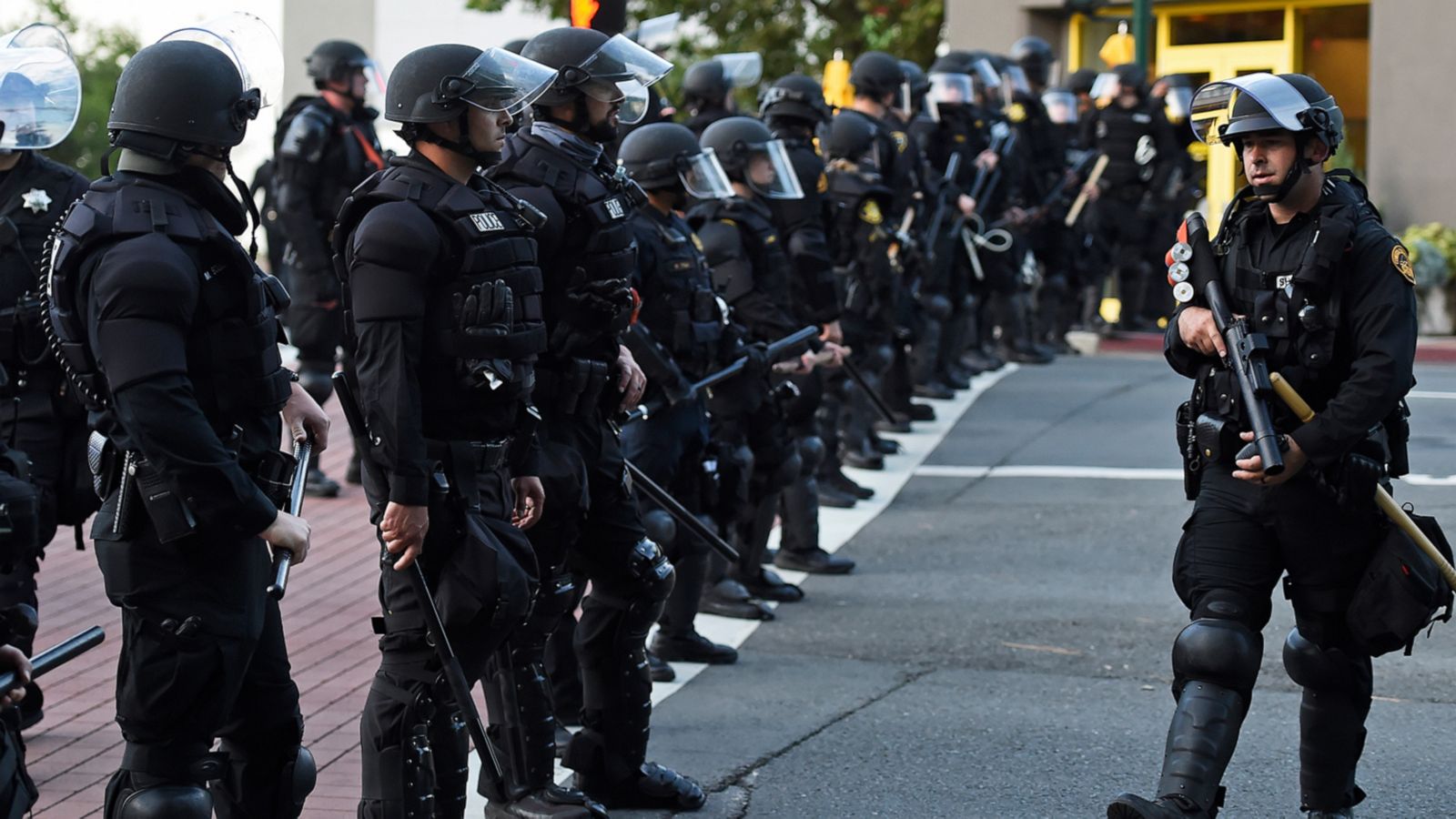
The official statement raises more questions than it answers.

Nearly 24 hours after law enforcement used force to push peaceful demonstrators away from the White House to make way for presidential photo op, the US Park Police offered a statement on its involvement — and it raises a lot more questions than it answers.

On Monday, Park Police — along with members of the US Secret Service and the National Guard — dispersed a large crowd of protesters using what reporters and other witnesses on the ground said was tear gas and rubber bullets, harming demonstrators and journalists alike.

Minutes later, President Donald Trump gave a brief speech in the White House Rose Garden then walked through an emptied Lafayette Square to a nearby church to take pictures with a Bible.

Video of the chaotic scene spread quickly on social media and news outlets, sparking outrage. On Tuesday afternoon, the US Park Police (USPP) responded to the criticisms.

“At approximately 6:33 pm, violent protestors on H Street NW began throwing projectiles including bricks, frozen water bottles and caustic liquids,” acting Chief Gregory Monahan said in the official statement. “Intelligence had revealed calls for violence against the police, and officers found caches of glass bottles, baseball bats and metal poles hidden along the street.”

“No tear gas was used by USPP officers or other assisting law enforcement partners to close the area at Lafayette Park,” he continued.

To be clear: Monahan is claiming the protesters amassed near the White House were “violent,” that they were perhaps plotting some kind of attack of their own, and that no federal officials whatsoever used tear gas to disperse the demonstration.

But the problem is all the available evidence, from numerous videos taken at the scene to reports from witnesses and journalists who were on the ground at the time, shows otherwise.

Why the Park Police’s statement is dubious

Let’s start with Monahan’s claim that the protesters were “violent” because they were throwing projectiles at law enforcement.

According to multiple reporters who were on the ground documenting the events, the protests were entirely peaceful. “We didn’t see projectiles thrown at police. Certainly no bricks or ‘caustic liquids,’” Alexander Marquardt, a CNN reporter who was at Lafayette Square that evening, tweeted on Tuesday.

In fact, in this Reuters video taken of nearly the entire scene, there are no violent instances of what the Park Police statement describes (other than some expletives and insults lobbed at law enforcement).

Washington, DC, Mayor Muriel Bowser also publicly stated that the demonstrators protested peacefully.

It’s unclear, then, what the Park Police is referencing. Perhaps it’s an exaggeration of what an unnamed Justice Department official told the Washington Post on Tuesday: that some crowd members passed rocks among themselves and threw a bottle in the direction of Attorney General Bill Barr. Barr, a top Trump ally, was surveying the scene and reportedly personally ordered law enforcement to push the protesters back.

There’s also no direct evidence that protesters were hiding caches of weapons — glass bottles, bats, and metal poles, according to the statement — to use against law enforcement. If there are images showing that such items were indeed found on the site of the demonstration, as the Park Police claim, they haven’t been shared with the public.

Finally, there’s the assertion that Park Police and other law enforcement personnel involved that evening didn’t use tear gas to clear the square.

This has become one of the most contentious points in the entire saga, even though Monahan acknowledges in the statement that the officers did use smoke canisters and pepper balls (pepper spray projectiles) against the protesters.

“Tear gas” is a broad term, often defined as a synthetic chemical irritant. Pepper spray is a naturally derived chemical irritant that causes many effects similar to that of common types of tear gas, including temporary blindness and a burning sensation in the nose. Which means that, even if tear gas was technically not used — a claim that isn’t settled fact for reasons I’ll get into in a minute — police still used a very similar chemical weapon against peaceful protesters.

Still, facts matter, so the question of whether they used tear gas or not is important.

Nathan Baca, a reporter for WUSA9 in Washington, DC, picked up a canister used during the Monday assault. It’s not a smoke canister, but it does launch “OC” gas which “Causes same tears, tight breath and comes out green,” he reported.

Other journalists who covered the protests in person that evening say without a doubt that law enforcement used tear gas, a chemical irritant that can cause those exposed to it to want to vomit.

And activists seen throughout the Reuters video also complain they were directly hit with tear gas.

Moreover, Washington Post reporters at the demonstration, including metro reporter Rebecca Tan, photographed National Guard members (though not Park Police officers) wearing gas masks, “moments before authorities started firing.” That certainly suggests they were preparing to deploy tear gas.

The Trump reelection campaign, though, is sticking with the Park Police, asking reporters — including me — to “retract and correct” published stories that say tear gas was used. (Vox is not retracting its reporting at this time.)

“It’s said that a lie can get halfway around the world before the truth can get its pants on. This tear gas lie is proof of that,” Tim Murtaugh, the Trump campaign’s communications director, said in a Tuesday evening statement.

The Park Police has a lot more explaining to do. Monahan’s statement by itself doesn’t clear up any of the main contention points. But what it does do is further confirm that Park Police felt it was necessary to respond to the protests with violence — all so Trump could have a photo op.

That, perhaps more than dubious claims in the official statement, is the most damning part of all.


Support Vox’s explanatory journalism

Every day at Vox, we aim to answer your most important questions and provide you, and our audience around the world, with information that has the power to save lives. Our mission has never been more vital than it is in this moment: to empower you through understanding. Vox’s work is reaching more people than ever, but our distinctive brand of explanatory journalism takes resources — particularly during a pandemic and an economic downturn. Your financial contribution will not constitute a donation, but it will enable our staff to continue to offer free articles, videos, and podcasts at the quality and volume that this moment requires. Please consider making a contribution to Vox today.

03 Jun 01:42

Canada's Justin Trudeau was asked about Trump's protest response and his pause is already legendary

by Walter Einenkel

Canada’s Prime Minister Justin Trudeau was on television fielding questions from reporters Tuesday morning. There’s a lot to talk about these days, with the economic crisis and COVID-19 continuing to be an enormous public health issue. But our northern neighbor is also overseeing a country that is facing protests against police brutality and racial injustice in multiple cities. 

In a clip you can see below, Prime Minister Trudeau was asked “You’ve been reluctant to comment on the words and actions of the U.S. president. But we do have Donald Trump calling for military action against protesters. We saw protesters tear gassed yesterday, to make way for a presidential photo op. I would like to ask you what you think about that. And if you don’t want to comment what message do you think you are sending?”

Prime Minister Trudeau then took a 21-second pause to collect his thoughts on Donald Trump’s actions in regards to the Black Lives Matter protests going on across the country. For 21 seconds, Trudeau was at a loss of what to say exactly. It is an excruciatingly long pause. At the end he makes an almost worldly sorrowful sigh and sound before giving his diplomatic response.

PRIME MINISTER TRUDEAU: We all watch in horror and consternation, what’s going on in the United States. It is a time to pull people together, but it is a time to listen. it is a time to learn what injustices continue—despite progress over years and decades. 

I’ve watched this clip about 10 times and I’ve laughed and I’ve shook my head, and I’ve been sad about the state of our country, and then I’ve laughed again. 

quittttttttte the pause.pic.twitter.com/iH3lBDKCxD

— Josh Wingrove (@josh_wingrove) June 2, 2020

02 Jun 23:29

Senators Introduce COVID-19 Contact-Tracing Privacy Bill

by BeauHD
James.galbraith

But they're fine with federal agencies trawling through browsing history for any or no reason whatsoever. Fuck off.

An anonymous reader quotes a report from CNET: A group of U.S. senators on Monday introduced a bill to regulate contact-tracing apps, aiming to protect user privacy as technology is used to track the spread of the novel coronavirus. The proposal is called the Exposure Notification Privacy Act and seeks to ensure that people couldn't be forced to use the technology. It also would make sure that the data isn't used for advertising or commercial purposes and that people can delete their data. The bill seeks to require that notification systems only rely on "an authorized diagnosis" that came from medical organization. "Public health needs to be in charge of any notification system so we protect people's privacy and help them know when there is a warning that they might have been exposed to COVID-19," Sen. Maria Cantwell, a Democrat from Washington and one of the bill's sponsors, said in a comment provided to CNET. Cantwell's co-sponsor on the bill is Sen. Bill Cassidy, a Republican from Louisiana. Amy Klobuchar, a Democrat from Minnesota, also has given her support. "We need to regulate apps that provide COVID-19 exposure notification to protect a user's privacy, prevent data misuse and preserve our civil rights -- and this bill offers a roadmap for doing all three," Public Knowledge Policy Counsel Sara Collins said in a statement. "The bill marks a valuable first step in the long road ahead to protecting Americans' data."

Read more of this story at Slashdot.

02 Jun 23:23

Trump’s Use Of Tear Gas To Break Up A Protest Undermined Three Core Values Of American Democracy

by Perry Bacon Jr. and Julia Azari
James.galbraith

Yes, and most notably that cops have just become the militant arm of the GOP

The criticism that President Trump has disregarded many of our country’s norms and democratic values is not new. We’ve written about it several times before — in particular, about how the violation of values is a bigger deal than the breaking of norms. But law enforcement officials using tear gas on protesters outside the White House to clear a path for Trump to visit a church nearby — for what seemed to amount to a photo-op of him holding a Bible — was arguably one of most significant moments of his breaking with such values during his presidency.

It was essentially a three-part violation. In being generally unsupportive of the protests against the killing of George Floyd by Minneapolis police officers, Trump is in tension with a core democratic value — America taking additional steps to ensure people are treated equally, no matter their race. Trump’s decision to break up the protest then subverted one of America’s core democratic values, the right to peacefully protest. Finally, by involving the National Guard and senior military officials in the action against the protesters, Trump also disregarded the democratic value that the military and police not be used for political purposes.

We’re going to unpack what it means that Trump disregarded these democratic values in this article, but let’s first briefly explain what we mean when we say “democratic values.” Much of the commentary around Trump suggests that he is violating “norms” — or, put another way, Trump is not doing things the “normal” way like his predecessors (think former Presidents George H.W. Bush, George W. Bush and Barack Obama). But, in reality, what often concerns people about Trump and his allies is that they are attacking core democratic values, not norms. To put this bluntly, basically every American president before Abraham Lincoln took actions to help perpetuate slavery in some way — being pro-slavery was the norm. But slavery was against democratic values of freedom and equality.

So let’s look at Trump’s move on Monday in terms of core democratic values that he may have violated:

Expanding racial equality

The protesters contend that the police in Minneapolis who killed Floyd, and police departments across the country, have a history of treating black people unfairly compared with white people.

So Trump’s reluctance to embrace these protesters suggests he is not particularly interested in policies that seek to address past or current discrimation against black Americans.

That’s nothing new for Trump — as we have written before, he seems to practice a kind of white identity politics where he does not do a ton to reach out to black or Latino Americans. Of course, this behavior is not exactly new for American presidents either — both Democratic and Republican commanders-in-chief have adopted policies that have made life harder for black Americans. But it is surprising in the context of America in 2020, when a clear majority of Americans think police are unfair to black people and think the killing of Floyd was unjust, that Trump is doing little to suggest he is aligned with that cause amid the protests.

The right to peacefully protest

The right to assemble and protest peacefully is protected in the First Amendment to the Constitution. And normally, both Democrats and Republicans support this democratic value — at least in the abstract. After all, American history is full of protests, from the civil rights movement to the creation of the tea party, and these movements are usually celebrated looking back, even if they were unpopular at the time.

“There is a fundamental — a Constitutional — right to protest, and I’m against clearing out a peaceful protest for a photo op that treats the Word of God as a political prop,” said Sen. Ben Sasse, in a rare rebuke of Trump from an elected official in his own party.

The fact that Trump was trying to end the protests at all was problematic. But the way he and his team chose to do so — by having law enforcement officials fire tear gas at protesters — made the situation even worse. It was one of the most aggressive ways possible to end the protests, and it potentially established a way to limit them in the future, if people are scared they will be injured or killed if they protest.

It’s important to emphasize that the Trump administration is not alone in using tear gas amid these protests of Floyd’s death. Cities across the country, including many run by Democratic mayors, are using tear gas on protesters too, arguing that they are violating curfews or that some want to harm police officers.

But two things distinguish Trump’s action from those mayors’. First, the people in D.C. were not in violation of the city’s 7 p.m. curfew — the tear gas was used about 20 minutes before the curfew went into effect, and it seems to have been used for no other purpose than to clear the protesters out of Trump’s walking path.32 Second, the president of the U.S. allowing the use of tear gas on civilians protesting peacefully is simply a bigger deal than a mayor or governor doing it. The fact that Trump has used tear gas on protesters could lead to its use by more officials, too.

This is another instance, though, where norms and democratic values have not always aligned. While the First Amendment protects the right of people to freely assemble and petition the government for the redress of grievances, government interference with this right is not uncommon. But the escalation we saw from the White House on Monday is.

Police and the military not being aligned with one political side

It’s not just that the president’s actions violated the right of people to protest, either. How he did this — by using law enforcement officials — matters too. Democracy scholars believe that the police and military must avoid being tied to any one political party or leader, and instead must view themselves as defending the broader public, following laws and rules no matter which party is in charge. Being apolitical has been a long-standing tradition of the U.S. military in particular.

But during Trump’s presidency, the idea that our police and military are separate from partisan politics has appeared increasingly strained. For instance, the national Fraternal Order of Police and other law enforcement groups were strongly behind Trump during his 2016 campaign. And the Minneapolis police force recently faced pushback over its policy of preventing officers from attending Trump rallies in uniform. The president has even gone as far as to refer to military officers as “my generals.” And on Monday, the nation’s highest-ranking military officer, Joint Chiefs Chairman Mark Milley, was on site at the White House before the tear gas was fired at the protesters.

It’s a tricky balance, as individual police and military personnel have the right to support candidates and hold political views. But as institutions, it’s critical that they don’t work for any one politician or any one political side. However, by encouraging the police and military to take on the protesters across the country, Trump has crossed a crucial and dangerous line.

This could have significant ramifications as the act of policing has become a more partisan issue. Pew Research Center polling conducted in 2016 found that nearly 70 percent of police officers thought that deaths of black Americans during encounters with police were isolated incidents. But while there is not much recent polling of police officers, a 2019 YouGov survey found that an overwhelming majority of Democrats thought these deaths were part of a broader pattern.

A president concerned about this dynamic and its implications might try to ease those tensions. But Trump, in both his words and his actions on Monday, is doing the opposite.

To conclude, in a democracy that is running smoothly, most citizens may not think very much about our shared norms and democratic values, but America is not running smoothly right now. That means we are forced to grapple with what these norms and values mean — and why they matter.

FiveThirtyEight Politics Podcast: The data behind police violence

02 Jun 23:16

Election officials: Barr's warning of foreign hacking of mail-in ballots is 'preposterous'

by Joan McCarter
James.galbraith

Of course it is, but Barr is pure evil at this point

In an apparent attempt to distract from the very threat of foreign intervention by states like Russia to help Donald Trump win in 2020, Attorney General William Barr is making up bullshit about the vulnerability of mail-in ballots. "We've been talking about how, in terms of foreign influence, there are a number of foreign countries that could easily make counterfeit ballots, put names on them, send them in," Barr told The New York Times Magazine. "And it'd be very hard to sort out what's happening."

Absolutely not true, say current and former elections administrators. They tell the Washington Post’s Amy Gardner that it would be virtually impossible for a foreign country to counterfeit ballots. The elections chief of Colorado, Judd Choate says "there is zero chance" of it happening in his state. "It's preposterous to the point of humor," he said. "There isn't an election office in this country that doesn't know how many ballots they've mailed out, how many they've gotten back in, and who they were sent to," Tammy Patrick, a former elections official in Maricopa County, Arizona, said. "It is absolutely not the case that someone could create a multitude of ballots and in some way infuse them or inject them into the system without detection."

"While it's difficult to comment on a hypothetical situation and we can only speak for North Carolina, it's almost inconceivable that a county board of elections wouldn't immediately detect 'counterfeit ballots' arriving at their offices," said North Carolina board of elections spokesperson Patrick Gannon. "The county boards of elections send ballots out to those who request them."

Barr gave no evidence of this ever having happened before, or any evidence of how it could happen. The Department of Justice didn't respond to requests from the Post for clarification "about why Barr said he was concerned such a scheme could easily happen." Because Barr pulled it out of his ass in an attempt to further politicize fears of coronavirus and to cast more doubt, confusion, and anxiety about the election. It's also laying the groundwork for Trump to contest the November election when he loses, particularly if the bulk of the election is conducted by mail because of a resurgence of the coronavirus pandemic.

What we do know from Barr's Department of Justice and other intelligence officials is that Russia is right now interfering in our elections, but not with balloting. And that they're doing it to help Trump. That includes the same divisive social media campaign, exploiting the nation's racial divisions—which the Trump administration is helping with right now. It could include operations to infiltrate voting infrastructure and target voters directly with disinformation. And now it includes the attorney general of the United States telling voters that their mail-in ballot might not be safe.