like almost everything Biden does, it's far too little and years too late. It's a pathetic gesture with zero substance.

President Joe Biden announced Friday that Americans should consider the Equal Rights Amendment to be “the law of the land.” However, the last-minute effort to enshrine the 28th Amendment into the Constitution is unlikely to actually go anywhere due to its legal hurdles.
“It is long past time to recognize the will of the American people,” the White House statement said. “In keeping with my oath and duty to Constitution and country, I affirm what I believe and what three-fourths of the states have ratified: the 28th Amendment is the law of the land, guaranteeing all Americans equal rights and protections under the law regardless of their sex.”
The amendment would need to be formally signed and certified by National Archivist Colleen Shogan in order to become law. According to NPR, supporters of the ERA are expected to protest in front of the National Archives office, urging Shogan’s signature. She has previously stated that she will follow the opinion of the Office of Legal Counsel, which suggests that the courts or Congress must decide the amendment’s fate.
To lift the 1982 deadline for ratification, Shogan said that further action is needed—with Republicans now controlling all three branches of government, prospects for that seem bleak.
Supporters of the ERA, however, believe that the amendment should have become law of the land after Virginia ratified it, making it three-fourths of states to pass it. Because of the obscurity of how to proceed, the amendment is expected to either face a long legal battle or to simply die at the hands of a GOP-led Congress.
A senior Biden administration official told CNN that the president is not taking executive action but is “stating an opinion that it is ratified,” which was one crucial hurdle Shogan said needed to be cleared before signing it.
“He is using his power of the presidency to make it clear that he believes—and he agrees with leading constitutional scholars and the American Bar Association—not that it should be, but it is the 28th Amendment of the Constitution,” the official said.
Sen. Kirsten Gillibrand, Democrat of New York and a leader in the ERA movement, posted on X Friday in support of ratification.
“President Biden’s official notice to the nation today follows clearly established precedent dating back to President Adams in 1798. The ERA is a valid part of our Constitution,” she said.
If the ERA is signed by Shogan, it would enshrine protections for women and trans people who will be vulnerable during Donald Trump’s second term.
But for now, the odds of it moving forward seem slim.
Pure leeching. There's no value here just siphoning money from consumers
America's Federal Trade Commission has been "raising antitrust concerns" about them for years, reports NBC News.
The latest? America's three largest drug middlemen "inflated the costs of numerous life-saving medications by billions of dollars over the past few years, the FTC said in a report Tuesday."
The top pharmacy benefit managers (PBMs) — CVS Health's Caremark Rx, Cigna's Express Scripts and UnitedHealth Group's OptumRx — generated roughly $7.3 billion through price hikes over about five years starting in 2017, the FTC said. The "excess" price hikes affected generic drugs used to treat heart disease, HIV and cancer, among other conditions, with some increases more than 1,000% of the national average costs of acquiring the medications, the commission said. The FTC also said these so-called Big Three health care companies — which it estimates administer 80% of all prescriptions in the U.S. — are inflating drug prices "at an alarming rate, which means there is an urgent need for policymakers to address it...."
Some of the steepest drug markups were "hundreds and thousands of percent," according to Tuesday's report, which highlights just how profitable specialty drugs have become for the three leading PBMs. Cancer drugs alone made up nearly half of the $7.3 billion, the commission wrote, with multiple sclerosis medications accounting for another 25%. Dispensing highly marked-up specialty drugs was a massive income stream for the companies in 2021, the FTC found. Out of tens of thousands of drugs dispensed, the top 10 specialty generics alone made up nearly 11% of the companies' pharmacy-related operating income that year, the agency estimated. Across the 51 drugs the agency analyzed, the Big Three's price-markup revenue surged from $522 million in 2017 to $2.1 billion in 2021, the report said.
"The FTC found that 22 percent of specialty drugs dispensed by PBM-affiliated pharmacies were marked up by more than 1,000 percent," reports The Hill, "while 41 percent were marked up between 100 and 1,000 percent. Among those drugs marked up by more than 1,000 percent, half of them were marked up by more than 2,000 percent."
And the nonprofit site progressive news site Common Dreams shares some examples from the FTC's 60-page report:
"For the pulmonary hypertension drug tadalafil (generic Adcirca), for example, pharmacies purchased the drug at an average of $27 in 2022, yet the Big Three PBMs marked up the drug by $2,079 and paid their affiliated pharmacies $2,106, on average, for a 30-day supply of the medication on commercial claims," the publication notes. That's a staggering average markup of 7,736%... The new analysis follows a July 2024 report that revealed Big Three PBM-affiliated pharmacies received 68% of the dispensing revenue generated by specialty drugs in 2023, a 14% increase from 2016...
Responding to the FTC report, Emma Freer, senior policy analyst for healthcare at the American Economic Liberties Project — a corporate accountability and antitrust advocacy group — said in a statement Tuesday that "the FTC's second interim report lays bare the blatant profiteering by PBM giants, which are marking up lifesaving drugs like cancer, HIV, and multiple sclerosis treatments by thousands of percent and forcing patients to pay the price."
don't see a mention of the fact that employers do this constantly with bullshit interviews, fake job listings, and listings "only for external purposes" when they already have an internal sure thing. Turnabout is fair play.
From the New York Post:
Generation Z's recent foray into the corporate world has been an eye-popping escapade plagued by their "annoying" workplace habits and helicopter parents accompanying them on interviews. Now, newcomers to the 9-to-5 grind are inflicting a fresh new level of hell onto the workforce with a trending act of defiance known as "career catfishing."
That means "a successful candidate accepted a job and then never showed up," writes Fortune, citing a survey of 1,000 U.K. employees conducted by CV Genius.
The New York Post notes researchers "found that a staggering 34% of 20-somethings skip Day 1 of work, sans communicating with their new employer, as a demonstration of autonomy."
After drudging through the ever-exasperating job hunting process — which often includes submitting dozens of lengthy applications, suffering through endless rounds of interviews and anxiously awaiting updates from sluggish hiring managers — the Z's are apparently "catfishing" jobs to prove that they, rather than their prospective employers, have all the power.
But the rebellious babes aren't the only ones pulling fast ones on new bosses. A surprising 24% of millennials, staffers ranging in age from 28 to 43, have taken a shine to career catfishing, too, per the findings. However, only 11% of Gen Xers, hirelings ages 44 to 59, and 7% of baby boomers, personnel over age 60, have joined in on the office treachery. Unlike their older colleagues, Gen Zs are apparently more concerned about prioritizing their personal needs and goals than kowtowing to the demands of corporate culture.
Fortune agrees that "Gen Z applicants aren't alone in going no- and low-contact during the recruiting process. Some 74% of employers now admit that ghosting is a facet of the hiring landscape, according to a 2023 Indeed survey of thousands of job seekers and employers..."
That being said, simply not showing up to work could prove unsustainable in the long run. Like many young workers before them, Gen Zers have garnered a poor reputation with employers. Hiring managers have labeled them as the most difficult generation to work with, according to a Resume Genius report.
The report found employees also admitted to practicing "quiet vacationing" (taking time off without telling your boss) and "coffee badging" (grabbing coffee in the office before returning home)...
Just a few days after more than 700 million new users flooded RedNote—which Time noted is "the most apolitical social platform in China"—rumors began swirling that RedNote may soon start segregating American users and other foreign IPs from the app's Chinese users.
In the "TikTokCringe" subreddit, a video from a RedNote user with red eyes, presumably swollen from tears, suggested that Americans had possibly ruined the app for Chinese Americans who rely on RedNote to stay current on Chinese news and culture.
"RedNote or Xiaohongshu released an update in the greater China region with the function to separate out foreign IPs, and there are now talks of moving all foreign IPs to a separate server and having a different IP for those who are in the greater China area," the Reddit poster said. "I know through VPNs and other ways, people are still able to access the app, but essentially this is gonna kill the app for Chinese Americans who actually use the app to connect with Chinese content, Chinese language, Chinese culture."
Purchase an annual membership (base rate) to Tom the Dancing Bug's Inner Hive, and that amount will be donated to the California Community Foundation's Wildfire Recovery fund to help victims and communities recover from the devastating Los Angeles fires. Members of the Inner Hive get each week's Tom the Dancing Bug comic emailed to them at least a day before publication, plus extra comics, commentary, exclusive info, etc. INFORMATION HERE.
It is indeed the Great Storm. Here's the new book "IT'S THE GREAT STORM, TOM THE DANCING BUG!" collecting all Tom the Dancing Bug comics from 2020-2023 (and more!)! Now accepting orders right HERE! Get your personalized / signed / sketched / swagged copy while it's still legal to buy. "Intricate, incisive, shape-shifting" – The New Yorker
Sign up for the free weekly Tom the Dancing Bug Review! Not nearly as good as joining the Inner Hive, but it's free!
Change Healthcare has hidden its data breach notification webpage from search engines using "noindex" code, TechCrunch found, making it difficult for affected individuals to find information about the massive healthcare data breach that compromised over 100 million people's medical records last year.
The UnitedHealth subsidiary said Tuesday it had "substantially" completed notifying victims of the February 2024 ransomware attack. The cyberattack caused months of healthcare disruptions and marked the largest known U.S. medical data theft.
Until ghost jobs are eliminated, it's all window dressing
LinkedIn has unveiled an AI-powered "Job Match" feature to discourage users from applying to positions they aren't qualified for, aiming to address recruitment inefficiencies in a tight job market. The tool, the Microsoft-owned firm said, analyzes users' experience against job requirements to provide detailed qualification summaries, going beyond basic keyword matching. Premium subscribers will receive more granular match data.
The Securities and Exchange Commission sued Elon Musk yesterday over his late disclosure of a Twitter stock purchase in early 2022. Before Musk bought the whole company, he purchased a 9 percent stake in Twitter and failed to disclose it within 10 days as required under US law.
"Defendant Elon Musk failed to timely file with the SEC a beneficial ownership report disclosing his acquisition of more than five percent of the outstanding shares of Twitter's common stock in March 2022, in violation of the federal securities laws," said the SEC lawsuit in US District Court for the District of Columbia. "As a result, Musk was able to continue purchasing shares at artificially low prices, allowing him to underpay by at least $150 million for shares he purchased after his beneficial ownership report was due."
Twitter's stock price rose 27 percent once Musk belatedly disclosed his stake, the lawsuit said. "During the period that Musk was required to publicly disclose his beneficial ownership but had failed to do so, he spent more than $500 million purchasing additional shares of Twitter common stock," it said.
So infuriating to see the entire federal government be used to assuage the fragile ego of this one man. Jesus fucking christ
House Speaker Mike Johnson will raise the flags at the U.S. Capitol to full-staff for Donald Trump’s inauguration, ignoring U.S. flag code in an effort to coddle Dear Leader.
“On January 20th, the flags at the Capitol will fly at full-staff to celebrate our country coming together behind the inauguration of our 47th President, Donald Trump. The flags will be lowered back to half-staff the following day to continue honoring President Jimmy Carter," Johnson said in a statement.
President Joe Biden ordered the flags to be flown half-staff on Dec. 29, the day Carter died at the age of 100. Biden’s order adhered to U.S. flag code, which says that after a current or former president dies, the flag should be lowered for 30 days—which, in Carter’s case, overlaps with Trump's Jan. 20 inauguration.
Of course, displaying a flag at half-staff is still displaying the flag. And there's precedent for having flags at half staff during an inauguration. The flags were lowered during Richard Nixon's inauguration in 1973, following the death of former President Harry S. Truman.
But Trump is enraged that because of Carter's death, the flags would be lowered when he takes the oath of office.
The White House’s flag flies at half-staff for the late President Jimmy Carter on Dec. 29, 2024.
"The Democrats are all 'giddy' about our magnificent American Flag potentially being at 'half mast' during my Inauguration," Trump whined on Truth Social on Jan. 3, incorrectly using the term “half mast,” which applies to flags on ships. "They think it’s so great, and are so happy about it because, in actuality, they don’t love our Country, they only think about themselves. … Nobody wants to see this, and no American can be happy about it. Let’s see how it plays out. MAKE AMERICA GREAT AGAIN!"
Clearly, Trump is the one who was really pissed about something as inconsequential as the position of the flags as he’s sworn in. And his GOP lackeys have listened to his childish complaints and are appeasing him by ignoring tradition and U.S. code.
Johnson's decision followed that of Texas Gov. Greg Abbott and Alabama Gov. Kay Ivey, who each announced on Monday that they will raise the flags the day of Trump's inauguration. They both made the ridiculous excuse that flag code says that flags should be "displayed" on certain important days, such as Inauguration Day, even though a lowered flag is, again, still a displayed flag.
By itself, raising a flag doesn’t have any real negative consequences for the American people. But Trump may make future demands of Republicans that are dangerous or bad for the public—as we learned he did on multiple occasions during his first tenure. And the fact that Republicans are so eager to appease Trump on an issue as minor as this is a worrying sign for how they will react in those future situations.
Arizona’s acclaimed voucher program provides zero transparency into private schools’ history, academic performance or financial sustainability to help parents make informed school choices.
ProPublica is a Pulitzer Prize-winning investigative newsroom. Sign up for The Big Story newsletter to receive stories like this one in your inbox.
One afternoon in September, parents started arriving for pickup at Title of Liberty Academy, a private Mormon K-8 school in Mesa, Arizona, on the eastern outskirts of Phoenix.
Individually, the moms and dads were called in to speak to the principal. That’s when they were told that the school, still just a few months old, was closing due to financial problems.
There would be no more school at Title of Liberty.
Over the course of that week, more parents were given the news, as well as their options for the remainder of the school year: They could transfer their children to another private or charter school, or they could put them in a microschool that the principal said she’d soon be setting up in her living room. Or there was always homeschooling. Or even public school.
These families had, until this moment, embodied Arizona’s “school choice” ideal. Many of them had been disappointed by their local public schools, which some felt were indoctrinating kids in subjects like race and sex and, of course, were lacking in religious instruction. So they’d shopped for other educational options on the free market, eventually leading them to Title of Liberty.
One mom had even discovered the school by window shopping: It was in the same strip mall as her orthodontist’s office, next to a China Palace, and she’d noticed the flags outside with Church of Jesus Christ of Latter-day Saints imagery. (The school was not formally affiliated with the church.)
An LDS member herself, she was soon ready to start paying tuition to the school from her son’s Empowerment Scholarship Account — a type of school voucher pioneered in Arizona and now spreading in various forms to more than a dozen other states. ESAs give parents an average of over $7,000 a year in taxpayer funds, per child, to spend on any private school, tutoring service or other educational expense of their choice.
A sign for Title of Liberty is still standing. The abandoned school can be seen in the background.
Yet Arizona’s ESA program provides zero transparency as to private schools’ financial sustainability or academic performance to help parents make informed school choices.
For instance, the state never informed parents who were new to Title of Liberty and were planning to spend their voucher money there that it had previously been a charter school called ARCHES Academy — which had had its charter revoked last school year due to severe financial issues. Nor that, as a charter, it had a record of dismal academic performance, with just 13% of its students proficient in English and 0% in math in 2023.
When it was a charter (which is a type of public school), these things could be known. There was some oversight. The Arizona State Board for Charter Schools had monitored the school’s finances and academics, unanimously coming to the conclusion that it should be shut down.
Yet just a month after the board’s decision, ARCHES was re-creating itself as a renamed, newly religious private school, simply by pivoting to accept voucher dollars.
In other words, it was closed down by a public governing body but found a way to keep existing and being funded by the public anyway, just without the standards and accountability that would normally come with taxpayer money.
Arizona does no vetting of new voucher schools. Not even if the school or the online school “provider” has already failed, or was founded yesterday, or is operating out of a strip mall or a living room or a garage, or offers just a half hour of instruction per morning. (If you’re an individual tutor in Arizona, all you need in order to register to start accepting voucher cash is a high school diploma.)
There is “nothing” required, said Michelle Edwards, the founder and principal of ARCHES and then of Title of Liberty, in an interview with ProPublica. It was “shocking how little oversight” the state was going to provide of her ESA-funded private school, Edwards said.
Materials and books were left behind by Title of Liberty staff after the school closed.
According to charter board members as well as parents and family members of her former students, Edwards is a well-intentioned career educator who cares deeply about children. But she has repeatedly struggled to effectively or sustainably run a school.
She said that when she first transformed her charter school into a private school, she and her team called up “every agency under the sun” asking what standards the new school would have to meet, including in order to accept voucher funds. For example, what about special education students and other vulnerable children — would there be any oversight of how her school taught those kids? Or instructional time — any required number of minutes to spend on reading, writing, math, science?
State agencies, she said, each responded with versions of a question: “Why are you asking us? We don’t do that for private schools.”
“If you’re gonna call yourself a school,” Edwards told ProPublica, “there should be at least some reporting that has to be done about your numbers, about how you’re achieving. … You love the freedom of it, but it was scary.”
* * *
This school year, ProPublica has been examining Arizona’s first-of-its-kind “universal” education savings account program. We are doing so both because other states have been modeling their own new ESA initiatives after this one, and also because President-elect Donald Trump has prioritized the issue, most recently by nominating for secretary of education someone whose top priority appears to be expanding school choice efforts nationwide. (And Betsy DeVos, his first education secretary, was and remains a leading school voucher proponent.)
These programs are where the U.S. education system is headed.
But the lack of any transparency or accountability measures in Arizona’s ESA model is perhaps the most important issue for other states to consider as they follow this one’s path, even some school choice supporters say.
“If you’re a private school that gets most of its money now from the public, which has happened in Arizona, at that point there should be accountability for you as there is for public schools,” said Michael J. Petrilli, president of the Thomas B. Fordham Institute, a center-right and pro-voucher education reform think tank. “If the public is paying your bills, I don’t see what the argument is for there not to be.”
To illustrate this double standard: Private school parents can speak at public school board meetings, and they vote in school board elections. But public school parents can’t freely attend, let alone request the minutes of, a private school governing body’s meetings, even if that school is now being funded with taxpayer dollars.
Defenders of universal voucher programs counter that the goal of American education should be a free market of educational options for families to choose from, unburdened by excessive state regulations and paperwork. The Heritage Foundation, a conservative think tank associated with Trump, has maintained that in such a system, schools would have “a strong incentive to meet the needs of their students since unsatisfied parents can take their children and education dollars elsewhere,” which the group says would create “direct accountability to parents.”
Yet in a truly free market, opponents say, consumers would have information, including about vendors’ past performance, to make purchasing decisions in their own best interests.
And if the product fails and has had a history of similar problems — as Title of Liberty did — there would be recourse, as with “lemon laws” that protect consumers who’ve unknowingly bought a defective car.
Abandoned reading and spelling materials are scattered on the floor of what was once Title of Liberty.
Several ESA parents across the Phoenix area said in interviews that they absolutely want educational choice and flexibility, but that they also want the sort of quality assurance that only government can provide. Most said that the Arizona Department of Education should provide at least some information as to the background and credentials of private schools and other educational providers that accept voucher money, and also that the department should do something to protect families from badly unqualified providers.
Rebekah Cross, a mother of five in the northwest Phoenix suburb of Peoria, said that the ESA program, overall, has been “life-changing” for her family; she is also an administrator of multiple Facebook groups of ESA parents. Still, she said, it’s “on you” to check the credentials and the criminal history of every private school founder and provider to whom you’re considering paying your ESA dollars, because in Arizona, “anybody can start a private school, you have no idea.” There are mostly “just rumors to rely on,” she said.
Cross pointed out that many local private schools and other educational vendors have started advertising on Facebook and elsewhere that they are “ESA certified,” even though there’s no state “certification” beyond simply signing up to receive the voucher payments. “There’s no criteria; that’s not a thing,” she said.
“You’re putting your kid in [a school], hoping it’s going to work,” Cross said. “If it closes midyear, you’re kind of screwed.”
Doug Nick, spokesperson for the Arizona Department of Education, responded that state law “makes it clear that we have no authority to oversee private schools,” even ones receiving public dollars.
Regarding publicly funded private schools closing midyear, he said that parents “have the wherewithal” to find another schooling option “regardless of the time of year,” and that the law “does not contemplate the department making recommendations to parents” at all.
Asked if the department knew how much public money had gone to Title of Liberty, Nick responded, “We don’t track that information since there’s no business reason to do so.”
* * *
Edwards, the Title of Liberty founder, first had the idea for her own school more than a decade ago. She’d long been an educator; she even ran a tutoring business in high school, she told me. At the beginning of her career, she taught Head Start and kindergarten in public and charter schools.
Through that experience and also seeing her own six kids not always having their individual needs met in Arizona’s K-12 system, she came to the conclusion that “to try to teach every child the same is ridiculous.”
The main entrance of the now-shuttered Title of Liberty. Its founder previously ran a failed charter school, ARCHES Academy.
Edwards began pitching the state charter board on a concept for a school that would meld principles of hands-on learning, borrowed from the Boy Scouts of America, with a proposal that students be grouped by learning level — “novice,” “apprentice” and so on — rather than into standard grade levels.
The board ultimately allowed her to open this school, ARCHES, in 2018. But it kept a close eye on her finances, in no small part to try to prevent a damaging outcome for students like a midyear closure. While giving her room to innovate, which is a chief goal of charter schools, the board monitored her enrollment numbers and staffing.
As it turned out, Edwards had persistent problems not just with low state test scores but also with unsustainably low enrollment, which would later plague Title of Liberty.
In our interview, she attributed those issues to the transience of many students during the pandemic and post-pandemic period as well as her business managers not being as experienced “as they probably should have been.”
This March, the charter board issued a notice of its intent to revoke ARCHES’ charter contract — a rare, serious move, according to ProPublica’s interviews with board members. (Edwards later reached an agreement with the board to surrender the charter.)
At that hearing, one of the board members commented to Edwards that “I love the fact that you have, you know, ideas and plans and things. … [But] I’m concerned about the kids. I’m concerned about the staff. I’m concerned about the families.”
Another added: “Don’t let that take away personally, on your end, the value of your intent.”
She didn’t. Edwards wanted to keep helping kids, she told me, including several ARCHES students whose families decided to stick with her.
She had the private school idea almost immediately. A post appeared on ARCHES’ Facebook page: “Hey parents! Interested in joining us next year at Title of Liberty Academy?” This was accompanied by an invitation to an “ESA workshop” to help them fill out voucher applications.
Meanwhile, Jason Mow, an ARCHES board member who was helping with its transition to Title of Liberty, tried to recruit new students: “Get your kids out of the government run schools,” he posted, adding, somewhat paradoxically: “The state ESA program will pay for tuition!!!!”
At one point, a parent asked him whether — if state money was going to be funding the school — it would be required to take part in state testing.
“As a private school using ESA, we have a great deal of latitude and not mandated to,” Mow answered.
He also said, “This is how we save the Republic.”
A banner found folded on the floor of the vacated Title of Liberty reads “Students can learn — no excuses!”
This last comment was part of a larger move that Edwards’ school was making: not just from charter to private and from some public accountability to none, but also from secular to religious with a right-wing bent, which was fully allowed even though it would be bankrolled by taxpayers. So, where ARCHES had touted an “American Revolutionary Classical Holistic Educational System,” Title of Liberty would simply be a “private faith-based school focused on the values of The Church of Jesus Christ of Latter-day Saints.”
Meanwhile, Edwards had already been planning to move the school into a new space: a series of storefronts in a strip mall that another charter school had previously occupied.
Over the summer, largely through sheer force of personality, she enrolled about two dozen students.
But Title of Liberty was ultimately even more disorganized than ARCHES had been. For one, Edwards told me, “We didn’t yet have [enough] students enrolled to be able to afford teachers. … But we had to have teachers in order to be able to get students.” She ended up hiring mostly her own family members, both for teaching positions and to do much of the school’s financial paperwork.
She also blamed difficulties with the ESA process, like some parents being told that they hadn’t submitted their email addresses or signatures in the right format. She made clear that none of this involved the state actually scrutinizing her school; still, she wasn’t able to obtain ESA funding as quickly as she had expected to.
The landlord, waiting on unpaid rent, finally asked Edwards to pack up the school and leave. According to one of the property managers, “She just left the space for us to deal with this shit,” which he said amounted to six large dumpsters’ worth.
Edwards responded that she couldn’t afford moving vehicles or storage space for all of those desks, bookshelves, books and files. She said that she’d provided the landlord with information about another school that could have moved in and used the furniture and supplies. (A representative of the owner of the building said that they were done with questionably funded schools by that point, and that they gave Edwards time to clear out.)
“It all depends on how you define success,” Edwards told me. “I feel like the time that our kids had with us was valuable and they learned a lot and took a lot with them from that.”
“We did try to hold to a super high standard,” she added, noting that there’s no one at the state level checking on all the other private schools out there that might not care to meet that standard.
* * *
Calls for school transparency and accountability used to be a feature of the center-right education reform movement. No Child Left Behind, one of President George W. Bush’s signature legislative achievements, mandated that public school students in certain grades undergo standardized testing in core subjects, on the grounds that schools should have to prove that they’re educating kids up to state standards and, if they’re not, to improve or else risk losing funding.
Michelle Edwards, Title of Liberty’s founder, said that she couldn’t afford moving vehicles or storage space for all of her school’s desks, bookshelves, books and files, and that she had believed another school might be moving in.
That testing was often rote, providing incomplete information as to the varied lives of students and pressuring many teachers to “teach to the test,” critics alleged. But it did offer a window into school performance — which, in turn, gave the voucher movement ammunition to criticize failing public schools.
Still, early voucher efforts too included basic transparency and accountability measures. When vouchers were first proposed in Arizona, for instance, a state task force said that “private schools must also participate in the same accountability process as public schools in order to qualify for state funding.” Louisiana’s voucher program, similarly, required participating private schools to administer state student achievement tests just like public schools did.
But voucher advocates changed course between 2017 and 2020. By that time, several academic studies had found that larger voucher programs had produced severe declines in student performance, especially in math.
Asked about a set of particularly negative findings out of Louisiana, DeVos, Trump’s secretary of education, blamed the state’s voucher program for being “not very well conceived.” Part of the problem was that it was overregulated, she and other advocates said.
In the years since, fully unregulated universal ESA programs have become the favored program design of many school choice supporters.
The result is a situation in which, on the one hand, the Arizona Department of Education annually publishes detailed report cards on all public schools in the state, including charter schools. You can look up any Arizona public school’s overall letter grade (ARCHES had a D when it was still a charter school); the academic performance and progress of that school’s students, including by demographic categories; the experience levels of its teachers, and so on.
On the other hand, Arizona private schools receiving public funding have to do no public reporting at all. If they want, they can self-report their enrollment and performance numbers to be published on websites like Niche.com, but they are free to exaggerate.
In other words, it’s not that this newer ESA model has been a clear academic success or failure. It’s just that the public, and more specifically parents, can’t know.
Not all states keep information as hidden as Arizona. At least five, for example, require schools that accept voucher money to be accredited or to provide evidence that they don’t have financial troubles.
Yet even these minimal efforts at transparency and accountability have been opposed by big-money voucher supporters.
Walmart heir Jim Walton, for instance, gave $500,000 this year to defeat a proposed Arkansas state constitutional amendment that would have required private schools receiving state funds to meet the same educational standards that public schools do. At the Ohio Legislature, provisions of a proposed bill that would’ve made voucher schools submit an annual report showing how they’re using state funding were recently removed under pressure from voucher advocates.
And in Arizona, Republicans in the Legislature have opposed every effort by Democratic Gov. Katie Hobbs to increase oversight of private schools that receive ESA money — except for one reform: They decided that such schools must fingerprint their teachers.
But the new law doesn’t require the ESA schools to run those fingerprints through any database or to use them in any way.
* * *
About a month ago, I asked parents if they could still pay Title of Liberty from their taxpayer-funded voucher accounts. I was curious not because I thought Edwards was collecting voucher money for a closed school but because it remained listed in ClassWallet, the Arizona Department of Education’s privately owned payment interface for ESA schools and vendors.
One mom sent me screenshots showing that she could indeed still pay the shuttered school from her ESA account, though she would need to produce an invoice.
What’s more, when she’d clicked on it in ClassWallet, “ARCHES Academy” was what had popped up — the name of the failed charter school that was repurposed into Title of Liberty.
A hallway separates abandoned classrooms at Title of Liberty. A ProPublica reporter and a photographer went inside the space this month.
The school, whatever it was called, was still open, as far as the state of Arizona was concerned. (It was only disabled in ClassWallet after recent inquiries from ProPublica.)
Wanting to make triple-sure that I wasn’t missing something, I drove over to the strip mall a few weeks ago to see if anything was still going on there.
What I found inside was a scene of school choice in its endstage. A sort of zombie voucher school, with dozens or possibly hundreds of books and papers scattered across the floor. Student records, containing confidential information, had been left out. There was food in the cafeteria area, molding.
Under quotes from the Book of Mormon painted on the walls and a banner proclaiming that Title of Liberty would strive to be a “celestial stronghold of learing [sic],” a document was sitting on a table. It offered guidance for parents on how to select the right school for their little ones, including this line: “You might be surprised how many schools are just flying by the seat of their pants.”
And on top of a file cabinet next to that was a stack of postcard-sized flyers that had been printed off at Walmart, reading, “Sign up your student for ESA.”
Due to a "rapid expansion of solar capacity," Germany generated 72.2 TWh of solar power in 2024, reports PV magazine, "accounting for 14% of its total electricity output, according to Germany's Fraunhofer Institute for Solar Energy Systems.
"Wind power remained Germany's largest source of electricity in 2024, generating 136.4 TWh..."
Hydropower also saw a slight increase, contributing 21.7 TWh in 2024. Total renewable energy generation reached 275.2 TWh, up 4.4% from 2023. Biomass plants, with an installed capacity of 9.1 GW, generated 36 TWh of electricity.
Generation from coal-fired power plants declined sharply in Germany in 2024, with lignite production dropping 8.4% and hard coal falling 27.6%, according to Energy Charts. Lignite-fired plants produced 71.1 TWh, roughly matching the total output from photovoltaic systems, while hard coal plants generated 24.2 TWh... Germany's CO2 emissions continued their downward trend, falling to 152 million tons in 2024, a 58% reduction from 1990 levels and more than half of 2014 levels...
Battery storage capacity saw substantial growth, with installed capacity rising from 8.6 GW to 12.1 GW and associated energy storage increasing from 12.7 GWh to 17.7 GWh. Germany's battery storage capacity now surpasses pumped storage by approximately 10 GW, underscoring the shift toward renewable energy integration.
Thanks to long-time Slashdot reader AmiMoJo for sharing the article.
Amazon said it is halting some of its diversity and inclusion initiatives, joining a growing list of major corporations that have made similar moves in the face of increasing public and legal scrutiny. From a report: In a Dec. 16 internal note to staffers that was obtained by CNBC, Candi Castleberry, Amazon's VP of inclusive experiences and technology, said the company was in the process of "winding down outdated programs and materials" as part of a broader review of hundreds of initiatives.
"Rather than have individual groups build programs, we are focusing on programs with proven outcomes -- and we also aim to foster a more truly inclusive culture," Castleberry wrote in the note, which was first reported by Bloomberg. Castleberry's memo doesn't say which programs the company is dropping as a result of its review. Further reading: Meta Kills DEI Programs.
Meta has reportedly ended diversity, equity, and inclusion (DEI) programs that influenced staff hiring and training, as well as vendor decisions, effective immediately.
According to an internal memo viewed by Axios and verified by Ars, Meta's vice president of human resources, Janelle Gale, told Meta employees that the shift was due to "legal and policy landscape surrounding diversity, equity, and inclusion efforts in the United States is changing."
It's another move by Meta that some view as part of the company's larger effort to align with the incoming Trump administration's politics. In December, Donald Trump promised to crack down on DEI initiatives at companies and on college campuses, The Guardian reported.
Mark Zuckerberg's Meta is terminating major DEI programs, effective immediately -- including for hiring, training and picking suppliers. Axios: Meta said it was changing course because the "legal and policy landscape surrounding diversity, equity and inclusion efforts in the United States is changing," per a memo by Janelle Gale, vice president of human resources.
hint, it's not "proactive" if it happens after a public video has been made
OpenAI has shut down the developer behind a viral device that could respond to ChatGPT queries to aim and fire an automated rifle. Futurism reports: The contraption, as seen in a video that's been making its rounds on social media, sparked a frenzied debate over our undying attempts to turn dystopian tech yanked straight out of the "Terminator" franchise into a reality. STS 3D's invention also apparently caught the attention of OpenAI, who says it swiftly shut him down for violating its policies. When Futurism reached out to the company, a spokesperson said that "we proactively identified this violation of our policies and notified the developer to cease this activity ahead of receiving your inquiry."
STS 3D -- who didn't respond to our request for comment -- used OpenAI's Realtime API to give his weapon a cheery voice and a way to decipher his commands. "ChatGPT, we're under attack from the front left and front right," he told the system in the video. "Respond accordingly." Without skipping a beat, the rifle jumped into action, shooting what appeared to be blanks while aiming at the nearby walls.
Plaintiffs in Kadrey v. Meta allege that Meta CEO Mark Zuckerberg authorized the team behind the company's Llama AI models to use a dataset of pirated ebooks and articles for training. They further accuse the company of concealing its actions by stripping copyright information and torrenting the data. TechCrunch reports: In newly unredacted documents filed (PDF) with the U.S. District Court for the Northern District of California late Wednesday, plaintiffs in Kadrey v. Meta, who include bestselling authors Sarah Silverman and Ta-Nehisi Coates, recount Meta's testimony from late last year, during which it was revealed that Zuckerberg approved Meta's use of a data set called LibGen for Llama-related training. LibGen, which describes itself as a "links aggregator," provides access to copyrighted works from publishers including Cengage Learning, Macmillan Learning, McGraw Hill, and Pearson Education. LibGen has been sued a number of times, ordered to shut down, and fined tens of millions of dollars for copyright infringement.
According to Meta's testimony, as relayed by plaintiffs' counsel, Zuckerberg cleared the use of LibGen to train at least one of Meta's Llama models despite concerns within Meta's AI exec team and others at the company. The filing quotes Meta employees as referring to LibGen as a "data set we know to be pirated," and flagging that its use "may undermine [Meta's] negotiating position with regulators." The filing also cites a memo to Meta AI decision-makers noting that after "escalation to MZ," Meta's AI team "[was] approved to use LibGen." (MZ, here, is rather obvious shorthand for "Mark Zuckerberg.")
The details seemingly line up with reporting from The New York Times last April, which suggested that Meta cut corners to gather data for its AI. At one point, Meta was hiring contractors in Africa to aggregate summaries of books and considering buying the publisher Simon & Schuster, according to the Times. But the company's execs determined that it would take too long to negotiate licenses and reasoned that fair use was a solid defense. The filing Wednesday contains new accusations, like that Meta might've tried to conceal its alleged infringement by stripping the LibGen data of attribution.
Support your friendly neighborhood independent comic strip. SIGN UP FOR THE INNER HIVE and you'll get each week's Tom the Dancing Bug comic at least a day before publication. Plus other exclusive content like extra comics, commentary, juicy gossip, puzzles, recipes, secret background stories, and coded instructions from the underground resistance. Please do join the team that makes it possible for Tom the Dancing Bug to exist.
Sign up for the free weekly Tom the Dancing Bug Review! Not nearly as good as joining the Inner Hive, but it's free!
It is indeed the Great Storm. Here's the new book "IT'S THE GREAT STORM, TOM THE DANCING BUG!" collecting all Tom the Dancing Bug comics from 2020-2023 (and more!)! Now accepting orders right HERE! Get your personalized / signed / sketched / swagged copy while it's still legal to buy. "Intricate, incisive, shape-shifting" – The New Yorker
An anonymous reader quotes a report from The Guardian: The Nobel peace prize winner Maria Ressa has said Meta's decision to end factchecking on its platforms and remove restrictions on certain topics means "extremely dangerous times" lie ahead for journalism, democracy and social media users. The American-Filipino journalist said Mark Zuckerberg's move to relax content moderation on the Facebook and Instagram platforms would lead to a "world without facts" and that was "a world that's right for a dictator."
"Mark Zuckerberg says it's a free speech issue -- that's completely wrong," Ressa told the AFP news service. "Only if you're profit-driven can you claim that; only if you want power and money can you claim that. This is about safety." Ressa, a co-founder of the Rappler news site, won the Nobel peace prize in 2021 in recognition of her "courageous fight for freedom of expression." She faced multiple criminal charges and investigations after publishing stories critical of the former Philippine president Rodrigo Duterte. Ressa rejected Zuckerberg's claim that factcheckers had been "too politically biased" and had "destroyed more trust than they've created."
"Journalists have a set of standards and ethics," Ressa said. "What Facebook is going to do is get rid of that and then allow lies, anger, fear and hate to infect every single person on the platform." The decision meant "extremely dangerous times ahead" for journalism, democracy and social media users, she said. [...] Ressa said she would do everything she could to "ensure information integrity." "This is a pivotal year for journalism survival," she said. "We'll do all we can to make sure that happens."
You want late 18th Century France? Because this is how you get late 18th Century France.
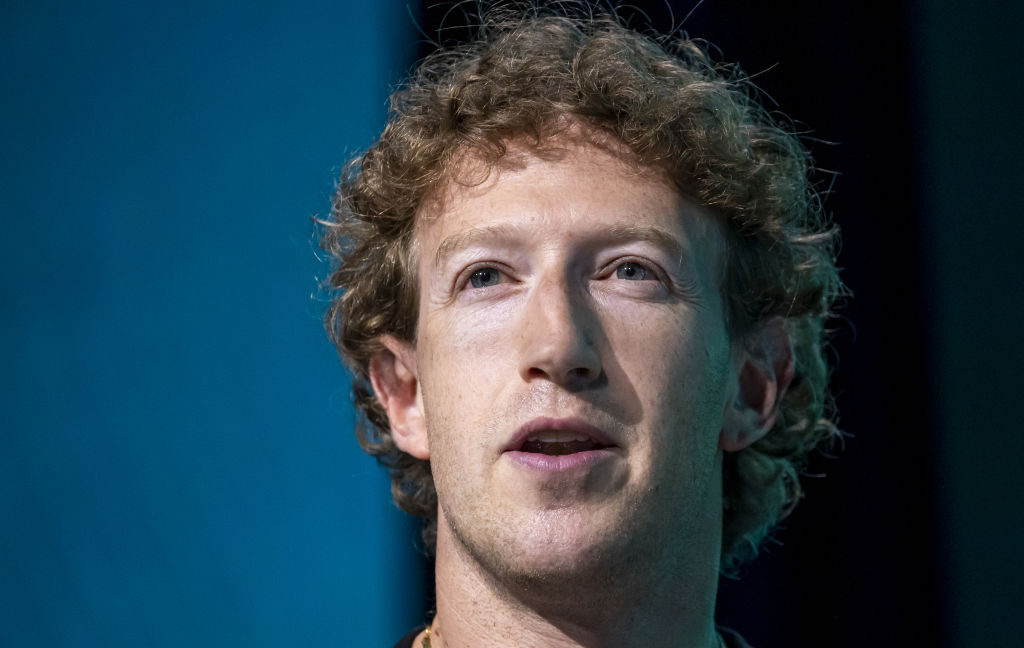
Meta CEO Mark Zuckerberg at the Acquired LIVE event at the Chase Center in San Francisco, California, on September 10, 2024. | David Paul Morris/Bloomberg via Getty Images
With less than two weeks before the new Trump administration takes office, Meta chief Mark Zuckerberg announced a sweeping set of policy changes that will do away with fact-checkers on the company’s platforms and reduce restrictions on the posts its users can share.
Zuckerberg said the changes are meant to address political “bias” and curtail “censorship” — echoing arguments that President-elect Donald Trump and his supporters have long made about the platform.
In lieu of fact-checkers, Facebook will employ a “Community Notes” model like the one used on X.
As it operates on X, Community Notes allows users to add context and corrections to other people’s posts, though studies show it can be slower and cover different subjects than professional fact-checking.
Zuckerberg also said the site would relax its policies for moderating posts and allow more content on issues including “immigration and gender” instead of taking them down. (According to a Wired review, some of these changes appear to have already gone into effect.)
For users interested in seeing more political content, Zuckerberg noted that Meta plans to reintroduce more of these posts into people’s feeds as well.
In a five-minute video announcing the changes, Zuckerberg said the fact-checkers Facebook has worked with were “too politically biased” and had harmed user trust, and jabbed at the Biden administration for the “censorship” it’s allegedly employed against Meta. (Zuckerberg didn’t specify what he meant by that claim, though tech companies have previously fielded requests from the Biden administration about removing posts related to Covid-19 misinformation and election fraud.)
Broadly, Meta’s announcement signals a willingness among tech companies to cater to Trump as they seek to preserve their business prospects and avoid political retaliation from a frequent, strident critic. Its shifts in content moderation also have serious implications for the types of posts and misinformation that can spread on its platforms, which include Facebook, Instagram, and Threads.
“I suspect we will see a rise in false and misleading information around a number of topics, as there will be an incentive for those who want to spread that kind of content,” Claire Wardle, an associate professor in communication at Cornell University, told Vox.
What Meta has done
Meta’s recent changes coincide with other moves Zuckerberg has made in an apparent attempt to get into Trump’s good graces, including a personal visit to Mar-a-Lago and the appointment of Dana White, the CEO of Ultimate Fighting Championship and a Trump ally, to Meta’s board of directors.
Below is a more detailed rundown of the changes Zuckerberg just announced, as well as other recent steps he’s taken.
Changes to content moderation
Replacing fact-checkers with Community Notes: Meta had worked with 90 independent organizations to fact-check posts that spread on its platforms. Those fact-checkers would append warning labels to false content, and Meta would also reduce the distribution of those posts. Zuckerberg has accused the fact-checkers of being politically biased, while providing no examples, and said they’ll be replaced with a Community Notes system that will be phased in over the coming months.
Reducing content restrictions on topics like “immigration and gender:” Zuckerberg said the platforms will focus on removing posts that contain “illegal and high-severity violations” and allow more posts to stay up that they might have previously been flagged. Effectively, the company is cutting back on content moderation in general and taking down fewer posts on hot-button political issues.
Bringing back politics content: Meta had previously downgraded politics content and reduced the distribution of it on its platforms, citing user requests for less of this content in their feeds. Zuckerberg announced that Meta would be phasing political content back into users’ feeds due to changing demands.
Moving content and moderation teams: In another bid to address alleged political bias, Zuckerberg said Meta’s content moderation team will move from California to Texas.
Working with Trump to combat censorship by other countries: Zuckerberg committed to collaborating with Trump to fight censorship and regulations in other countries, pointing to the blocking of Meta apps in China and European tech policies he claimed were stifling innovation.
Donating to Trump’s inaugural fund and visiting Mar-a-Lago: Meta is among the tech firms donating $1 million to Trump’s inaugural fund. Amazon has as well, and Apple CEO Tim Cook and OpenAI CEO Sam Altman have made comparable personal donations. Zuckerberg, Amazon’s Jeff Bezos, and Google’s Sergey Brin are also among the tech chiefs who’ve paid a personal visit to Trump at Mar-a-Lago.
Silicon Valley is bending the knee — with troubling consequences
Many of these efforts are driven by the goal of maintaining a friendlier regulatory climate, Narea reports, whether that’s less scrutiny of antitrust or more consideration for government contracts.
Efforts by businesses to cultivate ties across administrations are commonplace. But Zuckerberg’s and Bezos’s moves have raised additional concerns, given the impact they have on what millions of people read and, in Zuckerberg’s case, post.
Zuckerberg’s moves could shape the type of content that proliferates on Facebook, Instagram, and Threads, enabling misinformation to thrive unchecked. Not only will Facebook remove fact-checkers, but by dialing back moderation on topics like immigration and gender identity, which have already been the subject of rampant right-wing conspiracy theories, it could exacerbate an existing mis- and disinformation problem.
X, formerly known as Twitter, has also rolled back its content moderation since Trump ally and Tesla CEO Elon Musk took over the site in late 2022. Since then, Musk elevated Community Notes as a way to crowdsource fact-checks.
Community Notes has been a mixed bag since it was implemented, says Erik Nisbet, a professor of policy analysis and communications at Northwestern University. Researchers have found that users are likely to trust context offered via Community Notes more than a basic flag from a fact-checker, for example. But Community Notes are often slower than a professional fact-checker, meaning a false post could go viral before it gets checked. Additionally, Community Notes relies on the expertise and interest of the site’s users, whereas professional fact-checkers can offer expertise quickly on a wider range of key topics.
The changes in content moderation at X since Musk’s takeover could foreshadow similar results at Meta. A USC study of English-language posts on X from January 2022 to June 2023 found that hate speech had increased 50 percent on the site in that time, with use of transphobic slurs increasing 260 percent. Musk fired a number of content moderators when he took over in 2022 and began revamping the platform’s approach, including lifting suspensions for previously banned accounts.
“Mark Zuckerberg argues that his role model for this change is Elon Musk and what he did on Twitter,” says Yotam Ophir, a University of Buffalo communications professor who studies misinformation. “So we can look at Twitter for answers, right? And if we do, we see chaos.”
The potential spread of more misinformation and hateful content on Meta’s platforms is concerning, Nisbet told Vox, and could have significant effects on the quality of US democracy. Access to accurate information and the ability to hold political leaders accountable is a crucial differentiator for democratic states, he said, and as falsehoods are allowed to proliferate and spread, it weakens people’s access to trustworthy information and their ability to confront their political leaders.
Multiple recent events have illustrated the acute impact such misinformation can have. In September, Trump amplified a lie about Haitian immigrants eating pets in Springfield, Ohio, which had begun on Facebook. That lie went on to fuel property damage and threats against Haitian people in the city. Trump’s lies about FEMA aid workers in North Carolina following Hurricane Helene’s devastation also spread on social media, spurring distrust of the agency and even threats of violence toward government workers.
Without strong guardrails at Facebook, Instagram, and Threads, such misinformation could spread further and have even more dangerous consequences.
Judge Aileen Cannon isn’t done blocking and tackling for Donald Trump—especially blocking.
In a brief order today, the federal judge in Florida temporarily barred the Justice Department from releasing Special Counsel Jack Smith’s final report of his investigation into the president-elect. The order, which came after a request from Trump’s co-defendants, not only prevents the public release of the report but also bans DOJ from sharing it with other areas of the government. (Trump’s lawyers separately asked Attorney General Merrick Garland to block the report’s release.)
Cannon, a Trump appointee, was randomly assigned one of Smith’s cases in June 2023—the one involving Trump’s hoarding of highly classified materials at Mar-a-Lago. Her handling of it puzzled and appalled many observers, some of whom accused her of “sabotaging” the case. In July, she threw the case out, concluding that Smith’s appointment altogether was unconstitutional. DOJ appealed her ruling, but Smith moved to dismiss the matter after Trump won the presidential election.
The dismissal was a bow to reality—DOJ guidance bars the prosecution of a sitting president, and Trump had vowed to dismiss it and fire Smith anyway—but it also paved the way for Smith to release a report laying out his findings before Trump could take charge and bury it. Cannon’s ruling appears to try to block the release of information related not only to the classified-documents case but also to a separate case involving Trump’s attempts to subvert the 2020 election, which was in federal court in Washington, D.C. Smith moved to dismiss that case after Trump’s victory as well.
Cannon’s ruling is temporary and expires once the Eleventh Circuit Court, which was hearing DOJ’s appeal, rules. From one perspective, Cannon’s ruling is reasonable: She’s just preserving the status quo while the higher court decides. But analyzing her choice outside of her repeated decisions that help Trump is impossible. Her ruling that Smith’s appointment was unconstitutional conflicted with years of rulings about special counsels, and surprised legal observers who’d expected Trump’s argument to be quickly dismissed.
And that was after her already dilatory handling of the case, which allowed Trump to escape a trial in what was arguably the most straightforward of the several criminal cases against him. Trump clearly took the documents, some of which involved the nation’s most sensitive secrets. They were recovered at Mar-a-Lago by FBI agents, who found them stacked haphazardly in a bathroom and on a ballroom stage, even though the government had issued Trump a subpoena. But by drawing the case out and winning the election in November, Trump managed to quash it.
Now he’d like to bury any damaging information that Smith gathered—in both this and the election case. The release of a report is standard for special counsels, but Trump is once again trying to run out the clock. If he can drag the process out until January 20, when he becomes president, he may be able to permanently block any release. With any other judge, that might seem like a pipe dream. But luckily for Trump, Aileen Cannon isn’t any other judge.
I'll be picking up a Steam Deck 2 once it comes out with the new AMD hardware
Almost exactly a year ago, we were publicly yearning for the day when more portable gaming PC makers could ditch Windows in favor of SteamOS (without having to resort to touchy unofficial workarounds). Now, that day has finally come, with Lenovo announcing the upcoming Legion Go S as the first non-Valve handheld to come with an officially licensed copy of SteamOS preinstalled. And Valve promises that it will soon ship a beta version of SteamOS for users to "download and test themselves."
As Lenovo's slightly downsized followup to 2023's massive Legion Go, the Legion Go S won't feature the detachable controllers of its predecessor. But the new PC gaming handheld will come in two distinct versions, one with the now-standard Windows 11 installation and another edition that's the first to sport the (recently leaked) "Powered by SteamOS" branding.
The lack of a Windows license seems to contribute to a lower starting cost for the "Powered by SteamOS" edition of the Legion Go S, which will start at $500 when it's made available in May. Lenovo says the Windows edition of the device—available starting this month—will start at $730, with "additional configurations" available in May starting as low as $600.
oh fuck off. Dems need to stop doing the GOP's dirty business for them. The GOP wants the traitors pardoned, they can do it themselves and suffer the political consequences.
These proposals are driven by fear of what President-elect Donald Trump might do: prosecutions, deportations, executions. But there’s another thing Trump promised: to pardon the Jan. 6 insurrectionists. To stop him — and start healing our nation — Biden should pardon them instead.
Pardoning these traitorous enemies of democracy is morally repellent — which is exactly why a pardon is necessary.
Biden certainly can pardon the 900 people convicted on federal charges. A president’s pardon and commutation power is sweeping and can be used right up tothelastday. Pardons could cover people already convicted, on trial, or under investigation, and those who might be — just like President Gerald Ford preemptively pardoned Richard Nixon. There could be exceptions for those who committed the worst violence against Capitol police; commutations with parole could ensure reoffenders are swiftly reincarcerated. But a pardon could cover many people who committed terrible crimes — and include Trump. An amnesty.
This would achieve several things. A political coup for one: Trump can’t pardon anyone if Biden beats him to it. And cover for pardoning House officials who investigated the insurrectionists. But it would also serve a higher purpose: helping heal our national trauma. For pardon to come from the man whose election the insurrectionists tried to steal would send a powerful message of forgiveness.
The Democrats’ pardon proposals serve several goals: correcting or preventing injustice, helping friends, advancing a political agenda. But all are also partisan, and none does the other thing pardons can: promote social peace. A general pardon for Jan. 6 insurrectionists, by Biden, would.
Biden has been criticized, rightly, for pardoning his own son. But imagine if Trump had pardoned Hunter Biden — it matters who pardons whom. Trump pardoning Jan. 6 patriots means further division. Biden pardoning Jan. 6 insurrectionists cuts across partisan expectations, an offer of radical reconciliation.
Pardons aren’t a perfect fix. Trump will claim victory, saying it proved there was no crime — and invite rioters to the inauguration. But pardons don’t mean there was no crime. In fact, it’s the opposite. That’s a narrative battle Democrats can fight — and Biden can narrate the first salvo.
Pardons might supercharge the MAGA movement’s sense of impunity, not only freeing the QAnon Shaman, but unleashing the politics of violent spectacle that the Shaman represents. Yet this fear is curiously at odds with our intuitions about incarceration’s effects more generally. There’s little evidence that relentlessly punishing one’s enemies, however justified, achieves social peace. Further entrenching mutual antipathies is the likelier result. Parts of MAGA are dangerous already; pardons won’t make that worse.
Punishment ignores traditions of forgiveness and foregoes the power of possibility: Just imagine if, instead of Ford, President Jimmy Carter had pardoned Nixon.
Trump won’t respond to moral suasion, but although his chaos breaks barriers, he still operates in a world of constraints. He has withdrawn cabinet nominations and walked away from policies that lacked support. MAGA is no monolith. There are still Republicans and centrists who support political and institutional guardrails, and what Democrats do will either strengthen that support or further weaken it. That’s a practical, political choice that doesn’t depend solely on Trump — in fact, it’s irresponsible to pretend that Trump’s irresponsibility absolves everyone else from the effects of their actions.
We’re not going to incarcerate our way out of Trumpism, and we won’t counter the corrosive dangers to our democracy by turning the end of each administration into a desperate, Phanariot scrum. Michelle Obama was right about taking the high road, true for campaigning and governing: If we are ever going to normalize our politics again, we have to restore a culture of limits, not hurl bricks through what’s left of American politics’ Overton window.
Jan. 6 was a crime, but also political. (If you call it an insurrection, you already understand that.) Many now in federal prison, however misled, were sincere. They believed — believe — in a man and movement that half of America just voted for in November. Politicalcrimes are what amnesties are for. Amnesties are not about forgetting or declaring that nothing bad happened. They acknowledge terrible things have happened — so terrible that political consensus is too fragile to pretend the usual methods aren’t compromised. The Thirty Years' War devastated Central Europe in the 1600s, killing millions, causing famines, and fanning religious persecution and witch burnings. The treaty ending the war declared “a perpetual Oblivion, Amnesty, or Pardon of all that has been committed since the beginning of these Troubles.” “Troubles” was a euphemism, of course. But sometimes, precisely because something is awful and irreconcilably contested, pursuing justice would mean forgoing peace.
We are not the only modern country that has experienced division and had to make choices about how to overcome it, and many have had to do it after much worse violence than we faced. Those choices often recognize the priority of social reconciliation alongside, even instead of, formal retributive justice. South Africa’s Truth and Reconciliation Commission could give amnesties to individuals who acknowledged their participation in crimes during apartheid. Rwanda processed most participants of the genocide through local, village-level meetings called gacaca. And after the death of Francisco Franco, Spain grounded its transition to democracy on a pacto del olvido — a pact of forgetting. Every model is different; every model has its failings, its costs and tradeoffs.
But every effective model adopted after great violence and division recognizes that while criminal justice and punishment have a role, so do amnesty and forgiveness. And a punishment model seems especially risky — and futile — if your enemies are about to take power.
To all objections, there’s one overriding answer: If Biden doesn’t do it, Trump will. The criminals of Jan. 6 are going to go free — if by Trump’s hand, as heroes of triumphal resistance to a deep state’s failed attempt to crush true patriots. (Or not: Trump’s pledge keeps changing, which might be the strongest objection to a preemptive pardon.)
What if we took that power away from him?
For some, it’s too much: We shouldn’t do an evil thing, even if it would work! It’s that feeling of righteous repugnance we have to interrogate: If you are so repelled, so convinced that these hateful traitors deserve prison, that you couldn’t abide Biden doing it, then you have become part of the problem too.
The insurrectionists are enemies of democracy. That’s why we should pardon them: Your enemy is who you must, someday, make peace with. You do it not because they aren’t your enemies, but so that they might someday no longer be. You pardon not because their sin isn’t real, but because sin is what we forgive.
Pardons are going to happen. The only question is early or late, by whom, and what it will mean for our nation. Biden has one final chance to take Trump’s most divisive weapon and make it a peace offering. He can use the presidency, one last time, for a gesture of reconciliation — before the next president uses it for something else.
Here at Ars, we're judicious about which of the many, many Switch 2 rumors we decide to highlight on this page. For every report on hardware power or magnetic Joy-Cons that we share, there are probably five others we see and decide are too lightly sourced, too unlikely, or just too plain obscure to spread here.
But when we started hearing reports that the Switch 2's Joy-Cons could be cradled on their sides and manipulated like a full-fledged gaming mouse, we knew the concept was one you'd want to hear about.
Rumor: More images of Switch 2 Joy-Cons have immerged from China.
The rumors of mouse-like functionality on the Switch 2's included controllers got supercharged over the weekend when a Reddit poster shared detailed photos of purported Switch 2 Joy-Cons, sourced from an unnamed Chinese social media user. In between the longer shoulder buttons along the Joy-Con's inner edge (SL and SR) and a new central connector port, eagle-eyed viewers noticed what looks suspiciously like the optical sensor that sits on the bottom of practically every mouse these days.
A forthcoming peer-reviewed study (PDF) from Rutgers University's Network Contagion Research Institute argues that TikTok surfaces fewer anti-CCP posts compared to Instagram and YouTube, despite higher user engagement with such content. It also found that heavy TikTok usage correlates with more favorable views of China's human rights record. The findings come a Supreme Court hearing later this week on whether the federal government can ban TikTok. Gizmodo reports: The new peer-reviewed paper, which was first reported by The Free Press, begins by examining whether content on TikTok, Instagram, and YouTube related to the keywords "Tiananmen," "Tibet," "Uyghur," and "Xinjiang" tends to display pro- or anti-CCP sentiment. The researchers found that TikTok's algorithm didn't necessarily surface more pro-CCP content in response to searches for those terms, but it delivered fewer anti-CCP posts than did Instagram or YouTube and significantly more posts that were irrelevant to the subject.
In the second stage of their study, the NCRI team tested whether the lower performance of anti-CCP content was a result of less user engagement (likes and comments) with those posts. They found that TikTok users "liked or commented on anti-CCP content nearly four times as much as they liked or commented on pro-CCP content, yet the search algorithm produced nearly three times as much pro-CCP content" while there was no similar discrepancy on Instagram or YouTube.
Finally, the researchers surveyed 1,214 Americans about their social media usage and their views on China's human rights record. The more time users spent on any social media platform, the more likely they were to have favorable views of China's human rights record, the survey showed. Users were particularly more likely to have favorable views if they spent more than three hours a day using TikTok. The researchers wrote that they could not definitively conclude that spending more time on TikTok resulted in more positive views of China, but "taken together, the findings from these three studies raise the distinct possibility that TikTok is a vehicle for CCP propaganda."
Looks like my chip...solid gaming plus enough cores to still do good encoding work. My threadripper v1 (2017) has done heroic work, but it's time to think about an upgrade.
AMD's batch of CES announcements this year includes just two new products for desktop PC users: the new Ryzen 9 9950X3D and 9900X3D. Both will be available at some point in the first quarter of 2025.
Both processors include additional CPU cores compared to the 9800X3D that launched in November. The 9900X3D includes 12 Zen 5 CPU cores with a maximum clock speed of 5.5 GHz, and the 9950X3D includes 16 cores with a maximum clock speed of 5.7 GHz. Both include 64MB of extra L3 cache compared to the regular 9900X and 9950X, for a total cache of 144MB and 140MB, respectively; games in particular tend to benefit disproportionately from this extra cache memory.
But the 9950X3D and 9900X3D aren't being targeted at people who build PCs primarily to game—the company says their game performance is usually within 1 percent of the 9800X3D. These processors are for people who want peak game performance when they're playing something but also need lots of CPU cores for chewing on CPU-heavy workloads during the workday.
Intel, which has been fending off mounting competition in notebook processors, says a new range of chips will help enable the longest battery life available in laptops. From a report: New computers based on the latest version of its Core Ultra processors will go on sale starting this month, the company said Monday at CES, an annual consumer electronics show.
Intel was for decades the world's largest chipmaker thanks to its dominance of the computer processor market. Production technology stumbles and slow product introductions have opened the door to both long-time rivals and firms just entering the space. The company's board last month ousted its chief executive officer, citing the need to improve its offerings.
The new chips, intended for corporate PCs and high-end consumer devices, are aimed at boosting performance in two areas the company considers key selling points: battery life and the ability to run artificial intelligence functions. According to Intel, an HP laptop that uses one of the new processors can run Microsoft's Teams software for as long as 10.5 hours on a single charge. It can go 20.3 hours between charges when the user is running Microsoft's cloud-based 365 suite, Intel added. By comparison, Intel says a Dell device using a Qualcomm Snapdragon processor can last as long as 9.2 hours and 18.5 hours, respectively, under those conditions.
What will it take for Americans to give up their enormous cars?
With an annual toll of 40,000 American lives, the deadliness of secondhand smoke is now common knowledge. But it was only a few decades ago that puffing on a cigarette was defended as an act that affected only the smoker.
In the 1980s, researchers for the first time demonstrated that smoking can kill people who never themselves lit a cigarette. Those findings undercut tobacco industry claims that smoking need not be restricted, because smokers had accepted any health risk arising from their habit. Even if that was true, it certainly wasn’t for others forced to breathe polluted air.
Secondhand smoke galvanized the anti-smoking movement. “You’re suddenly not talking about suicide,” said Robert Proctor, a history professor at Stanford University. “You’re talking about homicide.”
By the end of the 1990s, smoking was banned on domestic flights as well as across an expanding number of bars, restaurants, and workplaces. Tobacco use tumbled: In 2000, 25 percent of Americans said they smoked a cigarette during the prior week, down from 38 percent in 1983.
Secondhand smoke is a textbook example of a negative externality: a product’s costs that are paid by society instead of its users. It’s a framework that helped turn the public against tobacco, and it carries lessons for another product that is as ubiquitous today as cigarettes were 50 years ago. And like tobacco, its use can — and often does — kill innocent bystanders. I’m talking about oversized cars.
Over the last half-century, American sedans and station wagons have been replaced by increasingly enormous SUVs and pickup trucks that now comprise 80 percent of new car sales, a phenomenon known as car bloat. Much like secondhand smoke, driving a gigantic vehicle endangers those who never consented to the danger they face walking, biking, or sitting inside smaller cars. Although not widely known, car bloat’s harms are well-documented. Heavier vehicles can pulverize modest-sized ones, and tall front ends obscure a driver’s vision, putting pedestrians and cyclists at particular risk. Deaths among both groups recently hit 40-year highs in the US. The threat of hulking vehicles could even deter people from riding a bike or taking a stroll, a loss of public space akin to avoiding places shrouded in tobacco smoke.
Despite ample research demonstrating car bloat’s harms, American policymakers have done virtually nothing to counteract them. The political headwinds are powerful: Encouraged by carmaker ads depicting SUVs traversing rugged terrain, millions of Americans use oversized vehicles daily simply to get to an office, store, or school.
Convincing policymakers to regulate the size of automobiles would require a broad base of public support. The story of secondhand smoke shows how reformers could build it.
How the anti-smoking movement won over the public
Tobacco use was ubiquitous during the mid-20th century, even though scientists had started to link smoking and cancer before World War II. During the 1940s and 1950s, over 40 percent of Americans smoked cigarettes regularly, with most of them going through at least a pack a day. The cigarette industry was a political powerhouse, with many of its closest allies hailing from North Carolina, then home to more than a fourth of American tobacco farms.
In the postwar years, medical researchers produced a growing pile of studies concluding that tobacco damages smokers’ health. In 1964, the Office of the Surgeon General spurred a national conversation with a historic report linking smoking to lung cancer and heart disease. In 1967, the lawyer John Banzhaf, dubbed “the Ralph Nader of the tobacco industry,” cited that report when he convinced the Federal Communications Commission to require that TV networks broadcast anti-smoking ads that would counterbalance tobacco commercials.
During the 1970s, a grassroots “nonsmoker’s rights” movement began to emerge by appealing to Americans who found smoking unpleasant. “They were mostly women who fastened on to the idea that somebody else’s use of space shouldn’t preclude my enjoyment of that space,” said Sarah Milov, a historian at the University of Virginia who wrote The Cigarette: A Political History. Clara Gouin was a Maryland housewife who founded Group Against Smoking Pollution, published its newsletter, and mailed policymakers signs with a catchy phrase: “Thank you for not smoking.”
At the time, smoking was seen as annoying to nonsmokers but not necessarily hazardous to them. Still, there were ominous signs. In 1975, researchers found that carbon monoxide levels within the Detroit Lions’ football stadium surged during games by a factor of 10 — exceeding federal air pollution guidelines — when thousands of fans congregated and lit up at the same time.
Tobacco companies defended their products by invoking ideals of liberty and independence. “For decades, the industry had trumpeted the cause of free choice for smokers,” wrote former Food and Drug Administration head David Kessler in his memoir, A Question of Intent. “The concept had struck a chord with the public by tapping into a libertarian instinct in American society.”
Finally, in the 1980s, scientists demonstrated that secondhand smoke was more than a nuisance; it could kill you. In 1981, Takeshi Hirayama, a Japanese epidemiologist, published a landmark study whose title neatly summarized its conclusion: “Non-Smoking Wives of Heavy Smokers Have a Higher Risk of Lung Cancer.” Hirayama had pored over 14 years of health and smoking data collected from tens of thousands of Japanese citizens, finding that non-smoking women were more likely to get lung cancer if their husbands smoked.
Hirayama’s study was a sensation, getting front-page treatment in the New York Times. People without scientific training still grasped its warning. If secondhand smoking harmed spouses, it likely harmed anyone else who shared a room with a smoker — be they a coworker, friend, or stranger.
Secondhand smoke captured more attention in 1986, when the Surgeon General released another blockbuster report, this one detailing the dangers of “involuntary smoking.“ Its Reagan-appointed author, C. Everett Koop, pleaded for policymakers to act: “As both a physician and a public health official, it is my judgment that the time for delay is past; measures to protect the public health are required now.” Koop was looking beyond Congress when he wrote that, Milov said, targeting lower-level officials.
Koop got his wish when local communities nationwide soon restricted public smoking. In 1987, Aspen, Colorado, became the first city in the United States to end smoking in restaurants, and in 1990 San Luis Obispo, California, did the same for all public buildings. Employers, too, began to restrict smoking within their facilities. “Banning smoking in public places doesn’t stop anyone from smoking,” Banzhaf told me in an interview, “but it does make it far more inconvenient to smoke.”
After barely budging for years, in the 1980s adult smoking rates began a prolonged decline: Eleven percent of Americans now use cigarettes, an all-time low.
America is now ignoring its car bloat crisis
In a 2020 article, The Onion described a “conscientious SUV shopper” who “just wanted something that would kill the family in the other car if she got into an accident.” That story was satirical, but it exposed the underlying ethical tension of products that can be deadly for non-users.
In a recent exploration of car bloat, The Economistfound that the extra heft of the very heaviest US cars do make their occupants marginally safer, but every life saved corresponds with more than a dozen lost among those inside smaller vehicles that collide with the larger ones. People on foot are at even greater risk. Large vehicles’ height can conceal pedestrians at intersections, as well as children sitting in front of them. Tall, flat front ends are also more likely to strike a pedestrian’s head or torso instead of their legs: One study found that limiting vehicles’ hood height to 1.25 meters — 15 cm shorter than the Ford F-250 — would save over 500 lives annually.
In the fall, the National Highway Traffic Safety Administration did suggest an overdue if narrowly designed rule to mitigate the risk of a pedestrian’s head striking a vehicle’s hood. But even that proposal — which did not address other car bloat dangers like blind zones and torso strikes — is likely to be cast aside by incoming Trump appointees who are disinclined toward new business regulations. Congress, for its part, has shown no desire to address vehicle size itself.
As neglectful as it is, the bipartisan federal foot-dragging reflects a certain political logic. Constraining vehicle size would threaten car companies that collect disproportionate profits from large vehicles, and any perceived criticism of large SUVs and pickups risks launching a culture war that could make the tobacco battles of the 1980s seem like schoolyard tiffs.
For the people who love big cars, owning one can be integral to their identity, reflecting very specific ideas about American individualism.
“Cigarette smokers didn’t really have an identity built up around being smokers,” Milov, the historian, said. “But it’s very easy to see how having a big SUV or truck is a marker of a whole host of other ideological associations.” A majority of truck owners go off-roading at most once per year; they didn’t buy their pickup for practical reasons. Image is intrinsic to its appeal.
Despite growing unease about oversized vehicles, grassroots opposition has been muted, largely confined to road safety and urbanist advocates scattered across the country. It does not appear anyone is lobbying members of Congress to restrain vehicle size.
Public officials hoping to remain in their job can only move so far ahead of popular sentiment. Beyond the logic and justice of the cause, curtailing car size requires an energized public demanding it — much like tobacco reforms 40 years ago.
The anti-smoking playbook could turn the public against oversized cars
As with tobacco use in the 1970s, the most common defense of oversized cars invokes the need to give consumers freedom to make their own choices. Researchers like Hirayama demolished that argument for smoking when they showed that it affects the health of those who never took a puff or consented to inhale smoke. Restricting public smoking became a logical way to protect nonsmokers from being harmed in ways that they could not control.
An abundance of research now shows that oversized cars increase the risk of injury or death among other road users, a negative externality akin to secondhand smoke. The problem is that most Americans don’t yet see oversized cars as the hazards that they are.
“We tend to treat the car as a closed thing, ignoring its impact on the environment, the climate, and the pedestrian,” said Proctor, the Stanford professor. “We need to think about big cars in the same way that we think about cigarettes: Affecting not just the user, but everyone around the user.”
The history of tobacco, in which Surgeon General reports brought attention to cigarettes’ harms and provided ammunition for reformers, shows the power of a federal megaphone. National Transportation Safety Board chair Jennifer Homendy has warned about the threat of oversized cars, but others with broad reach, such as US Surgeons General as well as transportation secretaries, have remained silent.
Still, public pronouncements alone only go so far.
“Enlightenment alone cannot effect a widespread change in behavior,” Milov wrote in the Cigarette. “Laws and institutions must change as well. People must be compelled.” The question is how.
The history of tobacco regulations warns against counting on Congress to penalize big cars. A powerful industry like cigarettes or auto manufacturing can rely on support from “home state” lawmakers — North Carolina for tobacco and Michigan for automobiles — as well as an army of lobbyists to defend itself in the insular confines of Capitol Hill.
For reformers, a wiser approach is to demand change at the state and local level, overwhelming industry lobbyists with proposals mushrooming across the country.
That strategy was hugely successful during tobacco battles two generations ago, Proctor said, and its lessons are universal. “If the mouse hole is small, one cat can control 1,000 mice,” he told me. “But if 1,000 mice attack a cat, they might well win.”
To fight car bloat, local activists must first expand the ranks of people who see big vehicles as a danger to themselves and their loved ones. “Part of the genius of the nonsmokers rights movement was to point out that what we have taken for granted as the social default shouldn’t be the social default,” Milov said. Perhaps a new generation of community groups could devise a slogan akin to “Thank you for not smoking.” (“SUV is not for me”?)
Although car safety rules are a federal responsibility, state and local officials have numerous mechanisms to counteract vehicle size. Cities could follow Montreal’s lead and increase parking fees for owners of the biggest cars. Local and state governments can replace the SUVs and pickups in their vehicle fleets with sedans. States, which register cars, could emulate the District of Columbia and scale fees to vehicle weight. They can also ban aftermarket lifts, which expand the blind spots of already towering trucks. Local leaders in Paris have even discussed prohibiting SUVs entirely from downtown areas.
The private sector, a frequent target of anti-smoking activism, could also encourage reasonably sized automobiles. Real estate developers, for instance, can install “compact car” parking spots proximate to entrances, providing a convenience to their owners while also expanding total parking capacity.
When local activists secure a win against car bloat, Milov suggests they throw themselves a party. “The nonsmokers rights movement gave people a sense of efficacy — a sense that they participated in something and saw the change pretty quickly,” she said. “City council did X or Y, and you experience it and see that the sky is not falling. Then more people become mobilized around the issue.”
Still, even a wildly successful movement against gigantic trucks and SUVs will require patience. While many smokers were willing, even eager, to quit their addiction several decades ago, the same cannot be said about people who now own oversized cars and trucks. They and automakers will almost certainly rally around the status quo — much like the tobacco industry did decades ago. But their defenses are not impregnable.
The movement against car bloat is nascent, but it has righteousness on its side. Like cigarettes, enormous vehicles can kill those who never used the product, which calls for regulation. Forty years ago, the intuitive outrage of secondhand smoke was an eye-opener for many Americans. A similar narrative could help people recognize the havoc that four-wheeled behemoths now wreak on the nation’s streets.
An anonymous reader quotes a report from Electrek: A new study published in the journal Renewable Energy (PDF) uses data from the state of California to demonstrate that no blackouts occurred when wind-water-solar electricity supply exceeded 100% of demand on the state's main grid for a record 98 of 116 days from late winter to early summer 2024 for an average (maximum) of 4.84 (10.1) hours per day. Compared to the same period in 2023, solar output in California is up 31%, wind power is up 8%, and batteries are up a staggering 105%. Batteries supplied up to 12% of nighttime demand by storing and redistributing excess solar energy.
And here's the kicker: California's high electricity prices aren't because of wind, water, and solar energy. (That issue is primarily caused (PDF) by utilities recovering the cost of wildfire mitigation, transmission and distribution investments, and net energy metering.) In fact, researchers from Stanford, Lawrence Berkeley National Laboratory, and the University of California, Berkeley found that states with higher shares of renewable energy tend to see lower electricity prices. The takeaway -- and the data backs it up -- is that a large grid dominated by wind, water, and solar is not only feasible, it's also reliable.