The AZ GOP needs to burn for this one. Ducey especially.
If you want further evidence that Republicanism stands for nothing, that the party is broken, that the shattered remains of whatever "ideas" they once pretended to prop up are now swirling around a toilet bowl in preparation for joining the imaginary alligators of the nation's sewer systems—I know, you don't, but bear with me here—here's Republican freaking Senator Martha McSally going blue-screen after being asked the simple question of whether she still supports Dear Infectious Leader.
Oh, go on. It will be fun. It’s like watching a nature documentary.
Well, that was truly impressive. There may be no more shallow person in America—you can really see the gouge marks, there, where she took an ice cream scoop and scraped off as much integrity as she could manage in order to fit the new role required of principle-averse Republican sycophants. And it really speaks to the Republican Party's state that McSally is not just any Republican, but one chosen by the state party as representative of their highest possible talent.
Could have chosen any Republican in Arizona to fill the vacant Senate seat. Chose her. That's what they went with.
McSally had other humiliating moments during her, ahem, very weird debate with challenging Democrat Mark Kelly. Of special note was her insistence that Kelly was connected to an "extreme left-wing" group with "ideas that are dangerous for Arizona." Asked to explain What The Cactus-Studded Hell she was talking about, she refused to say the name, only continuing her insinuations.
While viewers attempted to parse for themselves just what McSally was trying to claim, Mark Kelly cleared up the mystery: McSally was talking about the gun control group founded by Gabby Giffords, a House Democrat shot in the head in an attempted assassination attempt in 2011.
Giffords is Kelly's wife.
Martha McSally claims Mark Kelly is part of an "extreme left wing" group but refuses to name it. The group is his gun control group Giffords, which he started with his wife Gabby Giffords a victim of horrific gun violence in 2011. pic.twitter.com/69fBJuOVzf
McSally really is the poster child for Republicanism in the Trump era. She used to declare that she had certain specific principles; when Trump said otherwise, she fell in line behind the new stuff. When challenged on her support for Trump's erratic, devoid-of-morality fascism, she flings unrelated talking points at her questioner while the rest of her brain hunkers down in its safe room. Everything is now a conspiracy; every idea is now whatever the pre-prepared party line is this week, and heaven knows what it will be next week.
The whole party is broken. Unfortunately, that means they'll be taking more and more extreme measures to sabotage voting, rather than admit they've lost the plot (Hello, Texas Gov. Abbott!), and unfortunately Donald Trump has demonstrated that breaking laws and spouting conspiratorial insanity is the surest way to radicalize their remaining Fox-tainted base.
But jeez, Martha. Don't you have even a little dignity? That was terrible.
For decades, the American public has been working under the assumption that if someone were nominated to the Supreme Court, that person must be qualified. How else could that individual get to a place where they would even be considered for nomination? That slipped a little with President Ronald Reagan's nomination of Robert Bork, who ended up being rejected even by Republicans—enough of them to sink his confirmation. Everything's changed with Donald Trump, however. First Republicans broke all norms and regular procedures by refusing to even talk to President Barack Obama's nominee, Merrick Garland, for more than half a year before the election. Then we had the Brett Kavanaugh debacle, where the whole country could see the blunt force Republicans would employ to get a guy everyone recognized as the frat-boy bully of their school nightmares onto the court.
Now we've got the nomination of Amy Coney Barrett, and an electorate not giving her the benefit of the doubt as to qualifications. CNN reports: "Initial reactions to Barrett are among the worst in CNN and Gallup polling on 12 potential justices dating back to Robert Bork, who was nominated by Ronald Reagan and rejected by the Senate." Barrett has the distinction, along with Kavanaugh, of being "the only two for whom opposition outweighed support in initial polling on their nominations." A plurality does not want her confirmed, 46% to 42%, and 56% say she should recuse herself from any cases resulting from the 2020 election, including 32% of Republicans. Which leads us to the fight Democrats have to have against her confirmation. There's absolutely no downside to Democrats doing everything in their power, limited though it may be, to fight this.
Most of that fight is going to have to be in the Judiciary Committee. The No. 1 thing Democrats should be doing is boycotting the hearings and refusing to allow Lindsey Graham, the chairman, a quorum to conduct most of his business. With any number of Republican senators unavailable at any given time because of quarantine, Democrats need to be nimble and flexible in when they choose to participate. But senators, Democratic or Republican, aren't likely to miss an opportunity to get some video clips of themselves scoring points out there. Knowing they aren't going to give up a chance at their 15 minutes, they need to follow a plan. Chuck Schumer needs to make them do it.
For once, they have to coordinate. They have to find a single plan of attack and stick to it, with their questions coordinated and designed to build a narrative. Already we're seeing the opening—this is a rushed confirmation that Republicans are intent on ramming through before the election and in that rush, they're covering stuff up. We saw the initial evidence of that when Barrett did not submit a newspaper ad she signed on to in 2006 on behalf of a forced-birther group with the materials she provided to the Judiciary Committee—either for this nomination or for her 2017 nomination to an appeals court position. In the ad, she said she opposed "abortion on demand" and defended "the right to life from fertilization to the end of natural life." That's not all: In 2017, TheWashington Postreports she didn't disclose her affiliation with the radical Christian group People of Praise. The group has scrubbed all references to her from its website. What else is she hiding?
In pushing that narrative, they should also have the less effective of their members step back. Let Sens. Kamala Harris (she has said she intends to participate), Amy Klobuchar, Mazie Hirono, and Sheldon Whitehouse—the sharpest interrogators—take the lead. They were the sharpest and most effective questioners in the Kavanaugh hearings and we need that acuity again now.
That's not the only Democratic coordination we need to have happen. Schumer should be quietly working with his conference and with House Speaker Nancy Pelosi on measures they can take to gum up the works for the Senate after the almost inevitable vote out of committee happens. There are things like War Powers resolutions Democratic senators can bring to the floor that will take precedent over a confirmation vote. Likewise, there are resolutions—most notably impeachment—that the House can send over that have to be considered before nominations. Note that this kind of coordination could be happening already. We're not supposed to see it. To be most effective, it can't be seen coming. McConnell is likely already figuring out how he can combat such measures, so Democrats have to be as wily in figuring out when and how to spring them. Which they should be working on. Right now.
Stopping this is going to be nearly impossible, barring the coronavirus continuing to sweep through Republican ranks and reducing the number of senators McConnell has available at any given time. But that doesn't mean Democrats are powerless, and it doesn't mean they shouldn't find every possible avenue for getting this delayed past the election. It probably won't work, but they've got to try it anyway.
For one thing, it will give them practice on coordinating their messaging and their efforts to reform the courts when they have the White House and Senate in 2021.
The reason I’m giving a range is that, as in 2018, there are three versions of our House model.
The Lite version relies primarily on polling. It gives Democrats a 97 in 100 chance of winning the House. On average, it projects Democrats to win 244 seats and Republicans to win 191 seats11 — an 11-seat gain for Democrats.12
The Classic version blends polls with fundamentals like partisanship, incumbency advantages and candidates’ fundraising. It gives Democrats a 93 in 100 chance of winning the House. On average, it projects Democrats to win 238 seats and Republicans to win 197 seats — a smaller five-seat gain for Democrats.
The Deluxe version has the most bells and whistles: It incorporates polls, fundamentals and expert ratings from The Cook Political Report, Inside Elections and Sabato’s Crystal Ball. It gives Democrats a 93 in 100 chance of winning the House. On average, it projects Democrats to win 237 seats and Republicans to win 198 seats — a four-seat gain for Democrats.
We consider the Deluxe version to be the default version of our congressional forecast, so all forecast numbers from here on out are from the Deluxe version of the model. However, you can always explore the other versions by using the magnifying glass icon at the bottom of our forecast page. And if you want to know all the gory details about how the model works, check out our forecast methodology.
All three versions more or less agree, though, that Democrats will essentially stand pat in the House or pick up a few extra seats. That’s an impressive achievement considering the heights they reached in the 2018 midterms, when they scored a 235-199 majority13 despite a congressional map that favored the GOP.
Now, Democrats must defend 30 seats in districts won by President Trump in 2016 (as opposed to only six Republicans who sit in districts that Hillary Clinton carried). Yet Democrats are on offense once again this year: 28 of the 50 House districts that the Deluxe version of our model considers most likely to change parties are held by Republicans.
Democrats have a lot of chances to pick up seats
The 50 House seats most likely to change parties in the 2020 election, according to FiveThirtyEight’s forecast as of 5 p.m. Eastern on Oct. 6
Chance of Winning
District
Incumbent
Party
Dem.
GOP
Chance of Flipping
MI-03
OPEN
L
32%
68%
100%
NC-02
OPEN
R
>99
<1
>99
NC-06
OPEN
R
>99
<1
>99
MN-07
Collin Peterson
D
26
74
74
TX-23
OPEN
R
74
26
74
NY-02
OPEN
R
59
41
59
CA-25
Mike Garcia
R
56
44
56
OK-05
Kendra Horn
D
49
51
51
CA-21
TJ Cox
D
52
48
48
IN-05
OPEN
R
48
52
48
SC-01
Joe Cunningham
D
54
46
46
CO-03
OPEN
R
46
54
46
GA-07
OPEN
R
45
55
45
VA-05
OPEN
R
45
55
45
NJ-02
Jeff Van Drew
R
43
57
43
PA-10
Scott Perry
R
41
59
41
GA-06
Lucy McBath
D
62
38
38
NE-02
Don Bacon
R
37
63
37
NY-22
Anthony Brindisi
D
63
37
37
TX-24
OPEN
R
37
63
37
IA-02
OPEN
D
63
37
37
CA-48
Harley Rouda
D
64
36
36
NM-02
Xochitl Torres Small
D
66
34
34
NY-24
John Katko
R
33
67
33
UT-04
Ben McAdams
D
67
33
33
OH-01
Steve Chabot
R
32
68
32
IL-13
Rodney Davis
R
30
70
30
NY-11
Max Rose
D
70
30
30
AZ-06
David Schweikert
R
29
71
29
TX-07
Lizzie Pannill Fletcher
D
71
29
29
TX-22
OPEN
R
29
71
29
NJ-07
Tom Malinowski
D
71
29
29
MI-06
Fred Upton
R
29
71
29
CA-39
Gil Cisneros
D
72
28
28
TX-21
Chip Roy
R
28
72
28
FL-26
Debbie Mucarsel-Powell
D
72
28
28
NV-04
Steven Horsford
D
72
28
28
AK-AL
Don Young
R
27
73
27
IA-03
Cindy Axne
D
73
27
27
MN-01
Jim Hagedorn
R
26
74
26
NC-08
Richard Hudson
R
26
74
26
MT-AL
OPEN
R
26
74
26
AR-02
French Hill
R
24
76
24
VA-07
Abigail Spanberger
D
77
23
23
NC-11
OPEN
R
23
77
23
MO-02
Ann Wagner
R
23
77
23
WI-03
Ron Kind
D
78
22
22
FL-15
OPEN
R
21
79
21
OR-04
Peter DeFazio
D
79
21
21
TX-32
Colin Allred
D
79
21
21
There are a few explanations for why Democrats still have room to grow. The first is that they are virtually guaranteed to flip two seats right off the bat thanks to redistricting. After a court declared in 2019 that North Carolina’s old congressional lines showed signs of “extreme partisan gerrymandering,” the state legislature passed a new map that reconfigured two Republican-held seats as Democratic strongholds: the 2nd District and 6th District. Their current occupants, Reps. George Holding and Mark Walker, announced they would retire from Congress soon after, and now the seats are Democrats’ two best pickup opportunities in the entire nation. Our model gives the party a greater than 99 in 100 chance of winning both races.
Another is that, though Democrats picked most of the low-hanging fruit in 2018, there are still a few easy pickup opportunities left: That is, there are a few Clinton districts still represented by Republicans. In Texas’s 23rd District, Rep. Will Hurd defeated Democrat Gina Ortiz Jones by just 0.4 points in 2018, but this year, Hurd was one of many Texas Republicans who decided to retire. As a result, Jones (who is running again) has a 74 in 100 chance to win in 2020 against Republican Tony Gonzales. And Democrats did win California’s 25th District in 2018, but a sex scandal forced Rep. Katie Hill to resign, and Republican Mike Garcia flipped the seat back in a special election. Our model considers the rubber match to be a toss-up, giving Democrats a 56 in 100 shot. Finally, Democrats aren’t in quite as good a position to defeat Rep. John Katko in New York’s 24th District, but Democrat Dana Balter still has a 33 in 100 chance. (The one Republican in a Clinton district who seems pretty safe is Rep. Brian Fitzpatrick of Pennsylvania’s 1st District; with an 89 in 100 chance to win, he doesn’t even make the table above.)
But the biggest factor may be the continued leftward march of American suburbs. After Democrats cleaned house in the suburbs in 2018 — three-quarters of their 2018 gains came in predominantly suburban congressional districts — they are back this year for the many suburban districts they left on the table. Their best such pickup opportunity is New York’s 2nd, a dense suburban district on Long Island where Republican Rep. Peter King is retiring after surviving his closest electoral call since 1992. Our forecast gives Democrat Jackie Gordon a 59 in 100 chance of victory there. Republican Rep. Susan Brooks is also retiring from Indiana’s 5th District, which covers the northern Indianapolis suburbs and went from voting for Republican presidential nominee Mitt Romney by 17 points in 2012 to narrowly voting for Democrat Joe Donnelly in the state’s 2018 Senate election. The race to replace her is almost a pure toss-up.
Similarly, Georgia’s 7th District, a suburban Atlanta district that Romney carried by 22 points, hosted the closest House race in the country in 2018. Republican Rep. Rob Woodall opted to retire (sensing a pattern?), and now Democrats have a 45 in 100 chance to win it in 2020. I could go on — Democrats have between a 30 and 40 percent shot in Nebraska’s 2nd District in metro Omaha, Texas’s 24th District in suburban Dallas-Fort Worth and Ohio’s 1st District around Cincinnati — but my editor does put word counts on these things.
Of course, Republicans have pickup opportunities too. They’re favorites to flip just three House seats vs. Democrats’ five. And their likeliest win would represent the end of an era in the House: Republican Michelle Fischbach has a 74 in 100 chance to defeat Rep. Collin Peterson, the powerful chair of the House Agriculture Committee. Peterson represents by far the Trumpiest district currently held by a Democrat — the Minnesota 7th voted for Trump by 31 percentage points in 2016. While Peterson’s conservative views have helped him survive in recent election cycles, the district is getting redder and split-ticket voting is becoming rarer.
Another likely Republican pickup is a seat the party held until July 4, 2019, when Rep. Justin Amash of Michigan’s 3rd District announced he was leaving the GOP. Facing a difficult reelection bid as a third-party candidate, Amash has since decided to retire, and Republican Peter Meijer now has a 68 in 100 chance of taking the seat back for the GOP. (That said, Democrats also have a 32 in 100 chance to flip the seat into their column.)
Republicans have also set their sights on winning back several House seats they lost in 2018, although our model thinks they’re favored in only one — and even then, just barely. Oklahoma’s 5th District produced the biggest upset of 2018 (according to the Deluxe version of our 2018 model), as Democrat Kendra Horn prevailed in a district that voted for Trump by 13 points in 2016. Here in 2020, Horn (49 in 100) and Republican Stephanie Bice (51 in 100) have almost the exact same chance of winning the seat. Also too close to call is California’s 21st District, where Republican former Rep. David Valadao is seeking a comeback in a district he lost by just 862 votes in 2018. Although Clinton won this district by 16 points, it is more Republican in down-ballot races, and Valadao has a 48 in 100 chance of winning. Finally, Republicans are almost even money to defeat Rep. Joe Cunningham in South Carolina’s 1st District, which also voted for Trump by 13 points in 2016. Republican Nancy Mace has a 46 in 100 chance of victory here.
Beyond those seats, Republicans have a fighting chance in several other Democrat-held districts whose names you might recall from 2018: the Georgia 6th, New York 22nd, Iowa 2nd, California 48th, New Mexico 2nd, Utah 4th, New York 11th, Texas 7th, New Jersey 7th, California 39th, Florida 26th and Nevada 4th, to name (more than) a few. But they are clearer underdogs in these races. And they would need to win all of the races I have mentioned in the last four paragraphs — without surrendering a single other seat to Democrats — in order to flip the 17 seats14 they need to attain a House majority.
That, in a nutshell, is why it’s exceedingly unlikely that Republicans will take back the House. Who wins, though, is still extremely important to the governing process in the next two years. Along with the presidency and Senate, the House is one-third of the federal lawmaking process, and controlling all three is a valuable prize: It enables a party to pass its agenda without needing to win over any members of the opposite party. And now that we have a House forecast, we can combine it with our Senate and presidential forecasts to determine the odds that either Democrats or Republicans will have full control of the federal government.
Democrats will likely control the federal government
The chance of every combination of party control of the presidency, Senate and House, according to FiveThirtyEight’s forecast
Control of …
Presidency
Senate
House
Chance
D
D
D
63%
D
R
D
18
R
R
D
9
R
R
R
5
R
D
D
2
D
R
R
1
D
D
R
0
R
D
R
0
As you can see in the table, the likeliest scenario is that Democrats will win full control of the federal government: There’s a 63 in 100 chance of that happening. That could have big consequences for policy, too, as it would open the door for Democrats to pass party priorities such as a public option for health insurance, police reform, election reforms like those in H.R. 1, and even statehood for Washington, D.C., and Puerto Rico — assuming they can overcome internal divisions over things like abolishing the Senate filibuster.
But there is also a good chance (31 in 100) that we will once again have a divided government in Washington, in which case little will probably get done. (The likeliest divided-government scenario involves Biden as president, a Democratic House and a Republican Senate.)
However, because of their long odds in our House forecast, Republicans have only a 5 in 100 chance of winning a trifecta of their own. And that’s a fairly stunning reversal of fortune considering that Republicans enjoyed full control of the federal government as recently as 2018.
CORRECTION (Oct. 8, 2020, 10:27 a.m.): A previous version of this article incorrectly included “Ortiz” as part of Gina Ortiz Jones’s last name. Her last name is just Jones.
An important reminder that Rosenstein is a Republican first and foremost.
It wasn’t just White House aide Stephen Miller, former Department of Homeland Security (DHS) Secretary John Kelly, and his successor Kirstjen Nielsen. The New York Timesreports that a two-year investigation by the Justice Department’s inspector general reveals that top Department of Justice (DOJ) officials, including former attorney general Jefferson Beauregard Sessions III and his deputy Rod Rosenstein, were also “a driving force” behind the Trump administration policy that led to the state-sanctioned kidnapping of thousands of children at the southern border.
The unpublished draft report said that when U.S. attorneys sought clarification on Sessions’ spring 2018 policy ordering the prosecution of parents who unlawfully crossed the border, both the attorney general and his deputy intended to show no mercy to children would be taken from their parents as a result. "We need to take away children,” Sessions reportedly said. Rosenstein ”went even further in a second call about a week later,” the report continued, “telling the five prosecutors that it did not matter how young the children were.”
The draft report also confirms what we already knew: Sessions lied to the American public about what has become one of the worst humanitarian disasters in modern U.S. history. As the Times reports, America’s most racist Keebler Elf tried his darnedest to distance himself from his own policy following the immense public backlash to family separation in mid-2018. “It hasn’t been good and the American people don’t like the idea that we are separating families,” Sessions claimed to CBN in June of that year. “We never really intended to do that.”
“That was false, according to the draft report,” the Times said. “It made clear that from the policy’s earliest days in a five-month test along the border in Texas, Justice Department officials understood—and encouraged—the separation of children as an expected part of the desire to prosecute all undocumented border crossers.”
And they did just that. The House Committee on Oversight and Reform said in a 2019 report that officials kidnapped at least 18 babies and toddlers under the age of 2, “including nine infants under the age of one,” from their families and kept them anywhere from 20 days to as long as six months. “Records confirm that the youngest child separated from his parents was a four-month-old baby boy from Romania who was separated from his 35-year old father upon arrival in February 2018,” the report said.
That baby, Constantin Mutu, would remain separated from his parents for five months. The government-sanctioned trauma would be undeniable: “Now more than a year and a half old,” the Timesreported that year, “the baby still can’t walk on his own, and has not spoken.”
This we didn’t know: “Government prosecutors reacted with alarm at the separation of children from their parents during a secret 2017 pilot program along the Mexican border in Texas,” the Times said. “’We have now heard of us taking breastfeeding defendant moms away from their infants,’ one government prosecutor wrote to his superiors. ‘I did not believe this until I looked at the duty log.’”
We believe it, and the fact that the inspector general’s report said that Sessions refused to be interviewed as part of his investigation is damning, to him. Rosenstein also expressed outrage at the investigation’s findings, reportedly saying: “If any United States attorney ever charged a defendant they did not personally believe warranted prosecution, they violated their oath of office.” Guess what, lots of people in this government have done shit that violates their oath of office—starting with the guy at the top.
“Send [Sessions] to The Hague,” Michigan Rep. Rashida Tlaib tweeted in reply to the report—and that’s the correct response. Should Trump be defeated next month, we must resist all calls to turn the page with a new administration. The children and families damaged from this policy haven’t moved on, so neither can we, and something like a Truth and Reconciliation Commission should be just the beginning of accountability. “All these officials colluded to commit one of the great human rights atrocities in American history,” responded immigrant rights leader Frank Sharry. “It still shakes most Americans to our core. Pure evil.”
Lee Gelernt, lead attorney on the American Civil Liberties Union case that forced the Trump administration to reunite separated families, said in a statement received by Daily Kos “[t]hat the Justice Department would not even agree to refrain from separating babies is shocking. This latest report confirms once again that this was easily one of the cruelest immigration practices in the history of this country. This was child abuse, plain and simple.”
Customs and Border Protection (CBP) officials themselves are reportedly admitting that there’s no practical usefulness to painting impeached president Donald Trump’s border fencing black as he’s been apparently insisting. But they’re considering doing it anyway at tens of millions in taxpayer expense because, well, it’s what he wants, CNN reports.
“[C]urrent and former agency officials argue the painted finish would have little effectiveness, saying it's largely being done to placate the President,” CNN said. “’Any technical, structural or engineering enhancement that paint provides is extremely limited,’ a US official said, adding that it will cost more in the long run to reapply paint as it wears.” But the administration is reportedly considering painting over 80 miles of fencing anyway, and at $1 million a mile. Guess who’d pay for that. You.
The Washington Postreported last June about Donald Trump’s insistence on painting his entire racist monument at the southern border black to the tune of hundreds of million of dollars at the bare minimum, apparently “insisting that the dark color will enhance its forbidding appearance and leave the steel too hot to touch during summer months.”
A government estimate obtained by The Post estimated the costs could range from a “low-end” of $500 million to as much as $3 billion. Once again, paid for by you. “[M]ilitary commanders and border officials believed as recently as last fall that they had finally talked him out of it,” The Post reported then. Apparently not. CNN reports that after having tested black paint on some portions of the fence, we could now be looking at 82 miles of godforsaken black fence to match the black hearts in the White House. As if the multibillion dollar monstrosity itself weren’t bad enough as it is.
“Trump’s obsession with wall symbolism fits neatly alongside other monstrous examples of his recklessness,” America’s Voice Director of Communication Douglas Rivlin said. “[S]tanding with the Bible in front of a church he’s never entered; having Secret Service drive him in a SUV around Walter Reed’s perimeter to waive at supporters; and waving and wheezing from the White House balcony as he endangers everyone around him.
We should should also be angry that it’s a taxpayer-funded abomination that, like the Trump presidency, is destined for failure. Engineers have said that the privately funded wall that in part led to the arrest of corrupt former Trump official Steve Bannon is on the verge of collapse. The Trump-favored contractor that built the private section, Fisher Sand and Gravel, also got the federal contract (in a highly corrupt scheme) to erect even more fencing. That should go well.
“Of course, for the rest of us, recklessly endangering the lives of everyone around him to stage photo ops and spending more than $80 million to paint the stupid border wall black because he likes the way it looks is an indictment of this man, his character and his presidency, not a reason to vote for him,” Rivlin continued. “No matter how much he tries, Trump can’t paint over failure.”
If TX goes blue this year that'd be beyond huge. It can always shift back, but it would be a resounding rejection of Trump and his GOP cronies
If you were wondering why the Biden campaign is suddenly spending $6 million in Texas, here’s why. According to a new Civiqs poll conducted over the weekend, low-energy, wheezy, and weakened Donald Trump is tied with Democratic nominee Joe Biden. And the Senate race is virtually so.
Two percent says “someone else,” and just 1% is undecided, pointing to just how close this race has become. And that 1%? Republicans are 0% undecided. It’s Democrats and independents.
It’s hard to believe that Texas is legitimately a purple state, but this isn’t the first poll to see a tied race.
NEW: Statewide poll from @texasdemocrats/@ppppolls finds President Trump and Democratic nominee Joe Biden tied in Texas ahead of first debate, 48-48. (612 LV/MOE 3.6%. Sept. 25-26) @KXAN_News#txlege
Yet another 48-48 result. This thing is real, everyone. The Economist’s modeled aggregate of all Texas polls only gave Trump a 3.2% edge before they take this new Civiqs poll into account. So this isn’t sneaking up on anyone. It’s been a real race for a while, it’s just hard to fully process that.
But yes, it’s real. Real real.
Winning Texas electoral votes would be fun, no doubt. But Biden doesn’t need them. You know what makes me extra excited? THIS:
Senate
10/2020
John Cornyn (R-INC)
47
MJ Hegar (D)
46
Kerry McKennon (L)
2
David Collins (G)
1
Unsure
4
This shouldn’t be a top-tier Senate race. Maybe third, or fourth? And here we are, neck and neck. Completely winnable. The undecideds here are a little tougher than in the presidential race—3% of Republicans and 6% of independents remain unsure. Not sure what those Republicans are waiting for. Also, screw that Green Party candidate. For the love of god, Texas progressives, don’t piss away that vote.
As always, the suburbs are the key to this year’s elections. In 2016, Trump won the suburbs 58-37, en route to a nine-point statewide win. Hillary Clinton won urban areas 53-42 and Trump won rural areas 70-26.
According to this new poll, Biden is winning urban areas 57-39, and losing rural areas 61-38. Both are improvements over 2016 Democratic performance. But the suburbs are where the real fireworks are happening, tied 49-49—a staggering 21-point net swing.
Trump is headed to a landslide defeat. It sure would be great to paint Texas in Blue after November 3. But that Senate race is the top prize, followed by the battle for control of the state legislature down ballot (and with that, a say in redrawing the state’s state and congressional districts).
These numbers, in context with all other available public polling and the actions of the Biden campaign, show that Texas is poised for November dramatics.
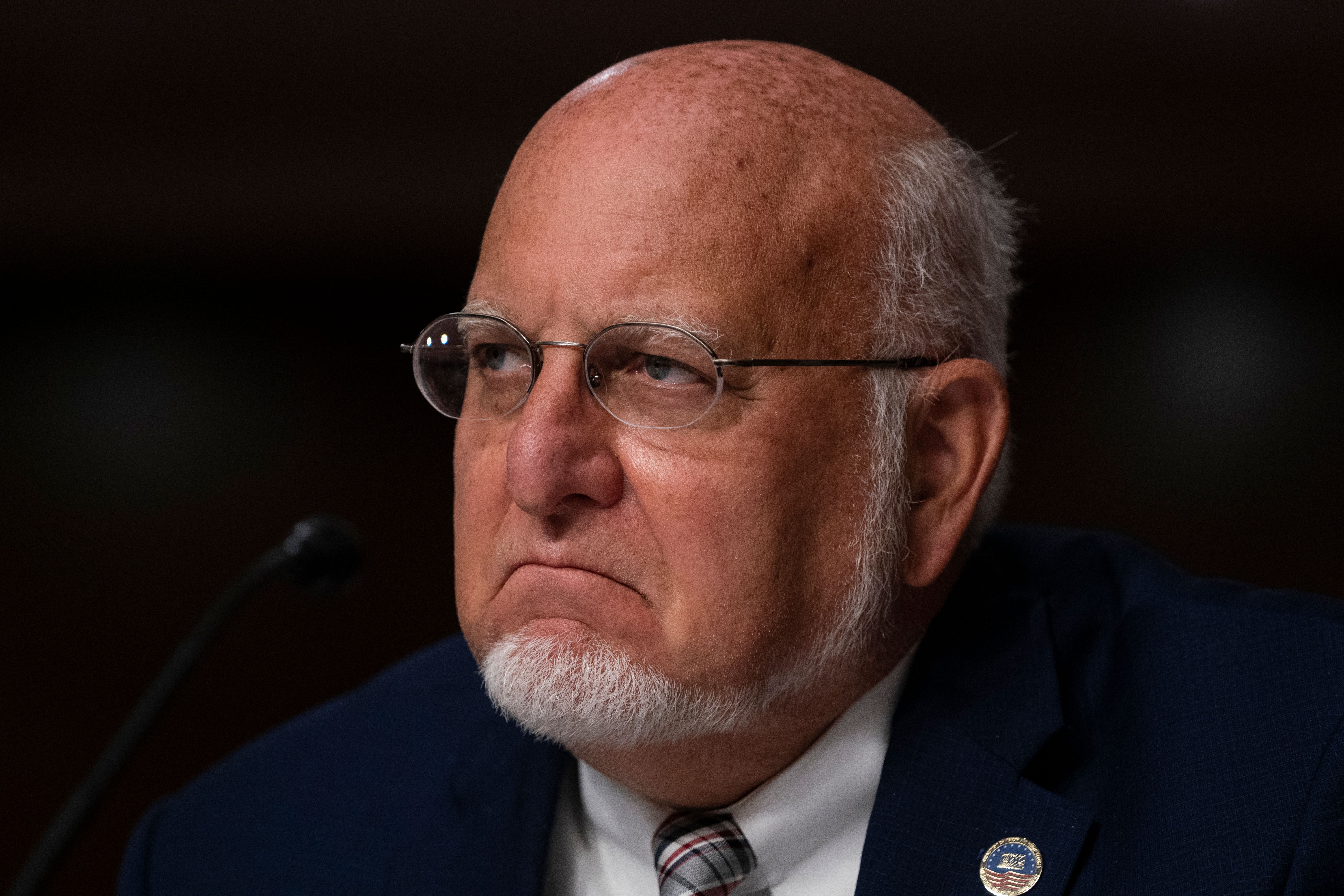
Renowned public health expert and former head of the Centers for Disease Control and Prevention William Foege penned a private letter to current Director Robert Redfield last month. It included a desperate plea: break free of the Trump administration’s political meddling, right the CDC’s course, and brace for a fiery end.
“The White House will, of course, respond with fury,” Dr. Foege wrote of his plan, first made public by USA Today Tuesday. “But you will have right on your side. Like Martin Luther, you can say, ‘Here I stand, I cannot do otherwise.’” Peacefully resigning will not be enough to force change, Foege added. “When they fire you, this will be a multi-week story and you can hold your head high.”
Foege, a former CDC director under the Carter and Reagan administrations, has not been a vocal critic of the Trump administration. But, in his letter to Dr. Redfield, he didn’t hold back on his acerbic take of how the White House has handled the pandemic while damaging and sidelining the CDC in the process.
An earlier universe existed before the Big Bang and can still be observed today, Sir Roger Penrose has said, as he received the Nobel Prize for Physics. From a report: Sir Roger, 89, who won the honour for his seminal work proving that black holes exist, said he had found six 'warm' points in the sky (dubbed 'Hawking Points') which are around eight times the diameter of the Moon. They are named after Prof Stephen Hawking, who theorised that black holes 'leak' radiation and eventually evaporate away entirely. The timescale for the complete evaporation of a black hole is huge, possibly longer than the age of our current universe, making them impossible to detect. However, Sir Roger believes that 'dead' black holes from earlier universes or 'aeons' are observable now. If true, it would prove Hawking's theories were correct.
Sir Roger shared the World Prize in physics with Prof Hawking in 1988 for their work on black holes. Speaking from his home in Oxford, Sir Roger said: "I claim that there is observation of Hawking radiation. The Big Bang was not the beginning. There was something before the Big Bang and that something is what we will have in our future. We have a universe that expands and expands, and all mass decays away, and in this crazy theory of mine, that remote future becomes the Big Bang of another aeon. So our Big Bang began with something which was the remote future of a previous aeon and there would have been similar black holes evaporating away, via Hawking evaporation, and they would produce these points in the sky, that I call Hawking Points. We are seeing them. These points are about eight times the diameter of the Moon and are slightly warmed up regions. There is pretty good evidence for at least six of these points." Sir Roger has recently published his theory of 'Hawking Points' in Monthly Notices of the Royal Astronomical Society.
In case you haven't already purchased enough copies of these trilogies, Warner Bros. has you covered. [credit:
Warner Bros. / Aurich Lawson
]
Peter Jackson's Lord of the Rings trilogy, arguably the greatest home theater showcase outside of documentaries like Planet Earth, is finally coming to 4K UHD Blu-ray.
Details emerged late Monday via Den of Geek, whose Instagram account posted leaked images from Best Buy-exclusive listings for the trilogy's SteelBook version. While Best Buy store listings were soon found by enterprising fans, those were eventually taken down, but they were followed by nonexclusive versions at Amazon: $90 for the normal trilogy, spread across nine Blu-ray discs, or $140 for a "gift set" version, which collects all of the normal cases in a larger, book-like case that may or may not include a replica of the One Ring.
Whichever set you buy, you can expect both theatrical and extended cuts of each film in the set, along with "digital code" redemption options for both versions of each film. Should you be on the lookout for a 4K UHD Blu-ray player, all disc-based Xbox consoles since the Xbox One S (including the brand new Series X, but not the disc-less Series S) support the standard, while the PS5 is the only PlayStation console to do so.
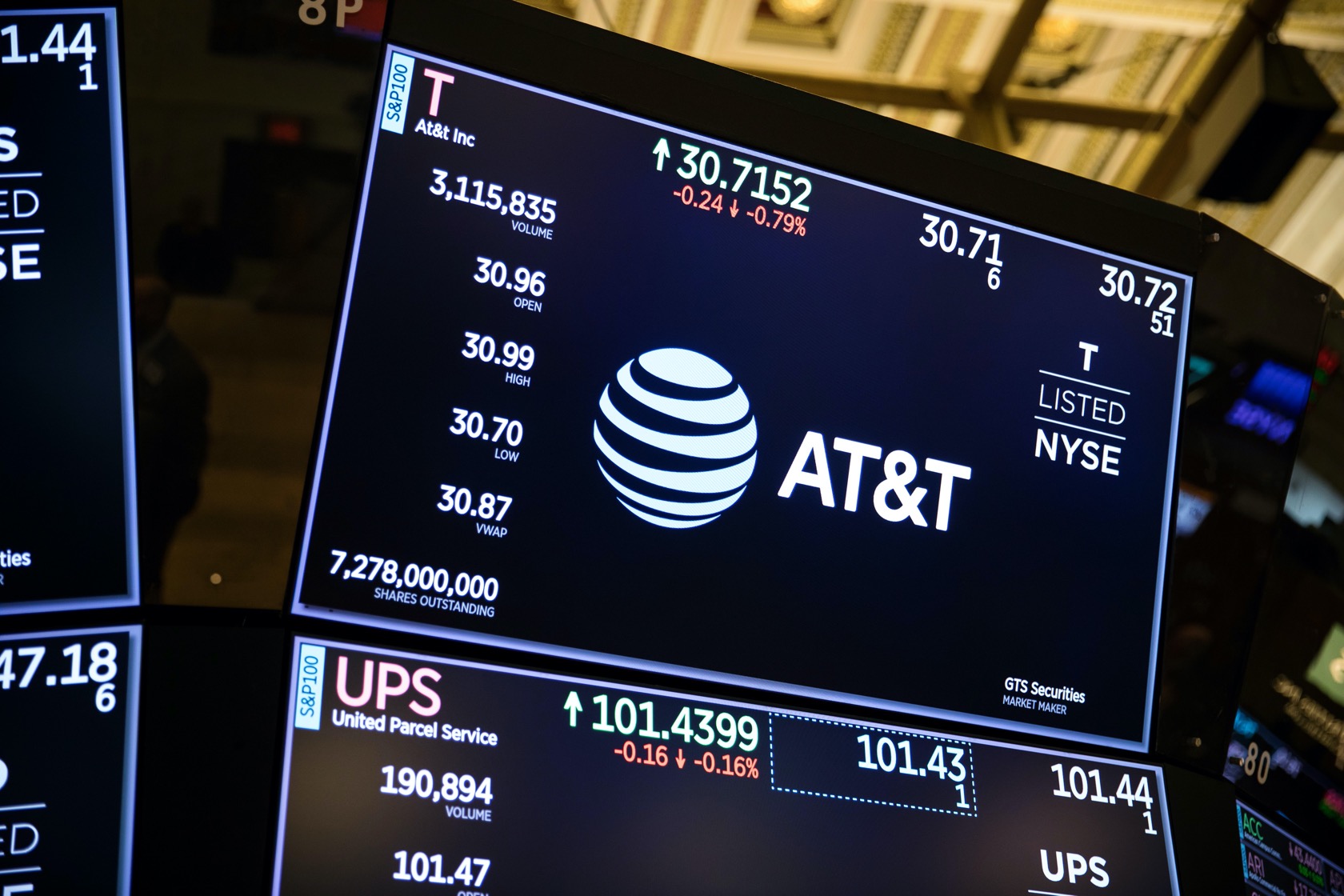
Enlarge / AT&T's logo and share price displayed on a monitor at the New York Stock Exchange on Tuesday, Jan. 22, 2019. (credit: Getty Images | Bloomberg)
AT&T is reportedly moving ahead with its plan to sell DirecTV despite receiving bids that value the satellite division at less than one-third of the price AT&T paid for it.
AT&T bought DirecTV for $49 billion in 2015 and has lost seven million TV subscribers in the last two years. In late August, news broke that AT&T is trying to sell DirecTV to private-equity investors and that a deal could come in at less than $20 billion.
The New York Post yesterday provided an update on the sale process, writing that AT&T is pressing ahead with an auction even though it is "shaping up to be a fire sale." The sale process is being handled for AT&T by Goldman Sachs.
Democrats have a historic opportunity to lift 20 million people out of poverty.
Joe Biden and Kamala Harris have an opportunity to cut poverty in America in half. A new study finds that the Democratic ticket has put forward or endorsed a set of proposals that, taken together, could add up to the biggest anti-poverty plan in decades.
The reduction in child poverty would be larger still, from 13.7 percent to 3.6 percent. Only about a quarter as many children would remain in poverty after the policy package’s adoption.
The Columbia team — Sophie Collyer, Robert Paul Hartley, and Christopher Wimer — modeled the effects of these policies in 2019, rather than 2021, to get around the immense uncertainty we face about economic conditions following the coronavirus recession. It’s not clear how deep or long-lasting the downturn will be, or what time-limited policies Congress and President Donald Trump will adopt to combat it, which makes getting a baseline estimate of poverty in 2021 difficult or impossible. For that reason, they used 2019 as a baseline “normal” year, to measure the permanent effects of poverty alleviation policies that would be adopted on a permanent basis.
In a way, though, this analytical choice might underrate the potential of the Biden presidency to reduce poverty. The CARES Act, Congress’s first economic stimulus response to the Covid-19 crisis, had a profound impact on poverty. Wimer, Zachary Parolin, and Megan A. Curran found that, despite the Covid-driven economic crash this spring, poverty only rose from 12.5 to 12.7 percent from 2019 and 2020, where it would’ve spiked to 16.3 percent absent CARES. Meanwhile, Bruce Meyer and Jeehoon Han of the University of Chicago and James X. Sullivan of Notre Dame found poverty actually fell after Covid-19 hit due to CARES.
The HEROES Act, the House Democrats’ relief package meant to extend CARES, likely would have had a similar effect if passed (the Senate hasn’t taken it up), and even included the child benefit proposal analyzed above as one of its provisions. Harris has proposed a $2,000-per-month, per-person basic income for the duration of the crisis, which would do even more. If you layer the poverty reduction proposals analyzed here on top of those emergency measures, the net effect on poverty could be even greater.
Of course, there is no guarantee that the Biden-Harris administration would prioritize these policies; they would likely require extensive outside pressure to make poverty reduction a priority early in their time in office. But one important thing to note is that, provided the Democrats take the Senate, they can pass these anti-poverty measures without having to overcome the filibuster.
If the Biden-Harris agenda doesn’t muster enough Democratic support, there is an alternate anti-poverty path that likely could win over enough of the caucus centered around a more modest boost to the child tax credit and earned income tax credit. That bill, the Working Families Tax Relief Act, has the support of pretty much the entire Senate Democratic caucus. (More details on this below.) Its impact on poverty would be milder, but it would still be consequential.
In other words, if the Democrats take back control of Washington, they have an opportunity to really strike a blow against poverty and lift up millions of Americans.
“Over a 50-year period, we saw government policies cut the poverty rate in the United States by 40 percent,” Collyer, the research director for the Center on Poverty and Social Policy, says. “Our results show that if the housing and tax policies that we studied were enacted together, they could cut the poverty rate by nearly half. This combination could match or even exceed what government policies and programs have accomplished over the past 50 years.”
As in their previous work, the researchers use the supplemental poverty measure — a more accurate metric the Census Bureau releases as an alternative to the official poverty measure — as their baseline. The plans being compared in the charts that follow are the Biden-Harris plans (Combination 1) and an alternative, less ambitious set of proposals centered on the Working Families Tax Relief Act (Combination 2).
Beyond the effects on overall and child poverty (cut in half and by nearly three-quarters, respectively), the policy package analyzed here would have a substantial effect on deep poverty, defined as the share of people living on less than half the poverty threshold. Overall deep poverty would fall by nearly half, from 4.1 percent of the population (13.4 million people) to 2.4 percent (7.8 million), lifting 5.7 million people out. The effects on deep poverty among children are even greater: It would fall from 3.3 percent (2.4 million children) to 0.8 percent (just under 600,000). In a stroke, the most extreme forms of material deprivation among American children would fall by three-quarters.
To understand why Biden and Harris have the opportunity to cut poverty so dramatically, it’s worth breaking down the policies that make up the policy package, one by one.
A child benefit of at least $250 per month for all but the richest families
The leading child benefit plan in the Democratic Party is called the American Family Act, from Sens. Michael Bennet (D-CO) and Sherrod Brown (D-OH) and Reps. Rosa DeLauro (D-CT) and Suzan DelBene (D-WA). The AFA, and the version of it that Biden has endorsed to run through “the duration of the crisis,” would dramatically expand the child tax credit (CTC), which currently offers up to $2,000 a year for families with significant earnings but little or nothing for many poor people.
The child credit is currently stingy for poor people because households have to earn at least $2,500 per year for the credit to be “refundable,” or for it to count for households that don’t have a positive tax liability. An American without any taxable income — say, a single mom with a kid who lives with family but doesn’t have a job because of the recession or some other barrier — won’t owe any taxes, but because their income falls below that $2,500-a-year threshold, they don’t get any benefit from the current CTC.
The problem is more severe than that, though, because even above $2,500 per year, the credit phases in slowly, at a rate of 15 percent. A parent has to earn at least $11,833.33 to qualify for the full refundable credit, a bar that the poorest households can’t meet.
The Biden proposal would expand the size of the child credit and make it fully available for all poor people regardless of earnings. The benefits would be:
$3,000 per year, or $250 per month, per child ages 6 to 17 (changing the current law, which excludes 17-year-olds)
$3,600 per year, or $300 per month, per child ages 0 to 5
The benefits would be available monthly, in advance, the Biden campaign says, so families could pace out their spending and smooth their incomes. Because the CTC is currently paid out through tax refunds, it sometimes leads to a perverse situation in which families use it to pay down debt they never would’ve had to incur if they’d gotten the money earlier.
Another difference between the AFA and Biden’s version is that the former would also reduce eligibility for the credit for high-income households, but the latter would not. Under present-day law, and under Biden’s proposal, the credit begins phasing out for singles with incomes above $200,000 and couples with incomes above $400,000; under the AFA, phaseout would begin above $130,000 a year in income for single parents and $180,000 for married couples.
Above and beyond its effects on poverty, the plan would result in a huge increase in monthly income, especially when people’s kids are young and need diapers, cribs, strollers, and new clothes to replace quickly outgrown old ones, and often need paid child care before kindergarten starts. The policy would give an average of $2,260 per year more to American families with children than current policy, per the Urban Institute’s Elaine Maag.
A child allowance — the catchall term for policies like Biden’s proposed CTC that offer a set cash subsidy to all or most parents — or similar policy exists in almost every EU country, as well as in Canada and Australia. In many countries, the payments are truly universal; you get the money no matter how much you earn. In others, like Canada, the payments phase out for top earners, but almost everyone else benefits. This version is what Biden’s proposing.
The LIFT Act would enhance the earned income tax credit
The LIFT Act, proposed by Kamala Harris in 2018 as she prepared for her presidential run (and which became a centerpiece of that campaign as her signature “middle-class tax cut”), is essentially a massive expansion of the earned income tax credit. The EITC is one of the largest anti-poverty programs in the US, and offers cash to low-income people (particularly those with kids) who work.
The LIFT Act would add another credit on top of the EITC, which would make the overall policy more generous to everyone and especially to childless adults, whose current maximum EITC is only $538 compared to $5,920 for families with two kids.
Like the EITC, the LIFT Act is structured like a trapezoid: Benefits rise as low-income people make more money, and then decline above a certain threshold to reduce benefits to higher earners, as the following diagram from Maag shows:
Christina Animashaun/Vox
If you earn $0, you get $0 in benefit. But then it phases in very rapidly, dollar for dollar. If you’re a single person and make $1,000 a year, you get an additional $1,000 from the LIFT Act. If you make $2,000, you get another $2,000. It then caps out at $3,000 for individuals and $6,000 for couples.
The phaseout is much milder, with middle- and upper-middle-class families and individuals losing only 15 cents for every $1 their income grows after the phaseout starts (at $30,000 for individuals without kids, $60,000 for married couples, and $80,000 for single people with kids).
The LIFT Act would solve a couple of big problems with our existing system. First, it would extend the value of the EITC, which phases out entirely for families after they reach $39,000 to $49,000 in earnings (it depends on how many kids they have), to higher-income middle-class families. That makes it less of a pure anti-poverty program, but it helps non-poor but still struggling families who could use some assistance, and whose support helps ensure the program’s political survival in the future.
Second, as mentioned above, neither the EITC nor (obviously) the child tax credit does much of anything for workers without kids. The LIFT Act would correct that.
There are a few improvements one might want to make to the LIFT Act. Rep. Rashida Tlaib (D-MI) has proposed a variant called the BOOST Act that’s mostly identical but does not phase in with income: A single person with $0 in earnings would get the $3,000 annually. It would still phase out for high earners. Tlaib’s variant would cost more and eliminate any work incentive effects of the EITC (insofar as they exist) but also does more to reduce poverty.
The LIFT Act could also be restructured to reform, rather than exist on top of, the EITC. In Harris’s plan, workers would have to file for both, which could increase complexity, especially since the EITC depends on the number of kids one has and LIFT doesn’t.
A simpler option would be to follow the Economic Security Project’s Cost-of-Living Refund plan, which replaces the EITC entirely with a $4,000 maximum credit for singles and $8,000 for couples. That would make a few couples with kids worse off than they are currently — unless you pair it with the American Family Act, described above. But it would also clarify the purpose of the EITC, which currently functions both as a subsidy for children and as a wage subsidy, by making it more plainly the latter, and consigning to the child tax credit the task of supporting families with kids.
Section 8 for all
The Housing Choice Voucher program, colloquially known as “Section 8” because it’s authorized by Section 8 of the US Housing Act, is the main way the federal government subsidizes rent for low-income people. But vastly fewer people receive benefits from the program than are eligible, based on their income. To be eligible, households must count as “low income,” defined as living on 80 percent or less of the local median income, and only about a quarter of people in that situation receive benefits.
That’s because housing vouchers are a discretionary, not entitlement, program; while food stamps and Medicaid go to everyone who’s eligible, housing vouchers are administered by local housing authorities that receive money from the federal government. When they run out of money, those housing authorities stop adding new beneficiaries, and set up waitlists that generally last years. Demand is so high that most authorities have closed their waitlists and aren’t adding newly needy households.
This, obviously, makes sense: Most people aren’t homeless out of preference; they’re homeless because they cannot afford rent. It is hard to predict how dramatically Biden’s housing voucher policy would reduce homelessness, and the Columbia numbers cannot estimate its effects there, but the consequences are likely to be substantial.
A more modest option
The above policy package is rooted in policies that Biden or Harris have endorsed. But it’s possible that Biden will either be more timid in his approach to safety net legislation, or that moderate Democratic senators like Joe Manchin (D-WV) or Kyrsten Sinema (D-AZ) will balk at policies as generous as the above as too costly.
So I asked the Columbia researchers to analyze another policy package as well. In this package, the housing voucher proposal outlined above, which Biden has endorsed, is paired with a bill called the Working Families Tax Relief Act (WFTRA). This bill, unveiled last year by Sens. Sherrod Brown (D-OH), Michael Bennet (D-CO), Dick Durbin (D-IL), and Ron Wyden (D-OR), is essentially a compromised expansion of the child tax credit and the earned income tax credit that doesn’t go as far as the American Families Act and LIFT Act described above.
The CTC would be made fully refundable — the most valuable part of the AFA for poor kids — but the size would remain at $2,000 a year for kids 6 and up and be raised to $3,000 for kids under 6, as opposed to $3,000/$3,600 under the AFA. Additionally, the bill would quadruple the maximum EITC for childless adults; in 2019, that would have meant boosting it from $529 to $2,074. Single working adults ages 19 to 24 and 66/67 would be newly able to file for the EITC. The bill would also have the credit phase in faster, and increase the maximum credit a bit (15 to 25 percent, so much less than the quadrupling for childless adults) for families with children. Finally, the bill would revive the personal exemption for dependents, which the 2017 tax bill eliminated in exchange for increasing the child tax credit.
In each dimension, the WFTRA is a less generous version of the AFA/LIFT combination evaluated above. Harris’s LIFT Act would have increased the maximum childless EITC in 2019 from $529 to $3,529; the WFTRA would’ve only increased it to $2,074. Bennet and Brown’s AFA would increase the maximum child credit for young kids to $3,600; WFTRA would only increase it to $3,000.
While not as effective as the main package analyzed here, WFTRA plus universal vouchers would still do a lot to reduce poverty, child poverty, and deep poverty. Overall poverty would fall from 12.7 percent to 8.2 percent, lifting 14.9 million people out. Child poverty would fall by more than half, from 13.7 percent to 5.7 percent. Deep poverty would fall from 4.1 percent to 2.7 percent (lifting 4.8 million people out), and deep child poverty would fall by two-thirds, from 3.3 percent to 1.1 percent.
The big question mark with this plan is whether universal housing vouchers, as proposed by Biden, would win the easy assent of House and Senate Democrats that WFTRA has. But during a historically deep and devastating downturn in which millions have fallen behind on their rent or mortgages, housing assistance might be more popular now than ever before.
The bigger point, whichever package Democrats decide they prefer, is that the tools and policies exist, in the Democratic coalition, for a truly massive reduction in poverty. This opportunity existed before Covid-19, but the pandemic and associated economic collapse have only made the case more pressing. This historic crisis would be a terrible thing to waste.
Sign up for the Future Perfect newsletter. Twice a week, you’ll get a roundup of ideas and solutions for tackling our biggest challenges: improving public health, decreasing human and animal suffering, easing catastrophic risks, and — to put it simply — getting better at doing good.
Millions turn to Vox each month to understand what’s happening in the news, from the coronavirus crisis to a racial reckoning to what is, quite possibly, the most consequential presidential election of our lifetimes. Our mission has never been more vital than it is in this moment: to empower you through understanding. But our distinctive brand of explanatory journalism takes resources. Even when the economy and the news advertising market recovers, your support will be a critical part of sustaining our resource-intensive work. If you have already contributed, thank you. If you haven’t, please consider helping everyone make sense of an increasingly chaotic world: Contribute today from as little as $3.
Shortly after returning to the White House last night, Donald Trump tweeted out a triumphant video in which he urges Americans not to let the coronavirus “dominate your life,” because “we have the best medicines in the world.”
That was true of Trump’s stay at Walter Reed National Military Medical Center, during which doctors threw the kitchen sink of COVID-19 medicines at him while he relaxed, knowing his bills would be covered. Of course, keeping presidents healthy, and restoring them to good health when they’re sick, is in America’s national interest. But Trump’s comments on his experience might give people the false impression that most Americans would get the same quality of care he has received, which is simply not true. For the average person hospitalized for the virus, specialized treatment for COVID-19 would be less immediately accessible, less comprehensive, and much more expensive.
The president’s everyday health care is already very luxurious. He receives free care from the White House Medical Unit—a robust team that staffs an on-site, miniature urgent-care facility inside the White House and sometimes travels with the president. U.S. Naval Commander Sean Conley is the head of this unit and serves as the president’s physician. Conley is in the unusual position of reporting to his patient, the commander in chief, and risks being fired if he makes a false move.
Here, Trump stands in stark contrast to most people, who don’t have doctors at their beck and call: A third of U.S. adults have said in surveys that they do not fill a prescription, see a doctor when sick, or get recommended care because of the cost of health care.
For more advanced medical care, Trump goes to a military hospital such as Walter Reed, where his suite includes offices, conference rooms, and a private living space. To get to and from the hospital, Trump has access to a helicopter and Secret Service staffers. For everyday people, ambulance fees are the largest source of unexpected medical bills.
From the very start at Walter Reed, the president’s COVID-19 treatment surpassed what most people would receive. Fewer than 10 compassionate-use requests have been granted for Regeneron’s experimental antibody cocktail, which the president took Friday, according to the company spokesperson Alexandra Bowie. The president was, presumably, one of those 10 people. “He would never have gotten access to the monoclonal antibodies if he weren’t the president,” says Rose McDermott, an international-relations professor at Brown University who has studied presidential illness.
Presidents also receive faster access to better specialists, in part because few can refuse such an important patient. (As Rob Darling, the White House physician for Bill Clinton, told the Los Angeles Times, “If the president comes to us this morning with a mole on his cheek, a dermatologist will be seeing him today.”) This might not always be a good thing, since VIPs like the president are sometimes overtreated by their starstruck doctors. Regardless, too much quick access to specialists is not a problem most Americans have: 51 percent struggle to find care in the evenings and on weekends without going to an emergency room, according to the Commonwealth Fund.
At one point, the president was allowed to leave Walter Reed before he was discharged to take a joyride and wave to his supporters. Though few contagious people would ask to do this, it’s unlikely that a hospital would let them if they tried. “They would never, ever let anybody else do that,” McDermott says. (A spokesperson for Walter Reed told me, “Our COVID-19 treatment plans are uniquely tailored based on the presentation of each individual patient, and these treatments also adhere to the most updated national societal guidelines.”)
For Trump’s four-day stay at Walter Reed, the hospital will bill the president’s health insurance, the White House spokesperson Judd Deere told me. Though Barack Obama bought his own health insurance through the Affordable Care Act’s health-insurance exchange, it is not clear which insurance plan Trump has. Deere said that “the president received the same health-insurance options that are available to all federal employees.” He may have been referring to the Federal Employees Health Benefits Program, for which the government pays the majority of the premiums. (Here, too, the president differs from some of his countrymen, 8.5 percent of whom are uninsured—more than were uninsured when Trump took office.)
For the average American, a hospital stay for COVID-19 would rack up quite a bill. Remdesivir, one of the antiviral drugs Trump took, costs insurers $3,120. For someone insured by a large employer, being hospitalized for COVID-19-related pneumonia could cost more than $1,300 out of pocket, according to an analysis from the Kaiser Family Foundation, and someone insured by a small business might pay even more. Without insurance, the bill would be more like $73,000. People the president’s age would likely be on Medicare, which would charge them $1,408 for their COVID-19 treatment, not including any extended stays or rehab, according to the Kaiser Family Foundation analysis.
A nonmilitary American rushed to a military hospital such as Walter Reed might be faced with an even larger and more relentless medical bill. Civilians currently owe about $198 million to military hospitals for medical treatments, as I reported in January, and unlike nonprofit hospitals, the facilities are required to take “aggressive action” to settle outstanding debts.
Even as Trump was receiving treatment at Walter Reed, his administration was continuing to fight in court to overturn the Affordable Care Act, the 2010 law that dramatically reformed health insurance in this country, prohibiting discrimination against people with preexisting conditions and eliminating lifetime limits on insurance benefits. Trump has repeatedly promised to come up with a replacement health-care plan for the country “very soon,” but has failed to do so. If the ACA were deemed unconstitutional, someone like Trump, who has had COVID-19, could be discriminated against for having a preexisting condition.
Netflix has apparently been indicted in Texas (see below) under the Texas child exploitation statute, based on the alleged "depict[ion of] the lewd exhibition of the genitals or pubic area of a clothed or partially clothed child who was younger than 18 years of age" in the controversial French-language film Cuties. A few thoughts on the legal issues here (I set aside any moral or aesthetic issues, on which I lack any special expertise).
[1.] I think Netflix should easily beat this indictment because Texas law expressly excludes material that has "serious literary, artistic, political, or scientific value":
(b) A person commits an offense if the person knowingly possesses, accesses with intent to view, or promotes visual material that:
(1) depicts the lewd exhibition of the genitals or pubic area of an unclothed, partially clothed, or clothed child who is younger than 18 years of age at the time the visual material was created;
(2) appeals to the prurient interest in sex; and
(3) has no serious literary, artistic, political, or scientific value.
The judgment about serious value in such contexts is generally seen as being, in the first instance, a matter of law for the judge (and for appellate judges); it's to be judged under a national reasonable person standard, and not under a community standard. (See Pope v. Illinois (1987).) And of course a work can have serious artistic value regardless of its moral message; and serious value is not a particularly high bar.
From all I hear about Cuties (I haven't watched it myself), it does have serious artistic value, and it seems unlikely that a court would conclude that a film that won a Best Director prize (in the international film category) at Sundance lacks such value. To be sure, in Castillo v. State (Tex. Ct. App. 2002), the court was a bit cavalier as to the serious value inquiry when it came to a comic book, and left the matter to the jury's discretion. But given the Pope precedent, coupled with the film's awards and nominations (and perhaps, rightly or wrongly, the sense that broadly exhibited films are more "artistic[ally]" "serious" than comic books), I don't think Netflix has much to worry about here.
It may well be that Cuties also lacks the lewd exhibition of genitals required by prong (1), and doesn't appeal to the prurient interest in sex (generally defined as a "shameful or morbid" interest in sex) required by prong (2). But the serious value prong should stop the prosecution most clearly.
[2.] Now it appears that a state probably could ban child pornography without regard to whether it has serious value: In the words of the Supreme Court in Ashcroft v. Free Speech Coalition (2002),
Where the images are themselves the product of child sexual abuse, … the State ha[s] an interest in stamping it out without regard to any judgment about its content…. The fact that a work contained serious literary, artistic, or other value [does] not excuse the harm it caused to its child participants.
Indeed, the federal child pornography statute doesn't require a showing of lack of value. But states can have statutes that are narrower than the child pornography exception allows them to be, and Texas seems to be one such state.
[3.] And the child pornography exception also apparently extends to lewd (or "lascivious") exhibition of clothed genitals, see U.S. v. Knox (3d Cir. 1994):
We hold that the federal child pornography statute, on its face, contains no nudity or discernibility requirement, that non-nude visual depictions, such as the ones contained in this record, can qualify as lascivious exhibitions, and that this construction does not render the statute unconstitutionally overbroad.
That of course requires complicated judgments about what is a "lewd exhibition" of clothed genitals (and of course there are also complicated judgments about what is a "lewd exhibition" of naked genitals, since not all nude photos of children are treated as child pornography). Opining on that would also require me to watch the movie, which I'm not inclined to spend my time doing. But, again, this particular prosecution seems to be a lost cause regardless of what counts as lewd exhibition.
[4.] I've heard was some talk about whether a girl's breasts in Cuties were exposed enough to call for prosecution; but this particular indictment doesn't mention breasts.
Good :) go out and vote. Let's throw the fucker out.
The Trump administration has done everything it can to suppress the most democratic of all our processes: election voting. And instead of working to provide economic stimulus and food relief and public health leadership in the face of our country’s ongoing crisis, Donald Trump and the Republican Party have seized on the COVID-19 pandemic to try and attack one of the country’s most hallowed institutions: the United States Postal Service. They’ve done this in order to suppress the larger-than-usual mail-in voting that is expected because of the current global pandemic. Unfortunately, there is reason to worry about mail-in voting under the Republican Party, as the only evidence of mail-in voting fraud has been perpetrated by Republicans and our Postal Service has been purposely crippled by the Trump administration.
The line just keeps getting longer. The BOE set up barricades around the whole shopping center. but the end of the line is getting crowded. Some folks brought their own chairs😂 pic.twitter.com/2LOrpowhih
An anonymous reader quotes a report from Motherboard: The body tasked with oversight of the IRS announced in a letter that it will investigate the agency's use of location data harvested from ordinary apps installed on peoples' phones, according to a copy of the letter obtained by Motherboard. The move comes after Senators Ron Wyden and Elizabeth Warren demanded a formal investigation into how the IRS used the location data to track Americans without a warrant. "We are going to conduct a review of this matter, and we are in the process of contacting the CI [Criminal Investigation] division about this review," the letter, signed by J. Russell George, the Inspector General, and addressed to the Senators, reads. CI has a broad mandate to investigate abusive tax schemes, bankruptcy fraud, identity theft, and many more similar crimes. Wyden's office provided Motherboard with a copy of the letter on Tuesday.
In June, officials from the IRS Criminal Investigation unit told Wyden's office that it had purchased location data from a contractor called Venntel, and that the IRS had tried to use it to identify individual criminal suspects. Venntel obtains location data from innocuous looking apps such as games, weather, or e-commerce apps, and then sells access to the data to government clients. [...] The IRS' attempts were not successful though, as the people the IRS was looking for weren't included in the particular Venntel data set, the aide added. But the IRS still obtained this data without a warrant, and the legal justification for doing so remains unclear. The aide said that the IRS received verbal approval to use the data, but stopped responding to their office's inquiries.
It turns out science denial isn't just a political ploy for Republican lawmakers. They're not doing it just because they can get those sweet, sweet fossil fuel dollars and appeal to the not-so-bright "take your government hands off my Medicare" base. They ARE the not-so-bright base. Consider Sen. Ron Johnson, who admittedly is the lowest common denominator of Republican intelligence, but who also is actually infected with coronavirus right now. Despite the fact that his sick president appears to be the superspreader in chief, Johnson told a conservative radio host that the nation has "a level of unjustifiable hysteria" over COVID-19. The disease that has killed more than 210,000 Americans in eight months and is running rampant in the White House right now.
"Why do we think we actually can stop the progression of a contagious disease?" is a thing he actually said out loud, apparently ignorant about the discovery of penicillin in 1928 or the polio vaccine in 1955 or the advent of treatments in the last two decades allowing people with HIV to live normal lives. In order to be a Republican in 2020, you have to forget all that (if indeed Johnson was ever aware of these things) and assume that you can't fight a deadly disease. That's in support of his argument that "from day one, we never should have gone through the shutdowns." Again. This is a guy who has the disease. "We've got to carry on with our lives." Which is what 87-year-old Chuck Grassley, third in line to the presidency by the way, is doing with his life. He is refusing to be tested even after being in meetings with another Republican senator who has tested positive, Utah's Mike Lee.
Even when pretending to exhibit soberness over the disease, Republicans fall short. Here's Senate Majority Leader Mitch McConnell on the Senate floor Monday: "The standard cliche would say these past few days have provided a stark reminder of the danger of this terrible virus. But the truth is that our nation did not need any such reminder. […] More than 209,000 of our fellow citizens have lost their lives. Millions have battled illness or had their lives disrupted by positive tests. . . . We all need to remain vigilant. We all need to remain careful." He says that, but he's the guy insisting that—while six of his own senators have been in quarantine because of infection or exposure—that the Supreme Court vote on Amy Coney Barrett must happen in the next three weeks. That's the message Republicans hear—they are voting no matter what, and no matter who they will be endangering in the process.
That's why the odious Arkansan Tom Cotton told Fox News "there is a long and venerable tradition of ill or medically infirm senators being wheeled in to cast critical votes on the Senate floor […] I'm confident every senator will be in attendance when his or her vote is needed." The example he gave was the late Sen. Robert Byrd who cast a vote for the Affordable Care Act from his wheelchair at age 92. Being 92 isn't contagious—he was endangering no one but himself. But you can't be a full-fledged member of the Death Cult if you acknowledge inconvenient truths like that.
It's not just Cotton. Johnson said he'd show up no matter what, saying that he'd wear a "moon suit" if necessary to cast a vote. Because McConnell is pushing that hard. "We think this is pretty important. I think people can be fairly confident that Mitch McConnell is dedicated to holding this vote," Johnson said. There have been reports that Senate Republican leadership is considering having COVID-stricken members cast their "aye" votes from the Senate gallery, to ensure that McConnell has his 51 votes to seat Barrett. (Republican Sens. Susan Collins and Lisa Murkowksi have been given permission to vote against her, since McConnell secured his 51 without them—when he had a healthy 51, that is.)
McConnell doesn't care who could be killed. It's entirely possible that he has issued a directive not to be tested or to release the result of a test until this vote is taken. That's something that's at the back of Democrats' minds as they try to figure out their strategy for the coming hearings and votes. McConnell and his fellow Republicans will have absolutely no qualms about endangering their colleagues.
That's all to put a Trump justice on the Supreme Court. A justice who will rule to toss the entirety of the Affordable Care Act, the thing McConnell promised he would do 10 years ago because he hates Barack Obama that much. That nullifies every word of empathy McConnell mouths about the victims of coronavirus. Because he's hellbent to take health care away from the survivors.
A security flaw in a hi-tech chastity belt for men made it possible for hackers to remotely lock all the devices in use simultaneously. The BBC reports: Qiui's Cellmate Chastity Cage is sold online for about $190 and is marketed as a way for owners to give a partner control over access to their body. Pen Test Partners believe about 40,000 devices have been sold based on the number of IDs that have been granted by its Guangdong-based creator. The cage wirelessly connects to a smartphone via a Bluetooth signal, which is used to trigger the device's lock-and-clamp mechanism. But to achieve this, the software relies on sending commands to a computer server used by the manufacturer.
The security researchers said they discovered a way to fool the server into disclosing the registered name of each device owner, among other personal details, as well as the co-ordinates of every location from where the app had been used. In addition, they said, they could reveal a unique code that had been assigned to each device. These could be used to make the server ignore app requests to unlock any of the identified chastity toys, they added, leaving wearers locked in.
The sex toy's app has been fixed by its Chinese developer after a team of UK security professionals flagged the bug. They have also published a workaround. This could be useful to anyone still using the old version of the app who finds themselves locked in as a result of an attacker making use of the revelation. Any other attempt to cut through the device's plastic body poses a risk of harm.
A hyped-up on steroids Donald Trump ended negotiations between House Speaker Nancy Pelosi and Treasury Secretary Steven Mnuchin Tuesday afternoon, by tweet, of course. In his inability to understand how anything works, he declared that Pelosi was "asking for $2.4 Trillion Dollars to bailout poorly run, high crime, Democrat States, money that is in no way related to COVID-19," none of which is true, and says he has "instructed my representatives to stop negotiating until after the election when, immediately after I win, we will pass a major Stimulus Bill that focuses on hardworking Americans and Small Business." He won't.
He also gave McConnell the green light to do what he was going to do anyway—ignore trying to help the nation recover from coronavirus so he can focus on installing a Supreme Court justice who will destroy our health care. Trump declared, in his 'roid-fuled tweet storm, that the "Stock Market is at record levels." Not after this!
The U.S. stock market's reaction to Trump cutting off stimulus talks with the Democrats until after the election... pic.twitter.com/4e1zXoFD0N
Speaker Pelosi & Secretary Mnuchin spoke briefly at 3:30 p.m. by phone. The Secretary confirmed that the President has walked away from COVID talks. The Speaker expressed her disappointment in the President’s decision to abandon the economic & health needs of the American people.
That was just ahead of a key call that was to take place between Mnuchin and Pelosi. That another call was happening Tuesday was an indication of making progress. So much for that. When the Trump tweet came, Pelosi was on a call with fellow Democratic House members. "We will have a bill," she said, and "obviously the president wants to do it after after the election. [...] Believe me, there are people who think that steroids have an impact on thinking [...] so I don't know."
Earlier in the day, Federal Reserve Chair Jerome Powell told Congress that the economy is in real danger. He echoed the sentiment we’ve been hearing from him for months—Congress needs to go big, bigger even than they’ve been talking about. He warned of a looming, "tragic" scenario in which "a long period of unnecessarily slow progress could continue to exacerbate existing disparities in our economy." He said an inadequate spending response from lawmakers would "lead to a weak recovery, creating unnecessary hardship for households and businesses."
"Over time, household insolvencies and business bankruptcies would rise, harming the productive capacity of the economy, and holding back wage growth," Powell warned. "By contrast, the risks of overdoing it seem, for now, to be smaller. Even if policy actions ultimately prove to be greater than needed, they will not go to waste." Pelosi responded in a statement saying "Chairman Powell’s warning could not be more clear: robust action is immediately needed to avert economic catastrophe from the devastation of the coronavirus pandemic."
So the House needs to go really robust now. Go back to the drawing board and come up with the kind of response Powell is talking about—make it $5 or $8 or even $10 trillion. Get the public use to that number because it’s going to be what Joe Biden has to accomplish when he takes office on January 20.
In the meantime, Democrats have to be crystal clear on this message: Trump and his fellow Republicans don’t care if you live or die. They aren’t helping you survive coronavirus. Just in case you do, they’ll make sure the Supreme Court takes away your preexisting conditions protections.
Of course the partisan hacks are incredibly hostile to voting. They know they represent a minority and can't countenance their legitimacy being threatened.
Justice Brett Kavanaugh and Chief Justice John Roberts arrive to hear President Trump deliver the State of the Union address on February 4. | Leah Millis/Getty Images
The fate of American democracy could rest with Brett Kavanaugh.
The Supreme Court handed down a brief order Monday night making it harder for voters in South Carolina to cast a ballot.
The Court’s order in Andino v. Middleton is only two paragraphs long, and it is accompanied by a concurring opinion from Justice Brett Kavanaugh that is only about a page long. Nevertheless, this short order, the dissenting votes of the three most conservative justices, and Kavanaugh’s brief opinion provide a great deal of information about how the Supreme Court is likely to handle disputes regarding a presidential election held amid a pandemic.
The Court’s decision in Andino reinstates a South Carolina law requiring absentee voters to have another person sign their ballot as a witness. A lower court which blocked this law reasoned that this requirement, applied in the context of a deadly pandemic, places too high a burden on voters who fear becoming infected with Covid-19.
The Supreme Court’s decision to reinstate this witness requirement is not surprising. Last July, in Merrill v. People First of Alabama, the Supreme Court voted along party lines to reinstate a similar requirement in the state of Alabama. Interestingly, no justice publicly dissented from the Court’s decision in Andino that South Carolina’s witness requirement must be reinstated — although when a party seeks a stay of a lower court order, sometimes dissenting justices quietly dissent without making that fact public.
Justices Clarence Thomas, Samuel Alito, and Neil Gorsuch did note their dissents, however, signaling that they would have tossed out an unknown number of ballots that have already been cast.
Andino reveals that there is a meaningful divide between the extreme views held by these three dissenters, and the slightly more moderate views on voting rights held by Roberts and Kavanaugh. And it shows how Kavanaugh — whose vote would matter a great deal in a 6-3 Republican Court — is likely to treat litigation over the 2020 election.
The dissenting justices’ position is extraordinarily hostile to the right to vote
The position of the three dissenters — Thomas, Alito, and Gorsuch — is astonishing. The lower court handed down its decision blocking the witness requirement in mid-September, and at least 20,000 voters have already cast a ballot in South Carolina.
That means that thousands of South Carolina voters cast their ballot while the lower court’s order was still in effect. It’s likely that at least some of these voters, acting under the entirely reasonable belief that South Carolina would comply with a federal court order, did not have their ballots signed by a witness — given that until Monday night, the state was subject to a federal court order requiring it to count ballots that were not witnessed.
Nevertheless, Thomas, Alito, and Gorsuch would have ordered unwitnessed ballots tossed out even if they were cast during the period when South Carolina was bound by a court order. These three justices effectively required voters to anticipate that a federal court order would subsequently be stayed by an order of the Supreme Court of the United States.
Perhaps a voting rights lawyer familiar with the Supreme Court’s decision in Merrill could have warned such voters that a Supreme Court stay was likely in the Andino case, but the law typically does not require ordinarily voters to hire legal counsel simply to determine how they should cast their ballot.
In any event, Thomas, Alito, and Gorsuch’s vote reveals a consuming hostility to the right to vote. Voting rights plaintiffs, and their lawyers, should likely write off the possibility of these three justices doing anything to protect the franchise.
Kavanaugh’s stance is still hostile to the right to vote, but much less so than the three dissenters’ position
Because three members of an eight-justice Court voted to toss out already-cast ballots with no witness signature, we know that the other five justices did not vote for such a harsh outcome. Chief Justice John Roberts, Justice Kavanaugh, and the three liberal justices all voted to allow ballots “cast before this stay issues and received within two days of this order” to be counted.
Roberts did not explain why he voted the way that he did, but Kavanaugh did write a brief concurring opinion explaining why he thinks that ballots cast in the future must be signed by a witness.
In that opinion, Kavanaugh offers two justifications for his vote. The first is the Court’s decision in Purcell v. Gonzales (2006), which established that “federal courts ordinarily should not alter state election rules in the period close to an election.” Kavanaugh’s citation to Purcell suggests that he thinks that the lower court should not have changed South Carolina’s election rules less than two months before an election.
Kavanaugh’s other reason for reinstating South Carolina’s witness requirement is worth quoting at some length:
[T]he Constitution “principally entrusts the safety and the health of the people to the politically accountable officials of the States.” “When those officials ‘undertake[ ] to act in areas fraught with medical and scientific uncertainties,’ their latitude ‘must be especially broad.’” It follows that a State legislature’s decision either to keep or to make changes to election rules to address COVID–19 ordinarily “should not be subject to second-guessing by an ‘unelected federal judiciary,’ which lacks the background, competence, and expertise to assess public health and is not accountable to the people.”
Justice Kavanaugh says two significant things here. The first is that federal courts typically should not intervene to prevent voters from being disenfranchised during a pandemic. The decision about whether to alter state election laws to ensure that the coronavirus does not interfere with voters’ ability to cast a ballot primarily rests with state legislatures.
But Kavanaugh also states that this principle cuts in both directions. A state’s decision “either to keep or to make changes to election rules to address COVID–19” should generally be honored by federal courts. Thus, Kavanaugh appears to be signaling that the federal judiciary should permit states to make it easier to vote during the pandemic, should they choose to do so.
That’s bad news for President Trump, as Republicans have filed several lawsuits seeking to block state laws making it easer to vote, including a Nevada law providing for vote by mail, and guaranteeing that many ballots that arrive up to three days after Election Day will still be counted.
To be clear, Kavanaugh’s opinion is hardly good news for voting rights advocates, as it makes it clear that Kavanaugh will do nothing to block many laws that disenfranchise voters during the pandemic. With Republicans about to gain a 6-3 majority on the Supreme Court — and with three justices taking an extreme anti-voting stance in Andino — voting rights advocates will likely need Kavanaugh and Roberts’s votes to prevail in any case that reaches the Supreme Court.
But Kavanaugh’s opinion does suggest that the Supreme Court is more likely to take a position of indifference towards voting rights during the November election, rather than actively trying to sabotage Democrats at every possible turn.
There is still one live issue before the Supreme Court that isn’t discussed in Kavanaugh’s opinion. In Scarnati v. Pennsylvania Democratic Party, Republican lawyers ask the US Supreme Court to block a decision by the Supreme Court of Pennsylvania, which requires the state to count mailed ballots that arrive up to three days after the election.
The Purcell decision is generally understood to prevent federal courts from modifying state election law close to an election. It would be an extraordinary extension of Purcell to prevent state courts from interpreting their own state’s election law.
Indeed, it’s not entirely clear how many states could run elections under such circumstances, because disputes about the proper meaning of state election law are inevitable during election season. If state courts cannot interpret those laws, these disputes would go unresolved.
Kavanaugh’s opinion in Andino refers only to federal courts. It remains unlikely that even this very conservative Court will block a state supreme court’s decision interpreting that state’s own election law. But, until the Supreme Court rules in Scarnati, there is at least some risk that a majority of the justices will embrace the Republican Party’s position in that case.
Millions turn to Vox each month to understand what’s happening in the news, from the coronavirus crisis to a racial reckoning to what is, quite possibly, the most consequential presidential election of our lifetimes. Our mission has never been more vital than it is in this moment: to empower you through understanding. But our distinctive brand of explanatory journalism takes resources. Even when the economy and the news advertising market recovers, your support will be a critical part of sustaining our resource-intensive work. If you have already contributed, thank you. If you haven’t, please consider helping everyone make sense of an increasingly chaotic world: Contribute today from as little as $3.
Apple normally introduces each year's new iPhone model at a September event, but the iPhone was conspicuously missing from Apple's September 15 event this year. That event focused on other products, including a new iPad and a new Apple Watch.
Now Apple has announced an October 13 event—that's a week from today—with the tagline "Hi, Speed." It will begin at 10am Pacific Time.
The announcement doesn't specifically mention the iPhone, but it's a safe bet that Apple will introduce the new iPhone 12 lineup at the event. And we have a lot of information from fairly reliable sources about Apple's new phones. Here's how Ars Technica's Sam Axon described the expected lineup last month:
Coronavirus infections are crowding hospitals across the Midwest ahead of an election that could see the region decide the presidency and control of the Senate.
But the wave of new cases hasn’t stopped governors and state legislators from pressing on with reopening plans. Iowa, Michigan,Wisconsin and other states are loosening restrictions or weighing changes, just as they experience new spikes and as colder weather pushes people indoors — a convergence that could deliver a repeat of the summer’s deadliest months.
“We can’t seem to learn our lesson,” said Ashish Jha, dean of Brown University’s School of Public Health. “We touch the stove, it’s hot, we burn ourselves, but we think if we touch it again, we’ll be fine.”
As Iowa, Wisconsin, Minnesota, Indiana and the Dakotas all report record or near-record numbers of new infections, the region may be a harbinger of what’s in store for the rest of the country. And the wave of cases, along with President Donald Trump’s brush with the disease, are again putting the pandemic front and center in key swing statesdespite the president’s efforts to declare it all but over and urge Americans to get on with their lives.
In Iowa, which is seeing more than 1,000 new cases a day, Republican Gov. Kim Reynolds has refused to mandate face coverings, which the White House coronavirus task force recommended. Reynolds instead rolled back rules on quarantining and allowed college bars to reopen despite outbreaks on the state’s biggest campuses.
In Wisconsin, the Republican-controlled legislature filed a motion on Friday in support of a lawsuit seeking to abolish Democratic Gov. Tony Evers' statewide mask ordereven as the state sees more than 2,000 new cases a day, hospitals are reaching capacity and the percent of people testing positive is more than triple the recommended rate. Their motion came just hours after Trump announced he had tested positive for Covid-19 and canceled two rallies planned in the battleground state. That day,Wisconsin’s senior senator, Ron Johnson, attended an Oktoberfest-themed fundraiser Friday night while he was awaiting his test results — and later learned he tested positive.
In North Dakota, where the number of active cases doubled in September and ICU beds are close to capacity, Republican Gov.Doug Burgum bowed to public pressure and rescinded an order that required close contacts of infected patients to quarantine. The state’s top health officer resigned in protest, the third health officer to quit during the pandemic.
“As much as people want to deny it Covid-19 is still very present,” Michigan Democratic Gov. Gretchen Whitmer said Monday. "[Michigan’s] Upper Peninsula is in very serious condition right now. We know Wisconsin dropped their guard and they are a national hot spot.”
The surge of cases in the Midwest, fueled by Labor Day gatherings and students returning to class and college campuses, has public health experts pleading for new safeguards before an anticipated explosion in the fall and winter. Yet their warnings are going largely unheeded — and not just among red-state governors. Nevada, Wyoming, Florida and Massachusetts also are loosening restrictions to restart their economies and feed fatigued residents' appetite for a return to normal life.
Governors in the states say their residents have learned to live with the threat and know how to stay safe. And they warn economies can't survive with too many constraints, especially with prospects dwindling for another congressional bailout package.
Nevada Democratic Gov. Steve Sisolak announced last week that he is lifting restrictions on youth and adult sports and raising the limit on public gatherings from 50 to 250 people even as the average number of new daily infections is up roughly 75 percent in the last two weeks, arguing that conventions, conferences and trade shows are the lifeblood of the state’s economy.
“The four miles of Las Vegas Boulevard, the Strip, is the fuel that keeps the engine of this state running,” Sisolak said. “We’re doing what we can to provide a safe environment for our residents and at the same time keep the economy open.”
Elsewhere, Tennessee, which just had its deadliest month of the pandemic, ended all statewide restrictions on businesses and gatherings even as the state continues to average more than 1,000 new infections per day.
“One of the things I’m worried about is that our businesses aren’t operating fully because that drives economic recovery and people’s livelihoods are at stake,” said Republican Gov. Bill Lee. “We’re six months into this pandemic and Tennesseans know how to assess risk and how to operate safely.”
In Florida, a must-win for Trump, GOP Gov. Ron DeSantis recently removed all restrictions, surprising local officials after repeated struggles to keep control over the virus. Not only did bars and restaurants reopen but DeSantis threatened to withhold funding from school districts that did not send kids back to the classroom even as new daily infections reached their highest levels in more than two weeks.
But the Midwest has seen some of the most heated fights over when and how fast to lift health restrictions. Michigan and Wisconsin's Democratic governors have tried to impose public health precautions, only to have been blocked in court by Republican lawmakers. On Friday, Michigan’s Supreme Court struck down Whitmer’s pandemic orders as unconstitutional, effectively eliminating rules around masks and social gatherings. The state’s health department moved to reinstate the orders on Monday, teeing up more battles in the weeks ahead.
GOP lawmakers have also joined lawsuits to strip away public health measures in Wisconsin. The state’s top court in May found that Evers overstepped his authority and struck down his emergency orders, a decision that Evers now says is partly responsible for the state’s new spike in cases.
“It [opened] our economy at a rate unparalleled by any state in the nation,” he said during his weekly press conference.“We’re nine months into this pandemic. It’s not slowing down, it’s picking up speed.”
Cyrus Shahpar, a former emergency response leader at the CDC who now leads the outbreak tracker Covid Exit Strategy, said the officials’ moves aren’t surprising given the level of frustration and fatigue people feel.
”People are tired of staying inside,” he said. “And the longer we go on, the more we incur irreversible damage in some sectors. Can a restaurant operating at 25 percent capacity, for example, be economically viable?”
Shahpar said that Trump’s constant promises that a Covid vaccine will be approved in a matter of weeks and widely distributed by the end of the year — claims his own top health officials don’t support— may also be fueling the trend.
“It may increase people’s risk tolerance if they think a magic bullet is around the corner,” he said, stressing that the scientific community believes neither that a vaccine is a magic bullet nor that it’s right around the corner.
As small outbreaks that began in K-12 schools and on college campuses spread to the general population, infecting older, more vulnerable adults, hospitalizations are reaching their highest level in three weeks and steadily increasing, according to the Covid Tracking Project. And with frigid just a few weeks away in large parts of the Midwest, public health experts are warning that loosening restrictions could be a disaster.
“We’re going into the fall with twice the baseline of cases we had going into the summer,” warned Brown University's Jha. “And all of the advice we’ve been giving people — like doing everything outdoors — is going to become harder, if not impossible.”
An anonymous reader quotes a report from CleanTechnica: After analyzing the most recent data from two of America's largest electricity markets -- ERCOT in Texas and PJM in the Northeast -- the Rocky Mountain Institute has come to a startling conclusion. Renewables are muscling in on natural gas as the preferred choice for new electricity generation. In fact, according to RMI, what happened to coal is now happening to gas. What is needed, the organization argues, is a move away from the monopoly markets that have been the norm in the utility industry for more than 100 years and toward more open competition. Because when renewables compete head to head with thermal generation, they win hands down 95% of the time.
The data doesn't lie. RMI looked at the interconnection queues for both ERCOT and PJM and found over the past two years there has been a dramatic shift away from building new gas fired generating plants and toward more renewable energy projects. Interconnection queues track new generation projects proposed to be added to regional grid. That information provides a leading indicator of market trends for new power plants. Not all projects in these queues are ultimately built, but the mix of resources in the queue represents the investments the market is prioritizing, according to RMI. [...] RMI finds that since 2018, the queue for clean energy projects has more than doubled while the queue for gas projects has been cut in half. In all, more than $30 billion worth of gas projects have been canceled or abandoned. Currently, the capacity of wind, solar, and storage projects slated for construction in ERCOT and PJM is ten times greater than for new gas projects. "Though COVID-19 may be contributing to some recent decline in planned gas additions, it's not the only driver," says RMI. "The trend has been building for years and investors more broadly are now waking up to the implications. For example, just five years ago in ERCOT, the interconnection queue contained an even split between proposed gas and renewables generation capacity. However, gas capacity in the queue started falling steadily in 2015, well before the COVID-19 pandemic and associated economic downturn. Meanwhile, renewable energy and storage projects in the queue have continued to grow even during the pandemic."
"Therefore, it is likely that a more fundamental driver is at play -- raw economics, driven by the continually falling costs of clean energy and the associated risks of investment in new gas-fired capacity."
(204): I just want a man in my bed on a regular basis, who cuddles, and who I can also occasionally hang out with outside of my bedroom. Is that too much to ask for?
Also consider supporting my work on Patreon or on Ko-Fi so I can continue creating it.
Also, check out this time-lapse video of me drawing a cartoon about Trump’s photo op yesterday at Walter Reed. Subscribe to my newsletter and never miss a cartoon:
Donald Trump can handle the coronavirus pandemic better than Joe Biden because he contracted the virus and Joe Biden didn’t, according to Trump campaign spokeswoman Erin Perrine.
Said Perrine on FOX News: “Firsthand experience is always going to change how someone relates to something that has been happening. The president has coronavirus right now. He is battling it head-on as toughly as only President Trump can. And listen, of course that will change the way that he speaks of it because it will be a first-hand experience. But that experience of not only coronavirus, but being President of the United States, that’s why you just see a different tone overall from him.”
“He has experience as Commander in Chief. He has experience as a businessman. He has experience now fighting the coronavirus as an individual,” Perrine added. “Those firsthand experiences, Joe Biden, he doesn’t have those.”
The Trump campaign is now attacking Biden for…not contracting coronavirus.
“He has experience — now — fighting the coronavirus as an individual. Those firsthand experiences, Joe Biden, he doesn’t have those." pic.twitter.com/Qk0Qc8l6q9





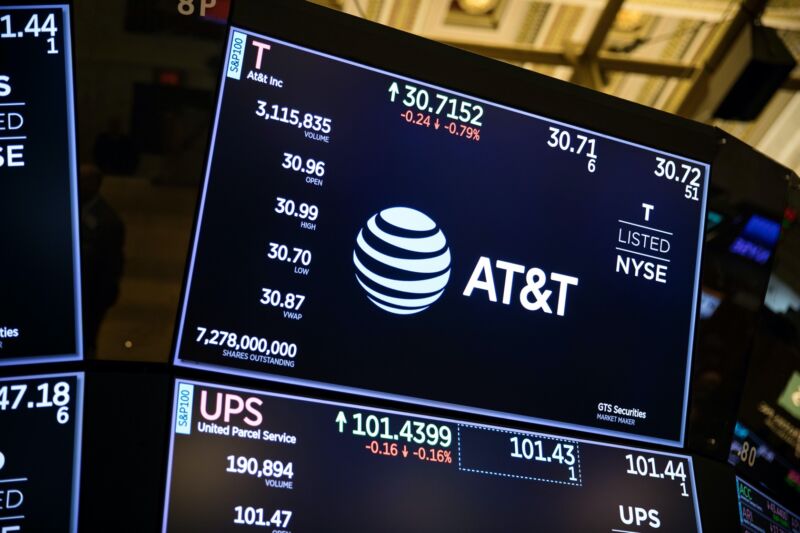
 Christina Animashaun/Vox
/cdn.vox-cdn.com/uploads/chorus_asset/file/21941671/lift_poverty_plan.jpg)
/cdn.vox-cdn.com/uploads/chorus_asset/file/21942016/lift_deep_poverty_plan.jpg)
/cdn.vox-cdn.com/uploads/chorus_asset/file/21942019/lift_child_poverty_plan.jpg)
/cdn.vox-cdn.com/uploads/chorus_asset/file/21941644/harris_lift_tax_credits.jpg) Christina Animashaun/Vox
Christina Animashaun/Vox
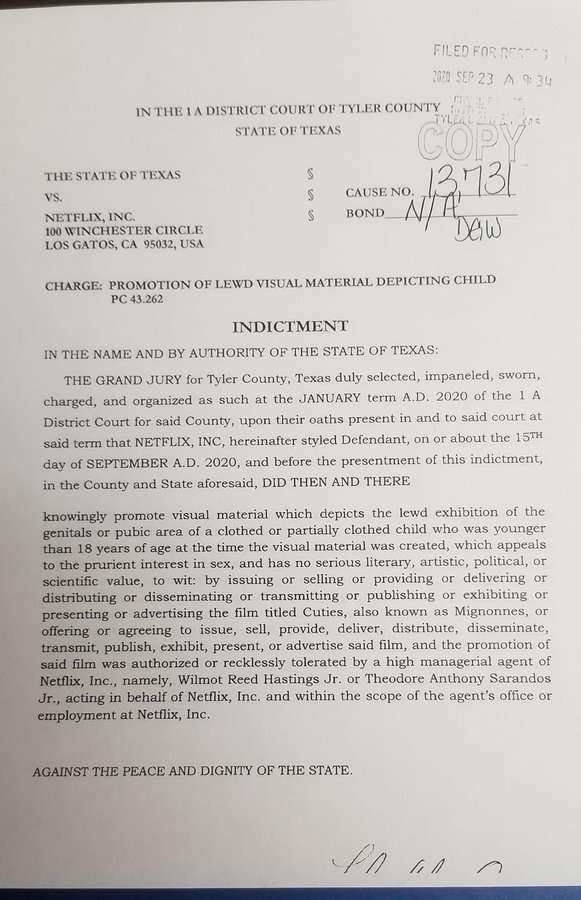
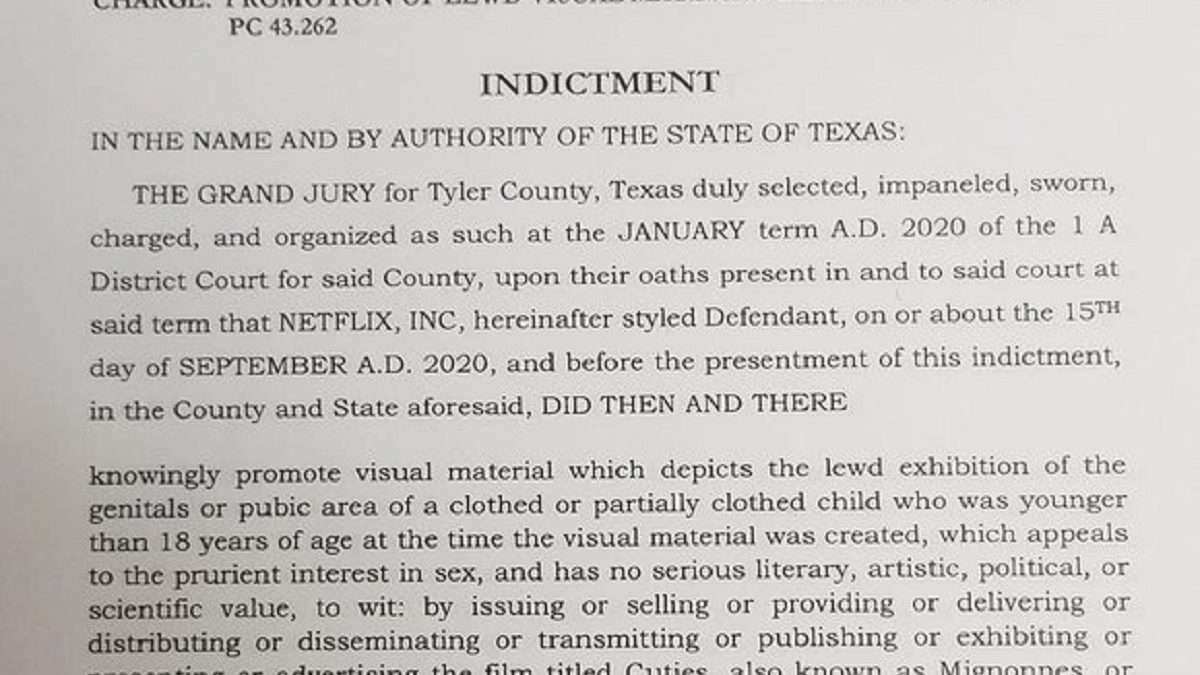

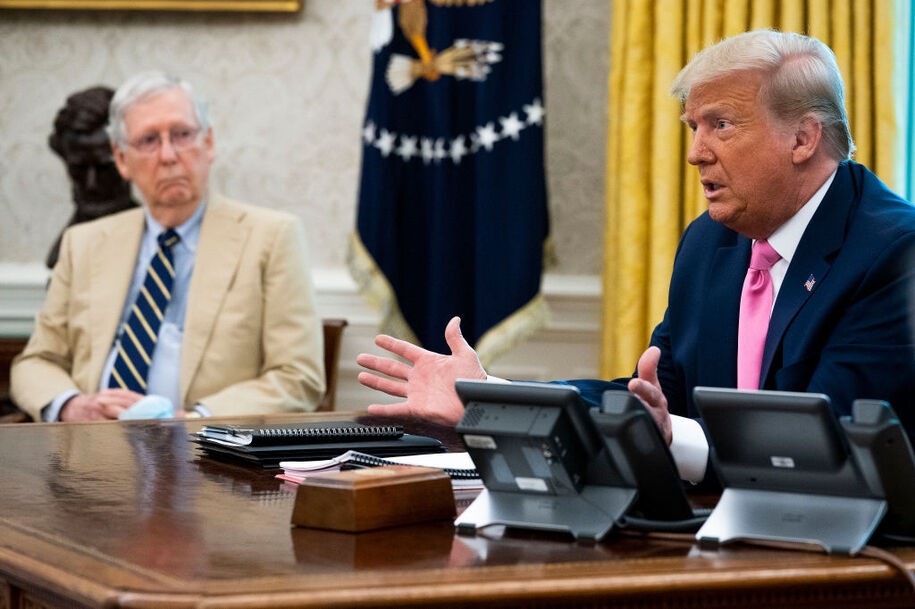

 Justice Brett Kavanaugh and Chief Justice John Roberts arrive to hear President Trump deliver the State of the Union address on February 4. | Leah Millis/Getty Images