It is long, long past time for Twitter, as a corporation, to give up on pretending there is anything redeeming about broadcasting Donald Trump's detachment from reality.
“Official sources called this election differently,” squeaks the milquetoast warning. As opposed to, say, “This public figure is mounting a propaganda campaign in an attempt to seize power despite losing an election” or, better, simply wiping the tweet from existence.
Of Trump's post-election tweets, Twitter has chosen to slap warning labels on a rising chunk of them—a not entirely pointless exercise, but not one that truly limits a malignant narcissism-fueled anti-democratic despot seeking to overturn U.S. election results because they made him Sad. He continues to pipe up with conspiracy theory after conspiracy theory, directs supporters to conspiracy-promoting websites and videos, and lies egregiously about all, as in all, subjects.
Despite popular belief, Twitter is not required, as a company, to host speech clearly intended to damage the country. This is not a case of a powerful man simply blabbering in public, but a propaganda campaign explicitly intended to cast doubt on America's democracy itself, with wild claims that "millions" of fraudulent, invisible votes swung the election away from him as part of some secret plot. Twitter does not have to harm the nation by allowing it. Not Facebook, not any of the other companies.
Trump will have no rights being violated if Twitter blocks his account this very evening. There is no important presidential duty that can only be carried out via Twitter. The man lives in a house with a dedicated press room funded by the United States government himself; he can soil that, if he likes, and networks can decide whether to cover his outbursts as they happen. But Trump does not have the right to defraud the American public on Twitter's personal dime, unless Twitter wants it to happen.
Give it up, Jack. It's time.
We know that the reason Twitter has resisted is, in the end, money and cowardice. If Donald Trump is barred from using Twitter as propaganda device, Donald Trump's slobbering followers will declare a boycott. This will make Twitter sad, make investors sad, and briefly make the site slightly less of a charred hellscape. Because the greatest edict of all companies, from Fox News to Facebook to Twitter, is to not make investors sad even if their product is doing real damage to their audience and nation.
Here's the thing about that boycott, though. It will last all of a few weeks before all but the most conspiracy-minded frothers get sick of screaming into the wilderness of new hate-speech sites and come groveling back to post memes and recipes. Plus, there might be a positive relations boost from being seen as not willing to sell out the country to avoid peeving racist crackpots—a plus, during a time when Congress is contemplating whether social media companies are indeed the threats to democracy and public safety that their critics contend.
Whatever. We are all very tired of explaining and coaxing. Either do the right thing for the sake of doing the right thing, or shut up with all the talk of deep principles and corporate hand-wringing. In the end it seems we are going to have to come to some solution ourselves, democracy by democracy, to avoid becoming slaves to microtargeting tools provided to autocracies and to the whims of whoever can be the most successfully unprincipled. But Donald Trump has no inherent right to use any non-public platform to mislead Americans or stoke conspiracy-premised violence. If you let him, that's on you.
Seems like as decent a theory as any at this part.
Two facts from this November’s elections have really gnawed at me:
1) Impeached sore loser Donald Trump got 10 million more votes in 2020 than he did in 2016. Given some losses among suburban college-educated white women and other never-Trumpers, that means that over 10 million new people took a look at Trump’s last four years and thought, “Yeah, that’s the guy that’s getting me out to cast my first vote.”
2) The polls once again undercounted Republican support, like in 2016. Yet in 2018 and 2019, the polls were fine. So what gives?
I have a theory, and it’s the existence of a “hidden deplorable,” and it’s a wonder Joe Biden and the Democrats managed to salvage the White House given their existence.
From the start, let’s dispense with the notion of a “shy Trump voter.” These people aren’t shy, yet they certainly exist. They’re the assholes trying to run the Biden campaign bus off the road in Texas. They’re the anti-government militias in Michigan. They’re these people:
A Fox News anchor briefly paused mid-segment on Saturday after a sign carried by a demonstrator at the so-called “Million MAGA March” in Washington, D.C. appeared on the screen bearing a racist threat. "Shows their a Bunch of Racists!"#DemVoice1https://t.co/NhGwL0nSmc
There’s nothing “shy” about these people or their support for Trump, yet pollsters aren’t catching them. They turn out for Trump, but they didn’t turn out for Republicans in 2017, 2018, or 2019. Remember, last year Democrats picked up governorships in the blood-red states of Louisiana and Kentucky.
Trump on Nov. 4 in KY, regarding the election of a Dem Gov. “[Y]ou can’t let that happen to me!” per @voxdotcom Result: Dem elected Trump Thursday in Louisiana: “You got to give me a big win, please, O.K.” per @nytimes Result: Dem re-elected#SundayThoughts#VoteBlue
No amount of personal begging and pleading from Trump could get Republicans to the polls in those red states, nor did his extensive campaigning help his party during the 2018 Democratic wave year.
Yet with the national environment only worsened from the COVID-19 pandemic and other Trump self-inflicted wounds (like his failed trade war against China), Republicans stormed back this year, dealing Democrats painful down-ballot losses in the House, Senate, and state legislatures. Not only will those loses hamstring a Biden administration, even if we win both Senate runoffs in Georgia in January, but Republicans will have a free hand to redraw U.S. House and state legislative maps to their enduring, decades-long advantage.
All because Trump was at the top of the ballot.
So again, who are these people who only vote for Trump, otherwise ignore the Republican Party (despite Trump’s pleading), and don’t talk to pollsters?
The hidden deplorables aren’t Republican. They aren’t even conservative. They’re apolitical, otherwise ignoring politics, because their lives legitimately suck. They live in meth country, with dim job prospects (in fact, those two factors are highly correlated). Institutions have failed them—corporations abandoned them for cheaper labor overseas, government seems and feels distant, and it’s certainly not improving their lives. Cities feel like walled gardens—unattainable, unaffordable, yet that’s where all the jobs are, the culture, the action. These deplorables have been left behind. So their attitude? “Fuck them all.”
Trump shows up in 2016 and gives them hope for change, saying the quiet part out loud—that their lives suck not because of their own choices and that of those decamped corporations, but because all that sweet, sweet government money is going to “illegals” and “thugs” in those cities. He puts uppity Black and brown people and women in their place. He offers them hope that, if he can’t improve their lives, that at least he’ll hurt all those others.
“I voted for him, and he’s the one who’s doing this,” she said of Mr. Trump. “I thought he was going to do good things. He’s not hurting the people he needs to be hurting.”
Their lives suck, but Trump was supposed to be bringing everyone else down to their level. That’s why all that nonsense about “economic uncertainty” was such bullshit. None of these people ever thought Trump would bring back the factories, paying good middle-class wages. They can do the same math that the corporations have. But it would all be worth it if Trump would just hurt the people he needed to be hurt.
And then he did. He put brown kids in cages. He sent federal troops against the Black Lives Matter “mobs.” He nominated judges hostile to a woman’s right to have agency over her body.
And above else? He destroyed. He tore shit down. Norms, traditions, entire agencies.
So 2020 rolled around, and Trump no longer offered hope of economic revival in these economically devastated meth counties. Instead, he was the personification of their rage made real, in the Oval Office itself.
We saw this in Georgia, where Sen. Kelly Loeffler and Rep. Doug Collins were locked in a battle to make it to the January runoff in the state’s special election. Loeffler was originally chosen to try and appeal to the very white moderate college-educated suburban women that were abandoning the GOP and endangering the party’s electoral chances. Collins is a right-wing ideologue, a staunch Trump ally, and the clear favorite of the Freedom Caucus wing of the GOP. So how did Loeffler fend him off? By moving to Collins’ right, like this ad that claimed she was “More conservative than Attila the Hun” and had a ”100 per cent Trump voting record.”
Loeffler literally said she was worse than a king best known for raping, pillaging, plundering, and extorting the Roman Empire into near insolvency. There are no Hun ruins you can visit today because they built no civilization, created no lasting art or culture.
So truly, Loeffler couldn’t have picked a better representative of the modern Trumpian Republican Party—destructive, barbaric, and corrupt.
Now given their hatred for institutions like government and the media, is it any wonder that these hidden deplorables wouldn’t answer pollsters’ questions? Any attempt to survey them would likely be met with a middle finger and a “fuck you.”
So the last four years have shown us that they only turn out when Donald Trump is in the battle. We’ll have an early test of my Hidden Deplorables theory in January, when the two Senate seats in Georgia are decided. Given the essentially tied result in the presidential race (we won by a sliver), that special election will come down to the party that suffers the last amount of drop-off from their November turnout.
Trump got a remarkable 369,000 more votes in the Peach State this year compared to 2016, when he won the state by 5%. That should’ve been enough to seal the deal again. Yet Stacey Abrams, her volunteers, and an army of allied organizations did the near-impossible: Biden got 594,000 more votes than Hillary Clinton did in 2016. That is beyond mind-blowing!
If I’m right, Republican turnout among those new Trump voters could very well be catastrophic for the GOP. Now to be clear, no one should expect this. We assume they get every single one of their voters out. We need to out-hustle them, and they’ll be working their assess off to turn those people out. So to be 100% clear, this isn’t a prediction, nor is it even a hope.
If Republicans can get these hidden deplorables out, then the political picture the next few cycles will be rough—more closely fought elections, control of Congress and the White House balancing on a razor’s edge. Making progress will be a tough slog.
On the other hand, if the hidden deplorables only come out when Trump is on the ballot, then that gives us some breathing room in the next few cycles ahead. That is, until a Trump ends up back on the presidential ballot in 2024.
Now this is an evolving theory, and it may be bolstered or undermined as additional data and information emerges (not to mention the Georgia runoff results will reveal a great deal). But regardless, Trump is likely the single greatest campaigner in modern presidential history. Hillary Clinton didn’t lose because she was a terrible candidate, she lost because she faced a political prodigy, someone whose ability to tickle the darkest recesses of the white American’s lizard brain is unparalleled, in a country that doesn't elect its presidents by popular vote, but by a system that overrepresents white rural states. Joe Biden cobbled together enough of a coalition to defeat Trump, but the damage was deep down-ballot precisely because so many of the House, Senate, and state legislative battles were fought in disproportionately white and rural states and districts—the places most excited by Trump’s candidacy.
So take a man who has criminally mismanaged the country, enriching himself at the expense of its people and his donors, killed a quarter million Americans due to negligence, leading to the greatest economic collapse since the Great Depression, and didn’t even bother to have a campaign platform because neither he nor his party cares about issues anymore … and he gets 10 million more votes than the last time? That number is a testament to his power as a vote-getter. Let’s hope no other Republicans reverse engineers that formula anytime soon. And let’s pray that these hidden deplorables, seeing their vote cast for a loser (and a loser who claims the vote was stolen!) decide to return to whatever dark crevices they emerged from.
Donald Trump’s largest real estate interest—in terms of his personal financial interest—seems to be in Scotland. Specifically, the controversial golf resort. During Trump’s tenure as president of the United States, how the country tiptoed back and forth around this fact has been reported on a lot. Not long after Trump took office, the steady trickle of information pertaining to how much of a loser businessman included the Scottish golf resort’s falling revenues. Then there were questions regarding how certain government officials and agencies were possibly attempting to profit off of a relationship with Trump’s personal financial army.
But the number one question being asked in Scotland was, is, and always will be the same question that every person, place, and thing that ever comes into proximity with Trump and his interests will be asking: Did Donald Trump launder money through his Scottish golf clubs? Mother Jones reports that once again, yes once again, members of the Scottish Parliament are asking that their first minister call for an investigation into, and possibly action against, Trump and his shady business in their country.
Trump’s connection with international money launderers, and the never-ending stream of information connecting him with money laundering activities, along with his opaque financials is more than enough reason for there to be a serious investigation, according to Patrick Harvie, the co-leader of the country’s Green Party. “Now that Trump is set to lose immunity from prosecution in the U.S., he may be held to account there, isn’t it time he’s also held to account here? Isn’t it time for answers from the Trump Organization?” Harvie has repeatedly asked of Scotland’s National Party leader First Minister Nicolea Sturgeon to look into the matter.
From the beginning, Trump’s investments in Scotland have seemed unusual. As the self-proclaimed “King of Debt,” Trump has built almost all of his signature projects with other people’s money. His Scottish resorts appear to be funded with his own funds—but based on personal financial disclosures he has filed as president, it’s not clear how Trump has been able to generate that much cash. The recent series of articles by the New York Times, based on copies of Trump’s tax returns, suggest that Trump has used a variety of tactics—including some legally dubious ones—to bolster his liquidity, but Harvie says there hasn’t been sufficient explanation of how Trump is paying for Aberdeenshire and Turnberry.
Harvie’s Green Party have been pushing for First Minister Sturgeon to employ a governmental tool called an Unexplained Wealth Order (UWO). This tool is one that gives the Scottish government wide-ranging powers to investigate “politically exposed persons” whose finances seem dubious. UWOs have been used to expose European businessmen of dirty dealings and criminal behavior by forcing them to open up their books. And while it has been used very clearly in cases like Donald Trump’s, PM Sturgeon has seemed reticent to commit to holding Donald Trump accountable.
First Minister Sturgeon first hemmed and hawed, saying that she was no fan of Trump but not committing to anything else on the matter. Harvie told the BBC that it is Sturgeon’s obligation as first minister to root out corruptions like this one. "Trump's known sources of income don't explain where the money came from for these huge cash transactions. There are reasonable grounds for suspecting that his lawfully obtained income was insufficient. Scottish ministers can apply via the Court of Session for an unexplained wealth order, a tool designed for precisely these kinds of situations."
The Trump administration and its solicitors have attacked Harvie and others for playing politics and saying that Donald Trump has invested “hundreds of millions of dollars into” the Scottish economy. I’m guessing that while Harvie would take that bet and go to court, Donald Trump wouldn’t. I say this because Donald Trump is a con man and if our country, at some point, decides to finally hold the elite in our country accountable for breaking laws and abuses of power, I suspect Donald Trump and others will be in jail for the rest of their miserable days.
That’s a big if. Fingers crossed that the international community can give America a beacon to help direct us out of the dark times we are facing.
"Once burned, twice shy" really fits chickenshit Republican Sen. David Perdue, who got absolutely roasted in a pre-election debate by Democratic challenger Jon Ossoff. It was so bad for Perdue, he chickened out on the next debate, leaving Georgians (and the rest of us) wondering if he'd grow a spine and show up for runoff debates.
Silly us. Of course he isn't. The Atlanta Press Club is hosting debates for both runoff races, Ossoff's and that of Rev. Raphael Warnock and Sen. Kelly Loeffler. Perdue has declined that invitation, said MaryLynn Ryan, the chair of the organization.
Control of the U.S. Senate is at stake. We need you to phonebank, textbank and other crucial work necessary to win for Jon Ossoff and Rev. Raphael Warnock. Click to find the activity best for you.
Too perfect: “New wrinkle to the debate drama in the #GASen runoff... the @atlpressclub says their debate will go on with or without Perdue. They plan to put an empty podium on stage after Perdue turned down their request to appear.”
Ossoff is in. "Looks like Sen. David Perdue is too much of a coward to debate me again," he tweeted Sunday. "Perdue can't defend his lies about COVID-19, self-dealing stock trades, his bigotry, or his votes to take away Georgians' health care. Senator, come on out and try to defend your record. I'm ready to go."
Perdue's campaign is trying to pretend that he's above it all, and has it so much in hand that he doesn't need to bother with something so trivial as making his case before Georgia's voters again. "The runoff in Georgia is an extension of the November 3rd general election, where 52 percent of Georgians voted against Jon Ossoff and his radical agenda. Perdue had a commanding first place win, outpacing Ossoff by over 85,000 votes—in nearly every other state, Perdue would have been re-elected already," campaign manager Ben Fry told CNN. What he neglects to mention is that 52% of Georgians also voted against Perdue. That's why he's in a runoff now.
By the way, on the invitation to the other candidates, "Warnock's campaign has tentatively agreed, while Loeffler's campaign has yet to respond."
Boomers like me who paid off all of our student loans need to give millennials a break.
This is adapted from an essay originally published in 2019.
I paid off my student loans in full without assistance. Yet when, in a recent interview, Chuck Schumer floated the idea of President-elect Joe Biden canceling the first $50,000 of student loan debt, editorialists suggest the plan will be interpreted as “unfair” to those of us who already paid off our loans — they’re certainly not speaking for me.
It’s the kind of argument designed to tug at our most selfish impulses while ignoring the economic and political transformations that have left a generation of college graduates struggling under an unprecedented mountain of student debt.
I graduated college in 1985 with $18,000 in student loans (about $42,500 in 2019 dollars), and then diligently paid them off over the next 10 years. As a father, I saved enough for my daughter’s education to assure that she could graduate college 100 percent debt-free. I’m not rich. I didn’t always make the best financial choices. But I worked hard, played by the rules, and made good on my debts. I could be the poster child for those claiming student loan forgiveness is “unfair.”
But you know what’s really unfair? The huge advantage I enjoyed graduating into the 1985 job market.
I graduated with a BA in history — not the most valuable field of study when it comes to job qualifications. But when I entered the job market in 1985, employers were eager to hire smart kids from good universities, whatever their degree. I got the first and only job I applied for — a cushy tech job I knew absolutely nothing about — at a starting salary of $35,000 a year. That’s about $82,000 in today’s money.
But that’s how the job market worked for white, male boomers like me back in the 1960s, ’70s, and ’80s: Companies actually invested in their employees, expecting to train you on the job rather than requiring a STEM degree or years of experience at an under- or unpaid internship or fellowship.
By comparison, I know smart, talented, debt-laden millennials who graduated into a post-Great Recession job market so mean and miserly that it literally had them eating out of Dumpsters. Except for those grads at the very top of the pay scale, our current tight job market hardly treats them much better.
Over the past couple decades, real median wages for college graduates have either stagnated or declined, even as the costs of achieving and maintaining a middle-class lifestyle have gone through the roof, especially child care, health care, housing — and of course, college tuition. To be clear, the only reason I graduated with so much debt was I had the privilege of attending a pricey private university. But had I chosen to attend a public institution, I likely would have graduated free and clear. That’s not the case for young people today.
Whenever an old white guy like me reminds you that “I worked my way through college,” remind them that in the 1981-1982 academic year, the average in-state tuition and fees at a four-year public college or university was just $909 … back when the federal minimum wage was $3.35 an hour. That means I could have paid for my entire freshman year tuition and fees with less than seven weeks of full-time minimum-wage work at just about any shitty summer job. But over the past four decades, average public university tuition and fees have increased more than 11-fold, to $10,230 a year, while the federal minimum wage of $7.25 an hour has barely doubled.
Do the math: Today, the only way to work your way through college on the typical summer job would be to extend the summer break from June through February.
So why have public universities gotten so expensive? It’s not what you probably think. Adjusted for inflation, the cost of educating students at public universities has actually increased only modestly. Rather, it’s the price that’s gone through the roof, thanks in large part to a massive shift in costs from taxpayers to students.
According to the Center on Budget and Policy Priorities, student tuition as a share of total spending at our nation’s public colleges and universities rose from 24 percent in 1988 to 46 percent in 2015. And in some states, this shift in costs has been far worse. In my adopted state of Washington, once home to one of the most affordable public university systems in the nation, the funding split dramatically flipped from 70 percent state, 30 percent tuition in 1991, to 30 percent state, 70 percent tuition by 2013.
Boomers like me have pulled up the ladder behind us after being educated largely at taxpayer expense. No wonder young people have piled up more than $1.5 trillion in student debt.
My father, who grew up poor, used to tell us that he worked hard so that he could give his kids all the things he never had. And by far the greatest gift he gave us was the sense of economic security that defines what it means to be middle class. I want the same for my daughter, which is why it was so important to me that she graduate into today’s job market debt-free.
This isn’t the economy we boomers grew up in. Tuition is expensive, wages are stagnant, and housing prices are so outrageous that the only way my daughter will likely ever own a house in Seattle like the one she grew up in is if I die in it. And if my child deserves a debt-free college education, doesn’t every child?
So, yes, as a late-wave boomer with absolutely nothing to gain from a student loan forgiveness plan, I enthusiastically support both student debt forgiveness and debt-free college. Not just because it would be damn good for the economy by giving a whole generation saddled by debt more freedom to build up savings, buy homes, and contribute to the economy. But because I believe in the golden rule: Give unto future generations the same opportunities and privileges my generation enjoyed.
David Goldstein is a senior fellow at Civic Ventures, a Seattle-based public policy incubator, and a co-host of the podcast Pitchfork Economics.
Yup. It's gonna be ugly, but it also looks pretty necessary.
A man wearing a mask crosses a road with the US flag behind him in New York City on May 29, 2020. | Alexi Rosenfeld/Getty Images
The US is losing the fight against Covid-19. The only way to win quickly is closing down.
The past few six months have been an American experiment with Covid-19: Can the country keep bars, restaurants, gyms, and other businesses open while fighting the virus with milder measures, including some social distancing and widespread masking?
Six months after spring shutdowns ended, the answer is clear: The milder approach isn’t working.
The US surpassed 100,000 daily new coronavirus cases on November 4, and it’s gone on to regularly break new records for coronavirus cases since then — with the most recent high exceeding 180,000 on Friday. Hospitalizations have skyrocketed to their highest level of the pandemic, leaving a growing number of hospitals around the US, from Arizona and Texas to Ohio and Tennessee, nearing or at capacity. And deaths are climbing: now above 1,000 a day once again, with a growing likelihood that the country will surpass 2,000 or even 3,000 a day in the coming weeks and months — on top of the more than 246,000 Covid-19 deaths that America has seen so far.
Unlike the spring outbreak, the current disaster isn’t isolated to the New York City area and a few other states. It’s truly national: Every state now has more than 4 daily new coronavirus cases per 100,000 people, the standard for having Covid-19 under control. And some states now breach 100 daily new cases per 100,000 — which was unthinkable months ago. That’ll make it much harder to respond to outbreaks, as states dealing with their own crises won’t be able to, as they did in the spring and summer, send reinforcements of doctors and nurses to support other places.
“This is the worst we’ve seen it,” Saskia Popescu, an infectious disease epidemiologist, told me.
The coronavirus’s explosive growth has occurred before Thanksgiving, Christmas, and New Year’s are set to bring friends and family together in large gatherings that could turn into super-spreading events. It’s also largely before colder weather in most of the US pushes people into poorly ventilated indoor spaces where the virus has an easier time spreading. The country is hitting records before experts believe Covid-19 cases stand to shoot up even further.
With the milder measures failing us, it’s clear what needs to happen: To avert possibly hundreds of thousands of deaths in the months before a vaccine becomes widely available, the US needs to close down once again. That means temporarily shuttering in-person, indoor services at nonessential businesses, particularly bars and restaurants; restricting larger gatherings, including in private homes; and encouraging, or outright mandating, people to stay home as much as possible — only going out for food, work, exercise, health care, and other basics needs — and limit their social interactions to their own households.
Some places are already taking steps in this direction, like New Mexico, Oregon, Chicago, and El Paso, Texas. But for this to work, it has to be much more common — so it becomes more likely the entire country can stop the spread.
This doesn’t mean locking down in the same way many places did in the spring. Since then, we’ve learned a lot about what works and doesn’t, and can apply those lessons accordingly — keeping outdoor spaces like parks open, for example.
It also shouldn’t mean simply abandoning individuals and businesses hurt by closing down. In the spring, Congress passed economic aid for workers and businesses to ease the suffering that a lockdown involved. Experts widely agree that, if closing down is necessary again, Congress should make similar moves — from boosting unemployment insurance to offering financial aid, even a bailout, to the businesses most affected. This wouldn’t just ease people’s economic suffering, but make closing down more bearable and, as a result, more sustainable.
No one wants this to be true. I don’t want this to be true. The experts I spoke to were divided on whether such aggressive restrictions are necessary. Jen Kates, director of global health and HIV policy at the Kaiser Family Foundation, echoed others who argued the US could still do a much better job with testing, tracing, and masking. “I think there are other ways to accomplish this without having to go [to a lockdown],” Kates said.
But we’ve now seen again and again what happens when countries try to keep indoor businesses in particular open as cases remain elevated or go up. Unlike many countries in Europe, Asia, and Oceania, the US never truly suppressed cases, outside of a handful of states, largely because it moved to reopen so quickly. That’s left the country in a vulnerable position as we barrel to what may be the worst Covid-19 outbreak the country will ever see.
Time is running out. With the coronavirus, the infections that are happening right now take weeks to show up in hospitals or morgues. That means that the horrifying numbers we see right now are actually signals from the past, like data that took time to reach our eyes. The present reality is likely much worse, and we’ll see it in record hospitalizations and deaths in the coming weeks. That makes the problem all the more urgent, forcing us to race to avert an even worse future than we might have expected.
The flipside is the finish line for this pandemic has never been clearer. This month, we saw reports that we really might have a highly effective vaccine coming soon. Mass distribution is still likely months away — possibly until the spring of 2021 or later — but, finally, we have some idea of how and when this all might end.
First, though, the US has to get through a fall and winter that could be the worst of Covid-19. Closing down again increasingly seems like the best way to ensure more of us make it through that finish line.
Closing down can stop the spread
In March through May, much of America, under federal guidance to do so, locked down. That led both cities and states to impose variations of stay-at-home orders, which closed down public locations and businesses — except those deemed “essential,” such as grocery stores and pharmacies. People were advised or mandated to stay home, not socialize with people in other households, and avoid large gatherings.
It worked. A Health Affairsstudy found government-imposed social distancing measures reduced the growth rate of coronavirus cases, particularly the longer measures remained in place. A study in The Lancet produced similar results. A study from the Centers for Disease Control and Prevention of Delaware found its lockdown, paired with contact tracing and a mask mandate, contributed to 80-plus percent drops in coronavirus cases, hospitalizations, and deaths by the summer.
A more pessimistic working paper published by the National Bureau of Economic Research found that, while lockdowns reduced Covid-19 cases, their effect might have been limited because people were already voluntarily staying home at the time. But that still means the concept of people social distancing and limiting their interactions is still effective. (That differs from the situation today, where increasingly fewer people are voluntarily distancing.)
Lockdowns have also clearly worked in places that have seen resurgences of Covid-19. In September, Israel suffered what was the worst Covid-19 outbreak in the world at the time. The country first tried milder, more targeted measures — and after they failed, imposed a lockdown. And despite some public opposition, it worked to massively reduce cases from October to this month.
Notably, more European countries, including France, Germany, and the UK, have also closed down again in recent weeks after trying milder measures, which failed to stop massive spikes in cases over the past couple of months. The European efforts have already seen some success, with cases starting to drop or at least grow more slowly with the new restrictions in place.
There’s a historical example that applies to the US, too: During the 1918 flu pandemic, many places shut down certain indoor venues and large gatherings to constrain the disease. Deaths plummeted. When the measures were lifted, deaths increased again, and only came down once the measures were reimposed.
Take the experience of St. Louis: In this chart, the dotted lines represent excess flu deaths and the black and gray bars show when social distancing measures were in place. The peak came after the measures were lifted, and the death rate fell only after they were reinstated.
America, right now, is essentially in that in-between space. The vast majority of states have reopened, at least partially, or are reopening right now, even as cases continue to increase. Most states, even those hit very hard in the spring like New York, now let people gather in indoor spaces, such as restaurants, bars, and places of worship, in which the coronavirus can spread easily due to poor ventilation and close contact with others.
As states have reopened, officials across the country have argued other measures, like physical distancing, masking, and aggressive testing and tracing, can keep coronavirus cases down.
It’s true all these measures work to reduce coronavirus cases, based on a growing body of research and real-world evidence. But these approaches don’t seem to be working as well as many hoped.
Part of it is an adherence problem, in which people simply aren’t social distancing and masking. In some states, an increase in larger gatherings, such as house parties, has led to more Covid-19 cases. Rates of masking in public can drop below 75 or even 70 percent in some states, and the real rates are likely lower since people may not be honest with survey takers about their mask use. Fifteen states still don’t have mask mandates at all.
There’s also some natural tension between reopening and measures like social distancing and masking. People who work in retail and other service industries, for example, may not always be able to social distance from people, or avoid interacting with people who aren’t wearing masks — issues that these workers may have little control over if they want to keep their jobs. In some settings, masking and social distancing are in practice impossible, like in restaurants and bars where people are often cramped for hours and have to take off masks to eat or drink.
The other problem is the milder approaches don’t seem to work well enough when cases are already high or rising. Consider contact tracing: The idea is “disease detectives” can contact people who are positive for the coronavirus to get them to isolate, find out their close contacts, and get those close contacts to quarantine. But that is simply much harder when there are more than 100,000 new cases a day — it requires much more staff, time, and resources. Even the best teams may not be able to keep up with exponential spread.
Crystal Watson, a senior scholar at the Johns Hopkins Center for Health Security, estimated that contact tracing becomes difficult at 10 daily new cases per 100,000 people. The US is now at more than four times that, and some states are past 10 or even 15 times that threshold.
New York has a lot of testing, a contact tracing program, a mask mandate, and strongly recommends social distancing. But it’s still seen its cases spiral as it’s reopened more and more. Since the state allowed indoor dining to reopen in New York City in September, with parts of the state reopening before that, cases have spiked from a weekly average of 800 a day to more than 4,400. Indoor dining doesn’t explain the whole increase, but it’s reflective of a wider reopening that measures like masking simply haven’t been able to keep up with.
All of that suggests that social distancing, masking, testing, and tracing can keep cases low, at least for a time. But to get Covid-19 cases down, the country simply needs to close down.
We need to do more than close down
Ashish Jha, dean of the Brown University School of Public Health, recalled a recent conversation with a Democratic governor about controlling the coronavirus. When Jha suggested closing down indoor dining, the governor immediately responded: “What else do you have?” The recommendation wasn’t even worth considering.
“This is where states are,” Jha said. “I just don’t see any political appetite for a lockdown.”
If anything, the country is by and large moving in the opposite direction. Many people are preparing to celebrate Thanksgiving, Christmas, and New Year’s with family and friends — after celebrating other holidays, like Labor Day and Halloween, in large gatherings. There are reports of people refusing to get tested so they don’t have to call off work if they test positive. States are, again, continuing to reopen or letting places stay open, including risky indoor spaces like bars and restaurants. The federal government has even allowed cruise ships to start up again, after they became big hotspots for the coronavirus in the spring.
Adherence to existing mandates and guidelines, meanwhile, is spotty. Some experts argued: If we can’t get people to mask up, can we really get them to close down? “I could describe it as a fantasy,” Kumi Smith, an epidemiologist at the University of Minnesota, told me. “I don’t know what political and cultural stars would have to align for, really, Americans everywhere to appreciate the gravity of the situation and make a lot of personal sacrifices.”
But this could also be flipped into an argument for another stay-at-home order: If people aren’t going to voluntarily social distance and make sacrifices, the government could try to force their hand.
The effects of the lockdown were also unequal. While wealthier people in office jobs could largely transition to working from home, lower-income workers either lost their jobs as their employers shut down or were effectively forced to work in “essential” workplaces. A Naturestudy, looking at cellphone data, found that mobility during the spring lockdown dropped significantly more in higher-income communities than in their lower-income counterparts.
“It just doesn’t feel equitable to me,” Stefan Baral, a physician epidemiologist at Johns Hopkins University, told me. “There’s a tremendous number of interventions we could be doing to break transmission chains and to support people and empower them” — without, he argued, closing down and all the negative consequences that could produce.
But many of these problems could be mitigated with more action by Congress. Just like the CARES Act made the spring lockdown more bearable for many, more economic aid could in the coming months, too.
Experts have many ideas for how this could work. Some of that could simply mean a repeat or extension of the CARES Act, like the unemployment benefits that have expired or are set to expire at the end of the year. Another round of stimulus, including paychecks to Americans, could make potentially losing sources of income more tolerable. Businesses that are forced to close, such as bars and restaurants, and their employees could be made whole with a bailout or another form of financial aid. If people lose health insurance as they lose jobs, Congress could boost support for safety net programs like Medicaid or COBRA.
Many of these programs could help or even explicitly target lower-income communities to ease economic disparities, too.
This is not only important for the economy and people’s financial well-being, but for slowing the spread of the coronavirus as well. People are more likely to follow orders or guidance to stay home and not reopen businesses if they can actually afford it — and the country needs people adhering to rules and recommendations for any of this to work.
And closing down again doesn’t have to mean a full-on lockdown like many countries did in the spring. Since then, we’ve learned some places, particularly the outdoors, are fairly safe. Keeping as many of those venues as possible open could, at least in warmer climates, help ease people’s pain as other places close. Admittedly, this will be less helpful in the northern parts of the country, though the option of a park in the cold weather is better than nothing at all.
A key mistake made during the spring lockdown is that the US didn’t use the time it bought productively. Instead of building a national testing and tracing system, President Donald Trump’s administration punted the issue down to the states. Congress and state officials should take steps to ensure things go differently this time around — building up testing and tracing regimes, and full cooperation between states’ systems, to keep the US safe as cases are, hopefully, suppressed closer to zero.
In addition, all levels of government could use the time to prepare for widespread vaccine distribution. With some data showing we might get a highly effective vaccine soon, now is the time more than ever to make sure that hundreds of millions of Americans can and will get vaccinated. That means setting up distribution networks, including dealing with likely transportation hurdles if vaccines require extremely cold temperatures to store. It means making sure that Americans are persuaded to get a vaccine, given polling showing half of US adults, or more, are currently skeptical of getting one.
Crucially, the bulk of this work must come from Congress and the White House. A big reason that states aren’t closing down right now is because they simply don’t have the resources or reach, especially as they deal with an economic downturn, to offer enough financial support to individuals and businesses hurt by new restrictions. The federal government does.
The good news: If the country does this right, it could come out of widespread closures later in the winter or spring with a visible finish line to the pandemic. If coronavirus cases are successfully suppressed, a test-and-trace system keeps new cases low, and vaccine distribution is ready to go, we could be looking at a much better, more normal spring than we saw in 2020.
To put it another way: As painful as closing down again might be, it may only have to last a few months at most — to carry as many Americans as possible through the finish line, and end this pandemic with more lives saved.
The alternative, at the current rates of spread, is we go through the winter and into the spring with a widespread scourge that kills possibly hundreds of thousands of Americans and, ironically, impedes our ability to reopen more of the economy as much of the public remains terrified of going out while cases are high and it takes months to roll out a vaccine. (There’s historical evidence for this: A preliminary study of the 1918 flu pandemic found the US cities that took stronger measures against outbreaks saw quicker economic recoveries.)
Everyone wants to go back to normal. As unpopular as closing down may be right now, it’s how we can do it sooner rather than later.
With many organizations now having a significant portion of staff working remotely—and as things are looking, this is going to be the longterm reality—the old model of how companies support a "mobile" workforce is not exactly holding up well.
I've already covered some of the issues related to having a home-based workforce in previous articles in this series. Some companies are now giving employees an allowance to upgrade their home office to something more suitable for longterm habitation. And we've already gone over the network security and architecture challenges that come into play as well.
But as we push closer to a full year of full- or part-time home work with no end in sight, the old model for what is considered "mobile worker" support on the hardware front is starting to show some serious gaps.
Wingsuits normally create a wide surface area of fabric between a skydiver's legs and from their legs to their arms, substantially slowing their fall.
But to create a buzz for the unveiling of BMW's new iX3 electric SUV, the company's creative consultancy Designworks "has partnered up with Austrian stuntman Peter Salzmann to unveil a wicked-cool new electric powered wingsuit that can propel a brave human being up to speeds nearing 200 miles-per-hour," reports Syfy Wire:
Over the years since non-powered wingsuits first hit the extreme sports scene, Salzmann had pondered over how to infuse wingsuits with sustainable propulsion and the ability to climb. He teamed up with engineers and creative consultants at BMW's Designworks studio to create a pair of chest-mounted electric impellers and a special wingsuit that would utilize them. Realizing that the optimum airflow would exist in front of the suit, and not behind, Salzmann and the BMW crew pivoted to this front-end arrangement employing two 5-inch, 25,000 rpm impellers inside an aerodynamic, economical air-inlet package that mirrors the legendary German automotive firm's aesthetic sensibilities. For safety measures, there is a dedicated on/off switch to fire it up, a two-finger throttle device, a minimal steering component, and an instant cutoff switch for emergency situations, like encountering a flock of wild geese leisurely flying south for the winter.
While not built for extended flights, but short hops instead, the suit's propellers pump out approximately 20 horsepower for roughly five minutes, far superior than a standard wingsuit, whose horizontal glide rate falls one meter for every three meters traveled horizontally. Non-powered wingsuits max out at about 62 mph, but when Salzmann punches the electric boost, he can attain speeds over 186 mph, in addition to gaining altitude instead of gradually losing it.
BMW has released a terrific video with footage showing a trio of stuntment flying in formation in their powered wingsuits over the Austrian Alps.
Last week, Donald J. Trump tapped legal remora and part-time Nosferatu Rudy Giuliani to lead his Crack Legal Team in charge of overturning the results of a United States presidential election.
The results, in the nation's newly Zoom-based courtrooms, have been less than impressive; it was clear only days after the election that the Trump team's actual legal efforts were mostly imaginary, and that the real battle would be waged on the nation's television screens.
Courtesy of journalist and human streaming device Aaron Rupar, Let's check in on how that's going.
Hmm. that may not be representative, so let's get a second legal opinion.
One of Trump's lawyers, Sidney Powell, is on Fox News lying that Trump actually won the election by "millions of votes." These people are out of their minds. pic.twitter.com/xu8hBK24j2
Now now, these people are presumably charging Donald Trump some amount of money, possibly, to file actual lawsuits charging that United States' democracy is in fact illegitimate because it made Donald Trump sad. Surely there is a deeper scheme at work here, a legal strategy beyond appearing on television to do a legal version of the Aristocrats joke.
BARTIROMO: How will you prove that the election was rigged against Trump? SIDNEY POWELL: I'm not gonna tell on national TV#SeemsLegitpic.twitter.com/sduYzhpmml
Well, it's certainly a good thing we checked in. We can see now that Donald Trump is, ahem, certainly getting his money's worth, and it's at least useful to know that there are "lawyers" out their willing to lend their efforts to sabotaging democracy in the United States on behalf of an incompetent mass-murdering buffoon, so long as there as a television camera involved.
Do you think Fox News will go off and form its own country, when this is over? That it will invite all the Trump true believers to decamp to an offshore oil rig, and rename it Trumplandia, and Fox News will strap Sean Hannity to the tallest point on the structure where he will give hourly reads of the state of the new nation, and why everything is Awesome, and inviting Donald to visit if he gets tired of golfing and pushing over television sets?
We're probably just dreaming. Too bad. In the meantime, this all is beginning to look more and more pathetic. It's still insanely dangerous, mind you. But it's mostly pathetic.
.@chucktodd: "We invited every single Republican senator to appear here on @MeetThePress this morning. They all declined.”
As President Trump refuses to accept the results of the election and continues to employ various legal tactics, @jaketapper asks: "How long is the Republican Party going to continue to defer to unhinged, mendacious desperation led by the gang that couldn't sue straight?" pic.twitter.com/FO4f4iaRaf
There, you're caught up. Nothing more you need to know about Donald Trump, cowardly Republican lawmakers, and what should be the death tremors of the Donald Trump "presidency."
Imagine being accused of hunting down and murdering a man in broad daylight, sending blatantly racist text messages, then having the audacity to have your friends argue you should be released on bond because you’re a good person. If you can’t even imagine it, it’s likely because white privilege hasn’t served you with the same optimistic audacity as it has Travis McMichael. He, his father—former prosecutorial investigator Greg McMichael—and William “Roddie” Bryan are accused of murdering 25-year-old Ahmaud Arbery, a Black man, for doing little more than jogging in a coastal Georgia community.
Still, theyargued through their attorneys and character witnesses Thursday that their good character should free them from jail,according to the Atlanta Journal-Constitution. "He's the happiest person I've ever known," Ashlee Sawyer, a friend of Travis McMichael, testified in court, according to the AJC. Sean Sawyer, another friend of the younger McMichael, described a man who "wants everyone to laugh and have a good time." The accused man's mother, Allison McMichael, described her son as someone who "loves home" and "loves his son." But another of Travis McMichael’s friends, Zachary Langford, testified that Travis texted racist and highly offensive language. But Langford, a true friend, claimed it wasn’t racist at all.
WARNING: This story contains profane language that may be offensive to some readers.
The evidence at hand was a series of text messages and social media posts using the language “slant eye f—ks” and "shooting a crackhead coon," according to Arbery family attorney Lee Merritt. Langford’s best defense for the disgusting messages was that they, including one describing a "black c--n w/ gold teeth and a high point .45," were referring to a raccoon. “He felt remorse (in the Arbery shooting). He didn't like what happened," Langford said of his friend in court.
The court covered substantial ground Thursday with the hearing serving not only as an opportunity for the accused to make their cases for bond, but also for the state to present motions to the judge, one of which covered whether the racist social media posts in question could be considered. The state subsequently won all of its motions, but the McMichaels clan continued making its case for its patriarchs. Greg McMichael’s wife testified her husband, a veteran who's never been convicted of a crime, had only been outdoors once in the six months since he’s been jailed, according to tweets from an AJC reporter. Allison McMichael also mentioned her son’s efforts to save lives while enlisted in the U.S. Coast Guard.
Question: Would Travis be willing to give up his guns while out on bond. Answer: If that’s what he would need to say in order to get out— yes.
To her, getting her family out of jail was the priority, but to Wanda Cooper-Jones, Arbery’s mother, the McMichael men have been spared enough. They weren’t even arrested until 74 full days after Arbery’s death on Feb. 23, despite video footage Bryan had taken of the moments leading up to Arbery’s death. “Ahmaud wasn’t allowed to go home,” Cooper-Jones said. She added that “it would be totally unfair" for his accused killers to instead get that opportunity.
Gregory and Travis McMichael weren't arrested until Thursday, May 7, the Georgia Bureau of Investigation said. And Bryan’s arrest on May 21 only followed viral demands for justice in the case and the assignment of a Black prosecutor, Cobb County District Attorney Joyette Holmes. Two earlier-assigned district attorneys are being investigated for “possible prosecutorial misconduct” for their handling of the case, including George Barnhill, the district attorney of the Waycross Judicial Circuit, and Brunswick District Attorney Jackie Johnson, who formerly employed Greg McMichael.
Merritt said Arbery, a former high school football standout, was unarmed at the time of his death in coastal Georgia’s Satilla Shores community. Gregory McMichael and Travis McMichael “saw him, got their guns, got in a truck, chased him down, pulled up next to him, shot him at least two times, and killed him right there on the spot,” according to a petition to get the men arrested.
“When Gregory saw Ahmaud running in his neighborhood, Satilla Shores, a predominately white community, he and his son immediately armed themselves with a shotgun and a 357 magnum, hopped into their pickup truck, chased him down and shot him,” petitioners said on the website.
The McMichaels have accused Arbery of illegal activity on a property under construction in the area, but the property owner Larry English has said nothing was ever taken from the site. “Even if something had been though, I will say, Mr. English has been very clear that he would never have wanted anything like this to happen,” Elizabeth Graddy, English’s attorney, said.
In court, Bob Rubin, co-counsel for Travis McMichael, floated an alternative to English's report, according to the AJC. "We have substantial evidence on that particular day Mr. Arbery was not a jogger. He was there for nefarious purposes," Rubin said. The judge ruled, however, that Arbery's character will not be considered at the bond hearing, the AJC reported.
“I’ve got a feeling as we go into the evidence today there’s gonna be a bunch of artillery thrown back and forth on a bunch of touchy subjects, things that can inflame,” Superior Court Judge Timothy Walmsley said in court Thursday. He wasn’t wrong.
A Rhode Island turkey farmer prepares birds for holiday meals. | John Tlumacki/The Boston Globe/Getty Images
As Covid-19 infections surge, experts are concerned the holidays could make things worse.
A new poll conducted by Ohio State University has found that 38 percent of Americans say they are likely to participate in gatherings of more than 10 family members this holiday season, and a third would not ask others to wear masks at holiday gatherings.
The national survey, which took responses from over 2,000 people, found that while a majority of people do expect to take some mitigation measures as they celebrate during the holidays, a significant percentage are disinclined to.
For instance, 27 percent of respondents indicated that they wouldn’t practice social distancing during holiday gatherings, the survey found.
“We’re going to look back at what happened during this holiday season and ask ourselves, ‘Were we part of the solution or were we part of the problem?’” said Iahn Gonsenhauser, chief quality and patient safety officer at the university’s Wexner Medical Center. “When you’re gathered together around the table, engaged in conversation, sitting less than six feet apart with your masks down, even in a small group, that’s when the spread of this virus can really happen.”
Stopping the spread of the coronavirus is a matter of pressing concern for public health officials — in the United States, daily confirmed cases recently topped 180,000. Hospitalization records are being broken, leading to concerns that hospitals in many states will soon be overwhelmed with Covid-19 patients. And deaths are rising as well, averaging more than 1,000 per day in the past week.
Experts have been warning for months that unless government officials took drastic action — and unless people began to limit their indoor interactions with others — the fall and winter would see terribly high case numbers.
In early October, when case numbers were still below 50,000 per day, Michael Osterholm — director of the Center for Infectious Disease Research and Policy at the University of Minnesota, and member of President-elect Joe Biden’s coronavirus task force — told Vox’s German Lopez, “The next number in the fall is likely going to shoot way up.”
Back then, Osterholm predicted the daily case numbers would rise above the summer’s record, going “well beyond 65,000, 70,000.” Unfortunately, he has been proven right.
To help limit further spread, Anthony Fauci, director of the National Institute of Allergy and Infectious Diseases and member of the federal coronavirus task force, has recommended mask-wearing during holiday gatherings and cautioned against large gatherings — particularly if they involve people coming from regions where there are high rates of coronavirus infections.
“You get one person who’s asymptomatic and infected, and then all of a sudden, four or five people in that gathering are infected,” Fauci said during an interview in October. “To me, that’s the exact scenario that you’re going to see on Thanksgiving.”
Fauci has said that he won’t be getting together with his own daughters this Thanksgiving because they live in regions with high rates of infection.
As Vox’s Brian Resnick has explained, there are numerous factors that can affect the risk of spread at gatherings like Thanksgiving — for example, whether the celebrations are conducted indoors or outdoors, where there is greater air circulation. Another factor to consider is whether food will be served — or if guests would be willing to skip the refreshments in order to keep their masks on.
Experts say that creativity is important for making judicious decisions on how to minimize risk as infection rates surge across the country.
“One of the ways that we can adapt is to have some flexibility around our traditions and rituals that are really important in our lives,” Julia Marcus, a Harvard infectious disease epidemiologist, told Resnick. “I would encourage people to think outside the box.”
yup it's a shitshow even for people not in their 20s :P
Getty Images/iStockphoto
As the pandemic rages on, single people are feeling the anxiety of missed opportunities.
In March, Alexandra Glaser’s love life ground to a halt — and she wasn’t alone. For the 33-year-old product manager at New York’s Museum of Modern Art, it was a strange feeling: Much like the swift clip of her daily runs through the city, she was used to her life moving forward. She squeezed in dates between work events and dinners with friends, expecting to settle down with a long-term partner and perhaps even start a family in the next few years. But when Covid-19 struck, her plans, like those of many others, began to crumble. “The pandemic is delaying a relationship I hoped would happen,” Glaser says. “Time is ticking on.”
Even those who aren’t planning on marrying anytime soon are worried about whether the pandemic may shrink the pool of people they will know in their lifetime, making it harder to find a spouse. Take Johnny Bui, a 22-year-old senior at Babson College in Wellesley, Massachusetts. He was looking forward to meeting people on campus this year, knowing college offers more opportunities to find a romantic partner than he’s likely to ever have again. But socializing is now considered a health risk, and Bui largely has been confined to his dorm room. “My generation just isn’t getting the same opportunities to socialize as previous ones,” he says. “Friends of mine who have already graduated are now working from home, and they’re meeting even fewer people.”
Covid-19 has made dating harder and more laborious than it was before, singles told me in more than a dozen interviews. Apps are now one of the only ways to meet people, but it can take weeks or months to take a budding romance offline. Even then, promising relationships sometimes fail to go anywhere because people aren’t at their best right now: Being surrounded by disease, death, and financial instability takes an emotional toll. (This is partly why marriage rates plummeted during both the Great Depression and World War II.)
In some ways, the pandemic has only exacerbated problems with dating that had been bubbling up in recent years. Nearly half of Americans say dating is harder now than it was a decade ago. This coincides with the rise in dating apps, which are increasingly becoming the main way to find love: 39 percent of heterosexual couples and about 65 percent of gay couples met online in 2017, according to a 2019 Stanford University study. But although dating apps increase your pool of potential partners, many people say they can make dating feel impersonal, while also increasing the risk of being lied to or sexually harassed.
Couple this with the fact that millennials are delaying marriage or not marrying at all, which means they’re spending more of their life dating than previous generations. Millennials and Gen Z also have less sex than previous generations for many reasons — including that they’re less likely to be in a couple.
Covid-19 is amplifying all of these issues, and Glaser and Bui are not alone in their frustrations. As I reported this story, I spoke with single people in their 20s and 30s from a range of socioeconomic backgrounds and sexual orientations, along with researchers studying how the crisis is changing the dating landscape. They all described how the pace of dating has slowed down, making it harder and more time consuming to start romantic relationships. Now, singles are beginning to worry that it may have a domino effect on their lives, derailing their plans to marry and start a family.
I have spent a lot of time thinking about domino effects like these. In my book, The Rocket Years: How Your Twenties Launch The Rest of Your Life, I delve into the social science about how the decisions of young adults play out in the decades that follow. Small, seemingly insignificant choices we make in our 20s can shape our daily lives well into old age, just like infinitesimal changes in a rocket’s flight path can make the difference between landing on Mars or Saturn. The data shows that people who establish exercise habits in their late 20s can add up to two extra years to their life; those who vote just once in their 20s are likely to be lifelong voters; the random hobbies we pick up as 20-somethings are the same ones we’ll be doing in retirement.
In many ways, today’s young people are profoundly aware that the decisions they make will reverberate into the future. This is why, as my research revealed, they spend their 20s singularly concerned with finding the right career, one that will keep them intellectually engaged and purposeful for decades to come. But as they edge into their late 20s and early 30s, finding a life partner becomes a dominant concern. This is largely because many people begin to feel their biological clock ticking.
Not everyone wants to marry or become parents, and, in fact, American millennials are increasingly opting out of both choices. But for the 42 percent of people who do want kids and the 34 percent who aren’t sure, pressure to find a partner begins to build as fertility concerns kick in. Many are now worried that the pandemic may torpedo this compressed, already-stressful timeline.
“This would not have been an issue when people were getting married in their 20s and could wait out two years of a pandemic,” says Riki Thompson, an associate professor at the University of Washington Tacoma who studies how people are using online dating technologies to find connection. “When you start extending the courtship process — which is definitely happening right now — then anybody who has a limited amount of time will suffer.”
There is unanimous agreement among both singles and researchers that Covid-19 has slammed the brakes on dating. For one thing, there are fewer places to meet new people. Before the pandemic, many couples still met at school, through mutual friends and family, at church, or at bars; dating has now shifted almost entirely online. Match Group, which owns dozens of dating apps — including Tinder, OkCupid, and Hinge — reported an 11 percent increase in average subscribers in a year’s time, a gain of about a million over the same quarter last year. And while online dating had a reputation for being fast-paced, allowing people to churn through matches with abandon, this is no longer the case. “The pace of dating is slowing down,” says Amarnath Thombre, CEO of Match Group America. “Our data is showing that people are being more selective and more intentional about whom they are reaching out to in the first place. This has led to less ghosting — partly, we think, because users aren’t pursuing so many people at the same time.”
In the past, people would use apps to filter through matches, then meet in person as quickly as possible. But in the first two months of the pandemic, Match Group’s surveys found that the majority of daters didn’t want to leave their homes at all, Thombre says. These days, as cities reopen, some singles engage in an extensive screening process to determine whether to take the risk of meeting someone face to face. This has given birth to an entirely new phenomenon: the video date. Many apps, including Match, Tinder, and Hinge, are now equipped with a video function that allows matches to chat. If things go well, many daters told me, they move to FaceTime or Zoom before broaching the subject of hanging out offline. “They want to make sure the person they’re meeting is worth stepping out for,” Thombre says. “The stakes are higher.”
Before meeting, daters told me, matches would have “the talk” about what they feel comfortable doing on a date, which many said felt reminiscent of conversations about sexual boundaries. Should they remain masked the whole time? Is indoor dining out of the question? One woman in her early 20s told me she was stunned when her date hugged her at their first meeting. They hadn’t discussed doing that, and it felt strangely intimate after so many months of not having any human contact. It quickly became clear that they were not compatible, and she says the disappointment stung more than usual because she had sunk more time than usual — and taken so many risks — to meet this person.
As the pandemic stretches from months into (probably) years, there’s a growing sense of despondence among the single people I interviewed. They’re spending more time and effort than ever trying to find a partner, but for most it hasn’t yielded a relationship. Now they’re worried the dry spell may drag on and have long-lasting effects on their life. For many, the anxiety is wrapped up in the idea that there is an ideal age to get married — somewhere between their late 20s and early 30s — and they’re now in danger of missing the window. This timeline makes sense, since this time period is when the average American tends to marry and well before fertility concerns kick in.
Some single people, however, are thriving under these conditions. Thompson interviewed more than a hundred people pre-pandemic about their experiences on dating apps and has checked in with more than half to see how they’ve fared through the pandemic. The new conditions, she found, have been a boon for men who felt too financially strapped to pay for several dinners or coffee dates a week, as well as for single parents who had to pay for a babysitter every time they went out.
Some people are also better suited to a slower pace, particularly those who aren’t into casual sex. One woman I interviewed in her late 30s had been struggling for years to find a committed partner, partly because dating apps created an endless cycle of hookups followed by quick breakups. But she met someone early in the pandemic, when it was impossible to meet in person, and told me that long phone and FaceTime conversations laid a strong foundation for a serious relationship. She’s now been dating this man exclusively for six months and has even met his 4-year-old son from a previous marriage. “People looking for long-term relationships now don’t have to sift through people who are trying to get into their pants,” says Thompson. “People who just wanted hookups have completely dropped off the apps.”
Thombre says Match Group does not yet have data about whether this slower pace of dating means it will take longer for relationships to get serious or move toward marriage. He points to anecdotal stories in the media about couples who met online during the pandemic and committed to one another quickly; some have even moved in together. But it is unclear how common that is. Thompson’s research suggests this happened more frequently early in the pandemic, and that some of those couples have since split up.
The more common story, Thompson says, is that people are struggling to keep their nascent relationships moving forward. It’s harder for couples to have new experiences together or get physically intimate, which makes it harder to bond. When these fragile new romances stall, they tend to quickly fall apart. “People need to feel like their relationship is moving forward, like an escalator, or else they end,” Thompson says. “We’ve been indoctrinated to believe that we have to be connecting, otherwise we’re letting go.”
There are existential issues that make it harder for peopleto connect emotionally right now, too. Glaser met a man over the summer whom she liked a lot. When they spoke over video, with the pandemic and Black Lives Matter protests playing out in the background, they had deep, intimate conversations. They decided to take things to the next level and meet in person, but they found it hard to create a healthy relationship because both of them were wrestling with the stress of living through the current moment. “We are all so exhausted these days, it’s a constant battle just to be okay,” says Glaser. They decided to call it off.
College-age singles are facing their own set of problems. Bui, who was sent home in the spring with every other Babson student due to Covid-19, says it’s easy for new relationships to fizzle out in the pandemic. Back in his hometown of Boston, he joined several dating apps, and while there were several girls he was excited about, he says it was hard to get the relationship off the ground. Video dates got boring because neither person had much going on in their life worth talking about. And planning in-person dates was hard because not everybody is comfortable eating at a restaurant or going to a museum. “You can only meet at a park so many times before it gets old,” Bui told me.
Sex as a single person has been particularly difficult during the pandemic. According to a Match Group survey of 5,000 singles in August, 71 percent said they had not had sex in the previous six months. (This data is self reported, and it’s worth noting that some people may not be entirely honest about how frequently they’re hooking up with people outside their pod, knowing that others may not approve.) Only 13 percent said they had sex with someone with whom they were not quarantining. This has given rise to what sociologists call “situational sexual behavior,” or when social conditions cause people to engage in sex differently than they would previously. For instance, almost a quarter of single people reported having had sex with a non-romantic roommate since March.
For some people, dating during the pandemic is so fruitless that they’ve given up altogether. One manifestation of this is that many people are reaching out to their exes.
This squares with Thompson’s research. Many of her survey respondents, craving intimacy, connection, and sex, had reconnected with someone they dated in the past. They said they felt safer hooking up with someone whose lifestyle choices they already knew than with a stranger who might not be on the same page about health precautions.
Mattie Drucker, a 21-year-old Vassar College student, felt so isolated during the pandemic that she decided to reach out to her first love, who lives in Ireland and with whom she hadn’t spoken since they broke up two years ago. “The loneliness was just overwhelming,” she tells me. “I was craving intimacy, and I just wanted to be with someone who made me feel safe.”
They rekindled their spark. During the long, boring days of lockdown, they spoke for hours a day. Then, even as the pandemic was raging, Drucker flew to Dublin to spend two weeks with him. They had a wonderful time, but as she returns to school this semester, doubts are beginning to surface in Drucker’s mind. She sometimes wonders whether this relationship can last, or whether they’re just killing time until life returns to normal. “I think we’re both asking ourselves whether we would be together right now if the pandemic hadn’t happened, and I could meet tons of new guys on campus,” Drucker says.
Though she’s just 21, Drucker is already thinking about how Covid-19 will shape her generation. Public health experts are hopeful there will be a widely available vaccine, allowing life to potentially return to normal, by the middle of 2021 (Drucker graduates in 2022). But years of lockdowns and isolation are likely to change the course of her life in myriad unforeseen ways. Gen Z will enter the workforce at a time of economic turbulence and skyrocketing unemployment, while also learning how to deal with the new reality of remote work. Without gyms, they may struggle to develop lifelong fitness routines; without music festivals, they may never stumble across a band that would have rocked their world. They may have fewer friends over the course of their life, another potential ripple effect of this extended social isolation.
These thoughts sometimes keep Drucker up at night. She thinks about all the people she would have met during these years but will never know. Would she have fallen in love with one of them? Would she have married another?
It’s impossible to know, but she’s not alone in asking these questions. The worries tend to become more acute the closer people get to the age at which they expected to settle down into a serious relationship. “Even before the pandemic, I felt this pressure to be out there meeting people and going on dates, but this is exaggerated during Covid,” says Glaser. “Sometimes I feel like all I can do is the bare minimum, which is work and maybe go for a run. Trying to date feels exhausting right now.”
But she’s keeping at it, in part because the prolonged period of isolation has helped clarify her desire to be in a committed, long-term relationship. “I’ve always had trouble admitting that I want to find a partner,” Glaser says. “But I do want to meet someone. This crisis has taught me that we need to be more honest with ourselves and have deeper, more meaningful conversations with the people we’re dating.”
Elizabeth Segran is the author of The Rocket Years: How Your Twenties Launch The Rest of Your Life (Harper, 2020). She’s a senior staff writer at Fast Company magazine.
(253): I’m a little confused...we were told by Cheeto Jesus and his minions multiple times that we would stop hearing about coronavirus the day after the election and, yet, I am still hearing about coronavirus. Is it possible they lied to us again?!?
Newly released information about the Louisville Metro Police Department (LMPD)—the same police department that killed Breonna Taylor after a botched search warrant—continues to shed light on the corrupted mindset the department has. According toThe Courier-Journal, the department concealed at least 738,000 records documenting the sexual abuse of Explorer Scouts, a youth program for minors interested in law enforcement, by two officers.
Records confirm it then lied to keep the files away from the public eye. "I have practiced open records law since the law was enacted 45 years ago, and I have never seen anything so brazen," Jon Fleischaker, an attorney for The Courier-Journal, said. "I think it an outrage." The outlet requested all the records in regards to the officers’ sexual abuse of minors last year only to be told that the records were turned over to the FBI for investigation. However, recently obtained records from an appeals case found this to be untrue. The records not only detail when the department and city officials first heard of the allegations but what actions they took after.
Reporter Matt Glowicki filed requests for investigative files after officers Brandon Wood and Kenneth Betts were accused of sexually abusing youths in the Explorer program. In response, both the LMPD and Assistant Jefferson County Attorney Annale Taylor claimed that: "LMPD does not have possession or control of the records.” Additionally, they added that all materials have been removed from LMPD possession.
But this statement was contradicted by Louisville Sgt. Robert Banta, who told Taylor in an email he could provide "any and all documents involved in the Explorer investigation up until April 1, 2017, when the federal investigation was initiated," The Courier-Journal reported.
“All that information still resides in the PIU (Professional Integrity Unit) case file and is available to the county attorney’s office,” Banta said in his June 6, 2019 email. The outlet then found that a little over two weeks after claiming the department had no records, Taylor found a “hidden folder” with about “9,000 documents.” This back and forth continued to find that hundreds of thousands of documents were found and deleted, including 9,700 folders with almost 738,000 documents’ worth of data.
Not only did the city fail to prevent the sexual abuse of children, it failed to take action against the officers who committed this crime. Taylor left the county attorney’s office last March and now works in City Hall. She did not respond to requests for comment.
While the LMPD also had no comment, Mayor Greg Fischer noted that the city had destroyed the records and that The Courier-Journal does not have to go to the FBI if the LMPD has them. "They have destroyed their ability to comply with the open records law, and they did it purposely, and they didn’t tell the truth about it,” he said. "They can't require us to go elsewhere to get those documents."
The Explorer program has since then been shut down. As the investigations continue and lawsuits remain pending, both Wood and Betts remain in prison following a guilty plea. Investigations by former U.S. Attorney Kerry Harvey found that the LMPD mishandled allegations of sexually abused minors and failed to determine if the abuse was widespread, resulting in Wood and Betts’ imprisonment.
Wood was sentenced to 70 months in prison for attempted enticement of a teen in the youth mentoring program, and Brett was given 16 years on charges of child pornography and enticement, The Courier-Journal reported.
Additionally, a third Louisville Metro Police officer was charged with sexual abuse of a minor in the department’s same program on Nov. 3. Officer Brad Schuhmann resigned from the department last week, according to WDRB. He is set to plead guilty on Nov.16.
Schuhmann allegedly abused a girl in his police cruiser and sought sexual pictures and acts from her. Along with Betts and Wood, he is also accused in seven federal lawsuits of hiding evidence of his abuse by intimidation, destruction of evidence, deletion of information, and refusal to comply with the Kentucky Open Records Act, according to the lawsuits.
“Over and over again, this is a police department that obfuscates and fails to remember it works for the taxpayers of Louisville and our commonwealth,” The Courier Journal’sRichard Green said. “We will continue to vigilantly pursue the truth and these records, which must be analyzed.
"The Explorer case represents a total breakdown in trust between police and teens who had an interest in the law enforcement profession," Green added. "To now dodge the public's access to these documents speaks to an institutional disregard for the Open Records Act and the very residents LMPD is to serve and protect. My frustration with how it's been handled only underscores our commitment to dig even deeper and hold those in power to account."
But this isn’t the only incident of sexual assault LMPD officers have committed.
One of the officers involved in the tragic shooting of Breonna Taylor, an unarmed Black woman, is being investigated for sexual assault following a lawsuit. Officer Brett Hankinson is one of the three officers who fired a weapon into Taylor’s home the night she died on March 13. While he was not charged in connection to Taylor’s death, Hankinson was fired and charged with three counts of first-degree wanton endangerment for “blindly” firing and endangering individuals in the neighboring apartment.
According to the lawsuit, Margo Borders was "willfully, intentionally, painfully and violently" sexually assaulted by Hankison after he offered her a ride home from a bar in 2018. Borders initially publicly accused the former officer in a Facebook post on June 4, in which she called him a “predator of the worst kind.” She detailed her horrific story and the condition Hankison left her in.
The suit was filed Tuesday in Jefferson County Circuit Court by Sam Aguiar and Lonita Baker, attorneys for Taylor's family, along with Steve Romines, an attorney for Taylor's boyfriend, Kenneth Walker. The suit also includes comments from nine other women who claim either inappropriate conduct or sexual assault by Hankison.
A second woman shared her story on Instagram of Hankison also giving her a ride home.
"I thought to myself, 'Wow. That is so nice of him,'" Terry wrote. "And willingly got in. He began making sexual advances towards me; rubbing my thigh, kissing my forehead, and calling me 'baby.' Mortified, I did not move. I continued to talk about my grad school experiences and ignored him. As soon as he pulled up to my apartment building, I got out of the car and ran to the back." She added that despite the incident being reported the next day “nothing came from it.”
Not only has the Louisville Metro Police Department failed to hold the officers who killed Taylor accountable for their actions, but they continue to hide the abuse their officers commit. These crimes and abuses cannot go unpunished and the department needs to be reevaluated.
Said Paul on FOX News Thursday night: “We have 11 million people in our country who have already had COVID. We should tell them to celebrate. We should tell them to throw away their masks, go to restaurants, live again because these people are now immune. But Dr. Fauci doesn’t want to admit to any of that. Dr. Fauci’s like, ‘oh, woe is me.’ Until the election occurs, and now, maybe he’ll be changing his attitude.”
Rand Paul: We have 11 million people in our country who have already had COVID. We should tell them to celebrate. We should tell them to throw away their masks, go to restaurants, and live again because these people are now immune(they are not immune) pic.twitter.com/Un2CQ1b5Tg
And it should be drawing heat. It's a bitter partisan reactionary screed specifically in favor of bigotry as long as it's "justified" by citing an invisible man in the sky who just happens to hate the same things they hate.
Supreme Court Justice Samuel Alito delivered an unusually inflammatory public speech Thursday night, starkly warning about the threats he contends religious believers face from advocates for gay and abortion rights, as well as public officials responding to the coronavirus pandemic.
Speaking to a virtual conference of conservative lawyers, the George W. Bush appointee made no direct comment on the recent election, the political crisis relating to President Donald Trump’s refusal to acknowledge his defeat or litigation on the issue pending at the Supreme Court.
However, Alito didn’t hold back on other controversial subjects, even suggesting that the pressure Christians face surrounding their religious beliefs is akin to the strictures the U.S. placed on Germany and Japan after World War II.
“Is our country going to follow that course?” Alito asked. “For many today, religious liberty is not a cherished freedom. It’s often just an excuse for bigotry and can’t be tolerated, even when there is no evidence that anybody has been harmed. ... The question we face is whether our society will be inclusive enough to tolerate people with unpopular religious beliefs.”
Alito argued that some recent Supreme Court decisions, including the landmark ruling upholding a constitutional right to same-sex marriage, fueled intolerance to those who believe marriage should be limited to unions between one man and one woman.
“Until very recently, that’s what the vast majority of Americans thought. Now, it’s considered bigotry,” he said.
Alito also seemed to minimize the significance of a refusal of a Colorado baker to produce a wedding cake for a same-sex couple. The justice noted that the couple involved “was given a free cake by another bakery” and that the high-profile standoff prompted “celebrity chefs” to come to their defense.
Justices often include pointed, even barbed, language in their opinions. Indeed, Alito regularly does so, and many of his remarks Thursday night echoed similar comments he’s made in caustic dissents. Still, it is uncommon for a justice to weigh in on hot-button topics like abortion or gay rights in speaking appearances open to the press or public.
During his half-hour-long speech, Alito warned that not only is freedom of belief increasingly under threat, but freedom of expression is as well.
"One of the great challenges for the Supreme Court going forward will be to protect freedom of speech. Although that freedom is falling out of favor in some circles, we need to do whatever we can to prevent it from becoming a second-tier constitutional right,” he said.
While the conservative justice insisted he was not opining on the legal questions related to coronavirus lockdown orders and similar restrictions, he painted those moves as oppressive.
“The pandemic has resulted in previously unimaginable restrictions on individual liberty,” Alito said, insisting that such an observation was transparently true. “The Covid crisis has served as a sort of constitutional stress test and in doing so it has highlighted disturbing trends that were already in evidence before the pandemic struck.”
Alito also used his address to trash a brief Democratic senators filed last year in a gun rights case, warning the court that lawmakers might move to restructure the court if it continued to produce what the senators asserted were politically motivated rulings.
“It was an affront to the Constitution and the rule of law,” Alito said, paraphrasing remarks he made in court. “It is ... wrong for anyone, including members of Congress, to try to influence our decisions by anything other than legal argumentation. That sort of thing has often happened in countries governed by power, not law.”
Alito did not make reference to Trump’s numerous public affronts to federal judges. In 2018, those relentless attacks prompted Chief Justice John Roberts to issue an unusual statement coming to the defense of the independence of the judiciary.
Many lawyers took to Twitter on Thursday night to accuse Alito of hypocrisy for delivering a highly politically charged speech that was devoted in part to complaining about lawmakers casting the court as political.
“This speech is like I woke up from a vampire dream,” University of Baltimore law professor and former federal prosecutor Kim Wehle wrote. “Unscrupulously biased, political, and even angry. I can’t imagine why Alito did this publicly. Totally inappropriate and damaging to the Supreme Court.”
Alito also engaged in another regular lament from legal conservatives, complaining that law schools are hostile to those with right-of-center political views and others whose beliefs go against the majority viewpoint.
“Unfortunately, tolerance for opposing views is now in short supply in many law schools and in the broader academic community,” the justice said. “When I speak with recent law school graduates, what I hear over and over is that they face harassment and retaliation if they say anything that departs from the law school orthodoxy.”
Alito, who attended Princeton as an undergraduate and Yale for law school, used a century-old precedent related to a smallpox outbreak in Cambridge to take a not-particularly-veiled shot at a prominent Ivy League school he did not attend: Harvard.
“I am all in favor of preventing dangerous things from issuing out of Cambridge and infecting the rest of the country and the world. It would be good if what originates in Cambridge stays in Cambridge,” the justice joked.
President Donald Trump and Fox News chair Rupert Murdoch in 2017. | Brendan Smialowski/AFP via Getty Images
Rupert Murdoch doesn’t believe Trump was cheated. But he’s letting Fox personalities spin tales that could permanently harm America.
President Trump is acting badly. He is being supported by enablers in his government, and by allies who fear him and/or want to take advantage of him. And he’s being supported by Rupert Murdoch’s Fox News.
So what else is new?
The stakes. There’s a very small chance that Trump could actually disrupt a peaceful transfer of power with his baseless claims of election fraud. He will, more likely, permanently damage America’s ability to hold elections by undermining much of the country’s faith in them.
It’s time for Fox to dispense with its bad-faith, bifurcated approach to the truth it has used for years, which allows its most popular stars to peddle lies to its audience, under the guise that they’re merely offering their opinions.
Murdoch, who enjoys conservative politics but truly loves power, has an endgame in mind: By mid-January, Joe Biden will be president, and Fox News will be the disloyal opposition, a position where it thrives.
What we’re seeing now is a warm-up act. In one part of the Fox universe, Trump and his team are making as-of-yet-unfounded allegations of election fraud — or Trump and his team are fighting election fraud, but everyone else is against them, and it may not work out.
Either way, we’ll get to the same point next year, where Fox News is very comfortable attacking the Democratic president — who some viewers will believe doesn’t have the right to be in office.
As NPR media correspondent David Folkenflik reminded me in our chat this week on Recode Media, that’s a trope Fox News has used since its founding in 1996. It pushed the message that Barack Obama was (supposedly) an illegitimate president because he (supposedly) wasn’t born in the United States (not coincidentally, the main proponent behind this theory was ... Donald Trump).
But in Foxland, Bill Clinton was also an illegitimate president — because he won his election with the help of Ross Perot, who ran as a third-party candidate and drew away votes that should have gone to George H.W. Bush.
So maybe Trump really will stop showing up on Fox and praising its talent on Twitter. Maybe he really will head to a would-be-rival TV network with minuscule ratings, or try to launch his own online service. Most likely, I think, he’ll end up as a recurring guest on Fox News, where he can keep doing what he does best — rant daily, without having to do anything else — and Murdoch can keep Trump’s fans on his network. Either way, when Trump leaves the White House, Fox News will spend the next four years laying into his successor.
But in the meantime, Murdoch is once again trying to have it both ways: His news operation — the one Trump tweets angrily about — has told its viewers that Trump lost the election, and that his complaints about voter fraud are made-up. But in the morning, and at night, it’s a different story.
Last Friday, for instance, Hannity brought on Republican National Committee chair Ronna McDaniel for a segment in which they both suggested that voter fraud was quite plausible. That was not a coincidence: According to a GOP memo Folkenflik viewed, the two sides worked out with “great specificity the intended flow of the show’s lengthy opening segment — including its guests, articles and subjects — and the primary points Hannity would make.”
On Tuesday night, Ingraham hosted someone who said they were a poll worker in Nevada (her guest’s face and voice were disguised) who claimed to have seen some kind of Biden-Harris ballot chicanery.
This is where we're at right now.
Laura Ingraham brings on an unidentified "whistleblower" -- with hidden face and altered voice -- to claim that folks literally from a Biden-Harris bus were altering ballots in Nevada. pic.twitter.com/b8xGe8KXSb
And on Wednesday night, Carlson explained that the mainstream media is refusing to look into plausible vote fraud allegations (Trump’s campaign tweeted this one out; Trump retweeted it):
The liberal media says voter fraud doesn't happen. They're lying.
Someone used the identities of dead people to vote in the presidential election. Here's the proof. pic.twitter.com/iFLWvfUvIE
— Trump War Room - Text TRUMP to 88022 (@TrumpWarRoom) November 12, 2020
Hannity, Carlson, and Ingraham do their own version of the Fox News two-step: They don’t come out and say outright that Trump is a victim of massive voter fraud that cost him the election while simultaneously defeating Democratic House and Senate candidates. But they argue that it’s plausible. They feed the fire with oxygen.
Fox isn’t the only one playing this game. Much of the Republican Party, from Senate Majority Leader Mitch McConnell on down, engages in a similar version: Either flat-out suggest that Trump’s claims are legitimate, or at least argue that he should be able to make those claims, and then see what happens.
It’s easy for anyone who wants to look to see what’s really happening. There’s the objective truth — hammered away by the likes of the New York Times, which ran “Election Officials Nationwide Find No Fraud” as its banner print headline on Wednesday.
Republicans are eager to tell reporters the same thing, but won’t attach their names to their statements. On background, they announce that they’re simply humoring Trump, or treating him, toddler-like, as someone who needs to be gently prodded into accepting his loss. Some Republicans are telling CNN’s Jake Tapper that this is “all part of walking President Trump through this process emotionally.” Or, alternately, they say that Trump is in on the joke: A “top White House aide” tells NBC’s Peter Alexander that Trump realizes his claims are “theater.”
This is all par for the course for the last four years, and beyond: If you consume a steady diet of Fox News and nothing but, you see the world very differently than the rest of us, even when it comes to life-and-death issues like the Covid-19 pandemic. (It may also matter which Fox host you like more: A study this spring concluded that Fox viewers who watched more of Hannity, who consistently downplayed the coronavirus in the spring, were more likely to contract Covid-19 than Fox viewers who watched more of Carlson, who was the rare Fox opinion host who warned viewers about the pandemic early on.)
And maybe this is the time we’ll get lucky, and the viewers of the country’s most popular news channel will eventually come around to the idea that Joe Biden is a legitimate president. As of this week, at least 80 percent of the country — and 60 percent of Republicans — say Biden won, per a Reuters/Ipsos poll.
Now, Fox News is dancing with a conspiracy theory that could be equally upsetting to an angry, suggestible audience. The best case scenario is that Fox merely convinces its audience that voting is rigged, and against them. And its viewers are content to just watch Fox, seething.
But that’s a terrible range of outcomes. We shouldn’t expect better from Fox’s leaders. But we should definitely ask them to do better.
And time to stop letting the GOP raid the treasury and stick Dems with the cleanup.
Photo by Nic Antaya for The Boston Globe via Getty Images
With low interest rates and divided government, it’s time for an ice cream party.
A bipartisan deal is President-elect Joe Biden’s only hope to get the kind of enormous Covid-19 relief bill and the dream of an “FDR-size presidency” that he wants. But bipartisanship doesn’t mean Democrats should return to the deficit-slashing, grand-bargaining approach that failed under President Barack Obama. There’s a better option.
The election results are on course to set up a divided government, with a Democratic president, a thin Democratic majority in the House, and a thin Republican majority in the Senate, or, best case for Democrats, a single-vote Senate majority.
Republicans would prefer a small relief bill if they provide any at all, with principled skepticism about government spending now aligning with a cynical lack of interest in seeing Biden preside over an economic boom.
And even if something gets done on relief, the bitter fiscal policy fights won’t end there. As one veteran of Obama-era battles tells me, it’ll be “trench warfare on appropriations and debt limit” starting with the expiration of government funding this December and continuing to August’s statutory debt ceiling.
Under the circumstances, Democrats could understandably be tempted to turn to the hoary Obama-era trope of deficit-reduction negotiating. After all, when Donald Trump became president, one of the Republican Party’s key policy objectives was to cut long-term Medicare spending. With Trump in office, that priority went away, but the desire didn’t.
Mitch McConnell simply pivoted to the theory that once Republicans were done cutting taxes, entitlement reform would have to be done on a bipartisan basis, seemingly concluding from the Trump experience that a one-party approach to these issues is less viable than he and Paul Ryan thought in the Obama era.
These could add up to a scenario where Republicans insist on spending cuts in government funding deals while Democrats argue that deficit reduction should feature tax increases too in order to be balanced and fair. This would exacerbate party tensions on the Democratic side, make it essentially impossible for a Biden administration to solve any big problems, and very likely founder on the basic reality that Republicans are fanatically opposed to taxing the rich.
There is an alternative to “eat your peas” politics — a push for a different kind of bipartisan deal in which, rather than giving up on progressive spending priorities, Biden tries to secure support for them by giving in to big, GOP-friendly tax cuts.
The Democratic economic policy wonks I’ve floated this by are skeptical, but mostly because they insist Republicans would never go for it. The Republicans are more optimistic — though they concede it’s dicey. Call it an ice cream party, the opposite of eating your peas. Certainly it might fail. But given the economic fundamentals, it’s worth a shot.
The country can afford ice cream for everyone
Democrats, with good reason, generally do not believe that large tax cuts for rich people are a good idea. They’ve also struggled for the past two decades to explain exactly why they’re a bad idea. But left-wing Democrats hate inequality while more moderate ones are suspicious of deficits.
Way back in a 2006 speech, for example, then-Sen. Barack Obama complained about George W. Bush’s policies that “over the past five years, our federal debt has increased by $3.5 trillion to $8.6 trillion. That is ‘trillion’ with a ‘T,’” he reminded us, saying “that is money that we have borrowed from the Social Security trust fund, borrowed from China and Japan, borrowed from American taxpayers.”
In retrospect, it’s truly remarkable how much money was spent during Bush’s first term with so little to show for it. Two rounds of tax cuts plus two wars — one with few successes and high human costs and the other a catastrophic failure — did not deliver much of a return on the $5 trillion invested.
But the deficits themselves were fine — finding people to lend the American government money was easy, and did not give China or Japan or anyone else power over us.
The interest rate investors charged on the federal debt was not especially high at the time Obama complained, and it’s only fallen since then across the financial crisis, stimulus, failed efforts at grant bargain, Trump tax cuts, pandemic, and more stimulus.
St. Louis Federal Reserve
In particular, debt service payments as a share of GDP have plummeted since the 1980s and 1990s and are currently falling rather than rising.
St. Louis Fed
The upshot is that the practical limit on the government’s ability to deliver fiscal stimulus is political, not economic. Nancy Pelosi and House Democrats initially proposed the $3.4 trillion HEROES Act, which was much more than Republicans were willing to spend (some Democratic economists also quietly tell me it was legitimately more than needed). They then lowered their bid to a $2.2 trillion package, while Mnuchin countered with a $1.8 trillion proposal. McConnell’s last offer was at $650 billion, and his position will probably become stingier given the election.
Realistically, even the smallest of these relief packages would help the country. And even the largest of them is affordable. But while Republicans obviously aren’t going to agree to a giant spending increase just to be nice, they might do it in exchange for a giant tax cut.
Republicans never finished their tax cut ice cream
Back in 2001 and 2003, George W. Bush wanted to enact tax cuts, and he wanted to do it using the budget reconciliation process to avoid a Democratic filibuster. But to qualify for reconciliation treatment, a law can’t raise the long-term budget deficit. So Republicans wrote a bill to cut taxes for nine years and then have them go back to Clinton-era levels in 2011.
Their thinking was that they could then campaign on extending the tax cuts later.
And so they did, but that didn’t stop Barack Obama from winning in 2008 and threatening to block their extension. Then in the lame-duck session after the 2010 midterms, Obama agreed to extend the tax cuts for two more years in exchange for Republicans doing a bit more fiscal stimulus. After Obama won again in 2012, there was another standoff, and another deal — extending most of the Bush tax cuts but raising taxes on families earning over $450,000 and again getting a bit more stimulus.
Then in 2017, Republicans pulled another version of the same move — pairing an unpopular permanent cut in corporate taxes with temporary cuts in individual income taxes, figuring they could run on extending them during the 2024 campaign.
But now Biden will be president, Democrats still control the House, incumbent presidents usually get reelected, and the odds of these cuts mostly being reversed (a few provisions, such as the increased generosity of the child tax credit, have bipartisan support) are decent. In an “ice cream for everyone” scenario, instead of offsetting his spending ideas by rolling back the Trump tax cuts, Biden could consider doing the opposite: swapping his spending ideas for the GOP’s tax ideas.
Now, make no mistake, permanently extending these tax cuts is an expensive proposition — costing over $1 trillion, according to the Tax Policy Center — and it’s very regressive, delivering much larger benefits to people in the top 20 percent of the income spectrum than to those in need.
Tax Policy Center
But while this is not by any means a good idea, it’s also far from clear that it would be harmful. Current interest rates are very low, and they are likely to stay low for some time. The Federal Reserve recently adopted a new framework it calls Average Inflation Targeting (AIT), which critics, like David Reifschneider and David Wilcox of the Peterson Institute for International Finance, warned pre-Covid would be a “weak tool to deal with recession.”
Under the old framework, the Fed’s promise when inflation slipped below the 2 percent target rate was to restore it to 2 percent as quickly as possible. Under the new framework, the Fed promises to make up for past undershooting by allowing inflation to overshoot 2 percent before it raises rates. That’s a weak tool because it only very indirectly inspires anyone in the private sector to go spend more money. But what AIT does is hand a very powerful tool to Congress in the form of a guarantee that a strongly stimulated economy won’t be offset by immediate interest rate hikes.
The short-term cost of this is very high because you’re losing a big chunk of corporate tax revenue. But the longer-term cost is considerably lower because, as Kyle Pomerleau and Scott Greenberg of the Tax Foundation point out, those investments do get written off over time under the current tax code anyway. Over an infinite time horizon, the revenue is essentially the same, though in any finite span of time you raise less with immediate expensing. The combination of high short-term costs and modest long-term ones could make something like this an ideal component of an ice cream party.
Can Democrats get over their love of targeting?
I floated the ice cream party concept past three Democratic economists who were involved in Obama-era budget negotiations on either the White House or congressional side, and they all said Republicans wouldn’t go for it (given the résumé-swapping going around the transition period, nobody wants to be quoted on the record about anything controversial).
These are not austerity fans or entitlement reform enthusiasts; they just think bargaining is much more likely to be small-ball stuff like the 2015 tax extender deal rather than a huge multitrillion-dollar package.
On the other hand, two Republicans involved in tax policy said they were intrigued personally, though they were also fairly skeptical of the politics.
One issue is simply that Democrats have traditionally been leery of this kind of thing. In 2008, Democratic experts adopted the slogan that fiscal stimulus should be “timely, targeted, and temporary” — i.e., focused on quick transfers of cash into the hands of the people most likely to spend it.
The 2009 American Recovery and Reinvestment Act was based on those principles, and the $600-a-week bonus unemployment insurance program in the CARES Act was perhaps their ultimate expression. The money started flowing fast (timely). It went to people who had urgent financial needs (targeted). And then it went away (temporary). Normally the Democratic wonks need to synthesize this view with Democratic Party elected officials’ desire to recreate their understanding of an FDR-style public works drive. But both the wonks and the hacks are united in their opposition to the conservative view that long-term investment tax cuts are a good idea.
As Samantha Jacoby and Kathleen Bryant wrote of full expensing proposals for the Center on Budget and Policy Priorities in June, “Those resources would be far better spent on more effective fiscal stimulus tools.” The implicit model is that there is some fixed sum of stimulus, and it’s important for the stimulus to be well targeted so you get the most bang for your buck.
The ice cream party way of thinking: The amount of stimulus available is limited by what congressional Republicans are willing to do, so it doesn’t matter if their ideas are bad — it only matters if they are willing to pair their ideas with your ideas.
But are they?
Can Congress do more than electioneering?
The fundamental issue is that electoral politics is zero-sum in a way that policymaking is not.
Currently, the United States is enjoying very low interest rates, which makes it extremely affordable to enact costly measures. Under the circumstances, the opportunity is clearly available for a win-win deal in which everyone gets to do something big that they are excited about. The parties don’t need to agree about what flavor of ice cream to eat; they just need to agree that everyone gets some ice cream. Reasonable people can disagree about which flavor would be helping the economy, but it’s pretty clear that one would in fact help the economy.
But that gets us to electoral politics, which is zero-sum. Only one person can win any given election. And it’s not obvious that Republicans would want to see a lot of successful policymaking happen in the Biden years.
Consider that early in Trump’s term, it was common for Democrats to worry that the White House might unveil a completely reasonable infrastructure proposal. If that happened, they’d have no choice but to agree and then Trump could become a popular and successful leader.
Instinctively, Democrats will completely reject any analogy between the threat of a popular and successful Trump (an authoritarian proto-fascist in their view) and a popular and successful Biden (a kindly old moderate in their view).
But Republicans may take a different view of things. This, however, is why putting permanent tax cuts on the table in a deal could be so potent. That would be a really big policy win for Republicans. Big enough that Democrats will find it genuinely painful, but by the same token big enough that Republicans could find it genuinely tempting.
Maybe they won’t go for it. But more likely, Democrats won’t even attempt to broach the subject — preferring to stick to targeted measures, settle for less if necessary, and potentially fall back to “eat your peas” efforts to reduce rather than increase the long-term deficit. But the best route to a successful Biden administration is the ice cream party, and if there’s one thing we know about Joe Biden, it’s that he likes ice cream.
US President Donald Trump stands alongside US Sen. Lindsey Graham (R-SC) during a Keep America Great campaign rally in North Charleston, South Carolina, on February 28, 2020. | Saul Loeb/AFP via Getty Images
Anne Applebaum wrote the book on why people choose to collaborate with authoritarian regimes. So what does she think of the GOP?
The most alarming aspect of the past week is not Donald Trump’s anti-democratic efforts. He is doing exactly what he has always done, exactly what he said he would do. It’s the speed at which Republican elites have consolidated support around him. Without the Republican Party’s support, Trump is just the loser of an election, ranting ineffectually about theft as a way to rationalize defeat. With the Republican Party’s support, he’s a danger to the country.
Some Republicans, like Lindsey Graham, have wholeheartedly endorsed Trump’s claims. On Monday, the South Carolina senator said that Trump should not concede the election and that “Republicans win because of our ideas and we lose elections because [Democrats] cheat.” Others — including Vice President Mike Pence and Sens. Marco Rubio and Josh Hawley — have signaled solidarity with the president, while not quite endorsing his conspiracy theories. The message is clear: When faced with the choice of loyalty to Trump and the legitimacy of the democratic process, Republicans are more than willing to throw democracy under the bus.
Anne Applebaum is a staff writer for the Atlantic, a senior fellow of international affairs at the Johns Hopkins School of Advanced International Studies, and most recently the author of Twilight of Democracy: The Seductive Lure of Authoritarianism. In it, Applebaum, once comfortable in center-right elite circles, grapples with why so many of her contemporaries across the globe — including right here in America — have abandoned liberal democracy in favor of strongman cults and autocratic regimes.
We discuss why most politicians under increasingly autocratic regimes choose to collaborate with the regime, how Graham went from outspoken Trump critic to one of Trump’s most vocal supporters in the US Senate, why the Republican Party ultimately took the path of Sarah Palin, what we can expect to happen if and when a much more capable demagogue emerges, and much more.
How do you think we would cover what Trump and the Republican Party are doing and saying right now if it were happening in another country?
Anne Applebaum
If this were happening in another country, we would be talking about a populist authoritarian seeking to create disillusion with democracy in his country in order to have a base of supporters who will help him return to power. But I don’t think we have to talk about it as if it were another country. I’m very happy to use the same language that I would use if this were happening in Brazil or Argentina or anywhere else.
Ezra Klein
I think that Americans — and I would include myself in this — have had an implicit exceptionalism in the way we understood our country’s immunity to some of the political trends and dangers that afflict other countries. As if authoritarianism can’t happen here, as if our parties can’t turn against democracy here. That just no longer seems true.
Is it time for Americans to be disabused of the idea that there is any special protection to our system, our political culture?
Anne Applebaum
This is a conclusion that I came to several years ago through the agonizing personal experience of living in Poland and watching one of the political parties here become a populist authoritarian party. Watching it try to undermine democracy, undermine the courts, undermine the media once it came to power. And then, glancing over at the United States and realizing that I was seeing many of the same things.
I think you’re absolutely right. I think it’s partly American exceptionalism. It’s also partly our incredible luck over the past six or seven decades. We had a stable democracy, we had an expansion of prosperity, we were the leading country in the world, and others were following us. And we somehow came to assume that it was always going to be like that — just because it had been like that for 60 or 70 years, it would go on indefinitely.
We forget that even in our own history, we had previous moments when democracy was in doubt. We had a civil war. And even if you look at our own Constitution, it was written by people who also had doubts about democracy and also wondered whether it would succeed. One of the reasons we have some of the odd institutions that we do is that the Founding Fathers were people who had doubts about human nature, who wanted checks and balances, who wanted some control over the president, who were reading Greek and Roman history where there were lots of stories of democracy going wrong. All of that was coded into the system from the very beginning.
I think that the last several decades have blinded us to our own history and our own origins.
Ezra Klein
I want to put my cards on the table for a moment: I don’t find Donald Trump very interesting in this story. I think what he is is known. He’s a very familiar type historically.
What I am interested in is how quickly the Republican Party has fallen to somebody like Trump. The architecture of your book is about watching people you admired and respected — people who fought alongside you against tyrannies and strongmen for liberal democracy — become functionaries in populist-right, authoritarian parties, and often authoritarians themselves.
Why do you think that happens? What separates the people who end up as dissidents in those moments from those who become functionaries in them or accommodate themselves to them?
Anne Applebaum
I’ve tried to stay away from sweeping vast generalizations. But there is one sentiment, I think, that links the people who were once part of the center-right — the anti-communist movement in Poland or Reaganism or Thatcherism — and who began to change in a different direction over the past decade or so: disappointment.
These are very often people who are disappointed, and they are almost always disappointed with their society. Whether it’s the superficiality of modern democracy, the demographic change that they don’t want or like, the decline in morals and values that they see all around them, or, in the case of Britain, England’s loss of its voice in the world. It’s a feeling of loss or disappointment, and sometimes it’s quite an extreme form of disappointment — a kind of despair. “My society has ended.”
I think anybody who has that view of the contemporary world — that it’s over, it’s finished, my civilization is dead and gone, my society is decayed — leads you almost inevitably into a kind of radicalism. If you have that feeling that it’s over, then why wouldn’t you try to smash everything?
Ezra Klein
As a very quick typology of the Republican Party, I think you could cut people into three groups. There are the people who liked Donald Trump from the beginning, or bought into an apocalyptic understanding of America that Donald Trump seemed to share. A good example is Patrick Buchanan. Then there are people who don’t have unbelievably strong feelings about Donald Trump, but they really hate the left. They’re the anti-anti-Trumpers. And their dislike for the left is enough to make them make peace with him. I would probably put Mitch McConnell in this category.
But the people I’m most interested in are the people who saw exactly what Donald Trump is and loathed it and then also accommodated it. Somebody I want to use here as a case study, because you’ve written about him and I’ve spent some time reporting about him, is Lindsey Graham. He ran against Donald Trump in 2016 and called him “a race-baiting, xenophobic, religious bigot.” And he said, “if we nominate Trump, we’ll get destroyed, and we’ll deserve it.”
Now, he’s out there telling Trump not to concede the election. He’s saying that if Republicans concede, they’ll never win again. He’s telling Sean Hannity that Democrats only win elections when they cheat. What do you think happened to Lindsey Graham?
Anne Applebaum
Lindsey Graham is particularly difficult to explain when you look at his background. If you were to look at him as a type, you would imagine him to be the most loyal American patriot and admirer of the Constitution. He has a very strong affiliation to the military. He got through college on a military scholarship. His parents died when he was young, so he had a hard-knock story and was saved by the American military. And he’s said that many times. If you were to imagine a type of person who would never betray American ideals, it would be Lindsey Graham.
But this is where you have to get into questions of personality and personal weakness. Graham is clearly someone who needs to be around a leader. For many, many years, he was John McCain’s sidekick. And in those years, he was a McCain Republican. I saw him at conferences in Europe where he talked about America’s role in the world, America promoting democracy. And then when McCain died, he seemed to need another role and he attached himself to Trump.
He appears to like the role of a power broker. When he runs into journalists in Washington, he likes recounting how he was just on the phone with the president. So the feeling of being close to power, of being next to someone important, this seems like a role that he is psychologically attached to playing. It’s a recognizable personality type.
If you look at the story of other nations that have been occupied by others or where people are part of political systems that they don’t admire, you will always find people like Lindsey Graham who give up their ideas, who move close to power, and who then seek to play some kind of role in the new system benefiting them.
Ezra Klein
Myunderstanding of Graham — and I spent a bit of time with him over the years — is that in the middle of the Trump era, as he began to make this transition, his explanation was if he flattered Trump enough, he could direct Trump in important ways on things that are important to him, particularly foreign policy. This ends up failing. The abandonment of the Kurds, for instance, was a huge blow to Graham. But he does try to become this adviser to Trump, and from what I understand, there was a certain level of realpolitik about that.
And then slowly it became something other than that. He began to look at things through new eyes. He was very radicalized by the Kavanaugh [Supreme Court] hearings. He’s out there telling people that the thing about the left is they hate us. All the smart people out there, they hate us.
Something that you emphasize in the book is the way that cooperating with a regime like this often is a product not of one big decision to change sides, but of a series of small decisions, a series of small accommodations. And eventually you wake up and you’re on the other side. Can you talk a little bit about that process?
Anne Applebaum
There’s actually social science studies of this and usually it’s done in the form of examining corruption inside companies. How do people end up going along with corruption if their company is carrying out some kind of scam?
The studies show that it’s always a step-by-step process. You accept one aspect of it: “Well, everybody else is keeping double books, so I can, too. That’s just what people do in this company, and it’s normal.” And then the next step is: “I’ll do this transaction in cash and I’ll keep it in the drawer. And I’m still a good person; I’m still a good worker. I’m doing this to help my company stay out of trouble or keep its head above water.” As each step becomes normalized, as people get used to the situation, then they can take the next step.
This is very similar to what happens in occupied countries. I’m not saying that the United States is Vichy France or occupied East Germany. But these are useful parallels to look at because they show you what human psychology is like when someone is working inside a system whose ideology they previously disagreed with or disliked. You see the same kinds of patterns.
Something like that also happened inside the Republican Party: People who thought of themselves as patriots, as good people — as politicians working in the interest of the United States — made small decisions over time, each time reminding themselves of why what they were doing was for the good of the country.
For Lindsey Graham, it was: I’m here to guide Donald Trump in the right direction. And then, at each stage, the situation becomes normalized. Eventually Lindsey Graham came to see his opponents as anti-American radical leftist socialists who he had to fight against. He still probably thinks he’s playing the same role — that he’s a good person fighting for American values — even though what he’s doing is almost precisely the opposite of what he said he would do or the kind of person that he was four years ago.
Ezra Klein
I want to talk about one of those decision trees that I think is happening right now, which has to do with the stolen election narrative that is taking hold among the Republican base.
Donald Trump is simply saying outright, in all caps, that he won the election and that the election has been stolen. There are some Republicans, like Graham, who are siding with him explicitly on that. But many of the others are doing something that I would describe as signaling emotional solidarity with Trump’s claims while not quite buying into them but not disputing them either. On Saturday, Marco Rubio tweeted, “The media can project an election winner, but they don’t get to decide if claims of broken election laws & irregularities are true. That is decided by the courts and on the basis of clear evidence and the law.”
The media can project an election winner, but they don’t get to decide if claims of broken election laws & irregularities are true
That’s decided by the courts, and on the basis of clear evidence and the law
I agree with everything in that tweet. But the point of that tweet is to signal solidarity with a president saying something quite different. I think there is a belief among many elected Republicans right now that their base needs to grieve the election, that Donald Trump needs to grieve the election, and so it’s best to indulge the idea that it might have been stolen. Let them process the law slowly, let the courts shut that down, and then you can move on in a less emotionally traumatic way for your base. I just don’t think they’re going to be able to control it in that way. I think this is going to overtake them just like all the other conspiracies have overtaken them.
But I’m curious, do you have sympathy for that view? Is there something to be said for that strategy?
Anne Applebaum
I’m afraid that I think it’s a little bit more sinister than that.I think that — certainly on Trump’s part, and other Republicans are probably coming to see this the same way as well — this is an attempt to create a new kind of base: an enraged receiving base, which will always think that the election was stolen and which will always assume that something went wrong and will always feel that they were deprived of something. And this base will then have uses in the future.
I don’t believe it will be all of the Republican Party. I can’t tell you right now how many of them it will be. But it will be a significant number of people. And in some congressional districts and some states, it could even be a majority. And this will be a base that is usable. This will be a base that not only dislikes the Democratic Party or disagrees with them, it will think that the Democratic Party is evil and anti-democratic — that they have stolen the election.
Think about what that means. That means that they aren’t even a legitimate political party. It means that there is a base of people who will be not just skeptical of mainstream media — whatever you think mainstream media is, which may even include Fox now. They will be not just skeptical of Fox, CNN, MSNBC, the New York Times, and the Philadelphia Inquirer. They will think all of those institutions are part of a deliberately constructed conspiracy to steal the presidency. And that kind of feeling — that conviction that the other side isn’t just wrong, it’s evil and traitorous — that’s then a useful group of people who can be motivated politically and maybe in other ways in the future.
Amazon engineers discuss the migration of 80 percent of Alexa's workload to Inferentia ASICs in this three-minute clip.
On Thursday, an Amazon AWS blogpost announced that the company has moved most of the cloud processing for its Alexa personal assistant off of Nvidia GPUs and onto its own Inferentia Application Specific Integrated Circuit (ASIC). Amazon dev Sebastien Stormacq describes the Inferentia's hardware design as follows:
AWS Inferentia is a custom chip, built by AWS, to accelerate machine learning inference workloads and optimize their cost. Each AWS Inferentia chip contains four NeuronCores. Each NeuronCore implements a high-performance systolic array matrix multiply engine, which massively speeds up typical deep learning operations such as convolution and transformers. NeuronCores are also equipped with a large on-chip cache, which helps cut down on external memory accesses, dramatically reducing latency and increasing throughput.
When an Amazon customer—usually someone who owns an Echo or Echo dot—makes use of the Alexa personal assistant, very little of the processing is done on the device itself. The workload for a typical Alexa request looks something like this:
A human speaks to an Amazon Echo, saying: "Alexa, what's the special ingredient in Earl Grey tea?"
The Echo detects the wake word—Alexa—using its own on-board processing
The Echo streams the request to Amazon data centers
Within the Amazon data center, the voice stream is converted to phonemes (Inference AI workload)
Still in the data center, phonemes are converted to words (Inference AI workload)
Words are assembled into phrases (Inference AI workload)
Phrases are distilled into intent (Inference AI workload)
Intent is routed to an appropriate fulfillment service, which returns a response as a JSON document
JSON document is parsed, including text for Alexa's reply
Text form of Alexa's reply is converted into natural-sounding speech (Inference AI workload)
Natural speech audio is streamed back to the Echo device for playback—"It's bergamot orange oil."
As you can see, almost all of the actual work done in fulfilling an Alexa request happens in the cloud—not in an Echo or Echo Dot device itself. And the vast majority of that cloud work is performed not by traditional if-then logic but inference—which is the answer-providing side of neural network processing.
Security researcher Jeffrey Paul, writes in a blog post: On modern versions of macOS, you simply can't power on your computer, launch a text editor or eBook reader, and write or read, without a log of your activity being transmitted and stored. It turns out that in the current version of the macOS, the OS sends to Apple a hash (unique identifier) of each and every program you run, when you run it. Lots of people didn't realize this, because it's silent and invisible and it fails instantly and gracefully when you're offline, but today the server got really slow and it didn't hit the fail-fast code path, and everyone's apps failed to open if they were connected to the internet. Because it does this using the internet, the server sees your IP, of course, and knows what time the request came in. An IP address allows for coarse, city-level and ISP-level geolocation, and allows for a table that has the following headings: Date, Time, Computer, ISP, City, State, Application Hash; Apple (or anyone else) can, of course, calculate these hashes for common programs: everything in the App Store, the Creative Cloud, Tor Browser, cracking or reverse engineering tools, whatever.
This means that Apple knows when you're at home. When you're at work. What apps you open there, and how often. They know when you open Premiere over at a friend's house on their Wi-Fi, and they know when you open Tor Browser in a hotel on a trip to another city. "Who cares?" I hear you asking. Well, it's not just Apple. This information doesn't stay with them: These OCSP requests are transmitted unencrypted. Everyone who can see the network can see these, including your ISP and anyone who has tapped their cables. These requests go to a third-party CDN run by another company, Akamai. Since October of 2012, Apple is a partner in the US military intelligence community's PRISM spying program, which grants the US federal police and military unfettered access to this data without a warrant, any time they ask for it. In the first half of 2019 they did this over 18,000 times, and another 17,500+ times in the second half of 2019.
This data amounts to a tremendous trove of data about your life and habits, and allows someone possessing all of it to identify your movement and activity patterns. For some people, this can even pose a physical danger to them. Now, it's been possible up until today to block this sort of stuff on your Mac using a program called Little Snitch (really, the only thing keeping me using macOS at this point). In the default configuration, it blanket allows all of this computer-to-Apple communication, but you can disable those default rules and go on to approve or deny each of these connections, and your computer will continue to work fine without snitching on you to Apple. The version of macOS that was released today, 11.0, also known as Big Sur, has new APIs that prevent Little Snitch from working the same way. The new APIs don't permit Little Snitch to inspect or block any OS level processes. Additionally, the new rules in macOS 11 even hobble VPNs so that Apple apps will simply bypass them.
Enlarge / A member of the United States Secret Service wearing a face mask stands guard as President Donald J. Trump speaks to supporters from the Blue Room balcony during an event at the White House on Saturday, Oct. 10, 2020 in Washington, DC. (credit: Getty | The Washington Post)
More than 130 Secret Service officers who guard the White House and the president are now infected or in quarantine after close contact with infected co-workers. A former senior Secret Service supervisor told the Post that missing over 130 of the agency’s 1,300 officers in the Uniformed Division “does not bode well for White House security.”
People familiar with the matter have linked the spread of the coronavirus among Secret Service agents in part to the president’s whirlwind travel and crowded campaign rallies in the run-up to the election. The agency is also looking into possible exposures at the White House.
Just because he didn't say "go do this" doesn't mean that his leadership didn't create an environment where this is permissible. "Don't be evil", my ass.
Enlarge / EU Commissioner for Internal Market Thierry Breton talks to media during a press conference in June. (credit: Thierry Monasse | Getty Images)
The chief executive of Google’s parent company Alphabet has apologized to Thierry Breton after an internal document laid out a plan to attack the EU commissioner and promised that such tactics were “not the way we operate.”
In a virtual meeting on Thursday, Sundar Pichai told Mr. Breton, the internal market commissioner, that Google was a very large company and that the document “was never shown to me.” He added that he had not “sanctioned” the plan, according to two people familiar with the conversation.
The document set out Google’s response to landmark new legislation from the EU as the bloc reshapes how it regulates Internet companies.
Temperature and symptom-based screening programs don't help catch coronavirus cases, the US Centers for Disease Control and Prevention said in a new report that took a closer look at the programs used at US airports until mid-September. CNN reports: The CDC said this was a resource-intensive program that had a low case detection rate. Between January 17 and September 13, the CDC screened more than 766,000 travelers. Nearly 300 met the criteria for public health assessment, 35 were tested for the coronavirus, and nine tested positive. That means the program identified about one case per 85,000 travelers screened, the CDC reported Thursday in the agency's weekly report. This style of screening doesn't seem to work for a few reasons. Covid-19 has a wide range of nonspecific symptoms common to other infections, there are a high number of asymptomatic cases, travelers may deny symptoms or take steps to avoid detection and passenger data was limited.
The CDC also only shared contact information with local health departments for 68% of the passengers it screened. There were data collection problems, the report said, and some states opted out of receiving the information. The CDC ended the program September 14. Instead, the CDC has concentrated on communicating more with travelers to promote recommended preventive measures. The agency has also enhanced the public health response capacity at ports of entry. The CDC said travelers and their local communities would be better protected if there was "more efficient" collection of contact information for international air passengers before they arrive and real-time data that could be sent to US health departments. Pre-departure testing within 72 hours before the trip and testing upon arrival would help, as would rules that would encourage a traveler to self-isolate for a certain period.
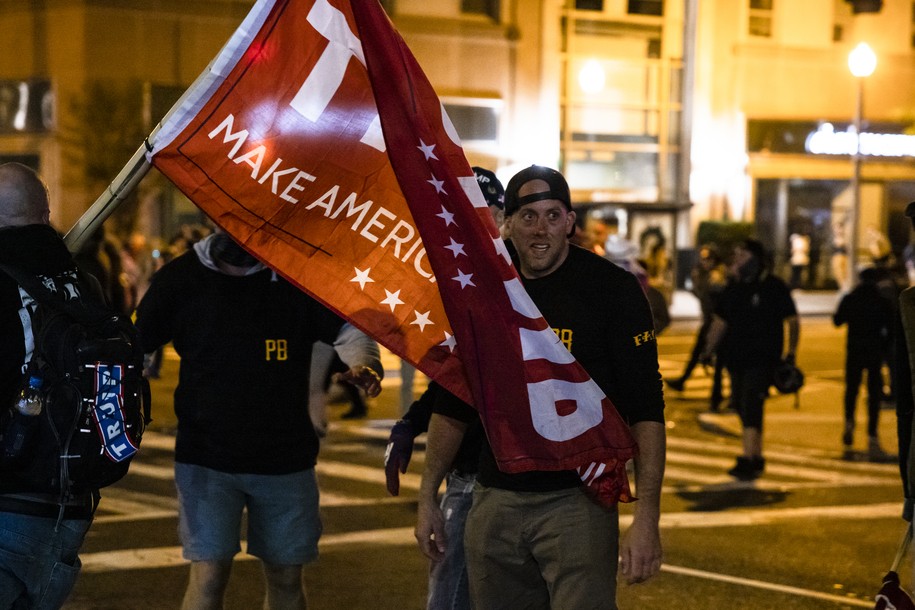


 Helen Cortez/Getty Images/EyeEm
 A man wearing a mask crosses a road with the US flag behind him in New York City on May 29, 2020. | Alexi Rosenfeld/Getty Images
/cdn.vox-cdn.com/uploads/chorus_asset/file/22045705/coronavirus_data_explorer__3_.png)
/cdn.vox-cdn.com/uploads/chorus_asset/file/22045598/coronavirus_data_explorer.png)
/cdn.vox-cdn.com/uploads/chorus_asset/file/19822036/St._Louis_social_distancing.png)




 A Rhode Island turkey farmer prepares birds for holiday meals. | John Tlumacki/The Boston Globe/Getty Images

 Getty Images/iStockphoto
/cdn.vox-cdn.com/uploads/chorus_asset/file/21899595/VOX_The_Highlight_Box_Logo_Horizontal.png)


 President Donald Trump and Fox News chair Rupert Murdoch in 2017. | Brendan Smialowski/AFP via Getty Images
 Photo by Nic Antaya for The Boston Globe via Getty Images
/cdn.vox-cdn.com/uploads/chorus_asset/file/22023128/Screen_Shot_2020_11_08_at_8.55.51_PM.png) St. Louis Federal Reserve
St. Louis Federal Reserve
/cdn.vox-cdn.com/uploads/chorus_asset/file/22023136/Screen_Shot_2020_11_08_at_8.59.22_PM.png) St. Louis Fed
St. Louis Fed
/cdn.vox-cdn.com/uploads/chorus_asset/file/22024465/extend_tcja_distribution.png) Tax Policy Center
Tax Policy Center
 US President Donald Trump stands alongside US Sen. Lindsey Graham (R-SC) during a Keep America Great campaign rally in North Charleston, South Carolina, on February 28, 2020. | Saul Loeb/AFP via Getty Images