Vice President Mike Pence, who may or may not be the actual Antichrist, has played a long, patient game these last four years. He has embraced Donald Trump's every white nationalist act. He has slathered Trump with praise at every possible opportunity, and has aggressively declared himself to have never seen any of Trump's buffooneries, incompetence, or crimes. He protected Trump through impeachable acts. He adopted, wholesale, Trump's notion that a worldwide pandemic was No Big Thing and led a coronavirus task force that was steadfast, absolutely steadfast, in doing nothing of note to combat it.
Pence did all of this for the usual reason: power, and the certainty that loyally holding Trump's pants up for four years as Trump rampaged around the place would inevitably lead to Pence's own nomination as Republicanism's next presidential contender.
Sucker. Now Donald Trump's contemplating running again in 2024 (if the Secret Service eventually tosses him from the building), and where does that leave Mike Pence? Screwed. It leaves him on the corner of Boned and Screwed, down the street from a crematorium and real close to the sex toy shop.
The New York Times gives a bit of an inside look at the Mike Pence team, although to be honest the whole thing could have been written in advance. Mike Pence has been predictable as a sunrise through the Trump years. He wants to "distance" himself from the current completely batshit insane and dangerous thing Donald Trump is doing so as to protect his own ambitions. He also intends to support Trump in doing the insane and dangerous thing to whatever extent he has to in order to keep Trump's favor. Pence will enable Trump to the end, but Trump has no such loyalty.
It is exceedingly likely that Trump is going to announce he will be running in 2024, whether he truly intends to or not. He is obsessed with his cheering rally crowds. He needs the donations to keep flowing—donations that he may not be able to spend with total freedom, but that continue to be aggressively siphoned off to pay Trump's gargantuan legal bills. He needs to be famous, and not just the kind of famous that allows a person to slap their name on mail-order steaks for pocket change.
Whether he follows through with it or not, that means every Republican who has devoted themselves to Trump for the last four years now has their own presidential ambitions on hold, full stop—or they will be considered an enemy of Trump and Trump's base. Mike Pence can't run for president until Donald Trump gets out of the way, and nobody has ever, in history, been able to pry Donald Trump out of the way when Donald didn't want to go. The man is willing to kill off his own relatives out of spite; he would relish the chance to immolate Mike Pence as he did Marco Rubio.
For now, though, Trump is moping. Multiple reports suggest Trump has completely given up on his day job of being president. CNN reports that "he has thrown relatively few angry fits," which is how we judge American presidents these days, but is despondent, pouting, and weighing the conflicting advice being given to him by Uday and Qusay Trump, who want him to press his coup-like position because they crave power, and Ivanka, who wants him to pack things in while his (her) brand still has cash value to it. The Wall Street Journal reports that Trump has no interest in a lame duck agenda or any other presidenting, no matter how much his staffers jingle those keys.
The odds that Trump can successfully pull off a coup remain near zero. Eventually he is going to be pried from the building and, realistically, the only face-saving measure available to him will be to claim he will win the next election for sure. Probably. Maybe. For whatever length of time he remains unindicted.
In the meantime, take a moment and pour one out for Mike Pence. Mike Pence was a good fascist. Mike Pence protected Trump even when it was long past obvious Trump was not only incompetent at the job, but recklessly incapable of fulfilling it. Even as Trump slid into delusion after delusion, Mike Pence backed him. Even as he committed impeachable acts, Pence was by his side. Even as Trump's indifference killed a quarter million Americans, Mike Pence took to the podium to make damn sure Trump was able to do it slickly and with minimal interference.
What does Mike Pence have to show for it now? Not much. He won't be able to run for president anytime soon, that's for sure. He might be able to wrangle his way into a Celebrity Apprentice cameo, if that's what it takes to pay the bills.
The first benchmark of Apple's M1 chip shows that the multi-core performance of the new MacBook Air with 8GB RAM beats out all of the 2019 16-inch MacBook Pro models, including the 10th-generation high-end 2.4GHz Intel Core i9 model. "That high-end 16-inch MacBook Pro earned a single-core score of 1096 and a multi-core score of 6870," reports MacRumors. The MacBook Air with M1 chip and 8GB RAM features a single-core score of 1687 and a multi-core score of 7433. From the report: Though the M1 chip is outperforming the 16-inch MacBook Pro models when it comes to raw CPU benchmarks, the 16-inch MacBook Pro likely offers better performance in other areas such as the GPU as those models have high-power discrete GPUs. It's worth noting that there are likely to be some performance differences between the MacBook Pro and the "MacBook Air" even though they're using the same M1 chip because the "MacBook Air" has a fanless design and the MacBook Pro has an new Apple-designed cooling system. There's also a benchmark for the Mac mini, though, and it has about the same scores. The "Mac mini" with M1 chip that was benchmarked earned a single-core score of 1682 and a multi-core score of 7067.
There's also a benchmark for the 13-inch MacBook Pro with M1 chip and 16GB RAM that has a single-core score of 1714 and a multi-core score of 6802. Like the "MacBook Air," it has a 3.2GHz base frequency. A few other "MacBook Air" benchmarks have surfaced too with similar scores, and the full list is available on Geekbench. [...] When compared to existing devices, the M1 chip in the "MacBook Air" outperforms all iOS devices. For comparison's sake, the iPhone 12 Pro earned a single-core score of 1584 and a multi-core score of 3898, while the highest ranked iOS device on Geekbench's charts, the A14 iPad Air, earned a single-core score of 1585 and a multi-core score of 4647.
Yup, this GOP and White House cannot abide actual facts
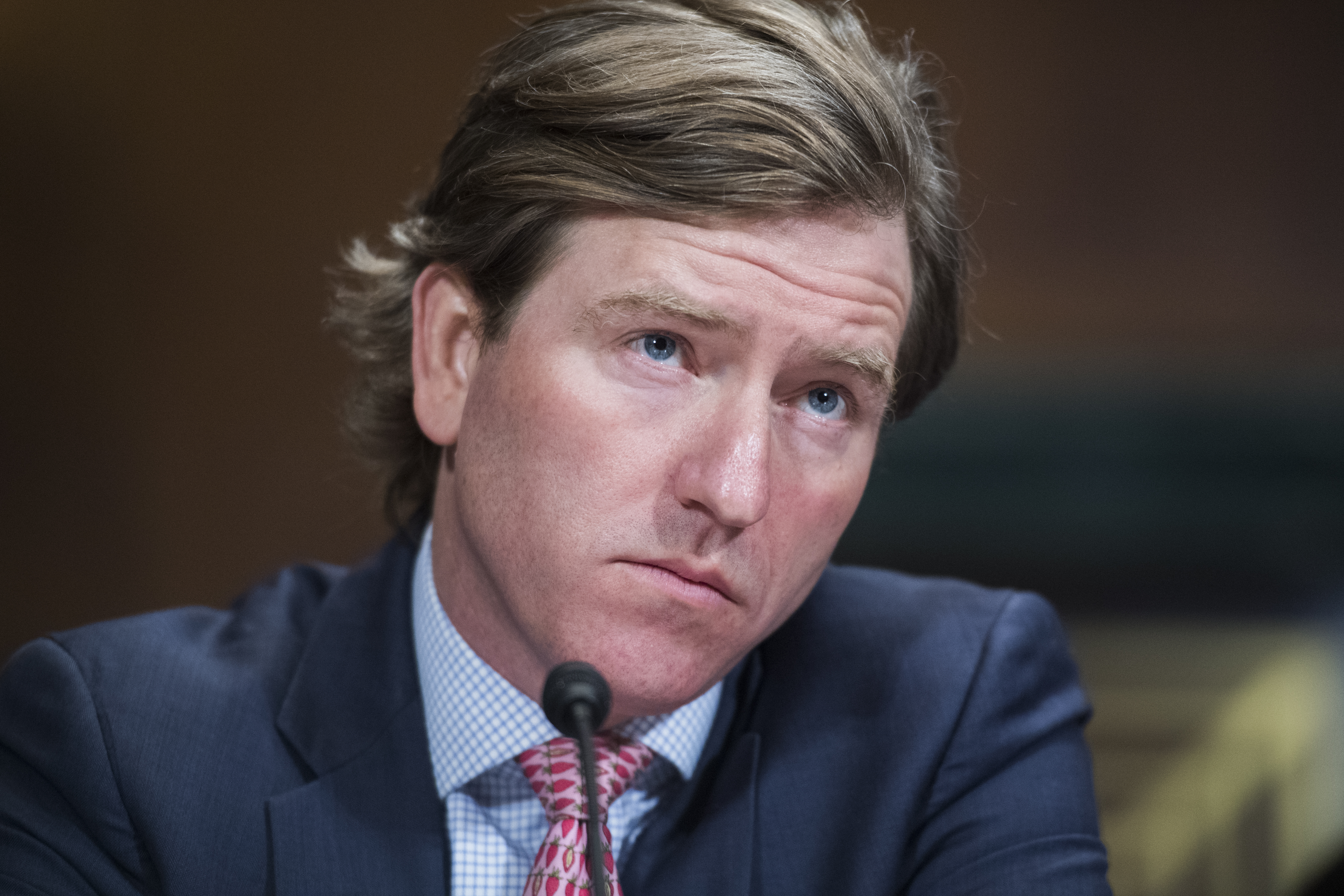
Enlarge / Christopher Krebs, director of the Department of Homeland Security's Cybersecurity and Infrastructure Security Agency. (credit: Tom Williams/CQ Roll Call)
Update: After publication, the Elections Infrastructure Government Coordinating Council and the Election Infrastructure Sector Coordinating Executive Committees issued a joint statement in which they called the 2020 presidential election "the most secure in American history." The statement continued:
"When states have close elections, many will recount ballots. All of the states with close results in the 2020 presidential race have paper records of each vote, allowing the ability to go back and count each ballot if necessary... There is no evidence that any voting system deleted or lost votes, changed votes, or was in any way compromised." [Emphasis theirs]
Original story: As Donald Trump and his allies have touted unproven claims of election fraud over the last week, the Cybersecurity and Infrastructure Security Agency and its leader, Chris Krebs, have swatted them down. CISA has set up a "Rumor Control" page that debunks common claims about the election.
More people in the US are hospitalized with the coronavirus than at any other time this year.
Far more Americans are currently hospitalized with Covid-19 than at any other point in the pandemic, a grim indicator that the third big wave of casesin the US is the worst wave to date by a lot.
On December 2, 100,226 people across the United States were in the hospital after testing positive for the novel coronavirus, according to data reported by the Covid Tracking Project. That’s significantly higher than the last two peaks recorded on April 15 and July 23, when the New York City and the Southeast and Southwest, respectively, were epicenters of the US outbreak. (As the Covid Tracking Project notes, the national and state hospital data have been erratic and incomplete, and reported totals may continue to shift.)
Christina Animashaun/Vox
What’s clear from the data is that Covid-19 migrated across the country to new regions this fall. In the spring, hospitalizations were overwhelmingly concentrated in the Northeast. In the summer, more than half of hospitalized Covid-19 patients were in the South and West: states like Arizona, California, Florida, Georgia, and Texas.
Now, every state is battling an active outbreak, and many of them are severe. “There’s so many places, with so many people, that the numbers are just drastically higher,” said Daniel McQuillen, an assistant professor of medicine at Tufts and a senior physician in the division of infectious diseases at Beth Israel Lahey Health, at a November Infectious Diseases Society of America briefing.
“There are no more hot spots,” said Murtaza Akhter, an emergency medicine physician with Valleywise Health Medical Center in Phoenix, Arizona. “Everywhere is a hot spot.”
As of December 3, California had the highest number of hospitalizations of any state (9,702), and Texas was in second place with 9,151 people in the hospital; Midwestern states like Michigan, Illinois, and Ohio have also seen record spikes in cases in recent weeks and now have more than 4,000 people hospitalized each.
“The hospitalization number is the best indicator of where we are,” Eric Topol, a professor of molecular medicine and director of the Scripps Research Translational Institute, told Vox this summer. That’s because it’s a better measurement of the severity of the pandemic than Covid-19 testing, which only finds a fraction of cases and includes more mild cases. “We’re going to go to new heights in the pandemic that we haven’t seen before. Not that what we saw before wasn’t horrifying enough.”
Go Nakamura/Getty Images
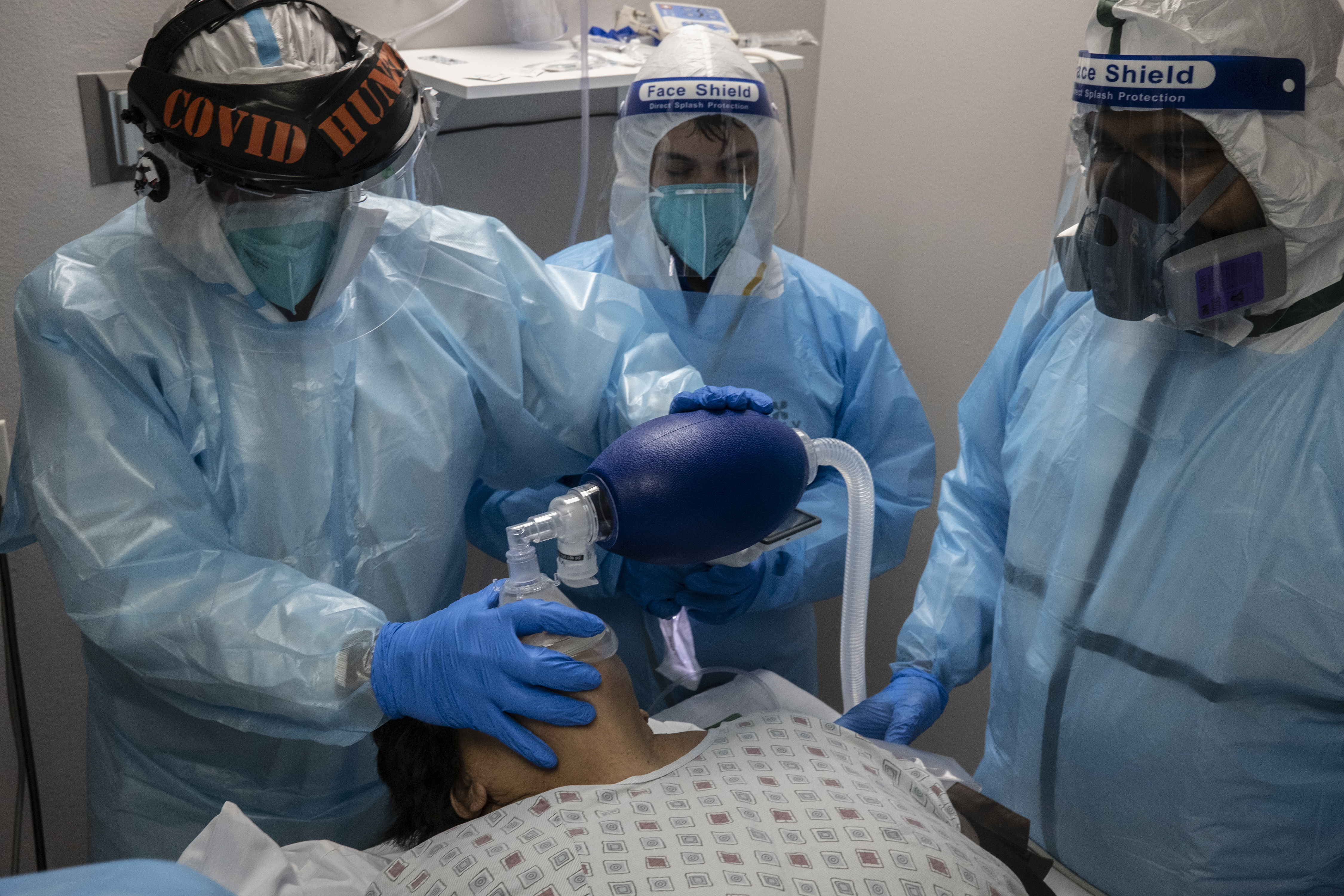
Medical staff treat a coronavirus patient in the Covid-19 intensive care unit at the United Memorial Medical Center in Houston, Texas, on November 10, 2020.
Some states like Utah and North Dakota have lower total hospitalizations but also fewer hospitals and hospital beds — and they’re now reaching a woeful tipping point of hospitals stretched to maximum capacity.
“Here in Salt Lake City, we provide a lot of [specialized infectious disease and ICU care] to people in four states as far away as Montana, Arizona, and Wyoming ... and our hospitals and caregivers are extraordinarily stressed,” Andrew Pavia, the chief of pediatric infectious diseases at the University of Utah School of Medicine, said at the IDSA briefing. “Our ICUs are full, but that includes overflow ICUs that have been purpose-built, taking advantage of the time we’ve had to plan.”
This was, unfortunately, to be expected (although it wasn’t inevitable). As the weather has turned cooler and states failed to fully control their outbreaks, transmission picked up when people moved indoors. Nearly all the states currently experiencing an increase in new cases and hospitalizations also did not experience major outbreaks in the spring or summer, so residents were less fearful and took less action to prevent the spread of the virus.
“There was a political climate where there’s distrust of government and reluctance to take harsh measures” in places like Utah, Pavia said. “Many of these states did not have mask mandates until very recently, and some don’t even have them today and have very limited restrictions on mass gatherings.”
Deaths have nearly hit a new record high as well, reaching 2,733 on December 2, reversing a steady decline that had begun in early May after the first wave and in August after the second wave.
Cumulatively, 13.9 million Americans have tested positive for Covid-19 since the pandemic began, and more than 267,000 of them have died. With hospitalizations surging and several states reporting thousands of new cases a day, CDC Director Robert Redfield said Wednesday Americans are in for “the most difficult in the public health history of this nation.”
The new hospitalizations, and the untenable pressure they’re putting on the health care system, are also a reminder of how critical it is for states to implement and enforce measures like mandatory face masks, restrictions on bars and restaurants, and for the federal government to fix testing and contact tracing problems. “It should be an all-points bulletin to really bear down on this, because otherwise there’s no limit on where this might go,” said Topol.
Hospitals are running out of staff and beds for Covid-19 patients
The good news is that infectious disease experts think many hospitals are better prepared to handle surges in Covid-19 patients than they were in the spring. For the most part, they have the equipment they need and they know how to deploy it. They also have more standardized protocol for treating the sickest patients.
Yet hospitals in hot spots across the country are maxing out their staff, equipment, and beds, with doctors and nurses warning that the worst-case scenario of hospital resources being overwhelmed have already arrived as their states have failed to get control of the coronavirus.
“The surge of Covid-19 patients takes away from our ability to care for the sick patients that are already in Arkansas,” said a nurse at a major health system in Little Rock, who asked to go unnamed fearing retaliation from her employer. “We have so many nurses quarantined that we’re not able to staff our oncology unit appropriately, and our patients are being negatively affected. Covid-19 is right now overburdening our health care system in Arkansas.”
Chris Graythen/Getty Images
An aerial view of the field hospital for coronavirus patients at Ernest N. Morial Convention Center in New Orleans, Louisiana, on April 4, 2020.
Hospitals in several states are also straining to find enough specialists to treat very sick Covid-19 patients.
“ICU beds don’t take care of people — you need staff,” Pavia said. “And one of the things that many of the Western states have in common is a relative shortage of the people we need to take care of very sick people during a pandemic like this: ICU doctors, probably most importantly ICU nurses, and infectious disease physicians, respiratory therapists. These folks have been working flat out for eight or nine months, and three months into the surge, they’re exhausted, they’re stressed.”
Staffing is a universal problem in hot spots. Gov. Gary Herbert of Utah said the state will have to bring in out-of-state nurses to help with the surge, and officials and health care providers in South Dakota, Tennessee, Arizona, and Wisconsin are requesting them too
In Texas, officials are setting up medical tents in El Paso and Lubbock in response to the rapid rise in hospitalized Covid-19 patients and a dwindling number of hospital beds. “El Paso, Texas, is almost completely out of ICU beds; Lubbock, the same thing,” said McQuillen.
“We are the 11th-largest city in the state of Texas and we have two field hospitals on their way to town,” Jarrett Atkinson, Lubbock’s city manager, told KCBD in November. “I can absolutely assure you that never in my career did I think we would be deploying field hospitals to Lubbock, Texas.”
John Moore/Getty Images
Medics wait outside an apartment to transport a woman with possible Covid-19 symptoms to the hospital on August 7, 2020, in Austin, Texas.
According to McQuillen, both El Paso and Lubbock have been “much less stringent with their populations [mandating] simple things like wearing masks, and socially distancing.” He compared that to Massachusetts and other Northeast states where he says strict measures during the spring surge made a big difference in reversing the steep climb in cases and hospitalizations. Yet too many states ignored that critical lesson, and now are paying the price.
Daily deaths are creeping up again but are still far below the earlier peak
While daily Covid-19 hospitalizations are surging, another key metric, daily deaths, reached 2,733 on December 2, the highest it has been since April during the first surge, according to the Covid Tracking Project. It’s an ominous sign that deaths will reach horrifying new levels in the coming weeks and months, given that cases and hospitalizations are now at new highs.
It’s possible, experts say, that fewer people who are hospitalized will end up dying in this winter stage of the pandemic as compared to the spring. As Vox’s Julia Belluz reported, there have been significant improvements in mortality in the US and Europe in the past several months, as doctors’ understanding of Covid-19 and how to treat it has improved:
Though there’s still a lot of progress to be made, the treatment approach has become more standardized over time, said Jen Manne-Goehler, an infectious disease doctor at Brigham and Women’s and Massachusetts General hospitals. When she started treating Covid-19 patients in the spring, it felt like practice was changing every few days. Now it’s more streamlined — and that’s undoubtedly helping with survival, too.
That said, if hospitals in the hard-hit states run out of beds and staff to treat the incoming flow of patients, more people who could have been saved may die. When ICU staff were stretched in the spring, “ICU patients just didn’t get the same attention,” intensive care doctor Lakshman Swamy, who works with the Cambridge Health Alliance, told Belluz.
Murtaza Akhter, the Arizona doctor, worries that his emergency room will be completely overwhelmed around Christmas, about one month after Thanksgiving, when many people are expected to have been infected after ignoring or the public health guidance to avoid family gatherings. He says he’s most worried about the “borderline patients who may otherwise have been admitted to the ER — they may now be more likely to go home because there are no hospital beds. And of those people, a very distinct fraction will have a worse outcome.”
This is one big reason why overtaxed hospitals will lead to more deaths. “This Covid-19 surge really has a huge downstream effect everywhere, not just on Covid patients but everybody else because it’s not like car accidents magically stopped or heart attacks stopped, they’re still there. The ones who do come in and get discharged, more often than many get worse outcomes.”
Fascinating. Thanks to Trump's negligence, large population studies on COVID are getting much easier :P
When Pfizer reported the first results out of its phase 3 trials of a COVID-19 vaccine last week, the nation—and world—were rightfully excited. Though the number of people involved was small, and the pool of those reporting was far from as diverse as might be desired, those early results showed an efficacy rate above 90%. Pfizer is expected to report additional data later this month, and we should be just weeks away from hearing similar data from Moderna, AstraZenaca, and Johnson & Johnson.
But even as these very deliberate, controlled, and active tests of vaccines are going on, there is other COVID-19 data emerging. This data comes mostly from questionnaires given to patients who have tested positive for COVID-19. It asks about the habits, health, and actions of these patients in the hopes that data might emerge providing clues about the behavior of a disease that ranges from extremely mild to downright deadly. And, in at least a couple of cases, it seems that data may have pointed to a couple of common treatments as having a potential effect on the severity of infection. Meanwhile, another study shows that asymptomatic carriers of COVID-19 may not be as common as many have believed.
The University of Bristol reports that it has completed an antibody survey of the “Children of the 90s” community spanning just under 5,000 participants. This group represents a number of British families who had—you guessed it—children in the 1990s. Health researchers have been following both the parents and the children through their lives, so they have a great deal of information on both their health history and personal habits. So their COVID-19 data could be particularly telling.
In the latest survey, 4.3% of those tested had developed antibodies to COVID-19. These people were twice as likely to be from the “children” group as the “parents” group. However, even though most of the people who had COVID-19 at some point were under 30—the group generally thought to have the mildest cases of the disease—only about 25% of all participants reported being asymptomatic.
In past results, mostly taken from smaller groups like infected passengers on the ill-fated Diamond Princess cruise ship, about half of all patients were asymptomatic. That number has frequently been used when working out the potential spread of COVID-19. Some researchers and politicians (especially politicians) have even projected much higher numbers of asymptomatic carriers to support specific theories or actions. If only a quarter of COVID-19 patients are asymptomatic, that may mean that the threat represented by asymptomatic carriers is smaller than has been estimated. It would also mean that calculations setting the number of cases far above the number of positive tests based on the idea that many of the infected never developed symptoms could also be way off.
The U.K. is also host to the massive RECOVERY project, a set of interlocking COVID-19 studies that has helped to both show that Trump’s beloved hydroxychloroquine is ineffective, and that the steroid dexamethasone helps patients receiving breathing assistance. On Tuesday, PharmaTimes reported RECOVERY was about to test the efficacy of something else: aspirin.
The idea that aspirin might be helpful against COVID-19 has been debated since very early in the pandemic. Last February, researchers in China announced that they were beginning trials of using aspirin as part of COVID-19 treatment with expectations that it could help with the damage COVID-19 can cause to both the blood vessels and the lungs, and early results appeared positive. Since then, many hospitals around the world have incorporated this most common of drugs into their COVID-19 regime—but it’s far from universal.
In October, a study published inAnesthesia and Analgesia looked at 412 patients. Of those, 76% did not get aspirin, and 24% got low-dose aspirin, the same kind often taken by heart patients. Patients who received low-dose aspirin were 44% less likely to end up on a ventilator and 43% less likely to require admission to the ICU. The number of patients studied was small, but those results are more than dramatic enough to indicate why RECOVERY is taking another look at a drug that really has been considered a “miracle” before. The very broad effects of aspirin—fever lowering, reducing clumping of platelets, lowering inflammation—may be a good match to the broad spectrum of symptoms caused by the coronavirus.
But aspirin isn’t the only off-the-shelf product to generate new interest from coronavirus researchers. As Science News reports, researchers at the Cleveland Clinic found evidence that there’s another widely available product that might be a big positive when it comes to COVID-19. In this case, while it’s often seen in the form of a pill, it’s not really a drug; it’s the sleep-regulating hormone melatonin.
Melatonin is naturally produced in the body each evening, with production rising as light decreases. When people take synthetic melatonin (in pills that range usually range from 1 mg to dosages far above the generally recommended limit of about 5 mg) it has a pair of sleep-inducing effects.
By doing a deep dive into patient data—including both those who had COVID-19 and those who did not—researchers discovered that those reporting regular use of melatonin had a 30% lower rate of testing positive for COVID-19. That seems like a fairly fantastic result … but it heaps up over a large dataset even when adjusted for other factors. And here’s something that seems to really stand out: For Black patients in the study, melatonin use seemed to cut the odds of being infected by COVID-19 in half. This type of study is notorious for drawing a statistical connection between unrelated items, and there could easily be coincidental causes behind this data. Maybe people who take melatonin take better care of their health in general. Maybe they’re just better rested. In any case, additional sources are now being examined to see if similar results can be found.
Finally, a drug that’s not over-the-counter but definitely seems appropriate for 2020 may also turn out to be an unexpected COVID-19 fighter. In a study published today in JAMA, researchers at Washington University in St. Louis found that patients receiving the antidepressant fluvoxamine were much less likely to develop serious COVID-19 symptoms when compared to those receiving a placebo. How much less likely is hard to say … because it appears to be infinite. As in none of the fluvoxamine patients displayed worsening conditions during the study. That’s a fantastic result … but it was also a very small study. So small that it’s not likely to change treatment regimens. However, if an antidepressant seems like a strange treatment for a virus, note that fluvoxamine is a group known as “Selective Serotonin Reuptake Inhibitors” (SSRIs), which have a powerful effect on inflammation.
Aspirin, melatonin, SSRIs … they may not seem like the most obvious tools to use against a virus that has proven to be so deadly. But they have the advantage of being extremely widely used and well-understood.
Big note: I’m not a doctor. This article should not be taken as medical advice. Don’t begin taking new medications without checking in with your health provider. Thanks.
The Trump campaign has filed yet another stupid lawsuit contesting the election and trying to stop certification in certain Georgia counties. This suit alleges that there is "evidence that sufficient illegal ballots were included in the results to change or place in doubt the results of the November 3, 2020 presidential election" in "certain counties."
Those counties:
Surprise, surprise. The complaint only challenges predominantly Black counties including: Fulton, Richmond, Chatham, Clayton, Cobb, Henry, DeKalb and Gwinnett. (Atlanta metro, Augusta, Macon, and Savannah.) And exactly zero rural, white counties. https://t.co/XKXQN37N90
They could not keep Black voters from turning out, so they’re trying to take their votes away after the fact.
Control of the U.S. Senate is at stake. We need you to phonebank, textbank and do other crucial work necessary for Jon Ossoff and the Rev. Raphael Warnock to win seats in Georgia. Click to find the activity best for you.
It’s week 34 since millions of Americans began filing for unemployment insurance benefits because of the pandemic-induced economic lockdown. According to the Department of Labor, in the week ending Saturday, Nov. 7, 1 million more filed initial claims for benefits—709,000 for regular state universal income programs, 298,154 for the federal Pandemic Unemployment Assistance program that covers freelancers and other workers ineligible for the regular benefits.
Thanks to the failure of the Trump regime to take the pandemic seriously, the raging coronavirus has led several states to impose new partial or complete closures of some types of businesses, which means more layoffs and additional new benefit claims are on the way. Shutdowns will undoubtedly spread to other states as COVID-19 sends ever more people to hospitals and premature graves. On Wednesday, the Johns Hopkins University of Medicine reported 1,415 COVID-19 deaths, the highest one-day total in three months.
In most states, out-of-work people who qualify can collect benefits for 26 weeks, plus the 13-week extension approved by Congress in the spring. Anyone who filed when the pandemic first got underway and hasn’t yet gone back to work has just five weeks of benefits left unless a new extension is granted. During the Great Recession, extensions ultimately reached the point where many workers were eligible for 99 weeks. Republicans had to be arm-twisted repeatedly to make that happen.
While the stock market continues to soar, the overall economy is another story. There were at least 10 million more Americans employed in February than now, permanent job losses are headed for 4 million, the number of people looking for work for 27 weeks or more has risen from 1.5 million to 3.6 million in the past three months, both large and small business bankruptcies are on the rise, and the job recovery that returned millions to work in the third quarter has greatly weakened.
Although the headline unemployment rate fell to 6.9% last month, that’s still nearly twice what it was in February. And that calculation doesn’t capture how bad the situation is because, among other things, it doesn’t include out-of-work people who haven’t looked for a job in the most recent four weeks. Given the lack of job opportunities, that’s extremely common, but the Labor Department categorizes such people as having dropped out of the workforce, which makes the economy seem better than it actually is.
Analysts at the left-leaning Center on Budget and Policy Priorities write:
The official unemployment rate, which spiked to 14.7 percent in April, has come down to 6.9 percent in October. Although Black and Latino unemployment rates had fallen to historic lows before the crisis — due largely to the longest (128-month) economic expansion in U.S. history — they exceeded the white rate even then. All rates rose sharply in the recession and remained high in October, but the increase since February has been larger for Black and Latino workers (5.0 and 4.4 percentage points, respectively) than for white workers (2.9 percentage points). Black and Latino workers also continued to have a much higher unemployment rate in October than white workers.
These patterns have endured in recessions and recoveries alike and are rooted in this nation’s history of structural racism, which curtails job opportunities for Black people through policies and practices such as unequal school funding, mass incarceration, and hiring discrimination. Black workers tend to be “the last hired and first fired.” High unemployment rates for Latino people, which also consistently exceed the white rate, reflect many of the same barriers to opportunity.
With relief from the first stimulus mostly dried up, a report from the Department of Health and Human Services forecasts that by year’s end, without additional congressional aid—including an extension of unemployment benefits beyond the current 39 weeks—the Pandemic Recession will have driven an additional 10 million people, including 4 million children, into poverty. That’s a rise from 10.5% in 2019 to an estimated 13.6% in the five-month period from August to December. Which makes for a total of 43.8 million Americans in poverty, 9.8 million more than in 2019.
A sheriff’s deputy waits to screen people entering the county jail as a man walks by on Friday, May 1, 2020, in El Paso, Texas. | Cedar Attanasio/AP
The “devastating human toll” of Covid-19 in Texas’s correctional facilities is revealed in a new report by University of Texas at Austin researchers.
Over230 people have died from Covid-19 in Texas’s correctional facilities — and in county jails, nearly 80 percent of them were in pretrial detention and hadn’t even been convicted of a crime, according to a new report.
A team of researchers attheUniversity of Austin at Texas reviewed data from the Texas Department of Criminal Justice (TDCJ), which has reported that at least 231 people have died of Covid-19 in the state’s correctional facilities between March and October. This report only looked at state-operated prisons and county-operated jails, as researchers were focused on how Texas’s Covid-19 prison policies had fared.
The 231 figure is likely to be a conservative count. As the researchers note, TDCJ and county jails update death reports after autopsies are conducted, sometimes months after the fact. Additionally, many people have “died without ever having been tested for COVID,” and others died due to a preexisting conditioned worsened by the virus and are not counted in this figure.
The death of an inmate is tragic regardless of their conviction status, but the UT Austin report reveals the state’s lack of urgency in keeping as many people safe as possible. Of the inmates in prison who died, nine of them had been approved for parole and were awaiting release, 21 of them had served 90 percent or more of their sentence, and 58 percent of those who died in prisons were eligible for parole.
Texas isn’t alone:Despite the alarms sounded by policy experts,correctional officers, and prisoners themselves earlier this year, Covid-19 has been allowed to ravage prison populations, harming inmates, correctional officers, and the surrounding communities for months. Civil rights groups and criminal justice experts advocated reducing the prison population as much as possible to flatten the curve. Unfortunately, few states took serious action to combat the virus in prisons and jails — according to a June ACLU report, no state earned more than a D-, and most earned F’s.
As the pandemic was spreading through the US in the spring, prisons quickly became one of the epicenters of the crisis, as my colleague German Lopez reported in April:
In Rikers Island in New York City, the jail’s top doctor called the coronavirus outbreak there — one of the largest in the country, with hundreds sick — a “public health disaster unfolding before our eyes.” As of April 20, the confirmed infection rate in New York City jails was more than 9 percent, compared to less than 2 percent in New York City more broadly, according to the Legal Aid Society.
In Michigan’s Parnall Correctional Facility, 10 percent of prisoners and 21 percent of staff tested positive for the coronavirus as of April 15, according to the Detroit Free Press. When controlling for population, that makes the outbreak there even worse than Cook County’s or Rikers Island’s.
In Ohio, more than one in five of the state’s confirmed cases are in the prison system, the Columbus Dispatch reported. The Marion Correctional Institution, where 73 percent of inmates tested positive for the virus, makes up a majority of those cases.
Correctional facilities provide the perfect storm for an outbreak, as Catherine Kim reported for Vox in early April. Jails and prisons are overcrowded, inmates “share everything from cells to showers to dining spaces,” and inmates have “few resources for proper hygiene.” Without room to social distance, proper hygiene becomes even more important. As Kim reported, “most correctional facilities do not provide soap,” and hand sanitizer has been banned in most prisons “because it can be used to brew toxic alcoholic drinks.”
It’s a horrible situation for inmates, staff, and the local communities, which are also left vulnerable to infection as workers commute between work and home. The researchers place blame firmly on the state’s leadership, concluding that “Texas’ failure to curb the spread of the virus in its corrections facilities” has resulted in a “devastating impact on the people who live and work in our state’s prisons and jails.”
As part of this effort, as outlined in Biden’s ambitious climate plan, his administration plans to “Name and shame global climate outlaws” in a new “Global Climate Change Report,” in order “to hold countries to account for meeting, or failing to meet, their Paris commitments and for other steps that promote or undermine global climate solutions.”
And during the first 2020 presidential debate, Biden gave an indication of one of the first countries to potentially be labeled an “outlaw”: Brazil.
Biden said he would rally countries to come up with $20 billion to give to Brazil to protect the Amazon. He also stressed there would be serious consequences if Brazil didn’t stop its policies of deforestation.
For the past two years, Brazil has experienced record-setting wildfires which have been exacerbated by climate change and poor forest management. As Vox’s Lili Pike wrote in September, “As with 2019, researchers have linked this year’s fires [in Brazil] to massive illegal deforestation. Under Brazilian President Jair Bolsonaro’s administration, ranchers, farmers, and miners have been given much freer rein to clear the rich rainforest for commercial activity, and setting fires is a cheap way to do that.”
Bolsonaro’s legacy of climate change denial and his lax attitude toward the clearing of the Amazon helped align him with Trump. But under a Biden administration, disregard for the Amazon and disbelief in global warming may not be as easy to get away with.
“There are people in the Democratic Party that would like to go after Bolsonaro and be very tough with him on this issue, and join forces with the Europeans to apply significant pressure,” Mike Shifter, president of the Inter-American Dialogue, a foreign policy think tank, told Reuters in October.
With Trump gone and most countries in the world working toward achieving the 2-degree goal of the Paris agreement, Bolsonaro could find himself and his government subjected to increased global pressure and shaming, led by the Biden administration.
Bolsonaro may remain defiant, but the US and international community have leverage
Bolsonaro reacted defiantly to Biden’s debate comments in September about giving Brazil $20 billion to protect the Amazon, tweeting: “What some have not yet understood is that Brazil has changed. Today, its President, unlike the left, no longer accepts bribes, criminal demarcations or unfounded threats. OUR SOVEREIGNTY IS NON-NEGOTIABLE.”
Of course, that was before Biden won the US presidential election. But Bolsonaro has yet to change his tune.
On November 10, he again responded to Biden’s threat of financial repercussions if Brazil didn’t stop deforestation of the Amazon. Still referring to President-elect Biden as a “candidate” despite his victory, Bolsonaro — who enjoyed a good relationship with President Trump and has yet to congratulate Biden on his win — sniped: “I recently heard a presidential candidate to head of state say that if I don’t put out the fire in the Amazon, he is going to raise trade barriers against Brazil. How do we deal with all of that? Diplomacy is not enough. When there is no more saliva, then there must be gunpowder.”
Bolsonaro’s aggressive comments suggest a difficult road could lie ahead for Brazil-US relations. But the US and the international community have significant economic leverage they could bring to bear on Bolsonaro to push him to change his policies.
The global economic slowdown caused by the Covid-19 pandemic has hit Brazil’s economy, and particularly its export market, hard. China, the United States, and the European Union are Brazil’s three main trading partners, so if those countries chose to, they could apply substantial economic pressure on the country to encourage Bolsonaro to rethink his defiant stance.
“The US has to get together with EU, China, and others that are major purchasers of products from Brazil — whether it’s soy, beef, timber — and lay down the law and say, ‘If you don’t restore and expand your efforts to police deforestation of the Amazon, we’re gonna cut off your supply chains,’” said Alden Meyer, former director of strategy and policy at the Union of Concerned Scientists who now works as an independent strategist on climate policy and politics. “That’s the leverage other countries have over Brazil: If you’re not going to protect the Amazon, we’re not going to do business with you.”
But, Meyer noted, to become a leader on the international climate stage, the US must be serious about reducing emissions in all sectors of its own economy: power, transportation, building, industry, agriculture, forests. “It’s viable if the US does it at home,” Meyer said.
Enlarge / Big Sur's default wallpaper is bright and abstract and frankly kind of iOS-esque. (credit: Apple)
The era of Mac OS X is over. Kind of.
For the first time in almost two decades, Apple has decided to bump up the version number of the Mac’s operating system. The change is meant to call attention to both the pending Apple Silicon transition—Big Sur will be the first macOS version to run on Apple’s own chips, even if it’s not the first to require those chips—and to an iPad-flavored redesign that significantly overhauls the look, feel, and sound of the operating system for the first time in a long while. Even the post-iOS-7 Yosemite update took pains to keep most things in the same place as it changed their look.
But unlike the jump from Mac OS 9 to Mac OS X, where Apple swept away almost every aspect of its previous operating system and built a new one from the foundation up, macOS 11 is still fundamentally macOS 10. Early betas were even labeled as macOS 10.16, and Big Sur can still identify itself as version 10.16 to some older software in order to preserve compatibility. Almost everything will still work the same way—or, at least, Big Sur doesn’t break most software any more than older macOS 10 updates did. It may even be a bit less disruptive than Catalina was. This ought to be a smooth transition, most of the time.
Microsoft is urging users to abandon telephone-based multi-factor authentication (MFA) solutions like one-time codes sent via SMS and voice calls and instead replace them with newer MFA technologies, like app-based authenticators and security keys. From a report: The warning comes from Alex Weinert, Director of Identity Security at Microsoft. For the past year, Weinert has been advocating on Microsoft's behalf, urging users to embrace and enable MFA for their online accounts. Citing internal Microsoft statistics, Weinert said in a blog post last year that users who enabled multi-factor authentication (MFA) ended up blocking around 99.9% of automated attacks against their Microsoft accounts. But in a follow-up blog post today, Weinert says that if users have to choose between multiple MFA solutions, they should stay away from telephone-based MFA. The Microsoft exec cites several known security issues, not with MFA, but with the state of the telephone networks today. Weinert says that both SMS and voice calls are transmitted in cleartext and can be easily intercepted by determined attackers, using techniques and tools like software-defined-radios, FEMTO cells, or SS7 intercept services.
Donald Trump has told friends he plans to take down FOX News with his own digital media company and use “vote-count rallies” to prime his MAGA base against Rupert Murdoch’s network.
According to Axios, Rather than start a cable channel, “Trump is considering a digital media channel that would stream online, which would be cheaper and quicker to start.”
Axios adds that Trump’s station would likely charge a monthly fee such as the one charged by FOX Nation, be built upon his database of phone numbers and emails
It is fascinating, and potentially useful for another well known retrovirus
An anonymous reader shares an excerpt from Wired: On Monday morning, when representatives from the drug company Pfizer said that its Covid-19 vaccine appears to be more than 90 percent effective, stocks soared, White House officials rushed to (falsely) claim credit, and sighs of relief went up all around the internet. [...] The arrival of an effective vaccine to fight SARS-CoV-2 less than a year after the novel coronavirus emerged would smash every record ever set by vaccine makers. "Historic isn't even the right word," says Larry Corey of the Vaccine and Infectious Disease Division at the Fred Hutchinson Cancer Center. A renowned virologist, Corey has spent the last three decades leading the search for a vaccine against the virus that causes AIDS. He's never seen an inoculation developed for a new bug in under five years, let alone one. "It's never happened before, never, not even close," he says. "It's just an amazing accomplishment of science."
And perhaps even more monumental is the kind of vaccine that Pfizer and BioNTech are bringing across the finish line. The active ingredient inside their shot is mRNA -- mobile strings of genetic code that contain the blueprints for proteins. Cells use mRNA to get those specs out of hard DNA storage and into their protein-making factories. The mRNA inside Pfizer and BioNTech's vaccine directs any cells it reaches to run a coronavirus spike-building program. The viral proteins these cells produce can't infect any other cells, but they are foreign enough to trip the body's defense systems. They also look enough like the real virus to train the immune system to recognize SARS-CoV-2, should its owner encounter the infectious virus in the future. Up until now, this technology has never been approved for use in people. A successful mRNA vaccine won't just be a triumph over the new coronavirus, it'll be a huge leap forward for the science of vaccine making.
[I]n the last decade, the field has started to move away from this see-what-sticks approach toward something pharma folks call "rational drug design." It involves understanding the structure and function of the target -- like say, the spiky protein SARS-CoV-2 uses to get into human cells -- and building molecules that can either bind to that target directly, or produce other molecules that can. Genetic vaccines represent an important step in this scientific evolution. Engineers can now design strands of mRNA on computers, guided by algorithms that predict which combination of genetic letters will yield a viral protein with just the right shape to prod the human body into producing protective antibodies. In the last few years, it's gotten much easier and cheaper to make mRNA and DNA at scale, which means that as soon as scientists have access to a new pathogen's genome, they can start whipping up hundreds or thousands of mRNA snippets to test -- each one a potential vaccine. The Chinese government released the genetic sequence of SARS-CoV-2 in mid-January. By the end of February, BioNTech had identified 20 vaccine candidates, of which four were then selected for human trials in Germany. [...] Genetic vaccines might be proving they can work -- but it's still not definitive, and they may not yet work for everyone. That's why experts say it's so crucial to continue supporting ongoing trials for the more than 60 other vaccine candidates still in various stages of human testing. What older technologies lack in terms of speed, they make up for in durability.
On Nov. 3, long-time evangelical pastor and big-time Trump supporter Rev. Irvin Baxter Jr. died of complications from COVID-19. Based in Plano, Texas, his ministry announced his death at the age of 75. Baxter, a televangelist who appeared on End of the Age syndicated television and radio program and founded Endtime Ministries, preached an apocalyptic-brand of Pentecostal Christianity that has been practiced in the United States since the early 1900s. Baxter had been hospitalized for two weeks before succumbing to the virus.
A couple of months ago, on The Jim Bakker Show, while they sold “Pandemic Bundle” DVD books about the end of times, Irving Baxter Jr. explained his thoughts on COVID-19 that he had been “thinking about … the sin of fornication.” According to something he read in the “encyclopedia,” only 5% of new U.S. brides were virgins, meaning that the rest were guilty of fornication. He went on to explain that this may be a “wake-up call” from God. “This coronavirus may be a privilege.”
The Dallas News reports that his co-host on End of the Age, Dave Robbins, gave a press release saying that “Irvin went on to his great reward. We celebrate his life, but at the same time, there is sorrow; there is grieving.”
Billing it as “the largest Trump rally in U.S. history,” an aggregation of red-hatted Donald Trump fanatics—comprised almost entirely of far-right extremists of a variety of stripes, working alongside ostensibly mainstream conservatives—have organized what they hope will be a massive demonstration of support for the defeated president Saturday in Washington, D.C.: the “Million MAGA March.”
The list of “prominent attendees” touted by organizers for the event is a virtual who’s who of the white-nationalist far right, and leading far-right figures and organizations have been organizing and ardently promoting it, not least being conspiracy-meister Alex Jones and his Infowars operation. The message of the whole event, in the words of Oath Keepers founder Stewart Rhodes: “We must refuse to EVER recognize this as a legitimate election, and refuse to recognize Biden as a legitimate winner, and refuse to ever recognize him as the president of the United States.”
As Politico’s Tina Nguyenreports, the Saturday’s march from the Supreme Court building and down the National Mall is largely the coalescence of several fronts of interconnected pro-Trump activism—primarily the conspiracy-fueled “Stop the Steal” rallies that have been organized on Facebook to protest the election results at voting centers and state capitals, and those “Trump train” caravans featuring dozens of banner-flapping pickup trucks and accompanying thuggish behavior that became endemic in the closing weeks of the 2020 campaign.
Route of the ‘Million MAGA March’ caravan.
The organizers are incorporating the “Trump train” concept into the Saturday event by sponsoring and promoting a cross-country “Million MAGA March” caravan, which they claim “will be driving through the entire country and arriving this weekend to protest the contested election.” The route being promoted, however, only originates in Texas and drives through the South and up through Georgia and the Carolinas to reach Washington.
The entire event, culminating Saturday in D.C., is the product of an open coalition between far-right MAGA-loving Trump supporters, conspiracy theorists/scam artists, and the outright white nationalists who have assiduously wormed their way into mainstream right-wing politics.
On one end of the spectrum, the “Million MAGA March” is supported by Students for Trump (whose president, Ryan Fournier, angrily claimed that “Big Tech is out to take down this President” after EventBrite removed the page for the planned D.C. event) and “Truckers for Trump,” a social-media-based entity who also are threatening to organize a nationwide long-haulers’ strike after Thanksgiving.
At the other end are Nick Fuentes, the white nationalist social-media figure who leads the so-called “Groyper Army” of open anti-Semites and bigots, and his frequent cohort Michelle Malkin, who has managed to reinvent herself as an unapologetic white nationalist in recent years, as well as the heavily armed “Patriots” of Rhodes’ Oath Keepers’ outfit, which has been vowing “civil war” in the streets since August. The Saturday “march” is also being heavily promoted on white supremacist sites like The Daily Stormer and Stormfront.
Fuentes promoted the event on Parler: “[W]e will rally in DC this weekend. GROYPERS ARE GOING TO STOP THIS COUP!,” he wrote. On Twitter, he called the event “MAGA NIGHT AT THE WHITE HOUSE.” A popular white-nationalist livestreamer named Ethan Ralph announced he would host his show “The Killstream” at the event.
At the Trump-endorsed One America News Network, “reporter” Jack Posobiec—exposed this summer by the Southern Poverty Law Center as a highly active white nationalist with deep connections throughout the movement, as well as a million followers on Twitter—eagerly promoted the Saturday event with Kristi Kremer of Women for America First, which is credited with first promoting the “Stop the Steal” hashtag.
Like Rhodes and Oath Keepers, Alex Jones and Infowars have been especially active in promoting both the D.C. event and the accompanying cross-country “Trump Caravan” leading up to it. Infowars’ Owen Schroyer has held events at each stop. On his daily show, Jones proclaimed: “So don’t worry, President Trump. The cavalry is coming.” Biden’s election—which he insists only occurred through fraud—is the final apocalyptic straw for Jones, who concluded:
We must not comply. This is the final assault. It’s the takeover. And it’s here.
As Politico notes, the organizers have failed to file for any permits for the event, which has been alternatively dubbed the March for Trump and Stop the Steal DC. So it remains unclear how many people may show up, particularly given past far-right fizzles. However, researchers have estimated “anywhere from several hundred to several thousand may show up.”
Moreover, it probably will serve as a model for what we’ll see from the extremist right over the coming weeks leading up to Inauguration Day, as Nguyen observes: “Activists throughout the far-right universe, from MAGA celebrities to policy wonks to conspiracy theorists, are exploring how to use the final two-plus months of Trump’s presidency to undermine President-elect Joe Biden, vocally support Trump’s court challenges to the election, confront antifa, and maybe, just maybe, help keep the current president in office.”
Jared Holt of the Atlantic Council’s Digital Forensics Research Lab explains that not everyone at the event will be a white nationalist or extremist, “but this event is generating a fair amount of chatter in extremist communities online that we're monitoring.”
“It is solely designed to create disruption, and possibly chaos. It's basically a giant online comment troll come into life,” Angelo Carusone, president of Media Matters, told Politico.
The lineup of “prominent attendees” featured in organizers’ promotional posts is revealing. In addition to Jones, Posobiec, Fuentes, Shroyer, and Malkin, far-right conspiracist Mike Cernovich is included, along with Jaden McNeil—a young man whose sole claim to fame is getting expelled from Kansas State for posting a vicious tweet about George Floyd after his murder by police—and Ashley St. Clair, best known for being expelled from the conservative campus group Turning Point USA after she posed with white nationalists.
But just in case anyone should accuse these white nationalists of being racist, they of course includeD two African American entertainment acts—pro-Trump rapper Bryson Gray, and the far-right Hodge Twins—on the list.
The underlying beliefs animating both the Saturday march and the mounting far-right resistance to Biden’s election were voiced by Rhodes at the Oath Keepers website:
This election was stolen and this is a communist/Deep State coup, every bit as corrupt and illegitimate as what is done in third world banana republics. … This election was stolen by corrupt, law-breaking Democrat partisans on the ground, and by the manipulation of the CIA created HAMMR (“Hammer”) and Scorecard programs.
Rhodes also urged Trump to refuse to concede: “President Trump must refuse to recognize it as legitimate because it is not legitimate,” he wrote, adding that “by President Trump refusing to concede, he is stopping a coup rather than engaging in one.”
Trump at Arlington National Cemetery on November 11, 2020. | Brendan Smialowski/AFP via Getty Images
Bush v. Gore hinged on 537 votes in one state. Biden’s victory over Trump was a blowout by comparison.
Secretary of State Mike Pompeo’s news conference on Tuesday will be best remembered for his shocking comment that despite President Donald Trump’s loss to President-elect Joe Biden, “there will be a smooth transition to a second Trump administration.” But another defense he gave for the Trump administration’s refusal to concede an election Trump lost warrants some attention.
As he seemingly tried to temper his initial statement refusing to accept the election results, Pompeo compared this election with the controversial 2000 one, saying, “It took us 37-plus days in an election back in 2000. We conducted a successful transition back then.”
Pompeo’s implication was that the outcome of this election is similar to what happened in 2000, when George W. Bush’s victory over Al Gore wasn’t determined until a Supreme Court decision on December 12 of that year. And he’s far from the only Trumpworld figure who has invoked 2000 to justify Trump’s refusal to concede. The Trump appointee leading the General Services Administration, the head of the National Republican Congressional Committee, campaign legal adviser Jenna Ellis, and Trump loyalist Gov. Kristi Noem (R-SD) have all taken this tack.
Gov. Kristi Noem (R-SD): "We have not finished counting votes ... Back in 2000 Al Gore was given his day in court. We should give President Trump his day in court." pic.twitter.com/AoIK9UVBf2
But comparing the president’s chances favorably to Bush’s win in 2000 probably isn’t the most convincing way to defend Trump’s refusal to acknowledge the reality that he lost.
As a reminder, the 2000 election came down to Florida’s 25 electoral votes, which were ultimately decided by a margin of just over 500 votes. Hard-fought recounts in the state brought the terms “hanging chad” and “dimpled chad” into public consciousness. Florida — and by extension the presidency — wasn’t decided for Bush until December 12, when, in a controversial decision, the Supreme Court determined that an ongoing recount in Florida violated the 14th Amendment’s equal protection clause.
Trump is clearly hoping for something similar to happen this time around. But there are two glaring differences between Trump’s loss to Joe Biden and the Bush-Gore situation that make the 2000 comparisons inappropriate.
Unlike Bush-Gore, Biden-Trump isn’t particularly close
When the Supreme Court halted the final Florida recount in December 2000, Bush led Gore by 537 votes. That was roughly one-third of the 1,784-vote margin that Bush led Gore by following the initial tally after polls closed.
Recounts rarely change the result of an election. A recent analysis from FairVote found that from 2000 to 2019, only three of 31 statewide recounts overturned the result of a race, and in all three cases, the original margin of victory was under 0.05 percent. The margins in the key states where Biden bested Trump by relatively narrow margins are nowhere near that close.
Trump is losing to Biden by...
20,539 votes in Wisconsin 47,215 votes in Pennsylvania 12,567 votes in Georgia 14,746 votes in Arizona 36,274 votes in Nevada
These are not margins that get undone in recounts.
It’s true that Georgia, for one, will conduct an automatic recount. And the Trump campaign has already announced its intent to request a recount in Wisconsin, where it is legally allowed to do so because of the narrow margin. But given Biden’s current lead there, it’s nigh impossible that Trump flips it — hence the decision from Vox’s partners at Decision Desk to call the Midwestern state for Biden. Even in the highly unlikely result that recounts somehow flip both Georgia and Arizona to Trump, Biden, who appears to have won 306 electoral votes, would still have more than the 270 electoral votes necessary to clinch the presidency.
The 2000 election came down to hundreds of votes in a single state. Biden, by contrast, has a decisive advantage in the Electoral College with at least one state to spare. So while it would make sense for Trump to refuse to concede if the result hinged just on Georgia or Arizona, recounts don’t provide him with a realistic path to victory.
Trump is challenging handfuls of votes in an election he lost by tens of thousands
Recounts aside, Trump’s hope seems to be that he’ll benefit from a Supreme Court decision in a way similar to Bush in 2000, when Bush v. Gore effectively handed Bush the presidency by stopping a recount. As my colleague Ian Millhiser recently detailed, the Court’s reasoning “was widely viewed at the time, and is widely viewed now, as a political decision and not an exercise in legal reasoning.”
So yes, there’s precedent for the Supreme Court intervening in an election. But the problem for Trump is that his legal team has yet to come up with a case that could conceivably force the issue. Trumpworld has spent the past week insisting that fraud swung the result for Biden in places like Pennsylvania and Michigan, but they’ve been unable to produce any credible evidence to back it up. Kayleigh McEnany’s appearance on Tuesday evening’s edition of Sean Hannity’s Fox News show illustrated the increasingly farcical nature of these efforts.
Hannity just featured another episode of Trumpers owning the libs with reams of paper pic.twitter.com/lniNN5GWnJ
The Trump campaign has filed a dozen lawsuits alleging irregularities, but none of them have been successful. Notably, in a Pennsylvania court on Wednesday, a lawyer representing Trump acknowledged that allegations being brought by the campaign in Montgomery County don’t rise to the level of fraud.
As the above transcript indicates, the case involves 592 ballots in a state that Trump lost by nearly 50,000 votes. That’s just one of many lawsuits brought by the Trump campaign, but it illustrates a broader problem: Trump’s lawyers aren’t challenging anywhere near a sufficient number of votes to affect the outcome.
Along similar lines, litigation brought by the campaign in Arizona impacts fewer than 200 ballots in a state Trump lost by nearly 15,000 votes.
Pres. Trump’s legal team has challenged a grand total of 180 rejected ballots in Maricopa County. Biden leads in AZ by 14,746 votes - https://t.co/UH3tkfQ026
In short, the Trump campaign hasn’t produced any evidence of fraud, and the allegations of irregularities have no chance of affecting Biden’s ultimate victory. Even the campaign’s most significant legal challenge — one in Pennsylvania to mail ballots that arrived after Election Day — only affects about 10,000 ballots, far too few to jeopardize Biden’s victory in the state.
By contrast, the Supreme Court got involved in the 2000 election because there were legitimate constitutional questions raised by Florida’s recount process, and the resolution of them had decisive implications for the result. As Kristine Phillips recently explained for USA Today:
In 2000, the Supreme Court looked at the issue of equal protection, which requires the government to treat individuals in the same way. There needed to be a uniform way of considering ballots during the recount, and there wasn’t, which violated an equal-protection right voters have to have their ballots treated equally during an election. The court ruled that because Florida counties conduct recounts differently, continuing the recounts was unconstitutional.
Ultimately, comparisons between 2020 and 2000 would carry more water if this year’s election was closer and the Trump campaign could wage a legal fight for its survival in one state. But not only did Biden win with states to spare, no state is as close as Florida was two decades ago.
Moreover, the Trump campaign’s strategy has been to make allegations of irregularities and then try and find evidence for them later. That may be an effective way to delegitimize Trump’s loss in the eyes of his supporters, but it doesn’t work in courtrooms.
Rep. Jim Jordan (R-OH) stands with dozens of people at a “Stop the Steal” rally on November 5 at the Pennsylvania State Capitol. | Spencer Platt/Getty Images
Trump supporters indicated a “decrease[d] willingness to accept election results peacefully.”
President Donald Trump’s tweets attacking the legitimacy of the 2020 presidential election might not sway the outcome — but they might sway Americans’ faith in democracy.
A study by political science researchersfrom Stanford and five other universities found that exposure to those tweets “erodes trust and confidence in elections and increases the belief that elections are rigged among his supporters.” However, among those who oppose the president, the study found that their trust in elections actually increased after seeing his tweets, albeit by a slightly smaller magnitude.
The study’s survey, which was conducted before the election (from October 7-24), presented roughly 2,000 participants from both political parties, as well as some independents, with a variety of Trump tweets about election integrity and other topics. The methodology gets a little complicated from there, but in essence, people then answered questions about their faith in democratic processes and their emotional reactions to the president’s statements.
Because the participants were shown the tweets outside the usual context of news commentary or a larger Twitter feed, it’s hard to know how other signals — from Twitter labeling the president’s tweets as being “potentially misleading” to other behavior by elected officials — could affect their responses. But it’s clear the president’s rhetoric impacted at least their self-reported beliefs.
“We’ve never had a president who is attacking the legitimacy of an election at the level that Trump is,” said Stanford University researcher Katherine Clayton, the study’s lead author.
Over the last eight years, Trump has attacked mail-in voting or made allegations of election fraud more than 130 times on Twitter, according to a September Wall Street Journal review. Around 66 percent of those tweets were posted this year.
Since the election was called for Democrat Joe Biden, Trump has intensified his attacks on the legitimacy of the process, and many congressional Republicans have fallen in line and bolstered his claims about widespread fraud and the appropriateness of legal action. For instance, Sen. Roy Blunt (R-MO) told reporters that Trump “may not have been defeated,” even as most major media outlets projected Biden as the winner. More concerning is Senate Majority Leader Mitch McConnell (R-KY), who legitimized Trump’s legal challenges when he said on the Senate floor that “President Trump is 100 percent within his rights to look into allegations of irregularities and weigh his legal options.”
Comments like these could be cementing Republican voters’ loss of faith in elections, Clayton said. But even if other GOP lawmakers push back against the president’s claims (as somehave), “It will come down to [whether they’re] a Trump supporter or a Republican more strongly,” she added.
Far from over. Republicans will not back down from this battle.
To be sure, people’s self-reported views may have less to do with their actual opinions and more to do with staying in line with their party. Previousresearch has shown that survey respondents often follow partisan cues: Politico, for instance, found that Republicans’ and Democrats’ views on whether the economy was improving flipped after Trump’s 2016 win, but that those shifts in reported attitudes only sometimes affected people’s actual behavior.
With regard to the Stanford study, this makes it hard to know whether the participants’ increased distrust in US elections could turn into action.Overall, researchers determined that support for political violence was unaffected by Trump’s tweets. Responses to survey questions asking when it’s okay to “send threatening and intimidating messages” to members of the opposing political party; whether it’s justified for members of their own party to “use violence in advancing their political goals,” and when it’s okay to “harass an ordinary [member of an opposing party] on the internet in a way that makes [them] feel unsafe” did not change after exposure to Trump’s Twitter statements.
However, Trump supporters indicated a “decrease[d] willingness to accept election results peacefully” when asked how strongly they agree or disagree with the idea that “sometimes regular people need to be a little violent to make sure votes are counted correctly.”
“I would almost think that a survey measure like that could understate the amount of violence people would be willing to engage in,” Clayton said. People aren’t predisposed to confess their readiness to engage in violent acts, so when research finds that people are willing to admit to it, it’s worth paying attention.
Enlarge / Hurricane Eta on November 3 of this year. (credit: NASA EO)
Lots of attention is given to the effects of climate change on tropical cyclones, much of it focusing on effects that are dead obvious. Projections indicate increased intensity among the strongest storms, for example, and increases in rainfall and storm surge are unavoidable consequences of warmer air holding more moisture and sea level rise, respectively.
But a new study by Lin Li and Pinaki Chakraborty at the Okinawa Institute of Science and Technology Graduate University focuses on a less-than-obvious question: what happens to hurricanes after landfall in a warming world? Once a storm moves over land, it loses the water vapor from warm ocean waters that fuel it, so it rapidly weakens. The total damage done depends in part on how quickly it weakens.
The researchers examined a data set of all North Atlantic landfalling hurricanes between 1967 and 2018. The primary metric they were interested in was the rate the hurricane lost strength over the first 24 hours after landfall. Strength “decays” on an exponential curve, so they boiled this down to a mathematical parameter for decay time.
Enlarge / Medical staff members treat a patient suffering from coronavirus in the COVID-19 intensive care unit (ICU) at the United Memorial Medical Center (UMMC) on November 10, 2020, in Houston, Texas. (credit: Getty | Go Nakamura)
More people in the United States are currently hospitalized with COVID-19 than ever before in the pandemic, and hospitals in numerous states are on the brink of being overwhelmed.
Around 62,000 people in the US are now in the hospital with the pandemic coronavirus, topping all previous peaks in hospitalizations, which were around 60,000, according to the COVID Tracking Project. The surge is intense and diffuse. Hospitalizations are up 40 percent over the last two weeks alone, and they’re rising in every region of the country.
Seventeen states are now at record-breaking numbers of hospitalizations, with states in the Midwest hit the hardest. In North Dakota, hospitals are at 100 percent capacity. On Monday, North Dakota Gov. Doug Burgum announced that the state has amended a health order to now allow nurses who are infected with the coronavirus to keep working in hospitals as long as they show no symptoms. The move is aimed at alleviating strain on hospital staff who are being overwhelmed by the influx of patients. The governor added that the state is also looking to hire emergency medical technicians and paramedics to run COVID-19 testing operations.
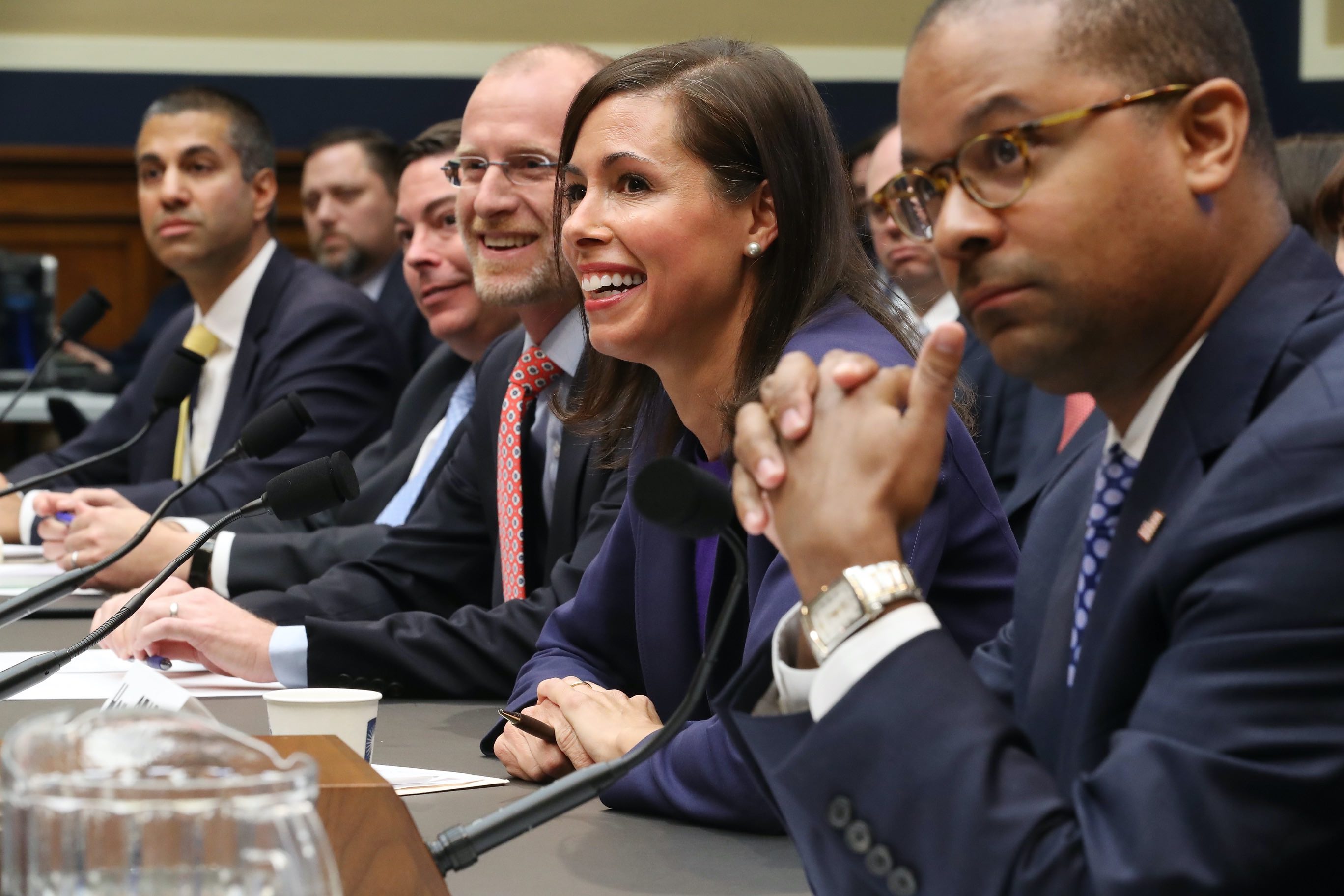
Enlarge / From left to right, Federal Communication Commission Chairman Ajit Pai and commissioners Michael O'Rielly, Brendan Carr, Jessica Rosenworcel, and Geoffrey Starks testify before the House Communications and Technology Subcommittee on December 05, 2019 in Washington, DC. (credit: Getty Images | Chip Somodevilla)
Congressional Democrats yesterday called on Federal Communications Commission Chairman Ajit Pai to "immediately stop work on all partisan, controversial items" in recognition of Joe Biden's election victory over President Donald Trump.
It has been standard practice to halt controversial rulemakings in the period between an election and inauguration when control of the White House switches from Republicans to Democrats or vice versa. In November 2016, Pai himself called on then-Chairman Tom Wheeler to "halt further action on controversial items during the transition period." Wheeler complied one day later.
But things could be different this time, because Trump is contesting the election despite Biden's clear victory and making baseless allegations that the election was stolen by Democrats. The Trump administration has refused to formally begin the presidential transition and has reportedly continued budget planning and vetting candidates for job openings as if there will be a second Trump term. To comply with Democrats' request to the FCC, Pai would effectively have to concede Trump's defeat before Trump himself does so.
DONT FUCKING RUN FOR OFFICE IF YOU HAVE BEEN HAVING AN AFFAIR AND THERES RECENT PROOF.
Jesus fucking christ people.
Sen. Tom Tillis campaigns alongside President Trump in Fayetteville, North Carolina. Tillis held a crucial Senate seat for Republicans. | Chris Carlson/AP
Democrats lost a key Senate race with Republican Sen. Thom Tillis’s triumph in North Carolina.
Text messages from a woman with whom Cunningham acknowledged he’d had an extramarital affair were released in the press in early October. The polling tightened significantly in the last days, with a nearly 6-point lead for Cunningham shrinking to less than 2 points by Election Day.
Tillis made the revelations part of his closing argument that Cunningham, who had run as a moderate Democrat in the vein of popular Gov. Roy Cooper, could not be trusted.
“The scandal itself shows that Cunningham lacks the judgment and character necessary to be a United States Senator, but his inability to apologize and fully account for his transgressions makes them even worse,” Tillis campaign manager Luke Blanchat said in a statement.
Republicans ran ads in the lead-up to Election Day framing Cunningham’s campaign as “one big lie.”
The North Carolina race was always going to be close. The last three presidential elections have been decided in North Carolina by less than 4 percentage points; Barack Obama and Jimmy Carter are the only Democratic presidential candidates to win there in the modern era. While Donald Trump triumphed in 2016, Cooper also won that year, becoming one of two Democratic governors in the South.
And the 2020 election always looked like it would be close. Joe Biden led Trump by about 1 point in the RealClearPolitics polling average; Cunningham was polling less than 2 percentage points ahead of Tillis.
GOP strategists were betting that conservative voters, with whom Tillis had struggled, would come home to the Republican ticket. They believed Cunningham had built up a false advantage in early 2020 when he was spending big on ads but the other side was dark.
Part of Tillis’s closing campaign focused on Cunningham’s character. The GOP also tried to depict him as a stalking horse for Washington Democrats.
“Cal Cunningham wants to appear to be part of the Democrats of the past, not of the future,” Paul Shumaker, a Republican strategist supporting Tillis’s campaign, told Vox. “Cal Cunningham has been given a free pass until the last four weeks.”
Tillis’s record gave him problems with both the far right and the rigidly centrist. He supported Obamacare repeal in the Senate, which Cunningham lumped together with Tillis’s opposition to Medicaid expansion when he was in the state legislature. Tillis tried to persuade voters he supported protecting people with preexisting conditions even though the bill he had voted for would have rolled back those protections.
He also feuded with Trump over the president declaring a national emergency along the Mexican border. First he expressed opposition to that plan, fearing the precedent it would set for a future Democratic administration; he later reversed and voted to affirm Trump’s plan.
Tillis looked weak throughout the year, but a combination of Cunningham’s indiscretions and North Carolina’s fundamentally competitive nature gave him an opening to win a second term.
The reopening of restaurants, gyms and hotels carries the highest risk of spreading Covid-19, according to a study that used mobile phone data from 98 million people to model the risks of infection at different locations. From a report: Researchers at Stanford University and Northwestern University used data collected between March and May in cities across the U.S. to map the movement of people. They looked at where they went, how long they stayed, how many others were there and what neighborhoods they were visiting from. They then combined that information with data on the number of cases and how the virus spreads to create infection models. In Chicago, for instance, the study's model predicted that if restaurants were reopened at full capacity, they would generate almost 600,000 new infections, three times as many as with other categories. The study, published Tuesday in the journal Nature, also found that about 10% of the locations examined accounted for 85% of predicted infections. This type of very granular data "shows us where there is vulnerability," said Eric Topol, of the Scripps Research Translational Institute, which wasn't involved in the study. "Then what you need to do is concentrate on the areas that light up."
The already battered Arecibo Observatory was hit with another blow on 7 November when one of its 12 main support cables snapped and tore through the radio telescope's main dish. From a report: The incident comes just 3 months after the failure of another cable. Researchers are concerned that increasing stresses on remaining cables could lead to cascading failures and the collapse of the antenna platform that is suspended over the dish. "It's not a pretty picture," says Joanna Rankin, a radio astronomer at the University of Vermont. "This is damn serious." It is "without a doubt" the worst accident to befall the observatory in its long history, says former Director Donald Campbell, now at Cornell University. The nearly 60-year-old telescope, built into a depression in the hills of Puerto Rico, is still prized by researchers. Its huge 307-meter dish -- the largest in the world until overtaken by China's Five-hundred-meter Aperture Spherical radio Telescope in 2016 -- makes it very sensitive. And it is one of just a few telescopes with the ability not just to receive radio waves, but also emit them, in the form of radar beams -- which helps researchers track nearby asteroids that could threaten Earth.
The observatory suffered damage when Hurricane Maria devastated Puerto Rico in 2017. Repairs were continuing in August when a 13-centimeter-thick auxiliary cable, one of six strung between three support towers and the suspended antenna platform, detached from its socket on the platform. The auxiliary cables were added in 1994 to cope with the extra weight of new antennas added in an upgrade. Last month, the University of Central Florida (UCF), which leads a consortium managing the observatory, applied for $10.5 million for emergency repairs from Arecibo's owners, the National Science Foundation (NSF). The latest break -- at 7:39 p.m. local time on a Friday evening -- was in one of the 9-centimeter-thick main support cables. Four such cables run from each of the support towers to the 900-ton platform. Both failed cables were attached to the same tower, so the remaining cables are under significant extra stress. "The forces become scary," says former Arecibo Director Robert Kerr.
On Monday, it became clear that not only was Donald Trump refusing to provide the concession and cooperation that is the minimal step necessary for an operational democracy, he is also ordering other members of his staff to stand in the way of a peaceful transition. Emily Murphy, a previously unknown administrator at the General Services Administration, has the responsibility for opening up the accounts necessary to fund Joe Biden and Kamala Harris’ teams in the transition. Only she has refused to sign the simple letter necessary to trigger the release of funds.
Even though Trump-appointed Murphy is still sitting on the funds, Biden has gone ahead with launching the transition process. That includes making regular appearances to discuss what his team is doing—a fantastic gesture toward transparency of purpose that very much did not happen with Trump. It also includes the public announcement of a COVID-19 response team that includes star players in science, medicine, health management, and logistics. But right now, everything that is happening is being funded out of Biden’s campaign. Murphy isn’t alone. The rest of the government has also been ordered to not cooperate with the people who will have charge of the nation in just three months. Which is why Biden is being forced to sue for what should have already been provided.
As The Washington Post reports, it’s not just Murphy who isn’t picking up the phone when the Biden-Harris transition team calls. Officials across multiple agencies have already prepared briefing books and set aside offices especially for an incoming administration. Those offices and documents should be available right now. But they’re not. Instead, the Trump White House has spread the word not to recognize the outcome of the election or to cooperate in sharing information. Everything remains locked up until Murphy puts her signature on the paperwork. And Murphy is not about to move until Trump tells her to.
On a press call Monday night, Biden’s transition staff discussed some of the information that isn’t available to them. That includes communications with foreign governments, details on national security operations, and even the no longer public data from hospitals on their status during the pandemic. All of it is critical to planning that Biden’s team needs to do well before the step into the White House. All of it is currently blocked by Trump’s refusal to move forward.
In addition to the sharing of information, the official start of the transition is necessary before the mechanisms are open that allow Biden’s team to run background checks and security clearances. Without that step, they won’t be able to arrive in Washington, D.C. with a staff that’s authorized to handle the day to day affairs of government—though the lack of clearances didn’t really delay Trump, and they simply ignored the rules. The lack of background checks also didn’t seem to be a concern since Trump’s team didn’t bother to appoint people who were qualified for their roles.
The possibility that Trump might not concede for weeks—or ever—means that Biden’s team is also looking at doing the last thing they want to do: start the transition with a lawsuit.
Trump’s response was not completely unexpected. After all … he is Trump. So Biden’s staff had already looked into the necessary steps even before the election. That’s why Biden was able to hit the ground running on a transition office and staff who are currently not dependent on Trump’s cooperation. But the current status can’t continue forever, or even for very long. An effective transition is going to require a full exchange of information and co-location of staff to get everyone up to speed before the really quite short window (71 days remaining) closes.
The economy is in recession. The nation is facing a devastating pandemic. Alliances and treaties with overseas partners are in tatters. For Biden to be effective in dealing with any of it, there has to be an effective transition.
So, as ABC News reports, a transition official made it clear Monday night that “legal action is certainly a possibility.” Exactly what that legal action might look like isn’t clear, simply because no one has had to take this step before. No matter how nasty elections might have been, White House residents have recognized that not just the good of the nation, but their legacy and the future of their party leaned heavily on how they responded in defeat. Trump simply does not care.
Researchers have devised a new way to remotely steal cryptographic keys from Intel CPUs, even when the CPUs run software guard extensions, the in-silicon protection that’s supposed to create a trusted enclave that’s impervious to such attacks.
PLATYPUS, as the researchers are calling the attack, uses a novel vector to open one of the most basic side channels, a form of exploit that uses physical characteristics to infer secrets stored inside a piece of hardware. Whereas most power side channels require physical access so attackers can measure the consumption of electricity, PLATYPUS can do so remotely by abusing the Running Average Power Limit. Abbreviated as RAPL, this Intel interface lets users monitor and control the energy flowing through CPUs and memory.
Leaking keys and a whole lot more
An international team of researchers on Tuesday is disclosing a way to use RAPL to observe enough clues about the instructions and data flowing through a CPU to infer values that it loads. Using PLATYPUS, the researchers can leak crypto keys from SGX enclaves and the operating system, break the exploit mitigation known as Address Space Layout Randomization, and establish a covert channel for secretly exfiltrating data. Chips starting with Intel’s Sandy Bridge architecture are vulnerable.
No shit. Time for the media to stop pretending that the GOP has any good faith basis here. It's a transparent temper tantrum.
Impeached two-time popular vote loser, lame duck Donald Trump continues his quest in the courts, filing yet another lawsuit in Pennsylvania, this time to invalidate the whole of the election there, disenfranchising every voter—even his own. The tell on these cases, the thing that shows that they are simply nuisance cases designed to drag this whole thing out because Trump is an autocrat and won't leave, is that none of them actually would change the results of the election. There aren't enough votes in dispute, even in all the cases combined, to flip it to him.
The furthest advanced case, already essentially blessed by Justice Samuel Alito on the U.S. Supreme Court, is the one to have the SCOTUS toss all of the Pennsylvania mail-in ballots that were received after Election Day, in the extended deadline approved by the Pennsylvania Supreme Court. There are only 7,800 of those ballots among 67 of the state's 71 counties, according to Jacklin Rhoads, spokeswoman for Pennsylvania Attorney General Josh Shapiro. Joe Biden is more than 45,000 votes ahead in Pennsylvania. There aren't going to be 38,000 Trump votes in those last four counties.
"If those ballots couldn't change the election to make any difference to how Pennsylvania will be decided, then he doesn't have a claim he can bring," Deborah Hellman, a University of Virginia law professor told Bloomberg. In fact, even if he prevailed in the latest ridiculous case in federal court, in which he's trying to get the whole of Pennsylvania's vote tossed and with it Biden's 20 electoral votes, he'd also have to find a way to scrabble together wins in last least one and possibly two of the other close states. "The prospects that a legal challenge in court could reverse the outcome in a way that would produce a Trump victory get harder and harder if it's not just one state that he has to flip," said Steven Huefner, deputy director of an election-law program at Ohio State University. "A challenge in a single state is a long shot. Then he's got three long shots, or something, that he has to make all in succession."
This one is a Rudy Giuliani brain child, and he says they might try to do similar challenges of huge numbers of ballot in Michigan and Wisconsin. Maybe because Trump doesn't want to pay for recounts. He can stiff his lawyers, but the states have to have the money up front to do recounts. The cases are simply groundless. "A court would not set aside the results of an election, or particular votes, based on violations of laws concerning observation of the counting process," Michael Morley, an assistant law professor at Florida State University, told Bloomberg. He's worked on election litigation in Florida. He knows. "Courts will not disturb election results based on unproven generalized claims about the theoretical possibility of fraud."
Like in Arizona, where the Trump campaign's allegations that voters were allowed to "overvote" on ballots and should be disqualified but weren't in Maricopa County. There were 155,860 votes cast in Maricopa on Election Day, and of all of those, there were 180 potential overvotes on the presidential line, according to the county's attorney, Thomas Liddy. One hundred and eighty votes. Trump is suing over 180 ballots. Biden is ahead in the state by more than 14,700 votes. Yeah, that's a nuisance suit.
There is a danger, however in the case that the U.S. Supreme Court has already meddled in. On Monday, a group of 10 Republican state attorneys general filed an amicus brief to support Pennsylvania Republicans efforts to the the court say that they—not their state's Supreme Court—have supremacy in determining election laws. They argue that the state Supreme Court did not have the authority to extend the mail-in ballot deadline. This is playing a long game, to say a Republican legislature has ultimate say on election laws, over the state’s supreme court. That opens the possibility of Republican legislatures to further erode voting rights without the check of state supreme courts. They're looking well beyond Trump, and the U.S. Supreme Court has given them that opening.



/cdn.vox-cdn.com/uploads/chorus_asset/file/22145527/third_wave_hosp_covid_chart_DEC1.jpg) Christina Animashaun/Vox
Christina Animashaun/Vox
/cdn.vox-cdn.com/uploads/chorus_asset/file/22030735/GettyImages_1229570053t.jpg) Go Nakamura/Getty Images
Go Nakamura/Getty Images
/cdn.vox-cdn.com/uploads/chorus_asset/file/22030756/GettyImages_1216851013t.jpg) Chris Graythen/Getty Images
Chris Graythen/Getty Images
/cdn.vox-cdn.com/uploads/chorus_asset/file/22030769/GettyImages_1264685606t.jpg) John Moore/Getty Images
John Moore/Getty Images


 A sheriff’s deputy waits to screen people entering the county jail as a man walks by on Friday, May 1, 2020, in El Paso, Texas. | Cedar Attanasio/AP
 Joe Biden (left) and Brazilian President Jair Bolsonaro. | Tom Brenner/Getty Images; Andressa Anholete/Getty Images



 Trump at Arlington National Cemetery on November 11, 2020. | Brendan Smialowski/AFP via Getty Images
 Rep. Jim Jordan (R-OH) stands with dozens of people at a “Stop the Steal” rally on November 5 at the Pennsylvania State Capitol. | Spencer Platt/Getty Images

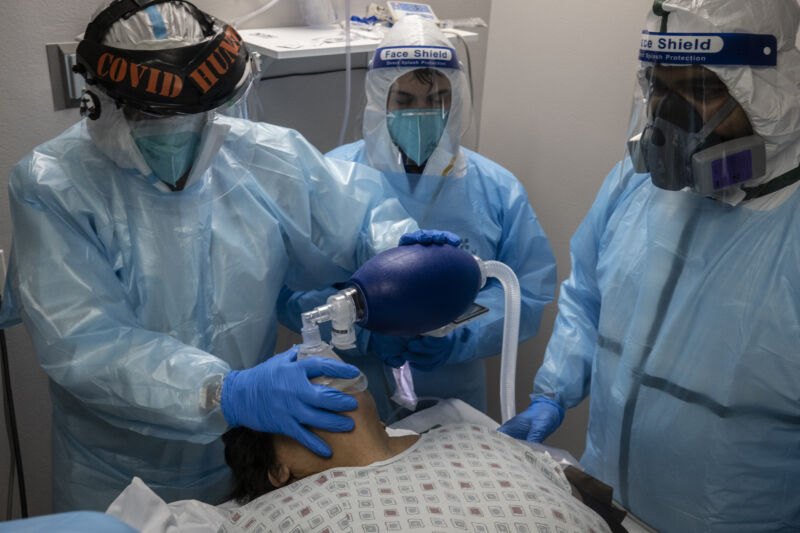
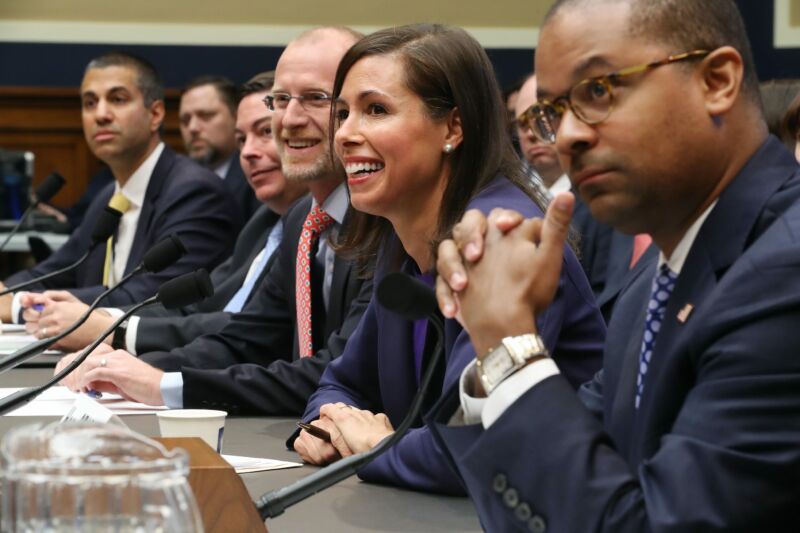
 Sen. Tom Tillis campaigns alongside President Trump in Fayetteville, North Carolina. Tillis held a crucial Senate seat for Republicans. | Chris Carlson/AP