Click here to go see the bonus panel!
Hovertext:
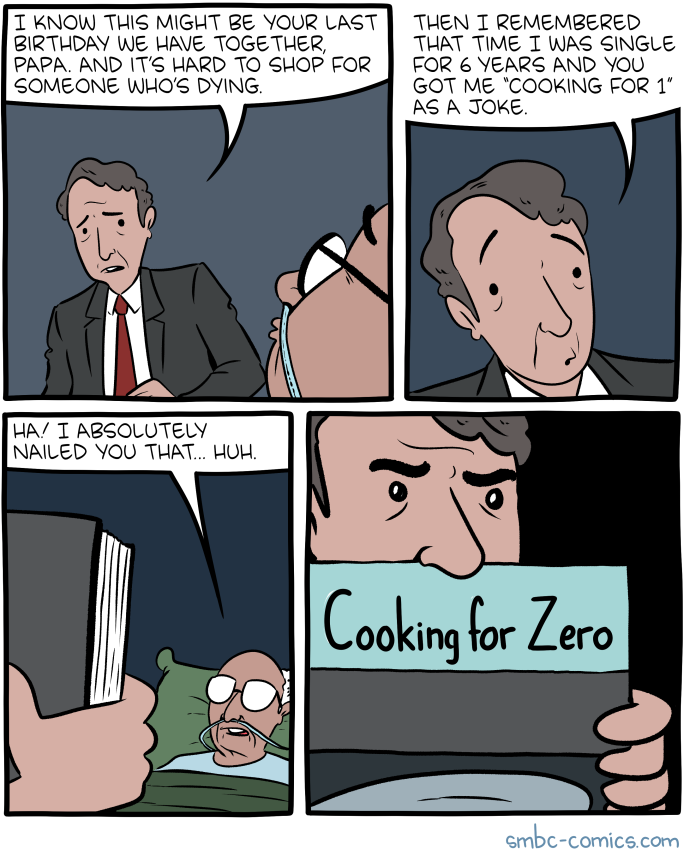
There are some very nice garnishes of course, but the plate is empty.
Today's News:
James.galbraithlol
Hovertext:
There are some very nice garnishes of course, but the plate is empty.
James.galbraithyup. It's election rigging, plain and simple.
Remember when former President Donald Trump incited a Capitol insurrection, citing unsubstantiated claims of widespread voter fraud? Apparently, the Georgia GOP is giving Trump’s lies a bit more credence than it’s willing to admit. In the name of securing already secure elections, the state’s Republicans are trying to push through a slew of bills that could make it more difficult to vote by mail. One of those proposed laws, Senate Bill 67, just passed the state Senate in a 35-18 vote on Tuesday, according to the Georgia General Assembly’s website.
The bill would require Georgia voters looking to vote by mail to provide a driver's license number, state ID number, or a photo of identification when applying for an absentee ballot. No such requirement exists now, and Democratic state Sen. David Lucas addressed his Republican peers directly to call out the timing of their push and the troubling potential effects.
The proposed set of bills, including one still in committee threatening to end no-excuse absentee voting, comes on the heels of a triple loss for the Georgia GOP. Republicans lost the presidency and two U.S. Senate runoff races in which Georgia Democrats Jon Ossoff and Raphael Warnock unseated former Sens. David Perdue and Kelly Loeffler. “Let’s make no mistake about what this bill is about,” Lucas said on the state Senate floor. “The election did not turn out the way you wanted it to turn out. That’s what it’s about.”
The Georgia Senate passed bills to start processing absentee ballots more than a week before Election Day, require records of voters to be updated within 30 days of the election, and prevent the public release of election results until all votes are in and the secretary of state posts the results on its website, according to the Atlanta Journal-Constitution. There’s also a bill pending in the state House threatening to ban early voting on Sundays, limit ballot drop boxes, require identification to vote by mail, and create new deadlines to request absentee ballots, the newspaper reported.
"You know from Perry to Byron, Georgia, there are folks who don't have ways of transportation to get to places,” Lucas told Republicans. “They got to pay somebody.” The Macon legislator added that some residents don’t have access to a copy machine to get photocopies of their identification.
He said the bill tightening identification requirements on absentee voting reminds him of the presidential election of 1876 between Democratic candidate Samuel Tilden and former Republican President Rutherford Hayes. In that race, Florida, Louisiana, and South Carolina didn’t certify their electors, leaving Congress to come up with a negotiated bargain, Fox News host Bret Baier explained last month. At the time, he was educating Sen. Josh Hawley, who falsely claimed that Congress’ process of certifying presidential election results was legislators' opportunity to voice their complaints about the results.
Lucas, who was sworn into the Georgia House of Representatives in 1975, detailed exactly how the process played out. He asked rhetorically, “If you don’t know where you’re coming from, how do you know where you’re going?” The Civil War ended in 1865 with federal troops deployed to southern states to protect the new rights, including voting rights, of formerly enslaved Black people. Troops remained in the South for more than a decade later until Hayes, who was losing the presidential race at the time, went to a Black man’s hotel in Washington, D.C., to “cut a deal with the southern states,” Lucas said.
Simply to win an election, Hayes promised to pull federal troops out of the last remaining Confederate state where they were deployed. He sacrificed safety and the voting rights of Black southerners for political gain. “And that’s when we had Jim Crow, and folks got lynched,” Lucas said. This time, to ensure GOP political victories in the future, Republicans are playing with the safety of Georgia residents looking to vote from home during the coronavirus pandemic. “Now I would be negligent in my duties representing the 26th senatorial district to go for this malarkey,” Lucas said.
RELATED: Georgia GOP looks to deliver powerful blow to absentee voting days after Loeffler and Perdue concede
James.galbraithOf course. Trump is just jealous because someone else could murder journalists and he couldn't.
In October of 2018, Washington Post columnist Jamal Khashoggi stepped into a Saudi embassy in Istanbul to deal with what was supposed to be routine paperwork related to his upcoming marriage. His fiancée was waiting outside. He never returned.
Though it took months for the details of the story to emerge, it was clear almost from the beginning that Khashoggi has been the victim of Saudi usurper—and friend to both Donald Trump and Jared Kushner—Mohammed bin Salman. When more of the story did emerge, it could not have been more disturbing. It showed how bin Salman dispatched a murder squad to intercept Khashoggi, beat him, torture him, dismember him, and then murder him … in that order. When the journalist was dead, a member of the team that had killed him donned his clothing and walked around Istanbul in an effort to plant a false trail. Finally, it seems that Khashoggi’s remains were burned in an oven specially created for that purpose.
As the horrific details emerged, Donald Trump continued to stand by bin Salman. Trump refused to sanction the “Crown Prince”—who inserted himself into that position after conducting an internal coup that saw multiple members of his own family either killed or sent into exile. Trump also refused to produce a required report about the murder, saying he had a “right to refuse” the clear letter of the law.
There may be no better signal of how President Joe Biden is returning justice to America’s foreign policy than this: On Thursday, the White House will finally release the report. And it clearly shows bin Salman is responsible for the murder of American resident Jamal Khashoggi.
As CNN reported on Wednesday, court documents from a civil suit filed in Canada included documents explicitly showing bin Salman’s orders to send the hit team after Khashoggi. Those documents show how the murder squad—which came prepared with bone saws and other tools to both torture the journalist and take his body apart when it was all over—was dispatched using a private aviation company that bin Salman took over just months before. This private fleet of planes gave bin Salman the capacity he needed to get a 15-man team in and out of Istanbul without having to line his bloody killers up for seats on a commercial aircraft.
It’s just one more piece of evidence in an case that was already definitive in showing how bin Salman ordered the hit against Khashoggi, arranged the gruesome details, and gloated over his success. After which Trump and Kushner refused to hold him to account, with Kushner advising the crown murderer to just lay low for a bit until the press got distracted by other events. Trump certainly did not allow the murder of a U.S. resident journalist to get in the way of making enormous arms sales to bin Salman.
But as NBC News reports, Thursday will see a big shift in the relationship between the United States and the man currently calling the shots in Saudi Arabia. That’s because the U.S. will release a report that clearly shows how bin Salman approved and directed the murder of Khashoggi.
According to NBC’s sources, this is not a new report. This is the report that Trump refused to release in 2018. That means that this report isn’t just a condemnation of bin Salman, it’s also another strong condemnation of Trump.
Trump knew all along that his pal bin Salman was a raging murderer. But then, Trump didn’t care, just as he didn’t care that bin Salman oversaw a growing number of executions each year, with hundreds of people being beheaded, hung, or crucified for defying his reign. For one thing, Trump likes seeing people executed. For another, bin Salman “pays in cash.” Trump doesn’t consider bin Salman a bad guy just because he seized control illegally, chased down members of his own family, carried out a brutal proxy war in which thousands of children have died, and went to enormous lengths to carry out the murder of a journalist that included cutting off the man’s fingers one by one. Trump considers bin Salman a role model.
But he’s not a model of what anyone should consider a just leader or a reliable ally. As Reuters reports, the report—which has until now been hidden behind a Top Secret stamp applied under Trump—makes clear bin Salman’s complicity in the torture and murder of Khashoggi. The release of the report signals not just that the United States holds bin Salman personally responsible for this death, but that the nation will be reexamining its relationship with the government in Riyadh and their horrendous record on human rights.
Bin Salman still has plenty of leftover U.S. bombs for attacking more civilian areas of Yemen. He’s also unlikely to ever face justice for the murder of Jamal Khashoggi. But at least the United States won’t be hurrying back to kiss his feet any time soon.
James.galbraithNo shit
In January of 2020, Washington, D.C. Attorney General Karl Racine filed a civil complaint against the 58th Presidential Inaugural Committee (Trumps) and the two entities—the Trump Organization, which owns the Trump International Hotel in Washington, D.C., and the Loews Hotel chain, which owned The Madison Hotel in Washington, D.C. in 2017. At issue were the exorbitant rates the Inaugural Committee paid to the hotel for private parties and rooms and spaces that were not even used. Racine pointed to evidence that people within the Inaugural Committee knew the prices were overboard and questioned them at the time. In December, Ivanka Trump had to sit for at least five hours to answer questions. Like a good grifter Trump, she claimed it was all a political witch hunt.
At around the same time Ivanka was being deposed, her older brother Junior was getting phone calls from Racine asking him about a purported $49,358.92 that the Trump Organization was contracted to pay to the hotel connected to the inauguration. It turns out that not only didn’t the Trump Organization pay that money back to itself (in essence)—the nonprofit, donor-funded Presidential Inauguration Committee ended up cutting that check back to the Trumps’ hotel interests. In fact, Trump Jr. may have been the person who forwarded that check on to the Inaugural Committee. Weeeeeeeiiiiird, huh?
Well, it turns out that while many of us were watching the awful sequel impeachment trial of Donald Trump during the week of Feb. 9, Donald Trump, Jr. was having his own deposition with Racine’s office. CNN reports that the Washington, D.C. Attorney General’s office says this new deposition "raised further questions about the nature" of that very same invoice—the one that was forwarded by the Trump Organization to the Trump Inaugural Committee to pay Trump’s hotel.
Will Trump Jr. be able to explain why the Trump Organization’s hotel bill was paid by the Trump Inaugural Committee? Let’s just guess that any excuse given by someone related to Donald Trump at this point is likely going to be less than satisfactory. But that’s not all of Junior and the Trump family’s problems. On Wednesday, the Daily Beast reported that investigators from the Manhattan district attorney’s office have begun focusing more intensely on the Donald’s eldest, least remarkable son, Donald Trump Jr., as well as on Trump’s old buddy and longstanding CFO of the Trump Organization Allen Weisselberg.
Weisselberg has been interviewed by all kinds of law enforcement agencies over the last few years, and was even offered immunity when cooperating in the FBI’s investigation into former Trump attorney Michael Cohen. According to the Daily Beast, the Manhattan investigation—not to be confused with the Washington, D.C. investigation—has “broadened the range of investigation into the Trump family’s assets, and have recruited some extra manpower.”
The New York investigation comes out of the Donald’s tax filings and Weisselberg has already been deposed at least once by Manhattan prosecutors during the investigation. More recently, sources say that Donald Trump’s properties and the nature of the loans he’s taken out against some of his properties have been examined by the Manhattan district attorney’s office, which is led by Manhattan District Attorney Cyrus Vance Jr. These investigations are different from the one being conducted by New York Attorney General Letitia James’ office, which is also investigating some of Trump’s sketchy property development loans.
Sources close to Trump say that the New York investigations—as well as all of the numerous other investigations into Trump and his family’s affairs, while on his mind—are being dismissed by the family as a political witch hunt. But maybe there’s a reason why Weisselberg was on everybody’s list of people Donald Trump may try to preemptively pardon before leaving office? Maybe all of these people have secret “break-in-case-of-emergency” pardons, as some have speculated? Maybe Trump’s attempt to load up the Supreme Court with ultra-right-wing, underqualified judges hasn’t worked as well as he had hoped in protecting his criminal behavior.
Maybe Trump’s No. 1 motivation for positioning himself to run again in 2024 is the hope that he can once and for all legalize his and his family’s apparent criminal enterprise.
James.galbraithAgain, never hope for principles, good faith, or internal consistency from the GOP.
Remember back in the olden days when Republicans were consistently willing to set aside petty partisanship and perpetual grievance in order to ensure that only the most qualified individuals were given top government posts?
Yeah, me neither.
Before we get to the current minority party obstruction, let’s all hop in the Wayback Machine to 2017, when Donald Trump was filling his swamp with alligators—some of whom were blessed with walnut-sized reptile brains and some of whom could only aspire to such rarefied intellectual heights.
In the closest confirmation vote ever, the Republican-controlled Senate rubber-stamped Trump’s choice for education secretary, Betsy DeVos, even though she knew demonstrably less about rudimentary education policy than about random grizzly bear attacks.
DeVos’ real qualification for becoming a top administration adviser, of course, was that she’d donated a shite-tonne of money to Republicans. Absent that largesse, she’d have been hard-pressed to find a job dumping grainy pink puke powder on second graders’ vomit.
But, hey, Republicans’ very existence depends on shoving stuff down the public’s memory hole faster than Donald John Trump can hoover up his nightly tub of pork rinds and snackin’ lard. Insurrection? Meh. What about Benghazi? Wait, you still want to talk about that GOP-incited insurrection? What about Fast and Furious?
And so on.
So Republicans were surely hoping you’d forget about Education Secretary Betsy DeVos when they decided to sign on to a letter opposing the confirmation of Xavier Becerra, Joe Biden’s pick for Health and Human Services secretary, over a lack of “meaningful experience.” No, really, that’s what they wrote.
The senators, led by Tom Cotton (R-Ark.), urged Biden in a letter to withdraw the nomination of Xavier Becerra, California’s attorney general, arguing he is unqualified to lead the Department of Health and Human Services (HHS).
The senators wrote that Becerra has “no meaningful experience in health care, public health, large-scale logistics, or any other areas critical to meeting our present challenges.”
Okay, then. That’s pretty rich.
Of course, nine of the 11 senators who signed onto the letter voted to confirm DeVos. The other two, Marsha Blackburn and Bill Hagerty, were not yet in the Senate. Those who were—Tom Cotton, Ted Cruz, Steve Daines, James Lankford, Mike Lee, James Risch, Mike Rounds, Roger Wicker, and John Kennedy—have apparently lost all sense of shame.
But what of the substance of these senators’ claim? Well, for his part, Oregon Sen. Ron Wyden says “there’s really no there there.” Unless, of course, you look beyond the bullshit.
Republicans point to Becerra’s support for abortion rights and Medicare for All as proof he is too “radical” for the job.
Yup! There’s your answer, fishbulb.
I swear, the only thing anyone ever learned from DeVos was not to stare directly into her eyes lest their soul become trapped inside a cursed monkey’s paw. But Republicans let her right past the gates as if she were nothing more than a violent pro-Trump insurrectionist or something.
But, hey, wringing your hands about rank hypocrisy is for the little people.
If only we could all be as wise and discerning as Ted Cruz.
”This guy is a natural. Sometimes I laugh so hard I cry." — Bette Midler on author Aldous J. Pennyfarthing via Twitter. Need a thorough Trump cleanse? Thanks to Goodbye, Asshat: 101 Farewell Letters to Donald Trump, Dear F*cking Lunatic, Dear Pr*sident A**clown and Dear F*cking Moron, you can purge the Trump years from your soul sans the existential dread. Only laughs from here on out. Click those links, yo!
James.galbraithTrump judges are going to do everything they can to stop progress.
The federal judge who last month temporarily halted the Biden administration’s 100-day moratorium on most deportations following a lawsuit from Texas’ very-corrupt Republican attorney general has extended that pause “indefinitely,” the Associated Press reports. That initial hold from U.S. District Judge Drew Tipton, who was appointed by the previous administration, was set to expire Tuesday. It’s now extended indefinitely.
“This ruling is legally wrong and will seriously harm families and communities around the country,” American Civil Liberties Union (ACLU) Immigrants’ Rights Project attorney Cody Wofsy said. “Texas’ suit is an attempt to deprive the Biden administration of a meaningful opportunity to review and assess immigration enforcement after years of living under lawless Trump policies. We are reviewing our options.” As both the AP report and advocates note, the administration itself already has options.
Campaign ActionThe AP reports that Tipton’s initial ruling late last month “did not require deportations to resume at their previous pace. Even without a moratorium, immigration agencies have wide latitude in enforcing removals and processing cases.” This is where Immigration and Customs Enforcement (ICE) has its options to not deport individuals. It can simply decide to not deport someone—and has in fact already backed down from efforts in a number of high-profile cases.
Earlier this month, ICE backed down from deporting 65-year-old Saheeda Nadeem, who’d been in sanctuary inside a Michigan church for nearly three years. Then last week, ICE also said it would no longer prioritize for deportation Edith Espinal, an Ohio mom who’d been in sanctuary for even longer than Nadeem. Nor did Tipton block President Biden’s Jan. 20 memo setting new ICE priorities.
“It was not immediately clear if the Biden administration will appeal Tipton’s latest ruling,” the AP reported. “The Justice Department did not seek a stay of Tipton’s earlier temporary restraining order.”
It absolutely should fight this decision even as it acts on individual deportation cases, with legal and policy experts noting that Tipton himself admitted he’s clueless about immigration policy. “Tipton does not appear to have a rudimentary understanding of either immigration law or the practical realities of the immigration system,” Mark Joseph Stern wrote following his initial decision.
Tipton’s decisions have stemmed from a lawsuit launched by the very-corrupt Republican attorney general of Texas, Ken Paxton. He claimed that a last-minute agreement signed by unlawfully appointed former Department of Homeland Security (DHS) Deputy Ken Cuccinelli gave him say over any future changes Biden’s DHS would try to implement. Legal experts mocked the agreement, calling it “completely unmoored from legal, constitutional ways of implementing policy.” Paxton’s handpicked, no-nothing judge went ahead with the scheme anyway.
However, not all of Cuccinelli’s shenanigans have continued uninterrupted. The Biden administration last week rejected the highly questionable agreement that the anti-immigrant loudmouth signed with the union representing ICE. That document, signed into place on the last full day of the previous president’s administration (nope, nothing sketchy going on there at all!), would have given the ICE union veto power over whatever changes and policies the new administration sought to implement.
Under law, the new administration had 30 days to “approve or disapprove” the agreement, BuzzFeed News reported. With just hours left to spare until that deadline and under pressure from over 100 groups including Daily Kos, it disapproved it.
The fight to stop deportations must also continue, advocates urged. Over 120 law experts have also recently called on DHS Sec. Alejandro Mayorkas to use his “significant legal authority” to do so. “Allowing these deportations to continue means that families will be torn apart and that people who have the opportunity to seek relief in the United States will be returned to danger,” ACLU of Texas attorney Kate Huddleston said.” At the same time that Texans face a long recovery from a deadly winter storm, Paxton is inflicting yet another trauma on our communities by creating fear and uncertainty.”
James.galbraithBecause they're a racist party
Former White House aide and noted white supremacist Stephen Miller’s inhumane and unpopular anti-immigrant policies helped lead to his former boss’ historic defeat in the 2020 presidential election. So now that President Joe Biden’s administration has unveiled legislation featuring a very popular path to citizenship for the nation’s undocumented immigrants, House Republicans invited him back to “brief” them, Politico reports.
Hey, no matter that his deplorable ideas have lost at the ballot box and in the courts, these Republicans are still seeking to kiss his ring because his agenda is also their agenda. “Rather than trying to distance themselves from a hateful white nationalist and the architect of the policy that tortured thousands of children and babies, the republicans are digging their heels in,” tweeted Al Otro Lado, which advocates for asylum-seekers and families. “Cute.”
This wouldn’t be Miller’s first time at the rodeo when it comes to torpedoing pro-immigrant legislation. Back when he worked for then-Sen. Jefferson Beauregard Sessions III, Miller “played a key role in ensuring the failure of a comprehensive immigration bill introduced by a bipartisan group of senators who became known as the Gang of Eight,” the Southern Poverty Law Center (SPLC) said. Miller in fact “drafted a 30-page memo that Mr. Sessions shared with the House Republican caucus,” The New York Times reported in 2019.
While the Senate under former Democratic Sen. Harry Reid passed legislation by a wide, bipartisan 67-27, former Republican House Speaker John Boehner blocked it in his chamber. Now House Republicans are bringing Miller back.
“This comes on the heels of news that Donald Trump’s will address immigration in his upcoming CPAC speech. Clearly, the Republican Party is still the Party of Trump,” immigrant rights advocacy group America’s Voice said. “The GOP is doubling down on ugly xenophobia and racism rather than try to grow its appeal and reclaim lost suburban voters.” The organization said that the “ongoing political transformation of Georgia captures the perils of this approach.”
“In Georgia, a multiracial majority—sparked by the combination of bottom-up organizing, Republican extremism, and changing demographics—delivered two Senate seats for Democrats and flipped an important electoral college state for President Biden,” the group said in the statement. It points to a new NBC News report finding that Democrats’ most significant gains from 2008 to 2020 came from three suburban Georgia counties.
In a testament to this shift, one of those Georgia counties, Gwinnett, elected a sheriff who ran and won on ending a racist and flawed agreement with the Immigration and Customs Enforcement (ICE) agency. Immediately after taking office, Sheriff Keybo Taylor did just that.
Joining Miller to “brief” House Republicans are two other notoriously gross officials from the previous administration: former acting ICE director Tom Homan, and former acting Customs and Border Protection Commissioner Mark Morgan. Mark recently became an official hate group member, joining the Federation for American Immigration Reform, an anti-immigrant organization deemed a hate group by the SPLC, as a “Senior Fellow.” Miller himself is a big fan of this and other Tanton network groups, promoting their garbage dozens of times.
James.galbraithInto insanity
James.galbraithumm excuse me?


Read more of this story at Slashdot.
James.galbraithThey're all apologists for white supremacy. They're not a real party anymore.
During the Tuesday hearing before a joint Senate committee to investigate the events of Jan. 6, the most notable ten minutes certainly belong to Republican Sen. Ron Johnson. Rather than ask the assembled witnesses any questions, Johnson used his time to read a statement from a anti-Muslim hate group that declared the whole insurgency was a false flag operation directed by “agents provocateurs” and “plain-clothes militia.” Johnson also finished up by telling the police officials on the witness stand that the police were responsible for the violence, because they tried to stop people who were so pro-police that it made them angry. Or in other words: Trump supporters are pro-police, so long as the police are only affecting other people.
But Johnson wasn’t the only Republican who decided that spending time on the actual topic at hand was beneath him. Sen. John Hawley took the time to point a finger at the hearings on the House side and attempted to get the witnesses to join him in attacking Nancy Pelosi and Gen. Russel Honoré. Sen. James Lankford also had some things to say about Pelosi, before veering into a discourse on how the National Guard was always slow to respond, so people should just stop looking at that when it came to Jan. 6. Sen. Rick Scott devoted all of his time to asking people why there were still National Guard forces in D.C. even when those witnesses A) told him that they had resigned and were no longer getting briefings and B) reminded Scott that the Capitol had been subject to a violent insurrection.
While there were some Republicans who asked reasonable questions—including a distinctly cowed “Cancún” Ted Cruz—the ever-Trumpers in the Senate showed that a position has set in among the Fox News favorites: the insurrection is old news, and it’s time to pretend it never happened.
During the Senate hearing, one thing kept coming up again and again from the witnesses—the FBI and other intelligence agencies failed to warn them that the group gathering in Washington, D.C., wasn’t just an assemblage of the “jovial” and “happy working class folks” that Johnson describes. It was laced through by a coalition of white supremacist militia forces who had been planning and preparing for the assault on the Capitol for months. Both former chief of the Capitol Police Steven Sund and former Sergeant-at-Arms Paul Irving made clear that the intelligence community had not shared with them any information on the real nature of what they were facing on Jan. 6.
Everyone seemed to know that the Proud Boys, Oath Keepers, Three Percenters, and other militia groups were going to be a presence in D.C. on Jan. 6, just as they had been during two previous MAGA-related events. But if the FBI or other agencies were aware that these groups were planning to coordinate in an attempt to get into the Capitol and take congressional hostages, none of that was passed along to police.
As the Poynter Institute makes clear, the clear involvement of these organized white supremacist militias is the aspect of the Jan. 6 insurgency that the Trump-right seems most anxious to erase. Fox’s Tucker Carlson has been directly disputing the involvement of thee groups. “There’s no evidence that white supremacists were responsible for what happened on Jan. 6. That’s a lie,” said Carlson on Monday evening. “And contrary to what you’ve been hearing, there’s also no evidence this was a, quote, ‘armed insurrection.'”
Carlson is saying this despite the fact that the nation witnessed people wearing the insignias of these groups storm the Capitol. Despite the fact that hundreds of militia members bragged of their involvement on social media. Despite the fact that dozens of these members have now been arrested. And despite the fact that police have made clear that these people were armed when they smashed their way into the Capitol.
This is far from Carlson’s first rodeo when it comes to sheltering white supremacists. As Politifact notes, Carlson has previously declared that white supremacy itself is a hoax. After all, argues Carlson, there are only tens of thousands of members of these militia groups. You could probably fit them all “inside a college football stadium.” So, why bother to worry about a group of armed extremists whose number is about a quarter that of the U.S. standing Army? “This is a hoax,” says Carlson.
The very first question that chair Sen. Amy Klobuchar asked the assembled law enforcement officials was whether the attack on the Capitol “involved white supremacist and extremist groups.” Every single official immediately responded “yes.” And as the day went on, those officials continually emphasized their feeling that the principal failing leading up to Jan. 6 was a failure to devote sufficient resources to understanding these domestic terrorists and keeping police aware of their actions.
Carlson isn’t alone. The push is on to declare that not only are white supremacist militias not worth worrying about, Jan. 6 was no big deal. Propagandist Dinesh D'Souza went on Fox to call the whole thing “a bunch of rowdy people walking through a hallway." The complete thrust, both from D’Souza and Fox hosts, is that there’s no comparing domestic terrorism to events such as 9/11. D’Souza argued that the terrorist on 9/11 “saw themselves as professional soldiers” while the men dressed in tactical gear strolling through the Capitol in search of hostages were just “rowdy.” D’ Souza also took time to mock members of Congress or their staff who were traumatized by an event in which “not one of them was hurt,” while completely ignoring that there were definitely people out to hurt them.
As The Washington Post reports, where the GQP is going with this is a dismissal that Jan. 6 means anything at all. Republicans are pushing back against the importance of the insurgency, dismissing the idea that it represented domestic terrorism, declaring that white supremacism had nothing to do with it, and sneering at the idea that the National Guard was even necessary. The theme emerging on the right is that Jan. 6 was totally justified. Republicans, including members of Congress, are continuing to defend Donald Trump’s actions in denying the outcome of the election. They’re denying that white supremacists make up a significant fraction of their alliance. And, as Johnson demonstrated, they’re blaming police, rather than Trump, for inciting a “pro-police” crowd.
The fact that some Republicans still asked fact-based questions during Tuesday’s hearing is a signal that there’s still a split in the party over how this should be handled. But these questions, and these senators, aren’t being featured on Fox News. For the heart of the party now pledged forever to Trump, Jan. 6 has become something that no one need be ashamed of. Which is just one stop away from making it a celebrated event.
As we move further and further away from the Jan. 6 insurrection, we will continue to see this kind of revisionism from the right. Dinesh D'Souza: "In reality, this was a bunch of rowdy people walking through a hallway." pic.twitter.com/LnDGE3F5sg
— Justin Baragona (@justinbaragona) February 24, 2021
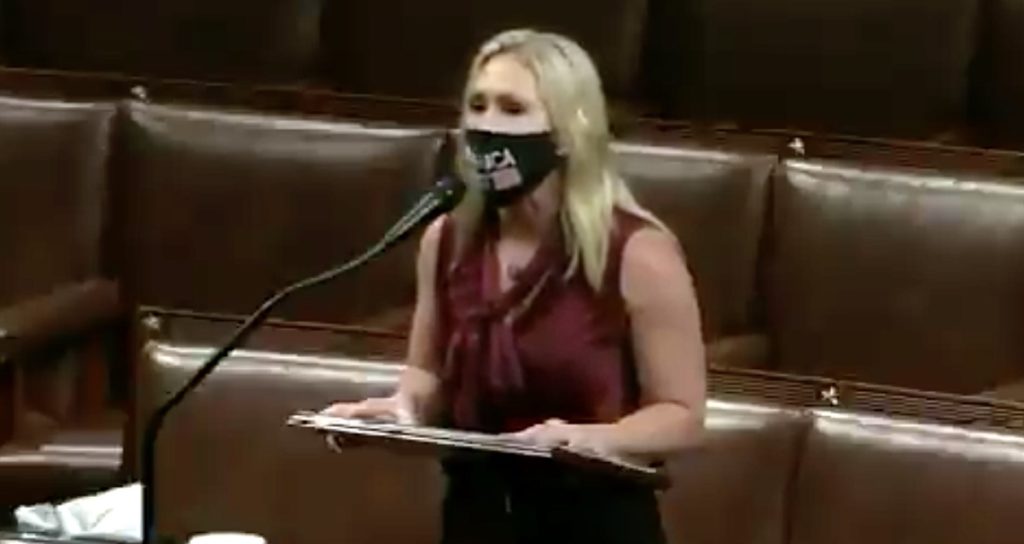
Conspiracy theorist congresswoman Marjorie Taylor Greene, who this week called the Equality Act “disgusting, immoral, and evil” in a tweetstorm earlier this week, hasn’t let up on her crusade against the legislation, which the House is scheduled to vote on Wednesday or Thursday (reports differ).
The legislation guarantees explicit, permanent protections for LGBTQ people under our nation’s existing civil rights laws, expanding the Civil Rights Act of 1964 and the Fair Housing Act and providing clear and equal protections under federal law for all Americans in employment, access to public spaces, housing, credit, education, jury service, and federally-funded programs. Today, in a majority of U.S. states, LGBTQ people remain at risk of being fired, evicted or denied services because of who they are.
Said Greene in a speech on the House floor: “God created us male and female. In his image, he created us. The Equality Act that we are to vote on this week destroys God’s creation. It also completely annihilates women’s rights and religious freedoms. It can be handled completely different to stop discrimination without destroying women’s rights, little girls’ rights in sports and religious freedom, violating everything we hold dear in God’s creation.”
We are created male and female in God’s image. https://t.co/2BYwn7pibS
— Marjorie Taylor Greene(@mtgreenee) February 23, 2021
Greene also asked if the Equality Act would protect pedophiles, brining up disgraced Lincoln Project co-founder John Weaver, tweeting: “The Equality Act puts sexual and gender identity above all rights and anyone who goes against it is considered discriminating. Does the #EqualityAct protect pedophiles? Would it protect John Weaver’s from @ProjectLincoln desire for underage boys?”
The Equality Act puts sexual and gender identity above all rights and anyone who goes against it is considered discriminating.
— Marjorie Taylor Greene
Does the #EqualityAct protect pedophiles?
Would it protect John Weaver’s from @ProjectLincoln desire for underage boys?
Greene also filed three amendments to the legislation that she said would protect “girls, churches, and believers.”
The Democrats' so-called "Equality" Act expands governmental regulatory reach that destroys women’s rights, religious rights, and rights of the unborn.
— Rep. Marjorie Taylor Greene (@RepMTG) February 23, 2021
Today, I've filed three America First amendments to protect girls, churches, and believers. pic.twitter.com/wpgtLdWM2i
Greene (R-GA), a congressional supporter of the far-right QAnon conspiracy theory, is a Parkland and Sandy Hook truther who claimed 9/11 was an inside job and also supported executing Nancy Pelosi, Barack Obama and Hillary Clinton in social media posts.
James.galbraithGood to have options. And single shot is a big plus

Enlarge / A sign at the Johnson & Johnson campus on August 26, 2019 in Irvine, California. (credit: Getty | Mario Tama)
Johnson & Johnson’s single-shot COVID-19 vaccine is effective and has a “favorable safety profile,” according to scientists at the Food and Drug Administration.
The endorsement comes out of a review released by the regulatory agency Wednesday. The FDA has been looking over data on Johnson & Johnson’s vaccine since February 4, when the company applied for Emergency Use Authorization. The agency’s green light is a positive sign ahead of this Friday, February 26, when the FDA will convene an advisory committee to make a recommendation on whether the FDA should grant the EUA. The FDA isn’t obligated to follow the committee’s recommendation, but it usually does.
If Johnson & Johnson’s vaccine is granted an EUA, it will become the third COVID-19 vaccine available for use in the US. The other two vaccines are both two-dose, mRNA-based vaccines, one made by Pfizer and its German partner BioNTech and the other from Moderna, which developed its vaccine in collaboration with researchers at the US National Institutes of Health.
Read 6 remaining paragraphs | Comments
James.galbraithlol
Every year, the American Conservative Union’s Conservative Political Action Conference (CPAC) is a who’s who of corrupt officials, big-money donors, crummy human beings, morals-free religious zealots, and self-styled whining—lots and lots of whining. Last year’s CPAC made it clear that the whining would happen inside of the convention hall as only VIPs were tipped off to very real COVID-19 hazards. This year, right out of the gate, the 2021 CPAC convention—branded with an “America Uncanceled” theme—is … canceling one of its big speakers. On Monday afternoon CPAC’s Twitter account tweeted out, “We have just learned that someone we invited to CPAC has expressed reprehensible views that have no home with our conference or our organization. The individual will not be participating at our conference.”
As one Twitter user responded: “that narrows it down.” Very quickly, reports surfaced that the person who got canceled by the CPAC cancel culture was Young Pharaoh. Why? Super crazy anti-Semitism. Real low-level ignorance, like saying Judaism is a “complete lie,” and “all the censorship & pedophilia on social media is being done by Israeli Jews,” amongst a lot of other drivel. You know, basic Republican QAnon talking points these last 12 years or so. Young Pharaoh, it seems was scheduled to appear on Sunday. You can’t make this stuff up.
But Twitter isn’t letting go of this juicy bit of irony or karma or whatever schadenfreude-like word or phrase comes to mind.
First came the beauty of the thing.
the irony... pic.twitter.com/Y8pmJyxQp9
— Zachary Petrizzo (@ZTPetrizzo) February 22, 2021
when cpac says their whole event is about cancel culture and then cpac cancels a speaker pic.twitter.com/L05IMyboxc
— Oliver Willis (@owillis) February 22, 2021
Then came the questions as to who it might be?
I know. I mean, Satan is slotted to speak tomorrow at 1:30pm. Who could have been sent home?
— Tony Posnanski (@tonyposnanski) February 22, 2021
CPAC- We just sent home someone with horrible views. Me- You’re going to have to be more specific. That’s everyone there. CPAC- He was a Nazi. Me- You’re going to have to be more specific. That’s everyone there. CPAC- And an alleged rapist Everyone- More specific!!!!
— Tony Posnanski (@tonyposnanski) February 22, 2021
Name a CPAC speaker who hasn't expressed reprehensible views. https://t.co/9JfCBEdCpL
— LOLGOP (@LOLGOP) February 22, 2021
But more importantly, people wanted to remind everyone about the last, twice-impeached president.
I will remind CPAC that their keynote speaker regularly used the ‘n-word’ when referring to African American contestants on his gameshow.@CPAC
— NoelCaslerComedy (@CaslerNoel) February 22, 2021
And a reminder about other speakers set to appear this week at CPAC.
Ted Cruz and Ken Paxton, who both abandoned Texas during the crisis, are scheduled to speak at CPAC this week. This is our state leadership.
— Sawyer Hackett (@SawyerHackett) February 22, 2021
But maybe it isn’t the anti-Semitism?
it's CPAC so I assume they mean someone accidentally said kids shouldn't starve or something https://t.co/YOEvCK2Pyb
— maura quint (@behindyourback) February 22, 2021
But let’s be very serious here for one moment. The fact remains that Young Pharaoh’s idiotic views are held by a large swath of the conservative movement at this point in time. And besides Donald Trump, one would be hard-pressed to find a speaker that hasn’t spread or endorsed or fully espoused some or all of these ridiculous world views. As Media Matters points out, radio host Wayne Dupree is still set to speak at the convention and he’s a man that literally called the terrible mass shooting at Sandy Hook Elementary School “fake” and claimed the victims’ parents, the people seen doing interviews on television after that terrible day, were not real victims but paid “crisis actors.”
CPAC will always be terrible. It represents oligarchy through division, fear, and hate. That’s the entire program. It’s the New World Order that the organization pretends to be protecting people against.
James.galbraithManchin is a problem

Manchin supported more Trump nominees than any other Democrat. Now, he could sink one of Biden’s.
Sen. Joe Manchin (D-WV) — the lawmaker who voted for more Trump nominees than any other Democrat — could sink at least one of Biden’s.
Thus far, Manchin has already expressed his opposition to Neera Tanden, a nominee for the director role at the Office of Management and Budget, on the grounds that her previous social media posts targeting both Republicans and progressive Democrats were too polarizing.
“I believe her overtly partisan statements will have a toxic and detrimental impact on the important working relationship between members of Congress and the next director of the Office of Management and Budget,” Manchin said in a statement, adding later that the decision wasn’t “personal.”
Manchin’s opposition matters because Biden nominees might end up needing every Democratic vote in the Senate, where the party has the barest 50-person majority, to be confirmed. His decision likely means that Tanden won’t make it through, especially since a growing list of moderate Republicans who might have saved her nomination have also said that they won’t support her.
Manchin is also undecided about the nomination of Rep. Deb Haaland (D-NM) for Interior Secretary, and the nomination of former California Attorney General Xavier Becerra for Health and Human Services Secretary. Both have been prime Republican targets, given their more progressive views on policies including the Green New Deal and Medicare-for-All, respectively.
Signaling that he may ultimately back Haaland, Manchin released a statement on Tuesday afternoon highlighting how she has committed to working on West Virginia priorities with him, and preserving the country’s broader energy independence.
At this point, it’s still unclear how Manchin will ultimately vote on either candidate. His initial hedging, however, has already prompted Democratic blowback and raised questions about why he’s been less than supportive of a number of nominees who are also people of color. Tanden would be the first Indian American person to become OMB Director if she were to be confirmed, Haaland would be the first Native American Interior Secretary, and Becerra would be the first Latino HHS Secretary. Manchin’s office did not immediately respond to a request for comment.
Regardless of the reasons behind his concerns, the optics of the situation have earned him rebukes from some prominent progressives.
Former President Donald Trump’s first Attorney General “Jeff Sessions was so openly racist that even Reagan couldn’t appoint him. Manchin voted to confirm him,” Rep. Alexandria Ocasio-Cortez wrote in a tweet regarding the senator’s concerns about Haaland. “Yet the 1st Native woman to be Cabinet Sec is where Manchin finds unease?”
Jeff Sessions was so openly racist that even Reagan couldn’t appoint him.
— Alexandria Ocasio-Cortez (@AOC) February 22, 2021
Manchin voted to confirm him. Sessions then targeted immigrant children for wide-scale human rights abuses w/ family separation.
Yet the 1st Native woman to be Cabinet Sec is where Manchin finds unease? https://t.co/wyki5iE36Y
Manchin’s hesitation to embrace all of Biden’s nominees fits into a general pattern the senator has followed for some time: A moderate Democrat who represents a state that voted for Trump by nearly 40 points in the recent election, Manchin has long established himself as someone willing to buck his party — often while citing the importance of bipartisanship, as he did when speaking about Tanden’s nomination. “At a time of grave crisis, it is more important than ever that we chart a new bipartisan course that helps address the many serious challenges facing our nation,” Manchin recently said.
Now, however, progressives like Ocasio-Cortez are among those asking why Manchin was willing to support several problematic Trump nominees — many of whom were focused on partisan priorities — while remaining opposed or uncertain regarding Biden’s picks. It’s a dynamic that’s prompted people to wonder whether the senator’s litmus test applies differently depending on the candidate.
During the last administration, Manchin also set himself apart when it came to nominees: He was the sole Democrat to back numerous Trump picks, a distinction that’s touted on his Senate website.
“On nine occasions, Senator Manchin was the only Democrat to vote to confirm Trump nominees, including two cabinet Secretaries, three circuit court judges, and various other nominees,” a statement reads.
Officials he ultimately supported include former Attorney General Jeff Sessions, who pushed for the zero-tolerance policy that prompted the separation of parents from children at the southern border; Supreme Court Justice Brett Kavanaugh, who faced an allegation of sexual assault during his confirmation process; and former US Ambassador to Germany Ric Grenell, who encountered heat for his own tweets criticizing women.
Against this backdrop, it’s been somewhat jarring for many Democrats to see Manchin oppose or express indecision about Biden’s nominees who’ve garnered GOP blowback for their social media posts, or been dinged by Republicans for their progressive views on health care and energy policy, respectively.
There’s an obvious political reason for Manchin to take such stances: the heavy Trump tilt of his home state, whose other senator is Shelley Moore Capito, a Trump-supporting Republican. But it’s unclear how much constituents might factor in such votes when weighing his potential reelection in four years or in a theoretical run for governor in the future.
There are other possible reasons for this approach, too: While Manchin’s concerns with Tanden center heavily on her partisan statements, he’s told E&E News that he still has questions about Haaland’s agenda and her support for banning fracking on public lands. And Manchin, a pro-life Democrat, could also have questions similar to those Republicans have expressed about Becerra’s past backing for abortion rights.
As Politico’s Lauren Barron-Lopez and Christopher Cadelago reported, something also causing consternation among Democrats — who have made promoting diversity a priority — is that the Biden nominees who’ve garnered the most pushback (or who face uncertainty about a successful confirmation) are all people of color, and mostly women. This has raised questions about whether Republicans and Manchin have double standards when it comes to how they’re evaluating Biden’s nominees.
“Is there a pattern here???” Rep. Grace Meng (D-NY), the vice-chair of the Congressional Asian Pacific American Caucus recently posted in a tweet, responding to the comments Manchin reportedly expressed on Haaland, in which he noted he still had “questions” about her candidacy.
Is there a pattern here??? Hope they’re using the same standard and not moving goal posts for only certain nominees. @DebHaalandNM @neeratanden @vivek_murthy https://t.co/TN2oMc05s5
— Grace Meng (@Grace4NY) February 22, 2021
The issue of whether nominees of color are getting more scrutiny and being more harshly penalized for their actions than white men is one that a number of Democratic lawmakers and advocates have highlighted.
As Vox’s Ella Nilsen has reported, the irony in lawmakers using Tanden’s tweets as a reason to oppose her nomination is notable, since Republicans long backed Trump or stayed silent despite his incendiary presence on the social media platform. Grenell’s prior confirmation process, too, serves as another point of comparison for a nominee who got in trouble for controversial tweets but still received strong party support in the process.
“When a white man can get away with vile behavior, but a woman of color can’t express deep frustration ... let’s call it what it is,” Rep. Veronica Escobar (D-TX) wrote in a tweet about Tanden. “Sexism. And with some, it’s racism as well.”
When a white man can get away with vile behavior, but a woman of color can’t express deep frustration...let’s call it what it is.
— Veronica Escobar (@vgescobar) February 23, 2021
Sexism.
And with some, it’s racism as well.
The subtext in all of this is “she didn’t know her place.“ https://t.co/7HqUoD6sFb
The final verdict on Tanden, Haaland, and Becerra’s nominations is not yet certain as they respectively make their way through the confirmation process. But racial justice and gender equity experts emphasize that women of color were central to Democrats’ presidential and Senate victories and should hold prominent roles in the administration.
“Women of color mobilized like never before this past election and delivered the White House, the Senate, and down-ballot seats throughout the country,” groups including She the People and Democracy for America write in a letter. “To be clear: We did not deliver the election only to be marginalized once again.”
James.galbraithplease oh please oh please

Here’s what we know about how the vaccines protect against spread of the virus.
More than 50 million Americans have now gotten their first shot against Covid-19, and 25 million have gotten two shots. There’s strong evidence that the two Covid-19 vaccines Americans are getting — one by Pfizer/BioNTech, the other by Moderna — are highly effective at preventing illness, hospitalization, and death.
Despite that fact, public health officials and media outlets have been warning that vaccinated people need to behave largely how they did before they were vaccinated. That’s because we don’t know as much about the vaccines’ effectiveness at preventing transmission to others. A vaccinated person may be well-protected from Covid-19, but if they carry the virus, could they possibly infect the people around them?
But a growing body of evidence suggests the Pfizer/BioNTech and Moderna vaccines do, in fact, cut down on viral transmission. Two recent studies show some pretty favorable results — one from the UK that found that two doses of the Pfizer/BioNTech vaccine cut down by 86 percent someone’s chances of developing an infection that they could pass along, the other a study in Israel that found an 89.4 percent reduction (though it should be noted that the Israeli study has yet to be fully released). These findings are consistent with what we know about vaccines and transmission in general.
In other words, even as we wait for more definitive studies on the vaccines’ effects on transmission, more and more scientists think we do have enough information to feel pretty good about the vaccines’ capacity to give us back a semblance of normalcy as we approach a year of life in a pandemic.
In an opinion piece, Johns Hopkins epidemiologists M. Kate Grabowski and Justin Lessler argued, “We are confident vaccination against COVID-19 reduces the chances of transmitting the virus.”
“I have been very cautious due to limited evidence on transmission effects but agree with [Grabowski and Lessler] that a large transmission effect is the best explanation of the limited evidence to date,” Harvard School of Public Health epidemiologist Marc Lipsitch said in February.
In a new preprint, he and Harvard epidemiologist Rebecca Kahn laid out some principles for how to evaluate data from observational studies like the UK and Israel ones. Applying their principles to Moderna data (more on this below), they estimate that “one dose of vaccine reduces the potential for transmission by at least 61%, possibly considerably more.”
Even Dr. Anthony Fauci has sounded an optimistic note. “The looming question is, if the person who’s been vaccinated gets infected, does that person have the capability to transmit it to another person? Some studies are pointing in a very favorable direction,” he said in a White House briefing in mid-February.
Studying exactly how much a vaccine affects transmission is very difficult. It requires exceptionally good contact tracing, which few countries have, or inference from lots of different forms of limited evidence. Uncertainty remains about exactly how much the vaccines reduce transmission — and that uncertainty has led many public health officials to be cautious in their public statements.
But that cautiousness can end up misleading the public, giving people the impression that scientists have no information at all. That, in turn, could also lead to vaccine hesitancy. Some people may think, if I get vaccinated but I still have to continue masking and social distancing at all times, then why get vaccinated at all?
“In their own lives, medical experts — and, again, journalists — tend to be cleareyed about the vaccines. Many are getting shots as soon as they’re offered one. They are urging their family and friends to do the same,” David Leonhardt argues in a New York Times piece. “But when they speak to a national audience, they deliver a message that comes off very differently. It is dominated by talk of risks, uncertainties, caveats and possible problems. It feeds pre-existing anti-vaccine misinformation and anxiety.”
The vaccines do reduce transmission. They do take us a big step closer toward life beyond the pandemic. And the messaging from our institutions should start reflecting that.
Now that many people have been vaccinated against Covid-19 — about 50 million in the US — new research is coming out every day that clarifies the transmission picture. Two key new studies look at the rate of disease among people who got two doses of the Pfizer/BioNTech mRNA vaccine. That’s an important figure for judging how effective vaccines are for transmission — the lower the rate of infection, the lower the rate of transmission.
A little step back here to explain where things stand on vaccines: There are several vaccines approved in different parts of the world, with various approaches and levels of effectiveness. The Moderna and Pfizer/BioNTech vaccines were the first to be approved for use in the US, and there’s more data available about them, and to keep the scope of this piece manageable, it will focus on just those two vaccines.
A working paper recently published with The Lancet’s preprint publication program looked at health care workers in the United Kingdom who were vaccinated with the Pfizer/BioNTech vaccine. It finds that the vaccine doesn’t just make people less likely to get symptomatic infections (which we already knew from Pfizer/BioNTech’s initial trials) — it also makes them much much less likely to get infected at all. “Vaccine effectiveness was 72% ... 21 days after first dose and 86% ... 7 days after the second dose,” the study concludes.
That’s lower than the 95 percent headline number you might have seen, but that 95 percent measures symptomatic infections; this measures all infections, even “invisible” asymptomatic ones, through routine testing of healthy people.
Another recent paper, this time out of Israel, looked at the Pfizer/BioNTech vaccine as well. (A big caveat: The findings were announced in a press release, but the study itself hasn’t been released yet.) It found a drop of 89.4 percent in infections among people who got two doses of the vaccine, compared to unvaccinated people. We don’t have as much information from this research as we’d like yet, as the paper has yet to be made public, and given the methodological challenges of estimating transmission, the details of the paper matter a lot. But that number is similar to the one from the UK study.
Even though the studies focused only on the Pfizer/BioNTech vaccine, there’s reason to believe that the results translate to the Moderna vaccine as well. The two vaccines work very similarly. Both contain a set of instructions to the RNA in our cells to build a protein very similar to the “spike protein” in the coronavirus. Then the immune system notices the intruder and responds, producing antibodies that’ll protect against the coronavirus later.
Because the two vaccines work very similarly, the researchers I spoke to said it was overwhelmingly likely that they both block transmission to a similar degree. As a result, we can assume — though with some uncertainty — that evidence of strong infection reductions from the Pfizer/BioNTech vaccine also likely applies to Moderna.
But even before the most recent research came out, we already knew that the vaccines would help curb transmission. For one thing, the Moderna and Pfizer/BioNTech mRNA vaccines reduce the chances of getting a symptomatic case of Covid-19 by 94 percent and 95 percent, respectively. That is a promising starting point — if a person doesn’t get Covid-19, then they can’t pass it on.
But what about asymptomatic cases?
In their initial clinical trials, Moderna and Pfizer didn’t study whether vaccinated people got asymptomatic cases of Covid-19 — that is, people who tested positive for the coronavirus but did not suffer any symptoms. However, when people went in for their second shot, Moderna did give them a nasal swab test for Covid-19. In a supplement to its submission to the FDA, Moderna says that 14 of the 14,134 vaccinated people had Covid-19 (with no symptoms at the time) and 38 of the 14,073 people in the control group had Covid-19 (with no symptoms at the time).
That rules out one big worry about the vaccines: that they might make Covid-19 mild in vaccinated people — so mild they don’t experience any symptoms — without actually preventing it. Instead, it was clear from back in December that the vaccines reduce asymptomatic infection as well as reducing symptomatic infection.
Using Moderna’s nasal swab test data, infectious disease biologist Marm Kilpatrick at UCSC estimated that the vaccine, after a single shot, reduces a person’s odds of infection with Covid-19 by up to 90 percent. (When I emailed him, we determined that with some more pessimistic assumptions, the reduction might be more like 78 to 88 percent.)
Lipsitch and Kahn took a different approach, and estimated from the same data that “one dose of vaccine reduces the potential for transmission by at least 61%, possibly considerably more.” Of course, the overall efficacy of the vaccine after both doses will almost certainly be higher.
The recent data on the Pfizer/BioNTech vaccine in Israel and in the UK backs up that idea. It suggests that after two shots, the vaccine is 85 to 90 percent effective at preventing infection with Covid-19.
There are some caveats. The data from the UK and from Israel comes from observational studies, not randomized controlled trials: If the people who’d been vaccinated differ from people who haven’t, the study’s assumptions might not hold. Researchers do their best to adjust for this, but any adjustment will be imperfect. In addition, getting the vaccine could change behavior — the vaccinated might take more risks, and they might be less likely to seek Covid-19 testing or be required to provide negative test results.
So this estimate shouldn’t be considered definitive. But it lines up with other sources of evidence, and it suggests that, overall, the vaccine is likely highly effective — in the 80 to 90 percent range — at preventing infections. And low infection rates mean low transmission rates.
But let’s say a person who has been vaccinated still gets infected with Covid-19. That’s not great, but the vaccine likely continues to protect the people around them, according to the research so far. That’s because of another consideration: viral load — that is, how much virus can be measured in a patient’s nose and throat.
Not everyone who has Covid-19 is equally likely to transmit it. A study recently published in The Lancet based on research from contact tracing in Spain has found a very strong association between viral load and how many other people the patient infects, as well as how serious the infections in other people are.
This isn’t very surprising. Viral load determines how much virus you are coughing or breathing into the air, which determines whether other people get sick. And if they get sick with an unusually large dose of the virus, it’ll have a “head start” at infecting them, and they’re likely to get sicker.
“In our study, the viral load of index cases was a leading driver of SARS-CoV-2 transmission. The risk of symptomatic COVID-19 was strongly associated with the viral load of contacts at baseline,” the study concludes.
The impact of the vaccine on transmission, then, will be the product of two factors, co-author Michael Marks, an epidemiologist at the London School of Hygiene and Tropical Medicine, told me: lower chance of getting infected, and lower viral load if infected.
We already covered the former point above; what about the latter? Do the vaccines cut viral load?
On this front, there’s great news in another preprint based on data from Israel: The Pfizer/BioNTech mRNA vaccine appears to cut viral load dramatically, so people who do get Covid-19 after the vaccine have less of the virus in their nose and throat, making them less likely to infect other people.
“We find that the viral load is reduced 4-fold for infections occurring 12-28 days after the first dose of vaccine. These reduced viral loads hint to lower infectiousness, further contributing to vaccine impact on virus spread,” the study concludes. This research is just a preprint, not yet peer-reviewed, but if the data holds up, it would suggest that vaccinated people who test positive and are infectious are still significantly less infectious than unvaccinated people.
“The data is certainly intriguing and suggestive that vaccination may reduce the infectiousness of COVID-19 cases, even if it does not prevent infection altogether,” Virginia Pitzer, an infectious diseases modeler at the Yale School of Public Health, told Nature.
Many of the caveats discussed above apply to this study, too. This research from Israel is an observational study, not a randomized controlled trial. However, the vaccinated people had the same average viral load during the first 12 days after vaccination as the unvaccinated people, and only after 12 days did a difference start to emerge, which suggests the vaccine is what is producing the difference.
In total, vaccination unambiguously makes people less likely to get a case of Covid-19. Then, if a vaccinated person does get a Covid-19 case, preliminary Pfizer data from Israel suggests they’ll have lower viral loads, which other research has established makes them less likely to pass on the virus. And because of the lower viral load, if they do infect another person, the infection is less likely to be serious.
To be clear, the transmission point is based on early data — there’s still uncertainty about how exactly lower viral loads in vaccinated people will translate to lower infectiousness. But “some data” is different from “no data.”
There isn’t significant doubt among epidemiologists that vaccines somewhat cut transmission.
First, almost all vaccines do that, so it was a good starting assumption before we had any data at all. (There are a few exceptions, such as the vaccine for whooping cough, but they’re very rare.)
Second, it’s where all the data on the Covid-19 vaccines points. “Everyone thinks the data indicate a reduction in total infections, as well as symptomatic infections,” Kilpatrick told me. “People disagree on whether we can accurately estimate how [large is] the reduction in total infections and infectiousness.”
In other words: There seems to be consensus that the vaccines don’t just keep the vaccinated safe — they make the people around them safer, too. The real question is how much safer. Lipsitch, who is more conservative than Kilpatrick at estimating that impact, still says that no effect on transmission would be “beyond shocking,”.
But the fact that the vaccines make other people safer too hasn’t necessarily made it into public messaging. News reports of the vaccine have foregrounded what the vaccine can’t guarantee and what we can’t do after we’ve been vaccinated.
“Yes, people with coronavirus vaccinations should still distance from each other. Here’s why,” argued the Washington Post.
“You’re fully vaccinated against the coronavirus — now what? Don’t expect to shed your mask and get back to normal activities right away,” begins an Associated Press story in which older people who have all been fully vaccinated are advised not to reunite with each other.
“Our discussion about vaccines has been poor, really poor,” Dr. Muge Cevik, a virologist, told the New York Times. It has overwhelmingly emphasized the fact that post-vaccine transmission is still possible, rather than frankly discussing the probability of such transmission and leaving it up to people to make their own risk calculation.
That’s because a lot of public health officials worry about encouraging people who’ve been vaccinated to “party like it’s 1999,” potentially spreading the virus to other people who haven’t had their chance to get vaccinated yet.
It’s important to note that for a vaccinated person’s behavior to be more dangerous than an unvaccinated person’s, they’d have to go really wild. If vaccines reduce infection by 90 percent, then unless your behavior gets 10 times more dangerous after you’re vaccinated, you are still safer to be around than you were before the vaccine.
Don’t go bar-hopping, but having also-vaccinated friends over is likely fine, Dr. Leana Wen of the George Washington School of Public Health argues in the Washington Post. Letting your grandparents hold your kids? Families might reasonably conclude that’s also fine, she says.
Vaccinated people should, of course, respect businesses’ rules about masks — the essential workers asked to enforce those rules have no way to know if you’ve been vaccinated. And while most people are still unvaccinated, the vaccinated should be thoughtful about protecting those who haven’t had a chance at the vaccines yet. But those reminders shouldn’t drown out an accurate understanding of the fact that the vaccines are really effective.
“Advising people that they must do nothing differently after vaccination — not even in the privacy of their homes — creates the misimpression that vaccines offer little benefit at all. Vaccines provide a true reduction of risk, not a false sense of security,” epidemiologist Julia Marcus argued in the Atlantic.
Our recommendations for vaccinated people should reflect our best current understanding of the evidence.
It’s true that there’s still some uncertainty about the magnitude of the effects of the vaccines on transmission. It’s possible that as we learn more from Israel, recommendations will change. And it’s important that people get fully vaccinated — two shots, plus some time for the immunity to fully take hold — before they assume the vaccine has fully protected them and the people around them.
But what’s important to remember is that we aren’t operating from complete ignorance. We know a lot about the vaccines, and what we know points toward them being very effective at reducing transmission and protecting those around us. If you’re hesitant about taking the vaccine because you heard that it might not protect others, you shouldn’t be, because the evidence suggests it does. That message is at least as important as warnings for the vaccinated not to “party.”
Correction, February 24: An earlier version of this piece misstated the number of Americans who have received the Covid-19 vaccine. Sixty-four million doses had been administered as of the 24th, but since the vaccines approved so far are administered in two doses, 44 million people had received at least one dose by that date.
James.galbraithno shit. It's the GOP. Bad faith is the baseline
James.galbraithAnd they're not on their own. They're about to suck down billions in federal aid that their reps tried to deny to other disaster areas. You want independence? Stop taking federal money.

Losing power in Texas — and losing faith in the state’s reverence for rugged individualism.
The power was still out in my Dallas housing complex early last Tuesday, so I grabbed the survival hatchet from my emergency bag to chop up a couple of fallen trees, which were covered with six inches of down-soft snow dropped by Winter Storm Uri.
The trees broke easily, and after 30 minutes of hacking, I’d cut enough for two small blazes. I divided the wood — one half for my apartment, the other for my neighbor.
My wife Joy and I cooked beans over the fireplace and burned some old clothing to keep the temperature in the apartment above 40 degrees. After our fire died, our complex issued an “Important Message For Residents” warning that Dallas might ration water as treatment plants froze: “Please take action NOW to fill pots/pitchers, bathtubs and other storage containers … use this water to flush toilets.”
Joy, who had recently moved here from Bolivia, had seen her WhatsApp fill up with worried messages from loved ones who’ve watched America’s panoply of recent crises unfold. They asked if she was safe from the horrors on their televisions: the world’s worst Covid-19 numbers, horned defectors with assault weapons, and now infrastructure that abandons people during natural disasters.
After reading the horde-water note, she turned to me and joked, “I thought the United States was a first-world country?”
In her eyes, a first-world country and its state leaders should take care of its citizens. Millions of Texans have seen their electricity cut out for hours and days at a time in a deadly rolling crisis that began with snowfall on Valentine’s Day. Though most power is now restored, millions of Texans are still without water as treatment plants recover. The crisis has been a burden, not just for the state or the power company at fault, but for its residents to bear.
You see, we’re individuals, and, like one Texas mayor wrote on Facebook, we shouldn’t expect state institutions to help. “No one owes you or your family anything; nor is it the local government’s responsibility to support you during trying times like this! Sink or swim, it’s your choice!” then-Mayor Tim Boyd of Colorado City, a town of fewer than 5,000 people a four-hour drive west of Dallas, told constituents in a typo-laden Facebook post. (That same day, he announced his resignation, but he didn’t say whether his exit stemmed from the backlash.)
We were on our own.
We lost power for most of Monday and Tuesday, but luckily, we never lost water. Many Texans fared worse. Houston firefighters had to deal with low water pressure when dousing residential fires started by candles, displacing dozens of Houstonians. Prison inmates had to live with overflowing, unusable toilets for days. Exotic animals, including a chimpanzee and other primates, froze to death in a San Antonio rescue. By last Tuesday, hospitals had treated more than 50 people for carbon monoxide poisoning; desperate to get warm, they’d heated their homes with gas stoves and running cars. A woman near Houston filed a wrongful death lawsuit against power utilities after her 11-year-old son froze to death in his bed.
The disaster worsened existing crises in average Texans’ lives. My neighbor, a nurse who underwent several major surgeries this year amid the pandemic, began to seem less social and more withdrawn. My boss’s mother suffered a stroke just before the storm, and his energies were split between caring for her and making sure his water pipes didn’t freeze. I was depressed and disagreeable.
I draw a line from this catastrophe to America’s fetishized individualism for which Texas, home to a fierce secessionist movement, is the poster child. Texas is where the West starts, home of high-riding cowboys and oilmen who project an image of self-reliance — all they needed to prosper was a government that stayed out of their way.
I work for a manufacturer that makes devices for the power industry, and I can’t conjure a better example of the Texas government’s light touch than its relationship to the electric grid. As electricity infrastructure evolved in the 1930s, the federal government regulated energy across state lines. But Texas had its own grid network, the Texas Interconnected System, and a flourishing oil trade. So the state shrewdly spurned interstate grids.
In the 1970s, the Electric Reliability Council of Texas, or ERCOT, was formed to manage the state’s electricity distribution. But in 2002, Texas deregulated its energy market, creating an environment in which electricity retailers compete for business. The lowest bidder would win customers in the marketplace, but that encouraged power generators to delay or neglect weatherizing critical equipment. In 2011, the Federal Energy Regulatory Commission warned ERCOT that power plants must winterize their equipment. Electricity providers, beholden only to the market, largely ignored the advice.
Put simply, this market created a larger disaster when the freezing weather hit. Because the function of the Texas power industry is to provide cheap electricity, it has no incentive to make costly preparations to its infrastructure for comparatively rare cold weather.
As Uri intensified, enough people were using electric heaters and enough generation equipment had frozen that demand outpaced supply, and the grid’s frequency began to destabilize. Officials told the Texas Tribune Thursday the grid was “minutes” from a full crash, which would’ve taken weeks to restore. ERCOT then mandated statewide “rolling blackouts” to reconcile the grid’s burden with power generation.
It initially said the outages would last less than 45 minutes, but when I woke up that morning, the lights and heat were out. I spent an hour on a dying cellphone navigating overwhelmed service hotlines for any nugget pointing to restored power. I learned the outage could, in fact, last hours, and I gave up calling. Local officials gave suggestions on how to make do. The city of Fort Worth told constituents to close their blinds and stuff towels in cracks to retain heat.
This disaster doesn’t appear to have inspired sober reflection among many of our politicians. On Fox News last week, Republican Gov. Greg Abbott blamed wind turbines for the crisis; in fact, natural gas equipment is responsible for the bulk of the losses. Cranking up the invective, Abbott fingered as a culprit the Green New Deal, a policy framework to address climate change that Congress rejected in 2019. And, of course, our climate-change-denying Republican Sen. Ted Cruz famously jetted off from Houston to Cancun with his family mid-crisis as Texans froze to death.
Individualist thinking justifies this mentality. It says that states and individuals should marshal and deploy their own resources, a notion as American as apple pie. If you lack the resources to get to a Mexican beach resort, hike your sleeves, chop firewood, and don’t burn down your home.
I ended up chopping wood. I’m lucky that I had the option to — it allowed us to stay warm for part of Tuesday morning, and it was better than huddling in a darkened bedroom. But not everyone lives in a forested apartment complex, and others were forced to turn to potentially deadly methods, like a grandmother who spent a night in her car to keep warm.
The fact that I even had a survival hatchet feels ironic. I’m mostly skeptical of prepper culture, partly because it reeks of that individualism. Yet Joy and I frantically built our emergency bags in January after Donald Trump supporters attacked the US Capitol. A friend who works in logistics told me corporations were preparing for a doomsday scenario after the DC raid — cutting emergency credit cards for employees, making extraction plans. Our form of government forces us to prep, and when you’re on your own, it pays to have the tools.
Still, during Uri, ordinary Texans didn’t just help themselves. They distributed food, donated and organized mutual aid funds, and, if they had electricity, took shivering strangers into their homes. A coworker ran errands for neighbors who can’t drive in snow. An acquaintance brought an elderly woman coolers full of water so she could flush the loo.
Tuesday night, our neighbor knocked on our door with an Ikea tote full of more black willow. “They cut this firewood, you want some?”
It was sweet to be cared for by our community. But it’d be better if our government looked after us instead.
Aaron Hedge is a Dallas-based writer and a reader at Longform.org.
James.galbraithAnd keeps an entire country from moving forward
Even though Democrats narrowly won a majority in the Senate this year, the institution as a whole still gives Republicans a massive undue advantage—and has done so for decades. To illustrate this, Daily Kos Elections has compiled a spreadsheet that calculates the popular vote for the Senate going back nearly three decades and also shows the proportion of the country’s population that senators from each party represent.
The implications of this data are astonishing: As shown on the chart below, Senate Republicans have neither won more votes nor represented more Americans than Democrats since the late 1990s. Despite that fact, the GOP has controlled the Senate just over half the time since then, a development that has not gone unobserved.
Senators are of course elected to staggered six-year terms, with a third of the chamber up every two years. To determine the popular vote for any given Senate, therefore, we’ve combined each party’s vote totals for every Senate election over a three-cycle period. However, since different election years have differing levels of voter turnout that complicate the task of aggregating votes across multiple years into an accurate gauge of public sentiment, we have also calculated the proportion of the 50-state population represented by each party in a given election year, although both metrics nonetheless yield similar outcomes.
The figures for 1998, for instance, include all Senate contests from that year as well as 1996 and 1994, plus the share of the population represented by the senators elected in those years. Taken together, as you can see in the chart below, they show the GOP with a narrow 50-48 advantage—the last time Republican senators won more votes than Democrats. And you have to go back two years earlier to find the most recent occasion when Senate Republicans represented more of the nation’s inhabitants than Democrats.

Ever since then, Republicans have repeatedly won control of the Senate despite losing the popular vote and representing states with a minority of the U.S. population, from 2000 through 2004 and again from 2014 through 2018.
That imbalance has only grown more extreme since. Today, the 50 members of the Democratic caucus represent 56.5% of the 50-state population compared to only 43.5% for the chamber’s 50 Republicans, meaning Democrats have tens of millions more constituents but the same number of seats. Democrats have likewise won millions more votes than Republicans across the three most recent election cycles, but if Republicans had won just 1,018 more votes in New Hampshire in 2016, they would still control the Senate 51-49 today in spite of the public's decisive support for Democrats.
Republican minority rule in the Senate has already had far-reaching consequences. Five Supreme Court justices (and many more lower court judges) were confirmed by senates where the GOP majority was elected with less popular support than Democrats. Those right-wing hardliners are now poised to use their control over the court to attack voting rights and preserve Republican gerrymanders while striking down progressive policies. This same minority rule has also paved the way for massive tax cuts for the rich under George W. Bush and Donald Trump that have facilitated an explosion in economic inequality.
The Senate's malapportionment and bias toward rural white voters who favor the GOP in disproportionate numbers has become the most critical institutional threat to democracy, even more so than the Electoral College. Given the propensity of the party controlling the White House to lose seats in midterm elections, there is a significant risk that Republicans will regain the Senate in 2022 even though Democrats may once again win more votes and represent more people than the GOP, and this threat of minority rule will continue for years to come.
Put another way, Democrats need to roll up decisive wins in multiple election years just to have a shot at a bare majority. But with the nation's population increasingly concentrated in just a handful of large states that control a tiny fraction of the Senate, the chances for majority rule could grow still worse in the coming years.
And this barrier doesn’t even address the Senate filibuster, an accident of history where the main use has been to block civil rights laws and now asymmetrically benefits the GOP. Republicans' main priorities of enacting tax cuts for the rich and appointing conservative judges can already be managed with simple majority votes while Democratic priorities such as safeguarding voting rights, protecting the environment, and reforming democracy require supermajorities.
Trotting out the insidiously misinformed catchphrase "we’re a republic, not a democracy," Republicans like to claim that the framers of the Constitution abhorred democracy and that institutional minority rule is a sacrosanct part of our constitutional order, but these arguments could not be more wrong. While the framers disapproved of direct democracy, they repeatedly made clear that they sought to create a system of representative democracy where the majority rules with limits, not where the minority rules—in other words, a democratic republic.
The Senate's structure did not come about as a reflection of some high-minded ideal but rather was a compromise between self-interested delegates from small states seeking to protect their power and delegates from larger states who favored equal representation based on population. Yet even when the Senate was originally established, the largest state only had 13 times as many people as the smallest state. That difference has ballooned over the ensuing centuries, with California now at 68 times the size of Wyoming.
Fortunately for the movement to make our electoral institutions fairer toward the parties and to voters of color, Democrats have one key tool available that could modestly help rebalance the Senate playing field: admitting new states by ending the disenfranchisement of four million mostly Black and Latino citizens in Washington, D.C. and Puerto Rico, respectively. Doing so would only require a simple majority vote—if Democrats agree to curtail the filibuster—rather than a new constitutional amendment.
Congressional Democrats have already introduced a bill to grant statehood to most of Washington, which House Democrats passed last year, following on the overwhelming support for statehood by Washington voters in a 2016 referendum. A statehood push is also underway for Puerto Rico, which passed a non-binding referendum in support of the idea just last year.
In the 19th century, the admission of new states was frequently a tool for reshaping Senate politics. When faced with tenuous majorities threatened by white supremacist voter suppression in the South, Republicans under President Benjamin Harrison solidified their hold on power not by protecting the rights of Black Southerners but by admitting six sparsely populated northwestern states in 1889 to 1890, including splitting the Dakota Territory into two states. This decision by Gilded Age Republicans to gerrymander the Senate long ago still happens to favor the party today.
But even if Democrats admit Washington, D.C. and Puerto Rico as new states, doing so would only modestly reduce the Senate's considerable biases toward Republicans and against voters of color, not eliminate them, since the median seats in the chamber would still lean more conservative and whiter than the nation as a whole.
Over the long term, more far-reaching measures will be needed. The British, for instance, stripped from their upper chamber, the then-reactionary House of Lords, the power to block bills approved by the House of Commons over a century ago. Relying on a single chamber of government is possible: Nebraska eliminated its state House and adopted a unicameral legislature in 1934, while Washington, D.C. is governed by a single 15-member council.
Of course, proposals like these would require either a constitutional amendment—which the GOP would oppose—or an outright break with the constitutional order much like the framers did when ditching the Articles of Confederation in favor of the Constitution. Admitting new states is therefore the most realistic option for preventing the Senate from becoming even more entrenched as a bastion of white Republican minority rule.
James.galbraithAnd they will gut it

A 6-3 Republican Court will hear one of the most aggressive attacks on voting rights since Jim Crow.
On Tuesday, the Supreme Court will hear two cases that could shred much of what remains of the right to be free from racial discrimination at the polls. The defendants’ arguments in two consolidated cases, Brnovich v. Democratic National Committee and Arizona Republican Party v. Democratic National Committee, are some of the most aggressive attacks on the right to vote to reach the Supreme Court in the post-Jim Crow era.
These two DNC cases concern two Arizona laws that make it more difficult to vote. The first requires voting officials to discard in their entirety ballots cast in the wrong precinct, rather than just not counting votes for local candidates who the voter should not have been able to vote for. The second prohibits many forms of “ballot collection,” where a voter gives their absentee ballot to someone else and that person delivers that ballot to the election office.
The most important question in the DNC cases isn’t whether these two particular Arizona laws will be upheld or stuck down, but whether the Court will announce a legal rule that guts one of America’s most important civil rights laws. And there is reason to fear that it will. The Supreme Court doesn’t just have a 6-3 Republican majority; it’s a majority that includes several justices who’ve shown a great deal of hostility toward voting rights generally and the Voting Rights Act in particular.
The Voting Rights Act is the landmark law that President Lyndon Johnson signed to end white supremacist election laws in 1965, and that President Ronald Reagan signed legislation expanding in 1982.
Reagan did so over the strident opposition of a young Justice Department lawyer named John Roberts. Roberts wrote more than two dozens memos opposing the 1982 voting rights law, one of which claimed it was “not only constitutionally suspect, but also contrary to the most fundamental tenants [sic] of the legislative process on which the laws of this country are based.”
Four decades later, Roberts isn’t simply the Chief Justice of the United States, he is the most moderate member of a six justice conservative majority — and his Court has already taken two significant bites out of the Voting Rights Act.
The Biden administration filed a letter with the Supreme Court on February 16, which suggests that the two Arizona laws in question do not violate a key prong of the Voting Rights Act. So there are reasonable arguments that the Court should allow the two state laws to stand. But again, the most important question in these cases isn’t what happens to the Arizona laws. It’s whether the Supreme Court waters down what remains of the Voting Rights Act to such an extent that it becomes virtually worthless.
Race discrimination by election officials and by election lawmakers won’t necessarily become legal, but plaintiffs seeking to enforce the federal ban on such discrimination could face such daunting hurdles that they’ll have little chance of prevailing in any important lawsuit.
In the DNC cases, the Supreme Court could turn its back on the commitment to pluralistic democracy that President Johnson signed into law more than half a century ago, and usher in a new era where states are free to discriminate against voters of color — voters, it’s worth noting, who tend to favor Democrats over Republicans — so long as those states make the most minimal efforts to make discrimination appear racially neutral.
Broadly speaking, the Voting Rights Act provided three safeguards against racist election laws.
Section 5 of the law required states and local governments with a history of racist voting practices to “preclear” any new election rules with officials in Washington, DC — the idea was to stop these laws from going into effect before they could disenfranchise anyone.
Section 2, meanwhile, provides two separate protections against discrimination. If a plaintiff can show that an election law was enacted for the purpose of making it harder for voters of a certain race to vote, then that law violates the Voting Rights Act’s “intent test,” and should be struck down.
At the same time, the Voting Rights Act also prohibits any state law that “results in a denial or abridgement of the right of any citizen of the United States to vote on account of race or color.” So even if a particular law was not enacted with racist intent, it still may be struck down if it violates this “results test,” which prohibits some state and local election rules that have disproportionate impact on voters of color.
Roberts played a significant role in trying to incapacitate this “results test” decades ago. In 1980, in City of Mobile v. Bolden, the Supreme Court held that an older version of Section 2 required plaintiffs to prove that lawmakers acted with “racially discriminatory motivation” in order to win their case. So the Court effectively ruled that there was only an intent test under Section 2, and no results test.
While Congress was debating legislation to amend Section 2 and write the results test into the law, a conservative faction within President Reagan’s Justice Department urged him to veto such a bill. Though Roberts was still a junior lawyer at this point, he became the conservative faction’s point person on this issue, drafting memos, prepping more senior attorneys, and working with senators who believed that the Mobile decision should stand.
Ultimately, however, Reagan rejected the conservative faction’s arguments and signed the amendments to Section 2. Over Roberts’s objections, the results test was explicitly written into the US legal code.
Ironically, given Roberts’s history, this prong of the Voting Rights Act has fared much better in the Roberts Court than preclearance and the intent test. The DNC cases could change that.
In Shelby County v. Holder (2013), the Supreme Court effectively deactivated Section 5’s preclearance regime. Although Shelby County did not strike down Section 5 altogether, it did strike down the formula that the Voting Rights Act used to determine which states and local governments are subject to preclearance — thus stripping those state and local governments of their obligation to comply with the preclearance regime.
Then, in Abbott v. Perez (2018), the Court took a similar swipe at Section 2’s intent test. Like Shelby County, Perez did not strike down the intent test altogether. But it held that lawmakers enjoy such a strong presumption of racial innocence that voting rights plaintiffs will struggle to prove racist intent in all but the most egregious cases.
The DNC cases primarily involve the third arm of the Voting Rights Act: Section 2’s results test. And, like Shelby County and Perez before them, the DNC cases are unlikely to produce a majority opinion striking down the results test in its entirety (although such an outcome is possible). But the parties seeking to limit the results test, which include Arizona’s Republican attorney general and the Arizona Republican Party, propose such rigid limits on that test that they would render it virtually useless.
The case is all the more complicated because the Court’s existing cases applying the results test are, to say the least, unwieldy, and could benefit from simplification. But the current Supreme Court is less likely to streamline the results test than to nuke it from orbit. And, after the Court’s decisions in Shelby County and Perez, that means that the Voting Rights Act could become a brittle shell of its former self.
Current law governing the Voting Rights Act’s results test is a mess. If a state election law imposes a disproportionate burden on voters of color, the Supreme Court explained in Thornburg v. Gingles (1986), a court must determine whether the state law “interacts with social and historical conditions to cause an inequality in the opportunities enjoyed by [minority] and white voters to elect their preferred representatives.”
To determine whether such “social and historical conditions” exist, Gingles advises courts to weigh nine different factors, such as “the extent of any history of official discrimination in the state,” “the extent to which voting in the elections of the state or political subdivision is racially polarized,” and “whether political campaigns have been characterized by overt or subtle racial appeals.”
It’s an absurdly complicated process (and the preceding two paragraphs present an overly simplified description of what Gingles calls for), so it’s understandable if the Court’s current members may want to scrap Gingles and replace it with something else. In the DNC cases, however, both Arizona’s Republican attorney general and the Arizona Republican Party ask the Court to impose so many limits on the results test that states would gain sweeping new authority to enact racist election laws.
The Arizona Republican Party’s brief claims that “race-neutral regulations of the where, when, and how of voting do not implicate § 2.” Taken to its logical extreme, this rule would give states virtually limitless power to suppress voting by imposing restrictions on the “time, place, or manner” where elections are held.
Suppose, for example, that Arizona passed a law providing that “all votes must be cast in a single precinct, which shall be located in the single wealthiest neighborhood in the state.” Such an absurd law could prevent millions of people from casting a ballot, and it would undoubtedly have an outsized impact on voters of color. But, under the state GOP’s framework, this hypothetical law would not violate the Voting Rights Act because it merely regulates the “where” of voting.
Perhaps recognizing that the strongest version of its proposed rule is untenable, the state GOP’s brief does suggest that only “ordinary” restrictions on “the time, place, or manner of voting” are permissible. But the brief provides no definition of the word “ordinary,” and it proposes no legal framework that could be used to distinguish “ordinary” restrictions from extraordinary ones.
Arizona Republican Attorney General Mark Brnovich suggests replacing Gingles with a more workable two-step test, at least in cases alleging outright denial of the franchise. (Brnovich, for what it’s worth, suggests that Gingles should still apply to “vote-dilution cases,” but not to cases where voters are allegedly denied the right to vote altogether).
But Brnovich’s two-step test would also severely weaken the Voting Rights Act. He argues first that a plaintiff seeking to prevail under the results test must show that the challenged law “causes a substantial disparity in minority voters’ opportunity to vote and to elect their preferred candidates.” It’s unclear just how great this disparity needs to be in order to be “substantial,” but the facts of the DNC cases suggest that it would have to be quite substantial indeed.
A federal appeals court found that Arizona’s requirement that ballots cast in the wrong precinct must be tossed out caused 3,709 voters to be disenfranchised in 2016. And Native American, Hispanic, and African American voters were twice as likely to vote in the wrong precinct as white voters. But Brnovich argues that this level of disparity is not “substantial.”
If a court determines that an election law does create a “substantial disparity,” Brnovich then argues that the plaintiff must prove that this election law caused the disparity, but he would also impose an extraordinarily high burden on plaintiffs seeking to prove causation. “There is no causal chain between the out-of-precinct policy and the alleged disparate impact,” in the DNC cases, Brnovich claims, because “the fact that a ballot cast by a voter outside of his or her assigned precinct is discarded does not cause minorities to vote out-of-precinct disproportionately.”
Think about this claim for a second. Brnovich is arguing that, if a state takes advantage of a preexisting disparity between white and nonwhite voters, in order to limit voting by racial minorities, the state’s actions are lawful unless the state caused the disparity to exist.
A state could, for example, attempt to limit the franchise to country music fans — on the theory that white people are more likely to listen to country music than people who are not white — and such a restriction wouldn’t violate Brnovich’s theory of the Voting Rights Act unless the state actually caused non-white people to prefer other genres of music.
Or, to give a more realistic example, in 1890, the state of Mississippi enacted a literacy test for voters. It was a major attack on African American voting rights because, at the time, only 7.7 percent of white voters in the United States were illiterate, while nearly 57 percent of Black voters were. Yet, under Brnovich’s framework, such a literacy test wouldn’t violate the Voting Rights Act’s results test because the fact that illiterate citizens couldn’t vote did not cause the majority of Black citizens to become illiterate (though a literacy test would still violate other provisions of the law).
Either the GOP’s framework or Brnovich’s, in other words, would wind up legalizing extraordinarily restrictive attacks on the franchise.
One of the more surprising stories in the 2020 election is that Trump increased his vote share among some communities of color, as compared to performance in 2016. Trump performed well among Cuban immigrants in Florida, and early data suggests that Trump also gained a higher share of the Black vote in 2020 than he received in 2016.
National exit poll data is hard to compare from year to year, especially with the pandemic. But it suggests that voting pattern changes among people of color overall were influential, though not huge. In 2020, according to CNN exit polls, President Joe Biden still won 87 percent of Black voters, 65 percent of Latino voters, 61 percent of Asian voters, and 55 percent of other nonwhite voters.
That means that Republican lawmakers can use race as a proxy to identify voters who are likely to vote for Democrats. If a Republican legislature shuts down a bunch of precincts in Black neighborhoods, leading to long lines in those neighborhoods, those lawmakers can be pretty confident that the overwhelming majority of voters who are repelled by the long lines will be Democrats.
And there is little doubt that Republican state lawmakers will be aggressive in targeting voters of color if the Court dismantles what remains of the Voting Rights Act. In the wake of Shelby County, for example, North Carolina’s GOP-controlled legislature passed omnibus legislation which combined many different provisions making it harder to vote in that state. As a federal appeals court later explained in an opinion striking down much of this law, it was written to target “African Americans with almost surgical precision.”
According to the appeals court, state lawmakers “requested data on the use, by race, of a number of voting practices.” It then used the data to help ensure that the law would be especially likely to discourage Black voters from casting a ballot, while simultaneously having a smaller impact on whites.
The data showed, for example, that African Americans are especially likely to vote on Sundays — largely due to “souls-to-the-polls” events sponsored by Black churches — so the law eliminated one of the two Sundays when North Carolina had allowed voters to cast early ballots. Data also indicated that Black voters were more likely to use certain forms of ID, such as student IDs or public assistance IDs, so the state didn’t just enact a law requiring voters to show ID at the polls, it prohibited those voters from using IDs that were more likely to be used by African Americans.
In a world without an effective Voting Rights Act, laws like this will thrive and metastasize. Republican lawmakers will grow increasingly skilled at drafting laws that target Democrats of color. And the Supreme Court, if it embraces the arguments advanced by Brnovich or the Arizona Republican Party, will do little more than shrug at these laws.
The task of sniffing out racist election laws is often difficult. And, as the complex analysis laid out in the Gingles case suggests, it is often hard to detect such a law without diving deep into a state’s history, its demographics, and the subtle effects that different voting rules can have on diverse communities. Even judges who operate in good faith may find it challenging to root out every law that, in the words of the Voting Rights Act, “results in a denial or abridgement of the right of any citizen of the United States to vote on account of race or color.”
But the current Supreme Court appears less interested in doing this difficult-but-important work than it is in shrinking the Voting Rights Act to oblivion. The right to vote may be in greater peril today than at any point in decades, and court battles like Shelby County, Perez, and the DNC cases are why.
James.galbraithUmm how the hell is the Court allowing this

Enlarge / What... what are you doing with that hammer? (credit: Epic Games)
Epic is set to settle a class-action lawsuit over its use of randomized loot boxes in Fortnite's "Save the World" mode by paying affected players with in-game currency. Rocket League players who previously purchased loot boxes in that game will also receive an in-game payment.
While Epic never offered loot boxes in Fortnite's mega-popular battle royale mode, it let "Save the World" players purchase "loot llamas" full of random items until early 2019 (amid international outcry about the randomized loot-box business and its similarity to gambling). Shortly after ending the practice, Epic was faced with a class-action lawsuit alleging, among other things, that it had "psychologically manipulate[d] its young players into thinking they will 'get lucky.'"
Under a proposed settlement for that suit, which Epic says has achieved preliminary approval, all players who purchased a loot llama at any time will be rewarded with 1,000 V-Bucks (worth roughly $8). Even though it's settling a US lawsuit, Epic says this same deal will apply to all Fortnite players globally.
Read 7 remaining paragraphs | Comments
James.galbraithCapitalism at work

A new study describes the human toll of private equity firms buying up nursing homes.
When private equity firms acquire nursing homes, patients start to die more often, according to a new working paper published by the National Bureau of Economic Research.
Private equity acquisitions of nursing homes is a pressing topic: Total private equity investment in nursing homes exploded, going from $5 billion in 2000 to more than $100 billion in 2018. Many nursing homes have long been run on a for-profit basis. But private equity firms, which generally take on debt to buy a company and then put that debt on the newly acquired company’s books, have purchased a mix of large chains and independent facilities — making it easier to isolate the specific effect of private equity acquisitions, rather than just a profit motive, on patient welfare.
Researchers from Penn, NYU, and the University of Chicago studied Medicare data that covers more than 18,000 nursing home facilities, about 1,700 of which were bought by private equity from 2000 to 2017.
Their findings are sobering.
The researchers studied patients who stayed at a skilled nursing facility after an acute episode at a hospital, looking at deaths that fell within the 90-day period after they left the nursing home. They found that going to a private equity-owned nursing home increased mortality for patients by 10 percent against the overall average.
Or to put it another way: “This estimate implies about 20,150 Medicare lives lost due to [private equity] ownership of nursing homes during our sample period” of 12 years, the authors — Atul Gupta, Sabrina Howell, Constantine Yannelis, and Abhinav Gupta — wrote. That’s more than 1,000 deaths every year, on average.
What accounts for such a significant loss of life when private equity takes over a nursing home? The researchers advance a few possible explanations.
For one, they note, the increased mortality is concentrated among patients who are relatively healthier. As counterintuitive as that may sound, there may be a good reason for it: Sicker patients have more regimented treatment that will be adhered to no matter who owns the facility, whereas healthier people may be more susceptible by the changes made under private equity ownership.
Those changes include a reduction in staffing, which prior research has found is the most important factor in quality of care. Overall staffing shrinks by 1.4 percent, the study found, but more directly, private equity acquisitions lead to cuts in the number of hours that front-line nurses spend per day providing basic services to patients. Those services, such as bed turning or infection prevention, aren’t medically intensive, but they can be critical to health outcomes.
“The loss of front-line staff is most problematic for older but relatively less sick patients, who drive the mortality result,” the authors wrote.
The study also detected a 50 percent increase in the use of antipsychotic drugs for nursing home patients under private equity, which may be intended to offset the loss in nursing hours. But that introduces its own problems for patients, because antipsychotics are known to be associated with higher mortality in elderly people.
The combination of fewer nurses and more antipsychotic drugs could explain a significant portion of the disconcerting mortality effect measured by the study. Private equity firms were also found to spend more money on things not related to patient care in order to make money — such as monitoring fees to medical alert companies owned by the same firm — which drains still more resources away from patients.
“These results, along with the decline in nurse availability, suggest a systematic shift in operating costs away from patient care,” the authors concluded.
The researchers make a point in their opening to stipulate that private equity may prove successful in other industries. But, they warn, it may be dangerous in health care, where the profit motive of private firms and the welfare of patients may not be aligned:
For example, patients cannot accurately assess provider quality, they typically do not pay for services directly, and a web of government agencies act as both payers and regulators. These features weaken the natural ability of a market to align firm incentives with consumer welfare and could mean that high-powered incentives to maximize profits have detrimental implications for consumer welfare.
This finding is likely to draw a lot of attention, as David Grabowski, a Harvard Medical School professor who studies long-term care, told me. (He said he found the result to be plausible, though he would need more time to unpack the research data in full.) Private equity has already faced scrutiny for surprise medical billing and acquisitions of physician practices.
This study of nursing homes lays down a marker in the research literature: private equity leads to worse care. For patients, it’s a matter of life and death.
James.galbraithWith the GOP actively sabotaging everything at every step
James.galbraithThat'll be a fucking disaster
Read more of this story at Slashdot.
James.galbraithno kidding

Enlarge (credit: Getty Images | CalypsoArt)
AT&T and Frontier have let their copper phone networks deteriorate through neglect since 2010, resulting in poor service quality and many lengthy outages, a report commissioned by the California state government found. Customers in low-income areas and areas without substantial competition have fared the worst, the report found. AT&T in particular was found to have neglected low-income communities and to have imposed severe price increases adding up to 152.6 percent over a decade.
The report was written in April 2019 but kept private because data submitted by the carriers was deemed confidential and proprietary. The report finally became public after the California Public Utilities Commission (CPUC) ruled in December 2020 that a redacted version had to be released by mid-January.
A summary of the CPUC-commissioned report identified six key findings:
Read 21 remaining paragraphs | Comments
James.galbraithThe GOP is the party of kooks and bigots
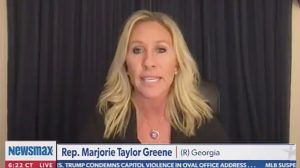

Rep. Marjorie Taylor Greene (R-GA), a congressional supporter of the far-right QAnon conspiracy theory revealed to be a Parkland and Sandy Hook truther who claimed 9/11 was an inside job and also supported executing Nancy Pelosi, Barack Obama and Hillary Clinton in social media posts, launched a raging tirade on the Equality Act on Monday.
The legislation, which President Joe Biden has said he’ll work to pass in his first 100 days, was recently reintroduced in the House and Senate.
The legislation guarantees explicit, permanent protections for LGBTQ people under our nation’s existing civil rights laws, expanding the Civil Rights Act of 1964 and the Fair Housing Act and providing clear and equal protections under federal law for all Americans in employment, access to public spaces, housing, credit, education, jury service, and federally-funded programs. Today, in a majority of U.S. states, LGBTQ people remain at risk of being fired, evicted or denied services because of who they are.
Tweeted Greene: “The so called #EqualityAct is evil. Disguised as #LGBT rights, it expands governmental regulatory reach that destroys women’s rights, religious rights, and rights of the unborn. It is a direct attack on God’s creation, He created us male and female. Our daughters will no longer have the right to privacy in their bathrooms, locker rooms, playing fields, and even TSA pat downs if a male TSA agent ‘identifies’ as a woman. Men who dress and think they are women will have rights over all real girls and women.”
“‘If you perform a mastectomy in the case of breast cancer, you will have to perform one on the teenage girl identifying as a boy,” Greene continued. “All in the name of equality… The act treats any refusal to offer abortion as ‘pregnancy’ discrimination.’ Doctors & Nurses will have no choice. I WILL BE VOTING NO TO THE DISGUSTING, IMMORAL, AND EVIL #EqualityAct!!! It has nothing to do with stopping discrimination against the LGBT community, that could be done easily without this. It has everything to do with attacking God & believers.”
Our daughters will no longer have the right to privacy in their bathrooms, locker rooms, playing fields, and even TSA pat downs if a male TSA agent “identifies” as a woman.
— Marjorie Taylor Greene
Men who dress and think they are women will have rights over all real girls and women.
Just to make myself clear,
— Marjorie Taylor Greene
I WILL BE VOTING NO TO THE DISGUSTING, IMMORAL, AND EVIL #EqualityAct!!!
It has nothing to do with stopping discrimination against the LGBT community, that could be done easily without this.
It has everything to do with attacking God & believers.
James.galbraithUmm Boeing, what is going on?

Enlarge / United Airlines 238 suffered an engine out failure on Saturday, Feb. 20. (credit: Andy Cross/MediaNews Group/The Denver Post via Getty Images)
While the National Transportation Safety Board investigates an aircraft engine failure that occurred in flight on Saturday, manufacturer Boeing has recommended that airlines suspend flying certain versions of the 777 wide-body airliner.
"Boeing is actively monitoring recent events related to United Airlines Flight 328," the company stated on Sunday. "While the NTSB investigation is ongoing, we recommended suspending operations of the 69 in-service and 59 in-storage 777s powered by Pratt & Whitney 4000-112 engines until the FAA identifies the appropriate inspection protocol."
There are versions of the 777 aircraft with engines built by three different manufacturers. For about the last 15 years, new 777s have all been delivered with GE-made engines. So this recommendation applies to older models of the aircraft still in service.
Read 7 remaining paragraphs | Comments
James.galbraithUmm good :P
Read more of this story at Slashdot.
James.galbraithThere's some digging to be done here...
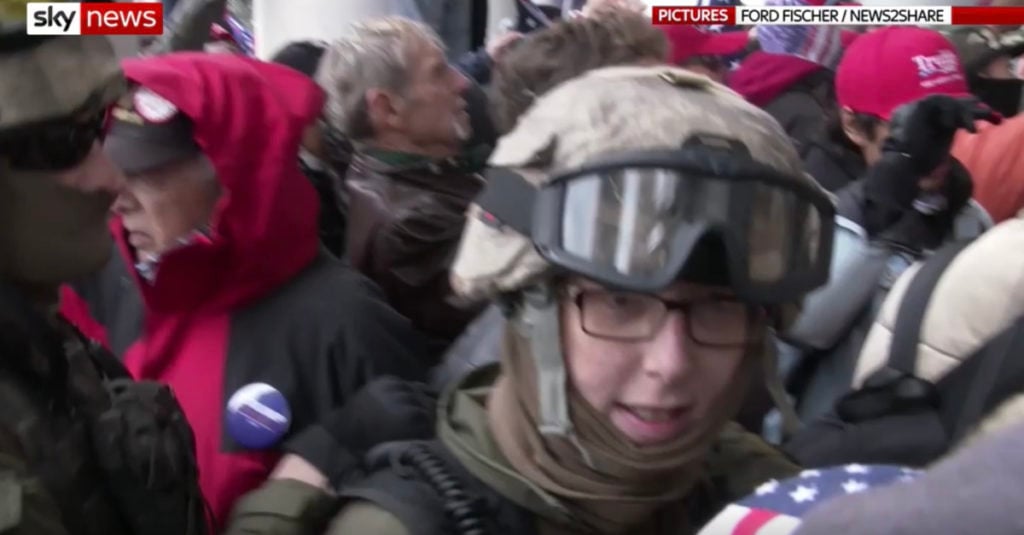
The Secret Service denied that private citizens were working with it to provide security at the ‘Stop the Steal’ rally ahead of the U.S. Capitol insurrection on January 6, but didn’t deny a claim by Oath Keeper militia member Jessica Watkins that she met with them before the riot.
Watkin’s attorneys claimed in a weekend filing that she was supplied “a VIP pass to the pro-Trump rally on January 6, had met with Secret Service agents and was providing security for legislators and others,” CNN reports.
The Secret Service responded to the claims in a statement: “To carry out its protective functions on January 6th, the U.S. Secret Service relied on the assistance of various government partners. Any assertion that the Secret Service employed private citizens to perform those functions is false.”
The agency did not respond to claims about the meeting.
Wrote Watkins’ lawyers in a court filing: “On January 5 and 6, Ms. Watkins was present not as an insurrectionist, but to provide security to the speakers at the rally, to provide escort for the legislators and others to march to the Capitol as directed by the then-President, and to safely escort protestors away from the Capitol to their vehicles and cars at the conclusion of the protest,” the court filing said on Saturday. “She was given a VIP pass to the rally. She met with Secret Service agents. She was within 50 feet of the stage during the rally to provide security for the speakers. At the time the Capitol was breached, she was still at the site of the initial rally where she had provided security.”
Watkins recently appealed to be released from jail because she is transgender, Buzzfeed News reports: “Watkins, an Oath Keeper charged with conspiring to storm the US Capitol, has asked to be released from jail pending trial, alleging that she has been ‘treated harshly’ and is at ‘particular risk in custody’ because she is transgender. She also argues she is no threat to the public and went to the Capitol only because ‘she believed that the president of the United States was calling upon her.'”
James.galbraithAnyone who says there's no racial issues with police violence isn't even trying to look at the data

The BREATHE Act is a bold plan to address police violence — and it’s made for this moment.
Monica Simpson grew up with a front-row seat to police harassment in North Carolina.
“It was in this rural town, where the cops were brutal and felt like they ran the entire town,” Simpson said. “The cops were constantly harassing young Black men and boys in our community.”
One day, as she sat on her porch with her cousin and sister, she watched police accost a group of men who often met at a community gathering spot nearby. It quickly escalated, and all of a sudden, both the men and the officers were running toward Simpson’s house, a police dog in tow.
“We were trapped on my front porch, you know, by this police dog, and by these police officers. And my cousins [were] trying to fight for their own lives, and also protect us.”
A white officer then pulled out a tube and pointed it at her. Simpson said she wasn’t sure what it was at first, but as soon as the chemicals hit her face, she realized it was pepper spray. “And so here we are on our front porch, which is where we’re supposed to be safe in our home, and we weren’t, you know. We were violated.”
Simpson was 11 years old at the time.
What Simpson experienced is all too common for Black children in America. In late January, a 9-year-old in Rochester, New York, was in the midst of what her mother has described as a mental health crisis when police handcuffed her and put her in a police car.
/cdn.vox-cdn.com/uploads/chorus_asset/file/22314869/GettyImages_1218984898t.jpg) Angela Weiss/AFP via Getty Images
Angela Weiss/AFP via Getty Images
In body camera footage, the girl can be seen crying, begging for her father. “You said you were going to pepper-spray me! No! Please! Stop!” she says to the officers.
But the police don’t stop. “Just spray her at this point,” an officer says.
“When I saw the story of the 9-year-old little girl, I just immediately ... I felt it all over again,” Simpson, who is now the executive director of the reproductive justice organization SisterSong, said. “It’s a feeling that you just don’t forget, the pain and the smell and the feeling of that. My heart was pained that another young Black girl, like myself, like I was back in the day, is still having to deal with police brutality in this way.”
These incidents happen so frequently that violence against another Black girl — a 16-year-old in Florida — went viral just days before the Rochester body cam video did.
Police killings remain all too common as well. They spurred last summer’s worldwide racial justice protests, but in the months since, hundreds have lost their lives at the hands of police. In January alone, 70 people were killed by police, according to the Washington Post, a number that February appears on track to match. And Black people continue to be killed at a disproportionate rate: Of the police victims for whom race is known, at least 14 of those killed in January were Black — or at least 20 percent, although Black Americans make up only 13 percent of the population. According to Mapping Police Violence, police killed 233 Black Americans in 2020, slightly down from the 277 Black Americans killed in 2019.
/cdn.vox-cdn.com/uploads/chorus_asset/file/22316318/cop_shooting_rate_race.jpg) Christina Animashaun/Vox
Christina Animashaun/Vox
The violence police inflict on Black Americans goes beyond those directly affected like Simpson. There is the emotional trauma of seeing one’s relative beaten or cuffed arbitrarily, the grief that comes with losing a loved one to a prison cell. And there is also the psychological terror created by seeing police brutality — it hangs over Black Americans, aware that police could turn on them or their loved ones at any time.
“I think that’s the thing that keeps me up at night,” Simpson said. “Worrying about my nephews, or the young girls in my family or in my community, coming in contact with a police officer that doesn’t see them as human, that doesn’t see them as a person, as a young person, as a child.”
No one should feel this fear. Change is necessary.
While there has been some change at the local level — in Denver, Colorado, health care professionals have begun responding to mental health emergencies as part of a pilot program — new policy must be set at the federal level. Doing this would mean one policing standard, and the same limits on brutality, for all Americans.
/cdn.vox-cdn.com/uploads/chorus_asset/file/22314847/GettyImages_1216300260t.jpg) Michael Ciaglo/Getty Images
Michael Ciaglo/Getty Images
There are a number of proposals that might achieve this aim. One that would bring particularly sweeping change is the BREATHE Act, a plan written by activists at the Movement for Black Lives and backed by progressive Reps. Ayanna Pressley (D-MA) and Rashida Tlaib (D-MI). Its central premise is that policing can only be fixed by addressing a range of systemic problems, and posits that state and local governments can be incentivized to contend with these issues through financial aid.
“BREATHE is a bill that invests,” Essie Justice Group founder and executive director Gina Clayton-Johnson, who led the creation of the BREATHE Act, told me. “It’s about making sure that states and local places have what they need in order to provide for the safety of their communities. And we divest from the very things that have been harming and stand as an impediment to safety.”
Those divestment include defunding large swaths of the federal law enforcement apparatus, including the Drug Enforcement Administration and Immigration and Customs Enforcement. Measures such as these have been rejected by Republicans and Democrats alike as too radical. But a problem as deep-rooted and damaging as policing requires a radical solution — one that does not just reform police departments but rethinks them.
As Simpson told me, “Whenever there are people out here wearing these uniforms that don’t see Black people in this country as the human beings that we are, or Black children as the children that they are, that’s a hard thing to reform.”
Policing and terror have historically gone hand in hand for Black Americans.
A progenitor of the modern US police, slave patrols, was used to ensure Black Americans could not escape the cruel conditions or social and economic exploitation of slavery. After emancipation, targeted laws led to sentences in forced work gangs. Later, a nationwide campaign of lynchings and general racial terror went largely unchecked — and was sometimes participated in — by police officers. More recently, demands to end police brutality, the disproportionate detainment of Americans of color, and police killings have gone unheard.
That this situation has gone unremedied has not been for a lack of trying. Abolitionists argued against slave patrols, and activists like W.E.B. Du Bois, Ida B. Wells, and Angela Davis called for prison reforms, for ending work gangs and stopping lynching. Protesters throughout the 20th century demanded an end to police killings, and police brutality more broadly. But the response was often muted. Prison labor remains a problem; lynching still is not a federal crime. Sweeping federal action has been, to put it lightly, elusive.
As the Congressional Research Service points out, “the U.S. Constitution established a federal government of limited powers. A general police power is not among them.”
The federal government can set some standards for state and local departments to abide by, and already has broad powers to protect citizens from misconduct. For instance, the Congressional Research Service points out that it’s “a federal crime to willfully deprive a person of his or her constitutional rights while acting under color of law,” and that the Justice Department can investigate repeated abuses of “rights ... secured or protected by the Constitution or laws of the United States.”
/cdn.vox-cdn.com/uploads/chorus_asset/file/22314943/GettyImages_506865541t.jpg) The LIFE Picture Collection via Getty Images
The LIFE Picture Collection via Getty Images
/cdn.vox-cdn.com/uploads/chorus_asset/file/22314956/GettyImages_494100704t.jpg) Eduardo Munoz Alvarez/AFP via Getty Images
Eduardo Munoz Alvarez/AFP via Getty Images
But the Justice Department has not always used its investigative ability; recently, its will to do so has waxed and waned depending on the occupant of the White House. Barack Obama’s administration was bullish about investigation and DOJ oversight, launching 25 inquiries, while Donald Trump’s team was dismissive of it, beginning just one. President Joe Biden has indicated plans to reverse Trump-era policy, again encouraging the Justice Department to look into patterns of abuse.
But the power for true broad change sits in Congress. That body has the ability to expand the DOJ’s oversight role, and to levy new requirements on state and local law enforcement. Given its control of spending, Congress can also attempt to influence behavior through financial incentives — and it’s this power the BREATHE Act turns upon to advance state and local police reform.
“Very little policy that I’ve read, very few pieces of legislation, has actually inspired me, because most legislation kind of limits itself to just pragmatism,” Melina Abdullah, the co-founder of Black Lives Matter Los Angeles, told me. “What we have with the BREATHE Act is really a visionary piece of legislation that says now is the time to reimagine public safety.”
The premise of the BREATHE Act is that a breadth of solutions is needed to stop police terror — ranging from economic investment to new programs focused on serving those affected by police misconduct — and that these initiatives must be paid for by defunding a number of federal law enforcement initiatives. To encourage state and local reform, the act lays out a range of grants and financial incentives.
“The BREATHE Act is approaching not the tip of the iceberg, but the iceberg itself,” Clayton-Johnson told me. “It’s looking at what is it that has allowed for us to live in a society in which these horrific events can take place on such a regular basis, where there’s such a high level of state violence that is happening.”
The proposal takes a broad approach, with sections addressing the racial wealth gap, inequities in education, immigration policy, and affordable housing, among other issues. With respect to policing, the act proposes defunding — and in some cases, abolishing — some federal law enforcement agencies.
For instance, the proposal would end federal initiatives known as Programs 1033 and 1122, which allow for the transfer of military equipment to police, and for state and local governments to go through federal sources to buy supplies for anti-drug work, respectively. As CNBC has reported, departments have received roughly $7.4 billion worth of military equipment through program 1033 alone.
/cdn.vox-cdn.com/uploads/chorus_asset/file/22315601/GettyImages_1216829714t.jpg) Drew Angerer/Getty Images
Drew Angerer/Getty Images
Outside of demilitarization, the proposal would also eliminate some direct payments sent to state and local governments, like the $61 million the Trump administration set aside in May 2020 to expand state, local, and federal law enforcement forces in seven cities with large minority populations “caught in the grips of violent actors.”
Ultimately, federal law enforcement under the BREATHE Act would look radically different than it does currently. For instance, the proposal calls for no longer funding many of the agencies tasked with carrying out the “war on drugs,” including the Drug Enforcement Administration (DEA) and the DOJ’s Narcotic and Dangerous Drug Section. This federal policy is often seen as having increased the police scrutiny and incarceration of people of color — 43 percent of Black people incarcerated federally as of September 2019 were imprisoned for drug offenses; according to an analysis by the NAACP, 33 percent of Americans incarcerated for drug crimes are Black, despite only about 5 percent of drug users being Black.
The act would also eliminate the Justice Department’s anti-gang groups, close parts of the FBI, and abolish large swaths of the Department of Homeland Security, including Immigration and Customs Enforcement (ICE) and the Denaturalization Task Force.
To address the toll policing has taken on communities of color, the plan would enact a number of restorative federal policies, including, among many other things:
The BREATHE Act calls for using the money saved from reducing the federal law enforcement apparatus to fund federal offices focused on supporting youth and survivors of violence, and would go to Native governments and programming meant to promote “non-putative” justice system reforms.
Many of the activists I spoke with said that stripping these federal groups of their funding is essential to reform because they have proven too harmful to Black Americans; instead, they argue, it is better to, as the BREATHE Act suggests, create a new public safety system.
“We can’t keep building on a system that is broken,” Simpson said. “This is the time for us to look at legislation like the BREATHE Act that does call for more radical and revolutionary ways of dealing with this crisis that we are in the midst of in this country.”
The BREATHE Act’s changes would apply only at the federal level; it would not bring sweeping change to state and local policing immediately upon passage. But Clayton-Johnson noted that the proposal was designed with this reality in mind. The BREATHE Act includes federal grants and incentives meant to encourage, and provide resources to, state and local governments to make changes that mirror those that BREATHE would enact on the federal level.
/cdn.vox-cdn.com/uploads/chorus_asset/file/22315146/GettyImages_1269394955t.jpg) Paul Morigi/Getty Images
Paul Morigi/Getty Images
/cdn.vox-cdn.com/uploads/chorus_asset/file/22315149/GettyImages_1269419327t.jpg) Natasha Moustache/Getty Images
Natasha Moustache/Getty Images
These grants would be made available to state and local governments willing to pursue jail and prison closures, alternative public safety departments, and demilitarizing. Money would also be put aside for governments to dissolve departments accused of a “pattern of misconduct,” for those that repeal rules that shield officers from disciplinary action, that make allegations and complaints against officers public, and that abolish officer bills of rights. And it could be used both for “paying reparations to individuals who have been the victims of police misconduct” and to further invest in programs that provide alternatives to policing.
Clayton-Johnson acknowledged that these grants and incentives — although designed to be attractive and accessible — won’t be pursued by all state and local governments, just as many states rejected the Affordable Care Act’s Medicaid expansion, despite the federal government’s offer to cover 90 percent of costs for those states willing to expand the program.
To safeguard against this reality, the proposal does three things. First, it creates separate grants and incentive programs for state and local governments. That way, if state-level officials are opposed to reform but local officials want to make changes, those local officials can apply for grants (or receive incentives) unilaterally. The opposite is also true — county officials might block reform, but state officials could engage with state-level benefits to work around that.
Second, it empowers activists and community organizers to continue their advocacy regardless of their local political reality, by providing money for initiatives on overcoming trauma, violence reduction, post-incarceration life, public safety, and expanded access to housing.
Programs such as these work to attack factors that have been found to lead to increased police violence, such as housing segregation, and to reduce the need for police — a 2017 study from the American Institutes of Research, for instance, found community-based youth enrichment programs led to 5 to 5.7 fewer victims of violence ages 14 to 24 per 100,000 people per month. Beyond being a resource for continuing community activism, these grants could also be used to lobby state and local officials resistant to reform for change.
Finally, it provides grants and incentives for reforms in areas that do not necessarily seem connected to policing on their face — such as inequities in education, internet access, health care, transportation, and housing — but that can contribute to overpolicing and increases in the carceral state. Governments do not have to change their policing practices to be eligible for this money, but meeting the requirements would likely reduce contact with officers; for example, the education grants could be used for a range of student support and violence reduction services that could take the place of police officers in schools.
Ultimately, the BREATHE Act is an ambitious proposal that goes far beyond the reforms that lawmakers began discussing in the wake of 2020’s nationwide civil rights protests. And, as it requires defunding law enforcement, it demands enacting reforms most lawmakers — of both parties — have said they are uncomfortable with.
/cdn.vox-cdn.com/uploads/chorus_asset/file/22314965/filigri_board_2.jpg)
But many activists argue that by remaining in their comfort zones, lawmakers are placing Black Americans in a dangerous position. The BREATHE Act was created to push the envelope, and to try to move the Overton window — the range of ideas considered feasible, or at least worthy of serious consideration and debate — toward sweeping reform. Many activists I spoke to acknowledged that support for the policies included in the BREATHE Act is limited at the moment, but said that did not mean it should be read only as an aspirational document.
“We’re going to have to do some education around why we don’t have time to tinker around the edges of a policing system that puts targets on the backs of black people,” Abdullah said. “We don’t have time to say, you know, we’re gonna think about it, we’re gonna put Band-Aids on it, we’re gonna make temporary fixes. Now is the time to be bold and courageous.”
It will certainly take great effort to make the reforms in the BREATHE Act a reality. But there have been suggestions that police reform of some sort may be possible now that Democrats control both Congress and the White House.
Biden has promised to focus on enacting a range of reforms, including some featured in the BREATHE Act, such as the elimination of mandatory minimum sentences and the expansion of social service programs. He has rejected defunding law enforcement, but many activists see him as more willing to alter policing policy than his predecessor.
Democratic congressional leaders have signaled plans to quickly pursue reform, but on more limited terms: House Majority Leader Steny Hoyer recently announced plans to for an early March vote on the George Floyd Justice in Policing Act, which was introduced in the last Congress and would force state governments to report all use of force incidents to the Justice Department.
That act would bring about significant change — from ending qualified immunity to expanding collection of policing data to banning chokeholds and no-knock warrants at the federal level — but would offer little incentive for state and local reforms, and in general falls far short of the sweeping change proposed by the BREATHE Act, leaving many activists concerned that, should it pass, the legislation would not significantly reduce police violence.
/cdn.vox-cdn.com/uploads/chorus_asset/file/22315664/police_prosecution_board_1.jpg) Christina Animashaun/Vox
Christina Animashaun/Vox
Simpson argues that politicians should not be afraid to make radical changes, given “the ways that our folks have been voting” and “the ways that people have been showing out and showing up whenever there is an injustice.”
Lawmakers do appear to be facing more constituent pressure to take on police reform than ever before. Throughout the country, police reform ballot initiatives saw broad success during the 2020 election, and polling done during the height of 2020’s civil rights protests found most Americans believe police need to make changes to ensure all Americans are treated equally.
Those demonstrations brought many Americans who had never protested before into activism. They also further galvanized reformers long working to end police violence, giving new strength and coordination to the activist movement, Clayton-Johnson said.
“Our Movement for Black Lives and all of our allies are clear, and are stronger than we have ever been,” Clayton-Johnson said. “We’re incredibly organized and incredibly motivated to push in this moment.”
That organization has paid off, she said, in creating among both the public and lawmakers “a deep level of sophisticated understanding about what it is going to take for Black people to be safe.”
It’s all these things together — a civil rights movement that has the support of most Americans, the continued work of national and local activists, and having a party in power that has made policing reform a priority, as well as constant graphic and tragic examples of the scale of the problem — that make for a unique moment in which it feels possible to bring about reform that would truly improve the lives of Americans of color, particularly Black Americans.
To waste such a rare opportunity would be foolish.
/cdn.vox-cdn.com/uploads/chorus_asset/file/22315182/GettyImages_494071838t.jpg) Kena Betancur/Getty Images
Kena Betancur/Getty Images
James.galbraithBingo. They want nothing more than to distract from their own failures
If the total breakdown of a state’s electrical power grid, plummeting millions of people without warning into subzero temperatures for several days, had occurred anywhere else but Texas, most media outlets, including Fox News, would have dutifully covered the story in accordance with their usual practice.
In other words, it would have been a major news item on Fox, but they wouldn’t have spent an inordinate amount of time on it, certainly not making it a subject for their opinion-based commentators to fixate on. As bad as the effects of the Texas storm were, neither winter storms nor power outages (even severe ones) really reflect that network’s bottom line, which is mainly amplifying political propaganda on behalf of the Republican Party.
However, as reported by Rob Savillo for Media Matters, Fox allotted an extraordinary degree of coverage to the Texas power outages last week. Nearly every instant of that coverage falsely blamed the power breakdown on renewable energy, the Green New Deal, or some other energy initiative notably associated with the Democratic Party
Savillo explains:
As a historic winter snowstorm devastated Texas, personalities and guests on Fox News and its sister network Fox Business went to bat for the fossil-fuel industry by falsely blaming frozen wind turbines and green energy policies for statewide power outages a staggering 128 times since Monday evening. Fox has continued its false narrative even after other outlets already debunked the claim that renewable energy sources and green energy policies were solely or primarily the cause of the blackouts.
For instance, on the February 15 edition of Tucker Carlson Tonight, host Tucker Carlson stated that “It seems pretty clear that a reckless reliance on windmills is the cause of this disaster.” On the February 16 edition of Fox & Friends, guest host Pete Hegseth began a segment on the Texas snowstorm by highlighting that the state’s “wind turbines are frozen solid” and then asking, “Is this what America would look like under the Green New Deal?” Numerous Fox segments ran chyrons claiming, “Frozen wind turbines cause blackouts in Texas.”
Overall, personalities and guests made such claims 104 times on Fox News and 24 times on Fox Business. The vast majority of those claims -- 75% -- came from journalists and pundits affiliated with either network.
Fox knew fully well that assertions about renewable energy, the Green New Deal, or wind turbines contributing to this catastrophic power breakdown wouldn’t withstand scrutiny. Its leadership knew fully well that such assertions would soon be debunked by other outlets. Yet the network allowed its army of pundits and “opinion journalists” to relentlessly highlight these lies over and over again to its viewership, with nearly the same degree of vigor and intensity it used in creating a false narrative about the 2020 election being “stolen.” The fact that Texas’ GOP Gov. Greg Abbott and other Republicans also parroted this line simply confirms this was a coordinated, tactical decision.
Of course, the donor base that funds the Republican Party skews heavily toward fossil fuel interests, so one could simply conclude that Fox News, as a conduit for Republican policy, was simply acting in accordance with those interests by attempting to demonize alternative, “clean” energy sources.
But that alone doesn’t justify the sheer vehemence and baldfaced disingenuousness of Fox’s efforts here. Renewable energies comprise just one-tenth of the state’s power plant consumption; more importantly, though, the failure that occurred in Texas was not due to fossil fuels, per se. Rather it was simply due in large part to a failure to properly equip the existing power infrastructure. In other words, the nature of the problem in Texas didn’t automatically implicate the “fuel vs. clean fuel” debate the media forced upon us.
But there’s another, more existential reason for this unusually high-octane effort by Fox to propagandize what happened in Texas this week: This deadly crisis is directly traceable back to the state’s political leadership’s errors. It’s negatively (and severely) impacted millions of Texans in ways they may well remember for a long time.
Texas, of course, is a state that has been completely dominated by the Republican Party for the past two decades. Republicans have had a trifecta—control of not only the governorship, but also of both state legislative houses—for 19 of the last 20 years. As was clearly demonstrated in the 2018 midterm elections, however, it is also a state slowly, inexorably undergoing a tectonic shift, both demographically and politically speaking.
The importance of Texas to the future of the Republican Party can scarcely be overstated. With its 38 electoral votes, it represents an essential element to sustain any possibility of a Republican president for the foreseeable future. Unlike its “big state” Democratic counterparts, such as New York and California, though, Texas is no longer firmly and safely within the Republican ambit. The GOP saw what happened in Georgia and Arizona in 2020, as once-impenetrable GOP bastions suddenly turned blue. They know that Texas is the ball game as far as the GOP’s future at the national level is concerned.
A statewide failure like this in Texas is the nightmare that keeps the GOP donor base up at night. And Fox News, their prime media outlet, was well aware of that fact. This power fiasco gave them a scare, because it laid bare a myth of Republican competence that the GOP relies on to keep control of this, possibly its most important state. It doubtlessly prompted a certain panic, like when you see a disaster bearing down on you but you don’t quite know what to do.
So with that in mind, Fox News pulled out all the stops on its latest big propaganda push, no matter how ridiculous. It was potentially a life-or-death moment, and all hands were needed on deck.