James.galbraith
Shared posts
The spam email that could launch a thousand lawsuits
James.galbraithheh buckle up

'If masks and social distancing don’t work, then what the hell happened to the flu?'
James.galbraithyup
Though my spot on the introversion spectrum lies somewhere between Kleenex box-wearing Howard Hughes and urine-collecting Howard Hughes (and as I continue to age, I’m on a bullet train to raw-fish-eating Gollum), I still usually get sick in the winter at least once.
In the past, while grocery shopping or taking in a matinee movie, I’d occasionally run into someone I know. (If I can avoid early eye contact, I usually conduct a rapid one-man exfil, though I’ve noticed that smoke grenades are far less welcome in Whole Foods than Fred Meyer for some reason, just in case you’re keeping track.)
This year? I haven’t had so much as a sniffle, though every throat tickle and minor cough sends a frisson of dread down my spine.
Turns out I’m not alone. This year’s flu season—long feared as the second head of a twin-headed monster—has been decidedly more Matt Gaetz brain than Matt Gaetz cranium (i.e., walnut-sized as opposed to college dorm refrigerator-sized).
That’s almost certainly because of the coronavirus mitigation efforts that have helped flatten the COVID-19 curve, even as our ex-pr*sident did everything in his power to secure our spot in the record books.
Serious question: If masks and social distancing don’t work, then what the hell happened to the flu?
— Sam Ghali, M.D. (@EM_RESUS) February 28, 2021
For the nontweeterers: “Serious question: If masks and social distancing don’t work, then what the hell happened to the flu?”
Of course, that guy is a medical doctor, so Qonservatives will naturally dismiss his pointed question out of hand and/or counter with something Donald Trump read off the back of a Lucky Charms box, but Dr. Ghali raises a good point. What happened to the annual flu season, which has traditionally been a deadly killer in its own right?
Flu has virtually disappeared from the U.S., with reports coming in at far lower levels than anything seen in decades.
Experts say that measures put in place to fend off the coronavirus — mask wearing, social distancing and virtual schooling — were a big factor in preventing a “twindemic” of flu and COVID-19. A push to get more people vaccinated against flu probably helped, too, as did fewer people traveling, they say.
…
Nationally, “this is the lowest flu season we’ve had on record,” according to a surveillance system that is about 25 years old, said Lynnette Brammer of the U.S. Centers for Disease Control and Prevention.
In the midst of a brutal pandemic, we’ll take these small victories. Though when you consider that flu typically kills tens of thousands of Americans each year, “small” probably isn’t the right way to describe this.
One possible partial explanation for these lower numbers, according to the AP, is that COVID-19 has “essentially muscled aside flu and other bugs” that tend to emerge in the winter. Scientists don’t fully understand this phenomenon, but it has been observed in the past with competing flu strains.
That said, the drop in flu cases has been remarkable. And it’s occurred across the country. Dr. Nate Mick, head of the emergency department at Maine Medical Center in Portland, told the AP: “I have seen zero documented flu cases this winter.” Meanwhile, in Oregon, Salem Hospital’s affiliated respiratory clinics have also been flu-free.
In addition, according to the Centers for Disease Control and Prevention, only one pediatric flu death has been reported in the U.S. as opposed to 92 at this same point last year.
That’s a nice, comforting ray of sunshine in the midst of a dark, depressing winter.
Personally, I hate getting sick. I may wear a mask in stores and movie theaters for the rest of my life. And not just because I don’t want to be recognized. But, you know, that would be a perk.
Social distancing? Erm, well, I’ve pretty much always done that.
What about you? Are you going to keep masking after this is all over? Let me know in the accompanying poll.
”This guy is a natural. Sometimes I laugh so hard I cry." — Bette Midler on author Aldous J. Pennyfarthing via Twitter. Need a thorough Trump cleanse? Thanks to Goodbye, Asshat: 101 Farewell Letters to Donald Trump, Dear F*cking Lunatic, Dear Pr*sident A**clown and Dear F*cking Moron, you can purge the Trump years from your soul sans the existential dread. Only laughs from here on out. Click those links, yo!
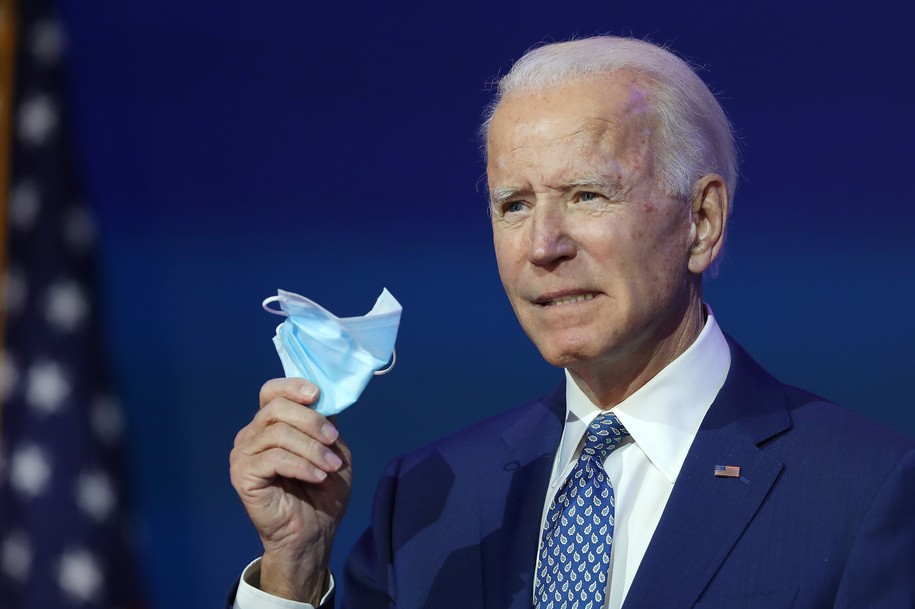
DeSantis and Florida GOP target China after CPAC
James.galbraithOh you mean more racism and xenophobia as the GOP's only "policy"? I'm shocked, just shocked.

Florida Gov. Ron DeSantis and top GOP lawmakers unveiled legislation on Monday to create new guidelines for universities, state agencies and even local governments working with foreign governments like China as part of a push to thwart the theft of intellectual property.
DeSantis’ move to back policies aimed at China is part of a broader pattern of endorsing legislation sparked by conservatives and former President Donald Trump that plays well with the base. The Republican governor, seen as a potential 2024 contender for president, has also called on legislators to crack down on tech companies, revamp the state’s election laws and approve a contentious bill to increase criminal penalties against violent protesters.
Speaking at an event at the Capitol on Monday, DeSantis said the proposals are necessary “to ensure tax dollars don’t end up in the hands of the likes of [Nicolás] Maduro, Kim Jong Un or the Chinese Communist Party.”
“We need to take action, stand firm against the Chinese Communist Party and foreign influence and interference in American research, education and public affairs,” DeSantis said.
What the bills do: House Speaker Chris Sprowls said Monday that “multiple” bills are coming this session to address foreign theft and interference, and corporate espionage.
One of the bills would require colleges to report any gift of $50,000 or more that is made directly or indirectly by a foreign government. Additionally, lawmakers want universities to monitor international travel and review foreign applicants for research positions more closely.
For anyone who fails to disclose or choose to hide any foreign disclosures, DeSantis warned they would have to pay 105 percent of any undisclosed gift back to the state.
Further, state agencies, cities and counties must report any gift or grant greater than $50,000 from any foreign source, under the legislation. Private entities seeking grants or pursuing state contracts would be required to disclose any financial ties worth more than $50,000 with seven counties including China, Cuba, Iran and Russia
The policies sought by DeSantis also would change Florida laws involving theft from cloud technology and the theft or trafficking of trade secrets.
Timing: The proposals detailed on Monday come on the heels of the Conservative Political Action Conference, where China was a top target. There were six panels at CPAC dealing with China, and conservatives say the tough-on-China message will be a winning campaign message.
They also come one day before the 2021 session officially begins, picking up where Sprowls and the House left off in 2020. Last session, a committee led by the Palm Harbor Republican crafted legislation that gave universities the power to terminate employees who violate conflict of interest policies, a direct response to a House probe into China’s attempts to poach the work of Florida researchers that came after weeks of digging into accusations of Chinese meddling at H. Lee Moffitt Cancer Center & Research Institute and state universities.
“Today we work to bring sunshine and transparency to combat those shadowy tactics,” Sprowls said.
Gary Fineout contributed to this report.
Bitcoin Could Either Become Preferred Currency For International Trade Or Face a 'Speculative Implosion,' Citi Says
James.galbraithWell those are two rather divergent approaches. And having BTC be an international standard seems utterly insane.


Read more of this story at Slashdot.
Saturday Morning Breakfast Cereal - Date
James.galbraithDon't date republicans
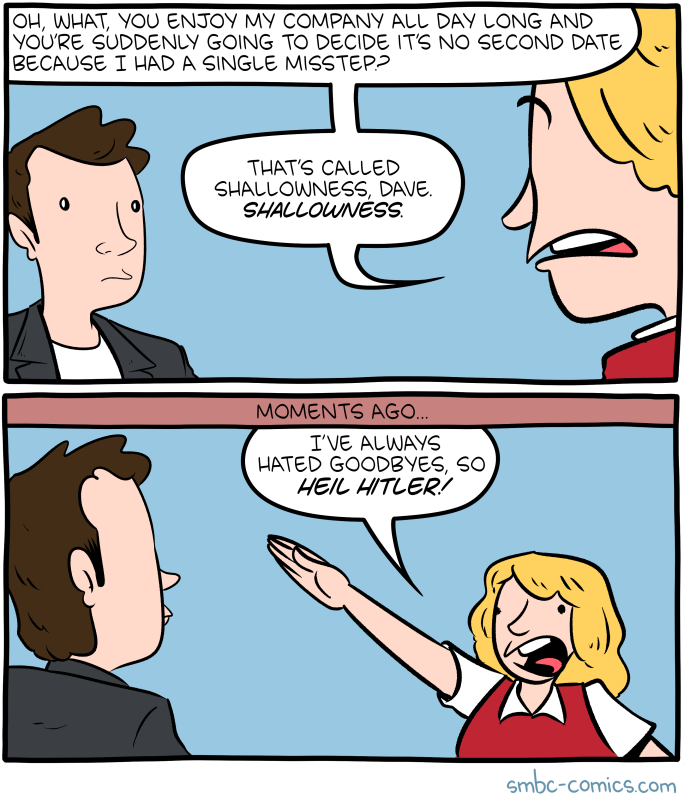
Click here to go see the bonus panel!
Hovertext:
It is a traditional greeting among the people of Bigot.
Today's News:
B.1.1.7 variant now 10% of US cases—and cases are once again ticking up
James.galbraithjesus

Enlarge / President Joe Biden, first lady Jill Biden, Vice President Kamala Harris, and second gentleman Doug Emhoff participate in a moment of silence and candle light ceremony at sundown with 500 candles for the 500,000 dead from the COVID-19 pandemic, at the South Portico at the White House on Monday, Feb. 22, 2021 in Washington, DC. (credit: Getty | The Washington Post)
After weeks of dramatic decline, COVID-19 cases in the US have hit a plateau—and in some places are ticking up. Officials are sounding the alarm in hopes of averting a fourth surge in the devastating pandemic.
“We at CDC consider this a very concerning shift in the trajectory,” Rochelle Walensky, director of the Centers for Disease Control and Prevention, said in a press briefing last week. Though cases are down from their astronomical peak in early to mid January, the overall numbers are still quite high, matching averages seen in late October, at the base of the holiday surge.
“Things are tenuous,” she noted. “Now is not the time to relax restrictions.”
Read 9 remaining paragraphs | Comments
Trump’s big CPAC lie unmasks a vile truth. Democrats ignore it at their peril.
James.galbraithyup
The Republican revolt against democracy, explained in 13 charts
James.galbraithWell that's appalling and unsurprising

The Trump years revealed a dark truth: The Republican Party is no longer committed to democracy. These charts tell the story.
The Republican Party is the biggest threat to American democracy today. It is a radical, obstructionist faction that has become hostile to the most basic democratic norm: that the other side should get to wield power when it wins elections.
A few years ago, these statements may have sounded like partisan Democratic hyperbole. But in the wake of the January 6 attack on the Capitol and Trump’s acquittal in the Senate on the charge of inciting it, they seem more a plain description of where we’re at as a country.
But how deep does the GOP’s problem with democracy run, really? How did things get so bad? And is it likely to get worse?
Below are 13 charts that illustrate the depth of the problem and how we got here. The story they tell is sobering: At every level, from the elite down to rank-and-file voters, the party is permeated with anti-democratic political attitudes and agendas. And the prospects for rescuing the Republican Party, at least in the short term, look grim indeed.
Today’s Republicans really hate Democrats — and democracy
1) Trump’s supporters have embraced anti-democratic ideas
/cdn.vox-cdn.com/uploads/chorus_asset/file/22325515/Vy1rP___2_.png)
This chart shows results from a two-part survey, conducted in late 2020 and early 2021, of hardcore Trump supporters. The political scientists behind the survey, Rachel Blum and Christian Parker, identified so-called “MAGA voters” by their activity on pro-Trump Facebook pages. Their subjects are engaged and committed Republican partisans, disproportionately likely to influence conflicts within the party like primary elections.
These voters, according to Blum and Parker, are hostile to bedrock democratic principles.
They go further than “merely” believing the 2020 election was stolen, a nearly unanimous view among the bunch. Over 90 percent oppose making it easier for people to vote; roughly 70 percent would support a hypothetical third term for Trump (which would be unconstitutional).
“The MAGA movement,” Blum and Parker write, “is a clear and present danger to American democracy.”
2) Republicans are embracing violence
/cdn.vox-cdn.com/uploads/chorus_asset/file/22325728/xefMZ___2_.png)
The ultimate expression of anti-democratic politics is resorting to violence. More than twice as many Republicans as Democrats — nearly two in five Republicans — said in a January poll that force could be justified against their opponents.
It would be easy to dismiss this kind of finding as meaningless were it not for the January 6 attack on Capitol Hill — and the survey was conducted about three weeks after the attack. Republicans recently saw what political violence in the United States looked like, and a large fraction of the party faithful seemed comfortable with more of it.
These attitudes are linked to the party elite’s rhetoric: The more party leaders like Trump attack the democratic political system as rigged against them, the more Republicans will believe it and conclude that extreme measures are justifiable. A separate study by political scientists Lilliana Mason and Nathan Kalmoe found that “Republicans who believe Democrats cheated in the election (83 percent in our study) were far likelier to endorse post-election violence.”
3) Republicans see Democrats as something worse than mere rivals
/cdn.vox-cdn.com/uploads/chorus_asset/file/22325743/dF66G___3_.png)
/cdn.vox-cdn.com/uploads/chorus_asset/file/22325742/5q6GH___2_.png)
Democracy is, among other things, a system for taming the disagreements inherent in politics: People compete for power under a set of mutually agreeable rules, seeing each other as rivals within a shared system rather than blood enemies.
But in the United States today, hyperpolarization is undoing this basic democratic premise: Sizable numbers of Americans on each side see the members of the other party not as political opponents but as existential threats.
The rise of this dangerous species of “negative partisanship,” as political scientists call it, is asymmetric. While many Democrats see Republicans in a dark light, a majority still see them more as political rivals than as enemies. Among Republicans, however, a solid majority see Democrats as their enemy.
When you believe the opposing party to be an enemy, the costs of letting them win become too high, and anti-democratic behavior — rigging the game in your favor, even outright violence — starts to become thinkable.
4) Republicans dislike compromise
/cdn.vox-cdn.com/uploads/chorus_asset/file/22325733/8Y1DN___3_.png)
America’s founders designed our political system around compromise. But for years now, majorities of Republican voters have opposed compromise on principle, consistently telling pollsters that they prefer politicians who stick to their ideological guns rather than give a little to get things done. It’s no wonder the past decade saw unprecedented Republican obstructionism in Congress (more on that later).
The hostility to compromise on the GOP side has at least two major implications for democracy.
First, it has rendered government dysfunctional and ineffective — and consequently has decreased public trust in government. Second, it has pushed Democrats in a more polarized direction; in 2018, Pew found, Democratic support for political compromise plummeted to roughly Republican levels. This seems in part like a reaction to years of GOP behavior: If they aren’t going to compromise with us, the Democratic logic goes, then why should we compromise with them?
But the more Democrats eschew compromise, the more cause Republicans have to see them as fundamentally hostile to conservative values — and to redouble their intransigence. It’s a doom loop for political coexistence.
5) The Republican Party is a global outlier — and not in a good way
/cdn.vox-cdn.com/uploads/chorus_asset/file/22325750/EZibQR_WkAM7y4B.jpg) Pippa Norris/Global Parties Survey
Pippa Norris/Global Parties Survey
The Global Party Survey is a 2019 poll of nearly 2,000 experts on political parties from around the world. The survey asked respondents to rate political parties on two axes: the extent to which they are committed to basic democratic principles and their commitment to protecting rights for ethnic minorities.
This chart shows the results of the survey for all political parties in the OECD, a group of wealthy democratic states, with the two major American parties highlighted in red. The GOP is an extreme outlier compared to mainstream conservative parties in other wealthy democracies, like Canada’s CPC or Germany’s CDU. Its closest peers are almost uniformly radical right and anti-democratic parties. This includes Turkey’s AKP (a regime that is one of the world’s leading jailers of journalists), and Poland’s PiS (which has threatened dissenting judges with criminal punishment).
The verdict of these experts is clear: The Republican Party is one of the most anti-democratic political parties in the developed world.
How things got this bad
6) The Republican turn against democracy begins with race
/cdn.vox-cdn.com/uploads/chorus_asset/file/22325781/F2.large__1_.jpg) Larry Bartels
Larry Bartels
Support for authoritarian ideas in America is closely tied to the country’s long-running racial conflicts.
This chart, from a September 2020 paper by Vanderbilt professor Larry Bartels, shows a statistical analysis of a survey of Republican voters, analyzing the link between respondents’ score on a measure of “ethnic antagonism” and their support for four anti-democratic statements (e.g., “the traditional American way of life is disappearing so fast that we may have to use force to save it”).
The graphic shows a clear finding: The higher a voter scores on the ethnic antagonism scale, the more likely they are to support anti-democratic ideas. This held true even when Bartels used regression analyses to compare racial attitudes to other predictors, like support for Trump. “The strongest predictor by far of these antidemocratic attitudes is ethnic antagonism,” he writes.
For students of American history, this shouldn’t be a surprise.
The 1964 Civil Rights Act and 1965 Voting Rights Act cemented Democrats as the party of racial equality, causing racially resentful Democrats in the South and elsewhere to defect to the Republican Party. This sorting process, which took place over the next few decades, is the key reason America is so polarized.
It also explains why Republicans are increasingly willing to endorse anti-democratic political tactics and ideas. In the past, restrictions on the franchise served to protect white political power in a changing country; today, as demographic change threatens to further undermine the central place of white Americans, many are becoming comfortable with an updated version of the Jim Crow South’s authoritarian tradition.
7) Partisanship causes Republicans to justify anti-democratic behavior
/cdn.vox-cdn.com/uploads/chorus_asset/file/22325799/Screen_Shot_2021_02_24_at_11.48.23_AM.png) Matthew Graham and Milan Svolik
Matthew Graham and Milan Svolik
This chart is a little hard to parse, but it illustrates a crucial finding from one of the best recent papers on anti-democratic sentiment in America: how decades of rising partisanship made an anti-democratic GOP possible.
The paper, from Yale’s Matthew Graham and Milan Svolik, uses a number of methods to examine the effect of partisanship on views of democracy. This chart shows a particularly interesting one: a “natural experiment” in Montana’s 2017 at-large House campaign, during which Republican candidate Greg Gianforte assaulted reporter Ben Jacobs during an attempted interview just before Election Day.
Because many voters cast their ballots by mail before the assault happened, Graham and Svolik could compare these to the in-person votes after the assault in order to measure how the news of Gianforte’s attack shifted voters’ behavior.
The blue lines represent precincts where Gianforte did worse on Election Day than in mail-in ballots; the red lines represent the reverse. What you see is a clear trend: In Democratic-leaning and centrist precincts, Gianforte suffered a penalty. But in general, the more right-leaning a precinct was, the less likely he was to suffer — and the more likely he was to improve on his mail-in numbers.
For Svolik and Graham, this illustrates a broader point: Extreme partisanship creates the conditions for democratic decline. If you really care about your side wielding power, you’re more willing to overlook misbehavior in their attempts to win it. They find evidence that this could apply to partisans of either major party — but only one party nominates candidates like Trump and Gianforte (who won not only the 2017 contest but also his reelection bid in 2018 and Montana’s gubernatorial election in 2020).
8) The crucial impact of the right-wing media
/cdn.vox-cdn.com/uploads/chorus_asset/file/22325420/Screen_Shot_2021_02_24_at_9.37.15_AM.png) Kevin Arceneaux, Martin Johnson, Rene Lindstadt, and Ryan J. Vander Wielen
Kevin Arceneaux, Martin Johnson, Rene Lindstadt, and Ryan J. Vander Wielen
The chart here is from a study covering 1997 to 2002, when Fox News was still being rolled out across the country. The study compared members of Congress in districts where Fox News was available to members in districts where it wasn’t, specifically examining how frequently they voted along party lines.
They found that Republicans in districts with Fox grew considerably more likely to vote with the party as it got closer to election time, whereas Republicans without Fox actually grew less likely to do so. The expansion of Fox News, in short, seemingly served a disciplining function: making Republican members of Congress more afraid of the consequences of breaking with the party come election time and thus less inclined to engage in bipartisan legislative efforts.
“Members with Fox News in their district behave as if they believe that more Republicans will turn out at the polls by increasing their support for the Republican Party,” the authors conclude.
How America’s political system creates space for Republicans to undermine democracy
9) Republicans have an unpopular policy agenda
/cdn.vox-cdn.com/uploads/chorus_asset/file/22325842/pasted_image_0__1_.png) Jacob Hacker and Paul Pierson, Let Them Eat Tweets
Jacob Hacker and Paul Pierson, Let Them Eat Tweets
The Republican policy agenda is extremely unpopular. The chart here, taken from Jacob Hacker and Paul Pierson’s recent book Let Them Eat Tweets, compares the relative popularity of the two major legislative efforts of Trump’s first term — tax cuts and Obamacare repeal — to similar high-priority bills in years past. The contrast is striking: The GOP’s modern economic agenda is widely disliked even compared to unpopular bills of the past, a finding consistent with a lot of recent polling data.
Hacker and Pierson argue that this drives Republicans’ emphasis on culture war and anti-Democratic identity politics. This strategy, which they term “plutocratic populism,” allows the party’s super-wealthy backers to get their tax cuts while the base gets the partisan street fight they crave.
The GOP can do this because America’s political system is profoundly unrepresentative. The coalition it can assemble — overwhelmingly white Christian, heavily rural, and increasingly less educated — is a shrinking minority that has lost the popular vote in seven of the past eight presidential contests. But its voters are ideally positioned to give Republicans advantages in the Electoral College and the Senate, allowing the party to remain viable despite representing significantly fewer voters than the Democrats do.
10) Some of the most consequential Republican attacks on democracy happen at the state level
/cdn.vox-cdn.com/uploads/chorus_asset/file/22325634/zkR27___3_.png)
This map from the Brennan Center for Justice shows every state that passed a restriction on the franchise between 2010 and 2019. These restrictions, ranging from voter ID laws to felon disenfranchisement, were generally passed by Republican majorities with the intent of hurting turnout among Democratic-leaning constituencies.
Republican state legislators were sometimes explicit about this: “Voter ID ... is gonna allow Governor Romney to win the state of Pennsylvania,” then-state House Majority Leader Mike Turzai bragged during the 2012 presidential election cycle.
Because Republicans dominated the 2010 midterm elections, Republican statehouses got to control the post-2010 census redistricting process at both the House and state legislative level, leading to extreme gerrymandering in Republican-controlled states unlike anything in Democratic ones.
Conservative control of the Supreme Court enabled this state-level push. In 2013, the Court struck down the Voting Rights Act’s “preclearance” requirement — that states with a history of racial discrimination would be required to get permission from the Justice Department on their maps and other major changes to electoral law. In 2019, another Court ruling paved the way for further partisan gerrymandering.
11) The national GOP has broken government
/cdn.vox-cdn.com/uploads/chorus_asset/file/22325717/HBNUk___3_.png)
Today’s Senate, where you need 60 votes to get virtually anything done, is a historical anomaly. Its roots can be traced to the unyielding GOP opposition to President Barack Obama in 2009 and 2010, when Senate Minority Leader Mitch McConnell turned the Senate into a dysfunctional body in which priority legislation was routinely subject to a filibuster. When Republicans won a Senate majority in 2014, McConnell found a new way to deny Obama victories: blocking his judicial appointments.
These actions were an expression of an attitude popular among Republican voters and leaders alike: that Democrats can never be legitimate leaders, even if elected, and thus do not deserve to wield power.
It’s still Trump’s GOP
12) Republicans didn’t care when Trump abused his power
/cdn.vox-cdn.com/uploads/chorus_asset/file/22325685/izwwP___5_.png)
/cdn.vox-cdn.com/uploads/chorus_asset/file/22325688/gFwVv___3_.png)
The Trump presidency was a test of Republican attitudes toward democracy. Time and again, the president abused his authority in ways that would have been unthinkable under previous presidents. Time and again, members of Congress, state party leaders, right-wing media stars, and rank-and-file voters looked the other way — or even cheered him on.
The chart here, which shows two NBC polls taken about a year apart, is particularly striking. It shows that support for Trump’s first and second impeachment among Republicans remained exactly the same among Republicans: 8 percent.
Trump was impeached the first time because he tried to interfere with the integrity of the 2020 presidential election — attempting to strong-arm the Ukrainian president into opening up a bogus investigation into Joe Biden. Trump was impeached the second time because he ginned up a mob to attack the Capitol to disrupt the counting of the votes from the Electoral College.
And yet in both cases, the percentage of Republicans who supported impeaching him was the same — a measly 8 percent. There’s just very little popular appetite in the GOP for punishing anti-democratic excesses by Trump, regardless of the circumstances.
13) Trump and Trumpism could return in 2024
/cdn.vox-cdn.com/uploads/chorus_asset/file/22325534/2024.png)
This chart shows the results of a Morning Consult poll on the 2024 Republican primary held after Trump’s second impeachment trial. It found that 54 percent of Republicans would choose Trump again, even when given a wide range of alternative possibilities. Six percent would choose his son Donald Trump Jr. — who obviously wouldn’t run if his father did — putting the Trump family support in the GOP primary electorate at around 60 percent.
This shouldn’t really be surprising.
All the reasons for the GOP’s turn against democracy — backlash to racial progress, rising partisanship, a powerful right-wing media sphere — remain in force after Trump. The leadership is still afraid of Trump and the anti-democratic MAGA movement he commands.
More fundamentally, they are still committed to a political approach that can’t win in a majoritarian system, requiring the defense of the undemocratic status quo in institutions like the Senate and in state-level electoral rules. Republicans still control the bulk of statehouses and are gearing up for a new round of voter suppression bills and extreme gerrymandering in electorally vital states like Georgia and Texas.
It’s very hard to see how any of this gets better. It’s very easy to see how it gets worse.
Progressives are right to push President Biden to cut military spending
James.galbraithSeriously. It can be cut by a LOT
Article II, Section 2, of the Constitution reads: “The President shall be Commander in Chief of the Army and Navy of the United States.” The person who holds that office thus takes the brunt of responsibility for defending our country. While it’s not his only responsibility as president, Joe Biden knows full well that no other part of his job is more important. Fulfilling it, however, does not require spending money unwisely, in particular if doing so means shortchanging other national priorities in areas ranging from infrastructure to health care to education. That is the message progressives in Congress want to make sure the 46th president hears.
When he took office a month ago, Biden inherited the military spending policies of The Man Who Lost An Election And Incited An Insurrection To Overturn It. As per The Hill, in 2017, U.S. military spending was $610 billion, whereas in the current fiscal year it stands at $748 billion—representing a jump of 22.6%. Nondefense spending, by comparison, stands 15% below that of defense spending.
Would it surprise you to know that the Orange Julius Caesar, unable to feel satisfied with the increased dollars spent under his watch, couldn’t resist lying about it? “We’ve totally rebuilt the military.” (To quote Shermer High School’s John Bender: “Totally?”) Spending on defense, according to Donald Trump, “used to be ‘million.’ And then, about 10 years ago, you started hearing ‘billion.’ And now you’re starting to hear ‘trillion,’ right?” To correct the pathological prevaricator, we still aren’t spending a trillion each year, and we’ve been hearing “billion” as far back as the Defense Department has tabulated total annual spending figures, i.e., starting in 1948. But what’s a decade or seven for someone with no interest in facts?
Given Trump’s much bigger lies—including The Big Lie about having lost the election—one can say that exaggerating about military spending is more on the order of a white lie by comparison. On the other hand, all of his lies are white lies, in that each one is told in the service of whiteness.
But now Biden is president, so let’s talk about military spending going forward rather than the past—imagined or otherwise. Before we get into the specifics of that spending, please take a look at how our country’s defense budget compares to that of other countries—I’m loath to call them competitors because, when it comes to spending, there’s really no comparison.

During the presidential campaign, Biden promised to “end the forever wars in Afghanistan and the Middle East, which have cost us untold blood and treasure … (and) bring the vast majority of our troops home from Afghanistan and narrowly focus our mission on Al-Qaeda and ISIS.” From 9/11 through October 2019, our country has spent $778 billion on the war in Afghanistan, along with another $44 billion in reconstruction costs in that country. The true final tally—even in dollars, let alone the human cost—is much harder to calculate.
In the current fiscal year, spending in Afghanistan appears to be around $15 billion, down from previous years thanks to an already planned drawdown in troops that was supposed to culminate in the removal of all U.S. military personnel by May 1. This withdrawal is linked to a U.S.-Taliban agreement signed last year. However, recent violence has led the Biden administration to indicate that it will likely not abide by that timeline. Additionally, Rhode Island Sen. Jack Reed, the chair of the Senate Armed Services Committee, came out specifically against removing all U.S. troops by the May deadline.
John Kirby, Pentagon spokesperson, stated: “The Taliban have not met their commitments. As you know, there is a looming deadline of early May ... but without them meeting their commitments to renounce terrorism and to stop the violent attacks on the Afghan National Security Forces and, by dint of that, the Afghan people, it's very hard to see a specific way forward for the negotiated settlement.” One hopes that these words represent an attempt to bring pressure to bear rather than anything more definitive, and that the Taliban does live up to its side of the bargain in the end so that Biden can bring home as close to 100% of our troops as possible.
Either way, it does not appear that truly large savings on our military spending in Afghanistan are in the offing, given the already relatively low current amount. Nevertheless, a billion here, a billion there, pretty soon it begins to add up to real money, as the saying goes.
On Iran, the previous administration’s brainless unilateralism was on full display, as the U.S. in 2018 pulled out of the nuclear deal negotiated under President Barack Obama. Unsurprisingly, President Biden is going to try and revive it. Additionally, he reversed his predecessor’s pronouncement from November—also unilateral—that the totality of United Nations sanctions against Tehran were back in force. Certainly, improved relations with Iran as part of a deal that puts them further away from being able to develop nuclear weapons is a good thing in and of itself—although Thursday’s U.S. airstrikes on Iranian-backed militias in eastern Syria, which Biden authorized in retaliation for previous violence the groups committed, show that achieving such improvements will not be simple. Additionally, although it’s hard to quantify, one would think having better relations with Iran would produce some savings on military spending as well.
Within the broad category of defense spending, there are some areas that might well require increases, given the changing nature of the threats we face. While we may not need as many tanks, nuclear missiles, and planes as we once did, cybersecurity is clearly an area where the U.S. has not done enough in the last few years. The recent devastating SolarWinds hack emanating from Russia—not China, as Putin’s Puppet President falsely claimed, contradicting his own Secretary of State Mike Pompeo—that breached multiple government agencies along with over 100 businesses made that failing clear.
President Biden is responding on the cybersecurity front. First of all, he spoke directly to his counterpart in Moscow: “I made it clear to President Putin, in a manner very different from my predecessor, that the days of the United States rolling over in the face of aggressive actions, interfering with our elections, cyberattacks, poisoning its citizens, are over.” He added: “We will not hesitate to raise the cost on Russia and defend our vital interests and our people.” Doing more than just talking, Biden’s COVID-19 relief plan contained more than $10 billion to address the cyber threat. Additionally, the new administration announced it will be enacting other measures through “executive action.” The need to spend more money on cybersecurity only further increases the importance of finding savings elsewhere in spending on defense.
Then there’s the Space Force. No, I’m not kidding. After Trump created it in late 2019, Daily Kos’ SemDem offered a brilliant takedown: “There are more than enough reasons why Space Force is a bad idea, starting with the fact that its mission was an afterthought to the primary reason, which, much like his vanity border wall, only exists to serve Trump’s ego.”
It appears that Biden will resist calls to simply return the functions of Space Force back to the Air Force, the Navy, and the Army—out of which it was carved in the first place. There still may be savings to be found, given that the current budget allocated over $15 billion to what is now the sixth branch of the Armed Forces. In addition, hopefully he’ll undo Trump’s last-second move of Space Force’s command center from Colorado—which he lost and where a Democrat beat an incumbent Republican in a Senate race—to Alabama, where Trump won and where a Senate seat flipped in the opposite direction. Whether the move was motivated by politics and a desire by Trump to enact revenge on a blue state is something I’ll leave to you to decide. The Colorado Springs Gazette editorial board noted that the move to Alabama “will cost billions over time.”
In terms of our federal budget, military spending as a share of all discretionary spending—that refers to spending not set by law, such as Social Security—dwarfs that of any other individual area. In fact, military spending equals all those other areas put together.

Furthermore, it’s important to make clear that military spending is far from the only kind of spending that protects the security of our country. Spending money on diplomacy protects our country. Spending money to combat climate change—at home and abroad—protects our country. Foreign aid protects our country. Democrats have long understood this, while Republicans—as on so many other issues—typically fail to see the big picture. As Daily Kos’ Squire for You cogently argued, “Democrats are the party of national security,” and we need to “reframe” the entire debate around the topic.
Progressives have been speaking out about the necessity of adjusting our spending priorities away from the military and toward other priorities—separate from the emergency needs created by COVID-19—that have been neglected for too long. Given that $7.4 billion of excess military supplies have been transferred to police departments since 1997 through the 1033 program, one can certainly argue that some of that spending may have been unjustified in terms of military necessity. Just maybe.
Sen. Elizabeth Warren of Massachusetts, who serves on the Armed Services Committee, presented the basic progressive perspective: "The disconnect between our defense spending and the threats Americans actually face has never been wider. It’s long past time to rethink and refocus how we spend our money to protect this country because military and nuclear weapons alone, as we’ve seen, are not enough to protect us."
Progressives in the House are singing the same tune: “It is a top issue for the [Congressional Progressive Caucus],” said Rep. Pramila Jayapal of Washington, Chair of the CPC, a week ago. “This is a really important moment for us to move forward on cutting out waste, fraud and abuse in the Pentagon.” Here’s the CPC’s broad policy stance on military spending:
The Progressive Caucus is fighting to rein in bloated Pentagon spending, end America’s unauthorized forever wars, and rebalance our priorities abroad through robust investments in diplomacy, sustainable development, and humanitarian assistance. The United States spends more today on the military than at any time in our history—while at the same time, the Trump Administration has hollowed out essential diplomatic and humanitarian infrastructure. At the Progressive Caucus, we believe Congress should reduce conflict and foster peace—not issue blank checks for endless wars. By adopting a new global security posture that balances defense, diplomacy, and development aid, we can advance the goal of peace, rein bloated spending, and create greater economic prosperity for families here at home.
In terms of numbers, Reps. Barbara Lee of California and Mark Pocan of Wisconsin, along with Sens. Bernie Sanders of Vermont and Ed Markey of Massachusetts, have led the push to cut military spending by 10% across-the-board—with military pay exempt from that cut. Their effort last year garnered support from about half of Democrats in each house of Congress—although notably two of the senators who got on board were now-Majority Leader Chuck Schumer of New York and Dick Durbin of Illinois, the current majority whip. Who heads the Senate’s Budget Committee in the new Congress, you might ask? That would be Sanders.
Rep. Lee condemned the bloat in military costs born during the Trump years, in particular compared to the levels of spending on nonmilitary needs. “Wasteful defense spending does not make our communities safer—it only weakens our ability to respond to crises, and in recent years, that wastefulness has only increased.” Regarding the specific amount she’d like to see cut, Lee commented: “Ten percent is low. That’s the floor.”
Obviously, our country faces military threats that must be addressed. It’s also important to note that blowback from our actions around the world sometimes creates new threats, or exacerbates existing ones. Beyond the moral implications of U.S. military policy, it is clear that we need to shift our spending to some degree from our current approach. We cannot keep throwing billions of dollars at the same old military programs, and we absolutely cannot continue to shortchange other priorities both within the area of defense and in the rest of the budget. We need to invest in the American people, and work toward making our society a place with more justice and greater opportunity for each of us. The progressives are right on this issue. President Biden needs to listen to them.
Ian Reifowitz is the author of The Tribalization of Politics: How Rush Limbaugh's Race-Baiting Rhetoric on the Obama Presidency Paved the Way for Trump (Foreword by Markos Moulitsas)

Neera Tanden Got Twitter Right—And That Was Her Problem
James.galbraithBullshit. It's just the GOP suddenly caring about tweeting mean things after 4 years of blindness to Trump tweets and celebrating Grenell.

It shouldn’t be hard, one would think, to simply not tweet. That’s all it would have taken to spare Neera Tanden the situation she’s in: Had she kept her political outrage to herself, or shared it offline in the company of friends, she might be sailing to confirmation as director of the Office of Management and Budget, rather than watching the chances of her nomination slowly dwindle. And what would have been the loss? The internet is overflowing with snarky diatribes about Senators Susan Collins and Ted Cruz and Mitch McConnell. A veteran political player, who might someday need Cruz or Collins or McConnell for a vote, should have known it would do her no good to pile on. And, on some level, she did know: In 2016, she told an interviewer, “I’m willing to concede I should tweet less.”
Instead, Tanden did what a lot of us do: She went for the dopamine hit, again and again. Over the past few years, she tweeted that “a vampire has more heart than Ted Cruz,” compared McConnell to Voldemort, and called Collins “criminally ignorant.” It wasn’t just Republicans she angered; she was also known for tweaking left-wing rivals like Senator Bernie Sanders, suggesting in one tweet that Russia had helped Sanders in the 2016 election. Some have detected sexism in the sudden rush to scold her, but Tanden stands out among Biden’s Cabinet nominees for the edginess of her social media posts.
In hindsight, it looks like a repeated lapse of judgment. But to some extent, this was part of Tanden’s job. As a president of the liberal think tank Center for American Progress and a longtime aide to Hillary Clinton, she was frequently deployed as an attack dog, especially during campaigns and news crises. And Twitter was a natural ally in that work—like Washington, it was also a place where making all the right people mad could be an asset.
But Twitter has its own way of tempting you into provocative tweets, and then turning on you—especially when you make enough enemies from different points on the political spectrum, and they find a common moment for revenge.
A onetime Boston political boss named Martin Lomasney, who wielded power in the late 19th and early 20th centuries, had an oft-repeated rule for politicians: “Never write if you can speak, never speak if you can nod, never nod if you can wink.” Lomasney would surely have run in the other direction from Twitter, which isn’t just public but permanent. Yes, Donald Trump played the platform like a virtuoso; other politicians have used it savvily to bypass gatekeepers and build a base of loyalists. But for a political player, every tweet is fraught with peril: Even if you aren’t overtly insulting someone, there’s a chance some statement from your past will contradict a current political stance or apply with poetic justice to a compromising situation.
Still, political types are also human beings, and the temptation to pour every thought onto Twitter, in search of a reaction, is ultimately biological. When you put out a tweet, anticipating a “like” or a “share,” your brain gets a hit of a pleasure neurochemical, says psychiatrist David Greenfield, founder and medical director of the Connecticut-based Center for Internet and Technology Addiction. At the same time, he says, the brain cuts off its pathways to the frontal cortex, the area that governs judgment. Once, this shutdown of higher-level thinking was a convenient evolutionary tool, Greenfield says: Prehistoric hunter-gatherers needed to shut out reason to serve the higher directives of mating and eating. Today, though, it has given us an internet that functions like “the world’s largest slot machine,” he says, as users embark on an endless hunt for validation. Tanden’s nakedly partisan tweets could derive her plenty of pleasure; one tweet during the confirmation hearings for Supreme Court Justice Brett Kavanaugh—“Susan Collins’ terrible treatment of Dr. Ford should haunt Collins for the rest of her days”—drew 3,097 retweets and 8,295 likes.
In the age of the ideological bubble, political tweets pose a specific kind of risk. If you’re sharing like-minded partisan thoughts with like-minded people, you’re likely to forget that you risk a negative reaction, says Whitney Phillips, a communications professor at Syracuse University and co-author of the upcoming book You Are Here: A Field Guide For Navigating Polarized Speech, Conspiracy Theories, and Our Polluted Media Landscape. “You speak in a code that’s appropriate for the audience,” Phillips says. But once your statement lands in front of a less-friendly group, your intentions don’t matter. “It’s impossible to control any of our messages,” she says. “You can only focus on the consequences.”
Phillips cites an internet axiom known as “Poe’s Law”—coined in the early 2000s, on a message board for creationists, when a user who called himself Nathan Poe declared that it was hard to discern the true believers from people who were being sarcastic. On the internet, Poe’s Law holds, you can’t know anybody’s true intentions. A commenter could be sincere or mocking, a real human being or a fake account. Anger could be deeply felt or cynically overblown. And it’s easy to weaponize the outrage machine. It was a right-wing provocateur—hoping to reveal what he saw as Hollywood hypocrisy—who unearthed incendiary old jokes about rape and pedophilia from “Guardians of the Galaxy” filmmaker James Gunn’s Twitter feed in 2018, Phillips notes. But it was left-wing outrage over those tweets that ultimately got Gunn fired.
Tanden’s tweets, it’s fair to say, weren’t as troublesome as Gunn’s. She was largely pumping out standard-issue political snark, the kind Trump used to post from the White House on nearly an hourly basis. Still, there are rules of political conduct, and—if you’re not Trump—consequences for breaking them. In 2008, Samantha Power, then an adviser to presidential candidate Barack Obama, resigned from the campaign after telling a Scottish reporter that Hillary Clinton was a “monster.” Power had violated a norm: voicing the kind of insult that’s usually shared, Lomasney-style, outside the public view. (After the election, her career recovered quickly.) And, like Gunn, Tanden succeeded in getting both groups—those on the left and the right—on her bad side. If everything you tweet can be used as ammunition in the future, it’s particularly lethal when it’s coming at you from all sides.
Tanden clearly realized that old tweets could cause her trouble in this new career moment, when she had to emerge from her Clinton-Biden bubble and confront her onetime targets in the flesh. Soon after Biden named her to the budget post, she deleted at least 1,000 tweets. But the internet never forgets. And, in keeping with Poe’s Rule, it has been hard to tell who on Capitol Hill is truly horrified, and who merely senses a political opportunity. At her confirmation hearing before the Budget Committee, Sanders chided Tanden for her “vicious attacks made against progressives. People who I have worked with. Me personally.” But he also has a longer-standing beef with Tanden over the 2016 election and her ideological agenda. And he seems not the type to wither in front of an insult.
Tanden did her duty and apologized profusely, hinting that she wanted to distance herself from the cesspool Twitter had become. But the truth is, she was following the rules of her chosen medium all along. There’s no point in tweeting if you aren’t saying something that can rile people up. “Our networks have been designed for this exact outcome,” Phillips says. “The most rancorous stuff becomes the stuff that is most visible, that has the most purchase.”
In other words, the internet did everything in its power to make Tanden act the way she did, rewarded her with nearly 377,000 followers, then punished her in the end. And yet, with every tweet, she had free will. Greenfield counsels his patients who want to change their internet habits to never actually type out a tweet in the “compose” box, in Twitter or any other social media platform. Rather, he says, type your message in the Notes app, think about it for a minute, and cut and paste when you’re good and ready. Martin Lomasney would have considered that decent advice.
GOP Rep. Madison Cawthorn ‘Entrapped’ and Sexually Harassed Women During ‘Fun Drives’ Off Campus, According to Report Citing 30+ Former Classmates
James.galbraithIs anyone surprised?

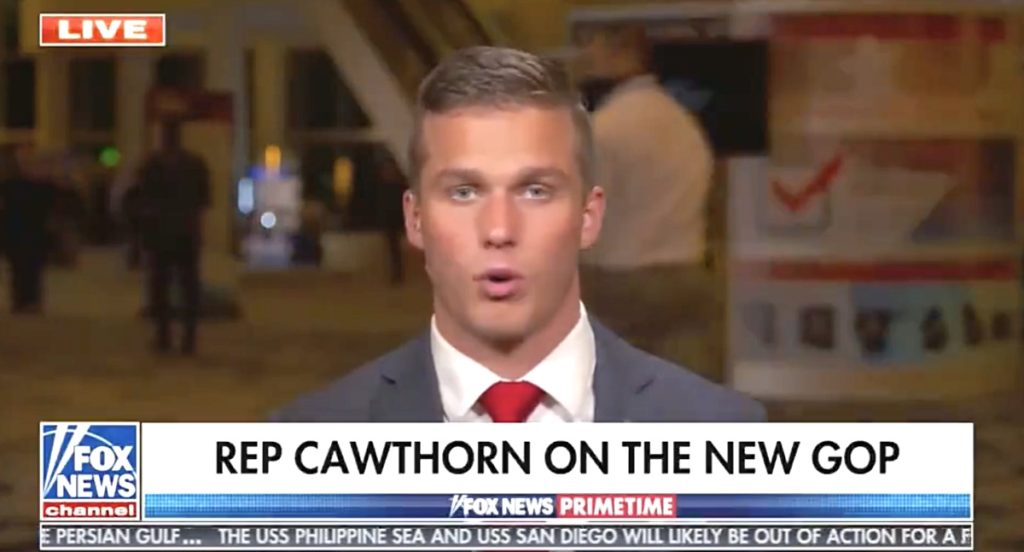
More than 30 former college classmates and associates accused insurrection-inciting Hitler tourist GOP Rep. Madison Cawthorn (R-NC) of sexual harassment and misconduct during his recent years at Patrick Henry College, according to a new story from Buzzfeed News.
The news outlet “spoke with more than three dozen people, including more than two dozen former students, their friends, and their relatives, who described or corroborated instances of sexual harassment and misconduct on campus, in Cawthorn’s car, and at his house near campus.”
Buzzfeed News adds: “Four women told BuzzFeed News that Cawthorn, now a rising Republican star, was aggressive, misogynistic, or predatory toward them. Their allegations include calling them derogatory names in public in front of their peers, including calling one woman ‘slutty,’ asking them inappropriate questions about their sex lives, grabbing their thighs, forcing them to sit in his lap, and kissing and touching them without their consent. … According to more than a dozen people — including three women who had firsthand experience and seven people who heard about these incidents from them at the time — Cawthorn often used his car as a way to entrap and harass his women classmates, taking them on what he could call ‘fun drive’ off campus. Two said he would drive recklessly and ask them about their virginity and sexual experiences while they were locked in the moving vehicle.”
Full story HERE.
Madison Cawthorn was on Fox News talking about how the Republican Party has to find "a great moral foundation to stand upon" minutes after BuzzFeed published a story about him allegedly harassing women in college https://t.co/XFNbWJWLWF pic.twitter.com/ONCbWiqBvY
— Aaron Rupar (@atrupar) February 27, 2021
Cawthorn, as you may recall, incited the insurrectionists at Trump’s Stop the Steal rally on January 6. He has also lied about training for the paralympics.
Cawthorn stirred controversy during his campaign after a photo emerged of a visit he paid to a home in Germany once visited by Adolf Hitler.
VICE reported: “In statements on social media, Cawthorn said when he visited Hitler’s vacation home, known as the Eagle’s Nest, he’d been thinking of the Allied soldiers who’d celebrated the Nazis’ defeat there. ‘It was a surreal experience to be remembering their joy in a place where the Nazi regime had plotted unspeakable acts of evil,’ Cawthorn wrote on Facebook. Cawthorn also faced controversy in October, after a website run by Cawthorn’s campaign described Booker as someone ‘who aims to ruin white males running for office.’ Cawthorn said in a statement that his campaign had ‘clarified the language’ on the website.”
The GOP’s strategy for retaking power is uglier than you think
James.galbraithOf course it is
‘Golden Calf’ Trends After Massive Statue of Trump is Wheeled into CPAC: WATCH
James.galbraithlol


Ahead of Trump’s keynote speech at the CPAC conference this weekend, two staffers wheeled in a massive golden statue of the insurrectionist former president, and everyone was thinking about the idol created by Israelities when Moses went up to Mt. Sinai.
Wrote one Twitter user with more following suit: “Republicans wheel in the golden calf as they prepare to wander the electoral desert for 40 years.”
Republicans wheel in the golden calf as they prepare to wander the electoral desert for 40 years. https://t.co/S1x8xhbVCA
— Wesley Clark (@WesClarkjr) February 26, 2021
My God. They have now made him a literal golden calf.
— Chuck Kourouklis (@CKourouklis) February 26, 2021
Please tell me that @SachaBaronCohen is about to jump out of this golden calf. https://t.co/qR7NGGfCe4
— Holly Figueroa O'Reilly (@AynRandPaulRyan) February 26, 2021
As many people have noted in the replies, it appears the conservative “Christians” of the Trumpian right have gone all-in on worshipping their golden calf. Perhaps @marcorubio can recall the appropriate verse in his tweets… https://t.co/8WA1i1oBdw
— Joy-Ann Pro-Democracy & Masks Reid(@JoyAnnReid) February 26, 2021
This reminds me of that religious story, something something something Golden Calf, something something graven image, something something false idols.
— BrooklynDad_Defiant! (@mmpadellan) February 26, 2021
But what do I know, I'm not very religious. https://t.co/rOwxvNQM7W
The golden calf jokes aren’t subtle and wry when they make it all obvious like that https://t.co/mNQzwjgGsh
— Rabbi Danya Ruttenberg (@TheRaDR) February 26, 2021
Golden Calf …
— The Nostradamus Caveman
"And The People Bowed and Prayed, To The Neon God They Made.." pic.twitter.com/m2WwQCUAo1Duty To Warn
(@CaptNostradamus) February 26, 2021
You really can't make this shit up.
— Andrew Goss
1st 2 Commandments.
You Shall Have No Other Gods Before Me.
You Shall Not Make Idols.
According to the Bible, the golden calf was an idol made by the Israelites when Moses went up to Mount Sinai. Also known as the Sin of the Calf. https://t.co/opN43JUrP8USAF
Who wore it better? Golden Trump or Golden Calf? pic.twitter.com/Fjd9XjJs8V
— David Rothschild (@DavMicRot) February 26, 2021
The Golden Calf 2.0 https://t.co/PL8h9ZIaMS
— J-L Cauvin (@JLCauvin) February 26, 2021
John Durham resigning as US Attorney, but won't let go of pointless 'investigation' of Russia probe
James.galbraithgood riddance
John “Bull” Durham announced on Friday afternoon that he is stepping down from his position in the Department of Justice. Presumably this also means an end to his role as special counsel investigating the origins of the Russia investigation. (Note: latest reporting indicates he’s not dropping the probe.) In the announcement of Durham’s resignation, there is no mention of any further indictments or report upcoming from that investigation.
Durham was appointed by then-Attorney General William Barr in May 2019. The prosecutor had been involved in the investigation of torture and prisoner abuse during the Bush administration, and was directly involved in dismissing every one of the 101 charges on that front. That certainly made him seem an appropriately partisan choice for Barr when seeking someone who would fulfill Donald Trump’s dreams of turning the tables on the Mueller investigation.
But now, after an investigation that lasted months longer than Mueller’s, Durham is leaving with only a single minor indictment against a CIA official who signed off on a single document. Far from proving Trump’s conspiracy theories, Durham seems to have proved that they were conspiracy theories. And now he’s leaving.
A clarification in the latest reporting: Durham is not resigning as special counsel, just as the US Attorney in Connecticut. He apparently will still continue doing . . . whatever it is he is doing as special counsel.
Though the spring of 2019 marked the official start of Durham’s investigation, it was clear Barr tapped him for the role months sooner. But almost from the start, Durham’s investigation ran up on the shoals of hard truth. Despite Barr escorting him around the world in an effort to find something that could be turned into evidence behind Trump’s claims, it turned out that allied intelligence services refused to play along. It Italy, Australia, and the U.K., attempts to “prove” that Trump was somehow ensnared into making over 100 contacts with Russian agents were slapped away by officials unwilling to play along.
That was a setback. However, Durham only expanded his scope to look beyond current officials and those directly involved in decisions that led to Trump’s investigation. In fact, he appeared to be digging into unrelated events as an excuse to go after former officials under President Obama.
Still, despite unlimited assistance, Barr’s personal attention, and Trump cheering on the sidelines, Durham’s report never seemed to appear. At first, it seemed as if he intended to have something ready to blow up media attention on Trump’s first impeachment trial. That didn’t happen.
Then all through the summer, Barr hinted that the report was right around the corner. Except it wasn’t.
At the start of September, it seemed that Barr and Durham were still planning a genuine “October surprise.” But then Durham’s longtime assistant left the investigation in mid-September, with language that made it seem as if there was nothing there. Durham soon had his remaining staff looking at the Clinton Foundation for absolutely unspecified reasons because … why not? However, as actual October arrived, it seemed the real surprise was going to be on Trump.
Because there was no Durham report. The single charge levied back in August began to look like the only bullet in Durham’s pop gun.
Unless there is still some serious information, and more charges, not only is Durham leaving after a fruitless quest into unwarranted claims, this will also mean that Barr repeatedly and seriously overstated the significance of what Durham had uncovered. This is an investigation that was repeatedly put forward as if it had unearthed significant evidence in support of the idea that Trump was unfairly targeted, or that the Mueller investigation took partisan actions. None of that evidence has appeared.
Durham may be resigning, but this might not be the last time he visits the Department of Justice.

FDA advisers unanimously recommend Johnson & Johnson’s Covid-19 vaccine
James.galbraithGood, but I'll still take Moderna/Pfizer

The FDA could make an emergency use authorization as soon as this weekend, paving the way for distribution.
A panel of expert advisers to the Food and Drug Administration (FDA) voted unanimously on Friday afternoon to recommend the one-dose Covid-19 vaccine developed by Johnson & Johnson for an emergency use authorization. The next step is for the FDA to accept the recommendation, which could happen as soon as this weekend, clearing the way for distribution.
Earlier this week, the FDA posted a briefing going over the results of the phase 3 clinical trials of the Johnson & Johnson vaccine, which included 40,000 participants in several countries divided randomly into placebo and treatment groups.
The most important finding: The vaccine was 100 percent effective after 28 days at preventing deaths and hospitalizations from Covid-19 among the clinical trial participants who received the treatment. (Two vaccine recipients were hospitalized with Covid-19 two weeks after receiving the injection.)
The vaccine was also 66.1 percent effective at preventing symptomatic Covid-19 illness after four weeks, with consistent results across all age groups. When looking at blocking severe and critical cases of Covid-19, the Johnson & Johnson vaccine was 85.4 percent effective.
Mathai Mammen, global head of research and development for Janssen Pharmaceutical Companies, said during a press conference last month that the vaccine also had “plain vanilla safety results,” with the vast majority of recipients experiencing no problems. Most of the reported symptoms were mild, including fatigue, arm pain, and fever.
The efficacy levels against severe to critical Covid-19 changed depending on where the vaccine was tested. It was 85.9 percent in the United States after four weeks, while in South Africa, where a coronavirus variant with worrisome mutations that help it escape vaccines has been spreading widely, efficacy against severe disease was reduced to 81.7 percent.
Health officials say that while the Johnson & Johnson efficacy results are not as high as those from Moderna and Pfizer/BioNTech, the two vaccines that have already received emergency use authorizations from the FDA, the new vaccine’s performance is still superb.
“If this had occurred in the absence of a prior announcement and implementation of a 94, 95 percent efficacy [vaccine], one would have said this is an absolutely spectacular result,” said Anthony Fauci, director of the National Institute of Allergy and Infectious Diseases, during the press conference last month. The vaccine was developed by Janssen Pharmaceuticals, a division of Johnson & Johnson based in Belgium, together with Boston’s Beth Israel Deaconess Medical Center.
But unlike the vaccines from Moderna and Pfizer/BioNTech, Johnson & Johnson’s doesn’t require a booster shot, circumventing the two-dose problems posed by its competitors. There’s no need to track people down for their second dose, which means more people could be vaccinated faster. The shots also don’t require deep-cold storage, which means they’re less costly and somewhat easier to distribute.
“It’s a complete game changer,” said Georgetown University health law professor Lawrence Gostin. “It completely changes the equation.”
The Johnson & Johnson vaccine is also different in another way. It uses an adenovirus vector to deliver instructions for making the spike protein of the coronavirus, which is also less expensive to manufacture than the mRNA platform used for the other vaccines. (It’s estimated to cost around $10 per vaccine dose — roughly half the cost of the Pfizer/BioNTech vaccine.)
Johnson & Johnson has promised enough vaccines for 20 million Americans by the end of March and 100 million Americans by the end of June despite production challenges. It would be a huge boost to the 65 million Covid-19 vaccine doses that have been administered in the US so far.
So even with an overall efficacy level that’s lower than the two other vaccines on the US market, the Johnson & Johnson vaccine could become a major player. It’s the vaccine that “can increase equity,” said Saad Omer, the director of the Yale Institute for Global Health, particularly “if it’s deployed strategically in nations that are hard to reach and where that would be a particular challenge under a two-dose schedule.” Johnson & Johnson expects to distribute a billion doses of its vaccine worldwide this year.
But as amazing as it is to see several effective Covid-19 vaccines developed in record time, it’s now clear that the technology alone won’t save the day. An orchestra of supply chains, manufacturing, logistics, staff, and public trust needs to harmonize in order to actually get billions of shots into arms around the world and finally draw the pandemic to a close. And we also have other hurdles to overcome: controlling the spread of variants that seem to be threatening the effectiveness of all the vaccines we have.
What we learned about the safety and efficacy of the Johnson & Johnson Covid-19 vaccine
Johnson & Johnson launched separate clinical trials testing both a one-dose and a two-dose regimen to see how well these strategies provided long-term protection against Covid-19. The one-dose phase 3 trial arm yielded efficacy results first.
But hints that this vaccine could be safe and effective have been trickling out for months. The company published some of its early phase 1 and phase 2 trial data in a preprint paper in September, and the final version of the paper in January, in the New England Journal of Medicine. The papers showed the vaccine was well tolerated among the participants, and seemingly very effective: With one dose, after 29 days, the vaccine ensured that 90 percent of participants had enough antibodies required to neutralize the virus. After 57 days, that number reached 100 percent.
“When I looked at that, I thought, wow, this Johnson & Johnson product is very powerful after the first dose in terms of immunogenicity,” said Monica Gandhi, a professor of global medicine at the University of California San Francisco. “The Pfizer and Moderna vaccines needed two doses to get that level of [virus] neutralization.”
Like Pfizer/BioNTech, Johnson & Johnson “didn’t rush to phase 3 [trials],” said Hilda Bastian, a scientist who has been tracking the global vaccine race. Instead, it tested multiple vaccine doses and candidates at the outset to figure out which might perform the best in humans, and then proceeded through clinical trials.
The vaccine was also tested in nine countries — the largest single international phase 3 trial in the world, with more than 60,000 participants — meaning many ethnic groups were represented in the data, Bastian said. “As if all that’s not enough, it’s one of the ones that could be manufactured in South Africa and other places,” since Johnson & Johnson has manufacturing capacity around the world, even in countries hard-hit by the pandemic that have been waiting for vaccine supplies, she added.
The day this vaccine gets approval “is going to be a big day for the future of this pandemic [and] a ticket out of this disease for a larger part of the world,” said Nicholas Lusiani, a senior adviser at Oxfam America.
How adenovirus vector vaccines work
Part of the appeal of this vaccine lies in the technology behind it. Adenoviruses are a family of viruses that can cause a range of illnesses in humans, including the common cold. They’re very efficient at getting their DNA into a cell’s nucleus. Scientists reasoned that if they could snip out the right sections of an adenovirus’s genome and insert another piece of DNA code (in this case, for a fragment of the new coronavirus), they could have a powerful system to deliver instructions to cells.
For decades, scientists have experimented with adenovirus vectors as a platform for gene therapy and to treat certain cancers, using the virus to modify or replace genes in host cells. More recently, researchers have found success using adenoviruses as vaccines. Already, an adenovirus vector vaccine has been developed for the Ebola virus.
In addition to Johnson & Johnson and AstraZeneca/Oxford, CanSino Biologics of China is also developing an adenovirus vector Covid-19 vaccine; Russia’s Sputnik V Covid-19 vaccine uses this platform, too.
To make one of these vaccines, the adenovirus is modified so that it can’t reproduce but can carry the instructions for making a component of a virus. In the case of Covid-19, most adenovirus vector vaccines code for the spike protein of SARS-CoV-2, the part the virus uses to begin an infection.
Human cells then read those instructions delivered by the adenovirus and begin manufacturing the spike protein. The immune system recognizes the spike proteins as a threat and begins to build up its defenses.
Since adenoviruses exist naturally, they tend to be more temperature-stable than the synthetic lipid nanoparticles that are used to deliver the mRNA in the Moderna and Pfizer/BioNTech vaccines.
“The nice thing about the adenovirus vector vaccines is that they’re a little more tolerant to a longer shelf life, to the conditions of storage,” said Angela Rasmussen, a virologist at Georgetown University. Adenovirus vector vaccines can be stored at refrigerator temperatures, while mRNA vaccines need freezers, with Pfizer/BioNTech’s vaccine requiring temperatures of minus 80 degrees Celsius.
This helps lower the cost and complexity of manufacturing, distribution, and administration of adenovirus vector vaccines compared to other platforms. And simply having another vaccine on the market, made by a major pharmaceutical company with its own manufacturing infrastructure, is a big step forward. “The more vaccine doses we can have, the better,” Rasmussen said.
/cdn.vox-cdn.com/uploads/chorus_asset/file/22267861/1230805815.jpg) Jason Redmond/AFP/Getty Images
Jason Redmond/AFP/Getty Images
What comes next
The next challenge for Johnson & Johnson, after getting a green light from the FDA, is actually delivering doses to millions of arms.
But with three vaccines eventually on the market, should people hold out for any one vaccine in particular?
“Right now when people ask me, which, you know, which vaccine should I get? It’s pretty easy to answer that question because it’s whichever one you get offered,” said Paul Sax, a professor of medicine at Harvard Medical School. Vaccine supplies are limited, the transmission of the virus is high, and hospitals are close to capacity, so few people can be picky about what they get.
On the other hand, once vaccine supplies stabilize, having multiple vaccines with different characteristics could allow doctors and public health officials to optimize how the shots are distributed. “If the efficacy [of a given vaccine] is lower but still pretty good, there may be a scenario that one vaccine is recommended for low-risk populations and another one is for a high-risk population,” Omer said.
Though the Johnson & Johnson vaccine does have some key advantages over its competitors, it could face some of the same distribution snags that have hit other vaccines, like miscommunication between the government and hospitals, and production hurdles.
Researchers say that all the manufacturers also need to start working to get vaccines to the rest of the world. The new variants that have emerged in the UK, Brazil, and South Africa and have been detected in other parts of the world are reminders that the virus continues to evolve, and that a partially vaccinated population could exert more selection pressures that accelerate these mutations. So vaccination has to happen fast, and globally — and Johnson & Johnson’s vaccine may be a critical tool to do this.
“Long term, we need to be thinking about getting vaccines out equitably to the entire world, and having vaccines that are easier to distribute in terms of the cold chain requirements is going to be huge in that regard,” Rasmussen said.
But even as these vaccines roll out, there’s still more to learn: how long protection from vaccines last, whether there are any rare complications to consider, whether they prevent transmission as well as disease, and how well these vaccines work against the new variants. There are already some troubling signs of how these variants might eventually be able to evade vaccines. Continuing clinical trials will be critical, Sax said.
“You know, we’ve got millions of people who’ve received these vaccines already, which is exciting,” he added. “We’re on our way.”
Why Democrats are blasting Biden’s attack against Iranian proxies in Syria
James.galbraithSeriously

It’s not clear that the president’s decision was legal.
President Joe Biden is facing heat from fellow Democrats and law experts over his Thursday airstrikes against targets in eastern Syria tied to Iranian-backed militias, namely because they say he had no real legal justification for the attack.
The administration said the seven 500-pound bombs dropped on facilities two militias used to smuggle weapons were designed as a message: Attack US troops in the region and you risk retaliation. Over the past two weeks, Iranian proxies have fired rockets at anti-ISIS coalition forces outside Erbil, Iraq — killing a Filipino contractor and injuring US troops — and near the US Embassy in Baghdad.
“President Biden will act to protect American and Coalition personnel,” Pentagon spokesperson John Kirby said in a statement hours after the strikes, calling them a “proportionate military response.” As of now, no deaths have been confirmed — the Pentagon is still assessing that — though US officials said they suspect the strikes possibly killed a “handful” of people.
Congressional Democrats denounced the strikes almost immediately, saying the US is not at war with Syria and that lawmakers didn’t authorize any attack on Iranian-backed militants. As a result, they essentially argue Biden ordered an illegal launch.
“Offensive military action without congressional approval is not constitutional absent extraordinary circumstances,” Sen. Tim Kaine (D-VA), a longtime advocate for bolstering Congress’s role in authorizing military operations, said in a Friday statement. “Our Constitution is clear that it is the Congress, not the President, who has the authority to declare war,” Sen. Bernie Sanders (I-VT) added on Friday.
Criticism continued in the House. Rep. Ro Khanna (D-CA), a leading progressive foreign policy proponent, stated, “There is absolutely no justification for a president to authorize a military strike that is not in self-defense against an imminent threat without congressional authorization.”
Rep. Ilhan Omar (D-MN) also highlighted a 2017 tweet from current White House press secretary Jen Psaki that criticized then-President Trump’s decision to bomb Syria in retaliation for a chemical weapons attack. “What is the legal authority for strikes?” Psaki asked, noting “Syria is a sovereign country.”
“Great question,” Omar tweeted in response on Thursday night.
Great question. https://t.co/79K8uyzwGi
— Ilhan Omar (@IlhanMN) February 26, 2021
Vice President Kamala Harris, then a senator, also questioned Trump’s 2018 bombing of Syria after another chemical weapons attack, tweeting, “I am deeply concerned about the legal rationale for last night’s strikes.”
While many Republicans showed their support for the attack, the pushback over Biden’s first known strike reflects a decades-long debate over what the president can and can’t do with the largest military in the world. Biden’s decision in Syria just provided the latest flashpoint.
It’s therefore worth looking at each side’s main arguments. They’ll dominate not only the discussion about this strike but future ones over the next four years, too.
The Syria strikes reanimated the presidential vs. congressional war powers fight
A National Security Council spokesperson told me the administration has two main legal arguments for why Biden had the authority to retaliate against Iranian-backed proxies operating on the Syria-Iraq border. Both of them rely on the idea that responding to the last two weeks’ attacks on coalition facilities counts as self-defense.
Regarding domestic law, the spokesperson said, “the President took this action pursuant to his Article II authority to defend U.S. personnel.” Simply put, Article II of the Constitution names the president as the commander in chief, thereby giving him ultimate authority over all military matters.
US troops were endangered by the proxies’ actions in recent weeks, and so he had every right to defend them from future attack, the argument goes. Importantly, the White House isn’t claiming it had the authority to drop bombs on Syria, just that the US had a pressing need to act in self-defense.
As for international law, the spokesperson said “the United States acted pursuant to its right of self-defense, as reflected in Article 51 of the UN Charter.” That article states, in part, that nothing in the UN’s laws “shall impair the inherent right of individual or collective self-defence if an armed attack occurs against a Member of the United Nations.” (We’ll come back to the full first sentence in a moment.)
By citing this provision, the administration is basically making the same argument as it did in domestic law: The proxies threatened US troops, and so America has the right to use force to defend them.
Congressional Democrats (and some Republicans) aren’t buying those arguments, though. Their case, based mostly in domestic law, stems from Article I of the Constitution, which states that only Congress can declare war or authorize military operations. There are some situation-dependent caveats to this, but that’s the main point.
Over the decades, Congress has abdicated that authority, rarely taking war votes while allowing the president to wield the military as he sees fit. The Korean and Vietnam wars, for example, were conducted without congressional approval. And the 2001 authorization passed to greenlight operations against al-Qaeda after 9/11 continues to be cited for counterterrorism operations around the world, even when al-Qaeda wasn’t the target.
Lawmakers have slowly begun to claw back their authority. In 2019, Congress passed a “War Powers Resolution” to block Trump from involving the US military in Yemen. Trump vetoed the bill, however, and without the supermajorities needed to overrule that veto, those offensive operations continued until Biden stopped them earlier this month. Still, it was a signal that Congress would rise against a president abusing his legal mandate.
Also in disagreement with Biden’s team are some law of war experts.
Mary Ellen O’Connell, a professor at Notre Dame and co-author of Self-Defense Against Non-State Actors, told me she agrees that the president should come to Congress when there is time to seek authorization. There was in this case, she contends, as the aggressions weren’t happening now but rather occurred over the past two weeks.
That’s something Sen. Chris Murphy (D-CT) picked up on in his Friday statement.
“Retaliatory strikes, not necessary to prevent an imminent threat, must fall within the definition of an existing congressional authorization of military force,” he said. “Congress should hold this administration to the same standard it did prior administrations, and require clear legal justifications for military action, especially inside theaters like Syria, where Congress has not explicitly authorized any American military action.”
But O’Connell’s main critique is that the White House got the international law wrong. As promised, here’s the first sentence of the UN Charter’s Article 51 in its entirety: “Nothing in the present Charter shall impair the inherent right of individual or collective self-defence if an armed attack occurs against a Member of the United Nations, until the Security Council has taken measures necessary to maintain international peace and security.”
O’Connell said the attack wasn’t on the American homeland, and the US surely had enough time to work with UN Security Council partners to punish Iran using diplomacy — not force. That means Biden’s team either willingly misread what that provision says or didn’t comprehend its true meaning.
“They are citing the correct sources of law,” O’Connell said, but “they are wildly misinterpreting them.”
“They are undermining their attempt at becoming a leadership team for the international community in promoting good order, stability, and the rule of law,” she concluded.
Of course, the president had more than legal argument on his mind when making his decision to drop bombs. As president, it’s his responsibility to protect Americans wherever they are. He also surely didn’t want Iran to believe it could threaten US troops with impunity. Risking Congress denying an authorization request might send Tehran that exact signal.
But even Kirby, the Pentagon spokesperson, couldn’t define what imminent threat US forces faced in Syria or Iraq, except to say the Thursday attack was meant to deter future Iranian assaults on Americans.
Which means the debate over when a president can authorize a strike by himself and when he must ask lawmakers for permission is alive and well during the Biden years. It’s raging already, and will surely continue in the years to come.
Sign up for The Weeds newsletter. Every Friday, you’ll get an explainer of a big policy story from the week, a look at important research that recently came out, and answers to reader questions — to guide you through the first 100 days of President Joe Biden’s administration.
Texas woman sues Griddy after being charged $9,546 for 19 days of power
James.galbraithYeah they're gonna have lawsuits

Enlarge / The US and Texas flags fly in front of high-voltage transmission towers on February 21, 2021 in Houston, Texas. (credit: Getty Images | Justin Sullivan )
A Texas woman who was charged $9,546 for power this month has filed a class-action lawsuit against Griddy, alleging that the variable-rate electricity provider violated a state law against price gouging during disasters.
Lisa Khoury, a retiree in Mont Belvieu, signed up with Griddy in June 2019 and typically received monthly bills of $200 to $250 until this month's power disaster sent rates soaring. Griddy charged Khoury and her husband $9,546 from February 1 to 19, 2021, the lawsuit said, noting that "some customers received bills as high as $17,000."
Khoury's lawsuit, filed Monday in Harris County District Court, seeks certification of a class of thousands of Texas residents who bought power from Griddy, claiming they're entitled to damages of over $1 billion.
Read 16 remaining paragraphs | Comments
McConnell would support Trump if he got 2024 Republican nomination
James.galbraithprofiles in courage

Senate Minority Leader Mitch McConnell said on Thursday he would support Donald Trump in 2024 if he became the Republican presidential nominee, less than two weeks after condemning the former president for the Capitol insurrection.
“The nominee of the party? Absolutely,” McConnell told Fox News’ Bret Baier on Thursday when asked whether he would back Trump if he got the nomination.
The remark comes amid a dramatic, public row between the former president and McConnell in the wake of the Jan. 6 Capitol riots — an event for which McConnell blamed Trump in scathing statements on the Senate floor. Trump in turn blasted McConnell last week as an “unsmiling political hack” who is weakening the Republican Party.
During his interview with Baier, McConnell stopped short of offering his immediate support for Trump in what is likely to be a crowded Republican 2024 field. McConnell stressed that numerous other Republicans had also hinted their intentions of a 2024 presidential run.
“There’s a lot to happen between now and ’24,” McConnell said. “I’ve got at least four members that I think are planning on running for president, plus some governors and others. There’s no incumbent. It should be a wide-open race and fun for you all to cover.”
McConnell signaled his desire to move on from the 2020 elections and focus instead on retaking the House and Senate in 2022. When asked about Trump’s role in the Republican losses in the special elections for Georgia’s Senate seats, McConnell flatly said: “I don’t have any further observations to make about that. We’re looking forward.”
McConnell also rebuffed Trump’s attack against him that he was injuring the party’s prospects. McConnell maintained that there was no “civil war” within the party and that it remained competitive with Democrats in razor-thin majorities in the House and Senate.
The specter of a Trump run in 2024 continues to hover over the party, with the former president remaining popular among Republican voters. Sen. Mitt Romney (R-Utah) predicted on Tuesday that Trump would win the nomination in 2024 should he make another go at the White House.
Manhattan prosecutor gets Trump tax records after long fight
James.galbraithGood now do something with them

NEW YORK — A New York prosecutor has obtained copies of Donald Trump’s tax records after the Supreme Court this week rejected the former president’s last-ditch effort to prevent them from being handed over.
The Manhattan district attorney’s office enforced a subpoena on Trump’s accounting firm within hours of the Supreme Court’s ruling on Monday and now has the documents in hand, a spokesperson for the office, Danny Frost, said Thursday.
District Attorney Cyrus R. Vance Jr. had been fighting for a year and a half for access to Trump’s tax records for a criminal grand jury investigation into his business dealings. The documents are protected by grand jury secrecy rules and are not expected to be made public.
Vance, a Democrat, is conducting a wide-ranging investigation that includes an examination of whether Trump or his businesses lied about the value of assets to gain favorable loan terms and tax benefits. The district attorney is also scrutinizing hush-money payments paid to women on Trump’s behalf.
Vance’s office issued a subpoena to Trump’s accounting firm, Mazars USA, in August 2019 seeking eight years of his tax returns and related documents.
Trump’s lawyers immediately went to court to block its enforcement, first arguing that he was immune from being investigated while president.
When the Supreme Court rejected that argument 7-2 last July, Trump’s lawyers returned to a lower court and argued the subpoena was issued in bad faith, overly broad, might have been politically motivated and amounted to harassment. An appellate court rejected that argument and the Supreme Court on Monday declined to intervene.
In a three-word statement after the Supreme Court ruled on Monday, Vance said only: “The work continues.”
Trump has called Vance’s investigation “a fishing expedition” and “a continuation of the witch hunt — the greatest witch hunt in history.”
Vance is leading the investigation along with his general counsel, Carey Dunne, who made arguments on behalf of the office at various appellate court hearings. Vance recently hired former mafia prosecutor Mark Pomerantz as a special assistant district attorney to assist in the probe.
Vance, whose term expires at the end of the year, hasn’t announced if he will seek reelection, leaving questions about who will lead any Trump-related prosecutions in the future.
Vance’s subpoena sought from Mazars USA not only the final versions of Trump’s tax returns, but also draft versions of those returns and “any and all statements of financial condition, annual statements, periodic financial reports, and independent auditors’ reports” held by the company.
Mazars did not object to the subpoena and, in a statement at the time, said it would “respect the legal process and fully comply with its legal obligations.”
The Mazars subpoena also sought engagement agreements that define the accountants’ role in creating the tax returns and financial statements; source documents providing the accountants with raw financial data; and work papers and communications between the firm and Trump representatives.
Those would include communications showing how the raw data was analyzed and treated in the preparation of the records.
The New York Times separately obtained years of Trump’s tax data and published stories last year detailing some of his finances, including that he paid just $750 in federal income tax in 2017 and no income tax in 11 of 18 years because of major losses.
'His eyes enlarged': Chicago cops accused of violently arresting man for looking shocked to see them
James.galbraithSue the fuck out of them
Newly released police video shows a Black Chicago officer grabbing the neck of another Black man, slamming him against a brick wall, and forcing him onto the pavement, allegedly for looking shocked to see officers. That’s right. Officers claimed in an incident report ABC 7 Chicago obtained that they approached Leroy Kennedy IV on Aug. 23, 2020, in Humboldt Park on Chicago’s westside solely because when he looked in their direction his body stiffened and “his eyes enlarged,” leading to “a shocked look on his face.”
Kennedy ended up in jail for about four days and faced multiple counts of aggravated battery, all of which were later dismissed, his attorney Christopher Smith said in a federal lawsuit against the city of Chicago and its police force. “As a result of the false arrest, illegal search, excessive force, and malicious prosecution,” Smith said in the suit, Kennedy “suffered damages, including but not limited to pain and suffering, and emotional injuries.” He is seeking compensatory and punitive damages.
Kennedy told ABC 7 the incident left him “feeling traumatized." “Man, I ain't gonna lie. You get nervous,” he said. “You get even more nervous once you see the police.”
Also named in his civil suit filed on February 17 in the U.S. District Court for the Northern District of Illinois are officers Jonathan Ridgner and Nicholas Abramson, whom are shown manhandling Kennedy in the police video. Smith said in the lawsuit that Kennedy was "minding his own business on the sidewalk" at about 5:45 PM when Ridgner ran up behind Kennedy and slammed him into a brick wall. “I told him like ‘Sir, I’m not resisting. I just want to get my glasses,’” Kennedy told ABC 7. “He slammed me again thinking I’m resisting.”
What was the reason behind this violent and VICIOUS arrest of Leroy Kennedy?! The bodycam video shows the kind of vile, inhumane treatment that has left him SEVERELY traumatized. All because he had "a shocked look on his face"! These officers must be held accountable! pic.twitter.com/3p77avhXGv
— Ben Crump (@AttorneyCrump) February 19, 2021
At one point in the encounter, witnesses approached the officers about their actions and started filming. “Defendant Abramson can be heard screaming obscenities back at the crowd and threatening that ‘someone is going to catch a body,’” Smith said in the lawsuit. The officers also searched Kennedy, “found nothing,” but handcuffed him anyway,” according to the suit.
“Defendants conspired amongst each other about what to do,” Smith said in the suit. “In an illegal effort to justify their frightening attack on Mr. Kennedy, the Defendant Officers created false reports that claimed Mr. Kennedy committed multiple felony batteries against them. … Defendant Officers had no lawful basis to stop Mr. Kennedy at all.”
Preying on Black and brown residents of the city’s neighborhoods is a common practice of Chicago police officers, Smith alleged in the complaint. “The justifications used by officers for vigilante style violence and lawlessness, [for example in this case, that Plaintiff’s eyes grew big] play on bigoted stereotypes and would be totally unacceptable in Chicago’s more affluent and whiter communities,” Smith said in the suit. He later added that the “casual contempt” the Chicago Police Department has “for minorities and witnesses, especially Black men, can be seen repeatedly on body camera footage that officers know is being recorded.”
“For example, in the recent case of Armani Russell v. City of Chicago et. al, a supervisor is recorded giving officers arriving on the scene orders to grab everyone. In that case, another officer repeatedly calls a Black bystander “boy”.
31. In Gibson v. City of Chicago, et. al, the defendant officer brutally attacks the plaintiff on camera for attempting to squirm out of the police car, and punches a bystander/witness in the face for objecting to the beating. Officers can be heard mocking bystanders, challenging one witness to “whip it out.”
32. In Elam v. City of Chicago, the defendants shot a young man three times in the back, which killed him. The shooter’s body camera was not turned on. The defendants hid the details of the car chase, and the nature of the shooting. On video, the defendants and other officers did not treat civilians in the area like potential witnesses and told them to go away after the shooting. On video, the officers franticly searched the young man for a weapon instead of calling for an ambulance—while the young man was still alive.”
Smith went on to say that Chicago police officers treat “the citizens of the South and West sides of the City as though they do not have civil rights.” The Chicago Police Department said in an emailed statement to Daily Kos on Thursday that it does not “comment on pending or proposed litigation."

House Passes Equality Act in 224-206 Vote with Only Three Republicans Joining Dems
James.galbraithFuck the GOP

The U.S. House of Representatives has passed the Equality Act, which guarantees explicit, permanent protections for LGBTQ people under our nation’s existing civil rights laws, in a 224-206 vote with three Republican joining Democrats to approve the bill, which now goes to the Senate.
224-206: House passes legislation providing anti-discrimination protections for LGBTQ Americans,by amending Civil Rights Act to prohibit discrimination on the basis of sexual orientation & gender identity. 3 Republicans voted Yes Fitzpatrick-PA,Katko-NY & Reed-NY w/all Democrats. pic.twitter.com/61338DVIOU
— Craig Caplan (@CraigCaplan) February 25, 2021
The Washington Post reports: “The legislation was passed by the House in 2019 but blocked in the Republican-led Senate. This time around, Democrats now control the White House, House and Senate. President Biden has signaled his support for the measure, but it still faces an uphill fight in the Senate, where it would need 60 votes to break a legislative filibuster.”
Among the lowlights of the debate was Rep. Greg Steube (R-FL), who called transgender people an insult to God: “When men or women claim to be able to choose their own sexual identity, they’re making a statement that God did not know what he was doing when he created them. … When a nation’s laws no longer reflect the standards of God, that nation is in rebellion against him and will inevitably bear the consequences.”
The GOP campaign to sink Neera Tanden isn’t about ‘hypocrisy.’ It’s worse.
James.galbraithno shit
Code-execution flaw in VMware has a severity rating of 9.8 out of 10
James.galbraithwell shit

Enlarge (credit: Getty Images)
Hackers are mass-scanning the Internet in search of VMware servers with a newly disclosed code-execution vulnerability that has a severity rating of 9.8 out of a possible 10.
CVE-2021-21974, as the security flaw is tracked, is a remote code-execution vulnerability in VMware vCenter server, an application for Windows or Linux that administrators use to enable and manage virtualization of large networks. Within a day of VMware issuing a patch, proof-of-concept exploits appeared from at least six different sources. The severity of the vulnerability, combined with the availability of working exploits for both Windows and Linux machines, sent hackers scrambling to actively find vulnerable servers.
“We’ve detected mass scanning activity targeting vulnerable VMware vCenter servers (https://vmware.com/security/advisories/VMSA-2021-0002.html),” researcher Troy Mursch of Bad Packets wrote.
Read 7 remaining paragraphs | Comments
Transgender physician calmly shuts down Rand Paul's smear campaign during confirmation hearing
James.galbraithfuck the GOP
Dr. Rachel Levine, who on Thursday faced a Senate confirmation hearing, may very well make history as the first openly transgender federal official to be confirmed by the U.S. Senate. Levine, a pediatrician and public health expert appointed by President Joe Biden, has led Pennsylvania’s fight against the COVID-19 pandemic as the state’s secretary of health. While one would hope that Levine’s confirmation hearing would focus on her actual work experience, Sen. Rand Paul had to try to tarnish a historic moment by spewing anti-trans rhetoric and derailing the conversation. And, as Levine has shared in the past, this is sadly far from the first time she’s encountered transphobia simply for daring to do her job in the public eye while being transgender.
On Thursday, Paul honed in on the topic of “genital mutilation,” suggested that young people are being pressured into transitioning (they’re not), and attacked Levine for her support of gender-affirming medical care. He, in the full extent of a bad faith question, asked Levine if she believed minors were capable of “making such a life-changing decision as changing one’s sex?” Levine’s calm, expert response really seemed to rile him up, which almost takes the sting out of the anti-trans rhetoric he chose to spew during a public hearing.
First, for perspective, here’s a snippet of Levine’s totally normal, even mild, opening: “As the assistant secretary for health, I would be committed each day to helping the people of our nation and improving our public health,” Levine said in her opening statement. “I am both humbled by the opportunity and ready for the job.” Lovely.
Now, here’s the energy the senator from Kentucky unleashed about an hour into the hearing. See how many anti-trans buzzwords and catchphrases you can pick out of what he said.
“Genital mutilation has been nearly universally condemned,” the senator stated, and all transgender folks and allies collectively grimaced, knowing almost certainly where this was about to go. “Genital mutilation has been condemned by the WHO, the United Nations Children’s Fund, the United Nations Population Fund. According to the WHO, genital mutilation is recognized internationally as a violation of human rights. Genital mutilation is considered particularly egregious because as the WHO notes, it is nearly always carried out on minors. And is a violation of the rights of children.” Then the senator pauses, seemingly for dramatic effect.
“Most genital mutilation is not typically performed by force,” he continues. “But, as the WHO notes, but by social convention, social norm. The social pressure to conform. To do what others and have been doing. As well as the need to be accepted socially. And the fear of being rejected by the community.” Do you have a sense of where we’re going? Currently, we’re tumbling into anti-trans rhetoric dressed up as false concern and precisely worried hysteria.
Now for Paul’s big finish: “American culture is now normalizing the idea that minors can be given hormones to prevent their biological development of their biological secondary sexual characteristics.” After a deep breath, Paul then addresses Levine specifically, saying, “You have supported minors to be given hormone blockers to prevent them from going through puberty, as well as surgical destruction of a minor’s genitalia.
Like surgical mutilation, hormonal interruption of puberty can permanently alter and prevent secondary characteristics. The American College of Pediatricians reports that 80 to 95% of pre-pubertal children with gender dysphoria will experience resolution by late adolescence if not exposed to medical intervention and social affirmation. Dr. Levine, do you believe that minors are capable of making such a life-changing decision as changing one’s sex?”
Phew! That is a very, very long statement filled with bad faith arguments and anti-trans misinformation. First of all, genital mutilation (like castration and female circumcision, for example) and gender-affirming care are not the same thing, though you will likely hear the genital mutilation phrase quite a bit in anti-trans circles.
Speaking of anti-trans circles, people are not, in fact, pressuring youth to transition en masse. Celebrating openly transgender people in media and in real life does not force anyone into transiting. Nor does offering up your pronouns, letting people use the bathroom of their preference, or, of course, letting trans kids play on the appropriate sports teams.
While gender-affirming health care is incredibly important for people of all ages, it’s generally understood that in the case of gender, social transitioning (for example, perhaps changing one’s name, pronouns, or style of presentation) is an early option. Medical intervention, like hormonal treatments, are generally an ongoing conversation with one’s specific medical team, as any other health issue would be.
If you’d like to listen to Paul’s long, terribly anti-trans questioning, you can do so below.
Jesus Christ. Here's Rand Paul likening transition surgery to "genital mutilation" while questioning Dr. Rachel Levine, a trans woman, at her confirmation hearing. pic.twitter.com/9bGixLtLhX
— Justin Baragona (@justinbaragona) February 25, 2021
With the above clip going viral on Twitter, it’s especially important to focus on what Paul said. Not because any of it is good or reasonable, of course, but because part of allyship is recognizing where veiled or latent transphobia and bad faith lines of attack exist. When it comes to transgender health care, the anti-trans buzzwords as of late include, as you might have guessed, “genital mutilation,” “life-changing,” and, as Paul also briefly brought up, “infertility” concerns.
Levine replied calmly, saying, “Transgender medicine is a very complex and nuanced field with robust research and standards of care that have been developed. If I am fortunate enough to be confirmed as the assistant secretary of health, I will look forward to working with you and your office and coming to your office and discussing the particulars of the standards of care for transgender medicine." Zing!
Later, Paul tried another line of attack in his smear campaign, saying, “I’m alarmed that you’re not saying they should be prevented from making decisions to amputate their breasts or genitalia … We have always said that minors do not have full rights … Will you make a more firm decision on whether or not minors should be involved in these decisions?”
To this, Levine repeated her previous answer about transgender health care being complex and that she’d be happy to speak with his office about developing standards of care in the future. Ah, the satisfaction of not taking the bait and engaging with a bad faith-gotcha line of attack.
And speaking of awareness and allyship, don’t forget that it was just earlier today that QAnon Congresswoman Marjorie Taylor Greene yet again showed her true colors by misgendering a colleague’s transgender daughter on Twitter—and hanging a particularly repulsive anti-trans sign outside of her office.
You can check out Levine’s opening statement below.

Republicans are barking up the wrong voter suppression tree
James.galbraithThey're idiots and bigots
Marjorie Taylor Greene turns opposition to Equality Act into personal attack on coworker's daughter
James.galbraithAgain, the party of blatant bigotry
Trust Rep. Marjorie Taylor Greene to show, in the ugliest possible way, why federal civil rights protections for LGBTQ people are so very necessary. The House is on the brink of passing the Equality Act, which would include sexual orientation and gender identity in existing civil rights laws, extending protections in jobs, housing, education, public accommodations, and more.
Republicans oppose the bill because, essentially, some people might want to discriminate. It’s not okay for a business owner to discriminate against an interracial couple on religious grounds, they mostly agree, but the Republican position is that discrimination against same-sex couples should be a different case.
The House has passed the Equality Act, 224 to 206, with a whopping three Republicans voting yes.
Most Republicans are willing to keep their opposition to voting against the bill and giving obnoxious quotes to the media, but not Greene. She first tried to delay the vote, then launched ugly personal attacks against Rep. Marie Newman, who has a transgender daughter and whose office neighbors Greene’s.
“I rise today on behalf of the millions of Americans who continue to be denied housing, education, public services and much, much more because they identify as members of the LGBTQ community,” Newman said in a House speech in support of the bill. “Americans like my own daughter, who years ago bravely came out to her parents as transgender. I knew from that day on, my daughter would be living in a nation where [in] most of its states, she could be discriminated against, merely because of who she is.”
She then, in response to Greene’s efforts at delay, hung a transgender flag outside her office, writing “Our neighbor, @RepMTG, tried to block the Equality Act because she believes prohibiting discrimination against trans Americans is ‘disgusting, immoral, and evil.’ Thought we’d put up our Transgender flag so she can look at it every time she opens her door.”
That’s when Greene got really ugly, with a tweet referring to Newman's daughter as her “biological son.” Greene followed that up by tweeting a video of herself posting a sign outside her office—directly across from Newman’s—saying “There are TWO genders: MALE & FEMALE. ‘Trust the science.’”
That is not, in fact, what “the science” says. Rep. Ted Lieu pointed out as much, in a tweet quoting Scientific American that “The science is clear and conclusive: sex is not binary, transgender people are real.”
But of course Greene doesn’t care about science. She cares about the politics of personal grievance. She revels in cruelty. She embraces conspiracy theories. “Science” is, in this instance, a convenient claim for her to make to back her politics of hate, but even when she selectively uses the concept, she does it wrong.
That kind of false claim in support of bigotry is apparently welcome on Facebook, though—more welcome than Newman’s support for equality and statement of love for and pride in her daughter.
More than three hours after we first reached out to Facebook asking for an explanation on why they took down our video, they have now reposted it on our page. Facebook said it was "removed in error" and that they are still reviewing the case. https://t.co/OpSSwh1Elp
— Congresswoman Marie Newman (@RepMarieNewman) February 25, 2021
It’s important to remember, though, that while not all Republicans are out here personally attacking the children of their coworkers, Greene’s opposition to the Equality Act is squarely in the establishment Republican mainstream.
According to the Heritage Foundation, the Equality Act is a “Trojan horse for abortion lobby and more.” The National Review concurs, and adds a host of other very scary dangers to the list. The Family Research Council issued dire warnings starting with “To wrest special privileges for sexual orientation and gender identity, the so-called Equality Act would eliminate women's privacy and safety, forcing them to share public bathrooms, locker rooms, showers, and even battered women's shelters with biological males” and going on from there.
This is ugly, ugly stuff. It’s a series of outright arguments that yes, discrimination is good. Allowing people to lose jobs or be denied housing or public accommodations is good, Republicans argue. For this set of people, and please ignore how similar these arguments are to past arguments against other civil rights bills. Equality for women and racial equality have drawn the same kind of fearmongering, demonizing arguments over the years, and establishment Republicans know they now need to hush a bit on those specific points, but the strategies remain the same. The only way Greene is different is that she’s making it personal against a colleague in Congress, rather than keeping it hypothetical about public bathrooms. Every Republican who votes against the Equality Act is telling Newman that they don’t think her daughter should have equal rights.
This yearly conservative confab shows the peril of Trumpism
James.galbraithlol
Report: BioWare wrests Dragon Age 4 away from EA’s online-multiplayer mandate
James.galbraithwell EA is a mess

Enlarge / Some good Dragon Age news, at least from our perspective. (credit: EA / Sam Machkovech)
As it turns out, EA's recent bloodbath over online BioWare multiplayer games was larger than we thought. And in today's case, a behind-the-scenes report seems to offer good news on that front.
After yesterday's official confirmation from EA that "Anthem Next" was no more, Bloomberg reporter Jason Schreier has arrived with news about another dramatic change to a BioWare game: the unnamed Dragon Age sequel (which we'll call Dragon Age 4 for convenience' sake) will be a single-player game.
Uh, what?
The way Schreier tells it, EA as a publisher is now "allowing" the Dragon Age 4 team to "remove all planned multiplayer components from the game"—and that use of "allowing" implies that this was a butting of heads between those who wanted online components in this famously single-player RPG series (EA) and those who didn't (BioWare).
Read 5 remaining paragraphs | Comments
This one graph shows how woefully out of touch Republicans are with public opinion
James.galbraithNow if only dems can find a way to actually take advantage of it and get some credit for doing popular things.
As Republican lawmakers line up to torpedo one of the most popular legislative initiatives in recent memory, new data mined by The Economist reveals how dreadfully unpopular the GOP's major initiatives under Donald Trump were relative those being proposed by President Biden.
Political scientist Christopher Warshaw aggregated data for The Economist to find the average polled support for 17 key bills or executive actions dating back to the 90s, and the three Trump-era measures were literally the least popular while Biden's COVID-19 relief package ranked among the top five most popular initiatives.
The data was shared following an Economist/YouGov survey released Wednesday showing 66% support/25% opposition for Biden's COVID-19 relief plan—a survey that was actually on the lower end of polling support for the package. The Biden plan has polled higher in most recent surveys, including Quinnipiac (68%), New York Times/Survey Monkey (72%), and Politico/Morning Consult (76%).
Here's the tweet, shared by G. Elliott Morris, an Economist data journalist.
The poll also finds that the proposed $15 min. wage is 18 points net-popular, making it more popular than everything Trump did in office and the most popular key legislative actions since Dodd-Frank a decade ago. Other key provisions are even more popular. https://t.co/epEJOtyw4R pic.twitter.com/l8FS41Wfd3
— G. Elliott Morris (@gelliottmorris) February 24, 2021
In the graph showing aggregate support, Trump's forced family separation policy along with the GOP's tax reform bill of 2017 and legislative effort to repeal the Affordable Care Act (unclear exactly which one) all polled at roughly 20 to 40 points underwater. In other words, they didn't just split public opinion, they were in fact profoundly unpopular.
On the opposite end of the spectrum is Biden's COVID-19 rescue package, which is nearly 50 points above water. (Yes, I’m eyeballing it because the precise data isn’t available.) As Morris points out, that makes Biden's bill the most popular key legislative or executive initiative since the minimum wage hike of 2007. Other highly popular bills included the 1994 Assault Weapons Ban, the 1993 Brady bill, and the 1990 Clear Air Act amendments.
It's also worth noting that many elements within Biden's bill poll even higher than the overall package. The Economist/YouGov survey, for instance, found the following support for key pieces of the bill:
- $1,400 direct payments (79%)
- $160 billion nationwide vaccine program (74%)
- Extending the eviction ban (73%)
- Additional $400 unemployment payments (72%)
- Expansion of the child tax credit for up to $3,600 per child this year (69%)
- Additional funding to create state and local government jobs (64%)
- Minimum wage increase to $15 per hour (56%)
Everything there polls better than any of Trump’s key initiatives, according to Warshaw/Economist data. So Republicans, who just spent four years underwriting the least popular initiatives of the last several decades, are now lining up in lockstep opposition to the most popular legislative initiative in over a decade. Perfect.





Rand Paul tried to derail Rachel Levine’s historic confirmation hearing with transphobic misinformation
James.galbraithBigotry is the heart and soul of the GOP

Levine, if confirmed, would be the highest-ranking openly trans official in the federal government.
In her opening statement, Dr. Rachel Levine — the Biden administration’s nominee for assistant secretary of health and who would be the highest-ranking openly trans government official in American history — emphasized her long résumé, leadership during the Covid-19 pandemic, and history working in pediatric and adolescent health.
“My career has been helping people live healthy lives,” Levine said. “As the assistant secretary for health, I would be committed each day to helping the people of our nation and improving our public health. I am both humbled by the opportunity and ready for the job.”
Sen. Rand Paul (R-KY), meanwhile, used his time to promote transphobic misinformation.
In a moment in which the pandemic is exposing severe health challenges, especially for America’s most marginalized, Paul’s line of questioning was particularly egregious.
Paul opened with an extended statement about “genital mutilation” — a frequent misnomer Republicans have used in the past to pursue anti-trans policy. He promoted the myth that social pressures are contributing to American children pursuing trans-affirming health care, criticizing Levine for supporting minors “being given hormone blockers and surgical reconstruction of a child’s genitalia.” He asked if she believed children were capable of making decisions regarding their gender identity.
When Levine responded by saying transgender medicine is a “complex and nuanced field with robust research and standards of care” and offering to work with Paul’s office more on the issue, he refused to drop the question. He shared the story of Kira Bell, a 23-year-old British woman who is suing an NHS gender clinic over allowing her to transition to being a male as a teenager.
Jesus Christ.
— Justin Baragona (@justinbaragona) February 25, 2021
Here's Rand Paul likening transition surgery to "genital mutilation" while questioning Dr. Rachel Levine, a trans woman, at her confirmation hearing. pic.twitter.com/9bGixLtLhX
As Paul told it, Bell “read something about transsexuals” online as a teenager and was persuaded to transition before ultimately regretting it. “Transsexual” is a term the advocacy group GLAAD defines as outdated; it’s often weaponized by conservatives when referring to people who identify as transgender. In addition, transition regret or de-transitioning occurs at low rates — a 2015 survey found only 8 percent of transgender people in the US de-transitioned, most commonly because of pressure from a parent, with 62 percent of de-transition cases proving temporary.
When Levine gave the same reply she used to Paul’s prior question, he became agitated, using incorrect pronouns and painting a disturbing picture of trans health care in a time when violence against the transgender community is at high levels.
“For most of the history of medicine, we wouldn’t let you have a cut sewn up in the ER (without parental consent),” Paul said. “But you’re willing to let a minor take things that prevent their puberty, and you think they get that back? You give a woman testosterone enough that she grows a beard. Do you think she’s going to go back looking like a woman when you stop the testosterone? You have permanently changed them.”
Despite Rand’s claims that puberty blockers and gender-affirming hormones are distributed with little thought, as Katelyn Burns wrote for Vox, “Nowadays, doctors recommend taking a humane and affirming approach when a child expresses that their gender may not match their assigned sex at birth. This affirmation includes allowing trans kids to socially transition (i.e., use whichever name, pronouns, and clothing make them comfortable); medical interventions — like puberty suppression or gender-affirming hormones like estrogen or testosterone — are only recommended for adolescents who have been insistent, persistent, and consistent in their gender identity over long periods.”
The affirming model has been recommended by nearly every major American medical association, including the American Academy of Pediatrics, the American Medical Association, the American Psychological Association, the Endocrine Society, the World Professional Association for Transgender Health, the American College of Obstetricians and Gynecologists, and many others.
Still, Paul went on. “Infertility is another problem,” he continued, making his view of the value of biological women, and therefore his concerns about trans men, plain.
Paul was eventually cut off by health, education, and labor committee Chair Patty Murray (D-WA). She and other Democrats praised Levine for her professionalism in handling Paul’s transphobic remarks, and spoke to the greater problem Paul’s rhetoric presented.
“It is really critical to me that our nominees be treated with respect and that our questions focus on their qualifications and the work ahead of us, rather than on ideological and harmful misrepresentations like those we heard from Sen. Paul earlier,” Murray said.
Levine’s confirmation would be historic — and it would come at time when conservatives continue to attack trans rights
Levine’s nomination is historic. If confirmed, she would not only be the highest-ranking trans official in government but the first trans person to be confirmed by the Senate. It would be a watershed moment for LGBTQ representation and perspective in the federal government. But Levine, as a deeply qualified doctor who has held numerous statewide positions in Pennsylvania, would also be a critical appointment as the country faces enormous health challenges. As Burns explains:
Because of the historic nature of Levine’s appointment, there has been much talk about her trans identity. Meanwhile, her qualifications, which should not be overshadowed, have taken a back seat. For the last three years, she’s been the secretary of health for Pennsylvania, where she has taken the lead on the state’s handling of the Covid-19 pandemic. Her clear-eyed press conferences instructing Pennsylvanians on how to survive the pandemic have earned praise from Democrats inside the state. Before she became the secretary of health, she was the state’s physician general.
Sen. Tina Smith (D-MN) made sure to call out that point, condemning Paul’s questions.
“I appreciate the dignity and the professionalism in your response to Senator Paul,” Smith said. “This is a moment when we should focus on the grave challenges before us — and one of these challenges is that LGBTQ+ people long faced discrimination and barriers to health care, and they’re much more likely to lack access to insurance and affordable medical care. We need advocates at all levels to make sure that we address that inequity and that we fight discrimination and ensure that everybody, all patients, have access to care.”
Paul’s line of questioning comes on the heels of another public GOP attack on trans youth from Rep. Marjorie Taylor Greene (R-GA). As the House works to pass the Equality Act, which would ban discrimination against LGBTQ people, Greene hung a transphobic sign outside of her office that read, “There are two genders: MALE & FEMALE ... Trust the Science!”.
Greene’s sign was particularly hateful considering her office is directly across from that of Rep. Marie Newman (D-IL), who hung a transgender flag outside of her office in support of her transgender daughter. Greene has also attacked Newman on Twitter and misgendered her daughter on the House floor.
Levine, who was unanimously confirmed twice by the Republican-controlled Pennsylvania state Senate, would be confirmed if she maintains the support of all 50 Senate Democrats. Multiple Republicans during the hearing expressed an eagerness to work with her, suggesting a bipartisan confirmation may be likely.
Sign up for the Weeds newsletter. Every Friday, you’ll get an explainer of a big policy story from the week, a look at important research that recently came out, and answers to reader questions — to guide you through the first 100 days of President Joe Biden’s administration.