Trade groups representing Facebook, Twitter, and other major websites have sued Florida to block a state law that makes it illegal for social media companies to ban politicians. The industry groups say the law violates the First Amendment—and legal experts have said the same, as we've previously written.
Florida Gov. Ron DeSantis signed the bill into law on May 24, slamming what he called the "censorship" of conservatives on social media websites such as Twitter and Facebook. The law, scheduled to take effect on July 1, gives Floridians the right to sue Big Tech companies over content-moderation decisions and prohibits the companies from "deplatforming" political candidates and journalistic enterprises. The law imposes fines of up to $250,000 per day on social media companies that ban candidates for elected office.
The lawsuit against Florida was filed by Netchoice and the Computer & Communications Industry Association (CCIA). Facebook, Twitter, Amazon, Google, and eBay are members of both groups.
Last fall, with the Medici Chapel in Florence operating on reduced hours because of Covid-19, scientists and restorers completed a secret experiment: They unleashed grime-eating bacteria on the artist's masterpiece marbles. From a report: As early as 1595, descriptions of stains and discoloration began to appear in accounts of a sarcophagus in the graceful chapel Michelangelo created as the final resting place of the Medicis. In the ensuing centuries, plasters used to incessantly copy the masterpieces he sculpted atop the tombs left discoloring residues. His ornate white walls dimmed. Nearly a decade of restorations removed most of the blemishes, but the grime on the tomb and other stubborn stains required special, and clandestine, attention. In the months leading up to Italy's Covid-19 epidemic and then in some of the darkest days of its second wave as the virus raged outside, restorers and scientists quietly unleashed microbes with good taste and an enormous appetite on the marbles, intentionally turning the chapel into a bacterial smorgasbord. "It was top secret," said Daniela Manna, one of the art restorers.
On a recent morning, she reclined -- like Michelangelo's allegorical sculptures of Dusk and Dawn above her -- and reached into the shadowy nook between the chapel wall and the sarcophagus to point at a dirty black square, a remnant showing just how filthy the marble had become. She attributed the mess to one Medici in particular, Alessandro Medici, a ruler of Florence, whose assassinated corpse had apparently been buried in the tomb without being properly eviscerated. Over the centuries, he seeped into Michelangelo's marble, the chapel's experts said, creating deep stains, button-shaped deformations, and, more recently, providing a feast for the chapel's preferred cleaning product, a bacterium called Serratia ficaria SH7. "SH7 ate Alessandro," Monica Bietti, former director of the Medici Chapels Museum, said as she stood in front of the now gleaming tomb, surrounded by Michelangelos, dead Medicis, tourists and an all-woman team of scientists, restorers and historians. Her team used bacteria that fed on glue, oil and apparently Alessandro's phosphates as a bioweapon against centuries of stains.
An anonymous reader shares a report: Dismissed by critics and devoured by fans, "Transformers: Age of Extinction" was the top box office film in 2014, bringing in $1.1 billion, with more than three-quarters of those dollars coming from overseas. ViacomCBS's Paramount Pictures, which distributed the computer animated action-fest, saved much of that money by licensing the international rights through a complex strategy designed to avoid paying U.S. taxes, according to a study published on Tuesday by the Centre for Research on Multinational Corporations, a nonprofit group funded in part by the Dutch Ministry of Foreign Affairs.
It is common practice for multinational corporations to take advantage of tax shelters. The report offers a rare look at how one company has pulled it off. ViacomCBS, a media giant that came into being after the 2019 merger of the sibling companies, has used the same strategy for all its entertainment properties, according to the report. Since 2002, ViacomCBS and its predecessor companies Viacom and CBS together avoided paying $3.96 billion in U.S. corporate income tax through a system that involved subsidiaries in Barbados, the Bahamas, Luxembourg, the Netherlands and Britain, according to the report. Much of the $30 billion in non-U.S. royalty revenue brought in by the company's film and TV franchises, such as "SpongeBob," "Star Trek" and "Mission: Impossible," has not been subject to corporate taxes, the study determined.
Companies have spent more than a decade forcing employees and customers to resolve disputes outside the traditional court system, using secretive arbitration proceedings that typically don't allow plaintiffs to team up and extract big-money payments akin to a class action. Now, Amazon is bucking that trend. From a report: With no announcement, the company recently changed its terms of service to allow customers to file lawsuits. Already, it faces at least three proposed class actions, including one brought May 18 alleging the company's Alexa-powered Echo devices recorded people without permission.
The retail giant made the change after plaintiffs' lawyers flooded Amazon with more than 75,000 individual arbitration demands on behalf of Echo users. That move triggered a bill for tens of millions of dollars in filing fees, according to lawyers involved, payable by Amazon under its own policies. Amazon's decision to drop its arbitration requirement is the starkest example yet of how companies are responding to plaintiffs' lawyers pushing the arbitration system to its limits. Arbitration agreements are buried in the contracts consumers sign to do everything from buying a cellphone to using a ride-hailing app. Many employers also require arbitration for adjudicating issues like pay disputes or discrimination claims. The U.S. Supreme Court has repeatedly upheld and strengthened the rights of companies to mandate arbitration.
In 2020, just over 2% of all vehicles sold were fully electric. Worldwide, that number was just under 5%. Either of those values makes electric vehicles (EVs) seem like niche vehicles that could easily be lost from the equation with a minor change in the market. But it’s not EVs that are in danger of extinction. That’s not wild speculation or projection from some microscopic trend. That’s what auto makers are telling us: It’s a change they’re already engineering to the tune of hundreds of billions of dollars.
General Motors, which for years limped along with the plug-in Volt and relentlessly uncomfortable Bolt, is launching 30 new electric models in the next four years. That includes their massive electric version of the resurrected Hummer. That number is a marker on a path to what GM has described as “an all-electric future.”
Ford has committed to moving all overseas sales to electric before the decade is out, and on Wednesday night it introduced the electric version of the most popular vehicle in America, the F-150 pickup truck.
Stellantis—the still-unfamiliar name that’s the product of a $52 billion merger between Italy’s Fiat, France’s Groupe PSA, and the United States’ Chrysler—plans to release 10 electric or plug-in hybrid models in 2021 alone.
None of these companies are making moves that are particularly outrageous. Audi plans to match GM with 30 EVs by 2025. Hyundai promises 23 by the same date. And Jaguar promises to be all electric in just four years. From computer cars to super cars, manufacturers are going electric.
And it’s going to happen a lot faster than most people believe.
In just the last month, a cybersecurity attack on a single pipeline company—aided by a lot of media hype and panic-buying—resulted in gas shortages along the East Coast. Oil may be a fungible, ubiquitous commodity, but it’s still a physical product that requires both refining and shipment. It’s also a fossil fuel that generates not just greenhouse gases, but pollutants that generate smog and cause extensive health issues around the globe.
In many areas, the power behind electric vehicles also comes from fossil fuels. But it doesn’t have to, and as renewable energy takes the lead in many markets, more and more homes—and vehicles—are being powered by the sun or wind. Electric vehicles are also particularly well-suited to a dispersed energy economy in which solar panels or wind are used for a single structure or neighborhood. Your home may not be connected to an oil pipeline or fitted with a refinery, but most standalone structures can be sites for the generation of electricity.
As the world moves toward attempting to comply with the Paris Agreement and future accords on reducing greenhouse gases, many countries have found it important to offer significant incentives to encourage the movement of the market away from fossil fuel vehicles and toward EVs. In the U.S., that’s meant a tax rebate of up to $7,500 on the purchase of a new electric vehicle, and many states and localities have added to that incentive. The U.S. incentives are up for renewal, with President Joe Biden suggesting an expansion that would open incentives for more vehicles, including used vehicles.
But while incentives are attractive at the moment, don’t expect them to last much longer—because they won’t need to. When it comes to pushing people over the line from gas to electric, incentives aren’t necessary when electric vehicles become the default and gas vehicles become increasingly inconvenient.
Because gas vehicles can’t be fueled up at home, they require an extensive network of an estimated 168,000 gas stations in the United States. Those stations are supported by an equally extensive set of thousands of miles of pipeline and tens of thousands of transport trucks that carry the gas to the stations. The 2% of new vehicles (and even a small fraction of existing vehicles) that are electric today haven’t put much of a dent in that infrastructure. But as the percentage of EVs being sold moves abruptly higher over the next few years, that network is going to be under strain.
Of course, those who live in apartments with no current access to an outlet won’t have the convenience of charging at home. Though there are already 100,000 public charging stations out there, that’s clearly not enough—especially when the convenience of almost never having to visit such a station is one of the big attractions of EVs. Both communities and parking facilities have futzed about with various solutions to this issue, but the pressure to make electrical outlets for vehicles ubiquitous is certain to grow.
At the end of this decade, most manufacturers will still be selling gas-powered cars in the U.S., but almost all of them expect that the percentage of gas cars will be below 50%. Driving a transition won’t just be for the economically and environmentally conscious, but will involve political factors. For example, the U.K. will ban the sale of new fossil fuel cars after 2030. That’s another trend that could easily expand. Manufacturers are getting ready for that date. California is set to follow by 2035.
Already manufacturers are shifting not just manufacturing but design efforts toward EVs. Watch this year’s round of auto shows. The new vehicles, the exciting vehicles, the ones that generate “ahh”s on the viewing stand and become the focus of consumer demand, are almost all EVs. Already gas cars are becoming a backwater. At this point, don’t expect to see much in the way of a new generation of fossil fuel cars. Expect to see iterations and improvements on what already exists in the gas car arena, with the number of new models declining year by year. Until they’re gone.
And if you’re wondering how that’s going to happen, there may be no better place to look than ...
The electric truck war
In recent months, the Tesla Model 3 became the best-selling premium sedan in the marketplace, beating out BMW’s 3-series and a whole host of others. And so what? Sure, sedans might still be a significant share of the marketplace in some countries, but this is America. And in America the bestselling vehicle in the U.S. is a pickup truck. The second bestselling vehicle is a pickup truck. The third best selling vehicle is … Yeah, you can tell where this is going.
Tesla Cybertruck prototype
Even though Tesla has rolled out the even more popular Model Y to target the small SUV/crossover market, it currently has nothing in its lineup to compete with the vehicles that really top the charts. But that’s about to change. Around the end of the year, Tesla is slated to start manufacturing the frankly bizarre Cybertruck. (Author’s note: I’ve had my reservation in for one of these since Day 1.) This stainless steel, wedge-shaped brutalist apocalypse-wagon may be the most bizarre of numerous offerings heading to market, but it also brings with it something that’s starting to become the hallmark of an electric pickup market still taking shape: incredible versatility. With a cab big enough to seat six adults and a “vault” that combines a truck bed with a sliding steel cover, the Cybertruck seems set to bring home the latest purchases from the hardware store, or to laugh at those oil pirates always pestering Mad Max. Either way, the $40,000 price tag is easily in line with existing full size gas-powered pickups, and the level of speed and power offered by the Cybertruck generated over 200,000 reservations within days of its introduction. Estimates are that there are now at least half a million people waiting for the first wedge to roll out of the new factory in Austin, Texas.
Canoo’s EV pickup is more cyber-cute than cyberpunk
For those who like their trucks quirky but in a way that provides less of a “Are you a replicant?” vibe, newcomer Canoo is offering a pickup that’s unique in a more cuddly, less threatening way. Their projected deliveries are still two years away, and their price is mumble-mumble-mumble (but likely to be less then a Cybertruck based on the pricing that Canoo has set for the van they plan to deliver next year). It’s a smaller truck in all dimensions, with fewer seats and a nifty bed that extends when needed. It’s also a truck that’s more likely to fit into a garage or be driving through a parking structure without leaving disaster in its wake.
Rivian’s R1T luxury off roader
If 2022 seems like too long to wait, pickups are expected to start within a few months from Rivian. Looking like a sleeked-down Ford-by-Apple truck, Rivian has seen big investments from a number of sources, including other auto manufacturers. Its R1T pickup is definitely high end, with prices starting at $67,500 (and the only model available this year set for $75,000). But frankly, those numbers aren’t outside the range of what many gas pickups cost today (really—ask your neighbor what that nice new truck actually cost), and the list of gizmos and options on the Rivian seems endless. In terms of looking like a truck, but a really nice truck, the Rivian is hard to beat. Plus it can do a tank turn. Can your car do a tank turn? No, it can’t.
GM Hummer EV comes in SUV and pickup forms
If the R1T isn’t costly enough, or the Cybertruck isn’t big enough, GM is reviving a recently retired nameplate for its first EV: the Hummer EV. This driveway MechaGodzilla holds many of the styling cues that made the old Hummer beloved of those who wanted to pretend they were in a Schwarzenegger pic, while offering an electric update that’s both faster and more powerful than anything they ever rolled out in gas or diesel. If you want the first one off the line you’re out of luck, because that one already fetched $2.5 million at auction. However, GM will get an army of Terminators to produce another for you at $112,595 for the first edition. Follow-up versions are cheaper. None of them are cheap.
Ford’s F-150 Lightning can tow a trailer or power your home
But the biggest entry into the electric pickup game, and possibly the most exciting, may be the the one that happened on Wednesday night—with President Joe Biden taking a spin on the test track. That’s when Ford uncovered its F-150 Lightning, the electric version of the world’s most popular truck. The electric F-150 is the most pickup truck-y of the EV pickup set so far. Dropped into the nearest Walmart parking lot, it might not even get a second glance from someone more than one shopping cart pileup away. But on close inspection the smoothed out EV truck offers a pretty amazing set of features—including the ability to power your home in a blackout—and does it at a starting price of $39,974 for a king cab, 4-wheel drive version. That makes it cheaper than a comparable gas truck. Even more so when the incentives kick in. Don’t be surprised if Ford is in the news within days reporting a massive number of reservations.
Big and aggressive. Small and practical. Stylish and luxurious. And a direct update of the familiar. In just the next two years, the availability of electric pickups is set to go from 0 to just about anything you could want. And no, none of them is really “cheap,” but then, no pickup currently in the U.S. market is cheap. Just as with fossil fuels, the genuinely inexpensive models are likely to come in the form of small sedans and hatchbacks. (For those who can live with the small range, it’s already possible to pick up a used Nissan Leaf or Fiat 500e for well below $10,000.)
Electric trucks are going to take that market by offering all things to all people, including some people who never considered owning a pickup in the past. EVs in general are going to do the same. All the energy of the auto industry, figuratively and literally, is turning toward electric vehicles. It’s taken a long time to get that massive ship turned, but now it’s moving. Fast.
So how about those same voters punishing the party that continues to spend its entire existence sucking up to him?
Fresh polling from Quinnipiac University last week demonstrated two truths at once: Donald Trump is still the frontrunner for the GOP nomination in 2024, and he remains uniquely unpopular with a substantial majority of Americans.
The poll found that 66% of all Americans hope Trump won't run in 2024, while just 30% do want him to run. But Republican hopes reflected the exact opposite, with 66% saying they would like to see Trump run while 30% said they do not want him to do so. So Americans are 66-30 against Trump’s candidacy, while Republicans are 66-30 in favor of it. It's probably not coincidental that 66% of Republicans also don’t think Joe Biden's victory was legitimate according to the poll, while 64% of all Americans say it was legitimate.
More than 8 in 10 Republicans (85%) also said they would prefer to see candidates running for elected office who mostly agree with Trump.
"The numbers fly in the face of any predictions that Donald Trump's political future is in decline," said Quinnipiac University Polling Analyst Tim Malloy. "By a substantial majority, Republicans: (1) believe the election was stolen from him, (2) want Trump to run again, and (3), if they can't vote for Trump, prefer someone who agrees with him."
All that said, Trump being the de facto standard bearer of the party could prove perilous for the GOP. As we now know, it's entirely possible that Trump and/or members of his inner circle could be criminally indicted by year's end—a development that will not make the GOP's path to regaining a majority next year any easier.
Also, while two-thirds of Republicans are still gaga over Trump, nearly a third of GOP voters don't want him to run and also don't have any illusions about the fact that he lost the 2020 election—even as almost the entire party continues to push the Big Lie. Trump is polarizing and divisive, and not just between the two parties—he also divides the Republican Party against itself. That's not a dynamic any political strategist wishes upon their party, no matter how galvanizing someone might be for a majority of Republicans.
If you use Alexa, Echo, or many other Amazon devices, you have only 10 days until you're opted in to an experiment that leaves your personal privacy and security hanging in the balance.
On June 8, the merchant, Web host, and entertainment behemoth will automatically enroll the devices in Amazon Sidewalk. The new wireless mesh service will share a small slice of your Internet bandwidth with neighboring Sidewalk-capable devices that don’t have connectivity. Sidewalk will also help your Amazon devices to a sliver of bandwidth from other Sidewalk users when you don’t have a connection.
By default, a variety of Amazon devices will enroll in the system come June 8. And since only a tiny fraction of people take the time to change default settings, that means millions of people will be co-opted into the program whether they know anything about it or not. The Amazon webpage linked above says Sidewalk "is currently only available in the US." The full list of devices that can act as Sidewalk bridges is Ring Floodlight Cam (2019), Ring Spotlight Cam Wired (2019), Ring Spotlight Cam Mount (2019), Echo (3rd gen and newer), Echo Dot (3rd gen and newer), Echo Dot for Kids (3rd gen and newer), Echo Dot with Clock (3rd gen and newer), Echo Plus (all generations), Echo Show (all models and generations), Echo Spot, Echo Studio, Echo Input, and Echo Flex.
US government data shows that home-Internet customers pay more each year and that average broadband expenditures are rising faster than inflation, but cable and telecom lobbies keep claiming that broadband prices are getting lower.
The latest example came Wednesday from USTelecom, which represents AT&T, Verizon, CenturyLink/Lumen, Frontier, and other DSL and fiber Internet providers. In a post titled "No Fluke: American Broadband Prices Continue Decline in 2021," the group unveiled the latest version of its Broadband Pricing Index [BPI] that measures prices for residential Internet service.
But instead of measuring the average or median price that all home-Internet customers pay, the group reports the prices of a couple service tiers that it claims are representative of American consumers at large.
Following the Senate GOP’s filibuster of a Jan. 6 commission bill, Sen. Joe Manchin of West Virginia lamented the outcome by claiming that enough Republican senators would have voted to advance the bill if Majority Leader Mitch McConnell hadn’t gotten in the way.
"It was an awful lot of Republicans that would have supported it if it hadn't been for [McConnell’s] personal intervention,” Manchin told reporters, suggesting that some 13 or 14 had favored the commission but for McConnell’s personal appeal to block it. Instead, just six Senate Republicans voted to proceed. "To see fear take over is truly disheartening," Manchin noted.
Presumably, Manchin intended to suggest that, yes, reasonable Republicans exist and more than a dozen of them would have patriotically voted for an investigation into a failed coup attempt if only McConnell hadn’t meddled in the outcome. Instead, what Manchin highlighted was exactly how self-defeating it is to negotiate with Senate Republicans. Mitch McConnell effectively has veto power over every vote, and he has stated repeatedly and relentlessly that his sole objective is dooming President Joe Biden’s agenda.
"100% of my focus is on stopping this new administration,” McConnell told reporters earlier this month in no uncertain terms. He also proceeded to claim “total unity” within the caucus around that effort, from political opportunists like Sen. Ted Cruz of Texas to supposed moderates like Sen. Susan Collins of Maine.
So, for instance, even as lead GOP negotiator Sen. Shelley Moore Capito of West Virginia assures everyone that Senate Republicans are making a good-faith effort to cut a deal with the White House on Biden’s jobs plan, it’s all a ridiculous charade. No matter what Capito’s true intentions are, McConnell will nix it, and he hasn’t been the least bit shy about admitting it. In fact, it’s a clearly stated badge of honor for him.
Killing a bipartisan Jan. 6 commission is just the latest feather in McConnell’s cap. And if he can supposedly convince his caucus to kill an investigation into “the greatest assault since the Civil War on the Capitol,” as Biden put it, then he will gleefully snuff out every other measure on which Democrats seek bipartisan agreement.
Following the Senate vote, House Speaker Nancy Pelosi vowed to move ahead with an investigation “to find the truth” that will now clearly be led by Democrats and will just as clearly be decried by Republicans as a partisan sham. But Democrats—who live in the real world—having control over that inquiry may turn out to be a better scenario in the long run, anyway. The fact remains, however, that Pelosi effectively met every one of the GOP’s demands for the commission and then Republicans still muzzled the effort. One question that will hang over the probe for its entirety is: What do Republicans have to hide?
Manchin said as much on Thursday. “Democrats have basically given everything they’ve asked for,” he told reporters, adding that “there is no reason” to oppose the commission now “unless you just don’t want to hear the truth.”
A day later, following the failed vote, Manchin issued a statement calling Republicans’ filibuster of the commission a “betrayal of the oath we each take” and saying he was “sorry that my Republican colleagues and friends let political fear prevent them from doing what they know in their hearts to be right.”
It’s unclear that Manchin’s whip count of how many of his GOP “colleagues and friends” would have voted for the bill is accurate, but the point is: It doesn’t matter. Whatever Manchin thinks lies in the hearts of GOP senators is merely a hostage of McConnell’s legislative terrorism. That’s a simple fact. And the more time Joe Manchin spends dithering, the more he jeopardizes everything Biden is trying to achieve with the precious little time in which Democrats have to achieve it.
Congressional Republicans were plunging to new lows last week with dozens in the House opposing the COVID-19 Hate Crimes Act, 180 of them refusing to condemn the March 16, 2021 mass shooting in Atlanta, and 175 of them refusing to vote for the Jan. 6 commission to investigate the origins of the mob that attacked them that day. This week, though? This week, the Senate Republicans make their House counterparts look like amateurs, topped off with their filibuster of the Jan. 6 commission.
Senate Republicans used a bipartisan technology bill designed to make the U.S. more competitive with China to drag out floor time in an effort to derail the vote on the commission. The lead villain through most of Thursday night in these antics was Wisconsin's village idiot, Ron Johnson, who spent hours blocking a bill that has his own stuff in it. He and Rand Paul have hijacked the place, and Democrats Joe Manchin and Kyrsten Sinema handed them the keys.
Mitch McConnell, of course, is happy to watch his minions tear the place down. He's not going to intervene with his Republicans to make the place work, which suggests he's pretty sure he's got Manchin and Sinema in his back pocket. If anything could break through their skulls to convince them it's time to grease the Senate's skids by getting rid of the filibuster, it would be the GOP's performance this week on this issue—the attack on them. But that won't be tested—not this time, anyway—because Majority Leader Schumer agreed on a schedule to basically reward the vandals and postpone the remaining votes on the China bill so that Republicans could sink the Jan. 6 commission before going off on holiday until June 8.
It's sure clarifying things for another one of those moderates who tends to give the two cover. Montanan Jon Tester is enraged over these shenanigans.
Sen. Tester: “We’ve got to get to the bottom of this shit. Jesus. It’s a nonpartisan investigation of what happened. And if it’s because they’re afraid of Trump then they need to get out of office. It’s bullshit. You make tough decisions in this office or you shouldn’t be here.”
Speaking of bullshit, Manchin remains off in his own little world, where he has "faith" that "there's ten good people" on the Republican side who will take the pressure off of him and do the right thing.
And I don't even know what this is supposed to be from Sinema.
Voting rights are fundamental to our democracy and America is stronger when more people make their voices heard. That’s why we are proud to cosponsor the #ForThePeople Act in the Senate. pic.twitter.com/85Db6qv5rP
From the royal "we" to the fact that she could do something to pass the "For the People Act"—nuke the filibuster—but she's going to keep refusing to do that. At the same time she's tweeting that out from her personal account, she's tweeting out her joint statement with Manchin imploring Republicans—literally, "we implore,” they say—to "work with us to find a path forward on a commission to examine the events of January 6th."
Because that always works.
It works so well that Republicans successfully filibustered the Jan. 6 commission Friday. After wasting an entire day of debate blocking a bipartisan bill they've been working for weeks. Because at heart, they're "good people."
Six Republicans voted with Democrats on the commission on Friday. Six. Which is not 10, in case Manchin is not good at math. Eleven senators—nine of them Republicans and Sinema—had skipped town already to start their long weekends and didn't even bother to vote on this. (Sen. Patty Murray, the other missing Democrat, had a family emergency.)
Manchin's learning from Collins, though, how to sound sincere and fretful. "I'm very disappointed, very frustrated that politics has trumped—literally and figuratively—the good of the country," he told reporters after Republicans filibustered the commission. That and a quarter will get you a phone call, if you can still find a phone booth.
After dragging things out as long as they could, pushing a planned vote from Thursday to Friday, Senate Republicans blocked a bipartisan independent commission to investigate the Jan. 6 attack on the U.S. Capitol. The bill got majority support, 54 in favor to 35 opposed,with sixRepublicans—Sens. Rob Portman, Ben Sasse, Lisa Murkowski, Mitt Romney, Bill Cassidy, and Susan Collins—voting yes and 11 senators not voting. But despite the lopsided vote, Senate Minority Leader Mitch McConnell was successful in using the filibuster to give himself veto power over the Senate agenda. McConnell reportedly worked the phones to be sure the commission bill died, asking some Republican senators to join the filibuster as “a personal favor” to him despite the appeal from the mother of fallen Capitol Police officer Brian Sicknick to support the commission. And they did McConnell that favor.
Republicans spit in the face of the Capitol Police officers who protected them as hundreds of Trump supporters overran the building. They spit in the face of congressional staff who were trapped in the building without the protection members of Congress had, many of whom remain traumatized. Hours after the attack, 147 Republicans still objected to certifying the election, and now, “When I see those members in the hallway or the basement, I think to myself that they wouldn’t care if I was dead,” one staffer said.
With this vote, Republicans formalized that they think winning in 2022 is more important than finding out the root causes of an actual insurrection aimed at preventing the peaceful transition of power. And those two things are related: This isn’t some objection to a minor distraction, rather that Republicans know that if the public finds out what happened on and leading up to Jan. 6, it will hurt them in 2022. That now is the question the media needs to focus on with every single Republican who joined the filibuster. If those Republicans think we know everything we need to know about the insurrection, well … what do we know? Or what do they know that we don’t? What was Donald Trump doing as the mob descended on the Capitol? What about those private Capitol tours some Republican House members supposedly gave in the days before Jan. 6? Did any members of Congress or administration officials have contact with people who went on to storm the Capitol?
These are among the many questions Republicans don’t want answered by an independent investigation. But reporters can still ask those questions and put Republicans on the spot. Republicans cannot be allowed to use the filibuster to bury an entire insurrection against the United States of America and not have to answer for it.
Sen. Jon Tester, who believes that “the outcome is going to be far worse” in a future repeat of the attack on the Capitol, nails it: “We’ve got to get to the bottom of this shit,” he said. “Jesus. It’s a nonpartisan investigation of what happened. And if it’s because they’re afraid of Trump then they need to get out of office. It’s bullshit. You make tough decisions in this office or you shouldn’t be here.”
Republicans made a decision, tough or not. That decision is to cover up the insurrection and prevent an independent bipartisan investigation so that they can claim any congressional investigation is a partisan witch hunt by Democrats. And the filibuster is their top tool.
About that filibuster: Let’s be clear, there are Democrats giving Republicans permission to carry out this cover-up. Chief among them is Sen. Joe Manchin, who has been very loud about how much he wants a Jan. 6 commission, how much Democrats have compromised to get Republicans on board, and how disappointed he is that Republicans are acting out of partisan expediency. But he’s been equally loud about his continuing opposition to abolishing or reforming the filibuster … which means that he’s not showing us he’s serious about the commission, either.
“Democrats have basically given everything they’ve asked for, any impediment that would’ve been there, and there is no reason not to now, unless you just don’t want to hear the truth,” Manchin said. But despite that fairly blunt acknowledgement that Republicans don’t want to hear the truth, he is steadfast in his opposition to doing anything about it.
”I don't think I'll ever change. I'm not separating our country ok? I don't know what you all don't understand about this. You ask the same question every day and it's wrong. That's enough,” he told CBS News' Caitlin Huey-Burns.
No, Joe! You’re not separating our country. Republicans have already done that.
”I’m not ready to destroy our government,” he told another reporter. “I’m not ready to destroy our government, no.”
It’s increasingly pathetic to watch Manchin whine and lament all the terrible things Republicans are doing and then act like it would be outrageous to take away their primary tool for abusing what Manchin himself characterizes as truth. But it’s worse than that. This is a dangerous moment, and it’s incumbent on the people with the power to defang some of the threats to use that power. Republicans are destroying our government, right now. They’re setting the stage to overturn elections in 2022 and 2024 if it suits their interests to do so, and anyone who doesn’t do everything they can to get in the way of that plan is aiding and abetting them in that destruction of our government and our democracy. Right now, that’s Manchin. Being the tool of evil because you thought you were standing up for principle doesn’t make you anything but the tool of evil.
“Democrats have basically given everything they’ve asked for… and there is no reason not to now, unless you just don’t want to hear the truth,” Sen. Joe Manchin said of the GOP’s opposition to a Jan. 6 commission to investigate the insurrection. pic.twitter.com/dz7gTuM6cU
Mitch McConnell has reached out to certain Republican Senators and asked them to vote against the commission as “a personal favor” according to this. pic.twitter.com/arExPBz2be
Ohio Gov. Mike DeWine’s “Vax-a-Million” program began Wednesday, running the first of five $1-million weekly lottery drawings open to residents who have been vaccinated. The effort is one of many incentive programs across the country aimed at getting vaccine-hesitant groups to roll up their sleeves, get vaccinated against the deadly coronavirus, and help end the pandemic.
Lawmakers are working on legislation to call off the lottery immediately. They’re also trying to head off any plans for “vaccine passports.” And last month, they introduced a sweeping anti-vaccination bill that would essentially demolish public health and vaccination requirements in the state—and not just requirements for COVID-19 vaccines—requirements for any vaccine.
Victim blaming is rampant across the globe, with survivors constantly being blamed for the trauma they face. Instead of supporting them and spreading awareness of the violence survivors face, many GOP officials have taken to harassing and threatening them, instead.
In one incident, after a terrified teen accused an Idaho lawmaker of rape, the lawmaker and others targeted and harassed her. The teen, going by the name of Jane Doe, was not only followed by members of an extremist group after her testimony, but was identified by name by another state official. Idaho state Rep. Priscilla Giddings publicly announced the survivor’s name and discredited her in a newsletter sent to her constituents. While the email was later retracted with the photo and name of the survivor removed, the survivor still faced trauma and harassment due to being doxxed publicly.
Of course, instead of being regretful for what she did and the danger she put the 19-year-old in, Giddings decided to play the victim card herself. Giddings, a candidate for lieutenant governor, claimed she was the victim—not the teen she outed—during a town hall meeting at the Idaho County Veterans Outreach and Community Center. “I will not be muzzled!” she told audience members at the meeting.
According to Giddings, "she has recently received more than 200 nasty e-mail threats against her and her family, “all for sticking up for my conservative values.'" Apparently, conservative values consist of dragging survivors of rape and identifying them publicly online. But she’s not the only one who believes that: The room, filled with more than 80 people, burst into applause and showed her support.
“And my daughter has even been named in some of those,” she said tearfully, composing herself quickly. “I don’t have a flying career, my husband won’t be hired by some people — but we have to fight back.”
Giddings continued on to speak about the repercussions she is facing for harassing a teen, without acknowledging what the teen must have faced after the lawmaker’s email and social media posts.
The teen Giddings doxxed had accused former Idaho state Rep. Aaron von Ehlinger of rape. As a result of multiple allegations and ongoing investigations, von Ehlinger resigned after board members planned to censor him. He denied all accusations and maintained that the incident was consensual, Daily Kos reported.
Hearing about the accusations, Giddings furthered the teen’s trauma by sharing her information publicly through an article. She claimed that she was supporting a fellow Republican by sharing the news article. Giddings was well aware that multiple investigations were being conducted in light of the teen’s and other women’s accusations against von Ehlinger, but chose to support him anyway. Giddings shared the article link in her official newsletter as well as in a Facebook post. When questioned about her actions, she defended them, noting it was a link to a news article and nothing else.
Her Facebook post also included this caption: “Follow the money! Idaho’s very own Kavanaugh.” Many saw the caption as an attempt to make the rape allegation political, but Giddings denied such claims.
“Everything was in accordance with the House Rule 45 and if Rep. von Ehlinger’s name was going to be made public, I believe that everybody should be innocent until proven guilty and that both sides of the story need to be equally represented,” Giddings said.
But of course, Giddings' reasoning as to why she doxxed the teen was not bought by all. The Idaho 97 Project and others are working to investigate her conduct and ethics, KTVB reported.
“She shared a redoubt article with both a picture and the name of the survivor in this case,” said Mike Satz, executive director of the Idaho 97 Project. “This is about decent behavior, this is about decency that we should all expect from all of our leaders. That’s all it’s about.”
Others shared similar sentiments, noting that Giddings sharing this information is likely what led to Doe being harassed and chased down after her hearing.
“It is vitally important for leaders to understand that what they say and what they do, it matters," Satz said. "People pay attention to this. They watch what you do and they listen to what you say."
“There is clear intent in our mind and in the minds of a lot of people working with this young woman to both intimidate her and to identify her and to basically frighten her,” Satz said. “We don’t have to agree. We can be conservatives, we can be liberal, we can have all these different views. But we have to expect and demand honesty and integrity from the office and if they can’t do that or they won’t do that or they refuse to do that, as is the case it appears with Rep. Giddings, then they should be held accountable for those actions.”
According to the Rape, Abuse & Incest National Network (RAINN), the nation's largest anti-sexual violence organization, only 230 out of every 1,000 sexual assaults are reported to the police. That means about three out of four assaults go unreported. Two out of three sexual assaults are committed by someone the victim knows. Additionally, 38% of rapists are considered a friend or acquaintance by the victim.
It is difficult enough for survivors to come out and speak about the violence they face. Individuals like Giddings contribute to a toxic culture of victim-blaming that shames survivors into silence.
The wearables category of consumer devices—which includes smartwatches, fitness trackers, and augmented reality glasses—shipped more than 100 million units in the first quarter for the first time, according to research firm IDC. Q2 2021 saw a 34.4 percent increase in sales over the same quarter in 2020.
To be clear: wearables have sold that many (and more) units in a quarter before, but never in the first quarter, which tends to be a slow period following a spree of holiday-related buying in Q4.
For the past several years, wearables like the Fitbit Versa have made up one of the fastest-growing categories of personal electronics, but the devices still lag far behind smartphones in terms of total units moved each quarter or year.
Lemonade wants you to forget everything you know about insurance. | Gabby Jones/Bloomberg via Getty Images
Lemonade tweeted about what it means to be an AI-first insurance company. It left a sour taste in many customers’ mouths.
Lemonade, the fast-growing, machine learning-powered insurance app, put out a real lemon of a Twitter thread on Monday with a proud declaration that its AI analyzes videos of customers when determining if their claims are fraudulent. The company has been trying to explain itself and its business model — and fend off serious accusations of bias, discrimination, and general creepiness — ever since.
The prospect of being judged by AI for something as important as an insurance claim was alarming to many who saw the thread, and it should be. We’ve seen how AI can discriminate against certain races, genders, economic classes, and disabilities, among other categories, leading to those people being denied housing, jobs, education, or justice. Now we have an insurance company that prides itself on largely replacing human brokers and actuaries with bots and AI, collecting data about customers without them realizing they were giving it away, and using those data points to assess their risk.
Over a series of seven tweets, Lemonade claimed that it gathers more than 1,600 “data points” about its users — “100X more data than traditional insurance carriers,” the company claimed. The thread didn’t say what those data points are or how and when they’re collected, simply that they produce “nuanced profiles” and “remarkably predictive insights” which help Lemonade determine, in apparently granular detail, its customers’ “level of risk.”
Lemonade then provided an example of how its AI “carefully analyzes” videos that it asks customers making claims to send in “for signs of fraud,” including “non-verbal cues.” Traditional insurers are unable to use video this way, Lemonade said, crediting its AI for helping it improve its loss ratios: that is, taking in more in premiums than it had to pay out in claims. Lemonade used to pay out a lot more than it took in, which the company said was “friggin terrible.” Now, the thread said, it takes in more than it pays out.
“It’s incredibly callous to celebrate how your company saves money by not paying out claims (in some cases to people who are probably having the worst day of their lives),” Caitlin Seeley George, campaign director of digital rights advocacy group Fight for the Future, told Recode. “And it’s even worse to celebrate the biased machine learning that makes this possible.”
Lemonade, which was founded in 2015, offers renters, homeowners, pet, and life insurance in many US states and a few European countries, with aspirations to expand to more locations and add a car insurance offering. The company has more than 1 million customers, a milestone that it reached in just a few years. That’s a lot of data points.
“At Lemonade, one million customers translates into billions of data points, which feed our AI at an ever-growing speed,” Lemonade’s co-founder and chief operating officer Shai Wininger said last year. “Quantity generates quality.”
The Twitter thread made the rounds to a horrified and growing audience, drawing the requisite comparisons to the dystopian tech television series Black Mirror and prompting people to ask if their claims would be denied because of the color of their skin, or if Lemonade’s claims bot, “AI Jim,” decided that they looked like they were lying. What, many wondered, did Lemonade mean by “non-verbal cues?” Threats to cancel policies (and screenshot evidence from people who did cancel) mounted.
By Wednesday, the company walked back its claims, deleting the thread and replacing it with a new Twitter thread and blog post. You know you’ve really messed up when your company’s apology Twitter thread includes the word “phrenology.”
So, we deleted this awful thread which caused more confusion than anything else.
TL;DR: We do not use, and we're not trying to build AI that uses physical or personal features to deny claims (phrenology/physiognomy) (1/4)
“The Twitter thread was poorly worded, and as you note, it alarmed people on Twitter and sparked a debate spreading falsehoods,” a spokesperson for Lemonade told Recode. “Our users aren’t treated differently based on their appearance, disability, or any other personal characteristic, and AI has not been and will not be used to auto-reject claims.”
The company also maintains that it doesn’t profit from denying claims and that it takes a flat fee from customer premiums and uses the rest to pay claims. Anything left over goes to charity (the company says it donated $1.13 million in 2020). But this model assumes that the customer is paying more in premiums than what they’re asking for in claims.
And Lemonade isn’t the only insurance company that relies on AI to power a large part of its business. Root offers car insurance with premiums based largely (but not entirely) on how safely you drive — as determined by an app that monitors your driving during a “test drive” period. But Root’s potential customers know they’re opting into this from the start.
So, what’s really going on here? According to Lemonade, the claim videos customers have to send are merely to let them explain their claims in their own words, and the “non-verbal cues” are facial recognition technology used to make sure one person isn’t making claims under multiple identities. Any potential fraud, the company says, is flagged for a human to review and make the decision to accept or deny the claim. AI Jim doesn’t deny claims.
Advocates say that’s not good enough.
“Facial recognition is notorious for its bias (both in how it’s used and also how bad it is at correctly identifying Black and brown faces, women, children, and gender-nonconforming people), so using it to ‘identify’ customers is just another sign of how Lemonade’s AI is biased,” George said. “What happens if a Black person is trying to file a claim and the facial recognition doesn’t think it’s the actual customer? There are plenty of examples of companies that say humans verify anything flagged by an algorithm, but in practice it’s not always the case.”
The blog post also didn’t address — nor did the company answer Recode’s questions about — how Lemonade’s AI and its many data points are used in other parts of the insurance process, like determining premiums or if someone is too risky to insure at all.
Lemonade did give some interesting insight into its AI ambitions in a 2019 blog post written by CEO and co-founder Daniel Schreiber that detailed how algorithms (which, he says, no human can “fully understand”) can remove bias. He tried to make this case by explaining how an algorithm that charged Jewish people more for fire insurance because they light candles in their homes as part of their religious practices would not actually be discriminatory, because it would be evaluating them not as a religious group, but as individuals who light a lot of candles and happen to be Jewish:
The fact that such a fondness for candles is unevenly distributed in the population, and more highly concentrated among Jews, means that, on average, Jews will pay more. It does not mean that people are charged more for being Jewish.
The upshot is that the mere fact that an algorithm charges Jews – or women, or black people – more on average does not render it unfairly discriminatory.
Happy Hanukkah!
This is what Schreiber described as a “Phase 3 algorithm,” but the post didn’t say how the algorithm would determine this candle-lighting proclivity in the first place — you can imagine how this could be problematic — or if and when Lemonade hopes to incorporate this kind of pricing. But, he said, “it’s a future we should embrace and prepare for” and one that was “largely inevitable” — assuming insurance pricing regulations change to allow companies to do it.
“Those who fail to embrace the precision underwriting and pricing of Phase 3 will ultimately be adversely-selected out of business,” Schreiber wrote.
This all assumes that customers want a future where they’re covertly analyzed across 1,600 data points they didn’t realize Lemonade’s bot, “AI Maya,” was collecting and then being assigned individualized premiums based on those data points — which remain a mystery.
The reaction to Lemonade’s first Twitter thread suggests that customers don’t want this future.
“Lemonade’s original thread was a super creepy insight into how companies are using AI to increase profits with no regard for peoples’ privacy or the bias inherent in these algorithms,” said George, from Fight for the Future. “The automatic backlash that caused Lemonade to delete the post clearly shows that people don’t like the idea of their insurance claims being assessed by artificial intelligence.”
But it also suggests that customers didn’t realize a version of it was happening in the first place, and that their “instant, seamless, and delightful” insurance experience was built on top of their own data — far more of it than they thought they were providing. It’s rare for a company to be so blatant about how that data can be used in its own best interests and at the customer’s expense. But rest assured that Lemonade is not the only company doing it.
Pollution from an oil refinery. | Christian Lagerek/Shutterstock
Exxon, Shell, and Chevron are under siege in the courtroom and the boardroom.
Three of the world’s largest oil companies faced a major reckoning on Wednesday over their part in climate change.
First, a Dutch court told Royal Dutch Shell to cut its greenhouse gas emissions by a whopping 45 percent by 2030 in response to a lawsuit filed by seven environmental groups. Arguing that Shell is bound by an “unwritten standard of care” to human rights and the Paris climate agreement, the court ruled that Shell has the responsibility to “contribute to the prevention of dangerous climate change.” Although the judge’s decision isn’t the final say in the matter, her words could affect other ongoing climate litigation around the world.
The second reckoning came at Chevron’s unusual shareholders meeting, at which 60 percent voted for a resolution recommending that the company reduce its emissions — not only in its production process but also in the products it sells to consumers. The vote is not binding, but follows a trend from other shareholder meetings this year. A similar resolution passed at ConocoPhillips’ recent meeting in May, and another Philips 66 resolution requests that the company produce a report on its lobbying activities.
Last came an even more unlikely development. At ExxonMobil’s annual shareholder meeting, a small advocacy investment firm called Engine No. 1, which owns just 0.02 percent of the company, staged a coup by winning at least two seats on Exxon’s board of directors. (A third seat is still a toss-up.)
The activists won seats despite Exxon’s last-minute concessions to add a director who had “climate experience” and warnings that electing the climate-conscious candidates would “derail our progress and jeopardize your dividend.” The board had a total of 13 seats as of May, according to the company’s website — but corporate boards have hiring and firing power, and the vote signals that if activist shareholders build their power, oil executives could find their jobs on the line.
These developments would have seemed implausible just a year ago, and so activists and others eager for climate action see this moment as a tipping point.
A California teachers’ pension fund, for example, threw its weight behind the Engine No. 1 nominees and issued a statement that could be interpreted as a warning for the rest of the industry. “While the ExxonMobil board election is the first of a large U.S. company to focus on the global energy transition, it will not be the last.”
Each of Wednesday’s events is significant in its own right. Together, they are a signal that fossil fuel companies may now be held legally responsible for their role in climate change — and that if oil executives don’t act on climate, they risk losing their jobs.
Why there’s finally some accountability coming
The reason companies are facing some accountability now, when many pro-climate resolutions and court cases have failed before, has to do with the turbulent last year for Big Oil. More investors have grown wary of businesses that rely on burning fossil fuels for profit in a world that is trying to hit net-zero greenhouse gas emissions by the middle of the century. BlackRock, the behemoth investment firm led by Larry Fink, said in early 2020 that it would align its shareholder votes with climate commitments. As the world’s largest asset manager, it threw its weight behind Engine No. 1’s play for three nominees for the board.
The coronavirus pandemic, which froze air travel and sent oil prices tumbling into negative territory, also helped make the case that a business modelcentered on oil can’t be sustained. Adding more fuel to the debate was a May report from the International Energy Agency, a fairly conservative body, that called for “no investment in new fossil fuel supply projects,” starting immediately, to meet the commitments of the Paris climate agreement.
“It’s a different world,” said Danielle Fugere, president of the activist shareholder group As You Sow, after Wednesday’s developments. Oil companies “now have to very seriously say, ‘are we moving in the right direction on climate change?’”
For the first time, the industry may need to own up to allthe pollution its products cause
Don’t expect the industry to transform in an instant. But investors and courts are finally making an important distinction: They’re telling oil companies to take responsibility not only for their production processes, but also the dirty products that they sell.
For decades, when oil companies have touted their efforts to address climate change, they focused on a narrow slice oftheir impact. For instance, the entirety of Chevron’s promises on climate change focus on lowering the footprint of its operations, meaning the fossil fuels they burn just to extract, transport, and refine their products. Chevon and other companies have not taken responsibility for the bigger share of their climate problem — the burning of their products, for example in cars and natural gas power plants. Richard Heede of the Climate Accountability Institute has found in his research that the products of top polluters account for 90 percent of the world’s greenhouse gas emissions.
Chevron and ExxonMobil shareholders and the Dutch court rejected the oil industry’s narrow view of its emissions, which adds new pressure on companies to own up to their larger impact. Tweaking their operational footprint requires relatively small changes, but reducing their larger, downstream impact would demand entirely new business models that are not dependent on pulling fossil fuels out of the ground.
To be clear, it’s unlikely we’ll see any shifts right away. “Existing board members have to see that this vote was really a rejection of the company’s current approach to climate change,” Andrew Logan, oil and gas director of Ceres, a nonprofit focused on business environmental solutions, said of the ExxonMobil vote. “[But] it doesn’t oblige them to do anything different.”
Still, there are a few other reasons the oil companies will want to listen.
The ExxonMobil board coup was radical because it marked the first time climate activists succeeded in winning seats on a major oil company’s board. The victory adds a new layer of credibility and accountability when shareholders call on companies to be more aggressive on climate change: Executives’ jobs could be on the line. “This demonstration that investors are willing to run a full campaign for the board, and essentially fire directors and companies that ignore the will of investors, is certainly going to be seen as a warning sign to companies to not ignore those votes,” Logan said.
Meanwhile, the Shell case demonstrates that companies are starting to face a “very tangible idea of legal risk,” Logan said. That’s bound to grab the attention of Wall Street.
It’s not clear yet whether the Dutch court ruling — that Shell has to slash 45 percent of its greenhouse gas emissions by 2030, compared to 2019 levels — will have staying power. Shell has already announced its appeal. But it is just one of more than 1,800 examples of climate litigation around the world, so it could be the first of many cases that requires companies to follow through on emissions reductions commitments. There are 1,300 cases in the US alone, and many mirror decades-old tobacco litigation by alleging that oil companies purposely misled the public about their products.
Next year, climate activists will have new targets
One way to achieve deeper accountability in the fossil fuel industry will be to repeat these results at other oil companies. Risks to board seats may make executives more likely to address investors’ expectations for climate reform, for example by setting more aggressive emissions targets for their products, or by limiting their anti-climate lobbying. If you’re Chevron, you don’t want to face a boardroom campaign like the one Exxon just lost.
That will take more pressure from the investment giants like BlackRock, Vanguard, and pension funds that have adopted climate targets.
Ben Cushing of Sierra Club, one of many environmental groups that played a role in Wednesday’s events, said the next stage of activism will pressure investment firms like BlackRock to turn against even more of Exxon’s current leadership. While BlackRock and Vanguard supported some of Wednesday’s climate measures, they rejected another ask of Sierra Club’s — to attempt to vote ExxonMobil CEO Darren Woods off the board.
“Starting now, in 2021, [the industry] can’t be investing in new fossil fuel projects,” Cushing said. “For BlackRock and Vanguard and other investors, they need to hold the leadership of those companies accountable, and vote against their top management.”
Revolutionizing the industry’s business model — ultimately to produce less gas and oil — will require more constant pressure. Activists will have to deliver many more days like Wednesday. “The real test now will be what comes of this in response,” Logan said.
Pro-Trump protesters gather in front of the US Capitol on January 6, 2021, in Washington, DC. A pro-Trump mob later stormed the Capitol, breaking windows and clashing with police officers. Five people died as a result. | Brent Stirton/Getty Images
“I’m not sure people appreciate how much danger we’re in.”
Donald Trump may be out of Washington, but his spirit very much lives on in the party he left behind. This month, Republican congressional leaders Kevin McCarthy and Mitch McConnell effectively quashed any chance of a bipartisan commission to investigate the January 6 attack on the US Capitol.
The direction of the GOP poses an enormous challenge for Democrats: How do you deal with an opposition party that is strategically committed to undermining core democratic institutions? And, more urgently, what are the consequences of not reforming those institutions before they’ve been dismantled?
As it stands, Democrats and progressive activists for democratic reform have coalesced around HR 1, a bill passed by House Democrats that would, among other things, end partisan gerrymandering and create a national system for automatic voter registration. But the prospects of HR 1 becoming law are slim, mostly because key Democratic senators like Joe Manchin (WV) and Kyrsten Sinema (AZ) won’t break the filibuster to pass it.
Back in 2018, I spoke with Roosevelt University political scientist David Faris about his book It’s Time to Fight Dirty. His argument then was that Democrats had to play constitutional hardball and basically do whatever was necessary to win.
The situation today is even more dire than it was in 2018. “I’m not sure people appreciate how much danger we are in,” Faris wrote in a recent Twitter thread. “If Republicans succeed [in rigging the rules to take the presidency in 2024], they will crack this country in half.”
I reached out to Faris again to talk about what the options are if Democrats fail to pass democracy reform in the Senate — hint: there aren’t many — and if he thinks the Democrats are sleepwalking into a serious political crisis if they don’t find a way to pass major democratic reforms in the next year or two.
A lightly edited transcript of our conversation follows.
Sean Illing
You said we were “at a very dangerous moment in American history” back in 2018. I have to say, the situation seems worse now. Trump is gone, but over the last year or so the Republican Party has taken an explicit turn against democracy itself. So what’s your current level of concern?
David Faris
My current level of concern is exploring countries to move to after 2024. I’m deeply concerned about the direction that the Republican Party has taken, especially over the last year or so. Things were bad in 2018, but the basic problem in 2018 was that we had structural factors working against the Democrats and you had a Republican Party that was fundamentally trying to keep people from voting.
The most destructive thing that Trump did on his way out the door was he took the Republicans’ waning commitment to democracy and he weaponized it, and he made it much worse to the point where I think that a good deal of rank-and-file Republican voters simply don’t believe that Democrats can win a legitimate election. And if Democrats do win an election, it has to be fraudulent.
So 2020 felt like a test run. The plot to overturn the 2020 election never had a real chance of working without some external intervention like a military coup or something like that, which I never thought was particularly likely. But the institutional path that they pursued to steal the election failed because they didn’t control Congress and they didn’t control the right governorships in the right places.
So I worry complacency has set in on the Democratic side and people are lulled into thinking things are normal and fine just because Biden’s approval ratings are good.
Sean Illing
2020 was a “test run” for what, exactly?
David Faris
It was a test run for a way to overturn an election with the veneer of legality. You have to give Trump and Republicans some kind of dark credit for figuring out that this is really conceivable. I think they now know that, even though it would cause a court battle and possibly a civil war, that if they can’t win by suppressing the vote and the election is close enough, they can do this if they control enough state legislatures and the Congress.
If Democrats don’t make some changes to our election laws and if they lose some races that they really need to win in 2022 and 2024, then we’re in real trouble.
“When people think of democracy dying, they think of some very dramatic event like Trump riding down Pennsylvania Avenue in a tank or something. That’s not the reality here.”
Sean Illing
I’m not naive about what’s possible here, but I do want to mention a tricky dynamic. Some — not all, but some — of the Republican support for the election shenanigans was likely performative, right? The Republican base is essentially a personality cult, and Republican politicians know this. They had virtually no chance of actually overturning the 2020 election, but it was politically beneficial to play along. If they knew there was a real chance at succeeding, that would be a different calculation because surely some of them understand how cataclysmic that would be.
Again, to be super clear here: I’m not saying they wouldn’t do it. Some of these Republicans seem totally down the rabbit hole, and some of them are behaving like method actors who are just completely lost in their characters. But I really do wonder how the calculus would change for them if they absolutely knew their vote would overturn an election.
David Faris
That’s what I thought in the first few weeks after the election when the people in Congress would go on background to reporters and be like, “We just got to let them vent a little bit,” or that “Trump is like a toddler and we just have to let him work his emotions out in public.” But if it was really the case that most of them didn’t really believe it or wouldn’t go along with it, then I don’t think it ever could have gotten to the point where well over 100 members of Congress formally objected to the election results.
Sean Illing
You were urging Democrats in 2018 to pass the sorts of reforms that are still on the table today, like packing the courts or granting statehood to DC and Puerto Rico. Are we beyond that now?
David Faris
What needs to be done has gotten more complex. The structural problems are even worse than I anticipated. I also didn’t fully anticipate the unapologetically authoritarian turn in Republican politics. But the fixes are still there. You have to abolish the filibuster in the Senate, you have to mandate national nonpartisan redistricting, you have to make voting easier, and you have to outlaw some of these Republican voter suppression tactics.
Sean Illing
I’ve had conversations with some Democrats and when these ideas about nuking the filibuster or court-packing or granting statehood to DC and Puerto Rico come up, the argument is often that it’s a nonstarter because Joe Manchin or Kyrsten Sinema simply won’t do it. What’s wrong with that thinking?
David Faris
Certainly the laws that you can pass are contingent on getting the most moderate member of your caucus on board. If Joe Manchin (D-WV) says, “I won’t do $15 minimum wage, I’ll do $12.” Then you’re stuck with $12 or you get nothing. And so that’s a reality.
But I think the problem with this analysis is the assumption that Manchin is an ideological roadblock for progressivism, where he seems to me more of a procedural roadblock to the constitutional hardball that needs to get played here. I mean, he voted for the Covid-19 relief bill, and that was one of the most left-wing things I’ve ever seen come out of Congress. So I don’t actually think that Manchin is that far from the center of the caucus in terms of policy.
Where Manchin seems to be very far away from what House Democrats want to do is on the democracy reform stuff. It’s maddening because nothing that Manchin wants to do policy-wise can get done without abolishing the filibuster. Democrats are not going to have a majority after next year if they don’t do some of these things now. So it’s a mistake to assume Manchin can’t be moved. That’s the job of leadership. That’s Joe Biden’s job. That’s Chuck Schumer’s job.
“The most destructive thing that Trump did on his way out the door was he took the Republicans’ waning commitment to democracy and he weaponized it”
Sean Illing
Let’s just say that Manchin and Kyrsten Sinema, for whatever reason, refuse to respond to the realities of the moment — then what?
David Faris
It’s bleak. I don’t know what else to say.
Democrats have to get extremely lucky next year. They either need to luck into the most favorable environment for the president’s party that we haven’t ever had for a midterm election or ... I don’t know. There’s not much else they can do. None of these democracy reforms can get through on a reconciliation bill. If Democrats don’t pass nonpartisan redistricting, they’re going to be fighting at a huge disadvantage in the House. That’s the ballgame.
Progressive activists are going to pour a billion dollars into the Florida Senate race, and then [Marco] Rubio is going to win by 10 points. So if they don’t act, it’s very simple. The Democrats will have to fight on this extremely unfair playing field against a newly radicalized Republican Party that is going to pull out all the stops in terms of voter suppression to win these elections, on top of the situation where they’re making other changes to state laws that could allow them to mess around with results in other ways, like what we’re seeing in Georgia now.
There’s a very circular structure to this kind of proto-authoritarianism. You have anti-democratic practices at the state level that produce minority Republican governments that pass anti-democratic laws that end up in front of courts that are appointed by a minoritarian president and approved by a minoritarian Senate that will then rule to uphold these anti-democratic practices at the state level.
And so there is no path to beating some of these laws through the courts. The Supreme Court has already said it’s not going to touch gerrymandering. And so there’s nothing left except Congress using its constitutional authority under the elections clause to do some regulation to the elections. I just don’t see another way.
I'm not sure people appreciate how much danger we are in. This is coming. And if Republicans succeed, they will crack this country in half. It will be ugly and violent and I really would like to note live through that. We must act now. 9/
It feels like we’re sleepwalking into a real crisis here, but it’s hard to convey the urgency because it’s not dramatic and it’s happening in slow motion and so much of life feels so normal. And yet our democratic system is losing any semblance of legitimacy and down that road is a range of possibilities no one wants to seriously consider. ...
David Faris
When people think of democracy dying, they think of some very dramatic event like Trump riding down Pennsylvania Avenue in a tank or something. That’s not the reality here.
Take the scenario where Republicans don’t have to steal the 2024 election. They just use their built-in advantages in which Biden wins the popular vote by three points but still loses the Electoral College. Democrats win the House vote but lose the House. Democrats win the Senate vote, but they lose the Senate.
That’s a situation where the citizens of the country fundamentally don’t have control of the agenda and they don’t have the ability to change the leadership. Those are two core features of democracy, and without them, you’re living in competitive authoritarianism. People are going to wake up the next day and go to work, and take care of their kids, and live their lives, and democracy will be gone. There really won’t be very much that we can do about it. Or there’s the worst-case scenario where the election is stolen and then we’re sleepwalking into a potentially catastrophic breakup of the country.
One thing I would ask Republicans: If it goes that way, what is it that you think you will have won? What are we even fighting about at this point? You got your corporate tax cuts. You got the Supreme Court. What is the purpose of this? Why do you want the power if it means alienating half the country and potentially breaking it up? I guess I just hope that there will be some introspection among party leaders when we’re approaching that precipice.
New townhomes under construction in Carlsbad, California, on April 14. Buyers are getting into bidding wars due to a scarcity in the housing market. | Bing Guan/Bloomberg/Getty Images
As buyers scramble to prove they are “nice, normal people,” the door opens to increased fair housing violations.
On Tuesday, Glenn Kelman, CEO of real estate brokerage firm Redfin, tweeted out a bizarre anecdote: “A Bethesda, Maryland homebuyer working with Redfin included in her written offer a pledge to name her first-born child after the seller.”
The story is so weird — Why would anyone want a stranger to name their kid after them? Perhaps it’s a joke? — but it reveals one way that housing scarcity can incentivize desperate buyers to open the door to housing discrimination.
And housing truly is scarce in the US right now, as Kelman’s thread was pointing out. Freddie Mac calculated a shortage of 3.8 million housing units at the end of 2020; the federal reserve bank of St. Louis (FRED) found that housing supply had steeply declined over the last year; the Urban Institute has found similarly low numbers; and Redfin’s own data shows that the number of homes for sale has decreased nearly 50 percent since last year. All this is to say there are very, very few homes available for sale relative to the number of people looking to buy.
1 of 15: It has been hard to convey, through anecdotes or data, how bizarre the U.S. housing market has become. For example, a Bethesda, Maryland homebuyer working with @Redfin included in her written offer a pledge to name her first-born child after the seller. She lost.
In a healthy, nondiscriminatory housing market, buyers will compete for homes by raising their bids. American housing markets are neither healthy nor nondiscriminatory, and with supply at historic lows, sellers have increasing power to legally and illegally discriminate among buyers.
A property could get multiple offers well over asking price, which means that (while it’s obviously most relevant)the amount of money is not the only metric that sellers use to choose an offer. In addition to offering high prices, buyers have turned to a bevy of creative methods to distinguish themselves from their competitors — all-cash offers, waiving inspections and other important contingencies, and writing personal cover letters.
It’s this last strategy that raises flags for anyone familiar with fair housing law. Personal cover letters ask the buyer to sell themselves, their family, as a product for the seller to consider.
Hobart, a lawyer who lives in a suburb of Pittsburgh, told Vox this is what happened when he and his wife were looking for a home last summer: “I emphasized that we would be good neighbors and be committed to the community ... trying to have some way of standing out by saying that we’re nice, normal people.”
Hobart, whose last name is being withheld to protect his privacy, felt weird about the experience, noting to me that, as a lawyer, writing a persuasive letter didn’t feel hard to him, nor did researching (before he’d ever even seen the house!) who the owners were and how to appeal to them. But not everyone has that background.
“If that wasn’t your strength,” he said to me, “well, is that really what it takes [to buy a house]?”
Redfin data from 2018 shows that these types of cover letters could be very effective: Looking at “thousands of offers” Redfin agents wrote between 2016 and 2018, they report that writing a personal cover letter increases the odds of winning a bidding war by 52 percent (the firm actually stopped tracking this, out of concern it might encourage their use and thereby raise fair housing concerns).
The Fair Housing Act protects Americans from discrimination based on race, color, national origin, religion, sex, familial status, and disability. What personal cover letters ask is for people to show that they’ll be “nice, normal people” — a family you’d be happy to live next to if your neighbors were to move.
This opens the door to people’s subjective measures of what that means — if you’re more likely to feel a connection to someone who looks like you and who has a similar background, that can lead to discriminating against people based on any one of the protected classes the Fair Housing Act is meant to safeguard.
It’s also incredibly difficult to catch this type of discrimination.
A Compass real estate agent told the Wall Street Journal that her clients won a bidding war after the buyers “wrote a letter describing their two-year hunt for a home in the Noe Valley neighborhood, and praising the home’s architecture and adjacent playground.” The listing agent confirmed to the Journal that “emotion won over my clients.”
In other cases, the potential for racial discrimination becomes even more likely as buyers include photos with their cover letters, posed with their children or pets. Marketplace reported on one such couple who won against several other offers despite not being the highest. The couple’s agent mentioned that the sellers “loved the fact that we were locals.” In a country where residential discrimination is rampant, being a local can often correlate with being a specific race or ethnicity.
This is a well-known problem. Just last year, the National Association of Realtors warned that “buyer love letters” could open up realtors and clients to legal liability:
Consider where a potential buyer writes to the seller that they can picture their children running down the stairs on Christmas morning for years to come in the house. This statement not only reveals the potential buyer’s familial status, but also their religion, both of which are protected characteristics under fair housing laws. Using protected characteristics as a basis to accept or reject an offer, as opposed to price and terms, would violate the Fair Housing Act.
While there isn’t data showing that these types of letters have increased over the last year, as buyers continue to vastly outnumber sellers, we should expect discrimination to become more common. In a healthy housing market where buyers could feel confident that they would find multiple potential homes in the area where they want to live, a seller demanding they pen an ode to a house they haven’t seen yet would be a weird nuisance to ignore.
But in American housing markets right now, sellers can demand pretty much anything.
Enlarge / No, the Collider interview doesn't mention Jar Jar, but who doesn't love an opportunity to put JJ next to Star Wars' other big "JJ"? (credit: Sam Machkovech / Lucasfilm / Getty Images)
An upcoming interview with filmmaker JJ Abrams will span the entirety of his career, and that means it includes significant statements about his work on the latest Star Wars trilogy. From the sound of things, 17 months of distance from his last Star Wars film, Episode IX: The Rise of Skywalker, have given him either the clarity or the cushion needed to speak frankly on what the film arguably flubbed.
Ahead of the full interview's publication—which takes advantage of the upcoming 10th-anniversary Blu-ray of Abrams' Super 8—Collider released an excerpt on Wednesday focusing on his directing and co-writing work on both Episodes VII and IX. The takeaway seems loud and clear: the new trilogy as a whole, which he bookended, would have benefited from more consistency.
Abrams' quotes in isolation may sound like he's speaking about the entirety of his career, but they're specifically in response to Collider's questions about the director and writer hand-off between entries in the "Rey trilogy." His first answer includes a bigger-picture estimation about best-laid plans, hinting to issues with a single actor or when "a relationship as written doesn't quite work."
After three weeks of wide-ranging (and often meandering) witness testimony and questioning, today's closing arguments in the Epic Games Inc. v. Apple Inc. trial focused on two crucial and highly technical legal questions: what is the relevant competitive market and what should the court do if Apple is found to be unfairly monopolizing that market?
For Epic, the market in question in this case is simply the market for apps on iOS. In this market, Epic argues, Apple clearly has monopoly control, since iOS users can't legitimately download apps or make in-app purchases without using Apple's App Store.
But Apple said that's the wrong way to look at the world iOS operates in and that the company already faces "massive competition on a worldwide scale." That includes mobile competition from Android (which has a much larger worldwide market share) and gaming competition from consoles, PC storefronts like Steam, and more.
"that includes our baseline spending" is doing an awful lot of work. It's not $1T, it's $257B. What matters here is the new spending, not the stuff already budgeted.
Senate Democrats panned the Republicans’ latest counteroffer on infrastructure Thursday, signaling a bipartisan agreement remains far out of reach.
The Democratic opposition rises in response to Republicans' new $928 billion infrastructure proposal Thursday morning. But there's a wide gulf between the GOP and the White House on top lines, with Republicans proposing $257 billion in new spending and the White House's last proffered number at $1.7 trillion.
“It’s just not particularly genuine,” said Sen. Sherrod Brown (D-Ohio). “They refuse to go big. Their leader has said they want Biden to fail. So we’ve seen these kinds of negotiations: slow walk, try to make it look like they’re reasonable. They haven’t been yet.”
Meanwhile, Sen. Ed Markey (D-Mass.) told reporters on a call with Invest in America Action that “no meaningful climate action means no deal with the Democrats." Senate Finance Committee Chair Ron Wyden (D-Ore.), on the same call, accused Republicans of “walking off the playing field.”
The new GOP proposal, which was detailed in a memo sent to the White House, allocates $506 billion for roads and bridges, $98 billion for public transit systems, $46 billion for passenger and freight trail, $21 billion for safety, $22 billion for ports and waterways, $56 billion for airports, among other features.
While the counteroffer will likely prolong discussions with the White House, the Biden administration and Senate Republicans still face serious roadblocks, including the total cost, the definition of infrastructure, and how to pay for it.
“We believe this counteroffer delivers on what President Biden told us in the Oval office that day and that is to try to reach somewhere near $1 trillion over an eight year period that would include our baseline spending,” said Sen. Shelley Moore Capito (W.Va.), the top GOP negotiator. “We have achieved that goal with this counteroffer.”
Biden told reporters on his way to Ohio that he had spoken to Capito but not yet had a chance to look at the full GOP counteroffer, adding that he hoped to meet again with Republican negotiators next week.
The White House "will work actively with members of the House and Senate next week, so that there is a clear direction on how to advance much-needed jobs legislation" when the Senate returns from its Memorial Day break, press secretary Jen Psaki said Thursday.
But progressive Democrats are losing patience. Senate Budget Committee Chair Bernie Sanders (I-Vt), said the "proposal goes nowhere near far enough." Sen. Brian Schatz (D-Hawaii) described the proposal as "a miniscule move in the direction of the president." And Sen. Richard Blumenthal (D-Conn.) argued it was “still too little.”
“I fully understand the president’s instinctive desire for a bipartisan solution and that would be the best of all worlds but it takes two to tango,” Blumenthal said. “And so far they really refuse to come to the dance floor.”
Some moderate Democrats, however, remain encouraged that Republicans are still at the table. And Republicans argue that the offer with the White House isn’t as far apart as Democrats are suggesting when it comes to the definition of physical infrastructure.
“I think the gaps are much less,” Capito said. “The important thing here is that the president’s desire and our desire to do something together that's traditionally been handled by the Congress and the White House for years together.”
How to pay for the bill remains a substantial obstacle to getting a bipartisan agreement. Psaki said that Republicans had “substantially increased the funding level” and noted the group had “several constructive additions,” but reiterated concerns Thursday that "how to pay for the plan remains unclear."
The White House has suggested paying for the package by increasing the corporate tax rate, a non-starter for the GOP. Republicans have instead suggested user fees and using unused money allocated for coronavirus relief, arguing that there is a precedent for doing so. Democrats have rejected those suggestions.
"There's a lot of Covid-specific money," said Sen. Roy Blunt (R-Mo.). "Better to use that money for something that we all want to do than have it sit around there for somebody else's pet project at some time in the future.
But Sen. Bob Casey (D-Pa.) called using unspent covid money "insulting" given that Republicans "refuse to consider even a single point of increase on the corporate tax rate."
The new GOP counteroffer comes after White House officials presented Senate Republicans with a new proposal last week. But Republicans said after the virtual meeting that both sides were only getting further apart. Privately, members of both parties are anticipating that Democrats will end up using the so-called reconciliation process that would allow them to pass the package along party lines.
In the GOP memo to the White House, the Republican senators said their proposal met the parameters Biden laid out in a recent Oval Office meeting with him and warned that “proceeding with reconciliation would undermine the good work we have done, and can continue to do, in a bipartisan manner."
Senate Democrats say the clock is ticking and are becoming more vocal in their push to go it alone. Sanders said Thursday that Democrats" should prepare to move to reconciliation when the Senate returns from the Memorial Day Recess.
"I have supported the White House's open approach, inviting the Republicans to come along," said Sen. Elizabeth Warren (D-Mass.). "But the time is very near that the Democrats need to just move forward."
GOP officials just can’t keep their hands off of women’s rights. Republican lawmakers in Pennsylvania have once again taken a step backward in reproductive health rights by changing the Keystone State’s abortion laws. At least three “pro-life” bills were passed May 25 by the state’s House Health Committee, including the Heartbeat Bill (House Bill 904), the Unborn Child Dignity Act (House Bill 118), and the Down Syndrome Protection Act (House Bill 1500).
“Each of these pro-life bills helps to recognize the humanity of the unborn child,” said Alexis Stefani, communications and policy officer for Pennsylvania Family Institute. While each of the bills allegedly protects unborn children, it disregards the humanity of the pregnant person. But that’s not all: The state has also voted to fine women who miscarry and force them to fill out a form. So not only are women unable to decide whether they would like to have children but should they miscarry, they are expected to face further trauma by having to report it to the state.
While Republicans have attempted to implement multiple anti-women’s choice legislation in the past in Pennsylvania, Tuesday’s passage of the three bills is the farthest they have gotten as of late. Prior to that, former Gov. Tom Corbett signed a law for abortion clinic standards in 2011 and denied abortion coverage through Obamacare in 2013, GoErie reported. The three new bills passed intend to go even further in restricting access to abortions.
The Heartbeat Bill would prohibit abortions after a fetal heartbeat is detected, a point during which many women may not even know they are pregnant. That’s a change from the current legislation that permits abortion until six months or 24 weeks into pregnancy. The new law would have a physician confirm whether a fetal heartbeat is present before the abortion, despite how far along the pregnancy is.
According to ABC News, as of this report, the Heartbeat Bill has over 50 cosponsors in the state’s House of Representatives. This week’s vote by the committee is the first time the long-fought bill has been able to advance.
Under the Down Syndrome Protection Act, abortions after a Down syndrome diagnosis would be illegal.
"We shouldn't allow them to be discriminated against," Rep. Kate Klunk said. "Children with Down syndrome, they lead amazing lives. They are contributing in so many ways, but they need the chance at life to be able to do that." Like others, Klunk fails to respect the autonomy of those who are potentially carrying these pregnancies, and claims that medical professionals are forcing families to abort pregnancies that may have the risk of disability.
The third bill, the Unborn Child Dignity Act, requires healthcare facilities to provide the option of burial or cremation after the loss of a pregnancy. It also requires women to fill out a traumatic form acknowledging their miscarriage. The form is mandatory and comes with a fine for miscarrying the child and a death certificate to indicate the loss—as if the trauma itself was not enough.
Members of the PA legislature today voted to fine women who miscarry and force them to fill out this form. This is traumatizing for women experiencing incredible loss. Unbelievable. pic.twitter.com/AAnB79MGy5
The bill was passed by officials under the guise that an unborn child would be treated as a person as opposed to “medical hazardous waste,” according to the Pennsylvania Family Institute.
None of these bills are “pro-life,” as Republicans suggest, because they disregard the life and choice of the person who is pregnant. Pennsylvania Gov. Tom Wolf also reacted to the bills, noting that he has fought against such infringements on human rights since his time in office.
“Throughout my time as governor, I have fought hard against rightwing attempts to limit an individual’s right to make their own health care decisions, including by using my pen to veto every anti-choice bill the Pennsylvania General Assembly has passed,” Wolf said.
“Once again, members are working to pass anti-choice legislation that would undermine the doctor-patient relationship and limit an individual’s right to decide what happens to their body – including re-running appalling bills that I have vetoed in the past.
“I want to be clear: I stand firm in my commitment and support of reproductive rights,” said Wolf, restating his commitment to reproductive rights and determination to veto any bill that violated these rights.
“While members of the legislature continue to play politics around health choices, I will not let the commonwealth go backwards on reproductive rights or access to health care. I will veto any anti-choice legislation that lands on my desk.”
Pennsylvania is not alone in enforcing such anti-choice laws. GOP officials nationwide have attempted to advance their restrictive policies under the guise of “pro-life” for years. Amid the pandemic, Republican officials attempted to ban abortion, claiming it was an unnecessary procedure that could wait as COVID-19 cases piled up. Reproductive rights are fundamental human rights. No one should be coerced or gaslighted into making a decision that may not be what they want for their own body and health.
Policies that ban or limit abortion do not decrease the number of abortions, as some GOP officials believe. Instead, they restrict a woman’s right to her bodily autonomy and increase the number of unsafe abortions and maternal health problems that occur.
Senate Minority Leader Mitch McConnell is determined to keep the Senate from getting anything done—and Democratic Sen. Joe Manchin is handing him leverage.
Oh, Manchin is trying to pretend that’s not what he’s doing. Maybe some part of him even believes it. But he is.
McConnell’s opposition to an independent commission to investigate the Jan. 6 attack on the U.S. Capitol is “is extremely frustrating and disturbing. I know he’s an institutionalist. I would like to think he loves this institution,” Manchin said Tuesday. “There’s a time when you rise above. And I’m hoping this would be the time he would do that. What I’m hearing is, he hasn’t.”
No, Joe, he hasn’t. Because he’s not an institutionalist if the institution in question is the U.S. Senate. McConnell’s one and only priority is Republican power. He will never rise above that ruthless drive.
McConnell, 2010: “The single most important thing we want to achieve is for President Obama to be a one-term president.”
McConnell, 2021: “100% of my focus is on stopping this new administration.”
But Joe Manchin thinks McConnell is suddenly going to start operating in good faith?
An institutionalist would not have held a Supreme Court seat open for nearly a year on the supposed principle that it was an election year, then rushed to fill another Supreme Court seat weeks before an election. But McConnell did.
An institutionalist would back an investigation into a deadly attack on the Capitol building intended to stop the Congress from fulfilling its constitutional duty of a peaceful transition of power. But McConnell opposes it.
Meanwhile, McConnell—surely smirking every time he thinks about it—is using Manchin to give Republicans near-total control of the Senate’s agenda. Sen. Elizabeth Warren speaks the truth when she says McConnell “believes that he should have a veto over anything that the president of the United States and the majority elected to Congress want to do. It’s wrong. This was his playbook when Obama was president, and he’s dusted it off again.”
McConnell is on his way to filibustering an independent Jan. 6 commission, which Manchin claims to so value. He’s using Manchin’s insistence on finding some imaginary “moderate, reasonable middle” on infrastructure to drag that priority out, to a lingering death if McConnell has his way, even as Manchin probably does want some infrastructure bill to pass. Again and again, Manchin is a very useful tool, creating the room for Republicans to pretend to good faith they manifestly do not have, giving them the leverage to exercise veto power even on things Manchin supports. Whatever else Manchin thinks is going on, he needs to understand that he’s being played for a chump, and when he loses in 2022 after having given Republicans so much of what they wanted, it’s that chumphood that will be his legacy.















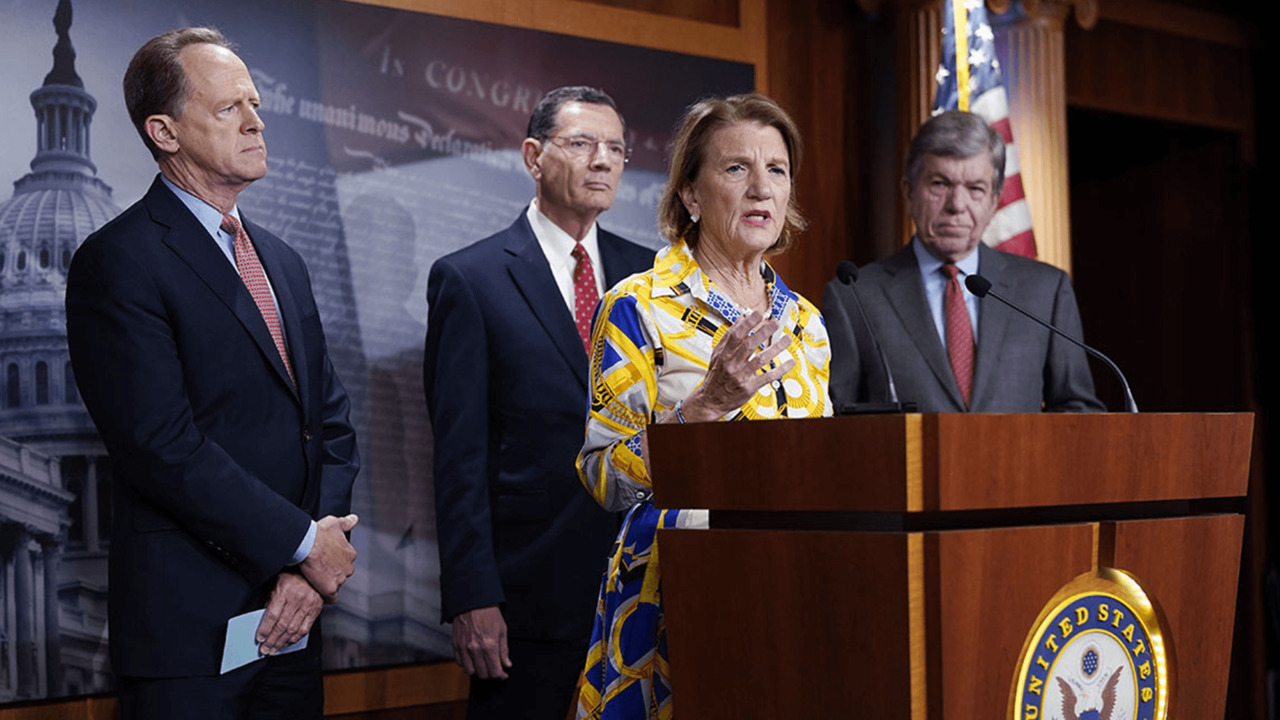








_(14761731976).jpg#/media/File:Medical_diagnosis_for_the_student_and_practitioner_(1922)_(14761731976).jpg)