Shared posts

09 Jul 20:14

Biden urges FCC to undo Pai’s legacy—but it can’t until he picks a third Democrat

by Jon Brodkin
James.galbraith

So fucking staff the FCC already

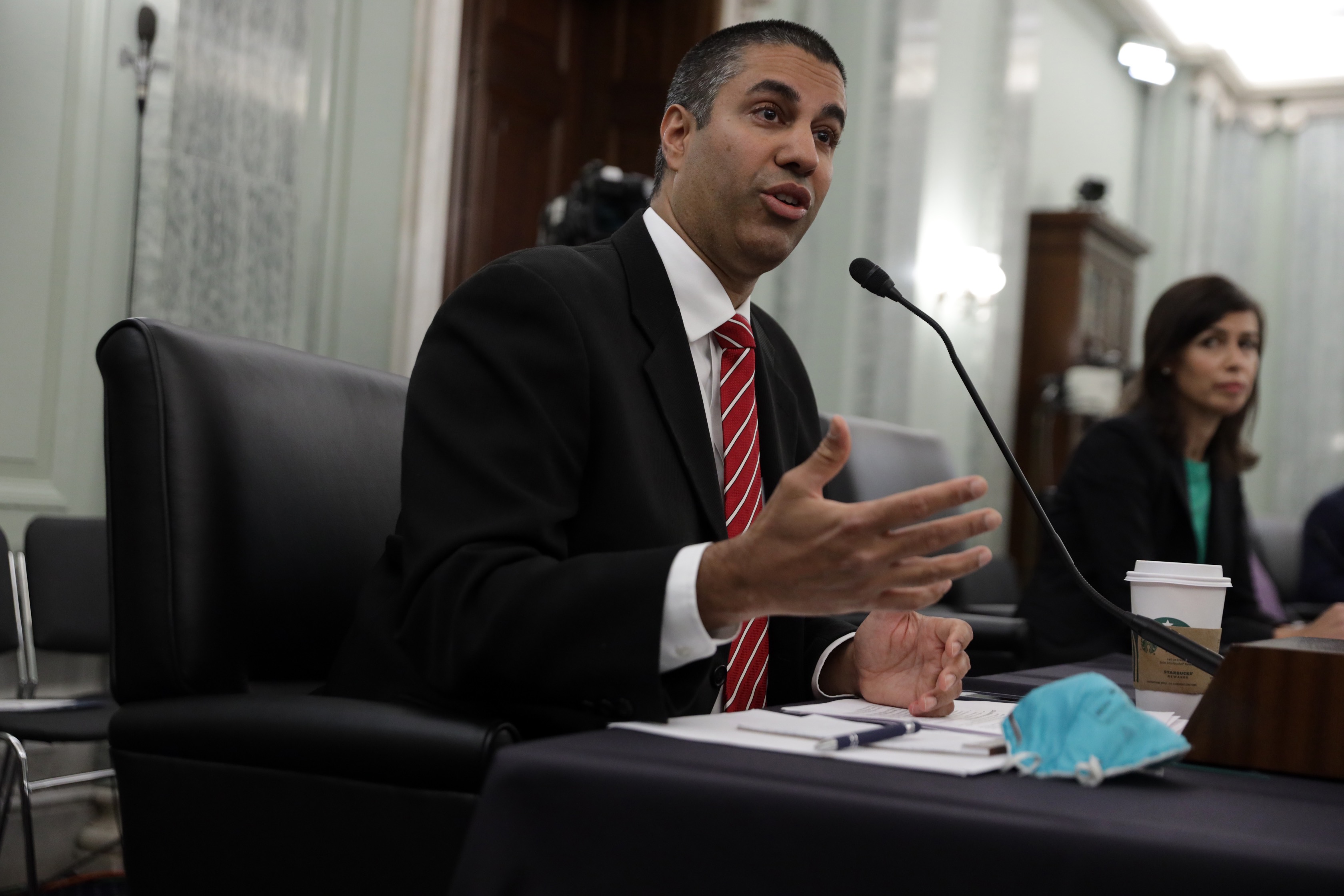
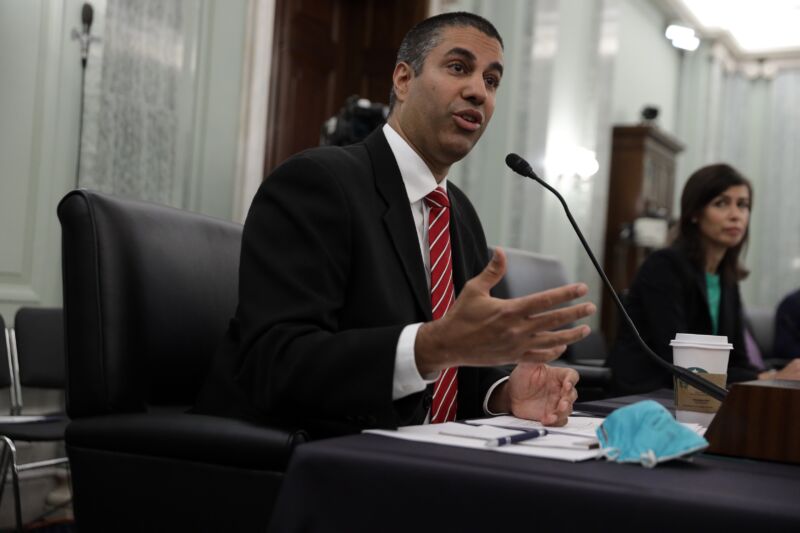
Then-FCC Chairman Ajit Pai and Commissioner Jessica Rosenworcel sit at a table while testifying at a Senate hearing.

Enlarge / Then-Chairman of the Federal Communications Commission Ajit Pai testifies at a Senate Commerce Committee hearing on June 24, 2020 in Washington, DC. Commissioner Jessica Rosenworcel, who is now the FCC's acting chairwoman, looks on. (credit: Getty Images | Alex Wong)

President Biden today urged the Federal Communications Commission to restore net neutrality rules and take steps to boost price transparency and competition in broadband—but the FCC can't do most or all of that yet because Biden still hasn't nominated a fifth commissioner to break the 2-2 deadlock between Democrats and Republicans.

Consumer advocacy groups have been urging Biden to nominate a third Democrat to the deadlocked FCC for months, but he still hasn't done so. What's causing the holdup isn't clear. The delay could wipe out the FCC's ability to do anything opposed by Republicans for all of 2021, because it can take the Senate months to approve FCC nominations, and the FCC process for complicated rulemakings is also lengthy.

Biden today released a fact sheet describing an executive order focused on boosting competition in numerous industries. The order targets four broadband problems that Biden's order "encourages" the FCC to solve: deals between ISPs and landlords that limit tenants' choices; misleading advertised prices; high termination fees; and net neutrality. (We published a separate article today on how other parts of the executive order affect the tech industry.)

Read 18 remaining paragraphs | Comments

09 Jul 17:23

Black Widow review: ScarJo’s sendoff is MCU’s best standalone film yet

by Sam Machkovech
James.galbraith

sweet...

  • Natasha (Scarlett Johansson) and Yelena (Florence Pugh) meet after a long separation in this week's Black Widow. [credit: Marvel Studios ]

This week's Black Widow may have put a new hit Marvel franchise in motion.

It is intimate, aggressive, funny, and brutal in every PG-13 sense possible. It's an Eastern European Marvel superhero tale that gives hearts to heartless characters without falling into the typical Marvel trap of ending with a neatly tied bow. And the entire cast nails this balancing act.

Perhaps best of all, star Scarlett Johansson (playing the titular character) finally gets to deliver on her Marvel hero status instead of serving as a crutch for a randomly selected male Avenger. She doesn't waste this opportunity, yet she still proves generous as a co-star, so much so that she helps launch Florence Pugh (Midsommar, Little Women) as the Marvel universe's most compelling new hero in years.

Read 15 remaining paragraphs | Comments

09 Jul 17:20

Texas Republicans start another push to make it harder for Black and brown people to vote

by Laura Clawson

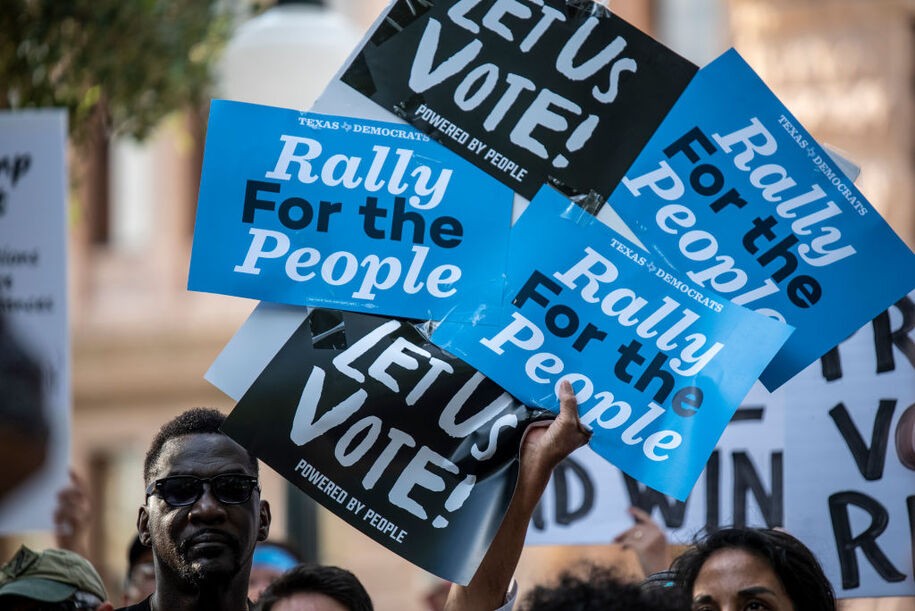
Texas Republicans are bringing their voter suppression bill back in a special session, weeks after Democrats blocked their first try by walking out

The good news is that Republicans dropped a key provision targeting Black voters: a ban on early voting before 1 PM on Sundays, which is when many Black churches run “Souls to the Polls” programs. The bad news is … just about everything else. Republicans want to ban drive-through voting, 24-hour voting, and late-night voting, all methods of voting used disproportionately by voters of color. Republicans want to slap criminal penalties on election officials who solicit mail-ballot applications, send out unsolicited applications or pre-fill applications. They are pushing for strict signature-matching requirements that could toss out valid votes.

And the Republicans want a voter intimidation provision, in the form of giving partisan poll watchers “free movement” within polling sites (with the exception that they can’t actually loom over someone in the act of filling out a ballot) and making it a criminal offense to obstruct their view or keep them too far away to observe “in a manner that would make observation not reasonably effective.” In other words, Republicans want to give Republican poll watchers the ability to threaten election officials with criminal charges if they don’t get exactly what they want, after, in 2020, poll workers reported 44 incidents of inappropriate behavior by poll watchers in Harris County alone.

Republicans claim that these measures are all necessary to crack down on election fraud. They claim this after the state’s Republican attorney general dedicated 22,000 hours of staff time to hunting for fraud and finding nothing criminal.

Texas Democrats are vowing to keep up their fight to block these voter suppression measures, up to and including walking out again to deny Republicans the quorum they need. In response, Republicans have floated the possibility of locking all legislators inside the state capitol. But when Texas Democrats blocked the last voter suppression effort, they made clear that they cannot do this all on their own. “Federal lawmakers need to get their shit together and pass the For The People Act,” one lawmaker tweeted at the time.

Civil rights leaders, meanwhile, are pressuring the White House to put more emphasis on voting rights, making their case in a long meeting with President Joe Biden. 

“We must have the president use his voice, use his influence, use his power—and use what he clearly understands about this moment,” said Sherrilyn Ifill, president of the NAACP Legal Defense and Educational Fund. “The president understands us to be in a moment of peril in terms of our democracy. And that means that we have to put all the options on the table, figure out what can work, keep talking, keep pressing and move forward.”

09 Jul 01:02

We need to have a conversation about wombats

by Matthew Inman
We need to have a conversation about wombats

This comic is about a lot of things, but mostly it is about butts.

View on my website

09 Jul 01:01

It’s a mad, mad multiverse as Marvel drops first trailer for What If…?

by Jennifer Ouellette
James.galbraith

Looks fantastic, and a fairly rare example of CGI animation working nicely

All our favorite MCU characters are back in animated form—plus a few more obscure players—in the first trailer for What If...?, a forthcoming series on Disney+ in which key events in the main timeline play out differently, "creating a multiverse of infinite possibilities." It's part of the MCU's Phase Four, in which this multiverse will clearly play a pivotal role.

(Some spoilers for prior MCU films below.)

This new series is based on the What If...? comic book anthology series that debuted in 1977, narrated by a character called Uatu the Watcher, an entity from a computer world who travels throughout the cosmos observing the rise of fall of various civilizations. Each story in the comics centered on an event in the mainstream Marvel Universe, but then there would be a point of divergence, and the rest of the story explored the consequences of that change to the timeline. Marvel Studios first explored the What If...? concept in S4 of Agents of S.H.I.E.L.D., when the team members found themselves trapped in a virtual creation called the Framework, each living out a drastically different life.

Read 6 remaining paragraphs | Comments

08 Jul 22:30

Tom Cotton’s slimy attack on a ‘critical race theory’ professor is full of holes

by Greg Sargent
James.galbraith

Because Cotton is nothing if not the epitome of slimy bad faith

Republican attacks on a military academy professor are absurd.
08 Jul 19:59

GOP’s Big Tech plan ignores consumers, targets “censorship” of Republicans instead

by Jon Brodkin
James.galbraith

Of course

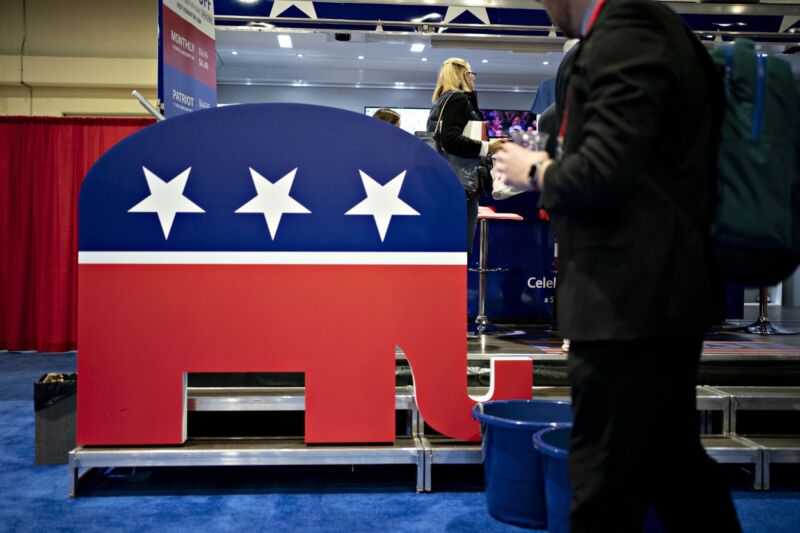
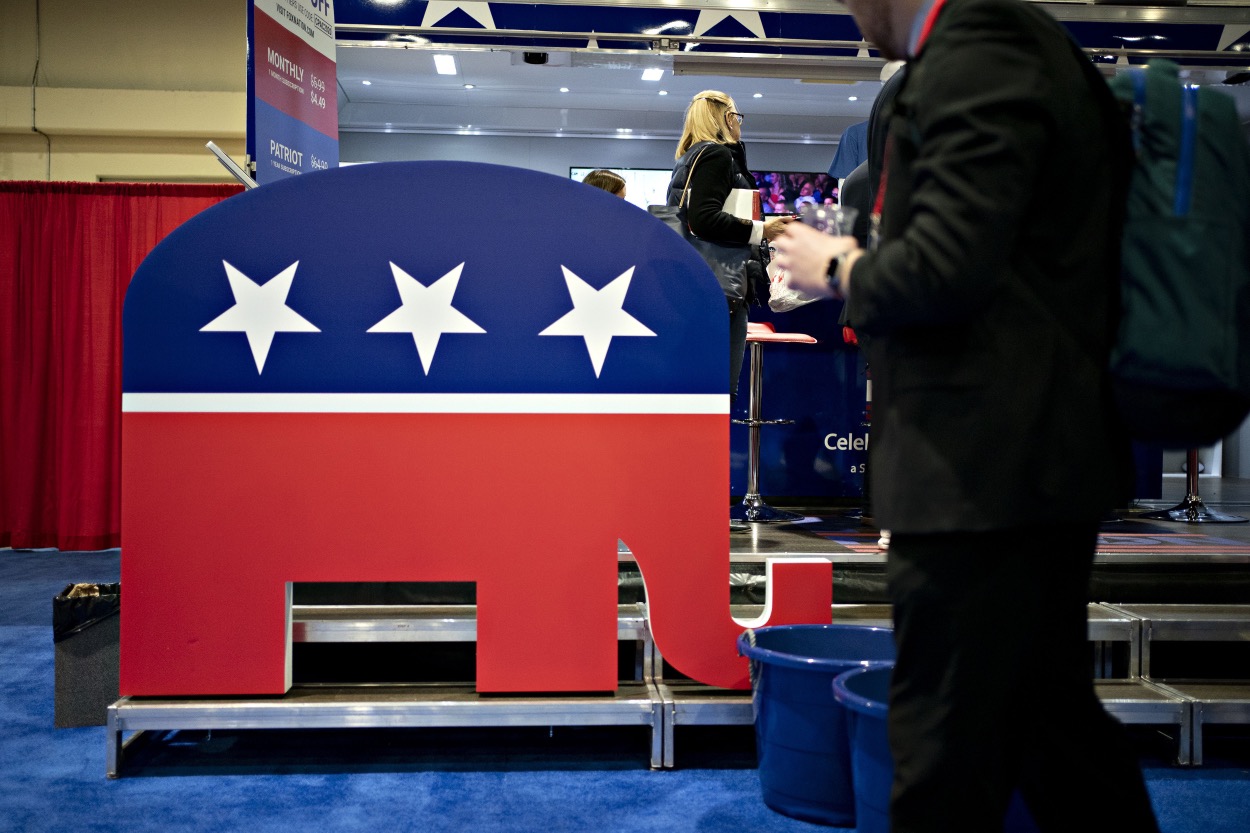
The Republican Party elephant symbol seen in a conference hall.

Enlarge / The Republican Party elephant symbol at the Conservative Political Action Conference in National Harbor, Maryland, on Friday, Feb. 28, 2020. (credit: Getty Images | Bloomberg)

Congressional Republicans released an antitrust plan for Big Tech yesterday with an announcement that made it clear their focus is not on boosting competition or reducing harms to online consumers but on alleged "censorship" of conservatives.

"Big Tech is out to get conservatives" is the first sentence in the "House Judiciary Republican Agenda for Taking on Big Tech." The "conservative response" to tech-industry problems "will speed up and strengthen antitrust enforcement, hold Big Tech accountable for its censorship, and increase transparency around Big Tech's decisions," the opening paragraph continues. The word "competition" never appears in the two-page plan. A separate plan previously released by House GOP Leader Kevin McCarthy (R-Calif.) does mention competition, but McCarthy's plan also focuses mostly on supposed bias against conservatives.

The House Judiciary Republicans' plan was released as former President Donald Trump sued Twitter, Facebook, and Google subsidiary YouTube for banning him, claiming that all three companies are guilty of "impermissible censorship" that violates "the First Amendment right to free speech." Trump's lawsuit has been widely mocked by legal experts and is almost certain to be defeated because the First Amendment does not require private companies to host speech and because Section 230 of the Communications Decency Act gives online platforms immunity from lawsuits over how they moderate user-submitted content.

Read 11 remaining paragraphs | Comments

08 Jul 19:17

HHS chief says his vaccine comments are being taken ‘wildly out of context’

by Quint Forgey
James.galbraith

The GOP operating in bad faith? If you're surprised, you're an idiot.


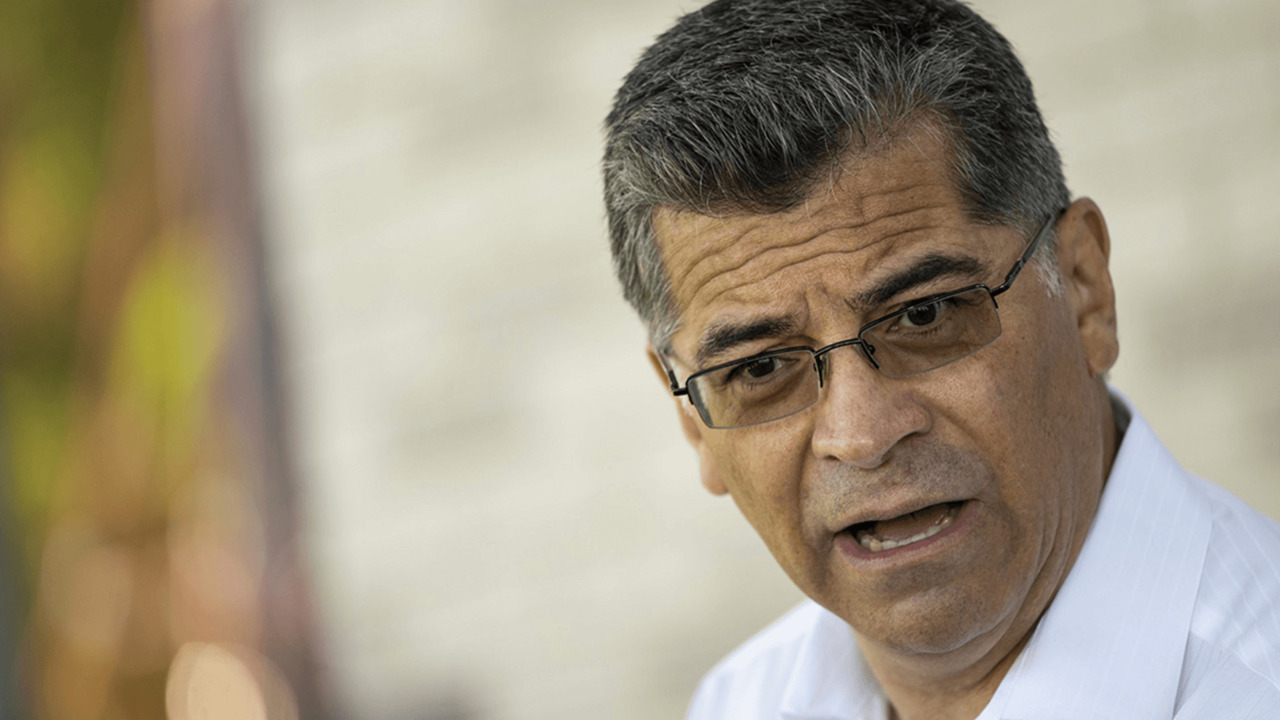
Health and Human Services Secretary Xavier Becerra on Thursday sought to clarify his argument that “it is absolutely the government’s business” to know which Americans have been vaccinated against the coronavirus, after facing backlash from Republicans in Congress.

In a tweet, the federal government’s top health official said his comments from earlier in the day had been “taken wildly out of context.”

“To be clear: government has no database tracking who is vaccinated,” he wrote. “We’re encouraging people to step up to protect themselves, others by getting vaccinated. It’s the best way to save lives and end this pandemic.”

Becerra’s initial remarks on Thursday morning came in response to Republican criticism that President Joe Biden has received this week for his administration’s latest push to persuade vaccine-hesitant Americans to get their shots.

In a speech at the White House on Tuesday, Biden gave an update on the state of the U.S. vaccination program and ongoing efforts to reach parts of the country where skepticism of the vaccine still runs high.

“Now, we need to go community by community, neighborhood by neighborhood, and oftentimes, door to door — literally knocking on doors — to get help to the remaining people protected from the virus,” Biden said.

White House press secretary Jen Psaki also detailed the components of the administration’s vaccine campaign at her briefing on Tuesday, including “targeted, community-by-community, door-to-door outreach to get remaining Americans vaccinated.”

Those references to door-knocking drew swift rebukes from congressional Republicans, who cast the comments as potential infringements on Americans’ civil liberties.

Rep. Andy Biggs (R-Ariz.) also tweeted: “It’s NONE of the [government’s] business knowing who has or hasn’t been vaccinated.”

“How about don’t knock on my door,” Rep. Dan Crenshaw (R-Texas) tweeted on Tuesday. “You’re not my parents. You’re the government. Make the vaccine available, and let people be free to choose. Why is that concept so hard for the left?”

But Becerra dismissed those complaints earlier on Thursday. “Perhaps we should point out that the federal government has spent trillions of dollars to try to keep Americans alive during this pandemic,” he told CNN in an interview.

“So it is absolutely the government’s business,” Becerra said. “It is taxpayers’ business, if we have to continue to spend money to try to keep people from contracting Covid and helping reopen the economy.”

The secretary also noted that “knocking on a door has never been against the law” and that Americans “don’t have to answer. But we hope you do.”

But Becerra’s comments only fueled the controversy, with Sen. Ron Johnson (R-Wis.) referring to the secretary as “Big Brother Becerra.”

“What happened to health privacy and personal freedom? Too much liberty has been lost in the state of fear government and media created over Covid,” Johnson tweeted. “People should be free to choose or refuse Covid vaccination without pressure or fear of reprisal.”

Rep. Dan Bishop (R-N.C.) misrepresented the administration’s strategy in another tweet, writing that “Becerra and Biden have you on a list and are going door-to-door.”

“That is absurd, even by Dem COVID power trip standards,” Bishop added.

Asked about the door-knocking at her briefing on Thursday, Psaki again clarified that the government does not have a database of which Americans have been vaccinated.

Psaki also said federal officials would not be going door to door and that the effort would be carried out by members of local communities.

“The thing that is a bit frustrating to us is that when people are critical of these tactics, it’s really a disservice to the country and to the doctors, faith leaders, community leaders and others who are working to get people vaccinated,” she said. “This is about saving lives and ending this pandemic.”

The back-and-forth over the administration’s new strategy comes as 160 million Americans are poised to be fully vaccinated by the end of this week, according to the latest figures from the president.

But the Delta variant of the coronavirus, which is more easily transmissible, accounted for more than half of Covid-19 cases in the U.S. last month and continues to pose a threat to unvaccinated people across the country.

Of those Americans who died last month from the coronavirus, more than 99 percent were not vaccinated, according to federal health officials.

08 Jul 19:14

Experts confident that Ivanka Trump will be the next domino to fall in Trump Organization case

by Walter Einenkel

Back in November 2020, after investigations into decades of Donald Trump’s tax returns revealed the former president didn’t seem to ever pay any taxes, reports came out in The New York Times detailing inquiries being made by the New York district attorney’s office concerning “consulting fees” Ivanka Trump pulled in over the years. A reported $747,622 of these fees were paid to Ivanka by way of a company she co-owned, and appeared within the $26 million in “deductions” claimed by Donald Trump over the years. Whether there were more “consulting fees” received by Ivanka or any of the other Trump outfit was not reported on, but considering what we know about the Trumps, speculating that the answer is a resounding and very provable yes seems like a safe bet.

Now that prosecutors have charged Trump Organization and chief financial officer Allen Weisselberg with contributing to (and benefiting from) a tax fraud scheme, Weisselberg’s financial compensation from the company he helped run seems to have been very clearly set up to hide taxable income. Prosecutors reportedly have two sets of books used by the Trump Organization over the years to delineate how they were scamming the government out of taxes. Since that time it has become clear that even more Trump tax information has been seized by investigators, and what those documents might detail remains to be seen. But one thing is for sure, to all who are paying attention: Ivanka Trump and other family members tied to the Trump Organization are clearly under investigation as well.

When the Times story came out in November 2020, Ivanka tweeted out that “This is harassment pure and simple.” Not unlike her father, Ivanka seems to use her Twitter account to whine about being persecuted while lying about things in general. One of the more problematic aspects of Ivanka’s $747,622 consulting fee that appeared on a 2017 disclosure form is thatIvanka was an executive officer of the Trump companies that made the payments.” This means she received consultant tax breaks for a company that she was also a full-time employee of. It’s an old-timey tax dodge.

On Monday, former federal prosecutor Cynthia Alksne gave MSNBC her opinions on what investigators were doing now that Weisselberg has been charged, saying, “Prosecutors went to an amazing amount of effort to show Weisselberg ‘we have everything we need,’ and they’re really not only pressuring him to flip, but the amount of detail in this indictment tells me that they’re trying to tell other people you have got to flip, because ‘we have everything; we have the double books. We know what you told your tax accountants was a lie. We know that we’re gonna be able to prove these cases.’” She went on to say that while we don’t know exactly who the unnamed individuals inside of the Weisselberg indictments are, they are likely the next people who will receive the New York prosecutors’ legal attentions. “We've heard a lot of this reporting about Ivanka Trump getting consulting fees, consulting fees for things she may or may not have done. That looks to be the next place. We'll just have to see.”

Donald Trump biographer Michael D’Antonio told CNN that the Trump Organization’s dirty dealings don’t take the highest level of investigation to uncover, calling much of the corruption “all so obvious.” D’Antonio explained that the most shocking aspect of the multimillion-dollar organization’s tax dodging is “how unsophisticated it is. This is just simple greed, the kind of things almost anyone could imagine, and the minute [prosecutors] went looking for it they found it.”

"The other person who I think is in peril is Ivanka Trump. One of the things that Allen Weisselberg is in trouble for is taking money as a contractor and then claiming self-employed status so that he can get some of the retirement benefits that the tax code allows for self-employed people. Well, we know that Ivanka Trump got quite significant sums paid to her as nonemployee compensation. That freed the Trump Organization from paying part of her taxes, and it put her in a status that I think the IRS would have lots of questions about. So, these folks don't know how to play the game straight. I think everything they do is crooked," D’Antonio said.

On Saturday, former personal lawyer Michael Cohen had this insight into Donald Trump.

Absolutely nothing and keep praying that it’s not him! #IvankaWho https://t.co/qrjEZ87ssr

— Michael Cohen (@MichaelCohen212) July 3, 2021

You can watch Trump’s biographer talking about the Trump family’s legal problems on July 4, and below that you can watch former federal prosecutor Cynthia Alksne talking about what might be happening next for the Trump gang.

08 Jul 18:52

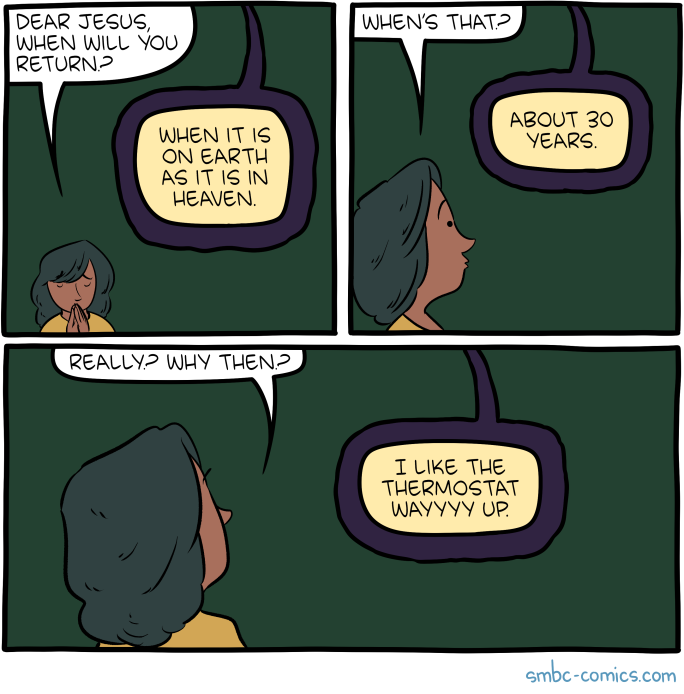
Saturday Morning Breakfast Cereal - Second Coming

by tech@thehiveworks.com


Click here to go see the bonus panel!

Hovertext:
'Also I hate beach communities.'


Today's News:
08 Jul 18:48

Microsoft’s emergency patch fails to fix critical “PrintNightmare” vulnerability

by Dan Goodin
Skull and crossbones in binary code

Enlarge (credit: Getty Images)

An emergency patch Microsoft issued on Tuesday fails to fully fix a critical security vulnerability in all supported versions of Windows that allows attackers to take control of infected systems and run code of their choice, researchers said.

The threat, colloquially known as PrintNightmare, stems from bugs in the Windows print spooler, which provides printing functionality inside local networks. Proof-of-concept exploit code was publicly released and then pulled back, but not before others had copied it. Researchers track the vulnerability as CVE-2021-34527.

A big deal

Attackers can exploit it remotely when print capabilities are exposed to the Internet. Attackers can also use it to escalate system privileges once they’ve used a different vulnerability to gain a toe-hold inside of a vulnerable network. In either case, the adversaries can then gain control of the domain controller, which as the server that authenticates local users, is one of the most security-sensitive assets on any Windows network.

Read 12 remaining paragraphs | Comments

08 Jul 18:25

HIV Vaccine Trial Starts at Oxford

by msmash
James.galbraith

Here's to hoping

The University of Oxford this week started vaccinations of a novel HIV vaccine candidate as part of a Phase I clinical trial in the UK. From a report: The goal of the trial, known as HIV-CORE 0052, is to evaluate the safety, tolerability, and immunogenicity of the HIVconsvX vaccine -- a mosaic vaccine targeting a broad range of HIV-1 variants, making it potentially applicable for HIV strains in any geographical region. Thirteen healthy, HIV-negative adults, aged 18-65 and who are considered not to be at high risk of infection, will initially receive one dose of the vaccine followed by a further booster dose at four weeks. The trial is part of the European Aids Vaccine Initiative (EAVI2020), an internationally collaborative research project funded by the European Commission under Horizon 2020 health programme for research and innovation. Professor Tomas Hanke, Professor of Vaccine Immunology at the Jenner Institute, University of Oxford, and lead researcher on the trial, said: 'An effective HIV vaccine has been elusive for 40 years. This trial is the first in a series of evaluations of this novel vaccine strategy in both HIV-negative individuals for prevention and in people living with HIV for cure.' While most HIV vaccine candidates work by inducing antibodies generated by B-cells, HIVconsvX induces the immune system's potent, pathogen obliterating T cells, targeting them to highly conserved and therefore vulnerable regions of HIV -- an "Achilles heel" common to most HIV variants.

Read more of this story at Slashdot.

08 Jul 18:23

Right-wing anti-vaccine hysteria is increasing. We’ll all pay the price.

by Paul Waldman
James.galbraith

Variants are a real problem, though as long as they don't affect vaccinated people, the more lethal the better.

Fox News goes on a holy war against vaccination, and every Republican officeholder wonders if they have to do the same.
08 Jul 18:22

Tennessee Republicans deem Ruby Bridges' story critical race theory in effort to ban it in schools

by Lauren Floyd
James.galbraith

The entire GOP agenda: forgetting the inconvenient parts of the past to coddle a shrinking white identity base.

Ruby Bridges—as in author Robert Coles’ The Story of Ruby Bridges, a classic about a six-year-old girl’s work to integrate a New Orleans school in 1960—has been trending on Twitter for the most obnoxious reason. A select constituency of Tennessee parents have deemed the children’s book too closely aligned with critical race theory in part of their overall objection to the “Wit & Wisdom” English language arts curriculum from the Great Minds nonprofit publisher. 

Robin Steenman, head of the Williamson County chapter of the Republican group Moms for Liberty, took issue with author and activist Ruby Bridges' book Ruby Bridges Goes to School among other titles, The Tennessean reported. She told a county commission that approves the school district's budget: “I realize that this isn't usually in your lane, but I just wanted you to be aware." She voiced her disapproval of educators teaching words like "injustice," "unequal," "inequality," "protest," "marching," and "segregation," and Steenman highlighted a portion of Bridges’ book that described a "large crowd of angry white people who didn't want Black children in a white school." The white mother said it too harshly divided Black and white people, without offering any "redemption" at the end. So basically Bridges told the truth, and Steenman is angry about it. 

Mind you, critical race theory is a framework for interpreting law that maintains racism's reach has had particularly harmful effects on the legal system and laws that govern our society. The “Wit & Wisdom” content in question doesn’t address the theory. But in the aftermath of George Floyd’s murder and the reckoning in policing protesters demanded throughout the nation, Republicans have attempted to demonize all aspects of the protest movement, which includes better education on the effects of slavery and racism in public schools. 

Watch at the 13-minute mark for Fox host Pete Hegseth's misguided take on critical race theory:

Tennessee Gov. Bill Lee signed a law in May allowing Tennessee Education Commissioner Penny Schwinn to hold funds from schools that teach specific aspects of "racism, sexism, bias, and other social issues," the education reporting site Chalkbeat Tennessee reported. About 40 protesters opposing the “Wit & Wisdom” curriculum stopped Schwinn on a summer learning bus tour stopping in Sumner County. “It’s failing in Louisiana; we don’t need it here in Tennessee,” Joanna Daniels, a Sumner County mom and board member with the Sumner County Republican Assembly, told the commissioner.

Daniels failed to cite any evidence of what she interpreted as a curriculum failure in Louisiana schools, but an Advocate article from 2019 describes parents and teachers in the Livingston Parish east of Baton Rouge taking issue with what they deemed "inappropriate messages" in the curriculum. "Many parents took to social media to express concerns about a book called Separate is Never Equal, which explores a Mexican family's school desegregation case," The Advocate writer Emma Kennedy wrote. "The parents say young children don't notice racial differences at young ages, so the material is inappropriate for them.”

Those taking issue with “Wit & Wisdom” also zeroed in on Separate is Never Equal, the children’s book by author Duncan Tonatiuh. It tells the family story of civil rights activist Sylvia Mendez, the daughter of Mexican and Puerto Rican immigrants. Steenman said the text, which draws attention to bigotry Mexican immigrants faced, specifically a belief that they were "not smart" and "dirty," forces second-graders who spend weeks on the book to hold certain beliefs. Social media users obviously took issue with Steenman’s claim that the aspects of American history she doesn’t approve of have a unique brainwashing effect.

This is the end game. That’s why these anti-CRT laws are memory laws. https://t.co/zneZCOXJja

— Ida Bae Wells (@nhannahjones) July 8, 2021

"Ruby Bridges and Sylvia Mendez were, at heart, fighting for something very simple: the right not to be treated differently (and worse) because of the color of their skin," author James Surowiecki tweeted. "It's preposterous for anyone to suggest that teaching their stories is un-American.”

Surowiecki said in another tweet: “If you're against teaching kids Ruby Bridges' book - the story of a little girl braving mobs of angry protesters in order to integrate her local elementary school - you're not opposed to ‘critical race theory.’ You're opposed to America's ideals.”

A story about school integration is now labeled CRT and off-limits. A lot of people pretend they can't see what most of this is really about. https://t.co/NW4htKVCOQ pic.twitter.com/wNc5v8cVjE

— Dr. Mansa Keita (@rasmansa) July 8, 2021

Michael Li, redistricting and voting counsel for the Brennan Center for Justice's Democracy Program, tweeted: “A children’s book about Ruby Bridges integrating a New Orleans school is labeled ‘critical race theory’ because its portrayal of an angry white crowd treats white people too harshly and doesn’t show white people being redeemed in the end. Yes, really.”

Y'all, even Ruby Bridges is Critical Race Theory now @ijbailey https://t.co/hzzVW7Bco5

— @ijbailey (@ijbailey) July 7, 2021

At least 35 districts in Tennessee had to apply for waivers to use "Wit & Wisdom" in K-2 grades because it didn’t include required phonics aspects, and the districts secured the waivers with the agreement they would add a phonics requirement, The Tennessean reported. The curriculum is intended to motivate students to read at higher levels, the newspaper reported. "Our teachers are reporting to us that our students are reading like they've never read before," Williamson County Schools Assistant Superintendent Dave Allen told the school board during a May work session. "I've received a flood of emails recently that said, 'Don't do anything with the curriculum. My kid's loving it.'"

RELATED: 'I wanted it better for my kids than it was for us': Mother of activist Ruby Bridges dies at 86

RELATED: How Texas textbooks gloss over discrimination and why it's not surprising

RELATED: Tulsa wasn't the first or last time Black people were massacred and erased from American history

RELATED: Black History Month brings out the worst in these teachers and schools work overtime to protect them

08 Jul 16:39

Trump’s latest ridiculous lawsuit shows how small he has become

by Paul Waldman
James.galbraith

Yeah it is ludicrously bad

No one expected him to discover dignity for the first time in his life. But this is just pathetic.
08 Jul 16:37

What Did New York’s Mayoral Primary Tell Us About Ranked-Choice Voting?

by A FiveThirtyEight Chat
James.galbraith

Umm that the NY Board of Elections shouldn't be in charge of anything?

Welcome to FiveThirtyEight’s politics chat. The transcript below has been lightly edited.


sarah (Sarah Frostenson, politics editor): Things got a bit harried in the New York City mayoral primary election last Tuesday afternoon after the Board of Elections accidentally counted 135,000 test ballots and released results including those ballots. 

The Board removed the results from its website that evening citing a “discrepancy,” but the erroneous results had shown the race between front-runner Eric Adams and his closest contenders, Kathryn Garcia and Maya Wiley, significantly tightening. This, in turn, sparked accusations around the role ranked-choice voting played in this error, as candidates such as Adams are not fans of the system.

But while ranked-choice voting isn’t the culprit for last week’s mishap — it was Board mismanagement — it did serve to expose some of the debates around ranked-choice voting, including whether it’s a fair system of voting and whether voters even want it.

Let’s start there. Why is ranked-choice voting such a hot topic of debate?

Watch: https://abcnews.go.com/fivethirtyeight/video/best-2020-post-mortem-tells-us-electorate-78700694

alex (Alex Samuels, politics reporter): Well, for one, it’s still a relatively new system in the U.S., and there are conflicting theories on whether it is beneficial (i.e., it helps ensure the winner has the approval of the majority of voters) or detrimental (i.e., it is too complicated or expensive).

But right now, at a time when there’s disillusionment with our election system, the Board of Elections error provides fodder for former President Donald Trump and his supporters that U.S. elections are inherently fraudulent or illegitimate.

geoffrey.skelley (Geoffrey Skelley, elections analyst): It’s a change to how we conduct elections, and in a country where most elections are won by the candidate with the most votes without any question about secondary preferences, this is a big change! 

New York City is also far and away the largest jurisdiction to employ ranked-choice voting, so the system is very much under the microscope because it’s no longer a curiosity used by a few cities and Maine. 

sarah: Do we have any sense of whether New Yorkers supported making their elections ranked-choice voting?

geoffrey.skelley: Well, New Yorkers overwhelmingly backed the referendum to implement ranked-choice voting in 2019 — 74 percent voted in favor. Granted, 2019 was a low-turnout election in New York considering no major offices were on the ballot. Still, that was a pretty overwhelming vote in support of ranked-choice voting. 

alex: Before the Board of Elections error, a NY1/Ipsos poll found that 80 percent of likely Democratic voters said they were comfortable using ranked-choice voting. The New York Times also interviewed dozens of early voters in New York and found that many people were OK with ranked-choice voting.

And a day before the Board of Elections fiasco, a poll from Common Cause New York and Rank The Vote NYC found more than 75 percent of voters want to use a ranked system again.

sarah: OK, so it seems fair to say that polls show that New Yorkers overwhelmingly support the idea of ranked-choice voting. 

Why then has ranked-choice voting emerged as a flashpoint in the race with Adams speaking out against it?

Eric Adams standing at a podium with his campaign sign on the front of it.

related: Eric Adams’s Lead In The New York Mayoral Primary Was Just Too Big To Overcome Read more. »

nrakich (Nathaniel Rakich, elections analyst): I think it’s as simple as this: Adams would very likely have won under a first-past-the-post system (31 percent of New York Democrats ranked him first, while only 21 percent ranked Wiley first and only 20 percent ranked Garcia first), while Garcia came very close to winning under ranked-choice voting. 

geoffrey.skelley: Yeah, if Adams’s chances were improved by ranked-choice voting, then I think he’d be singing a different tune.

alex: Adams’s campaign has spoken out against ranked-choice voting and even backed a lawsuit seeking to halt its implementation since he has argued that the system disenfranchises both non-English speakers and voters of color, who might not have the time or resources to properly research every candidate or how the new system works. (According to our previous analysis of 2019 U.S. Census data, 62 percent of New York City citizens of voting age are nonwhite.)

But it’s not entirely clear that ranked-choice voting affects voters of color negatively, at least on the ballot. For example, in California, the voting-reform advocacy group FairVote found that in districts with ranked-choice voting, plurality-white districts that were not white-majority elected a nonwhite representative 60 percent of the time. Before ranked-choice voting, it was only 35 percent of the time.

sarah: On the question of turnout, though, this 2015 study of San Francisco’s mayoral races found that ranked-choice voting did, in fact, decrease turnout among Black and white voters, younger voters and voters who lacked a high school education, while the same wasn’t true of more experienced or educated voters, perhaps backing up some of Adams’s claims.

How mixed is the research on whether ranked-choice voting negatively affects voters of color?

alex: It’s definitely still an open question to whether ranked-choice voting can help or hurt candidates of color. While some experts say the former, others argue the system could lead to a lone candidate of color getting edged out by opponents who conspire against him or her. As far as voters of color go, though, I’m less clear on that.

There is definitely an age gap in who seems to understand how to use ranked-choice voting. A 2019 research paper from Jason McDaniel, a professor at San Francisco State University, argues that ranked-choice voting leads to lower voter turnout overall. He cites three researchers who looked into the implementation of ranked-choice voting in Minneapolis, and they found that while most voters understood ranked-choice voting “perfectly” or “fairly well,” older voters were less likely than younger voters to understand the system. Higher education levels were also associated with a better understanding of ranked-choice voting.

geoffrey.skelley: Yeah, as Alex noted, some research has found a pretty pronounced age effect, but other research has pushed back on the idea that nonwhite voters are more likely to struggle with ranked-choice voting than voting for only one candidate.

sarah: What about other research on ranked-choice voting? That is, does it help reduce partisanship in elections, as proponents claim? Or make elections less acrimonious?

nrakich: It doesn’t really live up to the promise of making campaigns less acrimonious. The Democratic primary for New York City mayor was a nasty affair, and there was still plenty of negative campaigning in the 2018 Maine gubernatorial primary, as I wrote at the time

geoffrey.skelley: Although as we saw with Garcia and Andrew Yang, ranked-choice voting can lead to candidate alliances that could be an indication of less negativity in a way. 

nrakich: It’s true that ranked-choice voting may encourage minor candidates to play nice with one another in hopes of picking up the others’ supporters, but it ultimately doesn’t remove the incentive to tear down the front-runner. At the end of the day, a lower-polling candidate still needs to overtake the front-runner to win. 

sarah: What about this idea that ranked-choice voting boosts some of the non-major-party vote share? That is, by having multiple choices, voters are encouraged to vote for candidates based on their sincere beliefs versus just voting for the candidate they think will win.

Does ranked-choice voting live up to that promise?

nrakich: There is some evidence that ranked-choice voting helps third-party candidates, which could be an indication that it makes voters more comfortable voting for their true first choices instead of feeling like they have to choose between Democrats and Republicans for their vote to matter. MIT political scientist Jesse Clark has studied Maine’s elections under ranked-choice voting and found that non-major-party candidates gained 5-6 percentage points because of ranked-choice voting. 

geoffrey.skelley: Yeah, to Nathaniel’s point, in the 2018 election for Maine’s 2nd Congressional District, about 8 percent of the vote initially went to third-party candidates, but after reallocation in the ranked-choice voting process, Democrat Jared Golden ultimately narrowly defeated Republican Rep. Bruce Poliquin. 

In other words, ranked-choice voting does seem to boost third-party vote share, as that 8 percent figure would be high for a more typical winner-take-all election.

alex: FairVote did find, however, that ranked-choice voting doesn’t necessarily increase the chances of a third- or independent-party candidate winning. Rather, the benefits, they argue, is that it allows third-party and minor-candidate supporters to rank their preferred candidate first without feeling like their votes are wasted — as third-party votes might be in a more traditional election. 

Watch: https://abcnews.go.com/fivethirtyeight/video/politics-podcast-summer-mailbag-edition-fivethirtyeight-78499147

nrakich: Yeah, the most obvious point in ranked-choice voting’s favor is that it can produce a winner who is truly the preference of a majority of voters in situations when one side’s vote would otherwise be split by a strong third-party challenger.

The Golden-Poliquin race is a great example of that. Even though Poliquin won a plurality of first-place votes, it was pretty clear that, once you factored in the preferences of third-party voters, a majority of voters in Maine’s 2nd District that year liked Golden better than Poliquin.

That said, this kind of results inversion doesn’t happen very often. FairVote has tracked 398 single-winner ranked-choice voting races in the U.S. since 2004, and 97 percent of them (383) were won by the candidate who got a plurality of first-place votes. 

alex: Nathaniel, I’ve seen some opponents of the system claim that ranked-choice voting doesn’t necessarily lead to a candidate who represents the majority. For example, some voters might end up with their ballots essentially eliminated and no say in the final outcome if they ranked three out of five candidates, for example, and all three were eliminated. 

In a 2016 essay, writer Simon Waxman argues some of the same points. “[T]here are reasons for skepticism when it comes to [ranked-choice voting] — and not just RCV itself, but the larger notion that what is broken in American politics, and therefore what will fix it, is procedure.”

geoffrey.skelley: Another concern is that ranked-choice voting risks tiring voters out — what’s known as “ballot fatigue” — if they have to rank, say, five candidates for a large number of offices, that could lead them to leave some spots blank or to not even finish voting for all offices or other ballot questions.

nrakich: Yeah, no voting system is perfect. Imagine, too, a scenario where there are three candidates: a liberal, a moderate and a conservative. The moderate might be the second choice of both liberal and conservative voters, but if the moderate doesn’t also get more first-place votes than one of the other two, the moderate will be the first one eliminated under ranked-choice voting! That said, ranked-choice voting does seem less imperfect than a straight-up plurality system like most of the U.S. uses — at least when it comes to determining the rightful winner. 

There are other ways in which ranked-choice voting may be worse, though. For instance, the MIT researcher Clark also found that ranked-choice voting in Maine “produced significantly lower levels of voter confidence, voter satisfaction, and ease of use. It also increased the perception that the voting process was slanted against the respondent’s party.” As we mentioned earlier, that kind of voter confusion could lead to depressed turnout. Plus, further undermining public confidence in our elections is the last thing we need right now.

On the other hand, ranked-choice voting is a new innovation in most of the jurisdictions now using it, including Maine. So I’d guess that those problems could be mitigated once voters start getting used to the system. Better voter education and ballot design could also help.

In other words, I think it’s too early in ranked-choice voting’s lifespan to reach a definitive conclusion about it.

alex: Right, as Nathaniel said, ranking candidates is definitely more complicated than selecting just one. But I don’t think there’s sufficient evidence to say it’s a barrier to voting. 

In Maine, turnout for both the 2018 and 2020 elections — the first elections to use ranked-choice voting — was incredibly strong. And in New York, too, primary turnout was incredibly high; plus, as I mentioned earlier, New Yorkers have said they found ranked-choice voting to be pretty easy and straightforward.

nrakich: Personally, I think the evidence suggests that other factors are more important to turnout than the use or non-use of ranked-choice voting. Turnout was super high all across the country in 2018 and 2020, not just in Maine. (It remains to be seen whether that will carry into the 2021-22 cycle.)

Artwork of a wrecking ball blasting through a wall that looks like the American flag.

related: Why The Two-Party System Is Effing Up U.S. Democracy Read more. »

sarah: It does seem as if ranked-choice voting could especially help in primary elections such as New York’s, where there are multiple candidates on the ballot and voters might not know that much about all the candidates. 

Imagine if the Democratic primary for president in 2020 had been a ranked-choice election … or the Republican primary for president in 2016. 

geoffrey.skelley: Well, a few states did use ranked-choice voting in the 2020 Democratic primary. Voters in Alaska, Hawaii, Kansas and Wyoming cast ranked-choice ballots in their party-run primaries (their states didn’t have state-run primaries available to use), but all of those states finished voting after the nomination race was essentially over in late March, which makes it hard to say just how those rules might have shaped the contest.

nrakich: Yeah, I’m not sure if there’s been any primary-specific research, Sarah, but it stands to reason that ranked-choice voting will be more powerful in races with more than two strong candidates, or multiple candidates who come from the same side of the political spectrum. 

For instance, a far-left candidate, a center-left candidate, and a right candidate. Or a Republican primary with four serious contenders.

But it may also not make a huge difference there either. The Virginia GOP just used ranked-choice voting to pick its governor, lieutenant governor and attorney general candidates for this fall, and the first-round leader wound up being the final winner in all three races. 

sarah: Yeah, it’s interesting considering there are some downsides to ranked-choice voting — or at least mixed evidence on its effectiveness in solving some of our underlying election problems — that so many municipalities and states are trying ranked-choice voting out. Why?

nrakich: Voters seem interested in trying it out! (Maybe because they perceive that the current system isn’t producing great results, given how polarized and dysfunctional our politics is.) Maine, New York City, and Alaska, three of the largest American jurisdictions to adopt ranked-choice voting so far, have all done so via ballot measure in the last few years. (Although Massachusetts also rejected a ballot measure to adopt ranked-choice voting just last year.)

alex: And in Australia, for example, which uses ranked-choice voting prolifically, people seem to really like it. The 2018 election marked the 100th anniversary of ranked-choice voting in its national elections. 

geoffrey.skelley: Motivations for why cities or states have adopted ranked-choice voting may differ, but fundamentally it does seem like an issue if a city or state often elects someone with less than 50 percent of the vote. Such a result makes it harder to say a candidate has the true backing of the electorate. In Maine, for instance, the state had often elected governors with less than 50 percent, which was one reason for the drive to implement ranked-choice voting there. 

nrakich: (Ironically, though, the ranked-choice voting system there doesn’t apply to gubernatorial general elections — just primaries and federal general elections — due to a ruling by the Maine Supreme Court.)

sarah: Logically that makes sense to me, Geoffrey, but it’s interesting how that runs counter to the research Nathaniel cited from Clark finding that ranked-choice voting in Maine “produced significantly lower levels of voter confidence, voter satisfaction, and ease of use.”

It raises the question of whether any voting reform can really solve some of the underlying ills in America’s electoral system.

geoffrey.skelley: Well, the challenge is voters wouldn’t necessarily know they felt that way about ranked-choice voting without first trying it out. And again, as Nathaniel has pointed out, this is a very new thing. 

Let’s see where people are in a decade. Not all voters necessarily liked the secret ballot in the late 19th century (sometimes with very good reason), but we all got pretty used to it.

nrakich: Deep cut.

alex: Sharing Waxman’s piece again where he essentially argues that ranked-choice voting is not the answer to fixing electoral woes.

nrakich: I’m not sure anyone is claiming that ranked-choice voting can fix democracy all on its own. Issues of polarization and divisiveness run deeper than that, right into the hearts of voters themselves. The real question is whether it’s better than a first-past-the-post system.

sarah: Is it, Nathaniel?

nrakich: It does seem like ranked-choice voting has momentum. As I mentioned, several new jurisdictions have adopted it in recent years.

New York City is an important test case, though, because so many political and media elites live there. So a bad experience with ranked-choice voting there could halt that momentum. 

sarah: Is there anything we’ve learned so far in the New York City experiment that helps our understanding of ranked-choice voting moving forward? Do we think more states or cities will move to adopt it?

alex: Eh, I’m less inclined to say yes after the Board of Elections snafu.

nrakich: Yeah, Alex, but it’s important to note that the Board screw-up and the delay in getting results weren’t due to ranked-choice voting per se. And as you’ve mentioned, New Yorkers seem to be satisfied with the actual voting experience.

Maybe it will come down to whether the media covers this post-election turbulence as a side effect of ranked-choice voting or not. Hopefully they won’t, because that’s not fair.

alex: Right, Nathaniel, but I think the error might have repercussions beyond New York — even though the error was Board-specific. Generally speaking, the state of public confidence in elections nationwide right now is at a record low, per Gallup. So when a highly publicized event, like the New York City mayor’s race, takes place and there are serious errors in counting ballots, that can add more anxiety in the public mind about whether elections (or ranked-choice voting) can be trusted or not.

Watch: https://abcnews.go.com/fivethirtyeight/video/pandemic-changed-sex-work-industry-fivethirtyeight-78621101

Watch: https://abcnews.go.com/fivethirtyeight/video/conservative-majority-shaped-supreme-court-term-fivethirtyeight-78655673

08 Jul 16:16

GOP senator claims he’s not a climate change denier in order to save himself before election

by Aysha Qamar
James.galbraith

This shithead had better not get reelected.

Republicans are infamous for changing their words, but some are so ignorant they don’t realize or remember that they’ve been recorded. After claiming again that he is not a climate change denier, a video of Sen. Ron Johnson from just weeks earlier proves otherwise. In the video reported by CNN, the Wisconsin senator can be heard calling climate change “bullshit” during a GOP luncheon in early June.

"I don't know about you guys, but I think climate change is -- as Lord Monckton said -- bullsh*t," Johnson said. "By the way, it is.” Instead of explicitly saying the curse, Johson mouthed it. The comment was made during the Republican Women of Greater Wisconsin Luncheon, mere weeks before a heatwave claimed the lives of dozens in the U.S. Scientists and experts have tied the historic heatwave to issues of climate change.  

According to CNN, as a member of the Senate Commerce, Science, and Transportation Committee, Johnson made multiple comments against the call to action for climate change, including calling efforts “a self-inflicted wound” and questioning why the U.S. was focused on the issue at all. Additionally, he said “there are more and more scientists” writing books “just laying this to waste.”

"What are we doing here? Well, we're killing ourselves," Johnson said.

But it doesn’t end there—he’s also accused both media outlets and Democrats of using the idea of climate change as a tool to crease “a state of fear.”

“It was all about creating the state of fear as they tried to do with global warming. Oh, I’m sorry. It’s climate change now. Yeah. Whatever works,” he said. “Whatever works that they can, you can set up a state of fear so they can step in and alleviate their fear.”

While the video comes as the most recent expression of his climate change denier ideology, he has repeatedly downplayed the climate crisis. Not only has he refused to accept that humans have contributed to climate change, but in March he told The New York Times that the climate crisis can’t be real because of an assumption that Greenland “was actually green at one point in time”.  

“I could be wrong there, but that’s always been my assumption that, at some point in time, those early explorers saw green,” he told the Times.

Johnson also made a similar statement to Madison TV station WKOW in 2010, meaning this ideology goes way back. 

Of course, like other GOP officials, despite there being evidence of his words Johnson continued to claim he is not a climate change denier and defended himself in a statement to CNN. "My statements are consistent. I am not a climate change denier, but I also am not a climate change alarmist. Climate is not static. It has always changed and always will change," Johnson said.  

He continued on to defend himself on Twitter by doing what GOP officials do best: targeting other members of Congress. "I do not share Rep. Ocasio-Cortez view that the 'world is going to end in 12 years if we don't address climate change.' Or POTUS saying the 'greatest threat' to U.S. security is climate change. I consider those to be extreme positions — to say the least,” he said on Twitter.

The reality is Johnson can claim he’s not a climate change denier all he wants, but the facts show otherwise.

He clearly has had a long history of making comments on climate change and the ties of it to human activities, only to deny them later on. "I absolutely do not believe in the science of man-caused climate change," Johnson said in 2016 when arguing whether or not climate change was real.

At this point, it seems like his retractions are only being made to save himself. After all, he’s the only Wisconsin Republican senator facing reelection next year. Being in a state that backed Joe Biden in the 2020 presidential race, Johnson has to change a lot of minds in order to make himself more appealing.

08 Jul 16:08

Republican governor signs state budget with sneaky last-minute anti-LGBTQ provision

by Marissa Higgins
James.galbraith

fuck the GOP

As Daily Kos continues to cover, the LGBTQ+ community, and particularly trans folks, have been the target of legislative attacks via Republicans in recent months. State lawmakers have pushed a number of transphobic, exclusionary bills that seek to silence and discriminate against openly trans people, and in some cases, particularly trans girls. For example, the bills aiming to bar trans girls from participating in girls' sports. There is also a small but loud movement aiming to keep trans folks from updating their birth certificates. And in the health care world, some Republicans are eager to try and bar trans youth from accessing safe, age-appropriate, gender-affirming medical care.

Most recently, Mike DeWine, the Republican governor of Ohio, signed a bill into law that could allow physicians, insurers, hospitals, and other medical professionals to deny (or refuse to pay for) medical services if they object on the basis of their moral, religious, or ethical beliefs. This medical refusal language was nestled into a 2,400-page 2022-2023 $74 billion budget bill as a last-minute provision, as reported by LGBTQ+ outlet them. Though DeWine did veto some line items in the bill, he left that one included.

The language in the state budget bill allows medical professionals to “decline to perform, participate in, or pay for any health care service which violates the practitioner’s, institution’s, or payer’s conscience.” This refusal clause is “limited to conscience-based objections to a particular health care service.” Medical professionals would still be on the hook for providing “all appropriate” services other than the one in conflict with their beliefs “until another medical practitioner or facility is available.”

What does this mean in theory? For example, a physician could refuse to deny gender-affirming treatment, like hormones, to a trans person, but could not refuse to treat them for cancer or a sprained wrist. But, as we all know, gender-affirming care is just as important as any other form of health care—just like abortion, for example—is as valid and legitimate as seeking treatment for a broken foot.

DeWine, mind you, also compared the situation to providers refusing to perform abortions, as reported by Cleveland.com. Of course, his argument goes in the opposite direction, as he suggested, “Let’s say the doctor is against abortion. If the doctor is not doing abortions, if there’s other things that maybe a doctor has a conscience problem with, it’s worked out. Somebody else does those things.” Given how incredibly difficult it is to access an abortion in this nation, the idea that it’s “worked out” so easily would be laughable if this person wasn’t in a position of power. 

In the big picture, we also know that many marginalized folks, including LGBTQ+ people, experience abuse and discrimination in medical settings as it is. Trans people, for example, report feeling exhausted at having to educate medical professionals on the basics of identity or feeling like they’re a lesson for the hospital floor while they’re just trying to receive health care unrelated to gender identity. As it is, studies show LGBTQ+ people already delay or skip some recommended health services and screenings to avoid feeling abused or discriminated against in these settings.

Even so, in an interview with the local outlet WEWS-TV, DeWine insisted this language will not result in discrimination. “People are not going to be discriminated against in regards to medical care,” DeWine stated. “This is not a problem, has not been a problem, in the state of Ohio and I do not expect it to be a problem.”

Again, just like with DeWine’s own abortion comparison, it’s not easy to simply find another provider. There are a number of potential barriers, ranging from insurance coverage; out-of-pocket cost; literal access if you live with a disability, don’t have a car, or live in an area with poor public transit; and finding yourself in the position where every provider you can find tells you the same thing: They object. There’s also the question of sheer time that goes into research and potential hours wasted going to appointments only to be turned down. If you’re juggling jobs, child care, or live with chronic health issues, wasted appointments (or even just reading up on potential providers) can quickly add up. 

Unsurprisingly, LGBTQ+ groups and allies are horrified by this language and are calling it what it is: discriminatory. In a statement, Human Rights Campaign (HRC) President Alphonso David said DeWine “enshrined LGBTQ discrimination into law” and that medical practitioners can “deny care or coverage for basic, medically-necessary, and potentially life-saving care to LGBTQ people simply because of who they are.”

08 Jul 16:05

John Kelly reportedly 'shocked' after Trump refused to stop praising Nazi leader Adolf Hitler

by Mark Sumner
James.galbraith

And yet Kelly stayed on

Back in 2017, the inventor of Godwin’s Law made it clear that comparing someone to a Nazi, when they are literally praising the Nazis, was completely fair. That came during the sequence of events at Charlottesville, where violent white supremacists marched to Nazi slogans and one deliberately killed peaceful protester Heather Heyer by driving over her with a car. Trump responded by a statement that there were “very fine people” on both sides of the events, then he doubled-down on that statement with a claim that he was only supporting the Nazis in their praise for a Confederate traitor.

 In 2018, Trump explicitly declared “I’m a nationalist,” in a speech ostensibly supporting Ted Cruz. “You know, they have a word,” said Trump. “It sort of became old-fashioned. It’s called a nationalist. And I say really, we’re not supposed to use that word. You know what I am? I am a nationalist. Use that word.”

So when The Guardian published an account on Wednesday morning that Trump defended Hitler while on a tour of military cemeteries … is anyone really surprised?

“Hitler,” said Trump, “did a lot of good things.”

The pro-Hitler conversation is from a book titled Frankly, We Did Win This Election, by Wall Street Journal reported Michael Bender which is slated for publication next week. 

On a 2018 trip to Europe in which Trump was supposed to go to the Aisne-Marne American Cemetery to visit the graves of 2,300 Americans who were killed in World War I. Instead, Trump skipped out on the visit, claiming it was too wet, while actually telling his advisers that he had no interest in visiting soldiers who were “losers” and “suckers.” 

During that visit, it was already known that then chief of staff John Kelly tried to explain the circumstances of both World Wars, to explain how the actions taken after World War I contributed to the rise of the Nazis, and how that led to World War II. Trump responded by saying that he “didn’t understand why the United States would intervene on the side of the Allies.”

But the new book goes further. It explains how Trump “stunned” Kelly by his direct support of Hitler. Kelly reputedly told Trump that he was wrong to support the murderous dictator, “but Trump was undeterred.” Instead, Trump kept pointing to how Hitler supposedly pulled Germany out of its economic slump in the 1930s.

Kelly grew explicit in his response, telling Trump, “you cannot ever say anything supportive of Adolf Hitler. You just can’t.”

Even then, Trump continued to praise Hitler. Kelly was reportedly disgusted, as were other unnamed senior officials who described Trump’s “understanding of slavery, Jim Crow, or the Black experience in general post-civil war as vague to nonexistent.”

Trump has, according to Kelly, a “stunning disregard for history.” But then, why should anyone expect anything else? Trump has been rewarded for ignoring history. He lost no support among Republicans for attacking veterans, prisoners of war, or Gold Star families. He lost no support for his embrace of the term nationalist, or for his often-expressed love for modern-day dictators like Vladimir Putin, Kim Jong Un, or Rodrigo Duterte. Trump actively gained support in the party for white supremacist positions that insist that white people are the real victims of racism, and that Blacks and immigrants are not real Americans. The Republican Party is marching ahead with those principles in every state, making rolling back voting rights and villainizing immigrants the cornerstone of their 2022 effort. 

Don’t expect to see any criticism from Republicans over Trump’s statement. Instead, expect them to first claim that it’s all made up—then to embrace it.

07 Jul 13:40

Catlike Grace

James.galbraith

hehe the human jungle gyms can be quite entertaining ;)

hehehehe

07 Jul 02:15

Delta variant slams Missouri as ICUs fill and ventilators run low

by Beth Mole
James.galbraith

If only there were an easy way to avoid that. Idiots.

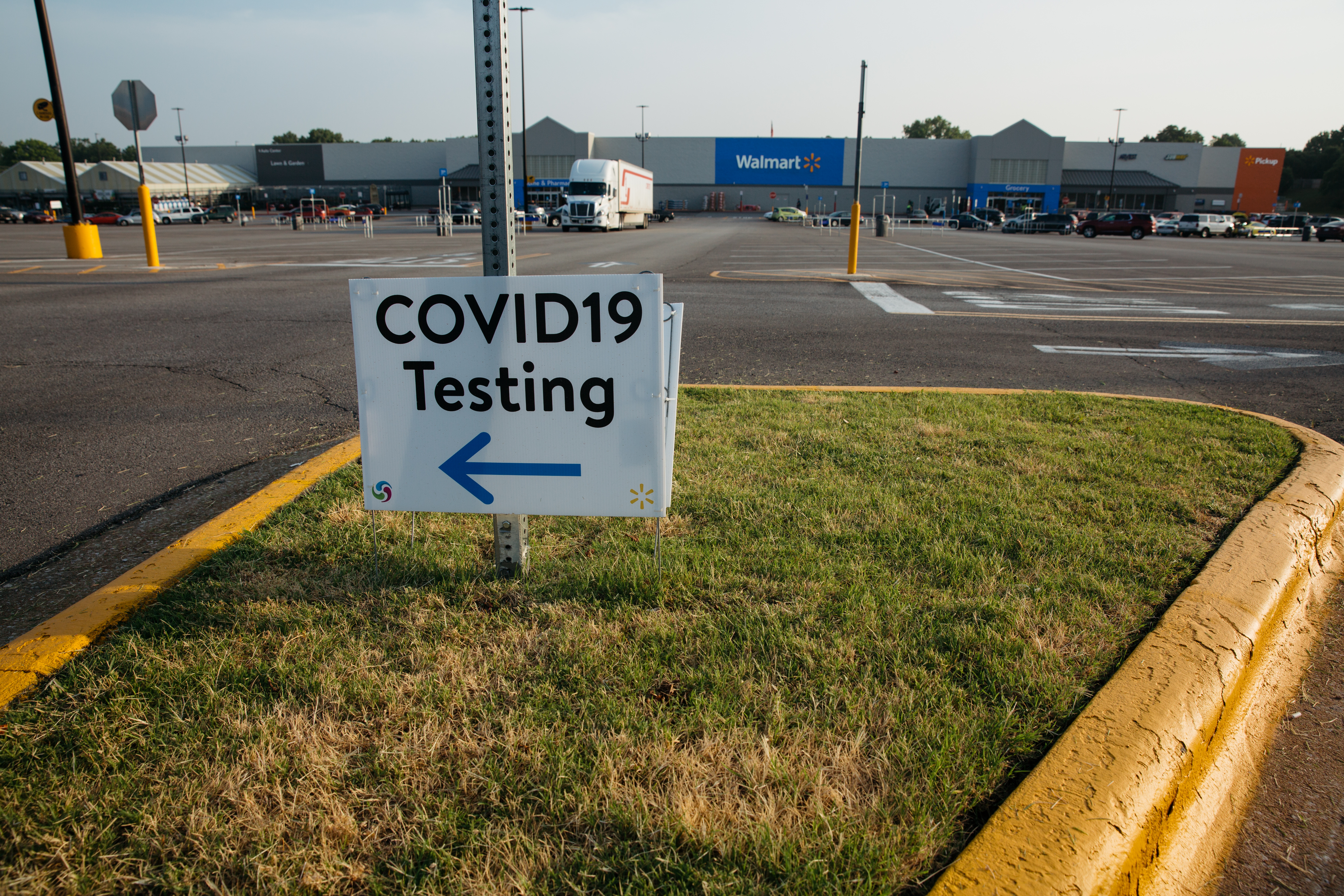
A plastic sign is attached to a pole in a parking lot.

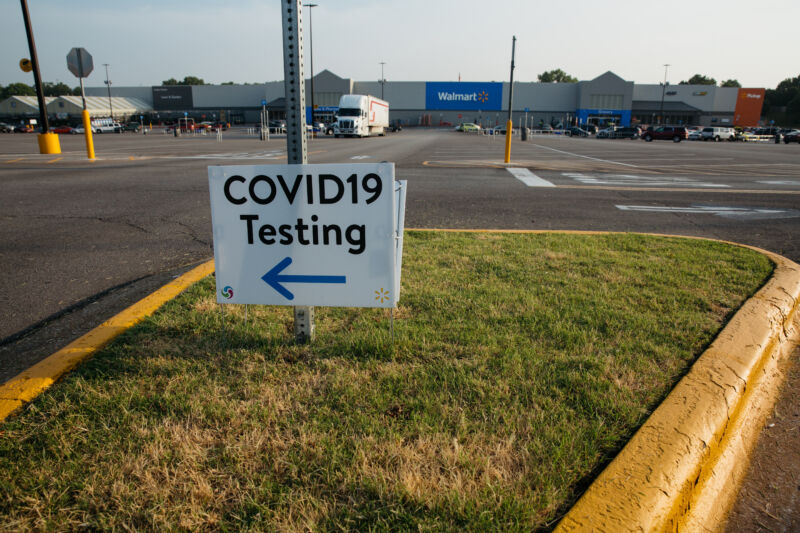
Enlarge / The COVID-19 testing site at the Walmart Supercenter in Joplin, Missouri, on July 2, 2020. (credit: Getty | The Washington Post)

As the delta variant spreads rapidly in Missouri and cases of COVID-19 surge, some hospitals in the state are already strained. And projections suggest things will only get worse in the coming weeks.

Cases have increased 45 percent statewide in the past two weeks, with hospitalizations rising 24 percent, according to data tracking by The New York Times. Numerous counties across the state have high per-capita infection rates, some as high as one in seven residents infected. But many of the counties with the highest daily new cases are clustered in Missouri's southwest corner.

Taney County, home to the popular tourist town of Branson in southwest Missouri, has seen daily cases increase 50 percent in the last two weeks, with hospitalizations increasing 62 percent. Taney has an average of 52 daily new cases per 100,000 residents, the third-highest daily case rate in the state. North of Taney in the southwestern corner is Dallas County, which has the second-highest average of daily new cases, at 63 per 100,000. Cases there have increased 74 percent in the last two weeks while hospitalizations increased 44 percent.

Read 10 remaining paragraphs | Comments

06 Jul 22:02

New Jersey man caught on video in racist rant attempts Olympic-worthy backpedaling

by Lauren Floyd
James.galbraith

PA is really having some wicked racism issues. Rust belt real america for sure.

A New Jersey man who called his Black neighbor a "monkey" and used the n-word on video Friday also provided his address with the challenge to “come see me.” As of Monday evening, some 150 protesters answered the challenge in Mount Laurel at the door of the racist, who police identified as Edward Cagney Mathews, The Philadelphia Inquirer initially reported. “We want Edward!” they yelled in Black Lives Matter shirts. 

The police apparently wanted Mathews too. They made a path to arrest him then hauled the handcuffed man away in a police cruiser. He faces charges of fourth-degree bias intimidation and trespassing, police said in a statement posted on Facebook Monday.

“The charges were placed on a summons by a municipal court judge to be heard at future court appearance,” authorities said in the post. ”The Mount Laurel Police Department does not tolerate hate or bias intimidation in any form.

“This type of behavior is totally unacceptable. We can assure our residents that incidents like this are thoroughly investigated and that those who commit such offenses will be held accountable for their actions.”

Police also said they are “actively investigating other incidents involving this suspect.” “If anyone has information on these incidents, you are kindly asked to contact Mount Laurel Police Department at 856-234-8300 or the confidential tip line 856-234-1414 Ext. 1599,” police said in the Facebook post.

Mathews reportedly apologized Monday morning and again in a phone interview with The Inquirer. “I certainly wasn’t expecting an encounter like that and certainly wasn’t expecting to disrespect anybody,” Mathews told the newspaper. “Let me be clear: That is no excuse for what I said, but I lost my temper.” He claimed he uses the same language with white people and that the slurs weren’t indicative of any racist feeling. “Anybody that knows me know that I just talk like this,” Mathews said.

Warning: This video contains profanity, racial slurs, and derogatory language that may be triggering for some viewers.

#TrumpAmerica #racism #hate #BLM #rant #NewJersey #police #America #4thofJuly #mondaythoughts #UnitedStates #nword Mount Laurel Township New Jersey Unidentified man racist rant. Black man try to defend a married couple. pic.twitter.com/M2hu0sAo0T

— UrbanTakeOne (@UrbanTake_001) July 5, 2021

The viral video showed Mathew taunting a Black man at the door of a neighboring home. “Learn your law. It’s not Africa,” Mathews said. The neighbor responded: “I was born in America, sir.” 

Mount Laurel Police spokesman Kyle Gardner told The Philadelphia Inquirer there have been complaints about Mathews in the past but there wasn't enough evidence to justify charges. “We understand the frustration,” Gardner said. “The perception was that we did nothing about it. We’re doing the best we can.”

Another resident of the area told CBS Philly at least 10 other people have been harassed because of their skin color, and another neighbor said Mathews "used a BB gun to shoot their windows out. "He smeared dog feces all over their car," the resident said.

“I totally understand why the protestors were here today,” Burlington County prosecutor Scott Coffina told CBS Philly. “They had seen videos that weren’t available to us on Friday night that were even worse.” Mount Laurel Police Chief Steve Riedener told the news station Mathews was released after a judge decided there should be a summons that evening.

06 Jul 19:32

How political polarization broke America’s vaccine campaign

by German Lopez
James.galbraith

The party of personal responsibility indeed.

President Donald Trump in the Rose Garden at the White House on July 14, 2020.
President Donald Trump in the Rose Garden at the White House on July 14, 2020. | Drew Angerer/Getty Images

The US’s partisan divides have left much of the country vulnerable to Covid-19 — leading to unnecessary deaths.

The Covid-19 epidemic in the United States risks becoming a tale of “two Americas,” as Anthony Fauci warned in June: a nation where regions with higher vaccination rates are able to beat back the coronavirus, while those with lower vaccination rates continue to see cases and deaths.

At face value, it’s a division between those who are vaccinated and those who are unvaccinated. But, increasingly, it’s also a division between Democrats and Republicans — as vaccination has ended up on one of the biggest dividing lines in the US, political polarization.

Polarization, of course, is not a new force in American life. Growing polarization doesn’t just mean a Congress more starkly dividing between left and right; it means people’s political views now closely hew with views on seemingly unrelated issues, like which movies should win Oscars. But throughout the pandemic, polarization has manifested as stark differences in how Democrats and Republicans each approach Covid-19, from hand-washing to social distancing to masking.

That polarization has now opened political rifts in vaccination rates, with people’s decision to get a shot or not today a better predictor of states’ electoral outcomes than their votes in prior elections. It’s led the US’s vaccination campaign to hit a wall, missing President Joe Biden’s July 4 goal. Meanwhile, the more infectious delta variant is spreading, raising the risk of infections, hospitalizations, and deaths in unvaccinated — and often heavily Republican — areas.

To put it bluntly: Polarization is killing people.

“That’s a perfectly accurate interpretation,” Seth Masket, a political scientist at the University of Denver, told me. “We’re at the point where people are choosing riskier personal behavior due to following the lead of people in their party.”

It didn’t have to be this way. Perceptions about Covid-19 weren’t too divided by political party very early on in the pandemic. And while America’s peers around the world certainly saw political debates and conflicts over Covid-19, they by and large managed to avoid the level of polarization that the US has seen, with other nations working across political lines to take the virus seriously and suppress it.

But the US began to walk a different path once then-President Donald Trump downplayed the coronavirus — deliberately, as he later revealed — and Republican leaders and the rank and file followed his lead. Whether you took the pandemic seriously very quickly became another way to affiliate with red or blue teams, leading some to do things more dangerous for their own well-being just because of their political party affiliation.

“Partisanship is now the strongest and most consistent divider in health behaviors,” Shana Gadarian, a political scientist at Syracuse University, told me.

Overcoming this will require confronting an all-encompassing trend in American political life. And while experts have some ideas about the best way to reach Republicans, it may be too late; with a year and a half of Trump and other Republicans downplaying the risk of the virus, there’s a chance that views around Covid-19 — and the vaccine as a result — are just too baked in now.

It’s one of the major reasons experts worry that Southern states, which are heavily Republican and have among the lowest vaccination rates in the US, will soon see outbreaks of Covid-19. Indeed, several Southern states, from Arkansas to Missouri to Texas, have reported some of the highest increases in cases in recent weeks. Covid-19 deaths in the US are still hovering around 200 a day — more than the number of murders or car crash deaths in recent years.

Still, it’s worth trying to, at the very least, heed the lessons of Covid-19 — if not for the current pandemic, then for future public health crises. Politics will always play a role in the response to any public health crisis, but it doesn’t have to be this bad — certainly not to the point where one side is denying the dangers of a virus killing millions around the globe.

Americans have already seen how badly this can play out, as hundreds of thousands have died and much of the country remains vulnerable to resurgences of Covid-19. The country can take steps to prevent that from happening again.

Covid-19 has been extremely polarized in the US

There is nothing inherent to Republicanism or conservatism that made polarization around Covid-19 inevitable. Around the world, countries led by those on the right, like Australia’s Scott Morrison or Germany’s Angela Merkel, have taken the virus seriously and embraced stringent precautions. From Canada to South Korea, countries that are at times roiled by serious political conflict by and large avoided it around Covid-19 as all sides of the aisle confronted the real threat it presented.

“It didn’t have to be this way,” Gadarian said. “There’s really nothing about the nature of being a right-wing party that would require undercutting the threat of Covid from the very beginning.”

It’s not hard to imagine a timeline in which Trump took the coronavirus very seriously in a way that aligned with his rhetoric and policy goals: tightly locking the country’s borders, for example, and rallying Americans to embrace their patriotic duty to mask up and social distance to protect the nation from a virus originating in China.

Obviously, that’s not what happened.

At first, in February, there actually wasn’t a big split between Democrats and Republicans over whether the virus was a “real threat.” It wasn’t until Trump and others in his party spoke out more about the virus that Republicans became more likely to say the virus isn’t a danger. Elite cues fostered different American reactions to Covid-19.

Trump actively downplayed the virus, claiming in February 2020 that the virus would quickly disappear “like a miracle” from America and comparing it to the flu. Republican politicians and media followed suit, with blue-red fissures soon forming between states that were sticking to tighter precautions and which weren’t.

Public attitudes quickly took form. In March 2020, 33 percent of Republicans and 59 percent of Democrats said Covid-19 was a major threat to the health of the US, according to the Pew Research Center — a hint of early polarization. By July 2020, the gap had widened: 46 percent of Republicans saw Covid-19 as a threat to US health, versus 85 percent of Democrats.

That translated to reported behaviors. In a Gallup survey conducted in June and July of 2020, 94 percent of Democrats said they “always” or “very often” wore a mask outside their home, while just 46 percent of Republicans said the same.

“We saw it very early on,” Gadarian said. “The gaps in health behavior and all sorts of other attitudes are pretty steady over time. It got locked in and affected how people take in new information.”

Fast-forward to today, and this polarization remains in place with the vaccines. According to Civiqs’s polling, 95 percent of Democrats are already vaccinated or want to get vaccinated, while just 50 percent of Republicans report the same. The share of Republicans who reject the vaccine hasn’t significantly budged all year, remaining in the range of 41 to 46 percent.

Measuring the correlation between a state’s vaccination rate and 2020 election results, Masket found a coefficient of 0.85, with 1 meaning a one-to-one correlation and 0 representing no correlation. As Masket noted, “We almost never see this high a correlation between variables in the social sciences.” In fact, he added, “vaccination rates are a better predictor of the 2020 election than the 2000 election is. That is, if you want to know how a state voted in 2020, you can get more information from knowing its current vaccination rate than from knowing how it voted 20 years ago.”

Yet Republicans can take public health crises seriously, as many have with the opioid epidemic and did with the 2014-2016 Ebola outbreak. Some research also suggests that Republican governors who took on Covid-19 earnestly, such as Maryland’s Larry Hogan and Ohio’s Mike DeWine, managed to sway more of their constituents to embrace precautions.

Given that evidence, some experts speculated that, in an alternate reality, a President Mitt Romney or President Jeb Bush would have taken the Covid-19 threat much more seriously — and perhaps avoided polarizing the issue much, if at all. “Almost any other president would have recognized the severity of it, largely being in sync with the FDA and CDC,” Masket said.

Covid-19 has made polarization much more lethal

The consequences of polarization around Covid-19 are now clear. As David Leonhardt explained in the New York Times, there’s now a close correlation between vaccination rates and coronavirus cases. Over one week in June, counties where between 0 and 30 percent of people were vaccinated had nearly triple the number of new cases as counties with 60-plus percent vaccination rates.

These low-vaccine areas are often Republican bastions. Based on polling from the Kaiser Family Foundation, one of the major drivers of vaccine hesitancy among Republicans is the view that the threat of Covid-19 has been exaggerated. That early polarization driven by Trump’s downplaying of the virus, dating back to February 2020, explains why Republicans are much less likely to get vaccinated today.

The best hope of reversing this now, as a study by Stanford’s Polarization and Social Change Lab indicated earlier this year, seems, logically, for Republicans to forcefully and consistently argue that the coronavirus is a real threat and that the vaccine is safe and effective at preventing infection. While there have been some attempts by Republicans at this, with Trump briefly speaking favorably of the vaccines at the 2021 Conservative Political Action Conference, these messages have been few and far between. Some Republicans, such as Sens. Rand Paul (KY) and Ron Johnson (WI), have also continued to cast doubt on the vaccines’ safety and effectiveness.

It’s a bit baffling, because Trump has a great opportunity to take credit for the vaccines. While many experts doubted that a vaccine could come out in the first year of a pandemic caused by a novel virus, Trump promised to get a vaccine done in 2020, poured money into the task, and ultimately was right. Just about any president likely would have put resources toward a vaccine, but part of being a politician is taking credit for good things that happen while you’re in office — even if your unique ability to lead isn’t really responsible for them.

“A lot of people, including me, were dismissive or skeptical [the vaccine] could happen so quickly, but it did,” Masket said. “This is something Trump could really be crowing about.”

In other words: Trump and the Republican Party have a chance to take credit for saving the US from the coronavirus — and, by doing so, help actually save the US from the coronavirus by getting more people vaccinated. So far, they have completely whiffed the opportunity.

Then again, it now may be too late. After a year and a half, Americans’ beliefs about the coronavirus have solidified. So if Republican leaders were to suddenly change their tune, they could risk a revolt from the rank and file more than they would change people’s minds. “If you’ve had many months to think about this, you’re going to start to settle into a more permanent view,” Robb Willer, director of Stanford’s Polarization and Social Change Lab, told me.

To that end, the best thing would have been — and would be for future public health crises — for Republican leaders never to politicize the pandemic at all.

Experts told me both sides could have worked together, as some did in other nations, to develop consistent messaging on the virus. Instead of press conferences led by political actors like Trump and former Vice President Mike Pence, they could have been primarily presented by less political actors like Fauci and other leaders from federal public health agencies. Trump and Pence could have ensured the message remained depolarized by not publicly clashing with these officials.

Democrats, too, would have needed to avoid falling into the trap of opposing things solely because the Trump administration was proposing them. This reverse polarization played out during the school reopening debate, as some Democrats reflexively criticized Trump’s push to reopen schools, and it now looks like it likely was safe to reopen with some precautions.

It’s a world where everyone is a lot more responsible about a serious public health crisis. And the fact that it’s hard to imagine, especially in the middle of a contentious election year, speaks to just how difficult it will be to overcome a political trend that’s now killing people.

06 Jul 19:32

Saturday Morning Breakfast Cereal - Deadline

by tech@thehiveworks.com


Click here to go see the bonus panel!

Hovertext:
Once we're done with that, we'll switch to how we shall in the future fail.


Today's News:
04 Jul 20:26

Saturday Morning Breakfast Cereal - Constraint

by tech@thehiveworks.com


Click here to go see the bonus panel!

Hovertext:
I have literally never met a grad student without a 'quit and work on a hippie farm' fantasy.


Today's News:
04 Jul 00:55

Texas state museum cancels event on the real history of the Alamo following right-wing whining

by Aldous J Pennyfarthing
James.galbraith

Texas has not moved beyond its pro-slavery roots, so yeah, it's gonna freak out when people bring it up.

Looks like the Lone Star State is trying to whitewash its history … again.

We all know the state of Texas was founded when Ted Cruz, trying to avoid the pernicious impacts of global climate change on his living room, attempted to escape to Cancun through an Einstein-Rosen bridge. He was instead sent back in time to November 1963, where he laid out his dad’s clothes for the big Kennedy assassination before being transported to the Battle of the Alamo in 1836.

There, Cruz manned the ramparts, began his standard stump speech (complete with awkwardly rendered The Princess Bride references), and Mexico’s Santa Anna, deciding that keeping Texas just wasn’t worth dealing with this asshole, turned his troops around, deciding instead to build an impenetrable wall and moat that he’d eventually force the U.S. to pay for.

That’s my version, anyway. And since we all get to come up with our own comforting mythologies now, I’m sticking with it. Anyone who gainsays my account is a disgusting, un-American, cancel-culture cuck of a traitor.

Yeah, I know that all sounds pretty silly, but then again, so does this ...

The Week:

The Bob Bullock Texas State History Museum in Austin abruptly canceled an event scheduled for Thursday evening featuring the authors of a new book on the Alamo and its role in the mythology of Texas. Chris Tomlinson, a Houston Chronicle columnist and one of the authors of the book, Forget the Alamo: The Rise and Fall of an American Myth, said a museum employee told him they had to cancel the event "following a social media campaign by right-wingers and an order from the board," made up of Gov. Greg Abbott (R), Lt. Gov. Dan Patrick (R), state House Speaker Dade Phelan (R), two other GOP state lawmakers, and a citizen board member.

Wait, a throng of anti-”cancel culture” warriors got an event they didn’t like … canceled?

That doesn’t sound right.

Forget the Alamo, co-authored by Bryan Burrough and Jason Stanford, explores the Battle of the Alamo as more a fight to ensure the preservation of slavery, enshrined in the original Texas Constitution, than a heroic battle by 180 star-crossed rebels defending Texas from Mexican aggression. The Alamo has been central to the "whole Texas creation myth" and it's time to look beyond the "Heroic Anglo narrative," Burrough told NPR recently.

Oh, I get it. The book asserts that white people were fighting to preserve slavery, not their “freedoms” (unless “freedom” is really supposed to mean the freedom to kidnap innocent people and work them to death).

Among the glowing reviews of the book its publisher has promoted is this one, from The Washington Post’s Karen Tumulty: “As a native San Antonian, I grew up knowing only Hollywood's version of how things went down at what became the ‘shrine of Texas liberty.’ In this lively book, Bryan Burrough, Chris Tomlinson and Jason Stanford dig deep into Texas history to separate fact from legend—not only about the Alamo, but of the forces that produced Texas itself. It turns out reality is richer and more compelling than mythology.”

Yeah, reality usually is more compelling than comforting fables. And it teaches us more about the world and our place in it, too. But conservatives love storybook fables, particularly when those myths help sustain racial inequality. Note the conservative freakout over critical race theory, which merely lends needed context to the clear reality of systemic racism.

In an interview with the San Antonio Express-News, co-author Tomlinson said of the cancelation, “I think we're being censored, which is a shame because the mission of the Texas history museum is to promote examining our past. We've done more than a dozen events, and this is the first time we've been shut down like this.”

BANNED at the BULLOCK MUSEUM! Tonight @bryanborrough and I were supposed to talk about the craft of writing with Becka Oliver from @WritersLeague. Just hours before the even, @BullockMuseum canceled without contacting Bryan or I with an explanation. #ForgettheAlamo A thread ...

— ChrisTomlinson (@cltomlinson) July 1, 2021

Of course, it’s almost certainly not a coincidence that Gov. Abbott and the GOP-dominated Texas legislature recently created something called “The 1836 Project,” an obvious riff on Nikole Hannah-Jones’ The 1619 Project, which seeks to regard the history of our nation through the wide lens of slavery.

Conservatives hate The 1619 Project, of course, because it doesn’t go along with Donald Trump’s version of history, which whitewashes our past in a way that will likely have Frederick Douglass turning over on his couch.

The conservative Texas Public Policy Foundation compared Forget the Alamo to The 1619 Project in a post earlier this week, calling it "a radical reinterpretation of history" and "an effort to diminish the great figures of history and place slavery at the center of every story." TPPF chief executive Kevin Roberts applauded the Bullock's decision to cancel the talk Thursday night.

Does the Texas Public Policy Foundation sound familiar? It could be because of this ridiculous tweet it deleted earlier this week.

Good God, these snowflakes. A little sunshine is allowed to seep into the nooks and crannies of our hidden history and they instantly melt away.

Slavery happened. Southern states took up arms to defend the practice. These events still affect us today. That’s obvious. And it’s not that difficult to see, unless you insist on donning yellow rose-colored glasses.

Grow up, Texas. It’s time.

It made comedian Sarah Silverman say “THIS IS FUCKING BRILLIANT” and prompted author Stephen King to shout “Pulitzer Prize!!!” (on Twitter, that is). What is it? The viral letter that launched four hilarious Trump-trolling books. Get them all, including the finale, Goodbye, Asshat: 101 Farewell Letters to Donald Trump, at this link. Just $12.96 for the pack of 4! Or if you prefer a test drive, you can download the epilogue to Goodbye, Asshat for the low, low price of FREE.

03 Jul 17:55

Finalist for sheriff of Idaho’s largest county blames Jews for communism in his job interview

by David Neiwert
James.galbraith

Idaho doing their thing

One of the clearest priorities for public officials that has emerged from the Jan. 6 Capitol insurrection is the dire need to root far-right extremists out of the ranks of the nation’s law enforcement agencies—underscored by an FBI intelligence report warning that white supremacists are targeting such agencies for infiltration. More than anything, effectively confronting far-right terrorism and violence will require ensuring that law enforcement is not subverted by officers who sympathize with their frequently unhinged ideologies.

But in Boise, Idaho, local county commissioners considered appointing as sheriff a man named Steve Traubel, who is an ardent supporter of the far-right Constitutional Sheriffs and Peace Officers Association (CSPOA), an organization that preaches that sheriffs are the supreme law of the land, accountable to no one. During his job interview this week as one of three finalists for the sheriff’s position, Traubel repeated the antisemitic theory that Jews “led the Bolshevik Revolution” and are to blame for creating the Soviet Union, as well as for the subsequent violence.

However, although Traubel had significant backing from GOP officials, the county commission on Friday chose someone else.

Traubel, a onetime Sheriff’s Office investigator who worked in the Ada County Prosecutor’s Office until 2019, and the other two candidates—Matt Clifford, a lieutenant in the Sheriff’s Office, and Mike Chilton, a Marine Corps veteran and onetime Sheriff’s Office employee—were interviewed Wednesday by the Ada County Commission. The three finalists were chosen by the Ada County Republican Central Committee to replace former Sheriff Steve Bartlett, who resigned suddenly in May, less than a year after winning reelection.

On Friday, the commission announced that it had chosen Clifford for the job.

While Chilton has been evasive about his background—having refused to supply the commission with requested information on his employment and personal history—Traubel’s background as a far-right extremist is well-established, and he was largely unapologetic about it in his interview. According to Boise State Public Radio, Traubel received more votes from GOP central-committee members than any other potential nominee, and county commissioners received several letters supporting Traubel from those party leaders.

Traubel openly embraces the CSPOA, which embraces him in return. On his website, Traubel features an endorsement from CSPOA founder Richard Mack:

However, Doug Traubel has more than just law enforcement experience; he has freedom experience. He knows and understands the principles of liberty upon which America was founded. He knows that Liberty is the ultimate responsibility of every sheriff in this country. The people of Ada County will be able to trust him to run the sheriff’s office in a manner that will guarantee safety and protect freedom. They must go together and with Doug, they will.

Traubel is also the author of a self-published book titled Red Badge: A veteran peace officer's commentary on the Marxist subversion of American Law Enforcement & Culture, available on Amazon. According to its description, Traubel “pulls no punches as he delivers hard-hitting evidence that reveals how Marxists have repackaged themselves and are subverting the rule of law with social justice and an administrative state, superimposed over the constitution.”

It adds: “Controlling local police is essential to the success of the revolution. To do this the Marxist hammer of political correctness is reshaping a peace officer’s oath over the anvil of ignorance and fear. Five decades of federal indoctrination, intimidation and seduction have turned local police leadership into tools for Marxist social engineering.”

Traubel also wrote a screed for the far-right Gem State Patriot website claiming that former President Obama is “a laughable stooge of the tried-and-failed Marxist ideology” and claiming:

It is 2016! There is no longer black oppression in the United States. Police are good. Criminals are bad. It is not white versus black. It is police versus criminal. It is good versus evil. It is principles versus relativism. It is truth versus deception.

When Ada commissioners began grilling Traubel over these and other remarks on Wednesday, he unleashed a deluge of far-right conspiracist nonsense, much of it antisemitic and racist in nature, including his insistence that Jews were responsible for the Communist regime in Russia—noting that while Jews were victims in Nazi Germany, “they were the villain class in the Soviet Union” because they “led the Bolshevik revolution.”

Traubel’s claim not only is false, it was a common propaganda trope known as “Judeo-Bolshevism” promoted by the German Nazi regime in the years leading up to and including the Holocaust, claiming that Communism was a Jewish plot to undermine Germany. According to the United States Holocaust Memorial Museum: “The existence of a communist state so close to Germany was not merely a political threat, but also an existential racial and ideological threat. For Nazis, both Jews and communists were made worse by their supposed identification with one another.”

Traubel, however, insisted Wednesday that the claim was real: “What we don’t often hear … is how many hundreds of thousands of people were killed (in the Soviet Union) and what group actually started that,” he said.

If the commission were to select Traubel, he would not be the first CSPOA-affiliated sheriff to lay claim to jurisdiction in a large urban area. That distinction belongs to former Milwaukee County Sheriff David Clarke of Wisconsin, the pro-Trump advocate who at one time was a Fox News regular.

As was the case with Clarke—who, after his tenure has ended, advocated for right-wing “patriots” to take to the streets in defiance of COVID-19 restrictions—having such a sheriff would play law enforcement in the hands of the same movement (that is, the “Patriot” movement, in which the CSPOA is an active and powerful presence) primarily responsible for the Jan. 6 insurrection.

When CSPOA sheriffs have taken office, the results are often disastrous. Just ask the residents of Grant County, Oregon, where one such sheriff has taken to ruling the county like his personal fiefdom.

Traubel openly embraced the CSPOA belief in the supremacy of the sheriff during the interview. He told commissioners that if, in his view, a “social justice mentality is pulling the reins on the police” in Boise during a protest, “if I get wind of that, I’m going in.” He indicated he believed the Boise Police officers would then be “under my command.”

“It kind of sounds like you’d be willing to take up arms against the Boise police,” commissioner Rod Beck commented.

Other commissioners questioned comments and claims that Traubel has made on social media, including his racist (and false) assertions that Black men are responsible for “at least 50%” of all rapes—which he asserted he read in a book that was “factual and well-sourced,” but could not name—and other bigoted remarks, including the assertion that “Islam is the culture of death.”

But Traubel’s bigotry is part of the CSPOA package, which itself is founded on far-right conspiracy theories whose origins were profoundly racist and anti-Semitic. As the Southern Poverty Law Center explained in a 2016 report on the organization’s spread, particularly in rural counties where such “constitutionalist” beliefs are often popular:

[T]he real root of the “county supremacy” movement that has been explicitly embraced by the CSPOA is the Posse Comitatus, a racist and anti-Semitic group of the 1970s and 1980s that also defined the county sheriff as the highest “legitimate” law enforcement authority in the country. The Posse, whose Latin name translates as “power of the county,” said government officials who “disobey” the Constitution should be taken to a downtown intersection and “hung there by the neck.”

Richard Mack (while insisting that the United States is “not a democracy” but “a constitutional republic”) claims that sheriffs and police officers—by virtue of having taken an oath to uphold the Constitution—were the true arbiters of what the law permits, and may choose not to uphold laws they deem outside it, regardless of any court rulings, even at the highest federal levels:

Why do you think that I have an obligation to go along with any unconstitutional act or anything that violates liberty? It's not my definition. It’s right there, it's plain and easy. I know what “shall not be infringed” means. I know what that means. Because my legislature bestows no obligation on me to go along. Just the opposite. I swore to uphold and defend the Constitution, and you, like everybody else, think I don't have to. That's the problem. We don't follow the Constitution anymore. Let's try that for a year. But it's your definition. It's not my definition.

… Why is the sheriff so powerful? Look at your history of the sheriff. Also, look, he is the only elected law enforcement officer anywhere in the country. He's the only one. He gets his power directly from the people. He reports only to them. There is only boss. He has no other boss except the people. And he promised them that he would uphold and defend their constitutional rights. And so you're saying, no, he doesn't have to. If the legislature tells him not to, if they pass a law. You think all laws are good if they pass?

In his county … the governor’s not his boss. He doesn’t report to the governor. He doesn’t report to the president. When they are wrong, what do we do?

Not one of these arguments has ever been upheld in any court of law in the United States. Moreover, as the Center for Public Integrity explored in depth in a 2014 study of the CSPOA, the organization’s worldview is dangerously aligned with views held by domestic terrorists and violent white supremacists:

What’s unique about his group is not that it opposes gun controls but that its ambition is to encourage law enforcement officers to defy laws they decide themselves are illegal. On occasion, some of his group’s sheriffs have found themselves in curious agreement with members of the sovereign citizens’ movement, which was also founded on claimed rights of legal defiance and is said by the FBI to pose one of the most serious domestic terrorism threats.

Indeed, the sovereign citizens movement that preaches the same beliefs vis-a-vis the role of government has, over the past 20 years, also posed the most lethal threat to law enforcement officers in the country. The FBI in 2010 designated the movement a significant source of domestic terrorism.

“It’s terrifying to me,” Justin Nix, a University of Louisville criminology professor who specializes in police fairness and legitimacy, told The Washington Post. “It’s not up to the police to decide what the law is going to be. They’re sworn to uphold the law. It’s not up to them to pick and choose.”

03 Jul 17:51

‘Wasting my breath’: Southern faith leaders wary of promoting vaccines

by Dan Goldberg
James.galbraith

These pastors are part of the problem, not the solution


Biden administration and state officials hoped that pastors would play an outsized role in promoting Covid-19 vaccines, but many are wary of alienating their congregants and are declining requests to be more outspoken.

POLITICO spoke with nearly a dozen pastors, many of whom observed that vaccination is too divisive to broach, especially following a year of contentious conversations over race, pandemic limits on in-person worship and mask requirements. Public health officials have hoped that more religious leaders can nudge their congregants to get Covid shots, particularly white evangelicals who are among the most resistant to vaccination.

The White House, which acknowledged it will fall shy of its goal of vaccinating 70 percent of adults by July 4, has stressed its robust campaign to inoculate the country will continue for months to come, though the strategy has largely shifted from mass vaccination sites to more targeted local efforts. With the rapid spread of the highly transmissible Delta variant, particularly in areas of the country where vaccination rates are lagging, the Biden team is making a renewed effort to enlist help from trusted community leaders like pastors while other initiatives like million-dollar lotteries and giveaways have failed to meaningfully blunt the steep drop-off in vaccinations.

State health officials are conducting informal focus groups and outreach to try to ease pastors’ concerns about discussing vaccination, but progress is often elusive, they said. Many pastors said they have already lost congregants to fights over coronavirus restrictions and fear risking further desertions by promoting vaccinations. Others said their congregations are so ideologically opposed to the vaccine that discussing it would not be worth the trouble.

“If I put forth effort to push it, I’d be wasting my breath,” said Nathan White, a pastor at Liberty Baptist Church in Skipwith, Va., a small town near the North Carolina border.

The pastors POLITICO spoke with are located across Virginia and Tennessee, mostly in predominantly white communities. Some in rural areas lead overwhelmingly conservative congregations while some in more suburban areas said their churches were more politically mixed. Each pastor had been vaccinated but not all were eager to discuss it with their congregations.

Polls have consistently shown that white evangelicals are among the groups most hardened against vaccination. The most recent, a June survey from the Kaiser Family Foundation, found that 22 percent of white evangelicals said they would “definitely not” get the vaccine, a figure that’s barely budged since April. About 11 percent said they wanted to “wait and see” how the vaccines perform.


NIH Director Francis Collins, a devout Christian who has used his ties to the faith community to promote public health measures during the pandemic, said he regretted that pastors have faced “such a barrage of negative responses” from congregants.

“It’s heartbreaking that it’s come to this over something that is potentially lifesaving and yet has been so completely colored over by political views and conspiracies that it’s impossible to have a simple loving conversation with your flock,” Collins said in an interview. “That is a sad diagnosis of the illness that afflicts our country, and I’m not talking about Covid-19. I’m talking about polarization, tribalism even within what should be the loving community of a Christian church.”

Biden administration officials have often talked up the role faith leaders could play in the vaccination effort. The White House Office of Faith-Based and Neighborhood Partnerships holds a call at noon every Thursday with faith leaders from across the country offering tips and sharing resources that can help them encourage people to get vaccinated, an administration official said. Collins has appeared with evangelical leader Franklin Graham to tout the safety and efficacy of Covid vaccines, and Biden has talked up vaccination during his Easter message and the National Day of Prayer.

“Since day one of this administration, faith leaders have played a key role in the vaccination effort,” said Josh Dickson, a White House senior adviser on faith engagement. “As trusted community voices, they continue to be essential partners in our work to connect with people of all backgrounds and geographies about the safety and efficacy of the vaccines.”

Besides Graham, some other prominent evangelical leaders have encouraged vaccination. Robert Jeffress, who called the vaccines a “gift from God,” hosted a vaccination clinic at his 14,000-member megachurch, First Baptist Dallas. Conversely, there are also prominent examples of pastors cautioning worshippers not to get vaccinated.

Some faith leaders told POLITICO they lamented that Covid vaccines have become the latest flashpoint in the country’s growing political divide.


“Folks at one point who felt they could at least straddle the political differences in their congregation now feel that it is almost impossible to do that,” said Dan Bagby, an emeritus professor of pastoral care at Baptist Theological Seminary in Richmond, Va. “It is a significant issue for a number, if not a majority, of congregations.”

Virginia vaccine coordinator Danny Avula in focus groups he’s led with evangelical pastors has sought to persuade them to play a more active role in promoting vaccinations. The state offers content that can be plugged into church newsletters, testimonials that faith leaders can share and holds virtual town halls for pastors. These efforts have been slow-going, Avula said.

“People are raising the question: Is it our role?” he said. “Is this a stance the church should take given the politicization of this?”

Tony Brooks, a field strategist with the Baptist General Association of Virginia, said he repeatedly urged pastors in southern Virginia to meet with Avula but found almost no takers.

“Most are still gun-shy from all the criticisms they have received over the last 15 months from members on both sides of Covid guidelines,” he said.

To be sure, some faith leaders have actively promoted Covid vaccines. Bill Christian, a spokesperson for the Tennessee health department, said the state Office of Faith Based and Community Engagement speaks with leaders from all faiths and tries to answer any questions.

“The feedback has been overwhelmingly positive and resulted in several hundred small pop-up vaccine events in both minority and vulnerable communities in the state,” Christian wrote in an email.

Black churches have a long history of activism, and many pastors across the South have eagerly spoken about the vaccine. Black adults are now among the least likely to say they will definitely not get vaccinated, according to KFF polling.

“We have not encountered the level of resistance from the clergy,” said Albert Mosley, senior vice president at Methodist Le Bonheur Healthcare in Memphis, Tenn. The health system’s staff has advised pastors on how to field questions about vaccine side effects and misinformation. “That’s part of the overall role the Black clergy see themselves occupying,” Mosley said.


Some pastors who have urged congregants to get vaccinated said they’ve been careful not to seem judgmental or hostile when they’re confronted by misinformation. But they acknowledged feelings among many congregants are especially raw over the pandemic.

Ricky Floyd, a pastor who hosted a vaccine clinic in early April at the Pursuit of God, a large predominantly Black church in Frayser, Tenn., said he’s lost congregants over the past year because of disagreements over reopening and masks.

“I’ve been pastoring for 20 years and Covid has done more damage to the church than anything I’ve seen — more than sex scandals, more than racism,” he said.

Floyd said he was reluctant at first to promote Covid vaccines because he felt that city and state officials weren’t doing enough to make the shots available in his community, though it had been hard hit by the virus. Now, he said, he is more aggressive about promoting vaccines, but resistance among his congregants has hardened.

“When the momentum for the vaccine was high, we didn’t make it available to people,” he said. “We missed the opportunity to convince, convict and convert people.”

Josh Hayden, a pastor in Ashland, Va., decided to host vaccine clinics this spring at his church despite reservations over how they would be received. But he said many of his peers are emotionally spent after intense conversations around race and the coronavirus.

“They are really tired of addressing complicated issues and many are worn out,” he said. “Everything you say or do can make someone frustrated.”


02 Jul 22:20

Passwords In Amazon Echo Dots Live On Even After You Factory-Reset the Device

by BeauHD
James.galbraith

Cannot trust Amazon devices no matter what, ugh

An anonymous reader quotes a report from Ars Technica: Like most Internet-of-things (IoT) devices these days, Amazon's Echo Dot gives users a way to perform a factory reset so, as the corporate behemoth says, users can "remove any... personal content from the applicable device(s)" before selling or discarding them. But researchers have recently found that the digital bits that remain on these reset devices can be reassembled to retrieve a wealth of sensitive data, including passwords, locations, authentication tokens, and other sensitive data. Most IoT devices, the Echo Dot included, use NAND-based flash memory to store data. Like traditional hard drives, NAND -- which is short for the boolean operator "NOT AND" -- stores bits of data so they can be recalled later, but whereas hard drives write data to magnetic platters, NAND uses silicon chips. NAND is also less stable than hard drives because reading and writing to it produces bit errors that must be corrected using error-correcting code. Researchers from Northeastern University bought 86 used devices on eBay and at flea markets over a span of 16 months. They first examined the purchased devices to see which ones had been factory reset and which hadn't. Their first surprise: 61 percent of them had not been reset. Without a reset, recovering the previous owners' Wi-Fi passwords, router MAC addresses, Amazon account credentials, and information about connected devices was a relatively easy process. The next surprise came when the researchers disassembled the devices and forensically examined the contents stored in their memory. "An adversary with physical access to such devices (e.g., purchasing a used one) can retrieve sensitive information such as Wi-Fi credentials, the physical location of (previous) owners, and cyber-physical devices (e.g., cameras, door locks)," the researchers wrote in a research paper. "We show that such information, including all previous passwords and tokens, remains on the flash memory, even after a factory reset." After extracting the flash contents from their six new devices, the researchers used the Autospy forensic tool to search embedded multimedia card images. The researchers analyzed NAND dumps manually. They found the name of the Amazon account owner multiple times, along with the complete contents of the wpa_supplicant.conf file, which stores a list of networks the devices have previously connected to, along with the encryption key they used. Recovered log files also provided lots of personal information. After dumping and analyzing the recovered data, the researchers reassembled the devices. The researchers wrote: "Our assumption was, that the device would not require an additional setup when connected at a different location and Wi-Fi access point with a different MAC address. We confirmed that the device connected successfully, and we were able to issue voice commands to the device. When asked 'Alexa, Who am I?', the device would return the previous owner's name. The re-connection to the spoofed access point did not produce a notice in the Alexa app nor a notification by email. The requests are logged under 'Activity' in the Alexa app, but they can be deleted via voice commands. We were able to control smart home devices, query package delivery dates, create orders, get music lists and use the 'drop-in' feature. If a calendar or contact list was linked to the Amazon account, it was also possible to access it. The exact amount of functionality depends on the features and skills the previous owner had used." Furthermore, the researchers were able to find the rough location of the previous owner's address by asking questions about nearby restaurants, grocery stores, and public libraries. "In a few of the experiments, locations were accurate up to 150 meters," reports Ars. An Amazon spokeswoman said: "The security of our devices is a top priority. We recommend customers deregister and factory reset their devices before reselling, recycling, or disposing of them. It is not possible to access Amazon account passwords or payment card information because that data is not stored on the device." The threats most likely apply to Fire TV, Fire Tablets, and other Amazon devices, as well as many other NAND-based devices that don't encrypt user data, including the Google Home Mini.

Read more of this story at Slashdot.

02 Jul 20:35

US hits anti-robocall milestone but annoying calls won’t stop any time soon

by Jon Brodkin
James.galbraith

It has to at least be a small improvement

Two people communicate via tin cans connected by string, except one is a cartoon robot.

Enlarge (credit: Aurich Lawson | Getty Images)

The nation's largest phone companies have met a federal deadline to deploy a new anti-robocall technology, but unwanted calls and scams will continue to be an annoying problem for Americans for the foreseeable future.

Federal Communications Commission Acting Chairwoman Jessica Rosenworcel announced Wednesday that "the largest voice service providers are now using STIR/SHAKEN caller ID authentication standards in their IP networks, in accordance with the [June 30] deadline set by the FCC. This widespread implementation helps protect consumers against malicious spoofed robocalls and helps law enforcement track bad actors."

STIR/SHAKEN was deployed by large mobile carriers AT&T, Verizon, T-Mobile, and US Cellular. In March, the FCC denied petitions for a deadline extension from Verizon and US Cellular, saying that "the petitioners have failed to meet the high standard of 'undue hardship.'" The Verizon petition was limited to a small portion of its fiber-based home phone network.

Read 16 remaining paragraphs | Comments