Read more of this story at Slashdot.
James.galbraithwtf
Read more of this story at Slashdot.
James.galbraithimpressive
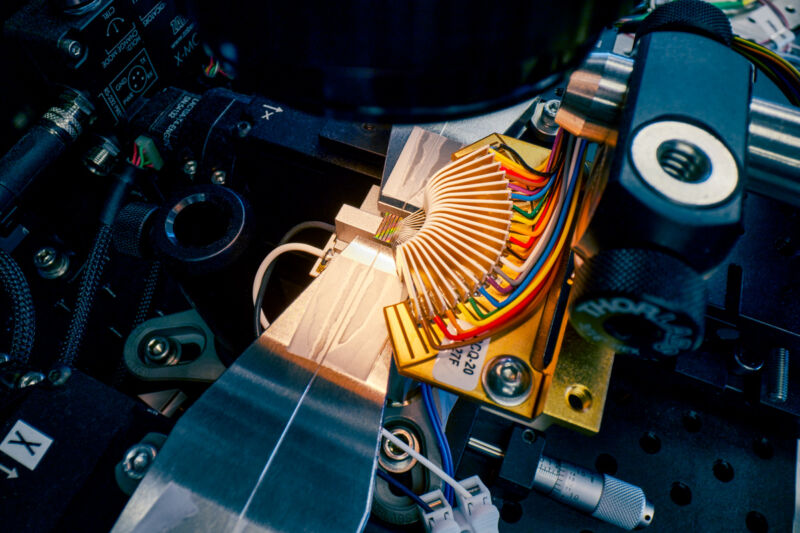
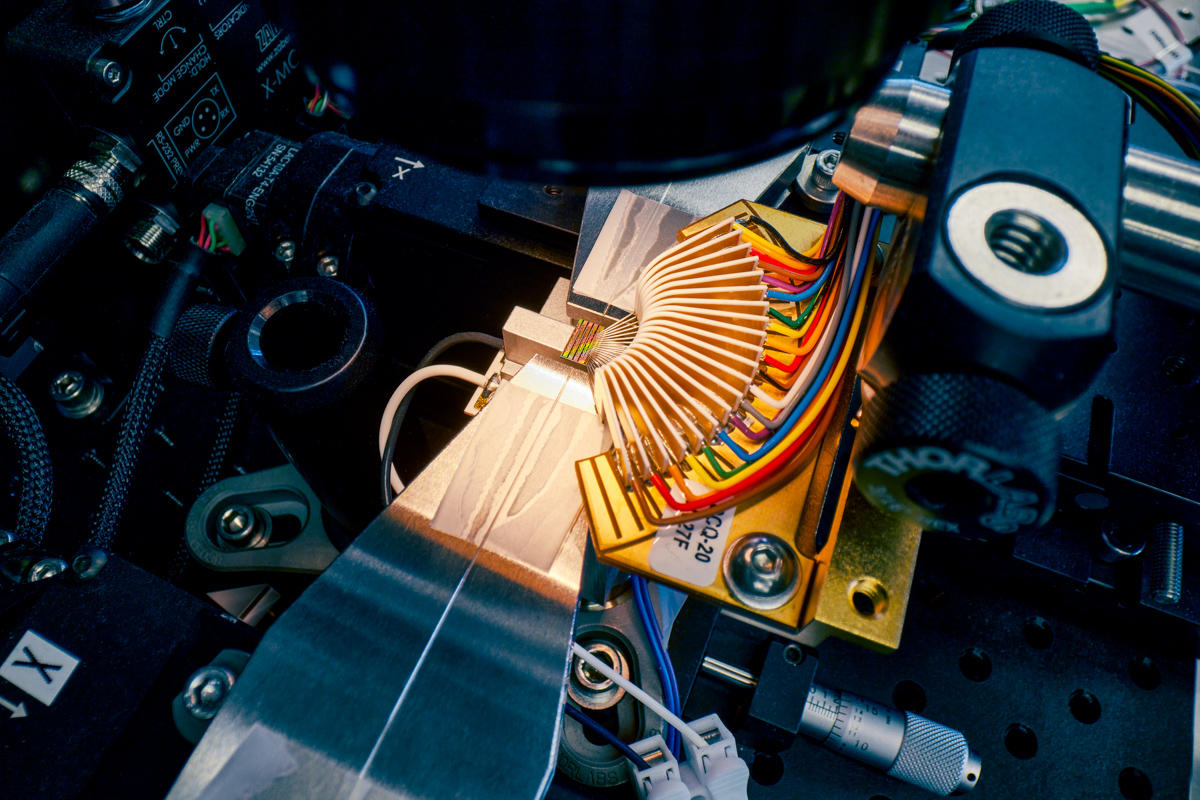
Last month, physicists at Toronto-based startup Xanadu published a curious experiment in Nature in which they generated seemingly random numbers. During the pandemic, they built a tabletop machine named Borealis, consisting of lasers, mirrors, and over a kilometer of optical fiber. Within Borealis, 216 beams of infrared light bounced around through a complicated network of prisms. Then, a series of detectors counted the number of photons in each beam after they traversed the prisms. Ultimately, the machine generated 216 numbers at a time—one number corresponding to the photon count in each respective beam.
Borealis is a quantum computer, and according to the Xanadu researchers, this laser-powered dice roll is beyond the capability of classical, or non-quantum, computing. It took Borealis 36 microseconds to generate one set of 216 numbers from a complicated statistical distribution. They estimated it would take Fugaku, the most powerful supercomputer at the time of the experiment, an average of 9,000 years to produce a set of numbers from the same distribution.
James.galbraithWelcome to GOP government, everyone.
You no longer have to wonder how low the right-wing fanatics will go. Members of the so-called “pro-life” party should be ashamed of themselves. But they aren’t. They bask in the glow of their egos, confident in their supremacy, while the innocent and vulnerable suffer. And I can’t imagine anyone suffering more than the 10-year-old girl from Ohio who was raped and then, because of an archaic decision by the U.S. Supreme Court, forced to leave her home state and travel to Indiana for an abortion. But adding to her trauma are the right-wing pundits who’ve smeared her and denied her truth.
The story of the little girl was published in the Indianapolis Star on July 1. The lead author of the piece, Shari Rudavsky, a health and medical reporter for the Star for 18 years, wrote that just three days after the overturn of Roe v. Wade, Indianapolis obstetrician-gynecologist Dr. Caitlin Bernard got a call from a doctor in Ohio telling her that they had a 10-year-old patient who’d been the victim of a sexual assault. She was six weeks and three days pregnant, and she needed an abortion.
There was no reason to deny the veracity of this story. As Daily Kos reported Wednesday, a Columbus, Ohio, man was charged with the 10-year-old girl’s rape. Gershon Fuentes, 27, confessed and turned himself in to authorities, and admitted to raping the child on two other occasions. But none of this stopped the filthy trash that came out of the mouth of such Fox News talking heads as Jesse Watters, who called the story a “hoax” and part of a “politically timed disinformation,” The Daily Beast reports. Or an editorial published by The Wall Street Journal, calling the story a “fanciful tale” that was “too good to confirm.” And Fox News’ Tucker Carlson simply stated the story was “not true.”
RELATED STORY: When Supreme Court struck down Roe, it also took away lifesaving medicine, impacting millions
Did not age well pic.twitter.com/8j068hCf2C
— Acyn (@Acyn) July 13, 2022
But the denials didn’t stop with just a few nonsense off-the-cuff statements. Ohio Attorney General Dave Yost appeared on Jesse Watters’ show to proclaim, "We have regular contact with prosecutors and local police and sheriffs — not a whisper anywhere," and in an interview with USA Today Yost declared there wasn’t a “damn scintilla of evidence" of the story, Popular Information reports.
BREAKING: Ohio Attorney General Dave Yost says there is "not a whisper" that a 10-year-old child was raped and impregnated, there has been no request for crime lab results, and that Ohio's heartbeat law would have allowed such a young girl to get an abortion in the state. pic.twitter.com/oIhJzNiq52
— Greg Price (@greg_price11) July 11, 2022
Republican Rep. Jim Jordan of Ohio turned to his 2.9 million Twitter followers Tuesday, retweeting a story from The Washington Examiner with a quote from Yost. Jordan wrote: “Another lie. Anyone surprised?” Jordan has since deleted the tweet but has yet to offer the little girl, the reporter, or his constituents in Ohio an apology for blaming the victim.
Detective Jeffrey Huhn testified at Fuentes’ arraignment Wednesday, confirming that the department was made aware of the little girl’s pregnancy via Franklin County Children Services and by her mother on June 22.
So why would so many, including The Washington Post staff writer Glenn Kessler, have questioned this story? Because right-wing conservatives can’t handle the truth.
They can’t stomach the reality that choosing to support anti-abortion policies will cause lasting trauma and damage to millions of pregnant Americans—including in cases of rape and incest.
This nation is facing a real crisis of conscience, with trigger laws in 11 states going into effect after the overturn of Roe banning abortions even in the case of rape and incest. These right-wing tyrants don’t care who these laws will affect, because it won’t be them or the people in their lives. When you have money, safe abortions are always available. But denial ain’t just a river in Egpyt and the history of rape denial goes back to the beginning of time. When will these folks start believing survivors?
James.galbraithAnd they're going apeshit because this is something most people can understand as a bad thing.
James.galbraithGreat, if anyone still had a CD drive in a machine any more lol

Enlarge / Preparing to rip a CD in the new Windows Media Player app. (credit: Microsoft)
If there's one thing Windows 11 has been good for, it has been the renewed attention and useful updates to the built-in apps that ship with Windows. Sometimes this means new features for long-neglected apps, like Notepad and Paint. In other cases, it means bringing back features that old apps lost somewhere along the way, like with Sound Recorder or Windows Media Player.
The latest preview version of Media Player, currently rolling out to Dev Channel Windows Insiders, is in the latter group. In March, Microsoft enabled audio CD playback in the new version of Media Player, something that the old version had supported for pretty much as long as it had existed. And now, Microsoft is rolling out support for CD ripping in the new version of Media Player, presumably so that we can all convert our old Weezer and Matchbox 20 CDs into files we can copy over to our iPods and Zunes.
By default, CDs can be ripped to AAC files at constant bitrates ranging between 96 and 320kbps. The WMA, FLAC, and ALAC formats are also supported. MP3 support and variable bitrate support, two features that are still included in the "Media Player Legacy" app, are notably absent.
James.galbraithShit like this is why Biden's approval rating among democrats is tanking. He can't be bothered to do the easy things.
President Joe Biden and Majority Leader Chuck Schumer had a tremendous 2021 when it came to getting federal judges appointed. The number, the quality, and the diversity of those judges is laudable. The record in 2022, with the notable exception of Supreme Court Justice Ketanji Brown Jackson, has been a little less than stellar.
They’ve slowed to a trickle, something that’s alarmed progressive groups looking toward the potential of a Mitch McConnell-controlled Senate in 2022, and seeing disaster. They’re pushing to have Biden fill all of the remaining judicial vacancies.
“As the number of announced judicial vacancies has risen to 119, we urge you to redouble your efforts in the final seven months of this Congress,” the organizations, including Demand Justice, MoveOn, and NARAL Pro-Choice America, wrote to Biden and Senate leadership. “At the current pace, dozens of these vacancies will remain unfilled at the end of the year, and we urge you to do whatever it takes to fill them all.” Of those 119 vacancies, there are around 80 that don’t have nominees.
Campaign ActionThat letter was sent June 21, before the final disastrous week of Supreme Court decisions, which only added to the urgency of their plea. There has to be a block in the lower courts to the extremist right-wing cases being pushed up the conveyor belt to the Trump-packed Supreme Court. “We are painfully aware that, should the Republican Party take control of the Senate in this year’s midterm elections, progress on balancing the federal courts will come to a grinding halt,” the groups said. “Senate Minority Leader McConnell has repeatedly made plain his plans to obstruct should he have the opportunity to become majority leader in January—just as he obstructed President Obama’s judicial nominees, leading to the fewest judicial confirmations since 1952.”
The response from Biden, Schumer, and Judiciary Chairman Dick Durbin has been ... not great. Biden has been sending nominees—five this week—but has created an unnecessary complication by deciding to cut a deal he made with McConnell on Chad Meredith, the young, extremist anti-abortion Kentuckian who was too problematic for Donald Trump to nominate.
And the Senate Judiciary has become a bottleneck. Both the White House and the committee have been insisting on adhering to the outdated courtesy of the White House giving deference on nominees to home state senators, and the committee waiting until they have “blue slips” from those senators to proceed with nominations. The problem isn’t entirely Republicans, as Demand Justice’s Chris Kang noted in Slate last week. Democrats haven’t been stepping up.
“In California alone, there are nine district court vacancies without nominees—five of which were announced more than a year ago,” Kang writes. “Time is running out, and the White House needs to start enforcing its request by bypassing senators where necessary.”
Durbin needs to step up as well and get rid of blue slips as a barrier to getting judges confirmed. He also needs to start fast-tracking nominations. If the current process and timeline for nominees is sustained for the remainder of the year, more than 60 seats will be left vacant. Letting McConnell have control over those several dozens of seats would be political malpractice.
But right now, there doesn’t seem to be any sense of urgency. Kang quotes one judiciary committee aide who told Bloomberg News recently, “I don’t think there’s any reason for us to change the way we’re operating.” Needless to say, this isn’t the path Republicans have chosen when in power. While Trump was president and McConnell controlled the Senate, they pushed circuit court nominees through without Democratic senators’ approval.
All of this makes Biden’s deal with McConnell—one young, anti-abortion zealot judge for potential judges and/or prosecutors to be named later—all the more frustrating. It’s unnecessary, if Biden and Democratic leadership would acknowledge reality and fix it. Get the nominations settled fast, and process them fast, and don’t let Republicans stop them. This is entirely in their power to do.
Democrats have to realize they’re playing asymmetrical warfare with Republicans. There are no rules as far as McConnell is concerned, and he will exploit Democrats’ yearning to adhere to them, to preserve Senate traditions, to the bitter end. Which at the rate we’re going, will be the bitter end of this democratic experiment and permanent minoritarian rule.
James.galbraithArizona has a distressingly high rube:population ratio, so of course it's a target for troublemakers like this
You’d think that by now, Mark Finchem would be tired of subverting American democracy. For nearly two years, the Arizona state lawmaker has pushed Donald Trump’s stolen-election lies everywhere he possibly can—QAnon talk shows, Steve Bannon’s podcast, outside the U.S. Capitol building on January 6—and all with the dutiful enthusiasm of a Boy Scout. Despite the lack of any evidence, Finchem has continued to assert that Trump, not Joe Biden, won the 2020 election. This claim has been the bedrock of Finchem’s campaign for Arizona secretary of state.
Finchem, who wears a cowboy hat and bolo tie despite having spent most of his life in Michigan, is not destined to win. He leads the Republican primary, but the party’s voters are still mostly undecided, and he could be a tough sell for independents in a general election. Still, Finchem’s candidacy is one to watch. He and the dozens of other election-denying candidates running across the country are the electoral legacy of January 6 in America. They present the most significant threat to American democracy in decades. And despite the expected electoral hurdles, this might just be their year.
If you’re a hard-right Republican, now “is the time to be running,” the Arizona pollster Mike Noble told me. Biden’s poll ratings, even among Democrats, are plummeting, and the president’s party typically loses ground in midterm elections. “The red wave’s a-comin’—and a lot of people will be able to surf in [to office] who are typically on the fringe,” Noble said. Which means that Finchem, the man who brought the “Stop the Steal” movement to Arizona, might soon be in charge of this swing state’s elections.
[Read: She defended democracy. Do voters care?]
After working for 21 years in the Kalamazoo Department of Public Safety, Finchem moved to Arizona, where he was elected in 2014 to the state’s House of Representatives to represent a rural district north of Tucson. In his adopted state, Finchem is well known for his distinct home-on-the-range vibes: thick mustache, conservative policy views, and an abiding distrust of the federal government. For a while, he was the Arizona coordinator for the Coalition of Western States, a group that supported the armed occupation of Oregon’s Malheur National Wildlife Refuge in 2016, and he’s identified himself as a member of the Oath Keepers, a far-right militia group. But what has earned the lawmaker statewide name recognition—and the attention of the broader MAGA movement—has been his dedication to the Stop the Steal cause. (Finchem did not respond to requests for comment.)
Finchem was present for the attempted insurrection at the U.S. Capitol on January 6. He tweeted that the riot was “what happens when the People feel ignored, and Congress refuses to acknowledge rampant fraud.” Although Finchem has denied being closer than 500 yards to the Capitol building that day, photos appear to show him standing in the crowd just outside its east steps right after Trump supporters had stormed it. Ali Alexander, the founder of the Stop the Steal campaign, has credited Finchem for single-handedly bringing the antidemocratic movement to Arizona. After the state certified Biden’s win over Trump in 2020, and after subsequent official audits confirmed that result, Finchem and other local Trump allies insisted that there was—there had to be—evidence of widespread fraud. He held firm, even after the partisan review he’d supported turned up nothing. He started posting his theories on MAGA social-media sites such as Gab, where he goes by the username @AZHoneyBadger. He appeared on a number of far-right programs, including more than 80 times on Bannon’s War Room podcast alone, to warn of election-fraud bombshells that never seem to actually explode. Bannon, a former Trump adviser, credits his show with Finchem’s rise: “He was almost like a contributor to War Room for a moment,” Bannon told me. “War Room made him a thing.”
Unsurprisingly, Finchem has secured Trump’s endorsement. During his campaign for secretary of state, Finchem has continued to call for the 2020 election to be decertified, and has advocated for laws that he says would make future elections more secure, co-sponsoring legislation that would allow lawmakers to reject election results, and that would restrict early and mail-in voting. (Finchem opposes early voting, despite having voted early in almost every election since 2004, according to The Arizona Republic.) He also recently filed a lawsuit with the gubernatorial candidate Kari Lake—also endorsed by Trump—to ban the use of electronic voting machines and require that all ballots be counted by hand.
“If we don’t get to the bottom of the fraud that was committed in 2020, it will be pervasive in ’22, ’24, [and] ’26,” Finchem told an interviewer from a right-wing website last month, during an unofficial hearing about the thousands of supposed “counterfeit ballots” submitted in 2020. Americans believe “that we have compromised elections in every state and every county,” Finchem said.
[Read: Trump’s next coup has already begun]
Hundreds of people have emerged from the proverbial political woodwork since 2020 to attach themselves to the fever dreams of a sore loser. Arizona has a passel of these Stop the Steal candidates and politicians, including Lake, who has called Biden an “illegitimate president”; State Senator Wendy Rogers, who encouraged people to “buy more ammo” as Arizona electors were casting their ballots in 2020; and state GOP leader Kelli Ward, who was recently subpoenaed as part of a federal investigation into fake slates of electors convened by the Trump campaign in 2020. But the trend is hardly limited to the Grand Canyon State. Finchem is part of the America First Secretary of State Coalition, a group of election deniers running for the job in a dozen states. Four members of that slate have earned their party’s nomination this year, including Kristina Karamo in Michigan, whom I wrote about last month. Doug Mastriano, who is also part of the coalition, won the GOP’s nomination for governor this year in Pennsylvania and can appoint the secretary of state once in office.
Finchem’s is one among many once-minor (or at least less partisan, less politicized, and less well-financed) state races that have become the target of Trump allies nationwide. And the effort extends to far more junior positions too. Election deniers across America are running to be poll workers and precinct officers and county clerks, positions that have never before received so much attention. “We’re going to take this back village by village … precinct by precinct,” Bannon announced on his podcast last year.
The goal, broadly speaking, is to continue investigating the 2020 election and, in some cases, even to attempt to “decertify” 2020 state results, a move that has no legal basis. What’s the harm in asking questions? candidates like Finchem and the others argue when criticized. We’re protecting future elections! But their investigations only serve to breathe more and more oxygen into conspiracy theories that undermine confidence in American democracy. “There is harm,” Tammy Patrick, a senior adviser at the Democracy Fund, a private foundation working to improve the democratic process in the U.S., told me, “if they refuse to accept the answer.”
Finchem is up against three other primary candidates, and although he has a small lead in recent polling, most Arizona voters are still undecided. (Early voting began in Arizona last week.) Winning a general election would be tough. Even if he does end up in office, some Republicans argue that he wouldn’t pose a risk to democracy. As secretary of state, “he’d follow the law. He may want the law to be different, but he’d follow it,” Chuck Warren, a state GOP strategist, told me. Despite his reputation as a fringy kook, Finchem has integrity, some of his allies told me. He “has dedicated a good part of his life to protecting and serving the public,” says Teresa Martinez, a colleague of Finchem’s in the state House.
But Finchem has spent two solid years trafficking in lies. He’s demonstrated that, through ignorance or cynicism, he is not willing to prioritize the truth over the wild claims of a man desperate for power. Again and again—and mostly on the condition of anonymity—other state Republican advisers and strategists told me that they dread the idea of Finchem in an election-oversight role. In a tight vote, “I would absolutely expect Finchem to both bend the meaning of laws and throw up roadblocks to the normal election procedures,” Barrett Marson, an Arizona GOP consultant, told me.
[Read: The Republican Party’s midterm wackadoodle wave]
A nightmare scenario in 2024 isn’t hard to conjure: As secretary of state, Finchem could try to muddy the waters after an election outcome that he or Trump didn’t like by delaying or undermining the election-certification process. If the governor or attorney general shared his desire, they could decide not to certify the election. Arizona on its own might not be enough to tip a general election—Biden would still have won if this scenario had played out in 2020—but if leaders in other states, say Michigan and Pennsylvania, do the same, the election outcome could be subverted.
The midterms will be the first major elections held since Trump lost in 2020. They will test how Americans feel about the sore losers who have spent almost two years crying conspiracy and fraud—and whether this precinct strategy to undermine the country’s democratic system was worth the effort. Will November’s results signal a return to simpler times, when candidates with fewer votes accepted defeat? Or will the midterms confirm that we have entered a new era of postelection doubt-casting and lie-peddling?
Americans’ freedom begins with secretaries of state, Finchem said during the interview at the hearing last month. “This has been the most overlooked office for years, but that’s how they got away with it,” he told the interviewer. “It was supposed to be boring—vanilla. Not so much so anymore.”
James.galbraithThis is going to be a big feature of the GOP going forward
By Moira Warburton and Rose Horowitch
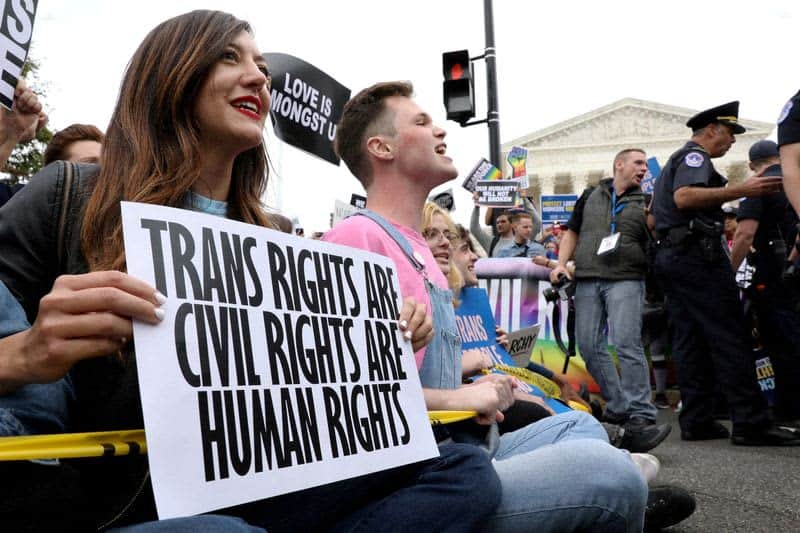
WASHINGTON (Reuters) – U.S. Republicans in Congress are lining up behind legislation that critics say would roll back protections for transgender people, setting a playbook for action on a divisive social issue should they take control of Congress this fall.
The bills have no chance of becoming law this year, as Democrats narrowly control both chambers of Congress. But they are a sign that Republicans aim to elevate a battle over transgender rights that has so far largely played out at the state level.
Republicans in the House of Representatives have introduced a bill that would block federal funding to colleges where transgender women are allowed to participate in sports with cisgender women. A separate bill would allow transgender people to sue medical personnel who helped them transition as minors.
Another bill would block funding to schools that disobey state laws regarding “materials harmful to minors,” mimicking state laws that have been used to remove books discussing history around race and LGBT themes.
The bills have support from key Republicans in the House and Senate. Republican House Minority Leader Kevin McCarthy has promoted the sports bill at a press conference and in a conservative newspaper. It is backed by 127 of 211 House Republicans.
In the Senate, five Republicans have sponsored a version of the bill targeting medical providers, including Senators Ted Cruz, Josh Hawley and Marco Rubio.
Republicans would be in a position to advance those bills next year if they win control of the House or the Senate in the Nov. 8 midterm elections, which analysts say is likely.
“I hope these are legislative initiatives that we can pass when we get the majority back,” said Representative Jim Banks, who sponsored the medical providers bill and represents a district in Indiana, which banned transgender students from playing on girls’ sports teams at schools this May.
FEARS OF DISCRIMINATION
Critics say the legislation proposed by House Republicans would reduce access to care needed by transgender people to transition. Transgender people are significantly more likely to attempt or commit suicide, often due to lack of access to gender-affirming medical care, according to the Human Rights Campaign, an LGBT advocacy group.
Banks called such criticism “outrageous” and said he did not see how his legislation would contribute to an unsafe environment for transgender people.
Violence against LGBT people has also increased fourfold between 2020 and 2021 in the United States, according to ACLED, a nonpartisan organization that tracks violence globally. The increase occurred during a three-year uptick in anti-LGBT bills introduced in state legislatures, according to the Human Rights Campaign.
“There has always been fringe voices who oppose LGBTQ equality, but now, unfortunately, that fringe has grown loud and is being given national platforms,” said Sarah Kate Ellis, president of GLAAD, a LGBT advocacy group.
Sixty-four percent of Americans support protecting trans people from discrimination, according to a June poll from Pew Research Center; 10% oppose protections.
Eighteen Republican-led states have enacted bans on trans girls and women participating in publicly funded women’s sports, while more than a dozen have introduced legislation mimicking Florida’s law limiting classroom instruction on sexual orientation and gender, according to the Human Rights Campaign.
President Joe Biden has taken steps to counter those state laws, including issuing a proposal to expand current gender discrimination protections to transgender people in college sports.
Advocates are pushing Democrats to do more to enshrine protections into law before the November elections, but they face uncertain prospects in the evenly divided Senate.
“If we lose the House or the Senate I think it’s really unlikely we’ll be able to prevent discrimination” at the federal level, said Fran Hutchins, executive director of Equality Federation.
(Reporting by Rose Horowitch and Moira Warburton; editing by Andy Sullivan and Aurora Ellis)
James.galbraithyup


By Alex Henderson Civil libertarians have been warning that if the U.S. Supreme Court overturned Roe v. Wade, contraception and gay rights would be next on the Christian nationalist chopping block — and sure enough, when the High Court overturned Roe with its ruling in Dobbs v. Jackson Women’s Health Organization, far-right Justice Clarence Thomas called for the Court to “reconsider” 1965’s Griswold v. Connecticut (which made contraception a constitutionally protected right for married couples), 2003’s Lawrence v. Texas (which struck down anti-gay sodomy laws as unconstitutional) and Obergefel…
James.galbraithyuck


New York (AFP) – New York City has stressed to the US government the “urgency” with which it needs monkeypox vaccines amid a rise in cases, its mayor said Wednesday.
America’s biggest metropolis has recorded 336 infections but that is unlikely to reflect the true numbers, according to the city’s department of health.
Official cases rose from 267 on Tuesday, up from 223 the day before.
Anyone can get and spread monkeypox but many cases have been found in men who have sex with men.
The city of around nine million people is home to a large gay community and health authorities had to apologize this week after its vaccine reservation website crashed when it was overwhelmed with people trying to book appointments.
Some 1,250 slots were available but many social media users expressed frustration at being unable to book an appointment.
Mayor Eric Adams said he had had a telephone meeting with the US Department of Health and Human Services and the Centers for Disease Control and Prevention.
“We discussed the supply constraints that New York City is facing and the urgency to expand our vaccine access footprint to more people, in more neighborhoods, through more partners and providers,” he said in a statement.
New York is due to receive 14,500 doses from the US government this week, adding to the nearly 7,000 it has received since June 23.
Health services are prioritizing the two-dose vaccination for gay, bisexual, or other men who have sex with men, as well as for transgenders and non-binary people.
Monkeypox is a viral illness endemic in West and Central African countries that causes symptoms such as fever and rash.
It is similar to but less severe than smallpox, but can be riskier in immune compromised people. It is primarily spread through close contact.
James.galbraithSurprise, shitty man raises shitty and bigoted idiot child.

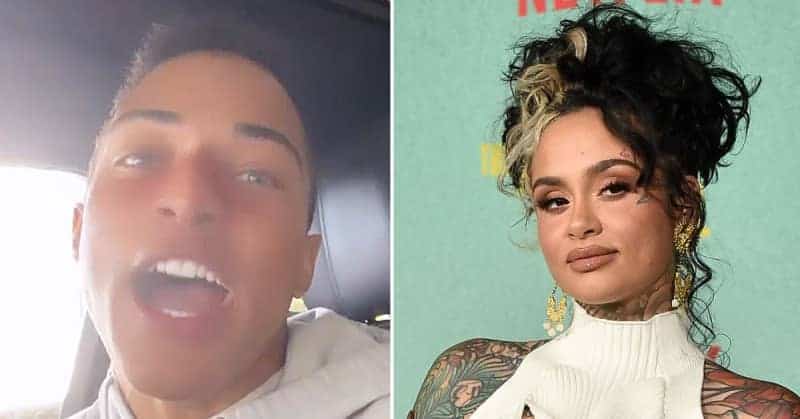
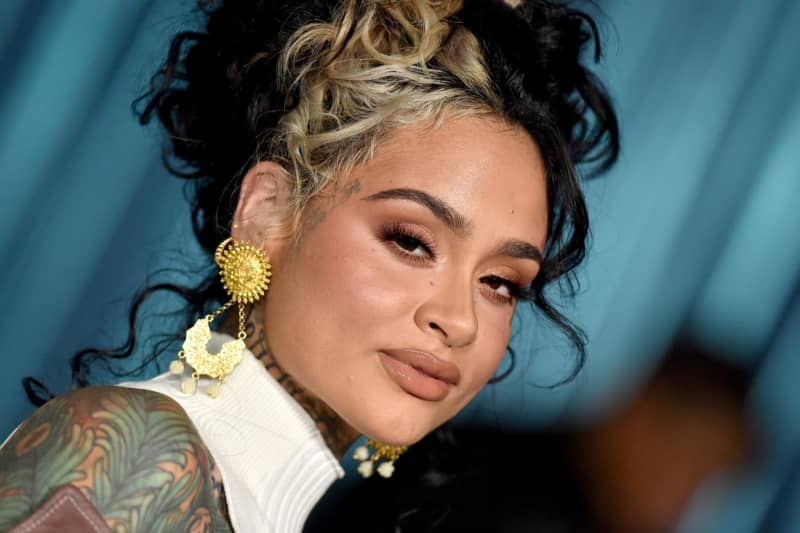
Herschel Walker‘s son Christian got into an explosive yelling match with singer Kehlani at a Starbucks in Los Angeles, Radar has learned.
The ex-NFL star turned Republican senate candidate’s 22-year-old son started filming in the drive-thru after becoming upset with pride flags hanging in the store. He said, “These flags from hell should have been removed 13 days ago. Pride month is over. Where is my American flag? You are intolerant of how I identify as a freakin’ American.”
He then proceeded to tell his followers he was going to ask the staff if they needed an American flag. In a video posted on his Instagram Story, he asked an employee if they had an American flag but they were unsure. Christian then lost it shaking his head several times.
Then moments later, he posted a video of him in his car yelling at the car in front of him. A woman in the other car pops out and is revealed to be singer Kehlani.
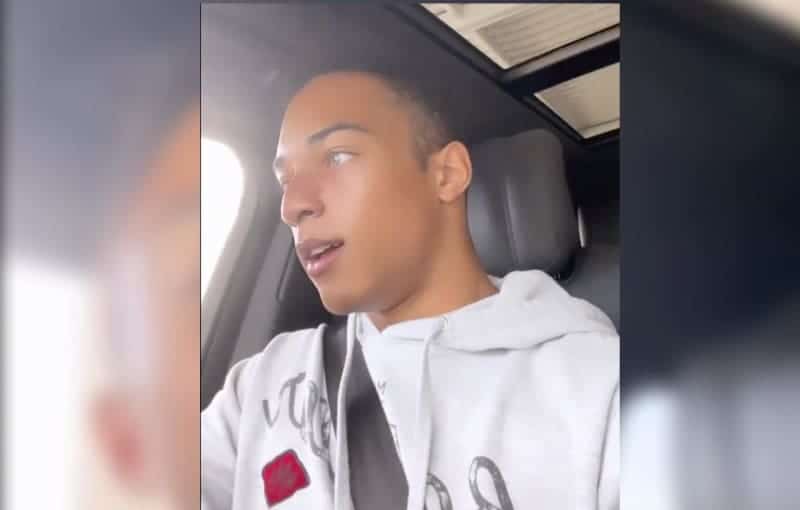
She can be heard telling him, “you are so obnoxious” while he shouts at her. Christian then filmed himself getting out of his car and approaching her car window.
“You don’t need to tell baristas I am an a—— because I have an opinion. Get your drink and go away,” he said while Kehlani looked on calmly.
The barista can be heard apologizing to the singer who shakes her head telling him it’s okay. “If you can have an opinion, I can have an opinion,” he continued yelling while she laughed at him while chatting on FaceTime with a friend.
Christian captioned the post, “This LOVING TOLERANT INCLUSIVE woman told the baristas I was “that a-hole from tiktok” So yes, I got out of the car.”

Kehlani has yet to comment on the matter.
As RadarOnline.com previously reported, Herschel has been fighting off a separate scandal for weeks. Last month, a bombshell report broke revealing the ex-NFL star had three “secret” children.
Herschel has only publicly claimed Christian. The report said the politician also had a secret 10-year-old son with one woman and another 13-year-old son with another individual. He also had a daughter who was born while he was in college.
James.galbraithThis should be fun. Now that it's all downloaded, it's on the list to watch
James.galbraithThat's some inflation right there
The end of July marks an exciting moment for investors: the release of Q2 earnings encompassing profits, revenue, and much, much more for the months of April, May, and June. If you’re extremely into capitalism and utterly ignore the climate crisis Big Oil has caused, you’ll be thrilled to know that those earnings reports will sure look rosy for companies like ExxonMobil. According to the Wall Street Journal, the oil and gas company could have one of its best quarters in 25 years, with earnings as high as $18 billion. Exxon, a company listed on the S&P 500, is one of a slew of energy companies boosting that particular index. If it weren’t for companies like Exxon, Devon Energy, ConocoPhillips, and Occidental Petroleum, profits for the S&P 500 would be just slightly in the red.
It’s downright painful to see Exxon thriving, considering all it and other fossil fuel companies have done to keep gas prices alarmingly high, crippling consumers in the process. Though there’s been some relief thanks to gas prices falling for the past few weeks, experts warn that they could soon bounce back. And consumers will continue to pay the price of boosting shareholder earnings and Big Oil salaries because those companies have conned the country—and the world—into what feels like an addiction to oil and gas. Exxon especially has known exactly what it’s doing for decades, as highlighted in the three-part docuseries Black Gold. The Sierra Club in a recent write-up highlights just how uniquely evil Exxon’s actions have been in covering up its knowledge of fossil fuels worsening climate change.
“Black Gold” brings in the audience to Big Oil’s playbook to protect itself from any meaningful climate change regulation,” co-director Gabrielle Schonder told the Sierra Club. “[the series] is important because there is an entire generation that has not been around to witness much of the history we cover in the series. This is a primer for that younger generation to give them a sense of how we got here.” Discussed in the series are Exxon’s PR tactics, which included spreading climate misinformation, and the company’s role in the now-disbanded Global Climate Coalition, a lobbying group hellbent on keeping fossil fuel companies in business no matter how much they destroy the planet.
What the hell is there to celebrate about Exxon reaching a landmark in its earnings, when this is the cost?
James.galbraithThey'd better be talking about a lot more than just that
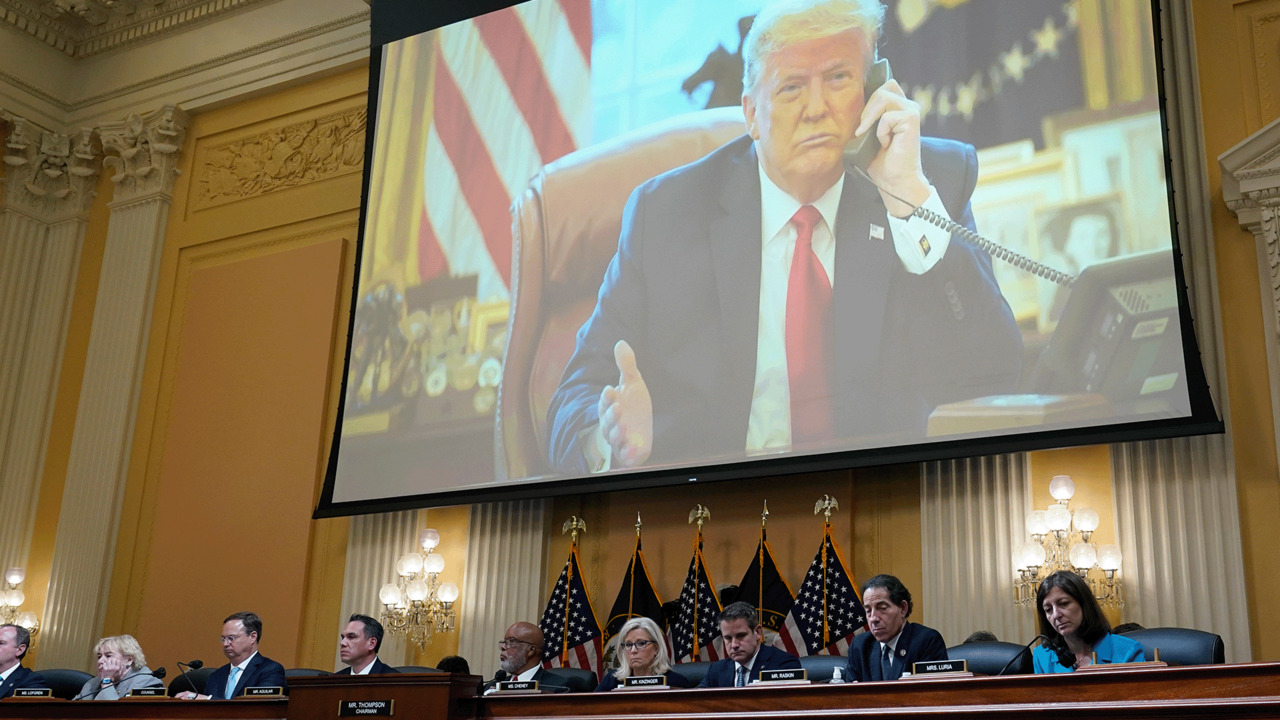
The Justice Department’s ongoing effort to obtain evidence collected by the Jan. 6 select committee has revolved primarily around the investigation of false pro-Trump presidential electors, chair Bennie Thompson said Wednesday.
“The only issue we’ve engaged them on is the list of fraudulent electors,” Thompson (D-Miss.) told reporters.
He added that DOJ is particularly interested in the transcripts of the interviews the committee has conducted with some of the false electors themselves.
It's the first time a member of the committee has publicly indicated the focus of their talks with the Justice Department. Thompson’s comments suggest the department is continuing to advance its examination of the false-elector scheme, a key element of former President Donald Trump’s effort to subvert the 2020 election and seize a second term he didn’t win. And it shows the panel’s advancing engagement with the Justice Department as prosecutors pursue their own parallel criminal probe of Trump-linked efforts to overturn the election.
The Justice Department first issued a blanket request in April for the select committee’s transcripts of its interviews with over 1,000 witnesses, but the committee rejected it. The department subsequently agreed to postpone a landmark criminal trial of leaders of the Proud Boys, citing the uncertainty around the committee’s transcripts and the publicity caused by the panel’s public hearings. Thompson told reporters that he anticipates releasing all of their information publicly in the fall.
A DOJ official noted that its public filings asked the committee for copies of all transcripts of witness interviews. A spokesperson for the U.S. Attorney’s Office in Washington, D.C., which is handling the bulk of the Jan. 6 investigation, declined to comment.
Trump, working with a group of conservative attorneys advancing fringe constitutional theories, pressed Republican-controlled state legislatures to override the will of their voters and appoint false electors, which would then come before Congress on Jan. 6, 2021. No state legislatures agreed, but Trump’s campaign and allies worked directly with pro-Trump activists to move the plan forward anyway, having them sign certificates claiming to be the true electors from their states and sending them to Congress. Trump leaned on then-Vice President Mike Pence — tasked with presiding over Congress during the certification of votes on Jan. 6 — to cite the “dueling” slates and refuse to count President Joe Biden’s true electoral votes.
Asked whether the Justice Department had also expressed specific interest in witness transcripts connected to the Proud Boys and Oath Keepers, Thompson said the preliminary discussions are still ongoing and are focused on establishing a process for evidence sharing, including potentially allowing department officials to review evidence in person.
“We’re a legislative committee. We’re not an arm of the Department of Justice,” said Rep. Zoe Lofgren (D-Calif.), a member of the select panel. “But we certainly don't want to be an impediment to them.”
Thompson also noted that the select committee still has not received any documents from Trump ally Steve Bannon, who indicated over the weekend that he would testify to the panel after declining to do so for more than nine months. Thompson said the panel would likely not engage with Bannon until he provided the wide-ranging records they had requested.
An attorney for Bannon, Robert Costello, said he was still awaiting a direct reply from the select committee to his Saturday letter disclosing Bannon’s abrupt willingness to testify. That relied on a letter from Trump purporting to waive executive privilege on testimony by Bannon, who was not working in the White House during Trump's attempts to overturn the election.
"Unless you are the official spokesperson for Bennie Thompson and the Select Committee, I have heard no response from the Select Committee and the last line of my letter said: 'let me know how you wish to proceed,'" Costello said in an email.
The select committee has contended that executive privilege was never properly asserted over Bannon’s testimony.
Bannon is slated to face a jury next week on contempt of Congress charges for defying a Jan. 6 select committee subpoena in October. He made a renewed motion on Wednesday to delay his trial, citing the publicity caused by the Jan. 6 panel’s public hearings. Though U.S. District Court Judge Carl Nichols rejected Bannon’s initial motion for delay — saying he would consider pretrial publicity only after jury selection on Monday — Bannon's latest motion cited the select committee’s Tuesday hearing.
Members of the panel played “a highly inflammatory video clip from Mr. Bannon’s podcast,” Bannon’s attorneys contended in the filing.
Speaking to reporters, Thompson also elaborated on a “conversation” the committee had with the Justice Department about an unidentified witness for the panel, who vice chair Rep. Liz Cheney (R-Wyo.) revealed had received a phone call from Trump sometime within the last three weeks. The witness declined to answer the call and alerted a lawyer, who informed the select committee of Trump’s outreach. Cheney said the panel had passed along the information to the Justice Department.
Describing committee members' contact with the Department of Justice on Trump's purported outreach to a witness, Thompson said they were having a "conversation," adding there hasn't been a "formal referral."
“I think, out of an abundance of caution, any attempt to talk to a witness that our committee would be engaged with would be a concern,” he said.
Panel members have closely held the identity of the witness even as they have repeatedly raised the prospect of witness tampering by the former president. Cheney declined to name the witness Tuesday night, and a Cheney spokesperson declined to comment.
Thompson has indicated the unnamed witness is unlikely to be called to testify publicly.
James.galbraithHopefully Twitter's lawyers can actually pull this off...some consequences would be nice and I assume the M&A deal has an attys' fees clause, so that should be fun.
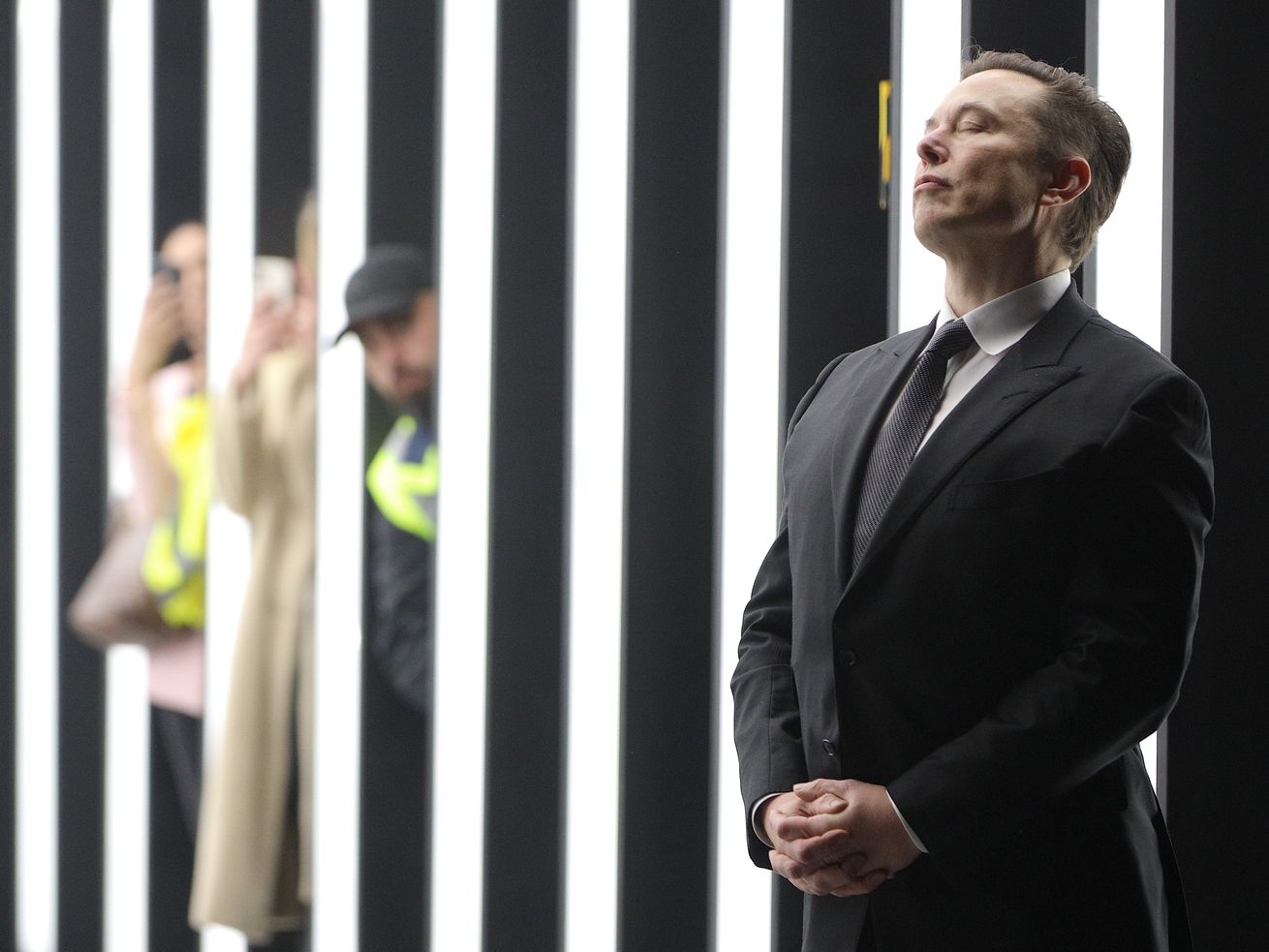
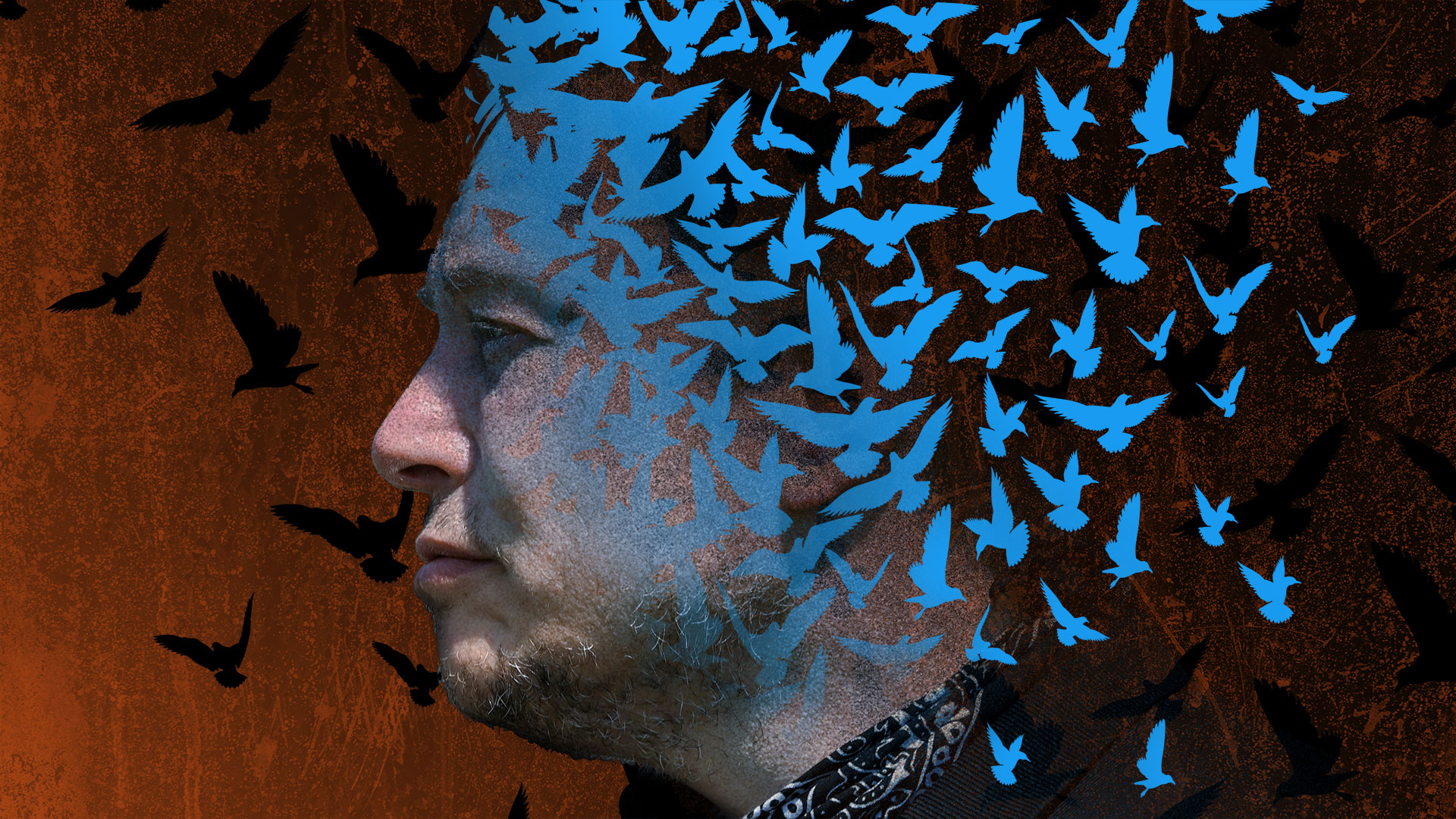
Even as the Twitter deal falls apart, Musk’s fans are claiming victory.
Reactions to Elon Musk’s attempt to back out of a deal to buy Twitter have been wide-ranging. On Wall Street, Twitter’s stock price fell by 11 percent on Monday. Twitter employees have expressed feeling confused and pointed to a lack of leadership at the company. And on Tuesday, Twitter sued Musk, asking the court to force Musk to buy it.
Twitter calls Musk’s exit “a model of hypocrisy” in its lawsuit. The company argues that Musk not only breached the agreement to buy it based on a “contrived narrative” about spam bots, but that he also violated an obligation in the agreement not to disparage the company. The complaint cites many of Musk’s own tweets to back up these claims.
Yet to his followers, Musk is trying to spin all this as his latest move in a long game to demand better business practices from Twitter. Musk told the world that he wanted to buy the company in order to ensure that free speech is protected on the platform, framing the whole debacle as a kind of moral crusade. Some might argue that the billionaire is now trying to back out of the deal for financial reasons, but Musk’s fans are rallying behind him and his narrative.
This reaction shows how billionaires can use their celebrity to control their image in a way that shrouds them in a halo effect. Casting himself as a figure pushing the progress of humanity forward has been central to Musk’s popularity, his power, and even his business success. He has also capitalized on the idea that a billionaire’s intelligence is seen as commensurate with their extreme financial success: Musk must be able to see and know things the rest of us couldn’t because he’s run several companies that have made him the richest man in the world. And so, even now that Twitter is suing Musk for failing to complete a deal he agreed to, his proponents are claiming victory.
“You can’t be speaking truth to power if you don’t speak truth and you are the powerful”
This is premature, of course, since the court battle has barely gotten started. Musk made the first move last Friday when he said in a regulatory filing that he would be terminating the acquisition deal. Twitter is now suing him for wrongfully breaching the deal, and has asked the case to be heard in the Delaware Chancery Court in September. In the meantime, Musk must face the court of public opinion.
“It’s our job to kind of see through the presentation,” Anand Giridharadas, author of Winners Take All: The Elite Charade of Changing the World, told Recode. “You can’t be speaking truth to power if you don’t speak truth and you are the powerful.”
There’s reason to believe that Musk’s almost uncanny ability to get his way might not work out this time around. Even before Twitter sued him, some legal experts predicted that the billionaire wouldn’t be able to simply walk away from the deal, and the new lawsuit only strengthens that case. Twitter alleges that Musk’s accusations about misleading bot data are being made in bad faith, saying that it provided him a summary of the methodology used to estimate bots and spam accounts (Musk admitted to Twitter that he hadn’t read the summary). By contrast, Twitter says it has worked in good faith to address Musk’s bot concerns, providing over 49 tebibytes of data upon request. The company also provides evidence that Musk violated the nondisclosure agreement of the contract by tweeting apparently incorrect information about Twitter’s bot sampling process.
All that said, Musk has a history of getting his way in court. Just this year, the Delaware Chancery Court that will hear the Twitter lawsuit ruled against Tesla shareholders who accused Musk of pressuring them to accept an overpriced buyout of SolarCity, a solar energy company Musk co-founded. Musk also prevailed in a 2014 lawsuit against the US Air Force, arguing that the government had unfairly awarded a valuable defense contract to United Launch Alliance, a joint venture of Boeing and Lockheed Martin, without opening it up to a competitive bidding process. As part of the settlement, the Air Force agreed that it would open up more competition for national security space launches. Since then, SpaceX has gone on to become the most valuable private space company.
We don’t yet know what will happen in court, which will decide what happens to the deal, but there are several possible outcomes. The court could force Musk to complete the deal as agreed. It’s also possible he might be able to pay a maximum of $1 billion as a breakup fee stipulated in the contract. Or, Musk could buy Twitter, but at a renegotiated, lower price than $44 billion. The court could also agree with Musk and rule that Twitter had substantially misled him on matters that would have a “material adverse effect” on the long-term earning potential of Twitter. Then, Musk could just walk away.
But whatever the court decides, Musk’s most dedicated fans are bound to believe his version of the saga — that Twitter has lied about bots, and that Musk is within his rights to walk away from this unfair deal.
Even for the richest person on Earth, buying Twitter was never a cheap venture. Musk had to put up a significant amount of his Tesla shares as collateral to secure financing for the $44 billion Twitter buy.
Tesla’s stock price has plummeted since Musk proposed the Twitter deal. In early April, it reached a peak of $1,145 per share, and currently sits at around $719. The price drop signaled that either Musk would have to put up more Tesla stock as collateral, or sell even more of his own Tesla shares to finance the Twitter deal. And then, with Twitter stock also falling significantly since Musk entered an agreement to buy it, the acquisition likely made even less financial sense. Twitter’s lawsuit says as much, pointing out that Musk’s change of tune came right as the market declined.
But in his own tweets, Musk has said it’s not just about the money: It’s about truth, and it’s a matter of principle. And he’s taken to using memes to illustrate Twitter’s supposed dishonesty and push the narrative that he has the upper hand.
— Elon Musk (@elonmusk) July 11, 2022
Since signing the deal, Musk has been particularly insistent on pushing the idea that Twitter has underplayed the problem of fake accounts, bots, and spam, even indicating that the deal couldn’t continue unless Twitter was more transparent about how it had arrived at its estimation that fewer than 5 percent of its daily active users were bots. This narrative is obviously useful for laying the groundwork for a possible exit from the deal, but many of his followers seem to believe that Musk is actually taking a stand.
— Elon Musk (@elonmusk) July 12, 2022
And for months, Musk has cultivated this belief by framing any missteps as moves in a larger strategy, one with purpose and intention. The billionaire is convincing his followers that he’s simply playing “4D chess,” a term used with varying degrees of sincerity to describe someone who always out-strategizes his opponent. Fans across Twitter and Reddit have reposted Musk’s memes on the deal’s termination, and prominent figures of the right-wing media have rallied behind Musk, claiming he has the upper hand against Twitter because the truth of the company’s deception would now have to come to light in court.
When it seemed like he was intent on owning the company, Musk wove a stirring rhetoric emphasizing Twitter’s importance as a trusted platform where free speech and democratic ideals are respected. It was a line of thinking that many fans found credible and important. During an interview at the 2022 TED Conference in April, Musk spoke about how crucial free speech was to Twitter and democracy as a whole; he was met with cheers and applause. And yet now that Musk wants to back out of the agreement to buy Twitter, his admirers seem ready to abandon that mission and repeat the billionaire’s claims that Twitter lied about the bots.
It’s easy to see why some think Elon Musk is a world-changing genius. With Tesla and SpaceX, he’s made promises to leverage technology to save civilization, and has actually delivered on some of them. He has also become the world’s richest person in doing so, convincing even more fans and investors to back his projects.
“A lot of that comes from his ability to create this image as this man on the leading edge of whatever the future is going to be,” Tim Higgins, author of Power Play: Tesla, Elon Musk, and the Bet of the Century, told Recode. “For a lot of people, the future is Elon Musk.”
It’s easy to see the allure in Musk’s high-minded goals. But sometimes his stated dedication to the good of humanity is also a convenient way to deflect criticism, whether it’s the recent sexual harassment allegation against him, labor issues at SpaceX, or racism at Tesla. His admirers tend to perceive attempts to hold him accountable for his actions, like those mounted by the SEC, as resistance to the noble, life-altering causes Musk is fighting for.
Even among the elite circle of billionaires, Musk is remarkable for having such a large, vocal, and loyal fan base that others, like Jeff Bezos or Bill Gates, simply don’t have. Comparisons are often drawn between Musk and Jobs, but Musk is still singular in that he is a billionaire made for the social media age, whose off-the-cuff thoughts are constantly accessible.
“One of the things that I think appeals to a lot of people is this feeling of authenticity, when he’s talking or when he’s communicating on Twitter,” said Higgins. “He can be crass on Twitter, he can be funny, he can be vulnerable, in ways that you just don’t see with modern CEOs, or historically, with captains of industry.”
As an avid Twitter user, Musk often interacts with random people on the platform who might otherwise never have access to him. Fans might like to believe that Musk tweets so often solely because he enjoys interacting with people without a PR buffer, but his Twitter presence has a tangible impact on the performance of his businesses. Merely by tweeting, Musk has influenced stock prices to rise or fall. It’s due to his capacity for influence on the public platform that, in 2018, the SEC imposed restrictions on what Musk can or can’t disclose on the site.
“He’s now seen, in some conservative circles, as a hero”
But while many of his fans seem to admire Musk for his edgy or irreverent tweets, some of these tweets — namely the ones about knocking Twitter down a peg — could now come back to haunt Musk in court. To build its case, Twitter’s lawsuit includes screenshots of at least 13 tweets showing that Musk disparaged the company over the past few months, as well as instances where he’d made false statements about the company and the state of the deal.
Again, it’s unclear how this Twitter situation will play out for Musk. It’s becoming clear that Musk’s considerable influence — and the readiness with which his fans take what he says at face value — can have negative, real-world consequences. Musk’s behavior over the past few months has already caused some damage, particularly to the employees at Twitter, who have expressed anxiety over job security. Several Twitter employees have quit due to Musk’s impending takeover of the company.
These negative effects could intensify as Musk increasingly weighs in on politics and promotes the idea that the left wing has become the “party of division & hate” in a time when right-wing extremism and terrorism is on the rise.
“It’s really hard to say what the long-term effect will be,” said Higgins. “We’ve seen over the past few years during Covid, and some of his stances on Covid, some of his strongest supporters push back. But in some ways, his voice found a new fan base out there, and it has broadened his appeal. He’s now seen, in some conservative circles, as a hero.”
There’s a significant cost to uncritically accepting what the powerful say — not because they are always untrustworthy, but because it plays a key role in how the wealthy consolidate even more power. A kind of circular reasoning can keep empowering the already-powerful: They must be so rich because they’re so brilliant, and since they’re so brilliant, they should be listened to and trusted. Musk has banked on people’s tendency to believe in the genius of billionaires to advance the idea that he’s been one step ahead of Twitter throughout this ordeal.
“Every ruling class in history has had to invent certain stories to uphold their own power,” said Giridharadas. “The story they’ve invented in this era, with resonances but also differences from stories from past eras, is that yes, we may be on top of problematic distribution of wealth and power — but we are the only ones who can fix it.”
As Musk would tell the tale, he’s not at a disadvantage now that he’s reneged on the deal: Twitter is the one that’s humiliated, and he’s the hero. And that might be the story his fans believe, no matter what happens in court.
James.galbraithActual competence, what a concept
James.galbraithLOL

Hovertext:
Later some other kid with more funding publishes first.
James.galbraithNo surprise there, straight up bigotry
It’s practically unheard of for governors to endorse school board candidates. But in Florida Gov. Ron DeSantis’ world, where meddling in the educational system is your Republican Party’s dog whistle, of course he’s putting his weight behind candidates who’ll fall in line with his fascist agenda.
School board candidates have traditionally remained nonpartisan, but not in Florida. DeSantis has endorsed about 10 school board candidates there.
According to Axios, groups such as The 1776 Project, “the first national PAC specifically launched to boost school board candidates opposed to CRT,” and Moms for Liberty are deeply embroiled in school board contests. The 1776 Project Founder Ryan Girdusky told Axios that the PAC planned to spend around $300,000 in the state’s school board races this year.
Christian Ziegler, vice chair of the Republican Party of Florida, told Politico, “People are frustrated with the business-as-usual on these school boards,” and when it comes to school board elections, he added, “Payback is coming in August.” Ziegler’s wife Bridget is running to keep her seat on the Sarasota County school board and has already been endorsed by DeSantis.
RELATED STORY: DeSantis' full-spectrum of right-wing fascist laws are making him a lot of money for elections
Although Florida has a stunning teacher shortage—Florida Trend writes that it is “worsening,” with “estimates fearing that vacancies could double by the end of 2022”—DeSantis continues to pressure teachers to push his conservative curriculum, forcing some to leave the profession altogether.
During his time in office, DeSantis, who’s predicted to run for president in 2024, has legislated a “Don’t Say Gay” bill and the “Stop the Wrongs to Our Kids and Employees,” aka the “Stop W.O.K.E. Act,” which bans teaching critical race theory (CRT). He’s even targeted some math books with claims of “indoctrination” or “exposure to dangerous and divisive concepts.”
As for potential school board candidates, they’re being asked to take DeSantis’ education survey to make sure their views jive with the governor’s right-wing agenda, like rejecting CRT and COVID lockdowns and supporting “Keep Woke Gender Ideology Out of Schools,” to name a few. They’re then asked to take a pledge to “stand with Governor Ron DeSantis.”
@GovRonDeSantis endorsing school board candidates and having them sign this pledge is beyond unethical. This is behavior of a dictatorship, which he seeks bring to all of America in 2024. Protect our public Ed by not voting to re-elect racist Ron! #removeron #DeathSantis pic.twitter.com/nXCiiuF4pw
— "Junior" Salazar for FL State House District 70 (@Junior4FL) July 7, 2022
Monica Colucci has taught in the Miami-Dade County schools for the past 26 years. In her run for a position on the school board, she raised $53,000, with about $15,000 from state Republicans in May, and in June, she raised another $31,000, Politico reports. Roberto Alonso, another Miami Dade school board candidate endorsed by DeSantis, raked in $1,000 from Republican lawmakers and has raised over $83,000 so far.
Axios reports that candidates April Carney, who has complained incessantly about COVID policies; Fred Lowry, a QAnon conspiracy theorist; and Colucci, who opposed CRT and vows to protect "female athletes and the integrity of female sports," are all described as “pro-parent” and endorsed by DeSantis.
“Suddenly, school board races, which are nonpartisan here in Duval County, typically don’t get a ton of attention. They kind of fly under the radar. But there have been political efforts on both sides of the aisle to get Democrats and Republicans elected. This is a big shift,” Michael Binder, a professor of political science at the University of North Florida, told News-4 in Jacksonville, Florida.
Brevard County school board member Jennifer Jenkins told the Florida Phoenix she feels as if “DeSantis has turned up the fire for that culture war conversation in public education — the nonsense of all-of-a-sudden he’s endorsing school board members, making a nonpartisan race very clearly partisan.”
James.galbraithyup

Like it or not, Amazon can give Ring footage to cops without your permission — or even a warrant.
Despite what you might think (or were told), your Amazon Ring camera might be giving video data to police without your knowledge or consent.
Massachusetts Sen. Ed Markey revealed on Wednesday — during Amazon’s Prime Day event — that Amazon admitted to sending footage to police without a court order or users’ permission 11 times this year alone. While the number is relatively small, this is also the first time the company has said that it released data this way, according to Politico. It’s also a reminder that if your data is out there and under the control of someone else — Amazon, for instance — you have little or no say over whether law enforcement gets it.
Markey has been concerned about Ring’s partnerships with law enforcement and privacy issues for years. “As my ongoing investigation into Amazon illustrates, it has become increasingly difficult for the public to move, assemble, and converse in public without being tracked and recorded,” he said in a statement.
His concerns are not unfounded: Amazon’s partnership with law enforcement agencies, which gives them access to its portal to request user data, has greatly expanded since its inception. There were 405 police departments in the program in August 2019. There are now 2,161.
But the police’s access pales in comparison to Amazon’s. The company also has vast sets of data on what we buy and where we live, and has a burgeoning ad business that uses your data to target ads to you on Amazon and beyond. The company also recently rolled out Amazon Sidewalk, a controversial service that connects certain Echo and Ring devices to each other unless the user opts out. It all adds up to a massive and powerful conglomerate that knows more about many of us than just about any other company — including who’s on our doorsteps or strolling past our homes.
The Ring camera footage was sent in response to emergency requests, which are supposed to be made only when there’s a belief that serious harm or death will result if the footage isn’t released immediately. Police request the data, but it’s up to Amazon to decide whether to release the footage, as well as if the request is legitimate. Bloomberg recently revealed that people pretending to be law enforcement have been able to trick companies, including Meta, Apple, and Google, into giving them data this way.
“There will always be reasons why, in emergency situations, authorities might seek live access to cameras but people have the right to be skeptical when police and Ring, behind closed doors, get to decide what reasons meet a threshold of an ‘emergency’ and allow police to get warrantless access to their personal devices,” Matthew Guariglia, policy analyst at the Electronic Frontier Foundation, told Recode. Guariglia recommended that users turn on Ring’s end-to-end encryption feature if they’re concerned about police having unfettered access to their data.
Ring says in its law enforcement guidelines, which are buried in its support documents, that it may send footage to law enforcement in case of emergencies. Ring also sends user data and footage to law enforcement in response to court orders, as does every company that has data for police to get. Amazon recently revealed that it received more than 3,100 legal demands for data in 2021, an increase of 65 percent from the year before. The reports did not say how many of those demands the company provided responses to. While Ring says it tells users if law enforcement requests their information, it may be legally prohibited from doing so. Users were only notified of about 648 requests.
Amazon also said that while customers have the option of turning audio recordings off during video recording, it would not make that the default because customers may never look at their settings to know to turn it on. Which, by extension, means many customers don’t look at their settings to know that audio can be turned off. The company also told Markey that Ring “does not currently offer voice recognition.” That’s not a commitment to never offer it in the future, which Markey had asked for.
“Increasing law enforcement reliance on private surveillance creates a crisis of accountability, and I am particularly concerned that biometric surveillance could become central to the growing web of surveillance systems that Amazon and other powerful tech companies are responsible for,” Markey said.
Ring spokesperson Brendan Daley told Recode that Ring doesn’t offer “unfettered access” to customer data to anyone, including law enforcement.
“The law authorizes companies like Ring to provide information to government entities if the company believes that an emergency involving danger of death or serious physical injury to any person, such as a kidnapping or an attempted murder, requires disclosure without delay,” the spokesperson added. “Ring faithfully applies that legal standard.”
For years, Amazon has talked up its Ring smart doorbell and security system partnerships with police departments across the country. Although privacy advocates worried that Amazon was creating its own national surveillance network, Amazon maintained that Ring was a way for customers to feel more safe and secure in their own homes. And while Amazon offered police departments a portal through which they could access users’ Ring device footage when they deemed necessary, the company assured users that police could only get that footage with the users’ knowledge and permission. That’s never been entirely true, as the company’s letter to Markey made more apparent than ever.
Legislators and regulators have tried to rein Amazon in, but there seem to be significant limits on what they can actually do or how effective those measures will be. If the government and agencies won’t or can’t protect consumers’ privacy, Amazon gets to decide how and when to do so, and its business interests are in the data it collects and uses. And that leaves it to the consumer to decide if giving their data up to Amazon is worth the convenience of the products and services it sells in exchange.
Update, July 13, 6:30 pm ET: This story has been updated to include Amazon’s statement.
James.galbraithAnd this is why no Amazon electronic device will EVER be in or on my house.
Read more of this story at Slashdot.
James.galbraithA helpful reminder


Susie Bright’s Journal discusses the slap in queer faces that comes with every stunning NASA space photo from the deep space telescope that we’ve enjoyed the last two days and hope to enjoy for a long time, but really prefer under different cover.
What a dumb idea to name an instrument of such power literal universal beauty for a McCarthy era leader who invented PsyOps and was a leader/participant at the highest levels in the effort to purge employees become the mission of a hardworking band of scientists working in and around the telescope. The short film they’ve made is worth your time, fascinating for the research and insight into James Webb as it is into the how today’s activists think and are being heard as well as effective.
Susie Bright and the video introduce some history, the pressures of the time and the timeless insecurities of toxic masculinity in the bureaucratic layer, along with the tradition of independent nerds and homosexuals throwing themselves into big beautiful projects like NASA, Star Trek, and this effort both in space and to name it correctly.
One of the more obvious insults is to the memory of Frank Kameny, an astrophysicist thrown out of NASA for suspected “perversion” but whose bravery and determination and outrage set the stage for our movement, even coining the phrase, “Gay is Good”.
“I call our big beautiful new space station, The Next Generation Telescope.
Why?
The organically-named project, inspired by the *vision* of the science that created it — was changed at the last minute *on a whim* by one clueless bureaucrat. Sean O’Keefe. He says he “didn’t know,” and then later, didn’t care, that his hero James Webb was an architect of PSY-ops warfare & the Red/Lavender Scare. He was right at the top of it all.
The short documentary below tells quite a story. Most people today don’t know about the Cold War Red-scare and “Lavender” interrogations that tore NASA apart. It was uglier than anyone would admit at the time. Just like Alan Turing, our country was ready to destroy its finest minds for the sake of misogynist, puritanical posturing….
Read the rest at Susie Bright’s Journal
Read the rest and watch the well researched and produced video by an impressive band of activist scientists. They’re referring to the “Next Gen Space Telescope” instead of “James Webb Space Telescope” and encourage tweeting with tag @NASA and #renameJWST.
You can also sign the petition to rename the telescope (I believe the last question is asking if you proposed using the telescope in your field??) and join their group, the Just Space Alliance.
James.galbraithAn entire generation of papers will be written from these images alone...to say nothing of what's coming

The JWST can simply see more of the universe than the Hubble Space Telescope could.
Last year, before the launch of the James Webb Space Telescope, I wrote: “the largest space telescope in history is about to blow our minds.”
Consider this mind blown. NASA has finally revealed its first images from the space-based observatory. These images are decades in the making, and come after years of delays and budgets being blown. But they do not disappoint. Consider this very first image released by the space agency on Monday, July 11:
/cdn.vox-cdn.com/uploads/chorus_asset/file/23761963/main_image_deep_field_smacs0723_5mb.jpeg) NASA, ESA, CSA, STScI, Webb ERO
NASA, ESA, CSA, STScI, Webb ERO
What makes this image so mind-blowing is how small it is, and how large it is, at the same time.
It’s small in the sense that this image represents only a teensy tiny portion of the night sky. Imagine you are holding out a grain of sand at arm’s length. The area of sky that grain covers — that’s the size of the area captured in the above image.
But it’s huge in the sense that nearly every object in this image is a galaxy (besides the bright spiky starbursts, which are stars in the foreground). Think about that: In every pinprick of sky, there are thousands and thousands of galaxies, at least.
And while it appears to us as a flat image, this image reveals the depths of the universe, and is a window through time. The very faintest, smallest blips of light in this photos are images of galaxies as they existed more than 13 billion years ago, near the very beginning of time (that light has been traveling through space ever since). And not only can Webb capture images of galaxies this old; the space telescope can make measurements about what elements those early galaxies are composed of.
An image like this is akin to a core sample of a sedimentary rock. It shows the evolution of the universe over time in its many layers.
And it represents a huge improvement over the capabilities of the Hubble Space Telescope, which, until the launch of the Webb, was the largest observatory in space. Hubble’s mirror is an impressive 7.8 feet in diameter. Webb’s beautiful, gold-hued mirrors combine for a diameter of 21.3 feet. Overall, that amounts to more than six times the light-collecting area, and when it comes to telescopes, more light collecting equals more detail.
You can already see the improvements Webb brings over the Hubble. The Hubble Space Telescope previously made similar observations of the same galaxy cluster Webb captured above.
In the below image slider, the Hubble view is on the left. On the right, Webb’s view is more detailed. More of the fainter galaxies in the background are more easily distinguished. You can also more easily see how some galaxies are warped more clearly, the result of their light passing through gravitational lenses of the galaxies that are closer in the foreground. (Note: These images aren’t perfectly aligned, but you’ll still be able to see the stark difference in detail.)
The Webb’s other advantage over Hubble is the type of light it collects.
Light comes in a lot of different varieties. The human eye can see only a narrow band known as visible light, but the universe contains lots and lots of light outside this range, including the higher-frequency, higher-energy forms: ultraviolet light and gamma rays. Then there’s the lower-energy light with longer wavelengths: infrared, microwaves, radio.
The Hubble Space Telescope collects visible light, ultraviolet, and a little bit of infrared. The Webb is primarily an infrared telescope, so it sees light that’s in a longer wavelength than our eyes can see. This seems nerdy and technical, but it’s actually what allows Webb to look farther back in time than the Hubble.
Infrared light is often very old light, due to a phenomenon called redshifting. When a light source is moving away from a viewer, it gets stretched out, morphing into a longer and longer wavelength, growing redder. It’s similar to what happens to the sound when a siren goes by: The pitch increases as the siren approaches, then decreases as it trails away. Because space is constantly expanding, the farthest things away from us in the universe are moving away from us, their light growing redder and redder before eventually dropping into the infrared spectrum. Infrared is invisible to human eyes, but Webb can capture it in stellar detail.
/cdn.vox-cdn.com/uploads/chorus_asset/file/22863863/Redshift_Expansion_v3_1.2021_09_20_09_00_14.gif) NASA/JPL-Caltech/R. Hurt (Caltech-IPAC)
NASA/JPL-Caltech/R. Hurt (Caltech-IPAC)
On Tuesday, NASA released even more images from Webb, showing off its impressive capabilities. Here, see the Carina Nebula, an area of star formation. Infrared light is less obscured by cosmic dust, and so the Webb telescope can reveal more stars in this region than Hubble could. “Webb reveals emerging stellar nurseries and individual stars that are completely hidden in visible-light pictures,” NASA explains.
/cdn.vox-cdn.com/uploads/chorus_asset/file/23762022/web_first_images_release.png) NASA, ESA, CSA, and STScI
NASA, ESA, CSA, and STScI
Here, Webb spots a quintet of galaxies. “Webb shows never-before-seen details in this galaxy group,” NASA relays. “Sparkling clusters of millions of young stars and starburst regions of fresh star birth grace the image.”
/cdn.vox-cdn.com/uploads/chorus_asset/file/23762067/main_image_galaxies_stephans_quintet_sq_nircam_miri_final_5mb.jpeg) NASA, ESA, CSA, and STScI
NASA, ESA, CSA, and STScI
In another stunning image, Webb observes the remains of a dying star in the Southern Ring Nebula. On the left below, the nebula is captured in near-infrared, and on the right, it is captured in mid-infrared, which each bring out different details in this cataclysm. The dim star in the center has been “sending out rings of gas and dust for thousands of years in all directions,” NASA writes.
/cdn.vox-cdn.com/uploads/chorus_asset/file/23762072/main_image_stellar_death_s_ring_miri_nircam_sidebyside_5mb.jpeg) NASA, ESA, CSA, and STScI
NASA, ESA, CSA, and STScI
This is just the beginning of the Webb’s scientific mission. In the future, scientists hope to use it to see the very first galaxies, which held the very first stars, and understand a time period called “cosmic dawn,” when the universe became transparent to starlight for the first time.
Before cosmic dawn, the universe was shrouded by a “dense, obscuring fog of primordial gas,” as the National Science Foundation explains. There’s no light that reaches our telescopes from this time, which is called the cosmic dark ages. (There is some background radiation from the Big Bang called the cosmic microwave background, a faint glow that shines to us from before the dark ages. But for the most part, the dark ages is a blank spot in our timeline of the universe.)
Astronomers hope the Webb will help them understand the end of the dark ages and figure out what caused this fog to lift, ushering in the cosmic dawn.
Scientists are also excited to use Webb’s infrared capabilities to study exoplanets, which are planets that orbit stars other than our own. Webb is unlikely to see an exoplanet directly, but what it can do is observe the stars they orbit. When a planet orbits in front of the star, the light from the star passes through the planet’s atmosphere like a filter. Scientists can study the quality of light coming from that filter, and determine the composition of the planet’s atmosphere from it. And the team of scientists working on Webb have already done this. On Tuesday, NASA announced Webb detected water in the atmosphere of a gas giant planet orbiting a sun-like star.
(On Unexplainable — Vox’s podcast that explores big mysteries, unanswered questions, and all the things we learn by diving into the unknown — we spoke to astronomers about their future plans for the telescope, and the mysteries they hope it will uncover. Listen here, or click on the embedded player above.)
Advances like the James Webb Space Telescope make me think about how we, humanity, are a part of the universe that looks back upon itself. The Big Bang, the birth of stars, the formation of galaxies ... we are just as much a consequence of the physics and evolution of the universe as anything else that exists out there. So when we peer back through the cosmos with a telescope like the Webb, we’re completing a loop. We’re building a tool to make the universe, perhaps, a bit more self-aware.
The Webb, at its most basic function, allows us to see more of the universe, and farther back in time. This is just the beginning. There’s so much more to see.
James.galbraithimpressive
Read more of this story at Slashdot.
James.galbraithIt is lovely, and Hawley is particularly despicable
During a Senate Judiciary Committee meeting on abortion access and the law, Republican Sen. Josh Hawley of Missouri attempted to derail the otherwise incredibly important conversation by trying to trip up expert Khiara Bridges. Bridges, a law professor at the University of California-Berkeley, had used inclusive language when referring to people who seek abortions. And Hawley couldn’t handle it.
As I’ve covered previously at Daily Kos, inclusive language is lifesaving when it comes to reproductive health care, and that includes abortion. While (obviously) cisgender women seek abortions, they are not the only people who do so. Trans men and nonbinary people can and do seek abortions. In addition to gender identity nuances, it’s also important to remember that some of those seeking abortions are literal children—referring to all of them as “women” eliminates the terrible reality that some of these patients are actually minors.
With this background in mind, let’s dig into the nuances of this back and forth, and how Bridges handled it so excellently.
RELATED STORY: Trans folks seeking gender-affirming care often have to leave the state to get it—and pay more
In a typical condescending, patronizing, and faux pearl-clutching tone, Hawley launches into a transphobic line of questioning. He tries to get Bridges to say abortion isn’t only about women’s rights in order to twist her words. It’s an effort to distract and confuse people on both sides of the aisle, all the while demonizing trans people who do indeed seek this important health care.
Luckily, Bridges holds her own and makes her point brilliantly and smoothly. She names the anti-trans framing and rhetoric for what it is and rejects the idea that using inclusive language takes anything away from women. Instead, inclusive language protects and acknowledges more people, not less.
Here is the clip going viral on Twitter.
Bridges to Hawley: I want to recognize that your line of questioning is transphobic pic.twitter.com/rCeVaB3XJY
— Acyn (@Acyn) July 12, 2022
“You’ve used several times a phrase, and I want to understand what you mean by it,” Hawley says. “You’ve referred to people with a capacity for pregnancy. Would that be women?”
“Many women, cis women, have the capacity for pregnancy,” she replies. “Many cis women do not have the capacity for pregnancy. There are also trans men who are capable of pregnancy, as well as nonbinary people who are capable of pregnancy.”
“So this isn’t really a women’s rights issue,” he says. “It’s uh, it’s a what?”
“We can recognize that this impacts women while also recognizing that it impacts other groups. Those things are not mutually exclusive, Senator Hawley.”
“So your view is that the core of this right is about then, what?”
“So I want to recognize that your line of questioning is transphobic. It opens up trans people to violence by not recognizing …”
“Wow,” Hawley says, full of faux surprise. “So you’re saying I’m opening up people to violence by asking whether or not women are the folks who can have pregnancies?”
“I want to note that 1 out 5 transgender persons have attempted suicide. So I think it’s important— ”
“Because of my line of questioning? So we can’t talk about it?”
“Because denying that trans people exist, and pretending not to know they exist---”
“I’m saying trans people can’t exist by asking you if you’re talking about women having pregnancies?”
“Are you? Are you? Are you? Do you believe that men can get pregnant?”
“No,” he admits. “I don’t think men can get pregnant.”
“So you’re denying trans people exist. Thank you.”
“Is this how you run your classroom? Are students allowed to question you? Or are they also treated like this? Told they’re opening up people to violence just by asking questions?”
“You should join. You might learn a lot.”
Zing! Hawley’s attempts at mocking an expert just make him look uneducated and self-satisfied with his own little attempts to stir hate and outrage.
You can watch the full video below.
James.galbraithwait, what?

Enlarge (credit: Getty Images)
On Tuesday, Microsoft detailed an ongoing large-scale phishing campaign that can hijack user accounts when they're protected with multi-factor authentication measures designed to prevent such takeovers. The threat actors behind the operation, who have targeted 10,000 organizations since September, have used their covert access to victim email accounts to trick employees into sending the hackers money.
Multi-factor authentication—also known as two-factor authentication, MFA, or 2FA—is the gold standard for account security. It requires the account user to prove their identity in the form of something they own or control (a physical security key, a fingerprint, or face or retina scan) in addition to something they know (their password). As the growing use of MFA has stymied account-takeover campaigns, attackers have found ways to strike back.
Microsoft observed a campaign that inserted an attacker-controlled proxy site between the account users and the work server they attempted to log into. When the user entered a password into the proxy site, the proxy site sent it to the real server and then relayed the real server's response back to the user. Once the authentication was completed, the threat actor stole the session cookie the legitimate site sent, so the user doesn't need to be reauthenticated at every new page visited. The campaign began with a phishing email with an HTML attachment leading to the proxy server.
James.galbraithHow the fuck do any of those shitheads still have jobs and badges?
The Austin American-Statesman has obtained new video of the murders and police response inside Robb Elementary School in Uvalde, Texas. A 77-minute video from a security camera shows the killer's entry into the school, the moments when he began shooting, the audio of children screaming as the gunman fires over and over inside the classroom, and the subsequent police response. Body camera footage from one of the responding officers was also obtained.
Campaign ActionAn edited version of the video was published by the Statesman, and shows "dozens of sworn officers, local, state and federal — heavily armed, clad in body armor, with helmets, some with protective shields — walking back and forth in the hallway, some leaving the camera frame and then reappearing, others training their weapons toward the classroom, talking, making cellphone calls, sending texts and looking at floor plans, but not entering or attempting to enter the classrooms."
The one consistency in reporting about the Uvalde, Texas, mass shooting is that every revelation has always been worse than the last, and video of police waiting "even after hearing at least four additional shots from the classrooms 45 minutes after police arrived on the scene" is hard to take. The new video shows that while Uvalde's school district chief of police Pete Arredondo may have been the incident commander most responsible for the delay, there were officers from "multiple" agencies inside the building during the standoff—and they didn't take action, either.
Texas law enforcement agencies have been trying to block public release of such footage, claiming that it would give future mass shooters information on police tactics, but the more likely truth is that those agencies are more worried about public reaction than anything else.
The families of Uvalde victims, however, are absolutely fed up. On Sunday families marched from Robb Elementary to Uvalde Plaza, next to City Hall, to demand both answers about the police response and action to prevent further violence, and families have been angrily demanding answers inside City Hall as well.
The elected officials who rushed to Uvalde to be photographed expressing their concern are now long gone—only Democratic gubernatorial candidate Beto O'Rourke was on hand for the Uvalde Plaza rally. And the community is angry about that as well, with one meeting attendee demanding state politicians "show your face" and "answer our questions."
What's not evident, still, is any sense of urgency from any of the officials whose jobs consist of, at minimum, preventing the execution-style murders of Texas schoolchildren. Sen. Ted Cruz is no longer demanding that the state immediately replace classroom doors. Gov. Greg Abbott's prior insistence that mental health issues were to blame is not resulting in a significant beefing-up of the mental health programs his government so eagerly slashed.
The current plan for local and state officials appears to be to pin the blame on responding officers while doing not a damn thing else. Whether the state's voters are willing to accept that depends entirely on them. Texas doesn't have to value assault rifles over children, but it does. It does, and the state Republican Party remains insistent that it will remain that way.
If Texas parents disagree, then they should vote against those plans. There are plenty who won't, though, and we're allowed to judge them for those choices.
RELATED STORIES:
Uvalde and police hire law firm to help them fight the release of mass shooting public records
Texas law enforcement looks to hide bodycam footage, claiming it could help future mass shooters
Mother who ran into Texas school during shooting says cops are warning her to stop talking
Texas Republicans' response to Uvalde school shooting: $50 million on bulletproof shields for cops
James.galbraith#3 is smoking gun territory.
The latest hearing teed up what the committee members promise will be “a profound moment of reckoning” for America next week.
The seventh hearing of the January 6 commission, unlike the ones that were held before it, didn’t stick to a theme. The prior hearings focused on specific prongs of former President Donald Trump’s efforts to overturn the 2020 election, like his pressure campaign against Vice President Mike Pence or his scheme for states to select alternate slates of electors.
Tuesday’s hearing was chronologically organized, focusing on the three weeks between the meeting of the Electoral College on December 14, 2020, and the certification of the electoral votes on January 6, 2021, and the avenues Trump kept pursuing to stay in power.
It still provided lots of new information and teed up what the committee members promise will be “a profound moment of reckoning” for America in their hearing next week. Here are five of the biggest takeaways from Tuesday’s wide-ranging hearing.
Perhaps the most stunning moment happened at the very end of the hearing. Rep. Liz Cheney (R-WY) said in her closing statement that the former president had tried to contact a committee witness.
“After our last hearing, President Trump tried to call a witness in one of our investigations,” she said. “A witness you have not seen in these hearings. That person declined to answer or respond to President Trump’s call and instead alerted their lawyer to the call. Their lawyer alerted us. And this committee has supplied that information to the Department of Justice.”
The call came after the June hearing where the committee said a prior witness had received calls from other Trump associates urging the witness “to be a team player” and “to do the right thing” before their deposition.
Cheney added Tuesday, “Let me say one more time: We will take any effort to influence witness testimony very seriously.”
The question of whether the committee would issue formal criminal referrals has occupied a considerable amount of cable news time, though these referrals have no legal significance. But this is the first time the committee has said in its public hearings that it has explicitly flagged evidence for prosecutors that Trump may have potentially committed a crime.
Trump’s former campaign manager Brad Parscale held the former president responsible for the violence on January 6. In text messages that day to Katrina Pierson, another longtime Trump aide, he wrote that this was “a sitting president asking for civil war. This week I feel guilty for helping him win.” Parscale went on to add, “yes, it was” Trump’s rhetoric that caused the mayhem and death that day.
A stunning text exchange between former Trump campaign manager Brad Parscale and former campaign official Katrina Pierson pic.twitter.com/v8S6pkGY5D
— Alayna Treene (@alaynatreene) July 12, 2022
It represents a rare admission of Trump’s culpability that day from a hardcore loyalist to the former president and makes clear what some close allies thought at the time. However, like many Republicans, Parscale has seemingly changed his tune about January 6. He has continued to work for Trump and his PAC after the attack on the Capitol.
The committee also established that Trump’s call on the crowd at the “Stop the Steal” rally on January 6 to march to the Capitol was planned and not an ad-lib.
There had been a long-planned effort to get rally attendees to then march to the Capitol, as documented by texts from rally organizers and a draft tweet that Trump never sent.
As one organizer texted a conservative journalist on January 5, “Trump is supposed to order us to capitol at the end of his speech, but we will see.” Another organizer texted that the plans had been kept under wraps to keep it a surprise: “It can also not get out about the march because I will be in trouble with the national park service and all the agencies but POTUS is going to just call for it ‘unexpectedly.’”
This establishes that the convergence on the Capitol was planned and that the attack was not spontaneous, but the culmination of a coordinated effort to disrupt the certification of the 2020 election.
Stephen Ayres, a rioter who pleaded guilty to breaching the Capitol on January 6, testified before the committee about how Trump influenced his actions that day.
Ayres says if Trump had tweeted to leave earlier in the day, we wouldn’t be in this situation pic.twitter.com/PmxNFDUKqx
— Acyn (@Acyn) July 12, 2022
Ayres said that he had come to Washington, DC, with the sincere belief that the election was stolen but only planned to attend the rally at a park near the Capitol. However, he decided to march on the Capitol after Trump urged the crowd to do so. He thought Trump would also go. Ayres said he only left the Capitol after Trump tweeted out the video message asking people to go home.
“As soon as that come out, everybody started talking about it and it seemed like it started to disperse,” Ayres said. It served to reinforce the committee’s argument that the mob that attacked the Capitol was there at Trump’s direction and that he had the ability to call them off at any time.
The committee also shared eyewitness testimony about the epic Oval Office meeting between White House lawyers and Trump’s outside advisers on December 18, 2020, the night before he sent the tweet urging people to come to Washington on January 6.
On Dec 18, 2020, Sidney Powell, Lt. Gen. Flynn, and others entered the White House for a meeting.
— January 6th Committee (@January6thCmte) July 12, 2022
The meeting lasted multiple hours and included two groups of Trump advisers trading insults, accusations of disloyalty to the president, and even challenges to physically fight. pic.twitter.com/azqHAENbmB
At the time, former White House aide Cassidy Hutchinson wrote in a text, “The west wing is UNHINGED.”
However, that perhaps understates the fiery showdown between top White House lawyers like Pat Cipollone and an assorted cast of characters including Trump lawyer Sidney Powell and former national security adviser Michael Flynn, which included insults, personal attacks, and even challenges to fistfights as they sparred over whether Trump should issue an unprecedented executive order to have the military seize voting machines.
The order was never formally issued, and it was left unclear whether Trump had assented to Powell’s appointment to be a special counsel. Early the next morning, Trump issued his now-infamous tweet calling for a “big protest” on January 6 and promising it “will be wild.”
James.galbraithIt was quite a fun hearing
Donald Trump sent thousands of tweets during his four years as president. None may prove as consequential as the one he sent in the wee hours of December 19, 2020: “Big protest in D.C. on January 6th. Be there, will be wild,” the president wrote at 1:42 a.m. ET.
At the time, Trump’s middle-of-the-night missive deepened a sense of growing alarm about a defeated president who appeared to be unmoored and was fomenting chaos during his final weeks in office. But the tweet’s significance was not fully understood until today, when the House Select Committee investigating the January 6 attack on the Capitol presented an extensive paper trail linking those two sentences to the insurrection that took place two weeks later.
The committee has asserted many times before that far-right extremist groups such as the Proud Boys and the Oath Keepers took Trump’s encouragement as a directive, even a call to arms. Today the panel presented its evidence for that claim, pulling together a startling collection of contemporaneous public declarations—one right-wing commentator even suggested “storming right into the Capitol”—as well as newly unearthed texts and emails. “We basically just followed what he said,” Stephen Ayres, a Trump supporter who pleaded guilty to entering the Capitol illegally on January 6, testified to the committee.
For more than a year and a half, Trump and his loyalists have disclaimed any responsibility for the insurrection. They point out that neither the December 19 tweet nor Trump’s speech at the Ellipse on the morning of January 6 contains any explicit reference to violence.
Yet today’s hearing also punctured holes in that defense, showing that Trump and his allies intended to summon as large a crowd as they could muster to Washington as a way of pressuring Congress—and then–Vice President Mike Pence—to overturn the election during the formal counting of Electoral College ballots on January 6. Trump sent his December tweet shortly after a heated, hours-long meeting—which the committee presented in colorful detail—where advisers such as Sidney Powell, Rudy Giuliani, and General Michael Flynn fought with White House lawyers over how far Trump should go to contest the results.
Two days later, the president met with a group of 10 House Republican allies to strategize for January 6. “Only citizens can exert the necessary influence on senators and congressmen to join this fight,” Representative Mo Brooks of Alabama, who later spoke at the “Stop the Steal” rally, wrote in an email ahead of that meeting, the committee revealed. Trump also planned to call on his supporters to march to the Capitol, according to a draft tweet that the committee showed during the hearing. The tweet was never sent, but a text sent by the rally organizer Ali Alexander suggested that at least some of those leading the march were aware of the president’s plans.
[Read: Trump gets the January 6 trial he long dodged]
The committee tried to bolster its arguments by demonstrating how concerned some of Trump’s own staffers were about his actions in the run-up to January 6, and how remorseful they were in its aftermath. “A sitting president asking for civil war,” Trump’s former campaign manager Brad Parscale wrote in a text to Katrina Pierson, Trump’s former campaign spokesperson, during the riot.
Like its previous hearings, the committee’s presentation today seemed designed to prod the Department of Justice to do what Congress failed to do a year ago: prove that Trump intentionally incited the January 6 insurrection. “President Trump is a 76-year-old man; he is not an impressionable child,” Representative Liz Cheney, the Republican of Wyoming, said at the outset. “Just like everyone else in our country, he is responsible for his own actions, and his own choices.” (For the second straight hearing, she later suggested that the former president or his allies might have tampered with a committee witness.)
At a minimum, the committee laid bare—for whoever still had doubts—just how closely intertwined Trump was with even his most extreme, dangerous supporters. By the end of his time on Twitter, the punch of Trump’s tweets had seemed to dull, landing more softly into the ultra-loud din of his presidency. But his most ardent fans were still watching them closely, and they were paying attention in the early morning of December 19 when Trump beckoned them to a “wild” day in Washington.
To borrow a phrase that had similarly grown worn from overuse, they took that invitation both seriously and quite literally as well.
James.galbraithThis should be some fun litigation
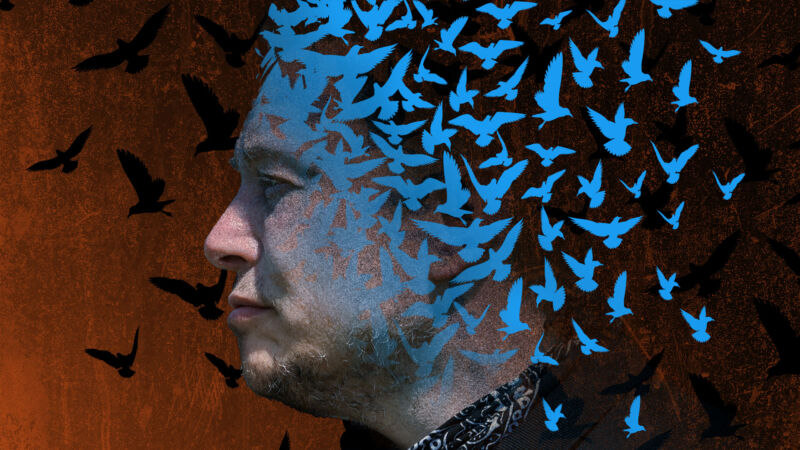
Enlarge (credit: Aurich Lawson | Patrick Pleul/dpa-Zentralbild/ZB)
Twitter filed its expected lawsuit against Elon Musk on Tuesday, demanding that he complete the $44 billion purchase of the social network.
"Musk refuses to honor his obligations to Twitter and its stockholders because the deal he signed no longer serves his personal interests," the lawsuit said. "Having mounted a public spectacle to put Twitter in play, and having proposed and then signed a seller-friendly merger agreement, Musk apparently believes that he—unlike every other party subject to Delaware contract law—is free to change his mind, trash the company, disrupt its operations, destroy stockholder value, and walk away."
The suit described "a long list of material contractual breaches by Musk that have cast a pall over Twitter and its business" and asked the court to "compel consummation of the merger upon satisfaction of the few outstanding conditions." The lawsuit points out that in the purchase agreement, "Twitter negotiated for itself a robust right to demand specific performance of the agreement's terms that encompassed the right to compel defendants to close the deal, and ensured that Musk personally was bound by that provision (among others)."
Read 29 remaining paragraphs | Comments
James.galbraithNo shit
Enlarge (credit: NurPhoto / Contributor | NurPhoto)
Earlier this month, Google sent a request to the Federal Election Commission seeking an advisory opinion on the potential launch of a pilot program that would allow political committees to bypass spam filters and instead deliver political emails to the primary inboxes of Gmail users. During a public commenting period that's still ongoing, most people commenting have expressed staunch opposition for various reasons that they're hoping the FEC will consider.
"Hard pass," wrote a commenter called Katie H. "Please do not allow Google to open up Pandora's Box on the people by allowing campaign/political emails to bypass spam filters."
Out of 48 comments submitted as of July 11, only two commenters voiced support for Google's pilot program, which seeks to deliver more unsolicited political emails to Gmail users instead of marking them as spam. The rest of the commenters opposed the program, raising a range of concerns, including the potential for the policy to degrade user experience, introduce security risks, and even possibly unfairly influence future elections.
Read 14 remaining paragraphs | Comments