Heads, Rs win, Tails, Ds lose. Jesus fucking christ
Gas and diesel prices soared worldwide after Russian strongman Vladimir Putin's invasion of Ukraine upended world energy markets, but it wasn't Putin or abstract mumblings about "market forces" that Republican politicians and media outlets would blame for the cost of filling up American gas tanks. It was President Joe Biden's fault, went the talking point. Because, uh, reasons. This is "what Joe Biden wants," conservatives shrieked. It's to get you all in electric cars! It's to crash the economy for, uh, environmental reasons! It's because a gallon of gas once looked at him funny in a Delaware bar and he's held a grudge ever since!
Gas prices have been dipping again as of late, however, and if you thought that might result in the same conservatives applauding the new lower prices, you haven't been around here long. On the contrary, Fox News talking heads are now deeply concerned over what lower gas prices are doing to "mom-and-pop" local gas stations. Won't somebody think of the gas station owners?
Wait a minute... Now that sky-high gas costs have been going down for a month, it seems that Fox News is suddenly worried that the dropping prices could hurt "mom-and-pop gas stations." pic.twitter.com/YFGS3nzF4U
It's too early to say whether this will be a long-lasting talking point or was just the sort of momentary burp that television talking heads are required to come up with in every segment, every day, in order to fill air time that would otherwise have to be filled with actual news. Our intrepid Fox News duo was referring to a not-particularly-insightful bit in The Wall Street Journal, one that correctly observed that gas station owners are pressured to lower their retail prices when their own cost for product drops.
This is because gas stations are in direct competition with whatever other gas stations are nearby and, unlike nearly any other retail store you can name, typically have the prices of their three or four products posted in enormous digits on enormous corner signs. And the reason gas prices fall much more slowly than they rise is because that competition is ... actually pretty limited! Most gas stations are in "direct" competition with only a few nearby stations at most, none of them eager to lower prices if consumers are already begrudgingly paying the higher one. It's a game of chicken between station owners; stations can capture more local business by setting prices a few cents cheaper than their neighbor, but nobody wants to be the one who sets that cycle in motion.
It's not a conspiracy, it's capitalism. You, the consumer, are destined to pay the highest price for a product that you will willingly pay. Anything less is considered a sign of market inefficiencies. Oh, but sometimes it's price fixing, in which case it is a conspira—you know what, let's just skip that for now. The point is that yes, Fox News and Wall Street Journal, prices go down when they go down, and the people selling the Thing for the Price don't necessarily like that.
But are "mom-and-pop" station owners getting squeezed here? The Journal wasn't able to come up with much of an argument for that one. The big danger for station owners is if prices drop so precipitously that they're forced to lower the retail price of gas they already filled their underground tanks with at a higher price. Are they in that position? Are they hemorrhaging money, practically giving away gas they had to pay high prices for?
It doesn't seem so. The Journal quotes one multistation owner who "netted upward of $1 a gallon" in recent weeks: "I've been making more margins this whole year."
There you go, then. Station owners have been netting some very tidy profits as gas prices soared; in the month that prices have been falling again, those prices have fallen only about 40 cents. So nobody's taking a bath here. At best, profit margins are ... still pretty damn good. Station owners aren't going to be in front of their own stations begging for spare change here. Everybody's doing fine.
It takes some real rhetorical flip-flopping to go from painting high gas prices as an existential threat to your way of life to new worries that you paying slightly lower prices is unfair to Ma and Pa Stationowner, but it's even more impressive because Fox News is continuing to attack Biden for the supposedly still-"surging" priceson the same damn day. Whatever. It's all a gimmick.
Let the record show that Joe Biden pressured American gas station owners to bring prices down by, uh, asking them to do that in a speech. And prices are going down somewhat quicker than is the normal case, but that's likely precisely because prices had previously spiked beyond what the market would long willingly bear. And some folks selling gas are mildly perturbed by the falling prices because everyone likes money and would rather have more of it, thank you very much.
Oh, also the last alleged president organized a violent mob in an attempt to overthrow the government, the Supreme Court is taking the axe to a century of settled law, and Everything Is Still On Fire. Not sure any of that compares to Biden's bold plot to have opinions about gas prices, but still.
The swift rise of omicron subvariant BA.5—with its increased immune-evading abilities and demonstrable growth advantage—has federal officials on edge. In a flurry of activity late Monday and early Tuesday, officials doubled down on pandemic measures, renewed calls for vigilance, and are considering expanding eligibility of second boosters to all adults.
In a press briefing Tuesday morning, White House COVID-19 Response Coordinator Ashish Jha outlined a battle plan against BA.5, which, as of today, is estimated to account for 65 percent of cases in the US. Jha highlighted efforts and tools to prevent another towering wave of infection as seen with the original omicron in January. The plan includes a stronger push to get Americans vaccinated and boosted, plus renewed encouragement to test, treat, mask, and improve indoor ventilation.
US COVID-19 cases are currently plateaued at a high level of around 117,000 new cases per day—but that's likely a significant underestimate given that many Americans are testing at home and not reporting their cases. Hospitalizations and intensive care admissions, meanwhile, are rising, with 17 percent and 21 percent increases over the past two weeks, respectively, according to tracking by The New York Times. Generally, the daily average of hospitalizations has more than doubled since the end of May, with the current average nearing 38,000.
Jesus fucking christ how many people have to speak up to get Biden to not slam his dick in this door?
In the nearly two weeks following the Louisville Courier Journal’s big scoop that President Joe Biden made a very bad deal with Senate Minority Leader Mitch McConnell on a forced birther judge nomination, the White House has been mum on its intent. The only comment coming from the administration is Press Secretary Karine Jean-Pierre telling reporters that they won’t comment on vacancies. The lack of denial from the White House—as well as the receipts in the form of emails about it released by Kentucky’s Democratic Gov. Andy Beshear—confirms the story, though the precise details of Biden’s deal aren’t known.
Not only has the White House not denied the deal, it hasn’t announced that it’s calling it off. In fact, HuffPost is reporting, Biden intends to move forward with it. A “source recently briefed on the White House’s plans,” told reporter Jennifer Bendery that the Biden is not backing away. There’s little reason to doubt that, even though the source is anonymous, given what we’ve seen—and not seen—from the administration.
“They’re defending it,” HuffPost’s source, who said they were briefed last week on the White House’s plan, told Bendery. On what basis they are defending it, well, lord knows.
Let’s start with the fact that this is a nominee, Chad Meredith, who Donald Trump rejected because of his close association with the corruption of former Kentucky Gov. Matt Bevin. Those scandals included a bunch of pardons for actual convicted criminals, including a murderer whose family had donated some tidy sums to Bevin’s campaign.
Then there’s the folly of making any kind of deal with McConnell. Whether it’s for McConnell’s promise to allow other lifetime judicial nominees, or for two U.S. attorneys who would serve for just four years, it’s McConnell. Even if he intended to fulfill his part of the deal personally (and that has to be in doubt, because Mitch McConnell) he can’t stop Rand Paul or Ted Cruz or Josh Hawley or Rick Scott or Tom Cotton (or any of the other 50 Republicans) from obstructing nominees.
The other part of this that is astoundingly bad on Biden’s part is that he’s blindsided Senate Democrats with it. The last thing the administration needs now is a fight with Democratic lawmakers. Over abortion and the judiciary, of all things. But a fight is precisely what he’ll get, and it could mean a very embarrassing loss for him.
“All I’m going to tell you is I’m going to vote no,” said Sen. Brian Schatz (D-HI) Monday. “It’s his call, but if he asked me for my advice I would say I don’t know how many Democrats are planning on voting yes.”
Even Sen. Tim Kaine (D-VA), no flaming liberal, is advising against the potential nomination. “I do not think this is the kind of person that a Democratic majority should put on the bench based on what I’m reading [about him],” he told HuffPost. He added that he “would have some concerns” over the nomination. Concerns like how embarrassing this could be for Biden, maybe?
There’s probably also some anger among Democrats, because every indication is that Biden was going to blindside them with it, trying to conceal with nomination in a larger group of nominees. In the email notification of the nomination that Beshear received, Bendery points out, White House officials “appear to have simply cut and pasted White House language about Meredith into the email―including the number eight right before Meredith’s name, as if he is one in a list of nominees being lumped together.”
Everything about this situation is absurd and embarrassing. Making a deal with McConnell. Thinking McConnell would honor a deal. Preparing to announce the nomination of an anti-abortion candidate to a lifetime appointment on June 24. The last week of the U.S. Supreme Court’s term. The week that they knew the court was going to overturn federal abortion rights. Dropping this mess on Senate Democrats’ laps with no warning. Embarrassing them, and setting up a potential intramural fight.
While the White House is apparently still thinking they can make this nomination, Judiciary Chairman Dick Durbin is suggesting he won’t hold a hearing for him. “Imagine how controversial it would be within the Democratic caucus,” Durbin said to Politico.
He added that’s he’d spoken to White House staff about it, asking “what’s in it” for Democrats. “They didn’t have a specific answer,” he said. If Biden does go through with it, Durbin is not promising a hearing. “We’ll wait and see if we receive it and then we’ll decide.”
The administration announced five new nominees to federal judgeships Tuesday. Meredith wasn’t on this one, so at least it hasn’t happened yet.
Nope, because hobbling a democrat is one of the few ways the Court can find joy in life
US Immigration and Customs Enforcement officers detain a man during an operation in Escondido, California, in July 2019. | Gregory Bull/AP
Oh look, a Trump judge thinks he’s in charge of immigration policy. Must be Tuesday.
Are federal law enforcement officers under the command and control of elected officials, or are they free to enforce the law as they choose, targeting the people they want to target, without guidance from an elected leader?
That’s the fundamental question in United States v. Texas, a case that just arrived at the Supreme Court on its “shadow docket.” It asks whether the Biden administration can instruct federal Immigration and Customs Enforcement (ICE) agents to follow certain enforcement priorities when deciding which undocumented immigrants to apprehend and remove from the country.
Anyone with even a passing familiarity with federal immigration law will be baffled that this issue required litigation, much less that it needs to be resolved by the Supreme Court. Federal law provides that the secretary of Homeland Security “shall be responsible” for “establishing national immigration enforcement policies and priorities.” Thus, immigration enforcement agencies such as ICE are under the control of a senior political official who is responsible to an elected president.
Pursuant to this authority, Secretary Alejandro Mayorkas issued a memo to ICE’s acting director last September, informing him that the agency should prioritize its enforcement efforts against undocumented or otherwise removable immigrants who “pose a threat to national security, public safety, and border security and thus threaten America’s well-being.”
Not long after Mayorkas issued this memo, however, the Republican attorneys general of Texas and Louisiana went to Drew Tipton, a Trump judge known for handing down legally dubious decisions blocking the Biden administration’s immigration policies, asking Tipton to declare Mayorkas’s memo unlawful. Tipton obliged, and his decision was embraced by an especially right-wing panel of the United States Court of Appeals for the Fifth Circuit.
Now, the Biden administration is asking the Supreme Court to stay Tipton’s decision, temporarily restoring an elected administration’s control over federal law enforcement while this case proceeds.
Though the Supreme Court is dominated by Republican appointees who are often no less ideological than Tipton, it’s possible that as many as six justices will reject Tipton’s unusually weak legal arguments. Last month, a majority of the Court took that approach in another immigration-related case featuring similarly weak legal arguments by a different Trump judge in Texas (although they also left open a few legal questions that judge could exploit to usurp the Biden administration’s immigration powers temporarily).
Still, the stakes in the Texas case are high. ICE employs nearly 8,000 individuals in enforcement and removal operations, many of whom are sworn law enforcement officers who carry a badge and a gun. Either these individuals are under the command and control of political officials — as federal law says that they are — or they are free to set their own priorities without oversight from anyone responsible to the American people.
What federal law actually says about immigration enforcement
There’s no reasonable argument that Mayorkas does not have the authority to set enforcement priorities for ICE, and for other immigration law enforcement agencies. As noted above, a federal statute explicitly empowers him to do so, and the then-secretaries of Homeland Security issued similar memos setting enforcement priorities in 2000, 2005, 2010, 2011, 2014, and 2017.
One reason why Mayorkas must set these priorities is that Congress has not provided the Department of Homeland Security with enough resources to apprehend and deport every undocumented immigrant in the United States even if it wanted to. As the Justice Department noted in a 2014 memo, “there are approximately 11.3 million undocumented aliens in the country,” but Congress has only appropriated enough resources to “remove fewer than 400,000 such aliens each year.”
Moreover, even if a federal statute didn’t explicitly give Mayorkas the power to establish “national immigration enforcement policies and priorities,” he would still be allowed to order ICE to focus its resources on certain immigrants, and to deemphasize enforcement against others, under a doctrine known as prosecutorial discretion.
Prosecutorial discretion refers to the power of law enforcement officers and their supervisors to decide when to enforce the law and when to decline to do so. If you’ve ever been pulled over by a police officer and then let off with a warning, then you can thank prosecutorial discretion for saving you from a ticket.
The Supreme Court has warned federal judges like Tipton to be very reluctant to second-guess these kinds of discretionary judgments by law enforcement agencies. As the Court held in Heckler v. Chaney(1985), “an agency’s decision not to take enforcement action should be presumed immune from judicial review.”
This presumption, moreover, is especially strong in the immigration context. The Supreme Court has said that “a principal feature of the removal system is the broad discretion exercised by immigration officials.” Even after an enforcement agency decides to bring a removal proceeding against a particular immigrant, the Court explained in Reno v. American-Arab Anti-Discrimination Committee (1999), it “has discretion to abandon the endeavor.” And it may do so for any number of reasons, including “humanitarian reasons or simply for its own convenience.”
So Tipton had no business second-guessing Mayorkas’s judgment. The secretary of Homeland Security doesn’t simply have explicit statutory authority permitting him to set immigration enforcement priorities, he also can rely on a body of Supreme Court decisions holding that the executive branch — and not the judiciary — gets to decide enforcement priorities generally.
Tipton’s opinion is embarrassing
In blocking Mayorkas’s memorandum, Tipton also made a number of errors that are so basic they can be refuted in a few sentences.
Tipton, for example, claims that Mayorkas was required to complete a process known as “notice and comment,” which can take months or even years, before he can set enforcement priorities for ICE. But federal law exempts “general statements of policy” from notice and comment, and the Supreme Court defines the term “general statement of policy” to include “statements issued by an agency to advise the public prospectively of the manner in which the agency proposes to exercise a discretionary power.”
Again, Mayorkas has the discretionary power to set enforcement priorities for ICE.
Similarly, Tipton faulted Mayorkas’s memo because it supposedly failed to consider “the costs its decision imposes on the States.” But a 21-page document accompanying Mayorkas’s memo includes an entire subsection titled “Impact on States.” That subsection concludes that “none of the asserted negative effects on States — either in the form of costs or the form of undermining reliance interests” — undercut the benefits of Mayorkas’s preferred policy.
Tipton’s opinion, in other words, takes such extraordinary liberties with the law and with the facts of this case that there is a very real possibility that even this Supreme Court, with its 6-3 conservative supermajority, will determine that he went too far. It is notable that, shortly after Tipton handed down his decision, a federal appeals court in Ohio rejected Tipton’s arguments and sided with Mayorkas’s power to set enforcement priorities.
Last week, Senators Elizabeth Warren (D-Mass.) and Amy Klobuchar (D-Minn.) sent a letter to Meta asking what the company plans to do to end abortion-post censorship on its platforms. They gave Meta until this Friday, July 15, to respond, placing urgency on their request and seeking evidence that the company is taking immediate action.
Examples of censorship cited in the letter include instances where Facebook and Instagram removed "posts providing accurate information about how to legally access abortion services" within minutes and placed sensitivity screens over a post promoting an abortion documentary. The senators also took issue with censorship of health care workers, including a temporary account suspension of an "organization dedicated to informing people in the United States about their abortion rights."
Some microprocessors from Intel and AMD are vulnerable to a newly discovered speculative execution attack that can covertly leak password data and other sensitive material, sending both chipmakers scrambling once again to contain what is proving to be a stubbornly persistent vulnerability.
Researchers from ETH Zurich have named their attack Retbleed because it exploits a software defense known as retpoline, which was introduced in 2018 to mitigate the harmful effects of speculative execution attacks. Speculative execution attacks, including one known as Spectre, exploit the fact that when modern CPUs encounter a direct or indirect instruction branch, they predict the address for the next instruction they’re about to receive and automatically execute it before the prediction is confirmed. Spculative execution attacks works by tricking the CPU into executing an instruction that accesses sensitive data in memory that would normally be off-limits to a low-privileged application. Retbleed then extracts the data after the operation is canceled.
Is it a trampoline or a slingshot?
Retpoline works by using a series of return operations to isolate indirect branches from speculative execution attacks, in effect erecting the software equivalent of a trampoline that causes them to safely bounce. Stated differently, a retpoline works by replacing indirect jumps and calls with returns, which many researchers presumed weren’t susceptible. The defense was designed to counter variant 2 of the original speculative execution attacks from January 2018. Abbreviated as BTI, the variant forces an indirect branch to execute so-called “gadget” code, which in turn creates data to leak through a side channel.
I'll take "massive understatements" for 1000 please.
NASA Spaceflight video of Super Heavy testing on July 11, 2022.
A ground-based test of the Super Heavy rocket that is intended to boost a Starship upper stage into orbit ended in flames on Monday afternoon at SpaceX's launch site in South Texas. A fire burned in the vicinity of the pad, on and off, for more than an hour.
This is the first time SpaceX has tested a booster stage—this one bears the designation Booster 7—equipped with a full complement of 33 Raptor rocket engines. Monday's test was not intended to lead to a static fire test, during which the engines are briefly ignited, so seeing fire erupt from the aft end of the vehicle at 4:20 pm CT local time was a surprise.
The methane-fueled Raptor engine has a complicated sequence of events that must unfold precisely in order for it to ignite, and SpaceX was testing the "spin start" portion of this ignition sequence when the anomaly occurred. Something must have caused methane propellant to ignite, with the ambient oxygen in the air serving as an oxidizer, inside the vehicle.
Obviously voting is extremely important, and Manchin and Sinema pose problems. But there is no long-term solution to Roe or to attacks on democracy without expanding the court, and the Dem leadership is so far completely unwilling to even entertain this idea.
Photographers lean in close to Cassidy Hutchinson, former aide to Trump White House chief of staff Mark Meadows, taking photos of her before her testimony to the House select committee investigating the January 6, 2021 attack on the US Capitol. | Jabin Botsford/Washington Post via Getty Images
Testimony that Trump hurled a plate at a wall and stained it with ketchup stuck with viewers of the hearings for good reason.
Remember when then-President Donald Trump hurled a plate at a White House wall, spattering it with ketchup? You didn’t see that moment. You didn’t even know about it when it happened. But when Cassidy Hutchinson, a former aide to Mark Meadows, Trump’s chief of staff, told that story before the House select committee investigating the Capitol insurrection of January 6, 2021, odds are pretty good you could picture it.
The ketchup wall was just one of many damning details in Hutchinson’s testimony, delivered on June 28. She also testified that Trump seemed intent on allowing heavily armed people to march on the Capitol, that he reportedly attempted to seize control of a vehicle from a Secret Service agent who wouldn’t drive him up to the Capitol, and that he was obsessed with the size of the crowd listening to his speech on that day. (With Trump, some things never change.)
Those were all big, shattering revelations. But in the moment, as Hutchinson was testifying, what seemed to garner the greatest buzz on social media platforms was the ketchup. It was so ridiculous, so overly dramatic, so campy. Even though Hutchinson says it really happened, it nevertheless had big reality TV vibes, a sense that what was real had been turned up a couple of notches. And that was what made the moment stand out.
Sources close to Jared and Ivanka say that privately the couple opposed Donald Trump’s decision to throw ketchup at the wall.
— New York Times Pitchbot (@DougJBalloon) June 28, 2022
Reality television made Trump, both literally (he built considerable fame atop The Apprentice) and figuratively (he seemed to subconsciously fashion himself as a reality TV character on the campaign trail). And even though Trump is no longer in office, reality TV remains a compelling way to understand him and his administration. With the hearings set to resume this week, the “narrative” surrounding them — at least among casual observers — increasingly has the feel of people discussing a reality show around the water cooler, too.
Now that his presidency is over, the January 6 hearings stand as a kind of last-minute reunion special, one where the former star has removed himself from the proceedings by refusing to testify. No less a former Trump luminary than former chief of staff Steve Bannon is set to testify this week.
Since Trump won’t be testifying, he misses a chance to set the narrative and define its “characters” going forward. He has lost control of the story, as it were. As such, we’re left with the stories we didn’t hear about in all those years of the Trump White House. And in the midst of that vacuum, of course we’re picking on the most ridiculous details.
Donald Trump has always been our reality-show president. These hearings prove he still is, even without his usual tricks.
Matthew Imaging/Getty Images
Donald Trump’s fame only increased after he began hosting the NBC reality show The Apprentice in 2004.
In the summer of 2015, as Trump began his rise to the top of the Republican presidential primary polls, many political observers wrote him off as a flash in the pan. But his TV presence was fascinating.
In the early Republican primary debates, he kept finding ways to make himself the story and to pull the camera’s focus back to him. His many years on the reality show The Apprentice had served him incredibly well. Trump had so internalized how to be on television that none of his opponents seemed to be anywhere near as comfortable. Being good on TV isn’t the primary skill that wins presidential races, but it helps considerably. And Trump was really good on TV. “The contents of Trump’s message are loathsome to many, including many Republicans, but the package Trump is selling them in is market-tested and ready to ship,” I wrote at the time.
The idea of understanding Trump as a scheming reality show contestant, willing to do whatever it took to win, only grew as he won the Republican nomination and the presidency. He quite willingly took on the role of “reality show villain,” which wasn’t really a negative. In reality TV, the “villain” is just the person who drives the story forward through their scheming, whom the cameras are always pinned to, who does and says the most outrageous things to garner attention. The archetypal example is likely Richard Hatch from the first season of Survivor, who won the whole game by being as unscrupulous as possible. Whether Trump thought of himself this way is impossible to know, but he quite obviously understood what made good television.
“Donald Trump is starring in a TV show where he is the protagonist” turned out to be an incredibly useful way to understand Trump’s rise to power. (The New York Times’s James Poniewozik wrote an entire book about it.) It didn’t help blunt the occasionally catastrophic effects of his policies, but it did explain why he seemed so comfortable with complete and utter chaos. Indeed, he seemed most at home amid it.
Trump seemed comfortable playing a reality show villain, the guy whose behavior was so unbelievable that you had to keep tuning in to see what he did next. When the Covid-19 pandemic hit and disrupted every aspect of American life, Trump’s desire to be at the center of his own TV show ran aground — but it wasn’t as though he lost the 2020 election in a blowout either. To plenty of people, the Trump show was one they wanted to keep watching.
The Trump who attempted to subvert the election on January 6 — especially the Trump portrayed in the testimony at the select committee hearings — is essentially a man who believed himself to be a TV protagonist who was so intent on remaining the protagonist (or, okay, the president) that he nearly destroyed American democracy in the process of asserting that fact. His efforts ultimately failed, but the reminder of just how self-aggrandizing and destructive Trump could be may be why Hutchinson’s testimony seemed to strike such a nerve.
The January 6 hearings are finally exposing Trump’s reality TV villain persona for the sham it’s always been
Tom Williams/CQ-Roll Call, Inc via Getty Images
Cassidy Hutchinson testifies before the January 6 committee.
There are few formats more poorly suited to riveting television than congressional hearings. The January 6 committee has lots of compelling visual evidence, including some truly gut-wrenching videos, but the core of the hearings are individual testimonies. And just watching someone talk makes for really boring television.
As such, almost every time there are congressional hearings for anything, those inclined to believe those hearings should move the public opinion needle fret endlessly about whether they have “broken through.” If hearings are so boring on TV, why would anyone watch these hearings if they were not already inclined to agree with the idea that Trump’s actions require investigation? And if nobody watches them, will they matter?
A similar dynamic even struck the Watergate hearings, probably the most famous televised congressional hearings of all time. When looking back at reporting from the period, it’s not hard to find folks fretting over whether anyone really cares that Nixon did something bad. Eventually, enough people did, both within Washington and without, that Nixon stepped down. But it took longer than you’d expect. The gap between the beginning of those hearings and Richard Nixon’s resignation was well over a year, and even in terms of his approval rating, it took several months to reach a true nadir.
The temptation, then, is to say that the hearing where Hutchinson testified was only the sixth hearing of this particular committee, and therefore, there’s plenty of time for the hearings to reach a wider audience. But those typical congressional hearing dynamics are all scrambled in the face of Trump. He’s been playing the part of reality TV villain so long that if you’re someone who just wanted him voted off the show back when he was being a garden variety asshole in Republican primary debates and not, you know, possibly committing treason, then the last several years have built an ever more frustrated sense of urgency. Something — the Mueller report, the first impeachment, the second impeachment — has to take down Trump. And yet nothing has. If you’re that person, then Trump’s ability to never face accountability seems increasingly galling. Ah. Well. Nevertheless.
Yet perversely, I think that’s why “Trump threw a plate at a wall” broke through in a way some of the other January 6 committee revelations have not. Hutchinson’s story, dryly delivered though it was, played into a different type of reality TV villain — not the calculating mastermind willing to do anything to win but the unhinged person who makes everybody’s life hell. (Imagine the table flip moment from Real Housewives of New Jersey and I think you’ll see what I mean.)
This less-controlled reality TV villain can be very fun to watch on TV, but you’d rarely want them in your corner. They are, instead, cautionary tales of what happens when “I’m not here to make friends” boils over into something so antisocial that it burns up on reentering the atmosphere. You definitely wouldn’t want to hang out with this person.
Occasionally, that sort of villain simply removes themselves from the narrative altogether. Perhaps the most famous example of this happening in reality television occurred when Lisa Vanderpump abruptly stepped away from Bravo’s Real Housewives of Beverly Hills, the show that made her a TV star, midway through filming its ninth season. (Her employee-centric spinoff, Vanderpump Rules, continues to run.) Her reasons for doing so were varied, but at base, they boiled down to (and I paraphrase) “everybody is persecuting me.” Her castmates were insufficiently nice to her. The editors weren’t making her look good. And so on.
If that sounds at all like the former president’s obsession with how he’s perceived, well, the former president was also a reality TV star. And reality TV is a uniquely deceptive beast because if you’re on it, the process of getting “a good edit” makes it sometimes seem as though you’re literally in control of reality, especially if you’ve got a lot of power over the creative direction of the show, as Trump did over The Apprentice. (There’s one more comparison point to be drawn here: Like Trump, Vanderpump didn’t fare particularly well on the Real Housewives reunion she skipped.)
When watching Hutchinson’s testimony in front of the January 6 committee, I couldn’t help but fantasize about the ways that the things she was saying might have been intercut with the footage of those things happening were this an actual reality TV reunion special, the live audience oohing and aahing at all the big moments from the season prior. I’ve been reading the Trump presidency through a reality TV lens for so long that I can’t stop, even when the events being described are horrifying and sobering.
I say none of this to downplay the seriousness of the charges Hutchinson made against Trump but, rather, to suggest why the January 6 hearings might finally be puncturing the televisual archetype that made Trump such a formidable political force. I am under no illusions that anything will happen to make Trump suffer actual consequences for what he did, but I do think the hearings have finally exposed him for who he is, just a little bit. He’s not a scheming Survivor. He’s a snippy, back-biting Real President of DC.
After months of anticipation and a day after President Joe Biden himself was involved in the release of an image of the early Universe, NASA has now released four other images from the Webb Space Telescope. The agency already told us that targets would include a couple of nebulas, a galaxy cluster, and an exoplanet.
But it wasn't clear exactly what features of these objects would be the focus or how NASA would process the images so that features that exist in the infrared area of the spectrum could be perceived in the visible area of the spectrum. Scientists we spoke to at the Webb launch event suggested that everyone was aware that aesthetics matter and that officials would be experimenting with different methods to do this processing in a way that balanced scientific accuracy with the "wow" factor everyone expects.
The results are finally being made available, and they definitely managed to wow.
Republicans across the country are doing everything they can to stay in power, and using the Big Lie and the bogus conspiracy of rigged elections has prompted one of the most shameless of them, Florida Gov. Ron DeSantis, to assure control by appointing a secretary of state who will absolutely toe the company line.
“Cord Byrd has been an ally of freedom and democracy in the Florida Legislature, and I am confident he will carry that mission forward as secretary of state,” DeSantis said in May. “I look forward to his successes ensuring Florida’s elections remain safe, secure, and well-administered.”
According to Salon, Byrd has said he will guarantee that "Florida continues to have secure elections and that we protect the freedom of our citizens in the face of big-tech censorship and ever-growing cybersecurity threats." But Byrd has also staunchly denied that President Joe Biden beat former President Donald Trump in the 2020 presidential election.
When he was appointed, Byrd said about Biden, "He was certified as the president. He is the president of the United States … There were irregularities in certain states. … I'm not the secretary of state of Wisconsin or Pennsylvania or Arizona. That's up to their voters. We in Florida had a successful election in 2020. And that's what I want to continue to have in 2022."
Byrd’s wife Esther is also deeply problematic. She was appointed by DeSantis to the State Board of Education.
After the Jan. 6 insurrection on the U.S. Capitol, Esther Byrd said the rioters were “peacefully protesting.” And on her Facebook page, she reportedly wrote: “ANTIFA and BLM can burn and loot buildings and violently attack police and citizens … But when Trump supporters peacefully protest, suddenly ‘Law and Order’ is all they can talk about! I can’t even listen to these idiots bellyaching about solving our differences without violence.”
“In the coming civil wars (We the People vs the Radical Left and We the People cleaning up the Republican Party), team rosters are being filled,” mused Byrd. “Every elected official in DC will pick one. There are only 2 teams… With Us [or] Against Us.”
But it’s her husband who is much more worrisome. Byrd co-sponsored Florida’s “Don’t Say Gay” bill, a ban on abortions after 15 weeks, anti-voter bills that passed in 2021 and 2022, an anti-trans athlete ban, and an anti-immigrant bill, as NPR reports.
"The way he made arguments and debates on the floor, it really made many of my Black colleagues and myself uncomfortable with some of the things that he said,” Rep. Angie Nixon of Jacksonville told NPR about Byrd. "It seems as though the governor chose someone who he knew was going to do his bidding," Nixon said. "I think someone who may have already been a judge — or someone who had previously been a supervisor of elections — would have been great for this job, but not someone who is as uber-partisan as Cord Byrd is," Nixon added.
Per Salon, Jim Marchant, a Trump bootlicker who’s joyously claimed that elections in general are illegitimate, won the GOP nomination for secretary of state in Nevada. Kristina Karamo, another election-denier, won the Republican nomination for secretary of state in Michigan. Mark Finchem was endorsed by Trump to be Arizona’s next secretary of state; he was also at the Capitol on Jan. 6, and introduced a bill to decertify the 2020 presidential election.
Republicans love to churn false hysteria over trans folks, especially when it comes to trans adults being villainous predators. Conservatives paint a sadly familiar (and false) picture: Trans people “pretend” to be who they are in order to access spaces not intended for them and use that opportunity to prey on vulnerable people, like women and children. This scenario is used often when it comes to youth playing sports or attending school field trips—where a trans youth will sleep, for example, or which locker room they’re allowed to use—as well as for both youth and adults when it comes to using public facilities, like restrooms.
The reality is, however, that trans people are much more likely to be the victims of violence than cisgender people. Some trans folks are especially vulnerable to violence based on intersecting identities; trans sex workers of color, for example, are especially susceptible to brutality and harassment from the police.
As reported by local outlet WXIX, a 20-year-old trans man is sharing his story about trying to use the restroom while camping in Camden, Ohio. Noah Ruiz tells the outlet he was beaten (and later arrested) for using the women’s bathroom … which he says he used after being told to do so by the campground’s owner.
According to Ruiz, he and his girlfriend used the women’s bathroom while camping on July 3 at Cross’s Campground. Ruiz explains to the outlet another woman in the bathroom started shouting and cursing, asking who was in there and saying “no man” should be in that bathroom.
Ruiz says he explained to the woman that he is transgender but had been told to use the women’s bathroom. After exiting the bathroom, however, Ruiz says three large men violently attacked him. Ruiz says they “grabbed” him off the ground, “choked” him, and threatened to kill him. Ruiz says he suffered wounds including bruises and cuts from the assault.
In the end, Ruiz was arrested by Preble County sheriff's deputies when they arrived in the area. He was arrested on counts of obstructing official business and disorderly conduct. The sheriff was reportedly not aware of the assault Ruiz suffered at the time of his arrest but found him to be belligerent and intoxicated.
At this point, Ruiz says he wants accountability. He filed an assault report with the sheriff's office but no charges have yet been filed. The office is looking for the alleged assailants.
This situation is obviously horrifying in itself but the big picture is even more concerning. This scenario could easily replicate, thanks to conservatives pushing ‘Don’t Say Gay’ legislation which urges educators to essentially monitor the gender performance and presentation of youth and report them to their parents.
And of course, when it comes to the anti-trans sports bills, the same can happen, especially with fellow kids and their parents being able to “question” anyone’s gender identity if they suspect they’re trans. It’s an absolute nightmare in all directions.
The GOP wants, of course, to force people into the closet and require everyone to present in the cisnormative and heteronormative standards conservatives prefer. But the anti-queer rhetoric they’re using in hopes of getting votes could get people seriously hurt—or even killed.
Over-the-counter birth control, which could be made available at pharmacies in the US if HRA Pharma's application is successful, has long been backed by major medical organizations as a way to reduce barriers to contraception access
Washington (AFP) – In a first, a pharmaceutical company applied Monday for US approval to make its birth control pill available over-the-counter, weeks after the US Supreme Court overturned a federal right to abortion care.
HRA Pharma, a subsidiary of Perrigo, said in a statement it was seeking the switch away from prescription-only for its product Opill, a progestin-only daily birth control pill — also referred to as a mini pill or non-estrogen pill.
Over-the-counter (OTC) birth control has long been backed by major medical organizations as a way to reduce barriers to contraception access.
The timing of the application — which comes amid a wave of state-level restrictions and bans on abortion following the top court’s ruling — was “coincidental,” according to an HRA spokeswoman, who said the company had been compiling research for its application for the past seven years.
“This historic application marks a groundbreaking moment in contraceptive access and reproductive equity in the US,” said Frederique Welgryn, chief strategic operations and innovation officer at HRA Pharma, in a statement.
“Moving a safe and effective prescription birth control pill to OTC will help even more women and people access contraception without facing unnecessary barriers.”
Over-the-counter birth control is backed by major medical organizations, including the American College of Obstetricians and Gynecologists (ACOG), the American Medical Association and the American Academy of Family Physicians.
It is also standard practice in many countries, including Brazil, Greece, Mexico, Portugal, Russia, South Korea and Turkey.
Generally speaking, wealthier countries favor more regulations and thus prescription only birth control.
But according to ACOG, “Data support that progestin-only hormonal methods are generally safe and carry no or minimal risk of venous thromboembolism (VTE),” also known as blood clots.
“Several studies have demonstrated that women are capable of using self-screening tools to determine their eligibility for hormonal contraceptive use,” adds the organization, in an opinion on the matter published on its website.
A 2016 study found that nearly one third of US women who have tried to obtain prescription contraception reported access barriers.
The application will now be reviewed by the Food and Drug Administration, a process that would normally take around a year to complete.
Good. And as DOJ properly noted: this trial isn't to secure future compliance, it's to punish past defiance. Any offer to testify shouldn't impact the need for the trial.
Published by Reuters
WASHINGTON (Reuters) – A judge declined to delay the contempt of Congress trial of Donald Trump’s former close adviser Steve Bannon, just one week before it is set to begin, CNN and NBC News reported.
Bannon was indicted last year for refusing to answer questions from the congressional committee investigating the Jan. 6, 2021 attack on the U.S. Capitol by supporters of the former president.
Bannon told the panel over the weekend he was ready to testify, a change of heart from days before he was due to be tried for contempt of Congress.
(Reporting by Kanishka Singh in Washington; Editing by Chris Reese)
(Reuters) – With its excellent academic and music programs, Oberlin College in Ohio seemed like a perfect fit for Nina Huang, a California high school student who plays flute and piano and hopes to eventually study medicine or law.
But Huang, 16, said she crossed the college off her application list after Ohio enacted a near-total ban on abortion last month. She now plans to cast a wider net for schools in states with less restrictive laws.
“I don’t want to go to school in a state where there is an abortion ban,” she said.
The U.S. Supreme Court’s decision in June to overturn the 1973 Roe v. Wade case that legalized abortion nationwide has some students rethinking their higher education plans as states rush to ban or curtail abortion, according to interviews with 20 students and college advisers across the country.
While it has long been the case that some students hesitated to attend schools in places with different political leanings than their own, recent moves by conservative states on issues such as abortion and LGBTQ+ rights have deepened the country’s polarization.
For some students, the restrictions raise fears that they won’t be able to get an abortion if they need one or that they will face discrimination for gender differences. Others said they worried about facing racial prejudice or being politically ostracized.
“I’m only in high school right now, and I’m still finding out who I am,” said Samira Murad, 17, who will be a senior this fall at Stuyvesant High School in New York. “I don’t want to move somewhere I can’t be myself because of laws put in place.”
It is too soon to determine whether such concerns will affect admissions in a measurable way, and evidence from other recent divisive state laws suggests there may be little overall impact.
But in the wake of Roe’s overturn, college counselors said abortion has figured prominently in many conversations with clients, with some going as far as nixing their dream schools.
“Some of our students have explicitly stated that they will not apply to colleges and universities in states which may infringe on their access to reproductive rights,” said Daniel Santos, chief executive of the Florida college counseling company Prepory.
‘TOPIC OF CONCERN’
Kristen Willmott, a counselor with Top Tier Admissions in Massachusetts, said students she works with have told her they are taking some top schools in Texas, Florida and Tennessee off their application lists due to their restrictive abortion laws.
Alexis Prisco, who is entering her senior year at Eastern Technical High School in Maryland, had planned to apply to her parents’ alma mater, Washington University in St. Louis, Missouri.
She feels wary, however, after the state enacted a law effectively banning abortion.
“Now my mom has warned me that I need to be very careful when applying to schools in states with trigger laws,” said Prisco, 17, referring to bans designed to take effect once the Supreme Court overturned Roe.
Washington University declined to comment but shared a June 24 statement in which university leaders acknowledged the fears and frustration felt by some after the court ruling. Oberlin College did not respond to requests for comment.
Several students raised similar concerns about attending college in North Carolina after the state in 2016 passed a law restricting which bathrooms transgender people could use, said counselor Jayson Weingarten of New York-based Ivy Coach.
But he said many still chose to attend Duke University and the University of North Carolina at Chapel Hill.
Admissions statistics from UNC show the number of applicants increased by 14% between 2016 and 2017 despite individual students’ unease.
Abortion is “a topic of concern for most of the students but not something that’s going to dissuade them from going to one of the most highly selective schools in the country,” Weingarten said.
Shahreen Abedin, a spokesperson for the University of Texas’ medical school, said the school had not seen a drop in applications that it could reasonably attribute to a state ban on abortions after six weeks that took effect in September.
For Maryland high school student Sabrina Thaler, however, the prospect of attending college in a state that bans abortion is unsettling.
Thaler, 16, recalled the question she posed to her high school class during a discussion in May after the decision that ultimately overturned Roe v. Wade was leaked.
“What if I go to a college in a state where abortion is banned and I get raped and then I don’t have the option to have an abortion?”
(Reporting by Sharon Bernstein in Sacramento, California and Rose Horowitch in Washington; Editing by Colleen Jenkins and Aurora Ellis)
An anonymous reader quotes a report from The Drive: Hackers have uncovered ways to unlock and start nearly all modern Honda-branded vehicles by wirelessly stealing codes from an owner's key fob. Dubbed "Rolling Pwn," the attack allows any individual to "eavesdrop" on a remote key fob from nearly 100 feet away and reuse them later to unlock or start a vehicle in the future without owner's knowledge. Despite Honda's dispute that the technology in its key fobs "would not allow the vulnerability," The Drive has independently confirmed the validity of the attack with its own demonstration.
Older vehicles used static codes for keyless entry. These static codes are inherently vulnerable, as any individual can capture and replay them at will to lock and unlock a vehicle. Manufacturers later introduced rolling codes to improve vehicle security. Rolling codes work by using a Pseudorandom Number Generator (PRNG). When a lock or unlock button is pressed on a paired key fob, the fob sends a unique code wirelessly to the vehicle encapsulated within the message. The vehicle then checks the code sent to it against its internal database of valid PRNG-generated codes, and if the code is valid, the car grants the request to lock, unlock, or start the vehicle. The database contains several allowed codes, as a key fob may not be in range of a vehicle when a button is pressed and may transmit a different code than what the vehicle is expecting to be next chronologically. This series of codes is also known as a "window," When a vehicle receives a newer code, it typically invalidates all previous codes to protect against replay attacks. This attack works by eavesdropping on a paired keyfob and capturing several codes sent by the fob. The attacker can later replay a sequence of valid codes and re-sync the PRNG. This allows the attacker to re-use older codes that would normally be invalid, even months after the codes have been captured.
[...] Contrary to Honda's claim, I independently confirmed the vulnerability by capturing and replaying a sequence of lock and unlock requests with my 2021 Honda Accord and a Software-Defined Radio. Despite being able to start and unlock the car, the vulnerability doesn't allow the attacker to actually drive off with the vehicle due to the proximity functionality of the key fob. However, the fact that a bad actor can get this far is already a bad sign. At this time, the following vehicles may be affected by the vulnerability: 2012 Honda Civic, 2018 Honda X-RV, 2020 Honda C-RV, 2020 Honda Accord, 2021 Honda Accord, 2020 Honda Odyssey, 2021 Honda Inspire, 2022 Honda Fit, 2022 Honda Civic, 2022 Honda VE-1, and 2022 Honda Breeze. It's not yet clear if this affects any Acura-branded vehicles. "[W]e've looked into past similar allegations and found them to lack substance," said a Honda spokesperson in a statement to The Drive. "While we don't yet have enough information to determine if this report is credible, the key fobs in the referenced vehicles are equipped with rolling code technology that would not allow the vulnerability as represented in the report. In addition, the videos offered as evidence of the absence of rolling code do not include sufficient evidence to support the claims."
I also think it's worth considering the "cuisine" they're trying to salvage here...
Adding salt to meals at the table is linked to an earlier death, according to a study of 500,000 middle-aged Britons. From a report: Researchers found that always adding salt to food knocks more than two years off life expectancy for men and one-and-a-half years for women. This does not include seasoning during the cooking process. The study did not definitively rule out other factors, such as salt consumption being a proxy for a generally less healthy lifestyle, but the team behind the work said the evidence was compelling enough that people should consider avoiding seasoning their meals.
"To my knowledge, our study is the first to assess the relation between adding salt to foods and premature death," said Prof Lu Qi of Tulane University School of Public Health and Tropical Medicine in New Orleans, who led the work. "Even a modest reduction in sodium intake, by adding less or no salt to food at the table, is likely to result in substantial health benefits, especially when it is achieved in the general population." The findings were based on research involving more than 500,000 participants in the UK Biobank study, who were followed for an average of nine years. When joining the study between 2006 and 2010, they were asked, via a touchscreen questionnaire, whether they added salt to their foods and how often they did so.
As always, if you find value in this work I do, please consider helping me keep it sustainable by joining my weekly newsletter, Sparky’s List! You can get it in your inbox or read it on Patreon, the content is the same.
Uber consistently circumvented regulations, thwarted police and secretly courted lawmakers to pave the way for its questionable practices as it expanded into new cities around the world, according to leaked documents obtained by The Guardian.
The documents span the company’s operations from 2013 to 2017 under Travis Kalanick, its billionaire co-founder. As the company rapidly expanded into new cities around the world — and faced vast global backlash for defying regional laws — top executives privately acknowledged their practices and laughed them off in internal communications with Kalanick, according to The Guardian and ICIJ. One executive even referred to the group as “pirates” and said that “we’re just fucking illegal.”
During this period, Uber tried to recover its image by courting politicians, including President Emmanuel Macron of France. Texts show how Macron went out of his way to bolster Uber’s growth in France and allowed the company to maintain regular communication with his immediate staff.
He is just one of many government leaders, billionaires and media moguls the company secretly lobbied to cover up what the reports say were unlawful practices.
When one executive raised concerns about Uber drivers facing potential violence from angry competitors in the taxi industry, Kalanick reportedly said that “I think it’s worth it” and that “violence guarantees success.” A Kalanick spokesperson denied that he ever suggested exploiting violence against the app’s drivers.
Devon Spurgeon, the spokesperson for Kalanick, the former CEO, said the Consortium for Investigative Journalists was putting forward a “false agenda.”
“In pressing its false agenda that Mr. Kalanick directed illegal or improper conduct, the ICIJ claims to have documents that Mr. Kalanick was on or even authored, some of which are almost a decade old,” she added. “Tellingly, the ICIJ flatly rejected requests to review any of those documents, which further exacerbates concerns about many of the source documents’ authenticity.”
When the company needed data to influence policymakers, according to The Guardian’s report, it also paid academics to publish research that would bolster its misleading economic claims about the company’s business model — which offered unsustainably low prices as it entered new cities to ensure winning out over local taxi competitors.
In response to the leak, Uber issued a statement acknowledging “mistakes and missteps,” but insisted that current leadership had transformed the company.
More than 180 journalists are investigating the “Uber Files” and will be publishing a series of reports dissecting over 124,000 documents in the coming weeks.
IF the court abandons the rule of law? JFC, how much more obvious does it need to be.
An abortion rights activist flies an upside-down American flag, a sign of dire distress, outside of the US Supreme Court during a protest on June 26, two days after the Court overturned Roe v. Wade. | Samuel Corum/AFP via Getty Images
What happens if the Court rejects the rule of law?
The highest Court in the most powerful nation in the world appears to have decided that it only needs to follow the law when it feels like it.
At least, that’s what happened if you take the Court’s 5-4 decision in Whole Woman’s Health v. Jacksonseriously. Jackson involved Texas’s anti-abortion law SB 8, which allowed “any person” who is not employed by the state to sue anyone they suspect of performing an abortion after the sixth week of pregnancy, and to collect a bounty of at least $10,000 from that abortion provider. The Court allowed that law to take effect, even though abortion was still considered a constitutional right at the time.
If you apply the logic from Jackson more broadly, any state could pass a law unleashing such litigious bounty hunters upon people who exercise any constitutional right. Perhaps a state wants to make it illegal to own a gun, or maybe it wants to allow bounty hunters to sue any Black family that sends its child to a predominantly white school — and the federal judiciary will simply stand back and let it happen. Realistically, the Court is unlikely to allow these sorts of attacks. But to spite abortion, the conservative majority was willing to open the door to them.
Jackson, moreover, was only the beginning of a Rumspringa of conservative excess led by the Court’s Republican-appointed majority.
In its just-completed term, the Supreme Court overruled Roe v. Wade, permitting states to ban abortions without having to resort to SB 8-style chicanery. It also overruled a seminal 1971 decision prohibiting the government from advancing one religious belief at the expense of others. It all but neutralized another half-century-old precedent permitting federal law enforcement officers who violate the Constitution to be sued. And the Court’s Republican majority dismantled two decisions protecting criminal defendants who were convicted or sentenced without adequate defense counsel, most likely condemning an innocent man to die in the process.
The Court endangered huge swaths of long-existing gun laws, striking down a New York state law that has been on the books for 109 years. And it did so in an opinion that simultaneously fetishizes the “Second Amendment’s plain text,” while ignoring the first thirteen words of that amendment.
In what may be the most consequential environmental case in decades, the Court relied on something called the “major questions doctrine” — a fairly new legal doctrine that is never mentioned in the Constitution or in any statute and that was invented entirely by judges — to strip the Environmental Protection Agency of much of its authority to fight climate change.
Win McNamee/Getty Images
Former Bremerton High School assistant football coach Joe Kennedy takes a knee in front of the US Supreme Court after Kennedy v. BremertonSchool District was argued before the Court on April 25.
It was a singularly alarming Supreme Court term. The Court didn’t simply abandon longstanding legal rules, at times it seemed to abandon the rule of law altogether.
What is “the rule of law”?
I make a strong claim in this essay, arguing that the Supreme Court of the United States is no longer deciding many major cases in a way that is recognizably “legal.” So let’s start by establishing a baseline definition of what constitutes the rule of law and what it means for a judge to act consistently with this principle.
The late Justice Antonin Scalia offered one of the best explanations of how a judge can act consistently with the rule of law in a 1989 essay. “When, in writing for the majority of the Court, I adopt a general rule,” Scalia explained, “I not only constrain lower courts, I constrain myself as well.” Because “if the next case should have such different facts that my political or policy preferences regarding the outcome are quite the opposite, I will be unable to indulge those preferences.”
Scalia’s formulation capturesthe rule of equality before the law. If a judge applies a certain rule to Republicans, they must be comfortable applying it to Democrats as well. If they apply one rule to people who oppose abortion, they must apply the same rule to people who support abortion.
Similarly, Scalia’s formulation advances the values of legal certainty and non-arbitrariness. While there are extraordinary circumstances when the Supreme Court should overrule one of its previous precedents, lawyers and lawmakers should typically be able to look at the Court’s past decisions and be able to predict how the law will apply moving forward. When possible, the Supreme Court should hand down clear legal rules which enhance this predictability and that cannot easily be manipulated to hand down arbitrary decisions that favor some groups over others.
With these principles of equality, clarity, and non-arbitrariness in mind, let’s take a look at some of the Court’s recent decisions.
Whole Woman’s Health v. Jackson is one of the worst decisions in the Supreme Court’s history
There are a handful of Supreme Court decisions that legal scholars refer to as the “anti-canon,” decisions that were so poorly reasoned and monstrous in their consequences that they are taught to law students as examples of how judges should never behave. The anti-canon includes cases like the pro-slavery decision in Dred Scott v. Sandford (1857), the segregationist decision in Plessy v. Ferguson (1896), the anti-worker decision in Lochner v. New York (1905), and the Japanese-American internment decision in Korematsu v. United States (1944).
Whole Woman’s Health v. Jackson belongs on this list. It is, as Chief Justice John Roberts wrote in dissent, so thoroughly inconsistent with the idea that the Constitution binds every state government that it threatens to transform that document into a “solemn mockery.” Jackson introduces an intolerable amount of unpredictability and arbitrariness into US law, transforming the constitutional rights that every American should reasonably be able to rely upon into dust that can be blown away by a sufficiently clever state legislature.
So long as Jackson remains good law, no constitutional right is safe.
Shelby Tauber/Bloomberg via Getty Images
The Whole Woman’s Health of Fort Worth clinic in Fort Worth, Texas, on July 3. Whole Woman’s health announced on July 6 they would shutter their four Texas clinics, and are working to reestablish in New Mexico.
As a general rule, someone who believes that a state law violates their constitutional rights cannot sue that state directly in federal court. Under the Court’s decision in Ex parte Young (1908), however, they may sue the state officer tasked with enforcing an allegedly unconstitutional law. Thus, for example, if a state passed a law requiring state police to blockade abortion clinics, a plaintiff might sue the chief of the state police to block that law.
But SB 8, the anti-abortion law at issue in Jackson, attempts to cut state officers out of the enforcement process altogether. SB 8 provides that it “shall be enforced exclusively through ... private civil actions” that can be filed by anyone who is not a state employee.
It should be noted that Texas lawmakers did not actually succeed in writing a law that no Texas state official plays a role in enforcing. The plaintiffs in Jacksonsued a Texas state judge who would hear lawsuits brought under SB 8, as well as the clerk of a Texas court charged with moving these cases through the courts. If Young means anything, these plaintiffs should have been allowed to move forward with their federal lawsuit.
But Gorsuch’s majority opinion in Jackson holds that these suits against Texas state judges and clerks may not proceed. That means there’s no way to obtain a federal court order halting SB 8.
In fairness, an abortion provider could have conceivably waited until they were sued in Texas state court for violating SB 8, and then argued that SB 8 violates Roe v. Wade in state court. But even if Roe were still good law, this defense is not adequate to protect abortion providers’ rights.
That’s because SB 8 doesn’t simply allow any person who is not employed by the state of Texas to sue an alleged abortion provider, it also permits a victorious plaintiff to collect a bounty of at least $10,000 from the provider. There is no upper limit to this bounty, and an alleged abortion provider who successfully defends against an SB 8 lawsuit can still be sued by other individuals hoping to collect the bounty.
Anyone suspected of performing an abortion that violates SB 8 could be hit by hundreds or even thousands of lawsuits. And they would either have to hire an army of lawyers to defend against these lawsuits or risk being ordered to pay a bounty that has no upper limit. Either option risks bankruptcy.
If taken seriously, moreover, Jackson permits states to use an SB 8-like structure to attack any constitutional right. A state might allow private bounty hunters to sue any journalist who publishes a news article that paints a Republican elected official in a negative light, or it might prohibit private citizens from criticizing the state’s governor. Shortly after Jackson was handed down, Democratic California Gov. Gavin Newsom threatened to sign a law permitting private bounty hunters to sue anyone who “manufactures, distributes, or sells an assault weapon.”
It remains to be seen whether this Court would apply its Jackson decision to a state law attacking the Second Amendment or other constitutional freedoms. But if the Court winds up applying Jackson only to constitutional rights that a majority of its members do not like, that’s an even worse outcome for the rule of law than if it applies Jackson’s anti-constitutional rule to every SB 8-style law that makes it through any state legislature.
The rule of law is the rule of equality; it means that the same rules must apply to liberal litigants as apply to conservatives.
The Supreme Court placed itself at the head of much of the executive branch of government
In its late June decision in West Virginia v. EPA, the Court effectively placed itself at the head of multiple executive branch agencies — above President Joe Biden — giving itself veto power over any regulation handed down by these agencies. In doing so, it fundamentally reshaped the US’s separation of powers.
Luke Sharrett/Bloomberg via Getty Images
A worker stands in the coal yard at American Electric Power’s coal-fired John E. Amos Power Plant in Winfield, West Virginia, in July 2018.
Many federal laws lay out a broad overarching policy, then give an executive branch agency authority to implement that policy through binding regulations. West Virginia concerned a provision of the Clean Air Act, which requires certain power plants to use the “best system of emission reduction” that can be achieved with currently available technology, and then tasks the EPA with determining what the “best system” to reduce emissions may be at any given moment.
This way, as technology evolves to allow cleaner energy production, the EPA can issue new regulations requiring the energy industry to adopt these cleaner technologies, without Congress having to pass a whole new law.
West Virginia imposed an arbitrary new limit on EPA’s congressionally given authority, which appears nowhere in the Clean Air Act or in any other federal law. Under West Virginia, the EPA may not use its authority to encourage “generation shifting” — that is, requiring the energy industry to shift from particularly dirty methods of energy production, such as coal, and toward cleaner methods such as solar or natural gas. Instead, the EPA may only use its authority to require existing coal plants to install new devices or otherwise alter how they burn coal to produce energy.
To justify its policy judgment that generation shifting is not allowed, the Court’s six Republican appointees relied on something called the “major questions doctrine.” Under this doctrine, the Court explained in a 2014 opinion, “we expect Congress to speak clearly if it wishes to assign to an agency decisions of vast ‘economic and political significance.’” Thus, if a majority of the Court deems a regulation to be too significant, it will strike it down unless Congress very explicitly authorized that particular regulation.
But the Court has never fully articulated what causes a regulation to be so significant that it runs afoul of this doctrine, and, in any event, the doctrine comes from nowhere.
The Constitution does not mention this doctrine. Nor does any federal law. The Court has, in effect, given itself the power to veto any regulation issued by the executive branch of government, even when Congress broadly authorized an executive branch agency to regulate.
Until very recently, the justices avoided such encroachments upon the executive’s domain. As the Court explained in Mistretta v. United States (1989), “in our increasingly complex society, replete with ever changing and more technical problems, Congress simply cannot do its job absent an ability to delegate power under broad general directives.” Until a few years ago, the Court’s decisions urged judges to defer to federal agencies on nearly all policy-related questions.
The reasons for this deference were twofold. As the Court explained in Chevron v. Natural Resources Defense Council(1984), agencies typically have much greater expertise in the areas that they regulate than the judiciary. And federal agencies also have far more democratic legitimacy than unelected judges who serve for life. “While agencies are not directly accountable to the people,” the Court said in Chevron, agencies answer to a president who is accountable to the voters. And so “it is entirely appropriate for this political branch of the Government to make such policy choices.”
But now the Court has given itself the power to declare any regulation that it does not like to be a sin against the “major questions doctrine,” and in so doing to veto that regulation. That doesn’t just introduce far too much arbitrariness into federal law. It’s also an extraordinary transfer of power away from an elected branch of government and toward a judiciary staffed by unaccountable judges.
The Court does not behave as though it is bound by legal texts
The Second Amendment is unusual in that it states explicitly what purpose it is supposed to advance. It provides that “a well regulated Militia, being necessary to the security of a free State, the right of the people to keep and bear Arms, shall not be infringed.” As the Supreme Court held in United States v. Miller(1939), the “obvious purpose” of the Second Amendment was to “render possible the effectiveness” of militias, and the amendment must be “interpreted and applied with that end in view.”
Nevertheless, the Supreme Court held last month, in New York State Rifle & Pistol Association v. Bruen, that “individual self-defense is ‘the central component’ of the Second Amendment right,” and that gun regulations must be judged according to whether they undercut this atextual purpose.
Leigh Vogel/Getty Images for Giffords Law Center
People gather in front of the Supreme Court to remember gun violence victims ahead of oral arguments in NYSRPA v. Bruen on November 3, 2021.
I don’t think much more needs to be said about Bruen (although if you want to read a longer critique of Justice Clarence Thomas’s majority opinion in this case, I wrote that piece here). The Second Amendment’s text is crystal clear about why that amendment exists. But six Republican appointees on the Supreme Court believe the Second Amendment should have a different purpose. So they decided that the text of the Constitution does not matter. That is the very hallmark of an arbitrary decision.
And it’s not the first time this Court has disregarded legal text to reach a certain end.
About a year ago, in Brnovich v. DNC (2021), the Supreme Court invented a bunch of new limits on the Voting Rights Act — the landmark law prohibiting race discrimination in elections — that appear nowhere in the law’s text. As Justice Elena Kagan wrote in dissent, Justice Samuel Alito’s majority opinion in Brnovich “mostly inhabits a law-free zone.” No lawyer could have read the text of the Voting Rights Act and predicted the specific limits the Court placed on voting rights in Brnovich.
Similar things could be said about most of the Court’s recent voting rights decisions. In Shelby County v. Holder (2013), for example, the Court neutralized a provision of the Voting Rights Act that requires states with a history of racist election practices to “preclear” any new voting rules with federal officials before those practices can take effect. Shelby County rested on a so-called “‘fundamental principle of equal sovereignty’ among the States” that appears nowhere in the Constitution,
Indeed, the Constitution’s text indicates that Congress has broad power to decide how to protect voting rights. Its 15th Amendment provides that states may not deny or abridge the right to vote “on account of race, color, or previous condition of servitude,” and it gives Congress the power “to enforce this article by appropriate legislation.”
The Court provided little or no explanation for why it reached these decisions, but the common theme is that a majority of the justices voted to reduce Black electoral power in all three cases. And the Court plans to hear the Merrill case again in October — most likely so that it can permanently weaken the Voting Rights Act’s safeguards against racial gerrymandering.
The Court claims the power to decide what happened in the past
One other theme from this recent term is worth mentioning. In three major constitutional cases involving three very different provisions of the Constitution, the Court ruled that judges must look to historical practice when interpreting the nation’s founding document.
In the Bruen guns case, the Court held that “the government must demonstrate that the regulation is consistent with this Nation’s historical tradition of firearm regulation” if it wishes to defend a gun law against a Second Amendment challenge. In Dobbs v. Jackson Women’s Health Organization, the case overruling Roe, the Court declared that rights that are not specifically mentioned in the Constitution may only be protected by courts if they are “deeply rooted in this Nation’s history and tradition.” And, in Kennedy v. Bremerton School District, the praying coach case, the Court decreed that the provision of the First Amendment requiring separation of church and state “must be interpreted by ‘reference to historical practices and understandings.’”
One glaring problem with this approach to constitutional law is that history is contested, and even expert historians frequently disagree about the right way to interpret historical events. So this new historicism inevitably invites arbitrary and unpredictable decision-making by judges.
In the Bruen case, for example, both Thomas’s majority opinion and Justice Stephen Breyer’s dissent waste a simply mind-numbing amount of ink recounting centuries of gun laws stretching at least as far back as a 1328 law providing that Englishmen may not “ride armed by night nor by day, in Fairs, Markets.” In the end, the six Republican appointees conclude that this multi-century tour of English and American gun laws supports the policy outcome preferred by the Republican Party; and the three Democratic appointees look at the exact same history and conclude that it supports the policy outcome preferred by the Democratic Party.
Rogelio V. Solis/AP
Anti-abortion supporters and their children sing religious songs as abortion rights supporters wave their signs and shout to be heard above the singing outside the Jackson Women’s Health Organization clinic in Jackson, Mississippi, on July 7.
Similarly, while Alito’s Dobbs opinion concludes that a right to abortion was “entirely unknown in American law” before the latter part of the 20th century, the Roe opinion reached the opposite conclusion, concluding that the historical practice was to allow abortions prior to “quickening” — “the first recognizable movement of the fetus in utero, appearing usually from the 16th to the 18th week of pregnancy.” At least some actual historians have argued that Alito is wrong and Roe was correct about this point.
In any event, I, like Samuel Alito, am a lawyer and not a historian. I, like Clarence Thomas, do not have a doctorate in history or any formal training in how professional historians resolve historical debates. I do not claim any ability to resolve what people in 1789 might have thought about laws banning assault rifles that didn’t yet exist, or whether the generation that ratified the 14th Amendment would have believed that mifepristone should be legal.
I will note, however, that the entire judiciary is staffed by lawyers and not historians, and that judges typically decide cases based on briefs authored by lawyers who are not historians. So the Court’s penchant for turning constitutional cases into debates over history is likely to produce a lot of bad history and a lot of bad law. It’s a bit like demanding that the nation’s public health policy be determined by a panel made up entirely of physicists.
And that’s assuming that these amateur historians, now tasked with determining whether the 17th-century jurist Sir Matthew Hale would have supported a ban on machine guns, are acting in good faith. Which brings us back to the Court’s factually challenged decision in Kennedy.
Recall that, in Kennedy, six of the justices couldn’t tell the difference between a “short, private, personal prayer” and a public spectacle even after they were confronted with photographic proof that Coach Kennedy decided to make a public spectacle of himself. If these judges are so loose with the facts of a well-documented event that occurred in 2015, imagine the liberties they may take with truly contested events that occurred nearly 250 years ago.
This Court has no sense of humility
Not so long ago, the Court had a very good solution to the problem that the meaning of legal texts — not to mention historical events — is often contested even by subject-matter experts operating in good faith.
Cases like Mistretta and Chevron counseled judicial deference to federal agencies because it is better for agencies accountable to a democratic president to resolve contested policy questions than to leave these questions to the one unelected branch of government. Other cases, such as United States v. Carolene Products (1938), warned that courts should typically defer to Congress when it was unclear whether the Constitution permits a particular law to stand. The advantage of this approach is that the people can always vote out a Congress that passed a bad law, but if the Court hands down a bad decision, there is often no solution other than a constitutional amendment.
The current Court hasn’t simply abandoned these doctrines of deference, it appears to be replacing them with new doctrines that don’t so much constrain judicial power as require judges to rely on historical sources when striking down laws that those judges don’t like. In cases involving federal agencies, that can mean the new doctrines require judges to use the magic words “major question” whenever they want to veto a regulation.
And this new era of judicial self-empowerment is only just beginning.
The extremist ”Patriot” movement is nothing if not adaptable: As a kind of pan-far-right insurgency, it has a history of attacking democracy on a broad range of fronts, from immigration to civil rights to abortion rights. That’s why you can find deranged activists like Jennifer Harrison of AZ Patriots, who made her bones harassing Latino immigrants and Muslims, showing up to a protest over the Supreme Court’s ruling overturning Roe v. Wade to do a drive-by pepper spray of participants.
Unsurprisingly, when police arrested her, Harrison claimed it was all in self-defense—a claim belied by video of the incident. Just as predictably, as David Gilbert at VICE reports, police in Tempe, Arizona, also arrested one of Harrison’s victims based on Harrison’s claims that she had been assaulted.
The incident occurred on Sunday night in Tempe, when Harrison and her frequent partner in her far-right escapades, Michael Pavlock, cruised slowly past a cluster of abortion rights protesters waiting to cross the street on the corner of Mill Avenue and University Drive with Harrison in the passenger seat.
Jennifer Harrison sprays protester in the face after waving flag in their direction. Kids were hit with bear mace too pic.twitter.com/QBT1PHpjsC
Videos and photos show that she rolled down her window with a can of bear spray in her hand and directed it twice at the protesters. After the first blast, while the victims were crying for water, they continued to roll slowly past the crowd; a woman standing with them, later identified as activist Vivika Lofton, reached toward the bear spray with a flag in her hand as if to deflect it. Harrison can then be seen unleashing a second blast in her direction.
Harrison later claimed in a press release (subsequently deleted) that Lofton had “aggressively rushed toward the vehicle, hands raised and flying around as she entered the street and reached her hand into the open window of the vehicle.” Video indicates that this description is at best a gross exaggeration, and that Lofton had not reached inside the car at any moment.
Lofton, who was briefly hospitalized, was charged with disorderly conduct. She adamantly denies Harrison’s claims. “I’m being charged with the same charges as [Harrison], which isn’t right, because I was the one that was injured and went to the hospital,” Lofton told Gilbert.
Victims of the mace attack were treated by emergency services at the scene. Some were transported for further treatment at a local fire station, including a 9-year-old boy and a 5-year-old girl. The mother of the two children set up a GoFundMe page in which she described their agony.
The pain of being maced is intense and burning, an incredibly strong stinging sensation that does not go away quickly. Additionally, mace reactivates every time it gets wet. This means that every time my children started to cry in reaction to the pain they were feeling, it only made the burning worse. Seeing my children in wailing in pain and unable to do anything about it was the most excruciating thing I've ever gone through.
Everything happened so fast and there was no time to prepare or run away for safety. We were taken away by ambulance to a near by firestation where I had to flush the mace from my children's face in a decontamination shower.
On social media, Harrison said she “didn’t expect kids” among the anti-abortion protesters Sunday night. However, as Gilbert notes, she had berated the same group of protesters on Saturday night, acknowledging in her Facebook livestream that a child was there.
Harrison has a long history of notoriously ugly far-right activism. AZ Patriots (also known as the Patriot Movement of Arizona) won notoriety in 2018 for a Facebook video posted by a leading member of the group showing her entering a Muslim mosque and removing articles, leading eventually to a felony conviction for the woman. Harrison, who was sued by several churches for harassing immigrant children by posting videos of them arriving by bus, also faced a felony identity theft charge in Maricopa County that was later dismissed when she agreed to enter a federal diversion program.
In the wake of the November 2020 presidential election—which Democrat Joe Biden surprisingly won in Arizona—Harrison was one of the leading figures protesting outside election-counting centers. Harrison also led a small delegation inside the building in the early moments of one protest, where video showed her demanding to be permitted to observe the count and being denied.
Harrison also has a history of using bear spray to attack her political opponents. In June 2020, she made a video of herself and Pavlock at a Black Lives Matter protest march through downtown Phoenix. In the video, the pair were stopped by traffic police at an intersection to allow protesters to march past.
She could be seen using her megaphone to shout, “Black rifles matter,” and “Trump 2020,” which drew about six protesters who walked toward their car. Harrison yelled, “You’re going to get sprayed,” while Pavlock chimed in: “You’re going to get shot.”
Harrison could then be seen bear-spraying a girl, after which a Phoenix police officer told the pair to leave the area.
Harrison devoted much of her energy in 2021 to harassing border crossers as they entered Arizona, but more recently has turned her focus to counterprotesting at liberal events.
"I have one comment: This was self-defense. I have an attorney, and we are confident that we'll see this through," Harrison told the Arizona Republic.
Harrison is not the first right-wing extremist to harass Arizona abortion-rights protesters. In early May, a group of white nationalists showed up to try to commit violence at a Phoenix protest.
Former White House counsel Pat Cipollone spent over eight hours meeting with the Jan. 6 select committee, emerging Friday without commenting on his cooperation.
Cipollone huddled with committee investigators in a closed-door conference room of the Tip O’Neill House Office Building, emerging about half a dozen times to hold sidebar conversations with his attorney in a separate room. Each time he declined to comment on the interview or whether he was asserting any privileges.
Details of Cipollone’s testimony remained concealed late Friday but a source familiar with the interview indicated the committee found his testimony “very helpful.”
The former White House counsel sat for an informal interview with the panel in April, though he had resisted previous calls from the select panel to testify. He reached an agreement earlier this week with investigators to sit for a transcribed interview.
The select panel did not immediately respond to a request for comment.
Cipollone’s testimony could be a crucial source of firsthand information about Donald Trump’s effort to subvert the 2020 election. The former White House counsel was present for many of Trump’s most crucial decisions in the period between the Nov. 3 election and Jan. 6.
Witnesses have told the panel that Cipollone repeatedly raised legal objections to aspects of Trump’s plan — from sending false electors to Congress to a potential march to the Capitol on Jan. 6. Cipollone also threatened to resign on multiple occasions, witnesses told the committee — including when Trump threatened to replace DOJ’s leadership days before Jan. 6 and also when Trump sought to name attorney Sidney Powell a special counsel to investigate false allegations election fraud.
Former White House aide Cassidy Hutchinson told the committee that Cipollone warned of potential criminal exposure if Trump and White House officials joined a march to the Capitol with the intent of blocking the transfer of power to Joe Biden.
It’s unclear whether he broached any of these subjects Friday.
An anonymous reader quotes a report from Car and Driver, written by Ezra Dyer: Politicians have to run on some kind of platform, and Ben Moss -- my incoming state House representative here in North Carolina's District 52 -- decided that his animating principle is Being Mad at Electricity. To prove his animosity toward this invisible menace, he's sponsoring House Bill 1049, which would allocate $50,000 to destroy free public car chargers. It contains some other enlightened ideas, but that's the main theme: We've simply got to do something about these free public chargers, even if it costs us $50,000! Those things cost tens of cents per hour, when they're being used.
Of course, there's a caveat here. Moss isn't saying that free public Level 2 chargers -- of which there are three in my town, with plans in the works to convert to paid kiosks -- definitely need to get crushed by a monster truck. That rule only comes into play if a town refuses to build free gas and diesel pumps next to the EV chargers. So anyway, warm up El Toro Loco, we're smashin' some car zappers! But what about private businesses? you ask. Don't worry, Moss hasn't forgotten that a business might put a charger on its property as an inducement for EV owners to patronize the establishment. And small business is the heart of the local economy. That's why he's staying out of the way when it comes to private property. Just kidding! Ben Moss cares about the consumers being harmed by these hypothetical free chargers -- namely, any customer who arrived via internal-combustion vehicle, or on foot, or in a sedan chair. Why is someone else gaining some advantage based on a decision they made? That's not how life works.
Thus, House Bill 1049 decrees that all customer receipts will have to show what share of the bill went toward the charger out in the lot. That way, anyone who showed up for dinner in an F-150 (not the electric one) can get mad that their jalapeno poppers helped pay for a business expense not directly related to them. It's the same way you demand to know how much Applebee's spends to keep the lights on in its parking lot overnight, when you're not there. Sure, this will be an accounting nightmare, but it'll all be worth it if we can prevent even one person from adding 16 miles of charge to a Nissan Leaf while eating a bloomin' onion -- not that restaurants around here have free chargers, but you can't be too careful. Now, there is a charger at the neighborhood Ford dealership, which is marking up Broncos by $20,000. Coincidence? I think not. "Critics of this bill might point out that increasing the number of electric cars could actually benefit owners of internal-combustion vehicles, thanks to reduced demand for petroleum products," adds Dyer. "Electron heads, as I call them, also like to point out that electricity is generated domestically, so your transportation dollars are staying in the U.S. rather than going to, say, Saudi Arabia."
Elon Musk wants to end his deal to buy Twitter, reports CNBC citing a letter sent by a lawyer on his behalf. From the report: In the letter, disclosed in a Securities and Exchange Commission filing, Skadden Arps attorney Mike Ringler charged that "Twitter has not complied with its contractual obligations." Ringler claimed that Twitter did not provide Musk with relevant business information he requested, as Ringler said the contract would require. Musk has previously said he wanted to assess Twitter's claims that about 5% of its monetizable daily active users (mDAUs) are spam accounts.
"Twitter has failed or refused to provide this information," Ringler claimed. "Sometimes Twitter has ignored Mr. Musk's requests, sometimes it has rejected them for reasons that appear to be unjustified, and sometimes it has claimed to comply while giving Mr. Musk incomplete or unusable information." Ringler also charged in the letter that Twitter breached the merger agreement because it allegedly contains "materially inaccurate representations." This accusation is based on Musk's own preliminary review of spam accounts on Twitter's platform. Twitter has said it's not possible to calculate spam accounts from solely public information and that a team of experts conducts a review to reach the 5% figure.
"While this analysis remains ongoing, all indications suggest that several of Twitter's public disclosures regarding its mDAUs are either false or materially misleading," Ringer alleged. He also claimed Twitter breached its obligations under the agreement to get Musk's consent before changing its ordinary course of business, pointing to recent layoffs at the company. Twitter shares were down about 5% after hours on Friday. The $44 billion deal was first announced by Twitter on April 25th but was placed "on hold" two weeks later after the social network reported that false or spam accounts comprised less than 5 percent of its 226 million monetizable daily active users, a figure that Musk says the company was not able to prove.
"Twitter deal temporarily on hold pending details supporting calculation that spam/fake accounts do indeed represent less than 5% of users," Musk tweeted at the time. However, in a follow-up tweet, he added that he was "still committed to [the] acquisition."
Yesterday, Twitter executives told reporters in a briefing that the social network removes more than 1 million spam accounts each day. This raises the question... how many new real accounts does it get each day?
UPDATE: Twitter says it's going to sue Musk for trying to back out of the deal. "The Twitter Board is committed to closing the transaction on the price and terms agreed upon with Mr. Musk and plans to pursue legal action to enforce the merger agreement," tweeted Twitter's chairman, Bret Taylor, less than an hour after Musk's legal team said he wanted out of the deal in a filing with the Securities and Exchange Commission. "We are confident we will prevail in the Delaware Court of Chancery."
Here's a hint: when Santorum is vouching for you, I'm not amused.
Pat Cipollone, former Trump White House counsel, exits a conference room during a break in his interview with the January 6 committee, on July 8 in Washington, DC. | Drew Angerer/Getty Images
The January 6 House committee finally heard from Trump’s White House counsel about the attack on the Capitol.
Former President Donald Trump’s White House counsel Pat Cipollone testified before the January 6 House committee behind closed doors on Friday.
His interview comes over a year into the committee’s investigation of the circumstances around the January 6, 2021, attack on the United States Capitol and after weeks of televised hearings. In those hearings, witnesses described Cipollone as one of the few figures who repeatedly witnessed Trump’s efforts to overturn the 2020 election without being a participant in them. Although Cipollone appeared behind closed doors with the committee in April, that was not a formal deposition.
Cipollone’s testimony may be linked in the public imagination with another former White House counsel who testified about potential crimes committed by a former president — John Dean. During the Watergate hearings, Dean testified against Richard Nixon and played a crucial role in establishing the 37th president’s culpability in the scandal.
It’s unlikely that publicity-adverse Cipollone will follow in Dean’s footsteps, but he may provide new details on what Trump was doing during the attack on the Capitol, and on the political and legal efforts to reverse Joe Biden’s win.
Who is Pat Cipollone?
Former senator and two-time Republican presidential primary candidate Rick Santorum spoke to Vox about his good friend Cipollone on Friday, and described the former counsel as “a pretty simple and straightforward guy” who focused on his faith, his family, and his work. The two met when their kids went to school together and bonded over their mutual backgrounds.
“He’s a strong Catholic, I’m a strong Catholic,” Santorum said. “He’s an Italian, I’m an Italian, he’s a lawyer, I’m a lawyer. He’s a conservative political person, I’m a conservative political person.”
Santorum made clear that no matter what Cipollone, a father of 10, is like outside the workplace, he believes that Cipollone is a “straight shooter ... the lawyer who tells you in a deposition to simply answer the question and nothing more” and someone “who is not only not interested in fame but would be perfectly happy to never see his name in print.”
But Cipollone is now going to see his name in print around the world. It represents a jarring change from the last time that the former White House counsel was the center of attention in 2019, when he helped lead Trump’s defense in his first impeachment. Then, he crafted a bellicose legal strategy on behalf of his client.
Even before his time as Trump’s White House counsel, which began in 2018, Cipollone was a pillar of Washington’s right-wing legal establishment. He worked for Attorney General Bill Barr in his first stint at the Department of Justice and was in-house counsel for the Knights of Columbus, the prominent Catholic fraternal organization, before becoming a name partner at a law firm where he made $6.7 million the year before he joined the Trump administration.
The University of Chicago Law graduate’s ties to conservative circles run so deep that he was even the godfather to prominent Fox News personality Laura Ingraham when she converted to Catholicism. However, he comes from a humbler background. The son of an Italian immigrant, Cipollone was born in New York and grew up in the Bronx before graduating from a Catholic high school in Kentucky after his father’s factory job was transferred there.
What the January 6 committee wants to learn from Pat Cipollone
The committee views the former White House counsel as a key witness who was inside the room with Trump throughout his months-long effort to overturn the 2020 election. He could provide a firsthand account of situations other witnesses had secondhand knowledge of, and provide new information about Trump’s behavior and actions on January 6.
Cipollone’s deposition comes just over a week after former White House aide Cassidy Hutchinson’s surprise testimony before the January 6 committee, and a little over two weeks after Rep. Liz Cheney (R-WY), the vice chair of the committee, implored Cipollone to testify on national television, saying, “Our evidence shows that Pat Cipollone and his office tried to do what was right. They tried to stop a number of President Trump’s plans for January 6.”
She went on to say, “We think the American people deserve to hear from Mr. Cipollone personally. He should appear before this committee, and we are working to secure his testimony.” Apparently, her plea was successful.
The former White House counsel has been a fixture in testimony at the televised hearings so far. Hutchinson testified that Cipollone repeatedly warned Trump that the former president would face legal liability if he went to the Capitol on January 6, and that she heard White House chief of staff Mark Meadows explicitly tell Cipollone that Trump agreed with the mob chanting “Hang Mike Pence” outside the Capitol.
“You heard him, Pat, he thinks Mike deserves it, he doesn’t think they’re doing anything wrong,” Hutchinson testified Meadows said. Further, top Justice Department officials testified at another hearing that Cipollone threatened to resign as well if Trump appointed Jeffrey Clark acting attorney general and helped block transition efforts.
But this only scratches the surface of what Cipollone might know as the White House’s top lawyer. The question is simply how much he will share.
Cipollone’s attorney did not respond to a request for comment from Vox and a spokesperson for the January 6 committee declined to comment.
How the fuck is there not more federal action on this?
Echoing the “invasion” rhetoric used by a number of racist mass murderers, including in his own state, Texas Governor Greg Abbott issued an executive order purporting to give state law enforcement the power to detain and return recently crossed migrants to the border.
Immigration enforcement is strictly the job of the federal government, but Greg Abbott knows that perfectly well, “testing the limits of state authority” and “stopping short of using state resources to expel migrants from the country,” The Texas Tribunereports. The American Civil Liberties Union (ACLU) of Texas called the order “vicious and unlawful” in a statement received by Daily Kos.
“It will encourage the police and the National Guard to racially profile Black and Brown people in Texas and it could force migrants fleeing violence back into harm’s way,” the statement continued. “Justifying this effort by invoking the rhetoric of ‘invasion,’ which the governor knows fueled the 2019 El Paso shooting that killed 23 people, recklessly fans the flames of hate in our state.”
The order is “setting up a legal and constitutional battle and establishing a dangerous model for other GOP states to follow,” said immigrant rights advocacy group America’s Voice. “It’s driven by cynical political motives. And it’s a chilling development for every family in Texas, be they immigrant, mixed status, Black, Latino, Asian or anyone else law enforcement or individuals might target because of the color of their skin or the accent they speak with.”
“Families across the state must reckon with what the news may mean for their day-to-day lives,” the group continued, “and whether they will need to carry proof of residency or citizenship or immigration status wherever they go.”
Abbott’s Operation Lone Star is reportedly under Justice Department investigation, but that probe didn’t come until more than a year after the racist program’s implementation. During that time span, Abbott and his allies have illegally jailed countless Black and brown migrants. Local advocates had long urged the federal government to intervene, saying that “if we don’t get a grip on this soon, it’s going to be really, really bad.”
Proving that point, Kinney County deputies, from one of the localities gladly participating in this scheme, boasted of “sending undocumented individuals back to Mexico” just days ago. They are emboldened because they’ve seen what they can get away with so far.
“We call on the Department of Justice to expand its investigation on the reach and legality of the extremely dangerous Operation Lone Star and to make Gov. Abbott accountable for the violation of human and civil rights of refugee families, asylum seekers, migrants, and border residents,” Border Network for Human Rights executive director Fernando Garcia said in a statement received by Daily Kos.
The organizations all pointed out the real threat of racial profiling. What’s also striking fear in the hearts of many is Abbott’s continued signaling to violent white supremacists. Under blowback, Abbott issued a half-assed apology for sending out an anti-immigrant fundraising letter just one day before the 2019 mass shooting at an El Paso Walmart. That racist gunman had used racist “invasion” rhetoric. But since then, Abbott has used that rhetoric in addition to his racist border scheme.
“This week, several Texas counties tried to formally declare that they were under invasion, apparently spurred on by noted not-actually-legally-appointed former Trump Homeland Security ‘official’ Ken Cuccinelli,” Felipe De La Hoz and Gaby Del Valle said in the BORDER/LINES newsletter said today.
Abbott’s order also falsely attempts to tie fentanyl to migrants. As previously noted, available data shows that the overwhelming number of people caught with drugs have been U.S. citizens. “Only TWO publicly-reported seizures were linked to people crossing between ports of entry,” one leading policy expert said.
Mario Carrillo, Texas-based campaigns director for America’s Voice, said a fear, “especially for those of us from El Paso, is that one of Texas’ well-armed young men will heed the Governor’s militaristic call to action and take matters into their own hands. We know that threat is real and targeted at us. It has already happened, killing dozens of our fellow Texans, families, and friends.”
In the coming years, recyclers will hopefully be able to mine billions of dollars worth of materials from discarded solar panels, according to a new analysis published this week. From a report: That should ease bottlenecks in the supply chain for solar panels while also making the panels themselves more sustainable. Right now, most dead solar panels in the US just get shredded or chucked into a landfill. The economics just don't shake out in recycling's favor. The value you can squeeze out of a salvaged panel hasn't been enough to make up for the cost of transporting and recycling it. That's on track to change, according to the recent analysis by research firm Rystad Energy.
Rystad expects the value of recyclable materials from solar panels to grow exponentially over the next several years, ballooning to $2.7 billion in 2030 from just $170 million this year. That's thanks to a growing demand for solar coupled with an anticipated pinch in the materials needed to make panels. Technological advancements are also making it easier to extract more valuable materials from old panels, making recycling a sweeter deal financially. Currently, solar energy makes up just over 3 percent of the global electricity mix. But the world's energy systems are at the start of a drastic makeover to bring more renewable energy online.

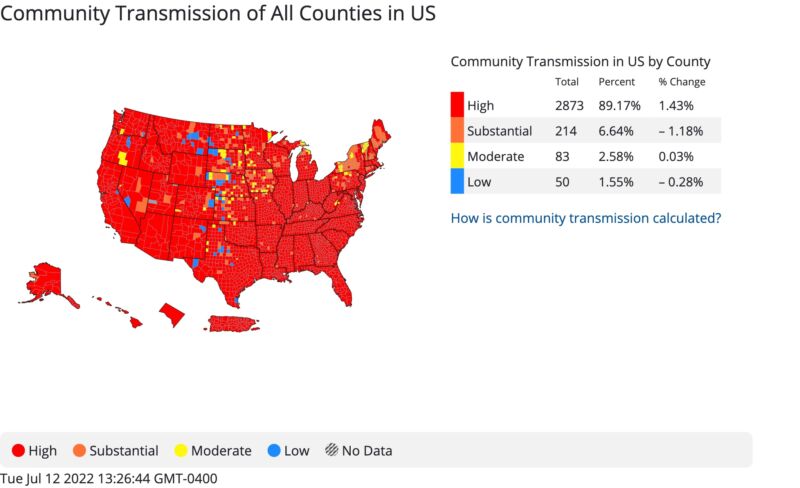


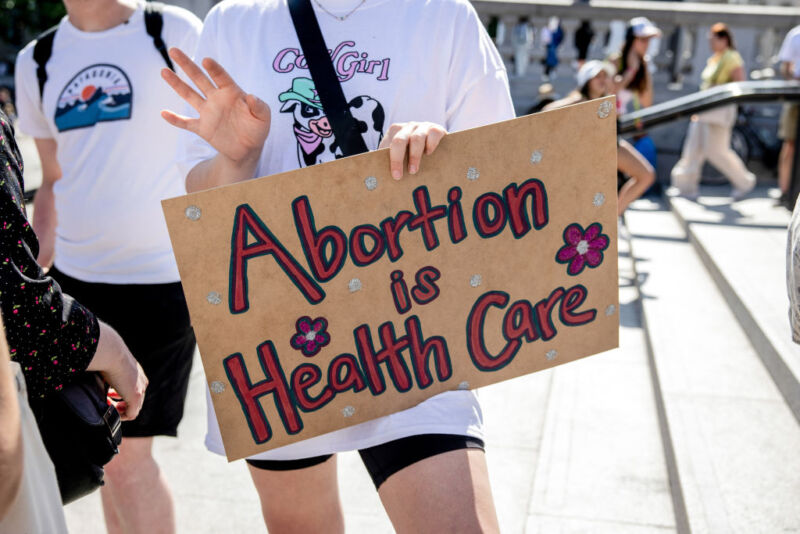


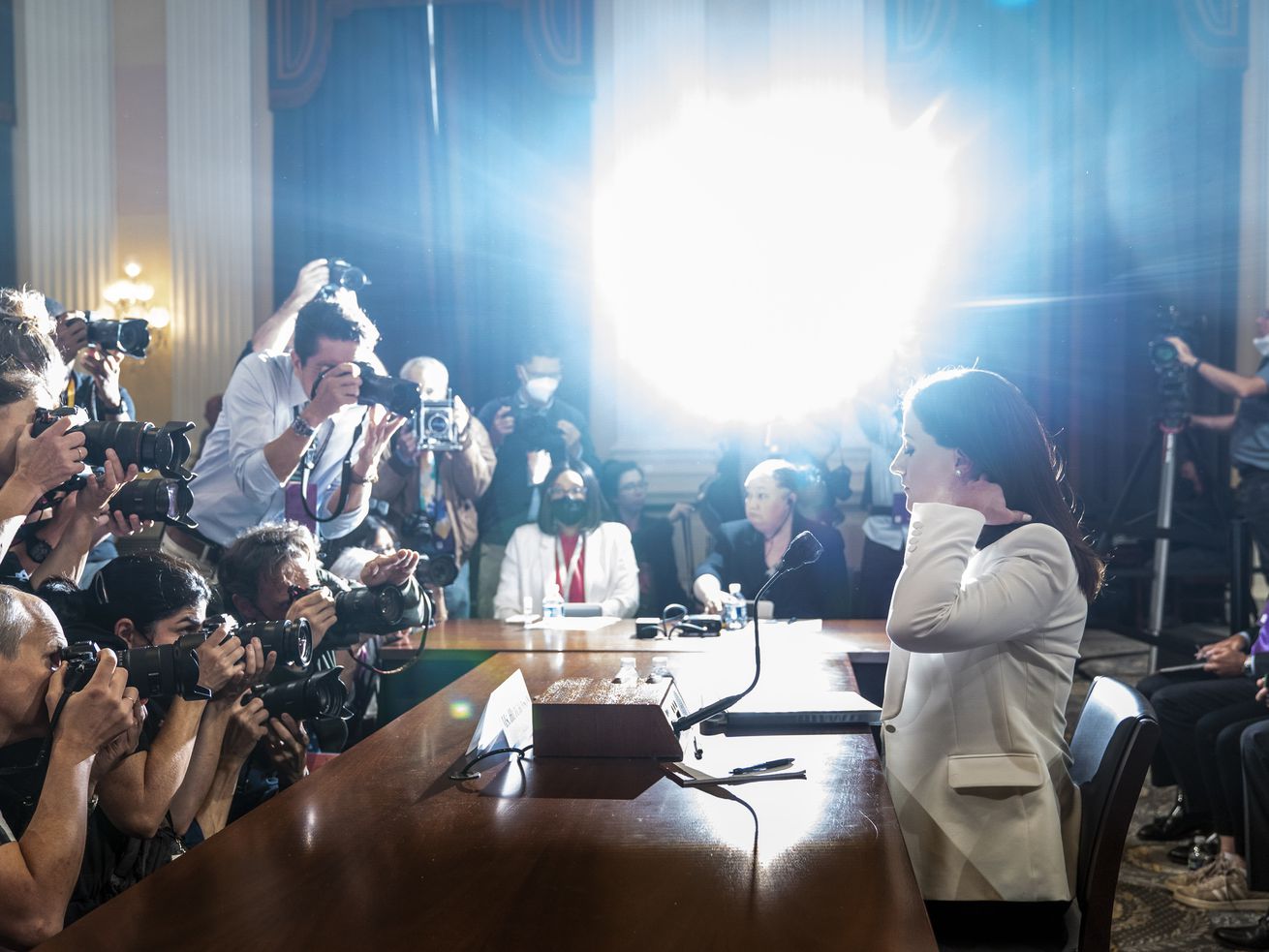
/cdn.vox-cdn.com/uploads/chorus_asset/file/7249427/GettyImages-114617591.jpg) Matthew Imaging/Getty Images
Matthew Imaging/Getty Images
/cdn.vox-cdn.com/uploads/chorus_asset/file/23760342/1241599082.jpg) Tom Williams/CQ-Roll Call, Inc via Getty Images
Tom Williams/CQ-Roll Call, Inc via Getty Images






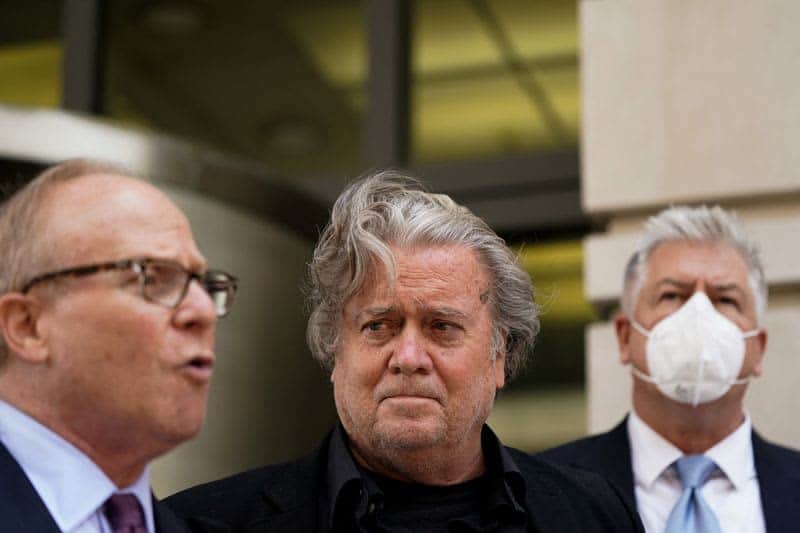
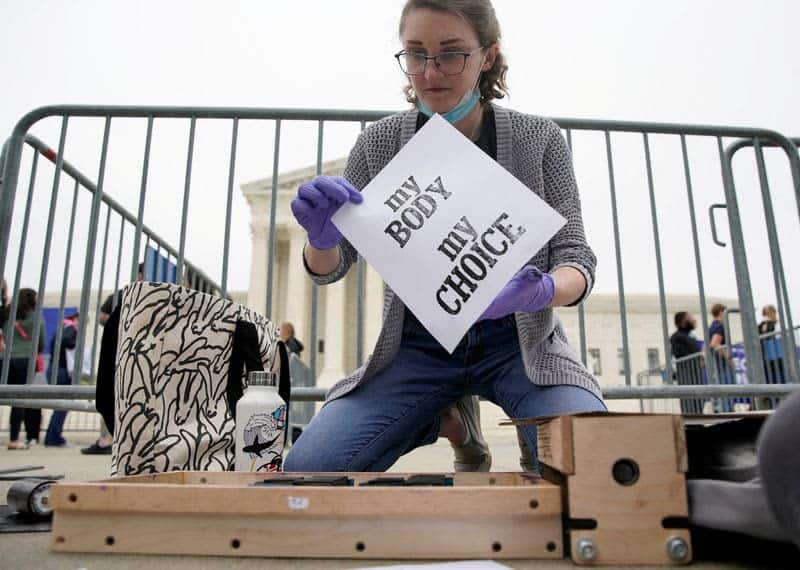
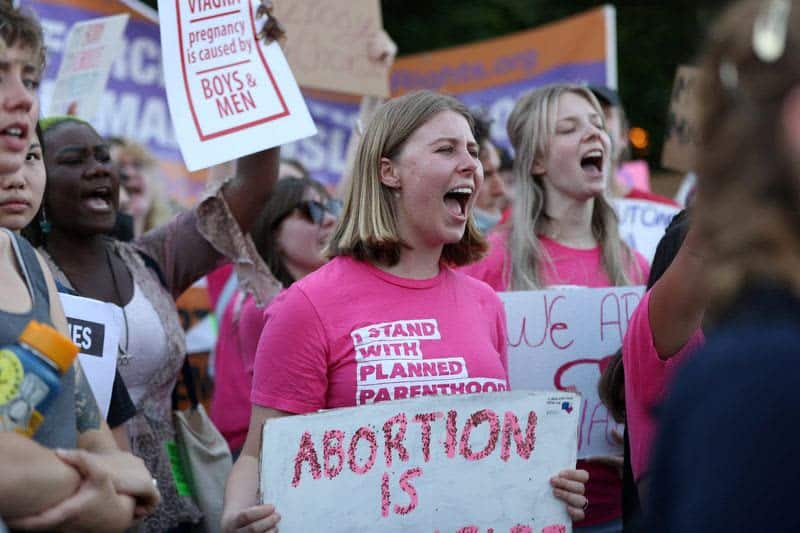



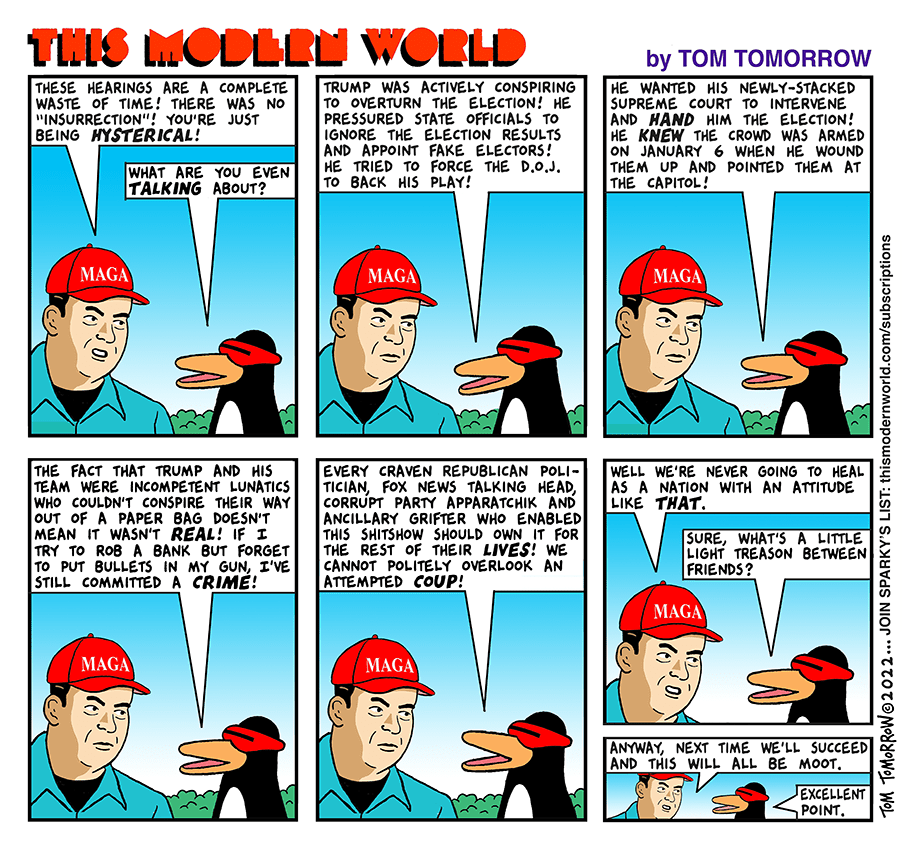


/cdn.vox-cdn.com/uploads/chorus_asset/file/23755357/GettyImages_1393643652a.jpg) Win McNamee/Getty Images
Win McNamee/Getty Images
/cdn.vox-cdn.com/uploads/chorus_asset/file/23711778/GettyImages_1241716435.jpg) Shelby Tauber/Bloomberg via Getty Images
Shelby Tauber/Bloomberg via Getty Images
/cdn.vox-cdn.com/uploads/chorus_asset/file/23714153/GettyImages_1010282974.jpg) Luke Sharrett/Bloomberg via Getty Images
Luke Sharrett/Bloomberg via Getty Images
/cdn.vox-cdn.com/uploads/chorus_asset/file/23715076/GettyImages_1351083987.jpg) Leigh Vogel/Getty Images for Giffords Law Center
Leigh Vogel/Getty Images for Giffords Law Center
/cdn.vox-cdn.com/uploads/chorus_asset/file/23718404/AP22188655282689.jpg) Rogelio V. Solis/AP
Rogelio V. Solis/AP