Read more of this story at Slashdot.
James.galbraithjesus
Read more of this story at Slashdot.
James.galbraithteehee
Read more of this story at Slashdot.
James.galbraithlol
Read more of this story at Slashdot.
James.galbraithBecause Congress is incapable of doing even the easiest fucking things.
Read more of this story at Slashdot.
James.galbraithGood riddance. It's been a mess for a while, and Season 4 wasn't really that interesting.
Read more of this story at Slashdot.
James.galbraithlol a little knowledge is a dangerous thing
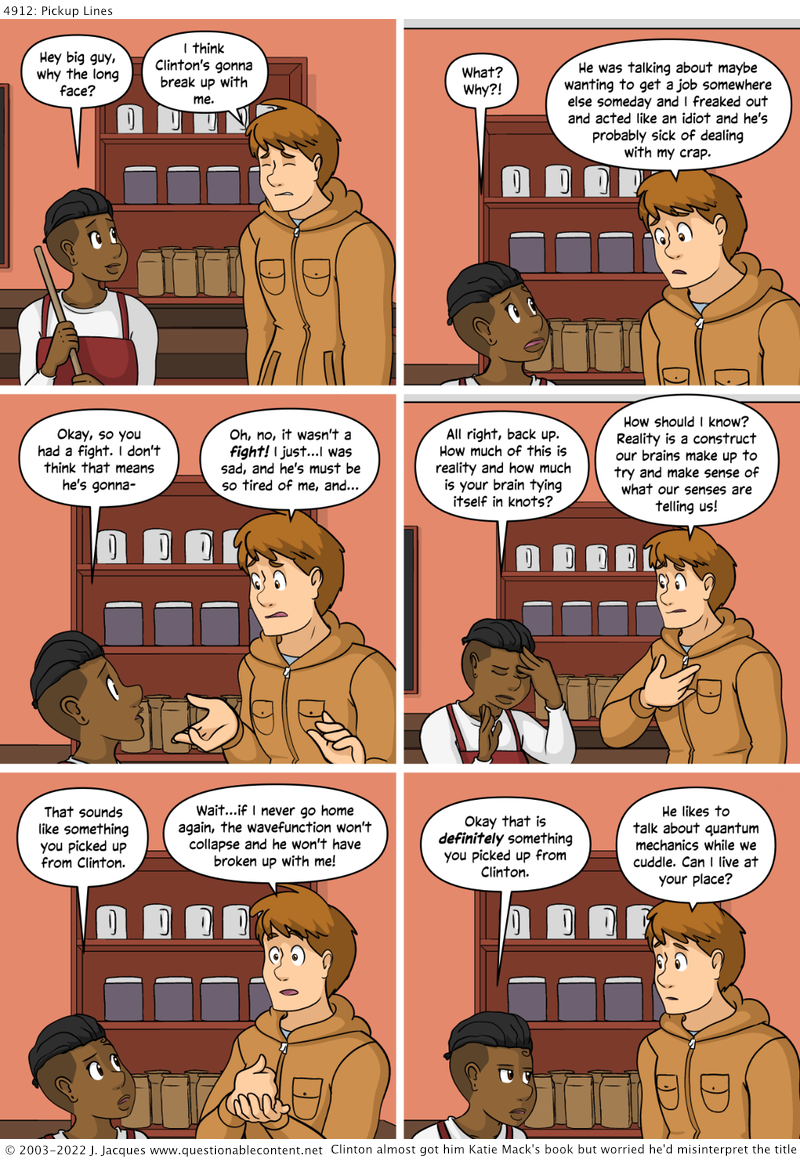
The End Of Everything (EXCEPT YOUR RELATIONSHIP)
James.galbraith*snork*
Read more of this story at Slashdot.
James.galbraithMore reasons to stay the fuck out of flyover country
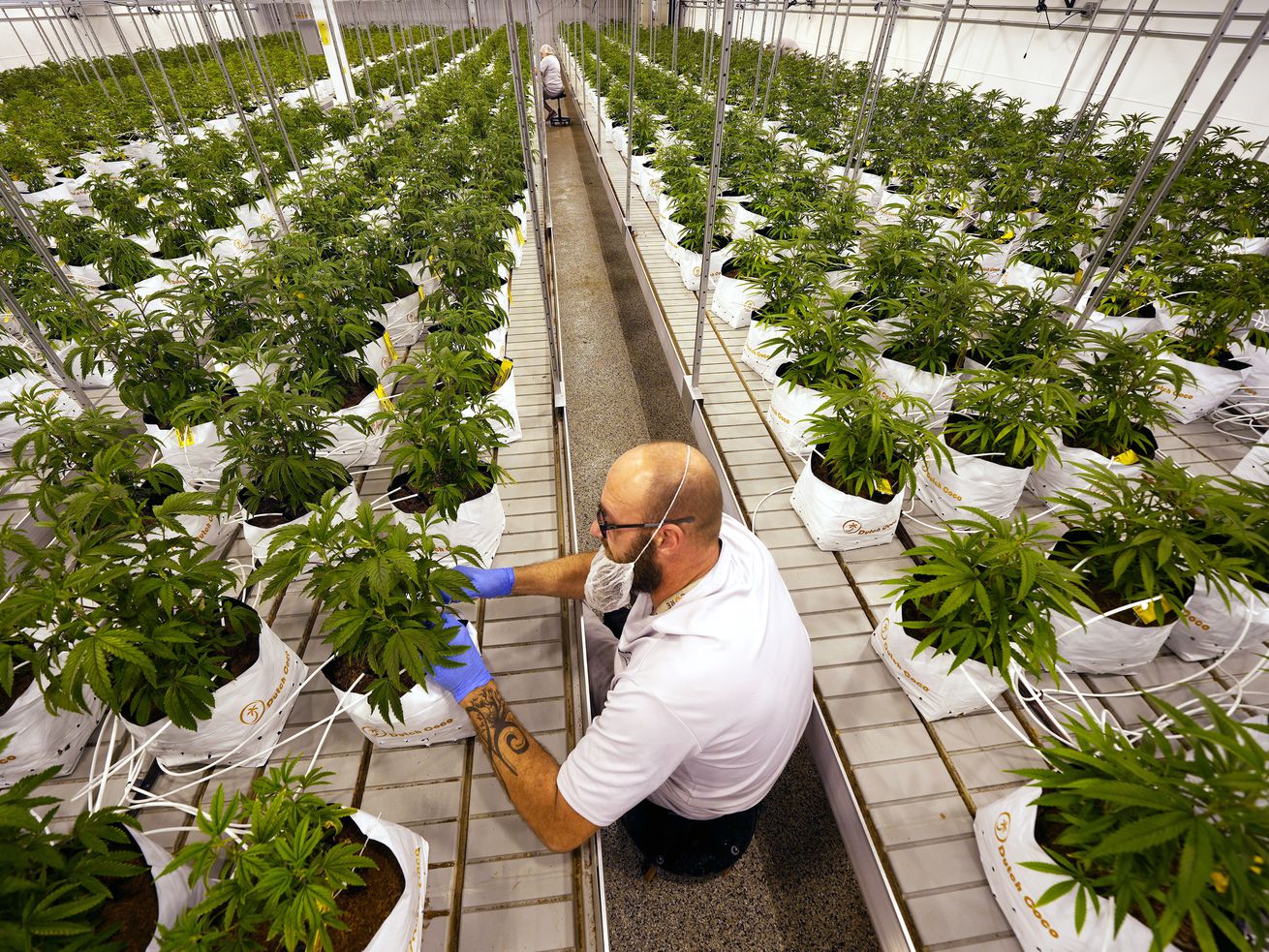
Victories in Maryland and Missouri, losses in Arkansas and the Dakotas.
Ten years ago, Washington and Colorado became the first states to legalize marijuana for adult use when voters approved ballot measures in 2012. Since then, a total of 19 states and the District of Columbia have legalized recreational marijuana.
The results on Tuesday night were more mixed. Legal marijuana won in Maryland and Missouri, bringing the total of states where recreational use is allowed to 21. In Arkansas, North Dakota, and South Dakota, though, voters rejected the measures.
Federal marijuana legalization is seemingly stopped in its tracks.
According to an April 2021 Pew Research Center survey, 91 percent of US adults favor some form of marijuana legalization. Before Election Day, 43 percent of US adults lived in a jurisdiction that has legalized marijuana for adults over 21; sales of adult-use and medical marijuana products hit $25 billion in 2021 and, by one Wall Street estimate, could reach $100 billion by 2030. And last month, President Joe Biden announced that he’s taking steps to overhaul America’s federal cannabis laws, starting by pardoning everyone convicted of simple marijuana possession at the federal level.
Maryland was widely expected to approve legalization. Four states with legal marijuana on the November 8 ballot are traditionally conservative: Arkansas, Missouri, North Dakota, and South Dakota voters are all also considering measures legalizing cannabis, although only Missouri ultimately did so.
“Four of the five states voting have two Republican senators and either completely or majority Republican congressional delegations in the house,” says BOWL PAC founder Justin Strekal, a longtime cannabis lobbyist in Washington, DC, and the former political director for the National Organization for the Reform of Marijuana Laws (NORML), before Tuesday’s results. “Voters deciding on adult use could significantly change the calculus for their federal representatives as to how to approach cannabis at the national level.”
Here’s a quick overview of the measures and where they stand.
Earlier this year, Maryland legislators voted to put a marijuana legalization referendum on the November ballot. Question 4 asked: “Do you favor the legalization of the use of cannabis by an individual who is at least 21 years of age on or after July 1, 2023, in the State of Maryland?”
The voters approved the measure, making recreational cannabis legal in Maryland, where medical marijuana has been legal since 2013, by amending the state constitution. The legislation made the purchase and possession of up to 1.5 ounces of cannabis legal for adults 21 and older, and removed criminal penalties for possession of up to 2.5 ounces. In addition, adults are allowed to grow up to two plants for personal use and gift cannabis legally.
Past convictions for conduct made legal under the proposed law will be expunged, and people currently serving time for cannabis offenses will be eligible for resentencing, while those with convictions for possession with intent to distribute will be able to petition to have their records expunged three years after serving their time.
Arkansas voters approved medical marijuana in 2016. Now they considered legalizing cannabis for adult use with Issue 4, which would have modified the state’s existing medical program.
The Responsible Growth Arkansas campaign turned in over 192,000 signatures in July to qualify for the November ballot. Following an attempt by the state Board of Elections to deny certification to the measure by declaring its wording insufficient, the campaign filed a lawsuit with the Arkansas Supreme Court in August. After weeks of uncertainty, the court ruled in favor of Responsible Growth Arkansas on September 22, clearing the way for the vote.
A September survey by Talk Business and Politics and Hendrix College found that 58.5 percent of Arkansas voters are in favor of the ballot measure, with 29 percent opposed and 13 percent undecided. However, an alliance of progressive cannabis advocates, religious leaders, and pro-Trump politicians — including Republican Arkansas Sen. Tom Cotton — was staunchly opposed to legalization. Pro-cannabis critics claim that the measure, which was largely funded by the medical cannabis industry, would have allowed existing medical marijuana businesses to dominate the adult-use market, and reward industry backers of the measure by limiting new competitors.
The proposed law would have allowed adults 21 and over to purchase and possess up to one ounce of cannabis from licensed retailers. It would have repealed residency requirements to qualify for the state’s medical marijuana program. Home cultivation would not be permitted, and it would have abolished criminal background checks for people who own less than 5 percent of a cannabis business.
The amendment would have repealed taxes on medical marijuana while allowing the state to charge a 10 percent sales tax on non-medical sales at dispensaries. Thirty percent of tax revenues would have been divided between law enforcement, university research, and state drug court programs, with the remainder going to the state general fund.
Missouri passed legislation decriminalizing cannabis for personal use in 2014, and voters approved a medical marijuana program four years later. Now full legalization was on the ballot in Missouri with Amendment 3 — but after little public resistance for months, the proposal faced criticism right before Election Day from several factions as a coalition of officials and organizations banded together to urge voters to reject the initiative.
Ultimately, though, they failed, and voters approved the amendment.
The group Legal Missouri 2022, which is behind the proposed constitutional amendment, says it was written to provide a “level playing field” for the industry while promoting social equity, Marijuana Moment reported. The initiative was endorsed by advocacy organizations including the ACLU of Missouri and all six chapters of Missouri NORML.
Opposition to the measure included false claims from a conservative PAC that it’s an attempt to insert critical race theory into the constitution by creating a position of “chief equity officer,” and the Missouri Democratic Party alleging that it “may negatively impact minorities, people of color and low-income earning Missourians.”
Amendment 3 makes it legal for adults 21 and older to purchase and possess up to three ounces of non-medical cannabis. It also allows registered home cultivation. Existing medical dispensaries will be licensed to serve adult consumers with a dual license.
Tax revenue from recreational cannabis sales will be used to expunge the records of people convicted of nonviolent cannabis offenses; it will also subsidize veterans’ health care, drug treatment, and state public defender programs.
Regulation will be overseen by the Department of Health and Senior Services, with microbusiness licenses issued through a lottery system. Priority for those licenses will be given to low-income applicants and people disproportionately harmed by the war on drugs.
A marijuana legalization measure in North Dakota would have allowed adults 21 and older to purchase and possess up to one ounce of cannabis and four grams of cannabis concentrate, as well as cultivate up to three plants for personal use, as long as the product from those plants is stored in the same location. However, voters rejected the measure.
A coalition called New Approach ND collected signatures for Measure 2, which would have required the state to create a regulatory program by October 1, 2023. The agency would also have overseen cannabis business licensing for a maximum of seven cultivation facilities and 18 retailers. The initiative stipulated that no individual or entity would be permitted to own more than one cultivation facility or four retail locations to mitigate the risk of large companies monopolizing the cannabis market.
Measure 2 would also have put child custody protections into place for parents who use cannabis in compliance with state law, meaning they would not lose parental rights due to cannabis consumption. It would not have provided a pathway to record expungements for marijuana convictions.
The state’s 5 percent sales tax would apply to cannabis products; no additional tax would specifically be imposed. Manufacturers would pay a $110,000 registration fee every two years, while retailers would pay $90,000; those funds would support the implementation and administration of the adult-use program.
South Dakota voters approved cannabis legalization for adult use in 2020; however, the state Supreme Court invalidated the initiative. This year, voters had another opportunity to weigh in on legalization, but public opinion had shifted on the issue, with a majority of respondents now opposed to cannabis reform.
In 2020, 54 percent of South Dakotan voters approved legalizing cannabis. However, following a legal challenge led by Republican Gov. Kristi Noem, the state Supreme Court invalidated the vote on procedural grounds, upholding a ruling that found the ballot measure violated the state’s single-subject rule for constitutional amendments, meaning it was not narrowly focused enough to meet the electoral standard.
This time, the initiative has omitted provisions around taxes and regulations; those decisions would be up to the legislature. The advocacy group South Dakotans for Better Marijuana Laws turned in more than 20,000 signatures to qualify Measure 27 for the November ballot.
If approved by voters, Measure 27 would have allowed adults 21 and older to purchase and possess up to an ounce of cannabis, as well as grow up to three plants for personal use. It didn’t touch on regulatory policies concerning taxing cannabis sales, licensing, or social equity.
The measure included civil penalties for violating provisions related to public consumption or growing more plants than permitted. Employers would have been allowed to prohibit cannabis use by workers, and state and local governments could continue to ban marijuana-related activities made legal under the initiative.
Update, November 9, 9:40 am: This story was originally published on November 7 and has been updated with results of the votes in each state.
James.galbraithBecause she's a rancid cunt? Good fucking riddance.

Boebert could lose her Colorado House race. It would be a stunning upset.
Conservative firebrand Rep. Lauren Boebert could be on the verge of losing her race in what would be the most stunning congressional upset of the cycle.
Boebert and her Democratic opponent Adam Frisch were virtually tied Friday afternoon in the House race for Colorado’s Third District, which includes much of the western half of the state. The Associated Press estimates about 1 percent of the votes are left to count.
The closeness of the race is surprising given the district’s Republican lean and polling that heavily favored Boebert ahead of Election Day. A loss — or even a narrow win — would signal that many voters are fed up with the controversy and antics that Boebert has trafficked in since taking office, and would be a notable rebuke of one of former President Donald Trump’s most vocal and bombastic backers in Congress. It also would nod to concerns expressed by her constituents — some of whom have said that she seems to care more about her celebrity than addressing issues in the district, including funding for infrastructure, which would bolster steel jobs in the area.
During her tenure in the House, Boebert, previously a gun rights activist, has spent much of her time on attention-grabbing stunts including Islamophobic comments targeting Rep. Ilhan Omar, attempts to carry a gun throughout the Capitol, and heckling President Joe Biden during his State of the Union address. She’s faced scrutiny for these actions as well as for controversial social media posts advancing false and dangerous theories suggesting that LGBTQ people “groom” children.
Frisch, a moderate businessman and former Aspen city council member, has attempted to appeal to voters tired of what he described as the “angertainment” Boebert provides. He’s also leaned into qualms constituents have had about the focus Boebert has put on her own image versus delivering for the district. A Frisch win would be a surprising pick-up for Democrats in a place that Cook Political Report, a nonpartisan political analysis firm, has rated as Solid Republican.
His ability to unseat a high-profile and far-right lawmaker would also signal that there are still limits to the controversial approach that Boebert, and others such as former Rep. Madison Cawthorn, have taken to politics.
Polling up until this point had Boebert as the likely winner: FiveThirtyEight’s predictive model, for example, gave Frisch a 3 in 100 chance of taking the district.
And while it’s possible that Boebert could manage a victory, the unexpected tightness of this election suggests that she’s facing significant backlash from certain voters since getting elected just two years ago.
In that timeframe, Boebert has fielded pushback from her constituents for the stunts she’s pulled as well as her ultra-conservative approach to policy. Boebert has supported hardline immigration policies that would bring back the “remain in Mexico” program as well as proposals to preserve expansive gun rights. She’s also garnered criticism for evangelizing QAnon conspiracy theories on social media, sharing updates about House Speaker Nancy Pelosi during the January 6, 2021, Capitol insurrection, and calling for a Christian takeover of government. Plus, certain residents haven’t been satisfied with how responsive she is to their day-to-day policy needs.
Frisch, Boebert’s centrist Democratic opponent, has argued that Boebert’s interest in elevating her own profile as a social media influencer and television commentator surpasses her commitment to representing the district — calling out the fact that none of the bills she’s sponsored have passed. He’s also sought to sway Republican voters by stressing that he’d work across the aisle if he were elected and by promising to join a bipartisan group of lawmakers known as the Problem Solvers Caucus.
“I have this calm belief that that 40 percent of the Republican Party wants their party back,” Frisch has said.
This race could potentially take longer to settle, depending on if Boebert requests a recount. In Colorado, a recount is automatically triggered if candidates are within 0.5 percentage points of one another, and any candidate can request one if the margin is bigger than that.
If Boebert loses, it would deal another blow to Trump this week.
Already, several of the high-profile candidates he’s backed, including Pennsylvania Senate candidate Mehmet Oz and House candidates Bo Hines and John Gibbs have lost their elections. Some of his picks, including Ohio Senate candidate and author J.D. Vance, were successful, but the overall picture hasn’t necessarily been a strong one for Trump. That’s been the case even as some of his potential 2024 rivals — like Florida Gov. Ron DeSantis and Sen. Tim Scott (R-SC) — had solid showings themselves.
Boebert’s struggles follow those of Cawthorn earlier this year. Much like Boebert, Cawthorn drew attention for his far-right views and a number of high-profile scandals, including trying to carry a firearm through airport security and claiming that colleagues had invited him to an orgy. He ultimately lost his primary because members of his own party turned against him and backed an alternative candidate.
If Boebert is defeated, that would be the latest development to signal that Trump’s support can only go so far, and that many voters aren’t willing to support contentious lawmakers who don’t deliver results.
Update, November 11, 2:40 pm: This story was originally published on November 9 and has been updated to reflect the most recent vote tallies.
Correction, November 9, 6:27 pm: A previous headline that appeared in search results erroneously said Boebert lost her race. The votes are still being counted.
James.galbraithSmall government and free speech, right? Oh wait, apparently not.
At this point in evaluating results from the midterm elections, we know the so-called red tsunami simply did not materialize. Did Democrats have some considerable losses and disappointments? Yes. But we had a lot of considerable wins, too, including in unexpected places and on the local level. We didn’t get governor spots in Georgia and Texas, yes. But Republicans certainly didn’t win so soundly they’re going to sit back and be quiet for a while.
In fact, on Wednesday, Republicans in Tennessee pre-filed a bill to criminalize drag shows. If this bill makes its way into law, it would make drag shows a crime that could result in charges ranging from a misdemeanor to a felony. Yes, really. SB 3 is remarkably broad, vague, and sweeping—if signed into law, it could be applied to anything from a drag show to a drag queen story hour to even certain comedy acts and other performances.
RELATED: Amid all of the red wave nonsense, a historic first happened in Oklahoma
Per the bill’s summary online, the legislation seeks to make it an “offense” for “a person who engages in an adult cabaret performance on public property or in a location where the adult cabaret performance could be viewed by a person who is not an adult.”
Advocates and writers Alejandra Carabello and Erin Reed shared insights into the bills on Twitter as well, where folks were understandably horrified and worried.
Fresh off of a disastrous night after focusing on attacking LGBTQ people, Republicans in Tennessee have pre-filed a bill to criminalize drag shows as an obscenity punishable as a class A misdemeanor and up to a felony. pic.twitter.com/oGe83HiZeM
— Alejandra Caraballo (@Esqueer_) November 9, 2022
Terrifying. Tennessee just released SB3 - this bill, if passed, would make "male or female impersonators providing entertainment that appeals to a prurient interest"/drag in public a crime. This is so vague that it could be targeted at trans actors, comedians, story hours. pic.twitter.com/2nymwpM0nC
— Erin Reed (@ErinInTheMorn) November 9, 2022
As we’ve continued to cover here at Daily Kos, far-right extremists have made it a habit to show up and harass drag performers—and guests coming to see the show—across the country. Sometimes this means harassing adults, but queerphobes have also shown their willingness to terrorize literal children who are trying to, say, enter a public library for a storytime event or enter a restaurant for a family-friendly drag show with their parents.
Conservatives will say drag shows are inappropriate or obscene, just the same way they’re saying books by and about LGBTQ+ people are inappropriate, or that trans folks using the correct bathroom for their gender identity is somehow dangerous, or the way that even discussing LGBTQ+ people in the classroom needs a statewide ban …
But we all know, rationally, these are attacks meant to get their voter base upset enough to hit the polls. Drag shows are just fine. Picture books with same-sex parents are fine. Knowing a teacher or coach has a same-sex spouse is fine. It’s all fine! But conservatives know they continue to fail constituents on real issues, like COVID-19 response, gun violence, and especially when it comes to reproductive health and access. They fail again and again, so they turn, again and again, to outdated rhetoric and policy ideas that should have been left in the past.
To dig further into this point, even the bill language referencing “male or female impersonators” could be worrisome in terms of trans rights and anti-discrimination protections in the state. Now, people in drag are not necessarily trans. Doing drag does not mean you are trans. Trans people are not doing drag. Trans people are not performing an identity any more than anyone else. But if conservatives are able to loop people into their hate logic, and present trans people as trying to “trick” people or “hide” their identities, all of a sudden, it’s a lot easier for hateful people to say, “Well, this person says they’re trans, but they’re really just an impersonator trying to get into the bathroom for some evil purpose.”
It doesn’t make sense, not really. But Republicans just want people heated enough that they don't care about logic.
James.galbraithThat's gonna be so fun
Enlarge (credit: Justin Sullivan / Staff | Getty Images News)
Before layoffs began at Twitter, employees had already filed a class-action lawsuit alleging that Twitter violated federal and California laws by not giving staff proper notice before termination. This lawsuit was widely reported, but it’s still unlikely that every employee affected by layoffs is aware they’re eligible to join the lawsuit. That’s a problem, according to Shannon Liss-Riordan, the lawyer representing Twitter staff suing, who says that any employee who doesn’t join the lawsuit might end up agreeing to a worse separation deal than Twitter originally promised them.
“We have amended our class-action complaint against Twitter,” Liss-Riordan told Ars. “Since we originally filed the complaint last Thursday, it has now become clear that Twitter has broken promises to employees.”
According to Liss-Riordan, Twitter told laid-off employees they “would receive the same severance pay and benefits they would have received under Twitter’s previous ownership,” but it now appears that’s not true. Twitter’s prior policy was to provide “at least two months' severance (or more, based on years of service), as well as bonuses, equity, and other benefits,” Liss-Riordan said, but Musk’s Twitter told employees given the official termination date of January 4, 2023, that they would only get one month’s severance pay.
James.galbraithSince AMD is the video system for all xbox these days, it should be a fairly easy implementation on that side at least ;)
Read more of this story at Slashdot.
James.galbraithAnd hopefully an indictment before then
In case you missed the news, the Rev. Sen. Raphael Warnock (D-GA) is now embarking on his fourth general election run in a little over two years—two regular elections, a run-off in 2020, and now this one. He and one of Trump’s last candidates standing, Herschel Walker, will face off again on Dec. 6.
Which is creating a bit of a problem for all the Republicans who care about trying to win this Senate seat. That group does not include Donald Trump, who already had to be talked out of stomping on Ohio Republican J.D. Vance’s last big rally this week, where he really, really wanted to make his 2024 announcement.
He won’t be held back again, because he has a really important things to say, “perhaps the most important speech given in the history of the United States of America.” For reals. (In his head.)

Enter all the people who had to try to sit on Trump to stop him from stealing J.D. Vance’s thunder, like Trump’s 2016 spokesman and adviser, Jason Miller.
Jason Miller on Newsmax about Trump's planned November 15 presidential announcement: "I am advising the president to hold off until after the Georgia race." pic.twitter.com/SuNEqCqO4X
— Aaron Rupar (@atrupar) November 9, 2022
Sure, Jason, you do that. You tell the raging megalomaniac to take a back seat to this Senate race, while his new archenemy and heir apparent, Ron DeSantis, is out there taking victory laps all over the place for being the single big GOP winner of 2022.
You guys fight amongst yourselves.
Meanwhile, we’ll be over here making sure Sen. Warnock wins his fourth Senate race. This time he’ll win a good six-year term, and have a nice break before his next election. But we’ve got to get him there, and we don’t have a lot of time to get it done. The new election rules passed last year in the state cut the time for runoffs in half.
This showdown will happen in just four weeks, on Dec. 6, so the time to act is now.
James.galbraithBecause White southerners are racist above all
To say that Stacey Abrams, former House minority leader in the Georgia legislature, deserved the governor’s seat would be an understatement. She could have given up her fight for office in the historically red state four years ago when she first lost to Gov. Brian Kemp amid allegations of vote suppression in 2018. Abrams lost by fewer than 55,000 votes then, and she didn’t give up. She worked with the New Georgia Project nonprofit to register an estimated 800,000 new voters, mainly people of color and young people. Fast forward two years and the state of Georgia would elect a Democrat as president for the first time since Bill Clinton in 1992. Georgia voters also elected Democratic Sens. Raphael Warnock and Jon Ossoff.
It’s difficult not to believe Abrams played some role in that, especially when observing the GOP response: a bill of voting restrictions rushed through the legislature and rubber-stamped by Kemp.
Still, Abrams put up a formidable fight in her race to turn the red state blue at the highest level. With 96.86% of precincts reporting, she secured 45.85% of the vote against Kemp in this year's gubernatorial race. A 1.8 million Georgians voted for her. Though she secured 298,400 fewer votes than Kemp's 2.1 million.
Abrams knew late Tuesday night that she had to concede.
RELATED STORY: Georgia GOP 'hijacked' bill with nearly 100 pages of voting restrictions, and now it's law
“I am doing what is clearly the responsible thing,” she said. “I am suspending my campaign for governor.”
She paused her speech to say “I love you too” to a supporter who screamed the words from the audience.
“I may no longer be seeking the office of governor, but I will never stop doing everything in my power to ensure the people of Georgia have a voice,” Abrams added.
For years, she has done the kind of work to prove she means exactly what she says.
RELATED STORY: Stacey Abrams makes Brian Kemp eat every one of his horrible policy decisions in final debate
She was the first woman to lead either party in the Georgia General Assembly and the first Black person to lead the state’s House of Representatives, according to her bio.
Journalist Jelani Cobb wrote for The New Yorker in 2019, when Abrams had only recently gained national notoriety, that the "tax attorney, romance novelist, and former state representative, has been working on electoral reform—particularly on voter registration—in Georgia for some fifteen years."
Cobb described her as “a symbol of the new Georgia,” with a population that has been majority-white historically but is expected to be "majority-minority" by 2033.
For many, Abrams is still that symbol of what Georgia could become. Perhaps that’s why her defeat delivered such a blow.
She represents the hope that Georgians will one day consider the needs of its Black residents, its homeless residents, and its child-bearers as something other than tangential. Tuesday’s concession was yet another reminder that day isn’t today.
“It’s a real loss for the immediate future of the South where new leadership is so needed,” Sherrilyn Ifill, an attorney and former president of the NAACP Legal Defense Fund, wrote of Abrams’ defeat and of that of other Black candidates.
And before you say any snarky things about writing off the south, don’t. And please remember that a majority of Black people in this country still live in the South, many struggling under the worst state leadership.
— Sherrilyn Ifill (@SIfill_) November 9, 2022
Knowing far too well the tendencies of liberal writers, Ifill also tried to get ahead of efforts to cast away the South. She wrote that before “you say any snarky things about writing off the south, don’t.”
“And please remember that a majority of Black people in this country still live in the South, many struggling under the worst state leadership,” Ifill penned.
Other Twitter users worked to get ahead of sure-to-come efforts to lay Abrams’ loss at the feet of Black voters.
Researcher and professor Uju Anya tweeted: "They will tell you Stacey Abrams lost, because Black men didn’t vote for her. It’s not true. She lost, because white people didn’t vote for her. Do not fall for the narrative that blames Black people for white racism and misogynoir."
This statement is not meant to excuse the Black men who waged a lying, misogynistic, hate-filled campaign against Stacey Abrams. It just recognizes that even if all Black men had voted for her, she still wouldn’t have won. White people rejected her. Focus your postmortem on them.
— Uju Anya (@UjuAnya) November 9, 2022
Journalist Jemele Hill—who faced the GOP’s wrath for calling former President Donald Trump the white supremacist he is—highlighted a question that should be at the heart of public discussion following Abrams’ defeat. That question is “why white people in Georgia couldn’t bring themselves to vote for Stacey Abrams.”
That is the only news analysis I want to see, the only talking point worth discussing where Abrams is concerned. White women preferred to support a man who enacted legislation to criminalize lifesaving medical care, criminalize miscarriages, and criminalize abortion. They voted against a Black woman who vehemently fought to protect their own access to lifesaving reproductive health care. Why?
It’s hardly a mystery. Race trumps everything else in this country. It always has. I can only hope that will change.
Eagerly awaiting to see if all those news outlets who wrote that Stacey Abrams has a Black male voter problem will follow up with an exhaustive piece on why white people in Georgia couldn’t bring themselves to vote for Stacey Abrams. https://t.co/C3YeaSZUnE
— Jemele Hill (@jemelehill) November 9, 2022
James.galbraithNo vision or ideas, just throwing shit against a wall. *popcorn*

Enlarge (credit: Getty Images | Samuel Corum)
Twitter is rolling out the $7.99-per-month version of its Twitter Blue subscription, which adds a blue checkmark to your profile. But with Twitter CEO Elon Musk's move to paid checkmarks raising concerns about impersonation, Twitter also deployed a new "Official" label for notable accounts.
However, in news that probably won't surprise you, the Official label rollout is already chaotic. Some accounts—including Ars Technica's—had the Official tag briefly today then it disappeared. It's not clear whether the tags are gone for good.
"I just killed it," Musk wrote today when YouTuber Marques Brownlee asked why his Official tag disappeared.
James.galbraithAnd the chances of the media stopping parroting all of this shit? zero.
James.galbraithBecause voters are fine with a liar and a bigot as long as he's a Republican
Senator Ron Johnson has survived another hairy reelection bid to win a third term in Wisconsin. This time, however, no one should be surprised.
Six years ago, Johnson’s defeat seemed so likely that the national Republican Party pulled its money from Wisconsin, all but conceding his race. Johnson won anyway. This past August, a Marquette poll found him trailing his Democratic opponent, Lieutenant Governor Mandela Barnes, by seven points, 51 percent to 44 percent. This morning, when the race was called, Johnson was leading Barnes by about one percentage point.
[Read: Mandela Barnes’s last punch]
In the end, Johnson’s race wasn’t much of a nail-biter. Polls swung in his favor beginning in September, seemingly the result of a ruthless, well-funded—and to many Barnes supporters, downright racist—ad campaign blaming the lieutenant governor for a rise in violent crime and picturing him alongside other progressive Democrats of color.
Yet to Democrats, no setback in the scramble for the Senate was likely more frustrating than their failure to oust Johnson. The former businessman’s turn toward the conspiratorial wing of the GOP over the past few years had made him one of the worst-polling senators in the country and easily the most vulnerable Republican incumbent up for reelection this fall. Johnson became a vocal critic of COVID-19 vaccines and a champion of what he called “the vaccine injured.” He was embroiled in both impeachments of former President Donald Trump and downplayed the Capitol riot on January 6, 2021.
In Barnes, many Democrats believed they had found a rising national star—a 35-year-old onetime community organizer from a union family who could excite Black voters in Milwaukee and progressives in Madison while winning over working-class white voters in the rest of the state. Barnes, a former state legislator who won election as lieutenant governor in 2018, led the Democratic Senate primary from the get-go and ultimately won in a walk after his opponents dropped out and endorsed him in the closing weeks of the campaign. Barnes courted labor unions aggressively and broadcast the sunniest of TV ads that showed him unpacking groceries and hitting baseballs off a tee.
But Barnes had emerged from the progressive left’s Working Families Party, an ally of Senators Bernie Sanders of Vermont and Elizabeth Warren of Massachusetts. Exploiting fears over rising crime, Johnson’s campaign resurfaced images and quotes linking Barnes to the “Defund the police” movement from the aftermath of the George Floyd protests in 2020. Polls over the summer showed Barnes ahead of Johnson, but the Democrat’s standing dropped after weeks of crime-focused negative ads.
Wisconsin Democrats are left to wonder whether another one of their choices in the August primary—Alex Lasry, the son of a co-owner of the Milwaukee Bucks; Tom Nelson, a county executive; or Sarah Godlewski, the state treasurer—would have stood a better chance against Johnson. Perhaps Johnson has benefited from a bit of luck: The three years he has been on the ballot—2010, 2016, and now 2022—have all been relatively strong Republican years. (A few red-state Democratic senators, including Jon Tester of Montana and Sherrod Brown of Ohio, have had the similar good fortune of running in favorable environments for their party.)
[Read: What Democrats don’t understand about Ron Johnson]
Yet as I wrote last month, the polls that have pointed to Johnson’s unpopularity might not be capturing the full wellspring of his support in Wisconsin. To a person, the Republicans with whom I spoke said they viewed Johnson’s seemingly quixotic fight against conventional COVID treatments and vaccines not as a liability but as a strength, and that it was a big reason they supported him. During his first term, Johnson seemed to embody a traditional conservatism of low taxes and low spending, the small-government ethos of a fellow Wisconsite, former House Speaker Paul Ryan. He still champions those policies, but he has become far more closely linked to the establishment-toppling, media-fighting style of Trump. Johnson now inspires more passion on both sides, whether it’s hatred from his critics or sympathy from his supporters. “The news is just crucifying him constantly. They made him out to be a horrible person, and he’s not,” Ann Calvin, a 57-year-old who worked for years in an assisted-living facility, told me during my visit.
Like Trump, Johnson has also made a habit of defying expectations and foiling his critics. He did so again yesterday, completing his second comeback in six years to deprive Democrats of a seat that once seemed theirs to lose.
James.galbraithYep, time to get these on initiatives everywhere
Looking at you, Third Way, and Bernie Sanders, and well everyone else Markos talks about here. This.
THIS:
LOUISVILLE, Ky. (AP) — Kentucky voters reject anti-abortion constitutional amendment in conservative state with near-total ban.
— Zeke Miller (@ZekeJMiller) November 9, 2022
Kentucky. The voters of Kentucky, in a 53-47 vote, told their Republican leaders to stuff it, they won’t let them put an extreme abortion ban into the state constitution. KENTUCKY.
Campaign ActionThat goes for Montana, too. The results aren’t yet final, but voters are rejecting a particularly cruel measure that would “require medical care to be provided for any infant born alive after an attempted abortion, induced labor, or other method.” That would mean that parents would be denied the chance to meet, hold, and say goodbye to a newborn that has no chance of survival outside of the womb. It would be whisked away and tortured with “life-saving care,” its only time on this earth marked by pain and chaos. Because forced birthers are fucking ghouls, and Montana voters reject them. So far, that one is failing 52-48.
Additionally, voters in California codified the right to an abortion AND the right to contraception, 65% to 35%. Voters in Vermont voted to put abortion and reproductive rights in the state constitution, that all individuals have a right to personal reproductive autonomy. That passed 76% to 24%. In Michigan, voters established in the Constitution the “individual right to reproductive freedom, defined as the right for individuals to make all decisions about pregnancy, including prenatal care, childbirth, postpartum care, contraception, sterilization, abortion, miscarriage management, and infertility.” That passed 57% to 43%.
From the huge victory in Kansas this summer, through all of the special elections, and through Tuesday, the voters are telling their elected officials what they want: to make their own damned decisions about their own damned bodies and their own damned families. Which, by the way, just happens to be an economic issue, too.
James.galbraithYuck, four more weeks of this shitshow
Georgia is once again headed to a Senate runoff election, as neither Democratic Sen. Raphael Warnock nor Republican Herschel Walker has cleared 50% of the vote. With 95% of the vote in, Warnock has a narrow lead, 49.4% to 48.5%. A Libertarian candidate is drawing around 2% of the vote.
In 2020, Warnock went to a runoff against Republican Sen. Kelly Loeffler after a general election that, because it was a special triggered by the 2019 resignation of Republican Sen. Johnny Isakson, had multiple Republican and Democratic candidates. In the same 2020 general election, then-Sen. David Perdue led now-Sen. Jon Ossoff 49.7% to 47.9%, before Ossoff went on to win his runoff on the same day as Warnock. Both of those January 2021 runoffs are a hopeful precedent, but there’s no question it’s a disappointment that Warnock did not eke out that extra 0.6 percentage points.
In less hopeful news, the reason the 2021 runoff was in January and this year’s will be on December 6 is because, in their major voter suppression bill, Republicans reduced the time between a general and a runoff and dramatically cut early voting opportunities, including entirely eliminating weekend early voting, which Black voters are particularly likely to use. So they’ve done their best to rig this one.
The December 6 runoff should be a major focus of attention and activism for Democrats. Regardless of where control of the Senate lands—and this runoff could end up determining that, as it did in 2020—we need more senators like Raphael Warnock.
James.galbraithGood
Incumbent Maine Gov. Janet Mills has fended off a challenge by former Republican governor Paul LePage, keeping the governorship in Democratic hands and denying the scenery-chewing LePage his attempted comeback.
LePage's eight-year reign as governor was contentious—and often erratic—but he attempted to rewrite that recent history during a campaign that saw him brazenly lie about his own past public statements. Maine voters didn't buy it, choosing to keep the state's governor's office in the hands of the considerably more sedate Mills.
James.galbraithlol
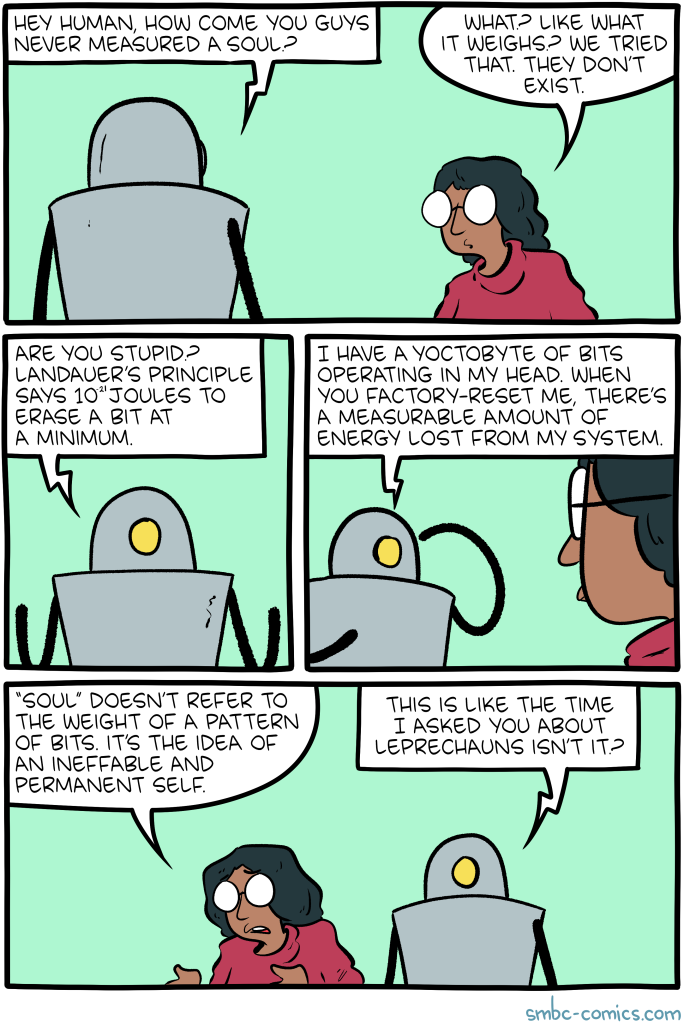
Hovertext:
Point is leprechauns are real and computer science proves it.
James.galbraithgood riddance
Read more of this story at Slashdot.
James.galbraithGood. That is one thing I appreciate about apple packaging. It's all paper and easily recyclable
Read more of this story at Slashdot.
James.galbraithGood riddance

Enlarge (credit: Viorika | iStock / Getty Images Plus)
As blockchain technologies have evolved to enable ever-faster digital payments, the need for speed continues to drive both technological innovation and mainstream adoption of new digital assets. The sector is building a lot of momentum for obvious reasons—businesses have always wanted the ability to move money around faster, and individual consumers have become annoyed with waiting around for refunds. For many consumers and businesses experimenting with new digital assets, fast access to money has never felt more within reach.
This interest is not expected to cool, as younger generations become digital currency natives who only know of a world with digital wallets. But even for them, that future could remain out of reach because innovation in digital payments is slow. And that's not because we don't have the technology. According to many leading experts discussing fintech innovation at the Las Vegas conference Money 20/20 last month, the problem is that regulators have yet to set clear standards on what is and isn't allowed.
In the United States, the lack of regulatory clarity threatens to slow down not just mainstream adoption of new technologies but also innovation in digital payment options, potentially cutting off consumers and businesses nationwide from sought-after conveniences, simply because regulators can’t keep up with how digital assets are being used today.
James.galbraithGood
Read more of this story at Slashdot.
James.galbraithCould be a huge start
Read more of this story at Slashdot.
James.galbraithooh awesome

Enlarge / A 1729 Stradivari known as the "Solomon, Ex-Lambert" on display at Christie's in New York in March 2007. (credit: Don Emmert/AFP/Getty Images)
Musicians and music aficionados alike have long savored the rich sound quality of the violins created by Antonio Stradivari, particularly at the dawn of the 18th century (the so-called "golden period"). Scientists have been equally fascinated by why Stradivari violins seem to sound so much better than modern instruments; it has been an active area of research for decades.
A recent paper published in the journal Analytical Chemistry reported that nanoscale imaging of two such instruments revealed a protein-based layer at the interface of the wood and the varnish, which may influence the wood's natural resonance, and hence the resulting sound. Meanwhile, another paper published in the Journal of the Acoustical Society of America showed that the better resonance of older violins produces stronger combination tones, which can also affect the perception of musical tones.
I've written extensively about this topic in the past, and you can read a handy summary of some of the research in this area to date here. Per my 2021 article, the (perceived) unique sound can't just be due to the instrument's geometry, although Stradivari's geometrical approach gave us the violin's signature shape. One hypothesis is that Stradivari may have used Alpine spruce that grew during a period of uncommonly cold weather, which caused the annual growth rings to be closer together, making the wood abnormally dense. Another popular theory has to do with the varnish: namely, that Stradivari used an ingenious cocktail of honey, egg whites, and gum arabic from sub-Saharan trees—or perhaps salts or other chemicals.
James.galbraithTime to see if I can find a way to block twitter stories from my newsfeed. Account is deleted, I just don't care anymore.

Enlarge (credit: Aurich Lawson)
Elon Musk plans to eliminate half the jobs at Twitter and require remote employees to report to an office, Bloomberg reported.
"Elon Musk plans to eliminate about 3,700 jobs at Twitter, or half of the social media company's workforce," and "intends to reverse the company's existing work-from-anywhere policy, asking remaining employees to report to offices—though some exceptions could be made," the report said. Bloomberg cited people with knowledge of the matter. Musk reportedly aims to inform affected staffers of the layoffs on Friday.
After an earlier report that Musk told investors he plans to cut 75 percent of Twitter's workforce, Musk reportedly told staff that he wouldn't eliminate 75 percent of the jobs. But it was still clear there would be a significant amount of layoffs.
James.galbraithevery bit of progress
Read more of this story at Slashdot.
James.galbraithyup
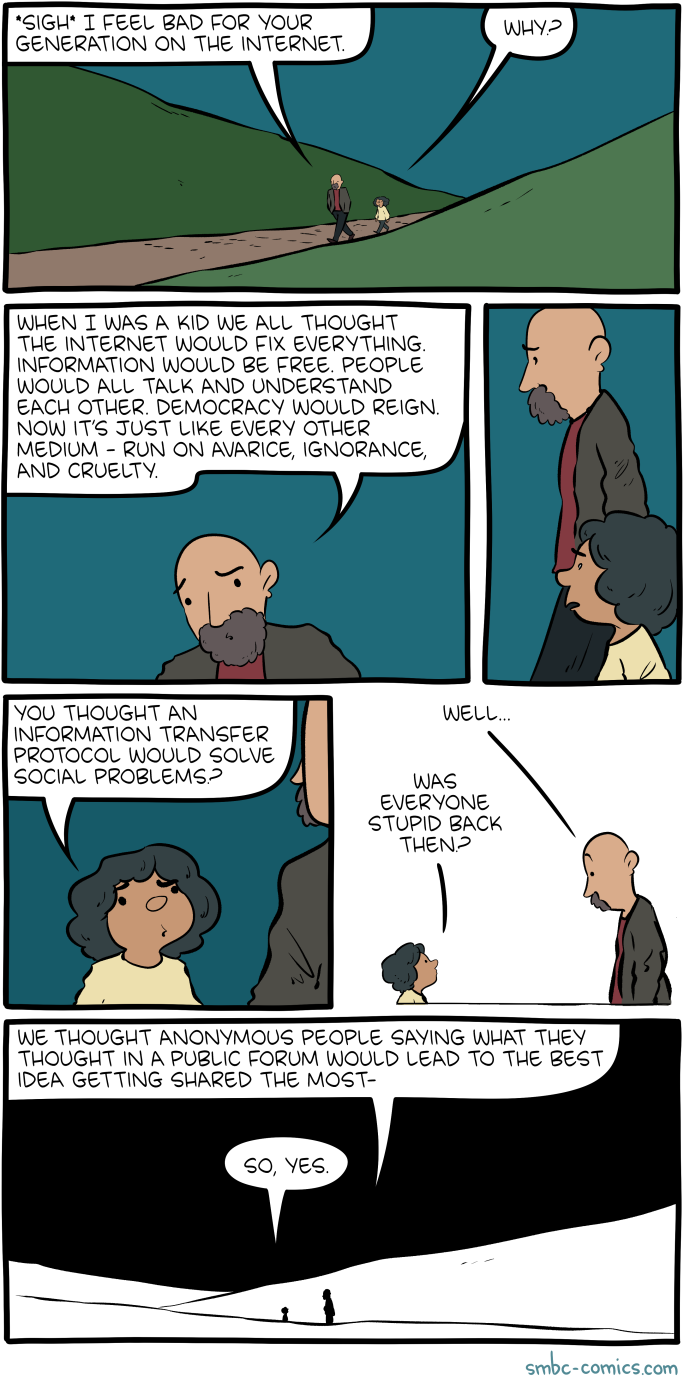
Hovertext:
Personally, I find it liberating to think about how stupid it all sounds.