 I went on a spiral — but I found my way back.
READ MORE...
I went on a spiral — but I found my way back.
READ MORE...
Cpccohen
Shared posts
23 Apr 11:13
I went on a spiral — but I found my way back.
READ MORE...
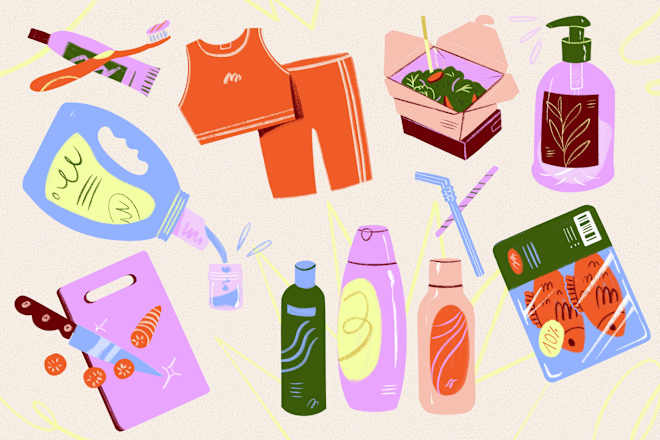
16 Sneaky Spots Microplastics Are Hiding in Your Home
by Lizzy Francis
I went on a spiral — but I found my way back.
READ MORE...
12 Sep 19:42
 Prepare to fill up your basket with a bushel of these.
READ MORE...
Prepare to fill up your basket with a bushel of these.
READ MORE...
The $4 Trader Joe’s Limited-Edition Find That Makes My Whole Home Smell Like Fall (I’m Grabbing 3!)
by Sofia Rivera
Prepare to fill up your basket with a bushel of these.
READ MORE...
25 Nov 08:12
 Fully immerse yourself in sound with the press of a button.
READ MORE...
Fully immerse yourself in sound with the press of a button.
READ MORE...
Bose’s Super-Popular, Noise-Reducing Headphones Are 20% Off for Black Friday
by Morgan Pryor
Fully immerse yourself in sound with the press of a button.
READ MORE...
23 Jul 14:34

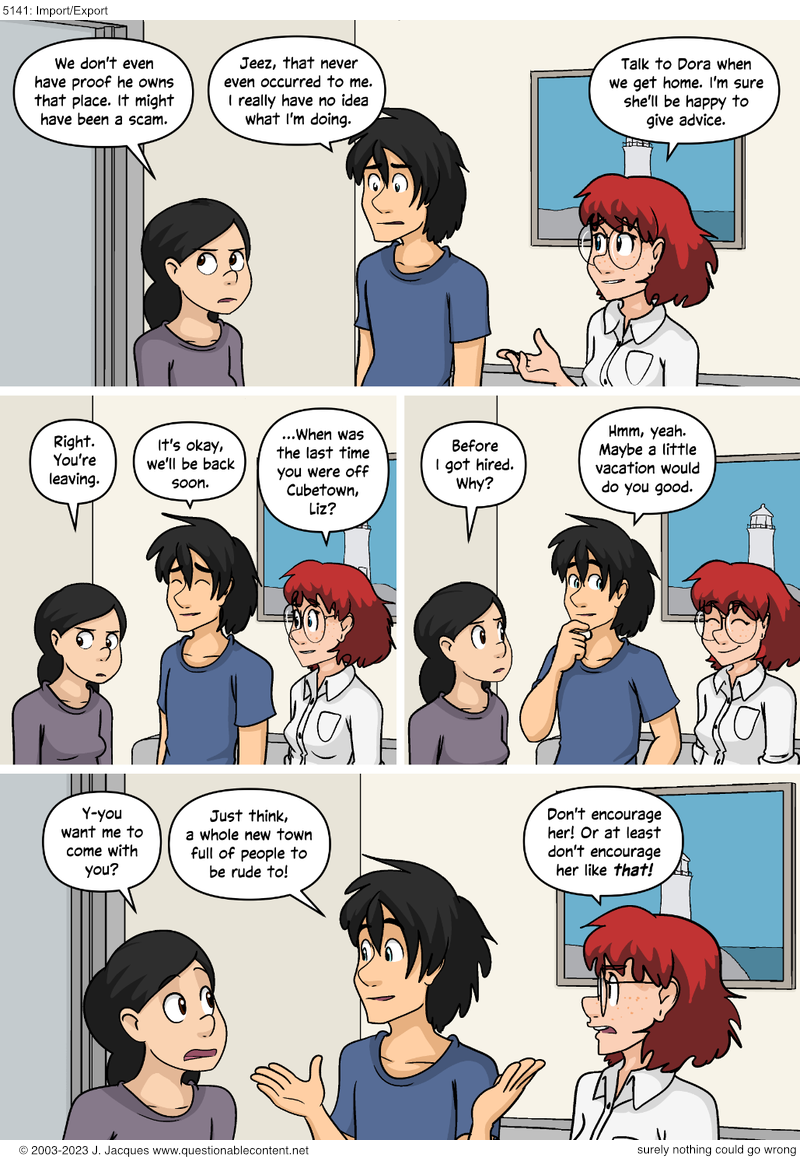
“You’re gonna be okay, mister, but I can’t say the same for your little buddy over there. … The way I hear it, he’s the one that mouthed off to them gunfighters in the first place.”
“You’re gonna be okay, mister, but I can’t say ...
by tedder
“You’re gonna be okay, mister, but I can’t say the same for your little buddy over there. … The way I hear it, he’s the one that mouthed off to them gunfighters in the first place.”
Mbuttry, Scott Weigand likes this

21 Jul 17:23

Kurt and Wyatt Russell Join Apple TV+’s Godzilla Series
by Molly Templeton

It still doesn’t have a name, but it does have a growing cast. The Godzilla series that’s on the way from Apple TV+ and Legendary Television has two new stars in father-and-son duo Kurt and Wyatt Russell, who join Anna Sawai (Pachinko), Kiersey Clemons (The Flash), Joe Tippett (Mare of Easttown), Elisa Lasowski, and Ren Watabe.
Kurt Russell, of course, has been in everything from Escape from New York to Guardians of the Galaxy Vol. 2. Young Wyatt was in Lodge 49, and did a very good job of being incredibly infuriating as John Walker in The Falcon and the Winter Soldier (above). The two Russells previously appeared together in 1998’s Soldier, where Wyatt played the kid version of his dad’s character.
Buy it Now


The series is set in the wake of 2014’s Godzilla, in which Godzilla and the Titans did a number on San Francisco. Apple’s early summary said:
Following the thunderous battle between Godzilla and the Titans that leveled San Francisco and the shocking new reality that monsters are real, the series explores one family’s journey to uncover its buried secrets and a legacy linking them to the secret organization known as Monarch.
The most interesting thing about this latest take on the Godzilla mythos is that the series is co-created by comics writer Matt Fraction (Hawkeye), along with Chris Black (a writer and producer on Sliders and Star Trek: Enterprise, among many other things). Black is the showrunner, and WandaVision‘s Matt Shakman will direct the first two episodes. The producers include Joby Harold (Obi-Wan Kenobi).
This is just one of Legendary’s MonsterVerse projects in development; there’s also Netflix’s upcoming animated Skull Island show and a sequel to Godzilla vs. Kong that stars Dan Stevens (Legion) and is set to begin filming later this year.
20 Apr 17:21
Download All 4 Murderbot Books For Free (Before Network Effect Arrives!)
by Tor.com

Murderbot’s first novel arrives on May 5th.
But before that happens, Tor.com Publishing and the Tor.com Ebook Club are giving away ALL FOUR PREVIOUS AND OFTEN TIMES AWARD-WINNING NOVELLAS!
Martha Wells’ series chronicles the life of a self-aware SecUnit that has hacked its own governor module and refers to itself (though never out loud) as “Murderbot.”
Scornful of humans, all it really wants is to be left alone to watch TV and figure out who it is.
And this week, the Tor.com Ebook Club is giving away one Murderbot novella per day!

One Book-Per-Day Will Be Available:
Monday, April 20: All Systems Red (Book 1)
Tuesday, April 21: Artificial Condition (Book 2)
Wednesday, April 22: Rogue Protocol (Book 3)
Thursday, April 23: Exit Strategy (Book 4)
Download period ends 5:59 AM ET, April 24.
Question: When is the current day’s book available until?
For 24 hours starting at 6 AM ET on the day-of.
Question: I’m having issues getting the book to open / download issues caused me to miss that day’s book!
Email ebookclub@tor.com and we’ll get you sorted.
Question: There’s a novel coming?!?
Yes! A beautiful culmination and continuation of Murderbot’s ever-humanizing journey!
It’s called Network Effect and you can see it down there.
If you already receive the Tor.com newsletter, you still need to sign up for this program to get your free ebook.
Note: If you’re having issues with the sign-up or download process, please email ebookclub@tor.com.
Apple iOS 13 Users: Downloads are now located either in your iCloud account or in a Downloads folder within Safari (the down-arrow icon in the top right). More troubleshooting help here.
Forthcoming May 5, from Martha Wells
NETWORK EFFECT

Buy Network Effect from:


21 Nov 14:00

A Promising Debut: City of Broken Magic by Mirah Bolender
by Liz Bourke

City of Broken Magic is Mirah Bolender’s debut novel. I’ve read a lot of debut novels in my time (and will undoubtedly read many more), so I feel confident in my conclusion that City of Broken Magic is the kind of debut one calls promising.
City of Broken Magic sets itself in a secondary fantasy world where humans live huddled into well-defended cities. Hundreds of years before the novel’s beginning, a colonised people tried to fight back against their colonisers by creating a weapon that ate magic. They succeeded a little too well, creating something that can hatch from broken or empty magical amulets and that can consume everything in its path. These infestations, as they’re known, are extremely dangerous and require specialised knowledge and equipment to combat. The people who do this job are known as “Sweepers,” and their mortality rate can be high.
Especially in the city of Amicae, where most of City of Broken Magic‘s action is set. For Amicae’s powers-that-be, it’s an article of political faith that Amicae doesn’t get infestations, that their city is somehow immune. The official story is that all the infestations that happen within Amicae’s walls are the fault of the mobs, criminal gangs fostering small infestations as a particularly terrifying method of assassination.
Unfortunately for Amicae, the official story is wrong.
City of Broken Magic‘s protagonist, Laura Kramer, is an apprentice Sweeper as well as its only human viewpoint character. Her boss, Clae Sinclair, is secretive, hard to please, and uncommunicative outside of work. He’s also Amicae’s last Sweeper, only heir to what was once a family business, close-mouthed about his family and with a string of dead apprentices whose failure to stay alive he uses as teaching tools for his current apprentice. Amicae’s official lack of support for Sweepers, and concomitant lack of respect of them, means that Sinclair’s job is even harder than it would be under other circumstances. And thus Laura’s job, too.
Amicae is a city with bicycles and trams, public transport and cinema and radios, a city that feels inflected by an American vision of the 1920s—a vision lacking the defining trauma of WWI, but one that feels nonetheless influenced by a technological and social moment. Women in Amicae are expected to marry, and those who bear children out of wedlock are derided. The dialogue of some of the characters, and Laura’s family’s expectations for her, seems to be at odds with a world in which female reporters, councillors, police officers, and chiefs of police are unremarkable things: a minor worldbuilding niggle, but one which itched at me. (I’m unreasonably easily distracted by minor things: I’m still trying to work out the logistics of how agriculture and stock-raising in sufficient quantity to feed whole large cities works in this setting. I’m also distracted by how most of the names of cities in Bolender’s setting appear to be random Latin words, while the names of characters feel American.)
Buy it Now


The novel’s worldbuilding, in the form of infestations and the social response to it, is its big idea. City of Broken Magic is the story of an emergency response unit, and in narrative and stylistic terms, it feels one part thriller, one part procedural, and one part professional coming-of-age for its viewpoint character. Bolender writes action very well, building tension into every escalating encounter with infestations (and with the political consequences of Amicae’s “it can’t happen here” beliefs). The interpersonal relationships—Laura’s prickly relationship with her boss, her jealousy of his professional attention and teaching when a second apprentice joins their team, and her relationship with her family and with that second apprentice—are also well done, but sometimes feel contradictory in ways that don’t seem to have been deliberately intended.
Laura’s an interesting character, with a compelling voice. She’s very young—not yet twenty—and still learning how to be an adult. Her struggles are those of a young woman determining her place in the world, and in a dangerous career—and of a naturally curious person who’s deeply interested in all the things her boss doesn’t like to talk about.
Along with a spike in the number and strength of infestations, Laura and Clae have to deal with the machinations of unscrupulous businessmen and the threat of foreign agents. City of Broken Magic is a fast-paced, exciting ride. And an entertaining one. I enjoyed it, and I’m looking forward to seeing what Bolender does next.
City of Broken Magic is available from Tor Books.
Liz Bourke is a cranky queer person who reads books. She holds a Ph.D in Classics from Trinity College, Dublin. Her first book, Sleeping With Monsters, a collection of reviews and criticism, was published in 2017 by Aqueduct Press. It was a finalist for the 2018 Locus Awards and was nominated for a 2018 Hugo Award in Best Related Work. Find her at her blog, where she’s been known to talk about even more books thanks to her Patreon supporters. Or find her at her Twitter. She supports the work of the Irish Refugee Council, the Transgender Equality Network Ireland, and the Abortion Rights Campaign.
05 Jul 07:57


Quantum Leap Traveled into the Past to Give Us America’s Best Future
by Leah Schnelbach

Given our current national political mood (I think “enraged and frothing” sums it up) I’ve spent the last few weeks thinking about what Quantum Leap had to say about America—and how the creators of Quantum Leap took a particularly weird subgenre of road trip show, and turned it into a blueprint for how America could live up to its potential.
TV Tropes has a name for a particular feel-good subgenre: “Woobie of the Week.” If I’m interpreting it correctly, these shows follow morally conscious do-gooders as they try to help a different downtrodden person (the “Woobie”) each week. They are a weird amalgamation of anthology show, road trip, and moral lesson, and they’re usually either strictly materialistic or overtly spiritual, and focused on local issues. Quantum Leap took the basic premise of the Woobie of the Week show, in which a downtrodden person is rescued by an outsider, and made it a far more visceral experience by merging the “Woobie” (downtrodden person) and the helper (Dr. Sam Beckett) into one character.
The pioneer of the Woobie subgenre was a 1960s anthology show called Route 66 which celebrated two things: American car culture and American diversity. At a time when most people lived their entire lives near their families, didn’t travel much, and dressed up for plane rides like they were going to the opera, Route 66 gave viewers two young men (clean-cut! Ex-military! No Beatniks here!) traveling the country in a cherry red convertible, learning about subcultures, and often helping people in need. While these people are occasionally haunted by larger issues (traumas from World War II, for instance) more often the guys stumble into standard-issue shady business deals, terminally ill women who want one last shot at romance, and, weirdly, dozens of violent revenge plots. The theme here was that America was great, full of life and culture to explore, and that sometimes individual Americans needed a hand.
Screenshot: Screen Gems
Fast forward a few years and you find a TV schedule flooded with shows meeting the basics of Woobieism: a third party with unique strength or perspective, who is often travelling the country, comes into town and helps an American in need. Some of the Woobie shows, like MacGyver, Knight Rider, and The A-Team, melded hero-of-the-week plots with ’80s action, while others like Starman and The Incredible Hulk used sci-fi elements to give their heroes extra powers. But as you watch these shows, you notice a giant departure from Route 66’s feel-good Americana, because often the trouble the heroes find is symptomatic of larger problems with the country. Cities are rife with drug abuse and corruption; small towns are held hostage by villainous factory owners. These gave way to two overtly religious Woobies, which took the traveling anthology show and made it cosmic: Highway to Heaven and Touched by an Angel. Both of these shows relied on the premise that God was using angels to intervene in human life—but normally, even with the addition of divine intervention, the problems were personal and domestic.
Despite its structural similarities to other Woobie shows, Quantum Leap used its airtime in a very different way. Even before the last-season network mandate to include more historical figures, QL looked back at the last 30 years of American history and said, What the hell? Shouldn’t we be doing better than this?
Sam did, of course, often leap into ordinary family situations—the boxer who needs to win a match to raise money for nuns, the pianist who has to help his girlfriend stand up to her controlling mother, the understudy who has to save an alcoholic actor from himself—but more often, his missions were involved in larger societal issues. When I look at Quantum Leap it’s easy to see problems: here’s this white man from the future who’s the only one who can help [insert oppressed group] overcome hardship; the [oppressed group member] is too weak to help themselves. I don’t think that’s the goal of the show, though. Instead, the goal is to force the guy who’s playing on the default setting of white, male, multi-doctorated, able-bodied, and (enthusiastically!) hetero to experience life through the prisms of racism, misogyny, and homophobia. It forces him to live life as a blind man, as a veteran in a wheelchair, as a man with schizophrenia, as a pregnant woman. It takes him right to the edge of being executed for a crime his host person is “guilty” of—but does any crime justify the terror he endures as a dead man walking?
Over the course of the show’s five seasons, the show tackled racism in general (“The Color of Truth”, “So Help Me God”, “Black on White on Fire”, “Justice”, “The Leap Between the States”); racism in the criminal justice system (“Unchained”, “Last Dance Before an Execution”); gender issues (“What Price Gloria”, “Another Mother”, “Miss Deep South”, “8 ½ Months”, “Southern Comforts”, “Raped”, “Liberation”); homophobia (“Running For Honor“); the rights of the differently-abled (“Blind Faith”, “Private Dancer”, “Jimmy”, “Nowhere to Run”); the rights of the mentally ill (“Shock Theater”); Native American rights (“Freedom”); immigration (“The Americanization of Machiko”, “All Americans”); and animal rights (“The Wrong Stuff”). It most often did this by placing Sam himself in the body of someone vulnerable to prejudice—with a few notable exceptions.
Screenshot: NBC
There are the many (many, many) episodes that grapple with racism. Most of the attempts to showcase Black life are in episodes set before or during the 1960s (which leads to unsettling implication that things are fine now) and rather than just portraying characters, as he could in other episodes, he had to stand in for “victims of racism” which could make for some extremely uncomfortable viewing.
Two episodes in particular show the strengths of the show’s conceit by riffing on classic movies to make their points. The first season episode “The Color of Truth” is a take on Driving Miss Daisy that actually outdoes its source material in portraying just how hellish Jim Crow-era life is. Where Miss Daisy features one elderly Jewish lady gradually learning about intersectionality in Georgia, Sam experiences the horror of segregation first-hand through the eyes of African-American Jesse Tyler. QL demonstrates what it can do best in a scene where Sam sits down at a ‘Whites Only’ lunch counter and only realizes a few moments later that he’s unintentionally desegregated a southern town. It would have been easy to leap Sam into a sympathetic white person, so he could stand back and try to help from a place of privilege; instead he has to live as Jesse Tyler, directly experiencing the racism and violence first-hand—and with Sam as our audience proxy, we experience it, too.
In the second season’s “So Help Me God”, Sam leaps into a white defense attorney defending a young African American woman accused of murder. In a fantastic undercutting of To Kill a Mockingbird, Sam comes to realize that his leapee is no Atticus Finch: every white person in town thinks his client is guilty, and Sam spends the entire episode justifying his respect for her to everyone from the judge to the leapee’s wife. Again, the show could have made the leapee the one liberal in a sea of racism; instead, Sam has to fight for his client knowing that even his host was against her.
Quantum Leap’s dedication to embodying issues is used to even greater effect when it look at gender. The show often used “tall hairy ungainly Scott Bakula looks hilarious in a dress” as an opening line. It was the joke that softened the viewer up before it used its unique Woobie-ism to twist the knife: since Sam physically becomes the people he helps, he is now subject to all of the sexual threat, or just sexual inconvenience, that his leapee is. Nearly all of the leaps into women use this to examine the question of whether biology is destiny.
Screenshot: NBC
In “What Price Gloria?” and “Miss Deep South”, Sam leaps into two different young women in the 1960s who are trying to create independent lives for themselves. One woman, building a career in Detroit, is attempting to trade on her brains; the other, a beauty pageant contestant, wants to trade on her looks. In both stories everything comes down to sex, and these women’s futures hinge on the male gaze. In “8 ½ Months”, Sam doesn’t just swing into the 1950s to help out a pregnant teen—he becomes the pregnant teen, labor pangs and all, and faces all the sneering and discrimination that a young unwed mother would face—again, forcing the viewer to contemplate the same.
The place where they break with this indirect representation, thankfully, is an episode called “Raped,”set in 1980. This marks the only time that a leapee comes into the imaging chamber with Al, allowing her to tell her story without the mediation of Sam. The scene begins with Sam repeating his host’s words to describe the attacks, but as things get worse, the camera pushes in on her and Sam’s voice drops out. After spending most of the episode looking at Sam’s unharmed face, we watch the leapee give her testimony with a bruised and swollen features. Both Al and Sam step put of the way so that it’s a conversation between her and her female attorney, whom we later learn is also a rape victim. After several seasons of showcasing their unique ability to embody gender issues through Sam, they took a step back to center the attention on the leapee. In the earlier three episodes, the point is to look at how far American women have come, but rather than claiming that misogyny is in the past, it brought Sam into a more recent decade to look at victim blaming and rape culture, and show how far American society still has to go.
A hallmark of most of the Weekly Woobies was the idea that they were showing TV audiences pockets of America they may not have seen before. This was the mission statement of Route 66, and many of the shows that followed continued that structure of taking viewers to a different town each week. Following in those footsteps Quantum Leap usually chose to stay in America (which in itself is interesting since theoretically Sam could leap into anyone) but rather than simply repeat the older show’s travelogue aspects, the writers used a few of the leaps to interrogate what America means.
Screenshot: NBC
In “The Americanization of Machiko” Sam has to help his leapee’s Japanese bride win over his bigoted Midwestern mother. While Sam enthusiastically explains that American wives can be independent, and introduces her to baseball, he also muses that “she had a unique Japaneseness that [he] hopes she doesn’t lose”, and he successfully leaps not when Machiko begins to act more “American” but when his leapee’s mother wears a kimono as a peace offering to her new daughter-in-law. In “All Americans” the audience meets teenage Chuey Martinez, who’s one game away from earning a football scholarship to college. A few minutes into the episode we learn that he was born in Texas three days after his very young, very pregnant, unwed mother waded illegally across the Rio Grande to make sure he was born a citizen. Sam is flabbergasted, not at the idea of illegal immigration but at the woman’s bravery; Al Calavicci, war hero/astronaut, presents this as the ultimate American dream: “That’s the story with our country—mothers and fathers go through all kinds of hardships just to see that their kids get a better break than they had.”
Screenshot: NBC
The entire premise of the show allows for a certain fuzzy spirituality, as the initial sci-fi conceit was hijacked by an unknown force that seemed to be the thing actually controlling Sam’s leaps. Sam and Al usually defaulted to referring to that force as God, and the show’s fans use the phrase “God/Fate/Time/Whatever” to cove all the bases. Because of this, the show is able to occasionally commit to being a spiritual Woobie, complete with in-show miracles (“A Single Drop of Rain”, “A Little Miracle”) or back off to be a little more science fictional (“Future Boy”, “Shock Theater”). Dr. Sam Beckett, however, becomes the people he needs to help. There is no distance for him, there is no heaven waiting for him, or acquittal from murder, or cure for gamma radiation—he just moves on to the next one. There’s no reward at all.
But if we follow this idea—G/T/F/W that was leaping Sam around didn’t discriminate. He leaped into KKK members, murderers, political assassins, as well as priests, rabbis, and abused chimpanzees. This wasn’t a pair of angels dropping in to comfort “terminally ill child of the week”, or a pair of white men observing other cultures from a distance, knowing they could end their journey and go back to a life of comfort any time they wanted. This was someone being dropped into every aspect of humanity, high and low, privileged and oppressed, who then had to deal with the consequences, never knowing when he’d leave, or if, or if the next leap would land him somewhere even worse. More so than any of the other Woobies, Sam Beckett can become a stand-in for any viewer who feels morally obligated to do difficult work. The show took a person who is already extremely compassionate and well-meaning, and made him a better person through experience. The real point of Quantum Leap is that no matter how good we are, we, and by extension this maddening nation, can always become better.
Originally published in February 2016, and again in July 2018.
Leah Schnelbach leaps from thinkpiece to thinkpiece, hoping each time that she’ll run out of things to say. Come call her a nozzle on Twitter!
12 Jun 14:16

Trader Joe’s Ice Cream Recalled Because Pieces Of Metal Aren’t Dessert
by Ashlee Kieler
A big ol’ scoop of ice cream may be in order thanks to some sweltering hot temperatures making their way across the U.S. But if the carton you have in the freezer happens to be from Trader Joe’s you might want to pitch it instead: The grocery chain recalled all of its Matcha Tea Ice Cream over pesky metal pieces.
Trader Joe’s’ announced over the weekend the recall of Trader Joe’s Matcha Green Tea Ice Cream after determining the potential presence of small metal pieces in the cartons.
 The recalled ice cream was sold in 1-quart containers with the SKU 055740. So far, the company says it is unaware of any injuries related to consumption of the frozen product.
While Trader Joe’s didn’t provide a specific quantity of ice cream covered by the recall, the grocery chain says all affected product has been removed from store shelves and destroyed.
Consumerist has reached out to Trader Joe’s for specific details on how much ice cream has been recalled and the location of stores where the product was sold. We’ll update this post if we hear back.
Customers who purchased the ice cream are urged not to eat it and to return the product to any Trader Joe’s for a full refund.
Anyone with questions can call Trader Joe’s customer relations at (626) 599-3817 or contact the retailer through its website.
28 Apr 21:13
Toys Aren’t Us
by Not Always Right
Retail | Canberra, ACT, Australia
(I work in a Toyworld store which is the Australian version of Toys R Us. People often come into the store thinking it’s Toys R Us but quickly realise their mistake.)
Me: *ringing up large order* “That will be [price].”
Customer: *places coupon on counter* “I have this coupon for 25% off.”
Me: “I’m sorry, sir, but this coupon is for Toys R Us; you can’t use it here.”
Customer: “Don’t give me that! I have this coupon and I want my discount.”
Me: “This isn’t Toys R Us…”
Customer: “Don’t tell me lies! I know what store this is! I can read!”
Me: “This coupon says Toys R Us. That sign up there, flashing, says Toyworld. My shirt says Toyworld. The register in front of you shows Toyworld. The massive sign above the door says Toyworld. Not to mention all our signs have a purple bear on them…”
Customer: “And what do you call that?” *shoves coupon towards me pointing at the Toys R Us mascot*
Me: “Sir, that’s a giraffe.”
(The customer still refused to believe me but paid full price anyway, vowing never to shop at Toys R Us again. Oh, well.)
The post Toys Aren’t Us appeared first on Funny & Stupid Customer Stories - Not Always Right.
21 Sep 12:12

I had a friend over recently for dinner who travels every year to Spain, so being the glutton for punishment that I am, I decided to attempt my hand at a Spanish-inspired menu: seafood paella (with chicken chorizo, shrimp, salmon, and tobiko), pan-blackened shishito peppers with smoked salt and shaved Iberico cheese (shishito because I couldn't find padron peppers at the market), and a vanilla panna cotta with saffron-infused strawberry peach sauce. Okay, so to be fair, it wasn't a traditionally Spanish meal, but the inspirations were fun to play around with! I particularly like this saffron-infused strawberry sauce. Strawberries on their own in a sauce tend to be a bit cloying and one-dimensional to me, so the saffron lends an interesting mellow exoticism. It's like that ingredient that you can't really pick out but the dessert would be otherwise empty without. I love those sorts of subtle hints. ;)
Panna cotta is one of those desserts that I just plain refuse to order at restaurants, because they're so easy and delicious to make at home! I like mine with a half-milk/half-cream mix, so that the texture is lighter and doesn't feel reminiscent of sunscreen the way that full-cream panna cottas do. But really, the name makes them sound fancier than they are! It's just milk jello, really!
Life has been cray cray busy lately, so it's nice to have this blog to escape to every once in a while without the pressures of being a regular blogger. Thank you all to those of you who still have me in your blog, email, instagram feeds. I think of you all often, and wonder what magic you're cooking up in your kitchens!
Read on for recipe....
Vanilla panna cotta with saffron strawberry peach sauce
makes 8 servings
for panna cotta
460 g (2 cups) whole milk
460 g (2 cups) heavy cream
1 vanilla bean, split in half (I also added a half teaspoon of vanilla paste for good measure)
86 g water
4 1/2 tspn powdered gelatin
100 g sugar
for sauce
1 punnet strawberries, with leaves cut off (best if frozen and then thawed, to release juices)
1 small yellow peach, very ripe and chopped
1 generous pinch of saffron threads
100 to 125 g sugar
1. In a medium saucepan with a lid, combine the milk and heavy cream. Split the vanilla bean in half and scrape the insides into the milk. Add the bean as well. Over medium heat, bring to a bare simmer, then remove from heat, cover with the lid, and let steep for 5 minutes.
2. Place the water in a medium bowl, and sprinkle the powdered gelatin evenly over the water. Let bloom for 5 minutes.
3. Meanwhile, add the sugar to the milk mixture. Heat and stir just until the sugar has dissolved -- it just needs to be warm, so don't let it get to a simmer/boil. Remove from heat and set aside.
4. Once the gelatin has bloomed, pour the milk mixture through a fine mesh strainer over the gelatin. Stir until the gelatin has completely dissolved.
5. Divide the milk between 8 ramekins/glasses, leaving room at the top for the strawberry sauce. Cover the ramekins with plastic wrap, and refrigerate for at least 3-4 hours until set.
6. For the strawberry sauce, place the strawberries and their juices and the chopped-up peach in a food processor. Blend until there are no chunks left and the mixture resembles a thick juice.
7. In a saucepan, combine the strawberry-peach mixture, saffron threads, and 100g of sugar. Taste the mixture briefly to make sure you like the sweetness. Add more sugar if needed.
8. Heat the mixture over medium heat, stirring constantly just until the sugar has dissolved at a bare simmer. Remove from heat and cover the saucepan with a lid. Let steep for at least 10 minutes for the saffron to infuse. Then, strain through a cheesecloth or fine mesh strainer. Chill until needed.
9. Serve the panna cottas with strawberry sauce on top.

Enjoy!
Saffron Strawberry Peach & Vanilla Panna Cotta
by Steph (desserts for breakfast)
I had a friend over recently for dinner who travels every year to Spain, so being the glutton for punishment that I am, I decided to attempt my hand at a Spanish-inspired menu: seafood paella (with chicken chorizo, shrimp, salmon, and tobiko), pan-blackened shishito peppers with smoked salt and shaved Iberico cheese (shishito because I couldn't find padron peppers at the market), and a vanilla panna cotta with saffron-infused strawberry peach sauce. Okay, so to be fair, it wasn't a traditionally Spanish meal, but the inspirations were fun to play around with! I particularly like this saffron-infused strawberry sauce. Strawberries on their own in a sauce tend to be a bit cloying and one-dimensional to me, so the saffron lends an interesting mellow exoticism. It's like that ingredient that you can't really pick out but the dessert would be otherwise empty without. I love those sorts of subtle hints. ;)
Panna cotta is one of those desserts that I just plain refuse to order at restaurants, because they're so easy and delicious to make at home! I like mine with a half-milk/half-cream mix, so that the texture is lighter and doesn't feel reminiscent of sunscreen the way that full-cream panna cottas do. But really, the name makes them sound fancier than they are! It's just milk jello, really!
Life has been cray cray busy lately, so it's nice to have this blog to escape to every once in a while without the pressures of being a regular blogger. Thank you all to those of you who still have me in your blog, email, instagram feeds. I think of you all often, and wonder what magic you're cooking up in your kitchens!
Read on for recipe....
Vanilla panna cotta with saffron strawberry peach sauce
makes 8 servings
for panna cotta
460 g (2 cups) whole milk
460 g (2 cups) heavy cream
1 vanilla bean, split in half (I also added a half teaspoon of vanilla paste for good measure)
86 g water
4 1/2 tspn powdered gelatin
100 g sugar
for sauce
1 punnet strawberries, with leaves cut off (best if frozen and then thawed, to release juices)
1 small yellow peach, very ripe and chopped
1 generous pinch of saffron threads
100 to 125 g sugar
1. In a medium saucepan with a lid, combine the milk and heavy cream. Split the vanilla bean in half and scrape the insides into the milk. Add the bean as well. Over medium heat, bring to a bare simmer, then remove from heat, cover with the lid, and let steep for 5 minutes.
2. Place the water in a medium bowl, and sprinkle the powdered gelatin evenly over the water. Let bloom for 5 minutes.
3. Meanwhile, add the sugar to the milk mixture. Heat and stir just until the sugar has dissolved -- it just needs to be warm, so don't let it get to a simmer/boil. Remove from heat and set aside.
4. Once the gelatin has bloomed, pour the milk mixture through a fine mesh strainer over the gelatin. Stir until the gelatin has completely dissolved.
5. Divide the milk between 8 ramekins/glasses, leaving room at the top for the strawberry sauce. Cover the ramekins with plastic wrap, and refrigerate for at least 3-4 hours until set.
6. For the strawberry sauce, place the strawberries and their juices and the chopped-up peach in a food processor. Blend until there are no chunks left and the mixture resembles a thick juice.
7. In a saucepan, combine the strawberry-peach mixture, saffron threads, and 100g of sugar. Taste the mixture briefly to make sure you like the sweetness. Add more sugar if needed.
8. Heat the mixture over medium heat, stirring constantly just until the sugar has dissolved at a bare simmer. Remove from heat and cover the saucepan with a lid. Let steep for at least 10 minutes for the saffron to infuse. Then, strain through a cheesecloth or fine mesh strainer. Chill until needed.
9. Serve the panna cottas with strawberry sauce on top.
Enjoy!
06 May 17:31

Carnival Cruise Line Hiking Automatic Gratuity Charge By Almost $1
by Mary Beth Quirk
If you’re heading out on the high seas with a Carnival cruise starting next fall, expect to see a heftier automatic gratuity charge on your bill than in journeys past.
Starting Sept. 1, the auto-gratuity charge will be increasing by almost 8%, from $12 to $12.95 per person, per day for passengers staying in most cabins, Carnival says in an update to its FAQ page. If you’re staying in a suite, you can expect an even bigger hike, paying $13.95 per person, per day.

The charges can add up — if you’re a family of four, as KHOU-11 points out, you’ll be paying $360 in automatic gratuities on a seven-night cruise, instead of $336.
Customers with existing cruise reservations for later this year can still lock in the current gratuity rates by pre-paying them before Monday, May 9. And although the charge is automatically added, it’s just a suggested amount, the cruise company notes, so you can adjust how much daily gratuity is posted to your account while you’re on the ship by visiting Guest Services.
Looking to sail with another cruise line? Carnival’s hike will put it at the same level as Princess Cruises, and above the fees at Holland America ($12.50). Royal Caribbean and Norwegian Cruise Line are still pricier at a $13.50 per person, per day automatic gratuity charge.
22 Apr 01:18
Doesn’t Understand The ‘Grand’ Part Of The Canyon
by BD
Gift Shop | Grand Canyon, AZ, USA
(I’m working the afternoon shift at a gift shop register at the North Rim of the Grand Canyon.)
Customer: “So, we’ve got dinner reservations for Phantom Ranch and rooms at El Tovar. What’s the best route to get there?”
Me: “…”
(For those not familiar with the area, El Tovar is on the South Rim, a five-hour drive from the North Rim, and Phantom Ranch is at the bottom of the canyon. The only route that reaches both of them is a two-day hike across the canyon.)
The post Doesn’t Understand The ‘Grand’ Part Of The Canyon appeared first on Funny & Stupid Customer Stories - Not Always Right.
Spike Nutter likes this
11 Mar 20:58
Meet The Germaniac Family
by Not Always Related
Home | Germany
(My dad is born-and-raised German, and the only one of his siblings to be born after WWII. He is telling me about some of his family’s experiences in the war.)
Dad: “So while my dad was off fighting, my mom and three older siblings had to flee from invading Russian soldiers. Retreating Germans came through the town ahead of the Russians, warning everyone that they had roughly four hours to get out.”
Me: “So they packed up and left as quickly as possible, right? What did they take with them?”
Dad: “Well, it wasn’t that simple. I mean, they were in the middle of the family dinner.”
Me: “Oh, did they pack some of the food to take along?”
Dad: “No, that’s not what I meant. They… they finished dinner, and then washed, dried, and put away the dishes.”
Me: “WHAT?! You mean to tell me that, in the face of approaching enemy troops, in a house that could very well be burned down soon, your family did the DISHES?”
Dad: “I mean, they didn’t want the Russians saying that the Germans were slobs…”
Related:
My Sister The Germaniac
The post Meet The Germaniac Family appeared first on Funny & Unusual Family Stories - Not Always Related.
29 Feb 18:28
 Our national nightmare is nearly over: the so-called “Footlong” sandwich from Subway will finally have to measure up to a full 12 inches in length.

Judge Signs Off On Settlement That Will Ensure Subway’s Footlong Sandwiches Measure Up
by Mary Beth Quirk

A judge last week gave final approval to a settlement resolving a class-action lawsuit customers filed in 2013. An Australian teenager shared a photo of his sandwich on Facebook that was only 11 inches, kicking off an international media blitz.
Further investigations by customers and media outlets found that many sandwiches measured only 11 or 11.5 inches.
According to the settlement — which received preliminary approval in October — Subway agrees to institute practices for at least the next four years to ensure that sandwich bread measures at least 12 inches long, reports The Associated Press.
The judge approved $520,000 in attorney fees and $500 for each of the 10 individuals who were representatives of the class, but no monetary claims were awarded to potential members of the class.
“It was difficult to prove monetary damages, because everybody ate the evidence,” said Thomas Zimmerman, who was co-lead attorney for the class.
Lynn Adelman, a judge for the U.S. District Court Eastern District of Wisconsin, wrote in the final approval that attorneys for the plaintiffs realized their claims may not hold up after a mediation session. So the plaintiffs decided to focus on making Subway ensure sandwiches are 12 inches.
The bread is made with frozen dough sticks that weigh the same when they arrive at stores frozen, plaintiffs’ attorneys discovered, that is then thawed and stretched for baking. That process can lead to different sizes and shapes of bread.
Though the dough might look different from sandwich to sandwich, the amount of ingredients remains the same. Meat and cheese portions are standardized, but it is possible that a shorter sandwich “might be missing a few shreds of lettuce or a gram or two of mayonnaise,” the judge wrote.
Adelman added, however, that customers can ask for more toppings.
“Thus, the plaintiffs learned that, as a practical matter, the length of the bread does not affect the quantity of food the customer receives,” she wrote.
Subway said in a statement that it’s pleased the judge didn’t find any wrongdoing on its part.
“This allows us to move forward, without distractions, on our goal to provide great tasting sandwiches and salads, made exactly as each guest likes. We have already taken steps to ensure each guest receives the Footlong or six-inch sandwich they order,” the statement said.
Going forward, Subway says it’ll take steps to make sure bread is 12 inches long regardless, including having franchisees “use a tool for measuring bread.”
Subway to ensure ‘Footlongs’ measure up after lawsuit [The Associated Press]
12 Feb 20:29

Google Shutting Down Picasa Photo Service
by Ashlee Kieler
 Nearly 12 years after acquiring Picasa, Google announced plans to shut down the service, asking customers to use its new Google Photos service instead.
In a blog post Friday, the tech company said it would shutter Picasa over the next several months in order to focus on one service: Google Photos.
“We believe we can create a much better experience by focusing on one service that provides more functionality and works across mobile and desktop, rather than divide our efforts across two different products,” the post states.
As of March 15, Google say it will no longer support the Picasa desktop application. However, users who have downloaded the app, or who download it in the coming weeks, can continue to use the service as they do today, but no further updates will be provided.
The biggest changes will start in May, Google says: starting then, users will only be able to view their photos, while developers will lose some API functions.
Picasa users can access all their photos and video in Picasa Web Albums via Google Photos. Users can use that service to upload and organize content.
For those who don’t want to use Google Photos, the company will create a “new place for you to access your Picasa Web data.”
Through this site, users can view, download, or delete your Picasa Web Albums, but they won’t be able to create, organize or edit albums, Google said in the post.
19 Mar 20:57
Make Love, Not Warcraft, Third Expansion
Home | Canada
(My boyfriend is an avid ‘World of Warcraft’ player.)
Boyfriend: *to me* “You’re my greatest expansion pack.”
Related:
Make Love, Not Warcraft, Second Expansion
Make Love, Not Warcraft
No more posts. Check out what's trending.