Yuval Pinter
Shared posts
כל העולם במה
The stars of the office petri dish
I can’t decide between the cheese and the soup. Who do you think deserves the prize?

related: What rhymes with putrid?
Chi and squares and contingencies
Yuval PinterWTF
Sybil Shaver writes:
Reading Stephen White's novel Line of Fire I encountered the following: (in the middle of a discussion of a death which is either accidental or suicide, p. 51 of the hardcover)
"What do you mean 'if she intends to die'? Isn't dying always intent?"
I shook my head. "It helps to think about suicidal behavior having two pairs of defining variables. Picture a simple chi square – a two-by-two graph. On one axis is the dichotomy of intent – the person intends either to die or to survive. On the other axis is the dichotomy of lethality – the person chooses either a method of high lethality or one of low lethality.
"The two-by-two chi square allows for four possible combinations." I turned over our grocery list and sketched a chi-square with four boxes. "People with low intent sometimes choose methods of high lethality. They can end up dying, almost by accident, because death wasn't what they were seeking. The opposite is people who intended to die, but they chose a low-lethality method. They're the ones who believed that five aspirin and two shots of vodka would kill them. But they end up surviving, again, almost by accident."
"You drew four boxes. What are the other two?"
I squeezed water from a rag to use to wipe the counter. "I described low intent/high lethality, and high intent/low lethality. The other two are low intent/low lethality, and high intent/high lethality. People in both those categories get the outcome they intended. Low intent/low lethality is the classic 'cry for help' suicide attempt-someone who intends to survive but is eager for someone else to know about the gesture. That person doesn't wish to die, and she chooses a method that makes death unlikely. High intent/high lethality is the guy who puts a shotgun barrel in his mouth and pulls the trigger with his toes. He intends to die and chooses a method that is damn near certain to do it.'
The first-person narrator uses "a chi-square" to refer to what I have always called "a contingency table". [In fact, the description of the four possibilities is very close to the way I describe the four possible results of doing a classical hypothesis test: two are errors, of different natures, and two give correct results.]
The narrator is Alan Gregory, a clinical psychologist (Ph. D.) and presumably at least a partial alter-ego for the author, who is also a clinical psychologist.
There is certainly some overlap between the usage of contingency tables and the usage of Chi-square tests, but I've never seen or heard of a contingency table being referred to as "a chi square" before. So is this an idiosyncracy of Stephen White (or possibly, of his teacher whom he thanks in the acknowledgments) or is it a common usage in some circles?
I don't intend to embarrass anyone by this question. (I'm quite sure that 30 years after my last heard lecture in PDEs, I'd badly mangle the terminology today.) But I'm curious. I hope you can find a way to put this out to the LL commenters.
I agree with Sybil — a matrix of (e.g.) intents and choices is called a "contingency table", while a "Chi square(d) distribution" is "the distribution of a sum of the squares of k independent standard normal random variables", used in various sorts of "Chi-square(d) test".
It's true that the contingency table described in White's novel is a square matrix (with the same number of rows and columns), and it's also true that the Χ2 distribution plays a role in the analysis of contingency tables, e.g. via Cramér's V. So it's plausible that someone might get confused, fictionally or in reality, and misunderstand or misremember a square contingency table as a "Chi square".
On the other hand, maybe some sub-tribe of statisticians has taken this terminological nexus as the basis for reducing the six syllables of "contingency table" down to the two syllable of "Chi square". Comments?
אין גבול לחוצפה: הרב מצגר הגיע להארכת המעצר עם כיפה על ראשו
בקרו באתר להנפצה במלואה
A salesman for a publishing company that specializes in pharmacy research journals came into the...
Yuval Pinterלפעמים גוש הבכיינות המצטבר הזה משתלם
A salesman for a publishing company that specializes in pharmacy research journals came into the print shop where I work as a designer. He gave me his business card, saying he needed more but with some changes. He had several molecular formulas he wanted to add “because they looked cool.” However, the images of the formulas weren’t of the highest quality.
Client: Can’t you just scan it and make the changes?
Me: The background won’t scan very well, and there’s some text on top of it. Can you tell me what these formulas represent? I should be able to find some suitable images in order to recreate them?
Client: I don’t know what they are. It’s really not that important what they are. I just need cards by Wednesday so I look like I know what I’m doing.
It was a rush job, and I would have preferred better images, but he gave his approval and we met the deadline in time for him to attend a bunch of conferences and hand out most of his cards.
Curious, I took to finding out what the formulas were for. Turns out the client handed out cards with the formulas for cocaine and a variety of other hard drugs to a bunch of chemists.
החוליה החלשה
Yuval Pinterיש כבוד
מֶכה בעיר
מסגד עירוני או שכונתי.
משחק מילים על "מגה בעיר"
"קשה לכם לטוס כדי להתפלל חדש בתל אביב "מכה בעיר"."
נתרם ע"י: ישראל ארלנגר.
Çapuling
(Apologies for being slow in taking account of this important neologism.) Connor Adams Sheets, "What Is Capuling? 'Everyday I'm Çapuling' Turkish Protest Video Goes Viral", International Business Times 6/4/2013:
"Everyday I'm Çapuling!" is quickly becoming a rallying cry of sorts for the so-called "Turkish Spring" protests that have swept across Turkey since police violently broke up a protest camp in Istanbul's Taksim Square on Friday [May 31] with water cannons, tear gas and brutal violence.
Luke Harding, "Turkish protesters embrace Erdoğan insult and start 'capuling' craze", The Guardian, 6/10/2013:
When demonstrators first took to the streets to protest against the Turkish prime minister he branded them çapulcu, or looters. The word also means marauders or bums. But Recep Tayyip Erdoğan's attempt to demean his opponents has backfired. Protesters in Istanbul and other cities have embraced the word as their own, labelling themselves proud çapulcu and even coining an English verb, capuling.
Pronounced chapulling, with the emphasis on the second syllable, it has become synonymous with the alternative, youth-driven anti-Erdoğan movement. Students sleeping under the plane trees in Gezi Park, Istanbul, have dubbed their makeshift camp Capulistan, with many mounting cardboard signs next to their dwellings that read "Capul residence". Meanwhile, the city's must-have fashion accessory is a white T-shirt with the slogan: "Every day I'm capuling".
There's a Wikipedia article about the English neologism under the spelling "Chapulling". As noted in the article, and by Ben Zimmer in the comments, the original of the sound track is the "Every day I'm shuffling" segment of Party Rock Anthem by LMFAO.
One online dictionary glosses çapulcu as "looter, sacker, pillager, plunderer", with this pronunciation:
Another one gives the gloss "raider, depredator, freebooter, looter, marauder, plunderer, swag man", and offers the verb çapulculuk etmek meaning "maraud".
From another, we can learn that çapul means "booty, loot, plunder, the sack", while çapulculuk means "plunder, looting, sacking, pillaging, rapine".
Google Translate renders çapulcu as "marauder", with this synthetic pronunciation given:
Both in the pronunciations of the Turkish word, and in the English neologism as chanted in the video, it seems to me that the stress is on the first syllable, not on the second syllable as stated in the Guardian article. [As language hat observes in the comments, Turkish word accent is generally final, though this is consistent with some prosodic demarcation of initial syllables as well; in any case, I don't hear any evidence for the idea that stress is on the second syllable in the Turkish/English hybrid çapuling.]
Meanwhile, çapuling continues in Istanbul, Ankara, Trabzon, and elsewhere in Turkey.
In looking for other relevant dictionary entries, I found an online site for the Cambridge English-Turkish Learner's Dictionary, which offer an interestingly optimistic word cloud under the heading "Favorite Entries", presumably reflecting the things that most users have asked about most recently:
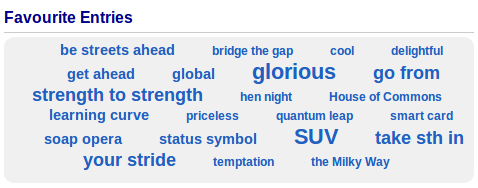
Here's hoping that this is an omen for the outcome of current events in Turkey. A more contentful note of optimism can be found in Soli Özel, "The protests in Turkey won’t be the last", WaPo 6/15/2013, or Louis Fishman, "The Gezi Park protests, the Middle East and the secular-religious divide", Zaman 6/16/2013.
תיקונספשן
[עדכון, 21/6: מן קיבל את הביקורת והתנצל. יש עוד אינטגריטי בעולם. קיץ שמח לכולם!]
שלמה מן מתקן כתבה במסגרת טורו ב"העין השביעית":

המתקן ממותקן פטור. או משהו.
מצד אחד, אני חושד שמא מן לא קרא עד סוף הפסקה בכתבה, כי בהמשכה בהחלט מוזכר שחמש הדקות האחרונות היו מהוללות. מצד שני, אני חושב שאני יודע מה מניע אותו: המילה "שיער". כשמאן דהוא כותב "פלאטיני לא שיער ש-X", לרוב משתמע ש-X אכן קרה. הכתב כנראה היה יוצא יותר ברור עם "פלאטיני לא חשב על האפשרות ש-X", אבל גם כמו שזה עכשיו זה סביר. אם קוראים עד סוף הפסקה.
אבל אז יש לך רק לכלוך אחד על "ישראל היום" בטור. וב"העין השביעית" יש דרישות סף.
תויק תחת:לקסיקוגרפיה, סמנטיקה, עברית, עריכה לשונית בחינם


אמבולנס הכסף, אולימפיאדת האמהות והקואוצ’רית שמרית דיקט // עידו קינן
Yuval Pinterמאשר להקדיש לזה תשע דקות.
פרק 2 של פולדש, תוכנית המערכונים של אסף שגיא, אייל בראל ואהוד קינן (אח):
הפרק הראשון:
The post אמבולנס הכסף, אולימפיאדת האמהות והקואוצ’רית שמרית דיקט // עידו קינן appeared first on חדר 404.
טעם לפגם
אז יש בבנימינה רחוב, שמצדו האחד גובל ברחובות עם שמות של תאי שטח כמו "הגפן" ו-"הגורן". מצדו השני ובאזורו הכללי רחובות עם שמות של בעלי מקצוע, כמו "המורה" ו-"האיכר".
שמו של הרחוב הוא "החורש". איך לעזאזל אמור אדם לדעת איפה לשים את הטעם?

תודה וואלה מפות, אי אפשר להגיד שאתם לא בעברית.
מה דעתכם? איך אתם קראתם לראשונה (אם ראיתם התמונה לפני הטקסט)?
Take Our Poll[ולכל המוחים על כך שחורש זה לא מקצוע: טקסי שבועות בקיבוץ השפיעו עליי רבות. מבחינתי זה מקצוע.]
תויק תחת:כתיב, סמנטיקה, עברית, פונטיקה, תחבורה


שטייניץ ביקש מנתניהו להחליף אותו
איך אתם מבינים את הכותרת הבאה?
 אני דמיינתי תרחיש במסגרתו הגיע לידי המערכת סרטון מתקופתו של שטייניץ כשר האוצר – אולי בעיצומן של ההפגנות לפני שנה ועשרה חודשים – במהלכו הוא מבין שהמדיניות הכלכלית שלו ושל נתניהו נכשלה, שהאידיאולוגיה הניאו-ליבראלית כולה ניצבת על כרעי תרנגולות, שההמונים המפגינים לא יוותרו עד שתוקם כאן חברת מופת, ושהדרישה לצדק חברתי תכניע כל פוליטיקאי המבקש להעלות את מעמד הביניים והמעמדות הנמוכים על מזבח המאקרו-כלכלה. או-אז שטייניץ נשבר, כורע תחת הלחץ ומבקש מנתניהו למנות מישהו אחר לתפקיד שר האוצר.
אבל שום דבר מזה כמובן לא נכון:
השר לעניינים אסטרטגיים, יובל שטייניץ, מעוניין מאוד בתואר ממלא מקום ראש הממשלה – גם אם זה לארבע שעות בלבד. בישיבת הממשלה שהתקיימה אתמול (ראשון) לעיני המצלמות, ניסה שטייניץ לשכנע את ראש הממשלה, בנימין נתניהו, למנותו לממלא מקומו. [...] "לא, לממלא מקום זמני, כשאתה בחו"ל", ניסה שטייניץ. "תמיד מינית רק ליכודניקים", הוסיף.
מסתבר ששטייניץ ביקש מנתניהו להחליף אותו, כלומר ששטייניץ יחליף את נתניהו לכמה שעות, אבל בחיים לא הייתי מנחש שזו הכוונה. למה? אמנם אני משוחד ויש לי דעה מוצקה על התאמתו של שטייניץ לתפקיד שר האוצר של מדינת ישראל, אבל לא זה מה שגרם לי לקרוא את הכותרת לא נכון. בואו נדבר על פעלים.
לפעמים קורה שיש לנו שתי דמויות במשפט ואיזושהי פעולה שאחת הדמויות עשויה לעשות. למשל, עם הפועל הבטיח, שם הפועל חוזר לנושא:
(1) שטייניץ הבטיח לנתניהו לרקוד הורה.
(2) שטייניץ הבטיח לנתניהו לקנות את הספר של עוזי וייל.
(3) שטייניץ הבטיח לנתניהו להחליף אותו.
במשפט (1), שטייניץ הוא זה שאמור לרקוד הורה. אין שום דרך לקרוא את המשפט הזה כך שנתניהו הוא זה שירקוד, בשביל זה צריך להגיד משהו כמו "שטייניץ הבטיח לנתניהו שהוא יוכל לרקוד הורה", וגם אז המשפט הוא דו-משמעי. בדומה, במשפט (2) שטייניץ הוא זה שיקנה את הספר ובמשפט (3) שטייניץ הוא זה שאמור להחליף את נתניהו.
יש פעלים שמתנהגים הפוך מהבטיח. למשל, הטיל יכול להתייחס רק לנשוא למושא המשפט ולא לנושא:
(4) פרס הטיל על נתניהו להרכיב את הממשלה.
כאן נתניהו הוא זה שמרכיב את הממשלה, ואין שום דרך בה פרס אמור להרכיב את הממשלה. הפועל הטיל גורם לנשוא למושא במשפט להיות הנושא של שם הפועל (במקרה הזה, להרכיב).
אנחנו רואים שיש פעלים כמו הבטיח שהם מוכווני-נושא ויש פעלים כמו הטיל שהם מוכווני-נשוא מושא. מה לגבי ביקש שלנו? הוא נוטה להיות מוכוון-נשוא מושא, אבל אפשר להבין אותו גם כמוכוון-נושא.
(5) פרס ביקש מנתניהו להרכיב את הממשלה.
(6) שטייניץ ביקש מנתניהו להזמין מיטה מתקפלת למטוס.
(7) שטייניץ ביקש מנתניהו לפגוש אותו.
משפט (5) הגיוני בקריאה לפיה הנשיא מטיל על נתניהו להרכיב את הממשלה. אבל לא יהיה זה לא-דקדוקי לדמיין מצב שבו פרס מתכנן איזה תרגיל פוליטי ומבקש מנתניהו שנתניהו ירשה לו להרכיב את הממשלה בעצמו. גם במשפט (6), הקריאה המיידית היא זו בה נתניהו אמור להזמין את המיטה, אבל אפשר לדמיין מצב שבו ארגון המיטה הוא איזה כבוד גדול ששטייניץ מעוניין בו. משפט (7) מעניין משום שפגישה היא עניין הדדי, ובמצבים כאלה בעל התפקיד הבכיר יותר הוא זה שאמור לפגוש את הזוטר. כלומר גם כאן, נתניהו פוגש את שטייניץ.
אותם דברים אמורים לגבי המשפט המקורי שלנו:
(8) שטייניץ ביקש מנתניהו להחליף אותו.
הנטייה שלנו לראות פעלים כאלה כמוכווני-נשוא, יחד עם הפער בהיררכיה בין נתניהו ושטייניץ, מביאים אותנו לקריאה השגויה. שהיא כמובן טבעית לחלוטין, אבל לא מה שעורכי 'וואלה!' התכוונו אליו.
אגב, לא כולם נפלו בפח. 'הארץ' יצאו מזה בקלות באמצעות הפועל הפציר והבהרה שמדובר במילוי מקום:

אם דברים כאלה מעניינים אתכם, ואם במקרה אתם בתהליכי הרשמה ללימודי תואר ראשון, אולי נולדתם להיות תחבירנים? לתופעה הזו למשל קוראים control ("שליטה"?), ואפשר ללמוד עליה עוד הרבה במסגרת לימודי בלשנות.
תויק תחת:עברית, עריכה לשונית בחינם, תחביר


"Hard vowel sounds"
Yuval PinterOh dear God
"Red-blue divisions start with newborns’ names; parents show partisan tendencies", Washington Times 6/5/2013:
Names with the soft consonant “l” or that end in a long “a” — for example, President Obama’s daughter Malia — are more likely to be found in Democratic neighborhoods, while names with hard vowel sounds such as K, G or B — think former Alaska Gov. Sarah Palin’s sons Track and Trig — are more popular in Republican communities.
I've pretty much given up on the idea that literate people can be expected to know the difference between voice and tense, or passive and active, or even nouns and verbs. But I thought that consonants and vowels were pretty safe, at least as a taxonomy of orthographic categories. I mean, "AEIOU and sometimes Y", right?
Anyhow, what's even more striking about this article is the fact that it manages never to cite or link to the paper it discusses, which is J. Eric Oliver, Thomas Wood, and Alexandra Bass, "Liberellas versus Konservatives: Social Status, Ideology, and Birth Names in the United States", 2013.
In fact, information about the source is dribbled out bit by grudging bit. In the second paragraph, we're told about "A research paper by a team of University of Chicago political scientists". In the fourth paragraph, the paper's title is given. In the eleventh paragraph, we get the authors' names. We never get a link.
Can you imagine an article about a politician's new proposal or a company's new product that begins with a general description in the second paragraph, gets around to telling us what the proposal or product is called in the fourth paragraph, and withholds the name of the politician or the company until the eleventh paragraph?
In fact, I believe that Journalists often deal with scientific and technical papers in a similar way: The tip of the informational pyramid is just the fact that a "study" or "paper" exists; then maybe the institution and perhaps the field; the people, the journal, the title, etc., are backgrounded if indeed they're mentioned at all. It might be an interesting term project for a journalism course to determine whether my impression is valid, and how this treatment compares with stories about new products, new novels, new movies, and so on.
Obligatory screenshot:
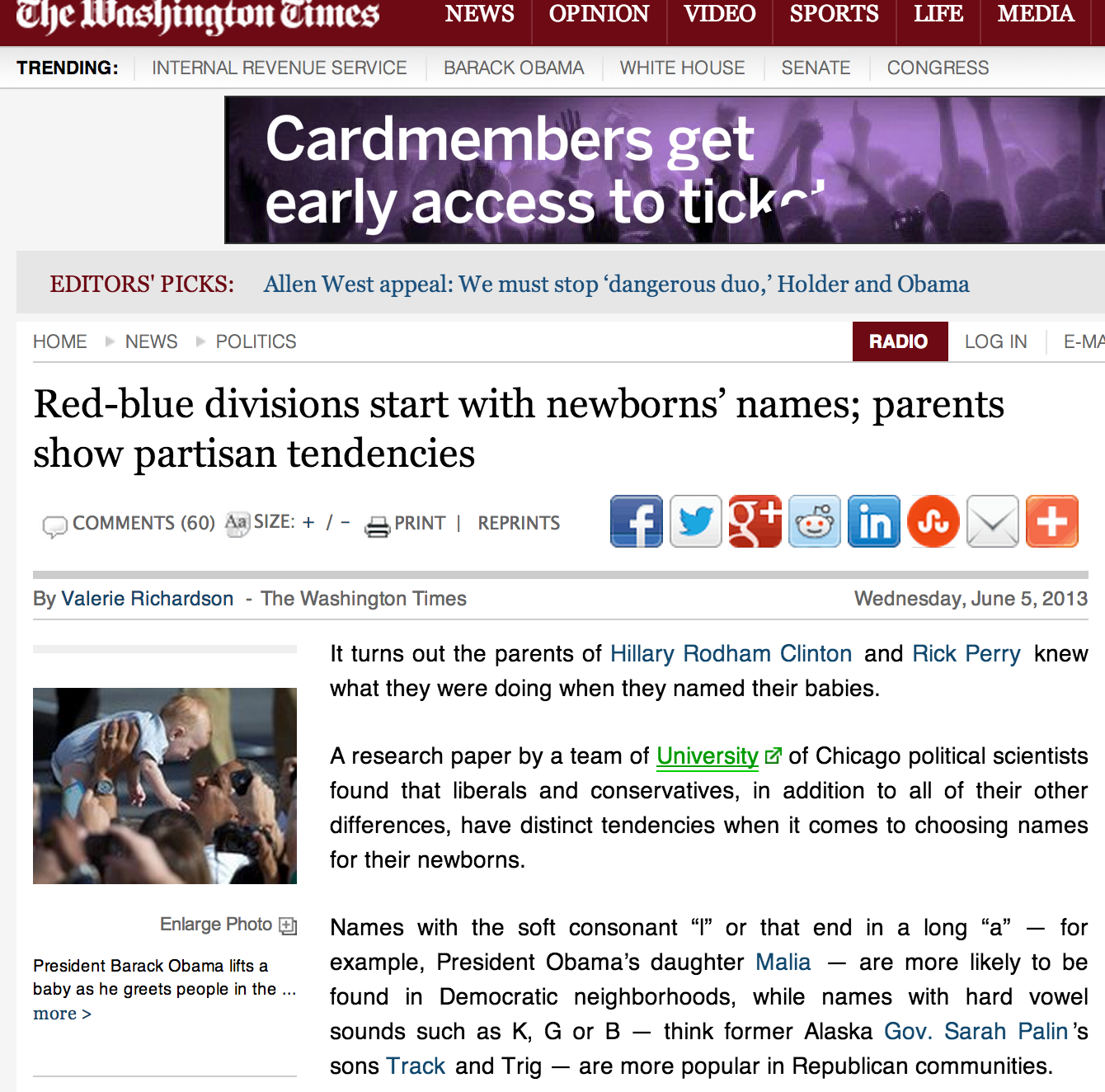
[via fev at headsup: the blog]
Tel Aviv Youth Center Killings Were Anti-Gay Hate Crime

Nir Katz, one of the victims of the Bar Noar murders
It’s taken four years, thousands of hours of police work, and the most expensive investigation in the history of the Israeli police, but they finally appear to have cracked the case of the Tel Aviv gay community center killings in which a counselor and young member were killed by weapons fire that was sprayed throughout the room. Ten others were wounded that day with at least one paralyzed for life.
The unofficial Israeli police web forum has revealed further information (in case this is taken down due to a gag order here is a screenshot) on the attack, suspects, and the motive for it. At the time of the shooting, the center’s director was Shaul Ganon, 49, an 18-year activist in the gay community. According to the source posting to the web forum (which again is a police source and should be suspected of some anti-gay bias), Gannon was suspected of rape of a 15-year-old (minor). Brothers of the victim determined to get revenge. So they traveled from their home in Bnai Brak to the Center and attacked it with the intent to avenge the alleged crime.
UPDATE: Since I wrote the paragraph below, Walla reports that the suspects did have a Haredi upbringing, but that lately they’d abandoned it. They live in Pardes Katz, a largely Mizrahi “pocket” of Bnei Brak. Their family name sounds clearly Mizrahi as well. The hatred of homosexuality inherent in Jewish Orthodoxy rubbed off on them.
UPDATE I: This article implies that of the four suspects arrested, one is Ganon, two are the brothers of the victim, and the fourth is the gunman, hired by the brothers as the hit man. The latter reputedly has an organized crime background.

Shaul Ganon, who inadvertently set in motion the plot to attack Tel Aviv’s gay youth center.
Since the attackers didn’t harm Ganon, I have to suspect that the killers were motivated by a hate crime, since they attacked others who had nothing to do with Ganon or his crime. Given that the brothers are from Bnai Brak, a highly-Orthodox community, one may assume that the victim comes from such a background (though there are non-Haredi pockets in Bnai Brak where homophobia would be just as rampant). If so, this would only exacerbate the hatred the victim’s family would feel toward not only Ganon himself, but the entire gay culture, which they might feel victimized their brother.
The victim’s brothers are identified as Hagi (23) and Benjamin Felician (20).
According to an Israeli source active in the gay community, Ganon didn’t rape the boy, but rather had a consensual sexual relationship with him. The boy in turn “came out” to his family. And this is when the revenge plot developed. I should note that any sex act between a 46 year old man and a 15 year old might legally be construed as rape. But according to my source the relationship was consensual.
An Israeli commenter in the thread for this post notes that Ganon has been accused of similar unprofessional conduct with other young people. For that reason, he was dismissed from his post at the Center. So he appears to have a history of exploiting young gay men.
I want to make very clear that this information completely explodes the claim by the police that this was not a hate crime. It was indeed precisely that. But clearly claiming this merely involved revenge against an accused rapist (the police are falsely calling it “a personal vendetta”), it would allow the police to treat it as purely a sex crime and so limit the fall-out, if they could exclude homophobia as a motive.
To further rebut the police version: when the gunman couldn’t find Ganon at the Center (he wasn’t there that night), if he had gone home it would not have been a hate crime. But when he sprayed the entire hall indiscriminately with gunfire after he couldn’t find his intended victim, he killed for one reason and one reason alone: hatred of gays.
My source further notes that Ganon was one of those who inadvertently led to the notion of pinkwashing. He gave shelter to Palestinian gay youths who fled their families for fear of persecution or violence. In doing so, Gannon didn’t just offer shelter, he went further and heaped abuse on the homophobia of Palestinian culture and pointed to the superiority of Israeli attitudes on the subject.
This crime certainly will give the lie to that claim, since it proves there is a huge amount of gay hatred among the Israeli Orthodox community. You’ll recall there have been several acts of violence including a stabbing at a Jerusalem gay pride parade some years ago in which the attacker was Orthodox. Rabbis from the community have denounced the gay pride movement in vitriolic ways that would only exacerbate these sorts of reactions.
Ganon has also been arrested, though not, according to my source, for rape. But rather because he knew of the attack and attackers and did not divulge this to the authorities.

Related Posts


June 06, 2013
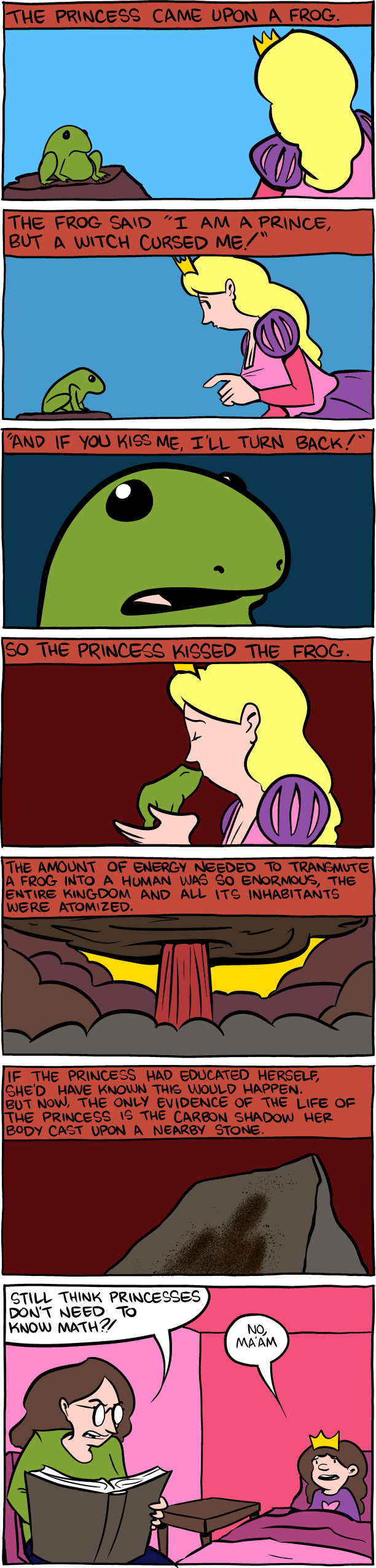
WOOH. Technically, there are some glitches in the early archives, so I don't actually know which comic this is. BUT, the longer I do this, the closer the large round numbers get to being correct.
Thanks for giving me the best job ever, geeks.
One Hundred THOUSAND Years Of Solitude
Yuval PinterWell, only for the title.
| archive - contact - sexy exciting merchandise - cute - search - about | |||
| whoah! is that a special limited-edition shirt featuring three kids wearing your body to disguise themselves as an adult??
|
|||
| ← previous | June 3rd, 2013 | next | |
|
June 3rd, 2013: Panel 1 = SECRETS OF THE PUBLISHING PROFESSION?? One year ago today: are you impressed because i am writing a book and it already has over 360,007 characters in it – Ryan 
| |||

ברבע מיליון שקל אני כבר אקנה לי חבר במועצה להשכלה גבוהה
במשך כשנה עמלנו יובל אגסי ואני על תחקיר בנושא ההשכלה הגבוהה בישראל. איך להשיג תואר במינימום מאמץ? מי הוי איי פי שמתקבלים לתואר בלי לעמוד בתנאי קבלה וכו'? בשנה ומשהו שעבדנו על התחקיר גם הפנינו בקשה נרחבת לקבל מידע מהמועצה, מכוח חוק חופש המידע.
אנחנו לא תמימים, לא חשבנו שהמועצה תחשוב חלילה שזו חובתה לחשוף מידע לציבור, שזה בכלל תפקידה, שהיא צריכה לשמש דוגמא לאיך מתנהל רגולטור. בכול זאת, הם בסך הכול עוסקים במגדל השן האקדמי, באליטה, במוסדות של הנחלת ידע, מה להם ולשקיפות ועדיין לרמה כזאת של התחמקות והתפתלות, אני מודה שלא ציפינו.
רק שתי דוגמאות קטנות: ביקשנו את כל הפרוטוקולים של ישיבות המועצה להשכלה גבוהה. באתר המועצה מתפרסמות רק השורות התחתונות, אבל למה המועצה החליטה לאשר תוכנית לתואר שני במוסד איקס? מי התנגד? מי היה בעד? מה השיקולים? אישרו, למשל, לאוניברסיטת בן גוריון להעניק תואר ראשון לבוגרי קורס טייס. מי הצביע בעד? מי נגד? מה היו השיקולים?
ועדה מיוחדת של המועצה המליצה לא להסמיך את בוגרי בי"ס למשפטים של מכללת "כרמל". זה נדיר. ועדת המשנה של המועצה בראשות דפנה ברק ארז (היום שופטת בעליון ואז באוניברסיטת תל אביב) החליטה לא לקבל את ההמלצה. למה? מה היה המשקל של עמוס שפירא, דיקאן בי"ס למשפטים של "כרמל" וגם הוא אקס אוניברסיטת תל אביב, בהחלטה? איך בדיוק פעל שר החינוך סער, כשהנושא הגיע למליאת המועצה? איך זה שיזם המכללה, אדם בשם אבי ביתן, הבטיח שבאמצעות קשריו עם שר החינוך, הוא יסדר את זה ואכן, זה סודר?
הכול חסוי, סודי. תהפכו את העולם 6 פעמים ולא תמצאו סיבה הגיונית למה זה חסוי. למה זה לא מתפרסם. מה זה סוד מסחרי? שיקולי חוץ ובטחון? פרטיות? אין. ישבו החכמים של המועצה להשכלה גבוהה ומצאו פתרון: זה קשה. החוק קובע שלא צריך להעביר חומר אם הדבר כרוך בהקצאת משאבים בלתי סבירה.
אתם בטח תמימים ואומרים – כמה זה יכול להיות קשה לרכז את כל הפרוטוקולים של המועצה, שבטח נמצאים על אותה תיקייה על המחשב, לעשות להם פורוורד ותוך חמש דקות הם בצד השני? ובכן, אתם אכן תמימים.
להלן תשובת המועצה:
בהתאם לבדיקה מדגמית שערכנו, משת 2007 התקיימו כ – 70 ישיבות. מספר עמודים בממוצע בכל פרוטוקול כ – 40 עד 60 עמודים. יובהר כי בטרם הפנייה לצדדים שלישיים (כ – 140 פניות) על המל"ג לבחון כל פרוטוקול לגופו האם אין בחשיפת המידע פגיעה בעקרונות אחרים (כגון סודות מסחריים ופגיעה בפרטיות) אשר עקרון השקיפות נסוג בפניהם. אנו מעריכים כי היקף הטיפול בבקשה בהיקף עליה עמדת תדרוש הקצאת עובד ל – 6 חודשים לערך.
אתם מבינים? פרוטוקול של הגוף המפקח על המוסדות להשכלה גבוהה בישראל כולל סודות מסחריים, התוכנית לתואר ראשון של מכללה כזו או אחרת משנת 2008 היא סודית, אולי הפרטיות של איזה מרצה תיפגע כי יידעו שהוא מלמד שם (לא אמורים להתגאות בזה על אתר המכללה?). צריך לפנות לכל מי שהוזכר, לשאול אם אדוני נפגע, אולי הוא רוצה לערער, להקצות עובד שלם במשרה מלאה שישה חודשים רק כדי לטפל בזה, איזה קשקוש. אם זו המועצה להשכלה גבוהה, באמת אל תתפלאו איך שנראים פה חלק מהתארים. רגע, רגע. ביקשנו עוד דבר.
המועצה מקבלת מהמוסדות להשכלה גבוהה את כל התוכניות השונות שלהם. בתוכנית רשום מי הסגל, איזה תואר יינתן לסטודנטים, מה תנאי קבלה, בקיצור – מה שבבוא היום יירשם פחות או יותר בידיעון. טוב, ברור שהמועצה לא תשים את זה באינטרנט. מה פתאום. ככה חלילה אנחנו עוד עלולים לדעת איך היא פועלת, אבל אולי מהרגע שעיתונאי נודניק ביקש, אולי בכול זאת יעבירו לו את המידע הסופר מסווג הזה?
ובכן, להלן תשובת המועצה (לגזור ולשמור):
בכל ישיבת מל"ג (המועצה להשכלה גבוהה) נדונות כ – 20 תוכניות כאמור. הואיל והמדובר ב – 70 ישיבות מועצה אזי בקשתך מתייחסת ל – 1400 תוכניות. בהתאם לבדיקה מדגמית, הערכתנו שנדרשות כ – 4 שעות עבודה על כל תוכנית ובסה"כ 5,600 שעות עבודה. סך עלות הטיפול בסעיף זה מוערך על ידינו בכ – 250 אלף שקל, לא כולל עלות צילום המסמכים.
כמה שאלות: מה עושים ב – 4 שעות עבודה האלה על כל תוכנית? אין קובץ דיגיטלי שלהם? זה נכתב ביד? באבן? בכתב לימון? האם נכון שאת רוב התוכניות הללו מאשרים בפחות זמן ממה שלוקח לעבור עליהן כדי להחליט אם להעביר לתקשורת? הכי מעצבן - לא כולל עלות צילום? אתם רוצים רבע מיליון ואתם לא יכולים לצלם את התוכניות? וואו. ברבע מיליון שקל אני קונה לי חבר מל"ג, שיעדכן אותי בזמן אמת בכול תוכנית. על המכתב המופלא הזה, שאני מתכוון למסגר בבית, חתומה – מיכל פרי, רכזת פניות ציבור מל"ג/ות"ת. מיכל יקירתי, אנחנו לא מכירים, אבל כשמנחים אותך לכתוב את דבר ההבל הזה, מותר להגיד 'לא'. מתישהו כל החומר הזה יהיה באינטרנט נגיש לכולם ואז ניקח את המכתב הזה לכל כנס כדי להזכיר איך תפקדה המועצה להשכלה גבוהה בספטמבר 2012. למה את צריכה להיות חתומה על הפארסה הזאת?
ברוסיה מתגוננים: אם לא היינו מספקים את טילי הs300 בזמן היינו מחויבים לפצות את אסד בלחם שום
בקרו באתר להנפצה במלואה
610 - Would Smell As Sweet: Geo-popularity of Given Names
Read More


From the American Association for the Advancement (?) of Science (?)
Yuval PinterLong but important. And thoroughly depressing.
The following is a guest post by Richard Sproat:
Regular readers of Language Log will remember this piece discussing the various problems with a paper by Rajesh Rao and colleagues in their attempt to provide statistical evidence for the status of the Indus “script” as a writing system. They will also recall this piece on a similar paper by Rob Lee and colleagues, which attempted to demonstrate linguistic structure in Pictish inscriptions. And they may also remember this discussion of my “Last Words” paper in Computational Linguistics critiquing those two papers, as well as the reviewing practices of major science journals like Science.
In a nutshell: Rao and colleagues’ original paper in Science used conditional entropy to argue that the Indus “script” behaves more like a writing system than it does like a non-linguistic system. Lee and colleagues’ paper in Proceedings of the Royal Society used more sophisticated methods that included entropic measures to build a classification tree that apparently correctly classified a set of linguistic and non-linguistic corpora, and furthermore classified the Pictish symbols as logographic writing.
But as discussed in the links given above, both of these papers were seriously problematic, which in turn called into question some of the reviewing standards of the journals involved.
Sometimes a seemingly dead horse has to be revived and beaten again, for those reviewing practices have yet again come into question. Or perhaps I should in this case say “non reviewing practices”: for an explanation, read on.
Not being satisfied by merely critiquing the previous work, I decided to do something constructive, and investigate more fully what one would find if one looked at a larger set of corpora of non-linguistic symbol systems, and contrasted them with a larger set of corpora of written language. Would the published methods of Rao et al. and Lee et al. hold up? Or would they fail as badly as I predicted they would? Are there any other methods that might be useful as evidence for a symbol system’s status? In order to answer those questions I needed to collect a reasonable set of corpora of non-linguistic systems, something that nobody had ever done. And for that I needed to be able to pay research assistants. So I applied for, and got, an NSF grant, and employed some undergraduate RAs to help me collect the corpora. A paper on the collection of some of the corpora was presented at the 2012 Linguistic Society of America meeting in Portland.
Then, using those corpora, and others I collected myself, I performed various statistical analyses, and wrote up the results (see below for links to a paper and a detailed description of the materials and methods). In brief summary: neither Rao’s nor Lee’s methods hold up as published, but a measure based on symbol repetition rate as well as a reestimated version of one of Lee et al.’s measures seem promising — except that if one believes those measures, then one would have to conclude that the Indus “script” and Pictish symbols are, in fact, not writing.
So for example in a paper published in IEEE Computer (Rao, R., 2010. Probabilistic analysis of an ancient undeciphered script. IEEE Computer. 43~(3), 76–80), Rao uses the entropy of ngrams — unigrams, bigrams, trigrams and so forth, which he terms “block entropy” — as a measure to show that the Indus “script” behaves more like language than it does like some non-linguistic systems. He gives the following plot:
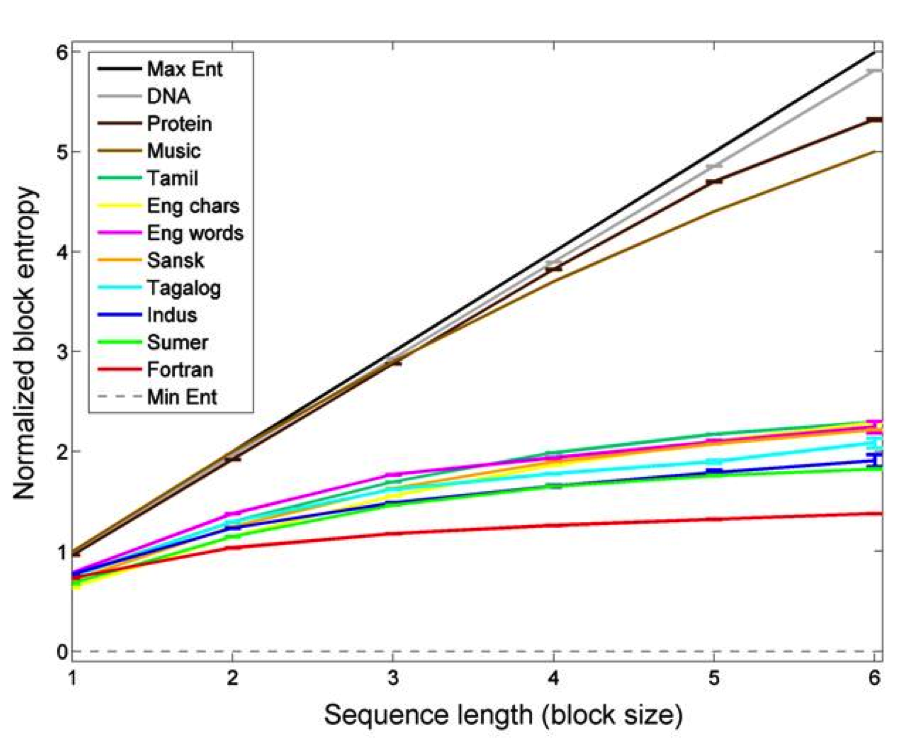
For this particular analysis Rao describes exactly the method and software package he used to compute these results, so it is possible to replicate his method exactly for my own data.
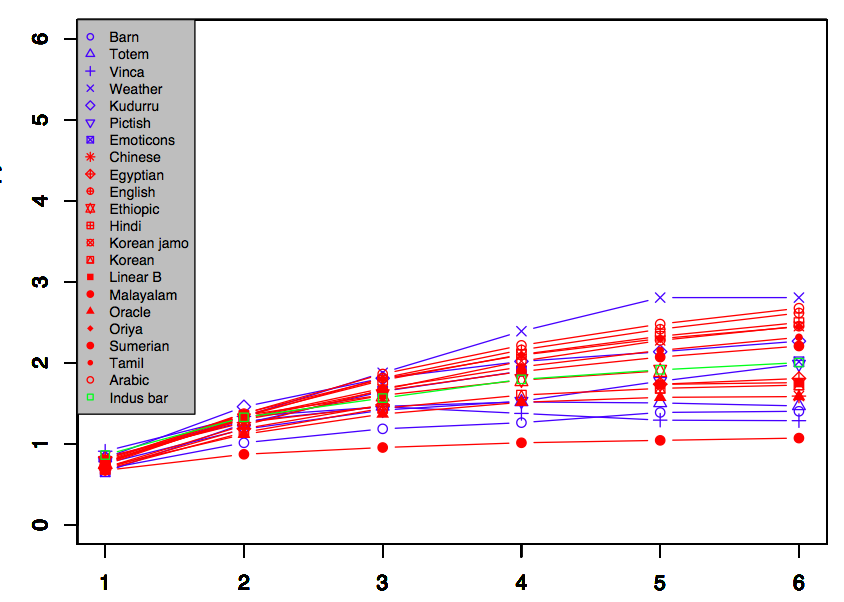
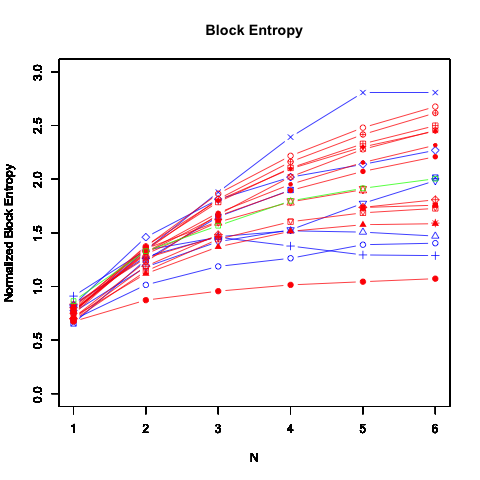
The results of that are shown below, where linguistic corpora are shown in red, non-linguistic in blue, and for comparison a small corpus of Indus bar seals in green. As can be seen, for a representative set of corpora, the whole middle region of the block entropy growth curves is densely populated with a mishmash of systems, with no particular obvious separation. The most one could say is that the Indus corpus behaves similarly to any of a bunch of different symbol systems, both linguistic and non-linguistic.
In this first version of the plot, I use the same vertical scale as Rao’s plot for ease of comparison:
Here's a version with the vertical scale expanded, for easier comparison of the datasets surveyed — again, non-linguistic datasets are in blue, known writing systems are in red, and the Indus bar-seal data is in green:
With Lee et al’s decision tree, using the parameters they published, I could replicate their result for Pictish (a logographic writing system), but also it also classifies every single one of my other non-linguistic corpora — with the sole exception of Vinča — as linguistic.
One measure that does seem to be useful is the ratio of the number of symbols that repeat in a text and are adjacent to the symbol they repeat (r), to the number of total repetitions in the text (R). This measure is by far the cleanest separator of our data into linguistic versus nonlinguistic, with higher values for r/R (e.g. 0.85 for barn stars, 0.79 for weather icons, and 0.63 for totem poles), being nearly always associated with non-linguistic systems, and lower values (e.g. 0.048 for Ancient Chinese, 0.018 for Amharic or 0.0075 for Oriya) being associated with linguistic systems.
However this is partially (though not fully) explained by the the fact that r/R is correlated with text length, and non-linguistic texts tend to be shorter. This and other features (including Rao et al. and Lee et al.’s measures) were used to train classification and regression trees, and in a series of experiments I showed that if you hold out the Pictish or the Indus data from the training/development sets, the vast majority of trained trees classify them as non-linguistic.
To be sure there are issues: we are dealing with small sample sizes and one cannot whitewash the fact that statistics on small sample sizes are always suspect. But of course the same point applies even more strongly to the work of Rao et al. and Lee et al.
Where to publish such a thing? Naturally, since the original paper by Rao was published in Science, an obvious choice would be Science. So I developed the result into a paper, along with two supplements S1, S2, and submitted it.
I have to admit that when I submitted it I was not optimistic. I knew from what I had already seen that Science seems to like papers that purport to present some exciting new discovery, preferably one that uses advanced computational techniques (or at least techniques that will seem advanced to the lay reader). The message of Rao et al.’s paper was simple and (to those ignorant of the field) impressive looking. Science must have calculated that the paper would get wide press coverage, and they also calculated that it would be a good idea to pre-release Rao’s paper for the press before the official publication. Among other things, this allowed Rao and colleagues to initially describe their completely artificial and unrepresentative “Type A” and “Type B” data as “representative examples” of non-linguistic symbol systems, a description that they changed in the archival version to “controls” (after Steve Farmer, Michael Witzel and I called them on it in our response to their paper). But anyone reading the pre-release version, and not checking the supplementary material would have been conned into believing that “Type A” and “Type B” represented actual data. All of these machinations were very clearly calculated to draw in as many gullible reporters as possible. I knew, therefore, what I was up against.
So, given that backdrop, I wasn’t optimistic: my paper surely didn’t have such flash potential. But I admit that I was not prepared to receive this letter, less than 48 hours after submitting:
Dear Dr. Sproat:
Thank you for submitting your manuscript “Written Language vs. Non-Linguistic Symbol Systems: A Statistical Comparison” to Science. Our first stage of consideration is complete, and I regret to tell you that we have decided not to proceed to in-depth review.
Your manuscript was evaluated for breadth of interest and interdisciplinary significance by our in-house staff. Your work was compared to other manuscripts that we have received in the field of language. Although there were no concerns raised about the technical aspects of the study, the consensus view was that your results would be better received and appreciated by an audience of sophisticated specialists. Thus, the overall opinion, taking into account our limited space and distributional goals, was that your submission did not appear to provide sufficient general insight to be considered further for presentation to the broad readership of Science.
Sincerely yours,
Gilbert J. Chin
Senior Editor
It is worth noting that this is more or less exactly the same lame response as Farmer, Witzel and I received back in 2009 when we attempted to publish a letter to the editor of Science in response to Rao et al.’s paper:
Dear Dr. Sproat,
Thank you for your letter to Science commenting on the Report, titled "Entropic Evidence for Linguistic Structure in the Indus Script." I regret to say that we are not able to publish it. We receive many more letters than we can accommodate and so we must reject most of those contributed. Our decision is not necessarily a reflection of the quality of your letter but rather of our stringent space limitations.
We invite you to resubmit your comments as a Technical Comment. Please go to our New Submissions Web Site at www.submit2science.org and select to submit a new manuscript. Technical Comments can be up to 1000 words in length, excluding references and captions, and may carry up to 15 references. Once we receive your comments our editors will restart an evaluation for possible publication.
We appreciate your interest in Science.
Sincerely,
Jennifer Sills
Associate Letters Editor
We never did follow up on the invitation to submit a Technical Comment, but then we know very well what would have happened if we had.
So let’s get this straight: an article that deals with a 4500-year old civilization that most people outside of South Asia have never heard of is of broad general interest if it purports to use some fancy computational method to make some point about that civilization. Forget the fact that the method is not fancy, is not even novel, and is in any case naively applied and that the results are based on data that are at the very least highly misleading. But if a paper comes along that is based on much more solid data, tries a variety of different methods, shows — unequivocally — that the previous published methods do not work, and even reverses the conclusions of that previous work, then that is of no general interest.
I think the conclusion is inescapable that Science is interested primarily if not exclusively in how their publications will play out in the press. Presumably the press wouldn’t be that interested in the results of my paper: too technical, not good for sound bites. And certainly the conclusions might seem unpalatable: among other things it means that the earlier paper that Science did publish was wrong.
But then that’s what science is about isn’t it? Science advances sometimes by showing that previous work was in error. Science is published by the American Association for the Advancement of Science, but it’s hard to see science, much less advancement in their editorial policies.
More generally, why is it that in the past 5 years (at least), none of the relatively few papers that Science published in the area of language stands up to even mild scrutiny by linguists on forums such as Language Log and elsewhere? I have seen explanations to the effect that because they do not publish on language much, they don’t really have a good crop of reviewers for papers in that area. Certainly that does seem to have been true. The question is why it continues to be true: doesn’t an organization that claims to promote the advancement of science owe it to its readership to get qualified experts as peer reviewers for papers in an area that they cover; and to actually listen to the few qualified reviewers they do get (cf. here). If they aren’t prepared or aren’t able to do this, then perhaps it would be better if they got out of the business of publishing papers related to language entirely.
But then again we know what their real goal is, don’t we? We know that whenever they review a paper it’s always with an eye to what Wired Magazine or The New York Times are going to do with that paper. So when they see a paper that uses some computational technique to derive a result that “increases the likelihood” that India’s oldest civilization was literate; or a paper that claims to show evidence that we can trace language evolution back to Africa 70K years ago (see here); they see the obvious opportunity for publicity. Science gets yet another showing in the popular press, the lay reader will be duped by the dazzle of the technical fireworks that he or she does not understand anyway, and can in any case be expected to quickly forget the details of: All they might remember is that the paper looked “convincing” when reported, and of course that it was published in Science. It goes without saying that the opinions of the real experts can safely be ignored since those will only be vented in specialist journals or in informal forums like Language Log. Science will apparently never open its pages to the airing of expert views that go against their program.
And thus science (?) advances (?).
The above is a guest post by Richard Sproat.
(myl) Since the comments were starting to devolve into arguments about irrelevant issues such as the Harappan system of weights, I've turned comments off. If you have something more to add to this discussion, feel free to send it to me in email.
הקלטת המבושלת
Yuval Pinterחסוס
"when the action was ambiguous, participants rated the action less harshly when it was done by the..."
- How Your Social Status Influences the Way You’re Judged
May 19, 2013
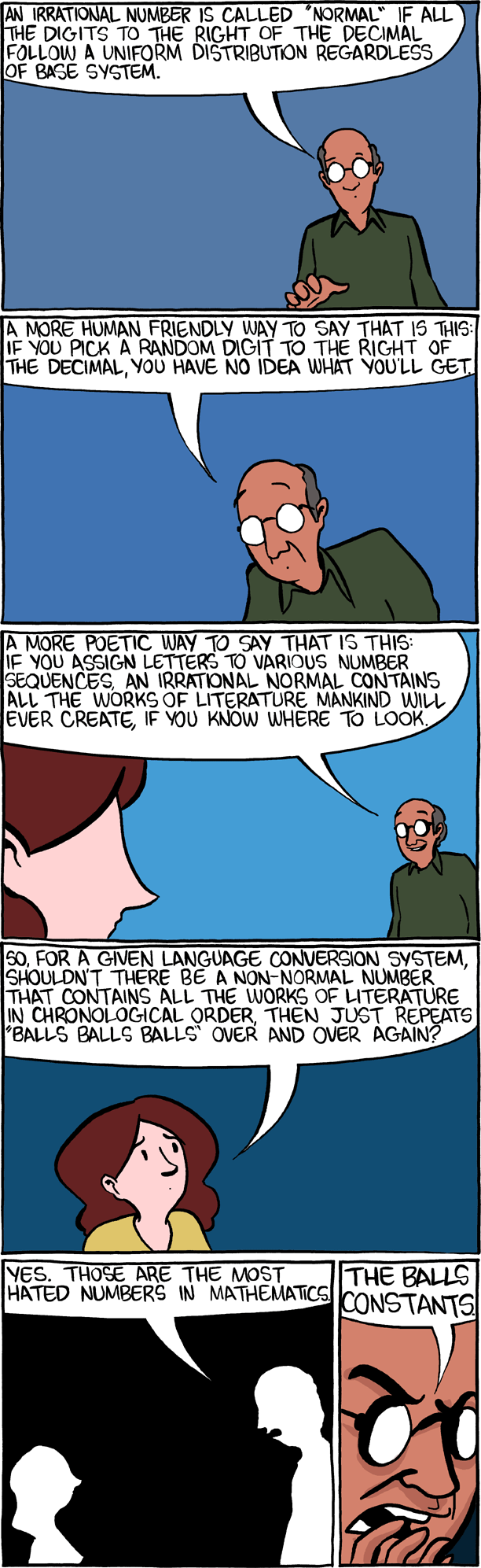
Yuval PinterThis is wrong, actually, because that number is rational.
מביכביליות
לאחרונה הייתי קצת נרגן מדי. בואו נתקן עם התמוגגות מרוח היצירה האנושית. מתוך העין השביעית, ציטוט של רוני לינדר-גנץ מהטושהזוהר על בקשות חופש מידע מרשויות המדינה (הדגשה שלי):
מהניסיון שלי, אני ממש יכולה להריח מראש איזה בקשה תידחה, וזה לפי מידת המביכות של המידע.
ממש כך. מביכוּת. עד כמה המידע מביך. "מבוכה" לא ממש מעביר את המסר, אולי בניסוח "לפי המידה בה המידע מביך", אבל זה יוצר הקבלה פחות חלקה וסרבול-מה. "מביכות" היא בדיוק מה שרצינו.
לצערי בשעה זו לא הצלחתי למצוא דרך לעקוף את מחסום-גוגל, שכן מן הסתם מביכוֹת זו מילה מן השורה, אפילו אפשר לצרף לה ה"א הידיעה, ועוד הנודניקים האלה בגוגל מפרקים כל מילה לגורמיה כך שאפילו חיפוש ליטרלי (עם מרכאות) מביא תוצאות עם צורת הבסיס "מביך". [עדכון: תודה למגיבים טל ואסי. סשן זריז הראה שלצירופים "מידת המביכות", "זאת מביכות" ו-"יש פה מביכות" אין אחיזה בהמרשתת, מלבד אותו פוסט בעין. ברכות ללינדר-גנץ.]
מה שכן, זו בפירוש לא הפעם הראשונה בה אני נתקל בשם פעולה חדש שנגזר משם תואר והסיומת "-וּת". אז "מיוחדוּת", "מחוברוּת" ו-"מקושרוּת" כנראה מיותרים, בגלל "ייחודיוּת", "חיבוריוּת" ו-"קישוריוּת" בהתאמה, אבל כשאין את הצורה המקבילה מהמשקל קִטּוּלִיּוּת אנחנו פונים לסיומת הזו ויוצרים "מקובלוּת" ו-"מכובדוּת", מילים שעדיין לא זכו להכרה רשמית בשפה. מדובר בפירוש בסיומת יצרנית (פרודוקטיבית) בעברית בת-ימינו, המקבילה לרוב ל-ity או ל-ability האנגליות.
מזל טוב.
תויק תחת:לקסיקוגרפיה, מורפולוגיה, עברית, תחדישים


i got opinions
Yuval Pinterword.
| archive - contact - sexy exciting merchandise - cute - search - about | |||
| dinosaur comics returns monday! this weekend i'll be at TEDxUofT talking about TIME TRAVEL, maybe i will see you there? :o
|
|||
| ← previous | May 16th, 2013 | next | |
|
May 16th, 2013: I saw the new Star Trek movie last night and it has the XCV 300 in it! It's my favourite Enterprise after the Enterprice C. Anyway that's all I wanted to say One year ago today: SECRETS OF THE BANKING PROFESSION – Ryan 
| |||