Shared posts

09 Sep 00:58

7 of the Biggest Mistakes I've Made Renting Apartments (and How to Avoid Them)

by Mike Winters

One of the benefits in renting a lot of different apartments over the years is that you get to look back and think, “Wow, I really didn’t know what I was doing.” I’ve made all sorts of mistakes in my time—like not knowing what I wanted, overpaying on amenities I never used, or simply missing out on pest control…

Read more...

09 Sep 00:46

Into the Night: Season 2 – Netflix Review

by Karina "ScreamQueen" Adelgaard
09 Sep 00:46

GWJ Conference Call 778

by Amoebic
Jupiter Hell

Jupiter Hell (PC), Psychonauts 2 (PS5), Orcs Must Die 3 (PC), PowerWash Simulator (PC), Splitgate (PC).

08 Sep 17:00

Life Is Strange: True Colors review: a more mature LIS, but one still beset by narrative growing pains

by Alice Bell

Whenever a new Life Is Strange game comes out I sometimes wonder how my life would manifest as an ironic and metaphorical super power. I usually stop quite quickly, because I have a feeling the answer would be somewhat disappointing. In the first game, Max Caulfield discovered she could rewind time or travel back to the past via photographs. In Life Is Strange 2, we shaped the outlook of young Daniel Diaz and how he used his somewhat fraught telekinetic powers. Now, in Life Is Strange: True Colors, we step into the shoes of Alex Chen, who can step into the hearts and minds of others.

Alex is a 21-year-old product of the foster system who can feel, manipulate or even absorb the intense emotions of those around her. We join Alex just as she steps off the bus into a remote Colorado mining town called Haven Springs to start a new life with her brother Gabe. Things - as they typically do during weddings in soap operas, the opening ten minutes of a hospital drama, or the end of the first chapter of a Life Is Strange game - go terribly wrong. What follows is simultaneously my most and least favourite Life Is Strange game.

Read more

08 Sep 16:46

The Many Saints Of Newark Trailer: The Sopranos Prequel Plays All The Hits

by Chris Evangelista

There's a new "The Many Saints of Newark" trailer here, and it gives us a much better look at the upcoming "Sopranos" prequel movie. The previously released trailer leaned heavily on the presence of Michael Gandolfini stepping into the role of Tony Soprano, famously originated by his late father, James Gandolfini. But Tony isn't actually the main character of "The Many Saints of Newark." Instead, the film is primarily focused on Richard "Dickie" Moltisanti, Tony's mentor, and father to "Sopranos" character Christopher Moltisanti. Alessandro Nivola plays Dickie, and it looks like Warner Bros. realized they better cut a trailer more devoted to him since he's technically the lead. Watch it below. 

The Many Saints Of Newark Trailer

I quite enjoyed the previous "The Many Saints of Newark" teaser trailer, but this full trailer is much better. It's more energetic, amusing, and sets the stage for what looks like an epic mob movie. I do think some of the winking at the audience – like when a character introduces himself as Pussy, AKA "Sopranos" character Salvatore "Big Pussy" Bonpensiero – is a bit groan-worthy here. But I suspect it'll play a lot better in the context of the film itself. In "The Many Saints of Newark":

Young Anthony Soprano is growing up in one of the most tumultuous eras in Newark's history, becoming a man just as rival gangsters begin to rise up and challenge the all-powerful DiMeo crime family's hold over the increasingly race-torn city. Caught up in the changing times is the uncle he idolizes, Dickie Moltisanti, who struggles to manage both his professional and personal responsibilities—and whose influence over his impressionable nephew will help make the teenager into the all-powerful mob boss we'll later come to know: Tony Soprano.

Again: this is a solid trailer. That said, I'm not really getting a "Sopranos" vibe from the footage here. This feels a little bit more like the mob movies that inspired "The Sopranos" rather than "The Sopranos" itself. But perhaps that's appropriate since this is technically the story that would inspire the events of "The Sopranos." It's meta! Kind of! In any case, I can't wait to see this thing. "The Many Saints of Newark" stars Alessandro Nivola, Leslie Odom Jr., Jon Bernthal, Corey Stoll, Michael Gandolfini, Billy Magnussen, Michela De Rossi, John Magaro, Ray Liotta, and Vera Farmiga. Look for the film in theaters on October 1, 2021, and on HBO Max for 31 days following theatrical release.

Read this next: The Many Saints Of Newark: Release Date, Trailer And More

The post The Many Saints of Newark Trailer: The Sopranos Prequel Plays All the Hits appeared first on /Film.

08 Sep 16:40

Planet-killing astronomer who downgraded Pluto looks for a replacement

by Rob Beschizza

Michael Brown, professor of planetary astronomy at Caltech, is most famous for demoting Pluto from planet to planetoid—a sad but necessary consequence of his discovery that there are numerous planetoids of similar size orbiting far from the sun. His memoir, How I Killed Pluto and Why It Had It Coming, covers the rancor that led to the 2006 International Astronomical Union's vote in its disfavor. — Read the rest

08 Sep 16:29

This project shows the nightmarish state of today's web

by Annie Rauwerda

https://how-i-experience-web-today.com/ starts as a simple Google search. Then things go south, and you realize you're in an awfully familiar nightmare.

Congrats, you're the millionth user and you get an iPhone! There's a barrage of popups, and they're all phrases you've heard a thousand times before, like "Would you like to turn on cookies?" — Read the rest

08 Sep 15:39

Diablo II: Resurrected Won’t Feature True Ultrawide Support, Blizzard Confirms

by Francesco De Meo

Diablo II: Resurrected

Diablo II: Resurrected is not going to feature true Ultrawide support on PC due to some issues that essentially break the game.

In a new post shared on the game's Official Forums, it has been confirmed that full 21:9 support will not be included in the final release of the game, as the Technical Alpha and the Beta have highlighted some issues related to AI and enemy pull. As such, the view in Ultrawide mode will be limited to 19:9 at launch, which the developer continuing to monitor the situation to find a different solution to these issues.

In the Technical Alpha, players with Ultrawide hardware saw their full 21:9 screens utilized during that test. However, during that test we identified limitations affecting those players and others. For example, the AI failed to sense the player and trigger attacks. Furthermore, players with 21:9 monitors were able to pull many more monsters into battle at a range limit beyond the original game’s intention. In a scenario where players (for example: playing a ranged class) were attacking monsters, players with 21:9 monitors could hit enemies with that extra screen space, but the monsters would not pull or react, but could still be defeated. Ultimately, the AI doesn’t register getting hit from that additional distance a 21:9 monitor provides. That’s not intended, especially if you’re sharing a game with a 16:9 user. To protect the integrity of everyone’s experience and promote an equal playing field for all, those with Ultrawide monitors will be able to have their game screen purview extended to 19:9 (the maximum length of the in-game limitation zones) with a vignette on the sides of the game screen.

California’s Department of Fair Employment and Housing (DFEH) has filed suit against Activision Blizzard, alleging widespread gender-based discrimination and sexual harassment at the company. You can learn more about the matter here.

Diablo II: Resurrected launches on PC, PlayStation 5, PlayStation 4, Xbox Series X, Xbox Series S, Xbox One, and Nintendo Switch on September 23rd.

The post Diablo II: Resurrected Won’t Feature True Ultrawide Support, Blizzard Confirms by Francesco De Meo appeared first on Wccftech.

08 Sep 15:37

Deathloop PC System Requirements, Visual Settings Revealed; AMD FSR Support Confirmed

by Francesco De Meo

Deathlooop

The Deathloop PC system requirements have been revealed today, alongside the list of visual settings only available in this version of the game.

The system requirements, which have been shared on the Bethesda Official Website, confirm that players will need a beefy system to run the game at 4K resolution, 60 FPS, and Ultra Settings, as the developer recommends an Intel Core i9-10900K @ 3.70GHz or AMD Ryzen 7 3800XT CPU and an NVIDIA RTX 3080 (10GB) or AMD Radeon RX 6800 XT (16GB) GPU.

ULTRA 4K SPECS: 4K / 60 FPS WITH ULTRA SETTINGS

OS: 64 bit Windows 10 version 1909 or higher
Processor : Intel Core i9-10900K @ 3.70GHz or AMD Ryzen 7 3800XT
Memory : 16 GB system RAM
Graphics : Nvidia RTX 3080 (10GB) or AMD Radeon RX 6800 XT (16GB)
DirectX : Version 12
Storage : 30 GB available space (SSD)

The Deathloop system requirements for 1080p, 60FPS high settings and 1080p, 30 FPS low settings are considerably lower. You can find all the details below.

RECOMMENDED SPECS: 1080P / 60 FPS WITH HIGH SETTINGS

OS : 64 bit Windows 10 version 1909 or higher
Processor : Intel Core i7-9700K @ 3.60GHz or AMD Ryzen 7 2700X
Memory : 16 GB
Graphics : Nvidia RTX 2060 (6GB) or AMD Radeon RX 5700 (8GB)
DirectX : Version 12
Storage : 30 GB available space (SSD)

MINIMUM SPECS: 1080P / 30 FPS WITH LOW SETTINGS

OS : 64 bit Windows 10 version 1909 or higher
Processor : Intel Core i5-8400 @ 2.80GHz or AMD Ryzen 5 1600
Memory : 12 GB
Graphics : Nvidia GTX 1060 (6GB) or AMD Radeon RX 580 (8GB)
DirectX : Version 12
Storage : 30 GB available space (HDD)

Bethesda and Arkane also shared the list of Visual Settings that will be available in the PC version of Deathloop. It has also been confirmed that the game will support AMD Fidelity FX Super Resolution.

VISUALS – STANDARD SETTINGS

  • Field of View (60 to 110 degrees)
  • Ultrawide support
  • AMD FidelityFX Super Resolution support

VISUALS – ADVANCED SETTINGS

  • Texture Details
  • Model Details
  • Shadow Details
  • Water Details
  • Terrain Details
  • Decal Details
  • Ambient Occlusion
  • Sun Shadows
  • Post-Process Anti-Aliasing
  • TWAA Sharpness
  • Sharpness Post Process
  • Camera Motion Blur
  • Bloom (yes/no)
  • Depth of Field (yes/no)
  • Lens Flare (yes/no)
  • Light Shafts (yes/no)

Deathloop launches on PC and PlayStation 5 on September 14th worldwide.

The post Deathloop PC System Requirements, Visual Settings Revealed; AMD FSR Support Confirmed by Francesco De Meo appeared first on Wccftech.

08 Sep 15:37

Microsoft acknowledges Windows zero-day vulnerability based on malicious Office files

by Rabia Noureen
Microsoft has acknowledged a new zero-day vulnerability in all versions of Windows that is currently being exploited by attackers. The company says that a remote code execution vulnerability has been found in MSHTML, which can be used to create malicious ... Read more
08 Sep 15:36

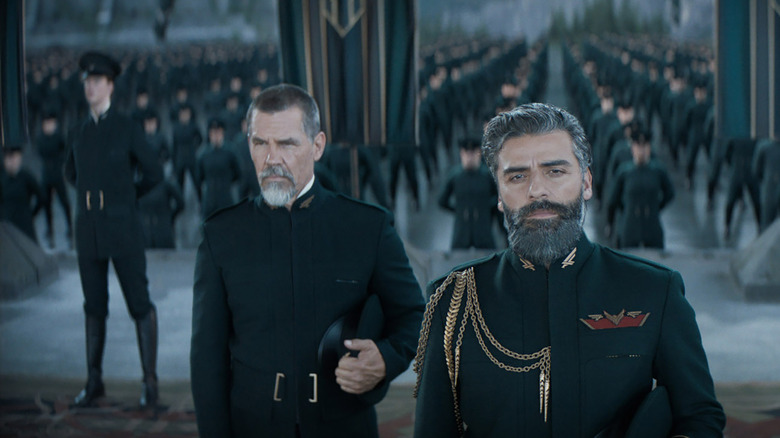
Dune Director Denis Villeneuve Wanted To Make A Movie For Hardcore Fans...and Also His Mother

by Joshua Meyer

Denis Villeneuve's "Dune" is based on a towering work of science fiction lit, but not everyone has read Frank Herbert's novel, and it sounds like Villeneuve is aiming for a movie that appeals to both fans and non-fans alike. /Film writer Vanessa Armstrong recently attended a roundtable interview with Villeneuve, where he spoke at length about the adaptation process from book to screen.

In the same way that Peter Jackson's "The Lord of the Rings" left out the book character of Tom Bombadil, for instance, there are some characters in Herbert's novel, like Feyd-Rautha and Princess Irulan, who haven't made the cut in Villeneuve's "Dune." He spoke first about the overall challenge of adapting or transforming the book for a new medium while staying true to its spirit:

The thing is that from the start I knew that I would have to focus on some specific elements, because when you adapt, necessarily, you transform. The idea was to be as close to the spirit of the book as possible, to be as close to the poetry. I am a massive fan of [the] Dune books. It's a book that stayed with me over 35 years and it's a book that I deeply know. The more that you go into the adaptation you realize at one point that the goal was to make a movie that will please the hard-core fans, the people that know Dune by heart, and also my mother that never read Dune.

Paul Atreides, Front And Center

"Dune" sees Villeneuve working with screenwriters Jon Spaihts ("Prometheus," "Doctor Strange) and Eric Roth, the latter of whom is a seasoned pro when it comes to film adaptations, having won the Oscar for Best Adapted Screenplay for "Forrest Gump" and having been nominated in the same category four more times since then.

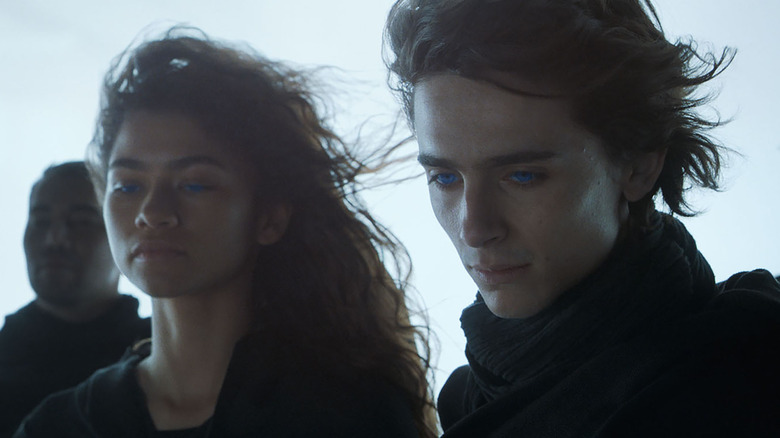
Villeneuve has said that this film critiques the "white savior" narrative and that the sequel will make Zendaya's character, Chani, the protagonist. However, it sounds like Timothée Chalamet's character, Paul Atreides, is still central to "Dune," as are women. Villeneuve explained:

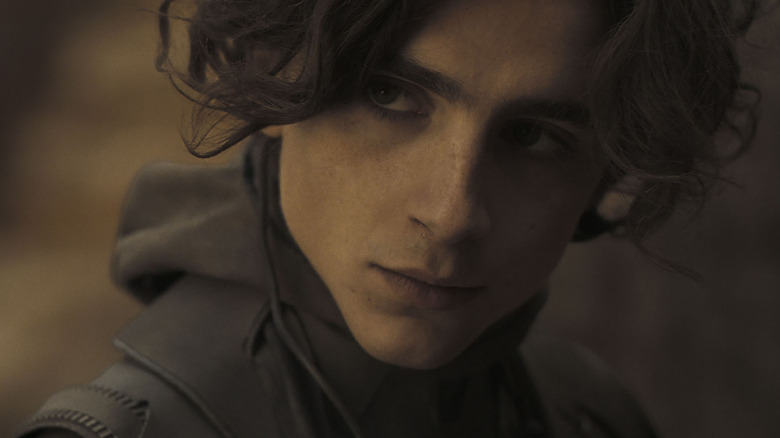
First of all, the focus was of course ... I said to my fellow partners, screenwriters, I said, "We need to focus on Paul, Paul, Paul." As you know, Dune has been written ... you visit the different planets and you have all those families, but for this movie I said, "We mostly focus on Atreides. I want the camera just behind him. I want the movie to be as immersive as possible and to be in the boy's point of view." The second decision that I've made is I said to Eric Roth who had the task to crack the beast at the beginning ... Eric asked me, "What will be the most important element? What will be the thing you would like me to focus on as I attack the adaption?" I said to him, "Women. I think that in Dune women are very important. I think they were very important for Frank Herbert and I think that the Bene Gesserit should be upfront...So it was very important that the movie would be focused on Paul and the relationship with his mother, and that we tried to develop Lady Jessica as much as possible. Now, the beauty of making the movie in two parts, that was a decision that I made right at the start as well, is that there are some elements that I didn't explore in this first part that I will have the chance to explore in the second part. Listen, Dune takes all its power into details so that was part of the challenge.

An Evolving Sculpture

Being faithful to the novel while making the movie accessible to non-readers was a balancing act for Villeneuve, and his approach to finding that "equilibrium," as he put it, evolved over the course of the film's production. He said:

That was the challenge, because I know the book. I read the book I don't know how many times. It's just inside my head since the past 35 years. But I have to make the movie for other people, people that were not familiar [with the book]. So that's how to introduce this world without being too ... didactic that it becomes like [a] lesson that becomes almost like homework for the audience.So that's where we had to find ways that will feel respectful to the book but kind of a little bit different. So it's all about choices and sometimes tough decisions. I will say that again, it's not something that was done in five days. It's something that evolved as we wrote the film. As I shot and edit[ed], it's something that evolved like a sculpture will evolve. For me, it was a very fascinating filmmaking process. I really enjoyed to have that space to explore to make sure that [we] would find the right path to tell that story. But it was not the path I found very quickly.

Making Characters' Inner Lives Cinematic

One thing a novel can do that a movie can't, unless perhaps it uses voiceover, is portray a character's inner life, the internal monologue they have going as narration. Villeneuve spoke about how he approached externalizing the thought processes of the characters in "Dune:"

Even as I was shooting, sometimes I was changing elements or trying to find the most efficient and cinematic way to express complex ideas to make them as accessible as possible... It was just a lot of work and a lot of brainstorms. There's elements, for instance, that I feel that you cannot calculate... The way we approach music in the movie, as Hans Zimmer would say, is we were trying to express some of the inner journey... The book is very internal. Very often the book is about two guys going into a room and starting a conversation together. Then you hear their thoughts, and you know what they are thinking of each other, and there's a game or a confrontation going from just knowing their thoughts.So I couldn't do that with a movie. So it was how to express the inner world of the character, their thought process, and I used the hand signals or used the music as well to try to give a clue of where the character stands in the scene. It was like Hans played with the music suite and tried to create a mental music. Music that will be about the expression of the inner journey of the characters. But all that is something that I didn't have the tool of music when I was writing the movie so it is just an example among others... I think the movie found its equilibrium at the very end when all the elements came together and then it clicked. But before it clicked like that it was a long journey.

"Dune" has had its release date shuffled several times, but it's finally set to arrive in theaters and on HBO Max on October 22, 2021. 

Read this next: Dune Review: Denis Villeneuve Delivers On Sensational And Spiritual Spectacle [Venice 2021]

The post Dune Director Denis Villeneuve Wanted to Make a Movie for Hardcore Fans...and Also His Mother appeared first on /Film.

08 Sep 15:35

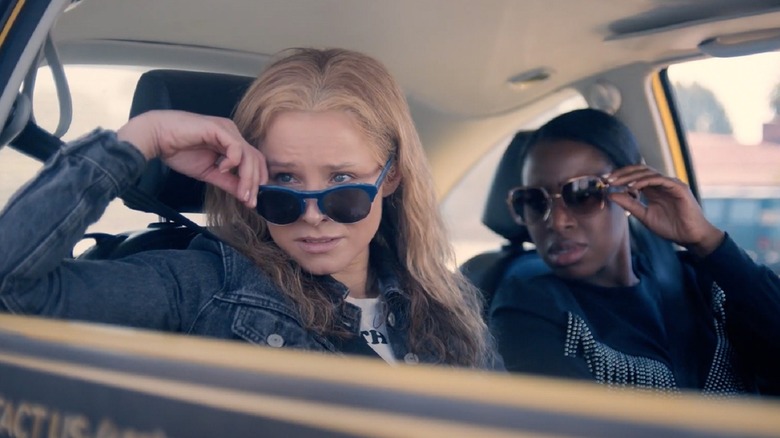
Queenpins Review: A Solid Cast Comes Close To Saving A Weak Script

by Josh Spiegel

It's one of the oldest axioms in the book: crime doesn't pay. Whether or not that's actually true, it's served as the foundation for countless crime-focused movies over a century, to the point that it's notable when a film gleefully bucks the trend and argues, essentially, "What if crime...good?" That, in effect, is the question being asked throughout the entirety of the inspired-by-a-true-story new dark comedy "Queenpins," in which two suburban women go into business with each other by defrauding massive companies through an unlikely source: coupons. "Queenpins" boasts a cast of talented ringers, who elevate the muddled material far more than it deserves, without actually resulting in an all-around good movie.

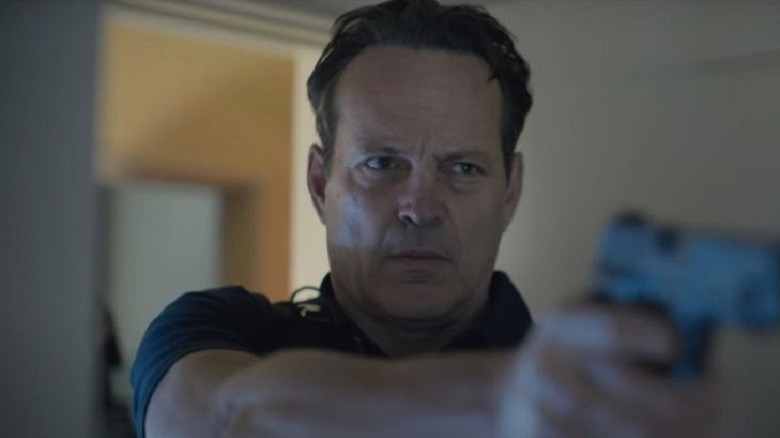
Kristen Bell plays Connie Kaminski, an Olympic gold medalist for speed-walking (ridiculous though it may seem, that really is an Olympic event) whose glory days are far behind her. Now, she's a housewife in Phoenix, Arizona, whose auditor husband (Joel McHale) has grown more distant and standoffish after multiple failed attempts to conceive a child. Bell's "Good Place" co-star Kirby Howell-Baptiste is JoJo Johnson, who lives nearby with her mother and is trying to create a social-media brand without much success. When Connie and JoJo realize that the surprisingly vast world of coupons could lead to scenarios in which they get coupons for free items simply by complaining, and that others may well buy such coupons for cash, they embark upon a business that's chintzy (with a website design straight out of 90s-era Geocities), but profitable enough that it rakes in millions of dollars and draws the attention of a grocery-store loss prevention officer (Paul Walter Hauser) and a U.S. Postal Inspector (Vince Vaughn).

Writers-directors Aron Gaudet and Gita Pullapilly have been gifted here with a daffy premise straight out of a Coen Brothers film; as goofy as it is, there really was a case roughly a decade ago in the Valley of the Sun where a trio of women were arrested for operating a fraudulent coupon website. The problem is that this is not a Coen Brothers film. Bell's natural sunniness and chipper personality work well in creating a complex lead character in Connie, who struggles to genuinely do the right thing and is frustrated to see that others excel without putting in the work. Howell-Baptiste has a bit less to do, but is equally fun (and her American accent is pretty damn flawless). The problem, though, is that while both actresses do their able best to create multi-dimensional figures out of Connie and JoJo, the script gives them meager details to work with.

A More Compelling Subplot

It's equally frustrating that Gaudet and Pullapilly seem far more invested in what is essentially the B-plot of "Queenpins" than in their main characters. Or maybe it's just that Vince Vaughn and Paul Walter Hauser make for a far more dynamic and genuinely odd couple, as a calm and collected federal agent and an awkward and stressed would-be grocery-store cop, respectively. Hauser, for his own part, seems to be the closest thing the film has to an emotional core, calling to mind a slightly more self-aware version of the title character he played in Clint Eastwood's "Richard Jewell". And Vaughn, so well-known for having played the fast-paced, rat-a-tat chatterbox in plenty of raunchy comedies of the early 2000s, plays things more even-keeled and laid-back, balancing nicely with Hauser's more unhinged personality. For much of the film, though their characters are tailing our protagonists, the latter duo are so gleefully unaware of being tracked that it's like two different movies wedged into one.

The problem is twofold: one of these two mini-movies is a lot more entertaining (if sometimes a bit too easily besotted with gross-out humor for the sake of simply being in the movie, as with Hauser's character having his daily bathroom schedule upended to messy results), and the weaker mini-movie has material that feels far less fleshed out. If anything, the situation should be reversed. If either of the film's halves are going to be weakened, shouldn't the part with the inexplicably successful criminals be more fully rounded?

Though "Queenpins" did take its inspiration from a real-life story, it only takes a brief Google search after the film to learn exactly how much creative license was taken with the story. And that's fine -- this movie's dark sense of humor is arguably too knowing and clever to be based purely in fact, and creative license is taken in many different films. It's the nature of the business. But the film's blase attitude towards the crimes being committed, and the weirdly happy conclusion that emboldens the idea that crime can be good and the people trying to take you down just need to loosen up a bit, also raises a question of why the film itself should even exist. If the scheme that Connie and JoJo pull is so miniscule in the grand scheme of things, if no one really cares when push comes to shove, then why make the movie to begin with? "Why does this movie exist?" isn't a bad question to ask of any film you watch. But the great ones, no matter the genre or their release date, can answer that question with confidence. "Queenpins", as many fascinating touches as it employs, feels like its answer to why it exists would be a half-assed shrug.

/Film Rating: 5 out of 10

Read this next: 'Queenpins' Trailer: Kristen Bell And Kirby Howell-Baptiste Get Rich Quick With Counterfeit Coupons

The post Queenpins Review: A Solid Cast Comes Close to Saving A Weak Script appeared first on /Film.

08 Sep 15:35

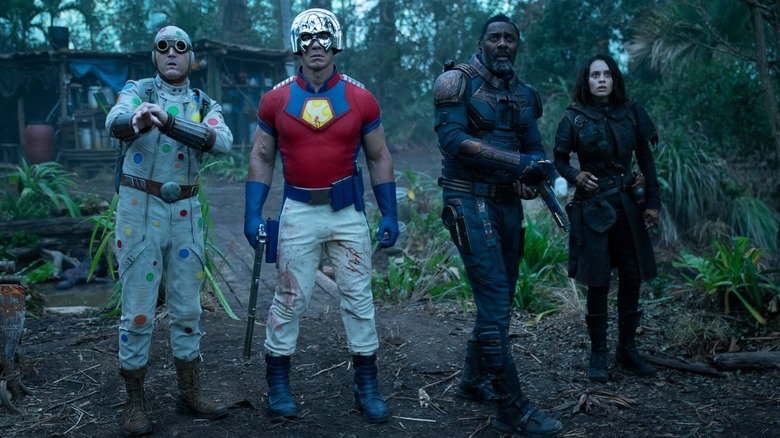
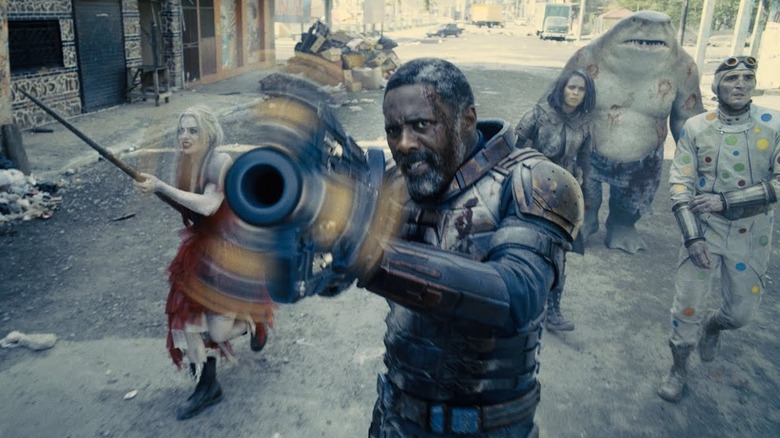
The Suicide Squad Cinematographer On How To Make Giant Starfish And Talking Sharks Feel Real [Interview]

by Jack Giroux

"The Suicide Squad" is as colorful as the big personalities that exist front-and-center in James Gunn's ensemble supervillain film. For the "Dirty Dozen"-inspired adventure, Gunn reunited with cinematographer Henry Braham, who shot "Guardians of the Galaxy Vol. 2," and the two created another lush picture together.

With the DC Comics film, Gunn and Braham struck a balance of pop and reality, with both valuing "perfectly imperfect" visuals.

For Braham, though, it was all about setting a tone of magical realism. A part of the realism comes from, as he told us, getting close to the action and the characters, thanks to the handy RED cameras. In a recent interview, we talked all about that, as well as which shots proved the most challenging and much more.

Do you take much influence, aesthetically, from comic books when you make a comic book movie?

No, that's the short answer. What my work is, to collaborate with directors, and to translate their personality and their visual language onto the screen. Of course, James is a writer, so the work is inspired first by his writing. And then second, by talking to him about the way he sees things. And that's how we find our way into the visual language of the movie.

How did his song choices listed in the script then help you visualize "The Suicide Squad"?

Well, James writes the music into the script and also, we play it on the set. So if we're shooting an action sequence, be it the Pixies sequence or Harley's escape, we're shooting that to music so that the rhythm of the choreography of the camera is informed by the music. It really helps, because his music choices are so specific to the story and the emotion of the story at that time, that it's a very good way of making sure that everything falls into sync. It's a particularly good way of getting everybody's brains in sync with that particular moment, and it's particularly true of action.

So that's to do with the choreography of the camera and the rhythm with which it moves. The other thing is, as with all things, all things need to be based in truth. James would refer to that in "The Suicide Squad" as magical realism. There's a walking shark or a giant starfish, but the things around them are ordinary. Therefore, because things are ordinary and kind of truthful to the way they are in real life, then the extraordinary, fantastical things make sense.

Why not have a massive starfish in the streets of Panama? And those streets of Panama are real. I think that's true of all storytelling, however fantastical, there has to be an element of truth. And it's absolutely true in the case of photography, that things have to be based in reality before you can move on from there.

The shot of King Shark looking out the car window is a good example of that, too.

Well, the story point is, we want to see him seeing the world go by. He's CG of course, but the rest of it is real. The van is real and the street scenes are real, so that's the point. In many ways, so much of this movie is for real. We're blowing things up for real. There are a lot of sets built, and the Panama location, it's all real. So it's not like anybody actually is against green-screen backgrounds. They're acting in real situations. Of course, that informs photography as well. You can take, I suppose, complete control at the time of the nuances of framing, the nuances of color and tone and all those things, and that's a big difference.

What's advantageous about the RED camera you shot on in that regard?

Firstly, what I'm looking for is a photographic medium that captures everything to the quality that we need. And in this case, this is for IMAX. And secondly, the physical size of cameras, to me, is very, very important. I think the physical size of cameras enables you to put the camera inside the scenes, in a way that larger cameras don't. You get the audience immersed in the scene because you're literally in the middle of it.

At the beginning we wanted to find a visual language that was very active and that would get the audience right in the middle of the story. So if you think historically, movie makers started with small cameras and they were spectacularly imaginative with what they did. And then the technology forced cameras to get bigger and bigger, be it with the invention of sound or color, three strip color, that informed the way movies were made and shot.

So the larger the camera, the harder it became to move the camera. That's not to say they didn't move the camera, but it made it very difficult. And therefore, the camera stood outside the ring, if you like. I think the audience stood outside the ring. So that's what interests me, the ability to get intimate with the story and get intimate with the actors when it's needed. I think that's what James found, and he found that very liberating. Once you can do that, in fact, you have spectacular freedom to move the camera where you want. Because the photographic quality is so great, it gives me enormous latitude to work with natural light or low light, and so on.

The opening shot of the movie lets you know that, thematically, first glances or impressions can be deceiving. How'd you and James conceive that shot?

That sequence was originally pre-viz because it's actually a very precise sequence on how the ball bounces around the courtyard and how it hits the birds and everything, so it required working out properly. The shot starts looking at Savant in a puddle. So the guys put the puddle and we were doing the shot, and I think James called out, he said, "Well, hang on a minute. Can we do this upside down? So it's the right way round." So like all these things, it evolved from him saying something and us thinking, well, we can do that. Of course, we can do that. So it's a technically very complicated shot to do, but that's the last thing you want anybody to think about that. You just want them to be immersed in the story. And of course, it's appropriate for the story, for the exact reasons that you point out. You've hit it on the nail, it's all about something being different than it appears.

All Things That Are Interesting To Me, Certainly Are Perfectly Imperfect.

What shots were exceptionally challenging?

Funny enough, I don't think like that. Figuring out the idea is always the real challenge and figuring out the visual idea. It took us a while to really find the voice of the movie, when we were experimenting. Part of that came from finding the color tone and all the rest of it, because the color is slightly counter-intuitive. This is a wallpaper, and in some ways, quite an old fashioned wallpaper.

If you're a generation that's grown up with "Where Eagles Dare" or "The Dirty Dozen," I love those movies and, fundamentally, this is the same genre. And the default would be to make it, and it wasn't the default, would be to make it gritty and possibly monochromatic, very contrasting. But it never seemed right. It never seemed right.

In fact, the more we worked on it, the more we realized that color was crucial to the idea. And the moment you use color photography rather than purely light and shade, then of course it opens up. Not only does it open up complexity, but it opens up the scope of what you can do. So the hardest challenge was finding the idea, and then the next challenge was finding the actual language of how the camera moves.

The short answer to that was, we ended up with a style that was very intuitive. Which means that, often James would work out scenes the way he saw them very specifically, and having done that, actually opened his mind up to other ways. And a lot of where the camera is and how the camera moves, is intuitive, which is why I operate the camera. Because sometimes, you've been working a lot with the director on the idea of the movie, and there are moments when you just call on those conversations and those resources, and you don't even think about what you're doing. You're just doing them because you're immersed in what you're doing.

I always think finding the visual style is the hardest bit. The first week is terrifying. Because you kind of make a start and you think, well, we're doing what we said we'd do, but is it any good? And you have to be quite brutally honest with yourself to see what's wrong with it, because you can improve on it and make it better. But I think you do have to be brutal and honest and say to yourself and ask other people, "What's wrong with this?" And then you really start to find the voice of the movie.

How do the characters help you there? They're such colorful characters.

It's more to do with the colors and mood of the scene, and therefore the purpose of the scene and the environment, because I think the colors of the characters come through very strongly in their costume. Brilliant costume design, because there are all these colorful characters that sit naturally in their settings. For me, color is more about mood. Whether it's unsettling, and so there's a cacophony of color, or whether it's something that you are more familiar with, be it sunset or an early morning and whatever. Sort of those things. Those things, to me, need to be rooted in reality. So, color is endlessly fascinating.

The colors are so extreme in the Harley Quinn action sequence.

Well, I think although that's spectacularly violent, the color there is really important because it's also really beautiful. And it's a beautiful song. So the contradiction of this spectacular violence in such a beautiful background, is fantastic. And what's not to like about it? And of course, the utter dream with that is that Margot is such an accomplished performer, and has the ability to do the stuff that we see her doing. We can show that it's her that's doing it, and she did every bit of that.

It's fantastic for me, because in terms of where I put the camera or how I move the camera, I can tell a very clear story because I can show the audience that it's really her doing this stuff. So it was conceived as, how the color of her dress would play against the color of the sets? And that's why I was saying the costume designer and the production designer are so good. And the key thing photographically, we capture that rather than kind of muddy it. I think if we'd put too much light and shade in there, the color would have been confusing. I think it's generally important with color to play to its strengths.

You've said before you want imperfections, so a film doesn't look like a video game. What imperfections make "The Suicide Squad" more authentic?

Well, all things that are interesting to me, certainly are perfectly imperfect. It's going back to the point about truth, or in James' terminology, realism. That's what we're trying to build into everything that we do is imperfection. Perfectly perfect is a different language. That's the world of "2001: A Space Odyssey." Very, very, very fine movie, and that was the idea behind it. I think in this world, imperfection is important as part of creating a real space for the audience to suspend their disbelief.

What are your favorite examples of perfectly imperfect?

Wong Kar-wai. I think Asian cinema is particularly interesting, in that respect. Movies like Chungking Express are spectacular. They're seemingly rough and ready, but of course, they're beautifully crafted. They embrace everything around them, and I think that's a great approach, to embrace things and look for what's interesting in them.

Read this next: 'The Suicide Squad' Spoiler Review: James Gunn's Bloody, Messy Sequel Ultimately Has A Big Heart

The post The Suicide Squad Cinematographer on How to Make Giant Starfish and Talking Sharks Feel Real [Interview] appeared first on /Film.

08 Sep 15:35

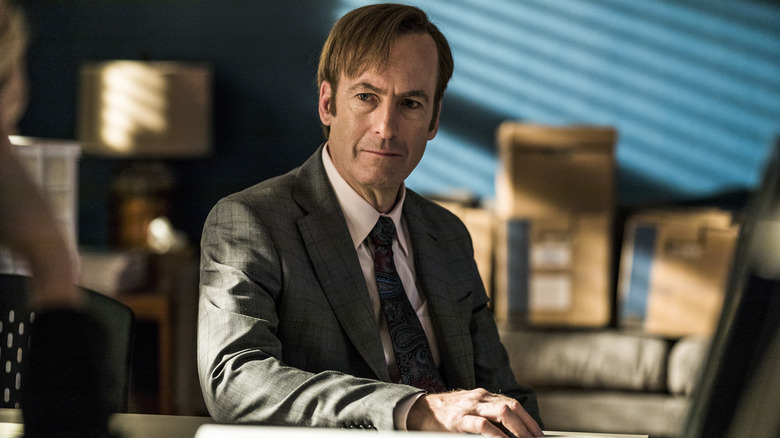
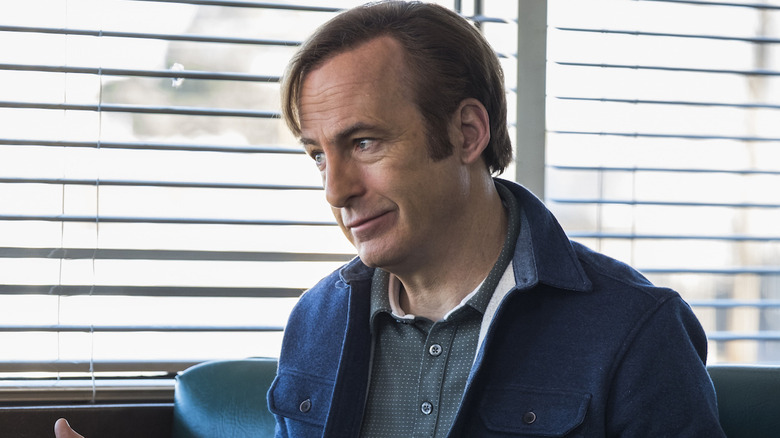
Bob Odenkirk Is Already Back To Work On Better Call Saul

by Jeremy Mathai

The good news just keeps coming. For every single person fortunate enough to have watched Bob Odenkirk light up the screen in any number of his roles over the years or even met the man himself, his recent health scare stemming from a heart attack while filming the final season of "Better Call Saul" sent shockwaves and resulted in a heartfelt outpouring of love and well wishes. The film industry, film writers, and fans breathed a tremendous sigh of relief when official word came that he had been stabilized and was safely recovering. Now we have it straight from Odenkirk himself that he's already feeling well enough to resume filming on the acclaimed series a little over a month later. We absolutely love to see it.

Why We Love Bob Odenkirk

It's impossible to narrow down the praise for Bob Odenkirk to just a single word, but there's one consistent thing we've repeatedly heard from those in the know: his professionalism and dedication to his work always shine. That's why it's both surprising and not surprising to hear that Odenkirk is already back in the makeup chair and ready to get back to filming "Better Call Saul." Take it straight from the actor's own mouth (fingers?), as he tweeted earlier this morning: "Back to work on Better Call Saul! So happy to be here and living this specific life surrounded by such good people. BTW this is makeup pro Cheri Montesanto making me not ugly for shooting!"

Showrunner Peter Gould and co-star Rhea Seehorn also took to Twitter to celebrate:

What's incredible is that even in the midst of his triumphant return and the adoration that would be sure to follow (a lofty status that he himself is well aware of, though remains humble about), Odenkirk is still focusing on the talented crew behind the scenes who don't get nearly enough credit for the work they do. In this instance, he chose to spotlight Cheri Montesanto's efforts in providing his makeup. There's just no way to fake that sort of genuine selflessness and authenticity in a business that usually strips those qualities from anyone who's remained successful for as long as he has.

In fact, it's this precise quality that makes "Better Call Saul" work as well as it does. It's easy to forget now, but many fans looked at the wildly immoral figure that Saul Goodman remains throughout "Breaking Bad" and assumed that there was no way to turn that caricature into an actual living, breathing person capable of leading his own spin-off show. Leave it to Bob Odenkirk to inject Jimmy McGill with all the warmth, humor, and personality that makes him someone worth rooting for in the first place and that makes his inevitable descent into Saul Goodman feel so tragic.

In any case, we couldn't be happier to see the esteemed actor back and doing what he loves to do. If you'll excuse me, I'll be looking up memes of his show-stopping moment from "Little Women" for the rest of the day.

Read this next: Bob Odenkirk's Son Confirms "He's Going To Be Okay" After Heart-Related Emergency

The post Bob Odenkirk is Already Back to Work on Better Call Saul appeared first on /Film.

08 Sep 15:34

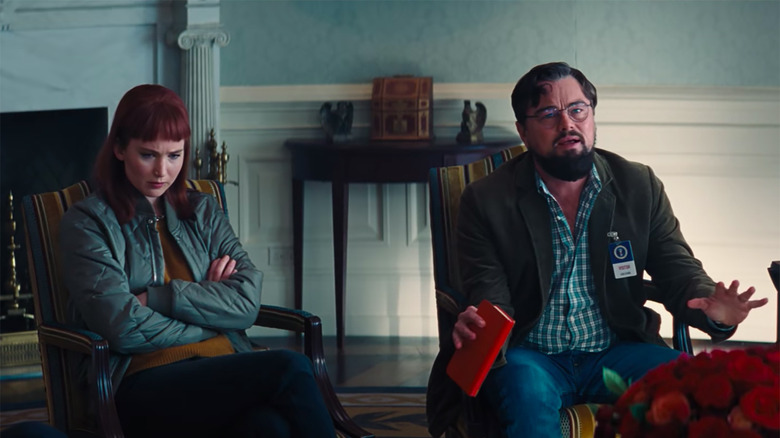
Don't Look Up Trailer: Leonardo DiCaprio And Jennifer Lawrence Try To Warn Us About The End Of The World

by Ethan Anderton

There have been plenty of movies about the end of the world. Within that subgenre, a handful of them have been about an asteroid being on a collision course with Earth and threatening to destroy the planet. In 1998 alone there were two of them in the same year. Now director Adam McKay is trying his hand at the end of the world with "Don't Look Up," another story about a comet that spells extinction-level trouble for the citizens of this planet. The only problem is, when Kate Dibiasky (Jennifer Lawrence), an astronomy grad student, and her professor Dr. Randall Mindy (Leonardo DiCaprio) try to warn everybody, no one really seems to be taking it seriously. Take a peek in the first trailer for "Don't Look Up" below.

Don't Look Up Trailer

Director Adam McKay is clearly taking a satirical approach to the end of the world with this movie. In the teaser, DiCaprio and Lawrence try to have a serious conversation with the President of the United States (Meryl Streep) and one of her advisors (Jonah Hill), only to be met with exasperation. The synopsis for the movie teases even more struggles for the duo as they try to deal with the 24-hour news cycle and social media in the six months leading up to the comet's impact. 

Here's how Netflix describes the movie in their official synopsis:

Kate Dibiasky (Jennifer Lawrence), an astronomy grad student, and her professor Dr. Randall Mindy (Leonardo DiCaprio) make an astounding discovery of a comet orbiting within the solar system. The problem — it's on a direct collision course with Earth. The other problem? No one really seems to care. Turns out warning mankind about a planet-killer the size of Mount Everest is an inconvenient fact to navigate. With the help of Dr. Oglethorpe (Rob Morgan), Kate and Randall embark on a media tour that takes them from the office of an indifferent President Orlean (Meryl Streep) and her sycophantic son and Chief of Staff, Jason (Jonah Hill), to the airwaves of The Daily Rip, an upbeat morning show hosted by Brie (Cate Blanchett) and Jack (Tyler Perry). With only six months until the comet makes impact, managing the 24-hour news cycle and gaining the attention of the social media obsessed public before it's too late proves shockingly comical — what will it take to get the world to just look up?!

This is undoubtedly an unsubtle way of illustrating how the leaders in our society and those who should be providing us with valuable information have treated what should be regarded as important news. Surely this is meant to be an allegory for global warming or any of the other major issues faces our society that seem to be glossed over in favor of more sensational headlines. 

McKay has dabbled with the satirical approach to real-life people and events with the likes of "Vice" and "The Big Short." Even "Anchorman: The Legend Continues" took aim at the dawn of the 24-hour news cycle and infotainment alongside some of the filmmaker's trademark absurd comedy. But with "Don't Look Up," he appears to be leaning full tilt into topical satire with a tone that calls to mind "Dr. Strangelove" or "Jojo Rabbit." Hopefully it ends up being just as good as those examples.

"Don't Look Up" arrives on Netflix on December 24, 2021.

Read this next: Adam McKay Says His New Film 'Don't Look Up' Is Tonally Between 'The Other Guys' And 'The Big Short'

The post Don't Look Up Trailer: Leonardo DiCaprio and Jennifer Lawrence Try to Warn Us About the End of the World appeared first on /Film.

08 Sep 15:34

Now Scream This: The Best Horror Movies Streaming Right Now

by Chris Evangelista

(Welcome to Now Scream This, a column where horror experts Chris Evangelista and Matt Donato tell you what scary, spooky, and spine-tingling movies are streaming and where you can watch them.)

Matt: Welp, you've done it now. You've faked courage long enough to utter "Nattyman" into a mirror five times, and here comes Donato to drink all your Natty Lights and drop a few horror recommendations. Luckily for you, there are probably no cans of liquid gold in your refrigerator — so I guess I'm just left presenting spooky streaming options. I'll have to deplete my neverending Naturday stash while adding a few more titles to reader watch lists until I vanish for another two weeks or however long it takes to crank out another "Now Scream This" these days.

Chris: Life is pretty horrifying lately. What better way to distract yourself from all that horror with ... uh... more horror! Once again, Matt and I have rounded up some currently-streaming horror movies that we think you should check out. It's September now, which means it's officially Halloween season. Which means it's time for you to start streaming horror movies every single night (assuming you don't do that already). 

The Boy Behind The Door

Now Streaming on Shudder

Matt: Filmmakers David Charbonier and Justin Powell have cornered the 2021 market on adolescent endangerment and gateway horror. I rather enjoyed The Djinn earlier this summer, and only a few months later, the duo hit Shudder with "The Boy Behind The Door" because one feature a year just isn't enough. Bobby (Lonnie Chavis) and Kevin (Ezra Dewey) are kidnapped little leaguers who must escape a predator's den in the middle of nowhere. That's the entire plot from start to finish, nothing much added beyond a cop who interjects—it's a gamble to challenge child actors, but The Boy Behind The Door succeeds on pint-sized talents. Don't expect anything beyond proper tension and grounded vileness until a finale that doesn't spare youth from painful brutality. When it goes "there," the knife doth turn.

Chris: This is an exceptionally well-made, very intense movie. I'm not sure the direct references to shots from "The Shining" add much, but the film itself is pretty damn solid.

The Fear Street Trilogy

Now Streaming on Netflix

Matt: Leigh Janiak's conquering of "Fear Street" would be a marquee horror event in any blockbuster season. Three feature films, three standalone tales of terror, one unified experience with unsubtly damning societal commentary. In 1994, one of the year's gnarliest, most memorable kill sequences accentuates a "Scream" inspiration filled with slasher baddies. In 1978, "Friday The 13th" becomes a source of homage that once again spills blood and does so indebted to 80s campground slashers with a smile. In 1666, everything comes full circle as puritans damn Shadyside with the curse of Sarah Fier that zips through time for a witch hunt beginning and ceremoniously satanic finish. It's thoughtfully thematic, bursting with genre adoration, and boasts another dazzling Marco Beltrami score that I snatched on vinyl instantly upon announcement. The hype, dear readers, is real.

Chris: Hell yes. I love the "Fear Street" trilogy with my heart and soul. I want more.

Suck

Now Streaming on Amazon Prime

Matt: At the intersection of splattery horror-comedies, rock n' roll soundtracks, and musician cameos you'll find Matt Donato. "Suck" isn't the most famous example but still sits proudly in my physical media collection as a comfort favorite. Alice Cooper as The Devil? Moby as a meat-hurling metal singer? Malcolm McDowell as "Eddie Van Helsing?" Rob Stefaniuk assembles an all-star cast for a film he writes, directs, stars in, and arranges music for as the singer/songwriter of "The Winners"—a band that sells their souls for fame by becoming vampires. I get plenty of chuckles and genuinely would slug cheap swill beers while watching a basement "The Winners" show, which equates to a recommendation. Damn the man, fight the corporate suits, drink some blood in celebration.

Chris: This sounds like a fake movie. Nice try, Matt!

House On Haunted Hill

Now Streaming on Amazon Prime

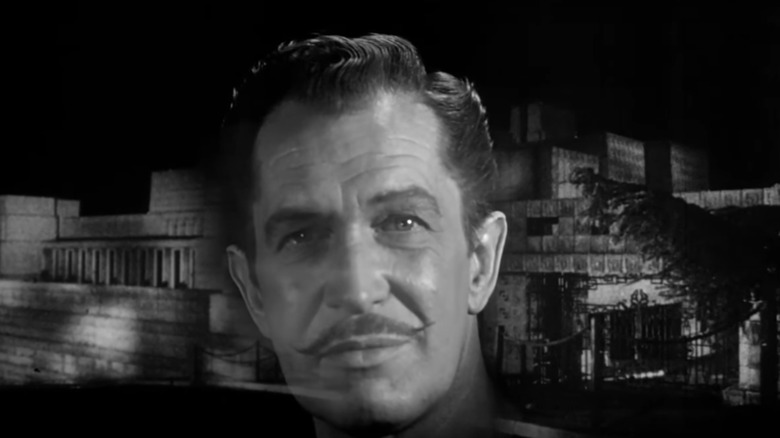
Matt: No, not the 1999 Dark Castle remake (that's on HBO Max). Willian Castle's 1959 ghost story starring Vincent Price is black-and-white, loaded with splendid whodunit performances, and unsurprisingly a standout Price role. Frederick Loren (Price) is a macabre party organizer who challenges guests to stay overnight at a haunted house as requested by his untrusting wife Annabelle (Carol Ohmart). The way Price and Ohmart verbally spar as callous partners (any love has faded) who wish death and flaunt infidelity is a masterclass in dramatic deliveries, which becomes even more entertaining than the house's undead secrets. Talk of bodies dissolved in wine cellars leads to a possible murderer on the loose, for a more playful, treacherous take than 1999's outright gothic horror tale. It's a byproduct of early-cinema limitations—make do with the effects you've got, in which case humans are the far scarier monsters (even still).

Chris: "Darling, the only ghoul in the house is you."

Circle

Now Streaming on Netflix

Matt: This lesser-known character study featuring Julie Benz is a straightforward and sadistic game. Fifty humans regain consciousness in a black room, standing atop spaced dots, with no explanation. Every two minutes, someone dies—either voted on via light pulses flicked by hand or chosen by silent overseers if the group cannot decide. Businessmen, pregnant women, and knee-high children all plead their cases as to why they shouldn't be the next one eliminated against prejudice, bias, and mob mentalities. It's certainly limited in production value as a through-and-through indie but goes full force into the sliminess, gamesmanship, and cutthroat realities of humankind when death is on the line. It's way more interesting than any movie named after a generic shape has to be, down to its bleaker twists without a second's confliction over showing remorse.

Chris: I have never heard of this, but it kind of sounds like "Cube"? Even the title sounds like someone said, "What's something like a cube? I know, a circle!"

In The Earth

Now Streaming on Hulu

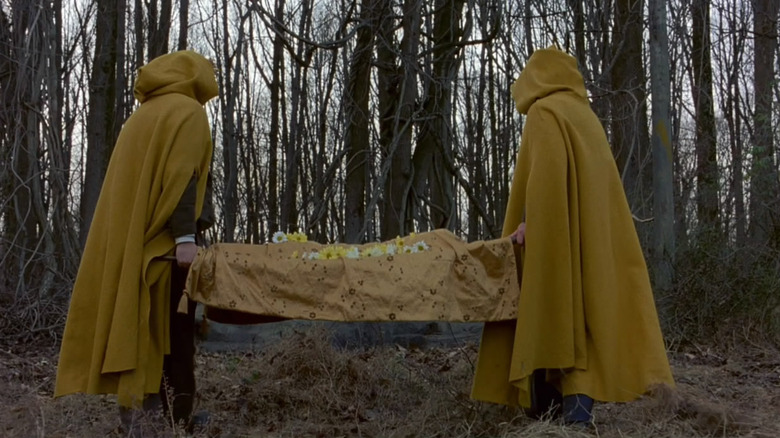
Chris: Ben Wheatley's weird, disorienting pandemic horror pic "In the Earth" traps a bunch of people in the woods and then forces us to watch them suffer and/or go crazy. It's not pleasant! And it's not as good as the film that remains his masterpiece, "Kill List." But there's a true ominous, overwhelming energy radiating off this thing that sucks you in. That said, you should be warned that the last act of this film is filled with non-stop flashing lights, creating a kind of sensory overload. 

Matt: I dig Ben Wheatley, I dig ecological horror — I just wish this flick didn't start with such a soft impact. Once Wheatley gets psychedelic and introduces the film's nastier hooks, I'm sold. It all just takes a hot second to kick into gear.

The Happening

Now Streaming on HBO Max

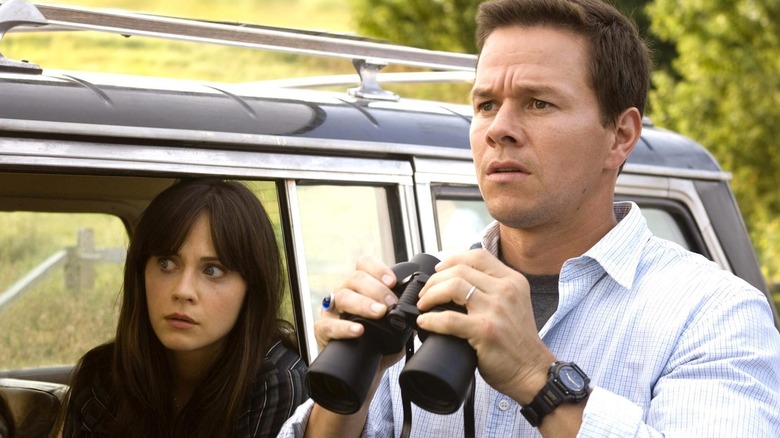
Chris: I know people consider this to be one of M. Night Shyamalan's worst movies, but I unironically love "The Happening." Here, Shyamalan tried his hand at the type of B-movie that was popular during the Cold War; it's basically an alien invasion flick, but the aliens are, uh ... trees. Yes, it's very silly, but the silliness allows Shyamalan to go crazy with some weird, violent set-pieces as plant life force the film's characters into suicide. Stars Mark Wahlberg and Zooey Deschanel both seem truly lost here, but that only adds to the fun. 

Matt: There's a rather funny RiffTrax commentary track (downloadable) that makes "The Happening" way more enjoyable, which is my recommendation.

Grave Encounters

Now Streaming on Shudder

Chris: One of the best found footage movies of the last few years, "Grave Encounters" serves as a send-up of ghost hunting shows like "Ghost Adventures" while also being pretty darn creepy in its own right. The team from a ghost hunting TV show checks into an old abandoned hospital for the night and quickly finds that unlike all the other "haunted" places they've investigated, this joint is really haunted, and the ghosts are anything but friendly. 

Matt: I use Grave Encounters often as my combatting example against those who spew the same uneducated "all found footage sux" comments. It's creepy, nails the ghost hunter vibe, and works its scares in blunt but steady bursts.

Manhunter

Now Streaming on The Criterion Channel

Chris: Before there was "Silence of the Lambs," there was "Manhunter." Before Anthony Hopkins won an Oscar for playing Hannibal Lecter, Brian Cox played Hannibal Lecktor. Directed by Michael Mann, "Manhunter" was not a hit when it came out. In fact, it was such a disappointment that the rights to the follow-up, "Silence of the Lambs," were sold off super cheap, as producers thought there was no potential. They were wrong, of course, and "Silence" swept the Oscars while "Manhunter" faded into obscurity for a while. In the years since, though, audiences have rediscovered Mann's neon-drenched thriller and found that it's pretty damn good. 

Matt: I get it, Chris. I sincerely need to take advantage of my Criterion streaming access.

Resolution

Now Streaming on Shudder

Chris: Justin Benson and Aaron Scott Moorhead, two of the most interesting filmmakers working right now, burst onto the scene with "Resolution" in 2012. The film follows two friends, one of whom is a drug addict. The addict finds himself handcuffed in a secluded cabin by his BFF, all in an attempt to help the addict kick his habits once and for all. It's the type of weird set-up that would play find in a normal indie film, but "Resolution" has more than a few tricks up its sleeve, and goes to some exceedingly strange, unexpected, and incredible places. Go into this one as cold as possible. 

Matt: It's Benson & Moorhead doing what they do best, which they've done from the start. A stimulating, experimental, out-of-bounds debut that showcases no less technical prowess than anything they've created since—a commentary on immediate strengths and impressive appearances.

Read this next: The Scariest Scene In Cloverfield Really Pops (Literally)

The post Now Scream This: The Best Horror Movies Streaming Right Now appeared first on /Film.

08 Sep 15:33

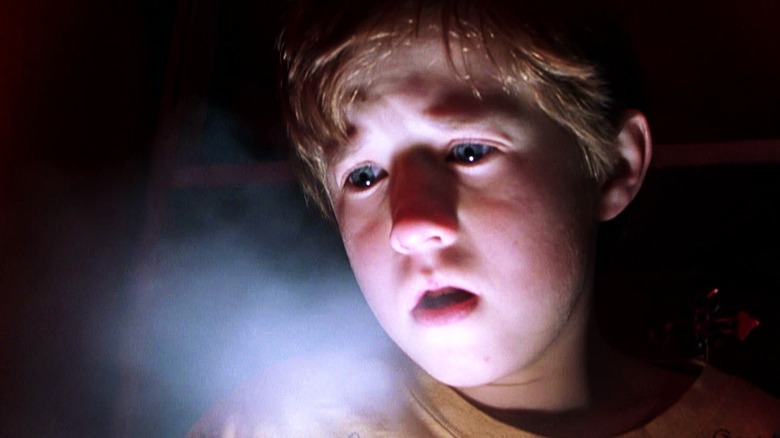
23% Of People We Polled Said This M. Night Shyamalan Movie Had The Worst Twist Ending

by Joshua Meyer

(Welcome to Survey Says, a feature where we conduct a movie-related survey for a random group of people and explain why they're completely right, completely wrong, or somewhere in-between.)

For better or worse, M. Night Shyamalan is a writer-director whose name has become synonymous with twist endings. They're one of the most readily identifiable features of his filmography, having been a hallmark of his work ever since "The Sixth Sense" first blew moviegoers' minds back in 1999. In some cases, the twists in Shyamalan's films work well; in other cases, they induce an eye roll and come across as gimmicky or contrived.

In the past, we've ranked Shyamalan's films and gone into great depth revisiting the twists, the triumphs, and the turkeys of his nearly three-decade career. Following the summer release of "Old," however, we thought it would be interesting to survey people and see which Shyamalan movie had the worst twist ending in their opinion. The goal here isn't to trash his films but to take a look at them as functional narratives and examine why some of them worked for people and others didn't.

From these results, we can also reverse-engineer an answer to the question of which Shyamalan movie has the best twist ending in people's minds. If you thought it would be "The Sixth Sense," you might be shocked by the numbers that came back to us in our survey.

For this one, we had 635 U.S. respondents. You can see the results below.

By The Numbers

In our survey, 23.15% of people said "The Village" has the worst twist ending of any Shyamalan movie, with "Unbreakable" coming in second at 15.43%. In third place is the killer plant thriller "The Happening" with 14.8%, closely followed by 2016's "Split" at 14.17%. Despite "The Sixth Sense" featuring one of the most iconic reveals in movie history, 11.97% of people polled said that it was Shyamalan's worst twist -- a close tie with "Signs" at 11.5%. And the surprise winner of the "Least Worst Shyamalan Twist" award is the filmmaker's 2015 found footage horror "The Visit," with just 8.98% of the vote.

You'll notice that not every Shyamalan movie is included. That's because not every Shyamalan movie measures high on the Richter scale of twists. Films like "The Last Airbender" and "After Earth," which carry staggeringly low Tomatometer scores of 5% and 11%, respectively, are work-for-hire artifacts, where the usual Shyamalan twist rules don't necessarily apply.

Most people haven't seen Shyamalan's first two indie features, "Praying with Anger" and "Wide Awake." As of this writing, "Old" is still in theaters, and while some cinephiles may have ventured out to see it, there are just as many who probably stayed home and are waiting for the movie to hit VOD. The absence of "Glass" is somewhat curious; I'm pretty sure some people would rank that movie and its parking lot puddles low, but again, we may be getting into the semantics of what exactly qualifies as a twist ending.

The only other exclusion is "Lady in the Water," but that's a movie where the twist, such as it was, may not have lingered in people's minds simply because there was so much else going on in it (remember the Narfs and Scrunts?) or because they never saw the movie in the first place. It had the lowest box-office performance of any Shyamalan film since "The Sixth Sense" and no other movie of his has had a lower gross since then.

That covers all the exclusions. What's left is a survey whose results are, in this writer's humble opinion, pure madness.

It Takes A Village

Let's dig into the results now and see if we can make sense of what people were thinking. It goes without saying that we'll be delving into spoilers here, so if there's a Shyamalan movie you haven't seen, feel free to skip that section or paragraph ... starting now.

So, "The Village." Is it really the Shyamalan film with the worst twist ending? That's debatable, but the largest chunk of our respondents (23%) seem to think it is. What's clear is that "The Village" is the point where things started to go wrong for Shyamalan in his career. It's possible there may be some residual bad will for the film because people remember it as the beginning of his creative decline. It's also possible that people just found the movie's ending ridiculous and unearned in the context of the surface-level plot before it.

The monsters are humans in disguise! This 19th-century community exists in a modern-day no-fly zone! It's all a post-9/11 fear allegory! 

"The Village" was made after "The Buried Secret of M. Night Shyamalan," his disastrous hoax and vanity project for The Sci-Fi Channel (now Syfy). It was also the last film he made for Disney before jumping ship to the untested waters of rival studios, with their nymphs and other assorted "ladies" not named Nina. (It was a Disney exec named Nina Jacobson whose entirely justified criticism of his "Lady in the Water" script caused Shyamalan to leave the Mouse House and sanction a tell-all book as revenge, according to The Guardian).

All of that is behind-the-scenes gravy, of course. What's onscreen in "The Village" is a movie where Shyamalan inserts himself (as is his wont) to explain his own twist to the audience at the end. Contrast this with Hitchcock, who limited himself to cameos and let other film actors handle the exposition — as in the case of "Psycho," where a new psychiatrist character suddenly materializes to explain everything at the end.

Breaking Down The Rest

Our own Chris Evangelista has defended "The Village," so if you're a fan of the movie, you can always disregard these results and go read his Unpopular Opinion piece about it. In the meantime, where things get really crazy with this survey are in the runner-up category.

As a superhero film, "Unbreakable" was way ahead of its time. It foresaw the coming comic book movie millennium, yet 15% of people apparently think it had the worst twist ending of any Shyamalan movie.

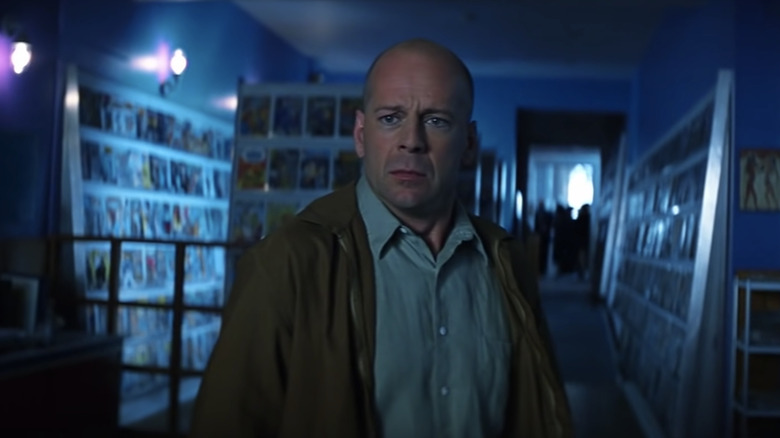
Admittedly, Shyamalan delivers the twist in an awkward fashion. We learn that Elijah Price (Samuel L. Jackson) purposely caused accidents and untold numbers of deaths to ferret out the invincible, once-in-a-generation superhero living like a sleeper agent among normal humans. David Dunn (Bruce Willis) is disturbed by this revelation, as we're meant to be, but then he just turns and walks out of the comic book shop and the movie freeze-frames and ends with explanatory text.

It's not the most elegant ending, but does it really deserve to be ranked Shyamalan's second worst? Personally, I don't think so.

Next in the results come "The Happening" and "Split." I won't defend "The Happening" and its murderous plants; it only works as meme fodder. What's crazy is seeing it ranked alongside "Split," with 14.8% and 14.17% of the vote, respectively. I would rank "Split" and David Dunn's return as Shyamalan's second best twist ever, but hey, that's just me.

People rate "The Sixth Sense" and "Signs" about evenly, which just goes to show that the infamous kill-the-aliens-with-water-glasses twist isn't as bad as some make it out to be. Yet it's mind-boggling to see "The Sixth Sense," one of the most famous (not to mention organic) twists in movie history, rank worse than "The Visit."

"The Visit" was also lower in terms of box-office returns, second only to "Lady in the Water," and I'm willing to bet there may have been some survey respondents who just hadn't seen it. What do you think? Keep the discussion going with your comments on social media.

Read this next: M. Night Shyamalan Movies Ranked From Worst To Best

The post 23% of people we polled said this M. Night Shyamalan movie had the worst twist ending appeared first on /Film.

08 Sep 06:53

What do we know about the new C.1.2 coronavirus variant from South Africa? Apparently, every country is going to see one too [Scary]

08 Sep 06:29

Want to have an idea on the risk of COVID to vaccinated people? Why not compare it to riding in a vehicle? No word on how many Rhode Islands that is however [PSA]

08 Sep 06:29

Star Trek Day: 2021

by wil@wilwheaton.net (Wil Wheaton)

Star Trek premiered this week, 55 years ago, and tomorrow we will celebrate all things Star Trek, past, present, and future with a live, free, global streaming event that I can not believe I get to co-host.

I’ve read the entire script, and I’m about to leave for rehearsal, so I know most of the OMGAREYOUSERIOUS stuff that will be revealed. I’m not going to spoil anything, but I will tell you that if you love Star Trek the way I love Star Trek, you won’t want to miss it.

I mean … look at this:


I’m co-hosting with my dear friend Mica Burton. We’ll be coming to you, live, from the Skirball Cultural Center, starting at 5:30pm Pacific / 8:30pm Eastern. Star Trek Day will be streamed on Paramount+, YouTube, Facebook, and via Rutherford’s cyborg implant.

08 Sep 06:27

[Fantasia 2021 Review] STANLEYVILLE

by Shannon McGrew
Courtesy Fantasia

Life is hard. No matter how you look at it, life is hard. Have you ever wanted to throw in the towel and run away from it all? No? Just me? In Maxwell McCabe-Lokos’ feature film debut STANLEYVILLE, a no-exit dark satire about society and the sacrifices needed to find oneself.

In STANLEYVILLE, we meet Maria Barbizan (Susanne Wuest), a woman who is over her job, her marriage, her life. After throwing out her purse and identification, she takes a seat on a bench only to be approached by a strange man offering her the chance to compete in a game with a prize of a brand-new habanero-orange compact SUV. Having nothing to lose, she takes him up on his offer with 4 other contestants in a game that quickly turns from fun to a game of life and death.

Bringing to life the character of Maria is actor Susanne Wuest. Compared to all the other characters we meet, she’s the one you really find yourself rooting for. Wuest breathes life into Maria with a personality that is sweet and unassuming but there is a tinge of darkness behind the eyes. There are moments that feel frustrating due to the decisions that Maria makes, but regardless of what we may want for the character, Maria seems at peace with each and every decision she makes in the game. The rest of the cast is rounded out by Cara Ricketts (“Felicie Arkady”), Christian Serritiello (“Andrew Frisbee, Jr.”), George Tchortov (“Bofill Pancreas”), Adam Brown (“Manny Jumpcannon”), and Julian Richings (“Homunculus”). All the actors play their characters to a T – invoking cockiness and cunningness as each of them firmly believes they will be the winner of this competition. I would have liked to have seen more depth to these characters and a better understanding of how they found themselves in their current mindset/position. It would have added more context to their participation but also would have helped in raising the stakes more.

Still from STANLEYVILLE

The film is rather impressive in terms of its setup. The majority of the movie takes place in one room with a few smaller rooms that are offshoots of the main space. That being said, using more decor to bring a small semblance of life to the space for it to not feel so vast and empty might have been nice. Nonetheless, what was used was effective in showcasing the division taking place between Maria and the other five contestants. Maria is often seen in the corner of the room with scraps and cardboard while the rest of the contestants are boasting their accomplishments and creating spaces filled with material objects.

The film mainly focuses on Maria as she finds herself through this experience. Leaving everything behind and, in a way, starting anew. Sure, a new car is a wonderful thing to receive, but that’s not why Maria is here. She’s trying to find her own inner peace, even if that comes at a cost. There are also themes of entitlement and material possessions. We see that in some of the characters, especially Christian Serritiello’s character, Andrew Frisbee Jr., who doesn’t even need to be part of this competition. However, no amount of money can stop death when it’s your time to go.

STANLEYVILLE is an odd little film, but it works. Outside of some of the heavier films, the film has a light-hearted and humorous exaggeration to it, even when people are dying. Julian Richings is fantastic per usual, playing an eccentric, dead-panned “host” of sorts. As with any film he’s in, I would have loved more scenes that included his performance. My only gripe with the film was that I wanted more from the ending. I’m typically all for vague endings and I get where the film was going, but I just needed a little bit more to feel satisfied with the conclusion. For some viewers, they may find the ending as frustrating as I did, but I’m assuming director Maxwell McCabe-Lokos left it like that for viewers to come to their own conclusion.

STANLEYVILLE isn’t going to be for everyone but the ones who connect with it will see it for what it’s worth. Even though I think the film needed a bit more in terms of production design and further fleshing out of the characters and stories, McCabe-Lokos still has a film that’s thought-provoking, fun, and darkly humorous. It’s a film that has sat with me since I saw it over a month ago and makes me excited to see what McCabe-Lokos does next.

STANLEYVILLE had its World Premiere at this year’s Fantasia International Film Festival.

The post [Fantasia 2021 Review] STANLEYVILLE appeared first on Nightmarish Conjurings.

08 Sep 05:49

You Can Install Windows 11 on Unsupported Hardware, But You Might Not Want To

by Brendan Hesse

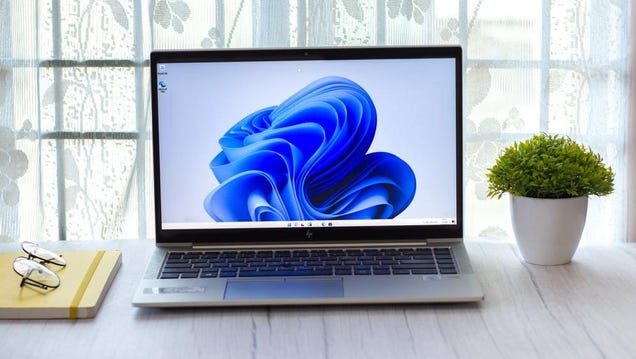
Microsoft’s strict hardware requirements for the upcoming Windows 11 have left many users behind, but it turns out there’s a way to install the new OS even if your PC’s processor or security features don’t meet the company’s standards—though it’s not guaranteed to run properly.

Read more...

08 Sep 03:59

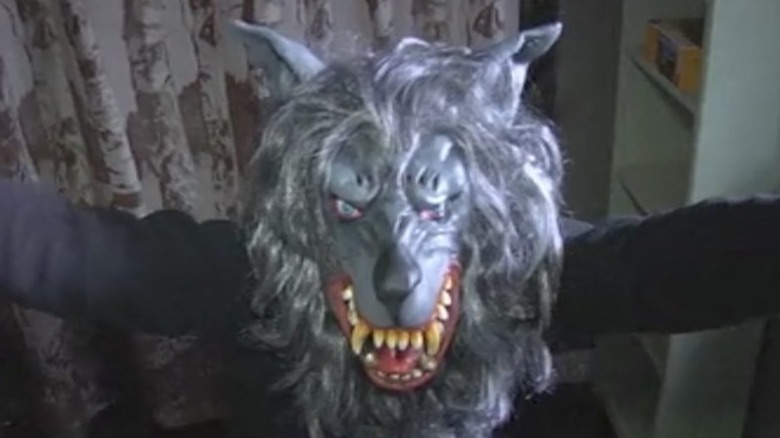
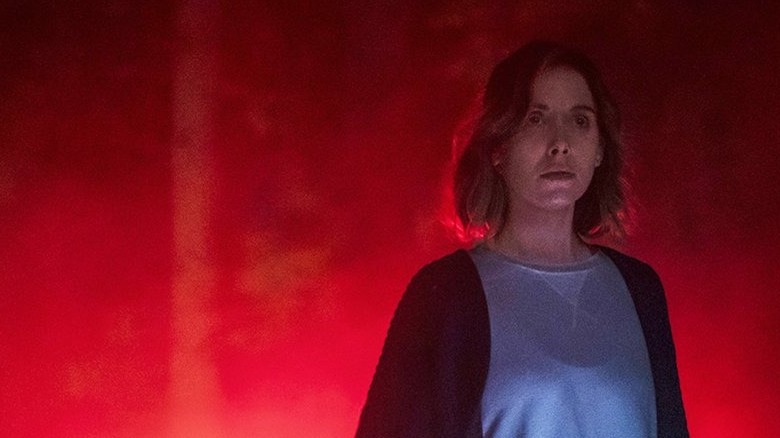
Horror Movies To Watch If You Loved The Invisible Man

by Scott Thomas

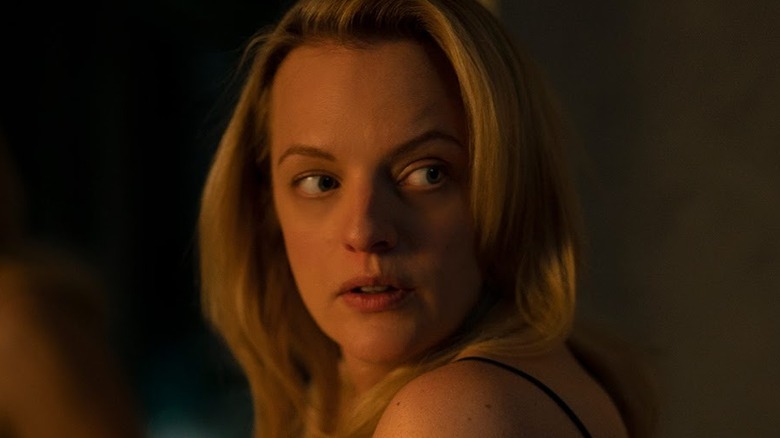
In ways both great and unfortunate, Leigh Whannell's "The Invisible Man" was a perfect pre-COVID-19 watch. Its protagonist, the indelible Cecilia Kass (Elizabeth Moss), is tormented by a camouflaged evil — one that infiltrates and corrupts every inch of the house she occupies, rendering her normal life meaningless. But the illness that Kass' ex, Adrian Griffin (Oliver Taylor-Cohen), represents is less pathogen than pathological; he is a gaslighter with psychotic tendencies, a man whose brilliance only bolsters his toxic, controlling impulses. He is any woman's worst nightmare, and is more frightening for how fully the toxic masculinity he represents permeates every facet of our society. During the pandemic, many Cecilias become trapped indoors with Adrians. The irony is stifling.If this makes it sound like "The Invisible Man" is a difficult watch, good news: "The Invisible Man" is a film that appeals to horror fans and detractors alike because lies -- not creatures, gore, or jump scares -- are the primary currency of its terror. The film's most frightening moments hinge on convincing fictions and multi-layered betrayals. No sooner does Cecilia escape Adrian's clutches than her sister, her employer, and the police turn against her. During a year in which the facts surrounding a deadly plague were routinely called into question, these plot points should make "The Invisible Man" upsettingly appealing to almost any audience.Here are 10 other films in which deceit, manipulation, and defamation feel frightening, stimulating, and all too relevant.

Gaslight

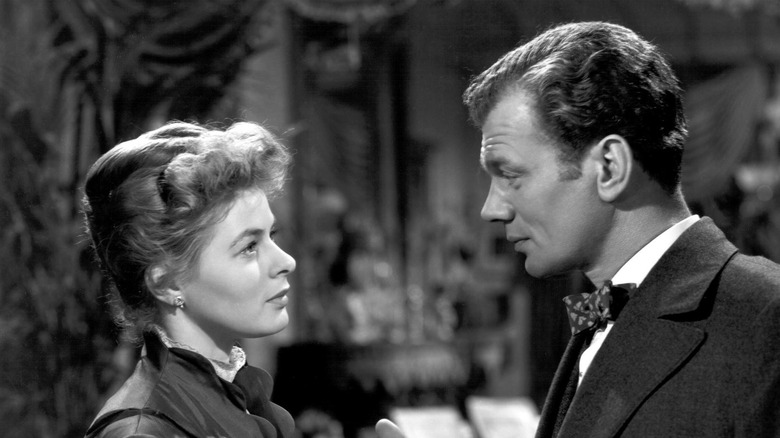
"Gaslight" creates the psychologically terrifying lexicon from which every other film on this list draws. "Gaslighting" -- the practice of making someone slowly question their memories, their perception, and their sanity -- takes its name from this film, which tells the story of a woman and her manipulative, abusive husband, and illustrates through both searing performances and subtle direction how diabolical planting a rogue thought in someone's head can be. If you somehow found your way to this article and haven't seen "Gaslight," the less I say the better.I'll put it this way: if you want to loathe actor Charles Boyer; if you want horror-soaked noir; if you want to understand what it was like for many to live in America (and, by extension, the world) from 2016 to late 2020, then "Gaslight" isn't just the film for you -- it's an essential human text. Stop reading and stream now.

The Game

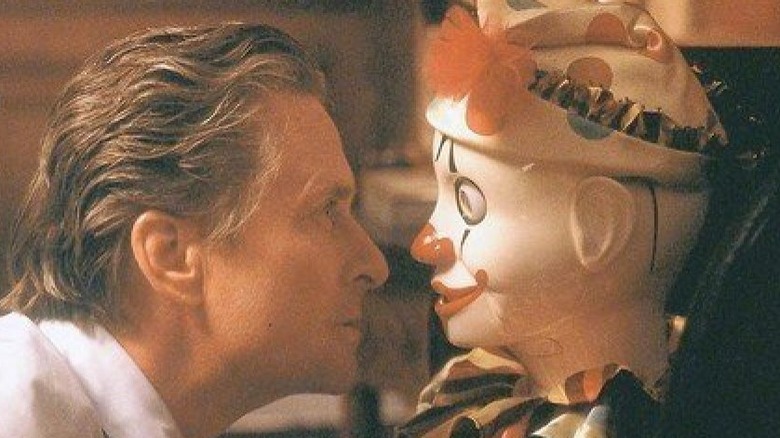
The most underrated picture on David Fincher's filmography, "The Game" is a suspense classic that posits that fiction may serve as both savior and Satan simultaneously. Over two-plus hours, "The Game" pushes its protagonist, the absurdly wealthy Nicholas Van Orton (Michael Douglas), past his psychological brink, all in the name of emotional healing. Before catharsis, though, comes creepy clowns, fake companies, and the queasiest use of Jefferson Airplane imaginable.That might sound like a pulpy diversion and, in many ways, it is. "The Game," like "The Invisible Man," is compulsively watchable -- it's a Hitchcock riff squarely made for the golden era of TNT reruns. But Fincher's third film also has heavy themes on its mind; specifically, what do you get the man who has everything? Van Orton has numbed his pain with money; his fears beget success. Like much of the 1%, he's as wealthy in self-delusion and dishonesty as he is in tangible funds. What does a person like that lack? Someone else's fiction.Strangely enough for a film that has an open-ended conclusion, "The Game" is a thrilling testament to storytelling. The only way that Nicholas Van Orton can escape the prison he's built himself is through other narrators, ones that propel him through on-foot chases and car crashes towards cauterizing truth. Here, time doesn't heal wounds; haste does, in the form of a living page-turner. The power of fiction, indeed.

Swallow

Warning: if "The Invisible Man" left you even slightly queasy, avoid "Swallow" like the plague. Steer clear of it like the Mets do healthy pitchers. Like a bug heading towards electric lighting, turn away. Of course, that's easier said than done; like the Mets and many crispy insects, you will more than likely be drawn to this genre-free wonder, just like I was. 

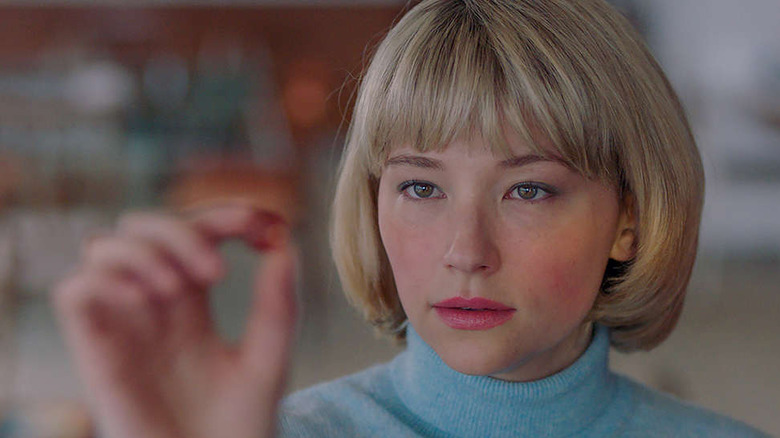
Why? Because, like "The Invisible Man," "Swallow" eviscerates domestic relationship norms and assumed trauma patterns, dragging its beleaguered housewife (an Oscar-worthy Haley Bennett) through the ringer before she arrives at an uneasy, well-earned peace. Her journey involves a frightening medical condition called pica, which drives people to eat non-food items, verbal abuse, and plenty of time unpacking the lies she told herself because others lied to, wronged, and sullied her. "Swallow" is the opposite of its title: a purge in which salvation proves sharp, be it through a tiny tack or the metaphoric blade of truth. In the best ways, it cuts deep. 

Run

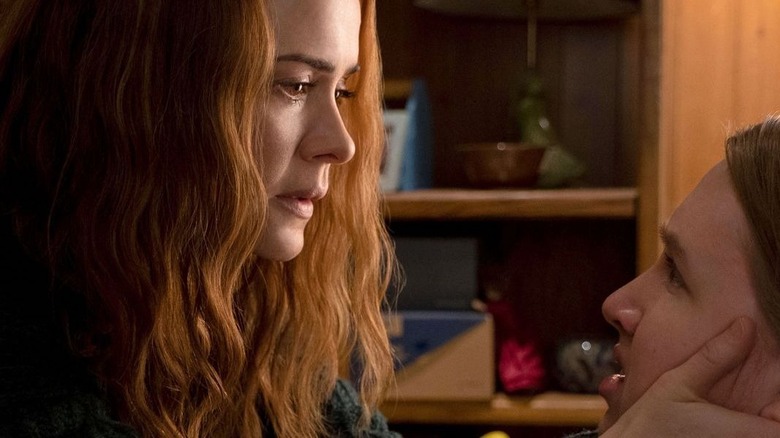
In "Run," lies, not charity, begin at home. While there are many projects in the Munchausen-syndrome-by-proxy subgenre, in which caretakers diagnose their young charges with made-up medical problems, Aneesh Chaganty's sophomore effort stands out from the pack thanks to its Spielberg-esque blend of rousing yet nail-biting setpieces. "The Invisible Man" made an ordinary home rife with dangers. "Run" says, "Hold my beer" to that. In its twisted world, getting from the bedroom to a bathroom becomes a matter of life or death. A staircase is Gremlins-level deadly. "Run" is a treat for anyone who grew up on Amblin Entertainment's '80s efforts or John Hughes' "Home Alone," creating an atmosphere that feels like a funhouse, but is far more horrifying."Run" wouldn't work, though, without the performances of Kiera Allen and Sarah Paulson, who arguably do career-best work. The fictions of a Munchausen-syndrome-by-proxy are only as believable as those who manifest them. In this case, that's all on Paulson and Allen, who briefly twist "Run" into a touching mother-daughter drama. That makes its savage ending -- like the one in "The Invisible Man" -- all the more satisfying.

Lucky

On its surface, "Lucky" has little in common with "The Invisible Man." For one, it's defiantly surrealist. For another, its assailant -- a nameless man who attacks self-help author May (Brea Grant, also the movie's screenwriter) over and over, time loop-style -- is almost defiantly visible, at least to his harried, overlooked victim. What makes Natasha Kermani's film a spiritual cousin to Leigh Whannell's thriller is its steadfast determination to reveal how all-consuming the cyclical violence and social lies perpetuated by the patriarchy really are. It does so spectacularly.How spectacularly? Try an ending like "Birds Of Prey" on acid; try "The Truman Show," but with knives. "Lucky" owes many films a debt, but its examination of institutionalized misogyny is singular. And, like "The Invisible Man," "Lucky" proves its argument with biting dialogue, oppressive atmosphere, and often impeccable action. Give it the chance the film's male characters wouldn't.

Cam

Full disclosure: "Cam" is one of my favorite films and I will not miss a chance to proclaim my love of it publicly. The first film from both writer Isa Mazzei and director Daniel Goldhaber features an enterprising cam girl named Lola (Madelinie Brewer) who discovers that her account has been taken over by a look-alike, robbing Lola of her identity and her sanity. Thus, it belongs in the same conversation as "The Invisible Man" and countless other horror greats. 

Like the previously mentioned "Swallow," "Cam" is not for the faint of heart. It takes a look on the highs and lows of sex work; for some, the subject matter might be triggering. That said, the movie's empathetic portrayal of sex workers is both necessary and important, and those who related with Elizabeth Moss's infinitely resourceful Cecilia will adore Lola, if only for how brazenly Brewer realizes her on-screen.

Creep

"Creep" is usually classified as a found-footage horror movie; the designation is a cruel misnomer. And to be clear, I love found footage horror movies! For my money, "[REC]," "The Last Exorcism,, and "Gonjinam: Haunted Asylum" are some of the most fascinating, scary horror movies of this century. In each of those movies, a narrator is subjected, emotionally and visually, to an onslaught of evil, which we witness first-hand. The perspective is clear. That's what makes it frightening.That's not so in "Creep." In Patrick Brice's underrated horror debut, monster and victim wrestle over the role of storyteller, controlling not only what we see, but how they're both perceived in the process. The characters are, in essence, fighting to speak their truth. The catch? Some of those truths are deadly. It begins when a videographer, Aaron (also Brice), is hired to record a video diary of a dying man named Josef (a stunning Mark Duplass), who wants to spill his heart, charmingly, onto the time capsule of celluloid.What's captured instead, however, is not the living will Josef promised but a field guide to how human monsters survive and thrive in society. Like "The Invisible Man," "Creep" understands that a strong personality can conceal cruel intentions. Worse, charisma lets the forces of evil reframe their own twisted hero's journey. By the time "Creep" has finished, it's Josef's movie in full. We're just watching it, willingly, our perspective merged with his. That's a level of perspective-shifting found-footage films rarely touch, but "Creep" does, pure and simple.

The Invitation

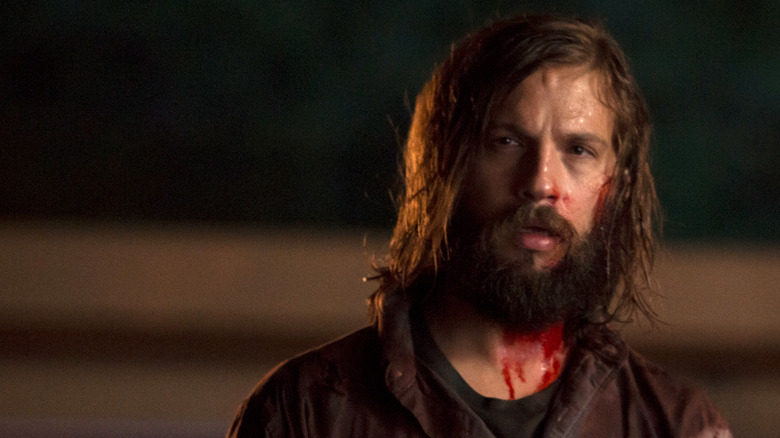
Do lies take stronger hold in fragile spirits? That's the question at the heart of Karyn Kusama's spare but explosive "The Invitation," an ensemble piece in which a casual dinner quickly turns ominous. The film's central location shares a common architecture and geography with the waterside mansion of the first act of "The Invisible Man." Kusama, like Leigh Whannell, milks modern home decor's jagged edges and the shadows of California's rolling hills for every ounce of tension they're worth. Both portend violence.But just as in "The Invisible Man," the bloodletting in "The Invitation" is far less interesting than the way it probes broken minds. There's Will (Logan Marshall-Green), still reeling from the trauma of his child's death. There's Eden (Tammy Blanchard), his suddenly-glowing ex. Most of all, there's Pruitt (John Carrol Lynch), a forthright party-crasher whose past catches up with every attendee. As Eden and her new husband, David, try to recruit their dinner guests into a cult, Will grows increasingly paranoid, spiraling out of control as he makes an erratic grasp for honesty. Perhaps that's what makes "The Invitation" so moving, as well as so scary. To be truthful and human, it posits, is to flail -- gracefully, maybe; wildly, sure; but to flail, period? Absolutely. Life is too difficult to live through otherwise.

The Lodge

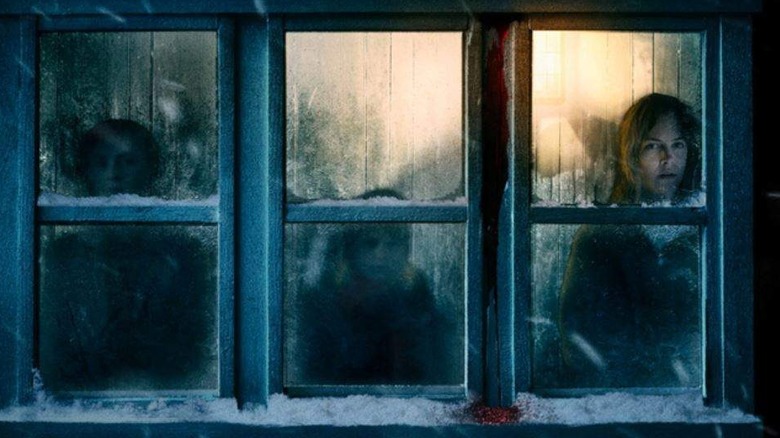
In 2020's "The Lodge," it's not just lies that are coldly, irrevocably terrifying. It's who you lie to. While Veronika Franz and Severin Fiala's follow-up to "Goodnight, Mommy" suffers from dreaded "second album syndrome" (it's full of repeated themes, similar set pieces, and so on), it sticks its landing thanks to an icy finish. In addition, it contains Riley Keough's top-tier performance, one that peels back layers of grief, fear, and violence with Elizabeth Moss-like elegance (between this, "The Girlfriend Experience," and "Zola," Keough has become the only positive argument for nepotism in Hollywood). 

What makes "The Lodge" particularly upsetting -- and interesting -- however, is that little evil appears on screen. This is, without spoiling it, a film about the ways in which trauma begets trauma, and how we only see that when it's too late. A lesser movie would've pegged this thesis on a big bad; "The Lodge" is not a lesser movie.

The Rental

Dave Franco and horror are hardly synonymous. Though the 36-year old appeared (memorably!) in 2013's "Warm Bodies," his oeuvre has tended towards fiery comedies, in which he most often plays the calm within their storm. His performances are naturalistic -- distressingly so. If Richard Donner made us believe a man could fly, then David Franco taught us that magicians know kung-fu, and also parkour.The point is: Franco rarely strikes at horror's highs or lows. How fitting, then, that his directorial debut, "The Rental," doesn't either. Ostensibly a mumblecore relationship drama which collides head-on with a slasher flick, "The Rental," like "The Invisible Man," concerns itself with mining horror from toxic relationships. It's plot is built from stacks of interpersonal lies, the kind that failing couples often tell themselves. In "The Rental," those mistruths collapse during a weekend getaway plagued by with interpersonal tension, a shady Air B&B owner, and more loaded looks than you can shake a stick at. When the truth is finally revealed, the bodies start piling up. Franco, on brand, makes the carnage feel as normal as breathing.

Read this next: 'The Invisible Man' Remains The Scariest Of Universal's Classic Movie Monsters

The post Horror movies to watch if you loved The Invisible Man appeared first on /Film.

08 Sep 03:58

Will There Be A Sequel To War For The Planet Of The Apes? Here's What We Know

by Ryan Scott

(Welcome to Will There Be a Sequel?, a series where we answer that question and explore what comes next.)

Fox, long before Disney purchased the studio, hit one of the most unlikely homeruns in the modern era of blockbuster filmmaking with 2011's "Rise of the Planet of the Apes." Directed by Rubert Wyatt, the reboot served as a modern reinvention of the "Planet of the Apes" franchise, opting to go the prequel route to tell the story in a more linear fashion. They weren't going to repeat the mistakes of Tim Burton's ill-fated remake.

The movie's success prompted two sequels, 2014's "Dawn of the Planet of the Apes" and 2017's "War for the Planet of the Apes." Four years removed, we are left with a burning question: is there going to be another sequel in the franchise? The answer, it turns out, is complicated. But one thing is for sure, we are getting more "Planet of the Apes," one way or another.

Disney Is Making Another Planet Of The Apes Movie For Sure

Disney purchased most of Fox's media assets in a landmark deal valued at more than $71 billion. The deal went into effect back in 2019 and gave Disney a massive library to exploit largely for the purposes of streaming. The library helped to beef up Disney+ and Hulu, but it also gave the studio a great many franchises to exploit, "Planet of the Apes" among them.

Before long, it was confirmed that a new "Planet of the Apes" movie was happening. Wes Ball ("The Maze Runner") was tapped to direct the latest entry in the long-running sci-fi franchise, with Josh Friedman penning the screenplay. To this day, much remains mysterious. However, in an interview with Discussing Film, Ball did imply that they aren't going to fully reboot the series:

"We have a take. We have a way of staying in the universe that was created before us, but we're also opening ourselves up in being able to do some really cool new stuff. Again, I'm trying to be careful here. I'll say this, for fans of the original three don't worry -- you're in good hands."

This is something Ball also reiterated on Twitter shortly after the news first came to light.

Ball also is careful to note that Rick Jaffa and Amanda Silver, the screenwriters who helped craft the most recent trilogy, are involved. So, while that doesn't totally answer the complicated question of whether or not "War for the Planet of the Apes" is getting a direct sequel, we do know for sure Disney isn't abandoning the franchise.

Did War For The Planet Of The Apes Leave The Door Open For A Sequel?

"War for the Planet of the Apes" accomplished a relatively rare feat in modern blockbuster filmmaking. It managed to conclude the story of Andy Serkis' Caesar, who we had primarily been following for three movies, while also leaving the door open for more stories in the future. While Caesar ultimately died to help save his fellow apes, they were afforded the chance to start anew in a land far removed from the war between the humans.

The remaining apes, including Caesar's family and Maurice, could undoubtedly continue on. The franchise could continue to build on what came before while shifting focus. Yes, the narrative, in some ways, reached its logical conclusion with "War," but that doesn't mean we're done. Director Matt Reeves, rather brilliantly, positioned things to be satisfying one way or the other. We don't necessarily need more. But if we get more, there are plenty of places to go.

Reeves, for his part, hinted that he would like to come back to tell more stories in this universe, provided the opportunity. He is currently busy directing "The Batman," but in an interview back in 2017 around the time "War" hit theaters, the filmmaker had this to say about future tales in this universe:

"Future conflicts in this kind of epic journey [may] take us toward the '68 movie without necessarily ever getting there [and] could be about conflicts between apes, not just conflicts between humans and apes. And so, to me there are many more exciting stories to be told, and I would love to tell those stories."

Is A War For The Planet Of The Apes Sequel Commercially Viable?

Perhaps the most important question for Disney in determining a direction here is commercial viability. Part of what made the most recent "Planet of the Apes" trilogy so appealing is that the movies had a real point of view. They had real artistry to them, while also serving as wholly entertaining blockbusters. I would go so far as to call "Dawn of the Planet of the Apes" and "War for the Planet of the Apes" masterpieces of the sci-fi genre, right alongside the original film from 1968.

But what story do the numbers tell? "Dawn of the Planet of the Apes" carried a reported $170 million budget, taking in $710 million at the global box office. Those are the sort of numbers that get studio heads to pop the champagne. "War for the Planet of the Apes" did well, though not quite as well as its predecessor. With a budget of $152 million, it earned $489 million worldwide. Every studio in Hollywood would take that return, eight days a week. However, it is important to acknowledge that there was a big drop-off between installments. That is something Disney has to factor in here.

The other unfortunately unrelenting elephant in the room is the pandemic. More to the point, what the pandemic has done to the global theatrical marketplace. Exclusive theatrical windows have shrunk for good. At best, a movie is going to get 60 days in theaters before making its way to premium VOD. In many cases, it's going to be less. The box office is an uncertain place and there is no telling when things will get back to relative normalcy. The point is, whatever a "War for the Planet of the Apes" sequel might have done for Disney financially at one point is no longer the reality.

So where does that leave us? In the end, we're getting a new "Planet of the Apes" movie of some kind. If we're reading between the lines, it seems like Disney and the creative team are going to avoid calling this a reboot, but they probably want to avoid taking in any baggage. It's a new studio, a new era of blockbuster filmmaking and a new director. If there are Vegas odds on this, let's go with the term "soft reboot" for the win. Though that is largely speculative. Let's just hope they avoid another direct remake, as Tim Burton and Mark Wahlberg showed us the dangers of that approach. We need not wander down that tragic road again.

Read this next: Here's Where You Can Stream Or Rent Every Planet Of The Apes Movie

The post Will there be a sequel to War For the Planet of the Apes? Here's What We Know appeared first on /Film.

08 Sep 03:58

More Live-Action Rick And Morty Segments Reveal An Alternate Take On This Twisted Universe

by Danielle Ryan

The fifth season of Adult Swim's hit animated series "Rick and Morty" just finished, coinciding with the programming block's 20th anniversary. (That's right, Adult Swim is almost old enough to buy a six-pack.) To celebrate and hype up the finale, they released a quick live-action promo of mad scientist Rick and his hapless grandson Morty, played by none other than "Back to the Future" star Christopher Lloyd and "It" franchise star Jaeden Martell, respectively. The casting was perfect, as Lloyd's Doc Brown was series creator Justin Roiland's inspiration for Rick.

Adult Swim has released two more brief promos, each featuring the live-action Rick and Morty in a reference to their cartoon hijinks. Check them out below!

C-1.21 Brings Puts Rick In A Pickle

The first of the two new promos is captioned "C-1.21", which isn't one of the canon universes in the animated series. Instead, it's a reference to Lloyd's character in "Back to the Future", who declares that 1.21 Gigawatts of electricity are needed to power the flux capacitor and travel through time. While it's looking less and less likely that a "Back to the Future 4" will happen, seeing Lloyd play a character inspired by Doc Brown is pure joy.

The clip riffs on the "Rick and Morty" season 3 episode where Rick turns himself into a pickle in an attempt to get out of going to family therapy. Live-action Morty thinks Rick has turned himself into a pickle again, but is surprised when a very human-looking Rick takes a healthy bite out of that crisp cucumber.

C-132 Brings It All Home

The second of the new promos is captioned "C-132", which is the origin universe for the animated Rick Sanchez and Morty Smith. (They are no longer in that timeline due to accidentally turning all of its inhabitants into Cronenberg monsters, but that's another story.) The promo re-creates the final moments of the pilot episode: Rick excitedly babbles at a prone, paralyzed Morty about their future together. "Rick and Morty forever, forever a hundred years, Rick and Morty dot com!" he rants between belches and gurgles. 

There's no telling exactly when we'll see season six of "Rick and Morty", though we do know there's a spin-off series headed our way. There's also no telling whether or not we'll see more of Lloyd and Martell and their live-action incarnations anytime soon, though it's possible. After all, "Rick and Morty" will go on forever, forever a hundred years, Rick and Morty dot com.

Read this next: The Perfect Live-Action Rick And Morty Were Just Introduced By Adult Swim

The post More Live-Action Rick and Morty Segments Reveal an Alternate Take on This Twisted Universe appeared first on /Film.

08 Sep 03:56

The Onexplayer 1S gets an upgraded Intel gaming CPU to rival Steam Deck

by Phil Hayton
The Onexplayer 1S gets an upgraded Intel gaming CPU to rival Steam Deck

It’s needless to say that Steam Deck will probably turn the heads of PC gamers, but while Valve’s new kid on the block will likely be a top seller, it won't be the only portable gaming PC on the market. Enter the Onexplayer 1S; an upgraded version of the original handheld that could prove a worthy Steam Deck alternative.

As you’d perhaps expect, the Onexplayer 1S pretty much follows in the footsteps of every other handheld gaming PC. Featuring console-like ergonomics and a Switch inspired aesthetic; this device isn’t shy about its intent. However, unlike both the Steam Deck and its fellow contenders, this unassuming palm PC has Intel’s 11th gen i7 1195G7 at its core. Not only does this allow the device to reach speeds of up to 5GHz turbo, but it also gives it an edge when it comes to gaming performance.

From GPD’s Win Max range of mini gaming laptops to the Switch adjacent Aya Neo, there are already plenty of portable PC gaming options out there. Yet, while these devices can run the latest games with a respectable level of performance, the graphical capabilities of the Onexplayer 1S's processor set it apart from both its competitors and the Steam Deck.

RELATED LINKS: Intel Core i9 9900K review, Intel Core i7 9700K review, Best CPU for gaming
08 Sep 03:05

Tony Leung's Wenwu Is Marvel's Best Villain Yet — Why This Helps And Hinders Shang-Chi

by Hoai-Tran Bui

(This article contains spoilers for "Shang-Chi and the Legend of the Ten Rings.")

"Shang-Chi and the Legend of the Ten Rings" made history when it hit theaters this past weekend to a roaring success. Not just for being Marvel's first Asian superhero film, or that it is a tentpole lead by an entirely Asian cast. It's historic for being the Hollywood feature film debut of Hong Kong cinema legend Tony Leung.

Leung has been working in the Chinese movie industry for nearly four decades now and has been a screen icon for nearly as long. He's starred in internationally acclaimed classics such as "In the Mood for Love," Hong Kong action flicks like "Infernal Affairs" and "Hard Boiled," and wuxia hits like "Hero." He's one of our greatest working screen talents and a beloved icon of Hong Kong cinema. And he completely steals the show in "Shang-Chi and the Legend of the Ten Rings."

"Shang-Chi" could almost be described as a two-hander between Simu Liu's Shang-Chi and Leung's Wenwu. Wenwu is the estranged father of Shang-Chi, the immortal conqueror who trained Shang-Chi to be an assassin from childhood, and now sics assassins on his son to retrieve a precious pendant that had once belonged to his dead wife, Ying Li (Fala Chen). A very loose amalgamation of both Marvel characters the Mandarin and Fu Manchu (yes, that Fu Manchu), Wenwu is presented as the villain of Shang-Chi's story: a ruthless warrior who would stop at nothing to gain more power.

And yet. Wenwu arguably becomes the most sympathetic character in "Shang-Chi" — not just by the strength of Leung's frequently tear-filled eyes, but by the film's dedication to playing out Wenwu's story alongside Shang-Chi's. Wenwu certainly has the fullest arc, going from ruthless conqueror to tragic romantic hero, to deadbeat dad, to redeemed antihero. And while this easily makes him the best Marvel villain outside of Loki (who only received some of his best characterization after his debut film), it also creates an unusual problem for "Shang-Chi": the titular superhero gets completely overshadowed.

The Man Who Can Speak With His Eyes

First, we need to speak about the significance about casting the Tony Leung in "Shang-Chi." He's been one of the most beloved figures of the Hong Kong movie industry since the 1990s, and not just because he's devastatingly handsome. Leung's hooded eyes which frequently betray the roiling emotions beneath his placid surface, and his impeccable jawline that appear to be sculpted by the gods, have led him to be cast as many a romantic hero throughout his career, often in the films of frequent collaborator Wong Kar-wai, the filmmaker behind stone-cold classics "In the Mood for Love," "Chungking Express," and more.

But his subdued, naturalistic acting style — at odds with the outsized performances of many of his colleagues — led him to become rightfully embraced as one of the greatest screen talents of his generation. In China, he's been dubbed "The Man Who Can Speak With His Eyes," a testament to how expressive Leung is. It's a talent that Leung has been honing since his first breakout feature film, in Hou Hsiao-hsien's 1989 Taiwan-set drama "A City of Sadness," in which he played a deaf and mute character — leaving him only with only his eyes as his main tools. Throughout his seven-film collaborations with Wong, he honed his techniques until they were practically invisible — he became the characters, and every action became instinct rather than performance.

"Even when you leave it behind, it has become a part of you. It's inside you forever," Leung has said.

So it's no surprise that Leung gave so much of himself even to a Marvel villain that has such a problematic history. "He infused everything with love which was surprising," director Daniel Destin Cretton said of Leung. "I asked him in the middle of shooting whether he thought Wenwu truly loved his kids and he didn't hesitate. He said he has always loved his kids he just has no idea how. That was a really big epiphany for me."

Wenwu: Villain Or Tragic Antihero?

"Shang-Chi and the Legend of the Ten Rings" opens not with the story of Simu Liu's Shang-Chi, but with the tale of Tony Leung's Wenwu, an immortal conqueror who discovered the mystical Ten Rings hundreds of years ago and wielded them to fell empires and build his own: the clandestine Ten Rings organization. But, as the mysterious narrator reveals, by the '90s, Wenwu had found that there were no more worlds left to conquer ... except for the otherworldly. Wenwu becomes obsessed with the hidden mystical village of Ta-Lo, which is said to guard the entrance to the divine world.

We learn that this mythic story is being told by none other than Shang-Chi's mother, Ying Li (Fala Chen), who had met and fallen in love with Wenwu when he tried and failed to enter Ta-Lo. Their first meeting is right out of an epic love story — they trade blows and longing glances in tandem, until the sequence becomes one of the most sexually charged scenes in the Marvel Cinematic Universe. Leave it to Tony Leung to bring (a sorely-needed) sex appeal to the MCU.

We gradually learn, through a combination of flashbacks and exposition, that Wenwu convinced Li to leave her village and, in turn, give up the Ten Rings to go straight. They're even happy, for a time. But tragedy strikes when a vengeful rival gang murders Li and pulls Wenwu back into the criminal underworld. Wenwu's soul is blackened by revenge and it starts to infect his young son and daughter, until they both run away. It's not until Shang-Chi (Simu Liu) and Xialing (Meng'er Zhang) reunite as adults that the scars of their childhood brought on by Wenwu's suffering become clear.

Or does it? The film seems to waver between casting Wenwu as the outright villain or the tragic antihero — is he the cold, calculating leader of a terrorist organization, or simply a bad dad mourning the loss of his wife? He's a little bit of both, thanks to Leung's intensely charismatic and sympathetic performance, which — unfortunately for the film — is leagues above anything that Simu Liu is doing.

Not Your Everyman

"Shang-Chi" goes out of its way to prove that Simu Liu's titular hero is an everyman. He works as a hotel valet with his best friend Katy (Awkwafina), he sings karaoke until the late hours, he's funny and self-deprecating, and maybe suffering from a little arrested development. And to his credit, Liu is great at playing the everyman, drawing from his comedy background to radiate a boy-next-door likability in the first half of the film, which plays out more as a fish-out-of-water story/buddy comedy than the epic tragedy that is unfolding over on Wenwu's side. But as soon as the two meet, "Shang-Chi" morphs into the epic martial arts movie that it had been all along. And that's where Liu starts to feel lost, especially when up against Leung.

Marvel does not lack for subpar villains — most of the rogues the heroes go up against are either "exactly like the hero, but EVIL" or "kind of has a point, but loves MURDER." Wenwu falls somewhere in the middle here, except he has one foot up — he's got Tony Leung's charisma. Leung manages to convey the turmoil that Liu can't, simply by virtue of those beautiful, expressive eyes. Eyes that have had whole academic dissertations and video essays on them. Eyes that convey the loneliness of a centuries-old man who had finally found the love of his life, only for her to be ripped away. Eyes that flutter at the dinner table where he and his children awkwardly sit, unable to convey how much he has missed them, and how much he still resents them for his wife's death. Eyes that become laser-focused as an evil force convinces Wenwu that his dead wife is trapped behind a gateway guarded by Ta-Lo, punished for falling in love with him. Poor Simu Liu and his three expressions could not stand a chance.

Hero Besting Heavy

By the end of "Shang-Chi," Shang-Chi has come to the conclusion: he must kill his father to stop his devious plan of destroying Ta-Lo. Except Wenwu's devious plan is only driven by despair and grief, something that is all too universally understandable. Wenwu's biggest sin in this case, is that he's misguided, and Shang-Chi has decided that the only way to stop him will be to fulfill the assassin training that he had run away from, and murder his father. Of course, he doesn't kill him, and Wenwu's self-sacrifice for his son ends his arc in antihero territory. It's a rich and emotionally complex character arc for Wenwu, but a confusing one for Shang-Chi. How did he grow? What were the lessons he learned? Not to murder, at least.

As Al Pacino says in Quentin Tarantino's "Once Upon a Time in Hollywood," Marvel pulls the "oldest trick" in the book by casting Hong Kong movie legend Tony Leung against up-and-comer Simu Liu in "Shang-Chi."

"You got a new guy...you want to build up his bonafides," Pacino's producer Marvin Schwarz says in the 2019 film. "So you hire a guy from the canceled shows to play the heavy. Then at the end of the show when they fight, it's hero besting heavy."

Marvel probably didn't mean any ill intent by raising up their new Asian superhero by cutting down one of the finest actors to come out of the Chinese film industry, but rather probably intended it as a sort of passing of the torch. What better way to prove Liu's acumen as Shang-Chi then to pit him against the Tony Leung, right? Even if he doesn't defeat him, necessarily, Shang-Chi comes out of their fight better and more morally superior than his father. But somehow, in the mere 30 or so minutes of screentime that Leung had, Wenwu comes out as the more interesting, rich, and compelling character — surrounded by tragedy of both his own and others' makings — while Liu more or less stumbles into the role as the wielder of the Ten Rings.

But at least now he gets to be an Avenger and sing karaoke with Wong.

Read this next: Who Is The Main 'Shang-Chi' Villain? The Mandarin Explained

The post Tony Leung's Wenwu is Marvel's Best Villain Yet — Why This Helps and Hinders Shang-Chi appeared first on /Film.

08 Sep 03:03

The 15 Best Glenn Close Roles Ranked

by Dalin Rowell

With a career that has risen to legendary status, Glenn Close has become one of the most treasured actors of her time. With characters have empowered female viewers everywhere and performances that have scared audiences from the first frame onward, Close has proven time and time again that she is a force to be reckoned with. Plus, with all of the incredible powerhouse directors she's collaborated with, Close has genuinely cemented herself as the secret ingredient to any great movie, regardless of the genre.

But given that Close has played so many memorable characters throughout her multi-decade-long career, it can be hard to decide which ones are  truly among the best of the best. From movies that are nostalgic blockbusters, intense family dramas, costume extravaganzas, and even some animated fare, Glenn Close's filmography offers a lot to choose from within  Without further ado, here are 15 significant roles from this dynamite actress' resume.

Gutless — Hook

In Steven Spielberg's "Hook," Peter (Robin Williams) returns to Captain Hook's ship after many years away, covered in a hilarious pirate disguise. As he listens to Hook (Dustin Hoffman) regale his crew with tales of how he kidnapped Peter's kids, he questions who amongst the crowd didn't believe in him. He eventually points to an older, bearded pirate -- Gutless, a crew member who bet against Hook's ability to get revenge on Peter Pan. As punishment, Hook throws Gutless into the "Boo Box," resulting in a terrifically campy and absurd set of circumstances.

Though many casual viewers might be scratching their head when reading this, yes, Glenn Close did indeed portray this poor unfortunate pirate. And while Gutless doesn't last too long on screen, when you realize what part Close is playing, it's easy to see why Gutless deserves to be mentioned among her most memorable performances. She simply disappears into this over-the-top cameo.

Kala — Tarzan

Though many tend to forget Close's voice acting work, it's hard to deny that her vocal talents made her a perfect fit for the role of Kala in Disney's adaptation of "Tarzan." A much more down-to-earth role for the typically dramatic actress, Kala gave Close a chance to show both her whimsical singing voice along with her tender side. And though some might think this was an easy task to accomplish, Close had a Disney legacy to live up to -- one that she continued in her own unique way.

But what makes Kala one of Close's best (and underrated) performances is all about the voice acting chemistry she has with the rest of the "Tarzan" cast. From the moments when she has to stand up to her Gorilla husband, Kerchak (Lance Henriksen), to the sequences in which Kala has to advise Tarzan (Tony Goldwyn), Close embodies the great moms of Disney's past while still bringing a modern and empowering sensibility to the role.

Alicia Clark — The Paper

Though considered a forgotten movie by most, Ron Howard's "The Paper" contains one of Glenn Close's most refined, calculated performances. In the movie, Close plays Alicia Clark, a managing editor of a New York tabloid who is more focused on advancing her career than preserving her integrity as a journalist. Clark is trying to be one of the guys in an industry that immediately assumes she's a mean girl simply because she wants something more. And that relatable aspect of Alicia is the core of Close's fantastic performance.

In one particular sequence, Alicia goes to a business dinner to try and speak to her boss' boss, hoping to get the kind of contract negotiation that she thinks she deserves. Although audiences would hope that the outcome would have changed in the 27 years since the movie's release, both "The Paper" and Glenn Close's performance remind viewers about the constant struggles women face in male-dominated industries.

Iris Gaines — The Natural

In Barry Levinson's "The Natural," audiences follow the fairytale-like story of Roy Hobbs (Robert Redford), a '30's baseball player with extraordinary abilities who rises to the top. Close takes on the role of Iris Gaines, a part that shows off a glamorous side that many of Close's prior roles hadn't, proving that she was (and still is) a perfect match for Redford in both acting and visual presentation.

Close's abilities recall a memorable sequence in the film in which Iris stands out in a baseball-focused crowd. In the scene, Iris is watching Roy as he makes an impressive hit. Yet even with all eyes on his sports-driven successes, all Roy can think about is looking at Iris. The mixture of Close'scontrolled acting, the brilliant cinematography, and the romantic aesthetics, showcase how this talented individual truly takes command of the screen. Even without uttering a single word, the camera and audiences love her.

Vice President Kathryn Bennett — Air Force One

While "Air Force One" follows many of the same beats as action staples like "Die Hard," there's nothing in the genre comparable to Glenn Close as Vice President Kathryn Bennett. Serving alongside Harrison Ford's President James Marshall, it's up to Kathryn to "hold down the fort" as Marshall tries to stop a group of terrorists from taking over the titular plane. And while the President is kicking some Russian bad guys to the metaphorical curb, the real unsung hero of the film is Kathryn, who has to take on both the White House and the world during a highly intense situation.

Both regal and remarkably blunt, the best aspect of Close's performance in "Air Force One" is how she knows what kind of movie she's in. Whether it be the bold delivery of her over-the-top one-liners or her trailer-worthy looks during the most intense sequences, Close perfectly matches the movie's tone. Plus, seeing Close acting alongside heavy-hitters like Ford and Gary Oldman is the definition of cool -- she holds her own against them with her uniquely captivating style. 

Gertrude — Hamlet

While many doubted that a Mel Gibson-led adaptation of "Hamlet" could work, this version of the classic Shakespeare tale surprised audiences, and while Gibson's performance in the title role is quite memorable, the secret sauce of this rendition is, of course, Glenn Close as Hamlet's mother, Gertrude.

Being one of the two leading ladies of the piece, Close's Gertrude is more comforting than other versions of the character. Close's take on the Danish matriarch is kind yet flawed. She's willing to do anything for her kingdom, especially if it gives her a distraction from her thoughts. But, as with any tremendous Close performance, there is a hidden layer to her approach -- Gertrude seems to be keeping secrets close to the symbolic vest. And when Close gets to act alongside Gibson and the movie's other excellent cast members, the strength of her acting becomes crystal clear.

Jenny Fields — The World According To Garp

Famously known as Close's feature film debut, the role of Jenny Fields in "The World According to Garp" is undoubtedly an odd one. Not only did Close play mother to a then 31-year-old Robin Williams as Garp, but Jenny was certainly not your typical movie mom. From wanting to have a baby out-of-wedlock in the '40s to interviewing prostitutes at coffee shops in front of her son, Jenny is a character that certainly likes to color outside the lines of life -- an aspect Close perfectly captures.

Despite the problematic elements of the plot (especially how Garp comes to be) and the awkward age difference in casting, Close elevates the character of Jenny into something even more special than she was in the pages of John Irving's original novel. And through countless fantastic sequences (mainly those with Williams in the later portions of the film), it's easy to see why this role established Close as a powerhouse of both the big and small screen.

Albert Nobbs — Albert Nobbs

Having played the role both on the stage and then on the screen, Glenn Close's performance as the quiet but complicated Albert Nobbs is one of the most intriguing pieces of her filmography. Based on the book and play "The Singular Life of Albert Nobbs," the film centers around a late-19th century butler born biologically as a woman who works hard to create his dream life. From opening a tobacco shop to getting married to a beautiful maid named Helen Dawes (played by Mia Wasikowska), all Albert wants is to have the life he's always dreamed of. Yet, it seems his already tough existence has more than a few bumps on the road ahead.

Though uneven with its LGBTQ+ representation from start to finish, there's no denying that Close's performance carries you through the film's cinematic flaws. Paired with the great Janet McTeer in many of the movie's most memorable sequences, Close truly becomes an acting force, proving that some iconic stage performances can indeed successfully translate to the screen, even if there are many years between them.

Sunny Von Bulow — Reversal Of Fortune

Based on a true story, the darkly funny "Reversal of Fortune" is about the murder trial in which Claus von Bulow (played by Jeremy Irons) is charged with killing his wife, Sunny von Bulow (Close). In the film, Sunny lies in a coma, trying to help the audience put together the puzzle of how she arrived at this moment. The film then takes us on a journey through both Sunny's past and the present day, allowing us to come to our own conclusion about the crime at hand.

Dressed to the nines and beyond, Close's take on Sunny von Bulow is a perfect blend of camp and the refined. She's a Hitchcock blonde without Alfred's direction. She looks at her life from a wickedly comedic angle, serving as both the narrator and the victim (in a "Sunset Boulevard" sort of way). Close showcases every piece  of Sunny's complexity from start to finish, making "Reversal of Fortune" intoxicating to watch. She also has a great collection of garments and hairstyles, and Close inhabits this character with dignity and grace.

Sarah Cooper — The Big Chill

Known as one of the most significant parts of her early career, Close's work in Lawrence Kasdan's "The Big Chill" set the tone for the kind of roles she'd take later on. Though Close would eventually play juicer and bolder characters throughout her filmography, Sarah showed Close's down-to-earth vulnerability in the best of ways. The film revolves around a group of friends who celebrate their late pal, Christopher, who took his own life. And though the film deals with many incredibly dark subjects, Close and the rest of the cast make it an enjoyable ride.

From her sweet dance sequences with the rest of the ensemble to the isolated moments in which she reflects on the intensity of the situation (especially the shower sequence), Close's portrayal of Sarah stands out as one of the more memorable aspects of this classic film. And when paired with the legendary cast, which includes Jeff Goldblum, Kevin Kline, and so many others, it's easy to see why both the movie (and Close's performance) left such an impact on movie-goers during its initial release.

Cruella De Vil — 101 Dalmatians

One of Close's most cherished roles, Cruella de Vil from Disney's 1996 live-action "101 Dalmatians" (and its sequel) is a character just as iconic, bold, and memorable as Close herself. From her larger-than-life aesthetic presentation to a laugh that sends shivers down any person or dog's spine, it's no wonder this antagonist continues to delight audiences. Yet it is the unique touches that Close brings to the legendary Disney villain that make this incarnation of the dognapping baddie all her own.

First of all, much like other roles mentioned on this list, Close is no stranger to camp, and while there are other examples on her resume, Cruella gives Close free rein to cut loose. But it is her perfect balance of comedy and terror, along with her tributes to Marc Davis' original animation, that makes Close's portrayal of Cruella a sight to behold. She is one of the few actors to truly bring one of Disney's animated characters to real life in the most delicious of ways.

Joan Castleman — The Wife

One of the many roles that should have won her an Oscar, Glenn Close's work in "The Wife" is a masterclass in drama. Based on the novel of the same name, the movie tells the story of Joan (Close) and Joe Castleman (Johnathan Pryce), a married couple who seem to be the yin to each other's yang. Joe is an award-winning writer who is about to be given the Nobel Prize. Though it may seem like Joan is the perfect wife, there's more to her story than just being a supportive figure in Joe's career.

In one of the more outstanding examples of "show don't tell," Close perfectly captures Joan's complexities by simply shifting in her face. And as the film progresses towards its more dramatic sequences, Close produces one of the most compelling examples of intensity ever put on celluloid. She's a genius when it comes to making characters fascinating from beginning to end, and her work as Joan may be one of the most genuine and magnificent examples of Close's particular strengths.

Patty Hewes — Damages

Considered her most iconic TV role, Glenn Close's performance as Patty Hewes in "Damages" is an acting tour de force. The FX legal thriller centers around Patty, an incredible lawyer who keeps her emotions tucked under her sleeve. As the series progresses, Patty takes on a multitude of extreme cases. But the truly intriguing part of the show is Patty's relationship with her protégée Ellen (played by Rose Byrne), from their highs to the lowest of lows.

With memorable zingers and a cutthroat mentality, Close brings Patty to life in absolutely astonishing ways. From the character's obsession with perfection to not letting anyone (especially any man) stand in her way, Close makes every ferocious sequence in Patty's story as riveting as the next. And when she's acting alongside the other memorable cast members on "Damages," it becomes clear why Close won so many awards for this magnificent performance.

Marquise De Merteuil — Dangerous Liaisons

Driven by love and revenge, the role of the Marquise de Merteuil in "Dangerous Liaisons" is perhaps one of the most significant parts any actress can play. But no one has portrayed the character quite like Glenn Close. Not only did Close add her signature lightning-fast reflexes, unique choices, and delicious spin on villainy to her performance, but she brought this theatrical individual to life in some truly fascinating ways.

But perhaps the most extraordinary aspect of Close's performance are the hints of vulnerability the character exhibits. The Marquise de Merteuil is an individual who never wants to show her true feelings. Still, as the plot progresses, Close uses the tiniest expressions to convey the character's true feelings, making for one unforgettable finale. When considering that Close had only given birth to her daughter seven weeks before production, the results of her work are incredible.

Alex Forrest — Fatal Attraction

While there have been many significant roles in Glenn Close's career, none of them are quite as crucial to her stardom as Alex Forrest in "Fatal Attraction." The film focuses on Daniel "Dan" Gallagher (played by Michael Douglas), a successful lawyer who seems to be existing in marital bliss. But when Alex crosses his path one weekend, the two have a passionate affair -- one that Dan thinks is one and done, but Alex feels is more. What follows is the stuff of movie legend, primarily thanks to Close's incredible performance.

In many interviews, Close has said that she never viewed Alex as a villain, a perspective that greatly influenced her overall take on the character. Though many viewers would think otherwise, it is Close's dedication to this complex individual's genuine vulnerability that makes this piece of her filmography truly special. While some might remember Close's work on this movie more for her iconic one-liners and ridiculous antics, it is Close's tireless efforts on "Fatal Attraction" that make Alex arguably the most fantastic role of her entire career.

Read this next: 'Cruella' Director Craig Gillespie Wants To Make A Sequel With The Villain "Fully Loaded"

The post The 15 best Glenn Close roles ranked appeared first on /Film.

08 Sep 01:59

The 14 Best Directorial Debuts From Actors Ranked

by Audrey Fox

It's a cliché at this point: "I'm an actor, but what I really want to do is direct." So many actors seem desperate for a chance to prove their work behind the camera. Really, it makes sense: Actors are often treated like puppets in someone else's grander artistic vision. The idea of finally being able to assert some control over the process must sound appealing. 

That said, not every actor is necessarily born to direct. For each actor blessed with the strange blend of managerial skill and creativity needed to direct a truly great film, there are dozens of others who crash and burn, churning out garbage that only gets released because their name is attached to it. But still, it's worth sitting through those disasters, because when you do find an actor-turned-director capable of making something special, it's an exciting feeling. And for the ones who are able to knock it out of the park on their first try ... well, there's probably such a thing as too much talent. It's honestly a little unfair.

Easy Rider — Dennis Hopper

Every generation has a handful of films that really define them. For people coming of age in the late '60s, "Easy Rider" was one of those movies. So, it's gratifying to learn that "Easy Rider" was directed not by some cynical Hollywood type trying to capitalize on the burgeoning youth market, but by an honest-to-goodness youngish person. 

Dennis Hopper, who had been acting in films and on television since the early '50s, and was around 32 when he directed and starred in "Easy Rider." He and Peter Fonda play two motorcyclists who embark on a road trip across America with the proceeds from a recent cocaine deal, touring the various countercultures that were emerging at the time. Among other things, "Easy Rider" served as an instrumental part of the formation of New Hollywood, proving that there was a market for pared-down films that disillusioned young people could relate to.

Never Fear — Ida Lupino

You can probably count on one hand the number of female directors who were successful amid the crushingly misogynistic studio system. Ida Lupino was one of them. She was a minor leading lady throughout the '30s and '40s, and starred in a number of films but never quite reached the heights of some of her peers. But then, in the early '50s, Lupino was given the opportunity to direct, making a string of dark dramas in the then-popular film noir style, defying the expectation that women (if they directed at all) could only make women's pictures. 

Lupino's first film was "Never Fear," although it comes with an asterisk next to it. Technically, the first film Lupino directed, "Not Wanted," came out the previous year; she worked on it uncredited after the original director, Elmer Clifton, had a heart attack mid-shoot. Still, that was taking over on someone else's production. This one is all Lupino's own.

"Never Fear," the story of a young dancer who suddenly contracts polio, is perhaps Lupino's most personal film -- she contracted the disease herself in the '30s and wasn't sure whether or not she would be able to walk again. Although "Never Fear" was not particularly successful commercially, it was nonetheless impactful enough that Lupino got more feature film directorial work, including the film noir classics "The Bigamist" and "The Hitch-Hiker," before she transitioned to the new medium of television.

Promising Young Woman — Emerald Fennell

Emerald Fennell had quite a 2020. Prior to that year, she had been the type of reliable English actress who had always been good but was ultimately relegated to supporting roles on BBC period dramas. But then Fennell starred as Camilla Parker Bowles, Prince Charles' love interest on "The Crown," and hopped behind the camera to make the blistering and divisive "Promising Young Woman," in which Carey Mulligan stars as an ex-med student who's out to avenge the death of her lifelong best friend, who killed herself after being raped at a college party. 

Presented as a story about revenge that ultimately becomes one about all-consuming grief, "Promising Young Woman" is also a treatise on the dangers of the "nice guy," which Fennell achieves by cleverly casting many of film and television's most iconic teen good guys (Seth Cohen, McLovin, etc.) as night club creeps. It's a bold debut, and Fennell owns it all: Not only did she direct "Promising Young Woman," she also wrote the screenplay.

Reality Bites — Ben Stiller

Most people still think of Ben Stiller as an actor first and foremost, often forgetting that he began directing films fairly early in his career. Indeed, Stiller's directorial debut and his breakthrough performance came in the same film: "Reality Bites." Embodying Gen X's apathy and its rejection of mainstream culture, "Reality Bites" tells a simple tale about a group of cynical recent college graduates trying to make their way in the world, and struck a chord with young adults everywhere who found themselves in a similar position. 

The film also created stars out of actors like Ethan Hawke, Winona Ryder, Janeane Garofalo, and Steve Zahn, all of whom had acted previously but whose performances in "Reality Bites" really captured a moment in the cultural zeitgeist. A definitive work of the early '90s, "Reality Bites" put Ben Stiller on the map as both a director (he would go on to make several other films and television shows, even winning an Emmy for his work directing the miniseries "Escape at Dannemora") and an actor.

Booksmart — Olivia Wilde

For a long time, teen comedies that revolved around girls were almost always expected to be rom-coms; raunchy sex comedies were for boys, cute teen romances were for girls. But beginning with "Easy A," there's been a reckoning within the genre, one that makes the argument that teenage girls are just as weird, awkward, and horny as their male counterparts. 

"Booksmart," a tale of two straight-laced best friends (Kaitlyn Dever and Beanie Feldstein) who decide to let loose the night before graduation, is the type of teen comedy normally reserved for the boy's club. But no longer. Director Olivia Wilde, herself an actress who got her start in the teen comedy "The Girl Next Door," gives the genre a well-needed breath of fresh air. "Booksmart" depicts a nuanced female friendship in a way that few films (especially, it has to be said, films directed by men) are able to capture.

That Thing You Do! — Tom Hanks

It should probably come as no surprise that when America's Dad Tom Hanks decided to make his first movie, it was something fun, bubbly, and intensely likeable. A love letter to early '60s pop, "That Thing You Do!" documents the rise of a fictional music group called the Wonders (previously the Oneders, until someone pointed out that was dumb and confusing) after their single becomes a massive hit, briefly making them the most popular band in America. 

It must have been no small task to create a song catchy enough that it could believably pass as a number one hit, and also not annoy the audience, who hears the song a dozen times over the course of the film. But "That Thing You Do!" really knock it out of the park with all the music, and Hanks deserves some credit for that -- although the title track was written by Adam Schlesinger, Hanks wrote or co-wrote many of the other songs featured in the film.

Eve's Bayou — Kasi Lemmons

Remember when we did that exercise to try to name all the female directors working during the so-called golden age of Hollywood? There are even fewer options for women of color -- almost none, really. In fact, it took until 2021 for a Black female director to open a film in the number one slot at the box office. So, to say that Kasi Lemmons broke some serious ground with her 1997 directorial debut "Eve's Bayou" is something of an understatement. 

Lemmons acted throughout the late '80s and early '90s, most notably appearing in "Silence of the Lambs," before putting together this southern gothic tale about the secrets and lies of a prominent Black family in Louisiana. "Eve's Bayou" won numerous accolades when it came out, and earned a glowing review from Roger Ebert, whose recommendation launched it onto the national stage. Despite its success, Lemmons' opportunities were scarce in the years that followed. Nonetheless, she has since made several other films that exemplify her unique directorial style.

Wildlife — Paul Dano

When we think of most modern actors who decide to direct, one of their greatest strengths is assumed to be that they, as an actor, understand how to work with other actors to create moving performances. They're less often created with a compelling visual style or stylistic flair. Directing is something the actors have seen done, so we assume they know the mechanics of it, but maybe not the artistry behind it. 

However, that can't be said about Paul Dano and his directorial debut "Wildlife." In this film about a marriage gone terribly wrong and the teenage boy stuck in-between, Dano directs Carey Mulligan and Jake Gyllenhaal to some of the best performances of their careers, but also displays an intuitive grasp of how to create compelling imagery. Dano's work is confident and self-assured, and contains nothing that betrays his status as a beginner.

Henry V — Laurence Olivier

There are probably not that many people who know that Laurence Olivier, famed Shakespearean actor of the stage and screen, ever directed films. And to their credit, he didn't do it that often. Throughout his long and storied career, he directed five films in total, three of which were adaptations of Shakespearean plays that he starred in himself. "Henry V" was the first, and in the opinion of many fans, the best (the other two were "Hamlet" in 1948 and "Richard III" in 1955). 

This is the story of young, carefree Prince Hal (aka Henry V) who must take on the burdens of leadership and see his armies to victory in the Battle of Agincourt, a fight that prompts the famous St. Crispin's Day speech that defines the piece. It was a beleaguered production. Filmed in the midst of World War II, much of "Henry V" had to be shot in Ireland, where the set could be protected from Luftwaffe raids at night. And although Olivier is known for his Shakespearean background, he was originally reluctant to direct; it was only after several of his top choices turned him down, saying that he was the man for the job, that Olivier, like Henry V, took up the responsibility of command.

Eighth Grade — Bo Burnham

It's honestly kind of bizarre that the film that captures the painfully awkward reality of being a 13-year-old girl better than any others was directed by a man in his early 30s. But hey, that's life. Bo Burnham got his start as a standup comedian, recording songs that feature witty and irreverent observations about life. He performed in a number of comedies throughout the 2010s, and then he made "Eighth Grade," which was something completely different. 

The film pulls from Burnham's comedic background, but it really runs through an entire spectrum of emotions, from the amusing (Kayla trying to research blow jobs on the internet like every single other Millennial or Gen Z kid) to the poignant (Kayla's dad's speech about what an amazing person she is) to the gut-wrenchingly terrifying (the scene in the car that narrowly avoids a devastating conclusion). Burnham directs Elsie Fisher to an awe-inspiring lead performance, and most impressive of all, despite being an actor, he resisted the urge to put himself in the film.

Ordinary People -- Robert Redford

By the time the golden-haired Robert Redford stepped behind the camera to film "Ordinary People," he had already been one of the world's biggest movie stars for over a decade, even earning a Best Actor nomination in 1973 for his work in "The Sting." Despite his matinee idol looks, Redford had a reputation as a legitimate actor, which is one of the reasons he is such a perfect fit for "Ordinary People." 

The story of a teenager coping with his older brother's untimely death in a boating accident and his parents' lingering resentment and grief is unquestionably an actor's movie. And there are some directors, often those who began their careers as actors, who have a knack for coaxing out incredible work from their performers. "Ordinary People" features Mary Tyler Moore at her absolute best as a cold, emotionally repressed mother, Timothy Hutton as the son grappling with survivor's guilt (a role that would make him the youngest ever Best Supporting Actor winner at 20), and Donald Sutherland as the father desperately trying to hold his family together.

Get Out — Jordan Peele

When Jordan Peele and Keegan-Michael Key decided to stop filming their wildly successful sketch comedy show "Key & Peele" so that they could each pursue their own interests, a lot of people thought they were making a mistake. That is, of course, until Peele came out with his imaginative, groundbreaking horror film debut, "Get Out," at which point they probably acknowledged they were wrong.

Daniel Kaluuya stars in "Get Out" as a young Black man who meets his white girlfriend's family for the first time; their congenial attitudes and lip service to liberal values serve as a smokescreen for something decidedly sinister. Not only was "Get Out" a massive box office hit, making back its budget several times over, it was also the rare horror film to receive critical acclaim: Kaluuya was nominated for Best Actor at the Academy Awards, and Peele took home the Oscar for Best Original Screenplay, taking his place as a new, exciting voice in horror.

This Is Spinal Tap — Rob Reiner

Before "This is Spinal Tap" came out, Rob Reiner was known mostly for his work as a television actor, especially his performance as Meathead on "All in the Family." But six years after that show went off the air, Reiner reinvented himself as a film director. Well, if you want to be pedantic, he had directed two television movies ("Sonny Boy" in 1974 and "Likely Stories, Vol. 1", respectively), but television directing then was several orders of magnitude less prestigious than it is now, and these outings can be considered little more than a prelude to his actual feature film debut. 

"This is Spinal Tap" is a fabulously inventive improvisational mockumentary that satirizes the fall of an arena rock back tragically out of step with the times. It would become a comedy icon, and launched Reiner's frankly astounding run of hits ("The Sure Thing," "Stand By Me," "The Princess Bride," "When Harry Met Sally," "Misery," and "A Few Good Men") that would remain uninterrupted for 10 years.

Night Of The Hunter — Charles Laughton

Let's not mince words: "Night of the Hunter" would be an extraordinary film for any director, let alone as a debut film from someone primarily known for their acting work. Charles Laughton, a reliable English actor with a stern and intimidating stage presence, had been working since the early '30s, winning an Academy Award (his first of three nominations and only win) for his performance as King Henry VIII in "The Private Life of Henry VIII." 

But Laughton's talents, it would seem, were not limited to merely being in front of the camera. He directed "Night of the Hunter" in 1955, starring Robert Mitchum as an utterly terrifying minister and murderer who attempts to charm a widow (Shelley Winters) and her young children into exposing where their late husband and father has hidden a vast fortune. It's powerful, expressionistic work with a unique tone that doesn't feel quite like anything else that was coming out at the time, and it remains a tremendous influence on filmmakers to this day.

Read this next: The 10 Cinematic Debuts That Defined The Decade

The post The 14 Best Directorial Debuts From Actors Ranked appeared first on /Film.

08 Sep 01:59

Star Trek: The Next Generation's 10 Best Episodes

by David Court

"Star Trek: The Next Generation" arrived on our screens in September '87, continuing the Enterprise's mission to explore strange new worlds, seek out new life and civilizations, and boldly split infinitives. With a brand new ship, we'd follow the ongoing adventures of an equally fresh-faced crew and its brooding captain across 178 episodes, until the show's finale aired in May '94.

Like any series that exists long enough to breathe and find its place, there were ups and downs. For every "Parallels," there's an "Up the Long Ladder." But there were many highlights, whether found in tales that broke the mold, stories held aloft by excellent performances, or episodes that epitomized the best of the Trek ethos. At its peak, the show was exciting, philosophical, and inspirational.

A word of warning: Boldly, I've dared to feature a Lwaxana Troi episode amongst the highlights. Settle down with your Earl Grey (hot, naturally) and set phasers to "trepidation"...

Half A Life
There's a general unfortunate rule of thumb: The increased presence of Lwaxana Troi in any Star Trek episode is inversely proportional to our enjoyment of said installment. Nothing personal against Majel Barrett-Roddenberry; it's just that Counselor Troi's mother gets under the skin like a Ceti Eel. It could be argued that her character is designed to be annoying. Well then, mission accomplished.

"Half a Life" (Season 4, episode 22) is the exception that proves the rule: a Lwaxana episode approaching brilliance.

The story concerns Timicin, a brilliant scientist (played by David Ogden Stiers, best known as Major Winchester in M*A*S*H) attempting to save his threatened planet from a collapsing sun. His experiments fail, Timicin is devastated, and Lwaxana finds out it is more than the fate of his people that troubles him. He's approaching 60. As is the custom of his society, this reaching this age involves a ritual act of voluntary euthanasia.

Like "Quantum Leap," "The Next Generation" was at its best when it ignored the sci-fi trappings to concentrate on being a storytelling platform. Both series enjoyed the freedom to shake up mood and theme; light-hearted one week, a thought-provoking episode the next, and the best of the "issue" episodes never felt contrived or preachy. "Half a Life" takes a controversial subject -- in this case, euthanasia and how a society treats the elderly -- and deals with it with respect, care, and thoughtfulness. And the fact that such an episode centers around the normally brash Lwaxana? Nothing short of miraculous.

Conspiracy
"Conspiracy" is an odd beast, falling at the end of Season 1 (Episode 25, just before the execrable clip episode "Shades of Grey") and feeling like it was the precursor to an interesting new direction for Star Trek. Sadly, it never developed outside of DS9 novelizations and the darkest corners of fanfiction. With that in mind, the episode features here as somewhat of an anomaly because of what it could have been, rather than what it was. It felt far different from any Star Trek we'd ever seen.

The treacherous heart of "Conspiracy" begins with Picard beaming alone to a secret meeting between Starfleet Captains, each reporting rumors of strange orders from headquarters. Each expresses concern about a conspiracy growing within Starfleet, which Picard refuses to accept without proof. Later, he learns that his fellow officer's concerns were justified and travels to Earth to expose the plot.

The Federation could be pompous, stubborn, and bureaucratic -- and had performed potentially dubious deeds in its time -- but up until then had always been shown as a force for good. "Conspiracy," much like the blue-gilled insect creatures that it features heavily, digs into the heart of that, posing a premise that it would have been wonderful to see developed: What if the Federation were the baddies? Sadly, the plotline was resolved in a single episode. A final scene indicating that the conspirators' plot lived on piqued interest, but ultimately came to naught.

Q-Who
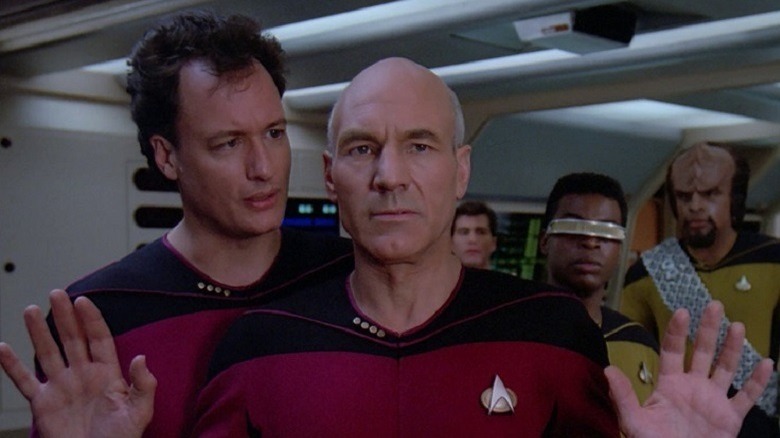
Despite the joy of watching two great Shakespearian actors verbally sparring, episodes featuring the omnipotent hyper-braggart Q can be a mixed bag. Plotlines with the immortal pest tend to veer towards the humorous, with Q's God-like powers removing tension from any encounter. He likes Picard and his crew too much to cause any real lasting damage. "Q-Who" (Season 2, Episode 16) is the first Q episode that features a real threat, the immortal's mood veering between helpful and malicious. Most of Q's dealings with Picard seem to involve teaching humanity a lesson, and this is no exception: Here, that lesson is the "Hill Street Blues" motto, "Let's be careful out there."

The plot is straightforward enough, with Q hurtling the Enterprise into uncharted space. The Enterprise has its first encounter with the Borg, the species that would go on to feature across the entire franchise. Trek would go on to defang the Borg through overuse, but here they were a genuinely terrifying new threat. In this new liberal Star Trek, diplomacy was a common solution, yet here was a species so different that mediation would never be an option.

"Q-Who" also marks the point where Guinan is hinted at as being more than just a mere bartender, something that would continue to be developed in the series and the first "Star Trek: The Next Generation" movie, "Generations." The final scene with Guinan and Picard, during which the dread realization dawns that the Borg are now aware of humanity's existence, is both unsettling and prescient.

Relics
We'd had Classic Trek alumni appear on "The Next Generation" before: a bizarre cameo from DeForest Kelley and both Mark Lenard and Leonard Nimoy as Sarek and Spock, respectively. But it wasn't "Relics" (Season 6, Episode 4) that the beloved Montgomery Scott met up with the next generation. The Enterprise, responding to a distress signal from a vessel lost 75 years previous, encounters a Dyson sphere. Despite being 200,000,000 kilometers in size and difficult to hide, it's the first time that the Federation has encountered one. Crashed on the megastructure's surface is the missing vessel. An away team locates the sole survivor of the crash, Scotty. 

Despite his heritage, Scotty's preservation is due to wizardry with a transporter buffer rather than the application of single malt whisky. Until a situation arises that requires his brand of expertise, Scotty increasingly finds himself superfluous to the Enterprise's mission. Despite being rescued, he's just as lost as before.

There's a marvelous exchange between strait-laced Geordi La Forge and the twinkle-eyed highlander, one that elegantly sums up their differing personalities. When Geordi is asked how long a piece of analysis will take, he responds the only way he knows how: honestly. Scotty is incredulous; "Oh laddie. You've a lot to learn if you want people to think of you as a miracle worker!" "Relics" is an unsubtle yet poignant look at aging and a man trying to reassess his place in society, in a show that rarely touches upon interpersonal conflict. Also, from a purely fanboy point of view, seeing a perfectly-rendered set of the classic Enterprise ("no bloody A, B, C or D") bridge is a delight.

All Good Things
It has proven difficult for long-running series to nail the landing. For every "Breaking Bad," there's a "Game of Thrones". It's a tricky tightrope walk -- you want to give a satisfactory conclusion, but also one that remains honest to what has happened before. In some cases, you have to write a rushed ending because your series is concluding far sooner than you'd hoped.

By its end, "Star Trek: The Next Generation" had accrued an impressive episode count, and Paramount decided to pull the plug -- not because of ratings, but because of plans to move the series to the big screen. That wasn't known to the viewers at the time though, so for many "All Good Things" (Season 7, Episodes 25 and 26) needed to be a fitting farewell to our beloved crew. Luckily, it delivered in spades. A suitably epic feature-length episode hopping between three time periods, "All Good Things" spans the entirety of Picard's career from the moment he joined the Enterprise to his retirement 25 years into the future. Picard finds himself hurtling through time, trying to solve a conundrum placed by a (satisfyingly utilized) Q, who has told the captain that he is responsible for dooming humanity.

"All Good Things" delights in fan-service, seeing our beloved crew in their futures. The threat is of a suitably epic scale, and the resolution is both satisfactory and feels like an appropriate conclusion to the ongoing mission. There's a particularly poignant touch at the very end, where Picard joins his crewmates in one of Riker's regular card games, his first such visit. The more things change, the more they stay the same.

Darmok
There are long established Trek rules: One, despite space being three-dimensional and huge, all craft must meet on the same spatial plane, facing each other. Two, aliens must adhere to the standard humanoid template. Occasional ethereal clouds of energy and-slash-or mist may be permitted. Three, alien languages must follow the standard English pattern, just with different words.

"Darmok" (Season 5, Episode 2) claws its lizard-fingered talons onto this list not purely because of its meme-worthiness (ironic in introducing an alien language that operates like a meme itself) but because it dares to do something different with the Star Trek format. In "Darmok," the Enterprise comes into contact with an orbiting Tamarian alien ship. The Federation had attempted contact with them before, but, even with the Universal Translator, could not understand them. Picard's attempts to communicate with the Tamarians are similarly frustrating, but the captain finds himself transported, along with the Tamarian captain, to the planet's surface.

Reminiscent of the 1985 movie "Enemy Mine", Picard and Dathon are forced to work together to overcome a common foe. What makes a potentially mediocre plot stand out is the nature of the Tamarian language: They communicate solely via allegory, and it is only when Picard realizes this that they can converse effectively enough to cooperate. The alien here, despite its humanoid bipedal form, is made properly alien by deviating from what we expect from Trek. It's often the episodes that dare to take risks that stand out.

Inner Light
"Inner Light" (Season 5, Episode 25) is an enigma. It sums up Trek perfectly, but features few of the trappings you'd expect from the franchise. It's an episode you'd show to somebody to introduce them to Trek, with the disclaimer that "there aren't any other ones quite like this." Yes, "best of" lists are contentious. One man's Krada leg is another man's Voraxna, after all. But there are often elements that transcend that, elevating the source material in a way that surprises everybody. You'd be pushed to find many people who wouldn't have this in their own best episode rankings.

In an inelegant and utterly inadequate synopsis that barely does it justice, "Inner Light" is a story about a dying planet. Keen astronomer Kamin has noticed their sun is dying and tries to warn his planet's leaders, but like Jor-El of Krypton, his concerns are ignored. As time passes, Kamin's planet suffers ecological disasters, and the extinction of all life is inevitable. Without the means to save the populace, his race does all they can to preserve their memory, launching a probe that will tell of their people.

It's Picard who encounters this probe, living the entirety of Kamin's life as minutes pass on the Enterprise. The episode is bottled lightning, a beautiful and poignant tale of legacy. Picard, far from regarding the probe's activities as a violation, sees it as a valuable gift from a long dead civilization. It also grants Picard something that his career in Starfleet denied him: the chance of a family. Only a cynic would see the episode as a very convoluted way to learn the flute.

Chain Of Command
"Chain of Command" (Season 6, Episodes 10/11) is a standout for several reasons. One is that it humanizes Picard in the very worst way -- by breaking him. Secondly, both the primary plot (detailing Picard's undercover mission and subsequent capture) and secondary (Picard's replacement) are both excellent. Captain Jellico takes over the reins of the Enterprise as Picard departs on a covert mission to destroy a Cardassian biological facility. He's subsequently captured and tortured by the Cardassians in scenes more brutal than you'd expect from primetime television.

God bless David Warner. He has featured in "most genre things you have liked," but remains mostly unrecognized, even by those who have seen his decapitated head spinning around in slow-motion in Richard Donner's 1976 horror flick, "The Omen". He's exemplary in every single role he plays, regardless of the amount of latex he's disguised under. Here, he plays Gul Madred, a Cardassian officer tasked with breaking Picard. The two engage in a battle of wills, and the most memorable moments feature Madred trying to convince the beleaguered captain that there are five lights behind him, and not four. In scenes reminiscent of Winston Smith and his torturer in Orwell's "1984", this ordeal goes beyond torturing for information – the oppressor is attempting to utterly break his victim's will.

Lesser actors would have struggled to pull this off, but as executed, the showoff is a masterclass in tension. Madred isn't an entirely unsympathetic character, which adds a level of depth, and Picard's chilling admission in the closing scenes sends shivers down the spine as effectively as any Cardassian torture device.

The Best Of Both Worlds
When "The Best of Both Worlds" aired, the Borg hadn't been seen since Season 2, but they hadn't been resting on their cybernetic laurels. Responding to a distress signal from a distant Federation colony, the Enterprise arrives to discover it gone in a dramatic case of colonist irrigation. 

A Borg expert arrives on the Enterprise in the form of Lt. Commander Shelby, and Commander Riker feels threatened by her ambitious nature, as she clearly wants his first officer job. The Enterprise has its second encounter with a Borg Cube, and Picard is captured. That leads to one of the greatest cliff-hangers in television history as a newly Borg-ified Picard, transmitting from the Cube, chillingly introduces himself as Locutus of Borg. And then Riker gives the command to open fire on his old boss.

We live in an era where it's difficult to avoid spoilers. We have the death by a thousand cuts on social media where, even if you avoid straight giveaways, you'll inadvertently piece together plots using the snippets you're drip-fed. Imagine the excitement of having to wait an entire summer for plot resolution. That's something that's been lost in time. 

Serving as both finale for Season 3 and premiere for Season 4, "The Best of Both Worlds" achieves perfectly what Trek failed to do with "Conspiracy," picking up a threat previously established and delivering on it. Familiarity has somewhat bred contempt, but the Borg were once terrifying, adding a credible antagonist to Star Trek canon after "The Next Generation" failed miserably with the Ferengi. Taken together, these two episodes are one of the best sci-fi action movies to grace the screen. To resist the absolute excitement of this episode is futile.

Yesterday's Enterprise
No Trek series is immune from time travel shenanigans, which the franchise has executed with varying degrees of success. "Yesterday's Enterprise" (Season 3, episode 15) pulls a convoluted concept off with aplomb, offering an action-heavy episode with surprising depth. In the episode, our valiant crew witness the Enterprise NCC-1701-C emerging from one of those rifts that crop up frequently in Trek, causing a timeline-breaking event that rewrites reality. Our Enterprise is now a battlecruiser, the warm ochres and reds of the bridge replaced with cold blues and harsh lighting. Worf vanishes, replaced by Tasha Yar. This Enterprise is at war with the Klingons, which explains why Troi is also missing --  there's not much use for an Empath during an intergalactic conflict ("I feel that they are ... angry").

"Yesterday's Enterprise" offers a healthy element of fan-service, with great potential for a game of "Spot the Difference" as viewers recognize changes to sets and characters. Ultimately, our temporal visitors on the Enterprise-C have to return to when they belong, meaning their certain doom. Loyalty and sacrifice are the themes here, playing on a common Trek trope: doing the right thing, regardless of cost.

Time travel episodes of any sci-fi show are often used as an excuse to reset what has gone before, a tachyon-enriched "It was all a dream" trope. "Yesterday's Enterprise" does the opposite, changing the Trek timeline permanently by having Yar's half-Romulan daughter appear in several episodes. It's an episode so strong that you're prepared to forgive the inevitable plot holes that all time-travel related episodes are guilty of. It's one hell of a ride.

"So, Five-Card Stud, Nothing Wild, And The Sky's The Limit."
With hindsight, it's hard to believe that "Star Trek: The Next Generation" was once considered a substantial risk. The networks had little faith in the show, despite the franchise's proven record. In one of the alternate timelines that Trek writers are so fond of, it might have never been made, denying us the rich diversity of the various spin-offs that are still going strong today. Some of the early episodes stumbled -- indeed, several were rehashes of scripts from a failed "Star Trek: Phase 2" relaunch starring the classic crew -- but modern sci-fi owes it a great deal, proving that episodic series couldn't just be successful, but critically lauded. too.
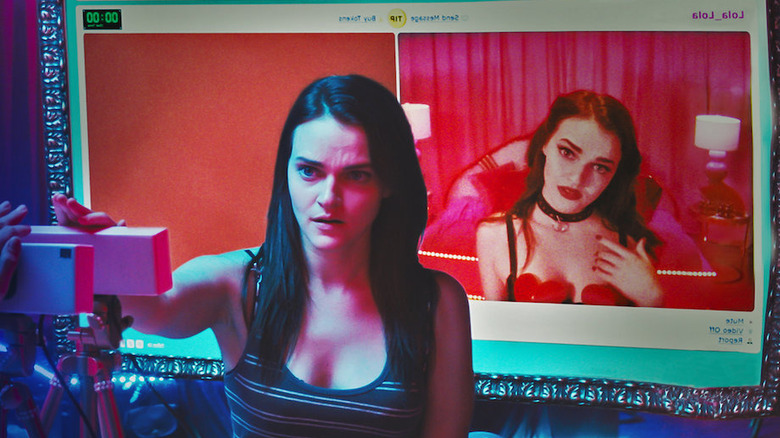
The universal themes of "Star Trek: The Next Generation" resonate with audiences today as much as they did during the series' heyday. Friendship, loyalty, and a childlike yearning to explore and learn will never get old. In our cynical times, it's refreshing to find that the beating heart of Trek still exists today. In a sprawling sci-fi-scape obsessed with gritty dark reboots, it's nice to see  that Roddenberry's themes still strike a chord: a positive view of a more optimistic and utopian future, where humankind has set aside petty differences in order to conquer that final frontier.

Read this next: Rod Roddenberry On Star Trek Boldly Going Into 4K And The Moving Target Of His Father's Vision [Interview]

The post Star Trek: The Next Generation's 10 best episodes appeared first on /Film.