Shared posts

09 Sep 15:55

The Matrix Resurrections Trailer Breakdown: Let's See How Deep The Rabbit Hole Goes

by Ben Pearson

"The Matrix Resurrections" trailer is here, and there's only one word to sum it up: "whoa." Let's take a closer look at Lana Wachowski's grand, visually dazzling, and highly anticipated return to this groundbreaking cinematic universe.

The Matrix Is Real(ly Fake Looking)

The very first shot showcases a Victorian-looking building in San Francisco, but as that familiar, metallic, "nails on a chalkboard" sound effect indicates, we're actually back inside the Matrix, the artificial world constructed to fool humans into thinking they're living normal lives when they're actually in liquid pods, serving as batteries for robots in a post-apocalyptic hellscape. Did anyone else think that this shot looks almost purposefully fake? It reminded me of the Amazon Studios animation that plays before that company's movies.

A Glitch
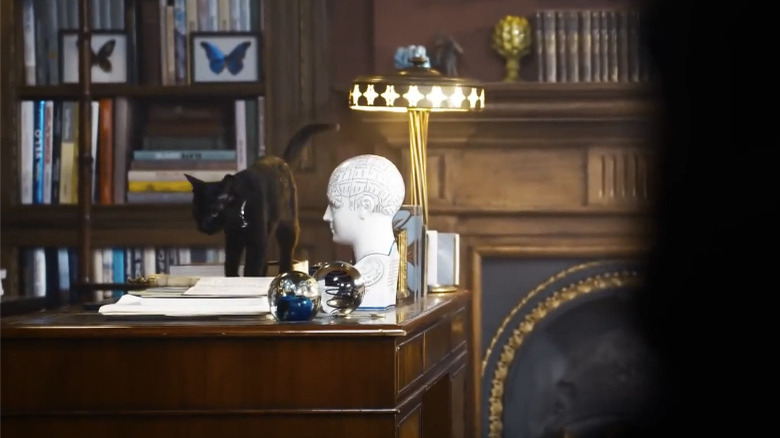
Before we even see our hero, we see a black cat -- the symbol of a glitch in The Matrix. "It happens when they change something," Trinity explained in the first film, and as we're about to see, there are plenty of changes since we last saw these characters.

Welcome Back, Mr. Anderson
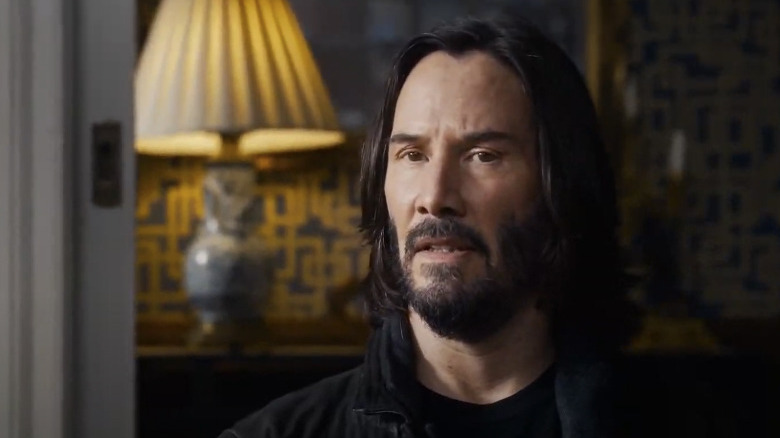
A twitchy Thomas Anderson, the hacker played by Keanu Reeves who became Neo in the original film more than twenty years ago, sits in a therapist's office. "You seem particularly triggered right now," says a character played by Neil Patrick Harris, and considering how influential the original "Matrix" was, particularly in the realm of online discourse, Lana Wachowski and co-writers David Mitchell and Aleksandar Hemon's use of the word "triggered" feels like a purposeful meta-textual dig at those "fans" who have misread the original movie's messages and co-opted them for their own means.

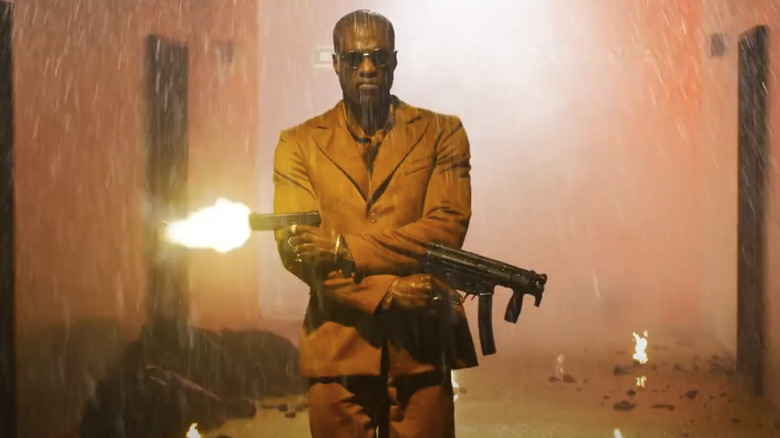
"I had dreams that weren't just dreams," Anderson says, and we see flashes of footage of a long-haired Neo diving to knock a bullet out of the air, Yahya Abdul-Mateen I wielding two semi-automatic guns, what appears to be an interior shootout with sprinklers going off, and more. There are also moments that appear to recycle older footage, but upon closer inspection, they may in fact be new versions of scenes we've seen before: Trinity in a pose that looks extremely similar to the one where the cops try to apprehend her in the opening scene of the original film, and Neo waking up in his battery pod with those evil robots gliding around him. Back in the therapist's office, Anderson is unsettled. "Am I crazy?" he wonders aloud. "We don't use that word in here," NPH replies. I'm curious to see if he's playing a guardrail type of character -- a part of the Matrix designed to keep Anderson from remembering his past.

"Have We Met?"

Anderson meets a much more suburban-looking version of Trinity (Carrie-Anne Moss) and when the two shake hands, there's an instant connection. There's something funny about the two of them meeting in broad daylight in a coffee shop, contrasted with their first meeting in a booming night club decades earlier.

A "Bound" Shout-Out
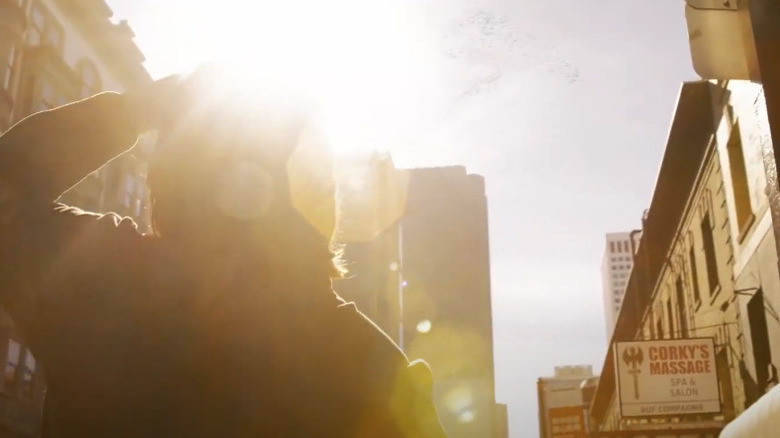
After taking several blue pills (which, in the original film, was coded to indicate the taker living a life of ignorance inside the Matrix, as opposed to the red pill, which awakened the taker to the actual harsh reality of existence), Neo stares into his eyes in the mirror and then wanders outside to see a whirling formation of birds. In the lower corner of the screen, there's a sign for Corky's Massage Spa & Salon. "Corky" was Gina Gershon's character's name in the Wachowski's neo-noir film "Bound," which they made before the first "Matrix," and the sign's logo features a double-sided axe called a labrys, which Gershon's character had tattooed on her arm in "Bound."

Familiar Faces?
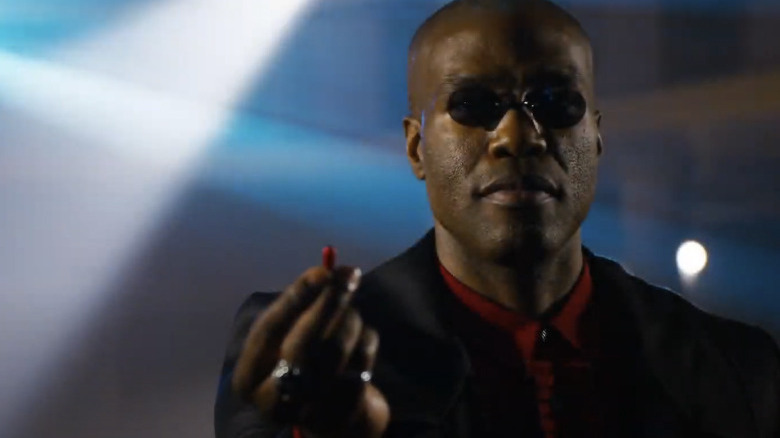
After realizing those blue pills may not be the best thing for him, Anderson dumps them down the sink and encounters a woman in another shop wearing big glasses and reading a copy of "Alice in Wonderland." In the first movie, the phrase "follow the white rabbit" was instrumental in driving Thomas Anderson toward his destiny. Is this glasses-wearing woman a new iteration of the Oracle, a prophet who took several forms over the course of the original trilogy? Seemingly in that same location, Anderson glances into a mirror and briefly sees an unfamiliar face looking back at him. Is that an older version of himself, perhaps? (This film is reportedly set many years after the events of "The Matrix Revolutions.") Then Anderson comes face to face with a man wearing a dark suit, tie, tiny circular glasses, and who offers him the choice of a blue pill and a red pill. No, it's not Laurence Fishburne -- he evidently wasn't invited back. But could Yahya Abdul-Mateen II be playing a different version of Fishburne's Morpheus? Seems likely. Naturally, Anderson takes the red pill this time. "Time to fly," Mateen says.

Follow The White Rabbit

"You want the truth, dear?" asks a young blue-haired woman played by Jessica Henwick as she meets Anderson on a dark rooftop. "You're going to have to fly." She's rocking the same white rabbit tattoo that lured Anderson to that club in the first movie, so it's probably a good idea to see what she's up to. Anderson follows her through a door of light, emerging through the same mirror-y metallic goo that represented his first trip down the rabbit hole all those years ago.

Is This The Real Life? Is This Just Fantasy?
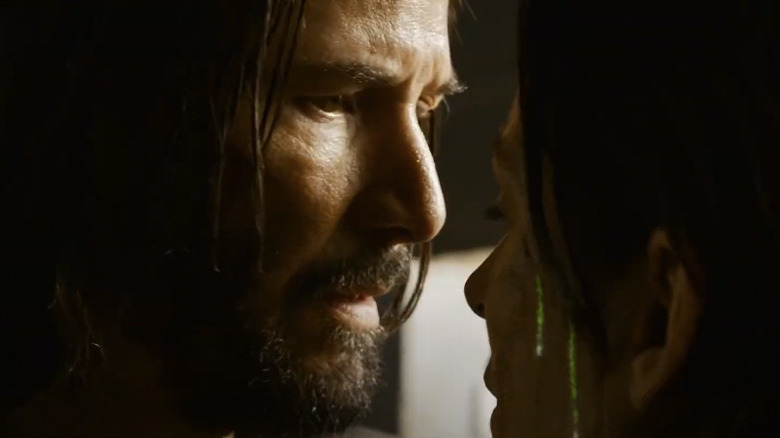
Maybe-Morpheus tells Anderson that the only thing that matters to Anderson is still "here," and we see a shot of Keanu and Carrie-Anne standing in a garage with a motorcycle nearby -- a nice shout-out to Trinity's favorite means of conveyance. But as the two stand face to face holding hands, Anderson sees the green Matrix code spill down Trinity's face. Does that mean that she's not really there with him? Is she just as fake as Cypher's steak?

Round 2: Fight!
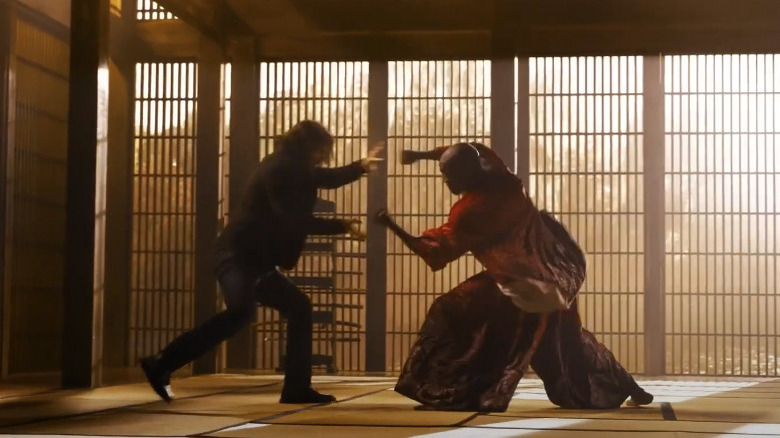
If Yahya isn't playing Morpheus, his character is certainly following closely in Morpheus's footsteps. Another similarity: a kung fu fight session with Anderson in a beautiful open-air lake facility. "You don't know me," Anderson says, before launching Yahya up and backwards with a burst of energy and blowing up the entire facility. His transition back into Neo seems to be fully complete.

We're Gonna Need A Montage

Here's where things start to feel epic. As the music reaches a crescendo, we see shots of the machines mining humans for power, a ship traveling through the apparent ruins of Zion, Neo and Trinity on a rooftop backlit by the sun, and a nighttime rooftop shootout in which Jessica Henwick's character leaps off the roof, flips downward to a nearby building, and then launches off of it as Agents zap into police officers below. Someone holds a gun to Neo's face as Neo rubs his fingers together, seemingly surprised that he can feel the rain between them. (I have no idea what that could mean, but it's a cool visual moment that slips by quickly in this rapid-fire section of the trailer.)

Who Is That Helmeted Man?
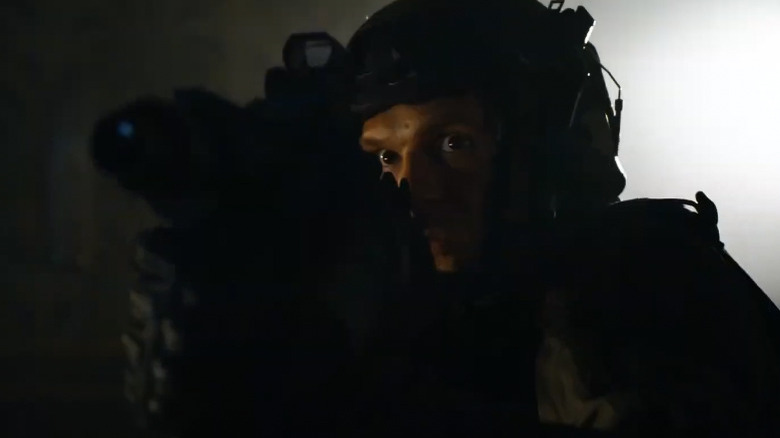
It took me a couple of views to understand this next section, but as Neo and his pals escape from a building through a magic door that leads onto a moving train, a guy dressed up like a SWAT team officer (is that you, "Mindhunter" star Jonathan Groff?) fires some sort of projectile that makes it through the door and blows up a portion of the train.

Business As Usual
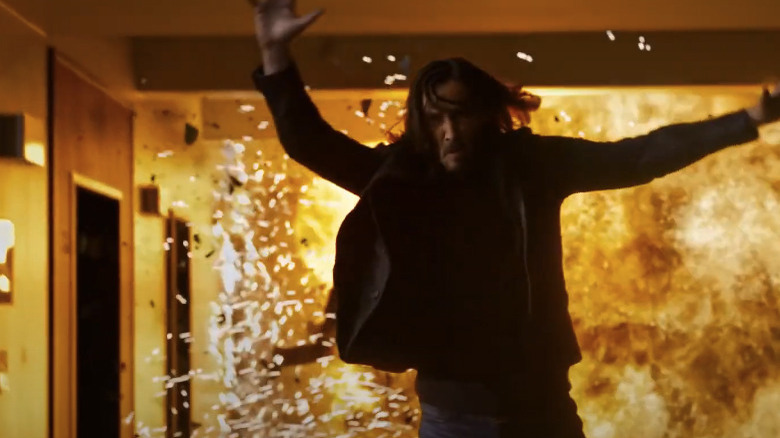
Maybe-Morpheus casually walks through the hallway of a building, shooting baddies across his body with two different types of guns. (Since I have not explicitly said this yet, Yahya Abdul-Mateen II looks awesome in this movie.) Neo also appears to be running down a hallway in the same building -- the obscured text behind him appears to read "Deutsche China," which means this could be a more globe-trotting affair than I anticipated -- and he leaps away from an explosion behind him. This is not the type of behavior we expect to see from "The One," the super-powered being who was always flying around and beating up Agent Smith in the original trilogy. This version of Neo appears to be more ... dare I say ... human?

Trinity Busts Some Skulls
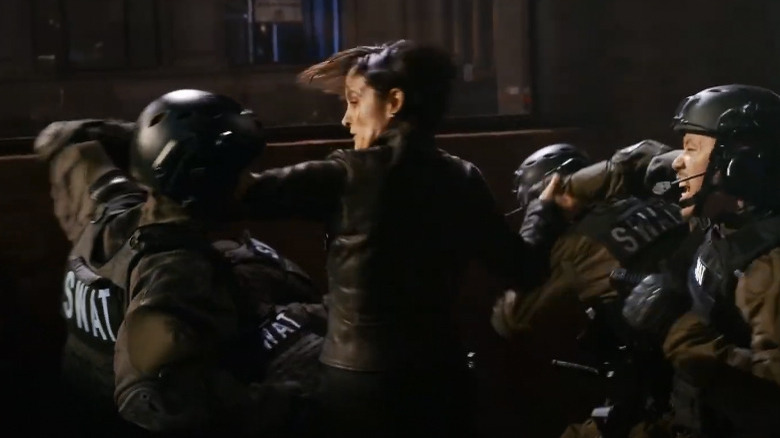
There's a cool shot of Trinity beating the pulp out of some SWAT team officers, and on one particular hit, the camera seems to zoom in and shake upon impact. I wonder if this could be a tease of the innovative new technology Lana Wachowski is using on this movie. "I think she's going to change the industry again with this film," Henwick said in an interview last fall. "There's some camera rigs that I've never seen before that we're using. That's probably all I can say for that."

Hallway Shootout
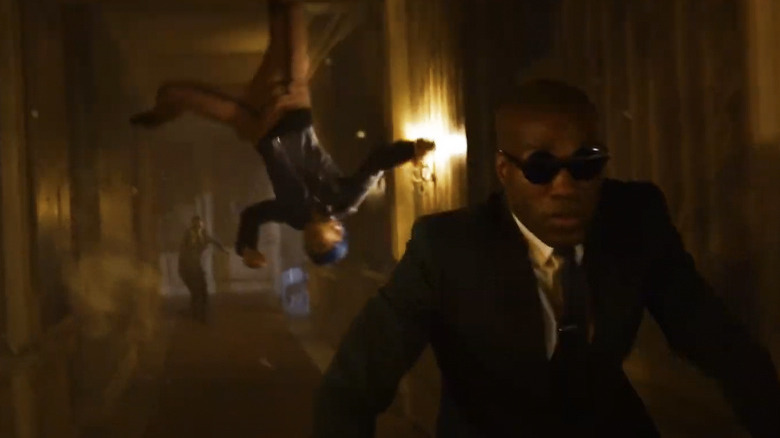
There's a cool "Inception"-esque moment showcasing a hallway shootout between some agents and Henwick and Mateen's characters, who are sprinting away and running up the walls as they try to escape with their lives. Henwick is really flipping out (literally), spinning and dodging and generally putting her action skills on display. Here's hoping this film is a major launchpad for her after being underutilized in some bad shows and minor roles in big projects over the past few years.

Subway Battle
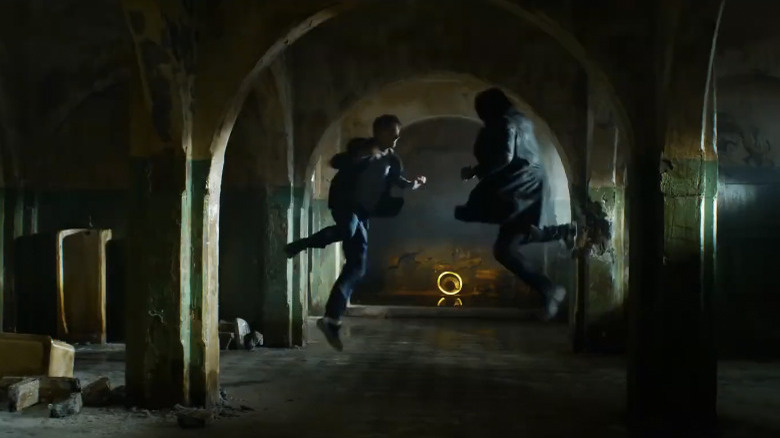
Neo and an unknown agent get in a fistfight in an abandoned subway, mirroring the climactic fight in the first film. Is that agent played by Jonathan Groff? It's a little hard to tell with certainty, but it seems plausible. I love their well-timed but ineffectual jump-punch.

Neo Has The Power
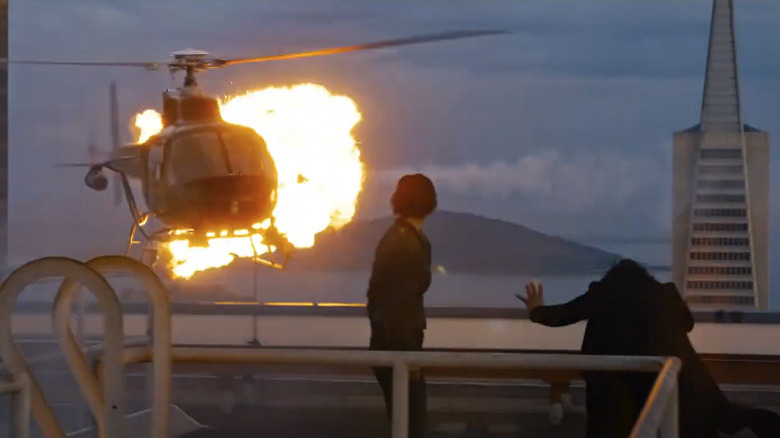
Surrounded by enemies, Neo releases a burst of energy that radiates outward and blows everyone backward. In what looks like a lobby (Neo and Trinity have a history in lobbies), Neo stops a barrage of bullets heading straight for them, and then after dodging some green-eyed goons on Trinity's motorcycle, Neo uses his powers to redirect a helicopter's missile into another nearby helicopter, blowing it to smithereens. Remember that moment from "The Transporter" trailer when Jason Statham deflects a missile with a silver platter? It didn't make it into the movie, but I still think about it all the time. Neo's move was kinda like that.

Too Much Groffsauce On It
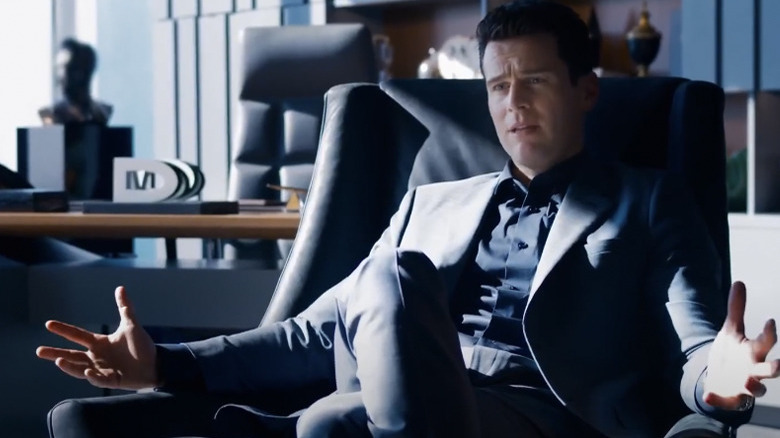
After several incredible moments, the trailer ends on a bit of a strange note. Sitting in a high-rise office, Neo sits opposite Jonathan Groff, whose delivery feels a little too modern for the otherwise oddly timeless vibe that permeates this franchise. "After all these years," he says, "coming back to where it all started ... back to the Matrix." I understand that the trailer editors probably wanted to end on the word "Matrix," but the Groff of it all is incongruous with everything that came before. Maybe that particular line delivery won't make it into the final cut of the film, or maybe seeing more of Groff's character will make that moment play better in context. But man, what a great trailer.

"The Matrix Resurrections" arrives in theaters and on HBO Max on December 22, 2021.

Read this next: The Story Of How The Wachowskis Landed The Matrix Is More Complex Than The Legend

The post The Matrix Resurrections Trailer Breakdown: Let's See How Deep the Rabbit Hole Goes appeared first on /Film.

09 Sep 15:40

Picard Season 2 Trailer: Our Captain Travels Through Time, Season 3 Confirmed

by Chris Evangelista

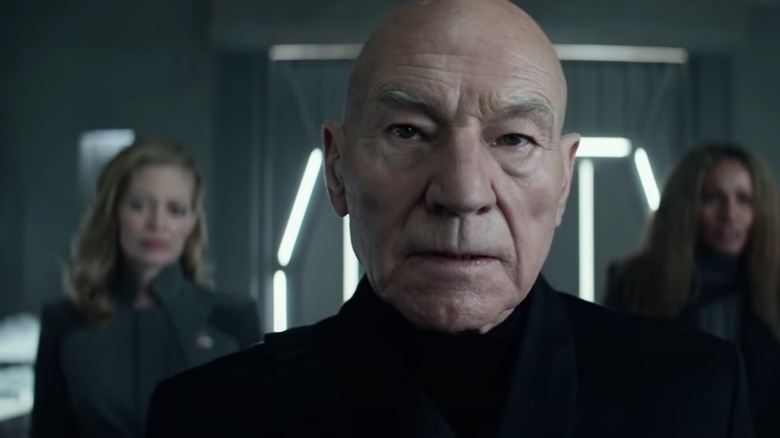
The "Star Trek: Picard" season 2 trailer is here, and it confirms there's some serious time travel going on. Specifically, John de Lancie's character Q has gone back in time and turned the world into a "totalitarian nightmare." Wow, wonder what that's like?! Anyway, time is broken now, so Picard and the gang need to go back in time and "heal the past." Sounds pretty easy, right? Soon, with a little help from the Borg Queen (?!), Picard and company find themselves in the early 21st century. My advice for Jean-Luc: get the hell out of our era while you still can, it's not much better than your futuristic totalitarian nightmare. Watch the "Picard" season 2 trailer below. 

Picard Season 2 Trailer

I'll confess that I'm not much of a "Star Trek" guy. I've seen some of the movies, and enjoyed them for the most part. But I never really got into any of the many shows, so I am a bit of an agnostic when it comes to "Picard." But I love Patrick Stewart (doesn't everybody?), and I'm happy that he gets to return to this character and have some fun. Season 2 of "Picard" looks to throw some time travel into the mix, which gives the whole thing a "Doctor Who"-ish vibe, which is pretty appropriate. 

In addition to Patrick Stewart (and John de Lancie), "Picard" season 2 also features Alison Pill, Isa Briones, Evan Evagora, Michelle Hurd, Santiago Cabrera, Jeri Ryan, Orla Brady, and Brent Spiner. Whoopi Goldberg's "Trek" character Guinan will also appear at some point. Michael Chabon wrote two episodes of the season, and Jonathan Frakes returns as a director. Lea Thompson and Michael Weaver also direct. "Star Trek: Picard" season 2 will arrive on Paramount+ sometime in February 2022. 

Season 3

Season 2 won't be the end of the line for Picard and the crew. Ahead of the second season premiere, Paramount+ has gone ahead and ordered a third season of the show, too. The pandemic allowed the showrunners to both fine-tune season 2 ahead of the premiere while also jumping into writing season 3. That means we could possibly see season 3 a lot sooner than expected, but it's best to wait for confirmation on that sort of thing. Deadline adds that we probably won't see it until early 2023, which makes sense. Where does the show go after season 2? Who knows – the beauty of a show like this is that it seems to be up for anything, able to bend and twist itself into whatever shape and form needed to tell a new story. 

Read this next: 'Star Trek: Picard' Trailer Breakdown: Every Hint About Where (And When) The New Season Will Boldly Go

The post Picard Season 2 Trailer: Our Captain Travels Through Time, Season 3 Confirmed appeared first on /Film.

09 Sep 13:24

Prey 2017 Part 10: But What Do They SLEEP?

by Shamus

A few entries ago I made a big deal about how much I love the design of Talos-1 and I’m impressed with the attention to detail that went into building this world and making it feel real. So now it’s time for me to do my predictable face-heel turn and obsess over some nitpicky detail. Specifically, the sleeping arrangements on this space station are ridiculous.

I realize this is one of those details we’re not supposed to notice, but the crew quarters are absurdly, comically undersized. They are so undersized that I find it really distracting. I don’t mean they seem too small in retrospect, I mean they are flagrantly, outrageously undersized in a way that I can’t help but notice while playing the game.

I’m making a big deal about this because the population of Talos-1 is a known thing.

Bring Out Yer Dead! (Bonk!)

You okay buddy?
You okay buddy?

In the days of System Shock and BioShock, the level designer just scattered corpses around and called it a day. But here in Prey, everyone is accounted for. Every corpse is a named character with a defined appearance, an assigned job, and a uniform that matches their duty station. The bodies aren’t scattered around at random like office clutter. These people have stories and you can work out which people got ambushed while sneaking around in the dark and which people died in groups behind makeshift barricades. They’ll even have inventory items that make sense based on their job.[1] If they have a desk job, then somewhere in the world you’ll be able to find their workstation with their email history. If they left any audiologs, then in addition to a dead body they’ll also have a portrait and a voice.

You can walk up to any security computer and see a huge list of the crew. You can then pick someone at random, have the computer locate them for you, and follow the waypoint marker to their swiftly cooling cadaver. (Or in exceptionally rare cases, you might find them alive. We’ll talk about the survivors later in this series.)

On top of all of this, you can learn about all of the countless little interpersonal dramas that were interrupted by the Typhon containment breach. These two people were dating. These five people are playing the D&D-esque Fatal Fortress. This guy was blackmailing this woman over smuggled goods. This guy did a half-assed job of repairing something with improvised parts and then was kinda flippant when his boss called him on it.

A lot of work went into this! According to this achievement guide, there are 250 crew members stationed on Talos-1. Imagine the effort that went into coming up with all of those people and their stories, making sure everyone is accounted for, that all of the bodies look like who they’re supposed to, and that there aren’t any duplicates.

Miniature Worlds of Adventure

We’re used to games that play fast-and-loose with size and distance. You can jog across the entire continent of Skyrim in under 15 minutes. The city of Whiterun is supposedly this ultra-important location, but the total population would fit on a typical city bus without anyone needing to stand. Half the population is comprised of town guards who have no names or families or places to live. Everyone in town lives off of the same three-acre farm, which is within shouting distance of a bandit cave so populous that it rivals the civilian population of Whiterun.

We exaggerate the number of bad guys so we have lots of dudes to fight. We compress wilderness distances so the world feels full and different activities are only thirty seconds apart. We leave lots of open spaces between buildings to make spaces easier to render, even though most cities are pretty dense. We make cities feel big by using construction styles and materials that are typically only used in densely populated areas, regardless of the actual size and density of the place.

When the game designer is done bending space to make their tiny world feel big, they turn around and bend time as well. Games with a visible day / night cycle often run at some absurdly accelerated speed, so that a minute of playing is worth an hour or two of in-game daylight.

It’s fine. We’re used to this sort of thing and we recognize it as a compromise in the name of fun. Game designers aren’t lazy or stupid. They know how big stuff ought to be, but they also know that holding down the W key for an hour is a dull and cramp-inducing way to spend your time.

This is common in videogames and the only reason I’m making a big deal about it is because Prey is otherwise meticulously constructed. A lot of thought went into the history, construction, layout, and usage of Talos-1. Most games don’t bother to realize their worlds with so much attention to detail. This extra care and attention spoils me, so that when Prey falls back into standard videogame level design it can feel sort of childish.

So let’s talk about the sleeping arrangements on Talos-1.

Bunkspace

This is part of Alex's apartment. On top of this, he has an 'office', which is basically a house at the top of the arboretum. Morgan has similar space, PLUS the whole simulation wing was dedicated to housing her for the past N months. These two take up a lot of space!

Like I said above, there are 250 regular crew members stationed on Talos-1. In addition, there are 18 “volunteer” prisoners doomed to die like lab rats, plus the Yu siblings.

Alex and Morgan Yu, being the highest-ranking people on board, have their own living spaces, which feel like luxury apartments. You could argue that’s a pretty decadent waste of space in these circumstances, but whatever. This place is run by a private corporation. What did you expect?

There are ten beds in the volunteer quarters. I guess this means that the 18 prisoners need to engage in hot bunking to make sure everyone has a place to sleep. That makes sense. These people don’t live here for very long and I doubt their comfort is high on anyone’s list of priorities. My one quibble with how the volunteer spaces are set up is that they live in the Neuromod Division but they’re ultimately sent to Psychotronics to “take part in the experiments”. (Die.)

This is where the 20 or so 'volunteers' sleep. As you'll see, these disposable slaves get better sleeping arrangements than nearly everyone else.

The thing is, there’s no direct route from the Neuromod Division to Psychotronics. The only way to travel between these two places is to pass through the open common area of the lobby. The prisoners, the Typhon, and the experiments involving the two are all highly classified. Some prisoners go to Psychotronics and die right away, while others bounce back and forth between their living spaces and the test chambers many times. I just don’t see how all of that traffic could remain a secret, particularly when the prisoners would need to be guarded and restrained.

The Neuromod Division is physically above Psychotronics, and so it seems like there ought to be a special security elevator between the two. I wouldn’t mind if it was broken and unusable during the course of the game, I just wish the level designer had created an apparent way to move the prisoners around that didn’t involve parading them through the lobby.

In any case, we’ve worked out the sleeping arrangements for the executives and prisoners. Now we just need to figure out where the 250 regular crew members sleep.

The crew section has 12 beds like this one for the 250 station inhabitants to use. If they all shared, then everyone gets a bed for about an hour a day.

Here in the Crew quarters we have dedicated rooms for twelve people. These fancy rooms are spacious single-occupancy deals, and feel a bit like hotel rooms in terms of space and furnishings. These rooms are personalized and clearly belong to specific individuals. We can’t entertain any notions of hot-bunking here.

At the end of the corridor is the “Habitation Pods”, which is an open room with an additional 14 beds.

That’s it. That’s all of the beds on the station, leaving us short 224 beds. The level designer gives themselves a tiny fig leaf justification in the form of a sealed door in the Hab Pods room. The area on the other side has decompressed, but there’s a sign indicating that the door should lead to more hab pods.

If you’re looking to be exceedingly generous, then I guess you could assume that the hab pods room is the first in a long chain that would account for the remaining 224 beds. And if that’s what you want to do, then go ahead and skip the rest of this. I appreciate your willingness to go easy on the level designer, but I can’t do the same.

This pressure door supposedly leads to the missing 224 beds, but I'm not buying it.

My problem is that it strains credulity to imagine there are 224 beds on the other side of this pressure door. If we assume this first room is representative of the others, then that means we need a whopping sixteen more rooms like this one. That would make for a very long chain of rooms. That chain would certainly protrude from the side of Talos-1. In fact, it would more than double the total footprint of the crew quarters.

More importantly, there is a map of the Crew Quarters in the common area, and that map very clearly shows that there aren’t any rooms beyond the hab pods, not even beyond the pressure door. Also, the shape of the Crew Quarters forms this nice compact layout that fits within the volume of Talos-1 as seen from the outside. That falls apart if we try to glue sixteen more large rooms onto the given floor plan.

Here is the in-world map of the crew section. I've placed a red X where that sealed pressure door is. You can see there was never anything on the other side of that door, much less space for 224 beds.

Also, this would make for a horrible layout. If there are sixteen more rooms beyond this door, then that suggests a chain of 17 hab pod rooms in total. The last thing you’d want is to stick them in a long chain like the level designer has suggested with this locked pressure door. The one hab pod room we see would be overwhelmed with foot traffic, since all sixteen of the other rooms would need to pass through here. Also, that would be quite a hike for people on the far end.

Now, arrangements like this do exist in extreme places. In particular, submarines are notorious for having shitty sleeping arrangements. But Talos-1 feels more like a cruise ship, and it doesn’t make any sense to create this long linear chain of rooms (that is never hinted at on any map) and introduce all of these problems with noise, privacy, and travel times. Particularly when there doesn’t seem to be any reason for doing so.

But What Do Yu EAT?

Everyone just leaves all these dead bodies and bits of Typhon gore for the kitchen staff to clean up. Not to mention setting all these tables. Nobody ever thinks of the kitchen staff.

While we’re being unfair and nitpicking trivial things, let’s take a look at the cafeteria and see how Talos-1 does in terms of eating arrangements.

The place is in quite a bit of disarray, but it’s not hard to get a feel for how this place was originally laid out. It’s clear that while many tables have been flipped, turned into barricades, or otherwise moved from their original positions, we can tell that none of them have been destroyed. There are enough tables to reasonably fill the space, and I don’t think we need to entertain the notion of vaporized tables to figure out where everyone ate.

The cafeteria has seven round tables, which – going by the place settings – hold 4 people apiece. In addition there are twenty-one rectangular tables, which hold 6 place settings.

(21*6) + (7 *4) = 154 seats.

That’s just about perfect. The place can hold about two-thirds of the crew at any given time. Most cafeteria settings don’t want to attempt to feed everyone at once because you run into throughput problems in the kitchen. But this dining room is just right if we assume the cafeteria is open for about 90 minutes per meal. That’s enough time for everyone to rotate through, without the kitchen needing to feed everyone at the exact same moment.

Likewise, the Yellow Tulip bar can hold about two dozen people. The theater can hold 36. The television area, card tables, ping-pong, and pinball machines in the rec center can probably occupy another dozen or so people. The upstairs area can hold another dozen people reading, playing chess, or following other quiet pursuits.[2] The fitness center has enough equipment for a dozen people, and the adjacent pool can comfortably hold that many again before things start to feel a little crowded. Again, all of this feels just about right for a crew of 250.

Two dozen seems to be the magic number here. That’s about 10% of the population, and that’s about how many people these various facilities can hold. I’ve never run a hotel, convention center, or cruise ship, so I don’t know if these percentages make sense. Even if you want to argue that they’re too small, they’re at least properly sized relative to each other, so everything feels right on an intuitive level when you’re exploring.

But while it makes sense that we only have enough treadmills and pinball machines to serve 10% of the population at any given moment, that number is too low when it comes to beds. Like, everyone should have a bed.

I’m not sure what happened here. Everything else about Talos-1 is so carefully thought out. How did the designer manage to get all of these other details right and then leave out 90% of the beds?

Fixing This

Here are the hab pods. If we could expand this, maybe we could hide the bed shortage from the player?

To be clear, I don’t think we literally need 250 beds to fix this. Without looking at the wiki, the player doesn’t know the exact number of people on the station. And there’s no way to know the exact number of available beds short of walking around and counting them.

The problem is that the number of people and the number of beds are very obviously out of whack. Without needing to count, the player can tell there are “a lot” of people and only “a few” beds. To fix this, we just need to create the impression that there are “a lot” of beds, even if they’re still mismatched according to strict arithmetic.

What I’d suggest is taking the existing hab pods room and making it as big as the current floorplan will allow. It’s surrounded by a good bit of void space so we have plenty of available cubic volume to make this room larger. Get rid of the pointless open area in the middle of the room and fill that space with beds. Turn the lights off so the player can’t see the whole place at once, and can only view the beds through their flashlight beam. If polygon counts are a problem, you could cut the room in half with a baffle wall.

If you did all of this, I think you could turn this room of 14 beds into something between 30 and 40. The player could then run through this maze of bed racks. In the confusing darkness, this would leave the impression that there are “a whole lot” of beds here, and the only people to notice the remaining bed shortage would be lunatics like me who go to the trouble of counting.

09 Sep 13:23

13 Best PC Games You Can Play Forever (2023)

by Simon Hill
There's always something new to play, but these are our favorites when you're seeking something tried and true.
09 Sep 12:50

Fighting the Rogue Toaster Army: Why Secure Coding in Embedded Systems is Our Defensive Edge

by noreply@blogger.com (The Hacker News)
There are plenty of pop culture references to rogue AI and robots, and appliances turning on their human masters. It is the stuff of science fiction, fun, and fantasy, but with IoT and connected devices becoming more prevalent in our homes, we need more discussion around cybersecurity and safety. Software is all around us, and it’s very easy to forget just how much we’re relying on lines of code
09 Sep 01:04

If American Gods had flopped on its first outing, would you have kept trying at the novel market, or gone back to doing comics (and the occasional short story) full-time?

By the time American Gods came out, Neverwhere, Stardust and Smoke and Mirrors had already been published, and while none of them had hit the NYT bestseller list they had done something much more important: they had become steady, mid-list titles that sold the same number of copies every month. American Gods wasn’t a big hit - it was my first book to land on the NYT list, but in practice that meant a week at #9 and then off again. That was June 2001. I spent a couple of years writing Sandman: Endless Nights (which was the first graphic novel to hit the NYT bestseller list, back before they had a graphic novel list), Marvel: 1602 and a bunch of short stories (Coraline was the next prose book to be published, but that had been finished before American Gods) and I didn’t start writing Anansi Boys until 2003 or 2004.

So I did do comics and short stories full time for a couple of years. And by the time Anansi Boys came out, in September 2005, American Gods had also been a solid mid-list title for long enough that Anansi Boys was an actual #1 NYT bestseller (on a week where the competition was meagre).

Which is a long way around saying, I don’t quite understand what you’re asking, because it seems like you think my career was all about whether or not American Gods went big, and it didn’t. Nothing I did, including Sandman, ever went big. It just found its audience and then kept going, selling very steadily, month in and month out. Which allowed me to do pretty much whatever I wanted, which is basically what I did.

09 Sep 01:01

Learn Something Old Every Day, Part III

by Michal Necasek

As part of a hobby project, I set out to reconstruct assembly source code that should be built with an old version of MASM and exactly match an existing old binary. In the process I learned how old MASM versions worked, and why programmers hated MASM. Note that “old versions” in this context means MASM 5.x and older, i.e. older than MASM 6.0.

The way old MASM works is relatively straightforward but its documentation often explains it very poorly or not at all. MASM is a two-pass assembler, and that indirectly explains almost everything about its quirks. This is different from more modern N-pass assemblers which automatically run multiple passes to resolve ambiguities.

The core of the problem is that MASM tries to be clever, but it’s not nearly clever enough. It is very questionable whether MASM’s cleverness is a solution or a problem; other assemblers are stricter, relying on programmers to resolve ambiguities. This perhaps puts slightly more of a burden on the programmer but results in more readable, consistent source code.

Most ambiguities result from the fact that like most assemblers, MASM does not require symbols to be declared before they’re referenced. In the first pass, MASM generates “provisional” code, making guesses about what unknown symbols are. At the end of the first pass, all symbols are known (if they’re not, the assembly will fail).

In the second pass, MASM applies what it learned in the first pass and generates the final object code. If the guesses made in the first pass turn out to be incompatible with the second pass, MASM will report the dreaded “phase error”. More about that later.

The crucial thing to understand is that in the first pass, MASM generates enough object code to resolve all offsets, i.e. at the end of the first pass, MASM will know for each symbol defined in the source code at which offset it will be located, because it will have determined how big all generated code and data is.

Now comes the “cleverness”. For example if MASM sees a JMP to an unknown label, it will assume a 16-bit near jump, i.e. a three-byte instruction. In the second pass, MASM may find out that the jump target is within +127/-128 bytes and generates a short jump, a two-byte instruction. Crucially, the third byte will be replaced by a NOP so that the instruction still effectively takes up three bytes.

MASM might also find out that the label is in a different segment, requiring a far jump. In that case, the jump instruction will not fit within three bytes and a phase error will result.

The programmer also has the option of writing ‘JMP SHORT xxx’ rather than ‘JMP xxx’. In that case, MASM will always generate a two-byte short jump, and possibly fail with an error if the target is not within the range of a short jump.

This is where those ‘NOP after JMP’ instructions come from. It is MASM (or perhaps some other assembler/compiler) turning a near jump into a short jump but not truly reducing the instruction size.

If the jump target is in another segment, the programmer may also write ‘JMP FAR PTR xxx’, telling MASM to generate a far jump and avoiding a phase error if the target label is in another segment but not yet known in the first pass.

Interestingly, there is at least one situation where the NOPs can be useful, especially because there does not appear to be any way (short of manually emitting opcodes) of telling MASM to generate a near jump when a short jump is possible. The BIOS component of DOS 1.x uses a CP/M inspired jump table where the “exported” interface is accessed by calling into some known base address plus an offset which is the function number times three (that being the JMP instruction size). The dispatch table looks like this:

DISPATCH:
    JMP FUNC0
    JMP FUNC1
    JMP FUNC3

This would be conceptually invoked as ‘CALL FAR PTR DISPATCH+(FUNC*3)’ because the dispatch table is assumed to consist of a sequence of near jumps. If MASM turns one or more of those jumps into short jumps but pads them with a NOP, the dispatch table will still work. If an assembler ends up producing only 2-byte jumps without padding, the dispatch table will go up in flames.

There are other situations where NOPs can be generated. For example ‘MOV DATA, 5’ will be byte or word sized, depending on the type of ‘DATA’. If ‘DATA’ has not yet been seen in pass 1, MASM will generate a 6-byte MOV instruction, big enough for a word-sized move. In pass 2, MASM may know that ‘DATA’ is a byte variable; in that case, the instruction will be reduced to 5 bytes, but again followed by a NOP.

This situation is exactly what ‘BYTE PTR’ can be used for. When ‘DATA’ ends up being a variable with a known size (byte or word), MASM will set the MOV instruction size based on that and not complain. The programmer can write ‘MOV BYTE PTR DATA, 5’ to prevent MASM from guessing the instruction size, or to override what MASM would do.

There are other situations where MASM can be unpleasantly clever. Remember those ASSUME directives? They are quite important.

Consider a situation where everything (code and data) is in a single segment named CODE, and the source file contains an ‘ASSUME CS:CODE’ directive but not more. If you write ‘MOV BYTE PTR VAR,1’, you may get a phase error depending on whether ‘VAR’ has been seen or not. Why is that?

MASM is clever and if it knows that VAR is in the code segment, it will automatically generate a CS segment override. But if it has not yet seen ‘VAR’ in the first phase, it won’t leave room for the prefix, and in the second phase it’ll report a phase error when it figures out that a segment prefix is needed but there’s no room for it.

Again, an explicitly coded segment prefix (e.g. ‘MOV BYTE PTR CS:VAR,1’) avoids this situation. Programmers need to keep this cleverness in mind because if they forget to say ‘ASSUME DS:CODE’ (assuming the DS segment register does in fact point to the CODE segment containing the data items), MASM will helpfully generate unnecessary CS segment overrides.

Perhaps the most questionable MASM feature is guessing that when possible, a label refers to the value at the label’s address. Thus ‘MOV AX,WORD PTR [VAR]’ can be shortened to ‘MOV AX,[VAR]’, because MASM reasonably assumes that moving to AX means a word-sized operation, but the same result can also be achieved with just ‘MOV AX,VAR’. This leads to a confusing syntax where brackets sometimes must be used as a dereferencing operator and sometimes they’re optional.

I’m not sure what problem Microsoft was trying to solve by making the syntax so vague. It is clearly inconsistent because ‘MOV AX,BX’ and ‘MOV AX,[BX]’ are two different things, yet ‘MOV AX,VAR’ and ‘MOV AX,[VAR]’ is (often) the same. It’s the kind of syntactic sugar that’s bad for you.

It’s even worse because there are differences between MASM versions in this area. For example, MASM 1.10 will assemble ‘MOV AX,VAR’ the same way regardless of how VAR is defined. But IBM MASM 2.0 accept it if only we have ‘VAR DW 0’ and report an error (“Operand types must match”) if ‘VAR DB 0’ is seen instead. MASM 5.10A flags the situation as a warning (again “Operand type must match”) and produces the same code as old MASM 1.10. Microsoft appears to have gone back and forth on this, probably because the original MASM behavior was unhelpfully vague but too much existing code relied on it.

Some other assemblers (e.g. SCP’s ASM) have unambiguous syntax and ‘MOV AX,VAR’ will correspond to MASM’s ‘MOV AX,OFFSET VAR’; if dereferencing is desired, it must be made explicit with brackets.

Much of this used to be documented in old MASM manuals, like the one here. For whatever reason, newer MASM documentation (e.g. MASM 5.0 User’s Guide) does not bother explaining these seemingly small but very important details which are tied to MASM’s two-pass processing. The behavior is not difficult to grasp once the basics of MASM operation are understood, but without that, MASM may appear to behave in a very arbitrary and capricious manner.

09 Sep 01:00

Life Is Strange: True Colors Review

by ehauter@gamingnexus.com
Life Is Strange: True Colors feels like a slice of life from an idealized alternate universe.
09 Sep 01:00

8 Reasons You Should Buy a PSVR Instead of an Oculus Quest 2

by Jake Peterson

The Oculus Quest 2 is a fantastic choice for those looking to get into VR. A high-quality headset, versatile controllers, and good software support are just some of its pros. However, if you’re in the virtual reality market, you might also be considering PlayStation VR, especially if you already own a PS4 or PS5; here…

Read more...

09 Sep 00:57

Why You Shouldn't Freeze Your Jeans, After All

by Sarah Showfety

There’s a longstanding piece of sartorial advice that says in order to preserve the color and shape of premium denim, we should refrain from washing them in soap and water and instead “freeze wash” them. Specifically, seal them in a tightly closed plastic bag devoid of air and allow them to chill with the fish sticks…

Read more...

09 Sep 00:52

Acting Ensign Pride Pins

by wil@wilwheaton.net (Wil Wheaton)

A lot of you asked where you could get the Acting Ensign pride pin I wore for the most recent episode of Ready Room, and I’m psyched to let you know that they’re available now over at Stands! Every pin sale benefits the It Gets Better Project, an organization dedicated to uplifting, empowering, and connecting LGBTQ+ youth. Get yours here: shopstands.com

09 Sep 00:47

After Chiding Apple On Privacy, Germany Says It Uses Pegasus Spyware

by BeauHD
"Germany's Federal Criminal Police Office (BKA) purchased access to NSO Group's Pegasus spyware in 2019 after internal efforts to create similar iOS and Android surveillance tools failed," reports AppleInsider. The news comes less than a month after the Digital Agenda committee chairman of Germany's federal parliament, Manual Hoferlin, declared Apple to be on a "dangerous path" with plans to enact on-device child sexual assault material monitoring. He said the system undermines "secure and confidential communication" and represents the "biggest breach of the dam for the confidentiality of communication that we have seen since the invention of the Internet." From the report: The federal government revealed the agreement with NSO in a closed-door session with the German parliament's Interior Committee on Tuesday, reports Die Zeit. When the BKA began to use Pegasus is unclear. While Die Zeit says the tool was purchased in 2019 and is currently used in concert with a less effective state-developed Trojan, a separate report from Suddeutsche Zeitung, via DW.com, cites BKA Vice President Martina Link as confirming an acquisition in late 2020 followed by deployment against terrorism and organized crime suspects in March. Officials made the decision to adopt Pegasus in spite of concerns regarding the legality of deploying software that can grant near-unfettered access to iPhone and Android handsets. As noted in the report, NSO's spyware exploits zero-day vulnerabilities to gain access to smartphones, including the latest iPhones, to record conversations, gather location data, access chat transcripts and more. Germany's laws state that authorities can only infiltrate suspects' cellphone and computers under special circumstances, while surveillance operations are governed by similarly strict rules. BKA officials stipulated that only certain functions of Pegasus be activated in an attempt to bring the powerful tool in line with the country's privacy laws, sources told Die Zeit. It is unclear how the restrictions are implemented and whether they have been effective. Also unknown is how often and against whom Pegasus was deployed. According to Die Zeit, Germany first approached NSO about a potential licensing arrangement in 2017, but the plan was nixed due to concerns about the software's capabilities. Talks were renewed after the BKA's attempts to create its own spyware fell short.

Read more of this story at Slashdot.

09 Sep 00:43

The Impact of the Pandemic on Today's Approach to Cybersecurity

by Torsten George

Security practitioners must figure out how to enable a secure and resilient anywhere workforce to reduce risk

read more

09 Sep 00:43

CISA Reminds of Risks Connected to Managed Service Providers

by Ionut Arghire

The U.S. Cybersecurity and Infrastructure Security Agency (CISA) has issued new  guidelines for government and private organizations to take into consideration when looking to outsource services to a Managed Service Provider (MSP).

read more

09 Sep 00:43

Zoho Confirms Zero-Day Authentication Bypass Attacks

by Ionut Arghire

Zoho has shipped an urgent patch for an authentication bypass vulnerability in its ManageEngine ADSelfService Plus alongside a warning that the bug is already exploited in attacks.

Tracked as CVE-2021-40539, the security flaw is deemed critical as it could be exploited to take over a vulnerable system.

read more

09 Sep 00:41

Microsoft details how Windows 11 makes PCs faster by optimizing system resources

by Laurent Giret
Windows 11, the first version of Windows developed under the leadership of Surface inventor Panos Panay is about to bring big changes to the desktop OS. Microsoft touted a major design effort and a more developer-friendly Microsoft Store, while also ... Read more
09 Sep 00:34

Xbox One Controller Gets Dynamic Latency Input and Other Xbox Series X Controller Features

by Nathan Birch

Xbox One controller Xbox Series X controller

Sony has made their new DualShock controller a key selling feature of the PS5, going so far as to insist all games on the system use the new gamepad, but Microsoft has gone the other way, not offering all that much differentiation between the Xbox One and Xbox Series X/S controllers. In fact, some of the XSX gamepad’s unique features are now being added to older XB1 controllers via a firmware update.

Starting today, Xbox Insider Program participants can download a firmware update for Xbox One, Xbox Elite Series 2, and Xbox Adaptive controllers. The update adds support for Dynamic Latency Input as well as Bluetooth Low Energy, which should make connecting the controllers to something other than an Xbox (PCs, iOS, and Android devices) more seamless. Here’s how Microsoft described Dynamic Latency Input prior to the release of the Xbox Series X

In your controller, stick and trigger movement are examples of analog input. Previous controllers sampled inputs and transmitted the results every 8ms, regardless of when games actually needed the input data. So even if you quickly adjusted the analog stick or trigger in a slightly different way, the game may have received this button state change too late and, for that instant, may use your previous button state. While this was a smart solution for both wired and wireless controllers, since it provided consistency along with good wireless battery life, it wasn’t perfect.

For Xbox Series X, the team devised a solution in which the new controller samples and transmits the most up-to-date input just before the game asks for it. The result is “just in time” delivery that they call “Dynamic Latency Input (DLI)”. The system now precisely keeps the controller in sync with the game for both analog and digital inputs. The most update-to-date input arrives at the console just before it’s needed by the game. The result: significantly lower controller latency. What’s more, it’s all done without sacrificing anything in the way of battery life.

As mentioned, the latest Xbox One controller firmware update is available to Xbox Insiders now (you can participate by downloading the Xbox Insider Hub). No word on when the update will roll out to everyone, but it could take weeks or even months.

The post Xbox One Controller Gets Dynamic Latency Input and Other Xbox Series X Controller Features by Nathan Birch appeared first on Wccftech.

09 Sep 00:34

Biden Offers Ambitious Blueprint for Solar Energy

by msmash
The Biden administration on Wednesday released a blueprint for producing almost half of the nation's electricity from the sun by 2050 -- something that would require the country to double the amount of solar energy installed every year over the next four years and then double it again by 2030. From a report: The expansion of solar energy is part of President Biden's effort to fight climate change, but there would be little historical precedent for increasing solar energy, which contributed less than 4 percent of the country's electricity last year, that quickly. Such a large increase, laid out in an Energy Department report, is in line with what most climate scientists say is needed to stave off the worst effects of global warming. It would require a vast transformation in technology, the energy industry and the way people live. The Energy Department said its calculations showed that solar panels had fallen so much in cost that they could produce 40 percent of the country's electricity by 2035 -- enough to power all American homes -- and 45 percent by 2050. Getting there will mean trillions of dollars in investments by homeowners, businesses and the government. The electric grid -- built for hulking coal, natural gas and nuclear power plants -- would have to be almost completely remade with the addition of batteries, transmission lines and other technologies that can soak up electricity when the sun is shining and to send it from one corner of the country to another.

Read more of this story at Slashdot.

09 Sep 00:28

Early Intel gaming GPU benchmark places doubt on RTX 3070 comparisons

by Phil Hayton
Early Intel gaming GPU benchmark places doubt on RTX 3070 comparisons

Intel's gearing up to enter the gaming GPU fold with a range of new Xe HPG based cards, the first of which is codenamed Alchemist. While the first round of rumours initially suggested that the newcomer could rival AMD and Nvidia with specs that could go 'head to head' against an RTX 3070, Tum_Apisak spotted early benchmarks (via TechSpot) that show the upcoming graphics card is more likely to make a GTX card sweat rather than an RTX model.

In the Geekbench test, the chipset generated an OpenCL score of 34,816, which pretty much places it in the same ballpark as the 2019 Nvidia GTX 1650 Max-Q - an entry graphics card from 2019. It's needless to say that this is lacklustre by today's standards, especially since the card was previously hyped as a potential gaming PC frontrunner.

It's worth mentioning that the Intel card's leaked test bench scores are likely based on an early engineering sample. Even still, if the silicon valley titan is serious about taking on AMD and Nvidia, it'll have to up its game before Alchemist's planned 2022 release.

RELATED LINKS: Intel Core i9 9900K review, Intel Core i7 9700K review, Best CPU for gaming
08 Sep 23:52

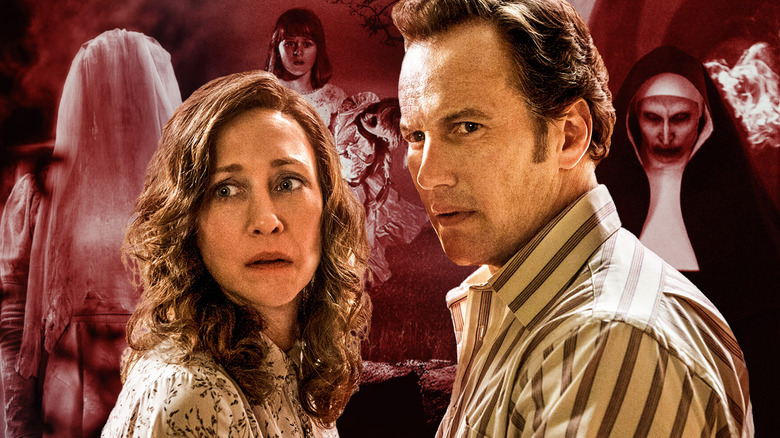
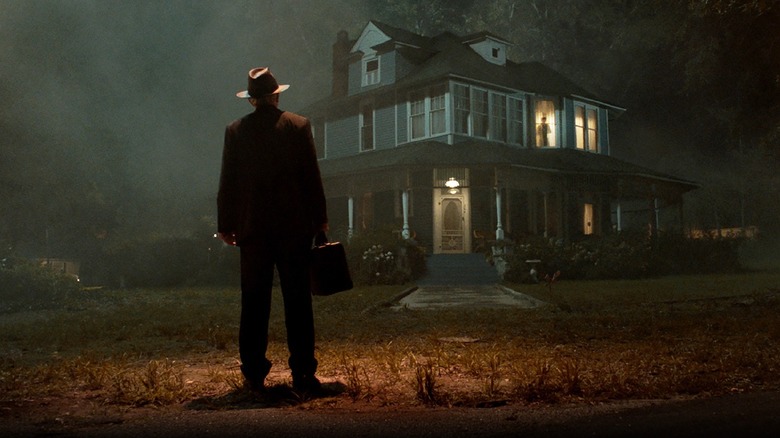
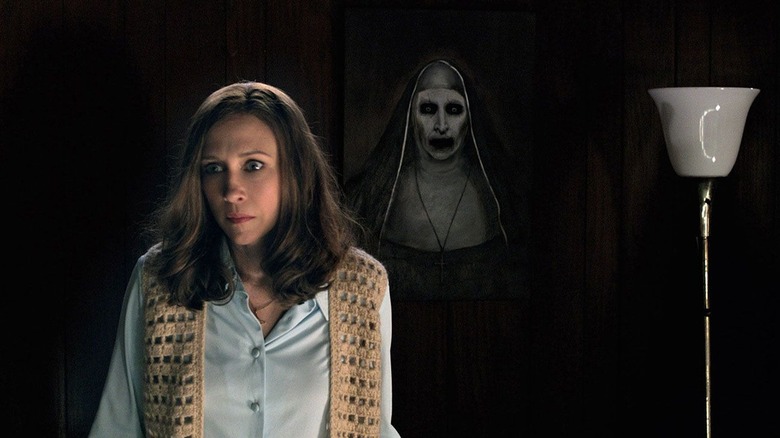
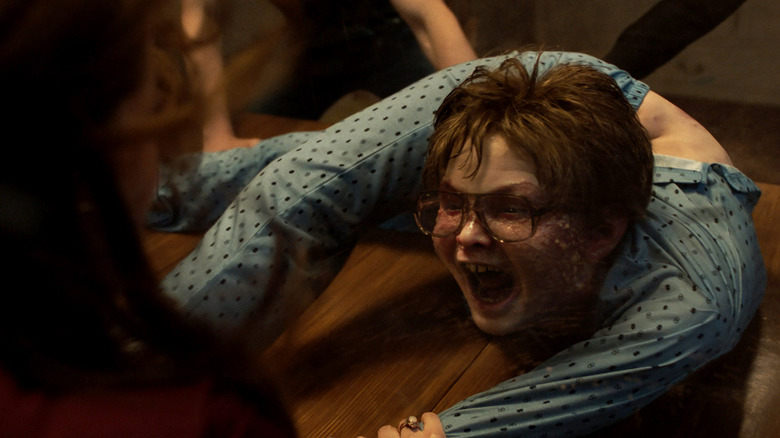
The Entire Conjuring Universe Timeline Explained

by Scott Thomas

There are two major themes that link the eight films in the "Conjuring" universe. First: that the evil in this world -- which exists and is often malevolent -- may be combated through good Christian values, including faith, duty, and the partnership of marriage (given the Warrens' real-life charlatanism, this theme is sort of a sticking point). The other? Evil cannot be vanquished. Evil persists. Evil is a counterbalance of good and, ironically, validates the existence of God. If he exists, so will evil, and therefore it must persist. 

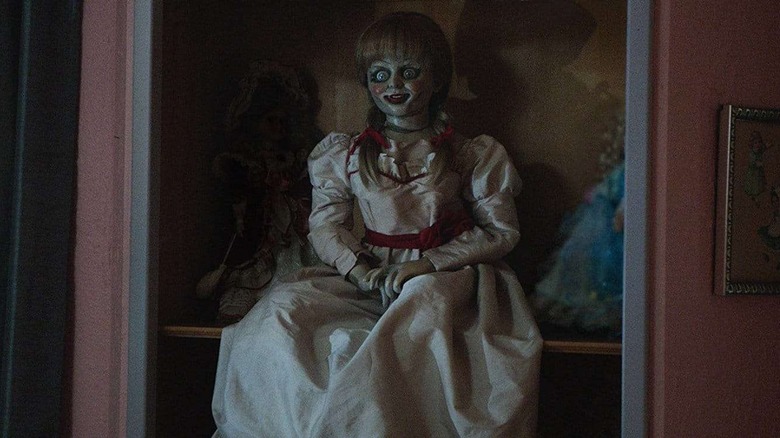
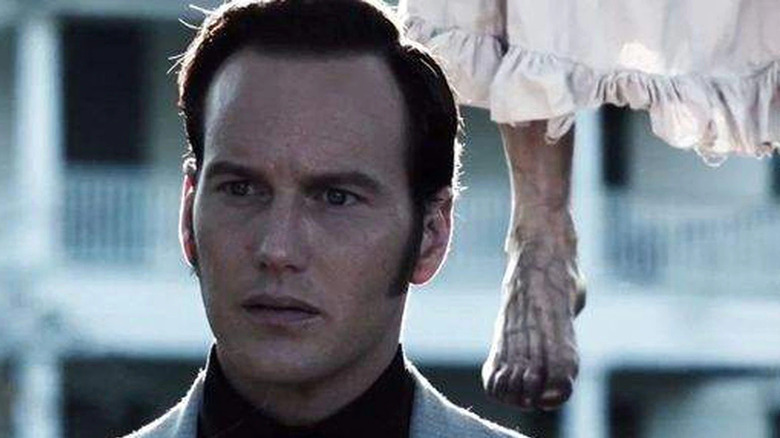
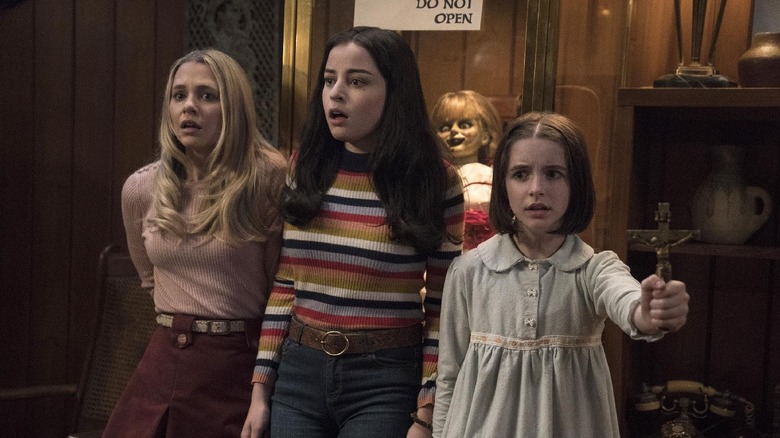
That's heady stuff for a franchise that has devoted a third of its films to possessed dolls, and it's the tenet which makes each "Conjuring" spin-off more than IP-extension. As the Conjuring-verse grows larger, it's core argument become more potent. Since every film either reveals new spirits from the Warrens' trove of horrors or delves further into said spirits' origins, the scope of good and evil's endless struggle extends backwards into history. This battle is massive. It's relentless. It could be -- for all intents and purposes -- the fundamental story of life. To parse out the franchise's relationship to recorded time is to know its weighty ideas and deeper aims. Therefore, here's the current "Conjuring" timeline explained.

Chronological Order Vs. Timeline Order

Chronologically, the first movie in the "Conjuring" universe is "The Conjuring" itself, directed by James Wan and released in 2013. A spinoff, "Annabelle," was released in 2014 and was followed by "The Conjuring 2" in 2016. "Annabelle: Creation" came next in 2017, with "The Nun" releasing in 2018 and the tangentially-related "The Curse of La Llorona" hitting theaters in 2019. "Annabelle Comes Home" was released later that same year, and the latest movie in the main saga, "The Conjuring: The Devil Made Me Do It," was released in 2021.

Conversely, the earliest scenes in the "Conjuring" timeline are in "Annabelle: Creation," whose prologue is set in 1943. The events of "The Nun" (set in 1952) come next, before the timeline returns to "Annabelle: Creation" for the bulk of its story, which is set in 1956. That movie's ending is set in 1967 and dovetails neatly with the beginning of "Annabelle," which is followed by the 1968-set cold open of "The Conjuring." After this opening scene, the main story of "The Conjuring" is set in 1971 and is followed on the timeline by "The Curse of La Llorona" (set in 1973). The Enfield Haunting of "The Conjuring 2" takes place in 1977, and "The Conjuring: The Devil Made Me Do It" is the most recent story on the timeline, being set in 1981.

One movie missing from this list is "Annabelle Comes Home" -- and that's because it exists in a time paradox (apparently Warner Bros. was in desperate need of its own "Conjuring" universe timeline guide). More on that later!

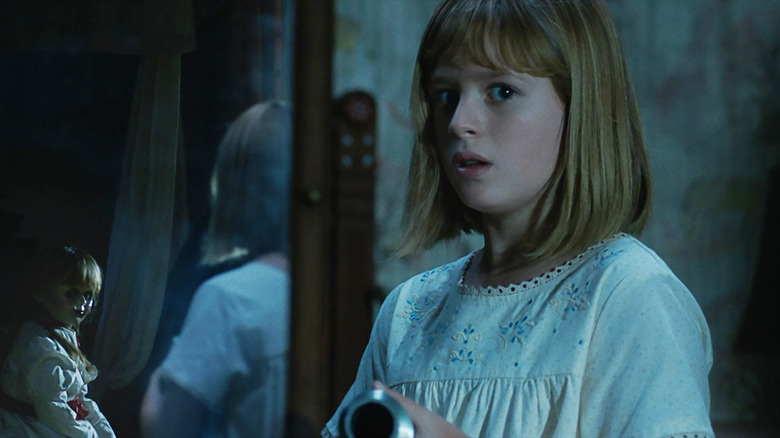
Annabelle: Creation (1943 / 1956 / 1967)

The "Conjuring" universe currently begins in 1943 -- four years into World War II -- with the accidental death of young Annabelle Higgins. And while David F. Sandberg's "Annabelle: Creation" isn't exactly haunted by the myriad tragedies of the Second World War, the subsequent haunting of a tiny Kansas farm in 1956 mirrors how the unrest and psychological pain of war weighed upon those of faith in the 1950s. To wit: the Higgins family (Anthony LaPaglia and Miranda Otto) is not only tested by their daughter's loss, they're also shaken by its timing -- which is to say, immediately after a church service. 

The subsequent terrors that are inflicted on them and the orphans they look after in the film render the house's Christian decor suddenly sinister, as if it can't be trusted anymore. For many who lost loved ones in the war, this sudden TK of God was common. The Warrens will, though their exorcisms and seances, come to restore the faith of many in these films. But in "Annabelle: Creation," belief in the beyond has brutal consequences, both physical and emotional. Though the movie does jump, briefly, to 1967 (setting up 2014's "Annabelle"), it's the post-credits stinger which is most valuable to our viewing experience. One which sets up...

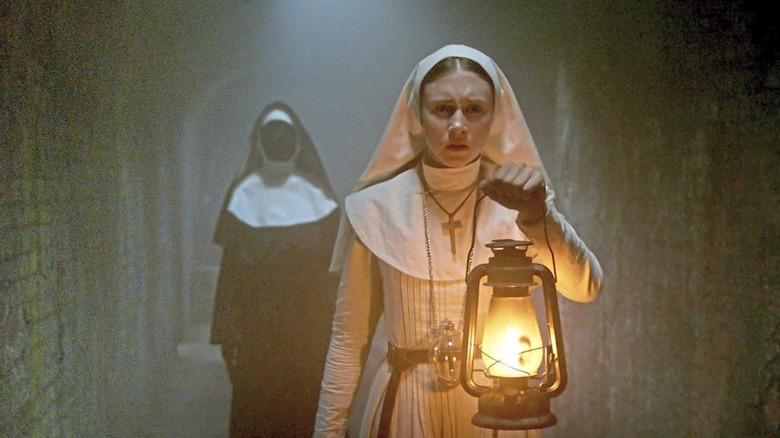
The Nun (1952)

Let's be plain: "The Nun" is not the "Conjuring" universe's strongest film. But it benefits the most from chronological viewing since "Annabelle: Creation" ends with a set up of Corin Hardy's chiller, which takes place in 1952, Romania, and follows Sister Irene (Taissa Farmiga), Father Burke (Demián Bichir), and local Frenchie (Jonas Bloquet) as they battle Valek, a demonic spirit terrorizing Carta Monastery. "The Nun" also reinforces a World War II-observant read of "Annabelle: Creation." As revealed in the film's middle stretch, it was bombing raids on Europe that unearthed Valek in the first place. So, while Hardy and writers James Wan and Gary Dauberman don't directly ally ancient evil and the six-year war, there's a passive implication that they're intertwined; when men create Hell on Earth, the denizens of Hell rise up to meet them. 

"The Nun" also represents the "Conjuring" universe's most explicit conversation with the practice of Christianity. The Warrens may exorcise spirits in the name of God, but they are not formal members of the clergy. In "The Nun," Sister Irene and Father Burke are representatives of the Catholic church who find themselves battling both evil superiors and a demonic, habit-wearing demon. It's Frenchie, however, who pushes the "Conjuring" timeline forward here -- it is revealed at film's end that he, in 1968, is the older man whom Ed and Lorraine exorcise at the beginning of 2013's "The Conjuring." But before we get to the 70s, there's still the matter of Annabelle to deal with.

Annabelle (1967)

In many ways, "Annabelle" is the least ambitious "Conjuring" film. It's a straightforward prequel to James Wan's original that doesn't add new evils to its universe, and doesn't expand the timeline any further than one year prior to the prologue of "The Conjuring." Furthermore, the horrors it depicts are less rooted in events of historical significance or their time period than the majority of "Conjuring" entries. 

Given all that, what is worth mentioning about "Annabelle"? For one: that any single scene in the "Conjuring" universe can be an anchor for multiple storylines. No less than three movies in the series have returned to Ed and Lorraine taking possession of Annabelle, a small moment so rife with buried menace that it establishes an ethos that almost all the "Conjuring" movies have come to follow. For another, this is the first appearance of Father Perez (Tony Amendola), who returns in 2019's "The Curse of La Llorona."

The Conjuring (1968 / 1971)

Aside from its 1968-set cold open, "The Conjuring" is almost entirely set in 1971. This very first entry in the horror movie franchise is rooted in real-life history with its recreation of the Perron farmhouse hauntings, which took place in Harrisville, Rhode Island (current residents and visitors to the home claim it's still haunted, by the way). The spirit who haunts the home -- Bathsheba Sherman -- was also a real person who may or may not have been unfairly persecuted for being a witch (an American tragedy if there ever was one). Since ambiguity doesn't make for a good villain, the Bathsheba Sherman of "The Conjuring" is depicted as a wholly evil ghost with a nasty habit of sacrificing children to Satan. The movie also goes out of its way to establish Annabelle's evil, so much so that there's strong connective tissue between "The Conjuring," Annabelle, and the next (and most underrated!) entry in the film franchise.

Annabelle Comes Home (1968 / 1969)

Here's where the timeline gets confusing: "Annabelle Comes Home" begins in the same place as "The Conjuring" (1968) before jumping forward one year in time (1969). However, the movie was billed as being set one year after the events of "The Conjuring," and the Warrens' artifact room contains the haunted music box that was placed there by Ed at the end of "The Conjuring" (1971). Essentially, this means that "Annabelle Comes Home" is set both in 1968/9 and 1971/2. Let's just blame it on the demons.

There's a funny thing that happens when you binge movies released over many years in the spans of weeks or days: time mutates. You start to see these movies not as they're meant to be seen (divorced from time, running 90-180 minutes) but as they actually present themselves (subject to time, 90-180 minutes of an eight hour whole). This was the genius of Christian Marclay's 2010 "The Clock," a 24-hour video installation which featured clocks or timepieces corresponding to the actual time and hour an audience was watching it; time was impossible to avoid.

All of which is to say that "Annabelle Comes Home" reveals some dark stuff about the Warrens' timeline when you witness it chronologically -- namely that they're always haunted, seemingly out of nowhere. The film opens on the couple taking Annabelle into their possession only to have their car break down by a graveyard, get visited by ghosts, and nearly die due to the possessed doll's interference. Just reading that is exhausting! The toll that battling the paranormal takes on the Warrens is firmly established here and becomes clearer as the series goes on, especially during "The Conjuring: The Devil Made Me Do It," but for now we leave the Warrens to visit Los Angeles and encounter...

The Curse Of La Llorona (1973)

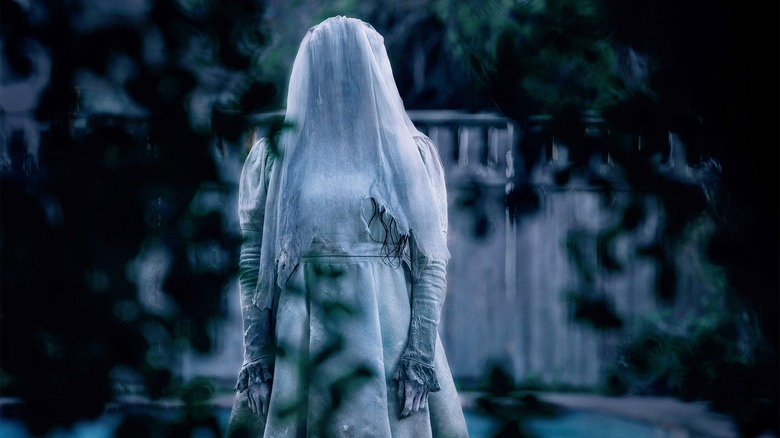
I'm not sure if "The Curse of La Llorona" was, in fact, cursed by the legendary Weeping Woman -- but it sure had the deck stacked against it. The 2018 film premiered to a mixed reception at SXSW, opened against "Avengers: Endgame," and was the lowest grossing "Conjuring" film pre-pandemic (though still undoubtedly a commercial success, earning $123 million against a nine million dollar budget). By design, the film feels less connected to the "Conjuring" movies at large. Though it too roots itself in history, the inspiration it draws from is more mythic than factual (in this instance -- the legendary ghost of Latin American folklore) and the thematic resonance is muted for an extended plethora of jump scares. 

The connection to the "Conjuring" movies? Father Perez, who last appeared in 2014's "Annabelle." Perez is able to link the cases of La Llorona and Annabelle both because of their personalities and the sheer force of his presence. It's a minor connection, but a necessary one. And thankfully, the series rights both its thematic and storytelling ships with its next entry.

The Conjuring 2 (1976 / 1977)

"After everything we've seen, there isn't anything that rattled either of us anymore...but this one? This one still haunts me." 

Those are the words uttered by Lorraine Warren which open James Wan's "The Conjuring 2," before its protagonists encounter the infamous horror of Amityville (and find Valek, the high-ranking demon from "The Nun," to be responsible). It's the Amityville case that makes the Warrens both famous and infamous. It's the case that makes them part of history. As such, it's a case that forces both them and the franchise to confront both larger and more terrifying spirits and the boundaries of what their faith can weather. 

For the first time, the Warrens' legitimacy is questioned on national television. Their marriage is also tested as they investigate the hauntings in Enfield. And, in both instances, we see the forces of evil target their spiritual practices directly, be it their belief or vowed commitment to one another. If any movie in the series makes it clear that Evil and God are at war with each other, it is this one. What's more, the one-two punch of "Annabelle Comes Home" and "The Conjuring 2" set up the surprisingly weighty final entry to date in "Conjuring" series -- one that anchors itself to a dark era in American history.

The Conjuring: The Devil Made Me Do It (1981)

"The Conjuring: The Devil Made Me Do It" is the darkest "Conjuring" film. That's a bold claim given the relative lack of lightness that marks the other entries in this franchise, but it's well-earned. Michael Chaves' (returning from "The Curse of La Llorona") entry into the stories of Ed and Lorraine Warren opens with an eight-year old being showered in blood, stabbing his father, and Ed having a life-threatening heart attack. It wears its R-rating on its sleeve and how.

"The Devil Made Me Do It" purposefully bears the weight of the entire franchise to date. Annabelle is present. Ed is confined to a wheelchair. The possibility of possession as a justification for murder is quite literally put on trial in a court of law. And even when the film abandons this circumstance-stacking for more standard jump-scare fare, the cost of waging war against demonic evil -- and of choosing to believe in the tenets which make that battle possible -- feels overwhelmingly present. "The Conjuring: The Devil Made Me Do It" confirms there's nothing fun about being the Warrens. It suggests there are cases to come (two spinoffs, "The Nun 2" and "The Crooked Man," are currently in development.) More than anything, it reminds us that if the Warrens ever fall pray to the forces that would see them dead, the battle of God and evil would continue without them. Now that's scary.

Read this next: 'The Conjuring: The Devil Made Me Do It' Ending Explained: The True Case Of Arne Johnson

The post The entire Conjuring Universe timeline explained appeared first on /Film.

08 Sep 23:20

10 Ways to Eat Cheap and Healthy When You Don't Have a Full Kitchen

by Beth Skwarecki

The redditors at r/EatCheapAndHealthy have come through for us when we were looking for cheap and healthy cold lunches, and cheap and healthy dinners for when we’re lazy. Now, let’s look at their recommendations for cheap and healthy meals you can make even if you don’t have a real kitchen.

Read more...

08 Sep 23:19

And When You Gaze Long Into An Abyss Windows 11 Also Gazes Into You

by Jeremy Hellstrom

Techgage has compiled a look at the current state of Windows 11, 27 days before it's scheduled launch.  Instead of focusing on the issues currently present, instead they walk you through the…

08 Sep 23:19

UK.gov Is Launching An Anti-Facebook Encryption Push

by BeauHD
The British government is preparing to launch a full-scale policy assault against Facebook as the company gears up to introduce end-to-end encryption across all of its services. The Register reports: Prominent in details briefed to the news media this week (including The Register) were accusations that Facebook harbours paedophiles, terrorists, and mobsters and that British police forces would effectively be blinded to the scale of criminality on the social networking platform, save for cases where crimes are reported. It's a difficult and nuanced topic made no simpler or easier by the fact that government officials seem hellbent on painting it in black and white. Government and law enforcement officials who briefed the press on condition of anonymity earlier this week* sought to paint a picture of the internet going dark if Facebook's plans for end-to-end encryption (E2EE) went forward, in terms familiar to anyone who remembers how Western nation states defended themselves from public upset after former NSA sysadmin Edward Snowden's 2013 revelations of illegal mass surveillance. The US National Centre for Missing and Exploited Children (NCMEC) generates around 20 million reports of child sexual abuse material (CSAM) every year, of which 70 per cent would be "lost" if E2E encryption were put in place, claimed British officials. The government's long-signaled push to deter Facebook from implementing E2EE comes, inevitably, at a significant cost to taxpayers: London ad agency M&C Saatchi has been hired at an undisclosed cost by the Home Office to tell the public that Facebook (and WhatsApp) harbours criminals. The ad campaign will run online, in newspapers and on radio stations with the aim of turning public opinion against E2EE -- and, presumably, driving home the message that encryption itself is something inherently bad. Other announcements due this week, from notoriously anti-encryption Home Secretary Priti Patel and intergovernmental meetings, will explicitly condemn Facebook's contemplated rollout of E2EE.

Read more of this story at Slashdot.

08 Sep 23:18

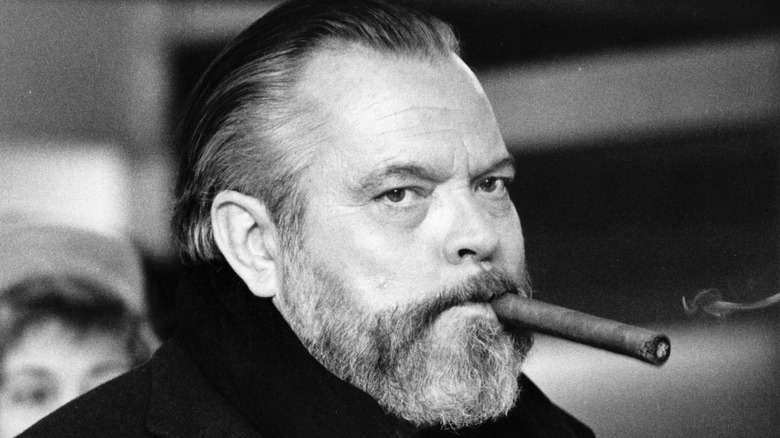
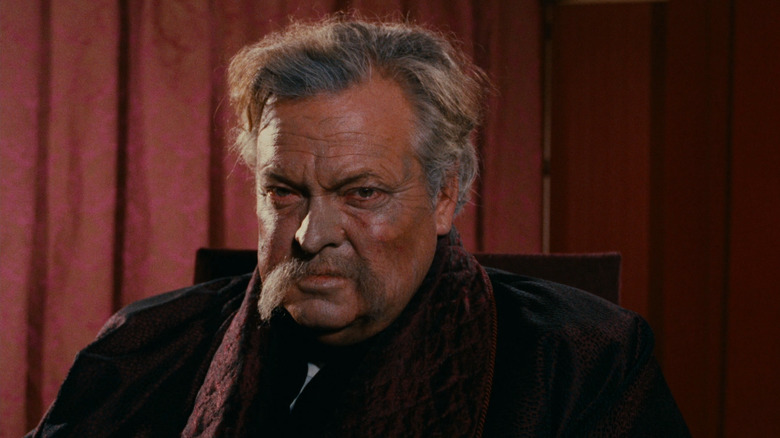
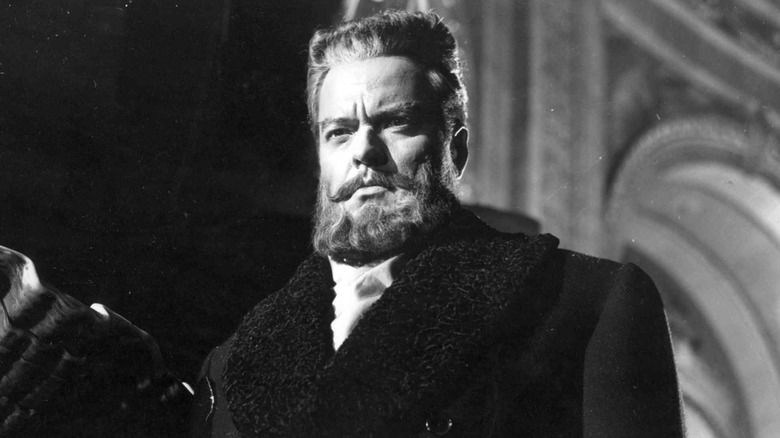
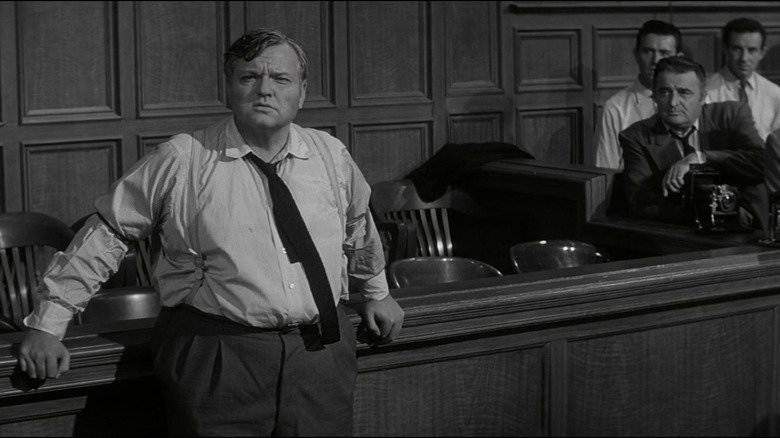
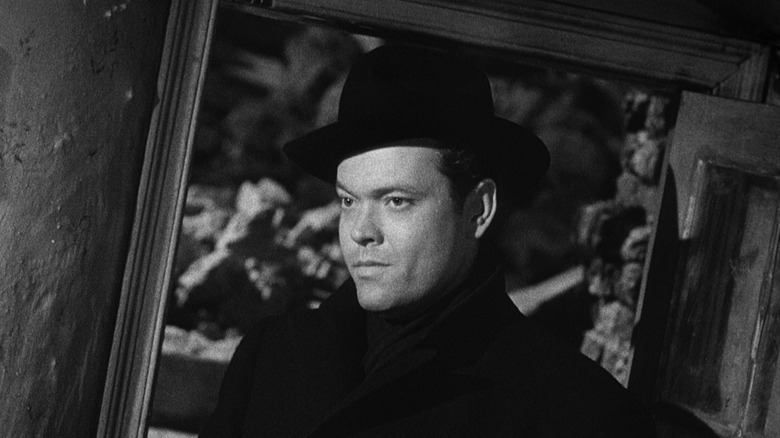
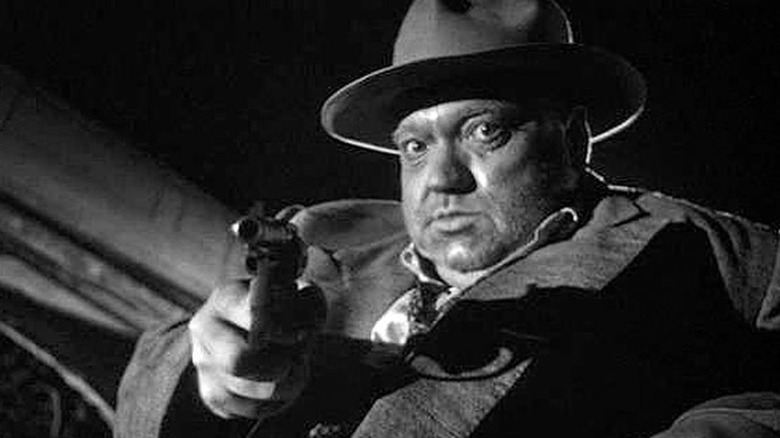
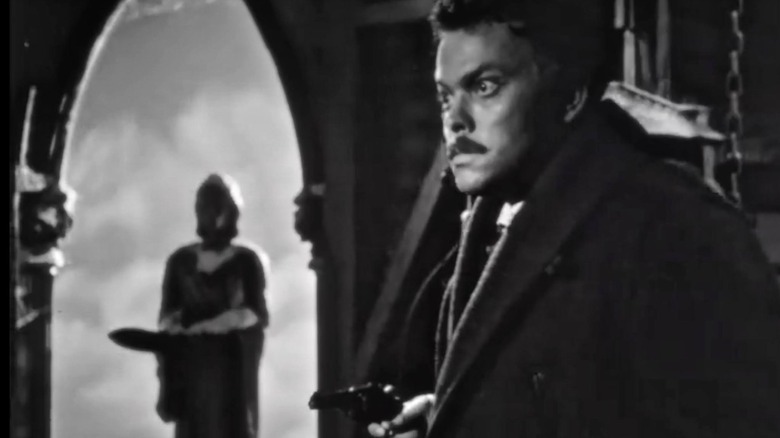
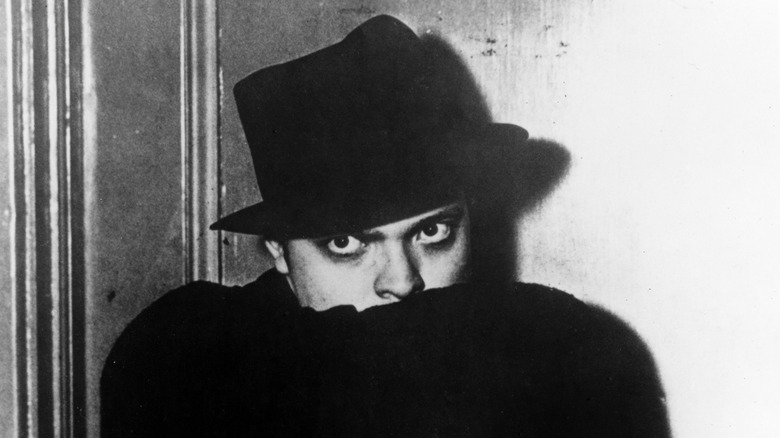
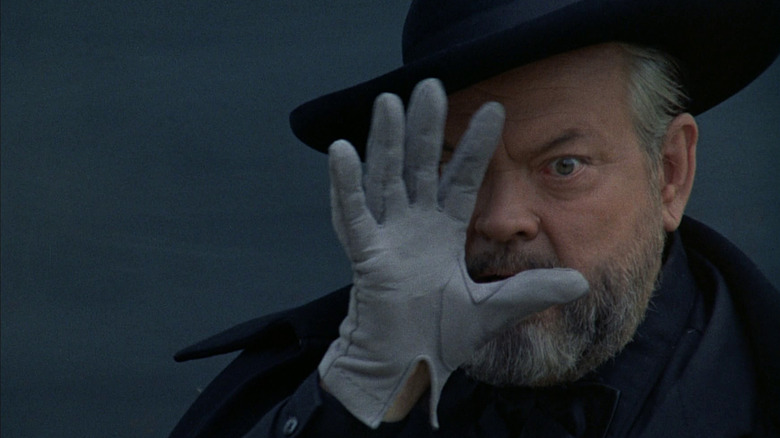
The 10 Best Orson Welles Characters Ranked

by Kirk Boxleitner

Before he gained a reputation of being difficult to work with and decamped to Europe twice in search of more freedom as a filmmaker, Orson Welles was a former child prodigy who was initially embraced by Hollywood as a wunderkind. Welles directed himself to critical acclaim in starring screen roles as both "Macbeth" and "Othello" and sparked a Halloween-eve panic in 1938 with his radio adaptation of H.G. Wells' "The War of the Worlds." His 1941 epic "Citizen Kane" routinely tops lists of the best films of all time, including those of the American Film Institute, even though he made it when he was only 25 years old.

From the masters of the world to the mere players upon its stage, Welles was able to make a broad spectrum of characters his own. But with a personality as outsized as his waistline, which of the characters that Orson Welles played were most ideally suited to his talents? Here, in our minds, are his 10 best.

Mr. Charles Clay — The Immortal Story

Welles' adaptation of Karen Blixen's short story is both his briefest film, at 60 minutes, and the first film he shot in color. While Mr. Clay, Welles' wealthy merchant character, is in no way sympathetic, his story is still tragic, because he clearly yearns for something beyond the confines of the life that he's chosen, even though his self-imposed limits won't allow him to seek it out.

In "The Immortal Story," Clay believes that stories should only be told about things that have actually happened, so he arranges to have an old mariner's tale about a rich old man who pays a poor young sailor to impregnate his beautiful wife made real. Clay is unmarried, so the woman he recruits to play his wife, Virginie, is the daughter of a former business partner, Louis Ducrot, whom Clay ruined financially to the point that the man committed suicide. Clay reveals he was motivated to destroy Ducrot because he was afraid to feel friendship for his business partner, thinking it would make him weak.

Given Welles' subsequent portrayal of a powerful film director seeking to possess the handsome young lead's sexuality in Welles' posthumously released "The Other Side of the Wind," it's not out of bounds to read a gay subtext into Clay's admission. Even without it, though, Clay's fears regarding vulnerability and closeness make him his own jailer, trapped in a gilded cage of his own making.

Gregory Arkadin — Mr. Arkadin

The fact that "Mr. Arkadin" was a mess of a film upon its initial release, with multiple edits released over the course of Welles' lifetime, only furthers the enigmatic allure of its already fascinating title character, the regal and well-connected Gregory Arkadin. By depicting Arkadin as constantly throwing parties in opulent settings and seeking to protect his daughter Raina from the rougher elements of the social circles within which he himself travels, Welles' Russian magnate draws in equal measure from the Prosperos of William Shakespeare's "The Tempest" and Edgar Allan Poe's "The Masque of the Red Death."

Arkadin hires a small-time smuggler and ne'er-do-well named Guy Van Stratten to conduct what would today be called "opposition research" on himself, after claiming that amnesia had robbed him of his memories prior to 1927. Van Stratten ultimately figures out that Arkadin is only pursuing his past in order to bury it permanently, along with anyone who could talk about it.

Seeing an always-on-the-make con artist like Van Stratten realize he's been out-maneuvered by Arkadin makes one appreciate the skill that the older man hides behind his expansively gregarious public persona. In turn, that makes him all the more fearsome, even when he admits that affectations such as his thick beard are intended to frighten.

Jonathan Wilk — Compulsion

When it comes to fictionalized portrayals of real-life attorney Clarence Darrow, everyone wants to play Henry Drummond in "Inherit the Wind."  I doubt any middle school classroom has ever staged "Compulsion" as a play. "Inherit the Wind" showcases Darrow at his most morally unambiguous, when he was ostensibly defending scientific discovery in the 1925 Scopes Monkey Trial (which in turn serves as a stand-in for the McCarthy trials, which were contemporary to when the play premiered in 1955). But in "Compulsion," Welles' Jonathan Wilk is a fictionalized Darrow at his least popular, when he agreed to serve as the defense attorney in the 1924 Leopold and Loeb murder trial.

What made Darrow's defense so remarkable, and what Welles had to recreate in his performance as Wilk, was that he successfully pleaded for mercy on behalf of a self-confessed and unrepentant pair of killers. The murderers had been born with all the privilege in the world, then killed a defenseless child just to prove they could. Bradford Dillman and Dean Stockwell are so effective at making their fictionalized stand-ins for Leopold and Loeb contemptible that it makes Welles' delivery of Wilk's closing argument all the more powerful, but even before Welles advocates Wilk's (and Darrow's) belief that executions only beget further murders, we see the weariness in his character's eyes.

Welles' Wilk is tired because he understands from the start how monstrous his rich and remorseless young clients are. He receives no gratitude from them, nor does he expect any, for pleading their death sentences down to life in prison. As Welles plays him, Wilk is no roaring lion in the courtroom. He rarely even raises his voice, because he's not bullying. Instead, he's begging society to be better than the monsters it seeks to punish.

Harry Lime —The Third Man

As much as fans of Travis Bickle in "Taxi Driver" and Tyler Durden in "Fight Club" have been criticized on this count, the chipper, sociopathic Harry Lime was arguably part of the original "You missed the point by idolizing them" starter pack. As Lime, Orson Welles so thoroughly charmed those who saw "The Third Man" that the character received his own year-long 52-episode radio serial, "The Adventures of Harry Lime," in the United Kingdom, even though the character died in his debut film outing.

As much as it's easy to see why the earnest, curious Holly Martins (played by Welles' frequent collaborator, Joseph Cotten) would befriend the casually confident Harry Lime, we and Holly soon realize that Harry's untroubled smirk stems from a ruthless disregard for human life. And yet, even on Vienna's Wiener Riesenrad Ferris wheel, when Harry scolds Holly for caring so much about the plight of the "dots" on the ground, Harry is never as unaffected or indifferent as he wishes to appear.

The look of cold calculation that crosses Harry's face when his mask of frivolity slips as he susses out what Holly intends to do next attests to his cockroach-like tenacity. You don't survive while pulling as many scams as Harry Lime unless you're highly skilled at playing the odds. In addition to establishing that "The Adventures of Harry Lime" was a prequel to "The Third Man," the radio series also toned down its protagonist's roguishness considerably. Still, as Lime proves, Welles' innate charisma made even his scoundrels hard to resist.

Police Capt. Hank Quinlan — Touch Of Evil

If you asked someone to draw a caricature of the words "dirty cop," odds are you'd get a sketch that looked like Hank Quinlan. From the moment that Welles first slouches out of the shadows as Quinlan in "Touch of Evil," he fits every clichéd description of a corrupt officer of the law. He's fat, even fatter than Welles was in real life at the time. His suits are ill-fitting and sloppily put together. His sagging jowls are coated with stubble, and even though we're told he's been sober for 12 years, his squinty eyes swim drunkenly.

Quinlan's deeds live up to his disreputable appearance, as we learn he's routinely planted evidence on suspects for years. Couple this with his none-too-thinly-veiled racism against Mexicans -- never a great trait for an American police captain in a border town -- Mexican special prosecutor Miguel Vargas' crusade to expose Hank Quinlan's corruption seems entirely warranted, even before Quinlan frames Vargas' wife for drug use and murder.

And yet, what separates Quinlan from any number of other onscreen "bad cops" are the hints he was once better than this. He couldn't bring his wife's killer to justice as a rookie cop, and the proof of his dozen years of sobriety lies in the double-chins he's picked up since by substituting candy bars for alcohol. Even the suspect that Vargas catches Quinlan framing for the bombing at the start of the film turns out to be guilty, because as Quinlan's acquaintances observe after his death, he was "a great detective," but "a lousy cop." As much as Quinlan authors his own fate, it's still haunting when he asks his ex-lover Tanya to read his future, and she says, "You haven't got any."

Professor Charles Rankin, Né Franz Kindler — The Stranger

One disadvantage of the distance of history is that modern audiences might not realize how radical "The Stranger" was upon its release. As film director and historian Bret Wood noted on the audio commentary for "The Stranger," in the 1940s, "a large percentage of the population could not believe that the Nazi death camps were real." Only a year after World War II, "The Stranger" became the first commercial film to use documentary footage from the Nazi concentration camps.

Likewise, while having the character of fugitive Nazi war criminal Franz Kindler adopt the cover identity of the affably genteel prep school teacher Charles Rankin might not seem transgressive in and of itself today, it was harrowing at the time for suggesting that such profound evil could exist in our midst, without us noticing. Rankin is the perfect neighbor, with the perfect pedigree. He's greeted warmly by students in his small New England town, where he's engaged to the daughter of a Supreme Court justice, and he contributes to the community by helping to repair the town's 400-year-old clock tower.

Initially, Rankin says and does all the right things, but there's an undercurrent to his remarks on the German culture that the United Nations' Nazi hunter (Edward G. Robinson, cast strongly against his gangster type) picks up on When one of Kindler's former associates arrives in town to beg him to confess to his crimes, the threads of Charles Rankin's carefully constructed identity slowly start to unravel. Kindler's self-assured, even eager, predictions of "another war" after he's been found out are all too relevant in light of certain resurgent political movements.

The Shadow

Although the Shadow made his broadcast debut as the ongoing host of a radio adaptation of "Detective Story Magazine" and was then adapted back into print with the first issue of "The Shadow Magazine" in 1931, it wasn't until the character proved popular on the page that the character received his own radio drama, which began in 1937.

By that time, the Shadow had assumed several "secret identities" in print, but the radio show cemented his "true" identity as a "wealthy young man-about-town" named Lamont Cranston. Cranston's socialite girlfriend, Margo Lane, was created for the radio. In the show's first 52 episodes, which aired from the Septembers of 1937 through 1938, Orson Welles played the title role, with his future "Citizen Kane" co-star Agnes Moorehead voicing Margo Lane in the first 26. Over the course of the following 18 seasons, the Shadow was played by six other actors, only two of whom logged more episodes in the title role than Welles.

As "The Shadow," Welles' voice was sonorous, sibilant and slightly nasal, drawing its strength and sinister qualities from its hushed undertones. Still, even when Welles played the Shadow, his signature line — "Who knows what evil lurks in the hearts of men?" — was spoken by Frank Readick Jr., who had voiced the Shadow for a number of the radio anthologies that the character hosted from 1930 to 1935.

Sir John "Jack" Falstaff — Chimes At Midnight

Orson Welles did not create Falstaff. William Shakespeare did. But much as Tom Stoppard drew from Shakespeare's "Hamlet" to create "Rosencrantz and Guildenstern Are Dead" in 1966, Welles drew from no less than five of Shakespeare's plays to create "Chimes at Midnight," starring the supporting character of Sir John Falstaff, whom Welles proclaimed "Shakespeare's greatest creation."

Welles plays Falstaff as a vain yet slovenly glutton, so fat that even the overweight actor required extra padding in his costume to play him. While Falstaff betrays himself as both cowardly and self-aggrandizing, he's nonetheless a mostly harmless and well-meaning ruffian, stuck in the rut of what might be called "arrested development" or "extended adolescence" today. Young Prince Hal recognizes Falstaff's role as a "misleader of youth," but the future ruler embraces the drunken old knight as a surrogate uncle, until Hal's father, Henry IV, falls ill, and Hal dutifully does away with his childish things upon his own crowning as Henry V. Just as growing up means Christopher Robin must bid farewell to the Hundred Acre Wood, so does becoming "a good and noble king" mean Hal must forswear his former lifestyle and banish Falstaff, who dies of a broken heart, even as he takes pride in Hal's newfound maturity. 

Welles never missed a chance to evangelize Shakespeare to the masses. In a 1968 episode of "The Dean Martin Show," he conducted a nearly-seven-minute clinic on how to play Falstaff, donning the character's makeup and costume padding and reciting Falstaff's tribute to his favorite libation, sherry. Only Orson could have pointed out that Shakespeare did "commercials," or that Falstaff was "a swinger" and "the great-great-grandfather of all the flower children."

Charles Foster Kane — Citizen Kane

So many words have already been written about one of the greatest works of cinema in history that I can't hope to rival them, but what makes the title character of "Citizen Kane" so compelling is that he began as an attack on one of the world's most powerful men, only to become an accidental biographical portrait of the man who played him.

While screenwriter Herman J. Mankiewicz's original outline for the film was based on the life of newspaper publishing tycoon William Randolph Hearst, the subsequent screenplay came to include elements that paralleled Welles' life instead. For example, Kane's separation from both parents during his early childhood echoed the deaths of Orson's parents by the time he was 15. And just as Charles Foster Kane ascended to the status of a titan of industry when he was barely more than a schoolboy, Welles was awarded an unprecedented contract to write, produce, direct, and perform in two films for RKO Pictures in 1939, when he was only 24 years old.

Although Hearst sought to derail Welles' career as revenge for "Citizen Kane," it proved to be a Pyrrhic victory for both men, since it wasn't until David Nasaw published "The Chief: The Life of William Randolph Hearst" in 2000 that film critic David Thomson wrote in The New York Times of Hearst "at last emerging from behind the dazzling light of Charles Foster Kane," while Welles' need for creative control left him as friendless at the film studios of Hollywood as the elder Kane was at his palatial Xanadu estate.  Like the intermingled ruins of twin Ozymandiases, the fused character of Charles Foster Kane serves as a monument to the hubris of two masters of mass communication.

Orson Welles — Himself

In later years, if you cast Orson Welles in your production -- whether that was as a distinguished narrator (for Mel Brooks' "History of the World, Part I," or an episode of the network TV romcom "Moonlighting"), in a bit part (as Tom Selleck's boss, Robin Masters, in "Magnum, P.I." or the world-devouring planet Unicron in "The Transformers: The Movie"), or as a pitchman for frozen peas or Paul Masson wine -- you wanted him to be Orson Welles, rather than playing another character.

Like Marvel Comics' Stan Lee, Welles' greatest creation was himself. Nowhere was this better showcased than Welles' 1973 quasi-documentary, "F For Fake," which concerns art forgers, celebrity biography hoaxers, and all-around con artists, but which frequently drifts into digressions about Orson's own life. The big man asserts the absurdity of assigning authorship to the Chartres Cathedral in France, while also contemplating the fleeting mortality of humanity, and recalls how he landed one his earliest acting gigs in Ireland by falsely claiming to have already achieved stardom in America. He observes, only half-jokingly, "I started at the top, and have been working my way down ever since."

A sleight-of-hand magician since his childhood, Welles delights in misleading his audience, promising them at one point to tell the truth for the next hour, before eventually informing them that hour had passed a while ago, and "for the past 17 minutes, I've been lying my head off." Regardless of how true any of his colorful anecdotes might be, Orson makes his disjointed docudrama feel like a pleasantly meandering dinner table discourse. By the end, your only regret is wishing you could have had more time to spend with the man.

Read this next: 10 Great Filmmakers Who Never Won The Academy Award For Best Director

The post The 10 best Orson Welles characters ranked appeared first on /Film.

08 Sep 23:17

White House outlines plan for solar to make up almost half of US electricity by 2050 - CNET

by Megan Wollerton
By midcentury, 45% of electricity in the country could come from solar energy, according to a new government report.
08 Sep 23:16

The 4 things needed to reach Biden’s ambitious 2050 solar goal

by Devin Coldewey

A report on the future of solar energy from the Department of Energy paints a sunny picture, if you will, of the next three decades, at the end of which nearly half the country’s energy will be provided by the sun. But for that to happen, big pushes need to happen along four major lines: better photovoltaics, more energy storage, lower soft costs, and putting about a million people to work.

Here’s what the report says needs to happen in each of these sectors in order to meet the ambitious goals it sets out.

Better photovoltaics

The solar cells themselves will need to continue to improve in both cost and efficiency in order to achieve the kind of installation volumes hoped for by the DOE. For reference, 2020 saw 15 gigawatts worth of solar installed, the most ever — but we’re going to need to double that installation rate by 2025, then double it again by 2030.

If photovoltaics don’t improve in efficiency, that means these already ambitious numbers need to go even higher to account for that. And if they stay at today’s prices, the costs will be too high to achieve those volumes as well.

Photovoltaics have come a long way, but they also have a long way to go.

Fortunately efficiency is going up and cost is going down already. But it’s not like that just happens naturally. Companies and researchers across the globe have spent millions on new manufacturing processes, new materials, and other improvements, incremental individually but which add up over time. This basic research and advancement of the science and methods around solar must continue at or beyond the pace that they have over the last two decades.

The DOE suggests that research along the lines of making more exotic PVs cheaper, or stacking cells to minimize bandgap-related losses could be crucial. Flexible and tile- or shingle-like substrates or semi-transparent installations that pass light through to crops or building interiors may also figure. Altogether the plan calls for a reduction of the overall cost to drop by almost half from $1.30/watt today on average to $0.70 by 2030 and more after that.

Solar concentrators get their own heading in the report, and many companies are looking into these to replace industrial processes. These will not likely be used to support the grid at large but will nevertheless replace many fossil fuel based processes.

More energy storage

An unavoidable consequence of getting your energy from the sun is that at night you must rely on stored energy in some form or another, originally nuclear or coal but increasingly a form of storage that collects excess power collected during the daytime. With more of peak usage being covered by renewables, cities can safely transition away from carbon-based energy sources.

While we often think of energy storage in terms of batteries, and certainly they will be present, but the amount of energy that must be stored rules out something like lithium-ion batteries as the primary storage mechanism. Instead, the excess energy can be put towards powering energy-hungry renewable fuel production, like hydrogen fuel cells. This fuel can then be used to generate power when solar can’t meet demand.

The diagram shows how demand would normally go (purple) then how it would go with solar (orange) and how energy storage could mitigate that load (solid colors).

That’s just the “off the top of the head” answer. As the report states: “Thermal, chemical, and mechanical storage technologies are under various stages of development, including pumped thermal storage, liquid air energy storage, novel gravity-based technologies, and geological hydrogen storage.”

No doubt there will be a variety of new and old technologies working to provide the various levels of energy redundancy and storage duration needs of the country. These will go a long way towards making solar and other renewable energy sources capable of being relied on for a greater proportion of demand.

Lower soft costs

If we’re going to double and redouble the rate of solar cell deployment, the costs have to come down not just for the cells themselves, but the whole end-to-end process: assessment, accounting, labor, and of course the profit due to the companies that will be doing the actual work.

Lowering non-hardware costs is already the goal of many startups, like Aurora Solar, which clearly saw the writing on the wall and started making it as easy as possible to plan, visualize, and sell solar installations entirely online.

Right now the all-in cost of a solar roof might be twice the cost of the hardware or more. There are several contributors to this, from financing to regulations to markets, and each has its own intricacies beyond the scope of this article. Suffice it to say that if you can shave one percent off the cost of a solar installation by streamlining the time or cost involved in any of these areas, there will be more than enough volume to turn that one point into a major sum. It will take the combined efforts of many organizational and commercial minds to make this happen, just as it takes the efforts of many scientific ones to improve PVs.

A million jobs

Last but certainly not least, someone has to actually do all this work. That means a whole lot of labor — several times the quarter million people currently estimated to be attached to the solar industry in the country today.

Jobs in this sector will run the gamut, from skilled workers with construction experience to energy professionals who’ve managed grids to public-private partnership wizards who connect commerce to the government’s inevitable top-down incentives. The additional half a million to a million jobs will almost certainly comprise many brand new companies and sub-industries, but the general breakdown so far has been about 65 percent installation and project development, 25 percent sales and manufacturing, and the rest in miscellaneous roles.

It is worth noting, however, that energy concerns currently clinging with white knuckles to aging oil and coal infrastructure will need to do right by the tens of thousands they still employ, and the renewable energy sector is a perfect transition space. “Throughout the transition, certain fossil fuel companies may come under increasing financial distress,” the report reads, which is something of an understatement. The authors strongly suggest funding transition programs that cover training, relocation, and guarantees of existing financial benefits like pensions.

The report points out that the solar industry is overwhelmingly white and male, like a few others we could name, so it is probably worth putting in work on that front if the million hires are to be at all equitable.

You can browse the full study here.

08 Sep 23:08

Adam Sandler's 14 Best Roles Ranked

by Molly Turner

Adam Sandler has had a fascinating career. Beginning with his star-making role as a cast member on "Saturday Night Live," Sandler's early time in the spotlight was defined by baby talk, sing-songy jokes, and goofy yelling. Early on, Sandler primarily played overgrown and over-privileged man babies with hair-trigger tempers. Many of those performances are very, very funny, but they don't come with a particularly large amount of depth.

However, as Sandler has grown as an actor (particularly after leaving "Saturday Night Live" and becoming a fully-fledged movie star), he has taken on more dramatic acting roles, leading to critical acclaim and attention. Not that he doesn't still make comedies, of course; the whiplash you'll get looking at Sandler's filmography is almost overwhelming. Still, Sandler's overall film career is as varied as the performer himself. These are his 14 best roles, ranked from worst to best.

Bobby Boucher — The Waterboy

In addition to his comedic persona, Sandler is known for making high-concept comedies. One example of this is "The Waterboy" which follows Bobby Boucher, a waterboy for a college football team who lives with his overprotective and disapproving mother (Kathy Bates). While the players mock Bobby for his strong Cajun accent and sincere love of water, things change when Bobby's talent for tackling is accidentally shown during practice and Bobby gets promoted from waterboy to teammate. 

Though his mother doesn't approve of football, Bobby slowly gains his independence and discovers a new side of himself, attaining both education and a girlfriend. While "The Waterboy" was released during Sandler's prime, only three years after his departure from "Saturday Night Live," it features all the worst of Sandler's tendencies as a performer meshed into one character, making Bobby a character that wears thin a little faster than some of his others, and leaving "The Waterboy" ranked last on our list.

Danny — Just Go With It

One of the later-era Sandler comedies, "Just Go With It" features an even more convoluted plot than Sandler's earlier films. In "Just Go With It," Sandler stars as Danny, a plastic surgeon who was left at the altar when he was younger and now uses his wedding ring to pick up women. Things get complicated when he meets Palmer (Brooklyn Decker), a woman he wants to spend more than one night with. As a result, he asks his faithful assistant, Katherine (Jennifer Aniston) to pose as his ex-wife. As Danny and Palmer grow closer, the lies get more ridiculous, including that Katherine's kids are also Danny's, leading to a family vacation in Hawaii with Danny, Palmer, Katherine and her children.

While the trip is intended to show Palmer that Katherine is okay with Danny moving on, the fake relationship begins to feel more real. Throughout the trip, Danny and Katherine grow closer and realize they have feelings for each other beyond friendship. Sandler and Aniston have great chemistry and strong banter, but at times, his performance is a bit cold. Though Sandler is funny, his performance lacks some of the heart and charm of his more nuanced roles, leaving it near the bottom of our list.

Longfellow Deeds — Mr. Deeds

A remake of the 1936 Frank Capra film "Mr. Deeds Goes to Town," Sandler stars as the eponymous Mr. Deeds, a naïve small-town guy who dreams of writing greeting cards for Hallmark. Deeds' life turns upside down when he inherits a massive fortune from his unknown billionaire uncle. With the national spotlight on him as the heir to his uncle's media conglomerate, Deeds has to move to the Big Apple and step into his uncle's shoes while avoiding constant media attention. 

As a hometown hero, Deeds is not incredibly worldly, which leads to him falling in love with an undercover reporter going by Pam (Winona Ryder). As they get closer, the fake relationship becomes more real and Pam begins to feel more conflicted about her lies. On the whole, Sandler does a good job at playing a trusting but intelligent man, but "Mr. Deeds" lacks some of the humor and heart of his best performances.

Henry Roth — 50 First Dates

Like Meg Ryan and Tom Hanks before them, Adam Sandler and Drew Barrymore's romantic comedy pairings stand as a sort of unofficial cinematic universe. The second in the Adam Sandler-Drew Barrymore trilogy, "50 First Dates," follows Henry Roth, a veterinarian at an aquarium in Hawaii who passes his time romancing tourists until he meets an art teacher named Lucy (Barrymore) in a local restaurant. The two hit it off immediately and agree to have breakfast the next day, but when Henry shows up, Lucy doesn't remember meeting him. 

The restaurant owner tells Henry that Lucy has a rare form of amnesia due to a car accident, and only remembers the day of her injury. While Lucy manages to break through Henry's desire to only date tourists, Henry has to prove himself to Lucy's friends and family while also creating new ways to introduce himself to her. Though the premise hasn't aged well, reuniting with Barrymore is a winner for Sandler, who charms as a romantic lead and manages to rein in many of his wilder impulses for a more grounded and charming performance.

Jim — Blended

The third entry in the Sandler-Barrymore trilogy, "Blended" follows Sandler as Jim, a widowed father of three girls who ends up on a blind date with Drew Barrymore's Lauren, a divorced mother of two boys. You might be able to guess where this "Brady Bunch"-esque story is headed, except that Jim and Lauren's first date goes horribly wrong in every way imaginable. Of course, life continues to throw them together until they wind up (again, through convoluted Sandler-ian means) on the same family vacation in South Africa.

While Jim and Lauren clash on many superficial fronts initially, they both have in common a deep and sincere love for their children, which Sandler portrays with an overall earnest bent. As they get to know each other -- and each other's kids -- they grow closer and begin to imagine new futures for themselves and their families. While the film itself belongs on the sillier end of Sandler's canon, his performance as a heartbroken widower and protective father overall feels surprisingly grounded and emotional. As always, Sandler's winning chemistry with Barrymore is a recipe for success.

Sandy Koufax — Big Daddy

Continuing the trend of casting adorable kids opposite the curmudgeonly Sandler, "Big Daddy" follows the comedian as Sandy Koufax, a former lawyer who lives off a settlement he won early in his career. Sandy is aimless and using the money to avoid adulthood and reality, which leads his girlfriend to break up with him. Meanwhile, Sandy's friend, Kevin (Jon Stewart), has a long lost and unknown son who surfaces when Kevin is out of town, leading Sandy to pose as Kevin and become a foster father to the young boy in order to prove his maturity to his ex-girlfriend.

Of course, the rash decision means that Sandy is anything but ready to be a father, leading him to teach the five-year-old Julian how to behave like an adult more than a child. As the film progresses, Sandy and Julian grow closer even as the reality of the situation looms large. While the film is incredibly goofy and Sandy is a character that can be a bit difficult to relate to, Sandler manages to find moments of honesty and real emotion as he starts to care about Julian, giving us early glimpses of the dramatic performer he would later become.

Billy — Billy Madison

As his first breakout film role, "Billy Madison" may go down as Sandler's most iconic character. A spoiled rich kid, Billy wants for nothing in life, and nothing is expected of him. However, when he learns his father's company is going to be handed over to his dad's smarmy employee Eric (Bradley Whitford), Billy decides that he's ready to step up and try to be an adult. Of course, in a very silly turn of events, Billy can only inherit the company if he proves to Eric and his father that he's taking it seriously by going back to school.

With the task of repeating first through twelfth grade in a matter of weeks to win the bet, Sandler is primed for lots of ridiculous hijinks, and his childish humor shines opposite the numerous straight-faced children. "Billy Madison" is Sandler at his Sandler-iest: incredibly goofy, silly, and full of hilarious gibberish. At times sarcastic and mean, Sandler manages to maintain a level of charm that keeps Billy endearing throughout and begins Sandler's legacy of winning performances alongside child actors.

Happy — Happy Gilmore

Part of the early Adam Sandler canon and easily one of his most famous roles, "Happy Gilmore" follows Sandler as the eponymous Happy, a wannabe professional hockey player who unfortunately isn't very good at the sport. However, Happy has lots of anger issues, and hockey is one of the only ways for him to channel his emotions. That is, until he accidentally discovers golf -- and his talent for it. Happy's constant, barely controlled rage allows him to drive the ball and attracts media attention, leading him to gain a fresh nemesis, the incumbent champion Shooter McGavin (Christopher McDonald).

While Happy is outwardly angry, his grandmother, who raised him, is his anchor and emotional support, so Happy reluctantly becomes a golfer in order to save her house when it goes under foreclosure. As Happy skyrockets to fame, the pressure mounts to win the tournament and save his grandmother's house while outwitting Shooter. If "Billy Madison" spotlights Sandler's childishness, "Happy Gilmore" showcases his penchant for yelling and rage. While his performance lacks the emotional nuance of Sandler's later roles, Happy is a more grounded character with a pure motivation that makes him both relatable and timeless.

Robbie Hart — The Wedding Singer

The first and strongest of the Sandler-Barrymore trilogy and the best of the classic Sandler era of films, "The Wedding Singer" follows Sandler's Robbie Hart, a struggling wedding singer in 1985. A trope that Sandler's films later lean on, Robbie is left at the altar, but despite his heartbreak has to continue performing. When Robbie meets Julia (Drew Barrymore), a cater-waiter, they become fast friends, and he offers his expertise to help her plan her wedding. However, Robbie quickly falls for Julia, and tries to determine if she's really in love with her jerk of a fiancé, Glenn.

As the wedding date approaches, it's clear that Julia is with the wrong guy, but neither she nor Robbie know what to do. While many of Sandler's early movies have a romantic subplot, "The Wedding Singer" feels like his most straightforward romantic comedy in structure and execution, and showcases Sandler's ability to play more serious parts. In "The Wedding Singer," Sandler finds the exact right mix of charm, sarcasm, and self-deprecation, making him a winning romantic lead opposite Barrymore.

John Clasky — Spanglish

Written and directed by Hollywood legend James L. Brooks, "Spanglish" follows the story of a mother, Flor (Paz Vega), and her daughter, who immigrate to California from Mexico. The film examines Flor's struggle to protect her daughter when she begins working for the Claskys, a wealthy white family, as their lives become increasingly entangled. Sandler plays John, the Clasky patriarch and a renowned chef whose wife is at once manic and cold and entirely distant from her husband. As John and Flor grow closer, things get more complicated for their respective families.

"Spanglish" is the first entry on our list that's a departure from Sandler's traditional brand of comedy, as he began to shift into more dramatic roles at this point in his career. Sandler delivers a gentle and nuanced performance with only occasional flashes of his trademark, goofy yelling. While he handles the film's romance with his classic charm, Sandler particularly excels in his role as a father, at turns heartbroken and loving.

George Simmons — Funny People

Judd Apatow's tribute to standup comedy, "Funny People" follows a not-so-subtle fictional version of Sandler named George Simmons. Simmons is a rich and famous comedian who has everything he could ever want except family, friends ... and his health. At the beginning of the film, George receives a terminal cancer diagnosis that sends him back to his first and one true love, stand-up comedy. While he basically bombs, Ira Wright (Seth Rogen) goes up after him, leading the two to connect as George hires Ira to be his assistant and joke writer.

As George navigates his health crisis, he continues to look back on the "what if" moments in his life and reconnects with his long lost love, Laura (Leslie Mann), who is now married with children. As the two grow closer, Ira has to decide whether to intervene and protect George or potentially risk their friendship. Apatow wrote the part specifically for Sandler, his former roommate, and it works well; the film uses Apatow's old footage of Sandler throughout and incorporates their inside jokes to make the character feel much more lived in. Overall, perhaps due to his closeness to the material, Sandler imbues George with a sense of grief and ennui, even as his dry sarcasm brims on the surface.

Danny — The Meyerowitz Stories

Regardless of whether it's a comedic or dramatic role, Sandler's best performances are those that are grounded and natural. Writer-director Noah Baumbach and Sandler make an excellent pair as a result. In "The Meyerowitz Stories," Sandler plays Danny, the eldest son of a narcissistic but undiscovered sculptor named Harold (Dustin Hoffman). After Danny gets separated and sends his own child off to college, he comes back home to spend time with his dad and works with his sister Jean (Elizabeth Marvel) to organize a retrospective art show for their father's work.

As the art show approaches, a family crisis brings them all together, including the youngest and favorite son, Matt (Ben Stiller). The film mostly follows the family dynamics of the siblings in relation to their father, and due to its naturalistic style features lots of drier comedic moments. It seems like a role Sandler couldn't have played when he was younger, both because of the emotional subtlety and the life experience required. Regardless, Sandler turns in one of the best performances of his career.

Barry Egan — Punch-Drunk Love

Considered to be Sandler's breakout dramatic acting role, Paul Thomas Anderson's "Punch-Drunk Love" is a peculiar and intimate character study centered on Sandler's Barry Egan, a depressed and anxious salesman with numerous eccentricities. Barry is a lonely guy who spends most of his time buying excessive amounts of pudding as part of a Healthy Choice scheme to earn frequent flier miles. Barry's world collapses when, in a moment of extreme loneliness, he calls a phone sex line and is then blackmailed by the sex worker the next day.

As Barry tries to ignore it, he meets a new, real woman, Lena (Emily Watson), who likes Barry despite his anger issues and tenuous relationship with reality. Sandler's performance earned him his first (and to date only) Golden Globe nomination and much critical acclaim. On the whole, his performance is nuanced and grounded and adds a new facet to his anger and emotional range.

Howard Ratner — Uncut Gems

The most recent film on our list also wins the top spot. An older Sandler is at home in "Uncut Gems" as Howard Ratner, a jewelry dealer and gambling addict working to repay his debts. Upon the receipt of a rare and raw opal, Howard believes all of his financial problems will be solved and his debts can be repaid, but keeps digging himself deeper by placing new bets to try to make more money. The situation grows more complicated when NBA star Kevin Garnett comes to his jewelry store and falls in love with the opal, which is already set for auction. 

Sandler's generally unhinged personal works well as the centerpiece of "Uncut Gems," a twisty and suspenseful gut punch of anxiety brimming with immediacy and tension. His performance could easily feel like a shtick with his tracksuit, goatee, gold chains, and tinted glasses. However, Sandler manages to utilize the more grating parts of his comedic persona to incredible dramatic effect, making Howard the best role of his career -- at least so far.

Read this next: Adam Sandler Is A Good Actor...But Does He Know That?

The post Adam Sandler's 14 best roles ranked appeared first on /Film.

08 Sep 20:24

The 14 Scariest Moments In Non-Horror Movies

by David Court

There's a time and a place for scares. We've paid our money and have earned our right to jump out of our seats at least twice during a typical horror movie. But what happens when frightening moments catch us off guard? Even children's films have jump scares; these days, no type of movie is really safe.

Villains who belong in the most X-rated of horrors, yet somehow show up in family-friendly movies. Those "Did you see that?" moments that make you look incredulously at the person sitting next to you. Stunned silence or nervous scared laughter that ripples across a cinema audience, reaching all the way to full-on existential dread that lingers long after the credits have finished rolling. Here are some moments of cinematic horror where you absolutely didn't expect them. So, dim the lights (but not too much -- you never know what's hiding in the shadows) and let's go...

Pinocchio — Cigarettes, Alcohol, And Jackasses

I have the strongest suspicion that Walt Disney hated kids. For all his attempts to entertain them with anthropomorphic mice and elephants with auditory organs capable of self-propulsion, he also spent a great deal of time trying to traumatize them. A demon lurking on top of Bald Mountain. Doe-eyed deer getting gunned down into so much venison. Adorable bloodhounds run over by cars.

But for sheer body horror that rivals anything made by David Cronenberg, it's hard to top the Pleasure Island sequence in "Pinocchio." When the animated mannequin comes across this den of hedonism (featuring delights like scrapping and free booze and cigarettes), his miscreant chum Lampwick lures him down the path of debauchery.

However, it's a trap. Lampwick transforms into a donkey, and Pinocchio's mocking laughter at his pal's fate becomes a rasping hee-haw. In a scene that rivals the metamorphosis from man to wolf in "An American Werewolf in London," we witness Lampwick's full transformation. Hands flatten to hooves, skin stretches to make ears and elongated nose, and his shrieks of terror become panicked braying. One should be at least grateful for the small blessing that Walt was generous enough limit the horror to a silhouette.

The Dark Knight — The Joker's Magic Trick

Aside from a brief introduction while robbing a Gotham Bank owned by the mob, this is our first proper introduction to Heath Ledger's Joker. He appears, uninvited, in the middle of a mob meeting, placing a pencil vertically on the table, tip pointing towards the ceiling. A roomful of disbelieving and accusing eyes stare back at him, nonplussed. "How about a magic trick?" the Joker asks.

Signaled by his boss, a lackey moves to approach the Joker. In a practiced and elegant single move, Joker pushes the man's head propelled towards the pencil. The dead lackey falls out of sight, pencil presumably embedded well and truly in his eye socket. "Ta-da! It's... gone!"

Bloodless and swift, with the only immediate effect being a roomful of temporarily stunned mobsters and a similarly stunned cinema audience. A microcosm of the Joker in a single part of a single scene: unpredictable and psychopathic. After all, isn't showbiz all about making an entrance?

Jaws — The Severed Head

I genuinely believe that there are around a dozen different cuts of "Jaws" out in the wild, all of them identical except for that one scene in which a Scuba-gear clad Hooper is examining the remains of Ben Gardner's sunken boat. I think on each of these variants there's a slightly different time delay for when Spielberg reveals the severed head. That's the only possible explanation as to why it gets me every damn time.

I'm not a big fan of jump scares on the whole -- they're lazy, crude, and cheap. However, if anybody is going to do a good one, it would have to be Spielberg, wouldn't it? If the unearthly noise of the reveal coupled with the suddenly panicked pace of John Williams' soundtrack doesn't cause an involuntary jump, you're as dead as Ben Gardner.

The thumbnail alone for this entry alone will probably provoke a conditioned response in a great many people who will suddenly find themselves reluctant to take that coastal holiday after all.

Chitty Chitty Bang Bang — The Child Catcher

Oddjob, Jaws, Auric Goldfinger, Francesco Scaramanga, Ernst Stavro Blofeld, and the Child Catcher -- all members of that hallowed elite pantheon of movie villains adapted from Ian Fleming books.

Sprite of limb, crooked of nose, and black of heart, the Child Catcher, villain of the proto-"Fast and Furious" movie "Chitty Chitty Bang Bang," is a terrifying presence. But, much like Ash has a certain admiration for the Xenomorph in "Alien," one has to respect the Child Catcher's commitment to the role. With that nom de guerre, there's no messing about. His name is both a title and a mission statement, a role this terrifying lank-haired specter pulls off with aplomb. Neat wheels too: an extravagant fairground carriage that can Optimus-Prime itself into a cage to hold his victims.

Played by dancer Robert Helpmann (who, naturally, was quite caring in real life), the Child Catcher cuts a devilish figure, his black suit and top hat disguised by gaudy ribbons and a colorful coat. Like the Pied Piper, the Child Catcher lures "kiddie-winkies" to their doom, albeit using candies and lollipops. With his penchant for sweets, he's the nemesis of both young children and dentistry; Roald Dahl and Ian Fleming have a lot to apologize for.

Trainspotting — The Baby On The Ceiling

Choose life. Choose a film. Choose to watch "Trainspotting." Choose to feel sorry for Mark "Rent Boy" Renton's parents as they've forced to lock their heroin-addicted son in his room. Choose to watch Mark go through the horror of withdrawal. Choose to watch Mark subjected to his hallucinations, seeing a distant dead baby on his ceiling. 

Choose to remember that this same child died of catastrophic neglect earlier in the movie. Choose to think, "This isn't a horror movie -- why is this happening?" Choose to watch the child crawl closer and closer, its tiny, gurgling noises growing louder and louder. Choose to watch the infant stop above Mark, its head swiveling around 180 degrees "Exorcist"-style to face our screaming protagonist. Choose to watch the dead child plummet towards Renton's flailing, terrified form.

Choose to have sleepless nights for the next couple of weeks.

Superman 3 – Vera Becomes A Cyborg

Purists might argue that the most horrific thing about "Superman 3" is that it was the start of the rot for Christopher Reeve's Man of Steel, but I'll instead highlight a particular moment that gave this writer nightmares for years.  As evidenced by the presence of comedic legend Richard Pryor, the humor in "Superman 3" is a lot more pronounced than in the two preceding movies. Whereas the first two "Superman" films have a lighthearted touch and a playful irreverence, this movie feels like a comedy vehicle for Pryor that just happens to feature a blue-suited red-caped Kryptonian as the straight man.

So, a certain moment in the final act comes completely out of the blue. When poor Lex Luthor substitute Ross Webster's supercomputer becomes self-aware, preventing any attempts to deactivate it, Webster's sister, Vera, tries to escape. A flurry of sparks halts her in her tracks, and the computer tractor beams her into the machine's wiry innards.

To young impressionable minds, what follows is as traumatic as that scene in the uncut "Evil Dead". Vera screams as metal panels are welded to her face, arms and hands, the ghastly noise only ceasing when a panel is grafted over her jaw. They open again, transformed into unblinking spheres of silver, and Vera is reduced to a cybernetic extension of the super-computer. 

It's okay, though. There's a funny bit where Richard Pryor pretends that he can fly later on, which makes it all better, right? 

Raiders Of The Lost Ark — The Ark Opens

From decomposed bodies on spikes to hug-happy mummies, "Raiders of the Lost Ark" already has its fair share of horrific moments, but it's the opening of the Ark that will linger long in the memory. As the spirits loop-de-loop around the room with the giddy enthusiasm of ghosts freshly released from the Ghostbusters' containment unit, Indy screams at Marion to keep her eyes closed. As an audience, we're about to find out why.

The chief Nazi and Gestapo agent Toht go up like they're sponsored by the Yankee Candle company, screaming in agony as the flesh drips from their melting faces like nacho cheese. Rival archaeologist Belloq fares little better, engulfed in flame before doing his best impression of Michael Ironside in "Scanners," exploding into a shower of char-grilled chunks of flesh.

It's a moment scorched onto the retinas of an immeasurable quantity of young minds, who sat in tears or stunned silence as the bombast of John Williams' "The Raiders March" played over the end credits. Child psychologists will struggle with the fallout for years, even the top men. Still, the only thing better than a dead Nazi is a melting Nazi, am I right?

Goodfellas — Tommy DeVito's Diatribe

Many groups of friends have somebody like Joe Pesci's Tommy DeVito -- someone who's funny and confident, but is plagued by insecurity. However, few of them are as flawed as Tommy; he's also unbalanced, entitled, and possesses a hair trigger temper.

In a film already casually spattered with dark moments, Tommy DeVito's big rant in the restaurant is a standout. He's telling a story that causes the assembled throng to collapse in laughter, and fellow mobster Henry makes the casual remark that DeVito is a funny guy. Tommy's face drops as he demands to know what Henry means. "I'm funny how?" he growls.

The mood and tempo change instantly, the music softening and the tension between the men palpably growing. Tommy's protestations go on uncomfortably long, as a terrified Henry tries to talk his friend down, eventually gathering enough nerve to tell him to go forth and multiply. Tommy smiles a wise-cracking grin, and the tension is released like the air from an over-inflated balloon. He was joking all along. It's just a single scene, but it's a masterclass in storytelling, telling you all you need to know about Tommy. Still, you'd be forgiven for forgetting to breathe during the 90 seconds the scene takes to unfold.

Toy Story 3 — The Toys Are Trapped In The Incinerator

It's not even the thought of the hideous fate that's about to befall the beloved "Toy Story" cast -- plummeting into an inferno hot enough to ensure that neither plastic, nor voice box, nor thread remains. It's not that it genuinely looks like Pixar's filmmakers are going to kill off characters that we've loved for 15 years. It's not even the impotent horror of watching our heroes, who have fought for so long and so hard, desperately struggling against inevitable doom.

No, it's the weary resignation. The creeping, begrudging acceptance. It's the trembling hands reaching out one another -- trotters searching for dinosaur claws, hooves grasping for space suit gauntlets. It's how the characters glance at each other, and then turn eyes forward, their faces despondent, bathed in a fiery glow that edges ever closer, all ready to face it together.

That's the horror.

Star Trek 2: The Wrath Of Khan — The Ceti Eels

The Star Trek universe is a relatively bloodless one, unless you count the floating lavender globules of Klingon plasma in "Star Trek VI: The Undiscovered Country." So, moments of true horror in Trek are not only few and far between, but memorable when they do rarely appear.

The Ceti Eels in "Star Trek II: The Wrath of Khan" are nightmare fuel, tiny little chitinous creatures that enjoy nothing more than burrowing into ears and wrapping themselves around a lovely cerebral cortex. This has the side effect of making the poor victim susceptible to suggestion, and eventually causes madness and an agonizing death.

Khan uses the eels against two crewmembers of the USS Reliant, Captain Terrell and Commander Pavel Chekov, placing the hungry bugs into their respective helmets before putting them back on. It's excruciating, watching the tiny nightmare crawling along a helpless Chekov's cheek before it slowly crawls across his lobe and into his open ear canal. He's screaming for the entire duration, only silenced when the tiny thing's hugging his brain like a long-lost friend.

Who Framed Roger Rabbit? — Doom Reveals Himself

Not that it comes as a great surprise given his name, but Judge Doom is thoroughly rotten. Even so, it comes as somewhat of a surprise to learn his true horrific nature -- and to see his gruesome visage, which will make you wish you could pop your memories into a convenient tub of Dip.

Watching the toon shoe (God rest his sole) meet his fate in a vat of acid is horrific and upsetting enough, but Doom's eventual unmasking marks him as an outcast from Tex Avery's most terrifying nightmares. After it looks like Doom has been crushed by a steamroller, his flattened form gets up and starts teetering around like a two-dimensional paper doll. 

That's when Eddie Valiant realizes that something's up. The Judge reinflates himself (with his fake eyes popping out, because we're not quite terrified enough), and we see Doom's true form: bald head, bulging eyes that literally look like daggers, and a helium-inflected high-pitched maniacal voice. Christopher Lloyd has never been better, more sinister, or scarier. He's a far cry from genial Doc Brown, that's for sure.

Willy Wonka And The Chocolate Factory — The Boat Trip Down The River

Putting aside the very concept of the Oompa-Loompas, who seem to have a well-choreographed dance routine prepared for every form of accident in the chocolate factory -- how sinister is that? -- no list of unexpected horror moments would be complete without this one. Roald Dahl was equally as complicit as Walt Disney in terrifying young minds -- the witches reveal in "The Witches" and the bad giants in "BFG" to name but two -- but very few kids' movies have a scene in which a live chicken is decapitated.

Willie Wonka, man-child, sociopathic narcissist, and owner of the titular chocolate factory, takes the children on a boat ride into the center of his operation. What should have been a sedate meander down the river ends up as the child-oriented equivalent of "Apocalypse Now," only rather than meeting Colonel Kurtz at the other end the kids are confronted with a variety of factory rooms that don't even begin to meet health and safety regulations.

As the boat increases in speed, Wonka singing his inane song the whole time, hellish imagery flickers on the walls, including cockroaches, eyeballs, and the aforementioned chicken; it's like something from Bosch's Garden of Earthly Delights, only with more artificial coloring and sweetener. Who would ever have suspected that the river Styx was made of chocolate?

Pee-Wee's Big Adventure — Large Marge

Large Marge riffs off a similar sequence with Dan Aykroyd in "Twilight Zone: The Movie," which came out two years before. However, that was definitely a horror movie. "Pee-Wee's Big Adventure" is, ostensibly, for kids.

Pee-Wee Herman is searching for his bicycle (an act for which nobody could blame him -- it's a lovely bicycle) and is forced to hitch a ride on an 18-wheeler that emerges from the nighttime fog. It's here we meet creepy driver Large Marge. She begins telling Pee-Wee about the worst accident she's ever seen. It starts as a spooky story. It culminates with Marge's impression of what the driver's body looked like when they pulled him from the twisted, burning wreck.

Even when you know what's coming, the transformation remains startling. A brief glimpse of a vision from the darkest cartoon ever made, it's a moment guaranteed to elicit a startled squeal from the viewer -- usually followed by an embarrassed laugh.

When The Wind Blows — The Nuclear Apocalypse

In the '80s, we were constantly reminded that nuclear bombs would kill us. Television ads, leaflets pushed through our doors, and every news headline delivered the news. Our entertainment did, too. American adults had "The Day After," a TV movie about a nuclear attack on the US, and the UK had "Threads," a drama that showed the effect of a nuclear strike on Sheffield. But those aired late at night, and were clearly intended for an adult audience.

And then there was "When the Wind Blows," a 1986 animated film that follows an adorable elderly couple, Jim and Hilda, who live in rural England. We see their daily lives as their transistor radio reports on increasing tensions between Russia and the US. Jim and Hilda attempt to build a bomb shelter, and their efforts verge on the comical. Hilda's naivety is particularly adorable; they survived World War II with pluck and stiff British upper lips. Why should World War III be any different?

And then the missiles fly and fall, and we witness the aftermath. The lovely grandparents stagger from their ramshackle shelter into the irradiated smog, drinking contaminated water from their taps. We watch in horror as their gums bleed, their hair falls out, and they start to run out of food, all in the ruins of their once-lovely cottage, which is now engulfed in permanent darkness. Good night, kids! Sleep well.

Read this next: A Brief History Of The Horror Movie Jump Scare

The post The 14 scariest moments in non-horror movies appeared first on /Film.

08 Sep 20:21

Halloween Kills Review: A Compelling Sequel That Proves There's More To Mine From Michael Myers [Venice 2021]

by Marshall Shaffer

"Halloween" sequels tend to follow a predictable pattern -- after installments that foreground Jamie Lee Curtis' Laurie Strode, they tend to falter by removing her from the narrative. For a while in "Halloween Kills," David Gordon Green's follow-up to the 2018 legacyquel, it feels as if he's about to repeat history a third time with the character cooped up in a hospital bed for most of the first hour. But by the time she rises and resumes her never-ending fight against her grisly foe Michael Myers, the film has successfully shifted its focus toward a new center of gravity: the larger community of Haddonfield.

The film that results is something that feels entirely at home within the series' history and something that tries to journey down avenues unexplored in the previous 11 films. "Halloween Kills" is a direct sequel to the 2018 "Halloween;" it quite literally continues the action from the mayhem of that evening when three generations of Strode/Nelson women believe they have finally vanquished their masked menace.

But as far as franchise installments go, Green and co-writers Danny McBride & Scott Teems show far less interest in checking off familiar signifiers for fan service. After proving they could relaunch "Halloween," they depart a bit from the formula to exciting and energizing effect. It's a worthy series entry that manages that tricky balance of providing enough of what long-time fans expect while also bringing a unique reflection and perspective to the well-known property.

Haddonfield In The Spotlight

Much of the "Halloween" franchise -- at least the installments that are frequently considered the best of the bunch -- mine the experiences of Laurie Strode for suspense and character identification. And rightfully so, given that she's the very embodiment of the "final girl" archetype in horror films chosen to represent the virtues and viewpoint of the audience. But there are only so many novel ways to convey her experience, and "Halloween Kills" feels a bit like a nodding acknowledgment that the series cannot just turn to Jamie Lee Curtis and her iconography as a "get out of jail free" card. She's not a renewable resource.

Laurie might be the most prominent target of Michael Myers, but she's far from the only one. The entirety of Haddonfield, Illinois -- a fictional idyllic Middle American small town -- has borne witness to his intermittent bursts of terror. "Halloween Kills" acknowledges that such a legacy imprints itself on the psyche of a people. Some of the film's most impressive moments come from seeing just how widely Michael charts the life course of characters beyond just the series' leading lady. Even if he just represents an urban legend to some Haddonfield residents, they have internalized the indiscriminate evil to a startling extent.

This isn't just Laurie's fight, "Halloween Kills" suggests. All of society must do their part to stamp out the villainy in their midst. When it becomes clear that their terrorizer has resurfaced, Haddonfield residents led by Anthony Michael Hall's Tommy Doyle quickly mobilize to put an end to his reign of fear once and for all. The film showcases both the strengths and shortcomings of communities forged in trauma. Collective action gives them strength in numbers against their adversary, especially given the way Michael preys on the solitary and defenseless. Though with tensions running high, that solidarity can quickly sublimate to vigilantism and mob justice.

Michael's Evil Gets Grislier

It's easy to see why panic sets in so quickly among the town -- this particular iteration of Michael Myers is notably more gruesome. The "Halloween" franchise, like any long-running horror series, tends to refract societal notions of evil through the funhouse mirror of genre. Michael is an illogical but existential threat, tough to vanquish because he's so nebulously defined. It's a slippery concept because filmmakers can bend his nature at their will. But when a character can be everything, it becomes quite a thrill to see what they choose.

In "Halloween Kills," David Gordon Green seems to hold longer on the brutal murders of ordinary citizens than in previous installments. Where artful cutaways let the viewer's brain fill in the gaps of his killings, Green leaves little to the imagination here. Michael stabs his victims multiple more times than necessary. He jams his fingers into eye sockets and holds them there. The violence feels cruel, targeted, and quite methodical. He's beyond inescapable here. He's truly inhumane.

After four years in America summed up astutely by journalist Adam Serwer's book title -- "The Cruelty Is the Point" -- this manifestation of Michael Myers feels quite fitting for the time of its release. "Halloween Kills" does not gleefully delight in the sight of blood and gore. The cleverness of the kills is always the first entry point into the film, but the way Green lingers on the absolute barbarism of Michael Myers undercuts the audience deriving any kind of cheap thrill at the expense of human life. The threats facing the world from any number of sources feel relentless, and so should the release valve of genre filmmaking.

Onward To Halloween Ends

There are some indications that Green and his co-writers view Michael as a literalization of evil's vicious circle. By some characters' postulation, he's driven even further into his depravity by the unempathetic treatment he receives by supposedly good people. It's an intriguing evolution of the character's psychology, albeit one somewhat flimsily substantiated here. Perhaps with more runway, this trilogy can complete the thought.

Where "Halloween Kills" stumbles is when it gets heavy-handed in setting up the forthcoming sequel "Halloween Ends." After a strong first two acts, Green slips back into some pratfalls of cinematic universes -- namely, using the valuable real estate of one film to establish the next. The third act is prone to heavy-handed monologuing and callbacks in a way that most of the film manages to avoid.

While it's a bit frustrating to see an exciting departure dip back into conventional form, there's at least some comfort in knowing that Green has ambitions to mine rich thematic territory. As Laurie telegraphs toward the film's close, the struggle is no longer in determining who is at fault for Michael's actions. It's in taking responsibility for keeping his savagery in check -- as well as the intergenerational damage his murder sprees cause to Laurie's daughter Karen (Judy Greer) and granddaughter Allyson (Andi Matichak).

There's good reason to be excited for how Green will bring this all to a head in his grand finale. "Halloween Kills" manages to put a playful but petrifying spin on mythology without resorting to cheap self-referentiality. He sees the series as material to interrogate, not merely venerate. If this film is any indication, there's still plenty of untouched areas for examination.

/Film Rating: 7.5 out of 10

Read this next: 'Halloween Kills' Trailer Breakdown: Laurie Strode Is Coming For Michael Myers

The post Halloween Kills Review: A Compelling Sequel That Proves There's More to Mine From Michael Myers [Venice 2021] appeared first on /Film.

08 Sep 20:21

Notorious Russian Ransomware Group 'REvil' Has Reappeared

by msmash
The infamous criminal ransomware group behind the JBS SA cyberattack has returned to the dark web after vanishing this summer. From a report: "REvil," short for "Ransomware-Evil," is among the most prolific cyber gangs to hold data for ransom. The group operates from Russia, according to cybersecurity firms and the U.S. government, and is accused of leading a flurry of attacks this year against companies and organizations, including JBS. The giant Brazilian meat supplier eventually paid an $11 million ransom. REvil runs a website called the "Happy Blog," where it publishes samples of data stolen before locking companies out of their own networks. The attackers then try to persuade targets to pay for a digital key to restore network access. A portal REvil uses to negotiate with victims also came back online on Tuesday, according to Adam Meyers, vice president of intelligence at cybersecurity firm CrowdStrike, although the cybergang hasn't posted any new victims. Meyers says it appears the site was restored by the same actors running the portal before it went offline in June without explanation. "I would think this was a cool-off period," he said. "There was a lot of heat back in June/July. Maybe they rebuilt some infrastructure and invested in better operational security."
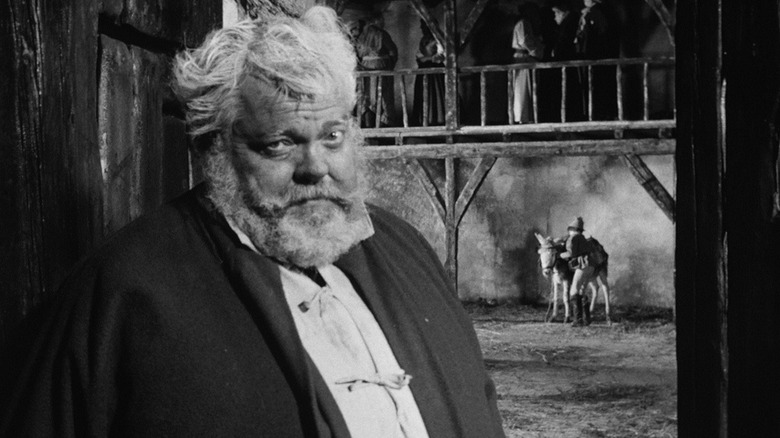
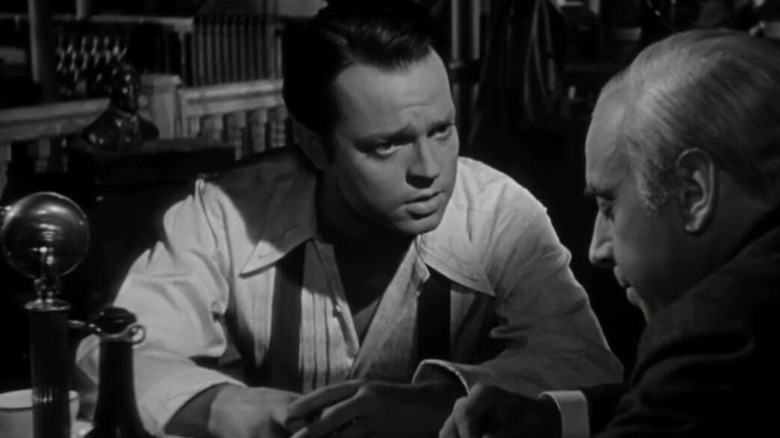
Read more of this story at Slashdot.