Shared posts

13 Sep 01:22

PC DOS 1.1 From Scratch

by Michal Necasek

A number of years ago, the Computer History Museum together with Microsoft released the source code for MS-DOS 1.25 (very close to PC DOS 1.1) and MS-DOS 2.11. I never did anything with it beyond glancing at the code, in no small part because the release was rather poorly organized.

PC DOS 1.1 rebuilding itself

Now I finally decided to look at the code for DOS 1.1 and see how far I could get with it. For both DOS 1.1 and 2.0, there are ‘object’ and ‘source’ directories. The ‘object’ directory for DOS 1.1 simply contains a copy of PC DOS 1.1, which is not particularly revealing or useful on its own (and strictly speaking I’m not even sure why the CHM thought it could publish those files).

The ‘source’ directory is much more interesting and contains the following files:

05/09/1983 09:59 AM   63,781 ASM.ASM
05/17/1983 06:19 PM   67,064 COMMAND.ASM
07/02/1982 11:33 AM    3,625 HEX2BIN.ASM
08/03/1982 12:29 AM   36,882 IO.ASM
05/17/1983 06:15 PM  114,253 MSDOS.ASM
05/17/1983 06:20 PM      649 STDDOS.ASM
07/01/1982 11:54 PM   16,223 TRANS.ASM

This turns out to be an interesting mix, and an included 2013 e-mail from Tim Paterson explains its origin: Those files are the source code for what SCP (Seattle Computer Products) shipped to its customers. ASM, HEX2BIN, and TRANS were SCP’s development tools used for initial DOS development. MSDOS.ASM and COMMAND.ASM are source code for core DOS components. IO.ASM is source code for SCP’s IO.SYS (i.e. IBMBIO.COM equivalent).

Macros called MSVER and IBMVER are used to build either IBM-style or Microsoft-style COMMAND.COM and DOS kernel (MSDOS.SYS/IBMBIO.COM). Interestingly, MSDOS.ASM and COMMAND.ASM are clearly intended to be assembled with MASM, not with the included SCP assembler. IO.ASM on the other hand is written for SCP’s ASM. It can be assumed that at some point around 1982, Microsoft converted the DOS kernel and COMMAND.COM from SCP’s assembler to MASM.

The obvious gaping hole is the lack of any source code for IBMBIO.COM. I do not know exactly what arrangement IBM and Microsoft had at the time, but in the days of DOS 1.x and 2.x OEMs did not get the source code for IBMBIO.COM/IO.SYS suitable for PC compatibles.

I toyed with the idea of writing my own IBMBIO.COM replacement, but eventually gave up because it’s not a totally trivial piece of code and I had no real documentation to work with (until much later). The MSDOS.ASM source code obviously uses the IBMBIO interface, but makes no attempt to document it. The provided IO.ASM source is quite useful, but SCP’s hardware was different enough from the IBM PC that it is of limited utility.

So, disassembler it was, and I produced reconstructed source code for PC DOS 1.1 IBMBIO.COM. Actually assembling it turned out to be a bit of an adventure; more on that below.

COMMAND.COM

Building COMMAND.COM was not difficult once I found the right assembler. Very quickly I established that although it must have been originally written for SCP’s ASM, the COMMAND.COM source used numerous directives (e.g. SEGMENT, GROUP) that ASM does not support. MASM was the obvious suspect and after going through a couple of MASM versions, MASM 1.00 from 1982 looked like a good match (IBM’s MASM 1.0 appears to work as well, but its runtime suffers from bugs which may cause MASM to hang).

The CHM source code for COMMAND.COM contains the following section:

IBMVER  EQU     FALSE   ;Switch to build IBM version of Command
MSVER   EQU     TRUE    ;Switch to build MS-DOS version of Command

HIGHMEM EQU     TRUE    ;Run resident part above transient (high memory)

This needs to be flipped around to build an IBM style COMMAND.COM, i.e. IBMVER must be TRUE and MSVER and HIGHMEM must be FALSE. Note that the code can be built as is to produce a Microsoft-style COMMAND.COM which does run on top of IBMBIO.COM and IBMDOS.COM, but exhibits numerous differences.

COMMAND.COM can be built as follows:

MASM COMMAND;
LINK COMMAND;
EXE2BIN COMMAND .COM

The result of this is rather interesting. The fresh COMMAND.COM is 4,959 bytes long, just like the one in PC DOS 1.1, and it is almost identical. There is a three byte difference at offset 161h in the file, which corresponds to the following line in the source code:

MOV     [COMFCB],AL             ;Use default drive

In the COMMAND.COM shipped with PC DOS 1.1, that instruction is not exactly missing but rather replaced with NOPs. That strongly suggests someone at either IBM or Microsoft patched COMMAND.COM after it was built, rather than removing the line from source code and rebuilding.

The fact that the file was otherwise identical is good evidence that Microsoft in fact did use MASM 1.00 or something very close.

IBMDOS.COM

Reconstructing the PC DOS 1.1 version of IBMDOS.COM was a little more involved. As Tim Paterson’s e-mail explains, the provided source code is MS-DOS 1.25, but PC DOS 1.1 corresponds to MS-DOS 1.24. The revision history in MSDOS.ASM shows:

; 1.25 03/03/82 Put marker (00) at end of directory to speed searches

The changes are not identified in the source code, so I had to disassemble IBMDOS.COM and readjust the source code to match. That took some time even though the resulting modifications turned out to be fairly small.

Once again the assembly had to be modified to set MSVER FALSE and IBM TRUE (with the HIGHMEM and DSKTEST switches remaining FALSE).

Once this was done, I ended up with an IBMDOS.COM file that was 6,076 bytes long, while the PC DOS 1.1 original is 6,400 bytes long (an exact multiple of 256 but not a multiple of 512). The first 6,076 bytes were identical, but at this point I do not know why IBM’s version is longer. The extra bytes in IBM’s file are mostly zeros, but there’s also a hundred bytes or so of what appears to be junk, more or less random data copied from a buffer that hadn’t been zeroed.

That said, my shorter IBMDOS.COM appears to be working just fine. The padding at the end of IBMDOS.COM that IBM shipped should have no functional significance.

IBMBIO.COM

Although I had no source code for IBMBIO.COM at all, I did have SCP’s IO.ASM, as well as this very handy document.

My first attempt was to produce IBMBIO.ASM that could be built with SCP’s ASM. That turned out to be… interesting. SCP’s ASM uses a syntax that is not unlike MASM and other PC assemblers, but exhibits quite a few differences.

For example, ‘SHL AL,1’ must be coded simply as ‘SHL AL’, leaving out the immediate. On the other hand, ‘MUL CX’ must be coded as ‘MUL AX,CX’, explicitly mentioning the accumulator.

Unlike MASM, SCP’s assembler does not try to be clever and guess what ‘MOV AX,LABEL’ might mean. In ASM, it means ‘move offset of LABEL into AX’. To move the word at LABEL into AX, one must write ‘MOV AX,[LABEL]’.

To resolve size ambiguity, ASM does not use the BYTE PTR or WORD PTR syntax but rather B or W pseudo-operands, such as ‘MOV B,[FOO],5’ to indicate a byte-sized operation is intended.

Segment overrides are coded differently and instead of ‘MOV ES:[BX],AX’, one must write ‘SEG ES’ as a separate “instruction”, followed by ‘MOV [BX],AX’. This reflects the fact that segment overrides are encoded as prefixes separate from the instruction itself.

Some forms of the XCHG instruction ended up being backwards, e.g. ‘XCHG BX,SI’ was came out as what would be written in MASM as ‘XCHG SI,BX’. This has no impact on the behavior of the code and of course without seeing the original source, I don’t know how the XCHG was written.

After massaging the source code, I was left with a curious problem. Instructions such as ‘CMP DL,100’ ended up with a different encoding, namely the ‘S’ (sign extend) bit was set. Since the instruction does not set the ‘W’ (word data) bit, the ‘S’ bit is irrelevant. I was able to confuse ASM into producing the same encoding as found in IBMBIO.COM by using ‘CMP DL,100-256’, which takes advantage of a quirk in SCP’s ASM. But in this case, it’s reasonably certain that the original source code did not contain such weird constructs.

In the end, I convinced myself that SCP’s ASM was not what was used to build IBMBIO.COM in PC DOS 1.1. So I went ahead and converted the source code back to MASM style, which was not nearly as straightforward as I thought it’d be and I learned much about MASM’s phase errors and similar nonsense. I also gained appreciation for why so many programmers disliked MASM and why TASM and other assemblers quickly gained a following.

I was fairly certain that MASM was used to build IBMBIO.COM because various quirks matched exactly, such as pointless NOPs after certain MOV instructions (see here for an explanation where those come from).

I was able to re-create IBMBIO.ASM that produced an exact match for IBMBIO.COM in PC DOS 1.1, although again there was some random-looking junk in the middle and perhaps extra zeros at the end.

DOS Boot Notes

While reconstructing IBMDOS.COM, I was forced to acquaint myself closer with how the PC DOS 1.1 boot process works.

The files IBMBIO.COM and IBMDOS.COM must be the first two files on a bootable floppy, in that order, and stored in consecutive sectors right after the end of the root directory. The boot sector does not fully parse the directory entries but verifies that IBMBIO.COM and IBMDOS.COM are the first two files. The boot sector “knows” that the root directory is on sector 4 of the disk, right after the boot sector (at sector 1) and two one-sector copies of the FAT. This is true for both single-sided 160K and double-sided 320K floppies.

After that, the boot sector loads the first 20 sectors (10 KB) from the disk’s data area as a single blob starting at address 60:0. The assumption is that 10 KB covers all of IBMBIO.COM and IBMDOS.COM (and anything extra won’t cause harm). Keep in mind that the boot sector itself is loaded at 0:7C00, just below 32K. The boot sector then jumps to 60:0.

IBMBIO.COM (further just IBMBIO) is split into several sections. Near the the end (offset 650h) there’s early initialization code which does the following:

  • Install a DPT (Disk Parameter Table) at 50:70 and point interrupt vector 1Eh at it
  • Jump into the second initialization phase in the middle of IBMBIO

The second initialization stage is in a 512-byte area which later becomes a disk buffer. It does the following:

  • Set stack pointer to 0:600, i.e. 60:0, right below IBMBIO
  • Reset disks (INT 13h/00)
  • Initialize serial ports and printer
  • Install interrupt vectors 1, 3, and 4
  • Clear print screen flag at 50:0
  • Move 8KB down from E0:0 to BF:0; this is IBMDOS.COM, overwriting the no longer needed tail of IBMBIO
  • Detect installed drives and memory
  • Call the initialization entry point at the beginning of relocated IBMDOS.COM
  • DOS initialization returns with DS pointing to segment where COMMAND.COM will load

At this point, DOS will be functional but IBMBIO isn’t done yet. It further does the following:

  • Install interrupt vectors 25h/26h (absolute disk read/write)
  • Set DOS DTA (Disk Transfer Area) to DS:100h, just after the PSP
  • Open COMMAND.COM using a statically defined FCB
  • Read the entire COMMAND.COM file
  • Set DOS DTA to DS:80h as programs expect by default
  • Jump to DS:100h (start of COMMAND.COM code)

Now the IBMBIO initialization is done. Again, the entire second stage runs out of a 512-byte bounce buffer which is later used to handle DMA 64K boundary crossing.

What’s the deal with DMA 64K boundary crossings? To recap, the floppy drive in the IBM PC uses DMA, but the DMA controller can only access memory within a single 64K aligned block during one operation. If DOS needs to read or write a sector to/from memory that crosses a 64K boundary, IBMBIO needs to use the bounce buffer.

How can this work, you ask? How can the initialization code read a random COMMAND.COM file while residing inside a bounce buffer that disk reads may need? Easy: In PC DOS 1.1, it is guaranteed that COMMAND.COM will be loaded within the first 64K. In fact PC DOS 1.1 needs much less than 32K of memory to run.

That said, if the IBM-provided COMMAND.COM were replaced with an user-supplied executable that is 60 or so kilobytes big, DOS boot might fail due to the IBMBIO initialization code overwriting itself while handling a 64K DMA boundary crossing. This is very unlikely to have caused problems in practice.

Once initialization is completed, IBMBIO takes up less than 1.5K memory.

It is noteworthy but unsurprising that the interface “exported” by IBMBIO for use by DOS resembles a CP/M BIOS module. There’s a jump table at the beginning of IBMIO which DOS calls into using far calls. Interestingly, CP/M-86 merged the BIOS, BDOS, and CCP (COMMAND.COM equivalent) into a single CPM.SYS module.

The boot process also changed at some point in the early life of DOS (aka QDOS/86-DOS). Initially, disks had a large reserved area (typically two tracks or so) at the beginning, containing the boot sector and the BIOS + DOS components. This was changed so that IO.SYS/IBMBIO.COM and MSDOS.SYS/IBMDOS.COM would show up as files and the reserved area was reduced to the bare minimum, i.e. one boot sector. The internal logic changed very little however, and the BIOS and DOS files still had to occupy sequential, consecutive sectors at the beginning of the disk’s data area. Which is why they were marked as system/hidden to avoid being moved/fragmented.

That new arrangement changed very little for the boot loader, which only needed to start loading from a different sector, but had two advantages: The system files were easy to replace (as long as the newer files didn’t occupy more clusters on the disk), and they became optional. A non-system floppy didn’t need to waste space with boot files, which was roughly 5% of its capacity (about 8 K out of 160 K).

The Result

I was able to put together a bootable 320K floppy running something very close to PC DOS 1.1 with source code and tools that allow rebuilding IBMBIO.COM, IBMDOS.COM, and COMMAND.COM. Batch files (MKBIO.BAT, MKDOS.BAT, MKCOM.BAT) are provided to simplify the effort. Everything is done “in place” with very little room left on the disk.

The floppy (image) should run on any PC compatible or emulator.

Note that when building IBMBIO.COM on top of DOS 1.x, the user must enter ’60’ when prompted “Fix-ups needed – base segment (hex):”. When building on DOS 2.0 or later, file redirection does that automatically… but DOS 1.x did not support that yet. I do not know if it’s possible to write the code such that MASM/LINK would do the work that EXE2BIN otherwise needs to do.

In MSDOS.ASM, there are several instances of ‘IFDEF NEWVER’ bracketing code that was apparently added in DOS 1.25. Since NEWVER is not defined by default, code corresponding to DOS 1.24 is built, which happens to match PC DOS 1.1.

A version of MASM 1.00 dated 1-05-82 is used to build the source code. This is about the oldest MASM version I could find which is capable of building the source without errors. It also happens to be older than the source code, which means it could have been used back in the day, although it is not known what tools exactly Microsoft used, or if the DOS components were typically built on a PC at all. Clearly they at least could have been.

Happy retro development!
12 Sep 16:51

Malignant – Review [HBO Max] (3/5)

by Karina "ScreamQueen" Adelgaard
10 Sep 17:25

The first Psychonauts gets an unofficial 4K Texture Pack

by John Papadopoulos

Microsoft and Double Fine recently released Psychonauts 2. However, I’m pretty sure that some of you have not played the first game. So, if you are one of those that haven’t played it, you can go ahead and do so thanks to Reshade Ray Tracing and this 4K Texture Pack. Created by modder ‘merendas235’, this … Continue reading The first Psychonauts gets an unofficial 4K Texture Pack →

The post The first Psychonauts gets an unofficial 4K Texture Pack appeared first on DSOGaming.

10 Sep 16:46

No Man Of God Star Elijah Wood On What It Was Like To Play Ted Bundy's 'Best Friend' [Interview]

by Jack Giroux

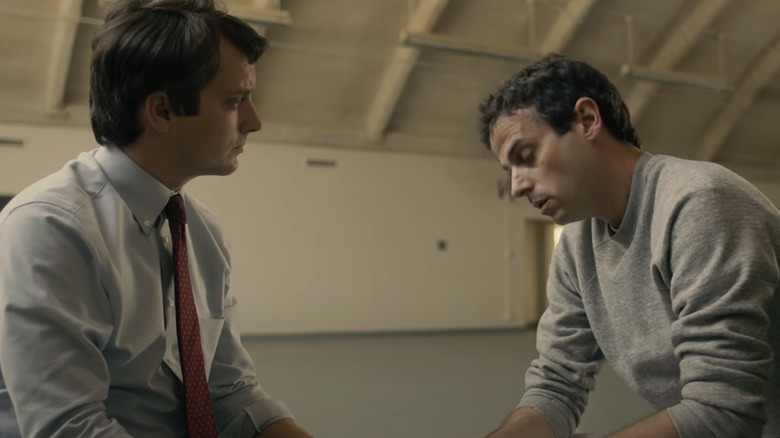
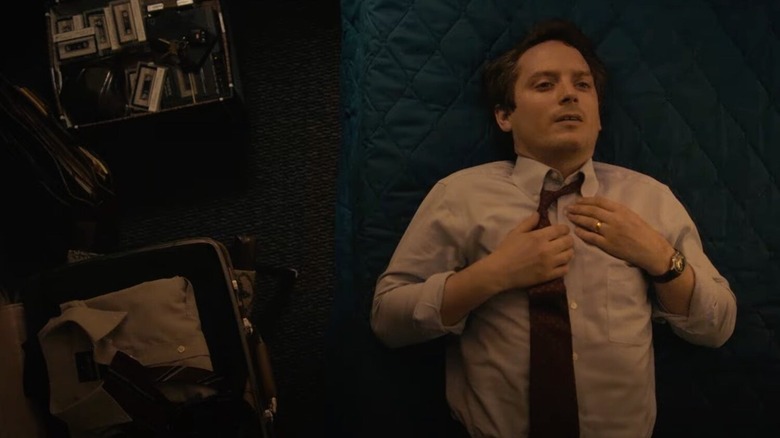
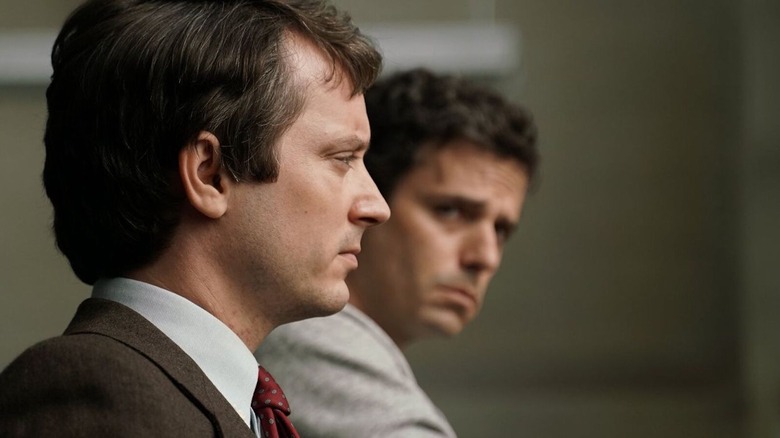
Elijah Wood has an elaborate dance to perform in Amber Sealey's "No Man of God." The actor and producer plays FBI agent Bill Hagmaier, who goes toe-to-toe with serial killer Ted Bundy (Luke Kirby) before his execution. The two engage in long conversations without revealing all their cards to each other. A lot is spoken and unspoken by the two men on the opposite sides of the law. The same applies to Wood and Kirby. 

"No Man of God," which is now on VOD, is another film produced by Wood. For the last 11 years, Wood's production company SpectreVision has made a handful of genre favorites, including the Nicolas Cage-led "Mandy." Recently, the actor and produced told us about the company's vision for filmmakers, as well as his experience of playing Ted Bundy's "best friend" in this new horror-tinged drama.

"Ted Bundy Was Really The Tip Of The Iceberg."

This is a very challenging movie. Pushes your buttons, just being that close to evil for such prolonged periods of time.

Yeah, yeah. Oh, that's really interesting. It's somewhat because the narrative is relatively naked. It's sparse. It's two men in a room for the majority of the film, and I think you're just hearing these conversations and these are conversations that happened very much like they are depicted in the film. I mean, they're based on recollections and transcripts, so it is kind of confronting, because there's no real artifice to it. It's just what is happening psychologically as you're understanding and witnessing it. So, yeah, I don't know if I would say that's the desired effect, but it certainly is an understandable effect in sitting with someone like that for a long period of time.

It throws the audience and you into the deep end, too. The first conversation, I'm not sure how many pages that was.

Oh boy.

Exactly. How'd you prepare for that scene?

Just the technical aspect was easily the most challenging I've had as an actor for just sheer volume of dialogue and work. Each of those meetings is somewhere between, well, I don't know, 10 to 15 pages, something like that. And an average scene in the film runs anywhere from two to six pages, so just the sheer volume of work between the two of us and unending takes of these very, very long extended conversations was just a lot to prepare for.

It was unique, because we didn't have the ability to prepare in person, because we were right in the middle of a pandemic, and so all of our rehearsals were done on Zoom. And actually Luke and I, prior to every work week, because we had rehearsals on Zoom with Amber working through each of those conversations and sort of the intention, what was being said, what wasn't being said in those conversations, which was so much for us to work with, which was a joy to sort of find all of that.

It was just the sheer volume of the work and getting our dialogue. So every weekend, for the most part prior to the week of work, we would run through all of the big scenes together on Zoom for like an hour or so just to get it, because we have just so much to learn.

But it was also, having been in lockdown essentially for about, I guess it would have been six months almost at that point, it was the first time any of us had been in a creative process in a long time. So it was also really joyful. As dark as the material is and as intense as it is, it was also really nice to go to work every day, and be amongst a crew of people, and work opposite Luke, who is so incredible, and engage in that creative process. It was really fun, too.

How much does Bill actually reveal himself to Ted Bundy, do you think? Is he playing a role or being genuine in those conversations?

I think you're seeing the real him. I think there's a performance from both of them for each other, but I do think you're getting a sense of who Bill really is in those scenes. But it is a dance, and it would have been for Bill at the time. The thing about Ted is that he didn't trust law enforcement, and Ted would slip up, so little things would happen.

An interesting anecdote about Bill and how he dealt with Ted, and for instance, like whenever Ted would refer to murders, he would refer to them in a third person, as if he didn't do them. So he would always be like this person or that person, or if I were to do this, this is what I would do, but he would rarely say I, and occasionally he would slip up and just forget himself, because of how comfortable he was around Bill, and he would say I. And what Bill would do, because he knew that that would totally throw it if Ted sensed that Bill had heard him refer, like slip up that way, which would have been a sign of weakness and also an admission was guilt, it would have thrown the whole thing off. So in those moments, Bill would pretend that the tape had stopped or he would get distracted by something to let the moment pass, and then Ted would readjust and get back into the story.

I guess that's to illustrate the kind of, not manipulation, but the tactics that were being used weren't necessarily like he was putting on a different version of himself. He was being himself, but just having to dance around the psychological needs of this particular individual. It was fascinating to play, and certainly daunting. Bill's alive, he's still alive, an incredible career that extends way beyond Ted Bundy. Ted Bundy was really the tip of the iceberg. Bill has done so much for so many people over the years. I did get to speak with him, which was incredibly helpful.

Obviously we would, under different circumstances, if we were not shooting during the pandemic, I would have loved to have gone back east and spent time with him. I wasn't afforded that opportunity, unfortunately, but that was always the plan. We were supposed to shoot this in April of last year and the pandemic pushed it, but we were going to go out and spend time with Bill, which would have been really, really lovely. But he was incredible as a resource and availed himself so much to not only me, but to Luke, as well, for specific Ted questions that he might have, and also so much for Amber just for accuracy. Which was amazing.

"He Could Tell That He Was There For Pure Reasons."

When you first read the script or were talking to C. Robert Cargill about it, did you see it as a movie to potentially produce or to star in?

Only as a producer. Yeah, it wasn't until like three, four years down the road that my producing partners kind of brought it to my attention, which is often the case. I never read material that's brought to us from the perspective of working on it as an actor. I'm only ever thinking about producing it. Every single time it's always been my producing partners that have sort of shaken me and kind of go, "Well, you can look at this. Maybe you should do this." Which is what happened with this. But no, we were just excited at the notion of this part of Ted's life, the script that detailed a part of Ted's life in a relationship that we weren't familiar with was really interesting, that had nothing to do with the trial, nothing to do with his murders, but didn't depict the murders. It was specifically this really pared down almost, like, Ted Bundy meets "Frost/Nixon." Just a series of conversations and what transpires in those conversations. And that was just so fascinating, especially because it was based on the real conversations that the two of them had had.

How do you think Bill perceived Ted calling him his best friend?

That idea of Ted believing at the end of his life that Bill was his best friend is a really fascinating insight into Ted, as well. What it really says, I mean, Bill wasn't necessarily shocked, although Bill certainly didn't feel reciprocal. I know he didn't consider Ted to be his best friend, but what that says about Ted is that Bill just listened. What Bill did for Ted, and also Bill got a lot out of that, too, because he was able to finally get some answers for some of these families and for some of the law enforcement handling various murder cases, so there was obviously an agenda. On top of that, the agenda also was for the force to take what was learned psychologically and apply that to profiling in the future. Of course, he got that in spades.

But what Bill did for Ted was just listen. Ted was used to law enforcement, FBI wanting something out of him very specifically, and more often than not with an agenda to write a book later or profit off of that relationship. Ted knew that Bill was being honest when he said that. I think that's why at the end of his life, he considered Bill to be his best friend, because he could tell that he was there for pure reasons. That he wasn't there to get anything out of him, and he genuinely was curious from one human being to another human being. And it was so much in fact, that Ted willed all of his earthly possessions to him, which wasn't a whole lot at the end of his life. So Bill was briefly given all of his earthly possessions, which he then, I think he gave to Ted's sister, or a family member. I mean because he didn't feel like he earned that or wanted to keep those things. He didn't have any emotional attachment to Ted Bundy's things. It just shows how deep that relationship ran for Ted.

You've said before with acting and producing, you want to keep church and state separate. Why is that?

Well, first off, I didn't want to initially, when we started the company, SpectreVision specifically, I didn't want it to be seen outwardly as a sort of vanity project for me to find projects for myself in acting. I really wanted that the merits of the project be determined based on the work that we made and not based on me, and that the identity of the company was the films and the filmmakers, not the people behind the team. It was really important to me. Out of the gate, that was my perspective.

And then the identity takes on a life of its own after a number of films and people have a sense of what it is that you are, although very early on I was in a movie called Cooties, maybe it was the second movie we made.

I also just genuinely don't think about it. It's not a personal mandate anymore. When we get to submissions, or if we're thinking about filmmakers that we want to work with or reach out to them, I'm only ever just thinking about working on their films as a producer. It's not even an effort anymore. I always just have that hat on, but I have to actively take that hat off to think about it from a different perspective.

But again, initially it was really to, out of the gate, not confuse what we were trying to do with being an avenue specifically for me to work on films as an actor. That was the primary thing at the beginning, and then I'm just used to reading scripts from that perspective now.

"No Man of God" is currently available on VOD.

Read this next: 'No Man Of God' Tasks Elijah Wood With Interviewing Ted Bundy

The post No Man of God Star Elijah Wood on What It Was Like to Play Ted Bundy's 'Best Friend' [Interview] appeared first on /Film.

10 Sep 06:23

In Search of Linux Laptops? Check these 6 Places to Get Your Laptop in 2021

by Suparna Ganguly
Linux Laptops

Are you in search of Linux laptops? This article takes you through 6 different places that offer the best Linux laptops. So get prepared to choose your Linux laptop in 2021.

Dell

When it comes to laptops, the first name that comes to my mind is Dell. For over 20 years Dell has been selling high-end Linux laptops. In a Dell store, you can get Ubuntu and Redhat Enterprise Linux laptops. These laptops are built to meet the needs of developers, businesses, and sysadmins.

For developers, who travel a lot, XPS 13 Developer Edition would be the confirmed best choice. Dell XPS comes at an expensive cost of around $1,000. So, if you’re in search of something less expensive, you can check Dell Inspiron laptops. Dell’s Precision workstations with RHEL or Ubuntu are designed for small business owners or CG professionals.

Side Note: Dell doesn’t have a separate section for Linux laptops. Type Ubuntu in the search to get a view of all its laptops with Linux preinstalled.

Slimbook

Slimbook is well known for its thin, rigid, and light durable laptops starting at a reasonable price of €930 (approx $1,075). These come with a nice screen, solid battery life, powerful CPU, and very good speakers.

This brand is from Spain. Slimbook came ahead of its competitors launching the first KDE laptops.

Slimbook brings laptops with a good variety of popular Linux distros, such as KDE Neon, Ubuntu, Ubuntu MATE, Linux Mint, Kubuntu. Additionally, their laptops have two Spanish Linux distros – Max and Lliurex. You can choose Windows OS as well with their laptops, but for that, additional costs are there.

Slimbook offers desktop systems too. So, if you ever need desktops, check it here

System76 

System76’s Linux laptops are very well built, powerful, and extremely portable. If you are a software developer, you travel a lot, and you’re in search of a laptop with 32G RAM and 1T SSD, then go for System76.

System76 laptops used to be Ubuntu-powered, initially. Later on, in 2017, this US-based company released their own Linux distro, called the Pop! OS. Pop OS is designed using Ubuntu. After that, Pop became the default OS with Ubuntu being still available.

10 Sep 06:22

You Don't Need to Burn off Your Fingertips (and Other Biometric Authentication Myths)

by Troy Hunt
You Don't Need to Burn off Your Fingertips (and Other Biometric Authentication Myths)

111 years ago almost to the day, a murder was committed which ultimately led to the first criminal trial to use fingerprints as evidence. We've all since watched enough crime shows to understand that fingerprints are unique personal biometric attributes and to date, no two people have ever been found to have a matching set. As technology has evolved, fingers (and palms and irises and faces) have increasingly been used as a means of biometric authentication. I'm writing this on a PC that uses a Verifi fingerprint reader. I'll probably continue to draft it from a comfy spot later on using my Lenovo laptop that has a built in reader. I'll also go backwards and forward between my iPhone and iPad with Face ID.

But doesn't this all make biometrics like passwords? What happens if someone obtains, say, my fingerprint just like they may obtain my password in a data breach or a phishing attack? I've lost count of the number of times I've heard someone say, "don't use biometrics because you can't change your fingerprints". That's an absurd statement... because you can. There are acids, blowtorches, belt sanders and the good old boxcutter, to name but a few approaches. Thing is though, whilst that may provide (some) benefit to criminals seeking to evade law enforcement matching them up to a scene of a crime, it really provides no benefit whatsoever to those who've had their biometric secrets revealed. So, stop burning off your fingertips, and read on...

Obtaining a Print Versus Obtaining a Password

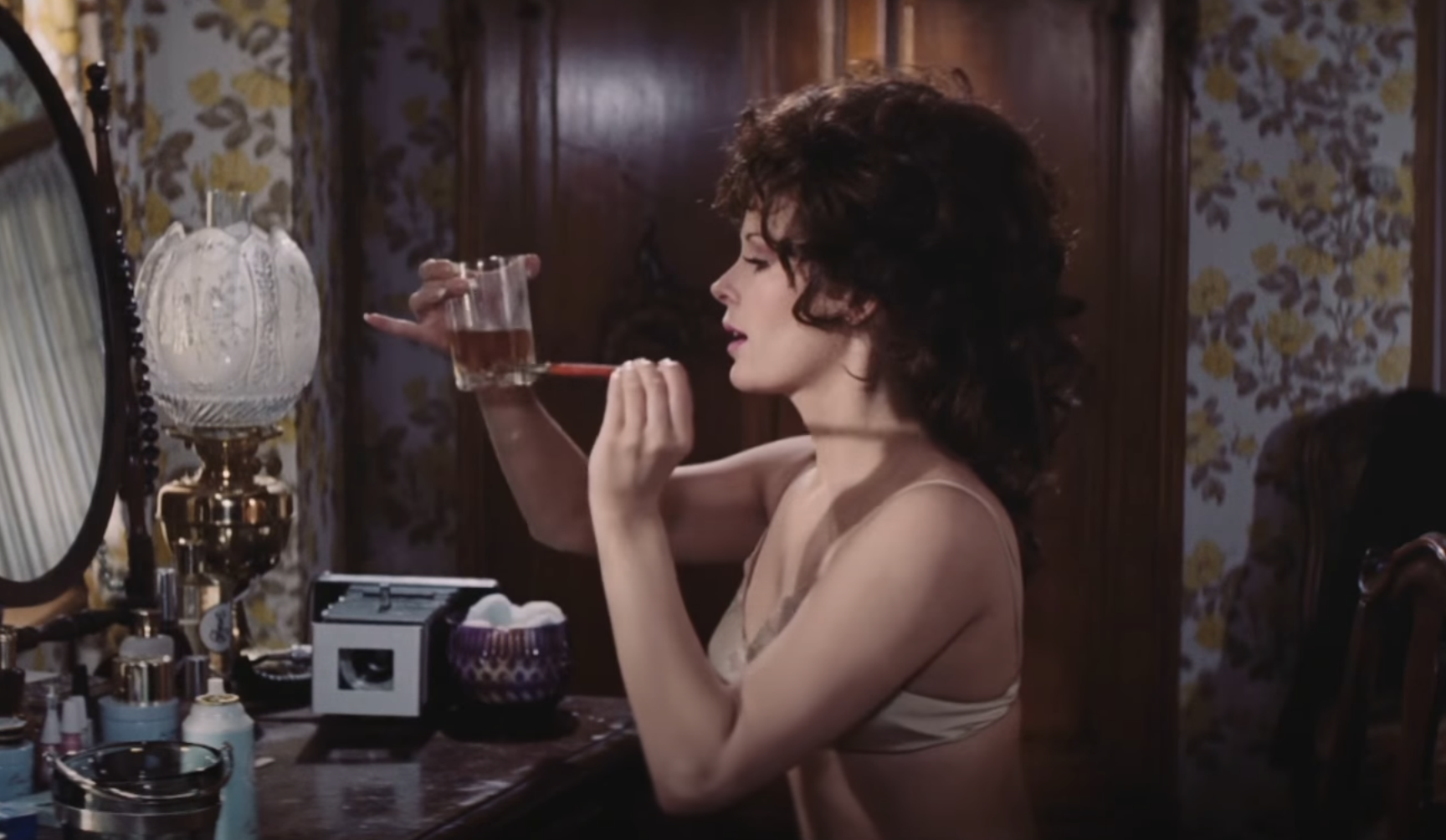
In James Bond's Diamonds Are Forever, there's a scene where 007 arrives at an apartment and is served a drink by a scantily clad villain. She then takes the glass, wanders into a back room, applies a dust to it and snaps a photo whereupon she is able to confirm that the print does indeed belong to who she thinks it does (more on that soon).

You Don't Need to Burn off Your Fingertips (and Other Biometric Authentication Myths)

So, what was required to obtain the print and how does it differ from obtaining a password? Assuming we're attempting to compare them both as means of uniquely identifying an individual, of course. A knowledge of spy tradecraft, specialist equipment and perhaps most importantly, physical presence - she had to obtain the glass with his print on it. A password? Very simple - data breaches, phishing, shoulder-surfing and in many cases, simply guessing. Only one of those requires physical presence with the rest enabling any kid anywhere in the world with an internet connection to grab troves of them with ease. It's trivial to obtain literally billions of passwords associated to usernames.

Using a Print Versus Using a Password

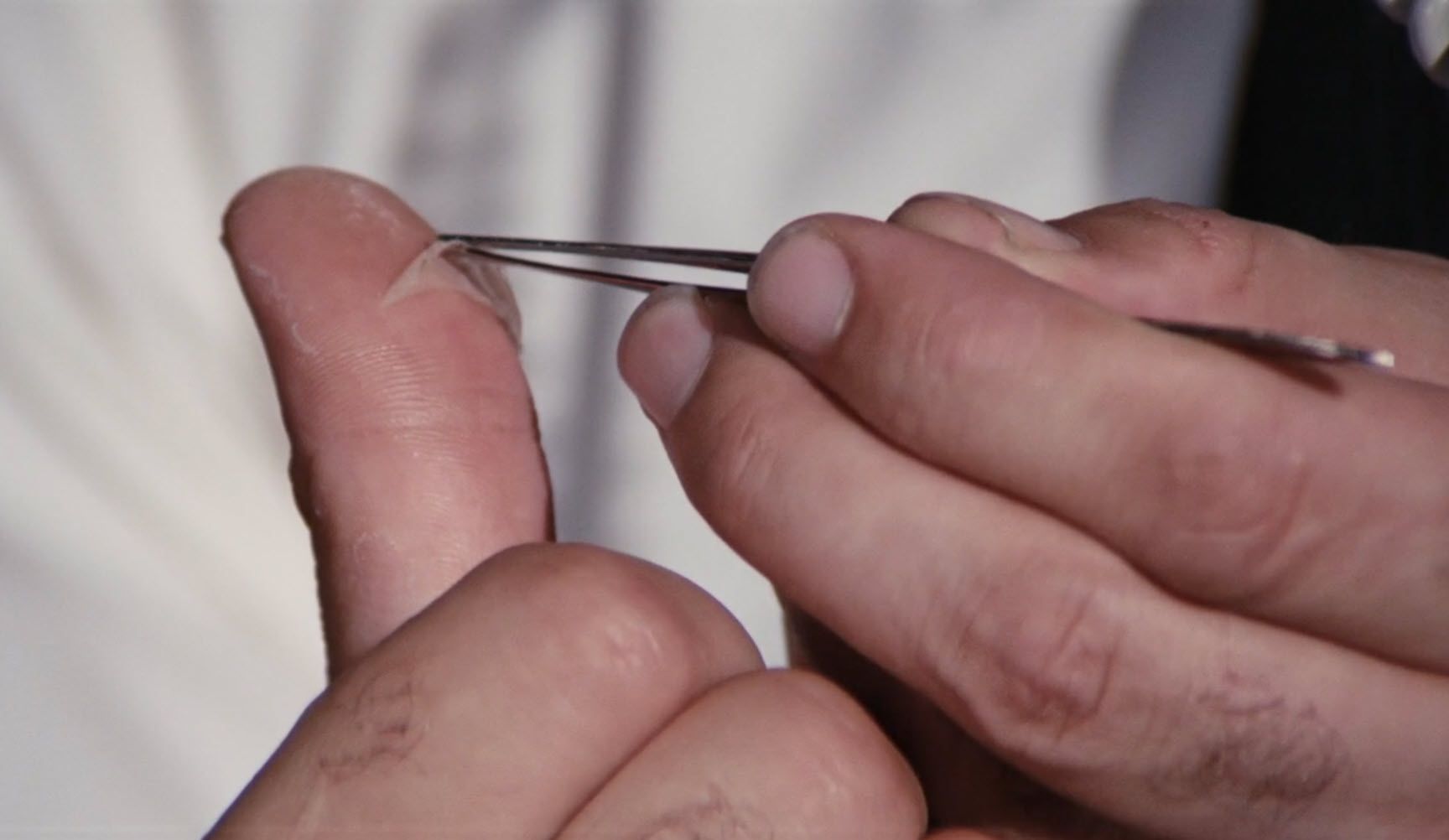
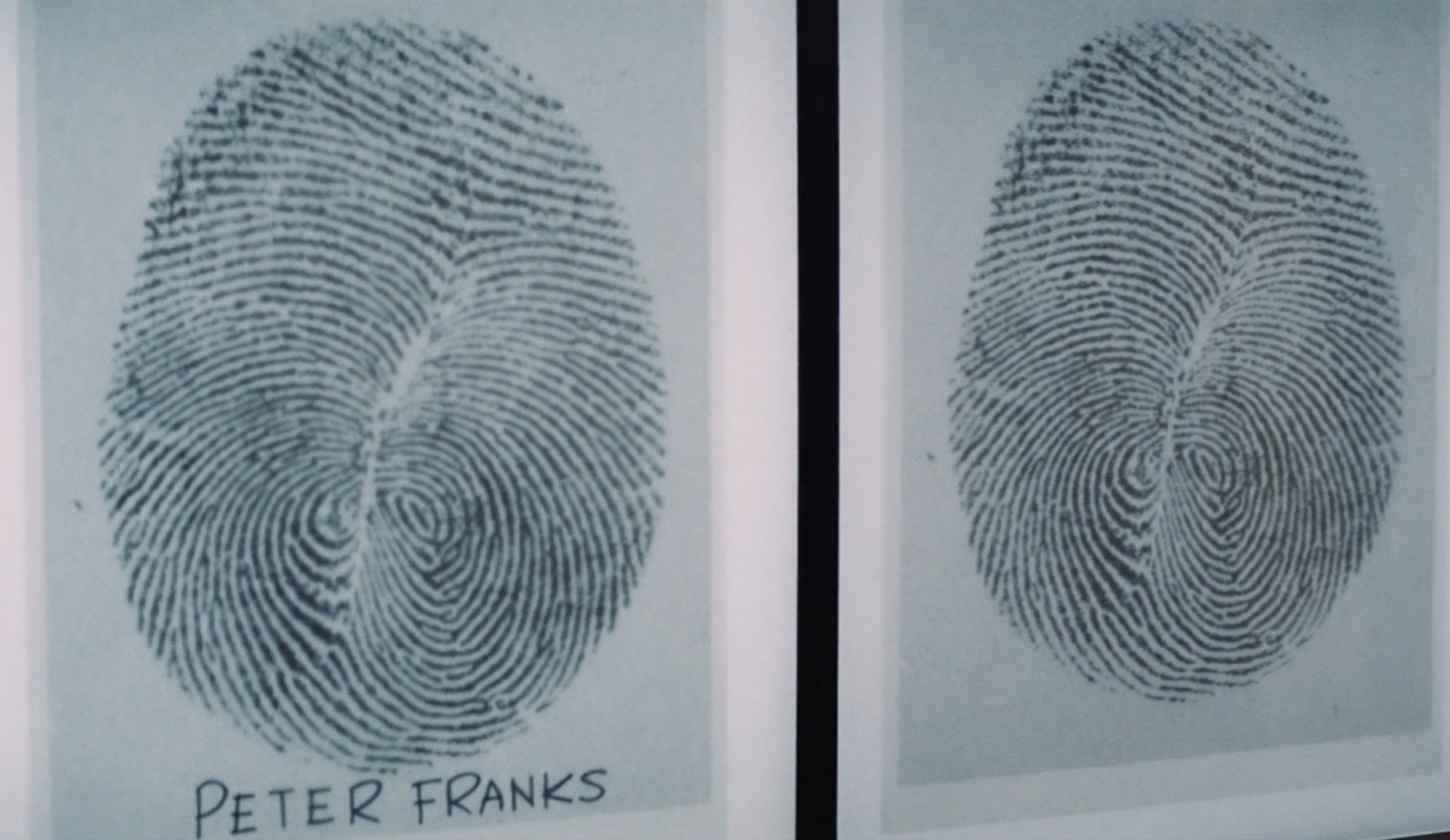
Because he's a clever guy, Bond didn't actually leave his own fingerprints on the glass, he left those of Peter Franks whom he was impersonating. He did this by first obtaining Franks' prints (assumedly using a similar technique to above), then creating very convincing prosthetic fingerprints which were subsequently stuck on over his own:

You Don't Need to Burn off Your Fingertips (and Other Biometric Authentication Myths)

Ok, it was Q who created them and not Bond but hey, when you have the might of MI6 behind you there's some really cool stuff you can do! Which brings me to the point I want to get at here: creating a print that was sufficient for purpose (in this case, fooling the human eye of a Bond villain), took Britain's finest spy agency. (It's also a fictional movie, but I'll come back to the real world shortly.) How does that compare to using a password? My kids know how to use passwords. You see the password, you type it into the right place, and it works! Just because you can obtain a print doesn't mean you can actually do anything useful with it, so let's look closer at verifying it.

Verifying a Print Versus Verifying a Password

Let's do this one the other way around: what's required to verify a password? The one in storage matches the one provided at the time of authentication. That is all. Maybe (hopefully) it's hashed, but it's still the same process and all the verifier ultimately needs to do is reproduce the hash which, given the same input, will produce the same output. And fingerprints? Here's how the Bond villain did the verification:

You Don't Need to Burn off Your Fingertips (and Other Biometric Authentication Myths)

She eyeballed it. That is all. This, arguably, is a weak form of verification in that the relative difficulty of producing a functional copy is low (I know I just mentioned Q having all this MI6-backed sophistication, but this one obviously wasn't a big stretch). And this is a critical component of the discussion around the strength of biometric authentication: how easy is it to fool the verifier?

Google around for "fingerprint scanner hack" and you'll find plenty of material. Stories involving gummy bears are common, as are examples where nice clean prints have been lifted off smooth surfaces such as glass bottles, and there are even examples where a mere photo has been used to then create a prosthetic that can fool a verifier. Which begs the question: how good is the verifier at spotting fakes?

It's a nuanced question; how good is the original print? How good is the prosthetic? How many attempts do you get before the device locks out? And perhaps most importantly, what attributes is the verifier actually reading? I've been mostly focused on fingerprints, but my iThings unlock with my face. Now we're talking about a device that uses a flood illuminator to detect the face combined with an infrared camera in conjunction with a projector that blasts 30,000 invisible dots onto your face. I've previously used a Logitech Brio on my PC with Windows Hello face authentication and like the Apple devices, we're now talking both visual and infrared imaging. All this compared to simply matching 2 strings as is done with password authentication.

Who is Your Adversary?

So, here's where we're presently at: a password can be easily obtained, easily used and easily pass verification. A usable biometric representation is much harder to obtain, much harder to transform into a usable asset and much harder to fool a verifier with. Much harder on all fronts, but not impossible. Which begs another question: who are you worried about? Who's your adversary? Your threat actor? And, most importantly, do they have the sophistication to successfully carry off an attack against biometrics?

My kids, for one. They're sneaky little buggers and I could envisage them observing my password as I type it into my PC. I can't, however, see them having the sophistication to lift a clean print off a glass, melt down a bunch of gummy bears and create a prosthetic that could fool the fingerprint reader on my PC.

Someone who steals my phone off a bar. Criminal elements are everywhere and one moment of opportunity on their behalf and its game over. They could easily have shoulder-surfed and observed me entering my PIN beforehand then it's game over. I can't, however, see them creating some sort of mannequin head with a pulse that can fool Face ID on my phone within a few goes.

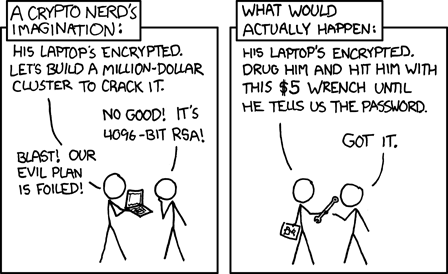
A nation state actor? Yes, and there's several things they could do here. Firstly, they could go all James Bond, call in Q and break through biometric auth. Maybe - it's nontrivial even for a sophisticated actor - but then do they even need to? Maybe instead they go all FBI and San Bernardino and get in even without biometric when there's only a PIN protecting it. Or... they just beat the shit out of you until you unlock the phone for them:

You Don't Need to Burn off Your Fingertips (and Other Biometric Authentication Myths)

Speaking of the authorities, I've often heard the argument from friends in the US that you shouldn't use biometrics as law enforcement can force you to unlock it. Well, if the cops are your threat actor, then don't use biometrics! Instead, just sit in jail for refusing to unlock your PIN-enabled device. Or perhaps they actually can't force you to unlock it anyway. For the vast majority of people, this whole thing about US law enforcement and PIN versus biometrics is a non-event and often ends up with increasingly absurd arguments. In one discussion I had some time back, the person arguing against biometric auth posed the following scenario: "What if you're driving along in your car and the cops are shooting your friend and you're filming it with your phone then they demand you hand over your unlocked phone so they can erase the evidence?!" What? Seriously?! They're going to shoot you too and take your phone, that's what!

Coming back to reality for a moment, the premise is simply this: those that have the capability to bypass biometric authentication are almost certainly not the ones that want to do so with your personal device. The ones that want to do so are unsophisticated and opportunistic. Almost without exception, that's your threat actor.

Side Channel Attacks

A fun one just to establish an important distinction. This video is less than 2 minutes so give it a quick watch:

This is not a biometric flaw, it's a flaw in the relay mechanism. You could put a keypad in place of the fingerprint reader and have precisely the same problem. I raise that here because headlines often conflate the core issue; why go to all the trouble of lifting prints and melting gummy bears when you can just pull out a magnet?! But that's not a biometric flaw 🙂

Unhealthy Security Absolutism

This almost feels like the anti-vaxxer argument; because one in a gazillion people have an adverse reaction to a vaccine, there are those amongst us that claim vaccines are too risky despite the overwhelmingly positive impact they have on health. (These people also aren't real solid with maths.) Likewise, those that latch onto the examples where a weakness in biometrics is demonstrated whilst simultaneous discarding the strengths of the technology are doing themselves a disservice. I've written about unhealthy security absolutism in the past and it boils down to people having a myopic view of a security control where they assess it in isolation without considering how it compares to the alternatives. It's akin to the old Voltaire "Perfect is the enemy of good" aphorism.

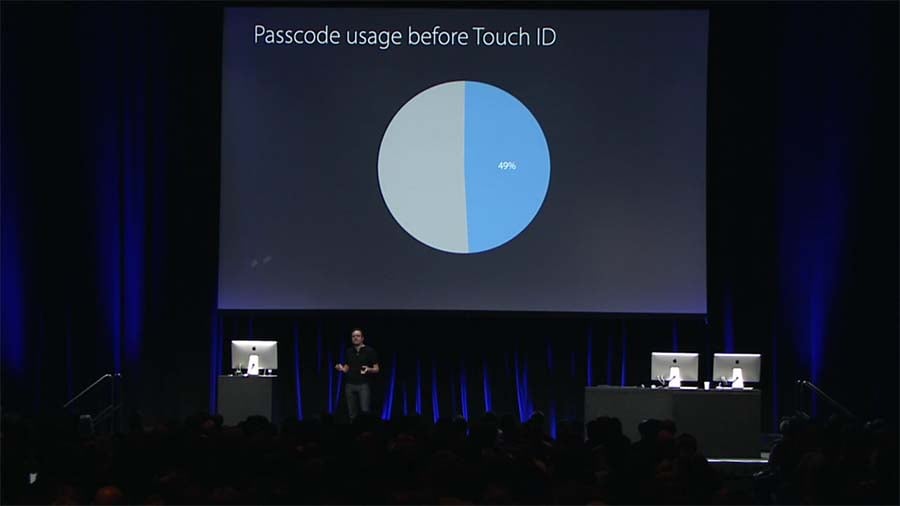
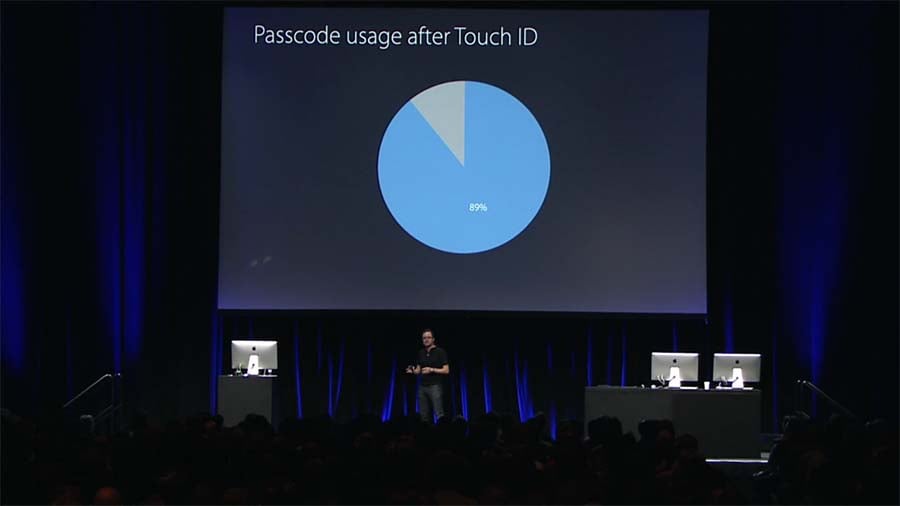
I'll give you a few examples and these are specific to biometric on mobile devices which is where the vast majority of people currently experience auth'ing with their body parts. I wrote about Apple's introduction of Face ID 4 years ago now and in that blog post, I shared these 2 images:

You Don't Need to Burn off Your Fingertips (and Other Biometric Authentication Myths)

Biometrics have made a huge difference to people's willingness to secure their devices because it lowers the barrier to entry. Compared to simply looking at your phone, PINs are a pain in the arse and because of that, people aren't real keen on using them. Sure, you still have a PIN on your iPhone and you'll fall back to that on multiple biometric failures or reboot, but the prevalence with which you need to use it is greatly reduced. (The current face mask situation is impacting that, but it's mitigated by those who also have an Apple Watch.)

And when you do unlock your biometric-enabled device, you can do so in front of people whom you wouldn't want to know your PIN. You can be on public transport, standing in a queue or even sitting down at your biometric-enabled PC with a friend and authenticate without disclosing an easily reusable secret.

The risks associated with biometrics can only ever be fairly assessed when viewed alongside the risks of not using biometrics. If you're only looking at one side of the scale, you're in no position to make a rational argument for the use of one over the other.

Summary

Let me bullet this succinctly:

  1. Obtaining a usable biometric artefact is much harder than obtaining a password
  2. Creating a usable biometric prosthetic is much harder than using a password
  3. Fooling a biometric verifier is much harder than fooling a verifier you can provide a valid password to
  4. Those with the capability to do the above 3 things are not the ones who are most likely to obtain your biometrically protected things

Use biometrics. It incentivises people to secure more things, it's resilient to all sorts of risks passwords are not and as an added bonus, it makes your digital life a whole lot easier 🙂

10 Sep 06:17

Microsoft: Attackers Exploiting Windows Zero-Day Flaw

by BrianKrebs

Microsoft Corp. warns that attackers are exploiting a previously unknown vulnerability in Windows 10 and many Windows Server versions to seize control over PCs when users open a malicious document or visit a booby-trapped website. There is currently no official patch for the flaw, but Microsoft has released recommendations for mitigating the threat.

According to a security advisory from Redmond, the security hole CVE-2021-40444 affects the “MSHTML” component of Internet Explorer (IE) on Windows 10 and many Windows Server versions. IE been slowly abandoned for more recent Windows browsers like Edge, but the same vulnerable component also is used by Microsoft Office applications for rendering web-based content.

“An attacker could craft a malicious ActiveX control to be used by a Microsoft Office document that hosts the browser rendering engine,” Microsoft wrote. “The attacker would then have to convince the user to open the malicious document. Users whose accounts are configured to have fewer user rights on the system could be less impacted than users who operate with administrative user rights.”

Microsoft has not yet released a patch for CVE-2021-40444, but says users can mitigate the threat from this flaw by disabling the installation of all ActiveX controls in IE. Microsoft says the vulnerability is currently being used in targeted attacks, although its advisory credits three different entities with reporting the flaw.

On of the researchers credited — EXPMONsaid on Twitter that it had reproduced the attack on the latest Office 2019 / Office 365 on Windows 10.

“The exploit uses logical flaws so the exploitation is perfectly reliable (& dangerous),” EXPMON tweeted.

Windows users could see an official fix for the bug as soon as September 14, when Microsoft is slated to release its monthly “Patch Tuesday” bundle of security updates.

This year has been a tough one for Windows users and so-called “zero day” threats, which refers to vulnerabilities that are not patched by current versions of the software in question, and are being actively exploited to break into vulnerable computers.

Virtually every month in 2021 so far, Microsoft has been forced to respond to zero-day threats targeting huge swaths of its user base. In fact, by my count May was the only month so far this year that Microsoft didn’t release a patch to fix at least one zero-day attack in Windows or supported software.

Many of those zero-days involve older Microsoft technologies or those that have been retired, like IE11; Microsoft officially retired support for Microsoft Office 365 apps and services on IE11 last month. In July, Microsoft rushed out a fix for the Print Nightmare vulnerability that was present in every supported version of Windows, only to see the patch cause problems for a number of Windows users.

On June’s Patch Tuesday, Microsoft addressed six zero-day security holes. And of course in March, hundreds of thousands of organizations running Microsoft Exchange email servers found those systems compromised with backdoors thanks to four zero-day flaws in Exchange.

10 Sep 06:17

Microsoft Warns of Cross-Account Takeover Bug in Azure Container Instances

by noreply@blogger.com (Ravie Lakshmanan)
Microsoft on Wednesday said it remediated a vulnerability in its Azure Container Instances (ACI) services that could have been weaponized by a malicious actor "to access other customers' information" in what the researchers described as the "first cross-account container takeover in the public cloud." An attacker exploiting the weakness could execute malicious commands on other users' containers
10 Sep 06:01

X.Org Server Adds "AsyncFlipSecondaries" To Deal With Crappy Multi-Monitor Experience

At the moment when running the X.Org Server in a multi-monitor configuration with displays of different refresh rates, it can lead to a poor experience with a variety of visual deficiencies when running an unredirected full-screen window with page-flipping for DRI3/Present. There is now a change that was merged into the X.Org Server with a new "AsyncFlipSecondaries" to improve that experience when running multiple displays of varying refresh rates...
10 Sep 02:20

Spain neglects to rake its forests. 600 people evacuated [Scary]

10 Sep 02:20

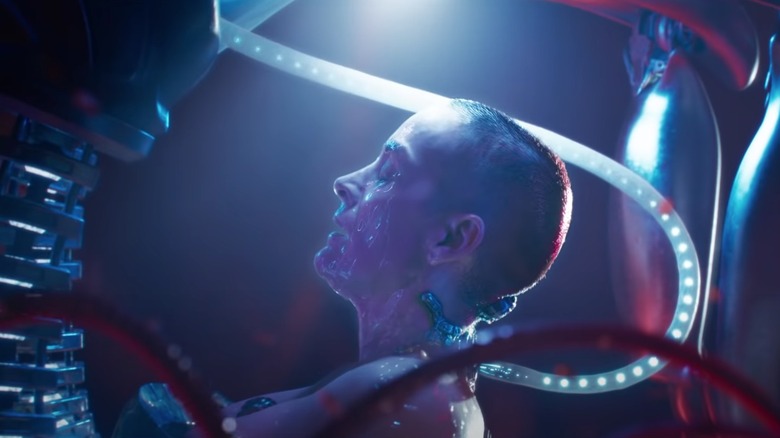
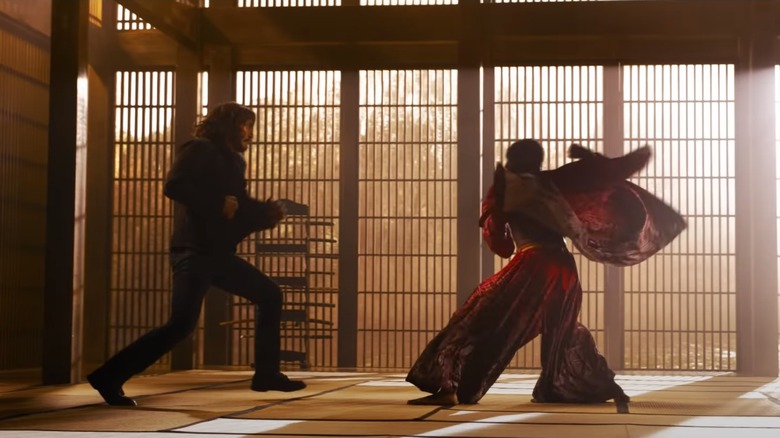
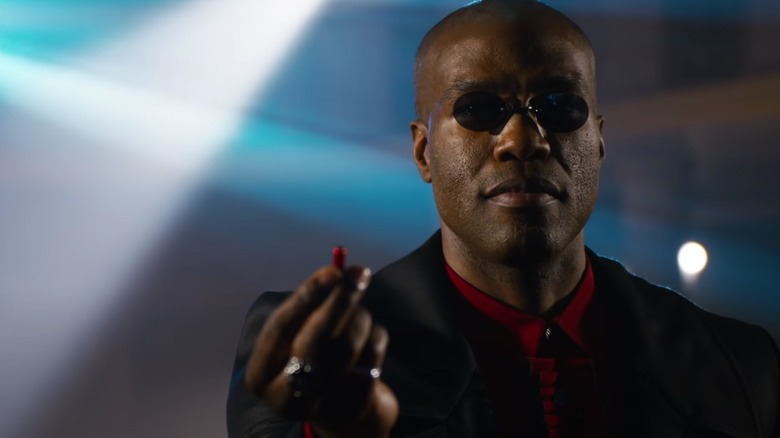
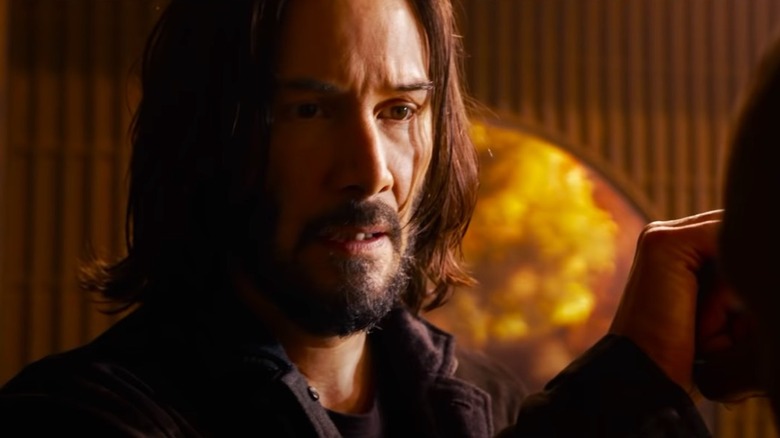
Rapid Fire Yes No Maybe So: "The Matrix Resurrections," "C'mon C'mon," "Don't Look Up" and More

by Christopher James

Nathaniel is heading back from Venice. While he got to watch so many great upcoming films, all we’re left with are trailers. Christopher James is taking over and giving all the recent trailers the Yes No Maybe So treatment.

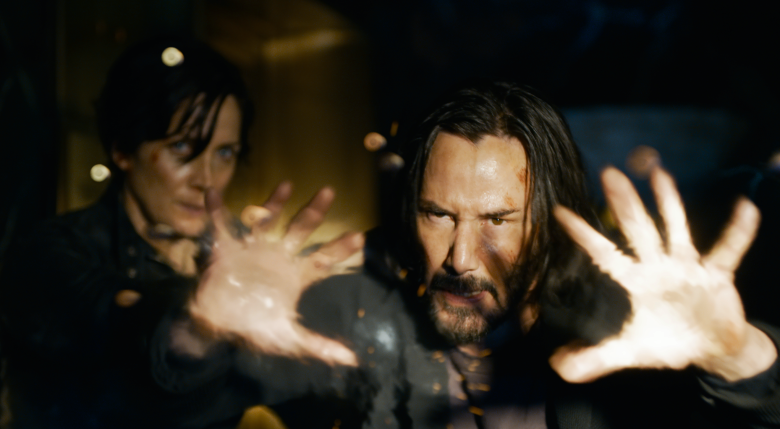
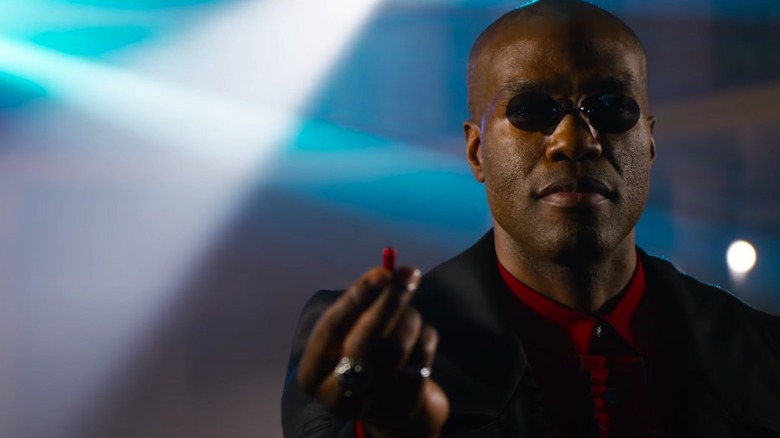
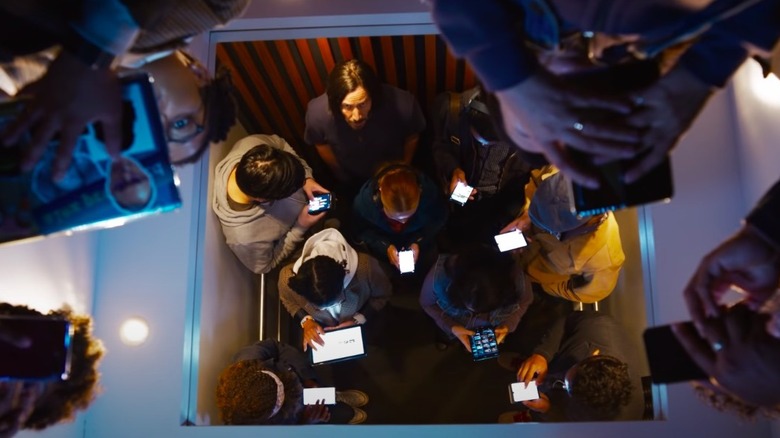
Neo and Trinity are back in the first trailer for "The Matrix Resurrections," opening this December.

By: Christopher James

What a wild week of movie trailers! A lot of films seemed to want to capitalize on festival buzz and release trailers alongside glowing reviews. However, some blockbusters, most notably The Matrix Resurrections, thought this week would be the best week to own the internet. Either which way, it’s nice to be excited to go to the movies again and it looks like there is a lot of great stuff on the horizon.

Let’s do some Yes No Maybe So after the jump…

10 Sep 02:19

Better Data on Ivermectin Is Finally on Its Way

by Adam Rogers
Studies have been small and often not great. The best info so far says don’t use it, get vaccinated, and hang in there for the more promising meds being tested.
10 Sep 02:18

How to Work Two Full-Time Jobs Without Getting in Trouble

by A.A. Newton

According to recent reports from Forbes, the Wall Street Journal, and Business Insider, there’s a new trend in remote work: Simultaneously (and secretly) holding down two full-time, salaried jobs—and enjoying all the perks that come with two salaries. If you work from home at a job that requires significantly less…

Read more...

10 Sep 02:17

18 Sci-Fi Movies You Should Watch Before The Matrix 4 Comes Out

by Ross Johnson

The Matrix, with its trippy, action-heavy explorations of the nature of reality (and heavy doses of trans allegory), brought mind-bending science fiction to the masses. It was, in many ways, the perfect blending of brain and brawn: a thoughtful movie, open to a wide variety of interpretations, that also happened to…

Read more...

10 Sep 02:10

Picard Season 2 Trailer Breakdown: Boldly Going Into The Nightmarish 21st Century

by Joshua Meyer

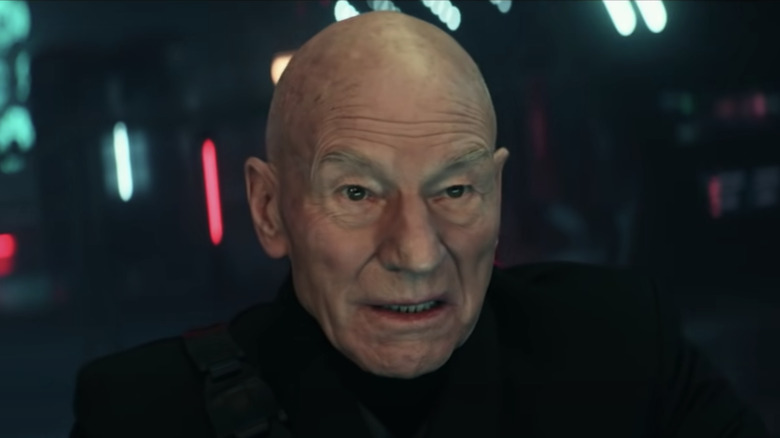
Star Trek Day 2021 brought a new trailer for season 2 of "Star Trek: Picard," which is flying across space right now, on its way to you via Paramount+ in February 2022. The trailer gives us our first official glimpse at Annie Wersching's Borg Queen and a whole lot more.

Is there a time travel plot this season? Does Q snap his fingers? Yes on both counts. Let's proceed through the new "Picard" season 2 trailer in a calm and orderly fashion.

A Man Who Chose The Stars

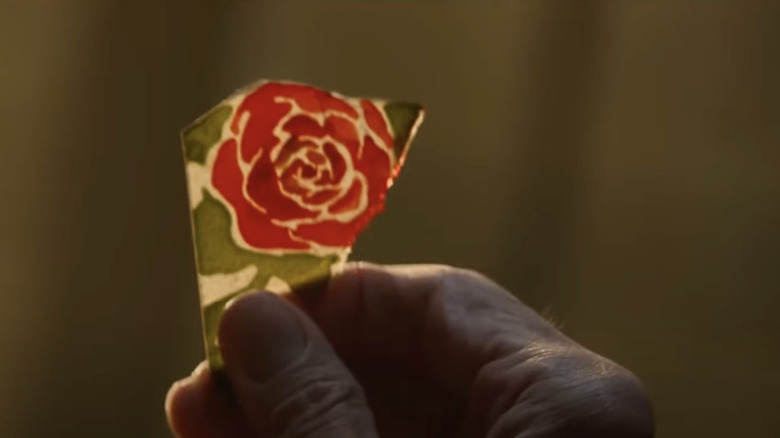
The trailer begins with a voiceover that questions whether Jean-Luc Picard (Patrick Stewart), a man who seemingly "chose the stars," has been seeking or running. It looks like he's in an old greenhouse on his family estate, the Château Picard vineyard in France. He bends down to pick up a shard of glass, holds it up, and examines its rose design. What's the significance? Your guess is as good as mine.

The Trial Never Ends

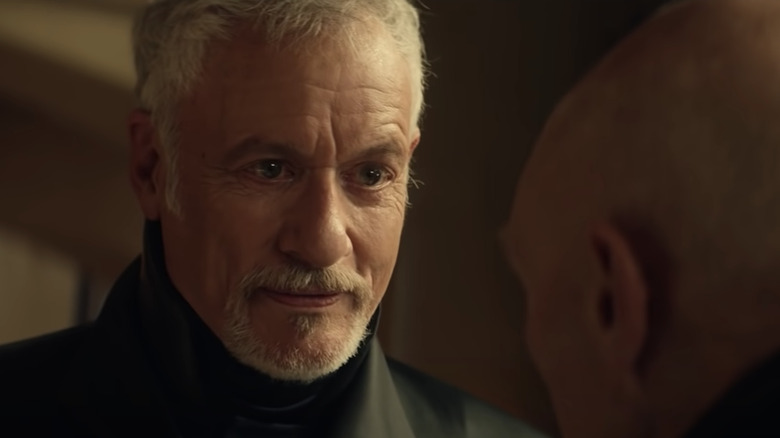
Soon, Q (John de Lancie) shows up. We knew he would be coming back this season, but this trailer makes it clear that Q is not just back for a cameo. It looks like he is integral to the plot and sets it all in motion. He looks older, which seems strange for someone who's essentially a god, but presumably the show will explain this away as him matching his appearance to Picard's.

Q asks Picard, "Do you recall what I said, Jean-Luc, when last time we parted ways? The trial never ends." This is a callback to the final episode of "Star Trek: The Next Generation," which brought the series full circle to its premiere, "Encounter at Farpoint," where Q first held his kangaroo court, putting humanity on trial.

A Totalitarian Nightmare

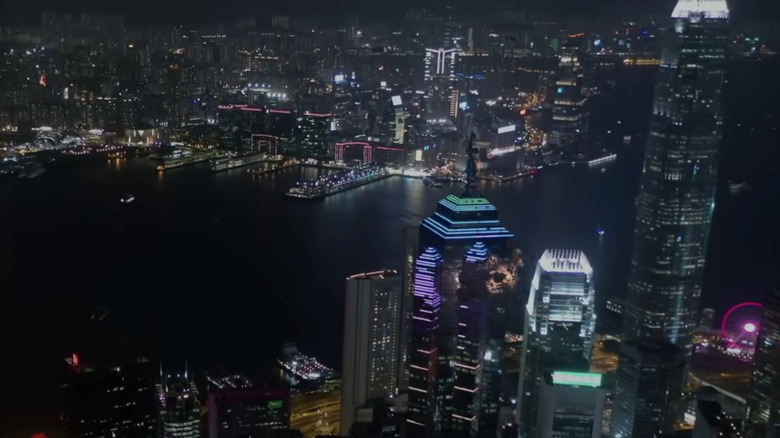
Picard says, "Q, I'm way too old for your bulls**t," and Q responds by snapping his fingers. Cut to Hong Kong, where we see recognizable city landmarks like the International Financial Centre, with flying cars zooming past them. Cristóbal Rios (Santiagos Cabrera) says, "Guys, we've got big problems." Something has moved them — through time, it seems.

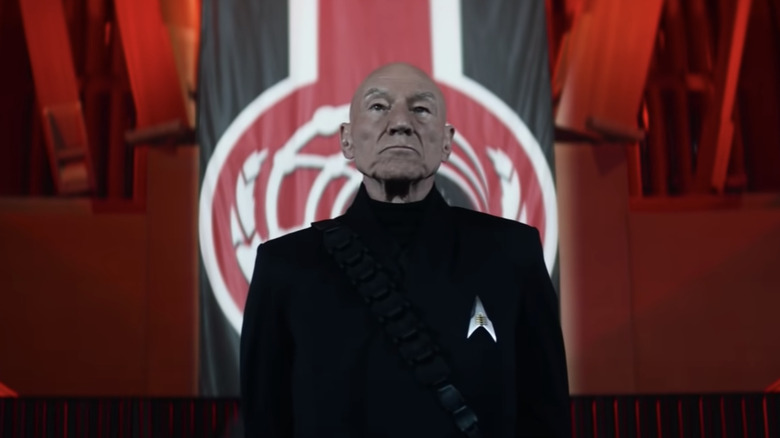
Picard then spells out the plot of season 2 in no uncertain terms. "Q went back in time and turned our world into a totalitarian nightmare." We see Picard at a Nuremberg-esque rally. He almost looks more like General Hux from "Star Wars: The Force Awakens," and if that influence is there, it wouldn't be the first time "Star Wars" has bled into "Star Trek."

The juxtaposition of Hong Kong with this imagery seems intentional in light of what's been happening in the real world with democracy in that city. 

Time Has Been Broken

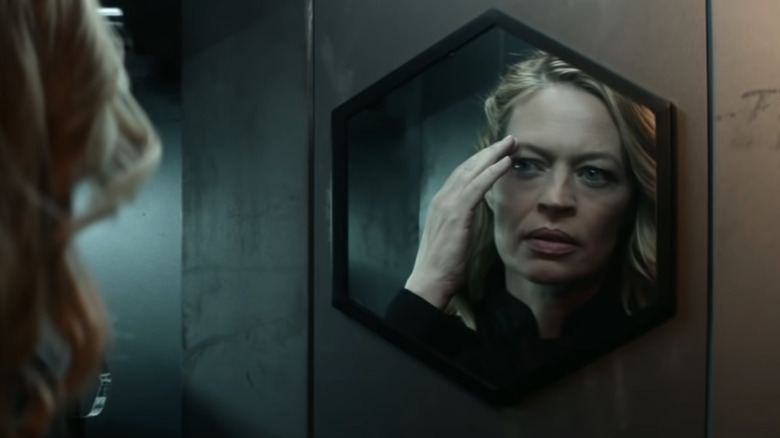
Next, we see Jeri Ryan's Seven of Nine. She touches the part of her head where Borg hardware used to be and explains, "Time has been broken." We get a glimpse of Evan Evagora's Romulan, Elnor, and Picard says he'll get them home (to the proper present?) together.
There Are Ways Of Traveling In Time

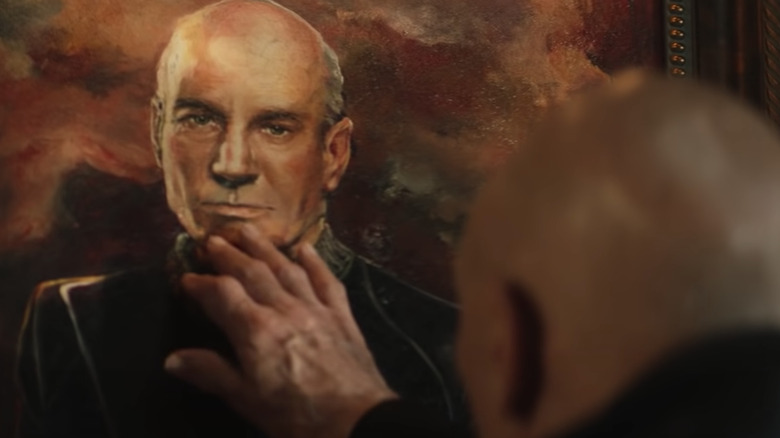
Picard touches his own portrait on the wall and tells his small crew, or time-traveling team, that the only way to heal their future is to go back and repair the past. If only fixing the real world was that easy. Good thing there's a quick workaround in the fictional "Star Trek" universe.

Didn't you get the memo? Picard says "There are ways of traveling in time."

The Borg Queen Returns

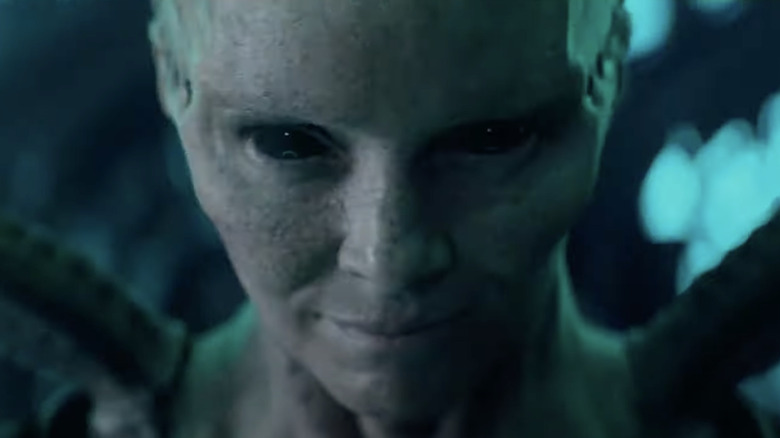
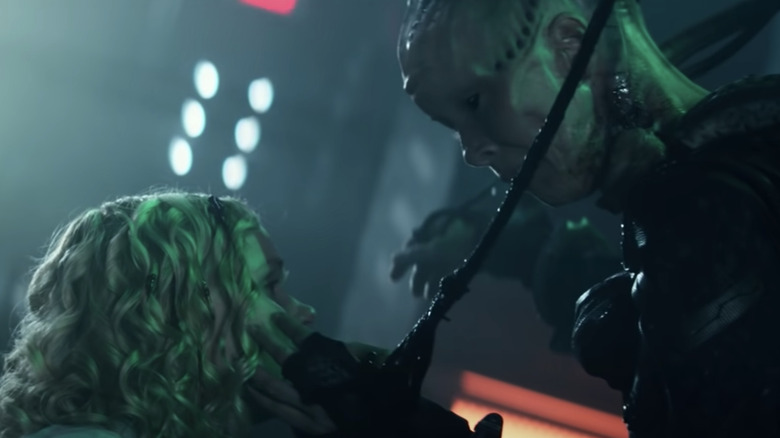
Now come the money shots, with the Borg Queen sliding onscreen like a character who's been tucked away in the freezer drawer in the "Star Trek" morgue for the last twenty years. Annie Wersching is the third actress to take on the role of the Borg Queen, an antagonist who last reared her ugly head in the series finale of "Star Trek: Voyager" in 2001.

Seven of Nine, a veteran of that show, herself a deprogrammed member of the Borg collective, understandably backs away from the grim, ashen visage of the resurrected Borg Queen. There's a precedent already in "Star Trek" canon for the Borg using time travel (specifically in "First Contact"), so that must be why ol' Queenie here is instrumental to Picard's plan.

The Earth Of The 21st Century

We see Alison Pill's Dr. Agnes Jurati, then the trailer welcomes us to "the earth of the 21st century." Wait, isn't that where we're living? Isn't "Star Trek" supposed to boldly go where no one has gone before? Yes, but it's also been known to take the occasional voyage home.
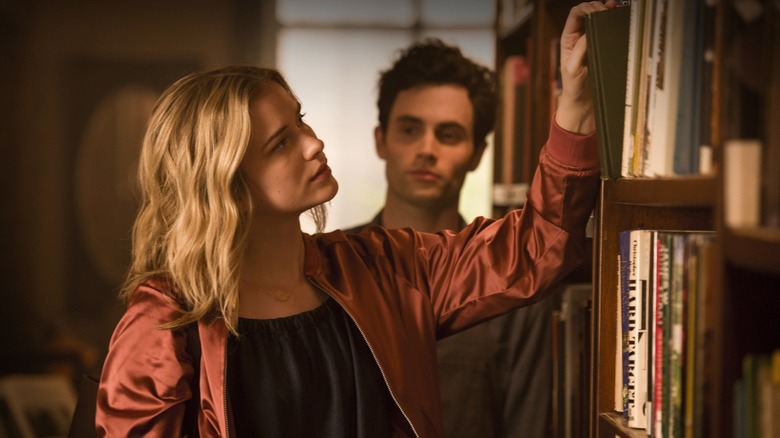
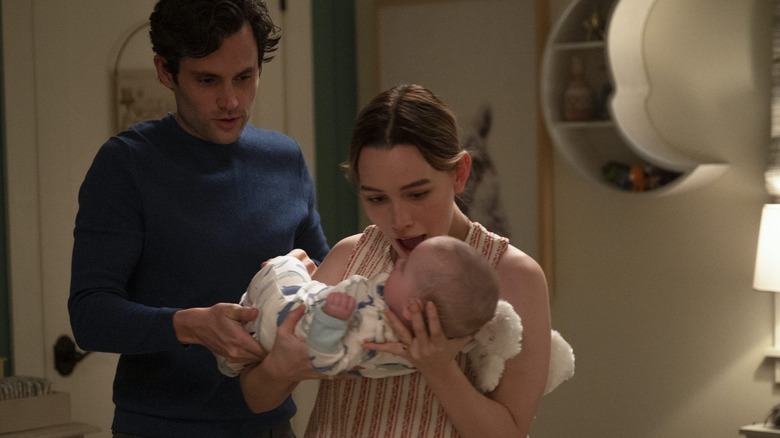
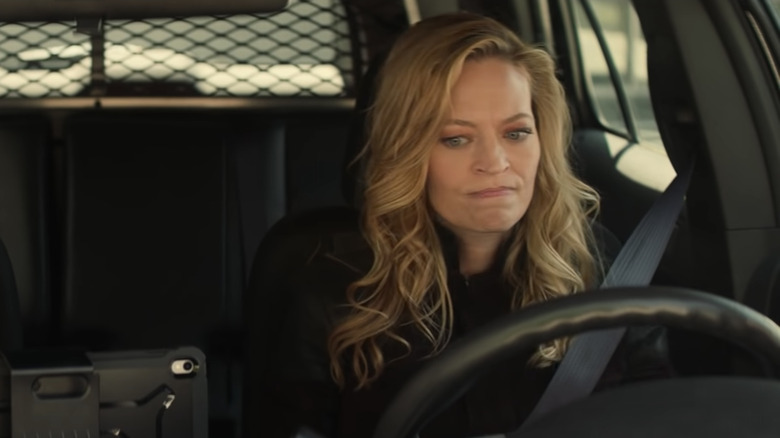
It looks like Seven of Nine and Michelle Hurd's Rafaella will be playing buddy cop, or at least commandeering a cop car. Rafaella gives Seven crap for her driving abilities, or lack thereof, quipping: "You can pilot a starship, but you can't drive?"

On The Count Of 3 (Days)

Picard gives the season some countdown stakes, saying, "We have three days before the future is changed irrevocably." Then, we get some rapid-fire shots, with Picard sporting a tuxedo and Q snapping his fingers, apparently on the ground in 21st-century Earth. 

The most significant shot would appear to be Dr. Jurati and the Borg Queen getting up close and personal. If Picard and company are keeping the Queen prisoner, using her to time travel, it's a safe bet that she'll be trying to manipulate them and maneuver her way out of captivity.

There Is A Light

The trailer ends on a hopeful note, with Picard sounding like the lyrics of a U2 song, saying "there is a light," even in "the darkest of circumstances." Do you think Picard and Bono would get along? Or would he delete the U2 songs that automatically downloaded onto his Apple device?

In the midst of a totalitarian nightmare, "Star Trek" still wants to instill hope. "Picard" is just one of five "Star Trek" shows orbiting Paramount+ at present, but this series appears to be the one that is the most overt right now in its aspirations to give sociopolitical commentary, the way the franchise has done in the past.

Cristóbal Rios asks Picard where he's taking them and he replies, "Home." 

"Star Trek: Picard" is coming home to Paramount+ for a second season in 2022.

Read this next: 'Star Trek: Picard' Trailer Breakdown: Every Hint About Where (And When) The New Season Will Boldly Go

The post Picard Season 2 Trailer Breakdown: Boldly Going Into the Nightmarish 21st Century appeared first on /Film.

10 Sep 01:07

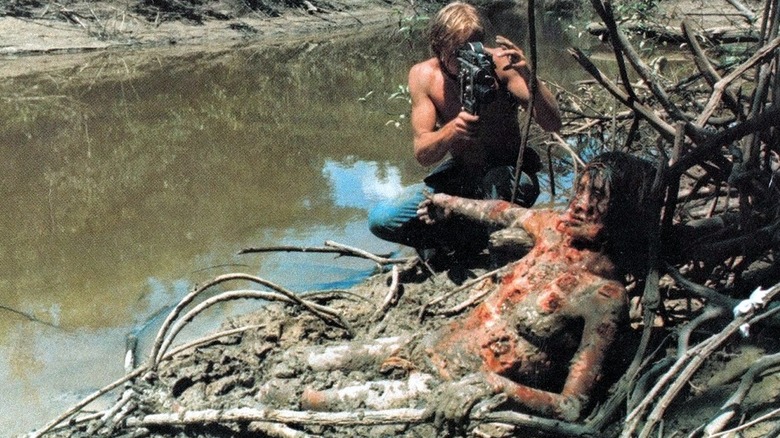
The Legendary Cannibal Holocaust Controversy Explained

by Danielle Ryan

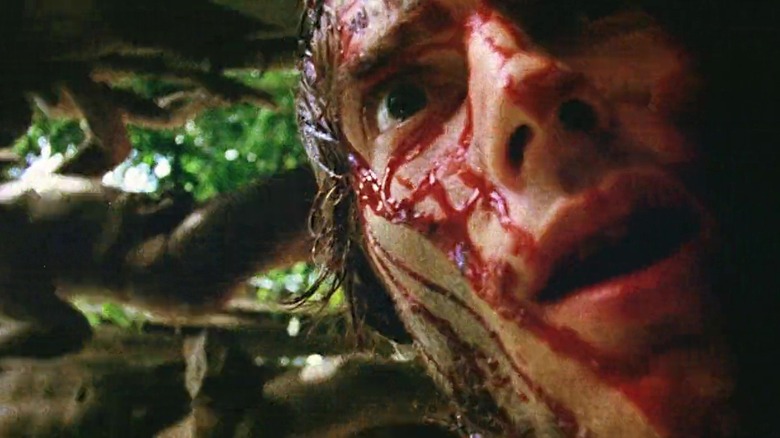
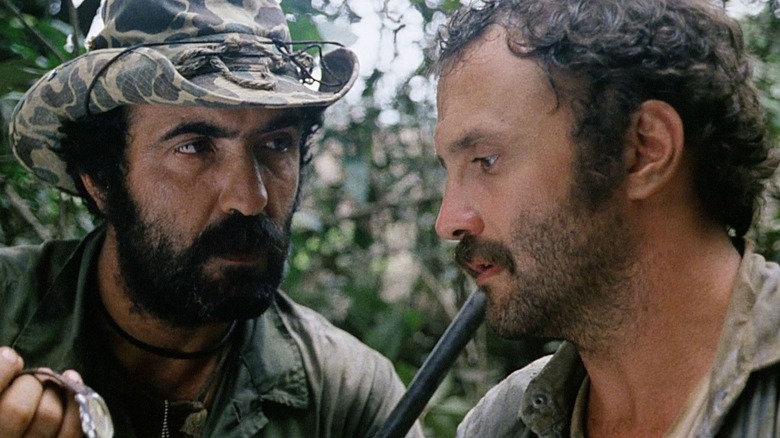
The 1980 Italian cannibal exploitation movie "Cannibal Holocaust" has become the stuff of legend. It's a gruesome fake documentary that features some very real on-screen animal death and very convincing human kills. It was so convincing, in fact, that director Ruggero Deodato was arrested and charged with murder. 

Found Footage And Grindhouse Gore

When "Cannibal Holocaust" came out in 1980, found footage horror wasn't really a thing yet. Cannibal films, a subgenre under the exploitation umbrella, were popular with many filmmakers because they allowed for lots of gore and cheap shooting locations in tropical locales. 

Enter Deodato and his frequent collaborator, screenwriter Gianfranco Clerici. 

Both had previously worked on the cannibal flick "Jungle Holocaust/Last Cannibal World," and they decided to take a new approach to cannibal horror. They created a framing device that explained that the footage in their movie was real, and had been found after the events depicted. Think "The Blair Witch Project," but about two decades earlier. Unknown actors were hired, along with lots of Indigenous extras from the depths of the Amazon. It was pure gonzo filmmaking.

Deodato also wanted to test out a theory that viewing real violence or death cut together with fake violence would make the fake violence feel more grotesque. There are multiple scenes of animals being killed onscreen. These, unfortunately, are real, and they are extremely graphic. A pig, a spider, a monkey, and a turtle are all killed in brutal ways, though at least the Indigenous people hired as extras ate the animals afterward. 

The scenes of real violence against animals are juxtaposed with the fake scenes of cannibals killing and eating their victims. Some of these look nearly ridiculous in stills or on their own, but combined with the real footage, they feel real. Your brain is still processing viewing real suffering when the fake stuff happens, and it's hard to shake. So hard to shake, in fact, that Italian law enforcement arrested Deodato on murder charges because of the film. A little marketing scheme the director had come up with definitely didn't help matters.

From Marketing To Murder Charges

While there's plenty to be concerned about with "Cannibal Holocaust" regarding both its treatment of animals and how Indigenous people are represented, Deodato definitely wasn't guilty of murder. 

"Cannibal Holocaust" is a commentary on shock value and emotional manipulation, as well as a harsh critique of colonialism. The white filmmakers who descend upon the cannibal tribes are revealed to be the "real savages," treating the locals as less than human. In the end, they all pay for their actions by dying in horrible ways. To sell the appearance that this was a true story, Deodato had the actors sign contracts to not go out in public for a year after the film's release. He ended up on trial for murder and had to bring one of the actors to court to prove his innocence. In the end, he was fined for animal cruelty and the movie was banned for three years. 

That wasn't the end of it, though. "Cannibal Holocaust" was banned in about 40 other countries and was one of the UK's "video nasties" that was banned until 2001. It has been repeatedly imitated, most recently by Eli Roth in his 2012 movie "The Green Inferno," but nothing has ever come close to capturing the horror of this cannibal cult classic. While it's not a movie for everyone, it is certainly deserving of its status as one of the most extreme movies of all time. 

Read this next: Keep Watching: How 'Creep' And 'Creep 2' Revitalize Found Footage Horror

The post The Legendary Cannibal Holocaust Controversy Explained appeared first on /Film.

10 Sep 01:07

Every Cameron Crowe Movie Ranked From Worst To Best

by Maria Loreto

Cameron Crowe makes earnest movies. It's his biggest strength and his biggest weakness. Crowe works best when his obsessions align -- when there's the right music, when the romance overwhelms, and when his characters are thoroughly sketched. His films allow for moments of great sentimentality; when Crowe pulls it off, he makes you wonder how he stripped you of your vulnerabilities with a heartfelt speech or the perfect needle drop. When he doesn't, it creates an effect similar to that of watching a bad musical.

Cameron Crowe has had a long career. Before making movies, Crowe was a rock and roll journalist, and his passion for music seeps into his most successful films, from the entirety of "Almost Famous" to key scenes in "Jerry Maguire." His Hollywood career started with his great script for "Fast Times at Ridgemont High," and he quickly moved on to writing, producing, and directing his own films, becoming an auteur in his own right. Crowe is an undeniably talented writer, but he is also an gifted director with an eye and an ear for the cinematic. While Crowe has directed a variety of music videos and documentaries, to make this list more cohesive, we've stuck to Crowe's full-length features. Here is every Cameron Crowe movie, ranked from worst to best.

Aloha

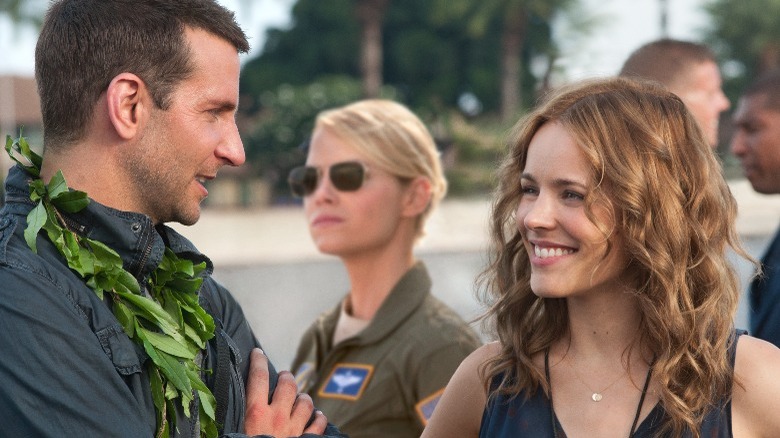
Like many filmmakers, Crowe's early films tend to be his best. By contrast, "Aloha" is Crowe's worst effort. It follows Brian Gilcrest (Bradley Cooper), a retired US Air Force Officer who returns to Hawaii and is put in charge of launching a weapons satellite. He reconnects with Tracy (Rachel McAdams), his former lover, who is now married, and is forced to spend time with Allison (Emma Stone), a grating fighter pilot. A love triangle ensues, and neither Cooper nor Stone nor the great McAdams are able to keep the film from going off the rails. Cooper and Stone, tasked with carrying the film's main love story, seem to be acting in different films; Cooper brings too little to the table, and Stone tries too hard to make up for it. 

On paper, "Aloha" is a Cameron Crowe film through and through. Much like "Jerry Maguire," it follows a guy who is dissatisfied with his life, who gets an opportunity for a second chance, and who meets a girl that shows him that he could be a better man. Crowe is capable of capturing the natural spark that exists between both lovers and friends, but in "Aloha," the pieces simply aren't there. Add Emma Stone's unfortunate casting as Allison Ng, a woman who's supposed to be one-quarter Hawaian, and "Aloha" is a recipe for disaster.

We Bought A Zoo

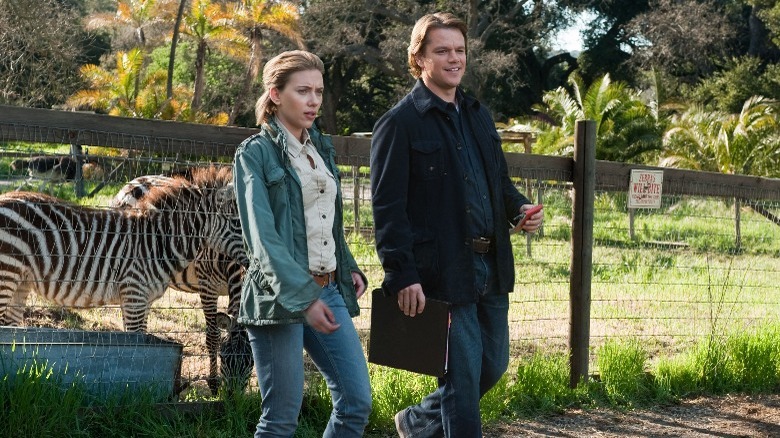
"We Bought a Zoo" is one of the few Cameron Crowe films that isn't based on an original idea. Drawing on the memoir of the same name by Benjamin Mee, Crowe adapted the script himself, adding a few twists and turns to the story of a widowed man who buys a zoo as a way of regaining control of his life. From the plot alone you can see what drew Crowe to the story: It's about a charming guy who's going through a crisis and is looking for redemption. There are also some adorable kids.

With a cast led by Matt Damon, Scarlett Johansson, and "Almost Famous" star Patrick Fugit, "We Bought a Zoo" is one of Crowe's better late career films. Still, it's permeated by a sense of inevitability, as if there are no stakes. No matter what happens on screen, you know that everything will be resolved neatly by the end. Crowe moves Mee's story from England to Southern California, adds a beautiful love interest, and throws a wrench in the hero's plans. While Crowe manages to get great efforts from his actors -- especially Damon, who turns in a sharp and tender performance -- that's about it for "We Bought a Zoo." Still, for Cameron Crowe completists and viewers who are able to lower their emotional guards, it's not a bad ride.

Vanilla Sky

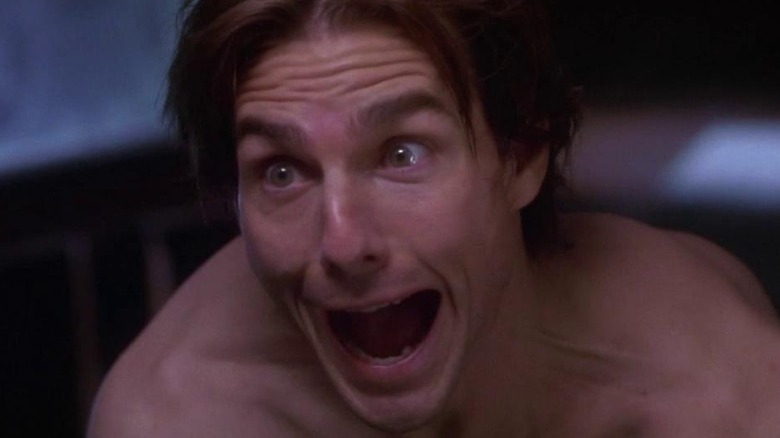
"Vanilla Sky" is Cameron Crowe's most experimental movie. It's a film that could stand next to "Mulholland Drive," leaving plenty of matters up to interpretation and full of moments that make you wonder if what you're watching is real or not. But, while David Lynch thrives on the unknowable, Cameron Crowe is a different kind of filmmaker. Based on Alejandro Amenabar's "Open Your Eyes," "Vanilla Sky" follows David Aames (Tom Cruise), the disfigured owner of a publishing company who kicks the film off by telling his story to his psychologist as he serves time in jail.

Filled with twists and turns and a memorable love triangle between Cameron Diaz, Tom Cruise, and Penelope Cruz, who reprises in the role she originated in the Spanish version of the film, Crowe crafts a movie that's one part love story, one part science fiction, and one part confusion. While it's thoroughly entertaining, as "Vanilla Sky" reveals twist after twist you can't help but wish for a simpler plot, something that would allow us to dwell with the themes and ideas that are clearly there, waiting to be explored.

The Wild Life

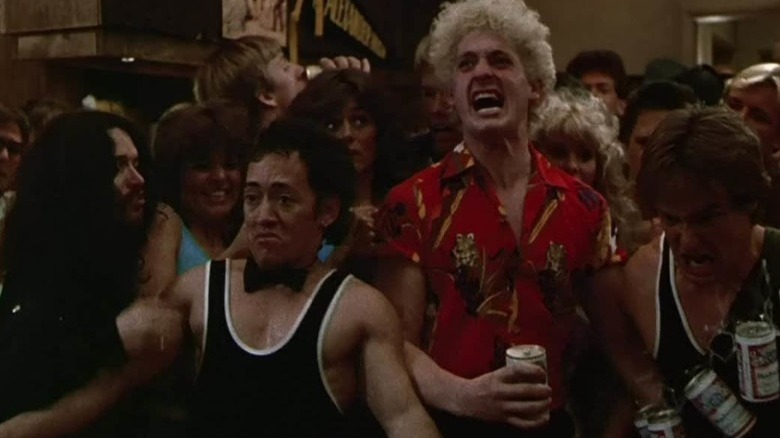
A spiritual sequel of sorts to "Fast Times At Ridgemont High," "The Wild Life" is a very '80s movie, one that casually stars Sean Penn's brother, Christopher Penn. Like many of Crowe's films, especially his early ones, "The Wild Life" features an ensemble cast and focuses on the high school experience, specifically that of teens who grew up in California during the '80s.

"The Wild Life" follows a variety of teens on the verge of adulthood, primarily Bill (Eric Stoltz), who just graduated high school, and his younger brother Jim (Ilan Mitchell-Smith), who's obsessed with the Vietnam War. Despite all of this appealing material, the film's director, Art Linson, has a less skilled hand than Amy Heckerling, who directed "Fast Times" with style and humor and elevated Crowe's script into a movie that we're still discussing today.

"The Wild Life" features a star-studded cast, but with his screenplay, it feels like Crowe is retracing his steps. While casting Christopher Penn is a fun nod to "Fast Times," "The Wild Life" seems like it's trying to recapture the magic of Crowe's earlier film without putting in the necessary effort.

Elizabethtown

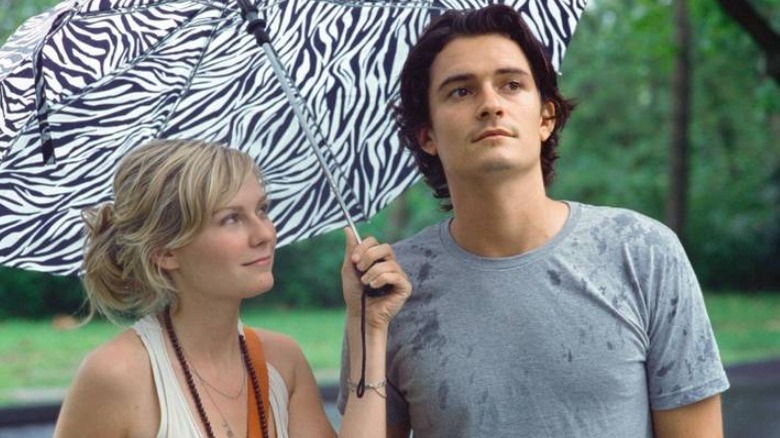
"Elizabethtown" is the clearest example that, while most of Crowe's films are filled with fluff and sweetness, there's often a surprising sadness lurking beneath the surface. Drew Baylor (Orlando Bloom) is a young and successful shoe designer, who, like most of Cameron Crowe's heroes, finds himself in a very low place. Drew just lost his job and his vain girlfriend, and is considering committing suicide when he learns of his father's sudden death. He boards a plane and meets Claire (Kirsten Dunst), a talkative flight attendant. 

The problem with "Elizabethtown" lies in its ambition, which is also something worth admiring. The film is over two hours long and follows Drew for a week, during which he swings between emotions -- he experiences grief, falls in love, and more. The big shifts make the film difficult to get a hold on, like it doesn't know what it wants to be. A briefer runtime and a more centered narrative might have helped the characters shine a bit more, giving the love story space to grow organically while still allowing the family scenes to land. 

Still, Kirsten Dunst plays a refreshing take on the manic pixie dream girl, with great dialogue and a sincerity that makes her hard to resist. Bloom, while a little flat compared to the rest of the cast, is sufficiently handsome and believable as Crowe's self-centered protagonist. There's plenty of music and heart, and "Elizabethtown" is sweet, funny, and charming, even if it drags.

Singles

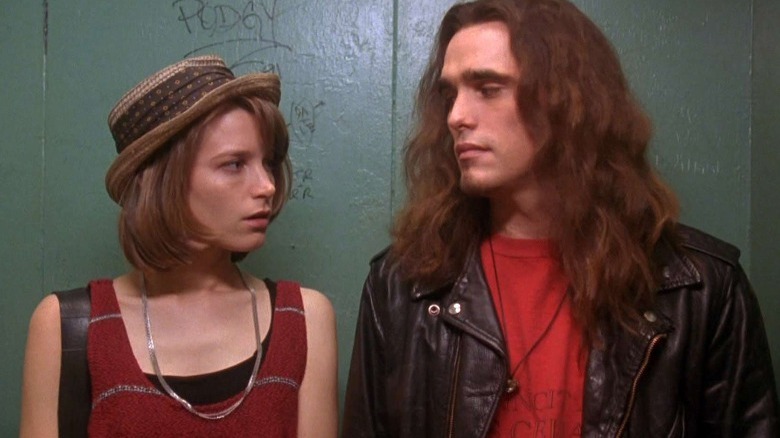
"Singles" is one of Cameron Crowe's least-discussed films, despite the fact that his signature is all over it. Released in 1992 and starring the likes of Bridget Fonda, Matt Dillon, Campbell Scott, and Kyra Sedgwick, "Singles" has everything that fans of Cameron Crowe love. It's a story filled with great music, great romance, and a tight and easygoing script that follows the love lives of a group of twenty-somethings living in Seattle, right in the peak of the grunge era. 

Janet (Bridget Fonda) is in love with Cliff (Matt Damon), Linda (Kyra Sedgwick) and Scott (Campbell Scott) are falling in love but won't admit it, and they all live in the same apartment building. It's the kind of barebones film that's rarely made nowadays, with no great reveals but a big, beating heart. It's also the natural evolution of Crowe's previous films, which revolved around characters who were in high school.

"Singles" is Crowe's first foray into music-based films, and is a perfect reflection of his early talents. His interest in the grunge scene was almost prescient, as "Singles" features a soundtrack and a lifestyle that would soon dominate popular culture. Watching "Singles" and "Say Anything" back-to-back tells you everything you need to know about Crowe, and shows why his spark has endured over the years.

Fast Times At Ridgemont High

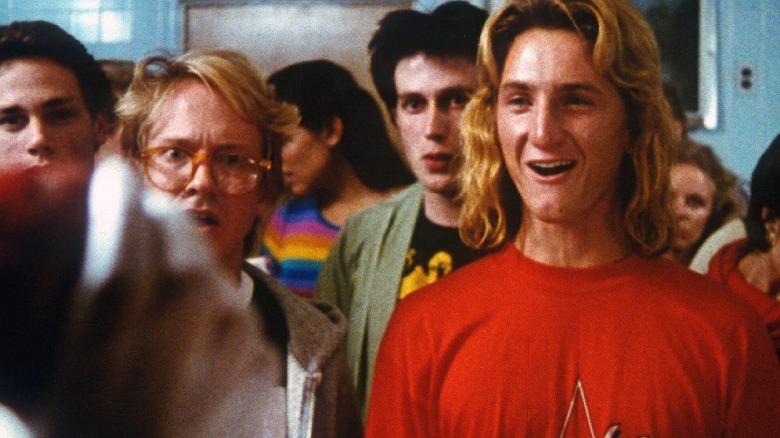
"Fast Times At Ridgemont High" is a film with a great legacy. It's one of the most significant American coming-of-age films, and defined a generation of teens. Crowe infamously went undercover at Clairemont High School in San Diego in order to get an accurate picture of high school in the '80s, which he then published in his book, "Fast Times at Ridgemont High: A True Story." While he left himself out of the story, Crowe's background as a reporter allowed him to capture portraits of a variety of high schoolers, from jocks and nerds to drug abusers and everything in between.

Not only did "Fast Times at Ridgemont High" launch the careers of Amy Heckerling, Sean Penn, and Cameron Crowe, but it helped establish Jennifer Jason Leigh, Forest Whitaker, Eric Stoltz, Nicolas Cage, and more, effectively acting as a jumping-on point for a whole generation of talented actors. While the film's legacy has become larger than the merits of the film itself, "Fast Times" did what very few movies have done as well since: It captured the stress of being a working-class teen, and of having to juggle relationships, work, and the future with a fly-on-the-wall attention to detail.

Jerry Maguire

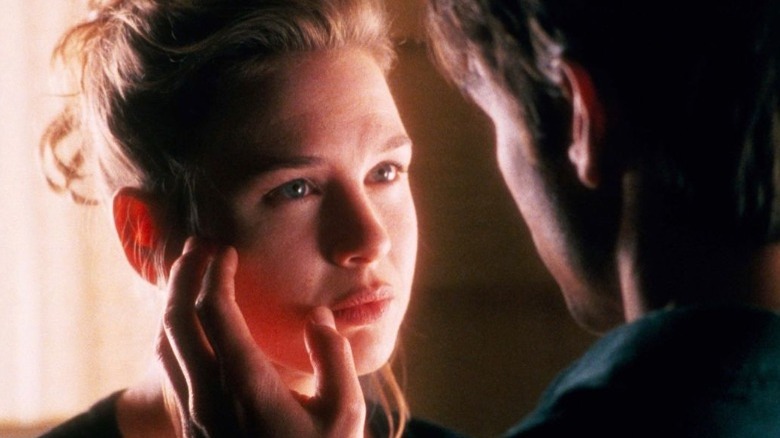
"Jerry Maguire" is a strange film. It follows Jerry (Tom Cruise), a sports manager who, in a moment of lucidity, writes a memo stating all of the things that are wrong with his line of work. He shares this letter with his co-workers, and ends up losing his job, his fiancée, and the life he both loves and hates. 

"Jerry Maguire" is a film about an obsession, something Crowe knows all about -- it simply switches out music for sports. Like most of Crowe's movies, "Jerry Maguire" has a couple of key scenes built around a song. This trick doesn't always work for Crowe, but it does here. When Bruce Springsteen's "Secret Garden" plays, it's shorthand for the relationship that blooms between the two protagonists. In "Jerry Maguire," Crowe crafts a love story that's both romantic and real, allowing room for questions and doubts. 

Tom Cruise plays Jerry as a slightly more charming version of himself (specifically, the one that jumped up and down on Oprah's couch); it somehow works. Renée Zellweger's performance is tender and precise, exuding all of the warmth and love that the character needs to resonate with viewers. Zellweger makes Dorothy feel real, like she could be standing next to you in line at the grocery store. And then there's Cuba Gooding Jr., making a meal out of every scene. While "Jerry Maguire" might be a product of its time, its heart is undeniable.

Say Anything

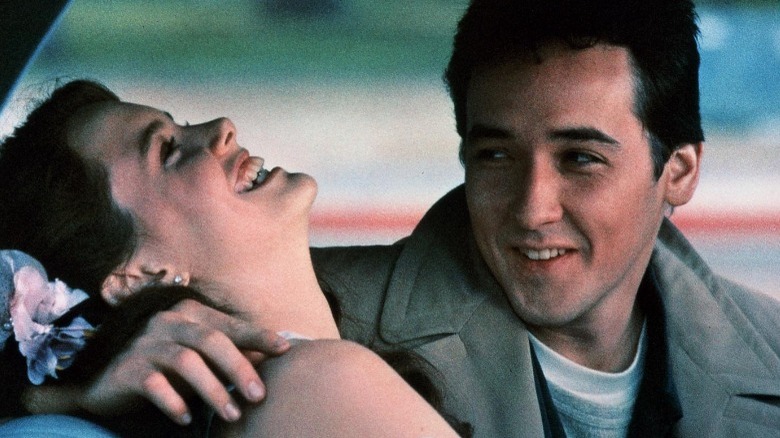
"Say Anything" is Cameron Crowe's directorial debut, a depressing bit of trivia considering how fully formed a film it is and how it's a perfect showcase for his talents. 

What differentiates Crowe from many other filmmakers is his devotion to his characters' inner worlds. The characters in "Say Anything" are packed with layers -- Lloyd and Diane, Lloyd's sister and her girl friends, and Diane's loving but misguided father are all complex, fully-realized characters. While Lloyd is the one who introduces us to the film's world, Diane goes through the biggest changes and faces the most obstacles. Her journey is the heart of the film; Lloyd is simply along for the ride, happy to support her through it all.

Despite starting right after graduation, "Say Anything" is one of the best high school films, capturing what it's like to be young, when you're facing life-changing events like the beginning of college and your first love. Diane and Lloyd's romance is instantly personal. It starts with one person pursuing the other, and ends with both of them marveling at the place they're at. Diane falls in love like real people do -- slow and weary, and then all at once.

Almost Famous

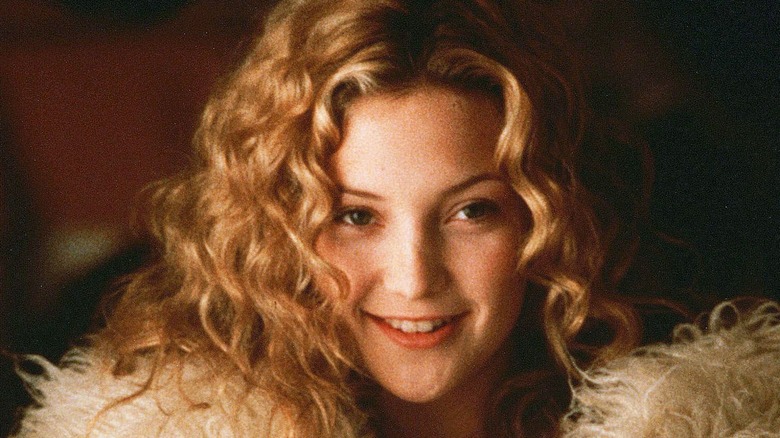
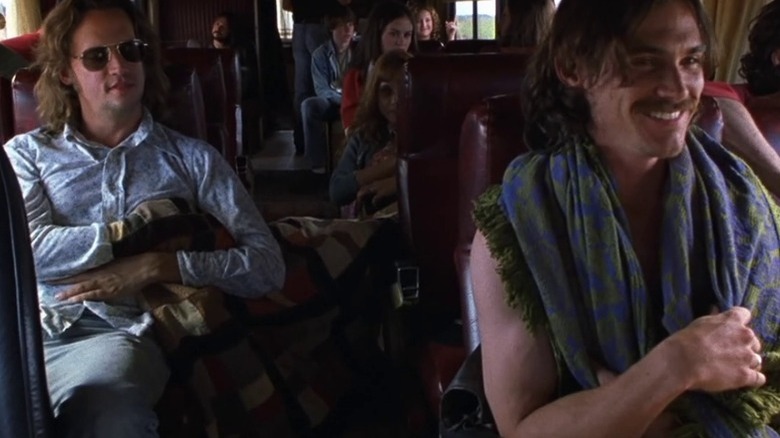
"Almost Famous" is one of the world's most beloved and revered coming-of-age films. It's one of those endlessly rewatchable movies, and one that completely captures the charm and power of Cameron Crowe. Following 15-year-old William Miller's epic summer, the film tracks the teen as he travels with the band Stillwater, a band right on the cusp of stardom, while writing a profile for Rolling Stone. 

Filled with memorable performances, including Kate Hudson as the ineffable Penny Lane and Billy Crudup as the gorgeous but simple Russell Hammond, "Almost Famous" is a movie that feels too good to be true. It's not, though; in fact, "Almost Famous" is heavily based on Crowe's personal experiences with bands like Led Zeppelin, the Allman Brothers Band, Eagles, and others, all of whom Crowe traveled with when he was a teenager. As a result, "Almost Famous" is a film that's as personal as reading someone's journal.

Crowe, a director who prioritizes a good needle drop, makes a love letter to live music and the rock of the '70s. He'll likely never top this film. He doesn't have to. With an incredible soundtrack, an endlessly quotable script, and an attention to the most beautiful details -- the way William looks at Penny, or the way he cries when it dawns on him just how over his head he's in -- "Almost Famous" is immense without having any pretensions. Crowe captures lightning in a bottle.

Read this next: 'David Crosby: Remember My Name' Producer Cameron Crowe On Interviewing Rock Stars And Staying Curious [Interview]

The post Every Cameron Crowe movie ranked from worst to best appeared first on /Film.

10 Sep 01:05

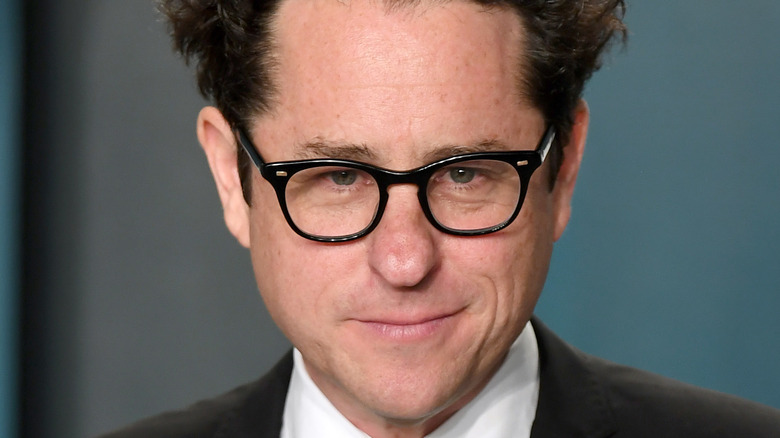
Every J.J. Abrams Film Ranked From Worst To Best

by Liam Gaughan

J.J. Abrams has been an influential figure in the entertainment industry since his youth. Inspired by his prominent television producer father, Gerald W. Abrams, the young film buff was mentored by Steven Spielberg, and flexed his creative instincts as screenwriter of '90s hits like "Forever Young," "Regarding Henry," and "Armageddon."

In the late '90s and early '00s, Abrams dominated television by creating the highly popular shows "Felicity," "Alias," and "Lost." Combining complex storylines and narrative twists with large ensembles made up of memorable characters, Abrams likes to keep audiences on their toes. Through TV, he also tried his hand at directing for the first time, winning an Emmy for his work on the "Lost" pilot. As such, It was only a matter of time before Hollywood called on Abrams to handle their blockbuster properties. Although he's only directed six feature films, each one of Abrams' movies was highly anticipated and performed well financially. A master of marketing, Abrams generates hype with his "mystery box" approach to storytelling, and his films routinely spark intense online discourse.

Abrams is one of Hollywood's most powerful producers, as his production company Bad Robot handles franchises such as "Cloverfield," "Westworld," "Mission: Impossible," and "Star Trek," as well as several upcoming DC properties for HBO Max. However, Abrams is an accomplished director as well, particularly when it comes to crafting dynamic action sequences. Abrams' directorial career has been divisive, and fans of the "Star Wars" and "Star Trek" franchises are split on his interpretations. Here are all six J.J. Abrams films, ranked from worst to best.

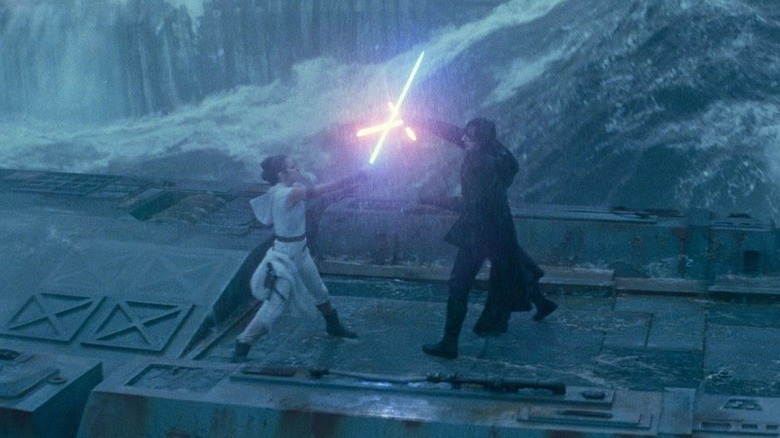
Star Wars: Episode IX — The Rise Of Skywalker

Abrams is very good at hooking audiences with engaging beginnings, as evidenced by his work creating television pilots and rebooting franchises. Ending a story, however, is something that Abrams has trouble with. While Rian Johnson took the series in a creative new direction by not adhering to the typical Star Wars formula, Abrams opted for a safer route for "Star Wars: Episode IX -- The Rise of Skywalker," retconning "The Last Jedi" and making Rey the descendant of Emperor Palpatine. The reveal itself is undramatic, as Palpatine's return wasn't foreshadowed at all, and dampens Darth Vader's sacrifice in "Return of the Jedi."

Many storylines remain unresolved. While the tragic passing of Carrie Fisher forced Abrams to reduce Leia's role, Kylo Ren's still redemption feels inauthentic. Although it's suggested that Finn is Force-sensitive, he never gets to use his abilities. New narratives, such as Jannah's band of former stormtroopers and General Hux's defection, are given so little screen time that they feel like distractions.

The path each character takes to get to Exogul is very confusing. Abrams may have thought he was pleasing fans by adding in familiar characters, but they just wanted a good story. It's hard to tell how much of this is Abrams' fault -- he was a last-minute addition to the project, replacing "Jurassic World" director Colin Trevorrow well after Disney set a release date for the final chapter of the Skywalker Saga -- but either way, he failed to deliver.

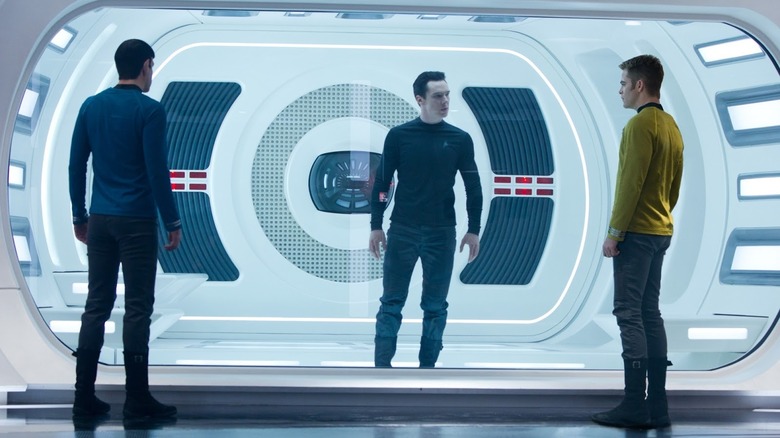
Star Trek Into Darkness

Although it's derided by vocal "Star Trek" fans as one of the worst entries in the series, "Star Trek Into Darkness" has merits. Its controversy rests on the decision to make Khan's return to the series a twist and to deny it throughout the film's press tour. Even Abrams admits that the choice was a mistake, but the film deserves to be judged on its own.

The weakest parts of "Into Darkness" are the scenes that directly replicate moments in "Star Trek II: The Wrath of Khan." The two stories are unique, and the repetition feels like a cheap bid at fan service. Spock's hateful cry of "Khan!" after Kirk's presumed death in particular feels like a rip-off of a classic William Shatner moment. In "Star Trek II," Shatner is being purposefully over-the-top to deceive his enemy. Quinto is taking the moment seriously.

However, "Into Darkness" poses interesting questions about the Enterprise crew's responsibility to question their orders. Although originally explorers, "Into Darkness" forces the characters to embark on a military assignment, unaware that they are pawns in a scheme to start a war with the Klingon Empire. It's a compelling parallel to American expansionism that stays true to Star Trek's history of commenting on current political events. In addition, while elements of their relationship are derivative of their first adventure, Chris Pine and Zachary Quinto have great chemistry. In "Into Darkness," Kirk and Spock learn to empathize with each other; the film also benefits from more prominent roles for the rest of the crew.

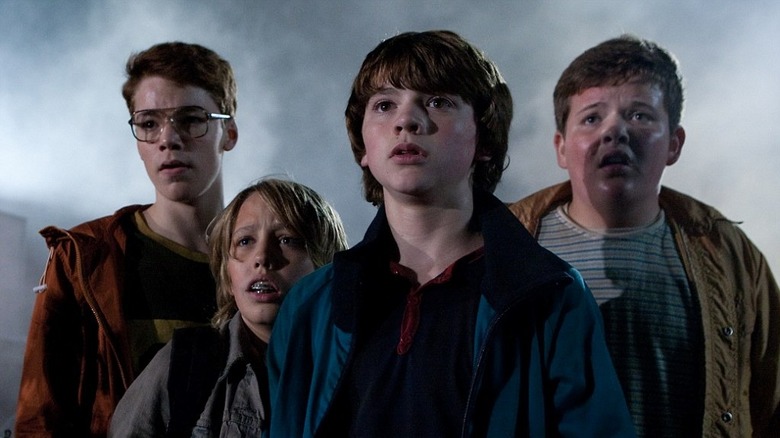
Super 8

"Super 8" is the only film that Abrams has directed that isn't based on an existing property, but it's hardly an original story. The film homages '80s science fiction and adventure films like "The Goonies," "E.T. the Extra Terrestrial," and "Stand By Me." What he lacks in narrative boldness, Abrams makes up for with heart. "Super 8" isn't just a touching story about childhood friends who become heroes in their small town, but a love letter to filmmaking itself.

The only movie on which Abrams is the only credited writer, "Super 8" feels like the director is drawing from his own childhood love of using scrappy filmmaking techniques to emulate his favorite films. There's an appropriate use of nostalgia as the central characters utilize the technology of the late '70s. The scenes in which the crew meticulously tries to find a perfect shot are just as exciting as any of the big action set pieces.

Abrams is not given enough credit for his depiction of male sensitivity, and the strained father-son relationship in "Super 8" is very effective emotionally. The rare Abrams project that doesn't start with frantic action, "Super 8" opens with young Joe (Joel Courtney) and his police sheriff father Jack (Kyle Chandler) reflecting on the loss of Joe's mother. The characters' inability to process their grief is woven throughout the story and ties together beautifully at the end, as the two learn to trust each other and openly express their affection for one another.

Mission: Impossible III

While "Mission: Impossible II" was a financial hit, it received negative reviews, and it wasn't clear where the franchise's future lay. In his feature film directorial debut, Abrams paved the way for the saga's growth by establishing a fast-paced, yet intelligent story that developed Ethan Hunt as a character. Hunt's desire to balance his responsibilities to MI6 and his impending marriage to his fiancé Julia (Michelle Monaghan) feels much more personal than the previous films, in which he was basically a superhero.

While the later "Mission: Impossible" films are great, they lack engaging antagonists. Abrams introduced the best villain in the series with Philip Seymour Hoffman as the sadistic arms dealer Owen Davian. Hoffman chews the scenery when he holds Ethan captive, a scene that Abrams uses to open the film. It's hard for any actor to match Tom Cruise's star power, but Hoffman's intensity makes the charismatic actor seem vulnerable -- and that makes "Mission: Impossible III" much more exciting.

In addition, Ving Rhames makes a welcome return as Luther Stickell, and Abrams also introduces fun new characters like Zhen Lei (Maggie Q) and Declan Gormley (Jonathan Rhys Meyers) to complete Ethan's team. Abrams also made a great decision to include a cameo by Simon Pegg as the MI6 desk worker Benji Dunn, a fan-favorite who plays a much larger role in later films.

Star Wars: Episode VII — The Force Awakens

"The Force Awakens" was the perfect way to kick off a new era of Star Wars storytelling. Intentionally utilizing a narrative similar to "A New Hope" gave Abrams the freedom to introduce fresh new voices to the story while still maintaining the tropes that Star Wars fans have come to know and love.

Rey is a compelling hero who is confused by her newfound abilities. She has developed talents as a mechanic and pilot, but her Force-sensitivity confuses her as she seeks to understand her place in the galaxy. Finn gets a terrific introduction as he defects from the Imperial ranks and embarks on a hero's path. Rey's naivete and Finn's growing confidence lead to some fun comedic banter, and Daisy Ridley and John Boyega both dominate the screen with their unmistakable charisma.

Kylo Ren is among the best-developed villains in the entire Star Wars franchise. A fervent follower of Darth Vader, Kylo strives to live up to the legacy of his idol, and Adam Driver's performance makes Ben Solo both empathetic and terrifying. The abandoned child's embarrassment is relatable, and his untapped rage only fuels his hatred. Driver plays the angry fits for laughs, but ramps up the intensity once Ren kills his father.

In addition, Abrams created one of the best lightsaber duels in the series. Rey and Ren are in a fragile emotional state and lack proper training, so their fight is less choreographed and more brutal. Also? Kylo Ren's cross-blade is a great addition to the mythos. It just looks cool.

Star Trek

With "Star Trek," Abrams revitalized a franchise that was essentially dead after the financial disaster that was "Star Trek: Nemesis." Through a prequel that showed the formation of the Enterprise crew, Abrams introduced a new audience to the Trek franchise with a relatable story about a naïve team that bands together to complete its challenging first mission. To that end, Abrams gathered a terrific ensemble cast that brought younger versions of the classic characters to life while respecting their long and storied legacy.

Kirk is not yet the slick operator that William Shatner played. Chris Pine depicts the future captain as an overconfident goofball who needed to learn to take himself seriously. Kirk's ability to get himself in over his head adds a lot of laughs, but Pine shows that Kirk's heart is always in the right place. The film leans into Spock's dual identity as a human and Vulcan, too. Spock faces discrimination from Vulcans despite his high intelligence, and his cerebral attitude annoys his human crewmates. Zachary Quinto captures these idiosyncrasies perfectly, and the transition of Kirk and Spock from bitter rivals to trusted friends gives Abrams' film a strong emotional core.

Where many prequels are limited by having to line up with future events, using an alternate timeline -- and making it part of the plot -- allows Abrams to create legitimate stakes. It also opens the door for the return of Leonard Nimoy as Spock Prime; it's fun to see the beloved actor return in a mentor role. Equal parts action, humor, and emotion, "Star Trek" epitomizes all of Abrams' strengths.

Read this next: J.J. Abrams On Baby Yoda, The Knights Of Ren, Fandom, And If He Would Ever Return To 'Star Wars'

The post Every J.J. Abrams film ranked from worst to best appeared first on /Film.

09 Sep 22:28

Paramount Will Distribute Orphan: First Kill, Introducing Us To Phony Killer Kid Esther

by Chris Evangelista

"Orphan," one of my all-time favorite horror movies, is getting a prequel called "Orphan: First Kill." And that prequel has found a home at Paramount. Does this mean it might end up going straight to Paramount+ like the upcoming new "Paranormal Activity" and "Pet Sematary" movies? Or will the orphan subsequently known as Esther head to theaters instead? We'll have to wait and see. "Orphan: First Kill" brings back Isabelle Fuhrman as Leena, a mental patient who poses as a child in order to get close to – and murder – families. 

Orphan: First Kill

Released in 2009, "Orphan" is a wonderfully trashy horror movie about a family that adopts a little girl. It becomes clear rather quickly that the little girl, named Esther, is out of her damn mind – and homicidal, to boot. But wait, there's a twist! At the end we learn that Esther isn't a child at all; she's Leena, an adult woman with hypopituitarism, a condition that makes her appear to be a child. Leena has spent her life conning her ways into families, pretending to be a child. And when she's in danger of being found out, she murders everyone. Like I said: it's trashy stuff, but it's also pretty damn entertaining thanks to the stylish direction of Jaume Collet-Serra. 

And now here comes the prequel, "Orphan: First Kill." Sadly, Jaume Collet-Serra is not returning. Instead, "The Boy" filmmaker William Brent Bell is at the helm, and now THR is reporting that "Orphan: First Kill," which was financed by EOne and Dark Castle, has been picked up by Paramount (the first film was a Warner Bros. release). I immediately assumed this meant the film would be going straight to Paramount+ like the upcoming "Paranormal Activity" and "Pet Sematary" movies, but there's no mention of that – yet. THR also provides this synopsis:

First Kill centers on Leena, a murderous sociopath who looks like a child due to a medical condition. Following an escape from an Estonian psychiatric facility, Leena comes to America by impersonating the missing daughter of a wealthy Connecticut family. But Leena's new life as "Esther" comes with an unexpected wrinkle and pits her against a mother who will protect her family at any cost.

Isabelle Fuhrman, who played Esther/Leena in the first film, is back for the prequel (more on that in a moment). The cast also features Julia Stiles, Rossif Sutherland, Matthew Finlan, and Hiro Kanagawa. Dave Coggeshall wrote the script. There's no release date yet, so stay tuned. 

There's Something Wrong With Esther

Esther/Leena dies at the end of "Orphan," so a sequel would be out of the question – unless they turned her into a zombie. A prequel was certainly an option, but this prequel just happens to bring back Isabelle Fuhrman as the titular orphan. And that's a little weird, because Furhman was 12 when she shot "Orphan," and she's 24 now. A 12-year-old posing as an adult posing as a child is easy to see; a 24-year-old posing as an adult posing as a child is a little weirder and trickier. You might think that means that "Orphan: First Kill" will be digitally de-aging Furhman in some way, but by all accounts, that's not the case. 

"[T]hey didn't use CGI. The tricks that they did with the camera and different perspective tricks that they had, plus her costume and prosthetics and all that, she looks like a child," Julia Stiles said. "And her performance is stunning, because she embodies a child too in the way that she talks and the way she walks." 

Director William Brent Bell added: "[W]e use digital, we use CGI to help us ... but not to create her at all. It's all old school techniques: forced perspective, camera angles, where we put the light." Bell also said:

"That's a character that I love so much [and] I really want to be respectful to the audience who love that first film, and expand on who she is as a character. To be able to kind of understand her better. But at the same time have as much fun with her as we did in the first movie... and then some. And to have it be Isabelle again ... it's so cool."

Furhman herself also weighed in, saying: "['First Kill' is] definitely not what I think most people will expect, which I think is really exciting and what really drew me to even coming back to play that role," and adding: 

"And also, what I think is most exciting about it is it's something that's never been done cinematically. There's never been an adult actress who reprised a role she played as child. And that was exceptionally difficult and really fun to do, because when I was a kid and I played Esther, I was constantly playing a 33-year-old hiding herself as a kid while I was also 10, and this time, it was like, 'here's a little weight off my shoulders,' since I just have to pretend I'm 10, because I'm already an adult."

As a big fan of the first "Orphan," I'm very curious to see how this all turns out. That said, I'd be a lot more excited if Jaume Collet-Serra had returned to helm the prequel, as I'm not the biggest fan of William Brent Bell's work. Oh well! I'll still check this one out whenever it arrives. 

Read this next: 'Orphan' Prequel 'Orphan: First Kill' Is Shocking And Not What You'd Expect, According To Star Isabelle Fuhrman

The post Paramount Will Distribute Orphan: First Kill, Introducing Us to Phony Killer Kid Esther appeared first on /Film.

09 Sep 21:13

You Season 3: Release Date, Cast, And More

by Shania Russell

(Welcome to ...And More, our no-frills, zero B.S. guide to when and where you can watch upcoming movies and shows, and everything else you could possibly stand to know.)

"Hello, You." It's become impossible not to read that phrase in Penn Badgley's chilling voice. In a weird way, I'm starting to miss that sociopathic bookseller. Thankfully, the long wait for "You" season 3 is nearing its end. That's right, "You" is bringing the murderous vibes back for a third round. Here's everything you need to prepare for the upcoming season of "You."

You Season 3 Release Date And Where You Can Watch It

Season 3 of "You" premieres exclusively on Netflix, on October 15, 2021. Just like the second season, all 10 episodes hit the streaming service on the same day, which is perfect for all us impatient bingers.

What Is You?

"You" is your typical love story: boy meets girl, boy stalks girl, then boy does a bunch of murderous, sociopathic things because he is truly unhinged. That's love, right? 

After two seasons listening to monologues from series lead Penn Badgley as Joe Goldberg, anyone's idea of relationships would get pretty warped. When we meet Joe, he seems like a normal, lovestruck bookseller — albeit very pretentious — but by the end of season 1 he's a full-fledged murderer. Joe stalks his way into the heart of whichever woman he happens to fixate on and it tends to end badly for everyone involved. In the second season, he leaves New York for Los Angeles and meets a woman who turns his life upside down — Love (Victoria Pedretti). 

The series is loosely based on the 2014 novel of the same name, "You" by Caroline Kepnes. The second and third seasons adapt the sequel, "Hidden Bodies."

"You" premiered on Lifetime in 2018 to a very limited audience, but received a surge of attention when it came to Netflix. The series has since moved to the streamer as a Netflix Original title.

You Season 3 Synopsis

Here's the synopsis for season 3 of "You":

In Season 3, Joe and Love, now married and raising their baby, have moved to the balmy Northern California enclave of Madre Linda, where they're surrounded by privileged tech entrepreneurs, judgmental mommy bloggers and Insta-famous biohackers. Joe is committed to his new role as a husband and dad, but fears Love's lethal impulsiveness. And then there's his heart. Could the woman he's been searching for all this time live right next door? Breaking out of a cage in a basement is one thing. But the prison of a picture-perfect marriage to a woman who's wise to your tricks? Well, that'll prove a much more complicated escape.

You Season 3 Cast

Obviously, Season 3 sees the return of Penn Badgley and Victoria Pedretti as Joe and Love. But we can also expect a few more familiar faces to join them. Saffron Burrows returns as Love's mother, Dottie, with the actress getting a boost to series regular. We also know that Jenna Ortega will reappear as Ellie, despite being desperate to escape Joe in the aftermath of her personal tragedy (which was entirely his fault). So far, those are the only names confirmed to reappear.

Season 3 also introduces a bunch of new characters to fill out Joe's new neighborhood. "Law and Order: SVU" star Michaela McManus is Joe's latest fixation, his wealthy next door neighbor. Also new to the show is Dylan Arnold, Tati Gabrielle, Shalita Grant, Travis Van Winkle, Scott Speedman, Scott Michael Foster, Ben Mehl, Shannon Chan-Kent, Christopher Sean,- Chis O'Shea, Bryan Safi, Mackenzie Astin- Ayelet Zurer, and Jack Fisher

You Season 3 Writers, Showrunner, And More

For season 3, Sera Gamble returns as showrunner and co-executive producer with series co-creator Greg Berlanti. The first episode is directed by Silver Tree (who previously helmed three episodes of the second season), with other directors to be announced. The premiere, which we know is titled "And They Lived Happily Ever After," is written by showrunner Sera Gamble and season 2 writer, Marin Reed.

You Season 3 Trailer

Read this next: Upcoming Netflix Original Movies You Need To Know About

The post You Season 3: Release Date, Cast, and More appeared first on /Film.

09 Sep 19:59

Dexter: New Blood Trailer: A Monster Evolves

by Ben Pearson

Dexter Morgan might very well still be a monster, but he's an evolving monster. After a laughably bad finale that was supposed to wrap up Showtime's "Dexter" left a bad taste in audiences' mouths, the show is coming back for a ten episode event series that picks up a decade after the events of the season eight finale. Check out the latest trailer below.

Dexter: New Blood Trailer

Ten years after becoming a lumberjack, Dexter, the serial killer who kills serial killers, is now living in an upstate New York town and has seemingly acclimated to small town life. He's dating the police chief (played by "The Mandalorian" actress Julia Jones), working at a fish & game shop under the name "Jim Lindsay" (a nod to Jeff Lindsay, the author of the novels on which this series is based), and showing a remarkable amount of school spirit for his local high school sports teams. But when a killer punctures that idealized bubble by kidnapping and murdering citizens, Dexter decides to get back to his old habits. His sister, Debra (Jennifer Carpenter), clearly isn't thrilled by that development, but guess what? Dexter can tell her to take a long walk off a short pier, because she's a figment of his imagination: Debra died in season 8. (John Lithgow, who played the Trinity Killer in earlier seasons, is also returning as a ghost or projection who will interact with Dexter.) In any case, the former Miami Police Department blood spatter analyst has not fully reformed from his serial killing ways – he's just evolved.

The last moment of the trailer has me very curious about what role Dexter's son, Harrison (Jack Alcott), will play in this event series. He's been absent from Dexter's life for ten years – could he be the one who's killing people in this small town? Could he have a Dark Passenger of his own that he can't get under control? Will this show build toward a face-off between father and son?

Emmy nominee Michael C. Hall returns to reprise the title role, and he'll be joined by Jennifer Carpenter, Jack Alcott, Julia Jones, Alano Miller ("Sylvie's Love"), Johnny Sequoyah ("Believe"), and Clancy Brown ("Billions"). Original series showrunner Clyde Phillips returns as well, and we're hoping this gives Dexter a better send-off than he had last time.

Here's the official description:

Set 10 years after Dexter went missing in the eye of Hurricane Laura, DEXTER: NEW BLOOD finds him living under an assumed name in the fictional small town of Iron Lake, New York. Dexter may be embracing his new life, but in the wake of unexpected events in this close-knit community, his Dark Passenger inevitably beckons.

"Dexter: New Blood" debuts on Showtime on November 7, 2021 at 9:00 P.M. ET.

Read this next: Michael C. Hall Shares His Thoughts On That 'Dexter' Finale, Addresses Fan Theory

The post Dexter: New Blood Trailer: A Monster Evolves appeared first on /Film.

09 Sep 19:58

Oh What A Lovely Day: All The Mad Max: Fury Road Cars Are Going Up For Auction

by Jeremy Mathai

Folks, this is a once-in-a-lifetime opportunity here. Even if there is somehow not unanimous consent that "Mad Max: Fury Road" is one of the greatest movies of all time, then at least we can all agree that the practical and working souped-up vehicles that visionary filmmaker George Miller and his crew used to tear through the deserts of Namibia are some of the absolute coolest things ever put to screen. Well, if you ever watched the movie and came away thinking, "Man, I got to get me one of those" then you're in luck. The vehicles from "Fury Road" have apparently been put up for auction and you, dear reader, could own one war-ready, spiky truck yourself to do your daily chores for the low, low price of ... well, see for yourself.

Shiny And Chrome

Lloyd's Auctions is an auctioneering and valuation company based out of Australia and, thanks to a helpful tweet that drew the social media site's quick and frenzied attention, many of the vehicles used to film "Fury Road" are being put up for auction at the company's website. Seriously, check it out for yourself here. What's more, the bidding for each one had previously been set at $1 dollar (as indicated in the screenshot attached to that tweet) until that was quickly updated without any current listing price on the main page, presumably once the internet took notice and started inundating the business with insultingly low offers. Got to love the internet!

Amusingly enough, this is the first time I've actually bothered to look at exactly what kind of make and model that Miller chose to bring these post-apocalyptic rides to life. The site is extremely helpful in this regard, providing screenshots and behind-the-scenes images of each one, along with a film-inspired title and all the nerdy technical details that any gearhead could possibly need. Take the car that Nux (Nicholas Hoult) primarily used in the movie. The website's colorful description of the 1932 three window Chevy coupe (V8 engine, of course) is as follows:

A super-turbocharged, nitrous-boosted 5-window Deuce Coupe. This vehicle is every hotrodders' dream and the perfect chariot for young Nux, a true believer and gun driver in the Citadel Armada who puts the fun back in fundamental and whose failing flesh fetishizes the fury and power of the V8 he hopes will lead him to Valhalla. Nux is the deliverer of death, the fan and the fanatic, a loyal servant and lethal savant and the car is his art, hope and heart. He has cast a totem of skull and mask on the crucifix quiver that tilts toward battle and wrought a steering wheel of doll head and cable that venerates his master, Immortan Joe. Nux's true god is the engine and his church the car.Available for expressions of Madness is a Museum of Modern Masterpieces, these vehicles are survivors of the apocalypse that was the filming of FURY ROAD. Blown, super-turbo charged and armed to the teeth with weaponry and War Boys, the machines that outran the end of civilisation have been unearthed in the greatest barn-find ever recorded. Nitrous, noxious, and no-nonsense harbingers of hell, marking man's uncanny ability to wring beauty even from that designed for death and destruction, art from power, meaning from machine.

You can also peruse the famous War Rig (official title: The War Rig: Prime Mover Inc. Tanker And Ball Pig-Trailer), the Doof Wagon, and Max Rockatansky's own XB Falcon Coupe Interceptor, among others. Anyway, you won't want to miss this. The auctioning event will take place on September 25 and 26, 2021. Those of us not in Australia will have to content ourselves with just the pictures, for now.

Read this next: 'Mad Max' Spin-Off 'Furiosa' Tells A Story That Spans Years, Will Be Australia's Biggest Production Yet

The post Oh What a Lovely Day: All the Mad Max: Fury Road Cars Are Going Up For Auction appeared first on /Film.

09 Sep 17:46

US Gov Seeks Public Feedback on Draft Federal Zero Trust Strategy

by Ionut Arghire

The U.S. government's Cybersecurity and Infrastructure Security Agency (CISA) and the Office of Management and Budget (OMB) this week announced they are seeking public feedback on draft zero-trust strategic and technical documentation.

read more

09 Sep 17:42

Grilling mats are great for barbecuing cut vegetables

by Mark Frauenfelder

I like the charcoal flavor of barbecued steak and chicken, but it's hard to cook vegetables on my Weber grill, because the vegetables tend to fall between the wires. Grilling mats prevent that from happening. You just set a mat on the grill and place the veggies on top. — Read the rest

09 Sep 17:10

Every Texas Chainsaw Massacre Movie Ranked Worst To Best

by Jeremy Herbert

The Texas Chainsaw Massacre franchise has an identity crisis that goes deeper than interchangeable skin masks. To mainstream moviegoers in 1974, pleasantly removed from the sloppy-joe stylings of Herschell Gordon Lewis and his ilk, the standard of cinematic bloodletting sat with the black-and-white Bosco of "Night of the Living Dead" -- even "The Exorcist" opted for less sacred bodily fluids. All it took to traumatize a generation was $140,000 and a bunch of Lone Star amateurs. "The Texas Chain Saw Massacre" gave terror a fresh shape and a pull starter.

And yet, the original film is not especially gruesome. Director Tobe Hooper consulted the Motion Picture Association of America constantly, even before heading to the editing room, in hopes of landing a PG rating. He failed, but the result is an optical illusion that lets the viewer see more than they're ever actually shown. 

The film's immediate and lasting reputation as a grisly endurance test is only half deserved. Sequels compounded that misunderstanding by baptizing marquee maniac Leatherface in the slurry of his victims, alternately exaggerating and reducing him, rendering him the same as any other slasher icon. On account, the Texas Chainsaw franchise makes up for being shorter than any of its contemporaries by being weirder. Most of the continuations feel like remakes, with only the actual remake receiving a stylistically consistent follow-up, which happens to be the first of two prequels. The sum of all these false starts and failed do-overs is the most uniquely uneven series in the genre. Here's how they all carve up.

Honorable Mention: The Funhouse

Tobe Hooper's "The Funhouse" is a closer cousin to "Massacre" than most of the actual "Massacre" sequels and their impressionists. Looking to cash in on the craze he started, Universal enlisted Hooper to ordain their own low-budget slasher series. He thumbed his nose at that idea with a Carpenter riff in the first scene, then made something else entirely.

In "The Funhouse," the misfit family is on the defensive. All the carnies want is a moment of your time and the change from your soft pretzel. The carnival's gyrating attractions and fool's gold sparkle may be Vegas to the latest crop of teenagers, but to the barkers, it's home. So, when the meddling kids inevitably meddle and see something heinous, their terror carries a tinge of responsibility -- that's what they get for gawking after the geek show.

Hooper had always wanted to do a "carnival movie" and his excitement glows on the screen like so much candy-colored fluorescence. Cinematographer Andrew Laszlo, fresh from "The Warriors," shoots it all in lavish anamorphic widescreen, flaring even the farthest bulbs into pink supernovas. But don't let the studio budget fool you -- there's no mistaking the controlled hysteria of a hundred antique robots coming to life. Some swivel. Some rock in tiny chairs. Others claw with broken limbs at props long lost. The best one laughs, closing out the movie with the blackest punchline of all. Universal didn't get its hit, but at least Hooper got away with this.

8. The Texas Chainsaw Massacre: The Beginning

Everything wrong with this is right there in the trailer: "Witness the birth of fear." A not-inconsiderable part of the original's discomfort lies in its ragged ambiguity. How long has this family been at it? How have they never been caught? What's up with the big one?

"The Beginning" answers all that and more, but never quite justifies its own existence. Leatherface, adopted name Thomas Hewitt, draws first blood over a layoff. His chainsaw, horror's backwater Excalibur, is just what he steals on his last day.

This is as close as any "Massacre" gets to the clockwork doldrums of so many other slasher franchises, including the two "Massacres" explicitly designed to reinvent it as such. Threatened subtext, like the sheriff formerly known as Charlie Hewitt acquiring a taste for his fellow man as an abandoned POW, is just an excuse for R. Lee Ermey to play his hits. Even that committed performance, like everything else in "The Beginning," can't help but draw flies. Ermey gets the fatal line, when waxing historic about the cannibal clan's newfound might: "By God, they'll remember what we did." Easier said than done.

7. Texas Chainsaw 3D

For better and worse, it's much harder to forget "Texas Chainsaw 3D." The do-over sequel, easily the trend's most infamous, trips itself early by not just revisiting Tobe Hooper's 1974 original but revising it. There were several other Sawyers hanging out in that farmhouse and they all died in a Waco-inflected siege, save Leatherface and a baby immune to screams and small motors.

39 years later, that baby grows into 20-something Alexandra Daddario. That may be an infamously cheap shot -- co-writer Adam Marcus explained that earlier drafts took place in the '90s -- but it's only the most obvious of the film's many miscalculations. Those serial-killing, cannibalistic Sawyers are rebranded as misunderstood folk heroes. The shared blood between Daddario and her man-eating cousin, an obvious nature vs. nurture story, is instead played for Hallmark warmth. Not content with the earlier sequels' sympathy for the local devil, "Chainsaw 3D" expects nothing less than full support for his every slice.

In a post-mortem interview, Daddario recalled a producer defending the film's most notorious line, unwritten here for the sake of full shock and awe, with a shrug: "'This is the movie.'" Anything goes in "3D." That is the movie, for better and worse.

6. Leatherface: The Texas Chainsaw Massacre III

After Tobe Hooper's own sequel failed to scare up box office results, New Line Cinema was obliged to adopt the Texas Chainsaw franchise. The aptly nicknamed "House That Freddy Built" intended to make a bonafide horror icon out of Leatherface, the kind that could profitably carve a new crop of wayward travelers to bits every other year. This is as far as they got.

Splatterpunk godfather David J. Schow wrote "Leatherface" as a follow-up to the original "Massacre," but director Jeff Burr insisted on an uncredited cameo from the sole survivor of "Massacre 2." This schism, further strained by one Sawyer's return, is a watershed moment -- from here on out, continuity is only skin-deep.

The trouble with "Massacre III" is that it's not much deeper. The parts are novel -- a sexually mature Leatherface, a survivalist who faces him, a cannibal family matriarch -- but the sum is roadkill stitched back together minus the soft tissue. The film was submitted to the MPAA a staggering 11 times, with a few more teeth pulled each round. The Cuisinart-by-committee editing reduces what was advertised as "The Most Controversial Horror Movie Ever" to its own TV cut. The cast is a high-water mark for the franchise, especially "Dawn of the Dead" vet Ken Foree and an impossibly young Viggo Mortensen, but the only thing that gets slaughtered is the film itself.

5. Leatherface

This is a contentious placement without the proper curve. The enduring power of "The Texas Chain Saw Massacre" and its sequel, both conspicuously absent so far, is that neither played to preconceived notions. The first became one of the most infamous horror films in history by forcing the audience to imagine the worst parts. The second painted the worst parts Day-Glo and hung a "Kick Me" sign on them, taking the expected gore to its morbid extremity. As originally laid out by Hooper, points are awarded for swerves and surprises.

"Leatherface," to its fortune and foolishness, is built on them. Operating as a prequel to both the original "Massacre" and "3D," the story poses one of the most doomed questions in cinema: How did this icon become an icon? After being taken from the Sawyers as a child, young Leatherface grows up as well as can be expected in a reformatory. The catch, both to the audience and law enforcement, is that the program changes all names to distance troubled youth from their abusive families, making the escapees and the resulting murder spree a who-will-do-it-eventually mystery.

If the poster promised a "Massacre," that would make it a disappointment. Where "Leatherface" does inevitably falter is in its answer. Instead of building several likely suspects to take up the saw, there's an obvious choice and a twist that's only unexpected because it's so unbelievable. Compared to the Xeroxed thrills of the other late entries, that still counts for something.

4. Texas Chainsaw Massacre: The Next Generation

Three of the prime movers on the original "Massacre" got a chance to revisit their work. Of the resulting films, co-writer Kim Henkel's is far and away the most slippery.

"The Next Generation" ropes the first three "Massacres" into the same continuity. But the Sawyer family is now the Slaughter family, and Leatherface has regressed in both name and bloodlust to "Leather." Discrepancies should be taken as a warning -- by Henkel's own defense, this is an Idea movie with a capital I. "All of the characters in the film," said the writer-director in a rare interview on the subject, "served as the various forces of authority and culture." On a personal scale, that means an exhibitionist real estate agent recommends implants to a pubescent Renee Zellweger. On a universal scale, that means that the literal Illuminati subsidize the farm for an ongoing experiment in trauma-induced transcendence. Squint too hard, and you may go cross-eyed when the businessman in charge of the operation unbuttons his Oxford to reveal three nipples on his stomach. 

Henkel takes the bounced-check suspense of the original, never quite delivering on its ad campaign, and stretches it to bewildering, often unsatisfying extremes. Is Leather's newfound preference for a full, female skin suit meant to parallel the heroine's prom night journey into womanhood? Why would Matthew McConaughey, playing his own sound effects department, spray paint "ILLUMINATI" right onto his tow truck? Are the copy-paste murders part of an oppressive script that these unfortunate Texans are merely forced to re-enact, forever and ever, amen?

If Henkel knows, he isn't saying, but there's a valid reason the next "Massacre" was a remake.

3. The Texas Chainsaw Massacre

Freddy, Jason, and Michael Myers are easier targets for a revival; they'd already racked up more sequels and been refracted through more lenses than Leatherface. Yet, against all odds, he was first unto that breach. Against all odds, he did all right.

"The Texas Chainsaw Massacre," the power tool made compound, deals in a different kind of dread. It's too slick to play the same game -- reframing the original as a movie based on these events is a savvy way to keep the legacy both handy and at arm's length. By trading the 16-millimeter uncanny for vividly gristled unpleasantness, "The Texas Chainsaw Massacre" stitches together a new identity. Finally, after the butchered "III," a "Massacre" makes good on its gore.

Original "Chain Saw" cinematographer Daniel Pearl is responsible for the movie's flash in more ways than one, convincing collaborator Marcus Nispel to direct and vowing to shoot it like an entirely different movie: "There's no point in making the exact same film with the exact same look." Pearl's second "Massacre" is almost monochrome, with amber waves of east Texas molding over after sundown. Blood, rust, and mildew all stain the same in the rechristened Hewitt house. Once again, Pearl's style, honed over decades of music video work, set a lasting standard for the visual language of horror. Some of the camera moves may be questionably acrobatic, like an infamous dolly through the head of a suicide victim to a tree across the road, but the septic sheen hasn't lost its edge -- this is the "Massacre" that looks most like a massacre, and Leatherface has never been scarier.

2. The Texas Chainsaw Massacre 2

"'Chainsaw 2' was a reaction to the '80s," said Hooper, and how. The posters skewered John Hughes. The violence skewered competitors. The Sawyers skewered yuppies. "Massacre 2" skewered "Massacre," and its indelicate parody was paid for by Cannon Films, the production company that gave the decade its guns-and-gore stink in the first place.

The only overt holdovers from the original are actor Jim Siedow, two recurring corpses, and an occasional sense of cross-cut derangement, aroused most potently when Dennis Hopper tests a mile-long chainsaw to the shopkeeper's giggled delight. There's a familiar shallow-breath tension to it all, due no doubt to the film's seven-month turnaround from title page to premiere, but gasps come more often from "Three Stooges"-style schtick than scares.

In concept and courage, "Massacre 2" is a masterpiece, a cackling refusal to give the people what they want with a price tag that would've paid for its predecessor 33-times over. In execution, it's a sloppy bowl of blue-ribbon chili thrown at a wall that mostly, miraculously sticks. Hooper and "Paris, Texas" screenwriter L.M. Kit Carson take aim at everything from impotence to the plight of small business. If anything survives, there's certainly not much left of it.

1. The Texas Chain Saw Massacre

The fundamental unease of "The Texas Chain Saw Massacre" is best explained by the dueling thought processes of its writer and director. Kim Henkel researched homegrown serial killers like Ed Gein and Elmer Wayne Henley. Tobe Hooper wondered if there was a faster way to cut through department store crowds at Christmas time. 

The opening crawl rings too true. The desecrated corpses in the first shot, straddling a gravestone like Halloween decorations, look too ripe. Immediately, effortlessly, "Massacre" threads the awful textures of waking life through the aberrant rhythm of nightmares. Before the weirdo hitchhiker does what weirdo hitchhikers do, he cuts his hand open like a magic trick. When Leatherface makes his grand entrance, it's on his schedule, seconds out of joint with any goosebumps that have been forecast. By the time a blood-sucking mummy wheels to the dinner table, it's as regular as Rockwell; just like unfortunate survivor Marilyn Burns, the audience doesn't have much sanity left to lose.

"The Texas Chain Saw Massacre" is alchemy. It was born wrong, the reckless work of amateurs who didn't know better, and got worse, leaving all the bodies and minds responsible for production with souvenir scars. A few years in either direction, technical limitations wouldn't have crippled it in the right way, and the culture wouldn't have taken turns banning and basking in it. The impact of its thrills, real and forcibly imagined, is so seismic that everything after could've only been a whimper by comparison. Seven sequels, prequels, and remakes later -- not counting the one still to come -- there's nothing quite like it. The blade still spins. The saw still smokes. Don't mess with "Texas," because it'll still mess with you.

Read this next: The 15 Best Horror Movies Of 2020

The post Every Texas Chainsaw Massacre movie ranked worst to best appeared first on /Film.

09 Sep 16:16

How to Check If Your State Owes You Unclaimed Money

by Emily Long

You should never leave money on the table that’s rightfully yours, but in the case of unclaimed property—funds or assets owed to you by companies or financial institutions—you may not even know what you’re missing.

Read more...

09 Sep 16:08

Harrison Ford Called The Mosquito Coast His Best Film Role — Here's Why

by Joshua Meyer

When moviegoers think Harrison Ford, most probably think of Indiana Jones or Han Solo. If you're inclined to think outside the franchise box, your mind might also naturally drift toward Richard Kimble from "The Fugitive," which we previously spotlighted as one of Ford's best non-franchise roles. There are even people on this earth whose favorite movie of all time is "Air Force One," which featured Ford as the President, punching bad guys off his plane. It was one of a legion of "Die Hard" riffs that followed post-1988.

However, it's a role in a lesser-known 1986 film that Ford once cited as his favorite. Sure, you may recognize the title, "The Mosquito Coast." You may have seen the movie's VHS or DVD cover on the shelf back in the day, with Ford's sweaty, stubbly, bespectacled face staring back at you -- his hair scraggly, his tropical shirt tattered. If you're an Apple TV+ subscriber, you may have even watched "The Mosquito Coast" TV series, in which Justin Theroux takes on the starring role of Allie Fox, originally played by Ford.

Be honest, though: have you ever watched "The Mosquito Coast" film? It co-starred Helen Mirren, a young River Phoenix, and André Gregory of "My Dinner with Andre" fame. Peter Weir directed it, based on a novel by Paul Theroux, uncle of Justin Theroux. The movie was made on a budget of $25 million, but it only grossed $14 million at the box office. Despite being a financial flop that relatively few filmgoers have seen, here's why Ford was so enamored of "The Mosquito Coast" as an actor.

"Full Of Powerful Emotions"

In "The Mosquito Coast," Ford plays a disillusioned inventor who absconds to the Honduran rainforest with his family. Scripted by Paul Schrader, the film shows the dark side of the American dream and the fractured idealism that lies at the end of it for some people.

Speaking with Gannett News (via ScreenRant), Ford said back in the day that the Allie Fox role was the best he had read since "Witness." It paired him up again with Weir, who directed that 1985 film, too, and it was undoubtedly a nice break for Ford after filming "Star Wars" and "Indiana Jones" movies from 1977 to 1984.

Ford has spoken about "The Mosquito Coast" elsewhere over the years. In a 1992 interview with Entertainment Weekly (by way of IMDb), he said:

"It's the only film I have done that hasn't made its money back. I'm still glad I did it. If there was a fault with the film, it was that it didn't fully enough embrace the language of the book. It may have more properly been a literary rather than a cinematic exercise. But I think it's full of powerful emotions."

More recently, The Ringer shared some other interesting quotes, where Ford discussed "putting on the clothes" as Allie and playing an unlikeable character who is mentally unstable:

"I remember when we did the scene when Allie Fox tells his family that they can't go back to America because it isn't there anymore. Peter stopped me and said, 'You're playing this like the guy's crazy.' I said, 'Well, Peter, he is crazy. He's completely f**king nuts.' "

Ford also praised Phoenix, who would go on to play the young Indy three years later in "Indiana Jones and the Last Crusade."

Evidently, 2021 marked the first time that Ford had rewatched "The Mosquito Coast" in 35 years. If it's been that long for you, or if you've never seen the film, it might be worth checking out.

Read this next: Where You Can Stream Every Indiana Jones Movie

The post Harrison Ford called The Mosquito Coast his best film role — Here's Why appeared first on /Film.

09 Sep 16:05

Get Ready for PYSA Ransomware Attacks Against Linux Systems

by Kevin Townsend

Linux is increasingly targeted by ransomware. Researchers have now detected indications that the PYSA ransomware, often also known as Mespinoza, is also being readied for Linux targets.

read more

09 Sep 15:56

The Matrix Resurrections Looks Like The Gremlins 2 Or Texas Chainsaw Massacre 2 Of The Matrix Series, And That's Exciting

by Chris Evangelista

The trailer for "The Matrix Resurrections" is here, and it looks great. It also looks weird, and that's what has me truly excited for this sequel. It would've been very easy for director and co-writer Lana Wachowski to play it safe and more or less recycle ideas from the original trilogy. Instead, "The Matrix Resurrections" is taking a much different approach -- the type of approach taken by weird, misunderstood sequels like "Gremlins 2: The New Batch" and "The Texas Chainsaw Massacre 2." Those were sequels that said: "Instead of giving you exactly what you saw in the first movie, we're going to take what you loved into weird, goofy places. It's not going to be what you expect." 

"I've Had Dreams That Just Weren't Dreams"

The "Matrix Resurrections" trailer is full of echoes from the original film -- the deja vu cat; the dojo fight; the red and blue pills; a character with a white rabbit tattoo -- all of which look slightly different than what we'd expect. There's an off-kilter quality to the whole thing; we think we've seen this before. As Keanu Reeves' Neo says as the trailer starts, "I've had dreams that aren't just dreams." Speaking of Reeves, when we last saw his character Thomas Anderson/Neo in "The Matrix" trilogy, he was dead. But now he's very much alive -- and seemingly has no memory of the events of "The Matrix."

This is an incredibly weird, unconventional approach for a Hollywood blockbuster sequel. Imagine if they made a new "Fast and Furious" movie where all the characters had zero memory of their previous adventures. Or a "Mission: Impossible" sequel where Ethan Hunt is suddenly working a desk job and has no interest in risking his life. Sequels are traditionally continuations of the movie that came before; and not only that, they're prone to recreating what we loved the first time. 

"The Matrix Resurrections" is certainly recreating things, but it's taking that recreation in a whole new direction. The sequels I'm most reminded of from this trailer are "Gremlins 2" and "The Texas Chainsaw Massacre 2." I don't mean tone-wise, or even content-wise. I mean that the approach Lana Wachowski is taking here seems akin to the approaches of directors Joe Dante and Tobe Hooper. Both Dante and Hooper were returning to helm sequels to their successful hits, and such a task brings with it a certain amount of baggage and expectations. 

Given far more control over "Gremlins 2" than the first film, director Joe Dante set out to make something that he described as "unconventional." The result was a film that was a "Gremlins" sequel that made fun of the idea of a "Gremlins" sequel. It wasn't mocking the first movie in a mean way. It was, instead, the creators of the original film having fun -- and more freedom -- with the concept. The best example of this probably involves Phoebe Cates telling another traumatic story from her childhood. In the original movie, there's a harrowing moment where Cates' character reveals why she hates Christmas: her father broke his neck and got lodged in the chimney of their house when she was a kid. In "Gremlins 2," we get a similar moment where Cates uses the same dramatic intonation to deliver a speech about how she saw a man who looked exactly like Abraham Lincoln on Honest Abe's birthday. It's so wonderfully goofy while also recalling the famous moment from the previous film.  

Tobe Hooper took things to an even further extreme with "Texas Chainsaw 2." You might expect a sequel to once again involve doomed youths who take a wrong turn and end up running afoul of Leatherface and his kin. And indeed, future sequels would stick rigidly to this formula. But Hooper wasn't interested in that. Instead, he put together an extremely dark comedy that turns the cannibal family from the first film into Three Stooges-like loons, bonking each other on the head and engaging in truly silly actions. It's so far removed from the horrifying nightmare of the first film that you might get whiplash. 

Back To The Matrix

I don't want to give you the idea that I'm saying "The Matrix Resurrections" is going to be a full-blown parody of "The Matrix." I don't think that, and that's not what the trailer suggests. But I do think the film is going to re-examine the events of the first film through a whole new lens. What does it mean to be "The One" now? What is the Matrix now? Who are these characters that we think we already know? Why does it look like there's suddenly a new, younger version of Morpheus? Is Neo even alive still? Is that even Neo? These are just a tiny fraction of questions this trailer raises, and those questions are thrilling. 

It would've been the easiest thing in the world for Lana Wachowski to take that Warner Bros. money and give us a regurgitation. Instead, she's following in the footsteps of Tobe Hooper and Joe Dante and exerting the type of control the Wachowskis likely did not have on the first film. "What if we took what you loved about 'The Matrix,'" this film seems to be asking, "and made you rethink all of it?" What if, indeed.

"The Matrix Resurrections" opens December 22, 2021.

Read this next: Here's Why Director Lilly Wachowski Didn't Return For The Matrix: Resurrections

The post The Matrix Resurrections Looks Like the Gremlins 2 or Texas Chainsaw Massacre 2 of The Matrix Series, and That's Exciting appeared first on /Film.

09 Sep 15:55

The Matrix Resurrections Trailer Makes You Realize How Muddy Most Modern Blockbusters Look

by Danielle Ryan

"The Matrix Resurrections" trailer has dropped, and it's a vibrant, flashy reminder of how much fun color can be in cinema. While there's plenty to break down from the trailer, the thing that stood out most to me was the use of high-contrast color and bright lighting -- something you don't see much of in blockbuster movies these days. 

Going From Green To Rainbow

While the original "Matrix" was notoriously tinted green, it was still highly contrasted and full of color. Bright colors even played a vital role in the film, differentiating between the red pills and blue pills that opened or closed your mind. There's also a breathtaking scene with a woman in a red dress that captures Neo's (Keanu Reeves) attention no matter how hard he tries to look away. 

The Wachowski sisters' filmography is full of rainbow-colored movies, ranging from the 2008 live-action adaptation of the cartoon "Speed Racer" to their existential time-hopping head-scratcher "Cloud Atlas" (2012). "The Matrix Resurrections" looks to be almost as colorful as those films, despite some of it being in a reality that's supposed to mirror our own. Even something as simple as the sun setting over the ocean looks stunning here, with the bright oranges of the sun reflecting across the deep blues of the water. Compare that shot to any of the wide city shots in the "Avengers" movies, and you'll see exactly what I'm talking about. There's no desaturated color-correction, no attempt to make anything look "gritty" that ends up removing both color and character from the shot. Just gorgeous, bright colors. 

In Praise Of Luxurious Lighting

While color-correction in post-production has a lot to do with how complete images appear on screen, lighting on-set plays a huge role in the quality of the final image. Many big-budget blockbuster flicks are shot almost entirely on sound-stages, and often the lighting is at worst dim and at best uninspired. If things are lit well enough for us to actually see everything going on, then they're usually overlit, removing contrast and shadows. Director Lana Wachowski and cinematographer John Toll, who won an Academy Award for his work on "Braveheart," really show off their skills with lighting reminiscent of science fiction cinema of the 1980s. Bold move for a movie coming out in 2021.

Light and shadow are used to visual perfection here. The sun on Neo's face actually looks warm. People's faces are illuminated by their digital devices as they ride together on an elevator. Bright, almost blinding white light is used to represent knowledge, glowing behind the red pill and then an open doorway, likely leading to the outside of the Matrix. Characters stand out from their surroundings, instead of blending into them like amorphous gray blobs. The colors and lighting look upgraded even from the previous three "Matrix" films, embracing a more vivid and dynamic aesthetic.

Deliver Us From Gray And Beige Blockbusters

It's not surprising that "The Matrix Resurrections" is colorful and visually interesting, given the Wachowskis' track record as visual effects boundary-pushers. Some of the techniques they used for the first film changed the way action movies were shot. Movies in the early 2000s constantly tried to capture the visual aesthetic of the first "Matrix", often ending up looking like a black and green mess. Following the success of the Christopher Nolan Batman films, which had about as much contrast as a bag of potatoes, many studios moved towards more "realistic" lighting and cinematography for their blockbusters. Even the more colorful Marvel films, like "Guardians of the Galaxy" or "Thor: Ragnarok," struggle with a lack of depth and having any kind of meaningful lighting. After all, it all has to be matched to a green-screen background put in later, and having any kind of complex lighting may make that match more difficult. 

Where that leaves us is with big blockbuster movies that look like the latest "Call of Duty" video game, with too much bloom, either too much or not enough shadow, and lighting that renders even the most interesting location completely flat. Every shot in this trailer looks good as a still, with careful composition and attention to detail. Everything is crisp and well-defined, giving the shots the appearance of three dimensions on a two-dimensional medium. 

Regardless of how "The Matrix Resurrections" shapes up story-wise, it's guaranteed to be one great-looking movie. Hopefully other blockbuster directors will get the hint, and we can start seeing more color and contrast return to the cinema.

"The Matrix Resurrections" debuts in theaters and on HBO Max on December 22, 2021. 

Read this next: The Matrix 4 Title Has Been Confirmed As The Matrix Resurrections

The post The Matrix Resurrections Trailer Makes You Realize How Muddy Most Modern Blockbusters Look appeared first on /Film.