Project Warlock II picks up right after the events of the first game, shifting the perspective to that of three disciples of the first game's Warlock. Each perfecting their own discipline, and with their reasons to confront the old master.
366 Weird Movies may earn commissions from purchases made through product links.
DIRECTED BY: BC Fourteen
FEATURING: Voices of Bill Oberst Jr., Jennifer Fourteen, Marco Guzman
PLOT: 2000 years in the future, the alien Illuminati have taken over Earth, and the key to defeating them lies in the DNA of an imprisoned sociopathic clown super-criminal.
COMMENTS: Tickles the Clown is notable simply because, by all rational criteria, it shouldn’t exist. A spoofy science fiction saga mocking conspiracy theories done in the style of an extremely cheap video game, it appears to come solely from the obsessive mind of one “B.C. Fourteen,” a prolific (111 writing credits) director/screenwriter who also produces work under the names “B.C. Furtney” and “Christopher Maitland.” It’s the latest installment in a four-movie-and-counting series that includes Bigfoot vs. the Illuminati, Trump vs the Illuminati, and Bigfoot vs Megalodon.
Besides the unaccountable fact that there were three previous movies in the series, two things stand out about Tickles. The first is the animation, which appears to use some video game engine modeling technology like Unreal Engine together with a stock library of motion captures. It’s clearly not hand animated; characters’ faces never change expression (for that reason, several of them are almost always depicted in helmeted spacesuits), and backgrounds are completely static. In place of expressive movements, characters sway slightly or gesticulate at random, like video game avatars awaiting entry into conversation with a player. The effect is slightly uncanny, but, at feature length, mostly tedious. One of the movie’s biggest shocks come in the credits, when you discover it took a team of eleven individuals to create this animation.
The second notable feature is the movie’s insane world-building (much of which we gather from the explanation on the back of the DVD, along with a lengthy exposition drop or two). The series is set two millennia in the future, and the Illuminati antagonists are stereotypical “grey” aliens led by a clone of Aleister Crowley, who is building some kind of Death Star and also has black magick rituals up his sleeve. Meanwhile, Big Foot—a jive-talkin’ Big Foot, no less—has joined the Rebel Alliance; a conversation with a werewolf who appears on his spaceship’s viewscreen divulges some backstory that is likely familiar to longtime viewers of the series (aw, who am I kidding?)
As for the movie… it’s mostly dull and talky, but every now and then it sparkles with some demented absurdity. The main plot has heroine Princess Kali repeatedly returning to criminal mastermind Tickles’ maximum security cell to try to convince or bribe him into giving up a blood sample (for ludicrously contrived reasons, they can’t get the genetic markers they need if the blood is taken involuntarily). Thus, most of the movie is just a drawn-out conversation between Kali and the recalcitrant-but-horny Tickles, who taunts her with his super-genius insights into her character and background (and tries to get her to show him her boobs). In other words, it’s a Silence of the Lambs rip-off plot in a Star Wars rip-off setting. But those odd touches! It starts off with a quote from Nietzsche, which is not a promising opening for an indie comedy. Every now and then, a bit of live-action stock footage—a mushroom cloud, a cup of tea, an elephant penis (!)—appears to punctuate the script’s point. There’s the relative star power of Bill Oberst, Jr., who injects a surprising malevolent life force into the perpetually grinning Tickles, laughing maniacally and generally playing the role like a potty-mouthed Saturday morning cartoon villain hopped up on too much sugary cereal. Big Foot is cringily voiced as an African American (he even says “word!” at one point). There are numerous plot holes, including the fact that Tickles’ big escape from a maximum security galactic jail is completely unexplained in-movie (the box cover clarifies the situation, albeit with a typo, although to be fair it also describes a completely different plot than the one in the movie).
Tickles the Clown is intended as a comedy, although it’s not very funny. It often plays as a comedy of errors, though one not funny enough for the so-bad-it’s-good crowd. By all accounts, it’s not any better or worse than the previous three entries in the series. Even as cheaply produced as these movies are, given the spotty distribution—Tickles is only available on DVD, one of the previous three movies is on Amazon Prime, but not the rest— it’s hard to believe they are making enough money to justify hiring Bill Oberst for voiceover. Forget the question of whether the psychopathic clown and the alien Aleister Crowley clone will team up to defeat Big Foot and the generic space rebels, the big mystery posed by the Illuminati series is: how are these obscure movies continuing to get made, in the face of the world’s utter indifference?
Star Trek: Strange New Worlds is both a prequel and a spinoff, depicting the adventures of the original USS Enterprise before James Kirk assumed command. It features the return of Anson Mount as Captain Pike, Rebecca Romijn as Number One and Ethan Peck as Spock, all reprising their roles from Discovery. The cast will be filled out by new actors playing other characters from the original series, with Celia Rose Gooding as Lieutenant Nyota Uhura, Jess Bush as Nurse Christine Chapel and Babs Olusanmokun as Doctor M'Benga.
Unlike Discovery, however, Strange New Worlds is intended to be more episodic, with standalone installments similar to TOS and TNG. New characters also joining the cast include Christina Chong as La’an Noonien-Singh, Melissa Navia as Lieutenant Erica Ortegas and Bruce Horak as Hemmer. No premiere date has been given yet, but it's likely to debut after Prodigy, Discovery and Picard finish their upcoming seasons.
You can watch the Star Trek Day panels on YouTube, while you'll need a subscription to Paramount+ to watch Strange New Worlds when it premieres next year.
The following contains spoilers for season two, episode five of 'Star Trek: Lower Decks.'
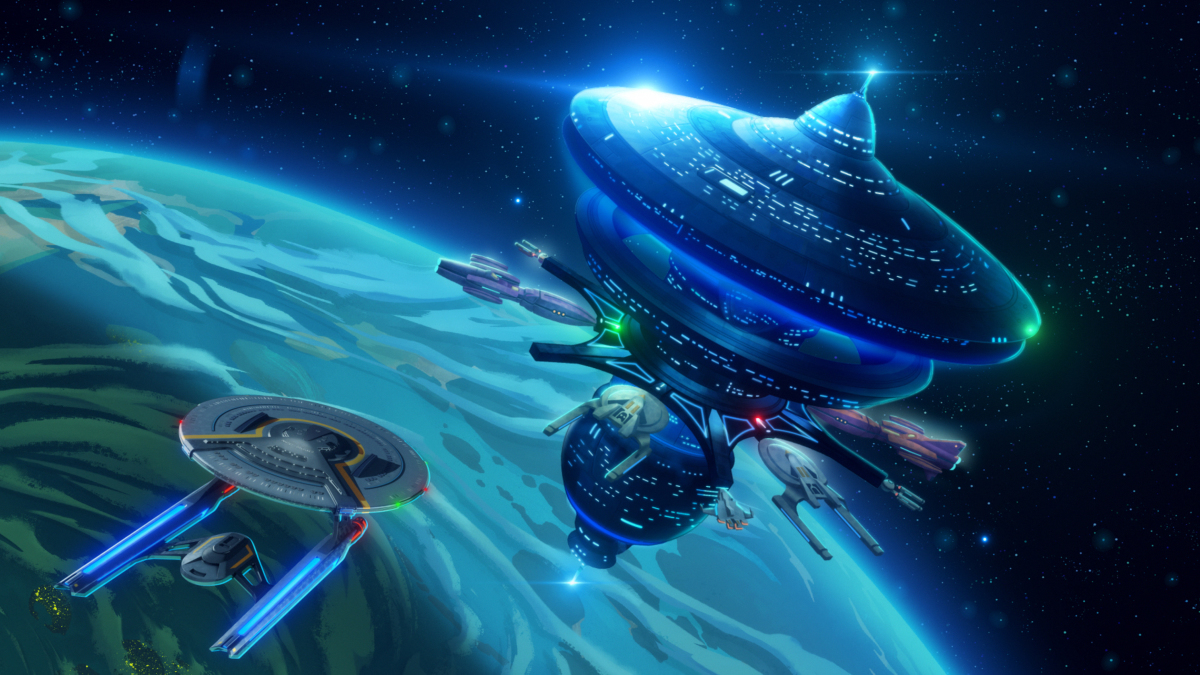
For a franchise that’s ostensibly about exploring, Star Trek has always been limited in how much of the galaxy it could actually show. Most of the alien species that Starfleet encountered were “humanoid” (i.e., actors with makeup and prosthetics stuck on their face). Away missions spent a lot of time in small villages that all looked alike because they were the same basic set redressed again and again. But with the franchise’s recent push into animation, the creators of Lower Decks and the upcoming Prodigy needn’t be limited by technology or budget; they showcase life in a universe we’ve heard about but only seen the barest glimpses of.
CBS
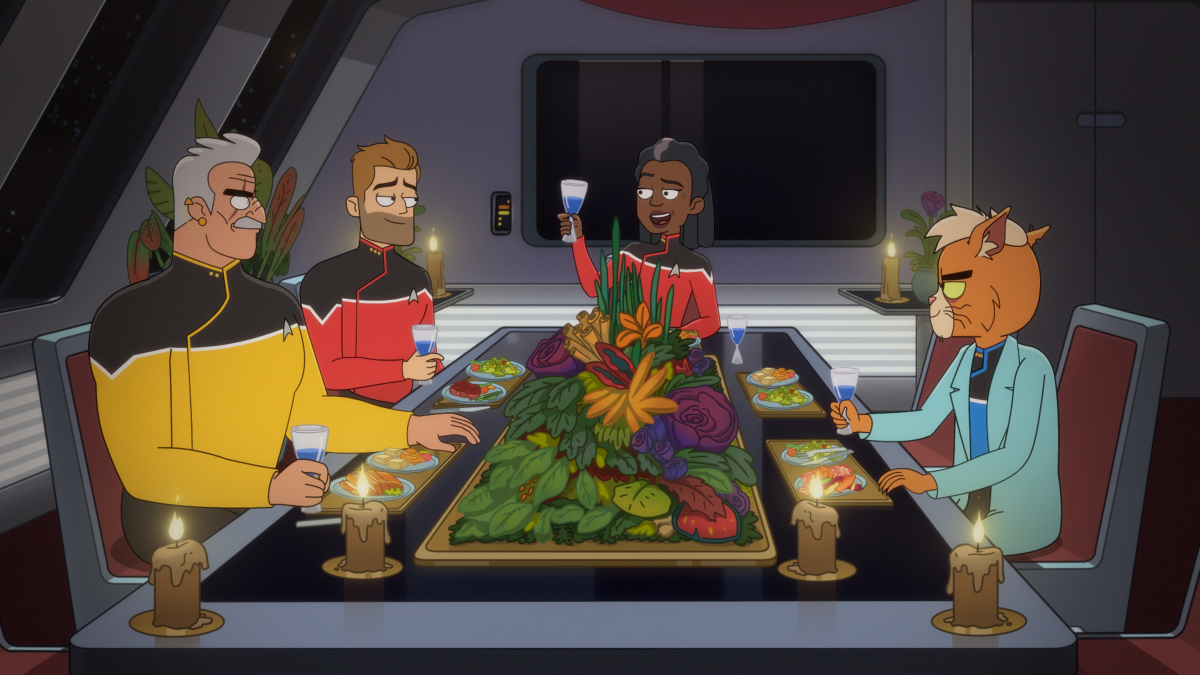
This week’s Lower Decks is a great example of the power of animation to illustrate the writers’ dreams as most of the episode takes place on Starbase 25, where Starfleet is holding a party for some of its top crews. Captain Freeman hopes to attend with her senior staff, but first they have to finish delivering a Doopler delegate with an annoying tendency to duplicate when he’s upset. Because this is the USS Cerritos, things get out of control and he ends up overrunning the ship with clones. It’s the kind of cartoonish scenario that’s easier done in animated form, instead of having to build a phalanx of CG models to interact with live actors.
CBS
But the real advantage to Lower Decks being an animated show comes in the A-plot of Beckett Mariner and Brad Boimler heading down to the station to sneak in the party themselves (thanks to an unclaimed invite sent to Brad’s clone William). Most starbases we’ve seen were rather dark and cramped on the inside, with Deep Space Nine an exception due to the station being the entire setting of its show. Places like Starbase Earheart would get one or two rooms at best, with a handful of actors in makeup and costume milling about in the background.
CBS
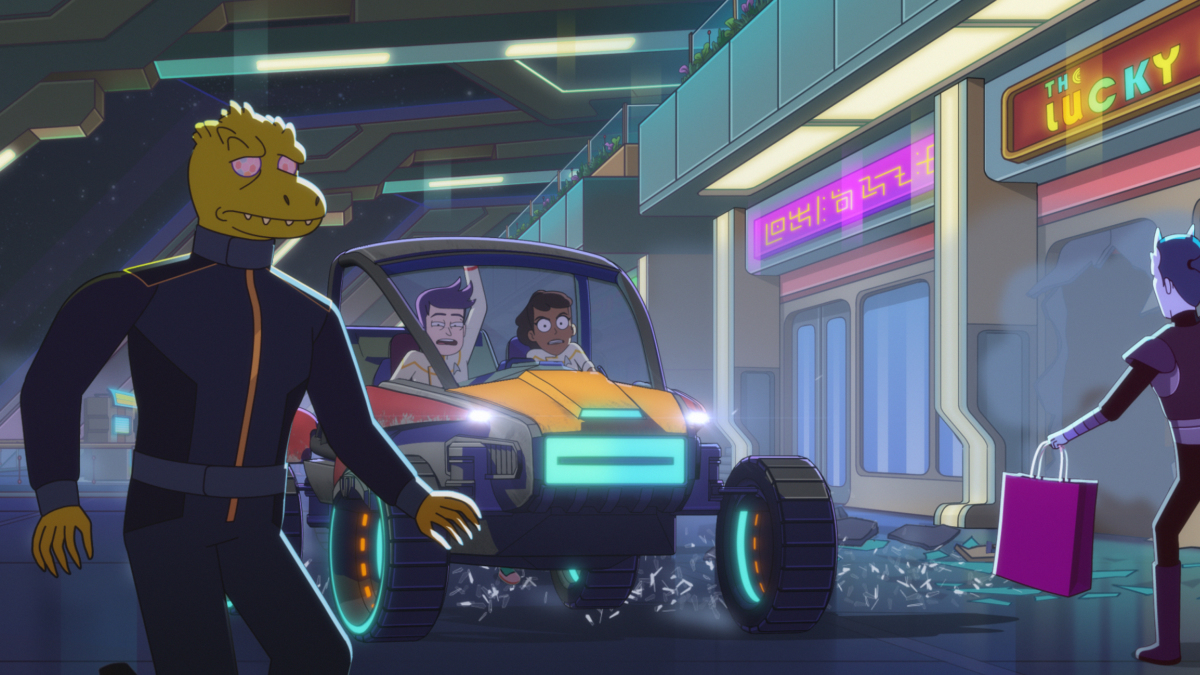
In “An Embarrassment of Dooplers,” our first view of Starbase 25’s interior is a spacious promenade with large overhead windows and neon signage everywhere. There are plenty of aliens to be seen, including Andorians, Bajorans and Klingons. Boimler’s first comment is how it’s “like a whole city,” and that he’s never been on a station “this old,” perhaps a bit of lamp shading for the fact that most of the bases we’ve seen carried much higher numerical designations. As long as it’s been around, Starbase 25 has had time to develop into something more than just a lonely outpost manned by a two person crew.
CBS
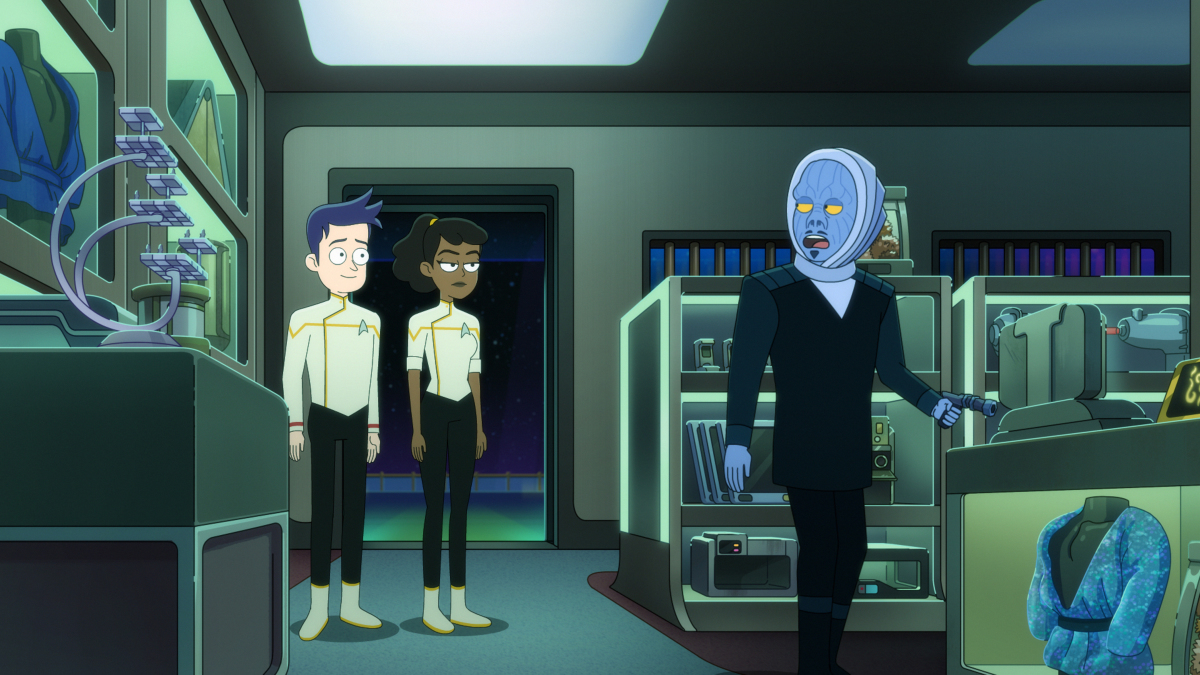
It’s even developed its own black market, which is how Boimler and Mariner end up on a buggy chase throughout the station, charging through a casino, barber shop and men’s clothing store. They pass by rows of shops and dozens of people (including a cameo by executive producer Alex Kurtzman). It feels like an actual lived-in place, down to the angry avian couple sitting at home on their couch. If that wasn’t enough, Mariner even adds a bit of local color to a few of the locations, mentioning going on a date there once, and describing the location of a Quark’s Bar as a former empty lot where teens used to make bad choices. While a throwaway gag, that line feels like it could be a reference to the upcoming Nickelodeon show Star Trek: Prodigy, which features a bunch of teens piloting an abandoned Starfleet vessel.
CBS
Science fiction has always been a bit of a sterile place; the original Star Wars films had no human children in them, with places like Cloud City always feeling a bit underpopulated. It took the special editions and the prequels to add a bit of cultural texture to that galaxy far, far away. The Next Generation added children to the ship for a little bit of family drama, but there was still a sense that there wasn’t much beyond Starfleet. Even as newer shows like Discovery and Picard can show more thanks to bigger budgets and better CG, everything still feels rather isolated: Picard retired to his vineyard, Riker’s family lives in a cabin in the woods and Michael Burnham ends up at an Orion work camp. Contrast that to our view of the Orion home planet in “We’ll Always Have Tom Paris,” where we get a little tour of the city and learn some things about Tendi in the process.
CBS
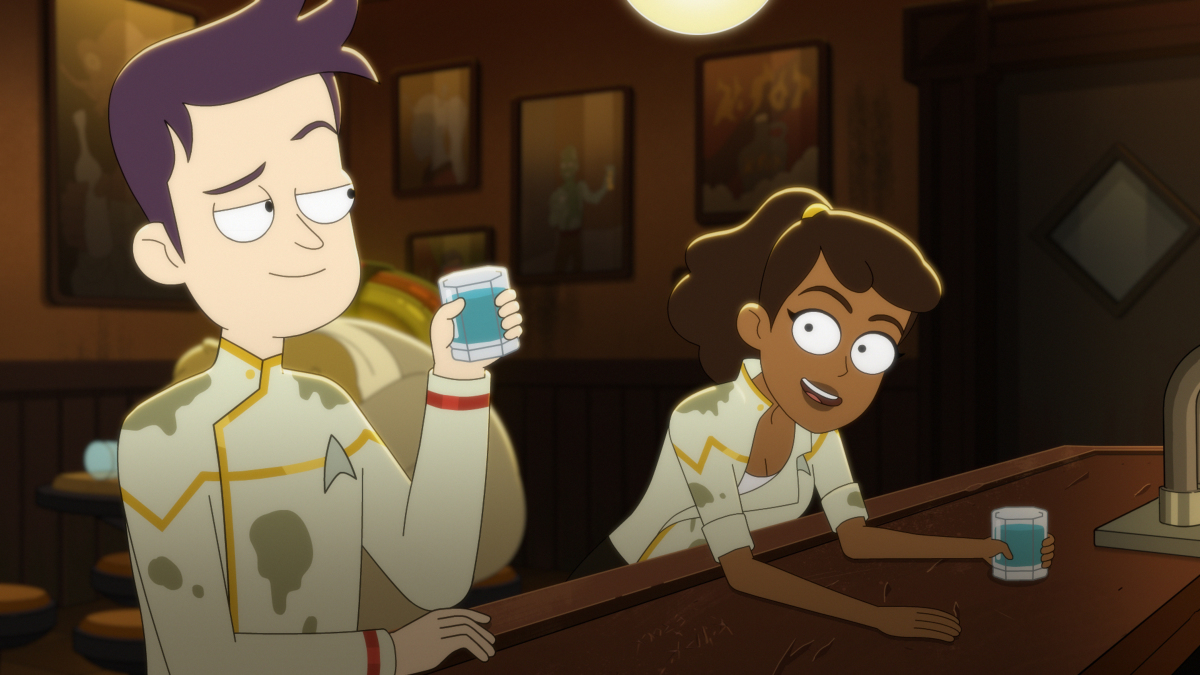
Starbase 25 ends up providing some crucial character development for Mariner and Boimler as well, who end up reconciling in a bar once frequented by Kirk and Spock. It’s a nice way to connect the adventures of the Cerritos to the more famous Enterprise, but also a reminder that ultimately all of our heroes are people. Individuals who explore the galaxy and serve on ships and attend diplomatic conferences, but also who, like us, drink and fight and get thrown out of parties.
In 2021, cyberattacks and instances of ransomware demands against companies, agencies, and institutions have dominated the headlines. These kinds of attacks are on the rise and often have long-reaching impacts that can spill over across supply chains. In just the first half of the year, there have been several high-profile cyberattacks in the United States including Colonial Pipeline1, JBS (the world’s largest meat supplier)2, the Washington, D.C. Police Department3, and the MTA of New York City4, to name a few.
The SolarWinds cybersecurity breach5 opened US government networks and private companies’ security systems around the world to threat actors in late 2020. This breach allowed access to confidential government data and intel before being discovered. The innovative bad actors attached their malware to a software update from SolarWinds’ Orion software in March through June of 2019, which led to tens of thousands of customers’ security being compromised. SolarWinds serves as an unfortunate example of how organizations around the world operate under the perpetual threat of becoming a target of a cyberattack or the victim of a cybercrime, even from a trusted partner.
Some believe the escalation in attacks and data breaches in the past year likely originated with new remote working environments, which exponentially increased the number of endpoints that required protection putting strain on already over-extended IT resources6.
Take a proactive approach to your security
To identify, contain, and eradicate these relentless threats properly, security operations must include effective platforms, processes, and people. With attacks on the rise and bad actors only becoming more sophisticated, security that meets the minimum is no longer effective, and organizations need to consider a more proactive approach. Microsoft Defender for Endpoint is a holistic, cloud-delivered endpoint security solution that includes risk-based vulnerability management and assessment, attack surface reduction, behavior-based next-generation protection, rich APIs, and unified security management.
Microsoft security solutions have native capability designed to work cohesively to provide integrated threat detection and response capabilities, but technology alone is not enough. The benefits derived from leveraging best-in-breed tools can mean the difference in capturing a threat or letting it linger, unnoticed in your environment indefinitely. Partnering with a Managed Detection and Response (MDR) team/Managed Security Services Provider (MSSP) who is a trusted Microsoft technology partner can help you operationalize these transformations and derive the most value from your existing technology investments.
Trustwave removes the complexity and burden of threat detection and response with an entire portfolio of cybersecurity solutions that work with existing Microsoft investments to fight cybercrime, protect data, and reduce risk. Knowing what to look for in your security partners is crucial, especially among the noise of an industry saturated with providers claiming to be the “best.” Search for partners that can offer:
All-day monitoring/notification, incident response, and remediation.
Data forensics and investigation response (DFIR).
Proactive, human-led threat hunting.
With organizations facing overwhelmed security teams and resource limitations, finding the time and staff to properly protect their environments—on-premises, in the cloud, or a hybrid of both—is a constant challenge. Implementing proactive endpoint detection and response (EDR) and MDR solutions can relieve your teams, prevent breaches, and appease your stakeholders. For real examples of how effective the EDR plus MDR combination can be when aligned to create a layered security posture, view Trustwave’s case study on the GoldenSpy malware or view their industry accolades showcasing the industry expertise their teams have worked to earn for the safety of organizations like yours.
Learn more
To learn more about the Microsoft Intelligent Security Association (MISA), visit our website where you can learn about the MISA program, product integrations, and find MISA members. Visit the video playlist to learn about the strength of member integrations with Microsoft products.
To learn more about Microsoft Security solutions, visit our website. Bookmark the Security blog to keep up with our expert coverage on security matters. Also, follow us at @MSFTSecurity for the latest news and updates on cybersecurity.
BAD CANDY is directed and written by the duo Scott B. Hansen and Desiree Connell and is a Halloween anthology film. So, if you’re in need of more Halloween-themed anthologies, here you go!
Horror-themed radio jockey Chilly Billy (Corey Taylor) and his side-kick Paul (Zach Galligan) tell tales of terror on their radio show on Halloween night. Little do they know, the residents of the small town are about to meet their grisly ends in his tales of terror.
So, this movie is fine. It’s never sinking into the depths of awful, but never really rises into anything fully spectacular or memorable. The short stories themselves have little tension, and the pay-offs never feel complete.
There is so much going on. It feels like a haunted house but not in a good way. Like, there’s always something popping out, but we lose a lot of the substance of the story and characters. The substance we do have is often lost in the motion and noise (or the numerous close-ups of Halloween decorations). There needed to be more attention to detail (come on, fake Dollar Tree candle for the demon’s altar?), more structured stories, and more fluid pacing.
The acting could be stiff at times, but could shine through, especially during the bathroom monster segment and the Abbie (Haley Leary) segment. One thing that really was gorgeous was the cinematography. The shots were fun while trying some new things and keeping some traditions, too. The Abbie drug sequence was beautifully shot and, if that had been the tone of BAD CANDY, we would have had a very different movie (and a very different review).
However, there was just too much going on and, if they had stuck to the typical three-part segment of most anthologies, and really nailed those, it probably would have been a much smoother film. The creature designs and effects were great, and I would have loved to have seen them utilized more and more tension added; however, with the time we were given, it was very, “thank u, next”.
BAD CANDY is a fine movie, like I said. Middle of the road for me. But if you’re a fan of anthologies with a lot of stories, it might be the treat you’ve been looking for.
BAD CANDY will be available in select theaters on September 10th, will be available on Video On Demand on September 14th, and will be available on Blu-ray by October 12th.
A better version of Brutal Doom 2.5, Adding Better looking gun Sprites, New Beefier Sound effects, 3 new weapons and Some Bugfixes To make the Mod Even Better.
Credits: Prof. Existential-Pistol Laser Sights code, Frag-Man-Ultimate BFG Code Used as a Base For the BFG95K, Minigun Sounds, SoundBible- Pistol Firing Sound effect, IDDQD1337- Machinegun Sprint Sprite, SergeantMarkIV- Brutal Doom V21 Used as a base, Dox778- Shotgun Strap Physics Sprites and Desert Eagle Addon, Thorir- M1911 Code and Sprites, Nuke 'em Muscle- Machinegun Redesign sprite base, Mike12 and Scuba Steve- New Pistol sprites,
BenjaminZuriel- Grenade Sprites
And Raven Software- Quake 4 Nailgun Sound Effects
DJ mixes are mostly absent from "premium" streaming services. That's mostly due to the fact that properly sorting out royalties for all the samples is a nightmare. You can find them on platforms like SoundCloud (unless they get taken down), but these songs can have literally hundreds of rights holders between the DJ, original artist, labels and even a festival or venue. To remedy the problem, and to massively expand the amount of DJ-mixed content on the platform, Apple worked with both major and independent labels on a system that identifies and directly pays rights holders on a mix. What's more, the company leveraged Shazam technology to do it for Apple Music.
Apple explains that its new tool will let the streaming service ID and compensate individual creators in a DJ mix, even artists who recorded any sampled tunes. It's also the first major streaming service to do so. In collaboration with DJs themselves alongside festivals, clubs, promoters, curators and independent labels, the company says it's working with all parties involved to ensure fair compensation. Apple says this will give DJ mixes a longer shelf life when it comes to revenue since individual tracks, collections, compilations and even full festival sets will be available to stream like studio albums on Apple Music.
There are thousands of DJ mixes on Apple Music already, and the service says it's adding more all the time. The company has already commissioned mixes for Black Music Month and Pride in addition to housing content from Tomorrowland's 2020 and 2021 digital festivals. Thanks to this new system, there's about to be a lot more to choose from.
Starting this Friday, !K7's DJ-Kicks archive will be available for streaming. The label explains that 14 of those editions haven't been "in the market" for more than 15 years. Previously unavailable for streaming, Tomorrowland performances from Alesso, Charlotte de Witte, David Guetta, Diplo, Major Lazer, Martin Garrix, The Chainsmokers, Tiësto and more will be easily accessible. Mixmag is opening up its vault as well, and livestream platform Cercle will have a dedicated hub on Apple Music where listeners can stream archived mixes and live performances. And yes, much of this will be available for lossless streaming and you'll be able to listen offline too.
This isn't the first time Apple has dabbled in managing royalties for DJ mixes. In 2016, the company began working with Dubset to bring previously unlicensed content to Apple Music. Dubset used a Gracenote database of clips to identify and assign rights. The system even allowed original artists to prohibit their songs from being used in mixes and to limit how much of a track could be repurposed. Dubset was purchased by Pex in 2020, where the system is used to scan social media audio and video content for unlicensed material. Apple's new Shazam-based setup, on the other hand, compares all parts of a mix to Apple Music's library of 75 million songs.
As you can imagine, all of the new content will be easy to find. Apple says DJs will have artist pages, if they don't already for any original music. And while the focus is on DJ mixes for now, the company says this system can be applied widely, for things like assigning royalties for hip-hop remixes and more.
NASA's Mars rover Perseverance collected its second rock sample this week — and Friday Caltech's Ken Farley, a project scientist for the mission, announced that they've learned something.
"It's a big deal that the water was there a long time."
The Perseverance science team already knew a lake once filled the crater; for how long has been more uncertain. The scientists couldn't dismiss the possibility that Jezero's lake was a "flash in the pan": floodwaters could have rapidly filled the impact crater and dried up in the space of 50 years, for example. But the level of alteration that scientists see in the rock that provided the core samples — as well as in the rock the team targeted on their first sample-acquisition attempt — suggests that groundwater was present for a long time.
This groundwater could have been related to the lake that was once in Jezero, or it could have traveled through the rocks long after the lake had dried up. Though scientists still can't say whether any of the water that altered these rocks was present for tens of thousands or for millions of years, they feel more certain that it was there for long enough to make the area more welcoming to microscopic life in the past.
And they discovered something interesting in the rock samples: salts.
These salts may have formed when groundwater flowed through and altered the original minerals in the rock, or more likely when liquid water evaporated, leaving the salts. The salt minerals in these first two rock cores may also have trapped tiny bubbles of ancient Martian water. If present, they could serve as microscopic time capsules, offering clues about the ancient climate and habitability of Mars.
Salt minerals are also well-known on Earth for their ability to preserve signs of ancient life.
Pathfinder: Wrath of the Righteous was released last week. By all appearances the game seemed to be doing well, and indeed today Owlcat announced that the game has already sold 250,000 copies. That doesn't mean the hype is going to slow down though. Apparently they intend to continue releasing dev diaries. The latest one is an overview of the Worldwound and its history, featuring Paizo creative director James Jacobs.
The first-draft Alien 3 screenplay by William Gibson, the founder of cyberpunk (Neuromancer Trilogy), has been turned into a novel by Pat Cadigan, the Hugo Award-Winning “Queen of Cyberpunk” and it has just been released two days ago by Titan Books in a gorgeous hardcover.
William Gibson’s never-before-adapted screenplay for the direct sequel to Aliens, reveals the fates of Ripley, Newt, the synthetic Bishop, [Continued ...]
Courtesy of Dark Star PicturesDEATH DROP GORGEOUS is brought to us by the trio of writers/directors, Michael J. Ahern, Christopher Dalpe, and Brandon Perras-Sanchez, and is a horror-comedy made in the early 2000s– Oh, oh, it’s NOT? Well, is it at least set in the early 2000s?…Oh…Ohhhh no…
Well, we better talk about the plot first.
DEATH DROP GORGEOUS tells the story of a bartender who tries to make it out on his own with his boyfriend but has to come back home after being cheated on. Getting his old job back at a popular gay bar and drag scene, trouble escalates as tempers flare backstage, his boss is shady as hell, and men keep ending up dead. Will he survive the murder, mayhem, and mystery of this deathtrap? Or will he, too, suffer the same fate of being DEATH DROP GORGEOUS?
So, you may have noticed already that I wasn’t a huge fan of the writing or the “comedy” portion of DEATH DROP GORGEOUS, mainly because I’ve seen and heard it all before….in the early 2000s. This really disappointing. With other queer indie movies upping their game as of late, I was hoping to find something campy but with a sharp edge, veering into the future. Not looking into an outdated past. There were a lot of cringey moments because of this, like the ending which was just one-liner after one-liner after one-liner, without any real end in sight. This I lay at the feet of writing and directing.
The other thing that I had a hard time with was finding characters to relate to or enjoy. Everyone seemed to hate each other and be in competition with each other, playing mostly caricatures of screwball queer films of yesteryear but with very little heart. Even the unsteady film, Ticked of T******* With Knives, had moments of community and character that felt real and enjoyable whereas DEATH DROP GORGEOUS floundered.
Courtesy Dark Star Pictures
And don’t get me wrong AT ALL! I eat camp for breakfast, brunch, lunch, dinner, and as a midnight snack. But there are certain ingredients that go into it. There’s something special that makes it camp — pure and beautiful camp. Sure, you could call it camp or “gaysploitation” horror, but there was something that it lacked. Some heart. Some substance.
However, the reason why I’m picking this apart is because I really wanted it to succeed, and there were parts that I truly utterly enjoyed. Gloria Hole (Michael McAdam) was amazing and I wish DEATH DROP GORGEOUS would have just completely focused on her. There’s a part at the end (no spoilers) where it goes kind of arthouse, and I lived in those few minutes. I wish the whole movie was that because I ate it all up. It was absolutely stunning.
The last thing I’m going to talk about and congratulate them on were the visceral effects. The special effects in this movie were satisfying, appropriately gross, and visually entertaining. They did a wonderful job at blood and gore. The actors hammed it up beautifully, and it’s been quite a while since I’ve felt a bit sick to my stomach. So, hats off to that. Quite the accomplishment and terrifically done.
Bottom line: If you’re having a queer horror night, maybe add this to the rotation and check out DEATH DROP GORGEOUS, but I doubt it’ll stay relevant or become a classic.
DEATH DROP GORGEOUS is released on Digital by Dark Star Pictures on September 10, 2021.
The opening images of pastoral horror, As In Heaven, sees the almost stock imagery of a young beautiful thing, dressed in white, caressing the golden wheat with her fingertips, as she walks through a field of golden harvest. You know this shot - tracking at hip level, camera titled slightly upward to gather the sun - because it has been used in films as far ranging as Terrence Malick's Days of Heaven to Ridley Scott's Gladiator. Director Tea Lindeburg offers a sense of comfort and familiarity right before changing tone into a wholly original image, one that is arrestingly horrific: A thunderstorm of blood, off in the distance, and bearing down on innocence. It is in the mid-1800s in Denmark, and God has great...
We’re in full lockdown here in the Auckland area of NZ, so I’m either looking after an almost-6 year old or I’m writing. There are two episodes of Season 3 of What We Do In The Shadows that are so far unwatched, and all of the final season of Lucifer. And pretty much all adult television. On the other hand, I’ve watched both of the first two Home Alone movies and an astonishing number of YouTube videos about people glitter-bombing burglars and making squirrel mazes.
John Ackerly is co-founder and CEO of Virtru Corporation. Previously, he was an investor at Lindsay Goldberg LLC, served as a technology policy adviser at the White House and was the Policy and Strategic Planning director at the U.S. Department of Commerce.
Almost every American adult remembers, in vivid detail, where they were the morning of September 11, 2001. I was on the second floor of the West Wing of the White House, at a National Economic Council Staff meeting — and I will never forget the moment the Secret Service agent abruptly entered the room, shouting: “You must leave now. Ladies, take off your high heels and go!”
Just an hour before, as the National Economic Council White House technology adviser, I was briefing the deputy chief of staff on final details of an Oval Office meeting with the president, scheduled for September 13. Finally, we were ready to get the president’s sign-off to send a federal privacy bill to Capitol Hill — effectively a federal version of the California Privacy Rights Act, but stronger. The legislation would put guardrails around citizens’ data — requiring opt-in consent for their information to be shared, governing how their data could be collected and how it would be used.
But that morning, the world changed. We evacuated the White House and the day unfolded with tragedy after tragedy sending shockwaves through our nation and the world. To be in D.C. that day was to witness and personally experience what felt like the entire spectrum of human emotion: grief, solidarity, disbelief, strength, resolve, urgency … hope.
Much has been written about September 11, but I want to spend a moment reflecting on the day after.
When the National Economic Council staff came back into the office on September 12, I will never forget what Larry Lindsey, our boss at the time, told us: “I would understand it if some of you don’t feel comfortable being here. We are all targets. And I won’t appeal to your patriotism or faith. But I will — as we are all economists in this room — appeal to your rational self-interest. If we back away now, others will follow, and who will be there to defend the pillars of our society? We are holding the line here today. Act in a way that will make this country proud. And don’t abandon your commitment to freedom in the name of safety and security.”
There is so much to be proud of about how the country pulled together and how our government responded to the tragic events on September 11. First, however, as a professional in the cybersecurity and data privacy field, I reflect on Larry’s advice, and many of the critical lessons learned in the years that followed — especially when it comes to defending the pillars of our society.
Even though our collective memories of that day still feel fresh, 20 years have passed, and we now understand the vital role that data played in the months leading up to the 9/11 terrorist attacks. But, unfortunately, we failed to connect the dots that could have saved thousands of lives by holding intelligence data too closely in disparate locations. These data silos obscured the patterns that would have been clear if only a framework had been in place to share information securely.
So, we told ourselves, “Never again,” and government officials set out to increase the amount of intelligence they could gather — without thinking through significant consequences for not only our civil liberties but also the security of our data. So, the Patriot Act came into effect, with 20 years of surveillance requests from intelligence and law enforcement agencies crammed into the bill. Having been in the room for the Patriot Act negotiations with the Department of Justice, I can confidently say that, while the intentions may have been understandable — to prevent another terrorist attack and protect our people — the downstream negative consequences were sweeping and undeniable.
Domestic wiretapping and mass surveillance became the norm, chipping away at personal privacy, data security and public trust. This level of surveillance set a dangerous precedent for data privacy, meanwhile yielding marginal results in the fight against terrorism.
Unfortunately, the federal privacy bill that we had hoped to bring to Capitol Hill the very week of 9/11 — the bill that would have solidified individual privacy protections — was mothballed.
Over the subsequent years, it became easier and cheaper to collect and store massive amounts of surveillance data. As a result, tech and cloud giants quickly scaled up and dominated the internet. As more data was collected (both by the public and the private sectors), more and more people gained visibility into individuals’ private data — but no meaningful privacy protections were put in place to accompany that expanded access.
Now, 20 years later, we find ourselves with a glut of unfettered data collection and access, with behemoth tech companies and IoT devices collecting data points on our movements, conversations, friends, families and bodies. Massive and costly data leaks — whether from ransomware or simply misconfiguring a cloud bucket — have become so common that they barely make the front page. As a result, public trust has eroded. While privacy should be a human right, it’s not one that’s being protected — and everyone knows it.
This is evident in the humanitarian crisis we have seen in Afghanistan. Just one example: Tragically, the Taliban have seized U.S. military devices that contain biometric data on Afghan citizens who supported coalition forces — data that would make it easy for the Taliban to identify and track down those individuals and their families. This is a worst-case scenario of sensitive, private data falling into the wrong hands, and we did not do enough to protect it.
This is unacceptable. Twenty years later, we are once again telling ourselves, “Never again.” 9/11 should have been a reckoning of how we manage, share and safeguard intelligence data, but we still have not gotten it right. And in both cases — in 2001 and 2021 — the way we manage data has a life-or-death impact.
This is not to say we aren’t making progress: The White House and U.S. Department of Defense have turned a spotlight on cybersecurity and Zero Trust data protection this year, with an executive order to spur action toward fortifying federal data systems. The good news is that we have the technology we need to safeguard this sensitive data while still making it shareable. In addition, we can put contingency plans in place to prevent data that falls into the wrong hands. But, unfortunately, we just aren’t moving fast enough — and the slower we solve this problem of secure data management, the more innocent lives will be lost along the way.
Looking ahead to the next 20 years, we have an opportunity to rebuild trust and transform the way we manage data privacy. First and foremost, we have to put some guardrails in place. We need a privacy framework that gives individuals autonomy over their own data by default.
This, of course, means that public- and private-sector organizations have to do the technical, behind-the-scenes work to make this data ownership and control possible, tying identity to data and granting ownership back to the individual. This is not a quick or simple fix, but it’s achievable — and necessary — to protect our people, whether U.S. citizens, residents or allies worldwide.
To accelerate the adoption of such data protection, we need an ecosystem of free, accessible and open source solutions that are interoperable and flexible. By layering data protection and privacy in with existing processes and solutions, government entities can securely collect and aggregate data in a way that reveals the big picture without compromising individuals’ privacy. We have these capabilities today, and now is the time to leverage them.
Because the truth is, with the sheer volume of data that’s being gathered and stored, there are far more opportunities for American data to fall into the wrong hands. The devices seized by the Taliban are just a tiny fraction of the data that’s currently at stake. As we’ve seen so far this year, nation-state cyberattacks are escalating. This threat to human life is not going away.
Larry’s words from September 12, 2001, still resonate: If we back away now, who will be there to defend the pillars of our society? It’s up to us — public- and private-sector technology leaders — to protect and defend the privacy of our people without compromising their freedoms.
It’s not too late for us to rebuild public trust, starting with data. But, 20 years from now, will we look back on this decade as a turning point in protecting and upholding individuals’ right to privacy, or will we still be saying, “Never again,” again and again?
My concept of food going “bad” is simple: If it doesn’t smell weird, feel stickier than it should, or have mold growing on it, it’s probably fine! But some foods, like flour or dried beans, are a little trickier. Dried beans will never go so “bad” that they’ll cause great physical distress—though they can make you…
The process of selling your home is, well...a process. There’s paperwork galore, along with multiple showings, visits, and inspections. One of these steps is the home appraisal, which is the last chance for the seller to take action to ensure that their home gets the highest valuation possible.
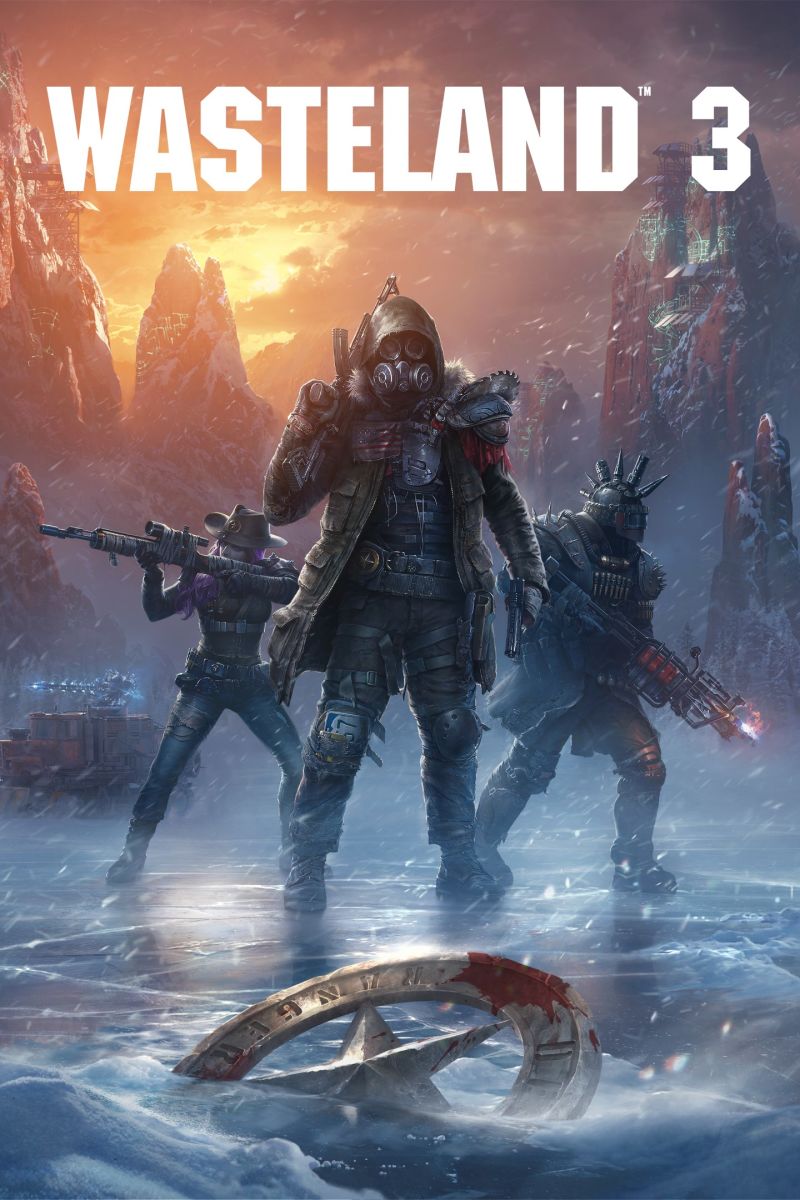
Announced two years after the release of the second game, Wasteland 3 similarly sought to obtain funds through crowdfunding, rather than finding a publisher. However, instead of Kickstarter, which was used to great success for the previous game and Torment: Tides of Numenera, inXile opted to use Fig, an equity crowdfunding platform. The campaign launched in October 2016.
Notably, while Wasteland 2 offered a laundry list of various incentives and opportunities for backers to add their own personalized items to the game – including entire shrines to be erected in their honor in the game – the follow-up was a lot more modest, with top level backers able to design an NPC to add to the game or a unique encounter.
The funding ended a month later, with a little over $3.1 million raised for developing the game, matching the success of its predecessor. But even with that success, the game would take twice as long to develop. The reasons are many, including an overhaul of the graphics made in-house, rather than crowdsourcing assets, as was the case with Wasteland 2, fundamental changes to the mechanics and systems, and ultimately a completely new setting.
Setting
The first two games explored the sun-blasted deserts of Arizona and the atomic jungles of California. The third is set in the Rockies, trapped beneath a permanent polar vortex. This unique phenomenon formed in the wake of the nuclear holocaust, turning the whole region into a polar wasteland, blanketed by a thick layer of snow and ice. Trading leather jackets for parkas and heat stroke for hypothermia, Desert Rangers are sent into this inhospitable wasteland to seek help for Arizona.
Two desperate wars against a robotic menace trying to exterminate humanity have ruined Arizona and left their mark on the Rangers. After General Vargas detonated a nuclear warhead at the Citadel to destroy the genocidal AI once and for all, the Rangers have been scraping by, trying to keep their territory in one piece. In 2107, five years later, they are hanging on by a thread and Arizona seems doomed.
Enter Colorado, united under a single banner by Saul Buchanan, the Patriarch. Colorado is a proper nation in a world where most ended with nuclear weapons. A nation carved out of a land of ice and snow, whose ruler offers the Rangers a simple deal: Aid him in bringing his three errant children home, and in return he will save Arizona by providing the lands of the Rangers with all they need to survive. General Woodson sends a team to Arizona under Colonel Angela Deth, which disappears. Undeterred, he sends a second, larger force to make contact with Saul Buchanan.
Team November makes it to Colorado, only to be ambushed at the edges of the Patriarch’s territory. Only a handful of Rangers walk away from the deadly ambush, and even fewer make it to Colorado Springs to meet the Patriarch. Rather than turn you away, he gifts you with a place to set up a Ranger Center in and everything you might need to start building a Ranger presence in Colorado and aim him in effecting a family reunion for him.
Naturally, not all is as it seems. There are more than a few skeletons in the Patriarch’s closet and Colorado is not the utopia he declares it to be. Colorado Springs is a beacon of stability and prosperity, kept under watch by the Patriarch’s Marshals and ran by the Hundred Families allied with him. But from the very first moment there’s tension in the air – and it’s not just the latest raider incursion that somehow penetrated the city’s defences and took hostages with terrifying ease.
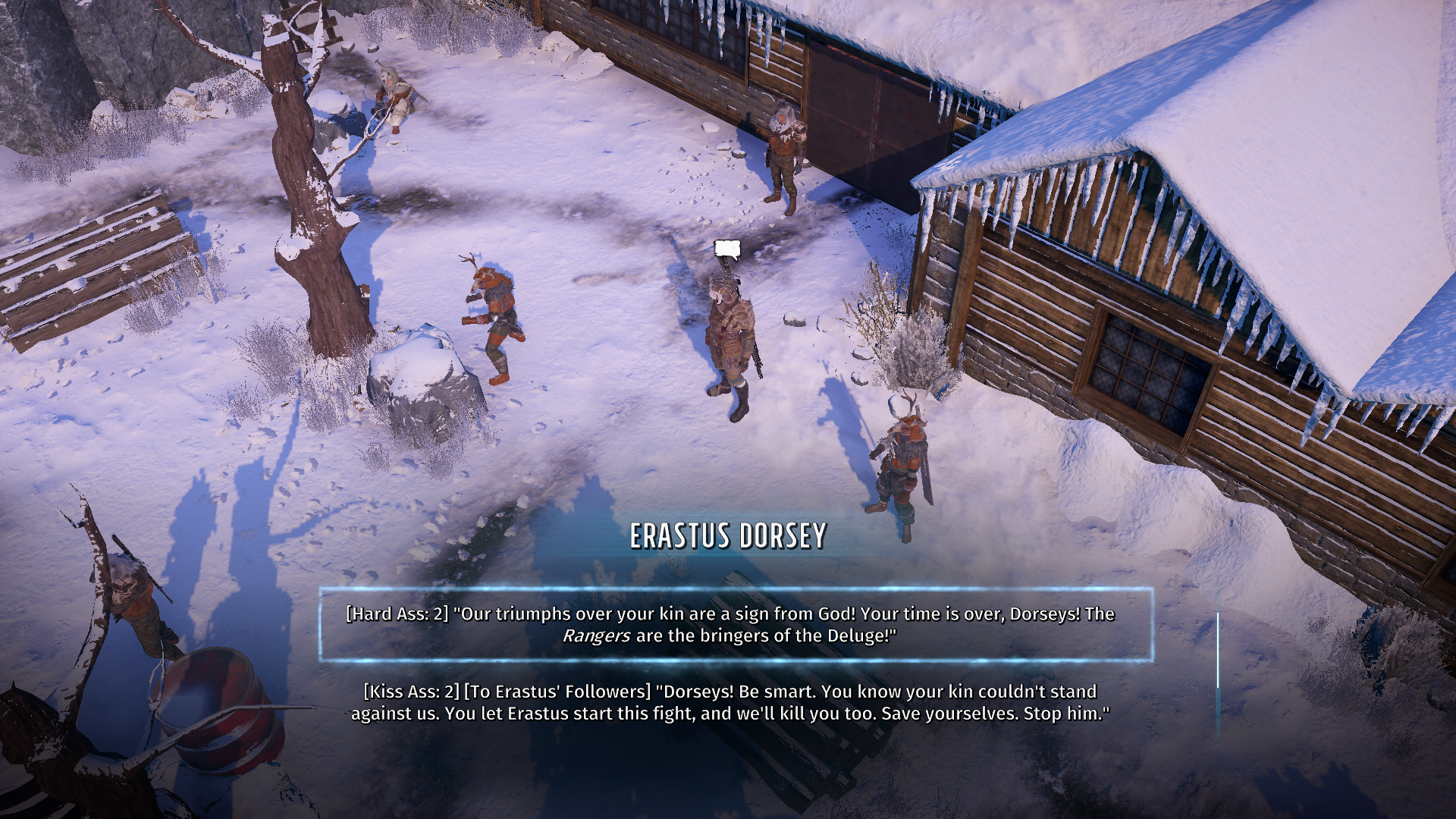
The further away you go from the Colorado Springs, the more complicated the situation gets. The deranged worshippers of Ronald Reagan are allied with one of the Patriarch’s children, but they also keep a stranglehold on the oil supply to the region. The Dorseys seem borderline feral at first, but in the end, they are tied to the Patriarch closer than he’d like to admit. Raider tribes that the Patriarch supposedly brought to heel are anything but destroyed. Then there is Colonel Angela Deth, who has plans of her own for Colorado that run counter to General Woodson’s orders.
You land in the middle of this Gordian knot and it’s up to you to decide whether you follow orders to work with the Patriarch, fight against him, or try to find a third way. Every decision has its consequences and in the end, you may find yourself stuck in a corner because you tried to do the right thing – losing an opportunity to gain enough reputation with a faction to enable a peaceful resolution.
Gaming
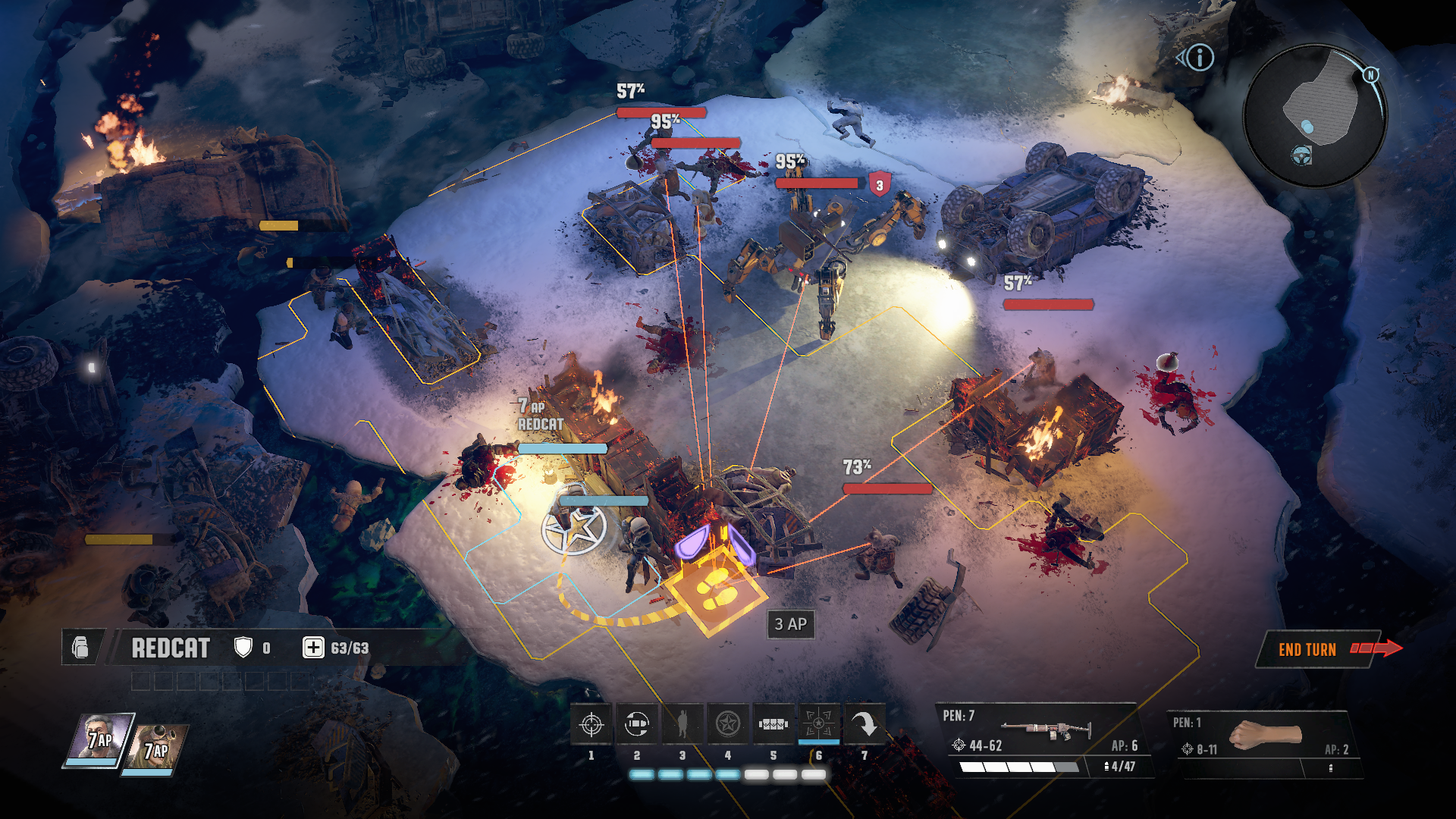
It’s these choices that define Wasteland 3 and represent the core of its story and gameplay. They help make the game feel bigger than its predecessor and more replayable, despite being about half of its playing time and having fewer areas to explore. Each area is packed with characters, quests, and opportunities, with little need to backtrack. It’s the perfect example of how more depth and less breadth can translate to a much better video game.
It begins early: At the start you only create two Rangers, instead of the full squad, and have a much gentler learning curve. Once you gain your new Ranger Center at Colorado Springs, you can make new Rangers at will, who will be only marginally less effective than the main squad. Experimenting with different weapons and builds even in the late game remains a viable option, and existing Rangers can also be remade the same.
The CLASSIC system introduced in Wasteland 2 has been streamlined. Attributes retain their major impact on each character, but there are just 22 skills as opposed to 31. Some were left intact (Animal Whisperer, Leadership, Barter, Toaster Repair), others renamed (Computer Science to Nerd Stuff, Demolitions to Explosives, Outdoorsman to Survival, Computer Science to Nerd Stuff). Similar skills have been merged to reduce overlap (for example, Safecracking, Lockpicking, and Alarm Disarm formed Lockpicking, while Field Medic and Surgeon became First Aid), with some removed entirely (Brute Force) or turned into a derived statistic dependent on attributes (Perception). Social skills have been modified somewhat, as the game now features a classic dialogue tree system. Hard and Kiss Ass were retained as intimidation and persuasion, while Smart Ass was scrapped in favor of using all the remaining skills in dialogue directly.
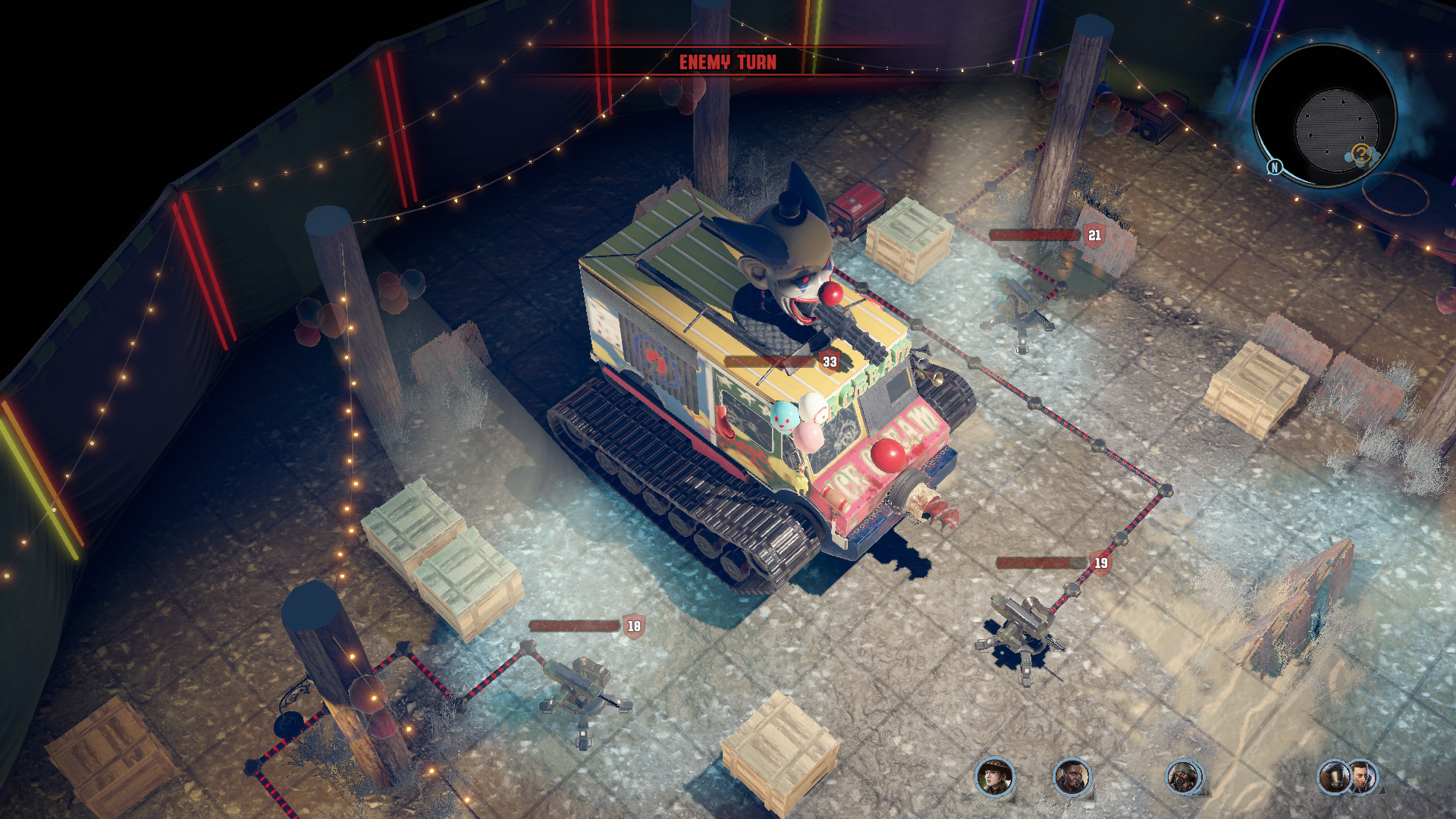
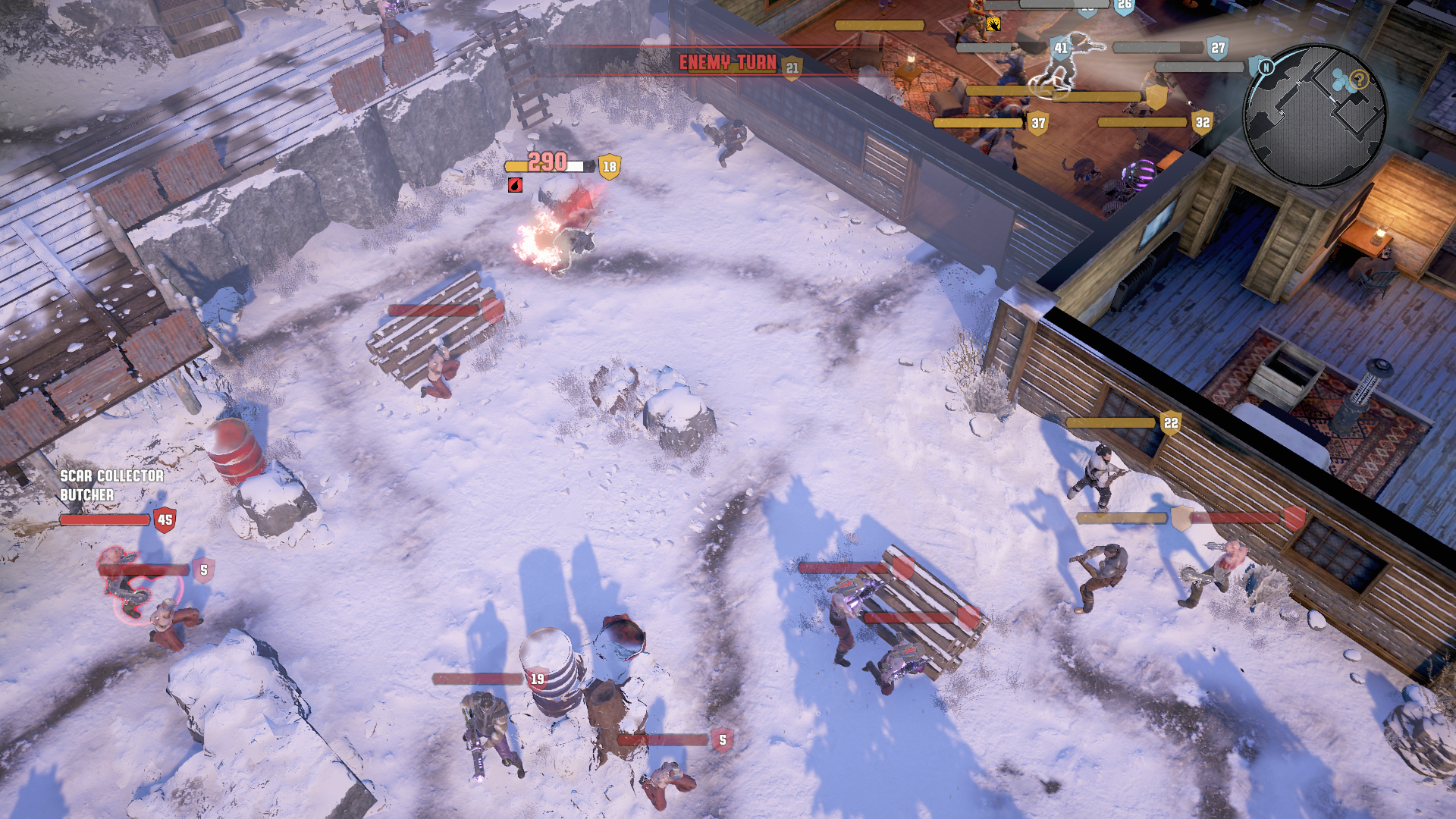
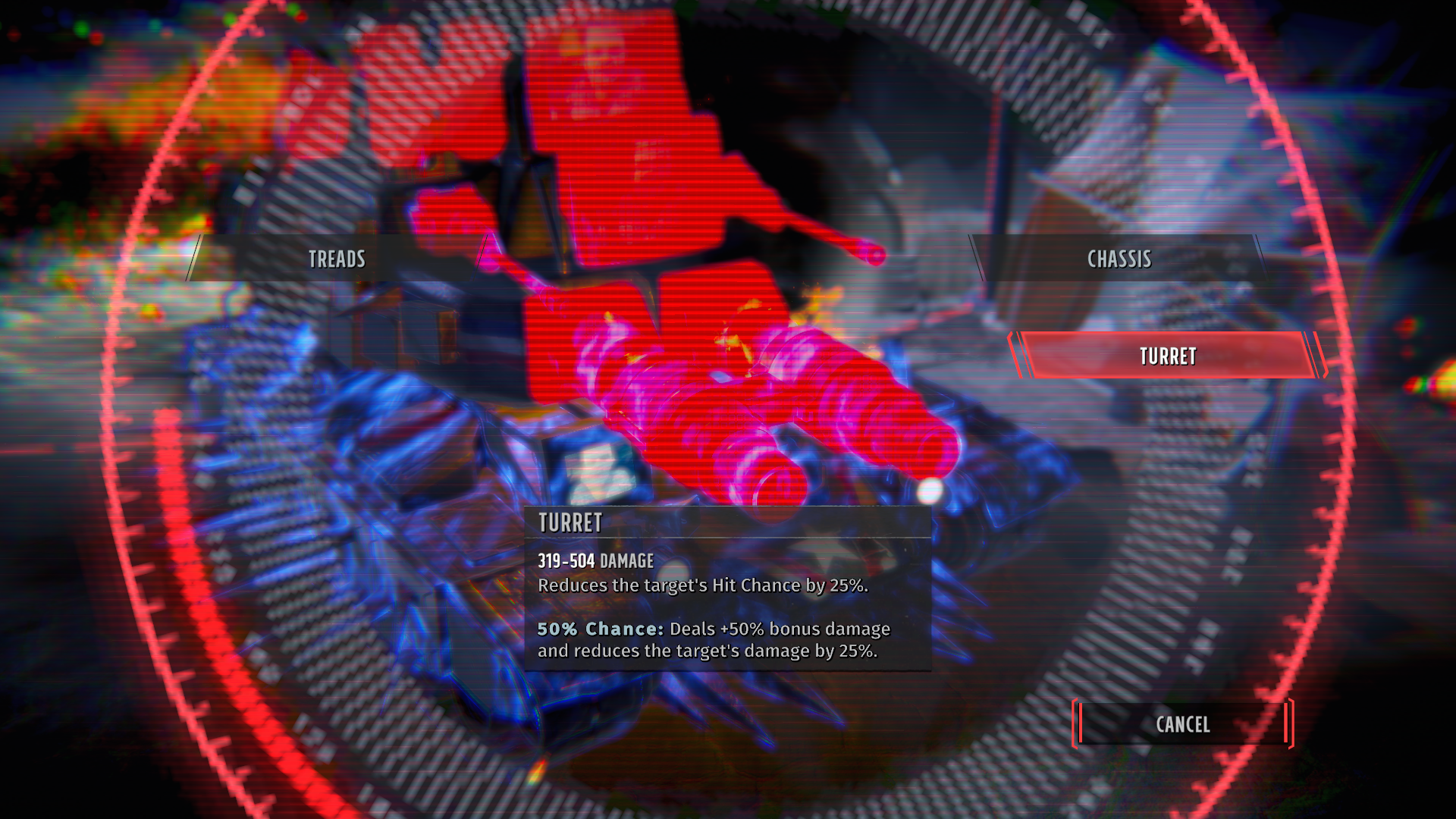
However, the biggest changes affected combat skills. Rather than asking you to specialize you from the start, you select from seven primary combat skills, usually grouping together several weapon types: Automatic Weapons (assault rifles and SMGs), Big Guns (machine guns and flamethrowers), Brawling, Melee Combat (blunt and bladed), Small Arms (hand guns and shotguns), Sniper Rifles and Weird Science. Each skill has a distinct tactical niche and can be specialized towards a particular weapon type with perks and weapon mods down the road. The sole outlier is Weird Science, which allows your characters to use weird tech, including energy weapons. Unlike Wasteland 2, energy weapons now inflict various status effects, giving them another, different niche.
The final elements defining you team will be their gear, including three distinct types of armor (light, heavy, and weird, providing different special effects), broken up into helmets, chests, and legs, trinkets providing miscellaneous bonuses, and an extensive list of consumables ranging from booze to experimental, high-end drugs and wasteland cuisine. Your Rangers can even become cyborgs at considerable expense, though the effect is underwhelming, merely unlocking additional trinkets for equipping.
Rounding out your Ranger team will be two companions, out of eight available. Each represents a different aspect of Colorado, and reacts to the choices you make or even opens up different options, up to changing the endgame.
Summary
Wasteland 3 is a proper sequel to Wasteland, embracing new gameplay options while freely shedding what didn’t quite work, whether it be tedious inventory management that contributed little to the game or overly specialized combat skills with marginal use in practice. Coupled with the number of choices, non-linearity, and a distinctly atmospheric soundtrack with a haunting rendition of Land of Confusion by Stormi Henley, Wasteland 3 shows the potential laying in a proper post-post-apocalypse setting, like Obsidian Entertainment’s Fallout: New Vegas.
The one problem with the game is that there isn’t quite enough of it. A large amount of content would up on the cutting room floor, including some of the locations showcased in the Fig campaign, such as the Air Force Academy and its frozen nuclear explosion, the Steeltown arcology at Puebla, complete with an entire quest line related to inheriting the throne of Colorado, Cheyenne Mountain FADERs, and more.
Despite a full third of the game being missing on release and likely filed away for subsequent story DLC releases, Wasteland 3 is still a surprisingly good game that feels rounded. It’s no Tyranny, which goes strong for two thirds of the game, only to finish with a final act that feels severely phoned in to make it to the finish line.
The US Defense Department's ambitions beyond Earth just grew a little clearer. SpaceNews has learned the department recently put out a call for privately-made nuclear propulsion systems that could power small- and mid-sized spacecraft. The DoD wants to launch missions venturing beyond Earth orbit, and existing electric and solar spacecraft are neither suitable for that job nor suitable to smaller vehicles, the department's Defense Innovation Unit said.
The nuclear propulsion system will ideally offer "high delta-V" (above 33ft/s) while scaling down to less than 2,000kg in dry mass (4,409lbs on Earth). On top of providing electricity for the payload, the technology will hopefully keep the spacecraft warm when in shadow and minimize radiation both on the ground and to other components. Responses are expected by September 23rd, with contracts handed out as quickly as 60 to 90 days afterward.
Officials acknowledged they were making the request as a matter of expediency. NASA and other agencies are already developing or backing nuclear spacecraft, but those won't be ready for a long while. The DoD is hoping for a prototype within three to five years — this technology would serve as a stopgap that puts nuclear propulsion into service relatively quickly for near-term projects.
While the request didn't provide clues as to what spacecraft were in the works, the focus on smaller spacecraft suggests it could involve probes, satellites or other vehicles with modest goals. You won't see this power human trips to Mars. All the same, it's clear the DoD is frustrated by the limitations of existing spacecraft engines and wants a fast track to more powerful designs.
Also, it seems that FFMPEG 2.2.3.0 is latest FFMPEG that he has compiled for DOS.
I remember that Khusraw release a more recent DOS compile of Mplayer around 2017 or 2018 which supported PCI sound cards. I believe this is in the above link, which is the latest DOS compile that I know of.
The New York Times reports:
Scientists at the Pacific Northwest National Laboratory and the University of Maryland are working to determine whether three uranium cubes they have in their possession were produced by Germany's failed nuclear program during World War II. The answer could lead to more questions, such as whether the Nazis might have had enough uranium to create a critical reaction. And if the Nazis had been successful in building an atomic bomb, what would that have meant for the war...?
The Nazis produced 1,000 to 1,200 cubes, about half of which were confiscated by the Allied forces, said Jon Schwantes, the project's principal investigator. "The whereabouts of most all of those cubes is unknown today," Schwantes said, adding that "most likely those cubes were folded into our weapons stockpile."
Two history professors speculate in the article that the technology ultimately would not have changed outcome of the war. Kate Brown, who teaches environmental and Cold War history at MIT, argues that without planes that could fly long distances without being spotted, "the only target I can think of would be London."
Brown said that while a Nazi bomb would not have had much of an impact on the war, the Nazis set the stage for the Cold War simply by trying to build one. The Soviets, who were then U.S. allies in defeating Germany, were aware that the Americans took this uranium out of the country "right out from under them," she said. "That becomes a real engine for suspicion that sets up the Cold War, almost immediately," Brown said.
The project's principle investigator tells the Times they're planning to use a process called radiochronometry to date the cubes by measuring how much their uranium has decayed.
"We do believe they are from Nazi Germany's nuclear program, but to have scientific evidence of that is really what we're attempting to do."









 The first-draft Alien 3 screenplay by William Gibson, the founder of cyberpunk (Neuromancer Trilogy), has been turned into a novel by Pat Cadigan, the Hugo Award-Winning “Queen of Cyberpunk” and it has just been released two days ago by Titan Books in a gorgeous hardcover.
![[Movie Review] DEATH DROP GORGEOUS](https://i0.wp.com/www.nightmarishconjurings.com/wp-content/uploads/2021/08/DeathDropGorgeous_Keyart_3x4_2160x2880.jpg?ssl=1)


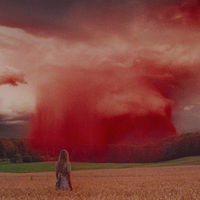 The opening images of pastoral horror, As In Heaven, sees the almost stock imagery of a young beautiful thing, dressed in white, caressing the golden wheat with her fingertips, as she walks through a field of golden harvest. You know this shot - tracking at hip level, camera titled slightly upward to gather the sun - because it has been used in films as far ranging as Terrence Malick's Days of Heaven to Ridley Scott's Gladiator. Director Tea Lindeburg offers a sense of comfort and familiarity right before changing tone into a wholly original image, one that is arrestingly horrific: A thunderstorm of blood, off in the distance, and bearing down on innocence.
It is in the mid-1800s in Denmark, and God has great...
The opening images of pastoral horror, As In Heaven, sees the almost stock imagery of a young beautiful thing, dressed in white, caressing the golden wheat with her fingertips, as she walks through a field of golden harvest. You know this shot - tracking at hip level, camera titled slightly upward to gather the sun - because it has been used in films as far ranging as Terrence Malick's Days of Heaven to Ridley Scott's Gladiator. Director Tea Lindeburg offers a sense of comfort and familiarity right before changing tone into a wholly original image, one that is arrestingly horrific: A thunderstorm of blood, off in the distance, and bearing down on innocence.
It is in the mid-1800s in Denmark, and God has great...