Shared posts

08 Oct 22:40

15 Movies To Watch If You Loved The Many Saints Of Newark

by Noel Ransome

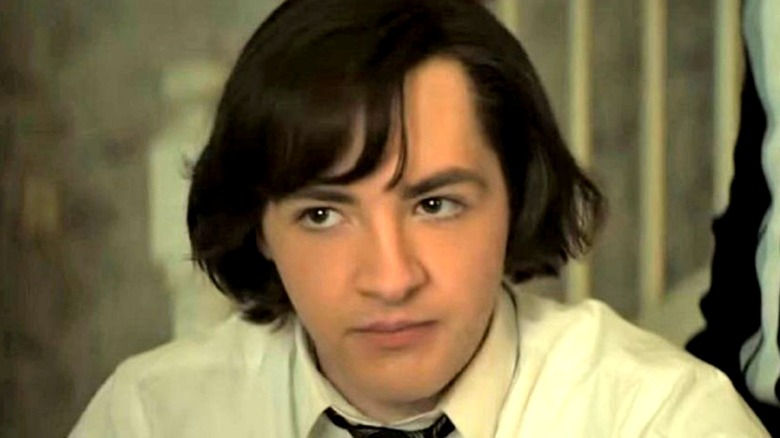
Tony Soprano feels about the same we remember him, but his presence in "The Many Saints of Newark" cuts differently. His looming presence is gone, replaced with a younger and more unsure Tony. You have to pay attention to the slight tilt of the head and his distinctive slouch to see the late James Gandolfini in his son, the young Michael Gandolfini, who takes over as our window into the world of the foundational TV series "The Sopranos".

At the time, that great, important show seemed like an entirely different type of gangster tale. With its preoccupations with dreams, psychiatry, and ducks, if the show told us anything, it was that the traditional gangster story could be told in the most untraditional way. 

"The Many Saints of Newark," directed by Alan Taylor and co-written by "The Sopranos" creator David Chase is a snapshot of one era in that epic tale -- part gangster movie, part fill-in-the-blank fanfare. Yes, it pulls its plot threads from a legendary series, but it stitches them together in a way that both recalls and dissects the gangster movie formula that has lasted for decades. If you're not familiar with the genre that "The Many Saints of Newark" draws from and deconstructs, the following films are an excellent place to start.

The Godfather
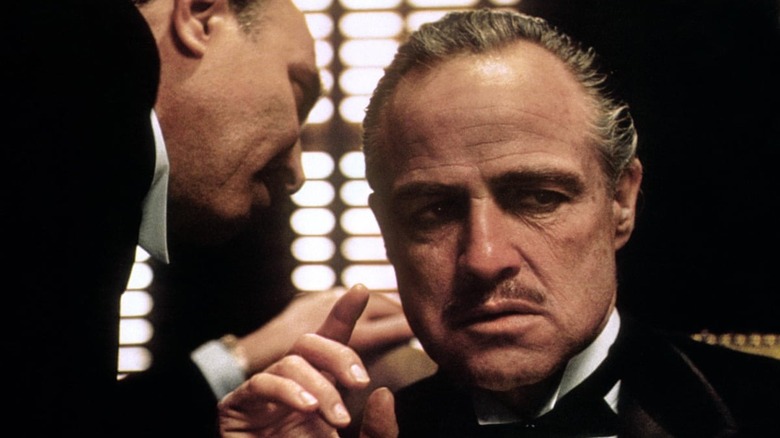
"The Godfather" is the standard-bearer that every former and current gangster story is judged against, including "The Many Saints of Newark." Its appeal lies in its memorable blend of moments and anecdotes: stallion heads in beds, public murders in restaurants, and stressful as hell hospital visits. It's also the quintessential portrait of the American dream, achieved by gangsters and delivered with a side of cannoli. The irony of director Francis Ford Coppola's saga being informed by Mario Puzo's novel of the same name comes in the fact that the film itself inspired a throng of books championing its greatness.

Case in point, this story about loyalty, family, bootstraps, and the immigrant experience, is about as foundational as any crime story can be: Aging Vito Corleone, played by the legendary Marlin Brando, is reaching the climax of his time as the leader of a crime family. He attempts to transition power to his son Michael (Al Pacino), only to be met with abject violence. As the "Godfather" shows, it turns out that stone-cold killers can actually be humanized to the point where we root for them. Go figure.

The Godfather Part II
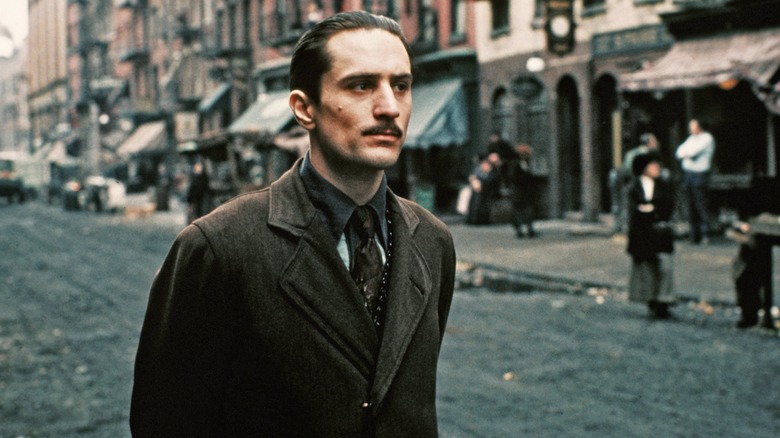
The second Godfather film is bigger, bolder, and more sinister than the first because, well, that's an epic crime sequel should be. "The Godfather Part II" is as much about the rise of Michael Corleone as it is about the answer to a question: How did Corleone senior, an immigrant from lil ol' Sicily, manage to run an American crime family? It turns out that dirty hands help -- in Vito's case, killing and thieving hands, to be specific. Gangster movie stalwart Robert De Niro plays a younger Vito, and pulls off a feat that some might view as a professional extreme: studying the Sicilian dialect to near perfection, then executing it in a way that seem effortless.

As much as a template as "The Godfather" was, Coppola stood at the height of his directorial superpowers with this sequel. "The Godfather Part II" also marked the first and only time that an original film and its sequel both won the Academy Award for best picture. Essentially, this is like defending chocolate over vanilla. Its greatness should speak for itself.

Infernal Affairs
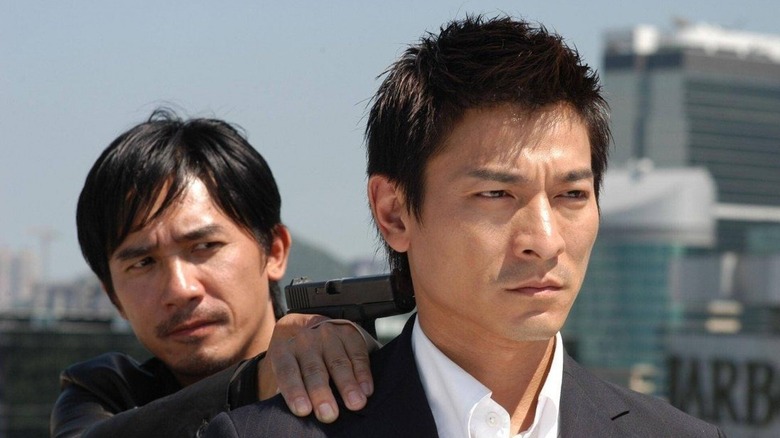
As an adaptation, Martin Scorsese's "The Departed" may arguably be the better movie in just about every way -- we can debate this endlessly -- but there's something to be celebrated about being the chicken that came before the egg. Here, you've got the same unlikely story of an undercover cop planted within a mob family (Chen Wing Yan), and an undercover criminal planted within the police (Andy Lau). A game of undercover cat-and-mouse ensues until it spills onto a rooftop scene that Scorsese lifted almost shamelessly mood for mood. It's basically "The Departed" without all the Boston.

Almost nothing about co-directors Alan Mak and Andrew Lau's 2003 Hong Kong vision follows traditional rules, mixing violence with tension-filled moments of questioning silence. If "The Many Saints of Newark" is a flirtation with the language of betrayal, "Infernal Affairs" breaths it organically. In all his master classness, Scorsese owes a debt to the little Hong Kong thriller that inspired him enough to earn an Oscar. That isn't a slight. It's the truth.

A Bronx Tale
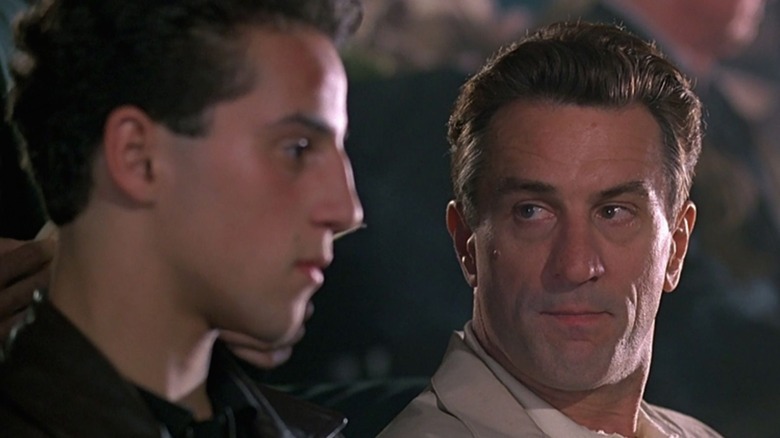
"A Bronx Tale" has a tasteful simplicity. An Italian boy (Lillo Brancato) grows up in the Bronx and narrates his story about the time he worshipped a local mobster (Chazz Palminteri). Yes, one can argue that his idol worship is questionable, but it's still one of the more historically great gangster movies, even with the lower stakes. "A Bronx Tale" is all glorious, coming-of-age excess -- a sort of mafia movie answer to "The Wonder Years." Add in the hard-working, jealous father played by Robert De Niro, and it can even feel wholesome and insightful.

This film was Robert De Niro's directorial debut, and was based on Palminteri's 1989 off-Broadway triumph, a play based on Palminteri's own childhood on the streets of the '60s Bronx. At its heart, it's the same world as the one in "The Sopranos," portrayed from the vantage point of adolescence.

Goodfellas
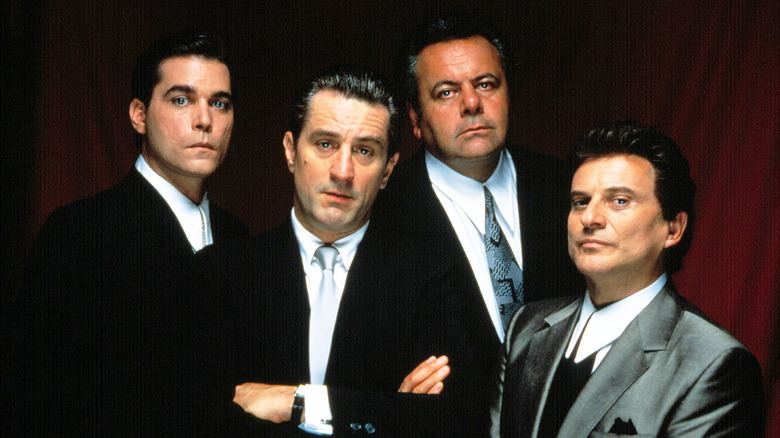
Shoutout to the pretenders, because if Martin Scorsese's "Goodfellas" speaks to anything, it's the art of pretending: pretending to be a good husband, a good Italian, a good person; just a whole lot of "Sopranos"-levels of pretending. "The Many Saints of Newark" star Ray Liotta's performance as Henry Hill, a nobody special Brooklyn boy who sees a position within a mob family as a means for change, is his professional peak, but every character here is smooth, funny, and complex, from the comical but temperamental Tommy De Vito (Joe Pesci) to the deadly but tranquil James Conway (Robert De Niro).

To this day, author Nicholas Pileggi's source material captures the way made men loved, lived, and killed better than the majority of gangster stories out there. If a verbal battle between Tony and Livia Soprano ever brought you a peculiar joy, know that "Goodfellas" was the template.

American Gangster
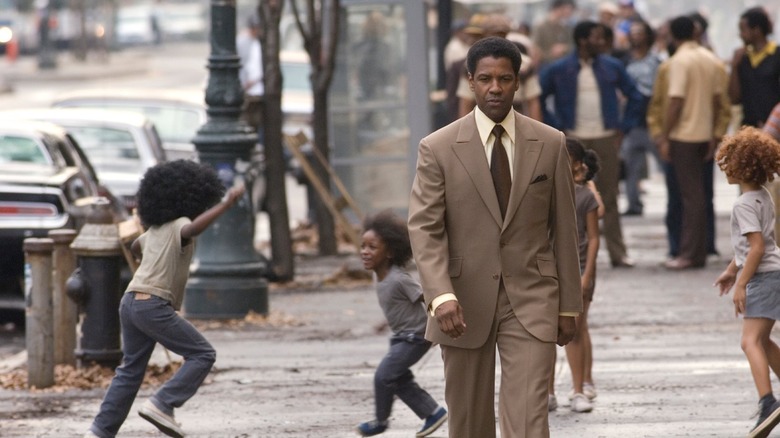
What's great about "American Gangster?" It's the scene in which Frank Lucas, played by Denzel Washington, pops Tango (Idris Elba) in broad daylight. In a mere 5 minutes, Elba, who is all manifestations of debonair and cool, is reduced to nothing next to Washington. In a Russel Crowe-Washington combo that justifies the movie on its own, director Ridley Scott tells the story of Lucas, a Black businessman and a peddler of heroin who is seeking to rule Harlem, while Crowe is, of course, the Jersey cop looking to bring him down.

Like every other movie on this list, including "The Many Saints of Newark," "American Gangster" peddles America's fixation with power, while shifting it towards a Black American point of view. Frank is therefore as much of a villain as he is a human; this is the gangster movie in its most chaotic good form.

The Public Enemy
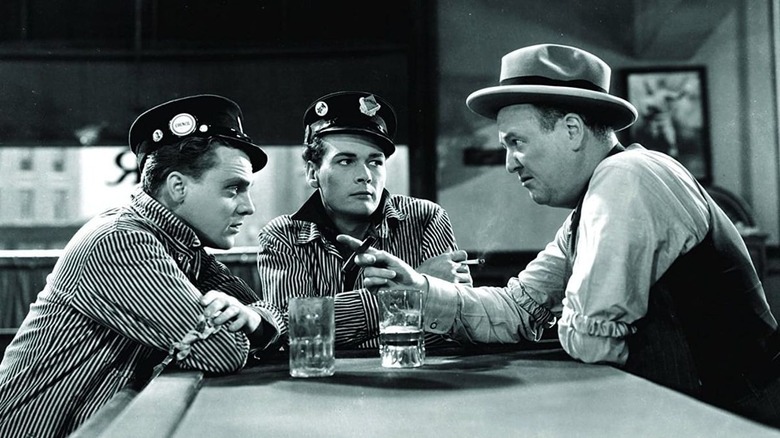
"The Public Enemy" is the gangster movie before gangster movies -- and also if gangster movies were so ancient that they shot with live ammunition. William A. Wellman's "The Public Enemy" is partly listed because of Tony Soprano's obsession over the film in the "Sopranos" episode "Proshai, Livushka." But it also stands as a 1931 breakthrough hit that helped establish the basis of the American gangster film. To this day, it's educational as a viewing experience, but also as a relic of a time when the Academy Awards stood in the single digits -- à la old as hell.

The storyline -- Irish tough guy Tom Powers (James Cagney) tries his best to make it in the big bad Chicago world of organized crime -- is mafioso worthy enough, but also raw for its time. The Great Depression was a decade old, and more than any other film, "The Public Enemy" sold audiences on the realities of crime under desperation.

The Pusher Trilogy
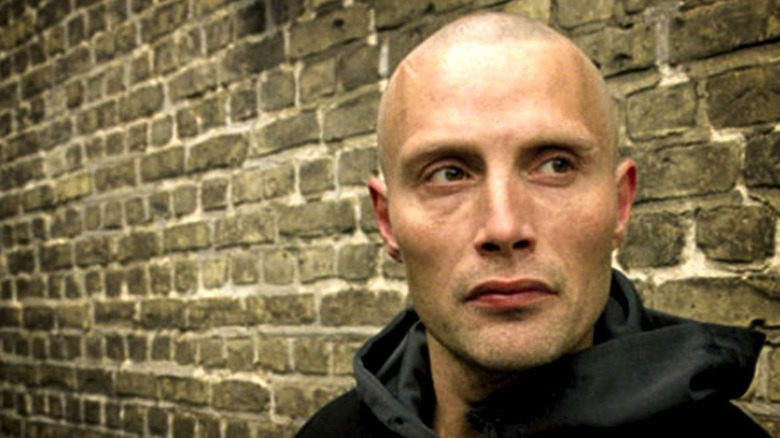
The western mafia cliché about the "sympathetic" mobster is really tested in Nicolas Winding Refn's "Pusher" trilogy, which is set in Copenhagen. Now, obviously, Mads Mikkelson is impossible not to like under any circumstance -- freakishly skull-headed and all -- but it's still a ride to witness bad men making surprisingly redeemable transitions. The story is equally a trip: A drug dealer named Frank finds himself owing a debt to Milo, a Balkan kingpin, after he's led to believe that he's been betrayed by his chum, Tommy (Mikkelson). It's essentially hours of underworldly bits of cosplay by actors who manage to make this world entirely lived-in and breathable.

Refn's reading of a different class of gangland, free of tailored suits and fedoras, never garnered the same level of attention as most of the films on this list, but nevertheless earned a cult following. It's equally, if not more, worthy of praise within the lexicon of gangster films.

Mean Streets
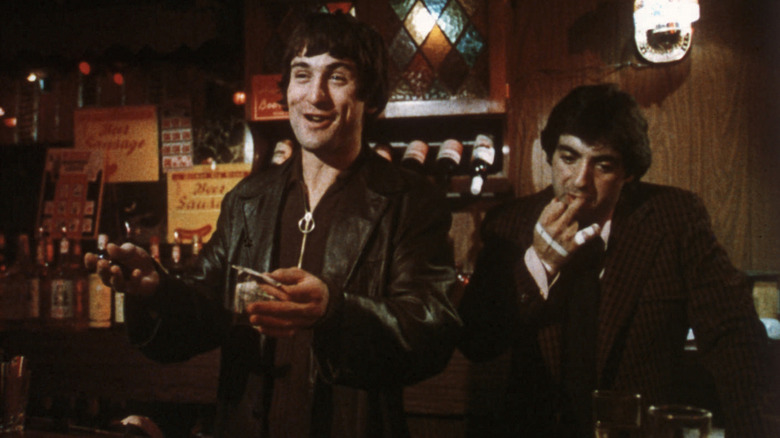
Boy, it's hard to square ol' softy De Niro from "Meet the Parents" with his humorous badassery in Martin Scorsese's "Mean Streets," but times do change. It's a movie built on Scorsese's roots. The legendary director actually grew up in New York and observed the many personalities that walked and ruled the streets in the '70s.

Plot-wise, "Mean Streets" is a gangster-sympathizing instance of scrappy Catholics ruling their city by any means necessary. It was Scorsese's first film of this kind and demonstrated his operatic skills in managing legends, from a first stint with Robert De Niro to mafioso mainstays such as David Provel, Harvey Keitel, and Victor Argo.

It's also as much a movie about expectations and values in the glare of an easily corruptible city. Maybe it isn't Scorsese's most paraded film, but the formula is sound. Director Scorsese? Legendary filmmaker. Writer Mardik Martin? Legendary writer. Actor De Niro? You get the picture.

Gomorrah

How many times can you watch a gangster movie and say, "I've never seen anything like this," as man number *insert digit* is murdered? Probably never. What "Gomorrah" lacks in redeemable characters it makes up for with the unredeemable. You've seen a dozen mafia stories about anti-heroes and ambiguous villains, but director Matteo Garrone's film is not one of them. The organized crime is clear; it's about money. Audiences see the money, but rarely sense the riches.

In seemingly unrelated storylines, a movie set in a stronghold for the Mafia of Naples will shift from best friends who pinch a cache of semi-automatic weapons to deadly delusions of grandeur. Violence in the name of day-to-day normality lives here. A man pulling up alongside a sedan before opening fire, for example, isn't exploitative, but completely normalized in this world, making misdeeds all the more authentic. Five writers, including Garrone, adapted "Gomorrah" from the unbelievable nonfiction depiction of Naples under the control of a local crime syndicate, the Camorra. Taken purely as a gangster film, it's an amazing experience to behold.

Once Upon A Time In America
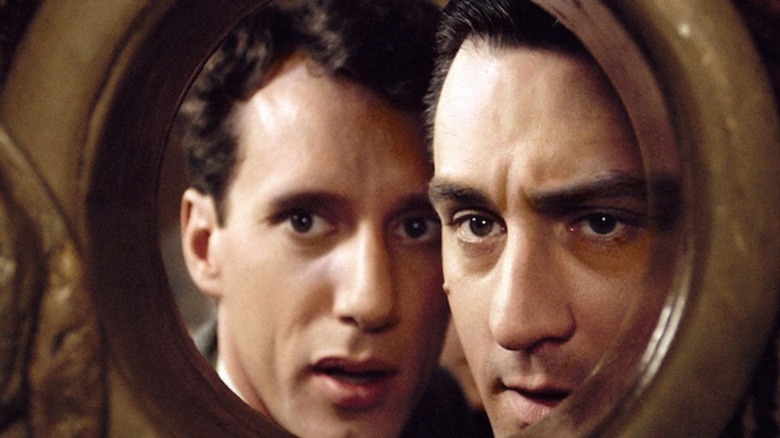
The mammoth spaghetti western legacy of director Sergio Leone doesn't keep this gangster movie from being his magnum opus. At its best, "Once Upon a Time in America" marshals the same indictments around criminal life amid the gentleness of family -- very "Newark." It stars Robert De Niro, De Niro'ing his way into another mobster role about betrayal as Noodles, a Manhattan youth who rises through the ranks of organized crime, only to become increasingly desperate as the end of Prohibition cuts off his cash flow. 

And remember this: the aired version was cut down to 139 minutes from a four-hour epic. Understandably, Leone's vision faced critical and financial failures due to the pacing and lost sections of character development. Over the years, those cuts hurt its place next to "The Godfather" and other greats, until it was restored to a full 250-minutes in 2012.

Casino
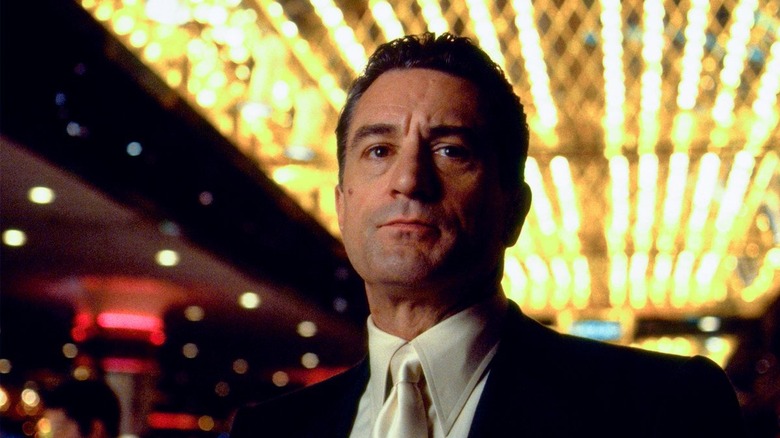
There are only so many times one can type the name "Martin Scorsese" before it gets old. In the case of this entry, Scorsese had a key to the city in the most Hollywood-like way. He was fresh off of a $47.1 million earning with "Goodfellas," so why not portray some other fellas at every mafioso's favorite playground: a casino.

Much of Scorsese's work revolves around self-harm in the most unintentional ways. A casino, with gambling and, you guessed it, betrayal as the catalyst, was an ideal setting for the theme. Inspired by the non-fiction story of Mafia connection Frank Rosenthal, you have a casino manager known as Ace (Robert De Niro), with scheming enforcer Nicky (Joe Pesci) and hustler wife Ginger (Sharon Stone). Things happen, terrible decisions are made, and thus you have the much-esteemed "Casino."

Donnie Brasco
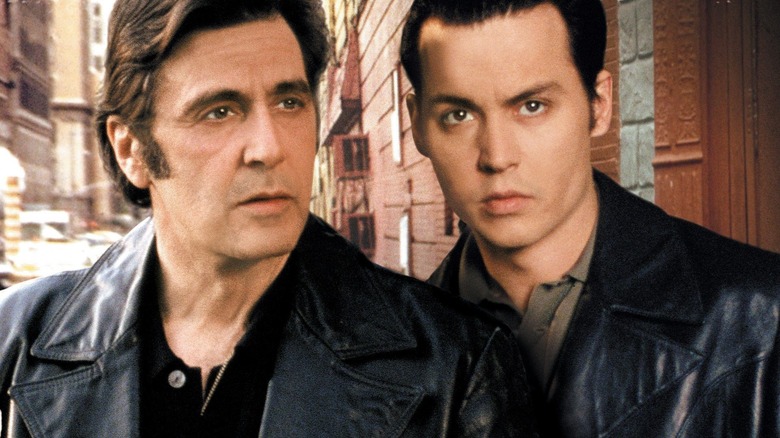
Orange juice and tequila, whirling together in a glass of grenadine to make up a Tequila Sunrise. That's the image that came to mind when Al Pacino and Johnny Depp joined together -- subtle sweetness, warmth, and intensity. In Mike Newell's calming but still violent true-to-life portrait of an undercover mob investigation, both Depp as FBI agent Joe Piston and Pacino as mobster Lefty Ruggiero dish out unforgettable performances of riffs and wits.

This isn't the average gangster movie featuring hard-knock characters as super-villains. It's about flawed men, dwindling dreams, and an agent who falls victim to the humanity of a crooked man. Mobster films rarely spend time with the low-level gangsters who hover under the shadows of their bosses -- think Paulie Gualtieri in "The Many Saints of Newark"  -- but "Donnie Brasco," with all its New York Mafia vibes, is one of the few great exceptions.

The Long Good Friday
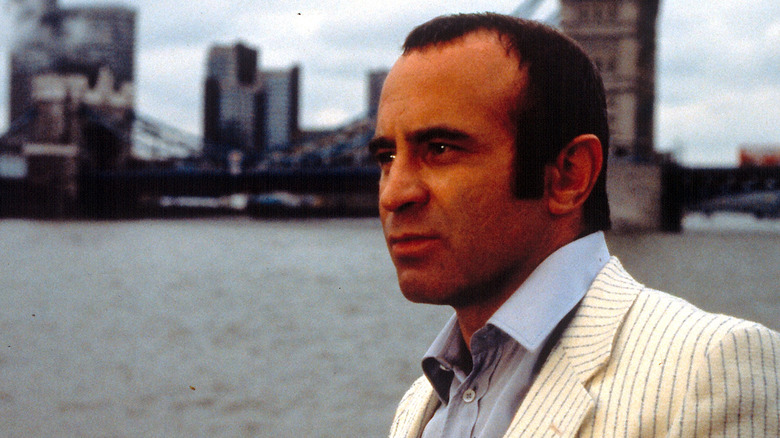
Some gangster movie personalities have all the answers. Others just have balls. Harold Shand (Bob Hoskins) in the '80s London great "The Long Good Friday" has balls, but with feeling. He's no crime lord -- when the film begins, he's even trying to go straight -- but he responds when clubs are bombed and family murders happen, trying to hunt down the men responsible. It's in the moment every movie crime family fears: when the collapse is steady and the offenders are obscure. 

Thanks to the direction of John Mackenzie, Shand is given the allowance to feel muddled, fearful, and furious as tragedies present themselves like trickling domino effects. If the finale of "The Sopranos" had a feeling of mounting and inescapable dread, it's personified in this British classic.

Read this next: The 15 Best Debut Films From Directors

The post 15 Movies to Watch if You Loved the Many Saints of Newark appeared first on /Film.

08 Oct 22:40

17 Golden Age Porn Flicks You Should Enjoy With Your Partner (or by Yourself)

by Claire Lower

Ask anyone “what they did during the pandemic” and they will most likely rattle off a few hobbies or newly acquired interests. Maybe they got really into making their own kombucha, or learned a new instrument. Or maybe, if they’re like me, they collected several vintage pornography posters.

Read more...

08 Oct 22:38

What DLC is the most replayable?

by Noelle Warner

Always keeps us coming back for more Replayability is a word that gets thrown around a lot, both as a...

The post What DLC is the most replayable? appeared first on Destructoid.

08 Oct 22:37

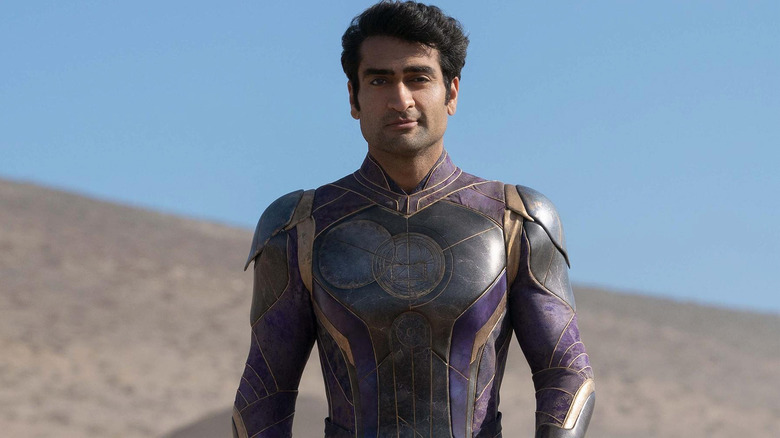
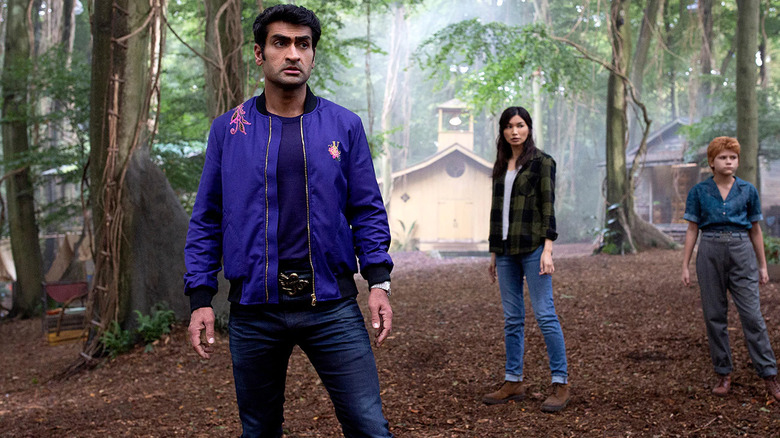
Eternals Star Kumail Nanjiani Feels Conflicted About Changing His Body To Play A Superhero

by Jeremy Mathai

Superhero movies have a tendency to come with a lot of built-in expectations and pressures, many of which can be unfair or even downright cruel to the cast and crew. One such aspect that audiences have a habit of taking for granted has to do with the physical expectations we've come to demand from actors portraying these larger-than-life characters. The toxicity that stems from unrealistic body standards is obviously something that women deal with on an often daily basis and is an issue that has loomed large with past castings of, say, Wonder Woman or Captain Marvel. Though perhaps to a lesser degree, comparatively unreasonable standards are foisted upon men when it comes to getting into "superhero shape," and it's indicative of a much larger societal trend.

This issue came back to the forefront of many online discussions when Kumail Nanjiani was first revealed in character for Marvel's "Eternals." Now, the actor is weighing in with his own complicated feelings about his dramatic body transformation.

No Easy Answers

Remember when Kumail Nanjiani first posted that Instagram picture showing off his new look for "Eternals?" That was probably the earliest instance where the actor, known primarily for his stand-up comedy, co-writing and starring in "The Big Sick," and starring in "Silicon Valley," found himself becoming a lightning rod of sorts concerning the frankly alarming body standards that Marvel has helped normalize. 

There are several complex parts to that discussion, such as the undeniably racially-tinged body-shaming thrown Nanjiani's way for simply doing what his white co-stars have done since the MCU's inception. But there's also the equally hard-to-ignore fact that the process of getting in shape to such an extreme extent is both unhealthy — intentional dehydration is a common way to achieve the "washboard abs" look — and further reinforces the "ideal" standard that men (and especially South Asian men) are conditioned to internalize.

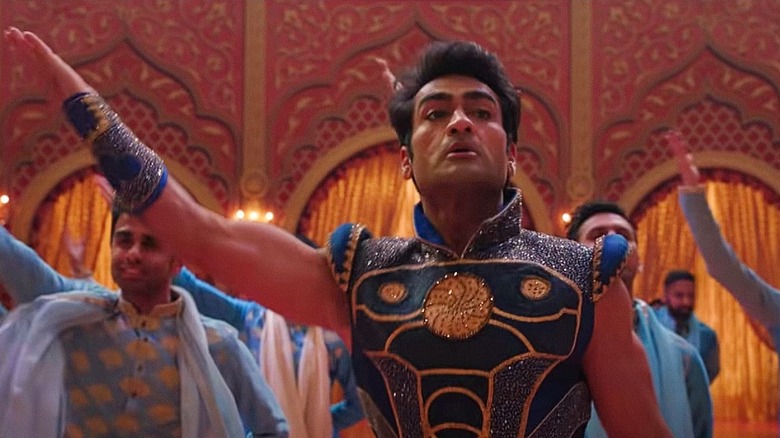
In a profile with GQ, Nanjiani is well aware of this overarching conversation and his own place within it. "I've found out over the last year and a half, since I did that picture, that I am very uncomfortable talking about my body — and it's become less and less and less comfortable." Though he goes out of his way to take ownership of that fact that he chose to make this change to his body, the actor also admits that this "upset" his "Eternals" director Chloé Zhao, who adds her own perspective that she simply "...wanted to make sure he didn't feel like he had to do it for me." Alluding to his responsibility of adding long-overdue representation to the Marvel franchise and his character's disguise as a Bollywood star (who are usually depicted as musclebound action heroes), Nanjiani says:

"If I'm playing the first South Asian superhero, I want to look like someone who can take on Thor or Captain America, or any of those people.
From the '60s to the '90s I know basically every big [Bollywood star]. I was like, I want this to be believable. I want to feel that kind of powerful in this role."

"The Male Ideal"

On top of everything else, the intense racial aspect of this conversation cannot be overlooked. The Bollywood angle in "Eternals" is one that I personally still have a few reservations about, especially when Nanjiani has previously gone on record about wanting to stay away from "Brown dude" stereotypes. That said, it's easy to see that he was in the unenviable position of being caught in a no-win situation regardless of how he presented himself.

That extends even more broadly to how his appearance in "Eternals" may unwittingly perpetuate a certain negative self-perception among young men. It's no secret that many social and political problems in recent years can be traced back to the scourge of predominantly male anger and entitlement. Though this obviously can't be put at the feet of any one public figure, Nanjiani articulates how his appearance goes hand-in-hand with a particular mindset that is brought out among men who share a similar body type as him:

"It is aggression. It is anger. A lot of times we are taught to be useful by using physical strength or our brain in an aggressive, competitive way. Not in an empathetic way. Not in an open, collaborative way. It's the same thing when you have all these guys, like, asking people to debate them on Twitter. That's the same as arm wrestling. It's about defeating. And that's what the male ideal has been. Dominating. Defeating. Crushing. Killing. Destroying. That's what being jacked is."

The rest of the interview is well worth reading, even if much of these troubling issues remain unresolved. But the conversation has to start somewhere, and this certainly seems like a good first step.

"Eternals" arrives in theaters on November 5, 2021.

Read this next: The Best Movies Of 2021 So Far

The post Eternals Star Kumail Nanjiani Feels Conflicted About Changing His Body to Play a Superhero appeared first on /Film.

08 Oct 20:12

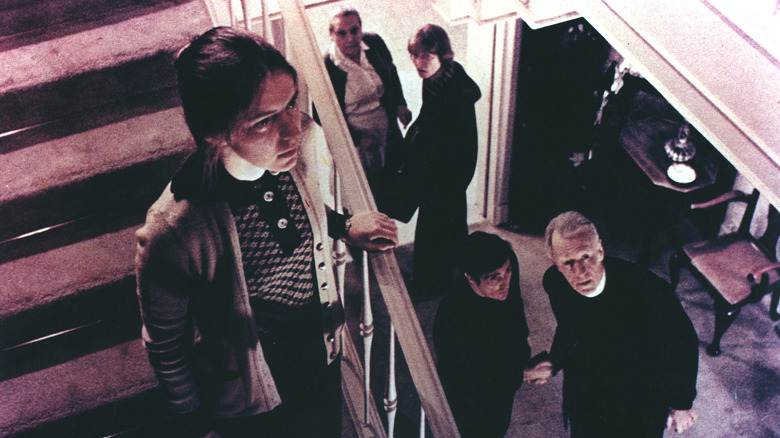
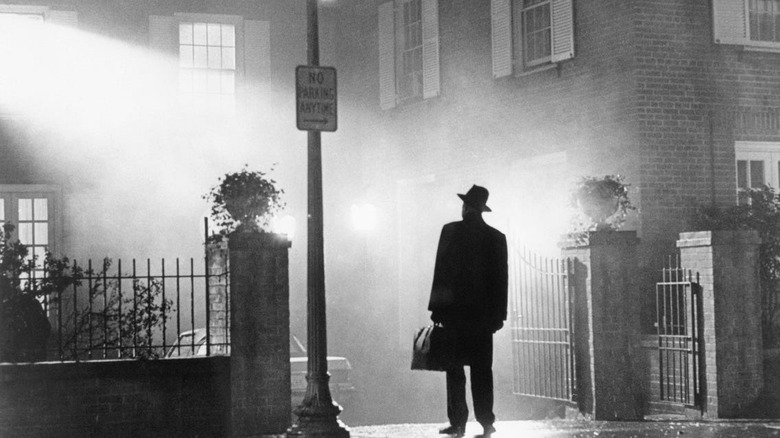
The Exorcist Stunned Audiences In 1973, But One Terrifying Scene Wasn't Seen Until Decades Later

by Ariel Fisher

(Welcome to Scariest Scene Ever, a column dedicated to the most pulse-pounding moments in horror with your tour guides, horror experts Matt Donato and Ariel Fisher. In this edition: Ariel digs into one of the most iconic scenes from "The Exorcist", while Matt questions if the scene really is all that.)

It was boxing day in 1973 when "The Exorcist" hit theaters. I'm not sure how many Americans know what boxing day is — here's your periodic reminder that I'm Canadian — but it's the day after Christmas when everything goes on sale. On that frigid winter day in Yorkville — once a creative hub in the '60s, now known for its high-end shops — my mom and dad went to the University Theatre to see "The Exorcist." She'd read the book, and had to see the movie. They waited in line for the next showtime in below freezing temperatures, covered in fresh snow. When they finally sat down, it was so much more than my mom had anticipated. Too much, in fact. She wanted to leave, but my dad, a stubborn mule, refused. So they toughed it out together, building a legacy around it for me and my brother.

My aunt would go one step further, albeit inadvertently. She and my uncle lived in Colombia at the time, and my eldest cousins were toddlers. Well, my aunt came home to a small earthquake after seeing it in the theater. It shook my cousins' beds just enough to scare the sh*t out of her.

Everyone was watching "The Exorcist." Rumors of its shock value were everywhere, fuelling the furor to see this unimaginably terrifying movie. There's even footage of people fainting at some screenings, sometimes leaving the theater inconsolable. "The Exorcist" was no joke.

And yet, one scene was cut from the original release for technical reasons. We would later get that scene spliced back into the movie in its 2000 restoration which I saw at the age of 13. It's what helped solidify "The Exorcist" as the scariest movie I've ever seen, making it impossible for me to look at a set of stairs or hear my cat get the zoomies for years after the fact.

We're talking about the spider walk.

The Setup

Chris MacNeil (Ellen Burstyn), a well-known actress, moved to Georgetown with her 12-year-old daughter, Regan (Linda Blair), for a new film she was shooting. Life seemed idyllic, and the two had a very clear bond with a loving relationship. Then, one day, Regan starts complaining that her bed keeps shaking, waking her up. There are strange noises coming from the attic. Rats, Chris presumes.

Progressively, the situation worsens so much so that they can only turn to one person for help — the Exorcist.

The Story So Far

After playing with a Ouija board — mistake number one, frankly — Regan tells her mother about the friend she made who she calls Captain Howdy. Over a seemingly short period of time, Regan's behavior starts to change. She causes a scene at one of Chris' parties, coming downstairs after being tucked into bed, staring down one of her mother's guests — an astronaut — and telling them "You're going to die up there." She then pees on the floor in front of all of them, dead-eyed, unblinking.

"What's wrong with me?" she asks her mother later, after getting cleaned off in the bath and put back to bed. The doctors seem to think it's just nerves. Chris encourages her to keep taking her medicine, and everything will be fine. As soon as Chris leaves the room, she hears crashing coming from behind the door coupled with Regan's terrified and pleading screams. She rushes back into the room to find the bed violently shaking, almost levitating off the ground.

After this, Regan starts to become more aggressive and violent. She starts swearing and lashing out, saying things that make her seem "psychotic," as Chris describes at one point.

The doctors start to increase their efforts, supposing her behavioral changes are due to a lesion on the brain. Yet scan after scan brings back absolutely nothing — all of her tests come back completely normal.

The Scene

After visiting Regan's doctor to get the results of the most recent set of scans — which come back with absolutely no answers — Chris, dejected, drives herself back home from the hospital. There's a chaotic scene at the foot of a steep stairwell behind their house. Police cars, crowds. Something's happened, but Chris thinks nothing of it and drives on. She has to get home to Regan.

She walks in the door to find the phone ringing and no one there to answer it, the lights flickering on and off. Chris answers the phone, only she's a second too late — the line's dead.

The lights go out as Chris looks around the kitchen. "Sharon?" she calls out for her assistant (Kitty Winn). As the lights flicker back on, a hideous face flashes briefly next to Chris' as if staring at her from just out of view. Did we imagine it?

Chris leaves the kitchen to go upstairs and check on Regan. She opens the door to see her little girl fast asleep, but the bedroom window wide open, the frigid winter air turning the room into an icebox. She closes the window, pulls the blanket up over her shoulders, and rushes downstairs as soon as she hears the door open.

"What the hell do you mean going off and leaving Regan alone by herself?" Chris says as she runs down the stairs. "Didn't he tell you?" Sharon asks. It seems Chris' director, Burke Dennings (Jack MacGowran), had stopped by as Sharon needed to run out for a refill of Regan's prescription. She'd asked him to stay for a few minutes and watch her, but, evidently, it seems like he bailed. A drunk — of which we're aware by this point — Chris isn't the least bit surprised that he'd just leave.

Their anger subsides, and Chris hangs up her coat as the doorbell rings incessantly. Chris opens the door to see Chuck (Ron Faber), the assistant director for the film she's working on, looking somber. "I suppose you heard," he says. "Heard what?" Chris asks, understandably frustrated by everything. "You haven't heard," Chuck says as he takes off his tuque. Sharon's face falls as her eyes widen, and Chuck says, bluntly, "Burke's dead."

At first, Chris' expression doesn't change, as if she's waiting for the punchline of a very unfunny joke. The news is so shocking that it seems like she can't wrap her head around it.

He tells them how Burke must've been drunk, as he was found at the bottom of the stairs behind their place — where the big kerfuffle was on her way home — with his neck broken.

It hits Chris all at once, and she punches the wall, shaking through sobs. Chuck leaves quietly and quickly. Chris turns around slowly as she quietly calls out to Sharon, only to be interrupted by the sound of what sound like footsteps scurrying upstairs.

Thud thud thud thud thud!

Her eyes quickly turn to the top of the stairs as her face falls completely still. "Oh, my God" is all she can get out, in a whisper.

Regan runs down the stairs upside-down, contorted in an unnatural position. She scurries like a spider (hence the now-infamous name of the scene), reaching the bottom of the stairs and spewing out blood through an inhuman hiss.

The Impact (Matt's Take)

"The Exorcist" is an unmissable theological horror classic that benefits from its hypnosis as a whole experience. Horror fans around the globe recall Regan's spider walk scene because of its out-of-nowhere interruption — but as a single clip? Something is lacking from Regan's blood spew and unnatural mobility as a standalone scare deemed too terrifying for mainstream audiences. Maybe that's a "test of time" conversation rather than failure in a devastating moment.

I'm more excited by the feat of acrobatic satanism. It's the very first encounter in Universal's Halloween Horror Nights maze dedicated to "The Exorcist." Does an ultimate scare hold shock values after it's been replayed beyond a videocassette's mendable wear? It's a nasty practical effect that stuns because it's such a surprise — the conversation is bleak enough — only for Regan to remind audiences she's still possessed and seeking attention. It's nothing I'd want to encounter in my everyday activities but lacks the "extreme" qualities that once haunted censor boards.

Maybe I'm just a broken shell of a horror fan who's become desensitized by "A Serbian Film" or "Martyrs" or any other exploitation stomach-churner. I'm not quite scared by Merriam-Webster's definition of the word but shiver out of respect nonetheless. A single scene in "The Exorcist" feeds countless nightmares, and that's a testament to craftsmanship. I'm here for the quality of execution more so than sleepless implications because "The Exorcist" — at the time — elevated the bar for horror terrors and challenged filmmakers to summon the audience's next breaking point.

Read this next: The 13 Best Movies About The Devil Ranked

The post The Exorcist Stunned Audiences in 1973, but One Terrifying Scene Wasn't Seen Until Decades Later appeared first on /Film.

08 Oct 20:05

Bloodborne feels like it came out yesterday

by Chris Carter

The community is a big part of why it’s lived on It feels like every time I look up at...

The post Bloodborne feels like it came out yesterday appeared first on Destructoid.

08 Oct 17:44

Grudge / Kin – Netflix Review (3/5)

by Karina "ScreamQueen" Adelgaard
08 Oct 17:44

How to apply thermal paste to a CPU?

by Karthik Iyer

Applying thermal paste is a crucial part of the PC building process. The paste is applied on top of the Integrated Heat Spreader (IHS) of the CPU to make sure there are no air gaps between that and the metal base of the CPU cooler. The air gaps are formed due to the microscopic imperfections on the surface of the IHS and the cooler base. The thermal paste fills those gaps to allow a more efficient transfer of heat. In layman’s terms, thermal paste helps your CPU stay cool at all times.

There are a few different ways of laying down the paste on a CPU. Newcomers in the world of PC building may find it overwhelming, especially because of some horrifying stories that come out as a result of poor application methods. Well, if you are looking for a reliable thermal paste application guide to avoid making a rookie mistake, then you have come to the right place.

Things to keep in mind

Before we begin, it’s important to make sure the surface of both your cooler and CPU are clean. Your components will already be squeaky clean if you’re building a new PC, but they might need some work if you’re replacing the paste or installing a new CPU/cooler. You will then have to carefully remove the old thermal paste from the respective surfaces. We recommend using either a microfiber cloth, cotton swabs, or a paper towel with isopropyl alcohol (at least 91%) for this.

old thermal paste residue on a CPU

Once you’re done cleaning the surface, it’s time to make sure your CPU is locked in place and you’re ready to install the CPU cooler. The thermal paste application is essentially the last step in your cooler installation process that comes before mounting your heatsink or waterblock. If you apply the paste, place your cooler, and then realize you forgot the backplate, your only option is to wipe it down and start again.

How to apply thermal paste

As we mentioned earlier, there are a few different ways to apply the paste on the IHS of the CPU. Don’t get confused if one person asks you to apply just one dot and the other one asks you to go for a line of paste. This largely depends on a few things like the size of the CPU die, the quality of paste being applied, etc. Just make sure you get full coverage and the paste is spread evenly on the surface.

You’ve done a good job if :

  • There’s enough paste to cover the CPU die.
  • The paste is not spilling out.
  • You haven’t created a thick layer that reduces the efficiency due to the metal surfaces being too far apart.

Which application method to use

You may have seen people using what’s popularly known as the ‘Dot Method’. It’s a simple method that involves squeezing a small amount of paste — the size of, say, a small grain of rice — onto the center of the CPU. Some people prefer making a dot the size of a transistor on the board. While this method will do the trick for most consumer-grade CPUs, we’re going to try a different method in this guide.

Make a simple line

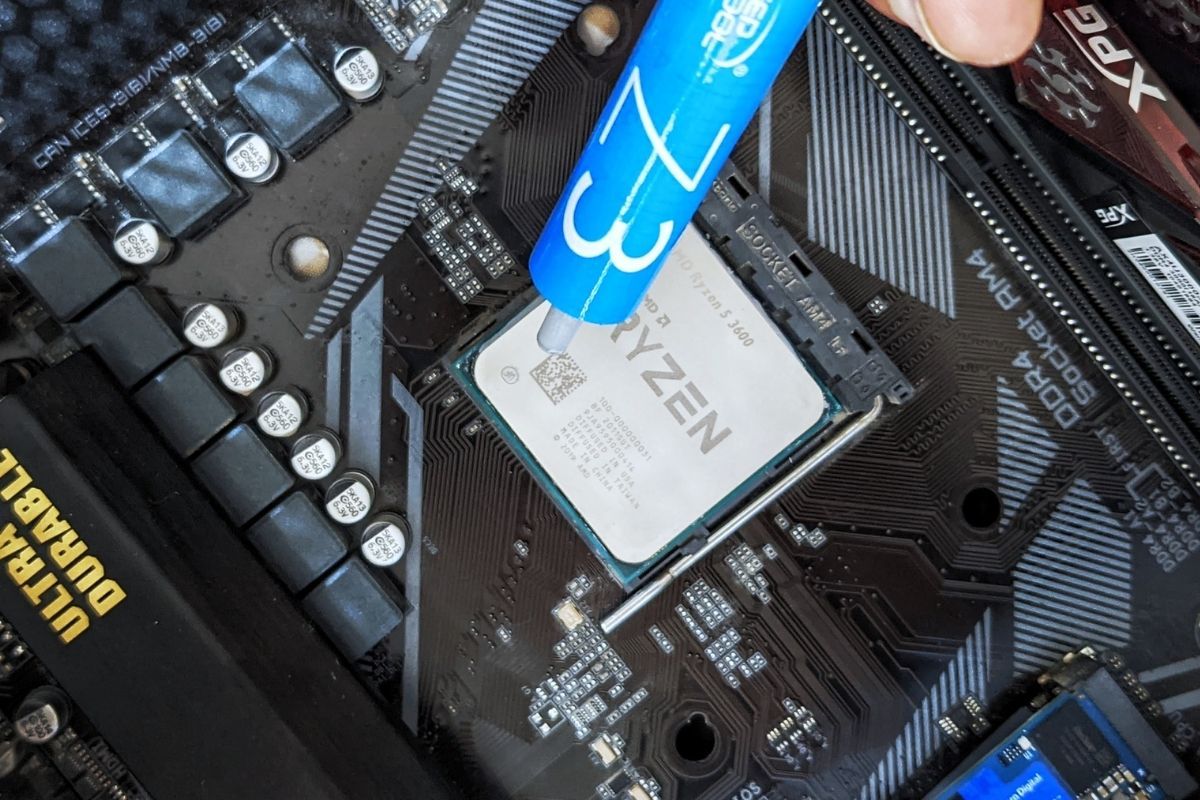
a line of thermal paste applied on an AMD Ryzen 5 3600 CPU

This method is fairly self-explanatory, isn’t it? Apply a line of paste directly onto the center of the IHS. Avoid manually spreading the paste and let the cooler pressure do the work as you secure it in place. Any good quality thermal paste with a good consistency will settle evenly on the CPU. You can also make a ‘%’ pattern by applying a line directly down the center and making two small dots on either side.

Less is more

Less is more when it comes to applying thermal paste. There’s no need to dump an absurd amount of paste on the CPU thinking it will magically reduce your CPU temperatures. We’re merely trying to fill the surface imperfections on the IHS and the cooler with the paste, remember? If you are doing this for the first time, then now would be a good time to remove the cooler again to see if your method provides an even spread.

Feel free to experiment as long as you keep the amount of thermal paste in check. Everyone has their own way of applying the paste to get the desired results. You can also go with more small dots towards the center if you think what you have already applied isn’t spreading evenly after placing the cooler.

Run stability checks

Congratulations! If you made it this far into the guide and followed each and every step, then you have now successfully applied thermals paste to the CPU. But did it do the trick? If you were simply replacing either the paste, CPU, or the cooler, then you can directly boot into Windows and run some benchmarks to see how hot your CPU gets. We recommend using monitoring software to get temperature readings over a period of time.

If you’re building a new PC, then you can finish putting the rest of the components together and boot into the BIOS to see the CPU temperature before installing Windows. If it’s not alarmingly high for simply sitting in the BIOS menu, then you’re good to proceed further.

graph showing the temperature of CPU under load overtime

We recommend running Cinebench R23 to see how the CPU handles the load. Benchmarking and performing stress tests like this will usually force your CPU to hit the maximum frequency. This means the temperatures will be fairly high during these runs. As long as the system isn’t crashing just a few seconds into the test, you should be fine. Alternatively, you can also let the CPU sit idle and check the idle temperature to see if that’s looking good.

How often should you replace thermal paste?

Thermal paste is not going to wear out as early as you think. However, replacing thermal paste isn’t going to harm your system, and we recommend visiting it every year just for good measure. If you are suddenly noticing a spike in CPU temperature after say a year of building your PC, then it’s likely due to the dust particles choking the components.

But as a rule of thumb, you should always replace the thermal paste after removing the cooler for any reason. Laptops don’t demand this much attention when it comes to replacing the thermal paste. Just make sure you’re buying a good laptop from a reliable OEM and the quality will speak for itself.

Final Thoughts

Now you have successfully applied the thermal paste to your CPU, there are a few things we want to highlight. The process for applying the paste on the GPU is also the same. In fact, you can use the same thermal paste for your GPU as well, even though some might suggest otherwise. The frequency of replacing the thermal paste for the GPU is also more or less the same. The process for that can be tedious depending on the graphics card.

Thermal paste should have the same priority as other components on your shopping list for building a new PC. It deserves the same treatment and we think people should make an informed decision while buying one, similar to how one would search for peripherals like the best monitors or even the best mechanical keyboards. Most people, however, treat thermal paste as an afterthought and pick up whatever meets the eye. Let’s change that and give more importance to it too.

The post How to apply thermal paste to a CPU? appeared first on xda-developers.

08 Oct 15:52

If we end extended jobless benefits, people will come rushing back to the workforce, right? RIGHT? [Facepalm]

08 Oct 15:51

The best outdoor gear for the fall

by Billy Steele

As crisp fall air settles in for the next few weeks, it’s time to make sure you’ve got everything you need to enjoy the weather before winter’s cold embrace drives us inside. There’s still plenty of time to head outdoors, whether it’s to the backyard, porch, patio or even a campsite. We’ve compiled a list of the best outdoor gear for relaxing, enjoying a warm beverage or cooking a meal this fall. We’ve got recommendations from products we’ve tested spanning fire pits, grills, speakers and more.

This article originally appeared on Engadget at https://www.engadget.com/best-fall-outdoor-tech-gear-150041103.html?src=rss
08 Oct 15:51

OnMSFT Roundtable: Our thoughts on Windows 11 (they're not all good)

by Kip Kniskern
First and foremost, the OnMSFT team are Microsoft enthusiasts, with both experience and viewpoints on what works and what doesn't in the world of Windows and beyond. In this roundtable, we asked our writers to say a few words about ... Read more
08 Oct 15:51

The latest thing we're doing wrong: washing towels. Because the internet has become the biggest nag of all time [Fail]

08 Oct 15:51

Special event: ScummVM 20th Anniversary

The infinity starts with history, and the history of games is painted in the colors of our childhood memories. Today we celebrate the 20th Anniversary of ScummVM and pay tribute to a group of people behind the scenes who make sure some of GOG's timeless classics work smoothly on modern computers!

About ScummVM

ScummVM is a program that allows you to run many classic point-and-click adventure games and RPGs on modern computers. The program replaces executables shipped with games and makes them playable on systems for which they were never designed! ScummVM rewrites executables but does not require emulators and complex setups. For many years, thanks to ScummVM, you can enjoy many timeless classics on GOG!

Check the collection of GOG games supported by ScummVM and launch your time machine this weekend with our special deals up to 85% off. The promo ends on 11th October 2021, 1 PM UTC.

08 Oct 15:50

Park After Dark - The Food Fighters

by SWEARNET

The Boys eat a feast fit for a fighter and cook some scrump-dilly Army dinners - but where's the freeze-dried dope? Watch the latest Park After Dark at https://bit.ly/pad3-20 and the TPB/SwearNet app - download at https://linktr.ee/tpbswearnet
08 Oct 15:50

13 inches of blown pipe found in investigation of California oil spill, your uncle's DVD collection [Giggity]

08 Oct 15:49

13 Other Deadly Games You Should Watch If You Loved 'Squid Game'

by Ross Johnson

With K-pop leading the way, South Korean art and culture have become incredibly popular globally in the last few years. Netflix, for at least the past year, has been acquiring South Korean dramas by the dozens, with some only just beginning their runs. Squid Game represents a new milestone—a move away from niche with…

Read more...

08 Oct 15:48

People in California are turning to Tatooine-style moisture farming

by Thom Dunn

From ABC News:

The machine Ted Bowman helped design can make water out of the air, and in parched California, some homeowners are already buying the pricey devices.

The air-to-water systems work like air conditioners by using coils to chill air, then collect water drops in a basin.

Read the rest
08 Oct 15:47

Despite promises, Marvel’s Avengers now has gameplay-related microtransactions

by John Papadopoulos

Prior to the release of Marvel’s Avengers, Square Enix and Crystal Dynamics were stating that the game would not feature lootboxes or pay-to-win mechanics. The teams were claiming that the game would only feature cosmetic microtransactions. However, the latest update for Marvel’s Avengers introduced paid XP boosters. Gamers can currently pay real money in order … Continue reading Despite promises, Marvel’s Avengers now has gameplay-related microtransactions →

The post Despite promises, Marvel’s Avengers now has gameplay-related microtransactions appeared first on DSOGaming.

08 Oct 15:47

Grand Theft Auto: The Trilogy – The Definitive Edition officially announced, coming in 2021

by John Papadopoulos

Earlier this week, the Rockstar Games Launcher leaked the Grand Theft Auto: The Trilogy – The Definitive Edition. And today Rockstar officially announced this remastered trilogy. According to the team, Grand Theft Auto: The Trilogy – The Definitive Edition will release on PC in 2021 via the Rockstar Launcher. Unfortunately, Rockstar did not provide any … Continue reading Grand Theft Auto: The Trilogy – The Definitive Edition officially announced, coming in 2021 →

The post Grand Theft Auto: The Trilogy – The Definitive Edition officially announced, coming in 2021 appeared first on DSOGaming.

08 Oct 15:45

Cryptominers find a way around Nvidia’s LHR limiters on RTX 3000 GPUs

by Samuel Willetts
Cryptominers find a way around Nvidia’s LHR limiters on RTX 3000 GPUs

Nvidia's RTX 3000 series has some of the best graphics cards available on the market thanks to proprietary technologies like DLSS, but they're also exceptionally good at mining cryptocurrency. This has contributed to unprecedented levels of demand that Nvidia has attempted to curb by introducing lite hash rate (LHR) limiters, but Tom's Hardware reports that crypto miners have found a way to circumvent the constraints.

In April 2021, Nvidia confirmed it would re-release most of its RTX 3000 GPUs with LHR limiters, which significantly reduces a card’s mining performance. The only exception was the RTX 3090 due to its apparent lack of popularity amongst miners. The hope was that this reduction in performance would disincentive any purchases by miners due to the massive reduction in profit they would see using these graphics cards.

This appeared to work for a time but developers of crypto mining software NBMiner and T-Rex have both restored mining performance levels to 70%, with the latter going one step further and achieving close to 100%.

RELATED LINKS: RTX 2070 Super review, RTX 2060 Super review, Best graphics card
08 Oct 15:43

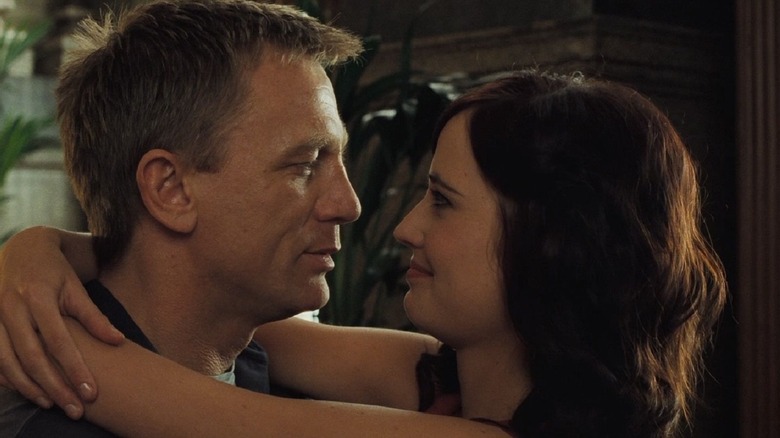
14 Movies To Watch If You Loved No Time To Die

by Jeremy Herbert

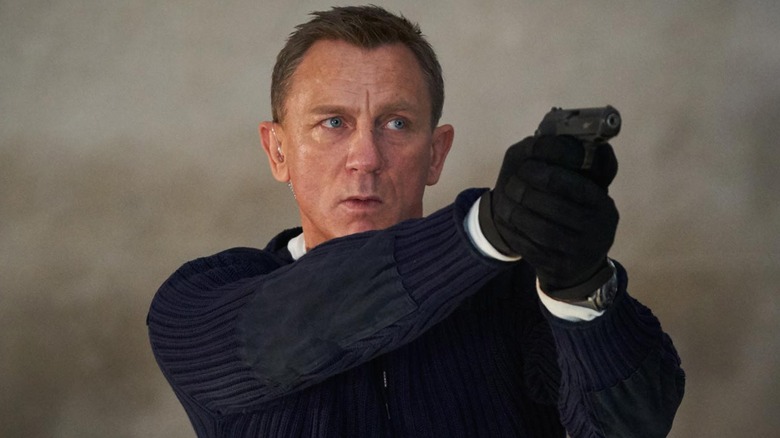
At long last, it's time to "Die." Factoring in coronavirus delays, this ties the longest gap between Bond films, from "License to Kill" to "GoldenEye," at six years. The wait has made "No Time To Die" both sarcastic and momentous. Daniel Craig is hanging up his Walther. For the first time ever, ad spots are hinting at an end, calling Bond #25 no less than an "epic conclusion." Whoever shows up at the end of the gun barrel next, they won't be taking aim anytime soon.

But there are alternatives -- 24 of them come to mind most obviously. There's a Bond film for every season, but more to each of them than their ancestry. Some of the following recommendations highlight similar work from the stars before enlisting in Her Majesty's Secret Service. Others are adjacent pieces of espionage pulled from the same genre trappings. And naturally, James Bond does return.

Dr. No

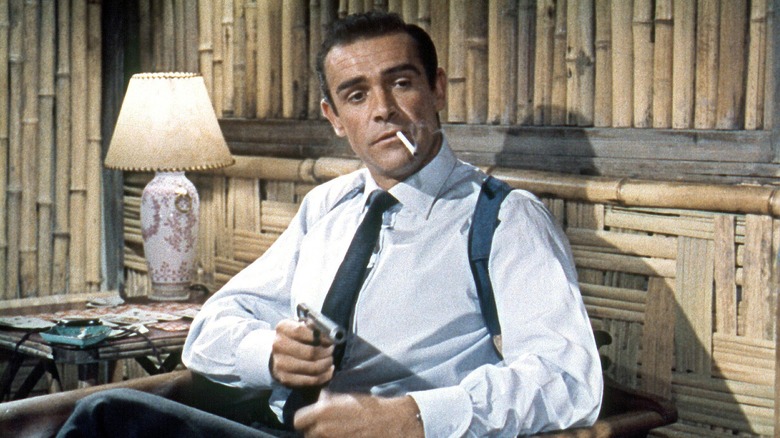
The hottest rumor around "No Time To Die" is that it's secretly a remake of "Dr. No," the very first Bond film. There's enough smoke to the fire that Rami Malek, who plays supervillain Lyutsifer Safin, had to dodge the question head-on: "I'm not going to bite on that, but I do think it's interesting." Whether or not it's true, the release of Bond #25 is still a worthy occasion to revisit the original Bond flick that started it all.

The first time 007 shoots somebody, he does it in cold blood. His second bullet lands in that dead man's back. It's easy to forget with all the spy-fi hokum we've gotten since, but Bond had ice in his veins from the word "No." He's a state-sanctioned executioner in Technicolor beachwear. His rougher edges would be sanded off within two sequels, but the roughest made him a legend -- Sean Connery, never more dangerous.

"Dr. No" is nitroglycerin before dynamite. What's shoddy now was already suspect then -- quoth The New York Times: "Not to be taken seriously as realistic fiction or even art." But nearly 50 years later, the blueprint hasn't lost any luster.

Beasts Of No Nation

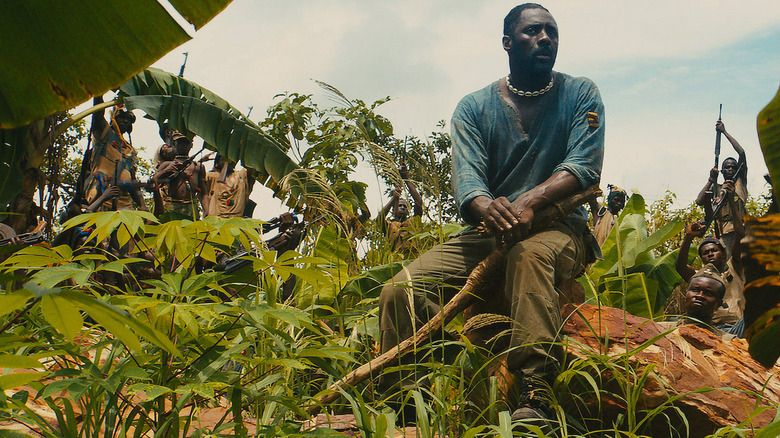
It's difficult if not impossible to nail down the exact budget of blockbusters as big as Bond. Estimates place "No Time to Die" at $250 million. It's an astounding figure -- among the most expensive in film history -- only made more astounding by director Cary Joji Fukunaga's previous film, a $6 million drama released directly to Netflix. 

"Beasts of No Nation" is an inside-out Peter Pan story, told from the diminutive perspective of a boy forced to grow up. Fan-favorite Bond candidate Idris Elba is the one keeping them enchanted as the sadistic, seductive Commandant. By his magnetic word, child soldiers become true believers. When he asks who's ready to kill in his name, they raise eager hands. Their assaults have the sickly enthusiasm of a playground game. Only Agu, played with preternatural skill by Abraham Attah, shows signs of reluctance.

Fukunaga turns the Uzodinma Iweala novel of the same name into a portrait of lush color and horrible texture. Beyond proving that prowess behind a camera, "Beasts" is a stark reminder of the modern Hollywood ecosystem, where something this small and brutal could be a prelude to Bond.

Layer Cake

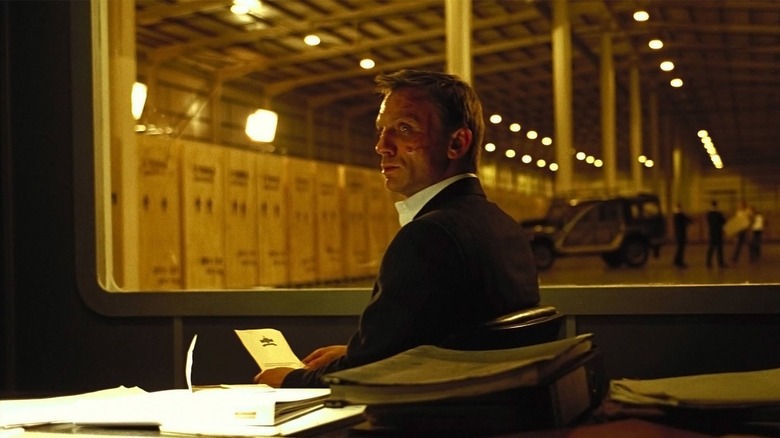
Daniel Craig has played James Bond for 15 years, longer than any other actor in the role. That makes it easy to forget he ever wasn't Bond -- let alone the work that got him the job in the first place.

Craig's character does not get a name in "Layer Cake," only a designation -- XXXX -- and it's in smart self-defense. XXXX is the Cadillac of mid-level coke dealers. He knows the business and his business and how to keep them apart. But as a glorified go-between, that confidence looks a lot like cockiness from below and delusion from above. Everyone knows he can't just retire as announced. The low men are too twitchy. The old men, too crusty. The catch to criminal business is that second word -- Craig believes it's a business, foolishly, terminally, to his very marrow.

Expensive suits aside, XXXX is not 007, even if the modern box art for the film makes the comparison more explicit than ever. He's a descendant of the Caine dynasty, a side-smiling lad for whom the gravest consequences remain largely conceptual. Craig brings sobriety to that arrogance and effort to the cool -- and behind those baby blues, this guy's a bigger sucker than any of them.

Never Say Never Again

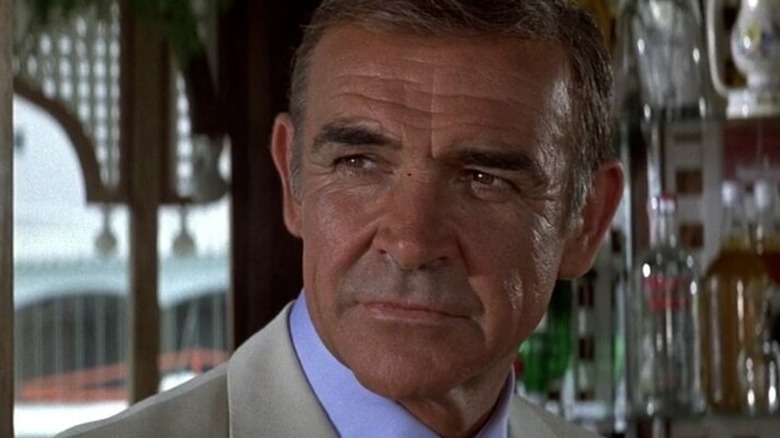
Daniel Craig's resignation from Her Majesty's Secret Service in "No Time To Die" marks the first time since Sean Connery that a Bond knew his last day on his last day. The original 007's third and final farewell, "Never Say Never Again," is especially resonant because, for all the sweat spent proving Sean wasn't too old for action, he was the same age then as Craig is now.

The "Never" Bond is more of a lover than a fighter by default. He's reintroduced failing an elaborate training exercise and not for the first time. In "Thunderball," his ordered rehabilitation was due to injury. In this legally fraught remake, it's obsolescence. Save a few double entendres, though, Connery's age is ignored entirely. With a savvier film around him, it would've worked; flirting across a Gravitar arcade cabinet, he's never looked older.

Both Connery and sitting 007 Roger Moore -- then 56 with one more film in him -- were unfairly painted by the press as shoulder-holstered dinosaurs. Their respective charms remained very much intact. "Octopussy," the official competition, stands as the better film, but "Never Say Never Again" is the more interesting movie: an early, seedy, not entirely intentional study of how action heroes are allowed to age. In the end, Bond retires. It's taken the real series 38 years to let him try.

Billion Dollar Brain

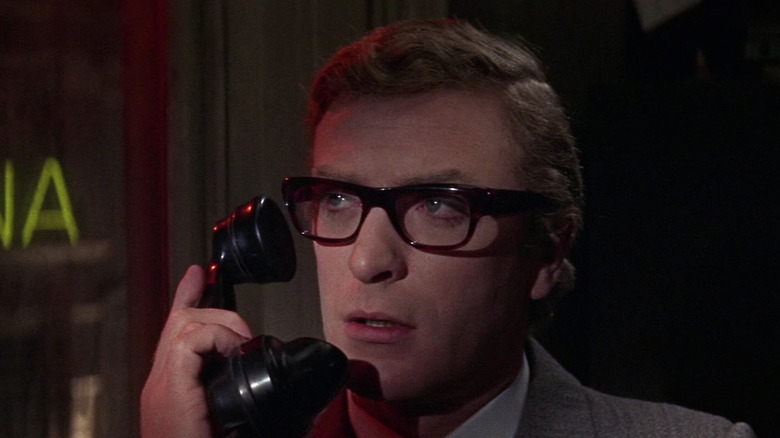
Not many spies of Bond's caliber leave the service with life and limb intact. Of his big screen contemporaries, only Harry Palmer has pulled it off before, leaving the world of espionage behind for the simpler dishonesty of private investigation.

At the beginning of "Billion Dollar Brain," Palmer is content, and that's his first mistake. There's no rest for agents like him, sarcastic desk warmers with pliable criminal records. Private citizenship just means his former boss has to knock first before giving orders. But when a computerized voice commands him to transport a Thermos to Helsinki, Harry does it out of morbid curiosity -- his second mistake.

The Harry Palmer trilogy was produced by Bond franchise co-parent Harry Saltzman as wry, world-weary counterprogramming to his more famous creation, with Michael Caine providing a bone-dry alternative to Sean Connery's 007. The first two films, "The Ipcress File" and "Funeral in Berlin," keep their espionage down and dirty, but "Brain" feels no obligation to keep that up. In his only film as a hired gun director, provocateur Ken Russell perverts the 007 franchise formula -- which by the time of this film's 1967 release is already five movies deep -- into near absurdity. The fall of man is hidden in farm-fresh eggs. Smooth-helmeted soldiers in white spill out of gleaming semis. Proud Texans hoe down in the shadow of a second-draft swastika. World War III hinges on a few lines of code. It's more biting and bizarre than Bond's ever been, with a cockeyed lesson that hasn't lost any luster -- saving the world never used to be this weird.

The Russia House

Even if it's off the books, "No Time to Die" marks the reunion of MI6 and CIA forces, of James Bond and Felix Leiter. Until the Craig era, the Bond series has generally depicted the two agencies as equal-opposite superpowers. They're equal in "The Russia House," too, just in a less flattering way.

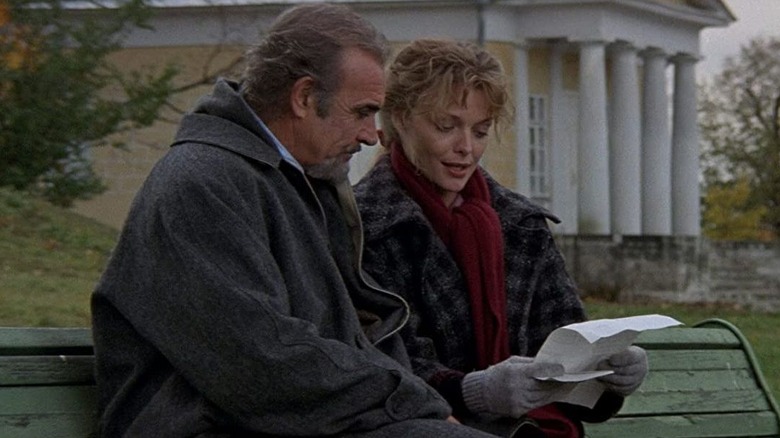
John le Carré's story isn't even about a spy. Sean Connery plays British publisher "Barley" Scott-Blair, who splits his time telling lies in Lisbon bars and waxing philosophical at writers' retreats. He's the life of any party that'll have him, and few won't. When a sensitive Russian manuscript lands in his mailbox, he's also the last operative any western government wants.

Not that the CIA, headed by Roy Scheider's Russell, or MI6, led by James Fox's Ned, keep too close an eye on him. They instead watch his electronic reconnaissance like an ESPN broadcast, never questioning the hastily trained player in that faraway field. It's their loss -- seeing Sean Connery mock the very thought of spying and instead fall in love is the rarer thrill.

Ninja Assassin

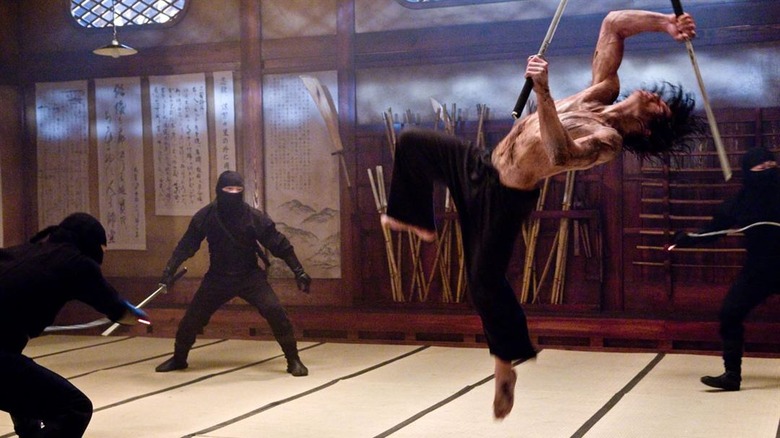
"Ninja Assassin" is exactly what it says on the tin, give or take the traditional restraint implied. The ninjas' first victim, a gangster who finds old-fashioned terror around the word "ninja" laughable, gets his head hinged open like a fast-food box. They may be invisible and they may be silent, but these ninjas strike with the cleanliness of a Cuisinart.

Anyone still unconvinced should get the joke when gore dripping from a severed head in a washing machine is compared to ketchup splattering a ballpark frank in a match-cut. "Ninja Assassin" is everything that got it crucified with critics at the time -- silly, shamelessly overwrought, and astoundinglynin violent. The computer-generated carnage is a feature, not a bug. Naomie Harris, doing a little Bond work as a Europol agent, sells the absurdity like she's the only one who's seen dailies: "I have reason to believe that a group of ninja may be on their way here."

If the ninjas came around a little more often, "Ninja Assassin" would've found immortality on the sleepover circuit. As it stands, this is a gruesome curio with a double-digit runtime. Low investment, high body count.

The Avengers (1998)

As a side effect of James Bond's cinematic longevity, many actors once in the running for a license to kill end up in the franchise elsewhere. For instance, Ralph Fiennes, the current and hopefully continuing MI6 boss M, was considered for 00 status earlier in his career. By his own assessment, missing that opportunity was for the best.

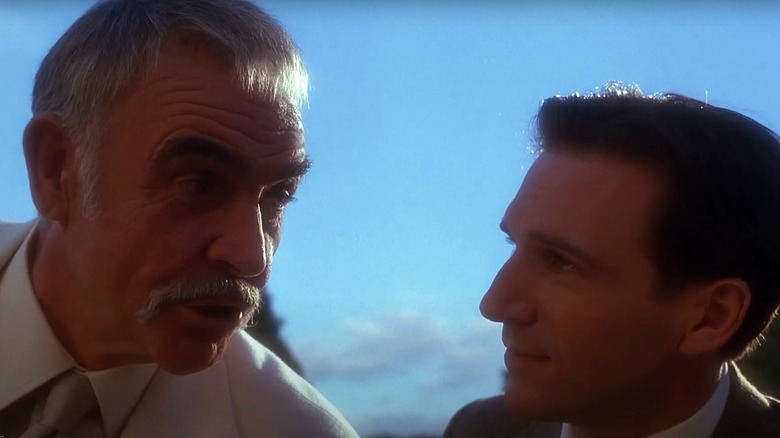
"The Avengers" made perfect financial sense on paper: Fiennes and Uma Thurman, both on a white-hot streak at the time, spar with Sean Connery himself in a witty update of a beloved television show. In practice, it's one of the most baffling tentpoles ever made. Each scene is a fresh non sequitur, only apparently connected by the famous faces that wander through. To preserve his evil cohorts' identities, Connery mandates a bear-suit dress code for his conferences. Fiennes wears a bowler hat and nothing else into the company sauna. It's a collection of quirks beaten into the vaguest shape of a summer blockbuster.

The film is an unmitigated disaster, best and only enjoyed as a pop cultural frog pinned to a dissection board. "I loved going to work on 'The Avengers,'" recalls Fiennes. At least that shows.

Logan Lucky

Daniel Craig has never been shy about his fraught relationship with 007. With "No Time to Die," he's made his peace. What he makes next should be a relative vacation for the star and, if his interim projects are anything to go on, a pleasant surprise for audiences. His turn as Benoit Blanc from "Knives Out" might've kickstarted a new franchise, but it's Joe Bang from "Logan Lucky" who introduced Daniel Craig, kook, to the world.

As a criminal mastermind, Bang is the man with one eye in a county of the blind, though he can't see too well on account of the prison bars. That doesn't stop the dim-bulb Logan brothers from asking him to be a part of their homegrown heist. That also doesn't stop Bang, explosives proficiency coincidental, from entertaining the idea.

Forget Craig's accent here, the Ernest P. Worrell to Blanc's Colonel Sanders, and any preconceived notions therein -- Bang is a self-taught chemical engineer. He builds a bomb out of bleach pens, low-sodium salt, two bags of gummy bears, and times it to the twist of a grocery bag. His own short fuse is just an occupational hazard -- Bang appreciates a good shot and getting nekkid in the back seat of a Mustang as much as anybody.

"When you know him even a little," said director Steven Soderbergh, "you know that he's funny." Craig clearly appreciated the proof.

The Constant Gardener

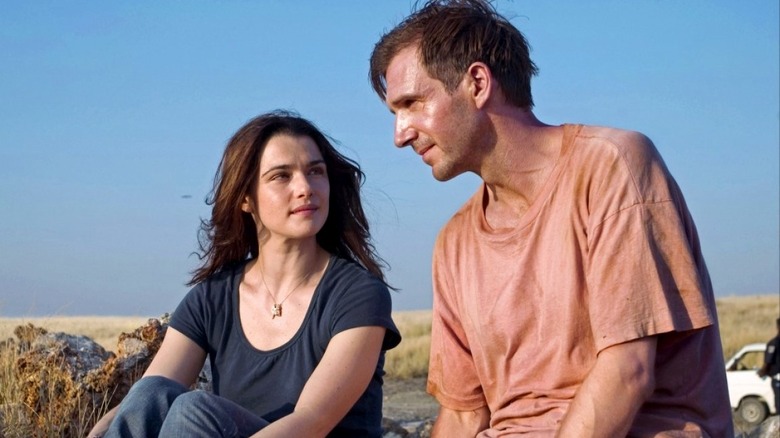
Seven years after "The Avengers," Ralph Fiennes returned to spy craft with a reluctant vengeance. There are no bon mots or whiz-bang effects, only sorrow on both personal and global scales. "The Constant Gardener" rates among the great John le Carré's angriest novels, by his own admission: "The multinational pharmaceutical world, once I entered it, got me by the throat and wouldn't let go," he once told The Guardian

The international incident at the heart of "Gardener" involves a western pharmaceutical company using Kenyans as guinea pigs for drugs that may or may not carry an excessive mortality rate. Though le Carré pulls back the curtain early, trading surprise for righteous fury, the film plays coy. Revelations come as stages of grief, as Fiennes discovers more about the suspicious death of his activist wife, Rachel Weisz. Narrowing the scale to a close-up, on alternately loving and lost faces, reduces espionage to its simplest, mortal cost.

There's a cancerous pessimism itching at its broken heart, but that lends "The Constant Gardener" a sobering authenticity. This is how and why the game is still played. It made le Carré furious. The film honors his fury.

The Rhythm Section

Since its inception, Eon Productions has only directly produced one non-Bond film: 2020's "The Rhythm Section." That pedigree alone should've earned it attention. Instead, it holds the ignominious record of worst opening for a 3,000-plus theatrical release.

Expectation had something to do with it. It's not a "female Bond film." Blake Lively's junkie sex worker is, at best, a loose end for the real Bond-types, who only run at two speeds in this world: opportunistic and shell-shocked. Jude Law's MI6 ex-pat has resigned himself to the former. When Lively demands his training to avenge her family, killed as byproducts of a careless op, Law doesn't hold back. There's no fun in this violence. He hits her until she can hit back. It gives her competence, but not proficiency or the hypothermic calm needed to take lives for a living. Her assassinations are agony -- the easiest still ends with the target quietly pleading for his children. She's an amateur among pros, the most likely to die in any room and aware of it.

Lively is the reason to watch; she gives her all to embody the dying breed of action hero that bruises when punched. If the conspiracy at the heart of the film didn't peter out to such an underwhelming end, this could've been the start of a fresh spy franchise. As-is, "The Rhythm Section" is an uneven curiosity and worthwhile what-if.

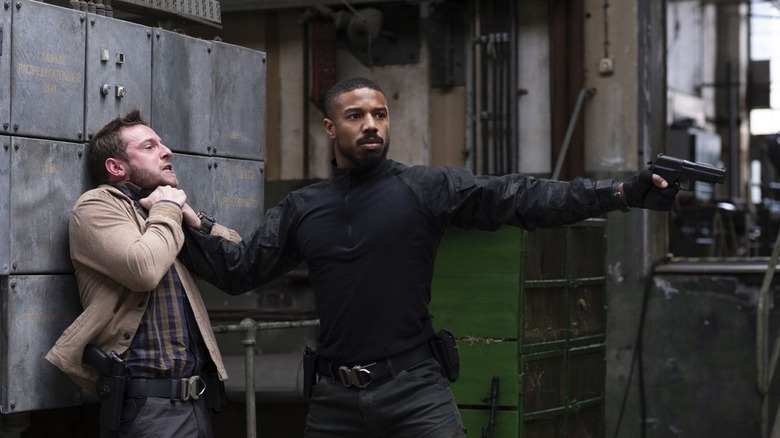
Without Remorse

If Ian Fleming is the reigning British spymaster at the box office, Tom Clancy is his closest American cousin. After a '90s surge that saw three adaptations of his work in four years, the insurance-salesman-turned-novelist cooled on Hollywood. There had only been two films since, one after his death, until 2020's "Without Remorse." Whether it kickstarts a resurgence of Clancy-brand cloak and dagger in theaters is too early to call, but one thing's for sure -- its leading man, Michael B. Jordan, is a movie star.

If the Bond franchise mints movie stars, Clancy films bask in them. A quick glance at the list of Clancy heroes is proof enough -- Sean Connery, Alec Baldwin, Harrison Ford, Ben Affleck, Chris Pine. Jordan takes that baton and sprints with it while using his free fist to take down a SWAT team. The politics are just wallpaper -- this is a doorstop airport novel boiled down to its ruthless, sometimes malnourished essence.

Jordan, here a shredded golem of vengeance, knows solace was never on the table. He settles for blood and fireworks instead. This is not a film of half measures; to interrogate a corrupt politician, he crashes into his car, lights it on fire, then slides next to him in the backseat. It's a trashy B-picture starring a triple-A star at the height of his physical powers. Expect anything else at your own peril.

The Manchurian Candidate (2004)

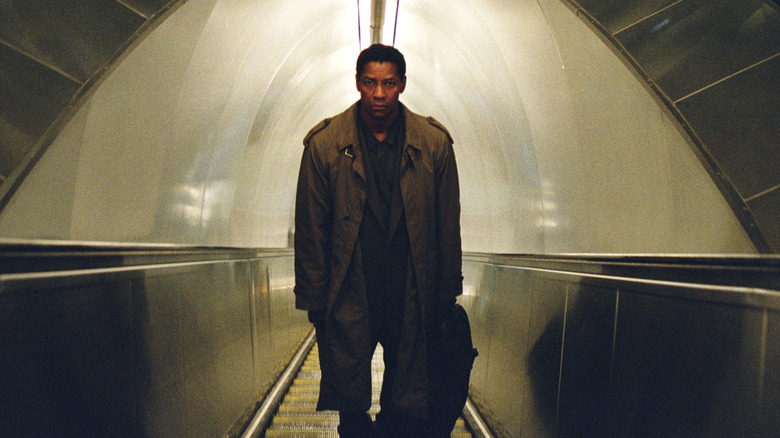
"I have these dreams, sir." With one line, Jeffrey Wright claws under the skin of Denzel Washington, the cinematic definition of strength. The rest of his jittery ramble, conflicting memories of a tour they shared in the Gulf, festers there long after his mysterious disappearance.

Jonathan Demme's 2004 remake of 1962's "The Manchurian Candidate" is as intentionally uncomfortable as blockbusters get, especially in the immediate wake of 9/11. This America, depicted sometime after the stopwatch had been thrown out on the forever war, vaunts its military heroes from Over There until they break. Washington is unbroken enough to give speeches about how great the president was in combat. When his dreams start matching Wright's, he's disposed of just as fast.

Without spoiling too much conspiracy, the puppeteers are blurrier, the strings longer, and the song-and-dance more bleak now than it was in 2004. And it all starts with an astounding turn from Wright as the poisoned canary in a patriotic coal mine.

Johnny English

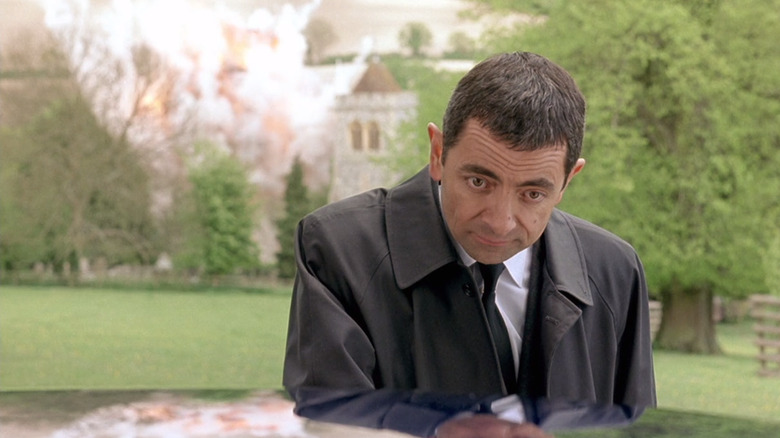
The Bond franchise has a begrudging relationship with the pop culture around it, only changing when cornered and updating when lapped. A better barometer for how times change are the parodies that come and go in its wake. Consider "Johnny English," written by 007 screenwriters-in-residence Neal Purvis and Robert Wade. Compared to "Die Another Day," released the year prior, the spoofing isn't too far over par. Compared to "Casino Royale," it might as well be a transmission from space.

Rowan Atkinson's MI7 pencil pusher grew up on a steady diet of Roger Moore. His superspy dreams are the stuff eyebrow raises and karate chops are made of. Only when his own incompetence gets every existing agent killed is he allowed into service. There's no gadget he can't misuse, even the few that Bond already demonstrated like the "For Your Eyes Only" identikit and "Goldfinger" ejector seat. It's a silly love letter to everything the franchise was and soon wouldn't be.

The sequels, "Johnny English Reborn" and "Johnny English Strikes Again," rolled with the changes. Parkour, cyberattacks, and soulful retreats from active duty became targets. That unlikely longevity has earned the character a strange honor -- Atkinson played English as long as Craig played Bond, 15 years, making him the longest-serving parody alongside the longest-serving 007.

Read this next: The 20 Greatest James Bond Villains Ever

The post 14 Movies To Watch If You Loved No Time To Die appeared first on /Film.

08 Oct 15:43

Daniel Craig Wants To Retire The Phrase 'Bond Girls,' Thank You Very Much

by Lex Briscuso

After 15 years of the James Bond spotlight, Daniel Craig finally decided to let loose and get a little candid about one aspect of the franchise that has long since been the subject of debate: "Bond girls."

"No more Bond girls," he told Entertainment Weekly after being asked what he feels he has to correct people about most often regarding his character and the film series as a whole. "They don't exist anymore," Craig added during the video interview alongside his co-stars on October 7. "They may exist again, but not in my movies."

Craig's "No Time to Die" co-star Lashana Lynch — who made headlines when it was revealed that her character, Nomi, would replace Craig's Bond as the new owner of the 007 codename in the latest installment — backed him up when it came to his confident stance. "He said what he said," the actress asserted, snapping her fingers matter-of-factly in the clip.

Craig is beloved within the franchise — but he didn't start that way. When he was first cast to succeed Pierce Brosnan in "Casino Royale," his talents were questioned because he didn't fit the typical mold left by past Bonds like Timothy Dalton, Sean Connery, and Roger Moore. However, the "Knives Out" star went on to lead five films for the franchise.

In November 2019, Craig confirmed he would leave the James Bond franchise following his final bow in the highly anticipated "No Time to Die," which releases in theaters today. However, he doesn't seem all that concerned about the legacy he leaves — and after all his hard work, I don't blame him. "Maybe I'll be remembered as the Grumpy Bond. I don't know," he told the New York Times earlier this month. "That's just my Bond and I have to face up to it, that has been my Bond. But I'm quite satisfied with that."

The Bond Girl Archetype Has Evolved Over The Years

It's clear that Craig is on the right side of history with this opinion, and it's great to see him state it so valiantly. The ladies of the franchise have been analyzed and scrutinized for many years — but their evolution is rarely acknowledged, let alone in such a bold and surefire way.

Craig suggests that the female characters of his five films, as well as the other iconic women from the franchise's impressive 58-year run, have been seen as sexual objects first, a running tab of damsels-in-distress and femme fatales who have, in turn, become a lot more complex and dimensional over the years. His films in particular have capitalized on crafting meaningful stories for the women in Bond's orbit — so we can only hope that the franchise continues to expand on what they've already done for the ladies of the 007 world when Craig withdraws from his post next year.

Read this next: Scarlett Johansson's Top Movies Ranked Worst To Best

The post Daniel Craig Wants to Retire the Phrase 'Bond Girls,' Thank You Very Much appeared first on /Film.
08 Oct 15:42

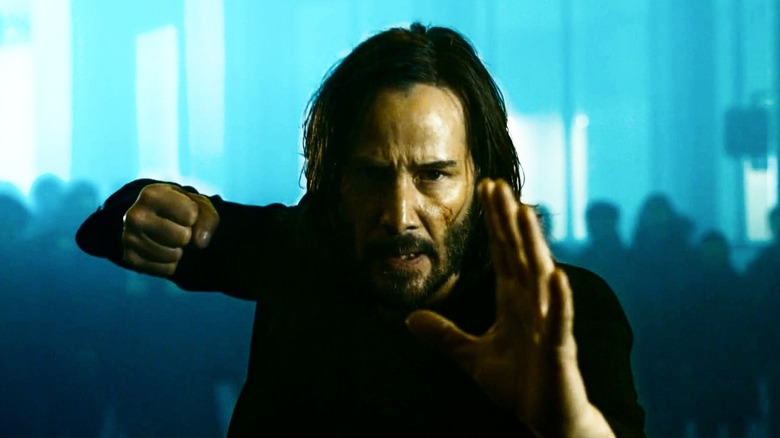
The Vast Legacy Of The Matrix

by Anya Stanley

"The experience of making the movies was such a transformative time in my life," says Carrie-Anne Moss of "The Matrix" films, "it was such an opportunity of a lifetime."

As the December 22nd release date for Lana Wachowski's "The Matrix Resurrections" moves closer, the time is right to look back at the legacy of a decades-long franchise. In a new video from Warner Bros., the "Resurrections" cast goes long on the franchise, remembering their own introductions to the "Matrix" films and their initial reactions. 

Included in the roster are newcomers like Eréndira Ibarra, known for playing Daniela Velázquez in the Wachowski-born Netflix series "Sense 8." Her role in the film is unknown, but Ibarra recalls seeing the original "Matrix" and feeling profoundly changed. "I remember leaving the movie theater just knowing that things were going to be different in my life," she reminisces. 

More cast members add to the praise, including Jessica Henwick and Max Riemelt. Neil Patrick Harris (who apparently plays Neo's therapist -- what a gig -- according to the film's official trailer) gets excited over the action, particularly the chase sequences and the introduction of the iconic and now oft-parodied "bullet time." This sentiment is echoed by Daniel Bernhardt, who we know to be donning the shades and playing the presumably villainous role of Agent Johnson.

Yahya Abdul-Mateen II, coming off of the lead role in Nia DaCosta's clever "Candyman" sequel, shares Harris' joy over the visually stunning slowed-down gunfights. Abdul-Mateen II will be portraying Neo's mentor, Morpheus (formerly played by Laurence Fishburne). "Resurrections" sees the return of Jada Pinkett Smith as well, who is presumably reprising her role of hovercraft captain Niobe from the original film's two sequels, "The Matrix Reloaded" and "The Matrix Revolutions." Niobe did not believe in the Oracle's prophecy that he would find "The One," but nonetheless proved a valuable ally for Neo. The role earned Pinkett Smith an NAACP Image Award nomination in 2004. Of course, the returns that everyone is anticipating are those of the film series' leads, Keanu Reeves and Carrie Anne-Moss, who played Neo and Trinity in all three "Matrix" films.

'It's Something Beyond Yourself; It's Big'

Here's the official synopsis for "The Matrix Resurrections":

The Matrix Resurrections is a continuation of the story established in the first MATRIX film. It reunites Keanu Reeves and Carrie-Anne Moss as cinematic icons Neo & Trinity in an expansion of their story that ventures back into the Matrix and even deeper down the rabbit hole. A mind-bending new adventure with action and epic scale, it's set in a familiar yet even more provocative world where reality is more subjective than ever and all that's required to see the truth is to free your mind.

The movie is a "Sense 8" reunion of sorts: returning collaborators include directors of photography Daniele Massaccesi and John Toll, production designers Hugh Bateup and Peter Walpole, editor Joseph Jett Sally, costume designer Lindsay Pugh, visual effects supervisor Dan Glass, and composers Johnny Klimek and Tom Tykwer. Keanu Reeves, Carrie-Anne Moss, and Jada Pinkett Smith reprise their roles from previous films in the series, and they are joined by Yahya Abdul-Mateen II, Jessica Henwick, Jonathan Groff, Neil Patrick Harris, Priyanka Chopra Jonas, and Christina Ricci.

"The Matrix" and what it has come to represent has firmly entrenched itself in the pop culture consciousness ever since the first movie's release in 1999. Fans adapted the aesthetic and spread quotes like wildfire, and "take the red pill" has taken on a life of its own (originally meaning waking up to a brutal truth, but since bafflingly hijacked by right-wingers to uphold their own status quo fears). It touched other genres immediately, as comedies fell over themselves to reapply bullet time. 

Whether you've seen the movies or not, you probably understand the uncanny feeling that comes with hearing someone observe "a glitch in the Matrix." Heck, if you attended the University of Washington in Seattle in the early aughts, you could even sign up for an introductory philosophy course that utilizes and complements the themes and subtext of the original film. Finally, the "Matrix" films contain an allegory for entire swaths of marginalized audiences, one that its trans creators intended from the very beginning

Sure, there's a tumble down a rabbit hole and a quest for knowledge, but it all comes from an Othered place that brings weight to its transformational arcs as its hero evolves from what he's told he is ... into the truly great person he's always been hiding. What an impact from a story and a universe entirely constructed from 1s and 0s. At the end of the video, Keanu sums up his feelings about it: 

"You'll hear the sentence, 'The Matrix' changed my life, so I say, 'Thank you; it changed mine, too.'"

"The Matrix Resurrections" arrives in theaters on December 22, 2021. It will also stream on the ad-free tier of HBO Max in the United States for a month, starting on the same date.

Read this next: Sci-Fi Box Office Bombs That Deserve A Second Chance

The post The Vast Legacy of The Matrix appeared first on /Film.
08 Oct 15:42

Mad God Review: This Stop-Motion Nightmare May Be One Of The Weirdest Movies Ever Made [Beyond Fest]

by BJ Colangelo

Phil Tippett is a master of monsters, a proverbial God in the eyes of those who grew up watching his creatures play on screen. He's the man responsible for beloved creations in films like "Return of the Jedi," "RoboCop," "Piranha," "Starship Troopers," and, as the Dinosaur Supervisor meme makes sure we're aware, "Jurassic Park." He's spent the last three decades earning accolades creating Oscar-winning effects for the projects of other people, but now, Tippett finally got the chance to make his own movie, just the way he imagined. That is to say, with an imagination that none of us will ever be able to begin to fully understand.

A full 48 hours after my screening of "Mad God" at Beyond Fest, I am still struggling to figure out how to actually review what is less of a film and more of an exploration into the mind of an immeasurable genius. "Mad God" isn't a movie, it's an experience, and one that I implore anyone and everyone to immerse themselves in as soon as they possibly can. I fear I will spend the rest of my life trying to solve the puzzles hidden within "Mad God," knowing full well this is an impossible feat. "Mad God" will be what flashes before my eyes as I'm lying on my deathbed and only then will I maybe actually comprehend the brilliance behind this waking fever dream.

What Is Mad God About?

Man, this movie has me wondering what is anything about? "Mad God" feels like an act of defiance against the commercial arm of filmmaking that has plagued creativity for decades, instead providing a macabre adventure through stop-motion animation, digital artistry, live-action, and masterful in-camera work. With the exception of unintelligible mumbles and implied tonal shifts, the film is completely devoid of dialogue. There is no easily accessible narrative, at least, not to us. I firmly believe that Phil Tippett knows exactly what the story of "Mad God" is, and has allowed our own imaginations to use his film like a playground in sensory overload.

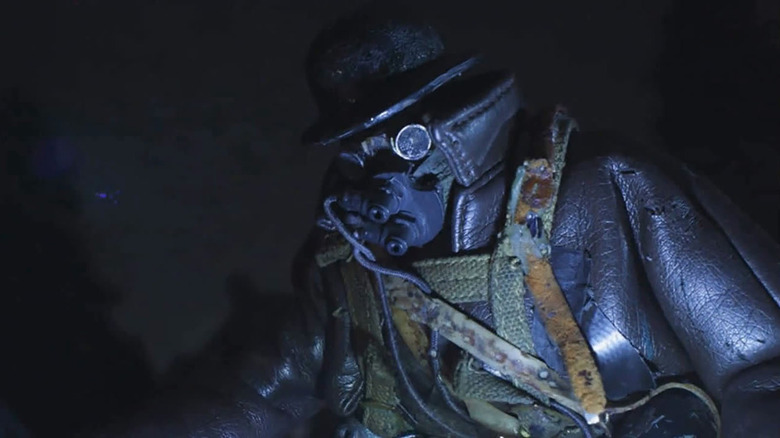
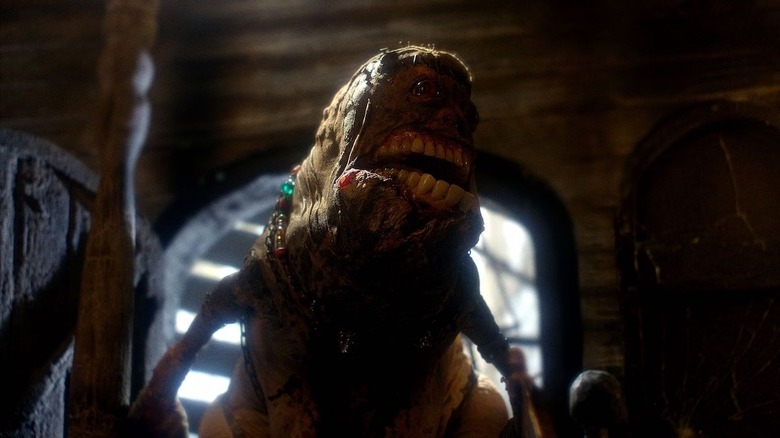
We follow a human-like figure in a leather trench coat, gas mask, and steampunk goggles as they descend through a hellish dimension of suffering and nightmarish creatures existing in an unexplainable hierarchy of mutilation and madness. "Mad God" is violent in a way that can only exist in this medium, combined with an overwhelming sound design that should be studied in film schools. For example, there's a moment where a creature wearing a plague mask and a hat dripping in floating black fabric and stringed charms is carrying a maggot-like monster with human teeth, and the sound is the soothing ASMR jingling of bones and charms softly rattling against one another, juxtaposed with the incessant crying of a human baby. It is a downright jolt to the auditory cortex and yet the visuals are so transfixing, it's impossible to tune any of it out. Based on the reactions from the sold-out crowd at Beyond Fest, I wasn't alone.

Mad God Is An Experience

Every frame and every second of "Mad God" is beautifully grotesque and painstakingly crafted. This is a film that took Tippett 30 years to make, having shot the earliest footage during "RoboCop 2" and then shelving the project until the 2000s when a handful of animators at Tippett Studio discovered his boxes of shelved props and puppets. Tippett showed the animators the original footage, who convinced him to resurrect his cinematic Lazarus, and we are all changed for having seen it.

It's a haunting frenzy of religious imagery and horrific metaphors that will absolutely be interpreted in completely different ways depending on the viewer. Plenty joke about a movie being "mind-blowing," but "Mad God" does exactly that. During the Q&A after the Beyond Fest screening, Tippett admitted he had to seek psychological help during the production because the movie broke him, and expressed that he will "never recover" from the process of bringing "Mad God" to life. It's more than apparent that Phil Tippett put every ounce of his heart, soul, and psyche into "Mad God," and bespoke upon the world a visionary work of a true auteur. Will it work for everyone? Absolutely not. But the important thing is that Tippett is a virtuoso who was able to make what he wanted, exactly as intended, in the current world of filmmaking where artistry is treated like a sacrificial lamb in favor of capitalist gains. The true "Mad God" is Phil Tippett.

Read this next: The 25 Best Movie Robots Of All Time

The post Mad God Review: This Stop-Motion Nightmare May Be One of the Weirdest Movies Ever Made [Beyond Fest] appeared first on /Film.
08 Oct 15:42

Car Thieves Arrested After Using $27,000 Game Boy Device

by BeauHD
An anonymous reader quotes a report from the BBC: A gang of car thieves used a handheld device disguised as a Nintendo Game Boy to steal vehicles worth $245,000. Dylan Armer, Christopher Bowes and Thomas Poulson stole five Mitsubishi Outlanders by using the gadget to bypass the cars' security systems. West Yorkshire Police said the device, worth $27,000 could unlock and start a car "in a matter of seconds." The trio, all from Yorkshire, were jailed at Leeds Crown Court after pleading guilty to conspiracy to steal. CCTV footage of the theft showed them unplug the car from its charging point before using the device to unlock and start it. When officers stopped the three men they found the Game Boy-style gadget hidden in a secret compartment of their car. Police said footage recovered from Poulson's phone showed him demonstrating "how quickly and easily the gadget gave them full access to the vehicles, accompanied by a commentary in mocking tones." The force added that the "significant investment required to buy one of the sophisticated devices suggested the thefts were planned and orchestrated crimes."

Read more of this story at Slashdot.

08 Oct 12:45

11 Scary Space Facts That'll Make You Appreciate the Earth We're Destroying

by Stephen Johnson

We need to get rid of outer space—it’s too dark and too terrifying, and everything out there wants to kill us. Yet some of our most popular billionaires seem convinced that rocketing humanity off into the stars is a more viable longterm survival strategy than simply trying a little less hard to ruin the one planet…

Read more...

08 Oct 12:43

20 of the Best Ghost Movies of All Time

by Ross Johnson

A good scary movie makes us afraid of its ghosts; a great one sees ghosts for what they are: specters of the past. That past can be horrific—filled with darkness that we can never quite outrun. Ghosts can also be seductive, drawing us back to a past that we ought to have outgrown, teasing us with the idea that we can…

Read more...

08 Oct 10:52

Researchers Warn of FontOnLake Rootkit Malware Targeting Linux Systems

by noreply@blogger.com (Ravie Lakshmanan)
Cybersecurity researchers have detailed a new campaign that likely targets entities in Southeast Asia with a previously unrecognized Linux malware that's engineered to enable remote access to its operators, in addition to amassing credentials and function as a proxy server. The malware family, dubbed "FontOnLake" by Slovak cybersecurity firm ESET, is said to feature "well-designed modules" that
08 Oct 10:45

Attackers Encrypt VMware ESXi Server With Python Ransomware

by Ionut Arghire

A recently observed attack employed a Python-based ransomware variant to target an organization’s VMware ESXi server and encrypt all virtual disks, Sophos reports.

read more

08 Oct 10:44

Android 12 lets IT admins disable USB data to improve security

by Pranob Mehrotra

Along with all the new Android 12 features that we’ve highlighted previously, Google is including some enterprise-focused changes in the software release. With these changes, the company aims to make Android a more reliable and secure operating system by giving enterprises and IT admins access to more privacy controls and additional security measures. One of these features gives IT admins the option to disable USB data on enterprise devices to improve security.

According to a recent post on Google’s The Keyword blog, Android 12 will give IT admins the option to decide which input method editors (IMEs) employees can use to reduce the risk of a third-party keyboard capturing data on the device. They will also receive an option to disable USB signaling for anything but charging to reduce the risk of USB-based attacks.  However, this feature will only be available on devices that have USB HAL 1.3. Google mentions that device admin apps will have to call canUsbDataSignalingBeDisabled() to check if enabling or disabling USB data signaling is supported on the device.

In addition, IT admins will have the option to “slice their 5G network and dedicated connectivity to all apps on a fully-managed device, or specifically to apps in the work profile.” This will allow enterprises to limit priority cell service to Work profile apps and give them more “control over quality of service and security of work data.”

Android 12 will also include a few other enterprise-focused features, including options to approve or deny sensor-related permissions on personal devices and set up Wi-Fi networks through a new network API that doesn’t require user location permissions. Furthermore, Android 12 also changes the hardware devices IDs for personal devices.

These changes should start rolling out to devices with the Android 12 stable release following the Pixel 6 series launch later this month. For more information about the new enterprise-focused features in Android 12, head over to Google’s blog post.

The post Android 12 lets IT admins disable USB data to improve security appeared first on xda-developers.