
Windows 11 を VMWARE Workstation Player に入れてみたよ
設定は、RAM を 4GBにするだけ。

インストール途中でレジストリエディタを起動して、HKEY_LOCAL_MACHINE\SYSTEM\Setup 内にLabConfigキーを作成、その中にBypassTPMCheck (REG_DWORD)を作成して値を1にする。

無事、チェックを通過

52GBもHDD使うなんて聞いていないんですが!

とりあえず、入りました・ω・
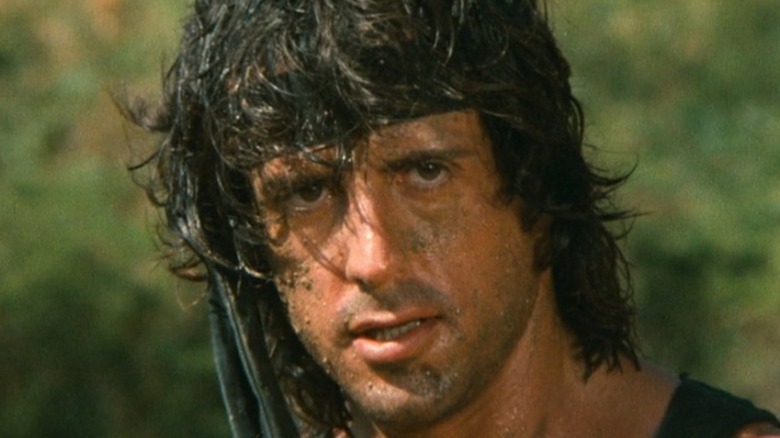
"There is no such thing as an action movie," says Steven E. de Souza, writer of more than one film venerated below, "'Action movie' is a term that was invented in the '80s." He's not wrong. Before the MTV age, action was diversified. Swashbucklers. Westerns. War epics. Crime thrillers. Fists of fury. All the way back to Buster Keaton, audiences thrilled at feats of derring-do, but action was just another tool in filmmakers' boxes.
1982's "First Blood," the cinematic debut of John Rambo, contains only a single kill. "Rambo III," released just six years later, boasts a body count of 132, averaging about one-and-a-half murders per minute. At the time, the "Guinness Book of World Records" deemed it not only the most violent movie ever made, but also the most expensive at $69 million. $16 million of that went to Sylvester Stallone's paycheck, granting him further Guinness bragging rights as the highest-paid actor of all time.
The '80s belonged to action. Pectorals rippling with heavy recoil. Entire neighborhoods disintegrating in pyrotechnic displays. No end too grisly for a one-line eulogy. The decade produced some of the greatest action films ever seen, but the following 16 represent the very best of their iconic era.
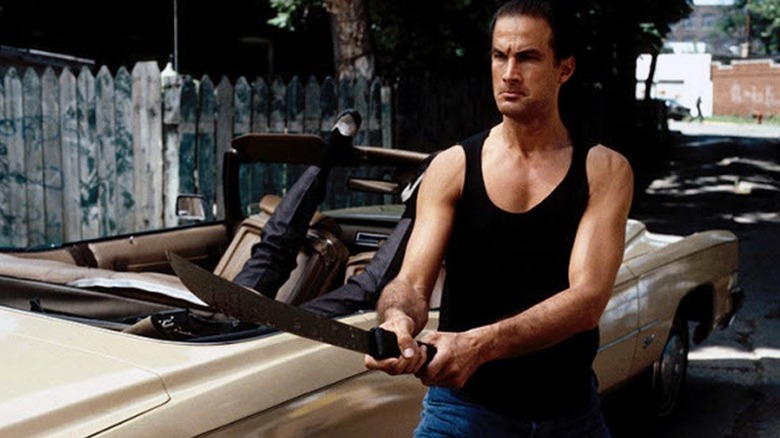
In the decade's twilight, as muscle-bound supermen lost ground to special effects, two unlikely challengers entered the ring. They were Ferraris, not Hummers, making up for their standard humanoid proportions with bone-breaking speed. While Jean-Claude Van Damme wouldn't find his best showcase until the '90s, the case could be made that Steven Seagal never bettered his debut.
Seagal, an aikido expert who claims to have a past with the CIA, plays Nico Toscani, an aikido expert who has a past with the CIA. It's no stretch -- note Segal's "Story By" credit -- but here, the man has something to prove. Uber-agent Michael Ovitz believed he could make anybody a star, even his (alleged) martial arts instructor. So, as much as he ever would, Seagal tried.
Director Andrew Davis, fresh from wringing a performance out of fellow action hero Chuck Norris in "Code of Silence," presents Seagal as the punching man's Dirty Harry. He talks just as softly, but forgoes the .44-caliber stick. All Nico needs are his hands, held approximately steering wheel-width apart, and something he can flip the next scumbag into. The moves are still novel and the speed still impressive, but the biggest thrill is Seagal himself. When he monologues an old friend to pieces about the Agency's unchecked evil, it plays like a bounced check; he could've been a contender, or at least not Steven Seagal.
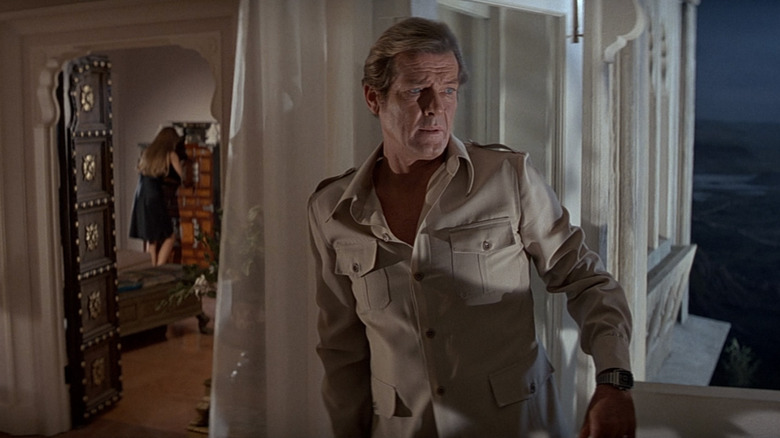
The James Bond franchise has been around long enough to double as a pop culture barometer, always a few years behind. Blaxploitation begat "Live and Let Die." The kung-fu craze begat "The Man with the Golden Gun." "Star Wars" begat "Moonraker." "Raiders of the Lost Ark" begat "Octopussy."
Its title does it no favors. Roger Moore, then 55, wanted to retire after the previous film and only returned after James Brolin threatened to replace him. "For Your Eyes Only" is a better thriller. "The Living Daylights," better espionage. But "Octopussy" is a go-for-broke barnburner that marks the height of Bond's crowd-pleasing excess.
Moore's climactic clown disguise is not an insult, but a mission statement. Forget the nouveau riche blockbuster class -- the 007-ring circus had been touring for decades, and could still show them all a thing or two. Marvel as the spy with a painted tear on his cheek defuses a nuclear bomb. Thrill as he threads the needle of an airplane hangar in a one-man jet. Snicker through popcorn as he invades the enemy compound via alligator submarine. Not only can he swing through the jungle higher and faster than Harrison Ford's dusty archaeologist, but Bond yells like Tarzan as he does it. A serious Cold War story lurks among the gags, but there's enough of those to be found in the films ahead. "Octopussy" is all about old-fashioned pomp and circumstance -- even the nail-biting finale is just a gussied-up wing walker act.
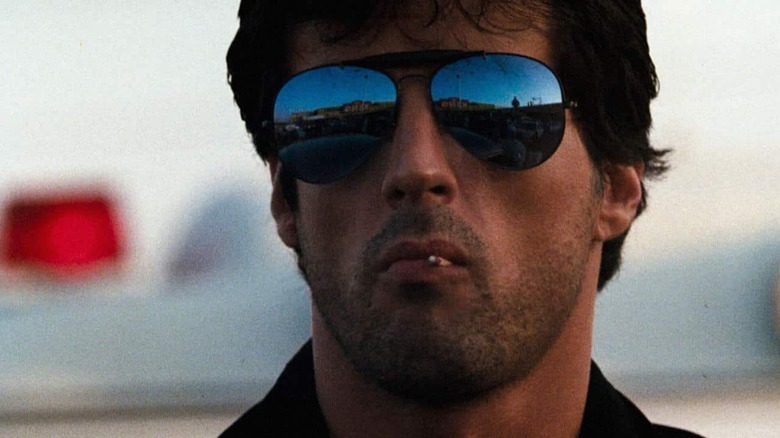
According to the writer, star, and alleged ghost director himself, the inspiration for "Cobra" was a simple question: "What if Bruce Springsteen had a gun?" Sylvester Stallone's answer is not only incorrect even by the wildest of imaginations, but actually approaches modern art in its wrongness.
This is '80s Americana reduced to its basest perversions and arranged in a poppy montage. Mirrored aviators. Room-temperature Coors. Chromed-out muscle cars that are unsafe at any speed. Ax-wielding maniacs. European supermodels no wider than a sniper rifle's crosshair. Unexpected robots. Marion "Cobra" Cobretti lives under a giant, neon Pepsi ad and carries a gun with an illustrated grip that can only be seen when holstered like surrogate genitalia.
Every decision can be justified by an even simpler question -- "Is it cool?" -- and Stallone never misses. Why does Cobretti cut the tip of his pizza off with scissors? Why do three open freezers fog out most of a grocery store? Why does the murderous cult meet solely to clang axes together over their heads?
After the one-two punch of "Rambo: First Blood Part II" and "Rocky IV," Stallone had reached his personal event horizon. What he made with that unimaginable power is absurdist, fascist, and honest to its leather-and-denim soul. But boy is it cool.
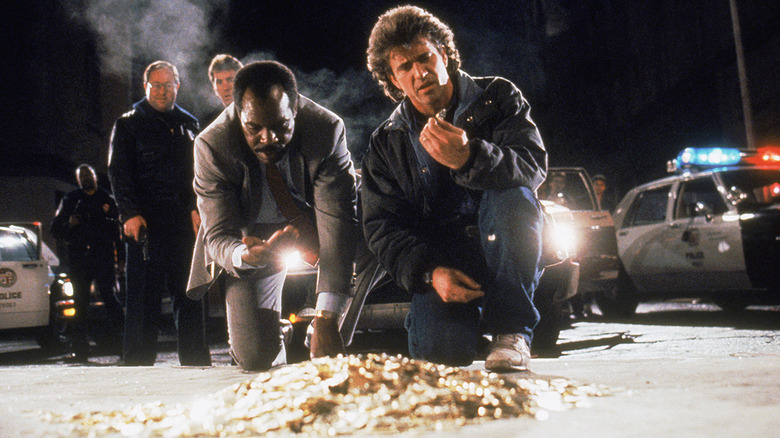
"Action movies before then," recalled "Lethal Weapon" director Richard Donner, "[were] all generic characters and gratuitous violence." His awed then refers to Shane Black's script for the original film. This awe does not extend to the script Black co-wrote with novelist Warren Murphy for the sequel, preliminarily called "Play Dirty." Donner found it too dark, and Black quit. Without Black's corrosive wit, the franchise could only get sillier -- beware the Warner Bros. logo, now scored with a Looney Tunes taunt.
"Lethal Weapon 2" is an R-rated cartoon. Martin Riggs, a formerly broken soul mended just barely by his surrogate family, makes his entrance while gleefully destroying said family's station wagon. Roger Murtaugh, too old for this the last time, almost dies on a toilet. Joe Pesci plays Porky Pig. There's just enough darkness to leave a bruise, but not enough to rule out decapitations-by-surfboard or the quip that always follows.
"Lethal Weapon" is the better movie, but "Lethal Weapon 2" is the better action movie. Donner reduces the original's neo-noir nihilism to window dressing and spends his doubled budget totaling entire car dealerships. This is the buddy cop blockbuster supreme, sold on a tagline so cocky it didn't even try: "The Magic Is Back." And how.
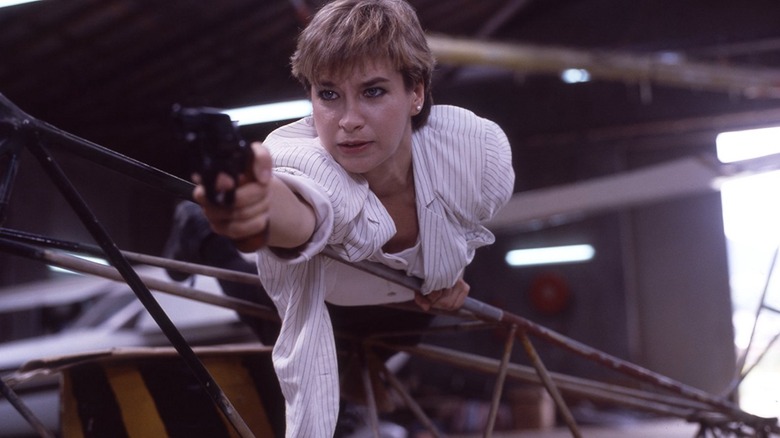
The legendary Three Dragons -- Jackie Chan, Sammo Hung, and Yuen Biao -- are responsible for some of the greatest action films ever made, together and apart. Of the trio, compatriots since their days at the Peking Opera School, Biao remains the most obscure to western audiences. That's a tragedy, especially considering that he's the best mover of the bunch.
In "Righting Wrongs," Biao puts that agility to brutal use as a lawyer who moonlights as judge, jury, and executioner. Anyone expecting prop comedy and pratfalls is in for a rude awakening -- the wrongs here are very wrong. The villains incinerate children because their parents saw something they shouldn't have. The heroes kill with extreme prejudice and unflinching cruelty. They're all free radicals condemned to the same terminally corrupt system. In the complete absence of justice, blood makes do.
The simplest confrontations escalate at blinding, occasionally nightmarish speeds. An attempted hit-and-run in a parking garage turns into a lop-sided demolition derby with Biao at one point dropping between the fenders of two crashing cars. A routine arrest by eventual ally Cynthia Rothrock, among the most unsung of '80s action heroes, climaxes with a 30-foot diving tackle off a balcony. The final showdown defies all expectations of bodily capability and happily-ever-after. Seek only the original Hong Kong cut -- the rest pull the fiercest, final punch.
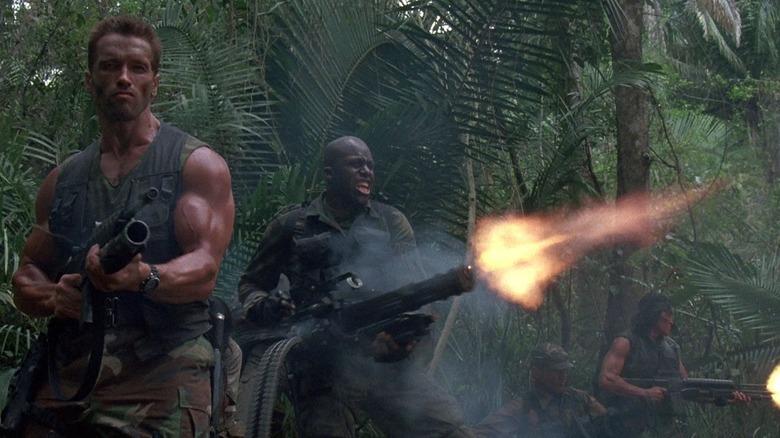
This is the most contentious inclusion on this list because, as much as it does scratch the genre's primal itches, "Predator" is more of a high-tech insult to greased-pec action cinema than a proud example.
The testosterone airs out early. The now-immortal bicep measuring contest. Jesse Ventura coining the phrase "sexual tyrannosaurus." Bill Duke dry shaving on a shuddering helicopter. To director John McTiernan's continued annoyance, the village assault even looks like second-unit business as usual. But then the one-liners disappear in the lush desolation and the supermen do something unthinkable: They panic.
Muscles are no match for lasers, cloaking devices, or similar special effects. One of the toughest ensembles ever collected on celluloid dies horribly, man by man, until all that's left is the least-killable action hero in history. Arnold Schwarzenegger meets his impossible match and gives his best performance of the decade. The horror bona fides of "Predator" may dilute its standing, but there's no more potent representation of '80s action than the buffest actors in the world unloading thousands of rounds into the empty jungle just to hear the reassuring sounds they make.
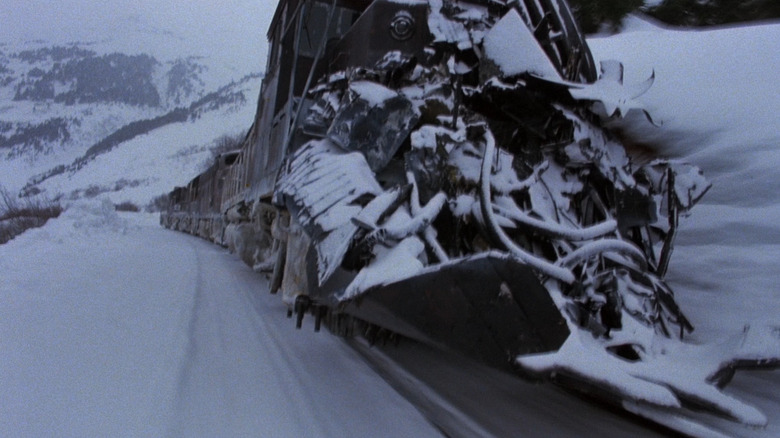
No discussion of '80s action films would be complete without mentioning Cannon, the studio that Chucks Norris and Charles Bronson built. Schlock was its calling card and lifeblood. Lurid B-pictures made for peanuts and pre-sold into the black on home video rights kept the lights on. Today, its legacy glows in cheap neon with beloved junk like "Death Wish III" and "Enter the Ninja," but between those efforts, Cannon funded projects by renowned filmmakers who were no longer bankable in the blockbuster age.
"Runaway Train," the one-time pet project of Akira Kurosawa, splits the difference as an existential rumination on the same bitter, sometimes nihilistic resilience of the human spirit that also taught "Speed" everything it knows. Jailbirds Jon Voight and Eric Roberts make their escape aboard a locomotive headed across the Alaskan tundra. Almost immediately, the conductor dies, condemning the pair (and eventual trio) to a one-way trip sans brakes.
Russian director Andrei Konchalovsky boils the journey down to its rawest materials. Blistering wind. Severed fingers. Relentless momentum. Life and death. "Runaway Train" is the only action movie on this list -- and perhaps cinema as a whole — that not only ends with a quote from "Richard III," but earns it.
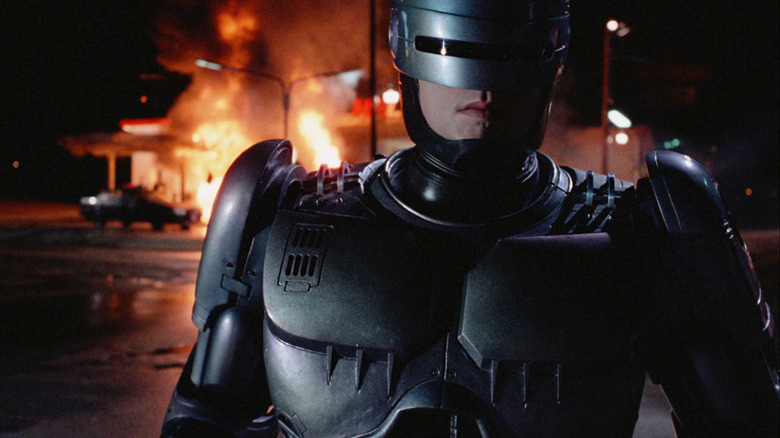
"RoboCop" was rejected by the MPAA eight times over its sloppy-joe gore. "The violence in the film is amplified because I thought it had to do with Jesus," defends director Paul Verhoeven. "RoboCop's an American Jesus."
Corporate interests bring officer Alex Murphy back from the dead. His first and, for a time, only surviving personality trait is cribbed from children's television. To paraphrase a later cinematic cop well-acquainted with bulky costumes, RoboCop was the toyetic hero Detroit needed. Only through self-discovery, stop-motion animation, and several thousand squibs does he become the hero it deserves.
The beauty of "RoboCop" lies in its straight-faced hyperbole. As much as it's a caustic commentary on hyper-violent American action movies, it, too, is a hyper-violent American action movie. Verhoeven never winks. Peter Weller studied Eisenstein's "Ivan the Terrible" to play his computerized half properly. Basil Poledouris' score doubles as an operatic mockery of the genuine article. It's a miraculous piece of work, and not just for the part where RoboCop walks on water. Then again, sometimes a sniper rifle that explodes sports cars is just a sniper rifle that explodes sports cars.
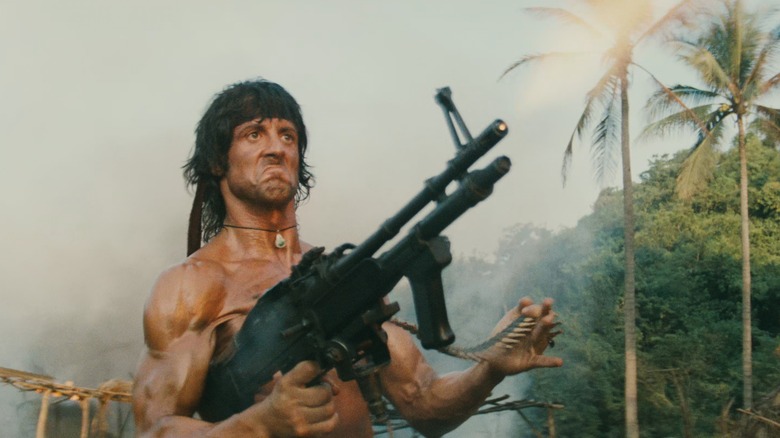
In the future tradition of "Lethal Weapon 2," "First Blood Part II" is a lesser film than its forebearer. "First Blood" is a Frankenstein story, a sad and violent lesson about patriotic hubris. "Rambo: First Blood Part II," with the monster's name moved out in front, lets the creature loose to wreak the exact havoc he was broken and rebuilt for -- for the same country that broke and rebuilt him.
And what spectacular havoc it is. Rambo's defensive playbook gets thrown out with his most expensive gear; he's a slasher villain reunited with his campground of choice. Rambo doesn't just hide from patrols. He disguises himself as a mud bank and waits for the most dramatic moment to crack open an eye. Instead of ducking when a lone soldier opens fire on him, Rambo takes the time to string up an explosive arrow. The resulting viscera is documented with all the flair of a building implosion. Not that there's much time to waste on reflection -- an entire mountain blows up 25 seconds later.
For the first and last time with his runner-up franchise, Stallone attempts to circle a square. Rambo is both a state-conjured ghost and a GI Joe -- a Saturday morning cartoon starring Rambo premiered the following year. In just over an hour and a half, he single-handedly starts, ends, and wins a second Vietnam War. "First Blood Part II" is a Rosetta Stone of American pop culture during the Reagan years. It's not the best action film on this list, but it's arguably the most definitive.
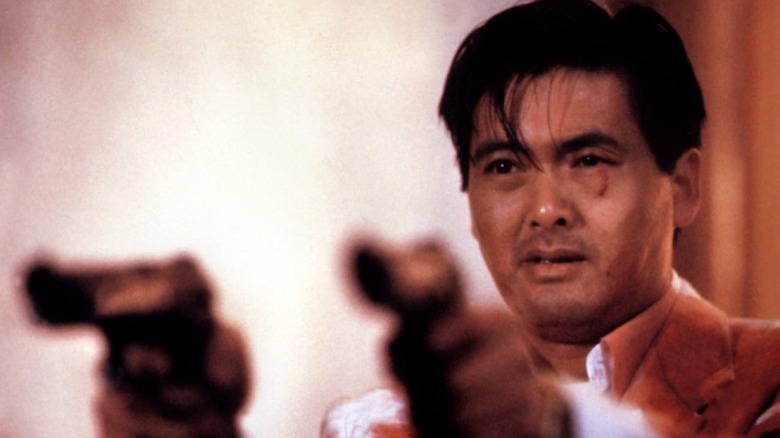
Once, while shooting "The Killer," director John Woo showed up on set and asked his producer to find 30 stunt performers and over 100 extras. When asked why he needed them, Woo said, "I don't know."
Woo made the film without a script or storyboards, a product of pure instinct. The result is the first Woo-brand bullet ballet, doves and all. It's cut from criminal myth. Chow Yun-fat is the kind of hitman who goes to church for the atmosphere. Danny Lee is the kind of cop who's either dedicated or deranged, depending on the commissioner's patience. The hitman wants to retire and make amends to the lounge singer he accidentally blinded. The cop can't believe a killer would care. Emotions are expressed through jabbed pistols and squeezed triggers. Friendship is earned in self-defense, back-to-back, against shared targets. The only forces of nature in Woo's Hong Kong are love and ammunition.
Though "Hard Boiled" has since taken the gold as the filmmaker's bullet-hell masterpiece, there's more to "The Killer" than its perfectly choreographed mayhem. This is opera as much as it is action. Woo's lifelong obsession with Jean-Pierre Melville finds its most powerful outlet here -- not only does he tap the same ice-cold vein, but he manages to find a bloody, beating heart at the end of it.
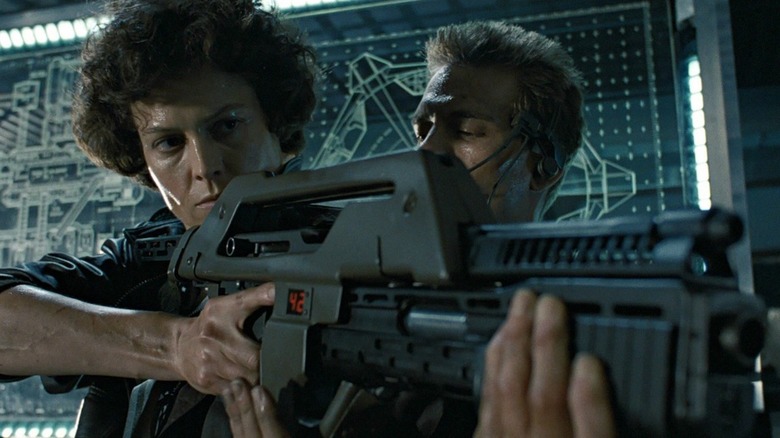
James Cameron knows a great trick. He's pulled it off three times, with "Terminator 2: Judgment Day," "Aliens," and the script for "Rambo: First Blood Part II." How do you build a better sequel? Make it an action movie.
"Aliens" is the most daring of the bunch, not just for its harsher genre whiplash, but the professional context. Most of the British crew hadn't seen "The Terminator" yet, reducing fearless leader Cameron to the visionary director of "Piranha II: The Spawning." If the pressure or daily stalemate over tea time got to him, it doesn't show. If anything, that helps his case for stretching the world's worst shift into the world's worst career. Ellen Ripley just cannot catch a break. Sure, her coworkers brought guns this time, but the Xenomorph brought more Xenomorphs.
Dread is measured in ammo counts and blinking dots in the dark -- a sentry gun standoff reinstated in the Special Edition rhymes with the wasted rounds of "Predator." This is Cameron's Vietnam, the "Rambo" serial numbers slicked over with goo. Only Ripley knows how it ends. Her miserable tour of duty, which she never wins, just begins losing slower, is as tense as '80s action gets.
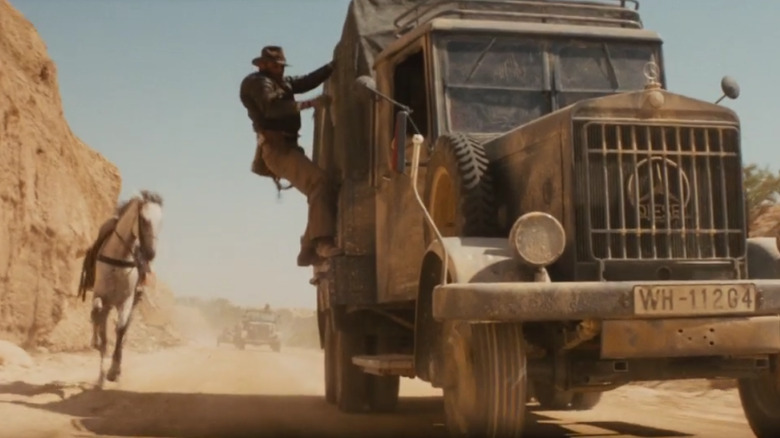
For the first and last time in history, Steven Spielberg was in trouble. Between "Jaws" and "Close Encounters of the Third Kind," he'd earned a reputation for running over schedule and budget. Studios didn't mind until "1941," a similarly extravagant production that only grossed a third of his earlier blockbusters. Even with a story and oversight from "Star Wars" creator George Lucas, Spielberg could barely get hired. His next project had to count.
"Raiders of the Lost Ark" cost about half of "1941" and came in 12 days ahead of schedule. It also happens to be the greatest adventure film ever made. In their nostalgic distillation of the pulpy '30s adventures that inspired them, Spielberg and company managed to usurp the very definition in pop culture; when anybody talks about "adventure serials" now, they really mean Indiana Jones.
The boulder. The truck. The swordsman. The flying wing. The action in "Raiders" is nothing short of iconic. Every set piece doubles as a self-contained silent film, just as effective when left to John Williams' orchestral lonesome. Harrison Ford's natural gift for frustration pays dividends with each punch. Lucas and Spielberg set out to make "something better than Bond." Against all odds, they did.
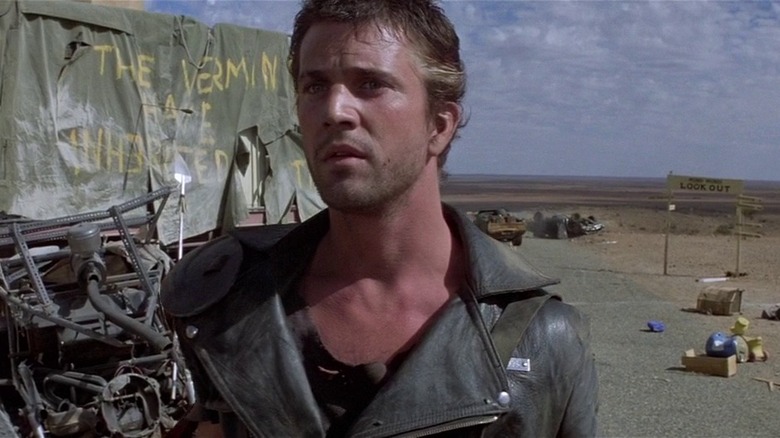
With "The Road Warrior," director and co-writer George Miller forged a legend. The nuked-out horizon. The leather-punk fashion. The wandering mute on a road to nothing and nobody. Sure, the component parts came from somewhere. But the view, damned and dirty, seems like it has always existed as-is. Even the original "Mad Max" looks like a smudged Xerox by contrast.
The plot is exactly one-word-long: survival. Max needs gas and dog food. The rest, humanity included, is a detour. In place of heroics, there are deals. In place of compassion, there's desperate trust. "You want to get out of here?" he asks the latest pocket of delusional civilization. "Talk to me." It might as well be a hug. Max's one smile is sarcastic, seen only when his luck runs out and the status quo settles down again.
Reducing "The Road Warrior" to its climactic chase is disingenuous only because Miller did that himself 34 years later with the superlative "Mad Max: Fury Road." Even in that considerable shadow, this film's vehicular carnage stands the tests of time and imitation -- nothing beats a marauder accidentally flipping end-over-end three times in mid-air. "Fury Road" is the superior smash-'em-up, no question, but atomic westerns don't get any better than "The Road Warrior."
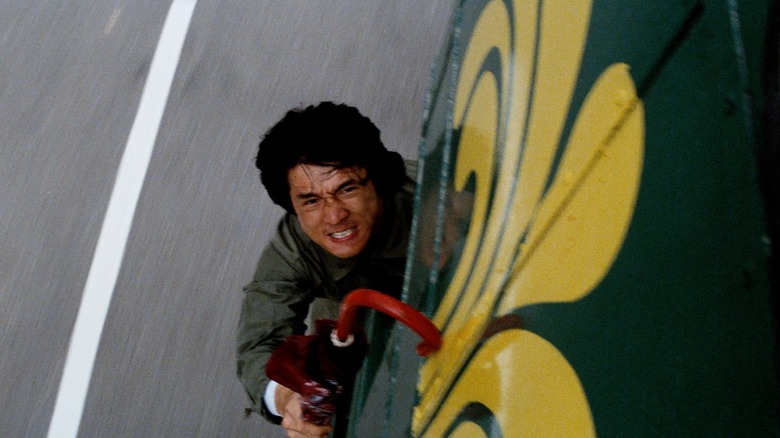
"Police Story" is the product of a man possessed. Jackie Chan was running out of time and patience. Both of his attempts to woo audiences in the United States, 1980's "The Big Brawl" and 1985's "The Protector," failed. His frustrations with American directors are best summarized with a single grievance, aired when the latest potential stunt was dumbed down for coverage: "No one's going to pay money to watch Jackie Chan taking a stroll." If Chan wanted a true showcase for his abilities, he'd have to build his own and throw himself through it repeatedly.
The story is a cops and robbers tale pitting the determined Sergeant Ka-Kui versus omnipotent crime lord Chu Tao. The plot is an excuse; Chan and co-writer Edward Tang reverse-engineered it from a list of props and playgrounds. By the director-star's estimation, the film cost a little less than $2 million American dollars, a quarter of the budget of that same year's "Police Academy II: Their First Assignment." Chan made up the difference in blood.
"Policy Story" opens with Ka-Kui leveling a shantytown in a compact car, and only gathers speed from there. Any given set piece, any given shot, would earn far lesser works a prime seat in the action movie pantheon. The sum total, furiously alive with a breath Chan never lets himself catch, approaches the sublime.
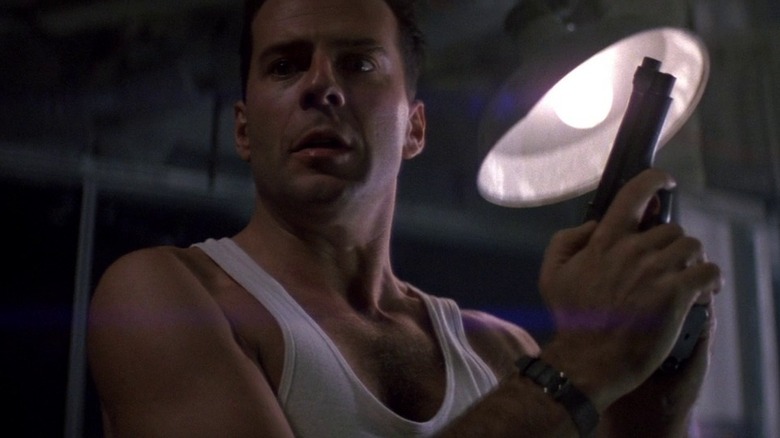
"Terrorist movies are usually mean, filled with all sorts of mean, nasty acts," admits director John McTiernan on the "Die Hard" DVD commentary. "I didn't say yes to this project until we figured out some ways to put, in essence, some joy in it." That fleet-footed contradiction produced not only one of the greatest action movies ever made, but the most influential -- how many films can claim an entire knock-off genre?
But there is no substitute for "Die Hard," not even its sequels. The original is among the finest Swiss watches ever crafted and blown to smithereens. The script, feverishly rewritten by Steven E. de Souza mid-shoot to accommodate Bruce Willis' "Moonlighting" schedule, should be studied in film school. The rhythm, co-conspired by McTiernan, cinematographer Jan de Bont, and editor Frank Urioste, changed the visual language of American action cinema. It also signaled the superman's twilight, substituting the reigning gym rats for ragdoll Bruce Willis.
John McClane is a '70s cop in an '80s plight. He wounds -- oh boy, does he wound -- and winces at every muzzle flare. Most importantly, he thinks. Not once does McClane get the upper hand in any physical sense. Instead, he starts on the back, bare foot and never quite recovers. His only advantage is that the wily villains, led by Alan Rickman in one of the all-time greatest acting debuts, assume that they're wilier than he is. What makes "Die Hard" work is that McClane would probably agree with them. But that's never stopped him before, and now he's got a machine gun. (Ho. Ho. Ho.)
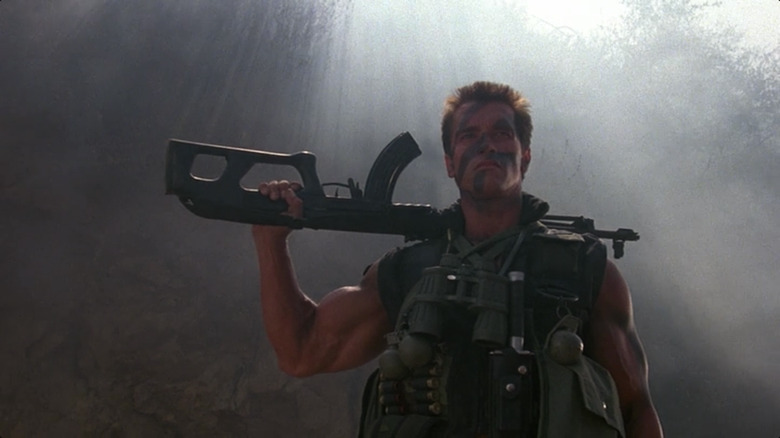
"It's the granddaddy of action films as we know them today," says director Mark Lester, "and Arnold was the reason it got made." Any confusion over its inspiration is cleared up before the opening credits -- Mr. Universe walks out of the woods with an entire tree perched on one shoulder. He's not Rambo. He's not Conan. He's Paul Bunyan resurrected for the Reagan age, his axe traded in for a belt-fed M60 machine gun and his name rechristened by the Commodore 64 — John Matrix.
Its purity transcends all cultural barriers. "You don't need to read the subtitles to know it was a bad idea to kidnap Arnold Schwarzenegger's little girl," says screenwriter Steven E. de Souza. The kidnappers awaken a force as simple and inevitable as death itself. Mall security. Air traffic control. Physics. Nothing can stop John Matrix, an ontological truth only former squad mate Vernon Wells, an eleventh-hour replacement worth his weight in weirdo gold, understands. He will jump from planes that are taking off, roll down mountains in Chevy Blazers with their brakes cut, and gun down hundreds of foreign soldiers somehow stationed on an island off the California coast in order to get Alyssa Milano back.
And he does, all to the percussive beat of James Horner's steel drums. Not a second or shell casing is wasted. Any given line could be sold on a t-shirt. The obligatory pop song at the end describes Arnold's daughter as "a mountain that dreams are made of." To call "Commando" the greatest '80s action movie still sells it short -- this is the ultimate '80s action movie, a rocket-propelled time capsule that still blows up with the best of them.
Read this next: Butkus To Punchy: Ranking All 8 'Rocky' Movies From Worst To Best
The post The 16 best '80s action movies ranked appeared first on /Film.
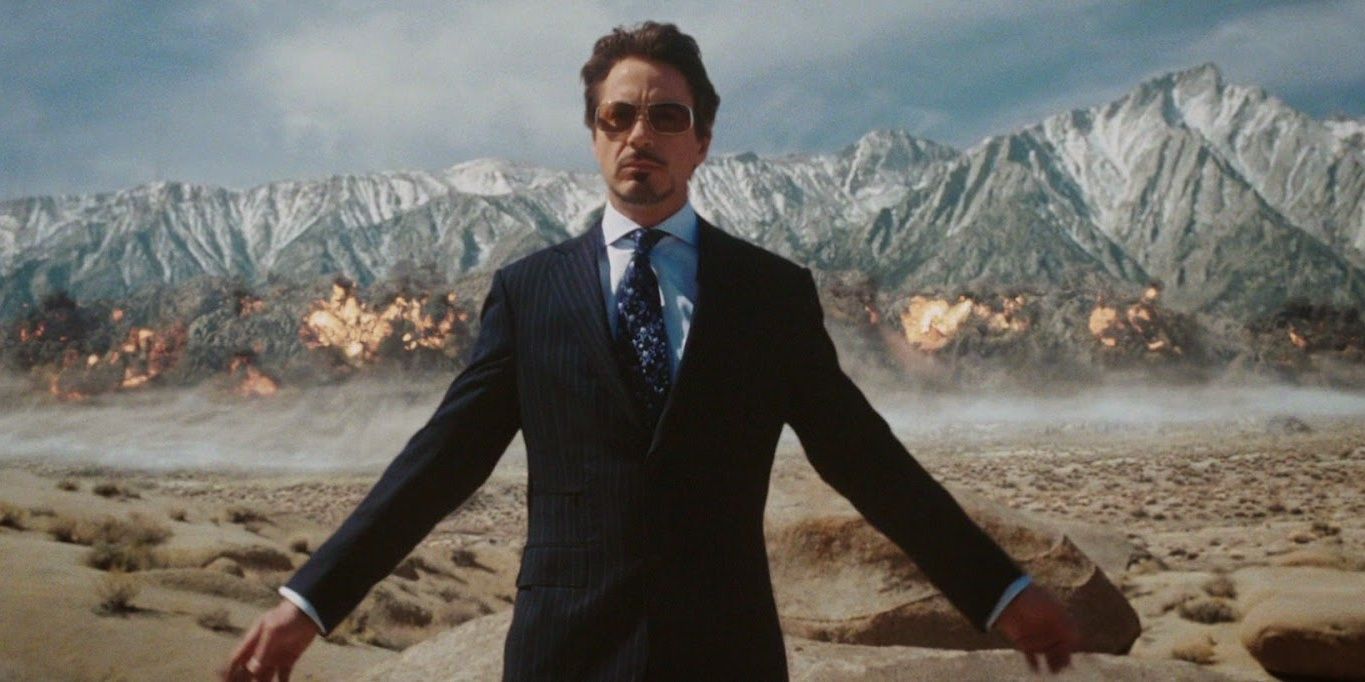
Marvel's Iron Man is one of the smartest characters in the Marvel Universe - and he's also one of the shrewdest businessmen on Earth, so it's no surprise that the genius, billionaire, playboy-philanthropist would quite literally invent a lawyer for himself. As the CEO of Stark Industries, Tony is often beset by legal troubles; lawyers accompanying him everywhere he goes would not be seen as out of the ordinary. In the short story collection Iron Man: Titanium, the tale Railguns, Power Ties and Titanium Men, written by Adam Warren with art by Salva Espin and colors by Rachelle Rosenberg, introduces readers to Tony Stark's very own "Lawyer Armor."
At the start of the story, Tony Stark accompanies Pepper Potts (along with bodyguards and lawyers) to a public meeting in a new skyscraper; the young Chief Technological Officer of the company Designed Intelligence, Huang Qiaolian appears ready to announce the company's IPO before dozens of potential investors. Instead, she kidnaps all the attendees and holds them hostage through the use of the Titanium Man: a robot that can also deploy smaller versions of itself. To add insult to injury, Huang Qiaolian isn't from Designed Intelligence at all, but Advanced Idea Mechanics, or A.I.M.
Huang Qiaolin's plan is revealed as she ushers the hostages toward high-speed electromagnetic elevators. They're not elevators; they're mass drivers, designed to launch the cabins into orbit where they'll reenter the atmosphere and land near an A.I.M. ship. But Tony Stark has a plan; he stands in the middle of his two lawyers and initiates a high-speed transformation sequence. The two lawyers disassemble and form around Tony, creating a new armor. "Suits-to suit conversation complete," he says - while Huang stands amazed that Stark was able to find a practical use for corporate lawyers.
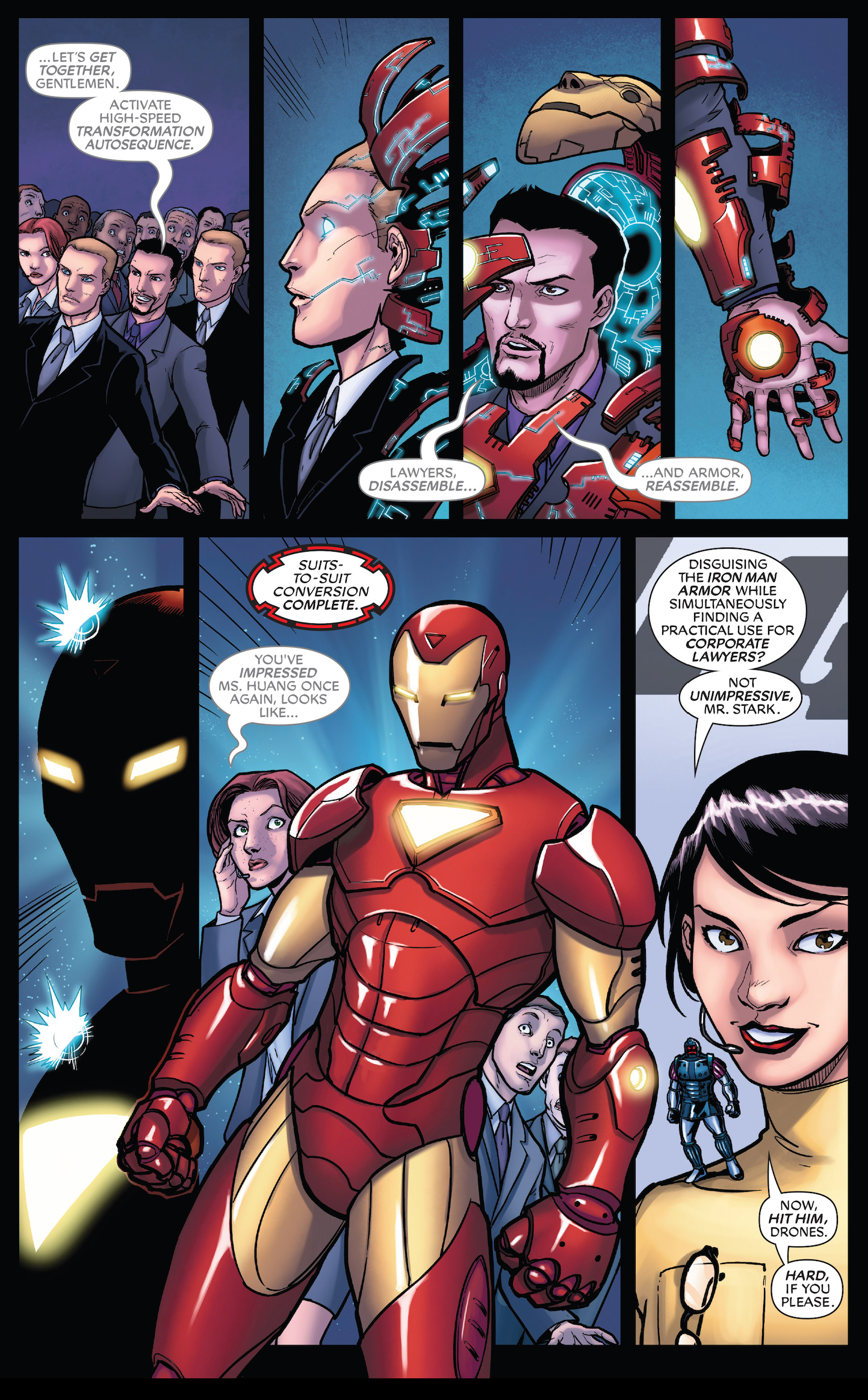
Tony Stark is no stranger to hiding his suits in plain sight. The most famous of Tony's concealed armors is the "suitcase armor" popularized in Iron Man 2, but was seen much earlier in the comics. Unlike the film, the suit wasn't disguised as the briefcase; it simply hid Tony's collapsible armor within. The Extremis armor was the logical next step; Tony stored the undersheath of the armor inside his bones, and moved it outside his skin with a mental command.
Thanks to the Lawyer Armor, Tony was able to rescue Pepper Potts and the passengers inside the elevators, destroy the Titanium Man and defeat Huang Qiaolin (who was later revealed to be a Life Model Decoy). Stark's legal troubles worked to his advantage in this instance. Iron Man's reputation for palling around with an entourage allowed one more suit of armor up his sleeve.
Warning: This post contains spoilers for Chucky season 1, episode 1.
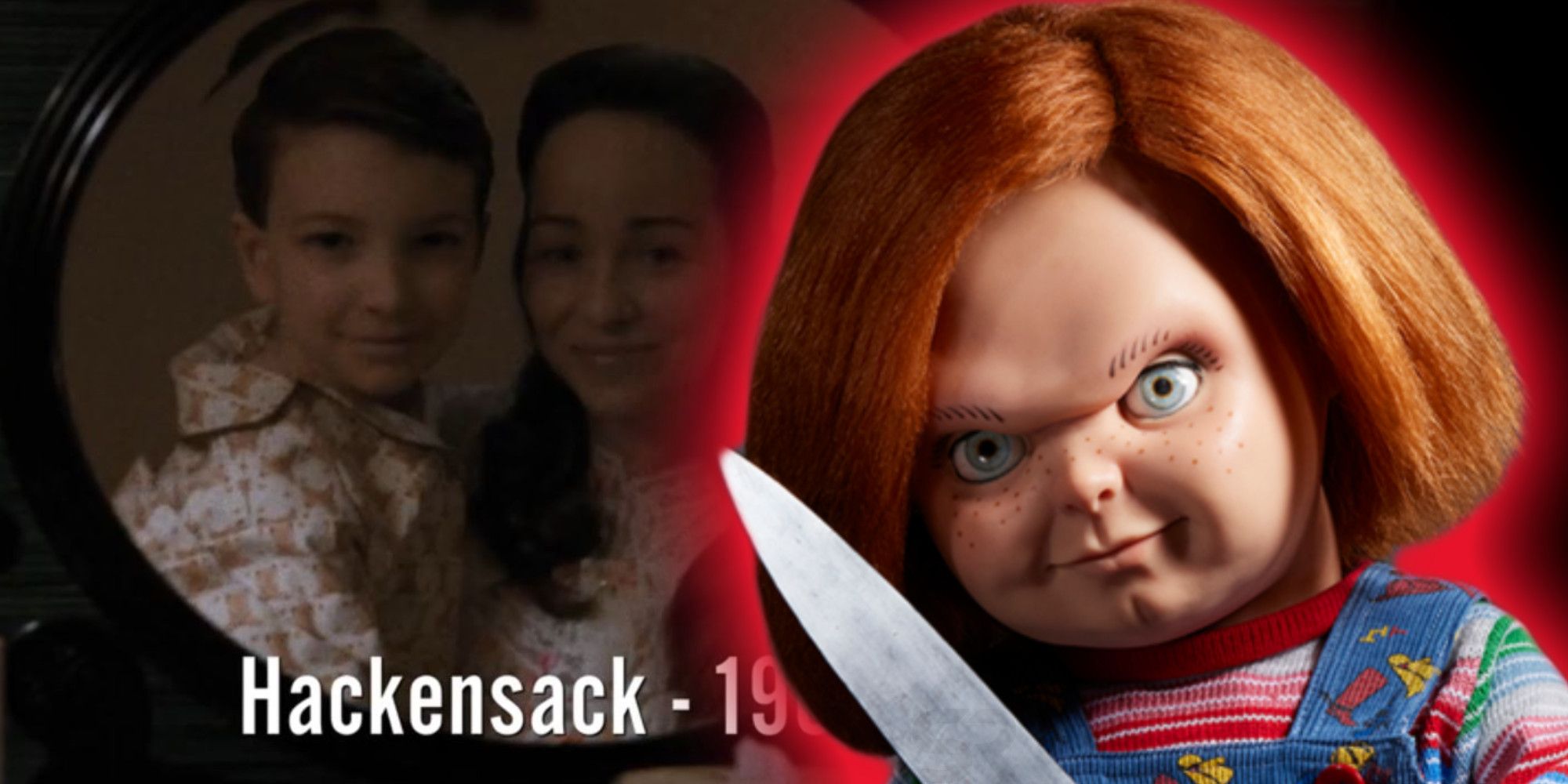
Chucky episode 1 saw the iconic villain unleash his unique brand of horror upon Hackensack, New Jersey — here's why he chose that town and how it ties to his origin. Since Don Mancini created him in 1988, the Brad Dourif voiced Chucky has rampaged through a variety of locations. In his human form, the serial killer was dubbed the Lakeshore Strangler and terrorized Chicago for years. After Charles Lee Ray transferred himself into a doll in Child's Play, he retained the same stomping grounds for a few more outings before moving on. Chucky subsequently targetted a distant Military Academy in Child's Play 3, went on a road trip in Bride of Chucky, and then resurrected in Los Angeles for Seed of Chucky.
After an extended hiatus, the titular doll returned for 2013's Curse of Chucky. Going on a more centralized murder spree, he picked off the extended Pierce family solely within the confines of their home. Cult of Chucky followed a similar formula, with the killer doll terrorizing the patients and staff of Harrogate Psychiatric Hospital. With the ending of Cult of Chucky, Mancini directly set up Chucky. In the process, he promised a much wider playground for every one of Chucky's movie forms to inhabit and unleash havoc.
With Chucky season 1, episode 1, "Death By Misadventure," the show has already begun to live up to that promise. The Child's Play franchise has been characterized by frequent reinventions and tonal shifts, so the choice to move to Hackensack, New Jersey allowed Chucky to continue that trend and embody classic genre tropes. The idea of a seemingly idyllic suburban town turned upside down by blood-soaked carnage is a staple of other horror franchises as Halloween or A Nightmare on Elm Street. By adopting it, Chucky checked off another box in demonstrating its franchise versatility and also set up the kinds of homages and knowing references Child's Play has become known for — all as the red-headed fiend picks off Chucky 2021's new and returning cast of characters one by one.
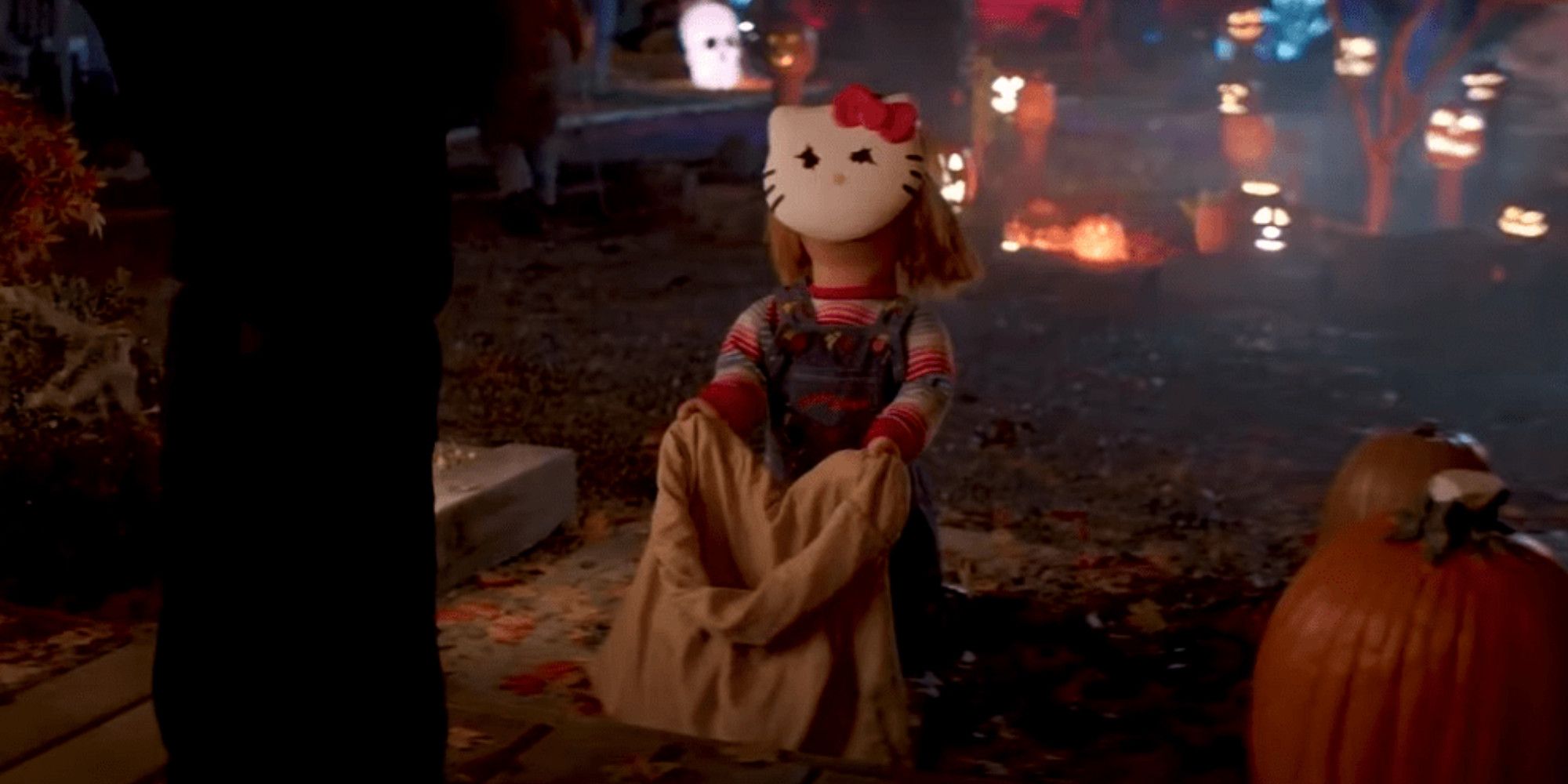
As teased in the closing moments of Chucky season 1, episode 1, "Death by Misadventure," Hackensack is also Charles Lee Ray's hometown. That fact was actually revealed during the aforementioned road trip in Bride of Chucky. Long before Chucky decided he loved ruining lives as an unassuming doll, he sought to return to a human body. In service of that quest, he aimed to retrieve an amulet that was buried with his human corpse. As the journey began, Chucky revealed his grave was in Hackensack, New Jersey. That's also where Chucky's own genderfluid (and somewhat murderous) child was born and a ripe place to expand his "cult" even further — currently through Jake (Zackary Arthur). As such, Chucky choosing that town as his target was not random. Instead, it was a homecoming that will give the latest chapter of the Child's Play movie/Chucky saga something of a full circle edge.
Only one episode into the Chucky TV show, it is next to impossible to determine his wider plan for Hackensack, New Jersey. As teased by Jennifer Tilly's Tiffany in the trailer, however, there definitely is one. Equally, it's unclear whether Chucky is being designed as an overall conclusion or if Mancini already has future outings in mind. There's always a chance Chucky will serve as both - wrapping things up but allowing him the potential to come back (as he always does). Using Hackensack as the setting would lend the show an element of a conclusion, with things ending where they effectively began and perhaps amid the descendants of some original victims. As much as Hackensack is the perfect place to finally tell Charles Lee Ray AKA Chucky's full childhood backstory, it's also the perfect locale for a final showdown that Chucky has built towards for over 30 years.
American soldiers won't be training with HoloLens headsets for a while. Reuters and Windows Central report the US Army has delayed the deployment of the HoloLens-based Integrated Visual Augmentation System (IVAS) by a year, to September 2022. Janesunderstood the delay was prompted by the need to bump operational testing from July this year to May 2022 to "further mature" the mixed reality technology.
The Defense Department's Inspector General launched an audit earlier in October to determine whether or not Microsoft's system would meet requirements. It's not clear if the audit is linked to the delay.
This didn't mean the military-oriented HoloLens was in trouble. The Army maintained it was "fully committed" to the nearly $22 billion IVAS contract, and had conducted tests as recently as September. The branch planned to "regularly" conduct tests through its fiscal 2022, which ends September of next year.
IVAS is meant to serve as both a combat assistant and training tool. Infantry will see squad positions and other vital data in the field, complete with night vision — they'll ideally have the kind of situational awareness previously reserved for video games. In training, the headsets can supply data to help instructors improve specific techniques.
The delay won't do much to allay criticism of the HoloLens deal from inside Microsoft. Employees have long objected to Microsoft directly supporting the military and 'gamifying' war, especially as workers didn't have input on the decision. Microsoft isn't likely to change its tune, though. The company sees IVAS a way to aid and protect the troops rather than an offensive weapon — and losing the contract would clearly hurt both Microsoft's bottom line and momentum for HoloLens at large.

The post VMware Workstation Pro v16.2.0 x64 Incl Keygen-BTCR appeared first on SceneSource.

No matter the years of experience in cybersecurity, security professionals are often in situations where crucial details are missing. Yet, we often hesitate to ask questions because we don't want to appear ignorant or don't know what to ask.
I captured my perspective on asking questions in a constructive way in a three-post series. Read the posts to learn how to use questions to succeed with the following cybersecurity activities:
I clarified what makes some questions "good" or "bad" with the help of many real-world examples. My goal was to prepare security professionals to ask the right questions for advancing security projects.
I also presented on this topic at RSA Conference. You can watch the recording of this session and download my slides.

Crysis games and consoles have traditionally not going along very well. The original releases of the games typically weren’t great on consoles and last year’s Crysis Remastered was also a disappointment. Well, tomorrow marks the launch of Crysis Remastered Trilogy, and according to the tech heads at Digital Foundry, Crytek and Saber Interactive have done a much better job on consoles this time. You can check out Digital Foundry’s full analysis for Crysis 2 Remastered, below.
As we’ve already detailed, Crysis 2 Remastered has a received a fairly extensive sprucing up in general, with improved lighting, shadows, and assets, with tons of textures now being physically based. Some features, like ray tracing and DLSS are PC only, but most of the new features are available on consoles too. It should also be mentioned, that the game can’t be played natively on PS5 of Xbox Series X/S – it’s only available via backward compatibility. There are some differences between the base Xbox One/PS4 and the PS4 Pro/Xbox One X versions, which carry over to the Xbox Series X/S and PS5, such as tessellation, and better particle lighting and global illumination.
Okay, enough preamble – how does Crysis 2 Remastered run on console? Well, the Xbox One X, Xbox Series X, PS4 Pro, and PS5 all run in dynamic 4K that can drop as low as 1080p (which happens less often on the newer consoles, as you’d expect). Meanwhile, the Xbox Series S runs at a dynamic 1440p and can drop as low as 900p. The base PS4 is a locked 1080p and the Xbox One is a locked 900p.
The last gen consoles all run at a rock solid 30fps, while the Xbox Series X and PS5 maintain a steady 60fps. The Xbox Series S is a mostly solid 60fps, with some small dips into the mid 50s. In other good news, these new versions of Crysis 2 actually feature proper frame pacing, so the stutters that plagued the games back in the back in the day are finally dealt with.
Of course, if you want the absolute lushest visual experience, you’re best off grabbing Crysis Remastered Trilogy on PC, but it seems as though, for the first time, Crysis 2 (and presumably Crysis 3) will be solidly playable on consoles.
Crysis Remastered Trilogy launches on PC, Xbox One, PS4, and Nintendo Switch tomorrow (October 15). The games can also be played on Xbox Series X/S and PS5 via backward compatibility. The Trilogy can be purchased as a bundle for $50 or you can buy each individual game for $30.
The post Crysis 2 Remastered Delivers Technically on Consoles, Offers Solid 60fps on Both PS5 and XBX by Nathan Birch appeared first on Wccftech.

Techland has dropped their latest “Dying 2 Know” video for Dying Light 2: Stay Human, and this time around the focus is on the game’s upgradable structures. Basically, these buildings will be abandoned when you first start the game, but you can restore them to life and assign them to one of the game’s factions – you’ll be able to get a bakery, school, art academy, military training site, and more back up and running.
Aside from just sprucing up the city, upgrading these structures will unlock new vendors, sidequests, and challenges. The latter sound the most interesting, as they’ll provide particularly elaborate combat and parkour trials to deal with – Dying Light 2 creative director Tymon Smektala goes so far as to compare the parkour challenges to 3D Mario levels. Check out the latest Dying 2 Know video for yourself, below.
In other exciting Dying Light news, Techland has confirmed they’re finally working on a proper next-gen console upgrade for the original game.
We're currently working on a next-gen patch for Dying Light 1 - more details coming in the future
— Dying Light (@DyingLightGame) October 14, 2021
Haven’t been keeping up with Dying Light 2? Scroll on down for the game’s official description:
Over twenty years ago in Harran, we fought the virus -- and lost. Now, we’re losing again. The City, one of the last large human settlements, is torn by conflict. Civilization has fallen back into the Dark Ages. And yet, we still have hope. You are a wanderer with the power to change the fate of The City. But your exceptional abilities come at a price. Haunted by memories you cannot decipher, you set out to learn the truth… and find yourself in a combat zone. Hone your skills, as you’ll need both fists and wits. Unravel the dark secrets behind the wielders of power, choose sides and decide your destiny. But wherever your actions take you, there's one thing you can never forget -- stay human
- Vast open world - Participate in the life of a city engulfed in a new dark era. Discover different paths and hidden passages, as you explore its multiple levels and locations.
- Choices and consequences - Shape the future of The City with your actions and watch how it changes. Determine the balance of power by making choices in a growing conflict and forge your own experience.
- Day and Night cycle - Wait for night to venture into dark hideouts of the Infected. Sunlight keeps them at bay, but once it’s gone, monsters begin the hunt, leaving their lairs free to explore.
- Creative and brutal combat - Take advantage of your parkour skills to tip the scales of even the most brutal encounter. Clever thinking, traps and creative weapons will be your best friends.
- 2-4 player co-op gameplay - Play in up to four-player co-op. Host your own games or join others and see how their choices have played out differently than yours.
- Ah, but that’s not all – Techland has also announced Dying Light: Platinum Edition, which collects all the game’s post-launch content in one bundle, will also be available on Switch. Unlike Dying Light 2, the Platinum Edition will be running natively on the Switch, rather than on the cloud.
Dying Light 2: Stay Human is coming to PC, Xbox One, Xbox Series X/S, PS4, PS5, and Switch via the cloud on February 4, 2022.
The post Dying Light 2’s Upgradable Buildings Detailed, First Dying Light Getting a PS5/XSX Upgrade by Nathan Birch appeared first on Wccftech.

Rumours of Nvidia’s impending RTX 3000 series refresh are ramping up as of late, with various leaks citing a 20GB RTX 3080 Ti and even desktop gaming PC variants of the RTX 3050 and RTX 3050 Ti. However, despite previous reports that the green team is also planning a 16GB RTX 3070 Ti model, the graphics card grapevine now says that a new RTX 3080 with 12GB instead of 10GB could be in the works.
Posted on Chiphell by form user Vermicelli, the revised RTX 3080 card will launch alongside the GeForce RTX 3090 Ti, RTX 3070 Ti, and the new version of the Turning based RTX 2060 - a card that will also supposedly come with 12GB. In addition, sources close to Videocardz also suggest new RTX 3080 SKU also suggests that the current 10GB model will be discontinued.
Of course, bumping the RTX 3080 seems like a subtle, but potentially useful upgrade that could benefit games like Far Cry 6. The change also requires increasing its memory bus from 320-bit to 384-bit, meaning the card will benefit from a bandwidth boost, although it'll still feature the same memory speeds as its predecessor.
RELATED LINKS: RTX 2070 Super review, RTX 2060 Super review, Best graphics card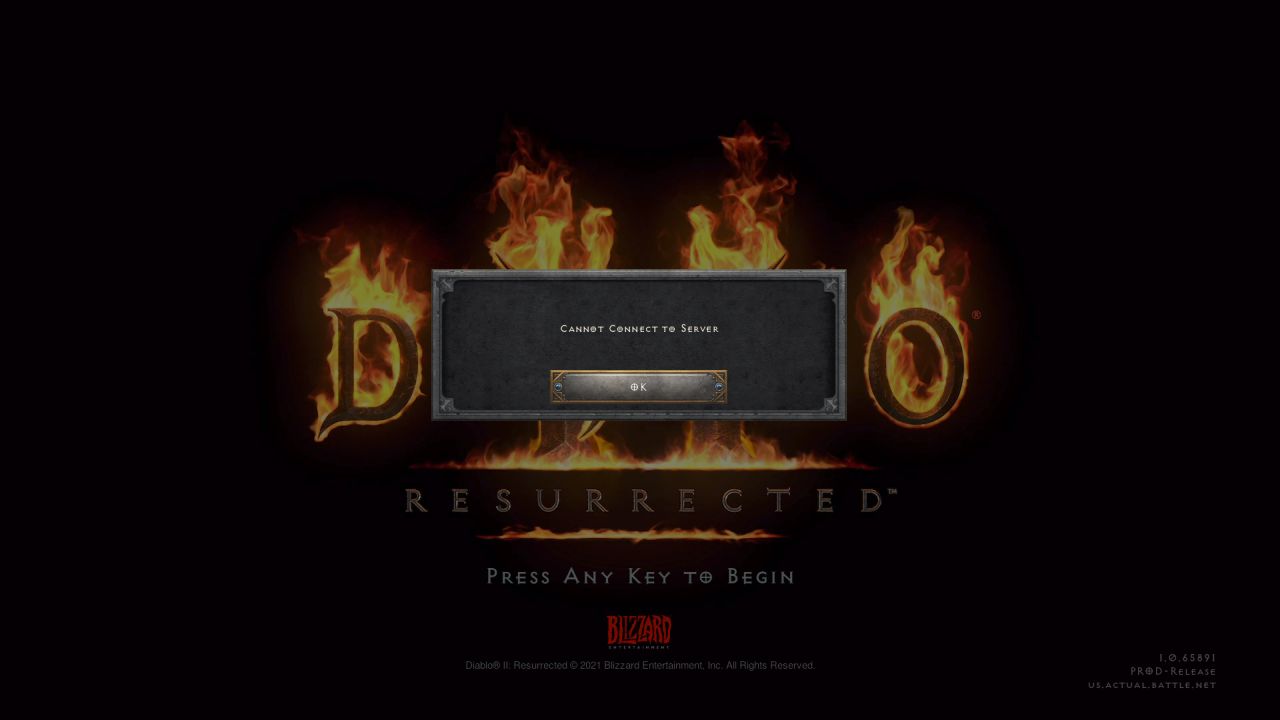
Diablo II: Resurrected launched to widespread and ongoing server issues. Today, a Blizzard community manager offered some insight into the nature of the problem - and it's partly some 20-year-old code, and partly some modern player behaviour.
(Welcome to SlashClips, a series where we bring you exclusive clips from hot new Digital, Blu-ray and theatrical releases you won't see anywhere else!)
In this edition:
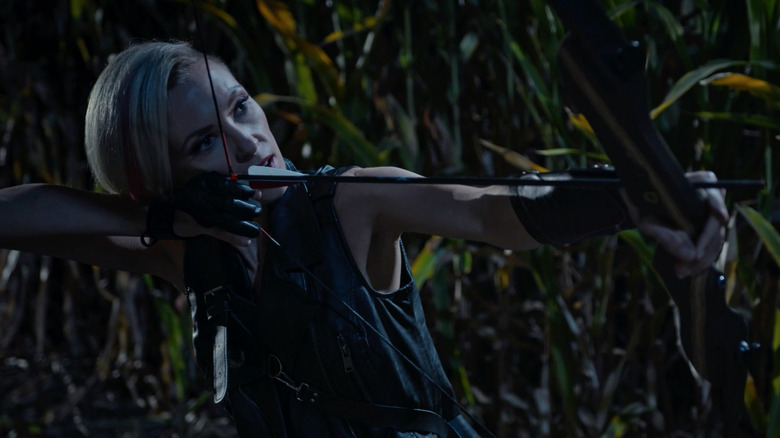
Leading today's column is an exclusive clip from Indican Pictures' "Fear PHarm 2," arriving on DVD and on demand October 19, 2021. The follow-up to last year's horror entry reunites the original film's creative team, including writer/director Dante Yore and producers Mark S. Allen ("616 Wilford Lane") and Howard Burd ("Apparition"). In the clip Melanie (Tiana Tuttle) is chased through a cornfield by Gemma (Aimee Stolte), channeling her inner Clint Barton, as well as Hershel (John Littlefield).
Here is the official synopsis:
"'Fear PHarm 2' picks up where Fear PHarm left off. After fighting for her life within a corn field maze and trying to outrun a number of murderous psychos, Melanie (Tiana Tuttle, 'Fear PHarm') has regained consciousness to discover that she is now being held hostage by the Walker family, so they can continue to harvest her skin for their breakthrough skin care cream."
Discovery+ has provided us with an exclusive clip from the documentary "Crutch" which is available starting today exclusive on the streamer. The film follows award-winning dancer and cutting-edge performance artist Bill Shannon, who was born with a degenerative hip condition but found a way to express himself through dancing and skateboarding on crutches. Our clip showcases one of his brilliant performances as he dances and skateboards through a city street.
Here is the official synopsis:
"'Crutch' provides an intimate look into award-winning dancer and cutting-edge performance artist Bill Shannon. Born with a degenerative hip condition, Shannon developed a way to express himself through dancing and skateboarding on crutches. Two decades of exclusive access, plus a lifetime of archival footage, depict Shannon's extraordinary journey through medical odyssey, his struggles with chronic pain, as well as the evolution of his crutch dancing and skating. As Shannon rises to become a world-renowned performance artist he transforms from an angry skate punk to an international hero. 'Crutch' also dives into Bill's provocative street performances, in which he exposes the hidden world of assumptions disabled people encounter in public, on a daily basis. While the film questions his early exploitation of strangers' good Samaritan impulses, it also marvels at Bill's ability to create solutions and empower others to navigate similar challenges. From childhood "cripple" to international provocateur, 'Crutch' is an emotional story of a one-of-a-kind artist's struggle to be understood."
The streamer Topic, which offers content from around the globe, has provided us with an exclusive clip from the second season of Belgian supernatural crime drama series "Beau Sejour" (also known in some territories as "Hotel Beau Séjour"). The extended two-minute clip comes from the opening of the new season and features former marine commander Maurice Teirlinck (Gene Bervoets, star of George Sluizer's cult 1988 horror classic "The Vanishing") having a very rude awakening as the coast guard comes to his rescue ... or do they?
Here is the official synopsis:
"Seven years after abandoning his family, Maurice wakes up on his boat 'Beau Séjour' to find his own body hanging from the mast. Caught between life and death, he sets out to find the truth while confronting the pain he's caused in his wake."
Read this next: The 20 Best 2000s Horror Movies Ranked
The post Clips Round-Up: Fear PHarm 2 Takes Aim, Crutch Dances, And Beau Sejour Suspends Disbelief [Exclusive] appeared first on /Film.
In a cinematic landscape where every studio is falling over itself to find more already existing IP to make new movies out of, it's almost rare for films that feature standalone, original screenplays to even get made. In 2019 (the last year that we have accurate data on without COVID-19 restrictions skewing theatrical releases), every film in the top ten highest grossing films worldwide was either a sequel or reboot, and that pattern pretty much held steady throughout the 2010s.
Which is why it's so perplexing that there are so many successful, hilarious comedies out there that are sitting around without a sequel lined up. Granted, there's some calculus involved -- there's no point in releasing a sequel to a comedy well after the moment has passed ("Anchorman 2", we're looking at you.) But it's a mystery why filmmakers haven't yet gone back to the well on some of these films. After all, there's at least one person working at every studio whose entire job is capitalizing on the success of an unexpected comedic hit and running it into the ground. Well, maybe that's cynical. While some comedy sequels are a clear cash grab, there are plenty of others that genuinely deserve a follow up.
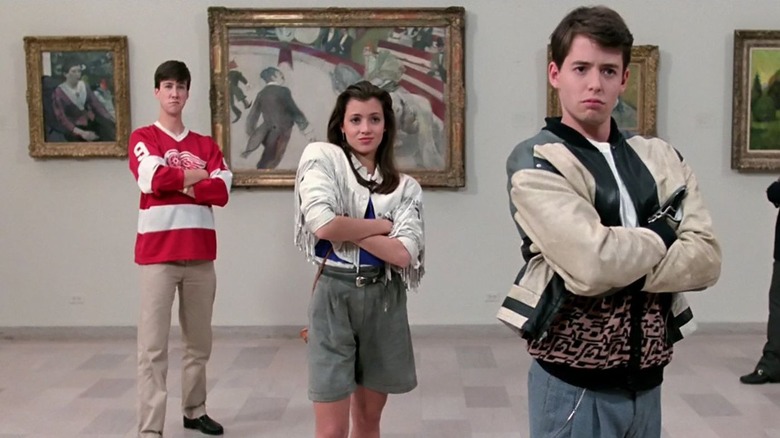
When it comes to comedic scamps from the '80s Ferris Bueller and his friends are pretty much iconic. But there's an interesting vibe to "Ferris Bueller's Day Off" when you watch it now. It hasn't aged badly, per se, and it's certainly not offensive. It's just that seeing Ferris Bueller as an entitled man with unearned confidence running around Chicago doing whatever he wants and facing absolutely zero consequences is maybe less charming now than it was three and a half decades ago.
That said, there's definitely space for a "Ferris Bueller's Day Off" sequel, although John Hughes didn't really want one. It could star Matthew Broderick as a much-older Ferris, a failed businessman who is dealing with the crippling disappointment of being told for the first time in his life that just because he's charming doesn't mean that he deserves special treatment. He reconnects with Sloane (Mia Sara), who is shocked to see exactly how much Ferris is stuck in the past, reliving the glory days of high school. Honestly, it writes itself.
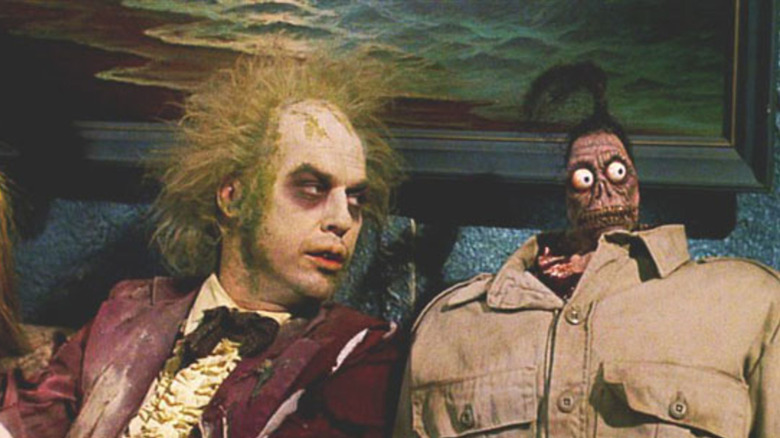
We've been expecting a sequel to "Beetlejuice" for so long that it sort of feels like we're in that hellish waiting room from the actual film. The beloved horror comedy has been charming audiences since the '80s and has spawned both a popular animated children's show and a 2018 musical, but the cinematic landscape for a sequel has been relatively barren.
Conversations have been happening about a follow-up film since the first one came out: In 1990, Tim Burton shopped around a film called "Beetlejuice Goes Hawaiian" which had the initial cast on board, but was shelved when he became involved in the Batman series. Efforts to revive it were unsuccessful. In 2011, Seth Grahame-Smith was hired to write a script for a potential "Beetlejuice" sequel, which never came to fruition. And in the years since, both Michael Keaton and Winona Ryder have expressed interest in reprising their roles. But sadly, despite another effort in 2017 to get a sequel off the ground, Warner Bros confirmed in 2019 that it had once again been set to the side.
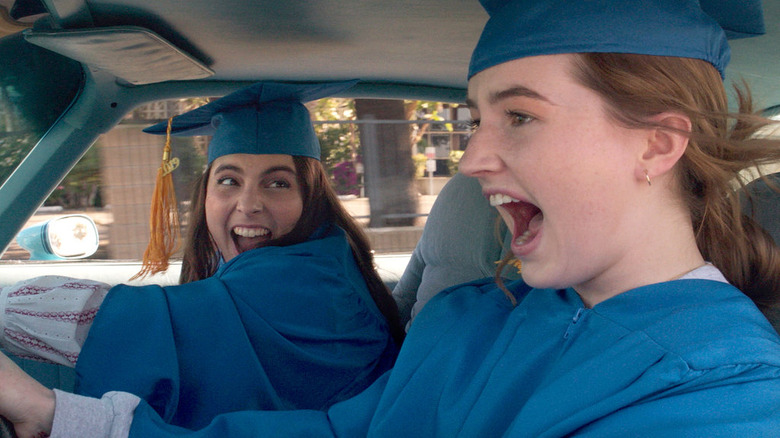
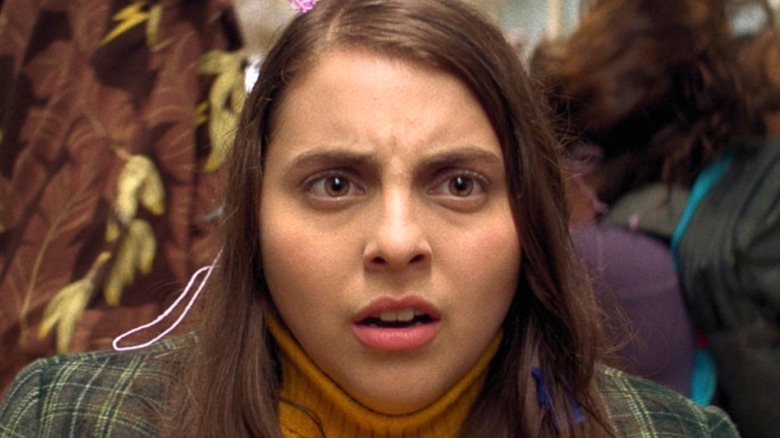
Ok, so it's still early days on this one. The original movie only came out a couple of years ago, so there is actually plenty of time for director Olivia Wilde and stars Beanie Feldstein and Kaitlyn Dever to get back together to film a sequel to "Booksmart." After all, the original captured the incredibly relatable feeling of graduating from high school, only to realize that you missed out on the romanticized high school experiences that you see in all the movies. There's nothing saying that Wilde and crew couldn't do the same thing for college.
There's plenty there to explore, especially considering that most college films tend to fall into the sex comedy genre, rather than showing what it's actually like to go to a university. Only potential problem: Wilde, Dever, and Feldstein all appear to have extremely busy dance cards at the moment, making it difficult to foresee them finding time to make this happen. At least they have a title ready: "Booksmarter."
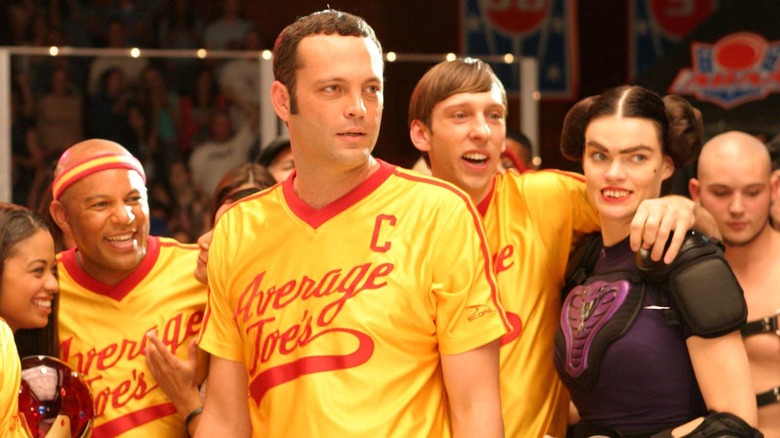
"If you can dodge a wrench, you can dodge a ball." For a film full of such pearls of wisdom (as well as an absolutely stacked cast), it's honestly shocking that there hasn't been a sequel to "Dodgeball" yet. Not for lack of trying, though: In 2013, Ben Stiller's production company hired a writer to pen a sequel script, although nothing ever came of it. The closest thing we've gotten is a reunion video from 2017 to raise money for the Stiller Foundation.
But we can still hold out hope, because there are so many potential sequel storylines to explore. It's always fun to see an underdog team struggle to replicate their success, which would certainly be the case for the Average Joes. Maybe they could get the group back together, and White Goodman sends his son to infiltrate the team? Maybe we do a Steve the Pirate prequel? Look, we're just trying to get the conversation going.
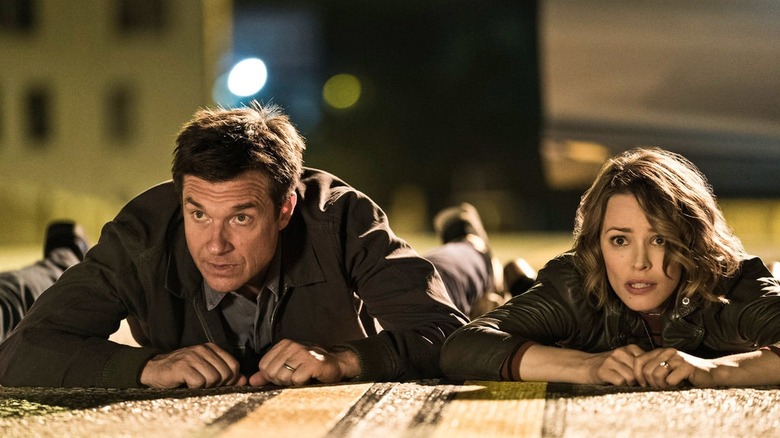
If there's a single reason in the universe why it wouldn't be a good idea to see more of the most engaging comedic performances from Jason Bateman and Rachel McAdams, we'd love to hear it. The shenanigans of the original game night may have drawn to a close, but that doesn't mean that there couldn't be future game nights that get just as out of hand. Or better yet, someone could create a "Rosencrantz and Guildenstern Are Dead"-style scenario that shows the same night from the eyes of Gary Kingsbury (Jesse Plemons, undoubtedly the runaway star of the show), the well-intentioned but deeply strange neighbor who gets caught up in the game night antics with disastrous results.
It's possible that the fact that "Game Night" slowly accumulated audience good will rather than being a hit right out of the gate prevented it from being immediately concerned for a sequel. But since it came out, "Game Night" has earned plenty of fans, many of whom would love to see the film revisited (the film's screenwriter is game, too).
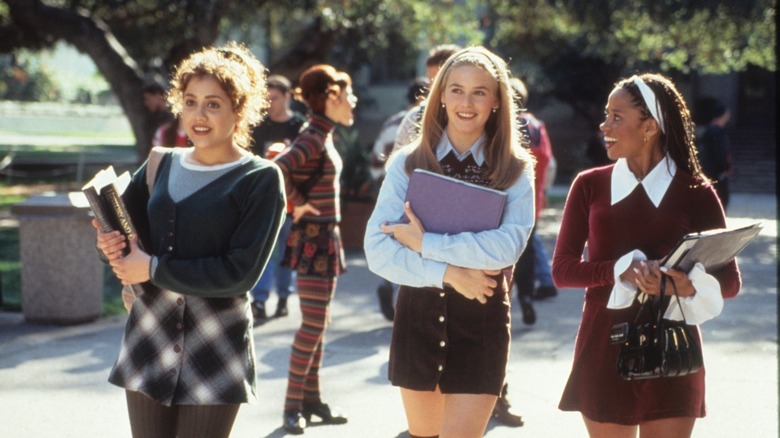
In the late '90s, fans of "Clueless" were treated to a television spin-off that revolved around the further exploits of Cher Horowitz in Beverly Hills and featured many of the original actors, but we've never gotten an honest-to-goodness sequel. That's not particularly surprising, since the source material (Jane Austen's "Emma") doesn't exactly have a follow-up. But come on, there have to be people out there wondering if Cher (Alicia Silverstone) and Josh (Paul Rudd), those two crazy kids, end up making it long term, even if there are some vaguely awkward family reasons why they shouldn't. (But hey, they're not actually related!)
Interestingly enough, although there aren't any plans for a film sequel, Peacock was developing a reboot series that would revolve around not Cher, but her best friend Dionne (Stacey Dash). It would've modernized the story, creating something more in line with "Gossip Girl" than the light-hearted original. Unfortunately, Peacock passed on the project.
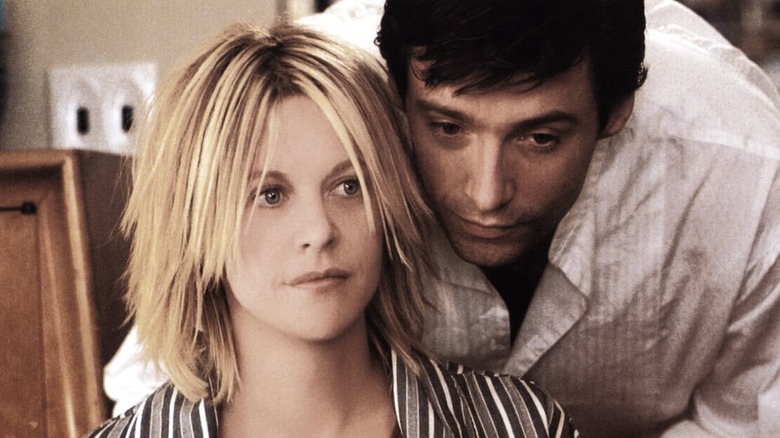
"Kate & Leopold" seems like it has a happy ending. Leopold (Hugh Jackman) returns to the past (they do need him there, it turns out, to invent the elevator, among other things), and Kate (Meg Ryan) makes the decision to jump through the same portal and join him in the 1800s, saying goodbye to the 21st century forever. Who can blame her? But it only takes a minute or two of time before the reality of the situation begins to set in. What on earth is Kate going to do in the 1800s?
She's a street smart, independent career woman, and she's just signed her life away to go live in a time where she can't vote or open a bank account, at least not without her husband's permission. It feels a little depressing, but it also might be the perfect chance for some comedic hijinks. We've done the whole fish out of water thing with Leopold in the future, now it's time to recreate the magic with Kate in the past. Will she get a job as a librarian, slowly growing to resent Leopold for stealing her opportunities? The comic possibilities are endless!
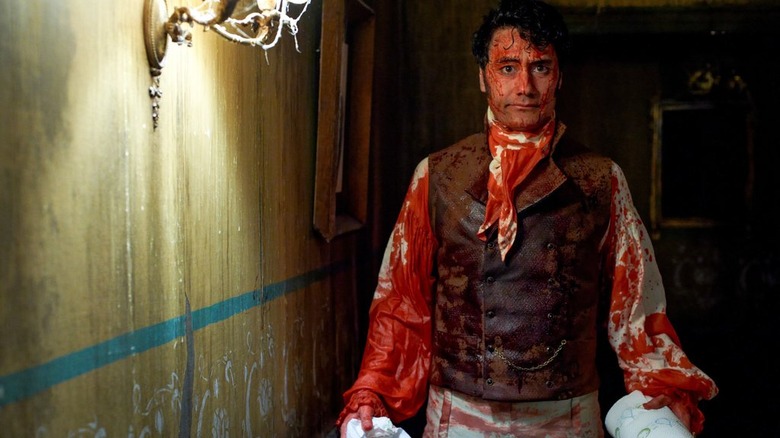
Yes, "What We Do in the Shadows" now has two popular TV spin-offs (the American "What We Do in the Shadows" and New Zealand's "Wellington Paranormal") that both continue its story. But they're not quite the same as Taiki Waititi and Jemaine Clement's charming low-budget vampire mockumentary. After all, these vampires are going to be around pretty much forever (barring any unforeseen sunlight-related incidents) so there's plenty of ground to potentially cover.
While it would be interesting to see a follow up film of "What We Do in the Shadows", it might be even more fun for them to make a prequel as a period comedy. They just need to pick a time period that would best allow them to milk the concept for all its worth. Of course, a few years ago, director Taika Waititi floated a different idea: a sequel called "We're Wolves," which focuses on the vampire's lycanthrope rivals. We hope it gets made on the basis of that title alone.
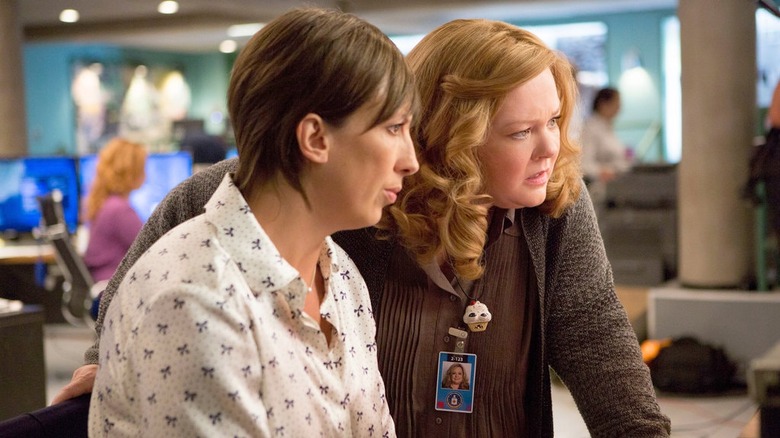
We can probably all agree that it's well past time for Melissa McCarthy and Paul Feig to team up again. She does some of her best work with the director, and never is that more clear than in the underrated comedy "Spy." In it, McCarthy plays a CIA analyst who is thrown into the field unexpectedly and is forced to learn on her feet in order to avert a global crisis involving a portable nuclear device.
McCarthy embraces the physical comedy of the role (the outrageous disguises! the pratfalls!), but also gradually develops in both competence and confidence over the course of the film. Although this specific mission is wrapped up by the time the credits roll, it's really just the beginning of her character's career as a spy, and there's nothing saying she couldn't make a sequel featuring Susan on another wild, jet-setting adventure through Europe. (Bonus points if the writers find a way to bring back Rose Byrne, who is perfectly suited to this sort of comedy.)
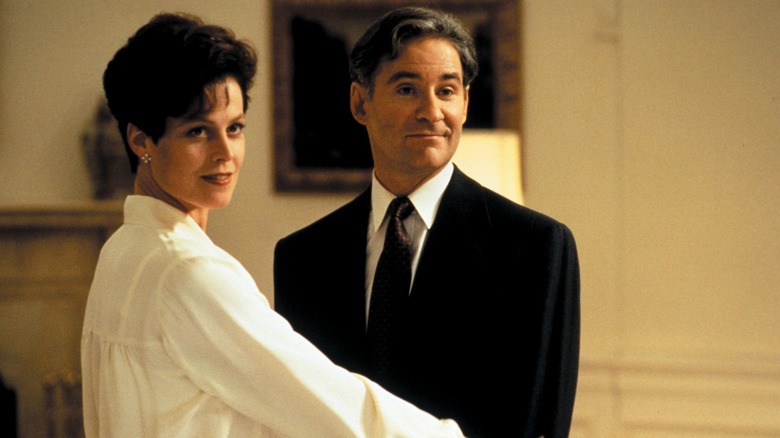
"Dave" was born out of a general atmosphere of Clinton-era optimism, the idea that an empathetic, hard-working man in the White House could cut through the red tape of Washington and accomplish things that would actually benefit the American people. We live in a much more cynical world now, as "Dave" and "The West Wing" give way to darker satires like "Veep," which detail politics' more cold-hearted nature. So, it's an interesting thought exercise to try to figure out what a "Dave" of the current day would look like.
When we last left the actor and budding politician, he (Kevin Kline) had stepped down from his role of pretending to be the president, leaving the door open for the morally upright vice president to take office, and was in the middle of a campaign for local office. If Dave rises through the ranks in a more conventional way, rather than just moonwalking into the White House by serving as a stand-in after the president suffers a debilitating stroke, would he be susceptible to the same temptations every other political figure faces? Or would he maintain his integrity in the face of an increasingly divisive political climate? Food for thought, folks.
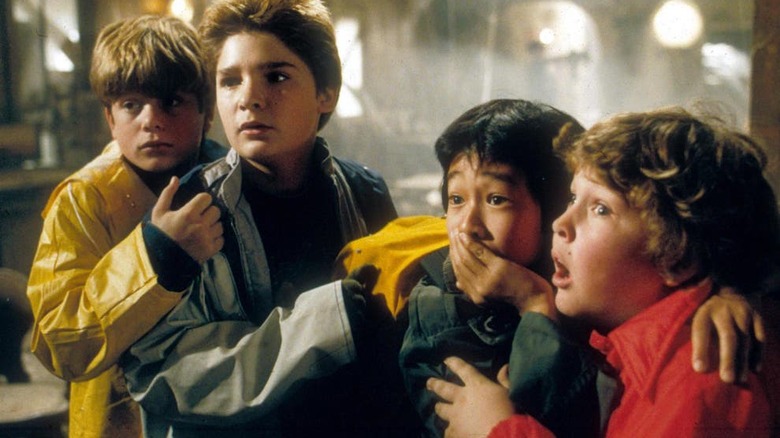
Considering that the '80s were packed full of family-friendly action adventures, the fact that no one ever attempted to make a sequel to a film as successful and universally adored as "The Goonies" feels like a missed opportunity. Their story wraps up with the kids finding a lost treasure, giving them a chance to save their family homes and, by extension, their community. But although this particular adventure comes to a natural close, there's no reason why the gang of Goonies couldn't come back in a year or two for other hijinks.
Apparently, Spielberg and the others attached considered that it would be difficult to meet the high bar of the first film, although that's never stopped makers of a sequel before -- and with the possible exception of Corey Feldman, none of the kids were so in-demand that they couldn't be brought back on board. It's not like studios in the '80s were particularly resistant to sequels, either. More recently, Richard Donner teased a sequel featuring the original cast and their characters' kids in 2014 (hopefully with some of the original film's insensitive stereotypes getting a much-needed update), and there were rumblings that a direct-to-video follow-up was in the plans. Neither of those happened.
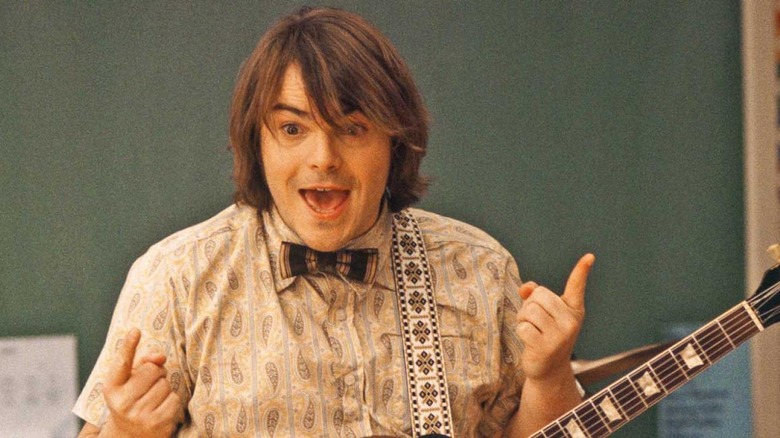
There are few comedies more universally appealing than "School of Rock." It's a classic tale about an underachieving rocker who finds a sense of purpose while teaching a bunch of gifted but repressed prep school kids how to be rock stars. And although there was a kids' show that built out the era immediately following "School of Rock," let's be real, without Jack Black as Dewey Finn, what are we even doing here?
It would have been cool to see the kids of "School of Rock" a few years later, still performing together, but with cracks starting to emerge beneath the surface. Maybe they don't want to be tied to a gimmicky kid act. Maybe they want to strike out on their own and experiment with a different musical style. Maybe, at the end of the day, they've just decided that their heart isn't in music anymore.
Shortly after the first film came out, screenwriter Mike White wrote a screenplay featuring the original crew, including Black's character, embarking on a road trip to learn more about American rock and roll, but Black said that the creative team ultimately didn't agree on the direction for the sequel, likely dooming the project.
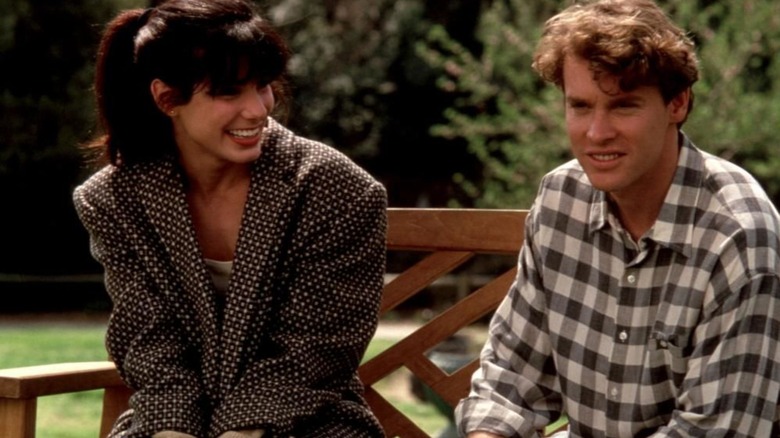
Let's get one thing straight right off the bat: If the sequel to "Love Potion No. 9" isn't called "Love Potion No. 10", there's no point in doing it at all. But otherwise, it might be fun to explore where the relationship between Sandra Bullock and Tate Donovan goes. "Love Potion No. 9" is a fantasy rom-com about two shy, awkward scientists who discover the mysterious properties of a chemical that makes the user incredibly attractive to anyone they speak to. Naturally, they both shamefully abuse it (under the guise of acting as "human subjects"), but also grow in confidence and begin to fall in love with each other.
Nearly 30 years have gone by since the film was released (to, admittedly, fairly poor reviews). Perhaps it's time to check in on the two lovebirds. Maybe their looming middle age makes them more insecure, leading one or both of them to try to use the love potion again, with potentially disastrous side effects? Really, the crux of this is that Tate Donovan and Sandra Bullock absolutely need to star in another movie together.
Read this next: 14 Remakes That Are Better Than The Original
The post 14 Awesome Comedies That Never Got Sequels appeared first on /Film.
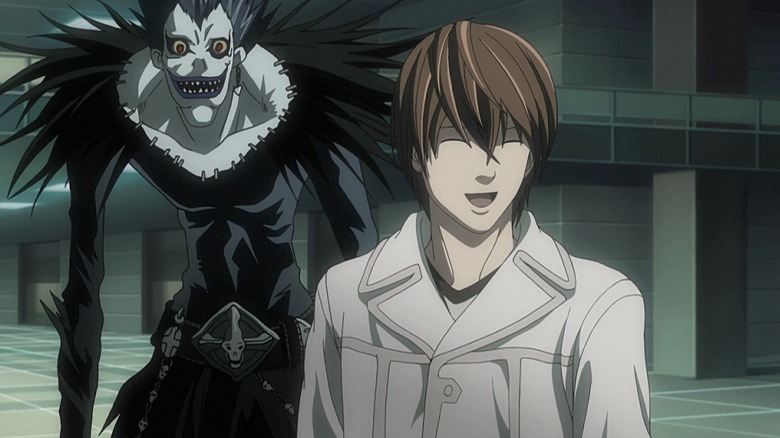
The "Death Note" obsession is never ending. Since premiering in 2006, this anime series has remained one of the most popular, spawning a number of video games, live-action films, spin-off novels and more. But the saga has yet to give the fans what they really want: a second season.
The thrilling series dives headfirst into dark territory, telling the story of a high school student who becomes the owner of a supernatural notebook called, you guessed it, the Death Note. Pretty much giving away its powers with the title, the book causes the death of anyone whose name is written in, kickstarting young Light Yagami's plan to rid the world of evil. He's joined by the actual owner of the book, the Shinigami Ryuk, a god of death and apple enthusiast who, bored of his existence, passes his book off to a human. And so the chaos begins. As Light enacts his plan, he comes up against tough opponents, most notably the world-renowned detective, L. Here's the series synopsis:
Yagami Light is an ace student with great prospects, who's bored out of his mind. One day he finds the "Death Note": a notebook from the realm of the Death Gods, with the power to kill people in any way he desires. With the Death Note in hand, Light decides to create his perfect world, without crime or criminals. However, when criminals start dropping dead one by one, the authorities send the legendary detective L to track down the killer, and a battle of wits, deception and logic ensues..
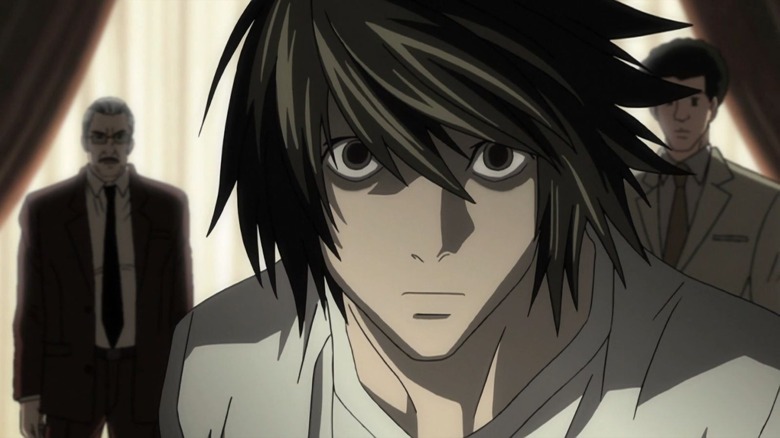
Despite premiering over a decade ago, "Death Note" continues to maintain its immense popularity and dedicated fanbase. Unfortunately, plans for a second season or sequel series have never been confirmed. While a follow-up or spinoff isn't entirely out of the question, a continuation of the original series is especially unlikely. This is in large part due to the lack of source material.
The 37-episode anime pretty much exhausts the material presented in the original 12-volume manga series. Changes were made in the process of adapting the books for screen, but broadly followed the plot laid out in the manga, ending in a very similar place. The big main issue is — spoiler alert for the 14 year old series — both Light and L die before the series concludes. A new season of "Death Note" would mean an entirely new storyline with a new set of characters. The good news is, there are a few possibilities for where that could lead.
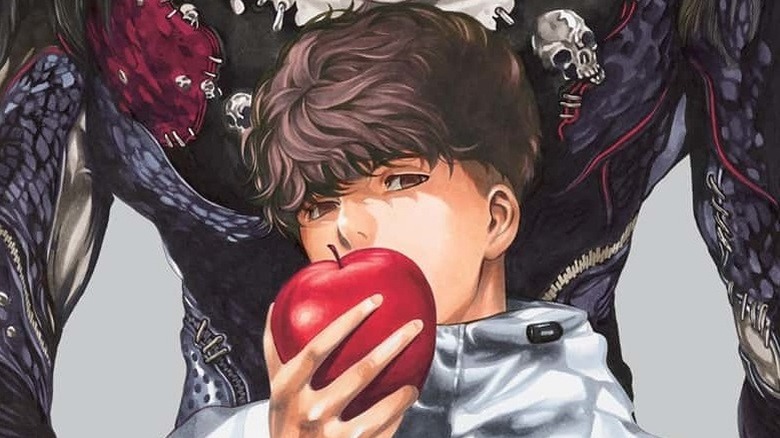
A new entry into the "Death Note" universe arrived in 2020: a standalone manga titled, 'Death Note: The A-Kira Story." Set 10 years after the events of Light Yagami as the infamous killer Kira, the story introduces a brand new character, Minoru Tanaka. Here's the synopsis:
When the Shinigami Ryuk returns to Earth more than ten years after his last visit, he gives the Death Note to the top-scoring student in Japan, hoping that he will follow in Light Yagami's footsteps. He is surprised when Minoru Tanaka returns the notebook and asks him to return in two years' time. Now a high school student, Minoru accepts the notebook from Ryuk, but he has no plans to use it himself. With the Shinigami's help, and his own ingenuity, he auctions it off anonymously as his actions are followed and predicted by Near. The United States of America buys it for a sum that leaves every Japanese citizen under the age of 60 set for life, but the King of Death creates a new rule of the Death Note that thwarts Minoru and the U.S. President's plans.
This is probably the best bet for a second season, following up with Ryuk and another character from the series, Near, but ultimately introducing a new lead. Otherwise, the best way forward for "Death Note" might be in the past.

"Death Note" has a prequel novel, written by Nisio Isin in collaboration with manga creator Tsugumi Ohba. The light novel "Death Note Another Note: The Los Angeles BB Murder Cases" follows potential successor to L, Mello, as he recounts his time working with the famed detective and FBI agent Naomi Misora to stop a serial killer. A prequel series/movie would allow the story to follow already beloved characters, whilst avoiding the matter of their grisly deaths in the original saga. L, in particular, is a mysterious figure who built up a reputation for mystery solving long before he started on Kira's trail. There's plenty more to mine from his backstory.
Alternatively, there are also a few live-action adaptations of the "Death Note": a series of films helmed by Tetsure Araki and the American attempt, the 2017 film "Death Note." Another bid for continuation would be a sequel to any of the live-action version — but, if we're being honest, that's probably not what fans want to see.
Read this next: 15 Must-See Horror Anime Movies
The post Will a Death Note Season 2 Ever Happen? Here's What We Know appeared first on /Film.
Ubuntu is one of the most popular desktop Linux distributions, and it serves as the base for countless other desktop operating systems, like Linux Mint and Elementary OS. There are two major releases of Ubuntu each year, and right on schedule, Ubuntu 21.10 “Impish Indri” has just been released. The last major Ubuntu release was 21.04, dubbed “Hirsute Hippo”.
Ubuntu 21.10 is not a Long-Term Support (LTS) release, so it will only be updated for the next nine months. If you don’t want to upgrade regularly or prefer stability over new features, Ubuntu 20.04 is the current LTS release and will receive updates until April 2025. Impish Indri is the final interim release before the next LTS release, scheduled for April 2022. Developers can use Ubuntu 21.10 to future-proof their work for the next LTS, which will be supported until at least 2032.
“As open source becomes the new default, we aim to bring Ubuntu to all the corners of the enterprise and all the places developers want to innovate,” said Canonical CEO Mark Shuttleworth. “From the biggest public clouds to the tiniest devices, from DGX servers to Windows WSL workstations, open source is the springboard for new ideas and Ubuntu makes that springboard safe, secure and consistent.”


The GNOME 40 desktop environment makes an arrival, gaining dynamic workspaces and touchpad gestures. There’s also Firefox as a Snap application, and Canonical says that the number of snaps published in the store has grown by 25%. The snap store now serves over 10 million systems daily. There is also out-of-the-box support for graphical applications on the Windows Subsystem for Linux.

Ubuntu has a major focus on developers, and the all-new PHP 8 and GCC 11 work out of the box in this version. PHP 8 was released in June of this year, and its most exciting feature is the inclusion of a just-in-time (JIT) compiler. In theory, the addition of JIT should make considerable improvements to performance in certain situations. Previously, PHP used Opcache, and you can read more about what the inclusion of a JIT compiler means for PHP online.
Ubuntu 21.10 offers Apache Cassandra as a snap package, and MicroK8s can be used to install Kubernetes quickly and easily.
Ubuntu 21.10 brings version 5.13 of the Linux Kernel, adding support for Kernel Electric Fence (KFENCE). KFENCE is a new run-time memory error detector designed for production environments, keeping overhead low while still detecting the most common memory errors. It’s enabled by default, and Ubuntu 21.10 will randomize the memory location of the kernel stack at each system-call entry on both amd64 and arm64 architectures.
Ubuntu 21.10 is available for download from Canonical for 64-bit x86 PCs. There are also system images for the Raspberry Pi.
The post Ubuntu Linux 21.10 arrives, bringing developer-focused features and GNOME 40 appeared first on xda-developers.
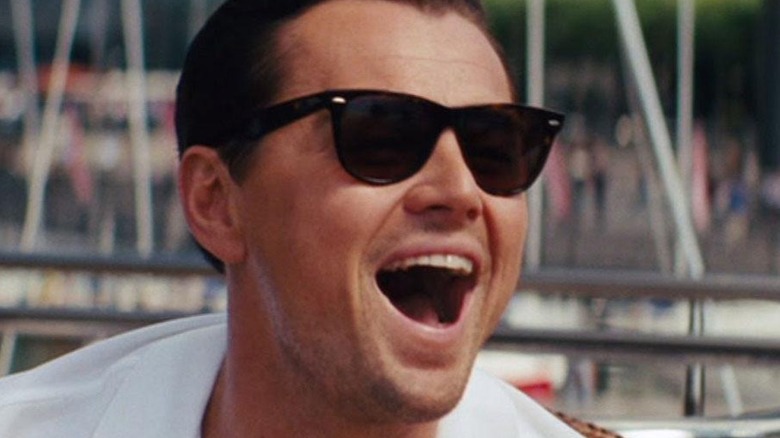
"The Wolf of Wall Street" is one of the best films of the 21st century. Martin Scorsese has never lost his touch, but his biographical dark comedy quickly ranked among his finest work. Scorsese is no stranger to long runtimes, but crafting a three-hour black comedy that's consistently engaging is an amazing achievement.
Scorsese set the all-time record for the most swearing in a film, and the movie's excessive sex, drugs, and general debauchery courted controversy throughout its release. Some Academy Awards voters were so turned off by the explicit content that one even heckled Scorsese at the official screening, but "The Wolf of Wall Street" still ended up with five major Oscar nominations.
Among them was Leonardo DiCaprio's nomination for best actor. DiCaprio is one of the most versatile actors of his generation, but the role of Jordan Belfort was unlike anything he'd ever attempted. A corrupt stockbroker who scams investors with ridiculous schemes, Belfort curates a loyal following of hooligans who wreak havoc on Wall Street, throwing wild parties and using their influence to avoid the attention of authorities.
The film's entire cast is terrific. Jonah Hill earned his second Oscar nomination for best supporting actor, and Margot Robbie turned in her breakout role. Matthew McConaughey's eccentric, chest-thumping character Mark Hanna became an instant fan-favorite. Scorsese's director friends, including Jon Faverau, Spike Jonze, and Rob Reiner, all have fun cameos.
If you loved "The Wolf of Wall Street," give these films a shot too.
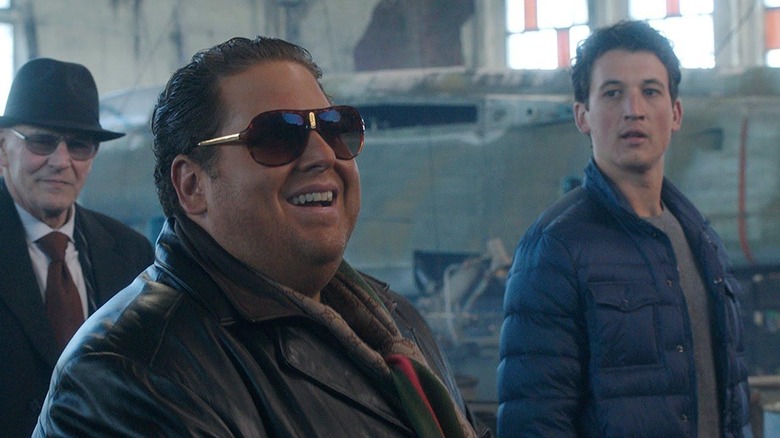
Jonah Hill may have started his career with comedic roles in "Superbad," "Forgetting Sarah Marshall," and "Get Him to the Greek," but he showed his dramatic range for the first time with "Moneyball." Hill's performance in "The Wolf of Wall Street" allowed him to combine both sides of his filmography; Donnie Azoff is an uproariously funny character, but the ramifications of his corrupt behavior are treated very seriously. Hill had a similar role in Todd Phillips's 2016 film "War Dogs."
"War Dogs," a black comedy, has a similar tone to "The Wolf of Wall Street," and both films are told from the perspective of real criminals. Hill stars as the eccentric arms dealer Efraim Diveroli, who convinces his childhood best friend David Packouz (Miles Teller) to join his operation. Efraim sells ammunition and supplies to the US Army to support the war efforts in Afghanistan and Iraq. Efraim and David gradually learn that their weapons kill millions. David is shell-shocked and begins to question their actions, but Efraim shows almost no regret and wants to keep lining his pockets.
Like Donnie in "The Wolf of Wall Street," Efraim is an unlikeable character who is nonetheless quite entertaining. Todd Phillips has never been shy about his love of Scorsese, and his depiction of real events is indebted to Scorsese's style. Phillips doesn't absolve the characters of their crimes, but seems fascinated by how these seemingly harmless men became so dangerous.
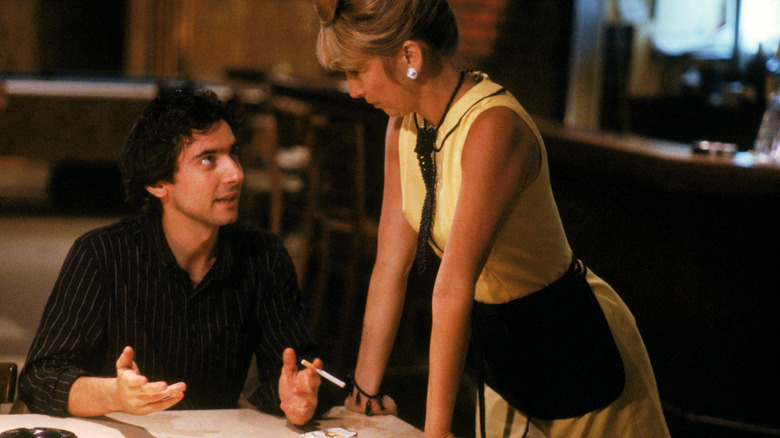
Scorsese is often thought of as a purely serious filmmaker, but he's frequently shown that he has a great sense of humor. Films like "Goodfellas" and "The King of Comedy" pepper their dramatic stories with dark jokes, and "The Wolf of Wall Street" was Scorsese's funniest film to date. However, it wasn't the first time that the director tackled a zany premise. Scorsese's 1985 film "After Hours" may not have been showered with the praise his more famous features received, but the underrated classic is among his greatest achievements.
"After Hours" follows measly data analyst Paul Hackett (Griffin Dunne) during the worst night of his life. Paul has little charisma, but works up the confidence to talk to the illustrious sculptor Marcy Franklin (Rosanna Arquette). During his trip to her apartment, Paul loses all of his money, and after the date goes awry he's left stranded in the city without any way to call for help. As Paul makes enemies with the unusual characters who roam the streets at night, the situation escalates, and the entire metroplex begins a manhunt for the lowly desk worker.
Scorsese has been accused of promoting toxic masculinity with his films, but both "The Wolf of Wall Street" and "After Hours" earnestly depict male anxiety. Paul is diminutive, but feels guilty throughout the story as he becomes circumstantially involved in various crimes.
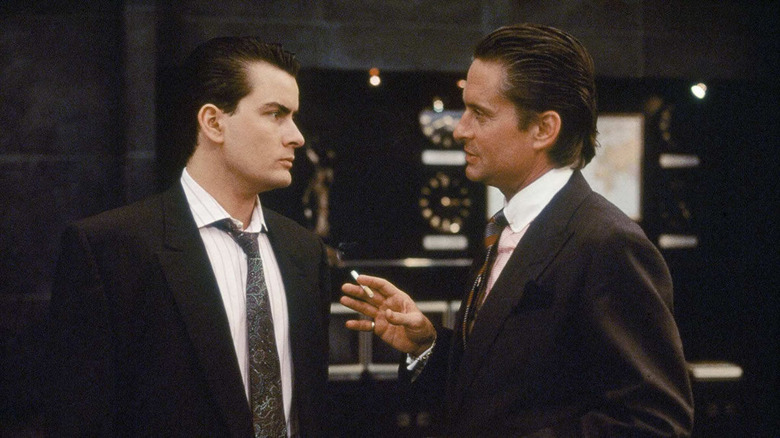
"The Wolf of Wall Street" was revelatory with its nuanced depiction of stockbroker culture and the reality of the American financial system. The Wall Street tycoon character is often a caricature in films, but "The Wolf of Wall Street" explored the complex trading system and the people behind it in detail. It is simultaneously fascinating and infuriating. The only film that rivals its impact is Oliver Stone's 1987 classic "Wall Street." Like Scorsese, Stone is a political filmmaker who uses his movies to express timely opinions. "Wall Street" is immensely entertaining, but also a dire prophecy about the evils of these seemingly trusted institutions.
"Wall Street" follows idealistic trader Buddy Fox (Charlie Sheen) as he travels to New York City to begin a new position at the renowned Jackson Steinem & Company. Fox finds a potential mentor in the legendary stockbroker Gordon Gecko (Michael Douglas). Gecko is initially unimpressed by Bud's pitches, but begins to weaponize the young man's naivete and uses him to spy on financial rivals. Bud is deceived into taking part in a criminal plot that leaves his father Carl (Martin Sheen) and the members of his union unemployed.
Both Bud and Gecko share qualities with Jordan Belfort. Like Bud, Belfort begins innocently, and is corrupted by the lavish Wall Street lifestyle; the difference is that Bud recognizes his failings and looks to amend them. The charismatic showmanship of Gecko is closer to what Belfort actually becomes; Douglas' brilliant performance earned him an Academy Award for best actor.
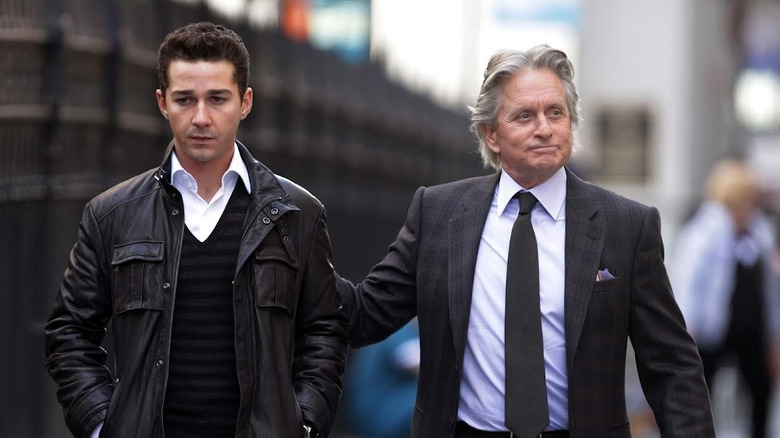
A sequel to "Wall Street" was unexpected, but Stone returned to the Gecko character in his 2010 follow up, "Wall Street: Money Never Sleeps." Picking up decades after his imprisonment, the film opens with a penniless Gecko returning to rebuild his empire. Gecko utilizes his notorious reputation to promote his new book "Is Greed Good?" in a fun reference to the first film. But compared to the frequent insider trading and corporate fraud cases of the 2008 financial crisis, Gecko's crimes now seem quaint.
"Money Never Sleeps" shows a more sympathetic side to Gecko. His daughter Winnie (Carey Mulligan) has distanced herself from her father, and dates the trader Jacob Moore (Shia Labeouf), an idealist like Bud. Gecko sees him as another protege, but Moore doesn't want to associate himself with the infamous criminal. However, the two are forced to work together when the owner of a rival firm, Bretton James (Josh Brolin), attempts to destroy both of their reputations with a scam.
Douglas explores a weariness that tempers his initially charismatic performance; getting away with malicious activities is too common to deliver any sort of thrill. Winnie is understandably hesitant about trusting her father; she seeks to build an honorable practice, despite the familial ties that haunt her reputation. Brolin is a very different type of villain, and his shrewdness is terrifying when compared to the upbeat energy that Douglas had in the first film. The complexity of 21st trading should appeal to "The Wolf of Wall Street" fans.
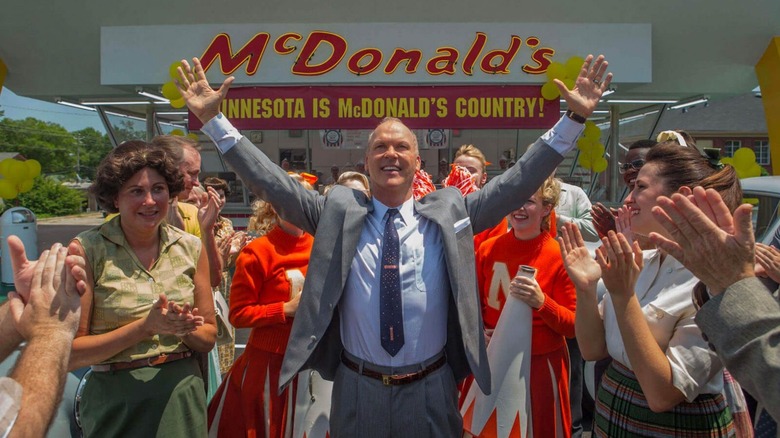
The origin of the McDonald's fast-food chain might not seem as inherently exciting as Jordan Belfort's drug-fueled parties, but the insightful biographical drama "The Founder" showed that the beginnings of America's top burger joint were not quite as friendly as its branding suggests. "The Founder" reveals how investment shark Ray Croc (Michael Keaton) used dirty trading and illicit legal maneuvering to wrestle control of the franchise from its creators, Dick (Nick Offerman) and Mac (John Caroll Lynch) McDonald.
Like Belfort, Croc doesn't immediately seem very threatening or ambitious. A failed milkshake machine salesman who works a grueling job traveling between cities, Croc faces financial ruin that could force him to mortgage his home. In addition, his marriage to Ethel (Laura Dern) is falling apart. However, Croc does have Belfort's conviction. The McDonald brothers have created an innovative system that produces food at a speedy rate, and Croc sees the potential in expanding the local oddity into a nationwide empire.
However, Croc's greed destroys the quality assurances that the McDonalds brothers had seen as integral to their mission. Croc uses the opportunity to line his own pockets — like Belfort, he doesn't care about the damage he causes along the way.
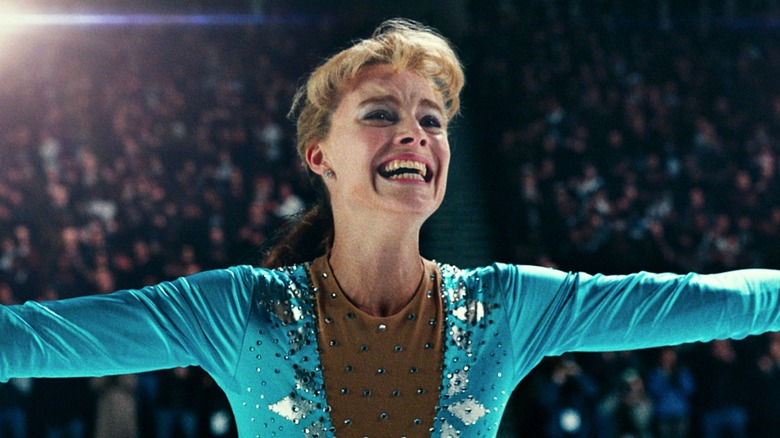
Although DiCaprio and Hill delivered award-nominated performances in "The Wolf of Wall Street," the film also featured a breakthrough part for Margot Robbie. Before "The Wolf of Wall Street," the Australian star was relatively unknown, but her role as Belfort's doomed love interest Naomi Lapaglia instantly earned her critical acclaim. It was a challenging role; Naomi had to match (or outmatch) DiCaprio's charisma, and while she often reaps the benefits of her husband's wealth, she's also the rare sympathetic character in the film.
Robbie's best performance to date came four years later in the biopic "I, Tonya," a film with a similar vibe to "The Wolf of Wall Street." The film pulls back the curtain on the scandal of Olympic figure skater Tonya Harding, a highly-covered true crime story with equally absurd details.
The young Tonya is pushed to pursue excellence by her dominative mother LaVona Golden (Alison Janney, in an Academy Award-winning role). Tonya is pushed to physical and emotional extremes, but she's a victim of abuse from both her mother and husband, Jeff Gillooly (Sebastian Stan). Despite her challenging upbringing, Tonya succeeds in getting to the Olympics, and she's roped into a scheme to critically injure her closest rival Nancy Kerrigan (Caitlin Carver).
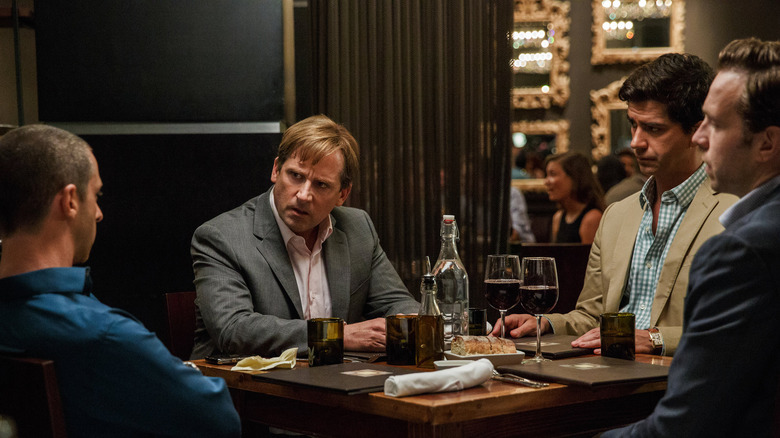
"The Wolf of Wall Street" didn't just shed light on Wall Street's culture of corruption. It also explained financial malpractice in detail. Deceitful figures like Belfort intentionally confuse their clients, and the film breaks the fourth wall to allow DiCaprio to directly explain his scheme to the viewers.
Writer-director Adam McKay used a similar technique in "The Big Short." The film explores the events that led up to the 2008 financial crisis, following the men who realized the system was doomed to collapse after it was already too late. Like Scorsese, McKay utilized untraditional satirical elements to explain the nuanced system in an understandable way. The film incorporates news footage, features cameos by celebrities like Anthony Bourdain and Selena Gomez, makes bold soundtrack choices, and even points out when its recreation of key moments isn't entirely accurate. It's often fun to watch, but McKay gravely reflects on the crisis' human costs during the film's final moments.
Films that explore Wall Street culture often face the challenge of what perspective to tell the story from. The environment inherently draws out unlikeable characters, and it can be challenging to watch a story through the eyes of someone unsympathetic. To address this, "The Wolf of Wall Street" leans into Jordan Belfort's complexity. He's the epitome of toxic masculinity, and DiCaprio explores how such a villainous figure could become so influential, as well as the culture that allowed him to thrive.
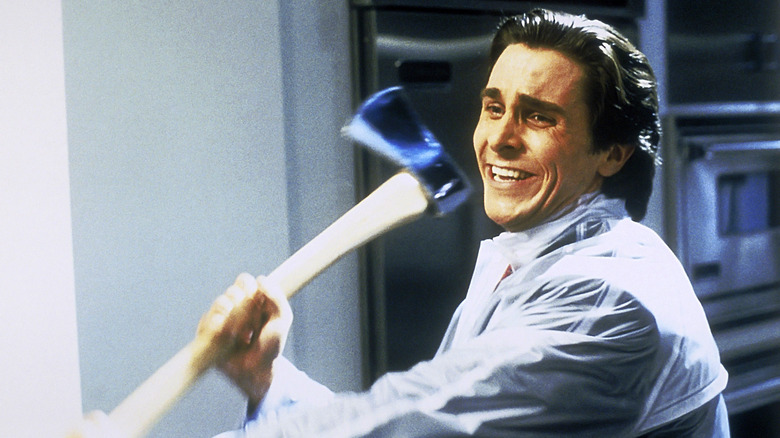
2000's "American Psycho" addresses similar themes, again by using the corruption of the New York finance world and black comedy. Belfort may have harbored disaster, but Christian Bale's Patrick Bateman is a straight up slasher villain. Bateman is a successful investment banker, and like Belfort he luxuriates with all of the benefits of his wealth. He lives in a lavish apartment, attends fancy restaurants, employs expensive sex workers, and prizes his personal business cards.
However, Bateman is also a serial killer who hooks victims with his charisma. Watching Bateman graphically murder his obnoxious co-worker Paul Allen (Jared Leto) to the tune of "It's Hip to Be Square" is hilarious and terrifying all at once. Both DiCaprio and Bale play characters whose public fronts and private dealings are vastly different; both men can continue their deceptions thanks to their magnetic personalities. It's ironic that "American Psycho" was initially criticized for promoting toxic masculinity, as it's directed by female filmmaker Mary Harron and can easily be read as a condemnation of Bateman's behavior, not an endorsement.
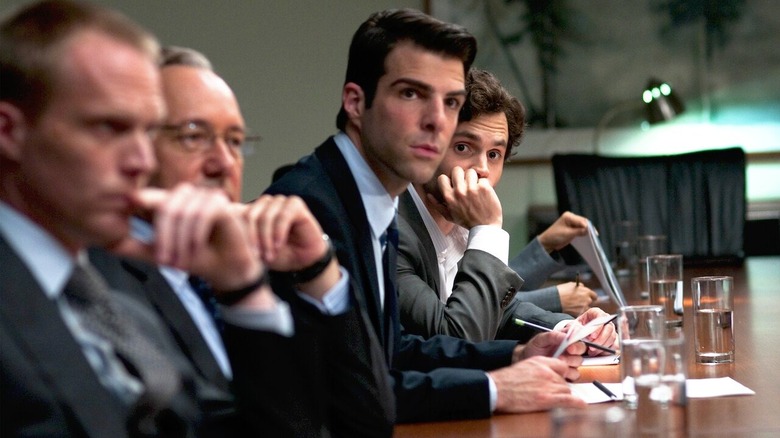
"The Wolf of Wall Street" succeeds in exploring Wall Street culture thanks to its epic runtime, which gives Scorsese the freedom to tell the story over several decades. Instead of cramming the various crimes into a more traditional structure that wouldn't have gone into as much depth, Scorsese shows how years of excess built up to a tipping point.
"Margin Call" does the exact opposite. The 2011 debut writer-director J.C. Chandor follows the crash of a powerful Wall Street investment bank over the course of a couple of hours, and is framed as a real-time thriller. The themes of capitalistic greed and denial at the highest level are similar to those in "The Wolf of Wall Street," and both have a disastrous conclusion. In addition, "Margin Call" is equally effective at fleshing out its shocking revelations in the moments before their impact is felt. Although much more serious, Chandor's script is just as sharp and witty as Terence Winter's screenplay for "The Wolf of Wall Street" — both writers received Academy Award nominations for their work.
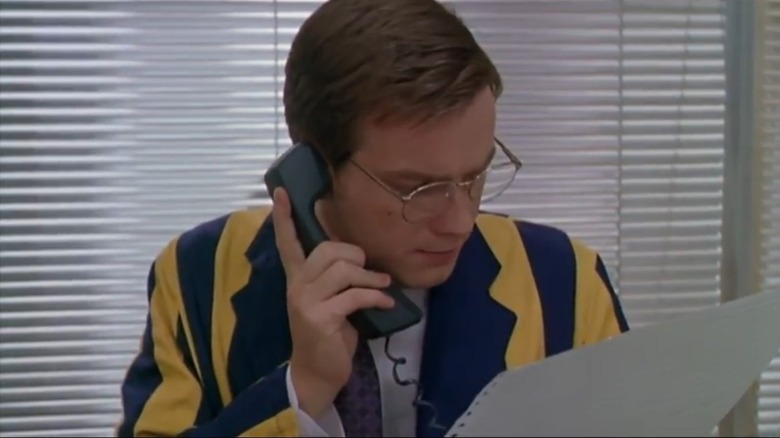
"The Wolf of Wall Street" is a distinctly American film, but other films about investment malpractice have explored how issues of greed and consumerism permeate around the globe. One of the most underrated financial thrillers ever made is the British 1999 biographical drama "Rogue Trader." The film tells the true story of Nick Leeson (Ewan McGregor), an ambitious young trader whose greed inadvertently brings down Great Britain's oldest merchant bank, Barings.
Like Belfort, Leeson's youthful energy runs rampant during his early success. He quickly wows the bank's senior associates with his expert tracking abilities and profitable deals. However, Leeson hides many of the same secrets; he's a serial gambler who hides his losses on company accounts. As the extent of his actions are revealed, Leeson is initially protected by powerful London tycoons who want to maintain the current state of affairs. However, like Belfort, Leeson is ultimately forced to go to jail and reflect on the harm he has caused.
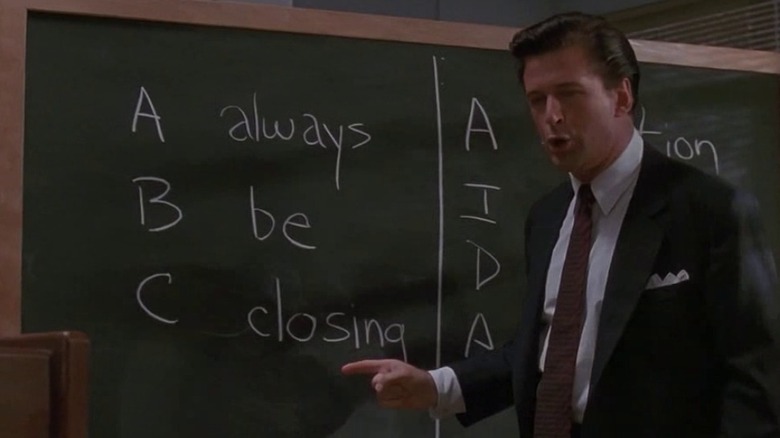
DiCaprio is incredible in "The Wolf of Wall Street," but the entire ensemble turns in brilliant performances. Scorsese recruited a murderer's row of great character actors for the film, including Matthew McConaughey, Jon Bernthal, Kyle Chandler, Jean Dujardin, Shea Whigham, and Thomas Middleditch. The precision that each actor brings to their roles fleshes out the corporate world, recalling 1992's "Glengarry Glen Ross," which tackles finance with a similarly stacked cast.
Based on the Pulitzer Prize-winning play, "Glengarry Glen Ross" follows real estate salesmen who are fired amidst a top-level restructuring of their firm, Mitch and Murray. Former titans Sheldon Levene (Jack Lemmon), Dave Moss (Ed Harris), George Aaronow (Alan Arkin), and Ricky Roma (Al Pacino) watch as their careers disappear in front of them thanks to their ambitious office manager John Williamson (Kevin Spacey). The film is best known for its iconic opening scene, in which the property owners dispatch the foul mouthed "motivator" Blake (Alec Baldwin) to scream profanities at the team.
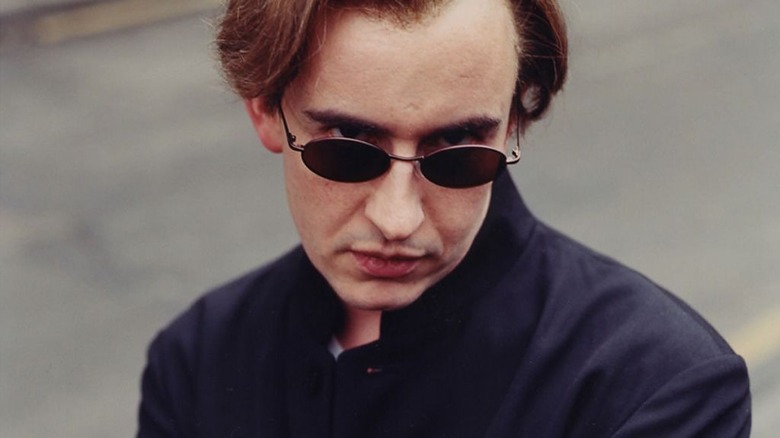
"The Wolf of Wall Street" tells its story from a unique perspective. In the film, Belfort addresses the audience by breaking the fourth wall, and alludes to instances when the film isn't entirely being accurate. Michael Winterbottom's 2002 biographical comedy-drama "24 Hour Party People" also uses an unreliable narrator to tell its story. While the setting — the British punk rock scene -- is vastly different from the one in "The Wolf of Wall Street," the film has a similar tone, reflecting on real tragedies through a comedic lens.
Tony Wilson (Steve Coogan) witnesses the rise and fall of punk culture, first as a journalist at Granada Television, and later as an employee of Factory Records. Wilson sees the early days of major artists like A Certain Ratio, Happy Mondays, The Durutti Column, and Joy Division (which transformed into New Order). Like "The Wolf of Wall Street," the story spans several decades as punk grows and declines. Coogan's Wilson is a much more likable character than Belfort, but his musings are just as hilarious.
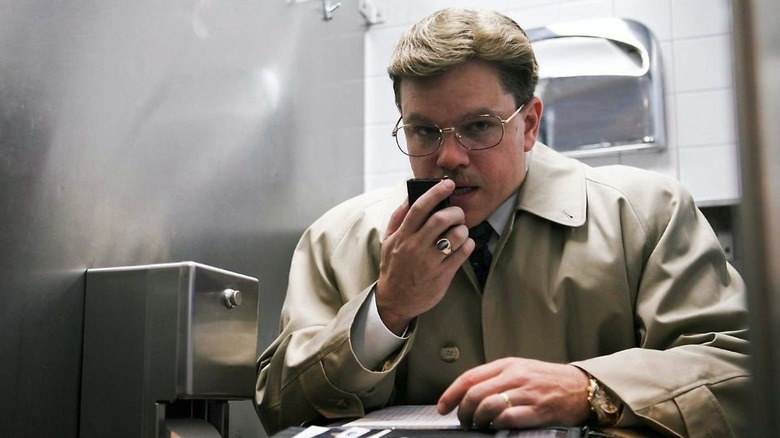
Steven Soderbergh and Martin Scorsese are similar directors in many ways. Both are unafraid to take bold stylistic risks, and both have a keen attention to detail. Soderbergh is also fascinated by the financial world, and his 2009 film "The Informant!" approaches its material with a tone that should remind you of "The Wolf of Wall Street." Based on the nonfiction novel by Kurt Eichenwald, the film tells the true story of whistleblower Mark Whitacre (Matt Damon), who exposed the lysine price-fixing conspiracy.
Whitacre is a top salesman at an Illinois commodity trading firm, and is recruited as an FBI informant after he discovers the price-fixing practices hidden in the company's commercial expenses. Like DiCaprio, Damon is renowned as a dramatic actor, so it's fun to see him play an idiosyncratic and awkward character. Damon's heightened anxiety when he's called to collect evidence is often uproarious, and he brings vulnerability to the role as Whitacre collapses under the pressures of his commitments.
Read this next: The 12 Best Tom Hardy Movies Ranked
The post 13 Movies Like The Wolf of Wall Street That Are Definitely Worth Watching appeared first on /Film.
Microsoft Teams has seen a surge in growth during the pandemic with over 115 million daily active users and growing.1 With it, customer imperative for enabling safe and trustworthy online collaboration has also increased significantly. The speed and simplicity of Teams business users creating new teams and channels demands that IT and security groups have advanced tools and controls they might need to ensure business-critical information is properly protected.
archTIS’ NC Protect has integrated with Microsoft Information Protection (MIP) to empower IT and business owners to easily create secure teams and channels and enable guest access, enforcing Zero Trust policies at the file, chat, and message level to prevent accidental sharing, misuse, and data loss.
Many organizations struggle to keep track of data and ensure their information security, sharing, and usage policies are being followed. This can pose a serious risk when you consider 63 percent of insider-related incidents are the result of negligence and simple human error, with another 23 percent related to criminal insiders.2
From sharing confidential files or sensitive information with the wrong recipient to including regulated or confidential data in a chat, these costly mistakes are hard to avoid if you rely upon user behavior and training to protect your data. Worse, some organizations try to solve the problem by turning off information sharing and guest access in Teams altogether.
NC Protect leverages Microsoft security investments to further prevent data loss and insider threats with data-centric information security that applies Zero Trust principles to dynamically adjust access and information protection in Microsoft Teams.
By combining MIP sensitivity labels and Microsoft Azure Active Directory (Azure AD) attributes with NC Protect’s dynamic user- and attribute-based policies to control access, usage, and sharing, customers benefit from expanded protection and control over Teams collaboration to:
Combining the power of MIP with NC Protect ensures granular policy-based control to secure collaboration and allows customers to realize the full value of their existing Microsoft investments.
NC Protect dynamically adjusts file security based on real-time comparison of user and file attributes to make sure that users view, use, and share files according to an organization’s regulations and policies. NC Protect leverages a file’s MIP sensitivity label as one of the attributes used to determine access and the level of protection needed based on the conditions at the time of access. With NC Protect, dynamically restrict access, usage, and sharing rights based on the file’s classification and the user’s current location, device, and security clearance.

Learn more about the NC Protect integration with MIP and Teams and other Microsoft 365 apps, including demonstrations of how NC Protect’s dynamic attribute-based access control better protects against insider threats:
To learn more about Microsoft Security solutions, visit our website. Bookmark the Security blog to keep up with our expert coverage on security matters. Also, follow us at @MSFTSecurity for the latest news and updates on cybersecurity.
archTIS Limited (ASX:AR9) is a global provider of innovative software solutions for the secure collaboration of sensitive information. The company’s award-winning data-centric information security solutions protect the world’s most sensitive content in government, defense, supply chain, enterprises, and regulated industries through attribute-based access and control (ABAC) policies. archTIS products include Kojensi, a multi-government certified platform for the secure access, sharing, and collaboration of sensitive and classified information; and NC Protect for enhanced information protection for file access and sharing, messaging, and emailing of sensitive and classified content across Microsoft 365 apps, Dropbox, Nutanix Files, and Windows file shares. For more information visit the archTIS website or follow archTIS on Twitter.
1Watch out Zoom: Microsoft Teams now has more than 115 million daily users, Owen Hughes, TechRepublic. 28 October 2020.
2The Cost of Insider Threats, IBM Security. 2020.
The post archTIS and Microsoft: Zero Trust information security for Microsoft Teams appeared first on Microsoft Security Blog.
On Wednesday, the St. Louis Post-Dispatch ran a story about how its staff discovered and reported a security vulnerability in a Missouri state education website that exposed the Social Security numbers of 100,000 elementary and secondary teachers. In a press conference this morning, Missouri Gov. Mike Parson (R) said fixing the flaw could cost the state $50 million, and vowed his administration would seek to prosecute and investigate the “hackers” and anyone who aided the publication in its “attempt to embarrass the state and sell headlines for their news outlet.”

Missouri Gov. Mike Parson (R), vowing to prosecute the St. Louis Post-Dispatch for reporting a security vulnerability that exposed teacher SSNs.
The Post-Dispatch says it discovered the vulnerability in a web application that allowed the public to search teacher certifications and credentials, and that more than 100,000 SSNs were available. The Missouri state Department of Elementary and Secondary Education (DESE) reportedly removed the affected pages from its website Tuesday after being notified of the problem by the publication (before the story on the flaw was published).
The newspaper said it found that teachers’ Social Security numbers were contained in the HTML source code of the pages involved. In other words, the information was available to anyone with a web browser who happened to also examine the site’s public code using Developer Tools or simply right-clicking on the page and viewing the source code.
The Post-Dispatch reported that it wasn’t immediately clear how long the Social Security numbers and other sensitive information had been vulnerable on the DESE website, nor was it known if anyone had exploited the flaw.
But in a press conference Thursday morning, Gov. Parson said he would seek to prosecute and investigate the reporter and the region’s largest newspaper for “unlawfully” accessing teacher data.
“This administration is standing up against any and all perpetrators who attempt to steal personal information and harm Missourians,” Parson said. “It is unlawful to access encoded data and systems in order to examine other peoples’ personal information. We are coordinating state resources to respond and utilize all legal methods available. My administration has notified the Cole County prosecutor of this matter, the Missouri State Highway Patrol’s Digital Forensics Unit will also be conducting an investigation of all of those involved. This incident alone may cost Missouri taxpayers as much as $50 million.”
While threatening to prosecute the reporters to the fullest extent of the law, Parson sought to downplay the severity of the security weakness, saying the reporter only unmasked three Social Security numbers, and that “there was no option to decode Social Security numbers for all educators in the system all at once.”
“The state is committed to bringing to justice anyone who hacked our systems or anyone who aided them to do so,” Parson continued. “A hacker is someone who gains unauthorized access to information or content. This individual did not have permission to do what they did. They had no authorization to convert or decode, so this was clearly a hack.”
Parson said the person who reported the weakness was “acting against a state agency to compromise teachers’ personal information in an attempt to embarrass the state and sell headlines for their news outlet.”
“We will not let this crime against Missouri teachers go unpunished, and refuse to let them be a pawn in the news outlet’s political vendetta,” Parson said. “Not only are we going to hold this individual accountable, but we will also be holding accountable all those who aided this individual and the media corporation that employs them.”
In a statement shared with KrebsOnSecurity, an attorney for the St. Louis Post-Dispatch said the reporter did the responsible thing by reporting his findings to the DESE so that the state could act to prevent disclosure and misuse.
“A hacker is someone who subverts computer security with malicious or criminal intent,” the attorney Joe Martineau said. “Here, there was no breach of any firewall or security and certainly no malicious intent. For DESE to deflect its failures by referring to this as ‘hacking’ is unfounded. Thankfully, these failures were discovered.”
Aaron Mackey is a senior staff attorney at the Electronic Frontier Foundation (EFF), a non-profit digital rights group based in San Francisco. Mackey called the governor’s response “vindictive, retaliatory, and incredibly short-sighted.”
Mackey noted that Post-Dispatch did everything right, even holding its story until the state had fixed the vulnerability. He said the governor also is attacking the media — which serves a crucial role in helping give voice (and often anonymity) to security researchers who might otherwise remain silent under the threat of potential criminal prosecution for reporting their findings directly to the vulnerable organization.
“It’s dangerous and wrong to go after someone who behaved ethically and responsibly in the disclosure sense, but also in the journalistic sense,” he said. “The public had a right to know about their government’s own negligence in building secure systems and addressing well-known vulnerabilities.”
Mackey said Gov. Parson’s response to this incident also is unfortunate because it will almost certainly give pause to anyone who might otherwise find and report security vulnerabilities in state websites that unnecessarily expose sensitive information or access. Which also means such weaknesses are more likely to be eventually found and exploited by actual criminals.
“To characterize this as a hack is just wrong on the technical side, when it was the state agency’s own system pulling that SSN data and making it publicly available on their site,” Mackey said. “And then to react in this way where you don’t say ‘thank you’ but actually turn on the reporter and researchers and go after them…it’s just weird.”

I've never heard of Panic In Year Zero! (a.k.a. End of the World), a 1962 science fiction movie starring Ray Milland about a family that survives a nuclear explosion in Los Angeles. It was just uploaded to the Internet Archive and I've got it bookmarked to watch later. — Read the rest


Read more of this story at Slashdot.

This week William Shatner (90) was invited by an arrogant billionaire industrialist to ride in his rocket.
Over sixty years later, life imitates art, with a twist. Night of the Auk was a televised play from 1960 starring William Shatner as an "arrogant millionaire industrialist who has financed the first manned lunar expedition and has come along for the ride." — Read the rest
While looking for something completely unrelated (namely the Rock Ridge extensions to ISO 9660), I came across a cache of old X3T9 committee documents from 1990. In retrospect I’m a little surprised that I hadn’t found these earlier, since the archive appears to have been published on one of Walnut Creek CD-ROMs circa 1994, but I’m not sure how long it’s been online.
What’s interesting is that the Walnut Creek archive appears to overlap with the X3T9.2 archive that has available for a long time, but contains numerous documents that the X3T9.2 archive does not. Notably there’s a directory with CAM Committee documents. While the CAM Committee’s primary objective was to define a Common Access Method (CAM) for software accessing SCSI devices, an effort that ultimately went nowhere, the CAM Committee also started a rather more successful side project, the AT Attachment (ATA) standard.
The archive is far from complete, but it does include one complete ATA draft, revision 2.1 from June 11, 1990. That’s one revision older than the oldest ATA draft I was aware of until now, which is revision 2.2 from August 1990. The rev 2.1 draft is provided as a ZIP archive containing WordStar files, which is excellent for seeing exactly how the draft was edited (and the WordStar files include a couple of editorial comments that do not show up in the printed version), but the downside is that getting from WordStar to PDF was not entirely trivial. In the end I was able to produce a PDF of ATA Rev 2.1 in 2-up format that’s quite similar to the scanned documents in the X3T9.2 archive.
Even better, the Walnut Creek archive includes what appears to be the very first and quite incomplete ATA standard draft from March 30, 1989. Said draft also provides a hint why a SCSI oriented committee started ATA in the first place: The early ATA drafts also included a specification of EATA (Extended AT Attachment), a SCSI pass through mode of ATA devices (completely separate from and much older than ATAPI).
Sadly the initial draft—which is so old that it’s called DAD, for Disk ATBus Definition, rather than ATA—does not include the EATA sections. In the next oldest currently available draft (revision 2.1), EATA had been already removed again. ATA revisions 1.x appear to have included the SCSI pass through functionality defined by EATA.
EATA was the brainchild of DPT (Distributed Processing Technology), one of the larger SCSI HBA vendors. An overview of EATA can be found here. I don’t believe anyone besides DPT implemented EATA, but the idea behind it was quite interesting.
CHM’s oral history of Dal Allan describes how EATA was created by DPT and desired by Quantum, but WD successfully fought to remove it from the standard for cost reasons, only to implement the same idea (SCSI pass through over ATA) as ATAPI a couple of years later.
The first ATA draft from March 1989 notably already defines the IDENTIFY DRIVE command as well as READ/WRITE MULTIPLE, but there is no sign of DMA support yet. The DASP signal for letting drive 0 detect drive 1 was also already defined, although the details were refined many times since then.
Finding the very first ATA draft is something I doubted would ever happen. Now I wonder if the revision 1.x ATA drafts might eventually turn up, too.
The list of early ATA drafts on this site has now been appropriately updated.
This post contains spoilers for season two, episode 10 of 'Star Trek: Lower Decks.'
Last week I posited that seasons one and two of Lower Decks together would make up one story arc of the show. Given this week’s finale, it looks like we’ll be dealing with the consequences of the Pakled threat for just a bit longer. But when an episode is this good, I’m perfectly fine with being wrong.
Especially when this installment just encompasses so many of my favorite things about Star Trek. It’s not just the delightful appearance by Captain Sonya Gomez — you might remember her as the ensign who spilled hot chocolate on Captain Picard way back in season two of The Next Generation. And it’s not because of the first on-screen appearance of cetacean ops, a concept hinted at in various blueprints but never actually mentioned with any real seriousness.
It’s the general plot of the episode, where the entire crew must work together to save the day. I’m a real sucker for teamwork scenes, like the final battle in The Undiscovered Country or, more recently, when the crew of the USS Discovery had to disguise themselves as their mirror universe counterpart. Star Trek has been described as “competence porn” by many online, in how it depicts people who are insanely good at their jobs and work together well.
The first two seasons haven’t always showcased the crew at their finest. We’ve seen Boimler and Mariner lose the Klingon diplomat they were supposed to be escorting, Freeman get into a pissing match with the captain of another Starfleet vessel, and the crew fail its (rigged) assessment test spectacularly. At times the show is very much like The Office, more interested in the personal lives and antics of its employees than the actual business at hand.
However, even The Office would occasionally remind you that the staff of Dunder Mifflin were good at their jobs, particularly Michael Scott. Michael was a terrible manager, but one hell of a salesman. And this episode of Lower Decks put the spotlight on Carol Freeman, whose fine work over the past two years is being rewarded with a promotion to a better ship. The USS Cerritos is a California-class ship, a real workhorse of a vessel that doesn’t get a lot of respect. That the Cerritos even became important at all is completely due to circumstance in encountering and surviving the newly empowered Pakleds. But it’s given Freeman a lot of time in the spotlight, with her tasked a few episodes ago with negotiating a cease-fire with the Pakled government. (It was a ruse, but that’s not her fault.)
Last week I thought this episode would wrap up that storyline, given that we now know the Pakleds were getting help from a Klingon captain, one who is no longer alive thanks to the actions of a lower-decker. Instead, this episode focuses on Freeman’s possible promotion, her senior staff’s reaction to it, and the futures of our lower decks ensigns.
This is all happening against the backdrop of a first contact mission. The USS Cerritos mostly specializes in second contact missions — we’re told this in the very first episode. That means they come in and handle all the annoying administrative stuff after flagships like the Enterprise come in and establish initial relations. Now, the Cerritos gets to take part in the more important first impression, but only as backup to the USS Archimedes.
Sitting on the bench ends up serving the Cerritos well when a solar flare plus an unstable planetoid ends up disabling the Archimedes and putting it on a crash course with the planet below. Freeman is ready to sacrifice herself in order to save the other ship, but Rutherford and company have a better plan, one that can prevent fatalities on both vessels. But they’ve only got 20 hours, so the whole crew has to chip in. That means Ransom piloting, Billups supervising the hull removal, and Tendi giving Mariner a much-needed pep talk. The latter might not be necessary to the functioning of the ship, but it is important to the show because it pushes the two women toward the emotional resolution they need.
We also get to meet the crew of cetacean ops, two beluga whale lieutenants named Kimolu and Matt. But it’s Boimler who has to save the day, because the clamp they need to release isn’t made to be turned by flippers. (I really appreciate the accessibility joke here, because Starfleet has often been cited over the decades as an OSHA nightmare.) Needless to say, the crew succeeds (this isn’t a movie, after all, so we’re not losing the ship). After the bravery shown by the entire crew of the Cerritos, particularly Boimler and Rutherford, it’s hard to imagine that season three won’t start off with a few promotions.
But first, there’s the matter of Freeman’s transfer, which she has decided to decline in favor of staying with a crew that has proven itself capable of being truly excellent. Unfortunately, that Pakled storyline comes to bite us all one more time, leading us into the show’s very first cliffhanger, and the very first season-ending cliffhanger in the new Kurtzman-era of Trek programs.
Star Trek: Lower Decks had a lot to prove when it debuted last year: It was the first animated show since the ‘70s, and the franchise’s first attempt at a primarily comedic series. It also had to overcome the initial impressions of it as being akin to Rick and Morty or Family Guy. The quality of the first season started a bit rough but improved as time went on, ending on the fantastic action-packed episode, “No Small Parts.” Season two’s “First First Contact” ups the game in several ways, not just in its element of danger but also in how the show is willing to use big storylines to push the characters forward as the seasons progress.

They called it "The Big Rick." At 11 am on April 30th, 2021, each networked display screen in a large Illinois school district played "Never Gonna Give You Up." Three hours later, the automated bell system played the song, instead of a bell tone, to dismiss students from school. — Read the rest
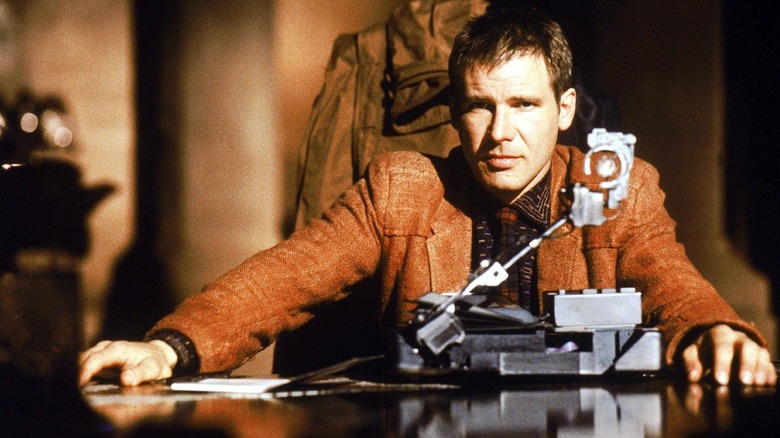
Based on Philip K. Dick's beloved sci-fi novella "Do Android's Dream of Electric Sheep?", Ridley Scott's landmark 1982 science fiction film "Blade Runner" has become a cultural touchstone since bombing at the box office when it was first released nearly four decades ago. Thanks to home video and alternate versions released in 1992 and 2007, the movie has had a far greater longevity than some of its contemporaries, and is now considered in the same realm as "2001: A Space Odyssey" and "Star Wars" as a seminal work in the genre that influenced countless films which followed.
One aspect of the film that keeps the fanbase alive are its infamous alternate endings, which hinge on the central question of whether or not Harrison Ford's title bounty hunter Rick Deckard is himself one of the very outlawed androids he is hunting. Let's take a look at each version — all of which come in at around the same running time of 117 minutes — and figure out the nature of this particular "reality" for ourselves!
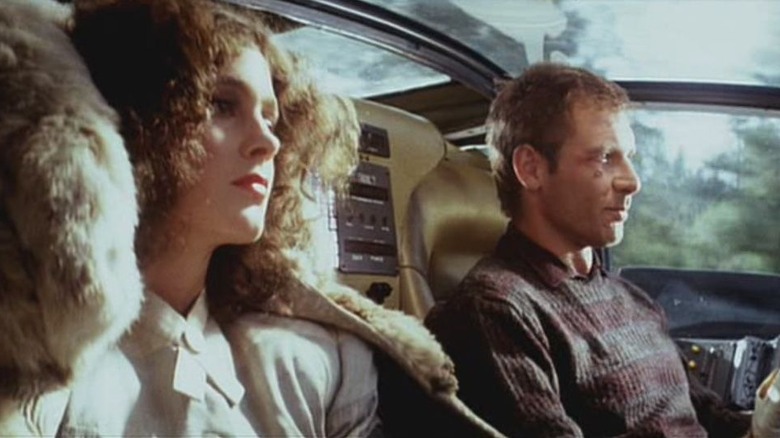
Like other big budget science-fiction films of the mid-eighties like David Lynch's "Dune" or James Cameron's "Aliens," "Blade Runner" was initially released to theaters in a form that wasn't quite what the filmmakers had in mind. Warner Bros. had imposed on Scott that he add an annoying narration by Harrison Ford to explain certain things that probably didn't need to be explained. This "Captain Obvious" voiceover is used sparingly but almost every instance undercuts key moments like the death of Roy Batty (Rutger Hauer).
Another big addition to this first version is a tacked-on ending that shows Deckard and the replicant Rachel (Sean Young) driving through sunny mountains away from Los Angeles towards freedom. The footage was cobbled together from hasty reshoots with the two actors in the Spinner car and mountain B-roll helicopter footage leftover from Stanley Kubrick's "The Shining." The voiceover in this final moment is particularly egregious, as it attempts to suddenly retcon so much of what we have already been told about replicant lifespans and the real significance behind the origami unicorn that police officer Gaff (Edward James Olmos) left behind.
"Gaff had been there and let her live. 4 years he figured. He was wrong. Tyrell had told me Rachel was special. No termination date. I didn't know how long we had together. Who does?"
This is precisely the kind of "love conquers all" ending Universal would try and fail to implement on Terry Gilliam's equally dystopian "Brazil" a few years later. It negates the entire tone and mood of "Blade Runner," but of course there are some fans out there who prefer the '82 version, likely because it's the one they grew up loving.
In May of 1990 the original workprint version of the film used for test audiences and running 113 minutes was covertly shown without Scott's approval at the Los Angeles Fairfax Theater. Positive buzz for the cut began to generate, which resulted in further showings of the workprint at venues such as LA's NuArt Theater, San Francisco's Castro Theatre and in at the Academy of Motion Picture Arts and Sciences in April 1991. Following Scott's extensive notes, film preservationist Michael Arick put together what's known as the 1992 "Director's Cut" of "Blade Runner" based on the workprint.
This new cut became the default version for many years, eliminating the redundant voiceover, the happy ending (it now stops with the elevator closing on Deckard after he acknowledges Gaff's unicorn) and reinstates a short bit of crucial footage: Deckard's unicorn dream. What's the unicorn all about? Well, at the time it was shot some speculated it was merely Ridley Scott trying to tack on some test footage for his next fantasy film "Legend," which if you've seen you know revolves around the fate of unicorns. Whether or not that's true, it plays the most important part in understanding why Deckard is, in fact, a replicant himself.
There is a whole sequence in the middle of the film where Deckard tells Rachel several anecdotes from her childhood which she never revealed to anybody, including watching spiders being born. Deckard knows these memories because they were implanted in Rachel to make her believe she is human. At another point in the film Deckard plays piano in front of near-impossibly old photographs and has a daydream about a unicorn running through a fog-shrouded forest. This is meant to be something personal that he has never spoken of to anyone. So, when he finds the origami unicorn at the end it signals that Gaff knows of these dreams, and therefore Deckard has been implanted as well ... because he's a replicant, just like Rachel. Gaff left the unicorn there not as a friendly gesture, but as a warning that Deckard and Rachel are going to be hunted.
One further clue that Deckard is a replicant is a scene where he talks to Rachel in his apartment. She asks him if he would come after her, hun her. "No... No, I wouldn't. I owe you one... But somebody would," says Deckard. When he turns around to say that final part, you can see the specific glow in his eyes that all replicants have throughout the film.
While very similar to the "Director's Cut," Ridley Scott's "Blade Runner: The Final Cut" is the definitive version. Supervised entirely by Scott, this cut reinstates much of the violence absent from the 1992 one, including Tyrell's eyes being gauged out and Roy giving himself a bloody stigmata. Zhora's death scene, which originally featured an obvious stunt double running through plate glass in a bad wig, was reshot to include original actress Joanna Cassidy more prominently. The full-length unicorn vision is now longer and more pronounced as well. A shot of the dove flying away after Roy Batty dies was redone to make it more in keeping with the film's overall aesthetic. Several other additional shots and digital touch-ups like wire removal were also included.
Since this version is merely an enhanced, more nuanced take on the "Director's Cut," it doesn't alter the meaning of the ending any more than the one from 1992, but it is overall a much richer and more fulfilling culmination of a 25-year struggle to restore "Blade Runner" back to the experience the filmmakers intended it to be. Unlike the numerous Special Edition versions of the Star Wars Trilogy released over the years, "Blade Runner: The Final Cut" is generally held up as an example of a revisit to a beloved film done right.
For Denis Villeneuve's 2017 sequel "Blade Runner 2049," the inevitable question over whether or not Deckard was a replicant had to be addressed. Harrison Ford's mere presence as Deckard, having aged like a normal human being, raises questions as to what kind of replicant Deckard is. Clearly one who can age, like Dave Bautista's farmer character at the beginning of the film has as well. The filmmakers, perhaps wisely, decided the best way to address this issue directly was to skirt around it completely, leaving it open-ended and essentially allowing viewers to choose their own adventure as to which version of "Blade Runner" it was a sequel to. Screenwriter Michael Green acknowledged this during an interview with Collider:
"The fact that it's a question is what's important. The puzzle of Blade Runner, one of the many reasons it's the classic it is, is that the chasing for authenticity is both baked into the narrative of the story and the meta-narrative of the film that there is no authentic answer to that question. Which just meant that telling the further story, that had to be baked into the story as well, that everyone who watches it has that question of which version should I watch, what does that mean, and the answer is you don't get to know. Generally American audiences are very uncomfortable with that level of irresolution. Blade Runner challenges that and it's not just an American favorite, it's a global favorite."
Whichever way you choose to interpret "Blade Runner," it stands as a monumental achievement in bravura science-fiction from a master visualist who is still going strong today.
Read this next: The 14 Greatest Science Fiction Movies Of The 21st Century
The post The Multiple Endings of Blade Runner Explained appeared first on /Film.