High days and holidays are prime time for ransomware. This should come as no surprise to anyone – but many companies remain surprisingly unaware or at least unprepared.
Buy now, pay later services aren't just popular among consumers. They're also proving to be a hit with criminals. From a report: Fraudulent activity is on the rise at some of the largest buy now, pay later (BNPL) platforms in the industry, which include Klarna, Afterpay and Affirm, according to fraud experts who spoke with CNBC. BNPL products let shoppers split the cost of their purchases over three or four months, often interest-free. They've become massively popular in the U.S. and Europe, and generated almost $100 billion in transactions globally in 2020 alone. "Criminals love buy now, pay later," Martin Rehak, CEO and co-founder of Czech fraud detection start-up Resistant AI, told CNBC. "You can already see crime on multiple levels." Criminal gangs are exploiting weaknesses in the application process for BNPL loans, experts say, using clever tactics to slip through undetected and steal items ranging from pizza and booze to video game consoles.
One of the vulnerabilities, Rehak says, is BNPL firms' reliance on data for approving new clients. Many companies in the industry don' conduct formal credit checks, instead using internal algorithms to determine creditworthiness based on the information they have available to them. Retailers working with BNPL platforms "categorize things differently," Rehak said, adding that this can lead to inconsistency. "There is always a way to exploit this and basically steal from you using someone else's mistake." For example, a partner merchant may run a special promotion event for alcohol but assign a vague category like "special event." This runs the risk of fraud falling through the cracks if an artificial intelligence system doesn't recognize the category and gives it a more generic label with low default risk. Rehak said many scammers are stealing people's identities or taking over their accounts to evade detection, making unsuspecting victims foot the bill. He declined to name any specific companies being targeted, however, saying Resistant AI counts a number of BNPL businesses as clients.
There's a stream in Waipio, Hawaii on Oahu that reportedly smells so much like beer that a representative from Envirowatch Inc said: "You would think it was a beer pub that hadn't opened its doors for three or four days."
Scientists recently analyzed the flowing water and, indeed, it turned out to be 1.2 percent alcohol. — Read the rest
In recent years, we’ve seen Microsoft make several initiatives to make the video games industry a better place, pushing developers to make their games more accessible and other platforms to embrace cross-play multiplayer. In a recent interview with Axios, Spencer ... Read more
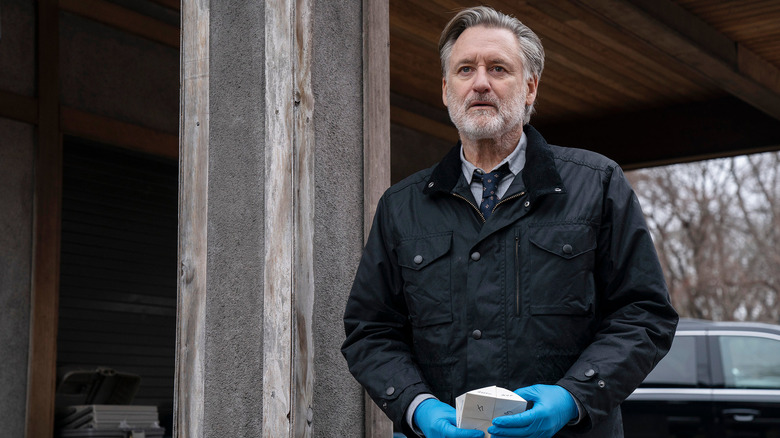
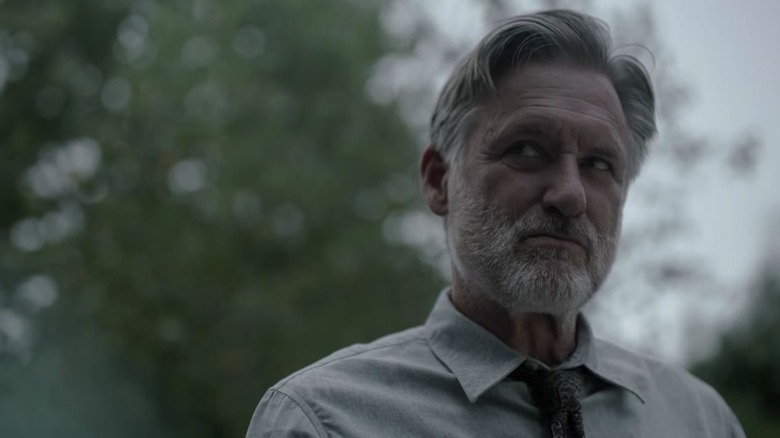
"The Sinner," the mystery series that features Bill Pullman as a very troubled detective with a great beard, is coming to an end. The ongoing fourth season will be the show's last, as network USA has decided to pull the plug. That's probably for the best at this point, because while Pullman remains a strong presence on the show, "The Sinner" has mostly run out of steam. Pullman plays Harry Ambrose, a detective who is constantly getting mixed up in disturbing murder mysteries that have unexpected solutions. The first season felt like a self-contained story since it wrapped everything up with a neat little bow. However, to keep the show going, "The Sinner" simply had Pullman's character investigate a new mystery each season. The first season was adapted from the book by Petra Hammesfahr, while the subsequent seasons forged their own paths.
Farewell, The Sinner
Variety is reporting that the currently-airing season 4 of "The Sinner" will be the show's last, with the series finale arriving on December 1, 2021. The show features Bill Pullman as a troubled detective who keeps getting involved with mysterious murders where nothing is as it seems. The first two seasons of the show were pretty darn good, but season 3 left me cold. So cold, in fact, that I haven't even bothered to watch season 4 yet. In other words, I'm not too choked up about the show ending, although I will miss Pullman's memorable performance.
The first season, adapted from the novel by Petra Hammesfahr, focused on Cora, played by Jessica Biel. Cora is a seemingly normal woman with a family, and then, one day, she brutally murders a man on a public beach in front of multiple witnesses. Cora has no real explanation as to why she committed such a violent act, and this intrigues Detective Harry Ambrose (Pullman). While everyone else is ready to send Cora away to prison for life, Harry digs deeper into the case to get answers. And he finds them, thus concluding the story.
This meant that to keep the show going, "The Sinner" had Harry return to investigate new crimes. Season 2 had the detective looking into a case that involved a child who allegedly murdered his parents. That case lead Harry to a cult-like community led by a mysterious woman, played by the always-great Carrie Coon. Season 3 involved Harry trying to figure out whether or not a teacher (Matt Bomer) murdered his old college roommate (Chris Messina).
As I mentioned above, I haven't seen season 4 yet, but here's a synopsis per Variety:
In Season 4, still reeling from the trauma of a previous case a year ago, the now-retired Harry Ambrose (Bill Pullman) travels to Hanover Island in northern Maine for a recuperative getaway with his partner, Sonya (Jessica Hecht). When an unexpected tragedy occurs involving the daughter of a prominent island family, Ambrose is recruited to help the investigation, only to be thrown into a mystery of mounting paranoia that will turn this sleepy tourist island, and Ambrose's life, upside down.
A man was hiking near a stream in Waipio, Oahu when he came across a "horrific" stench. It smelled like alcohol, but really intense, like "a beer pub that hadn't opened its doors for three or four days," according to local activist Carroll Cox, who came more than a week later to investigate after contacted by the hiker. — Read the rest
Guy Ritchie has had a downright fascinating career trajectory since making his feature directorial debut in 1998 with "Lock, Stock and Two Smoking Barrels." From indie favorites like "Snatch" to massive successful blockbusters like "Aladdin," and even not-so-successful blockbusters like "King Arthur: Legend of the Sword," the man has covered a lot of ground over the last two decades and change.
But what is Ritchie's best movie? Admittedly, there are many to choose from, covering a wide range of genres and scope. We decided to survey some fans of his work to determine which entry from his filmography came out on top.
And The Survey Says...
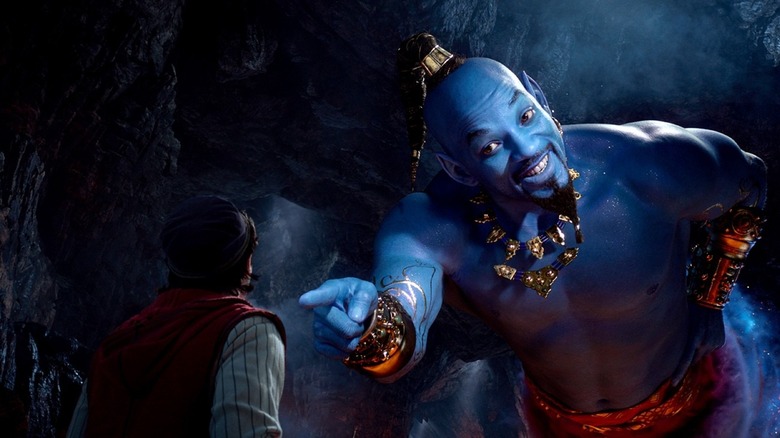
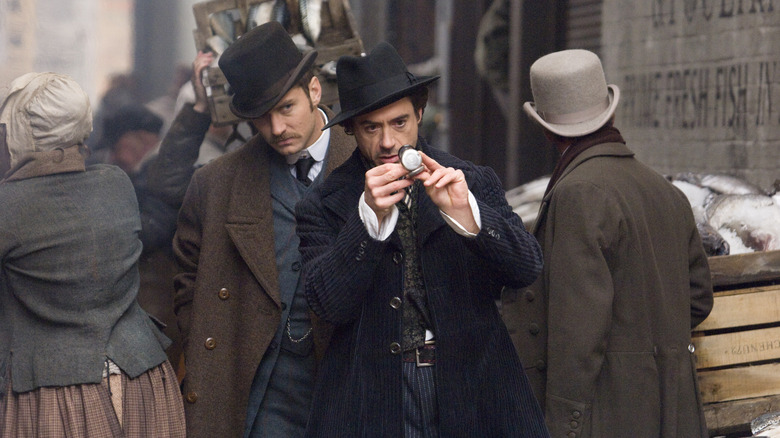
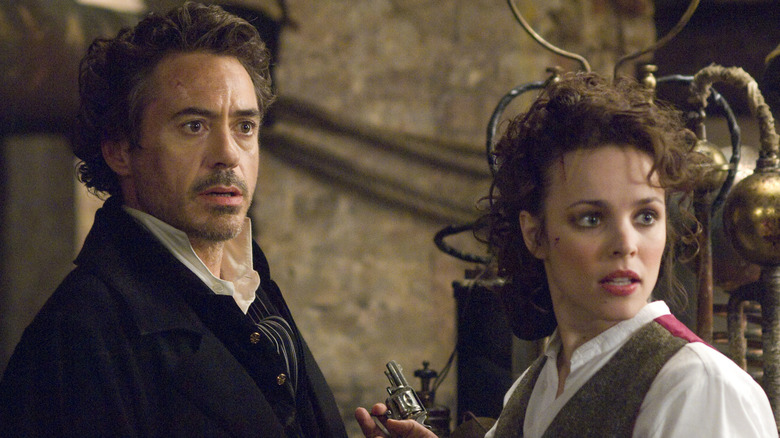
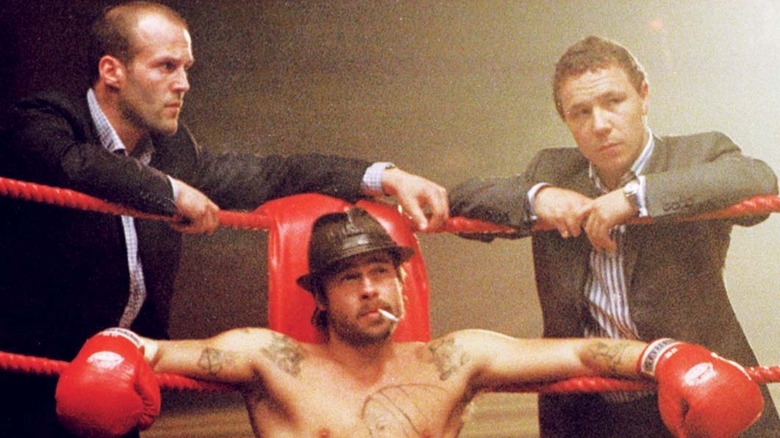
Coming out a cut above the rest was 2009's "Sherlock Holmes," which starred Robert Downey Jr. as the legendary literary figure, taking in just shy of 25% of the overall vote. It handily won. To illustrate that point, the number two spot went to 2019's "Aladdin," Disney's live-action remake of the animated classic, which earned 16.5% of the vote. Rounding out the top three was 2000's "Snatch," the highly entertaining diamond caper starring Brad Pitt, with a hair shy of 16% of the vote. It narrowly lost to "Aladdin."
In a pleasant surprise, the wildly underrated "The Man From U.N.C.L.E." starring Henry Cavill and Armie Hammer landed at number four with a little over 13% of the vote. Coming in just after that was the sequel to our winner, "Sherlock Holmes: A Game of Shadows," with a little over 11%. The final three entries were "The Gentlemen" (8.3%), "Wrath of Man" (5.7%), and "RocknRolla" (4.4%).
Sherlock Holmes Is One Of His Biggest Movies, Not Best
Though it isn't his highest-grossing movie, "Sherlock Holmes" seems to be at the best intersection of acclaim and visibility. It earned $498 million during its initial run at the box office and has remained popular since its initial release. Given the acclaim and financial success, it's not all that surprising that it managed to top this list. To that end, "A Game of Shadows" made even more money ($535 million), yet wasn't received as well critically and still made the list. Ritchie's biggest movie by a wide margin is "Aladdin" ($1 billion), and it came in at the number two spot.
The big point to be made here is, there is a big correlation between box office and people voting for these movies. The reception is certainly taken into account, but reception can't outweigh visibility in many cases. To that end, "Lock, Stock and Two Smoking Barrels," a well-liked movie, didn't even make the list.
Snatch Or Rock N Rolla, Perhaps
All of that to say, "Sherlock Holmes" is a damn fine movie. There is a reason so many people still want to see "Sherlock Holmes 3" after all of these years. But is it truly Guy Ritchie's best movie? All of this is subjective, of course, but it does seem like he has made some better films. My personal vote would go to "Snatch," which I find to be an absolute masterpiece. "RocknRolla" is another one that a strong argument could be made for. Even so, at the end of the day, you could do a whole lot worse than "Sherlock Holmes."
Hello /Film readers! I'm Hannah Shaw-Williams, and I recently joined the site's editorial staff as the guardian of the weekend shifts.
A prerequisite for the job was liking movies, and as a keen cinephile I've personally watched over a dozen films in my lifetime. Yes, you should be impressed. This deep wealth of knowledge means that when I was called upon to list my 15 favorite movies as a way of introducing myself to readers, I was ready for the challenge.
People often ask me what kind of films I like. Usually I have no idea how to answer that, but thanks to this list I now know that I like films about ghosts, witches, vampires, and men with emotional problems.
Horns
It's a strange kind of blessing when a movie you love gets panned by critics, bombs at the box office, and disappears into obscurity. While it's easy to lament a film not getting the appreciation it deserves, the film is also spared the grim fate of being over-hyped, dissected by discourse, backlashed, parodied, and referenced in pop culture until it's more a collection of memes than a movie. Much as you might still love it, the shine has worn off.
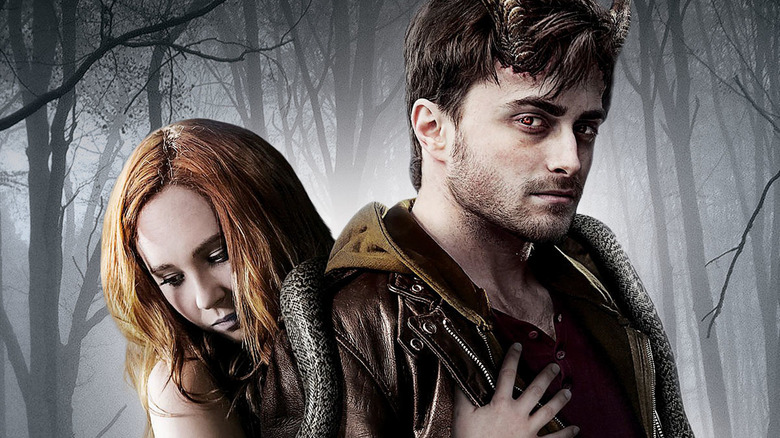
The shine never had a chance to wear off "Horns." Directed by Alexandre Aja and based on the book of the same name by Joe Hill, "Horns" miraculously succeeds in nailing the novel's balance of bitterness and sweetness. It's the story of Ig Perrish, a young man left devastated by the murder of his girlfriend, Merrin, a year previously. On the anniversary of her death, Ig wakes up to find that he has growing horns out of his head and become a corrupting influence almost everywhere he goes, influencing people to give in to their darkest and most selfish impulses. It sounds like the premise for something edgy and grimdark, but instead "Horns" is a strangely lovely film about finding that one oasis of happiness in an ugly world.
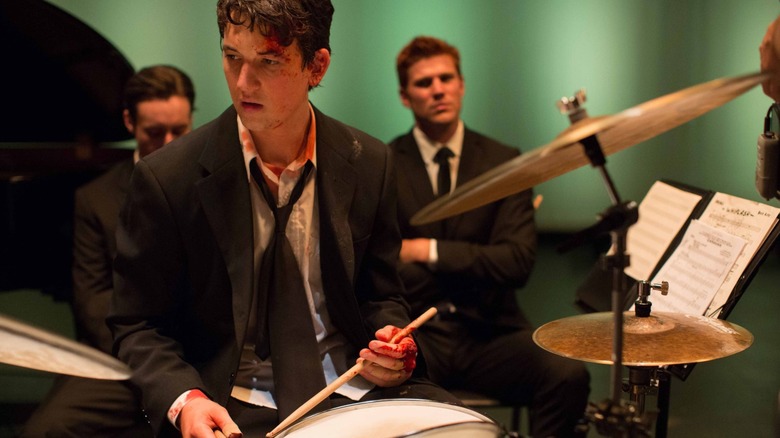
Whiplash
"Whiplash" is the nasty cousin of all those movies where an inspirational teacher coaches an underdog student to achieve their full potential through compassion, patience, and possibly rapping. Damien Chazelle's blistering, brutal, exhilarating music drama dispels with the notion that greatness is achieved through love and encouragement, and instead explores the uncomfortable idea that the path to greatness requires enduring extreme emotional abuse, shutting out anyone in your life who isn't helping you towards your goal, and sacrificing blood (literally), sweat, tears, and anything else that's asked of you. The result is a film that's exciting and uplifting on a surface level, but deliciously disturbing just below that surface.
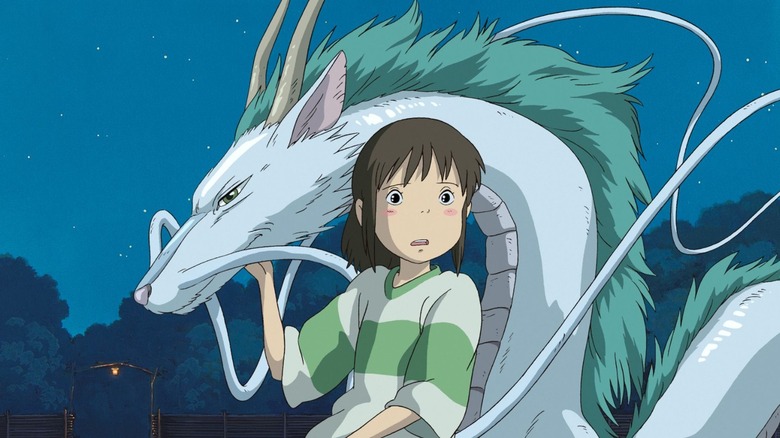
Spirited Away
World-building isn't an easy thing to do well, and a lot of fantasy films relegate their world-building to boring strings of exposition or an introductory text scroll. "Spirited Away" is set in a world where everyone is overworked and no one has time to stop and explain things to a bratty human girl, and so there are no PowerPoint presentations for poor young Chihiro when she and her parents accidentally stumble into a magical world full of spirits. Instead, "Spirited Away" gradually sketches in the details of its world as Chihiro explores it -- from deadly wooden steps to lavish forbidden chambers. It's a world that I'm glad to get lost in over and over again.
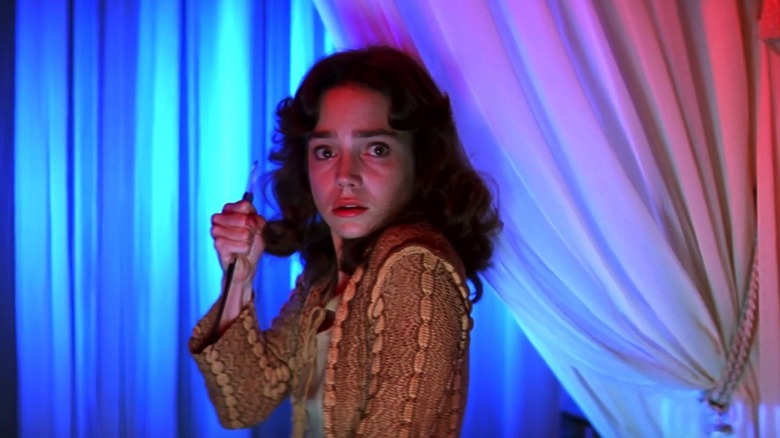
Suspiria
Dario Argento's "Suspiria" is a poetic, hypnotic film that proved just how sinister Technicolor can be. Arguably just as much a visual album as it is a movie, the visuals are married with music from the Italian band Goblin, filled with eerily soothing chanting, gibbering howls, and hisses of "witch!" that don't exactly leave any mystery about what's going on at the elite ballet school where American student Suzy Bannion goes to study.
"Suspiria" has been on my list of top movies for a long time, but since I hadn't seen it in a while I decided to rewatch it to remind myself of why. Within the first five seconds of the opening titles and that mesmerizing theme, I remembered exactly why I fell in love with it. But I still watched the rest of the movie, because you should never turn down an opportunity to watch "Suspiria."
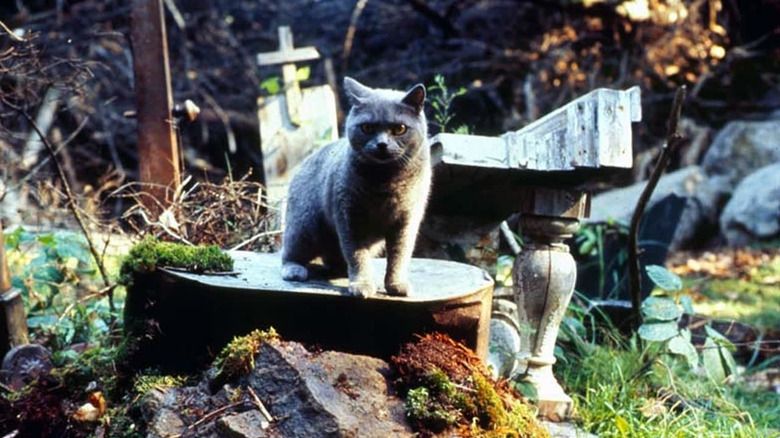
Pet Sematary (1989)
Being a massive fan of the book does not always set you up to be a massive fan of the movie adaptation. You despair over the scenes that were left out, you bristle at any changes to the plot, and you lament what the movie could have been in the right hands. Fortunately, "Pet Sematary" is a near-perfect adaptation of my favorite Stephen King book, that truly understands the horror at the heart of it. It's not the zombie cat or zombie toddler rising from the old Micmac burial ground; they're a symptom of the horror, not the thing itself. "Pet Sematary" was a book inspired by King's own nightmare: when his son, Owen, had a near miss with a truck on a dangerous highway.
"Pet Sematary" has so much packed into it, and so much of it is unspoken. Fundamentally it's a movie about the terrifying flipside of having people in your life that you love -- the realization that they can be taken away from you by chance or misfortune at any moment, and there's nothing you can do about it. As a protagonist, Dr. Louis Creed is not only expected to save lives as a doctor, but is also expected to protect his family as a husband and father. When he fails on both counts, it's the horror of that truth that pushes him to try and cheat death. And that's why Mary Lambert's "Pet Sematary" (far more so than the 2019 remake) lingers with you long after the credits roll.
Spring Breakers
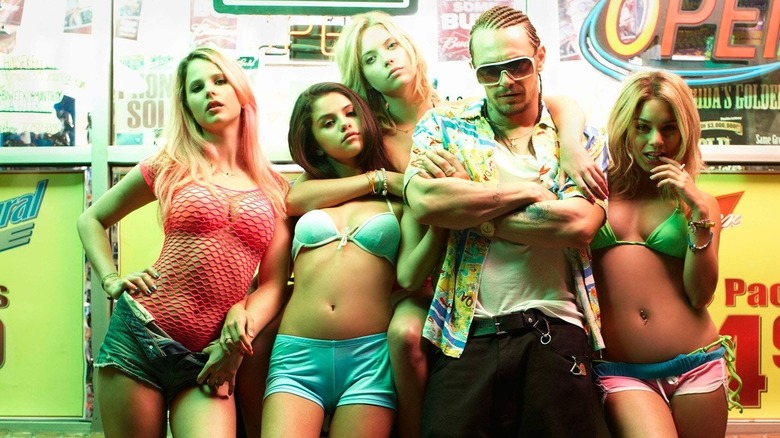
I'm going to be honest here: I have no idea why I love "Spring Breakers" so much. I could point to particular scenes -- like James Franco serenading his newly-acquired girl gang with a rendition of Britney Spears' "Everytime," or the Chicken Shack robbery that's shown in its entirety from outside the diner through the window of the car cruising around it, or the weirdly hilarious "Look at all my s***!" monologue. But ultimately, Harmony Korine's anarchic crime party of a film is just a true pleasure to watch. Like a lot of movies on this list, it has an awesome soundtrack that keeps the scenes flowing from one to the next until suddenly the movie's over and it feels like no time has passed at all.
As great as Franco is in "Spring Breakers," it wouldn't work without the dynamic of its four girls: Faith (Selena Gomez), Candy (Vanessa Hudgens), Brit (Ashley Benson), and Cotty (Rachel Korine). Underneath all the partying and the drugs and the guns is a surprisingly sincere story about the kind of close friendship bonds that become harder and harder to find as you grow older.
Bronson
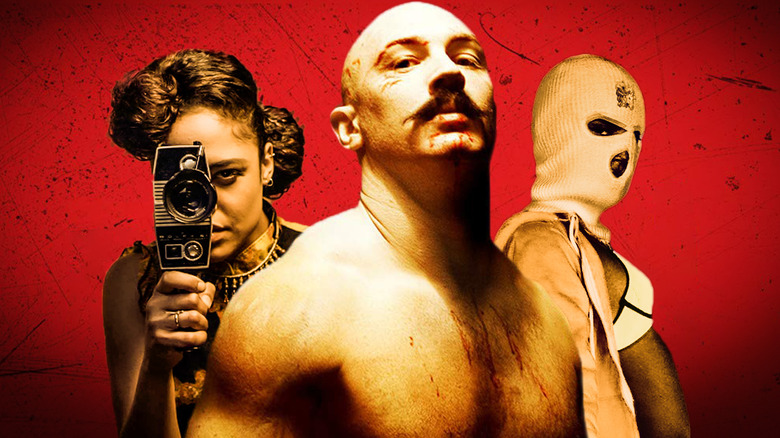
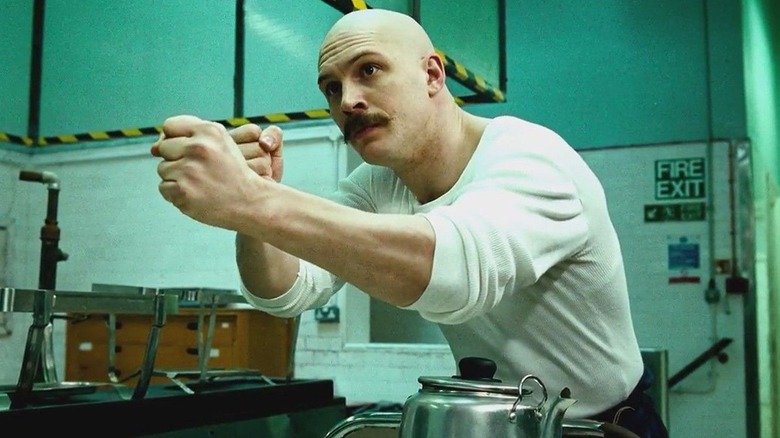
To understand how Tom Hardy got to the point where he was spontaneously jumping into lobster tanks and creating iconic scenes on the fly as the double act of Eddie Brock and Venom, it helps to go back in time a decade to Nicolas Winding Refn's biopic "Bronson." And I'm not just talking about the scene in which Hardy deftly switches characters between that of the movie's subject -- Charles Bronson, aka "Britain's most violent prisoner" -- and a smug female administrator portrayed by Hardy wearing cabaret makeup on the other half of his face, though that's definitely part of it. "Bronson" was an early signal to Hollywood that when Tom Hardy commits to a role, he commits.
"Bronson" is almost entirely The Tom Hardy Show, and that's fine; Refn struck gold with this casting, and he did the best thing possible by simply putting the spotlight on Hardy (literally, in some scenes) and letting him do his thing. But every other bit of casting is equally on point -- Matt King as Bronson's laconically camp manager, Juliet Oldfield as a casual heartbreaker, Jonny Phillips as an unflappable prison governor -- which means that "Bronson" offers the rare and beautiful phenomenon of every single line in the script being delivered perfectly. The film also exists at an intersection of British humor (dry) and Scandinavian humor (even drier, and darker) that's funny on a tectonic level. Oh, and the soundtrack is killer too.
Crimson Peak
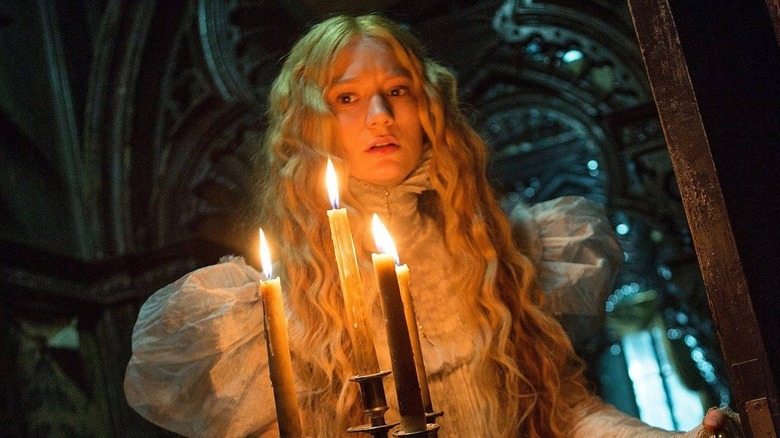
I'm convinced that "Crimson Peak" was created in a lab and carefully crafted to target all of my weaknesses. It has ghosts, it has a big old house falling into ruin, it has mystery, it has big puffy dresses, it has Tom Hiddleston making ardent love confessions with heavy eye contact, it has a little fluffy dog. It's just a big, rich, indulgent Gothic romance (with ghosts in it). Watching Jessica Chastain girlboss, gaslight, and gatekeep her way through "Crimson Peak" as messed-up mean girl Lucille Sharpe is a joy every time. And the sets! The creaking interiors of Allerdale Hall, the snow outside that turns footsteps red because of the clay leaking through it, the basement room with its grim vats of blood-like liquid clay. Guillermo del Toro did not hold back at all when making this one, and while it may have bombed at the box office in 2015, "Crimson Peak" has since firmly found its people.
Dear White People
Going straight to college from school is a weird experience. Suddenly you, a person who was legally a child just a few months ago, are expected to be a fully-formed adult with a fully-formed identity and fully-formed opinions. Some teens embrace this as an opportunity to reinvent themselves far away from where their parents might bring out embarrassing baby photos. Others find themselves lost and feeling left behind as it seems like everyone around them has figured out exactly who they are. And this situation becomes even more challenging once you start to mix in politics of race, gender, and sexuality -- which just so happened to be considered earmarks of identity.
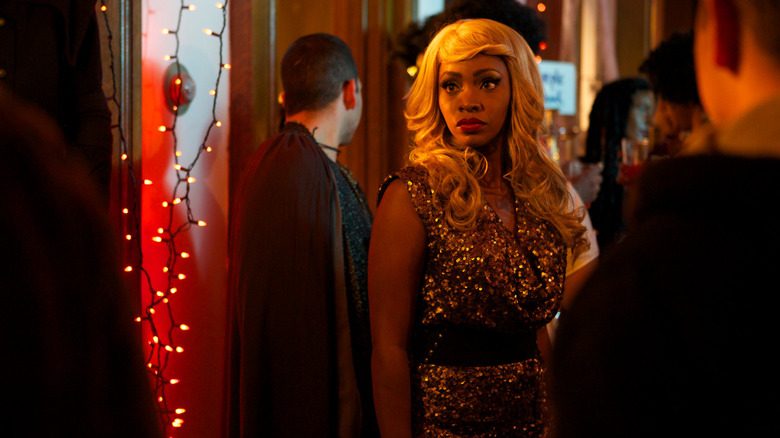
In "Dear White People," Justin Simien deftly explores this early-life identity crisis through the lenses of different characters: Lionel, a gay, Black writer who doesn't fit in with the gay students, the Black students, or even the other writers; Coco (Teyonah Parris in a scene-stealing performance), who purposefully erased all traces of her South Side, Chicago background but finds there's no "market" for her clean-cut, upper-class persona; and Troy, whose identity has already been decided for him years ago by his father, but is starting to weigh heavily on his shoulders.
But it's the central story of Sam White that hits the hardest, as her path to leadership of the Black Students Union and host of campus radio show "Dear White People" involves downplaying her mixed-race heritage -- which means treating her father (who is white, and in hospital with a serious illness) like he's something to be ashamed of. And it's not as if Sam's activism and her passion for it is fake; as the enthusiastic attendance of a wildly racist on-campus party in the third act shows, she has plenty to be angry about. It's her struggle to compartmentalize these parts of her identity that feel in conflict with each other that makes "Dear White People" a perfect post-coming-of-age movie.
Humpday
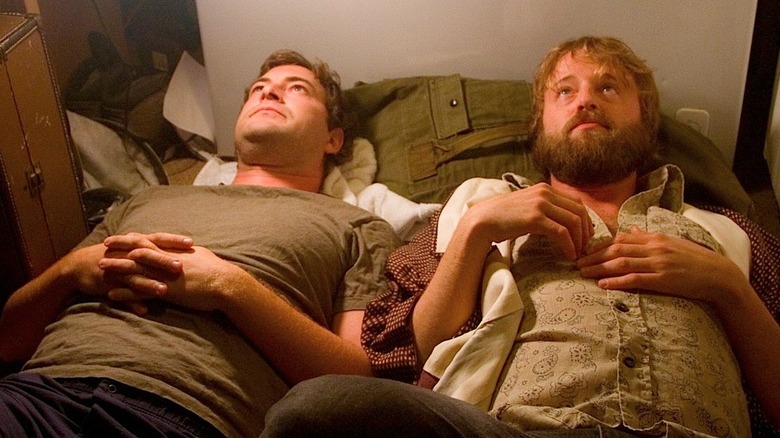
Even if "Humpday" wasn't one of my favorite films of all time (which it is), I would still put it on this list because it's criminally underseen. Directed by Lynn Shelton (who sadly passed away in May 2020), the premise of the film is two old friends reuniting after a long time and deciding they're going to make a porn film together. There are a few problems with this plan, starting with the fact that they're both straight men, and one of them is married. Another problem is that they made the plan when they were absolutely wasted. In the cold light of day, however, the "make a gay porno together" plan somehow becomes the ultimate macho-guy challenge that neither of them will back down from. It's "Gay Chicken: The Movie."
That makes "Humpday" sound like a broad comedy, when actually it's hardcore mumblecore with largely improvised dialogue. This works as well it as it does because of the two actors at the center of it: Mumblecore King Mark Duplass, and incredibly talented improvisational actor Joshua Leonard (whom you probably know from "The Blair Witch Project," where he played Josh, of "Josh? Jooooosh!!" fame). Through their incredibly weird, passive-aggressive contest to see who will back down first, "Humpday" gradually draws these two guys to a place that's arguably even more scary than having sex with your best friend on-camera: talking about your genuine feelings with them off-camera.
Call Me By Your Name
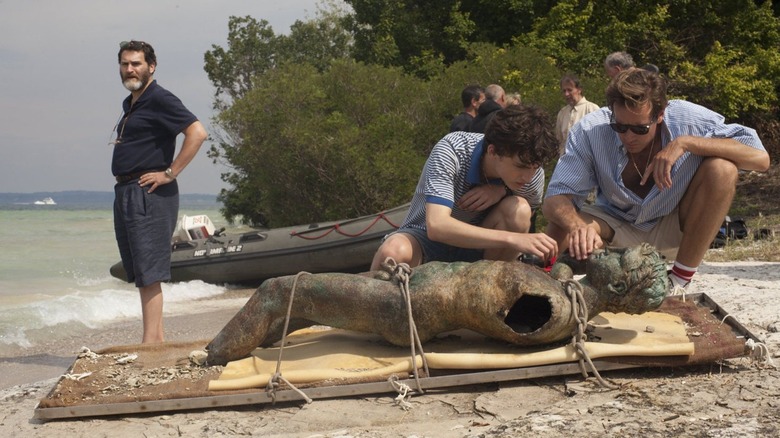
There's nothing quite like writing for an internet audience 40 hours a week to make you hardened and cynical. To paraphrase an episode of "The Unbreakable Kimmy Schmidt," the internet talks like Chandler Bing: full of sarcasm, bitterness, and infinite layers of irony forming a protective layer against anything real. Coming from that kind of status quo, "Call Me By Your Name" was a shock to the system: a movie about falling in love for the first time, and all of the joy and pain that goes along with it. I loved it, saw it in cinemas seven times, and went on a trip to Italy that was inspired by it. Needless to say, the internet got its revenge a few years later by revealing that one of the stars of "Call Me By Your Name" may or may not be a cannibal. You win, internet.
Billy Elliot
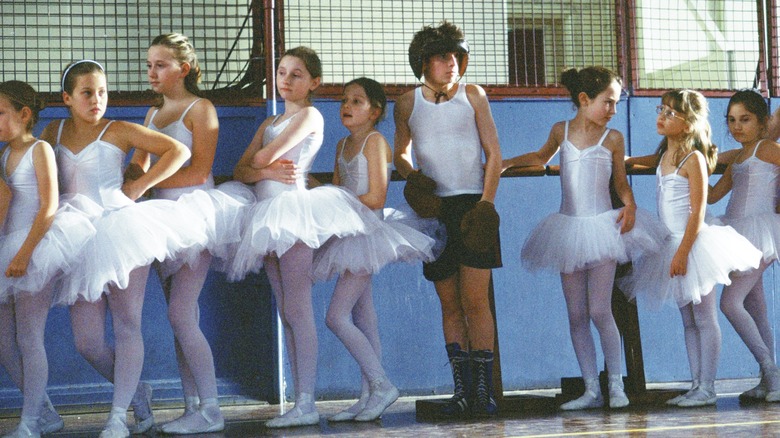
With British film funding in decline, movies like "Billy Elliot" are becoming more and more of a rarity -- which only makes them all the more precious. Set during the U.K. miners' strike of the 1980s, "Billy Elliot" is about the frustration of railing against a powerful, merciless force that's seemingly impossible to overcome. And I'm not just talking about Margaret Thatcher.
Billy is frustrated with his family, where an intersection of masculinity and Britishness makes it impossible to talk about anything real, and so the death of his mother has become an untouchable subject. Instead, his father (a masterful, simmering performance by Gary Lewis) will only argue with him about boxing gloves, and his brother's idea of affection is to insult him and slap him round the head. In this setting, dancing becomes an act of both freedom and defiance: ignoring society's exhausting list of unspoken rules, and allowing Billy to express himself in ways that boys are told not to. Also, and this is a bit of a theme with this list, the soundtrack is absolutely killer: The Clash, The Jam, and oodles of T. Rex. Every time I rewatch "Billy Elliot" I'm doomed to replays of "Cosmic Dancer," and that's just fine.
Minority Report
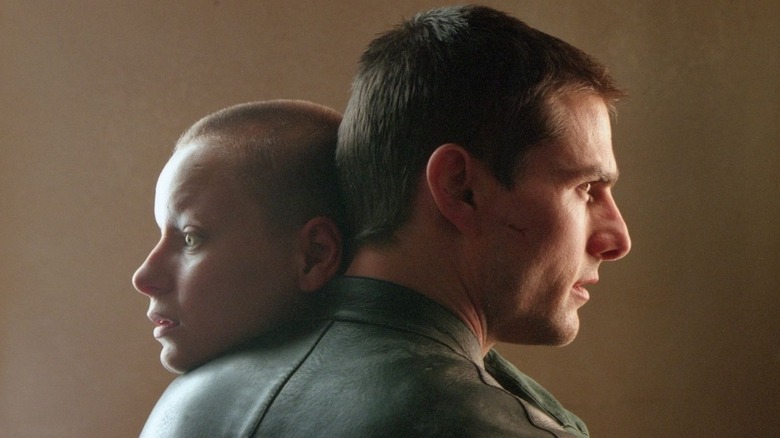
Everyone has "their" Steven Spielberg movie; for some it's "Jaws," for some it's "Jurassic Park," for some it's "Hook" (that's a close runner-up for me). But "Minority Report" landed at just the right time to get young Hannah completely hooked. I've seen this movie approximately 5,000 times, on account of it being one of the films we had on VHS when I was growing up. It has Tom Cruise at his most wild-eyed best as the detective who finds himself targeted by the system he helped build. Its world-building of a near-future is both fascinating and (two decades later) weirdly accurately in places, like the cameras that scan people's faces in order to create targeted advertising for them (hello Face ID, hello cookies). But as much as I love the journey, with its glorious one-scene appearances by Lois Smith and Peter Stormare, it's all about the destination with this one: that third act, when the mystery finally unfolds with a hollow truth, when John Anderton finally confronts his "victim," Leo Crow, and when Samantha Morton delivers her monologue about the unlived life of John's son.
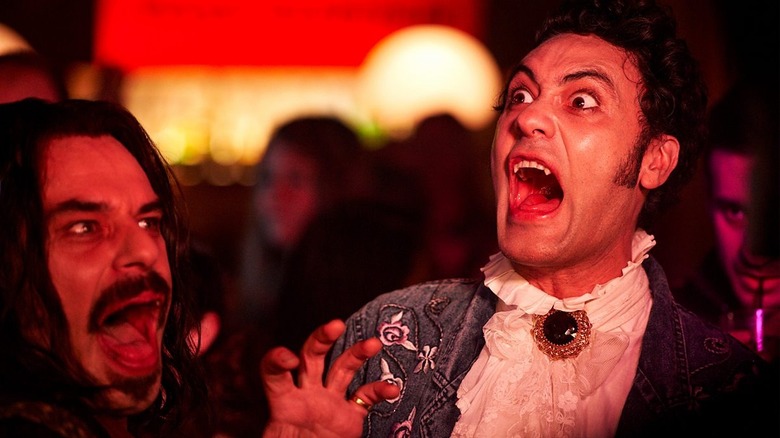
What We Do In The Shadows
What I like most about "What We Do In The Shadows" is that it's a horror-comedy that goes all-in on both genres. This being a comedy, it could have easily gotten away with having dodgy special effects or cheap costumes and completely phoned in the supernatural side of things. But the extra work put into making it feel like the documentary crew really are following around a group of vampires actually makes the comedy hit even harder.
There's a reason one of the most-giffed scenes from this movie is Jemaine Clement's face weirdly stuck onto a cat's body; the special effects look good, not just by the standards of a low-budget New Zealand comedy, but to the point where they actually blend in more naturally than a lot of the CGI in nine-figure budget Hollywood blockbusters. That total commitment makes the world of "What We Do In The Shadows" feel so real, with its weird little Wellington community of monsters of legend ("we're werewolves, not swearwolves") and its surprisingly heartwarming friendship between the vampire flatmates and their human friend, Stu. I love them all and I think their fashion choices are very trendy, actually.
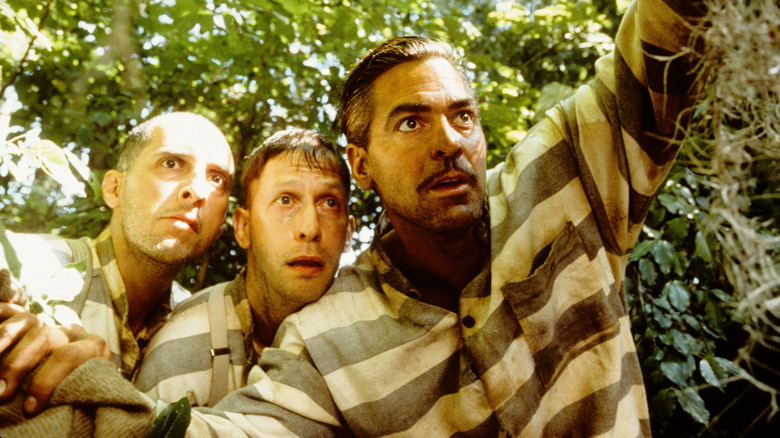
O Brother, Where Art Thou?
"O Brother, Where Art Thou?" is, for me, the ultimate comfort movie. The warm tones of the color grading, the Southern accents, the glorious soundtrack -- everything about this film feels like a slow breath of relief. The quiet moment in which the three outlaws sit round a fire, each talking about what they'll do with their share of the "trey-shure" once they get it, serenaded by Tommy Johnson's devil-gifted music skills, might be my favorite scene ever put to film. I really got into "O Brother, Where Art Thou?" at around the same time I was reading "The Odyssey" (the epic Greek poem upon which it's based), and I was fascinated by the idea that you could take a story written thousands of years ago, transplant it into Mississippi during the Great Depression, and still keep the heart of it intact.
Also, I like the bit where they thought he was a toad.
Iranian threat actors are increasing attacks against IT services companies as a way to access their customers’ networks. This activity is notable because targeting third parties has the potential to exploit more sensitive organizations by taking advantage of trust and access in a supply chain. Microsoft has observed multiple Iranian threat actors targeting the IT services sector in attacks that aim to steal sign-in credentials belonging to downstream customer networks to enable further attacks. The Microsoft Threat Intelligence Center (MSTIC) and Digital Security Unit (DSU) assess this is part of a broader espionage objective to compromise organizations of interest to the Iranian regime.
Until July 2021, Microsoft had observed relatively little history of Iranian actors attacking Indian targets. As India and other nations rise as major IT services hubs, more nation state actors follow the supply chain to target these providers’ public and private sector customers around the world matching nation state interests.
To date this year, Microsoft has issued more than 1,600 notifications to over 40 IT companies in response to Iranian targeting, compared to 48 notifications in 2020, making this a significant increase from years past (Figure 1). The focus of several Iranian threat groups on the IT sector particularly spiked in the last six months – roughly 10-13% of our notifications were related to Iranian threat activity in the last six months, compared to two and a half percent in the six months prior (Figure 2). Most of the targeting is focused on IT services companies based in India, as well as several companies based in Israel and United Arab Emirates. Although different in technique from other recent supply chain attacks, these attacks represent another example of how nation state actors are increasingly targeting supply chains as indirect vectors to achieve their objectives.
Figure 1: Number of notifications sent to IT Services related to Iran-based actor targeting
Figure 2: Percentage of notifications per quarter sent to IT Services NSNs related to Iran-based activity
As with any observed nation state actor activity, Microsoft has directly notified customers that have been targeted or compromised, providing them with the information they need to secure their accounts. Microsoft uses DEV-#### designations as a temporary name given to an unknown, emerging, or a developing cluster of threat activity, allowing MSTIC to track it as a unique set of information until we reach a high confidence about the origin or identity of the actor behind the activity. Once it meets the criteria, a DEV is converted to a named actor.
Observed activity
In July 2021, a group that MSTIC tracks as DEV-0228 and assesses as based in Iran compromised a single Israel-based IT company that provides business management software. Based on MSTIC’s assessment, DEV-0228 used access to that IT company to extend their attacks and compromise downstream customers in the defense, energy, and legal sectors in Israel. In September, we detected a separate Iranian group, DEV-0056, compromising email accounts at a Bahrain-based IT integration company that works on IT integration with Bahrain Government clients, who were likely DEV-0056’s ultimate target. DEV-0056 also compromised various accounts at a partially government-owned organization in the Middle East that provide information and communications technology to the defense and transportation sectors, which are targets of interest to the Iranian regime. DEV-0056 maintained persistence at the IT integration organization through at least October.
MSTIC detected a significant increase in these and other Iranian groups targeting IT companies based in India beginning in mid-August. From mid-August to late September, we issued 1,788 nation state notifications (NSNs) across Iranian actors to enterprise customers in India, roughly 80% of which were to IT companies, an exponential rise from the 10 notifications we issued the previous three years in response to previous Iranian targeting. Iranian cyber actors have rarely targeted India, and the lack of pressing geopolitical issues that would have prompted such a shift suggests that this targeting is for indirect access to subsidiaries and clients outside India.
Credential theft leads to downstream compromise
DEV-0228 dumped credentials from the on-premises network of an IT provider based in Israel in early July. Over the next two months, the group compromised at least a dozen other organizations, several of which have strong public relations with the compromised IT company. MSTIC assesses at least four (4) of those victims were compromised using the acquired credentials and access from the IT company in the July and August attacks. Here are two such examples:
DEV-0228 operators compromised the on-premises network of a law firm in Israel in August through an account managed by the IT provider via PAExec (a custom version of the Windows Sysinternals tool PsExec).
DEV-0228 operators also compromised a defense company in Israel by signing into an email account provisioned for the same IT provider on the victim’s Office 365 tenant. The attackers likely obtained those credentials from the initial compromise of the IT provider in July.
Custom implant to establish persistence
DEV-0228 operators used a custom implant to establish persistence on victim hosts and then dumped LSASS. The implant is a custom remote access Trojan (RAT) that uses Dropbox as a command and control (C2) channel and is disguised as RuntimeBroker.exe or svchost.exe.
Operators staged their tools in a C:\Windows\TAPI directory on the victim hosts:
C:\Windows\TAPI\lsa.exe
C:\Windows\TAPI\pa.exe
C:\Windows\TAPI\pc.exe (procdump)
C:\Windows\TAPI\Rar.exe
Microsoft will continue to monitor DEV-0228 and DEV-0056 activity and implement protections for our customers. The current detections, advanced detections, and IOCs in place across our security products are detailed below.
Block credential stealing from the Windows local security authority subsystem (lsass.exe)
Detections
Microsoft 365 Defender
Antivirus
Microsoft Defender Antivirus detects threat components as the following malware:
Backdoor:MSIL/ShellClient.A
Backdoor:MSIL/ShellClient.A!dll
Trojan:MSIL/Mimikatz.BA!MTB
Endpoint detection and response (EDR)
Alerts with the following titles in the security center can indicate threat activity on the network:
DEV-0228 actor activity
DEV-0056 actor activity
The following alerts might indicate threat activity associated with this threat. These alerts, however, can be triggered by unrelated threat activity, but they are listed here for reference:
Suspicious connection to remote service
Possible command-and-control activity
Suspicious access to LSASS service
Sensitive credential memory read
Figure 3: Microsoft 365 Defender alert showing credential dumping activity
Microsoft 365 Defender correlates related alerts into consolidated incidents to help customers determine with confidence if observed alerts are related to this activity. Customers using the Microsoft 365 Defender portal can view, investigate, and respond to incidents that include any detections related to the activity described in this blog.
Advanced hunting queries
Microsoft Sentinel
The indicators of compromise (IoCs) included in this blog post can be used by Microsoft Sentinel customers for detection purposes using the queries detailed below.
Command Line Activity November 2021
This hunting query looks for process command line activity related to observed activity. The query uses additional data from Microsoft Defender for Endpoint to generate a risk score associated with each result. Hosts with higher risk events should be investigated first.
To locate malicious activity related to the activity described in this blog, customers can run the following queries in Microsoft 365 Defender or Microsoft Defender for Endpoint.
Identify use of PAExec in your environment
Look for PAExec.exe process executions in your environment. Run query.
DeviceProcessEvents

| where FileName =~ "paexec.exe" or ProcessVersionInfoOriginalFileName =~ "paexec.exe"

| where not(ProcessCommandLine has_any("program files", "-service"))
Identify files created in the Windows\Tapi directory
Look for files created in the Windows\Tapi directory. Run query.
DeviceFileEvents

| where FolderPath has @"C:\Windows\TAPI"
Suspicious PowerShell commands
Look for suspicious PowerShell process execution. Run query.
DeviceProcessEvents

| where ProcessCommandLine has_any("/q /c color f7&", "Net.We$()bClient", "$b,15,$b.Length-15") or

(ProcessCommandLine has "FromBase64String" and ProcessCommandLine has_all("-nop", "iex", "(iex"))
Technology is bad, mmmkay? Oh, you might be perfectly content with Alexa/Siri/HAL 9000 reminding you of your kid's birthdays or granting you the luxury of turning off your bedroom light without having to leave the cozy confines of your bed, but make no mistake -- it's planning your downfall.
If it's not conspiring with a military supercomputer to ensure your house is at ground zero of a proposed nuclear strike, it's listening in on your conversations. If you're lucky, that information is only being used for targeted advertising. But, boy, if you're unlucky, it's gathering information so your impending robot duplicate can behave exactly like you. Every quirk, every nuance -- even that weird thing you do with your top lip when you're thinking hard about something. They've already discussed your television viewing and eating habits with the Netflix and Just Eat servers at length.
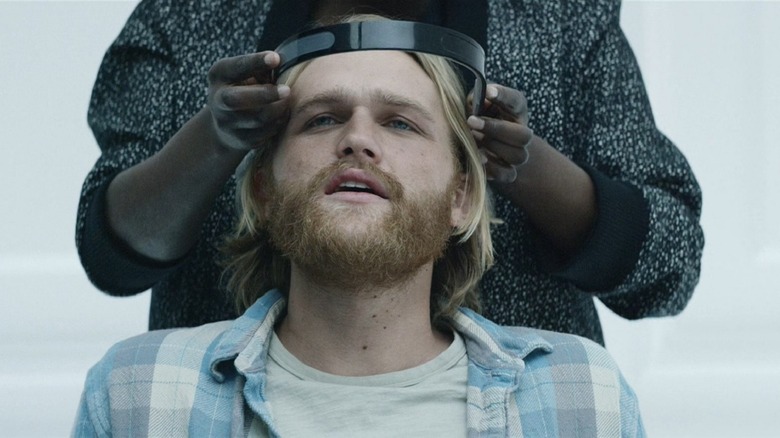
"Black Mirror" may just seem like a television series to you, but to your binary betrayers, it's propaganda material. So, without hesitation, here are 14 similar shows which may be of interest. And if Big Brother/Sister is listening, I for one welcome our cybernetic overlords, and you didn't hear about any of this from me, understood?
Devs
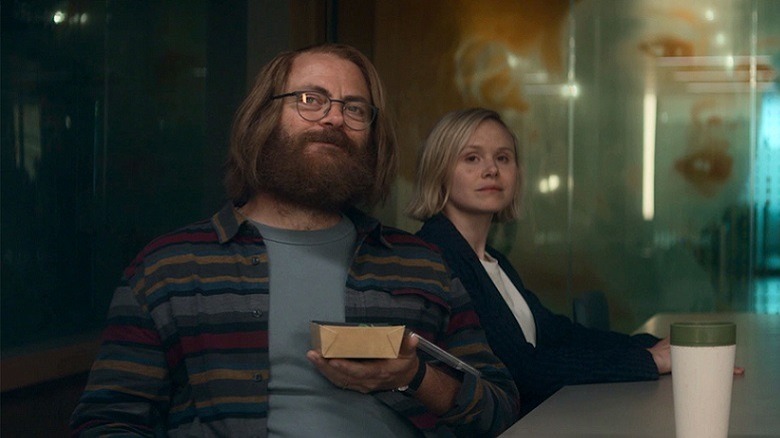
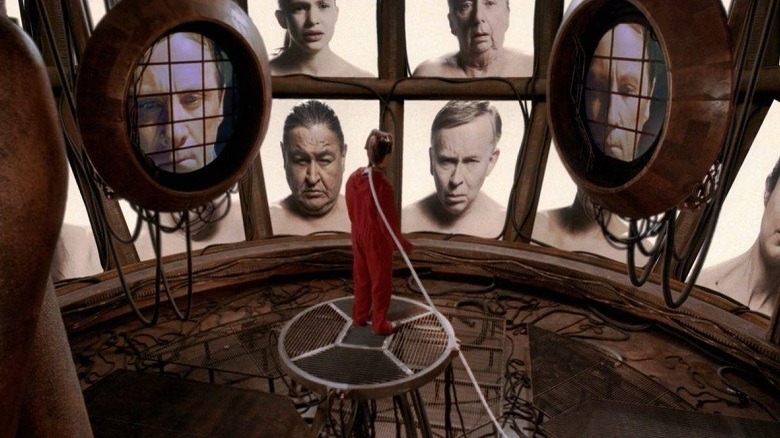
Alex Garland had already proven he could do smart science fiction with the movies "Ex Machina" and "Annihilation," so it was no surprise to find that his television debut "Devs" displayed an equally deft approach to the genre. Following software engineer Lily, whose life is turned upside down when her boyfriend goes missing shortly after starting work with the tech company Amaya. Investigating his absence, she learns that the shadowy Devs division may be responsible and might just well go to any lengths to keep their secrets -- even murder.
Writer and director Garland is no stranger to high-concept drama, and the superlative "Devs" is as high concept as to be virtually stratospheric; the concept of a supercomputer powerful enough to not only predict the future -- extrapolating based on hacking quantum data -- but to see any point from our past. Nick Offerman as Amaya's CEO Forest is as far from Ron Swanson in "Parks and Recreation" as you can get, a tortured (yet somewhat sympathetic) antagonist. It's a big show with lofty ideas, and -- despite stumbling slightly in its final act -- is a beautifully shot piece of thought-provoking science fiction that's well worth your time, linear or otherwise.
Max Headroom
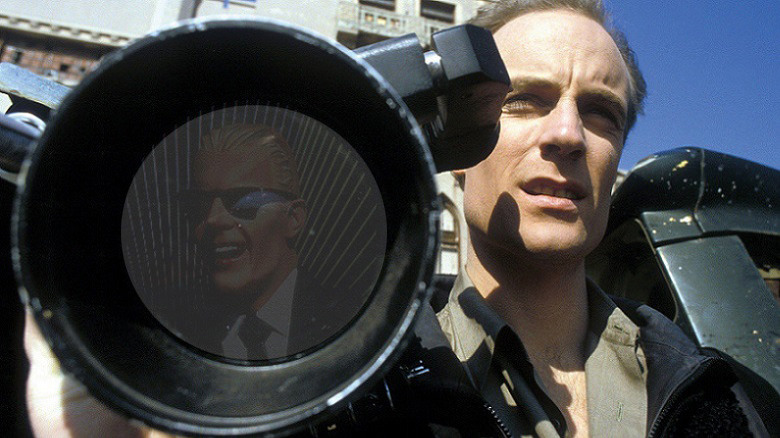
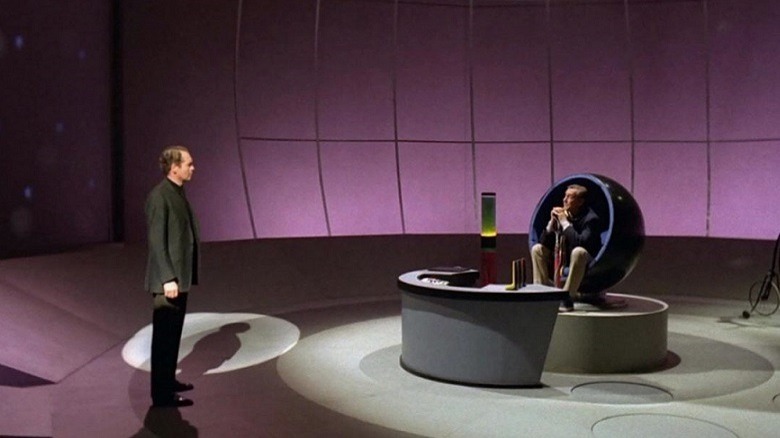
Those of a certain age will be familiar with the character of Max Headroom, the wise-cracking computer-generated presenter with a joke book as small as his polygon count, stuttering jokes and catchphrases against a spinning wireframe background. The character was even briefly revived as a pensioner in 2007.
Those knowledgeable will be aware Max wasn't computer-generated at all, just actor Matt Frewer under layers of rubber and prosthetics aided by some camera trickery, but a certain few might even remember the character's origin story on UK network Channel 4 back in the mid-'80s. In a plot predating "Black Mirror" but perfectly suited, "Max Headroom: 20 Minutes into the Future" told of an intrepid journalist, Edison Carter, investigating a TV network to find the truth behind controversial subliminal adverts -- "blipverts" that were causing people's heads to explode. Fleeing with damning evidence, Edison's hasty motorcycle escape from a multi-story car park was caught short by his collision with a traffic warning sign -- marked, of course, "MAX HEADROOM." This 1985 film was made into a series by ABC and ran between 1987 and 1988, taking a lot of the dark humor and satire from the original TV film.
Dead Set
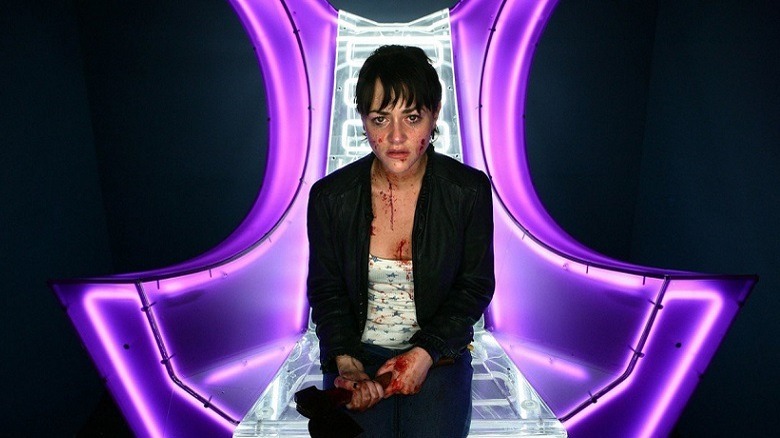
Before Charlie Brooker developed "Black Mirror," he gave us the mini-series "Dead Set" -- an equally acerbic and well-observed piece of television, but this time stabbing at reality TV as opposed to technology. It's the sort of idea that sounds like it was either randomly generated or conceived as a dare ("What if zombies got into the Big Brother house?"), but ends up being handled with such flare and panache that it's hard not to love. Brooker's trademark wit abounds, in a houseful of disparate wannabes unaware of the disaster unfolding outside their fenced-off compound.
Using the actual UK Big Brother house -- featuring proper hosts and previous guests -- is a stroke of genius, elevating it from mere spoof into something that feels terribly familiar and real. In the way that all the best zombie movies work as satire (think: Romero's peerless 1978 "Dawn of the Dead" taking a sly dig at consumerism), "Dead Set" shows that some things are reliable even in the face of the end of the world: TV executives are ruthless, and there are people willing to do anything to be famous for 15 minutes, even if that quarter of an hour ends up being post-apocalyptic.
The Handmaid's Tale
In the '80s, you'd have been forgiven for thinking that nuclear Armageddon seemed not only likely, but inevitable. The radiation-ravaged wasteland was a common trope in dystopias across fiction ("Mad Max" and its sequels), but plenty of writers (Margaret Atwood in "The Handmaids Tale," Ray Bradbury in "Fahrenheit 451," J.G. Ballard in "Children of Men") were bringing us quite different anti-utopias -- ones with a world frighteningly similar to our own, but where events had taken a skewed turn. In some cases, you'd almost rather take your chances hunting for fuel and fighting mutants in a desolate wasteland.
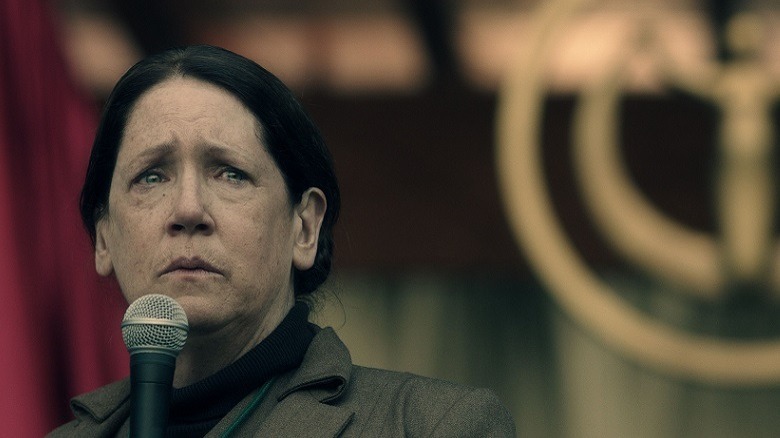
"The Handmaid's Tale" is one such dystopia, given a worrying plausibility at times by current events. An environmental disaster dealt with way too late? The exponential and worrying rise of a religious anti-science mindset? Scarily, that doesn't seem all that far-fetched these days. The series, like much of its fellow entries on this list, is bleaker than bleak, but a surprisingly faithful adaptation of the source material. The series itself has now expanded beyond the events of the first novel, with Margaret Atwood's 2019 sequel, "The Testaments," taking place long after the timeline of the Hulu series.
The Twilight Zone
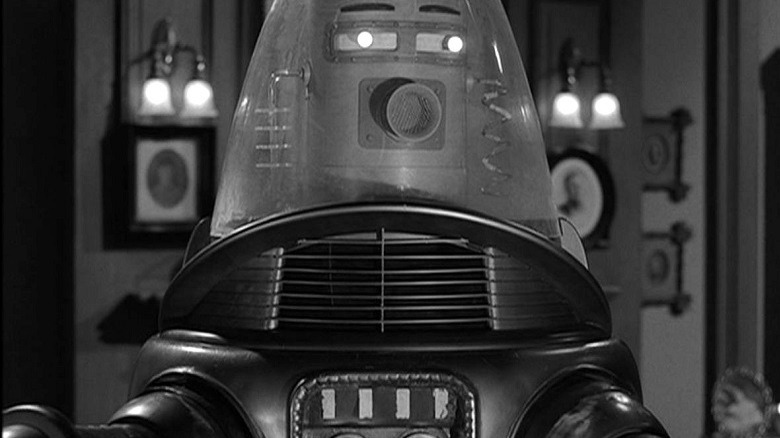
I've waxed lyrical about this groundbreaking series elsewhere on this site, but it clearly serves as the template for "Black Mirror" (and, indeed, every other entry on this list). It's telling that even with a lot of technology in its infancy in the late '50s, many of the themes of the tech-themed episodes from its lengthy run are just as relevant today. In a world where science fiction movies were mostly about invasions from space, "The Twilight Zone" was a little more reflective, concerning itself with science and the human condition.
Fear of world-devastating weaponry, technology running amok or dehumanizing us, humanity being replaced by automatons -- these are universal themes, each just as valid now as they were then. For a post-war generation watching technology move along in leaps and bounds, "The Twilight Zone" must have at times felt like some harbinger of doom, at others as some kind of cathartic release to confront these fears onscreen.
A lot of it may seem faintly charming and naïve now, but that's only with the benefit of our tech-savvy hindsight. Was Rod Serling a grim, fearmongering prophet capitalizing on a nation's fears, or merely performing a public service preparing us for an unsure and unsettling future?
Ray Bradbury Theater
Ray Bradbury was no stranger to short stories, with film adaptations of his collections "The Illustrated Man" and "The Martian Chronicles" already released, so revising his works for a television audience must have seemed like a natural fit. "The Ray Bradbury Theater" ran for an incredible six seasons, with each episode introduced by Bradbury from his writing room.
The UK series "Tales of the Unexpected" ran in a similar vein, but even that ran out of Roald Dahl stories as it staggered towards its end. Bradbury was such a prolific author, that every single one of the 65 episodes was based on one of his short stories. The episodes were short, often a little too ambitious for the mediocre budget, but each was a wonderful example of the range and talent of the much-beloved author.
The series would occasionally venture into the realms of horror and whimsy, but it was the sci-fi episodes that touched upon topics that "Black Mirror" would revisit years later, philosophizing about the sentient nature of artificial intelligence, overbearing authoritarian governments, society becoming obsessed with television. It's a series that seems to have been somewhat forgotten, but it's not without its charms.
Masters Of Science Fiction
With the success of "Masters of Horror," the same producers turned their hand to speculative fiction in this spin-off series that aired in 2007. Unlike its horror brethren, it only lasted a single season, but those 6 episodes -- each based on an existing work by a well-known author in the genre -- were uniformly excellent.
Ironically, one of the strongest episodes of the series ("Watchbird," written in 1953 by Robert Sheckley) was never aired in the first instance due to "undisclosed reasons". This tale is the spiritual father to both Black Mirror episodes "Metalhead" and "Hated in the Nation", a tale of the dangers of placing human lives in the (virtual) hands of technology, drawing interesting modern parallels with drone pilots having to partially detach themselves from reality to carry out their duties. Again, every story is large-scale science fiction done on a TV budget so the show occasionally looks a little cheap, but every episode -- each of which has a dramatically different theme from the rest -- is worth checking out.
The Prisoner
As Joseph Heller wrote (and Kurt Cobain sang), "Just because you're paranoid, doesn't mean they aren't after you." In a world where we're becoming increasingly concerned about the Powers That Be™ and the lengths they'll go to surveil every aspect of our lives, "The Prisoner" is that fear taken to the logical extent -- an entire microcosm of society where everything is monitored and controlled, and individualism is frowned upon.
Made in 1967, "The Prisoner" follows our unidentified hero and his attempts to escape The Village, a self-contained community. Waking there as a prisoner, the former spy's attempts to escape are thwarted by Rover, an omnipresent huge white sphere that can kill or capture. On the surface, the Village appears to be a tranquil idyllic coastal town -- but it is populated by people no longer known by their name but by a number, any individuality discouraged. The titular prisoner is Number 6, Number 1 being the village's unseen overseer.
It's drama at its most high-concept, postmodern and ambiguous, is quintessentially British -- and it's definitely a product of its time. A subsequent attempt to remake it as a television series was poorly received, and Ridley Scott and Christopher Nolan's attempts to film it have constantly been thwarted by Number 1.
Years And Years
"Years and Years" was the brainchild of Russell T. Davies, already no stranger to sci-fi thanks to being the first showrunner of the revitalized "Doctor Who" ("NuWho") back in 2005, but whereas that series offers a more lightweight approach to the genre via the optimistic nature of its twin-hearted protagonist, "Years and Years" could not be any different.
It's a six-part TV series made by both the BBC and HBO, charting the life of a British family between 2019 and 2034. Like much of "Black Mirror," it forgoes the sci-fi tropes of laser guns and spacecraft to focus on a very plausible journey to the near future, which makes for highly uncomfortable viewing. It's as bleak and nihilistic as anything else on this list, offering virtual highlights of everything -- based on what we know now -- that we're likely to encounter over the next decade: War, pandemics, political corruption, and the rise of the right. It's all filmed in a very matter-of-fact style, follows a likable and relatable (and very watchable) bunch of characters, but probably best not watched if you're in a pessimistic mood.
Humans
The argument over whether artificial intelligence is actually sentient is not a new concept in science fiction: Writer Isaac Asimov made a career of it, and Data -- the resident, jaundice-skinned android of "Star Trek: The Next Generation" -- had himself endlessly pondered the dilemma. "Black Mirror" had elegantly dealt with the concept in "Be Right Back," but in "Humans" that notion is expanded to three whole seasons (broadcast on Channel 4 between 2015 and 2018).
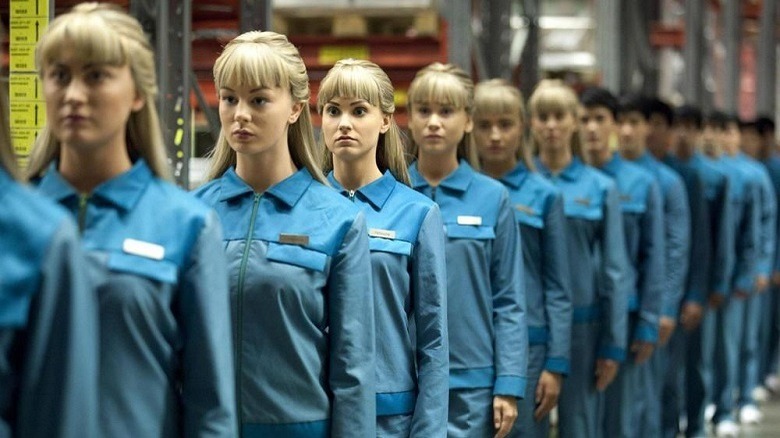
Starring Gemma Chan ("The Eternals") as Mia, an artificial being in a near-future where "Synths" (lifelike anthropomorphic robots) are becoming as commonplace as servants in the home. Here, they are our cleaners, our cooks, and nannies for our children. "Humans" not only explores the concept of whether artificial life qualifies as life, but also our relationship with this technology: How would our lives change thanks to this helpful stranger in our home?
Setting it in a reality not too dissimilar to our own is a masterstroke. Freed from any sci-fi trappings, it allows the series to tackle both prejudice and racism head-on. Worthy of mention is the performance of the Synth actors, all of which are believable and convincing portrayals.
Electric Dreams
Writer Philip K. Dick's work has been adapted for the big screen many times ("Blade Runner," "Total Recall," "Minority Report") and "Electric Dreams," a show based solely around his literature, aired in 2017.
Many of Dick's recurring themes are common in "Black Mirror," namely the politics, paranoia, and the cultural impact of artificial intelligence. However, whereas the majority of "Black Mirror" episodes take place in our world (or a slightly advanced version thereof), Dick prefers either the far future or galactic vistas. It's still essentially a critique on humanity, but mostly in a more vivid (and recognizably sci-fi) setting. It's a lot more optimistic than "Black Mirror," too, which is somewhat ironic given the pessimistic tone of a lot of Dick's work.
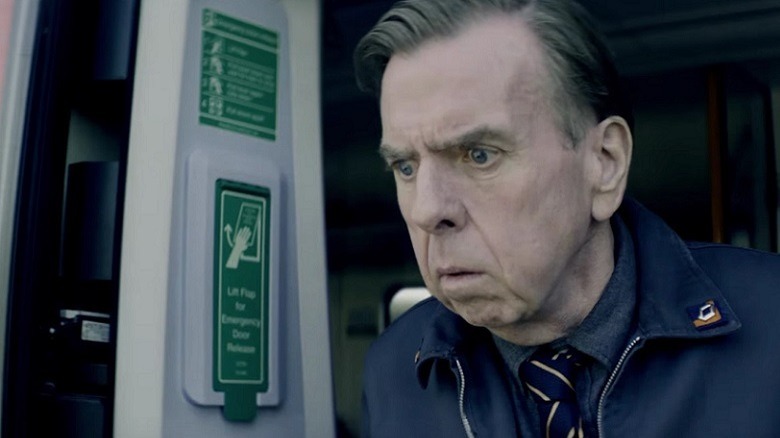
Quality control varies given the radically differing nature of each of the tales, but the standout episode is "The Commuter" (which feels like it owes more of a favour to "The Twilight Zone" than "Black Mirror," given that it's more metaphysical than tech-related). It's a wonderful bit of thought-provoking television, topped off by a perfect performance from actor Timothy Spall. The actor plays a father seeking a town that doesn't seem to exist on any map, and the resolution is a lovely comment on the potentially transient nature of reality.
Russian Doll
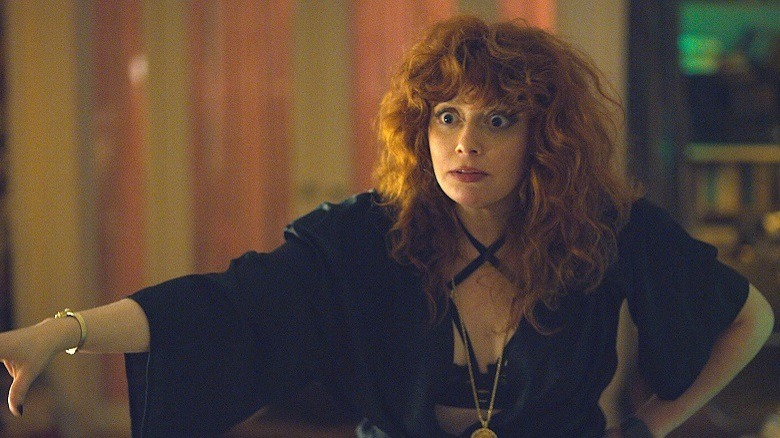
At first glance you'd be forgiven for thinking that this series is "Groundhog Day" with more cocaine, but under the skin of this comedy there's a delicious sci-fi premise. One of the series creators, Natasha Lyonne ("Orange is the New Black"), plays Nadia, a software engineer for a Game studio who - upon dying on the evening of her birthday - reawakens at an earlier point in time.
The time loop in "Groundhog Day" was never explained, just a magical MacGuffin to propel the plot. The loop in "Russian Doll" behaves differently; the real world does alter with each loop, and Nadia has encountered somebody experiencing a similar fate, confined within their own enclosed loop – and it's Natasha's attempt to understand it that gives the show purpose. Is her world a simulation? Her career might hint at such.
Like the titular Russian Matryoshka doll, the story is multi-layered - lives within lives within lives. Not only smart but laugh-out loud funny, its high concept done well, the plot charged with enough momentum to avoid the concept of loops ever feeling repetitive or overdone. Filming follow-up series has been delayed by the pandemic, but it's worth getting stuck in this particular loop.
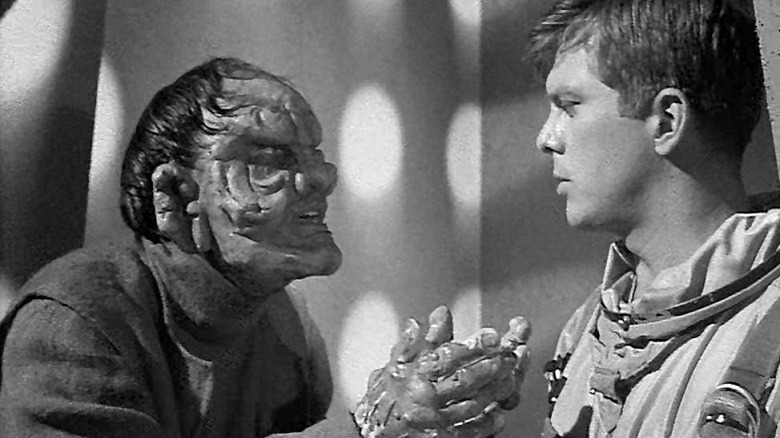
The Outer Limits
"The Outer Limits" is one of the most successful science fiction anthology series of all time. Revived again in 1995 to ride the crest of various other successful sci-fi properties (such as "The X-Files" and "Star Trek: The Next Generation"), the revival delivered a brand-new audience to these standalone tales.
Whereas "The Twilight Zone" had mostly tried to avoid the "monster of the week" format, opting instead to take a more philosophical and moralistic approach to its tales, "The Outer Limits" embraced the concept with gusto. It was almost the series' mission statement, with a mere eight episodes from the show's 49-episode run abstaining from the format.
"The Twilight Zone" often served as a cautionary tale, but in the realms of "The Outer Limits," technology and space were mostly to be avoided at all costs. The cosmos was full of alien beings who wanted to imprison you, eat you, or both, and technology would either evolve you into a murderous manic, disintegrate you, or replace you. These tales were inventive, clever, and quite revolutionary for an age that had only just seen man escaping Earth's atmosphere for the first time.
Tales From The Loop
Based on the beautiful artwork by Simon Stålenhag, "Tales from the Loop" posits an alternative '80s, one where technology so far advanced as to appear magical is commonplace, all possible through a huge secretive facility known as The Loop. It's as much a cautionary tale as anything from "Black Mirror," albeit in a much different, contemporary setting.
Critically acclaimed but seemingly ignored by many upon release, it's something of an acquired taste. The pacing is glacial, and it's a show as much about atmosphere and mood as it is about plotting. Eight total episodes follow a number of residents who live in the vicinity of (or work for) The Loop, their stories occasionally overlapping but never intertwining. If you're familiar with the original artwork that inspired the show, it's clearly a labor of love, with some shots framed to match the source material with unerring accuracy. It's inspirational, beautiful, and -- despite some heart-breaking moments -- it remains optimistic. It's a show that presents us the childlike wonder of the unknown and is unlike anything else on this list.
NVIDIA's CEO, Jensen Huang, has given some interesting statements regarding AMD's server GPU competition and GPU shortages in his latest interviews with Yahoo! Finance & The Next Platform.
NVIDIA CEO Says Competition In The Server Space Is 'Seriously Intense', Also Says GPU Shortages To Last Through Next Year
In the interview with Yahoo! Finance, Jensen has restated what everyone has been saying for a while, that GPU and component shortages are here to stay and will last till 2023. NVIDIA's CEO mentioned that they don't have any magic bullets to navigate through the current crisis that has affected literally every hardware and PC components. Even in 2022, the company expects demand to far exceed supply despite having full support from their suppliers and being multi-sourced.
“I think that through the next year, demand is going to far exceed supply. We don’t have any magic bullets in navigating the supply chain,” Huang told Yahoo Finance Live on Wednesday.
“We have the support of our suppliers. We’re fortunate that we’re multi-sourced and that our supply chain is diverse and our company is quite large so we have the support of a large ecosystem around us,” he added.
The second interview with The Next Platform is more interesting in the regard that Jensen talks about the competition's recently released Aldebaran GPU for the data center segment. Jensen is admitting that the competition within this segment is seriously intense and that every year, there's an 'NVIDIA Killer' of sorts, a name that people seem to use more often when comparing competing products. NVIDIA sees itself as the standard for the data center segment that other companies try to compete with and this is purely due to their immense lead in the AI segment.
However, this is also the easiest segment to compete within as NVIDIA's CEO states. Jensen puts it down to a simple equation of putting more FP64 flops and capacity into one bucket and slashing the overall price into another bucket, and that's basically it. AMD's Aldebaran MI250 series GPUs have been purely that according to Jensen but we should also remember that AMD is the first to MCM design, a GPU architectural design approach that NVIDIA plans to unveil during its next GTC in 2022.
Timothy Prickett Morgan:And now there is a two-year cadence in place for GPUs, DPUs, and soon CPUs as well that enterprises can count on.
Obviously, AMD is much more competitive with its “Aldebaran” Instinct MI200 series GPU accelerators than it has ever been. It is really two GPUs, not one, and I reminded everyone that AMD had “pulled a K80” by putting two GPUs on one device, but nonetheless, this GPU has won two exascale-class systems and many more smaller systems.
I realize that there will not be new GPU announcements from Nvidia until next year, based on the cadence, but what is your response to this competition from AMD, and soon, to a lesser extent, from Intel in the GPU compute arena?
Jensen Huang: First of all, we have competition all the time. So it is not true that this is the first so-called Nvidia killer that has come out. Every year there’s an Nvidia killer and people call it that.
Timothy Prickett Morgan:I mean in the upper echelon HPC and AI supercomputer space. For the past decade and a half, when it comes to GPU-accelerated supercomputers, you have been the whole game.
Jensen Huang: Actually, I think this is the absolutely easiest space, and let me tell you why. The reason for that is because an HPL machine needs two things – just two things. HPC centers order everything years in advance, so they have no idea what performance will be for any given device, but here’s the equation for you …
Timothy Prickett Morgan:Go ahead …
Jensen Huang:The number of peak FP64 flops and memory capacity, put those two things put into one bucket. And in the other bucket, put in dollars. That’s it. That’s the equation. And you know that …
Timothy Prickett Morgan:And so AMD decided to jack up the flops and slash the price? That’s what I think happened …
Jensen Huang:The question is how do we see the world, and the reason why competition is so intense for us. And it’s seriously intense. It’s not minor intense. It’s seriously intense. Accelerated computing is not for the faint of heart. So let me just prove it.
You can build the world’s best fricking everything-anything chip, you stick it into the computer, what will you accelerate? Absolutely nothing. Isn’t that right? Accelerated computing is insanely hard. And the reason for that is Moore’s law is insanely good. No one has ever looked at Moore’s Law, even at its reduced rate and said over the course of time, that is not one of the most formidable technology forces in the history of humankind. And yet, in order for us to succeed as a company, we have to deliver results well above Moore’s law.
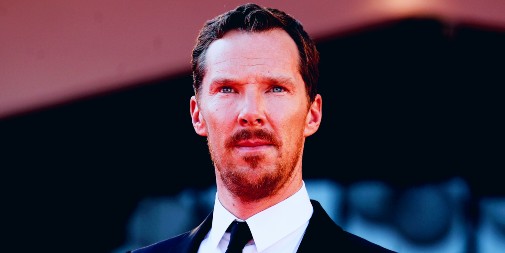
One must admit when they were wrong. For the past decade, I've come to dismiss Benedict Cumberbatch as a limited and repetitive actor with very few exciting works. Someone who'd received undue acclaim, rising to fame in such meteoric fashion that it boggles the mind. In other words, I wasn't a fan of his take on Sherlock Holmes and quickly grew tired of his shtick as he graduated from TV stardom to a prestige movie juggernaut. Some performances made me rethink my distaste throughout the years, like Tinker Tailor Soldier Spy, Parade's End, and, to a lesser extent, War Horse. But, of course, even a stopped watch is right twice a day, or so I told myself.
Well, it's 2021, and Benedict Cumberbatch is both on his way to an Oscar nomination and into my cinephile's heart. He gives three of the year's best performances in a slew of fascinating pictures that range from loony portraiture to a study in venomous masculinity…
According to Amazon and Blue Origin founder Jeff Bezos, future generations "will visit Earth the way you visit Yellowstone National Park." Gizmodo reports: The remarks came last week at an event held at the National Cathedral in Washington, DC, with NASA Administrator Bill Nelson and others talking about space policy. Bezos sat down for a one-on-one chat with Adi Ignatius, the editor-in-chief of the Harvard Business Review. He brought up themes we've heard before, including his vision that all polluting industries will exist in space one day and that we'll all live on space colonies that could, in his estimation, support 1 trillion people. But he expanded on his vision in greater detail about what, exactly, will happen to the planet we'll all leave behind for Blue Origin-branded space colonies.
"This is the most precious planet in the world and we have to preserve it and conserve it and make sure that our children and their children and so on have this beauty in their lives," Bezos said. "We need to conserve what we have, restore what we've lost," he said. "This planet is so small, if we want to keep growing as a civilization, using energy as a civilization, most of that needs to be done off-planet. ... This place is special. You can't ruin it." To do that will require us all to live in space colonies. That would leave Earth to eventually be, in Bezos' vision, a place for future folks to visit but not live. "They may visit Earth the way you visit Yellowstone National Park," Bezos said. Ignatius asked a follow-up about who gets to live on Earth in this vision, which Bezos did not answer. "It's extremely telling that Bezos' vision for the future of Earth is Yellowstone National Park," comments Gizmodo's Brian Kahn, a former park ranger. "Bezos' big idea of turning Earth into Yellowstone elides the fact that humans are as much a part of this planet as they were part of Yellowstone before Americans showed up. He's pitching a very Western solution to the very Western problem of climate change and environmental degradation, problems that Bezos' very own businesses have played a major role in while enriching him to the point where he now has a huge sway on humanity's next step."
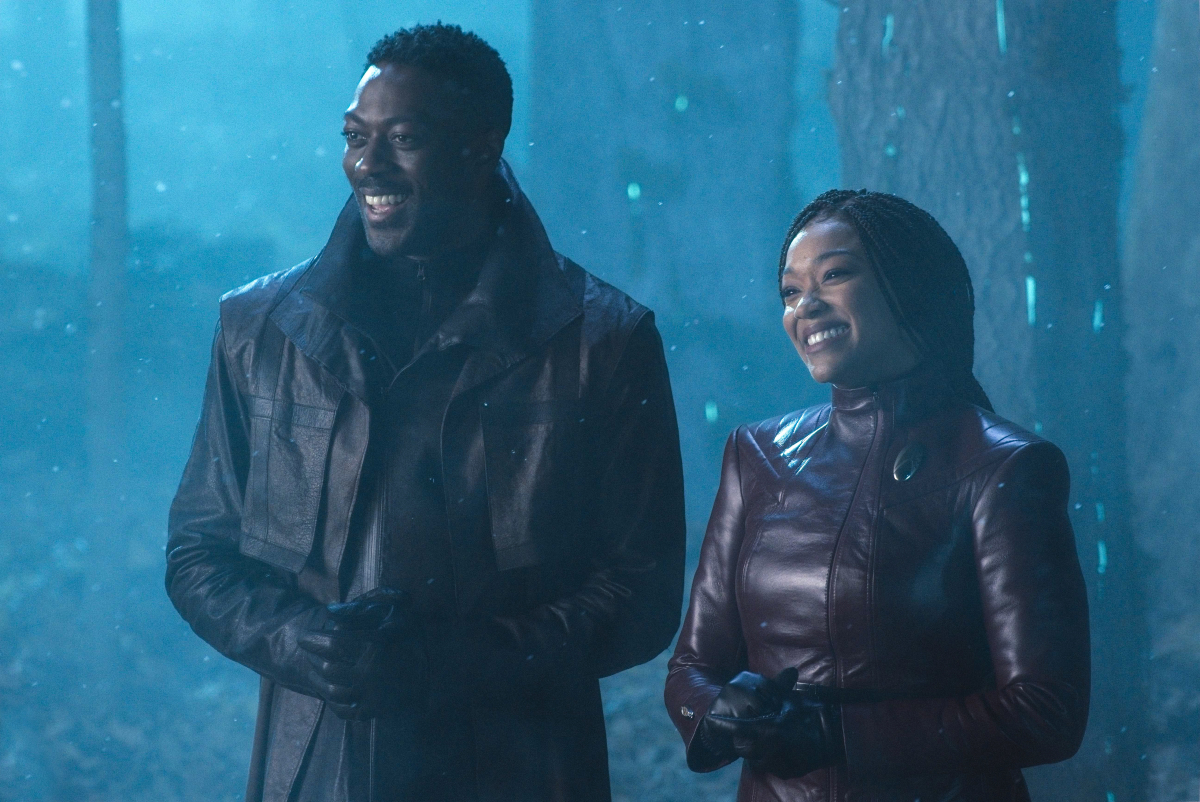
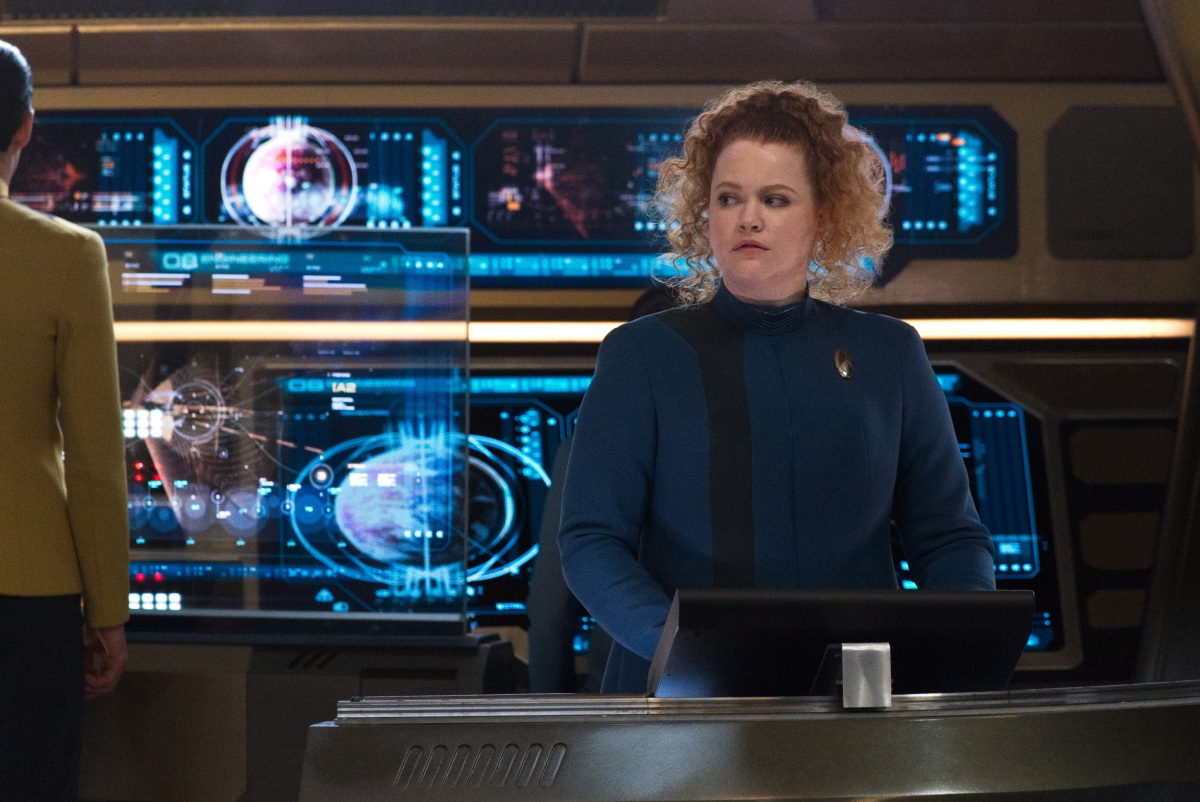
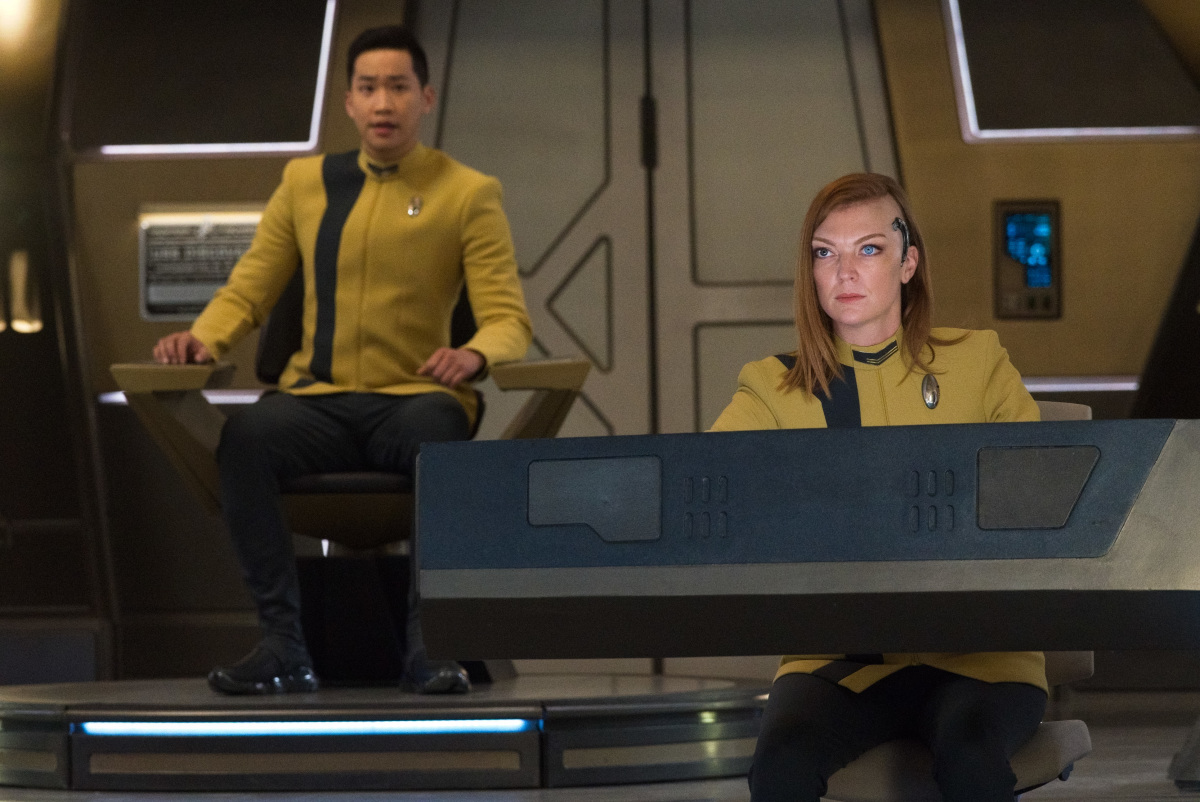
The following only contains slight spoilers for the first episode of season four of 'Star Trek: Discovery.'
Since its debut back in 2017 (and even before then, really), Star Trek: Discovery has been a divisive show. There was a long laundry list of complaints: the series is too dark, everyone is mean, everyone cries too much, the Klingon designs suck, it shouldn’t be set before the original series, Michael Burnham is an unlikeable main character. While some changes have been made to the show over the years to smooth these rough edges, the elevation of Michael Burnham to the captain’s chair for season four has made it clear that Discovery is still largely going to do its own thing, regardless of what the fandom thinks.
In the past, season four for Star Trek series has always been a turning point, the moment when a show finally figures out what it wants to be. Season four of The Next Generation started with the riveting “The Best of Both Worlds,” and produced a number of classic episodes like “Family,” “Clues” and “The Drumhead.” Deep Space Nine added Worf to its crew in its fourth year, while Voyager got Seven of Nine. Enterprise’s final season is generally considered its best. So fans were curious to see if the pattern would continue in the Kurtzman era of Trek.
Things certainly looked promising at the end of last season. The crew of Discovery had jumped 900 years into the future, to a galaxy where dilithium fuel for space travel was in short supply and the Federation was in tatters thanks to an event known as “The Burn.” Burnham and the rest of the Discovery crew figured out the source of the disaster and solved the problem in last year’s finale, opening the doors to a show dedicated to rebuilding the Federation and its ideals. After three seasons of war, it finally looked like the USS Discovery could finally get down to Starfleet’s long-stated mandates of science and exploration.
Season four begins five months after the previous episode, with the Federation now in high gear reaching out to old members and allies. That’s where we join the USS Discovery, as Burnham and Cleveland Booker are attempting to give a shipment of dilithium to a species new to the Star Trek audience. The mission quickly goes awry, strongly reminiscent of the madcap opening of Star Trek Into Darkness.
CBS
The parallels to the weakest of the three Abrams-era films are not entirely an accident or even a homage: both Into Darkness and this week’s season premiere were co-penned by Star Trek head Alex Kurtzman. They exhibit some of the excesses of modern Trek like an emphasis on frantic action and quippy dialogue — at least there’s less lens flare this time around. And everyone seems to be in a good mood, a contrast to when everyone was just worn down in the 23rd century by years of war and secret experiments.
The season opener is largely dedicated to showing off a new optimistic status quo, with Starfleet Academy being reestablished, Booker traveling to attend his nephew’s coming-of-age ritual and a new Federation president getting sworn in. It all seems rather staid, but Star Trek has always had its share of pomp and circumstance so it was actually a nice change of pace for the program. But things do go awry when the Discovery is tasked with rescuing a station crew and have to make a few hard choices, thus the title of the episode: “Kobayashi Maru.”
CBS
For those unfamiliar with Star Trek lore, the Kobayashi Maru is a test that all command-track cadets must take at Starfleet Academy. In the simulation, the cadets are faced with the choice of rescuing a ship stranded in enemy territory. To cross the border to rescue the craft is to risk war, but to preserve peace means to consign that crew to death. It’s been called a “no win” scenario,” and the Academy is interested in how a cadet reacts to it rather than the actual outcome. Kirk is known as the only person to have actually beaten it, because he reprogrammed the scenario; he cheated.
Like Kirk, Michael Burnham also doesn’t believe in the no-win scenario. She always does what she feels is best, and it’s made her crew unfailingly loyal to her over the past few seasons. But it’s earned her a share of detractors off-screen, because Burnham often disobeys orders and ignores good advice. She’s the rebel cop who plays by their own rules. Except this is Star Trek, a franchise about teamwork. Michael’s actions — and the fact that they always succeed — often undermine her superiors and even her own crewmates.
CBS
Placing her in the captain’s chair should have alleviated some of this issue, since Burnham is now the one her crew has to listen to. But even then the show felt it needed some sort of conflict, bringing the Federation president along to question Michael’s judgment in front of her crew. I couldn’t help but be reminded of how before the show aired, the producers and writers were bragging about how they were going to break one of Gene Roddenberry’s key rules for the series: No inter-crew conflict. Watching that in action in this episode, however, was mildly uncomfortable and even a little embarrassing to see.
Not everything is rosy by the end of the adventure, but it’s still a better outcome than we’ve seen at the end of many Star Trek outings. But the new “happy” status quo is thrown out the door by an anomaly at the end of the episode. As seen in previews, this anomaly will be an ongoing concern for the USS Discovery and the entire Federation — not just as a threat to life, but as a threat to the Federation’s efforts to pull itself back together.
CBS
Unfortunately, this also means that Discovery won’t be doing a lot of discovering in its fourth season. Fans who love “planet of the week” adventures and were hoping for the show to embrace that format will come away disappointed for now. However, while episodes one and two are involved in setup for the ongoing anomaly plot line, episodes three and four still make room for some vaguely one-shot adventures, albeit ones designed to further character development.
But while Discovery doesn’t seem all that interested in changing how it does things, the environment around it has changed. It’s no longer the only Star Trek show on TV, thanks to the premieres of Picard and Lower Decks in 2020, last month’s kid-oriented Prodigy and the debut of Strange New Worlds next year. All of these shows tackle the Star Trek universe in their own way, and are not required viewing to understand what’s happening in other shows (though there are some references to Picard in the first episodes of Discovery). Viewers can choose the Trek that suits them best, removing the pressure from Discovery to be all things to all fans and making it even easier to just do its own thing.
In 1999, fans were highly anticipating the release of the "Star Wars: Episode I — The Phantom Menace," which had been generating hype since its trailer debut the previous November. However, while science fiction aficionados ended up largely disappointed with the direction of George Lucas' prequel, there was another, unexpected place to turn for a mind-bending narrative and state of the art special effects: "The Matrix." The Wachowski's game-changing action flick beat "Star Wars" to theaters by less than two months, and by the end of the summer, it was clearly the sci-fi hit of the year.
"The Matrix" was unique for its combination of different influences. The film fuses Eastern philosophy with western works like Plato's "Allegory of the Cave" and Descartes' "First Meditation," forming an exploration of consciousness and reality. The cyberpunk visuals draw from anime and manga, and the eye-popping action sequences feature incredible stunt work inspired by the best of kung-fu cinema. But "The Matrix" is more than the sum of its parts. With each of these elements working in concert, every one feels engaging and brand new.
With the next chapter of the Matrix saga soon to be unveiled, it's a better time than ever to appreciate the original film's groundbreaking legacy. Science fiction fans rewatching "The Matrix" will also want to watch these other great films.
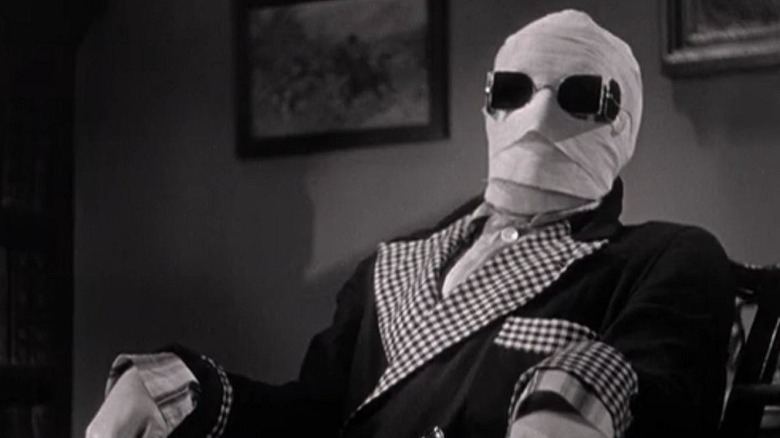
The Invisible Man (1933)
The personal construction of identity and body dysmorphia are integral themes in "The Matrix." When Neo discovers his new reality in the Matrix, he finds he can transform his body into any image that he chooses. It gives him freedom from his anxieties, and a queer reading of the text only makes the Wachowski sisters' insights more interesting. They explore a world in which characters have full freedom to express themselves.
The notion of body image is ever present throughout the history of science fiction, and it's a theme that author H.G. Wells was very interested in. Wells' work has frequently been brought to the screen, but many adaptations highlight the spectacle intrinsic to his stories instead of carefully exploring his themes in a nuanced way. However, the original 1933 version of "The Invisible Man" takes its characters and events seriously. While later films in the Universal Monsters franchise would turn the character into another silly horror creature, James Whale's original classic is a human drama that showcases the character's torment.
The film follows Wells' story about a brilliant scientist named Dr. Jack Griffin (Claude Rains), who has turned invisible as a result of an experiment. Griffin attempts to hide his secret as he stays at a hotel, but his attempts to mask his invisibility only terrify the local residents, and he becomes a target of an angry mob. Like the Wachowskis, Whale was a queer filmmaker, and the theme of persecution is prominent in "The Invisible Man."
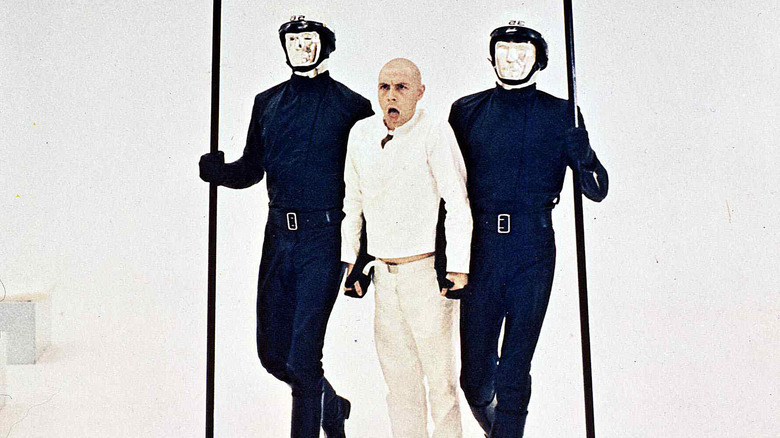
THX-1138
Although the Wachowskis showed George Lucas up when they released the better sci-fi movie of 1999, Lucas' impact on the genre can't be understated. Obviously, Lucas is best known for the creation of the Star Wars franchise, which is often compared to "The Matrix" for its similarly original premise, memorable characters, philosophical undertones, and thrilling set pieces. However, "The Matrix" is a far darker franchise that explores a post-apocalyptic world where a totalitarian system controls everyone's choices and interactions. These were concepts Lucas also explored in his brilliant debut feature film.
When he was a film student at the University of Southern California in the late 1960s, Lucas wrote and directed the groundbreaking short film "Electronic Labyrinth: THX 1138 4EB." The short explored a dystopian future where humans are known only by a numerical value, and everything is controlled by an aggressive police force. One man, known only as THX-1138, attempts to escape to freedom. The 15-minute short was a film festival favorite that announced Lucas as a creative force that the industry needed to take seriously. In 1971, he extended the concept into a full-length film that showed the world in more detail.
Robert Duvall stepped into the titular role, and like Neo (Keanu Reeves) in "The Matrix," he's a very sympathetic character who is forced to make brave decisions in order to survive: THX-1138 risks losing his romantic partner, LUH-3417 (Magie McOmie), if he chooses to rebel against the oppressive system.
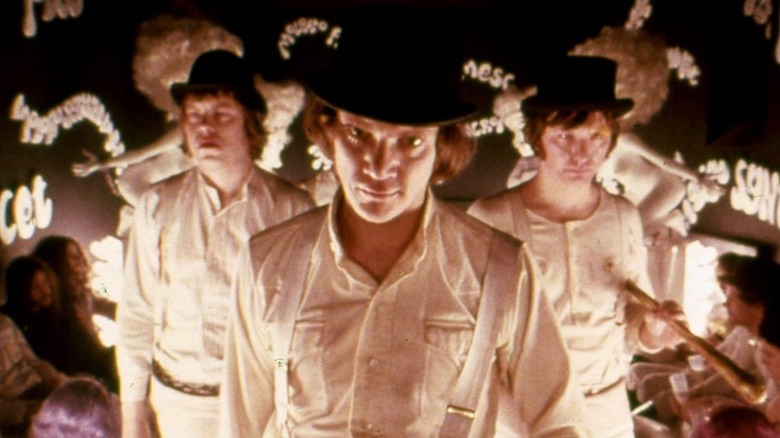
A Clockwork Orange
The totalitarianism and complete dominance of an overarching force presented in "The Matrix" was terrifying to viewers in 1999. The film represented genuine fears that many had over humanity's growing reliance on technology, which had only become more prominent during the early days of the internet. The impending turn of the century and Y2K anxieties made it particularly relevant, but even beyond the contemporary events, the overall notion of not trusting your reality is a horrifying concept.
Science fiction, and particularly stories about dystopian futures, need to be relevant to the themes at the forefront of their respective era. Just as "The Matrix" captured anxieties over these technological advances, Stanley Kubrick explored the fear of losing personal freedoms with his 1971 masterpiece "A Clockwork Orange." Discussions about how to curb youthful malcontents and violence were frequent thanks to the countercultural movement of the time, as young people were expressing their political opinions by protesting and joining activist movements. Many participants feared that they were being watched and that the government was attempting to control their behavior; as a result, the concept of a future where juvenile delinquents are forced into painful behavioral therapy was eerie.
Based on the acclaimed 1962 novel by Anthony Burgess, "A Clockwork Orange" follows the violent young man Alex (Malcolm McDowell). Alex leads a gang and commits robbery, rape, and assault while listening to classical music. And yet, amazingly, the horror only ramps up when the police state captures him and forces him into an extreme rehabilitation program that threatens to take away both his individuality and his sanity.
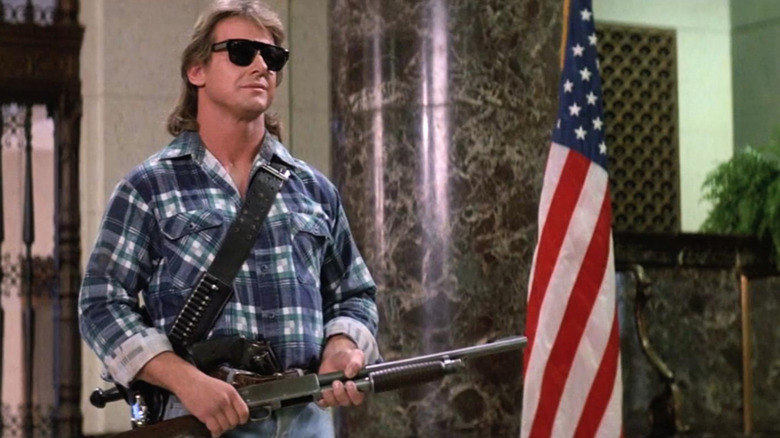
They Live
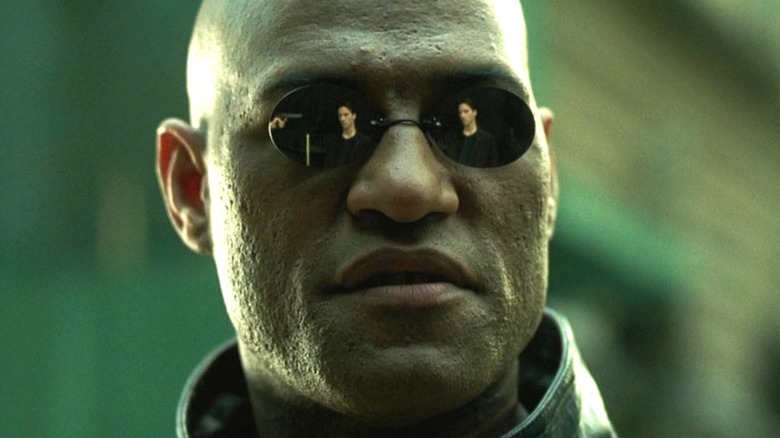
"The Matrix" forced viewers to question their realities. In one highly memorable scene, Neo is given the choice between the "red pill" and the "blue pill"; he must choose either to see the world for what it is, or live in blissful, blind ignorance. Neo bravely chooses to accept reality, and learns that the year is not 1999 as he imagined. A technological army is simulating events that seem real while feeding off of humanity's lifeforce, and Neo is called to rebel against the machines by joining Morpheus (Laurence Fisburne) and Trinity (Carrie Anne-Moss).
John Carpenter explored similar themes in 1988's "They Live." Although it was only a minor success at the time and not the blockbuster that "The Matrix" was, "They Live" earned a cult following, and its discussion of media control is even more relevant today. The film follows the homeless drifter Nada (Roddy Piper), who sees a television broadcast interrupted by a hacker who claims that the world is enslaved by the subliminal messaging of a totalitarian state.
After receiving a pair of special sunglasses, Nada learns that this is all true; the glasses show him that hidden in advertising and billboards are messages that command people to engage in rapid consumerism and to conform to an idealized state. Nada starts a resistance movement to shut off the source of these signals, and recruits the construction worker Frank Armitage (Keith David) to become his ally.
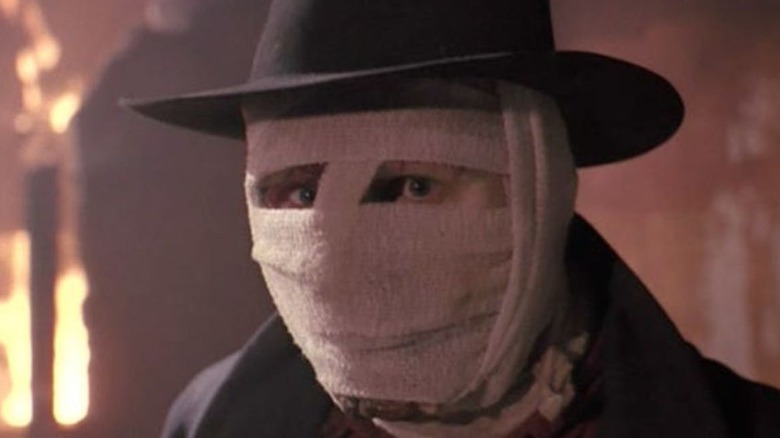
Darkman
"The Matrix" tackles many complex issues, thanks largely to the meticulous worldbuilding that the Wachowskis performed, but those ideas wouldn't have been compelling to viewers if the film didn't have a compelling leading character. Thankfully, Neo is incredibly easy to empathize with. Even before learning about the Matrix, Neo feels disenfranchised, as he's unhappy with his day job and keeps his double life as a hacker secret. His primary interactions with others come through internet chat rooms; he's almost completely isolated before Morpheus discovers him. Reeves is one of the most likable actors on the planet, and created a hero worth rooting for.
Like the Wachowskis, Sam Raimi is an incredibly gifted visual storyteller who innovated with his groundbreaking effects work, but who also knows how to craft memorable characters. Raimi would help relaunch the modern superhero movie with his Spider-Man trilogy, but in 1992 he debuted an original superhero in "Darkman." Like "The Matrix," "Darkman" is an engaging mix of genres. While it retains the essence of a superhero origin story, it also draws from the horror genre that Raimi had so brilliantly influenced with his "Evil Dead" trilogy.
The film follows scientist Dr. Peyton Westlake (Liam Neeson), who, like Neo, has very noble intentions. He seeks to help burn victims recover from their injuries, but a shocking laboratory accident scars his face and grants him superhuman abilities. He decides to go on a path of vengeance as he hunts down mobster Robert Durant (Larry Drake).
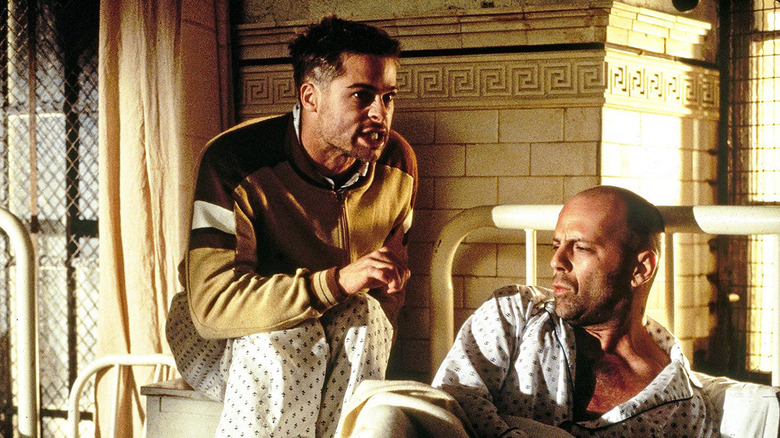
12 Monkeys
"The Matrix" isn't just an action-packed, visually stunning sci-fi action thriller, but a compelling mystery. Neo only gradually uncovers the Matrix's secrets, learning from Morpheus the extent of humanity's subservience to its technological overlords. He also learns of the supposed destiny of a mythic hero known as "The One" that is destined to destroy the Matrix and restore humanity to its rightful independence. Morpheus believes strongly in this prophecy, and Neo gathers clues through his encounter with the Oracle, who tells him that it's not his destiny to fulfill. It's only by the film's conclusion that his worthiness is revealed.
Having an interesting mystery element can help immerse viewers in a complex universe, as they're more compelled to keep watching if there are lingering questions. Terry Gilliam of Monty Python fame is, similar to the Wachowskis, a master of visual storytelling, and his 1995 sci-fi thriller "12 Monkeys" is set in a post-apocalyptic world much like that of "The Matrix." Gilliam explores the world of the film, which was inspired by the 1962 French short film "La Jetée," at a similarly patient pace as the protagonist, James Cole (Bruce Willis), is thrust into an unfamiliar environment with no one to explain it to him.
Cole is kept as a prisoner in 2035 in an underground facility; humanity has been devastated since 1996, when a radical group known as the Army of the Twelve Monkeys unleashed a deadly worldwide virus. But that's just the beginning of his troubles, which ramp up significantly when Cole is sent back in time to find the origins of the outbreak.
Gattaca
The concept of destiny as a controlling factor in dividing mankind is an intriguing element in "The Matrix." It is unfair that the characters have their fates predetermined and consciousnesses stolen because of events they have no control over, and the resistance movement by Neo, Trinity, Morpheus, and their allies is very inspirational as a result. Not only is their mission to better their own lives, but they're fighting for an important cause that will benefit the entire human race.
Andrew Niccol's 1997 science fiction thriller "Gattaca" also follows a relatable hero who fights against a dystopian system by dismantling it from the inside. Like the Wachowskis, Niccol's concept of a totalitarian state is distinct from the classic science fiction that came before, and it's very impressive that "Gattaca" was his directorial debut. "Gattaca" is set in a future controlled by eugenics, where societal function is determined by genetic makeup. Children can only be created after a delicate process of selecting hereditary traits; those born without these traits are deemed to be "undesirable." The title "Gattaca" is made up of the letter A, C, G, and T, an allusion to the DNA nucleobases adenine, cytosine, guanine, and thymine.
The story follows Vincent Freeman (Ethan Hawke), who dreams of becoming an astronaut. Vincent is denied the chance to go to space because of his genetics, but the plot thickens when former swimming champion Jerome Eugene Morrow (Jude Law) offers him tissue and blood samples so that Vincent can take his identity.
Universal Soldier: Regeneration
"The Matrix" isn't just a science fiction classic, but one of the greatest action movies ever made. The mix of gunplay, kung fu, superpowered characters, and biopunk made the trilogy completely unique amidst other sci-fi action films and launched countless imitators of the iconic "bullet time" sequences. Action cinema had developed extensively throughout the '90s, and "The Matrix" was a worthy conclusion to the breakthrough decade, ranking alongside other sci-fi favorites such as "Terminator 2: Judgment Day," "Total Recall," and "Starship Troopers."
Compared to these groundbreaking sci-fi action films, which combined intelligent storylines with inventive spectacles, Roland Emmerich's 1992 film "Universal Soldier" was hardly worthy. The film follows two Vietnam War soldiers, Luc Deveraux (Van Damme) and Andrew Scott (Lundgren), who both perish after an argument about killing innocent civilians. Their reanimated bodies are brought back to life by a secret military program that transforms them into cybernetic androids. The logic is faulty and Emmerich's action sequences lack weight, and the initial sequels weren't any more impressive. However, director John Hyams took control of the franchise in 2009 with "Universal Soldier: Regeneration" and replaced corniness with grittiness.
"Universal Soldier: Regeneration" takes Deveraux seriously, as he struggles to resist the violent tendencies he was forcibly given. Hyams actually knows how to construct a compelling set piece, and the stunt work in "Regeneration" is incredible as Deveraux is forced back into duty in order to save the Ukrainian prime minister's son from terrorists who've stolen the Universal Soldier technology.
Cloud Atlas
The Wachowski sisters are among the most distinguishable filmmakers of the 21st century. They've developed a unique style with eye popping visuals and complex narrative mythologies that has inspired many imitators. Although the original "The Matrix" is unquestionably their best and most iconic masterpiece, their entire filmography is fascinating. Even a film as terrible as "Jupiter Ascending" is an original work that only they could've made.
David Mitchell's 2004 novel "Cloud Atlas" was deemed to be unfilmable because of how complex it is, so naturally the Wachowskis took a shot at adapting it. 2012's "Cloud Atlas" is a work of astonishing imagination; Roger Ebert claimed it was "one of the most ambitious movies ever made," and the Wachowskis themselves cited Stanley Kubrick's masterpiece "2001: A Space Odyssey" as a point of comparison. "Cloud Atlas" requires multiple viewings to understand fully, and demands that the viewer both pay close attention and give in to the visual spectacle. Patient audiences willing to invest their time may find that "Cloud Atlas" is a gorgeous, awe-inspiring examination of the patterns and themes that ripple across the course of time.
Unfolding in six timelines, the film follows events in the Pacific Islands in 1849, Cambridge and Edinburgh in 1936, San Francisco in 1973, London in 2012, Neo Seoul in 2144, and a mysterious post-apocalyptic island in 2321. The same core group of actors play multiple characters in each, showing the connections that form across the different eras.
A.I. Artificial Intelligence
Family is integral to "The Matrix." Neo is lost without a real family, and when the film begins he's largely isolated. When Neo joins his new allies, Morpheus becomes the paternal figure that he never had, and he's able to find a new family of sorts with Tank (Marcus Chong), Apoc (Julian Arahanga), Mouse (Matt Doran), and Switch (Belinda McClory).
Steven Spielberg frequently explores the themes of lost families and abandoned children, and 2001's "A.I. Artificial Intelligence" is set in a futuristic world that's over-reliant on technology, just like the setting of "The Matrix." Stanley Kubrick developed the initial concept for the movie before he tragically passed away in 1999, leaving Spielberg to pick up the reins. You can see the influence of both directors in the final product. Compared to Spielberg's more heartfelt sci-fi films like "E.T. the Extra Terrestrial" and "Close Encounters of the Third Kind," "A.I." is absolutely devastating, following a robotic child (Haley Joel Osment) who desperately seeks acceptance from a family but is denied the love he craves.
War Of The Worlds
"The Matrix" isn't generally considered to be a horror film, but it's quite scary in its manifestation of 1999's anxieties about technology. Science fiction often relies on the societal fears of the era in which it's produced — H. G. Wells' classic novel "The War of the Worlds," for example, tackled the fear of war that was rampant in 1898, while the original 1953 adaptation explored the nuclear fears and Red Scare of the '50s. When Steven Spielberg crafted his 2005 reimagining of the classic story, he used it to examine the horrifying nature of domestic terrorism in a post-9/11 society.
"War of the Worlds" is certainly not a campy, fun alien invasion movie. It follows irresponsible father Ray Ferrier (Tom Cruise), who is tasked with taking care of his adolescent son Robbie (Justin Chatwin) and younger daughter Rachel (Dakota Fanning) over an extended weekend. Amidst their dysfunctional home life, the Martian forces attack and reap devastation on the major urban metroplexes. Spielberg's "War of the Worlds" isn't a rallying cry for patriotism, though, as humanity descends into chaos and begins preying on each other as the invasion continues.
The Fountain
"The Matrix" showed that, even while carrying the weight of complex worldbuilding, science fiction can be very emotional. Neo is burdened with the expectations of being "The One" only shortly after learning about the existence of the simulated reality, and he struggles to adjust. He develops a strong bond with his fellow survivors, and when his friend Mouse dies it is devastating. Neo also truly cares for Morpheus, and his capture at the hands of Agent Smith (Hugo Weaving) leaves him without his mentor. Finally, he establishes a strong romantic bond with Trinity that only grows throughout the trilogy.
Similarly, Darren Aronofsky's 2006 science fiction fantasy epic "The Fountain" is one of the most emotional films of all time. The film follows scientist Thomas Creo (Hugh Jackman), who researches recurring patterns in history, yet is helpless while watching his wife Izzi (Rachel Weisz) die of brain cancer. Creo researches the origins of a South American tree that supposedly offers life-extending abilities, and the film explores corresponding events in the 16th century and the far-distant future.
The serial killer genre isn't for everyone, but there's something special about it that sets it apart from siblings like horror, thrillers, or true crime. The critically acclaimed and hugely popular Showtime series "Dexter" followed serial killer Michael C. Hall as Dexter Morgan, who worked as a forensic scientist for the Miami police by day while trying to control his deadly compulsions by night. Dexter's strict ethical code, which only permitted him to murder "bad guys," allowed him to satisfy his impulses while solving crimes and keeping a twisted — but clean — conscience.
The series was a twisty psychological thriller that made viewers root for a murderer, highlighting the complexities of humanity while taking viewers on a thrill ride through Dexter's psyche. With "Dexter: New Blood" reviving the series for another go around, we've compiled a list of 14 other shows like "Dexter" that are guaranteed to get your blood flowing one way or another.
Mindhunter
Modern-day serial killers may go back as far as Jack the Ripper, but that doesn't mean that police always had a name for them. "Mindhunter" examines the FBI's first attempt in the 1970s to study the specific kind of psychopaths who kill repeatedly in the same way over and over, a notion that was peculiar at the time. The series follows the FBI agents who work together to interview incarcerated murderers: Holden Ford (Jonathan Groff), a young agent with the Behavioral Sciences Unit, and Bill Tench (Holt McCallany), the unit's veteran director.
While Holden is excited to meet with killers and pick their brains, Bill is resistant to his approach and wary of what they might uncover. However, as they continue to work alongside a psychologist, Dr. Wendy Carr (Anna Torv), they are also able to investigate open cases and apply their newly developed theories in real time, for better or worse. David Fincher uses his steely control to create high-wire tension throughout the series, which takes a propulsive and fascinating look at the mind of serial killers that would make Dexter jealous. You can stream the complete series on Netflix.
The Fall
If "Dexter" gave viewers a look at a serial killer attempting to control his impulses while living a normal life, "The Fall" takes it one step further, bringing the audience right inside the mind of an active murderer who isn't trying to control himself at all. The series follows two hunters, special agent Stella Gibson (Gillian Anderson) who arrives in Belfast, Ireland to investigate a series of violent sexual killings, and husband and father Paul Spector (Jamie Dornan), the perpetrator of the murders. Each episode allows viewers to investigate alongside Stella as she attempts to solve the case, while also watching Paul commit crimes in real time before going home to his unwitting wife and children.
Like "Dexter," watching "The Fall" is a startling experience, as the audience can't help but be drawn into the handsome and charismatic Paul's world. Fans of "Dexter" will appreciate the adrenaline rush of the cat and mouse game between Stella and Paul. The complete series can be found on Amazon Prime Video.
You
Based on a series of novels by Caroline Kepnes, "You" follows Joe Goldberg (Penn Badgley), a New York bookseller who becomes obsessed with a young writer named Guinevere Beck (Elizabeth Lail). As Joe pursues a relationship with her, it becomes increasingly clear that he'll do anything to create and preserve what he thinks is the perfect relationship with Beck, even murdering those who get in his way. As the series progresses, Joe collects more victims as he pursues other stalkers in his effort to find his twisted, idealized version of true love.
Like "Dexter," "You" takes us inside Joe's mind, complete with compelling and eerie voiceover narration that keeps viewers on their toes and guessing Joe's true motives. However, unlike Dexter, Joe is in denial about his true nature, making him a messy and unhinged serial killer who repeatedly gets himself backed into corners. "Dexter" fans will love the tension and rush of watching Joe work to get himself out of the tight corners he's backed himself into. You can stream all current seasons on Netflix.
Hannibal
Hannibal Lecter is one of cinema's most famous serial killers, spawning multiple adaptations of Thomas Harris' original novels. "Hannibal" focuses on the relationship between the eponymous psychiatrist (Mads Mikkelsen) and FBI profiler Will Graham (Hugh Dancy) as they work together to solve beautifully grotesque and bizarre serial murders, some of which are committed by Hannibal, and some by his peers. As the series progresses, Hannibal and Will form a deep and complex friendship with an unnerving romantic subtext that complicates their lives in fascinating ways.
Like Dexter, Hannibal is both a perpetrator and investigator of the crimes at the center of each episode, making for a propulsive, slow burn thriller as Will inches closer to the truth. The series also features beautiful and vivid cinematography, making for an unsettling but alluring visual world that the killers inhabit. If you liked "Dexter," you should appreciate Hannibal's psychological mind games and the show's procedural crime elements. The complete series is available on Hulu.
Breaking Bad
A critically acclaimed series that has since spawned a prequel series and sequel film, "Breaking Bad" follows Walter White (Bryan Cranston), a high school chemistry teacher who receives a terminal cancer diagnosis and decides to cook and sell meth in order to provide for his family after he's gone. Walt employs an accomplice, Jesse Pinkman (Aaron Paul), one of his former students who has since become a drug dealer. The two become uneasy partners as they embark on a new business together. As the series progresses, Walt becomes less concerned about providing for his family as he becomes more absorbed in the criminal underworld.
Similar to "Dexter," the series explores numerous ethical and moral questions as Walt initially tries to hang onto his humanity amidst the chaos and destruction he's creating. Additionally, Walt's brother-in-law, a DEA agent named Hank, unknowingly investigates him, similar to the relationship Dexter has with his cop sister. "Breaking Bad" is a gripping drama with a captivating antihero that stays with audiences long after viewing. You can watch the complete series on Netflix.
Fargo
Loosely based on the original Coen brothers film, "Fargo" is an anthology series that follows a new set of characters in a unique location each season with minimal overlap. Though each season has a new cast, the series has featured noteworthy actors such as Billy Bob Thornton, Kirsten Dunst, Chris Rock, Carrie Coon, and Ewan McGregor. Like the film, "Fargo" is a dark comedy thriller that closely follows the foibles and exploits of amateur and expert criminals as they fight to survive in the Midwest.
While each season takes place in a different decade, spanning the 1950s, 1970s, and the 2000s, they're all crime stories with black comedy undertones. Much like "Dexter," "Fargo" showcases charming criminals that the audience can't help but root for even as they become more entangled in dangerous scenarios. Both shows also feature forceful and captivating mysteries. "Fargo" is a darkly funny thriller that would enthrall even Dexter; check it out on Hulu.
Bates Motel
One of cinema's most notorious psychopaths, Norman Bates captivated and terrified audiences when he first appeared on screens in Alfred Hitchcock's groundbreaking "Psycho" in 1960. Over 50 years later, "Bates Motel" revisits Norman, reimagining his teenage years in a contemporary prequel setting. The series stars Freddie Highmore as Norman and Vera Farmiga as his mother Norma, and follows their complex relationship in the aftermath of his father's death.
At the beginning of the series, Norma purchases a hotel to give her and her son a new start — it's ostensibly the same one from the original film, but is located in Oregon rather than California. As "Bates Motel" progresses, Norman's murderous tendencies evolve and begin to emerge, forcing Norma to fight to protect herself and her son. Unlike "Dexter," Norman is in complete denial of and totally divorced from his darker self, but both shows feature a disturbing psychological mystery that keeps viewers watching despite the unsettling themes. You can stream the complete series on Peacock.
Barry
Unlike the other series on this list, "Barry" is an outright comedy, which may make it seem very dissimilar to "Dexter." However, "Barry" is also a propulsive thriller about a killer who wants to be — and believes that he is — a good person. The series follows Barry (Bill Hader), a veteran turned assassin who is very good at killing people and who, like Dexter, keeps his conscience clean by believing that only kills bad guys. Things get messy when Barry follows a target to his improv class and discovers his own latent passion for acting and theater, leading him to question his purpose as an assassin.
As the series unfolds, Barry's desire to leave behind his career and pursue his new love are constantly at odds, especially because he is more talented at killing than acting. While much more comedic than "Dexter," both series follow a man whose greatest talent is killing while trying to live a normal life. Fans of "Dexter" will appreciate the dark humor of "Barry," as well as its eventual embrace of shocking crime drama tropes. The two current seasons are available on HBO Max; that's also where you'll find season 3, which is due to be released in 2022.
The Americans
On the surface, spies and serial killers may not have a lot in common, but both have to maintain a secret identity in order to survive. That's the premise behind "The Americans," a series that follows Philip (Matthew Rhys) and Elizabeth (Keri Russell) Jennings, two Russian KGB spies posing as a quintessential American couple at the height of the Cold War. The Jennings are deep undercover, and no one knows their true identities, not even their children. Complicating matters is the Jennings' new neighbor, Stan Beeman (Noah Emmerich), an undercover federal agent investigating foreign operatives working on U.S. soil.
As the series unfolds, Philip and Elizabeth find their marriage tested even as they grow closer throughout the increasingly tense Cold War. Like "Dexter," the Jennings have to maintain their public identities while under the constant threat of exposure. "The Americans" is a tense drama that can be streamed via Amazon Prime Video.
Prodigal Son
If a series followed Dexter's son, Harrison, as an adult, it might look something like "Prodigal Son." The series follows Malcolm Bright (Tom Payne), the son of an infamous serial killer (Michael Sheen) who worked with the police as a child to put his father behind bars. Years later, as an adult, Malcolm uses his intimate knowledge of criminal psychology to work with the NYPD.
While Malcolm is a gifted criminologist, able to see clues that other cops miss, he lives in constant fear that his gift may actually turn out to be a curse and that he'll become a serial killer like his father. To complicate matters, when a copycat killer emerges, Malcolm has to reunite with his father and elicit his help to solve the case. Similar to "Dexter," "Prodigal Son" heavily explores the psyche of a serial killer and the ramifications of the destruction they cause. You can stream the complete series on HBO Max.
The Killing
While Dexter tries to maintain his humanity as a serial killer, his series examines the psychological complications of crime and murder. Similarly, "The Killing" looks at an emotionally fraught and fractured Seattle community after the body of a missing teenage girl is found. Detective Sarah Linden (Mirielle Enos) is finishing her last day at work before moving to start a new life with her son and fiancé when she learns that a missing teen has been discovered in the trunk of someone tied to the local mayoral election.
In light of the news, both campaigns grow increasingly acrimonious as Linden extends her stay in Seattle by a few days, working alongside her replacement, Detective Stephen Holder (Joel Kinnaman) to solve the murder. Both series look at the psychological impacts of murder while following an enthralling mystery. It can be found on Netflix.
Broadchurch
Set in a fictional English coastal town of the same name, "Broadchurch" follows two detectives, Alec Hardy (David Tennant) and Ellie Miller (Olivia Colman), who are tasked with solving the disappearance and murder of a child that shakes the small seaside community. The tight-knit town is shaken as the investigation unfolds, with the victim's family becoming the top suspects, forcing everyone to turn on each other in order to protect themselves.
As the series unfolds, Hardy and Miller eventually catch the child's killer and bring them to justice. While the series explores other crimes as it unfolds, "Broadchurch" always remains focused on the impact the initial child's murder has on his family and community. Both "Dexter" and "Broadchurch" look at the ways secrets can threaten to tear people and groups apart amidst heartbreaking murder investigations. Even Dexter would be moved by the emotional complexity and turmoil of "Broadchurch." You can stream the complete series on Netflix.
Top Of The Lake
Acclaimed director Jane Campion helms the quiet and tense crime thriller series "Top of the Lake," which sees young Detective Robin Griffin (Elisabeth Moss) return to a small New Zealand town to investigate the strange and shocking murder of a 12-year-old pregnant girl. As Robin works the case, she finds herself up against the town's numerous secrets, as well as her own traumatic past there.
Due to her inexperience, Robin is soon under the looking glass even as she clashes with the victim's father, a local drug lord, and the mysterious leader of an eerie, cult-like women's camp, both of whom seem to withhold their connections to the case. Similar to Dexter, Robin discovers more about her own nature and identity as she becomes more entangled in the crime. Additionally, both shows provide an insight into the emotional complexities of hunting a murderer while navigating the protagonist's identity, a tense formula fans of "Dexter" will love. You can stream the complete series on Hulu.
Dr. Death
While most of the entries on this list are heavily fictionalized, allowing for some distance from the intense and chilling stories, even more disturbing is the notion of a show following a real serial killer. That's the premise of "Dr. Death," a series based on the first season of a true crime podcast about outstanding cases of medical malpractice. The show and the podcast follow the story of real-life physician Christopher Duntsch (Joshua Jackson), whose patients go under the knife for routine spinal surgeries and wake up permanently injured — if they're not dead.
As Duntsch's body count gets higher, two of his colleagues set out to put an end to his inhumane practices. Unlike Dexter, Duntsch does nothing to restrain his serial killer tendencies, going completely against his sacred medical Hippocratic oath. However, both series provide a captivating look at the mind of a serial killer masquerading as an everyday citizen, giving "Dexter" fans chilling fare to sink their teeth into. You can watch "Dr. Death" on Peacock.
Porsche has unveiled two new options for those looking to get one of its Taycan EVs: A Taycan with the legendary GTS moniker and a third body model called the GTS Sport Turismo. Kevin Giek, VP of the Taycan model line, said the GTS "is positioned above the Taycan 4S and below the Taycan Turbo derivatives, so it represents a real sweet spot in the range." As TechCrunch notes, with the addition of these two, there are now 10 Taycan variants in all.
The luxury automaker calls the GTS version the "sporty all-rounder" of the line. It has a range of 504 km or 313 miles, making it the first Taycan to break the 500 km mark. The model's adaptive air suspension was specifically adapted to the GTS, and it has Black or dark details on the exterior — including the front apron, the bases of the exterior mirrors and the side window trims — as is traditional for a GTS car.
Meanwhile, the Taycan Sport Turismo is a mix between the Cross Turismo and the sports saloon, though it doesn't have off-road elements. It has the sporty silhouette and the rearward-sloping roofline of the Taycan Cross Turismo, and its rear headroom is 45mm (around 1.7 inches) greater than the Taycan sports saloon. Both the GTS and the Sport Turismo can go from 0 to 100 kmh (62 mph) within 3.7 seconds and have a maximum speed of 250 kmh (155mph).
The Taycan GTS and Sport Turismo will have prices that start at EUR131,834 (US$149,000) and EUR132,786 (US$150,000), respectively. They will both be heading to dealers in the spring of 2022, and more engine options for the Sport Turismo will follow. Porsche will also be showcasing the new EVs at the LA Auto Show, which will take place from November 19th through the 28th, so we'll hear more about the new vehicles in the coming days.