 |
[link] [155 comments] |
Ronald.phillips
Shared posts
19 Nov 14:09
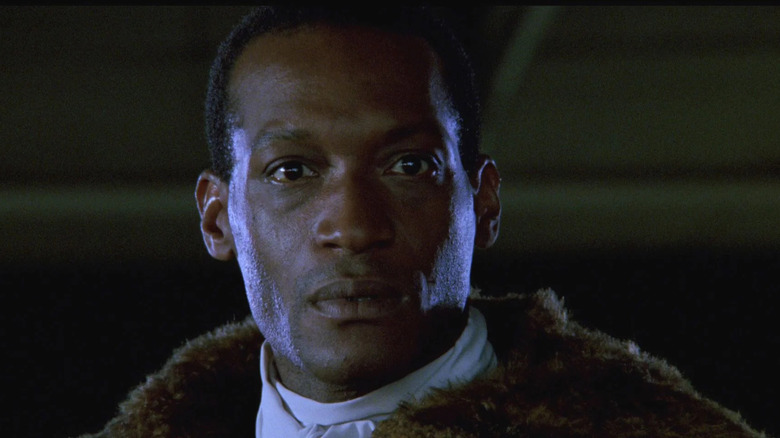
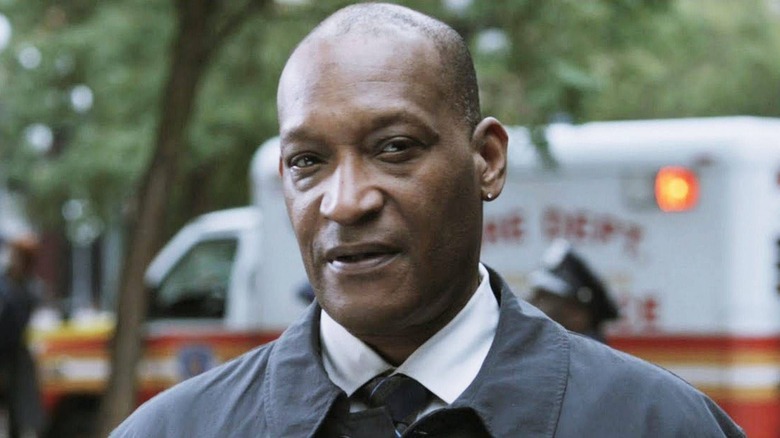
Candyman Star Tony Todd Is Game To Do A Sequel In New York [Exclusive]
by Joshua Meyer
If you saw the new "Candyman" this year and were disappointed by the dearth of Tony Todd, never fear (unless you're standing in front of the mirror, repeating, "Candyman," that is.) There are still some places on the map where the original Candyman can see himself popping up in future movies.
This year's "Candyman" returned to the scene of the first crime, the Cabrini-Green housing project in Chicago. However, the '90s sequels, "Candyman: Farewell to the Flesh" and "Candyman: Day of the Dead," also took him to New Orleans and Los Angeles. /Film's Lex Briscuso recently interviewed Todd, and she asked him where else he could see Candyman rearing his hook hand. The first place he mentioned was New England. He said:
"I had pitched them an idea because I'm from New England originally and I'm also a teacher and I had an idea that would've taken place in an Ivy League women's college. ... And I had this great image of a Nor'easter and Candyman, snowing, snowing, snowing, and there he is standing on a New England road. That would be my ideal destination. ... We don't want him on a cruise ship. We don't need that. We don't need him on a train."
Candyman: Lost In Times Square
Todd also responded favorably to the suggestion of New York as a location. He said:
"Well, I love New York. ... I spent 10 wonderful years there. ... There's boroughs to choose from. There's subways. And just Candyman lost in Times Square if we add a little 'Midnight Cowboy' element when Times Square had some character, you know, just one of those minions walking down there and maybe walking down 12th Avenue and then going into the Village and then all the nightclubs and stuff. ... Just think of all the immigrants arriving and how that affected all-white neighborhoods, how the poverty always sank to the bottom and so forth."
Todd can currently be seen in the Shudder anthology, "Horror Noire," where he makes a brief appearance in the segment, "Fugue State," with Rachel True ("The Craft.") It's an outgrowth of the documentary "Horror Noire: A History of Black Horror," which they both appeared in two years ago and which we mentioned recently while exploring the controversy behind "Night of the Living Dead" at the time of its release.
Alas, Todd's appearance in "Candyman" this year was also all too brief, as the movie reconfigured the mythology so that Candyman was not just one person but "the whole damn hive." As much as we love Yahya-Abdul Mateen II, Todd is a legend and he and his formidable screen presence are a big part of the reason why that first movie works so well. If he wants his character to stalk people in New England or New York, we'll be there wherever he decides to go.
Read this next: The 15 Best '90s Horror Movies Ranked
The post Candyman Star Tony Todd is Game to Do a Sequel in New York [Exclusive] appeared first on /Film.
Ronald.phillips likes this
19 Nov 14:09
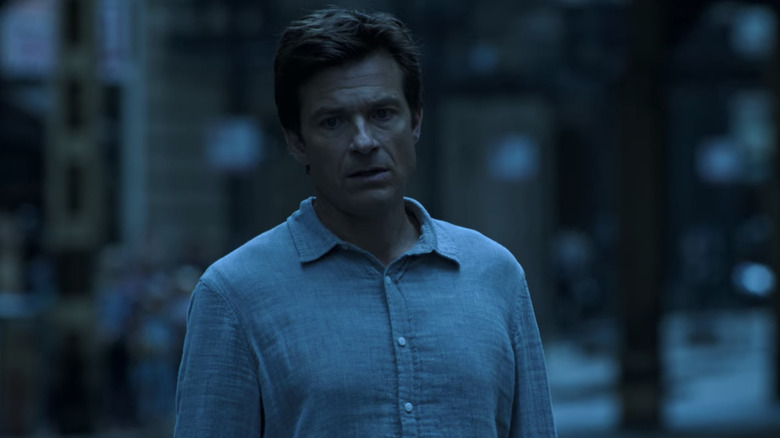
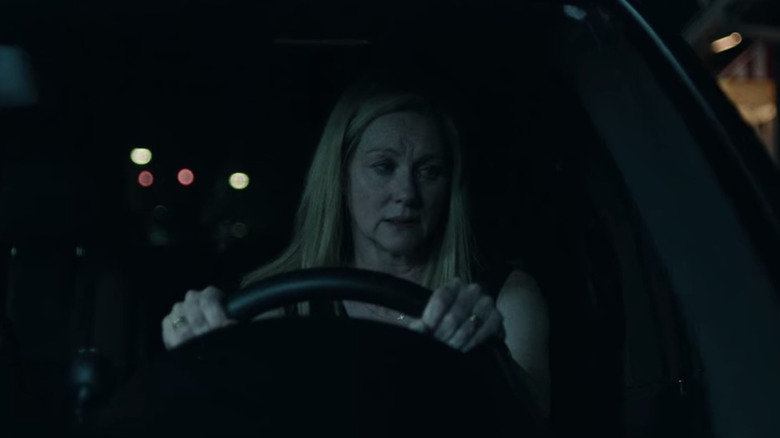
The Interesting Reason Everything In Ozark Is So Blue
by Joshua Meyer
If watching "Ozark" on Netflix has you feeling kind of blue, there's a very good reason why that may be happening. The show deals with dark subject matter but it's also darkly lit, often bathed in blues.
This was a conscious choice on the part of the creative team. It's one that somewhat recalls Steven Soderbergh's "Traffic," which sought to differentiate its three different storylines through the use of color. The Michael Douglas segment was shot on tungsten film without a filter in an effort to give it a chilly blue vibe.
"Ozark" drew inspiration from other cinematic sources and it uses different techniques to achieve its look. In an interview with Decider, cinematographer Ben Kutchins pointed to the work of the legendary DP, Gordon Willis, on the 1971 film "Klute" as one influence on the look of "Ozark." He also named David Michod's 2010 film, "Animal Kingdom," and referred generally to the early films of David Fincher, one of which, "The Game," also stars Michael Douglas.
Kutchins has received two Emmy nominations for his work on "Ozark," and he explained how he and Jason Bateman — who not only stars but has directed numerous episodes — continued to oversee the work of other directors and cinematographers to ensure harmony in the show's visual language. He said:
"I think both Jason Bateman and I wanted to do something that was unique and unique to Ozark that created a distinct look. From the beginning we really [tried to make bold choices], and I think it stood out in the way that we tell stories, the way that we color correct the episodes, the way that we move the camera, and the way that the camera relates to the characters."
'What's Lurking In The Shadows'
As for how they achieved that look, Express notes that Kutchin has used "practical and single-source lights whenever possible" and "an in-camera cyan tilt," with episodes receiving color correction in post. The lighting was intended as a means of visually reinforcing the dark world that Bateman's character, Marty Byrde, his wife, Wendy (Laura Linney), and their two children, Charlotte and Jonah (Sofia Hublitz and Skylar Gaertner) have entered as they uproot from Chicago to Missouri and become embroiled in the drug business. Kutchin explained:
"My hope was that the audience would really like lean forward into it and be looking around the frame to see what's lurking in the shadows. I want the audience to be engaged and to draw them in. There are movies and shows where you really have to shut off your devices and shut off your brain and really have to lean in. I'm happy that Ozark is one of those."
The muted color palette of "Ozark" stands in sharp contrast to the bright pastels of its Netflix cousin, "Squid Game." Figuratively, also, in terms of narrative developments, the show's third season was its darkest yet.
Its fourth and final season brings Marty and Wendy into the lion's den of their drug boss, Omar Navarro (Felix Solis), down in Mexico. Yet they are a power couple who always seem to excel when they have their back to a corner.
At the same time, their moral compromises have led them down a dark path. Shading it blue is a subtle way of conveying their inner state as their criminal exploits lead them further away from the light of any possible redemption.
Read this next: Shows Like Breaking Bad That You Can Binge Watch Today
The post The Interesting Reason Everything in Ozark is So Blue appeared first on /Film.
19 Nov 11:38
AMD GPU owners can now use NVIDIA’s Image Scaling Tech (NIS)
by John Papadopoulos
A few days ago, we informed you about the new algorithm for NVIDIA’s Image Scaling tech, NIS. This tech was available to all NVIDIA owners and according to the green team, it produces better results than AMD’s FSR. So, good news everyone as AMD GPU owners can now use NVIDIA’s tech via Lossless Scaling 1.6. … Continue reading AMD GPU owners can now use NVIDIA’s Image Scaling Tech (NIS) →
The post AMD GPU owners can now use NVIDIA’s Image Scaling Tech (NIS) appeared first on DSOGaming.
19 Nov 11:38
Barbarella Talks With Abel Ferrara About ZEROS AND ONES
by Barbarella
Barbarella Talks With Abel Ferrara About ZEROS AND ONES
Hey, friends. Barbarella here to share a chat I had with Abel Ferrara, the writer and director who is at least partially responsible for one of my earlier traumatic moments watching a film, when I saw Harvey Keitel appearing naked, full-frontal, in BAD LIEUTENANT. I spoke with the filmmaker after watching his pandemic film ZEROS AND ONES, which stars Ethan Hawke in a dual role. Shot in Rome during the pandemic, the film is about soldier J.J. sent to the capital to stop an imminent terrorist bombing while desperately seeking news of his imprisoned brother.
Sensing there was some meaning to the movie that I was too clueless to comprehend, I felt a little nervous going into the interview, concerned Abel Ferrara would immediately judge me for not knowing the intricacies of this work and refuse to speak with me. Thankfully, that didn’t happen, and I liked his take on the film as an experience. Check it out.
I love Rome, and I love that you filmed this movie there.
“Thank you.”
I have a question about the footage. Some of it, you can get this eerie sense of the city, being isolated during the pandemic. Then some of the footage is very grainy, and you can't see, really, what is on screen. I'm wondering, what were you trying to convey through shifting between being able to see the city and these abstract images?
“Well, he's shooting with his camera, so you got that thing. I mean, you're seeing the object of the camera being on us, and then the character J.J. is
Ronald.phillips likes this
19 Nov 11:37
New Side Channel Attacks Re-Enable Serious DNS Cache Poisoning Attacks
by noreply@blogger.com (Ravie Lakshmanan)
Researchers have demonstrated yet another variant of the SAD DNS cache poisoning attack that leaves about 38% of the domain name resolvers vulnerable, enabling attackers to redirect traffic originally destined to legitimate websites to a server under their control.
"The attack allows an off-path attacker to inject a malicious DNS record into a DNS cache," University of California researchers
19 Nov 11:34
A Simple 5-Step Framework to Minimize the Risk of a Data Breach
by noreply@blogger.com (The Hacker News)
Today's businesses run on data. They collect it from customers at every interaction, and they use it to improve efficiency, increase their agility, and provide higher levels of service. But it's becoming painfully obvious that all of that data businesses collect has also made them an enticing target for cybercriminals.
With each passing day, the evidence of that grows. In the last few months,
Ronald.phillips likes this
19 Nov 11:28
Borderlands 3 update adds final Vault Card to the Director’s Cut edition
by Iain Harris
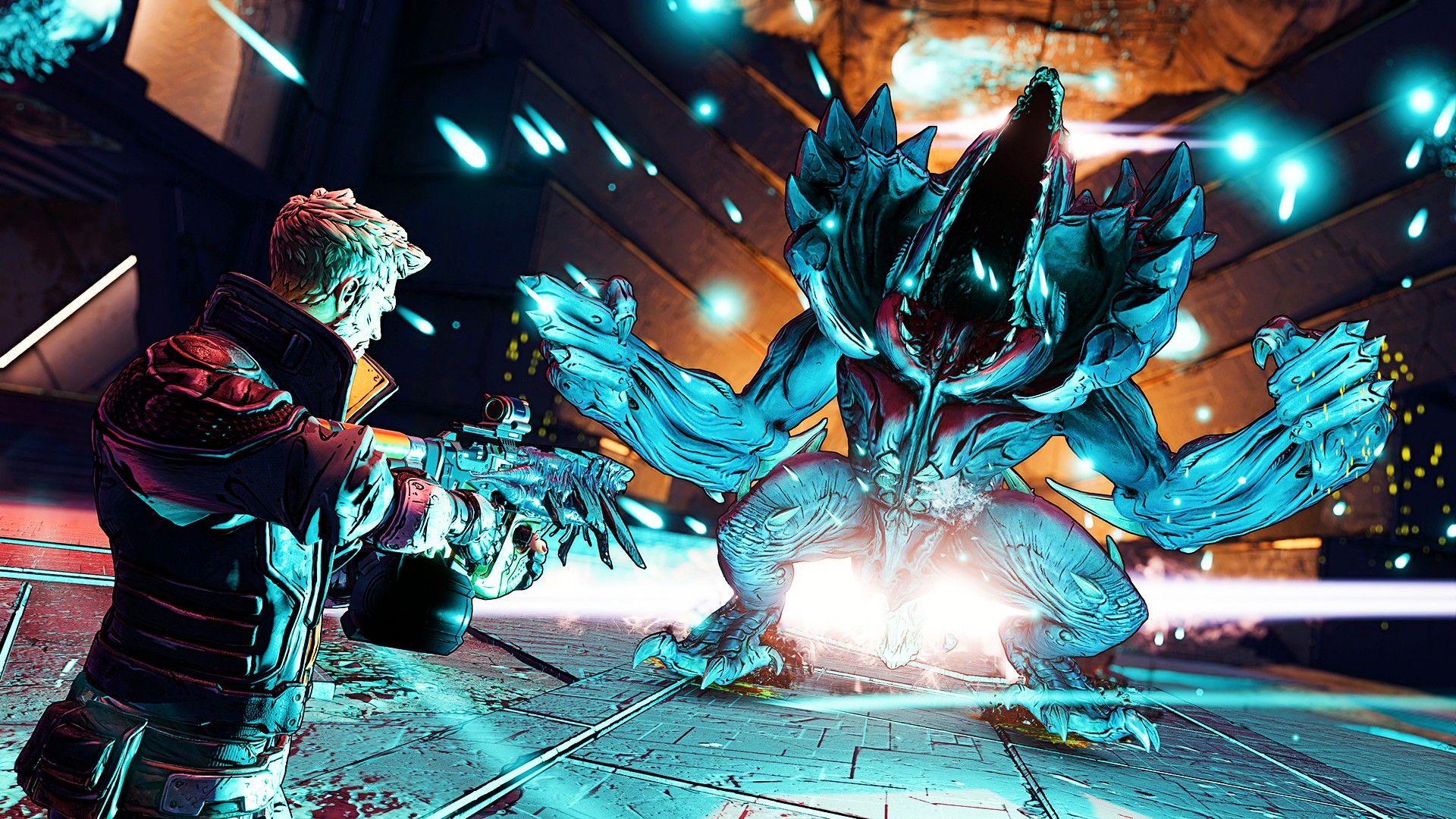
Borderlands 3 has got its final Vault Card of the Director's Cut edition as part of a new update. The latest slice of content arrived alongside other bits and bobs on November 18, so it should be waiting for you when you boot the game up.
Vault Cards give you more loot and experience while active, with each drop adhering to the theme of the card itself. The first Vault Card, Fallen Heroes, was a tribute to some of the game's gone-but-not-forgotten allies. The third and final Vault Card is called Bunker Masters, and it's up for grabs now if you own the Director's Cut add-on.
It's not all about the Director's Cut edition, though. If you head to the Proving Grounds maps, you'll find a switch that enables the True Trials event. You'll still be gunning down foes in the name of loot, but you'll find that the final bosses have received huge buffs to their health and damage. Crazy Earl's Shop has three new Echo Device skins if you fancy wearing something new to the mayhem.
RELATED LINKS: Borderlands 3 Shift codes, Borderlands 3 legendary weapons, Play Borderlands 3
Ronald.phillips likes this
19 Nov 01:02
Op Ed
by Blue
PC Gamer - The GTA Trilogy trainwreck was a wake-up call- stop delisting old games. "While I've heard some questionable excuses for delisting older versions of games, including "reducing confusion,"...
19 Nov 01:02
Movies Like Heat That Are Definitely Worth Watching
by Gino Orlandini
When director Michael Mann was cutting the iconic downtown LA shootout for his blue-hued 1995 neo-noir masterpiece "Heat," he initially set the scene to a foley mix of faux gunfire. But it just wasn't right. He swapped out the track for sound captured on location. "We shot with full-load blanks," the auteur told Vulture. "We were in these glass and steel canyons and the gunfire reverberated in a certain real way, so they had an authenticity to the place that really was unique."
Mann has claimed to "reject realism," but it's that close attention to detail, merged with his overall expressionistic brilliance, that turned "Heat" into a genre of its own. "Heat" isn't just a heist movie — it's the heist movie. It's the platonic ideal on which all other modern films about clever crews of crooks and the cops who chase them are based.
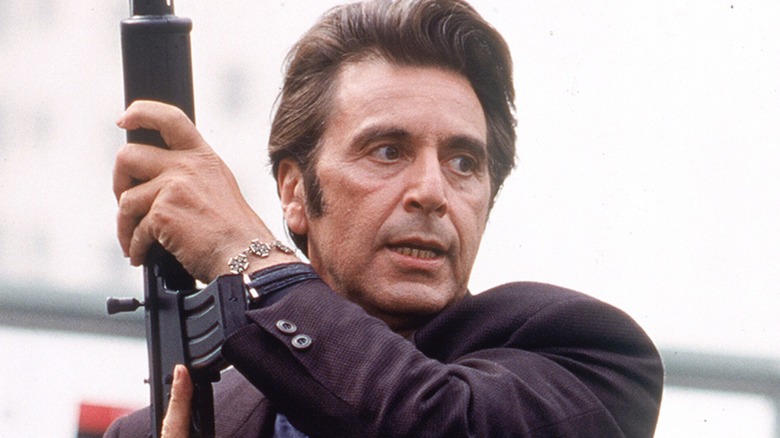
But "Heat" is also a mood, more than a neo-noir both aesthetically and tonally. Robert De Niro's bank robber never unfurls any silly schematics. Al Pacino's jittery major crimes detective (who Pacino himself says he was playing as if high on cocaine) never utters a word of narration. There are no tedious expository characters. A lot of the dialogue — particularly from Jon Voigt's fence — is barely even audible. Absent too are irritating tech-related cliches: holograms, touch screens, the wacky hacker in a van doing a digital deus ex machina, and so on. "Heat" is a completely convincing simulacrum of high-end crime, but one with painterly chiaroscuro style to spare. Here are more films in that same spirit.
Collateral
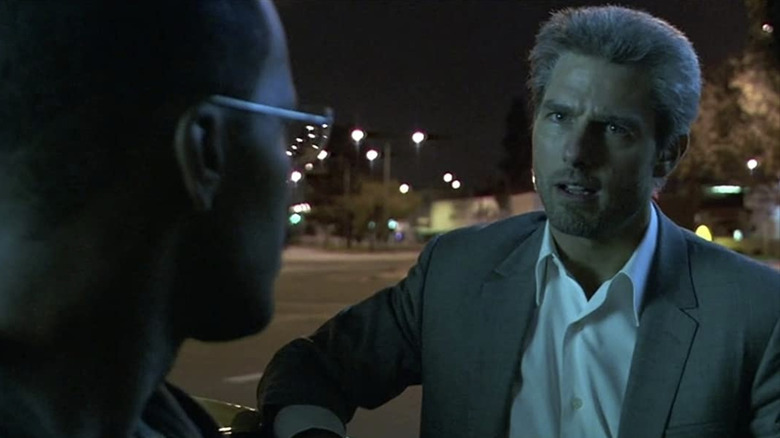
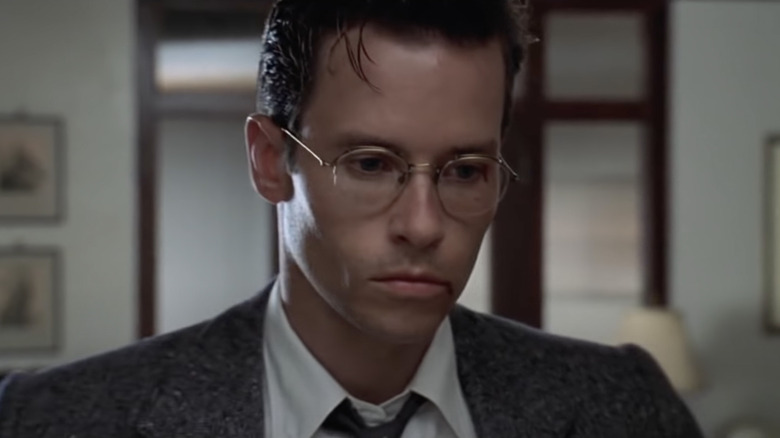
"Collateral" isn't just worth watching, it's worth re-watching, as Michael Mann's second-best film delivers much of his indelible style, with some notable new wrinkles. "Collateral" is smaller and less ponderous than "Heat," mostly taking place around the claustrophobic cab of an aspiring limousine entrepreneur played by the excellent Jamie Fox. The film's suspense is carried by a menacing backseat driver, a typically intense Tom Cruise playing against type as a grey-haired, cold-blooded contract killer who enlists Foxx, against his will, for a one-night rampage through L.A.
"Collateral" is not a heist movie, and it is decidedly from the portion of Michael Mann's canon where he got very into adding Audioslave songs to his soundtracks. The film still works. In fact, it more than works, and contains tons of the director's signature middle-stage flair. This includes the then-novel use of mixing old-fashioned film stock with first-generation digital cameras that, frankly, weren't that capable in 2004. But the intermittent digital grain, with the attendant soap-opera-style frame rate, gives key scenes an unsettling sense of lo-fi voyeurism.
After "Heat," Mann became more interested in cinéma vérité, a less stately style with more handheld shots and disorienting wide-lens close-ups. That change is also very noticeable in his other great film, 1999's "The Insider." And, as always, Mann is again the master of painting a dark yet freshly striking vision of the high-level crime that he imagines unfolds in Los Angeles just after the sun goes down.
Ronin
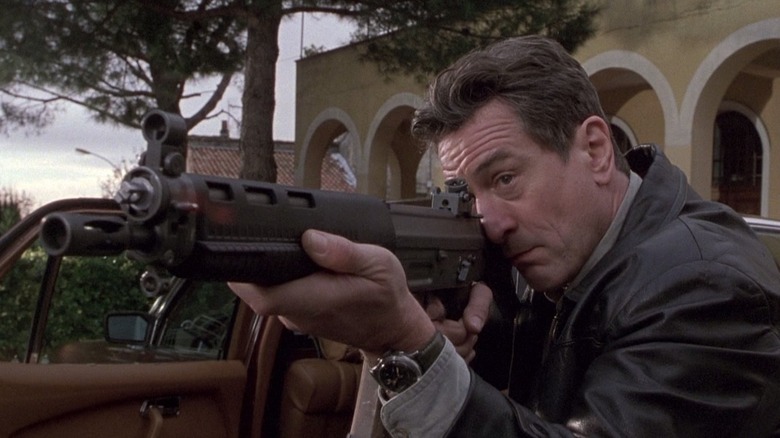
John Frankenheimer's "Ronin" might be the closest analogue to "Heat" in that it's a competent caper film and stars Robert De Niro as a hard-boiled thief extraordinaire. Bobby D. plays Sam, a former intelligence officer who uses his spycraft for ill but is unable to shake a classically American sense of honor, even as he's plotting an international crime with a newly assembled team of crooks.
And that's what makes Sam worth rooting for. The film's opening credits explain that a ronin is a "samurai whose liege was killed." These wayward warriors are thus forced to wander the land as "hired swords." "Ronin" is certainly saying something about a crumbling American empire whose soldiers have lost their purpose, but not their knightley sense of duty. Isn't that the formula for a great anti-hero?
Of course, given the film's spy-inspired plot, there's plenty of double-crossing, and De Niro's Sam is so quietly cool under pressure that he's easy to root for even without the mild political subtext. Upon the release of "Ronin" in 1998, critics weren't wild about it. The Washington Post called it, "a disappointingly conventional thriller ... whose pretensions of exoticness are ultimately thwarted by a nagging mistrust of its audience's sophistication." "Ronin" does lack the stylistic panache of Michael Mann's masterwork, but Frankenheimer's less arty approach also lets the plot wash over you unencumbered. No heist film is going to rival "Heat." You'll be chasing that dragon for the rest of your days. "Ronin" at least gives you a taste.
The Thomas Crown Affair
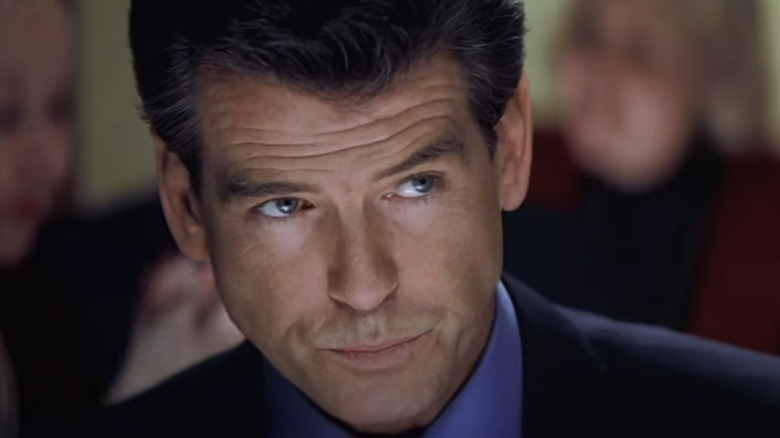
"The Thomas Crown Affair" is a lot more fanciful than the gritty "Heat." After all, it stars the smirkingly handsome and irrepressibly dashing Pierce Brosnan as the titular character in this 1999 remake of the 1968 original. Brosnan is tremendous playing an independently wealthy English gentleman who steals high-end art just for kicks. He's basically rehashing that bourgeois charm that made him such a compelling James Bond, so even though the spiffy flick has been called a neo-noir, there's nothing too dark about this jaunty big-budget delight.
"The Thomas Crown Affair" is really more interested in clever plot mechanics than moody stylishness, but the maze is so well constructed that it still lets you believe all this high-wire heist stuff is actually possible. The movie also has a compelling romantic plot as Rene Russo tries to pin Crown down in more ways than one. But it's apparently not so easy to catch a crook who loves high art almost as much as he loves to steal it.
Tommy Crown is a Robin Hood figure, and his only partially concealed passion for toying with the world that curates priceless oil paintings is infectious. The only thing truly criminal about this film is how underrated it is, at least according to its merely solid critics' aggregate. These C to C+ scores really fail to reflect how fun it is to spend two hours with Brosnan when he's up to no good.
The Town
In 2010, Ben Affleck decided he would just remake "Heat" and call it "The Town." Los Angeles becomes Boston, Affleck becomes a sportier version of Robert's De Niro's Neil McCauley, and Jon Hamm plays an FBI good guy as a somewhat relaxed imitation of Al Pacino's manic detective Vincent Hanna.
The film works best if you haven't seen "Heat," argues MTV News critic Laremy Legel in an otherwise friendly review. Jeremy Renner is the film's loose cannon and a total standout. He plays Affleck's hair-trigger ride-or-die bestie, who Ben's bank robber can always count on to have his back, if not to keep things quiet. Renner is sort of taking the Waingro role here. He's loyal, yet similarly sociopathic, and so represents the fly in the ointment that could muck up even the best-laid plans for a Beantown bank job.
Audiences liked "The Town." Critics mostly did, too. Mann already perfected the form, and imitation is the sincerest form of flattery, so leave "Heat" behind when you pop on this flick and give Boston's own big Ben some credit. Not only did Affleck direct this film, he also penned the script, along with Aaron Stockard and Peter Craig. To the trio's immense credit, the plot is piano-wire taut and has the kind of satisfying ending that, much like the perfect crime, is only possible when no loose ends are left behind.
Casino
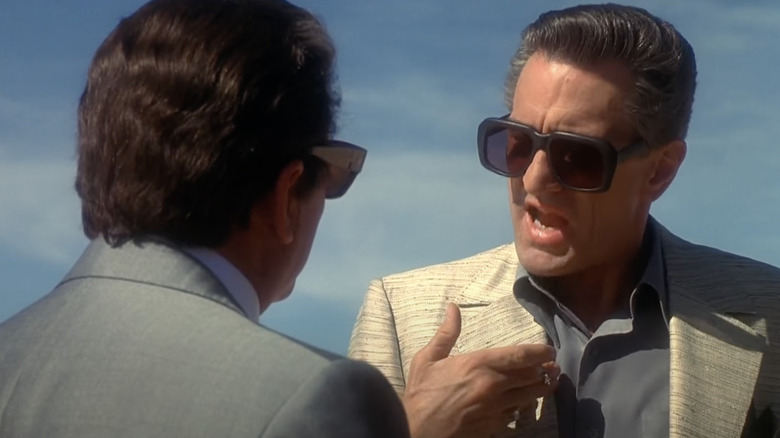
"Casino" is a heist film in the sense that it delves deep into the way the mob once made its millions. Also, it stars Robert De Niro as Sam "Ace" Rothstein, a mobbed-up Jewish gambler who once again treats his vocation with incomparable professionalism — at least until the pressure cooks him. "Season after season, the prick was the only guaranteed winner I ever knew," explains Joe Pesci's brutal Cosa-nostra enforcer, Nicki Santoro, "but he was so serious about it all I don't think he ever enjoyed himself."
It's Scorsese's fidelity to explaining the actual inner workings of mob economics that puts this film on par with "Heat." "Casino" is a real how-to for running a crooked casino business. Perfectly pitched narration from key characters explains the scam down to the silk-tied Sicilians skimming the take from inside Sin City cash rooms.
Most of all, "Casino" is Scorsese's apex achievement as an artist. Sure, "Goodfellas" will always get that "The Godfather" grace over at the AFI 100. It came first, and given the overlap of Joe Pesci playing an identical psychopath in both, it will be derided in some quarters as a sort of lesser sequel. Reject these notions. Just as Michael Mann peaked with "Heat," "Casino" is the movie where Scorsese put it all together: the gilded glow of the down-lit cinematography, the innovative editing, a superfluous script, and pitch-perfect performances. This is the auteur's most self-actualized work at the helm of a great Hollywood film.
Carlito's Way
Brian De Palma has always been the eccentric rogue among his more famous squad of friends: Steven Spielberg, George Lucas, and Francis Ford Coppola. Maybe as a result, he's had fewer hits than his peers, and there are no Oscars inscribed with his name. Yet, at his best, he may be the group's alpha. "I'm not part of any establishment," De Palma defiantly declared in the eponymous 2015 documentary "De Palma."
Unlike Marty (as his familiars call him), De Palma stans need not start a Scorsese-style dispute about which work is his ultimate achievement. "Carlito's Way" is right next to "Heat" on the list of the all-time most rewatchable movies, a gritty crime noir that checks all this manly genre's boxes. The director himself has acknowledged that this is his masterpiece. After the film opened in Berlin, some critics dismissed the film as standard gangster fare. De Palma disagreed. As he says in "De Palma," "I don't think I can make a better picture than this."
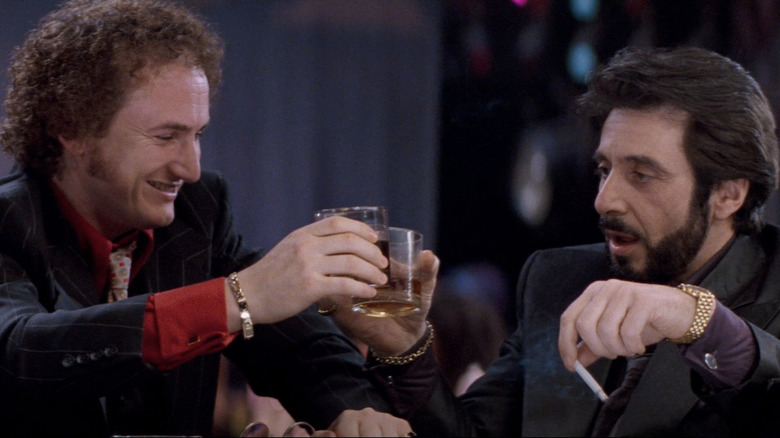
Like "Heat," "Carlito's Way" also stars the chameleonic Al Pacino, this time playing a Puerto Rican ex-con just paroled thanks to his crooked, coked-up lawyer, brilliantly embodied by Sean Penn in a frizzy wig with a fake receding hairline. All Carlito wants is to go straight, win back his ex, and literally sail into the sunset. But as Pacino himself so famously said in "The Godfather Part III," "Just when I thought I was out, they pull me back in!"
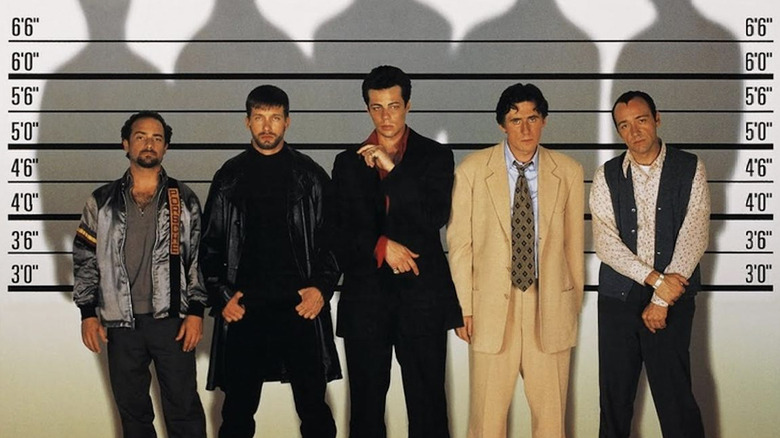
The Usual Suspects
Bryan Singer's "The Usual Suspects" felt revolutionary in 1995. This virtuosic and mesmerizing modern noir is flawless front to back, then kicks you in the teeth with a twist that made the film more meme than movie. The plot is so air-tight that it's a wonder that the perfectly imagined characters didn't suffocate -- it was almost a given when writer Christopher McQuarrie picked up the Academy Award for best original screenplay.
The script's hook is a terrifying bedtime story for underworld goons about a crime boss so mythic that the mere mention of his name turns hardened criminals into blubbering wretches. Then, Singer sprinkles on style with the finesse of Salt Bae standing over a sturgeon. The suspects' dreamlike aura quickly takes away your equilibrium, setting you up perfectly for that sucker-punch finish. Kevin Spacey also justifiably took home an Oscar in 1996 for his cat and mouse games in the brilliant scenes he shares with Chazz Palminteri's lead detective.
If you haven't revisited "The Usual Suspects" recently (and, given the allegations against both Singer and Spacey, that would be understandable), try to think of the last time you saw a visually jaw-dropping film that didn't rely on a graphic novel as a storyboard. Though Singer imbues the violence with gravity — despite a psychopathic Stephen Baldwin cracking wise — he can't help but beautify the bloodshed. "The Usual Suspects" might be the modern noir "Heat" fans will most admire.
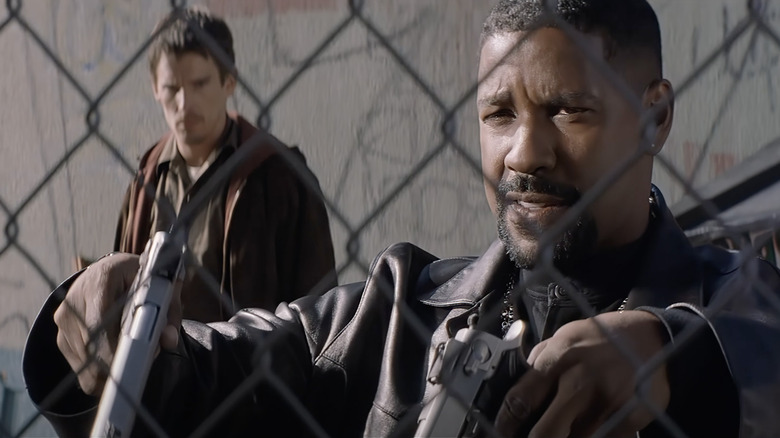
Training Day
Michael Mann's films are nothing if not manly. At its core, "Heat," like "Collateral," is about a battle of wills between two very cool dudes. That's also the beating heart of "Training Day," and Denzel Washington and Ethan Hawke are more than up to the task in this good cop-bad cop standoff.
"Training Day" is the creation of another serious L.A.-ologist, writer David Ayer, also responsible for the verité excellence of 2012's "End of Watch." That film might even merit an honorable mention here had Ayer, that time serving as director as well, not opted for the whole shaky-cam "Cops" aesthetic.
Ayer earns his auteur status in the fullness of his vision of L.A. The Illinois native's bloody take on the City of Angels is more diverse than Mann's, and more sinister, too. He's not just interested in high-line prowls, but lowly street toughs. Ayer's L.A. is basically overflowing with cartel-connected killers and neighborhoods so neglected that even the police dare not enter. That leaves a lot of room for anti-heroes to run wild.
In some ways, this whole "Heat" genre is more western than noir. "Training Day" perfectly puts this in perspective. Pistols are replaced with Glocks, horses with American-made gas guzzlers. "Training Day" is the fantasy of a sprawling urban wilderness so utterly untamed that one man must take the law into his own hands.
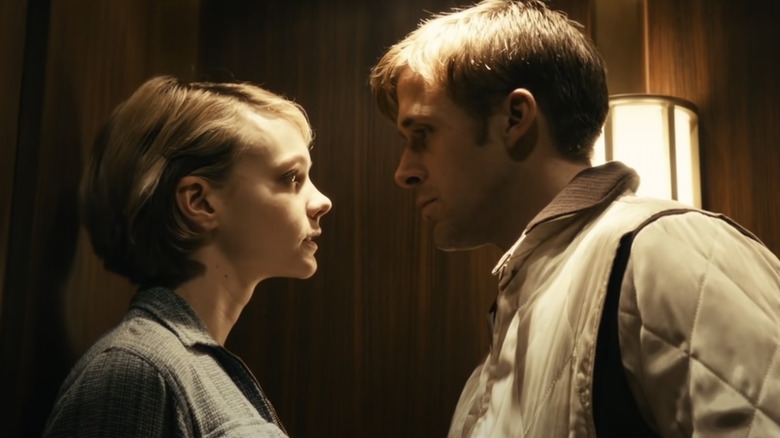
Drive
Nicolas Winding Refn's "Drive" is another neo-noir masterpiece that replaces the logistical realism of "Heat" with a more lyrical version of organized criminal violence. But unlike Michael Mann's film, with its somewhat underdeveloped love stories, "Drive" is probably the most openly romantic film in this genre.
Ryan Gosling plays a part-time Hollywood stuntman who moonlights as a getaway driver for crooks who don't want to be left in the lurch. He's like Uber Black for bank robbers, minus the aux cord and box of mints. In quite the noir-genre reversal, especially considering the motor-mouthed heroes who pioneered the genre, Gosling's character is so tight-lipped that he doesn't even have a name — the credits simply refer to him as "Diver."
Neo-noir heroes aren't at all like the blab-happy city slickers of noirs past. Gosling courts co-star Carey Mulligan's soulful single mother amidst a backdrop of absolute mayhem. The actors even collaborated on cutting their own lines to better set the mood for this laconic love affair. "We would sort of sit around in the morning and Nic would say, 'Do you want to say this?' And I would say, 'No.'" Mulligan told Uproxx. "And Ryan would go, 'I don't wanna say that.' So we'd end up with four words..." Gosling added at a junket in 2011, "I don't think you need all this talking in movies. Sometimes, it's easier to get the point across if you're not saying something. The audience is smart. They can see how somebody feels."
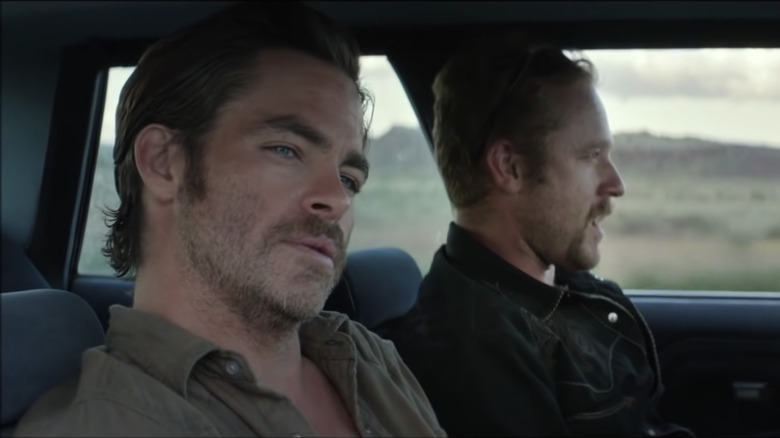
Hell Or High Water
The only real difference between a neo-noir like Michael Mann's "Heat" and an "anti-western" like "Hell or High Water" is like the difference between Taylor Swift the pop star and Taylor Swift the country star: One wears cowboy boots. Modern westerns are mostly just noirs with a twang, but director David Mackenzie's excellent anti-western two-steps into territory "Heat" and its imitators don't broach: politics.
"Hell or High Water" is, blessedly, an original screenplay. It sprang from the mind of Texas native and actor-writer Taylor Sheridan, who also penned "Sicario." The scribe says he sees these films as part of a trilogy about "the modern-day American frontier." As he told IndieWire, "I was exploring the death of a way of life, and the acute consequences of the mortgage crisis in East Texas."
The film came out in 2016, but Sheridan obviously had the 2007-2008 financial crisis on his mind. For a refresher, that was when big banks gave out so many home loans that, after ordinary folks got buried under their own bad bets, a crooked derivatives market built atop this house of cards toppled the global economy. Against that larger context, Chris Pine and Ben Foster play brothers trying to even the odds and save the family farm by knocking off those purportedly predatory banks. Jeff Bridges plays the old-salt sheriff tasked to stop them. Even though this film is overtly political, it sticks with the "Heat" genre's most humanist convention: You root for everybody, no matter what color hat they wear.
L.A. Confidential
If you like a hard-boiled detective story with a sprawling ensemble of legendary Hollywood actors and a twisty L.A.-based crime plot, you might also vibe with this modern-era movie posing as a noir from Tinseltown's golden age of flatfoots and private dicks.
One of the hallmarks of classic noirs is how hard they are to actually follow. In the '40s films that gave birth to noir, like "The Big Sleep" or "The Maltese Falcon," Humphrey Bogart talks so fast, and so often says the opposite of what he means, that it's a bit much to keep up with. The stumble of the more static filmmaking of that era — and of "The Maltese Falcon" in particular — is that Bogie uncovers a slew of non-visual clues in quick succession, making it hard to keep the parade of characters straight and reducing cinema to a puzzle. As Alfred Hitchcock famously (and derisively) explained, this kind of plot-clotted movie is an emotionless — and thus boring — "intellectual process" instead of an emotional one.
Many highfalutin lists of Hollywood's greatest films claim that Roman Polanski's 1973 classic "Chinatown" is the go-to neo-noir about corruption running through 1930s Los Angeles. More populist lists endorse "L.A. Confidential," which depicts an equally corrupt City of Angels 20 years later. Critics correctly concur. The Washington Post called it, "roundly entertaining." The New York Times dubbed it a "resplendently wicked ... tough, gorgeous, vastly entertaining throwback to the Hollywood that did things right."
The Dark Knight
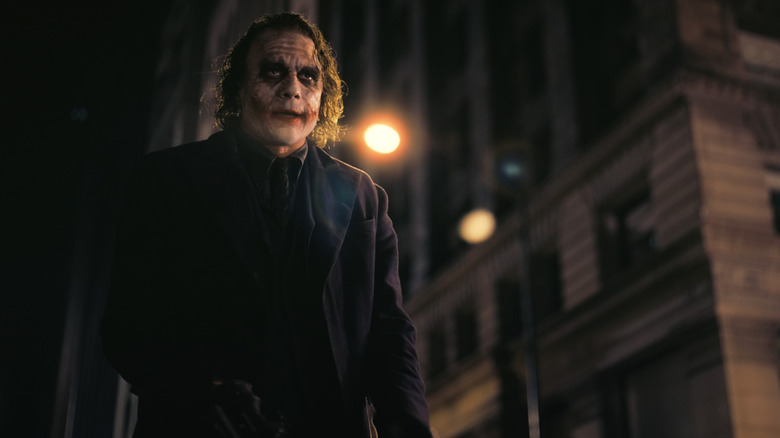
It's not like you haven't seen this film, but many Batman fans don't realize that "The Dark Knight" and its realistic and gritty take on the Caped Crusader isn't conceivable without "Heat" as an inspiration — at least according to director Christopher Nolan.
Following the success of "Batman Begins," Nolan wanted to expand the scope of his DC universe for the sequel. The problem was that, budget-wise, he'd already gone all in. He needed artistic inspiration for how to build out Gotham. "One of the biggest epic films I have ever seen is Michael Mann's 'Heat,'" the action auteur said during an interview for the book "The Nolan Variations" (via No Film School). He went on to explain, "That is a true Los Angeles story, just wall-to-wall within the city. Okay, we'll make it a city story."
Nolan even screened "Heat" for the "Dark Knight" department heads before shooting. "I always felt 'Heat' to be a remarkable demonstration of how you can create a vast universe within one city and balance a very large number of characters and their emotional journeys in an effective manner," he said. Nolan's "The Dark Knight" is full of indelible images of Chicago (standing in for Gotham) thanks to director of photography Wally Pfister, but "Heat" was always the duo's architectural muse. As Nolan explained to GQ, Mann simply understands the "grandeur of a city and how it can become a kind of epic playground."
Read this next: Every Martin Scorsese Feature Ranked From Worst To Best
The post Movies Like Heat That Are Definitely Worth Watching appeared first on /Film.
18 Nov 22:43
'The NFT Bay' Shares Multi-Terabyte Archive of 'Pirated' NFTs
by BeauHD
NFTs are unique blockchain entries through which people can prove that they own something. However, the underlying images can be copied with a single click. This point is illustrated by The NFT Bay which links to a 19.5 Terabyte collection of 'all NFTs' on the Ethereum and Solana blockchains. And it comes with an important warning message too. TorrentFreak reports: "The Billion Dollar Torrent," as it's called, reportedly includes all the NFTs on the Ethereum and Solana blockchains. These files are bundled in a massive torrent that points to roughly 15 terabytes of data. Unpacked, this adds up to almost 20 terabytes. Australian developer Geoff is the brains behind the platform, which he describes as an art project. Speaking with TorrentFreak, he says that The Pirate Bay was used as inspiration for nostalgic reasons, which needs further explanation.
The NFT Bay is not just any random art project. It does come with a message, perhaps a wake-up call, for people who jump on the NFT bandwagon without fully realizing what they're spending their crypto profits on. "Purchasing NFT art right now is nothing more than directions on how to access or download an image. The image is not stored on the blockchain and the majority of images I've seen are hosted on Web 2.0 storage which is likely to end up as 404 meaning the NFT has even less value." The same warning is more sharply articulated in the torrent's release notes which are styled in true pirate fashion. "[T]his handy torrent contains all of the NFT's so that future generations can study this generation's tulip mania and collectively go..." it reads.


Read more of this story at Slashdot.
Billy Glenn Hoya, Mike Butash and -1 others like this
18 Nov 22:10


Movies Like Requiem For A Dream You Really Need To See
by Layla Halfhill
"Requiem For a Dream" (2000) is not a movie for the faint of heart. The stylish-but-grim psychological drama bleakly portrays the horrors of drug addiction and its devastating effects on the human psyche. Directed by Darren Aronofsky and based on the novel by Hubert Selby Jr., the story follows lonely single mom Sara Goldfarb (Ellen Burstyn) who becomes addicted to diet pills, while her son Harry (Jared Leto), his girlfriend, Marion (Jennifer Connoly), and his friend Tyrone (Marlon Wayans) become heroin addicts.
The characters in "Requiem For a Dream" all have dreams of achieving bigger and better things, but as they become more deeply entrenched in their addictions, their dreams are replaced by delusions, and they begin to fall into utter ruin. It's a brutal film that is tough to watch, but it's also extremely compelling, thanks to Aronofsky's bold direction, Clint Mansell's memorable score, and the committed performances of its cast (Ellen Burstyn was nominated for an Academy Award for her role).
If you're a fan of "Requiem For a Dream" and are looking for worthwhile movies in a similar vein (no pun intended), you've come to the right place, as we've compiled a list of exactly such films for your consideration.
Trainspotting
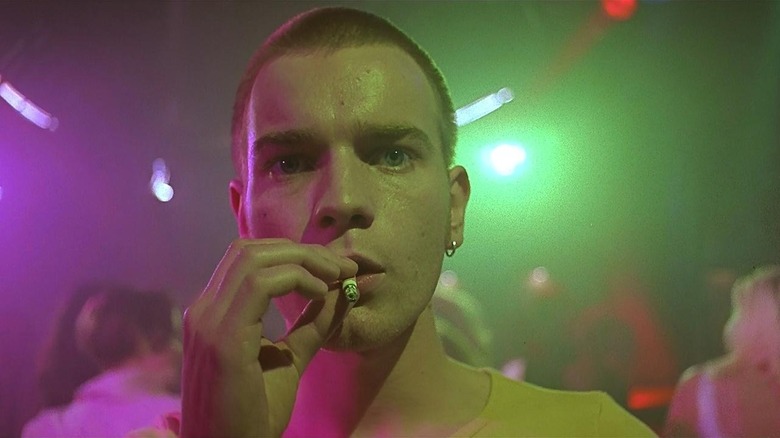
"Trainspotting" (1996) is another aesthetically-stylish but utterly brutal portrayal of the harsh realities of heroin use, following the ups and (mostly) downs of a group of Edinburgh-based friends led by Mark "Rent Boy" Renton (Ewan MacGregor) as they try to escape the gravitational pull of their addiction.
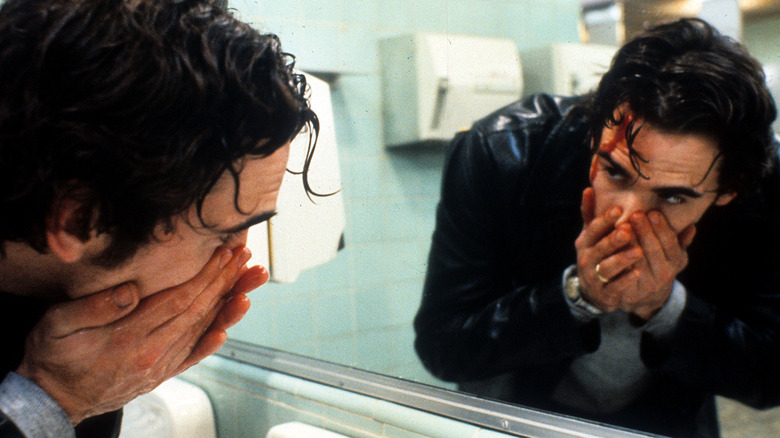
Director Danny Boyle employs a pulse-pounding soundtrack and flashy, inventive visuals to immerse viewers in the frenetic underworld that Renton and his pals Sick Boy, Spud, Begbie, and Tommy occupy, and the various physical and emotional states they find themselves in. One particularly memorable scene involves Renton digging around in (and eventually flushing himself down) a filthy toilet in a desperate bid to retrieve opium suppositories.
Based on a novel of the same name by Irvine Welsh, "Trainspotting" shows how drugs can seem alluring to young people in economically depressed areas, while also showing how drug use itself is a dead end. The adapted screenplay by John Hodge won a BAFTA award and was nominated for an Oscar, while the film itself became a cult favorite and spawned a sequel that reunites the characters twenty years on.
Drugstore Cowboy
Director Gus Van Sant's sophomore feature, "Drugstore Cowboy" (1989), follows the misadventures of a group of junkies who travel around the Pacific Northwest stealing drugs from drugstores in order to find their next high. Like "Requiem For a Dream," the film does a good job of getting inside the psyche of its drug-addicted protagonists, leading The Guardian to wonder if it might be the "best film ever made about addiction".
Matt Dillon plays Bob Hughes, the de facto ringleader of the would-be nuclear family -- which includes his wife, Diane (Kelly Lynch), and another couple, Rick (James LeGros) and Rick's teenage girlfriend, Nadine (Heather Graham). It's only a matter of time until tragedy befalls the group, leading Bob to try and clean up his life, which is of course, not exactly an easy task.
"Drugstore Cowboy" is based on the autobiographical novel by James Fogle, who was in prison at the time of the film's release. The movie was well-received by critics, and, as of this writing, maintains a 100% critics score on Rotten Tomatoes.
Leaving Las Vegas
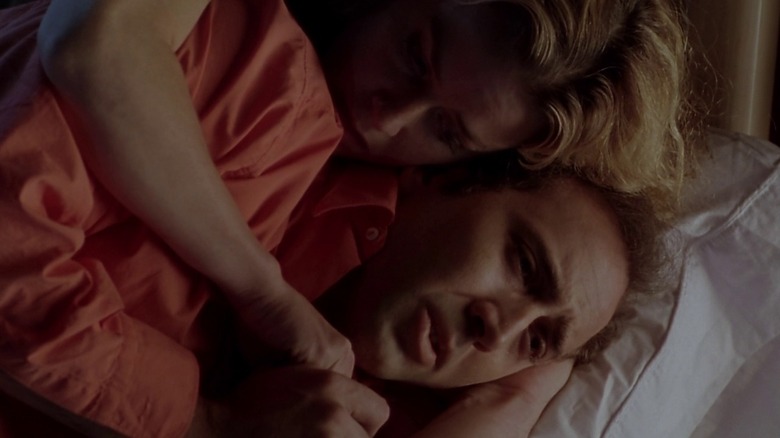
By the time we meet Ben Sanderson (Nicholas Cage) in "Leaving Las Vegas," he is already deep into his addiction, which in this case is booze. The former Hollywood screenwriter, having lost his family and his career, decides to go to Las Vegas and drink himself to death. There he meets a prostitute, Sera (Elisabeth Shue), and the two develop a tender but doomed relationship.
Like "Requiem For a Dream," "Leaving Las Vegas" is a movie in which addiction leads to ruin, but its focus is less on the cause of Ben's alcoholism and more on the way its two broken main characters, offer, as Roger Ebert put it, "a measure of grace" for one another.
Mike Figgis wrote, directed, and produced the film, which was based on a semi-autobiographical 1990 novel by John O'Brien, who died of suicide four years after its publication, and shortly after signing off on the movie contract. "Leaving Las Vegas" garnered four Academy Award nominations, including best director, best adapted screenplay, best actress, and best actor (which Nicholas Cage won).
The Basketball Diaries
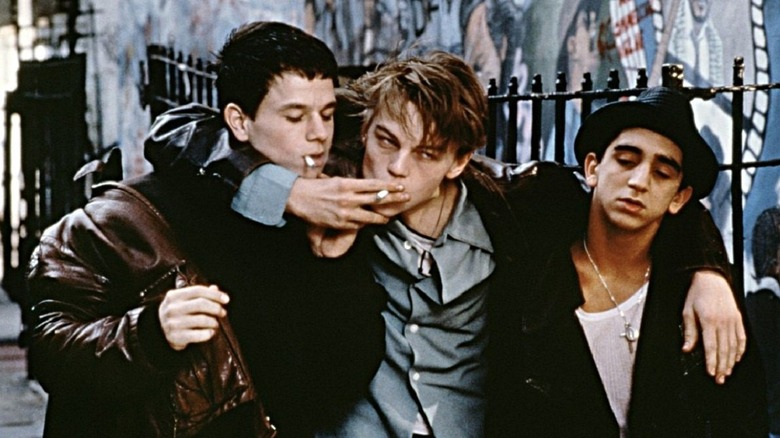
"The Basketball Diaries" follows the high school exploits of American poet, author, and punk musician Jim Carroll, portrayed in the film by Leonardo DiCaprio.
Directed by Scott Kalvert, and drawing from Carroll's real-life diary entries, "The Basketball Diaries" depicts Carroll's experiences as a promising writer and Catholic high school basketball star whose life descends into freefall thanks to heroin addiction. His habit eventually leads him away from the basketball court and into the streets with his friends Mickey (Mark Wahlberg) and Pedro (James Madio), where he resorts to prostituting himself for drugs.
"The Basketball Diaries" offers its protagonist a bit more redemption than "Requiem For a Dream," since Carroll eventually became sober. He would go on to form The Jim Carroll Band, whose single, "People Who Died," would be used not only in the soundtrack for "The Basketball Diaries," but also in notable films like "E.T." (1982), "Dawn of the Dead" (2004), and most recently in James Gunn's "The Suicide Squad" (2021).
Sid And Nancy
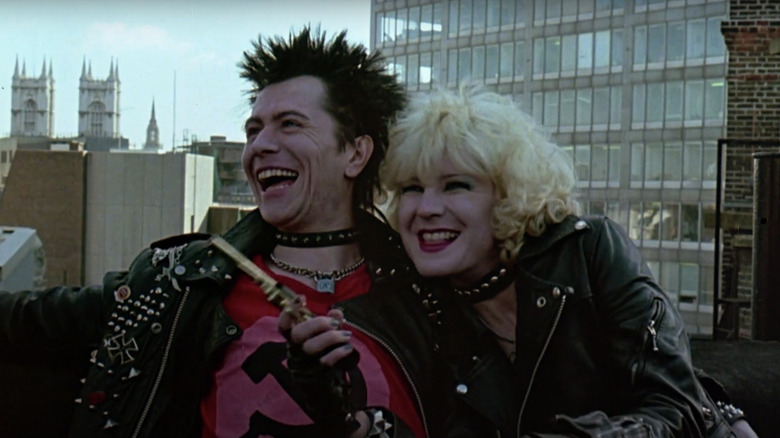
Continuing this list's trend of movies based on real people, "Sid and Nancy" (1986) is a fictionalized account of the downward spiral of The Sex Pistols' bassist, Sid Vicious (Gary Oldman), and his girlfriend, Nancy Spungen (Chloe Webb), both of whom were heroin addicts.
Charting their chaotic relationship from its beginning through to their untimely deaths, "Sid and Nancy" showcases the lovers' intense romantic bond, as well as their self-destructive, codependent tendencies. In October of 1978, Nancy was found dead of a stab wound in their hotel room in New York. At one point, Sid admitted to stabbing her during a drug-fueled argument, but it was never proved precisely what happened. Vicious would die himself of an overdose four months later.
Like Harry and Marion in "Requiem For a Dream," Sid and Nancy are a couple whose drug use ultimately leads them to ruin. While surviving band members such as John Lydon (aka Johnny Rotten) didn't love the movie, critics praised director Alex Cox's vision and the film's visceral depiction of love gone wrong.
The Panic In Needle Park
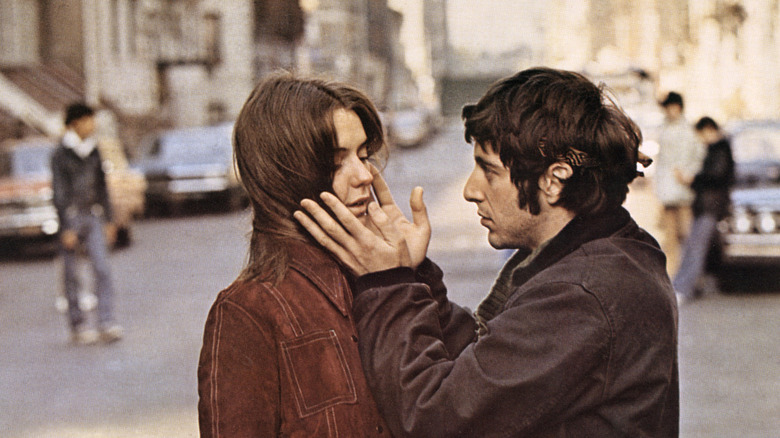
Yet another film in which a New York couple's heroin addiction leads to ruin, "The Panic in Needle Park" (1971) stars Al Pacino and Kitty Winn as Bobby and Helen, two down and out young lovers whose lives begin to spiral downward as they descend into heavy drug use.
The titular Needle Park was the real-life nickname of Sherman Square in NYC's Upper West Side, and the film's screenplay, written by Joan Didion, was based on a James Mills novel inspired by a 1965 pictorial he did for "Life" magazine.
Directed by Jerry Schatzburg, "The Panic in Needle Park" is notable for being one of the earliest feature films to depict heroin addiction with such harrowing realism, including shots of needles going in arms. It also marked Pacino's first starring role in a feature, as well as Raul Julia's film debut, while Kitty Winn won Best Actress at the Cannes Film Festival for her role as Helen.
Pi
"Requiem For a Dream" may have put Darren Aronofsky on the map, but his first feature, "Pi," shares some of the same themes and techniques he would employ again in that film. "Pi" isn't about drug addiction, but it is about obsession, and -- as was the case in "Requiem" -- the protagonist's fixation sends him into a downward mental spiral.
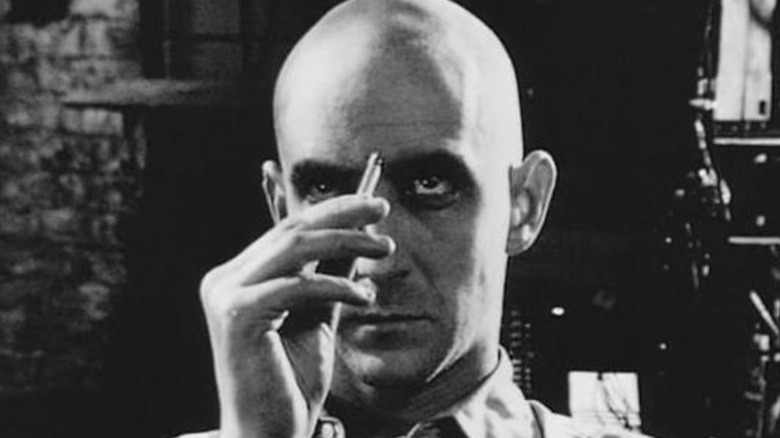
Sean Gullette (who co-wrote the film with Aronofsky) stars as a brilliant but paranoid mathematician, Maximillian Cohen, who comes to theorize that mathematics contains the answers to the universe, and that if he can just figure out certain patterns, he can not only game the stock market, but also find order in chaos ... and perhaps even God.
Max's obsession eventually leads to madness, and to a particularly bleak scene involving a power drill. It's clear even from this early work that Aronofsky had obsessive behaviors on the brain. Shot in black and white by Matthew Libatique, "Pi" also features a nerve-jangling score by Clint Mansell. Both Libatique and Mansell would continue to work with Aronofsky on several of his future films, including "Requiem For a Dream."
The Wrestler
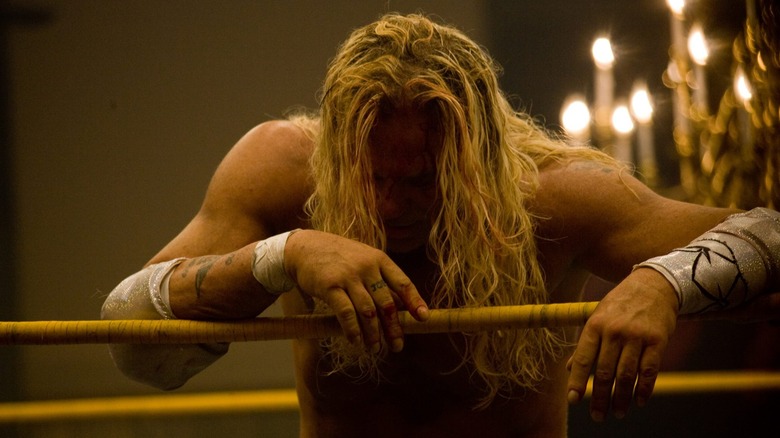
Aronofsky's filmography continued to explore themes of self-destruction, obsession, and addiction in 2008's "The Wrestler." Here, the protagonist -- aging professional wrestler Randy "The Ram" Robinson (Mickey Rourke, in a role almost played by Nic Cage) -- is addicted to, well, wrestling itself.
The film follows Randy as he attempts to return to the sport in an effort to recapture the former glory of his earlier career, which peaked in the '80s. Similar to the way Sara Goldfarb in "Requiem For a Dream" takes uppers to help her prepare for an appearance on her favorite show, Randy takes steroids to help beef himself up for his return to the ring. Unfortunately, he has a heart attack, prompting doctors to warn him that he must quit both steroids and wrestling if he wants to live. However, after being rejected by a love interest (Marisa Tomei) and his own daughter (Evan Rachel Wood), Randy decides to return to the ring once again, as it's the only place he feels loved.
"The Wrestler" was released to wide critical acclaim, with Mickey Rourke receiving a best actor Oscar nomination, and winning both a BAFTA and a Golden Globe for his iconic performance.
Mulholland Drive
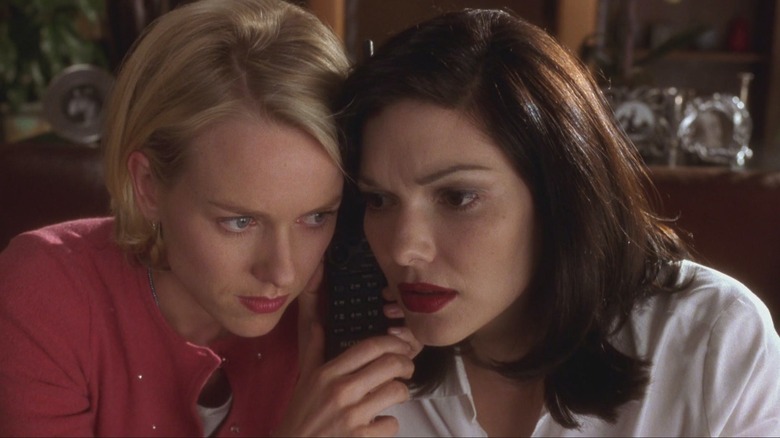
David Lynch's "Mulholland Drive" (2001) isn't about addiction, per se, but it is a dark, anxiety-inducing psychological thriller about dreams, delusions and cracked psyches.
Naomi Watts stars as Betty Elms, a cheerful, starry-eyed aspiring actress who returns home one day to discover a dark-haired amnesiac, Rita (Laura Harring), who has found her way there after being involved in a car accident. The two women then work together to try to unravel the mystery of who Rita is.
"Mulholland Drive" has many surrealistic elements, and like much of Lynch's work, elements of the plot (and the film's overall meaning) are open for interpretation. Revealing too much more would spoil the movie, but it can be said that -- as in "Requiem For a Dream" -- the protagonist's starry-eyed dreams don't work out exactly as she has planned, and the desperation associated with her goals leads to an upsetting outcome.
"Mulholland Drive" has been hailed by critics as a masterpiece. It competed for the Palme d'Or and earned Lynch the best director award at the Cannes Film Festival, as well as an Oscar nomination.
Perfect Blue
Speaking of masterpieces, Satoshi Kon's animated psychological thriller, "Perfect Blue" (1997), was his first feature as a director, and it marked the arrival of a major cinematic talent. The influential film about a J-Pop idol named Mima, who leaves her group behind to pursue acting dreams, shares similarities with both "Requiem For a Dream" and "Mulholland Drive," in addition to Aronofsky's "Black Swan" (2010).
Like the aforementioned films, "Perfect Blue" is about shattered dreams and shattered psyches. Aronofsky was so taken by "Perfect Blue" that he bought the rights to the film, with apparent intentions to do a live-action remake. Though that project never materialized, Aronofsky did do a shot-for-shot recreation of a bathtub sequence from "Perfect Blue" within "Requiem For a Dream."
Satoshi Kon would go on to direct four other critically-acclaimed features before he sadly passed away from pancreatic cancer at the age of 46, though his work has clearly left a mark on not only his fans, but other filmmakers.
Black Swan
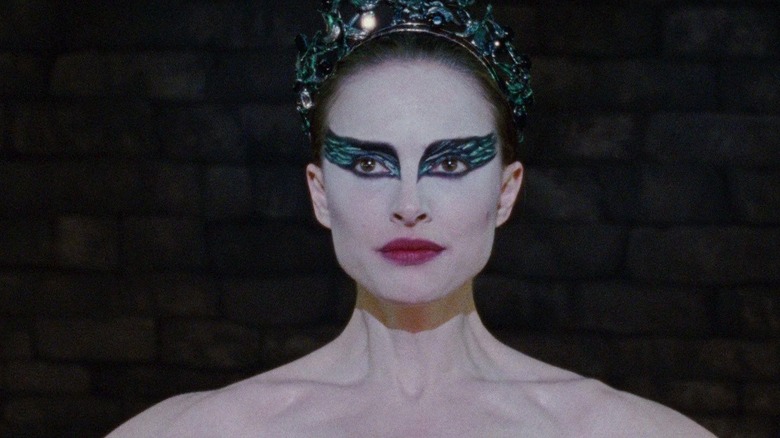
If one were to combine "Requiem For a Dream," "Mulholland Drive," and "Perfect Blue" in a blender, one might end up with something resembling "Black Swan." It's -- you guessed it! -- another Aronofsky-directed psychological thriller in which obsession leads to destruction, delusions, and a fractured sense of self.
"Black Swan" stars Natalie Portman as Nina, a member of a New York City ballet company who becomes obsessed with landing the lead, dual roles in her company's production of "Swan Lake." However, although Nina encompasses the role of the innocent White Swan well, she becomes threatened by another dancer, Lily (Mila Kunis), who better encompasses the seductive Black Swan. This starts an unhealthy mental decline for Nina, and as she desperately works to perfect her routine she begins hallucinating and becoming consumed by paranoia, all of which culminates in a truly shocking ending.
"Black Swan" was nominated for five Academy Awards, and the best actress nod for Natalie Portman let directly to a win.
Uncut Gems
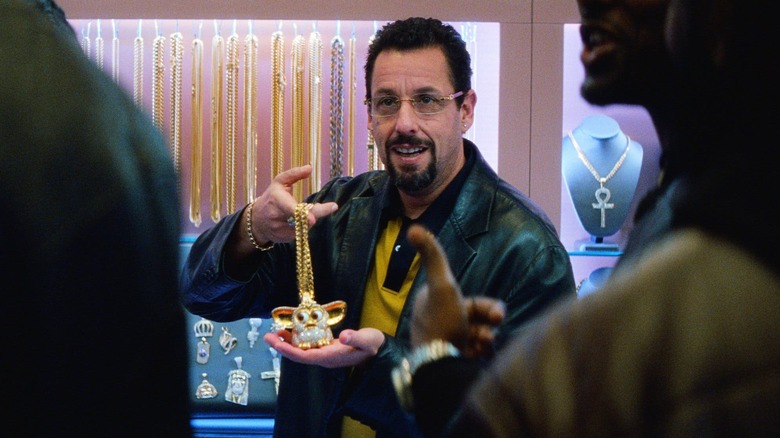
The Safdie Brothers' "Uncut Gems" (2019) is the most recently-released movie on this list, and its similarities to "Requiem For a Dream" are many. Most notably, it follows its protagonist, a New York City jeweler named Howie Ratner (Adam Sandler), on an anxiety-inducing, addiction-fueled descent into ruin.
For Howie, his addiction is gambling, and by the time we meet him, we realize he's been chasing the next big win and just barely outrunning his debts for a long time. Howie smuggles in a special opal from Africa, which attracts the attention of basketball star Kevin Garnett, who borrows the gem for good luck. Meanwhile, Howie places a series of increasingly larger and riskier bets that ultimately backfire on him, digging him deeper and deeper into trouble.
Much like Harry Goldfarb in "Requiem For a Dream," Howie's always just one move away from achieving his goals and kicking his habit for good -- or so he thinks. Unfortunately, he's also always one move away from devastation, as well.
Adam Sandler's performance as the self-destructive Howie earned critical acclaim and garnered an Independent Spirit Award, while Josh and Benny Safdie were likewise lauded for their direction. "Uncut Gems" also became one of A24's biggest hits to date, and, as a side note, has the seventh most f-bombs in cinema history.
Read this next: The 12 Best Neo-Noir Films Ranked
The post Movies Like Requiem For a Dream You Really Need to See appeared first on /Film.
18 Nov 22:08
Apple's Right-To-Repair Policy Was Forced By Green Investors and Regulatory Pressure
by BeauHD
"In the past, Apple has taken an opposing stance on letting consumers repair their devices. Some of that is changing with Apple's new announcement," writes Slashdot reader wakeboarder. "Apple will sell components like batteries and screens to allow consumers to repair their own devices. This will help reduce e-waste, but will also allow Apple to control the market for parts -- not exactly what right-to-repair activists have fought for."
With that said, Apple "didn't change its policy out of the goodness of its heart," writes The Verge's Maddie Stone. The timing of this announcement was "deliberate," considering Wednesday was a key deadline in the fight over a shareholder resolution environmental advocates filed with the company in September asking Apple to re-evaluate its stance on independent repair. The issue would've likely ended up at the Securities and Exchange Commission. From the report:
Apple spokesperson Nick Leahy told The Verge that the program "has been in development for well over a year," describing it as "the next step in increasing customer access to Apple genuine parts, tools, and manuals." Leahy declined to say whether the timing of the announcement was influenced by shareholder pressure. Activist shareholders believe that it was. "The timing is definitely no coincidence," says Annalisa Tarizzo, an advocate with Green Century, the mutual fund company that filed the right-to-repair resolution with Apple in September. As a result of today's announcement, Green Century is withdrawing its resolution, which asked Apple to "reverse its anti repair practices" and evaluate the benefits of making parts and tools more available to consumers.
Apple's initial response to the Green Century resolution was less than conciliatory. Tarizzo says that on October 18 (30 days before the self service announcement), Apple submitted a "no action request" to the Securities and Exchange Commission asking the investor oversight body to block the proposal. According to Tarizzo, Apple's argument before the SEC was that the proposal -- that the company "prepare a report" on the environmental and social benefits of making its devices easier to fix -- ran afoul of shareholder proposal guidance by infringing on Apple's normal business operations. However, earlier this month, the SEC issued new guidance concerning no-action requests that includes a carve-out for proposals that raise "significant social policy issues." In other words, shareholders can bring resolutions that affect a company's day-to-day business operations if those proposals raise issues with significant societal impact. Tarizzo believes that this change made it much more likely the SEC would side with Green Century rather than Apple, particularly since the mutual fund company connected the dots between increased access to repair and the fight against climate change. (Using devices as long as possible through maintenance and repair is one of the best ways to reduce the climate impact of consumer technology since the majority of the emissions associated with our gadgets occur during the manufacturing stage.)
"It wasn't a guarantee that the SEC would side with us, but the new guidance indicates it's very likely we would prevail," Tarizzo says. "It effectively took away a lot of Apple's leverage in the process." Now, Apple seems to have regained some leverage by announcing its new Self Service Repair program on the same day that Green Century was required to respond to the no-action request. Instead of arguing that the SEC should allow the shareholder resolution to move forward, Green Century is now withdrawing the resolution entirely.
Read more of this story at Slashdot.
Ronald.phillips likes this
18 Nov 20:54

Phil Spencer hopes for industry-wide emulation, even as Xbox emulation ends
by Dustin Bailey
Videogame emulation is great at two things: preserving gaming history, and allowing people to easily pirate old software. The industry's relationship with emulation has been rocky as a result, but Xbox's excellent first-party emulation efforts have offered everyone a bit of hope - until those efforts came to an end following the most recent Xbox backward compatibility update. Still, the head of Xbox has hope that the industry will come to a solution to preserve old games.
"My hope (and I think I have to present it that way as of now) is as an industry we'd work on legal emulation that allowed modern hardware to run any (within reason) older executable allowing someone to play any game," Xbox boss Phil Spencer tells Axios.
Spencer's stated hope comes just after Microsoft's gaming division brought its own first-party emulation efforts to an end. "While we continue to stay focused on preserving and enhancing the art form of games," as the announcement put it, "we have reached the limit of our ability to bring new games to the catalog from the past due to licensing, legal, and technical constraints."
18 Nov 20:53
Review: Grand Theft Auto: The Trilogy – The Definitive Edition
by Dan Roemer
Not so definitive To be blunt: Grand Theft Auto: The Trilogy – The Definitive Edition is a technical mess that...
The post Review: Grand Theft Auto: The Trilogy – The Definitive Edition appeared first on Destructoid.
18 Nov 20:53


Activision Board Backs Kotick, PlayStation and Xbox Bosses “Disheartened” and “Disturbed”
by Nathan Birch

Earlier this week the ongoing discrimination and harassment scandal engulfing Activision Blizzard reached a new level when the company’s CEO Bobby Kotick was personally accused of covering for harassers and mistreating female employees in a wide-ranging Wall Street Journal report. Since that explosive article Kotick has remained silent, and naturally, there’s been a whole lot of speculation about his future, but for now it seems the Activision Blizzard board is standing behind their embattled CEO.
In a collective statement the Acti-Blizz board stated that it “remains confident that Bobby Kotick appropriately addressed workplace issues brought to his attention.” A surprising thing to put out there considering one of the things Kotick is accused of is withholding information about an employee sexual assault from the board. Essentially saying they’re okay being kept in the dark is certainly an odd thing to admit. According to an inside report from Game Developer, Activision Blizzard leadership also defended Kotick in an internal call with employees, where they said the company’s “zero tolerance” policy won’t apply to the company’s CEO, because they don’t “have evidence” on the WSJ accusations, as they took place too long ago. At least as of now, it seems like Kotick has no intentions of going anywhere.
If Kotick steps down, it may be due to pressure from outside the company, rather than within. In internal company emails obtained by Bloomberg, both PlayStation boss Jim Ryan and Xbox boss Phil Spencer harshly criticized Activision Blizzard. For his part, Ryan wrote he was “disheartened and frankly stunned” by Activision Blizzard’s handling of recent events, and revealed he personally reached out to publisher following the publishing of the WSJ Kotick story.
We outreached to Activision immediately after the article was published to express our deep concern and to ask how they plan to address the claims made in the article. We do not believe their statements of response properly address the situation.
Meanwhile, Spencer wrote he was “disturbed and deeply troubled by the horrific events” at Acti-Blizz and that Microsoft is “evaluating all aspects of our relationship with Activision Blizzard and making ongoing proactive adjustments.”
For those who haven’t been keeping up, California’s Department of Fair Employment and Housing (DFEH) has filed suit against Activision Blizzard, alleging gender-based discrimination and sexual harassment at the Call of Duty and World of Warcraft publisher. Activision Blizzard’s official response to the suit accuses the DFEH of “distorted […] and false” descriptions and insists the picture painted is “is not the Blizzard workplace of today.” An open letter objecting to the official response was signed by thousands of current and former Acti-Blizz employees, leading to a worker walkout. Acti-Blizz CEO Bobby Kotick would eventually apologize for the company’s initial response, calling it “tone deaf.” Several high-ranking Blizzard employees, including former president J. Allen Brack and Diablo IV and World of Warcraft team leaders have resigned or been fired, leading to name changes for some characters. The story has even attracted the attention of the US Federal Government, with the Securities and Exchange Commission (SEC) opening a "wide-ranging" investigation.
It’s clear powerful forces are aligning both for and against Kotick right now – it will be interesting to see which side wins the day. Of course, we’ll keep you updated as the story progresses.
The post Activision Board Backs Kotick, PlayStation and Xbox Bosses “Disheartened” and “Disturbed” by Nathan Birch appeared first on Wccftech.

Ronald.phillips likes this
18 Nov 20:53
Xbox Chief Says He's Evaluating Relationship With Activision
by msmash
Microsoft's head of Xbox said he's "evaluating all aspects of our relationship with Activision Blizzard and making ongoing proactive adjustments," in light of the recent revelations at the video game publisher. From a report: In an email to staff seen by Bloomberg News, Phil Spencer said he and the gaming leadership team are "disturbed and deeply troubled by the horrific events and actions" at Activision Blizzard. He referred to the Wall Street Journal story earlier this week that said Chief Executive Officer Bobby Kotick knew of sexual harassment at the company for years and that he mistreated women.
"This type of behavior has no place in our industry," Spencer wrote. He joins a swell of outcry from employees to investors and shareholders in demanding a stronger response from the U.S.'s second-biggest gaming publisher. On Wednesday, Sony Group's PlayStation Chief Jim Ryan sent a similar note to staff, writing that he and his leadership were "disheartened and frankly stunned to read" that Activision "has not done enough to address a deep-seated culture of discrimination and harassment."
Read more of this story at Slashdot.
18 Nov 19:13


I can almost imagine what it must be like to have a dad who loves you
by wil@wilwheaton.net (Wil Wheaton)
Yesterday, I posted this to Instagram.

My caption said that I could tell just by looking at those two guys that they used to be cool.
That’s a reference, a call back, to something that happened when I was sixteen. I’ve written about it in at least one of my books, and it’s come up at conventions over the years. But I gather from 24ish hours of comments at Facebook and on Instagram that many of you don’t know what I was talking about.
Allow me to tell you a story that I just love to tell.
When I was a kid on the Enterprise, I idolized Frakes. I wanted to be just like him. I wanted to do everything he did. I wanted to be as cool, as kind, as confident, as Frakes was. Because I looked up to him so much, so did Wesley Crusher. Like, Wesley does The Riker when he sits in chairs because I thought it was cool that Frakes did The Riker when he sat in chairs. Nobody ever asked me about it, but I was ready to defend that choice with my dying breath. Those times Wesley and Commander Riker were on some assignment together were my favorite, because it meant I got to spend my whole day with him at work.
Anyhow. One day, we wrapped at the same time and I just about plotzed when Frakes asked me if I wanted to walk to the parking garage together. Like just imagine. You’re in high school and the coolest person you know, the person you IDOLIZE is just casually like, “hey, want to hang out?” I grabbed my backpack, made sure I had the keys to my car in my pocket, locked my dressing room behind me, and we walked across the back lot, to the garage, together.
I can’t recall exactly what we talked about. It was probably stuff that happened at work that day, and I feel like he asked me about Depeche Mode, which was my absolute favorite band in the world at that time. What I remember like it just happened was how good he made me feel. Frakes made me feel seen. He made me feel valued, and loved, and worthy. I couldn’t have articulated it at the time, but he made me feel the way a loving father makes his kids feel.
As you know, I did not have a loving father. I had a bully. And it sucked. So the time I got to spend with Frakes was like water to a captain who is dying in a cave on some asteroid or whatever.
So we got to the garage, and it turned out that even though our call times were hours apart, we’d parked right next to each other, a few spaces up the ramp from our captain. Frakes pointed to Patrick’s Jaguar. “You know he got that because the car you bought was slightly better than his, right?”
I had heard this around the set, and it was as hilarious as it was unbelievable. But it was true. In 1988, Patrick bought a pretty standard Honda Prelude, and I bought a ridiculously pimped out Honda Prelude si4WS. In TNG lore, it has become known as “Wil Wheaton’s Slightly-Better-Than-Patrick Stewart’s Prelude”.
I told him I had heard that, and that I felt a little badly about it. Again, he pointed to Patrick’s fancy, expensive, luxury car. I wish I could recall his precise words, but he said something about Patrick going all-in on a fancy car, to ensure he didn’t get shown up by the Teen Idol again.
The walk to the parking garage was brief. Like, maybe five minutes. In that five minutes, Frakes was just so kind and gentle with me. He treated me like a peer, like a person he cared about, like a person he genuinely liked. I felt so safe with him, like I could tell him anything.
I never, ever, not once, felt any of those things from the man who was my father. The man who was my father made a choice when I was young to withhold all of those things from me (he gave them freely and generously to my brother and sister so I know he had them to give), and at sixteen years-old, it was getting harder and harder to pretend that he didn’t treat me differently than he treated my siblings. I began to believe that there must be something wrong with me, and if I could just figure out what it was, I could earn his approval and maybe his love. SPOILER: I could not, because it was never about me. It was always about him.
So Frakes and I are standing in the parking garage and I don’t want to get in my car and go home. I want to stay there and talk with this adult who treats me like I’m a good person who is worthy and valued and seen. And before we part ways, I want to convey to Frakes that, if he were my age, I would want to hang out all the time. I want to communicate to him that he’s a role model for me, that he’s made me feel so good about myself, and that I valued the walk to the garage he’d invited me to be part of with him.
So I gather up all my courage and communication skills, and I say, “I can tell just by looking at you, that you used to be cool.”
Frakes laughed that wonderful, boisterous, joyful laugh of his and said, “What do you mean ‘used to be’?”
I was mortified. I was an awkward nerd (yeah, WAS) and I wasn’t good with words in the best of circumstances. I stammered and sputtered and tried my best to explain what I meant. I don’t remember what was said, but I remember that he got it. He knew what I meant, and he received it with kindness and grace.
The next morning at work, we were all on the bridge, the entire cast. We were either just finished with or about to start a rehearsal, and Frakes told the entire cast and crew what I’d said in the garage. EVERYONE laughed … and here’s something really important: nobody was laughing AT me. Everyone was laughing at the idea that Frakes, who was beloved by everyone with good reason, “used to be cool”, according to the kid.
I remember that I didn’t feel embarrassed or humiliated or stupid. I felt a little sheepish, but I didn’t feel judged by anyone.
Can I just tell you how different that was from how I felt at home? For as long as I could remember, the man who was my father would single me out for ridicule, humiliation, and embarrassment. He reveled in making me feel small, unworthy, stupid, and not just worthless to him, but objectively worthless. He laughed and laughed and laughed when he did these things. My brother and mother joined him. Only my sister did not. Guess who remains in my life from my family of origin?
One of the things I’d learned in my family at home was that I couldn’t speak up when something upset me. My parents always turned what someone (usually one of them) had done to me into something that I actually deserved, or was somehow my fault. So the very, very few times I spoke up to my mother about how much her husband was hurting me, it was a big deal. It took courage, and effort. It was also a total waste of courage and effort. “Oh, he’s just teasing you,” she would say. “Try not to be so sensitive,” was a popular bit of unhelpful advice. And always, ALWAYS, it was somehow my fault that he hurt me.
I imagine that’s a bit of a trigger for some of you reading this. I see you, and I’m sorry.
One of the things I saw for the first time that morning on the bridge, while my Star Trek family laughed together with me, was that what the man who was my father did wasn’t “teasing” like my mother said it was. It was bullying. It was hurtful. It was cruel. It was a choice to humiliate and ridicule me for his own gratification. He never did it to anyone else. He only did it to me. And it was her choice to ignore it, enable it, and make it somehow my fault for being hurt by his cruelty. I would spend over two decades in denial about all of this, but that morning, I saw it clearly for the first time.
For months after that day in the garage (indeed, to this very day), Frakes would joke with me about how he used to be cool. He told the story at conventions when we were together, he asked me to tell the story when we were in mixed company. And he always gave me a little shit about it, in a loving, gentle, dare I say fatherly way. And whenever he did, I felt loved. I felt like I was in on the joke, because he made sure I was. For 35 years, we’ve told this story, and it always brings joy to us both.
I look at that photo of us together from yesterday, and I can almost imagine what it must be like to have a dad who loves you, who makes you feel like you’re enough, who wants you to succeed and is proud of everything you’ve worked so hard to achieve.
I am so grateful for my Star Trek family. I am so grateful for this memory.
Troy, Billy Glenn Hoya and -1 others like this

18 Nov 19:10
3G Service Is Going Away Next Year. Here's What That Means
by Boone Ashworth
As companies shut down their aging 3G equipment to make room for 5G networks, older devices like phones, alarm systems, and wearables will lose functionality.
18 Nov 19:10

Microsoft’s Phil Spencer Doesn’t Feel Great about Current NFTs in Games, Calls Them Exploitative
by Alessio Palumbo

An increasing number of game studios are evaluating the potential of NFT (non-fungible token) blockchain technology in games. Ubisoft CEO Yves Guillemot, for example, said in the latest earnings call from a couple of weeks ago that the company wants to be one of the key players there. Indeed, Ubisoft has been part of the Blockchain Gaming Alliance for some time now.
As you see, this industry is changing regularly with lots of new revolutions happening. We consider blockchain one of those revolutions. It will imply more play-to-earn that will enable more players to actually earn content, own content, and we think it's going to grow the industry quite a lot.
So we have been working with lots of small companies going on the blockchain, and we're starting to have a good know-how on how we can impact the industry. We want to be one of the key players there.
EA CEO Andrew Wilson also commented on the topic as part of the latest earnings call, saying it's early but he believes NFT and blockchain will be an important part of the gaming industry in the future.
I think the play-to-earn or the NFT conversation is still really, really early. And there's a lot of conversation and is at some level a lot of hype about it. I do think it will be an important part about the future of our industry on a go-forward basis. But it's still early to figure out how that's going to work. I feel good about our position with respect to that.
Others are less enthused. Epic Games CEO Tim Sweeney said the company won't use NFT blockchain technology in its games, but it also won't prevent other developers from using it in the Epic Games Store. On the other hand, Valve has outright banned games that use NFT blockchain technology in October.
What about Microsoft, though? Speaking to Axios, Head of Gaming Phil Spencer said he feels current implementations are more exploitative than something he'd feel comfortable putting on the Microsoft or Xbox stores.
What I'd say today on NFT, all up, is I think there's a lot of speculation and experimentation that's happening, and that some of the creative that I see today feels more exploitative than about entertainment.
I don't think it necessitates that every NFT game is exploitative. I just think we're kind of in that journey of people figuring it out.
And I can understand that early on you see a lot of things that probably are not things you want to have in your store. I think anything that we looked at in our storefront that we said is exploitative would be something that we would, you know, take action on. We don't want that kind of content.
Of course, beyond the potential for exploitation, there's also the environmental consideration to account for given that blockchain operations notoriously require high amounts of energy.
The post Microsoft’s Phil Spencer Doesn’t Feel Great about Current NFTs in Games, Calls Them Exploitative by Alessio Palumbo appeared first on Wccftech.

18 Nov 19:09
The Alternate Star Trek Generations Ending We're Glad We Didn't See
by Joshua Meyer
"Star Trek Generations" isn't the most beloved of "Trek" films, but it could have had an ending that would have made it even worse in the sight of fans. After six movies featuring William Shatner and the cast of "Star Trek: The Original Series," "Star Trek Generations" promised to boldly go where no "Trek" movie or show had gone before: uniting Shatner's character, James T. Kirk, and Patrick Stewart's character, Jean-Luc Picard, the old and new captains of the starship Enterprise.
The film came just six months after "Star Trek: The Next Generation" concluded its seven-season run on television. Its title alluded to its nature as both the first "Next Generation" movie and the one where there was a changing of the guard between generations. Other cast members from "The Original Series," such as DeForest Kelley, Leonard Nimoy, and James Doohan, had guest-starred on "The Next Generation," but Kirk's return was reserved for a big-screen event.
Picard has since returned to headline his own Paramount+ streaming series, but if you've seen "Star Trek Generations," then you'll know that it didn't end well for Kirk. In fact, Shatner would never play the character again. Yet Kirk's original demise in the the script by Ronald D. Moore and Brannon Braga played out a bit differently than the one we eventually saw onscreen.
Sacrificing Kirk Both On And Offscreen
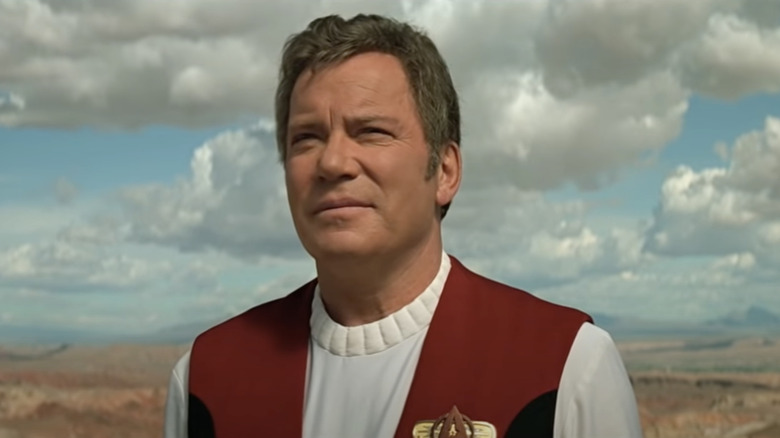
In "Star Trek Generations," Kirk and Picard team up against Dr. Soran (Malcolm McDowell), a scientist from the same El-Aurian species as Guinan, Whoopi Goldberg's bartender. As they try to stop him from launching a probe that will kill a star and send out a deadly shockwave, Kirk falls and dies under some collapsed scaffolding. However, before he expires, Picard finds him and thanks him for his service.
"Least I could do for the captain of the Enterprise," Kirk says. "It was fun." He then stares off into space, as if looking into the face of oblivion, and says, "Oh, my."
As Screen Rant notes, Shatner ad-libbed the "Oh, my" part, and the original scripted ending called for Soran to shoot Kirk in the back after a fistfight. Picard was then meant to step in and shoot and kill Soran with his own phaser.
It would have been an ignominious end for Kirk, the Trekkie equivalent of seeing Bruce Dern shoot John Wayne in the back in "The Cowboys." It also would have been somewhat at odds with Picard's honorable character to retaliate in such a vengeful fashion. As it is, "Star Trek Generations" went back for reshoots and we got an ending of a different sort.
The funny thing is, the book, "Star Trek: The Next Generation Companion," revealed that Moore, Braga, and producer Rick Berman (who also received a story credit) arrived at that ending simply because they wanted to have Picard confront mortality in the form of a character death. Kirk's name came up only because any "Next Generation" characters were off-limits. In both the movie and the writers' room, he died so they could live.
Read this next: Star Trek: The Next Generation's 10 Best Episodes
The post The Alternate Star Trek Generations Ending We're Glad We Didn't See appeared first on /Film.
18 Nov 19:09
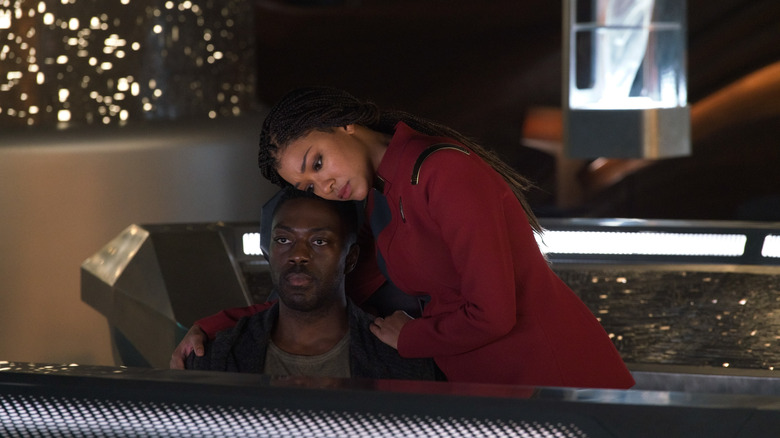
Star Trek Discovery Season 4 Review: Galactic Challenges Mixed With Intimate Character Moments
by Vanessa Armstrong
The last season of "Star Trek: Discovery" propelled us way into the future and conveniently out of the continuity restraints of being set in a time before Captain James T. Kirk even helmed the U.S.S. Enterprise. The show benefited from being free of those constraints last season and also did the work of establishing what this future looks like, most significantly that the Federation has become weakened in the century after The Burn killed warp travel. (Also, everyone has their own personal transporter now.)
We now know the rough outline of this new "Trek" time, and while we're hundreds of years from when we've ever been before, "Discovery" is still very much a "Star Trek" show. The Federation is rebuilding post-Burn, and the future is once again full of opportunity, exploration, and hope.
Another Galactic-Level Threat
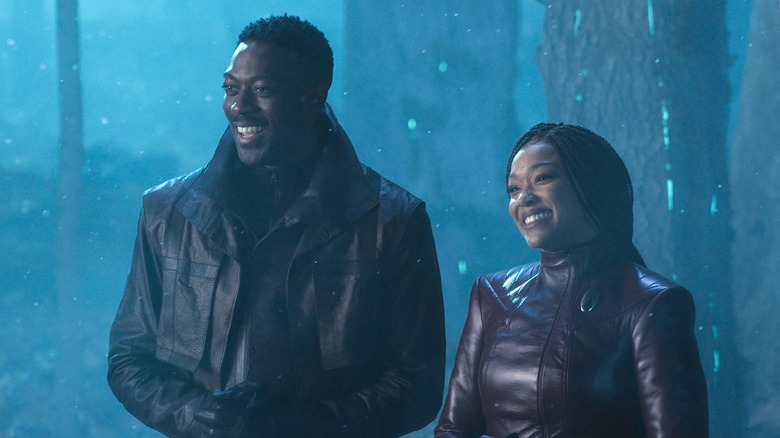
The beginning of season 4 starts out on an upbeat note. We're on a lush planet with some interesting aliens, U.S.S. Discovery Captain Michael Burnham (Sonequa Martin-Green), and her partner, Book (David Ajala). The two are there on behalf of the Federation and are doing the good work of giving away dilithium to those who lost their supplies after The Burn (aka the Very Bad Thing the series tackled in season 3).
This is a non-spoiler review so I'll stop there, but even when things get a bit dicey on the aforementioned lush planet, Michael keeps smiling. The sequence has danger, yes, but it's also lighthearted, an event that highlights Michael's deep drive to save everyone and solve every problem. She's in her element, doing what she does best with the people she loves.
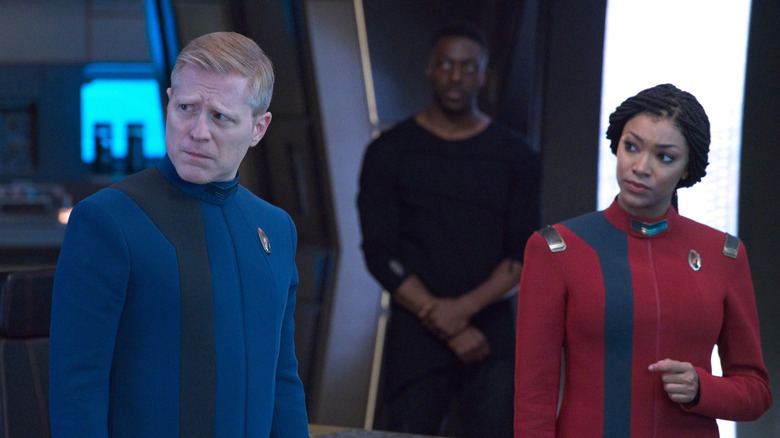
After those first few minutes, however, things get very bad, very fast. That anomaly we've seen in the trailer makes its ruthless introduction and — as Saru says in the aforementioned trailer — puts billions of people at risk. This is bad, folks — another cataclysmic event for the crew of Discovery to tackle head on.
The anomaly, like other threats in seasons past, is almost absurdly epic in scope, so big that its enormity makes one almost numb. What "Discovery" does better this season, however, is pair this galactic existential threat with the personal struggles of its characters.
A Balance
Take Michael, for example. She's the protagonist of the series — someone who has helped save the universe and solved the centuries-old problem of the Burn. Her drive to save everyone no matter the risk, however, is seen as a fault by the newly elected Federation President (Chelah Horsdal). The character conflict extends beyond Michael, however, more than what we've seen before. Other characters have their own personal journeys and get more time and focus on what they're going through. The first few episodes see some characters deal with grief, for example, while others look to find one's own place in the ever-changing galaxy.
Two characters in particular are also getting more welcome screen time. Adira (Blu del Barrio) and Gray (Ian Alexander) are now part of the main cast instead of recurring characters, and their characters are more fleshed out (Gray in the literal sense of the word, as he is on a journey to get a body of his own).
It's not easy to maintain the right balance between intimate character moments and events that span the galaxy. "Discovery," however, gets it right more often than not, though there are definitely moments that swing and miss. What the show doesn't lose sight of, however is that it is a series about hope, about people using all their technology and know-how at their disposal to help others and make the galaxy a better place.
And so the Discovery crew continues to strive forward and face monumental threats, armed with portable transporters and programmable matter, yes, but also the bonds they have with each other. They are family, albeit a family who constantly must stop threats that threaten billions.
The fourth season of "Star Trek: Discovery" premieres on Paramount+ on November 18, 2021.
Read this next: Star Trek: The Next Generation's 10 Best Episodes
The post Star Trek Discovery Season 4 Review: Galactic Challenges Mixed With Intimate Character Moments appeared first on /Film.
18 Nov 19:09
 Let’s start with the good news. The good news is that the original Cowboy Bebop anime is available for viewing right now on Netflix. The bad news? Netflix took everything that was fun and wonderful about the original anime series and smothered it to death with needless, additional character arcs and mind-numbingly bad gravitas. Netflix has been guilty of cutting and pasting original ip’s before, simply recreating someone else’s work for the screen and saying it’s brand new. This time though it probably would have worked in their favor instead of what they’ve done with this adaptation. Their only answer for not copying the anime episode by episode was to emphasise what the original story didn’t place at the forefront of the...
Review: COWBOY BEBOP, Netflix's Adaptation of Beloved Anime Ignores What Made it Great
Let’s start with the good news. The good news is that the original Cowboy Bebop anime is available for viewing right now on Netflix. The bad news? Netflix took everything that was fun and wonderful about the original anime series and smothered it to death with needless, additional character arcs and mind-numbingly bad gravitas. Netflix has been guilty of cutting and pasting original ip’s before, simply recreating someone else’s work for the screen and saying it’s brand new. This time though it probably would have worked in their favor instead of what they’ve done with this adaptation. Their only answer for not copying the anime episode by episode was to emphasise what the original story didn’t place at the forefront of the...
18 Nov 19:09


We don’t find out what really happened until after the credits. I think that’s lame and if you’re going to pull some last-minute switcheroo ending on the player, then you should at least have the decency to do it right and not slip it in after the credits like a secret Marvel cameo.
His final bombshell is that you’re not Morgan Yu. You’re a big ball of Typhon cells that just downloaded Morgan Yu’s memories. Alex says that we spent so much time trying to give Typhon powers to humans, but it wasn’t until now that they tried to put human powers (mirror neurons) into the Typhon. I guess this was a sort of reverse neuromod kinda deal, where we injected human brain cells into a Typhon?
Prey 2017 Part 19: Going Out With a Bang
by Shamus
So Talos-1 is enjoying the sweet embrace of a skyscraper-sized intergalactic horror. Thankfully, we already have a plan for this. Actually, we have a couple. We just need to choose one.
You can do what Alex wants and vaporize the Typhon with the nullwave device, thus leaving the station intact. Or you can follow January’s advice and blast the entire place into space-dust by making the reactor go boom. The latter is supposed to be for the hardcore Typhon haters who think that “man was not meant to meddle”, while the first option is for folks who just want to take a mulligan and have another go at taming the Typhon.
The thing is, I’m not totally comfortable with either option.
Nuke?
If you choose to escape on the shuttle, then you get this cutscene where you appear to flee just ahead of the explosion. (Shuttle is right of the explosion in this screenshot.) If you choose to go down with the ship, then you get this same cutscene, but without the shuttle.
The Typhon are pretty durable and have a lot of non-intuitive properties. For one thing, they can build this coral stuff, which seems to be made of nothing and yet acts like a freestanding mass of neurons. They’re massively more durable than humans and they seem to be entirely immune to radiation.
So I’m not convinced that blowing up the station is a good idea. Maybe that will kill them, or maybe it’s like sneezing on a dandelion, spreading them all over the place in Earth orbit. In this world, people have built a moonbase. We’ve got spaceships. We’ve got other stations orbiting the Earth. It’s possible that the explosion will just launch a bunch of wiggling mimics at these other locations.
Aside: For the purpose of this analysis, we’re ignoring the events of Prey: Mooncrash, where (SPOILER!) the Typhon are already present on the moon, and spread from the moon to Earth. It’s possible that these events have already happened, or have been set in motion, and thus it doesn’t matter what we do here. For now, let’s ignore this and try to make this decision based on the information available to the Yu siblings at the end of Prey.
Nullwave?
If you choose to use the nullwave device, then the Apex dissolves as Alex gives a little TED Talk on the magic of neuromods.
At the same time, I’m not sure how the nullwave is supposed to preserve the Typhon research. The problem we have here is that there’s a bit of a contradiction at the end. Alex claims that the nullwave device will “lobotomize” the Typhon, but the ending cutscene shows the apex completely evaporating.
If the Typhon evaporate, then what’s the point of saving the station? No Typhon cells means no neuromods, which means the entire show is a bust. Maybe just the apex evaporates, and we’re supposed to understand that all the little mimics inside are still mimicking their little hearts out?
Even if this is the case, I’m not sure “lobotomizing” the Typhon will give us what we want. The whole point of their species is the cool stuff they can do with thought / consciousness / memories / identity. If you destroy their capacity for thought, then won’t they just be a useless pile of tentacles? Can you really make useful neuromods out of them at that point? If so, then why didn’t we do this ages ago?
Don’t get me wrong, I think it’s worth a shot. It’s just that I got the impression that what makes the Typhon so useful is the same thing that makes them so dangerous.
Porque no los dos?
But really, why are we even debating this? The real priority should be the safety of Earth, her millions of species, and her billions of human inhabitants. This neuromod tech is dope as hell, but it’s not worth risking OUR ENTIRE PLANET AND EVERYTHING ON IT. I realize Alex and Morgan (especially old-Morgan) would disagree, but screw it. Those two dipshits got a few hundred people killed with their antics, and now they have billions of lives at stake. Who cares what these idiots think? The arrival of this Apex thing just changed the entire calculus of the situation, and Alex’s TED Talk about how awesome neuromods are is no longer relevant.
If we’re going safety-first, then I think the only responsible thing to do is to use the nullwave to “lobotomise” the Typhon, and ALSO nuke the place afterwards. Or if the eggheads run the numbers and realize that the nuke might spread the Typhon around, then we stick some engines onto Talos-1 and shove that thing into the sun. Sure, that would be expensive as hell. It will probably take a decade to make it happen, and then a few more years for Talos-1 to complete its journey inward. I realize this sucks, but like, THE WHOLE EARTH, man. That includes Disney World and the LEGO store. You can’t mess around when the stakes are this high.
Ending Choices
If you try to leave in Alex's escape pod, then January tries to talk you out of it.
Let’s get the obvious one out of the way: At any time, you can go to the Arboretum and take Alex’s escape pod to safety. You can do this before the game really gets going. This is seen as a sort of novelty hidden ending, and isn’t regarded as a “real” ending. It’s been ages since I did this one, but I don’t think it bothers to roll credits. You just get dumped out to the main menu.
Assuming you decide to stay and deal with the Typhon problem, then at the end your primary choice is whether you want to go with the nullwave or the nuke. And despite my griping, no, you can’t do both.
Ending Confrontation
In the debate between Alex and January, the robot seems to lose the plot and go on a tangent about the inherent immorality of neuromods. That's a valid concern, but it feels sort of moot when the main thrust of the argument is that the Typhon are too dangerous and threaten our entire planet. Call me crazy, but I think that the destruction of Earth is a more serious problem than income inequality.
Regardless of which way you go, you’ll eventually end up on the bridge where Alex is arguing with the January bot. Alex insists we should use the nullwave, and January insists on nuking the station. The game expects you to support one by killing the other.[1]
If you like, you can park Morgan’s narrow ass in a chair and go down with the ship. The game will even let you sit in the command chair for this. I guess this is fitting if you feel that Morgan doesn’t deserve to live after what past-Morgan did. Moreover, it’s possible that dying on the ship is better than flying back to Earth and facing years of lawsuits, trials, and the possibility of a prison sentence that would outlast her. It’s not clear how Earth laws work in space[2] but Morgan is directly responsible for the death of a lot of people, and indirectly responsible for even more. It’s tough to say what would happen on Earth, but I’m willing to bet that “happily ever after” isn’t on the table.
If you saved Dahl, then you can go to the shuttle. You can have a final few words with all the main characters you saved. You can also see a little counter on the cargo bay that will let you know how many extras[3] you managed to rescue. They’re all back there, and they’re all really grateful to you. We just don’t have the budget to let them thank you in person.
Yup. We're totally back here in the cargo hold. We just locked the door to save on voice acting.
Whether or not you saved Dahl, you always have the option of going to the Arboretum and taking Alex’s escape pod. Despite what I said earlier, the final cutscene does indeed show this thing heading for Earth. I don’t know how it could possibly have enough fuel for that, but now is not the time to nitpick those sorts of details. If the director says you fly all the way to Earth in an empty sphere the size of a Prius, then that’s what happens.[4]
Regardless of which road you take, Alex stays behind. There is no ending where Alex abandons Talos-1. I respect that. Like I keep saying, Alex is a really interesting bastard.
Fun fact: During the scene in the Arboretum where the Apex shows up, it’s possible to grab Alex’s unconscious body and haul it to the escape pod. Sadly, the devs didn’t account for this choice, and so when the pod launches, it phases right through Alex, leaving him behind.
Damn it, Alex. Let me save you!
Those are, to the best of my knowledge, all of the endings.
They are also, of course, not the endings, because none of these endings really happened.
The REAL Ending
We don’t find out what really happened until after the credits. I think that’s lame and if you’re going to pull some last-minute switcheroo ending on the player, then you should at least have the decency to do it right and not slip it in after the credits like a secret Marvel cameo.
We learn that this whole time – everything we’ve been through, all the lives we saved, the monsters we fought, the decisions we agonized over – it was all just a simulation. The headset comes off, and we find ourselves looking at Alex and a handful of operator robots.
Alex is here with his robo-buddies to tell you it was all just a simulation, and you just took the red pill. Welcome to the real world, Keanu. You haven’t been running around Talos-1 fighting Typhon and saving people, you’ve just been strapped in a chair and experiencing the accumulated memories of Morgan Yu through the next-gen Looking Glass headset.
Alex drops another bombshell by showing us images of the Earth. It’s overrun with Typhon. I don’t mean they’re ravaging the Earth, I mean the deed is done. Fait accompli. Everybody’s dead.
*BUUUUURP*
So how are we getting this feed? Are the Typhon doing a Twitch stream of their planet-consuming speedrun?
His final bombshell is that you’re not Morgan Yu. You’re a big ball of Typhon cells that just downloaded Morgan Yu’s memories. Alex says that we spent so much time trying to give Typhon powers to humans, but it wasn’t until now that they tried to put human powers (mirror neurons) into the Typhon. I guess this was a sort of reverse neuromod kinda deal, where we injected human brain cells into a Typhon?
And now Alex and his robo-buddies are going to judge how well this worked by looking at how you behaved inside of the simulation.
Just like January was a construct of Morgan as of January 2035, these robots store the personalities and memories of our supporting cast:
- TranStar bootlick / Yu fanboy Dayo Igwe
- Ex-girlfriend Mikhaila Ilyushin
- Security Chief Sarah Elazar who led all the plastic-faced mopes in the cargo bay
- Danielle Sho, the doofus that locked us out of Deep Storage using her voice for no explained reason and then sat outside the ship and suffocated, also for no explained reason.
Yeah. I don’t know what Danielle Sho is doing here. The only flash of cleverness in her entire story is the ingenious way she abandoned her post in Deep Storage. There are over two hundred other people on the station. Most of them had the decency to fall over dead without causing hours of needless confusion and hardship for us. Why didn’t Alex bring one of those people back as an operator robot? How about Chef Will Mitchell? The real one, I mean. The dude won an award and everything. Which suggests that, unlike Danielle Sho, he was actually good at his job.
Or how about Calvino, the borderline senile old fart that made the original Looking Glass technology? Dude was pretty smart. Aside from inventing Looking Glass, there was the way he didn’t use his voice to lock the entire crew out of his labs for no reason.
This ending is… a lot. There’s so much going on here that we’re going to spend a couple more entries unpacking it all and figuring out how well it worked.
Ronald.phillips likes this
18 Nov 19:08


New ETW Attacks Can Allow Hackers to 'Blind' Security Products
by Eduard Kovacs
Researchers have described two new attack methods that can be used to “blind” cybersecurity products that rely on a logging mechanism named Event Tracing for Windows (ETW).
Ronald.phillips likes this
18 Nov 19:08

Pam & Tommy Teaser: Sebastian Stan And Lily James Transform In Hulu's Sex Tape Drama
by Shania Russell
Say hi to "Pam & Tommy"! In our first teaser for Craig Gillespie miniseries, Lily James ("Downton Abbey," "Cinderella") and Sebastian Stan ("The Falcon and the Winter Soldier") have transformed into the titular roles of "Baywatch" star Pamela Anderson and Mötley Crüe drummer Tommy Lee. The series will dive headfirst into the past to retell the scandalous story of their leaked sex tape. We previously got a glimpse of how unrecognizable Stan and James would become for their roles, but seeing it in action is something else entirely.
You can watch the full "Pam & Tommy" teaser below!
Pam & Tommy Teaser
Though he's not as fully transformed as the film's titular stars, it might be difficult to recognize Seth Rogen without his beard. Doubling as executive producer on the film, Rogen also plays Rand, the unsavory electrician who steals the famous couple's sex tape after installing a security system for Tommy Lee. As we see in the teaser, he brings said tape to the equally sleazy porn producer, "Uncle Miltie" played by Nick Offerman, who later helps with distribution. And so begins the absolute storm of media coverage and internet madness, that came from the worlds most infamous sex tape.
In case you haven't heard this one before, Pamela Anderson (a Playboy Playmate and "Baywatch" alum) and Tommy Lee (the drummer of rock band Mötley Crüe) were one of the most talked about couples of the '90s. After getting married within a week of meeting each other, they became tabloid favorites, constantly thrust into the spotlight — which only intensified when the sex tape filmed during their honeymoon was stolen and leaked to the public. The limited series is expected to retrace it all: the whirlwind romance, the honeymoon, the flurry of attention that follows the leak, the litigation and of course, the fallout.
Limited series rehashing scandals of the past is all the rage now — just ask the many seasons of "American Crime Story." One of their biggest selling points being the opportunity to reflect on the cultural impact of each event. "I'm on that tape, same as you," Stan's Tommy Lee says in the trailer, as we flicker between flashes of the couple in the public eye. "No, not like me you're not," James' Anderson replies, a hint at how she would be treated in the aftermath of the leak. Hindsight will add fascinating depth to the miniseries, especially given how differently sex scandals play out now, versus in the '90s. Make no mistake though, this self-awareness is part of the humorous charm: "Pam & Tommy" is a comedy, darkly funny in the same vein of Gillespie's 2017 film, "I, Tonya." But this time, with even more wigs and so much makeup.
"Pam & Tommy" premieres on Hulu on February 2, 2022.
Read this next: 14 Remakes That Are Better Than The Original
The post Pam & Tommy Teaser: Sebastian Stan and Lily James Transform in Hulu's Sex Tape Drama appeared first on /Film.
18 Nov 19:07
Microsoft's latest re-org focuses on Azure and new cloud businesses
by Kip Kniskern
Word began filtering out yesterday of yet another Microsoft re-org, and as usual Mary Jo Foley at All About Microsoft has the details. The big news is that the company is creating a new team, called Strategic Missions and Technologies ... Read more
18 Nov 19:07
6 Ways to Make It Harder for Data Brokers to Collect Your Data
by Quina Baterna
Data brokerage is the underground economy that powers online advertising today. They follow us so much everywhere online; it's hard to believe that this practice of buying and selling our data is even legal.

Ronald.phillips likes this
18 Nov 19:07
How to Format Storage Drives Using the Linux Terminal
by Mwiza Kumwenda
A storage device is an integral part of your computer hardware and computing in general. Used for storing processed data, storage devices come in many different forms. Some of the most common ones include external or internal hard drives, flash disks, CDs, etc.


Ronald.phillips likes this