Ronald.phillips
Shared posts
If You're Not Using Antivirus Software, You're Not Paying Attention
Looney Tunes Cartoons S03 1080p WEB h264-KOGi

The post Looney Tunes Cartoons S03 1080p WEB h264-KOGi appeared first on SceneSource.
Hackers Using Microsoft MSHTML Flaw to Spy on Targeted PCs with Malware
This New Stealthy JavaScript Loader Infecting Computers with Malware
Wireshark 3.6 Released With Support For World of Warcraft "WOWW" Protocol, Many Others
Backblaze Holiday Gift Guide 2021

The holiday season is upon us, and here at Backblaze, we always love to see what cool, new things are out there for us to give to our friends and family. Every year, we ask our team members what gifts they’ll be giving (or treating themselves to) and share their ideas on our blog.
This year, our team’s gift ideas range from the latest in fitness trackers for the person who’s always on the go, to weighted blankets that keep you cozy, and helpful plant-rearing guides for blossoming green thumbs. Read on for some gift ideas that are sure to bring some holiday joy!
For Those Who Love Spending Time Outdoors

WHOOP is a fitness and health membership that offers a fitness tracker and an app that analyzes fitness, health, and sleep data as well as a way to connect with other WHOOP members. Their adjustable device can be worn with a range of garments or on their handy wristbands. And they’re stylish!

Save yourself a seat wherever you are—the beach, the backyard, or the backcountry—with this lightweight camp chair.

ENO DoubleNest Printed Hammock
Don’t want to sit down after your hike? Lay down in this packable hammock instead!

Hidrate Spark 3 Smart Water Bottle
If you’re the type of person who needs to be reminded to drink water (me), this water bottle will glow when it’s time to hydrate. Luckily, it will not play obnoxious music.
And Those Who’d Rather Stay Home

Gravity Weighted Flannel Sherpa Blanket
Holiday season is also cozy season, and weighted blankets are arguably one of the best ways to enjoy it.

If you or someone you know spent the early months of the pandemic transforming their home into a greenhouse (that also smelled of sourdough), this book provides all the houseplant tips and tricks they might need to keep their indoor garden thriving.

As many of us spend our days staring at screens that can strain our eyes over time, this eye massager is a great way to reduce tension and headaches. It even connects to your phone via Bluetooth so you can choose music to play as it works. Not to be confused with an
Oculus Quest 2.

TP-Link Kasa Smart Light Strip
Every kid will want one of these to decorate their room. You can light up your house with this multicolor light strip, which you can control from your phone.
For Your Foodie Friend
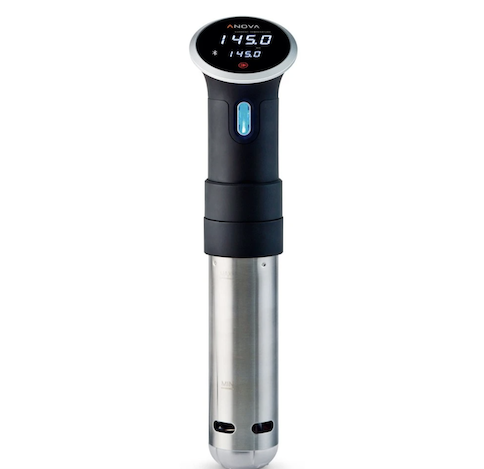
Treat the home chef in your life to this super precise and powerful sous vide tool that’s a fan favorite with over 100 million cooks.

Everything tastes better with hot sauce, and this kit includes the full lineup from season 16 of “Hot Ones.”

This small batch coffee roaster uses sustainable and ethically-sourced coffee beans and donates 20% of their proceeds to Muttville, a San Francisco-based senior dog rescue shelter.
Games and Game-related Accessories

Nintendo Game and Watch: The Legend of Zelda
Retro game fans will enjoy this collectible game and watch that includes three Legend of Zelda games.

Legendary Edition of Curse of Strahd
Strahd is a TTRPG favorite and this edition comes with bonus encounters, finger puppets, and lots more!

Glorious Modular Mechanical Keyboard
This is the world’s first RGB, modular mechanical keyboard. It’s easily customizable and needs no setup. For when you need your clanky keys to light up!
For the Practical Person

This smart plug uses your home Wi-Fi connection to let you control plugged-in devices from your phone or tablet. Neat!

Have a friend or family member who’s constantly losing their keys or phone (or themselves)? Help them keep track of their items with this combo pack that works with Android or Apple devices.

Are they the most fashionable? Maybe not. But they might be the most comfortable, especially with the warm and fuzzy liner!
Give the Gift of Backblaze

Help your friends and family back up their data with Backblaze Computer Backup. They’ll thank you for helping make sure they never lose a file again.
Happy Gift-giving From Backblaze
We hope this gift guide has helped spark some ideas for your own holiday gift-giving! Comment below to tell us what gifts you’ll be giving your friends and family this year.
The post Backblaze Holiday Gift Guide 2021 appeared first on Backblaze Blog | Cloud Storage & Cloud Backup.
Daniel Dae Kim says Succession and The Squid Game are companion pieces - CNET

Tallin 2021 Review: UPURGA, Latvian Mystery Thriller is About More Than You Think
 Andrejs is a rafting instructor who is haunted by a tragic event his past. When he learns that his sister, Mara, and her vlogging team want to go into the woods to shoot a bit for her vlog, he insists on leading the trip. Even before they begin their trip down river the local ranger Salins crashes the party. He comes with a warning. Do not leave the river, do not enter the woods. Passing him off as a crazy local, the team leaves camp and ventures into the forest without Andrejs to shoot their promo. When they return something is clearly not right. Small, delicate flowers hang from the girls’ ears and they all seem to be under the influence of something. Even...
Why you should watch the most overlooked sci-fi gem on HBO Max - CNET

The Mind-Boggling Sci-Fi Mystery on Prime Video Everyone Should Watch - CNET

More People Need to Watch This Taut Sci-Fi Thriller on Prime Video - CNET

Resident Evil 4 HD Project will release on February 2nd 2022
Modders Albert and Cris have announced that their highly anticipated Resident Evil 4 HD Project will release on February 2nd, 2022. Resident Evil 4 HD Project is a must-have mod for Resident Evil 4, and we can’t wait to get our hands on it. What’s also cool here is that with the combined efforts of … Continue reading Resident Evil 4 HD Project will release on February 2nd 2022 →
The post Resident Evil 4 HD Project will release on February 2nd 2022 appeared first on DSOGaming.
Here are 19 excellent questions about the deadly Capitol riot

New York Times bestselling author Don Winslow made a video asking 19 questions about the January 6th terrorist assault on the U.S. Capitol. I wonder if we'll ever get to the bottom of this? If the GOP takes the House in the mid-terms we'll definitely not get truthful answers. — Read the rest
5 Reasons Squid Game Fans Should Watch Hellbound
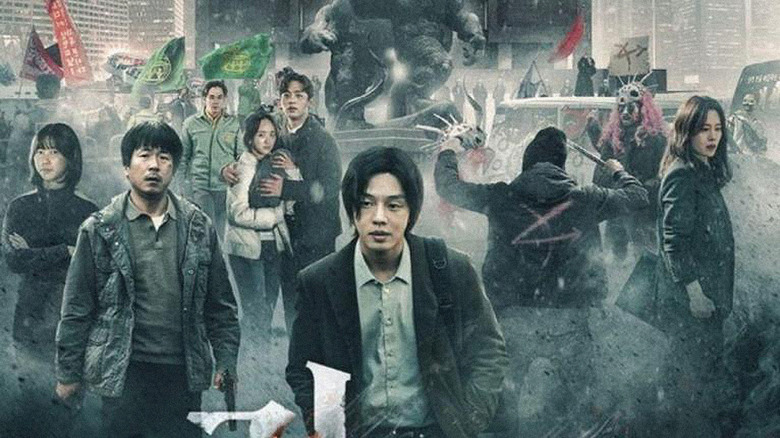
2021 was quite the year for Korean media. The demand for South Korean shows, music and movies has grown exponentially over the years, with critically-acclaimed films like "Oldboy," "Parasite," and "Train to Busan" drawing more allure to the industry than ever before. That appeal only compounded with the viral success of Netflix's "Squid Game," which introduced the concept of the k-drama to millions more. Hwang Dong-hyuk's sadistic spin on children's playground games is paving the way for other dramas to find similar success — and that can't be more true than for "Hellbound," a new supernatural horror produced by Netflix.
"Hellbound" is the latest from Yeon Sang-ho, the acclaimed director of "Train to Busan." The series, adapted by Yeon and Choi Kyu-sok from their webtoon "The Hell," unleashes a gruesome new reality onto the citizens of Seoul. When people are visited by angels who prophesize their death down to the second — and a group of demons called Executors arrive to send them straight to hell — it fortifies the claims of two burgeoning religious groups. While one, the New Truth, is focused on relaying God's will to sinners, the other, Arrowhead, encourages violence and intimidation to enforce it.
The series pushed "Squid Game'' to No. 2 on the list of Netflix's most popular titles, and it's fast on its way to becoming the next big international hit from South Korea. Although the shows are entirely different in premise and execution, fans of "Squid Game" will naturally be drawn to Netflix's new release. But how similar are these two titles, and will "Hellbound" fill the shoes of the streaming giant's biggest hit?
The Stars Are Just As Important As The Story

South Korean cinema rarely sacrifices performance for spectacle. Many K-dramas are inspired by cosmic themes, but they are always anchored by some of the country's best talent. This was more than evident in "Squid Game," which featured Lee Jung-Jae, one of the country's longest-working stars. Even less well-known actors like Park Hae-soo and Jung Ho-Yeon — who had only modeled before "Squid Game" — brought considerable heft to their craft.
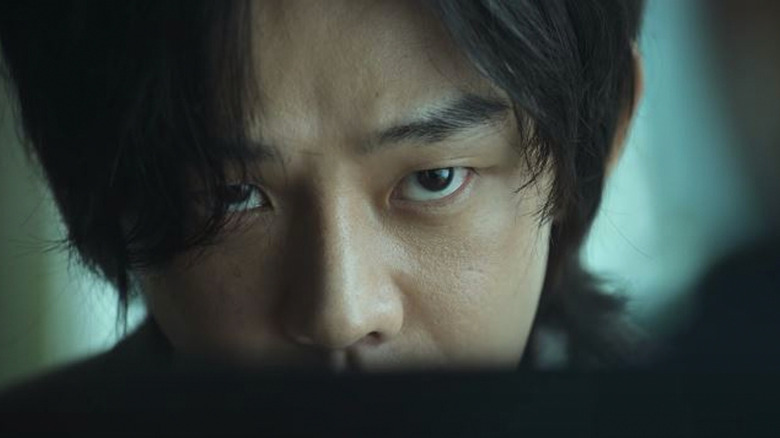
True to form, "Hellbound" features incredible performances from its entire cast. While the genre-bending plot is a big perk of the series, it's also chock-full of nuanced characters that ground its supernatural themes. Yoo Ah-In, star of the searing thriller "Burning," plays the charismatic leader of the New Truth, Jeong Jin-soo. While there are some undeniably cult-y vibes, Yoo weaves a carefully-concealed anguish into the character's every move. You can't help but feel a curious sympathy for Jin-soo, even as he condemns the sinners around him.
Actress Kim Hyun-joo is arguably the heart of the series. It is through her character, attorney Min Hye-jin, that viewers find the real horror of "Hellbound." It's not the angels or the demons permeating the real world and doling out indiscriminate judgment, but the men who turn into monsters when they see fit to play God.
The Gore Makes "Hellbound" A Perfect Horror

Fans of the gore on display in "Squid Game" will feel they've stepped into an entirely new world with "Hellbound." Where the former's violence was more focused on action, "Hellbound" takes it all a step further by incorporating vengeful demons and bloodthirsty religious factions. The pilot episode's very first scene introduces viewers to the enforcers sending sinners directly to hell in broad daylight — to jaw-dropping effect. Each decree that follows for a new sinner invites a sense of dread. Then again, should viewers expect anything less from Yeon Sang-Ho, the director of "Train to Busan"?
Not Everything Is As It Seems
Drama series are best when a simple conflict unravels into a multi-faceted threat. In "Squid Game," what started as a deadly game that pit competitors against each other quickly expanded to reveal dozens of different conflicts. The dynamic between the game's participants and their captors, the participants themselves, and even the higher-ups supervising the game delivered surprises in each episode.
It's the same for "Hellbound." Though the series opens with a helpless sinner's fight to survive a demonic attack, the episode quickly shifts gears to establish the other key players searching for answers. That first scene, while undoubtedly burned into the backs of viewer's minds, sets the stakes high for the characters introduced later. As they grapple with disparate ideas about belief, faith and fanaticism, they're also racing against time to stop the gruesome murders all around them.
Both Offer Great Societal Commentary
South Korean cinema is well-known for its complex exploration of national anxieties. Director Bong Joon-ho, who garnered critical acclaim with his film "Parasite," has been weaving allegories about class and greed into his films for years. "Squid Game" focused on a modern dystopian society, and the circumstances that drive most people to desperation. And while "Hellbound" is set in a much more apocalyptic environment, the horror echoes along similar themes.
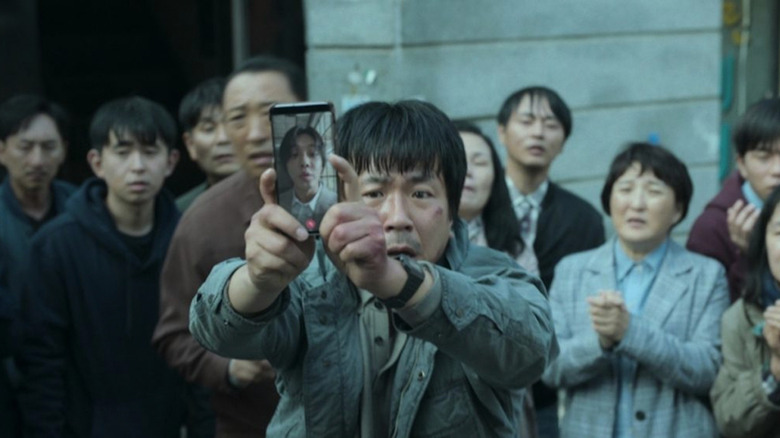
Aside from corruption and class disparities, South Korean filmmakers have been addressing religious controversy in their work as the number of questionable religious groups in the country begin to rise. South Korea has had a history with cult-like organizations, and some religious sects have been connected to tragedies like the Sewol Ferry disaster in 2014. "Hellbound" keeps things general with its depiction of the New Truth and it's splinter faction, Arrowhead, but the series deftly articulates the superiority complexes that can arise in the self-righteous.Society's current fascination with cancel culture, brought on by reliance on social media and streaming platforms, serves as a huge conflict throughout "Hellbound." The New Truth insists that prophecies are only given to people with egregious sin, and anyone who opposes the theory is silenced by the church's devout followers. As more and more Executors carry the guilty off to hell, it also adds fuel to Arrowhead's condemning platform. The conversation shifts quickly from why these prophecies have increased in frequency, to what the victims did to deserve it, resulting in a vicious invasion of privacy for the people who receive their own decrees. This grates against the question of autonomy and free will posed by Hye-jin, who tries to help the victims of the Executors as best she can.
It's A Great Way To Delve Deeper Into South Korean Film

"Squid Game" created a massive new interest in k-dramas, as well as the actors that star in them. This new surge in popularity aligns with the sentiment that many have been echoing for years: Great entertainment is out there, if only hindered by subtitles. "Train to Busan" was Yeon Sang-ho's breakout hit, and the director-writer of "Hellbound" has been quietly churning out content ever since. He released two works to accompany his zombie horror: an animated prequel called "Seoul Station," and a bonkers unofficial sequel, "Peninsula." Yeon has since gushed about "Hellbound" star Yoo Ah-In, revealing that Yoo's part in the series was written with him in mind. The actor is well-known in Korea already, but if "Hellbound" truly reaches "Squid Game" levels of popularity, it could catapult both he and his co-stars to global recognition as well. In the meantime, "Hellbound" fans could check out some of Yoo's other work: "#Alive" follows a livestreamer who locks himself in his apartment to survive a fast-spreading virus. For those looking for more gripping street-level violence and female characters like Hye-Jin, there's the revenge drama "My Name," which stars up-and-comer Han So-hee. Fans of Park Jeong-min, who played the journalist Bae Young-jae in "Hellbound," should check out "Time to Hunt," a film that also features Park Hae-soo from "Squid Game."
Read this next: The 20 Best Heist Movies Of All Time
The post 5 Reasons Squid Game Fans Should Watch Hellbound appeared first on /Film.
The Last Duel And Colossal Are Both Brutal Deconstructions Of The Fragile Male Ego

Grumpy genius grandpa of the cinema space Ridley Scott is rocking a big 2021, with two films — "The Last Duel" and "House of Gucci" — hitting theaters mere months apart. "The Last Duel" flopped at the box office, for which Scott blames Millennials — and if your instinctive reaction is one of anger, remember how much more boring the film world would be if Scott developed a filter in interviews and/or started giving a flying f*** about what Twitter thinks of him. Whether Scott going old-man-yells-at-cloud about the lack of viewership for "The Last Duel," one thing is true, and remains true, as the film approaches home video release on November 30: "The Last Duel" is a damn good film.
More than that, it joins a rarefied canon: 21st Century Films About the Experience of Women that Get It, Actually, Despite Being Directed By Men. See, men? Sometimes you do good. (Though it helps, I must say, to have a script co-written by director Nicole Holofcener.)
Skewed Perspectives
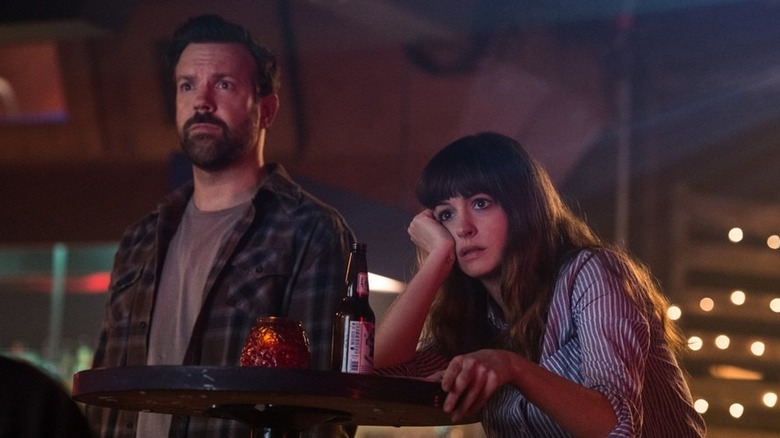
"Rashomon" by way of "Ms. 45," "The Last Duel" tells the story of Marguerite de Carrouges (Jodie Comer), a noblewoman in 14th century France who's raped by a rival (Jacques Le Gris, played by Adam Driver) of her husband (Matt Damon as Jean de Carrouges). After Marguerite persists in pursuing some sort of justice, Jacques and Jean engage in a duel to the death to determine whose side God is on. The story is told in three acts, first from Jean's perspective, then Jacques', then Marguerite's — and by the time you get to her telling, it's pretty clear that the men in the movie are full of sh*t: Jean a self-involved blowhard and Jacques a narcissist with little-to-no self awareness.
"The Last Duel" is full of war, history, dirt, mud, jousting and wimples, and all manner of Period Drama trappings — and yet, as I ruminated on "The Last Duel" after seeing it, one movie kept coming to mind: Nacho Vigalondo's 2016 film "Colossal." You know, the one where Anne Hathaway turns into a kaiju and stomps all over Seoul.
But that's just the elevator pitch. In reality, "Colossal" is a movie about toxic masculinity, in which the layers of the film's antagonist, self-professed Nice Guy Oscar (Jason Sudeikis) are peeled back to reveal someone who's deeply possessive, misogynistic, insecure, and dangerous. The creeping horror of watching "Colossal" comes from the red flags that Oscar plants early in the movie — like gifting Hathaway's Gloria, whom he hasn't seen in years, with a brand new TV as a gift — that are juuuuust innocent-seeming enough to provide him with plausible deniability should anyone call him on being a creep ... an accusation he wouldn't accept anyway, presumably because he's been raised on rom-coms telling us that weirdo, manipulative behavior directed at women is usually some sort of grand romantic gesture.
Oscar, it is revealed throughout the course of the film, has been soaking in self-hatred for years. The issues he probably should have gone to therapy for instead manifest in a hatred for Gloria, whom he resents for her successes. Early in the movie, when they get along — i.e., when Gloria remains within the bounds of what he wants their relationship to be — all is good. When she challenges his perception of what their relationship is, what he is, all hell breaks loose.
Women As Possessions

Jumping forward a few years–and back a few centuries, "The Last Duel" starts with a scene that places Scott's film in the same universe, in regard to gender relations if not kaiju. Following the opening credits, we see Jean leading an army embroiled in a stalemate against the British. He's been ordered to stay where he is to hold an important military location. The British, attempting to rouse him to attack, murder several French women. It's then that Jean (stupidly) marches into battle — after the women are dead, a result borne less of genuine feeling for the women (he did not, for example, try and broker a deal to get them freed) than bruised ego. His enemies have slaughtered French women, his women, and that's an insult that cannot be borne. Women are pawns, tools, items to be possessed and treated well or ill, as befits the masculine hierarchy that surrounds them.
In "Colossal," what pushes Oscar over the edge into full-on, I'm-not-even-pretending douchebaggery is public humiliation at Gloria's hands, when Gloria!Kaiju bitchslaps Oliver!Kaiju and the clip goes viral. What goes on in "The Last Duel" is certainly more, uh, well, more, but it shares a similar spirit — men being deathly afraid of losing face in front of other men and taking their own insecurities out on the women in their lives.
When Marguerite comes to Jean and tells her that Jacques raped her, he's more concerned about how people will perceive him than he is about her, going so far as to demand they have sex immediately after because it would hurt his pride if someone else "had" her more recently. When he insists on a duel to the death, he insists it's to protect her honor, not his ego; even though, if he loses, she will literally be burned alive. More damning — and speaking to the film's complexity, which, given the subject material, seems fair to attribute in large part to co-writer Holofcener — is that, when we see Jean's version of the scene, he comes across as more (not entirely, but more) the concerned husband who genuinely has his wife's best interests at heart. And then there's Jacques, who's convinced that his rape of Marguerite was consensual, who died genuinely not realizing he was anything other than a bit of a cad who has sex with a woman who then turned on him, despite the brutal rape we clearly see through Marguerite's eyes.
Centuries move on, but in "The Last Duel" and "Colossal," men stay the same: emotional, driven by fragile egos, yet so self-obsessed and delusional that they genuinely don't realize how horribly they're treating the women around them. In both films, at least, the women get their happy ending: Gloria defeats Oliver, and Jean kills Jacques in their duel and then ultimately predeceases Marguerite, leaving her to live a happy life sans dudes.
Read this next: The 20 Greatest War Films Of All Time
The post The Last Duel and Colossal Are Both Brutal Deconstructions of the Fragile Male Ego appeared first on /Film.
Red Notice Is On Target To Be Netflix's All-Time No. 1 Movie, But What Does That Even Mean?

Dwayne Johnson, Ryan Reynolds, Gal Gadot and Cleopatra's Eggs all star in the action-thriller that's been topping the Netflix charts for over a week. "Red Notice" has spent the week duking it out with other Netflix Top 10 entries, and is now on track to become Netflix's most popular movie yet ... according to Netflix (via Variety). If "Red Notice" continues towards its current target, the film will soon unseat the current monarch of Netflix popularity: Sandra Bullock's "Bird Box." Another film dropped in anticipation of the holiday season, "Bird Box" racked up 282 million hours viewed in its first 28 days.
This news arrives 28 days after the initial release of "Red Notice," which is around the time the streamer typically makes these grand announcements about how well an original film or series is performing. But thanks to recent developments in the Netflix reporting methods, this time is a little different.
Netflix has always been kind of opaque about the way it reports numbers, and lately has gotten even more vague with the secretive stats. Last month the streamer announced that it would change its reporting metrics away from the previous system, which counted a "view" as anything a subscriber watched for two minutes. Now, it's all about racking up hours! As Netflix explained in a message to investors:
We will shift to reporting on hours viewed for our titles rather than the number of accounts that choose to watch them ... we think engagement as measured by hours viewed is a slightly better indicator of the overall success of our titles and member satisfaction.
And yet, our view from the outside remains pretty oblique. Working off of this new system, "Red Notice" is thriving, having registered 277.9 million hours viewed since its Nov. 12 release. However, this doesn't exactly clear up how many people have tuned into the two-hour film and how much of it they sat through. Have 138 million people watched the film in full, or do 13 million people have it playing on a loop? We all have our comfort movies, after all — for someone out there, watching Dwayne Johnson and Gal Gadot tango is a nice, safe space.
Red Notice Is On The Rise

Although the numbers suggest you have absolutely seen this movie already, I'll give a little description ... just for fun. "Red Notice" is a heist film that sees FBI Profiler John Harley (Dwayne Johnson) teaming up with the world's second greatest art thief, Nolan Booth (Ryan Reynolds) to catch the world's most-wanted art thief, The Bishop (Gal Gadot). Thus, we have a globe-trotting adventure with secluded prisons, explosive action sequences, and all the other action-comedy goods. Critics aren't exactly raving about "Red Notice," but that hasn't stopped the movie from winning some screen time across the service.
Boosted by the popularity of "Red Notice," other films with the lead stars are also topping the charts, including Johnson's "Central Intelligence" (14.91 million hours viewed) and Reynolds' "6 Underground" (7.77 million hours). Are people hopping from one film by said movie star to the next, or is the Netflix autoplay feature working for its money? The world may never know.
"Red Notice" is available now on Netflix.
Read this next: 13 Box Office Bombs That Are Truly Worth A Watch
The post Red Notice is on Target to Be Netflix's All-Time No. 1 Movie, But What Does That Even Mean? appeared first on /Film.
Filming The Wizard Of Oz Was Actually Very Dangerous. Here's Why

The 1939 film "The Wizard of Oz," quite possibly the most famous movie of all time, had a notoriously messy production.
While the film is based on the book by L. Frank Baum, first published in 1900, the 1939 film version has supplanted it in the popular consciousness with its memorable songs, indelible iconography (and employing the overused phrase "indelible iconography" is apt when talking about "The Wizard of Oz"), cutting-edge special effects, nightmarish images (those monkeys!), and characters that have entrenched themselves into the minds of every human being alive.
None of this came easy, however, and "The Wizard of Oz" was most certainly not an example of a single artistic creator or hardworking auteur bringing their unique voice to the screen. The production changed hands several times, starting with director Norman Taurog (whose "Skippy" and "Boys Town" were nominated for Best Picture), then moving to Richard Thorpe ("Ivanhoe," "The Prisoner of Zenda"), George Cukor ("Gaslight," "Little Women," many classics besides), before finding the film's credited director, Victor Fleming ("Gone with the Wind"). Even then, King Vidor ("The Big Parade," "Northwest Passage") was brought in to complete additional sequences.
In the modern era, where even basic reshoots can be pegged by Twitter pundits as evidence of a troubled production, the drama behind the scenes of "The Wizard of Oz" would make several people's heads melt like the Wicked Witch of the West.
Some Of The Dangers We Already Know About

Fans of "The Wizard of Oz" can likely rattle off a litany of on-set dangers experienced by the cast a crew of "The Wizard of Oz." Margaret Hamilton, who played the Wicked Witch of the West, infamously burned her face on a fire effect, and then as soon as she recovered was immediately asked to film another scene with a fire effect (her stunt double Betty Danko took her place instead, and Danko also caught on fire).
Ray Bolger's Scarecrow makeup chapped his face, often causing it to bleed and leaving small scars on his face. Actor Buddy Ebsen, the original actor set to play the Tin Woodman, was replaced by Jack Haley after Ebsen had a severe allergic reaction to the Tin makeup. Very severe: Ebsen's hand and arms cramped up and he had to be taken to the hospital. The makeup, it turned out, contained aluminum.
A recent article in Vanity Fair details additional horrors, and the recent feature film "Judy," a biopic of Garland, also dramatizes the pressure the star felt on set. Garland was also infamously paid less than her co-stars because of her age, and because sexism.
The Snow Was Made Of Asbestos!

But the makeup, injuries, and harassment weren't even the end of it. In one of the film's famous sequences (and they're all famous, aren't they?), Dorothy, the Tin Woodman, the Scarecrow, and the Cowardly Lion (Burt Lahr) have to run across a field of poppies to reach the Emerald City. These poppies were, in fact, a trap laid by the Wicked Witch of the West to put the quartet to sleep and prevent them from reaching their goal (poppy seeds contain opium alkaloids that are used in the manufacture of drugs like morphine and codeine, as well as several illegal narcotics like heroin. Science!). It's not until Glinda the Witch of the North (Billie Burke) unleashes a magical snowfall that our heroes are freed of their somnambulist stupor and may continue on their quest.
Faking snow had never been an easy movie trick in the days before CGI. Some films have used feathers. Some have painted sand white to approximate a snowdrift. Frank Capra's "It's a Wonderful Life" famously painted corn flakes white. On the set of "The Wizard of Oz," the cast was sprayed down with white asbestos flakes.
Asbestos, a cancer-causing carcinogen, was in common use in buildings and in consumer products in the 1930s. When it was revealed how poisonous the substance was, many buildings had to be carefully renovated to remove it (a common experience for schoolkids who attended school in older buildings). In the 1930s, a cast of actors were simply blasted with it to create a placid snowfall. They are freed from breathing toxic opioids by the magic of poisonous carcinogens.
So if you were on the set of "The Wizard of Oz," you were not only likely to be set on fire, hospitalized from allergen-laced makeup, or underpaid by a mercenary studio system, you were also required to breathe poison. The things we used to do to achieve movie magic.
Read this next: The 14 Greatest Movie Musicals Of The 21st Century
The post Filming The Wizard of Oz Was Actually Very Dangerous. Here's Why appeared first on /Film.
More People Should Watch the Very Best Show on Netflix - CNET

The Geekbox: Episode 612
Wherein we discuss Dark Souls II, Castlevania: Simon's Quest, our DLC-buying habits, the Mario games, and Eastward. Starring Ryan Scott, Adam Fitch, and Ryan Higgins.
Review: HOUSE OF GUCCI, A Camp Classic in the Making
 Lady Gaga, Adam Driver, Jared Leto, Jeremy Irons and Al Pacino star in a drama, directed by Ridley Scott, and now playing in theaters.
Why Everyone Secretly Hates 'Do-Gooders'

This article from the BBC made me feel so relieved at my loathing of altruists that I can finally say what most of us have been thinking: Selfless people are the absolute worst.
Project Van Buren - Is being resurrected
IT Won’t Give You Admin? This Windows Installer Bug Can Fix That
There once was a zero day exploit called CVE-2021-41379, which let a user gain elevated access to a system with a malformed MSI-type installer. The exploit allowed them to delete files they…
GWJ Conference Call 789

Halo Infinite Multiplayer Beta, Inscryption, Gloomhaven, Dungeon Encounters, Guardians of the Galaxy, Sherlock Holmes: Chapter 1, and our Video Game Mix Tapes 2: The Remix.
The Secret History of ATAPI
The other day I asked myself a seemingly trivial question: What was the first ATAPI CD-ROM drive and when was it available? Given that ATAPI was a major technology which instantly obsoleted all proprietary CD-ROM interfaces and made SCSI much less desirable, one might expect that there would have been some press releases touting the advantages of the new technology, articles describing the whys and wherefores, but… nope. There is nothing.

In 1993, CD-ROM drives used either SCSI or one of several proprietary interfaces, the major amongst those being Matsushita/Panasonic, Mitsumi, Philips, and Sony. In 1995, the proprietary interfaces were effectively gone and most new CD-ROM drives used the ATAPI interface. Something clearly happened in 1994, but exactly what, when, and how—that’s something of a mystery.
There are reports that Philips showed their CDD-300 CD-ROM drive with “new IDE interface” (e.g. ATAPI) at the CeBIT ’94 expo in March 1994. When the drive started shipping is unclear, but it was certainly in 1994.
Further digging showed that NEC was another early vendor of ATAPI CD-ROM drives. Establishing the timeline is again very difficult, but in June 1994 there was a Linux kernel patch to support the NEC CDR-260. Its author seems to have been completely unaware of the existence of ATAPI, but that’s perhaps not surprising since the ATAPI 1.2 specification was only finalized on June 10, 1994, although a draft was available in February of that year.
Too Old to Work?
There is a possibly misleading Microsoft KB article (KB131499) claiming that the “NEC CDR-38, NEC CDR-250, CDR-260, CDR-260R, and CDR-260GW CD-ROM drives are incompatible with the ATAPI specification version 1.2”.
Another Microsoft KB article (Q121547) brings more detail: The NEC CDR-260 drive “follows the ATAPI A1.8 specification, which is a pre-release specification that has not been ratified by the ATAPI council”. The article further adds: “NEC also manufactures the CDR260R CD-ROM drive, which does conform to ATAPI 1.2 specification and works with Windows NT version 3.5. Starting in November 1994, Gateway 2000 began shipping the CDR260R rather than the CDR260 in its computers.”
Note that the two articles contradict each other: KB131499 claims that the NEC CDR-260R is not compatible with ATAPI 1.2, whereas Q121547 explicitly states that it is.
The NEC CDR-260 was apparently an OEM drive and no real documentation exists. What is interesting is that photos of an NEC CDR-260 made in July 1994 show a jumper selecting between “8-bit bus” and “16-bit bus”. ATAPI is inherently 16-bit just like ATA… then again there are specialized 8-bit ATA variants.
Now, if there were CDR-260 drives built the first half of 1994, that would explain why those drives weren’t compatible with the ATAPI 1.2 specification which was officially published in June 1994. It’s also no wonder that Windows NT wasn’t the only operating system that didn’t like those drives. NeXTSTEP 3.3 release notes explicitly list the NEC CDR-260 and CDR-273 as unsupported.
Linux source code offers some clues too. The NEC CDR-260 is clearly mostly a standard ATAPI drive but several relatively minor differences prevent it from working with normal drivers.
Examining NEC_IDE.SYS
Another indirect source of information is the NEC_IDE.SYS device driver for DOS (required for MSCDEX). The OS/2 Museum has an NEC_IDE.SYS file dated 2-18-94, size 21,669 bytes. This driver does not work with modern ATAPI drives, but shows something interesting:

Rev A1.7 quite likely corresponds to a pre-release ATAPI specification, but notice how there is absolutely no mention of NEC, only Oak Technology OTI-011.
Analyzing the driver shows that it cannot work because it issues the ATAPI Soft Reset command (code 08h) and expects that when the command completes, the drive will set the DRDY and DSC bits in the ATA status register, just like an ATA hard disk would.
The ATAPI 1.2 or even ATAPI 2.6 specifications are not 100% clear on this point, but suggest that the bits should probably not be set. ATA/ATAPI-6 is unambiguous and says the DRDY and DSC bits will be clear, just like after ATAPI device power-up, in order to “hide” ATAPI devices from old ATAPI-unaware drivers for ATA hard disks.
A newer version of NEC_IDE.SYS from April 1995 works:

It’s notable that the newer driver handles the standard ATAPI behavior (status register bits clear after ATAPI Soft Reset) as well as the old NEC drive behavior (DRDY and DSC set). It is highly likely that the driver was designed to handle both old pre-standard drives and newer ATAPI 1.2 compliant CD-ROM drives.
But again… why does a more or less standard ATAPI driver for an NEC CD-ROM drive only mention Oak Technology OTI-011 and nothing else…
Oak OTI-011
So what exactly was the Oak Technology OTI-011 chip? There is not much information available. Unusually, in place of datasheets, bitsavers only has several patents related to the OTI-011 chip. That is not great, but does show fairly clearly what OTI-011 did.

Note that in the late 1980s, Oak Technology developed OTI-012, a CD-ROM controller chip with no IDE/ATA support. The OTI-011 is a successor chip (no, I don’t know why the Oak numbering went backwards) developed in 1992-1993 which combined the functionality of OTI-012 with a built-in ATA interface, suitable for implementing an ATAPI CD-ROM.
The OTI-011 required an external microcontroller and DRAM and was expected to be connected to a DSP which delivered the raw bits from a CD-ROM. The OTI-011 decoded sub-channel data and raw sector data, and was capable of performing the additional error correction and detection needed for CD-ROMs. The host interface of OTI-011 implemented ATA task file registers in hardware and set up ATA/ATAPI command processing for the attached microcontroller. The OTI-011 chip itself implements very little of the ATA protocol itself; the external microcontroller’s firmware does the hard work.
The patents describe what the OTI-011 chip did in terrible mangled lingo, but don’t provide any background information. Normally there would be no public information about the development of a chip… but in this case there is, thanks to lawsuits that Oak Technology (later Zoran) initiated in the late 1990s and early 2000s.
There is an U.S. International Trade Commission document which supplies a surprising amount of historical information, and also establishes a fairly detailed timeline, since that was required for establishing the validity of US Patent 5,581,715 (aka ‘715 patent).
We learn that Oak Technology achieved “considerable commercial success” with the OTI-011 chip because it solved an important problem (attaching a CD-ROM drive to the ATA bus) before others.
Oak Technology, namely Phil Verinsky, conceived of the OTI-011 chip “no later than April 21, 1993” while “the date of the ATAPI specification is June 10, 1993. There is no evidence that the ATAPI specification or any earlier version of it was communicated to Oak before the April 21, 1993, conception date.”
Note that the official ATAPI 1.2 specification is dated June 10, 1994, but the above refers to Western Digital’s “ATAPI CD-ROM Standard: Proposal for Working Draft” document from June 10, 1993.
We learn that in early 1993, Mitsumi worked with Oak Technology on a CD-ROM drive attached to the ATA bus but not utilizing ATAPI. It appears that this project didn’t really go anywhere.
In April 1993, there was a sales agreement between NEC and Oak concerning the not-yet-completed OTI-011 chip. It is almost certain that NEC was Oak’s first customer and likely the first user of the OTI-011 chip. This fits with other known facts, namely that NEC shipped ATAPI CD-ROMs before the ATAPI 1.2 standard was finalized.
The OTI-011 chip taped out on July 22, 1993, was quickly corrected and taped out again on July 29, 1993. Given that information alone, it’s near certain that OTI-011 chips were made in 1993, but it’s much less clear if any CD-ROM drives based on those chips were shipped in 1993.
We also learn the versions and dates of several unpublished early ATAPI specification drafts:
- Revision A1.4, dated Aug. 17, 1993, 141 pages
- Revision A1.5, dated Aug. 28, 1993, 158 pages
- Revision A1.6, dated Sep. 10, 1993, 174 pages
- Revision A1.7, dated Oct. 18, 1993, 176 pages
- Revision A1.7B, dated Nov. 2, 1993
Note that revision 1.7B was almost certainly the last one before SFF took over the ATAPI project.
Under the SFF heading, ATAPI 1.0 and 1.1 drafts were made available but very quickly replaced. Revision 1.2 was the first widely used ATAPI standard.
NEC CDR-260
The OS/2 Museum was able to obtain a functioning NEC CDR-260 drive with a February 1994 manufacturing sticker (February 1994 was when the draft of ATAPI 1.2 was made available). Sure enough, the drive is… interesting. That starts with the drive jumpers which according to the label provide an option to switch the IDE interface into an 8-bit mode (see photo at beginning of article). What good that might be… nobody knows, since there is no documentation.

Looking inside the drive, one very unsurprisingly finds an Oak Technology OTI-011 chip (lower right corner):

Linux detects the CDR-260 drive, but is a bit confused about the drive’s name. It turns out that the model name is not byte swapped in the data block returned by IDENTIFY PACKET DEVICE, but Linux expects that it will be, so it ends up getting scrambled. This is the exact same problem that certain old IDE drives had. Unsurprisingly, the problem has been noticed before. It is worth mentioning that the ATAPI specification makes no suggestion that the ASCII strings embedded in the IDENTIFY PACKET DEVICE response should be byte-swapped, but “everyone” expects them to be.
What’s much worse is that after inserting a CD-ROM, the drive “falls off the bus” with many errors and many reset attempts. Linux is effectively unable to read anything.
But the drive is not dead. In DOS, the NEC_IDE.SYS driver (dated 08/11/1994, size 24,824 bytes) works just fine. The drive can read CD-ROMs without trouble. Interestingly, the previously mentioned older NEC_IDE.SYS driver (dated 02/18/1994, size 21,669 bytes) appears to find the drive but then says that it’s not ready.
The working NEC_IDE.SYS driver appears to detect this particular model, or rather detects NEC (by definition ATAPI) drives with firmware version lower than two; the drive in question reports firmware revision 1.01. Such old NEC drives are then treated specially by the NEC_IDE.SYS driver.
A survey of various operating systems confirms that yes, the NEC CDR-260 is unusual. As mentioned above, Linux has workarounds for it, but clearly not sufficient. Solaris mentions the CDR-260 explicitly, and special-cases the CDR-260 and a few other drives to only transfer one sector at a time.
The ATAPI driver in OS/2 has by far the most complete support for these drives. The author clearly had the elusive ATAPI revision 1.7B specification in hand. The OS/2 driver translates a number of SCSI commands and converts the SCSI mode page information returned by the drive from the ATAPI 1.7B format to the published ATAPI 1.2 specification. There’s also the following comment:
The 1.7 spec indicates that the completion status only relies on the
DRQ bit being 0.  If we are in 1.7B compatibility mode and the DRQ
bit is 0, set the reason variable to IR_COMPLETE.
I suspect that might be the why Linux doesn’t work with this drive and why Solaris only reads one sector at a time. From reading the ATAPI mailing list, it is very clear that as late as December 1993, some important low-level details of ATAPI were still in flux. If the NEC CDR-260 drives really conform to the pre-SFF revision 1.7B of the ATAPI specification, it’s not surprising that software written for ATAPI 1.2 and later has trouble with them.
The NEC CDR-260 drives were also found in NEC’s own PC-98 machines. This blog post (Korean) shows a drive with a “CDR-260(PI)” designation on a Japanese label and much the same electronics as the one pictured above. The OTI-011 chip visible in the blog photos was made in week 46 of 1993; there is a high likelihood that NEC shipped the CDR-260 drives before the end of 1993, though perhaps only in Japan.
Other Early Entrants
As mentioned above, Philips/LMS was another early supplier of ATAPI drives. Examining DDATAPI.SYS driver from August 1994 that shipped with CM-207 drives (and likely others), it is apparent that the driver is very unlikely to work with generic ATAPI CD-ROMs. The DDATAPI.SYS driver expects that the Sector Number register (typically at I/O port 1F3h or 173h) changes its value in a certain way. Yet the ATAPI specification leaves said register more or less completely unused and does not define any behavior for it.
That is a hint Philips started implementing their ATAPI drives well before the ATAPI specification was finalized. It is possible that the Sector Number register has some vendor specific meaning on Philips drives, but it’s also possible that the register had some defined function in unpublished drafts of the ATAPI specification.
Note that Philips did also produce integrated ATAPI CD-ROM controllers (e.g. SAA7380), but there is no evidence that such chips existed before 1996.
Cirrus Logic was, together with Oak Technology, an early ATAPI chip vendor. The CL-CR3400 may have been available in 1994, but unlike the OAK OTI-011, it was only an ATAPI interface chip, not an integrated CD-ROM controller. Only the follow-up chip, the Cirrus Logic CL-CR3410 (1995) integrated both the ATAPI interface and a CD-ROM decoder.
Mitsumi was another early vendor of ATAPI CD-ROM drives with the FX001DE drive. So was Sony with CDU-55E and CDU-55D drives. If this document is to be believed, all those drives were available in 1994 and did not fully conform to ATAPI 1.2.
Secret Society
It’s not a coincidence that even industry insiders called ATAPI a “secret society”. According to Dal Allan, ATAPI “went public” in October 1993, and became an SFF project (before moving to X3T13 in 1996). But work on ATAPI probably started sometime in 1992 when, again according to Dal Allan, It was Compaq who told WD “You and the CD-ROM guys get together and give us a CD attached to the second ATA connector.”
ATAPI became sort of tied into Western Digital’s EIDE, although it is unclear if Western Digital sold any ATAPI related products. It is however clear that WD lent its significant expertise when figuring out how to make ATAPI devices coexist with IDE hard disk on a single cable without upsetting the BIOS or driver software (a puzzle that was still being solved just before ATAPI 1.2 was completed).
Until late 1993, ATAPI development was driven by Western Digital but done in secret, with confidential drafts of the ATAPI specification circulated amongst a handful of companies. From the Oak Technology related litigation we know that ATAPI A1.3 specification was dated June 10, 1993. We don’t know any dates of the earlier versions, but it is unlikely that A1.3 would have been the initial version; it might however been the first version seen outside of Western Digital.
Conclusion
We still don’t know who shipped the first ATAPI CD-ROM drive and when. The pre-1994 drafts of the ATAPI specification remain as secret as they were back in the day. That is a shame, because properly supporting certain old drives (such as the NEC CDR-260) would require the ATAPI 1.7B specification.
We did find out that Oak Technology was an important player in the early ATAPI CD-ROM drive evolution, and that ATAPI CD-ROM drives were made in early 1994, perhaps even in late 1993, before the earliest ATAPI standard (revision 1.2) was finalized. These drives tend to be incompatible with standard ATAPI driver software, but work with the DOS drivers that these drives shipped with.
Can time travelers go back in time and have sex with themselves? Astrophysicists investigate.

In yet another weirdly fascinating piece from the folks at MEL Magazine, writer Brian VanHooker spoke with several astrophysicists about the question we've all been pondering: can a time traveler go back in time and literally screw themself?
— Read the restAstrophysicist Heloise Stevance replies that there are two main paradoxes you'd want to worry about.
Man claims he was banned from all-you-can-eat buffet for eating all that he could

BBC reports that a Chinese man claims he was banned from Handadi Seafood BBQ Buffet in Changsha for eating too much. He's a streamer who goes by Mr. Kang, and he's not happy with the restaurant's decision. The incident comes at a moment of increased government scrutiny of food-focused live streamers. — Read the rest
Harold Ramis' Daughter Gave Her Blessing For That Ghostbusters: Afterlife Ending Moment

"Ghostbusters: Afterlife" has divided critics, and if bustin' no longer makes everyone feel good, at least part of that can be attributed to the film's treatment of the late Harold Ramis, who co-wrote the script for the original "Ghostbusters" and played the brainy Egon Spengler. However, one person who was happy with it was Ramis' eldest daughter, Violet Ramis Stiel.
If you haven't seen "Ghostbusters: Afterlife," look away now, because spoilers are about to escape this ghost trap and go flying all over the place.
In "Afterlife," Carrie Coon plays Egon's daughter and Mckenna Grace plays his granddaughter. According to The Hollywood Reporter, both actresses prepared for the movie by reading Stiels' memoir, "Ghostbuster's Daughter: Life With My Dad, Harold Ramis."
Moreover, director and co-writer Jason Reitman, himself the son of "Ghostbusters" director and "Afterlife" producer Ivan Reitman, involved Stiel in the creative process. As fellow Ghostbuster kids, they had known each other since childhood, and she was one of the first people to read the script for "Afterlife." Stiels told THR:
"[Jason Reitman] was so careful to get it right, to really honor the early films and everyone who was in them, but also to make something for now and the future. Maybe he is the only person who could do that. He is the physical bridge."
The first "Ghostbusters" is the quintessential horror comedy, so you wouldn't necessarily expect the franchise to tip into grief, but for Stiels, that's part of what this new movie, "Afterlife," is about.
The Ghost Of Egon
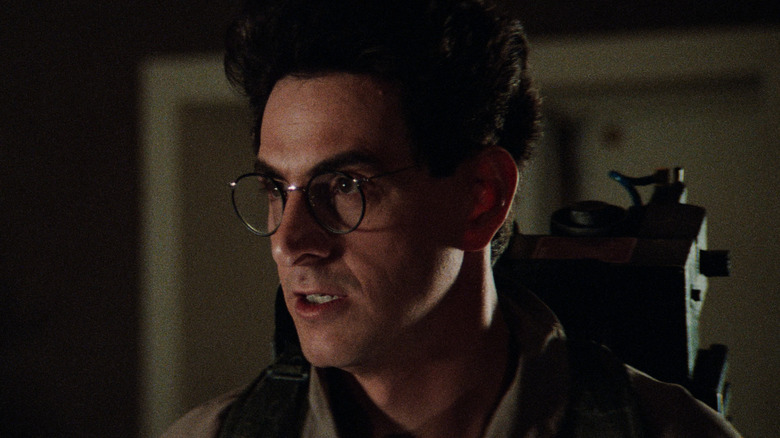
"Afterlife" is the first foray into franchise filmmaking for Reitman, a director with a background in comedy-dramas like "Up in the Air." In addition to that, it's a movie arriving in a world that has been rocked by a pandemic over the last two years. Stiels continued:
"One thing that is timely about the movie is yes, it is a comedy, but it is also about loss and grief. And we are all dealing with that."
For some, "Ghostbusters: Afterlife" resurrecting Ramis via CGI (similar to Peter Cushing in "Rogue One: A Star Wars Story," might be an uncomfortable moment in a film that caters heavily to the nostalgia of "Ghostbusters" fans. Stiels, on the other hand, felt that the ghost of Egon — showing up alongside his fellow original Ghostbusters in "Afterlife" — respected the legacy of the character her father created. She said:
"It was surreal. There are so many parallels to real life, but it is just a movie. And it is not actually him. It is a character. Jason, smartly, focused on capturing the Egon character and not necessarily my dad. I feel like it really worked in that way. Ultimately, it leaves us with that feeling: The people we love are always with us. They don't go away."
"Ghostbusters: Afterlife" is in theaters now.
Read this next: The 15 Best '80s Comedies Ranked
The post Harold Ramis' Daughter Gave Her Blessing for That Ghostbusters: Afterlife Ending Moment appeared first on /Film.
The Explosive Evil Dead Remake Ending You'll Never Get To See

The ending of Fede Álvarez's 2013 "Evil Dead" is already an absolute bloodbath, with hero and final girl Mia (Jane Levy) battling the forces of evil during a literal rain of blood. However, the Uruguayan director originally had something even more shocking in mind, with Mia losing to the ancient evil in a rather comical way. Franchise creator Sam Raimi talked him out of it, but the original "Evil Dead" ending was ... explosive, to say the least.
Mia Didn't "Deserve Her Fate"

On Bloody Disgusting's "Boo Crew" podcast, Álvarez explained that he originally had a very different ending in mind for his "Evil Dead" adaptation. In the original conclusion, they ended things much like in the 1980 original. Mia limps away from the house and the evil comes through the woods. She turns around and screams, and that would be the end, just like when Bruce Campbell's Ash spun around at the end of the original. To take it a little further, Álvarez wanted to show what happens when the evil catches her, with Mia levitating into the air and ... exploding:
"It was written as she levitates for the first time – because you never see levitation in the movie. It was kind of the rules of [our] Evil Dead, to never see anything that tells you right away that you're in a supernatural world. So no one floats [in] Evil Dead. But in the last moment, she will float. Suddenly her body was all tensed up like Exorcist-style, and then we were going to rip her apart like every limb or something like that. She was going to explode into this bomb of blood."
When Raimi read the script, he told Álvarez that Mia dying would frustrate the audience. He explained that after everything she's been through, the audience will want her to survive. Not only did Mia survive the horrors of the evil dead, she survived heroin withdrawal while battling said evil dead. Raimi said it would be unfair to kill her, even though he originally intended on killing Ash in the original.
"Well, I didn't think Ash deserved to live," Raimi explained. So they changed it, and the ending in the final cut lets Mia survive.
Mia's Happy-Ish Ending

While Mia survives the end of "Evil Dead," fans shouldn't expect to see her in the upcoming "Evil Dead Rise," as star Jane Levy has been candid about not wanting to reprise the role. Who can blame her, given she had to spend her work days buried alive and pretending to saw her tongue in half? Thankfully, there's still plenty of new "Evil Dead" goodness headed our way, with both "Rise" and the upcoming "Evil Dead: The Game" headed our way in 2022.
Read this next: 14 Korean Horror Movies You Need To See
The post The Explosive Evil Dead Remake Ending You'll Never Get to See appeared first on /Film.
DJGPP port of Lynx 2.9.0dev.10
Lynx is a fully-featured World Wide Web (WWW) client for users running in character mode, like DOS. Lynx displays Hypertext Markup Language (HTML) documents containing links to files on the local system, as well as to other websites including http, gopher, ftp, and others. This port is based on the current develop code of lynx (aka lynx2.9.0dev.10). The new version detects for Long File Name (LFN ) support. Don't forget to set a HOME environment variable. Full announcement and downloads at Lynx 2.9.0dev.10 announcement on the Delorie website.