The post The Flash 2014 S08E02 WEB H264-MUSiCANA appeared first on SceneSource.
The post The Flash 2014 S08E02 WEB H264-MUSiCANA appeared first on SceneSource.
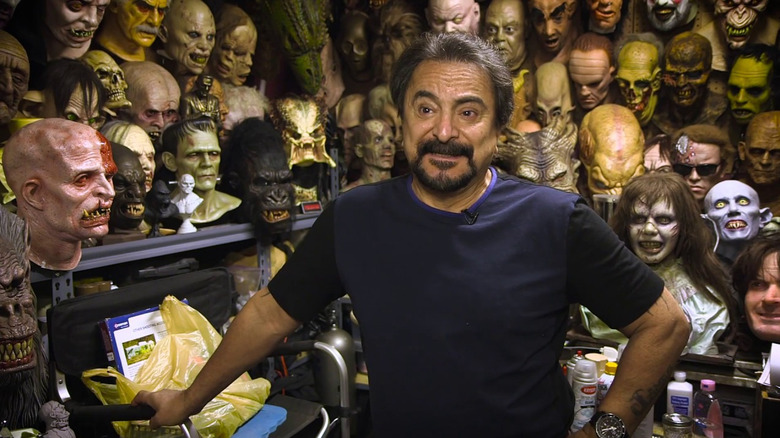
If you've seen "Creepshow," "Friday the 13th," or "Maniac," you've beheld the work of Tom Savini. The legendary fx artist has been in the game for over 40 years, from Bob Clark's '74 Monkey's Paw riff "Deathdream" to his feature directorial debut, a 1990 remake of George A. Romero's "Night of the Living Dead," and finally coming full circle to directing an episode of Shudder's "Creepshow" series in 2019. Pulling from his experience as a combat photographer during the Vietnam war, Savini incorporated the visceral imagery he saw and captured with his camera into his later makeup effects work. His latest contribution to the nightmares of a generation is a sinister mask for a menacing man.
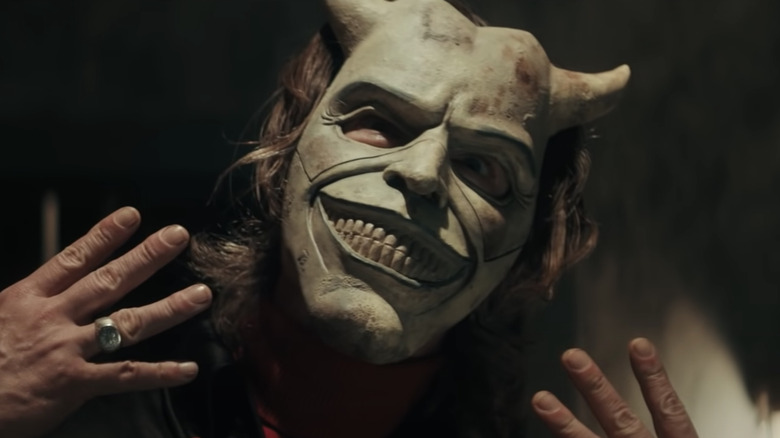
In Blumhouse's latest thriller, "The Black Phone," a boy named Finney Shaw (Mason Thames) finds himself in the lair of a child-killer called The Grabber, played by Ethan Hawke in a terrifying rare turn as a baddie. Co-written by director Scott Derrickson and C. Robert Cargill and based on Joe Hill's 2004 short story of the same name, "The Black Phone" has its killer kidnapping children and bringing them to his bare-bones basement (only equipped with a dirty mattress and the phone of the title), where they never come back out alive. During one such abduction, the Grabber can be seen donning a gray, horned, sectioned mask featuring a devilish grin. When this mask is revealed in the film, it's not Finney who sees it first -- it's the audience. The moment is arresting and provides one of the most memorable single images of the film entire.
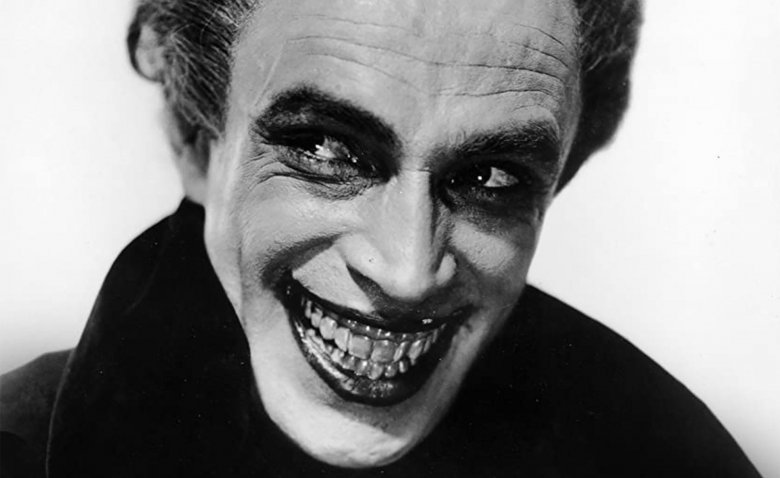
Simply put, the mask makes the movie just as much as the stellar cast does. Its impact has been compared to that of Lon Chaney's Cheshire grin in "London After Midnight," but I see Conrad Veidt in Universal's "The Man Who Laughs" (which, admittedly, isn't a horror film).
Empire Magazine's new "The Book Of Boba Fett" issue is on newsstands starting 25 November, wherein Derrickson details how The Grabber's look came to be. When the "Sinister" director got his hands on a work-up by artist and filmmaker Tom Savini, Derrickson knew it was a wrap on the search for The Grabber's look. He tells Empire:
"Tom gave me a sketch he had done himself. As soon as I saw it, I was like, 'Oh, well, this is what we're doing.' It was really amazing."
Even with the prosthetic effects master on board, the production still struggled to capture the nuances of Savini's original design. On paper is one thing; making something tangible and wearable for the actor is another. "We spent two solid months just rejecting the things that they were sending me," Derrickson tells Empire, "I kept going, 'It needs to look exactly like Tom's artwork.' It was much more of a challenge than I was expecting."
Derrickson knows the importance of a terrifying villain face in horror pictures. His own 2012 effort, "Sinister" -- a feature, by the way, co-written with frequent collaborator C. Robert Cargill and starring Ethan Hawke -- features a pagan figure and soul devourer named Bughuul (Mr. Boogie, if you're nasty) whose face has the suggestion of eyes and a mouth, but is clearly malevolent and otherworldly.
Sometimes, these looks can just come together, as when an 11th-hour alteration was made to a dimestore William Shatner mask to create the slasher icon The Shape, a.k.a. Michael Myers of the "Halloween" franchise. But for most modern filmmakers telling a scary story, such moviemaking miracles can't be left to chance. In that case, Savini isn't a bad artist to have in your corner.
"The Black Phone" arrives in theaters on February 4, 2022.
Read this next: Counting Down The 10 Scariest And Most Evil Children In Horror Movies
The post Ethan Hawke's The Black Phone Mask Was Designed By Horror Legend Tom Savini appeared first on /Film.
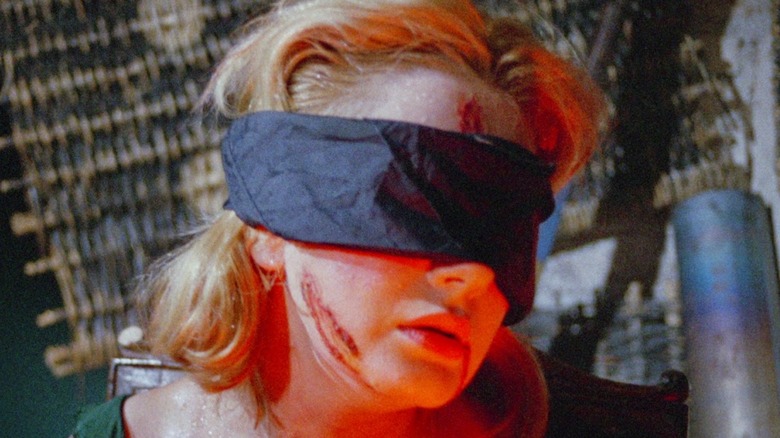
Black leather gloves. Bold colors. Incredible architecture. Gory kills. If you found yourself nodding along with each phrase, then you may just love giallo. Giallo, which literally means "yellow" in Italian, is a subgenre of Italian horror-thrillers that are believed to have emerged 1963 with the release of Mario Bava's "The Girl Who Knew Too Much" (more on that later in the rankings). While giallo was predominantly created in the 1960s and 1970s in Italy, the subgenre is alive and well today and has spread across the globe.
But what does yellow have to do with giallo? Yellow was the primary color used on the covers of the crime thrillers of the 1950s and 1960s. So, giallo became synonymous with thrillers rather than just the color. Directors such as Bava and Dario Argento are staples of the genre, shaping the bold aesthetics that gialli (the plural of giallo) are known for. Each frame of a giallo looks like something out of a high fashion magazine, perfectly lit and posed to create a work of art. The films are also defined by creative and strange kills and a complicated web of sexual relationships that always factor in the string of mysterious murders. Giallo is over-the-top, gruesome, and glamorous.
We're going to rank the best 14 giallo films out there, the ones that you need to watch if you're starting to explore the subgenre. So, pull on those leather gloves. It's time to get bloody.
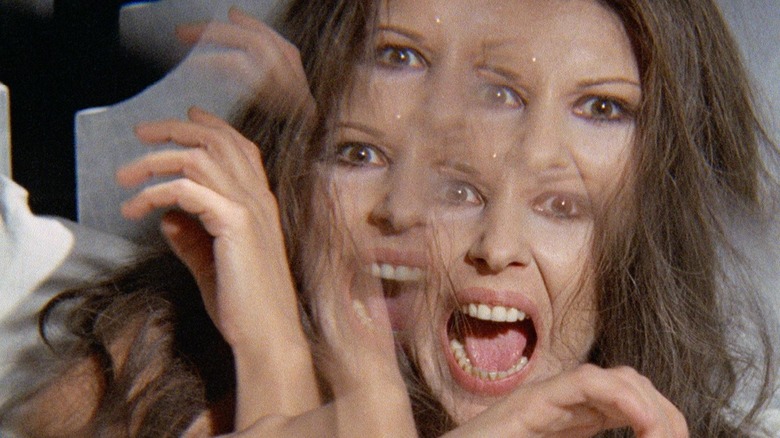
Director Sergio Martino is a giallo staple, and this isn't the last time his name is going to pop up on this list. We're kicking off this ranking with his 1972 giallo "All the Colors of the Dark," starring Italian starlet Edwige Fenech. She plays Jane, who has just suffered a miscarriage and has been coping with the trauma of watching her mother's murder when she was a child. So, as an alternative to therapy, Jane decides to attend a Black Mass and looks to Satan for a way to heal. But this sect of cultists doesn't have the purest intentions for Jane, and her sanity begins to crumble as more murders begin to happen around her.
Martino mixes giallo sensibilities with Gothic horror, creating intricate set pieces bathed in candlelight and madness. "All the Colors of the Dark" exists right on the border of giallo and supernatural horror, and Martino beautifully navigates that divide. Is this hell all in Jane's head? Or is she actually descending into the fiery pits of the underworld?
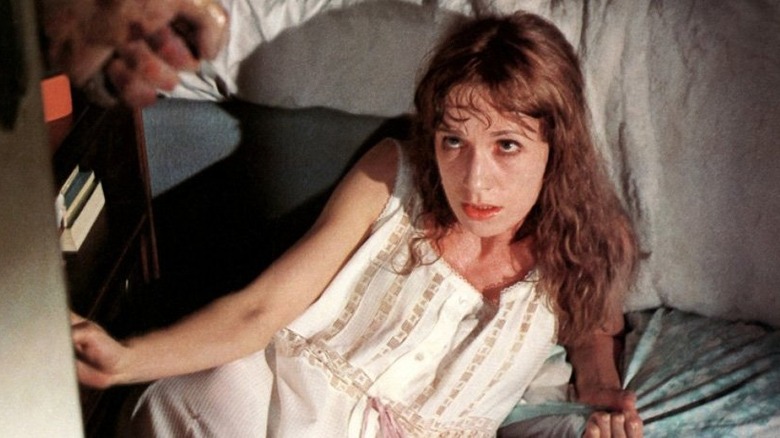
"Shock" is another giallo that teeters on the precipice of the supernatural and just barely keeps itself from tipping into your typical ghost story. It's also the source of the incredible scene in which a young boy running towards his mother transforms into a grown man. Mario Bava's 1977 film stars Daria Nicolodi as Dora, who was recently released from a mental institution following the mysterious death of her abusive first husband. She moves back into her home with her ex, along with her son Marco and new husband Bruno. But something is different; Dora feels as if the house is haunted and her son is possessed by the spirit of her dead husband.
This isn't just a film about ghosts, though. "Shock" deals with trauma and the tumultuous experience of trying to heal from those mental wounds. Dora has suffered years of abuse at the hands of her ex, and is still trying to process the violence and how it has affected both herself and her son. Bava uses the meticulously designed space of Dora's home to create a cerebral slow burn that places the viewer at the center of the madness.
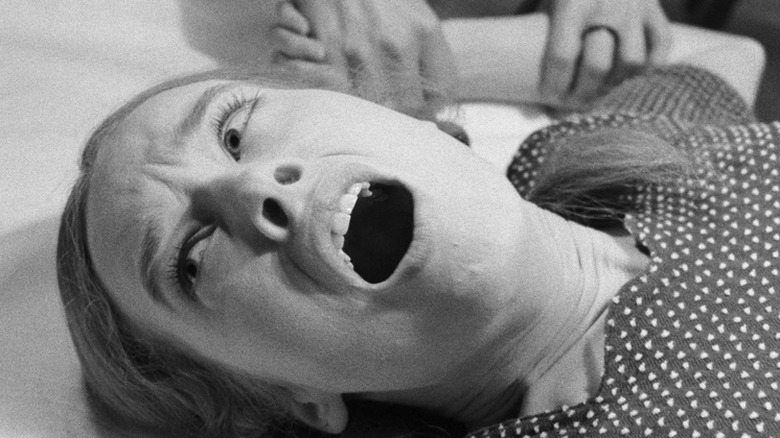
Right off the bat, I should let you know that the titular Solange is not brought into the plot of the film until about 45 minutes in. For the giallo lovers, that fact isn't surprising, as the genre is known for its strange pacing and twisted narrative paths that don't always quite make sense. And yet, that's why we love these films. It's all about the bizarre journey rather than the destination.
Massimo Dallamano's 1972 film "What Have You Done to Solange?" is a tragic tale about sex, friendships, and, ultimately, abortion. The victims of this film are young female students, some of whom have had a secret affair with their male professor. He is, unsurprisingly, both an absolute jerk and also the prime suspect. But that's too obvious of a choice for the killer, and he instead begins to investigate the truth behind the crimes.
These women are killed by objects forcibly shoved inside of their vaginas, creating rather graphic and perverse crime scenes. "What Have You Done to Solange?" earns its place on this list due to its rather progressive subject matter and sexually graphic murders, as well as its harrowing conclusion.

Gore master Lucio Fulci makes his first appearance on this list with his 1971 giallo "A Lizard in a Woman's Skin." Known for films such as "Zombi 2" and "The Beyond," Fulci dipped his toes into giallo with a hallucinogenic nightmare about repressed sexuality and respectability politics.
Carol Hammond (Florinda Bolkan) lives in a large apartment with her husband, wealthy father, and young stepdaughter. Their apartment shares a wall with neighbor Julia (Anita Strindberg), who loves to throw wild parties that rage late into the night. Carol is infuriated by these parties, but is also a little excited by them. They go against her rigid upbringing, causing her to have vivid sexual fantasies about joining these parties and presumed orgies. But these desires are also manifesting as violent dreams, which start to leak into reality. They become murderous hallucinations as Julia is found dead. So, is Carol the killer? You'll have to watch to find out. This is Fulci's response to the emerging counterculture of the time, so of course there are a few freaky hippies to really make his point clear.
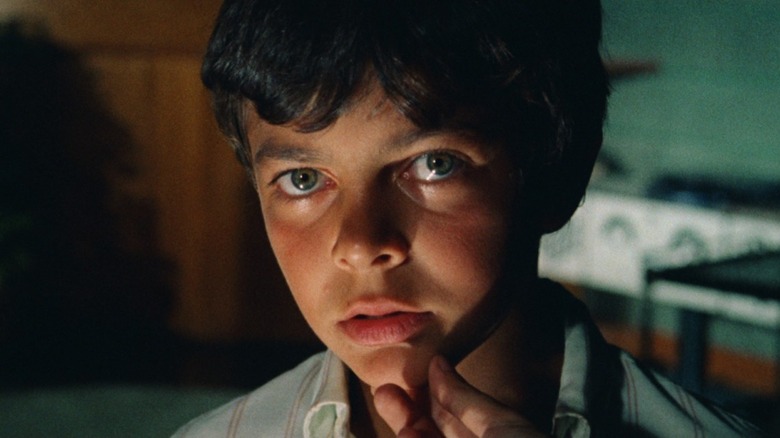
Like Mario Bava, Lucio Fulci wasted no time between giallo films, releasing "Don't Torture a Duckling" in 1972, just one year after "Lizard in a Woman's Skin." However, with this film, Fulci utilized a much bleaker and more monochromatic color palette to tell a devastating tale about a murderer who targets not only adults, but young children, too. Child death is taboo, even in the horror genre, so these deaths in "Don't Torture a Duckling" feel especially horrific.
But, somehow, even more terrifying is the death of the town witch, La Magiara (Florinda Bolkan, star of "Lizard in a Woman's Skin"). She's suspected to be the child killer, and is targeted by townspeople in the local graveyard. There, they beat her to the brink of death with heavy chains. It's an agonizing scene, with Fulci never cutting away from her shattered body and the sounds of the chains landing on her flesh. Giallo is often stylish with its kills, but here Fulci makes death just plain gruesome.
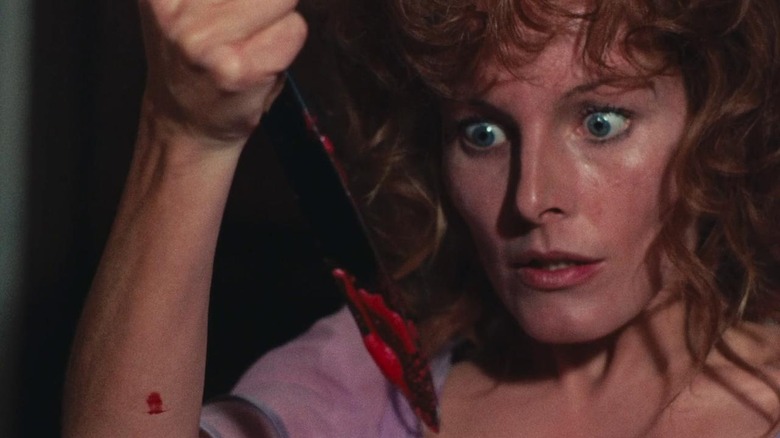
Sergio Martino's 1972 film has the quintessential giallo title: so long that it's essentially a complete sentence. "Your Vice Is a Locked Room and Only I Have the Key" swirls around a husband, wife, and his niece, all trapped in a decaying house with nothing but anger and resentment bubbling around them. This isn't the typical urban giallo, but something more gothic, not unlike "Shock."
Husband Oliviero (George Hilton) and wife Irina (Anita Strindberg), to put it bluntly, hate each other. They antagonize each other, with Oliviero abusing, raping, and demeaning his wife. Then, his niece Floriana (Edwige Fenech) comes to visit from France, only further stirring the nasty pot of hate brewing in this decrepit domicile. Plus, there's a large black cat named Satan that stalks the halls and attacks seemingly innocent people. Remember, folks, always trust the cat.
Martino based the film's script on Edgar Allen Poe's infamous short story "The Black Cat," which gives you an idea of the tragic twists of the film. While a lot of gialli are incredibly bleak, this one is particularly dark, with misery seeping out of every shadow.
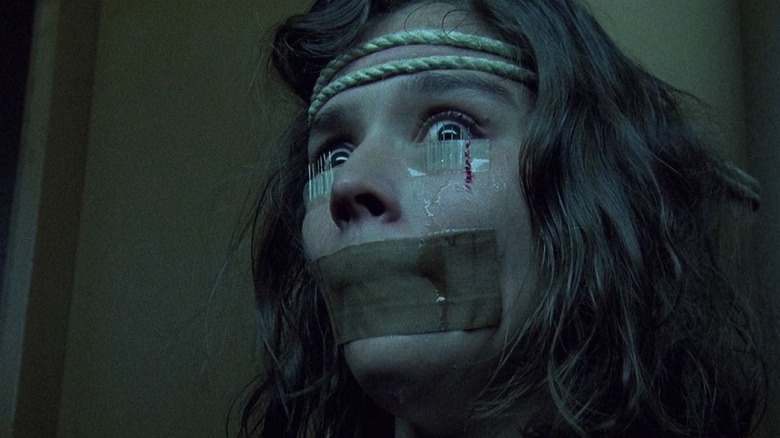
Music meets murder in Dario Argento's 1987 film "Opera," known primarily for the use of needles under victims' eyes to keep them from closing. Cristina Marsillach plays Betty, the understudy in a production of "Macbeth" who gets the opportunity to play Lady Macbeth after the opera's star is injured. But, once she takes the role, a killer captures her and deploys those needles so that she is forced to watch the murder of her boyfriend.
This cycle repeats throughout the film, and reminds Betty of how her mother was killed when Betty was a child. These aspects of Betty's memories, paired with the beauty and intricacy of the opera house and a score that utilizes the shrill caws of the ravens that call the performance space home, make "Opera" surreal and bizarre. It's another bleak commentary on the nature of trauma and deep psychological scars that never fully heal, no matter how many years pass.
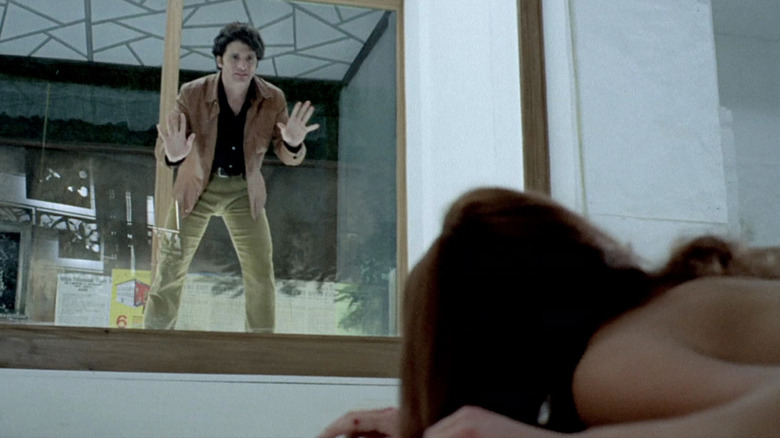
Dario Argento is a horror legend, and has been since the release of his first film in 1970, "The Bird with the Crystal Plumage." Here, American writer Sam Dalmas (Tony Musante) is vacationing in Rome with his girlfriend Julia (Suzy Kendall), trying to get past his writer's block. Luckily— or perhaps not so luckily — right before he's set to return home, Sam witnesses a murder in an art gallery. As is giallo tradition, Sam decides to play cop and help identify the killer. But that puts him, and Julia, in danger, as the killer doesn't want anyone interfering with their murderous intentions.
The story, while still full of typical giallo twists and turns, is Argento's most straight-forward and narratively cohesive. "The Bird with the Crystal Plumage" allows Argento to stretch his wings (pun intended) and get situated in the world and aesthetics of giallo. It may not be as visually rich as his later films, but it's still just as shocking and enthralling as any other giallo by Argento or other Italian filmmakers.
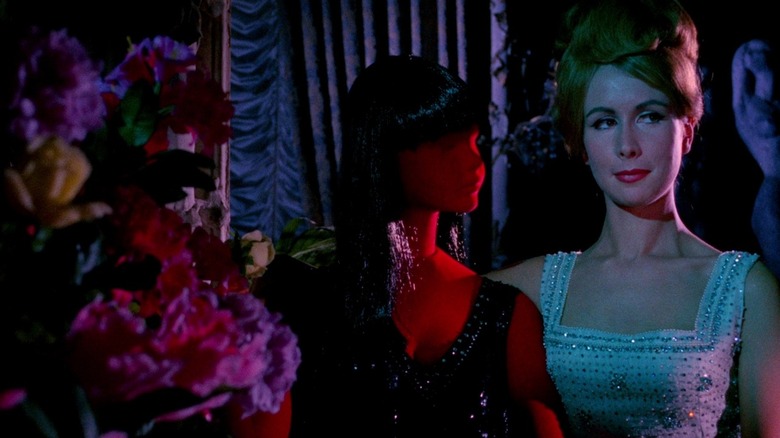
Just one year after the release of "The Girl Who Knew Too Much" in 1963, Mario Bava brought his next giallo masterpiece to the world. Like his previous film, "Blood and Black Lace" shaped the idea of what giallo was and continues to be. Instead of following convention, it created it. What it lacks in narrative cohesion, it makes up for with stunning visuals that prove the beauty of the giallo subgenre. Story doesn't matter when there are striking images and dead bodies to look at, after all.
The film follows a fashion house whose workers are picked off one by one by a masked killer wearing a long trench coat and a black fedora. The killer is trying to hide the contents of a victim's diary, which is full of secrets about each and every employee of the small business. The movie's connection to the fashion world lends itself to a stylish film that reflects the glamor of the industry, but not without a few splatters of blood for color.
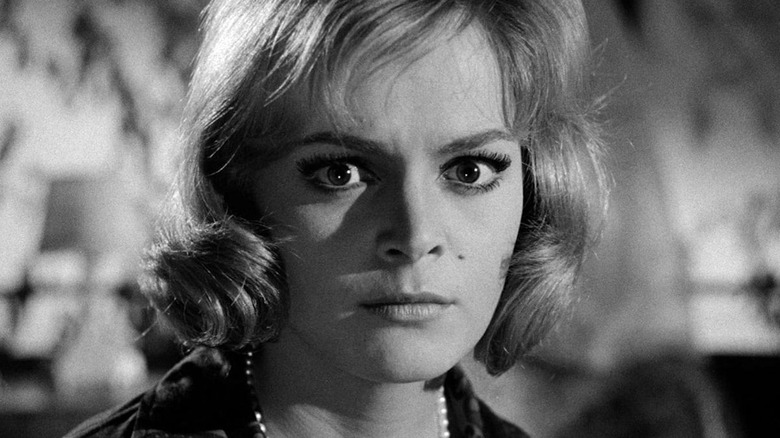
As mentioned in this list's introduction, Mario Bava's 1963 film "The Girl Who Knew Too Much" is often cited as the first giallo film. It follows Nora (Leticia Roman), an American obsessed with giallo novels who travels to Italy to visit her dying aunt. While she's there, she becomes entangled in a murder investigation and believes that, since she's read so many giallo, she can solve the case. But, of course, her own life is in danger as she wanders into abandoned buildings, and must hide in her own massive living space from her killer.
Bava's use of wide spaces played a pivotal role in establishing the giallo trope of large sets that dwarf the film's characters, making them seem insignificant in the face of the grand architecture. Shot in black and white, "The Girl Who Knew Too Much" doesn't rely on bold colors, but rather the stark contrast between light and dark. This film is the perfect pairing with almost any giallo, allowing you to see just how much the subgenre evolved and took shape over a mere decade.
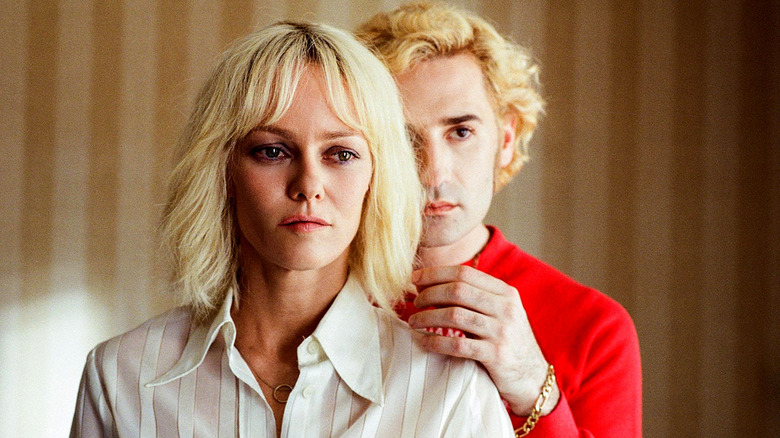
Yann Gonzalez's 2018 film, "Knife+Heart" is the only contemporary choice on this list. It deserves a place among the biggest giallo hits of the 1960s and 1970s not only for its colorful aesthetic choices, but also for focusing its narrative on queer communities and sex workers.
Anna (Vanessa Paradis) is a gay porn producer with a broken heart. Her editor and partner, Lois, has recently left her, and Anna wants her back. But when trying to create the porno to win Lois's heart, Anna's actors are murdered one by one by a killer in a leather mask with a dildo turned into a knife. Anna is then placed at the center of this bloody plot, trying to unravel the truth while also trying to keep her career afloat.
Gonzalez takes the giallo tropes of bold colors, intricate plots, and masked killers and brings them into the modern era. While the film takes place in 1979 and has that retro vibe, Gonzalez still brings the genre into contemporary conversation by creating a new, queer vision on what the giallo can be.
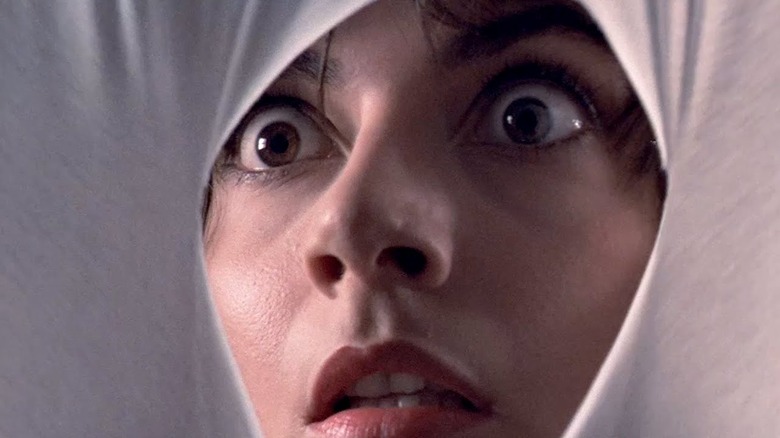
We already know that Dario Argento doesn't miss, at least with his giallo films, and his 1982 effort "Tenebrae" is no exception. In fact, it's one of his best. The film follows familiar giallo beats, with an American writer becoming embroiled in a murder case while visiting Italy. Here, writer Peter Neal is in Italy on a book tour for his latest novel, "Tenebrae." He receives a note from a killer, which says that Neal's latest novel inspired him to kill, which I can only imagine is any creator's worst nightmare. He works with the police and his assistant (Daria Nicolodi) to crack the case.
The most breathtaking moment in the film involves a long take through the apartment of a lesbian couple who are eventually murdered by the killer. This shot, according to Argento, was incredibly complex and took three days to shoot. That effort paid off, though, and it is truly an unforgettable moment in horror and cinema history. The incredibly shocking ending of "Tenebrae" is one the most cohesive in giallo, which isn't always known for its straightforward or comprehensible conclusions.
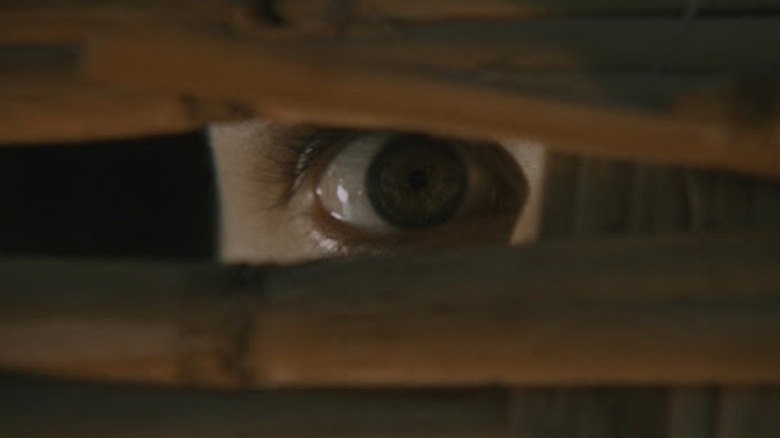
Also known as "Twitch of the Death Nerve" (an absolutely incredible title), Mario Bava's 1971 film "A Bay of Blood" is not only a giallo, but feels like a direct precursor to the then-upcoming slasher genre in the United States and Canada. In all fairness, giallo in general is the godfather of the subgenre, but the opening sequence and slaughter of young adults while in the throes of passion in particular screams proto-slasher. The cold open involves an old woman in a wheelchair meeting her untimely demise at the hands of her husband, who is in turn stabbed by an unknown killer.
That's just the beginning. What follows is an incredibly bloody film in which it seems that citizens of a small town on the bay are murdered indiscriminately and without mercy. One particular murder involves a spear being driven through a couple mid-coitus, piercing not only their flesh but the mattress and the floor beneath. This death is copied almost shot-for-shot a decade later in "Friday the 13th Part 2." There's no denying the prevailing influence of "A Bay of Blood" on the genre, and the blueprint it provided to the filmmakers who went on to create some of the meanest villains in horror history.

The best giallo on this list is also a Christmas horror movie. Yes, you read that correctly. "Deep Red" begins with a murder sequence in front of a Christmas tree, while the credit sequence unfolds around children's toys. After the bloody opening, Dario Argento's film follows an American jazz pianist Marcus Daly (David Hemmings) who discovers his neighbor's mutilated body. As always seems to happen in giallo, he becomes intimately involved with the case, seeking out the killer himself. Along the way, he works with reporter Gianne Brezzi (Daria Nicoldi) to solve the murder.
This is narratively and aesthetically the quintessential giallo film. The game of cat-and-mouse between Daly and the killer is complex and takes some incredible twists and turns. On top of that, the sense of architectural scale and bold colors makes this film feel like a work of art. This is also one of the few giallo films that includes gay and trans characters, though their representation isn't the most progressive. Still, "Deep Red" contains some of giallo's most brutal depths, including a scalding scene that later influenced director Rick Rosenthal when he made "Halloween II." If there's one giallo film you watch, make it this one.
Read this next: The 15 Best '70s Horror Movies Ranked
The post The 14 Best Giallo Films Ranked appeared first on /Film.
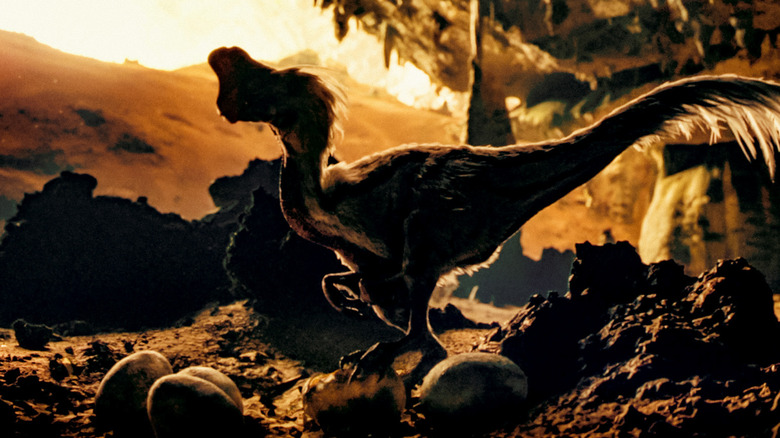
While we still have yet to get a trailer for "Jurassic World Dominion," the third entry in the current trilogy and the sixth movie in the franchise overall, we did recently get a five-minute prologue that gave us some idea of what to expect from the upcoming blockbuster. It is, to use a word that Jeff Goldblum's Dr. Ian Malcolm is quite fond of, chaos. But it also gives us something that many of us probably didn't expect to see: dinosaurs in the distant past, 65 million years ago.
Universal Pictures enlisted director Colin Trevorrow to film this whole spectacle despite the fact that it won't actually be featured in the movie itself. That, on its own, is a bit peculiar and opens up a whole host of possible questions. Setting that aside for the moment, though, one of the biggest takeaways is that an entire "Jurassic World" movie set in the past, with no humans, is something I would very much like to see. And I have to imagine I'm not alone.
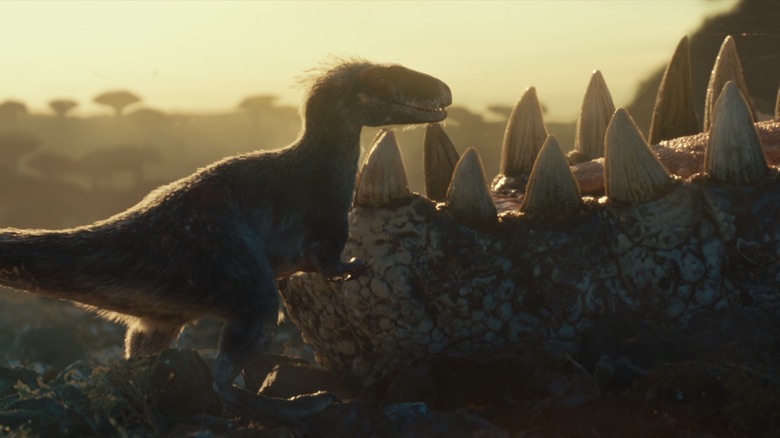
The first half of the "Jurassic World" prologue plays very much like a nature documentary set in the ancient world. We see lots of dinosaurs in their natural habitats -- or our best estimation of what those habitats might have looked like. While there have been some rough CGI moments in the history of the franchise (we're looking at you, seaside dinosaurs in "Jurassic Park III"), this might be some of the most impressive visual effects work not done with animatronics in any "Jurassic" movie yet. That alone would be worth exploring further.
Not only that, but one unique thing is that we are seeing more anatomically correct dinosaurs, with feathers and other distinct visual flares that are probably closer to what science has uncovered since the original "Jurassic Park" was released. Again, another very good reason to get a feature-length version of what I'm going to kindly suggest we title "When Dinosaurs Ruled The Earth." For obvious reasons.
But one of the main reasons this might have some juice in the tank is that it could be relatively simple, especially when compared to something like "Jurassic World: Fallen Kingdom" which was, to be polite, complicated. Dinosaurs just being dinosaurs with some sort of narrative to tie it all together could be a refreshing and bold new direction for the series. And looking at something like Genndy Tartakovsky's brilliant animated series "Primal," something along these lines feels possible. Yes, that show does have a human in it, but the utter lack of dialogue coupled with a compelling narrative is what I'm looking at. In any event, the positives far outweigh any negatives here.
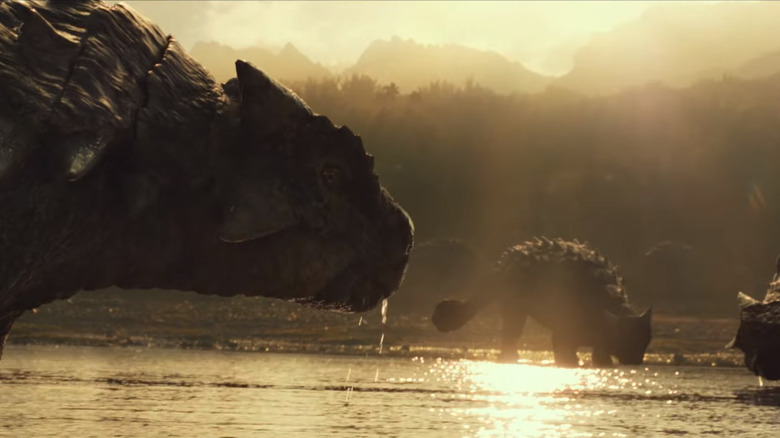
Perhaps the biggest reason this is worth considering is that Universal Pictures isn't done with the franchise just yet. Even though many assumed "Jurassic World 3" would be the end of it, it won't be. Producer Frank Marshall, in an interview with Collider in 2020, explained that the forthcoming film will not conclude the series. Rather, it will usher in a new era. Said Marshall:
"It's the start of a new era. The dinosaurs are now on the mainland amongst us, and they will be for quite some time, I hope."
The studio will need to find a new way in beyond this new movie, which appears as though it is going to be big in every sense of the word, with dinosaurs now out in the world among humans. After going to that extreme, it might be refreshing to go all "Planet Earth" about it and just give us dinosaurs being dinosaurs for anywhere between 90 minutes and two hours.
"Jurassic World Dominion" is set to hit theaters on June 10, 2022.
Read this next: 11 Spielberg Projects We Never Saw But Wish We Could've
The post We'll Take a Jurassic World Movie Set Entirely in the Past, Thank You Very Much appeared first on /Film.


Read more of this story at Slashdot.
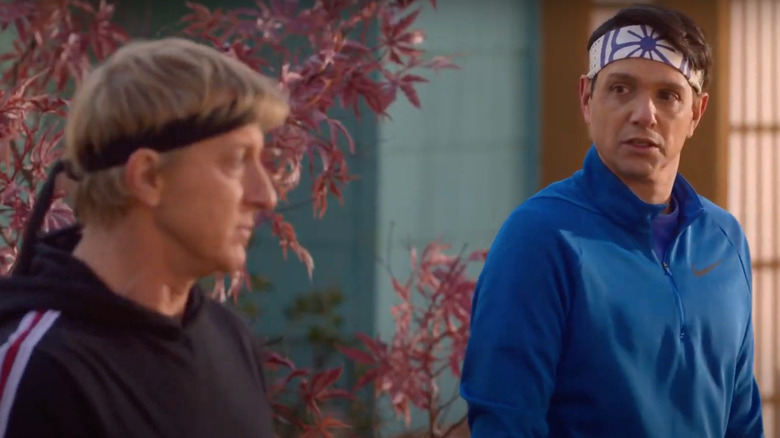
Whether you were introduced to the "Karate Kid" franchise through the nostalgia of "Cobra Kai" or the original films, you're likely as hooked on the series as Johnny is on Coors Banquet Beer. In the fourth season of the Netflix series, we're going to see elements from "The Karate Kid Part III." Oof, you may be saying. That film didn't exactly win the tournament, so to speak.
Ralph Macchio sat down for an interview with Empire magazine, talking about bringing in the best parts of the third movie for "Cobra Kai" season 4, and that might be a tall order. The film currently stands at 13% on Rotten Tomatoes. It wasn't just critics who panned the film. The audience score is at 34%. Even die hard "Karate Kid" fans like me have a really rough time rewatching that one. I've sort of pretended that it didn't exist. My love for "Cobra Kai" means I'm going to have to rethink my stance and try to find the good. Help me, Mr. Miyagi!
The third film from 1989 pulled in just under $39 million worldwide. To contrast that, the second film made $115 million and the first made $91 million. However, it did introduce us to the character of Terry Silver (Thomas Ian Griffith) a Vietnam veteran who served with John Kreese (Martin Kove). We've seen him before in "Cobra Kai" as a young man played by Nick Marini in flashbacks. The evil toxic waste disposal-owning Terry Silver is coming back to reteam with Kreese in season 4, and it's pretty certain that nothing wholesome is going to come to the San Fernando Valley because of it.
In the interview, Macchio says that he wants to take the good things from the film and make them part of the story. One of those things is Terry Silver. Macchio had this to say:
"There's another angle to Terry Silver, and when you call upon those stories and dive into the grey areas, it expands the universe and the story. It's this chance to take something that didn't work, and try to make fruit out of it. Can it bear fruit? It has. Season four is next level."
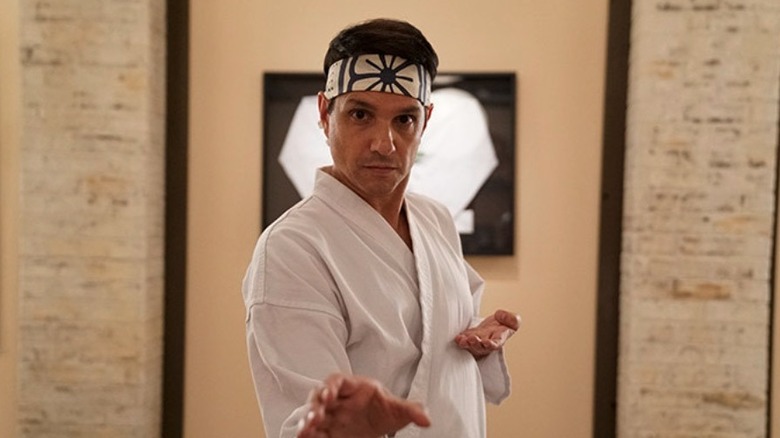
So, will "Cobra Kai" season 4 be "next level?" All we know officially is what Netflix says of the series:
"On December 31, the battle for the soul of the Valley reawakens. New alliances. Higher than ever stakes. Who will take it all at the All Valley Tournament?"
If you're in a betting mood, I'd say we're going to see a team up between Johnny (William Zabka) and Daniel (Macchio) fall apart. I want to believe in Johnny. I do! It's just that all those beers and his rather reckless nature combined with Daniel's buttoned-up, holier-than-thou attitude aren't going to combine well. The bad guys always seem to make better (or just more advantageous) alliances. Throwing Terry Silver into the mix is going to cause Valley hospitals to work overtime, "grey areas" or not. He did found Cobra Kai with Kreese all those years ago. He's probably not going to be happy with what he finds when he gets back.
"Cobra Kai" season 4 will premiere on Netflix on December 31, 2021.
Read this next: Ranking Morgan Freeman's 20 Best Roles
The post Cobra Kai Season 4 Will Try to Redeem the Worst Karate Kid Movie appeared first on /Film.

When people think of Child’s Play, two images come to mind: one of the sinister Good Guy doll known as Chucky, and the image of innocent six-year-old Andy Barclay, portrayed originally by Alex Vincent. Andy is one of the main protagonists of the original Child’s Play film and would go on to become the arch-nemesis of Charles Lee Ray as the franchise evolved. While the role of Andy has been portrayed by others, the character’s aging up has allowed the flexibility for Vincent’s return to the role as seen in Curse of Chucky and Cult of Chucky. Now he is back in filling those shoes again in the CHUCKY TV series.
Many have come to know Christine Elise as Emily Valentine in Beverly Hills 90210 and its reboot BH90210, as well as pertinent roles in shows China Beach, ER, and In The Heat of the Night. However, we’d be doing a disservice if we didn’t bring up her work as a story producer over the past decade, working on shows Cold Justice, Tamar & Vince, and more. She also made her directorial debut with the short Bathing and the Single Girl, which she would then adapt to a full-length novel. For horror fans, many think of Elise in her role as Kyle, Andy Barclay’s foster sister, in Child’s Play 2. She reprised the role briefly in Cult of Chucky and now she is returning as Kyle in the CHUCKY TV series.
In the new television series CHUCKY, an idyllic American town is thrown into chaos after a vintage ‘Good Guy’ doll turns up at a suburban yard sale. Soon, everyone must grapple with a series of horrifying murders that begin to expose the town’s deep hypocrisies and hidden secrets. Meanwhile, friends and foes from Chucky’s past creep back into his world and threaten to expose the truth behind his mysterious origins as a seemingly ordinary child who somehow became this notorious monster.
Recently, Nightmarish Conjurings’ Shannon McGrew had the immense pleasure of speaking to both Alex Vincent and Christine Elise, both of whom are reprising their roles as Andy Barclay and Kyle respectively. During their chat, they discussed what it was like to come back to these characters and to the Child’s Play universe once again and what they are most excited for audiences to see as the CHUCKY series progresses. Because of their particular roles in the series, we did try to keep spoilers light or non-existent.
How does it feel to be back together and to be doing this project?
Alex Vincent: It feels incredible to be back with the CHUCKY family. Every time that I get to come back and portray this character that I started when I was six years old is super fun. This time, in particular, with the addition to the fact that the cast is so much bigger, and there are so many tremendous actors in it, Andy gets to share the screen with Kyle, for the first time in a very long time. Christine and I are very much like brother and sister in real life, and we have been very close especially for the last eight to 10 years. So, this was something we wanted really badly a chance to work with each other again with these characters. So for this to all finally come to fruition after years of looking forward to the possibility, and then it actually happening has just been to dream.
Christine Elise: Two years ago, I did the 90210 reboot and had the same sort of rare opportunity to go back to work with people that I’ve known for 30 years, many of whom I consider family. That’s a really rare thing to have happen for most actors, but certainly, I can’t believe it’s happened to me twice in three years. Between Alex and Don [Mancini] and Jennifer [Tilly]…I knew Jennifer before I even had done Child’s Play 2. So it really is, in many ways, a family and literally with Brad [Dourif] and Fiona [Dourif], and in the older movies with Kevin Yagher and Catherine Hicks look like literally family. So it’s like a lottery win.
We’ve only seen a very small snippet of what you guys do. We’ve seen you arrive. You’re here. You’re murdering the Chuckys. Is there anything that you’re both looking forward to having the audience see? I know that might be a little spoiler-y.
Alex Vincent: Have you seen episodes five or six?
I’ve seen episode 5.
Alex Vincent: You’ve seen things that we haven’t seen yet and we’re excited for everyone to see everything that not only we do, but the characters that we love in the show also, and I can’t wait for Fiona to just blow everyone away with what she has coming up. So yes, if there’s anything in particular that I’m looking forward to seeing their reaction, it’s a lot of stuff that’s in the finale. There’s a lot. I think the last 15 minutes of the show…I’m the anti-spoiler, so I don’t get anything out. I’m like a vault, but I think the last 15 minutes of the show is really going to blow everyone away. So yeah, that’s what I’m really excited for.
Christine Elise: I am too excited to see everyone’s reaction. Jennifer Tilly is always awesome in everything she does, and she just makes the most out of nothing. She’s incredible. And yeah, Fiona’s got some stuff that’s gonna blow people’s minds. I think that people have no idea what they’re in store for. The shit’s gonna really hit the fan in five.
I think people are excited to see both of you back to also working together, and I think I’m excited to see how that unfolds. Because we’ve only seen a little bit.
New episodes of CHUCKY arrive every Tuesday night at 10 pm ET on the SYFY and USA Network. For more on the series, check out our review here.
The post [Interview] Alex Vincent & Christine Elise for CHUCKY appeared first on Nightmarish Conjurings.
Spoilers for "Death Note" below.
Since airing in 2006, "Death Note" has become one of the most popular anime series in the world, spawning video games and live-action movies, including one on Netflix. The anime consists of 37 episodes adapted from Tsugumi Ohba and Takeshi Obata's manga series of the same name.
The thrilling series tells the story of Light Yagami, an ace Japanese high school student who becomes the owner of the Death Note — a mystical, supernatural notebook of sorts. It has pages over pages describing "Rules of the Death Note," and when these rules are followed correctly, the book allows the owner to commit a murder just by writing the victim's name and envisioning their face. It also allows the owner to decide the cause of death, and in the case of an unspecified reason, the victim dies of a heart attack.
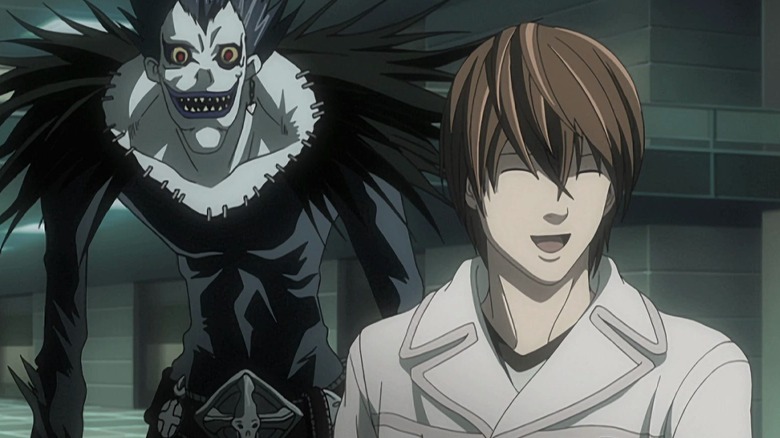
Discovering the book leads Light to come up with a plan to rid the world of evil. He hopes to create a utopian world, one without any crime or criminals. From time to time, he is joined by the book's owner, god of death and harbinger of chaos, the Shinigami Ryuk, who gets bored by the Shinigami realm and travels to the human world. When Light's dream of a crime-free society begins to come true, the legendary detective L is ordered to investigate and apprehend him, leading to a prolonged battle of wits and psychological warfare.
So, how does it end?
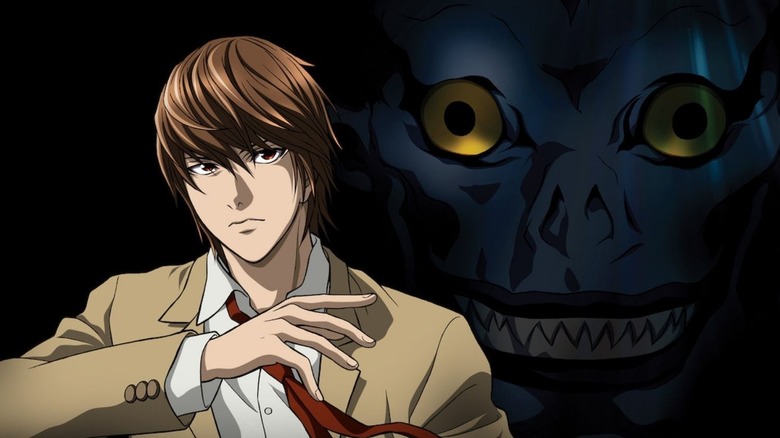
Light Yagami's death at the end of "Death Note" shocked many fans.
When Light's rival, the renowned detective L Lawliet is defeated in "Silence" (the 25th episode), it made viewers wonder if Light will get out alive from the chaos he has created. Yet, in the finale "New World," Light's identity as Kira (a god-like alias he takes on during the criminal killing spree) is exposed by Near at the warehouse.
Light attempts to retrieve the piece of paper from the Death Note hiding in his watch so that he can write Near's name on it, but he is unexpectedly injured by Matsuda's string of bullets. The confrontation before the police squad doesn't go down as Light had planned, and he manages to escape after Mikami's suicide creates a diversion. He runs off and finds himself in an industrial area, his exhaustion forbidding him to run any further, and we then see Ryuk sitting atop a chimney. Matsuda may have injured Light with bullets, but it is the Shinigami Ryuk who takes his life.
While speaking to himself, the god of death reminds Light about the first promise he ever made to him — that he'd be the one to write Light's name in the Death Note. It's precisely what he does, and Light dies on a flight of stairs, 40 seconds later, from a heart attack.
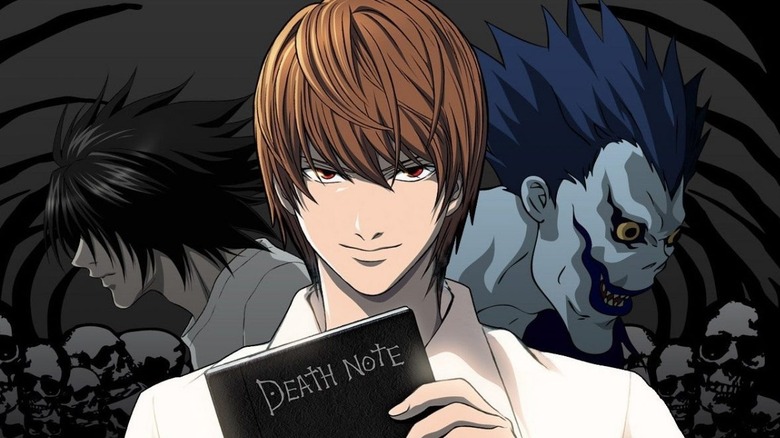
The impactful ending serves as a reminder that Light was only a tool employed by the bored Shinigami Ryuk, in his twisted game of violence. In many ways, Light's rise to power and his downfall were orchestrated by Ryuk, and he is in no way a bystander to the mayhem.
Ryuk dropped the Death Note into the human world simply because he was bored and began to play a game for his own fun. He may have visited Light repeatedly from the beginning, but they were never friends. Even at the end, Ryuk writes his name in the Death Note because he is well aware that Light will be going away to prison, and he refuses to wait until he dies naturally.
Add to that the rule of the book, which states that the Shinigami must witness the death of a human who gains ownership of the Death Note (unless the god of death dies first), Ryuk decides to pull the plug on the madness and end it once and for all. It's a really poetic ending, showing that Light was so blinded by his illusions of power and grandeur that he forgot who made the rules in the first place.
Read this next: 15 Must-See Horror Anime Movies
The post Death Note (The Anime) Ending Explained appeared first on /Film.
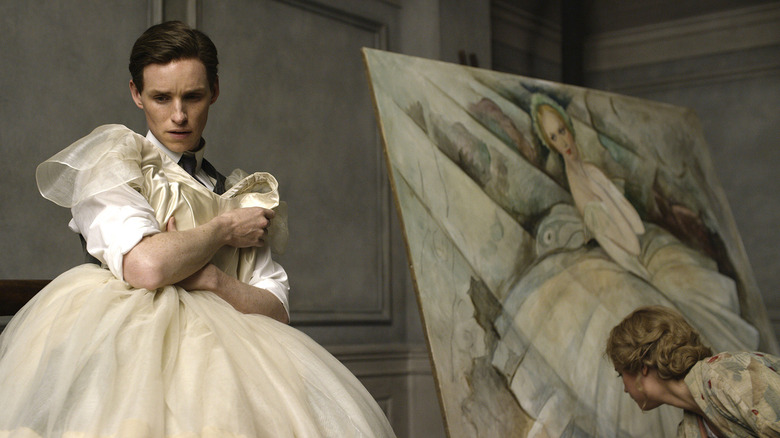
Six years after the release of Tom Hooper's "The Danish Girl," a biopic about the life of Danish artist and trans woman Lili Elbe, star Eddie Redmayne says that he thinks accepting the role was a "mistake," in response to the criticism that Lili should have been played by a trans actress instead.
In a new interview with The Times in London in preparation for his stint as the emcee in "Cabaret," Redmayne finally admitted that accepting the lead in "The Danish Girl" was a bad move. Asked if he would take on the role of Lili Elbe if he was offered it today, Redmayne said:
"No, I wouldn't take it on now. I made that film with the best intentions, but I think it was a mistake. The bigger discussion about the frustrations around casting is because many people don't have a chair at the table. There must be a leveling, otherwise we are going to carry on having these debates."
While I'm glad that Redmayne has now, six years later, realized he messed up by taking the role, it's admittedly frustrating considering trans people had already told Redmayne this was an issue once his casting had been announced. Of course, people should be allowed the space to recognize the error of their ways and enact positive change, but actions speak louder than words. It's a lot harder to believe genuine change has occurred when the checks have already been cashed and the award season campaigns have already completed. The likelihood is that after all of the nonsense following transphobic comments by "boy wizard writer who-shall-not-be-named," Redmayne has been doing some serious soul-searching and finally understands what activists have been telling him for years.
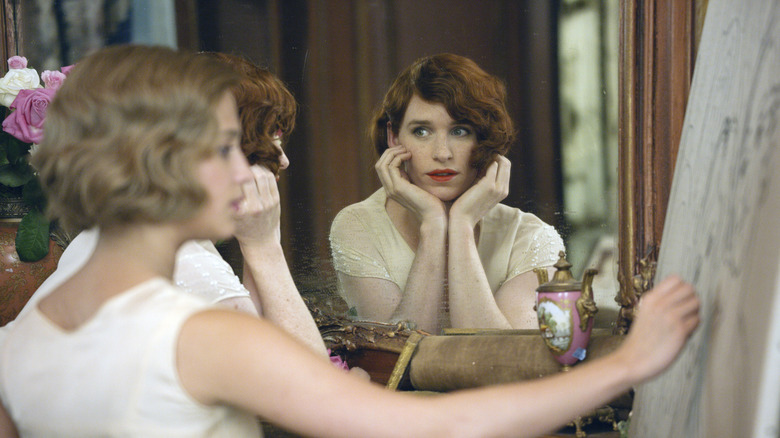
Eddie Redmayne took on the role as Lili Elbe in "The Danish Girl," playing a real-life person who was one of the first recipients of gender affirming surgery. The film was a fictionalized retelling of one of history's most groundbreaking transgender women, reducing her life to nothing more than a hill from which to mine trauma porn. There are countless articles (that I will not link to because they don't deserve the traffic) about Eddie Redmayne's "unbelievable transformation" for "The Danish Girl," proving that society is far more interested in what they view as the "act" of transitioning, rather than the actual person experiencing transition.
It also, as the incomparable Jen Richards says in the Netflix documentary "Disclosure," directly correlates to real life violence:
"Part of the reason that men end up killing, out of fear that other men will think that they're gay for having been with trans women, is that the friends –- the men whose judgement they fear of -– only know trans women from media, and the people playing trans women are the men that they know. This doesn't happen when a trans woman plays a trans woman. When you see these women off-screen still as women, it completely deflates this idea that they're somehow men in disguise."
Redmayne's interview was published the day after Transgender Day of Remembrance. 2021 was the deadliest year for transgender individuals on record (per HRC) -- and the records are stifled by misidentification as well those who die by suicide due to the overwhelming transphobia experienced.
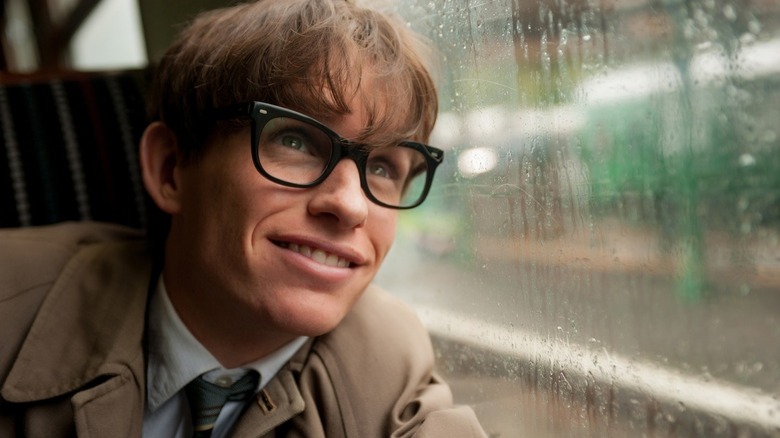
The response to Redmayne's comments regarding "The Danish Girl" have been mixed. Many are thrilled that he's finally realized his mistake, but there is, unfortunately, an overwhelming amount of people filling up comment sections on articles and on social media ignorantly believing his comments are the latest victim of the dreaded cAnCeL CuLtUrE. 'Why wasn't he this outspoken about casting real wizards in 'Fantastic Beasts' or having motor neurone disease as Stephen Hawking?" ask many snarks on Twitter who, again, I'm not linking to because they don't deserve the attention.
These new comments regarding his role in "The Danish Girl" have also resurfaced concerns about ableism in his Academy Award-winning performance in "The Theory of Everything." Entertainment journalist and disability activist Kristen Lopez has talked at length about the issues of casting able-bodied actors in roles for disabled people, including a criticism of "The Theory of Everything" that posits Felicity Jones as Hawking's wife is meant to be seen as an "able-bodied buffer," as a means to help the audience "relate to the bizarre, unknowable disabled."
So, yes, snarky online commenters, Redmayne should also be talking about the problematic complications of playing that role. The reality is that transgender actors and disabled actors are offered little opportunities to tell their own stories, and until marginalized people are the ones allowed to be telling marginalized stories, cisgender and able-bodied actors/producers/directors need to learn how to be equitable.
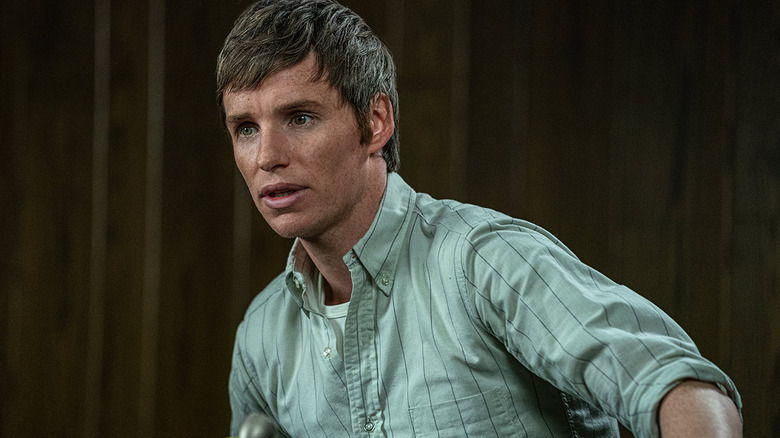
There are plenty, however, who have praised Redmayne for his publicly going on record and admit his wrongdoing for playing a transwoman, something that we've not gotten from a number of cisgender men who have been awarded for playing transwomen. While "The Danish Girl" was only released six years ago, the landscape of conversation and easily available education surrounding transgender issues has dramatically changed in the last few years. Admittedly, /Film also contributed to the "Eddie Redmayne is Fine To Play Trans" discourse six years ago, and it's important that we acknowledge the role we played.
If "The Danish Girl" were to come out today, there would be much different coverage regarding the film than what was predominately offered six years ago. This new perspective for Redmayne and for any others that have changed their tune in the last six years owe it the tireless work of transgender activists, educators, and individuals who have been doing the heavy lifting after all of this time. It's important to recognize when progress has been made, but there's still so much further to go. Redmayne's admittance is a huge step in the right direction, and we can only hope that the rest of Hollywood sees him leading by example and stops this ridiculous trend of turning transgender trauma into tear-jerking entertainment for cisgender audiences.
Read this next: The 15 Best Debut Films From Directors
The post Eddie Redmayne Now Thinks That The Danish Girl Should Have Starred A Trans Actress appeared first on /Film.
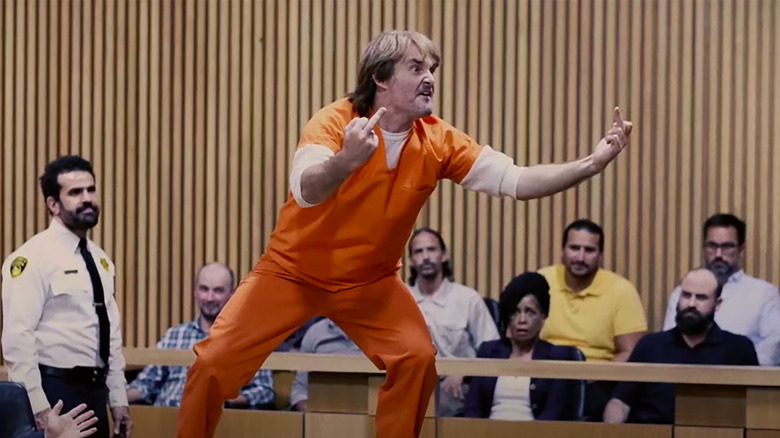
(Welcome to ...And More, our no-frills, zero B.S. guide to when and where you can watch upcoming movies and shows, and everything else you could possibly stand to know.)
MacGruber! Making life saving inventions out of household materials! MacGruber! Started as a "Saturday Night Live" sketch and became a box office bomb of a movie! MacGruber! And now he's back with a Peacock series! MacGruber!
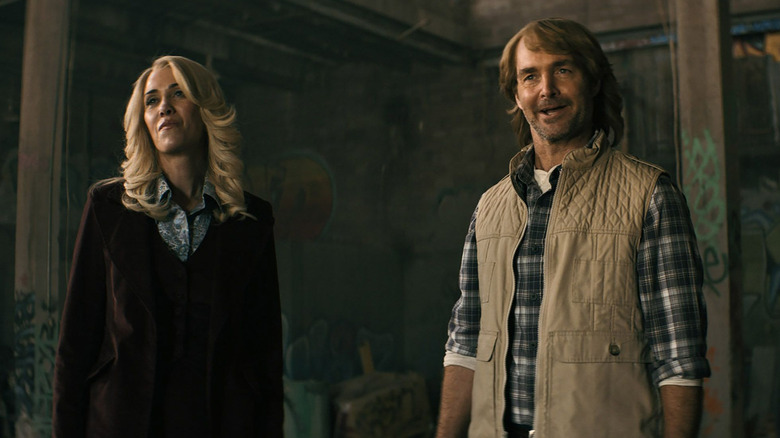
The "MacGruber" TV series will be coming exclusively to Peacock starting on December 16, 2021. There are eight episodes running around 30 minutes each, giving us four glorious hours with one of the most unstable action heroes of our generation. That should give MacGruber plenty of time to save the day, take an upper decker, and do whatever the hell he wants.
"MacGruber" started off as a recurring "Saturday Night Live" sketch featuring Will Forte parodying the resourceful television hero "MacGyver." Each sketch featured MacGruber trapped somewhere with his sidekick, traditionally played by Kristen Wiig, and the host of the week as a ticking time bomb gave them only seconds to live. Conversational tangents often kept MacGruber from focusing on the matter at hand, resulting in the bomb always going off. What made the sketch great was MacGruber's eccentricities and instability as a character slowly unfurled with each new sketch.
Somehow, "SNL" writers John Solomon and Jorma Taccone, along with Will Forte, convinced Universal Pictures to turn "MacGruber" into a feature film. Unfortunately, general audiences didn't care, and the movie was a complete failure at the box office, earning a paltry $9.3 million worldwide on a budget of $10 million. But the film became a cult favorite, and it has since risen in prominence as audiences have discovered how hilarious and absurd the movie really is. In the decade since the film's release, many have been clamoring for a sequel. Universal wasn't interested in taking another chance on a "MacGruber" movie, but their parent company's new streaming service Peacock saw an opportunity to continue his story on TV.
So "MacGruber" is getting a streaming series sequel that will pick up 10 years after the events of the original movie and get Will Forte back into action. Christopher Nolan is a huge "MacGruber" fan, so if you haven't been paying attention, now might be the time to start.
Will Forte returns as the one and only MacGruber. Kristen Wiig is also back as his sidekick Vicki St. Elmo, though it remains to be seen if the two are still married after all these years. Ryan Phillippe is reprising his role from the "MacGruber" movie as once-reluctant teammate Dixon Piper.
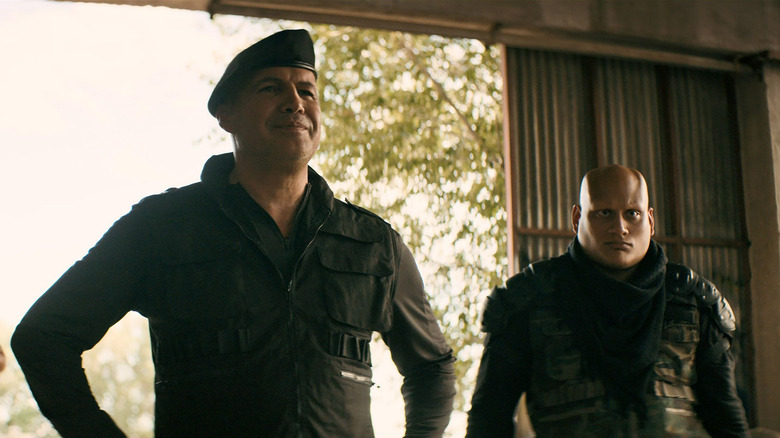
New cast members include Sam Elliott as MacGruber's father Perry, Laurence Fishburne taking the military superior role of General Barrett Fasoose, and "Titanic" sleazebag Billy Zane as MacGruber's new nemesis, Brigadier Commander Enos Queeth. The series also stars Joseph Lee Anderson as Major Harold Kernst and Timothy V. Murphy as Constantine Bach. Hopefully some familiar "SNL" faces and other guest stars will be making appearances too.
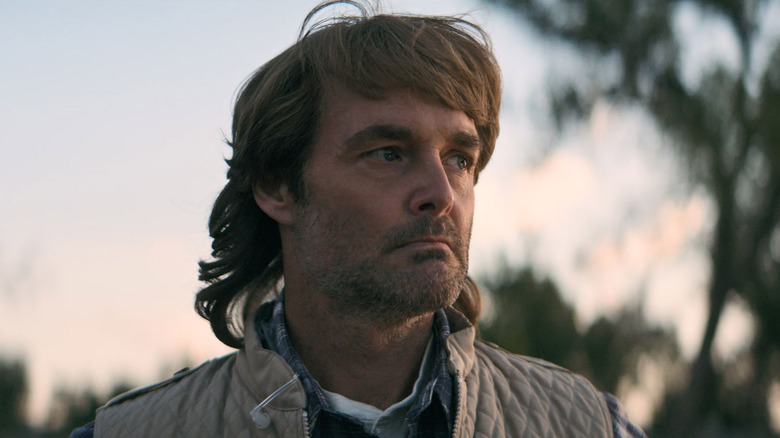
"MacGruber" star Will Forte is also acting as executive producer, writer, and co-showrunner of the series alongside the "SNL" sketch's original creators, John Solomon and Jorma Taccone. After directing the "MacGruber" movie, Jorma Taccone will be back behind the camera for the TV series too.
Here's the official synopsis for the "MacGruber" TV series from Peacock:
After rotting in prison for over a decade, America's ultimate hero and uber patriot MacGruber is finally released. His mission: to take down a mysterious villain from his past—Brigadier Commander Enos Queeth. With the entire world in the crosshairs, MacGruber must reassemble his old team, Vicki St. Elmo and Dixon Piper, in order to defeat the forces of evil.
Read this next: 13 Box Office Bombs That Are Truly Worth A Watch
The post MacGruber TV Series: Release Date, Cast, and More appeared first on /Film.
Read more of this story at Slashdot.
A new Windows zero-day that affects Windows 10, Windows 11, and Windows Server will allow anyone to gain administrative privileges on a device. It affects all supported versions of Windows and can allow an attacker with limited access to a device to easily elevate their privileges in order to spread across the network.
BleepingComputer has tested the exploit on Windows and was able to use it to open a command prompt with SYSTEM privileges from an account that only had “Standard” privileges. This vulnerability is a bypass to a patch rolled out by Microsoft in response to CVE-2021-41379 and was discovered by security researcher Abdelhamid Naceri. The patch was applied in this month’s Patch Tuesday release. Naceri released a proof-of-concept on GitHub that shows how to exploit the vulnerability, and BleepingComputer demonstrated how Naceri’s “InstallerFileTakeOver” exploit works in mere seconds to gain SYSTEM privileges. It was tested on Windows 10 21H1 build 19043.1348.
“This variant was discovered during the analysis of CVE-2021-41379 patch. the bug was not fixed correctly, however, instead of dropping the bypass,” explains Naceri on GitHub. “I have chosen to actually drop this variant as it is more powerful than the original one.” When asked by BleepingComputer why he disclosed the zero-day vulnerability publicly, he said that he did it out of frustration over Microsoft’s reducing payouts in its bug bounty program. “Microsoft bounties has been trashed since April 2020, I really wouldn’t do that if MSFT didn’t take the decision to downgrade those bounties,” he said.
Naceri isn’t the first researcher to voice his concerns regarding Microsoft’s decreased bug bounty payouts. Lower value payouts encourage hackers to keep vulnerabilities to themselves, or worse, sell them to others who may use them maliciously.
Under Microsoft’s new bug bounty program one of my zerodays has gone from being worth $10,000 to $1,000
— MalwareTech (@MalwareTechBlog) July 27, 2020
We expect that Microsoft will attempt to patch this exploit in a future Patch Tuesday update. Naceri says that the best workaround is to wait for Microsoft to release a security patch for the different Windows versions affected.
The post Zero-day affecting Windows 10, Windows 11, and Windows Server lets anyone gain administrator privileges appeared first on xda-developers.
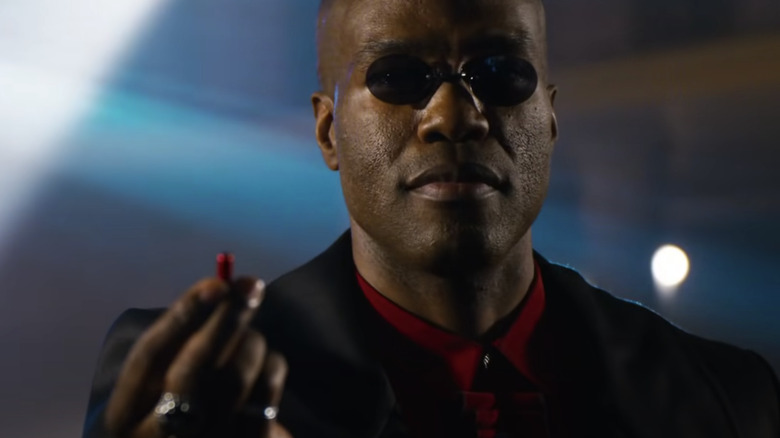
"What is the Matrix?" It's the question that drove Neo (Keanu Reeves) twenty years ago, and it's the big meaning-of-life question that drives us all. But a better question for 2021 might be, "What is 'The Matrix Resurrections?'"
The upcoming sequel, the fourth live-action film in "The Matrix" series, is only about a month away, but aside from a tantalizing first trailer, it's been shrouded in secrecy. Is it a reboot? A sequel? What is "The Matrix Resurrections?"
One thing it's not is a film co-directed and co-written by the Wachowskis, like the first three "Matrix" films were. Earlier this year Lilly Wachowski explained that she didn't return to work on the sequel because, between coming out as a trans woman in 2016 and losing both her parents in the space of five weeks, "the idea of going backwards" to a movie made before that upheaval in her life was "expressly unappealing." In her place, director Lana Wachowski has brought in David Mitchell and Aleksandar Hemon as co-writers. Mitchell is the author of "Cloud Atlas," which the Wachowskis adapted into a film that still remains a personal favorite of Tom Hanks, who starred in it.
A new interview with Mitchell in the Greek newspaper To Vima sheds some further light on what "The Matrix Resurrections" is not. And according to him, it's not a sequel. There may also be a deeper reason why we see Neo sitting down in a therapist's office, since the film's genesis came about as a means of coping with loss.
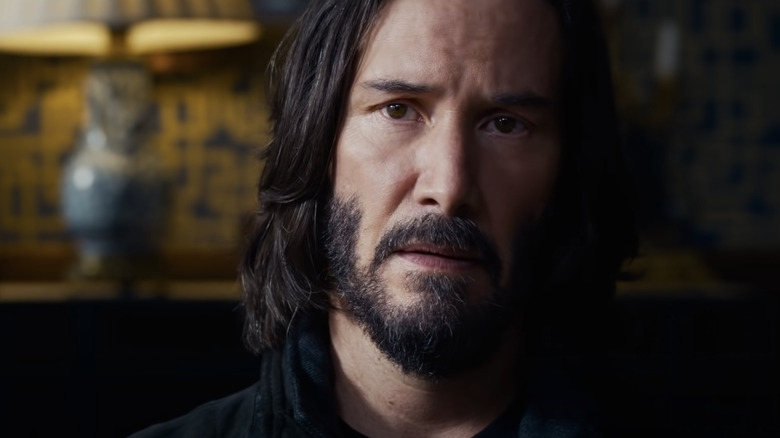
Showbiz CheatSheet has an English translation of Mitchell's interview via a Redditor. In it, he says that he has already seen "The Matrix Resurrections." He elaborated:
"I saw the film in Berlin in September. It's really good. I cannot tell you what this film is about, but I could explain what it is not. It's certainly not yet one more sequel, but something autonomous that contains however the three "Matrix" [movies] that preceded [it] in a really ingenious way. It's a very beautiful and weird creation. It also achieves a couple of things that we do not see in action films, meaning it subverts the rules of blockbusters."
This sounds more like a reboot, yet "The Matrix Resurrections" has an older Reeves and Carrie-Anne Moss playing the same characters (or different versions of them), and Mitchell's suggestion that the film "subverts the rules of blockbusters" positions it as something that doesn't fit neatly into the usual categorizations.
Mitchell also confirmed what earlier reports seemed to indicate: that the development of "The Matrix Resurrections" was tied to death of the Wachowskis' parents. He explained that he came to be involved in the project because, "Their parents died a few years ago in a short period of time of a few months from each other and Lana in her grief had an idea for a new Matrix."
"The Matrix Resurrections" is in theaters and on HBO Max on December 22, 2021.
Read this next: The 14 Greatest Science Fiction Movies Of The 21st Century
The post The Matrix Resurrections Writer Says It's Not A Sequel appeared first on /Film.

We currently have more broadcast and cable networks and streaming services that any one person or household or possibly small village could possibly watch, and all of them are desperate for content. That means that shows come and go faster than they used to, but it also means there’s more hope than ever that your…
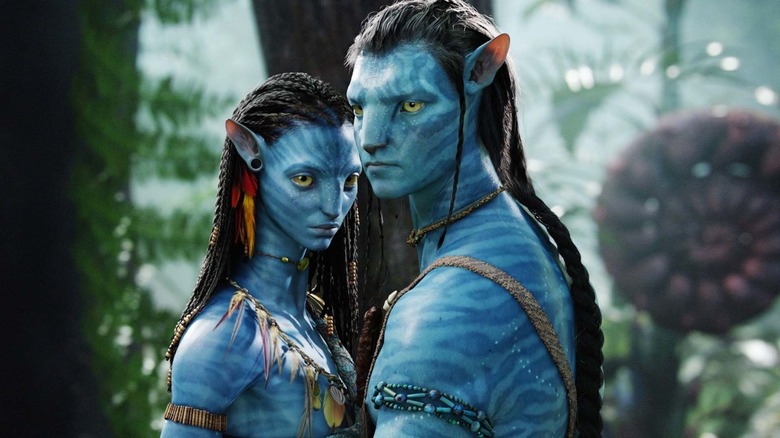
At the time, "Avatar" was a box office phenomenon the likes of which the film industry had never seen. It shouldn't have surprised anyone: Director James Cameron had proven himself a titan of that particular arena back in the '90s, unleashing one groundbreaking, blockbuster event film after another, and he'd worked for over a decade developing this ambitious sci-fi project -- an epic that wasn't based on any previously existing material.
The road to production wasn't easy, as Cameron's latest forced him to develop immersive 3D technology and visuals that were unprecedented on film. With a massive budget and heavy marketing campaign, "Avatar" could've been the disaster that effectively shut Cameron out of filmmaking forever. It certainly wasn't! "Avatar" wowed audiences and crushed its opening weekend, and would be among each week's top-grossing films for months. Not only did it become the highest-grossing film ever, but the first to top the $2 billion mark. "Avatar" was briefly outgrossed by "Avengers: Endgame," but it regained its status as the biggest movie ever thanks to a re-release in March of this year.
Cameron stated from the beginning that "Avatar" was intended to be the first in an ambitious franchise. "Avatar 2" is scheduled to hit theaters on December 16, 2022, and "Avatar 3" is set for December 20, 2024.
If you loved "Avatar," these visually stunning movies are also worth watching.
The technology that Cameron used to create the groundbreaking visual effects of "Avatar" was the culmination of a rich cinematic history of innovation. Fully computer-generated characters weren't introduced until the appearance of Jar Jar Binks in "Star Wars: Episode I - The Phantom Menace," and the full extent of CGI capabilities weren't evident until Steven Spielberg unveiled his dinosaurs with "Jurassic Park." The original 1977 "Star Wars" was a game-changer thanks to the work of Industrial Lights and Magic, but George Lucas's technical breakthroughs were only possible thanks to the stop motion animation developed by Ray Harryhausen on films like 1963's "Jason and the Argonauts" and the outer space visuals in Stanley Kubrick's "2001: A Space Odyssey."
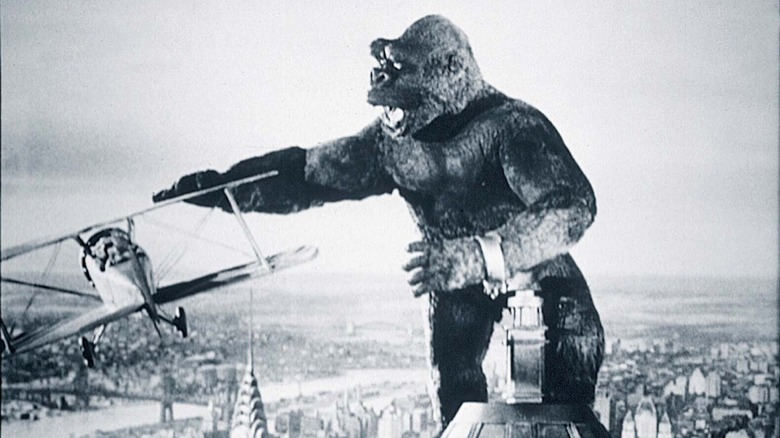
Looking back even further, early sci-fi and fantasy films from the classic eras of cinema were integral to the advancements we see today. One of the earliest examples of visual storytelling was the original 1933 "King Kong," which featured miniatures, rear projection screens, matte paintings, and stop motion unlike anything viewers had seen. "King Kong" created one of the most iconic screen monsters in history, and the film inspired generations of visual artists. Some classic films are better appreciated for their importance than their entertainment value, but the original "King Kong" is an endearing masterpiece that boasts the same sense of excitement and emotional devastation today as it did in the pre-Code era. It's remarkable that after many reimaginings and sequels, "King Kong" is still the best in the series.
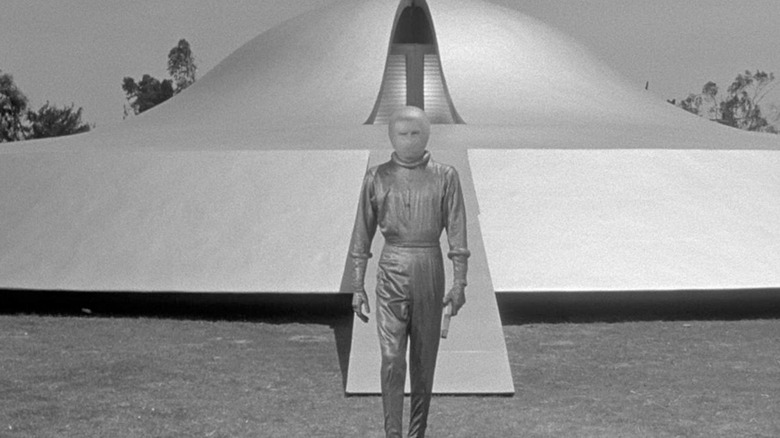
Following "King Kong," one of the most influential films for visual effects was 1951's science fiction adventure film "The Day The Earth Stood Still." Sci-fi films featuring Martian visitors and flying saucers were incredibly popular in the 1950s, with "War of the Worlds," "Forbidden Planet," "The Thing From Another World," "It Came From Outer Space," and "Them!" all hitting theaters. However, "The Day The Earth Stood Still" was particularly effective in how it used impressive visuals to tell an emotional and politically relevant story ... much as "Avatar" would nearly 60 years later.
Released amidst the Cold War when the "Red Scare" had swept the nation and the nuclear arms race was raging, "The Day The Earth Stood Still" had a universal message of peace and unity. Like "Avatar," it showed that humans and aliens should not be enemies, and that mankind's aptitude for violence and expansion only triggers conflict. Having sympathy for an intergalactic visitor marked a sharp contrast with many other sci-fi efforts of the era.
The film follows the aftermath of a flying saucer's visit to the White House. A strange alien known as "Klaatu" addresses the President of the United States stating he comes "in peace and good will," but immediately he's shot by the U.S. military. Klaatu's protector, the giant robot Gort, attempts to protect him, but he insists on a peaceful solution.
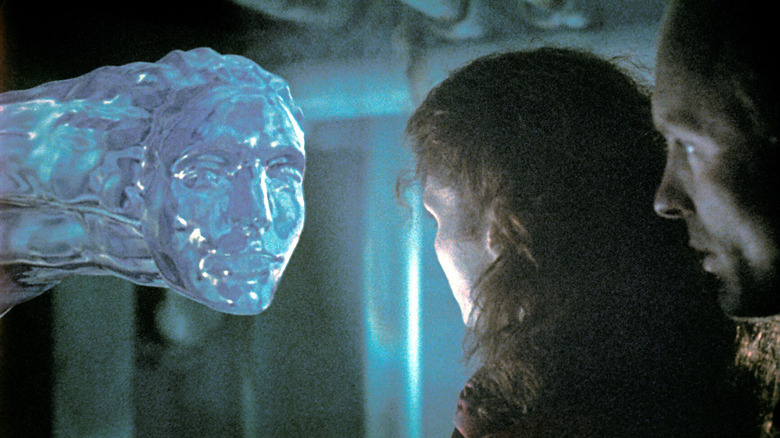
Cameron's own innovations in VFX were integral to what he achieved with "Avatar," as throughout his career he showed groundbreaking dexterity with whatever budget he was granted. 1984's "The Terminator" was produced on a smaller scale that Cameron utilized to perfection, and when he was given the opportunity to helm 1986's "Aliens," he created a thrilling visual achievement worthy of Ridley Scott's already highly influential work on the original 1979 "Alien." Compared to the rest of his filmography, 1989's "The Abyss" is hardly Cameron's most entertaining movie, but the film's CGI sequences laid the groundwork not only for Cameron, but for the entire industry.
"The Abyss" centers on a ground of underwater explorers that respond to a distress call from a sinking American vessel within the depths of the Caribbean. When Soviet Union ships begin to circle the doomed vessel, scientists Bud Brigman (Ed Harris), Dr. Lindsey Brigman (Mary Elizabeth Mastrantonio), and US Navy SEAL Lieutenant Hiram Coffey (Michael Biehn) work with their respective teams in a race against time. They discover that the reason for the submarine's disappearance isn't tied to a political conflict, but rather an extraterrestrial threat.
To create the synthetic, liquid creatures, Cameron considered the possibility of stop motion before ultimately deciding to utilize early CGI. The moment where the "pseudopod" embodies Bud and Lindseys' faces was shot on a separate screen and digitally recreated, something never done before. Two years later, Cameron pulled off another visual feat with the T-1000 in "T2."

It takes a great filmmaker to utilize visual effects without becoming lost in the spectacle. True visual auteurs are able to craft a distinguishable style that is distinct both with or without special effects, and use CGI elements in tandem with practical work, great characters, compelling dialogue, and exciting stories. Cameron is certainly an artist who can't be replicated; it's notable when looking at other CGI-driven films and seeing the lack of care put into the visual artistry. Cameron's films are exciting, action-packed, and even absurd, but they tell great stories and feature memorable characters. These are all characteristics that he shares with another great auteur, Tim Burton.
Burton and Cameron may not seem inherently similar, but both tend to tell stories focused on outsiders separated from normal society. Cameron enjoys highlighting rebels and outcasts who heroically fight against the system, and Burton enjoys humanizing the idiosyncratic, strange weirdos who are forcibly cast out. You couldn't possibly mistake Burton's films for anyone else's, and at his best, his work is very affectionate and sincere. At their heart, both directors are romantic; "Avatar" is a love story of two outsiders, one human and one Na'vi, who unite despite the pressures of their respective cultures.
Romance is integral to Burton's work, and his 2003 fantasy drama "Big Fish" is openly heartwarming. The film centers on the sincere Will Bloom (Billy Crudup) as he struggles to connect with his dying father (Albert Finney), and through flashbacks learns of his romances and adventures.

One of the best aspects of "Avatar" is the film's sense of wonder, which is highlighted through the character of Jake Sully (Sam Worthington). "Avatar's" immersive world of Pandora was crafted with Cameron's groundbreaking CGI, and detailed the lush environments of the planet with immaculate detail. Part of the film's appeal was the imaginative spirit, and it kept viewers coming back for multiple viewings. What makes "Avatar" a great movie and not just an IMAX showcase is the fact that the viewers are sharing this experience with someone. Jake is in a particularly sensitive situation, as he's bound to a wheelchair after sustaining a wartime injury. Jake never thought he would be able to walk again, much less go on an adventure, and his newfound abilities as a result of his Na'vi body give him that chance. It's an emotional experience for him.
That same sense of vulnerability is felt by the five Pevensie children as they venture to a far away magical land in the first in the trilogy of C.S. Lewis adaptations, "The Chronicles of Narnia: The Lion, The Witch, and The Wardrobe." Peter (William Moseley), Susan (Anna Popplewell), Edmund (Skandar Keynes), and Lucy (Georgie Henley) are evacuated from their normal home in London amidst the Nazi bombings of World War II, and fear they'll never find comfort again. The land of Narnia is dangerous, but promises them a new home and mentor in Aslan (Liam Neeson).
"Avatar" is a very politically charged film. It's not hard to make comparisons between mankind's brutal treatment of the Na'vi natives of Pandora and the treatment of indigenous people throughout the bloody history of the United States. Cameron isn't aiming for subtlety, but he is certainly effective in generating empathy for the Na'vi by showing their society and culture in rich detail. Jake Sully is an outsider in this environment and learns to adjust to the new culture, and is respectful of their traditions. It may have been an enlightening experience for viewers that challenges their conception of what "metaphorical science fiction" can be.
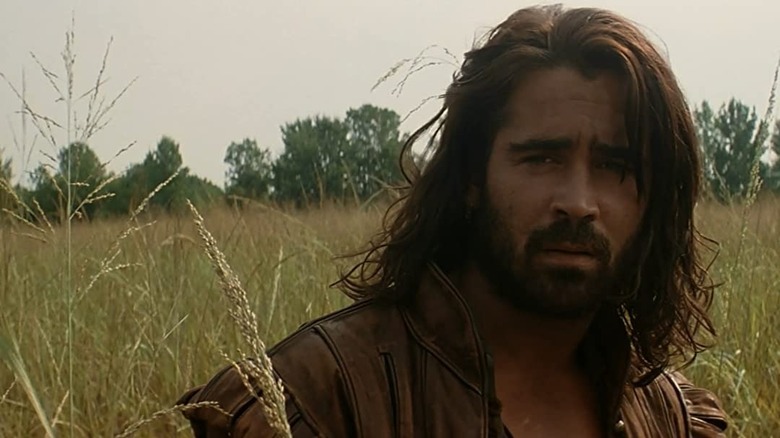
Films that explore these sensitive issues of representation, assimilation, genocide, and cultural warfare walk a difficult line. On one hand, a film must remain true to history and tell the story from the right perspective, but it also must be a compelling story in its own right. No one film can be representative of generations of massacres, and it's best to tell a personal story that is specific to just one aspect. Terrence Malick pulled off these challenges with his gorgeous, haunting look at the founding of Jamestown in 1605 with his 2005 romantic epic "The New World."
"The New World" follows Captain John Smith (Colin Farrel) as he travels to the early Virginia settlement and encounters Pocahontas (Q'orianka Kilcher). Both Smith and James Rolfe (Christian Bale) grow to love Pocahontas and seek her hand. Malick delicately shows these sensitive romances.
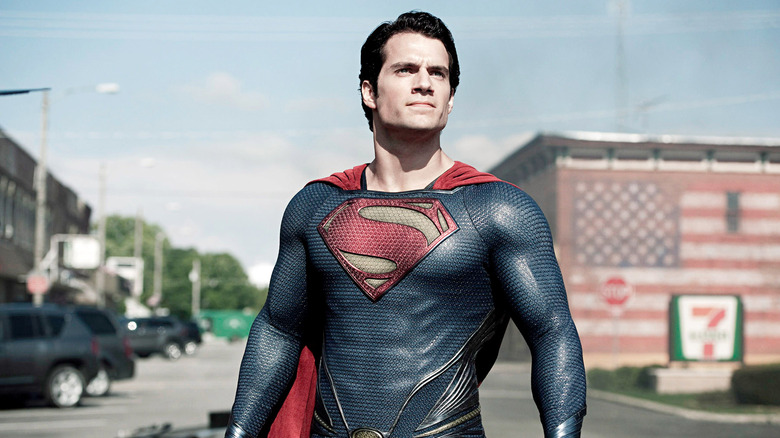
"Man of Steel" is far from a perfect film. Zack Snyder's take on the origins of Clark Kent/Kal-el (Henry Cavill) is riddled with inconsistencies, uncomfortable tonal shifts, an awkward structure, and a fundamental misunderstanding of how Superman embodies "hope." However, as a work of visual storytelling, "Man of Steel" is simply breathtaking, capturing both the exotic alien locations and the reality of modern metroplexes. It's a work of realism, style, and imagination that is rarely matched in modern comic book films; if many superhero films look as if they were shot in static backgrounds and stock locations, Snyder's epicness rivals what Cameron did with "Avatar."
The film opens with a jaw-dropping opening sequence that explores the final days of the alien planet Krypton before its destruction, an event only hinted at in the original 1978 classic, "Superman: The Movie." Like Cameron, Snyder dedicates time to exploring a functioning society with distinguishable political infrastructure and cultural landmarks. Krypton's politics are in flux, as the evil General Zod (Michael Shannon) rebels against the council. Jor-el (Russell Crowe) looks to find a solution to the conflict, but he's also trying to find a home for his son.
Once Kal-el ventures to Earth, Snyder shows the beauty of the natural world as he discovers his abilities. Removed from the convoluted narrative, the sequence of Kal-el flying for the first time is filled with the same breathtaking sense of discovery that Jake feels in "Avatar."

"Avatar" is obviously a work of science fiction, but it's also a very pro-science movie. Cameron has always worked with the idea that sci-fi is more effective if the internal logic of the movie makes sense, and even when depicting otherworldly creatures like the Xenomorphs or Terminators, there's a grounded tone where the characters are taking the processes seriously. It's especially true in "Avatar," as there is meticulous time paid to showing the tech that allows Jake to embody his Na'vi avatar, and in the work he does with the biologist Dr. Grace Augustine (Sigourney Weaver).
A respect for the scientific process is something that Cameron shares with fellow "Alien" franchise director Ridley Scott. Scott is one of the most influential science fiction directors in cinematic history, and his 2015 film "The Martian" is a tribute to the scientists and explorers that make groundbreaking achievements possible. The film is so meticulous in detailing what an actual Martian voyage would look like, yet still tells an exciting adventure story with real emotional stakes.
Adapted from the bestselling novel by Peter Weir, "The Martian" centers on a team of astronauts stationed on Mars in 2035. The mission's leader, Commander Melissa Lewis (Jessica Chastain), decides to evacuate the team amidst a devastating storm, but in the frantic weather, botanist Mark Watney (Matt Damon) is lost and presumed dead. It's only after the ship has left the planet's surface that they discover that Watney is still alive.

"Avatar" does a great job capturing conflicts that are both exploratory and villainous in nature. Many of the early scenes are dedicated to Jake simply exploring the world of Pandora and experiencing its natural wonders and dangers. His situation grows more complicated once he becomes aware of the military plot by Colonel Miles Quaritch (Stephen Lang) to stage a mining operation that will dissipate the planet and slaughter the Na'vi. It's a blatantly political work of science fiction with anti-militarism and anti-corporate themes, yet feels optimistic in its message of coexistence.
These same themes are ones "Avatar" shares with the "Star Trek" franchise. The original "Star Trek" series from Gene Roddenberry was groundbreaking in the 1960s for its blunt political statements, and the threats that Captain Kirk, Spock, and the crew of the "U.S.S. Enterprise" faced every week were both tied to their mission of exploration and unjust government practices that threatened their goal of a positive future. While the six "Star Trek" films starring the returning original cast explored various themes brought up within the series, the film in the franchise that best represents Roddenberry's original intentions is a chapter in the reboot saga.
2016's "Star Trek Beyond" is actually structured in a very similar fashion to "Avatar." After the "U.S.S. Enterprise" crash lands on the planet Altamid, they must face off against the planet's native monsters before unraveling a political conspiracy tied to former Starfleet Captain Balthazar Edison (Idris Elba).
"Avatar" is a love story about two people of different species who come together amidst a violent political conflict and environment. Jake grows attracted to Neytiri (Zoe Saldana), and they bond as they adventure together and he eventually reveals that he is a human. Neytiri's Omaticaya clan disapproves of the romance, and Jake's military advisors can't believe he would actually fall in love with a native. However, Jake and Neytiris' romance helps lead a revolution against a mining operation that would be disastrous for both species.
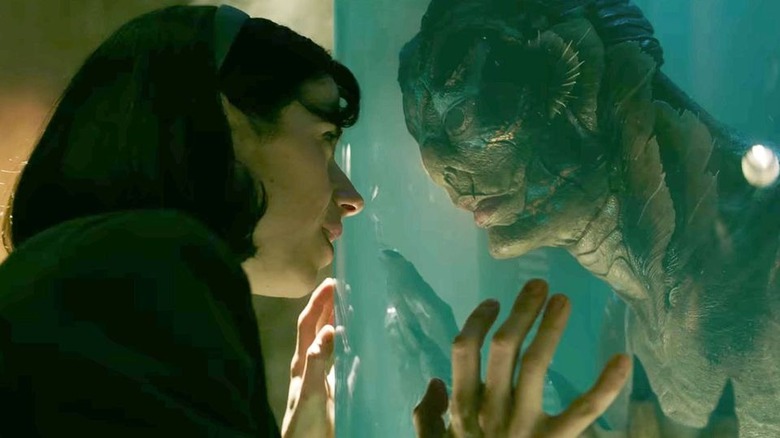
This exotic love story with heavy political connotations is reminiscent of Guillermo del Toro's 2017 best picture winner, "The Shape of Water." During the height of the Cold War, mute janitor Elisa Esposito (Sally Hawkins) works in a secret U.S. Government research lab and discovers a strange amphibious alien creature (Doug Jones) who she's able to communicate with using sign language. Elisa learns to love this amphibian man, and their moments of intimacy are deftly captured by del Toro.
The notion of exploring a body that is not your own is a unique aspect of "Avatar," one which serves to make the story more exciting. Jake is unhappy with his life prior to joining the research mission to Pandora, as he feels limited by his disabilities to do the type of dangerous missions that he seeks. Although embracing the Na'vi avatar that he's embodied with is initially an awkward transition, he grows to feel more at home in his new body than he ever did before.
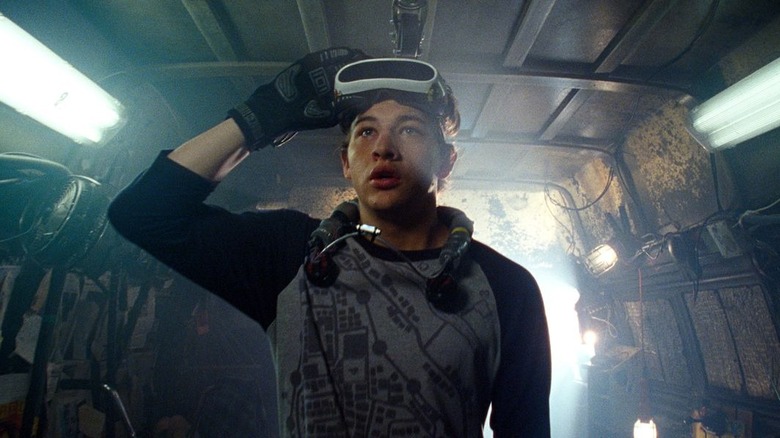
Learning to embrace an avatar body is a key point in Steven Spielberg's 2018 sci-fi blockbuster "Ready Player One," an adaptation of the bestselling novel by Ernest Cline. The future of "Ready Player One" is tragic, as the Earth is incredibly overpopulated and polluted, and citizens are forced to live in stacked buildings with little space. However, mankind is able to escape from their grueling reality through the immersive world of the OASIS, a video game that combines the greatest hits of '80s pop culture. The hero Wade Watts (Tye Sheridan) lives within his avatar, Parzival.
"Avatar" features some of the most epic and expensive action sequences ever committed to film, and the massive scale conflicts between the Na'vi and Colonel Miles Quaritch's private security force are simply jaw-dropping. No one does action like Cameron, and he successfully pulls off major setpieces with many characters that are entertaining throughout. Even amidst the chaotic battle, there's a strong emotional resonance with the characters.
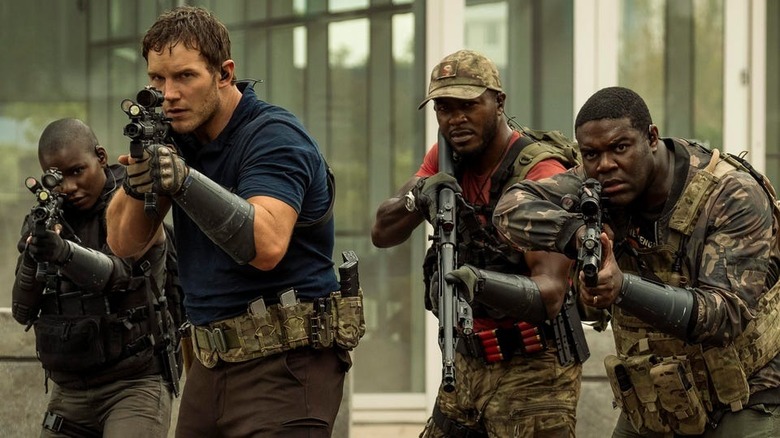
This year's science fiction action film "The Tomorrow War" features a similar scale of imagination. Set in 2022, the film follows a mission by James Daniel Forester Jr. (Chris Pratt) and a team of military operatives traveling into the future to prevent an alien invasion that will wipe out the planet's entire population. The huge battles between James's teams and the terrifying Whitespikes alien creatures are similar to "Avatar" in their grandeur, and they have emotional weight thanks to James's relationship with his lost father (J.K. Simmons).
Read this next: The 14 Greatest Science Fiction Movies Of The 21st Century
The post Movies Like Avatar That Are Just As Visually Stunning appeared first on /Film.
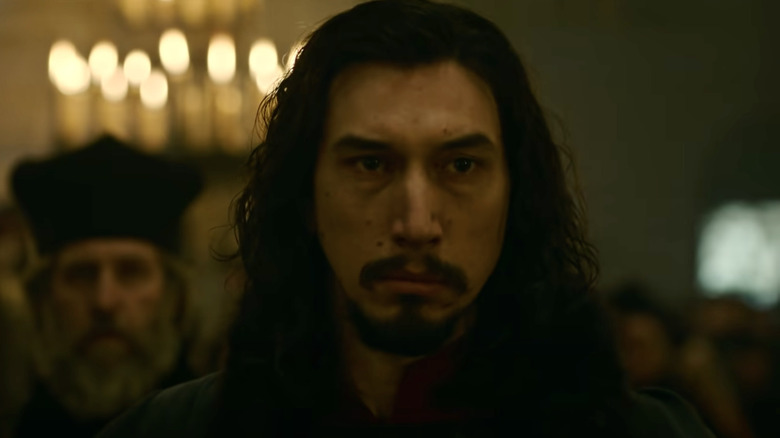
Ridley Scott has earned the right to shake his fist at the clouds like Grampa Simpson. After a long directorial career that has yielded such classics as "Alien," "Blade Runner," "Thelma & Louise," and "Gladiator," Scott delivered the one-two punch of "The Last Duel" and "House of Gucci" this year ... only for the first film to be met with indifference from general audiences. "House of Gucci" opens this week, and it has Lady Gaga in it, so maybe her starry presence will be enough to lure moviegoers out to the theater. However, even with the added bonus of a Matt Damon and Ben Affleck reunion, Scott's other Adam Driver movie, "The Last Duel," was a box-office disappointment.
Cinephiles may sing its praises, and it may find an audience over time, but for now, "The Last Duel" remains criminally underseen. Blame the pandemic if you want, but people are still turning out for "event" movies, with "No Time to Die" having recently crossed the mark to become the highest-grossing film of the last two years.
In a new interview on the WTF with Marc Maron podcast (via The Hollywood Reporter), Scott laid the blame for the commercial failure of "The Last Duel" squarely on the feet of millennials, which he calls "millennian." He said:
"I think what it boils down to — what we've got today [are] the audiences who were brought up on these f***ing cell phones. The millennian, [who] do not ever want to be taught anything unless you told it on the cell phone. ... This is a broad stroke, but I think we're dealing with it right now with Facebook. This is a misdirection that has happened where it's given the wrong kind of confidence to this latest generation, I think."

Scott has never been afraid to speak his mind in interviews, but he himself acknowledges that he is painting in a "broad stroke" here. Changing trends in media consumption and the wealth of new entertainment options on offer are undoubtedly one reason why dramas like "The Last Duel" have a tougher time recouping a $100 million budget now. Since "millennials" or "Generation Y" is usually a term applied to people born from the early 1980s to the mid-1990s, however, I'm not really sure if the 40-year-olds in that demographic are the ones watching things on their phones. It seems more like Scott is talking about zoomers or Generation Z there?
Whatever the case, Scott began his career with a film called "The Duellists," and he has no regrets about coming full circle with "The Last Duel," or about the way 20th Century Studios, formerly called Fox, marketed it. He told Maron:
"That's the call you make. That's the call Fox made. We all thought it was a terrific script. And we made it. You can't win all the time. I've never had one regret on any movie I've ever made. Nothing. I learned very early on to be your own critic. The only thing you should really have an opinion on is what you just did. Walk away. Make sure you're happy. And don't look back. That's me."
This seems like a healthy attitude to have, and if Scott's past movies are any indication, then time may vindicate "The Last Duel."
"The Last Duel" hits digital platforms on November 30, 2021, and physical media on December 14, 2021.
Read this next: Every Martin Scorsese Feature Ranked From Worst To Best
The post Ridley Scott Blames Those Stinkin' Millennials For The Last Duel Box Office appeared first on /Film.
Without the sacrifice of our frontline workers over the past two challenging years, many of our communities would not have been able to receive vital care. However, while healthcare providers have been busy protecting our communities, who has protected the sensitive personal data collected in the process?
 Jeremy Renner, Hailee Steinfeld and Vera Farmiga star in a fresh adventure from Marvel for Disney Plus.
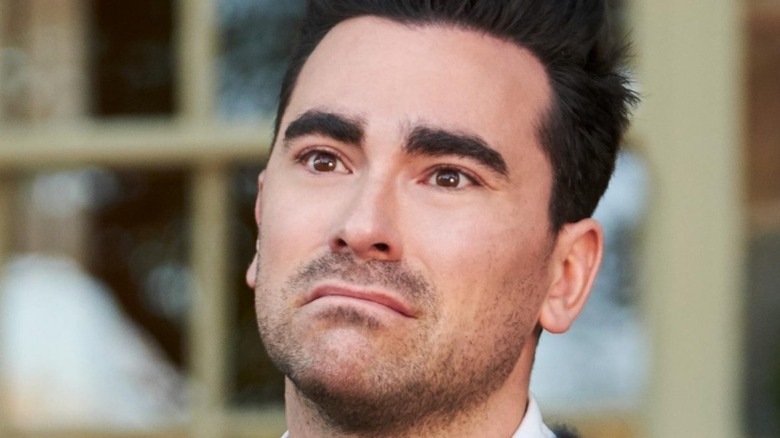
There's nothing more satisfying than watching a genuinely funny, warm-hearted sitcom find an audience and, more importantly, be given time to develop a niche following instead of being cancelled immediately. "Schitt's Creek" was an unexpected hit, with each season introducing more and more people to the show who would quickly become diehard fans. The journey of the privileged Roses from comically out-of-touch one-percenters to a loving, supportive, emotionally healthy family was perhaps one of the greatest collective sitcom character arcs in television history. And it would be well-rewarded for its narrative accomplishments: In its final season, "Schitt's Creek" swept the Emmys, taking home seven primetime awards in total, including one for each of its four main actors.
But all good things have to come to an end. After six seasons, at the height of its popularity, the beloved sitcom went off the air for good, leaving a "Schitt's Creek" sized hole in our hearts. Still, while it was a great show, that doesn't mean it's the only great show. There are plenty of others that can help us cope with its absence. Here are a few suggestions.
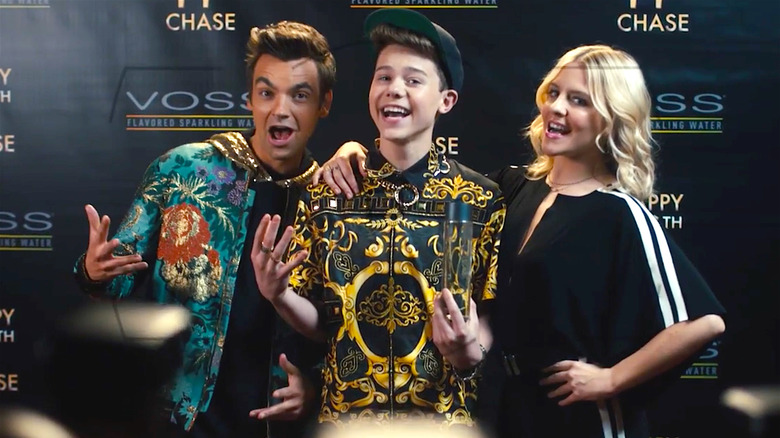
You know how David and Alexis both flirted with the entertainment industry as children, but were clearly only involved because of Moira's success as an actor? And their mediocrity as performers is just sort of an unspoken reality on the show? That's sort of what "The Other Two" is like. It's a comedy that revolves around the two older siblings, both of whom have aspirations of a career in the performing arts, of a kid who becomes internet famous after making a viral video.
Suddenly, they're forced to grapple with the fact that their Zoomer brother has achieved a level of success that they will never be capable of, and the uncomfortable truth that every day they get a little older and a little less likely to become a fresh-faced ingénue. Developed by former "Saturday Night Live" head writers Chris Kelly and Sarah Schneider, "The Other Two" is an exploration of bitterness that becomes more nuanced and mature as the show goes on.
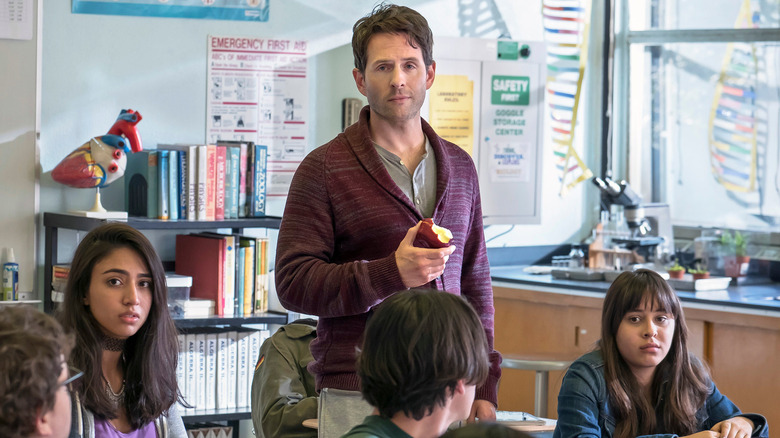
Sometimes, it takes hitting rock bottom for a self-absorbed individual to really take stock of where their life went wrong. For the Schitts, that was losing all their money and being forced to move to a small town that they purchased as a joke several years earlier. For Jack in "A.P. Bio," it involves being fired from a prestigious faculty position at Harvard and running back home to Ohio to teach at a local high school. In between classes, where he teaches absolutely nothing even remotely close to the syllabus, he plots revenge on the fellow philosophy professor whom he believes to be the architect of his misfortune, as well as anyone he happens to have a grievance against in any particular week.
Aside from the delightfully misanthropic lead performance from Glenn Howerton, bringing over some of his Dennis energy from "It's Always Sunny in Philadelphia," the real triumph of "A.P. Bio" is the development of the students. Over the course of the series, they've been given the opportunity to flesh out each of their characters and become the eccentric weirdos they were always meant to be.
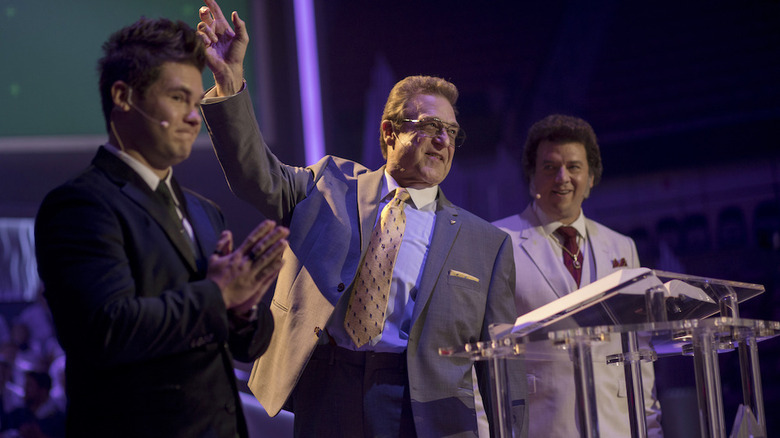
When you watch "The Righteous Gemstones," you can't help but want the titular family to be brought to their knees the way that the Roses were. But more so, because all the Roses did was commit a little light tax fraud, while the Gemstones conned generations of religious people out of their hard-earned money to build a massive media empire. They represent a Christian dynasty of televangelists, a huge network of churches being passed from father to sons (not daughters, though; of course the daughter is never taken seriously.)
John Goodman stars as the family patriarch, the one who, despite his advanced age, still wields all the power, especially over his three children, who each desperately crave his approval. It's a comedy, but a dark one. Each character has been brought up incredibly entitled, believing that their position in the church grants them certain privileges that others simply don't have, which excuses some truly despicable behavior. Will that change? It's hard to tell. But certainly after one season, they haven't had their come-to-Jesus moment yet.
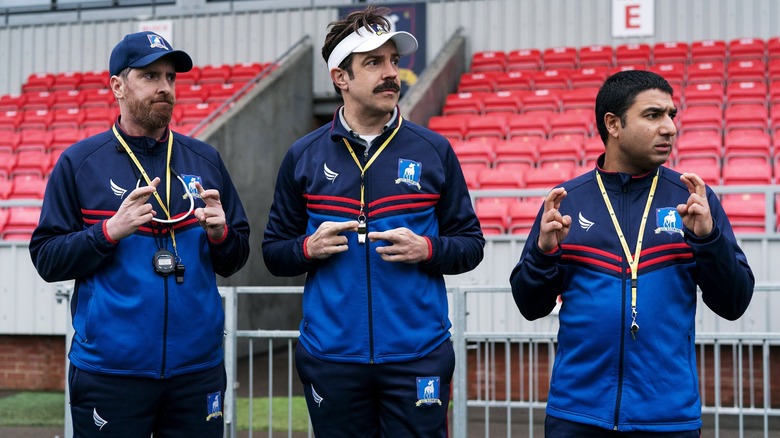
If you can manage to walk away from an episode of "Ted Lasso" without a warm, cozy feeling in the pit of your stomach, well, you may just have a big gaping hole where your heart should be. Over the past 30 years or so, we've been trained by network television to respond to cynicism to such an extent that we regard genuine earnestness with a suspicion bordering on hostility. He's hiding something, we think. A person can't actually be as kind-hearted and empathetic as Ted Lasso. And yet there he is.
Jason Sudeikis stars as a well-intentioned but utterly inept American football coach who is brought in by a failing English soccer team on the brink of relegation, despite knowing absolutely nothing about the sport. His expertise is in team-building, more of a therapist than a strategist. It's been fascinating to watch the show use his overwhelming positivity as a cudgel rather than a fine instrument, as Ted clearly leans on his trademark kindness to hide the fact that he's struggling emotionally.
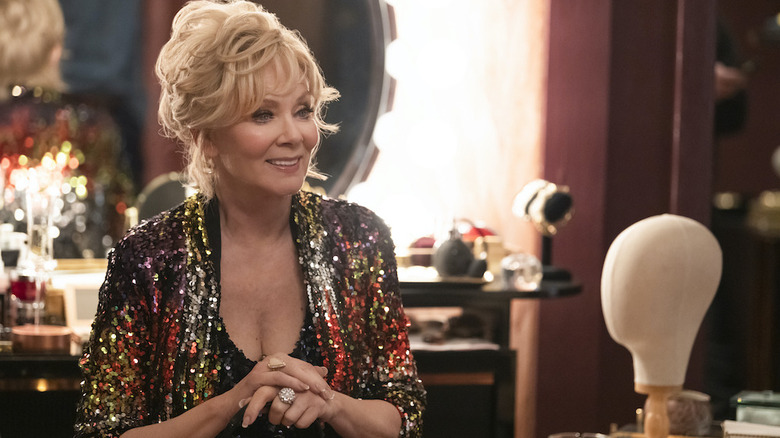
Look, would Moira from "Schitt's Creek" and Deborah Vance from "Hacks" get along? Probably not. You can't put that much diva energy in one room. It would cause an explosion. But how great would it be to be a fly on the wall watching their interactions?
On "Hacks," Deborah Vance (played by the incomparable Jean Smart, in one of her best roles) is a cynical, acerbic stand-up comedian who fought her way to the top with blood, sweat, and tears. And what does she have to show for it? A lackluster Vegas show, a nagging rumor that she burnt down her late ex-husband's house, and a snide comedy writer who doesn't respect her as an artist. Of course, in everyone else's defense, she can be an absolute nightmare to work with, so it's not like she's some helpless victim being chewed up and spit out by life.
"Hacks" is one of the most promising female-driven comedies out there, and it lives and dies on the power of the chemistry between Smart and Hannah Einbinder, a down-on-her-luck writer who represents the future of comedy.
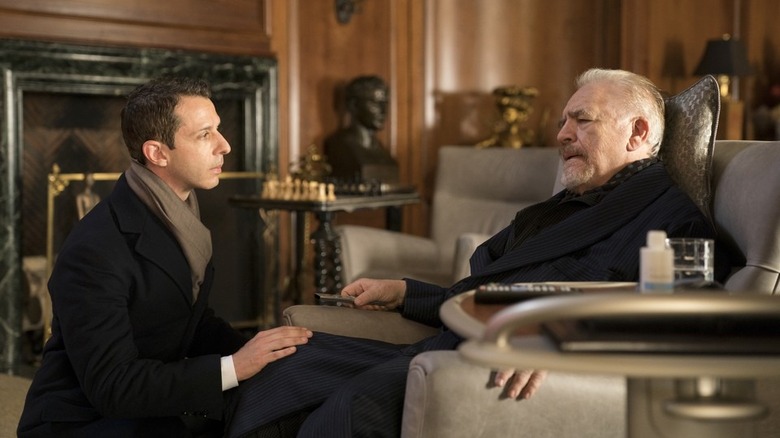
There really are a shocking number of shows out there about dysfunctional wealthy families full of irredeemable people who hate each other, aren't there? We're fascinated by their lives, so we can't help but keep them on television. At the same time, we're resentful enough of their good fortune that we also can't bring ourselves to portray them in a positive light.
The Roy family on "Succession" represents the pinnacle of wealth in this country, and it posits two concepts that end up becoming a chicken-or-egg situation: First, that being brought up in a family with limitless funds and connections breaks something fundamental inside a person, and that some measure of regard for others is utterly lost in the wake of pure entitlement. And second, that there is no way to succeed within the highest echelon of corporate America without being essentially a shell of a human being. You're either born without a soul or you become corrupted into something misshapen and grotesque along the way.
So that's "Succession," a scathing indictment of the upper classes. But also, you know ... really funny.
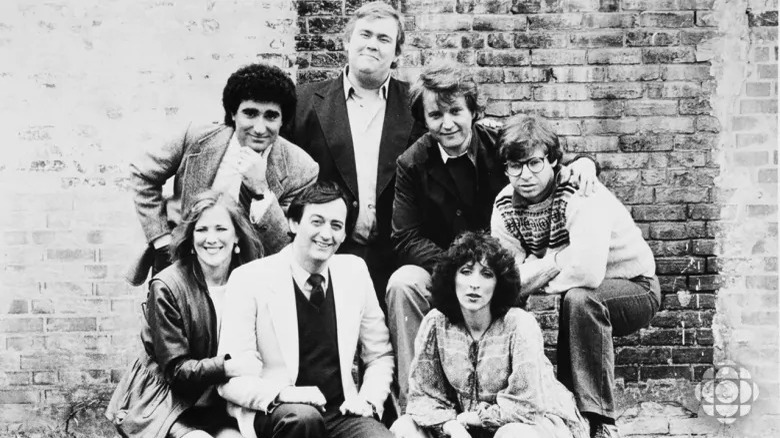
With "SCTV," we're going all the way back to the beginning. Because without "SCTV," there's no way that you ever get "Schitt's Creek," to say nothing of the countless careers in comedy that were launched from this humble Canadian sketch comedy show. As you can tell from the picture above, "SCTV," named for the Second City improv group based out of Toronto, had its fair share of household names. You'll see John Candy and Rick Moranis there, for starters. But direct your attention to the furthest on the left, and you'll find good old Eugene Levy and Catherine O'Hara. The two have been acting together since the mid-1970s, and undoubtedly they began honing their incomparable chemistry right here.
For a long time, it was difficult to find "SCTV" available to watch. Because they pretty much used whatever background music they wanted without bothering to get the rights to the songs, it would be quite expensive to release the original shows now. Luckily, however, most of "SCTV" has finally earned a DVD release, so the unique brand of humor it was known for lives on.
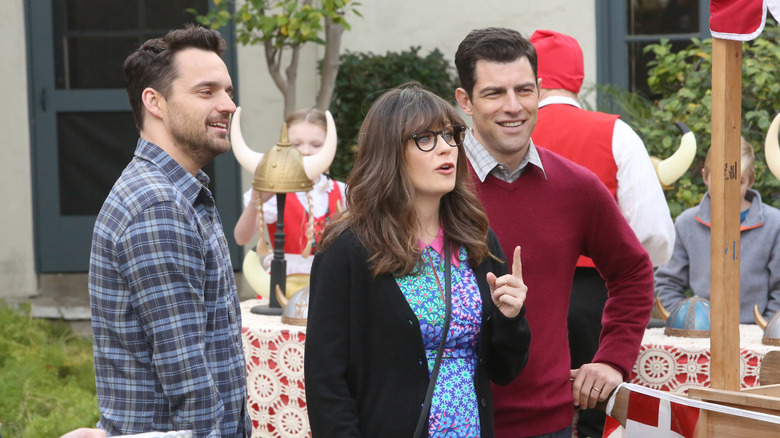
So much of putting together an ensemble cast is guesswork. You can try to gauge who has chemistry and what you think audiences are going to respond to, but you never really know until you throw the actors together, knowing it's very likely that the whole enterprise may ultimately fall on its face. In a way, that's what makes it so special when a group of actors work so well together that you actually get to watch their on-screen relationships blossom in real time. For the roommates in "New Girl," that friendship (and sometimes more-than-friendship) is an essential part of what made the show so successful.
After being cheated on by her long-term boyfriend, the perpetually sunny Jessica Day (Zooey Deschanel) ends up needing a new place to live, and she reluctantly moves into a loft with a trio of boys she doesn't actually know. At first, they don't get along. Her chipper attitude gets on their nerves, and she feels left out of their male bonding. But slowly, they begin to develop a rapport with one another, and they eventually become like one big, very eccentric family.
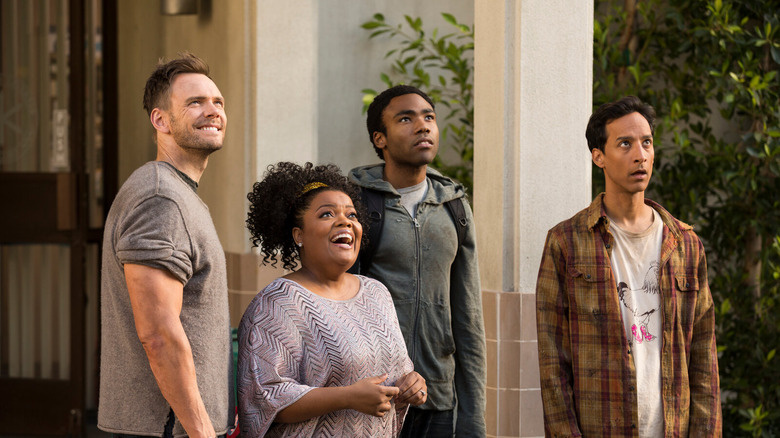
Speaking of friends that can become like family, let's talk about "Community" and the tight-knit bonds formed over a Spanish class study group at a local community college. Initially centered around Joel McHale as the lead, a smarmy yet charismatic lawyer who is forced to return to college when it is discovered that he falsified his academic records, the show quickly evolved into an ensemble comedy.
Each of the main characters developed a unique dynamic with their fellow students, and "Community" was never afraid to follow any of them into the weeds in subplots that grew increasingly more nonsensical as the series went on. It's a testament to the strength of their performances that, despite some of the production issues that plagued the show (showrunner Dan Harmon being fired only to return later, and actor Chevy Chase ducking out before the end of season 4 in a wave of controversy), the central cast still shines until the very end.

Before Annie Murphy landed the role of Alexis in "Schitt's Creek," she was considering leaving the business entirely. But then, fate intervened. Which is good news for comedy audiences, because if she stopped acting, not only would they have never experienced her now famous, "Ew, David!" exclamation, but there would be no "Kevin Can F**k Himself."
Based on sitcoms where an obnoxious manchild is explicably married to a gorgeous woman who is depicted as doing nothing but nag him all day, "Kevin Can F**k Himself" is a self-aware comedy that centers the experiences of the long-suffering wife. Scenes where Allison McRoberts (Annie Murphy) is alongside her husband Kevin (Eric Peterson) are played like a traditional sitcom: bright studio lighting, a multi-camera set-up, and a laugh track. But the second she's alone, it switches to a more muted aesthetic, emphasizing the darkness of her reality. So, she does what any sitcom wife really should do, and plots to murder her husband. You know, like on "I Love Lucy."
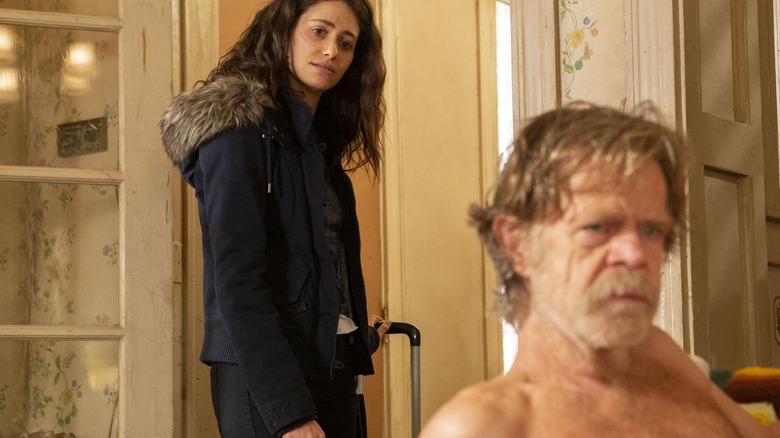
Even when the members of the Rose family spit insults at one another, there's an overwhelming sense of loyalty that you can feel, an effort being made to keep the family together against all odds. There's a similar, if much more hardscrabble and dysfunctional, attitude amongst the Gallaghers of "Shameless." The children of an alcoholic father and an absent mother in working-class Chicago are left more or less to their own devices, essentially raising each other.
The patriarch of the Gallagher family, Frank Gallagher (William H. Macy), is often present, although that isn't always a good thing given his propensity to sabotage any effort to improve their lot in life. It's equal parts depressing and inspiring to watch the kids band together to make ends meet, creating lives for themselves despite the various hardships that they face over the course of the series' 11 seasons.
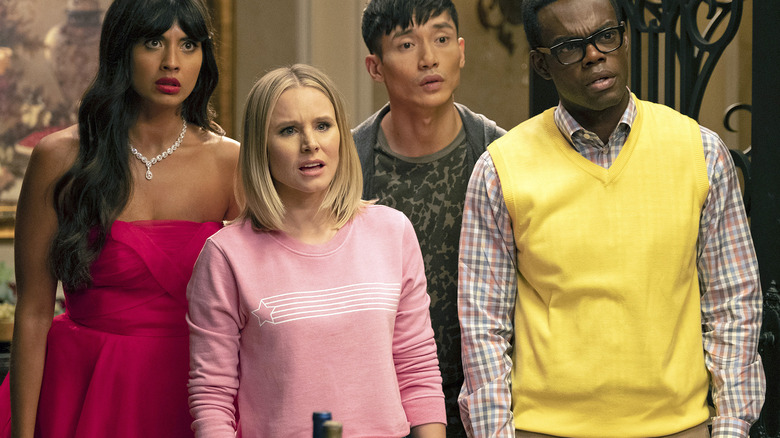
If you're chasing the positivity of "Schitt's Creek," "The Good Place" may be a good way to get your next fix. Even as it grapples with massive philosophical questions, it's so overwhelmingly pleasant that viewers can't help but be charmed. When Eleanor Shellstrop, a self-proclaimed garbage person played by Kristen Bell, finds herself unceremoniously dead, she receives a warm welcome into a heaven-adjacent afterlife. The only problem? They've got the wrong Eleanor Shellstrop, and if she wants to avoid being thrown into the "Bad Place," no one can know that she's actually terrible. Her only hope is an anxiety-ridden ethics professor (William Jackson Harper), who agrees to help her learn how to be a better person.
That's where "The Good Place" begins, anyway; the show features more twists and turns than any network sitcom in recent memory, and it would be spoiling things to say more. But at any rate, "The Good Place" somehow manages to blend deep philosophical musings with a quirky sense of humor that, combined, make it one of the most emotionally satisfying shows on television.
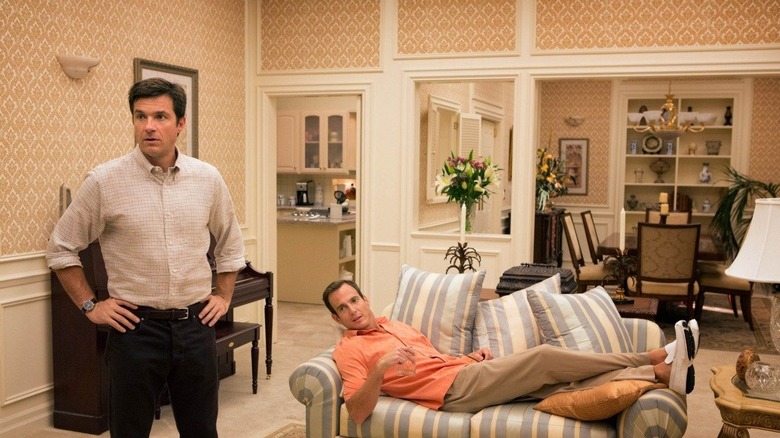
You know how on "Schitt's Creek," the rich family experiences a fall from grace and are humbled by their experiences, learning about the value of family and hard work? Yeah, that's not what happens on "Arrested Development." Sure, the Bluths' family business has some serious legal issues that would, in theory, require each member to tighten their purse strings and cut back on their lavish lifestyles. But the coup of "Arrested Development" is that they just ... don't.
No one learns anything. No one grows as a person. They're all just the same dysfunctional, deeply broken people they've always been, and for the most part, they're pretty much fine with that. Change is hard, you know. You have to make yourself emotionally vulnerable. Much safer to dig your heels in and double down on being awful. The ensemble cast of "Arrested Development" is a therapist's dream, each member of the family containing a cornucopia of deep-seated issues just waiting to be unpacked.
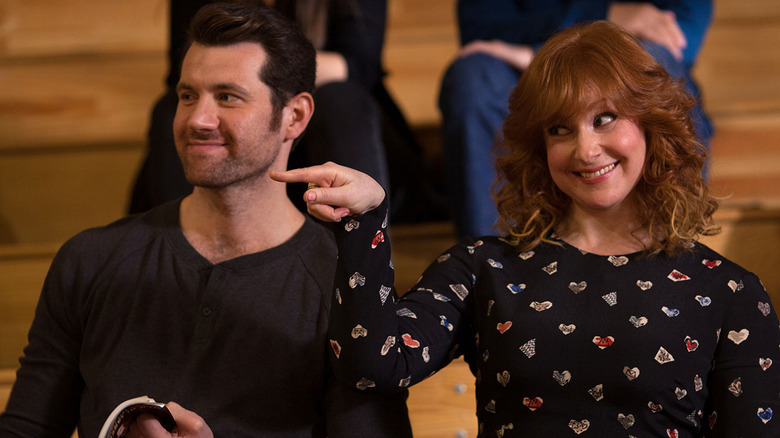
If the snarky quipping between David and Alexis, or David and Stevie, or David and anyone, really, is your favorite part of "Schitt's Creek," you should absolutely be watching "Difficult People" on Hulu. It stars Billy Eichner and Julie Klausner as two struggling comedians in New York City who spend their lives walking around the city in search of something or someone to make fun of. They're essentially the younger, human versions of Statler and Waldorf, the two old guys who sit in the balcony on "The Muppet Show," and whose only pleasure in life came from spewing delicious hatred at everything they saw.
"Difficult People" has some serious "Seinfeld" vibes. The things that they choose to be annoyed by are comically petty. But it also brings a distinctly 21st century sense of humor to the proceedings, frequently verging on absurdist comedy. Although it only ran for three seasons on Hulu before being unceremoniously cancelled, there's no shortage of snarky content to keep more mean-spirited "Schitt's Creek" fans entertained.
Read this next: The 15 Funniest Movies Of The Decade
The post 14 Shows Like Schitt's Creek You Need to See appeared first on /Film.

Guerrilla Games' open-world action-RPG Horizon Forbidden West should be coming to both current and next-gen PlayStation consoles on February 18, 2022. And if you'd like to learn a thing or two about the game prior to its eventual release, you might want to check out this official PlayStation blog post. There, you'll find an article taking a close look at the game's world-building and character-customization, featuring plenty of screenshots and sample videos.
Here's a couple of paragraphs to get you started:
Customize to survive
“Weapons and outfits are even more potent and stylish than before,” says Steven. “Weapons now have extra perks to make them even more specialized – you can read more on that in one of our previous blogs. Also, Aloy can now carry up to six weapons at the same time, along with her trusty spear.’
‘Outfits do not only provide resistance to the many damage types Aloy will face in the Forbidden West, but also stack bonuses on top of Aloy’s skills on the Skill Tree. With the right outfit boosting the right skills, the sky’s the limit. Plus, you can swap weapons and outfits on the fly, so you can change your approach at any time.’
‘The narrative of Horizon and the vibrant cultures that inhabit its world were a huge source of inspiration for Aloy’s outfits. Clothing reflects a unique style, as well as the materials a tribe has access to and knows how to use. Hunters from the Nora tend to favor ranged combat and stealthy hunting. Carja excel at the use of traps and tripwires. The boisterous Oseram love fighting up close and personal with a hammer. The Tenakth and Utaru have their own preferences as well — and the outfits Aloy can acquire from each culture tend to reflect and support these unique approaches to combat.”
When the new continuation of "He-Man and the Masters of the Universe" dropped on Netflix earlier this year in the form of "Masters of the Universe: Revelation," the series received critical praise, nostalgic joy, and fanboy outrage. But one thing that remained universal was the acclaim for actor Mark Hamill and his gleefully zealous performance as one of the most memorable cartoon supervillains of all time: Skeletor.
Netflix seems keenly aware of this because they're putting the "Force Awakens" actor front and center on the hype train, on the eve of the arrival of the series' conclusion this week. Through their Netflix Geeked account, the streaming service tweeted out some behind-the-scenes holiday treats to its followers on Monday. The sound of Hamill screeching, "...of transcendent triumph!" should be added to the Voyager Golden Record for posterity. Check it out below:
The caption reads: "Welcome to the Master Class. please join in as we witness two acting legends -- Mark Hamill and Lena Headey -- work out a scene from Masters of the Universe: Revelations - Part 2, streaming TOMORROW ☠️ ⚡️"
Here is the synopsis for Part 2 of "Masters of the Universe: Revelation":
The war for Eternia continues in the second part of "Masters of the Universe: Revelation," an innovative and action-packed animated series that picks up where the iconic characters left off. With Skeletor now wielding the Sword of Power, the weary heroes of Eternia must band together to fight back against the forces of evil in a thrilling and epic conclusion to the two-part series.
"Masters of the Universe: Revelation" is the next evolution of the original "He-Man" animated series of the '80s. Written by Kevin Smith and starring Hamill as the main antagonist, Skeletor, the new series has five episodes and also stars Lena Headey voicing his baddie Evil-Lyn. Rounding out the rest of the cast is Chris Wood as He-Man, Sarah Michelle Gellar as Teela, Tiffany Smith as Andra, and Liam Cunningham as Duncan, the Man-At-Arms. More guest voices are expected to appear.
Part 2 is expected to pick up where most Part 2's do: where the events of Part 1 left us last. Episodes six through 10 will have Hamill and Headey reprising their roles of Skeletor and Evil-Lyn, respectively.
Fans already worship Hamill and have since 1978 for his work in the "Star Wars" franchise, and further on for his voice acting work on animated shows and in video games. He was previously known for providing the shrill rasp of The Joker in an array of Batman-centric media, most notably "Batman: The Animated Series," and currently voices the character Art Rosenbaum (a tailor to the superheroes, like Disney-Pixar's Edna Mode) on Robert Kirkman's "Invincible" series on Amazon.
Part 2 of "Masters of the Universe: Revelation" will arrive on Netflix on November 23, 2021.
Read this next: The 25 Best Kids' Movies Of All Time
The post Mark Hamill and Lena Headey Are Masters Of Acting In This Behind-The-Scenes Clip From Masters of the Universe: Revelations Part 2 appeared first on /Film.
It's rare for iconic films to have achieved such status without some sort of controversy coloring their legacies. Such is the case with "Scarface," the 1983 crime drama starring legendary actor Al Pacino as the ruthless Tony Montana. The tale of the fictional Cuban immigrant turned violent drug lord has become culturally synonymous with the idea of obtaining the American Dream at all costs, revered by rappers, suburbanites, and edgy middle schoolers alike. While the passage of time can make it easy to forget, "Scarface" caused such a major uproar during its heyday that the film couldn't even begin production without intervention from government officials.
What was it about the classic '80s gangster movie that caused such controversy?
From its inception, "Scarface" was intended to be a gangster movie. Specifically, it was a remake of a 1932 film of the same name, with the original being inspired by the notorious Italian-American mobster, Al Capone. However, rather than make another "Italian Mafia movie," which screenwriter Oliver Stone stated there were already "dozens of," the film would swap one oft stereotyped group for another and focus on Cuban immigrants — an idea that Stone claims came from American director Sidney Lumet. In the book "The Oliver Stone Experience," Stone states, "Sidney has a great idea — he wants to do it as a Marielito picture in Miami. I said, That's interesting! Sidney's idea was a good one." While Lumet left the film due to creative differences, production continued on with Brian De Palma (who also directed the film adaptation of Stephen King's "Carrie") as director.
On the other hand, in 2011, actor Al Pacino stated that he was the one who was inspired to make "Scarface" after watching the original movie in Los Angeles at the Tiffany Theatre and calling up producer Martin Bregman, who then reached out to Oliver Stone. Whatever the exact origins, "Scarface" was set to be a film about violence, drugs, and Marielitos, with Miami as the backdrop.
Given this information, it's not surprising that much of the past controversy surrounding "Scarface" lay within its less than stellar portrayal of Marielitos — the name given to Cuban immigrants who came to America from Mariel, Cuba in order to escape oppression during the 1980s. Specifically, more than 125,000 people fled Cuba from the Mariel Harbor and ended up primarily in Florida. Of this number, around 20% were suspected to be "undesirables," ranging from petty thieves to criminally insane.
This figure mixed with America's track record of using a few bad actors from a given group (particularly when it comes to race and nationality) to justify the dehumanization of everyone from that group, made for the perfect storm of controversy when it came to "Scarface." It's understandable that a film that starred mostly non-Cuban actors portraying Cuban immigrants as violent, drug-addled criminals would be met with objection and opposition from the same community it was negatively stereotyping.
In addition to dissent from the Cuban-American community, "Scarface" drew such controversy that Demetrio Perez, Miami's City Commissioner at the time, became one of the most vocal voices of opposition against it. Perez alleged that the film would only further anti-Cuban sentiments in Florida by placing emphasis on the comparably small number of Marielito criminals and ignoring the fact that the majority of Cuban immigrants were simply seeking refuge from Fidel Castro's regime. He even went so far as to ask that the filmmakers dedicate at least 20% of the film to depicting Cubans in Miami engaging in "anti-Castro activities," to ''connect the 'Scarface' character as working for the Castro Government in an effort to discredit the Cuban-American people,'' and ''not include any arguments that portray the Communist Government in Cuba or Communism in general in a favorable light." He also stated that unless his demands were met, he was prepared to effectively ban the production of "Scarface" in Miami altogether.
In an editorial for the Miami Herald, columnist Guillermo Martinez echoed Perez's sentiments, stating that "Scarface" would "tell the nation and the world that the prototype of the U.S. gangster of the 1980s was a Mariel refugee."
In response, producer Martin Bregman defended "Scarface" by dismissing such concerns in a way that, in my opinion, didn't really age well (and probably didn't look too great in the '80s, either):
''We are not doing a film about Cubans in Miami. We're doing a picture about one gangster. The movie has more crooked Jews than crooked Cubans.''
Yikes.
Ultimately, due to the concerns and controversy, the production of "Scarface" was moved from Miami to Los Angeles. It was eventually released in 1983, where it was initially met with a mostly negative critical response; however, the movie still went on to become a cornerstone of pop culture, serving as inspiration for a multitude of songs, videos games, merchandise, and articles written by tired college students. In fact, the 1983 remake of the 1932 film has even spawned an upcoming remake of its own.
Whether or not one personally enjoys "Scarface," its legacy and influence cannot be denied. I mean, who among us hasn't uttered "Say hello to my little friend!" at least once in their lives?
Read this next: The 20 Most Influential Female Directors
The post The Scarface Controversy Explained appeared first on /Film.
Remember the scene in Steven Spielberg's "Jaws" where the locals catch a shark and think it's the same one that's been terrorizing their beaches? As they proudly (and ignorantly) mill around their catch trying to figure out what kind of shark it is, Matt Hooper helps them out by telling them, "It's a tiger shark!" Then comes what is arguably one of the best moments in the entirety of the film. "A whhhaaaaaattt?" the local fisherman says, channeling his best impression of a preppy, popular, senior high school girl who wants to know why you, the lowly freshman have even deigned to speak to her in the first place. It's a perfect line in a perfect film, but it's not the most quoted piece of dialogue "Jaws" is known for.
For that, you have to fast forward to the juiciest parts of the film where Brody has just finished chumming the water, hoping to attract good ol' Bruce to Quint's beautiful boat, the Orca. He's successful in luring the shark, but when he finally catches a glimpse of that bad boy, it becomes clear to him that the three men and their tiny dinghy might just be a little in over their heads. Nervously, he approaches Quint and says, "You're gonna need a bigger boat," as he stares out to sea like a man who is pretty sure he's about to die there.
The "bigger boat" line is, without a doubt, the most quoted line in the entire movie. After all, it's delivered with such aplomb it's hard not to love it. Many fans of "Jaws" believe that the line was ad-libbed by Roy Scheider who plays Brody, but true fans of this classic shark slasher know that there's actually a lot more to the story than just perfect timing and quick wit.
According to an article in The Hollywood Reporter, this famous line was actually an inside joke that was often used on set to refer to moments when the cast of "Jaws" encountered a problem. It turns out that the origin of this "real-life problem [was] a barge [...], which carried all the lights and camera equipment and craft services, [and it] was steadied by a small support boat that was too tiny to manage the job." Frustrated by the shortcomings of this small boat, the cast and crew came up with their new catchphrase.
Carl Gottlieb, who helped Spielberg write the screenplay for the film and who also had a bit part in the movie playing local journalist Ben Meadows, told The Hollywood Reporter that, "[Richard] Zanuck and [David] Brown were very stingy producers, so everyone kept telling them, 'You're gonna need a bigger boat.' It became a catchphrase for anytime anything went wrong — if lunch was late or the swells were rocking the camera, someone would say, 'You're gonna need a bigger boat.'"
So, there really was no ad-libbing?
Well, not quite. Even though the famous line was already a much-used catchphrase on the set of "Jaws," it still had to make its way into the movie. To do this, "Roy Scheider, who played Brody in the movie, ad-libbed the line at different points in his performance throughout filming," says The Hollywood Reporter. Not every try was a success, but eventually, Scheider hit on a moment that seemed to work: right after chumming the water and seeing the shark up close for the first time.
It's a brilliant moment of inspiration that captures the frustration of not being properly equipped to handle the difficult task at hand, and boy are we happy that Scheider recognized this and worked to slip the cast and crew's joke into the actual film. Without the reference to that "bigger boat," the movie just would not be the same. Even though the origins of the line might make some fans of the movie go "Whaaaaaattt??," it still doesn't take away from the genius.
Read this next: 11 Spielberg Projects We Never Saw But Wish We Could've
The post The Unexpected Origin Behind Jaws' Most Famous Line appeared first on /Film.
Read more of this story at Slashdot.

The Last Stand is one of those series I grew up with. I'm pretty sure there's a lot of people who played the iconic series by ConArtist Games on their browsers back when Flash was a thing. It was one of those games that made you realize that Flash games could be way more than just "snack games." Well, at least that was the case until the series slowly tumbled down and became Zombie Survival FarmVille.
It seems like ConArtist Games wasn't going to allow The Last Stand to go out disgraced. As such, a new entry in the series was created published by Amor Games Studios. With it, the iconic series would leave the browsers and evolve into the next-generation console and PC. Thus, we now find The Last Stand: Aftermath, a game that in my opinion is a return to form which brings the best of the first three entries of the series while pretending that Dead Zone never happened.

The Last Stand: Aftermath takes place sometime after the events of The Last Stand: Union City. A virus ravaged over the entirety of Earth, and it left the world a desolate hell where zombies are a common sight. The last few survivors holed up inside the Dead Zone and made their -ahem- Last Stand in what's known as The End.
Soon enough, the residents of The End are joined by survivors that aren't precisely healthy. They have already been infected, and the infection will eventually overtake them. With nothing to lose, these survivors set off into the unknown to find supplies for the Survivors in The End, gather intelligence around the Zombie virus, and ultimately die so another infected survivor continues right where they left off.
Yes, this is the main mechanic that you'll be facing in the entirety of your playthrough. The Last Stand: Aftermath is a roguelike survival game. The main goal is to get as far as you can before inevitably dying, be it from the onslaught of zombies coming after you or by being consumed by the infection itself.
The pressure is on you the moment you leave The End to explore the unknown. Each second your infection is growing within you, making you permanently lose precious Health Points and turning you into the monster you're going to be. It's up to the player to make the most out of the situation and complete objectives in a procedurally generated world where there will be many tense moments, split-second decisions, and death.

The Last Stand: Aftermath plays like a twin-stick shooter in an isometric environment. You move around with the left stick, aim with the right stick, and shoot with the right trigger. Thus, playing this game with a controller is recommended regardless of whether you own it on PC or consoles.
In the game, you have to travel a set amount of locations before reaching what essentially is a checkpoint between one area to another. On your way to the checkpoints, you might find yourself taking a Detour to further expand on the game's story while doing set missions. Don't worry, though. Once you beat the Detour section, it won't pop up again or interrupt your run in subsequent runs.
You barely have anything good to work with (most of the survivors you play as tend to start their adventure with a broken gun, a blunt weapon, and some item). So, the first thing to do is scour through each of the game's levels to gather as many resources as you can. Be it fuel for your car, ammunition for your guns, or medical supplies to restore your dwindling health and Stamina.
The game is NOT going to be friendly toward you. More often than not, you'll find yourself facing off against hordes of zombies ready to tear you down limb by limb. You have to make several split-second decisions and gauge whether or not it's worth exploring the area you're in to collect supplies or save them for a later section.

As mentioned before, your resources are always limited too. Guns need ammo (and they need the correct type of ammo. You can't just fit a .45 caliber shell on a rifle, my guy); blunt weapons have a certain durability threshold and will break; And, on top of all that, you also have the weight of each item you carry in your backpack, which will negatively affect your Stamina if you bring too much weight. At least that's what the game wants you to think, anyway.
In all my runs, I never once found myself majorly inconvenienced by the penalty of being overloaded with items. Sure, you can take Stamina damage, and carrying too much will reduce your max Stamina. But the game constantly attempts to screw me over with Stamina-regeneration items that I end up healing said damage before it becomes a significant issue. It doesn't help that using Stamina meds doesn't take long as opposed to other healing items. So, any major downtimes I have are spent putting Stamina back to full (since the Stamina loss isn't permanent, unlike HP, which is lost to the infection) and healing in general.
I'd say that the primary concern in terms of the resources you'll have in your current run are both Ammo and Fuel. Fuel will allow you to move onto the next area of each section, and some sites don't have fuel canisters at all, so you'll have to account for each risk and gather as much as possible.
Ammo, in the meantime, can very quickly pile up, but it won't be much use if you don't have the right gun to use it. Finding the right weapon in the wasteland will be the defining factor on how far you're going to make it through the game. Fortunately, the layouts of each area aren't that varied, so you'll often find yourself remembering where the nearest item spots are (they might be empty, though).
Oh, and by the way. If you ever find yourself thinking, "Oh hey, I just got a fuel canister for free after I just entered this house," you better start sauntering and duck because it's very likely that the house you entered in has a booby trap that will blow your head off if you run. Running indoors is more often than not like running with scissors. Sure, you might be fine most of the time, but you sure as heck don't want to find yourself in the one time you trip down and get stabbed.

But what happens once you die? Well, this is where the Supply Points and Knowledge Points come in. Supply Points are earned by grabbing supply bags and putting them on your car's trunk, making beacons out of several Supply Caches (which is a decision between whether you keep the contents of the cache or if you send it off to The End for your future runs) and by loitering around in general.
Supply Points will give you a headstart of sorts or unlock item drops for your future runs. They can also provide you with access to ammo and weapon caches for your armory alongside other crafting resources. Much like the rest of the game, it's essential to gauge how many Supply Points you're going to spend on your next run versus how many you'll keep for other future runs.
Knowledge Points are acquired when you collect items such as magazines, journals, sketch pads, really anything from the old world. KP works in two ways, you can use it as a pseudo-currency with the game merchants that may or may not pop up during a run, or you can use it to upgrade your abilities and performance during your travel or before you set off in your next run.
I'd say that Knowledge Points are the most precious resource out of all of them. The upgrades you can get are pretty wild and can significantly influence how far you'll get in your next run. You'll have upgrades such as how resilient you can be against Zambo attacks to being able to find more ammo/health/food drops to make your experience more comfortable.
The crazier upgrades go from being able to reload much faster, getting critical hits on enemies, and the ability to carry more weapons, to almost having no issue kicking down doors, being able to find hidden supply caches, and getting more Knowledge Points so you can unlock even more upgrades more frequently.

Overall, The Last Stand: Aftermath is a glorious return to form. It brings back the intense action and split-second decisions with enormous consequences from the first game, the incredible travel mechanics and varied environments from the second game, and the open-world exploration and resource management from the third game.
I love the freedom that the game provides and, despite the concept of starting again from scratch being annoying to me, it has proven to be quite addictive and fun. Every time I run through the game, I have a fantastic experience that more often than not entices me to go further and see how far I can go this time.
It's a challenging experience for any fledging roguelike fans out there. The game is not going to show any mercy and overwhelm you with enemies. Thus, you will always be hard-pressed to take risks and pay close attention to your ammo and item counts. You'll never know when you'll come across one of the many different zombie types that will make your day worse.
Oh, right. That's also a thing. The game has different zombie types that inspired Left 4 Dead, making your journey more challenging. Fat zombies explode and make a cloud of poisonous gas in the process; Hunter-like zombies that pounce on you whenever they get the chance; Tank-like zombies that are bullet sponges and can hit quite hard; and more.
I could spend days singing Aftermath's praises. While it may not offer much in terms of substance and variety, it is made up for with the game's tense situations and relentless enemies that will put your aiming skills to the test every time. Also, if you miss the classic games that helped define the Flash Gaming scene, you might be happy to know that there's a bundle that includes both Aftermath and the first three games in the series neatly packed in a Legacy collection.
Digital copy purchased by the reviewer. You can grab the PC version on Green Man Gaming.
The post The Last Stand: Aftermath Review – A Race Against the Clock by Ule Lopez appeared first on Wccftech.